
Submitted:
28 February 2026
Posted:
02 March 2026
You are already at the latest version
Abstract
This study investigates the factors contributing to the degradation of spirally wound armored steel wires used to protect core-structured unarmored optical-fiber submarine cables, driven by coupled multi-factor corrosion mechanisms in marine environments. It also assesses the influence of physical properties of deep-sea sediments on the durability of unarmored cables. The objective is to establish a scientific basis for cable longevity by integrating theoretical insights with empirical evidence. Although the steel utilized in armor is cost-effective and durable, it remains vulnerable to corrosion. Since the inaugural practical deployment of submarine communication cables between the United Kingdom and France in the 1850s, only a limited number of studies worldwide have examined the armor's corrosion and durability. Furthermore, there is limited literature on the physical characteristics of deep-sea surface sediments that directly affect the service life of the mechanically fragile polyethylene sheath. An in-depth analysis of cable damage and environmental conditions observed during maintenance operations offers valuable insights into the primary environmental factors influencing armor corrosion behavior and cable longevity. This research aims to provide essential guidelines for future cable system design and to support the development of effective strategies to enhance the sustainability and durability of cable systems operating in marine environments.
Keywords:
armor corrosion
; optical-fiber submarine cables
; multi-factor coupling corrosion
; ocean basin sediment
; Tsugaru Strait
1. Introduction
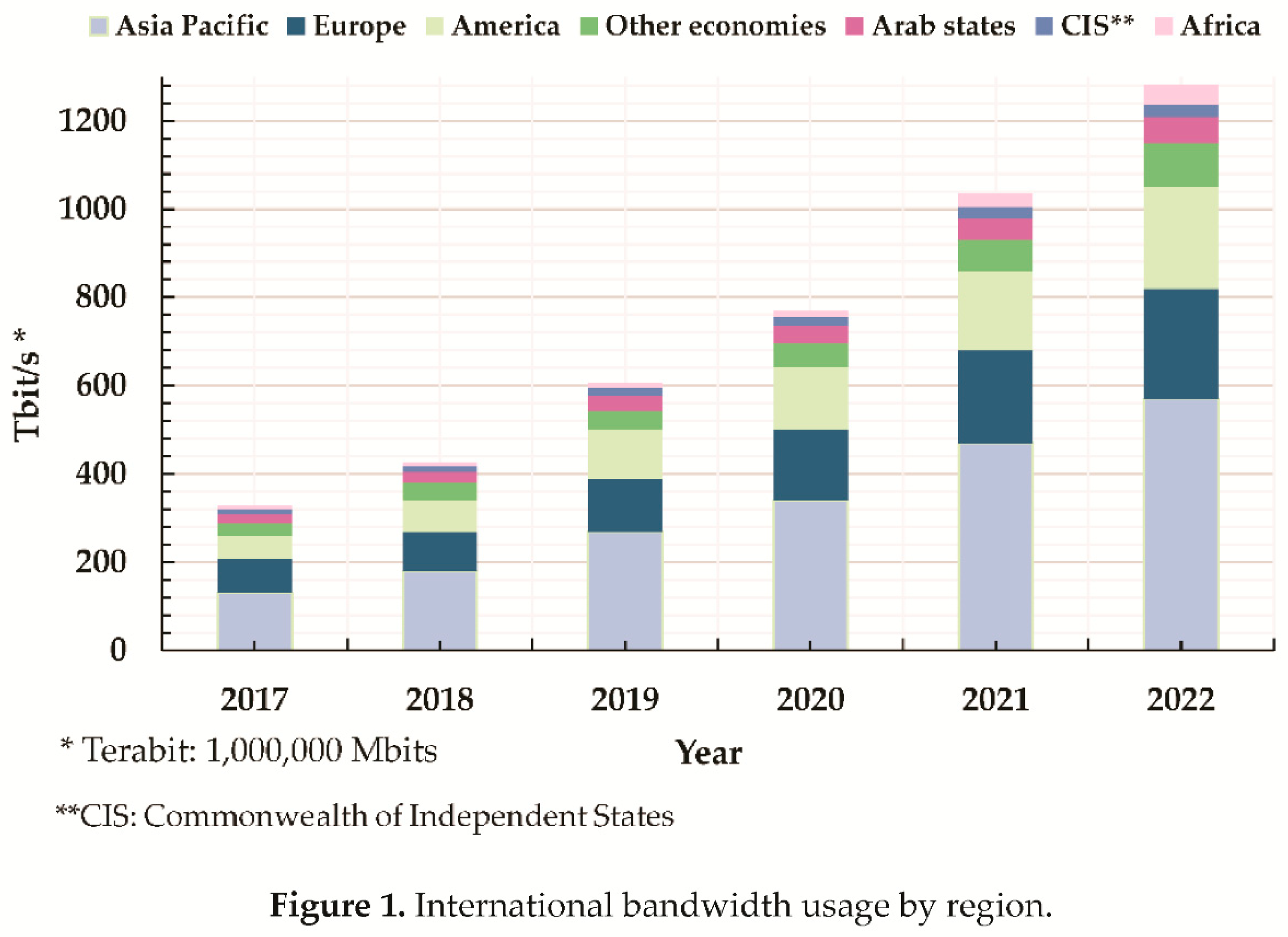
Since the introduction of submarine communication cables in the 1850s, they have been mechanically protected against human threats by wrapping steel wire in a spiral around the core. Armoring techniques are still used in contemporary, mainstream optical-fiber submarine (hereinafter, OFS) cables. The reason is that steel wires are highly economical and durable. One of the noteworthy features of state-of-the-art cable technology, implemented in practice in the 1980s, is its ability to transmit substantial amounts of data at high speeds and at low cost. With the advent of digital society, remarkable advances have been made in meeting this demand. Figure 1 shows the use of each regional international bandwidth. As global internet data consumption continues to escalate exponentially, international bandwidth is expected to reach approximately 1280 Tbit/s by 2022 [1]. OFS cable systems are the vital infrastructure of international undersea communication, delivering essential information that sustains and enriches our social lives.
Despite major advancements in optical transmission technology, the cable’s mechanical structure has changed little since the 1980s. Section Two details this structure. Once the OFS cable is installed, it is technically impossible to remotely monitor the mechanical integrity of the entire armored steel wire (hereinafter, armor) at the landing stations. As a result, only corrective, not preventive, maintenance is possible, creating a major reliability challenge. Cable failures then require intervention from repair ships, resulting in system outages and substantial economic losses. Therefore, reducing failures caused by environmental factors is critical, and relying on empirical guidelines based on historical data helps build more dependable systems. The durability of armor against corrosion has been extensively investigated, particularly in submarine power cables for offshore energy development [2]. To date, no publications have addressed armor corrosion in OFS cables in marine environments.
This study aims to identify the positive and negative factors affecting the designed lifetime of OFS cables, which are essential to global socio-economic activities, and to improve their durability, cost-effectiveness, and maintainability through an evidence-based approach. To achieve this objective, empirical evidence from cable maintenance operations is used to analyze environmental factors that affect cable failures and service life. Also, it refers to the findings of the following previous studies:
To understand the essence of this research, it is essential to integrate knowledge from diverse disciplines. Previous studies across various fields provided objective evidence supporting this study. Reference [3] examines the erosion-corrosion phenomenon affecting materials used in industrial equipment and reveals that when static materials interact with dynamic liquids, the potential for corrosion thinning of armor due to erosion and corrosion increases significantly. The literature [4] on Corrosion Engineering considers various environmental factors that affect the corrosion of steel under marine immersion conditions. Experiments have clarified the effect of seawater flow velocity on steel corrosion. References [5,6] discuss the corrosion of armor in a marine environment, as observed in domestic coaxial submarine cables installed in Japan in the 1950s. Three factors have been identified as causes of armor corrosion: electrochemical corrosion, mechanical wear, and local battery effects. Theoretical analysis and field experiments have proved that electrochemical corrosion induced by the Earth’s magnetic field through seawater motion is the primary factor. Literature [7] on civil engineering analyzed ocean currents in the Tsugaru Strait in northern Japan to investigate the potential for harnessing natural energy resources for ocean current power generation. This strait has a canyon-like terrain where ocean currents and tides collide, creating specific areas of complex, swift seawater flow, as detailed further in Section 3. The study provides evidence, through simulations, of ocean current behavior in specific regions. The literature [8] on seafloor soil engineering discusses the geotechnical characteristics of surface sediments derived from the deep ocean floor, particularly in areas with manganese nodules in the Central and East Pacific basins.
This article is organized into six sections to ensure a thorough and impartial review. Section 1 gives background, reviews prior studies, and outlines relevant issues to establish the context for this research’s aims and significance. Section 2 analyzes OFS cable structures, examines their behavior on the seabed, and identifies common failures caused by environmental factors. Section 3 focuses on the geology of the Tsugaru Strait and analyzes cable failures in armored cables. Section 4 highlights the properties of deep-seafloor sediment and explains how they relate to the extended lifespan of unarmored cables. Section 5 examines the chemical makeup of seawater and the conditions that lead to armor corrosion, and provides examples of erosion and corrosion, along with an assessment of armor’s expected service life. Section 6 summarizes the study’s principal conclusions, based on a comprehensive analysis and rigorous methods.
2. Overview of Mechanical Cable Design, Physical Characteristics, and Typical Cable Failures Caused by the Marine Environment
This section provides a detailed technical overview of OFS cable structures and their post-installation behavior on the seabed. It specifically focuses on the mechanisms of cable insulation failures, illustrating the characteristics and mechanical vulnerability of the polyethylene (PE) sheath.
2.1. Mechanical OFS Cable Structures
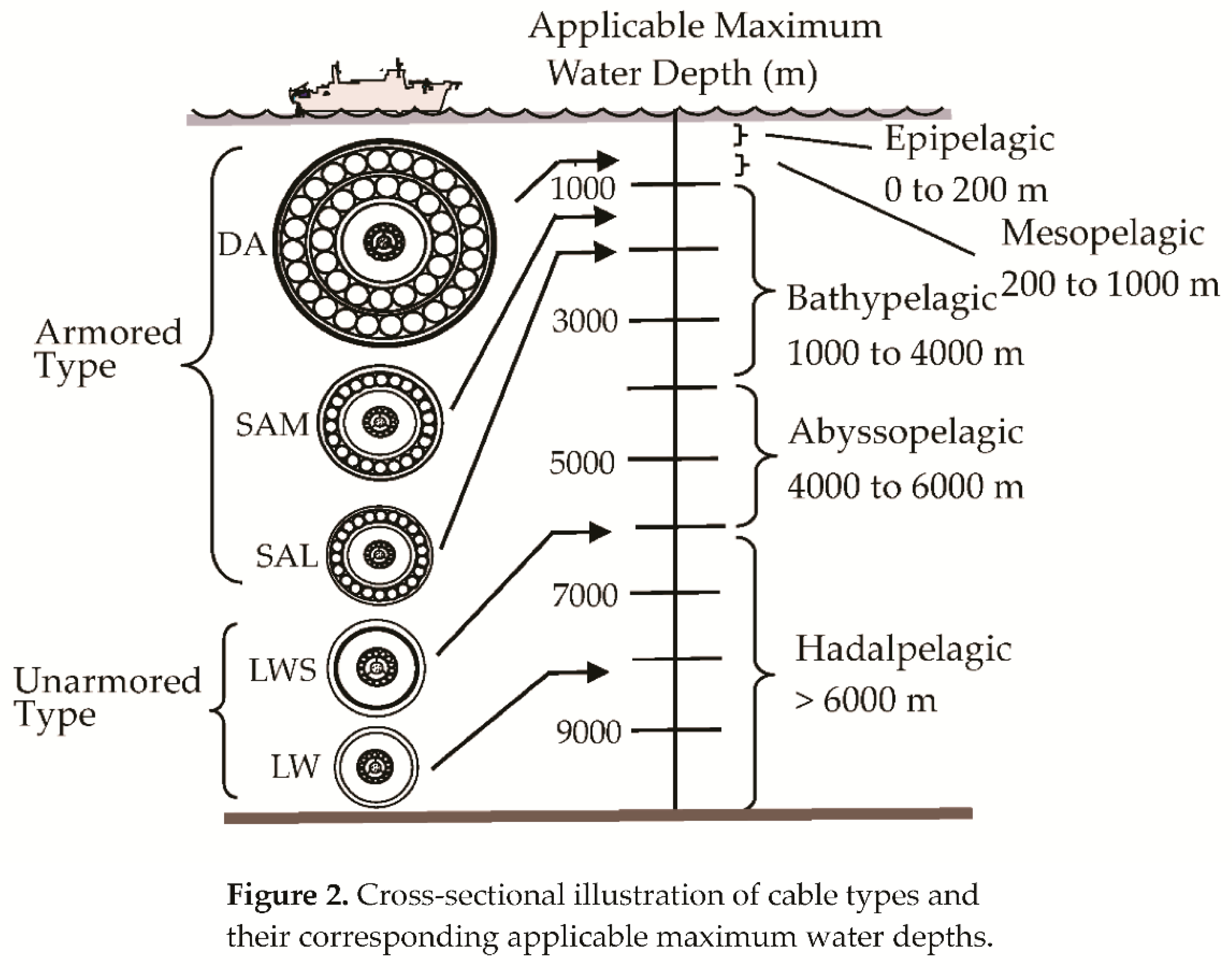
Figure 2 shows an OFS cable cross-section, indicating its maximum design water depth and marine ecological water depth categories [9,10]. The cable’s mechanical structure is modeled after coaxial submarine cables, which became mainstream in the 1950s. In the 1980s, the development of practical OFS cables led to the introduction of various new types, all using lightweight (LW) unarmored cables as their core. Currently, cable types are classified by their structural characteristics as either armored or unarmored.
2.1.1. The Application Ratio of Cable Types on a Global Scale
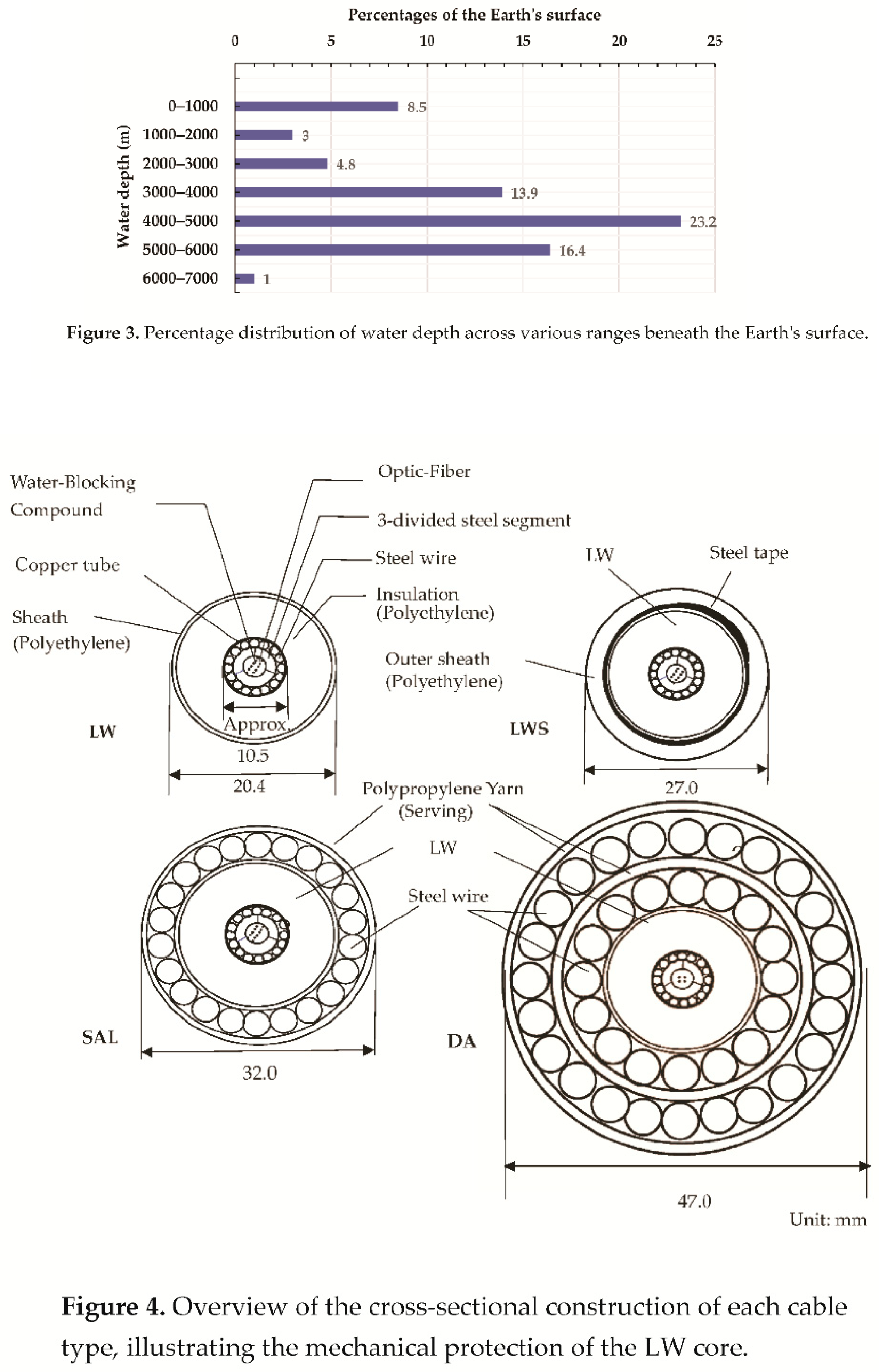
Figure 3 illustrates the distribution of the ratio across various water-depth ranges beneath the Earth’s surface [11]. The bathypelagic and abyssopelagic zones, which range from 3000 to 6000 meters in depth, constitute approximately 53.5% of the total ocean. In these regions, unarmored LWS types are often employed. In long-distance transoceanic systems, repeaters are spaced at 60 km intervals to amplify attenuated optical signals. The optical amplifiers in these repeaters use DC power, delivered from the shore with a constant current of 1 to 1.5 A through the cable’s copper tube (see Figure 4). The power-feeding system uses the Earth return system. Hence, the PE layer is critical for maintaining insulation; however, it is mechanically vulnerable to frictional damage from cable-handling equipment, the ship’s hull, and the seabed. If the power-feeding conductor contacts seawater due to damage to the PE layer, the insulation may fail. Analyzing the mechanical degradation of the armor and damage to the PE layer helps improve the system’s mechanical stability in dynamic, long-term marine environments. Details regarding this matter are outlined in Section 3 and Section 5.
2.1.2. Armor Philosophy
The design of cable armoring must ensure adequate mechanical protection for the cable core from external forces, such as fishing gear and anchors, during installation and operation. Literature [12] presents a philosophy for core protection: shallow-water cables use heavy armor, while deeper cables use lighter armor to reduce stress on the optical fiber. This allows deployment to a maximum depth of 1500 m for deep-sea fishing.
Although this approach provides sufficient mechanical protection for the cable, it does not mitigate corrosion, which may reduce the armor’s longevity in marine environments. Section 3 and Section 5 investigate corrosion factors in needle-tipped armor and utilize objective evidence collected during maintenance and physical evidence from other cases to assess the service life of the wire.
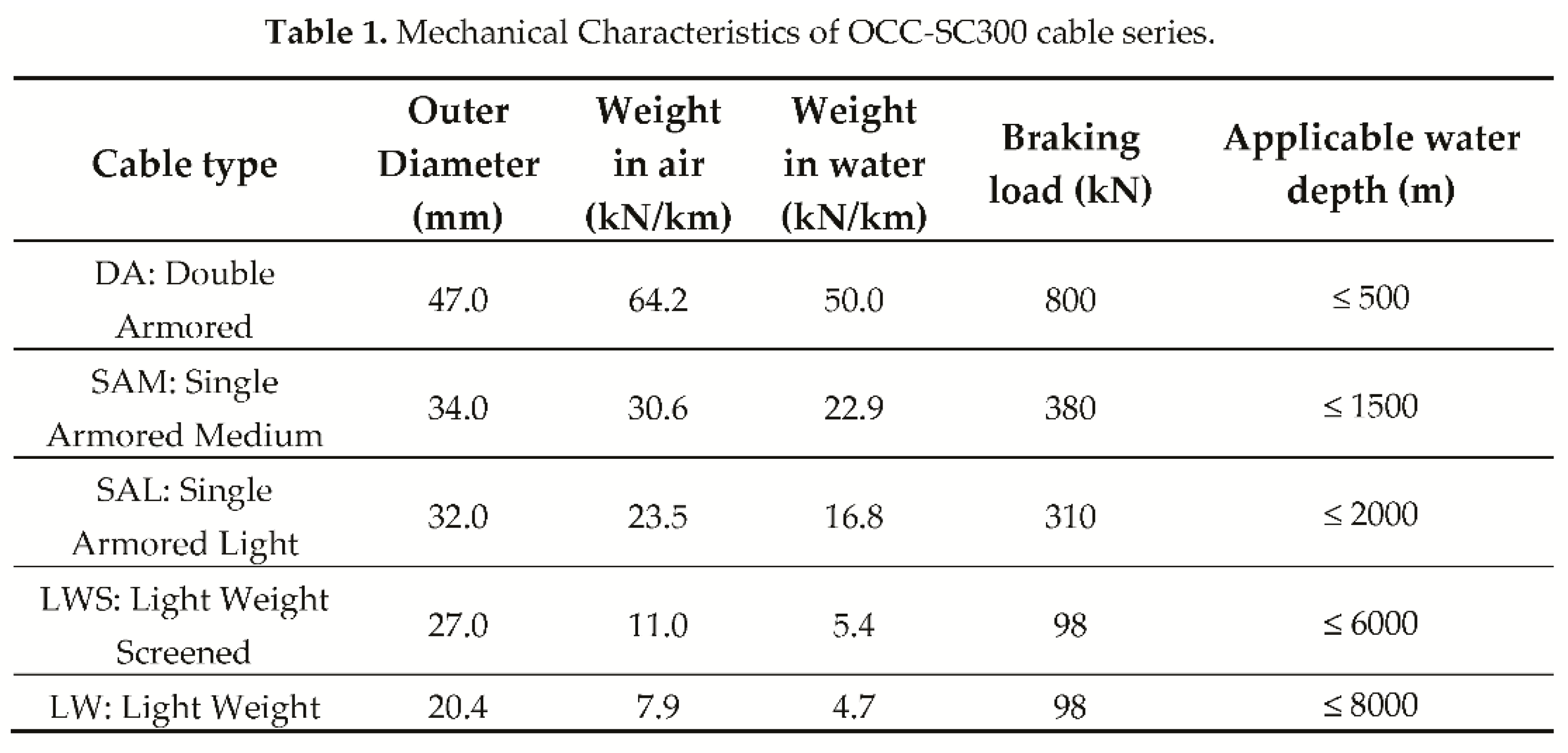
Table 1 provides the physical specifications of cables commercialized in Japan during the early 2000s, facilitating a comprehensive understanding [10]. Figure 4 illustrates the cross-sectional construction of each cable type [10,13], which provides mechanical protection for the LW core, as detailed in Table 1.
2.1.3. Details of Mechanical Protection for the Cable Core (LW)
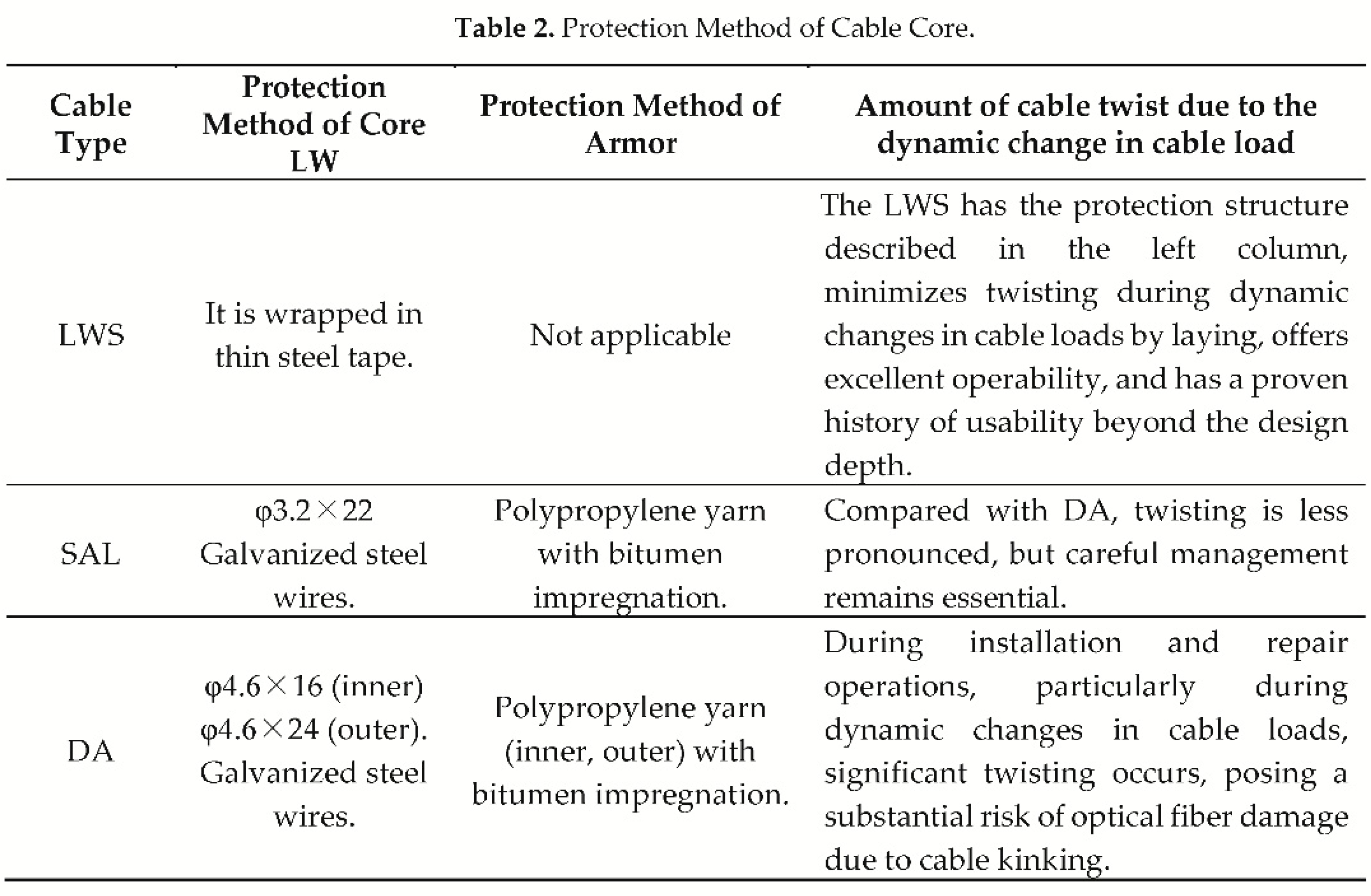
Table 2 presents the differences in mechanical protection methods and handling characteristics for unarmored cable LWS, armored cable SAL, and DA, with the basic construction LW as the core. The LWS is wrapped with a thin steel tape that surrounds the LW. This protects it against potential damage from severe friction with the ship’s hull or seabed, or from shark bites. Conversely, the armored cable incorporates a steel wire encircling the LW to provide mechanical protection. To prevent corrosion in marine environments, the armor surface is galvanized. It is then spirally wrapped with a layer of bitumen-impregnated polypropylene yarn (Serving layer). Nonetheless, the serving layers are considered sacrificial; any minor damage sustained during loading onto the cable ship, handling, or installation is deemed insignificant. Additionally, this layer significantly restricts water exchange within the enclosed spaces beneath it. This reduces corrosion rates [14].
2.2. Behavior of Cables on the Seabed
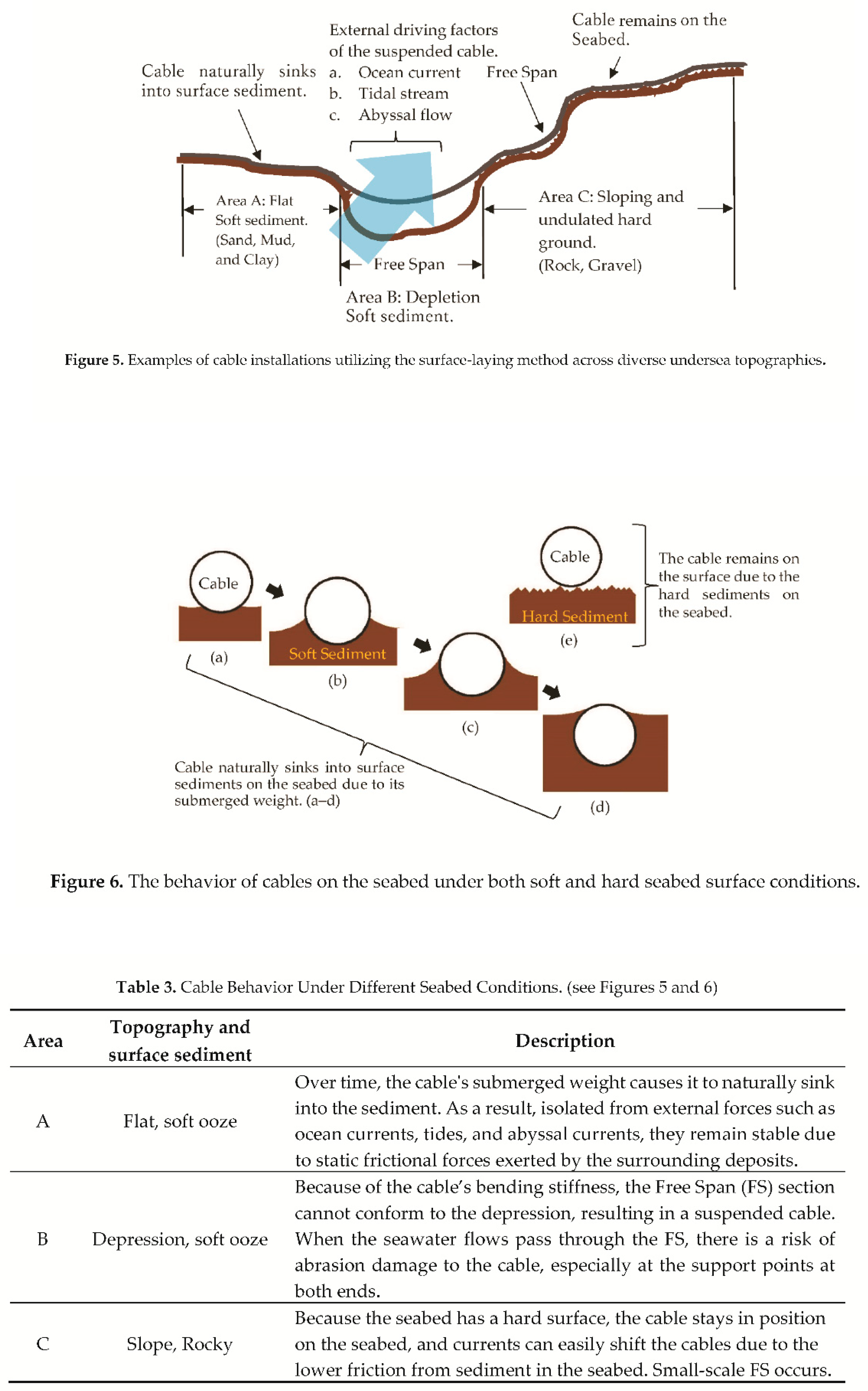
Figure 5 illustrates the installation across three conditions (areas A–C) using the surface-laying method, which involves carefully deploying cables and subsea plants directly onto the seabed. Each area presents unique topographical characteristics and sedimentary compositions of the seabed surface. Figure 6 shows the behavior of the cable after laying for each of the bottom features under both soft and hard seabed surface conditions. Table 3 describes the cable’s behavior on the seabed for each area.
2.3. Examples of Damage to the PE Insulation Layer
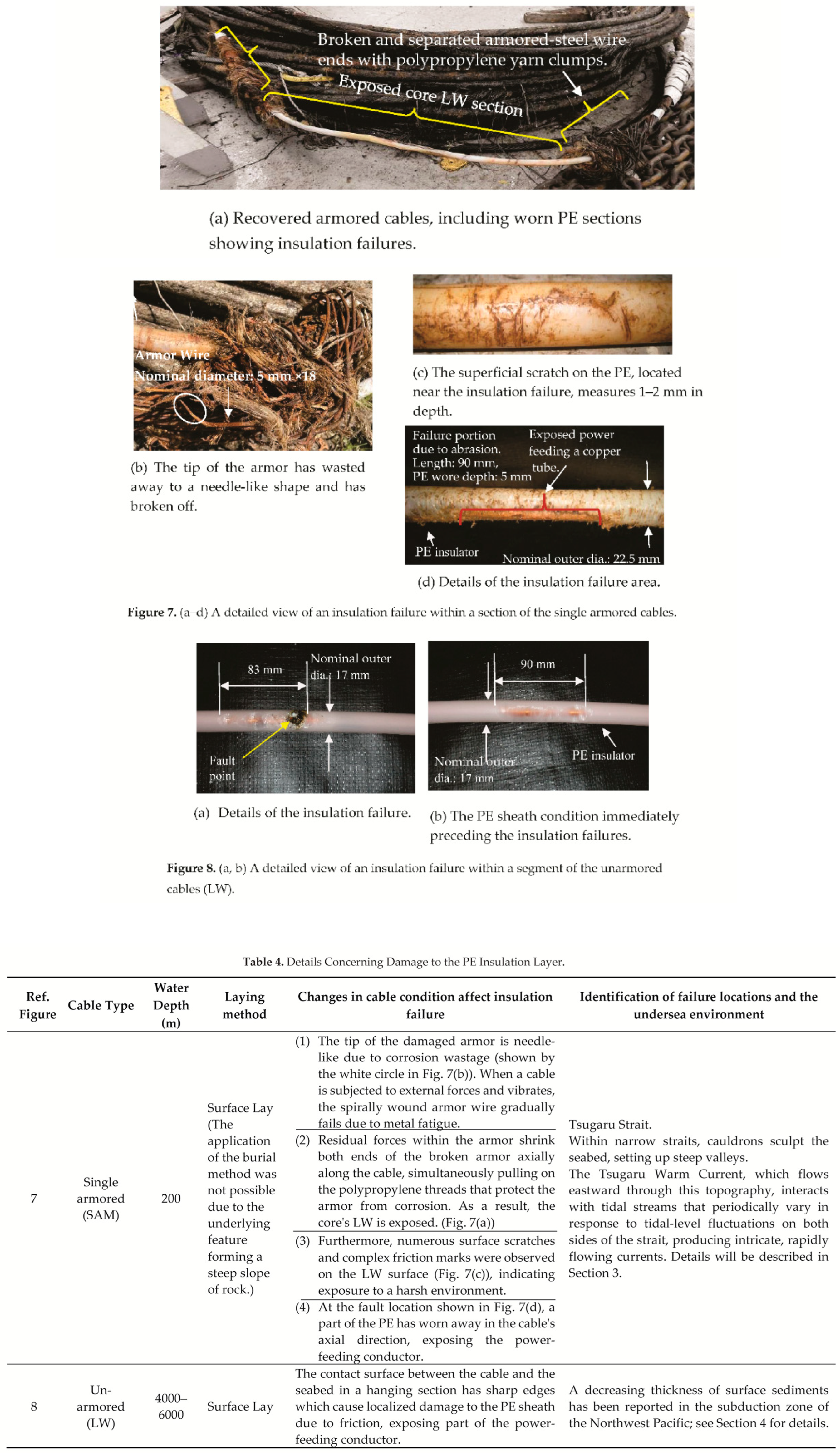
Figure 7 illustrates a typical insulation failure that occurs when the PE insulator in armored cables is damaged due to environmental factors, and Figure 8 shows the same failure in unarmored cables. Mechanical damage from external forces, such as friction, is clearly the main cause of insulation failure in both cable types, rather than electrical degradation of the PE insulation caused by the DC feeding power used to drive the repeaters. Table 4 details each failure condition.
3. Examination of the Degradation of Armor
This section analyzes the correlation between topography and seawater flow, considering environmental factors related to the damage, as the damaged segments of the armored cable were predominantly located in regions with swift seawater flows.
3.1. A Geographical Overview of the Studied Area
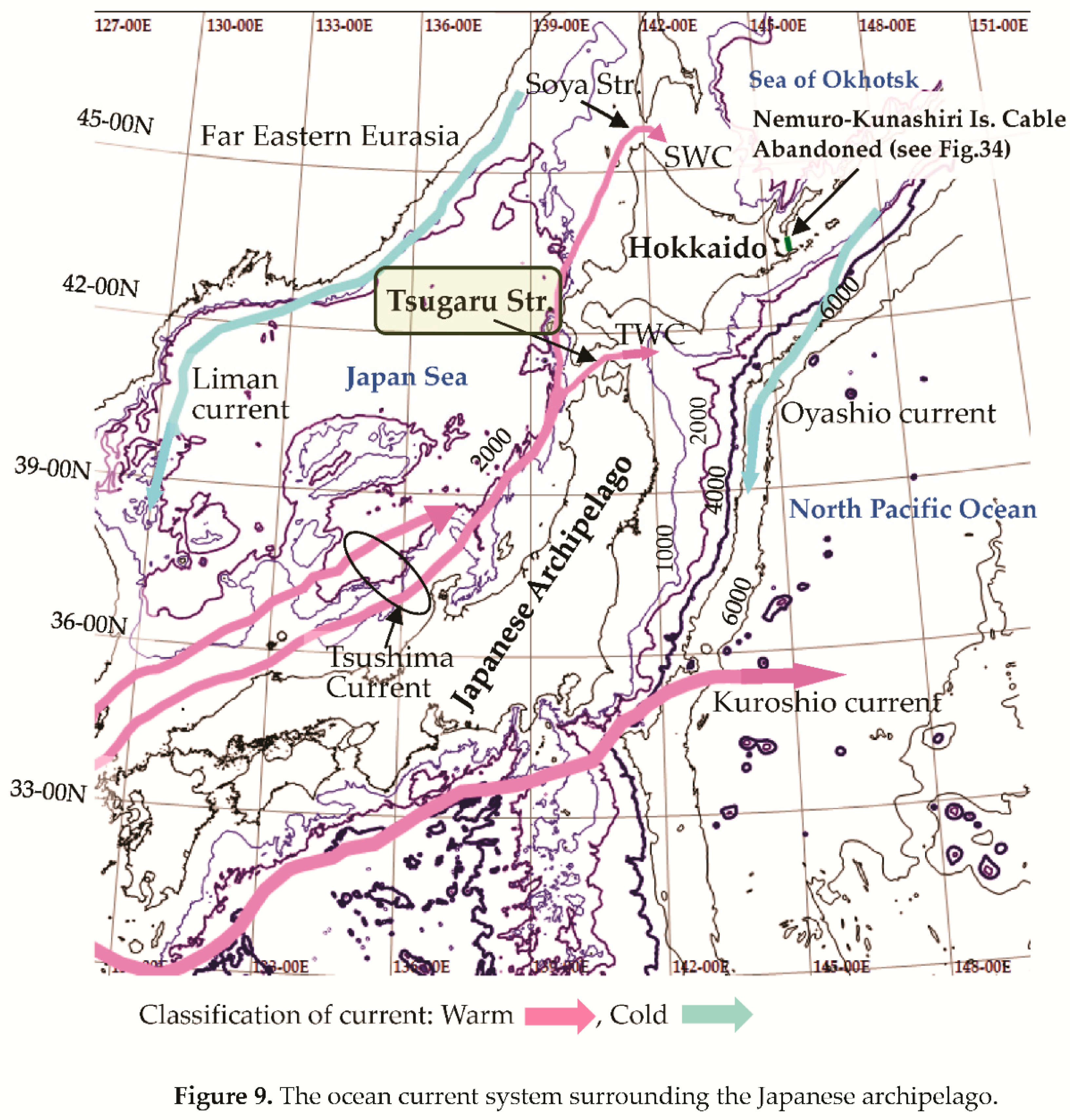
Figure 9 depicts the characteristic ocean current system encircling the Japanese archipelago. The Tsushima Current flows north through the Japan Sea, splitting into the Soya Warm Current (SWC) via the Soya Strait and the Tsugaru Warm Current (TWC) via the Tsugaru Strait. This process connects the Japan Sea and the North Pacific Ocean. The Studied Area focuses specifically on the Tsugaru Strait (hereinafter, strait).
3.1.1. Location of the Cable System Under Study
Figure 10 shows a map of the strait between Hokkaido and Honshu. The Strait is an important sea route and a major fishing area for small boats. The TWC, a branch of the Tsushima Current, flows eastward through the strait. It transports heat, salt, marine life, and larvae from the Japan Sea into the North Pacific, thereby further affecting the Strait’s ecosystem. Furthermore, tidal currents resulting from the difference in tidal levels between the eastern and western coasts of the strait are superimposed upon the TWC, and thereby the seawater flow periodically becomes more complex. The underwater communication cable system studied runs east-west across the Strait and is partly buried by plowing, while submarine power cables and railway tunnel infrastructure cross it north-south. For economic security reasons, the exact cable routes are not disclosed; only the location of the cable failure under study is displayed. The legend for Figure 10 is provided in Table 5 [15]. Table 6 presents details of the electrical submarine power cable system [16].
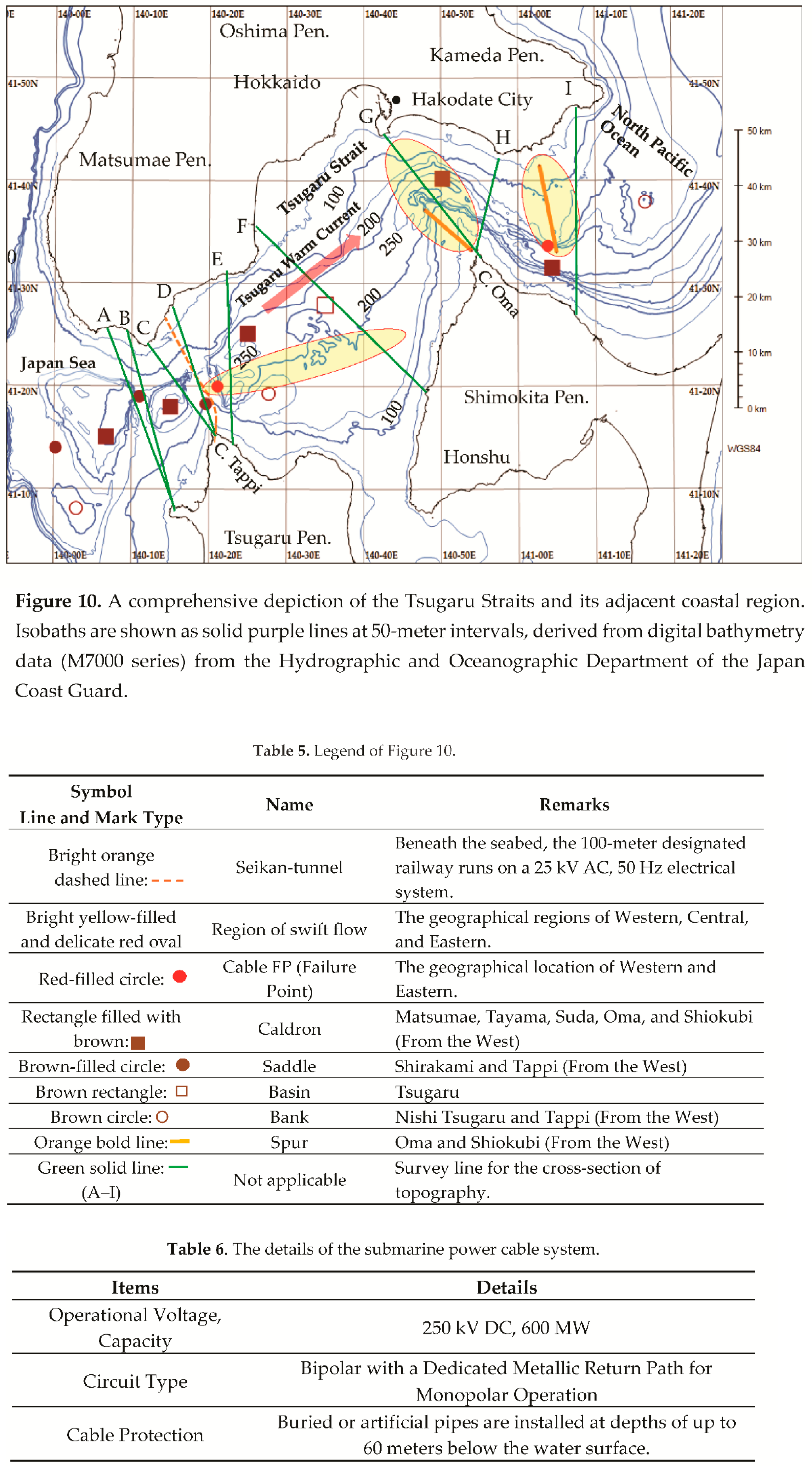
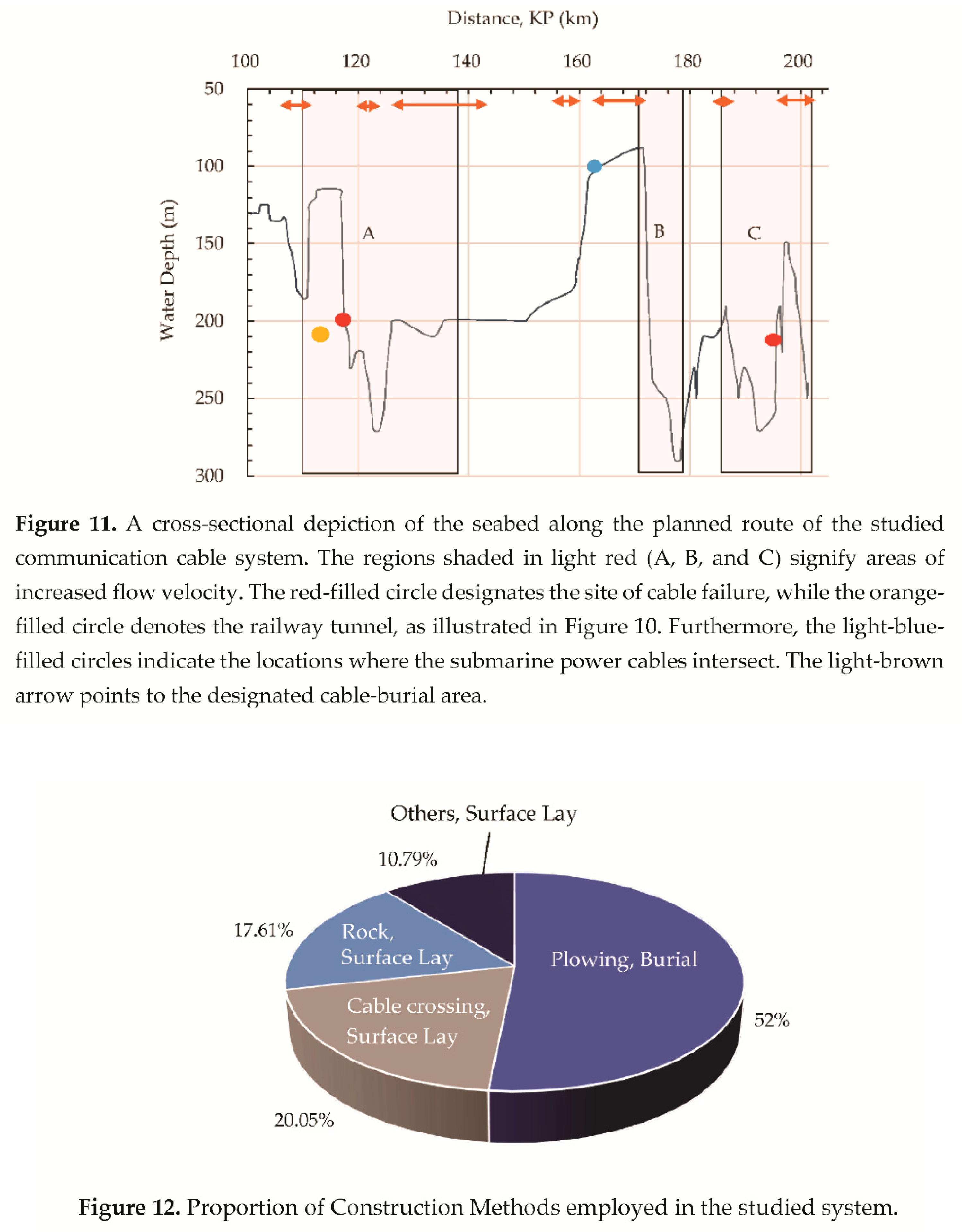
The total cable length of the studied communication cable system is approximately 100 km, as shown in the cross-sectional view of the seafloor along the designated cable route in Figure 11, which clearly indicates the relative positions of each infrastructure intersection. The proportions of construction methods in the study area are shown in Figure 12.
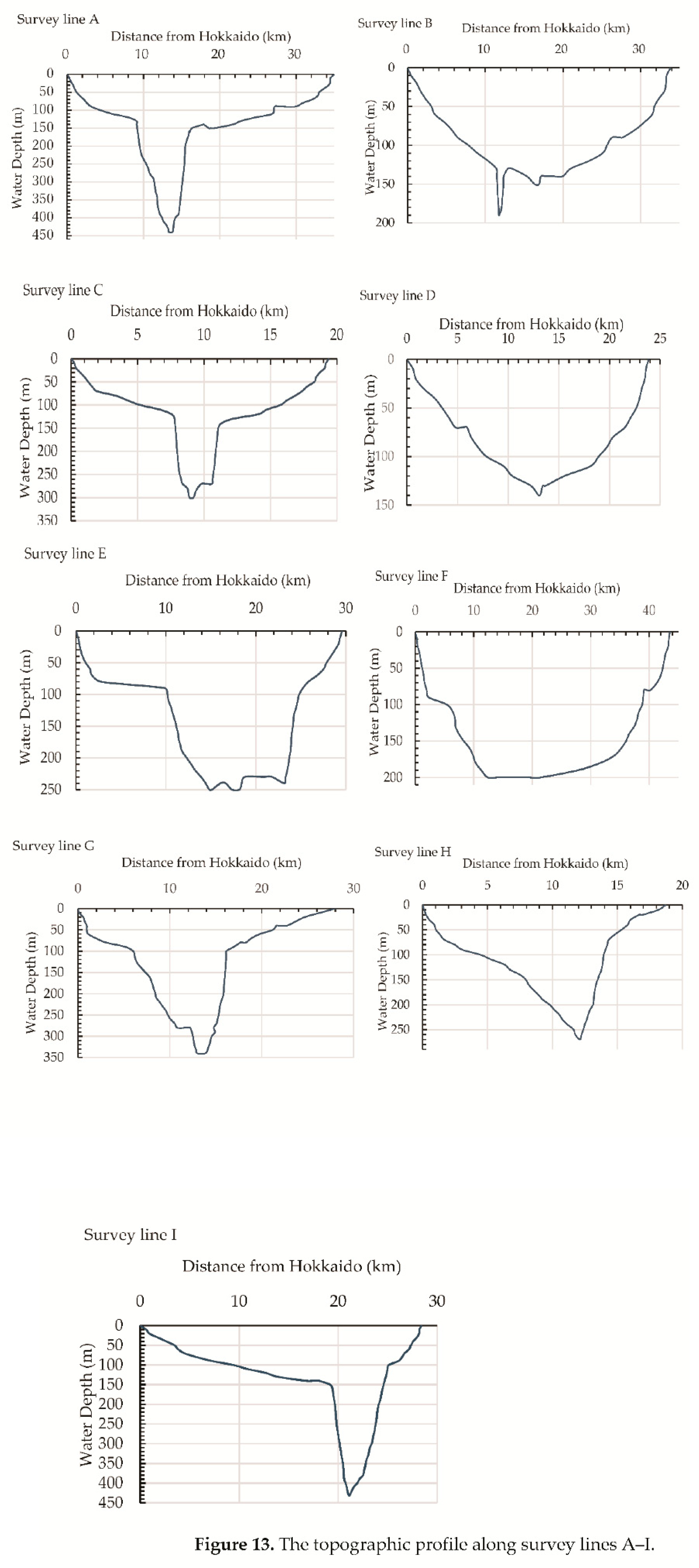
The east-west cable failure points were located within the Surface Lay area, where the cable is laid directly on the seabed. This occurred due to the steep slope and rocky seabed. On flat terrain, the cable-burying method achieved a burial rate of 52%. The failure locations coincide with regions of swift seawater flow, strongly influenced by seabed topography (see Figure 13; the nearest survey lines are E and I). Thus, rapid ocean currents and tidal streams are significant contributors to cable failure. Further analysis of these factors is presented in Section 5.
3.1.2. Characteristics of the Tsugaru Strait
The seabed topography in this strait is complex, with five caldrons running west to east and spurs running north to south at depths of 280 to 350 meters. This geomorphic layout, together with tidal streams, ocean currents, and the V-shaped valley produces swift seawater flow in some areas (see Figure 10). Simulations indicate that velocities at the western entrance may reach 1.8 m/s [7]. Literature [17] reports rocks along the caldron’s edges and sand dominating the surrounding seabed. Figure 13 presents a comprehensive cross-section of Strait’s topography. This illustration corresponds to the green solid lines A–I shown in Figure 10. The middle area, designated survey line F, shows a flat profile. In contrast, the other lines show concave or V-shaped profiles, particularly the steeply V-shaped lines A, C, G, H, and I, which are attributed to geological activity.
3.1.3. Geological Comparison of the Tsugaru Strait and the Soya Strait
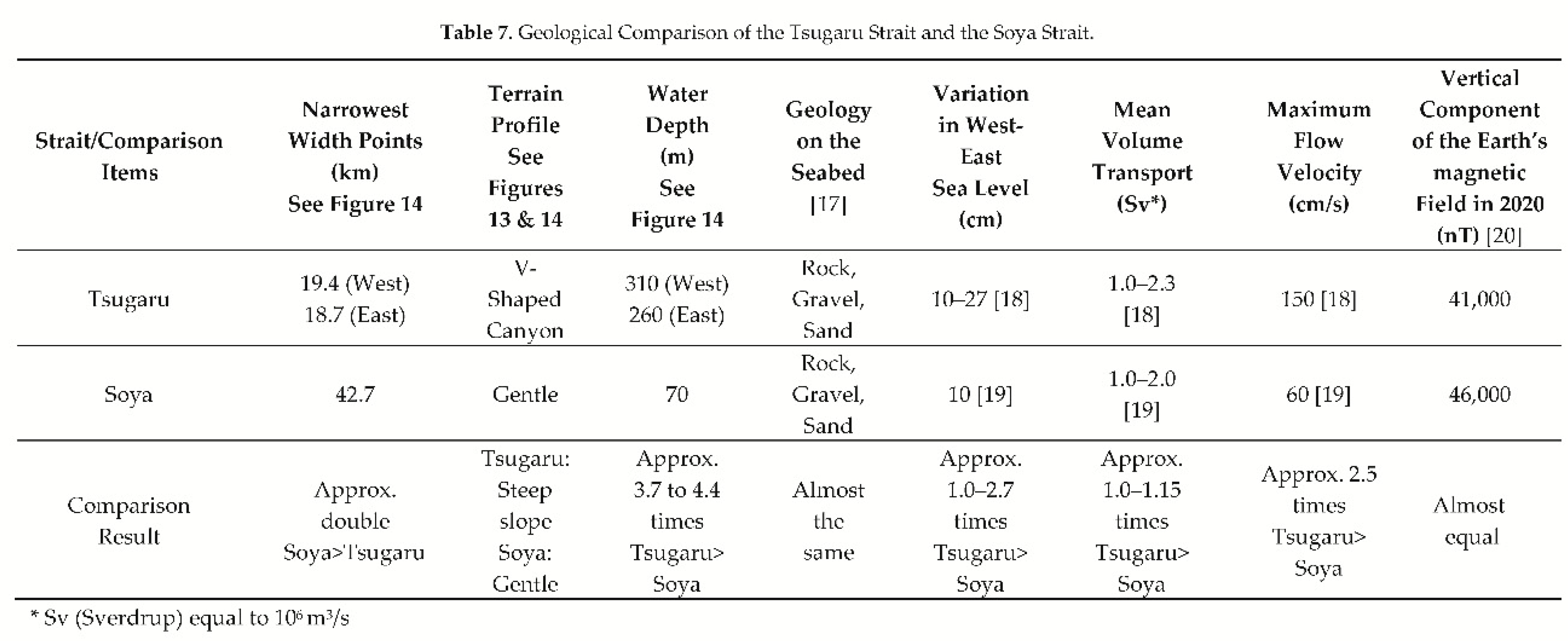
We will compare the Soya Strait and Tsugaru Strait, the principal conduits of the Tsushima Current into the North Pacific Ocean, to examine differences in hydrographic and hydrodynamic conditions, including ocean current velocities, that significantly contribute to armor degradation.
Figure 14 shows the widths at different depths at the narrowest section, enabling comparison of the Tsugaru and Soya Strait channel configurations that carry the Tsushima Current branch. The Soya Strait is about 42 kilometers wide and up to 70 meters deep, featuring a gently sloping seabed and a broad channel. In contrast, the Tsugaru Strait has a V-shaped profile, is approximately 19 kilometers wide, and reaches a maximum depth of about 310 meters, thereby enhancing seawater flow velocity in that area.
There are noTable distinctions in the topographical profiles of the two straits, indicating that swift seawater flows characterize the Tsugaru Strait. This factor significantly contributes to armor corrosion and is a key finding in our study.
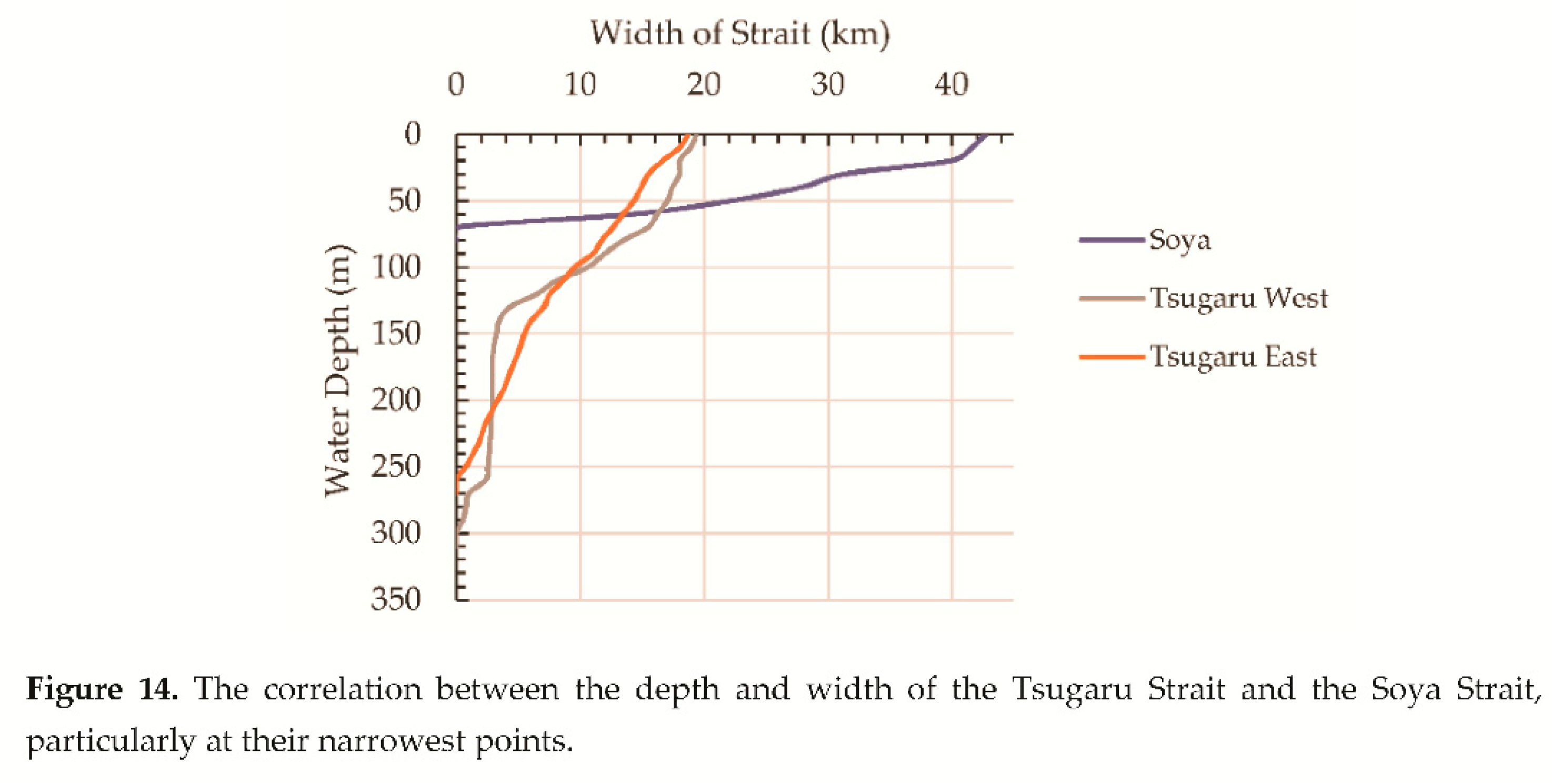
Table 7 presents a comparative analysis of the geographical features of the two straits.
3.2. Comparison of Cable Failures See Figures 10 and 11
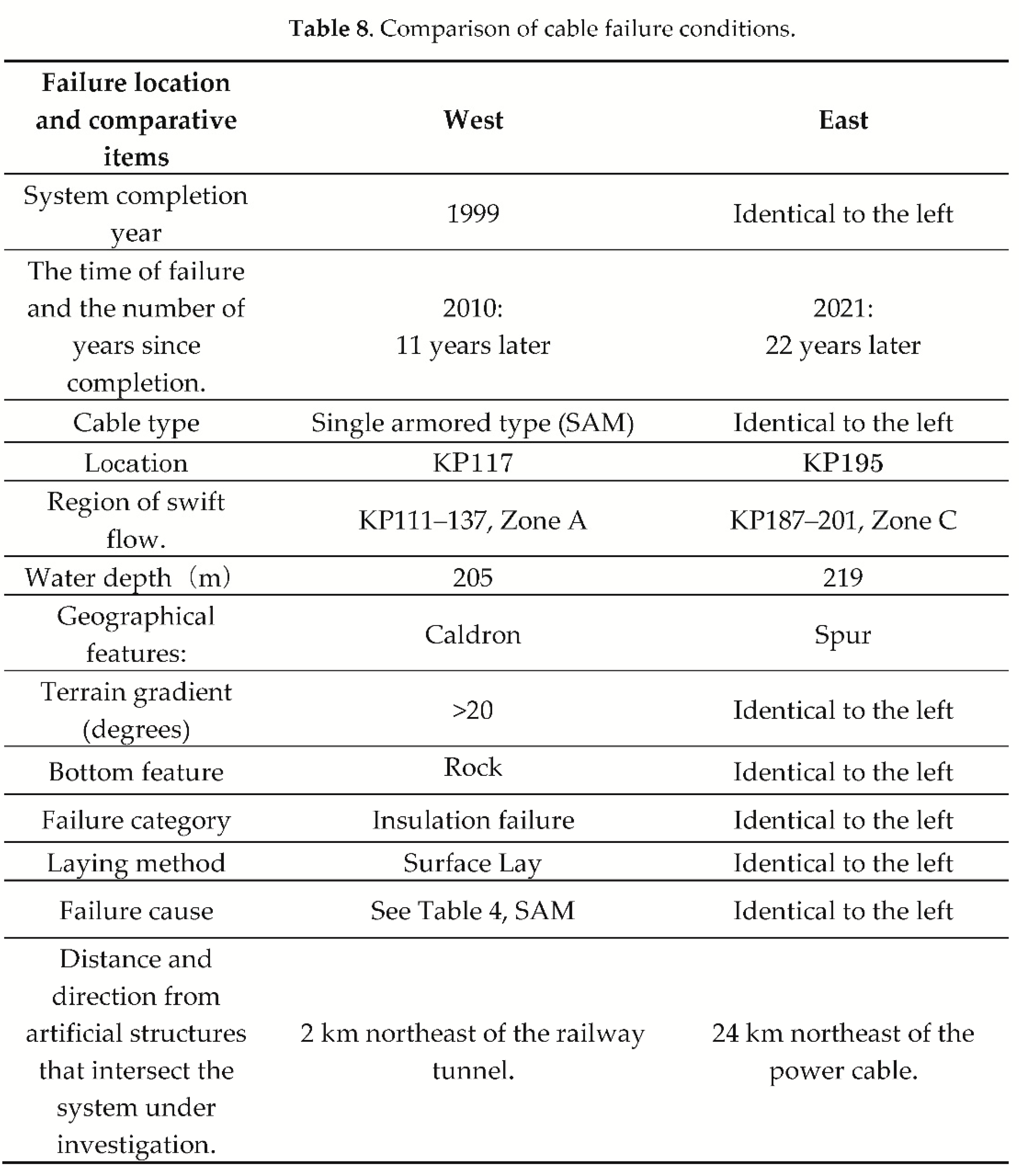
Table 8 compares cable failures observed on the eastern and western sides of the Strait.
3.3. Consideration of Cable Failure
Based on the analysis above, the environmental factors that are detailed in Section 5 are responsible for cable failures in both the eastern and western regions. Armor corrosion results from these multi-coupled environmental factors. Although an AC-electrified railway tunnel and submarine power cable are near the fault area and cross the studied communications system, there is no clear evidence of armor corrosion from stray currents originating from these artificial sources. Furthermore, no other industrial activities, such as fishing, contributed to the cable failure (see Figure 7 (a–c)), and human factors were not responsible.
4. The Relationship Between Physical Characteristics of Deep-Sea Sediments and the Durability of Unarmored Cables
This section reviews the physical properties of deep-sea surface sediments, focusing on evidence from prior studies and cable maintenance activities in the Northwest and Central Pacific.
4.1. Statistics of LW Cable Failures in the Deep-Sea Region
The global rate of cable failures at depths greater than 1000 meters remains low, with a 10% rate reported in 2024 [21]. These statistical findings strongly indicate that PE sheathing may be protected by seafloor sediments when using unarmored cables in this depth range.
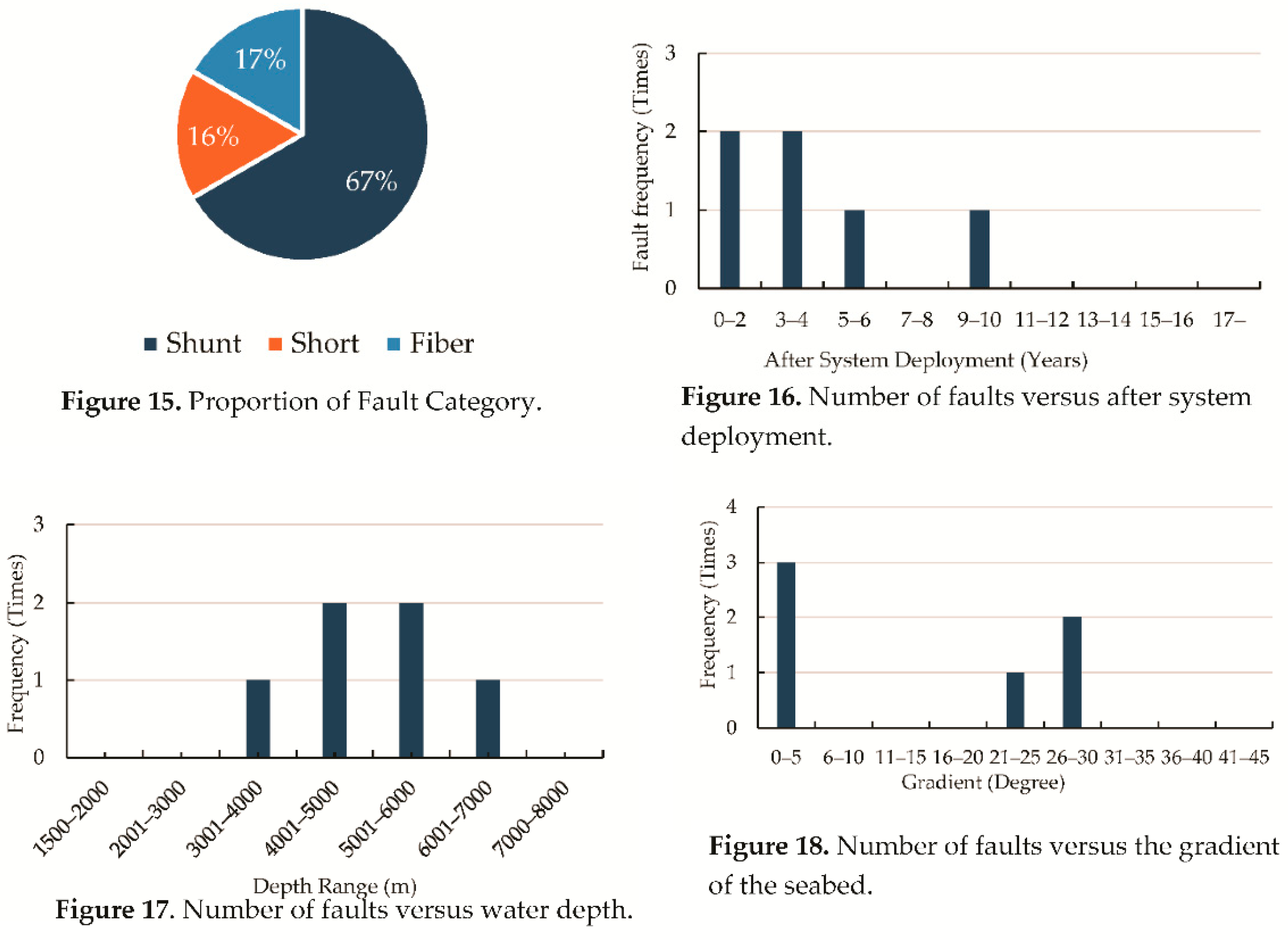
To verify this trend, we analyzed cable maintenance records from 1999 to 2016 for water depths over 500 meters in the northwest North Pacific Ocean [22]. This area has complex interactions among the Eurasian, Pacific, North American, and Philippine Sea Plates, which have been active since Earth’s formation. Tectonic activity has led to trenches, troughs, and chains of seamounts along these plate boundaries. Cables, especially unarmored ones in deep-sea environments, face hazards from natural events and steep terrain. Our analysis shows that LW cable failures mainly occur on steep slopes. Figures 15–18 show statistics on LW cable failures.
4.2. Results of Failure Analysis
Shunt failure, synonymous with insulation failure, is the primary cause, accounting for 67% of cases that occur between 2 and 10 years after system deployment. These incidents occur at depths ranging from 3001 to 7000 meters, within seabed slope gradients of 0°–5° and 21°–30°. The failure observed in the flat region between 0° and 5° is attributed to the behavior of the underwater cable during repeater deployment [23].
4.3. Distribution of Principal Sediment Types in the North Pacific Ocean
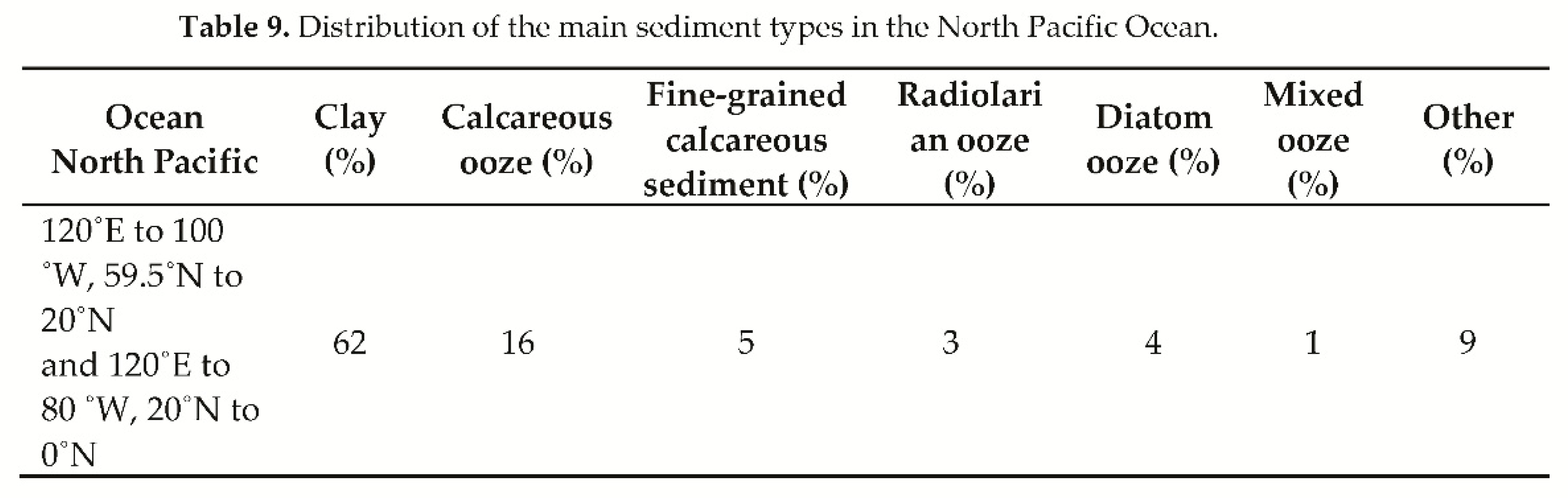
Reference [24] reported a comprehensive lithological classification of oceanic sediments in 2015. Clayey and calcareous deposits predominate in the sediments, and details for the North Pacific region are presented in Table 9. The primary sediments found on the seafloor of the North Pacific consist of 62% clay and 16% calcareous ooze.
4.4. Mechanical Properties of Deep-Sea Sediments
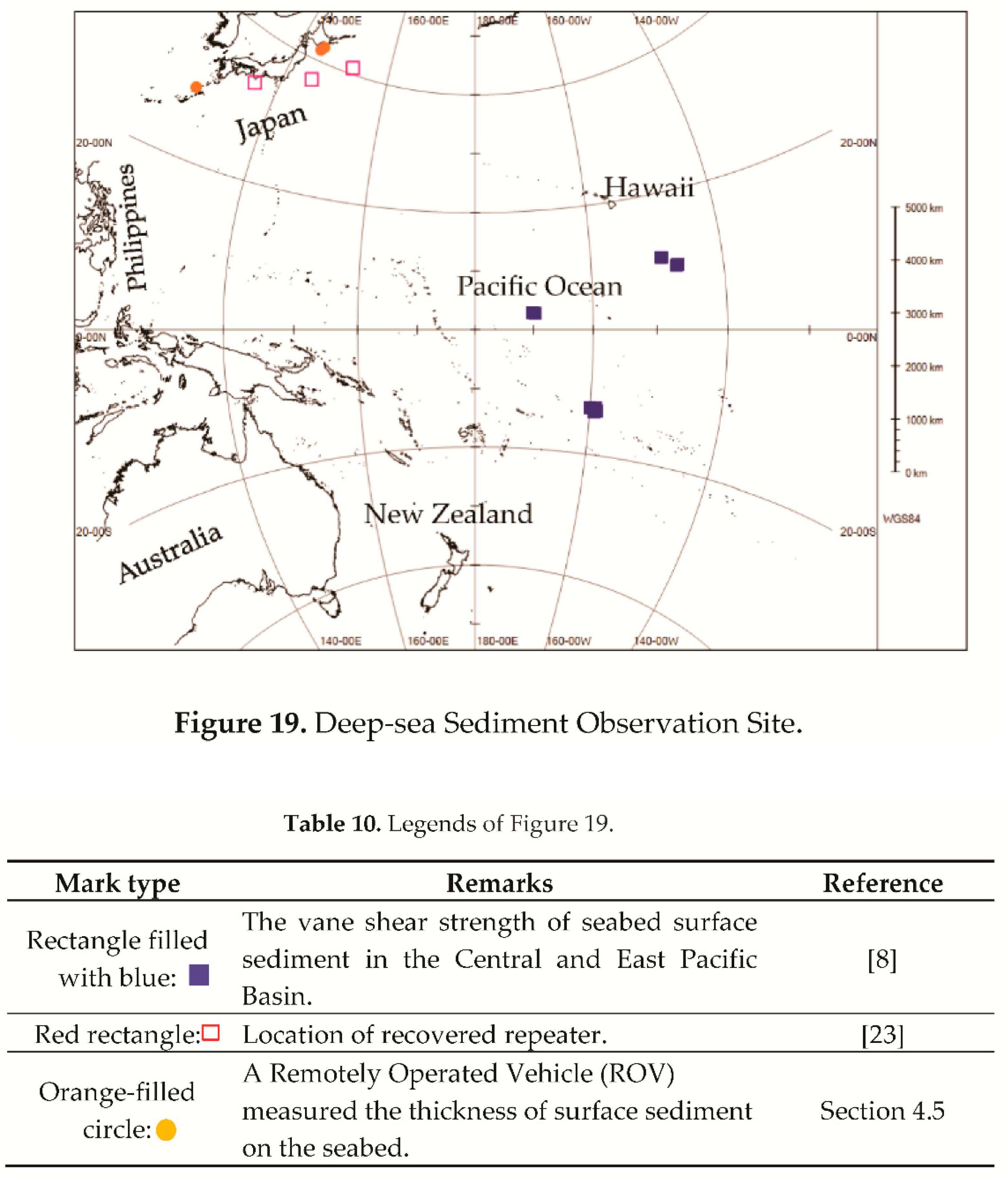
To test the hypothesis that deep-sea sediments protect the unarmored cable sheath, we draw on previous studies of deep-sea sediments in the central and eastern Pacific basin and observational evidence from cable maintenance and the development of a cabled ocean-bottom seismometer system in the northwest Pacific. Figure 19 shows the locations of sediment samples collected or observed in the deep-sea Pacific Ocean; the legend is provided in Table 10.
4.4.1. Vane Share Strength (VSS)
To understand the engineering properties of deep-sea sediment, this study draws on prior research from depths of about 5000 meters in the East and Central Pacific Basin [8]. This location is approximately 2300 kilometers southeast and 4000 kilometers southwest of Hawaii. These regions are at depths exceeding the critical calcium carbonate compensation depth and are far from coastal areas. This depth significantly affects seafloor sediment composition, including fine particulates and siliceous biological remains.
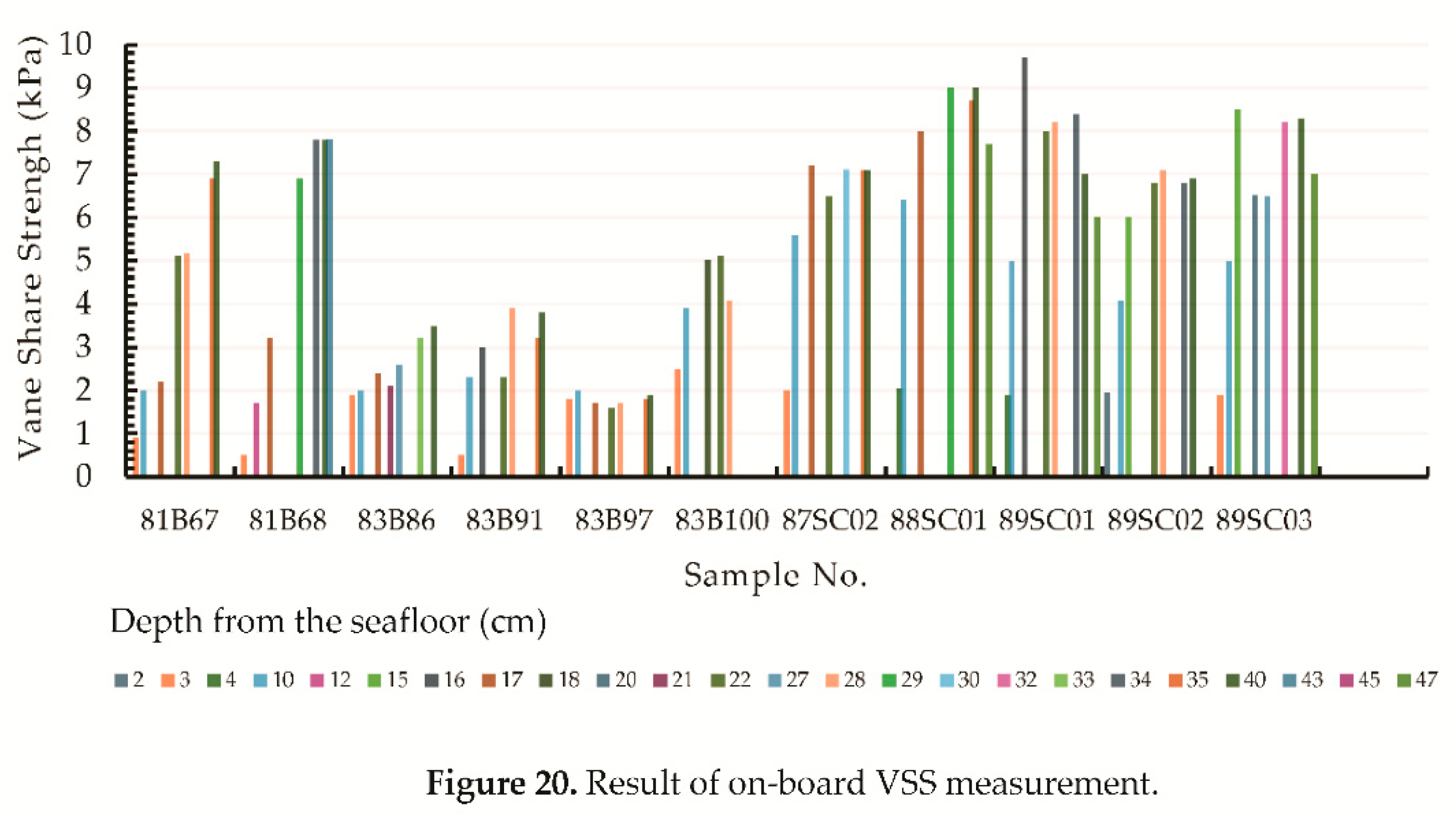
Figure 20 shows only VSS, based on a diagram plotting VSS, sensitivity, cone-penetration resistance, and water content against depth below the seafloor. VSS is a key indicator of deep-sea sediment characteristics in geotechnical properties.
4.4.2. Consideration of VSS
Measured VSS is 2–9.5 kPa at depths of 20–40 cm from the seafloor. VSS peaks at 9.5 kPa at 34 cm in depth, showing clear softening from pelagic sediments. Sample No. 81 had a bottom slope of less than 5°, while the others were nearly flat. Even in flat marine settings, the deepest sample points vary. For samples No. 87–89, VSS steadily increased with more sediment depth.
4.4.3. VSS Evaluation
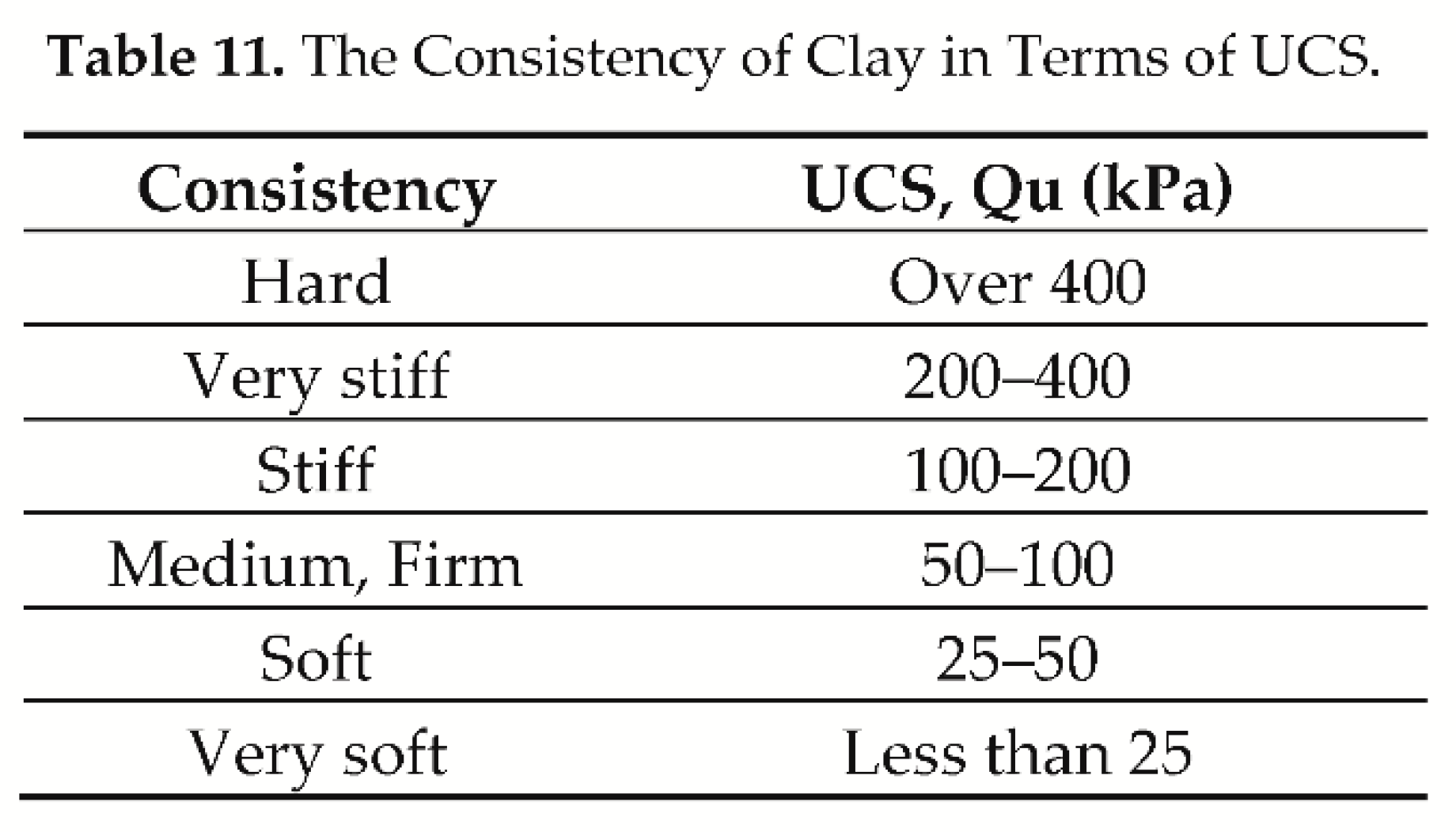
The clayey soils category for geotechnical engineering is based on mechanical (stress) properties, primarily unconfined compressive strength (UCS). Values of the UCS corresponding to the various degrees of consistency are given in Table 11 [25,26].
The VSS (S) is computed using the conventional expression as equation (1) [27].
in which Qu is the UCS, defined as the maximum applied load divided by the average cross-section of the specimen. Equation (2) is derived from equation (1).
S = Qu/2
Qu = 2 S
The measured S of the deep-sea sediments attains a maximum value of 9.5 kPa, and the Qu is ascertained to be 19 kPa utilizing equation (2). In comparison with Table 11, the deep-sea sediment consistency is categorized as “Very soft.”
Physical characteristics of Very soft: easily deformed when pressed firmly and exuded when squeezed.
4.5. An Observed Thickness of the Seafloor Surface Sediments
4.5.1. Subduction Zone
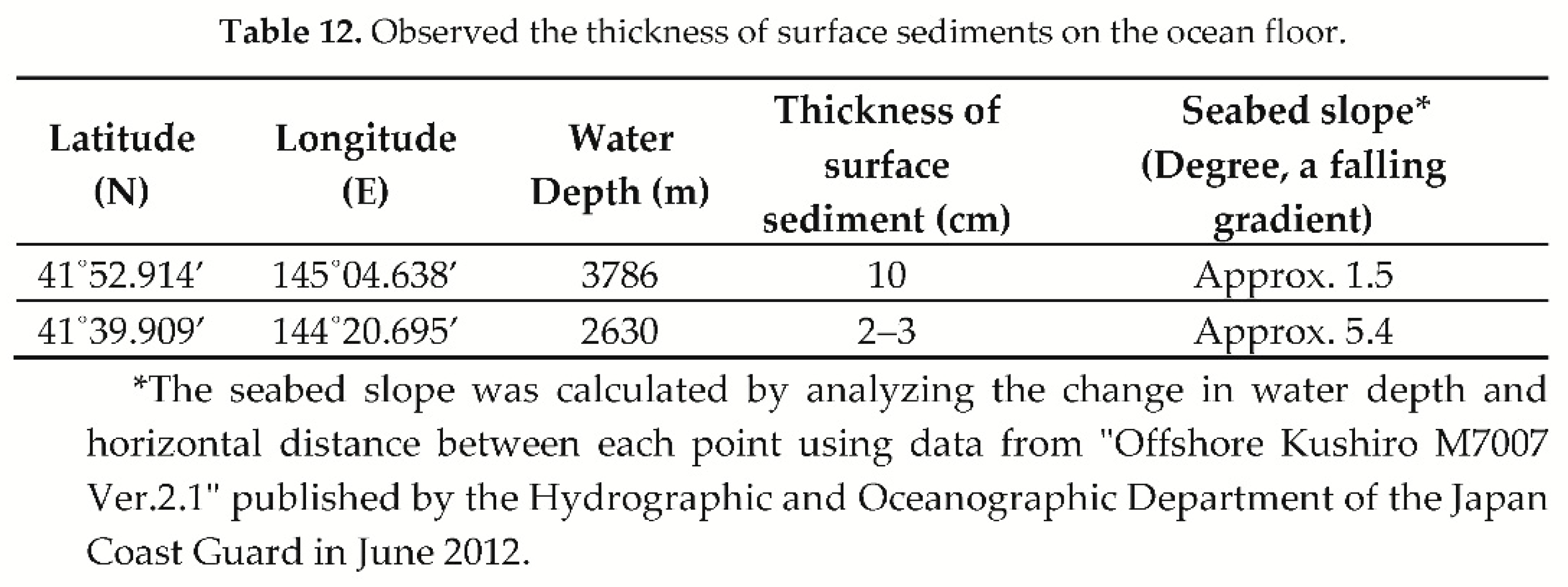
In recent years, the characteristics of ocean floor sediments at depths of 1000 meters or more have been observed visually using an ROV or crewed submersibles. Table 12 presents the results of sediment thickness measurements conducted on the seafloor using an ROV during an oceanographic survey. This survey aimed to install a submersible seismometer in the southeastern region of Hokkaido, Japan, within the southern Kurile subduction zone. Both locations were observed to contain unconsolidated soft sediments [28].
4.5.2. Oceanic Basin
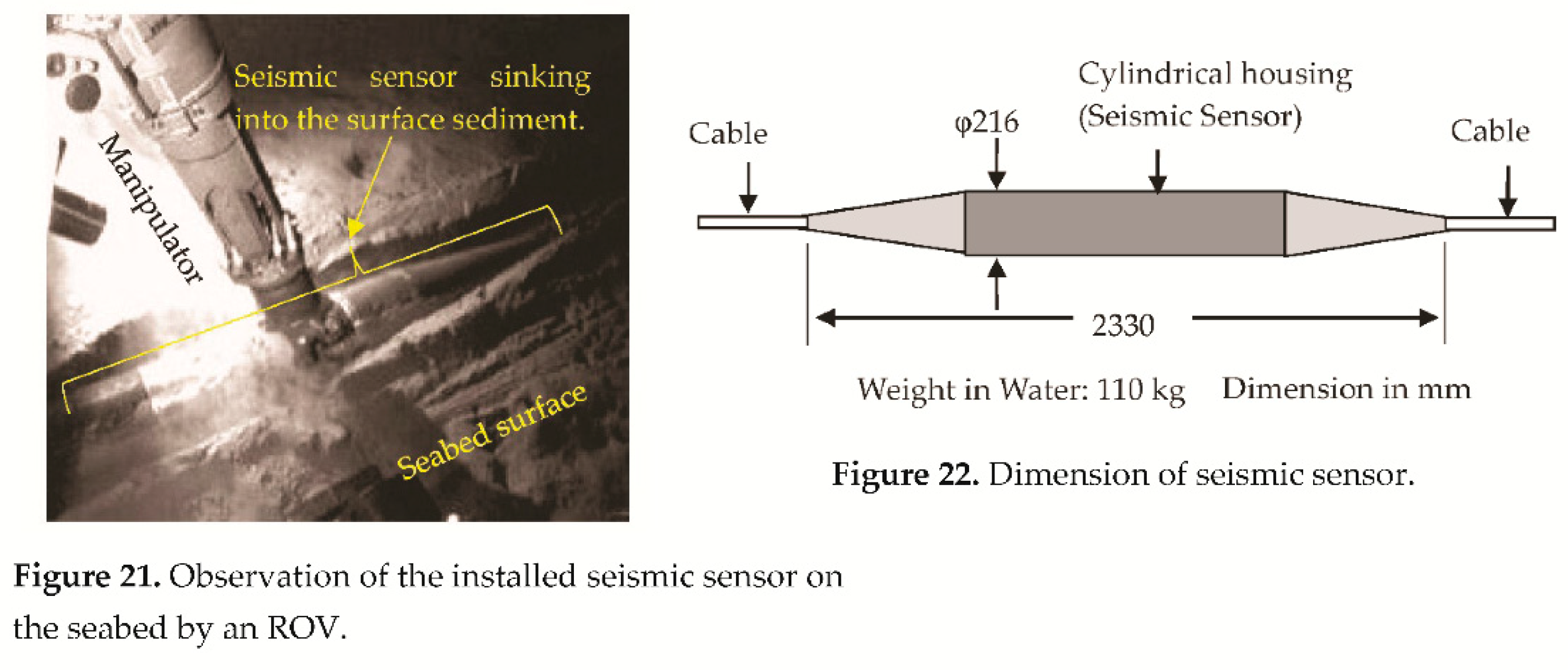
Figure 21 shows the seismic sensor installed on the seabed in the Amami Trough at a water depth of 1100 meters, north of Okinawa, Japan. Figure 22 presents its mechanical outline [29]. This example shows the seabed sediment thickness at the sensor site, which roughly matches the sensor’s outer diameter of 216 mm. Furthermore, observations of patina erosion on the surfaces of most pressure vessels of repeaters recovered from the deep-sea floor during cable maintenance suggest that the thickness of the sediments in the oceanic basin is approximately 20 cm.[23] Conversely, physical evidence indicates that sediments in the Kuril subduction zone are only 2–10 cm thick. Subduction zone sediments are comparatively thinner than those found in oceanic basins or flat seabed settings of the Trough.
4.6. Validation of Analysis Result
A geotechnical analysis of the sediments in the oceanic basin shows they predominantly consist of clay and calcareous ooze, with a UCS of up to 19 kPa and an estimated thickness of approximately 20 cm.
The concentration of unarmored cable failures along the subduction zone of the Japan Trench and Nankai Trough on the eastern side of the Japanese archipelago confirms a close relationship between sedimentary layer thickness and cable failure [22].
Long-term durability of unarmored cables in deep-sea environments, as evidenced by cable failure statistics and geotechnical analysis, supports the hypothesis that mud sediments act as a protective barrier against abrasion of the PE sheath, given their physical properties and thickness.
5. A Discussion of Multi-Factor Environmental Armor Corrosion and Durability
This section discusses the physical and chemical factors that influence armor corrosion in marine environments and assesses armor durability reviewing empirical evidence and proven records.
5.1. Definition of Corrosion
Corrosion, driven by coupled environmental factors, is a process in which materials undergo chemical and electrochemical reactions that cause wear, degradation, and destruction, resulting in the loss of their original functionality [30].
5.2. Fundamental Factors of Metal Corrosion in Marine Environments
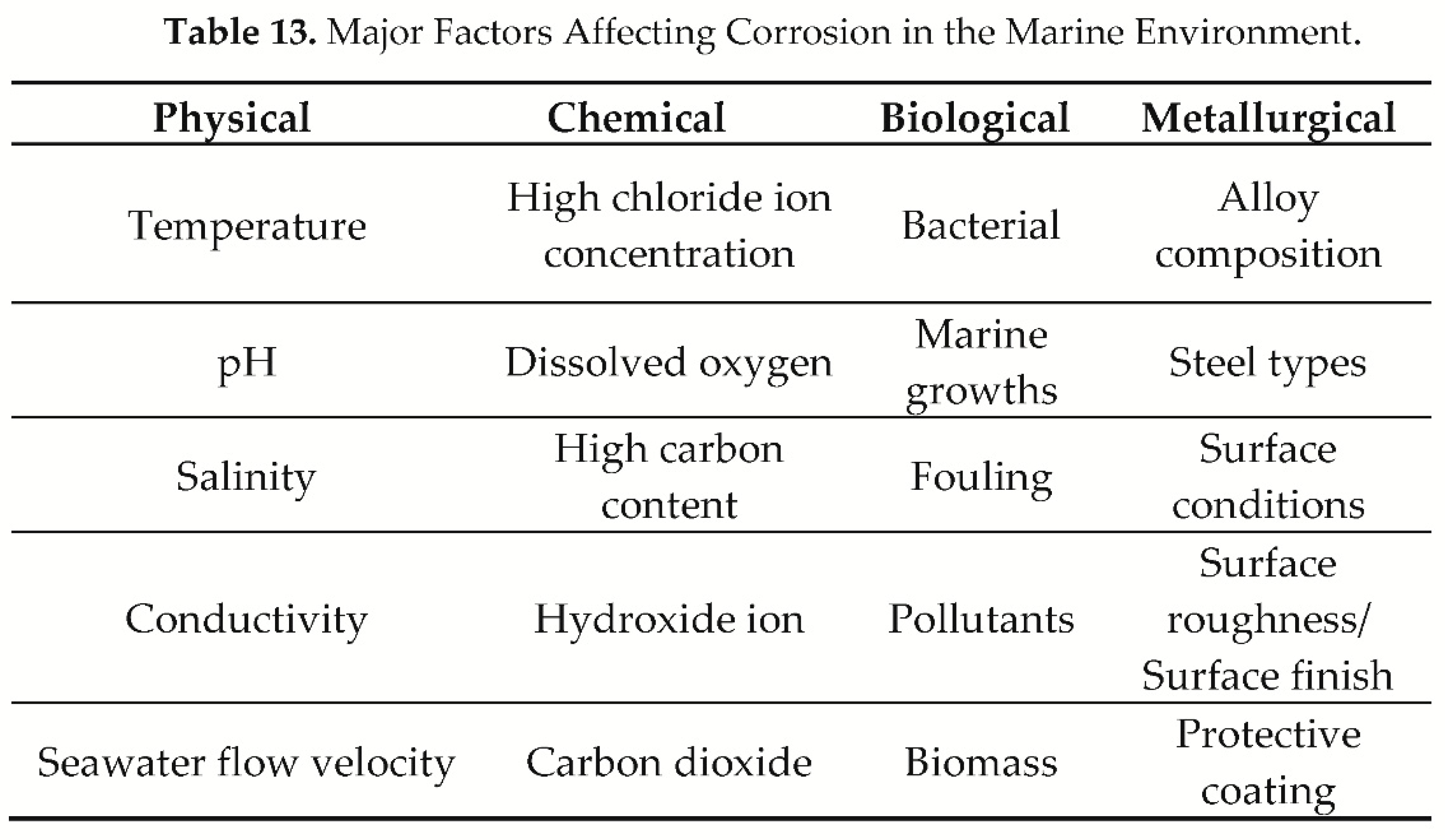
The high concentration of free ions in seawater, coupled with elevated salinity and oxygen levels, renders it a highly corrosive environment. Corrosion-related degradation of the armor in the marine environment can be classified into four categories [31]. Table 13 shows major factors affecting armor corrosion in the marine environment. The analysis focuses on physical factors, including salinity, conductivity, and water velocity; chemical factors, such as elevated chloride ion concentration and dissolved oxygen levels; and metallurgical factors, such as the surface armor condition. Other items were excluded because no clear evidence was found.
5.2.1. Composition of Seawater
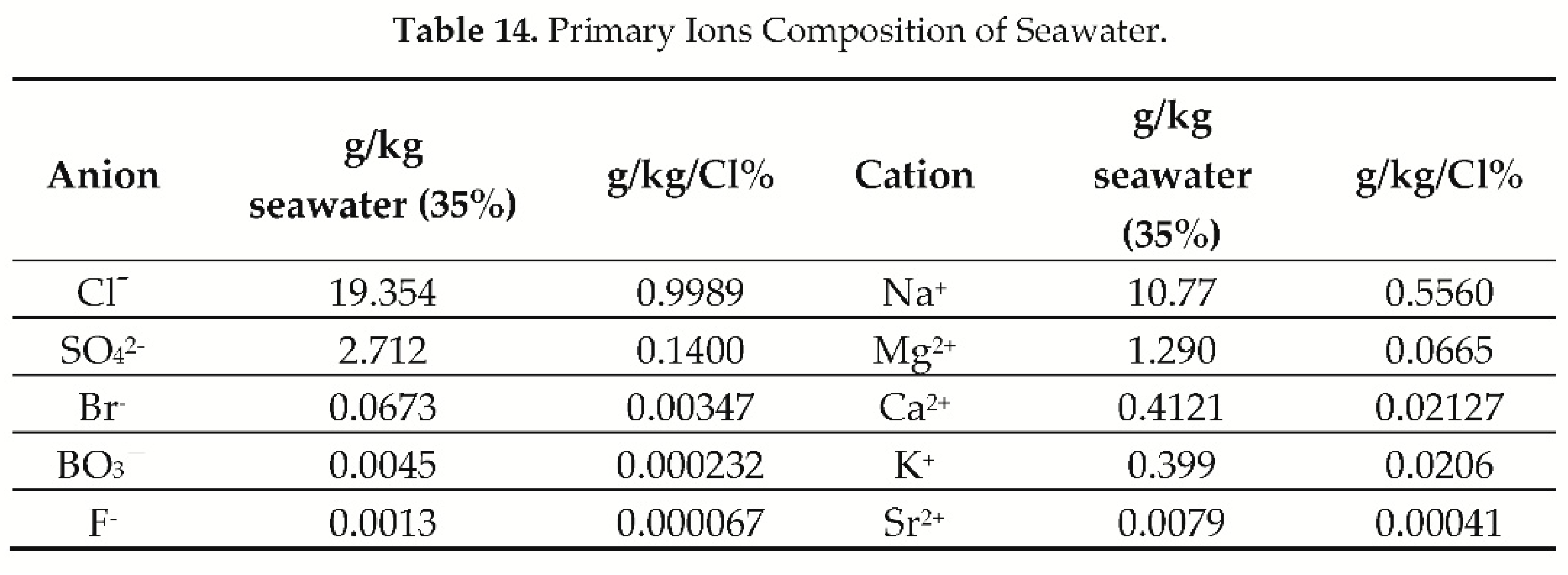
The two most prevalent elements in seawater, after oxygen and hydrogen, are sodium and chloride [32]. Table 14 delineates the principal chemical constituents of dissolved electrolytes within seawater. Seawater contains a high concentration of Cl− and Na+ ions, making it an effective electrolyte [33].
5.2.2. Conductivity
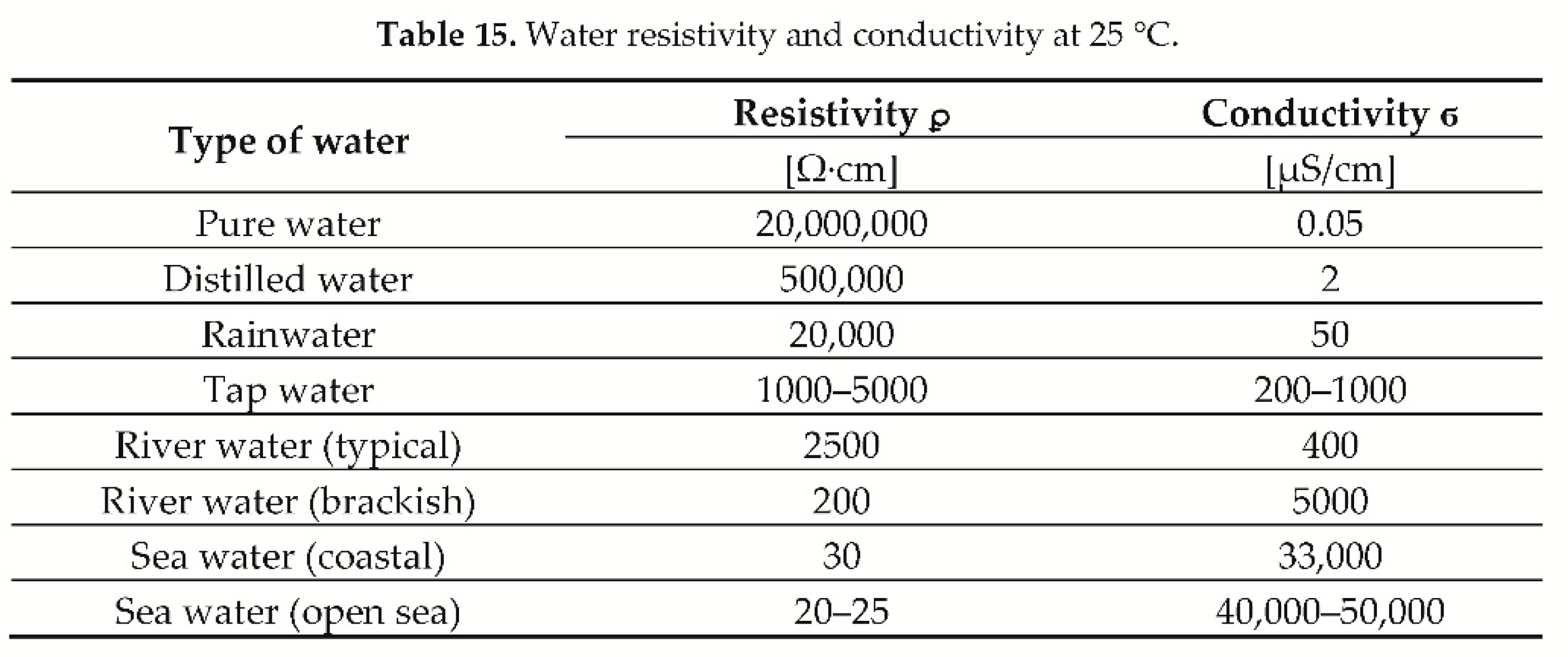
Table 15 shows that the resistivity and conductivity of various water types, including seawater, are markedly higher than those of other water categories [34]. Consequently, dissolved salts reduce resistivity. Resistivity and conductivity are fundamental physical properties that characterize a material’s electrical conduction.
5.2.3. Interaction Among Erosion, Corrosion, and the Fluid Environment
When armor is exposed to a corrosive environment, such as flowing seawater, chemical, mechanical, and electrochemical corrosion processes occur concurrently. Figure 23 depicts the interaction between mechanical erosion, chemical corrosion, and the fluid environment. This relationship indicates that erosive corrosion occurs only when erosion, corrosion, and the fluid environment are present concurrently [35]. It also shows that the interaction between seawater flow and the vertical component of Earth’s magnetic field induces an electromotive force in the armor, thereby increasing the corrosion potential and accelerating corrosion in areas where the armor’s corrosion-resistant surface layer is damaged. The equivalent circuit diagram of an armor under marine environmental conditions is described in Section 5.5.
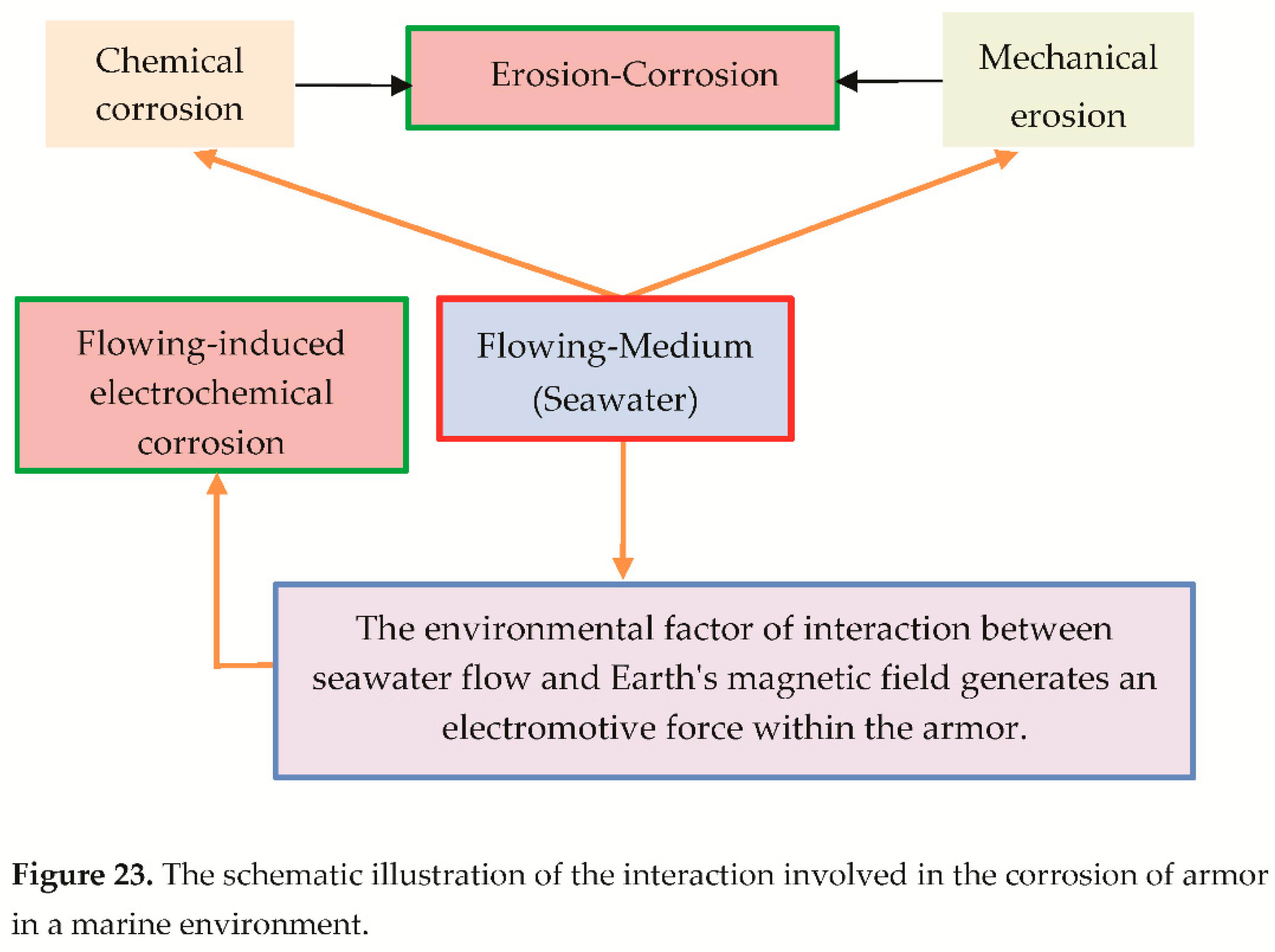
Erosion-corrosion of armor in a marine environment follows this fundamental pattern:
- Corrosion leads to the formation of metal oxides and hydroxides on the surface.
- The swift seawater flow over the metal surface dislodges oxides and hydroxides, thereby exposing the underlying fresh metal.
- The exposed fresh metal surface corrodes.
- The above process (1) to (3) repeats continuously from beginning to end until the metal component fails.
5.2.4. Seawater Moving Induced Corrosion
Erosion corrosion rate (E) and fluid velocity (v) are related through equation (3): where K is the material constant that depends on particle size and impact angle, and n is the velocity exponent [3].
E = K v n
After examining the extent of steel corrosion in seawater as a function of seawater velocity, the experimental results were reported in reference [4]. Figure 24 shows the experimentally derived steel corrosion rate as a function of seawater velocity and demonstrates the validity of equation (3).
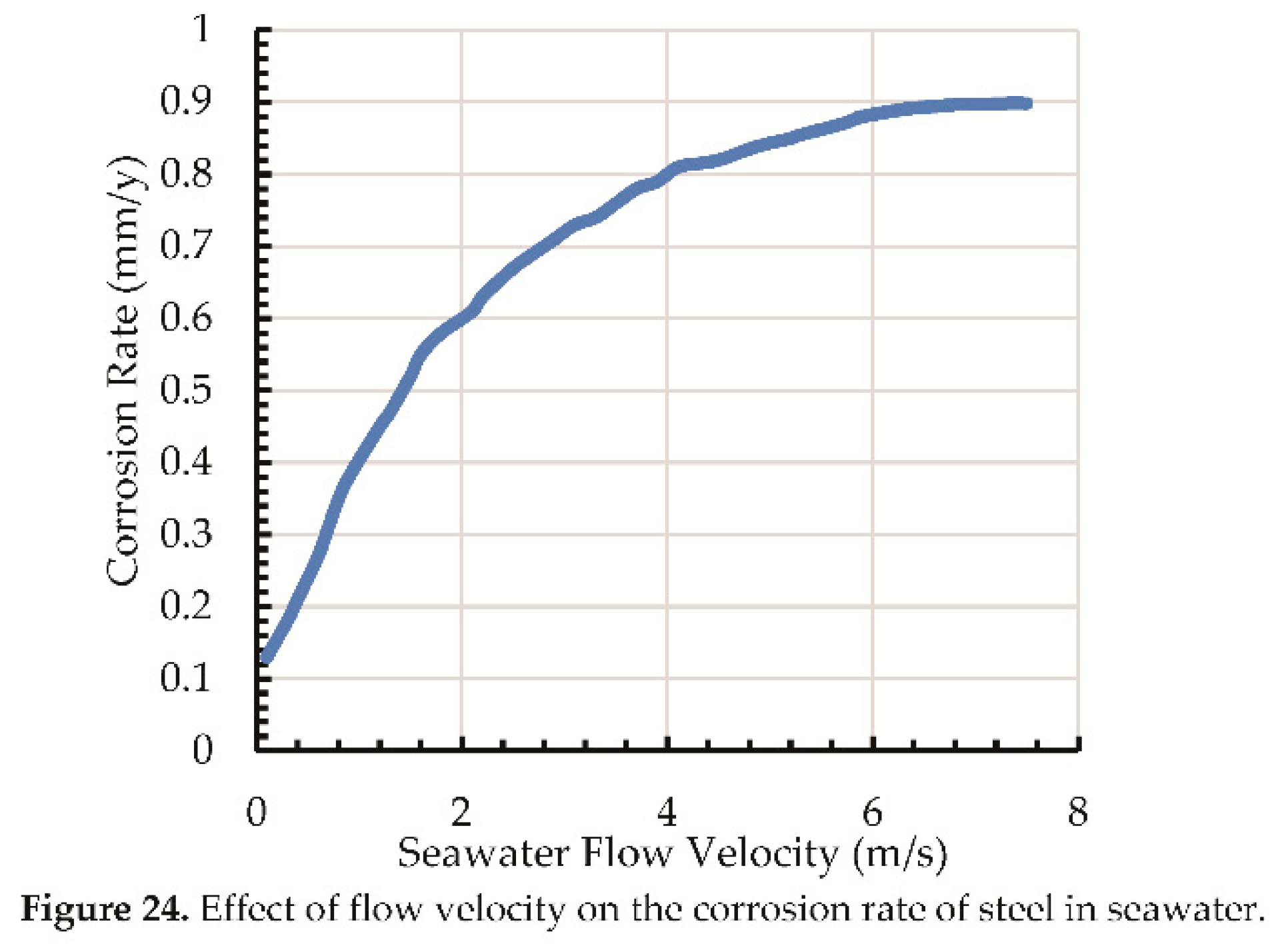
The experimental results confirm that increasing seawater flow velocity accelerates oxide wear on the armor surface and increases the supply of dissolved oxygen to the exposed fresh metal in a corrosive environment, thereby promoting corrosion.
5.2.5. Dissolved Oxygen
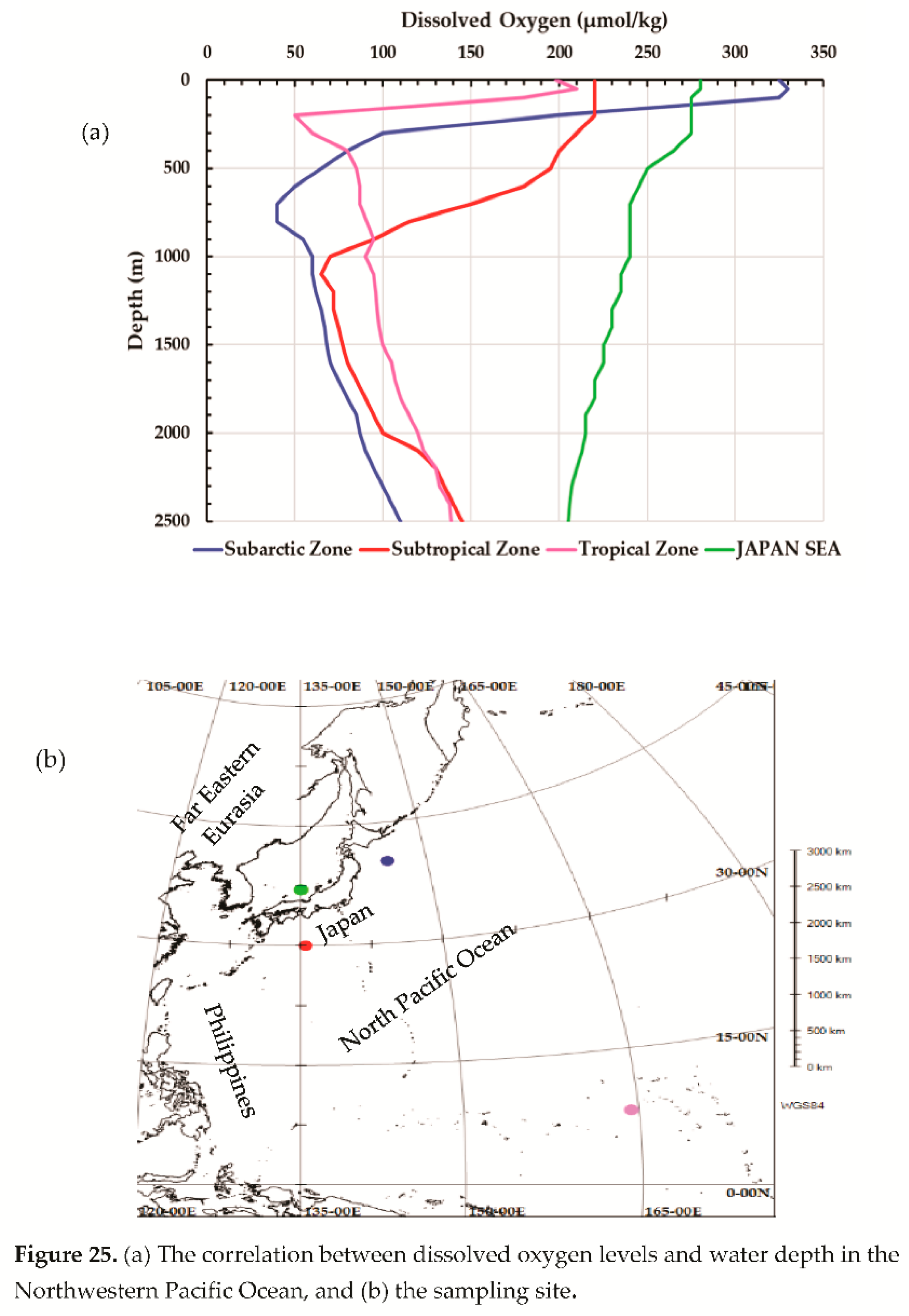
Dissolved oxygen, as an oxidant, markedly influences the corrosion of steel in marine environments. Figure 25 shows dissolved oxygen concentrations at various depths across four distinct locations surrounding Japan [36]. Across all locations, surface waters at depths of 0–200 meters consistently exhibit high dissolved oxygen concentrations. In the Japan Sea, which branches into the Tsugaru Warm Current, dissolved oxygen concentrations are increasing at multiple depths.
5.3. Analysis of Corrosion in Armor
During cable loading and laying on ships, mechanical damage to the armor surface is ineviTable due to friction with transport equipment, onboard laying mechanisms, buried equipment, and the ship’s hull. Corrosion from seawater exposure occurs at damaged sites, and the rate of seawater flow significantly influences the corrosion rate.
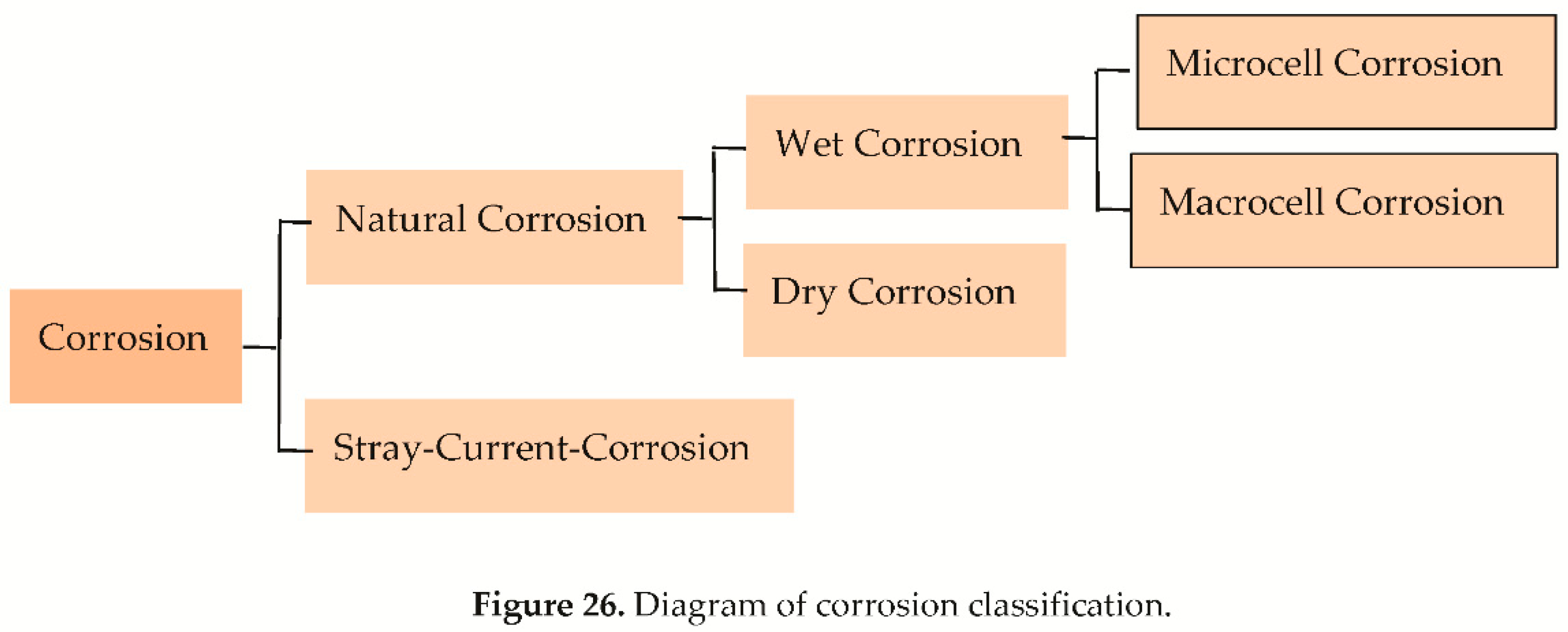
5.3.1. Corrosion Classification
Corrosion is classified by mechanism, as shown in Figure 26.
5.3.1.1. Microcells and Macrocell Corrosion
Corrosion of armor in seawater can be classified into two types based on the spatial configuration of the electrochemical cell. Figures 27 and 28 show the Segmented armor and corrosion cells of microcell and macrocell corrosion in a marine environment.
The initial category is designated as microcell corrosion, characterized by randomly distributed microscopic anodic and cathodic regions that coexist in proximity across the armor surface. The second type is designated macrocell corrosion. It manifests when the chloride-ion concentration varies significantly along the armor. Both microcell and macrocell activities contribute to the overall corrosion process. Notably, literature reports that macrocell corrosion often occurs in the vicinity of damage to existing armoring [37].
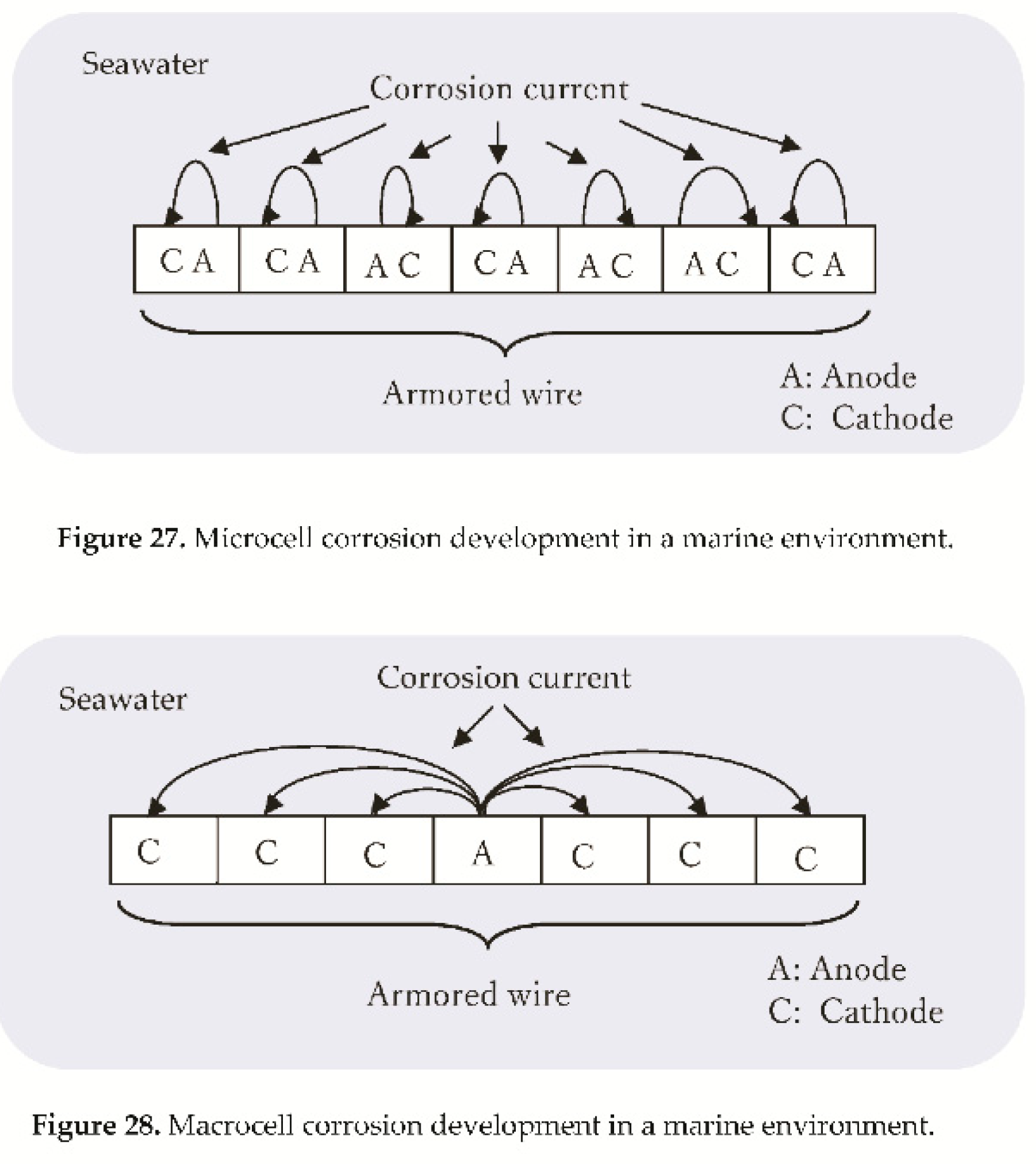
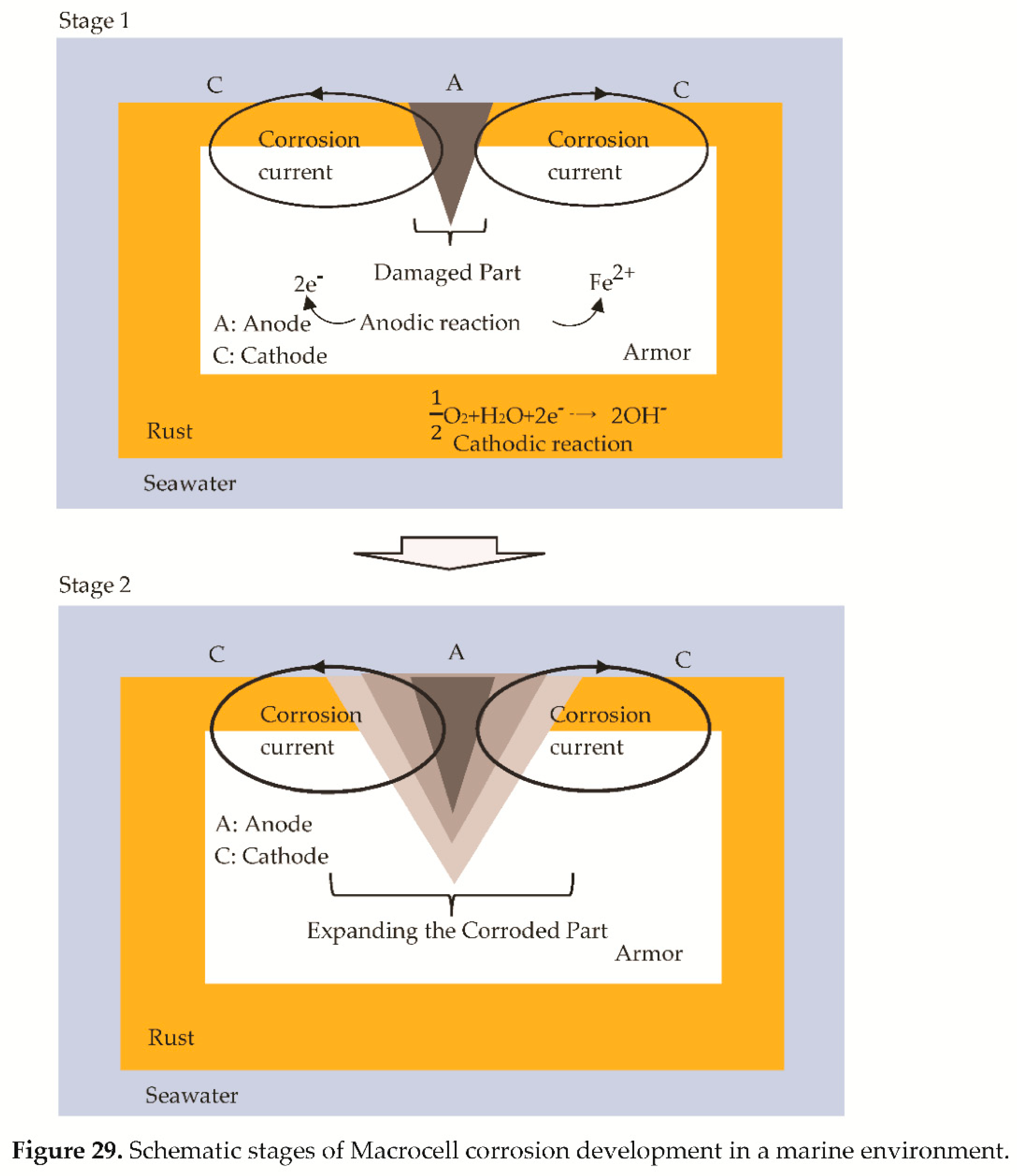
Figure 29 presents a schematic illustrating the progression of macrocell corrosion within a mechanically damaged region of an armor surface in a marine environment.
Stage 1
When a mechanically damaged area on the surface of armor is immersed in seawater, both anodic and cathodic reactions begin in and around the affected area. Equations (4) and (5) elucidate the anodic and cathodic reactions associated with steel corrosion in seawater that has dissolved oxygen.
Anodic reaction: Fe→Fe2++2e-
Stage 2
When the increased electrical conductivity of the seawater electrolyte significantly reduces the circuit resistance within the corrosion cell, it accelerates corrosion, highlighting the complex interplay between electrical properties and material degradation. As a result, the corrosion area expands.
5.4. Case Study on Corrosion of Armor
To elucidate the corrosion of armor caused by multiple environmental factors, we will conduct metallurgical analyses, including visual inspections and scanning electron microscopy (SEM) of thinned regions, on recovered SAM cables from maintenance activities.
5.4.1. Condition of Recovered Cable
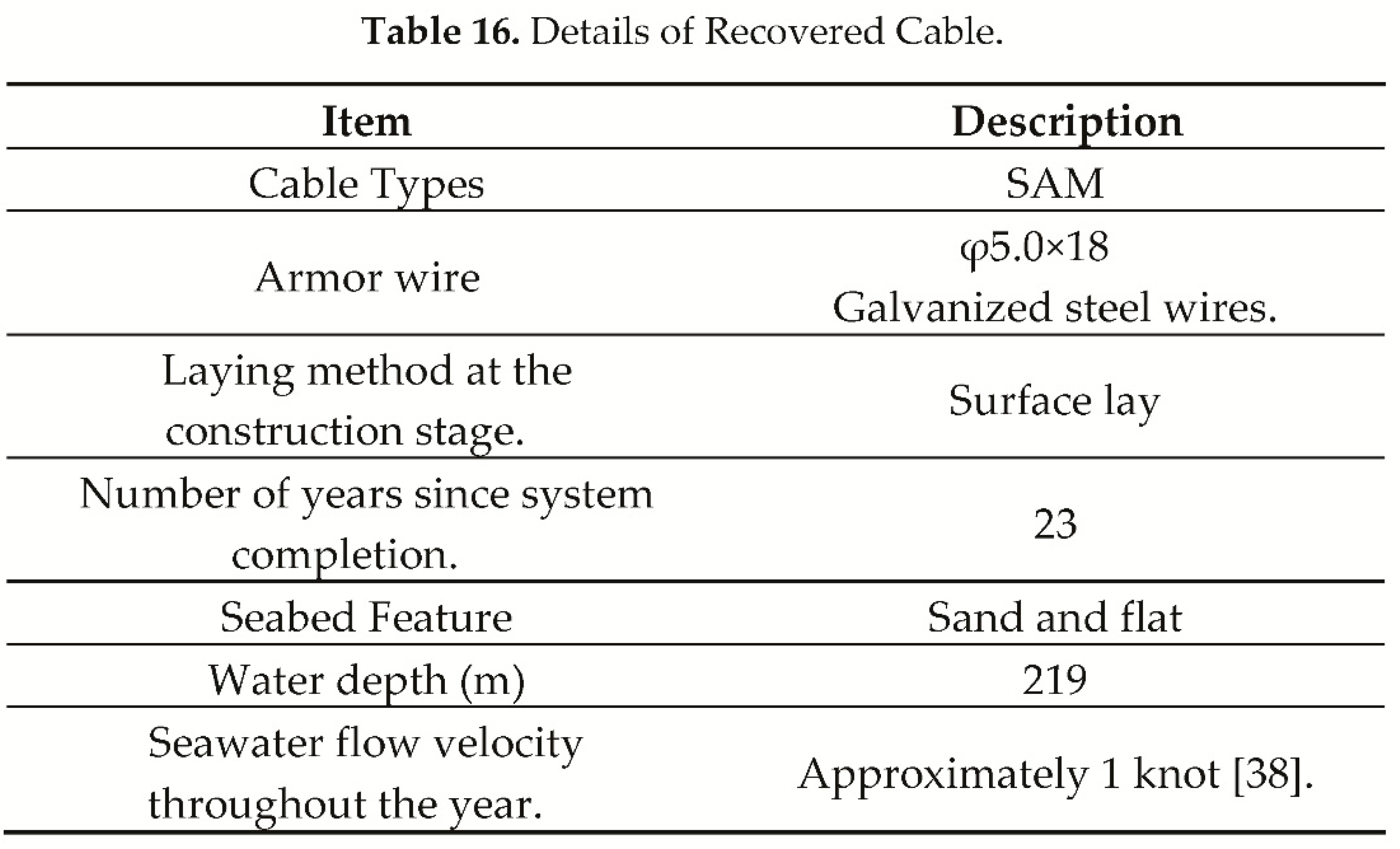
The appearance of recovered armored cables can be a clear indication that armor corrosion can cause physical degradation. During maintenance activities, the cables are recovered about 7 km offshore in Ibaraki Prefecture, northeast of Tokyo. A distinctive feature of the armor of the recovered cable is that only the upper segment is progressively thinned due to corrosion wastage. Table 16 provides an overview of the recovered cable.
5.4.2. Corrosion Behavior Observed by Visual Inspection and SEM
The recovered cable and the sections with reduced armor thickness due to corrosion are illustrated in Figure 30.
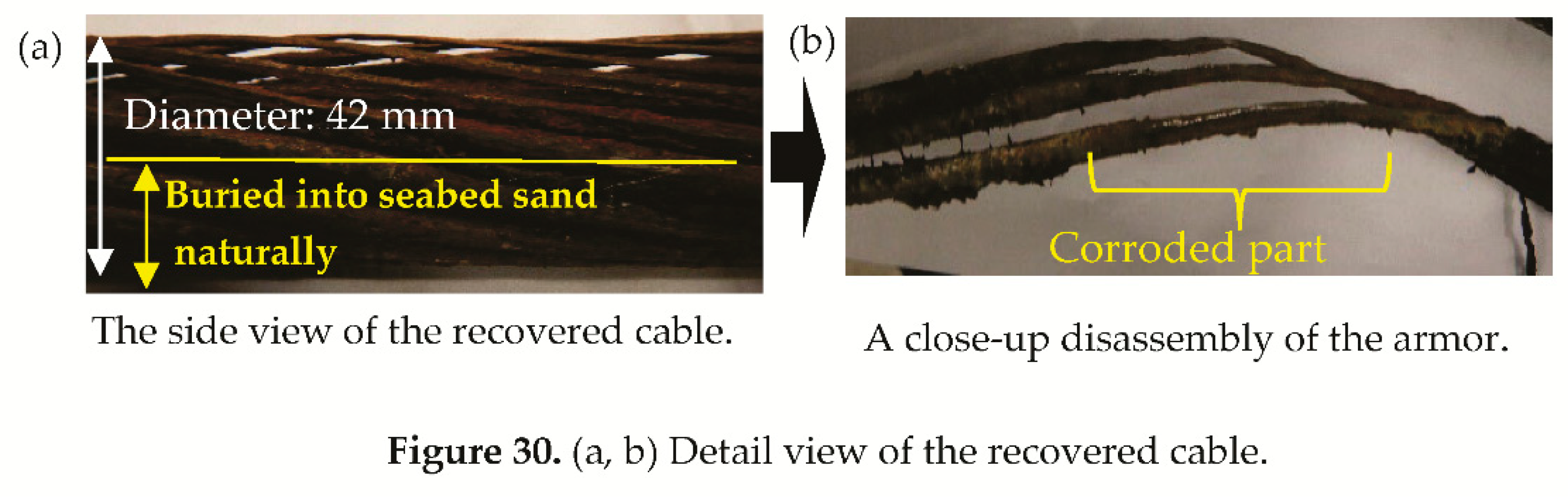
Since it was not possible to distinguish the upper and lower surfaces of the recovered cable on the seabed based on its appearance, the side exhibiting thinning of the armor wire due to corrosion was presumed to be the upper surface and was subsequently analyzed.
As shown in Figure 30(a), only the upper surface of the armor is corroded. The lower surface cable is believed to have been partially buried naturally in the seabed sand due to its weight in water and to have been protected from seawater flow. One possible cause of corrosion is environmentally coupled multi-factors, such as wet corrosion, seawater flow, and the Earth’s magnetic field. Conversely, as shown in Figure 30(b), the armor diameter is thinning. Figure 31 presents the measurement results for the armor’s outer diameter, including the thinned region.
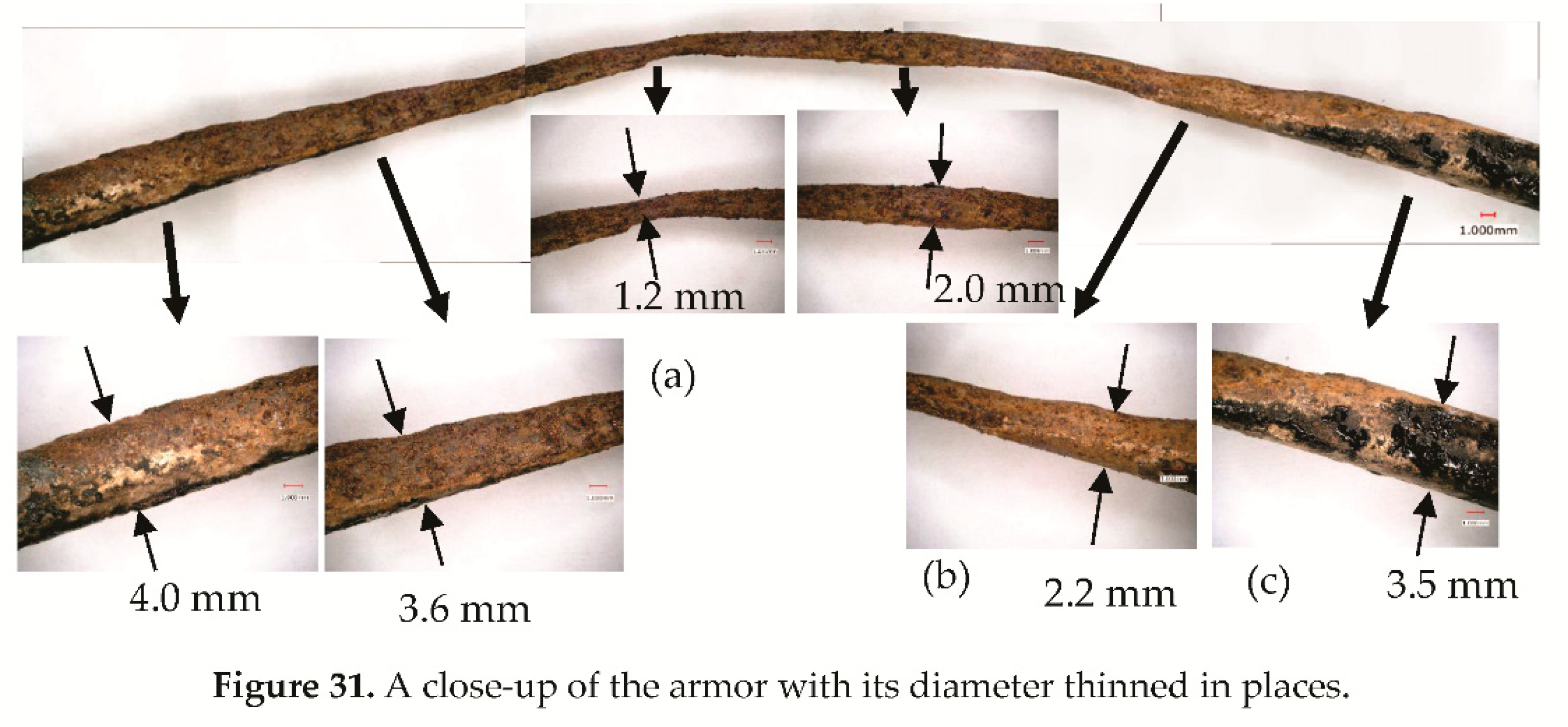
Figure 32. illustrates cross-sectional observations obtained through SEM of three regions: (a) with a significant thinning, (b) with a moderate thinning, and (c) with a minimal thinning in Figure 31.
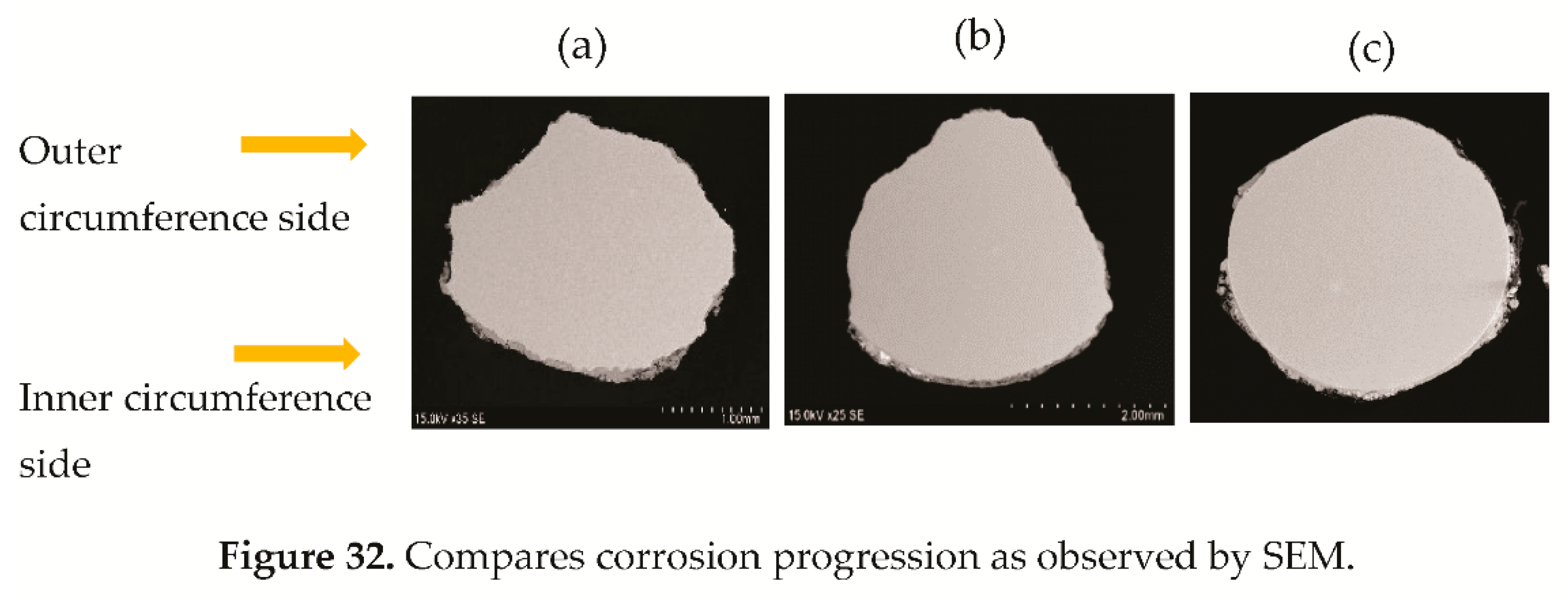
5.4.3. Considerations of Corrosion Behavior Observed by SEM
- The progression of corrosion is contingent upon the overall geometry of each cross-section. One side corrodes and loses material, whereas the other retains its original armor configuration. This corrosion form suggests that corrosion predominantly occurs on one particular side of the armor surface.
- The less corroded side has a zinc plating layer that inhibits further corrosion.
- Furthermore, the triangular corrosion shapes observed on the cross sections of the armors are thought to be due to the proximity of adjacent armors.
- Therefore, armor corrosion is thought to occur when the outer layer of the bitumen-impregnated polypropylene yarn degrades or is damaged, allowing seawater to penetrate and corrode the galvanized surface. As a result, the corrosion protection layer is partially corroded by seawater, accelerating the corrosion of the armor substrate.
- As corrosion progresses, the armor’s mechanical strength decreases, leading to its failure.
5.5. Equivalent Circuit of Armor Regarding Corrosion
Figure 33(a) depicts a system configuration in which both buried and unburied segments are integrated using armored cable and repeaters. Figure 33(b) illustrates the cable installation, including the surface-laying method used in a steep-slope region of the seabed. Figure 33(c) shows the equivalent circuit of the armor. The repeater insulates the electrical continuity of the armor between subsequent sections.
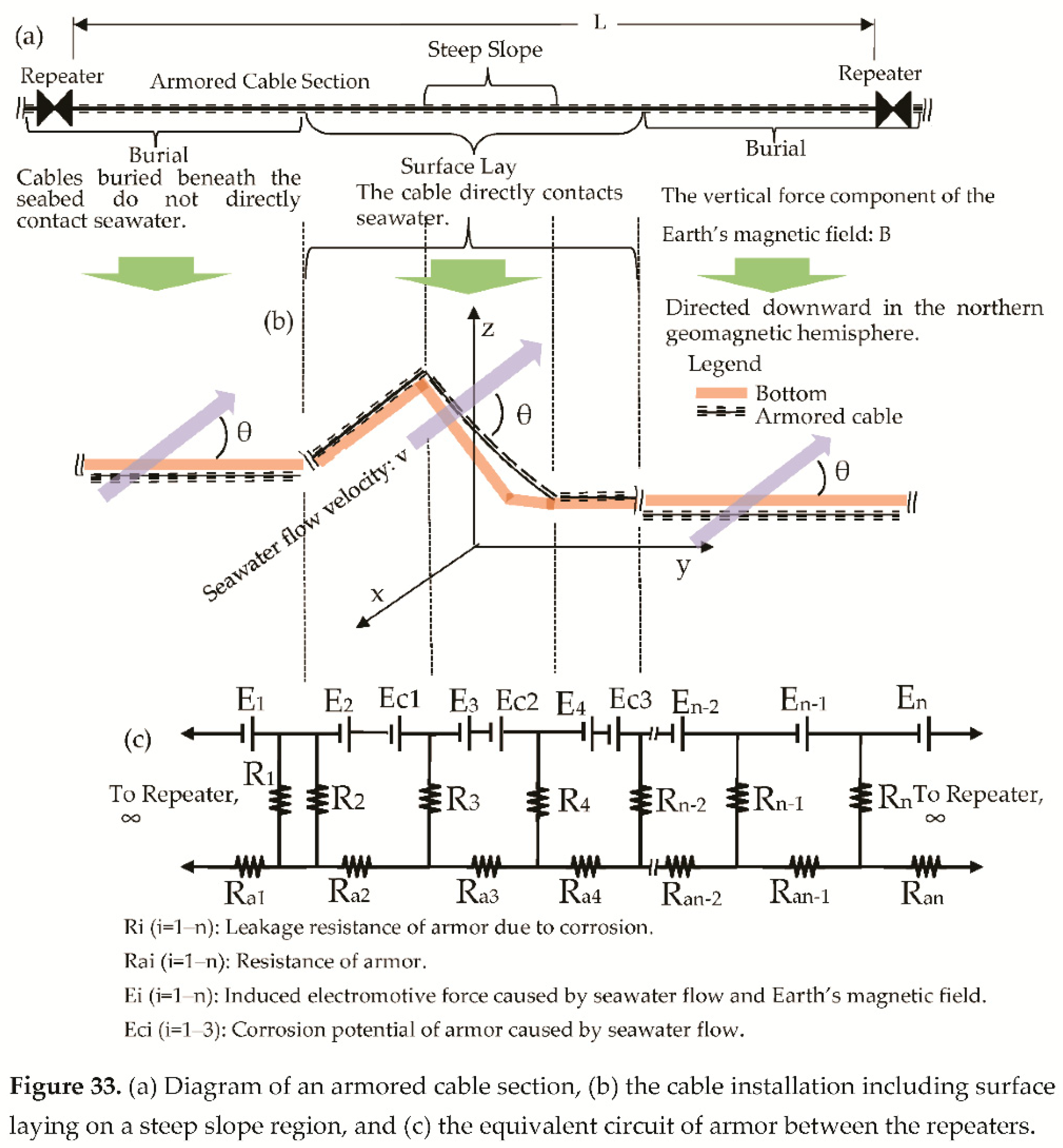
The electromotive force, denoted as (E), is generated throughout the armor of cable section between repeaters due to the interaction of seawater flow with Earth’s magnetic field’s vertical component—an effect explained by Faraday’s law of electromagnetic induction—and can be approximated using the following equation (6) [5].
where
E = E1+E2+E3+E4+En-2+En-1+En = B L v sin θ
E: Induced electromotive force (V)
B: Vertical component of Earth’s magnetic field (T)
L: Cable length between repeaters (km)
v: Seawater flow velocity (m/s)
θ: Angle between the cable and the seawater flow direction (degrees)
It was confirmed that seawater flow velocity contributes to armor corrosion, as evidenced by equations (3) and (6).
5.5.1. Comparison of the Buried and Surface Lay Sections
(1) Cable Burial Section
Since the armor does not come into contact with dissolved oxygen in seawater due to being insulated by seabed soil, Eci ≈ 0. As a result, armor corrosion is significantly minimized. Consequently, the leakage resistances of armor R1, Rn-2, Rn-1, and Rn are elevated. As a result, minimizing the corrosion current in each circuit. This analysis shows that leakage resistance is a key factor in the progression of corrosion.
According to civil engineering reports, the resistivity of seabed soil beneath the seabed at depths of 14 to 20 meters is 50 (Ω·cm) in Tokyo Bay, Japan [39]. In contrast, the resistivity of seawater ranges from 20 to 30 (Ω·cm) (see Table 15). This consideration clearly shows that the armor of buried cables is not susceptible to corrosion, and it supports the observation that the armor of buried cables recovered during maintenance activity is free of corrosion.
(2) Surface Laying Section
Electromotive forces, Ei, resulting from seawater flow and the Earth’s magnetic field, and the corrosion potential, Eci, caused by seawater flow, are induced in the armor. Furthermore, R2, R3, and R4 are approximately zero due to armor corrosion, resulting in short circuits. Furthermore, the persistent flow of corrosion current through each circuit accelerates the corrosion process.
5.6. Expected Service Life of Armor Based on a Proven Record
We will examine the lifespan of a single armored cable surface-laid between Nemuro, at the eastern tip of Hokkaido, Japan, and Kunashiri Island (a Distance of 38.2 km), a Japanese territory at the time, in the 1900s. Figure 34 shows the geographical route of the Nemuro-Kunashiri Island cable.
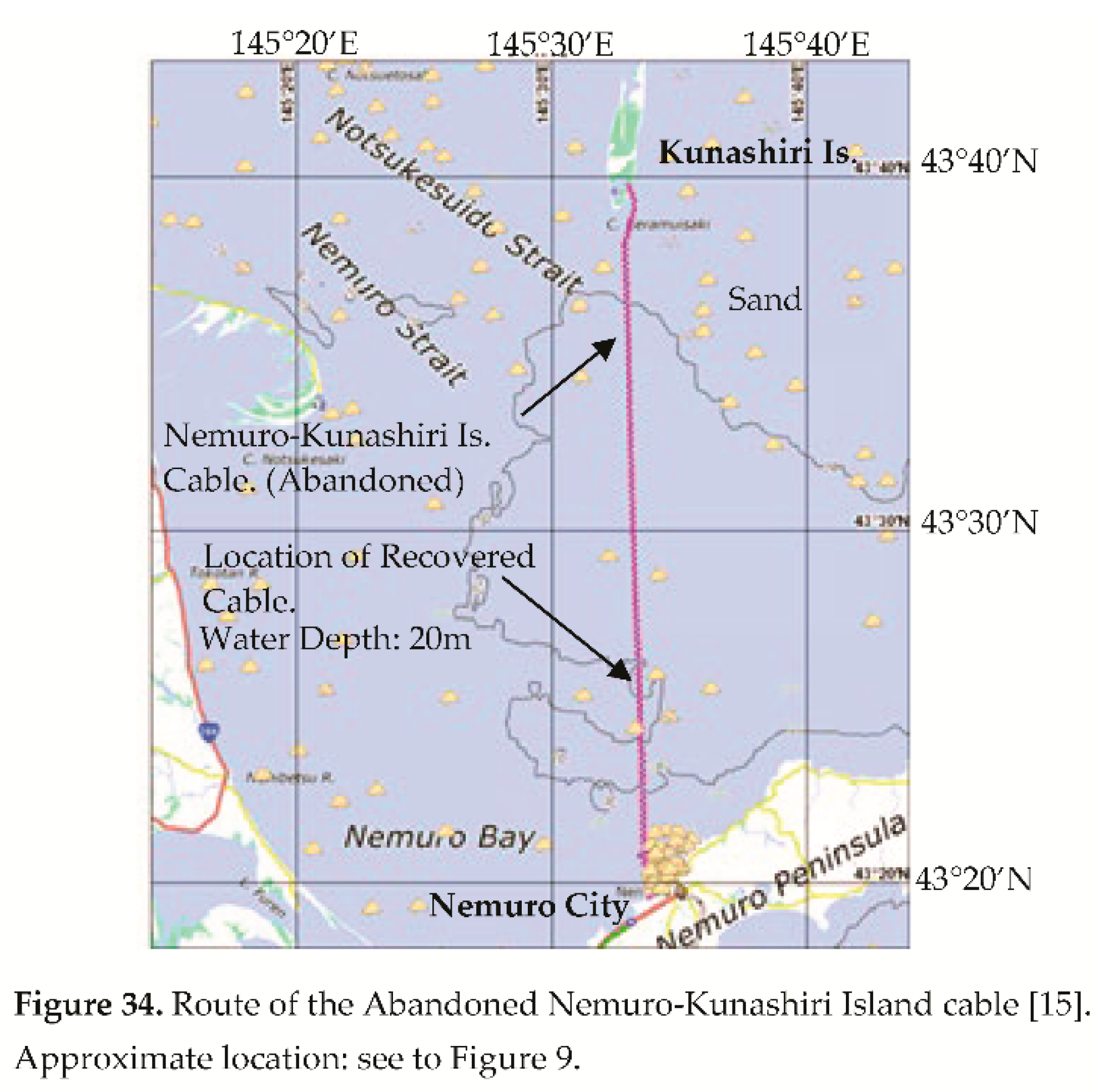
Table 17 shows the transition of the Nemuro-Kunashiri Island cable.
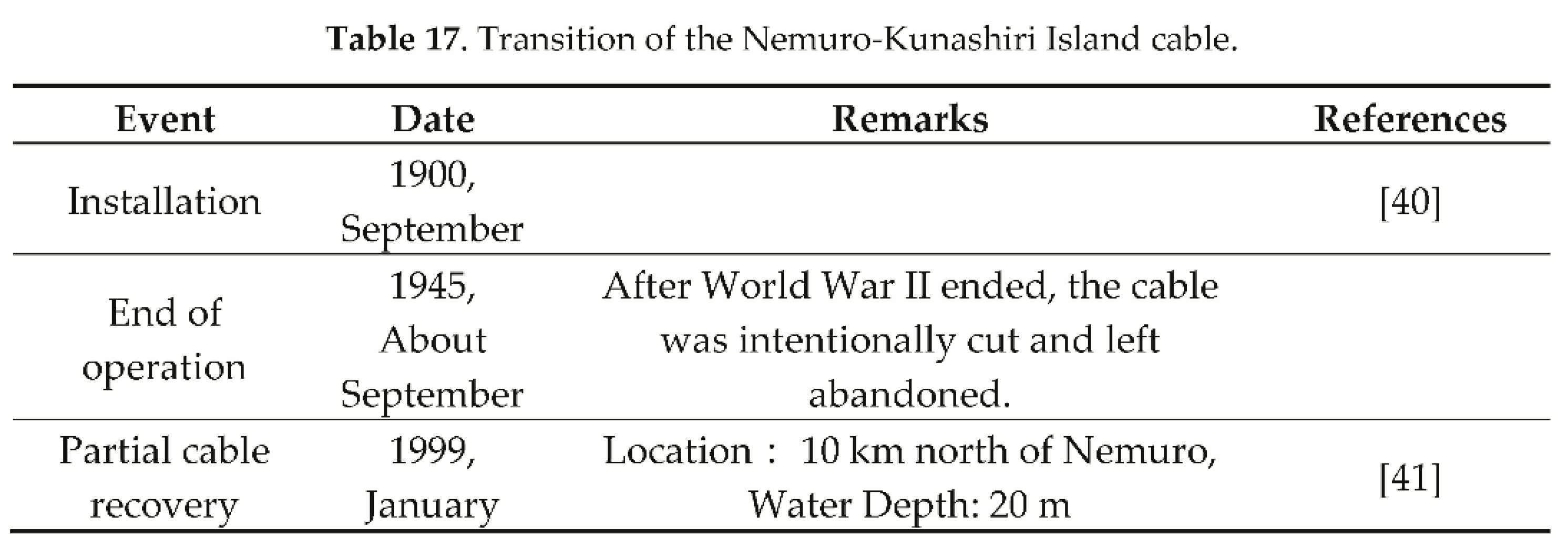
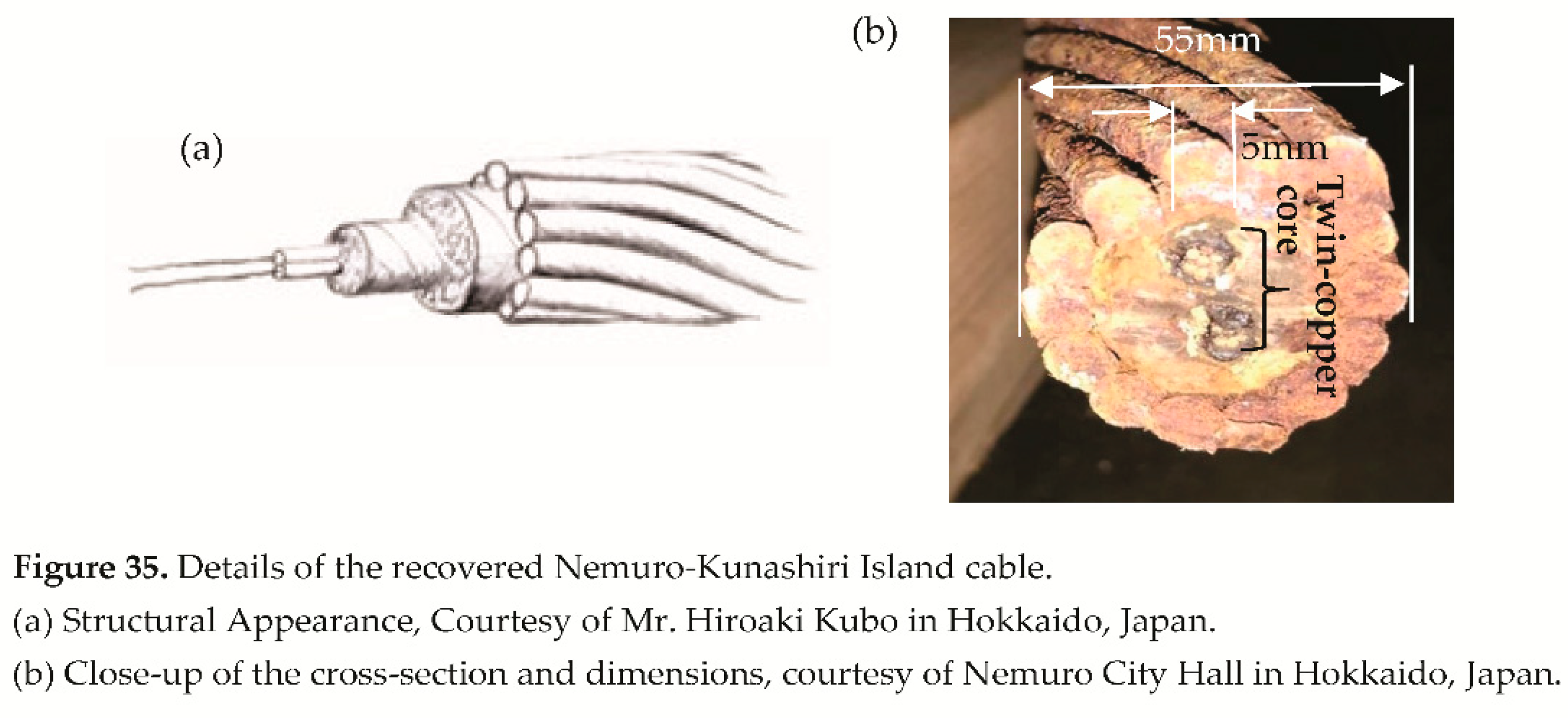
Figure 35 illustrates the structural appearance and cross-section of the recovered cable.
5.6.1. Considerations on Corrosion for Armor
The cable has a 55 mm diameter, and the armor consists of 14 steel wires, each 5 mm in diameter. Rust covers the entire surface of the armor due to corrosion. There is no evidence of mechanical wear or erosion corrosion. This is because the seawater flow velocity near Nemuro Strait, where the submarine cable in Figure 34 is located, remains below 0.5 knots year-round [42]. The seabed is flat and sandy. This suggests that the submerged cable’s weight will bury almost all of it. The gentle seawater flow likely allowed corrosive materials to accumulate on exposed armor sections, or it minimized corrosion from oxygen concentration cells. In both cases, the progression of corrosion was significantly slowed.
5.7. Evidence-Based Expectation of Armor Longevity
Upon analyzing armor thinning due to corrosion across three cases in the marine environment, as discussed in Section 3 and Section 5.4, and 5.7, it was determined that the seawater flow velocity substantially affects long-term durability. Figure 36 illustrates the relationship between the velocity of seawater flow and armor durability, as verified above. In the future, increasing the sample size will enable more accurate performance charts.
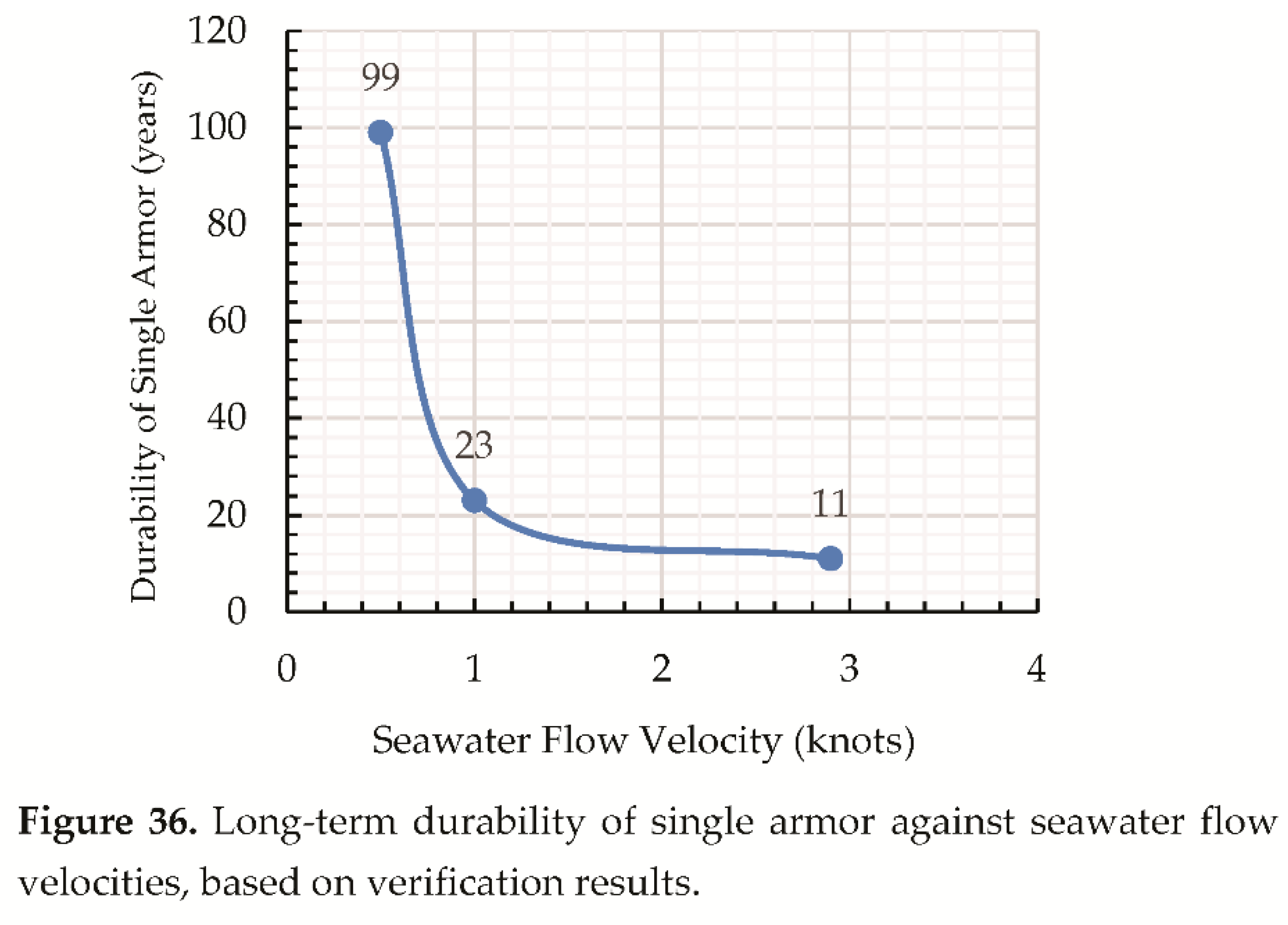
To ensure reliable performance in the challenging marine environment, the International Telecommunications Union (ITU) specifies a 25-year designated lifetime for the submerged segment (also known as the “wet plant”) [43]. This standard is based solely on the reliability of the parts and components that constitute the system and does not consider environmental factors. It is challenging to forecast the external forces—such as natural disasters or industrial activities—that may influence cable failures. Based on this, when applying the ITU standard for designed lifetime to the SAM cable exposed on the seabed and considering environmental factors, it is recommended that the seawater flow velocity should be approximately 1.0 knots or less, as illustrated in Figure 36.
5.8. Proposed Measures for Armor Corrosion and a Comparative Analysis of Their Economic Impact
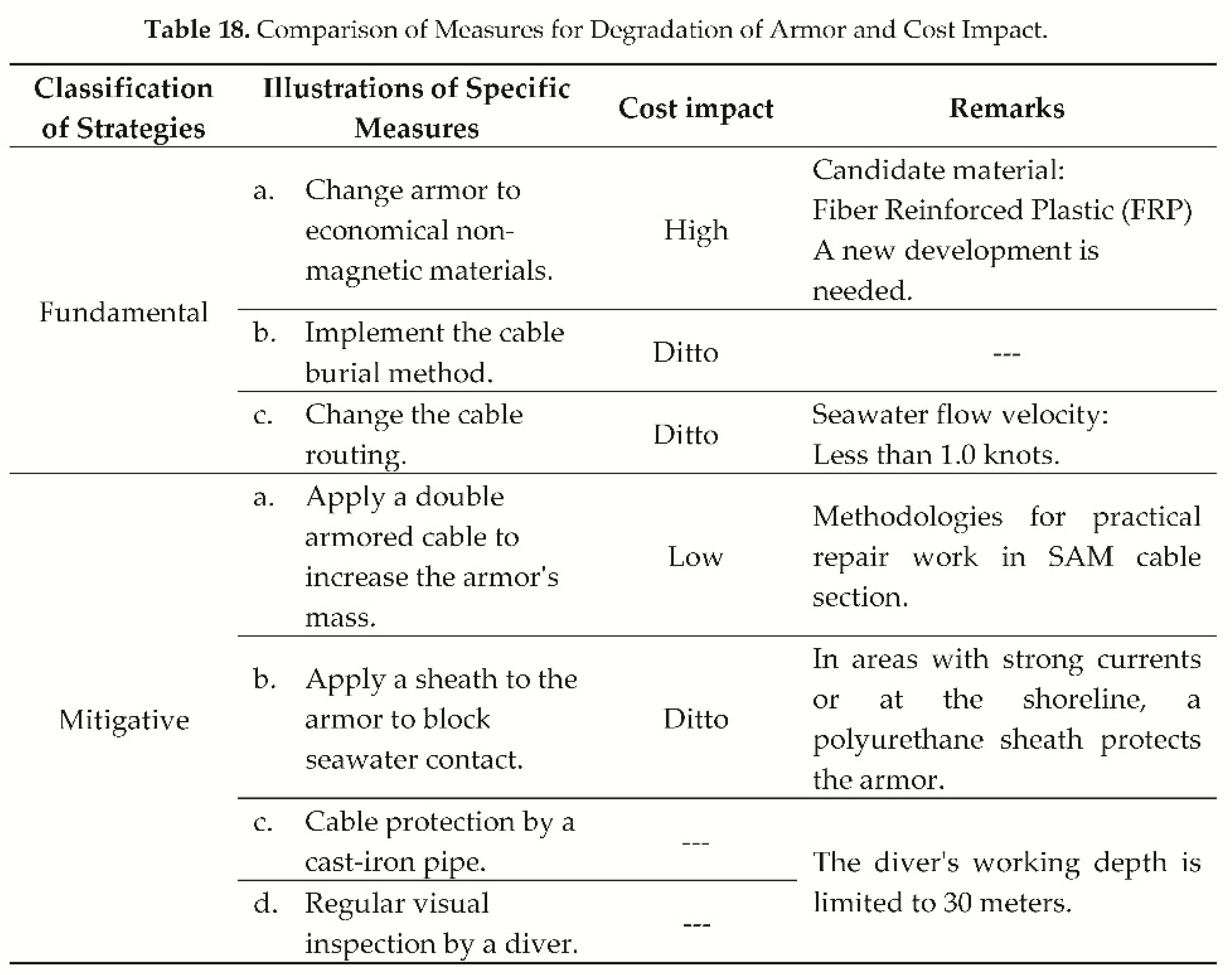
Given that it is impractical to eliminate the environmental factors responsible for armor degradation and corrosion, Table 18 outlines the fundamental and mitigation measures, along with their associated cost impacts.
6. Conclusion
Using empirical evidence and scientific methods, this research, through hypothesis validation and data analysis, elucidated the following influence of marine environmental factors on OFS cable durability.
- (1)
- Environmentally Coupled Multi-Factor Corrosion of Armor, Except Composition of Seawater
- ∙
- The velocity of seawater flows along the armored OFS cable.
- ∙
- The electromotive force induced in the armor by the ocean current crossing the vertical component of the Earth’s magnetic field.
- (2)
- A factor in extending the lifespan of unarmored OFS cable
- ∙
- The fundamental composition and thickness of the deep-sea sediments in the oceanic basin.
These findings will provide a solid foundation for future development of undersea communications infrastructure, enabling reliable data transmission and secure information exchange, strengthening protection against environmental risks, and directly strengthening critical economic and social infrastructure. Finally, we anticipate that increased interdisciplinary research will foster the development of more reliable, sTable, and cost-effective undersea digital communication infrastructures that remain operational beyond their designed lifetimes in marine environments.
Author Contributions
Conception and design, methodology, data collection, formal analysis, investigation, and writing - original draft preparation, review, and supervision, Y.O. The Author has read the published version of the manuscript.
Funding
This research received no external funding.
Data Availability Statement
Request to the author of this article.
Acknowledgments
During the preparation of this manuscript, KDDI Cable Ship & Subsea Engineering Inc. (KCS), based in Kawasaki-shi, Kanagawa Prefecture, Japan, graciously provided an extensive collection of valuable maintenance records related to their cable maintenance operations. We also express our gratitude to Nemuro City Hall in Hokkaido and to Mr. Hiroaki Kubo, a resident of Nemuro, for providing materials on the Nemuro-Kunashiri Island cable.
Conflicts of Interest
The author declares no conflict of interest.
References
- International Telecommunication Union (ITU) Development Sector, measuring digital development: Facts and Figures 2022, Telecommunication Development Bureau, Place des Nations, CH-1211 Geneva 20, Switzerland, pp. 22, ISBN:978-92-61-37011-5 (Electronic version). Available online: https://www.itu.int/dms_pub/itu-d/opb/ind/d-ind-ict_mdd-2022-pdf-e.pdf (accessed on 12 September 2025).
- Xin Kang, Xie Ma, Runa Feng, Yuantao Zhao, Senan Shao, Mingfeng Jiang and Xiushui Ma, Review of Submarine Cable Design Lifetime, International Joint Conference on Civil and Marine Engineering (JCCME 2023), IET Conference Proceedings, Volume 2023, Issue 31. [CrossRef]
- Padmalatha Rao and Lavanya Mulky, Erosion-Corrosion of Materials in Industrial Equipment: A Review, European Chemical Societies Publishing, 2023, e202300152. [CrossRef]
- Carlos Guedes Soares.; Yordan Garbatov and A. Zayed, Effect of environmental factors on steel plate corrosion under marine immersion conditions, Corrosion Engineering, Science and Technology,2011, Vol. 46, No.4, pp. 524–541. [CrossRef]
- T. EZOE and K. SUZUKI, On the Failures of Submarine Cable by Electrolytic Corrosion (in Japanese), IEEJ Journal, 1956, Vol 76(813), pp. 609–616. [CrossRef]
- T. KIYONO; T. EZOE and K. SUZUKI, Theoretical Consideration of Submarine Cable Failures by Electrolytic Corrosion due to Tidal Flow (in Japanese). IEEJ Journal, 1958, Vol 78(834), pp. 322–334. [CrossRef]
- Ayumi SARUWATARI.; Yu TAJIMA.; Yoshihiro YONEKO and Itsuki SAITO, Effects of the Ocean Current on the Tidal Energy Resource in the Tsugaru Strait (in Japanese), Japanese Journal of JSCE, B2, 2013, Vol. 69, No.2, pp.I_1296–I_1300. [CrossRef]
- Tetsuo YAMAZAKI.; Katsuya TSURUSAKI.; Keiji HANDA and Takahiko INAGAKI, Geotechnical Properties of Deep Ocean Sediment Layer (In Japanese), Journal of MMIJ (Mining and Materials Processing Institute of Japan), 1995, Vol. 111, Issue 5, pp. 309–315. [CrossRef]
- Roger Sayre; Dawn J Wright, Sean Breyer and Kevin Butler, A New Map of Global Ecological Marine Units —An Environmental Stratification Approach, 2017, p.8, the American Association of Geographers in collaboration with the U.S. Geological Survey (USGS), Esri, and the Group on Earth Observations (GEO), 1710 16th Street NW, Washington, DC 20009-3198, ISBN 978-0-89291-281-0. Available online: https://www.researchgate.net/publication/316486658_A_New_Map_of_Global_Ecological_Marine_Units_-_An_Environmental_Stratification_Approach/link/5900b1bda6fdcc8ed50e91a8/download?_tp=eyJjb250ZXh0Ijp7ImZpcnN0UGFnZSI6InB1YmxpY2F0aW9uIiwicGFnZSI6InB1YmxpY2F0aW9uIn19 (accessed on 25 September 2025).
- T. NISHIDA and O. NAGATOMI. Latest Technologies and the OCC-SC300 Optical Submarine Cable, NEC Technical Journal 2010, Japan, Vol 5 No.1, pp.18-22. Available online: https://www.nec.com/en/global/techrep/journal/g10/n01/pdf/100105.pdf (accessed on 12 September 2025).
- William A. Anikouchine and Richard W. Sternberg, The world ocean, An Introduction to Oceanography, the second edition, Prentice-Hall, Inc., Englewood Cliffs, N.J. 07632, 1981, p. 14. ISBN 0-13-967778-X.
- P G Allan, Hydrographic Information and the Submarine Cable Industry, Proceedings, Hydro 2001, Norwich, UK, p.3. https://www.yumpu.com/en/document/read/11750371/hydrographic-information-and-the-submarine-cable-industry-allan (accessed on 25 September 2025).
- Writing Committee of Optical Submarine Cable, Optical Submarine Cable (in Japanese), PARADE, 6F 1-19-6 Ebisu Nishi, Shibuya-ku, Tokyo, Japan, 2010, p.82, ISBN:978-4-434-14494-3.
- Thomas Worzyk, Submarine Power Cables, Edition No. 1, 2009, p. 39, Springer-Verlag Berlin, Heidelberg, e-ISBN 978-3-642-01270-9. [CrossRef]
- Maritime Domain Awareness (MDA) Situational Indication Linkages. Available online: https://www.msil.go.jp/msil/htm/topwindow.html (accessed on 29 July 2025).
- Study Group for the Development of Long-Distance Undersea DC Power Transmission, Inter-Regional Interconnection in Japan Using Undersea DC Power Transmission (in Japanese), 2021 March 15, Ministry of Economy, Trade, and Industry (METI), pp. 3-4. Available online: https://www.meti.go.jp/shingikai/energy_environment/chokyori_kaitei/pdf/001_06_00.pdf (accessed on 9 April 2025).
- National Atlas of Japan, Geospatial Information Authority of Japan, first edition, 8.2 Bottom Materials of the Adjacent Seas, 1977, p. 32. Available online: https://www.gsi.go.jp/atlas/archive/j-atlas-d_e_08.pdf (accessed on 10 April 2025).
- Yutaka Isoda, Kazumi BaBa, Tides and Tidal currents in the Tsugaru Strait (in Japanese), Bulletin of the Faculty of Fisheries Hokkaido University, 1998, pp.117–130. Available online: https://hdl.handle.net/2115/24174. (accessed on 17 December 2025).
- Naoto EBUCHI, Yasushi FUKACHI, Kay I. OHSHIMA, Kunio SHIRASAWA, Masao ISHIKAWA, Toru TAKATSUKA, Takaharu DAIBO, and Masaaki WAKATSUCHI, Observation of the Soya Warm Current Using HF Ocean Radar, Journal of Oceanography, 2006, Volume 62, pp.47-61. [CrossRef]
- Magnetic diagram: Vertical force component in 2020 (in Japanese). Available online: https://www.gsi.go.jp/common/000236996.pdf (accessed on 29 July 2025).
- Hydrographic Service and Standards Committee, Report of the International Cable Committee, Docs: HSSC16-07.10A, ICPC activities affecting HSSC, 2024, p.3. Available online: https://iho.int/uploads/user/Services%20and%20Standards/HSSC/HSSC16/HSSC16_2024_07.10A_EN_ICPC%20activities%20affecting%20HSSC.pdf.(accessed on 12 September 2025).
- Yukitoshi OGASAWARA and Wataru NATSU, Proposal for reducing failure rate of fiber-optic submarine cables in deep-sea based on failure analysis and experiments, Journal of Advanced Marine Science and Technology Society, 2020, Vol. 25, No.2, pp.1–12. [CrossRef]
- Yukitoshi OGASAWARA and Wataru NATSU, A Cost-Effective Approach to the Risk Reduction of Cable Fault Triggered by Laying Repeaters of Fiber-Optic Submarine Cable Systems in Deep-Sea, Journal of Marine Science and Engineering, 2021, 9(9), 939. [CrossRef]
- Adriana Dutkiewicz, R. Dietmar Müller, Simon O’Callaghan, and Hjörtur Jónasson, Census of Seafloor Sediments in the World’s Ocean Basins, The GSA (Geological Society of America) Data Repository 2015271,2015. [CrossRef]
- Karl Terzaghi, Ralph B. Peck, Gholamreza Mesri, Soil Mechanics in Engineering Practice, Third Edition, John Wiley & Sons, Inc., 605 Third Avenue, New York, NY 10158-0012, 1996, ISBN 0-471-08658-4, p 22. https://cequcest.wordpress.com/wp-content/uploads/2015/09/terzaghi129883967-soil-mechanics-in-engineering-practice-3rd-edition-karl-terzaghi-ralph-b-peck-gholamreza-mesri-1996.pdf (accessed on 13 January 2026).
- British Standard 8004, BSI 1986 (Code of Practice for Foundations), p. 19, Chiswick High Road, London W4 4AL. https://www.scribd.com/document/371114440/244692477-BS-8004-1986-pdf-pdf (accessed on 13 January 2026).
- R. D. Goughnour, J. R. Sallberg, Evaluation of the Laboratory Vane Shear test, Highway Research Board, 1964, Issue No.48, pp. 19–33. Available online: https://onlinepubs.trb.org/Onlinepubs/hrr/1964/48/48-002.pdf (accessed on 16 January 2026).
- Kenji HIRATA, Masaru AOYAGI, Hitoshi MIKADA, Katsuyoshi KAWAGUCHI, Yuka KAIHO, Ryoichi IWASE, Shigehiko MORITA, Itaru FUJISAWA, Hiroko SUGIOKA, Kyohiko MITSUZAWA, Kiyoshi SUYEHIRO, Hajimu KINOSHITA, and Noriyuki FUJIWARA, Real-Time Geophysical Measurements on the Deep Seafloor Using Submarine Cable in the Southern Kurile Subduction Zone, IEEE JOURNAL of OCEANIC ENGINEERING, 2002, VOL.27 NO.2, pp. 170–181. [CrossRef]
- Hiroo TAKAHASHI, Eiichi ASAKAWA, Yuji KAWAI, Yukitoshi OGASAWARA, and Tatsuo SAEKI, Study on the Deployment of Accelerometers in Reflection Seismic Surveys, IEEE, 2007, pp. 420–426. [CrossRef]
- Nobuyoshi HARA, Fundamentals of Corrosion of Metals (in Japanese), Journal of the Vacuum Society of Japan, Vol. 44, No.10, 2001, pp.860–867. [CrossRef]
- Jyoti Bhandari, Faisal Khan, Rouzbeh Abbassi, Vikram Garaniya, Roberto Ojeda, Modelling of pitting corrosion in marine and offshore steel structures – A technical review, 2015, Journal of Loss Prevention in the Process Industries, Vol. 37, pp.39–62. [CrossRef]
- Sea Water, National Oceanic and Atmospheric Administration, U.S. Department of Commerce Available online: https://www.noaa.gov/jetstream/ocean/sea-water (accessed on 10 September 2025).
- Yu KUWAMOTO, Inorganic components of seawater (in Japanese), Bioscience, Biotechnology, and Biochemistry, 2009, Vol. 22, No.7, pp.439–445. Available online: https://katosei.jsbba.or.jp/download_pdf.php?aid=101572 (accessed on 14 June 2025).
- Jarosław WIATER, Electric shock hazard limitation in water during lightning strike, Electrotechnical Review, WYDAWNICTWO SIGMA-NOT SP Z OO, ISSN:0033-2097, 2012, Vol. R. 88 NR 8. Available online: https://www.researchgate.net/profile/Jaroslaw-Wiater-2/publication/267975875_Electric_shock_hazard_limitation_in_water_during_lightning_strike/links/5f7332c6299bf1b53efcd6a4/Electric-shock-hazard-limitation-in-water-during-lightning-strike.pdf?origin=publication_detail&_tp=eyJjb250ZXh0Ijp7ImZpcnN0UGFnZSI6InB1YmxpY2F0aW9uIiwicGFnZSI6InB1YmxpY2F0aW9uRG93bmxvYWQiLCJwcmV2aW91c1BhZ2UiOiJwdWJsaWNhdGlvbiJ9fQ&__cf_chl_tk=RjD3F_dye.hHPuM8LJ020OZOYGrJvZf9tYceN3BkU1E-1757655069-1.0.1.1-czkP74EQPpYs6CKuXKYZHrOBV2YJLLgNLAx4kl7zUKg (accessed on 12 September 2025).
- Sajjad Akramian Zadeh, Introduction to Corrosion – Basics and Advances, Chapter Erosion-corrosion, Open access peer-reviewed chapter, 2022, www.intechopen.com. [CrossRef]
- JMA (Japan Meteorological Agency) HP, Knowledge/Explanation, Knowledge of the Ocean Interior, Dissolved oxygen content, Available online: https://www.data.jma.go.jp/kaiyou/db/mar_env/knowledge/koyusui/yozonox.html (accessed on 29 July 2025).
- Shinichi MIYAZATO, Nobuaki OTSUKI, Measurement Method for Macrocell Corrosion in Concrete Specimen using a Segmented Steel Bar, Journal of Advanced Concrete Technology, 2022, Vol. 20, No. 3, pp. 222-235. [CrossRef]
- Yoshiaki KURIYAMA, Kazumasa KATO and Yasushi OZAKI, Classification of coastal current velocity distribution and investigation of controlling factors, Proceedings of Coastal Engineering (in Japanese), Japan Society of Civil Engineers, 1992, Vol. 39, pp.196–200. [CrossRef]
- Shinji UTSUNO, Toru YAMAJI, Kazuhide YONAMINE, Yoshikazu AKIRA, Hiroyuki KOBAYASHI, Youichi WATANABE, Michio YOSHIDA, Yuichi MAEZONO, Yoshiyuki KAWASE, and Shigeru MATSUMOTO, Studies on the cathodic protection characteristics in seabed soil and the cathodic protection design of the port steel structures in consideration of the soil resistivity (in Japanese), Journal of Japan Society Civil Engineers, E2 (Materials and Concrete Structures), 2017, Vol. 73, No.2, pp. 220–238. [CrossRef]
- NTT docomo Business, NTT world engineering marine, Inc., HP, Chronology of Submarine Communication Cables in Japan (in Japanese). Available online: https://www.nttwem.co.jp/special/cable_history/chronological_Table/ (accessed on 12 September 2025).
- Newspapers, The Hokkaido Shimbun Press, morning paper, 1999 January 20, p. 29, (in Japanese). Title: “The abandoned submarine cable linking Nemuro and Kunashiri Island was recovered off the coast of Nemuro.”.
- Fumihiro MORI, Yutaka ISODA, Syoko ABE, Naoto KOBAYASHI, Hiroshi YAHABA, and Yasuhiro ISOGAI, Seasonal Variations of Surface Flow Patterns in the Nemuro Strait, Oceanography in Japan, 2010, Vol. 19, Issue 2, pp.89–110. [CrossRef]
- ITU-T Telecommunication standardization sector of ITU, G-series Recommendations - Supplement 59, 2018, Guidance on optical fiber and cable reliability, SERIES G: TRANSMISSION SYSTEMS AND MEDIA, DIGITAL SYSTEMS AND NETWORKS, p. 19. Available online: https://www.itu.int/rec/T-REC-G.Sup59-201802-I (accessed on 12 September 2025).
Disclaimer/Publisher’s Note: The statements, opinions and data contained in all publications are solely those of the individual author(s) and contributor(s) and not of MDPI and/or the editor(s). MDPI and/or the editor(s) disclaim responsibility for any injury to people or property resulting from any ideas, methods, instructions or products referred to in the content. |
© 2026 by the author. Licensee MDPI, Basel, Switzerland. This article is an open access article distributed under the terms and conditions of the Creative Commons Attribution (CC BY) license.
Copyright: This open access article is published under a Creative Commons CC BY 4.0 license, which permit the free download, distribution, and reuse, provided that the author and preprint are cited in any reuse.


