

Submitted:
27 February 2026
Posted:
02 March 2026
You are already at the latest version
Abstract
Glucose is a principal energy substrate for the brain. Hypo- and hyperglycemic episodes are frequent in senescent people thereby contributing to functional and structural impairment of brain neurons, yielding cognitive deficits in this population. In this report we investigate whether long-term changes in extracellular concentration of glucose may affect viability and transmitter functions of septum-originated SN56 cholinergic neuronal cells through alterations in their acetyl-CoA availability. Cell phenotypes with low (NC) and cAMP/retinoic acid in-duced, high expression cholinergic phenotype (DC) were investigated. Hypoglycemia brought about similar about 20-30% decreases of in pyruvate dehydrogenase complex (PDHC) and ATP-citrate lyase (ACLY) and 65% decline of lactate dehydrogenase (LDH) activities in NC and DC, respectively. Choline acetyltransferase (ChAT) and LDH activities in DC were about 3 to 8 and 1.7 to 2.4 times higher than in NC, over the entire range of glucose concen-trations, respectively. In effect DC appeared to be more resistant than NC to hypoglycemia, as evidenced by lower values of [IC50] of glucose against cell count and intracellular LDH, re-spectively. On the other hand, some of functional properties of DC such as cholinergic phe-notype (ChAT) and plasma membrane function (trypan blue exclusion, TB+) were found to be more prone to hypoglycemia than in NC, as demonstrated by higher respective [IC50] for glu-cose in DC. Acetyl-CoA levels in DC were 40% lower than those in NC, and both decreased parallelly with deepening hypoglycemia by about 25%. Cytotoxic effects of amyloid-β25-35 (Aβ) and sodium nitroprusside (NO generator-SNP) in those conditions were tested. In 25 mM glucose medium these toxic compounds in DC exerted greater detrimental effects than in NC. On the contrary, in 1 mM glucose more evident cytotoxicity of SNP and Aβ was ob-served in NC. These data may indicate that higher rate of glycolysis in differentiated cholin-ergic septal neurons may establish a protective mechanism against hypoglycemia.
Keywords:
hypoglycemia
; cholinergic neuronal cells
; acetyl-CoA
; neurotoxicity
; pyruvate dehydrogenase
; ATP-citrate lyase
; choline acetyltransferase
1. Introduction
Adult’s brain utilizes about 150g glucose per day, which is its almost exclusive energy substrate. That corresponds to 20% whole body glucose uptake in resting conditions. Accordingly, average rate of brain energy metabolism is 10 times faster than other organs. Neuronal demands for glucose and oxygen are so high due to their functional action potentials of 10-50 Hz frequency. Therefore, severe/ acute deficits in glucose/oxygen, supply trigger instant symptoms of sleepiness, vertigo, loss of awareness, coma and excitotoxic reactions such as trembling or epilepsy, and delayed inflammatory reactions [1,2,3]. These deficits, depending on magnitude and localization may cause death and/or dysfunction in different neuronal groups [4,5,6,7].
Cholinergic neurons in human central nervous system play a key role in cognitive and motor functions. They also exert neuromodulatory interactions with other brain’s neurotransmitter systems. The cholinergic transmission is pivotal in analysis and integration of visual, auditory, sensory signals converting them to conscious behaviors, conditional reactions, cognition and memory formation processes [8]. Cholinergic neurons are more susceptible than other brain neuronal and glial cells to several pathological inputs, which are responsible for onset and development of different neurodegenerative diseases including cholinergic encephalopathies such as Alzheimer’s (AD), Parkinson’s disease (PD), or Wernickie-Korsakoff’s syndrome [9,10]. Moreover, individual phenotypes of cholinergic neurons may display differential susceptibility to similar, pathological input [9,11]. In Alzheimer’s brain the lesions in basal cholinergic neurons that innervate hippocampus and several regions of cerebral cortex may cause diverse cognitive deficits [12]. Other neurotransmitter’s systems, as well as astrocytes or microglia can modulate particular susceptibility of cholinergic neurons to pathologic signals [13]. Studies on cultured cholinergic neuronal cells demonstrate that their phenotypic differentiation makes them more prone to neurodegenerative insults [11,14].
Also, disturbances of energy metabolism in human cholinergic encephalopathies are well documented. Impaired glucose metabolism associated with altered activity of oxidative enzymes such as pyruvate and oxoglutarate dehydrogenases and aconitase are typical hallmarks of AD [15,16]. It may result from the fact that cholinergic neurons utilize acetyl-CoA not only for energy production and lipid synthesis but also for ACh synthesis. Thus, high vulnerability of cholinergic neurons to neurodegenerative inputs may be associated with relative shortages in their acetyl-CoA [17,18,19].
Clinical reports demonstrate that transient hypoglycemic or/and hypoxic episodes are frequent in elderly population [20]. In this study neuroblastoma SN56 cells were employed as an in vitro model for studying the effect of hypoglycemic insult on cholinergic neurons. Hypoglycemic episodes not only impair key energy metabolic functions in neurons, but also may trigger remote effects such as excessive Aβ accumulation or tau phosphorylation [4,6,21]. On the contrary, streptozotocin-induced diabetes in rats caused elevations of pyruvate utilization, acetyl-CoA level and increased rate of ACh synthesis and release in isolated brain nerve terminals [22]. Yet, diabetic subjects display increased risk for AD [23]. In accord with that, excitotoxic Zn/NOO- excess in vitro adversely affected key functions of the cholinergic neuronal SN56 cells even in DMEM containing optimal 25 mM glucose.[11,24,25,26]. Our experiments revealed that in diverse excitotoxic conditions viability and transmitter function of cholinergic neurons strongly correlated with alterations in their acetyl-CoA content [27]. However, there is no data whether such interdependencies are likely to take place under chronic or incidental hypoglycemic conditions occurring in different pathologies.
Therefore, the aim of this work was to investigate whether and how lowering glucose concentration in culture medium might affect enzymes of acetyl-CoA and ACh metabolism and structural integrity, of cholinergic septal neurons being early, prevalent targets for AD and diverse cholinergic encephalopathies [9,12].
2. Materials and Methods
2.1. Reagents
Unless otherwise specified biochemicals were obtained from Sigma-Aldrich (Poznań, Poland). Acetyl-CoA [1-14C-acetyl] 4 mCi/mmol was from Perkin-Elmer (Boston, MA, USA), cell culture disposables were derived from Sarsted (Stare Babice, Poland). Amyloid-β (25-35) was from Bachem (Heidelberg, Germany). To obtain aggregated Aβ this peptide was dissolved in sterile 50 mM buffer saline solution and kept for 96 hour at 37oC.
2.2. Cell Culture
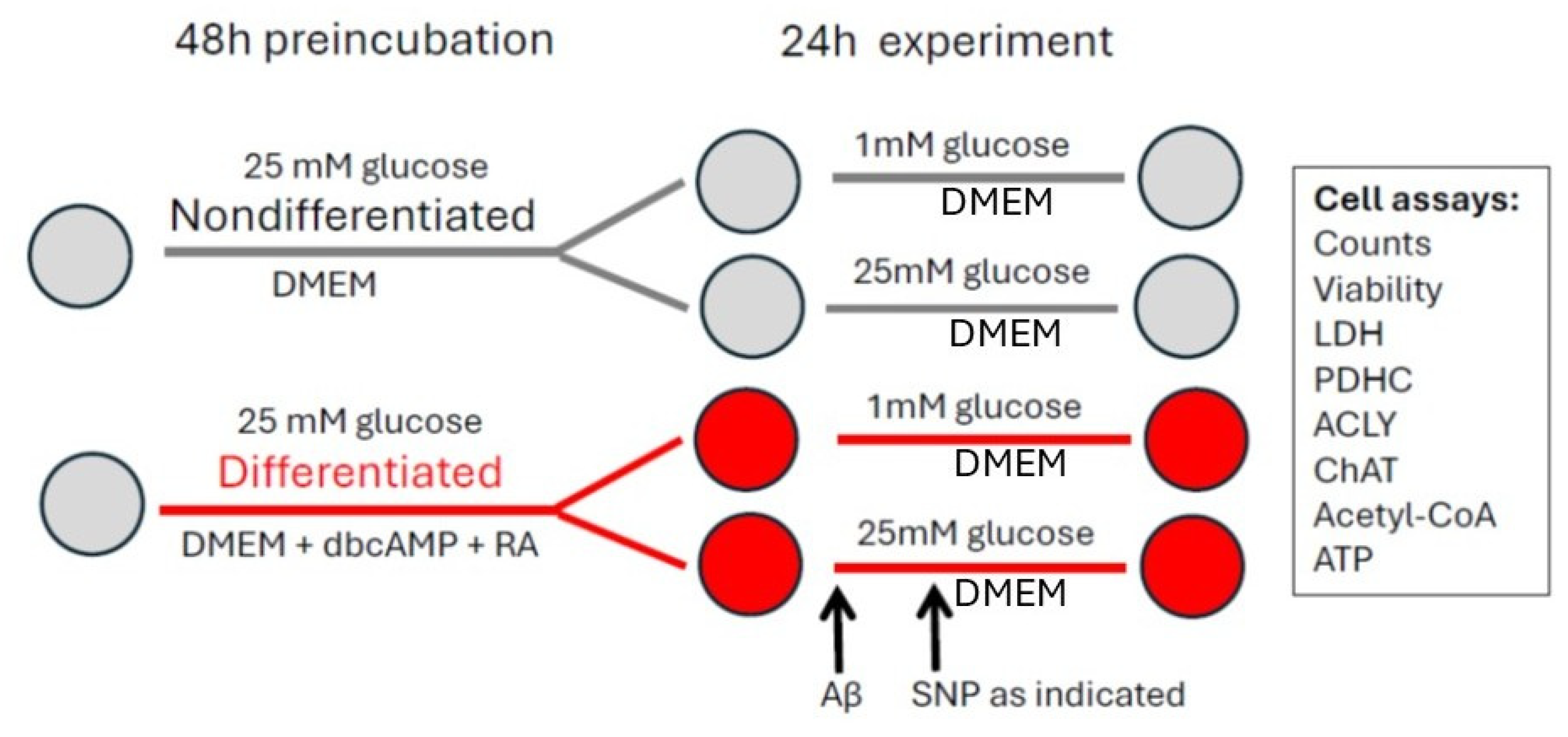
SN56 neuroblastoma cells used in experiments were constructed by fusing N18TG2 neuroblastoma cells with murine (strain C57BL/6) neurons derived from postnatal 21-days mouse septum (gift from prof. J.K. Blusztajn, Boston, MA, USA) [28]. Cells were cultured on 10 cm diameter Petri dish in Dulbecco’s modified Eagle medium (DMEM, Sigma-Aldrich D5671) containing 25 mM glucose, 4.0 mM L-glutamine, supplemented with, antibiotics mixture (Fungizone 250 ng, Streptomycin 50 µg, Penicillin 50 IU per 1 m) and 10% fetal bovine serum. For, preliminary step cells were seeded at density 26x103/cm2 and cultured for 48 hours in atmosphere 5% CO2 at 37oC, in the absence (NC) or in the presence of 1 mM dbcAMP and 0.001 mM all-trans retinoic acid (RA). as differentiating factors (DC), to gain subconfluency 50-70x103 cells/cm2. These factors increased cholinergic properties neuroblastoma cells resulting in their morphologic maturation along with several-fold increases of choline acetyltransferase (ChAT) activity and acetylcholine (ACh) level as well as vesicular ACh transporter and high affinity choline transporter [11,13,27].
For subsequent experimental step, preliminary NC/DC media were removed and replaced by experimental basal DMEM(Sigma-Aldrich D5030) supplemented with glucose varying from 1 to 25 mM, 2.0 mM L-glutamine, 44mM NaHCO3, antibiotics mixture (Fungizone 250 ng, Streptomycin 50 µg, Penicillin 50 IU per 1 m) and 10% fetal bovine serum, containing no differentiating factors, and incubation was continued for next 24 hours. Differences in osmolality were accordingly corrected with NaCl. Neurotoxic agents: 0.4 mM sodium nitroprusside (SNP) as a precursor of NOO- and aggregated (aged) Aβ25-35were added for last 16 or 24 hours, as indicated, respectively.
Figure 1.
Outline of experiment investigating effect of glycemia, Aβ and SNP on pathways of acetyl-CoA metabolism in nondifferentiated and differentiated murine septal cholinergic neuronal cells SNS56. Passages 20-46 were used with stable expression of ChAT and PDHC.
Figure 1.
Outline of experiment investigating effect of glycemia, Aβ and SNP on pathways of acetyl-CoA metabolism in nondifferentiated and differentiated murine septal cholinergic neuronal cells SNS56. Passages 20-46 were used with stable expression of ChAT and PDHC.
Then experimental media were removed, and adjacent cells were rinsed with ice-cold 140 mM NaCl containing 5 mM KCl, 1,7 mM Na-K phosphate buffer (pH 7,4) and 5 mM glucose. The cells were harvested into 10 mL of the buffer and collected by centrifugation at 200 x g for 8 min. Supernatant was removed and cells were suspended in 320 mM sucrose buffered with 10 mM HEPES buffer (pH 7,4) and 0,1 mM EDTA to obtain protein concentration about 10 mg/mL. Immediately after collection cell aliquots were taken to assess cell counts, viability and metabolic parameters. To determine enzyme activities the aliquots of cell suspension were kept frozen at -20o C for 2-7 days, before assays.
2.3. Viability and Cell Counts
Cells suspension was mixed with equal volume of isotonic 0,4% trypan blue solution. Total number of the cells and fractions of viable and nonviable cells were counted after 2 min in Fuchs-Rosenthal haemocytometer under light microscope [29].
2.4. Enzyme Assays
Before the assay samples were diluted with 0,2% (v/v) Triton X-100 to achieve appropriate protein concentration. LDH was assayed by spectrophotometric method. ChAT activity was measured using radiometric method using [1-14C] acetyl-CoA as a substrate [30]. PDHC activity was measured using trapping method with citrate synthase [31].
2.5. Protein Assay
Samples protein was measured using method of Bradford (1976) [32] with human ɤ-globulin as a standard.
2.6. Acetyl-CoA Assay
Samples for whole cell acetyl-CoA assay were adjusted with 0,9% NaCl to protein concentration about 100-150 µg per sample and centrifuged at 200 x g for 3 min. Supernatant was removed and cell pellet was deproteinized by suspension in small volume of 5 mM HCl. Samples were kept frozen at -20oC by 2-7 days, before assay. To assess acetyl-CoA, deproteinized extracts of whole cells were treated with maleic anhydride solution in ethyl ether for 2 hours to remove CoA-SH. Cycling reaction was carried for 100 min at 30oC in 0.1 mL medium containing 1,9 mM acetyl phosphate, 1.2 mM oxaloacetate, 0.72 IU phosphotransacetylase and 0,12 IU citrate synthase. The cycling reaction was stopped by heating at 100oC for 10 min. and citrate formed was determined [33].
2.7. Statistics
Statistical analyses were carried out by one way ANOVA with Bonferroni multiple comparison test or by non-paired Student’s t-test using Prism 5 software (GraphPad Prism 5 software, La
Jolla, CA, USA). The values of, p< 0,05, p<0,01 or p<0.001 were taken as a statistically significant.
3. Results
3.1. Effects of Glycaemia on SN56 Cells
Glucose concentrations in extracellular body compartments in vivo may vary in wide range in diverse physiological and pathological conditions. Particularly, acute hypoglycemia may exert fast and frequently fatal effect on neurons as they require about 10 times more glucose than other tissues in resting conditions [3,7]. During preliminary 48h culture, in standard DMEM, the density of SN56 NC increased to about 73x103/cm2 and that of DC to 54x103/cm2, respectively (Figure 2A). In course of experimental culture, in standard 25 mM [glucose] medium, number of NC and DC increased to 97x103 and 71x103/cm2 what corresponded to final 4 and 3-fold multiplication after 72 h culture, respectively (Figure 2A). The decrease of [glucose] to 5 mM caused no significant alterations in cell counts and proliferation rate. Final reduction of [glucose] to 1 mM resulted in lowering NC and DC counts, by 75 and 59%, respectively (Figure 2A). The half maximal inhibitory concentration for hypoglycemia (IC[50]) against NC and DC were equal to 3.0 and 4.2 mM, respectively (Figure 2B).On the contrary, in same conditions, fractions of nonviable, trypan-blue retaining (TB+), NC and DC increased from 3 to 14% and from 7 to 18%, respectively (Figure 2C). The [IC50] values of [glucose] for TB retention in NC and DC were equal to 2.65 and 6.0 mM, respectively (Figure 2D).
Relative LDH release from cells to the medium is an indicator of their impairment/death in different conditions. On the other hand, intracellular LDH is a marker of plasma membranes integrity and glycolytic activity of living cells [34,35]. At most glucose concentrations specific activity of intracellular LDH in DC was from 70 to 140% higher than that in NC (Figure 2E). Hypoglycemia (1 mM) resulted in similar about 65% decreases of its activity in both groups. However, [IC50] [glucose] for intracellular LDH in DC was much lower than in NC (Figure 2F). On the other hand, decrease of [glucose] to 1 mM, increased amount of extracellular LDH from 12% to about 72% of whole LDH pool, both in NC and DC culture (Figure 3G). On the contrary, [IC50] glucose for LDH released from DC was 2.5 times lower than that in NC (Figure 3H). Overall activities of LDH in whole DC and NC media with 1 mM glucose were about 32-38% lower than in those with 25 mM glucose (Figure 3G).
In DMEM with 25 mM glucose, NC grew densely with short and scarce protrusions (Figure 2I). Hypoglycemia caused formation of peripheral vacuoles in cell cytoplasm and membrane malformations (Figure 2J). The 48h preliminary differentiation of SN56 with dbcAMP+RA [27] caused formation of axons, synapse-like connections and dendritic spines, resembling mature brain neuronal network. Mature DC phenotype was maintained during subsequent 24h experimental step at standard 25 mM glucose concentration (Figure 2K). Also, 24 h exposure to 1 mM hypoglycemia brought about thinning of protrusions but no other notable changes in morphology of surviving DC despite marked increase in their death rate (Figure 2A, C, E, L).
3.2. Glycaemia and Enzymes of Acetyl-CoA Metabolism in SN56 Cells
PDHC is a key multi-enzyme complex synthesizing bulk of neuronal acetyl-CoA in the mitochondrial compartment [19]. Hypoglycemia caused 17 and 24% decreases of PDHC activity in DC and NC, respectively (Figure 3A). In 25 mM glucose medium PDHC activity in DC was slightly lower than in NC but at lower glucose media no significant differences between both groups were found (Figure 3A). ACLY is a key enzyme generating acetyl-CoA in the cytoplasmic compartment [18,19]. No significant differences between ACLY in DC and NC were assessed and 33% declines of its activities took place in deep hypoglycemia conditions (Figure 3B).
Differentiation brought about three- and eight-fold increases of ChAT activity in SN56 grown in 1 and 25 [glucose] medium, respectively (Figure 3C). Alterations of glycemia did not affect low activity of ChAT in NC. On the other hand, in DC reduction of DMEM glucose from 25 to 1mM resulted in 66% loss of ChAT activity from 1.11 to 0.37 nmol/min/mg protein, respectively (Figure 3C). Thus [IC50] of hypoglycemia for DC ChAT was about 5.2 mM, whereas in NC it was about 1.2 mM but at nonsignificant p-value of regression plot (Figure 3D).
3.3. Glycemia and Energy Metabolite Levels in SN56 Cells
Acetyl-CoA levels in DC were about 40% lower than those in NC, irrespective of glucose level in growth medium (Figure 4A). Hypoglycemia itself resulted in about 20- 25% decreases of whole cell acetyl-CoA in NC and DC, respectively (Figure 4A), It was accompanied by nearly proportional loss of viability measured by increase of TB+ cells fraction (Figure 2BC) and non-proportionally higher death rate, measured as loss of cell count and intracellular LDH (Figure 2A,E)
On the other hand, decrease of medium glucose from 25 to 1mM resulted in suppression in ATP concentrations down to 40 and 30% of maximum detected in NC and DC, respectively (Figure 4B). ATP levels in NC were from 20 to 40% lower than those in DC at 5 and 3 mM glucose DMEM, respectively.
3.4. Glycemia-Dependent Effects of NO and Aβ on Viability and Parameters of Acetyl-CoA Metabolism
Extensive depolarization of glutamatergic terminals, during focal or general hypoxia, hypoglycenia or other brain pathologies induces sustained depolarization of glutamatergic neurons [6,11,18,26]. Excessive amounts of glutamate and Zn released from glutamatergic terminals result in activation of NMDA and other activatory receptors yielding Ca/Zn overload in postsynaptic neurons [18] That results in extensive activation of NO synthases and excessive accumulation of NO and nitrogen, oxygen free radicals that impair postsynaptic neurons, including cholinergic ones. In chronic perspective such disturbances activate Aβ generating proteolytic pathway for APP [36]. In addition, our past data revealed that DC in standard 25 mM glucose DMEM are more susceptible to diverse cytotoxic signals than NC [18,19]. Therefore, we tested effects of NO donor-SNP and Aβ on DC as putative early and late neurotoxic signals, that might accompany hypoglycemic conditions, respectively [2,4,27].
In standard DMEM with 25 mM glucose, as well as in that with 1 mM glucose, 0.4 mM SNP reduced counts of both NC and DC by about 55 and 45%, respectively (Table 1, section A). On the other hand, 0.001 mM Aβ25-35(Aβ) was without effect both when applied alone or in combination with SNP (Table 1, section A).
SNP alone, in 25 mM [glucose] DMEM, increased fraction of TB+ NC to 37% and that of TB+DC to 77%, respectively (Table 1 section B). On the contrary, at 1mM [glucose], SNP exerted inverse toxicity increasing TB+ fraction to 97% in NC and to 35% only in DC. Aβ alone did not affect significantly viability in any conditions (Table 1, section B). However in 1mM glucose DMEM and in the presence of SNP, Aβ elevated TB+ fraction of NC and DC to 100 and 57%, respectively (Table 1, section B). On the contrary, in 25 mM glucose in cytotoxic conditions the number of viable DC was lower than NC (Table 1, section C).
In standard 25 mM glucose medium, SNP resulted in 28% and 24% inhibition of PDHC activity in NC and DC, respectively. On the other hand, in 1 mM glucose medium, SNP brought about 50 and 35% inhibition of this enzyme in NC and DC, respectively (Table 1, section D). Aβ alone caused no alterations in PDHC activity in each of experimental conditions. Only in 25 mM glucose Aβ aggravated SNP inhibition of PDHC in NC to 69% . (Table 1, section D).
In NC, cultured in 25 mM glucose Aβ, SNP and SNP+Aβ decreased whole cell [acetyl-CoA] by 35, 60 and 50%, respectively (Table 1, section E)). No statistically significant effects were observed in NC cultivated in 1mM glucose medium. On the other hand, in DC grown in 25 mM glucose, Aβ and SNP suppressed low control acetyl-CoA by 22 and 62%, whereas SNP+Aβ aggravated this to 77%. In DC incubated in 1 mM glucose less evident, non-additive 51-55% suppression by SNP or SNP+Aβ took place (Table 1 section E). Irrespective of conditions all acetyl-CoA levels in DC were significantly lower than those in corresponding NC (Figure 4A, Table 1, section E).
Exposure of SN56 NC to SNP and SNP+Aβ in 25 mM glucose medium caused 40 and 70% suppression of low basal activity of ChAT (Table 1,section F). No significant alterations NC ChAT took place in 1 mM glucose medium. Also in DC cultured with 25 mM glucose, SNP inhibited high basal activity of ChAT by 35%, whereas Aβ was without effect in these conditions (Table 1, section F)). At 1 mM [glucose] SNP alone resulted in 42% suppression of ChAT in DC. Neither Aβ alone nor Aβ with SNP altered ChAT in NC (Table 1, section F).
4. Discussion
Since early sixties of last century, neuronal cell cultures were performed mainly in DMEM containing standard, growth-optimal 25 mM glucose, that however corresponds to extreme diabetic conditions in vivo. Our experiments revealed that in such conditions cholinergic SN56 DC were more susceptible to neurotoxic inputs than NC due to high demand of acetyl-CoA for ACh synthesis [19,27]. Therefore, here we used wide range of glucose concentrations varying from 1 to 25 mM, which are pathophysiologically relevant to diverse extreme clinical settings [37]. For instance, transient hypoglycemic episodes in course of diabetes treatment, central or focal hypoxia, brain arteries obstruction or liver failure are frequent conditions in ageing population, and may significantly limit input of glucose and oxygen into the brain [38,39]. Also, in infants, hypoglycemia accompanies number of inherited and acquired metabolic conditions [40]. Hypoglycemia disrupts brain ontogenesis, frequently yielding different cholinergic encephalopathies [41]. On the contrary, hyperglycemic, diabetes-linked conditions in vivo may stimulate acetyl-CoA and ACh metabolism in brain neurons [21,38]. However, the existence putative causal links between cholinergic hyperactivation and onset of diabetic encephalopathy was not tested. Chronic diabetic hyperglycemia induces excessive production of free radicals in the brain due to angiopathic hypoperfusion, hyperglycation and glutamatergic excitotoxicity constituting chronic neurotoxic signals [42]. On the other hand, hypoglycemia in vivo may generate faster and deeper neurodegenerative insults due to decreased glycolysis rate yielding limited provision of pyruvate for PDHC. They are also accompanied by excitotoxicity due to excessive depolarization of glutamatergic neurons [43]. That results in acute ATP deficits and loss of postsynaptic neurons membrane action potentials (Figure 3AB, Figure 4) [3,37]. Presented findings are compatible with past in vivo and in vitro data demonstrating that chronic moderate hypoglycemia brings about suppression of neuronal cells growth, viability and rise of their death rate (Figure 2, Figure 3) [44,45,46]. Separate but parallel reciprocal correlation plots of LDH, TB+ against metabolic parameters in NC and DC prove that cAMP/RA-evoked differences in their ACh transmitter metabolism generate neuronal populations differing in quantitative not qualitative manner in terms of susceptibility to hypoglycemia (Figure 5, Figure 6).
The existence of putative causative links between metabolic/enzymatic and viability parameters is supported by their significant direct and reciprocal mutual correlations (Figure 5 and Figure 6). However, inverted microscope images demonstrate that hypoglycemia, despite increased loss of DCSN56 did not abolish dbcAMP/RA-pre-induced mature morphologic phenotype of surviving neurons (Figure 2 I-L). They still preserved ramified dendritic/axonal morphology and network of interconnections attained during preliminary step (Figure 2K-L) [13]. It may result from the fact that neuronal maturation is irreversible process, that in adverse conditions evolves toward degeneration and disruption [47]. In addition, DC phenotype in hypoglycemic medium may be stabilized by compensatory increase of GLUT3 transporter expression and by L-glutamine present in DMEM [48,49]. Such explanation is also compatible with our past data demonstrating that cAMP/RA-pre-differentiated cholinergic neurons retained mature phenotype through three consecutive cultures in media devoid differentiating factors [11]. Therefore, hypoglycemia-accompanied death, losses of viability and cholinergic/acetyl-CoA parameters in NC/DC, may be caused exclusively by limitation in pyruvate supply, but not by absence of differentiating signals (Figure 2, Figure 3 and Figure 4) [11].
Data presented here reveal that at 1-2 mM glucose DC display up to 60-100% higher LDH activity against NC (Figure 2G). Also others demonstrated that in similar conditions, differentiation elevated activities of glucokinase/hexokinase, LDH, and entire glycolytic flux in neuronal cell lines (Figure 2G) [39,50,51]. That, in hypoglycemic conditions could set glycolytic flux in DC being faster than in NC (Fig, 3A). It is compatible with [IC50] of glucose for DC number and LDH content being lower than for NC (Figure 2 and Figure 3). It indicates that the DC may better sustain hypoglycemia than the NC. Additional reason for that may be hypoglycemia-evoked 70% inhibition of ChAT and ACh synthesis thereby accidentally saving more acetyl-CoA for energy production (Figure 3A, 4D) [52,53]. Separate but parallel correlation plots of viability parameters in NC and DC indicate existence of quantitative not qualitative differences in their differential reactions to hypoglycemia (Figure 5).
Presented data remain in accord with presence in neurons and neuroblastomas high affinity GLUT 3 of Km equal to about 1.5-2.5 mM, as a main glucose transporter [45]. That explains acceleration rates of SN56 cell death at DMEM glucose concentrations below 5 mM (Figure 2 and Figure 3) [54,55,56]. In fact, in SN56 cholinergic neurons surviving deep 24h hypoglycemia, LDH specific activities were about 80% lower than those at high glucose concentration (Figure 2A). Highly significant inverse correlation between extracellular and intracellular LDH, indicates that those parameters may be reciprocal self-controlling markers of either hypoglycemia-induced injury/death, or survival capacity of fraction cholinergic neurons that sustain such insult, respectively (Figure 3AB, Figure 5B, Figure 6A, B). They are also in accord with hypoglycemia-induced decreases in expression of glycolytic genes in chronically hypoglycemic brain [57]. As a result, metabolic flow through glycolytic pathway slows down yielding less pyruvate as a substrate for acetyl-CoA synthesis by neuronal PDHC (Figure 2, Figure 3 and Figure 4) [3,18]. This finding is also in accord with past studies testing inhibition of glycolysis in the brains both in acute and chronic in vivo and in vitro experiments [58,59]. The deficit of acetyl-CoA would in turn limit metabolic fluxes through TCA cycle and respiratory chain resulting in suppression of ATP level necessary for maintenance of neuronal cell growth, axonal transport and transmitter functions (Figure 2A, B, Figure 4B) [19,60]. These data remain in accord with studies on cultured primary neuronal cells demonstrating concordant decreases of hexokinase, neuronal enolase activities and overall glycolysis rate in hypoglycemic conditions [61]. However, in this work pre-differentiated DC displayed higher LDH than NC and overall rate of glycolysis as reported elsewhere (Figure 2 G) [51,62]. Moreover this disproportion increased relatively against deepening hypoglycemia (Figure 2G). That yielded higher pyruvate input into DC PDHC at 1 mM glucose than into NC, and better survival rate of the former (Figure 2E).
Higher activities of LDH in DC than in NC at decreasing [glucose], would be compatible with higher demand of the former for pyruvate derived acetyl-CoA, necessary for differentiation-activated ACh synthesis/release and maintenance membrane potential (Figure 2A,D, Figure 3B) [18,27]. Similar differentiation-linked alterations were also reported for murine Neuro-2a and human BE(2)-M17 neuroblastomas, in which treatment with RA caused increases of hexokinase, neuron-specific enolase activities and glycolytic genes along with morphological maturation [62,63,64]. Also, differentiation of several human neuroblastoma cell lines with NGF, or with TPA brought about increased expression of glycolytic elements [65,66]. Thus, differentiation-evoked activation of glycolysis might be an adaptative reaction satisfying demands of increased transmitter functions in mature neuroblastoma, irrespective of the differentiating signal (Figure 2A) [51,62]. Such, high energy demand might be a common factor indispensable for restoration and maintenance plasma membrane potentials in mature neuronal cells (Figure 2A, 6B) [18,27]. One should stress that priming with intermittent hypoglycemia in vivo, caused adaptative up-regulation of hexokinase and PDHC activities to compensate transient decreases in influx of glucose into the brains [41]. Such differences between these two models may result from the interactions of several cell types with neuronal response to hypoglycemia in the brain in vivo against individual neuronal cell type reaction in vitro. This observation is in agreement with responses of non-neuronal cell lines HeLa and MCF-7, in which hypoglycemia-evoked death was accompanied by increases not only LDH but also hexokinase, HPI, PFK-1GAPDH activating entire glycolytic pathway [67].
Acetyl-CoA is the pivotal point of energy metabolism connecting various potential energy substrates with TCA/respiratory chain [18,27]. Therefore, the maintenance of its stable level is key regulatory point of neuronal cell energy homeostasis. Here, we demonstrate that 25-fold decrease of [glucose] that results in 60-80% suppressions of viability and cytoplasmic enzymatic parameters in cholinergic SN56 neuronal cells, evokes only 20-30% suppression of their PDHC and whole cell acetyl-CoA (Figure 1 and Figure 2D, 3A). It might result from the fact that in cholinergic neurons the whole cell acetyl-CoA level is resultant of rates of its synthesis by mitochondrial PDHC and cytoplasmic ACL/ACS reactions, and its utilization in TCA cycle, as well as in diverse extramitochondrial acetylation reactions including ACh and N-acetyl-aspartate synthesis, respectively [27,68]. Another factor supporting hypoglycemic acetyl-CoA homeostasis may be increased expression of GLUT3 taking place in hypoglycemic brains [48,49].
Quantal release of ACh by DC requires instant restitution releasable pool of ACh and restoration of membrane potential, to maintain cholinergic neurotransmission. In fact, ChAT activity and ACh synthesis in DC were several times higher against those in NC (Figure 2D) [11,69,70]. Therefore, 40% lower DC [acetyl-CoA] may be explained by its additional utilization by ChAT for ACh synthesis, which was several times higher in the former (Figure 2D, 3A) [18,27,71]. The higher acetyl-CoA levels in NC/DC SN56, grown in standard hyperglycemic that in hypoglycemic DMEM, are compatible with in vivo studies demonstrating elevated acetyl-CoA and ACh levels in brain synaptosomes from streptozotocin diabetic rats versus normoglycemic controls [21]. It indicates that presented clonal cellular model may decently reflect conditions taking place in brain neurons of hyperglycemic or hypoglycemic subjects [2]. Animal and cell culture studies displayed existence of tight direct correlation between ChAT activities and ACh levels in specific nuclei of rat brain and cultured neurons [72,73,74]. Such thesis is also supported by inverse correlation of [acetyl-CoA] against variable ChAT activity in different clones of SN56 [75]. Presented results are also compatible with earlier findings that DC grown in standard DMEM are more than NC prone to diverse pathogenic signals such as Al or Zn-excitotoxicity, NO excess, or thiamine deficiency, all affecting PDHC and acetyl-CoA synthesis (Table 1) [19,27]. That is evidenced here, by higher critical [IC50] values of glucose against cell count, trypan blue retention and ChAT being around 4.2, 6.0, and 5.2 mM in DC, against 3.0, 2.6 and 1.2 mM in NC, respectively (Figure 2BD, 3D).
That also justifies conclusion that the decrease of ChAT accompanying hypoglycemia is an indicator deficits of ACh transmission in these conditions (Figure 2D). Such claim is supported by findings on highly significant correlations between ChAT activity and intracellular and releasable ACh pools [19,70,71,74]. Hence, 65% suppression of ChAT in hypoglycemic DC SN56 suggests similar loss cholinergic transmitter functions seen in cognitively impaired hypoglycemic people and experimental animals [3]. Here, strong direct correlations between [acetyl-CoA], [ATP] against intracellular LDH, PDHC activities and death rate of SN56 DC, indicate that glycolysis-dependent supply of pyruvate for PDHC plays a key role in maintenance of cholinergic cell viability (Figure 4C, 6DF). On the other hand, lack of significant correlations between whole cell [acetyl-CoA] and ACL activity, may result from secondary dependence of its metabolic flux on rate of citrate efflux from mitochondria, which provides 20-50% fraction of cytoplasmic acetyl-CoA in neurons (Figure 6D) [70,75]. In addition, metabolic turnover of cytoplasmic acetyl-CoA is several times slower than that in mitochondria, feeding TCA for ATP synthesis [27]. That may explain lack of significant correlation of ACL versus ChAT activity and cell viability markers, against tested range of glycaemia (Figure 6F). On the other hand, significant direct correlation between ChAT activity and acetyl-CoA levels in DC proves that this metabolite upregulates expression of the enzyme increasing energy load and transcription rate (Figure 6E) [27,76]. Differentiation was found increasing acetyl-CoA efflux from mitochondria to cytoplasmic compartment of SN56 [27]. Thereby, it could also stimulate nuclear acetylations yielding increased expression of ChAT gene [77].
Hypoglycemia-evoked losses in SN56 DC cell counts, and depression their ATP levels and ChAT activities, were 3-5 times greater than decreases of [acetyl-CoA] but displayed significant mutual correlations (Figure 2F, Figure 3, Figure 6ABCF). On the other hand, in NC these interdependencies were much weaker, than in DC. That may result from small changes in low basal ChAT activity, which brought about minimal alterations of acetyl-CoA utilization for ACh synthesis (Figure 2CD, Figure 4A) [9,27]. It explains the existence of stronger interdependencies between metabolic and viability parameters in DC (Figure 2, Figure 3, Figure 4) [26,78]. The co-existence of nearly proportional alterations and direct, significant correlations between PDHC activity and [acetyl-CoA] indicates that this enzyme plays a principal role in stabilization energy homeostasis in SN56 DC with high expression of cholinergic phenotype (Figure 6C).
Hence, maintenance of stable level of acetyl-CoA, through wide range of glucose concentrations, reflects existence strong homeostatic mechanisms supporting transmitter functions and survival septal cholinergic neurons under highly variable physio-pathologic glycemias [41,42]. The importance of such mechanism results from the fact that numerous enzymes key for neuron survival and function like ChAT, aspartate acetyltransferase, display relatively weak affinity against low intraneuronal acetyl-CoA concentrations of about 10-15 µM [19,27].
Both hypo- and hyperglycemic conditions in vivo may trigger acute secondary pathogenic signals such as glutamatergic excitotoxicity, Ca2+ overload and in longer perspective, increased synthesis of Aβ and hyperphosphorylation tau proteins in postsynaptic neurons [55,79,80,81]. Such conditions brought about over-activation glutamatergic terminals yielding excess of glutamate/zinc in the synaptic cleft. In turn they stimulate Ca-dependent NO synthesis yielding excessive generation of nitrozyl radicals in postsynaptic neurons [19]. In present experiments, additions of SNP and Aβ were aimed generating such conditions in hypo-glycemic SN56 cultures in vitro (Table 1) [11].
They confirm preceding experiments on SN56 cultures performed in standard 25 mM glucose DMEM showing that NO and Aβ exerted stronger impairment of DC than NC as displayed by higher TB+, and lower viable cell counts in the former (Table 1) [19,27]. On the other hand they provide a new observation that in hypoglycemic conditions, suppression of ACh synthesis and higher rate of glycolysis in DC could make them more resistant to cytotoxicity than NC (Figure 3EF, Table 1).
Both compounds, directly or indirectly inhibited number of enzymes linked with acetyl-CoA and energy metabolism including PDHC, isocitrate dehydrogenase, aconitase at 25 mM glycemia (Table 1) [19,27]. In addition, they suppressed metabolic and viability parameters of DC stronger but in analogous manner as hypoglycemia. It is demonstrated here by statistically significant correlation plots of acetyl-CoA versus PDHC or ChAT at given glucose concentration (Figure 7).They however displayed different slopes in case of 1 and 25 mM glucose concentrations with usage of those toxic species, respectively (Figure 7C). It indicates that PDHC inhibition, through limitation of acetyl-CoA provision in mitochondria indirectly affects ACh synthesis in cytoplasm of cholinergic neurons (Figure 7AB) [27].
However, inhibitory mechanisms of decreased metabolic flux through PDHC may be different in each case. Thus, (i) hypoglycemia would decrease provision of pyruvate through glycolysis and PDH kinase activation; (ii) SNP/NO by removal of lipoamide from E2 subunit; Aβ by activation of PDH kinase and increased Ca influx into mitochondria [18,19,82].
Hypoglycemia decreased metabolic flow of glucose through glycolytic cycle to pyruvate. Low glucose concentration upsets its conversion to acetyl-CoA in cholinergic neurons mitochondria. Thereby, intramitochondrial acetyl-CoA metabolic flux through TCA and generation of ATP are decreased (Figure 2, Figure 3 and Figure 4). In turn, the deficits of citrate and ATP reduce ACL metabolic rate and suppress its preferential expression in cholinergic neurons cytoplasm (Figure 2CD) [19,22]. Such conditions restrict ACL-dependent provision of cytoplasmic acetyl-CoA necessary of ACh synthesis and its vesicular accumulation [19,27,75]. These findings are in accord with past data that revealed strong correlation between cytoplasmic acetyl-CoA and quantal ACh release in brain nerve terminals [13,18,27]. The existence of tight interaction of acetyl-CoA metabolism with cholinergic activity is supported here by the existence of strong correlations between high declines of ChAT activity and small, hypoglycemia-evoked decreases in acetyl-CoA DC levels (Figure 6E and Figure 7B) [1,2,3]. On the contrary, excitotoxins would cause much greater than hypoglycemia suppression of acetyl-CoA level but much lower expression of cholinergic phenotype irrespective of glycemia level (Figure 3A and Figure 7B). However, overall functional integrity of cholinergic DC may uniformly depend on acetyl-CoA availability, as demonstrated by superimposable plots of trypan blue excluding capacity against acetyl-CoA content irrespective of neurodegenerative signal (Figure 7C). Thus, hypoglycemia appeared to be strongest suppressor of acetyl-CoA dependent cholinergic metabolism in DC (Figure 7BD). Presented data indicate that PDHC and acetyl-CoA may be important points that differentially downregulate transmitter functions and viability of cholinergic neurons against changes in glycemia and excitotoxic signals, respectively (Figure 4 and Figure 7). Higher [IC50] [glucose] against viability and cholinergic activity in DC diversifies neurons with high expression from those with low expression of cholinergic phenotype. Lower expression of ACh-transmitter phenotype might explain higher resistance of fetal and newborn brain cholinergic neurons to hypoxia or other detrimental conditions [83]. On the other hand, superimposable plots of SN56 viability against acetyl-CoA in all experimental paradigms indicate that this metabolite may be a key pivotal factor for death or survival brain neurons in different brain pathologies (Figure 7C). Also, the decrease of pyruvate provision for PDHC in hypoglycemic conditions alone seems to be sole strongest signal responsible for functional and structural deficits of cholinergic transmission in affected brains.
Author Contributions
Sylwia Gul-Hinc1, investigation, methodology, data acquisition and curation; Andrzej Szutowicz*1, writing original draft. formal analysis, supervision; Anna Ronowska, investigation; Agnieszka Jankowska-Kulawy*1 writing and review, editing, investigation.
Resource Availability
Lead contact. Requests for further information and resources should be directed to and will be fulfilled by the lead contact: Sylwia Gul-Hinc (sgul@gumed.edu.pl).
Acknowledgments
The research was supported Medical University of Gdańsk Status Fund ST-58 and 01-2024/7297 MUG project. We thank dr J.K. Blusztajn (Boston, USA) for samples of SN56 cells.
Conflicts of Interest
The authors declare that they have no known competing financial interests or personal relationships that could have appeared to influence the work reported in this paper.
Abbreviations
| Aβ | amyloid-β25-35 |
| Ach | acetylcholine |
| ACLY | ATP-citrate lyase |
| AD | Alzheimer’s disease |
| ChAT | choline acetyltransferase |
| dbcAMP | dibutyryl cyclic adenosine 5′ monophsphate |
| DC | differentiated SN56 cholinergic neuronal cells |
| DMEM | Dulbecco Modified Eagles Medium |
| EDTA | ethylenediaminetetraacetic acid |
| GLUT3 | glucose transporter 3 |
| HEPES |
 -2-hydroxyethylpiperazine-‘-2-etanosulfonic acid -2-hydroxyethylpiperazine-‘-2-etanosulfonic acid |
| [IC50] | half maximum inhibitory concentration |
| LDH | lactate dehydrogenase |
| NC | nondifferentiated SN56 cholinergic neuroblastoma cells- |
| PDHC | pyruvate dehydrogenase complex |
| RA | retinoic acid |
| SNP | sodium nitroprusside |
| TB+ | trypan blue retention assay |
References
- Deary, I.J. Effects of hypoglycaemia on cognitive function in: Hypoglycaemia and diabetes: clinical and physiological aspects; Edward Arnold: London, 1993; pp. 80–92. [Google Scholar]
- Warren, R.E.; Zammitt, N.N.; Deary, I.J.; Frier, B. The effects of acute hypoglycaemia on memory acquisition and recall and prospective memory in type 1 diabetes. Diabetologia 2007, 50, 178–185. [Google Scholar] [CrossRef] [PubMed]
- Languren, G.; Montiel, T.; Amilpas, A.J.; Massieu, L. Neuronal damage and cognitive impairment associated with hypoglycemia: an integrated view. Neurochem. Int. 2013, 63, 331–43. [Google Scholar] [CrossRef]
- Won Suh, S.; Hamby, A.M.; Swanson, R.A. Hypoglycemia, brain energetics, and hypoglycemic neuronal death. Glia 2007, 55, 1280–6. [Google Scholar] [CrossRef]
- Boyle, P.J. Diabetes mellitus and macrovascular disease: mechanisms and mediators. Am. J. Med. 2007, 120 (Suppl 2), 12–7. [Google Scholar] [CrossRef]
- Rao, R.; Ennis, K.; Long, J.D.; Ugurbil, K.; Gruetter, R.; Tkac, I. Neurochemical changes in the developing rat hippocampus during prolonged hypoglycemia. J. Neurochem. 2010, 114, 728–38. [Google Scholar] [CrossRef]
- Mohseni, S. Neurologic damage in hypoglycemia. Handbook of Clinical Neurology 2014, 126, 513–32. [Google Scholar]
- Niewiadomska, G.; Baksalerska-Pazera, M.; Riedel, G. The septo-hippocampal system, learning and recovery of function. Prog. Neuro-Psychopharmacol. Biol. Psychiatry 2009, 33, 791–805. [Google Scholar] [CrossRef] [PubMed]
- Moss, D.E.; Perez, R.G. The phospho-tau cascade, basal forebrain neurodegeneration, and dementia in Alzheimer’s disease: Anti-neurodegenerative benefits of acetylcholinesterase inhibitors. J. Alzheimers Dis. 2024, 102(3), 617–626. [Google Scholar] [CrossRef] [PubMed]
- Rinne, J.O.; Ma, Y.S.; Lee, M.S.; Collan, Y.; Röyttä, M. Loss of cholinergic neurons in the pedunculopontine nucleus in Parkinson’s disease in related to disability of the patients. Parkinsonism Relat. Disord. 2008, 14, 553–557. [Google Scholar] [CrossRef]
- Bielarczyk, H.; Jankowska, A.; Madziar, B.; Matecki, A.; Michno, A.; Szutowicz, A. Differential toxicity of nitric oxide, aluminium, and amyloid-β peptide in SN56 cholinergic cells from mouse septum. Neurochem. Int. 2003, 42, 323–331. [Google Scholar] [CrossRef]
- Blennow, K.; de Leon, M.J.; Zetterberg, H. Alzheimer’s disease. Lancet 2006, 368, 387–403. [Google Scholar] [CrossRef]
- Gul-Hinc, S.; Zyśk, M.; Jankowska-Kulawy, A.; Ronowska, A. Protection of cholinergic neurons against zinc toxicity by glial cells in thiamine-deficient media. Int. J. Mol. Sci. 2021, 22(24), 1–20. [Google Scholar] [CrossRef]
- Kipp, B.T.; Savage, L.M. Modulation of the p75NTR during adolescent alcohol exposure prevents cholinergic neuronal atrophy and associated acetylcholine activity and behavioral dysfunction. Int. J. Mol. Sci. 2024, 25(11), 57–92. [Google Scholar] [CrossRef] [PubMed]
- Bubber, P.; Haroutunian, V.; Fisch, G.; Blass, J.P.; Gibson, G.E. Mitochondrial abnormalities in Alzheimer brain: mechanistic implications. Ann. Neurol. 2005, 57(5), 695–703. [Google Scholar] [CrossRef] [PubMed]
- Wang, H.; Liu, S.; Sun, Y.; Chen, Ch.; Hu, Z.; Li, Q.; Long, J.; Yan, Q.; Liang, J.; Lin, Y.; et al. Target modulation of glycolytic pathways as a new strategy for the treatment of neuroinflammatory diseases. Ageing Res. Rev. 2024, 101, 102472. [Google Scholar] [CrossRef]
- Moiseenok, A.G.; Kanunnikova, N.P. Brain CoA and acetyl CoA system in mechanism of neurodegeneration. Biochemistry 2023, 88(4), 466–480. [Google Scholar] [CrossRef]
- Szutowicz, A.; Bielarczyk, H.; Zyśk, M.; Dyś, A.; Ronowska, A.; Gul-Hinc, S.; Klimaszewska-Łata, J. Early and late pathomechanisms in Alzheimer’s disease: from zinc to amyloid-β neurotoxicity. Neurochem. Res. 2017, 42(3), 891–904. [Google Scholar] [CrossRef]
- Ronowska, A.; Szutowicz, A.; Bielarczyk, H.; Gul-Hinc, S.; Klimaszewska-Łata, J.; Dyś, A.; Zyśk, M.; Jankowska-Kulawy, A. The regulatory effects of acetyl-CoA distribution in the healthy and diseased brain. Front. Cell Neurosci. 2018, (10)12, 169. [Google Scholar] [CrossRef] [PubMed]
- Villasana-Salazar, B.; Hernández-Soto, R.; Guerrero-Gómez, M.E.; Ordaz, B.; Manrique-Maldonado, G.; Salgado-Puga, K.; Peña-Ortega, F. Chronic intermittent hypoxia transiently increases hippocampal network activity in the gamma frequency band and 4-Aminopyridine-induced hyperexcitability in vitro. Epilepsy Res. 2020, 166, 106–375. [Google Scholar] [CrossRef]
- Christensen, D.Z.; Bayer, A.; Wirts, O. Intracellular Aβ triggers neuron loss in the cholinergic system of the APP/PS1KI Mouse model of Alzheimer’s disease. Neurobiol. Aging 2010, 31, 1153–1163. [Google Scholar] [CrossRef]
- Szutowicz, A.; Tomaszewicz, M.; Jankowska, A.; Kisielevski, Y. Acetylcholine synthesis in nerve terminals of diabetic rats. Neuroreport 1994, 5, 2421–2424. [Google Scholar] [CrossRef] [PubMed]
- Wang, W.; Zhang, J.; Zhang, M.; Zhang, Ch.; Liu, H.; Li, W.; Fan, Y. Impact of diabetes mellitus on the risk of Alzheimer’s disease: a mendelian randomization study. BMC Neurology 2024, 24, 448. [Google Scholar] [CrossRef] [PubMed]
- Szutowicz, A. Aluminium, NO and nerve growth factor neurotoxicity in cholinergic neurons. J. Neurosci. Res. 2001, 66, 1009–1018. [Google Scholar] [CrossRef]
- Aschner, M.; Skalny, A.V.; Lu, R.; Martins, A.C.; Tsatsakis, A.; Miroshnikov, S.A.; Santamaria, A.; Tinkov, A.T. Molecular mechanisms of zinc oxide nanoparticles neurotoxicity. Chem. Biol. Interact. 2024, 403, 11124. [Google Scholar] [CrossRef]
- Savolainen, K.M.; Loikkanen, J.; Eerikäinen, S.; Naarala, J. Glutamate-stimulated ROS production in neuronal cultures: interactions with lead and the cholinergic system. Neurotoxicology 1998, 19(4-5), 669–74. [Google Scholar]
- Jankowska-Kulawy, A.; Klimaszewska-Łata, J.; Gul-Hinc, S.; Ronowska, A.; Szutowicz, A. Metabolic and cellular compartments of acetyl-CoA in the healthy and diseased brain. Int. J. Mol. Sci. 2022, 23, 10073. [Google Scholar] [CrossRef] [PubMed]
- Blusztajn, J.K.; Venturini, A.; Jackson, D.A.; Lee, H.J.; Wainer, B.H. Acetylcholine synthesis and release is enhanced by dibutyryl cyclic AMP in a neuronal cell line derived from mouse septum. J. Neurosci. 1992, 12(3), 793–799. [Google Scholar] [CrossRef]
- Butler, M. Cell counting and viability measurements in: Animal Cell Biotechnology. In Methods in Biotechnology; Humana Press, 1999. [Google Scholar]
- Fonnum, F. Radiochemical micro assays for the determination of choline acetyltransferase and acetylcholinesterase activities. Biochem. J. 1969, 115(3), 465–472. [Google Scholar] [CrossRef]
- Szutowicz, A.; Stepien, M.; Piec, G. Determination of pyruvate dehydrogenase and acetyl-CoA synthetase activities using citrate synthase. Anal. Biochem. 1981, 115(1), 81–7. [Google Scholar] [CrossRef]
- Bradford, M. A rapid sensitive method for the quantitation of microgram quantities of protein utilizing the principle of protein-dye binding. Anal. Biochem. 1976, 72, 248–254. [Google Scholar] [CrossRef] [PubMed]
- Szutowicz, A.; Bielarczyk, H. Elimination of CoASH interferences form acetyl-CoA assay by maleic anhydride. Anal. Biochem. 1987, 164, 292–6. [Google Scholar] [CrossRef]
- Ding, L.; Zhexu, D.; Manjin, G.; Yanmei, H.; Kui, X. Metabolic enhancement of glycolysis and mitochondrial respiration are essential for neuronal differentiation. Cell Reprogram 2020, 22(6), 291–299. [Google Scholar]
- Simon, M.; Benary, U.; Baum, K.; Schramm, A.; Wolf, J. A computational model elucidates the effects of oncogene-induced expression alterations on the energy metabolism of neuroblastoma. Sci. Rep. 2025, 15, 32708. [Google Scholar] [CrossRef] [PubMed]
- Okechukwu, N.G.; Zaccone, C.; Barbera, L.; Nobili, A.; D’Amelio, M. Excitation–inhibition imbalance as a common thread linking early Alzheimer’s disease with temporal lobe epilepsy. Exp. Neurol. 2026, 397, 115581. [Google Scholar] [CrossRef]
- Koepsell, H. Glucose transporters in brain in health and disease. Pflugers Arch. 2020, 472(9), 1299–1343. [Google Scholar] [CrossRef]
- Rehni, A.K.; Dave, K.R. Impact of hypoglycemia on brain metabolism during diabetes. Mol. Neurobiol. 2018, 55(12), 9075–9088. [Google Scholar] [CrossRef] [PubMed]
- Cardoso, S.; Moreira, P.I. Insulin-induced recurrent hypoglycemia up-regulates glucose metabolism in the brain cortex of chemically induced diabetic rats. Int. J. Mol. Sci. 2021, 22, 13470. [Google Scholar] [CrossRef]
- Ramakrishnan, R.K.; Srivastava, A.; Reeja, R.; Abusnana, S.; Mussa, B.M. Investigating the role of an immediate early gene FOS as a potential regulator of autophagic response to hypoglycemia in embryonic hypothalamic neurons. Clin. Transl. Sci. 2024, 17(3), e13749. [Google Scholar] [CrossRef]
- Rosenfeld, E.; Thornton, P.S.; Feingold, K.R.; Anawalt, B.; Blackman, M.R.; Boyce, A.; Chrousos, G.; Corpas, E.; de Herder, W.W.; Dhatariya, K.; et al. Hypoglycemia in neonates, infants and children in Endotext [Internet], 2023; MDText.com, Inc.: South Dartmouth (MA), 2000. [Google Scholar]
- Pattanaik, S.; Prusty, S.K.; Sahu, P.K. Exploring DPP IV inhibitors for Alzheimer’s disease: bridging diabetes and neurodegeneration. Brain Res. 2024, 149342. [Google Scholar] [CrossRef]
- Zott, B.; Konnerth, A. Impairments of glutamatergic synaptic transmission in Alzheimer’s disease. Semin. Cell Dev. Biol. 2023, 139, 24–34. [Google Scholar] [CrossRef]
- Suh, S.W.; Hamby, A.M.; Swanson, R.A. Hypoglycemia, brain energetics, and hypoglycemic neuronal death. Glia 2007, 55(12), 1280–86. [Google Scholar] [CrossRef]
- Auer, R.N. Hypoglycemic brain damage. Metab. Brain Dis. 2004, 19(3-4), 169–75. [Google Scholar] [CrossRef]
- Rohde, B.H.; Chiou, G.C. Effects of glucose on neuroblastoma in vitro and in vivo. J. Pharm. Sci. 1987, 76(5), 366–70. [Google Scholar] [CrossRef]
- Tokarz, D.A. Red deads, ghosts, and the afterlife: a guide to neuronal cell death. Toxicol. Pathol 2025, 53(8), 651–656. [Google Scholar] [CrossRef]
- Sahin, K.; Tuzcu, M.; Orhan, C.; Ali, S.; Sahin, N.; Gencoglu, H.; Ozkan, Y.; Hayirli, A.; Gozel, N.; Komorowski, J. Chromium modulates expressions of neuronal plasticity markers and glial fibrillaryacidic proteins in hypoglycemia-induced brain injury. Life Sci. 2013, 93, 1029–1048. [Google Scholar] [CrossRef] [PubMed]
- Sherin, A.; Peeyush, K.T.; Naijil, P.G.; Nandhu, M.S.; Jayanarayanan, S.; Jes, P.; Paulose, Ch.S. The effects of abnormalities of glucose homeostasis on the expression and binding of muscarinic receptors in brain cortex of rats. Eur. J. Pharmacol. 2011, 90, 128–136. [Google Scholar] [CrossRef] [PubMed]
- Wu, Y.; Gao, R.; Huang, Q.; Huang, C.; Wang, L.; Lin, L.; He, G.; Wu, K.; Liu, X.; Liu, X.; et al. Lactate supplementation after hypoglycemia alleviates cognitive dysfunction induced by recurrent non-severe hypoglycemia in diabetic mice. Exp. Neurol. 2025, 383, 115037. [Google Scholar] [CrossRef]
- Li, D.; Ding, Z.; Gui, M.; Hou, Y.; Xie, K. Metabolic enhancement of glycolysis and mitochondrial respiration are essential for neuronal differentiation. Cell Reprogram 2020, 22(6), 291–299. [Google Scholar] [CrossRef] [PubMed]
- Szutowicz, A.; Jankowska, A.; Blusztajn, J.K.; Tomaszewicz, M. Acetylcholine and acetyl-CoA metabolism in differentiating SN56 septal cell line. J. Neurosci. Res. 1999, 57(1), 131–6. [Google Scholar] [CrossRef]
- Szutowicz, A.; Tomaszewicz, M.; Bielarczyk, H. Disturbances of acetyl-CoA, energy and acetylcholine metabolism in some encephalopathies. Acta Neurobiol. Exp. 1996, 56(1), 323–39. [Google Scholar] [CrossRef]
- Fontanella, R.A.; Ghosh, P.; Pesapane, A.; Taktaz, F.; Puocci, A.; Franzese, M.; Feliciano, M.F.; Tortorella, G.; Scisciola, L.; Sommella, E.; et al. Tirzepatide prevents neurodegeneration through multiple molecular pathways. J. Transl. Med. 2024, 22, 114. [Google Scholar] [CrossRef]
- Dienel, G.A. Lack of appropriate stechiometry: strong evidence against an energetically important astrocyte-neuron lactate shuttle in brain. J. Neurosci. Res. 2017, 95(11), 2103–125. [Google Scholar] [CrossRef]
- Siesjo, B.K. Mechanism of ischemic brain damage. In Problems in critical care; Shackford, S. R., Peral, A., Eds.; JB Lippincott: Philadelphia, 1987; pp. 611–27. [Google Scholar]
- Sapkota, S.; Briski, K.P. Sex-dimorphic effects of hypoglycemia on metabolic sensor mRNA expression in ventromedial hypothalamic nucleus-dorsomedial division (VMNdm) growth hormone-releasing hormone neurons. ACS Chem. Neurosci. 2024, 15(11), 2350–2358. [Google Scholar] [CrossRef] [PubMed]
- Koretz, B.; Ahern, K.B.; Wang, N.; Greenberg, D.A. Pre- and post-synaptic modulatorsof excitatory neurotransmission: comparative effects on hypoxia/hypoglycemia in cortical cultures. Brain Res. 1994, 18(643(1-2)), 334–7. [Google Scholar] [CrossRef]
- Nath, R.; Probert, A., Jr.; McGinnis, K.M.; Wang, K.K. Evidence for activation of caspase-3-like protease in excitotoxin- and hypoxia/hypoglycemia-injured neurons. J. Neurochem. 1998, 71(1), 186–95. [Google Scholar] [CrossRef]
- Wang, J.; Green, P.S.; Simpkins, W. Estradiol protects against ATP depletion, mitochondria membrane potential decline and generation of reactive oxygen species induced by 3-nitropropionic acid in SK-N-SH human neuroblastoma cells. J. Neurochem. 2001, 77, 804–811. [Google Scholar] [CrossRef] [PubMed]
- Zhang, S.; Lachance, B.B.; Mattson, M.P.; Jia, X. Glucose metabolic crosstalk and regulation in brain function and diseases. Prog. Neurobiol. 2021, 204, 102089. [Google Scholar] [CrossRef] [PubMed]
- de Bittencourt Pasquali, M.A.; de Ramos, V.M.; D′Oliveira Albanus, R.; Kunzler, A.; de Souza, L.H.T.; Dalmolin, R.J.S.; Gelain, D.P.; Ribeiro, L.; Carro, L.; Moreira, J.C.F. Gene expression profile of NF-κB, Nrf2, glycolytic, and p53 pathways during the SH-SY5Y neuronal differentiation mediated by retinoic acid. Mol. Neurobiol. 2016, 53, 423–435. [Google Scholar] [CrossRef]
- Klepinin, A.; Chekulayev, V.; Timohhina, N.; Shevchuk, I.; Tepp, K.; Kaldma, A.; Koit, A.; Saks, V.; Kaambre, T. Comparative analysis of some aspects of mitochondrial metabolism in differentiated and undifferentiated neuroblastoma cells. J. Bioenerg. Biomembr. 2014, 46(1), 17–31. [Google Scholar] [CrossRef]
- Andres, D.; Keyser, B.M.; Petrali, J.; Benton, B.; Hubbard, K.S.; McNutt, P.M.; Ray, R. Morphological and functional differentiation in BE(2)-M17 human neuroblastoma cells by treatment with trans-retinoic acid. BMC Neurosci. 2013, 14, 49. [Google Scholar] [CrossRef]
- Odelstad, L.; Phlman, S.; Nilsson, K.; Larsson, E.; Läckgren, G.; Johansson, K.E.; Hjertén, S.; Grotte, G. Neuron-specific enolase in relation to differentiation in human neuroblastoma. Brain Res. 1981, 224(1), 69–82. [Google Scholar] [CrossRef]
- Påhlman, S.; Ruusala, A.I.; Abrahamsson, L.; Odelstad, L.; Nilsson, K. Kinetics and concentration effects of TPA-induced differentiation of cultured human neuroblastoma cells. Cell Differ. 1983, 12(3), 165–70. [Google Scholar] [CrossRef]
- Marín-Hernández, A.; López-Ramírez, S.Y.; Del Mazo-Monsalvo, I.; Gallardo-Pérez, J.C.; Rodríguez-Enríquez, S.; Moreno-Sánchez, R.; Saavedra, E. Modeling cancer glycolysis under hypoglycemia, and the role played by the differential expression of glycolytic isoforms. FEBS J. 2014, 281(15), 3325–45. [Google Scholar] [CrossRef]
- Zyśk, M.; Bielarczyk, H.; Gul-Hinc, S.; Dyś, A.; Gapys, B.; Ronowska, A.; Sakowicz-Burkiewicz, M.; Szutowicz, A.; Kleinschmidt, M. Phenotype-dependent interactions between N-acetyl-L-aspartate and acetyl-CoA in septal SN56 cholinergic cells exposed to an excess of zinc. J. Alzheimer’s Dis. 2017, 56(3), 1145–1158. [Google Scholar] [CrossRef]
- Szutowicz, A.; Jankowska, A.; Blusztajn, J.K.; Tomaszewicz, M. Acetylcholine and acetyl-CoA metabolism in differentiating SN56 septal cell line. J. Neurosci. Res. 1999, 57, 131–136. [Google Scholar] [CrossRef]
- Jankowska, A.; Madziar, B.; Tomaszewicz, M.; Szutowicz, A. Acute and chronic effects of aluminum on acetyl-CoA and acetylcholine metabolism in differentiated and nondifferentiated SN56 cholinergic cells. J. Neurosci. Res. 2000, 62(4), 615–22. [Google Scholar] [CrossRef] [PubMed]
- Auld, D.S.; Mennicken, F.; Day, J.C.; Quirion, R. Neurotrophins differentially enhance acetylcholine release, acetylcholine content and choline acetyltransferase activity in basal forebrain neurons. J. Neurochem. 2001, 77, 253–262. [Google Scholar] [CrossRef] [PubMed]
- Cheney, D.L.; LeFevere, H.F.; Racagni, G. Choline acetyltransferase activity and mass fragmentographic measurement of acetylcholine in specific nuclei and tracts of rat brain. Neuropharmacology 1975, 14(11), 801–9. [Google Scholar] [CrossRef]
- Vizi, S.E.; Palkovits, M. Acetylcholine content in different regions of the rat brain. Brain Res. Bull. 1978, 3(2), 93–96. [Google Scholar] [CrossRef]
- Bignami, F.; Bevilacqua, S.; Biagioni, S.; De Jaco, A.; Casamenti, F.; Felsani, A.; Augusti-Tocco, G. Cellular acetylcholine content and neuronal differentiation. J. Neurochem. 1997, 69(4), 1374–81. [Google Scholar] [CrossRef] [PubMed]
- Bielarczyk, H.; Tomaszewicz, M.; Madziar, B.; Cwikowska, J.; Pawełczyk, T.; Szutowicz, A. Relationships between cholinergic phenotype and acetyl-CoA level in hybrid murine neuroblastoma cells of septal origin. J. Neurosci. Res. 2003, 73(5), 717–21. [Google Scholar] [CrossRef]
- Kagawa, Y.; Umaru, B.A.; Shima, H.; Ito, R.; Zama, R.; Islam, A.; Kanno, S.I.; Yasui, A.; Sato, S.; Jozaki, K. FABP7 regulates acetyl-CoA metabolism through the interaction with ACLY in the nucleus of astrocytes. Mol. Neurobiol. 2020, 57, 4891–4910. [Google Scholar] [CrossRef] [PubMed]
- Barrett, G.L.; Naim, T.; Trieu, J.; Huang, M. In vivo knockdown of basal forebrain p75 neurotrophin receptor stimulates cholinę acetyltransferase activity in the mature hippocampus. J. Neurosci. Res. 2016, 94, 389–400. [Google Scholar] [CrossRef] [PubMed]
- Szutowicz, A.; Bielarczyk, H.; Jankowska-Kulawy, A.; Pawełczyk, T.; Ronowska, A. Acetyl-CoA the key factor for survival or death of cholinergic neurons in course of neurodegenerative diseases. Neurochem. Res. 2013, 38(8), 1523–42. [Google Scholar] [CrossRef] [PubMed]
- Gallego-Rudolf, J.; Wiesman, A.I.; Binette, A.P.; Villeneuve, S.; Baillet, S. Synergistic association of Aβ and tau pathology with cortical neurophysiology and cognitive decline in asymptomatic older adults. Nat. Neurosci. 2024, 27(11), 2130–7. [Google Scholar] [CrossRef]
- Angelova, P.R.; Abramov, A.Y. Interplay of mitochondrial calcium signalling and reactive oxygen species production in the brain. Biochem. Soc. Trans. 2024, 52(4), 1939–1946. [Google Scholar] [CrossRef]
- Granzotto, A.; Canzoniero, L.M.T.; Sensi, S.L. A neurotoxic ménage-à-trois: glutamate, calcium, and zinc in the excitotoxic cascade. Front. Mol. Neurosci. 2020, 600089. [Google Scholar] [CrossRef]
- Kho, A.R.; Choi, B.Y.; Lee, S.H.; Hong, D.K.; Jeong, J.H.; Kang, B.S.; Kang, D.H.; Park, K.H.; Park, J.B.; Suh, S.W. The effects of sodium dichloroacetate on mitochondrial dysfunction and neuronal death following hypoglycemia-induced injury. Cells 2019, 8(5), 405. [Google Scholar] [CrossRef]
- Paulsen, M.E.; Rao, R.B. Cerebral effects of neonatal dysglycemia. Clin. Perinatol. 2022, 49(2), 405–426. [Google Scholar] [CrossRef]
Figure 2.
Effects of glycaemia on SN56 cells. Concentration-dependent effects of glycemia on cholinergic SN56 NC ● and DC ○: (A) 72h culture cell counts; and 48 h culture counts marked by dotted horizontal lines NC- - -, DC - - - ; (B) Lineweaver-Burk plots of cell counts against [glucose]; (C) viability (trypan blue exclusion test); (D) Dixon’s plots of viability against [glucose];(E) intracellular LDH activity against [glucose]; (F) Lineweaver-Burk plots of intracellular LDH activity against [glucose], (G) fractional LDH release to the medium and whole medium LDH activity (dashed plots) against [glucose], (H) Dixon’s plots LDH released against [glucose]. Additional numbers at abscissa indicate [IC50] [glucose] for parameters tested. Data are means from 5-10 experiments ± SEM. Different from: respective 25 mM glucose control, *p<0.05, **p<0.01; ***p<0.001; different from respective NC, †p<0.05; ††p<0.01, †††p<0.001. Morphology of SN56 neuronal cells grown in DMEM with different glucose concentrations. (I) NC at 25 mM glucose ; (J) NC at 1mM glucose (K); DC at 25 mM glucose; (L) DC at 1 mM glucose. Photographs are representative for 5 experiments; magnification 400x.
Figure 2.
Effects of glycaemia on SN56 cells. Concentration-dependent effects of glycemia on cholinergic SN56 NC ● and DC ○: (A) 72h culture cell counts; and 48 h culture counts marked by dotted horizontal lines NC- - -, DC - - - ; (B) Lineweaver-Burk plots of cell counts against [glucose]; (C) viability (trypan blue exclusion test); (D) Dixon’s plots of viability against [glucose];(E) intracellular LDH activity against [glucose]; (F) Lineweaver-Burk plots of intracellular LDH activity against [glucose], (G) fractional LDH release to the medium and whole medium LDH activity (dashed plots) against [glucose], (H) Dixon’s plots LDH released against [glucose]. Additional numbers at abscissa indicate [IC50] [glucose] for parameters tested. Data are means from 5-10 experiments ± SEM. Different from: respective 25 mM glucose control, *p<0.05, **p<0.01; ***p<0.001; different from respective NC, †p<0.05; ††p<0.01, †††p<0.001. Morphology of SN56 neuronal cells grown in DMEM with different glucose concentrations. (I) NC at 25 mM glucose ; (J) NC at 1mM glucose (K); DC at 25 mM glucose; (L) DC at 1 mM glucose. Photographs are representative for 5 experiments; magnification 400x.
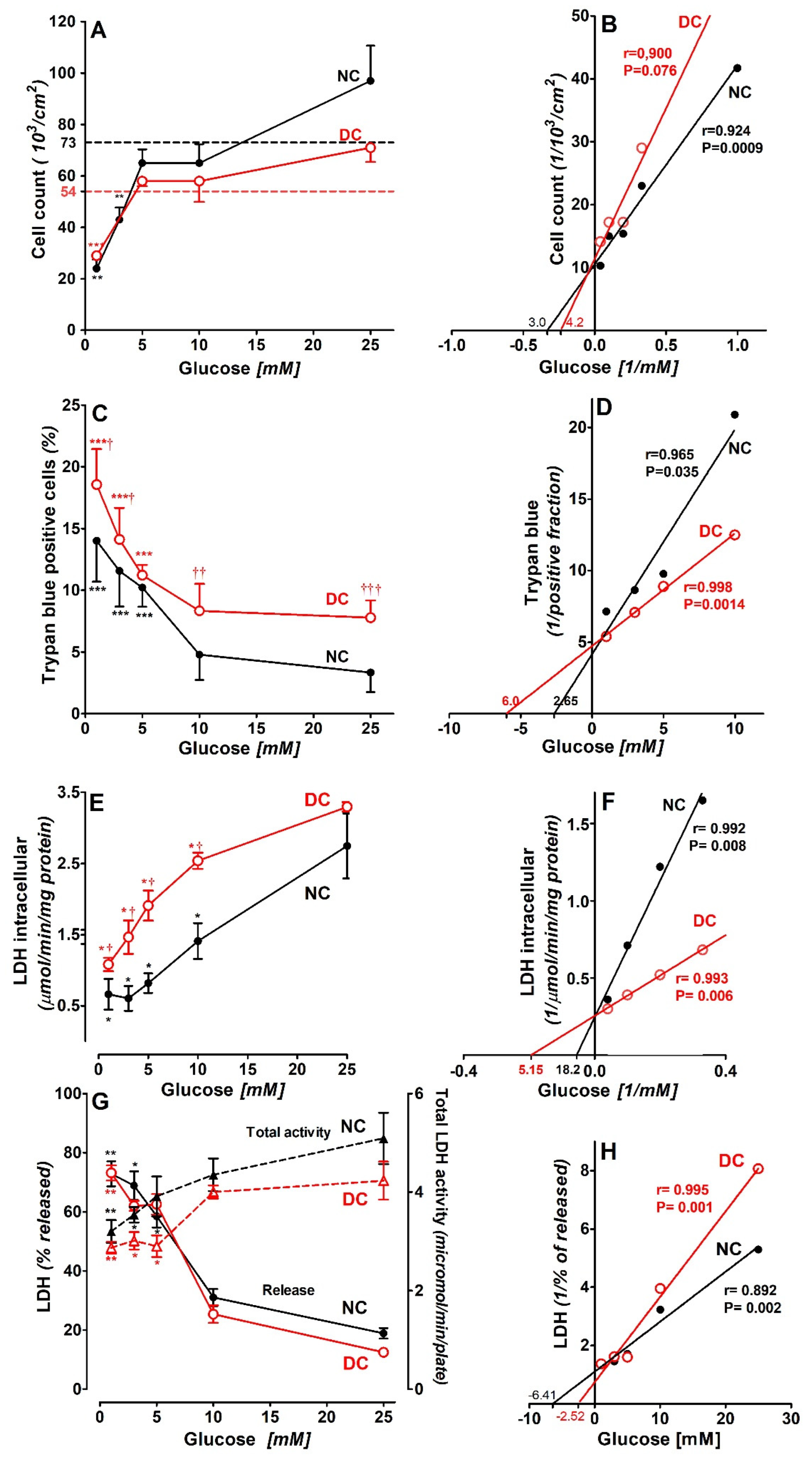
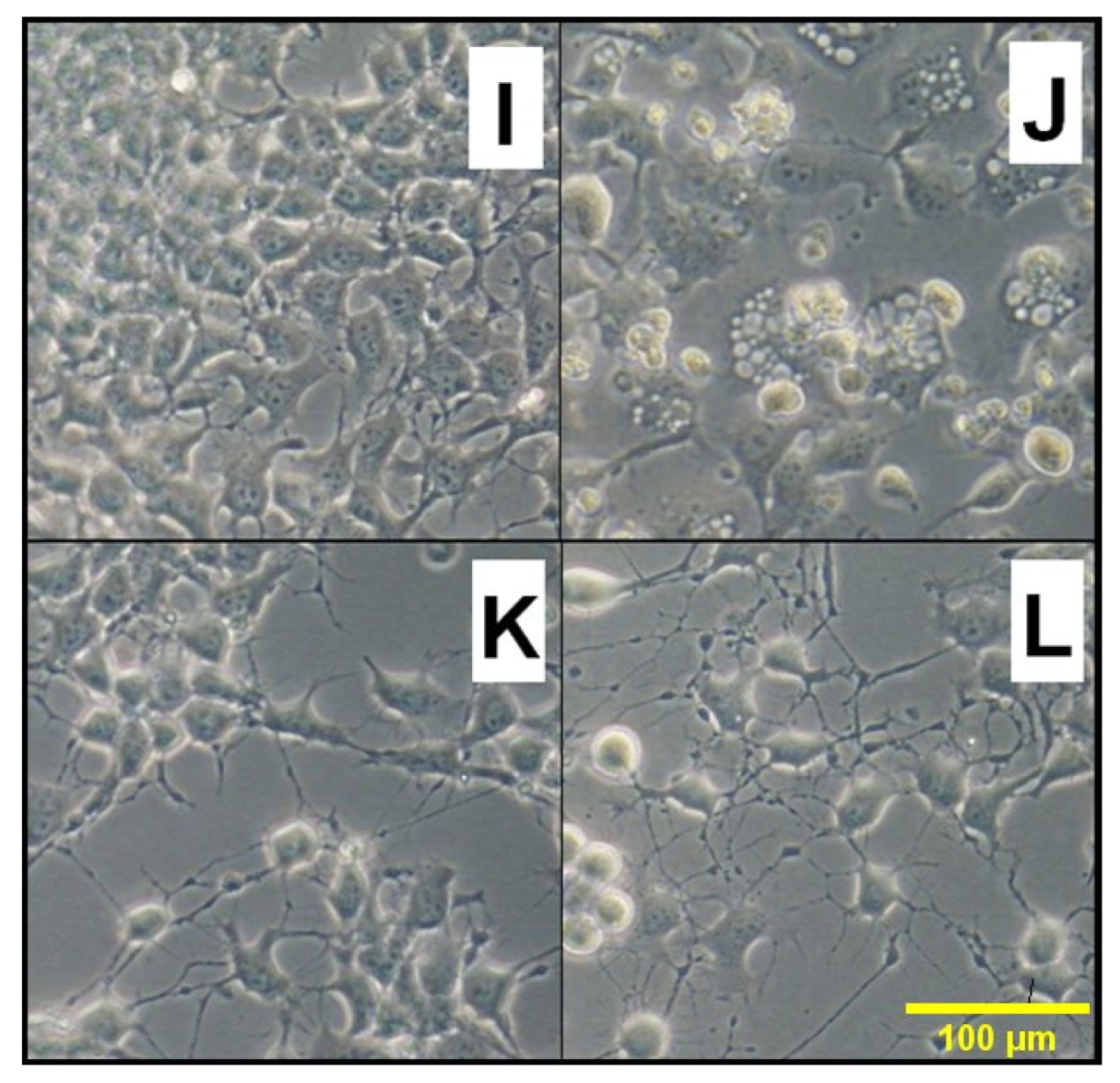
Figure 3.
Concentration-dependent effects of glycaemia on specific activities enzymes of acetyl-CoA metabolism in cholinergic SN56 NC (●) and DC(○): (A) PDHC; (B) ACL; (C) ChAT; (D) Lineweaver-Burk plots of ChAT against [glucose]. Data are means from 5-10 experiments ± SEM. Different from: respective 25 mM glucose control, *p<0.05, **p<0.01; different from respective NC, †p<0.05; ††p<0.01, †††p<0.001.
Figure 3.
Concentration-dependent effects of glycaemia on specific activities enzymes of acetyl-CoA metabolism in cholinergic SN56 NC (●) and DC(○): (A) PDHC; (B) ACL; (C) ChAT; (D) Lineweaver-Burk plots of ChAT against [glucose]. Data are means from 5-10 experiments ± SEM. Different from: respective 25 mM glucose control, *p<0.05, **p<0.01; different from respective NC, †p<0.05; ††p<0.01, †††p<0.001.
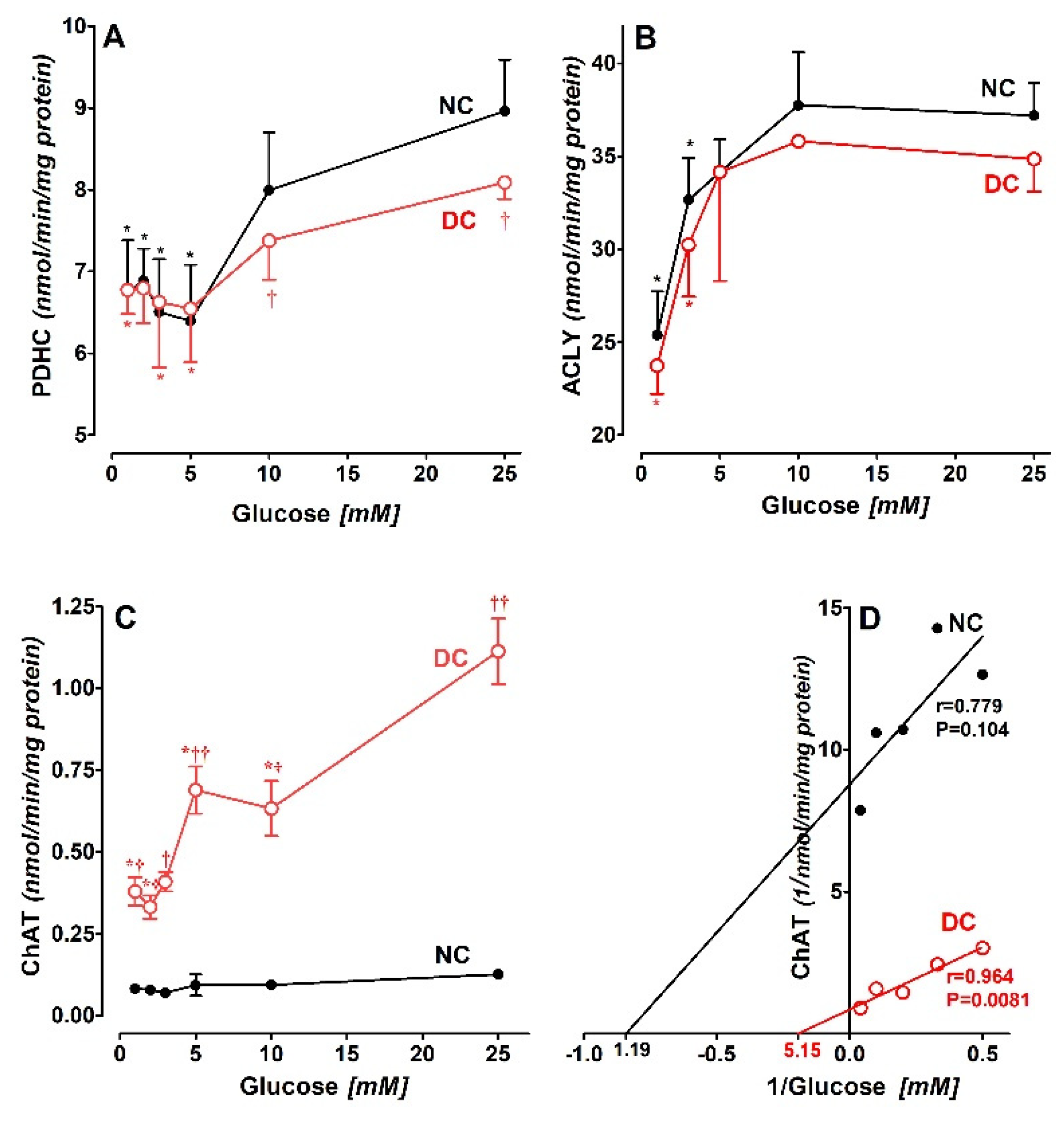
Figure 4.
Glycemia effects on energy metabolite levels. Concentration-dependent effects of glycaemia on (A) acetyl-CoA and (B) ATP levels in cholinergic SN56 NC and DC. Data are means +SEM from 5-10 experiments. Different from: respective 25 mM glucose control, *p<0.05, **p<0.01; ***p<0.001; different from respective NC, †p<0.05; ††p<0.01.
Figure 4.
Glycemia effects on energy metabolite levels. Concentration-dependent effects of glycaemia on (A) acetyl-CoA and (B) ATP levels in cholinergic SN56 NC and DC. Data are means +SEM from 5-10 experiments. Different from: respective 25 mM glucose control, *p<0.05, **p<0.01; ***p<0.001; different from respective NC, †p<0.05; ††p<0.01.
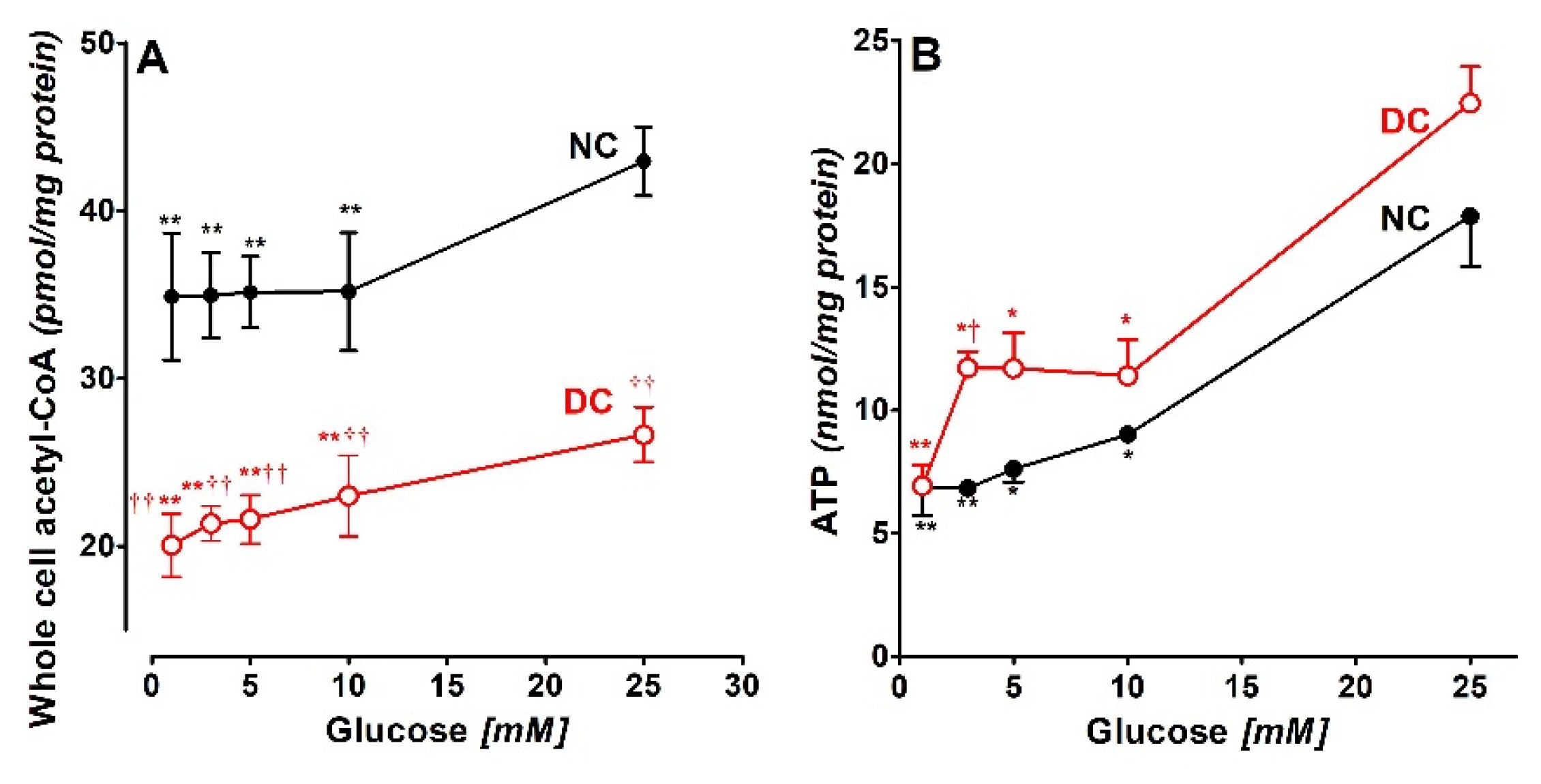
Figure 5.
Correlation plots between parameters of SN56 cells injury and acetyl-CoA level against glucose concentrations varying from 25 to 1 mM. (A) Extracellular LDH vs TB+ cell fraction; (B) extracellular LDH vs intracellular LDH; (C) TB+ fraction vs intracellular LDH (D) extracellular LDH vs whole cell acetyl-CoA; (Data for calculations taken from Figure 2BC, 3D and 4A.
Figure 5.
Correlation plots between parameters of SN56 cells injury and acetyl-CoA level against glucose concentrations varying from 25 to 1 mM. (A) Extracellular LDH vs TB+ cell fraction; (B) extracellular LDH vs intracellular LDH; (C) TB+ fraction vs intracellular LDH (D) extracellular LDH vs whole cell acetyl-CoA; (Data for calculations taken from Figure 2BC, 3D and 4A.
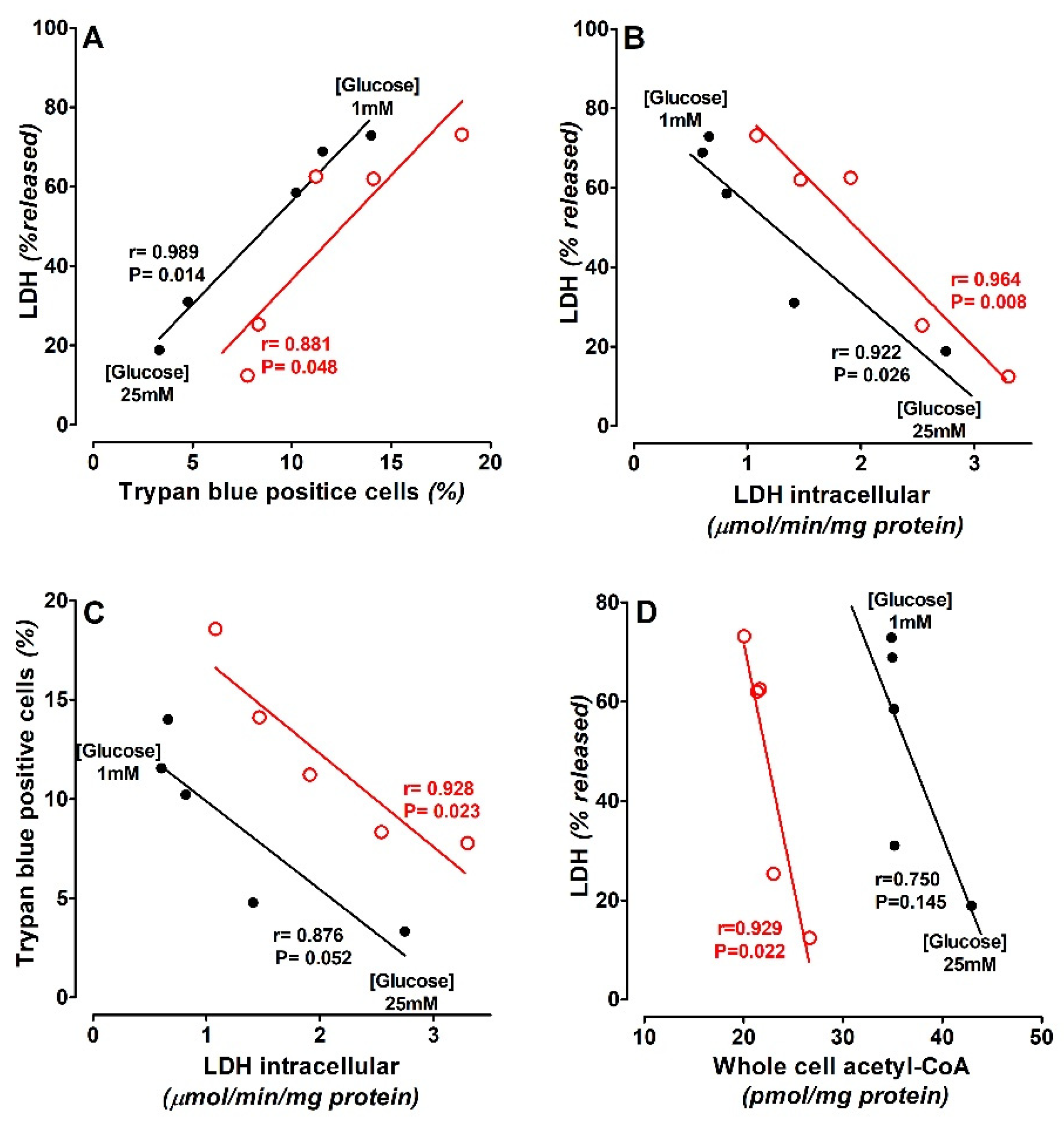
Figure 6.
Different correlation plots between acetyl-CoA and ATP levels and enzymes activities linked with their synthesis and utilization in NC and DC SN56 cells grown in media with glucose concentrations varying from 25 to 1 mM. (A) whole cell acetyl-CoA vs intracellular LDH; (B) whole cell ATP vs intracellular LDH; (C) whole cell acetyl-CoA vs PDHC activity; (D) whole cell acetyl-CoA vs ACL activity; (E) ChAT activity vs whole cell acetyl-CoA; (F) ChAT activity vs ACL activity. Data taken from Figure 2, Figure 3 and Figure 4.
Figure 6.
Different correlation plots between acetyl-CoA and ATP levels and enzymes activities linked with their synthesis and utilization in NC and DC SN56 cells grown in media with glucose concentrations varying from 25 to 1 mM. (A) whole cell acetyl-CoA vs intracellular LDH; (B) whole cell ATP vs intracellular LDH; (C) whole cell acetyl-CoA vs PDHC activity; (D) whole cell acetyl-CoA vs ACL activity; (E) ChAT activity vs whole cell acetyl-CoA; (F) ChAT activity vs ACL activity. Data taken from Figure 2, Figure 3 and Figure 4.
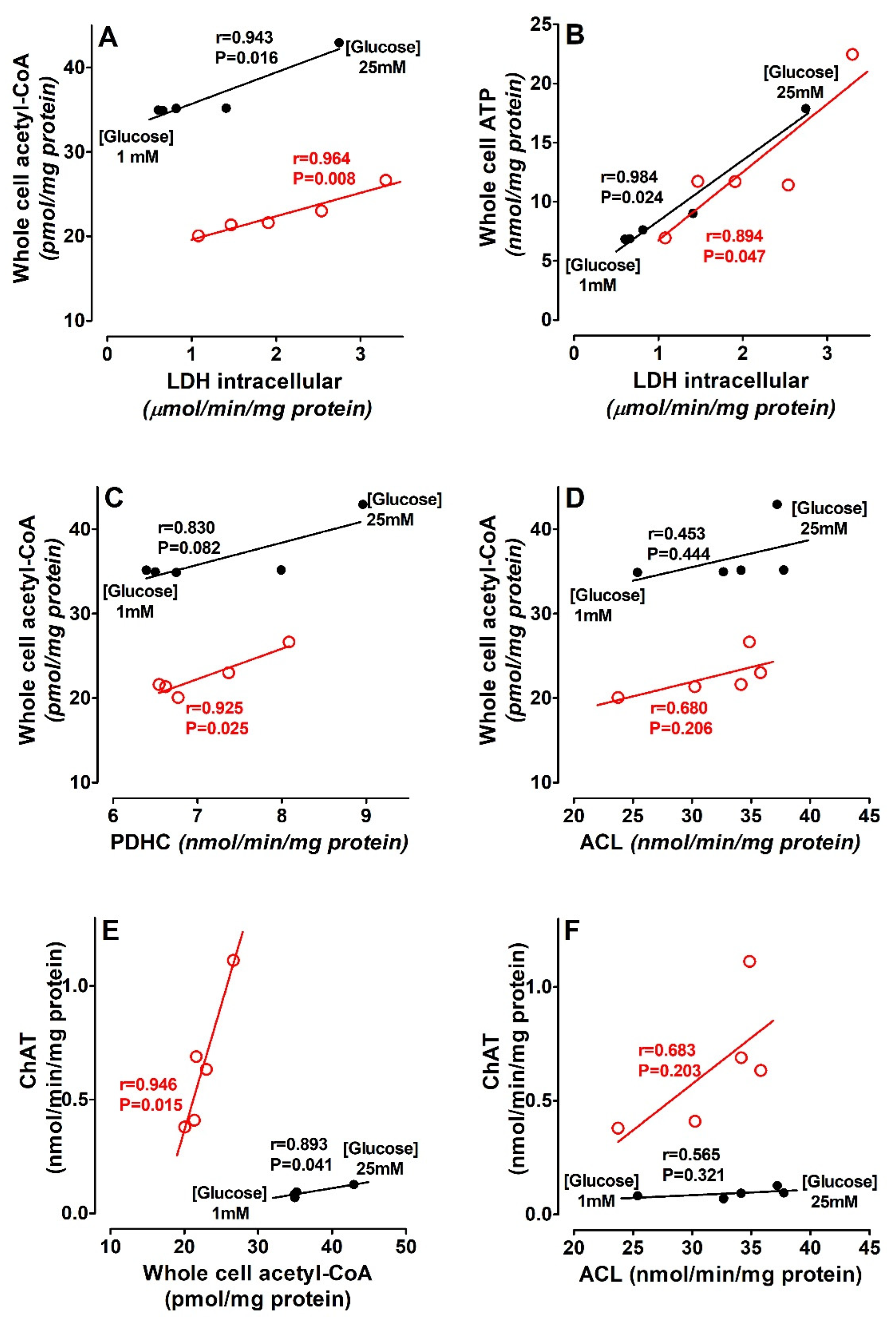
Figure 7.
Effects of SNP and Aβ on DC in hypo and hyperglycemic conditions. Correlation plots: (A) acetyl-CoA vs PDHC activity in DC; (B) ChAT activity vs acetyl-CoA in DC; (C) viability vs acetyl-CoA in DC; (D) cell count vs acetyl-CoA in DC at altering DMEM glucose levels and SNP/Aβ additions. Separate plots (thin lines) for glucose concentrations from 1 to 25 mM (red plots), for SNP and Aβ at 25 mM glucose (purple plots), for SNP and Aβ at 1 mM glucose (green plots). Gray, thick plots – common for all experimental conditions. Data taken from Table 1, Figure 2, Figure 3 and Figure 4.
Figure 7.
Effects of SNP and Aβ on DC in hypo and hyperglycemic conditions. Correlation plots: (A) acetyl-CoA vs PDHC activity in DC; (B) ChAT activity vs acetyl-CoA in DC; (C) viability vs acetyl-CoA in DC; (D) cell count vs acetyl-CoA in DC at altering DMEM glucose levels and SNP/Aβ additions. Separate plots (thin lines) for glucose concentrations from 1 to 25 mM (red plots), for SNP and Aβ at 25 mM glucose (purple plots), for SNP and Aβ at 1 mM glucose (green plots). Gray, thick plots – common for all experimental conditions. Data taken from Table 1, Figure 2, Figure 3 and Figure 4.
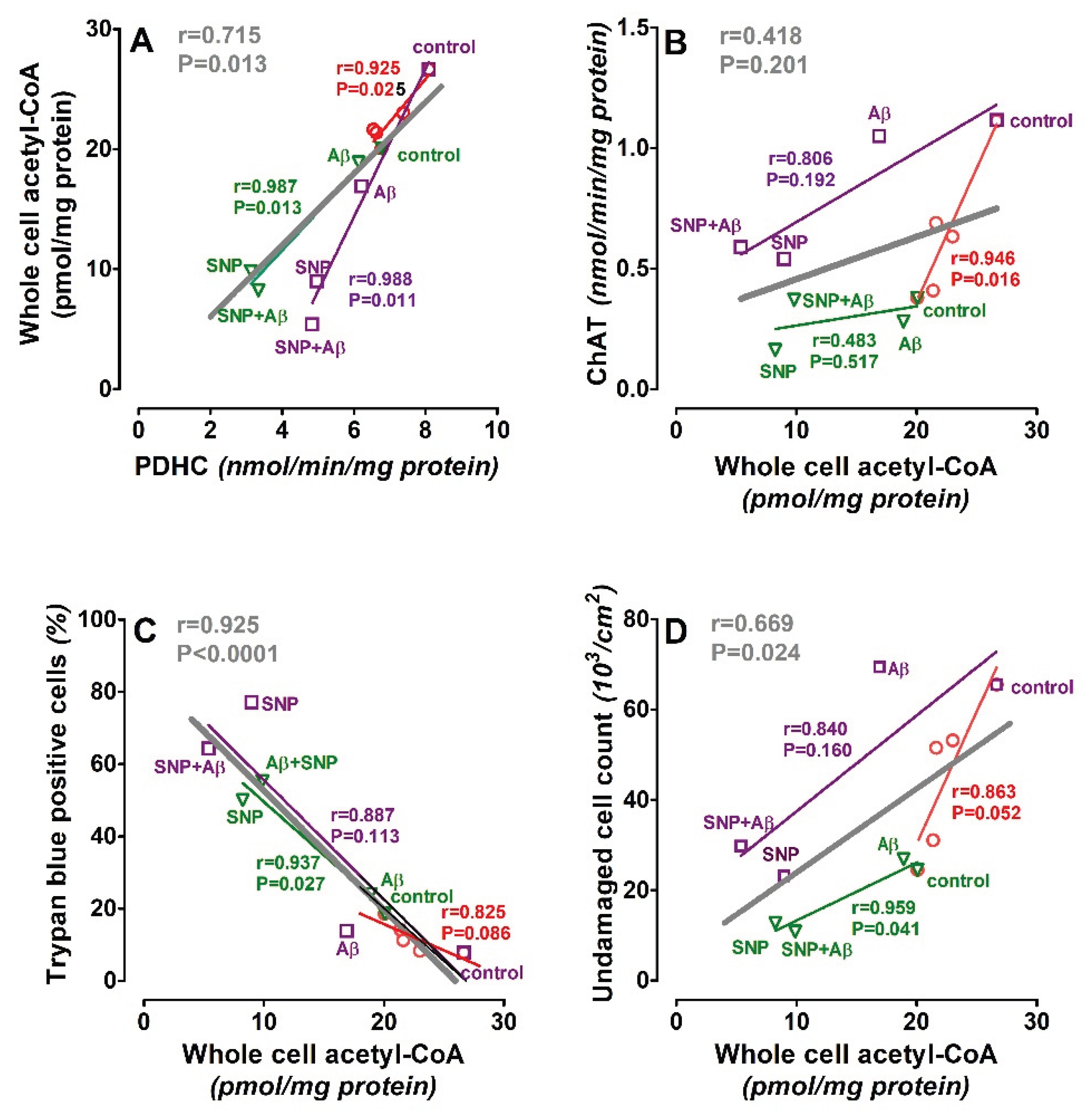

Table 1.
Effects of Aβ SNP on count, viability and parameters of acetyl-CoA metabolism in nondifferentiated and differentiated SN56 cholinergic neuronal cells, cultivated in DMEM containing 1 or 25 mM glucose. .
Table 1.
Effects of Aβ SNP on count, viability and parameters of acetyl-CoA metabolism in nondifferentiated and differentiated SN56 cholinergic neuronal cells, cultivated in DMEM containing 1 or 25 mM glucose. .
|
Additions mM |
Nondifferentiated SN56 | Differentiated SN56 | ||
| 1mM Glucose | 25 mM Glucose | 1mM Glucose | 25 mM Glucose | |
| A | Whole cell count (103/cm2) | |||
| Control Aβ 0.001 SNP 0.4 Aβ 0.001+SNP 0.4 |
24.0±1.1*** 23.7±2.2*** 13.2±2.2***‡ 11.2±1.9***‡‡ |
97.0±7.9 92.3±6.4 44.0±4.6‡‡ 30.8±3.6‡‡‡ |
29.0±0.7*** 36.4±5.4*** 15.9±4.8**‡ 15.8±3.5**‡‡ |
71.0±5.6 85.0±7.9 39.1±5.8‡‡ 38.8±5.9‡‡ |
| B | Trypan blue positive cells (%) | |||
| Control Aβ 0.001 SNP 0.4 Aβ 0.001+SNP 0.4 |
14.0±3.3* 21.9 ± 2.8** 97.0±12.5***‡‡‡ 100.0±3.7***‡‡‡ |
3.3±1.6 6.5±1.3 36.9±1.1‡‡‡ 36.8±0.3‡‡‡ |
18.6±2.9††† 16.9±3.4 35.3±4.8†††*** 57.3±1.8†††* |
7.8±1.4††† 13.8±3.4†‡ 77.1±2.3†††‡‡‡ 64.3±0.5†††‡‡‡ |
| C | Viable cell count (103/cm2) | |||
| Control Aβ 0.001 SNP 0.4 Aβ 0.001+SNP 0.4 |
20.2±0.9*** 18.5±1.7*** 0.4±0.1***‡‡‡ 0***‡‡‡ |
94.7±7.6 86.3±6.0 27.8±2.9‡‡‡ 19.5±2.3‡‡‡ |
23.6±0.6*** 30.2±0.9***† 10.3±3.1‡ 6.7±1.5‡‡ |
65.5±5.2††† 73.3±6.8† 9.0±1.3†††‡‡‡ 13.9±2.1†‡‡‡ |
| D | PDHC specific activity(nmol/min./mg protein) | |||
| Control Aβ 0.001 SNP 0.4 Aβ 0.001+SNP 0.4 |
6.8±0.6* 6.4±0.52 3.4±0.2‡‡‡ 5.4±0.4‡‡‡ |
9.0±0.6 8.1±0.7 6.5±0.2‡‡ 4.0±0.4‡‡‡ |
6.8±0.3* 5.8 ±0.3 4.4±0.2‡‡ 4.7±0.5‡‡ |
8.1±0.2 7.3±0.7 6.2±0.4‡ 5.7±0.4‡ |
| E | Acetyl-CoA content (pmol/mg protein) | |||
| Control Aβ 0.001 SNP 0.4 Aβ 0.001+SNP 0.4 |
34.9±3.8** 34.5±5.4 22.6±5.5‡ 30.8±2.5* |
42.9±2.1 27.9±1.7‡ 17.6±2.7‡‡‡ 21.2±2.7‡‡ |
20.1±1.9**††† 15.6±2.4†† 9.8±5.1‡ 9.0±0.7†††‡‡‡ |
26.7±1.6††† 20.9±1.7† 10.1±0.1†‡‡‡ 6.2±0.9†††‡‡‡ |
| F | ChAT specific activity (nmol/min./mg protein) | |||
| Control Aβ 0.001 SNP 0.4 Aβ 0.001+SNP 0.4 |
0.08±0.01 0.08 ±0.01 0.06±0.01 0.05±0.01 |
0.13±0.01 0.11±0.02 0.08±0.01 0.04±0.02‡ |
0.38±0.04***††† 0.26±0.01***†† 0.22±0.02**††‡‡ 0.21±0.03**††‡ |
1.11±0.04††† 0.99±0.10††† 0.72±0.11†††‡‡‡ 0.78±0.11†††‡ |
Significantly different: against respective 25 mM glucose, *p<0.05**p<0.01 ***p<0.001; against respective NC, †p<0.05, ††p<0.01, †††p<0.001; against respective control ‡p<0.05, ‡‡p<0.01, ‡‡‡p<0.001. Data are means +SEM from 3-5 experiments.
Disclaimer/Publisher’s Note: The statements, opinions and data contained in all publications are solely those of the individual author(s) and contributor(s) and not of MDPI and/or the editor(s). MDPI and/or the editor(s) disclaim responsibility for any injury to people or property resulting from any ideas, methods, instructions or products referred to in the content. |
© 2026 by the authors. Licensee MDPI, Basel, Switzerland. This article is an open access article distributed under the terms and conditions of the Creative Commons Attribution (CC BY) license (http://creativecommons.org/licenses/by/4.0/).
Copyright: This open access article is published under a Creative Commons CC BY 4.0 license, which permit the free download, distribution, and reuse, provided that the author and preprint are cited in any reuse.


