

Submitted:
26 February 2026
Posted:
27 February 2026
You are already at the latest version
Abstract
Background/Objectives: Childhood overweight and obesity are on the rise in the United States with one in five children reported to be obese. This can lead to increased risk of di-et-related chronic diseases earlier in life. Reports conflict on whether fruit and vegetable programs are beneficial. The aim of this study was to look at the Real Food for Kids (RFFK) Fresh Food Explorers Program, a 8-week program that aimed at improving preschoolers' views of vegetables in different categories.
Methods: Preschool students completed visual surveys at the beginning and end of the program, asking about their views of vegetables from different categories. Following the pre-survey, teachers were provided weekly kits over eight weeks containing videos, lesson plans, activity sheets, and detailed hands-on activities. Weekly lessons focused on specific vegetables, including tastings, to reinforce lesson concepts and build positive exposure. Children were sent home with produce bags to share with their families, allowing the les-sons and exposure to continue at home and helping to address food insecurity in house-holds. . Survey results were documented and analyzed to determine the impact.
Results: A total of 177 preschoolers from 10 classrooms in the Washington DC area showed an increase in positive views on vegetables in all categories except for tomatoes, which remained the same.
Conclusion: Our findings show that the Fresh Food Explorers program may improve veg-etable consumption and views among preschool children and show that knowledge and repeat exposure are essential.
Keywords:
preschool
; vegetable intake
; nutrition education
1. Introduction
Childhood overweight and obesity rates are continuing to rise in the United States (U.S.), with one in five, or over 14 million children between the ages of 2 and 19 affected [1]. A child is considered overweight when they fall in the 85th-94th percentiles on the growth chart. Obesity is defined as being in the 95th percentile or above [2]. Childhood obesity rates appear to increase with age and as income decreases, and rates vary by both race and gender. During the 2017-2020 time, the CDC reported the highest obesity rates were seen in Hispanic children (26.2%), non-Hispanic Black children (24.8%), followed by non-Hispanic White children (16.6%). By gender, non-Hispanic Black females (30.8%) and Hispanic boys (29.3%) had the highest rates [1].
From a financial perspective, obesity in children costs the U.S. around 1.3 billion dollars in 2019, with figures quoted as being between $116-$310 per person per year more than healthy weight individuals, depending on the severity [1]. Childhood obesity leads to increased incidence of mental health issues [3] and non-communicable diseases such as increased blood pressure, high cholesterol, diabetes, and asthma [3,4].
Nutrition in early childhood helps children develop healthy eating habits and receive the nutrients they need to grow and develop normally [5]. The Dietary Guidelines for Americans (DGAs) recommends eating a variety of fruits and vegetables as part of a healthy diet. Studies show that diets rich in vegetables are associated with a reduced risk of many chronic diseases, including heart disease, diabetes, and some cancers. This is likely due to the phytochemicals, vitamins, minerals, and fiber content found in fresh vegetables [5,6,7]. Research shows that the consumption of vegetables decreases as income decreases, and consumption also decreases with age [1]. A study in New Zealand found that rates of vegetable consumption steadily declined, with current levels below recommendations. The high cost of fresh vegetables was one of the biggest barriers, especially when compared to the cost of low-nutrient fast foods [8].
There are conflicting reports on whether fruit and vegetable programs provide the benefits that they intend to. One study found that these programs appeared to improve school health and suggested that they may be a reasonable way to increase intake when implemented in schools, including preschool [8]. The Fresh Food Explorers Program is part of a much larger initiative that is run by the nonprofit Real Food for Kids in Fairfax, Virginia. The goal of this organization is to “change eating behaviors and improve health outcomes for children in the greater Washington, DC Region.” With the help of local chefs and farms, Real Food for Kids offers healthy, seasonal, and culturally diverse meals and meal kits for food-insecure families, interactive nutrition education, advocacy efforts, and opportunities for students to help create healthy school lunch options [9]. The aim of this review was to see if the Fresh Food Explorers Program had a positive impact on the consumption of fresh vegetables in preschoolers in the Washington DC area.
2. Materials and Methods
2.1. Participants and Settings
The Fresh Food Explorers program was created for at-risk preschool students in low-income communities. The schools included in this program were selected based on their Title 1 status and on whether RFFK had an existing relationship with them. The program took place in ten preschool classrooms in the Washington DC metro area and was implemented by the classroom teachers who were trained and equipped by Real Food for Kids. RFFK staff were available on-site on lesson days to lend a hand with tastings and answer teachers’ questions. The program is flexible and encouraged teachers to use teaching methods that work for them.
2.2. Parents
Parents were shown a presentation in English and Spanish with an explanation of the Fresh Food Explorers Program, what to expect during the 8 weeks, including information on the produce bags that the children will be bringing home with them, why the lessons are important, and information about the surveys that are needed to gauge the program’s success.
2.3. Teacher Training and Support
Teachers received an orientation on the Fresh Food Explorers Program and a detailed explanation on what was included in the teacher tool kits that arrived in a clear bin and contained materials for up to 25 students including: pre- and post-surveys, detailed lesson plans for each week, posters, activity materials and items needed for the weekly tastings. Teachers received electronic information and links to the weekly videos and digital copies of all materials so that they could be used on their smartboards. Prepared vegetables for lesson displays and tastings were provided by a certified food service partner on lesson days and were delivered to the classroom by a RFFK team member.
2.4. Data Collectioncca
2.4.1. Parents
Parent data were collected through optional pre- and post-surveys in both English and Spanishn . Initial surveys were sent home with notes from the classroom teachers describing the program and asking them to complete and return them to the school. No personal information was collected, so the information remained anonymous. Parents were asked whether vegetables from different categories were prepared at home, and, if so, whether their children consumed ½ cup or more of the vegetables from each category. The survey also asked whether their children consumed at least ½ cup of each of the individual vegetables served. At the end of the eight-week program, the same survey was re-sent to the parents to determine whether there were any changes in vegetable consumption at home.
2.4.2. Students
A presurvey was given to the students by their teachers in the form of a visual graphic featuring images of 9 different vegetables (Figure 1). Below each vegetable are three faces (one happy, one neutral, and one sad), and children were asked to circle the face that indicated how they felt about each vegetable. Over the next seven weeks, the children received lessons from their teachers that offered fun, hands-on educational activities, videos, songs, and the opportunity to taste vegetables in multiple colors and categories. By using multiple exposures to the same vegetables in different forms, the children may learn that they like vegetables when prepared in different ways, such as in soup, salsa, or dipped in hummus. At the end of the seven weeks, the preschoolers were given the same visual survey and asked to mark the face indicating whether they liked, disliked, or thought the vegetables were ok.
2.5. Data Analysis
Before-and-after surveys were reviewed by a research student from George Mason University’s Nutrition and Food Studies department for each of the schools that participated. The information was then entered into a spreadsheet for analysis. Because it was a small program, incomplete surveys were included but were reported as missing or incomplete in the final numbers and bar graphs. Because there were no identifiers, names, or assigned numbers, a direct comparison could not be done; however, overall information was recorded to see if there were trends in either direction.
3. Results
3.1. Parent
Although all the parents received a survey to fill out, the response both at the beginning and end was poor. Of the 177 students, only 23 parents responded to the beginning survey. After removing those that did not meet criteria for inclusion (having 75% or more of the information complete) a total of 20 surveys were included for final review. The average household size was 4.7 and the average number of children reported in the homes was 2.5. Table 1. Shows the result of beginning survey and Table 2 shows the results of the end of program survey.
3.2. Students
3.2.1. Demographics
A total of 177 students from 10 classrooms across Arlington, Virginia, Prince George’s County, Maryland, and Washington, DC. Most students in Arlington and Prince George’s County were Hispanic, while the majority in DC were Black. The ratio of male to female students was reported to be even, although specific numbers were not reported in the data received.
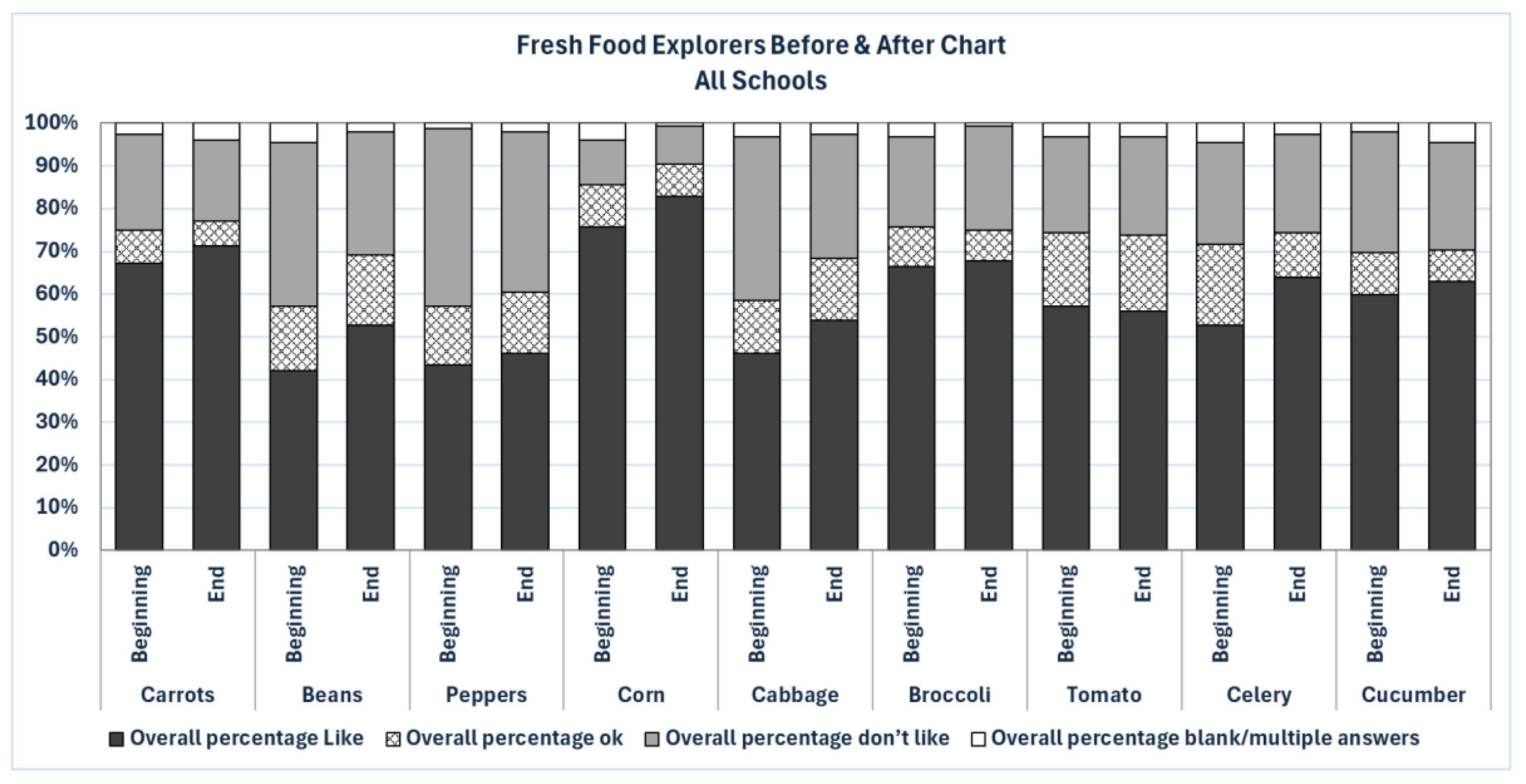
An analysis of beginning and end data for how preschoolers felt about the vegetables that were explored during the 8-week program showed an overall increase in the number of students that reported liking vegetables (Table 2).
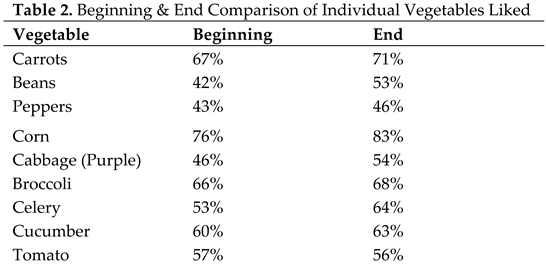
Figure 2.
Fruit and Vegetable Feelings Before and After the Program.
4. Discussion
This paper reports on the observational findings of a pre-school intervention aim on increasing fruit and vegetable acceptance in pre-school children. The findings from this intervention indicate that preschoolers’ reported feelings toward a variety of fresh vegetables were generally positive or neutral at both the beginning and end of the Fresh Food Explorers Program, with modest improvements observed over time for several vegetables. Across nearly all vegetables assessed, the number of children reporting “like” responses increased from pre- to post-assessment, while “don’t like” responses either decreased or remained stable. These results support the working hypothesis that exposure-based nutrition education programs can positively influence preschoolers’ acceptance of fresh vegetables. Cooke, Wardle, and Gibson found that preschool children showed increased liking for vegetables following a series of repeated exposure and tasting sessions, indicating that repeated exposure and associative conditioning can effectively enhance children’s preference for vegetables that are initially less familiar or less preferred [10]. These findings are consistent with previous studies demonstrating that repeated exposure, sensory exploration, and positive social contexts can improve children’s acceptance of vegetables, even in the absence of immediate changes in consumption [10,11,12].
Some vegetables, such as broccoli and tomatoes, showed relatively stable preference patterns, with minimal change from the beginning to the end of the program. This may reflect already high baseline acceptance. Importantly, neutral (“ok”) responses persisted across most vegetables, highlighting that neutrality should be interpreted as a meaningful outcome in early childhood. Prior research suggests that neutral responses often preceded liking and may represent an important transitional stage in the development of food preferences [13].
From a broader public health perspective, these findings are relevant given the continued rise in childhood overweight and obesity rates in the United States, particularly among children from lower-income and racially and ethnically diverse populations. Early childhood represents a critical window for establishing dietary patterns that may persist into later life [14]. Programs such as Fresh Food Explorers align with Dietary Guidelines for Americans recommendations by promoting vegetable variety and exposure at a young age, potentially helping to mitigate disparities in diet quality that contribute to obesity and chronic disease risk.
Despite these encouraging results, several limitations should be considered. This was an observational study, and the identity of the students was blinded. This means that we only can report on the overall changes and were not able to compare the changes on an individual basis. The assessment measured self-reported feelings rather than actual intake, which do not necessarily translate into sustained behavioral change. Additionally, the relatively short duration of the program may limit the magnitude of changes observed in certain vegetables. Future research should incorporate individual changes, objective measures of consumption, examine longer-term outcomes, and explore the role of family and home food environments in reinforcing program effects. Further investigation into differential responses by demographic characteristics may also help refine and tailor interventions for populations at greatest risk.
These results suggest that the Fresh Food Explorers Program shows promise in improving preschoolers’ receptivity to fresh vegetables. When considered within the broader context of childhood obesity prevention, such early, exposure-based nutrition interventions may play an important role in fostering healthier eating behaviors and supporting long-term public health goals.
5. Conclusions
The overall results from the Fresh Food Explorers Program show that it has a positive impact on preschool children’s views and willingness to try a variety of vegetables in the school setting. It is possible that the repeated exposure and positive association created during the lessons increased the likelihood of liking the introduced vegetables. It was hard to gauge the program’s impact outside of school because parent participation was poor.
As a way forward, it would be helpful to repeat this program with the students the following year to see if the results remained the same, continued to improve, or returned to baseline. Additionally, finding new ways to encourage parent involvement beyond providing the weekly produce bags could go a long way toward measuring the program’s impact in a broader setting.
Author Contributions
“Conceptualization, MP. and LD.; methodology, MP.; software, LD.; validation, MP and LD formal analysis, KC.; investigation, KC, MP, LD.; resources, MP.; data curation, KC and LD.; writing—original draft preparation, KC.; writing—review and editing, KC, MP and LD.; visualization, KC, LD.; supervision, LD.; project administration, MP.; funding acquisition, MP. All authors have read and agreed to the published version of the manuscript.
Funding
This project was funded by the involved schools and the Arlington County Department of Human Services.
Informed Consent Statement
Parents or legal guardians were informed about the program through written and verbal communications distributed by both school administrators and classroom teachers. These communications described the purpose and general procedures of the program. Parents or legal guardians were informed that their child’s participation was voluntary and were provided with a clear opportunity to opt out. No data were collected from students whose parents or guardians declined participation.
Acknowledgments
The authors would like to thank the leadership of the participating schools, the teachers and the children and their parents. We would also like.
Conflicts of Interest
The authors declare no conflicts of interest.
Abbreviations
The following abbreviations are used in this manuscript:
| CDC | Centers for Disease Control and Prevention |
| DGAs | Dietary Guidelines for Americans |
References
- Childhood Obesity Facts. Available online: https://www.cdc.gov/obesity/childhood-obesity-facts/childhood-obesity-facts.html.
- Mayo Clinic Childhood Obesity - Diagnosis and Treatment - Mayo Clinic. Available online: https://www.mayoclinic.org/diseases-conditions/childhood-obesity/diagnosis-treatment/drc-20354833.
- Di Cesare, M.; Sorić, M.; Bovet, P.; Miranda, J.J.; Bhutta, Z.; Stevens, G.A.; Laxmaiah, A.; Kengne, A.-P.; Bentham, J. The Epidemiological Burden of Obesity in Childhood: A Worldwide Epidemic Requiring Urgent Action. BMC Medicine 2019, 17, 212. [Google Scholar] [CrossRef] [PubMed]
- OASH Reduce the Proportion of Children and Adolescents with Obesity — NWS-04 - Healthy People 2030 | Odphp.Health.Gov. Available online: https://odphp.health.gov/healthypeople/objectives-and-data/browse-objectives/overweight-and-obesity/reduce-proportion-children-and-adolescents-obesity-nws-04.
- Braga-Pontes, C.; Simões-Dias, S.; Lages, M.; Guarino, M.P.; Graça, P. Nutrition Education Strategies to Promote Vegetable Consumption in Preschool Children: The Veggies4myHeart Project. Public Health Nutrition 2021, 25, 1061–1070. [Google Scholar] [CrossRef] [PubMed]
- Ramya; Patel, P. Health Benefits of Vegetables. International Journal of Chemical Studies 2019, 7, 82–87. [Google Scholar]
- Wambogo, E.A.; Ansai, N.; Ahulwalia, N.; Ogden, C.L. Fruit and Vegetable Consumption among Children and Adolescents in the United States, 2015-2018. NCHS Data Brief 2020, 1–8. [Google Scholar]
- Gerritsen, S.; Renker-Darby, A.; Harré, S.; Rees, D.; Raroa, D.A.; Eickstaedt, M.; Sushil, Z.; Allan, K.; Bartos, A.E.; Waterlander, W.E.; et al. Improving Low Fruit and Vegetable Intake in Children: Findings from a System Dynamics, Community Group Model Building Study. PLoS ONE 2019, 14, e0221107. [Google Scholar] [CrossRef] [PubMed]
- Real Food for Kids Fresh Food Explorers - Real Food for Kids. Available online: https://www.realfoodforkids.org/programs/fresh-food-explorers/.
- Wardle, J.; Cooke, L.J.; Gibson, E.L.; Sapochnik, M.; Sheiham, A.; Lawson, M. Increasing Children’s Acceptance of Vegetables; a Randomized Trial of Parent-Led Exposure. Appetite 2003, 40, 155–162. [Google Scholar] [CrossRef] [PubMed]
- Kokkorou, M.; Spinelli, S.; Dinnella, C.; Monteleone, E. Interventions Based on Sensory-hedonic Strategies and on Nudging to Facilitate Vegetable and Pulses Consumption in the School Environment. Comprehensive Reviews in Food Science and Food Safety 2024, 23, e13312. [Google Scholar] [CrossRef] [PubMed]
- Tauriello, S.; Bowker, J.; Wilding, G.; Epstein, L.; Anzman-Frasca, S. Examining Associative Conditioning with a Positive Peer Context as a Strategy to Increase Children’s Vegetable Acceptance. Pediatric Obesity 2020, 15, e12660. [Google Scholar] [CrossRef] [PubMed]
- Kostecka, M.; Kostecka-Jarecka, J.; Kowal, M.; Jackowska, I. Dietary Habits and Choices of 4-to-6-Year-Olds: Do Children Have a Preference for Sweet Taste? Children 2021, 8, 774. [Google Scholar] [CrossRef] [PubMed]
- Günther, A.L.B.; Schulze, M.B.; Kroke, A.; Diethelm, K.; Joslowski, G.; Krupp, D.; Wudy, S.; Buyken, A.E. Early Diet and Later Cancer Risk: Prospective Associations of Dietary Patterns During Critical Periods of Childhood with the GH-IGF Axis, Insulin Resistance and Body Fatness in Younger Adulthood. Nutrition and Cancer 2015, 67, 877–892. [Google Scholar] [CrossRef] [PubMed]
Figure 1.
Fruit and Vegetable Survey.
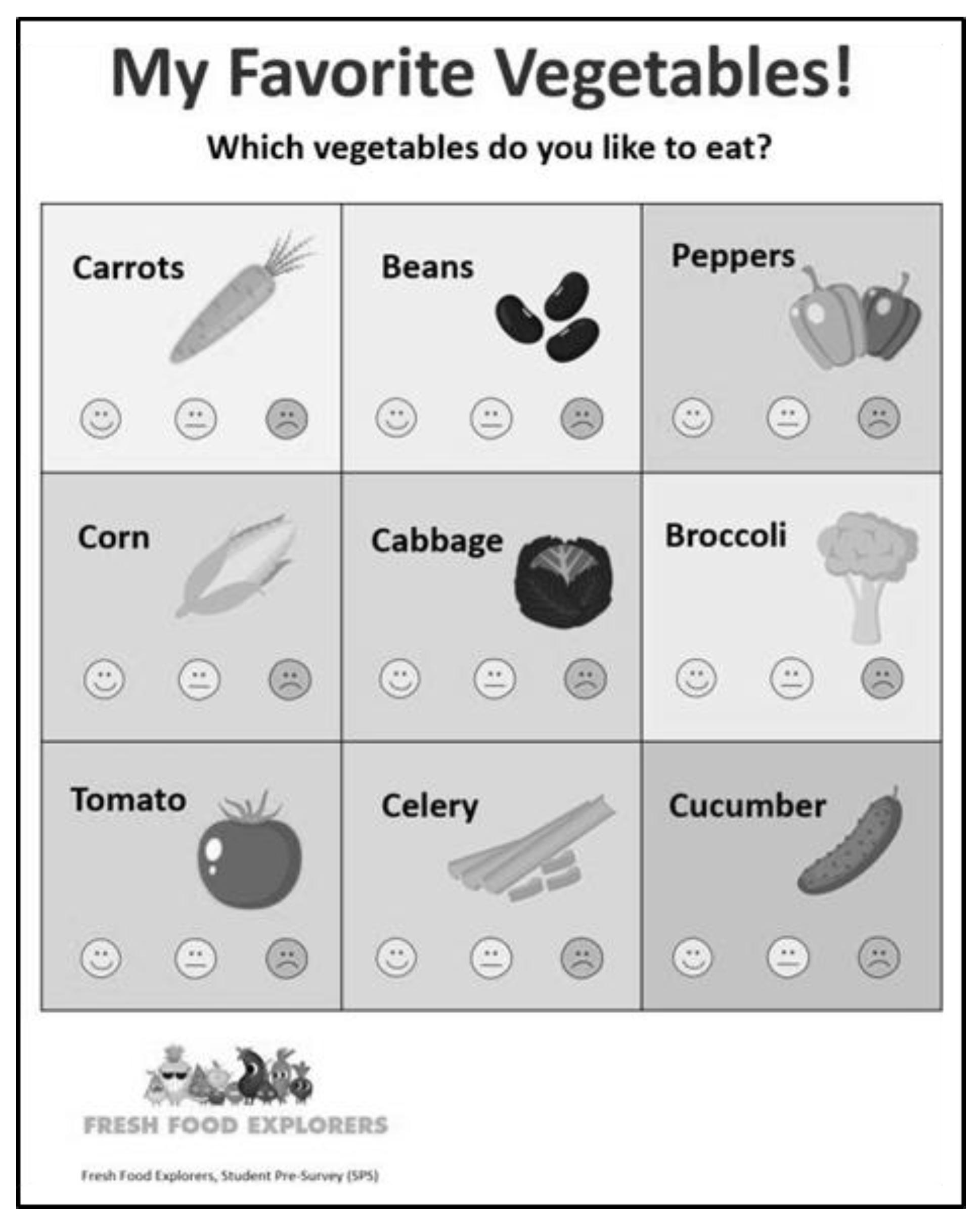

Table 1.
Types of Vegetables and Frequency of Served at Home.
| Vegetable | Never | Rarely | Sometimes | Often | Blank |
|---|---|---|---|---|---|
| Arugula | 11 | 1 | 6 | 1 | 1 |
| Bell Pepper | 1 | 7 | 10 | 1 | 1 |
| Broccoli | 0 | 4 | 9 | 7 | 0 |
| Cabbage | 2 | 6 | 11 | 1 | 0 |
| Carrots | 0 | 2 | 5 | 13 | 0 |
| Cauliflower | 0 | 4 | 13 | 3 | 0 |
| Celery | 2 | 7 | 4 | 6 | 1 |
| Corn | 2 | 2 | 10 | 6 | 0 |
| Cucumber | 2 | 7 | 4 | 7 | 0 |
| Beans | 0 | 4 | 4 | 12 | 0 |
| Iceberg Lettuce | 1 | 2 | 12 | 5 | 0 |
| Kale | 7 | 7 | 4 | 1 | 1 |
| Romaine Lettuce | 3 | 7 | 7 | 3 | 0 |
| Spinach | 2 | 4 | 5 | 8 | 1 |
| Zucchini | 7 | 5 | 5 | 2 | 1 |
| Tomato | 0 | 2 | 8 | 10 | 0 |
Disclaimer/Publisher’s Note: The statements, opinions and data contained in all publications are solely those of the individual author(s) and contributor(s) and not of MDPI and/or the editor(s). MDPI and/or the editor(s) disclaim responsibility for any injury to people or property resulting from any ideas, methods, instructions or products referred to in the content. |
© 2026 by the authors. Licensee MDPI, Basel, Switzerland. This article is an open access article distributed under the terms and conditions of the Creative Commons Attribution (CC BY) license (http://creativecommons.org/licenses/by/4.0/).
Copyright: This open access article is published under a Creative Commons CC BY 4.0 license, which permit the free download, distribution, and reuse, provided that the author and preprint are cited in any reuse.


