Preprint
Article

This version is not peer-reviewed.

Insecticide Resistance Mutations, Enzymatic Activity and Pathogen Infection in Culex quinquefasciatus from Haiti

A peer-reviewed version of this preprint was published in:
Insects 2026, 17(3), 331. https://doi.org/10.3390/insects17030331

Submitted:

19 February 2026

Posted:

26 February 2026

You are already at the latest version

Abstract

Haiti is a Caribbean country of about 11 million people with a high burden of mosquito-transmitted disease and limited vector control, thereby making effective operational mosquito control of high import. Previous studies have examined vector-borne disease burden and insecticide resistance markers in Haitian Aedes and Anopheles mosquitoes but not Culex species. In this study, we examined collections of Culex quinquefasciatus from 12 locations in northern and southern Haiti for the presence of markers of insecticide resistance (using a variety of target site mutations and biochemical assays) and pathogens (using a deep sequencing microbiome workflow). The metagenome analysis identified Wolbachia, Rhabdoviridae and Plasmodium infection in all sample pools at relatively high levels along with less frequent findings of other potential pathogens. Resistance marker examination identified variable frequencies of knockdown resistance and acetylcholinesterase resistance mutations, as well as variation in resistance-associated enzymatic activities in these populations, which indicate that insecticide resistance to the primary pyrethroid and organophosphate insecticides is likely. Though there was variation between Culex mosquito populations and no clear activity pattern, enzymatic activity was significantly higher in the southern sites compared to the northern sites. Similar findings in Cx. quinquefasciatus populations in other locations in the Americas strongly suggest that vector control with pyrethroid and organophosphate adulticides may be of limited efficacy.

Keywords: 
;  ;  ;  ;  ;  ;  ;  ;  

1. Introduction

In Haiti, vector-borne diseases remain endemic largely due to poor infrastructure, a tropical climate, and frequent natural disasters. Culex quinquefasciatus is the principal transmitter of Bancroftian filariasis, which is hyperendemic to Haiti and was found to be present in 87.9% of Haitian districts. The disease is a leading cause of permanent disability worldwide, with permanent disfigurement occurring from lymphedema in the limbs [1,2]. Culex quinquefasciatus is also a competent vector for arboviruses such as West Nile virus (WNV) [3,4], St. Louis encephalitis virus [5,6,7] and possibly Rift Valley Fever [8]. West Nile virus, carried by Cx. quinquefasciatus and other members of the Cx. pipiens complex, appeared in 2/116 patients in a study of mosquito-borne diseases in Gonaïves, Haiti, though there is speculation that false-positive commercial ELISA tests may frequently misdiagnose WNV as dengue, thus obscuring the actual prevalence of the disease [9,10]. In general, WNV is the most prevalent arboviral disease in North America and is endemic to several areas in Africa and Asia [11]. The Cx. pipiens complex is involved in the transmission of pathogens such as avian malaria and avian pox virus. Though Cx. pipiens is primarily ornithophilic, it plays a role in the mosquito-bird amplification cycle of WNV that can transmit to “dead-end” hosts such as humans [12]. The transmission of WNV by Culex species has resulted in 40,000 clinical cases and almost 1,700 human deaths in the United States alone [12,13]. Though Haiti currently has a low prevalence of WNV, its initial presence in Haiti likely arrived with migratory birds from the Americas and it has the possibility to spread further throughout Hispaniola [10].
Culex species are difficult to distinguish morphologically; larval forms lack distinguishing characteristics, and species within the Cx. pipiens complex (such as Cx. quinquefasciatus) are morphologically alike. Additionally, members within this complex are known to hybridize, continuing to make identification between species unclear [14]. It is uncertain as to how this hybridization affects vector competence for diseases such as lymphatic filariasis and WNV. In general, this indistinctness contributes to the lack of precise targeting in vector control. As compared to Aedes and Anopheles, Culex species have not been targeted as aggressively by insecticides, nor has Culex insecticide resistance been comprehensively studied. Culex and Aedes species tend to live near one another – particularly Ae. aegypti and Cx. quinquefasciatus, which are both domestic species adapted to urban environments and human cohabitation. Off-target exposure from vector control programs targeted towards Aedes and Anopheles has allowed several mechanisms of resistance to pyrethroids and organophosphates to evolve in Culex species. The two major mechanisms of resistance to pyrethroids in Culex are mutations in voltage-sensitive sodium channels causing target site insensitivity, and overexpression of cytochrome P450(s) causing increased detoxification. Voltage-sensitive sodium channel mutations occurring at L1014F are termed knockdown resistance (kdr) and are generally incompletely recessive in Culex [12]. Additionally, a single nucleotide polymorphism (SNP) in the acetylcholinesterase gene (AchE) termed G119S has been significantly associated with organophosphate resistance [15,16]. Long-term usage of insecticides leading to tangential or direct development of insecticide resistance has significant public health concerns. In countries intensively utilizing pyrethroids to reduce the impact of dengue, kdr mutations and significant levels of insecticide resistance were observed in Culex, an off-target species for the vector control program. In countries where Culex frequently carry filariasis or WNV, this off-target resistance is a blind spot in vector control programs that may result in increased spread of such vector-borne diseases [17].
Previous research performed on insecticide resistance in Haiti studied Ae. aegypti and found phenotypic expression of pyrethroid resistance in field assays that were not reproducible in the lab, observing the kdr allele in very few samples [18] – however, in a study performed seven years later, 70% of the Leogane and Merger population displayed allelic kdr mutations, indicating a rapid and widespread increase in pyrethroid resistance [19]. In the French West Indies, Brazil, Nigeria, and Cameroon, the widespread use of insecticides against Aedes led to off-target reduced susceptibility in Culex populations [16,20,21,22]. It is reasonable to postulate that an increase in kdr mutations in Haitian Aedes populations is matched by a proportionate increase of mutations in the Culex populations. The G119S mutation is present in populations of Culex in the Caribbean, and in the island of Guadeloupe in the French West Indies, at an incidence higher than the wild type “susceptible” allele due to vector control of Ae. aegypti [20]. However, we could not find research studies assessing the levels of organophosphate resistance in Culex within Haiti specifically.
Though Haiti has programs in place to reduce the impact of vector-borne disease (in particular, lymphatic filariasis), these programs are primarily focused on long-term treatment rather than prevention. The efficacy of mosquito vector control as a means of reducing the spread of vector-borne disease is understudied in Haiti, though previous research has shown that the use of pyrethroid-treated bed nets is effective [23]. There is a lack of existing research delineating the impact of vector-control based disease reduction, or the prevalence of pathogens carried by Culex species in Haiti. Additionally, research assessing Culex insecticide resistance that would be useful in guiding further mosquito vector control directives in Haiti is lacking. This study partially addresses this gap by providing baseline information from samples collected from 12 locations in Haiti during 2017. This study assessed the frequency of target site mutations and quantified enzymatic activities of esterases, cytochrome P450s, and glutathione S transferases linked to insecticide resistance in Culex. We also assessed pathogen presence in these Cx. quinquefasciatus by conducting microbiome study.

2. Materials and Methods

2.1. Arthropod Surveillance Collection Procedures

Mosquitoes were collected from March 2017 to July 2018 using CDC light traps with incandescent bulbs and CDC gravid traps with hay infusion that were deployed for 12 hours a night, 3 days a week. The 12 locations sampled include seven in northern Haiti in Nord department and five locations in Southern Haiti west of Port-Au-Prince in the Ouest (Figure 1). Sampling locations and trapping metadata are listed in File S1.
Culex quinquefasciatus complex mosquitoes were retrieved from the trap nets, identified based on morphology, and transferred to microcentrifuge tubes and then stored frozen at -80 oC at the University of Florida Public Health Field Laboratory in Gressier, Haiti until shipment to the Emerging Pathogens Institute at the University of Florida in Gainesville, FL for subsequent sample preparation (Section 2.3).

2.2. Control Strain

Culex quinquefasciatus has been established at the Center for Medical, Agricultural, and Veterinary Entomology (CMAVE), USDA-ARS since 1995 in Gainesville, FL, from an Orlando, Florida strain. Mosquitoes were reared using a standard procedure wherein collected egg rafts were reared in 3 L plastic trays [25,26,27]. One half gram of larval diet (2:1 alfalfa powder: pig chow) was added to each tray every other day. Pupae were picked approximately one week after putting eggs into water and transferred to a screened cage and maintained at 27 oC and 80% RH. Incandescent lighting simulated a crepuscular profile with a photoperiod of 14 h:10 h (L:D). Adults were fed 10% sucrose ad libitum and bovine blood in 1% heparin in a pig intestine, warmed to 37 oC, was provided twice weekly [27].

2.3. Sample Homogenization, Pooling and RNA Purification

Forty individual females collected from each of the different locations (480 total individuals) (File S1) were loaded into wells of 96-deep well plates (Omni International, Kennesaw, GA) in 400 µL of 100 mM sodium phosphate pH 7.4 with 2.0 mm zirconia beads. The plates were sealed with Teflon sealing mats and homogenized for 60 seconds at 30 hertz. The samples were centrifuged for 2 minutes at 805 x g and then refrozen until enzyme assay and RNA preparation [13].
Individual samples were assayed for enzyme activity directly from the sodium phosphate homogenate as described below (Section 2.5). Homogenized samples were diluted 1:5 in nuclease free water (NFW) for kdr and AchE target site mutation assays as well as the Culex speciation assay (Section 2.4).
Samples for RNA purification and sequencing (Section 2.6) were produced by combining 20 µL of homogenate from 8 individuals from the same location (a single column on the 96-well plate) into one pool. Thus, five pooled samples were generated from each of the 12 locations. RNA was purified from each pool using a commercial silica spin column kit (Zymo Research, Irvine, CA) after dilution at a 2:1 ratio with DNA binding buffer. Purification followed the manufacturer instructions and elution was performed with 20 µL of NFW applied directly to the column matrix.
Complementary DNA was generated using the SuperScript IV kit (Thermo Fisher Scientific, Waltham, MA). Briefly, 1 µl of 50 ng/µL random hexamers, 1 µL of 10 mM dNTP, 11 µL of generated template RNA, and 2 µl of NFW were combined to a final volume of 15 µL. Samples were heated to 65 oC for 2 minutes and then placed on ice to reduce secondary structure. A reverse transcription reaction comprising 4 µL of 5x SSIV Buffer, 1 µL 100 mM DTT, 1 µL ribonuclease inhibitor, and 1 µL SuperScript IV Reverse Transcriptase was added to each sample. After mixing, samples were incubated at 23 oC for 10 minutes and then at 50-55 oC for 10 minutes. The reaction was inactivated by incubation at 80 oC for 10 minutes. Second strand synthesis was conducted using the NEBNext Non-directional Second Strand Kit (New England Biolabs, Ipswich, MA).

2.4. Speciation, Knockdown Resistance and Acetylcholinesterase Mutation Detection Assays

Knockdown resistance assays assessed the SNP changing 1014L to 1014F (occasionally serine, position based on standard Musca domestica sodium channel). A melt curve assay (MCA) that identified the presence of the SNP via a difference in melting temperature (Tm) was performed. PCR reactions were assembled in 384-well plates on an Eppendorf 5750 workstation (Eppendorf, Hamburg, Germany). Primers and primer concentrations are listed in Table 1. Each 10 μL PCR reaction consisted of 9 µL of mastermix containing 5 μL of SYBR Select (Thermo Fisher Scientific, Waltham, MA), primer quantities as listed in Table 1, and the remainder NFW. One microliter of diluted mosquito homogenate was transferred from the sample plate to the assay plate by the workstation. Reactions were cycled on a QuantStudio6 Flex (Thermo Fisher Scientific, Waltham, MA) for 40 cycles using standard FAST parameters with a final melt curve phase from 60°C to 95°C. The presence of kdr was assessed by examining individual melt curves to determine Tm peaks (~82.2 ± 0.4 °C for 1014F, ~86.0 ± 0.4 °C for 1014L). Heterozygosity at position 1014 was identified by the presence of a peak at both Tms [13,28,29].
Detection of the canonical G119S AchE SNP described by Weill [15] was conducted using novel MCA primers and the method described above. Primers and primer concentrations are listed in Table 1. Identification of the 119S homozygous mutant (SS, in abbreviated notation) results in an ascending temperature curve with a primary Tm peak at 85.8 ± 0.4 °C. The 119G homozygous wildtype (GG) produces a primary Tm peak at 80 ± 0.4°C and a weak shoulder rather than a peak at 85.8 ± 0.4 °C. The G119S heterozygote (GS) produces a primary Tm peak at 80 ± 0.4 °C and a distinct Tm peak, rather than shoulder, at 85.8 ± 0.4 °C.
Insecticide resistance SNPs are undetermined in many Culex species and Cx. nigripalpus are often collected with Cx. pipiens complex mosquitoes so we included a speciation assay to ensure that genotyping results of the insecticide resistance MCAs were specific for Cx. quinquefasciatus. The separation of Cx. pipiens/quinquefasciatus complex mosquitoes from Cx. nigripalpus was achieved by MCA with novel primers targeting a cytochrome oxidase I gene region, following the method above. Primer sequences and concentrations are in Table 1. Culex pipiens complex mosquitoes result in a distinct Tm peak at 84.9 ± 0.2 °C and Cx. nigripalpus result in a distinct Tm peak at 70.3 ± 0.2 °C.
All MCAs were conducted from the same homogenate plates with controls appropriate for each assay. This included controls for each allele or species and a DNA-negative control.

2.5. Metabolic Resistance Assays

Samples for metabolic assays were conducted on the sodium phosphate homogenates. Each population was represented by 40 individuals, and two populations were assessed per plate. Technical duplicate reactions were conducted for each individual sample. Conversion of the resulting absorbance values to the appropriate outcome (mg of protein, micrograms of esterase, etc.) was performed by comparison to standard curves, included on each plate, by the Multiscan Sky software (Thermo Fisher Scientific, Waltham, MA).

2.5.1. Bradford Protein Assay

A total protein assay (Bradford Assay) was performed with a protocol based on the MAN0011181 protocol from Thermo Fisher Scientific (Waltham, MA). One hundred microliters of Coomassie reagent was added to each well and 10 µL of supernatant was transferred and mixed by pipetting 10 times. A standard curve of BSA dilutions was included on each plate. Plates were scanned on a Multiscan Sky at 595 nm after 15 minutes of incubation.

2.5.2. Cytochrome P450 Assay

One hundred microliters of 3,3’,5,5’-etramethylbenzidine (TMBZ) sodium acetate buffer was added to each well. Ten microliters of supernatant was transferred from the homogenate plate into duplicate test wells. Ten microliters of each standard was transferred to two columns (11-12) then 12.5 µL of 3% H2O2 was added to each well and mixed 15 times. Plates were incubated for 10 minutes at room temperature in the dark and scanned on a Multiscan Sky at 620 nm.

2.5.3. Glutathione S-Transferase (GST) Activity Assay

A 1-chloro-2,4-dinitrobenzene (CDNB) – reduced glutathione (GSH) solution was made immediately before use by combining 0.51 mL of 21 mM CDNB in methanol and 10.2 mL of 10 mM GSH in 0.1 M sodium phosphate buffer pH 6.5. After briefly vortexing, 90 µL of the CDNB-GSH solution was added to each well. Ten microliters of 0.1 M sodium phosphate buffer pH 7.4 was added to columns 11-12 as negative controls, and 10 µL of supernatant was transferred to duplicate columns. The plate was immediately kinetically read on the Multiscan Sky for 5 min at 1 min intervals using 340 nm wavelength.

2.5.4. α-Carboxylesterase Activity Assay

Ninety microliters of 30 mM α-naphthyl acetate buffer and 8 ul of sodium phosphate pH 7.4 was loaded into each well of columns 1-10. One hundred microliters of an α-naphthol dilution series was added to columns 11-12 as a standard curve. After a 15 min incubation in the dark, two microliters of supernatant was added from column 6 to columns 1-2 (see Bradford Assay) and then mixed 15 times. Thirty microliters of Fast Blue B was added to columns 1-3 and stirred 15 times. Fast Blue B addition and mixing continued 3 columns at a time. After a 5 min incubation in the dark, the plate was read at 600 nm and converted to micrograms based on the standard curve. Results were multiplied 5x to account for dilution factor.

2.5.5. β-Carboxylesterase Activity Assay

β-naphthyl acetate assays were conducted the same as described above but with β-naphthyl acetate buffer and β-naphthol as the known standard. The β-naphthyl acetate assay wells were read at 550 nm, and results were multiplied 5x to account for the dilution factor.

2.6. Nanopore Sequencing and Bioinformatics

Double stranded cDNA (dscDNA) pooled samples (5 pooled samples x 12 locations = 60 sequencing libraries) were sequenced on a MinION Mk1B device using the SQK-NBD114.96 ligation sequencing kit and R10 chemistry (Oxford Nanopore Technologies, Oxford, UK) following the manufacturer provided protocol (version NBE_9171_v114_revP_15Sep2022). Variations from the manufacturer protocol at the initial end preparation step were: a reduced quantity of DNA Control Sequence (from 1.0 µL to 0.25 µL per reaction), a decreased input DNA quantity (10 µL of dscDNA reduced from 11 µL) and the addition of 1 µL of NFW. Due to dscDNA length bias toward shorter fragment lengths (generally less than 1 kb) we followed the protocol recommendation and loaded 132.6 femtomoles of the final DNA library into the cell. DNA concentrations were determined by Nanodrop 8000 (Thermo Fisher Scientific, Waltham, MA). Sequencing and devices were managed by MinKNOW software. The initial quality threshold was set to 10 and initial barcode binning was conducted within the software.
Raw barcoded sequence data was subsequently filtered a second time to reduce misbinning by requiring a minimum 37-base barcode match at each end and identity of 95% to the true barcode sequence. Filtered reads were subsequently used for microbiome assessment using the Chan-Zuckerburg ID platform (czid.org). Resulting assignment files for each sample were screened and a frequency heatmap was constructed in R using the pheatmap package [30].

3. Results

3.1. Assessment of Knockdown and Acetylcholinesterase Target Site Mutations

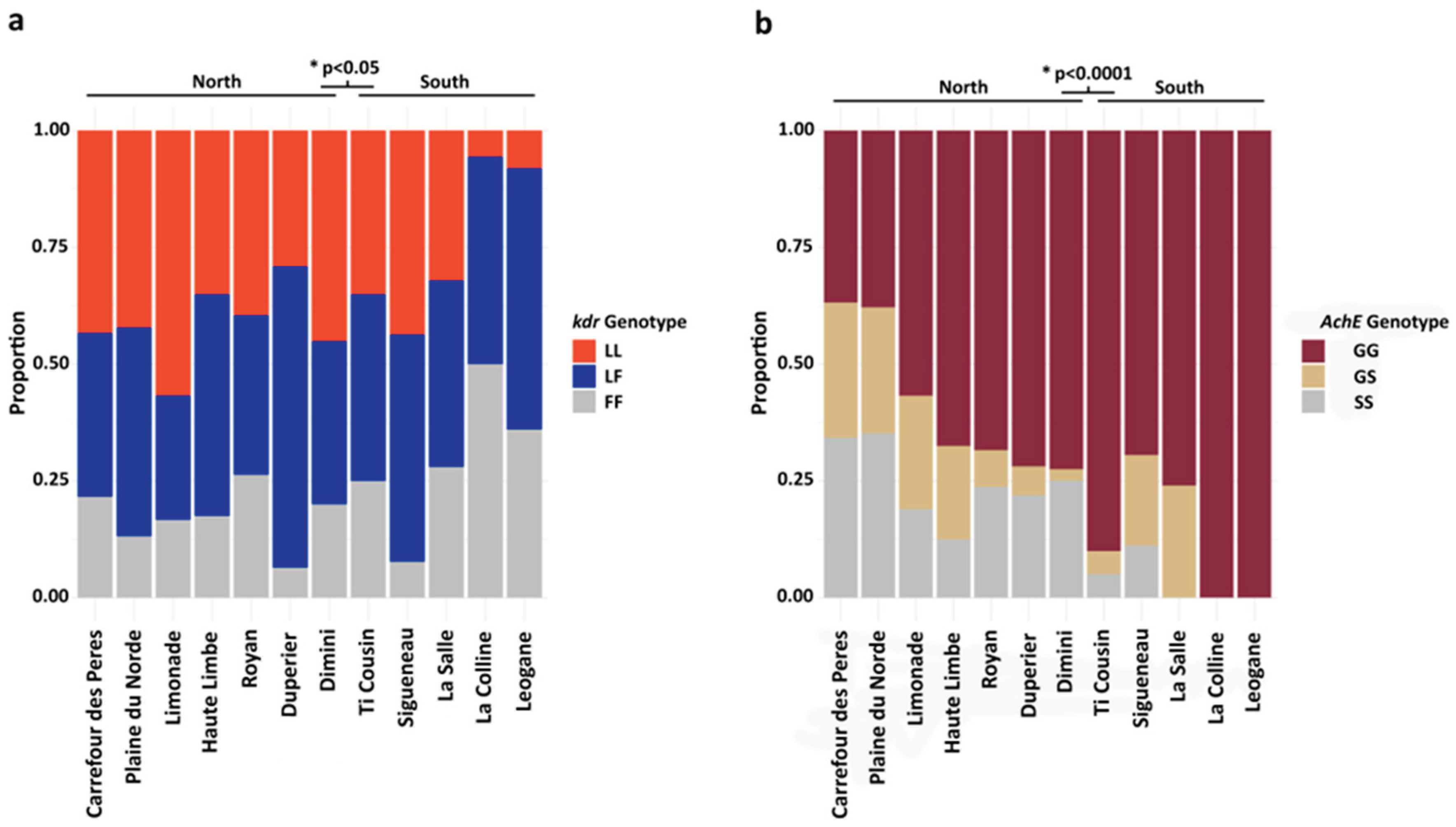
Melt curve assay testing identified the characteristic Cx. quinquefasciatus L1014F mutation in all 12 populations (Figure 2a). Both heterozygotes and homozygotes with the 1014F allele were detected though the level varied among populations. Duperier and Sigueneau had less than 10% of the 1014FF heterozygote while La Colline had the most at nearly 50%. Approximately a third of each population was heterozygous for the L1014F SNP though the level varied. Overall, the frequencies of the 1014F SNP containing genotypes were significantly elevated in southern versus northern locations (C2 = 6.0613, df = 2, p = 0.048).
Assessment of these same organisms for the G119S AchE mutation, a marker of organophosphate insecticide resistance [15], indicated it was also present in both northern and southern Haiti but, unlike the kdr mutation, it was not present in every population (Figure 2b). All three G119S genotypes (GG, GS, SS) were present in all seven northern populations with the wildtype GG as the predominant genotype. The heterozygous AchE mutant SS genotype varied from about 5% in Ti Cousin to ~30% in Carrefour des Peres and Plaine du Norde. In contrast to the northern populations, the SS genotype was absent from three southern populations (La Salle, La Colline, Leogane) and lower in Sigueneau and Ti Cousin than in any of the Northern populations. The heterozygous GS genotype was also absent from La Colline and Leogane. Statistical analysis showed that AchE SNP containing genotypes were significantly higher in northern Haiti than in southern Haiti (C2 = 32.819, df = 2, p-value = 7.472e-08).

3.2. Metabolic Resistance Assays

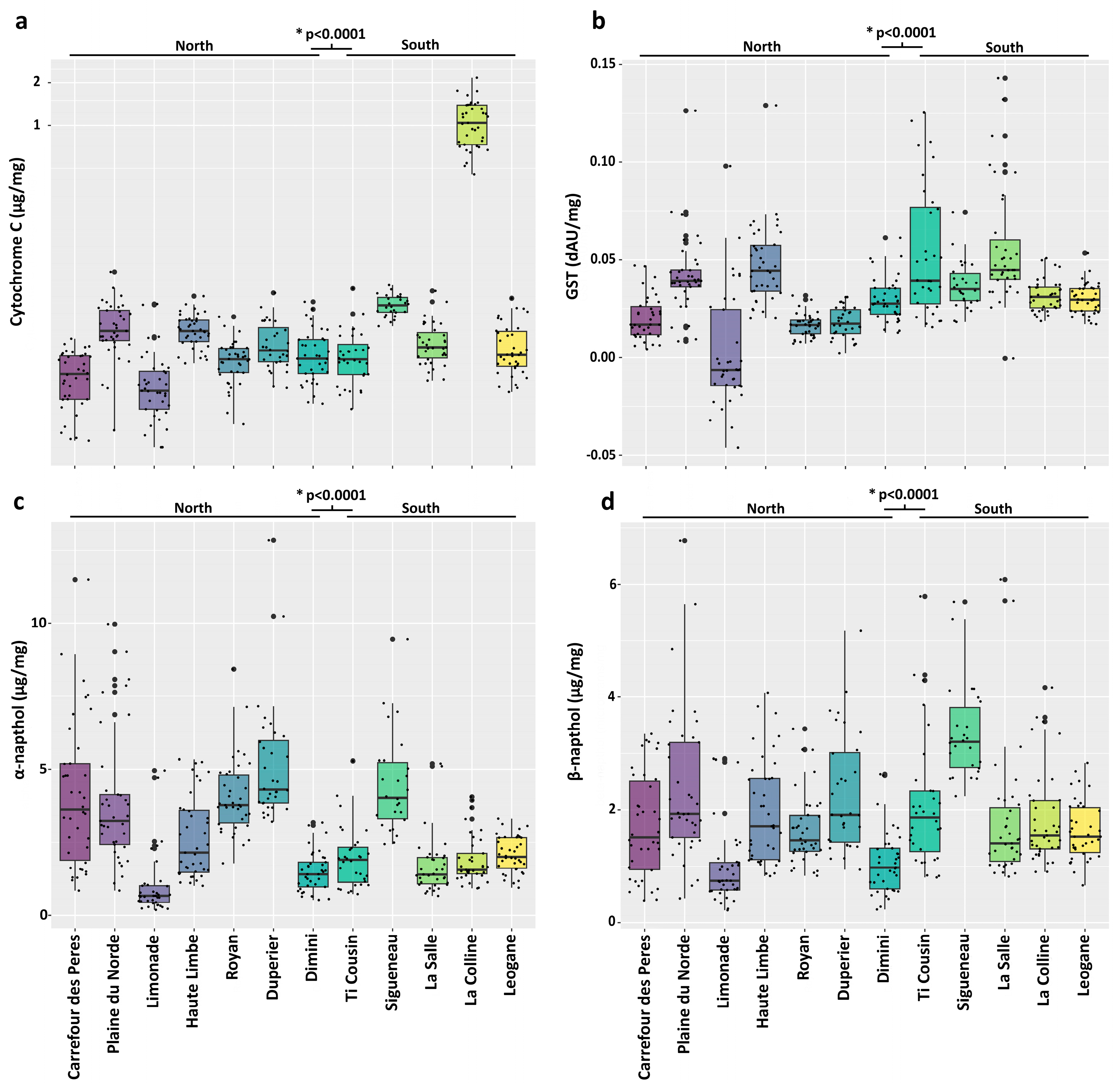
Biochemical assays assessing common resistance associated with enzymatic activity also indicated significant differences between northern and southern populations. This includes cytochrome C oxidase (CytC) activity (H(1) = 49.6, p = 1.87e-12), glutathione-S-transferase (H(1) = 51.9, p = 5.87e-13), α-esterase (H(1) = 13.2 , p = 2.75e-4) and β-esterase activity (H(1) = 13.9, p = 1.95e-4).
At a more granular level, there were many significant differences between individual populations identified by means comparison (Figure 3 & File S2). Cytochrome C activity was significantly higher in the La Colline population relative to the other 11 populations except for Sigueneau, another southern population (Figure 3a). While there were some other significant differences between populations, the remaining populations were much more closely grouped.
Glutathione-S-transferase activity patterns were less clear (Figure 3b). Large interquartile ranges were observed in Limonade, Ti Cousin, La Salle and Haute Limbe while narrower variation was observed in the other locations. Notably, along with the broad heterogeneity in the Limonade population, it had significantly lower activity than many of the other populations (File S2). Other significant differences were found between populations but with no clear pattern (File S2).
While α-esterase activity was significantly elevated in northern populations compared to southern populations, this was not universally true when the comparison was conducted at the individual population level (Figure 3c). Five of the six highest levels of α-esterase activity were in northern populations, and four of the six lowest α-esterase activity levels were in southern populations. Within the northern populations, Limonade and Dimini had low activity levels like most of the southern populations. However, the southern Sigueaneau population did have one of the higher α-esterase activities and was significantly higher than every other southern population. The overall pattern of β-esterase activity was like that of α-esterase but with more within population variability as seen in the larger interquartile distances (Figure 3d).
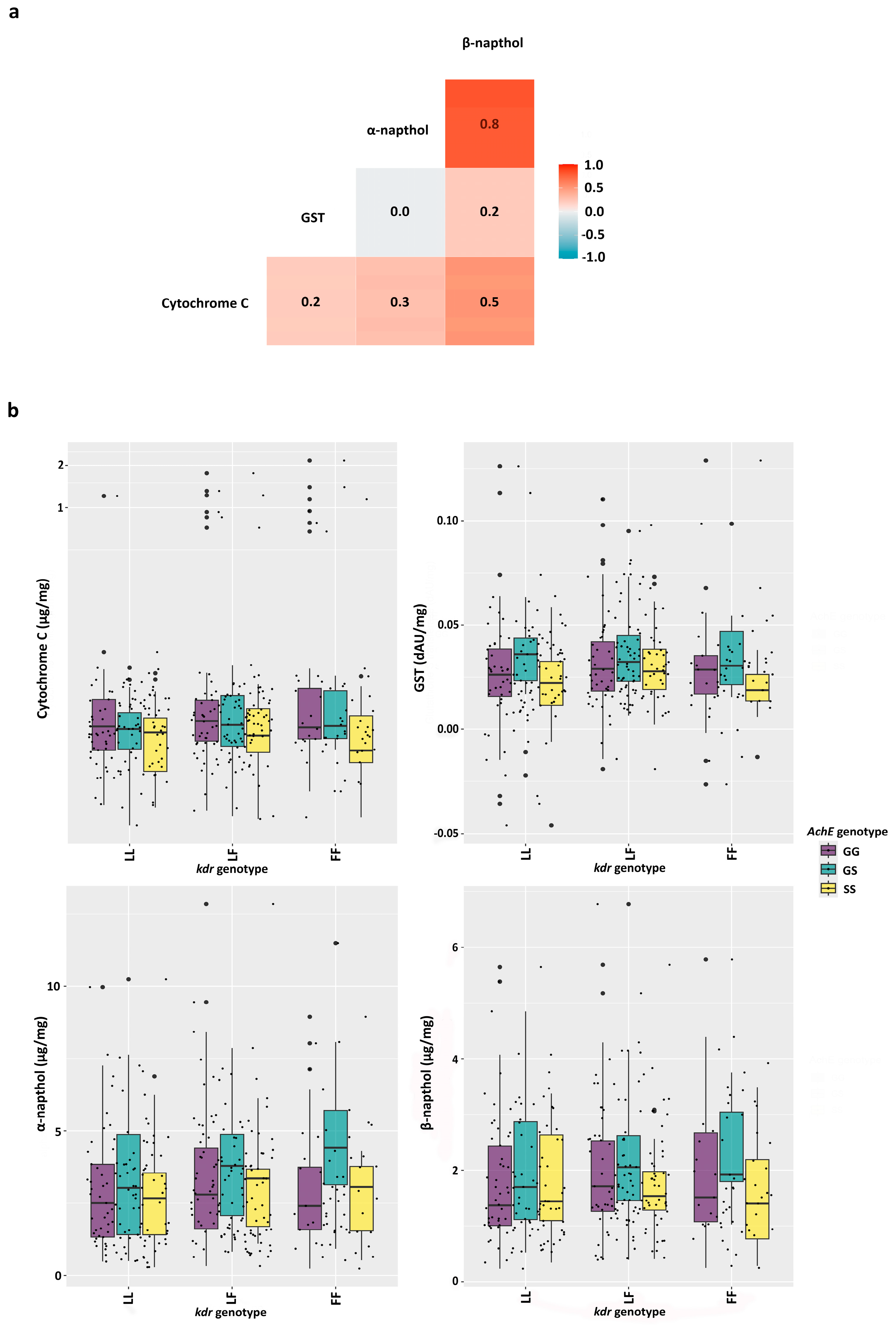
Having observed a similar pattern between α- and β-esterase activity in these populations, we examined the correlations between enzyme activities using Spearman correlation rather than Pearson since we did not know whether relationships between the variables were linear (Figue 4a). This analysis confirmed there is a very strong correlation (Spearman’s ρ = 0.8) between α- and β-esterase activity. We also detected correlations of moderate strength between α- and β-esterase with CytC activity (alpha: CytC ρ = 0.3; beta: CytC, ρ = 0.5). All other correlations between enzyme activities were weak (ρ < 0.3).
We also examined the relationship between kdr and AchE target site genotypes with enzymatic activity (Figure 4b). We did not observe large differences associated with these target site resistance genotypes and any of the four enzyme activities but numerically, mosquitoes homozygous for both the kdr (FF) and AchE (SS) target site mutations had among the lower activity levels for all four enzyme families. They had the lowest mean CytC and GST activity, tied for the lowest mean β-esterase activity and one of the lower mean α-esterase activities relative to the other genotype combinations.

3.2. Microbiome Analysis

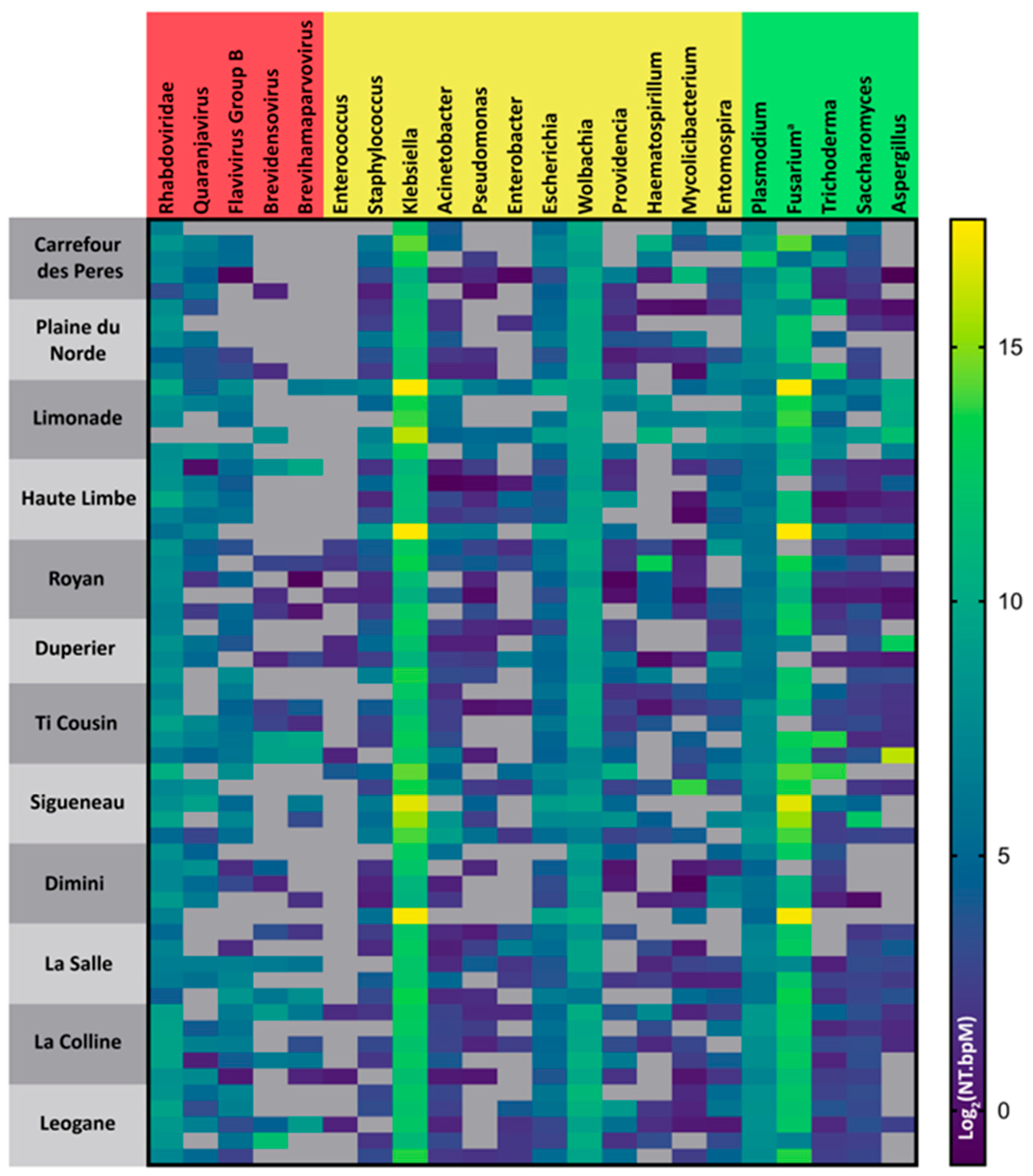
Reverse transcribed RNA was used for an examination of microbiomes in these Culex samples (Figure 5). Using the Chan-Zuckerburg ID platform, we performed taxonomic assignment to individual, quality filtered reads. These assignments and alignment lengths were then used to calculate a normalized frequency for each taxonomic category (NT.bpm= NT/NR database matching bases per million) to account for individual library-to-library variation in number of reads. Reads were assigned to genus level, and when possible, to species. Fifty-nine of 60 libraries produced adequate output for analysis. Thus, each location is represented by five libraries except for Duperier which is represented by 4. The full output from the Chan-Zuckerburg ID platform is provided in File S3.
A few notable commonalities were observed. High frequency of bacterial reads from the Klebsiella and Wolbachia genera were identified in all libraries. The highest frequencies of eukaryotic reads were identified from the fungal Fusarium genus found in 54/59 libraries. The next most frequent eukaryotic reads were from the Plasmodium genus, and these were identified in every library. Viral Rhabdoviridae reads were present in 58/ 59 libraries.
As noted, Klebsiella associated reads were common but the genera of the other “ESKAPE bacteria” (known for human pathogenic effects) were much more variable. Reads from the Escherichia, Acinetobacter and Staphylococcus genera were common and each was identified in more than 75% of the libraries. The other ESKAPE bacterial genera were less common with Enterococcus and Enterobacter reads being absent in many libraries. Species level examination of the generic classifications indicated that the reads from these families were overwhelmingly not the specific pathogenic bacterial species.
Notably, in addition to the Rhabdoviridae reads mentioned above, Quaranjavirus and Flavivirus Group B reads were common in more than half of the libraries but these were generally insect associated rather than human pathogenic. We did not detect reads supporting infection of these samples with West Nile virus.

4. Discussion

The objectives of this study were two-fold; examine insecticide resistance associated markers in Haitian Culex mosquitoes and examine these same mosquitoes for the presence of potential pathogens. Both objectives provide useful data that can serve as a historical baseline for more recent collections and can help optimize mosquito control efforts and assist in the assessment of mosquito-borne disease risk. As noted above, there is very limited information about insecticide resistance in Haitian mosquitoes, and most studies focus on Aedes and anopheline species due to the higher immediacy of diseases like dengue and malaria. We could find no previous study examining insecticide resistance in Culex mosquitoes in Haiti even though the evidence of active Culex transmitted disease is clear. Hispaniola is the only island in the Caribbean with lymphatic filariasis and accounts for about 90% of lymphatic filariasis cases in the Caribbean. Previous studies have shown relatively high rates of infection with lymphatic filariasis in Culex pools from several locations in Haiti [31]. Haiti also has confirmed human WNV cases and relatively high rates of WNV infections of birds on the island so it continues to be problematic in Hispaniola [9,10].
With respect to the first objective, we show in Haitian Cx. quinquefasciatus that both the L1014F kdr and the G119S AchE insecticide resistance markers are present., The L1014F and G119S genotypes in our mosquito samples did vary significantly between north and south with the mutant kdr and AchE genotypes more frequent in northern Haiti. While at least some 1014F was detected at every site, in a couple of southern sites west of the capital no 119S alleles were detected.
The detection of the target site insecticide resistance SNPs, while novel for Haiti, are not unexpected in the context of the existing Culex literature as these mutants are widely found in the Americas and worldwide [13,15]. Recent studies show similar variation in L1014F frequencies among populations [29]. It is notable that the insecticide resistance response in Cx. quinquefasciatus is complex and that phenotypic pyrethroid insecticide resistance is often present even when kdr mutants are infrequent [28]. The distribution of the G119S AchE mutation is much less explored but it was first identified and characterized by Weill [15] in the early 2000s in the Caribbean but little work has been done in the Americas since the initial description. G119S is likely found worldwide [32,33,34,35] so our detection in Haiti is not surprising, but without a substantial body of existing frequency studies for comparison, we cannot say whether the levels identified in Haiti are different from those throughout the Caribbean.
Our enzymatic assay indicated significant differences for CytC, GST, α-esterase and β-esterase when comparing northern and southern Haiti. However, comparison of the individual populations indicated many significant differences for all four enzymatic activities measured both within the northern and southern groupings. There were two major findings in these assays. First, CytC activity was significantly higher in the La Colline population compared to the others but the reason for this difference is not known and was not explored further. Second, there was no clear pattern of enzymatic activity among these populations that would serve as a good marker for resistance.
We found a couple of interesting relationships between the enzymatic activities. First, there was a strong correlation between α- and β-esterase activities (Figure 4a). Though additional area-wide studies are needed to formalize this finding beyond Haiti, if this is generally true it would suggest that assessing both esterase activities are duplicative and that eliminating one assay may be an efficiency that could be adopted to save labor and cost in insecticide resistance assessment. We also noted a moderate correlation between β-esterase and CytC activity but then low correlation between other combinations of enzyme activity. We also observed that the presence or absence of target site insecticide resistance mutations did not result in differing enzymatic activity levels, so these appear to be uncorrelated mechanisms.
Development of predictive ability is the purpose of assessing markers generally and has become more common in human medicine as the links between genetics and outcomes become more formalized [36,37,38,39]. The use of high value markers allows assessment of an easy to determine surrogate rather than the direct effect which can be more difficult to assess. This predictive framework has yet to be widely adapted to vector control although indications are that some species may be more amenable to insecticide resistance phenotype prediction than others [40,41,42]. The findings here support previous literature that suggests Cx. quinquefasciatus has a very complex insecticide resistance phenotype where multiple mechanisms contribute substantially, suggesting that it may be more difficult to predict insecticide resistance to a particular class of pesticide. Therefore, more studies are needed to examine the distribution of both target site and enzymatic insecticide resistance mechanisms across many populations to determine if a high value set of markers can be identified or if a model can be developed that will be useful to predict phenotypic insecticide resistance.
In summary, we present baseline insecticide resistance mechanism data for Cx. quinquefasciatus populations in Haiti and find that differences exist. Based on the relatively high frequency of pyrethroid insecticide resistance in other phenotypically characterized populations, it is likely that all these Haitian populations are also substantially resistant [29]. We also expect that organophosphate resistance is present but more variable between populations [28]. Though we did not detect important human pathogens in this study, the known human cases of Culex transmitted diseases in Haiti make effective control of Culex mosquitoes important and the insecticide resistance data presented here indicates this may be challenging.

Supplementary Materials

The following supporting information can be downloaded at: Preprints.org. File S1: Sampling collection metadata, genotyping and en-zymatic activity results for samples used in this study. File S2: Statistical analysis of target site mutations and enzyme assay data. File S3: Raw results of microbiome analysis.

Author Contributions

Conceptualization, A.S.E. and B.A.O; methodology, NDS, BAO, ASE.; formal analysis, P.T., N.D.S and A.S.E.; investigation, P.T, N.D.S., B.A.O. and A.S.E.; resources, BAO, ASE.; data curation, B.A.O and A.S.E.; writing—original draft preparation, P.T and A.S.E; writing—review and editing, P.T, N.D.S., B.A.O. and A.S.E.; visualization, A.S.E and N.D.S; supervision, N.D.S., B.A.O. and A.S.E.; project administration, B.A.O. and A.S.E.; funding acquisition, B.A.O. and A.S.E. All au-thors have read and agreed to the published version of the manuscript.

Funding

This research was funded by the US Department of Defense through the Armed Forces Health Surveillance Directorate, Global Emerging Infection Surveillance Program, grant #P0138_22_HS) to BAO and ASE. Additional funding was provided by the United States Department of Agriculture, Agricultural Research Service through the Medical, Urban and Veterinary Entomology National Program 104 (NP-104), project plan # 6036-10400-002-000-D.

Data Availability Statement

All data supporting this study are found in the manuscript and the associated supplemental files. Sequencing data is available from NCBI under BioProject Accession: PRJNA1332129.

Conflicts of Interest

The authors declare no conflicts of interest. The funders had no role in the design of the study; in the collection, analyses, or interpretation of data; in the writing of the manuscript; or in the decision to publish the results.

Abbreviations

The following abbreviations are used in this manuscript:
WNV
kdr
AchE
NFW
MCA
Tm
West Nile virus
knock down resistance
acetylcholinesterase
nuclease free water
melt curve assay
melting temperature
dscDNA double stranded cDNA
Ct cycle threshold
GST glutathione S transferase
CytC cytochrome C oxidase
NT.bpm NT/NR database matching bases per million

References

  1. Beau de Rochars, M.V.; Milord, M.D.; St Jean, Y.; Desormeaux, A.M.; Dorvil, J.J.; Lafontant, J.G.; Addiss, D.G.; Streit, T.G. Geographic distribution of lymphatic filariasis in Haiti. Am J Trop Med Hyg 2004, 71, 598–601. [Google Scholar] [CrossRef]
  2. Drexler, N.; Washington, C.H.; Lovegrove, M.; Grady, C.; Milord, M.D.; Streit, T.; Lammie, P. Secondary mapping of lymphatic filariasis in Haiti-definition of transmission foci in low-prevalence settings. PLoS Negl Trop Dis 2012, 6, e1807. [Google Scholar] [CrossRef]
  3. Kent, R.J.; Crabtree, M.B.; Miller, B.R. Transmission of West Nile virus by Culex quinquefasciatus say infected with Culex Flavivirus Izabal. PLoS Negl Trop Dis 2010, 4, e671. [Google Scholar] [CrossRef] [PubMed]
  4. Crockett, R.K.; Burkhalter, K.; Mead, D.; Kelly, R.; Brown, J.; Varnado, W.; Roy, A.; Horiuchi, K.; Biggerstaff, B.J.; Miller, B.; et al. Culex flavivirus and West Nile virus in Culex quinquefasciatus populations in the southeastern United States. J Med Entomol 2012, 49, 165–174. [Google Scholar] [CrossRef] [PubMed]
  5. Diaz, L.A.; Flores, F.S.; Beranek, M.; Rivarola, M.E.; Almiron, W.R.; Contigiani, M.S. Transmission of endemic St Louis encephalitis virus strains by local Culex quinquefasciatus populations in Cordoba, Argentina. Trans R Soc Trop Med Hyg 2013, 107, 332–334. [Google Scholar] [CrossRef] [PubMed]
  6. Richards, S.L.; Lord, C.C.; Pesko, K.; Tabachnick, W.J. Environmental and biological factors influencing Culex pipiens quinquefasciatus Say (Diptera: Culicidae) vector competence for Saint Louis encephalitis virus. Am J Trop Med Hyg 2009, 81, 264–272. [Google Scholar] [CrossRef]
  7. Mitchell, C.J.; Gubler, D.J.; Monath, T.P. Variation in infectivity of Saint Louis encephalitis viral strains for Culex pipiens quinquefasciatus (Diptera: Culicidae). J Med Entomol 1983, 20, 526–533. [Google Scholar] [CrossRef]
  8. Sang, R.; Kioko, E.; Lutomiah, J.; Warigia, M.; Ochieng, C.; O'Guinn, M.; Lee, J.S.; Koka, H.; Godsey, M.; Hoel, D.; et al. Rift Valley fever virus epidemic in Kenya, 2006/2007: the entomologic investigations. Am J Trop Med Hyg 2010, 83, 28–37. [Google Scholar] [CrossRef]
  9. Ben-Chetrit, E.; Schwartz, E. Vector-borne diseases in Haiti: a review. Travel Med Infect Dis 2015, 13, 150–158. [Google Scholar] [CrossRef]
  10. Beatty, M.E.; Hunsperger, E.; Long, E.; Schurch, J.; Jain, S.; Colindres, R.; Lerebours, G.; Bernard, Y.M.; Dobbins, J.G.; Brown, M.; et al. Mosquitoborne infections after Hurricane Jeanne, Haiti, 2004. Emerg Infect Dis 2007, 13, 308–310. [Google Scholar] [CrossRef]
  11. Verma, M.; Phartyal, R.; Bhatt, A. Introduction to Flaviviruses and Their Global Prevalence. In Human Viruses: Diseases, Treatments and Vaccines: The New Insights; Ahmad, S.I., Ed.; Springer International Publishing: Cham, 2021; pp. 411–439. [Google Scholar]
  12. Scott, J.G.; Yoshimizu, M.H.; Kasai, S. Pyrethroid resistance in Culex pipiens mosquitoes. Pestic Biochem Physiol 2015, 120, 68–76. [Google Scholar] [CrossRef]
  13. Burgess, E.R., IV; Lopez, K.; Irwin, P.; Jaeger, C.P.; Estep, A.S. Assessing pyrethroid resistance status in the Culex pipiens complex (Diptera: Culicidae) from the northwest suburbs of Chicago, Illinois using Cox regression of bottle bioassays and other detection tools. PLoS One 2022, 17, e0268205. [Google Scholar] [CrossRef] [PubMed]
  14. Mathews, G.; Derraik, J.G.B.; Walker, M.; Knox, R.; Barraclough, R.K. Morphological variation in invasive mosquito Culex quinquefasciatus Say (Diptera: Culicidae) larvae from an urban site in Auckland, New Zealand. N Z J Zool 2017, 44, 342–353. [Google Scholar] [CrossRef]
  15. Weill, M.; Fort, P.; Berthomieu, A.; Dubois, M.P.; Pasteur, N.; Raymond, M. A novel acetylcholinesterase gene in mosquitoes codes for the insecticide target and is non-homologous to the ace gene in Drosophila. R Soc Lond B Biol Sci 2002, 269, 2007–2016. [Google Scholar] [CrossRef] [PubMed]
  16. Lopes, R.P.; Lima, J.B.P.; Martins, A.J. Insecticide resistance in Culex quinquefasciatus Say, 1823 in Brazil: a review. Parasit Vectors 2019, 12, 591. [Google Scholar] [CrossRef]
  17. Chandrasiri, P.; Fernando, S.D.; De Silva, B. Insecticide resistance and molecular characterization of knockdown resistance (kdr) in Culex quinquefasciatus mosquitoes in Sri Lanka. J Vector Ecol 2020, 45, 204–210. [Google Scholar] [CrossRef]
  18. McAllister, J.C.; Godsey, M.S.; Scott, M.L. Pyrethroid resistance in Aedes aegypti and Aedes albopictus from Port-au-Prince, Haiti. J Vector Ecol 2012, 37, 325–332. [Google Scholar] [CrossRef]
  19. Estep, A.S.; Sanscrainte, N.D.; Okech, B.A. Aedes aegypti Knockdown Resistance Mutations and Dengue Virus Infection in Haiti. J Am Mosq Control Assoc 2024, 40, 102–108. [Google Scholar] [CrossRef]
  20. Delannay, C.; Goindin, D.; Kellaou, K.; Ramdini, C.; Gustave, J.; Vega-Rua, A. Multiple insecticide resistance in Culex quinquefasciatus populations from Guadeloupe (French West Indies) and associated mechanisms. PLoS One 2018, 13, e0199615. [Google Scholar] [CrossRef]
  21. Nchoutpouen, E.; Talipouo, A.; Djiappi-Tchamen, B.; Djamouko-Djonkam, L.; Kopya, E.; Ngadjeu, C.S.; Doumbe-Belisse, P.; Awono-Ambene, P.; Kekeunou, S.; Wondji, C.S.; et al. Culex species diversity, susceptibility to insecticides and role as potential vector of Lymphatic filariasis in the city of Yaounde, Cameroon. PLoS Negl Trop Dis 2019, 13, e0007229. [Google Scholar] [CrossRef]
  22. Ukpai, O.; Ekedo, C. Insecticide susceptibility status of Culex quinquefasciatus [Diptera: Culicidae] in Umudike, Ikwuano LGA Abia State, Nigeria. Int J Mosq Res 2019, 6, 114–118. [Google Scholar]
  23. Davis, E.L.; Prada, J.; Reimer, L.J.; Hollingsworth, T.D. Modelling the Impact of Vector Control on Lymphatic Filariasis Programs: Current Approaches and Limitations. Clin Infect Dis 2021, 72, S152–S157. [Google Scholar] [CrossRef] [PubMed]
  24. R Core Team. _R: A language and environment for statistical computing_. R foundation for statistical computing, Vienna, Austria, 2024; Available online: https://www.R-project.org/.
  25. Reinert, J.F.; Kaiser, P.E.; Seawright, J.A. Analysis of the Anopheles (Anopheles) quadrimaculatus complex of sibling species (Diptera: Culicidae) using morphological, cytological, molecular, genetic, biochemical, and ecological techniques in an integrated approach. J Am Mosq Control Assoc 1997, 13 Suppl, 1–102. [Google Scholar] [PubMed]
  26. McCall, P.J.; Eaton, G. Olfactory memory in the mosquito Culex quinquefasciatus. Med Vet Entomol 2001, 15, 197–203. [Google Scholar] [CrossRef]
  27. Pridgeon, J.W.; Pereira, R.M.; Becnel, J.J.; Allan, S.A.; Clark, G.G.; Linthicum, K.J. Susceptibility of Aedes aegypti, Culex quinquefasciatus Say, and Anopheles quadrimaculatus Say to 19 pesticides with different modes of action. J Med Entomol 2008, 45, 82–87. [Google Scholar] [CrossRef]
  28. Estep, A.S.; Sanscrainte, N.D.; Stuck, J.; Unlu, I.; Prasauskas, A.; Mundis, S.J.; Cotter, N.; Romero-Weaver, A.L.; Fedirko, T.J.; Kendziorski, N.L.; et al. The L1014F knockdown resistance mutation is not a strong correlate of phenotypic resistance to pyrethroids in Florida populations of Culex quinquefasciatus. Insects 2024, 15. [Google Scholar] [CrossRef]
  29. Unlu, I.; Buckner, E.A.; Medina, J.; Vasquez, C.; Cabrera, A.; Romero-Weaver, A.L.; Ramirez, D.; Kendziorski, N.L.; Kosinski, K.J.; Fedirko, T.J.; et al. Insecticide resistance of Miami-Dade Culex quinquefasciatus populations and initial field efficacy of a new resistance-breaking adulticide formulation. PLoS One 2024, 19, e0296046. [Google Scholar] [CrossRef]
  30. Kolde, R. pheatmap: Pretty Heatmaps. Available online: https://CRAN.R-project.org/package=pheatmap.
  31. Boyd, A.; Won, K.Y.; McClintock, S.K.; Donovan, C.V.; Laney, S.J.; Williams, S.A.; Pilotte, N.; Streit, T.G.; Beau de Rochars, M.V.; Lammie, P.J. A community-based study of factors associated with continuing transmission of lymphatic filariasis in Leogane, Haiti. PLoS Negl Trop Dis 2010, 4, e640. [Google Scholar] [CrossRef]
  32. Liu, J.; Wang, Y.; Liu, P.; Yu, X.; Tan, A.; Zeng, J.; Li, L.; Qiu, X. Detection of Target Site Mutations in the Acetylcholinesterase and Voltage-Gated Sodium Channel in Field Populations of Culex quinquefasciatus and Cx. tritaeniorhynchus From Southern Sichuan Region of China. J Am Mosq Control Assoc 2023, 39, 57–60. [Google Scholar] [CrossRef]
  33. Wang, L.; Soto, A.; Remue, L.; Rosales Rosas, A.L.; De Coninck, L.; Verwimp, S.; Bouckaert, J.; Vanwinkel, M.; Matthijnssens, J.; Delang, L. First Report of Mutations Associated With Pyrethroid (L1014F) and Organophosphate (G119S) Resistance in Belgian Culex (Diptera: Culicidae) Mosquitoes. J Med Entomol 2022, 59, 2072–2079. [Google Scholar] [CrossRef]
  34. Zhao, M.; Dong, Y.; Ran, X.; Wu, Z.; Guo, X.; Zhang, Y.; Xing, D.; Yan, T.; Wang, G.; Zhu, X.; et al. Point mutations associated with organophosphate and carbamate resistance in Chinese strains of Culex pipiens quinquefasciatus (Diptera: Culicidae). PLoS One 2014, 9, e95260. [Google Scholar] [CrossRef] [PubMed]
  35. Talipouo, A.; Mavridis, K.; Nchoutpouen, E.; Djiappi-Tchamen, B.; Fotakis, E.A.; Kopya, E.; Bamou, R.; Kekeunou, S.; Awono-Ambene, P.; Balabanidou, V.; et al. High insecticide resistance mediated by different mechanisms in Culex quinquefasciatus populations from the city of Yaounde, Cameroon. Sci Rep 2021, 11, 7322. [Google Scholar] [CrossRef] [PubMed]
  36. Davis, A.P.; Grondin, C.J.; Johnson, R.J.; Sciaky, D.; McMorran, R.; Wiegers, J.; Wiegers, T.C.; Mattingly, C.J. The Comparative Toxicogenomics Database: update 2019. Nucleic Acids Res 2019, 47, D948–D954. [Google Scholar] [CrossRef] [PubMed]
  37. Waters, M.D.; Fostel, J.M. Toxicogenomics and systems toxicology: aims and prospects. Nat Rev Genet 2004, 5, 936–948. [Google Scholar] [CrossRef]
  38. Pirmohamed, M. Pharmacogenomics: current status and future perspectives. Nat Rev Genet 2023, 24, 350–362. [Google Scholar] [CrossRef]
  39. Relling, M.V.; Evans, W.E. Pharmacogenomics in the clinic. Nature 2015, 526, 343–350. [Google Scholar] [CrossRef]
  40. Donnelly, M.J.; Corbel, V.; Weetman, D.; Wilding, C.S.; Williamson, M.S.; Black, W.C. Does kdr genotype predict insecticide-resistance phenotype in mosquitoes? Trends Parasitol 2009, 25, 213–219. [Google Scholar] [CrossRef]
  41. Estep, A.S.; Sanscrainte, N.D.; Waits, C.M.; Bernard, S.J.; Lloyd, A.M.; Lucas, K.J.; Buckner, E.A.; Vaidyanathan, R.; Morreale, R.; Conti, L.A.; et al. Quantification of permethrin resistance and kdr alleles in Florida strains of Aedes aegypti (L.) and Aedes albopictus (Skuse). PLoS Negl Trop Dis 2018, 12, e0006544. [Google Scholar] [CrossRef]
  42. Estep, A.S.; Sanscrainte, N.D.; Farooq, M.; Lucas, K.J.; Heinig, R.L.; Norris, E.J.; Becnel, J.J. Impact of Aedes aegypti V1016I and F1534C knockdown resistance genotypes on operational interventions. Sci Rep 2025, 15, 10146. [Google Scholar] [CrossRef]
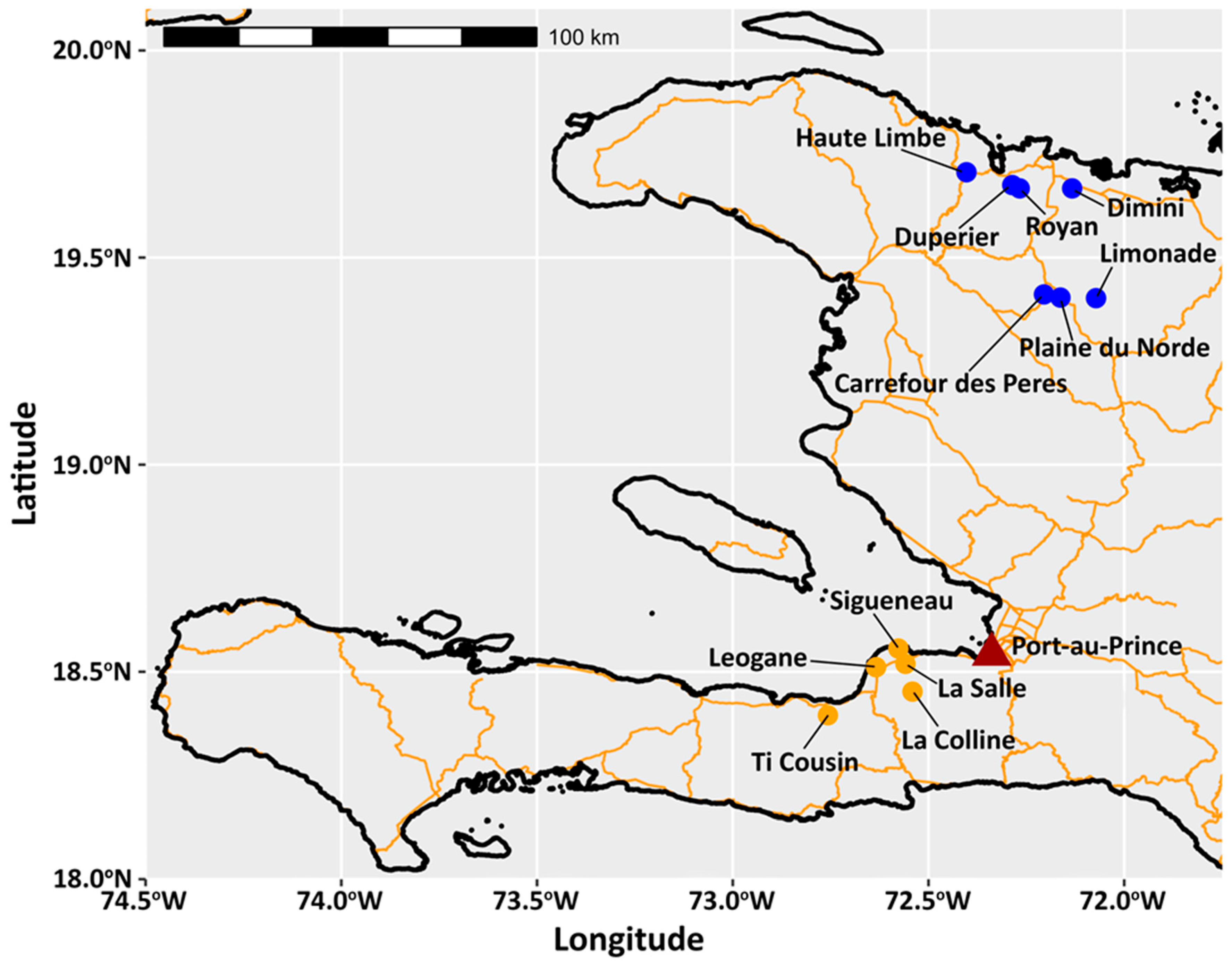
Figure 1. Sampling locations. Black outlines represent the coastline of Haiti. Orange lines represent primary and secondary roads. Filled circles represent sampling locations in Northern (blue) and Southern (orange) Haiti. The capital, Port-Au-Prince, is marked with a red triangle. Figure created in R [24].
Preprints 199643 g001
Figure 2. Assessment of target site resistance genotypes in Haitian Culex quinquefasciatus populations. (a) Genotypes for the L1014F pyrethroid resistance associated SNP linked differed between northern and southern Haiti (C2 = 6.0613, df = 2, p = 0.048). (b) The G119S organophosphate resistance associated SNP also differed between northern and southern Haiti (C2 = 32.819, df = 2, p-value = 7.472e-08). Both mutations were characterized by melt curve analysis assay which included positive controls for each homozygous genotype and the heterozygous genotype.
Preprints 199643 g002
Figure 3. Normalized enzyme activities of 12 Haitian Culex quinquefasciatus populations indicate significant differences between grouped northern and southern locations. a) Cytochrome C (H(1) = 49.6, p = 1.87e-12), b) Glutathione-S-transferase (H(1) = 51.9, p = 5.87e-13), c) α-esterase (H(1) = 13.2, p = 2.75e-4), d) β-esterase (H(1) = 13.9, p = 1.95e-4). Subsequent application of Dunn’s test for means comparison indicated many significant differences between individual populations. Results of individual means comparisons are included in File S2.
Preprints 199643 g003
Figure 4. Interactions between resistance mechanisms. (a) Spearman correlation analysis of enzyme activities indicates a strong correlation (0.8) between α- and β-esterase activities and a moderate strength correlation between β-esterase and glutathione-S-transferase activity, (b) Enzymatic activity did not show strong bias to any target site resistance mutation.
Preprints 199643 g004
Figure 5. Microbiome abundance in Haitian Culex quinquefasciatus. Reads were assigned using the Chan-Zuckerburg identification platform (czid.org) and expressed as log values of the abundance. Each line represents an individual sample from the given location. Viral components are in red, bacterial in yellow and eukaryotic in green. Grey tiles indicate zero abundance. Heatmap constructed in R.
Preprints 199643 g005
Table 1. Primers used for knockdown resistance (kdr) and acetylcholinesterase (AchE) mutation detection assays and Culex quinquefasciatus/nigripalpus (Cxq_n) speciation assay.
Primer name Sequence
kdr_1014F [13] TTCACGCTGGAATACTCACGACA
kdr_1014L [13] GGGCGGCGGGCAGGGCGGCGGGGGCGGGGTTCACGCTGGAATACTCACGACTA
kdr_1014S [13] AGCGCGGAGCGCGGTTCACGCTGGAATACTCACGACTG
kdr_1014r [13] GGATCGAATCCATGTGGGACTGCAT
AchE_2340S CCGGCAGGCCGACGGCGACGACTGTGGATCTTCGGGGTTA
AchE_2340G CTGTGGATCTTCGGGGGTG
AchE_2362_r GTGGTCGTACACGTCCAGCG
Cxq/n_Cxq GCGGGCAGGGCGGCGGGGGCGGGGGGAGCTCCAGATATGGCCTTT
Cxq/n_Cxn GGAGCTCCTGATATAGCTTTC
Cxq/n_r ATGAAGGAGGTAGTATTCAAAAACTTAT
Disclaimer/Publisher’s Note: The statements, opinions and data contained in all publications are solely those of the individual author(s) and contributor(s) and not of MDPI and/or the editor(s). MDPI and/or the editor(s) disclaim responsibility for any injury to people or property resulting from any ideas, methods, instructions or products referred to in the content.
Copyright: This open access article is published under a Creative Commons CC BY 4.0 license, which permit the free download, distribution, and reuse, provided that the author and preprint are cited in any reuse.
Prerpints.org logo

Preprints.org is a free preprint server supported by MDPI in Basel, Switzerland.

Subscribe

Disclaimer

Terms of Use

Privacy Policy

Privacy Settings

© 2026 MDPI (Basel, Switzerland) unless otherwise stated