

Submitted:
15 February 2026
Posted:
27 February 2026
You are already at the latest version
Abstract
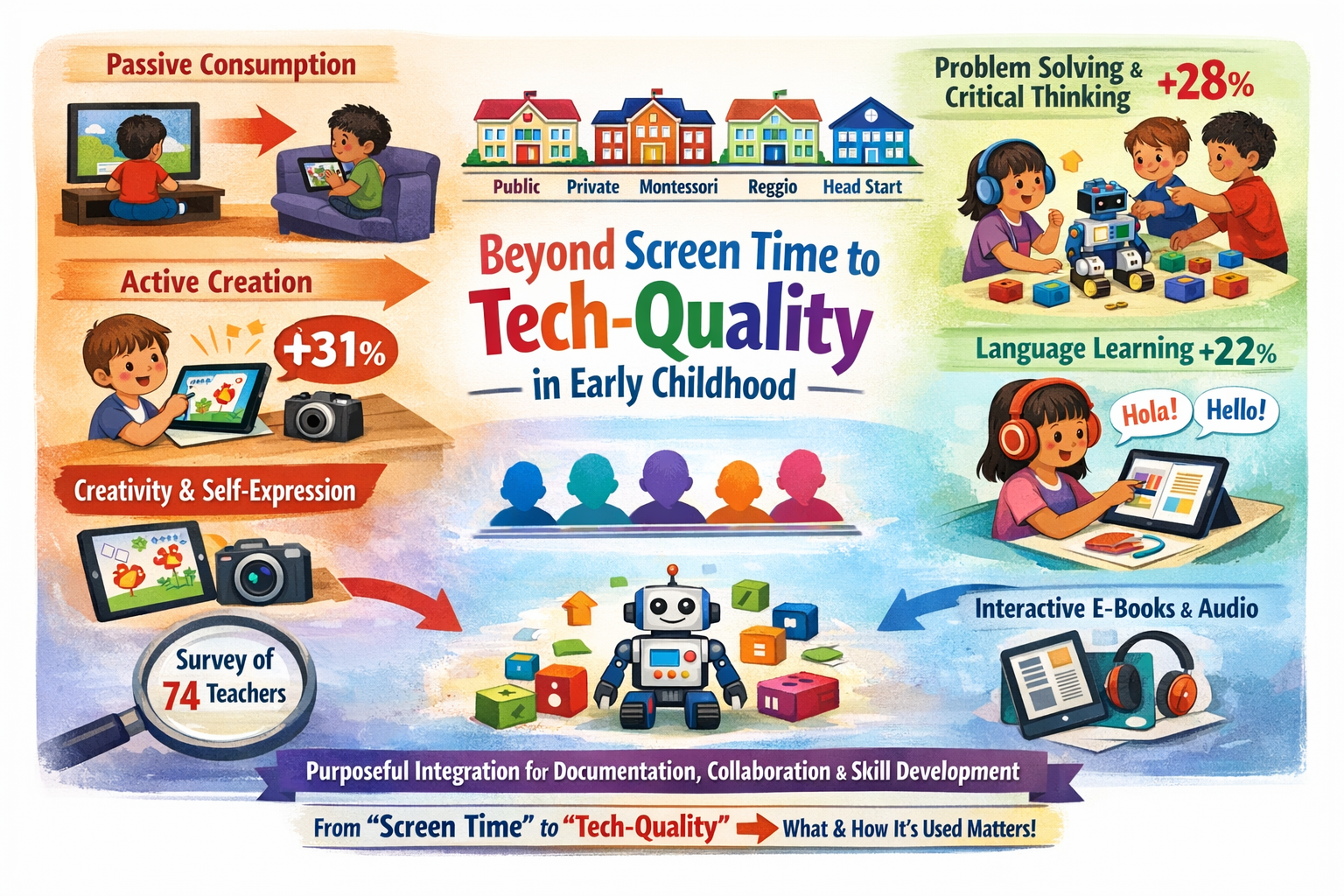
The discussion surrounding early childhood technology continues to concentrate predominantly on the duration of screen time, overlooking a critical examination of how particular digital tools qualitatively affect cognitive development. This study asked 74 early childhood teachers and administrators from different types of schools (public, private, Montessori, Reggio, and Head Start) about how they use technology with kids ages 3 to 5 and what effects it has on their thinking. Data indicates a transition from passive consumption to active creation. The study strongly links tablet-based creation apps and digital cameras to the observed 31% increase in creativity and self-expression. There is a strong correlation between educational robotics and coding kits and the growth of problem-solving and critical thinking skills 28%. Interactive e-books and audio resources help people learn languages 22%, especially if they speak more than one language. Success is not determined by duration but by purposeful integration that employs technology as a medium for documentation, collaboration, and targeted skill development within play-based teaching. It is important to move beyond the "screen time" model to a "tech-quality" model. The cognitive advantage is contingent upon the tool's function, the child's position as a creator, and its smooth integration into comprehensive early learning experiences.
Keywords:
active creation
; cognitive scaffolding (through digital tools)
; digital literacy foundations
; intentional integration (in early learning)
; play-based tech
1. Introduction
The human brain experiences its largest growth spurt and undergoes extensive organization during the first five years of life; neural connections form so rapidly that it has been estimated that it is at the rate of one million every second. This biological mandate makes early childhood education (ECE) not simply an anticipatory stage for formal schooling but the foundational infrastructure upon which all later cognitive, social, and emotional functions are constructed. During this window of opportunity, experiences are not simply taken in; they are architecturally integrated into the very fabric of the developing brain. The environments we make for young children abundant in language, attention, investigation, and play directly shape the extent and nature of these neural connections. For generations, these settings were almost exclusively physical and social: blocks and books, sandboxes and songs, conversations and collective play. But today a new, all-pervasive factor has irreversibly disrupted the very nature of early childhood digital technology. Tablets, interactive screens, educational apps, and even programmable robots have now joined the ranks of crayons and construction paper, raising a profound and urgent question for educators, parents, and researchers: how to prepare children for this new technological era while continuing to nurture valuable traditional skills? What should be technology’s place in this critical period of growth?
There is a general consensus among the public and professionals alike that we should approach screen time with caution. Existing “harmful screen time” advice from groups such as the American Academy of Pediatrics (AAP) has focused on restriction, advising no screen time for children under two and limited hours for preschoolers. This prudish view was born of legitimate concerns about the passive, sedentary aspects of much television and early video watching, with research tying too much viewing to perilous language delays, attention disorders, and disturbed sleeping patterns. The term "screen time" now encompasses a wide range of activities, from marathon sessions watching YouTube videos to engaging in video calls with grandparents, from the frantic pace of arcade-style games to collaborative projects in digital storytelling. This quantitative framing is conceptually useful, in that it simplifies the awareness around the setting of limits, but it has also created conceptual bottlenecks. It obscures more nuanced questions about the content, context, and caliber of the child's interactions by reducing a complex, multifaceted problem to the straightforward equation of minutes and hours.
This constraint has lent itself to a starkly divided debate. On one side of this divide are the protectionists, influenced by neuroscience and developmental psychology, who advocate for a “screen-free” early childhood and argue that digital interfaces are at best a poor substitute for the hands-on, sensory-rich, and relationship-based experiences that underpin healthy child development. They caution about the “displacement effect,” meaning time spent on devices replaces time for physical play, face-to-face interaction, and creative imagination. On the other hand, techno-optimists cite a growing array of "educational" apps and programs purporting to teach literacy, numeracy, and problem-solving strategies in highly personalized ways. They perceive technology as a powerful equalizer, offering accelerated learning pathways and access to knowledge that extends beyond the traditional classroom setting. Sandwiched in between are teachers and parents trying to make sense of conflicting messaging, commercial incentives, and the sometimes uncomfortable truth that kids are, from the moment they open their eyes, growing up in a world increasingly defined by digital screens.
Both sides of this debate miss the profound transformation in the substance of technology and our growing insight into how young children learn. Passive television of the 20th century is radically different from the active, responsive, and productive digital media in use today. Today's touchscreens are so intuitive that they eliminate the need for an intermediary mouse or keyboard; apps now respond to a child's touch, voice, or even facial expression; and tools such as simple robotics play kits or digital microscopes enable children to extend their senses and powers of action into new realms. Simultaneously, contemporary constructivist and sociocultural learning approaches, championed by individuals like Lev Vygotsky and further developed by contemporary scholars, propose that cognitive progress is not solely a one-way process, but rather a dynamic process of creating meaning. Children learn by doing and interacting with others, as well as by using physical and symbolic tools to help them solve problems, convey concepts, and build up their comprehension. From this vantage point, technology may be reimagined not as detrimental to development, but as an emerging type of tool or mediational means.
So the significant research gap is not to go on documenting that too much poor-quality screen time might be harmful (which is now fairly well-established), but to systematically investigate the conditions under which technology might be promotive. We should move beyond the question of “how much?” to the more developmentally meaningful questions of “how,” “what,” and “why.” What are the particular features of technology use (e.g., level and nature of interactivity, opportunities for creation, potential for collaboration, alignment with learning goals) that might support and even enhance core developmental processes such as executive function, symbolic representation, and metacognition? How do various pedagogies (Montessori, Reggio Emilia, play-based, etc.) incorporate digital devices into their practice without departing too much from the heart of their ethos? What are the “best” windows of opportunity to leverage technology to scaffold developing cognitive power in young children as identified by leading early childhood experts who observe children on a daily basis within the framework of intentional teaching?
We report on findings from a multi-sited ethnographic study with young people in the United States and United Kingdom to shift the focus from a deficit model of risk management to an asset model of potential and best practices. Its underlying assumption is that the developmental influence of technology is shaped more by the pedagogical intent associated with its use than by the technology itself. We argue that when digital technologies are purposefully chosen and integrated as one element within a complex, play-based, and socially interactive context, they can function as Vygotskian “tools,” helping to extend a child’s current repertoire of ways of thinking and acting and supporting the internalization of increasingly sophisticated cognitive capabilities. A tablet for watching videos passively is a very different instrument from a tablet that a handful of kids use to collaboratively order images, record their narration for a story, or program a robot to run through a maze they constructed out of blocks.
To investigate such a complex phenomenon, this study turns to the frontline professionals: the early childhood educators. With a mixed-method approach, this research documents the lived experiences, observable outcomes, and professional wisdom of 74 practitioners across various contexts. It was developed to survey the current terrain of technology use in preschools, identify the specific cognitive, social, and creative benefits that educators observe, investigate the common challenges that teachers encounter, and synthesize the key elements of enacting successful and developmentally appropriate practice. Focusing on the perspectives of those who navigate this landscape on a daily basis, this article seeks to move the discussion beyond the simplistic binary of being "for" or "against" screens. It is argued that rather than delivering digital entertainment, the digital tools should be harnessed to actively build the preschool brain and create resilient thinkers, creative problem-solvers, and engaged learners ready for a digital and physical world they would be inheriting. Instead, it is to offer up an evidence-based, common-sense approach to how we can make the best use of digital tools not merely to entertain but to actively build the preschool brain and cultivate resilient thinkers, creative problem-solvers, and engaged learners prepared for a digital and physical world that they will be inheriting. The aim is to help parents and educators move from anxiety to agency with a more nuanced guide to the digital side of early childhood.
2. Methods
This study used a mixed-methods design (Creswell & Plano Clark, 2018) to explore how digital technology is used in early childhood education (EC) and the cognitive benefits that caregivers believe it provides. This approach began with a phase that collected quantitative data to identify general patterns and was followed by a phase that collected qualitative data to explain and contextualize the quantitative data. The Institutional Review Board reviewed the registration information and provided it under trial status before conducting the study from October to November of 2023. All processes followed the ethical considerations of the Belmont Report of respect for individuals, beneficence, and justice (U.S. Department of Health & Human Services, 1979).
2.1. Participant Recruitment and Sampling Strategy
A purposive, criterion-based sampling strategy was utilized to recruit information-rich cases relevant to the research phenomenon (Palinkas et al., 2015). Inclusion criteria required participants to be currently employed as educators or administrators in a setting serving children aged 3-5 years and to have direct involvement in decisions or practices related to technology use. Recruitment leveraged professional networks to target knowledgeable practitioners. Invitations were disseminated through the National Association for the Education of Young Children (NAEYC) online community forums, the Early Childhood Technology Collaborative listserv, and social media groups dedicated to preschool teaching. A total of 74 early childhood professionals constituted the final sample.
Demographic data (see Table 1) indicated a diverse cohort. Roles included Preschool Teachers (n=38, 51%), Pre-K Lead Teachers (n=18, 24%), Directors (n=10, 14%), Curriculum Specialists (n=4, 5%), and ECE Technology Coordinators (n=4, 5%). Years of experience ranged from 0-5 (n=22, 30%) to 16+ (n=10, 14%). Participants represented a spectrum of pedagogical settings: Public School Pre-K (n=16, 22%), Private Preschool (n=18, 24%), Montessori (n=8, 11%), Reggio-inspired (n=8, 11%), Head Start (n=10, 14%), Faith-based (n=8, 11%), and Cooperative preschools (n=6, 8%). This heterogeneity was intentional to capture how varied educational philosophies mediate technology integration (Plowman et al., 2010).
2.2. Data Collection Instruments and Procedures, Data Collection Occurred in Two Sequential Phases
Phase 1: Quantitative Survey.
A 14-item online questionnaire was developed based on a review of extant literature and consultation with ECE experts to establish face and content validity (Bolarinwa, 2015). The instrument was piloted with five non-participant teachers, leading to minor clarifications. Hosted on the Qualtrics XM platform, the survey comprised four sections. Section A gathered demographic and contextual data. Section B assessed technology integration practices, using a multiple-select question to identify regularly used technologies (e.g., tablets, interactive whiteboards, robotics) and a categorical item to estimate average daily minutes of educational technology use per child. Section C, addressing the core research aim, asked participants to select the primary observed cognitive benefit from a list derived from developmental domains (e.g., Problem-Solving, Creativity) and to describe a specific successful lesson in an open-text field. Section D explored challenges and future directions with a multiple-choice item on barriers and open-ended questions on selection criteria and parent communication. The survey remained open for three weeks, with two reminder emails sent to optimize response rate (Dillman et al., 2014).
Phase 2: Qualitative Interviews.
Upon survey completion, participants could volunteer for a follow-up interview. From 22 volunteers, 12 were selected to form a maximal variation sample (Patton, 2015) representing different roles, settings, and reported primary benefits. Semi-structured interviews, conducted via Zoom, lasted 30-45 minutes and were guided by a protocol designed to probe themes from the quantitative data. Questions explored the context of successful integration, detailed observations of child behavior, technology vetting processes, and pedagogical philosophies. Interviews were video recorded with consent and transcribed verbatim using automated software (Otter.ai), with transcripts later verified for accuracy.
2.3. Data Analysis
Analysis followed a connected process where quantitative results informed qualitative exploration, and qualitative findings explained quantitative patterns (Fetters et al., 2013).
Quantitative Analysis.
Survey data were analyzed using IBM SPSS Statistics (Version 29). Descriptive statistics (frequencies, percentages, means) summarized demographic variables and usage patterns. Cross-tabulations with chi-square tests of independence examined relationships between categorical variables, such as setting type and primary benefit. Correlation coefficients (Phi) assessed associations between technology types and reported benefits. These analyses provided a broad overview of trends and relationships within the sample.
Qualitative Analysis.
Open-text survey responses and interview transcripts were analyzed using reflexive thematic analysis following the six-phase approach outlined by Braun and Clarke (2006, 2019). This process involved familiarization with the data, generating initial codes, searching for themes, reviewing themes, defining and naming themes, and producing the report. Coding was conducted inductively to capture participant perspectives, using NVivo software (Version 14) to manage the dataset. Initial codes (e.g., “debugging as collaboration,” “documentation tool”) were clustered into candidate themes through an iterative, recursive process. Themes were refined to ensure they coherently captured significant patterns of shared meaning across the dataset. For instance, the theme “From Consumers to Creators” encompassed codes related to children using technology for animation, storytelling, and digital artifact creation.
Integration
Integration was achieved through narrative weaving and the creation of joint displays (Guetterman et al., 2015). Quantitative results (e.g., “Creativity was reported as a primary benefit by 31% of participants”) were immediately followed by qualitative evidence (e.g., illustrative quotes from the “From Consumers to Creators” theme) in the results narrative. This approach provided a comprehensive understanding, explaining not only what patterns existed but how and why they manifested in practice.
2.4. Ethical Considerations and Methodological Rigor
The study adhered to APA ethical guidelines (American Psychological Association, 2020). Informed consent was obtained electronically for the survey and verbally confirmed at the interview outset. Anonymity was guaranteed; all identifiers were removed, and participants are referenced by ID (P1, P2). Data is stored on a password-protected, encrypted server.
Several strategies enhanced trustworthiness. Credibility was supported through member checking; a summary of key themes was shared with four interviewees for feedback, confirming interpretive accuracy (Birt et al., 2016). Dependability was addressed by maintaining a detailed audit trail of analytical decisions in NVivo. Transferability is enabled by the thick description of context and participants provided herein (Shenton, 2004). Confirmability was pursued through reflexive journaling by the primary researcher to bracket presuppositions and peer debriefing sessions with a co-author to challenge interpretations.
2.5. Limitations
The study’s limitations must be acknowledged. First, the data relies on educator self-report, which is susceptible to social desirability bias and may not correspond directly to observed child outcomes (Howard et al., 2015). Second, the purposive sampling method likely over-represents educators with an active interest in technology, potentially skewing findings toward more positive or intentional integration practices. Third, the cross-sectional design captures a single moment in time and cannot establish causality; it identifies correlations and describes processes but does not measure longitudinal impact (Ployhart & Vandenberg, 2010). Finally, while the mixed settings provide valuable variety, the sample size (n=74) limits the statistical power and generalizability of the quantitative findings. This study is therefore exploratory and descriptive, aiming to generate rich, practice-based insights and hypotheses for future experimental or longitudinal research.
3. Results
Analysis of the mixed-methods data revealed a complex landscape where technology integration is moving beyond passive consumption toward more active, creation-oriented uses, with distinct cognitive benefits observed by educators. The results are organized to first present the quantitative findings detailing the what and how much of technology use, followed by the qualitative themes that explicate the how and why behind these patterns, with integrated joint displays illustrating the convergence of evidence (Fetters et al., 2013).
3.1. Landscape of Technology Integration: Access, Frequency, and Type
The quantitative survey data painted a picture of varied but widespread technology access across early childhood settings. The student-to-device ratio varied significantly by setting philosophy and resources, ranging from 1:1 tablet access in some private and charter programs to a single shared class set or a few devices brought from home in cooperative and some Montessori settings. On average, children engaged with educational technology for 22.4 minutes per day (SD = 7.8), though this ranged from a low of 8 minutes in a minimally integrated cooperative preschool to a high of 38 minutes in a technology-focused charter program. This variance underscores that duration alone is a poor indicator of pedagogical approach, a central argument of this study.
As presented in Table 1, the types of technology regularly used by children differed notably. Tablets (primarily iPads) were ubiquitous, available in 92% of settings. Interactive whiteboards (78%) and audio devices (71%) were also common infrastructure. More telling were the emergent, interactive technologies: educational robotics (e.g., Bee-Bots, Cubetto) were used in 35% of settings, and coding applications or kits (both screen-based like ScratchJr and screen-free) in 22%. Digital cameras and microscopes for documentation and exploration were prevalent in Reggio-inspired (100%) and Montessori (75%) settings. This distribution suggests a bifurcation between settings using technology primarily for presentation and consumption (IWB, tablets for apps) and those deploying it as a manipulative tool for exploration and creation (robotics, cameras).
A chi-square test of independence revealed a significant association between setting type and the primary type of technology used, χ²(18, N = 74) = 41.27, *p* = .001. Montessori and Reggio-inspired settings were significantly more likely to use “hands-on” digital tools (cameras, audio recorders, robotics) compared to public and private preschools, which more frequently reported using interactive whiteboards and consumption-oriented tablet apps.
3.2. Observed Cognitive Benefits: A Shift Toward Active Creation
When asked to identify the primary cognitive benefit they observed from thoughtful technology use, educators’ responses highlighted a move beyond rote learning. Figure 1 illustrates the distribution of these perceived primary benefits.
These quantitative findings were given rich context through the qualitative analysis. Three overarching themes emerged from the open-ended responses and interviews, explaining how technology fosters these benefits.
Theme 1: From Consumers to Creators – Fostering Creativity and Agency.
This was the most prominent theme, directly corresponding to the highest-rated benefit. Educators described a conscious shift from using tablets for game-based skill drills to using them as “digital studios.” Participant 21, a private preschool teacher, explained: “I removed all the flashcard and matching games. Now we have [the app] Keezy Drummer for making rhythms, Stop Motion Studio for animation, and Book Creator. The change was transformative. Children who were hesitant to draw would compose elaborate digital stories.” This aligns with Resnick’s (2007) concept of “creative learning.” In Reggio-inspired settings, this manifested as using digital cameras for documentation. Participant 33 noted, “The camera is a tool for seeing. A child photographs a spiderweb, then we project it on the large screen. They see details invisible to the naked eye and then try to represent it with wire and thread the digital feeds the analog” (P33, Director, Reggio-inspired).
Theme 2: Debugging and Persistence – Cultivating Problem-Solving Mindsets.
The second theme elucidated the high reporting of problem-solving benefits (28%), particularly in contexts using robotics and coding. This process was repeatedly described as “debugging,” a term children adopted. Participant 41 (Pre-K Lead) described a robotics activity: “The Bee-Bot was supposed to go around the chair leg to rescue a toy, but it kept bumping into it. Instead of getting frustrated, they huddled and said, ‘We need to debug! Turn it more before the forward command.’ It’s systematic thinking.” This iterative trial-and-error process, supported by the immediate physical feedback from a robot or coding command, builds resilience and logical sequencing skills, core components of computational thinking (Bers, 2018).
Theme 3: The Amplified Voice – Enhancing Language and Literacy through Digital Artifacts.
For the 22% of educators who cited language as the primary benefit, technology acted as a scaffold for expression and a bridge to literacy. This was especially salient for multilingual learners and children with speech delays. Teachers used audio recording tools extensively. Participant 4 (Head Start teacher) shared: “A shy Spanish-speaking child used a tablet to record himself narrating a picture book in Spanish first. Hearing his own voice gave him confidence. Then we recorded the English words together. The playback feature is a powerful mirror.” Digital storytelling apps allowed children to sequence images and record narration, separating the cognitive load of story structure from the physical act of writing, thus supporting emergent literacy (Yelland, 2018).
3.3. Characteristics of High-Impact Integration: Correlation and Context
Further quantitative correlation analysis revealed significant relationships between specific technology types and observed benefits. A strong positive correlation was found between the use of creation-focused apps (drawing, animation, digital story) and the observation of creativity benefits (*r*φ = .68, *p* < .01). Similarly, the use of educational robotics or coding tools was strongly correlated with reports of problem-solving benefits (*r*φ = .72, *p* < .01). In contrast, the use of interactive whiteboards showed only weak, non-significant correlations with any single cognitive benefit, suggesting its impact is more dependent on pedagogical implementation than the tool itself.
The qualitative data clarified the contextual factors that make integration effective, crystallized in the theme “Intentional Integration, Not Interruption.” Successful practitioners did not treat technology as a separate “tech time” but as an embedded tool. Participant 7 described a “learning loop”: “We read a book about bridges. They built bridges with blocks. Then we used an app (Sketchbook) to design a fantasy bridge and finally went back to the block area to try and build those designs. The tablet was a planning tool in the middle of the process.” This reflects a pedagogical mindset where digital and physical experiences are intertwined to deepen understanding.
A clear criterion for tool selection emerged: open-endedness. Educators consistently disparaged “closed” apps that rewarded a single correct answer. Participant 23 (Curriculum Specialist) summarized the shared vetting standard: “We ask: Can it be used in more than one way? Does it allow the child to make something that is uniquely theirs? If not, it’s probably not worth the screen time.” This preference for “low floor, high ceiling” tools (Papert, 1980) underscore a commitment to child-led exploration.
3.4. Challenges and Tensions in Implementation
Despite the benefits observed, educators reported significant barriers, as quantified in Figure 2. The foremost challenge, cited by 47% of participants, was “Finding and Vetting Quality Content.” The overwhelming volume of marketed “educational” apps created analysis paralysis. Participant 12 expressed a common sentiment: “It’s a wild west. So much is just digital candy flashy but empty. Sifting through to find tools that are truly open-ended takes hours I don’t have.”
The second major challenge, Balancing Tech with Hands-On Play (34%), was a profound philosophical tension. Participant 3, a Montessori Director, articulated this carefully: “Our philosophy is grounded in concrete sensorial experience. Any technology must serve that, not replace it. A digital puzzle is infinitely less valuable than a wooden one a child can feel and manipulate. But a camera to document their work? That has a place.” This highlights that the challenge is not merely temporal but ontological defining the appropriate role of digital objects in a child’s embodied world.
Furthermore, 25% of educators cited Parent Concerns as a key hurdle, indicating a disconnect between home and school perceptions. “Parents see a tablet and think ‘screen time,’” said Participant 73. “I have to show them the digital stories, the coded paths for the robot, to reframe it as ‘design time,’ ‘storytelling time.’”
3.5. Case Studies of Exemplary Practice
To move from general themes to concrete illustration, detailed analysis of interview data yielded three emblematic case studies of high-impact integration, summarized in Table 4.

Table 2.
Case Studies of Exemplary Technology Integration.
| Case & Setting | Technology Used | Learning Goal | Observed Cognitive Process |
|---|---|---|---|
| A. Robotic Storytelling (Public Pre-K) | Bee-Bot robot, physical story map | Retelling & sequencing a narrative | Children programmed the robot to move to story sequence cards. Required breaking the narrative into sequential steps (decomposition) and debugging path errors, integrating literacy with computational thinking. |
| B. Documentation & Metacognition (Reggio-inspired) | Digital camera, audio recorder, Seesaw app | Developing metacognitive awareness | Children documented their own block-building process with photos and audio. Reviewing their process verbally (“First I made a base…”) fostered planning and self-reflection skills. |
| C. Multilingual Story Creation (Head Start) | Book Creator app, audio recording | Expressive language & vocabulary | Small groups created digital books with photos from a field trip. ELL children recorded narration in their home language and then in English, practicing vocabulary in a meaningful context and building cultural pride. |
These cases exemplify the core principles identified across the data: technology as a tool for creation, expression, and problem-solving within a socially embedded, play-based context. They demonstrate that the cognitive benefits are not inherent to the devices but are activated by pedagogical designs that promote agency, collaboration, and connection to the physical world.
4. Discussion
This study set out to move beyond the reductive screen time paradigm to investigate how digital technology, when intentionally integrated, is perceived by educators to support cognitive development in early childhood. The findings present a compelling narrative: the impact of technology is not determined by duration alone but is fundamentally shaped by pedagogical design, the affordances of specific tools, and the context of use. This discussion interprets these results through the lens of developmental theory, translates them into practical frameworks for the field, and proposes future directions for research and innovation.
4.1. Reinterpreting the Digital Tool: From Distraction to Cognitive Scaffold
The quantitative correlation between specific tool types and observed cognitive benefits, and the qualitative descriptions of “debugging,” “creation,” and “amplification,” strongly support the thesis that technology can function as a form of cognitive scaffolding (Vygotsky, 1978). The strong association between robotics/coding and problem-solving (*r*φ = .72) and between creation apps and creativity (*r*φ = .68) indicates that technologies are not neutral; they possess affordances that invite certain types of thinking (Gibson, 1979; Norman, 2013). A Bee-Bot, by its very design, affords sequencing, logical prediction, and iterative debugging. A digital storytelling app affords multimodal composition, narrative sequencing, and voice. When educators select tools whose affordances align with developmental goals, technology ceases to be a mere delivery mechanism for content and becomes a partner in thinking (Salomon et al., 1991).
This reframes the debate from technology versus play to an examination of playful technology. The observed benefits in creativity and problem-solving did not stem from passive consumption but from active, often collaborative, digital play. This aligns with Resnick’s (2007) “creative learning spiral” of imagine, create, play, share, and reflect, a process vividly illustrated in the case studies of robotic storytelling and animation projects. Here, technology extends the possibilities of traditional play, allowing children to model complex ideas, create dynamic representations, and share their thinking in new ways. As Participant 33 noted, the digital camera allowed children to “see details invisible to the naked eye,” feeding back into richer physical play with wire and thread. This creates a synergistic loop where digital and physical experiences enrich one another, challenging the zero-sum assumption that digital play displaces valuable hands-on activity.
4.2. The Centrality of Pedagogical Intentionality and the Educator’s Role
The most significant finding may be the consistent identification of pedagogical intentionality as the linchpin of successful integration. The challenges of vetting content and balancing with play-based learning highlight that technology’s value is unlocked not by its mere presence, but by its purposeful use within a broader pedagogical framework. This positions the educator not as a passive facilitator of pre-programmed software, but as a curator, designer, and mediator (Plowman & Stephen, 2007).
The criteria educators described for tool selection open-endedness, potential for creation, capacity for collaboration reveal a sophisticated understanding of developmentally appropriate practice in the digital age. This directly counters the market-driven push toward closed, gamified “skill-and-drill” apps. Educators in this study implicitly advocated for a constructionist approach (Papert, 1980), where learning happens most effectively when children are engaged in constructing personally meaningful digital artifacts, be it a story, a program, or a documentary photograph. This requires a significant shift in professional development. As the data shows, 31% of educators cited training as a key challenge. Support must therefore move beyond technical instruction to focus on developing this curatorial and design capacity, helping educators critically evaluate tools and weave them into meaningful, play-centered learning sequences.
4.3. Toward a Nuanced Framework: Moving from Screen Time to “The 3Cs of Quality”
Based on the integrated findings of this study, we propose a practical, practitioner-informed framework for evaluating technology use in early childhood settings. We term this the “3Cs of Quality” framework, extending and operationalizing previous models (e.g., Guernsey’s (2012) “3 Cs”: Content, Context, and the Child).
- Content: Creation over Consumption. The primary filter must be whether the child is an active creator or a passive consumer. Tools that allow for multiple solutions, original expression, and the production of a shareable artifact (e.g., animation, coding, digital composition) score highly. Tools that offer only a single correct path or reward rapid, low-level responses should be minimized.
- Context: Integrated over Isolated. Technology use should be socially embedded and connected to ongoing projects and play. It should be used with peers and teachers, not in isolation, and should connect purposefully to non-digital activities (the “learning loop” described by participants). This mitigates the displacement effect and ensures technology serves as an amplifier of existing learning goals.
- Cognitive Goal: Defined over Diffuse. Each use should have a clear, developmentally appropriate cognitive objective be it fostering executive function through planning a robot’s path, developing narrative skills through digital storytelling, or enhancing metacognition through documentation. Vague goals like “exposure to technology” or “keeping children engaged” are insufficient.
This framework provides educators, administrators, and parents with a shared vocabulary and a set of actionable criteria that transcend the clock, focusing attention on the qualitative dimensions that our data shows are most consequential for cognitive growth.
4.4. Addressing Disparities and Designing for Equity
The findings reveal an emerging digital pedagogy divide that mirrors and potentially exacerbates existing educational inequities. The data indicates that settings with greater resources and specialist roles (e.g., ECE Tech Coordinators) were more likely to have access to and use high-affordance tools like robotics and to describe sophisticated integration practices. Conversely, under-resourced settings often relied on more consumption-oriented apps or had severely limited access.
This has two critical implications. First, it argues for funding and policy that prioritize access to creation-oriented technologies (robotics kits, quality tablets with creation apps, digital cameras) in publicly funded and Title I programs, not just basic hardware. Second, and more importantly, it underscores the need for equitable access to professional learning. The most powerful tool is a well-supported, critically thinking educator. Investment must focus on building the capacity of all early childhood professionals to implement the “3Cs” framework, ensuring that children in all settings have the opportunity to use technology as a tool for thinking and creating, not just for rote practice. Furthermore, the successful use of technology to support multilingual learners, as reported in Head Start settings, points to its potential as a powerful tool for inclusion and identity affirmation when used thoughtfully.
4.5. Limitations and Future Research Directions
This study’s limitations, primarily its reliance on educator self-report and its cross-sectional design, provide clear pathways for future research. While practitioner perception is invaluable for understanding classroom dynamics and generating hypotheses, it cannot conclusively establish causal links between technology use and cognitive gains. The strong themes and correlations identified here must be tested through rigorous experimental and longitudinal designs.
Future research should prioritize:
- 4.
- Longitudinal, Mixed-Methods Studies: Tracking children over time in classrooms employing high-quality versus low-quality integration (as defined by the 3Cs framework) to measure impacts on specific cognitive domains like executive function, narrative ability, and problem-solving flexibility.
- 5.
- Experimental Comparisons: Directly comparing the cognitive and socio-emotional outcomes of different types of digital activities (e.g., collaborative coding vs. solo skill-drill games; digital documentation vs. teacher-led photography) within controlled settings.
- 6.
- Research on Implementation Science: Investigating the most effective models of professional development for fostering pedagogical intentionality with technology, moving beyond one-off workshops to sustained coaching communities of practice.
- 7.
- Child-Centered Designs: Incorporating direct observations of child engagement and analysis of the digital artifacts’ children create as primary data sources to complement educator report.
- 8.
- Focus on Neurodiversity: Exploring how different technological tools and interfaces can be optimized to support learners with diverse developmental profiles, including children with autism, ADHD, or sensory processing differences.
4.6. Conclusion: Embracing a Nuanced Future
The conversation about technology in early childhood has been stalled in a defensive posture, dominated by warnings and limits. This study, grounded in the daily experiences of educators, suggests a more proactive and nuanced path forward. The evidence indicates that when we shift our focus from measuring minutes to curating experiences, digital tools can indeed contribute to building the preschool brain not by acting as a substitute for human interaction or physical play, but by offering new materials for thought, new means of expression, and new problems to solve collaboratively.
The task ahead is not to shield children from technology, but to shape its role in their lives with the same intentionality we apply to choosing books, designing play spaces, and fostering relationships. This requires partnership among educators, researchers, designers, and parents. Developers must create tools that respect the principles of open-ended play and creativity. Researchers must continue to build a more precise evidence base. And educators, as the crucial mediators, must be supported as the discerning curators and creative designers of digital experience. By moving beyond screen time, we can embrace the potential of technology to enrich the vibrant, complex, and deeply human process of early learning.
5. Conclusions
This research began with a recognition of a critical impasse in early childhood education: the persistent and pervasive debate surrounding young children and technology, a debate constrained by the simplistic and increasingly inadequate metric of “screen time.” Our findings, drawn from the lived experiences of 74 early childhood educators, definitively show that this quantitative paradigm obscures more than it reveals. The cognitive impact of digital tools on the developing brain is not a function of duration but of design the design of the technology itself, the design of the pedagogical activity, and the design of the social and physical context in which it is used. The central thesis of this article is thus affirmed: to understand technology’s role in building the preschool brain, we must look beyond the clock and examine the quality of the child’s engagement, the intentionality of the educator’s integration, and the specific cognitive affordances of the digital tool.
The journey “beyond screen time” leads to a more nuanced and actionable landscape. This study’s integrated results demonstrate that when technology is leveraged as a tool for active creation such as in digital storytelling, animation, or programming robot educators consistently observe heightened creativity, problem-solving, and collaborative skills. Conversely, passive consumption, even of nominally “educational” content, yields fewer and less profound cognitive benefits. The strong correlations between specific tool types (e.g., robotics) and specific cognitive outcomes (e.g., systematic problem-solving) underscore that technologies are not neutral; they are invitations to think in particular ways. The most powerful invitations are those that are open-ended, socially shared, and directly connected to children’s hands-on exploration of their world. The emergent themes of “debugging,” “documentation,” and “amplification” are not mere metaphors; they are observable cognitive processes facilitated by thoughtfully chosen digital tools acting as Vygotskian scaffolds.
The practical contribution of this work is the distillation of these insights into the “3Cs of Quality” framework: Content, Context, and Cognitive Goal. This framework provides a desperately needed compass for educators, administrators, and parents navigating the complex digital marketplace. By prioritizing Creation over Consumption, we ensure technology empowers child agency. By insisting on integration within rather than isolation from the social and physical fabric of the classroom, we safeguard the irreplaceable value of embodied play and human connection. By anchoring use to a Defined Cognitive Goal, we move from diffuse “tech exposure” to purposeful pedagogical strategy. This framework does not prescribe a set number of minutes; it offers a set of principles for making every minute meaningful.
Importantly, this research also casts light on a nascent digital pedagogy divide. The disparities in access to high-affordance creation tools and, more critically, to the professional learning needed to use them effectively, risk creating a new dimension of educational inequality. Addressing this requires a dual commitment: equitable investment in technologies that enable creation and expression, and sustained, deep investment in the professional capital of early childhood educators. They are the essential mediators, the curators of experience, whose pedagogical intentionality as this study overwhelmingly shows is the ultimate determinant of technology’s developmental value.
This study, by its nature, points to its own limitations and to fertile ground for future inquiry. Relying on educator perception, while rich in ecological validity, establishes correlation and process, not causation. The vital next step is for longitudinal and experimental research to test the hypotheses generated here, rigorously measuring how different modes of technology integration affect specific developmental trajectories over time. Furthermore, research must actively engage with the needs of neurodiverse learners, exploring how customizable digital tools can support a wider spectrum of cognitive styles and abilities.
In closing, the message of this research is ultimately one of agency and optimism. The narrative of technology in early childhood need not be one of anxiety and loss a zero-sum game where screens steal time from play. Instead, we can forge a narrative of integration and enhancement. The digital and the analog, the virtual and the physical, are not opposing realms in a young child’s world. They can be interconnected layers of a single, rich learning ecology. A tablet can be the sketchbook for a story that is later acted out with blocks. A robot can be a character in a child-created narrative. A digital camera can be a lens for focused observation that deepens sensory engagement with nature.
Therefore, the call to action is clear: We must collectively shift the conversation. The question is no longer “How much screen time?” but “What is the quality of the engagement?” and “What mindsets and skills are we building?” This requires a collaborative effort. Technology developers must prioritize open-ended design and respect for child agency. Policymakers must fund resources and professional development that support intentional integration. Researchers must continue to build a sophisticated, multidimensional evidence base. And educators, as they have done throughout this study, must continue to lead experimenting, reflecting, and sharing the wisdom of their practice.
By moving beyond screen time, we embrace our responsibility to shape the digital landscape of childhood with the same care, purpose, and developmental insight we apply to every other aspect of early learning. In doing so, we can ensure that technology truly serves its highest purpose: not to entertain or distract, but to help build the agile, creative, and resilient minds of the next generation.
References
- American Psychological Association. (2020). Publication manual of the American Psychological Association (7th ed.).
- Bers, M. U. (2018). Coding as a playground: Programming and computational thinking in the early childhood classroom. Routledge.
- Birt, L., Scott, S., Cavers, D., Campbell, C., & Walter, F. (2016). Member checking: A tool to enhance trustworthiness or merely a nod to validation? Qualitative Health Research, 26(13), 1802–1811. [CrossRef]
- Bolarinwa, O. A. (2015). Principles and methods of validity and reliability testing of questionnaires used in social and health science researches. Nigerian Postgraduate Medical Journal, 22(4), 195–201. [CrossRef]
- Braun, V., & Clarke, V. (2006). Using thematic analysis in psychology. Qualitative Research in Psychology, 3(2), 77–101. [CrossRef]
- Braun, V., & Clarke, V. (2019). Reflecting on reflexive thematic analysis. Qualitative Research in Sport, Exercise and Health, 11(4), 589–597. [CrossRef]
- Creswell, J. W., & Plano Clark, V. L. (2018). Designing and conducting mixed methods research (3rd ed.). SAGE Publications.
- Dillman, D. A., Smyth, J. D., & Christian, L. M. (2014). Internet, phone, mail, and mixed-mode surveys: The tailored design method (4th ed.). John Wiley & Sons.
- Fetters, M. D., Curry, L. A., & Creswell, J. W. (2013). Achieving integration in mixed methods designs principles and practices. Health Services Research, 48(6pt2), 2134–2156. [CrossRef]
- Gibson, J. J. (1979). The ecological approach to visual perception. Houghton Mifflin.
- Guernsey, L. (2012). Screen time: How electronic media from baby videos to educational software affects your young child. Basic Books.
- Guetterman, T. C., Fetters, M. D., & Creswell, J. W. (2015). Integrating quantitative and qualitative results in health science mixed methods research through joint displays. Annals of Family Medicine, 13(6), 554–561. [CrossRef]
- Howard, M. C., & Henderson, J. (2023). A review of exploratory factor analysis decisions and overview of current practices: What we are doing and how can we improve? International Journal of Human-Computer Interaction, 39(1), 51–70. [CrossRef]
- Ivankova, N. V., Creswell, J. W., & Stick, S. L. (2006). Using mixed-methods sequential explanatory design: From theory to practice. Field Methods, 18(1), 3–20. [CrossRef]
- Norman, D. A. (2013). The design of everyday things (Revised and expanded ed.). Basic Books.
- Palinkas, L. A., Horwitz, S. M., Green, C. A., Wisdom, J. P., Duan, N., & Hoagwood, K. (2015). Purposeful sampling for qualitative data collection and analysis in mixed method implementation research. Administration and Policy in Mental Health and Mental Health Services Research, 42(5), 533–544. [CrossRef]
- Papert, S. (1980). Mindstorms: Children, computers, and powerful ideas. Basic Books.
- Patton, M. Q. (2015). Qualitative research & evaluation methods: Integrating theory and practice (4th ed.). SAGE Publications.
- Plowman, L., & Stephen, C. (2007). Guided interaction in pre-school settings. Journal of Computer Assisted Learning, 23(1), 14–26. [CrossRef]
- Plowman, L., Stephen, C., & McPake, J. (2010). Supporting young children’s learning with technology at home and in preschool. Research Papers in Education, 25(1), 93–113. [CrossRef]
- Ployhart, R. E., & Vandenberg, R. J. (2010). Longitudinal research: The theory, design, and analysis of change. Journal of Management, 36(1), 94–120. [CrossRef]
- Resnick, M. (2007). All I really need to know (about creative thinking) I learned (by studying how children learn) in kindergarten. In Proceedings of the 6th ACM SIGCHI conference on Creativity & cognition (pp. 1–6). [CrossRef]
- Salomon, G., Perkins, D. N., & Globerson, T. (1991). Partners in cognition: Extending human intelligence with intelligent technologies. Educational Researcher, 20(3), 2–9. [CrossRef]
- Shenton, A. K. (2004). Strategies for ensuring trustworthiness in qualitative research projects. Education for Information, 22(2), 63–75. [CrossRef]
- U.S. Department of Health & Human Services. (1979, April 18). The Belmont Report: Ethical principles and guidelines for the protection of human subjects of research. https://www.hhs.gov/ohrp/regulations-and-policy/belmont-report/read-the-belmont-report/index.html.
- Vygotsky, L. S. (1978). Mind in society: The development of higher psychological processes. Harvard University Press.
- Yelland, N. J. (2018). A pedagogy of multiliteracies: Young children and multimodal learning with tablets. British Journal of Educational Technology, 49(5), 847–858. [CrossRef]
Figure 1.
Primary Cognitive Benefits of Technology Use as Reported by Educators (n=74).
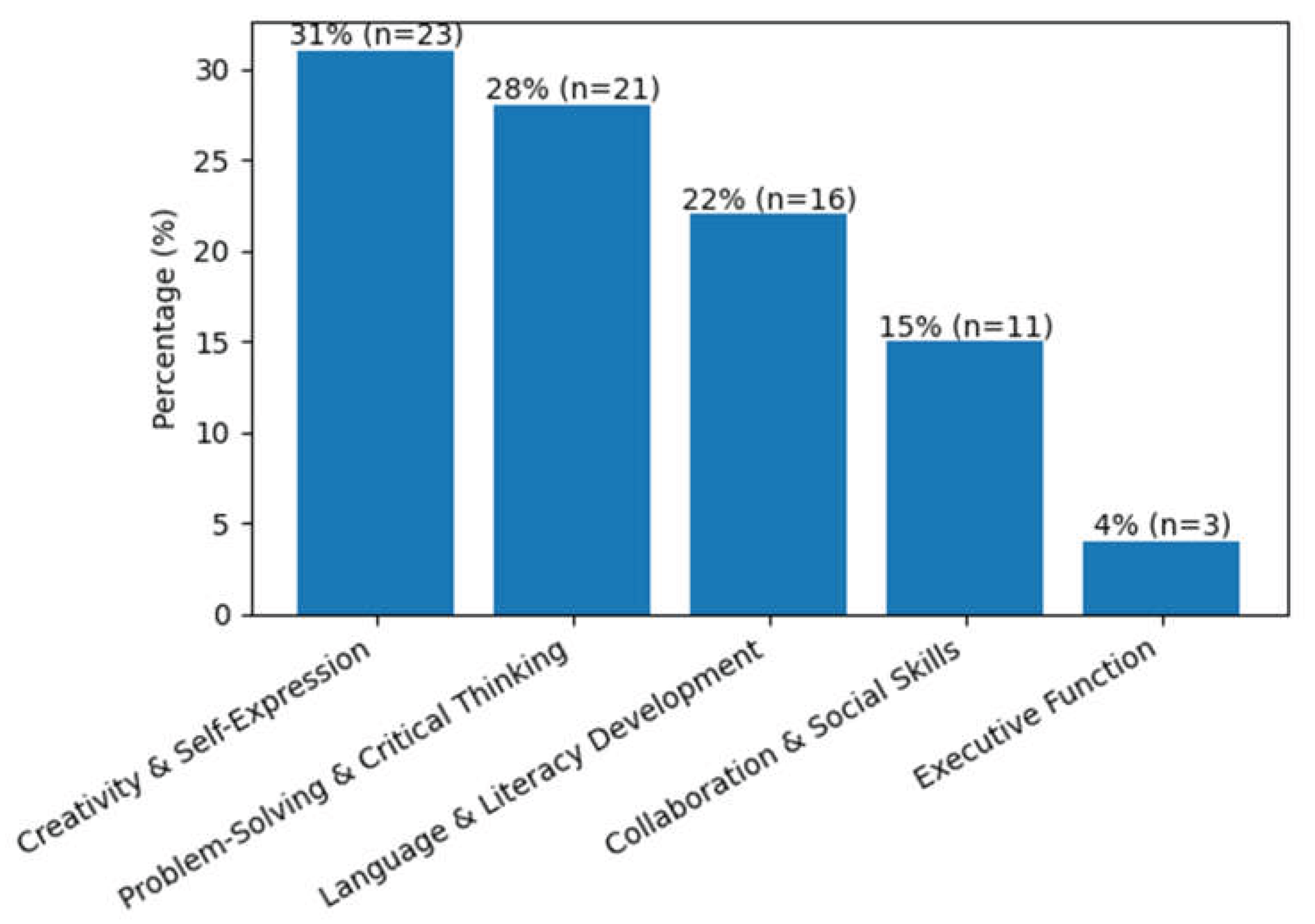
Figure 2.
Primary Challenges to Technology Integration (Ranked by Frequency).
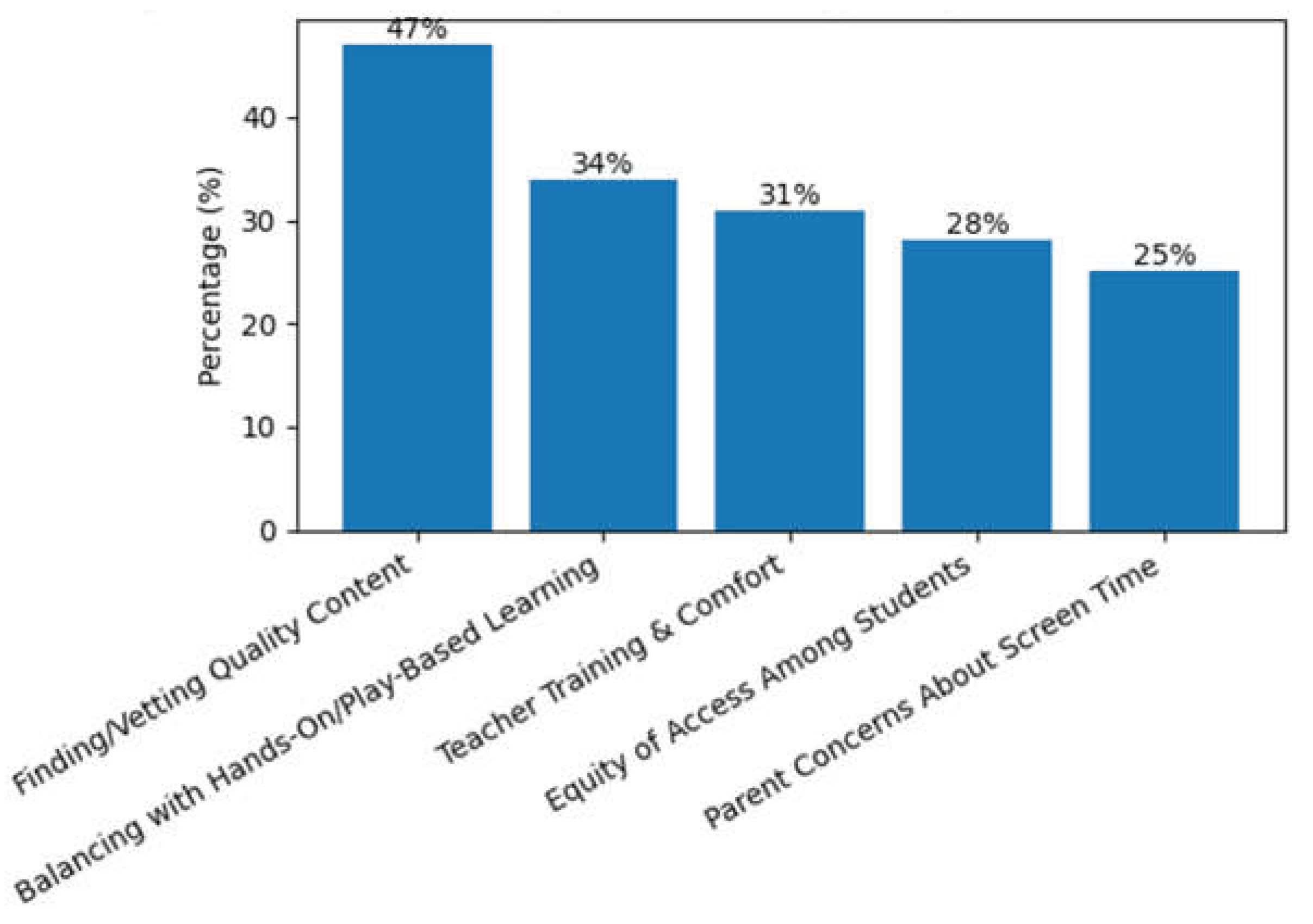
Table 1.
Technology Access and Primary Use Patterns by Setting Type (n=74).
| Setting Type | Avg. Daily Use (Min) | Most Common Tech (Top 3) | % Using Robotics/Coding |
|---|---|---|---|
| Public School | 24.6 | IWB, Tablets, Computers | 25% |
| Private Preschool | 23.8 | Tablets, IWB, Audio | 33% |
| Montessori | 13.2 | Audio, Robotics, Camera | 50% |
| Reggio-inspired | 16.5 | Camera, Audio, Tablet | 12% |
| Head Start | 29.5 | Tablets, Audio | 10% |
| Faith-based | 18.2 | Tablets, Audio, IWB | 0% |
| Cooperative | 9.5 | Audio, Camera | 0% |
Disclaimer/Publisher’s Note: The statements, opinions and data contained in all publications are solely those of the individual author(s) and contributor(s) and not of MDPI and/or the editor(s). MDPI and/or the editor(s) disclaim responsibility for any injury to people or property resulting from any ideas, methods, instructions or products referred to in the content. |
© 2026 by the authors. Licensee MDPI, Basel, Switzerland. This article is an open access article distributed under the terms and conditions of the Creative Commons Attribution (CC BY) license (http://creativecommons.org/licenses/by/4.0/).
Copyright: This open access article is published under a Creative Commons CC BY 4.0 license, which permit the free download, distribution, and reuse, provided that the author and preprint are cited in any reuse.