

Submitted:
17 February 2026
Posted:
26 February 2026
You are already at the latest version
Abstract
Arthropods are susceptible to abrupt climate changes and modify their organizational behavior, based on ambient humidity and temperature. Miniaturized technologies allow for continuous and detailed observation of animal behavior, as well as the extraction of environmental data. Furthermore, software using Artificial Intelligence techniques such as scene graph generation (SGG) can obtain descriptions of the acquired scenes of animal life. In this research, miniaturized hardware and intelligent software are used to generate a mathematical model of the organizational behavior of bees and ants, based on videos, images, and environmental data extracted in real time from the entrances to these arthropod nests. The nests used for the experiments are located in different geographical positions. For each experiment, a dynamic system is generated, and its accuracy is verified using visual information and data obtained from the nest entrances, which demonstrate the arthropods’ behavior. We measured the similarity between the dynamic system produced and organizational behavior using five evaluation parameters and experimental tests conducted in the field.
Keywords:
arthropods
; mathematical models
; scene graph generation
1. Introduction
Arthropods in their natural environments are susceptible to abrupt climate changes; they modify their behavior in response to variations in humidity and temperature. Through observations in the field and in laboratories, mathematical models have been developed to describe the different systematic behaviors of bees [1,2] and ants [3,4,5,6].
These mathematical models, that have evolved over the years, serve to study behaviors to model ecological processes and the factors that cause the Colony Collapse Disorder (CCD) [1,2].
Regarding ants, mathematical models have been designed to model intraseasonal population dynamics [3]; the systematic search that allows them to locate the nest with precision [4]; an agent-based simulation model to show how task partitioning in leafcutter ants can gradually evolve by exploiting gravity-driven stigmergy was proposed in [5], and a Response Threshold (RT) was developed to explain task allocation in social insect colonies [6].
All the models described above are based on human observations carried out in areas where the insects live, or they are captured with deadly traps or introduced into laboratories; another way to observe arthropods is through specially designed devices in which a group of insects are introduced and habitats similar to their natural ones are created in captivity; these devices are generally operated in laboratories under controlled conditions [7]. Generally, the results of the models are compared with observed behaviors in the field [4].
Currently, computer vision models, along with Internet of Things (IoT) devices, allow for the continuous and detailed observation of animal behavior by extracting images, videos, and environmental data, such as temperature and humidity, from remote locations, without disrupting the daily lives of living beings. Along with IoT devices, Artificial Intelligence techniques, such as Scene Graph Generation (SGG), have evolved from the detection and recognition of objects in an image to the understanding of relationships between objects and the ability to produce textual descriptions based on image content and environmental parameters [7]. For the reasons described above, it is not necessary to make on-site observations for the generation of mathematical models, as long as the models built with computerized tools are as realistic and close to the acquired scenes as possible.
Using a previous set of research papers, this paper proposes the generation of a dynamic system to model the underlying biology of bees and ants, using real-time descriptions of scenes from their nests. This research builds upon previous work in the following way, in [8,9] an Internet of Things System acquires real-time scenes from the arthropod nests, then a software system recognizes the images acquired in a data processing center, and then a software system translates these scenes into a human-readable description [7,10]; based on these four research projects, we store human-readable descriptions in a dataset for a certain time, and from these datasets, dynamic models are automatically built by a software system. Each model produced by the software is supported by experimental tests conducted in the field.
This work is organized as follows, in related works section, a set of existing research in the literature related to the construction of mathematical models of bees and mathematical models of ants are described in Section 2; the hypothesis, the general objective, and the specific objectives of the research are presented in Section 3; the materials and methods used in carrying out the research are described in Section 4. In Section 5 experiments are described. Finally, findings and future research directions are presented in Section 6. The conclusions are in Section 7 .
2. Related Works
In this section, we describe some works that have developed mathematical models of different observable behaviors in bees; then, we describe some works that have addressed the behaviors of ants through mathematical models. Although many mathematical models have been proposed, in this section we only mention some that are related to our research work.
Mathematical Models of Bees
In [1], mathematical models proposed in the literature are reviewed to obtain useful information on ecological processes and factors that cause the loss of bee colonies; a classification is proposed into models driven by biological and environmental factors, models that address colony dynamics within the hive, foraging models, and models that explore the interaction between honeybees and Varroa mites. Reference [2], proposes a mathematical model of bee colony dynamics to predict the effect of pollen on colony failure; the study addresses the causes of the decline in honey bee populations, known as Colony Collapse Disorder (CCD),
Mathematical Models of Ants
Four differential equations that model the intraseasonal population dynamics of the relationship between Aphids, Ants and Ladybirds are proposed in [3]; a discrete-time model that applies the Non Standard Finite Difference (NSFD) scheme, to numerically integrate nonlinear differential equations, is proposed.
A mathematical model to reconstruct the Systematic Search behavior of desert Cataglyphis ants is proposed in [4]; systematic search is defined as the last resort used by ants to locate the nest accurately and is carried out by loops in different directions, always returning to the starting point before beginning a new loop, and expanding the loops over time; the assumed factors that affect the search are the length of the feeding excursion, the proximity to the nest entrance and the familiarity of the territory.
Reference [5] uses an agent-based simulation model to show how task partitioning in leafcutter ants can gradually evolve by exploiting gravity-driven stigmergy (leaves falling from the treetop to the ground to form a hide). The study focuses on two ant behaviors: the probability of dropping a leaf and the probability of collecting a fallen leaf. This study demonstrates how task partitioning can gradually evolve through the simultaneous evolution of independent mutations, without requiring biologically improbable mechanisms such as high mutation rates.
In [6], the concept of Response Threshold (RT) was developed to explain task allocation in social insect colonies, where workers perform tasks based on their responsiveness to the corresponding stimulus. A mathematical model of RT explains the data obtained in task allocation experiments. A quantitative analysis was used as an automated measurement system to count passage events between a nest chamber and a foraging area in five colonies of Camponotus japonicus ants. The authors found that the daily foraging activity of individual workers fluctuated over time; furthermore, daily foraging activity was concentrated among a small number of high-ranking workers, and the order of daily foraging activity also fluctuated over time.
This set of described works focuses on incorporating mathematical models related to arthropods and proposes a set of differential equations suitable only for different behaviors, without considering the environmental parameters in which the insects live. Therefore, in this research, we propose a mathematical model that is modified according to environmental parameters, and subsequent evaluation of the model allows us to determine the health status of bees or leafcutter ants (depending on the type of arthropod).
3. Hypothesis
This research stems from the hypothesis that arthropods modify their organizational behaviors, and information transmission between individuals based on environmental parameters such as temperature and humidity.
3.1. General Objective of the Research
Modeling, with a dynamic system, the organizational behavior of honeybees and leafcutter ants based on their behaviors, using visual information and data obtained in real time from the nests of these arthropods.
3.2. Specific Objectives
- 1.
- Obtain real-time scenes and real-time environmental data (temperature and humidity) from the entrances of bee and leafcutter ant nests using Internet of Things devices.
- 2.
- Recognize objects in the scenes to determine, based on environmental stimuli (temperature and humidity), the observable and measurable behaviors of the arthropods.
- 3.
- Produce a dynamic system, based on the automatic description of recognized objects, that models the behavior of bees and leafcutter ants in real time,
- 4.
- Determine the current health status of the observed colonies through the evaluation of the dynamic system produced.
4. Materials and Methods
This section describes the materials and methods used in this research. The subSection 4.1 refers to previous research that was consulted. The subSection 4.2 describes the research process followed.
4.1. Materials
The materials used for this research are those proposed in [9]. This model, built with Internet of Things devices, is placed at the entrances to arthropod nests for periods of 7 to 8 hours, and videos and images are acquired every minute. The information is transferred to the Data Processing Center (DPC) using network devices. The videos, images, and data are stored and processed with the software system proposed in [9] to perform image recognition and describe the captured scenes; subsequently, the dynamic system is built.
4.2. Method
Using the materials described in the previous subsection, the proposed method consists of five steps, which are listed below and described in summary form. Then in subsequent paragraphs, each step is written in detail.
- 1.
- Data acquisition in real-world environments. Acquisition of images and videos, as well as environmental parameters of temperature and humidity of arthropod nests using Internet of Things devices.
- 2.
- Generation of scene descriptions from data. Processing and storage of the images, videos and environmental parameters to obtain scene descriptions; scene descriptions are stored in different datasets for certain periods of time.
- 3.
- Construction of the mathematical models, based on the scene descriptions.
- 4.
- Evaluation of the mathematical model with the information stored in the datasets.
- 5.
- Evaluation of the Colony health status.
These five steps are performed in specific time periods, for example a month, a season of the year, or simply a period of n days. When any mathematical model is constructed, an additional step can be performed: evaluate each of the three equations of the model and know the health status of the colony. The Figure 1 graphically illustrates the five previous steps and the additional step of construction and access to the datasets.
The following subsections describe each of the steps of the proposed method, and refer to the existing research in the literature that were used. The method is designed to work with both types of arthropods: bees and ants. Due to the versatility of the prototypes developed, we have been able to conduct experiments in real-world scenarios involving access to bee and ant nests.
4.2.1. Data Acquisition in Real-World Environments
In references [9] of open access and [8], a prototype in hardware for image acquisition from bee and ant nests is proposed and described. The prototype consists of Internet of Things devices, a power generator or solar panel, and inter-node communication devices. This prototype is used to acquire the images used and described in this research.
4.2.2. Generation of Scene Descriptions from Data, and and Data Processing to Obtain Scene Descriptions
In [7,10], a software system is used to process and store the images and videos, from which the description of the scenes is obtained. For scene description, a technique based on a scene graph generator and a graph neural network is developed. All scene descriptions obtained from real scenarios with the described systems (Hardware and Software) are stored in a dataset. Each dataset contains a time period, for example three months: March, April and May. With these datasets we can carry out the Generation of mathematical models from scene descriptions and environmental data. The next subsection describes how the mathematical models are generated.
4.2.3. Construction of Mathematical Models from Scene Descriptions and Environmental Data
This subsection explains how a mathematical model is generate, from scene descriptions produced with the system described in [7] and stored in a dataset. The evaluation of each equation to determine the health status of the colony is also explained, using verification thresholds.
Therefore, to explain and exemplify the generation of mathematical model, we consider three scene descriptions produced with the system proposed in [7], which are: “Big Population”, “Carrying Food”, and “Varroa mite status”. We have chosen these three arthropod behaviors because they allow us to determine the health status of a colony.
“Big Population”. Colony health status using the threshold as a verification parameter
The health of a colony is considered healthy when a large number of bees are detected at the entrance to the nest. The gathering of bees at the entrance is observed over a period of time t, for example, from 6:00 AM to 2:00 PM, for a few weeks, a whole month, or a season of the year. During this period, the hive is monitored using the system proposed in [9]. At the start of the monitoring (in the morning), the entrance to the nest has few bees, and during the day, the entrance becomes populated with bees if the hive has a large population. If the hive contains few bees, the entrance to the nest will not become populated with a large number of bees.
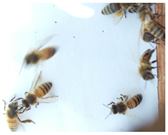
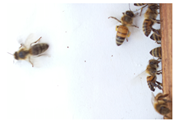
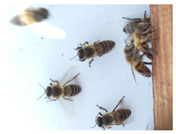
As an example of the above, consider the example shown in Table 1 (for the sake of simplicity and understanding of the method, we exemplify our mathematical model generating system using the example of bees only): the first row shows the images of the access points to the nests; the second row is the description of the image produced by the open access scene graph generation method proposed in [7]; the third row shows the temperature and humidity parameters at each observation site; finally, the last row shows the description of each scene obtained with the software system. Therefore, the three scenes in Table 1, obtained from the bee nests, show the current state of the hives. The scene description is: “Large population at the entrance to the nest”, generated from the predicate “Big Population”.
Then when the system detects the above, an equation is created from a number of elements , which translates the real situation (the numerical sequence) into an algebraic language, relating the number of individuals , with a total or final value or .
where:
x is the independent variable representing the number of bees at the entrance to the nest.
m is the rate of change or slope, representing the constant value that increases or decreases for each element (image).
b is the initial value or constant representing the value before x begins to change (if applicable).
y or is the total or dependent variable, representing the final result.
The mathematical model produced by the system is a linear equation of the form:
Or in function notation, the system produces:
Once the mathematical model is produced by the system, the verification threshold is established, which determines the current health status of the hive. Since equation 1 has been evaluated, the verification threshold can be generated in any of the following ways. First,
In this first case, Equation (3), the system indicates that the number of bees at the hive entrance is above the established threshold, indicating that the hive’s health is stable (a large bee population is active). In another case, the verification threshold is generated as follows:
Then, Equation (4) determines that the number of bees in access to the nest does not exceed the threshold, which determines two situations: first, the hive does not have the number of individuals adequate to be considered healthy, and second, a manual verification is necessary by the beekeeper.
“Carrying Food”. Working status of the colony using the threshold as a verification parameter
Foraging areas are the geographic areas where bees collect pollen, and are the areas that surround the colony. A suitable foraging area for a bee colony is one that provides enough pollen for survival. One way to measure the supply of pollen to the hive is to count the number of bees that arrive at the entrance of the nest with pollen on their legs and body.
Then, to model the above in mathematical language, an equation is generated by the system, which uses the discrete random variable x, as the number of bees that arrive with pollen and t, which represents the observation time and is identified in the software system as “Carrying Food”; every time this legend is generated, the equation generated by the system is evaluated; the equation takes the form:
Where: t represents time.
x the independent variable that counts the cases of the escene description “Big Population”.
y the dependent variable containing the number of cases.
For the verification threshold in Equation (5) , we use . If the system has produced the threshold equation of the form:
We can determine that the bee colony is in a suitable foraging area, this ensures that the food supply to the hives is sufficient and avoids stress from long-distance transportation [2].
“Varroa mite status”. Varroa mite status using the threshold as a verification parameter
The Varroa mite in bees has been widely studied with different strategies that seek to mitigate it once it appears in the colonies. Its attack is so devastating that it can wipe out entire colonies in a very short time; in reference [8], a system that uses artificial vision for the detection of the Varroa mite is proposed, the images are analyzed by digital image processing and a neural network is responsible for detecting the presence of the mite in the abdomen of the bees. Thus, using this research work, this research proposes an additional procedure to mathematically model the count of infected bees at the entrance of the nest.
Once the system detects the presence of Varroa in at least one bee, the quadratic equation is produced:
The verification threshold of equation Equation (7) is established as . When the established threshold is exceeded, the system indicates that the Varroa parasite is present in the colony; sanitation activities are required immediately in the infected hives due to its high danger.
Model of equations produced by the system at a time t
Once enough information has been captured at a time t, the system of equations shown in Table 2 is produced.
4.2.4. Evaluation of the mathematical model with the information stored in the datasets
To evaluate the mathematical model using the information stored in the datasets, each of the model’s mathematical expressions is evaluated. To do this, we extract the data stored in the dataset. Section 5 presents a set of graphs showing the results of the evaluation of the system of equations from the Table 2.
4.2.5. Evaluation of the Colony health status
To determine the colony’s health status, after the system has conducted observations for a certain period, we propose that the colony meets three criteria:
- 1.
- The number of bees at the entrances to the nests must be above a threshold, for example, 10, each time the monitoring system detects bees.
- 2.
- Worker bees are carrying pollen to the nest. A certain number of bees have been detected carrying pollen on their legs.
- 3.
- The presence of Varroa mites in the nest does not exceed a verification threshold; for example, 10
Therefore, considering the above, we can observe the graphs generated by the model. These graphs automatically show us whether the colony is in a healthy state or requires action from the user.
5. Experiments
To verify the generated model, we extract the data stored in the dataset to evaluate it using the resulting equations. This section presents three experiments as examples of such an evaluation, and the results are shown in the following graphs.
For the experiments conducted, we made no assumptions about false negatives or false positives; the individual counts provided by the software systems are those reported in the experiments. The time required to carry out all the described experiments is 16 weeks, which corresponds to approximately 4 months; this timeframe was considered due to the incubation period of the bee pupae and the reproductive periods of the queen bee. Similarly, the thresholds in the experiments are those provided by expert beekeepers (users).
Obtaining the average number of bees per week at the hive entrance
A record was kept over 16 weeks, from 7:00 AM to 6:00 PM, of the Varroa mite scene description. Each week, the number of bees found at the entrance to the hive was recorded whenever the software system displayed the “Big Population” scene description.
Figure 2 shows the week number on the x-axis and the average number of bees found each week on the y-axis. The average is calculated by summing the number of bees found for each scene and dividing by the total number of scenes obtained and analyzed throughout the week. In this experiment, an average of 15 bees detected was established. The weekly averages exceed the threshold, indicating that the hive is healthy.
Average number of bees per week when they are detected “Carrying food”
For this experiment, we obtained the average number of bees detected at the nest entrance carrying food. Similar to the previous graph, the week number is plotted on the x-axis and the average number of bees “carrying food” per week is plotted on the y-axis. Figure 3 shows the results of this experiment.
For this experiment, we set the threshold at 10, to indicate that the work done in the hive is considered acceptable, and the individuals are fit to survive.
Number of bees per week with “Varroa mite
Figure 4 shows the results of observations made by the “Varroa mite” carrier bee software system over the established 16-week period. In the results presented, week 8 shows a value very close to the proposed threshold. Based on this result, the beekeeper disinfected the hive, which led to a considerable decrease in the appearance of the parasite over the following two weeks. Afterward, there were increases in the appearance of Varroa mites on the abdomens of some bees, which was considered a lower risk. Finally, in week 16, a decrease was observed.
6. Discussion
The method applied in this research yields a set of equations that constitute the mathematical model of an arthropod colony at time t. A subsequent evaluation of the results stored in databases allows us to graphically observe the colony’s health status. Many mathematical models have been proposed in the literature; these models arise from observations made by researchers studying the behavior of arthropods in colonies. Observing insects in their natural habitat is possible through device miniaturization techniques (hardware) and artificial intelligence techniques (software).
The initial findings of this research demonstrate that it is not necessary to keep arthropods in captivity to understand their behaviors (which are sometimes induced), nor is it necessary to capture and sacrifice the insects, because advanced systems (hardware and software) will allow us in the future to understand the behaviors of these living beings in detail and in their natural state.
Our future research is focused on new life models of arthropods. Currently, our research is focused on insect migration, the effects of bee populations on melliferous and polliniferous plants, and bee foraging in enclosed environments (greenhouses). For ants, we are investigating the effects of tree pruning by leafcutter ants.
7. Conclusions
After reviewing the traditional methods for generating dynamic systems, that model arthropod behavior in the current literature, we proposed an alternative automated procedure based on artificial intelligence and Internet of Things (IoT) techniques, to generate mathematical models of insects. This procedure, in addition to avoiding the mass killing of insects, also avoids disrupting their daily activities. The automated procedure transfers images and videos from arthropod nests (bees and ants). From the scenes extracted from the images and videos, a software system using artificial intelligence techniques describes them textually and constructs a mathematical model based on the descriptions and the environmental parameters of temperature and humidity. The accuracy of the created mathematical models is verified through experimental field tests. The resulting dynamic models exhibit different systems of differential equations that represent the current state of the colonies. As a complement to the above, an evaluation of the constructed dynamic model is performed to determine the current state of the colony in question. The experiments were conducted at the entrances of arthropod nests in various geographical locations and during different seasons.
8. Patents
A patent application for a computational structure for the extraction of visual and environmental information in real time from arthropods is currently being processed by the Instituto Mexicano de Propiedad Intelectual (IMPI).
Funding
This research received no external funding.
Institutional Review Board Statement
This study was exempted from ethical review and approval because this research: does not sacrifice any insects, does not affect the daily lives of the arthropods, does not alter any access to the nests; nor do we use substances that alter the nervous system of bees and ants to change their behavior. The researchers do not set traps or alter the spaces where the bees and ants live.
Informed Consent Statement
Not applicable.
Data Availability Statement
While our research is ongoing, we anticipate that the image datasets will not be available in public repositories. We will be able to place the data and images in public repositories once we have completed our testing.
Acknowledgments
We appreciate the facilities provided by the Instituto Tecnológico el Llano Aguascalientes, Mexico, for hosting the bee colonies where data was collected, and for allowing us to observe the leafcutter ant nests. We also thank them for their administrative support and for providing access to the tools used in isolated rural settings, such as shovels, picks, and hoes.
Conflicts of Interest
The author declare no conflicts of interest.
References
- Chen J, DeGrandi-Hoffman G, Ratti V, Kang Y. Review on mathematical modeling of honeybee population dynamics. Math Biosci Eng. 2021 Nov 4; 18(6): 9606-9650. doi: 10.3934/mbe.2021471. PMID: 34814360. [CrossRef] [PubMed]
- Bagheri S, Mirzaie M (2019) A mathematical model of honey bee colony dynamics to predict the effect of pollen on colony failure. PLoS ONE14(11): e0225632. [CrossRef]
- Gabbriellini, Gianluca. Aphids, ants and ladybirds: a mathematical model predicting their population dynamics. In: arXiv preprint arXiv:1905.05244, 2019.
- Waldner, F., Merkle, T. A simple mathematical model using centred loops and random perturbations accurately reconstructs search patterns observed in desert ants. J Comp Physiol A 204, 985–998 (2018). [CrossRef]
- Di Pietro, V., Govoni, P., Chan, K. H., Oliveira, R. C., Wenseleers, T., & van den Berg, P. (2022). Evolution of self-organised division of labour driven by stigmergy in leaf-cutter ants. Scientific reports, 12(1), 21971.
- Yamanaka, O., Shiraishi, M., Awazu, A., & Nishimori, H. (2019). Verification of mathematical models of response threshold through statistical characterisation of the foraging activity in ant societies. Scientific reports, 9(1), 8845.
- Velarde Martinez, A., & Gonzalez Rodriguez, G. (2026). Distributed Artificial Intelligence for Organizational and Behavioral Recognition of Bees and Ants. Sensors, 26(2), 622. [CrossRef]
- Martinez, A.V., Rodríguez, G.G., Cabral, J.C.E., Moreira, J.D.R. (2024). Varroa Mite Detection in Honey Bees with Artificial Vision. In: Calvo, H., Martínez-Villaseñor, L., Ponce, H. (eds) Advances in Soft Computing. MICAI 2023. Lecture Notes in Computer Science(), vol 14392. Springer, Cham. [CrossRef]
- Velarde Martínez, A., González Rodríguez, G., & Estrada Cabral, J. C. (2025). Apis mellifera Bee Verification with IoT and Graph Neural Network. Applied Sciences, 15(14), 7969. [CrossRef]
- Martinez, A.V., Gonzalez Rodriguez, G., Estrada Cabral, J.C. (2026). Recognition of Bee Organizational Behavior with Scene Graphs Generation. In: Martínez-Villaseñor, L., Vázquez, R.A., Ochoa-Ruiz, G. (eds) Advances in Soft Computing. MICAI 2025. Lecture Notes in Computer Science(), vol 16222. Springer, Cham. [CrossRef]
Figure 1.
Procedure for obtaining the mathematical model of arthropod colonies and their health status.
Figure 1.
Procedure for obtaining the mathematical model of arthropod colonies and their health status.
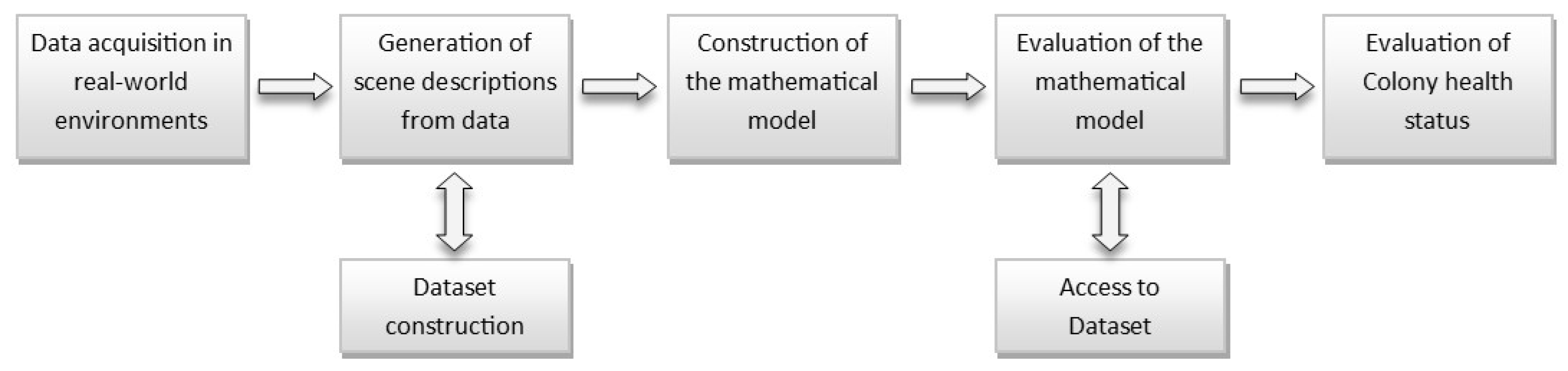
Figure 2.
Graph of the average number of bees per week, when a “Big Population” is detected in the scene description.
Figure 2.
Graph of the average number of bees per week, when a “Big Population” is detected in the scene description.
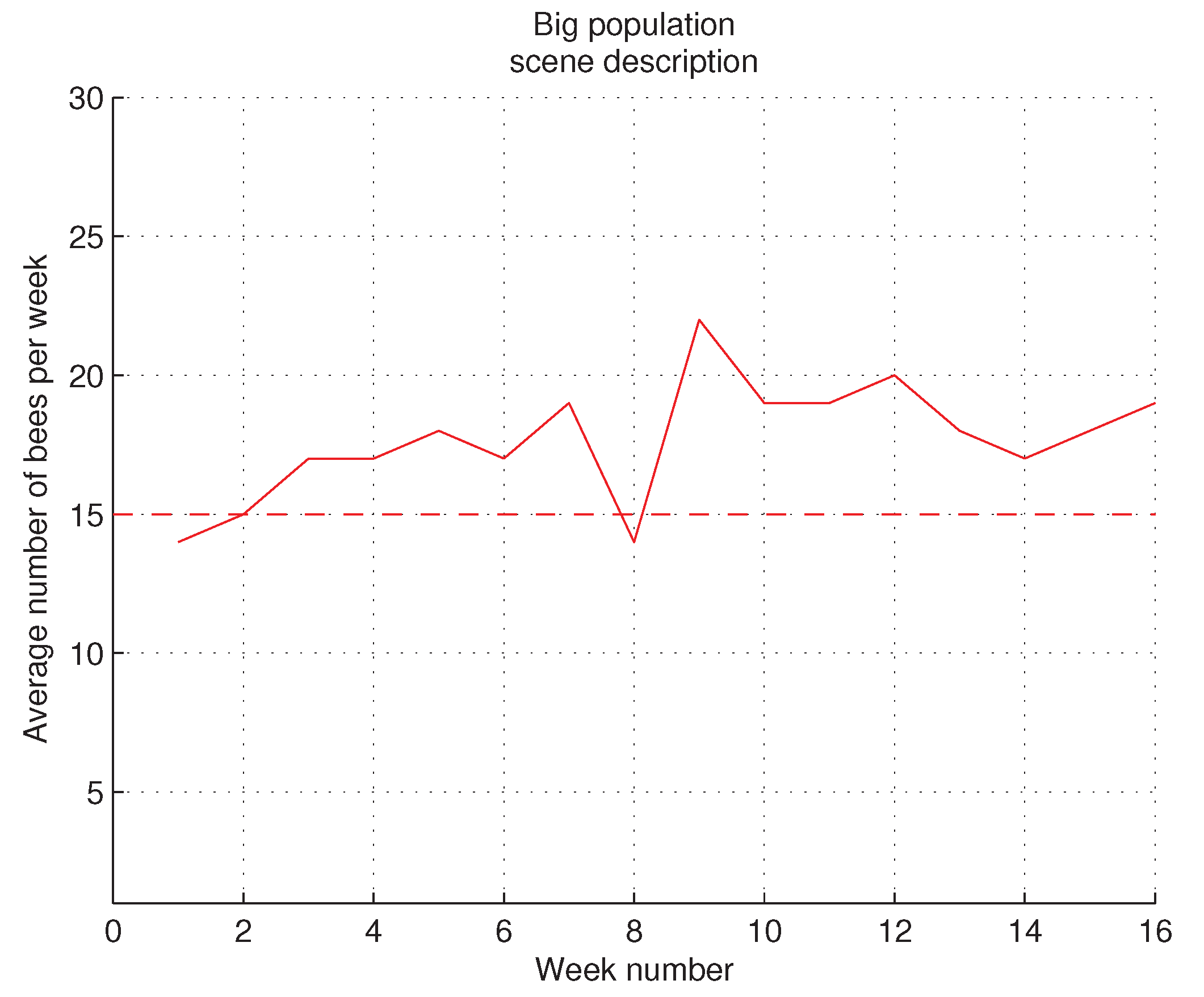
Figure 3.
Graph of the average number of bees per week when they are detected “Carrying food” in the scene description.
Figure 3.
Graph of the average number of bees per week when they are detected “Carrying food” in the scene description.
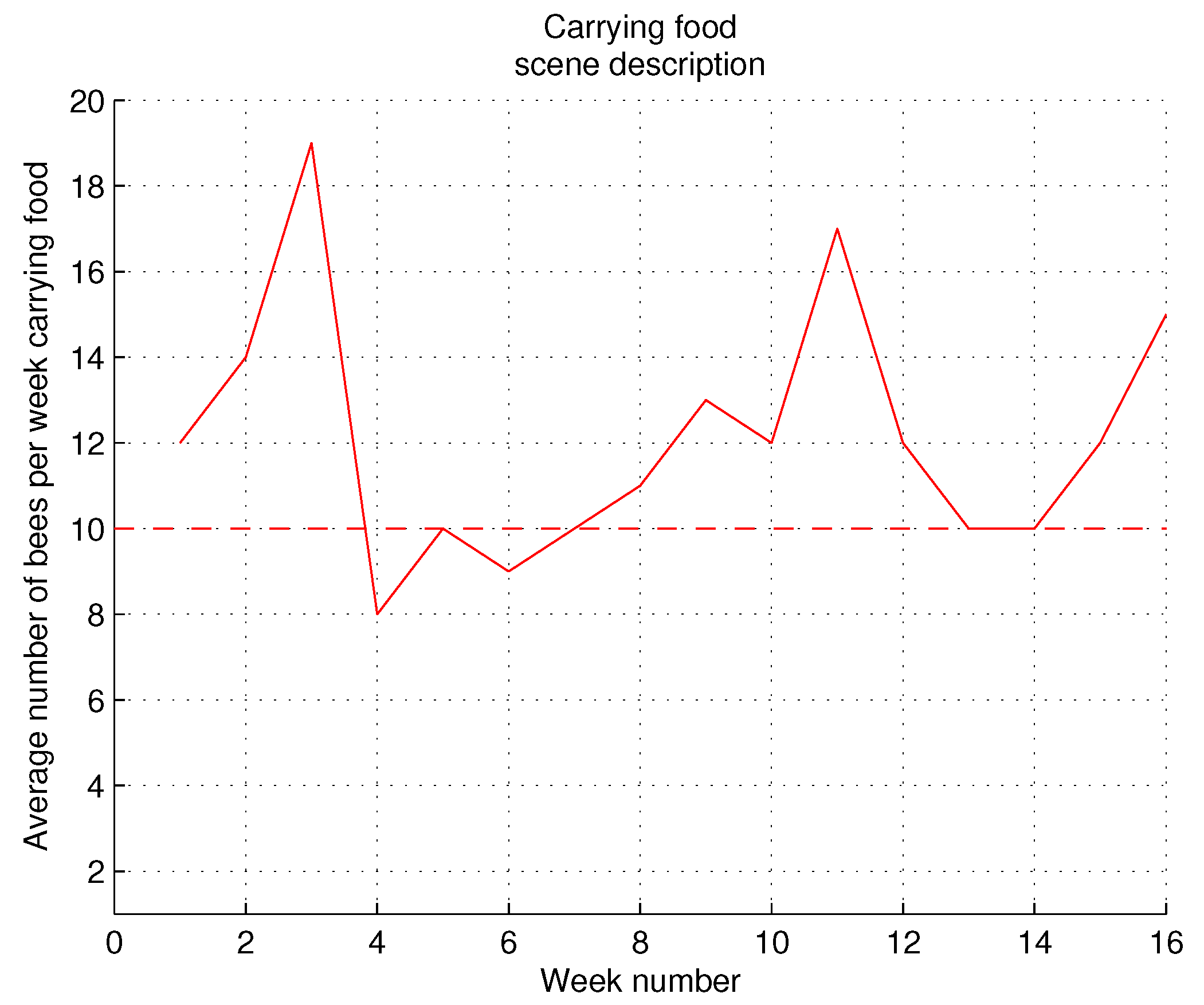
Figure 4.
Graph of the number of bees per week, when “Varroa mite” is detected.
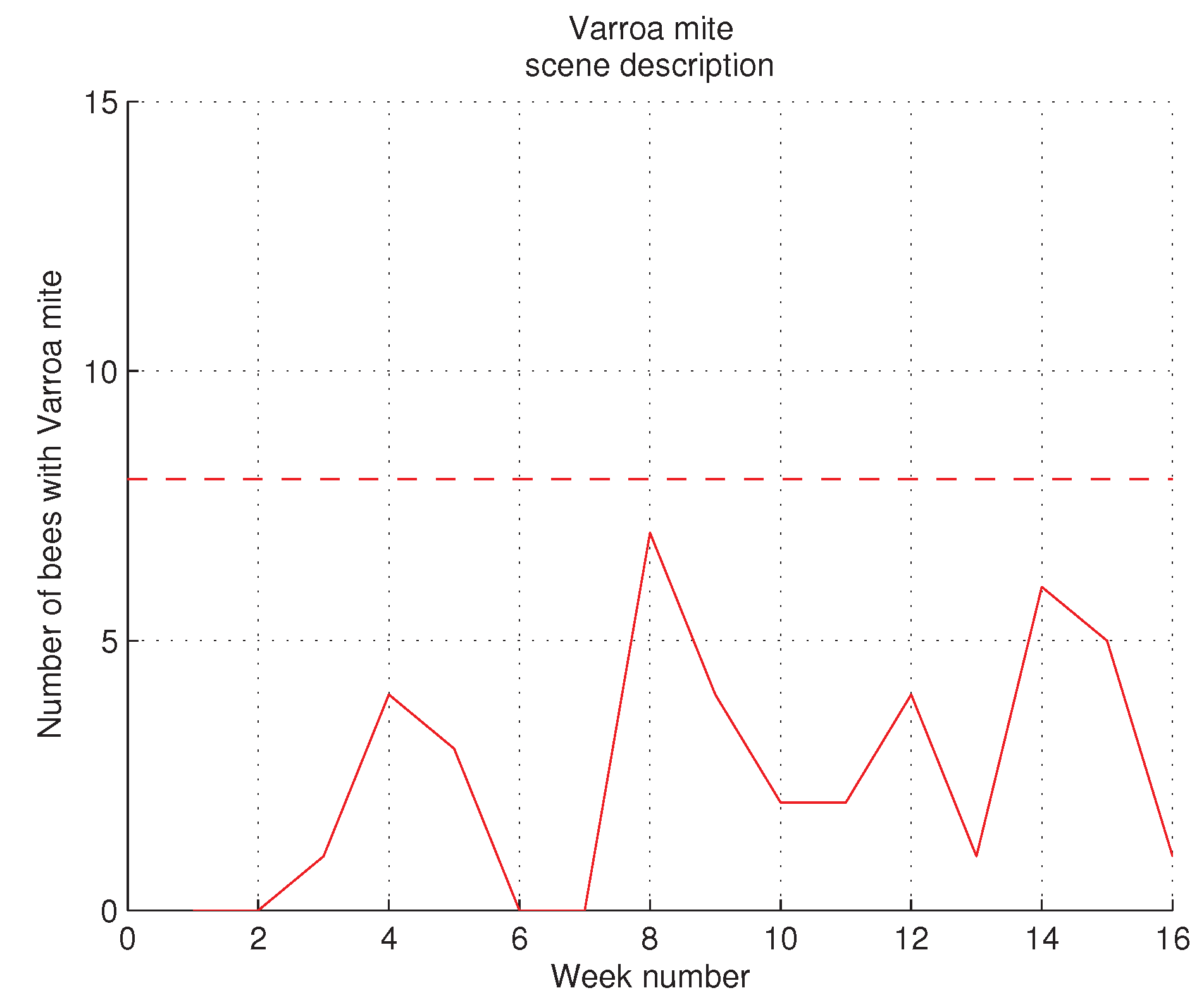

Table 1.
Three scenes obtained from three bee nests (Nest 1, Nest 2 and Nest 3) that exemplify the predicate “Big Population”.
Table 1.
Three scenes obtained from three bee nests (Nest 1, Nest 2 and Nest 3) that exemplify the predicate “Big Population”.
| Scene from nest 1 | Scene from nest 2 | Scene from nest 3 |
|---|---|---|
 |
 |
 |
| Description: Big Population | Description: Big Population | Description: Big Population |
| Temp.: 23° Humidity: | Temp.: 23° Humidity: | Temp: 22° Humidity: 1 |
| Big Population at entrance | Big Population at entrance | Big Population at entrance |
1 Three geographically distributed scenes.
Table 2.
Model of equations produced by the system at a time t.
| Behavior | Equation | Threshold | Parameter |
|---|---|---|---|
| “Big Population” * | y | ||
| x | |||
| “Carrying Food” | y | ||
| x | |||
| “Varroa mite status” | y | ||
* System of equations produced automatically.
Disclaimer/Publisher’s Note: The statements, opinions and data contained in all publications are solely those of the individual author(s) and contributor(s) and not of MDPI and/or the editor(s). MDPI and/or the editor(s) disclaim responsibility for any injury to people or property resulting from any ideas, methods, instructions or products referred to in the content. |
© 2026 by the authors. Licensee MDPI, Basel, Switzerland. This article is an open access article distributed under the terms and conditions of the Creative Commons Attribution (CC BY) license (http://creativecommons.org/licenses/by/4.0/).
Copyright: This open access article is published under a Creative Commons CC BY 4.0 license, which permit the free download, distribution, and reuse, provided that the author and preprint are cited in any reuse.


