

Submitted:
23 February 2026
Posted:
26 February 2026
You are already at the latest version
Abstract
The interface between biomaterials and biological systems is crucial for medical implants and tissue engineering. Surface modifications are a key strategy for controlling interactions. Synthetic glycopolymers offer a versatile toolbox, mimicking the structure and function of natural glycoconjugates like mucins. This review highlights the significance of glycopolymers for targeted surface modifications of established biomaterials, such as silicones and poly(meth)acrylates. Controlled polymerization techniques, like RAFT polymerization, enable the synthesis of well-defined glycopolymer architectures. Glycopolymeric surface functionalization creates tailored interfaces for different biological responses: From preventing protein and cell adhesion to promoting specific cell-type binding. The focus lies on using single, well-characterized polymeric base materials and tuning their surface properties through glycopolymer coatings to achieve various and specific functions. This approach opens new dimensions in the development of advanced biomaterials for applications like contact lenses, drug delivery systems, and biosensors and also possesses potential regulatory advantages by leveraging the safety profiles of existing materials.
Keywords:
glycopolymers
; polymer biomaterials
; surface modification
; biointerface
; contact lenses
; ophthalmic implants
; cell adhesion
; cell material interaction
1. Introduction
The performance and lifetime of medical devices, from contact lenses to implantable constructs, depends on the interactions occurring at the material-tissue interface [1,2]. Uncontrolled biological responses, such as protein caused fouling, bacterial adhesion, and inflammatory reactions, can lead to implant failure, adverse side effects and negative patient outcomes. Surface modification of biomaterials has become a growing research field in materials science, aiming to create interfaces that can actively and predictably control biological interactions [3,4]. A promising strategy in this field is the use of synthetic glycopolymers, a class of polymers designed to mimic the structure and function of naturally occurring glycoconjugates [5].
In nature, cells are embedded in a dense layer of carbohydrates, named glycocalyx, which mediates and is responsible for a variety of biological recognition processes [6,7]. This complex network of glycans regulates a wide range of biological events, from cell protection and adhesion to signaling and differentiation. The specific arrangement and density of glycans on the cell surface determines the high-avidity interactions required to trigger cellular responses. An example of such a natural glycoconjugate are mucins, a high-molecular-weight glycoproteins that are the primary components of mucus, a protective and lubricating layer on epithelial surfaces (Figure 1) [8,9]. Native mucins consist of a protein backbone densely decorated with oligosaccharide side chains (glycans), forming a highly hydrated, lubricating, and protective barrier [10]. This architecture provides lubrication via attraction of water, protects underlying tissues from mechanical stress, and prevents e.g., the adhesion of pathogens.
Inspired by this natural design, synthetic glycopolymers have been developed to replicate and even enhance these functionalities [11]. These polymers consist of a synthetic backbone to which carbohydrate moieties are attached as pendant groups [12]. Glycopolymers are recognized for their potential in various biomedical applications due to their ability to interact with biological systems in a manner similar to natural glycoconjugates. Unlike the complex and often heterogeneous structures of native glycoproteins, synthetic glycopolymers can be engineered e.g., by using controlled polymerization techniques. This allows fine-tuning of parameters such as molecular weight, polymer architecture (e.g., linear, brush, star-shaped), carbohydrate (“sugar”) density, and charge distribution [13,14,15,16,17]. This control is important for a systematic investigation of structure-property relationships and for designing materials with tailored specific biological activities.
This review focuses on the role of glycopolymers as a versatile tool for the specific surface modification of well-established biomaterials, particularly those widely used in ophthalmology and other medical applications, such as silicones (polysiloxanes) and poly(meth)acrylates. We describe the current state of research how glycopolymer coatings can modify and transform a single base material into a multifunctional materials platform. This opens a promising and capable way creating different and even opposing functions (even on one and the same implant/base material surface). This concept has significant future potential, not only for developing novel, high-performance biomaterials, but also for optimizing medical device regulatory processes. By modifying “only” the surface of a material with an already established safety and medical product approval record, the way to clinical translation can be accelerated. The central point is the precise tuning of cell-material interface by designing te appropriate glycopolymer structures. The broad spectrum from bio-inert, cell-repellent surfaces to highly specific, cell-adhesive substrates, opens new possibilities in the development of tailor-made biomaterials (Figure 2).
The challenge in biomaterial design often lies in the opposite requirements for bulk and surface properties. A material may provide ideal mechanical strength, elasticity, and oxygen permeability for its intended application, but its surface might be inherently thrombogenic or susceptible to biofouling, or cell-repellent where cell-adhesion is needed (and vice versa). The interaction between a biomaterial and cells at the interface is crucial for cellular functions like adhesion, growth, and differentiation[18]. Therefore, understanding and controlling the surface chemistry at the interface between the material and the biological environment is critical for the success of medical implants and devices [19]. Surface modification offers an elegant solution by de-linking these properties, allowing the bulk material to be optimized for mechanical performance while the surface is engineered for biological compatibility. Glycopolymers are particularly advantageous in this context because the vast diversity of natural carbohydrate structures provides a huge chemical library to encode specific biological information onto a synthetic surface. By grafting these sugar-containing polymers onto a material’s surface, properties like hydrophilicity and hemocompatibility can be significantly improved [20].
Carbohydrates play a central role in a wide range of biological recognition events, and their specific structures determine their interactions with proteins like lectins [21]. Even subtle changes in a carbohydrate’s structure can dramatically alter its binding affinity and specificity [22]. This high degree of specificity allows for the design of “biomimetic” surfaces that can elicit precise cellular responses [23]. Selecting and arranging specific sugar molecules on a synthetic polymer offer a level of specificity and control not easily achievable with other surface modification agents.
2. Controlled Synthesis of Glycopolymers
2.1. The RAFT Polymerization Route
The ability to tailor the biological function of a glycopolymer-modified surface is fundamentally dependent on the precise control over the polymer’s molecular structure. Early methods for glycopolymer synthesis often resulted in polymers with broad molecular weight distributions and limited architectural control, which made it difficult to establish clear structure-activity relationships [24]. The development of controlled/living radical polymerization (CLRP) techniques has revolutionized the field, providing new synthetic routes towards well-defined glycopolymers with predictable molecular weights, low polydispersity, and complex polymer architectures [13,25].
Among the most powerful and versatile CLRP methods is Reversible Addition-Fragmentation chain-Transfer (RAFT) polymerization [26,27,28]. RAFT uses a chain transfer agent (CTA) (Figure 3) to mediate polymerization, allowing for precise control over molecular weight and narrow molecular weight distributions. The technique is tolerant of functional groups present in glycomonomers, often permitting polymerization without complex protecting group chemistry, which is advantageous for biomedical applications [13,25,26,29,30]. The CTA can also serve as an anchor for direct surface immobilization, providing a straightforward route to well-defined, surface-grafted glycopolymers [31,32,33,34,35].
This level of control is critical for creating functional biomaterials. By precisely defining the polymer architecture, parameters can be systematically varied.
The ability to synthesize a library of well-defined glycopolymers, where only a single structural parameter is varied at a time, is essential for deconvoluting the complex interactions at the biointerface. This synthetic technique, like RAFT, is a possible route upon which the targeted surface modification of biomaterials can be designed.
2.2. Surface Modification Strategies: Anchoring Glycopolymers to Biomaterials
A well-defined glycopolymer in solution is only the first step; its utility as a surface modifier depends on the ability to bind effective and stable (immobilization) onto the targeted surface of the biomaterial. The choice of immobilization strategy is essential as it influences the density, conformation, and the stability of the formed glycopolymer layer, which wil be the key factor for its biological performance [35,36,37,38,39]. Several techniques have been developed for this purpose; the most common being “grafting-to,” “grafting-from,” and layer-by-layer (LbL) assembly (Figure 4).
2.2.1. Grafting-to and Grafting-from Approaches
The “grafting-to” method involves the synthesis of the complete glycopolymer chain before attaching it to a reactive surface [40]. This approach is advantageous because the polymer can be fully characterized before attachment. However, a significant limitation is that as polymer chains begin to occupy the surface, they create steric hindrance, which makes it difficult for additional chains to attach [41,42,43]. This effect often leads to a lower grafting density compared to other methods.
Conversely, the “grafting-from” approach involves immobilizing a polymerization initiator or CTA on the biomaterial surface and then growing the glycopolymer chains directly from it [44]. This method can achieve much higher grafting densities, leading to the formation of dense polymer “brushes.” These brush-like structures, where the polymer chains are stretched away from the surface, are particularly effective at preventing non-specific protein adsorption due to the high entropic penalty for protein penetration into the brush [45]. They also present a high concentration of carbohydrate ligands in a sterically accessible manner for specific binding events [32,45]. RAFT polymerization is particularly the choice to the “grafting-from” technique, as RAFT agents can be readily attached to surfaces through various surface chemistry techniques (e.g., silanization on glass or silicon, or thiol chemistry on gold) to initiate controlled surface-initiated polymerization (SI-RAFT) [46,47].
2.2.2. Layer-by-Layer (LbL) Assembly
Layer-by-Layer (LbL) assembly is another common and “easy-to-apply” technique for creating functional coatings. This method relies on the alternating adsorption of polymers with complementary interactions, most common oppositely charged polyelectrolytes (polyanions, polycations). As demonstrated, charged glycopolymers can be used to build multilayered thin films on a substrate [48,49,50]. For example, a positively charged glycopolymer can be alternated with a negatively charged glycopolymer (or another polyanion like heparin) to create a stable, stratified coating. A key advantage of the LbL technique is the ability to incorporate other functional components within the multilayered structure [51]. For instance, drug-loaded liposomes can be embedded within the glycopolymer matrix, creating a dual-function surface that is both biocompatible and capable of sustained drug release[48,52,53,54]. This is particularly relevant for applications like therapeutic contact lenses and other ophthalmic biomaterials, such as e.g., IOLs.
3. Application to Common Biomaterials
These modification strategies are directly applicable to the biomaterials of interest for this review. Silicones, which are widely used for their excellent mechanical properties and oxygen permeability (e.g., in contact lenses), are inherently hydrophobic. This hydrophobicity can lead to reduced surface wettability and deposition of proteins and lipids from the tear film, causing discomfort [55,56]. Glycopolymer coatings can render the silicone surface highly hydrophilic, mimicking the natural mucin layer of the tear film and significantly improving biocompatibility and lubricity [1,57]. Bioinspired polymer layers create a highly wettable surface that resists the deposition of lipids and proteins, reduces bacterial adhesion, and may improve lubrication against the ocular tissue [58,59]. Directly attaching mucin macromolecules to hydrophobic contact lenses has also been shown to create hydrophilic surfaces that prevent lipid adsorption and reduce wear on corneal tissue during friction [60].
Poly(meth)acrylates (PMAs), another class of polymers used in applications ranging from intraocular lenses to bone cements, also benefit from glycopolymer modification. The surfaces of these materials can be readily functionalized with initiator groups for “grafting-from” polymerization or chemically modified to allow for “grafting-to” attachment. This allows the inert bulk material to be endowed with a highly specific, biologically active surface, expanding its range of potential applications.
By selecting the appropriate combination of base material and surface modification strategy, it becomes possible to create a vast library of functional materials from a limited set of starting components.
3.1. Tailoring the Biointerface: From Bio-Inert to Bio-Specific
The true power of glycopolymer surface modification lies in the ability to rationally design the biointerface to elicit a specific, desired biological response. By carefully selecting the glycan structure, polymer architecture, and grafting density, a single base biomaterial can be endowed with a wide spectrum of functionalities, ranging from completely passive (bio-inert) to highly active and specific (bio-specific) (Figure 5). This method provides new possibilities for the application of well-established materials such as silicones and poly(meth)acrylates.
3.2. Creating Bio-Inert, Cell-Repellent Surfaces
For many medical devices, the primary goal is to prevent interactions with the biological environment, a property known as being “non-fouling” or “bio-inert” [61]. Non-specific protein adsorption is often the first event that occurs when a foreign material is introduced into the body, which can trigger a cascade of subsequent adverse reactions, including blood coagulation, inflammation, and bacterial colonization. Glycopolymers, particularly those with high densities of hydrophilic, neutral sugars, can create a tightly bound hydration layer on the material surface. This layer acts as a physical and energetic barrier, effectively repelling proteins and preventing their adhesion – a property often referred to as creating a “stealth” or “non-fouling” surface [62,63,64,65,66].
This principle is directly applicable to contact lenses. A silicone hydrogel lens coated with a dense brush of mucin-mimicking glycopolymers can resist the deposition of proteins and lipids from the tear film, leading to improved comfort, reduced risk of infection, and better visual acuity over the wearing period [57,60,67]. The ability to prevent cell adhesion is also critical. Certain glycopolymer coatings can effectively prevent the adhesion of human lens epithelial cells (HLEpiC) [68,69]. This is a crucial property for intraocular lenses, where the prevention of posterior capsule opacification, caused by the migration and proliferation of HLEpiCs, is a major clinical goal.
3.3. Designing Bio-Specific, Cell-Adhesive Surfaces
In contrast to creating inert surfaces, glycopolymers can also be designed to promote highly specific interactions. This is achieved by leveraging the “glycocluster effect,” where the multivalent presentation of specific carbohydrate ligands leads to strong and selective binding to complementary lectins on a cell’s surface [70,71,72]. While a single carbohydrate-lectin interaction is typically weak, the simultaneous binding of multiple ligands on a polymer chain to multiple receptors on a cell membrane results in a dramatic increase in binding avidity and specificity.
This multivalent presentation allows for the creation of surfaces to that specific cell types can selectively bind or adhere. The density of the carbohydrate binding sites on the polymer has been shown to strongly influence the rate of receptor clustering and the proximity between bound receptors [73]. This principle is crucial for designing materials for applications like tissue engineering, where guiding specific cell types is essential. For example, a surface functionalized with a glycopolymer presenting galactose or N-acetylgalactosamine moieties can be used to target hepatocytes [62,74,75,76,77,78]. Hepatocytes uniquely express the asialoglycoprotein receptor (ASGPR), which specifically recognizes and binds to ligands with terminal galactose or GalNAc residues [79,80]. This has deep implications for tissue engineering, where the goal is to guide the organization of specific cell types to create functional tissue constructs.
4. Glycopolymers as Platform Technology
The ability to switch the function of a surface from cell-repellent to cell-specific simply by changing the glycopolymer coating represents a paradigm shift in biomaterial design. Studies have shown that a base material coated with one type of glycopolymer can repel certain cell types, while the same base material coated with another glycopolymer can promote the adhesion of different cell types [35,81] This differential cell response is governed by the specific carbohydrate structures presented on the surface and their interactions with cell surface receptors. Even subtle changes in the glycopolymer’s architecture can fine-tune the cellular response. For example, varying the length of the “spacer” that connects the sugar molecule to the polymer backbone has been shown to affect the adhesion, viability, and proliferation of osteoblast cells [82]. This demonstrates a high degree of control over the biological outcome.
This highlights a significant advantage: a manufacturer could use a single, well-characterized, and regulatory-approved base material (e.g., a specific silicone or poly(meth)acrylate) and create a whole portfolio of medical devices with distinct functions simply by applying different glycopolymer coatings. This approach could potentially streamline the regulatory approval process [83]. The bulk of the safety and biocompatibility data would pertain to the base material, which remains unchanged. The regulatory focus would then shift to the surface coating, which is present in minute quantities but dictates the device’s function. This strategy could significantly reduce the time and cost associated with bringing new, advanced medical devices to market [84]. The lack of harmonization in regulatory requirements across different countries makes such strategies particularly attractive [85].
4.1. Applications of Glycopolymer-Modified Biomaterials
The versatility of glycopolymer coatings has led to their exploration in a wide array of biomedical applications. By tailoring the surface properties of materials, researchers can address specific challenges in different biological contexts, from the ocular environment to systemic drug delivery (Figure 6).
4.1.1. Advanced Contact Lenses
The contact lens market is a prime example of where glycopolymer technology can have a significant impact. The primary challenges in contact lens wear are discomfort, often arising from dryness and friction, and the risk of microbial infections [86]. Glycopolymer coatings directly address these issues. By creating a highly hydrophilic, mucin-mimetic surface on silicone hydrogel lenses, these coatings can dramatically improve on-eye wettability and lubricity, mimicking the natural tear film and reducing friction during blinking [57,60,67]. This leads to enhanced wearer comfort and reduced symptoms of dry eye.
Furthermore, these coatings can be designed to prevent the adhesion of bacteria. Pseudomonas aeruginosa, a common cause of contact lens-related keratitis, adheres to surfaces through specific interactions between its cellular lectins and carbohydrates on a surface [35]. The dense, hydrated polymer layer acts as a barrier to bacterial attachment, offering a non-biocidal approach to reducing the risk of infection [87,88]. The LbL assembly technique allows for the creation of advanced, multifunctional coatings, transforming a contact lens into a therapeutic device [89]. LbL have been successfully used to create glycopolymer thin films that act as scaffolds for embedding antimicrobial agents or drug-loaded liposomes [48,52]. This approach allows for the creation of a biocompatible surface that is also capable of sustained and controlled drug release.
4.1.2. Targeted Drug and Gene Delivery
The ability to target specific cells or tissues is a very important goal of drug delivery. In order to minimize negative side effects and to increase specificity and selectivity, Glycopolymers have by potential to achieve this by mimicking nature’s biological recognition system. Nanoparticles or liposomes, shell-decorated with specific glycopolymers, can act as ‘smart’ delivery vehicles. For example, nanoparticles coated with mannose-containing glycopolymers can be targeted to mannose receptors on macrophages and dendritic cells, which is a promising strategy for delivering vaccines or immunomodulatory agents [90]. Similarly, galactose-functionalized carriers can target liver cells for the treatment of liver diseases [90].
In gene therapy, cationic glycopolymers have been developed as non-viral vectors for DNA and siRNA delivery. The positively charged backbone of a cationic glycopolymer electrostatically interacts with negatively charged nucleic acids (like plasmid DNA or siRNA), condensing them into compact nanoparticles called “polyplexes” [91,92]. This complexation protects the genetic material from degradation by enzymes in the body [93]. The carbohydrate portion of the glycopolymer provides several advantages. It can form a hydrophilic shell around the polyplex, which promotes colloidal stability and prevents aggregation [91]. More importantly, specific sugar ligands (like galactose) can be used to target the polyplex to specific cells via receptor-mediated endocytosis, which can improve transfection efficiency and reduce off-target effects [94,95].
4.1.3. Biosensing and Diagnostics
The highly specific nature of carbohydrate-lectin binding makes glycopolymers ideal recognition elements in biosensors. Surfaces functionalized with a specific glycopolymer can be used to detect the presence of complementary lectins, which can be biomarkers for diseases. For instance, changes in the expression of certain galectins, like Galectin-3, are associated with cancer progression and metastasis [96,97]. Its involvement in tumor development makes it a promising target for early cancer diagnosis [98]. An SPR sensor chip coated with a glycopolymer that specifically binds Galectin-3 can be used to detect and quantify this biomarker in patient samples, offering a potential diagnostic tool [31]. The use of glycopolymer brushes, which present multiple sugar ligands, enhances the binding strength and specificity for lectins, making them a very promising tool for developing diagnostic arrays [32].
These glycopolymer-based sensors can be highly sensitive and selective. They can be designed to differentiate between lectins with very similar binding preferences, a task that is challenging for other sensor types. This technology is being explored for a range of diagnostic applications, from detecting viral pathogens (which often use cell surface glycans for entry) to monitoring biomarkers for inflammatory diseases in bodily fluids like tears or blood [99,100,101,102].
4.1.4. Tissue Engineering and Regenerative Medicine
In tissue engineering, scaffolds provide a three-dimensional framework to support and guide cell growth and organization to form functional tissue [103]. Glycopolymer-modified surfaces of these scaffolds can be used to control cell behavior in a sophisticated manner. A scaffold could be designed with defined patterns of different glycopolymers to spatially control where different cell types adhere and grow [104]. For example, a surface could be patterned with a cell-adhesive glycopolymer in specific regions to promote the formation of a blood vessel network, while the surrounding area is coated with a cell-repellent glycopolymer to prevent unwanted tissue growth [105]. This strategy leverages the natural role of carbohydrates in mediating cell-matrix interactions to create more effective scaffolds for tissue regeneration [5].
Glycopolymer coatings can tune surfaces from repellent to adhesive and allow for dynamic control over cell adhesion. For example, using a thermoresponsive glycopolymer, cell sheets could be grown on a surface at 37 °C and then detached non-enzymatically by simply lowering the temperature, preserving the cell-cell junctions and the extracellular matrix for transplantation [106]. This kind of cell sheet engineering is a promising technique in regenerative medicine by using glycopolymers as a layer of biological desired specificity.
4.2. Soluble Glycopolymers as Therapeutics
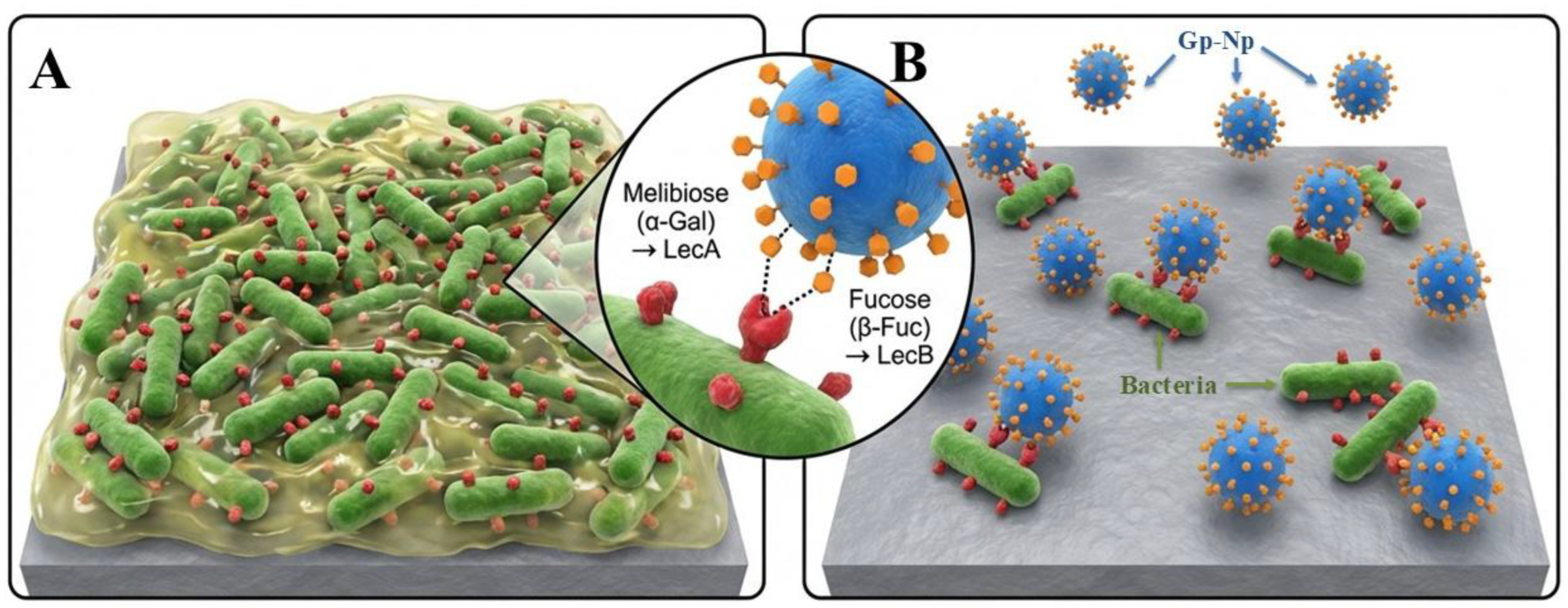
Beyond their role as surface coatings, glycopolymers can be formulated into soluble nanogels that function as “pathoblockers”. These nanoparticles are composed of glycopolymer chains and act as high-avidity decoys, designed to intercept bacteria before they can adhere to surfaces or to each other. This approach represents a promising alternative to classical antibiotics by targeting the bacterial adhesion mechanisms – and not the bacterial metabolism – thus preventing the development of resistance [100,107]. Glycopolymer-based nanogels, presenting melibiose (α-galactose) and fucose, effectively inhibited bacteria-to-bacteria lectin binding and reduced Pseudomanoas aeruginosa biofilm formation (Figure 8) by up to 75% when applied as pre-treatment (Figure 7) [108]. Glycopolymer nanogels can be loaded into the porous matrix of the scaffold [109]. As the scaffold resides in the body, it slowly releases these nanogels into the surrounding tissue. This creates a localized “cloud” of pathoblockers that competitively bind to bacterial lectins, preventing bacteria in the vicinity from adhering to the scaffold or to each other [110].
5. Conclusions and Future Perspective
Synthetic glycopolymers have been established as an important tool in the field of biomaterial surface engineering. Their ability to mimic natural glycoconjugates, combined with modern controlled polymerization techniques like RAFT, provides a platform for tailoring the interface between synthetic materials and biological systems. Glycopolymers can transform a single, well-characterized base biomaterial into a multifunctional platform. By altering the functional structure of the glycopolymer coating, the surface can be switched from being passive, anti-adhesive and cell-repellent to actively promoting the adhesion of specific cell types. This versatile tool represents a useful advantage in the development of next-generation medical devices.
Experimental studies have demonstrated that different glycopolymer coatings can selectively prevent or promote the adhesion of specific cell types on the same underlying base material, as well as the inhibition of biofilm formation caused by pathogenic bacteria. Such findings open new ways for advanced medical such as intraocular lenses (IOL, the world wide most used implant) that resist “biofouling” or post cataract while providing high compatibility with the surrounding tissue. Contact lenses can be made, that offer enhanced comfort combined with therapeutic potential (therapeutic contact lenses). The potential to use the existing regulatory approval of base materials by focusing “only” on the functional surface modification for better performance could significantly de-risk and accelerate the innovation cycle(by time and cost saving) for medical devices, such as implants.
For future developments, several key areas need further investigation: The long-term stability of these glycopolymer coatings in vivo remains a crucial and critical question that requires additional studies under physiologically relevant conditions, including biocompatibility tests such as (e. g.) enzymatic degradation, mechanical wear, stability and functionality under different sterilization methods (thermal, gamma, EO – or new methods that need to be validated such as UV or CO2). Furthermore, the development of scalable, reproducible, and cost-effective manufacturing processes for applying these coatings to commercial products will be essential for future clinical translation. The exploration of a wider and more complex library of glycan structures, including those that mimic specific O- and N-linked glycans found on cell surfaces, will open even more specific and fine-tuned control over biological cell responses. The development of sequence-controlled glycopolymers, where different sugar units are arranged in a specific order along the polymer backbone, could lead to materials that can engage in even more complex biological conversations. The integration of glycopolymers with other stimuli-responsive materials could lead to surfaces that can change their properties on demand – for example, releasing a drug or switching from cell-repellent to cell-adhesive in response to a specific biological signal or external trigger (e.g., light, temperature or pH).
The interdisciplinary synergy between polymer chemistry, surface science, cell biology and medical needs, coupled with advanced characterization techniques and a deeper understanding of the glycocode, will forward the research towards smart biomaterials. Polymer based materials will not just coexist with the body (tissue) but will actively direct biological specificity and functions, leading to safer, effective, and more personalized medical devices and therapies.
Author Contributions
J.S.: Conceptualization, Methodology, Investigation, Writing—Original Draft, Writing—Review and Editing, and Visualization. S.R.: Investigation, Writing and Editing, Review. R.R.R.: Review and Editing, Supervision. All authors have read and agreed to the published version of the manuscript.
Funding
This research received no external funding.
Institutional Review Board Statement
Not applicable.
Informed Consent Statement
Not applicable.
Data Availability Statement
No new data were created or analyzed in this study. Data sharing is not applicable to this article.
Acknowledgments
The preparation of this manuscript was supported by use of the AI assisted tool Nano Banana Pro on the Manus platform (Version 2.5, Manus AI). The process involved the authors formulating and defining specific prompts to generate initial drafts of illustrations (Figures 4–7). These drafts were then subjected to a rigorous and iterative review and editing process by the authors. Revisions and refinements were made to ensure accuracy reflecting the authors’ own research, analysis, and scientific correctness. The AI tool was used to improve language and illustration quality, while the intellectual contribution, literature screening, scientific accuracy and final responsibility for the manuscript’s content remains entirely with the authors.
Conflicts of Interest
The authors declare no conflicts of interest.
References
- Ishihara, K.; Shi, X.; Fukazawa, K.; Yamaoka, T.; Yao, G.; Wu, J. Y., Biomimetic-Engineered Silicone Hydrogel Contact Lens Materials. ACS Applied Bio Materials 2023, 6 (9), 3600-3616. [CrossRef]
- Anderson, J. M., Biological Responses to Materials. Annual Review of Materials Research 2001, 31 (Volume 31, 2001), 81-110.
- Hu, X.; Wang, T.; Li, F.; Mao, X., Surface modifications of biomaterials in different applied fields. RSC Advances 2023, 13 (30), 20495-20511.
- Liping, T.; Paul, T.; Wenjing, H., Surface Chemistry Influences Implant Biocompatibility. Current Topics in Medicinal Chemistry 2008, 8 (4), 270-280.
- Su, L.; Feng, Y.; Wei, K.; Xu, X.; Liu, R.; Chen, G., Carbohydrate-Based Macromolecular Biomaterials. Chemical Reviews 2021, 121 (18), 10950-11029. [CrossRef]
- Miura, Y.; Hoshino, Y.; Seto, H., Glycopolymer Nanobiotechnology. Chemical Reviews 2016, 116 (4), 1673-1692.
- Purcell, S. C.; Godula, K., Synthetic glycoscapes: addressing the structural and functional complexity of the glycocalyx. Interface Focus 2019, 9 (2), 20180080.
- Moniaux, N.; Escande, F.; Porchet, N.; Aubert, J.-P.; Batra, S. K., Structural organization and classification of the human mucin genes. Front. Biosci. (Landmark Ed) 2001, 6 (3), 1192-1206.
- Hattrup, C. L.; Gendler, S. J., Structure and Function of the Cell Surface (Tethered) Mucins. Annual Review of Physiology 2008, 70 (Volume 70, 2008), 431-457. [CrossRef]
- Rosencrantz, R. R. S., Joachim, Novel bioinspired polymeric material concepts and applications for functionalized contact lenses and keratoprostheses. Global Contact 2025, 3-25, 18-22.
- Spain, S. G.; Cameron, N. R., A spoonful of sugar: the application of glycopolymers in therapeutics. Polymer Chemistry 2011, 2 (1), 60-68. [CrossRef]
- Thalji, M. R.; Ibrahim, A. A.; Chong, K. F.; Soldatov, A.; Ali, G. A. M., Glycopolymer-Based Materials: Synthesis, Properties, and Biosensing Applications. Topics Curr Chem 2022, 380 (5).
- Vázquez-Dorbatt, V.; Lee, J.; Lin, E.-W.; Maynard, H. D., Synthesis of Glycopolymers by Controlled Radical Polymerization Techniques and Their Applications. ChemBioChem 2012, 13 (17), 2478-2487.
- Pramudya, I.; Chung, H., Recent progress of glycopolymer synthesis for biomedical applications. Biomaterials Science 2019, 7 (12), 4848-4872. [CrossRef]
- Hoffmann, M.; Bonda, L.; Fels, I.; Anhlan, D.; Hrincius, E.; Hermsen, D.; Ludwig, S.; Schelhaas, M.; Snyder, N. L.; Hartmann, L., Controlling the Sulfation Density of Glycosaminoglycan Glycopolymer Mimetics Enables High Antiviral Activity against SARS-CoV-2 and Reduces Anticoagulant Activity. Biomacromolecules 2025, 26 (8), 5169-5181.
- Polizzotti, B. D.; Kiick, K. L., Effects of Polymer Structure on the Inhibition of Cholera Toxin by Linear Polypeptide-Based Glycopolymers. Biomacromolecules 2006, 7 (2), 483-490.
- Jones, M. W.; Otten, L.; Richards, S. J.; Lowery, R.; Phillips, D. J.; Haddleton, D. M.; Gibson, M. I., Glycopolymers with secondary binding motifs mimic glycan branching and display bacterial lectin selectivity in addition to affinity. Chemical Science 2014, 5 (4), 1611-1616.
- Amani, H.; Arzaghi, H.; Bayandori, M.; Dezfuli, A. S.; Pazoki-Toroudi, H.; Shafiee, A.; Moradi, L., Controlling Cell Behavior through the Design of Biomaterial Surfaces: A Focus on Surface Modification Techniques. Advanced Materials Interfaces 2019, 6 (13), 1900572. [CrossRef]
- Ha, C.-S.; Gardella, J. A., Surface Chemistry of Biodegradable Polymers for Drug Delivery Systems. Chemical Reviews 2005, 105 (11), 4205-4232.
- Yang, Q.; Xu, Z.-K.; Dai, Z.-W.; Wang, J.-L.; Ulbricht, M., Surface Modification of Polypropylene Microporous Membranes with a Novel Glycopolymer. Chemistry of Materials 2005, 17 (11), 3050-3058.
- Sharon, N., Lectins: Carbohydrate-specific Reagents and Biological Recognition Molecules. Journal of Biological Chemistry 2007, 282 (5), 2753-2764. [CrossRef]
- Laederach, A.; Reilly, P. J., Modeling protein recognition of carbohydrates. Proteins: Structure, Function, and Bioinformatics 2005, 60 (4), 591-597. [CrossRef]
- Yu, K.; Lai, B. F. L.; Kizhakkedathu, J. N., Carbohydrate Structure Dependent Hemocompatibility of Biomimetic Functional Polymer Brushes on Surfaces. Advanced Healthcare Materials 2012, 1 (2), 199-213.
- Okada, M., Molecular design and syntheses of glycopolymers. Progress in Polymer Science 2001, 26 (1), 67-104.
- Miura, Y., Design and synthesis of well-defined glycopolymers for the control of biological functionalities. Polymer Journal 2012, 44 (7), 679-689.
- Moad, G.; Rizzardo, E.; Thang, S. H., Living Radical Polymerization by the RAFT Process. ChemInform 2005, 36 (40).
- Boyer, C.; Bulmus, V.; Davis, T. P.; Ladmiral, V.; Liu, J.; Perrier, S., Bioapplications of RAFT Polymerization. Chemical Reviews 2009, 109 (11), 5402-5436.
- Chiefari, J.; Chong, Y. K.; Ercole, F.; Krstina, J.; Jeffery, J.; Le, T. P. T.; Mayadunne, R. T. A.; Meijs, G. F.; Moad, C. L.; Moad, G.; Rizzardo, E.; Thang, S. H., Living Free-Radical Polymerization by Reversible Addition−Fragmentation Chain Transfer: The RAFT Process. Macromolecules 1998, 31 (16), 5559-5562.
- Moad, G.; Rizzardo, E.; Thang, S. H., Toward Living Radical Polymerization. Accounts of Chemical Research 2008, 41 (9), 1133-1142. [CrossRef]
- Bernard, J.; Hao, X.; Davis, T. P.; Barner-Kowollik, C.; Stenzel, M. H., Synthesis of Various Glycopolymer Architectures via RAFT Polymerization: From Block Copolymers to Stars. Biomacromolecules 2006, 7 (1), 232-238.
- Rosencrantz, S.; Tang, J. S. J.; Schulte-Osseili, C.; Böker, A.; Rosencrantz, R. R., Glycopolymers by RAFT Polymerization as Functional Surfaces for Galectin-3. Macromolecular Chemistry and Physics 2019, 220 (20), 1900293.
- Park, H.; Rosencrantz, R. R.; Elling, L.; Böker, A., Glycopolymer Brushes for Specific Lectin Binding by Controlled Multivalent Presentation of N-Acetyllactosamine Glycan Oligomers. Macromolecular Rapid Communications 2015, 36 (1), 45-54. [CrossRef]
- Min, E. H.; Ting, S. R. S.; Billon, L.; Stenzel, M. H., Thermo-responsive glycopolymer chains grafted onto honeycomb structured porous films via RAFT polymerization as a thermo-dependent switcher for lectin Concanavalin a conjugation. Journal of Polymer Science Part A: Polymer Chemistry 2010, 48 (15), 3440-3455.
- Korzhikov-Vlakh, V.; Sinitsyna, E.; Arkhipov, K.; Levit, M.; Korzhikova-Vlakh, E.; Tennikova, T. Improvement in Biological Performance of Poly(Lactic Acid)-Based Materials via Single-Point Surface Modification with Glycopolymer Surfaces [Online], 2024, p. 1008-1028. [CrossRef]
- Wang, Y.; Narain, R.; Liu, Y., Study of Bacterial Adhesion on Different Glycopolymer Surfaces by Quartz Crystal Microbalance with Dissipation. Langmuir 2014, 30 (25), 7377-7387.
- Tu, C.-X.; Gao, C.-Y., Recent Advances on Surface-modified Biomaterials Promoting Selective Adhesion and Directional Migration of Cells. Chinese Journal of Polymer Science 2021, 39 (7), 815-823.
- Barbey, R.; Klok, H.-A., Room Temperature, Aqueous Post-Polymerization Modification of Glycidyl Methacrylate-Containing Polymer Brushes Prepared via Surface-Initiated Atom Transfer Radical Polymerization. Langmuir 2010, 26 (23), 18219-18230. [CrossRef]
- Meng, X.-L.; Fang, Y.; Wan, L.-S.; Huang, X.-J.; Xu, Z.-K., Glycopolymer Brushes for the Affinity Adsorption of RCA120: Effects of Thickness, Grafting Density, and Epitope Density. Langmuir 2012, 28 (38), 13616-13623.
- Yang, Q.; Kaul, C.; Ulbricht, M., Anti-nonspecific Protein Adsorption Properties of Biomimetic Glycocalyx-like Glycopolymer Layers: Effects of Glycopolymer Chain Density and Protein Size. Langmuir 2010, 26 (8), 5746-5752.
- Yoshihara, E.; Nabil, A.; Iijima, M.; Ebara, M., A Comparative Study of “Grafting to” and “Grafting from” Conjugation Methods for the Preparation of Antibody-Temperature-Responsive Polymer Conjugates. ACS Omega 2024, 9 (20), 22043-22050.
- Le-Masurier, S. P.; Duong, H. T. T.; Boyer, C.; Granville, A. M., Surface modification of polydopamine coated particles via glycopolymer brush synthesis for protein binding and FLIM testing11Electronic supplementary information (ESI) available: NMR spectra for BIAzTC synthesis; GPC, ATR-FTIR, and NMR of PPFS using BIAzTC; TGA curves for polymer brush particles. Polymer Chemistry 2015, 6 (13), 2504-2511. [CrossRef]
- Rubio, N.; Au, H.; Leese, H. S.; Hu, S.; Clancy, A. J.; Shaffer, M. S. P., Grafting from versus Grafting to Approaches for the Functionalization of Graphene Nanoplatelets with Poly(methyl methacrylate). Macromolecules 2017, 50 (18), 7070-7079.
- L. M. Gonçalves, J.; J. Castanheira, E.; P. C. Alves, S.; Baleizão, C.; Farinha, J. P., Grafting with RAFT—gRAFT Strategies to Prepare Hybrid Nanocarriers with Core-shell Architecture. Polymers 2020, 12 (10), 2175.
- Edmondson, S.; Osborne, V. L.; Huck, W. T. S., Polymer brushes via surface-initiated polymerizations. Chemical Society Reviews 2004, 33 (1), 14-22.
- Lau, K. H. A.; Ren, C.; Park, S. H.; Szleifer, I.; Messersmith, P. B., An Experimental–Theoretical Analysis of Protein Adsorption on Peptidomimetic Polymer Brushes. Langmuir 2012, 28 (4), 2288-2298.
- Li, C.; Han, J.; Ryu, C. Y.; Benicewicz, B. C., A Versatile Method To Prepare RAFT Agent Anchored Substrates and the Preparation of PMMA Grafted Nanoparticles. Macromolecules 2006, 39 (9), 3175-3183.
- Ohno, K.; Ma, Y.; Huang, Y.; Mori, C.; Yahata, Y.; Tsujii, Y.; Maschmeyer, T.; Moraes, J.; Perrier, S., Surface-Initiated Reversible Addition–Fragmentation Chain Transfer (RAFT) Polymerization from Fine Particles Functionalized with Trithiocarbonates. Macromolecules 2011, 44 (22), 8944-8953.
- Tang, J. S. J.; Smaczniak, A. D.; Tepper, L.; Rosencrantz, S.; Aleksanyan, M.; Dähne, L.; Rosencrantz, R. R., Glycopolymer Based LbL Multilayer Thin Films with Embedded Liposomes. Macromolecular Bioscience 2022, 22 (4), 2270013.
- Boyer, C.; Bousquet, A.; Rondolo, J.; Whittaker, M. R.; Stenzel, M. H.; Davis, T. P., Glycopolymer Decoration of Gold Nanoparticles Using a LbL Approach. Macromolecules 2010, 43 (8), 3775-3784.
- Kempe, K.; Xiang, S. D.; Wilson, P.; Rahim, M. A.; Ju, Y.; Whittaker, M. R.; Haddleton, D. M.; Plebanski, M.; Caruso, F.; Davis, T. P., Engineered Hydrogen-Bonded Glycopolymer Capsules and Their Interactions with Antigen Presenting Cells. ACS Applied Materials & Interfaces 2017, 9 (7), 6444-6452.
- Zelikin, A. N., Drug Releasing Polymer Thin Films: New Era of Surface-Mediated Drug Delivery. ACS Nano 2010, 4 (5), 2494-2509. [CrossRef]
- Korogiannaki, M.; Samsom, M.; Schmidt, T. A.; Sheardown, H., Surface-Functionalized Model Contact Lenses with a Bioinspired Proteoglycan 4 (PRG4)-Grafted Layer. ACS Applied Materials & Interfaces 2018, 10 (36), 30125-30136.
- Lynge, M. E.; Baekgaard Laursen, M.; Hosta-Rigau, L.; Jensen, B. E. B.; Ogaki, R.; Smith, A. A. A.; Zelikin, A. N.; Städler, B., Liposomes as Drug Deposits in Multilayered Polymer Films. ACS Applied Materials & Interfaces 2013, 5 (8), 2967-2975. [CrossRef]
- Luo, J.; Li, X.; Dong, S.; Zhu, P.; Liu, W.; Zhang, S.; Du, J., Layer-by-layer coated hybrid nanoparticles with pH-sensitivity for drug delivery to treat acute lung infection. Drug Delivery 2021, 28 (1), 2460-2468.
- Jones, L.; Senchyna, M.; Glasier, M.-A.; Schickler, J.; Forbes, I.; Louie, D.; May, C., Lysozyme and Lipid Deposition on Silicone Hydrogel Contact Lens Materials. Eye & Contact Lens 2003, 29 (1), S75-S79. [CrossRef]
- Tighe, B. J., A Decade of Silicone Hydrogel Development: Surface Properties, Mechanical Properties, and Ocular Compatibility. Eye & Contact Lens 2013, 39 (1), 4-12.
- Zare, M.; Ghomi, E. R.; Venkatraman, P. D.; Ramakrishna, S., Silicone-based biomaterials for biomedical applications: Antimicrobial strategies and 3D printing technologies. Journal of Applied Polymer Science 2021, 138 (38), 50969.
- Ishihara, K.; Fukazawa, K.; Sharma, V.; Liang, S.; Shows, A.; Dunbar, D. C.; Zheng, Y.; Ge, J.; Zhang, S.; Hong, Y.; Shi, X.; Wu, J. Y., Antifouling Silicone Hydrogel Contact Lenses with a Bioinspired 2-Methacryloyloxyethyl Phosphorylcholine Polymer Surface. ACS Omega 2021, 6 (10), 7058-7067.
- Spadafora, A.; Korogiannaki, M.; Sheardown, H., Antifouling silicone hydrogel contact lenses via densely grafted phosphorylcholine polymers. Biointerphases 2020, 15 (4).
- Rickert, C. A.; Wittmann, B.; Fromme, R.; Lieleg, O., Highly Transparent Covalent Mucin Coatings Improve the Wettability and Tribology of Hydrophobic Contact Lenses. ACS Applied Materials & Interfaces 2020, 12 (25), 28024-28033. [CrossRef]
- Chen, S.; Jiang, S., An New Avenue to Nonfouling Materials. Advanced Materials 2008, 20 (2), 335-338.
- Kim, S.-H.; Kim, J.-H.; Akaike, T., Regulation of cell adhesion signaling by synthetic glycopolymer matrix in primary cultured hepatocyte. FEBS Letters 2003, 553 (3), 433-439.
- Yu, K.; Kizhakkedathu, J. N., Synthesis of Functional Polymer Brushes Containing Carbohydrate Residues in the Pyranose Form and Their Specific and Nonspecific Interactions with Proteins. Biomacromolecules 2010, 11 (11), 3073-3085.
- Zhu, J.; Marchant, R. E., Dendritic Saccharide Surfactant Polymers as Antifouling Interface Materials to Reduce Platelet Adhesion. Biomacromolecules 2006, 7 (4), 1036-1041.
- Yang, Q.; Xu, Z.-K.; Hu, M.-X.; Li, J.-J.; Wu, J., Novel Sequence for Generating Glycopolymer Tethered on a Membrane Surface. Langmuir 2005, 21 (23), 10717-10723.
- Imbia, A. S.; Ounkaew, A.; Zeng, H.; Liu, Y.; Narain, R., Stable Antifouling and Antibacterial Coating Based on Assembly of Copper-Phenolic Networks. ACS Applied Bio Materials 2025, 8 (1), 527-534.
- Trosan, P.; Tang, J. S. J.; Rosencrantz, R. R.; Daehne, L.; Smaczniak, A. D.; Staehlke, S.; Chea, S.; Fuchsluger, T. A., The Biocompatibility Analysis of Artificial Mucin-Like Glycopolymers. International Journal of Molecular Sciences 2023, 24 (18), 14150. [CrossRef]
- Wang, B.; Lin, Q.; Jin, T.; Shen, C.; Tang, J.; Han, Y.; Chen, H., Surface modification of intraocular lenses with hyaluronic acid and lysozyme for the prevention of endophthalmitis and posterior capsule opacification. RSC Advances 2015, 5 (5), 3597-3604.
- Schmidbauer, J. M.; Vargas, L. G.; Peng, Q.; Escobar-Gomez, M.; Werner, L.; Arthur, S. N.; Apple, D. J., Posterior Capsule Opacification. International Ophthalmology Clinics 2001, 41 (3), 109-131.
- Mammen, M.; Choi, S.-K.; Whitesides, G. M., Polyvalent Interactions in Biological Systems: Implications for Design and Use of Multivalent Ligands and Inhibitors. Angewandte Chemie International Edition 1998, 37 (20), 2754-2794.
- Ting, S. R. S.; Chen, G.; Stenzel, M. H., Synthesis of glycopolymers and their multivalent recognitions with lectins. Polymer Chemistry 2010, 1 (9), 1392-1412.
- Becer, C. R., The Glycopolymer Code: Synthesis of Glycopolymers and Multivalent Carbohydrate–Lectin Interactions. Macromolecular Rapid Communications 2012, 33 (9), 742-752.
- Cairo, C. W.; Gestwicki, J. E.; Kanai, M.; Kiessling, L. L., Control of Multivalent Interactions by Binding Epitope Density. Journal of the American Chemical Society 2002, 124 (8), 1615-1619.
- Thapa, B.; Kumar, P.; Zeng, H.; Narain, R., Asialoglycoprotein Receptor-Mediated Gene Delivery to Hepatocytes Using Galactosylated Polymers. Biomacromolecules 2015, 16 (9), 3008-3020.
- Huang, X.; Leroux, J.-C.; Castagner, B., Well-Defined Multivalent Ligands for Hepatocytes Targeting via Asialoglycoprotein Receptor. Bioconjugate Chemistry 2017, 28 (2), 283-295.
- Dhande, Y. K.; Wagh, B. S.; Hall, B. C.; Sprouse, D.; Hackett, P. B.; Reineke, T. M., N-Acetylgalactosamine Block-co-Polycations Form Stable Polyplexes with Plasmids and Promote Liver-Targeted Delivery. Biomacromolecules 2016, 17 (3), 830-840. [CrossRef]
- Santo, D.; Cordeiro, R. A.; Mendonça, P. V.; Serra, A. C.; Coelho, J. F. J.; Faneca, H., Glycopolymers Mediate Suicide Gene Therapy in ASGPR-Expressing Hepatocellular Carcinoma Cells in Tandem with Docetaxel. Biomacromolecules 2023, 24 (3), 1274-1286.
- Yang, W.; Mou, T.; Shao, G.; Wang, F.; Zhang, X.; Liu, B., Copolymer-Based Hepatocyte Asialoglycoprotein Receptor Targeting Agent for SPECT. Journal of Nuclear Medicine 2011, 52 (6), 978-985. [CrossRef]
- D’Souza, A. A.; Devarajan, P. V., Asialoglycoprotein receptor mediated hepatocyte targeting — Strategies and applications. Journal of Controlled Release 2015, 203, 126-139.
- Wu, J.; Nantz, M. H.; Zern, M. A., Targeting hepatocytes for drug and gene delivery: emerging novel approaches and applications. Front. Biosci. (Landmark Ed) 2002, 7 (4), 717-725.
- Gu, Y.; Liu, B.; Liu, Q.; Hang, Y.; Wang, L.; Brash, J. L.; Chen, G.; Chen, H., Modular Polymers as a Platform for Cell Surface Engineering: Promoting Neural Differentiation and Enhancing the Immune Response. ACS Applied Materials & Interfaces 2019, 11 (51), 47720-47729.
- Trinadh, M.; Kannan, G.; Rajasekhar, T.; Sesha Sainath, A. V.; Dhayal, M., Synthesis of glycopolymers at various pendant spacer lengths of glucose moiety and their effects on adhesion, viability and proliferation of osteoblast cells. RSC Advances 2014, 4 (70), 37400-37410. [CrossRef]
- Kaplan, A. V.; Baim, D. S.; Smith, J. J.; Feigal, D. A.; Simons, M.; Jefferys, D.; Fogarty, T. J.; Kuntz, R. E.; Leon, M. B., Medical Device Development. Circulation 2004, 109 (25), 3068-3072.
- Windecker, S.; Fraser, A. G.; Szymanski, P.; Gilard, M.; Lüscher, T. F.; Abid, L.; Brennan, J.; Byrne, R.; Crotti, L.; Drossart, I.; Franke, J.; Cossellu, M. G.; Kirtane, A. J.; Kurucova, J.; Krucoff, M.; McGauran, G.; Myers, P. O.; O’Connor, D. B.; Parma, R.; Piscoi, P.; Rao, A.; Rappagliosi, A.; Stefanini, G.; Samset, E.; Vincent, A.; von Bardeleben, R. S.; Weidinger, F., Priorities for medical device regulatory approval: a report from the European Society of Cardiology Cardiovascular Round Table. European Heart Journal 2025, 46 (16), 1469-1479.
- Heneghan, C.; Thompson, M., Rethinking medical device regulation. Journal of the Royal Society of Medicine 2012, 105 (5), 186-188.
- Guillon, M., Are Silicone Hydrogel Contact Lenses More Comfortable Than Hydrogel Contact Lenses? Eye & Contact Lens 2013, 39 (1), 86-92.
- Cheng, Q.; Peng, Y.-Y.; Asha, A. B.; Zhang, L.; Li, J.; Shi, Z.; Cui, Z.; Narain, R., Construction of antibacterial adhesion surfaces based on bioinspired borneol-containing glycopolymers. Biomaterials Science 2022, 10 (7), 1787-1794.
- Cheng, W.; Yang, C.; Ding, X.; Engler, A. C.; Hedrick, J. L.; Yang, Y. Y., Broad-Spectrum Antimicrobial/Antifouling Soft Material Coatings Using Poly(ethylenimine) as a Tailorable Scaffold. Biomacromolecules 2015, 16 (7), 1967-1977. [CrossRef]
- Ariga, K.; McShane, M.; Lvov, Y. M.; Ji, Q.; Hill, J. P., Layer-by-layer assembly for drug delivery and related applications. Expert Opinion on Drug Delivery 2011, 8 (5), 633-644.
- Qin, Q.; Lang, S.; Huang, X., Synthetic linear glycopolymers and their biological applications. Journal of Carbohydrate Chemistry 2021, 40 (1-3), 1-44. [CrossRef]
- Van Bruggen, C.; Hexum, J. K.; Tan, Z.; Dalal, R. J.; Reineke, T. M., Nonviral Gene Delivery with Cationic Glycopolymers. Accounts of Chemical Research 2019, 52 (5), 1347-1358.
- Nakayama, Y., Hyperbranched Polymeric “Star Vectors” for Effective DNA or siRNA Delivery. Accounts of Chemical Research 2012, 45 (7), 994-1004. [CrossRef]
- Bellato, F.; Bellio, G.; Asnicar, D.; Catania, R.; Pecchielan, L.; Marcenta, L.; Zanon, M.; Cielo, A.; Zainotto, M.; Pirazzini, M.; Ferrarini, A.; Mantovani, G.; Mastrotto, F., Mannose Targeting and Hydrophobic Tuning of Polycationic Vectors for Efficient Immunostimulatory CpG Delivery. ACS Applied Nano Materials 2025, 8 (47), 22637-22656.
- Ahmed, M.; Narain, R., The effect of polymer architecture, composition, and molecular weight on the properties of glycopolymer-based non-viral gene delivery systems. Biomaterials 2011, 32 (22), 5279-5290.
- Singhsa, P.; Diaz-Dussan, D.; Manuspiya, H.; Narain, R., Well-Defined Cationic N-[3-(Dimethylamino)propyl]methacrylamide Hydrochloride-Based (Co)polymers for siRNA Delivery. Biomacromolecules 2018, 19 (1), 209-221.
- Wang, W.; Guo, H.; Geng, J.; Zheng, X.; Wei, H.; Sun, R.; Tian, Z., Tumor-released Galectin-3, a Soluble Inhibitory Ligand of Human NKp30, Plays an Important Role in Tumor Escape from NK Cell Attack. Journal of Biological Chemistry 2014, 289 (48), 33311-33319.
- dos Santos, S. N.; Sheldon, H.; Pereira, J. X.; Paluch, C.; Bridges, E. M.; El-Cheikh, M. C.; Harris, A. L.; Bernardes, E. S., Galectin-3 acts as an angiogenic switch to induce tumor angiogenesis via Jagged-1/Notch activation. Oncotarget 2017, 8 (30), 49484-49501.
- Bumba, L.; Laaf, D.; Spiwok, V.; Elling, L.; Křen, V.; Bojarová, P., Poly-N-Acetyllactosamine Neo-Glycoproteins as Nanomolar Ligands of Human Galectin-3: Binding Kinetics and Modeling. International Journal of Molecular Sciences 2018, 19 (2), 372. [CrossRef]
- Miura, Y.; Nagao, M.; Matsumoto, H., De novo designed glycopolymer by precise polymer synthesis. Chemistry Letters 2023, 53 (2).
- Gerling-Driessen, U. I. M.; Hoffmann, M.; Schmidt, S.; Snyder, N. L.; Hartmann, L., Glycopolymers against pathogen infection. Chemical Society Reviews 2023, 52 (8), 2617-2642.
- Terada, Y.; Futamata, M.; Tsutsui, K.; Aoki, H., Evaluation of Preferential Cytokine Adsorption onto Biosensing Surface Modified with Glycopolymer. Biosensors 2025, 15 (3), 178.
- Xia, X.; Hu, Y.; Jiang, N.; Yetisen, A. K., Optical Contact Lenses Biosensors. ACS Sensors 2025, 10 (10), 7231-7251.
- Sugiaman, V. K.; Jeffrey; Naliani, S.; Pranata, N.; Djuanda, R.; Saputri, R. I., Polymeric Scaffolds Used in Dental Pulp Regeneration by Tissue Engineering Approach. Polymers 2023, 15 (5), 1082.
- Gerberich, B. G.; Bhatia, S. K., Tissue scaffold surface patterning for clinical applications. Biotechnology Journal 2013, 8 (1), 73-84.
- Putri, N. R. E.; Chen, H.; Kawazoe, N.; Rose, F. R. A. J.; Wildman, R. D.; Chen, G., Tailoring cell behaviour by surface micropatterning and interconnected porous structure of gelatin/nano-silica/PLGA 3D composite scaffold for bone tissue engineering. RSC Advances 2025, 15 (35), 28581-28591.
- Stöbener, D. D.; Uckert, M.; Cuellar-Camacho, J. L.; Hoppensack, A.; Weinhart, M., Ultrathin Poly(glycidyl ether) Coatings on Polystyrene for Temperature-Triggered Human Dermal Fibroblast Sheet Fabrication. ACS Biomaterials Science & Engineering 2017, 3 (9), 2155-2165. [CrossRef]
- Ali, A. A.; Al Bostami, R. D.; Al-Othman, A., Nanogel-based composites for bacterial antibiofilm activity: advances, challenges, and prospects. RSC Advances 2024, 14 (15), 10546-10559. [CrossRef]
- Rosencrantz, S.; Tang, J. S. J.; Koenig, K.; Chea, S.; Rosencrantz, R. R., Glyco-Nanogels for Modulating Pseudomonas aeruginosa Biofilm. Macromolecular Rapid Communications n/a (n/a), e00807.
- Ma, R.; Lai, Y.-x.; Li, L.; Tan, H.-l.; Wang, J.-l.; Li, Y.; Tang, T.-t.; Qin, L., Bacterial inhibition potential of 3D rapid-prototyped magnesium-based porous composite scaffolds–an in vitro efficacy study. Scientific Reports 2015, 5 (1), 13775. [CrossRef]
- Jiang, Y.; Nie, C.; Zheng, B.; Khatri, V.; Puccio, D.; Long, Y.; Dimde, M.; Haag, R.; Bhatia, S., Heteromultivalent Nanogels as Highly Potent Inhibitors of Pseudomonas Aeruginosa. Angewandte Chemie International Edition 2025, 64 (52), e13121. [CrossRef]
Figure 1.
Comparison of natural mucin and synthetic glycopolymer mimics. A): Structure of a native mucin (e.g., MUC1) with a protein backbone and glycosylated regions. B): Artificial mucin mimics, including densely packed short glycosides on a (synthetic) polymer backbone and charged glycopolymers.
Figure 1.
Comparison of natural mucin and synthetic glycopolymer mimics. A): Structure of a native mucin (e.g., MUC1) with a protein backbone and glycosylated regions. B): Artificial mucin mimics, including densely packed short glycosides on a (synthetic) polymer backbone and charged glycopolymers.
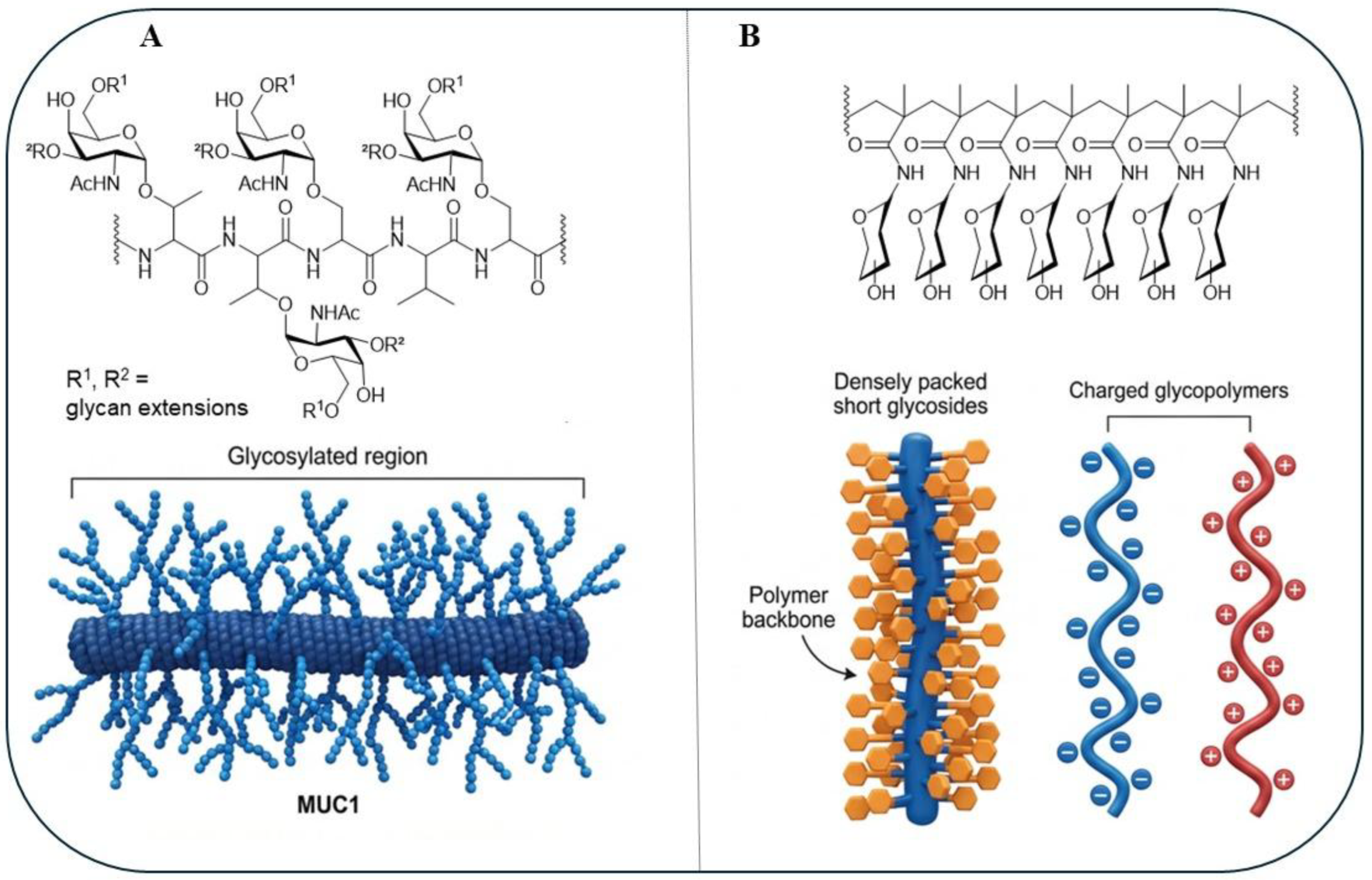
Figure 2.
Glycopolymers for conjugations and coating. Conjugation of proteins with glycopolymers can enhance protein stability, enable targeted delivery, cell uptake, or maintain enzymatic activity. Glycopolymers as coatings on material surfaces can achieve various properties such as e. g. anti-adhesion, controlled adhesion, controlled drug-release and improve biocompatibility.
Figure 2.
Glycopolymers for conjugations and coating. Conjugation of proteins with glycopolymers can enhance protein stability, enable targeted delivery, cell uptake, or maintain enzymatic activity. Glycopolymers as coatings on material surfaces can achieve various properties such as e. g. anti-adhesion, controlled adhesion, controlled drug-release and improve biocompatibility.
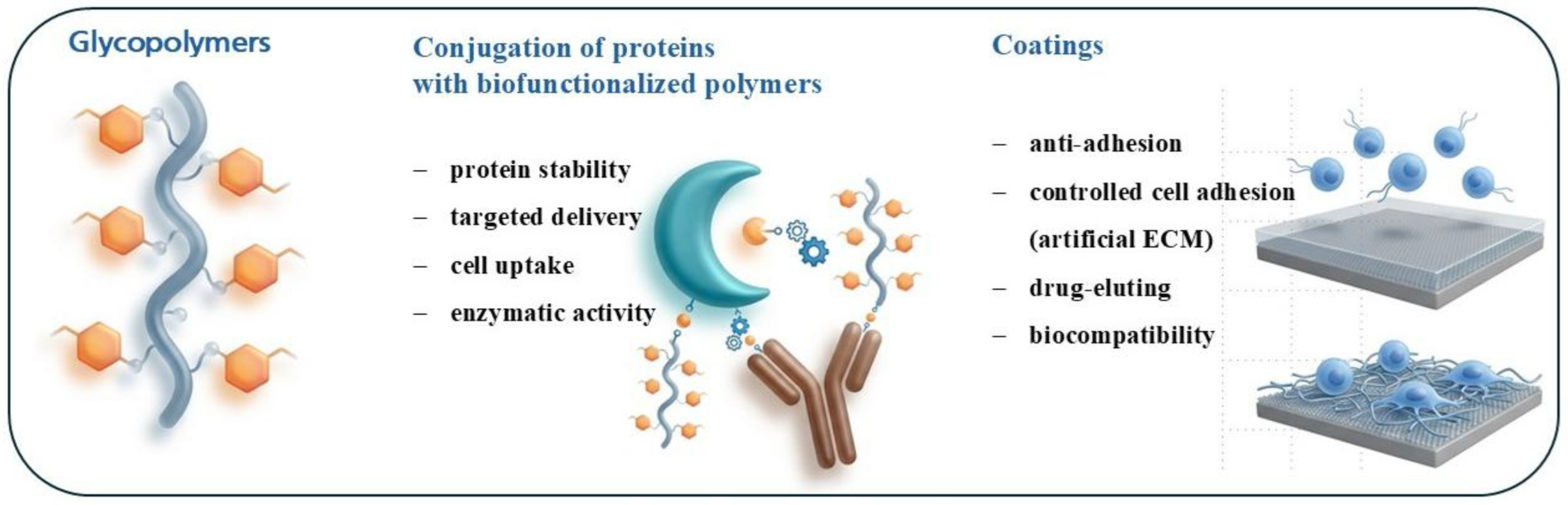
Figure 3.
RAFT-polymerization of glycomonomers towards well defined glyopolymers. The R-group starts the polymer chain (R can also be polymer-bound), Z-group stabilizes the intermediates.
Figure 3.
RAFT-polymerization of glycomonomers towards well defined glyopolymers. The R-group starts the polymer chain (R can also be polymer-bound), Z-group stabilizes the intermediates.
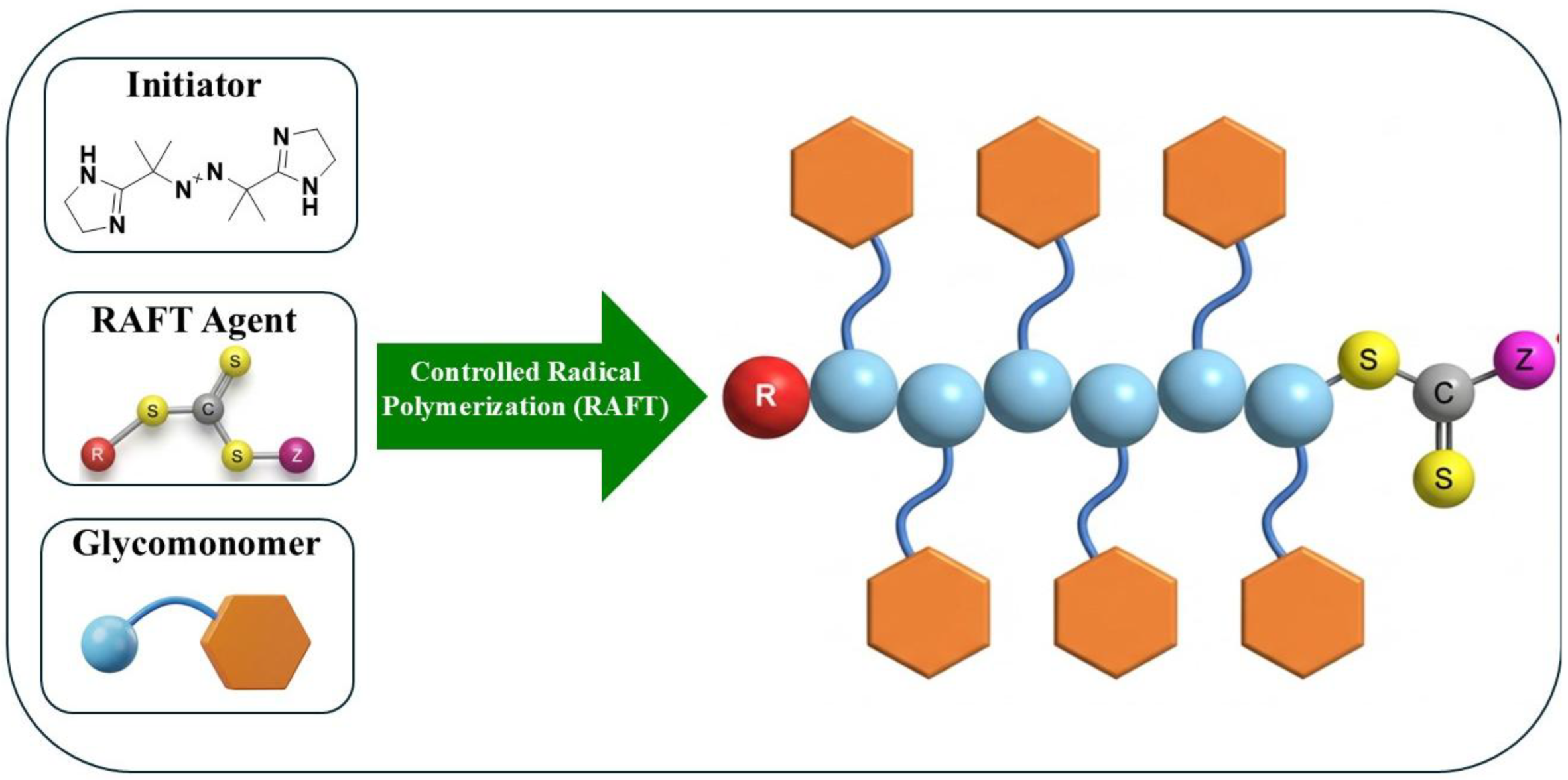
Figure 4.
Surface modification strategies with glycopolymers: A: “Grafting-to”: Pre-formed glycopolymers with functional groups are covalently (chemically) attached to reactive sites on the substrate surface. B: “Grafting-from”: Glycomonomers are polymerized directly from initiator molecules (e.g., RAFT-reagent) immobilized on the substrate surface. C: Layer-by-Layer (LB) technique. Polyelectrolytes with opposite charge (polyanions, polycations, red and blue layer, containing sugar moieties) are alternately deposited onto the substrate building a multilayer film.
Figure 4.
Surface modification strategies with glycopolymers: A: “Grafting-to”: Pre-formed glycopolymers with functional groups are covalently (chemically) attached to reactive sites on the substrate surface. B: “Grafting-from”: Glycomonomers are polymerized directly from initiator molecules (e.g., RAFT-reagent) immobilized on the substrate surface. C: Layer-by-Layer (LB) technique. Polyelectrolytes with opposite charge (polyanions, polycations, red and blue layer, containing sugar moieties) are alternately deposited onto the substrate building a multilayer film.
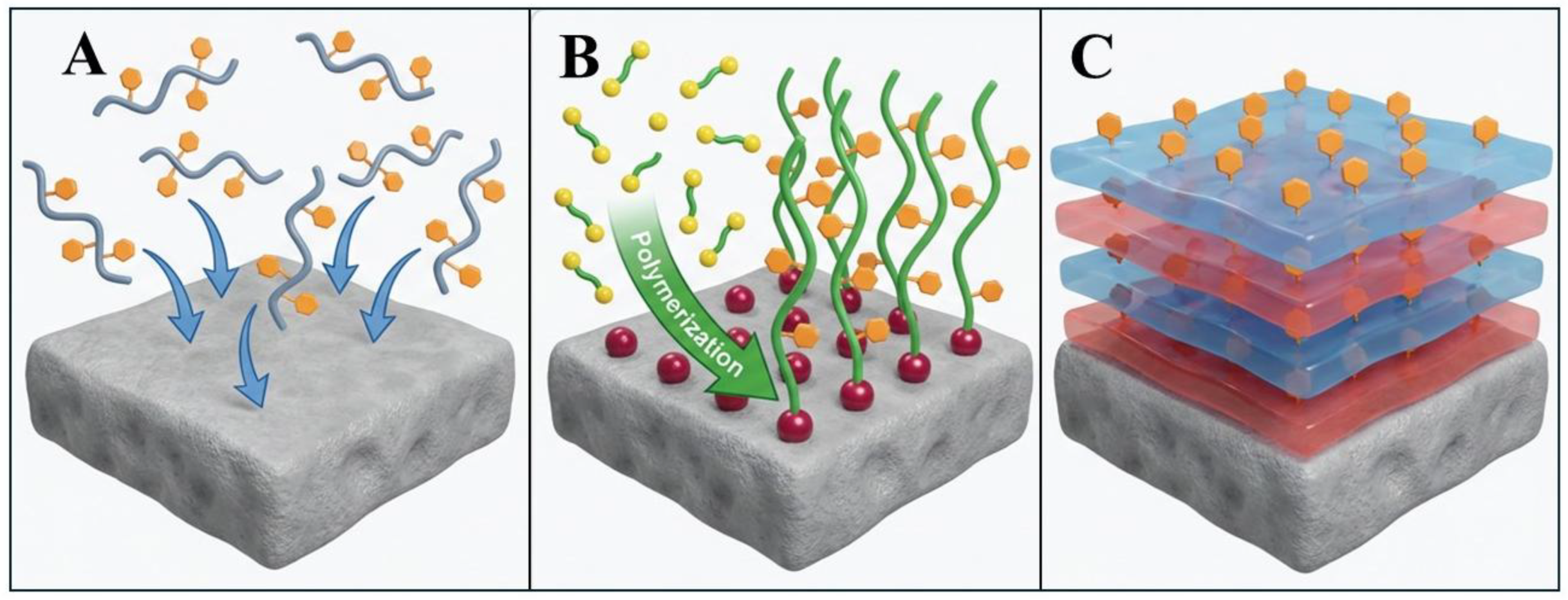
Figure 5.
Modified biomaterials with desired biological response. A: Cell-repellent surface modification with glycopolymers by presenting sugars that do not interact with lectins at the cell surface. B: Surface coating with glycopolymers presenting sugars which can bind to the lectins at the cell surface results in a cell-attracting biomaterial surface.
Figure 5.
Modified biomaterials with desired biological response. A: Cell-repellent surface modification with glycopolymers by presenting sugars that do not interact with lectins at the cell surface. B: Surface coating with glycopolymers presenting sugars which can bind to the lectins at the cell surface results in a cell-attracting biomaterial surface.
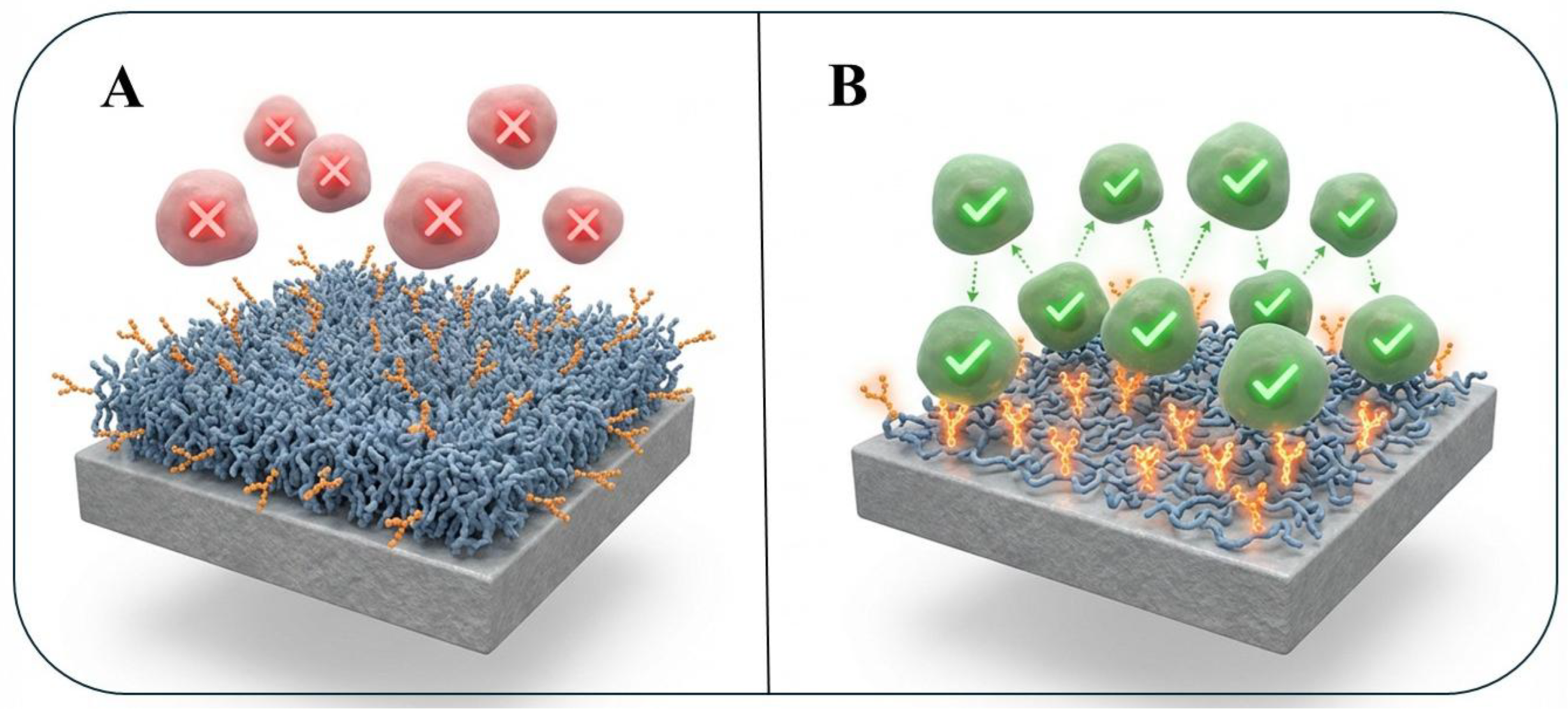
Figure 6.
Applications of glycopolymer-modified biomaterials. A): Contact lenses B): Targeted drug delivery C): Biosensors D): Tissue engineering and implants.
Figure 6.
Applications of glycopolymer-modified biomaterials. A): Contact lenses B): Targeted drug delivery C): Biosensors D): Tissue engineering and implants.
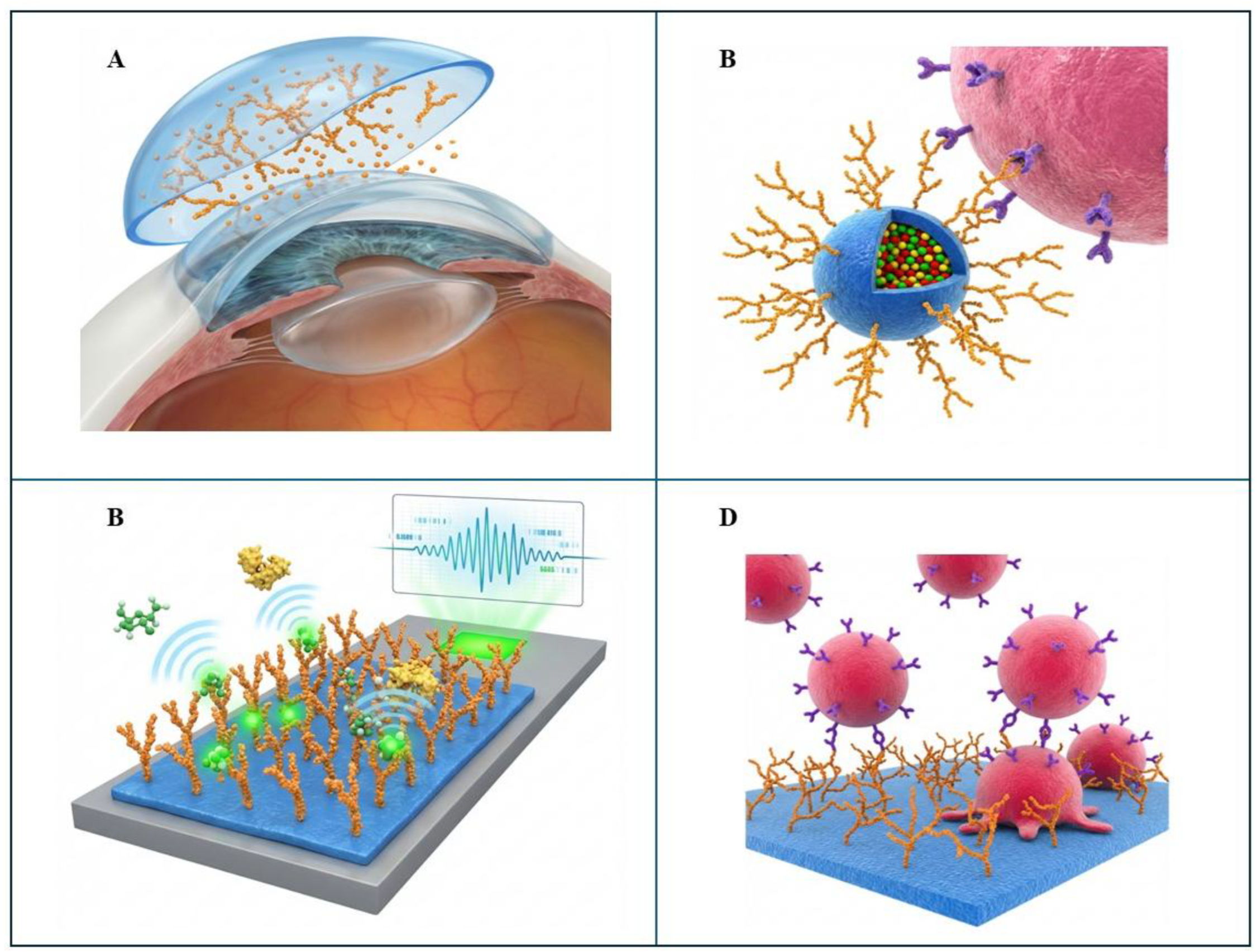
Figure 7.
Glycopolymer nanogels (Gp-Np) as anti-biofilm agents against Pseudomonas aeruginosa: A): Without nanogels, 100% of biofilm was observed. Also, when adding the nanogel after incubation with bacteria, an increased formation of biofilm was observed. B): After surface pre-treatment with melibiose- and fucose-glycopolymer modified nanogels, followed by incubation with P. aeruginosa, up to 75% reduction in biofilm formation was observed. Nanogels inhibit the lectins, presented at the bacteria surface, thus preventing biofilm formation. For better visualization, bacteria and Gp-Np are not in scale.
Figure 7.
Glycopolymer nanogels (Gp-Np) as anti-biofilm agents against Pseudomonas aeruginosa: A): Without nanogels, 100% of biofilm was observed. Also, when adding the nanogel after incubation with bacteria, an increased formation of biofilm was observed. B): After surface pre-treatment with melibiose- and fucose-glycopolymer modified nanogels, followed by incubation with P. aeruginosa, up to 75% reduction in biofilm formation was observed. Nanogels inhibit the lectins, presented at the bacteria surface, thus preventing biofilm formation. For better visualization, bacteria and Gp-Np are not in scale.
Disclaimer/Publisher’s Note: The statements, opinions and data contained in all publications are solely those of the individual author(s) and contributor(s) and not of MDPI and/or the editor(s). MDPI and/or the editor(s) disclaim responsibility for any injury to people or property resulting from any ideas, methods, instructions or products referred to in the content. |
© 2026 by the authors. Licensee MDPI, Basel, Switzerland. This article is an open access article distributed under the terms and conditions of the Creative Commons Attribution (CC BY) license.
Copyright: This open access article is published under a Creative Commons CC BY 4.0 license, which permit the free download, distribution, and reuse, provided that the author and preprint are cited in any reuse.


