

Submitted:
24 February 2026
Posted:
25 February 2026
You are already at the latest version
Abstract
Introduction: Heart failure (HF) is a commonly encountered fatal clinical condition. Catestatin is a peptide produced by the breakdown of chromogranin A and inhibits catecholamine secretion. The main goal of this study is to identify the difference between catestatin levels in patients at without and with different stages of HF. It is important to determine catestatin’s relationship with pro-B-type natriuretic peptide (proBNP) and left ventricular ejection fraction (LVEF), that are used to identify HF and as well as other laboratory findings in order to better understand the contribution of catestatin.
Materials-Methods: Sixty HF patients with LVEF< %45 and 53 matching control patients of factors that can impact catestatin level were included in the study. Plasma samples of these patients and controls were simultaneously collected in tube containing a drop of aprotinin (proteinase inhibitor). Plasma catestatin levels were measured by using enzyme-linked immunosorbent assay method.
Results: The study findings showed that catestatin levels of HF patients (45.46±16.69 ng/ml) were significantly higher than that of patients without (37.15±16.36 ng/ml) (t=2.69, p< 0.05) and that the catestatin level increases as the HF stage progresses (J-T=2.19; p< 0.05). Catestatin level is found to be correlated positively with proBNP (r=0.241; p< 0.05), and inversely with LVEF (r=-0.19; p< 0.05). The area under the ROC curve calculated in order to demonstrate catestatin’s diagnostic adequacy in heart failure was 0.635.
Discussion: Catestatin is considered an indicator of HF and it seems reasonable to use it for diagnosis and follow-up as it increases with disease severity.
Keywords:
heart failure
; catestatin
; LVEF
; proBNP
Key Messages
- Catestatin levels are observed to increase in the presence of HF
- Significant differences between catestatin levels were observed between different stages of HF. Catestatin levels increase as stage progresses.
- Our findings suggest that catestatin can be used as a parameter in the diagnosis, the follow-up, and the treatment evaluation of HF in addition to LVEF and proBNP
1. Introduction
Heart failure (HF) is a clinical condition that occurs as a result of a decline in the cardiac ability to pump sufficient amount of blood to satisfy the varying oxygen and metabolic needs of the body. Echocardiography and biochemical indicators such as pro-B-type natriuretic peptide (proBNP), that was recently realized to be an important marker, are used in HF diagnosis (1).
HF is a common disease. It is estimated that approximately 2% of the world population has HF. The incidence rate of HF increases with age and it is 1-2% in 50-60 years old and reaches 10% among those over 75 years of age (2-3).
Echocardiography is a method with high costs associated that takes a long time and requires the presence of an experienced physician. It is highly important to diagnose HF before it presents in order to minimize mortality and morbidity. Therefore, new, inexpensive and practical methods are needed in the early diagnosis of HF (4).
Various neurohumoral pathways are activated for adaptive reasons when HF develops. Pathophysiology and prognostic factors of HF has been researched for a long time, and it recently has been understood that numerous peptide signal systems such as endothelin, neuropeptides, adrenomedullin, and cytokines play a role. Even though these molecules have local and paracrine activities, monitoring their blood levels cannot be used in the clinical follow-up or diagnosis of patients (5).
Chromogranin A (CgA) is widely available in the secretory vesicles of all of the endocrine, neuroendocrine, and the nervous systems. The biologically active peptides that are produced by the breakdown of CgA by tissue specific proteinases have autocrine, paracrine and endocrine effects afterwards. Castetatin, a peptide formed through the posttranslational modification of CgA, suppresses catecholamine secretion and has parasympathomimetic effects (6).
The aim of this study was to compare the catestatin levels of patients with and without HF and to study the relationship of catestatin levels with pro-BNP and left ventricular ejection fraction (LVEF). It was thought that the data obtained by the end of the study would provide a better understanding of the neurohumoral adaptive mechanisms in heart failure and induce further studies on this topic. A better understanding of the neurohumoral activation in HF will provide significant information on the diagnosis, course, and the treatment stages of the disease (7).
Catestatin is a 21 amino acid cationic, hydrophobic biologically active peptide produced by breakdown of CgA by tissue specific proteases. It strongly suppresses the neuronal nicotinic acetylcholine receptors in a dose-dependent, non-competitive manner. It was discovered first by Professor Dr. Sushil Kumar Mahata et al. in 1997, at the University of California Molecular Genetics Research Group (8).
It is secreted from adrenal medulla chromaffin cells and adrenergic neurons along with catecholamines. Following secretion, catestatin acts as a negative regulator by suppressing the acetylcholine receptors and prevents activation of the voltage-dependent calcium channels (9, 10). In this way, the intracellular cyclic adenosine monophosphate (cAMP) formation is blocked which prevents the CgA gene replication. Chromaffin granules cannot be formed and secretion of adrenaline and noradrenaline is decreased (11).
It lowers blood pressure and heart rate by decreasing catecholamine secretion through suppressing neuronal nicotinic acetylcholine receptors. In the central nervous system, it increases baroreceptor activity through suppressing nicotinic cholinergic receptors in the baroreceptor control regions. Parasympathetic activity dominates, and consequently, blood pressure and heart rate further decrease (12). It increases histamine release by affecting inhibitory G proteins in mast cells, causing vasodilatation that also contributes to blood pressure lowering activity. It also has effect on chemotaxis (13).
2. Materials and Methods Ethics
2.1. Ethics
Human Ethics and Consent to Participate declarations:
This study was approved by the 9th decision of the 186th meeting of the Gülhane Military Medical Academy Ethics Committee. All procedures performed in this study involving human participants were in accordance with the ethical standards of the institutional and/or national research committee, and with the 1964 Helsinki Declaration and its later amendments or comparable ethical standards.
Consent to Participate declaration:
All participants were informed in detail about the study. Verbal and written consent was obtained from each participant prior to inclusion in the study.
Ethical standards followed:
The research was conducted in accordance with the ethical principles outlined in the Declaration of Helsinki (1964) and its subsequent revisions.
2.2. Study Design
The study was designed as a single-center, cross-sectional, and observational. The patient group of the study included 60 patients diagnosed with HF based on their physical examinations and clinical evaluations who had LVEF values ≤45% upon echocardiographic examination. The control group included 53 subjects without HF. Because catestatin level, that was the primary variable in this study, may be affected by gender, age, body mass index (BMI), hypertension (HT), diabetes mellitus (DM), insulin use, chronic kidney disease (CKD), and end-stage renal disease (ESRD), the patient and the control groups were matched with respect to these variables in order to prevent them from acting as confounding variables.
The blood samples of the patient and the control group participants were collected at the same time period.
2.3. Patient Inclusion/ Exclusion Criteria
Patients over the age of 18 years, who had systolic HF demonstrated clinically and via echocardiography were included in the study. Patients with chronic or acute inflammatory diseases, malignancies, acute renal failure, poor mental condition / mental disorder, and those who have been on proton pump inhibitor medication within the past 6 months were excluded from the study.
2.4. Demographic Data and Sample Collection
Patients who had an echocardiographic assessment within the past three months were included in the study. Medical histories of the cases were recorded and all of them went under physical examination. The age, height, weight, and BMI information of the patients were recorded. All patients’ demographic data were recorded and stored at electronic medium.
For biochemical analysis, in addition to the blood samples collected for routine follow-up of the patients, an additional 4 ml of blood with a 5 gauge syringe was collected in a tube containing 1.3 mg/dl dipotassium EDTA. Blood specimen tubes were transported with ice packs. Prior to centrifugation, aprotinin was added into the tube. Aprotinin is a proteinase inhibitor and prevents breakdown of catestatin by proteinases in the plasma samples. 200 mcg of aprotinin was added into each tube using adjusted micropipettes. It was made sure that an equal amount of aprotinin is dropped in each sample to prevent differences based on duration of wait. After aprotinin is added, the solution is centrifuged for 10 minutes at 4000 rpm/minute for plasma separation procedure. The separated plasma samples were numbered and placed in 500 microliter plastic tubes. The samples were stored at -86ºC.
For left ventricular hypertrophy (LVH) identification, echocardiographic measurement of interventricular septal thickness at diastole (IVSd) was recorded. Patients with IVSd>1.1 cm were considered LVH.
3. Biochemical Analysis
Plasma catestatin level was studied via enzyme-linked immunosorbent assay (ELISA) method (Phoenix Pharmaceuticals Inc, USA).
3.1. Statistical Analysis
Statistical package for social sciences (v.21.0, SPSS Inc, USA) program was used for analysis. The significance level was set at p<0.05. Pearson product-moment correlation coefficient was used when the analysis was conducted to demonstrate the direction and the strength of association between two measurements from a single group. Significance of the difference between the means of measurements from two different groups was tested using the t-test for independent groups. Mann Whitney U test was conducted in non-parametric cases where the assumptions of t-test for independent groups were not met. The non-parametric Jonckheere-Terpstra test, which is appropriate in cases where there is a priori order between hierarchical categories, was used to see if the catestatin mean values were different at different stages of HF. One-sample chi-square test was used to test for differences between the measurements at different levels of a categorical variable, and chi-square two-sample test was used to investigate associations between two categorical variables.
3.2. Results (Figure 1Figure 2,3,4,5,6,7)
Demographic characteristics of all participants included in the study are presented in Table 1 below, where data are presented separately for the participants in the patient and the control groups. Table 1 also presents the variables which were carefully balanced during data collection to ensure equivalence between the two groups and were not expected to be different across groups, and the results of statistical analyses conducted to compare the patient and control groups in terms of these variables.
According to this, male-female gender distribution is similar across the patient and the control groups. There was no significant difference between the groups in terms of hypertension, diabetes, insulin use, CKD, and ESRD presence. The table also presents that the patient and the control groups were not different in terms of age and BMI either. This confirms that the equivalence between the groups that was aimed for during recruitment is established.
The main goal of the study was stated as investigating if there is a difference between the catestatin levels of patients with and without HF. Before answering this question, the Q-Q plots and histograms associated with catestatin level distributions for individuals in the patient and the control groups are presented separately (Figure 1 and Figure 2).
Examination of the Q-Q plot and the histogram graphs of control group individuals showed that catestatin was distributed normally within this group. Kolmogorov Smirnov test results supported this interpretation as well (p>0.05).
Below is visual information on the catestatin level distribution of the patients with heart failure (Figure 3 and Figure 4).
Below are the results of the independent samples t-test, conducted to compare the mean catestatin levels of patients with and without HF (Table 2).
According to Table 2, the mean catestatin levels of the patient and the control groups are significantly different ((t=2.69; p<0.05). In other words, the catestatin levels of the patients with HF are significantly higher than other individuals.
A ROC curve was graphed to demonstrate how sufficient catestatin could be in diagnosis of HF patients. This curve shows the sensitivity on the vertical axis and specificity on the horizontal axis calculated for different threshold values. The ROC curve for the associated variables and information on the area below the curve are presented below (Figure 5).
One of the important questions investigated in this study was to see if catestatin levels vary by HF stages. Before comparing the catestatin levels by HF stage, the study group’s HF stage distributions were investigated, which is demonstrated by Figure 6.
Based on Figure 6,53% of the whole group consists of individuals with HF. Among these individuals, those at stage 2 comprise 19%, those at stage 3 also comprise 19%, and those at stage 4 comprise 15% of all of the individuals. There were no stage 1 HF patients in the group.
The mean catestatin levels of patients with stage 2, 3, and 4 HF based on New York Heart Association (NYHA) criteria were compared using the Jonckheere-Terpstra test and the results are presented below (Table 3).
According to Table 3, the average catestatin levels are significantly different at different stages of HF (J-T=2.19; p<0.05). In other words, the catestatin levels increase significantly as the HF stage increases. Examination of the mean values demonstrates that the catestatin level increases with stage.
In Figure 7, the mean catestatin levels and confidence intervals are presented for patients at three different stages of HF and those without HF.
We had aimed to investigate relation of catestatin which is increasingly appearing in recent literature, with parameters known to be related to HF. The results on direction and strength of association between catestatin and LVEF and proBNP are presented below (Table 4).
Table 4 shows that there is a significant inverse correlation between catestatin levels and LVEF. Additionally, catestatin levels have a significant association with proBNP levels in positive direction.
Display of the two variables in Figure 8 clearly presents the increase in LVEF values as catestatin values decrease.
Figure 9 displays the whole group’s distributions for catestatin and proBNP values in a single graph. The x-axis displays the individual ID’s and they-axis displays catestatin values and proBNP/500 values in order to be able to investigate proBNP in the same graph. Distribution in blue represents catestatin and the distribution in red represents proBNP. The linear distribution lines are also drawn to demonstrate the relationship more clearly visually.
Figure 9 shows the tendency of proBNP and catestatin to increase simultaneously.
As Table 5 displays, the average catestatin levels of the patients with LVH in both the patient group and in the whole group were significantly lower than those who did not have LVH (t=2.01; p<0.05).
4. Discussion
HF is one of the leading causes of mortality and morbidity of our day. Though HF diagnosis is a clinical diagnosis, echocardiography and chemical indicators such proBNP, importance of which is recently realized, are utilized in its diagnosis as well. The starting point for this study was to understand whether or not catestatin, a peptide formed as a result of breakdown of CgA, could be used in diagnosis and follow-up of HF, which led to our aim to investigate if there is a difference between the catestatin levels of patients with and without HF. Our finding regarding this main question is that catestatin level is increased among patients with HF compared to those without HF. Considering that catecholamines increase as an adaptive mechanism in case of HF, it is reasonable that catestatin will increase as well (14). Findings of our study also show that catestatin is increased in patients with HF diagnosis.
Similar to the initial finding, another finding obtained in our study shows that catestatin levels increase along with HF stage. In order to demonstrate the association between HF and catestatin, Zhu et al. (2011) investigated the catestatin levels in 300 cases with HF (15). In this non-controlled study, they concluded that the catestatin levels decline as HF stage progresses. Our findings are not consistent with findings of Zhu et al.’s study. Another study by Liu et al. (2013) obtained findings similar to ours and reported that the catestatin levels of patients with NYHA stages 3 and 4 HF were higher than the catestatin levels of patients with NYHA stages 1 and 2 HF and the control group (16). The limited number of studies in the literature regarding this association shows that this relationship between catestatin levels and HF stages has not been fully revealed yet. The variation in the findings of studies on catestatin levels and its associations with HF and hypertension may be due to measurement errors during sample collection. Aprotinin is a proteinase inhibitor and if a peptide-structured element of the plasma will be examined such as catestatin it prevents its breakdown. Therefore an equal amount of aprotinin should be dropped into each sample during sample collection to avoid wait period related timing differences and the samples of control and study group patients should be collected simultaneously. Differences across studies are thought to be due to these technical details. In our study, we made a point of making sure that equal and sufficient amount of aprotinin solution was dropped, control and study group sample collection was performed simultaneously, and that ideal conditions were provided for cold chain and storage.
Another important finding of our study is that the catestatin levels of the whole study group were in a positive significant association with proBNP levels and an inverse significant association with LVEF. ProBNP is a significant indicator for early diagnosis of HF, having taken its place in diagnosis guides (17-20). It is a valuable method in detecting HF cases that are symptomatic yet as well. Prior studies by Doust et al. and Maisel et al. have shown that proBNP can be used in diagnosis of symptomatic HF (21, 22). Yoshimura et al., Wieczorek et al., and Januzzi et al.’s studies have also shown that proBNP is associated with HF stage (23-25).
Lee et al.’s study is important in terms of comparing proBNP levels with echocardiography. In their study, plasma proBNP levels were detected simultaneously with echocardiography in cases where echocardiography was requested for left ventricular function evaluations. All of the cases with diagnosed HF and those with prior left ventricular dysfunctions had abnormal echocardiographic findings and the proBNP of this group of patients were higher (26). Demonstration of expected associations of catestatin with these two parameters used in HF diagnosis in this study suggests that catestatin can be used in HF diagnosis.
Related to this finding, the area under the ROC curve was calculated in this study among patients with and without HF to demonstrate catestatin’s diagnostic adequacy in HF (A=0.635) and this calculation was found to be in line with findings of Liu et al.’s calculations (A=0.626) (16).
Catestatin levels of patients with SVH were lower than those without LVH and comparison of data on the whole group yielded similar results. This finding is consistent with Meng et al.’s study, where with 136 hypertensive and 61 healthy cases, they detected relatively lower levels of catestatin among cases with left ventricular hypertrophy compared to hypertensive cases (27).
Limitations
Compared to the other studies in the literature, a larger sample size could be more appropriate. Use of medications that can suppress sympathetic nervous system could be taken into consideration.
5. Conclusions and Recommendations
- An increase in catestatin levels is observed in the presence of HF. Significant differences were determined in catestatin levels across different NYHA-based HF stages. Catestatin levels increase as the stage progresses. This suggests that catestatin is associated with HF.
- Catestatin’s association with LVEF and proBNP, known to be associated with HF, was investigated. An inverse correlation with LVEF and a positive correlation with proBNP were determined. This supports the claim that catestatin is associated with HF.
- Our findings suggest that catestatin is a peptide that can be used in diagnosis, follow-up, and treatment evaluation of HF.
List of Abbreviation
HF: Heart Failure
proBNP: pro-B-type Natriuretic Peptide
LVEF: Left Ventricular Ejection Fraction
CgA: Chromogranin A
cAMP: cyclic Adenosine Monophosphate
BMI: Body Mass Index
HT: Hypertension
DM: Diabetes Mellitus
CKD: Chronic Kidney Disease
ESRD: End-Stage Renal Disease
LVH: Left Ventricular Hypertrophy
IVSd: Interventricular Septal Thickness at Diastole
ELISA: Enzyme-Linked Immunosorbent Assay
Funding
The author(s) received no financial support for the research, authorship, and/or publication of this article.
References
- Birrell, H; Isles, C; Fersia, O; Anwar, M; Mondoa, C; McFadyen, A. Assessment of the diagnostic value of NT-proBNP in heart failure with preserved ejection fraction. Br J Cardiol. 2024, 31, 002. [Google Scholar] [CrossRef] [PubMed] [PubMed Central]
- Lee, CJ; Lee, H; Yoon, M; Chun, KH; Kong, MG; Jung, MH; Kim, IC; Cho, JY; Kang, J; Park, JJ; Kim, HC; Choi, DJ; Lee, J; Kang, SM. Heart Failure Statistics 2024 Update: A Report From the Korean Society of Heart Failure. Int J Heart Fail. 2024, 6, 56–69. [Google Scholar] [CrossRef] [PubMed] [PubMed Central]
- Chong, B; Jayabaskaran, J; Jauhari, SM; Chan, SP; Goh, R; Kueh, MTW; Li, H; Chin, YH; Kong, G; Anand, VV; Wang, JW; Muthiah, M; Jain, V; Mehta, A; Lim, SL; Foo, R; Figtree, GA; Nicholls, SJ; Mamas, MA; Januzzi, JL; Chew, NWS; Richards, AM; Chan, MY. Global burden of cardiovascular diseases: projections from 2025 to 2050. Eur J Prev Cardiol. Epub ahead of print. 2024, zwae281. [Google Scholar] [CrossRef] [PubMed]
- Kayani, M; Fatima, N; Yarra, PC; Almansouri, NE; K, D; Balasubramanian, A; Parvathaneni, N; Mowo-Wale, AG; Valdez, JA; Nazir, Z. Novel Biomarkers in Early Detection of Heart Failure: A Narrative Review. Cureus 2024, 16, e53445. [Google Scholar] [CrossRef] [PubMed] [PubMed Central]
- Polyakova, EA; Mikhaylov, EN; Sonin, DL; Cheburkin, YV; Galagudza, MM. Neurohumoral, cardiac and inflammatory markers in the evaluation of heart failure severity and progression. J Geriatr Cardiol. 2021, 18, 47–66. [Google Scholar] [CrossRef] [PubMed] [PubMed Central]
- Sahu, BS; Obbineni, JM; Sahu, G; Allu, PK; Subramanian, L; Sonawane, PJ; Singh, PK; Sasi, BK; Senapati, S; Maji, SK; Bera, AK; Gomathi, BS; Mullasari, AS; Mahapatra, NR. Functional genetic variants of the catecholamine-release-inhibitory peptide catestatin in an Indian population: allele-specific effects on metabolic traits. J Biol Chem. 2012, 287, 43840–43852. [Google Scholar] [CrossRef] [PubMed] [PubMed Central]
- Wołowiec, Ł; Banach, J; Budzyński, J; Wołowiec, A; Kozakiewicz, M; Bieliński, M; Jaśniak, A; Olejarczyk, A; Grześk, G. Prognostic Value of Plasma Catestatin Concentration in Patients with Heart Failure with Reduced Ejection Fraction in Two-Year Follow-Up. J Clin Med. 2023, 12, 4208. [Google Scholar] [CrossRef] [PubMed] [PubMed Central]
- Imbrogno, S; Garofalo, F; Cerra, MC; Mahata, SK; Tota, B. The catecholamine release-inhibitory peptide catestatin (chromogranin A344-363) modulates myocardial function in fish. J Exp Biol. 2010, 213, 3636–3643. [Google Scholar] [CrossRef] [PubMed]
- Zalewska, E; Kmieć, P; Sworczak, K. Role of Catestatin in the Cardiovascular System and Metabolic Disorders. Front Cardiovasc Med. 2022, 9, 909480. [Google Scholar] [CrossRef] [PubMed] [PubMed Central]
- Herrero, CJ; Alés, E; Pintado, AJ; López, MG; García-Palomero, E; Mahata, SK; O'Connor, DT; García, AG; Montiel, C. Modulatory mechanism of the endogenous peptide catestatin on neuronal nicotinic acetylcholine receptors and exocytosis. J Neurosci. 2002, 22, 377–388. [Google Scholar] [CrossRef] [PubMed] [PubMed Central]
- Mahata, SK; Mahata, M; Fung, MM; O'Connor, DT. Catestatin: a multifunctional peptide from chromogranin A. Regul Pept. 2010, 162, 33–43. [Google Scholar] [CrossRef] [PubMed] [PubMed Central]
- Mahata, SK; Mahata, M; Fung, MM; O'Connor, DT. Reprint of: Catestatin: a multifunctional peptide from chromogranin A. Regul Pept. 2010, 165, 52–62. [Google Scholar] [CrossRef] [PubMed] [PubMed Central]
- Mahapatra, NR. Catestatin is a novel endogenous peptide that regulates cardiac function and blood pressure. Cardiovasc Res. 2008, 80, 330–338. [Google Scholar] [CrossRef] [PubMed]
- Chu, SY; Peng, F; Wang, J; Liu, L; Zhao, J; Han, XN; Ding, WH. Catestatin as a predictor for cardiac death in heart failure with mildly reduced and preserved ejection fraction. ESC Heart Fail. 2025, 12, 517–524. [Google Scholar] [CrossRef] [PubMed] [PubMed Central]
- Zhu, D; Wang, F; Yu, H; Mi, L; Gao, W. Catestatin is useful in detecting patients with stage B heart failure. Biomarkers 2011, 16, 691–697. [Google Scholar] [CrossRef] [PubMed]
- Liu, L; Ding, W; Li, R; Ye, X; Zhao, J; Jiang, J; Meng, L; Wang, J; Chu, S; Han, X; Peng, F. Plasma levels and diagnostic value of catestatin in patients with heart failure. Peptides 2013, 46, 20–25. [Google Scholar] [CrossRef]
- McMurray, J; Adamopoulos, S; Anker, SD; Auricchio, A; Böhm, M; Dickstein, K ESC. Guidelines for the diagnosis and treatment of acute and chronic heart failure 2012: The Task Force for the Diagnosis and Treatment of Acute and Chronic Heart Failure 2012 of the European Society of Cardiology. Eur Heart J 2012, 33, 1787–1847. [Google Scholar]
- Hunt, SA; Abraham, WT; Chin, MH; Feldman, AM; Francis, GS; Ganiats, TG; Jessup, M. 2009 Focused Update Incorporated Into the ACC/AHA 2005 Guidelines for the Diagnosis and Management of Heart Failure in Adults. J Am Coll Cardiol 2009, 53, e1–e90. [Google Scholar] [CrossRef]
- Lindenfeld, J; Albert, NM; Boehmer, JP; Collins, SP; Ezekowitz, JA; Givertz, MM; Katz, SD. Heart Failure Society of America (HFSA) 2010 Comprehensive Heart Failure Practice Guideline. J Card Fail 2010, 16, e1–e194. [Google Scholar]
- McKelvie, RS; Moe, GW; Ezekowitz, JA; Heckman, GA; Costigan, J; Ducharme, A; Estrella-Holder, E. The 2012 Canadian Cardiovascular Society heart failure management guidelines update: focus on acute and chronic heart failure. Can J Cardiol 2013, 29, 168–181. [Google Scholar] [CrossRef]
- Doust, JA; Glasziou, PP; Pietrzak, E; Dobson, AJ. A systematic review of the diagnostic accuracy of natriuretic peptides for heart failure. Arch Intern Med 2004, 164, 1978–1984. [Google Scholar]
- Maisel A B Type Natriuretic Peptide in the Diagnosis and Management of Congestive Heart Failure. Cardiol Clin 2001, 19, 557–571.
- Yoshimura, M; Yasue, H; Okumara, K. Different secretion patterns of atrial natriuretic peptide and brain natriuretic peptide in patients with congestive heart failure. Circulation 1993, 87, 464–469. [Google Scholar] [CrossRef] [PubMed]
- Wieczorek, SJ; Bailly, KR; Thomas, P. Clinical evaluation of the Triage B type natriuretic peptide assay for point-of-care testing of patients with congestive heart failure. Clin Chem 2000, 46, A77. [Google Scholar]
- Januzzi, JL; Troughton, R. Are serial BNP measurements useful in heart failure management? Serial natriuretic peptide measurements are useful in heart failure management. Circulation 2013, 127, 500–507. [Google Scholar] [CrossRef] [PubMed]
- Lee, SC; Stevens, TL; Sandberg, SM; Heublein, DM; Nelson, SM; Jougasaki, M; Redfield, MM. The potential of brain natriuretic peptide as a biomarker for New York Heart Association class during the outpatient treatment of heart failure. J Card Fail 2002, 26 8, 149–154. [Google Scholar] [CrossRef]
- Meng, L; Ye, XJ; Ding, WH. Plasma catecholamine release-inhibitory peptide catestatin in patients with essential hypertension. J Cardiovasc Med (Hagerstown) 2011, 27 12, 643–647. [Google Scholar] [CrossRef]
Figure 1.
Q-Q plot of the catestatin level distribution of individuals in the control group.
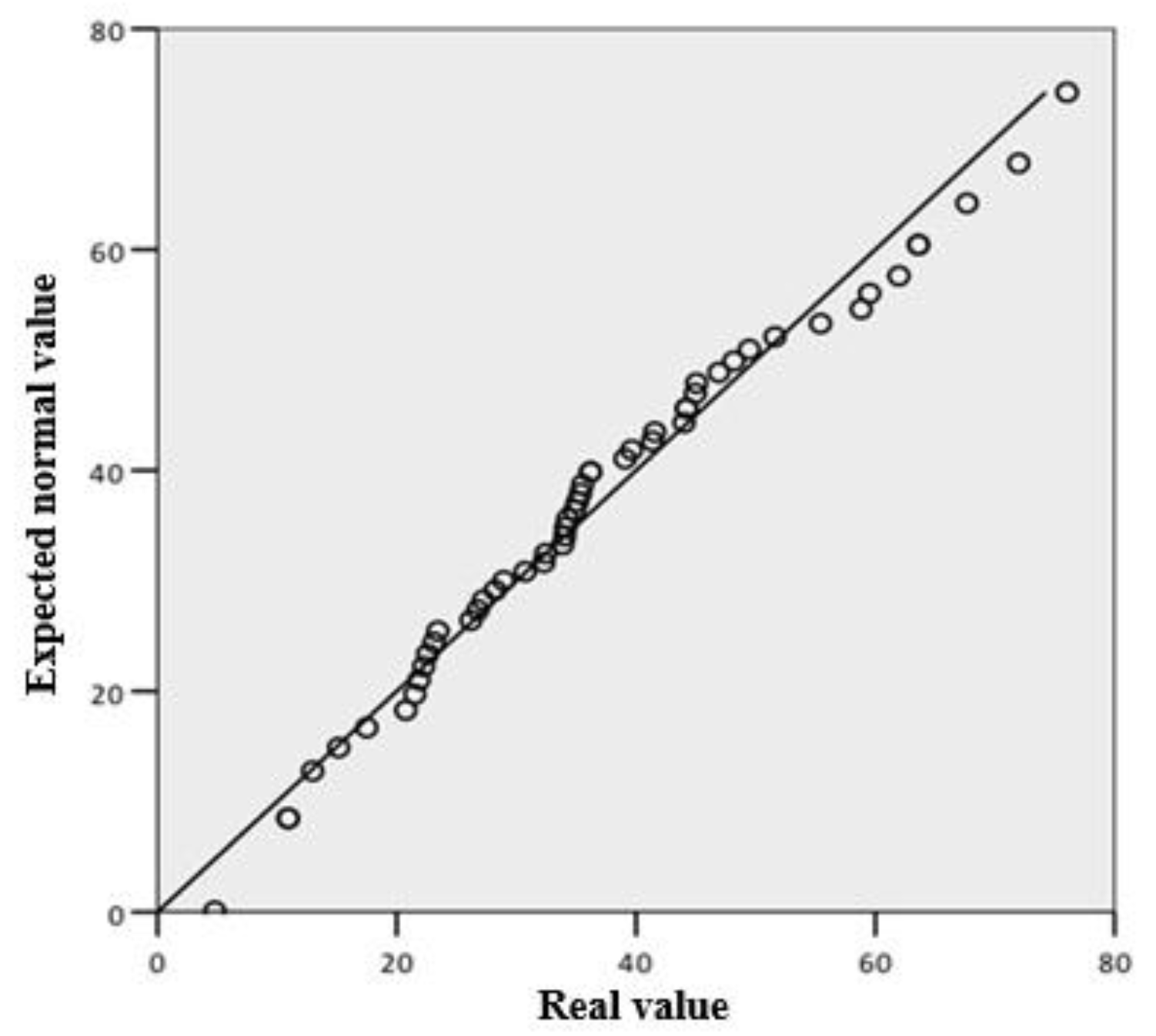
Figure 2.
Histogram of the catestatin level distribution of individuals in the control group.
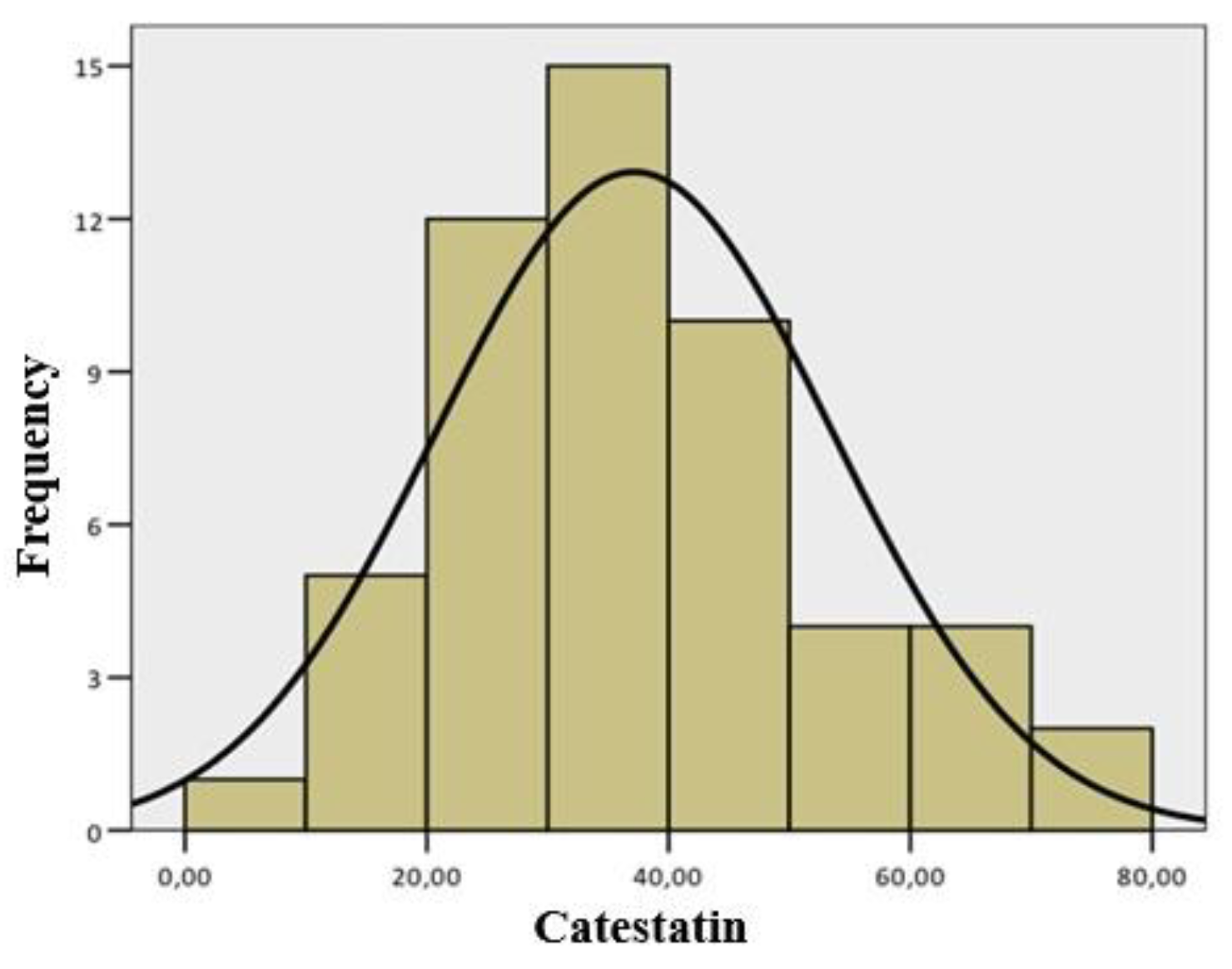
Figure 3.
Q-Q plot of the catestatin level distribution of patients with heart failure.
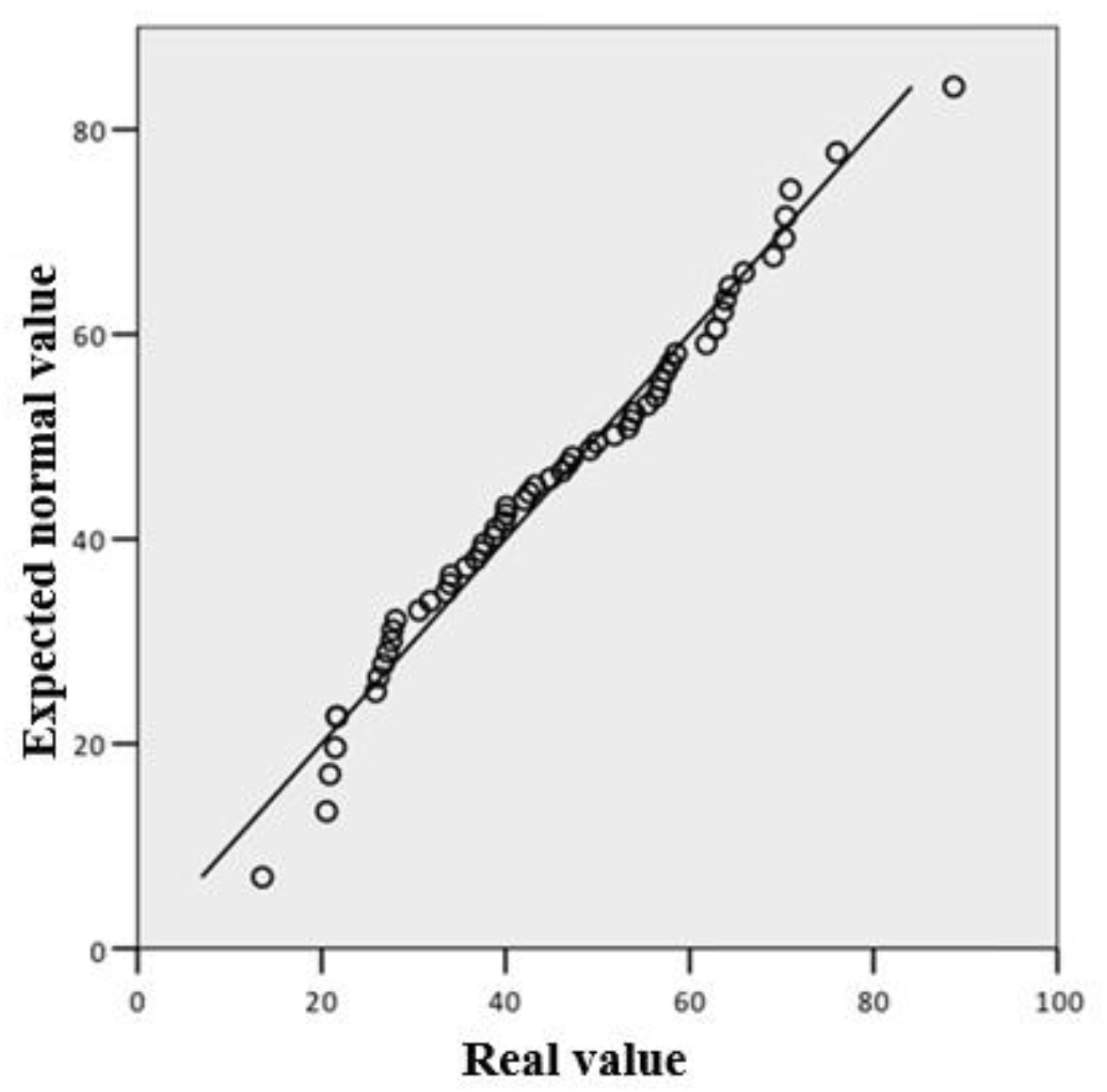
Figure 4.
Histogram of the catestatin level distribution of patients with heart failure.
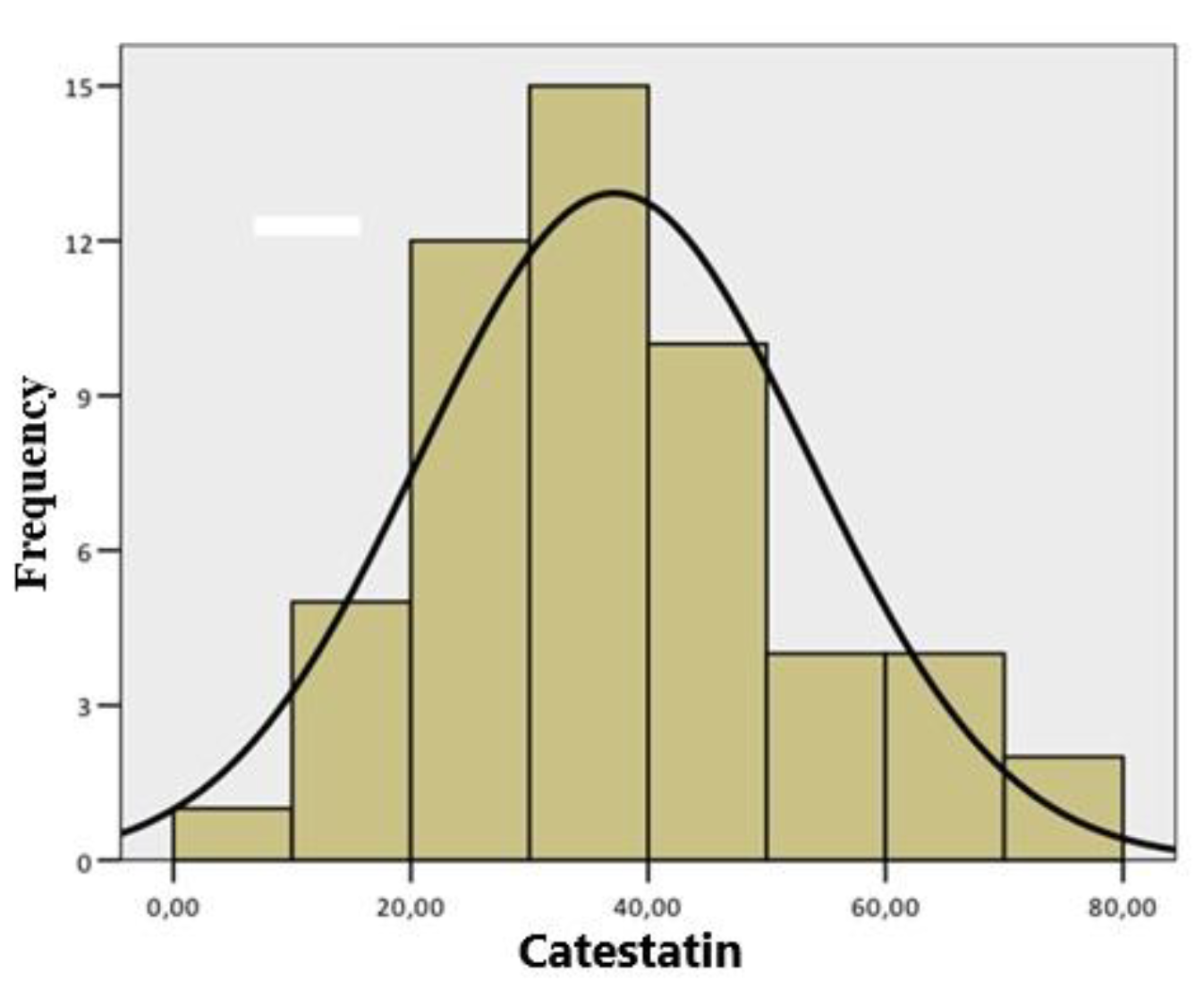
Figure 5.
ROC curve demonstrating sensitivity and specificity of catestatin levels in HF diagnosis. Area under the curve=0.635.
Figure 5.
ROC curve demonstrating sensitivity and specificity of catestatin levels in HF diagnosis. Area under the curve=0.635.
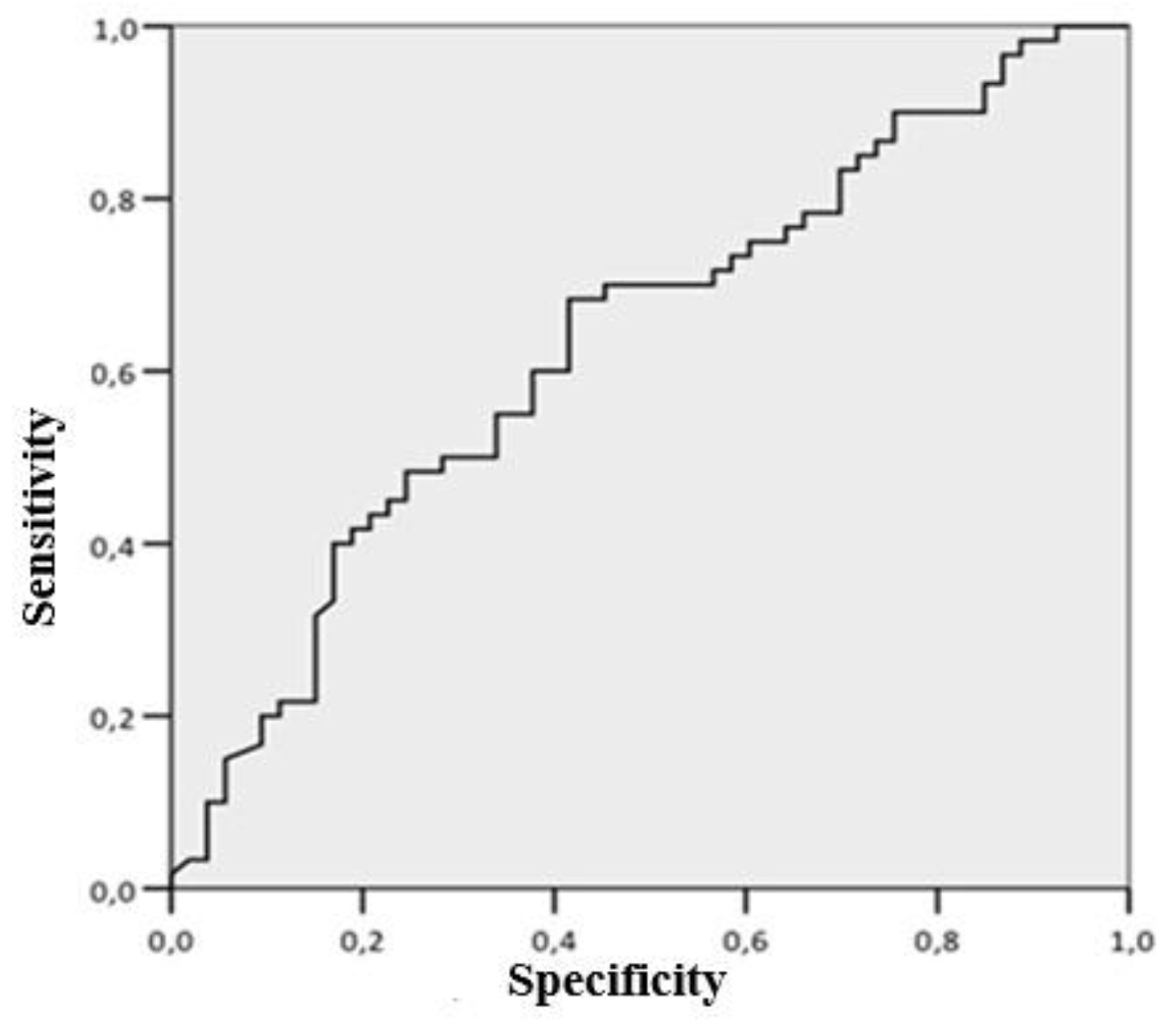
Figure 6.
Pie-chart of individuals in the study group based on their HF stages.
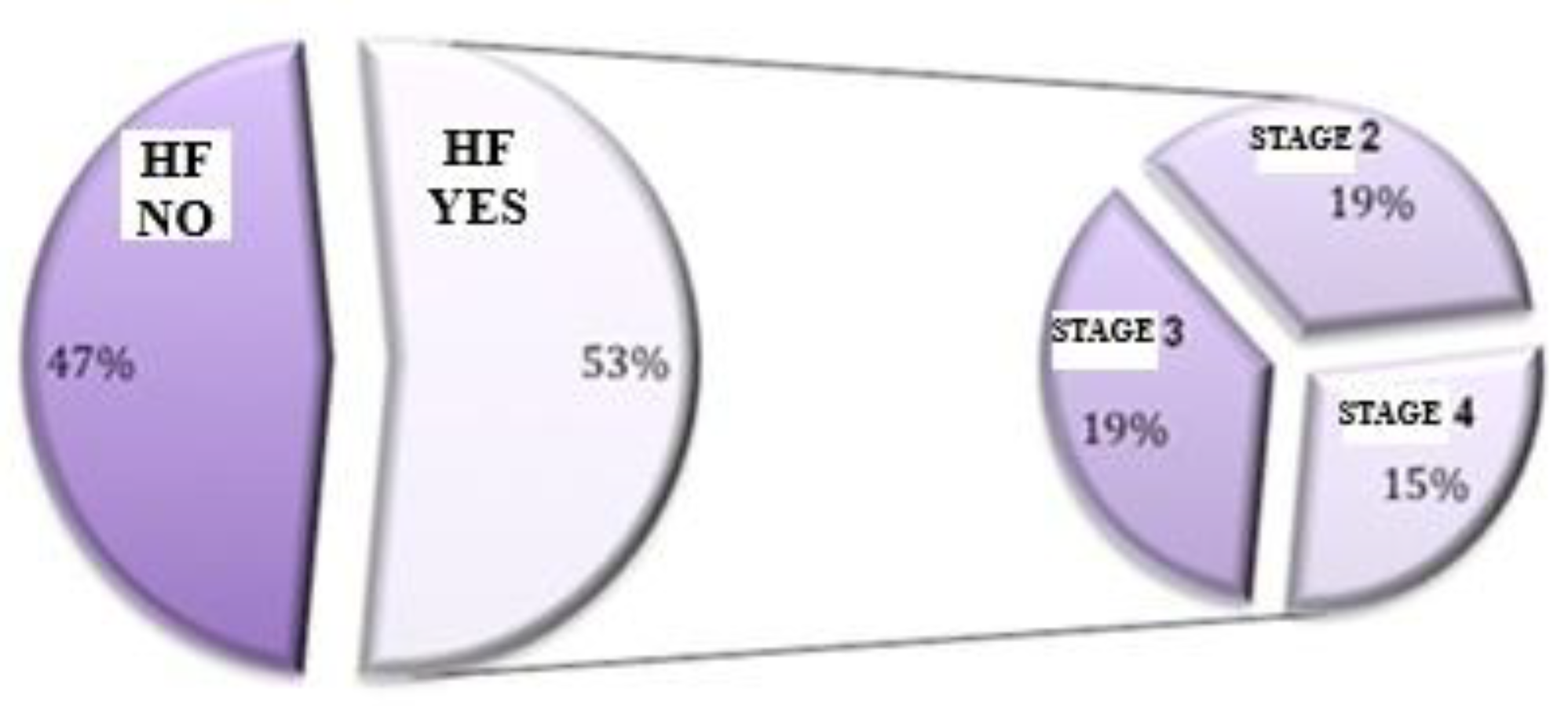
Figure 7.
Mean catestatin levels by HF stage. The bars on the figure represent 95% Confidence Intervals.
Figure 7.
Mean catestatin levels by HF stage. The bars on the figure represent 95% Confidence Intervals.
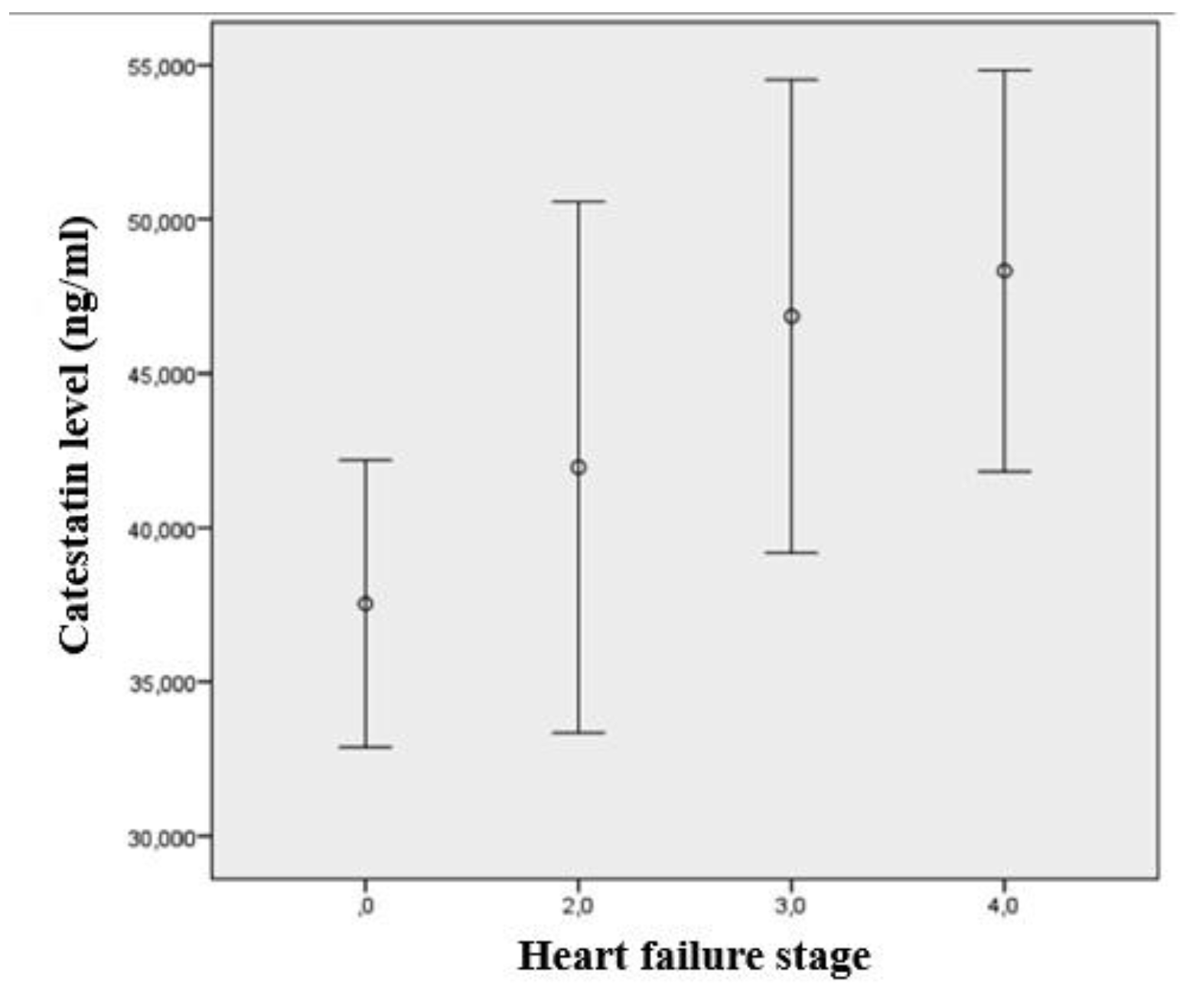
Figure 8.
Line graph of the distribution of catestatin and LVEF values (The x-axis displays the study ID number of the individuals, and the y-axis displays the catestatin and LVEF values, orange line representing LVEF and the purple line the catestatin. In order to emphasize the association in-between, the linear presentations of the distributions are drawn as well.).
Figure 8.
Line graph of the distribution of catestatin and LVEF values (The x-axis displays the study ID number of the individuals, and the y-axis displays the catestatin and LVEF values, orange line representing LVEF and the purple line the catestatin. In order to emphasize the association in-between, the linear presentations of the distributions are drawn as well.).
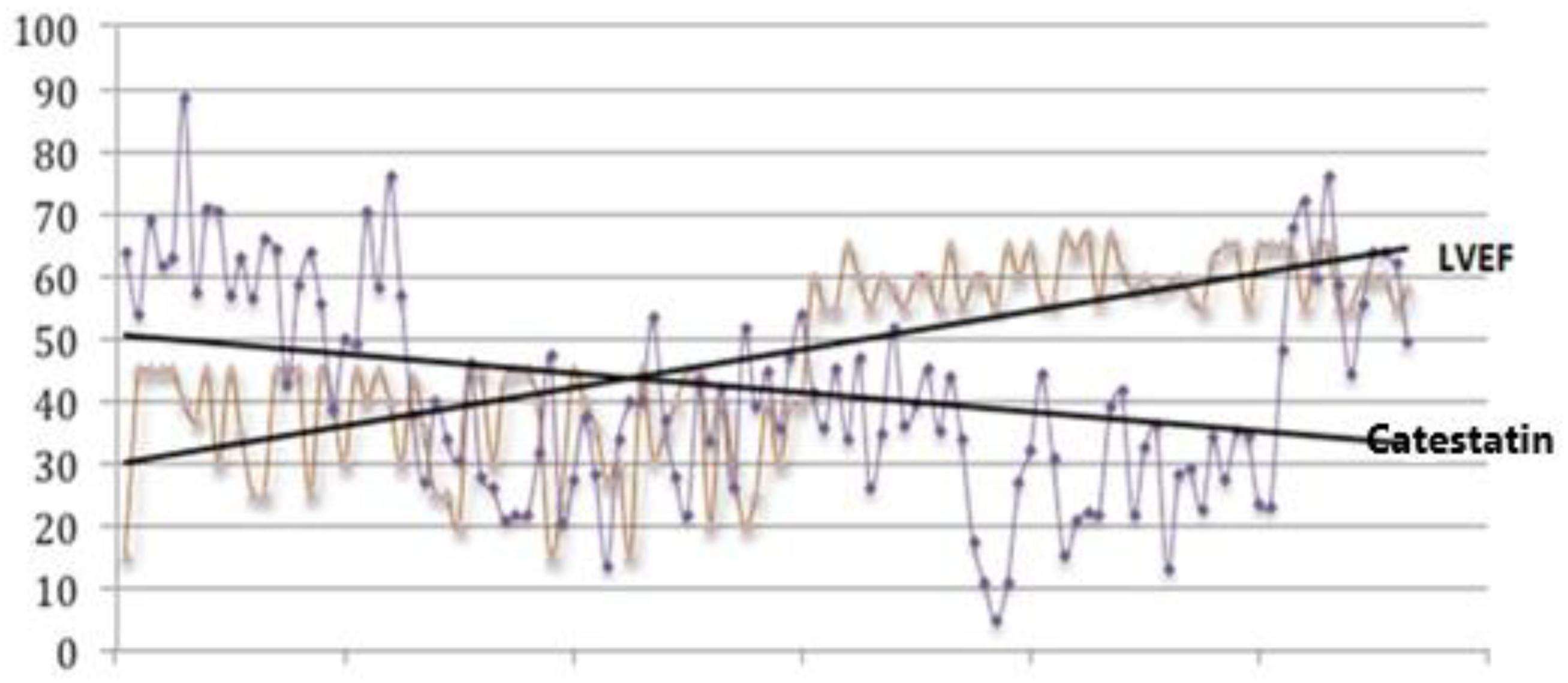
Figure 9.
Line graph of the distribution of catestatin and proBNP values.
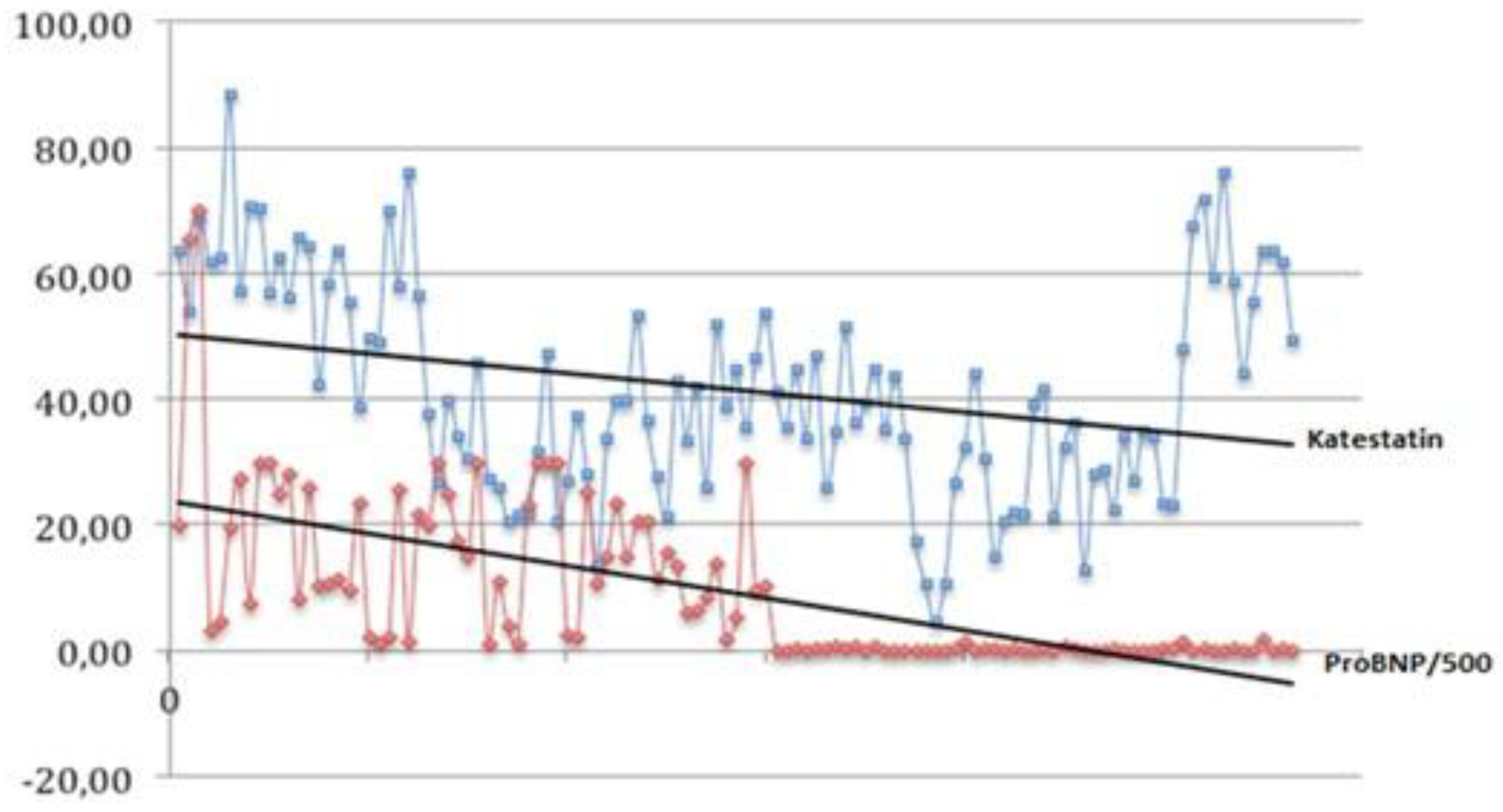

Table 1.
Demographic characteristics.
| Control | Patient | p | Difference | |
|---|---|---|---|---|
| N | 53 | 60 | 0.51 | None |
|
Gender female/male |
28/25 | 30/30 | 0.85 | None |
|
Hypertension Yes/No |
39/14 | 40/20 | 0.54 | None |
|
Diabetes Yes/No |
22/31 | 23/ 37 | 0.85 | None |
|
Insulin use Yes/No |
17/36 | 18/42 | 0.84 | None |
|
CKD Yes/No |
12/41 | 14/46 | 0.99 | None |
|
ESRD Yes/No |
2/51 | 7/53 | 0.17 | None |
|
Age (mean±SD) |
70.66±9.1 | 70.85±10.06 | 0.92 | None |
|
BMI (Mean±SD) |
24.66±2.49 | 24.10±3.35 | 0.32 | None |
| BMI: body mass index; CKD: chronic kidney disease; ESRD: end-stage renal disease; SD: standard deviation | ||||
Table 2.
Comparison of catestatin levels of control and patient groups.
| Group | n |
Mean± SD (ng/ml) |
t | p |
| Patient | 60 | 45.46±16.69 | 2.69 | 0.008 |
| Control | 53 | 37.15±16.36 |
Table 3.
Comparison of catestatin levels by HF stage.
| Stage | n | Mean± SD (ng/ml) |
J-T | p |
|---|---|---|---|---|
| 2 | 21 | 40.05±17.82 | 2.19 | 0.029 |
| 3 | 22 | 46.85±17.31 | ||
| 4 | 17 | 49.05±11.65 | ||
| J-T: Jonckheere-Terpstra test | ||||
Table 4.
Associations between catestatin and parameters related to HF.
| Whole Group | |||
| N | R | p | |
| Catestatin-LVEF | 113 | -0.19 | 0.043* |
| Catestatin-proBNP | 113 | 0.241 | 0.010* |
| BNP: B-type natriuretic peptide; LEVF: left ventricular ejection fraction | |||
Table 5.
Catestatin levels in left ventricular hypertrophy (LVH).
| Patient Group | Whole Group | ||||||
| Condition Present |
n | Catestatin Mean±SD | p | n | Catestatin Mean±SD | p | |
| LVH |
Yes No |
31 29 |
41.39±16.69 49.64±15.09 |
0.04* |
43 70 |
37.41±16.22 44.04±15.48 |
0.03* |
Disclaimer/Publisher’s Note: The statements, opinions and data contained in all publications are solely those of the individual author(s) and contributor(s) and not of MDPI and/or the editor(s). MDPI and/or the editor(s) disclaim responsibility for any injury to people or property resulting from any ideas, methods, instructions or products referred to in the content. |
© 2026 by the authors. Licensee MDPI, Basel, Switzerland. This article is an open access article distributed under the terms and conditions of the Creative Commons Attribution (CC BY) license (http://creativecommons.org/licenses/by/4.0/).
Copyright: This open access article is published under a Creative Commons CC BY 4.0 license, which permit the free download, distribution, and reuse, provided that the author and preprint are cited in any reuse.