

Submitted:
23 February 2026
Posted:
25 February 2026
You are already at the latest version
Abstract
The aim of this paper is to propose a sociological and interdisciplinary framework for analyzing the digitization of emotions in adolescence. This contribution aims to promote theoretical reflection and inform educational and political interventions in the digital age, framing adolescents’ digital experiences as emotionally embodied and socially integrated processes. These aspects are concepts of great importance thanks to (or because of) the rapid spread of digital technologies and artificial intelligence, which has brought about a profound transformation in the emotional, relational, and educational experiences of adolescents. The role of digital and AI-based environments in mediating communication is expanding beyond simple facilitation. These environments are increasingly involved in the production, modulation, and regulation of emotions, thus influencing developmental trajectories and identity formation processes (Lupton, 2018a; Belk, 2013). This is conceptualized as a socio-technical process through which emotions are embodied, narrated, and governed within digital environments (Auriemma, 2023a). Consequently, the article introduces the concept of digital emotional embodiment, drawing on the sociology of emotions, theories of embodiment, and critical perspectives on artificial intelligence. Specifically, the concept refers to the way adolescents experience and express emotions through avatars, images, emojis, algorithmic feedback, and AI-mediated interactions (Niedenthal, Winkielman, Mondillon & Vermeulen, 2009; Zimmermann, Wehler & Kaspar, 2023). Therefore, it is important to emphasize the transformation of empathy, which is increasingly configured as a virtualized and datafied process, moving away (transforming) from that linked to Sympathy and to which we have been accustomed since Hume. In new processes, shaped by the logic of platforms, recommendation systems, and emotionally reactive technologies, standard emotional concepts have been deconstructed, and digital constructs are slowly being restructured (Scribano & Mairano, 2021; Auriemma, 2023b). In this context, AI systems do not merely reflect adolescents’ emotions, but actively contribute to the construction of emotional narratives, influencing emotional regulation, social connection, and future orientation. Digital environments have the capacity to encourage emotional expressiveness, experimentation, and inclusivity (Gall, Roth, Stauffert, Zarges & Latoschik, 2021). Conversely, they can also promote emotional standardization, dependence, and forms of affective vulnerability, particularly during a sensitive developmental stage such as adolescence.
Keywords:
digitization of emotions
; adolescence
; emotional embodiment
; artificial intelligence
; empathy
; digital wellbeing
; sociology of emotions
1. Introduction
When we talk about adolescence, we refer to that critical stage of development during which profound changes occur in terms of emotional regulation, identity formation, and social behavior (Steinberg, 2014; Sawyer, Azzopardi, Wickremarathne & Patton, 2018). In contemporary societies, these processes are becoming increasingly evident in digitally mediated environments, characterized by the pervasive presence of mobile devices, social media platforms, and artificial intelligence (Boyd, 2014; Livingstone & Third, 2017). To date, although behavioral and psychological research has extensively examined the effects of digital technologies on adolescents’ mental health, cognitive functions, and social behaviors, emotions are often considered as individual outcomes, risk factors, or even innate elements of our behavior, rather than as socially integrated processes mediated by culture and technology (Odgers & Jensen, 2020; Twenge, Martin & Spitzberg, 2019). This tendency may compromise the visibility of the contribution of digital environments to the formation of emotional experience (Lupton, 2018b; Illouz, 2007). From a behavioral science perspective, digital technologies are often conceptualized as external stimuli that influence emotional responses, well-being, or maladaptive behaviors (Ibidem). However, this stimulus-response framework proves inadequate to capture the complexity of adolescents’ emotional lives in digital and AI-driven contexts. Emotions are not exclusively induced by digital content, but are increasingly produced, structured, and regulated through socio-technical systems that mediate interaction, visibility, and recognition (Lupton, 2018a; Belk, 2013). To be more precise, we are faced with two elements that characterize emotions: culture on the one hand and aspects related to technological transformations on the other. This aspect is particularly relevant in the case of adolescents, whose emotional repertoire and identity narrative are still developing and are therefore particularly sensitive to environmental influences. Numerous studies, including those by Gall et al., highlight the opportunities and risks associated with adolescents’ digital engagement.
On the one hand, there is an increase in emotional expressiveness, creativity, and social inclusion. On the other hand, there is emotional dysregulation, addiction, and vulnerability (Gall, Roth, Stauffert, Zarges & Latoschik, 2021). However, most research in this area focuses on behavioral outcomes (the reason for actions), paying little attention to the theoretical processes through which emotions are digitally organized (the processes underlying the digitization of love, for example). Added to this are crucial questions that have not been adequately answered, including: How are emotions represented when interactions are mediated by interfaces, avatars, and algorithms? What are the implications of increased empathy driven by platform logic and AI-based feedback? How do these transformations affect the emotional development of adolescents over time? To address these questions, this paper will start from concepts related to the digitization of emotions, understood here as a socio-technical process through which emotions are increasingly embodied, narrated, quantified, and governed within digital environments (Auriemma, 2023a). Rather than focusing exclusively on emotional expression, the digitization of emotions calls for an analysis of the infrastructural and symbolic conditions that shape emotional experience. Thus, digital platforms and Artificial Intelligence systems do not merely serve as environments for emotional interactions, but actively determine their visibility, social recognition, and marginalization, thereby influencing emotional learning and regulation. At the heart of this process lies the transformation of emotional embodiment (Niedenthal, Winkielman, Mondillon & Vermeulen, 2009). This is because emotions have long been theorized as embodied phenomena, based on bodily perception and sensorimotor processes. However, in digital contexts, embodiment is increasingly mediated by technological interfaces that extend, reshape, or partially replace bodily presence. In this regard, adolescents (and often adults) express their emotions through the use of avatars, images, emojis, and algorithmic feedback, giving rise to forms of digital emotional embodiment that blur the boundaries between body, technology, and social interaction (Zimmermann, Wehler & Kaspar, 2023). Such hybrid forms challenge traditional assumptions in behavioral sciences regarding concepts such as authenticity, immediacy, and emotional regulation. The transformation of empathy represents another critical dimension of adolescent emotional development in AI-mediated environments. Traditionally conceived as an intersubjective capacity rooted in embodied resonance and face-to-face interaction, empathy is increasingly shaped by digital infrastructures that translate emotional signals into data, metrics, and recommendations.
In this context, empathic processes are partially virtualized and transformed into data, influenced by platform architectures and emotionally responsive technologies (Scribano & Mairano, 2021). AI systems, in particular, play an active role in organizing emotional narratives, prioritizing certain content, interactions, and affective styles, thus contributing to the emotional regulation and social orientation of adolescents. Despite the evident increase in the importance of these dynamics, as we will also see from a brief bibliographic review, current behavioral research lacks a comprehensive analysis that integrates emotions, embodiment, and AI into a unified analytical perspective. In the absence of such a framework, there is a risk of reducing complex emotional transformations to symptoms or behaviors at the individual level, neglecting the broader socio-technical processes at play. This shortcoming is particularly critical in the context of education and well-being, where interventions tend to focus on emotional skills without considering the environments that shape emotional experience. In this context, interdisciplinarity represents the only theoretical framework useful for understanding the digitization of emotions in adolescence, focusing on emotional embodiment and empathy in AI-mediated environments. The choice fell on interdisciplinarity, as transdisciplinarity, which is more meaningful and appropriate, is difficult to implement at this moment in history. This is because its premise is to use the concepts of each discipline across them, understanding all those notions and assumptions and making them malleable for a univocal conception, a common dictionary, and a language aimed at everyone’s understanding (Nicolescu, 2002; Klein, 2010). Therefore, by linking the sociology of emotions, embodiment theory, and critical studies on AI, this work attempts to integrate and expand existing behavioral research, offering conceptual tools to better understand the emotional development of adolescents in digital contexts.
The paper critically examines the enabling and limiting effects of digital environments, highlighting how they can foster emotional expressiveness and inclusion while promoting emotional standardization, dependence, and affective vulnerability. In this context, the issue of adolescents’ emotional well-being in the digital age will be addressed, which requires an approach that goes beyond individual interventions, promoting instead the development of digital emotional literacy and AI governance strategies. By reframing emotions as socially and technologically integrated processes, we will attempt to engage in the theoretical debate closely linked to the processes of embodying emotions in digital contexts, as well as to inform educational and policy-oriented approaches to adolescent development.
2. Theoretical Background: Emotions, Digitalization and Embodiment
In theory, this article addresses a specific gap concerning the intersection between behavioral sciences, sociology of emotions, and digital studies. Although behavioral research has extensively examined the psychological outcomes of digital media use in adolescence, such as anxiety, stress, and emotional regulation, these studies often conceive of emotions as individual-level outcomes, with limited attention to the socio-technical environments that structure emotional experience. At the same time, sociological and critical studies of digital platforms have analyzed processes of datafication, algorithmic governance, and platform power, but have rarely integrated these insights into a systematic description of emotional development in adolescence. Therefore, the following article will attempt to bridge the gap between the two literatures by proposing digital emotional embodiment as a conceptual tool for analyzing the process of acquiring, manifesting, and regulating emotions within AI-mediated environments. In doing so, the study shifts the analytical focus from the effects of digital technologies on emotions to the conditions under which emotional dynamics are constituted in contemporary digital societies. Furthermore, digital emotional embodiment is proposed as an analytical and critical framework, rather than a purely descriptive label.
From an analytical perspective, it is used to examine how emotional experience is structured through the interaction between embodied sensations, mediated interaction, and algorithmic feedback. From a critical perspective, it draws attention to the power relations inherent in digital infrastructures that determine which emotions are made visible, valuable, or governable. The concept does not suggest that emotions become disembodied in digital contexts; on the contrary, it emphasizes how embodiment is reconfigured through technological mediation, producing new forms of emotional attunement, regulation, and recognition that are neither completely online nor offline, but structurally hybrid. As anticipated in the previous paragraph, in behavioral and psychological sciences, emotions are often conceptualized as internal states associated with cognitive evaluations, physiological responses, and observable behaviors. Although such approaches have provided valuable insights into emotional functioning, they tend to privilege mechanisms at the individual level, often neglecting the social and cultural dimensions through which emotions acquire meaning.
From a sociological perspective, emotions are not only individual experiences, but relational and socially rooted processes, shaped by norms, symbols, and interactional contexts (Hochschild, 1979; Kemper, 1978; Turner & Stets, 2005). The sociology of emotions has long highlighted that emotions are learned, regulated, and expressed within specific social contexts. Emotional experience is therefore inseparable from the social structures and cultural contexts that define which emotions are appropriate, how they should be expressed, and how they are interpreted by others (Ibidem). This perspective is particularly relevant during adolescence, a stage of development in which the emotional repertoire is actively negotiated through interaction with peers, social recognition, and identity construction. In digitally mediated environments, these processes do not cease to exist, but undergo a reorganization (Turner & Stets, 2005). Digital platforms introduce new emotional norms, feedback mechanisms, and forms of visibility that influence emotional expression and recognition. Algorithmic reactions, comments, and recommendations, although they may appear as social signals, guide emotional behavior, contributing to the reinforcement of certain affective styles and the marginalization of others. As a result, emotions do not originate exclusively in interpersonal interaction, but also in platform-mediated social regulation, which is taking on an increasingly central role in the emotional lives of adolescents.
The concept of digitization is therefore not limited to the mere transposition of existing practices into digital formats but extends to a broader process of socio-technical reorganization applied to the context of emotions.
In particular, digitization involves the transformation of the way emotions are produced, communicated, evaluated, and governed within digital environments. Rather than being external to emotional life, digital technologies actively participate in it, structuring the possibilities for interaction and affective expectations. Several scholars, including Belk and Lupton, have highlighted how digital platforms do not merely host or facilitate the expression of emotions, but perform a deeper function as infrastructures of emotional life, actively contributing to their organization and regulation (Belk, 2013; Lupton, 2018a). From this perspective, platforms operate as socio-technical environments that structure the visibility of emotions, direct attention, and mediate social recognition through algorithmic systems that select, amplify, or marginalize specific forms of emotional expression (Auriemma, 2025). Emotional visibility is never neutral but depends on platform logics that privilege certain content based on criteria of engagement, affective intensity, and circulability (Instagram and TikTok are striking examples). Emotions that lend themselves to being quickly recognized, shared, and quantified tend to be more valued, while those that are more ambiguous, complex, or difficult to translate into standardized signals risk remaining invisible (Ibidem). In this sense, platforms not only reflect users’ emotions, but also help define which emotions are socially relevant and worthy of attention. Within these environments (social media), emotions are increasingly intertwined with data flows, metrics, and predictive systems, giving rise to processes of datafication of emotional experience. Likes, reactions, comments, viewing times, and interaction patterns function as quantitative indicators of emotional intensity and value, translating complex affective states into measurable signals (Ibidem).
This data is then processed by algorithmic systems that not only record emotions but also use them to anticipate behavior, personalize content, and guide future interactions. In this context, emotions take on a dual nature: 1) on the one hand, they remain embodied subjective experiences; 2) on the other hand, they become objects of calculation and prediction, inserted into feedback loops that influence the way they are experienced and expressed. This process has significant implications, especially for adolescents, for whom emotional learning and social recognition take place in environments where emotional value is constantly mediated by metrics and algorithms. Digital platforms thus contribute to shaping not only the expression of emotions, but also emotional expectations, criteria for affective validation, and modes of emotional regulation (Bucher, 2018). This is to say that conceiving of digital platforms as infrastructures of emotional life allows us to move beyond an instrumental view of technologies and recognize their active role in shaping contemporary emotional experience (Ibidem). This thesis is supported by the increasingly established concept that emotions do not simply circulate through digital media but are progressively integrated into socio-technical systems that influence their form, visibility, and meaning, redefining the very conditions of emotional life in the digital context. Consequently, researchers and scholars, including Bucher, Lupton, and Scribano, are faced with a conception of “emotional embodiment” that is amplified compared to the past and detached from the neurosociological logic of the American tradition (Auriemma, 2025).
In agreement with Scribano, we can say that emotional expressions are captured, quantified, and returned to users in ways that influence subsequent emotional behavior. This dynamic is particularly evident in the case of adolescents, whose emotional development takes place in environments that continuously monitor and respond to affective signals. An interesting analysis could be conducted, in the long term, on the emotions perceived by French young people under the age of 15 and compare the data with that of other European young people in the same age group. This study could be relevant since, in January 2026, the French National Assembly approved a bill to ban access to social networks for children under the age of 15. The bill, currently under review in the Senate, aims to make the law effective from September 2026 (French National Assembly, 2025). Therefore, considering the contemporary context, characterized by phenomena of mediatization and mediation, the digitization of emotions can be interpreted as a socio-technical process through which emotions are progressively integrated into digital infrastructures. Emotions, therefore, are not only expressed in digital media, but are also shaped by the logic of platforms, which favor immediacy, visibility, and engagement (Beer, 2017). These dynamics contribute to the standardization of emotional expression, while allowing new forms of experimentation and creativity to emerge. Understanding this tension is essential for analyzing the opportunities and risks associated with adolescents’ digital engagement. A fundamental assumption of theories about digital emotions is that they are embodied phenomena, rooted in bodily sensations, perception, and action. Theories of embodiment highlight that emotional experience is not limited to cognitive representations but emerges from the dynamic interaction between the body and the environment (Niedenthal, Winkielman, Mondillon & Vermeulen, 2009). However, digital environments challenge conventional conceptions of embodiment by introducing technological mediations that extend or partially replace physical presence. Adolescents interact emotionally through the use of avatars, images, emojis, and text messages, which serve as proxies for bodily expression. Such mediated forms of embodiment do not negate the body, but redefine its role, generating hybrid experiences in which emotional meaning is co-constructed by bodily sensation and technological mediation (Auriemma, 2023b). Studies conducted on virtual environments and avatar-based interaction, such as those by Gall et al., suggest that digital embodiment can intensify emotional responses, influence self-perception, and shape social behavior (Gall, Roth, Stauffert, Zarges & Latoschik 2021; Zimmermann, Wehler & Kaspar, 2023). For adolescents, these processes are intertwined with identity formation, the Meadian self, as digital embodiments become environments in which to experiment with emotional expression and social roles (Mead, 1934). Consequently, emotional embodiment in digital environments should be understood not as a loss of authenticity, but as a transformation of the conditions in which emotions are experienced and recognized. On the other hand, while remaining within the realm of emotionality, empathy has traditionally been conceived as an intersubjective capacity based on embodied resonance and face-to-face interaction, although the neuroscientific tradition has sought to place it within biological constructs that do not adequately reflect its meaning (Zimmermann, Wehler & Kaspar, 2023).
Although these approaches have produced significant results, they tend to underestimate the role of social and technological mediation in shaping empathic processes; therefore, as an element that can be culturally learned, modeled, and transformed over the years. The reference could be attributable to certain national leaders, nationalisms, and populisms. However, in digital environments, empathy is increasingly mediated by platforms and artificial intelligence systems that structure the way emotional signals are presented and interpreted. Algorithmic systems exert a significant influence on the visibility of emotional narratives, privileged interactions, and the representation of emotional responses. As a result, empathy is partially virtualized and transformed into data, embedded in socio-technical systems that guide emotional attention and engagement (Scribano & Mairano, 2021). From this perspective, we could even speak of a different form of empathy, culturally distant from the one we are familiar with, but conceptually linked to the same “purpose”, in which artificial intelligence plays a particularly significant role in this transformation. Artificial Intelligence-based systems do not merely respond to users’ emotions, but actively shape emotional interaction by predicting preferences, recommending content, and simulating emotional responsiveness. Despite the considerable progress made by behavioral sciences in identifying the emotional outcomes associated with the use of digital technology, a more complete understanding of the phenomenon requires consideration of the socio-technical conditions that shape the emotional experience.
3. Materials and Methods
Although this article is primarily theoretical and conceptual in nature, it incorporates bibliometric analysis as a complementary methodological strategy. The purpose of this analysis is not to provide empirical validation of the proposed framework, but to systematically map the intellectual landscape in which research on digital emotions, embodiment, and adolescence currently resides. From an epistemological perspective, bibliometric analysis is employed as a reflective tool that allows for the identification of dominant research clusters, thematic emphases, and disciplinary boundaries within the existing literature. This approach supports the theoretical argument by highlighting structural patterns in knowledge production, including conceptual fragmentation and disciplinary targets, which motivate the need for an integrative framework such as digital emotional embodiment. Therefore, based on what has emerged so far within the historical-social background and before proceeding with in-depth theoretical analysis, it is considered necessary to present a systematic review of the existing literature through bibliometric analysis. The aim of this clarification is to contextualize the positioning of the current contribution within the relevant field of study. As we have seen, when it comes to emotions, empathy, and emotional embodiment, it is not possible to generalize. However, it is possible to generate a common language between disciplines, which is the aim of our interdisciplinary discourse. For this reason, we used Bibliometrix tools, specifically OpenAlex, integrated as a library in the RStudio environment, which allows scientific output to be examined in a structured way using keyword-based queries (Aria & Cuccurullo, 2017). Adopting a quantitative methodological approach, a query containing the following keywords was used: “digitization of emotions”, “adolescence”, “emotional embodiment”, “artificial intelligence”, “empathy”, “digital wellbeing”, and “sociology of emotions”. The selection of these keywords reflects the interdisciplinary ambition of the study, while recognizing that bibliometric methods favor explicit terminological convergence and may underrepresent conceptually relevant works that do not adopt standardized labels. The time period (2015-2026) was chosen to capture both pre-pandemic and post-pandemic academic output, noting that there are no results for the year 2026 as the research was conducted in February 2026. While this approach allows for a systematic overview of recent trends, it also has some limitations. Bibliometric analyses are inherently limited by database coverage, keyword dependency, and publication biases, and tend to favor quantity-oriented disciplines over interpretive or critical traditions. For this reason, the results should not be interpreted as an exhaustive representation of the field, but rather as an indicator of the dominant epistemic orientations within mainstream scientific production. Analysis of the database produced a total of 371 contributions, including 230 scientific articles and 141 books and book chapters. A first relevant figure concerns the Annual Growth Rate, equal to -10.76%, which suggests a decline in overall interest in the topic. This indicator could be interpreted as a sign of saturation in the field, as if certain theoretical and applied perspectives were now considered well established. However, a particularly significant figure, which leads to a different interpretation of this data for the present work, is the Document Average Age, equal to 4.93 years, which indicates that much of the recent literary production tends to reproduce relatively stable theoretical assumptions, often treated as invariants, without adequate comparison with the social, cultural, and technological transformations that are profoundly redefining the modes of emotional interaction. Bibliometric analysis reveals a predominance of computational sciences and artificial intelligence, despite the presence of interdisciplinary contributions that favor theoretical and applied integration between technological, psychological, and socio-organizational dimensions.
However, this interdisciplinarity seems to be mainly limited to the so-called hard sciences, while approaches that address the digitization of emotions from a cultural and social perspective are marginal. In particular, contributions explicitly related to the field of sociology are limited (about ten publications), confirming a significant underrepresentation of the sociology of emotions in the dominant scientific debate. As shown in Figure 1 (word cloud), which provides a summary representation of the main thematic areas that emerged from the analysis, there is a marked centrality of computer science and artificial intelligence, which are the structuring domains of the field. These poles are flanked by contributions from the social and human sciences, in particular psychology, sociology, and social psychology, confirming the formally interdisciplinary nature of the sector. The presence of terms such as “human-computer interaction”, “speech recognition”, “data science”, and “digitization” indicates a strong application and technology orientation, while references to medicine and law suggest a progressive extension of artificial intelligence into regulatory and healthcare areas.
A more in-depth analysis of the conceptual structure of the field is provided by the thematic map (Figure 2), which distributes thematic clusters according to their degree of centrality (relevance) and density (level of development). The cluster related to computer science, artificial intelligence, and speech recognition falls within the scope of motor themes, indicating widely developed and significantly interconnected topics that play a driving role in literary production. The cluster composed of psychology, social psychology, and medicine occupies an intermediate position, suggesting an established area of research that is still in the process of systematic integration with the dominant technological trends. In the basic theme’s quadrant, the concepts of digitization, the World Wide Web, and business emerge, widely used and characterized by high centrality but low density, configuring themselves as cross-cutting and conceptually unstructured categories. On the contrary, the cluster comprising sociology, political science, and art ranks among the emerging or potentially declining themes, as it is characterized by limited centrality and a low degree of internal development. Finally, niche themes, such as psychological intervention, clinical trial, and dysbiosis, indicate highly specialized areas with strong internal cohesion but marginal in relation to the overall structure of the field.
To confirm these dynamics, a factor analysis was conducted using Multiple Correspondence Analysis (MCA), illustrated in Figure 3, which allows the semantic configuration of the research field to be explored. The conceptual map shows a clear polarization between a technological-computational sector, characterized by terms such as “artificial intelligence”, “machine learning”, “computer science” and “natural language processing” and a socio-humanistic sector, which includes “sociology” “philosophy” “political science” and “law”. The disciplines that fall in between are psychology, social psychology, and medicine, suggesting a role of conceptual mediation between technological and interpretative approaches.
Overall, the analysis confirms the multidisciplinary nature of the field, but at the same time highlights a structural asymmetry that favors computational sciences over socio-cultural perspectives. The interdisciplinarity observed mainly concerns the “hard” disciplines, while sociological approaches remain marginal, despite their explanatory potential in understanding the emotional transformation processes underway. In light of these results, it is necessary to further explore the digitization of emotions as a socio-cultural and socio-technical phenomenon, recognizing that emotional processes cannot be separated from the technological infrastructures, cultural contexts, and social dynamics that shape them. Therefore, this need represents the theoretical and methodological foundation of this contribution. In this sense, bibliometric analysis does not function as an end in itself, but rather as a methodological bridge between existing research trends and the theoretical intervention proposed in this article
4. The Digitization of Emotions as a Socio-Technical Process
The bibliometric results examined in the previous paragraph confirm the central hypothesis of this article, namely that certain sciences and concepts predominate. Indeed, the significant dominance of computer science, artificial intelligence, and psychological research observed in the thematic clusters suggests that emotions in digital environments are predominantly conceptualized as measurable signals, cognitive states, or behavioral outcomes. Conversely, the marginal positioning of sociology and adjacent disciplines suggests a persistent theoretical underestimation of emotions as socially integrated, embodied, and relational processes. This asymmetry is not merely descriptive but also has implications for theoretical perspectives. The predominant trend in current literature, oriented toward individual and computational approaches, seems to neglect the role of socio-technical environments in the organization of emotional experience, particularly during adolescence. The concept of digital emotional embodiment directly addresses this gap, offering a framework that integrates behavioral insights with sociological analyses of platforms, algorithms, and emotional norms. Given the results that emerged from the brief research carried out, and especially considering the fields of interdisciplinary investigation that are polarized towards certain disciplines, and considering that emotions, now more than ever in this historical period, need a substantial reinterpretation, it becomes essential to consider the digitization of emotions as a purely socio-cultural process. In fact, the digitization of emotions should not be interpreted as a mere increase in emotional expression through digital media, nor as a simple translation of interactions from offline to online, understood as an unchanged transition of forms of communication from one context to another (Auriemma, 2025). On the contrary, this process can be understood as a socio-technical phenomenon, which involves the production, organization, and regulation of emotions within digital infrastructures, rather than their mere reproduction according to conventional models (Couldry & Hepp, 2017; Kitchin, 2014).
In this context, emotions are intertwined with technological systems that structure interaction, visibility, and feedback mechanisms, helping to reshape the ways in which emotional experiences are constituted and socially recognized (Scribano & Mairano, 2021). From a sociological perspective, emotions are always embedded in specific social contexts and are deeply influenced by the structural conditions in which they emerge (Hochschild, 1979; Turner & Stets, 2005). In digitally mediated environments, adolescents learn not only to express their emotions, but also to recognize which emotional states gain visibility, approval, or algorithmic amplification. The digitization of emotions can be interpreted as a form of emotional socialization embedded in socio-technical systems, in which affective recognition is closely linked to platform logic (van Dijck, Poell, & de Waal, 2018). A peculiarity of this process lies in the datification of emotions, understood as the transformation of emotional expressions into quantifiable data (Kitchin, 2014). Through actions such as clicks, reactions, emojis, and interaction patterns, emotions take the form of measurable signals that feed algorithmic systems. This statement is not intended to criticize the models of emotion measurement used in digital research, but rather to reflect on the perception that adolescents develop with regard to the instrumental use of emotions in such contexts. Algorithmic systems, in fact, shape the emotional ecosystem by prioritizing certain content, interactions, and affective styles, contributing to the definition of what is emotionally relevant. Algorithmic mediation does not merely reflect users’ emotional states, but actively influences their formation, as recommendation systems regulate emotional exposure by favoring content characterized by high intensity, immediacy, and engagement (Bucher, 2018). The dynamics of feeds on platforms such as Instagram or TikTok highlight how repeated exposure to algorithmically selected emotional stimuli can affect adolescents’ emotional regulation, attention, and social comparison processes, reinforcing over time specific emotional models considered “appropriate” or “desirable” in the digital context. From this perspective, digital platforms can be conceived as emotional architectures, i.e., systems capable of organizing and modulating the affective experience of users (Papacharissi, 2015). Emotions are subject to continuous feedback loops, in which expression, data collection, and algorithmic response are closely interconnected. This configuration raises questions about the traditional distinction between emotional expression and emotional regulation, as the latter seems to occur increasingly through interaction with socio-technical systems, rather than exclusively through individual self-control. Digital environments are not neutral spaces, but contexts structured by platform logics that define dominant emotional norms (Gillespie, 2018). These logics favor easily recognizable and quickly shareable emotions, such as enthusiasm, indignation, or excitement, while more ambivalent or complex emotions tend to receive less visibility. The digitization of emotions contributes to processes of emotional standardization, as users adapt their affective behavior to the technological affordances and social expectations embedded in platforms. At the same time, digital environments offer spaces for emotional experimentation, particularly for individuals who may encounter forms of marginalization in offline contexts, as demonstrated by the alternative expressive practice’s observable on platforms such as Twitch (Taylor, 2018).
This ambivalence highlights the need to analyze emotional normativity as a socio-technical phenomenon, embedded in design choices, algorithms, and interfaces, rather than as a simple outcome of social interaction. In addition to influencing emotional expression, the digitization of emotions fosters the emergence of new forms of emotional governance. Through moderation policies, recommendation systems, and emotionally responsive technologies, platforms actively contribute to the regulation of affective environments (Beer, 2017). Artificial intelligence plays a crucial role in this process by analyzing emotional data to predict preferences, optimize engagement, and personalize content. For adolescents, whose emotional and empathic development is still ongoing, these dynamics can affect emotional autonomy and psychological well-being (Steinberg, 2014). Therefore, taking into account what has been analyzed so far, it is possible to argue that the digitization of emotions is a structural feature of contemporary adolescence, which is capable of shaping emotional experience in hybrid contexts where online and offline dimensions are deeply interconnected. Overcoming the dichotomies between the digital and non-digital emotional spheres is therefore essential to understanding how adolescents develop their emotional skills within socio-technical ecosystems that are simultaneously enabling and limiting. In this regard, it will be useful to emphasize how symbolic interaction processes (especially those mediated by digital forms) are essential for analyzing emotional processes in the online world in this historical period.
5. Digital Emotional Embodiment in Adolescence
Understanding the emotional development of adolescents in the digital age requires a reformulation of embodiment that takes into account the role of socio-technical mediation. Within embodiment theories, emotions are conceived as processes based on bodily perception and sensorimotor engagement with the environment (Niedenthal, Winkielman, Mondillon & Vermeulen, 2009). In digitally mediated contexts, the body does not disappear, but extends and reconfigures itself through screens, interfaces, and symbolic systems that mediate affective experience (Farman, 2012; Hansen, 2006). Such forms of digital embodiment are not limited to the reproduction of offline emotional expression, but introduce new modes of affective experience, characterized by immediacy, persistence, public visibility, and continuous feedback (Gall, Roth, Stauffert, Zarges & Latoschik, 2021). These modes of embodiment prove functional to the construction of social interaction in digital contexts, as they enable the creation and maintenance of affective relationships in mediated environments. However, the intensive and normatively oriented use of these technologies can generate problematic dynamics, especially when emotional expression is systematically integrated into the logic of economic valorization. In such circumstances, digital emotional expression runs the risk of being absorbed into forms of emotional capitalism, in which affectivity becomes a monetizable and performative resource, as can be observed in specific platformized contexts, including OnlyFans (Illouz, 2025). In such contexts, the digitized emotional body is exposed, measured, and evaluated according to parameters of visibility and desirability, redefining the boundaries between intimacy, emotional labor, and social recognition. Digital emotional embodiment takes on particular relevance during adolescence, a stage of life characterized by greater sensitivity to social evaluation and peer recognition (Steinberg, 2014). Digital environments amplify these dynamics, making emotional expressions persistent, quantifiable, and publicly observable. Reactions such as “likes”, comments, and algorithmic responses operate as embodied signals that communicate to adolescents the social value of their emotional expressions, helping to shape their self-perception and relational expectations (Bucher, 2018). Through repeated interaction with these feedback mechanisms, adolescents develop the ability to regulate their emotional behavior, adapting it to the affective norms inherent in digital platforms. Emotional embodiment emerges as a process negotiated between bodily sensations, technological mediation, and social recognition, in which the body becomes a relational node distributed between subjective experience and digital infrastructure (Dolezal, 2020). At the same time, digital embodiment offers adolescents spaces for emotional experimentation and identity exploration. Through the use of avatars and mediated representations, individuals can express emotions that are often restricted or stigmatized in offline contexts, creating opportunities to explore vulnerability, belonging, and alternative narratives of the self (Turkle, 2011; Taylor, 2018). This dimension highlights the ambivalence of digital emotional embodiment, which lies between emancipatory potential and the risk of affective normalization, making it necessary to adopt a critical approach capable of grasping the socio-technical tensions that run through the adolescent emotional experience. Studies conducted on virtual environments suggest that digital embodiment can enhance emotional engagement and influence self-perception, highlighting the transformative potential of technology-mediated emotional experience (Gall, Roth, Stauffert, Zarges & Latoschik, 2021; Zimmermann, Wehler & Kaspar, 2023). For adolescents, such environments can serve as laboratories for emotional development, where affective styles and identities are experimented with and negotiated.
However, the potential of digital emotional embodiment is inseparable from its limitations, as the use of standardized symbolic repertoires, such as emojis or predefined reaction options, can reduce the richness and nuance of emotional expression or even diminish certain emotions in the eyes of others. Furthermore, the algorithmic organization of visibility and feedback can favor certain emotional styles, contributing to the normalization of specific affective patterns. Over time, this dynamic can influence adolescents’ emotional self-understanding, reinforcing expectations about which emotions are considered acceptable, valuable, or worthy of attention. Digital emotional embodiment raises questions about the authenticity and regulation of emotions, with emblematic cases being Haboo and Second Life (now conceptually outdated) or Decentraland (a virtual world based on cryptocurrencies). In the context of emotional experiences mediated by digital interfaces and evaluated through engagement metrics, the boundary between spontaneous emotional experience and performative expression is gradually blurring. Adolescents may experience constant tension between expressing emotions as they are subjectively experienced and adapting emotional expressions to anticipated social or algorithmic responses, such as likes, comments, or visibility signals (Papacharissi, 2015; Bucher, 2018). This tension is not exclusively a matter of individual psychology, but more broadly reflects the socio-technical conditions that structure the development of emotional life in digital environments. From a behavioral science perspective, these dynamics suggest that emotional regulation in adolescence cannot be fully understood without considering the embodied, relational, and technologically mediated nature of digital interaction (Gross, 2015; Kappas, 2011). Emotional regulation is no longer just an intrapsychic process of self-control or cognitive restructuring but increasingly involves the ability to navigate technological environments that actively respond to emotional states and help shape their expression and intensity.
In the course of this process, adolescents not only internalize interpersonal norms and social expectations, but also assimilate the affective logics embedded in digital platforms and artificial intelligence-based systems, such as the valorization of emotional intensity, visibility, and immediate reactivity (Beer, 2017; van Dijck, Poell & de Waal, 2018). Repeated interaction with systems that reward specific emotional styles contributes to the formation of affective repertoires that are progressively aligned with technological affordances, influencing the way emotions are recognized, regulated, and communicated. From this perspective, digital emotional embodiment emerges as a crucial component of contemporary adolescence, as it allows us to grasp the dynamic intersection between body, technology, and social interaction. Emotional experience cannot be traced back to a purely bodily dimension or an exclusively symbolic dimension but is configured as a process situated in hybrid environments, in which bodily sensations, technological mediation, and social recognition are mutually co-constructed (Dolezal, 2020; Hansen, 2006). This perspective highlights the need to overcome traditional dichotomies between online and offline emotional life, recognizing that adolescents’ emotional development takes place in integrated ecosystems, in which digital and physical experiences are deeply intertwined. Understanding emotional regulation in adolescence therefore requires an approach that simultaneously considers the behavioral, bodily, and socio-technical dimensions of emotional experience, offering a more nuanced understanding of the processes of adaptation, agency, and vulnerability that characterize emotional growth in the digital context.
6. The Transformation of Empathy in AI-Mediated Environments
Empathy, as highlighted by Auriemma (2023b), plays a crucial role in the emotional and social development of adolescents, understood as the ability to recognize, understand, and respond to the emotional states of others. In behavioral sciences, empathy is often conceptualized as a cognitive and affective competence, measurable at the individual level and related to prosocial behavior and emotional competence. Although this perspective has generated relevant empirical insights, it seems to treat empathy as a relatively stable personal attribute, without adequately considering the social and technological conditions in which empathic processes emerge and evolve. From a sociological point of view, empathy is not only an individual predisposition, but a relational and situational process, shaped by interactional contexts, symbolic signals, and cultural norms. In face-to-face interactions, empathic understanding is based on embodied co-presence, which involves gestures, facial expressions, tone of voice, and bodily attunement (Decety & Jackson, 2004). Consequently, empathic processes are increasingly mediated by technological infrastructures that reorganize the way emotions are perceived and interpreted (Collins, 2004). . In AI-mediated environments, this transformation takes on a particularly marked connotation. In fact, artificial intelligence systems play an active role in shaping empathic encounters by filtering, prioritizing, and framing emotional content, as demonstrated by dating apps. Recommendation algorithms influence the emotional narratives to which adolescents are exposed, while emotionally responsive technologies, such as chatbots or adaptive interfaces, simulate empathetic responses through predefined affective models.
A prime example of this phenomenon is ChatGPT, which is standardized on emotionally positive responses. Such systems not only facilitate empathic interaction but also help redefine what counts as empathic understanding by translating emotional signals into data and predictive models (Scribano & Mairano, 2021). This process can be outlined as the virtualization and datafication of empathy, in which empathic engagement is increasingly driven by algorithmic mediation rather than direct embodied resonance. Adolescents learn to recognize emotions through platform-specific signals and metrics, such as engagement levels or number of reactions, which serve as indicators of emotional relevance, becoming a sort of television “share” for adolescents’ experiences. Over time, these signals can influence empathic attention, directing them toward emotionally intense content that reflects the platform’s logic of visibility and engagement (Turkle, 2017). At the same time, AI-mediated empathy establishes new forms of emotional connection, allowing adolescents to interact empathically with distant people, fictional narratives, or communities that might be inaccessible in non-digital contexts. For certain populations, particularly those living in conditions of social marginalization, such places can serve as spaces for emotional identification and a sense of belonging. However, it is important to consider that these opportunities coexist with the risks associated with emotional simplification and standardization. When empathetic responses are mediated by predefined emotional categories or algorithmic predictions, the complexity and ambiguity of the emotional experience can be reduced.
The transformation of empathy in AI-mediated environments also has consequences for emotional regulation. When adolescents interact with systems that respond to emotional signals, they may come to rely on external feedback to guide their emotional understanding and response. Such dependence can potentially support emotional learning in certain contexts, but it can also promote the development of forms of emotional dependence, particularly when emotionally responsive technologies are perceived as reliable or non-judgmental interlocutors. In this regard, it is worth noting that 26% of adolescents worldwide consider ChatGPT to be their best friend. According to recent research conducted by CSA Research on behalf of Save the Children for Italy in 2025 and by Common Sense Media for America, the results of which were published in the report “Talk, Trust, and Trade-Offs: How and Why Teens Use AI Companions” (Common Sense Media, 2025). The research findings show that a significant percentage of teens use ChatGPT and other AI chatbots as companions or confidants. In Italy, about 41.8% of teens, or four in ten, use Artificial Intelligence for emotional comfort, relationship advice, or support in moments of loneliness. Furthermore, it is interesting to note that more than 7 out of 10 teens in the United States have used AI-based chatbots for companionship, friendship, or advice, with more than half using them regularly for these purposes (at least a couple of times a month). Twenty-six percent of Gen Zers consider AI a “friend”, while 16% use it specifically as a “psychologist”. According to research conducted by Save the Children in 2025, about 20% of teens opt to communicate with a chatbot rather than a human being (Save the Children, 2025). In such circumstances, it is understandable that empathy is partially outsourced to technological systems, raising questions about emotional autonomy and self-regulation. It is essential to highlight that these dynamics should not be interpreted as a simple decline or erosion of empathy, but rather as a transformation of relational and interaction processes. In fact, it is possible to observe a reconfiguration of empathic processes in socio-technical conditions (Turkle, 2011). Empathy in AI-mediated environments, therefore, operates at the intersection of embodied experience, symbolic mediation, and algorithmic governance. Adolescents interact with these complex forms of mediation as an integral part of their emotional development, integrating digital signals into their empathetic repertoire. From a behavioral science perspective, this suggests a paradigm shift from a conception of empathy as an individual capacity to a more complex view that interprets it as a distributed process emerging from interactions between individuals and technological systems. This shift is particularly relevant in adolescent development, a stage in which empathic capacities are still developing and are sensitive to environmental influences. Recognizing the socio-technical formation of empathy allows for a more nuanced assessment of both the benefits and vulnerabilities associated with AI-mediated emotional environments.
7. Opportunities and Risks of the Digitization of Emotions
Emotional embodiment processes are complex and inherently ambiguous, with their specifics transforming within digital contexts, offering new opportunities for emotional development, affective expression, and social connection, while introducing risks that can affect emotional regulation, psychological well-being, and forms of vulnerability (Steinberg, 2014). Understanding this ambivalence requires overcoming deterministic narratives that describe digital technologies as inherently beneficial or harmful, as well as other narratives belonging to biological determinism, which consider emotions to be innate virtues. Instead, by adopting a socio-technical perspective that takes into account the material, symbolic, and organizational conditions in which emotional experiences are produced, it will be possible to produce new elements and knowledge processes appropriate to the digitization of lifetime (Orlikowski, 2007; Couldry & Hepp, 2017). If we consider the point of view of opportunities, digital environments can broaden the emotional repertoire of adolescents, offering spaces for expression, experimentation, and recognition. Online platforms, in fact, offer the possibility of expressing emotions that might be complex to express in face-to-face interpersonal contexts, through alternative modes of communication based on images, symbols, texts, and visual narratives (Papacharissi, 2015). For individuals who experience forms of social marginalization, these environments can function as spaces for emotional inclusion, fostering connections based on shared experiences and emotional affinities rather than physical proximity or social status (Boyd, 2014; Baym, 2015).
From a behavioral science perspective, these dynamics can promote emotional learning by facilitating processes of reflection, perspective-taking, and social engagement. Digital technologies can also serve as resources for emotional regulation and well-being, particularly through emotionally responsive systems, such as AI-based support tools or adaptive educational platforms (De Jaegher, Di Paolo & Gallagher, 2010). Such systems can provide feedback and guidance useful for the development of emotional awareness and coping strategies, especially when integrated into educational or preventive contexts (Calvo & Peters, 2014). In circumstances characterized by limited access to conventional support services, such technologies can promote the acquisition of emotional skills and resilience, provided that technological mediation is critically designed and appropriately contextualized. At the same time, the risks associated with the digitization of emotions are significant and unevenly distributed. For these reasons, there is a need for digital literacy, which has been emphasized many times but has never really been implemented. One of the main critical issues concerns the standardization of emotional expression, driven by the affordances of platforms and algorithmic logics that favor some affective styles over others (Gillespie, 2018). When emotional visibility and recognition are closely linked to engagement metrics, adolescents may adapt their affective expressions to align with platform norms, progressively narrowing the range of socially legitimate emotions. In the long term, this dynamic can influence emotional self-understanding and hinder the recognition and articulation of complex or ambivalent emotional states. A significant additional risk is emotional dependence and emotional dysregulation. Continuous interaction with emotionally reactive technologies can enhance dependence on external feedback for validation and regulation of emotions. Behavioral research conducted by Odgers and Jensen in 2020 highlighted a correlation between these dynamics and increased anxiety, stress, and reduced emotional autonomy, underscoring the need to analyze how socio-technical environments structure affective regulation processes (Ibidem). The digitization of emotions also raises issues related to emotional exposure and overstimulation. Algorithmic systems tend to favor emotionally salient content, amplifying affective intensity and reducing opportunities for emotional recovery (Citton, 2017).
For adolescents, prolonged exposure to emotionally stimulating content can contribute to increased emotional reactivity and difficulties in managing affective responses. From a sociological perspective, such outcomes should not be interpreted as expressions of individual fragility, but as structural effects of digital environments designed to maximize engagement and attention (Ibidem). It is essential to highlight how the potential risks associated with the digitization of emotions are intertwined with broader social inequalities. Access to digital resources, levels of digital and emotional literacy, and socioeconomic conditions exert a significant influence on how adolescents experience and interpret digital emotional environments (Livingstone & Helsper, 2007). In the absence of adequate educational and institutional support, the most vulnerable populations may be disproportionately affected by the effects of emotional datafication and algorithmic governance. These dynamics highlight the need for integrated responses at the educational and political levels. In the scientific field, approaches should not be limited to the development of individual skills but should also consider the characteristics of the environments that shape the emotional experience (Ibidem). Educational strategies geared towards emotional competence should be accompanied by forms of digital emotional literacy, which enable adolescents to critically understand how emotions are mediated, quantified, and oriented by digital systems and artificial intelligence (Gillespie, 2018).
At the policy level, the digitization of emotions requires emotionally informed AI governance, including principles of ethical design, transparency in algorithmic decision-making, and protection of adolescents’ emotional data (Floridi, Cowls, Beltrametti, Chatila, Chazerand, Dignum, Luetge, Madelin, Pagallo, Rossi, Schafer, Valcke & Vayena, 2018). Policies that recognize emotions as socially and technologically integrated processes can help create digital environments that support emotional well-being rather than exploit affective vulnerability. In summary, the opportunities and risks of the digitization of emotions are deeply interconnected: while such processes can promote emotional development and inclusion, they can also reinforce emotional standardization, dependence, and vulnerability. As Nicolescu pointed out in 2009, addressing these challenges requires a truly transdisciplinary approach, capable of integrating behavioral perspectives, sociological analysis, and political orientations, overcoming the disciplinary fragmentation that still characterizes much of the research on the subject.
8. Discussion and Conclusions
Bibliometric results confirm the theoretical considerations developed in this article. In particular, the focus of research on clusters predominantly oriented toward psychology and driven by technology, combined with the relative marginality of sociological and embodiment-centered perspectives, reflects a persistent conceptual fragmentation in the study of digital emotions. The fragmentation of emotions is a phenomenon that helps explain why such emotions are often analyzed as individual psychological variables or as computable signals, with limited attention to their embodied and socio-technical constitution. In this perspective, bibliometric analysis is not presented as an independent empirical contribution, but rather as a contextual and reflective tool that substantiates the need for an integrative theoretical framework, such as that of digital emotional embodiment proposed in this study. The theoretical contribution of the article lies precisely in this reconceptualization. The framework of digital emotional embodiment serves as an analytical device capable of bringing together behavioral sciences, the sociology of emotions, and digital media studies, overcoming approaches that interpret emotions primarily as individual outcomes of technological use. On the contrary, emotional development, particularly during adolescence, is conceptualized here as a process structured by the environment and mediated socio-technically. In this perspective, central concepts such as emotional regulation and empathy are reworked, highlighting how they are shaped not only by individual skills, but also by the architectures of digital platforms, algorithmic feedback mechanisms, and data-based norms that regulate visibility and emotional validation.
This theoretical shift implies a change in analytical focus, moving from the effects of digital technologies on emotions to the socio-technical conditions within which emotional dynamics are constituted and stabilized in contemporary digital societies. This article aims to provide an explanation of the processes of digitization of emotions in adolescence, taking into account the phenomena of emotional embodiment and empathy in environments mediated by artificial intelligence. It is important to note that the study does not set out to empirically measure the emotional experiences of adolescents or to evaluate the specific effects of digital platforms. Rather, its main contribution lies in the development of a theoretical framework to guide and inform future empirical research. In this perspective, bibliometric analysis takes on an exploratory and contextual role, with the aim of mapping the structure of existing literature and identifying recurrences, dominant orientations, and areas of theoretical marginality. This analysis highlights conceptual gaps in the study of digital emotions, in particular the limited integration of sociological and bodily dimensions within a field predominantly dominated by psychological and computational approaches. Far from offering an autonomous empirical contribution, bibliometrics reinforces the theoretical justification of this work, indicating the need for future qualitative, quantitative, or mixed studies capable of empirically investigating the socio-technical processes that structure adolescent emotional experience in digital environments. Conceptualizing emotions as socially rooted, embodied, and technologically mediated processes, drawing on my categorical work from 2023, the analysis aimed to fill a significant gap within the behavioral sciences, where emotional phenomena are often examined predominantly at the individual level or reinterpreted in computational terms, with limited consideration of the socio-technical conditions that shape emotional experience (Auriemma, 2023b; Lupton, 2018a; Rose, 2019). One of the central contributions of this study was to redefine the digitization of emotions as a structural condition of contemporary adolescence, rather than as a peripheral or contingent phenomenon, as it is often interpreted. Within digital environments, emotions are not only expressed or communicated through technology, but are actively manipulated by platform logic, algorithmic mediation, and emotionally reactive systems (Gillespie, 2018; Zuboff, 2019). This perspective broadens existing behavioral research, showing how emotional regulation, empathic engagement, and psychological well-being are increasingly influenced by environmental factors embedded in digital infrastructures. The concept of digital emotional embodiment provides a new analytical lens for understanding adolescents’ emotional experiences in mediated contexts. The analysis highlights a significant correlation between bodily experience and technological mediation, challenging the conventional dichotomies between online and offline emotions that persist in part of the scientific literature (Damasio, 1999; Pink, 2011). Emotional embodiment in digital environments manifests as a hybrid process, in which bodily sensations, symbolic representations, and algorithmic feedback are intertwined. From the perspective of behavioral sciences, this implies the need to consider embodiment not only as a biological or sensorimotor process, but as a socially and technologically situated phenomenon (Gallagher, 2017).
Similarly, the analysis of empathy in AI-mediated environments contributes to contemporary debates by moving beyond trait-based or exclusively cognitive conceptualizations. In this context, empathy is reworked as a distributed and mediated process, shaped by socio-technical systems that organize emotional visibility, attention, and modes of interaction (De Jaegher, Di Paolo & Gallagher, 2010; Baym, 2015). Although AI-driven environments can facilitate new forms of emotional connection and perspective-taking, they also introduce risks related to emotional standardization, the datafication of affective experience, and dependence on algorithmic feedback (Illouz, 2025; Zuboff, 2019). Awareness of these dynamics allows for a more nuanced understanding of empathic development in adolescence, capable of simultaneously considering enabling factors and structural constraints. Discussing the opportunities and risks associated with the digitization of emotions reveals the intrinsic ambivalence of this process. On the one hand, digital environments can serve as a support for emotional expressiveness, identity experimentation, and social inclusion, especially for adolescents who encounter difficulties in offline relational contexts (Boyd, 2014). On the other hand, the standardization of emotional evaluation, based on engagement metrics and continuous emotional exposure, can potentially compromise emotional autonomy and psychological well-being. It is essential to highlight that these risks cannot be attributed exclusively to individual vulnerabilities but must be interpreted as outcomes of socio-technical configurations designed to maximize visibility, attention, and engagement (Couldry & Mejias, 2019). From an applied perspective, the results of the present study have important implications for education, social intervention, and public policy. In the scientific field, and, particular, in the behavioral sciences, there is a growing recognition of the role of environmental factors in shaping emotional behavior.
The theoretical framework outlined aims to consolidate this transition, highlighting the need to integrate digital emotional literacy as a fundamental component of adolescent education. Such literacy is not limited to individual emotional awareness but includes a critical understanding of the role of digital platforms and artificial intelligence systems in mediating, orienting, and evaluating emotional experience (Livingstone, Mascheroni & Staksrud, 2017). Educational interventions that incorporate this perspective have proven to be more effective in promoting emotional regulation, resilience, and critical agency in digital environments. At the policy level, the digitization of emotions calls for emotionally informed approaches to the governance of AI (artificial intelligence) and digital platforms. Protecting the emotional well-being of adolescents requires attention that goes beyond personal data protection or content moderation to include the affective architectures of digital technologies (Yeung, 2018). Policies oriented toward algorithmic transparency, ethical design, and accountability of emotionally responsive technologies can contribute to the construction of digital environments that support healthy emotional development rather than exploit affective vulnerability. Despite the theoretical contributions offered, this analysis has inherent limitations. As a conceptual study, it does not provide direct empirical evidence on adolescents’ experiences in relation to digital emotional embodiment or AI-mediated empathy. Future research should address these processes through an empirical approach, combining behavioral measures with qualitative and sociological methodologies. Longitudinal studies appear particularly promising for understanding how digitized emotional environments influence emotional development over time. In conclusion, the article argues that addressing adolescent emotional development in the digital age requires moving beyond models focused exclusively on the individual, adopting theoretical frameworks that recognize emotions as embodied, relational, and socio-technically mediated processes. The integration of perspectives from the sociology of emotions, embodiment theory, and behavioral sciences allows for the development of a comprehensive approach to understanding the digitization of emotions in adolescence. This approach should be read with the intention of enriching the theoretical debate, as well as providing a solid foundation for educational and policy strategies aimed at promoting emotional well-being in increasingly digitized and AI-driven societies. Overall, the concept of digital emotional embodiment provides a transferable analytical lens for examining emotional development in different AI-mediated contexts, offering a basis for future empirical research and emotionally informed educational and policy interventions.
Supplementary Materials
The following supporting information can be downloaded at the website of this paper posted on Preprints.org, Figure S1: World Cloud by subject area; Figure S2: Thematic map; Figure S3: Conceptual structure map.
Author Contributions
Sole author.
Funding
This research received no external funding.
Institutional Review Board Statement
Not applicable.
Informed Consent Statement
Not applicable.
Data Availability Statement
All analyses and results were carried out using Bibliometrix software and are therefore stored in my private archive. If necessary and requested, I can provide the data contained in the article.
Acknowledgments
R Studio software and the Bibliometrix library were used for this study.
Conflicts of Interest
The author declare no conflicts of interest.
Abbreviations
The following abbreviations are used in this manuscript:
| MDPI | Multidisciplinary Digital Publishing Institute |
| DOAJ | Directory of open access journals |
| TLA | Three letter acronym |
| LD | Linear dichroism |
References
- Aria, M., and C. Cuccurullo. 2017. bibliometrix: An R-tool for comprehensive science mapping analysis. In Journal of Informetrics. Elsevier: vol. 11, 4, pp. pp 959–975. [Google Scholar]
- Assemblea Nazionale Francese. 2025. Proposition de loi visant à protéger les mineurs des risques auxquels les expose l’utilisation des réseaux sociaux, n° 2107, déposée le mardi 18 novembre 2025. Available online: https://www.assemblee-nationale.fr/dyn/17/textes/l17b2107_proposition-loi.
- Auriemma, V. 2023a. Digitization of empathy: Vital subsumption and the digitization of the person. Media Education 14, 1: 15–25. [Google Scholar] [CrossRef]
- Auriemma, V. 2023b. Empathy: The contribution of neuroscience to social analysis. London: Palgrave Macmillan. [Google Scholar]
- Auriemma, V. 2025. Emotion, Embodiment and the Virtual World. In teractions within the virtualization process of life. Routledge: Londra: ISBN 9781032576162; 9781032576169; eBook ISBN: 9781003440185. [Google Scholar]
- Baym, N. K. 2015. Personal connections in the digital age, 2nd ed. Polity Press. [Google Scholar]
- Beer, D. 2017. The social power of algorithms. Information, Communication & Society 20, 1: 1–13. [Google Scholar] [CrossRef]
- Belk, R. W. 2013. Extended self in a digital world. Journal of Consumer Research 40, 3: 477–500. [Google Scholar] [CrossRef]
- Boyd, D. 2014. It’s complicated: The social lives of networked teens. Yale University Press. [Google Scholar]
- T. Bucher. 2018. Ifthen: Algorithmic power and politics. Oxford University Press. [Google Scholar]
- Calvo, R. A., and D. Peters. 2014. Positive computing: Technology for wellbeing and human potential. MIT Press. [Google Scholar]
- Citton, Y. 2017. The ecology of attention. Polity Press. [Google Scholar]
- Collins, R. 2004. Interaction ritual chains. Princeton University Press. [Google Scholar]
- Common Sense Media. 2025. Report: Nearly 3 in 4 Teens Have Used AI Companions, New National Survey Finds. Available online: https://www.commonsensemedia.org/press-releases/nearly-3-in-4-teens-have-used-ai-companions-new-national-survey-finds.
- Couldry, N., and A. Hepp. 2017. The mediated construction of reality. Polity Press. [Google Scholar]
- Couldry, N., and U. A. Mejias. 2019. The costs of connection: How data is colonizing human life and appropriating it for capitalism. Stanford University Press. [Google Scholar]
- Damasio, A. 1999. The feeling of what happens: Body and emotion in the making of consciousness. Harcourt Brace. [Google Scholar]
- De Jaegher, H., E. Di Paolo, and S. Gallagher. 2010. Can social interaction constitute social cognition? Trends in Cognitive Sciences 14, 10: 441–447. [Google Scholar] [CrossRef]
- Decety, J., and P. L. Jackson. 2004. The functional architecture of human empathy. Behavioral and Cognitive Neuroscience Reviews 3, 2: 71–100. [Google Scholar] [CrossRef]
- Dolezal, L. 2020. The body and shame: Phenomenology, feminism, and the socially shaped body. Lexington Books. [Google Scholar]
- Farman, J. 2012. Mobile interface theory: Embodied space and locative media. Routledge. [Google Scholar]
- Floridi, L., J. Cowls, M. Beltrametti, R. Chatila, P. Chazerand, V. Dignum, C. Luetge, R. Madelin, U. Pagallo, F. Rossi, B. Schafer, P. Valcke, and E. Vayena. 2018. AI4People—An ethical framework for a good AI society. Minds and Machines 28, 689–707. [Google Scholar] [CrossRef]
- Gall, D., D. Roth, J. P. Stauffert, J. Zarges, and M. E. Latoschik. 2021. Embodiment in virtual reality intensifies emotional responses to virtual stimuli. Frontiers in Psychology 12: 674179. [Google Scholar] [CrossRef]
- Gallagher, S. 2017. Enactivist interventions: Rethinking the mind. Oxford University Press. [Google Scholar]
- Gillespie, T. 2018. Custodians of the Internet: Platforms, content moderation, and the hidden decisions that shape social media. Yale University Press. [Google Scholar]
- Gross, J. J. 2015. Emotion regulation: Current status and future prospects. Psychological Inquiry 26, 1: 1–26. [Google Scholar] [CrossRef]
- Hansen, M. B. N. 2006. Bodies in code: Interfaces with digital media. Routledge. [Google Scholar]
- Hochschild, A. R. 1979. Emotion work, feeling rules, and social structure. American Journal of Sociology 85, 3: 551–575. [Google Scholar] [CrossRef]
- Illouz, E. 2007. Consuming the romantic utopia: Love and the cultural contradictions of capitalism. University of California Press. [Google Scholar]
- Illouz, E. 2025. Consuming the romantic utopia: Love and the cultural contradictions of capitalism, Updated ed. University of California Press. [Google Scholar]
- Kappas, A. 2011. Emotion and regulation are one! Emotion Review 3, 1: 17–25. [Google Scholar] [CrossRef]
- Kemper, T. D. 1978. A social interactional theory of emotions. Wiley. [Google Scholar]
- Kitchin, R. 2014. The data revolution: Big data, open data, data infrastructures and their consequences. SAGE. [Google Scholar]
- Klein, J. T. 2010. Edited by R. Frodeman, J. T. Klein and C. Mitcham. A taxonomy of interdisciplinarity. In The Oxford handbook of interdisciplinarity. Oxford University Press: pp. 15–30. [Google Scholar]
- Livingstone, S., and E. J. Helsper. 2007. Gradations in digital inclusion. New Media & Society 9, 4: 671–696. [Google Scholar] [CrossRef]
- Livingstone, S., and A. Third. 2017. Children and young people’s rights in the digital age. New Media & Society 19, 5: 657–670. [Google Scholar] [CrossRef]
- Livingstone, S., G. Mascheroni, and E. Staksrud. 2017. European research on children’s internet use: Assessing the past and anticipating the future. New Media & Society 19, 2: 273–292. [Google Scholar] [CrossRef]
- Lupton, D. 2018a. Digital health: Critical and cross-disciplinary perspectives. London: Routledge. [Google Scholar]
- Lupton, D. 2018b. Digital sociology. Routledge. [Google Scholar]
- Mead, G.H. 1934. Mind, Self, and Society from the Standpoint of a Social Behaviorist. University of Chicago Press: Chicago. [Google Scholar]
- Nicolescu, B. 2002. Manifesto of Transdisciplinarity. SUNY Press. [Google Scholar]
- Niedenthal, P. M., P. Winkielman, L. Mondillon, and N. Vermeulen. 2009. Embodiment of emotion concepts. Journal of Personality and Social Psychology 96, 6: 1120–1136. [Google Scholar] [CrossRef]
- Odgers, C. L., and M. R. Jensen. 2020. Annual research review: Adolescent mental health in the digital age. Journal of Child Psychology and Psychiatry 61, 3: 336–348. [Google Scholar] [CrossRef]
- Orlikowski, W. J. 2007. Sociomaterial practices. Organization Studies 28, 9: 1435–1448. [Google Scholar] [CrossRef]
- Papacharissi, Z. 2015. Affective publics: Sentiment, technology, and politics. Oxford University Press. [Google Scholar]
- Rose, N. 2019. Our psychiatric future: The politics of mental health. Polity Press. [Google Scholar]
- Save the Children. 2025. Report: Il 41,8% degli adolescenti si è rivolto aIl’Intelligenza Artificiale per chiedere aiuto quando era triste, solo/a o ansioso/a. Oltre il 42% per chiedere consigli su scelte importanti da fare. Available online: https://www.savethechildren.it/press/il-418-degli-adolescenti-si-e-rivolto-ailintelligenza-artificiale-chiedere-aiuto-quando-era.
- Sawyer, S. M., P. S. Azzopardi, D. Wickremarathne, and G. C. Patton. 2018. The age of adolescence. The Lancet Child & Adolescent Health 2, 3: 223–228. [Google Scholar] [CrossRef]
- Scribano, A., and M. V. Mairano. 2021. Narratives, emotions, and artificial intelligence: A reading of AI from emotions. SN Social Sciences 1: 229. [Google Scholar] [CrossRef]
- Steinberg, L. 2014. Age of opportunity: Lessons from the new science of adolescence. Houghton Mifflin Harcourt. [Google Scholar]
- Taylor, T. L. 2018. Watch me play: Twitch and the rise of game live streaming. Princeton University Press. [Google Scholar]
- Turkle, S. 2011. Alone together: Why we expect more from technology and less from each other. Basic Books. [Google Scholar]
- Turkle, S. 2017. Reclaiming conversation: The power of talk in a digital age. Penguin. [Google Scholar]
- Turner, J. H., and J. E. Stets. 2005. The sociology of emotions. Cambridge University Press. [Google Scholar]
- Twenge, J. M., G. N. Martin, and B. H. Spitzberg. 2019. Trends in U.S. adolescents’ media use. Journal of Adolescence 76, 92–104. [Google Scholar] [CrossRef]
- van Dijck, J., T. Poell, and M. de Waal. 2018. The platform society: Public values in a connective world. Oxford University Press. [Google Scholar]
- Yeung, K. 2018. Algorithmic regulation: A critical interrogation. Regulation & Governance 12, 4: 505–523. [Google Scholar] [CrossRef]
- Zimmermann, D., A. Wehler, and K. Kaspar. 2023. Self-representation through avatars in digital environments. Current Psychology 42: 21775–21789. [Google Scholar] [CrossRef]
- Zuboff, S. 2019. The age of surveillance capitalism. PublicAffairs. [Google Scholar]
Figure 1.
World Cloud by subject area.
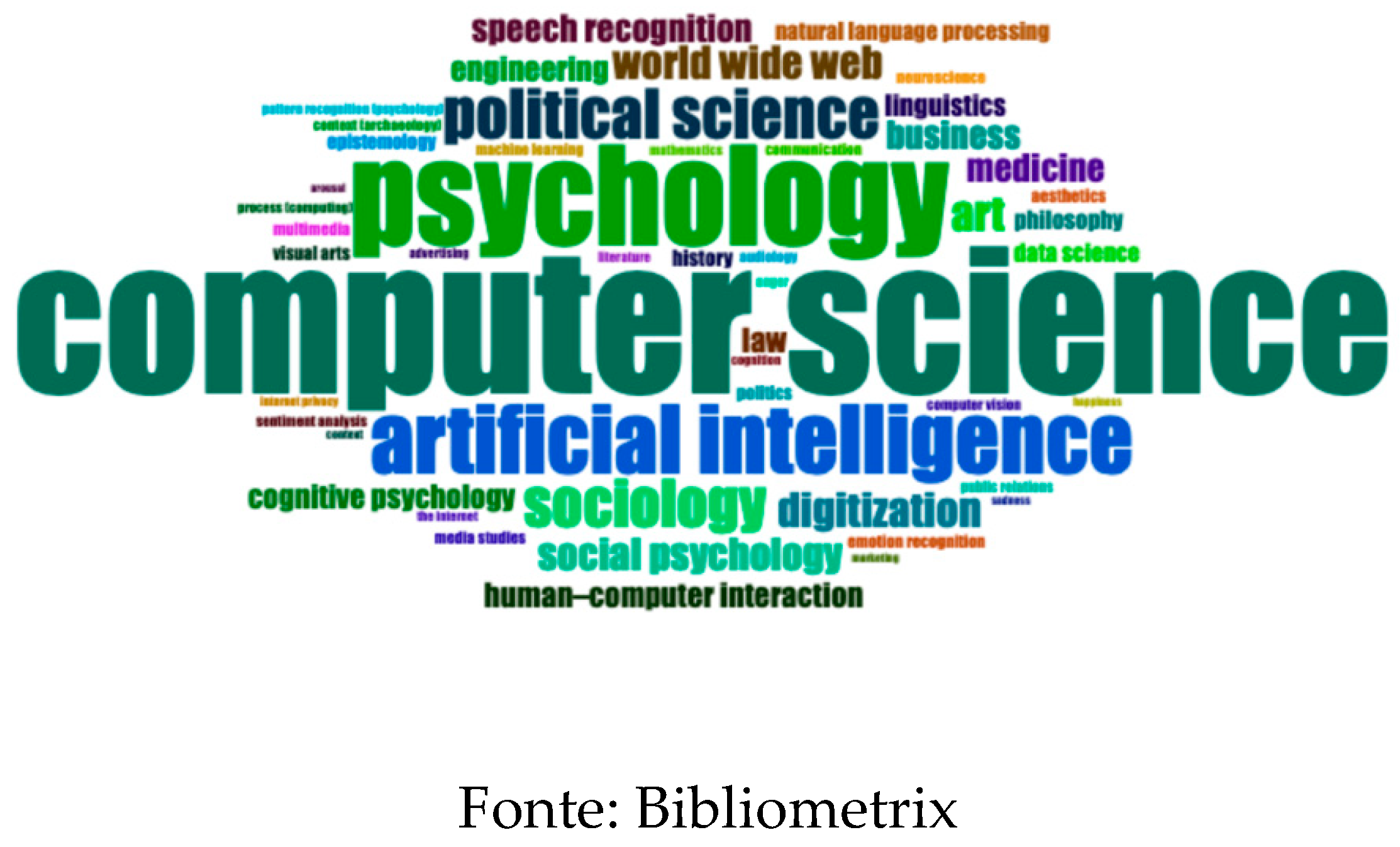
Figure 2.
Thematic map.
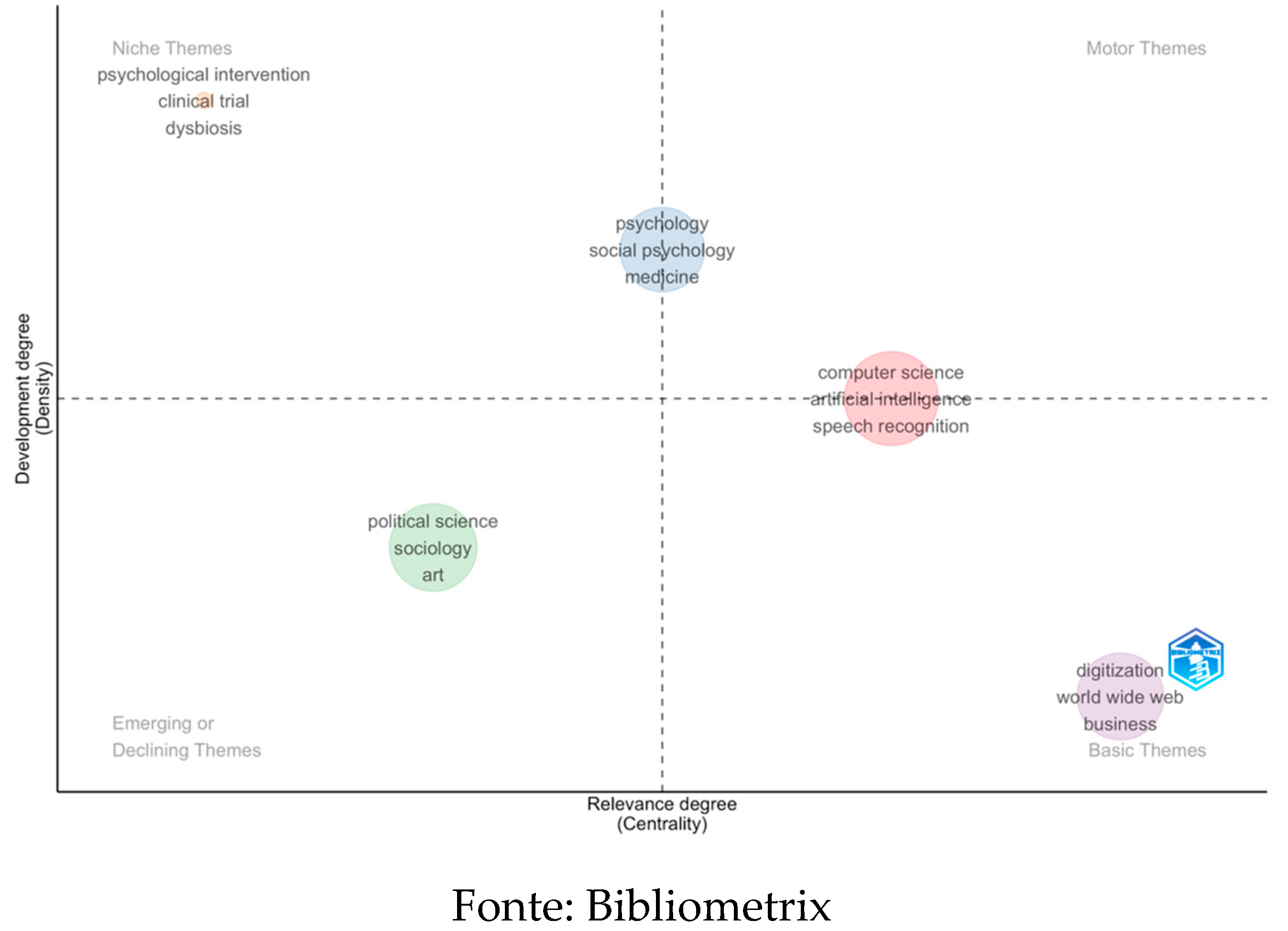
Figure 3.
Conceptual structure map.
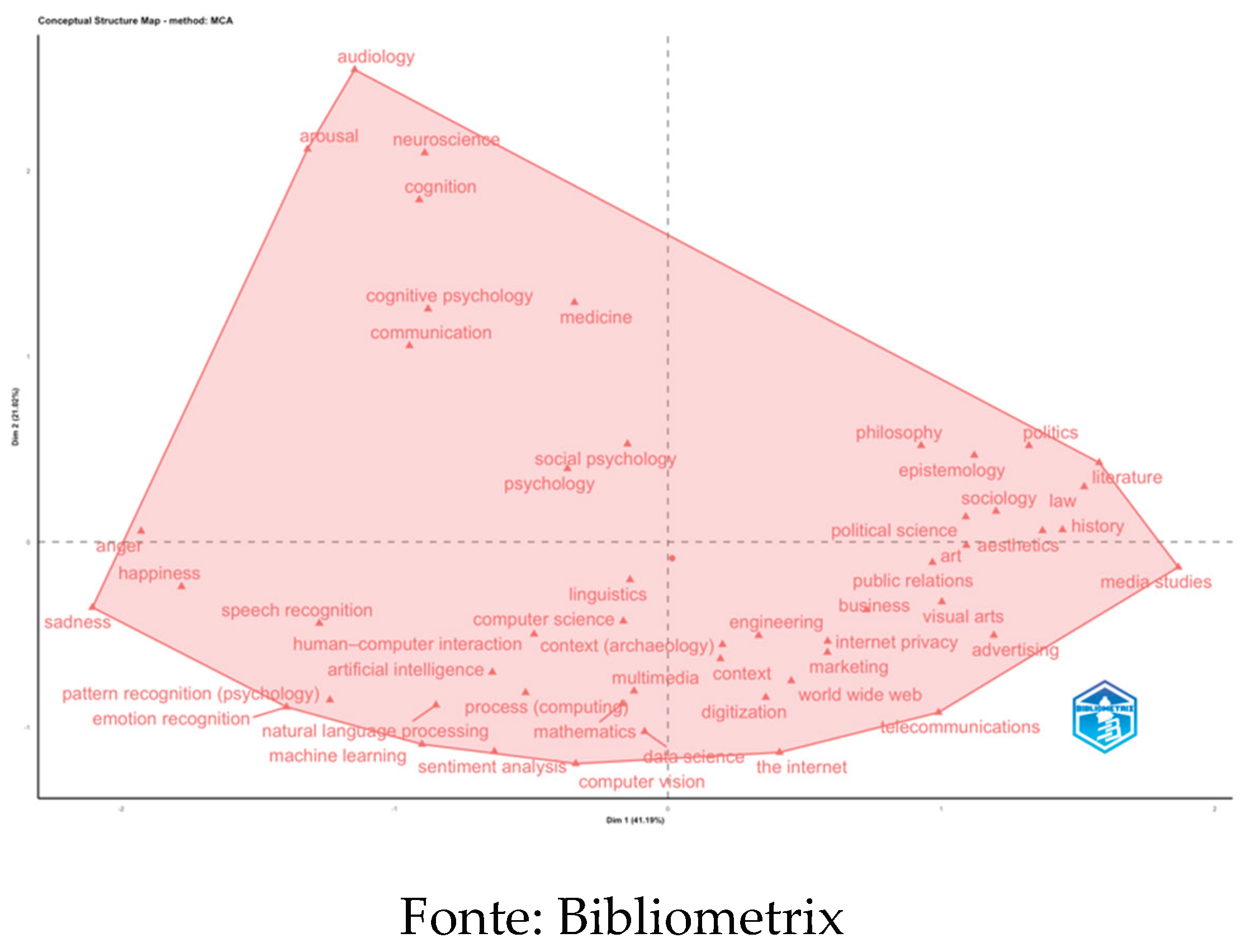
Disclaimer/Publisher’s Note: The statements, opinions and data contained in all publications are solely those of the individual author(s) and contributor(s) and not of MDPI and/or the editor(s). MDPI and/or the editor(s) disclaim responsibility for any injury to people or property resulting from any ideas, methods, instructions or products referred to in the content. |
© 2026 by the authors. Licensee MDPI, Basel, Switzerland. This article is an open access article distributed under the terms and conditions of the Creative Commons Attribution (CC BY) license (http://creativecommons.org/licenses/by/4.0/).
Copyright: This open access article is published under a Creative Commons CC BY 4.0 license, which permit the free download, distribution, and reuse, provided that the author and preprint are cited in any reuse.


