
Submitted:
21 February 2026
Posted:
25 February 2026
You are already at the latest version
Abstract
In an era of rapid urbanisation and climate challenges, understanding how urban land patterns contribute to resilience is crucial for sustainable development. This theoretical review introduces a novel framework positing that greater heterogeneity in plot sizes and land uses enhances urban resilience by promoting long-term preservation of built en-vironments, multifunctional spaces, and socio-cultural adaptability. Drawing on urban morphology, assemblage theory, and resilience science, we argue that fragmented ownership in small-plot fabrics acts as a barrier to large-scale redevelopment, fostering diversity that buffers against shocks. Through comparative case studies of Venice (Italy), Tokyo (Japan), Hong Kong, Mexico City (Mexico), and York (UK), we illustrate how historical small-plot subdivisions have endured centuries, supporting ecological, eco-nomic, and social resilience. The analysis reveals common patterns: ownership frag-mentation preserves fine-grained urban forms, enabling adaptive reuse (exaptation) and inclusivity. This paper addresses a gap in the literature by synthesising plot-level het-erogeneity with broader resilience outcomes, offering policy implications for protecting such fabrics amid global urbanisation pressures. Findings align with land system science, emphasising multifunctionality for regenerative urbanism.
Keywords:
plot heterogeneity
; urban resilience
; land subdivision
; ownership fragmentation
; urban morphology
; exaptation
; sustainable land use
; assemblage theory
1. Introduction
Urban landscapes worldwide face unprecedented pressures from climate change, population growth, and socio-economic shifts, necessitating resilient land use strategies that balance preservation with adaptability [1]. Traditional urban morphology theories, such as those in Bentley’s Responsive Environments [2], highlight how small plot sizes enable diversity in building functions and visual permeability, fostering vibrant, adaptable spaces. However, the role of plot heterogeneity (variations in size and use) in long-term urban resilience remains under-explored. We propose that heterogeneous plot subdivisions enhance resilience by complicating large-scale redevelopment through fragmented ownership, thus preserving historical fabrics while allowing multifunctional evolution.
This theory extends existing resilience frameworks, which often emphasise spatial heterogeneity at larger scales (e.g., density-structure-function) for adaptive capacity. At the plot level, small, diverse parcels resist homogenisation, promoting socio-cultural continuity and ecological multifunctionality, key to the Land journal’s focus on land use transitions and urban regeneration. Aligning with the special issue’s themes of exaptation (repurposing urban elements) and sustainability, heterogeneous plots enable adaptive reuse over centuries, countering fragmentation seen in modern developments.
We review literature gaps, present the framework, and analyse five global cases: Venice’s sestieri, Tokyo’s shitamachi districts, Hong Kong’s colonial fabrics, Mexico City’s historic centre, and York’s medieval core. These illustrate preservation via ownership barriers, multifunctional uses, and resilience outcomes. The paper concludes with policy recommendations and research questions.
2. Theoretical Framework
Urban resilience is the capacity of cities to absorb disturbances, adapt, and transform while maintaining core functions [3]. Urban resilience is commonly conceptualised at macro or meso scales through density [4], land-use mix, or infrastructural redundancy; however, its micro-scale spatial substrates remain under-theorised. This paper advances the argument that plot subdivision heterogeneity constitutes a foundational, though often invisible, resilience mechanism. Bentley’s [2] principles, such as permeability, variety, and legibility, link small plots to user choice and vitality. Heterogeneity fosters socio-cultural resilience by embedding local identities and adaptive practices, aligning with regenerative urbanism [5]. We frame plot heterogeneity as a micro-scale driver: small, varied plots create “fine-grained” urbanism, where ownership fragmentation—multiple smallholders—impedes buyouts for mega-projects, preserving fabrics over centuries.
Plot heterogeneity is here understood as a composite condition involving:
- (i)
- geometric diversity (variation in plot size and shape),
- (ii)
- legal fragmentation (multiple, independent ownerships), and
- (iii)
- functional openness (capacity to host changing uses over time).
Drawing on assemblage theory [6], plots are treated not as passive containers but as active components within urban assemblages, exerting stabilising effects through constraint rather than optimisation. Assemblage theory views plots as emergent components in urban systems, exerting “downward causality” where heterogeneity stabilises the whole against shocks. Small plots enable diverse uses (e.g., residential, commercial, artisan), enhancing multifunctionality and exaptation, repurposing for new needs without erasure [6]. This counters land degradation from fragmentation in agriculture but posits it as beneficial in urban contexts.
Ownership fragmentation introduces friction into processes of land consolidation, reducing susceptibility to large-scale redevelopment and enabling incremental, adaptive transformations.
This condition supports what architectural exaptation describes as the retention of latent capacities within built form, allowing structures and spaces to be repurposed without erasure [7]. In this sense, plot heterogeneity accommodates change while simultaneously modulating its pace and scale, balancing continuity and transformation.
The framework repositions heterogeneity from a by-product of historical urbanisation to a structural asset for long-term resilience, particularly in contexts facing climate stress, socio-economic shifts, and redevelopment pressures [7].
3. Literature Review
Literature on urban heterogeneity often addresses larger scales, e.g., spatial machine learning models revealing nonlinear impacts on resilience. Heterogeneity in Urban Morphology and Resilience: Many papers discuss spatial heterogeneity (e.g., in density, scale, or landscape patterns) as key to urban resilience, but focus on broader scales like blocks or agglomerations rather than individual plot sizes. For instance, Gu et al. [8] research on spatial heterogeneity in urban resilience uses a “scale-density-morphology” framework, linking diverse urban structures to better adaptability (e.g., against climate risks). However, it doesn’t address it to plot-level ownership or long-term preservation. Another research by Cobo et al. [9] explores heterogeneity in blue-green infrastructure and urban heat resilience, emphasising diverse land uses for multifunctionality, but again, not plot-specific.
Markolf et al. [10] did an extensive review of urban resilience frameworks, noting how mixed land uses enhance social-ecological systems, but overlooked ownership as a barrier to change. Here, the Bentley et al. work [2] is foundational, arguing that small plots enable variety in land uses and visual permeability. Or the eyes on the street, as Jacobs [11] expressed in her seminal work. Furthermore, Pickett et al. [12] expand on dynamic heterogeneity in urban systems, linking small-scale diversity to ecological integration, but not explicitly for centuries-long preservation via fragmented ownership.
Recently, a review by He et al. [13] on urban shrinkage notes how heterogeneous built environments resist decay, implying preservation, but doesn’t connect to cultural resilience. Following the same line, the introduction of concepts like “operative resilience” in architecture discusses multisystemic built forms resisting change over time, suggesting the idea of small plots as “locked-in” due to multiple owners [14].
IPCC reports [15] highlight how compact, mixed-use urban forms reduce GHG emissions and lock in low-carbon behaviours, but frame it more around density than plot heterogeneity. Gaps exist in synthesising plot heterogeneity with socio-cultural outcomes; our framework fills this by linking to exaptation and multifunctionality.
4. Methodology
This study adopts a comparative qualitative morphological approach grounded in urban theory rather than a statistical or GIS-driven analysis. The research synthesised historical and contemporary data from secondary sources to analyse plot heterogeneity across cases. Case selection criteria include: (1) historical small-plot origins (medieval/colonial/Edo); (2) evidence of preservation despite urbanisation; (3) diverse global contexts for generalizability; and (4) availability of GIS/historical data. The research does not seek to quantify resilience outcomes, but to theoretically interpret how plot subdivision patterns operate as structural constraints and enablers within long-term urban systems.
Five historic urban contexts: Venice, Tokyo, Hong Kong, Mexico City, and York, were selected through theoretical sampling due to their well-documented persistence of fine-grained plot subdivision across different cultural, legal, and geographical contexts. These cases function as analytical exemplars rather than representative samples.
The analysis combines: (i) interpretive urban morphology (plot size, configuration, and continuity), (ii) institutional readings of ownership fragmentation drawn from historical and planning literature, and (iii) a resilience-oriented theoretical lens informed by assemblage theory and architectural exaptation. Visual material (building footprints and photographic documentation) is used heuristically to support comparative morphological readings.
Data sources for plot metrics include historical cadastres (e.g., Venice’s Napoleonic registers, 1808 [16]), GIS studies (e.g., HK open space fragmentation [17]), academic analyses (e.g., Tokyo shitamachi persistence [18], and heritage reports (e.g., Mexico City Centre blocks [19]; York Shambles dimensions [44]). Regimes draw from national laws (e.g., Italy’s Cultural Heritage Code [20]) and planning documents (e.g., UK’s Conservation Areas [21]. Analysis involves cross-case synthesis via tables and diagrams. This approach allows for the identification of recurring structural patterns linking plot heterogeneity, ownership fragmentation, and long-term adaptability, while acknowledging the limitations inherent in non-quantitative comparative research.
The following paragraphs illustrate the case studies. Rather than functioning as conventional case studies, the following examples are presented as comparative morphological readings. Each illustrates how fine-grained plot subdivision operates as a long-term spatial structure shaping adaptability, preservation, and socio-cultural continuity. The cases are not compared through standardised metrics but through recurring morphological logics: persistence of small plots, resistance to land consolidation, and capacity for incremental functional change. This comparative reading allows common patterns to emerge across diverse urban contexts without implying direct causal equivalence.
While this qualitative synthesis provides conceptual insights, limitations include reliance on secondary historical and institutional sources, which may not capture recent morphological changes or site-specific variations, and a focus on selected cases that limits broader generalizability.
4.1. Venice, Italy
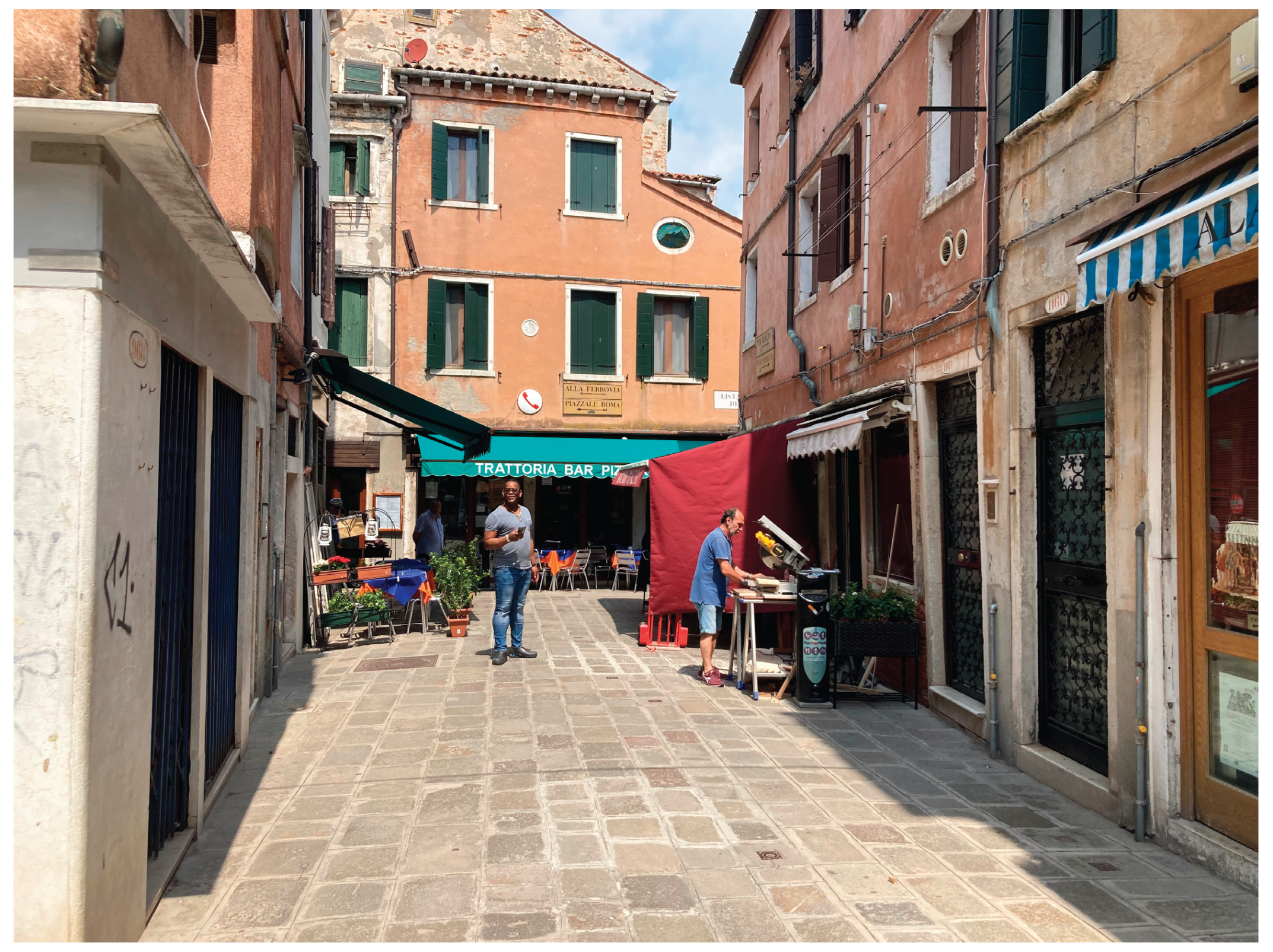
Venice exemplifies how medieval plot subdivision has persisted as a morphological constant, structuring contemporary adaptability. The city’s fine-grained parcels, shaped by historical subdivision and fragmented ownership, have limited large-scale redevelopment while enabling continuous processes of adaptive reuse. This morphological stability has allowed Venice to absorb tourism pressures and environmental stress without complete spatial reconfiguration [22].
Figure 1.
Small plots in Santa Croce, Venice.
4.2. Tokyo, Japan
Tokyo’s shitamachi districts (e.g., Yanaka) retain Edo-era fine-grained plots, typically ranging from approximately 0.1 to 0.5 hectares, with reported minimum parcel sizes of around 140 m² in comparable inner-city areas [23,24]), preserved post-WWII due to fragmented ownership resisting redevelopment. Diverse uses (temples, shops, housing) enhance resilience, as in earthquake recovery via community “machizukuri” [25]. Heterogeneity buffers shocks, with mixed agricultural-urban lands boosting self-sufficiency. Here, resilience emerges not from formal planning coherence but from incremental rebuilding within persistent subdivision patterns, enabling rapid recovery while maintaining social and functional diversity (see Figure 2).
4.3. Hong Kong
Colonial-era plots in Sheung Wan remain relatively small, generally ranging between approximately 0.05 and 0.2 hectares, with spatial analyses indicating high levels of fragmentation within dense built-up areas[26]) persist amid skyscrapers, thanks to clan ownership fragmentation (see Figure 3). Mixed uses (markets, tenements) promote economic resilience, though pressures from urbanisation threaten fabrics. Preservation efforts balance development, as in Tong Lau revitalisation [27].
4.4. Mexico City, Mexico
Mexico City Centre is characterised by heterogeneous small plots, typically ranging from approximately 0.1 to 0.5 hectares across 668 blocks within a 9 km² area[28,29], a pattern that has persisted despite recurrent seismic events and is supported by diverse ownership structures [30,31]. Multifunctional uses (vendors, heritage) enhance seismic resilience, as post-2017 recovery shows. Peri-urban fragmentation counters degradation (see Figure 4).
4.5. York, UK
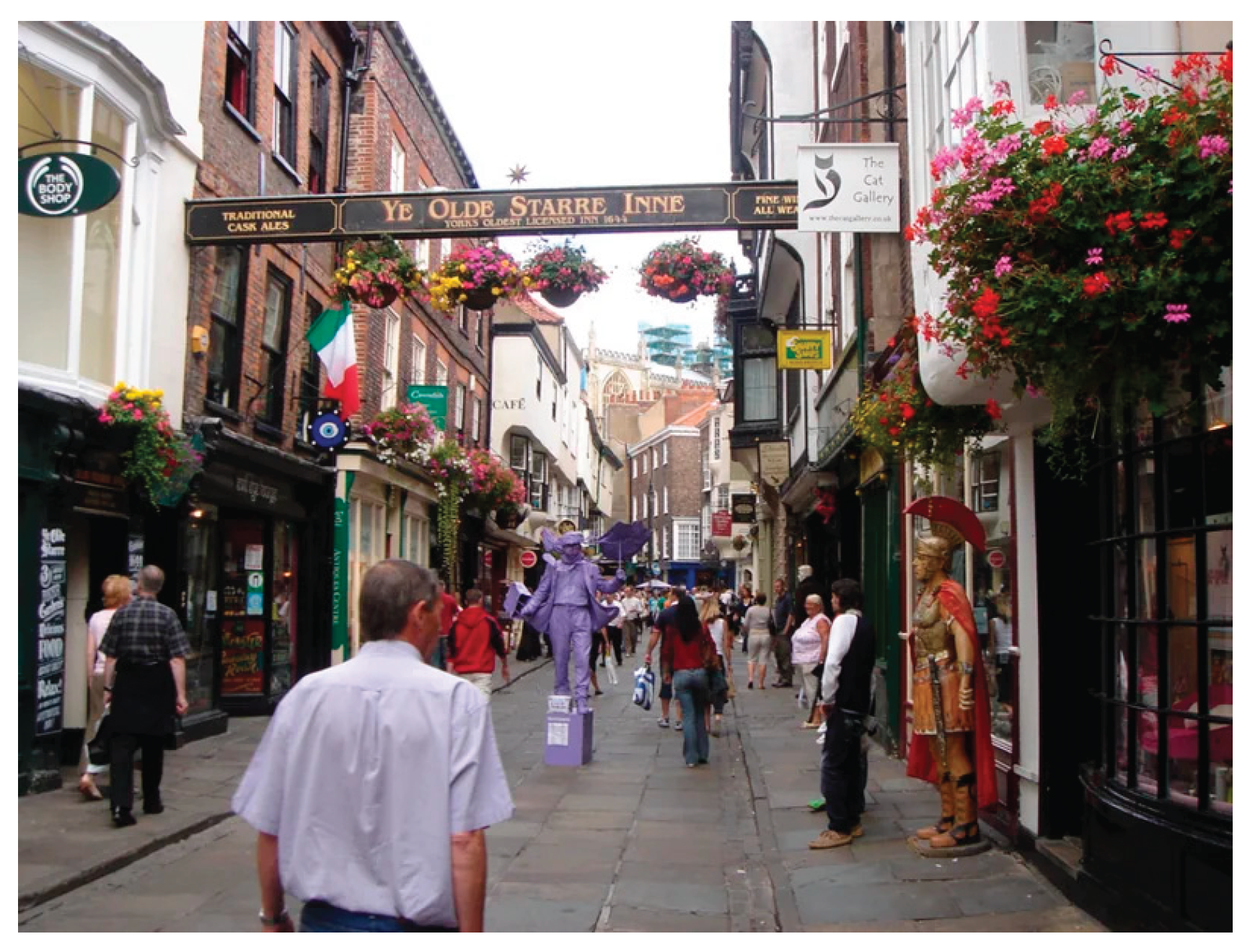
York’s medieval Shambles consists of narrow, fine-grained plots, generally ranging between approximately 0.05 and 0.2 hectares, arranged along a street historically measured at around 130 ells in length, with tightly subdivided parcels documented in archival sources from the 14th century [32]. It has been preserved through individual ownerships resisting change. Diverse uses (retail, residential) support cultural resilience, with conservation efforts maintaining the core (see Figure 5).
To complement the comparative morphological readings, Table 2 synthesises the property regimes and land-assembly conditions that plausibly support (or undermine) plot heterogeneity. Rather than presenting a full legal analysis, the table identifies recurring institutional mechanisms—ownership fragmentation, leasehold governance, readjustment practices, and heritage controls—that modulate the feasibility and tempo of land consolidation.

Table 1.
property regimes and how they sustain (or weaken) plot heterogeneity. Source authors.
| Case study | Dominant property/tenure regime | What makes land assembly harder/easier | Heritage / planning constraints that affect redevelopment | What this tends to do to plot heterogeneity (mechanism) |
|---|---|---|---|---|
| Venice | Predominantly private ownership; frequent co-ownership, including hereditary co-ownership shares | Co-ownership can raise transaction/coordination costs for assembly because decisions may require multiple parties; fragmentation persists through inheritance patterns [20] | Strong heritage constraints under Italy’s Cultural and Landscape Heritage Code (Legislative Decree 42/2004), requiring authorisations for protected assets/areas [33]. | Fine-grain parcels are “sticky”: ownership fragmentation + heritage authorisation increases friction against consolidation, supporting incremental adaptation rather than wholesale replacement [20]. |
| Tokyo | Predominantly private ownership; historically small-scale landholdings common in inner-city neighbourhoods | Land assembly is often approached through land readjustment (kukaku seiri): reorganises parcels while preserving rights (owners contribute land for infrastructure but retain adjusted plots) [18]. | City-planning and zoning controls exist, but a key institutional feature is that redevelopment commonly proceeds through incremental rebuilding or readjustment rather than full expropriation/clearance in many contexts [34]. | Plot heterogeneity can be reproduced even during upgrading because readjustment and incrementalism often avoid total homogenisation; fine grain can persist through cycles of renewal [18]. |
| Hong Kong | Near-universal leasehold: land held from government via leases/land grants (not freehold) [17]. | Assembly can be enabled via government control and lease conditions, but in practice inner-city renewal often requires acquisition of multiple titles/units; Urban Renewal Authority processes formalise acquisition and compensation steps [21]. | Government lease covenants/conditions are a powerful lever over land use and redevelopment form (a distinctive governance tool) [35]. | Mixed effect: despite small-lot historic fabrics, the leasehold system + formal renewal machinery can make large-scale redevelopment more feasible, putting fine-grain heterogeneity under stronger pressure (unless protected/planned otherwise) [17]. |
| Mexico City Centre | Mixed regimes across the metropolis: private property dominates historic-core parcels; social property (ejido/comunidad) is significant on urban fringes under Article 27 framework [36]. | In the historic centre, assembly is often complicated by multiple owners and legacy building typologies; city-wide, ejido/social tenure historically restricts sale/subdivision unless regularised, shaping very different dynamics at the periphery [36]. | Centro Histórico governance typically involves multiple heritage/planning bodies (e.g., INAH/INBA + city planning), creating layered permissions and constraints [37]. | In the historic centre, institutional layering + fragmented ownership can support persistence of fine-grain patterns; in other areas, tenure transitions (regularisation) can either stabilise or rapidly transform subdivision patterns depending on policy direction [37]. |
| York | Predominantly private property (freehold/leasehold mix is common in England), with strong statutory planning controls | Assembly is legally possible via compulsory purchase powers (CPO) as a land-assembly tool, though procedurally demanding and scrutinised [38]. | Statutory controls for listed buildings and conservation areas under the Planning (Listed Buildings and Conservation Areas) Act 1990; plus local conservation area appraisal/designation practices [39] | Fine-grain historic fabric tends to persist because heritage consent requirements raise the “cost” (time, uncertainty, limitations) of redevelopment, steering change toward incremental adaptation; CPO exists but is not frictionless [39]. |
5. Discussion
The comparative morphological readings highlight that plot subdivision heterogeneity, beyond being a spatial attribute, is also a relational condition produced through the interaction of morphology, property regimes, and planning institutions. Across the five cases, fine-grained plot structures persist where legal and governance arrangements introduce friction into land consolidation, thereby modulating the pace, scale, and direction of urban transformation.
A first pattern emerges in cities such as Venice and Tokyo, where long-term persistence of small plots is supported by institutional mechanisms that favour incremental adaptation over comprehensive redevelopment. In Venice, fragmented private ownership combined with stringent heritage controls generates high transaction and authorisation costs for large-scale land assembly, effectively stabilising the urban fabric. In Tokyo, land readjustment practices and incremental rebuilding allow renewal to occur without erasing fine-grained subdivision, enabling plot heterogeneity to be reproduced even through cycles of post-disaster reconstruction. In both contexts, resilience is not achieved through spatial optimisation, but through managed constraint, where transformation is channelled rather than prevented.
By contrast, Hong Kong illustrates a more ambivalent relationship between property regime and plot heterogeneity. While historic districts such as Sheung Wan retain fine-grained parcels, the leasehold system and the presence of formalised urban renewal mechanisms lower institutional barriers to consolidation. As a result, plot heterogeneity becomes contingent rather than structural, persisting only where redevelopment pressures are mitigated by planning decisions, heritage recognition, or market conditions. This case demonstrates that small-plot morphology alone is insufficient to guarantee long-term resilience; without supportive institutional arrangements, fine-grained fabrics remain vulnerable to rapid homogenisation.
The case of Mexico City Centre reveals how multiple tenure regimes can coexist within a single metropolitan context, producing uneven resilience outcomes. In the historic centre, fragmented private ownership combined with layered heritage governance constrains large-scale redevelopment and supports incremental adaptation following environmental shocks, such as earthquakes. In contrast, areas undergoing tenure regularisation or rapid land-market integration may experience accelerated transformation and subdivision homogenisation. This duality underscores the importance of institutional layering in shaping how plot heterogeneity is either stabilised or eroded over time.
In York, the persistence of fine-grained medieval plots is primarily sustained through statutory heritage and conservation frameworks. Although compulsory purchase powers exist as a land-assembly tool, their procedural complexity and political sensitivity render them exceptional rather than routine. Consequently, redevelopment tends to proceed through adaptive reuse and small-scale modification, reinforcing the relationship between heritage governance and plot-scale resilience. This suggests that, even in contexts where ownership fragmentation is less pronounced, regulatory friction can perform a similar stabilising function.
Taken together, the cases indicate that plot heterogeneity operates as a spatial moderator, shaping urban resilience not by resisting change outright, but by structuring how change unfolds. Fine-grained subdivision patterns encourage architectural exaptation by preserving latent spatial capacities, enabling buildings and parcels to accommodate new uses without systemic reconfiguration. From a land-systems perspective, this supports multifunctionality and socio-cultural continuity, aligning with regenerative urbanism goals while avoiding the rigidity often associated with preservation-led approaches.
Importantly, the findings challenge prevailing planning paradigms that prioritise land assembly, densification, and redevelopment efficiency as default resilience strategies. While such approaches may deliver short-term gains, they risk undermining precisely those micro-scale land structures that have historically enabled cities to adapt over long temporal horizons. Recognising plot subdivision heterogeneity as an institutional and morphological asset reframes resilience as a process of negotiated continuity, rather than one of optimisation or replacement.
Table 2.
Conceptual diagram illustrating how plot subdivision heterogeneity operates as a micro-scale structural mechanism linking land subdivision patterns to long-term urban resilience through ownership fragmentation, incremental adaptation, and architectural.
Table 2.
Conceptual diagram illustrating how plot subdivision heterogeneity operates as a micro-scale structural mechanism linking land subdivision patterns to long-term urban resilience through ownership fragmentation, incremental adaptation, and architectural.
| Plot Conditions | Structural Effects | Resilience Outcomes |
|---|---|---|
| Small plot size variation | Resistance to land consolidation | Architectural exaptation |
| Irregular plot geometry |
Incremental development pathways | Multifunctionality over time |
| Fragmented ownership |
High functional permeability | Socio-cultural continuity Long-term urban resilience |
6. Conclusions
This paper advances a theoretical contribution to land-system and urban resilience scholarship by foregrounding plot subdivision heterogeneity as a micro-scale structural condition shaping long-term urban adaptability. While resilience research has largely focused on macro-scale spatial patterns or infrastructural systems, this study demonstrates that the persistence of fine-grained plot structures—particularly when coupled with fragmented ownership—plays a critical role in mediating how urban change unfolds over time.
Through comparative morphological readings across diverse global contexts, the analysis shows that heterogeneous plot fabrics function as spatial moderators, constraining rapid land consolidation while enabling incremental, multifunctional adaptation. Rather than impeding urban transformation, such constraints facilitate architectural exaptation by preserving latent capacities within the built environment, allowing uses, meanings, and social practices to evolve without spatial erasure.
In this sense, fine-grained land subdivision is reframed not as a historical residue or planning inefficiency, but as an active land-system mechanism with contemporary relevance for resilience-oriented urban development.
Conceptually, the paper repositions heterogeneity from a residual condition of pre-modern urbanisation into a deliberate resilience asset, contributing to ongoing debates on regenerative urbanism, adaptive reuse, and land governance. Plot-scale fragmentation emerges not as a barrier to change, but as a form of structural redundancy that enhances socio-cultural continuity, ecological multifunctionality, and long-term spatial resilience.
From a policy perspective, the findings suggest that planning instruments focused exclusively on densification and land assembly risk undermining precisely those urban fabrics that have demonstrated adaptive capacity over extended temporal horizons. Protecting fine-grained subdivision patterns, either through zoning, conservation overlays, and/or incentives for adaptive reuse, should therefore be recognised as a viable strategy for resilient land-use transitions, rather than as an obstacle to development.
This perspective challenges optimisation-driven planning paradigms by highlighting the resilience value of constraint, friction, and negotiated continuity within land systems.
By situating plot heterogeneity within assemblage theory and architectural exaptation, this study opens new avenues for research on how micro-scale land structures condition urban futures under increasing climatic uncertainty, redevelopment pressure, and socio-economic change.
Future work that integrates cadastral data, longitudinal spatial analysis, and institutional comparison could further operationalise these insights, strengthening the role of plot-scale morphology in land-system research and planning practice.
References
- UN-Habitat, “SDG Indicator 11.7.1 Training Module: Public Space,” 2018, United Nations Human Settlement Programme (UN-Habitat), Nairobi, Kenya. [Online]. Available: https://unhabitat.org/sites/default/files/2020/07/indicator_11.7.1_training_module_public_space.pdf.
- I. Bentley, A. Alcock, P. Murrain, S. McGlynn, and G. Smith, Responsive Environments. London, UK: The architectural Press Ltd., 1985.
- P. J. G. Ribeiro and L. A. Pena Jardim Gonçalves, “Urban resilience: A conceptual framework,” Sustain Cities Soc, vol. 50, no. November 2018, 2019. [CrossRef]
- S. Meerow, J. P. Newell, and M. Stults, “Defining urban resilience: A review,” Landsc Urban Plan, vol. 147, pp. 38–49, 2016. [CrossRef]
- H. Girardet, Creating sustainable cities, no. 2. Resurgence Books, 1999.
- M. DeLanda, Assemblage Theory. in Speculative Realism. Edinburgh, UK: Edinburgh University Press, 2016.
- A. Melis, T. Pievani, and J. A. Lara-Hernandez, Architectural Exaptation: When Function Follows Form. London, UK: Routledge, 2024. [CrossRef]
- T. Gu et al., “Spatial heterogeneity of urban resilience: Quantifying key determinants by spatial machine learning model embedded in density-structure-function framework,” Cities, vol. 167, no. May 2024, p. 106305, 2025. [CrossRef]
- S. Cobo et al., “Sustainable scale-up of negative emissions technologies and practices: where to focus,” Environmental Research Letters, vol. 18, no. 2, 2023. [CrossRef]
- S. A. Markolf et al., “Interdependent Infrastructure as Linked Social, Ecological, and Technological Systems (SETSs) to Address Lock-in and Enhance Resilience,” Earths Future, vol. 6, no. 12, pp. 1638–1659, 2018. [CrossRef]
- J. Jacobs, The Death and Life of Great American Cities. New York, USA: Random House, 1961.
- S. T. A. Pickett, M. L. Cadenasso, and B. McGrath, Resilience in Ecology and Urban Design, vol. 3. New York, US: Springer International, 2013. [CrossRef]
- X. He, W. Gao, D. Guan, and L. Zhou, “Impacts of urban shrinkage on the built environment and its environmental sustainability: an analytical review,” Environmental Research Letters, vol. 18, no. 10, 2023. [CrossRef]
- J. Weichselgartner and I. Kelman, “Geographies of resilience: Challenges and opportunities of a descriptive concept,” Prog Hum Geogr, vol. 39, no. 3, pp. 249–267, 2015. [CrossRef]
- P. R. Shukla et al., “Climate change 2022: Mitigation of climate change,” Contribution of working group III to the sixth assessment report of the Intergovernmental Panel on Climate Change, vol. 10, p. 9781009157926, 2022.
- I. Di Lenardo, C. Viaccoz, P. Guhennec, C. Musso, and F. Kaplan, “The 1808 Napoleonic Land Registers of Venice: Spatial and Textual Dataset,” 2025.
- The Government of the Hong Kong Special Administrative Region, “Land Tenure System and Land Policy in Hong Kong,” Lands Department. Accessed: Dec. 12, 2025. [Online]. Available: https://www.landsd.gov.hk/en/resources/land-info-stat/land-tenure-system-land-policy.html?utm_source=chatgpt.com.
- F. F. De Souza, “What is Land Readjustment? Concepts on Land Readjustment,” in Land Readjustment: Solving Urban Problems Through Innovative Approach, F. F. De Souza, T. Ochi, and A. Hosono, Eds., Tokyo, Japan: JICA Research Institute, 2018, ch. 1, pp. 15–33.
- Gobierno de la Ciudad de Mexico, “Autoridad del Centro Historico.” Accessed: Apr. 01, 2016. [Online]. Available: http://www.autoridadcentrohistorico.df.gob.mx.
- V. Mariella, “Landownership concentration and human capital accumulation in post-unification Italy,” J Popul Econ, vol. 36, no. 3, pp. 1695–1764, 2023.
- Urban Renewal Authority, “FAQ for Owners,” Urban Renewal Authority.
- J. A. Lara-Hernandez, “From Segregation to Inclusion: Children’s Engagement in Urban Public Spaces,” Cities Health, vol. 00, no. 00, pp. 1–18, 2025. [CrossRef]
- R. P. Dore, “Shitayama-cho,” in City Life in Japan, Routledge, 2003, pp. 11–25.
- T. Fujimori, “Shitamachi, In Tokyo’s Left Hand,” Japan Quarterly 34.4, vol. 4, no. 34, p. 410, 1987.
- Y. Yamagata and H. Maruyama, Urban Resilience: A Transformative Approach. Tsukuba, Japan: Springer Nature Switzerland AG, 2016. [CrossRef]
- J. Li, M. H. Y. Chua, and K. H. Mo, “Before the plot ratio: balancing density through ambiguity in 1950s colonial Hong Kong,” Planning Practice and Research, vol. 40, no. 4, pp. 802–822, 2025. [CrossRef]
- I. Y. Jian, J. Luo, W. Zeng, and W. Ye, “Lifestyle-Oriented Urban Collage, the Future of Hong Kong ‘Tong Lau’? A Case Study of Tai Hang District,” in The Kyoto Conference on Arts, Media & Culture 2024, The International Academic Forum, 2024.
- D. Navarrete Escobedo, “Matices de la turistificación y de la gentrificación en México: comparativa de impactos socioespaciales en la Roma-Condesa y el centro patrimonial de San Miguel de Allende,” 2022.
- C. A. Vega, LAS VOCES DEL CENTRO HISTORICO La lucha por el espacio en la Ciudad de México. El Colegio de Mexico AC, 2025.
- J. A. Marquez Salazar, “EL ESPACIO PÚBLICO Y EL CENTRO HISTÓRICO DE LA CIUDAD DE MÉXICO.,” Autoridad del Espacio Publico. Accessed: Sep. 01, 2017. [Online]. Available: http://aep.cdmx.gob.mx/blog-aep/el-espacio-publico-y-el-centro-historico-de-la-ciudad-de-mexico.
- R. I. Díaz Parra, “La transformación del centro histórico de la Ciudad de México. ¿Gentrificación o repoblación?,” in XII Coloquio y Trabajos de Campo del Grupo de Geografía Urbana (AGE). Territorios inconclusos y sociedades rotas, Madrid y Castilla la Mancha, 2014, pp. 1–10.
- R. Hayton, “The Historical Background to this Development Site,” in Excavations at the Austin Friary, Hull, Yorkshire, 1994 and 1999, Part 1, Routledge, 2025, pp. 17–39.
- Ministry of Cultural Heritage and Activities and Tourism, “Code of the Cultural and Landscape Heritage,” Legislative Decree, vol. 42, no. 42, p. 27, 2004.
- C. Hein, “Toshikeikaku and machizukuri in Japanese urban planning. The reconstruction of inner city neighborhoods in Kobe,” Deutsches Institut für Japanstudien (Hg.): Japanstudien, pp. 221–252, 2001, [Online]. Available: http://books.google.com/books?hl=en&lr=&id=JFBCnbu02AIC&oi=fnd&pg=PA221&dq=TOSHIKEIKAKU+AND+MACHIZUKURI+IN+JAPANESE+URBAN+PLANNING&ots=mdNplkhfDF&sig=sjL5x_vqmTAHB1S8wrQVXN705_g%5Cnhttp://scholar.google.com/scholar?hl=en&btnG=S.
- J. Li, “A Comparative Study and Analysis of the History and Recent Development of Real Estate in Hong Kong and the Mainland,” Journal of Economics, Finance and Accounting Studies, vol. 6, no. 2, pp. 35–48, 2024.
- J. Valette, “Land Regularization on the Fringes of Mexico City: A Recipe for Reducing Inequalities ?,” Metropolitics, no. 1989, pp. 1–9, Jun. 2018, [Online]. Available: http://www.metropolitiques.eu/Land-Regularization-on-the-Fringes-of-Mexico-City-A- Recipe-for-Reducing.html.%0A9.
- M. Lopez Franco, “Frameworks for Urban Conservation: Social Equality Through Housing Tenure in Mexican Historic Cities. Cases of Mexico City and Guadalajara,” University College London, 2021.
- C. & L. G. Ministry of Housing, Guidance on the compulsory purchase process. England, 2025. [Online]. Available: https://www.gov.uk/government/publications/compulsory-purchase-process-guidance/guidance-on-the-compulsory-purchase-process?utm_source=chatgpt.com.
- United Kingdom, Planning (Listed Buildings and Conservation Areas) Act 1990. United Kingdom, 2025. [Online]. Available: https://www.legislation.gov.uk/ukpga/1990/9/contents?utm_source=chatgpt.com.
Figure 2.
Small plots in Ikebukuro, Tokyo. Photo by Taming Complexity and Michael Bouchey.
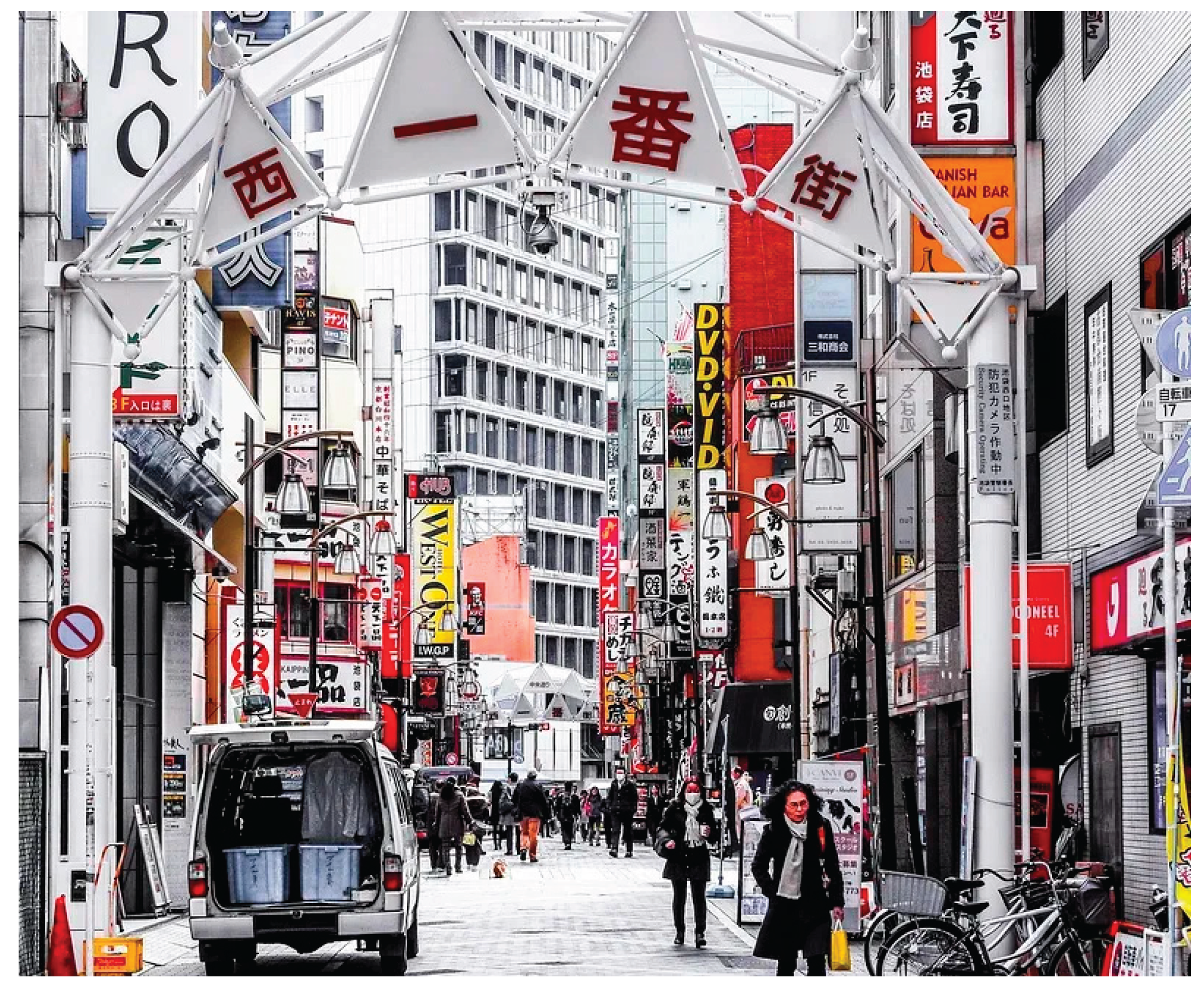
Figure 3.
Small plots in Sheung Wan, Hong Kong. Photo by Jose Antonio Lara-Hernandez.
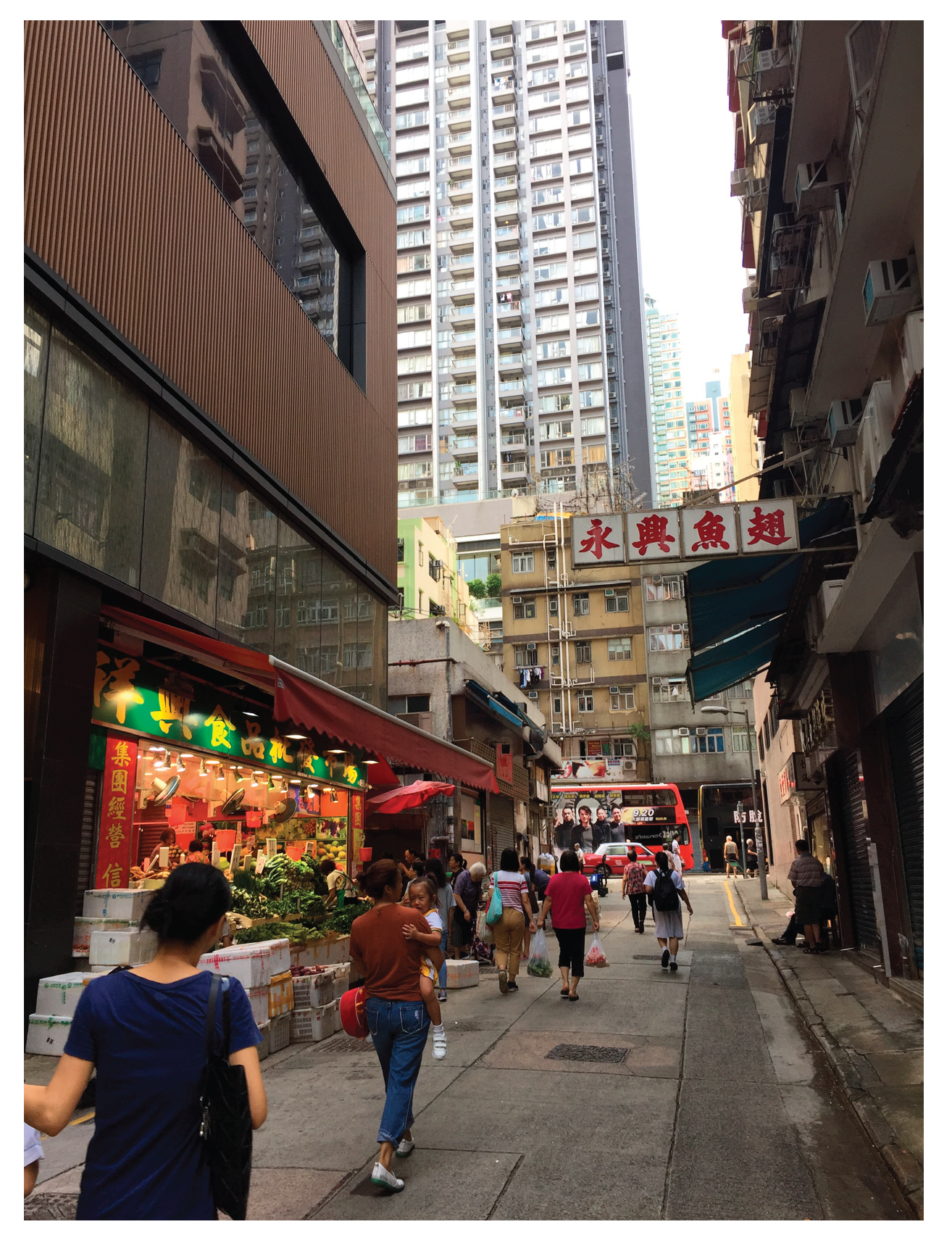
Figure 4.
Small plots in Mexico City Centre. Photo by Jose Antonio Lara-Hernandez.
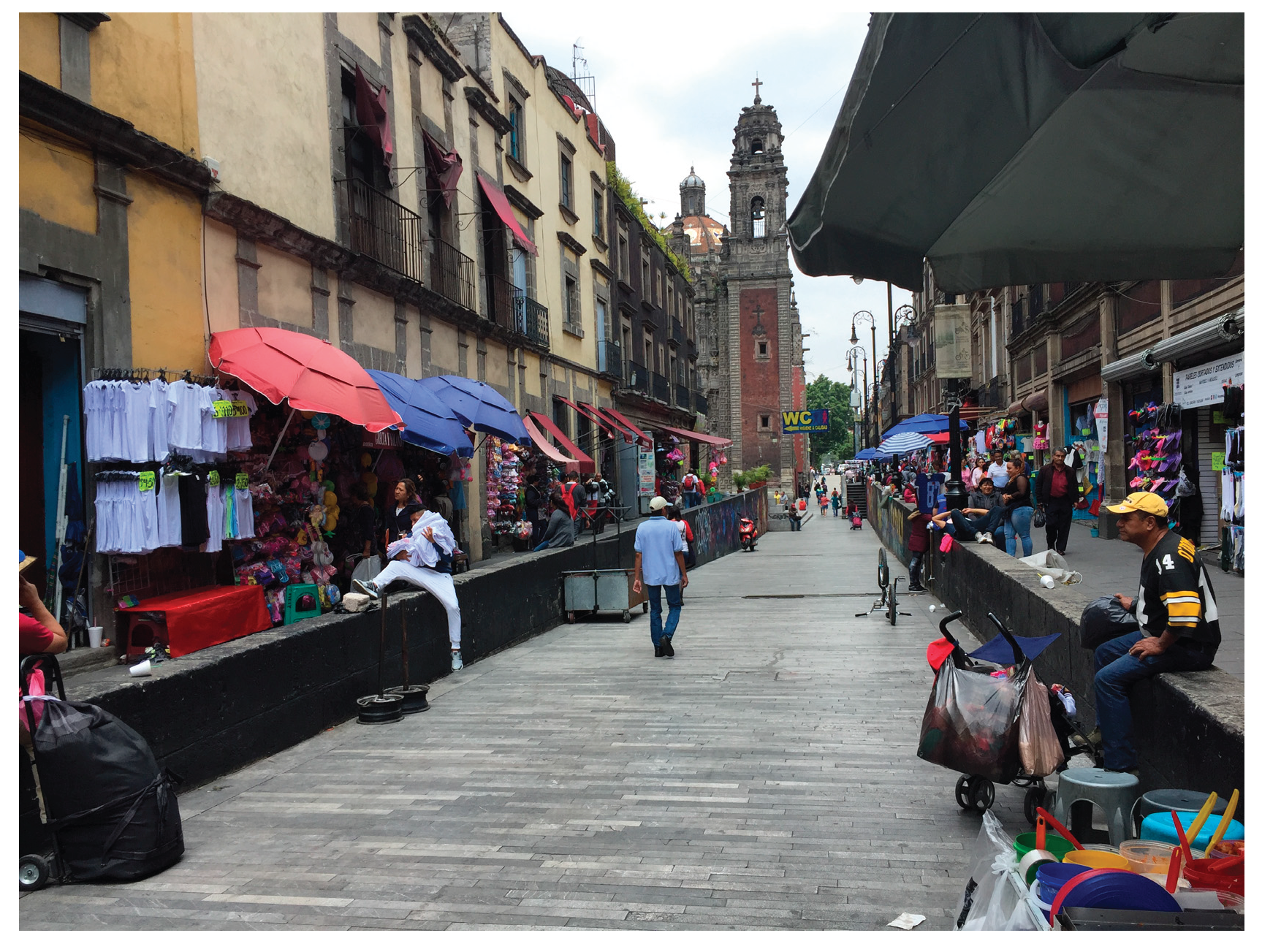
Figure 5.
Small plots in Shambles, York. Photo by NDLA.
Disclaimer/Publisher’s Note: The statements, opinions and data contained in all publications are solely those of the individual author(s) and contributor(s) and not of MDPI and/or the editor(s). MDPI and/or the editor(s) disclaim responsibility for any injury to people or property resulting from any ideas, methods, instructions or products referred to in the content. |
© 2026 by the authors. Licensee MDPI, Basel, Switzerland. This article is an open access article distributed under the terms and conditions of the Creative Commons Attribution (CC BY) license (http://creativecommons.org/licenses/by/4.0/).
Copyright: This open access article is published under a Creative Commons CC BY 4.0 license, which permit the free download, distribution, and reuse, provided that the author and preprint are cited in any reuse.


