
Submitted:
13 February 2026
Posted:
27 February 2026
You are already at the latest version
Abstract
Energy hydrogen is emerging as a key driver for the deep decarbonization of energy systems in the Americas, particularly in sectors that are difficult to electrify, such as heavy industry, long-distance transportation, and seasonal energy storage. This article presents a comprehensive review of current prospects and long-term planning for hydrogen in North America, Central America, and South America, analyzing its role within energy transition strategies to long term. It examines techno-logical advancements in green hydrogen production from renewable energy sources, projected costs, required infrastructure, and potential integration schemes with existing electricity systems. Furthermore, it assesses emerging regulatory frameworks, public policies, and national and regional initiatives that seek to position hydrogen as a pillar of energy security, economic competitiveness, and emissions reduction. The study identifies differentiated opportunities based on the availability of renewable resources, industrial capacities, and socioeconomic contexts, as well as common challenges related to investment, standardization, and social acceptance. Finally, implications for long-term energy planning are discussed, highlighting the potential of hydrogen to strengthen the resilience and sustainability of the energy system in the Americas.
Keywords:
green hydrogen
; energy transition
; long-term planning
; decarbonization
; renewable energy
; Americas
1. Introduction
Over the past decade, hydrogen has emerged as a key energy carrier for the deep decarbonization of global energy systems, particularly in sectors where direct electrification is complex, such as heavy industry, long distance transport, and raw material production. The International Energy Agency projects that low-emission hydrogen production could increase fivefold by 2030, reaching approximately 4.2 million tons per annum (Mtpa) of operational capacity or with firm investment decisions if supportive policies are effectively implemented [1]. This growth would represent a significant leap from less than 1% of current global production to approximately 4% in 2030, creating a foundation for accelerated expansion by 2050. Thus, green hydrogen produced by electrolysis using renewable energy is essential for achieving the net-zero emissions commitments set by numerous nations in the Americas.
North America has made considerable progress in institutionalizing hydrogen-related policies, despite recent fluctuations in political priority. The hydrogen generation market in the United States was valued at approximately US$15 billion in 2024 and is expected to grow substantially with the support of infrastructure and advanced electrolysis technologies by 2030 [2]. However, reports indicate that North America’s share of the global low-emission hydrogen market could decrease from 46% in 2025 to around 28% in 2030 due to changes in incentives and regulatory barriers [3]. Even so, states and provinces continue to promote projects and partnerships to strengthen production and distribution capacities, highlighting the role of subnational policies in complementing federal initiatives.
The Latin America and Caribbean (LAC) region is characterized by a remarkable abundance of renewable resources, which has spurred interest in the development of low-emission hydrogen. According to data from REDLAC-H2, the region produced approximately 4.1 million tons of hydrogen, representing about 4% of global demand, although mostly using traditional natural gas reforming technologies [4]. Regional organizations such as OLADE have estimated that LAC could produce between 20 and 30 million tons of hydrogen by 2050, provided significant projects and investments materialize [5]. This potential is supported by a growing portfolio of renewable energy projects, which demands an expansion of dedicated wind and solar hydrogen systems to fully capture the region’s resources.
LAC countries have begun to formulate national strategies that recognize the role of hydrogen in their future energy systems. In Chile, for example, the National Green Hydrogen Strategy aims to reach 25 GW of electrolysis capacity by 2030, with projected production costs between USD 0.8 and 1.1/kg of hydrogen thanks to favorable solar and wind conditions [6]. In Brazil, projects under development such as Enegix Base One prioritize multi-gigawatt electrolyzer capacities and large-scale production [7]. Other countries such as Colombia, Mexico, Uruguay, and Costa Rica have adopted preliminary roadmaps and regulatory frameworks, reflecting a diversification of approaches ranging from production to export logistics and local use in key industries [8].
The integration of hydrogen into the energy systems of the Americas not only responds to climate mitigation goals but also to the need to strengthen energy security and create new industrial niches. Development models indicate that hydrogen can contribute to the management of renewable energy surpluses and serve as long-term energy storage, mitigating high variability conditions in intermittent renewable grids. These functions are especially relevant in regions with high penetration of solar and wind energy, where extreme weather patterns can generate significant variations in energy supply. The incorporation of hydrogen as a complementary vector facilitates greater system resilience by absorbing deviations between generation and demand. Despite its quantifiable potential, the deployment of hydrogen in the Americas faces significant barriers, ranging from the need for harmonized regulatory frameworks to the mobilization of investments estimated in the tens of billions of dollars for production, storage, and transportation infrastructure. Capital costs, a lack of technical standards, and adapted market mechanisms remain structural challenges [9].
The main objective of this article is to comprehensively analyze the current state, technological prospects, and long-term planning approaches for hydrogen energy in the Americas, evaluating its role as a strategic vector for the deep decarbonization of energy systems in the long term. Based on a systematic review of high-impact scientific literature, the research compares the progress and limitations in North America, Central America and the Caribbean, and South America, considering technological, economic, regulatory, and infrastructure dimensions. Key contributions of the article include: (i) the identification of structural differences and regional maturity levels in the hydrogen value chain, from production to end uses; (ii) the quantification of goals, costs, and projected capacities for electrolysis and renewable hydrogen production reported in the literature; and (iii) a critical analysis of energy planning frameworks and public policies that condition the viability of hydrogen as a long-term solution. and (iv) the formulation of practical recommendations for researchers and energy policymakers, aimed at reducing technological gaps, accelerating investment decision-making and promoting a just and coordinated energy transition on a continental scale.
The remainder of this article is structured as follows: Section 1 presents the introduction to hydrogen systems. Section 2 presents the analysis of the state of the art. Section 3 presents the scientific methodology adopted. Section 4 presents the results obtained from the review. Section 5 analyzes the main results. Finally, Section 6 presents the research conclusions.
2. Review of the State of the Art
Recent scientific literature underscores that hydrogen is moving from a theoretical concept to a tangible component of the energy transition, with advancements in production methods, storage, and application in hybrid energy systems. Studies such as the one presented by Inês Rolo et al. [10] have identified that, although multiple production technologies exist (electrolysis, hydrocarbon reforming, pyrolysis), electrolysis powered by renewable energy is the most promising route to achieving low CO₂ emissions. This study highlights opportunities and challenges related to production efficiency, integration into electrical grids, and the availability of materials for electrolyzers, positioning it as a benchmark for technological analysis in the Americas.
Conducting a comparative analysis across the continent, North America has documented significant progress in hydrogen production, storage, and markets, particularly in the United States, Canada, and Mexico. Recent studies forecast that the hydrogen storage market in this subregion will grow from USD 1,554.45 million in 2021 to USD 1,908.78 million in 2029, at a compound annual growth rate of 2.60%, driven by public policies and demand for clean fuels for transportation and industrial energy [11]. This reflects the consolidation of hydrogen integration into energy systems as a quantifiable market opportunity in the medium term, especially in the United States, which dominates the regional storage market (2022-2029) thanks to robust investment in physical production and sustainable technologies [12]. Furthermore, research on wind-hydrogen production optimization suggests that off-grid configurations in regions with high wind resources could achieve levelized costs of hydrogen (LCOH) ranging from USD 0.5/kg to USD 7/kg, depending on the operating strategy (off-grid or grid-connected) [13]. This positions the region as a potential technological leader in decarbonizing the thermal power industry by 2050 [11]. This research demonstrates both the projected economic viability and the technological complementarity between renewable energy and hydrogen systems in the subregion.
In North America, scientific research and technological development on energy hydrogen show intense and quantifiable activity, positioning this subregion as a central player in the global energy transition toward low-carbon systems. A key study by Vahid Madadi Avargani et al. [14] provides a comprehensive review of hydrogen production and utilization methods in North America, identifying challenges such as production scale, efficiency, and limitations in physical storage and materials. This serves as a basis for further research on clean hydrogen technologies and their integration into large-scale energy systems. Recent market data show that hydrogen production capacity in the United States and Canada will total approximately 14.7 million tons per year by 2025, with the United States producing between 10 and 11 million tons per year and Canada around 3 million tons per year, reflecting the scale of the industry in the region [15]. Furthermore, market reports estimate that the hydrogen generation market reached USD 19.2 billion in 2024, with a projected compound annual growth rate (CAGR) of 5.8% through 2034, driven by policies such as H2Hubs, which aim to produce more than 3 million tons of clean hydrogen annually [2]. This growth is complemented by hydrogen storage market projections that will increase from USD 1.55445 billion in 2021 to USD 1.90878 billion by 2029, demonstrating a technological focus across the entire hydrogen value chain [16].
Authors such as Xinning Yi [17], Tianguang Lu [18], and Jing Li [19], in recent reviews of integrated hydrogen and multi-energy systems, have emphasized the importance of focusing energy planning beyond isolated production, considering how energy flows and storage, compression, and transport methods interact to enable optimal and environmentally friendly operations in hybrid systems. This line of research is relevant in North America, where initiatives such as hydrogen blending studies in pipelines in British Columbia aim to evaluate safe ratios for transporting hydrogen in existing infrastructure, which could accelerate the commercial viability of hydrogen as a fuel and energy carrier [20]. In the political and investment sphere, recent news reports indicate that companies like Linde are investing over USD 2 billion in a clean hydrogen plant in Alberta, Canada, which will become the largest in the country upon completion in 2028, capturing more than 2 million tons of CO₂ annually in associated processes [21]. Networks of hydrogen refueling stations for heavy and light vehicles have also been announced in Alberta, with the first operational station projected for 2025, highlighting the convergence between research, infrastructure, and industrial application.
Despite these advances, studies such as the North America Hydrogen Industry Report 2025 [3] indicate that North America’s share of global low-emission hydrogen capacity could decline from 46% in 2025 to 28% in 2030 due to policy changes and regulatory barriers. This is driving a more intensive transition to blue hydrogen in some markets and underscoring the need for stronger, more consistent regulatory frameworks. Further research, such as the techno-economic assessment of green hydrogen production using wind power in the US, shows that in regions with abundant wind resources, the levelized costs of hydrogen can reach USD 0.5/kg in grid-connected configurations, underscoring the importance of regional optimization for market competitiveness [22]. Taken together, these studies and projects illustrate that the reality of hydrogen in North America combines robust industrial capabilities, advanced interdisciplinary research, and complex regulatory challenges, which together define its role in the emerging hydrogen economy [23].
In Central America and the Caribbean, hydrogen research and development are still in an emerging and exploratory phase, although several key studies and preparatory projects have begun to outline the path toward a sustainable green hydrogen industry. According to Gischler et al. [24], the region faces both opportunities and structural challenges in integrating hydrogen into its energy mix. This study highlights that, although total hydrogen production in Latin America and the Caribbean reaches approximately 4.1 million tons per year, this represents only 4% of the global market, with gray hydrogen generated by natural gas reforming predominating and only a marginal presence of green hydrogen in countries like Costa Rica (0.8 t/a) or Argentina (120 Nm³/h)—suggesting that the transition to low-emission hydrogen is still in its infancy. The authors emphasize that, to maximize the potential of green hydrogen, the region needs to strengthen institutional capacities, regulatory frameworks, and regional cooperation, aspects that are especially relevant in subregions with weak or highly interconnected electrical systems such as Central America and the Caribbean.
Within the Caribbean specifically, technical literature is beginning to address the particular geographic and economic environment that shapes hydrogen development. Hinojosa et al. [25] analyze specific opportunities for green hydrogen in Caribbean islands, highlighting its potential to diversify economies highly dependent on tourism and fossil fuels. They suggest that renewable wind and solar resources could justify hydrogen installations of up to tens of megawatts (MW) in pilot projects, strengthening energy resilience to extreme events. Kahuina Miller and Carolyn A. Graham [26] explore this same theme in hydrogen, highlighting that the incorporation of hydrogen can be linked to strategic sectors such as maritime, offering alternatives for entering the global clean energy market and reducing the region’s vulnerability to disruptions in imported energy supply. These studies agree that Central America and the Caribbean possess favorable natural conditions for producing renewable hydrogen from local sources, but that the lack of large-scale operational projects and the scarcity of structured investments remain key barriers. The ECLAC report [27] on the First Regional Conference on Green Hydrogen highlights that the penetration of green hydrogen could significantly contribute to decarbonizing sectors responsible for more than 69% of final energy consumption (transport and industry) if coordinated multinational strategies are implemented. Initiatives such as the H2 Vamos project [28], supported by UNEP and the Green Climate Fund, promote inclusive enabling frameworks and regional technical capacities to advance towards a fair and sustainable green hydrogen economy, which is vital to ensuring that the benefits of hydrogen reach local communities and not just global actors. At the energy policy level, Panama has expressed its intention to become a regional hub for green hydrogen [29], relying on an electricity matrix with a high penetration of renewables (> 80%) and on strategic alliances to balance energy security, accessibility and costs, according to SELA reports [30], which shows a pragmatic approach to the energy transition that considers hydrogen as a complementary and not exclusive vector.
In South America, recent scientific and technical literature reflects a rapid growth in interest in and initiatives for hydrogen based on renewable energy, although development varies across countries. A key contribution is that of Carlos Alberto Vargas et al. [31], which provides a holistic analysis of production possibilities, public policies, and value chains for green hydrogen in the region. This study underscores the need for national strategies and regional cooperation to leverage abundant wind and solar energy resources and build a competitive, low-emission hydrogen market. It highlights the region’s potential to play a significant global role in renewable hydrogen production, particularly with strengthened regulatory frameworks and infrastructure investments, and offers concrete recommendations to accelerate the industrial and social development of this technology.
In quantitative terms, the report “Renewable Hydrogen in Latin America & The Caribbean: Opportunities, Challenges and Pathways” [32] identifies approximately 140 publicly announced hydrogen projects in South America and the Caribbean, a clear indication that the region is already generating technological and commercial momentum in this area. This includes initiatives ranging from production for domestic use to export projects and applications in mobility, industry, and energy generation. According to data from REDLAC-H2 [33], total hydrogen production in the region is around 4.1 million tons per year, representing approximately 4% of global demand, although most of it still comes from natural gas reforming, which presents a challenge for the transition to green hydrogen.
In Chile, recent news reports indicate that the National Green Hydrogen Strategy [34] plans to install 5 GW of electrolyzers by 2025 and 25 GW by 2030, with projected clean hydrogen costs between USD 0.8 and 1.1/kg. This could allow for the production of up to 160 million tons of hydrogen annually by 2050, multiplying its current generation capacity by 70 and positioning the country as a regional and global leader. These advances have attracted significant investment, with over USD 800 million in international financial support from multilateral banks and investment funds, demonstrating crucial backing for consolidating the industry. Brazil and Colombia have also shown significant progress. For example, national associations such as the Brazilian Green Hydrogen Industry Association and the Colombian Hydrogen Association are coordinating efforts to develop operational frameworks and promote local hydrogen production [35]. Reports from events and conferences such as H2LAC 2024 show that Chile, Brazil, and Colombia lead the regional market in indicators such as public policies, technological ecosystems, and the number of projects, making these nations hubs of technological development in South America and the Caribbean.
3. Methodology
This study uses a bibliometric approach to visualize, based on statistics, the number of published articles and the main context of the documents. The bibliometric methods adopted in this review will allow for the evaluation of scientific output by field of knowledge, country, research center, and author. Under this analytical framework, it will be possible to construct graphs of scientific knowledge and identify future trends and evolution in specific fields related to green hydrogen in the Americas. This study is novel, as there are still no clear lines of development in the Americas. This will allow decision-makers to identify opportunities for investment and greater technological deployment related to green hydrogen. In this research, VOSviewer is used due to its immense advantages and the scientific recognition it has achieved to date, making it a prestigious and very useful graphical tool for bibliometric analysis.
In this systematic review of the details of hydrogen in the Americas, the VOSviewer visualization tool was used as an advanced data analysis tool. The structure includes keywords and chronological distribution within the declared field of analysis. VOSviewer applies mapping techniques to create two-dimensional maps, allowing the visualization of maps of authors, research centers, countries, and other aspects.
A comprehensive review of the literature related to AI and the energy transition was conducted, the search databases are SCOPUS and several search attempts were made, including filtering between the following: TS = (“ALL (hydrogen AND green AND hydrogen AND low-carbon AND hydrogen AND renewable AND hydrogen AND clean AND hydrogen AND hydrogen AND economy AND hydrogen AND energy AND systems AND americas “).
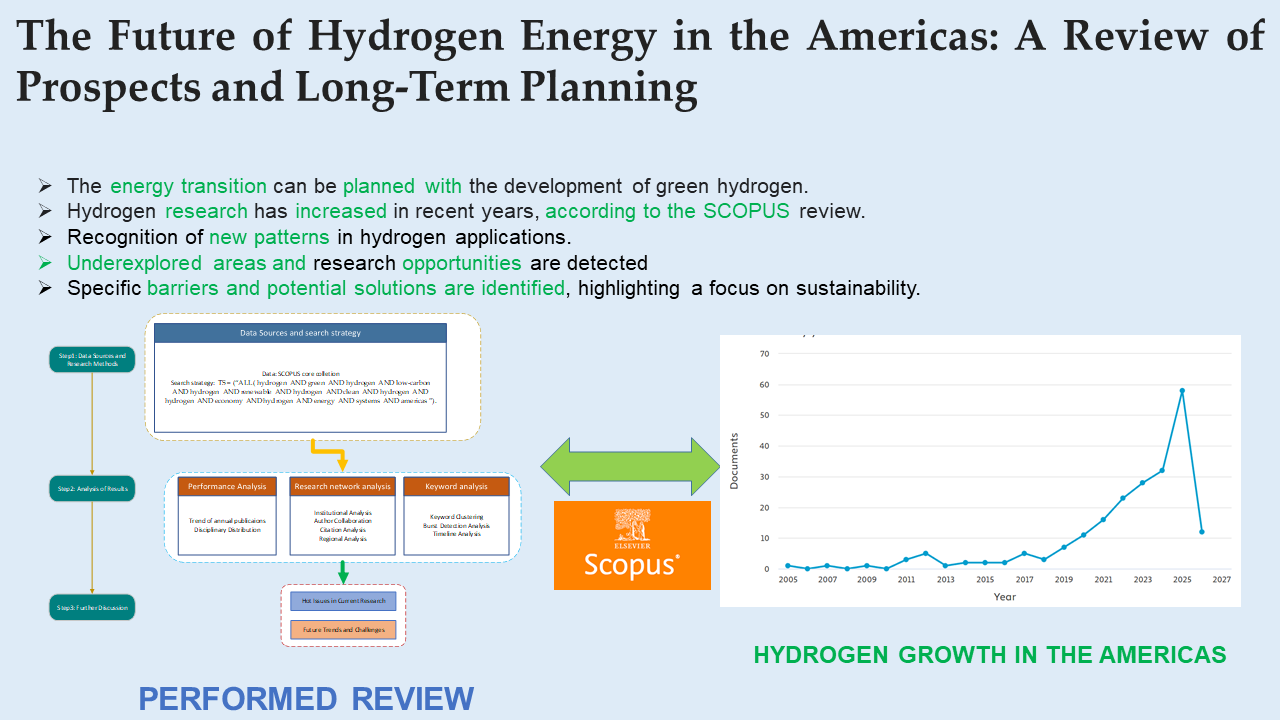
The search in the Scopus database yielded 213 documents, indicating a significant number of publications related to hydrogen. The following section demonstrates a notable increase in research in recent years. Figure 1 graphically presents the scientific methodology used in this review.
The study consists of three well-defined stages. In the first step, the data source is analyzed according to the terms established in the Scopus database. In the next step, the results obtained are analyzed, and data patterns are identified. Finally, in the third step, these results are analyzed and discussed. The countries contributing the most published research are identified, as well as the main authors and research centers driving green hydrogen research.
The impact of hydrogen research in the Americas within the energy system supply chain and its interactions has been evaluated. All studies addressing hydrogen production have been identified. Papers published in the Scopus database were considered, not just those accepted. Articles published in Scopus were selected based on its excellent reputation and the very useful features it offers, such as the user interface and bibliometric analysis tools. Scopus’s impact covers diverse subject areas, publication years, and document types, encompassing more than 5,000 publishers, funding data, and patents. Scopus’s advanced search tools allow for the rapid discovery of relevant sources, the identification of research patterns and trends, and the finding of potential research collaborations.
Its strict policies mean that a journal must pass a series of rigorous quality filters to be indexed. Scopus indexes three main types of scientific content: conference proceedings, research journals, and books. Scopus provides abstract and citation data for the most important research worldwide; renowned researchers often publish their work on this site to gain greater prestige.
4. Analysis of Results
4.1. Statistics
Publication statistics are crucial for identifying the level of development in a field of interest over a period defined by the researchers. The analyses conducted will largely depend on the most recent trends, and the future will be shaped by the expectations generated. Figure 2 presents the number of annual papers on hydrogen in the Americas published from 2005 to the present (end of 2025).
Analyzing Figure 2, it is clear that the number of publications in Scopus related to hydrogen in the Americas initially showed slow growth, but this growth has been significant since 2019, particularly in the last two years. For ease of analysis, the research can be divided into two clearly defined phases based on its development. The first phase, from 2005 to 2019, can be described as slow and extensive, with 31 studies. The second phase, from 2020 to 2025, can be characterized by accelerated growth, with 168 articles, far exceeding the previous period. In 2025, a peak of 58 articles was reached, and even in just one month of 2026, 12 publications were identified, suggesting that growth in this area will become increasingly important in the future. The number of articles published during the last five years is significantly higher, compared to the low number of publications in previous years. Hydrogen development in the Americas has advanced considerably, but the most notable growth is evident in the second phase, and its trajectory shows an exponential increase.
Figure 3 shows a set of countries where publications related to the subject of study, hydrogen, were produced. The published documents are not necessarily from countries located in the Americas. It is interesting to note that several countries outside the Americas have undertaken studies related to this topic and are located on other continents. This interest in research can be interpreted as stemming from a desire to understand how the hydrogen market and its various applications are developing. According to the report provided by Scopus, based on the established approach, the United States has the highest number of publications, with 59 documents, followed by the United Kingdom with 34 articles. China ranks third with 25 documents. Finland is fourth with 23 documents, and a group of unidentified countries are in fifth place with 19 documents. Germany is sixth with 17 documents. Subsequently, there are countries with fewer published documents, but their presence remains significant.
Figure 4 presents the names of the authors with the highest scientific output related to hydrogen in the Americas. It should be noted that Christian Breyer leads the list with 21 publications. In second place is a group of articles without a listed principal author, totaling 10 documents. Third is Siavash Khalili with eight publications. Arman Aghahosseini and Ayobami Solomon Oyewo share fourth place with seven publications each. Subsequently, several other authors with a significant number of contributions, though fewer than those previously mentioned, can be identified.
Figure 5 presents a statistical structure by affiliation regarding hydrogen systems in the Americas. LUT University has the highest number of documents with 21. The University of Jaén is second with 5 documents. Eight universities are tied for third place with four documents each: Austral University of Chile, Monterrey Institute of Technology and Higher Education, Harvard University, Stanford University, Imperial College London, University of Sussex, Aarhus University, and the University of the Americas Puebla. Other institutions with a significant number of publications are listed below.
Figure 6 presents the documents by type. Articles account for 38%, book for 34.3%, Review for 20.7%, Book chapter for 6.6%, Note for 0.5%.
4.2. Network Analysis
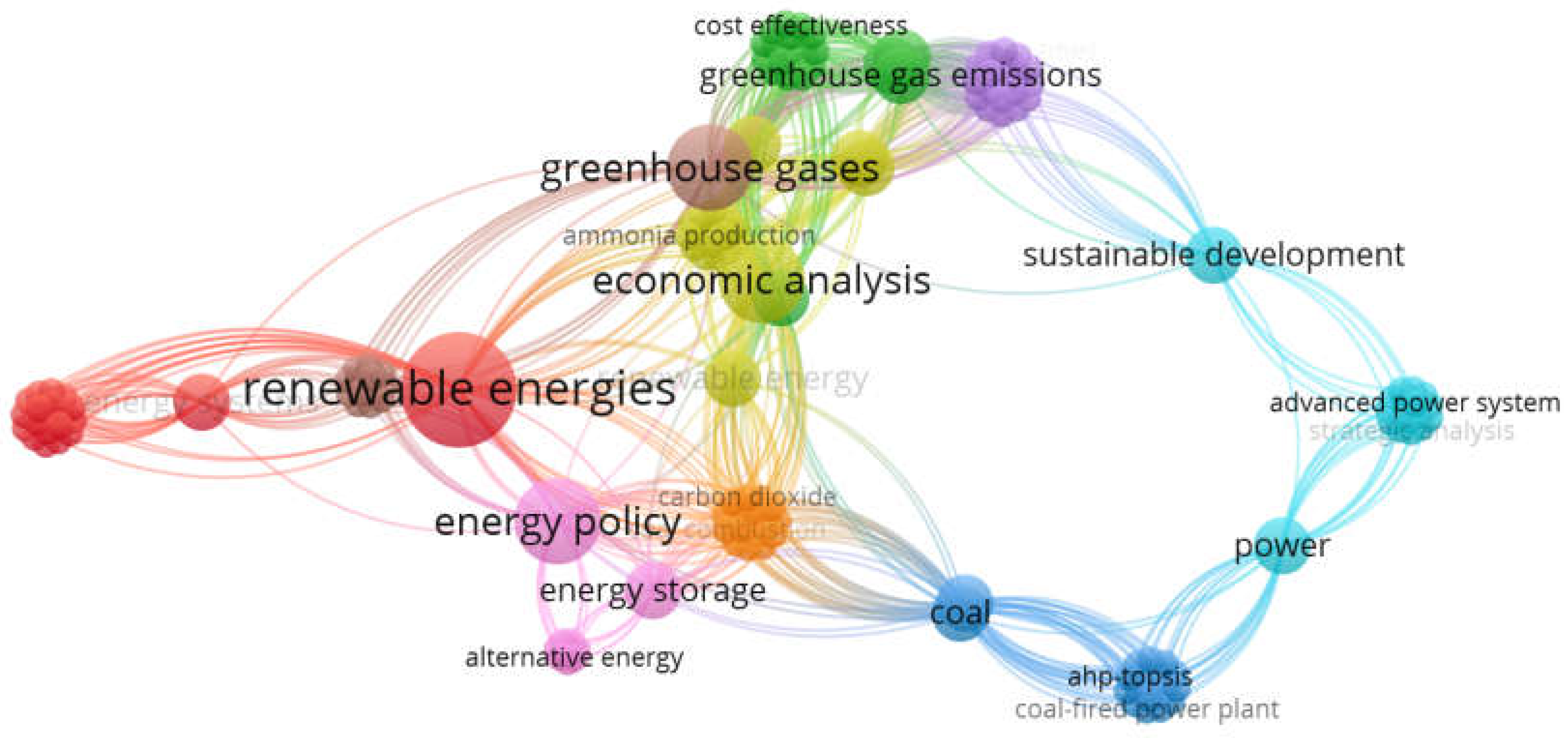
In a broad field such as hydrogen development in the Americas, the volume of academic literature is vast, and manual analysis can be laborious and challenging. Currently, there are literature analysis tools available in databases, and VOSviewer is recommended for this purpose. VOSviewer is an intuitive software that includes features for extracting important terms from titles and abstracts of scientific literature, allowing the visualization of keyword co-occurrence networks. This software enables researchers to visualize and map the scientific literature, making the literature review process more efficient and much simpler. To use the tool, it is necessary to gather some primary information. You can identify the academic database or search engine where you will search the literature, using the corresponding guidelines. The most common options include databases such as Scopus and Web of Science. In this analysis, we consider Scopus, as indicated in the stated scientific methodology, and our area of interest is hydrogen in the Americas.
The analysis of this case study demonstrated that VOSviewer has specific and powerful functions for visualizing complex bibliometric networks. Information professionals can generate these visualizations to reveal researcher collaborations and trends in research topics, supporting thematic linking and collection activities. This version offers enhanced features based on data downloaded via API and creates maps based on data exported from Scopus.
Figure 7.
Keyword analysis using VOSviewer, version 1.6.20, updated on October 31, 2023.
The number of authors and co-authors is 707, as shown in Figure 8. The analysis was performed by authorship and co-authorship, with a maximum of 25 authors per article. The most influential researchers in this area are Christian Breyer, Siavash Khalili, and Juan Carlos Osorio. Figure 9 identifies the collaborations among the authors with the highest number of publications in the field of hydrogen in the Americas, who form a broad network for publishing their research.
In North America, particularly in the United States and Mexico, green hydrogen production has gained momentum through large-scale industrial projects and federal policies aimed at decarbonization. In the U.S., multiple initiatives supported by the Department of Energy seek to consolidate industrial infrastructure for large-scale hydrogen production, with electrolyzers powered by renewable sources and demonstration centers that promote jobs and technological competitiveness. Projects such as the St. Gabriel Green Hydrogen Plant in Louisiana generate green hydrogen for applications such as fuel cells and emissions reductions, combining private investment and public support in the region. In Mexico, large private investments aim to develop photovoltaic installations coupled with water electrolysis, such as the Ikal H2 Photovoltaic Park project in Nuevo León, which seeks to produce more than 120,000 tons/year of green hydrogen.
In Central America, although still in earlier stages than in North or South America, several Central American countries are participating in regional initiatives and national strategies to promote green hydrogen. Programs like H2 Vamos and H2 Go, led by international organizations such as the United Nations Environment Programme (UNEP), aim to strengthen technical capacities, regulatory frameworks, and cooperation among countries like El Salvador, Honduras, and Jamaica, driving the transition to sustainable hydrogen through training and policy planning. Furthermore, countries like Panama have defined national strategies to position themselves as regional production and export hubs, with memoranda of understanding to promote research, development, and public-private partnerships in hydrogen and its derivatives.
South America is characterized by rapid growth in green hydrogen production capacity, leveraging abundant solar and wind resources. In Chile, international consortia like TotalEnergies are seeking to develop large-scale green hydrogen and ammonia projects, integrating renewable energy and water electrolysis for large-scale production in regions like Magallanes. Peru has approved the environmental impact study for a green hydrogen plant in Arequipa, representing an investment of over US$11 billion. The plant is geared towards producing industrial products such as ammonia, and includes auxiliary desalination and photovoltaic infrastructure. In Uruguay, private investments, such as those from HIF Global and other hubs, plan to produce green hydrogen on a large scale using electrolysis powered by PV and wind energy, exporting energy derivatives and boosting exports. Table 1 below presents an analysis of the main advances of Green Hydrogen Projects in the Americas.
The analysis presented above identifies that the progress achieved and shortcomings in different parts of the Americas can serve as a reference for other countries that have not yet adopted hydrogen production systems, helping them adapt their realities to a more sustainable future. The search for a more reliable, intelligent, and safe system is driven by pathways that allow for a transition to systems that are much more environmentally friendly. Hydrogen systems have now become key to developing energy transition processes in the fight against climate change.
The analysis of the state of the art and the identification of the most relevant hydrogen projects in the Americas, presented in Table 1, reveals several important gaps that require research and are presented as future challenges below:
4.3. Gaps
Technology and Scalability Gap
Although North America leads in technology deployment and South America in renewable potential, a significant gap persists in the industrial scalability of electrolysers and their efficient integration with variable electrical systems. In many Latin American countries, projects remain in the pilot or pre-FEED phase, with limited local manufacturing of key equipment (PEM, alkaline, or SOEC). Dependence on imported technology increases costs, logistical risks, and vulnerability to global supply chains. Furthermore, regional studies on electrolyser degradation under extreme climatic conditions (solar deserts, marine environments, high tropical humidity) are lacking, which constitutes a priority research area.
Infrastructure and Logistics Gap
Hydrogen transportation and storage represent one of the main bottlenecks in the region. The Americas lack dedicated hydrogen pipeline infrastructure, evaluated geological storage systems, and homogeneous standards for blending in natural gas networks. In Central America and the Caribbean, insularity adds further challenges related to exporting hydrogen in the form of ammonia or methanol. Research is needed on:
- Efficient conversion to e-fuels.
- Optimization of port terminals.
- Safety in cryogenic storage in tropical climates.
- Comparative evaluation of exports of pure hydrogen versus hydrogen derivatives.
Regulatory and Governance Gap
There is significant regulatory heterogeneity in the Americas. While the United States and Canada have advanced frameworks and tax incentives (such as the IRA in the US), many South American countries are still developing preliminary regulatory frameworks. In Central America, this regulatory gap is hindering investment. Comparative research is lacking on:
- Green hydrogen certification (verifiable renewable origin).
- Traceability mechanisms and guarantees of origin.
- Integration of hydrogen into liberalized electricity markets.
- Multi-level governance models for regional cooperation.
Economic and Competitiveness Gap (LCOH)
The Levelized Cost of Hydrogen (LCOH) remains higher than gray hydrogen in much of the region. Although Chile, Brazil, and Mexico have competitive renewable costs, the CAPEX for electrolysis and financing raise the final cost. Robust studies are needed on:
- Mixed financing models.
- Impact of tax incentives.
- Sensitivity of LCOH to renewable variability.
- Regional economies of scale and industrial clusters.
In addition, it is necessary to investigate the macroeconomic impact of hydrogen on exports, the energy balance, and territorial development.
Environmental and Social Gap
- Although green hydrogen is considered clean, gaps exist in:
- Life cycle assessment (LCA) in Latin American contexts.
- Intensive water use in arid regions (e.g., northern Chile, Peru).
- Socio-environmental conflicts over land use.
- Social acceptance and energy justice.
Interdisciplinary studies are needed that integrate biodiversity, local communities and territorial planning, especially in sensitive areas such as Patagonia, the Amazon and the insular Caribbean.
4.4. Future Challenges for Hydrogen Development in the Americas
Regional Industrialization of Electrolyzers: Develop local manufacturing to reduce technological dependence and generate internal value chains.
Systemic Integration with 100% Renewable Electricity Grids: Research sector coupling models (Power-to-X) and energy flexibility.
Transnational Infrastructure and Energy Corridors: Design export corridors from South America to North America and Europe.
Continental Regulatory Harmonization: Create common standards for hydrogen certification and trade.
Substantial Reduction of the LCOH (<2 USD/kg): Through economies of scale, technological innovation, and climate finance.
Sustainable Water Resource Management: Integrate desalination with renewable energy in arid zones.
Priority Strategic Applications: Focusing hydrogen on sectors that are difficult to decarbonize:
- Heavy industry
- Fertilizers
- Maritime and air transport
- Isolated systems and islands
Developing specialized human capital: Creating academic programs and regional research centers for hydrogen.
4.5. Determining Aspects of Electric Vehicle Adoption in the Americas
The adoption of hydrogen in the Americas is heavily influenced by the availability and competitiveness of renewable energy resources, which form the basis for large-scale green hydrogen production. North America boasts a robust energy infrastructure and advanced technological capabilities, while South America has some of the world’s best solar and wind capacity factors, particularly in regions like the Atacama Desert in Chile and northeastern Brazil. This combination of abundant renewables and a sustained reduction in electricity generation costs has led to scenarios where the levelized cost of hydrogen (LCOH) could reach competitive levels compared to gray hydrogen in the medium term. However, the inherent variability of renewable energy sources demands flexible electrical systems, complementary energy storage, and grids capable of absorbing generation surpluses. Efficient integration between renewable generation and electrolysis is therefore a critical technical factor for making hydrogen projects viable at an industrial scale. Furthermore, the stability of the electricity supply and the quality of the grid directly influence the efficiency and lifespan of electrolyzers. In regions with weak or isolated grids, such as some Central American and Caribbean countries, adoption depends on hybrid solutions that combine microgrids, storage, and decentralized production. In this context, renewable energy potential alone is insufficient; harnessing it requires comprehensive energy planning and coherent regulatory frameworks.
A second crucial aspect is the regulatory, institutional, and financial framework that supports the hydrogen transition. Countries like the United States have implemented significant tax incentives through instruments such as production credits and subsidies for clean technologies, which reduces investment risk and accelerates market maturation. In contrast, many Latin American countries are still in the initial stages of formulating national hydrogen strategies, with regulatory gaps in certification, transportation, storage, and marketing. Guarantees of origin, sustainability standards, and clear traceability mechanisms are essential for accessing demanding international markets, especially in Europe and Asia. Furthermore, the cost of capital and access to climate finance directly influence the economic viability of projects, given that electrolysis is intensive in initial investment. Macroeconomic stability, legal certainty, and inter-institutional coordination are key factors in determining the confidence of international investors. In Central America and the Caribbean, regional cooperation and the support of multilateral organizations are crucial for closing technical and regulatory gaps. Without a predictable regulatory environment aligned with international standards, hydrogen adoption can face significant delays, even when sufficient technical potential exists.
Another decisive element is the existing infrastructure and logistical capacity to integrate hydrogen into industrial and energy value chains. Large-scale adoption requires infrastructure for compression, storage, pipeline transport, or conversion into derivatives such as ammonia or methanol. In North America, the presence of natural gas networks and petrochemical clusters facilitates progressive integration through blending or partial substitution of gray hydrogen in refineries and fertilizer production. In South America, many projects are geared toward exporting derivatives, which requires port development, desalination plants, and specialized maritime logistics. The lack of dedicated hydrogen pipelines and assessed geological storage represents a structural limitation in the region. Likewise, the distance between renewable energy production centers and industrial hubs can increase transportation costs. Territorial planning and coordination among the energy, industrial, and port sectors are therefore strategic determinants. In island or isolated regions, hydrogen can play an additional role as a seasonal storage vector, although this requires infrastructure adapted to specific climatic conditions. Synchronizing production, demand, and logistics constitutes a technical challenge that influences the pace of adoption.
Finally, socio-environmental factors and public acceptance play a fundamental role in consolidating hydrogen as an energy carrier in the Americas. Although green hydrogen contributes to decarbonization, its production involves significant water consumption, land use for renewable energy facilities, and potential impacts on sensitive ecosystems. In arid regions of Chile or Peru, for example, water availability can become a limiting factor, forcing the integration of desalination technologies with additional costs. Likewise, local communities demand participatory processes and tangible economic benefits, especially in large-scale, export-oriented projects. The perception of security associated with hydrogen storage and transport also influences social acceptance. From an energy justice perspective, it is crucial that the economic and employment benefits derived from hydrogen are distributed equitably and do not reproduce historical extractive patterns. Successful adoption will depend on inclusive governance models that integrate strategic environmental assessment, community dialogue, and sustainable land-use planning. Consequently, beyond technical and economic viability, social legitimacy is an essential component for the structural deployment of hydrogen on the continent.
5. Discussion
5.1. Integration of Hydrogen in the Americas
The integration of hydrogen in the Americas represents a complex process that transcends the simple incorporation of a new energy technology, establishing itself as a strategic axis for linking electrical systems, industrial sectors, and international markets. In North America, integration relies on consolidated energy infrastructure, advanced regulatory frameworks, and incentive mechanisms that facilitate sectoral coupling between renewable electricity, natural gas, and energy-intensive industries. In contrast, in Latin America and the Caribbean, integration depends more heavily on territorial planning, the expansion of transmission networks, and the creation of industrial clusters that connect renewable production with local demand or for export. A central aspect of the discussion is the capacity of electrical systems to absorb variable generation and allocate surpluses to electrolysis without compromising grid stability. Likewise, the compatibility between hydrogen and existing gas networks, through blending schemes or infrastructure conversion, constitutes a relevant technical debate. Integration also requires common certification and traceability standards that enable intraregional and extraregional trade of hydrogen and its derivatives. From an economic perspective, the challenge lies in synchronizing supply and demand to avoid stranded assets or overcapacity. In island regions or isolated systems, hydrogen can act as a seasonal storage vector and renewable backup, enhancing energy resilience. However, multi-level coordination among governments, the private sector, and financial institutions is essential to overcome regulatory and logistical barriers. In this sense, the integration of hydrogen in the Americas must be understood as a systemic process, where the convergence of public policy, technological innovation, and infrastructure will determine its consolidation as a pillar of the continental energy transition.
5.2. Regulatory Frameworks for Hydrogen at the Regional Level
The development of hydrogen in the Americas requires the construction of coherent regional regulatory frameworks that harmonize technical, environmental, and commercial criteria among countries with varying levels of development. One of the central elements is the standardized definition of what constitutes green or low-carbon hydrogen, incorporating transparent methodologies for measuring emissions intensity and verifiable guarantees of origin. Without common certification, intraregional trade and exports to demanding markets will face technical barriers and the risk of double counting. Likewise, clear regulations are needed for production, storage, transportation, and distribution, including industrial safety standards, regulations for hydrogen pipelines, and guidelines for blending with natural gas. At the electricity level, it is essential to establish rules for grid access, tariff schemes, and contracting mechanisms that allow for the integration of electrolysis without distorting energy markets. Regulatory frameworks should also include tax incentives, climate finance mechanisms, and public-private partnership schemes that reduce investment risk in the early stages. In Central America and the Caribbean, regional cooperation can facilitate economies of scale and the development of shared regulations adapted to small or island systems. Similarly, water use regulation, strategic environmental assessment, and prior consultation with communities should be incorporated as mandatory requirements to guarantee sustainability and social legitimacy. Regulatory interoperability between North and Latin America would allow for the consolidation of continental energy corridors and integrated value chains. Ultimately, a robust regional regulatory framework must balance competitiveness, security, sustainability, and transparency, laying the foundation for a stable and reliable hydrogen market aligned with hemispheric decarbonization goals.
5.3. Possible Hydrogen Investment Mechanisms in the Americas
Investment mechanisms for hydrogen development in the Americas should be structured under mixed schemes that combine public and private capital with international climate finance. In North America, tax incentives such as production credits and subsidies for clean technologies have proven to be key catalysts for reducing initial risk and attracting private investment. In Latin America, multilateral development banks, such as the IDB and CAF, play a strategic role through concessional credit lines and partial risk guarantees. Likewise, long-term offtake agreements help secure future demand and improve project bankability. Public-private partnership (PPP) schemes facilitate the development of critical infrastructure, including ports, electrolysis plants, and transmission networks. Green funds and sustainable bonds represent another relevant avenue for channeling capital toward environmentally certified projects. Furthermore, carbon pricing mechanisms can generate favorable economic signals for replacing gray hydrogen with green hydrogen in industrial sectors. In emerging economies, regulatory stability and legal certainty are crucial for reducing the cost of capital. Finally, the creation of industrial clusters and special economic zones can concentrate investments, reduce logistics costs, and accelerate the consolidation of regional hydrogen value chains.
6. Conclusions
The development of hydrogen in the Americas is consolidating as one of the strategic pillars for the energy transition and the deep decarbonization of sectors that are difficult to electrify. The region possesses significant comparative advantages, including abundant solar and wind resources in South America, advanced industrial infrastructure in North America, and geostrategic potential in Central America and the Caribbean. However, these strengths must be harnessed through integrated energy planning and effective regional cooperation. Hydrogen should not be considered merely as an energy carrier, but as a platform for industrial and technological transformation. Its deployment can drive new value chains, foster innovation, and generate specialized employment. Nevertheless, the pace of adoption will depend on the sustained reduction of costs and the technological maturity of electrolysis. Likewise, integration with renewable electricity grids will be crucial to maximizing efficiency and competitiveness. In this context, a continental vision is key to avoiding fragmented efforts and duplication of investments.
From a regulatory and financial perspective, the consolidation of hydrogen in the Americas requires harmonized regulatory frameworks, transparent certification mechanisms, and clear economic signals that reduce uncertainty for investors. The existence of tax incentives, green loans, and mixed financing schemes has proven to be a catalyst in countries with proactive policies. However, regulatory gaps and heterogeneities persist that could limit the regional integration of the hydrogen market. Cooperation among governments, multilateral organizations, and the private sector will be fundamental to standardizing sustainability and traceability criteria. Furthermore, international competitiveness will depend on the capacity to meet demanding environmental standards and ensure low carbon intensities. The development of logistics and port infrastructure will also be crucial for consolidating exports to global markets. Ultimately, institutional stability and legal certainty are essential enabling conditions for attracting long-term investment.
Finally, hydrogen in the Americas must be addressed from a systemic perspective that incorporates environmental, social, and territorial dimensions. Although green hydrogen offers clear climate benefits, its production involves challenges related to water use, land use, and community acceptance. Sustainable planning must prioritize a balance between economic development and the protection of strategic ecosystems. Furthermore, including local communities in the economic and employment benefits will strengthen the social legitimacy of projects. In island regions and isolated systems, hydrogen can play an additional role as a tool for energy resilience. Regional success will depend on the ability to combine technological innovation, participatory governance, and environmental sustainability. In this way, hydrogen can establish itself as a transformative force that contributes not only to carbon neutrality but also to the equitable and competitive development of the continent.
Author Contributions
Conceptualization, DIA; methodology, Data curation, Validation, Writing—original draft.
Funding
No funding was received for this research.
Acknowledgments
Daniel Icaza Alvarez, received the support of the Universidad Católica de Cuenca in Ecuador. The Author also thank the Red Iberoamericana de Analisis de Sistemas Energéticos (RIASE) and the Red de Investigación en Analisis de Sistemas de Energía e Iluminación del Ecuador (RIASE-IE) for their unconditional support in enabling its successful completion.
Conflicts of Interest
The authors declare no conflict of interest.
References
- Executive Summary – Global Hydrogen Review 2025 – Analysis Available online: https://www.iea.org/reports/global-hydrogen-review-2025/executive-summary (accessed on 12 January 2026).
- North America Hydrogen Generation Market Share, Outlook 2025-2034 Available online: https://www.gminsights.com/industry-analysis/north-america-hydrogen-generation-market (accessed on 12 January 2026).
- Markets, R. and North America Hydrogen Industry Report 2025: US Green Hydrogen Growth Stalls Amid Trump-Era Policy Shifts, Rising Costs, and Regulatory Hurdles - Forecast to 2030 Available online: https://www.globenewswire.com/news-release/2025/05/29/3090476/28124/en/North-America-Hydrogen-Industry-Report-2025-US-Green-Hydrogen-Growth-Stalls-Amid-Trump-Era-Policy-Shifts-Rising-Costs-and-Regulatory-Hurdles-Forecast-to-2030.html (accessed on 12 January 2026).
- Principal Available online: https://redlac-h2.org/ (accessed on 12 January 2026).
- itaizul0011 Latin America Positions Itself as a Global Green Hydrogen Leader by 2050. Hydrog. Cent. 2025.
- Hydrogen News from South America (December 2024) – Hidrojen Teknolojileri Derneği.
- Younus, H.A.; Al Hajri, R.; Ahmad, N.; Al-Jammal, N.; Verpoort, F.; Al Abri, M. Green Hydrogen Production and Deployment: Opportunities and Challenges. Discov. Electrochem. 2025, 2, 32. [CrossRef]
- Hydraeon Electrolyser | INEOS Electrochemical Solutions Available online: https://www.ineos.com/businesses/ineos-electrochemical-solutions/hydrogen/hydraeon-electrolyser/?gad_source=5&gad_campaignid=22685785411&gclid=EAIaIQobChMIwJjA37SHkgMVFFz_AR1xWT2xEAAYASAAEgKLm_D_BwE (accessed on 12 January 2026).
- International Energy Agency Hydrogen in Latin America: From near-Term Opportunities to Large-Scale Deployment; OECD, 2021; ISBN 978-92-64-39533-6.
- Hydrogen-Based Energy Systems: Current Technology Development Status, Opportunities and Challenges Available online: https://www.mdpi.com/1996-1073/17/1/180 (accessed on 14 January 2026).
- El Mercado de Almacenamiento de Hidrógeno de América Del Norte Alcanzará Los 1.908,78 Millones de Dólares En 2029 Available online: https://www.databridgemarketresearch.com/es/press-release/north-america-hydrogen-storage-market (accessed on 14 January 2026).
- Arent, D.J.; Green, P.; Abdullah, Z.; Barnes, T.; Bauer, S.; Bernstein, A.; Berry, D.; Berry, J.; Burrell, T.; Carpenter, B.; et al. Challenges and Opportunities in Decarbonizing the U.S. Energy System. Renew. Sustain. Energy Rev. 2022, 169, 112939. [CrossRef]
- Kılıç, S.S.; Çapraz, H.; Yiğit, S.; Erbay, C. The Hydrogen-Nuclear Nexus: Levelized Cost Benchmark of Pink Hydrogen from Small Modular Reactor Driven Alkaline Electrolysis. Int. J. Hydrog. Energy 2025, 189, 152160. [CrossRef]
- Madadi Avargani, V.; Zendehboudi, S.; Cata Saady, N.M.; Dusseault, M.B. A Comprehensive Review on Hydrogen Production and Utilization in North America: Prospects and Challenges. Energy Convers. Manag. 2022, 269, 115927. [CrossRef]
- Wandel, M. North American Hydrogen Production Report - January 2025. respectmyplanet.org 2025.
- Global Hydrogen Review 2025 – Analysis - IEA Available online: https://www.iea.org/reports/global-hydrogen-review-2025 (accessed on 21 January 2026).
- Yi, X.; Lu, T.; Li, Y.; Ai, Q.; Hao, R. Collaborative Planning and Optimization for Electric-Thermal-Hydrogen-Coupled Energy Systems with Portfolio Selection of the Complete Hydrogen Energy Chain 2023.
- Lu, T.; Yi, X.; Li, J.; Wu, S. Collaborative Planning of Integrated Hydrogen Energy Chain Multi-Energy Systems: A Review. Appl. Energy 2025, 393, 126019. [CrossRef]
- Li, J.; Wu, D.; Iocozzia, J.; Du, H.; Liu, X.; Yuan, Y.; Zhou, W.; Li, Z.; Xue, Z.; Lin, Z. Achieving Efficient Incorporation of π-Electrons into Graphitic Carbon Nitride for Markedly Improved Hydrogen Generation. Angew. Chem. 2019, 131, 2007–2011. [CrossRef]
- Ghorbani, B.; Zendehboudi, S.; Saady, N.M.C.; Naterer, G.F. Canada’s Hydrogen Future: Innovations, Policies, and Global Perspectives. Energy Fuels 2025, 39, 7605–7648. [CrossRef]
- MacCarley, C.A. Hydrogen. In Non-Petroleum Automotive Transportation; MacCarley, C.A., Ed.; Springer Nature Switzerland: Cham, 2025; pp. 199–333 ISBN 978-3-031-85028-8.
- Nasser, M.; Megahed, T.; Ookawara, S.; Hassan, H. Techno-Economic Assessment of Green Hydrogen Production Using Different Configurations of Wind Turbines and PV Panels. J. Energy Syst. 2022, 6, 560–572. [CrossRef]
- Tomomewo, O.S.; Bade, S.O.; Benarbia, A. A Cross-Regional Analysis of Policies, Regulations, and Incentives from the United States, the European Union, China, and Australia for Shaping Hydrogen Economy. Appl. Energy 2026, 406, 127240. [CrossRef]
- Gischler, C.; Daza, E.F.B.; Galeano, P.; Ramírez, M.; Gonzalez, J.; Cubillos, F.; Hartmann, N.; Pradelli, V.; Márquez, J.S.; Gutiérrez, J.A.; et al. Unlocking Green and Just Hydrogen in Latin America and the Caribbean. IDB Publ. 2023. [CrossRef]
- Hinojosa, J.L.; Villamizar, S.; Gama, N. Green Hydrogen Opportunities for the Caribbean. IDB Publ. 2022. [CrossRef]
- Miller, K.; Graham, C. Hydrogen Hub Potential in the Caribbean: Towards a Sustainable Future. Sustain. Mar. Struct. 2025, 52–65. [CrossRef]
- Participación en la Primera Conferencia Regional de Hidrógeno Verde | CEPAL Available online: https://www.cepal.org/pt-br/notas/participacion-la-primera-conferencia-regional-hidrogeno-verde (accessed on 21 January 2026).
- H2 Vamos 2025.
- Panama | Green Hydrogen Organisation Available online: http://gh2.org/countries/panama (accessed on 21 January 2026).
- Panamá impulsa un «hub» de hidrógeno verde en América Latina | SELA.
- Unraveling the Depths: Serpentinite Distribution and Hydrogen Potential in the Subduction Zones of Northwest South America | Interpretation | GeoScienceWorld Available online: https://pubs.geoscienceworld.org/seg/interpretation/article-abstract/13/2/SA47/653731/Unraveling-the-depths-Serpentinite-distribution (accessed on 21 January 2026).
- Renewable Hydrogen in Latin America and the Caribbean: Opportunities, Challenges and Pathways – H2LAC Available online: https://h2lac.org/archivos/renewable-hydrogen-in-latin-america-and-the-caribbean-opportunities-challenges-and-pathways/ (accessed on 21 January 2026).
- Main Available online: https://redlac-h2.org/en/ (accessed on 21 January 2026).
- Chile Leads Latin American Push to Clean Hydrogen | Reuters Available online: https://www.reuters.com/business/energy/chile-leads-latin-american-push-clean-hydrogen-2024-10-22/ (accessed on 21 January 2026).
- Regional Energy Transition Outlook: South America.
- Terra, N. Top US Green Hydrogen Projects for 2026 and Beyond Available online: https://www.airswift.com/blog/green-hydrogen-projects-usa (accessed on 11 February 2026).
- U.S. Hydrogen Policy Leaders Convention Available online: https://www.ushydrogenalliance.org/hydrogen-policy-leaders-convention-policymakers (accessed on 11 February 2026).
- Global Hydrogen Stalls, Mexico Bets Big on Clean Energy Future Available online: https://mexicobusiness.news/energy/news/global-hydrogen-stalls-mexico-bets-big-clean-energy-future (accessed on 11 February 2026).
- Panama Develops Draft Green Hydrogen Regulations with Eye on Clean Shipping Fuels and Exports Available online: https://isa-ghic.org/india-to-develop-worlds-first-hydrogen-fueled-vtol-aircraft (accessed on 11 February 2026).
- Total Energies H2.
- Arequipa Advances Green Hydrogen Hub Plans with Focus on Exports Available online: https://www.qcintel.com/ammonia/article/arequipa-advances-green-hydrogen-hub-plans-with-focus-on-exports-58165.html (accessed on 11 February 2026).
- Parkes, R. Uruguay Approves Site for HIF Global’s Controversial $5.3bn e-Fuels Project Available online: https://www.hydrogeninsight.com/industrial/uruguay-approves-site-for-hif-global-s-controversial-5-3bn-e-fuels-project/2-1-1908201 (accessed on 11 February 2026).
- H2 GO 2025.
- Kong, P.-Y.; Karagiannidis, G.K. Charging Schemes for Plug-In Hybrid Electric Vehicles in Smart Grid: A Survey. IEEE Access 2016, 4, 6846–6875. [CrossRef]
- Challenges and Opportunities for Electric Vehicle Charging Stations in Latin America Available online: https://www.mdpi.com/2032-6653/15/12/583 (accessed on 3 January 2026).
- Yuan, H.; Tang, W. Flexibility Provision From Urban Buildings to Low-Carbon Power Systems: Quantification, Aggregation and System Integration. IET Energy Syst. Integr. 2025, 7, e70017. [CrossRef]
- Distributed, Intelligent Edge-Sensing for a Smarter Grid - ProQuest Available online: https://www.proquest.com/openview/2f4e1096536a6a5940444d84843f0933/1?pq-origsite=gscholar&cbl=18750&diss=y (accessed on 3 January 2026).
- Economic Viability of Vehicle-to-Grid (V2G) Reassessed: A Degradation Cost Integrated Life-Cycle Analysis Available online: https://www.mdpi.com/2071-1050/17/12/5626 (accessed on 3 January 2026).
- Chen, C.-F.; Lai, C.-M. Understanding the Acceptance of Vehicle-to-Grid (V2G) Services: Evidence from Taiwan. Transp. Policy 2024, 159, 230–240. [CrossRef]
- Strecker, J. Electrification and Justice for All? A Systematic Review of Equity and Justice Concerns in the Literature on Transportation Electrification. J. Plan. Lit. 2025, 08854122251331911. [CrossRef]
- Vazquez, M.; Hallack, M.; Andreão, G.; Tomelin, A.; Botelho, F.; Perez, Y.; Di Castelnuovo, M. Bi-Regional Economic Perspectives Financing the Transition to Renewable Energy in the European Union, Latin America and the Caribbean; 2018;
- Zografopoulos, I.; Hatziargyriou, N.D.; Konstantinou, C. Distributed Energy Resources Cybersecurity Outlook: Vulnerabilities, Attacks, Impacts, and Mitigations. IEEE Syst. J. 2023, 17, 6695–6709. [CrossRef]
- Li, J.; Gao, C. An Overview of the Current Status of V2G Technology in Improving Grid Resilience. In Proceedings of the 2024 6th International Conference on Energy, Power and Grid (ICEPG); September 2024; pp. 731–734.
- Ahmad, B.; Ding, J.; Ali, T.; Sarwatt, D.S.; Arshad, R.; Philipo, A.G.; Ning, H. Vehicle-to-Grid Integration: Ensuring Grid Stability, Strengthening Cybersecurity, and Advancing Energy Market Dynamics 2025.
- Aguilar Dominguez, D. The Influence of Electric Vehicle Availability on Vehicle-to-Grid Provision within a Microgrid. phd, University of Sheffield, 2023.
- Cao, J. The Future of V2x-Related Standards and Protocols in Europe, China and the United States. 2024.
- Quirós-Tortós, J.; Victor-Gallardo, L.; Ochoa, L. Electric Vehicles in Latin America: Slowly but Surely Toward a Clean Transport. IEEE Electrification Mag. 2019, 7, 22–32. [CrossRef]
- Owens, J. Integrated Modeling Approaches to Quantify Vehicle-to-Grid Services in an Evolving Power Sector. Thesis, Massachusetts Institute of Technology, 2025.
- Sheth, K.; Patel, D.; Sajeev, S.K.; Swami, G. Comprehensive Guide to Battery Energy Storage Systems (BESS): Technology, Projects, and Operations; Scientific Research Publishing, Inc. USA, 2025; ISBN 979-8-89507-710-8.
- Cyber Security for Electric Vehicle Smart Charging Energy Network - ProQuest Available online: https://www.proquest.com/openview/092c6ee9d351be5c385c60fcaef9d13b/1?pq-origsite=gscholar&cbl=2026366&diss=y (accessed on 5 January 2026).
- Sovacool, B.K.; Kester, J.; Noel, L.; de Rubens, G.Z. Income, Political Affiliation, Urbanism and Geography in Stated Preferences for Electric Vehicles (EVs) and Vehicle-to-Grid (V2G) Technologies in Northern Europe. J. Transp. Geogr. 2019, 78, 214–229. [CrossRef]
- Almallah, R. Optimizing EV Charger Participation across Different Power Markets: A Multi-Market Approach to aFRR, mFRR, and Local Flexibility Markets. 2025.
- Mo, T.; Li, Y.; Lau, K.; Poon, C.K.; Wu, Y.; Luo, Y. Trends and Emerging Technologies for the Development of Electric Vehicles. Energies 2022, 15, 6271. [CrossRef]
- Roy, S.; Das, D.C.; Sinha, N. Optimizing Smart City Virtual Power Plants with V2G Integration for Improved Grid Resilience. In Proceedings of the 2024 IEEE International Conference on Interdisciplinary Approaches in Technology and Management for Social Innovation (IATMSI); March 2024; Vol. 2, pp. 1–6.
- Guo, J.; Yang, J.; Lin, Z.; Serrano, C.; Cortes, A.M. Impact Analysis of V2G Services on EV Battery Degradation -A Review. In Proceedings of the 2019 IEEE Milan PowerTech; June 2019; pp. 1–6.
- Graber, G.; Sabatino, S.; Calderaro, V.; Galdi, V. Modeling of Lithium-Ion Batteries for Electric Transportation: A Comprehensive Review of Electrical Models and Parameter Dependencies. Energ. 19961073 2024, 17, 5629. [CrossRef]
- Dong, S.; Guo, S. Advancements, Challenges, and Future Trends of Vehicle-to-Grid Technologies: A Review. Energy Technol. 2025, 13, 2500481. [CrossRef]
Figure 1.
Diagram of the scientific methodology used in this study.
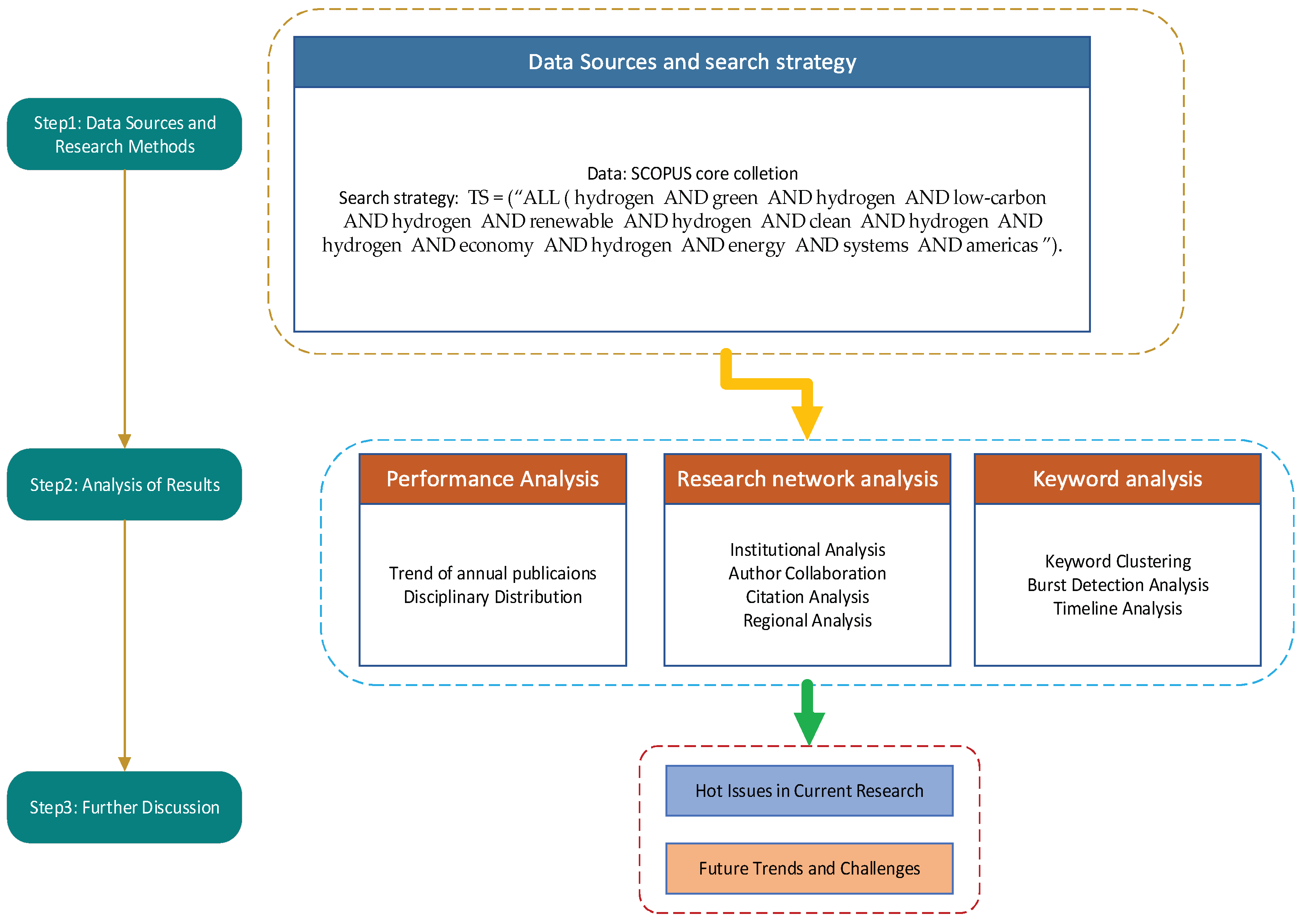
Figure 2.
Papers per year on hydrogen in the Americas.
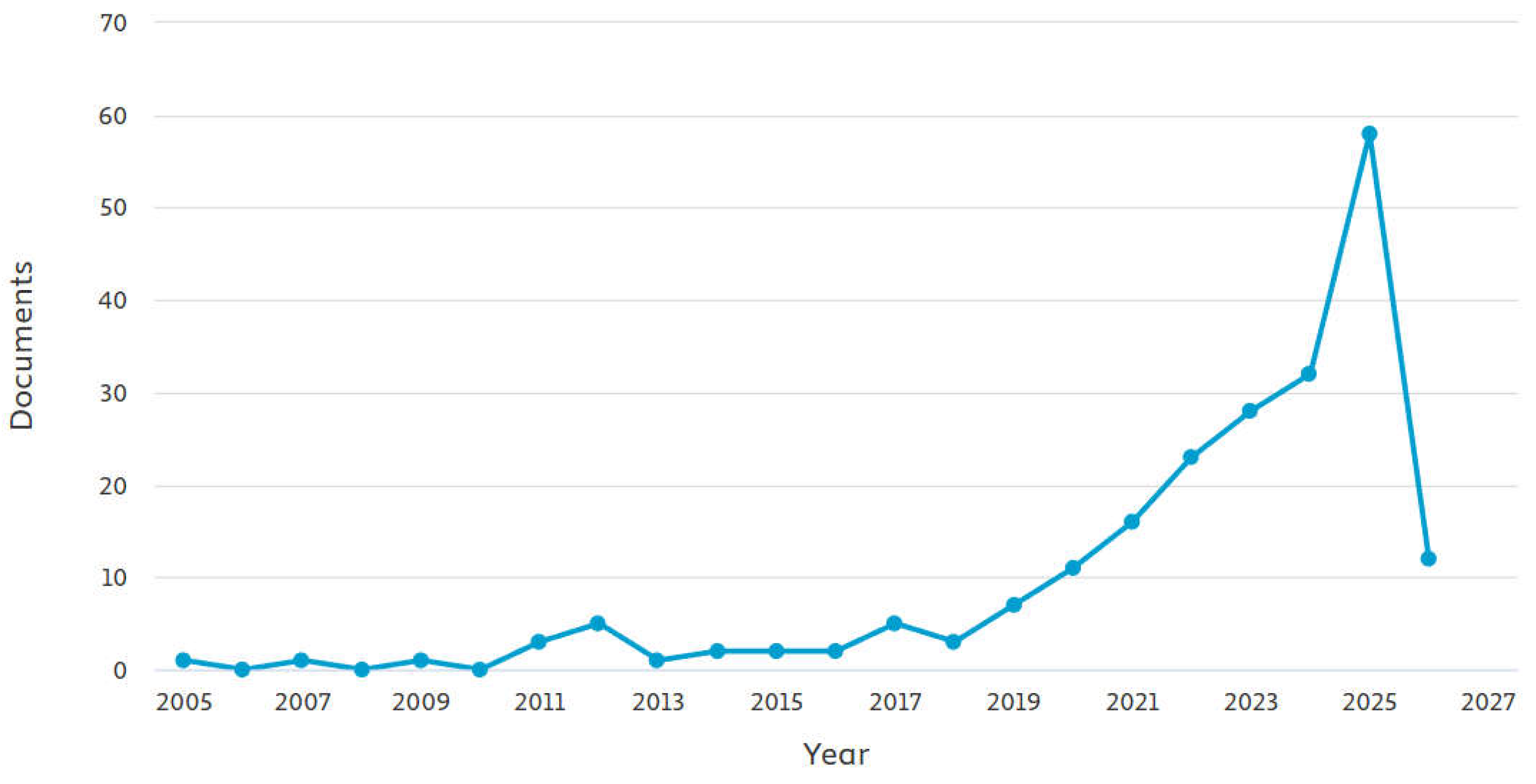
Figure 3.
Top 10 countries with the most publications on hydrogen in the Americas.
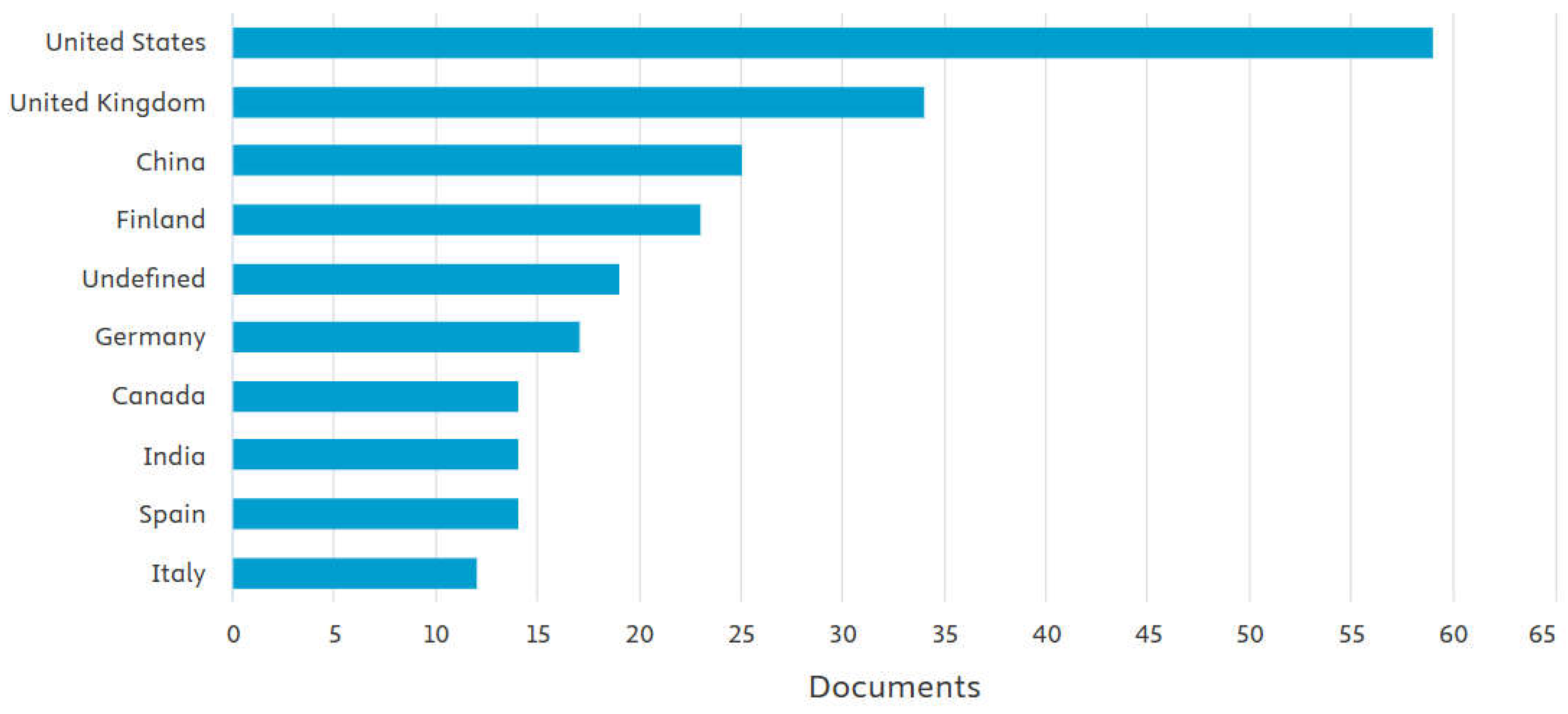
Figure 4.
Documents by author referring to hydrogen in the Americas.
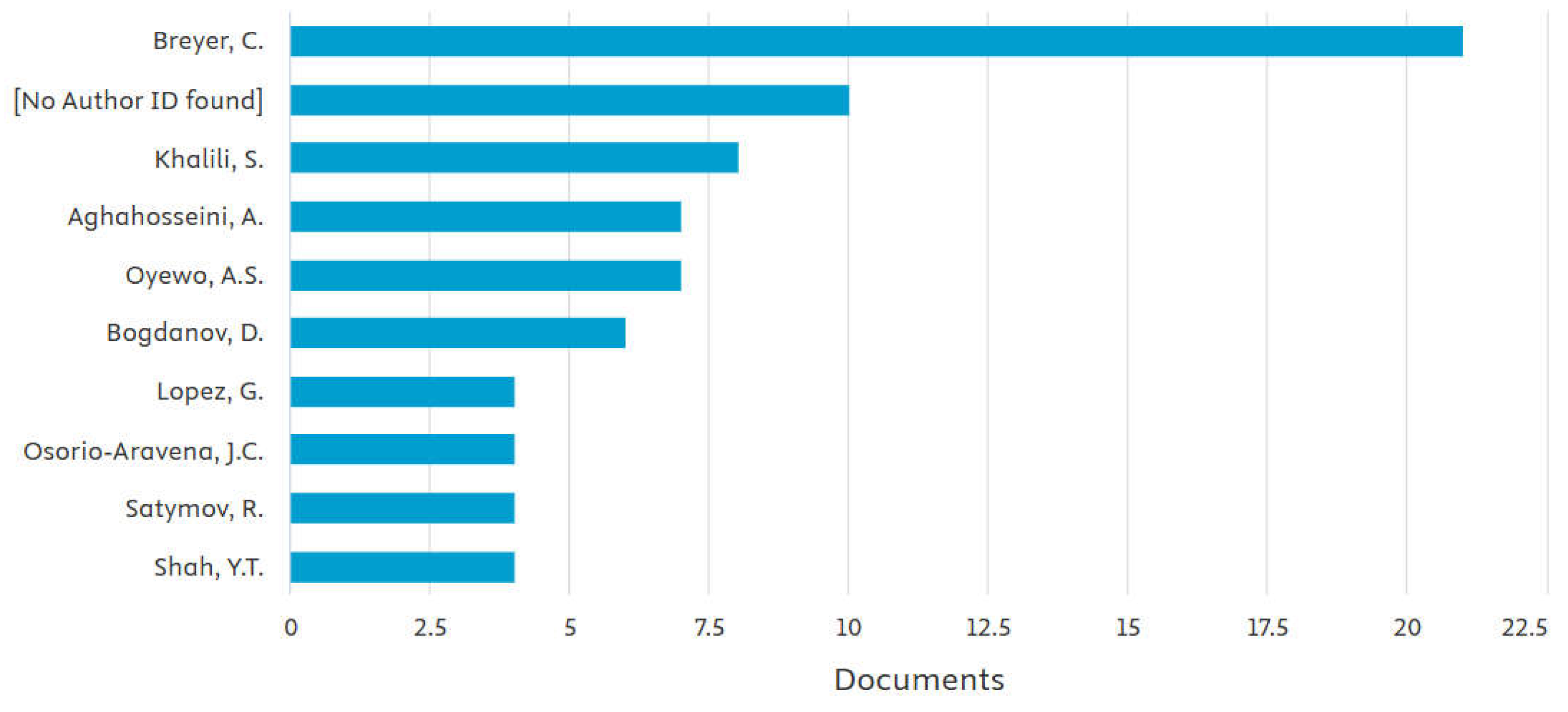
Figure 5.
Documents by affiliation referring to hydrogen in the Americas.
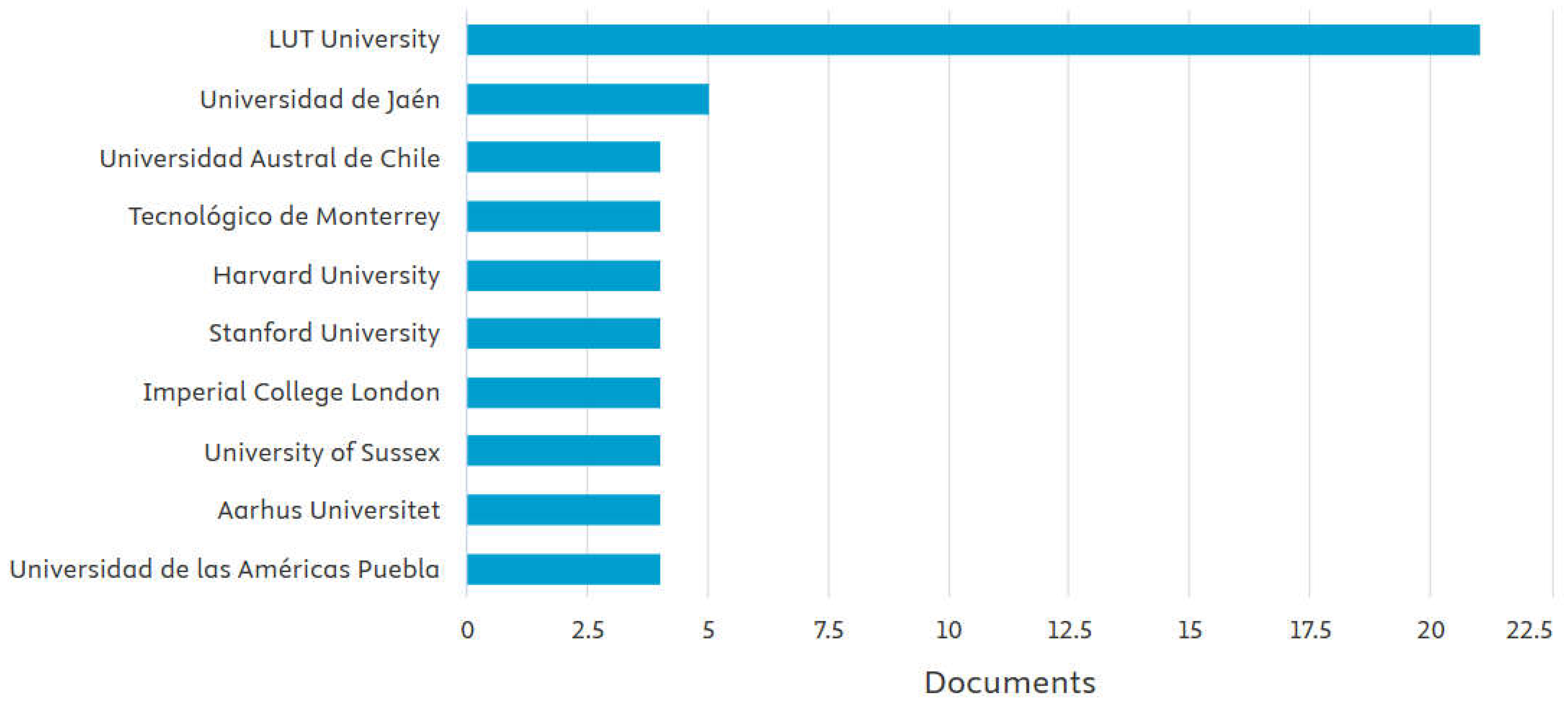
Figure 6.
Documents by type referring to hydrogen in the Americas extracted from the Scopus database.
Figure 6.
Documents by type referring to hydrogen in the Americas extracted from the Scopus database.
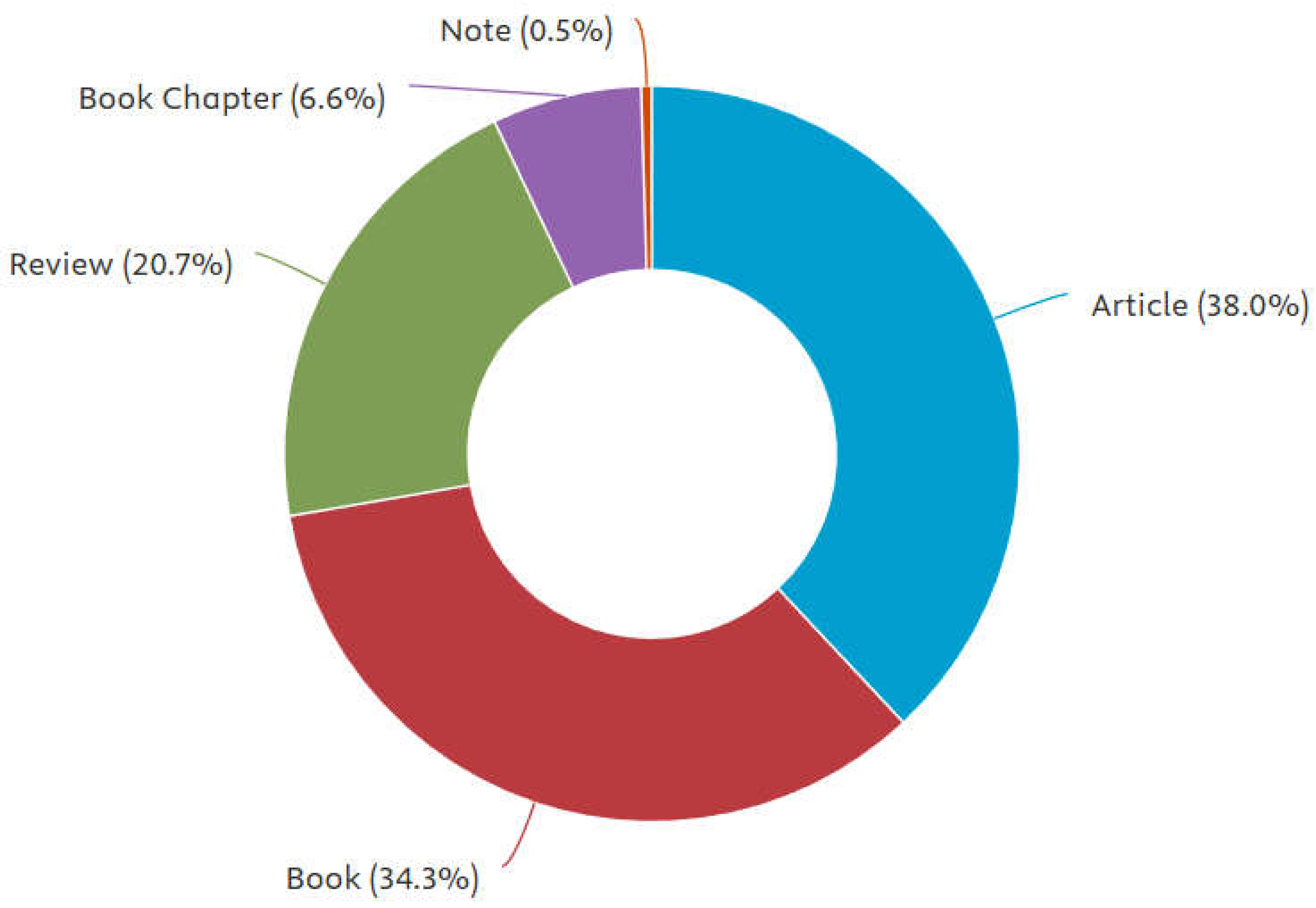
Figure 8.
Visualization network by authorship and co-authorship.
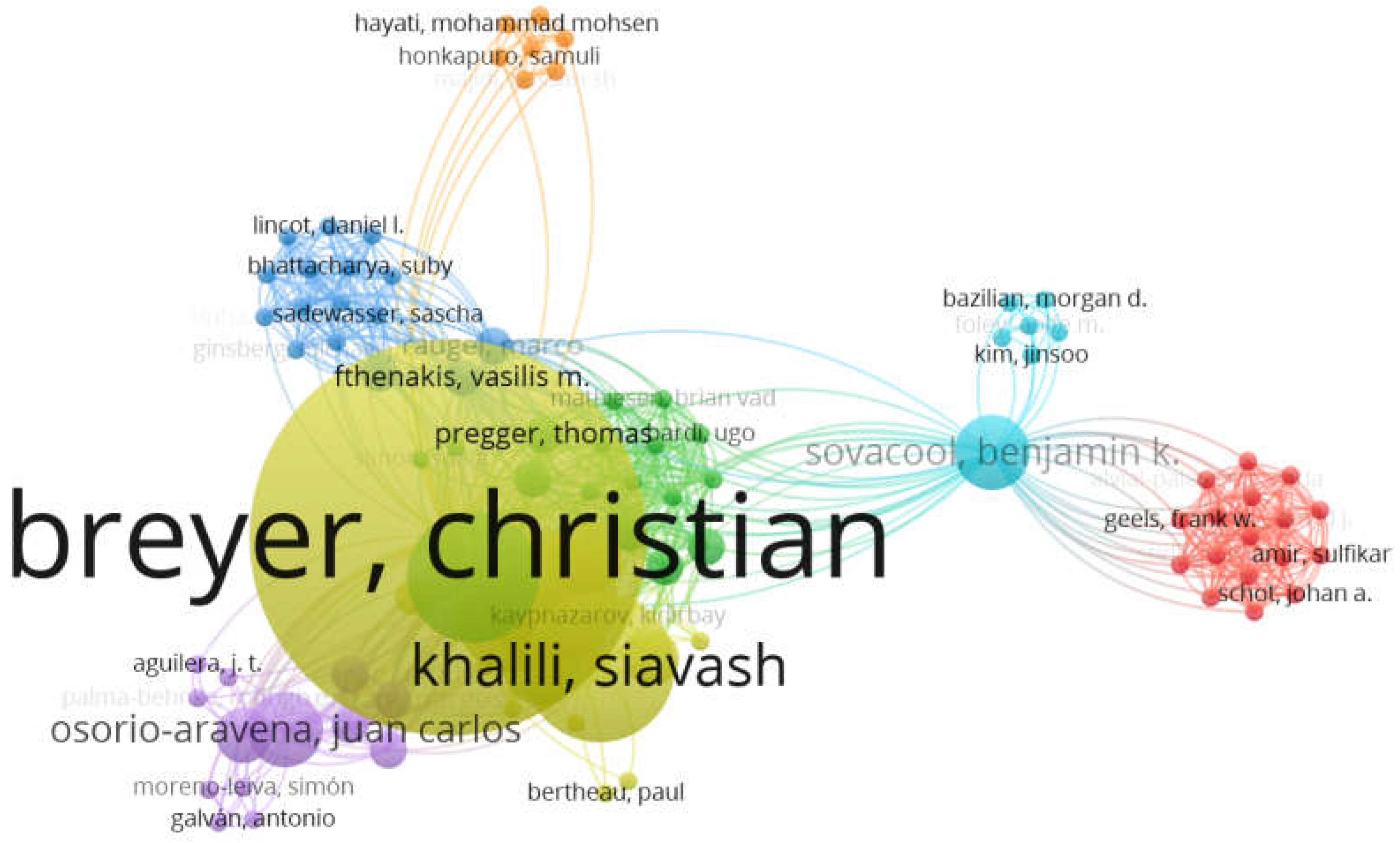
Figure 9.
Interrelations between the most prominent authors.
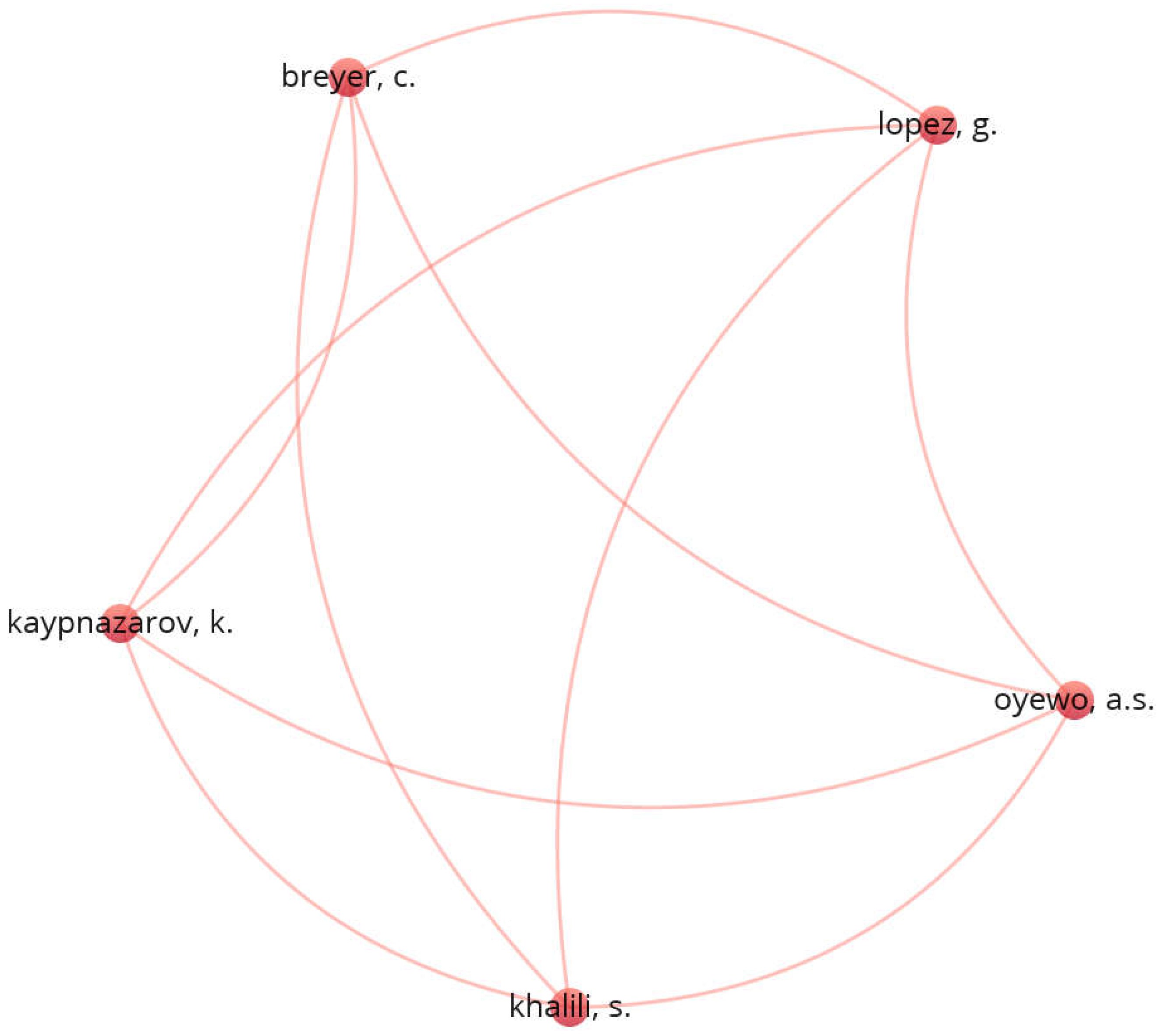

Table 1.
Comparative Table of Green Hydrogen Projects in the Americas.
| Country/Region | Project/Initiative | Start Year/Status | Main Technology | Key Actors | Main Outcomes/Impact | Reference |
| United States (Louisiana) | St. Gabriel Green Hydrogen Plant | 2025 (Operational) | PEM electrolyzers powered by renewables | Plug Power, Olin Corp | Approx. 15 tons/day production; planned capacity expansion | [36] |
| United States (Illinois) | Sauk Valley Green Hydrogen Plant | 2025 (Initial phase) | PEM electrolysis integrated with solar | Invenergy, Ohmium International | Solar + electrolysis integration; regional decarbonization support | [37] |
| Mexico (Nuevo León) | Ikal H2 Photovoltaic Park | 2025 (Planned) | Photovoltaic + Water electrolysis | Ikal Solar | Projected production ~124,071 tons/year of green hydrogen | [38] |
| Panama | Ciudad Dorada Biorefinery/National Hydrogen Strategy | 2025 (Pilot stage) | Strategic planning + pilot electrolysis systems | SGP BioEnergy, Government of Panama, Siemens Energy | Regulatory framework development; large-scale production projection | [39] |
| Chile | H2 Magallanes Project (TotalEnergies) | 2027–2030 (Under development) | Wind energy + Electrolyzers + Green ammonia production | TotalEnergies, TEC H2 MAG | Large-scale hydrogen and ammonia production (~10,800 t/day ammonia projected) | [40] |
| Peru | Green Hydrogen Plant – Arequipa | Recently approved EIA | Solar PV + Desalination + Electrolysis | Horizonte de Verano SAC | Approx. USD 11 billion investment; industrial-scale hydrogen and derivatives | [41] |
| Uruguay | HIF Global Green Hydrogen Hub | Ongoing development | Wind + Solar + Electrolysis | HIF Global, Uruguay XXI | High projected production; export of e-fuels and synthetic fuels | [42] |
| Latin America & Caribbean | H2 Go/H2 Vamos Programs | 2023–2025 (Ongoing) | Capacity building and enabling policy frameworks | UNEP, Green Climate Fund, regional governments | Institutional strengthening and regional cooperation for hydrogen deployment | [43] |
Disclaimer/Publisher’s Note: The statements, opinions and data contained in all publications are solely those of the individual author(s) and contributor(s) and not of MDPI and/or the editor(s). MDPI and/or the editor(s) disclaim responsibility for any injury to people or property resulting from any ideas, methods, instructions or products referred to in the content. |
© 2026 by the author. Licensee MDPI, Basel, Switzerland. This article is an open access article distributed under the terms and conditions of the Creative Commons Attribution (CC BY) license.
Copyright: This open access article is published under a Creative Commons CC BY 4.0 license, which permit the free download, distribution, and reuse, provided that the author and preprint are cited in any reuse.


