
Submitted:
14 February 2026
Posted:
27 February 2026
You are already at the latest version
Abstract
Energy-efficient retrofit of existing residential buildings is widely recognized as a cost-effective pathway for reducing heating energy demand and carbon emissions in severe cold regions. However, retrofit decision-making in practice is often constrained by the absence of a structured and quantitative approach for evaluating and comparing the comprehensive benefits of alternative envelope retrofit strategies. In Northeast China, where a large stock of existing residential buildings is characterized by long heating seasons and insufficient envelope thermal performance, this limitation frequently leads to suboptimal retrofit prioritization. To address this gap, this study proposes a multi-dimensional decision-support framework for quantifying and prioritizing the benefits of energy-efficient envelope retrofits in existing residential buildings located in severe cold regions. A representative non-energy-efficient residential building constructed in the 1980s in Changchun, Jilin Province, is selected as a case study. Based on a systematic literature review and expert consultation using the Fuzzy Delphi Method, a hierarchical evaluation framework comprising five evaluation dimensions, twenty-four criteria, and one hundred and ten evaluation factors is established. The Analytic Hierarchy Process (AHP) is then applied to derive the relative importance of the evaluation elements and to examine the consistency of expert judgments. The results indicate that improvement of envelope thermal performance and energy and carbon emission benefits are identified as the most critical dimensions influencing retrofit decisions in severe cold regions. At the factor level, thermal conductivity of insulation materials and external wall heat transfer coefficient emerge as the most influential contributors to overall retrofit benefits. All judgment matrices satisfy the consistency requirement (CR < 0.1), confirming the reliability of the weighting results.Overall, the findings demonstrate that the proposed framework enables a quantitative and comparative assessment of retrofit benefits, supporting the prioritization of envelope retrofit strategies that simultaneously enhance thermal performance and maximize energy and carbon reduction outcomes under technical feasibility constraints. The framework provides a transferable decision-support tool for practitioners and policymakers seeking to improve the effectiveness of energy-efficient retrofit planning for existing residential buildings in severe cold climates.
Keywords:
envelope existing residential buildings
; envelope retrofit
; severe cold regions
; energy efficiency
; carbon emission reduction
; Analytic Hierarchy Process (AHP)
1. Introduction
Building energy consumption occupies a substantial share of the global energy con sumption structure and is one of the primary drivers of sustained growth in energy demand. According to the International Energy Agency (IEA), the building sector accounts for approximately 30% of global final energy consumption and contributes about 28% of global carbon dioxide emissions [1]. Among these, energy consumption during the operational phase of existing buildings constitutes one of the major sources of greenhouse gas emissions [2]. In Europe, buildings account for approximately 40% of total energy consumption, with heating and cooling representing the dominant end uses, particularly in Northern and Eastern Europe, where heating demand is especially pronounced [3].
As one of the fastest-growing economic regions globally, Asia has also experienced a rapid increase in building energy consumption. In China, building energy consumption accounts for approximately 20–30% of total national energy consumption, and this proportion continues to increase with accelerating urbanization [4]. Particularly in severe cold regions of northern China, building energy consumption exceeds 40% of regional energy consumption, largely driven by intensive winter heating demand [5]. Owing to inadequate thermal performance of building envelopes, heating energy consumption in existing residential buildings typically accounts for 60–70% of total building energy use, significantly exceeding the national average and exacerbating energy waste and carbon emissions [6]. Therefore, enhancing the thermal performance of existing building envelopes to reduce heating energy consumption represents a critical pathway for advancing building energy efficiency and achieving carbon peaking and carbon neutrality targets.
As existing buildings are expected to dominate the building stock for decades to come, governments worldwide have actively promoted energy-efficient retrofit initiatives. Approximately 85% of the European building stock was constructed before 2001, and it is estimated that 85–95% of these buildings will remain in use by 2050 [7]. In response, the European Union launched the “Renovation Wave” initiative in 2020, aiming to increase the annual renovation rate to 2% by 2030 and achieve carbon neutrality by 2050 [7].
China possesses an existing building stock exceeding 65 billion m² [8]. In alignment with the strategic goals of carbon peaking by 2030 and carbon neutrality by 2060, national policies—including the 14th Five-Year Plan for Building Energy Efficiency and Green Building Development and the General Code for Energy Efficiency and Renewable Energy Application in Buildings (GB55015–2021)—explicitly emphasize the large-scale implementation of green and energy-efficient retrofitting for existing buildings [9]. In severe cold regions, where heating periods are prolonged and energy intensity is high, the demand for energy-efficient retrofitting is particularly urgent. Consequently, improving building envelope performance has emerged as a critical pathway for reducing energy consumption and carbon emissions in these regions.
Previous studies consistently indicate that the thermal performance of building envelopes is a key determinant of building energy consumption. Building energy efficiency standards specify upper limits for heat transfer coefficients of building envelopes [10], while green building assessment standards further require envelope thermal performance improvements of 5–20% relative to baseline energy efficiency standards [10,11,12].Heat losses through external walls and roofs can account for approximately 60% of total building heat transfer, highlighting the dominant role of envelope components in regulating building energy demand [13].
Federica et al. [14] reported that, in the retrofitting of existing buildings, adding insulation layers and replacing windows with low-U-value systems could reduce overall energy consumption by up to 36.1%. Hee et al. [15] investigated the influence of window-to-wall ratio on building energy performance, demonstrating its significant impact on heating and cooling loads. Furthermore, Attia et al. (2020) [16] demonstrated that improving envelope insulation, adopting high-performance window systems, and mitigating thermal bridge effects can substantially reduce heating and cooling energy demand, with these energy-saving effects being particularly pronounced under severe cold climate conditions.
Beyond technical feasibility, building energy retrofitting must be comprehensively evaluated from economic and environmental perspectives. Fina et al. (2019) [17] emphasized that life cycle cost (LCC) analysis is essential for assessing the long-term economic benefits of retrofit strategies. In parallel, life cycle assessment (LCA) has been widely applied in the optimization of building envelope systems to quantify environmental impacts across different life-cycle stages [18,19].
In severe cold regions, existing studies have primarily focused on insulation material selection and the optimization of economically optimal insulation thickness. Kaynakli [20] optimized external wall insulation thickness under different heating systems using an LCA-based approach. Huang et al. (2021) [21] found that external wall insulation thickness in severe cold regions must be significantly greater than that in temperate climates to achieve optimal energy performance. Song et al. [22] evaluated the economic performance of various envelope retrofit strategies using the net present value (NPV) method, while Zhang et al. [17] combined building energy simulation with LCC analysis to examine the impacts of varying insulation thicknesses on building energy performance in a university building in Chengdu. In addition, Zhang et al. (2022) [23] further demonstrated that integrating passive design strategies with envelope retrofitting can enhance the energy-saving potential of buildings in severe cold regions.
To address the aforementioned gaps, this study investigates a typical non-energy-efficient residential building constructed in the 1980s in Changchun, Jilin Province, China. A combined methodological framework integrating building energy simulation, numerical analysis, and economic evaluation is employed to quantitatively assess the energy-saving benefits of building envelope retrofitting under severe cold climate conditions. The research framework consists of the following components:
(1) Building energy simulation: A detailed building physical model was established using BESI(2021.03.18). DesignBuilder coupled with Grasshopper was applied to simulate heating energy consumption under different building envelope retrofit scenarios based on typical meteorological data for severe cold regions.
(2) Sensitivity analysis and optimization: Sensitivity analysis, numerical simulation, and the orthogonal experimental method were integrated to identify key thermal parameters influencing building energy performance and to optimize envelope design configurations.
(3) Life cycle cost analysis (LCC): Investment costs, operational energy costs, and maintenance costs associated with different retrofit schemes were calculated. The net present value (NPV) method was employed to determine the economically optimal insulation thickness under severe cold climate conditions.
(4) Energy-saving benefit evaluation model: Based on expert validity and reliability questionnaires and a four-level AHP weighting structure, a comprehensive quantitative evaluation model was developed to identify climate-adaptive retrofit strategies and establish prioritized retrofit sequences for existing residential buildings in severe cold regions.
This study aims to establish a multidimensional quantitative evaluation and decision-support framework for energy-efficient envelope retrofitting of existing residential buildings in severe cold regions. The proposed framework provides a systematic theoretical basis and technical support for energy-efficient retrofitting of existing buildings under severe cold climate conditions, and further offers prioritized retrofit strategies to inform policy formulation and engineering practice.
2. Literature Review
Under the context of global climate governance, the building sector, as the third-largest source of carbon emissions, plays a strategic role in achieving carbon neutrality through energy-efficient retrofitting. According to data from the International Energy Agency (IEA), operational carbon emissions from buildings account for approximately 28% of global total emissions, while in severe cold regions, heating energy consumption per unit floor area is approximately 3–5 times higher than that in temperate climate zones.
In China, severe cold regions encompass Northeast China and eastern Inner Mongolia, involving a population of approximately 120 million. Among approximately 3.5 billion m² of existing residential buildings in these regions, more than 65% of building envelopes fail to meet current energy-efficiency standards. Against this backdrop, this study systematically reviews domestic and international building envelope retrofit technologies, with a particular focus on climate-specific heat transfer mechanisms, material adaptability, and life-cycle performance evaluation methods in severe cold regions. On this basis, a comprehensive four-dimensional evaluation framework encompassing technical, economic, environmental, and social dimensions is established to support low-carbon transition and decision-making at the regional scale.
2.1. Advancement of Theoretical Framework for Building Energy Retrofit
Existing building retrofit evaluation has evolved toward multidimensional sustainability frameworks integrating technical, economic, and environmental performance. For severe cold regions, climate-specific constraints necessitate a structured assessment foundation to guide envelope retrofit decisions. This section reviews relevant evaluation systems and theoretical bases supporting the proposed framework.
2.1.1. Sustainable Building Assessment Systems
Globally, a range of sustainable assessment systems have been established to guide energy-efficient retrofitting of existing buildings. Representative examples include LEED (United States), BREEAM (United Kingdom), CASBEE (Japan), and DGNB (Germany) [24]. These frameworks provide structured criteria for evaluating building performance across multiple dimensions, including energy efficiency, environmental impact, and indoor environmental quality.
In China, the Green Building Evaluation Standard (GB/T 50378) and the Technical Standard for Nearly Zero-Energy Buildings (GB/T 51350) provide policy and technical guidance for building energy retrofitting and low-carbon development, forming the institutional basis for promoting large-scale energy-efficient renovation of existing buildings [25].
2.1.2. Innovation in Multi-Scale Assessment Frameworks
International building assessment standards are evolving from single energy-efficiency indicators toward multi-factor and multi-dimensional evaluation frameworks. LEED v4.1 introduces climate-zone-specific correction factors, imposing enhanced envelope performance requirements for buildings located in severe cold regions. Similarly, DGNB 3.0 incorporates a dedicated “climate adaptability” assessment module, requiring envelope systems to maintain stable performance under extreme low-temperature conditions of −30 °C.
In China, the Technical Standard for Nearly Zero-Energy Buildings further tightens envelope U-value limits in severe cold regions to 0.15–0.25 W/(m²·K), representing an approximately 40% increase in energy-efficiency requirements compared with the 2015 standard. These regulatory advancements reflect a broader shift toward climate-responsive, multi-scale assessment approaches that explicitly account for regional climatic constraints and envelope performance under extreme conditions.
In the field of emerging assessment models, the integration of Building Information Modeling (BIM) with IoT-enabled real-time monitoring systems has gained increasing attention. The ThermoBIM platform developed by the Norwegian University of Science and Technology (NTNU) integrates infrared thermography data with BIM, enabling precise identification of thermal bridge locations within building envelopes [26].
In parallel, machine-learning-based thermal performance prediction models have been increasingly applied in building energy assessment. An XGBoost-based model implemented in a residential community in Harbin demonstrated an energy consumption prediction error of less than 5%, indicating strong potential for high-accuracy performance evaluation under severe cold climate conditions [27].
2.1.3. Dynamic Optimization Theory of Thermal Performance
Thermal performance optimization in severe cold regions requires special consideration of phase-change–related heat transfer mechanisms. The Moscow Institute of Building Physics reported that when outdoor temperatures fall below −15 °C, the effective thermal conductivity of conventional insulation materials increases by approximately 12–18%, indicating pronounced nonlinear heat transfer behavior under extreme cold conditions [28].
To address this phenomenon, researchers at Tsinghua University proposed the concept of dynamic thermal resistance and subsequently established a modified heat transfer correction equation incorporating temperature gradients. In parallel, Japanese researchers developed a phase-change thermal storage–insulation composite wall system, which reduced indoor temperature fluctuation amplitudes by 62% in experimental tests conducted in Sapporo, demonstrating the effectiveness of dynamic thermal regulation strategies in severe cold climates [29].
2.2. Optimization of Technical Framework for Building Energy Retrofit
Envelope retrofitting represents the primary technical pathway for reducing heating energy demand in severe cold climates. Optimization must balance thermal performance improvement with feasibility and cost considerations. This section reviews envelope integration technologies and optimization approaches that inform the proposed retrofit strategy.
2.2.1. Integrated Envelope Retrofit Technologies
Drawing on Nordic experience, the optimal retrofit pathway in severe cold regions generally follows a “passive-first, active-optimization” principle, emphasizing envelope performance improvement as the primary strategy. Research conducted by Lund University in Sweden indicates that external wall insulation thickness exhibits a critical threshold: when expanded polystyrene (EPS) insulation thickness exceeds 150 mm, marginal energy-saving gains decline to below 3%, primarily due to intensified thermal bridge effects. In contrast, roof retrofitting combined with polyurethane insulation can reduce heat loss by approximately 30%, highlighting the differentiated energy-saving potential of envelope components under severe cold conditions [30].
In addition, numerical simulation approaches—such as computational fluid dynamics (CFD) and EnergyPlus—have been widely employed to optimize envelope retrofit schemes, enabling quantitative assessment of thermal performance improvements and supporting evidence-based design decisions for integrated envelope retrofitting strategies [31].
2.2.2. Synergistic Optimization of Window Systems
Replacing conventional windows with double- or triple-glazed low-emissivity (Low-E) glazing systems, combined with improved frame airtightness, can effectively reduce heat transfer losses through fenestration [32]. Low-E glazing systems can reduce winter heating energy consumption by approximately 15.8%, and when integrated with photovoltaic (PV) window systems, they also demonstrate improved economic performance [33].
In severe cold climate applications, the Passive House Institute specifies that the whole-window U-value should not exceed 0.8 W/(m²·K). When combined with heat recovery ventilation systems, fresh air heat loss can be reduced by up to 50%, further enhancing overall building energy efficiency. In addition, electrochromic vacuum glazing developed by the VTT Technical Research Centre of Finland enables dynamic regulation of the solar heat gain coefficient (SHGC), resulting in a 19% reduction in heating energy demand and a 32% reduction in cooling demand in field tests conducted in Helsinki [34].
2.2.3. Advances in Multi-Objective Optimization Algorithms
A multi-objective optimization model based on the NSGA-III algorithm demonstrated significant performance improvements in a building retrofit project conducted in Shenyang. An optimization model incorporating 12 decision variables—including insulation thickness, window-to-wall ratio, and shading coefficient—was established to explore trade-offs between energy efficiency and economic performance. The resulting Pareto-optimal solution set indicates that when the payback period is constrained to within 8 years, an optimal energy-saving rate of 68% can be achieved, corresponding to a rock wool insulation thickness of 100 mm and a triple-glazed Low-E window with a solar heat gain coefficient (SHGC) of 0.45 [35].
Monte Carlo simulations further reveal that material price fluctuations have a significant influence on optimization outcomes. Specifically, when the price of extruded polystyrene (XPS) increases by more than 20%, the optimal solution shifts toward polyurethane-based insulation materials, highlighting the importance of incorporating economic uncertainty into multi-objective retrofit decision-making.
2.3. Enhancement of Life-Cycle Benefit Assessment System
Effective retrofit decisions require lifecycle-based economic and environmental evaluation beyond technical performance improvement. LCA and LCC methods are particularly critical in severe cold regions where heating dominates operational emissions. This section provides the theoretical foundation for the dynamic lifecycle evaluation model developed in this study.
2.3.1. Life Cycle Assessment (LCA)
Life Cycle Assessment (LCA) is widely applied to quantify the carbon emission impacts and mitigation potential of building retrofit measures. Existing studies indicate that external wall insulation using 100 mm extruded polystyrene (XPS) can reduce total life-cycle carbon emissions by approximately 63%. However, the proportion of carbon emissions associated with the production stage increases to approximately 35%, highlighting the critical importance of insulation material selection in life-cycle-oriented retrofit decision-making [36].
2.3.2. Life Cycle Cost Analysis (LCC)
Economic performance evaluation of building retrofit strategies is commonly conducted using the life cycle cost (LCC) method, which comprehensively accounts for variables such as building orientation, window-to-wall ratio, and envelope thermal parameters. Existing studies indicate that for every 10 mm increase in rock wool insulation thickness, the investment cost increases by approximately 3.02 CNY/m², while the overall heat loss coefficient can be reduced by approximately 0.218 W/(m²·K) [37]. These results highlight the trade-off between incremental investment and thermal performance improvement in envelope retrofit decision-making.
2.3.3. Dynamic LCC–LCA Coupling Models
Traditional life-cycle evaluation approaches often neglect the time value of economic and environmental impacts, limiting their ability to support long-term retrofit decision-making under dynamic market conditions. To address this limitation, this study develops a dynamic LCC–LCA coupling evaluation model that explicitly incorporates an energy price index (EPI) and a carbon price fluctuation parameter (CPF), enabling a more realistic assessment of the temporal evolution of economic costs and carbon emission benefits associated with envelope retrofit strategies.
-Energy savings in year t, - Energy price (adjusted by EPl), - Carbon emission reduction, - Carbon price (adjusted by CPF).
3. Materials and Methods
This chapter presents the quantitative evaluation methods adopted in this study. The proposed methodology comprises building energy simulation, envelope optimization strategies, life cycle cost analysis, and a comprehensive retrofit benefit evaluation model. Through the integrated application of these methods, the study aims to systematically evaluate the overall energy, economic, and environmental benefits of envelope energy retrofitting for existing residential buildings in severe cold regions. The overall research framework and methodological workflow are illustrated in Figure 1.
3.1. Building Case Selection and Energy Simulation Modeling
Based on the geographical and climatic conditions of Changchun, building models are developed using BESI(2021.03.18) to simulate and evaluate key parameters of building operational energy consumption.
3.1.1. Climatic Characteristics
The study area is located in Changchun, Jilin Province, which exhibits typical characteristics of a temperate monsoon climate. Specifically, spring is characterized by frequent strong winds, summer is short and humid, autumn experiences rapid temperature decline, and winter is long and severely cold. Strong winds prevail in spring, often causing dust and sandstorms; summer precipitation is concentrated and may occasionally lead to localized waterlogging; winter conditions are harsh and prolonged, with a heating period lasting up to five months (Figure 2).
During winter (December–February), the climate is extremely cold, with minimum temperatures reaching −28 °C and maximum temperatures of only 9 °C. In spring (March–May), temperatures rise rapidly, with minimum temperatures increasing from −17 °C to 2 °C and maximum temperatures reaching 31 °C. Summer (June–August) is warm and humid, with maximum temperatures up to 34 °C and minimum temperatures around 9 °C. In autumn (September–November), temperatures decline sharply, with minimum temperatures dropping to −13 °C. The prevailing wind direction in spring is predominantly southwesterly, while northwesterly winds dominate in winter (Figure 3).
Simultaneously, the annual dew point pattern in Changchun is predominantly driven by seasonal forcing, with a relatively weak diurnal signal; the average hourly values range from approximately -33.9 °C in winter to 23.9 °C in summer, highlighting the critical need for designs accounting for prolonged, profound cold stress (Figure 4).
3.1.2. Development of the Building Physical Model
The case study building is located at the intersection of Puyang Street and Qinglin Road in Lvyuan District, Changchun City. Constructed in the late 1980s, the building adopts a six-story brick–concrete structural system, which represents a substantial proportion of existing residential buildings in Changchun and across Jilin Province. This typology is widely distributed and exhibits strong representativeness among non-energy-efficient residential buildings constructed during the same period (Figure 5).
The selected building has a total height of 18.3 m and a gross floor area of 3334 m², with a shape coefficient of 0.29. It is designed with a seismic fortification intensity of Grade 7 and a service life of 50 years. Overall, its structural system, number of stories, and building scale are highly representative of typical residential buildings developed in the late 20th century in severe cold regions, providing a reliable basis for envelope retrofit performance evaluation (Figure 6).
The envelope construction assemblies of the case study building are described as follows. The roof consists of asphalt felt and felt paper, followed by cement mortar, a reinforced concrete slab, and a lime mortar finishing layer. The exterior walls are composed of cement mortar, solid clay brick masonry, cement mortar, and lime mortar, while interior partition walls consist of cement mortar, solid clay brick masonry, and lime mortar. The building is equipped with 12A steel–aluminum single-frame double-glazed windows and a radiator-based space heating system.
These envelope configurations and heating systems are typical of multi-story residential buildings in severe cold regions and effectively reflect the energy consumption characteristics under heating-dominated winter climatic conditions. Based on energy performance simulations conducted using the BESI(2021.03.18) software, the thermal transmittance values of each envelope component were obtained, as presented below (Table 1).
3.1.3. Building Energy Consumption Simulation
Based on the established building physical model, annual dynamic energy consumption simulations were performed using the BESI (2021.03.18)software. The simulation process strictly complies with relevant national and regional energy efficiency standards, including the Design Standard for Energy Efficiency of Residential Buildings in Severe Cold and Cold Regions (JGJ 26–2018) and the Jilin Provincial Standard for Residential Building Energy Efficiency Design (DB22/T 5034–2019).
The main simulation parameters include indoor design temperature, air change rate, lighting power density, and equipment power density. The indoor design temperature was set to 18 ± 2 °C in winter and 26 ± 2 °C in summer, while the air change rate was fixed at 0.5 h⁻¹. Both lighting power density and equipment power density were set to 5 W/m². The monthly heating and cooling loads of the building prior to retrofit are presented in Figure 7.
The retrofit external wall assembly is developed based on an existing solid clay brick masonry substrate. A base mortar layer is applied to one side of the clay brick wall, followed by an interface treatment layer to enhance bonding performance between subsequent layers. A fire-resistant layer composed of calcium carbonate board is installed above the interface layer, providing enhanced fire resistance, insect resistance, and flame-retardant performance. In addition, a gypsum-board-based sound insulation layer is incorporated to improve the overall acoustic insulation performance. In combination with the fire-resistant layer, this configuration enhances the overall thermal, fire safety, and acoustic performance of the external wall system, meeting both technical requirements and occupant comfort demands (Figure 8).
To evaluate the energy performance of different insulation strategies, expanded polystyrene (EPS), extruded polystyrene (XPS), and rock wool are selected as insulation materials and incorporated into the external wall assembly for comparative energy consumption simulations.
3.2. Envelope Optimization Strategies
To ensure methodological systematicity while improving computational efficiency, this study adopts a combined analytical approach integrating sensitivity analysis with the orthogonal experimental method. Specifically, key envelope parameters are identified and optimized through sensitivity analysis, while the orthogonal experimental design is employed to efficiently explore optimal parameter combinations. This integrated approach provides a quantitative basis for the development of subsequent energy-efficient envelope retrofit strategies.
3.2.1. Sensitivity Analysis of Envelope Thermal Parameters
Parameter scanning for building energy simulations was conducted using Rhino and Grasshopper(8.0,McNeel & Associates,2023.). The analyzed parameters include envelope thermal transmittance, airtightness, and insulation thickness. While keeping all other parameters constant, each parameter was individually perturbed within predefined ranges to quantify its impact on building heating energy consumption.
Sensitivity levels were identified through comparative analysis of the simulation results under different parameter perturbations. The most influential parameters affecting heating energy demand were thus identified and subsequently used as input factors for the orthogonal experimental design, providing a scientific basis for envelope parameter optimization.
3.2.2. Envelope Parameter Optimization Using the Orthogonal Experimental Method
Based on the sensitivity analysis results, the identified key thermal parameters were selected as factors in the orthogonal experimental design. Multiple levels were assigned to each factor to construct the orthogonal experimental scheme (Table 2). The orthogonal experimental method was applied to systematically analyze envelope parameter combinations under multi-factor and multi-level conditions, enabling efficient exploration of the parameter space.
Through comparative analysis of the simulation results for different experimental schemes, the influence patterns of individual parameters and their interactions on building heating energy consumption were investigated. Envelope retrofit combinations with higher energy-saving potential were thus identified, providing a quantitative basis for subsequent life cycle cost analysis and comprehensive retrofit benefit evaluation.
Explanation of Experiment Codes: The first and third digits represent the insulation material type, where “0” stands for XPS, “1” for rock wool, and “2” for EPS. The second digit indicates the thickness of the exterior wall insulation, with “5” representing 50 mm. The fourth digit indicates the thickness of the roof insulation, with “5” representing 50 mm. For example, the code “0505” denotes that both the exterior wall and roof use XPS insulation with a thickness of 50 mm.
3.3. Life Cycle Cost Analysis (LCC)
Based on the retrofit schemes screened through the orthogonal experimental design, life cycle cost analysis (LCC) was conducted to evaluate the economic performance of different envelope retrofit strategies and to assess the economic feasibility of the proposed energy-saving measures.
3.3.1. Components of Life Cycle Cost and Parameter Settings
The life cycle cost consists of initial investment costs, operation and maintenance (O&M) costs, and operating energy costs. Initial investment costs primarily include material and construction expenses associated with energy-efficient retrofitting of exterior walls, roofs, and windows. Operation and maintenance costs are estimated using an annual percentage-based method, while operating energy costs are calculated based on building energy simulation results and converted using local heating energy prices in Changchun.
A 30-year evaluation period is adopted, and a real discount rate of 3% is applied in the economic evaluation [38].
3.3.2. Life Cycle Cost Calculation Method
In this study, the present value (PV) method is employed to convert all cost components to their present values.The total life cycle cost is calculated using the following equation:
where C0 denotes the initial investment cost, Cm,t represents the operation and maintenance cost in year t, Ce,t represents the operating energy cost in year t, r is the discount rate, and n is the evaluation period. This equation is used to calculate the life cycle cost per unit floor area for different envelope retrofit schemes.
3.4. Development of the Comprehensive Retrofit Benefit Evaluation Model
This study conducts two rounds of expert validity questionnaires to identify key indicators influencing the benefits of energy-efficient retrofitting. Expert reliability questionnaires are subsequently employed to test the internal consistency of the retained indicators, ensuring the robustness of the evaluation framework. The analytic hierarchy process (AHP) is then applied to determine the comprehensive weights of each influencing factor.
The comprehensive evaluation model is constructed through two sequential stages: indicator identification and weight determination. The fuzzy Delphi method is adopted to screen and refine the evaluation indicators, while AHP is applied to quantify the relative importance of each indicator, thereby establishing a systematic and decision-oriented evaluation framework for energy-efficient retrofit benefits.
3.4.1. Construction of the Retrofit Benefit Evaluation Indicator System
Based on a comprehensive literature review and the characteristics of energy-efficient retrofitting of existing residential buildings in severe cold regions, an evaluation indicator system for envelope retrofit benefits is established. The index system integrates technical feasibility, economic rationality, and environmental performance considerations, aiming to comprehensively assess the multidimensional impacts of retrofit measures.
The indicator system adopts a four-level hierarchical structure, consisting of a target layer, dimension layer, item layer, and factor layer. This hierarchical framework comprehensively reflects the energy, economic, environmental, and operational benefits associated with envelope energy retrofitting (Table 3). Given the multidimensional nature of retrofit benefits and the inherent uncertainty in expert judgment, the fuzzy Delphi method is introduced to screen and refine the preliminary indicator set. This approach integrates expert opinions, promotes consensus convergence, and reduces the influence of subjective judgment on the construction of the indicator system.
3.4.2. Expert Questionnaire Design and Validity–Reliability Testing
To verify the rationality and stability of the proposed retrofit benefit evaluation indicator system and to provide a quantitative data foundation for subsequent analytic hierarchy process (AHP) weighting analysis, an expert questionnaire survey was conducted. A Likert-scale-based expert questionnaire was employed to score the importance of each evaluation indicator, followed by systematic validity and reliability testing.
Content validity analysis was conducted to examine the rationality and consistency of the indicators. Based on two rounds of expert feedback, the overall structure and content of the indicator system were refined, ensuring that the indicators accurately reflect the benefits of envelope energy retrofitting for existing residential buildings in severe cold regions. Cronbach’s α coefficient was employed to test the internal consistency of the questionnaire data. The results show that the Cronbach’s α values of all criterion layers exceeded 0.7, while the overall questionnaire α coefficient reached 0.969, indicating a high level of internal consistency and reliability.
Subsequently, the analytic hierarchy process (AHP) is applied to transform expert qualitative judgments into quantitative indicator weights. Consistency tests are conducted to constrain judgment logic and further enhance the reliability of the weighting results.
3.4.3. Determination of Indicator Weights Using AHP
Based on the results of the expert validity and reliability questionnaires, pairwise comparison matrices were constructed for indicators at each hierarchical level of the evaluation system. The principal eigenvalue method was employed to calculate the corresponding weight vectors. Consistency tests were conducted for each judgment matrix, and the consistency ratio (CR) values of all matrices were below 0.1, indicating satisfactory logical consistency of expert judgments.
Subsequently, the comprehensive weights of factor-level indicators were calculated by synthesizing the weights across different hierarchical levels (Table 4). These comprehensive weights reflect the relative importance of individual factors within the overall retrofit benefit evaluation system and provide a quantitative basis for subsequent comprehensive benefit assessment and decision-making.
4. Results and Discussion
This section presents the quantitative findings derived from the evaluation framework and energy simulation analysis. The results focus on weight distribution characteristics, climate-adaptive data features, and the consistency between expert judgments and simulation outcomes.
4.1. Results
This section presents the quantitative findings derived from the evaluation framework and energy simulation analysis. The results focus on weight distribution characteristics, climate-adaptive data features, and the consistency between expert judgments and simulation outcomes.
4.1.1. Weight Distribution Characteristics of the Quantitative Evaluation Model
Based on the indicator screening using the fuzzy Delphi method and the subsequent weight calculation using the analytic hierarchy process (AHP), a multi-level quantitative evaluation model incorporating technical, economic, and environmental dimensions was established. The consistency test results indicate that the consistency ratio (CR) values of all judgment matrices are below 0.10, demonstrating that expert judgments exhibit satisfactory stability and consistency.
The weight calculation results reveal that envelope thermal performance-related indicators dominate the comprehensive weight ranking, and the weight distribution exhibits a pronounced concentration trend (Figure 9 and Figure 10). High-weight factors are primarily associated with key thermal parameters, including exterior wall thermal transmittance, insulation material thermal conductivity, and roof insulation performance. This finding reflects a strong expert consensus on the critical technical pathways for energy-efficient retrofitting in severe cold regions, highlighting the dominant role of envelope thermal performance in reducing heating energy demand.
4.1.2. Quantitative Data Characteristics Adapted to Severe Cold Regions
Based on the weight structure and data distribution characteristics, the comprehensive benefits of energy-efficient retrofitting of existing residential buildings in severe cold regions exhibit high sensitivity to the physical performance of the building envelope. Compared with economic or operational management-related indicators, envelope thermal performance-related factors show a clear advantage in the comprehensive weight distribution (Figure 11).
This result indicates that improvements in envelope thermal properties play a dominant role in enhancing overall retrofit performance under heating-dominated climatic conditions. Table 5 presents the top five indicators ranked by comprehensive weight.
These quantitative results are highly consistent with the climatic characteristics of severe cold regions, which are characterized by long heating periods and large indoor–outdoor temperature differences. This indicates that the building envelope plays a primary and dominant role in controlling heating energy demand under severe cold climatic conditions. In contrast to studies conducted in mild or hot-summer and cold-winter climate regions—where greater emphasis is often placed on system efficiency or operational control strategies—this study provides data-driven evidence supporting a technology-oriented retrofit strategy tailored to severe cold regions.
The results further demonstrate that prioritizing improvements in envelope thermal performance can achieve substantial energy savings without relying on complex system upgrades. This finding offers a highly adaptable and scalable foundational technical pathway for energy-efficient retrofitting of existing residential buildings in severe cold regions, with strong potential for practical implementation and wider replication.
4.1.3. Consistency Verification Between Expert Evaluation Results and Energy Simulation Outcomes
Based on the expert-derived weight analysis and comparative building energy simulations conducted using the DesignBuilder and Grasshopper platforms (Figure 6), the results indicate that improvements in envelope thermal performance consistently lead to stable and significant reductions in heating energy demand across multiple retrofit scenarios.

Table 6.
Composite Weight Statistics of All Indicators.
| Factor Code |
Factor Name |
unit | Number of Levels | Level1 | Level2 | Level3 | Level4 | Level5 |
|---|---|---|---|---|---|---|---|---|
| A | Roof Thickness | mm | 5 | 10 | 20 | 30 | 40 | 50 |
| B | Wall Thickness | mm | 5 | 10 | 20 | 30 | 40 | 50 |
Comparative analysis of the simulation results from DesignBuilder and Grasshopper shows that, for the original building with an additional 50 mm XPS insulation layer applied to the roof, the heating energy demand during the coldest month is 186.9 kWh/m² when a 10 mm XPS insulation layer is added to the exterior walls, and further decreases to 173.0 kWh/m² when the exterior wall insulation thickness is increased to 50 mm. In contrast, when a 50 mm XPS insulation layer is applied to the exterior walls and only a 10 mm XPS layer is added to the roof, the heating energy demand during the coldest month reaches 213.1 kWh/m² (Figure 7).
Table 7.
Sensitivity Analysis of Factors.
| Variable Factor | Fixed Factor | Range of Fixed Factor 10mmR1 | Range of Fixed Factor 20mmR2 | Range of Fixed Factor 30mmR3 | Range of Fixed Factor 40mmR4 | Range of Fixed Factor 50mmR5 | Ranking of Impact Degree | Sensitivity Level |
|---|---|---|---|---|---|---|---|---|
| A (Roof Thickness) |
B (Wall Thickness) |
-13452.08 | -13647.78 | -13756.24 | -13825.03 | -13872.62 | 2 | Medium |
| B (Wall Thickness) |
A (Roof Thickness) |
-39634.49 | -39818.57 | -39929.08 | -40003.02 | -40055.03 | 1 | High |
These results demonstrate that the exterior wall thermal transmittance is the most sensitive variable influencing heating energy consumption. The strong consistency between expert-based subjective evaluations and objective energy simulation results at the technical level further validates the robustness of the proposed evaluation framework and the stability of the derived indicator weights. This consistency provides reliable support for the technology-oriented conclusions regarding envelope retrofit prioritization in existing residential buildings.
Figure 12 illustrates the retrofit scheme in which 50 mm XPS insulation is added to both the exterior walls and the roof of the original building, and the existing windows are replaced with triple-glazed Low-E uPVC windows. After retrofitting, the heating energy demand during the coldest month is reduced to 173.05 kWh/(m²·year), compared with 290.64 kWh/(m²·year) for the original building before retrofitting.
4.2. Discussion
This section interprets the mechanisms underlying the quantitative results, with emphasis on climate-responsive energy and carbon reduction effects in severe cold regions. The broader applicability of the identified retrofit pathway is also discussed.
4.2.1. Climate-Responsive Mechanisms of Envelope Retrofit Strategies in Severe Cold Regions
Under severe cold climatic conditions, the energy-saving benefits of buildings exhibit a pronounced climate-responsive behavior as envelope thermal performance improves. This response is fundamentally driven by the extended heating period, the large indoor–outdoor temperature gradient, and the long-term concentration of heat losses through the building envelope.
Energy simulation results indicate that heating energy consumption dominates the operational energy demand of residential buildings in severe cold regions. Consequently, reductions in heating energy demand achieved through envelope retrofitting can be directly translated into substantial carbon emission mitigation, forming a strong synergistic effect between energy savings and carbon reduction. In the study region, where the energy supply structure is dominated by centralized heating systems relying primarily on fossil fuels, this response mechanism not only represents an effective technical pathway for reducing heating energy consumption but also constitutes a critical approach for achieving operational-stage carbon emission reduction in existing residential buildings. These findings provide clear mechanistic support for retrofit strategies oriented toward the coordinated goals of energy conservation and carbon mitigation.
Moreover, for existing residential buildings located in regions with similar severe cold climate classifications, heating systems, and envelope construction characteristics, the observed energy–carbon response mechanism demonstrates strong replicability. It can therefore serve as an important reference for evaluating the benefits of envelope retrofit strategies in comparable contexts.
Table 8 and Table 9 illustrates the comparison of total operational energy consumption during the operational phase before and after renovation.
After the installation of a 50 mm insulation layer on the exterior walls and roof, the operational-phase carbon emissions of the building decreased from 11,933.879 tCO₂ to 9,382.803 tCO₂, Figure 13 compares the monthly building energy consumption before and after the retrofit.
4.2.2. Response Characteristics and Priority Strategy of Envelope Retrofit Schemes
Based on the results of expert weight analysis and the verification of energy simulation calculations, retrofit schemes focusing on the systematic enhancement of the thermal performance of exterior walls and roofs exhibit more stable and significant reductions in heating energy consumption and operational-phase carbon emissions. For existing residential buildings in severe cold regions, envelope energy retrofitting should follow a technology-oriented approach centered on improving thermal performance, with a clearly defined retrofit priority sequence.
The results indicate that, under the condition of fixed insulation material types, priority should be given to controlling the thermal transmittance of exterior walls by adjusting insulation thickness, as exterior walls constitute the primary target for retrofit implementation. This is followed by the optimization of roof thermal transmittance. On this basis, synergistic measures such as window system upgrades and improvements in airtightness can further reduce heat losses; however, their energy-saving potential is highly dependent on the overall thermal performance level of the building envelope.
Under constrained conditions for energy-efficient retrofitting, the adoption of the above hierarchical retrofit strategy helps maximize energy-saving and carbon-reduction benefits per unit of investment. Moreover, the proposed priority sequence reduces uncertainty in the selection of retrofit schemes, providing reliable technical support for both policy formulation and engineering practice. It also contributes to improving overall building energy efficiency and offers a practical and implementable technical pathway for achieving the “dual carbon” targets.
From a methodological perspective, the prioritized retrofit pathway proposed in this study can serve as a general decision-making framework for energy-efficient retrofitting of existing residential buildings in severe cold regions. This framework is not constrained by building scale or specific simulation platforms, and the factor-weight determination method can be parameterized and adjusted according to building types and envelope construction configurations, thereby supporting decision analysis across different retrofit projects.
4.2.3. Limitations and Future Research Directions
This study employs an integrated approach combining the Analytic Hierarchy Process (AHP) and building energy simulation to quantitatively evaluate the benefits of envelope energy retrofitting for existing residential buildings in severe cold regions. Nevertheless, several limitations remain and warrant further investigation in future studies.
First, the simulation analysis is based on a single representative building. Future research could be extended to the community or urban scale by incorporating a larger number of existing building cases, thereby enhancing the applicability and generalizability of the proposed evaluation model in severe cold regions. Second, the analysis of carbon reduction benefits in this study primarily focuses on heating energy consumption during the operational phase, without accounting for life-cycle carbon emissions associated with envelope material production, construction, and end-of-life stages. Subsequent studies may integrate life cycle assessment (LCA) methods to conduct a more comprehensive and systematic comparison of life-cycle carbon emissions across different envelope retrofit schemes. Finally, the quantitative evaluation model developed in this study is bounded by current severe cold climate conditions and does not consider potential changes in heating demand under future climate change scenarios, which may influence the long-term energy-saving performance of retrofit measures.
5. Conclusions
This study focuses on energy-efficient envelope retrofit of existing residential buildings in severe cold regions and proposes a multi-dimensional quantitative evaluation and decision-support framework that integrates technical feasibility, energy and carbon emission benefits, and economically related considerations. A representative existing residential building is used as a case study to demonstrate the applicability of the proposed framework. The main conclusions are summarized as follows.
(1) By integrating the Fuzzy Delphi Method and the Analytic Hierarchy Process (AHP), a hierarchical and quantitative evaluation framework suitable for envelope retrofit decision-making in severe cold regions is established. The proposed approach enables expert knowledge to be systematically translated into comparable and rankable decision criteria, thereby improving the transparency and consistency of retrofit evaluations under data-limited conditions.
(2) The weighting results indicate that improvement of envelope thermal performance is the dominant factor influencing the comprehensive benefits of energy-efficient retrofits in severe cold regions. In particular, the heat transfer coefficients of external walls and roofs, together with the thermal properties of insulation materials, play a leading role in determining overall retrofit effectiveness, highlighting the importance of envelope insulation in heating-dominated climates.
(3) The results further demonstrate that enhancing envelope thermal performance not only contributes to reducing space-heating energy consumption, but also leads to meaningful reductions in operational carbon emissions under centralized heating systems predominantly relying on fossil energy. This finding underscores the synergistic relationship between energy saving and carbon emission reduction achieved through envelope retrofit measures.
(4) Based on the integrated weighting results, this study clarifies the technical prioritization of envelope retrofit measures for existing residential buildings in severe cold regions. The proposed framework provides practical support for selecting retrofit strategies that can achieve relatively optimal energy-saving and carbon-reduction outcomes under investment and technical constraints.
Overall, the proposed multi-dimensional evaluation framework serves as a transferable decision-support tool for the prioritization of energy-efficient envelope retrofit strategies in existing residential buildings in severe cold climates. It offers practical implications for retrofit planning and policy formulation. Future studies may further validate and extend the framework by applying it to different building types and regional contexts, thereby enhancing its general applicability.
Author Contributions
Writing – original draft, editing, and data calculation, J.T; Conceptualization and methodology, C.W; Investigation and resource coordination, L.Z, W.Y, Y.L; Data curation, Z.W.All authors have read and agreed to the published version of the manuscript.
Funding
This research was funded by the Scientific Research Project of the Jilin Provincial Department of Education and the Research Cultivation Project of Changchun University of Architecture, grant number: JJKH20261923KJ and CJKJ202605.
Data Availability Statement
The original contributions presented in this study are included in the article. Further inquiries can be directed to the corresponding author.
Acknowledgments
The authors would like to thank their colleagues for their valuable discussions and assistance during the research process. During the preparation of this manuscript, the authors used ChatGPT (OpenAI, GPT-5.2 series) for language polishing. The authors have reviewed and edited the generated content and take full responsibility for the content of this publication.
Conflicts of Interest
Author Weipeng Yin is employed by the Century Newly Created Architectural Limited Company of Jilin province. The remaining authors declare that the research was conducted in the absence of any commercial or financial relationships that could be construed as a potential conflict of interest.
References
- Citaristi, I. International energy agency—iea, in The Europa directory of international organizations 2022; Routledge, 2022; pp. 701–702. [Google Scholar]
- Lassandro, P.; et al. Facing the Constraints to the Deep Energy Renovation Process of Residential Built Stock in European Markets. Sustainability 2023, 16. [Google Scholar] [CrossRef]
- Commission, E. Energy performance of buildings directive. 2020, Directorate-General for Communication Brussels.
- Conservation, T. Conservation, T.U.C.f.B.E., Annual Development Research Report on Energy Conservation in Chinese Architecture. 2020.
- Research, C.A.o.B., Guidelines for Building Energy Conservation Technology in Severely Cold Northern Regions. 2019.
- Bai, J.B.; Zhang, Y.; Hao, Y.Z. Research on Energy-Saving Rebuilding Technologies for Existing Residential Buildings in South of Jiangsu Province. Applied Mechanics and Materials 2012, 1802, 232–236. [Google Scholar] [CrossRef]
- Commission, E. A renovation wave for Europe—greening our buildings, creating jobs, improving lives. Official Journal of the European Union 2020, 26. [Google Scholar]
- He, Q.; et al. Energy-Efficient Window Retrofit for High-Rise Residential Buildings in Different Climatic Zones of China. Sustainability 2019, 11. [Google Scholar] [CrossRef]
- Zhikun, D.; Zhan, W. Multi-objective Optimization Design for Energy-saving Retrofit of Existing Building Envelope. Science Technology and Engineering 2024, 24, 7269–7277. [Google Scholar] [CrossRef]
- Yearbook, C.U.C.S., Ministry of housing and urban rural development of the people’s Republic of China (MOHURD). Beijing, China, 2019.
- Li, H.; Song, L.; Zhang, Y.; Yang, J.; Jiu, M.; Zhang, C.; Gong, W. Research and Application Analysis on Post-Occupancy Evaluation Standards for Green Buildings Suitable for China’s National Conditions. Building Science 2020. [Google Scholar] [CrossRef]
- Lu, S.; Wang, Z.; Zhang, T. Quantitative Analysis and Multi-Index Evaluation of the Green Building Envelope Performance in the Cold Area of China. Sustainability 2020, 12. [Google Scholar] [CrossRef]
- Deshmukh, M.; Yadav, M. Optimizing Thermal Efficiency of Building Envelopes with Sustainable Composite Materials. Buildings 2025, 15. [Google Scholar] [CrossRef]
- Rosso, F.; et al. A Sustainable Approach towards the Retrofit of the Public Housing Building Stock: Energy-Architectural Experimental and Numerical Analysis. Sustainability 2021, 13. [Google Scholar] [CrossRef]
- Hee, W.; et al. The role of window glazing on daylighting and energy saving in buildings. Renewable and Sustainable Energy Reviews 2015, 42, 323–343. [Google Scholar] [CrossRef]
- Attia, S.; et al. Overview and future challenges of nearly zero energy buildings (nZEB) design in Southern Europe. Energy and Buildings 2017, 155, 439–458. [Google Scholar] [CrossRef]
- Fina, B.; Auer, H.; Friedl, W. Cost-optimal economic potential of shared rooftop PV in energy communities: Evidence from Austria. Renewable Energy 2020, 152, 217–228. [Google Scholar] [CrossRef]
- Bruce-Hyrkäs, T.; Pasanen, P.; Castro, R. Overview of whole building life-cycle assessment for green building certification and ecodesign through industry surveys and interviews. Procedia CIRP 2018, 69, 178–183. [Google Scholar] [CrossRef]
- Song, X.; et al. Field study on energy economic assessment of office buildings envelope retrofitting in southern China. Sustainable cities and society 2017, 28, 154–161. [Google Scholar] [CrossRef]
- Kaynakli, O. A review of the economical and optimum thermal insulation thickness for building applications. Renewable and Sustainable Energy Reviews 2012, 16, 415–425. [Google Scholar] [CrossRef]
- Liu, X.; X.C.M., S. Optimization of Insulation Thickness of External Walls of Residential Buildings in Hot Summer and Cold Winter Zone of China. 2020. [Google Scholar] [CrossRef]
- Zhang, L.; et al. Optimization analysis of thermal insulation layer attributes of building envelope exterior wall based on DeST and life cycle economic evaluation. Case Studies in Thermal Engineering 2019, 14, 100410. [Google Scholar] [CrossRef]
- Pan, W.; Mei, H. A design strategy for energy-efficient rural houses in severe cold regions. International Journal of Environmental Research and Public Health 2020, 17, 6481. [Google Scholar] [CrossRef] [PubMed]
- Ferrari, S.; et al. New Level (s) framework: Assessing the affinity between the main international Green Building Rating Systems and the european scheme. Renewable and Sustainable Energy Reviews 2022, 155, 111924. [Google Scholar] [CrossRef]
- Jiang, D.; Li, X.; Tian, Z. Techno-Economic Analysis of a High-Rise Residential Building Adapted to Nearly Zero-Energy Building Standards. Sustainability 2024, 16. [Google Scholar] [CrossRef]
- Hansen, C.H.; et al. Risk of reinfection, vaccine protection, and severity of infection with the BA. 5 omicron subvariant: a nation-wide population-based study in Denmark. The Lancet infectious diseases 2023, 23, 167–176. [Google Scholar] [CrossRef] [PubMed]
- Zhang, Y.; et al. Unveiling the tapestry of consistency in large vision-language models. Advances in Neural Information Processing Systems 2024, 37, 118632–118653. [Google Scholar]
- Ivanov, D. The Industry 5.0 framework: viability-based integration of the resilience, sustainability, and human-centricity perspectives. International Journal of Production Research 2023, 61, 1683–1695. [Google Scholar] [CrossRef]
- Ghazwani, K.; Beach, T.; Rezgui, Y. Energy retrofitting using advanced building envelope materials for sustainable housing: A review. Building and Environment 2025, 267. [Google Scholar] [CrossRef]
- Yu, J.; et al. In-situ U-value measurements of typical building envelopes in a severe cold region of China: U-value variations and energy Implications. Energy and Buildings 2024, 324. [Google Scholar] [CrossRef]
- Wu, D.; et al. Uncertainty analysis of envelope retrofits for existing residential buildings in underdeveloped areas: A case study of Daokou, China. Energy and Buildings 2023, 284, 112828. [Google Scholar] [CrossRef]
- Usman, M.; et al. Towards zero energy solar households – A model-based simulation and optimization analysis for a humid subtropical climate. Sustainable Energy Technologies and Assessments 2021, 48. [Google Scholar] [CrossRef]
- Yang, H.; P, J.; Liu, C. Analysis of Green Retrofit Methods for Existing Buildings and Case Studies: A Case Study of Research at the Welsh School of Architecture. Architect 2017, 6–15. [Google Scholar]
- Nieminen, S. The effect from wind power forecast error on short-term electricity market. 2023. [Google Scholar]
- Kamel, E.; Memari, A. Residential Building Envelope Energy Retrofit Methods, Simulation Tools, and Example Projects: A Review of the Literature. Buildings 2022, 12. [Google Scholar] [CrossRef]
- Arbulu, M.; Oregi, X.; Etxepare, L. Environmental and economic optimization and prioritization tool-kit for residential building renovation strategies with life cycle approach. Building and Environment 2023, 228. [Google Scholar] [CrossRef]
- Mahlan, S.; et al. An integrated life cycle assessment and energy simulation framework for residential building walling systems. Building and Environment 2024, 257. [Google Scholar] [CrossRef]
- Haneef, F.; et al. Application of Urban Scale Energy Modelling and Multi-Objective Optimization Techniques for Building Energy Renovation at District Scale. Sustainability 2021, 13. [Google Scholar] [CrossRef]
Figure 1.
Diagram-based Research Method.
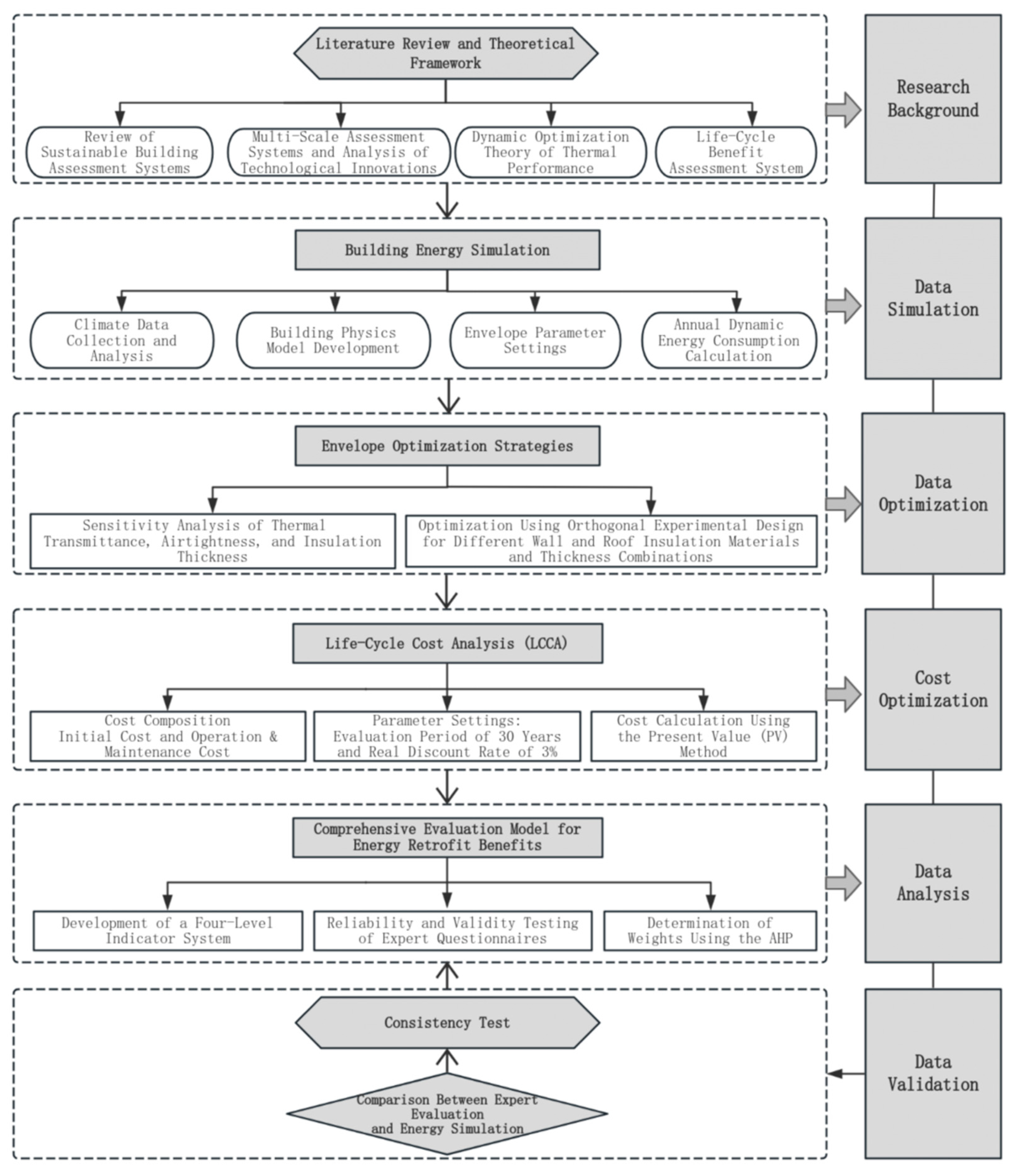
Figure 2.
Annual Wind Speed of Changchun.
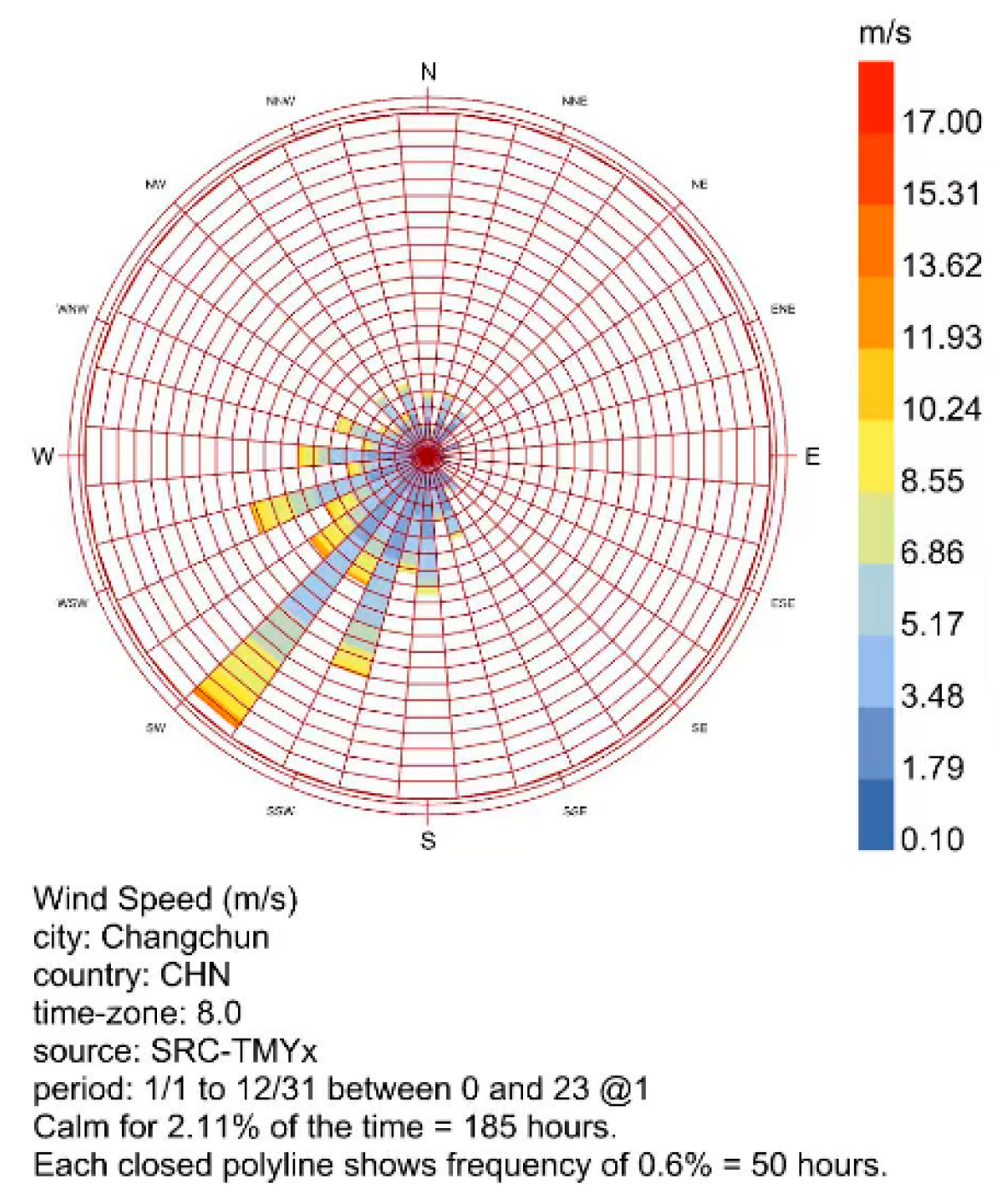
Figure 3.
Annual Climatic Characteristics of Changchun.
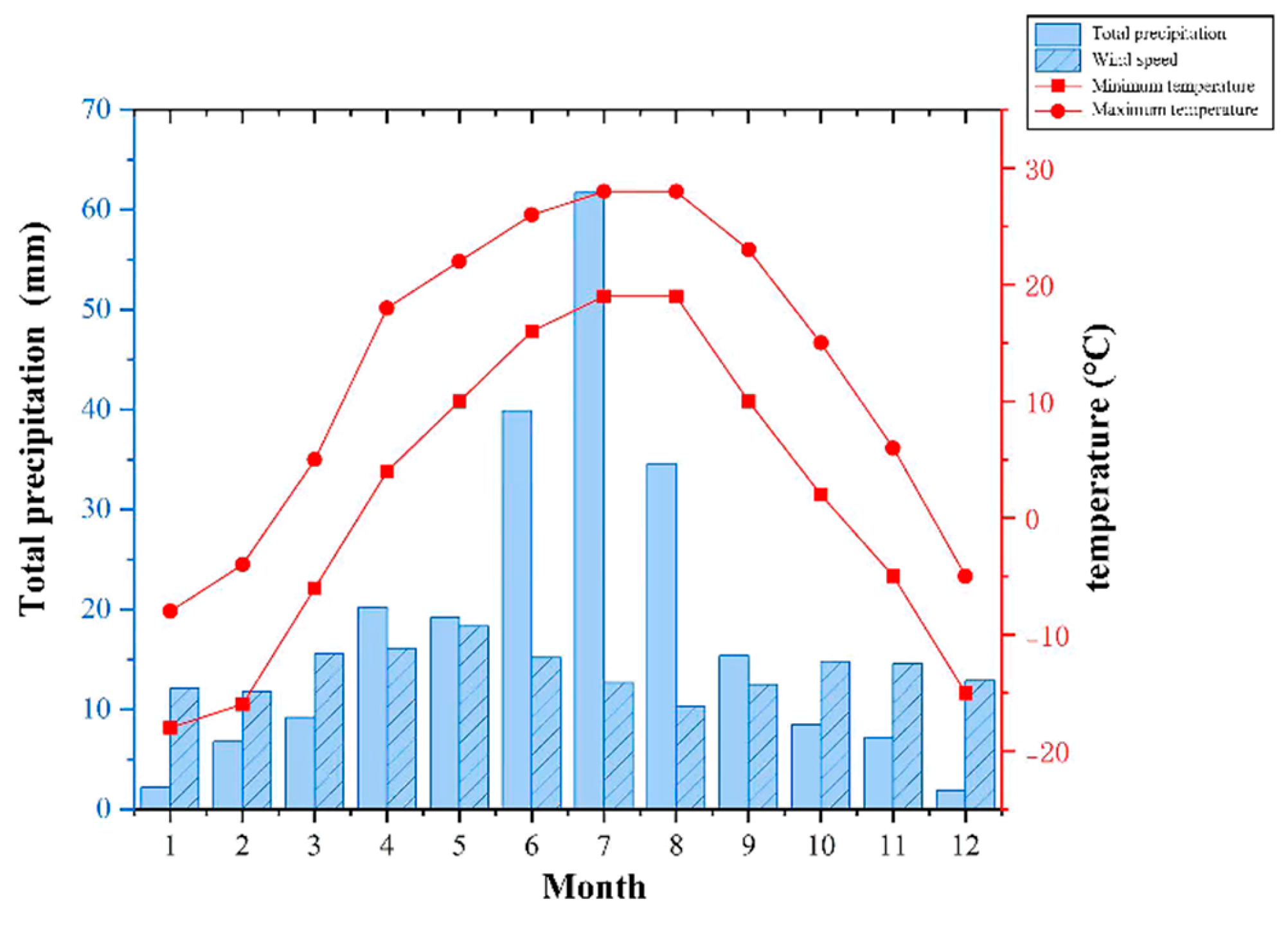
Figure 4.
Annual Outdoor Dew Point Temperature of Changchun.
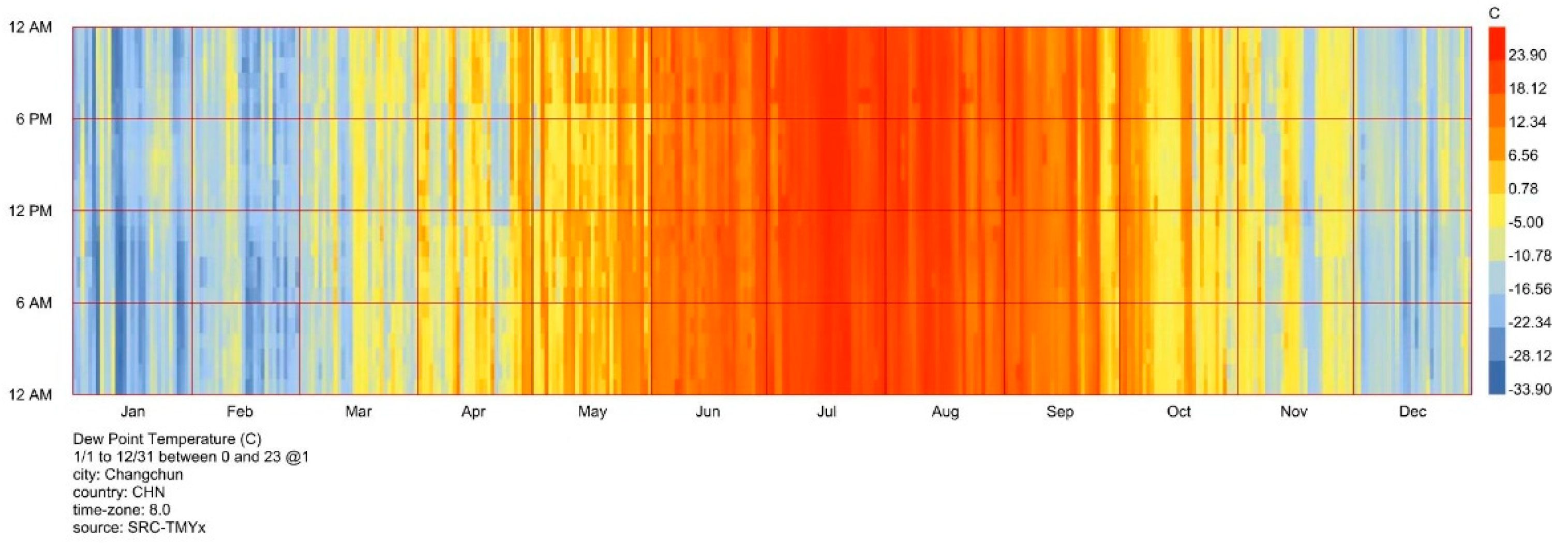
Figure 5.
(a)The present situation of the existing buildings in the southeast corner.(b)The present situation of the existing buildings in the northeast corner.
Figure 5.
(a)The present situation of the existing buildings in the southeast corner.(b)The present situation of the existing buildings in the northeast corner.
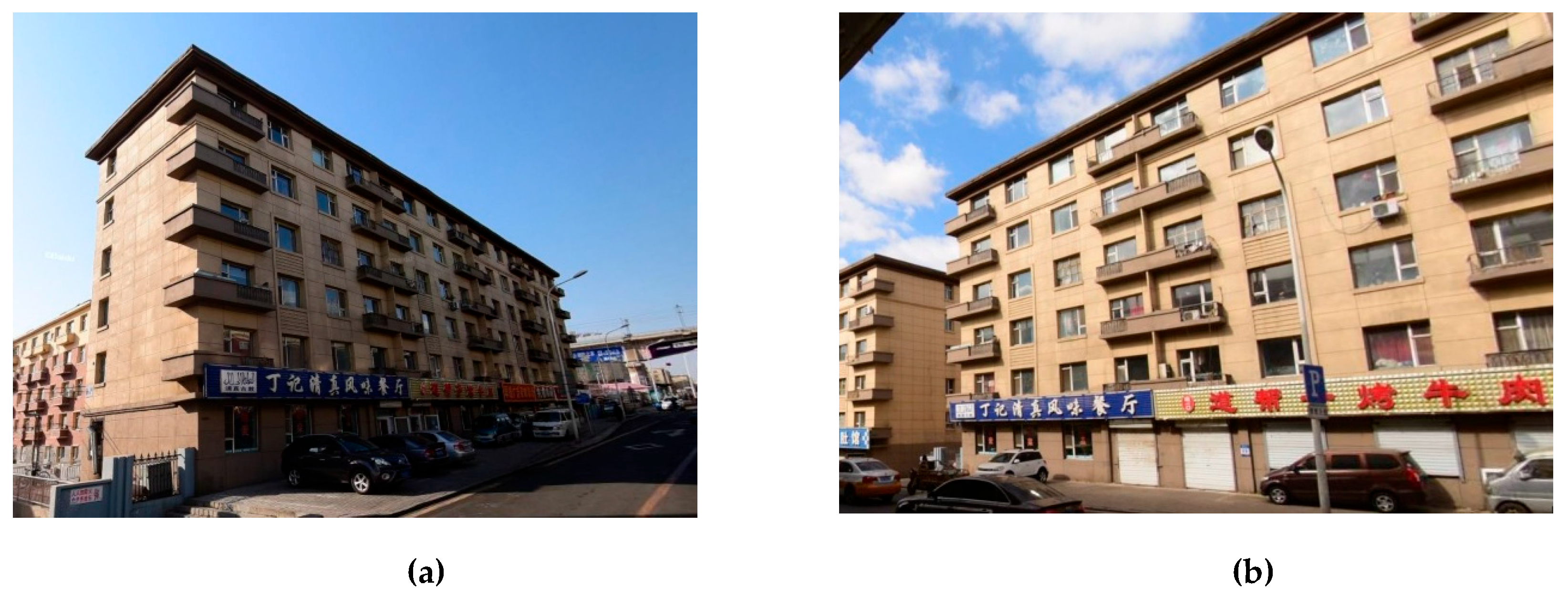
Figure 6.
Floor Plan of the Existing Building.
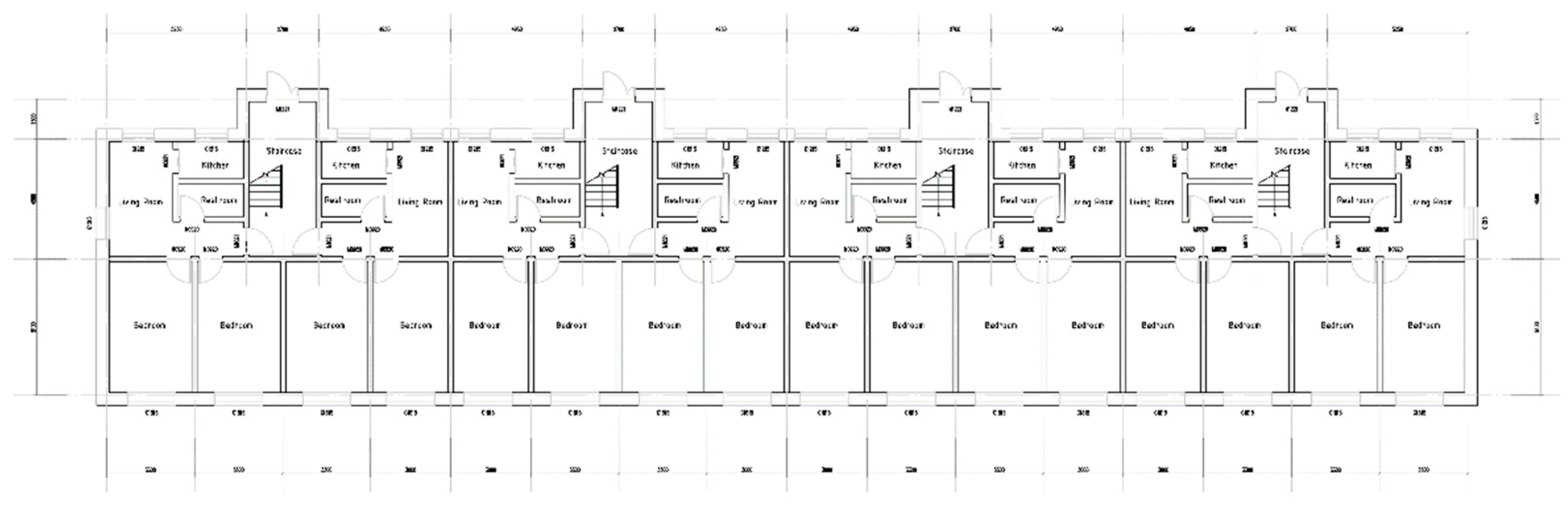
Figure 7.
Annual Heating and Cooling Load Statistics of the Building Before Renovatio.
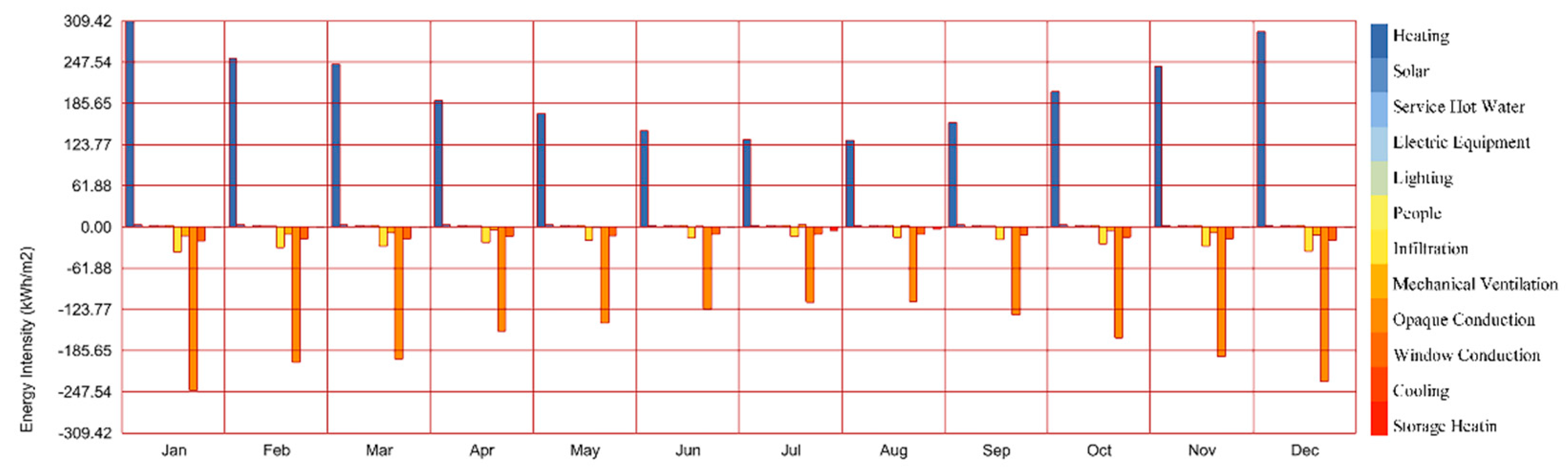
Figure 8.
(a) External Wall Envelope Construction (Section Detail).(b) External Wall Envelope Construction (Model).
Figure 8.
(a) External Wall Envelope Construction (Section Detail).(b) External Wall Envelope Construction (Model).
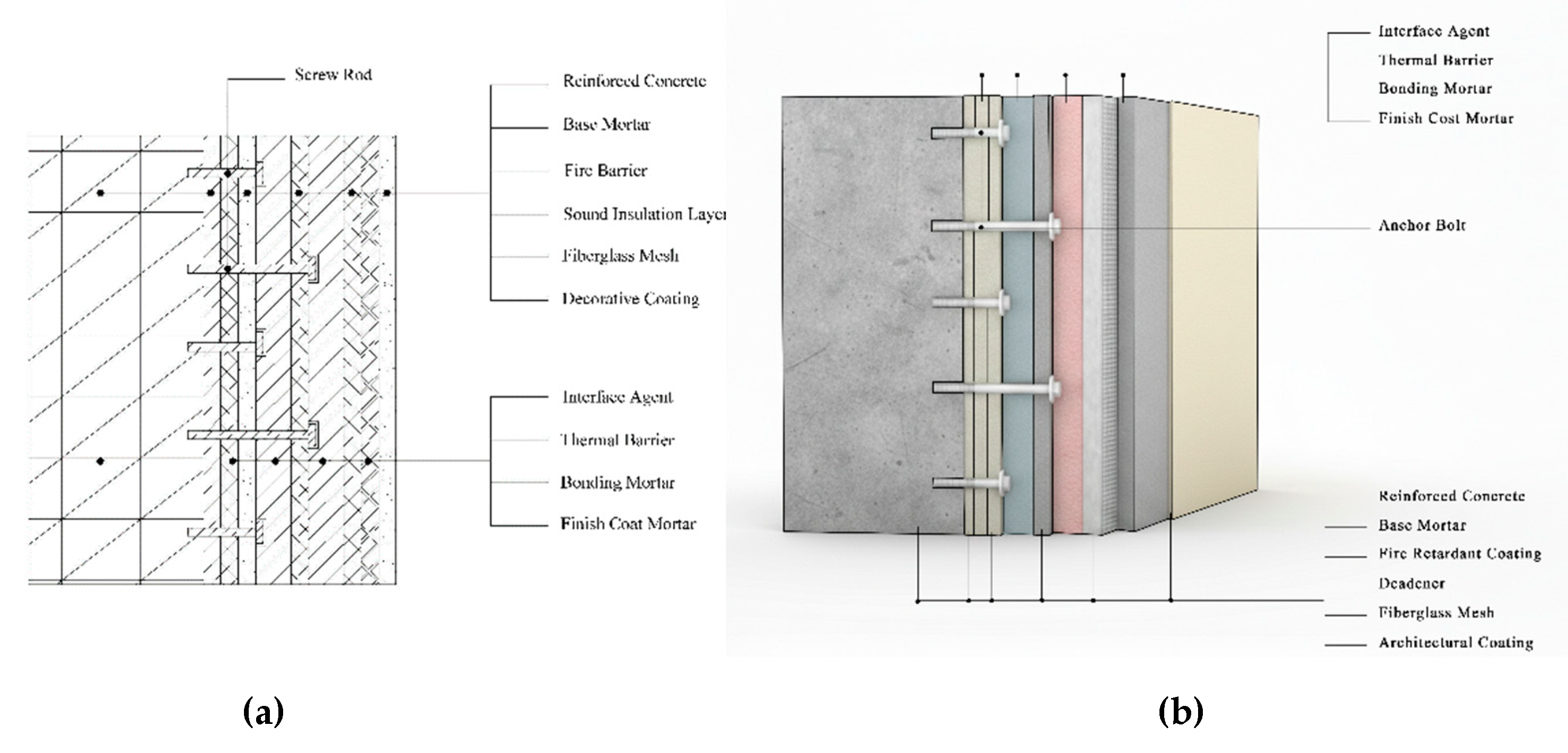
Figure 9.
Factor Weights at the Criterion Level.
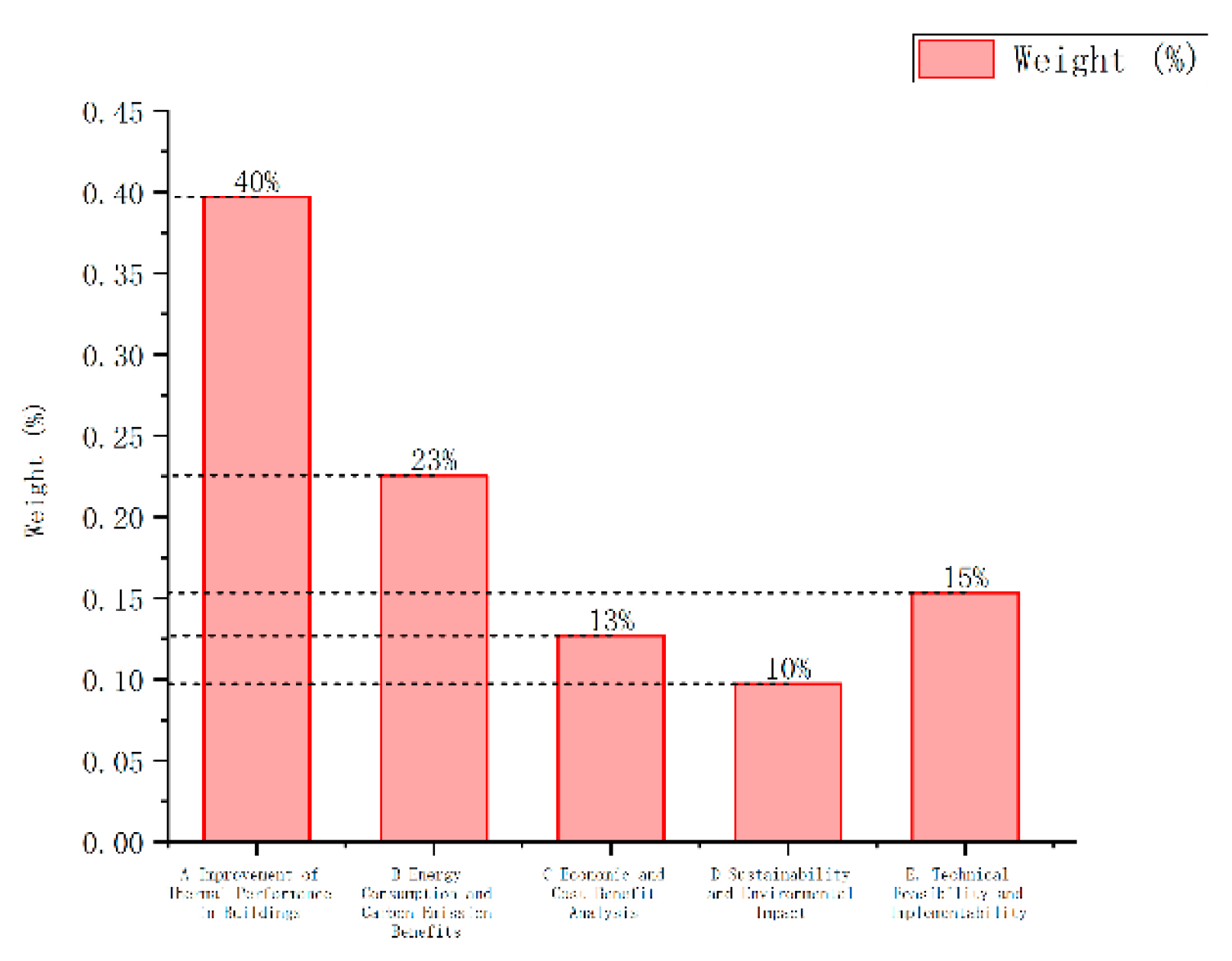
Figure 10.
Factor Weights of Key Item Level A.
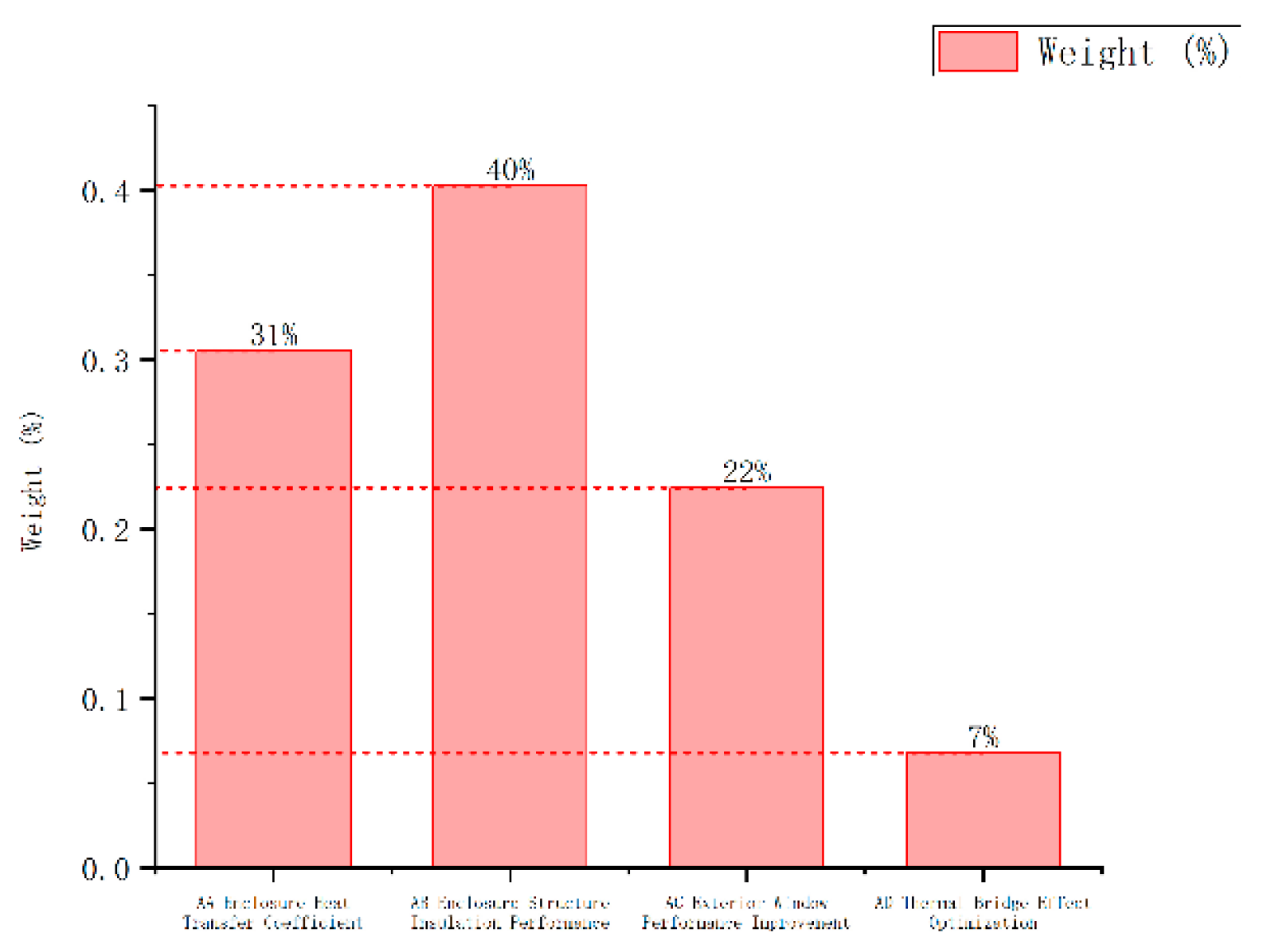
Figure 11.
Radar Chart of Factor Weights.
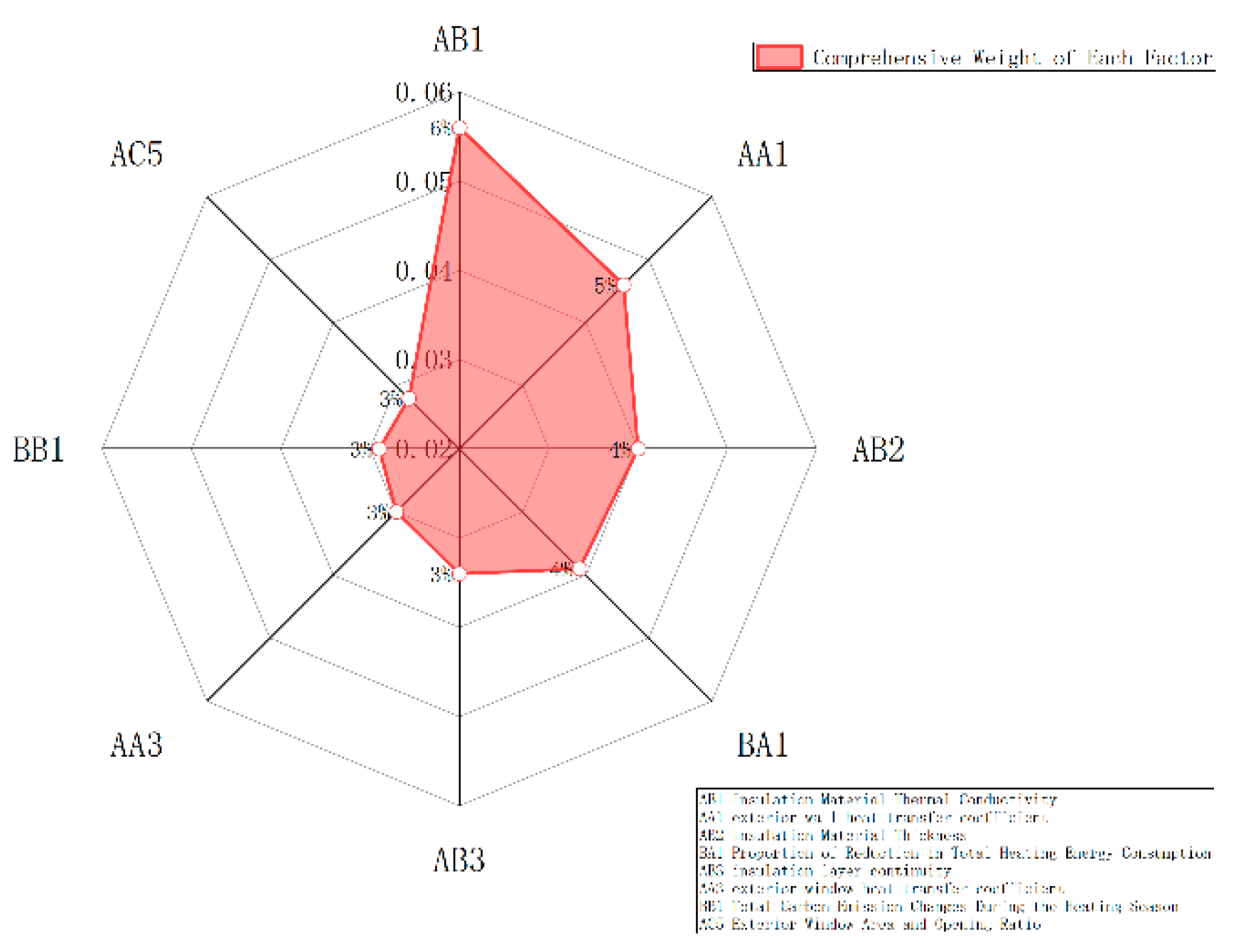
Figure 12.
Annual Heating and Cooling Loads of the Renovated Building.
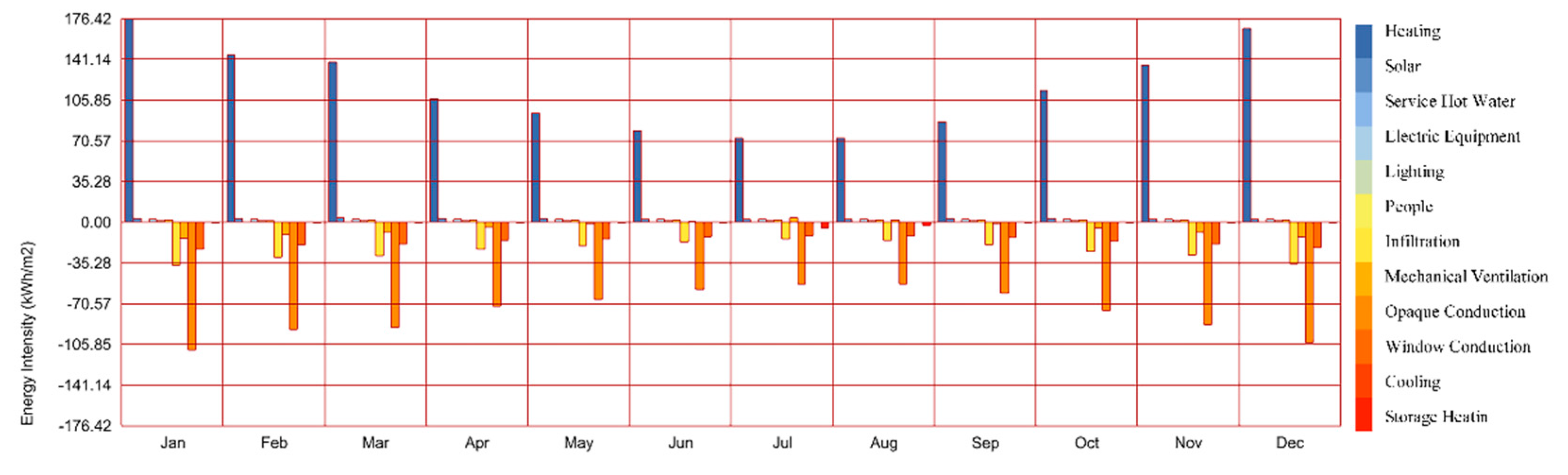
Figure 13.
Monthly Comparison of Building Energy Consumption Before and After Renovation.
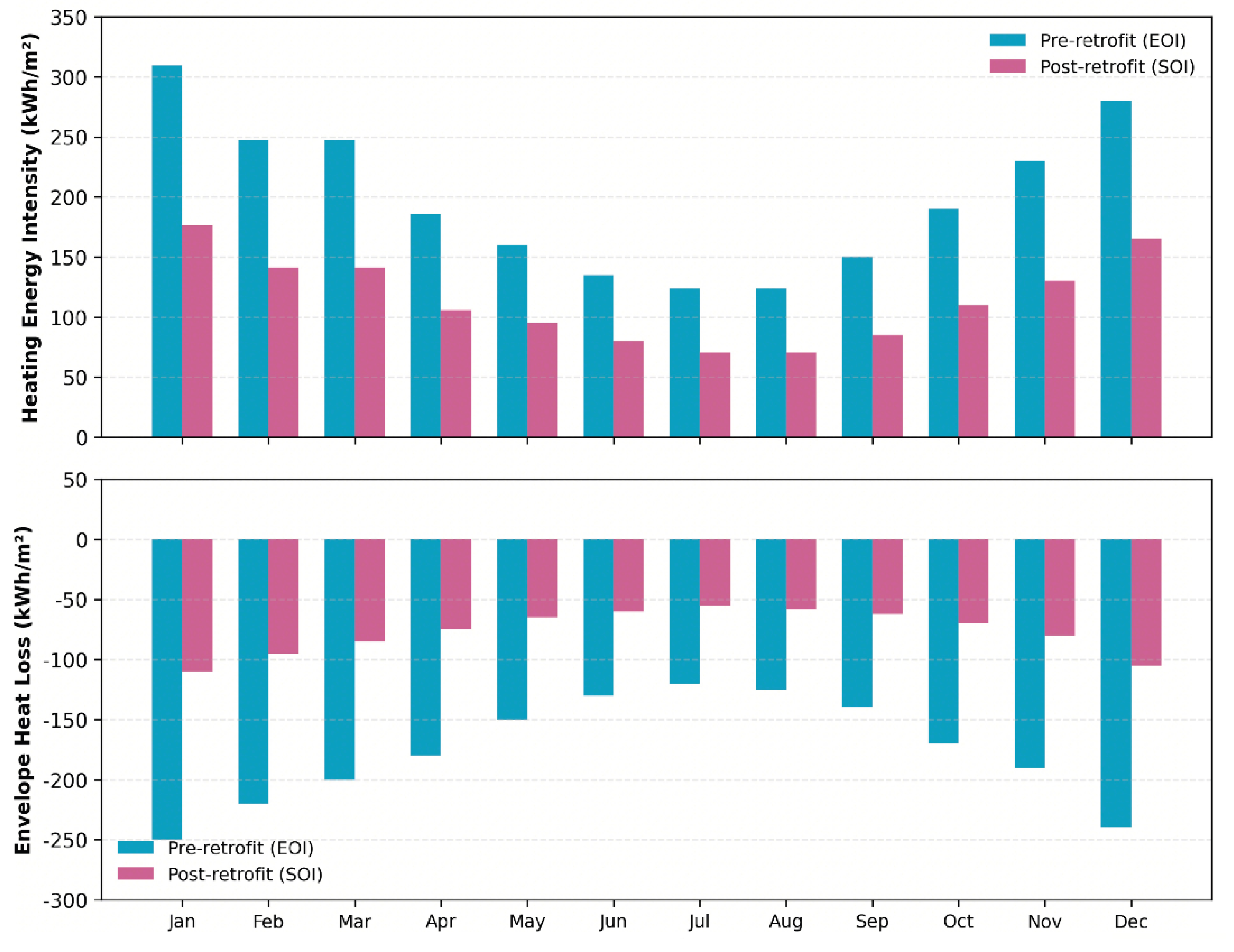
Table 1.
Construction Details of Envelope Components in the Existing Building.
| Building Type | Envelope Component | Construction Detail | Thermal Transmittance W/(m²·K) |
|---|---|---|---|
| Existing Building | Roof | Asphalt felt and roofing felt paper 20 mm + Cement mortar 20 mm + Reinforced concrete 100 mm + Lime mortar 20 mm | 2.69 |
| Wall | Cement mortar 50 mm + Solid clay brick 370 mm + Cement mortar 30 mm + Lime mortar 20 mm | 1.39 | |
| Exterior Window | 12A Steel–Aluminum Single Frame Dou-ble-Glazed Window | 3.90 |
Table 2.
Orthogonal Experimental Design.
| Experiment No. |
Exterior Wall Insulation Material | Roof Insulation Material |
Heating Load Energy Consumption Before Renovation (Wh/m²·yr) |
Heating Load Energy Consumption After Renovation (Wh/m²·yr) |
Energy Consumption Difference (Wh/²·yr) |
|---|---|---|---|---|---|
| 0505 | XPS | XPS | 290642.88 | 173047.72 | 117595.16 |
| 0515 | XPS | Rook Wool | 290642.88 | 175691.22 | 114951.66 |
| 0525 | XPS | EPS | 290642.88 | 175174.86 | 115468.02 |
| 1505 | Rook Wool | XPS | 290642.88 | 174210.27 | 116432.61 |
| 1515 | Rook Wool | Rook Wool | 290642.88 | 176851.35 | 113791.53 |
| 1525 | Rook Wool | EPS | 290642.88 | 176335.38 | 114307.5 |
| 2505 | EPS | XPS | 290642.88 | 173961.26 | 116681.62 |
| 2515 | EPS | Rook Wool | 290642.88 | 176602.88 | 114040.0 |
| 2525 | EPS | EPS | 290642.88 | 176086.81 | 114556.07 |
Table 3.
Evaluation Indicator System for Energy Retrofit Benefits of Building Envelope (See Sup plementary Material 1).
Table 3.
Evaluation Indicator System for Energy Retrofit Benefits of Building Envelope (See Sup plementary Material 1).
| Goal Level | Criterion Level | Key Item Level | Indicator Level |
|---|---|---|---|
| Quantification of Energy Retrofit Benefits of Building Envelopes for Existing Residential Buildings in Severe Cold Regions | A Enhancement of Building Thermal Performance | AA Thermal Transmittance of Envelope Components | AA1 Thermal Transmittance of Exterior Walls |
| AA2 Thermal Transmittance of Roof | |||
| AB Insulation Performance of Envelope Components...... | AB1 Thermal Conductivity of Insulation Materials | ||
| AB2 Insulation Material Thickness.... | |||
| B Energy and Carbon Emission Benefits ...... |
BA Heating Energy Consumption Variation | BA1 Reduction Ratio of Total Heating Energy Consumption | |
| BA2 Reduction of Energy Consumption per Unit Area.... | |||
| BB Impact on Carbon Emissions...... | BB1 Change in Total Carbon Emissions During Heating Season | ||
| BB2 Reduction of Carbon Emissions per Unit Area.... |
Table 4.
AHP Hierarchical Weights Example of Aspect Layer A (See Sup plementary Material 2).
| Key Item Level (Code) | Key Item Level Weight | Indicator Level (Code) | Indicator Level Weight | Composite Weight |
|---|---|---|---|---|
| Thermal Transmittance of Envelope Components (AA) | 0.305 | Thermal Transmittance of Exterior Walls (AA1) | 0.380 | 0.046 |
| Thermal Transmittance of Roof (AA2)...... | 0.150 | 0.018 | ||
| Insulation Performance of Envelope Components (AB) | 0.403 | Thermal Conductivity of Insulation Materials (AB1) | 0.350 | 0.056 |
| Insulation Material Thickness (AB2)...... | 0.250 | 0.040 | ||
| Enhancement of Exterior Wall Performance (AC) | 0.224 | Number of Glass Panes in Exterior Windows (AC1) | 0.240 | 0.021 |
| Thermal Performance of Window Frames (AC2)...... | 0.290 | 0.026 | ||
| Optimization of Thermal Bridge Effects (AD) | 0.068 | Thermal Bridge Treatment at Balcony Slab–Exterior Wall Junction (AD1) | 0.190 | 0.005 |
| Thermal Bridge Design at Floor Slab–Exterior Wall Junction (AD2)...... | 0.250 | 0.007 |
Table 5.
Composite Weight Statistics of All Indicators.
| Ranking | Criterion Level | Criterion Level Weight | Key Item Level | Key Item Level Weight | Indicator Level | Indicator Level | Indicator-Level Composite Weight within Key Item Level | Indicator-Level Composite Weight within the System |
|---|---|---|---|---|---|---|---|---|
| 1 | A Enhancement of Building Thermal Performance |
0.397 | AB Insulation Performance of Envelope Components |
0.403 | AB1 Thermal Conductivity of Insulation Materials |
0.350 | 0.141 | 0.056 |
| 2 | A Enhancement of Building Thermal Performance |
0.397 | AA Thermal Transmittance of Envelope Components |
0.305 | AA1 Thermal Transmittance of Exterior Walls |
0.380 | 0.116 | 0.046 |
| 3 | A Enhancement of Building Thermal Performance |
0.397 | AB Insulation Performance of Envelope Components |
0.403 | AB2 Insulation Material Thickness |
0.250 | 0.101 | 0.040 |
| 4 | B Energy and Carbon Emission Benefits |
0.226 | BA Change in Heating Energy Consumption |
0.401 | BA1 Thermal Conductivity of Insulation Materials |
0.426 | 0.171 | 0.039 |
| 5 | A Enhancement of Building Thermal Performance |
0.397 | AB Insulation Performance of Envelope Components |
0.403 | AB3 Continuity of Insulation Layer |
0.210 | 0.085 | 0.034 |
Table 8.
Total Energy Consumption of the Existing Building during Operation.
| Electric Energy |
Category | Electricity Consumption(kWh/㎡) | Carbon Emission Fator (kgCO2/kWh) | Carbon Emission (tCO2) |
|---|---|---|---|---|
| Electric Power | Cooling | 4740.365 | 0.5703 0.5703 0.5703 0.5703 0.5703 |
4506.334 |
| Heating | 2463.215 | 2341.606 | ||
| HVAC Fan | 188.220 | 178.928 | ||
| Lighting | 456.865 | 434.310 | ||
| Socket Equipment | - | - | ||
| Other | 0.000 | 0.000 | ||
| Fossil Fuel | Category | Heat Consumption (kWh/㎡) |
Carbon Emission Fator(tCO2/TJ) |
Carbon Emission (tCO2) |
| Bituminous CoalII | Heating: Boiler | 3598.058 | 89 | 1921.626 |
| Other Energy Sources | Category | Consumption(kg) | Carbon Emission (tCO2) |
|
| Refrigerant | Cooling | 0 | 0.000 | |
| Renewable Energy | Category | Power Supply(kWh/㎡) | Carbon Emission (kgCO2/kWh) | Carbon Redution (tCO2) |
| Renewable Energy |
Photovoltaic Energy |
0.000 | 0.5703 | 0.000 |
| Wind Energy | 0.000 | 0.000 | ||
| Total Operational Carbon Emissions of the Building | 9382.803 | |||
Table 9.
Total Energy Consumption of the Renovated Building during Operation.
| Electric Energy |
Category | Electricity Consumption(kWh/㎡) | Carbon Emission Fator (kgCO2/kWh) | Carbon Emission (tCO2) |
|---|---|---|---|---|
| Electric Power | Cooling | 4824.562 | 0.5703 0.5703 0.5703 0.5703 0.5703 |
4586.374 |
| Heating | 2463.215 | 2341.606 | ||
| HVAC Fan | 188.270 | 178.975 | ||
| Lighting | 456.865 | 434.310 | ||
| Socket Equipment | - | - | ||
| Other | 0.000 | 0.000 | ||
| Fossil Fuel | Category | Heat Consumption (kWh/㎡) |
Carbon Emission Fator (tCO2/TJ) |
Carbon Emission (tCO2) |
| Bituminous CoalII | Heating: Boiler | 8224.744 | 89 | 4392.614 |
| Other Energy Sources | Category | Consumption(kg) | Carbon Emission (tCO2) |
|
| Refrigerant | Cooling | 0 | 0.000 | |
| Renewable Energy | Category | Power Supply(kWh/㎡) | Carbon Emission (kgCO2/kWh) | Carbon Redution (tCO2) |
| Renewable Energy |
Photovoltaic Energy |
0.000 | 0.5703 | 0.000 |
| Wind Energy | 0.000 | 0.000 | ||
| Total Operational Carbon Emissions of the Building | 11933.879 | |||
Disclaimer/Publisher’s Note: The statements, opinions and data contained in all publications are solely those of the individual author(s) and contributor(s) and not of MDPI and/or the editor(s). MDPI and/or the editor(s) disclaim responsibility for any injury to people or property resulting from any ideas, methods, instructions or products referred to in the content. |
© 2026 by the authors. Licensee MDPI, Basel, Switzerland. This article is an open access article distributed under the terms and conditions of the Creative Commons Attribution (CC BY) license.
Copyright: This open access article is published under a Creative Commons CC BY 4.0 license, which permit the free download, distribution, and reuse, provided that the author and preprint are cited in any reuse.


