

Submitted:
14 February 2026
Posted:
26 February 2026
You are already at the latest version
Abstract
Background/Objectives: Non-ablative local therapies are increasingly used in the conservative management of human papillomavirus (HPV) infection. Coriolus versi-color, an immunomodulatory medicinal mushroom, is one such approach. This study aimed to investigate the effect of a Coriolus versicolor–based vaginal gel on HPV clearance and cervical cytological outcomes. Methods: This retrospective cohort study included 600 women with cervical HPV infection (300 treated with a Coriolus versi-color–based vaginal gel and 300 receiving standard follow-up). Baseline and six-month follow-up assessments included HPV DNA testing and cervical cytology. Results: Baseline demographic characteristics, HPV genotype distribution, and cytological findings were comparable between the groups. Overall HPV clearance was signifi-cantly higher in the treatment group than in the control group (89.3% vs. 44.7%, p < 0.001). Complete clearance of high-risk HPV genotypes, including HPV 16 (77.0% vs. 25.4%, p < 0.001) and HPV 18 (73.9% vs. 18.5%, p = 0.017), was also significantly more frequent among treated women. Cytological normalization occurred more often in the treatment group (88.4% vs. 60.4%, p < 0.001). Multivariable analysis identified use of the vaginal gel as the strongest independent factor associated with HPV clearance (adjusted odds ratio [aOR] = 8.45; 95% confidence interval [CI]: 3.05–23.43; p < 0.001). Conclusions: Treatment with a Coriolus versicolor–based vaginal gel was associated with significantly higher rates of high-risk HPV clearance and cervical cytological normalization. These findings suggest that this therapy may represent an effective ad-junct in the conservative management of HPV infection; however, randomized con-trolled trials are warranted to confirm these results.
Keywords:
human papillomavirus
; cervical cancer
; HPV clearance
; cervical cytology
; coriolus versicolor
; vaginal gel
; non-ablative therapy
1. Introduction
Human papillomavirus (HPV) is the most prevalent sexually transmitted infection worldwide, with the majority of sexually active individuals acquiring the virus at some point during their lifetime. Over 200 HPV genotypes have been identified, with 14 classified as high-risk types that are strongly associated with nearly all cases of cervical intraepithelial neoplasia and cervical cancer in women [1]. Most HPV infections and related low-grade cervical abnormalities resolve spontaneously without medical intervention [2]. However, some infections persist. Factors contributing to persistence include specific viral genotypes, elevated viral load, age at initial diagnosis, vaginal microbiome imbalances (dysbiosis), and immune suppression. Persistent infection with high-risk HPV types substantially increases the risk of progression from early lesions to high-grade precancerous changes and invasive cervical cancer [3,4].
Cervical cancer remains a major cause of illness and death worldwide. Persistent infection with “high-risk” HPV types is the main cause [5]. As of 2022, cervical cancer ranked as the fourth most prevalent cancer among women globally in terms of both incidence and mortality, accounting for approximately 660,000 newly diagnosed cases and 350,000 deaths worldwide [6]. Cervical infection with high-risk genotypes, especially HPV-16 and HPV-18, leads to progression from transient infection to neoplasia and finally invasive carcinoma [5,7]. Recent global studies estimate HPV prevalence at about 11.7% for any type and 6.5% for high-risk HPV among women. These numbers show a substantial risk for disease progression [7]. Additional analyses confirm that persistent high-risk HPV infection is the main cause of cervical cancer in different regions [8].
Primary prevention through vaccination and screening has improved cervical cancer control. Still, gaps in coverage and adherence leave many women at risk [9,10]. Current guidelines promote HPV testing in “screen–triage–treat” protocols and recommend follow-up for HPV-positive women. Most algorithms focus on monitoring low-grade abnormalities. They reserve definitive therapy for confirmed higher-grade disease [9,10,11]. Studies show most HPV infections clear within 12 to 24 months. Some persist, especially in adults or in the presence of cofactors. This has increased interest in adjunctive strategies to speed up viral clearance and repair mucosa without affecting safety [3,12,13].
Recently, non-ablative, locally applied products have been studied. These products aim to support cervical healing, maintain a healthy vaginal environment, and modulate local immunity. They may complement standard clinical follow-up in women with high-risk HPV infection and low-grade cervical abnormalities [14]. One approach uses Coriolus versicolor (syn. Trametes versicolor), a medicinal mushroom. Its protein-bound polysaccharides (PSK/PSP) helps to enhance local immunity by affecting both innate and adaptive responses. These include the local activation of dendritic cells and macrophages, as well as cytokines involved in antiviral and antitumor actions [15,16,17]. This provides a basis for testing Coriolus versicolor–based vaginal gels as local aids to improve clearance of HPV and restore epithelial integrity.
Early clinical evidence is emerging. The PALOMA trial, a prospective, randomized, multicenter, open-label study with an observation-only control arm, demonstrated that a Coriolus versicolor–based vaginal gel (Papilocare, Procare Health, Spain) improved normalization of HPV-related low-grade cervical lesions. The gel formulation includes hyaluronic acid, Asian centella, aloe vera, and alpha-glucan oligosaccharide which possess tissue-regenerative and vaginal microbiota-protective properties. Additionally, Coriolus versicolor, Azadirachta indica, and carboxymethyl-β-glucan, present in Papilocare, are established ingredients that have demonstrated efficacy in clearing HPV-related cervical lesions. Papilocare vaginal gel primarily helps prevent virus-induced cervical lesions. It does this by promoting the re-epithelialization of the cervical transformation zone. Additionally, the gel supports normalization of virus-associated intraepithelial abnormalities, alleviates vaginal dryness, restores the integrity of the cervical-vaginal mucosa, reestablishes balanced vaginal microbiota, and enhances overall vaginal health. Papilocare led to higher HPV clearance versus control over six months [18]. Observational data from real-world use, such as PAPILOBS, indicate this multi-ingredient gel can achieve lesion regression and meaningful HPV clearance. These findings hold in routine practice, even in older women who often do not clear HPV spontaneously [19]. Sub-analyses in women aged ≥40 years show similar benefits and good safety, supporting validity across ages [20]. These studies do have limits: open-label designs, assessment bias, and different endpoints. Still, their results support further rigorous evaluation in real-world groups relevant to clinical decisions [18,19,20].
This retrospective cohort study looks at women with cervical HPV infection in routine care. It measures the effectiveness of a Coriolus versicolor–based vaginal gel when added to standard follow-up. Specifically, it checks HPV clearance, cytologic and colposcopic results, and safety across subgroups. Findings are discussed in the context of current screening advice and new literature on non-ablative, immune-modulatory cervical therapies.
2. Materials and Methods
2.1. Study Design & Participants
This study was designed as a retrospective cohort study based on previously recorded clinical data. The study period extended from January 2023 to August 2025, and the research was conducted in the Department of Obstetrics and Gynecology at Hacettepe University Hospital, a tertiary referral center. Patient demographic and clinical data were obtained from archived medical records, including patient follow-up files, hospital archive records, hospital procedural databases, and comprehensive medical information files encompassing follow-up data from other healthcare centers.
A total of 600 patients were included in the study and divided into two groups. The Papilocare group consisted of 300 patients who received a Coriolus versicolor–based vaginal gel, while the control group included 300 patients who did not receive any systemic or topic pharmacological treatment and were managed with standard clinical follow-up without pharmacological intervention.
All participants underwent HPV DNA testing and cervical cytologic examination at baseline and at six months. Cervical cytology samples were collected using a Cervix-Brush® cervical sampling device, which was inserted into the cervical canal and rotated 360 degrees to obtain epithelial cells from both the ectocervix and endocervix. Immediately after sampling, the brush head was rinsed into a vial containing liquid-based cytology preservative solution (CY-PREP® Pap Test Dual Filtration Cytology Preparation system). Cytological evaluation was performed according to standard laboratory protocols, and results were reported using the Bethesda System [21].
For HPV testing, cervical specimens were collected using a sterile Copan eSwab® collection and preservation system. After collection, the swab was placed into the transport medium and stored at room temperature until further processing. Cervical cells were subsequently suspended in PreservCyt solution (Hologic, Marlborough, MA, USA) and stored at room temperature until analysis. DNA extraction was performed using an eMAG automated extractor (bioMérieux, Marcy l’Etoile, France), with samples resuspended in 1 mL of buffer according to the manufacturer’s instructions. HPV DNA detection and genotyping were conducted using the Anyplex™ II HPV28 real-time PCR assay (Seegene, Seoul, South Korea).
For methodological analysis, HPV genotypes were categorized into five groups: HPV 16, HPV 18, other high-risk HPV types (HPV 31, 33, 35, 39, 45, 51, 52, 56, 58, 59, 68, 73, and 82), intermediate-risk HPV types (HPV 26, 53, and 66), and low-risk HPV types (HPV 6, 11, 40, 42, 43, 44, 54, 61, 70, 72, and 81).
Participants in the Papilocare group were instructed to apply the Coriolus versicolor–based vaginal gel according to the manufacturer’s recommendations. The treatment regimen consisted of one vaginal cannula administered daily for 21 consecutive days during the first month, followed by application on alternate days in the subsequent months. A high-dose regimen was defined as daily administration during the first three months of treatment. Some patients received this high-dose regimen for three consecutive months (corresponding to the use of three boxes), whereas others continued the same regimen for a total of six months (corresponding to the use of six boxes), thereby completing an overall treatment duration of six months. All patients receiving Papilocare were analyzed within the same treatment group regardless of treatment duration. Participants in the control group did not receive any topical or systemic treatment during follow-up.
All participants were advised to use condoms during sexual intercourse and to avoid vaginal douching or the use of vaginal deodorants throughout the study period. Based on retrospective follow-up records, only patients who adhered to these recommendations were included in the Papilocare group.
Diagnostic and therapeutic procedures, including colposcopy, directed cervical biopsy, and excisional interventions such as the loop electrosurgical excision procedure (LEEP), were undertaken according to clinical indications and in compliance with established cervical cancer screening and management guidelines [22].
Overall HPV clearance was defined as the occurrence of either total or partial clearance. Total clearance was defined as a negative HPV DNA test result or the complete disappearance of all baseline HPV genotypes detected at enrollment. Partial clearance Partial clearance was defined as the disappearance of at least one HPV genotype.
Smear clearance was defined using the same classification as HPV clearance. Overall smear clearance was defined as the occurrence of either total or partial clearance. Total smear clearance was defined as the complete resolution of the baseline cytological abnormality with a return to normal cervical cytology. Partial smear clearance was defined as regression from the baseline cervical lesion to a lower-grade cervical lesion.
Demographic, clinical, and behavioral data collected included participants’ age, educational level, Papilocare use and number of treatment boxes, pregnancy and parity history, menstrual regularity, oral contraceptive use, presence of chronic diseases, smoking status, HPV vaccination status, immunosuppression status, age at menarche, age at first sexual intercourse, baseline HPV genotype, and history of loop electrosurgical excision procedure.
Patients were eligible for inclusion if they had a positive HPV DNA test result and cervical cytology findings of normal cytology, atypical squamous cells of undetermined significance (ASC-US), atypical squamous cells—cannot exclude high-grade squamous intraepithelial lesion (ASC-H), low-grade squamous intraepithelial lesion (LSIL), high-grade squamous intraepithelial lesion (HSIL), or atypical glandular cells (AGC).
Patients were excluded from the study if they had evidence of sexually transmitted infections or symptomatic vulvovaginal infections, immunodeficiency disorders or autoimmune diseases, were receiving immunosuppressive therapy at the time of evaluation, were pregnant, had undergone total hysterectomy, or had a history of gynecologic malignancy.
2.2. Ethics
The study received approval from the Ministry of Health Local Ethics Committee (Approval No: SEAH-BAEK 2025-151) and was conducted in accordance with the principles outlined in the Declaration of Helsinki. Patient data were obtained from Hacettepe University Hospital, where written informed consent for the use of clinical data for scientific research purposes is routinely obtained from both outpatients and inpatients at the time of clinical evaluation.
2.3. Statistical Analysis
Statistical analyses were performed using the Statistical Package for Social Sciences (SPSS), version 25.0 (IBM Corp., Armonk, NY, USA). Descriptive statistics were used to summarize demographic, clinical, virological, and cytological characteristics of the study population. Continuous variables were expressed as mean ± standard deviation or median (interquartile range), as appropriate, while categorical variables were presented as frequencies and percentages.
Comparisons between the Papilocare and control groups for continuous variables were conducted using the Mann–Whitney U test, as data did not consistently meet normal distribution assumptions. Categorical variables, including HPV genotype distribution, cytological categories, and clearance outcomes, were compared using the Chi-square test. Fisher’s exact test was applied when expected cell counts were less than five.
HPV and cytological clearance outcomes were analyzed as complete, partial, and no clearance, as well as overall clearance (defined as the combination of complete and partial clearance). Group differences in clearance rates were assessed using Chi-square tests.
To identify factors independently associated with overall HPV clearance, univariate and multivariable binary logistic regression analyses were performed. Variables included in the regression models were selected based on clinical relevance and prior evidence and comprised use of the Coriolus versicolor–based vaginal gel (yes/no), number of Papilocare treatment boxes (<3, ≥3), age (<30, 30–45, >45 years), pregnancy history (yes/no), menstrual status (regular, irregular, menopausal), oral contraceptive use (yes/no), presence of chronic diseases (yes/no), smoking status (current smoker/non-smoker), HPV vaccination status (vaccinated/unvaccinated), immunosuppression status (yes/no), age at menarche (≤15, >15 years), age at first sexual intercourse (≤18, >18 years), baseline HPV type (HPV 16/18/high-risk vs other types), history of loop electrosurgical excision procedure (yes/no), and educational level (below university vs university and above). Results were reported as odds ratios (ORs) and adjusted odds ratios (aORs) with corresponding 95% confidence intervals (CIs).
All statistical tests were two-sided, and a p value of <0.05 was considered statistically significant.
3. Results
3.1. Study Population and Baseline Characteristics
A total of 600 women with HPV infection were included in this retrospective analysis, comprising 300 women in the Papilocare group and 300 women in the control group. The mean age was 37.24 ± 9.56 years in the Papilocare group and 38.09 ± 9.58 years in the control group, with no statistically significant difference between groups (p=0.279). Baseline demographic characteristics were comparable, indicating adequate group homogeneity (Table 1).
The distribution of HPV genotypes at baseline did not differ significantly between the two groups (p=0.124). HPV 16 was the most prevalent genotype, detected in 37.7% of women in the Papilocare group and 39.3% of controls. HPV 18 positivity was observed in 7.7% and 9.0% of participants, respectively. Other high-risk HPV types accounted for 37.3% of infections in the Papilocare group and 33.3% in the control group. Intermediate-risk and low-risk HPV types were similarly distributed between groups (Table 1).
Baseline cytological evaluation was available for 260 women in the Papilocare group and 271 in the control group. Normal cytology was present in approximately half of the participants in both groups (48.1% vs. 51.7%). The frequencies of ASC-US, ASC-H, LSIL, and HSIL were comparable, with no statistically significant differences observed at baseline (p=0.171) (Table 1).
3.2. HPV Clearance Outcomes
Clearance analyses demonstrated significantly higher rates of HPV elimination in the Papilocare group compared with controls. For HPV 16, complete clearance was achieved in 77.0% of treated women, with an additional 14.2% showing partial clearance, resulting in an overall clearance rate of 91.2%. In contrast, the control group demonstrated complete and partial clearance rates of 25.4% and 16.1%, respectively, corresponding to an overall clearance rate of 41.5% (p<0.001) (Table 2).
Similarly, for HPV 18, complete clearance was achieved in 73.9% of treated women, with an additional 17.4% showing partial clearance, resulting in an overall clearance rate of 91.3%. In contrast, the control group demonstrated complete and partial clearance rates of 18.5% and 25.9%, respectively, corresponding to an overall clearance rate of 44.4% (p = 0.017). Among other high-risk HPV types, complete clearance was observed in 76.8% of treated women, with an additional 12.5% demonstrating partial clearance, yielding an overall clearance rate of 89.3% ; in the control group, the corresponding overall clearance rate was 46.0% (p < 0.001). Comparable trends favoring Papilocare were observed for intermediate-risk (88.2% vs. 41.7%) and low-risk HPV types (82.9% vs. 48.4%) (Table 2).
When complete and partial responses were combined, overall HPV clearance was achieved in 89.3% of women in the Papilocare group, compared with 44.7% in the control group, representing a statistically significant difference (p<0.001) (Table 2).
3.3. Cytological Clearance Outcomes
Among women with abnormal baseline cytology, Papilocare treatment was associated with significantly higher rates of cytological normalization. For ASC-US lesions, overall clearance was observed in 87.8% of treated women, compared with 55.6% in the control group. ASC-H lesions demonstrated overall clearance rates of 88.3% in the Papilocare group and 60.0% among controls (Table 2).
For LSIL, overall clearance occurred in 90.3% of women treated with Papilocare versus 65.0% in the control group. HSIL clearance rates were also higher in the Papilocare group (89.5%) compared with controls (59.1%) (Table 2).
Overall smear clearance, combining complete and partial responses, was achieved in 89.9% of women in the Papilocare group compared with 59.5% in the control group, with the difference reaching statistical significance (p<0.001) (Table 2).
HPV DNA detection and smear analyses revealed a statistically significant difference in clearance rates between the Papilocare and control groups (p<0.001). This significant difference persisted across both complete and partial clearance conditions, as well as in the overall analysis (Table 2).
Of the patients with a diagnosis of HSIL, LSIL, or ASC-H who underwent loop electrosurgical excision procedure 73 belonged to the Papilocare group and 46 to the control group. In the Papilocare group, LEEP was performed in 12 of 24 patients (50.0%) with ASC-H, 25 of 41 patients (61.0%) with LSIL, and 36 of 54 patients (66.7%) with HSIL. In the control group, LEEP was applied in 12 of 24 patients (50.0%) with ASC-H, 16 of 41 patients (39.0%) with LSIL, and 18 of 54 patients (33.3%) with HSIL. Histopathological examination of LEEP specimens revealed cervicitis in 12 patients (63.2%) in the Papilocare group and 7 patients (36.8%) in the control group. CIN 1 was identified in 19 Papilocare-treated patients (65.5%) and 10 control patients (34.5%), CIN 2 in 15 (57.7%) and 11 (42.3%), and CIN 3 in 27 (60.0%) and 18 (40.0%) patients, respectively.
3.4. Multivariable Analysis
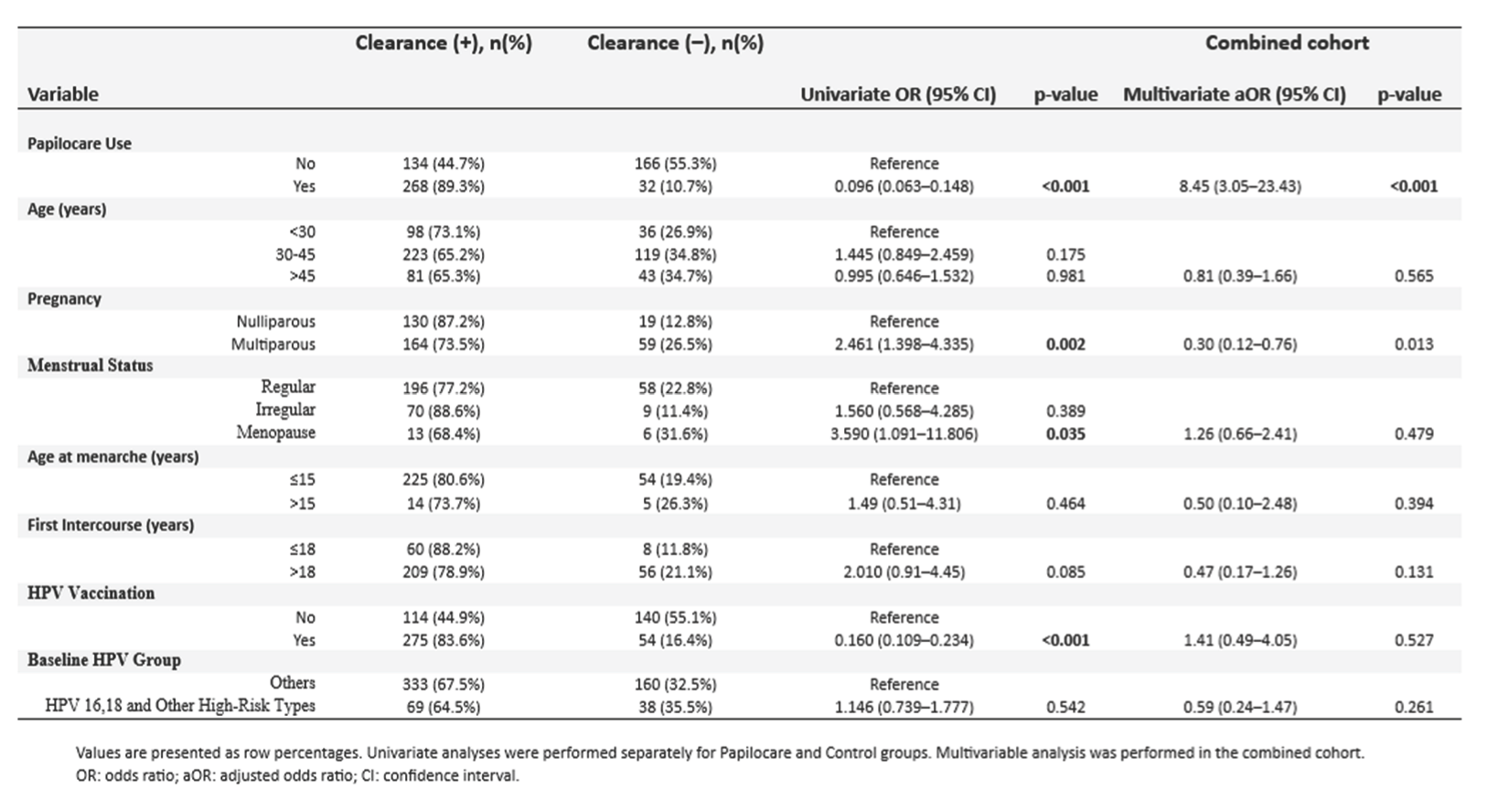
Multivariate logistic regression analysis identified use of the Coriolus versicolor–based vaginal gel as the strongest independent factor associated with overall HPV clearance in the combined cohort (adjusted OR 8.45 ; 95% CI: 3.05–23.43; p<0.001). Other demographic and clinical variables, including age, smoking status, HPV vaccination, baseline HPV risk group, and cytological category, were not independently associated with clearance after adjustment (Table 3).
Among women treated with Papilocare, multivariable analysis demonstrated that none of the evaluated demographic, clinical, or behavioral parameters were independently associated with overall HPV clearance. No statistically significant associations were observed for age, pregnancy history, menstrual status, age at menarche, age at first sexual intercourse, HPV vaccination status, or baseline HPV risk group. All participants in the Papilocare group received a high-dose regimen, consisting of either three or six boxes of treatment, and no dose-related differences in HPV clearance were identified.
4. Discussion
This retrospective study evaluated the effectiveness of a Coriolus versicolor-based vaginal gel in clearing high-risk HPV and improving cervical health. The gel demonstrated significantly higher clearance rates for HPV 16 and HPV 18, with overall clearance rates of 91.2% for HPV 16 and 91.3% for HPV 18 in the treatment group, compared with 41.5% and 44.4%, respectively, in controls (p<0.001; p=0.017) (Figure 1). Cytological and tissue assessments corroborated these findings, underscoring clear therapeutic benefits.
These observations suggest that the Coriolus versicolor-based gel may enhance regression of HPV-related cervical abnormalities, potentially by enhancing the local immunological environment [19,20]. Coriolus versicolor contains beta-glucans and polysaccharopeptides known to stimulate innate and adaptive immune responses, including macrophage activation, cytokine production, and enhancement of natural killer cell activity [16,23]. Such mechanisms offer a plausible explanation in addition to the known mechanical barrier main effect and microbiome restauration, for the accelerated viral clearance observed in this study.
These results are consistent with previous studies evaluating vaginal products containing Coriolus versicolor. Criscuolo et al. and Serrano et al. reported significant improvements in HPV clearance and cytology normalization after six months of treatment with a Coriolus versicolor-based vaginal gel, with clearance rates exceeding those of untreated controls [18,24]. Similarly, Galvez et al. and Serrano et al. observed substantial regression of low-grade cervical lesions following daily application of a similar product, attributing this effect to enhanced epithelial repair and restoration of mucosal immunity [19,25]. In a multicentric, randomized and, prospective trial, Serrano et al. and, Cortés et al. found improved clearance of high-risk HPV genotypes and reductions in cervical inflammation after treatment with a multi-ingredient vaginal gel containing Coriolus versicolor, hyaluronic acid, and antioxidants [18,19]. The current study corroborates these findings and further strengthens the evidence base by demonstrating a robust effect specifically on HPV 16 and HPV 18, confirmed by tissue-level outcomes.
The cytological results provide further evidence of the effectiveness of the Coriolus versicolor-based vaginal gel, as clearance rates for ASC-US, ASC-H, LSIL, and HSIL were markedly higher in the treatment group than in controls (p<0.001). Notably, overall cytological clearance was consistently higher across all lesion categories in women treated with the gel, with clearance rates of 87.8% for ASC-US, 88.3% for ASC-H, 90.3% for LSIL, 89.5% for HSIL, compared with 55.6%, 60.0%, 65.0%, 59.1%, and no observed clearance, respectively, in the control group (Figure 2). These findings suggest that the gel facilitates both viral elimination and accelerated epithelial repair. These findings align with previous studies indicating that Coriolus versicolor-containing formulations promote cytological normalization enhancing tissue regeneration. Criscuolo et al. [24] observed significant regression of ASC-US and LSIL cytology following treatment, while Bordoy et al. [19] reported notable improvements in cytological abnormalities in a multicenter study of women with low-grade lesions. Bordoy et al. demonstrated that high-risk HPV-positive women treated with a Coriolus versicolor-based gel exhibited greater normalization of ASC-US and LSIL cytology than controls, attributing this effect to the balancing of the vaginal microbiota allowing the restoration of cervical microenvironmental balance [19]. These results are consistent with broader evidence that barrier-repairing agents can promote regression of cervical lesions across the Bethesda spectrum. The observed concordance between smear clearance and HPV DNA clearance in the present study further reinforces the therapeutic potential of Coriolus versicolor based vaginal gel in the non-ablative management of HPV-related cytological abnormalities.
While the retrospective design limits causal inference, the large sample size, stringent inclusion criteria, and consistency across HPV DNA, cytology, and tissue-level assessments enhance the credibility of the observed associations. The lack of significant baseline differences in key demographic variables further reduces the likelihood of confounding. Nonetheless, these findings should be interpreted in light of certain limitations. Retrospective data may be subject to incomplete documentation, and the influence of unmeasured behavioral factors, such as sexual practices or condom use, cannot be fully excluded. Additionally, although the six-month follow-up period is clinically relevant, longer-term assessments are necessary to evaluate recurrence and the durability of viral clearance.
In summary, this study demonstrates that Coriolus versicolor-based vaginal gel significantly improves clearance of high-risk HPV, particularly HPV 16 and 18, and normalizes cervical cytology. This gel may serve as an effective adjunct to surveillance for women seeking non-ablative treatments. Ongoing randomized trials are required to confirm efficacy, determine optimal use, and assess long-term benefits for HPV management.
The consistency of effects across multiple clinical endpoints reinforces the evidence supporting this non-ablative therapeutic approach. Given its favorable safety profile and ease of use, the Coriolus versicolor-based vaginal gel may represent a valuable adjunct in the management of HPV-positive women, particularly for those seeking to avoid immediate excisional procedures or those under surveillance for low-grade lesions.
Future prospective, randomized controlled trials with extended follow-up are necessary to confirm these findings, evaluate long-term viral suppression, and determine the optimal duration of therapy. As the field advances toward individualized, less invasive strategies for HPV management, immunomodulatory bioactive formulations, such as Coriolus versicolor-based vaginal gels, may meaningfully contribute to clinical practice and women’s health.
4.1. Strengths and Limitations
This study has several notable strengths and limitations. A major strength is the relatively large sample size, which exceeds that of many previous real-world observational studies evaluating non-ablative interventions for HPV infection. The inclusion of 600 women enabled robust comparisons between treatment and control groups and allowed consistent evaluation across multiple HPV genotypes and cytological categories. Moreover, the concurrent assessment of HPV DNA clearance and cytological outcomes provides complementary clinical insight into treatment effects.
Several limitations should be acknowledged. The retrospective design limits causal inference and is inherently susceptible to incomplete documentation and residual confounding. In addition, the limited number of patients in certain subgroups may limit the reliability of subgroup analyses. The inability to perform fully adjusted multivariable analyses further constrains control of potential confounders. Finally, although the six-month follow-up period is clinically meaningful for assessing short-term HPV clearance, it does not allow evaluation of long-term viral persistence or recurrence.
4.1. Implications for Practice and Future Research
Despite these limitations, the findings have relevant implications for clinical practice and future research. The consistently higher rates of HPV clearance and cytological normalization observed in the Papilocare group suggest that this Coriolus versicolor–based vaginal gel may serve as a useful adjunct to surveillance strategies in women with HPV infection, particularly for those preferring conservative, non-ablative management.
These findings are consistent with prior clinical and real-world evidence supporting the role of vaginal therapies in facilitating HPV clearance and cervical epithelial repair. Given the challenges of spontaneous HPV clearance and the burden of prolonged surveillance, such interventions may help bridge the gap between observation and invasive treatment.
Future studies should prioritize prospective, randomized controlled designs with extended follow-up to confirm the durability of response and assess recurrence. Further stratified analyses by age, HPV genotype, and baseline cytological severity, as well as evaluation of combination approaches with HPV vaccination, would help refine patient selection and optimize clinical management pathways.
5. Conclusions
This retrospective cohort study demonstrates that the use of a Coriolus versicolor–based vaginal gel is significantly associated with higher rates of HPV clearance and cervical cytological normalization compared with standard clinical follow-up alone. Women treated with the vaginal gel exhibited markedly improved clearance of high-risk HPV genotypes, particularly HPV 16 and HPV 18, as well as higher normalization rates across a broad spectrum of cytological abnormalities, including ASC-US, ASC-H, LSIL, and HSIL.
The consistency of these findings across virological and cytological endpoints, together with multivariable analyses identifying Papilocare use as the strongest independent predictor of HPV clearance, supports the potential clinical value of this non-ablative, locally applied intervention. These results suggest that vaginal therapy may facilitate viral elimination and promote epithelial recovery in HPV-positive women, particularly those undergoing conservative management or surveillance.
Although the retrospective design and limited follow-up duration preclude definitive causal conclusions, the large sample size and comparable baseline characteristics between groups strengthen the reliability of the observed associations. Taken together, the findings indicate that Coriolus versicolor–based vaginal gel may represent a safe and effective adjunct to current HPV management strategies, especially for women seeking non-invasive therapeutic options.
Prospective, randomized controlled trials with longer follow-up are warranted to confirm these results, assess long-term durability of HPV clearance, and define the optimal role of this intervention within cervical cancer prevention and surveillance algorithms.
Author Contributions
Conceptualization, M.G. and H.T.; methodology, D.B. and Z.S.T.; software, U.A. and T.O.; validation B.G.S. and M.O.A.; formal analysis, U.A. and H.T.; investigation, H.T. and A.G.; resources, Z.S.T.; data curation, S.H.; writing—original draft preparation, H.T., writing—review and editing, A.G.; visualization, D.B.; supervision, M.G. and U.A.; project administration, M.G. All authors have read and agreed to the published version of the manuscript.
Funding
This research received no external funding.
Institutional Review Board Statement
The study was conducted in accordance with the Declaration of Helsinki and approved by the Ministry of Health Local Ethics Committee for Scientific Research (Approval No: SEAH-BAEK 2025-151).
Informed Consent Statement
Written informed consent was obtained from all participants in-cluded in this study for the use of their anonymized clinical data for scientific research purposes. Patient data were obtained from Hacettepe University Hospital, where such consent is routinely collected as part of clinical evaluation. The study was conducted retrospectively using existing medical records.
Data Availability Statement
The data presented in this study are not publicly available due to ethical and privacy restrictions related to patient confidentiality. Anonymized data supporting the findings of this study are available from the corresponding author upon reasonable request and with permission from the relevant institutional ethics committee.
Acknowledgments
During the preparation of this manuscript, the authors did not use any artificial intelligence–assisted technologies. All analyses, interpretations, and writing were performed solely by the authors, who take full responsibility for the content of this publication.
Conflicts of Interest
The authors declare no conflicts of interest.
Abbreviations
The following abbreviations are used in this manuscript:
| HPV | Human Papillomavirus |
| LEEP | Loop electrosurgical excision procedure |
| ASC-US | Atypical squamous cells of undetermined significance |
| ASC-H | Atypical squamous cells—cannot exclude high-grade squamous intraepithelial lesion |
| LSIL | Low-grade squamous intraepithelial lesions |
| HSIL | Hifgh-grade squamous intraepithelial lesions |
| CIN | Cervical intraepithelial neoplasia |
References
- Plotzker, RE; Vaidya, A; Pokharel, U; Stier, EA. Sexually transmitted human papillomavirus: update in epidemiology, prevention, and management. Infect Dis Clin. 2023, 37(2), 289–310. [Google Scholar]
- He, S; Zhu, G; Zhou, Y; Yang, B; Wang, J; Wang, Z; et al. Predictive models for personalized precision medical intervention in spontaneous regression stages of cervical precancerous lesions. J Transl Med. 2024, 22(1), 686. [Google Scholar] [CrossRef]
- Ntuli, L; Mtshali, A; Mzobe, G; Liebenberg, LJP; Ngcapu, S. Role of immunity and vaginal microbiome in clearance and persistence of human papillomavirus infection. Front Cell Infect Microbiol. 2022, 12, 927131. [Google Scholar] [CrossRef] [PubMed]
- Cui, M; Wu, Y; Liu, Z; Liu, Y; Fan, L. Advances in the interrelated nature of vaginal microecology, HPV infection, and cervical lesions. Front Cell Infect Microbiol. 2025, 15, 1608195. [Google Scholar] [CrossRef]
- World Health Organization. Cervical cancer [Internet]. Fact Sheet. 2024. Available online: https://www.who.int/news-room/fact-sheets/detail/cervical-cancer.
- Bray, F; Laversanne, M; Sung, H; Ferlay, J; Siegel, RL; Soerjomataram, I; et al. Global cancer statistics 2022: GLOBOCAN estimates of incidence and mortality worldwide for 36 cancers in 185 countries. CA Cancer J Clin. 2024, 74(3), 229–63. [Google Scholar] [CrossRef]
- Osmani, V; Hörner, L; Nkurunziza, T; Rank, S; Tanaka, LF; Klug, SJ. Global prevalence of cervical human papillomavirus in women aged 50 years and older with normal cytology: a systematic review and meta-analysis. The Lancet Microbe [Internet] Available from. 2025, 6(1). [Google Scholar] [CrossRef] [PubMed]
- Wu, J; Jin, Q; Zhang, Y; Ji, Y; Li, J; Liu, X; et al. Global burden of cervical cancer: current estimates, temporal trend and future projections based on the GLOBOCAN 2022. J Natl Cancer Cent [Internet] 2025, 5(3), 322–9. Available online: https://www.sciencedirect.com/science/article/pii/S2667005425000134. [CrossRef]
- Kakotkin, V V; Semina, E V; Zadorkina, TG; Agapov, MA. Prevention strategies and early diagnosis of cervical cancer: current state and prospects. Diagnostics 2023, 13(4), 610. [Google Scholar] [CrossRef]
- O’Neill, AM; Dwyer, R. Primary prevention of cervical cancer in women: Human papillomavirus vaccine. Eur J Obstet Gynecol Reprod Biol. 2023, 281, 29–31. [Google Scholar] [CrossRef]
- Wirtz, C; Mohamed, Y; Engel, D; Sidibe, A; Holloway, M; Bloem, P; et al. Integrating HPV vaccination programs with enhanced cervical cancer screening and treatment, a systematic review. Vaccine 2022, 40, A116–23. [Google Scholar] [CrossRef]
- Welby, S; Rosillon, D; Feng, Y; Borys, D. Progression from human papillomavirus (HPV) infection to cervical lesion or clearance in women (18–25 years): natural history study in the control arm subjects of AS04-HPV-16/18 vaccine efficacy study in China between 2008 and 2016. Expert Rev Vaccines 2022, 21(3), 407–13. [Google Scholar] [CrossRef] [PubMed]
- Bosch, FX; Robles, C; Diaz, M; Arbyn, M; Baussano, I; Clavel, C; et al. HPV-FASTER: broadening the scope for prevention of HPV-related cancer. Nat Rev Clin Oncol. 2016, 13(2), 119–32. [Google Scholar] [CrossRef] [PubMed]
- Nugent, D; Apoola, A; Coleman, H; Gilmour, C; Lawton, MD; Nori, A; et al. British association for sexual health and HIV national guideline for the management of anogenital warts in adults (2024). Int J STD AIDS 2024, 35(7), 498–509. [Google Scholar] [CrossRef]
- He, Z; Lin, J; He, Y; Liu, S. Polysaccharide-Peptide from Trametes versicolor: The Potential Medicine for Colorectal Cancer Treatment. Biomedicines 2022, 10(11). [Google Scholar] [CrossRef]
- Jędrzejewski, T; Pawlikowska, M; Sobocińska, J; Wrotek, S. COVID-19 and Cancer Diseases-The Potential of Coriolus versicolor Mushroom to Combat Global Health Challenges. Int J Mol Sci 2023, 24(5). [Google Scholar] [CrossRef]
- Saleh, MH; Rashedi, I; Keating, A. Immunomodulatory Properties of Coriolus versicolor: The Role of Polysaccharopeptide. Front Immunol [Internet]. 2017, pp. 8–2017. Available online: https://www.frontiersin.org/journals/immunology/articles/10.3389/fimmu.2017.01087.
- Serrano, L; López, AC; González, SP; Palacios, S; Dexeus, D; Centeno-Mediavilla, C; et al. Efficacy of a Coriolus versicolor–Based Vaginal Gel in Women With Human Papillomavirus–Dependent Cervical Lesions: The PALOMA Study. J Low Genit Tract Dis [Internet] 2021, 25(2). Available online: https://journals.lww.com/jlgtd/fulltext/2021/04000/efficacy_of_a_coriolus_versicolor_based_vaginal.9.aspx. [CrossRef]
- Cortés Bordoy, J; de Santiago García, J; Agenjo González, M; Dexeus Carter, D; Fiol Ruiz, G; García Ferreiro, C; et al. Effect of a Multi-Ingredient Coriolus-versicolor-Based Vaginal Gel in Women with HPV-Dependent Cervical Lesions: The Papilobs Real-Life Prospective Study. Cancers (Basel) 2023, 15(15). [Google Scholar] [CrossRef]
- Gil-Antuñano, SP; Serrano Cogollor, L; López Díaz, AC; González Rodríguez, SP; Dexeus Carter, D; Centeno Mediavilla, C; et al. Efficacy of a Coriolusversicolor-Based Vaginal Gel in Human Papillomavirus-Positive Women Older Than 40 Years: A Sub-Analysis of PALOMA Study. J Pers Med. 2022, 12(10), 1559. [Google Scholar] [CrossRef] [PubMed]
- Solomon, D; Davey, D; Kurman, R; Moriarty, A; O’Connor, D; Prey, M; et al. The 2001 Bethesda System: terminology for reporting results of cervical cytology. JAMA 2002, 287(16), 2114–9. [Google Scholar] [CrossRef]
- Perkins, RB; Castle, G.R.; Chelmow, PE; Einstein, D; Garcia, MH; F. 2019 ASCCP Risk-Based Management Consensus Guidelines for Abnormal Cervical Cancer Screening Tests and Cancer Precursors. Journal of Lower Genital Tract Disease 2020, 24. [Google Scholar] [CrossRef]
- Cruz, A; Pimentel, L; Rodríguez-Alcalá, LM; Fernandes, T; Pintado, M. Health benefits of edible mushrooms focused on Coriolus versicolor: A review. J Food Nutr Res. 2016, 4(12), 773–81. [Google Scholar]
- Criscuolo, AA; Sesti, F; Piccione, E; Mancino, P; Belloni, E; Gullo, C; et al. Therapeutic Efficacy of a Coriolus versicolor-Based Vaginal Gel in Women with Cervical Uterine High-Risk HPV Infection: A Retrospective Observational Study. Adv Ther. 2021, 38(2), 1202–11. [Google Scholar] [CrossRef] [PubMed]
- Gálvez, D. Treatment of Erythroplasia and Cervical HPV in a Young Patient with a Coriolus versicolor Vaginal Gel. Hum PAPILLOMAVIRUS 2023, 30, 30–2. [Google Scholar]
Figure 1.
Overall HPV clearance rates according to HPV genotypes in the Papilocare and control groups.
Figure 1.
Overall HPV clearance rates according to HPV genotypes in the Papilocare and control groups.
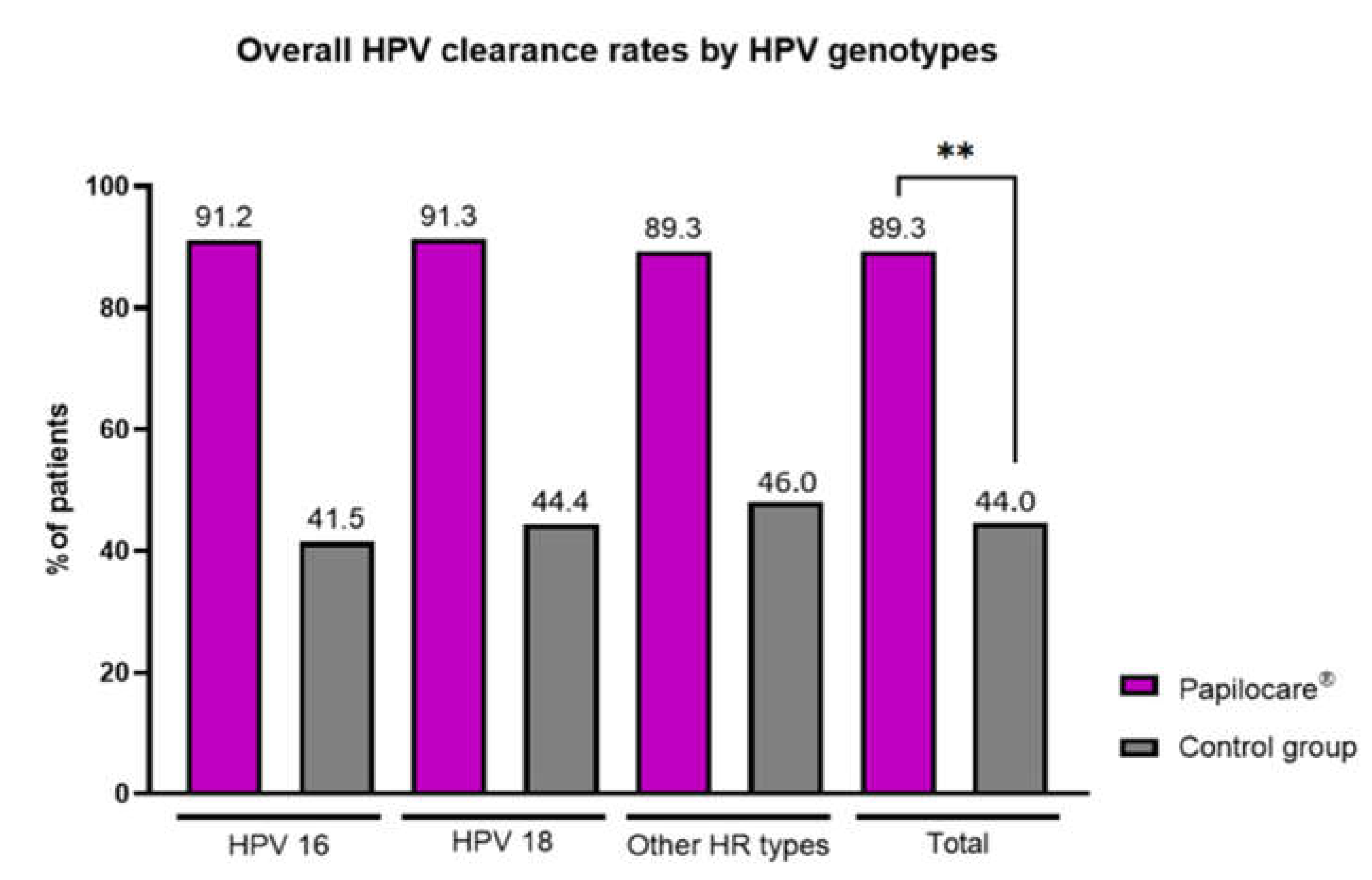
Figure 2.
Overall cytological clearance rates according to baseline cervical cytology in the Papilocare and control groups.
Figure 2.
Overall cytological clearance rates according to baseline cervical cytology in the Papilocare and control groups.
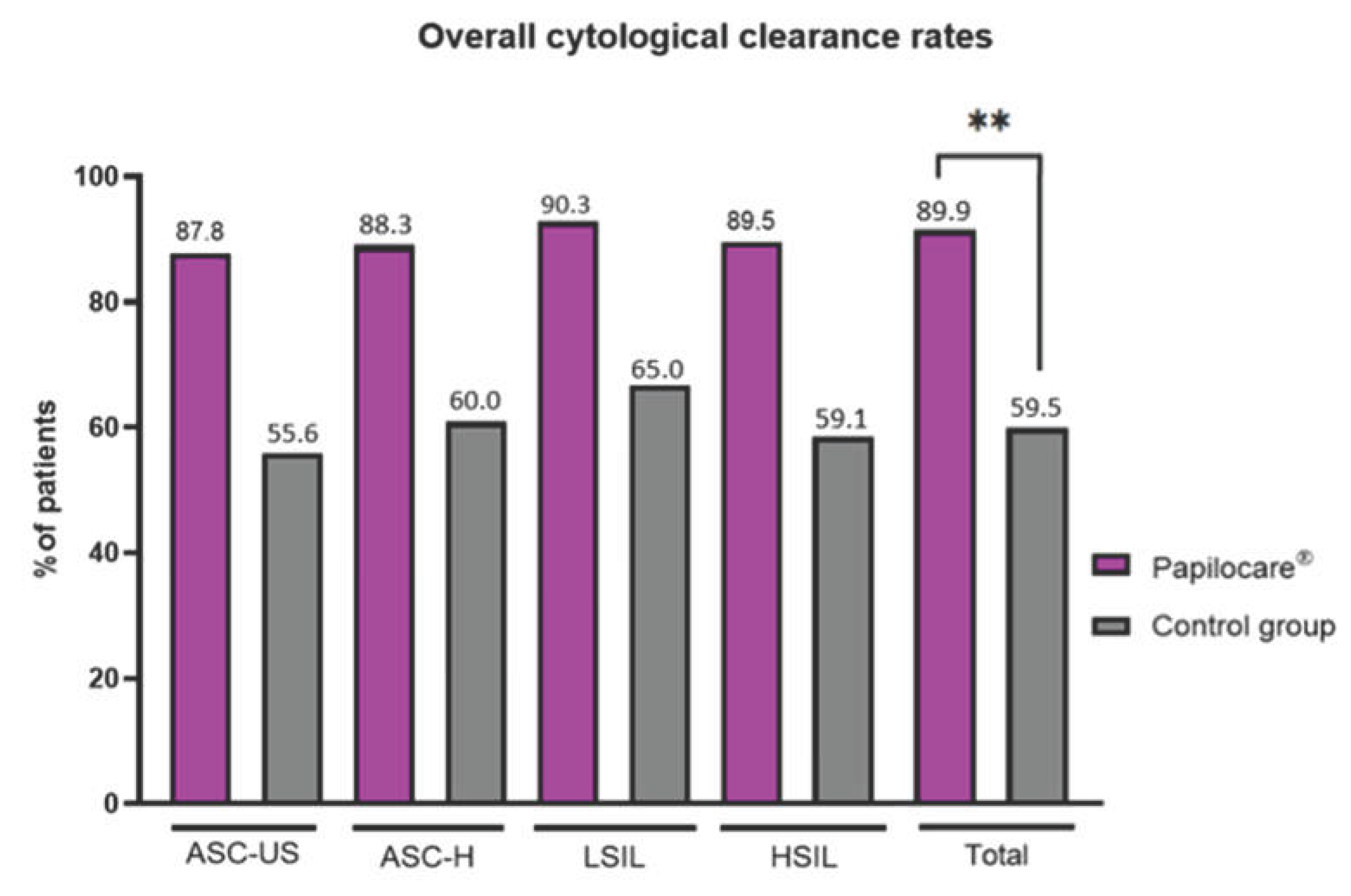

Table 1.
Distribution of age, HPV genotype positivity and Pap smear cytology between study groups 1.
Table 1.
Distribution of age, HPV genotype positivity and Pap smear cytology between study groups 1.
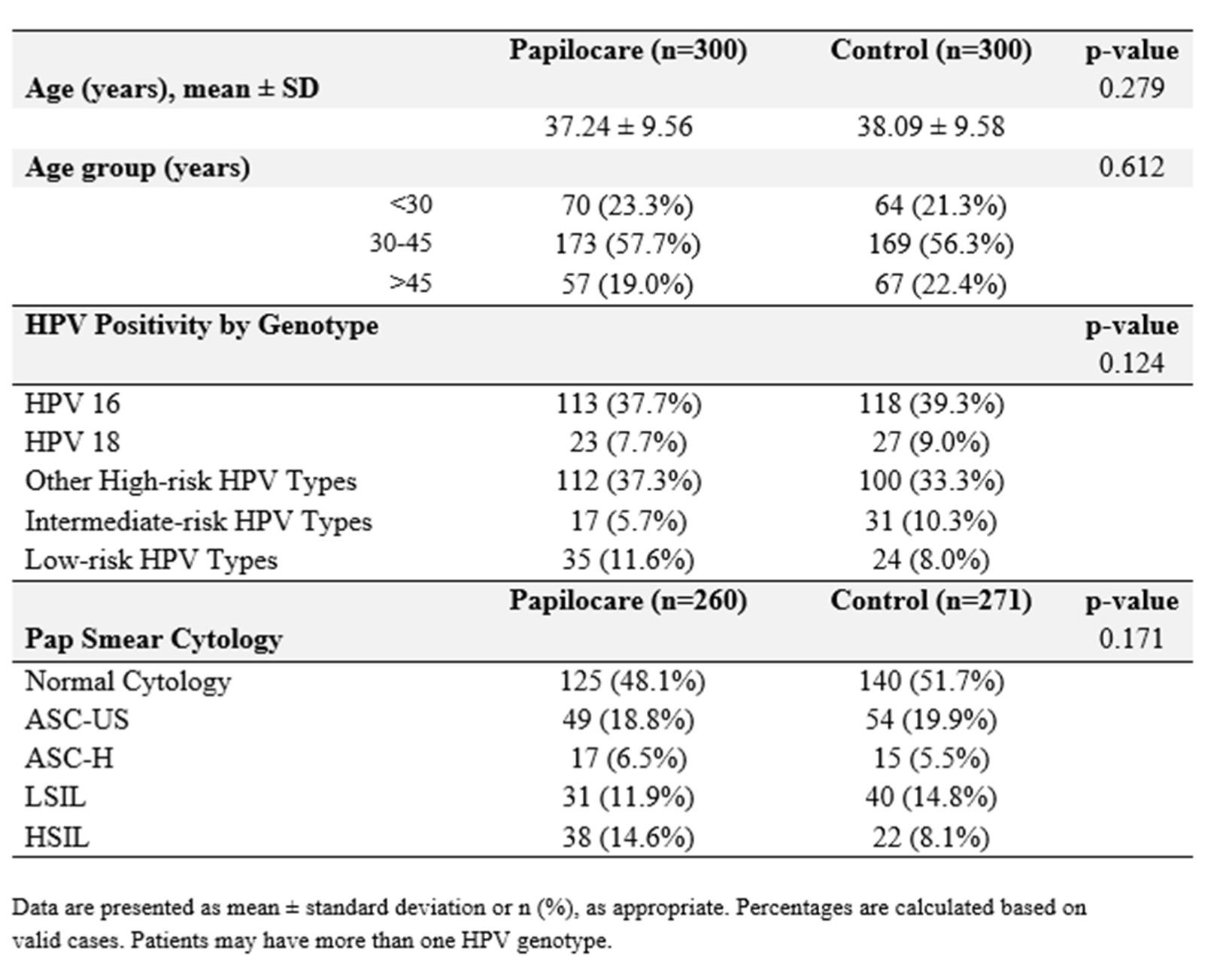 |
Table 2.
HPV and Cytology Clearance According to Study Groups (Complete/Partial/ Overall).
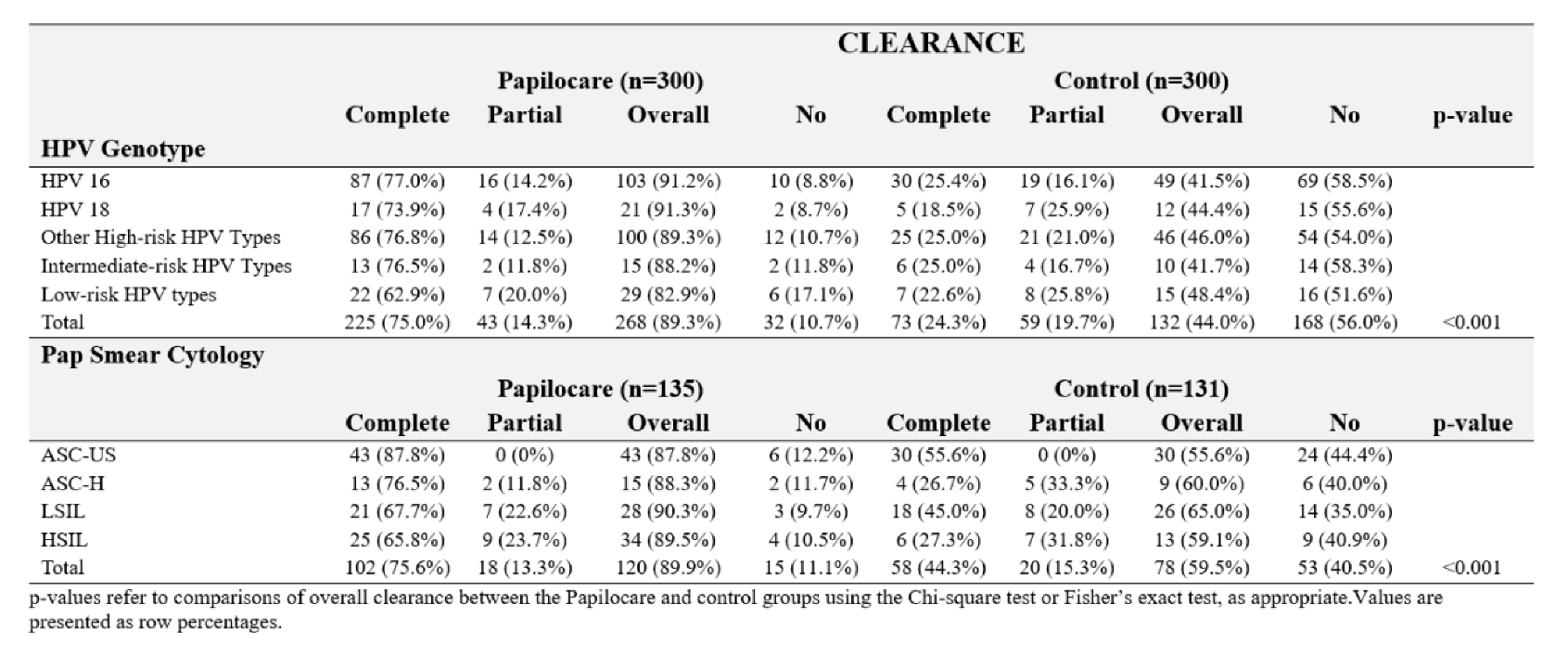 |
Table 3.
Factors Associated with HPV Clearance in the Combined Control and Papilocare Cohort (Binary Logistic Regression Analysis).
Table 3.
Factors Associated with HPV Clearance in the Combined Control and Papilocare Cohort (Binary Logistic Regression Analysis).
 |
Disclaimer/Publisher’s Note: The statements, opinions and data contained in all publications are solely those of the individual author(s) and contributor(s) and not of MDPI and/or the editor(s). MDPI and/or the editor(s) disclaim responsibility for any injury to people or property resulting from any ideas, methods, instructions or products referred to in the content. |
© 2026 by the authors. Licensee MDPI, Basel, Switzerland. This article is an open access article distributed under the terms and conditions of the Creative Commons Attribution (CC BY) license (http://creativecommons.org/licenses/by/4.0/).
Copyright: This open access article is published under a Creative Commons CC BY 4.0 license, which permit the free download, distribution, and reuse, provided that the author and preprint are cited in any reuse.


