

Submitted:
11 February 2026
Posted:
12 February 2026
You are already at the latest version
Abstract
Residential buildings in tropical regions contribute significantly to extreme indoor heat, low air quality, and excessive cooling energy demand, yet the widespread adoption of passive climate‑responsive retrofit measures remains limited. In Nigeria, it is not clear to what extent there is an awareness of such policies, nor is it clear to what extent different passive retrofit measures are well understood and preferred. This study examined policy awareness and preference for passive retrofit measures by using quantitative data from 118 property managers and 163 homeowners in Lagos State, Nigeria, and semi-structured interviews of officials from the various building regulatory and control agencies. From the results of the Mann-Whitney U-test, there was no significant awareness of a national environmental policy (NCCP; p-value > 0.05), although there was a significant lack of awareness of policies on building efficiency (BEEC, BEEG, and EDGE; p-value < 0.001). The emphasis on passive retrofits is evident in the mean scores of 4.45 for “planting trees and vegetation around buildings to provide natural shade and reduce cooling loads”, 4.38 for “enhancing the building's ability to prevent moisture from entering or escaping”, and 4.24 for “integrating openings in building envelopes”, thus establishing that these are the most preferred solutions. However, from the fuzzy TOPSIS analysis, the highest value of CCᵢ was 0.974 for “enhancing the building's ability to prevent moisture from entering or escaping” and the lowest value of 0.000 for “increasing the thickness of wall insulation layers to reduce heat absorption.” Based on these findings, technical retrofit solutions are less preferred than nature-inspired and easy solutions. The qualitative study revealed that passive retrofits are embedded in the national building code, rather than being included as a retrofit policy. It is therefore necessary to first identify solutions and programs that resonate well with property managers and owners, using this as the foundation to slowly build up to more technical solutions.
Keywords:
passive retrofitting
; policy awareness
; air quality
; energy efficiency
; stakeholder consensus
; residential buildings
1. Introduction
The construction industry plays an important role in global climate change. According to the United Nations Environment Programme [1], this industry consumes 34% of the world's energy and emits 33% of the world's CO2 emissions. This has led to an increase in temperature; however, without timely action being taken, the temperature may rise even higher than 1.5° Celsius. For the stabilisation of temperature and the mitigation of the effects of climate change, the construction industry must undergo rapid change. However, the process of bringing about these changes has been hampered by weak policy conditions and a lack of understanding of what measures to be adopted by stakeholders, especially in developing countries [2].
With over half of Nigeria’s population residing in urban areas [3], the residential sector alone consumes over 65% of Nigeria’s total energy [4]. This substantial consumption level is largely due to the predominance of buildings constructed without attention to energy efficiency strategies. This situation is particularly acute in Lagos State, where only 25% of building plans are approved by the planning and building control agencies [5,6,7]. Furthermore, the requirements for energy-efficient retrofit strategies are superficially addressed within local planning strategies for buildings and construction [8]. This phenomenon causes ambiguity, which seems to have been one of the contributing factors for the dominance of inefficient buildings in developing countries. In addition, many of these structures are expected to be in use until 2050 or later, according to Peiris et al. [9]. Unless there are improvements in terms of energy performance, procedural challenges will deteriorate the atmosphere, especially during hot weather [8]. In addition, inefficient use of energy in existing buildings makes Sustainable Development Goals (SDG 11 - Sustainable Cities and Communities) and (SDG 13 - Climate Action), which are crucial in addressing climate change [10].
Passive retrofit measures offer a promising opportunity to reduce energy consumption and improve thermal comfort [11,12]. These measures include envelope insulation, shading, natural ventilation, and thermal mass. Research has been conducted to understand the technical effectiveness and efficiency of passive measures [13,14]. Existing studies have also looked at the technical feasibility and efficiency potential of passive retrofitting in Nigeria [15,16]. However, there remains a notable gap in the awareness of policy and the preferences of stakeholders, especially in emerging economies. In addition, there is a lack of a methodological approach, as few studies use a scientific approach to multiple-criteria decision-making to evaluate passive retrofitting.
To address this gap, one of the methods used in multi-criteria decision-making (MCDM), such as the fuzzy Technique for Order Preference by Similarity to Ideal Solution (TOPSIS) analysis, has been employed to integrate objective and subjective data. This method helps in determining the level of consensus and proper prioritisation of retrofitting activities according to the requirements and capabilities of the locality [17]. It also facilitates the development of locally acceptable and technically feasible retrofitting measures that reflect stakeholder priorities.
Given the limited understanding of the awareness and preference of retrofit policies in Nigeria, this study aimed to (1) assess the level of awareness of property managers and owners of retrofit policies, (2) examine the level of agreement and preference of different stakeholders on passive retrofitting measures, and (3) use the Fuzzy TOPSIS ranking approach on passive measures in formulating relevant suggestions. By clarifying stakeholder perspectives and policy ambiguities, this study fills a critical research gap and contributes actionable insights for enhancing retrofit strategies for retrofitting in Nigeria and other developing countries.
2. Literature Review
2.1. Policy Awareness
Retrofit policies are critical for improving building energy performance and promoting better urban air quality. The effectiveness of these policies, however, relies heavily on stakeholders' awareness of policy frameworks comprising financial incentives, technical specifications, compliance standards, and performance verification mechanisms. As Li and Shui [18] noted, clear policies and awareness campaigns were found to be significant prerequisites for acceptability. Sebi et al. [19] highlighted that a good retrofit programme integrates statutory regulations, financial incentives, and a dedicated awareness programme. They stressed further that fragmented communication lowers policy impact. According to Adegoke et al. [20], policies need to be context-specific to reach a consensus on the appropriate innovation to adopt, resolve financial constraints, and meet environmental goals.
Literature from Europe and Asia also reveals that an increase in policy awareness can enhance the uptake of sustainable retrofitting activities. For example, Shang et al. [21] demonstrated how energy benchmarking and disclosure policies can enhance transparency and building owners' awareness in the US, thus encouraging retrofitting activities. Hou et al. [22] indicated that in China, even in the presence of available subsidies, policy complexity and poor communication hinder the diffusion of retrofit incentives. Dongyan [23] emphasised the need for clear responsibilities and fiscal mechanisms in the long term to underpin retrofits within China’s northern heating region. According to Jahed et al. [24], in their comparative study of the UK and Türkiye, it was seen that fragmentation in policies, along with the absence of unified advice, leads to confusion among all parties, thus hindering the process of retrofitting.
The policy framework for retrofitting in Nigeria can be characterised as fragmented with communication gaps. Although researchers have explored the benefits of retrofitting, as shown in the study by Adegoke et al. [8], only a few studies have been conducted on the level of knowledge that stakeholders have of the policy guidelines. Global evidence indicates that the effectiveness of policies is assured by both technical provisions and the awareness of stakeholders about their obligations and incentives [8,25]. In this study, the level of awareness of major retrofit policies in Nigeria will be evaluated through the opinions of property managers and owners, to highlight communication priorities and policy interventions to encourage sustainable retrofit practices.
2.2. Passive Retrofit Measures
Passive retrofits focus on modifying the building envelope and using natural climate control rather than mechanical techniques to increase thermal performance and provide additional benefits [26]. They are also beneficial in resource-constrained areas because they require minimal capital, with lower operating costs compared to active Heating, Ventilation, and Air Conditioning (HVAC) systems [12], which involve the use of energy-powered devices. Climate is crucial in the analysis of passive measures, and it is most significant in tropical environments [27].
The passive retrofitting of building envelopes through interventions such as insulation and window replacement is a good process that can be used to reduce heat transfer since roofs, walls, windows, and doors are primarily accountable for heating gains and losses that are recorded. The building facade is essential in increasing the efficiency of use [28]. External wall insulation is essential in maintaining a stable indoor temperature and preventing extreme temperature changes. Additionally, insulation materials such as autoclaved aerated concrete, double-skin facades, and green walls are not only used to insulate buildings, but they can also generate additional value beyond basic insulation.
Ceilings should also be insulated since Insulation Council of Australia and New Zealand [29] and Xiong et al. [30] identify ceiling insulation as one of the cheapest ways to improve performance by lowering indoor temperatures, thus increasing delays in air conditioning. Super glazing further improves building performance, and nanogel composites reduce cooling energy consumption by approximately 32% in hot and dry climates and 7-16% in HVAC energy consumption by triple glazing. In addition, triple glazing is a better insulator than double glazing. A computational simulation has shown that an aerogel glazing system can reduce annual heat gain by up to 32% and offers benefits in daylighting [31]. In tropical Nigeria, there is intense solar radiation and high temperatures during most periods of the year, thus increasing cooling energy demands; therefore, such technologies are needed immediately. However, insulation and glazing are not used much. Envelope retrofits may be very beneficial in reducing cooling and air conditioning demands, especially in hot and humid conditions found in Lagos, Nigeria. The domestic sector requires immediate attention concerning retrofits that can be used to address cost and technical challenges.
Technical skills vary, with an emphasis on improving envelopes. In Malaysia, homeowners place a high value on energy-efficient windows and doors [32]. While insulation may be more cost-effective, its thermal advantages are often disregarded by families [33], largely due to the invisible nature of its effects, leading to frequent neglect. Enhancing the envelope, particularly through thermal insulation, can reduce energy usage by up to 30% and offer enduring financial benefits [34]. This is because there is a knowledge gap that requires a different strategy for promoting envelope enhancement awareness campaigns, as well as incentives for legislation, rather than concentrating solely on windows and doors.
Passive airflow in an open building system is easily controlled by ventilation. This technique can aid in decreasing the consumption rate of cooling systems within buildings, as the control of air circulation and the design of the building structures can result in a reduction of over 40% within public buildings and over 16% within residential buildings [25,35]. In addition, this method is very crucial to tropical countries like Nigeria, as the passive ventilation cooling method can cool buildings entirely without using energy.
Shading, reflective materials, and the use of vegetation can reduce solar gain. Advanced exterior shading systems can decrease cooling demand by 5-8% in hot, humid regions [36]. Depending on orientation and angle, new louvre systems can achieve savings ranging from 23.71% to 32.34% in thermal demand. Green roofs, suitable for both existing and new buildings, have the potential for energy savings [37]. Appropriately located trees can reduce cooling energy requirements by as much as 20% because of shading and evapotranspiration [38]. To maximise the potential benefits of plant measures, overhangs, louvres, and blinds can be used to reduce direct solar radiation and thereby the cooling load requirements. According to Gago et al. [39], reflective materials can be used to maximise daylight efficiency and thereby minimise artificial lighting requirements.
Vegetation techniques were further experimented with by researchers. Prominence is a significant factor in adoption processes. Technical knowledge is likely to cause more disparities in the assessments done by different actors, implying that professionals and volunteers might be thinking along different lines. There are several passive techniques that successfully reduce energy use by a maximum of 75% [40]. Technical know-how of vertical gardens by real estate professionals reveals how benefit perceptions and prominence influence the adoption of nature-based solutions in Nigeria [41,42]. Technical performance and acceptability need to be considered for proper retrofitting.
2.3. Research Gap
Although there is extensive research on retrofit policy adoption in developed economies and passive measures [12], there are challenges such as socioeconomic factors, low awareness among stakeholders, and ineffective policy frameworks for retrofit adoption in developing nations. First, there is less research on awareness of policy change in new policy regimes where efficiency measures are integrated into building regulations instead of retrofit measures. Second, there is research on awareness among stakeholders regarding selected passive retrofit measures [41,43] for retrofit adoption in Nigeria. Lastly, there is little research on MCDM models where consensus among stakeholders is used as criteria with importance ratings. Therefore, this research examined retrofit policy awareness and perceptions regarding passive retrofit measures among residential building owners and property managers in Lagos State, Nigeria, which is a rapidly growing region with dynamic building regulations.
3. Methods
3.1. Data Collection
Two respondent groups were surveyed: property managers and homeowners. For property managers, 813 valid email addresses were drawn from the 2023 Nigerian Institution of Estate Surveyors and Valuers (NIESV) directory, and invitations were sent via Qualtrics; 796 were delivered, yielding 190 responses, of which 118 (14.8%) were valid—an acceptable rate for online professional surveys and higher than similar retrofit studies. The data on homeowners were collected using convenience sampling to ensure that the respondents cut across different socioeconomic classes through nine Estate Surveying and Valuation Firms selected from 436 firms listed on the website of NIESV. Out of the 235 responses received from homeowners, 163 were usable, and these represent a diverse property portfolio comprising apartments, detached and semi-detached houses, terraces, tenement buildings, and maisonettes. Responses were obtained through the use of a structured questionnaire design with 27 statements of barriers rated on a 5-point Likert rating scale developed from the literature and validated by two academics and five estate surveyors with experience.
The qualitative data was collected using semi-structured interview conducted with six officials of LASBCA and the Lagos State Physical Planning Permit Authority (LASPPPA). The sample size was determined based on data saturation, as the agencies share somewhat related duties. The profiles of the respondents are presented in Table 1.
3.2. Data Analysis
Descriptive and inferential analyses of the data collected were done using the Statistical Package for the Social Sciences (SPSS v.28) software. For the descriptive analysis’ results, judgement was made using the following agreement indices: not aware—1.00–1.79; slightly aware—1.80–2.59; moderately aware —2.60–3.39; aware —3.40–4.19; and extremely aware —4.20–5.00 [44].
To determine whether significant differences existed between responses from different study populations, inter-group comparisons were performed, using the Mann-Whitney U test: a non-parametric statistical test, which requires one continuous or dependent variable, such as barrier statements, and one categorical or independent variable defining the two types of stakeholders. To provide insights into the practical significance of the obtained differences, effect values were determined by using the following relationship: r=z/√N, and according to Cohen’s criteria, the level of the effect can be small if it equals 0.10, medium if 0.30, and large if 0.50.
To move beyond single-criterion rankings based solely on mean importance scores, Fuzzy TOPSIS was employed for multi-criteria prioritisation, using the aggregated data from 281 respondents. This method helps to overcome the vagueness of Likert scales using fuzzy set theory principles first described by Zadeh [45] and has been extensively used in construction-related decision-making problems in previous studies [46]. Two criteria were created: the first being technical value using mean scores and the other being stakeholder consensus using 1/SD, where smaller values of standard deviation are better and reflect less resistance to implementation [47].
Triangular fuzzy numbers (TFN) were assigned to technical importance as follows: TFN = (mean – SD, mean, mean + SD). Following Chen [17], vector normalisation was applied, equal weights were assigned (w₁ = w₂ = 0.50), and distances were calculated using the vertex method, expressed as: . The closeness coefficient CC = d⁻/(d⁺ + d⁻) determined the final rankings, where higher values indicate proximity to ideal performance [48]. Sensitivity analysis was carried out to evaluate the relative rankings with respect to weight variations (70/30 split and 30/70 split) through Spearman's correlation coefficient. The analyses were conducted in the RStudio Software (version 2024.12.0+467, “Kousa Dogwood” release) on Windows.
Thematic analysis was conducted following Braun and Clarke [49]. NVivo 12 software was used after verbatim transcripts were produced, and codes were used to identify prominent CSF themes. Codes were reviewed, refined, and grouped into themes, which were then named. To enhance rigor, two interviewees with 24 and 16 years of experience in the two main regulatory domains of this study validated the themes.
Scheme 1 presents the data collection and analysis process.
4. Results and Discussion
4.1. Awareness of Retrofit-Related Policies: Quantitative Results
Stakeholder awareness of retrofit-related policies varied (Table 2). Property managers had a greater awareness of technical energy codes than RBOs, who were more familiar with broad national policies. Mann-Whitney U-test confirmed significant differences for technical codes (RP2, RP3, RP4), but not for the national policy (RP1). The results support the view outlined by Jahed et al. [24] with regard to the confusion among stakeholders caused by fragmentation, and they support the study made by Hou et al. [22] with regard to the issues in the Chinese market despite the availability of subsidies. However, the differential awareness between property managers and RBOs extends existing literature by revealing that professional engagement creates substantial knowledge gaps in emerging regulatory contexts, partially supporting Shang et al.'s [21] finding that benchmarking policies increase awareness among professionally engaged building owners.
4.2. Policy Awareness: Qualitative Results
The qualitative data revealed a remarkably wide gap between the existence of the policy and awareness among stakeholders with regard to passive retrofitting regulations within Lagos State. This is particularly evident in the divergent responses from stakeholders, with some individuals being remarkably unaware, stating, "For now, I'm not sure of anyone" [LAS002], while others showed partial understanding of embedded principles. The ambivalence that exists with regard to the framework was exemplified by one respondent's comprehensive assessment:
"Well, there's a national building code. Where it actually speaks to measuring, giving assessments for building energy use. But aside that, there is really no policy or guideline for doing any passive retrofitting in Lagos State. But like I said, we're still looking to pass the code for even building green itself. So, until that is passed, it's still a no brainer for me to say there is actually guideline or there's no guideline or policy to that effect."[LAS001]
One of the respondents further clarified the provisions of existing policies. LAS005 stated, ". . . specifically, the only policy that I think on the top of my head that affects passive retrofitting are measures that speak to setbacks, airspaces, and cross ventilation . . . every other one is in the pipeline." [LAS005]. The limited scope of initiatives gives an indication that, although foundational elements are identified within current frameworks, comprehensive passive retrofitting strategies remain unaddressed within the current policy discourse.
These findings stand in support of international evidence on policy fragmentation, as noted by Adegoke et al. [20]. The incorporation of passive retrofitting principles into general architectural standards instead of retrofitting policies can be likened to Jahed et al.’s [24] finding that the lack of comprehensive guidance precipitates confusion among stakeholders. This situation where existing policies relate to “setbacks, airspaces, and cross ventilation", affirms Hou et al.’s [22] finding that complexity is a barrier to adoption despite existing frameworks. The result validates the quantitative finding, which showed that high awareness of a broad national policy (RP1).
4.3. Passive Retrofit Measures: Quantitative Results
On aggregate, the average scores on a 5-point significance scale for the 11 passive retrofit measures range from 3.25 to 4.45, demonstrating a distinct preference hierarchy. Nature-based and fundamental building performance solutions include “planting trees and vegetation around buildings to provide natural shade and reduce cooling loads” (mean = 4.45), "enhancing the building's ability to prevent moisture from entering or escaping" (4.38), and "integrating openings in building envelopes" (4.24). This result indicates that stakeholders had an extremely high awareness of how important the measures are. This finding challenges Adegoke et al.’s [42] study on vertical greenery systems, which reported low awareness among property managers. This improvement in awareness observed here could be attributed to the time elapsed since that study was conducted, during which stakeholders may have become more informed and sophisticated. On the other hand, advances in wall insulation thickness have been shown to have the lowest mean score (3.25), suggesting a moderate awareness of technical solutions.
Based on Mann-Whitney U-test results, the greatest difference in wall insulation thickness between managers and owners (mean = 3.69 vs. owners: mean = 2.93, Z = -4.802, p < 0.001; r = 0.286, minor effect) was significant. This demonstrates that property managers' building operations experience allows them to recognise thermal performance improvements that RBOs may not appreciate. Window design optimisation revealed substantial differences (managers: mean = 4.08 vs. RBO: mean = 3.75, Z = -2.317, p = 0.021; r = 0.138, minor effect). Sun-shading devices also varied (managers: mean = 4.18 vs. owners: mean = 3.99, Z = -2.101, p = 0.036; r = 0.125, small effect). Conversely, eight of the 11 measures showed no statistically significant differences between stakeholder groups, with three significant variations involving building envelope technical adjustments. This demonstrates that knowledge and experience cause significant perceptual disparities, particularly in building physics and thermal performance measurements. The non-significant comparisons demonstrate that nature-based and fundamental building performance measurements have widespread support and may be the best starting points for retrofit initiatives seeking stakeholder buy-in from diverse stakeholder groups. Table 3 depicts the results of the analysis narrated in this section.
4.4. Multi-Criteria Analysis of Passive Retrofit Measures
4.4.1. Matrices
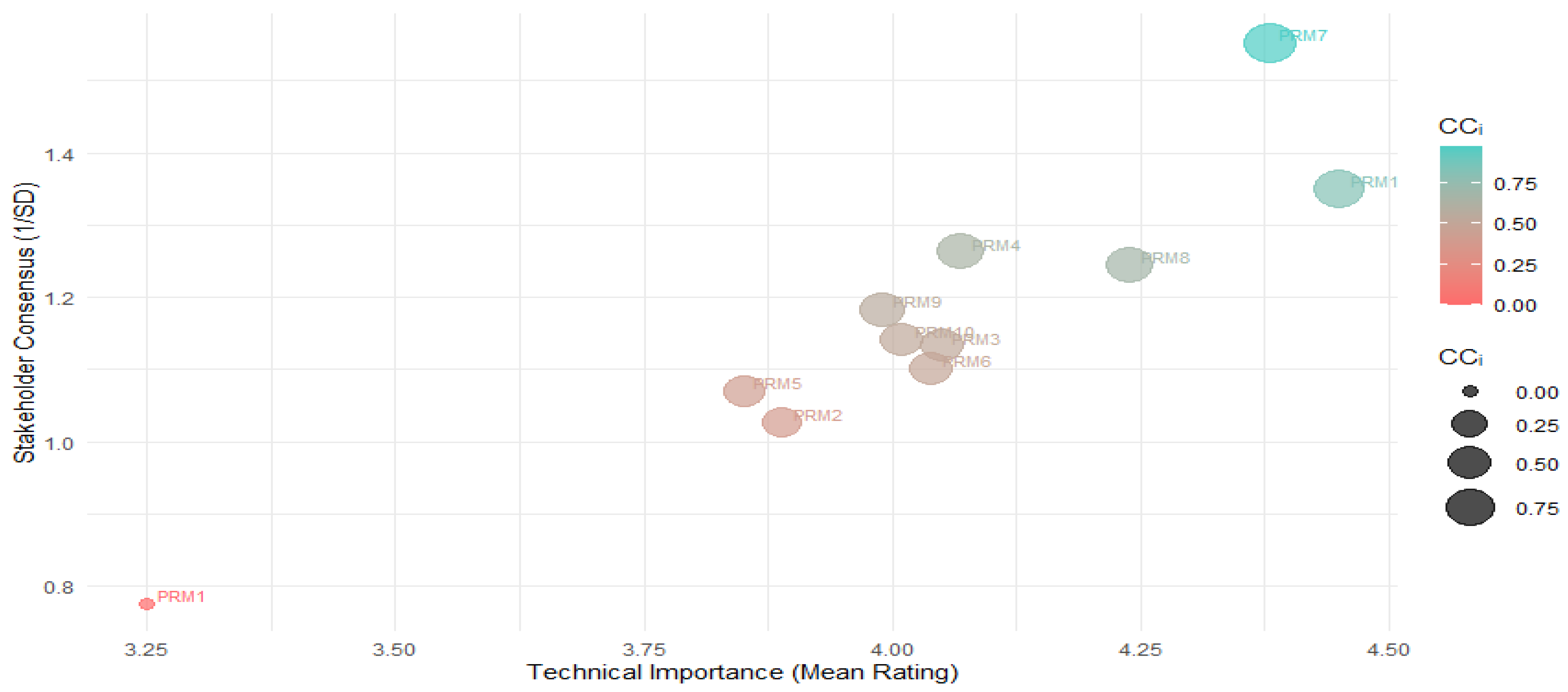
Evaluating passive retrofit measures requires balancing technical importance with stakeholder consensus to ensure feasibility. While mean-based scores indicate perceived technical merit, consensus—measured as the reciprocal of the standard deviation—reveals agreement levels critical for adoption. Table 4 shows the fuzzy decision matrix with triangular fuzzy numbers (TFNs) for importance scores and consensus values. PRM7 records the highest consensus score (1.553), reflecting strong agreement, whereas PRM1 has the lowest score (0.776), indicating significant divergence. This variance suggests that technically relevant measures may face implementation hurdles when stakeholder perspectives differ, a pattern consistent with retrofit literature emphasising consensus as a key determinant of success.
Table 5 presents normalised values and weighs fuzzy scores to facilitate comparison across criteria, integrating both importance and consensus. The weighted consensus values again underscore PRM7’s standout position, maintaining the highest consensus in normalised form, which supports its prioritisation. Measures like PRM11 and PRM8 also show strong performance, with importance and consensus values reinforcing their suitability.
4.4.2. Distance Calculations and Final Fuzzy TOPSIS Results
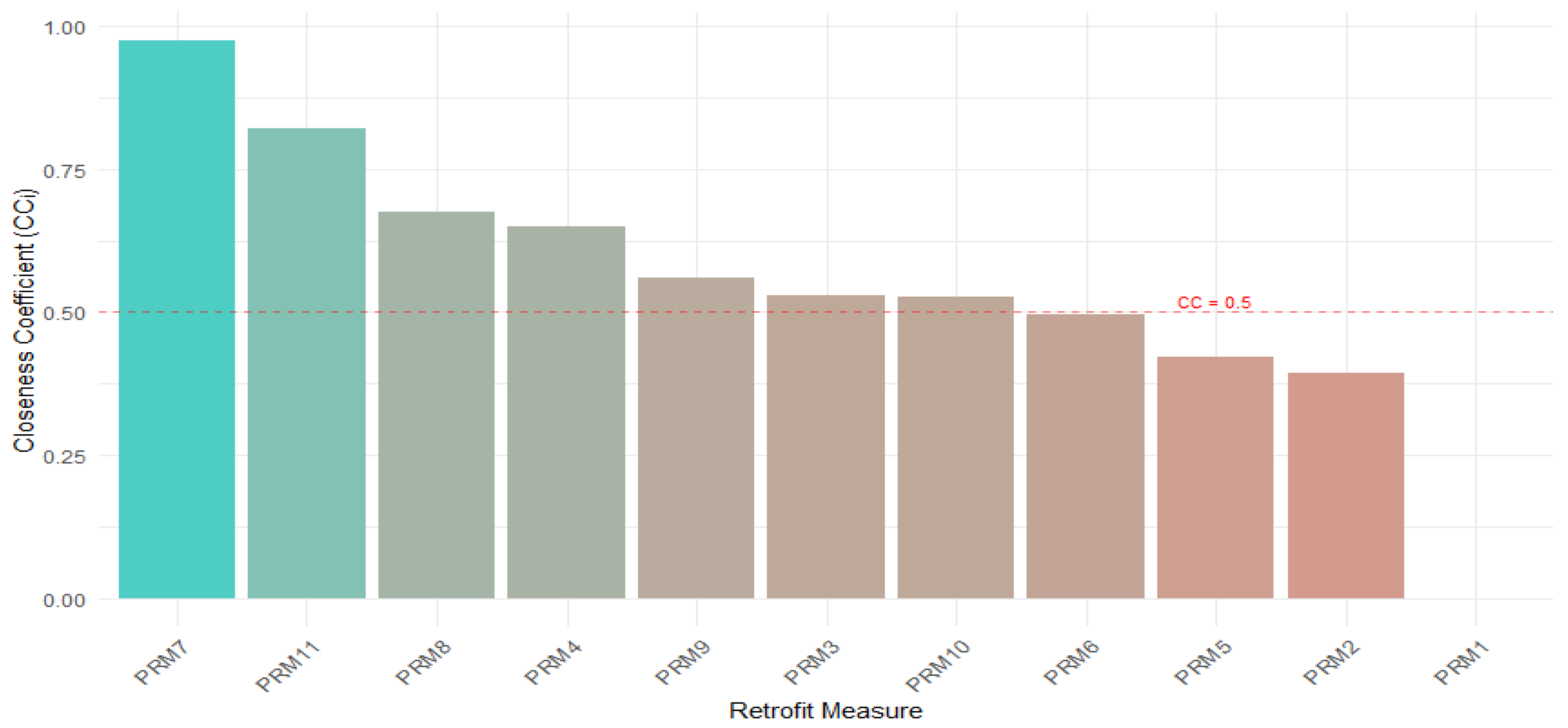
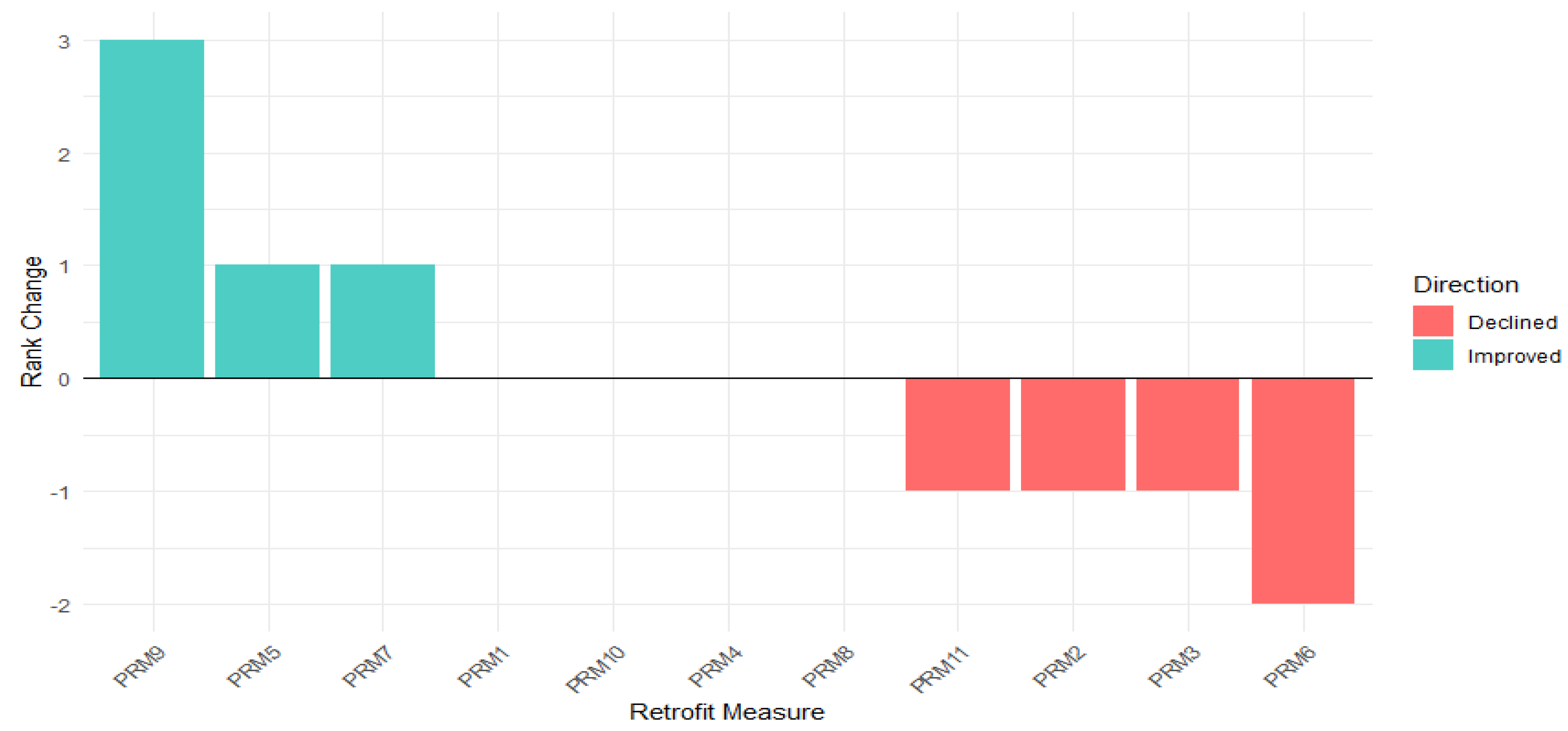
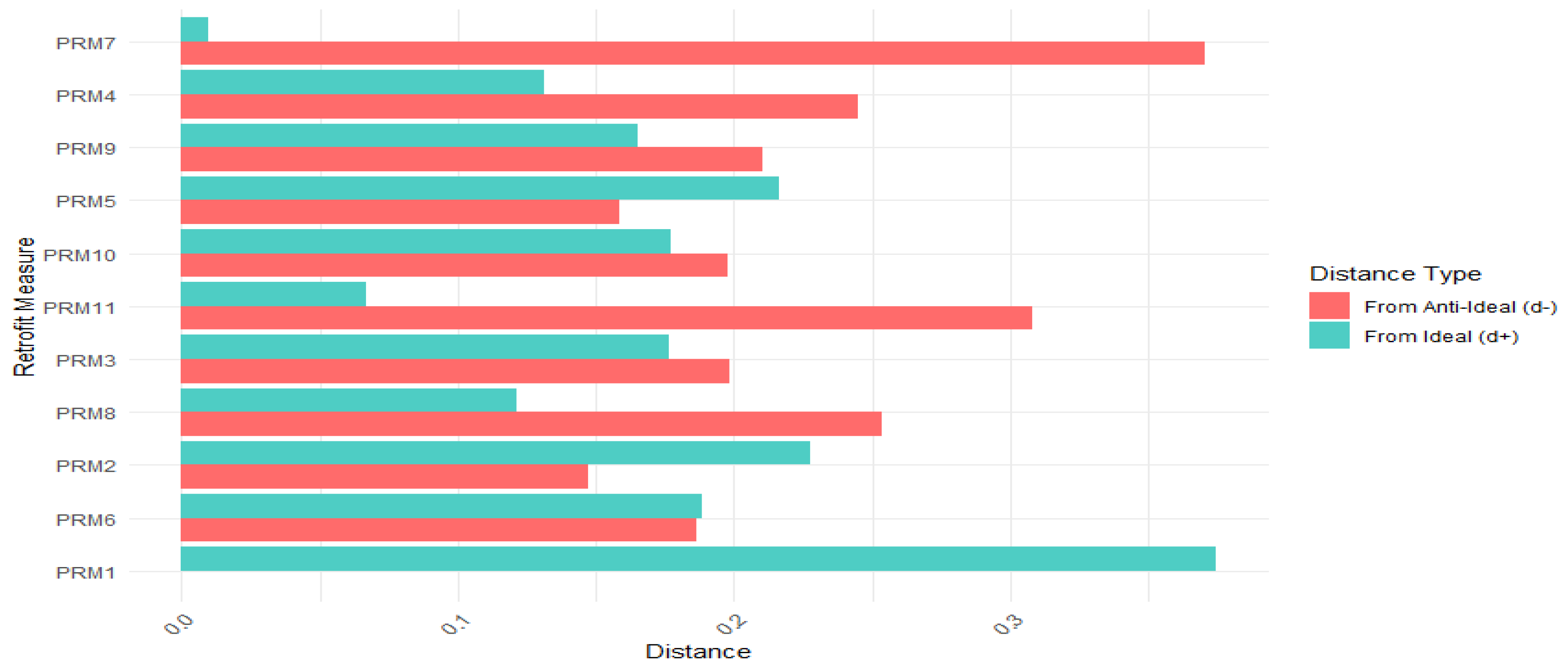
Distance calculations in Table 6 quantify each measure’s proximity to the ideal (d⁺) and anti-ideal (d⁻) solutions, enabling computation of closeness coefficients (CC) that integrate importance and consensus into a single prioritisation metric. PRM7 ranked first with a CC value of 0.974, supporting Wong and Li’s [27] assertion that climate inherently determines the efficacy of passive measures in tropical climate zones and expanding Evola and Lucchi’s [28] observation on building envelopes by demonstrating that parties affected in hot-humid climate zones value dampness control even above heat avoidance. With its proximity to the ideal (d⁺ = 0.01), being distal from the anti-ideal (d⁻ = 0.37), and the associated extreme increase from the second to the first rank, PRM7’s high level of consensus (1/SD = 1.553) and importance (mean = 4.38), emphasising that proximity to goals facilitates implementation success, can be noted. PRM1, on the other hand, is ranked last with a CC value of 0.0, correlating to low importance and low consensus. Rankings demonstrate interesting dynamics: PRM11 drops from top to second position despite the highest ranking of importance with 4.45, as moderate consensus tempers performance with 1/SD = 1.350. The result concurs with Akbari et al.'s [38] finding that tree placement can reduce cooling energy by up to 20%, while emphasising that technical efficacy cannot be exclusively relied upon to overcome adoption barriers. Mid-ranked measures like PRM4 and PRM9 exhibit stability and improvement, a demonstration of how stakeholder alignment raises options with moderate technical scores towards better positions. A strong consensus was reached on controlling moisture. Given the hot-humid climate of Lagos State, controlling moisture directly impacts both thermal comfort and building durability.
Scheme 2.
Bar chart showing closeness coefficients.
Scheme 3.
Rank change comparison plot.
Four measures formed a high-performance cluster (CC > 0.651): PRM7, PRM11, PRM8, and PRM4, combining importance above 4.0 and a consensus exceeding 1.24. The preliminary ranking of integration for cooling, coupled with the ranking for sun-shading devices, validates this by showing that there is the possibility to reduce cooling load by 5% to 8% in a hot-humid region when using cooling strategies in tropical conditions. The benefit for three-position overhangs and louvres (PRM9) is consistent with these findings, despite the lower ranking value (3.99). This aligns entirely with the current literature, advocating the effectiveness of architectural features such as overhangs, louvres, or blinds in solar control, while the high consensus (1/SD = 1.183) also indicates the general awareness among the stakeholders to negate the moderate importance.
This confirms the need for a context-dependent evaluation since the differentiation among the mid-level measures is low (CC = 0.497-0.561), seeing that the level of agreement does not have a predominant bias towards homogeneity or differentiation, lending credence to the views of Sebi et al. [19] that a fragmented approach to communication can undermine the impact of policies.
Scheme 4.
Distance from ideal solutions.
The decline in the score of natural ventilation (PRM3) and ceiling insulation (PRM6), despite their high importance (PRM3 > 4.0; PRM6 > 4.0), directly validates the findings of Quinnell and Genty [33], which state that homeowners are not significantly open to cost-effectiveness as they cannot see the insulation. However, the high variance of PRM6, SD = 0.909, shows a contradiction with the ICANZ's [29] and Xiong et al.'s [30] claim that ceiling insulation represents "one of the most cost-effective thermal performance improvements", revealing significant stakeholder disagreement despite documented 30% energy demand reduction potential [34]. The lowest value for wall insulation, PRM1 (CC = 0.000, M = 3.25, SD = 1.289), is inconsistent with the findings of Dong et al. [50], which showed that wall insulation reduces ambient temperature variation. The manager-RBO gap (3.69 vs. 2.93) supports Quinnell and Genty's [33] visibility argument while revealing that even professional awareness cannot overcome implementation barriers in resource-constrained tropical contexts.
Scheme 5.
Importance vs. consensus scatter plot.
4.4.3. Sensitivity Analysis
Rank stability across weight scenarios (Spearman’s ρ ≥ 0.991), with nine out of 11 measures maintaining identical ranks, validates the robustness of the equal weighting assumptions. The large variation in CC priorities (range = 0.000-0.974) indicates that combining importance with consensus yields more distinct prioritisation compared to single-criterion methods. Details of this analysis can be found in Table 7.
This three-tiered framework operationalises Sebi et al.'s [19] argument that successful retrofit strategies combine standards, incentives, and targeted awareness. High-performance measures (CC > 0.651) – PRM7, PRM11, PRM8, and PRM4 – deserve immediate prioritisation, as these combine high importance with stakeholder alignment. Mid-tier measures-CC = 0.497-0.561-PRM9, PRM3, PRM10, and PRM6 suggest the need for a targeted engagement designed to resolve the sources of disagreement, corroborating the notion that fragmented communication lacks impact. Low-performance measures with CC < 0.497-PRM5, PRM2, and PRM1 indicate deep-seated participation barriers manifested as deficits in importance and consensus, and they need to be comprehensively reassessed. This contradicts assumptions that technical merit alone drives adoption, supporting Li and Shui's [18] emphasis that effectiveness depends on stakeholder understanding, not just technical specifications.
4.5. Important Passive Retrofit Measures: Qualitative Results
To address these critical passive measures of retrofitting, respondents strongly emphasised the significance of climate-resilient design methods that focus on Nigeria’s tropical climate and high solar radiation. Respondents clearly stated the cost-effective measures that are suitable in the local context. Building height emerged as a significant recommendation, with LAS003 remarking that natural ventilation can be achieved by "increasing the building heights, especially for the ground floors . . . the upper floors may have opportunity of better aeration because they will have less blockage of the wind".
The most often mentioned measures revolved around ventilation strategies, with stakeholders highlighting natural ventilation as the key solution. This was summed up in the conclusive statement by LAS006, "I think the first one is cross ventilation. That's the natural ventilation, not the mechanical means. I think that is only one that is most suitable anywhere in Nigeria." LAS001 further stated, “actually, having some greenery around the building could also assist in cooling and providing sort of natural ventilation to the building".
Another key element that came out was the orientation of the buildings, where the parties involved showed considerable knowledge of solar geometry principles. The explanation provided by one of the respondents is a good indication of this knowledge. The respondent stated,
"When you want to put up your design, you look at where the wind is blowing and the sun ray, where the sun rises in the morning and set in the evening. You want to look at the orientation of your building towards the sun and the wind direction. That's one of the passive measures" [LAS002].
The climate-specific reasoning is expanded upon by [LAS002], who responded,
". . . we are very close to the equator. Our sunlight is on the short wavelength, which has more of intense heating. So, if you didn't orientate your building very well or you face your room towards the sun, the intensity of the heat will not allow you to stay in your room because the wall must have been heated up then the heat getting inside" [LAS002].
The building envelope attracted major attention, with stakeholders underlining its essential importance, as emphasised by [LAS003],
"firstly, I will still talk about the building envelope itself, working directly with the building envelope itself without moving the extreme, being optional. In fact, the building itself, all these wall, window-to-wall ratio and the rest".
The importance of envelope insulation is emphasised, "the insulation of building envelope is key because we are coming from the angle of energy efficiency" [LAS004]. They demonstrated knowledge of traditional building methods and their passive design potential, as opposed to contemporary building methods.
The design of roofs was noted to be important in climatic conditions, with stakeholders recognising that some roofs are not suited to this climatic region. One of the participants stated,
"In this part of the world, you cannot use a flat roof. A flat roof will not be convenient for you because you'll not enjoy the convenience of that heat during the evening or in the night until around 12:00 a.m. to 1:00 a.m. when the source of the heat must have been re-radiated to the sky" [LAS002].
Alternative solutions were recommended by a respondent who stated, "it's either you use a gable roof that will accommodate the heat before re-radiating or a detached roofing system that would not allow even you the heat to enter or radiate into the building system at all" [LAS002].
Policy integration of roof insulation measures is evident in future planning, as noted by [LAS004], "there are plans to ensure that all buildings, at a certain time when there's enough awareness, should have at least their roofs insulated with materials that will reduce the solar heat gain."
From the perspective of building code development, the respondent further stated, "the National Building Code was adopted by Lagos State and the building energy efficiency code was added to it and insulation of building is a key aspect of it" [LAS004].
Wall insulation awareness was hindered by practical implementation issues, as one respondent noted,
"For the insulation part, the only building I've seen that actually incorporate that did it from scratch. Because one, this brick-and-mortar system around Nigeria doesn't really allow. Well, I won't say it doesn't really allow but I have not seen people who actually. I know they do something like that in the UK where they fill it up with this foamy substance to insulate the building itself. But I've not seen that being done in Nigeria" [LAS001].
The difference between traditional and modern materials reveals an understanding of thermal mass properties:
"Insulating hollow blocks will help, but when you look at the clay, you know, in clay block, you have two types. You have the one that contains impurities. It's just pure clay and sand together. Then you have the processed clay block. The processed clay block has been processed and has passed through fire" [LAS002].
Window considerations included advanced glazing options. LAS004 stated that one might "decide to have maybe certain window types with double glazing window, depending on the direction of the wind and the sun to maximise ventilation and all of that, and then reduce solar heat gain." The window-to-wall ratio was identified as a regulatory opportunity, according to LAS005, who noted that "another design implementation we can look at is window-to-wall ratio. If we can regulate window-to-wall ratio for buildings. It will not be much of a burden on ‘Lagosians’".
Overall, the overwhelming emphasis on natural ventilation as the most suitable and the cheapest validates the high ranking of PRM3, while revealing concerns about building heights that explain its moderate consensus, supporting literature on 16-40% cooling energy savings in tropical climates [25,35]. Sophisticated understanding of solar geometry validates sun-shading devices' strong performance (PRM4, CC = 0.651) and aligns with Wong and Li's [27] climate-responsive design principles. Critically, stakeholders' acknowledgement that wall insulation "doesn't really allow" in Nigeria's "brick-and-mortar system" and has not been "seen being done" directly explains PRM1's failure (CC = 0.000), contradicting Dong et al.'s [50] technical emphasis while supporting Adegoke et al.’s [41] documentation of limited adoption.
5. Implications and Limitations
5.1. Practical and Policy Implications
This study has important implications for practice and policy, especially with respect to promoting SDGs 11 and 13. For retrofit programme designers and policymakers in a resource-constrained context, four important considerations arise. First, in retrofit programme development, there is a need to integrate stakeholder consensus with technical and economic considerations. For example, interventions such as moisture management, natural vegetation, windows, and natural ventilation, while only moderately technically complex, show a high level of consensus with stakeholders. These interventions would be more readily accepted and successfully implemented than technically advanced retrofit interventions that lack stakeholder consensus, thus facilitating faster adoption of viable, SDG-informed, sustainable cities and communities.
Second, a phase-in approach to retrofit programme implementation, with nature-based interventions that show a high level of consensus and technical simplicity, would be beneficial. Such interventions would then provide a platform for stakeholder consensus to be built around more technically advanced interventions, such as envelope insulation. To ensure that stakeholders are ready to accept technically advanced retrofit interventions, facilitation, education, and demonstration are required. In this regard, it is aligned with SDG 13.
The third issue is related to the knowledge gap between building owners and managers. Given that there are wide gaps between policy knowledge and technical knowledge, it is important to develop an effective communication strategy. This is important where there is no clear communication of efficiency policies. The goal is to ensure that all stakeholders involved in building development, such as the public, are aware of and ready to participate in urban development guided by the SDGs, such as SDG 11.
Lastly, a very important policy implication arising from this study is that retrofit principles should be clearly articulated in policy, rather than being left implicit in existing building regulations. This calls for the articulation of retrofit principles as policy, to develop a policy environment that can accelerate building efficiency and thereby attain the SDGs 11 and 13.
5.2. Limitations
There are five important limitations to this study. First, convenience sampling of building owners can lead to bias towards owners who have engaged professionals to manage their properties, making it difficult to extend to owner-occupied properties that have not engaged professionals. Second, because it is a cross-sectional study, it only evaluates perceptions of change at one point in time and cannot look into changes in awareness over time as policies develop – this can be remedied by longitudinal studies. Third, because Fuzzy TOPSIS analysis had two assumptions of importance and consensus agreed upon through data collection, other aspects like costs, complexity, and effects of changes to the environment should also be included for a more comprehensive analysis in future studies. Fourth, because it is a study carried out in Lagos State, it is not possible to generalise to different climatic conditions – comparison studies across African countries can help to see if it is a local or widespread issue. Lastly, because it is a study of perceptions rather than actual adoption behaviour, it is not possible to close the intention-action gap – studies of real-world adoption of retrofits can help to see if perceptual consensus can lead to successful implementation.
6. Conclusions and Future Research
In this study, multi-criteria prioritisation with a consensus among stakeholders was employed for the analysis of awareness and perceptions of retrofit policy and important measures among property managers and owners in Lagos State. The research revealed weak awareness and perception of technical efficiency policy support, even though a consensus exists on national policy. In addition to that, there are levels of consensus on passive retrofit measures. For instance, nature-based solutions ranked higher than technical ones (e.g., insulation and windows). A measure related to moisture management also ranked higher than insulation and was also considered to be a more acceptable measure. To assist in increasing nations’ commitment to climate adaptation and mitigation response, the effectiveness of passive retrofit policy and measures is not only a product of a strong plan having strong technical ingredients, but also a strong grasp of awareness dynamics.
Some areas can be identified for further research. First, the monitoring of the evolution of the level of awareness regarding the modification of the structure of the regulatory frameworks from embedded to explicit retrofit policies may be taken into consideration, which may help in identifying the optimal point of transitioning strategies. Second, the comparison study among different African cities in the Sub-Saharan region at varying stages of development, as far as the policies adopted are concerned, may enable the identification of the universality of the findings of the above-mentioned research. Third, the research study connecting the rankings of perception with the actual implementation of retrofit actions would enable the identification of the intent-behaviour gap and would confirm the multi-criteria optimisation procedure.
Author Contributions
Conceptualization, A.S.A., R.B.A., R.Y.S. and A.P.C.C.; Methodology, A.S.A., R.Y.S., and A.P.C.C.; Writing—original draft preparation, A.S.A., R.B.A. and R.Y.S.; Writing—review and editing, R.B.A. and R.Y.S.; Data curation—A.S.A. and R.B.A.; Visualization, A.S.A. and R.B.A.; Supervision, R.B.A., R.Y.S. and A.P.C.C.; Project administration, A.S.A. and R.Y.S. All authors have read and agreed to the published version of the manuscript.
Funding
This research received no external funding.
Institutional Review Board Statement
The study was conducted according to the guidelines of the Declaration of Helsinki, and approved by the Human Research Ethics Approval Panel B (HREAP B) of the University of New South Wales (project ID—iRECS 7205, approved on 08-10-2024).
Informed Consent Statement
Informed consent was obtained from all subjects involved in the study.
Data Availability Statement
The data that support the findings of this study are available from the corresponding author upon reasonable request.
Acknowledgments
This research forms part of a larger PhD research by the first author at the University of New South Wales on the improvement of residential building energy performance in Nigeria, from which other publications are prepared for publication, though with different research objectives. The authors gratefully appreciate all survey respondents and interview participants for their valuable contributions to this study. We also sincerely appreciate the anonymous reviewers for their constructive feedback, which greatly improved the quality of this paper.
Conflicts of Interest
The authors declare no conflicts of interest.
Abbreviations
The following abbreviations are used in this manuscript:
| NCCP | National Climate Change Policy |
| BEEC | Building Energy Efficiency Code |
| BEEG | Building Energy Efficiency Guidelines |
| EDGE | Excellence in Design for Greater Efficiency |
| MCDM | Multi-criteria decision-making |
| TOPSIS | Technique for Order Preference by Similarity to Ideal Solution |
| SDG | Sustainable development goal |
| LASBCA | Lagos State Building Control Agency |
| LASPPPA | Lagos State Physical Planning Permit Authority |
| HVAC | Heating, Ventilation, and Air Conditioning |
| RP | Retrofit policy |
| PRM | Passive retrofit measures |
References
- United Nations Environment Programme (UNEP). Here’s how buildings contribute to climate change – and what can be done about it 2025.
- CP; International Energy Agency E in B. Cost-effective building renovation at district level: Combining energy efficiency & renewables (Project Summary Report). The University of Minho for IEA EBC Annex 75 2023. Available online: https://annex75.iea-ebc.org/Data/publications/Annex75_C3.
- World Bank. Urban population (% of total population) – Nigeria 2025. Available online: https://data.worldbank.org/indicator/SP.URB.TOTL.IN.ZS?locations=NG.
- Oyedepo, SO; Adekeye, T; Leramo, RO; Kilanko, O; Babalola, OP; Balogun, AO; Akhibi, MO. Assessment of Energy Saving Potentials in Covenant University, Nigeria. Energy Engineering 2016, 113, 7–26. [Google Scholar] [CrossRef]
- LASBCA. Lagos State Building Control Agency Guide. 2021. Available online: https://lasbca.lagosstate.gov.ng/wp-content/uploads/2023/11/LASBCA-GUIDE.pdf.
- Lagos State Government Official Website. LASBCA Identifies, Publishes List of 349 Distressed Buildings in Lagos 2024. Available online: https://lagosstate.gov.ng/lasbca-identifies-publishes-list-of-349-distressed-buildings-in-lagos/#:~:text=In.
- Ugbodaga, K. 75% of buildings in Lagos lack approval as LASG plans major reforms 2024. Available online: https://pmnewsnigeria.com/2024/10/09/75-of-buildings-in-lagos-lack-approval-as-lasg-plans-major-reforms/.
- Adegoke, AS; Abidoye, RB; Sunindijo, RY. Stakeholders’ Awareness of the Benefits of Passive Retrofit in Nigeria’s Residential Building Sector. Sustainability 2025, 17, 6582. [Google Scholar] [CrossRef]
- Peiris, S; Lai, JHK; Kumaraswamy, MM; Hou, H. Smart retrofitting for existing buildings: State of the art and future research directions. Journal of Building Engineering 2023, 76, 107354. [Google Scholar] [CrossRef]
- Nabiyeva, GN; Wheeler, SM. How Is SDG 11 Linked with Other SDGs? Evidence from the United Nations Good Practices. Highlights of Sustainability 2024, 3, 294–307. [Google Scholar] [CrossRef]
- Kumar, A; Suman, BM. Experimental evaluation of insulation materials for walls and roofs and their impact on indoor thermal comfort under composite climate. Build Environ 2013, 59, 635–43. [Google Scholar] [CrossRef]
- Sadineni, SB; Madala, S; Boehm, RF. Passive building energy savings: A review of building envelope components. Renewable and Sustainable Energy Reviews 2011, 15, 3617–31. [Google Scholar] [CrossRef]
- Brunoro, S. Passive Envelope Measures for Improving Energy Efficiency in the Energy Retrofit of Buildings in Italy. Buildings 2024, 14, 2128. [Google Scholar] [CrossRef]
- Elaouzy, Y; El Fadar, A. Energy, economic and environmental benefits of integrating passive design strategies into buildings: A review. Renewable and Sustainable Energy Reviews 2022, 167, 112828. [Google Scholar] [CrossRef]
- Keftin, N. A.; Yerima, AA. Evaluating the Implementation of the Passive House Concept for Sustainable Building Construction in Nigeria. In Theory and Applications of Engineering Research; B P International, 2024; Vol. 6, pp. 1–10. [Google Scholar] [CrossRef]
- Onyenokporo, NC; Ochedi, ET. Low-cost retrofit packages for residential buildings in hot-humid Lagos, Nigeria. International Journal of Building Pathology and Adaptation 2019, 37, 250–72. [Google Scholar] [CrossRef]
- Chen, C-T. Extensions of the TOPSIS for group decision-making under fuzzy environment. Fuzzy Sets Syst 2000, 114, 1–9. [Google Scholar] [CrossRef]
- Li, J; Shui, B. A comprehensive analysis of building energy efficiency policies in China: status quo and development perspective. J Clean Prod 2015, 90, 326–44. [Google Scholar] [CrossRef]
- Sebi, C; Nadel, S; Schlomann, B; Steinbach, J. Policy strategies for achieving large long-term savings from retrofitting existing buildings. Energy Effic 2018, 12, 89–105. [Google Scholar] [CrossRef]
- Adegoke, AS; Abidoye, RB; Sunindijo, RY. A Bibliometric Analysis and Scoping Review of the Critical Success Factors for Residential Building Energy Retrofitting. Buildings 2024, 14, 3989. [Google Scholar] [CrossRef]
- Shang, L; Lee, HW; Dermisi, S; Choe, Y. Impact of energy benchmarking and disclosure policy on office buildings. J Clean Prod 2020, 250, 119500. [Google Scholar] [CrossRef]
- Hou, J; Liu, Y; Wu, Y; Zhou, N; Feng, W. Comparative study of commercial building energy-efficiency retrofit policies in four pilot cities in China. Energy Policy 2016, 88, 204–15. [Google Scholar] [CrossRef]
- Dongyan, L. Fiscal and tax policy support for energy efficiency retrofit for existing residential buildings in China’s northern heating region. Energy Policy 2009, 37, 2113–8. [Google Scholar] [CrossRef]
- Jahed, N; Aktaş, YD; Rickaby, P; Bilgin Altınöz, AG. Policy Framework for Energy Retrofitting of Built Heritage: A Critical Comparison of UK and Turkey. Atmosphere (Basel) 2020, 11, 674. [Google Scholar] [CrossRef]
- Zhang, M; Han, W; He, Y; Xiong, J; Zhang, Y. Natural Ventilation for Cooling Energy Saving: Typical Case of Public Building Design Optimization in Guangzhou, China. Applied Sciences 2024, 14, 610. [Google Scholar] [CrossRef]
- Lakhiar, MT; Sanmargaraja, S; Olanrewaju, A; Lim, CH; Ponniah, V; Mathalamuthu, AD. Energy retrofitting strategies for existing buildings in Malaysia: A systematic review and bibliometric analysis. Environmental Science and Pollution Research 2024, 31, 12780–814. [Google Scholar] [CrossRef] [PubMed]
- Wong, NH; Li, S. A study of the effectiveness of passive climate control in naturally ventilated residential buildings in Singapore. Build Environ 2007, 42, 1395–405. [Google Scholar] [CrossRef]
- Evola, G; Lucchi, E. Thermal Performance of the Building Envelope: Original Methods and Advanced Solutions. Buildings 2024, 14, 2507. [Google Scholar] [CrossRef]
- Zealand IC of A and N. The Value of Ceiling Insulation: Impacts of Retrofitting Ceiling Insulation to Residential Dwellings in Australia. 2011. Available online: https://icanz.org.au/wp-content/uploads/2023/03/ICANZ-CeilingInsulationReport-V04-1.pdf.
- Xiong, K; Yang, Z; Ran, J. Research on Passive Energy - saving Renovation of the Roof of Traditional Residences. Energy Procedia 2017, 141, 240–4. [Google Scholar] [CrossRef]
- Zhou, Y; Zheng, S. Machine learning-based multi-objective optimisation of an aerogel glazing system using NSGA-II—study of modelling and application in the subtropical climate Hong Kong. J Clean Prod 2020, 253, 119964. [Google Scholar] [CrossRef]
- Kermanshahi, EK; Tahir, MBM; Shukor Lim, NHA; Balasbaneh, AT; Roshanghalb, S. Sustainable residential building retrofit for improving energy efficiency: The owners’ perspective in Malaysia. IOP Conf Ser Earth Environ Sci 2020, 476, 012008. [Google Scholar] [CrossRef]
- Quinnell, J.; Genty, L. Energy savings and project cost estimates of weatherization and exterior insulation measures across a very cold climate building stock. ASHRAE Buildings XV Conference Proceedings, 2022; pp. 1–12. [Google Scholar]
- Kamel, E; Memari, A. Residential Building Envelope Energy Retrofit Methods, Simulation Tools, and Example Projects: A Review of the Literature. Buildings 2022, 12, 954. [Google Scholar] [CrossRef]
- Hettiarachchi, IHUS; Uthpala, VWAD; Gnanarathna, ASR; Nissanka, I. Evaluation of Passive Cooling Solutions to Mitigate the Cooling Load Demand for Existing Buildings in Tropical Climates; 2025; pp. 65–80. [Google Scholar] [CrossRef]
- Mohammed, A; Tariq, MAUR; Ng, AWM; Zaheer, Z; Sadeq, S; Mohammed, M; Mehdizadeh-Rad, H. Reducing the Cooling Loads of Buildings Using Shading Devices: A Case Study in Darwin. Sustainability 2022, 14, 3775. [Google Scholar] [CrossRef]
- Bruno, R; Bevilacqua, P; Arcuri, N. Green roofs as passive system to moderate building cooling requirements and UHI effects: Assessments by means of experimental data. In Eco-efficient Materials for Reducing Cooling Needs in Buildings and Construction; Elsevier, 2021; pp. 205–45. [Google Scholar] [CrossRef]
- Akbari, H; Pomerantz, M; Taha, H. Cool surfaces and shade trees to reduce energy use and improve air quality in urban areas. Solar Energy 2001, 70, 295–310. [Google Scholar] [CrossRef]
- Gago, EJ; Muneer, T; Knez, M; Köster, H. Natural light controls and guides in buildings. Energy saving for electrical lighting, reduction of cooling load. Renewable and Sustainable Energy Reviews 2015, 41, 1–13. [Google Scholar] [CrossRef]
- Pajek, L; Jevrić, M; Ćipranić, I; Košir, M. A multi-aspect approach to energy retrofitting under global warming: A case of a multi-apartment building in Montenegro. Journal of Building Engineering 2023, 63, 105462. [Google Scholar] [CrossRef]
- Adegoke, A.S.; Gbadegesin, J.T.; Ayodele, T.O.; Agbato, S.E.; Oyedele, J.B.; Oladokun, T.T.; Ebede, EO. Property managers’ awareness of the potential benefits of vertical greenery systems on buildings. International Journal of Construction Management 2023, 23, 2769–78. [Google Scholar] [CrossRef]
- Adegoke, A.S.; Gbadegesin, J.T.; Ayodele, T.O.; Agbato, SE. Resilience of buildings at the operational stage: understanding property managers’ perceptions of the barriers to the installation of vertical greenery systems. African Journal of Housing and Sustainable Development 2023, 4, 29–41. [Google Scholar] [CrossRef]
- Olusoga, O; Adegun, O. Professionals’ perception studies of vertical greening systems in Lagos, Nigeria. International Journal of Building Pathology and Adaptation 2022, 42, 821–34. [Google Scholar] [CrossRef]
- Pimentel, JL. A Note on the Usage of Likert Scaling for Research Data Analysis. In USM R&D; Volume 2010, pp. 109–112. Available online: https://www.researchgate.net/publication/331231816_A_note_on_the_usage_of_Likert_Scaling_for_research_data_analysis.
- Zadeh, LA. Fuzzy sets. Information and Control 1965, 8, 338–53. [Google Scholar] [CrossRef]
- Taylan, O; Bafail, AO; Abdulaal, RMS; Kabli, MR. Construction projects selection and risk assessment by fuzzy AHP and fuzzy TOPSIS methodologies. Appl Soft Comput 2014, 17, 105–16. [Google Scholar] [CrossRef]
- Wilson, C; Crane, L; Chryssochoidis, G. Why do homeowners renovate energy efficiently? Contrasting perspectives and implications for policy. Energy Res Soc Sci 2015, 7, 12–22. [Google Scholar] [CrossRef]
- Hwang, C.-L.; Yoon, K. Multiple Attribute Decision Making: Methods and Applications; Springe, 1981. [Google Scholar]
- Braun, V; Clarke, V. Using thematic analysis in psychology. Qual Res Psychol 2006, 3, 77–101. [Google Scholar] [CrossRef]
- Dong, Y; Kong, J; Mousavi, S; Rismanchi, B; Yap, P-S. Wall Insulation Materials in Different Climate Zones: A Review on Challenges and Opportunities of Available Alternatives. Thermo 2023, 3, 38–65. [Google Scholar] [CrossRef]
Scheme 1.
Process of data collection and analysis.
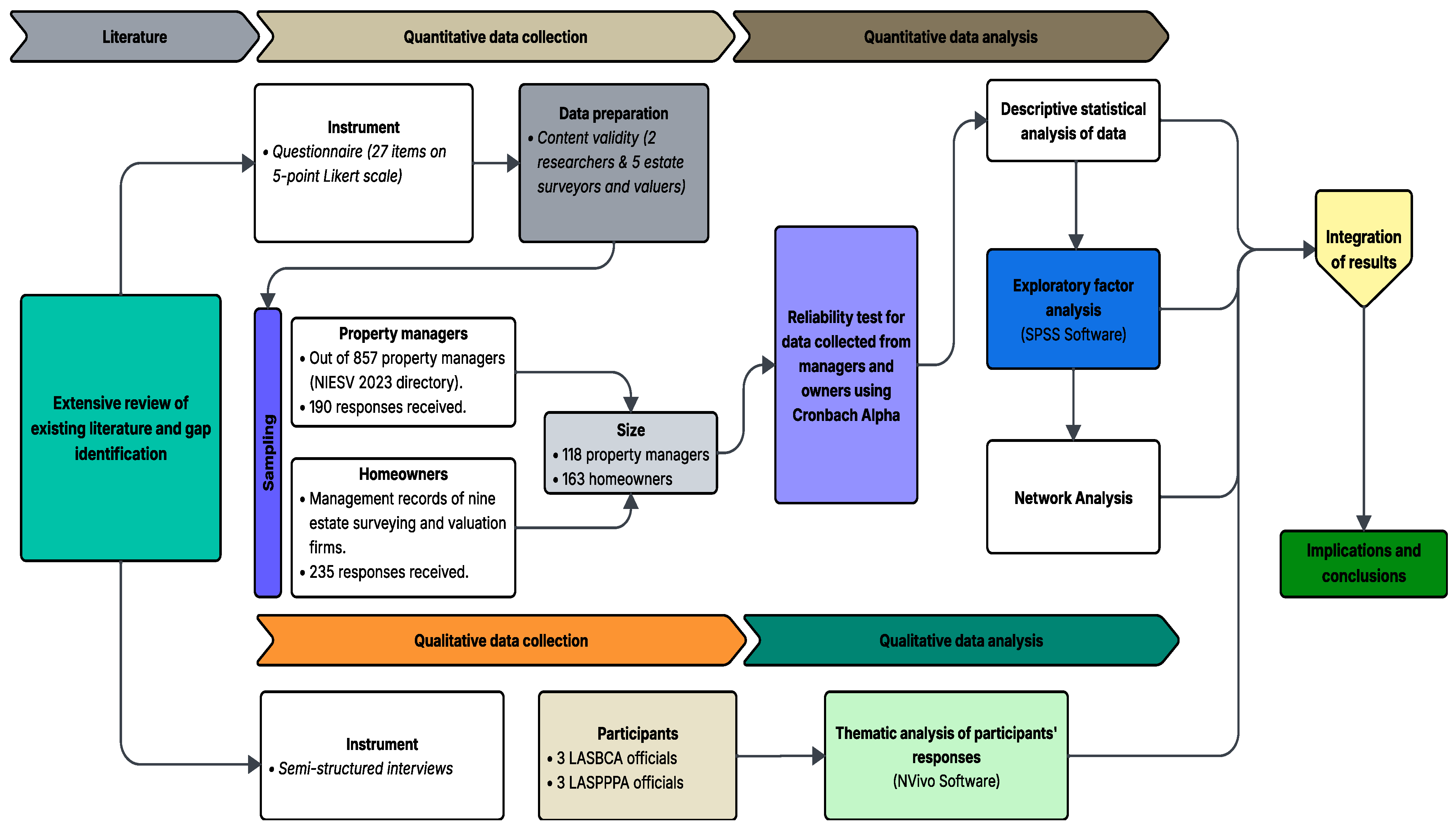

Table 1.
Interview respondents’ profiles.
| Profile details |
|---|
| LAS001: Civil Engineer, 5 years at LASBCA. |
| LAS002: Town Planner, 24 years at LASBCA. |
| LAS003: Town Planner, 11 years at LASPPPA. |
| LAS004: Architect, 16 years at LASPPPA. |
| LAS005: Civil Engineer & GIS Analyst, 8 years at LASBCA. |
| LAS006: Architect, 15 years at LASPPPA. |
Table 2.
Awareness of retrofit-related policies and group differences.
| Retrofit-related policies | Code | Aggregate (N = 281) |
|
Managers (N = 118) |
|
Owners (N = 163) | Mann-Whitney U-Test | |||||||||||
|---|---|---|---|---|---|---|---|---|---|---|---|---|---|---|---|---|---|---|
| Mean | SD | Rank | Mean | SD | Rank | Mean | SD | Rank | U | Z | p | |||||||
| National Climate Change Policy | RP1 | 3.61 | 1.205 | 1 | 3.67 | 1.038 | 4 | 3.57 | 1.315 | 1 | 9560.0 | -0.091 | 0.928 | |||||
| Excellence in Design for Greater Efficiency | RP4 | 3.43 | 1.175 | 2 | 3.85 | 0.883 | 1 | 3.12 | 1.266 | 2 | 6647.0 | -4.761 | <.001 | |||||
| Building Energy Efficiency Guidelines | RP3 | 3.21 | 1.225 | 3 | 3.74 | 0.928 | 3 | 2.82 | 1.271 | 3 | 5775.5 | -5.993 | <.001 | |||||
| Building Energy Efficiency Code | RP2 | 3.16 | 1.249 | 4 | 3.76 | 0.94 | 2 | 2.73 | 1.267 | 4 | 5324.0 | -6.689 | <.001 | |||||
Table 3.
Important passive retrofit measures and differences in distributions between groups.
| Measures | Aggregate (N = 281) | Managers (N = 118) | Owners (N = 163) | Mann-Whitney U-Test | ||||||||||||||||
|---|---|---|---|---|---|---|---|---|---|---|---|---|---|---|---|---|---|---|---|---|
| Code | Mean | SD | Rank | Mean | SD | Rank | Mean | SD | Rank | U | Z | p | ||||||||
| Planting trees and vegetation around buildings to provide natural shade and reduce cooling loads | PRM11 | 4.45 | 0.741 | 1 | 4.42 | 0.744 | 1 | 4.47 | 0.74 | 1 | 9226.000 | -0.661 | 0.509 | |||||||
| Enhancing the building's ability to prevent moisture from entering or escaping | PRM7 | 4.38 | 0.644 | 2 | 4.37 | 0.651 | 2 | 4.38 | 0.64 | 2 | 9545.500 | -0.12 | 0.904 | |||||||
| Integrating openings in building envelopes | PRM8 | 4.24 | 0.804 | 3 | 4.25 | 0.808 | 3 | 4.23 | 0.804 | 3 | 9379.500 | -0.396 | 0.692 | |||||||
| Installing sun-shading devices | PRM4 | 4.07 | 0.792 | 4 | 4.18 | 0.747 | 4 | 3.99 | 0.816 | 7 | 8375.500 | -2.101 | 0.036 | |||||||
| Using natural ventilation on building envelope | PRM3 | 4.05 | 0.883 | 5 | 4.07 | 0.855 | 7 | 4.03 | 0.906 | 4 | 9510.500 | -0.174 | 0.862 | |||||||
| Insulation of the ceiling | PRM6 | 4.04 | 0.909 | 6 | 4.07 | 0.894 | 8 | 4.02 | 0.923 | 6 | 9385.500 | -0.384 | 0.701 | |||||||
| Using reflective surfaces to distribute natural light and reduce reliance on artificial lighting | PRM10 | 4.01 | 0.876 | 7 | 4.00 | 0.896 | 9 | 4.02 | 0.864 | 5 | 9584.000 | -0.055 | 0.957 | |||||||
| Improving components: overhangs, blinds, or louvres to reduce heat gain | PRM9 | 3.99 | 0.845 | 8 | 4.08 | 0.839 | 6 | 3.92 | 0.846 | 8 | 8568.000 | -1.769 | 0.077 | |||||||
| Optimising window design (e.g. double or triple-paned glazed windows) | PRM2 | 3.89 | 0.974 | 9 | 4.08 | 0.769 | 5 | 3.75 | 1.079 | 10 | 8223.500 | -2.317 | 0.021 | |||||||
| Using reflective coating on the roof | PRM5 | 3.85 | 0.935 | 10 | 3.98 | 0.816 | 10 | 3.76 | 1.005 | 9 | 8718.000 | -1.47 | 0.142 | |||||||
| Increasing the thickness of wall insulation layers to reduce heat absorption | PRM1 | 3.25 | 1.289 | 11 | 3.69 | 1.106 | 11 | 2.93 | 1.32 | 11 | 6519.000 | -4.802 | <0.001 | |||||||
Table 4.
Fuzzy decision matrix.
| S/N | Code | TFN_lower | TFN_mean | TFN_upper | Consensus |
|---|---|---|---|---|---|
| 1 | PRM11 | (3.709 | 4.45 | 5.191) | 1.3495277 |
| 2 | PRM7 | (3.736 | 4.38 | 5.024) | 1.5527950 |
| 3 | PRM8 | (3.436 | 5.044 | 4.240) | 1.2437811 |
| 4 | PRM3 | (3.167 | 4.05 | 4.933) | 1.1325028 |
| 5 | PRM6 | (3.131 | 4.04 | 4.949) | 1.1001100 |
| 6 | PRM10 | (3.134 | 4.01 | 4.886) | 1.1415525 |
| 7 | PRM9 | (3.145 | 3.99 | 4.835) | 1.1834320 |
| 8 | PRM4 | (3.278 | 4.07 | 4.862) | 1.2626263 |
| 9 | PRM2 | (2.916 | 3.89 | 4.864) | 1.0266940 |
| 10 | PRM5 | (2.915 | 3.85 | 4.785) | 1.0695187 |
| 11 | PRM1 | (1.961 | 3.25 | 4.539) | 0.7757952 |
TFN = (mean - SD, mean, mean + SD); Consensus = 1/SD.
Table 5.
Weighted normalised matrix.
| Code | Weighted TFN_l | Weighted TFN_m | Weighted TFN_u | Weighted Consensus |
|---|---|---|---|---|
| PRM11 | 0.3572529 | 0.4286265 | 0.5 | 0.4345479 |
| PRM7 | 0.3598536 | 0.421884 | 0.4839145 | 0.5000000 |
| PRM8 | 0.3309574 | 0.4083992 | 0.4858409 | 0.4004975 |
| PRM3 | 0.3050472 | 0.3900982 | 0.4751493 | 0.3646659 |
| PRM6 | 0.3015797 | 0.389135 | 0.4766904 | 0.3542354 |
| PRM10 | 0.3018686 | 0.3862454 | 0.4706222 | 0.3675799 |
| PRM9 | 0.3029281 | 0.384319 | 0.4657099 | 0.3810651 |
| PRM4 | 0.3157388 | 0.3920247 | 0.4683105 | 0.4065657 |
| PRM2 | 0.2808707 | 0.374687 | 0.4685032 | 0.3305955 |
| PRM5 | 0.2807744 | 0.3708341 | 0.4608939 | 0.344385 |
| PRM1 | 0.1888846 | 0.3130418 | 0.437199 | 0.2498061 |
Table 6.
Distance calculations and final fuzzy TOPSIS results.
| Code | d+ C1 | d+ C2 | d+ total | d- C1 | d- C2 | d- total | TOPSIS Rank | CC | Descriptive Rank | Rank Change |
|---|---|---|---|---|---|---|---|---|---|---|
| PRM11 | 0.0015 | 0.0655 | 0.067 | 0.1234 | 0.1847 | 0.3081 | 2 | 0.821 | 1 | -1 |
| PRM7 | 0.0101 | 0 | 0.0101 | 0.1201 | 0.2502 | 0.3703 | 1 | 0.974 | 2 | 1 |
| PRM8 | 0.0219 | 0.0995 | 0.1214 | 0.1027 | 0.1507 | 0.2534 | 3 | 0.676 | 3 | 0 |
| PRM3 | 0.0413 | 0.1353 | 0.1766 | 0.0834 | 0.1149 | 0.1983 | 6 | 0.529 | 5 | -1 |
| PRM6 | 0.0428 | 0.1458 | 0.1886 | 0.0818 | 0.1044 | 0.1862 | 8 | 0.497 | 6 | -2 |
| PRM10 | 0.0448 | 0.1324 | 0.1772 | 0.0801 | 0.1178 | 0.1979 | 7 | 0.528 | 7 | 0 |
| PRM9 | 0.0461 | 0.1189 | 0.165 | 0.0794 | 0.1313 | 0.2106 | 5 | 0.561 | 8 | 3 |
| PRM4 | 0.0378 | 0.0934 | 0.1312 | 0.0881 | 0.1568 | 0.2449 | 4 | 0.651 | 4 | 0 |
| PRM2 | 0.0581 | 0.1694 | 0.2275 | 0.0664 | 0.0808 | 0.1472 | 10 | 0.393 | 9 | -1 |
| PRM5 | 0.0609 | 0.1556 | 0.2165 | 0.0641 | 0.0946 | 0.1587 | 9 | 0.423 | 10 | 1 |
| PRM1 | 0.1245 | 0.2502 | 0.3747 | 0 | 0 | 0 | 11 | 0 | 11 | 0 |
Table 7.
Sensitivity analysis showing rank stability across weight scenarios.
| Code | Rank Equal | Rank Importance | Rank Consensus | Rank Min | Rank Max | Rank Range | Stability |
|---|---|---|---|---|---|---|---|
| PRM7 | 1 | 1 | 1 | 1 | 1 | 0 | Stable |
| PRM11 | 2 | 2 | 2 | 2 | 2 | 0 | Stable |
| PRM8 | 3 | 3 | 3 | 3 | 3 | 0 | Stable |
| PRM4 | 4 | 4 | 4 | 4 | 4 | 0 | Stable |
| PRM9 | 5 | 5 | 5 | 5 | 5 | 0 | Stable |
| PRM3 | 6 | 6 | 7 | 6 | 7 | 1 | Minor shift |
| PRM10 | 7 | 7 | 6 | 6 | 7 | 1 | Minor shift |
| PRM6 | 8 | 8 | 8 | 8 | 8 | 0 | Stable |
| PRM5 | 9 | 9 | 9 | 9 | 9 | 0 | Stable |
| PRM2 | 10 | 10 | 10 | 10 | 10 | 0 | Stable |
| PRM1 | 11 | 11 | 11 | 11 | 11 | 0 | Stable |
Disclaimer/Publisher’s Note: The statements, opinions and data contained in all publications are solely those of the individual author(s) and contributor(s) and not of MDPI and/or the editor(s). MDPI and/or the editor(s) disclaim responsibility for any injury to people or property resulting from any ideas, methods, instructions or products referred to in the content. |
© 2026 by the authors. Licensee MDPI, Basel, Switzerland. This article is an open access article distributed under the terms and conditions of the Creative Commons Attribution (CC BY) license (http://creativecommons.org/licenses/by/4.0/).
Copyright: This open access article is published under a Creative Commons CC BY 4.0 license, which permit the free download, distribution, and reuse, provided that the author and preprint are cited in any reuse.


