
Submitted:
11 February 2026
Posted:
11 February 2026
You are already at the latest version
Abstract
The chemical agents, the injection modes and displacement characteristics of chemical compound flooding, consisting of plugging agent, oil displacement agent, and viscosity reducer, were investigated by laboratory experiments for the target heavy oil reservoirs after multiple cycles of huff and puff. The performance of oil displacement agent, viscosity reducer and plugging agent were evaluated and the formulation and concentration were optimized. The oil displacement effects and displacement characteristics of different injection modes were studied by two-pipe models. The experiment results showed that the alternating injection of oil displacement agent and viscosity reducer yielded better results than their mixed injection, and small segments alternating injection achieved the highest recovery, which playing a role in gradual adjustment of the profile and its seepage resistance was greater. The dosage of the plugging agent should be no less than 0.5 pore volume (0.5 PV). There was a balance between the viscosity increase of polymer and the reduction of interfacial tension of viscosity reducer. The larger the dosage of the oil displacement agent, the higher the capacity to expand the swept volume and to adjust the profile enhanced, the larger the maximum liquid production ratio between high and low permeability layer, but the shorter of the liquid production reverse duration. The larger the dosage of the viscosity reducer, the greater the water cut decrease, but the smaller of maximum liquid production ratio. For chemical compound flooding in the Zhong'er block in Gudao oilfield, the recommended injection mode was 0.1 PV plugging agent + 2000mg/L oil displacement agent + 0.5wt% viscosity reducer, with small segments of oil displacement agent followed by viscosity reducer at an injection slug ratio of 6:4, which providing an efficient and economical chemical compound flooding technology solution for field application.
Keywords:
chemical compound flooding
; injection mode optimization
; plugging and profile adjustment
; heavy oil reservoir
; enhanced oil recovery
1. Introduction
The heavy oil reservoirs in eastern China is in a development stage of high-cost and low-benefit after multiple cycles of huff and puff (Wang et al.,2019; Zhang, 2022). The periodic production and oil-gas ratio gradually decreased with the increase of huff and puff cycles. The cost of steam injection accounted for a high proportion, but the oil displacement efficiency declined. Steam tended to channel along high permeability pathways, leading to uneven swept volume and leaving a significant amount of remaining oil in low-permeability zones. Steam stimulation technology was difficult to sustain. Steam flooding proved poor economic benefits (oil-gas ratio <0.2). Drilling new wells to target remaining oil between wells was not economically viable (Hu, 2020; Wang et al., 2019; Yao et al., 2023; Yuan et al., 2018; Zhang et al., 2020). Therefore, it is necessary to change the development method to further significantly enhance oil recovery.
Internationally, polymer flooding has been primarily explored to improve recovery in conventional heavy oil reservoirs. For instance, field tests in Canada’s Pelican Lake and Mooney oil fields, as well as Venezuela’s Faja Orinoco field, have demonstrated significant application results (Dong et al., 2019; Guan et al.,2023). For heavy oil reservoirs with in-situ crude oil viscosity below 150 mPa·s, polymer flooding and polymer/surfactant flooding technologies are widely adopted in eastern China, such as in Liaohe, Gudao, and Shengtuo oilfields (Cao et al.,2020; Sun et al., 2018). For in-situ crude oil viscosity ranging from 150 to 1000 mPa·s, chemical viscosity-reducing compound flooding, consisting of plugging agent, oil displacement agent, and viscosity reducer, has been explored domestically. This approach utilized chemical agents to reduce crude oil viscosity and enhance fluidity, supplemented with plugging agent to improve sweep efficiency and increase well production. It is a low-cost and low-emission technology to furtherly enhance oil recovery (Sun,2021; Wu et al., 2018). However, the adaptability of chemical agents and the rationality of injection strategies are critical factors influencing the development effects. Therefore, based on the geological and fluid conditions of Zhong'er block in Gudao oilfield, this study conducted screening and performance evaluation of chemical agents. Two-pipe models experiments were used to optimize the injection modes and slug design, aiming to provide an efficient and economical chemical compound flooding technology solution for field application.
2. Experimental Materials and Methods
2.1. Introduction of Zhong'er Block in Gudao Oil Oilfield
The Zhong'er block in Gudao oil oilfield is an heavy oil reservoir in the eastern China. The main oil-bearing layer is the upper member of Guantao Formation of Tertiary Miocene, 1300m depth, 10.8m of average oil layer thickness, 0.7 of initial oil saturation, 2280×10-3µm2 permeability and 32.0% porosity. The original formation temperature is 65°C, 3.85°C/100m geothermal gradient. The original formation pressure is 12.3MPa, pressure coefficient 1.0. The present formation temperature is 77°C and the present formation pressure is 7.1MPa. The viscosity of formation crude oil is 300-500 mPa.s. The formation water is NaHCO3 type with salinity of 6550mg/L.
It was put into production in 1995. The steam channeling developed after multiple cycles of huff and puff and the thermal connectivity rate was 31%. The oil production of single well was 1.2t/d. The water cut was 95.3% and the reserve recovery degree was 30.4% by the end of 2024. It is essential to explore further enhanced oil recovery method for heavy oil reservoirs after multiple cycles of huff and puff.
2.2. Experiment Reagents and Instruments
Experiment oil: Zhong'er block dehydrated crude oil, the saturated hydrocarbon content 34.9%, aromatic hydrocarbon content 36.8%, gum content 25.7%, asphaltene content 2.6%, S content 3.2%, O content 1.1%, viscosity 450 mPa.s at 65°C
Experiment water: simulated formation water of Zhong'er block, 6550mg/L salinity
Chemical agents:
Oil displacement agent: Type II polymer, with a relative molecular weight of approximately 20 million
Viscosity reducer: high molecular emulsifying viscosity reducer
Plugging agent: eco-friendly gel composed of polymer and crosslinking agent
Experiment temperature: 65°C, 77°C
Experiment main instruments: steam generator, thermostat, constant speed and constant pressure pump, pressure sensor, pressure acquisition system, produced liquid collection device, intermediate vessel, rotation viscometer, interfacial tension meter,stability analyzer, overhead stirrer, constant temperature oven
2.3. Experiment Methods
Viscosity test: The polymer concentration of 10000mg/L was prepared by the simulation brine from Zhong'er block. Then the polymer or polymer and viscosity reducer or plugging agent was slowly added to the simulated brine, left to mature at room temperature for 24 hours before dilution to different concentrations of 1000-4000mg/L. The viscosity was test at different concentration at 6 RPM at 65°C and 77°C separately.
Thermal stability test: The viscosity of polymer solution concentration of 2000mg/L was tested. Then the solution was aliquoted into ampoules, evacuated, and aged in a constant temperature oven at 77°C for 10 to 90 days. The ampoules were then put out to test the solution viscosity in different time. The viscosity retention percentage of the polymer solution was calculated accordingly.
Oil displacement experiment: The two-pipe models, diameter of 2.5cm, length of 60cm, permeability of 1000×10-3µm2 and 3000×10-3µm2, were saturated with the simulation brine, and then with simulation oil. Steam was injected into the left end of the model using the steam generator system at a rate of 2 mL/min. After a soaking period of 5 minutes, a huff-and-puff process was initiated from the left end. The same operation was then performed on the right end of the model. This huff-and-puff process was repeated for 6-8 cycles to establish an initial oil saturation field. The process transitioned to chemical compound flooding when the water cut was about 95%, then water flooding until the water cut reached 100% or no more oil was produced. The pressure, oil production and water production were recorded periodically. The recovery was calculated based on the fluid production and water cut for each stage.
3. Experiment Results and Discussion
3.1. Performance Evaluation of Chemical Agents
Based on the geological and fluid conditions of Zhong'er block in Gudao oil oilfield, the performance and interaction of chemical agents, including plugging agent, oil displacement agent, and viscosity reducer, were investigated in laboratory experiments.
3.1.1. Performance Evaluation of Oil Displacement Agent
The viscosity of the polymer solutions was tested at 6 RPM at 65°C and 77°C separately.
The experiment results showed that the viscosity of the polymer solution increased significantly with the increase of the concentration, over 30 mPa.s at 65°C when the concentration of polymer was 2000 mg/L, as shown in Figure 1, therefore it was suggested that the polymer concentration was no less than 2000 mg/L.
The thermal stability test at 77°C showed that the viscosity retention percentage of the polymer solution gradually decreased with time, as shown in Figure 2. But the viscosity retention percentage was 84.9% even after 90 days, meeting the requirement of greater than 80% specified in the technical requirements for polymer in field application (Yu, 2019). Therefore, the polymer was suitable for the conditions of the target reservoir.
3.1.2. Performance Evaluation of Viscosity Reducer
According to the crude oil properties of Zhong'er block, the high molecular emulsifying viscosity reducer was selected. It could form a relatively uniform and stable O/W emulsion and could reduce the oil-water interfacial tension to ultra-low levels (<10⁻³ mN/m). The viscosity reduction percentage was more than 95% at the viscosity reducer mass concentration 0.2wt%~0.6wt%, as shown in Figure 3, showing that the viscosity reducer had strong emulsification and viscosity reduction capabilities and could effectively improve the fluidity of high-viscosity oil.
3.1.3. Performance Evaluation of Plugging Agent
Under the temperature and simulated brine conditions of Zhong'er block, the polymer concentration and crosslinking agent concentration were optimized based on the relationship between system viscosity and time. The polymer concentrations were 2000 mg/L, 2500 mg/L, 3000 mg/L, 3500 mg/L and 4000 mg/L, with the concentration ratio of polymer to crosslinking agent at 2:1 and 1:1.
The experimental results indicated that the higher the polymer concentration, the greater the viscosity of the plugging agent, as shown in Figure 4 and Figure 5. When the polymer concentration exceeded 3000mg/L, the viscosity increased significantly, 100 to 400 mPa.s at polymer-to-crosslinking agent concentration ratios of 1:1, far higher than that 2:1. In addition, the viscosity of decreased faster when polymer-to-crosslinking agent concentration ratios of 2 compared to that of 1.
According to the experimental results, the formulation of the plugging agent system was determined to be a polymer concentration of 3000mg/L and polymer-to-crosslinking agent concentration ratio of 1:1.
3.1.4. Interaction Between Oil Displacement Agent and Viscosity Reducer
The impact of viscosity reducer on the properties of polymer was investigated. Viscosity reducer with mass concentrations of 0.1wt%, 0.3wt%, 0.5wt%, 0.7wt%, and 1.0wt% were added to the polymer solutions with concentrations of 1500mg/L and 2500mg/L respectively. The viscosity of each system was measured and compared with that of single polymer solution.
The experimental results showed that the viscosity of polymer solutions with concentrations of 1500 mg/L and 2500 mg/L was 27.7 mPa·s and 83.2 mPa·s respectively. After adding viscosity reducer of different concentrations, the system viscosity slightly increased, as shown in Figure 6. The higher the concentration of the viscosity reducer, the higher the system viscosity, but the overall increase was relatively small. The viscosity of the system with 1.0wt% viscosity reducer increased to 32.0 mPa·s and 88.5 mPa·s respectively. Therefore, the viscosity reducer had a small effect on the viscosity of the polymer.
The impact of polymer on the performances of viscosity reducer was also investigated, as shown in Figure 7. The viscosity reducer inherently had good ability to reduce oil-water interfacial tension, achieving ultra-low interfacial tension at concentrations ranging from 0.2% to 0.6%. Based on the concentration of 0.3wt% and 0.6 wt% of the viscosity reducer, adding polymer at concentrations less than 1000 mg/L, it had little effect on the performance of the viscosity reducer, the interfacial tension value of the system changed little. Adding polymer at concentrations between 1000-2000 mg/L, the system interfacial tension increased significantly while still maintaining ultra-low levels (10-3mN/m). However, when polymer concentration was 2500 mg/L, the system interfacial tension increased to the order of magnitude of 10-2. Analysis suggested that the higher the concentration of polymer, the greater the viscosity of the system, and the higher bulk viscosity affected the performance of the viscosity reducer in reducing oil-water interfacial tension. Therefore, in the formulation design of chemical compound flooding, it was necessary to balance the relationship between the viscosity increase of polymer and the reduction of interfacial tension of viscosity reducer to avoid the inhibition of the effectiveness of viscosity reducer due to the high concentration of polymer.
Under the experimental conditions of viscosity reducer concentration of 0.5wt%, oil-water ratio of 7:3, and temperature of 77°C, the influence of polymer concentration on viscosity reducer performance was studied. The results showed that the system viscosity increased as the polymer concentration increased. Within the range of polymer concentration of 2500mg/L, the viscosity reduction percentage was above 90%, as shown in Figure 8. Therefore, the polymer had a small effect on the viscosity reduction percentage of the viscosity reducer.
3.2. Injection Modes and Displacement Characteristics
According to the geological and fluid conditions of Zhong'er block, the different injection modes and displacement characteristics of chemical compound flooding were investigated by two-pipe models.
3.2.1. Injection Schemes Design
Several injection schemes were designed, as shown in Table 1.
Scheme 1: Mixed injection. To inject 0.1 PV (pore volume) of plugging agent, followed by 0.4 PV of mixture solution of 2000mg/L oil displacement agent and 0.5wt% viscosity reducer, then water flooding until the water cut reached 100% or no more oil was produced.
Scheme 2: Slug injection. First, injecting 0.1 PV of plugging agent, then injecting 0.2 PV of 2000mg/L oil displacement agent solution, followed by 0.2 PV of 0.5wt% viscosity reducer solution, and then water flooding until the water cut reached 100% or no more oil was produced.
Scheme 3: Slug injection. First, injecting 0.1 PV of plugging agent, then injecting 0.2 PV of 0.5wt% viscosity reducer solution, followed by 0.2 PV of 2000mg/L oil displacement agent solution, and then water flooding until the water cut reached 100% or no more oil is produced.
Scheme 4: To reduce the dosage of plugging agent to 0.05PV, then injecting 0.2 PV of 2000mg/L oil displacement agent solution, followed by 0.2 PV of 0.5wt% viscosity reducer solution, and then water flooding until the water cut reached 100% or no more oil was produced.
Schemes 5–11: Alternating injection of small segments. First, injecting 0.1 PV of plugging agent, then alternately inject 0.01-0.04 PV of oil displacement agent solution and 0.04-0.01 PV of viscosity reducer solution. The concentration of the oil displacement agent was 1500-2500mg/L, and the concentration of the viscosity reducer was 0.25-0.75wt%. Alternated this process 7-8 times, followed by water flooding until the water cut reached 100% or no more oil was produced.
3.2.2. Optimization of Injection Modes
On the condition of basically the same injection volume, the laboratory experiment results showed that the alternating injection of oil displacement agent and viscosity reducer yielded better results than their mixed injection, and the small segments alternating injection achieved the highest recovery. The enhanced oil recovery was 20.9% for Scheme1 mixed injection, 24.3% and 22.2% for Scheme2 and Scheme3 slug injection respectively, 27.2% for Scheme6 7-8 times of alternating injection of small segments with 0.03 PV 2000mg/L oil displacement agent solution and then 0.02 PV 0.5wt% viscosity reducer solution. For Schem6 alternating injection of small segments, the maximum ratio of liquid production was 2.0 between high and low permeability layer, 1.21 times that of Scheme2. The liquid production reverse duration was 0.22PV between high and low permeability layer, 1.38 times that 0.16PV of Scheme2, as shown in Figure 9 and Figure 10.
The pressure differential rapidly increased after injecting plugging agent, then showing fluctuations up and down within a small range after alternating injection of small segments, with a maximum of 1334.5kPa, higher than that of 1243.7 kPa of slug injection and 1180.6 kPa of mixed injection, as shown in Figure 11. The pressure differential continued fluctuating for a period before stabilizing at around 350 kPa during the subsequent water flooding, higher than that of 330 kPa of slug injection and 305 kPa of mixed injection, which both showing no obvious fluctuation up and down during whole injecting procedure. Therefore, the alternating injection of small segments could play a role in gradual adjustment of the profile and its seepage resistance was greater.
For slug injection Scheme2 with oil displacement agent followed by viscosity reducer, the injection pressure difference increased more rapidly than that of Scheme3 with viscosity reducer followed by oil displacement agent, and the maximum value 140.6 kPa higher, therefore the high permeability layer was plugged effectively. The enhanced oil recovery was 9.1% and 15.2% respectively in high permeability layer and in low permeability layer, higher than that 7.9% and 14.3% respectively in high and in low permeability layer for Scheme3, as shown in Figure 12. The liquid production ratio was lower. The maximum liquid production percentage was 62.89% in low permeability layer, and minimal liquid production percentage 37.11% in high permeability layer, lower than that 73.52% and 26.48% respectively in low and high permeability layer for Scheme3. But the liquid production reverse duration was long, 0.16PV for Scheme2, longer than that 0.12PV of Scheme3.
When the plugging agent injection volume was lower, 0.05 PV, the maximum injection pressure difference was low, 809.7 kPa, resulting in incomplete plugging in high permeability layer and relatively low enhanced oil recovery of 11.8% in low permeability layer, therefore the whole enhance oil recovery was low, 20.1%.
3.2.3. Optimization of Slug Size Ratio
On the basis of small segments alternating injection, the slug size ratio and the concentration of chemical agents were further optimized. For the slug size ratio of oil displacement agent injection pore volume to viscosity reducer injection pore volume was 8:2, 6:4, and 2:8, the enhanced oil recovery was 26.3%, 27.2%, and 25.6% respectively. The larger the oil displacement agent injection pore volume, the higher the maximum ratio of liquid production between high and low permeability layer, 71.6%, 67.2%, 61.0% of maximum liquid production percentage respectively in the low permeability layer for slug size ratio of 8:2,6:4 and 2:8. And the shorter the liquid production reverse duration, 0.17 PV for slug size ratio of 8:2. The larger the viscosity reducer injection pore volume, the greater the water cut decrease, 57.1% and 35.5% of minimum water cut in high and low permeability layer for slug size ratio of 2:8, and the smaller the maximum ratio of liquid production between high and low permeability layer, as shown in Table 2.
3.2.4. Optimization of Chemical Agent Concentration
For the chemical compound flooding system, the higher the concentration of the oil displacement agent, the higher the capacity to expand the swept volume and to adjust the profile, the larger the maximum ratio of liquid production between high and low permeability layer, and the longer the liquid reverse duration. When the concentration of the oil displacement agent was 2500mg/L, the maximum liquid production percentage in high permeability layer was 68.7%, and the liquid production reverse duration was 0.27PV.
With the increase of the concentration of the oil displacement agent, the enhanced oil recovery increased, but the increment rate gradually slowed down. Based on the same concentration of the viscosity reducer, as the concentration of the oil displacement agent was 2000mg/L, the oil production increment of one ton equivalent polymer, the amount of chemical flooding agent including plugging agent, oil displacement agent and viscosity reducer convert to the amount of polymer based on their respective price, was the highest, 25.3t/t,as shown in Table 3.
With the increase of the concentration of the viscosity reducer, the formed O/W emulsion was smaller, denser and more stable. The viscosity of the crude oil reduced greatly and the crude oil fluidity enhanced. The higher the viscosity reducer concentration, the lower the minimum water cut. When the viscosity reducer concentration was 0.75wt%, the minimum water cut in high and low permeability layer was 57.38% and36.38% respectively, and the rising rate of the water cut slowed down during the following water flooding, as shown in Figure 13.
The higher the viscosity reducer concentration, the higher the enhanced oil recovery, but its increment rate gradually slowed down. Based on the same concentration of oil displacement agent, the oil production increment of one ton equivalent polymer was the highest when the concentration of the viscosity reducer was 0.5wt%.
Based on the above laboratory experiments, the recommended injection mode for the chemical compound flooding in the Zhong'er North Block in Gudao oilfield was 0.1 PV plugging agent + 2000mg/L oil displacement agent + 0.5wt% viscosity reducer, with small segments of oil displacement agent followed by viscosity reducer at an injection slug ratio of 6:4.
4. Conclusions
a. The suitable formulation system of chemical compound flooding was optimized and determined for the target reservoir, including no less than 2000 mg/L type II polymer, high molecular emulsifying viscosity reducer with more than 95% viscosity reduction percentage, eco-friendly plugging gent with 3000 mg/L polymer and polymer-crosslinking agent ratio of 1:1. And the compatibility of the chemical agents was good.
b. The injection mode of chemical compound flooding was the key factor affecting the displacement effects. The alternating injection yielded better results than the mixed injection, and the small segments alternating injection achieved the highest recovery, which playing a role in gradual adjustment of the profile and its seepage resistance was greater.
c. Chemical compound flooding could enhance the oil recovery furtherly in heavy oil reservoirs after multiple cycles of huff and puff. For Zhong'er block in Gudao oilfield, the recommended injection mode was 0.1 PV plugging agent + 2000mg/L oil displacement agent + 0.5wt% viscosity reducer, with small segments of oil displacement agent followed by viscosity reducer at an injection slug ratio of 6:4.
Acknowledgments
The authors thank Shengli oil field for project support. This research was supported by National major science and technology project ‘CCUS-EOR miscible flooding technology and integrated demonstration for deep reservoirs in the Bohai bay basin (2025ZD1408200)’ and SINOPEC science and technology project ‘Study on the mechanism of chemical flooding combined with well pattern adjustment synergistic EOR technology and optimization of oil displacement system (P24168)’.
References
- Cao, X.L; Ji, Y.F; Zhu, Y.W; et al. Research advance and technology outlook of polymer flooding[J]. Reservoir Evaluation and Development 2020, 10(6), 8–16. [Google Scholar]
- Dong, X.H; Liu, H.Q; Chen, Z.X; et al. Enhanced oil recovery techniques for heavy oil and oilsands reservoirs after steam injection [J]. Applied Energy 2019, 23(9), 1190–1211. [Google Scholar] [CrossRef]
- Guan, W.L; Wi, Jiang Y.; Guo, E.P; et al. Heavy oil development strategy under the“Carbon Peaking and Carbon Neutrality”target[J]. Acta Petrolei Sinica 2023, 44(5), 826–840. [Google Scholar]
- Hu, C.H. Research progress and development direction of steam flooding technology for medium and deep heavy oil reservoirs [J]. Special Oil and Gas Reservoirs 2020, 27(6), 54–59. [Google Scholar]
- Wang, H.Z, Li; et al. Heavy oil recovery technologies [M]; Beijing; Petroleum Industry Press, 2019. [Google Scholar]
- Wang, L.Z. Distribution characteristics of residual oil after multiple huff and puff cycles in heavy oil reservoirs(M.) China University of Petroleum. 2019. [Google Scholar]
- Sun, H.Q. Recovery theory and technology of marginal heavy oil [M]; Beijing; Petroleum Industry Press, 2021. [Google Scholar]
- Sun, L.D; Wu, X. L; Zhou, W. F; et al. Technologies of enhancing oil recovery by chemical flooding in Daqing Oilfield, NE China[J]. Petroleum Exploration and Development 2018, 45(4), 636–645. [Google Scholar] [CrossRef]
- Wu, Z.B; Liu, H.Q; Wang, X. Adaptability research of thermal-chemical assisted of steam injection in heavy oil reservoirs [J]. Journal of Energy Resources Technology 2018, 140(5), 052901. [Google Scholar]
- Yao, X.T.; Su, X.K.; Zheng, X.; et al. 3D physical simulation experiments of development effects after well pattern adjustment in extra-high water cut reservoirs[J]. Petroleum Geology and Recovery Efficiency 2023, 30(1), 139–145. [Google Scholar]
- Yu, B. Study on property control of amphiphilic polymers for oil displacement and its synergistic mechanism[D]; China University of Petroleum, 2019. [Google Scholar]
- Yuan, S.Y; Wang, Q. New progress and prospect of oilfields development technologies in China[J]. Petroleum Exploration and Development 2018, 45(4), 657–668. [Google Scholar] [CrossRef]
- Zhang, L. Progress and research direction of EOR technology in eastern mature oilfields of Sinopec[J]. Oil& Gas Geology 2022, 43(3), 717–723. [Google Scholar]
- Zhang, L.; Yue, X.A.; Wang, Y.Q. Physical simulation experimental study on the enhanced oil recovery in the late stage of ultra-high water cut [J]. Oil Drilling & Production Technology 2020, 42(3), 363–368. [Google Scholar]
Figure 1.
viscosity of polymer solution at different concentration.
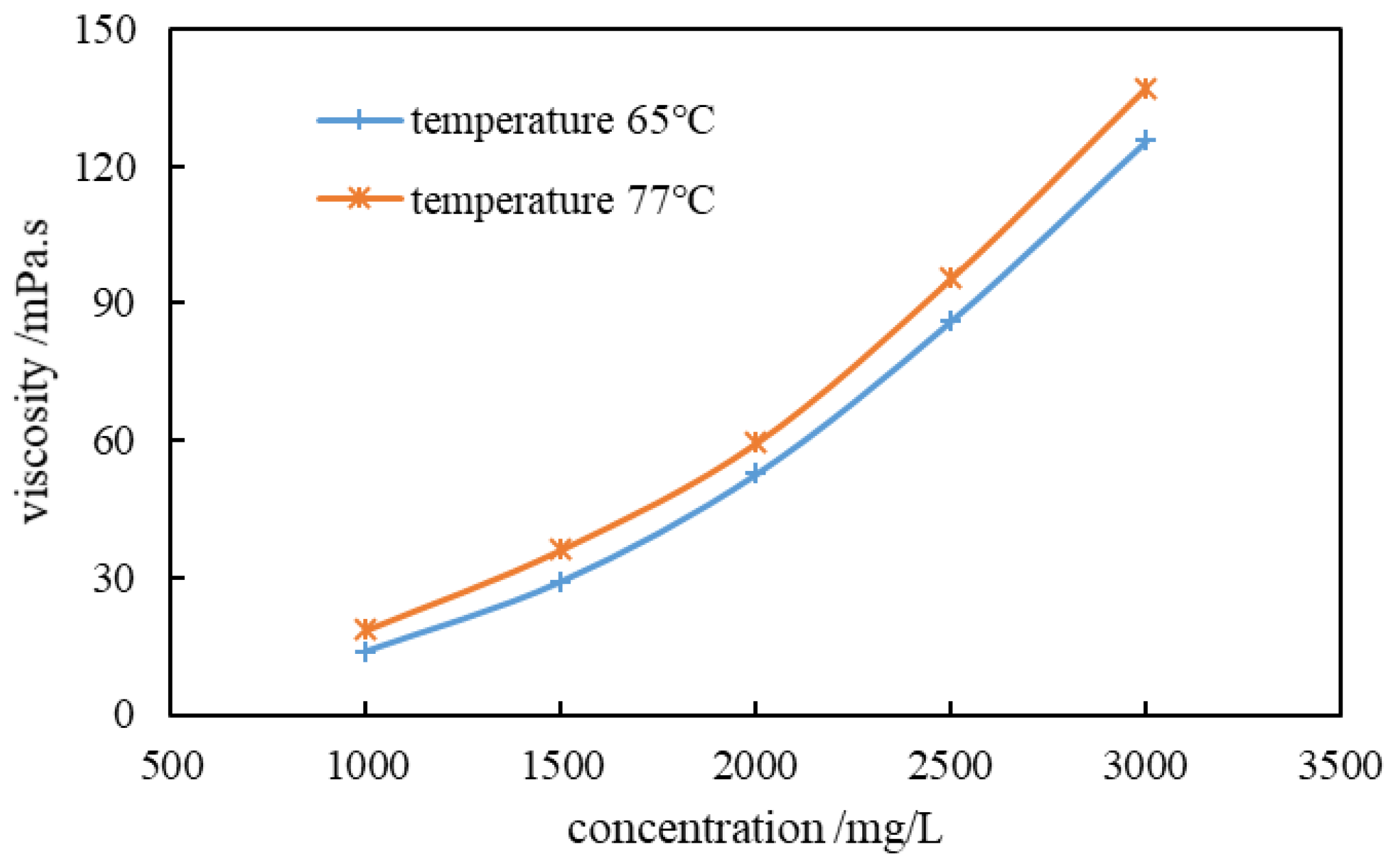
Figure 2.
viscosity retention percentage of polymer solution with time.
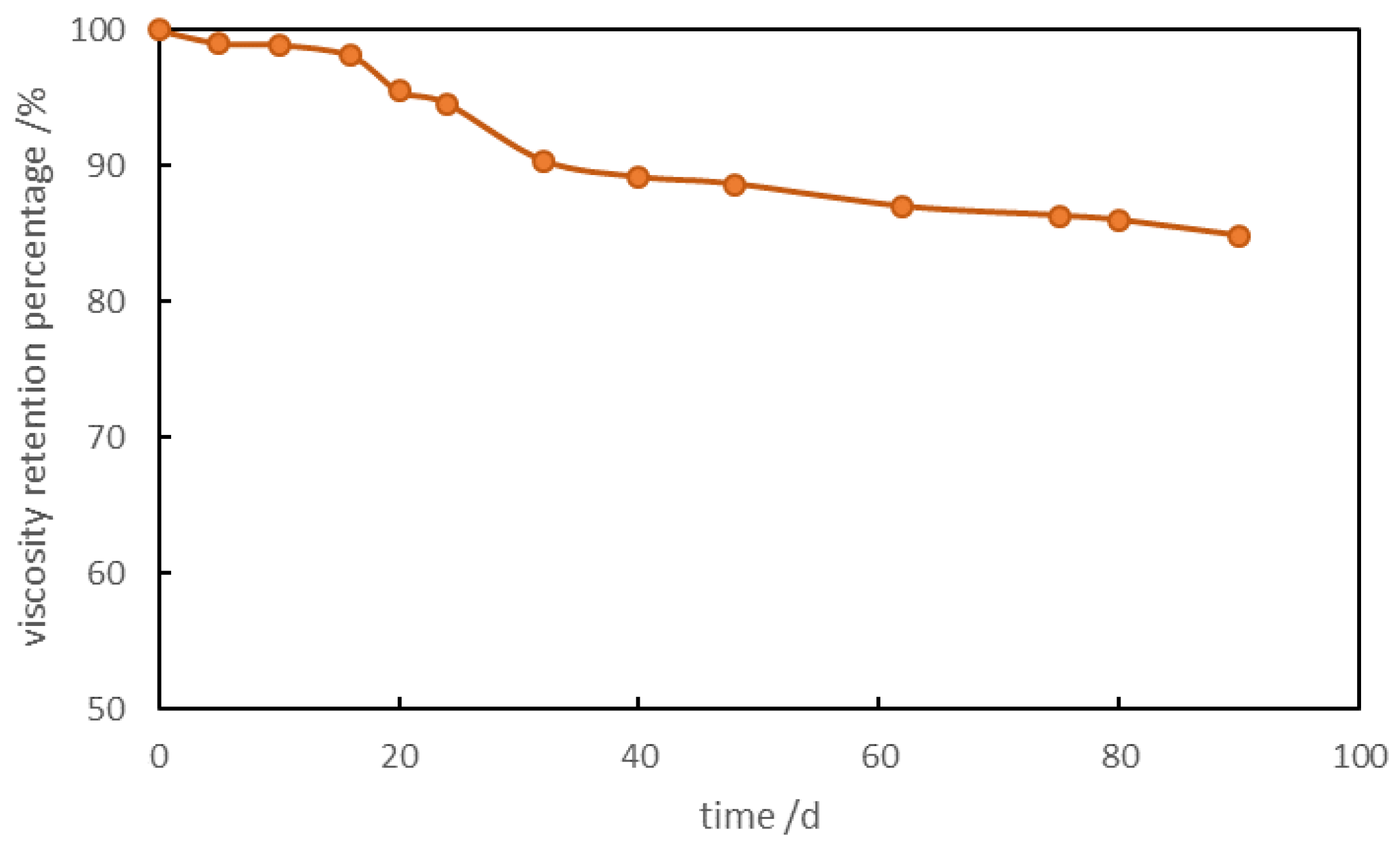
Figure 3.
viscosity reduction percentage at different viscosity reducer concentration.
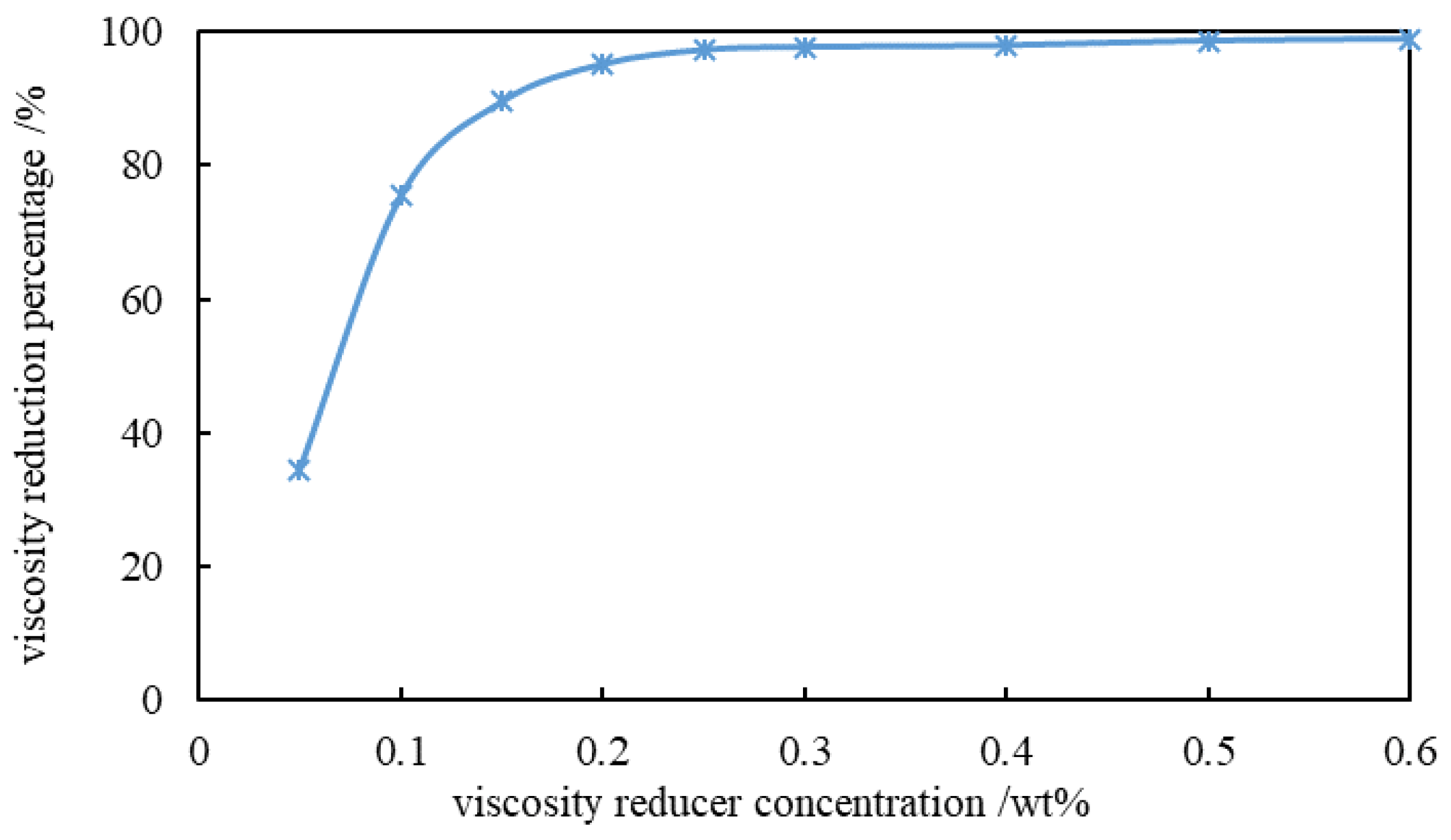
Figure 4.
plugging agent viscosity with time (polymer-to-crosslinking agent concentration ratio of 2).
Figure 4.
plugging agent viscosity with time (polymer-to-crosslinking agent concentration ratio of 2).
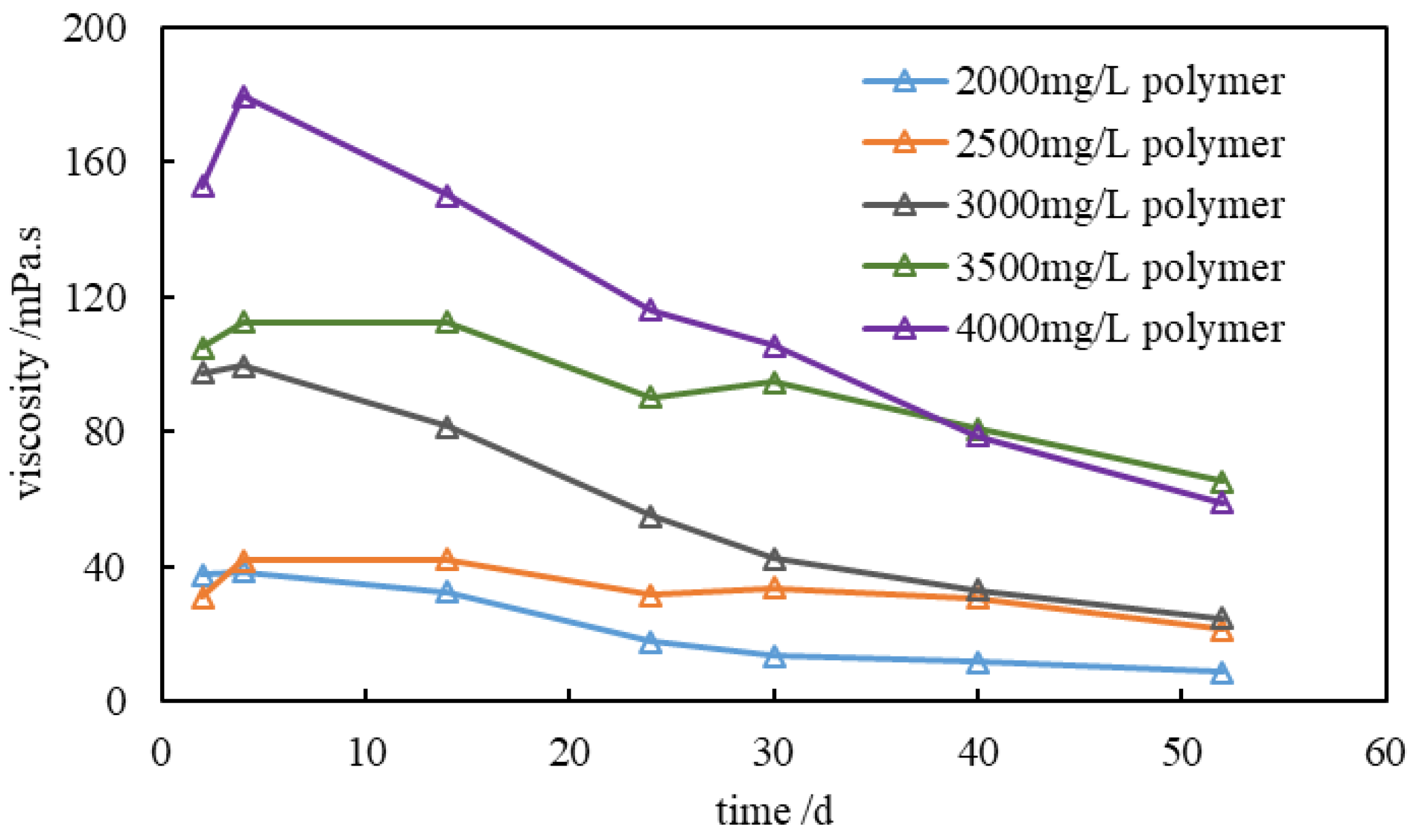
Figure 5.
plugging agent viscosity with time (polymer-to-crosslinking agent concentration ratio of 1).
Figure 5.
plugging agent viscosity with time (polymer-to-crosslinking agent concentration ratio of 1).
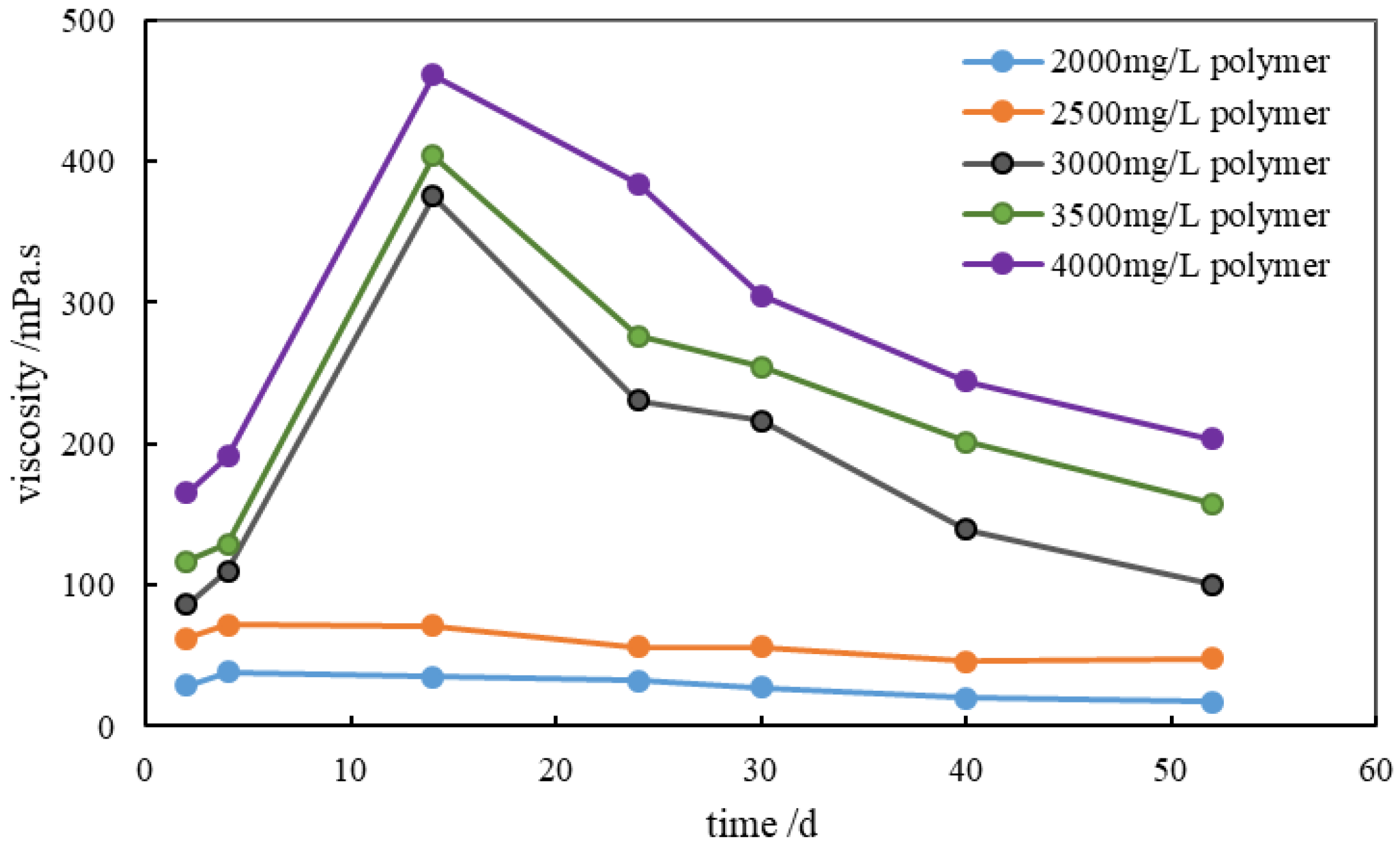
Figure 6.
impact of viscosity reducer on the polymer viscosity.
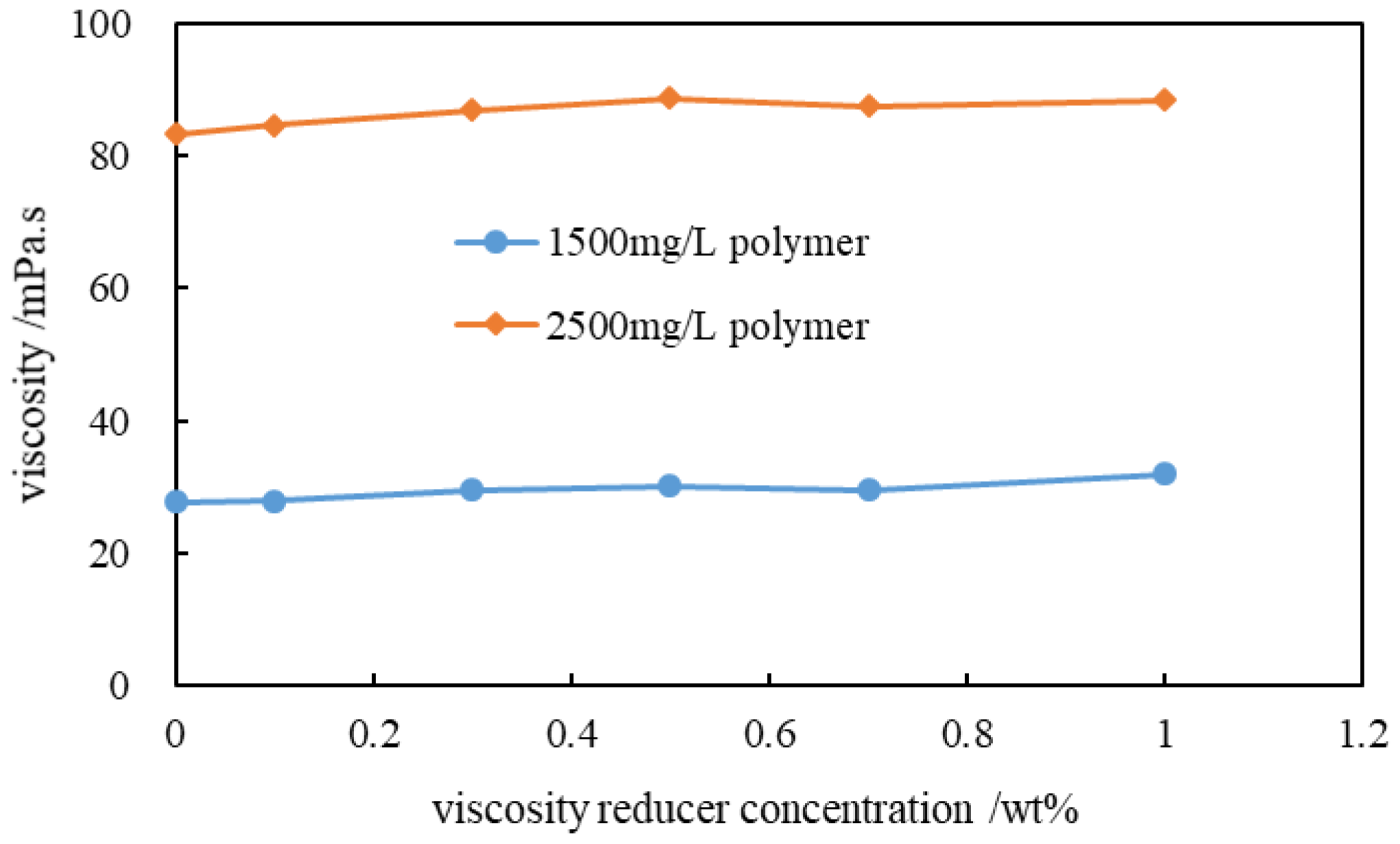
Figure 7.
impact of polymer on the oil-water interfacial tension.
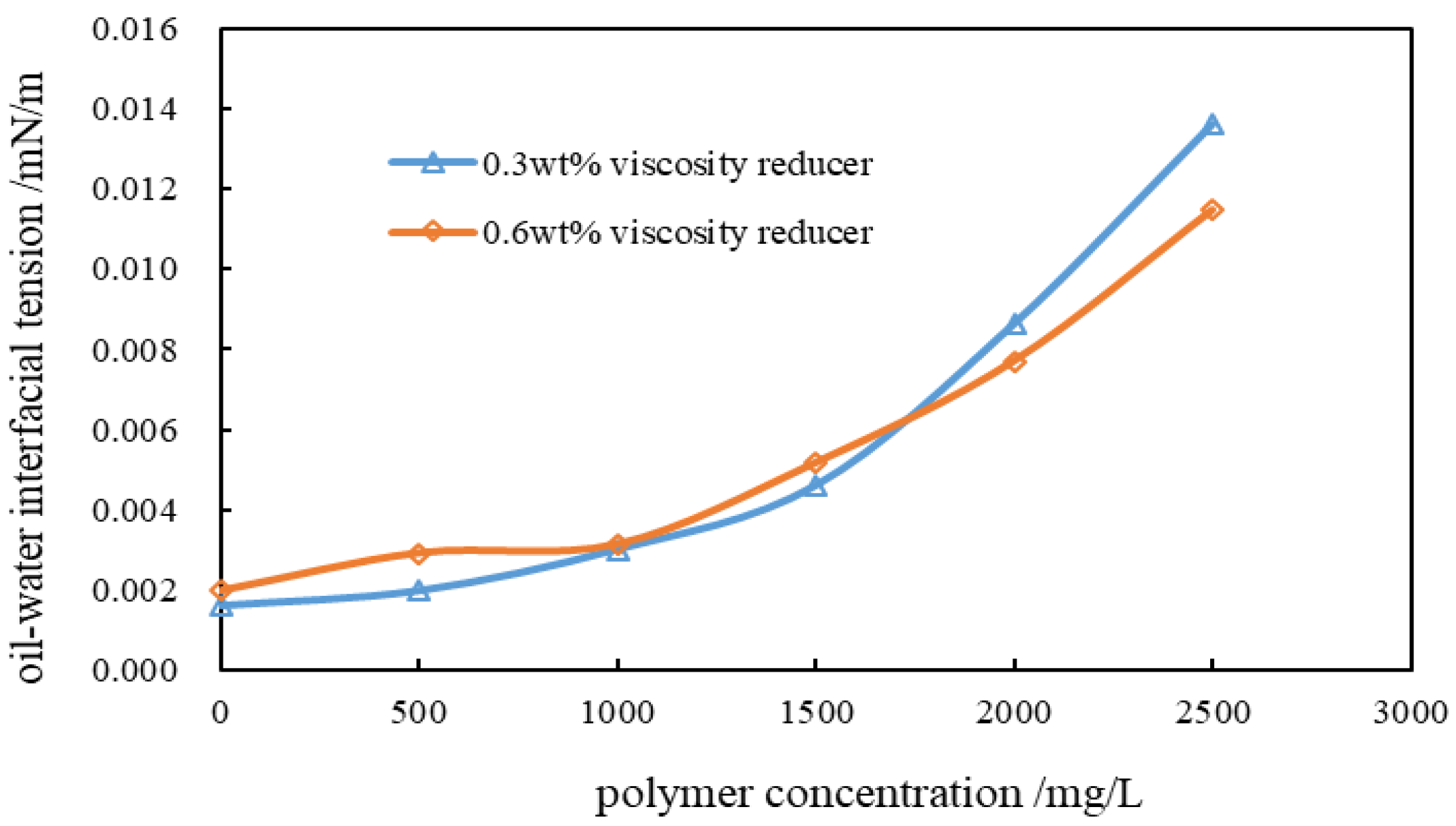
Figure 8.
impact of polymer on the viscosity reduction percentage.
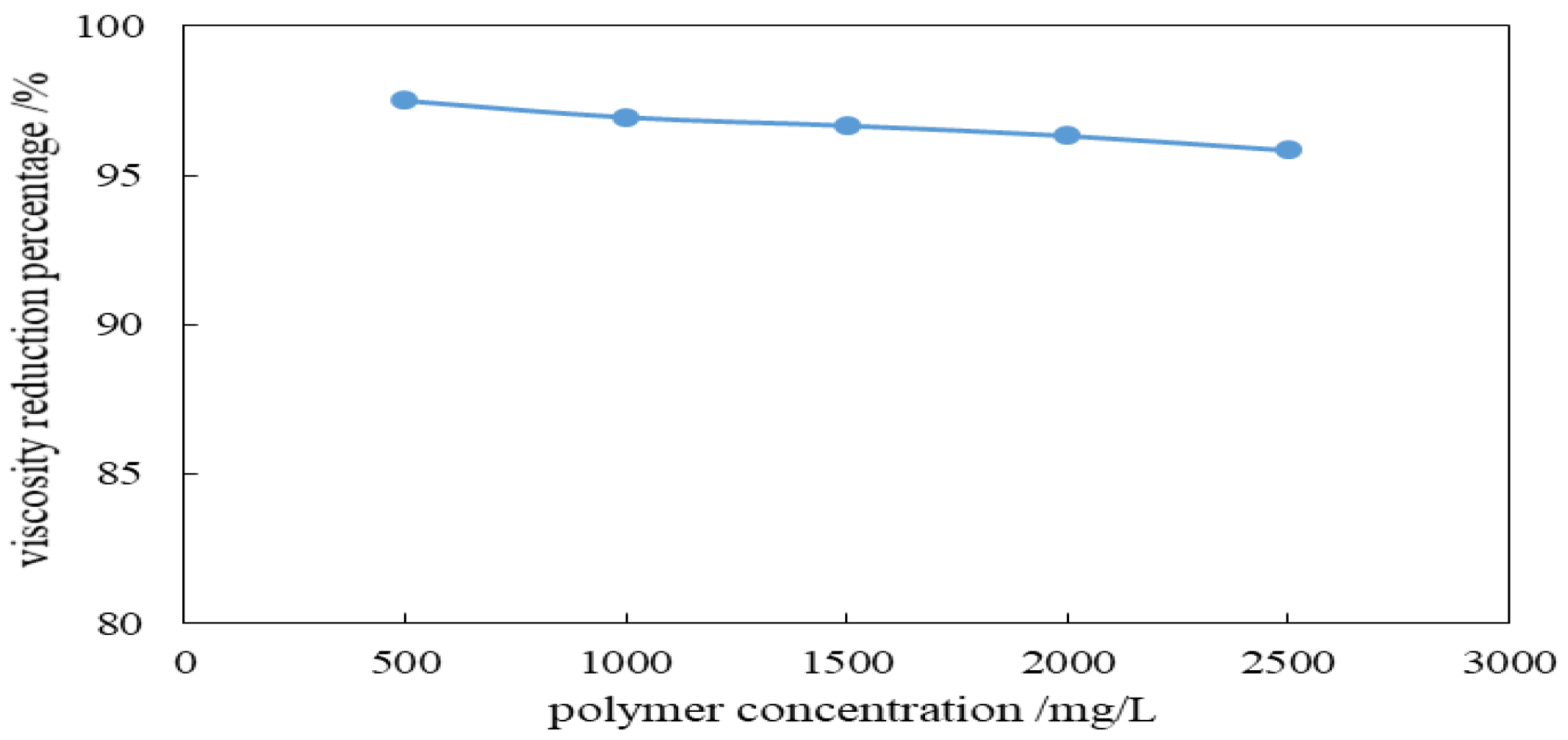
Figure 9.
liquid production percentage in high and low permeability layer for Scheme 2.
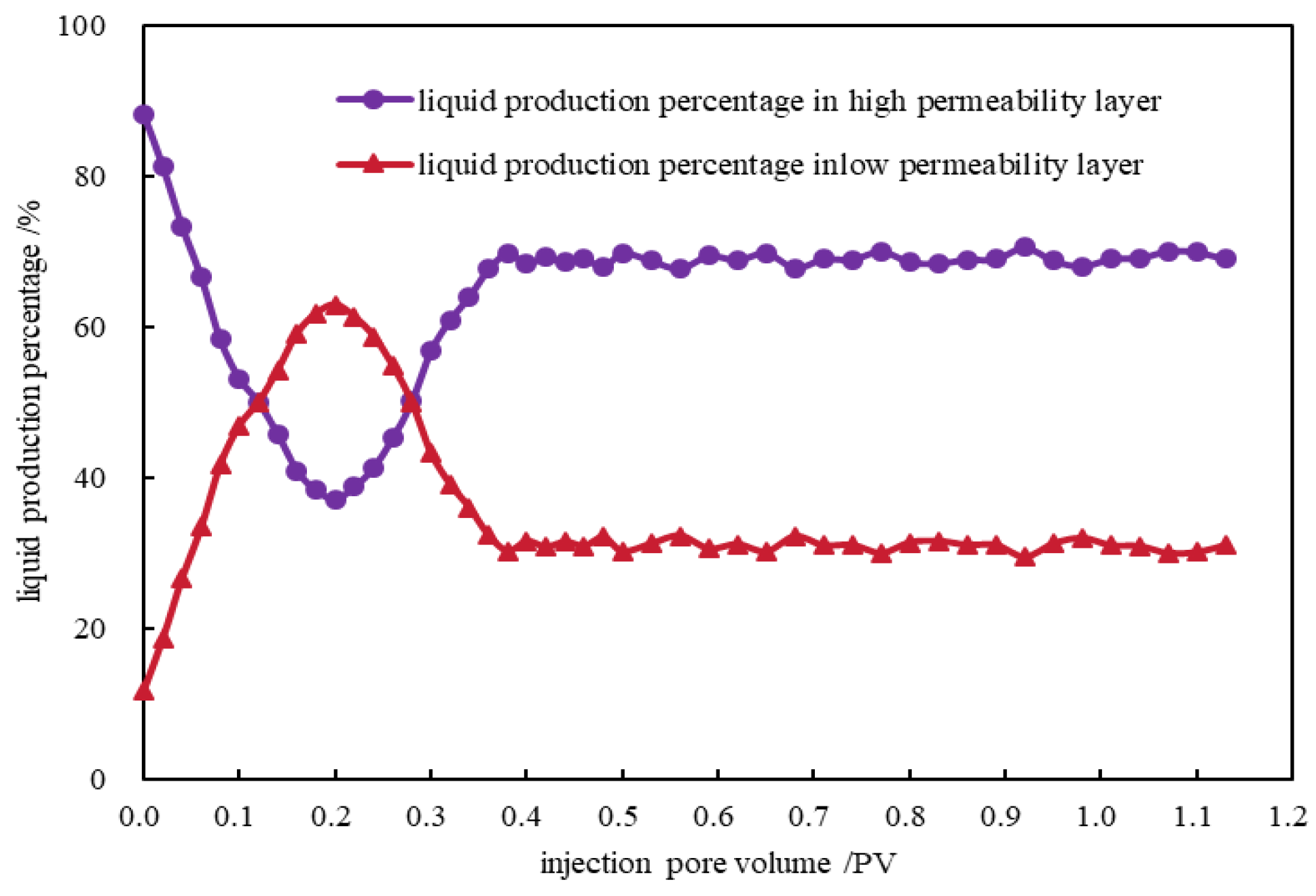
Figure 10.
liquid production percentage in high and low permeability layer for Scheme 6.
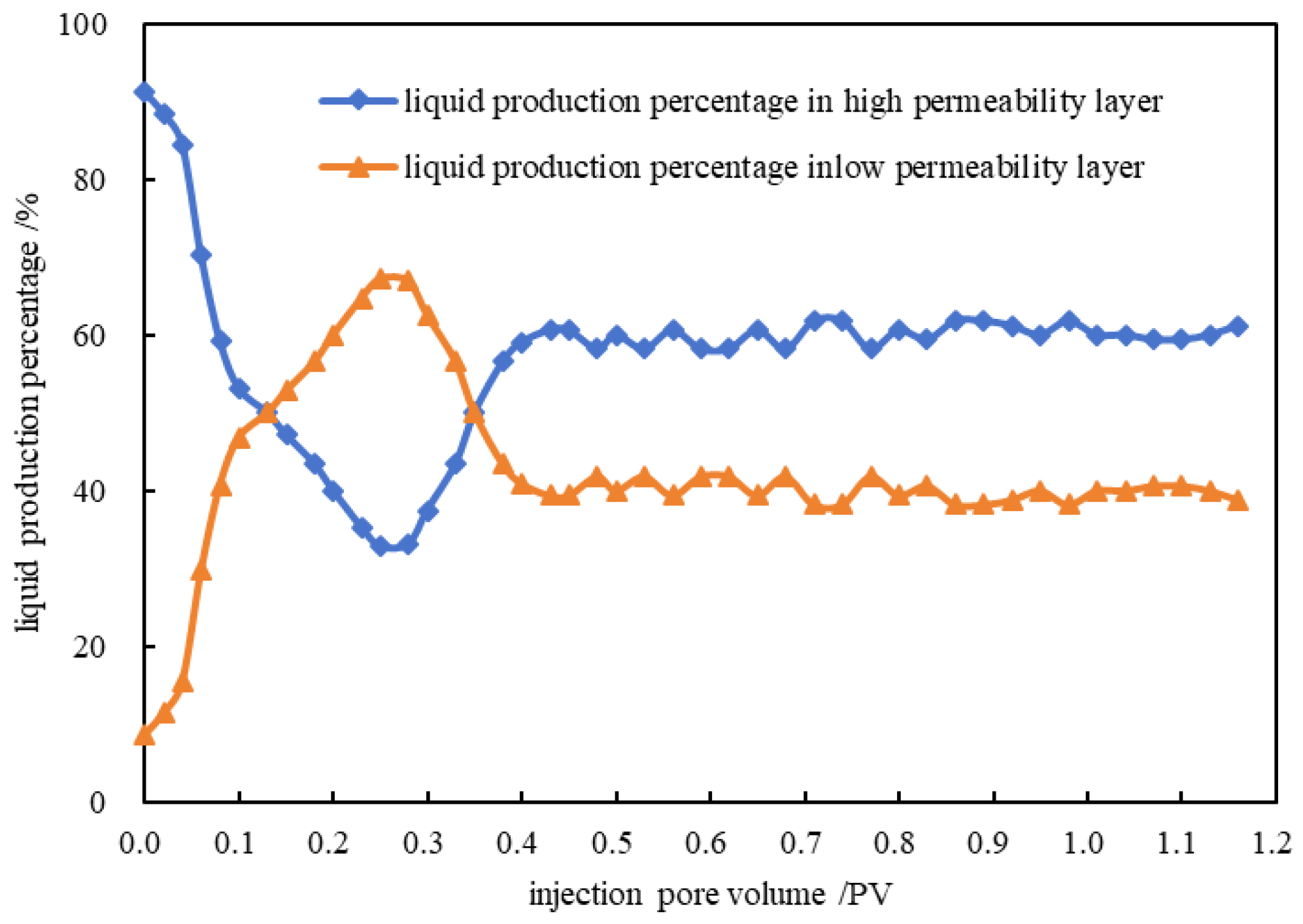
Figure 11.
the pressure differential curve.
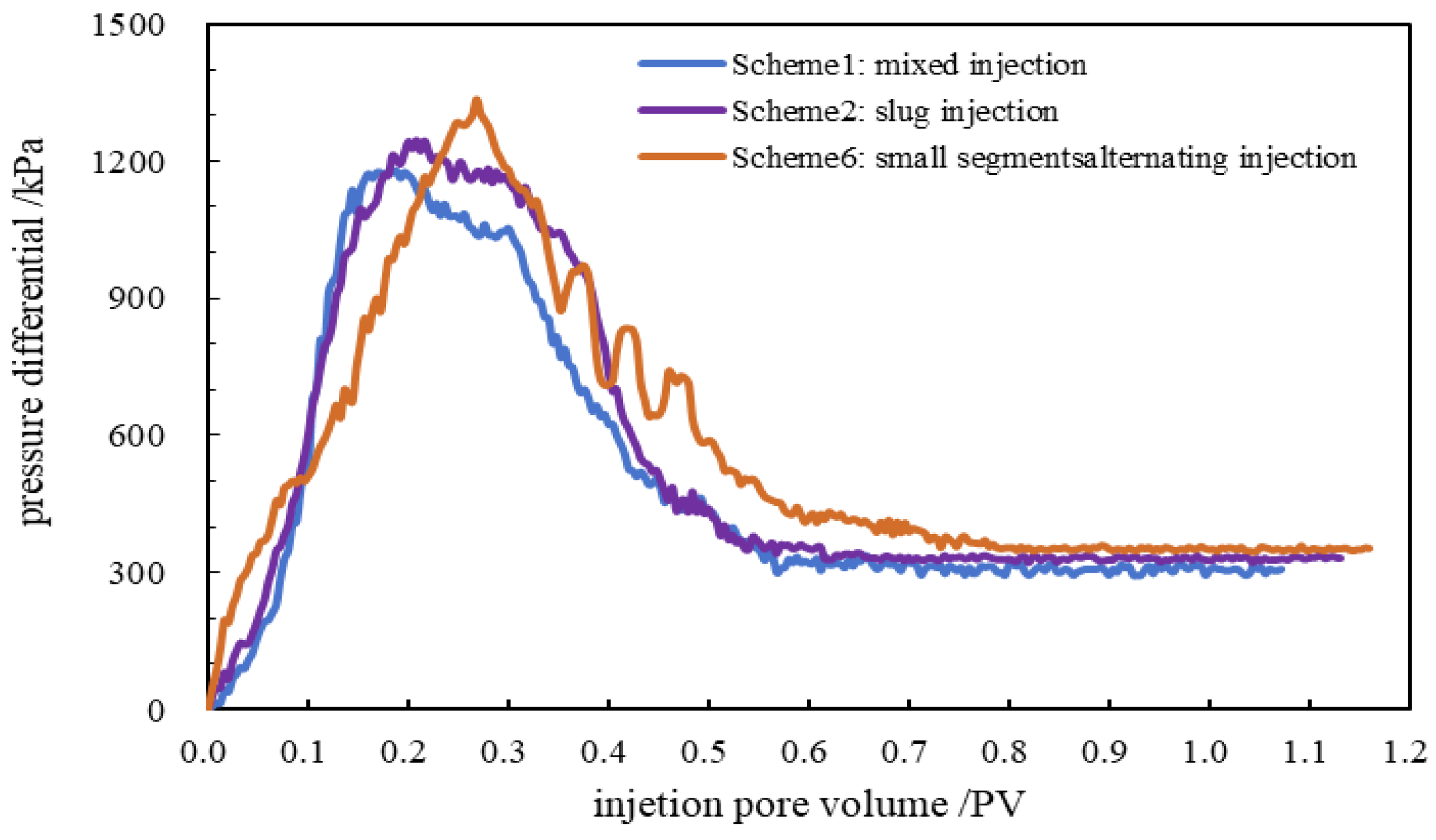
Figure 12.
enhanced oil recovery in high and low permeability layer.
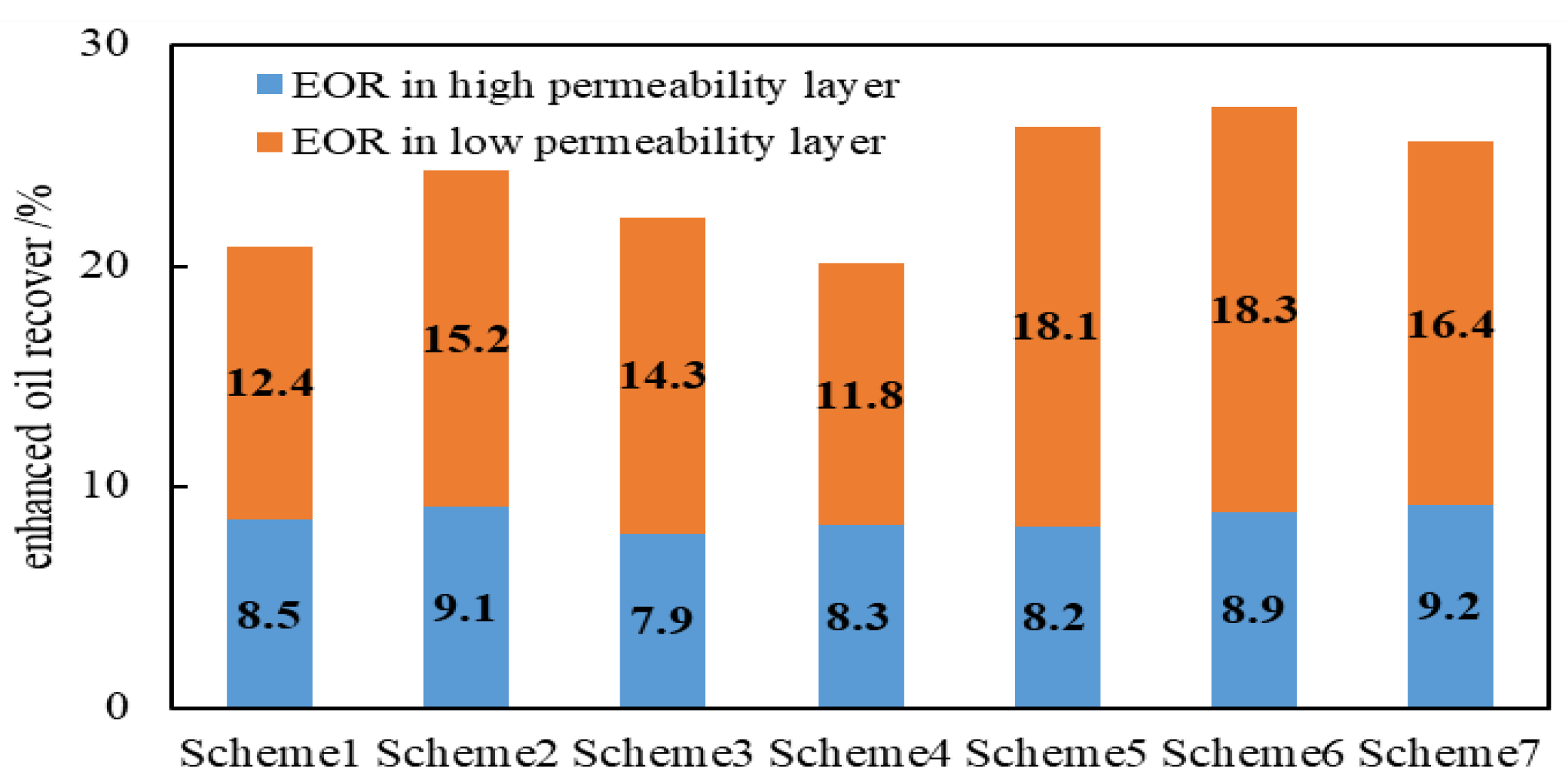
Figure 13.
water cut curve in high and low permeability layer of Scheme11.
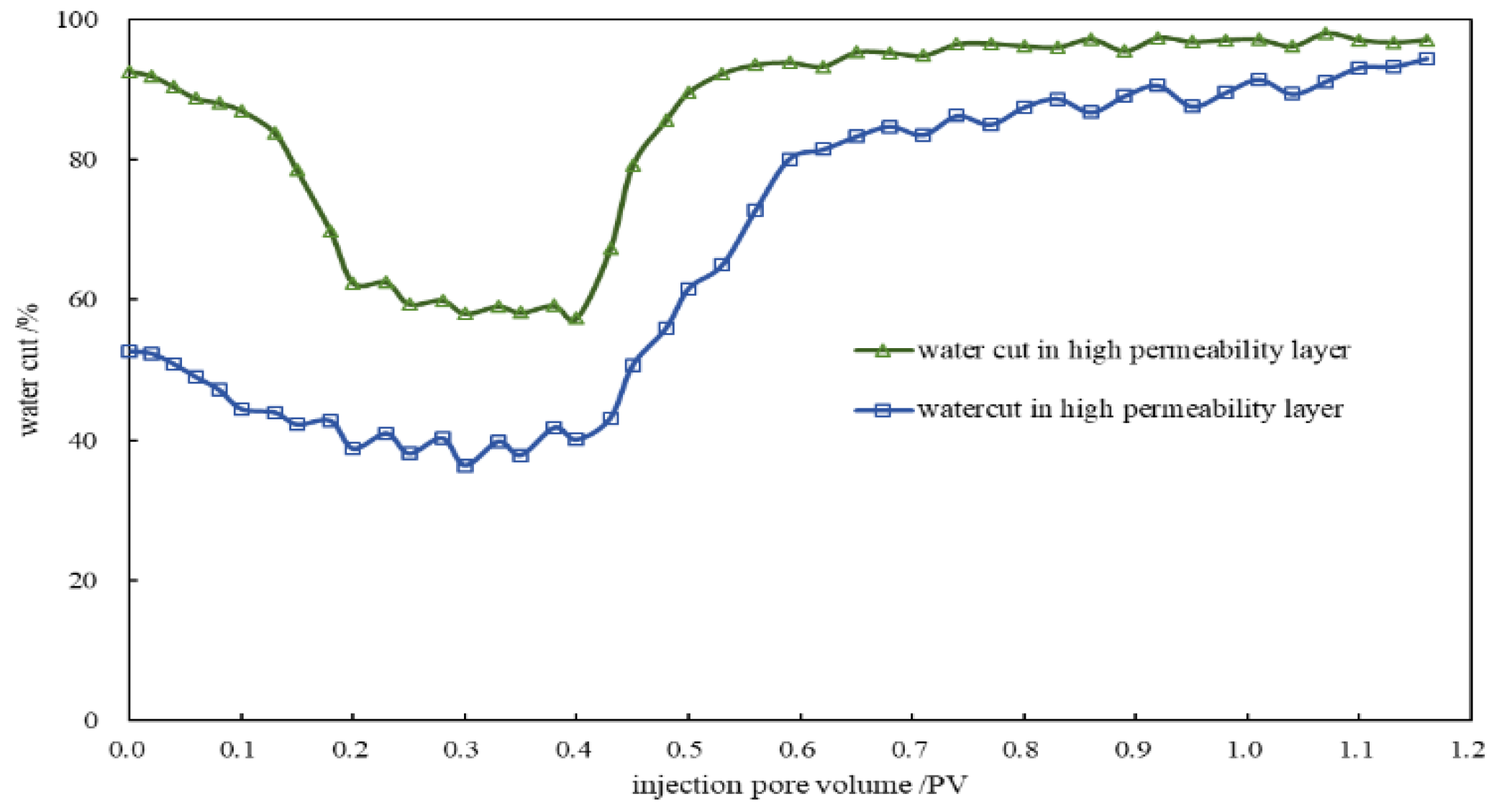

Table 1.
injection schemes design.
| injection mode | scheme | injection design |
| mixed injection | 1 | 0.1 PV plugging agent +0.4 PV 2000mg/L oil displacement agent & 0.5wt% viscosity reducer |
| slug injection | 2 | 0.1 PV plugging agent +0.2 PV 2000mg/L oil displacement agent +0.2 PV 0.5wt% viscosity reducer |
| 3 | 0.1 PV plugging agent +0.2 PV 0.5wt% viscosity reducer +0.2 PV 2000mg/L oil displacement agent | |
| 4 | 0.05 PV plugging agent +0.2 PV 2000mg/L oil displacement agent +0.2 PV 0.5wt% viscosity reducer | |
| alternating injection of small segments | 5 | 0.1 PV plugging agent +0.04 PV 2000mg/L oil displacement agent +0.01 PV 0.5wt% viscosity reducer, alternating 7-8 times |
| 6 | 0.1 PV plugging agent +0.03 PV 2000mg/L oil displacement agent +0.02PV 0.5wt% viscosity reducer, alternating 7-8 times | |
| 7 | 0.1 PV plugging agent +0.01 PV 2000mg/L oil displacement agent +0.04 PV 0.5wt% viscosity reducer, alternating 7-8 times | |
| 8 | 0.1 PV plugging agent +0.03 PV 1500mg/L oil displacement agent +0.02 PV 0.5wt% viscosity reducer, alternating 7-8 times | |
| 9 | 0.1 PV plugging agent +0.03 PV 2500mg/L oil displacement agent +0.02 PV 0.5wt% viscosity reducer, alternating 7-8 times | |
| 10 | 0.1 PV plugging agent +0.03 PV 2000mg/L oil displacement agent +0.02 PV 0.25wt% viscosity reducer, alternating 7-8 times | |
| 11 | 0.1 PV plugging agent +0.03 PV 2000mg/L oil displacement agent +0.02 PV 0.75wt% viscosity reducer, alternating 7-8 times |
Table 2.
displacement characteristics of different slug size ratio.
| Slug size ratio | Maximum liquid production percentage in low permeability layer % |
Minimum liquid production percentage in high permeability layer % |
Maximum liquid production ratio | Liquid production reverse duration PV |
Minimum water cut in low permeability layer % |
Minimum water cut in high permeability layer % |
Enhanced oil recovery % |
|---|---|---|---|---|---|---|---|
| 8:2 | 71.6 | 28.4 | 2.5 | 0.17 | 39.2 | 56.4 | 26.3 |
| 6:4 | 67.2 | 32.8 | 2.0 | 0.22 | 37.6 | 52.3 | 27.2 |
| 2:8 | 61.0 | 39.0 | 1.6 | 0.20 | 35.5 | 57.1 | 25.6 |
Table 3.
experiment results of different chemical agent concentration.
| Concentration of oil displacement agent mg/L |
Concentration of viscosity reducer wt% |
Enhanced oil recovery % |
Oil production increment of one ton equivalent polymer t/t |
|---|---|---|---|
| 1500 | 0.5 | 24.8 | 24.5 |
| 2000 | 0.5 | 27.2 | 25.3 |
| 2500 | 0.5 | 28.3 | 23.2 |
| 2000 | 0.25 | 25.1 | 23.0 |
| 2000 | 0.75 | 28.1 | 20.4 |
Disclaimer/Publisher’s Note: The statements, opinions and data contained in all publications are solely those of the individual author(s) and contributor(s) and not of MDPI and/or the editor(s). MDPI and/or the editor(s) disclaim responsibility for any injury to people or property resulting from any ideas, methods, instructions or products referred to in the content. |
© 2026 by the authors. Licensee MDPI, Basel, Switzerland. This article is an open access article distributed under the terms and conditions of the Creative Commons Attribution (CC BY) license (http://creativecommons.org/licenses/by/4.0/).
Copyright: This open access article is published under a Creative Commons CC BY 4.0 license, which permit the free download, distribution, and reuse, provided that the author and preprint are cited in any reuse.


