

Submitted:
10 February 2026
Posted:
12 February 2026
You are already at the latest version
Abstract
Developing a solar hybrid banana dryer designed explicitly for South Pacific is a significant step forward in addressing both environmental sustainability and economic efficiency in the region. This project encompasses the design and implementation of a sophisticated drying system tailored to meet local conditions, featuring an array of components such as solar panels, batteries, a solar collector, an air filter, a heat exchanger, a drying chamber, electric heaters, forced ventilation, and a control unit.
This paper details the various phases of the project, including design objectives, options, literature review findings, design selection processes, detailed design calculations, and forward-looking recommendations. Project, bringing diverse expertise to ensure the dryer met South Pacific economic and environmental needs. The primary aim was to create a low-cost, sustainable, portable dryer that is simple to construct and maintain and capable of upholding hygiene standards despite variable weather conditions. When designing the dryer banana was used as the model material to produce banana powder but it can be used for crops like breadfruit, pineapple, tomatoes and cassava and whatever else can benefit.
By adopting this innovative solution, south pacific can benefit from an environmentally friendly, economically viable method of banana drying, supporting local agriculture and contributing to sustainable development in the region.
Keywords:
banana
; drying
; solar
; hybrid
; south pacific
1. Introduction
In south pacific the main nation in economical and our focus is In the tropical paradise of Fiji, where bananas thrive in abundance, local farmers often need help with surplus produce, leading to significant wastage. This paper addresses this issue by designing a solar-powered banana dryer tailored to Fijian conditions. Our goal is to empower farmers by providing a solution that reduces product wastage and offers a secondary source of food and income for their families and the broader community. Converting unsold bananas into banana powder, which boasts an extended shelf life, can transform what would have been wasted into a valuable commodity.
This work outlines the comprehensive design process of our batch-drying system, highlighting the importance of meticulous planning and effective risk management. We explore various design options, evaluate their feasibility and suitability for the local context, and present a well-considered recommendation to guide stakeholders in making informed decisions. The engagement of stakeholders has been crucial to the project's success, ensuring that the design meets the specific needs and constraints of the community it serves. Our collective efforts have led to a successful project that we can all be proud of.
Fiji's domestic banana industry, while a significant opportunity, is also plagued by the challenge of agricultural waste. The region's surplus of bananas, often unsold due to the tropical climate's high temperatures and humidity, results in substantial economic losses for local farmers. To address this, we propose a promising solution: transforming these surplus bananas into powder with an extended shelf life.
This initiative aims to leverage solar-powered drying technology, capitalising on Fiji's abundant sunshine to efficiently and sustainably process bananas. Solar-powered dryers are a fitting solution for the region's climatic conditions, as they offer an eco-friendly method to remove moisture from bananas, thereby preserving their nutritional value and preventing spoilage.
By implementing effective drying techniques, it not only seeks to create new income streams for farmers but also plays a crucial role in ensuring food security. The production of banana powder facilitates market expansion and introduces opportunities for value-added products, thus encouraging entrepreneurship within local communities.
In Fiji, agriculture plays a vital role in the economy, with the banana industry significantly contributing to local consumption and export markets. However, the effective drying of bananas remains challenging due to the tropical climate and limited technological resources. The gross salary range for individuals employed in Fiji's agriculture and food industry is generally between 994 FJD and 2,510 FJD per month (PayLab, n.d.), highlighting the need for cost-effective and efficient solutions. Developing a solar banana drying device could increase the shelf life and quality of bananas and other crops such as breadfruit, pineapple, shrimps, cassava etc., thereby provide better market opportunities and increase the income levels of those involved in the crop supply chain (Alfiya et al., 2020, Alimardani et al., 2011, Atojunere et al., 2026).
Fiji's climate features relatively consistent temperature ranges throughout the year, with average temperatures during the dry season (May to October) ranging between 18°C and 28°C and slightly higher temperatures during the wet season (November to April), averaging between 21°C and 30°C. Regarding precipitation, Fiji experiences more pronounced seasonal variation: the wet season is marked by substantial rainfall, averaging between 250 and 400 mm monthly, while the dry season typically sees only 80 to 150 mm of monthly rainfall (CRU, 2021). This variation in rainfall can significantly impact a solar-powered banana drying system as cloud cover and rain can affect drying times and solar availability for the region.
Despite the variations in Fiji's climate, the country boasts a significant solar energy potential. On average, Fiji enjoys a high annual solar insolation of 5.4 kWh/m²/day on a horizontal basis (Prasad et al., 2018). This level of solar insolation, which remains remarkably consistent from 9 a.m. to 3 p.m., positions Fiji as an excellent location for implementing solar-powered technologies like the banana drying system (Beach Weather, 2024).
In Fiji, 92.1% of the population has access to grid power, highlighting a significant level of electrification within the country (Energypedia, 2018). However, the remaining 7.9% who do not have access to grid power often reside in remote or rural areas. This presents a unique challenge for agricultural activities, such as drying banana chips, which require reliable and consistent energy sources. Utilising solar power for banana chip dryers can be a viable solution to address this energy gap. Solar-powered dryers can operate independently of the grid, providing a sustainable and accessible option for communities without reliable electricity.
Ripe bananas, with a moisture content of approximately 75%, require effective drying methods to transform into banana chips (Amankwah et al., 2014). The moisture content of banana slices increases with slice thickness, significantly impacting the drying process. Trials on banana slice thickness have revealed that mould was present in 38% of the batches when the slices were 6mm or thicker, while no mould was found on slices between 1 mm and 4 mm thick (Kunwisawa et al., 2011). Therefore, managing the thickness of the banana slices is crucial to prevent spoilage and ensure quality in the drying process.
The optimal slice thickness for a solar dryer is between 3mm and 4mm (Kunwisawa et al., 2011). This thickness range prevents mould growth and balances the drying time and energy efficiency. During testing, banana slices with a thickness of 4-5 mm and a batch mass of 3.18kg required 16 hours to dry, based on 8 hours of drying per day (Mawire et al., 2024). This suggests that even slight variations in slice thickness can affect the total drying time, making it essential to adhere closely to the recommended thickness.
Furthermore, drying times can vary depending on airflow velocity. With an average airflow velocity of 0.11m/s to 0.23m/s, drying times can extend up to 24 hours (Mawire et al., 2024). This prolonged drying time underscores the necessity for efficient airflow management in the solar drying process to optimize the drying period and uphold the quality of the banana chips. Solar-powered banana chip dryers can achieve efficient and high-quality drying results by meticulously controlling slice thickness and airflow.
Solar dryers are innovative devices that utilise solar energy to remove moisture from various materials, typically agricultural products (Fernandes & Tavares, 2024). These dryers can be classified based on different criteria. The first classification is by the mode of heat transfer. In open sun drying, products are spread out under direct sunlight, which is the simplest and most traditional method. Direct solar dryers involve a more structured system, where the products are enclosed in a chamber with transparent materials, allowing sunlight to heat them directly.
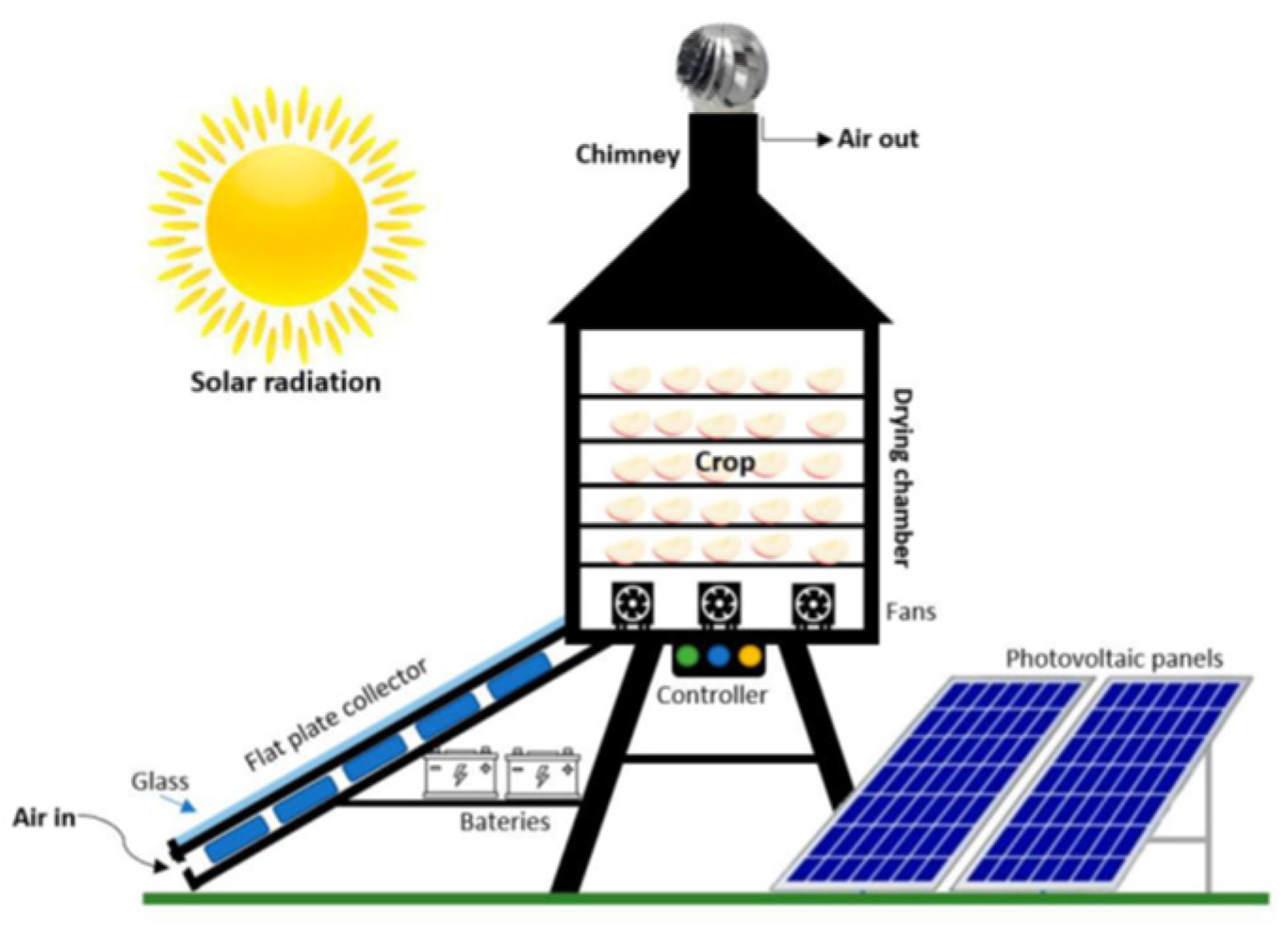
On the other hand, indirect solar dryers separate the heat collection and drying processes, using a solar collector to heat air that is then circulated through the drying chamber. Hybrid solar dryers, however, stand out for their adaptability. They combine solar energy with other sources, such as electricity or biomass, to ensure consistent drying even when solar radiation is insufficient, providing a reliable solution for all drying conditions.
Another way to categorise solar dryers is by their mode of air movement. Passive solar dryers rely on natural convection for air movement, where the warm air rises and circulates without mechanical assistance. This method is energy-efficient and cost-effective but may result in uneven drying. Active solar dryers incorporate fans or blowers to force air through the drying chamber, providing more control over the drying conditions and improving the uniformity and speed of the drying process.
To ensure adequate airflow, a hybrid solar dryer combines solar radiation with electrical energy or stored heat and either passive or active ventilation (electric fans). According to Fernandes & Tavares, “The primary purpose of a hybrid dryer is to overcome the limitations of other types of solar dryers and improve the overall dryer efficiency.”
Polycarbonate is an excellent choice when considering materials for constructing a solar-powered banana dryer in remote Fiji due to its numerous advantages over traditional glass. Polycarbonate's properties make it an ideal candidate in environments where durability, weight, and flexibility are paramount. Polycarbonate is lightweight and virtually unbreakable, unlike glass, which is heavier and more prone to breakage. This material's impact resistance is particularly beneficial in areas prone to harsh weather conditions, reducing the risk of damage and ensuring the structure's longevity. Polycarbonate's low moisture absorption and ability to withstand extreme temperatures without distorting are crucial attributes for a banana dryer that may be exposed to varying temperatures and humidity.
Moreover, polycarbonate's superior thermal efficiency and insulation capabilities offer significant energy savings. By stabilising and evening out temperatures, polycarbonate reduces the need for additional heating or cooling, essential for a solar-powered system in a remote area where energy efficiency is critical. Its UV protection and light diffusion properties help create an optimal environment for drying bananas, as they prevent sun damage and ensure even drying conditions. Polycarbonate's ease of installation and design flexibility further enhance its suitability for remote applications. In areas where transportation and skilled labour may be limited, polycarbonate's lighter weight and ease of cutting make it a practical choice. Sheets can be customised and installed on-site, reducing the risk of errors and waste. This adaptability is crucial for constructing efficient and sustainable infrastructure in resource-constrained settings like remote Fiji. (Piedmont plastics, 2021)
Using marine plywood to construct a solar-powered banana dryer in remote Fiji offers several significant advantages, though it also presents some drawbacks. Marine plywood's durability and moisture resistance make it ideal for the humid tropical environment of Fiji, as it withstands water exposure and varying weather conditions without warping or degrading. Its laminated structure, with high-quality veneers and waterproof adhesive, ensures long-term stability and resilience. The material is lightweight and easy to handle, facilitating construction in remote areas where transporting heavy materials is challenging, and its natural aesthetic appeal allows it to blend harmoniously with the environment. Additionally, marine plywood is cost-effective compared to other durable materials like metal or concrete, and its eco-friendly production from sustainably sourced wood aligns with environmental goals. However, concerns about toxic adhesives and preservatives, which can pose environmental and health risks, must be addressed, as these chemicals may leach into the soil and water. Marine plywood production involves higher embodied energy than solid timber, potentially conflicting with sustainability goals focused on minimising carbon footprints. Its relatively poor insulation properties could affect the efficiency of the solar drying process by leading to heat loss, a critical issue in a solar-powered setup.
Additionally, marine plywood is less fire-resistant than other materials, posing a safety risk in settings with concentrated solar equipment. These factors necessitate careful consideration of additional investments in insulation and fire-proofing measures to ensure the banana dryer's safety and effectiveness. (Petr J, 2020).
Grade 316 and 316L stainless steel are the optimal choice for coastal environments due to their exceptional corrosion resistance properties, essential in combating the harsh effects of saltwater and marine atmospheres. Including molybdenum in their composition enhances their ability to resist pitting and crevice corrosion, which are common issues in coastal settings. Over many years of practical application, these grades have demonstrated superior durability and longevity compared to other stainless steels. Additionally, a mirror-polished finish enhances the aesthetic appeal. It provides a smoother surface that reduces the accumulation of salt and other corrosive particles, thereby minimising maintenance requirements and preserving the material's appearance over time.
This combination of material and finish ensures functional and aesthetic performance, making it an ideal choice for coastal applications (Aaclo, 2019).
Fiji's transportation infrastructure further influences agricultural activities' feasibility and efficiency. The country's larger and many smaller islands benefit from domestic air services, with several international airports facilitating broader connectivity. Additionally, a coastal highway encircles Viti Levu, the largest island, with minor roads extending into the interior to reach most settlements. Despite this, river punts equipped with outboard motors remain the most efficient transportation for many villagers. In some remote areas, floating produce to market on bamboo rafts downriver is still utilised to transport the produce (Foster et al., 2024). This diverse transportation network must be considered when deploying solar-powered banana dryers, as the ease of access to markets can significantly impact the profitability and sustainability of such initiatives.
Following shows different drying methods.
Figure 1.
Open sun dryer (Fernandes & Tavares, 2024).
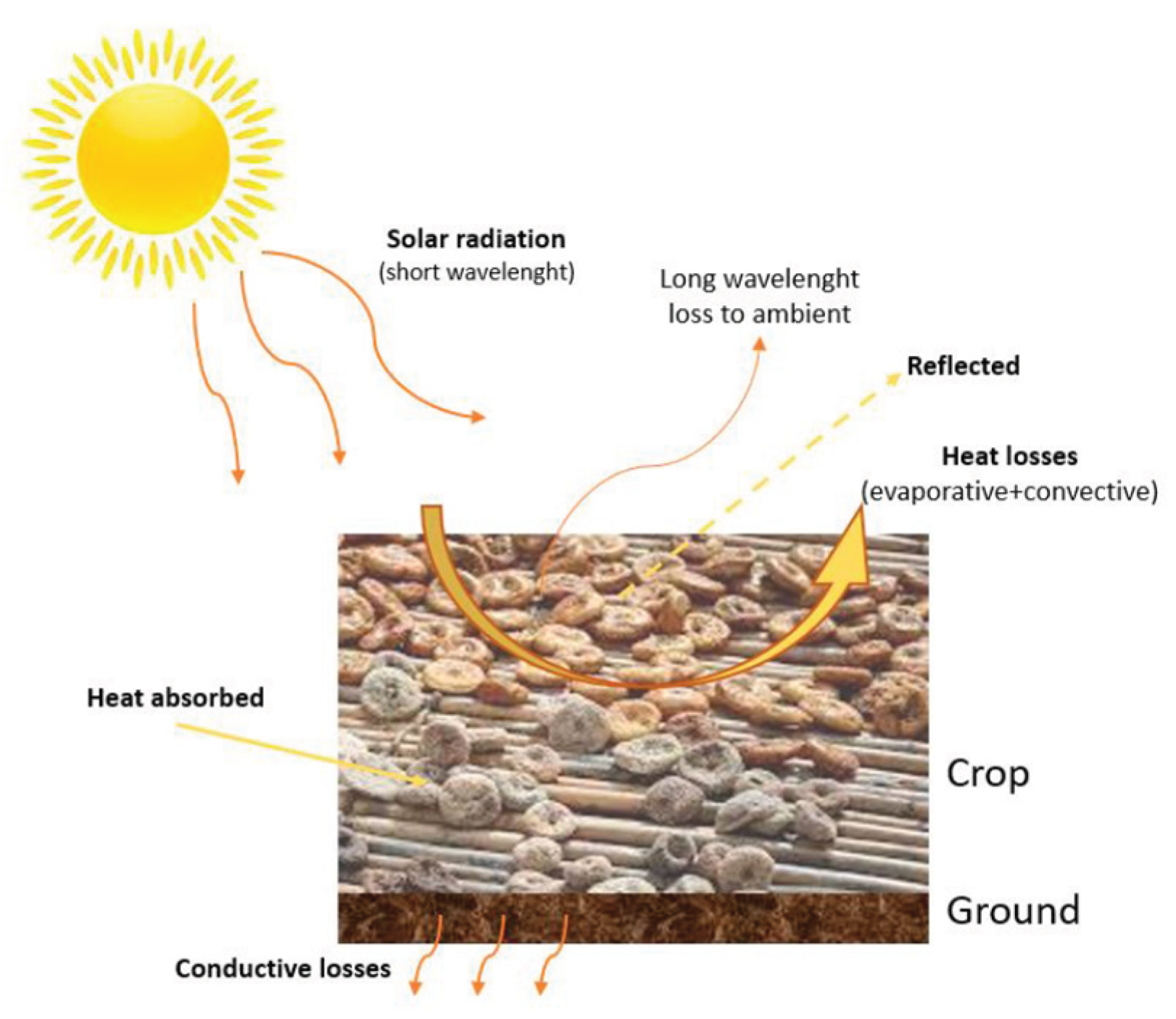
Figure 2.
Direct passive solar greenhouse dryer (Fernandes & Tavares, 2024).
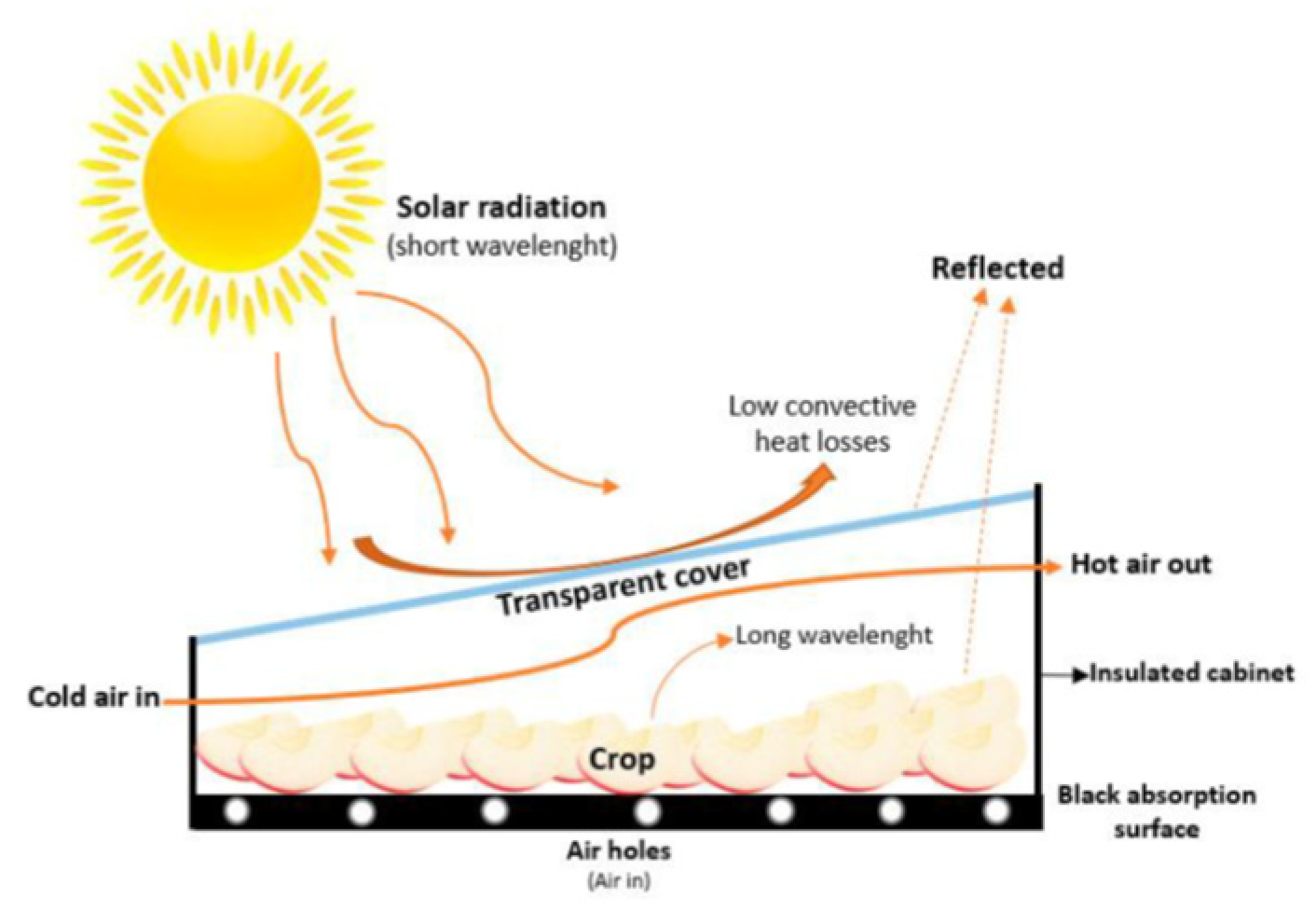
Figure 3.
Indirect passive solar cabinet dryer (Fernandes & Tavares, 2024).
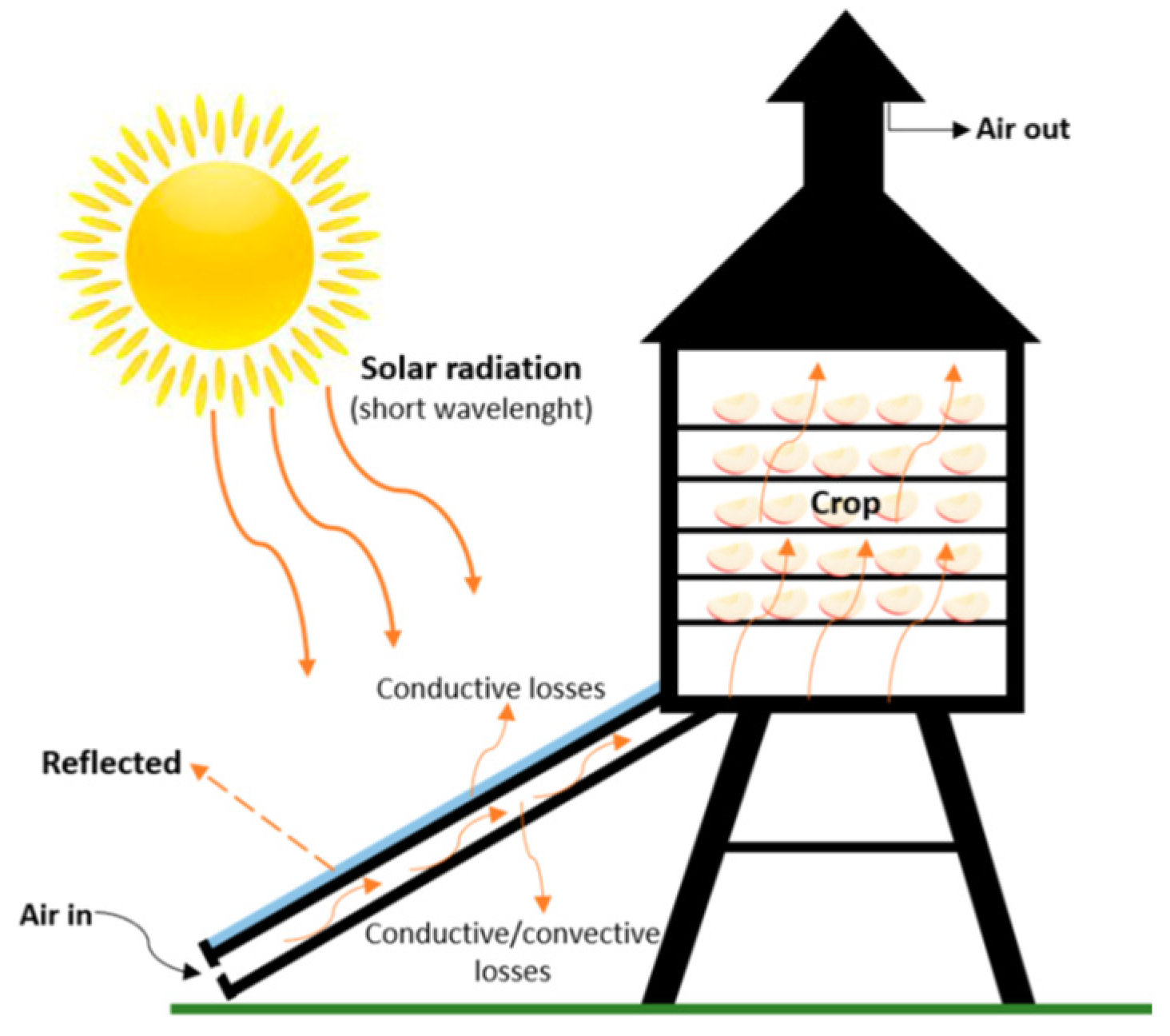
Figure 4.
Hybrid indirect active solar cabinet dryer (Fernandes & Tavares, 2024).
2. Methodology
The design process began with establishing clear objectives to guide the development of a banana dryer that could effectively operate within Fiji's unique conditions. A thorough literature review identified a wide range of existing designs and technologies, providing a foundation for building our customised solution. From this research, four design options were shortlisted for further evaluation. Preliminary calculations were conducted on these options, which were then assessed and ranked against the design objectives using a weighted scoring system. This rigorous process ensured the selection of a final design that best met all criteria.
After the concept for the solar hybrid banana dryer is completed, it is recommended that initial unit be manufactured. This prototype will undergo thorough testing and commissioning to ensure functionality and reliability. A strategic advertising and training campaign will be launched to promote the product across Fiji. Feedback and data gathered from this initial deployment will be critical in refining the design, addressing any issues, and optimising the dryer for a broader market launch. This phased approach enhances the product's success and ensures alignment with the community's needs and expectations.
By adopting this innovative solution, Fiji can benefit from an environmentally friendly, economically viable method of banana drying, supporting local agriculture and contributing to sustainable development in the region.
3. Design Objectives, Constraints and Assumptions
The design process began with establishing clear objectives to guide the development of a banana dryer that could effectively operate within Fiji's unique conditions. A thorough literature review identified a wide range of existing designs and technologies, providing a foundation for building our customised solution. From this research, four design options were shortlisted for further evaluation. Preliminary calculations were conducted on these options, which were then assessed and ranked against the design objectives using a weighted scoring system. This rigorous process ensured the selection of a final design that best met all criteria.
Opting for a batch of 10 kgs of bananas is not just a cost-effective choice but also a highly efficient one. This quantity, which fits into 11 trays and includes approximately 88 bananas, yields about 1.6 kgs of banana powder. This practical and effective output can be used for culinary or commercial purposes, making it a financially sound investment.
Banana dryer is not just a one-size-fits-all solution. Its scalable design during manufacturing allows to produce larger dryers as per the demand. This flexibility is achieved by incorporating additional batteries, solar panels, and dehumidifiers, which adjust the dryers' functionality and capacity. This adaptability ensures that the dryers can efficiently respond to increased capacity requirements and technological advancements, making them a future-proof investment.
Banana dryer has been designed with simplicity in mind, ensuring it is easy to maintain and repair. Its straightforward design reduces the system's complexity, enabling farmers to perform all necessary maintenance tasks efficiently. This user-friendly approach simplifies upkeep and minimises the risk of component failure during transportation. By addressing these factors, the dryer provides a reliable and efficient solution for drying bananas, allowing farmers to focus on their core 10 activities without worrying about intricate technical issues. This design instils confidence in the dryers' ease of use and maintenance.
Fiji, an island nation with over 300 islands, requires efficient solutions for transporting equipment across its diverse geography. The dryers' portable and modular design addresses this need by ensuring they can be easily transported using various methods, whether by boat, plane, or vehicle. This flexibility in transportation facilitates the movement of dryers between islands and ensures they can be quickly and efficiently deployed wherever needed, supporting Fiji's unique logistical challenges.
In designing structures in Fiji, it is crucial to utilise materials that are tolerant to weather conditions, given the island's unique climate challenges. With its hot and humid environment and exposure to sea spray, materials must be selected for their resilience. Additionally, the island experiences significant monthly rainfall ranging from 80 to 400mm (CRU, 2021). Therefore, incorporating materials that can withstand such climatic extremes will ensure the durability and longevity of the structures.
The cost of a dryer, ranging from $4,500 to $7,000 as per the Bill of Quantities (BoQ), is strategically set to remain affordable, enabling more farmers to purchase or be provided with this essential equipment. By keeping the cost low, accessibility is significantly increased, allowing more farmers to benefit. This, in turn, facilitates the farmers' ability to establish a second income stream more efficiently, enhancing their financial stability and overall economic resilience. This affordability positively impacts farmers' financial stability, fostering optimism about the project's outcomes.
We will begin with an initial build of five units, allowing us to gauge the feasibility without committing substantial funds upfront. This approach enables us to assess the success of the dryers across different regions of Fiji. By strategically distributing these initial units, we can evaluate their performance in various areas and determine the project's viability before scaling up production.
Sustainable and environmentally friendly practices are crucial for preserving our planet's resources and ensuring a healthier future for all. By adopting sustainable methods, we minimise waste, reduce pollution, and conserve natural resources, all of which contribute to a more balanced ecosystem. Environmentally friendly approaches, such as using renewable energy sources, reducing single-use plastics, and promoting biodiversity, help mitigate climate change and protect wildlife habitats. These efforts support the environment, foster economic growth, and enhance the quality of life for communities worldwide.
3.1. Design
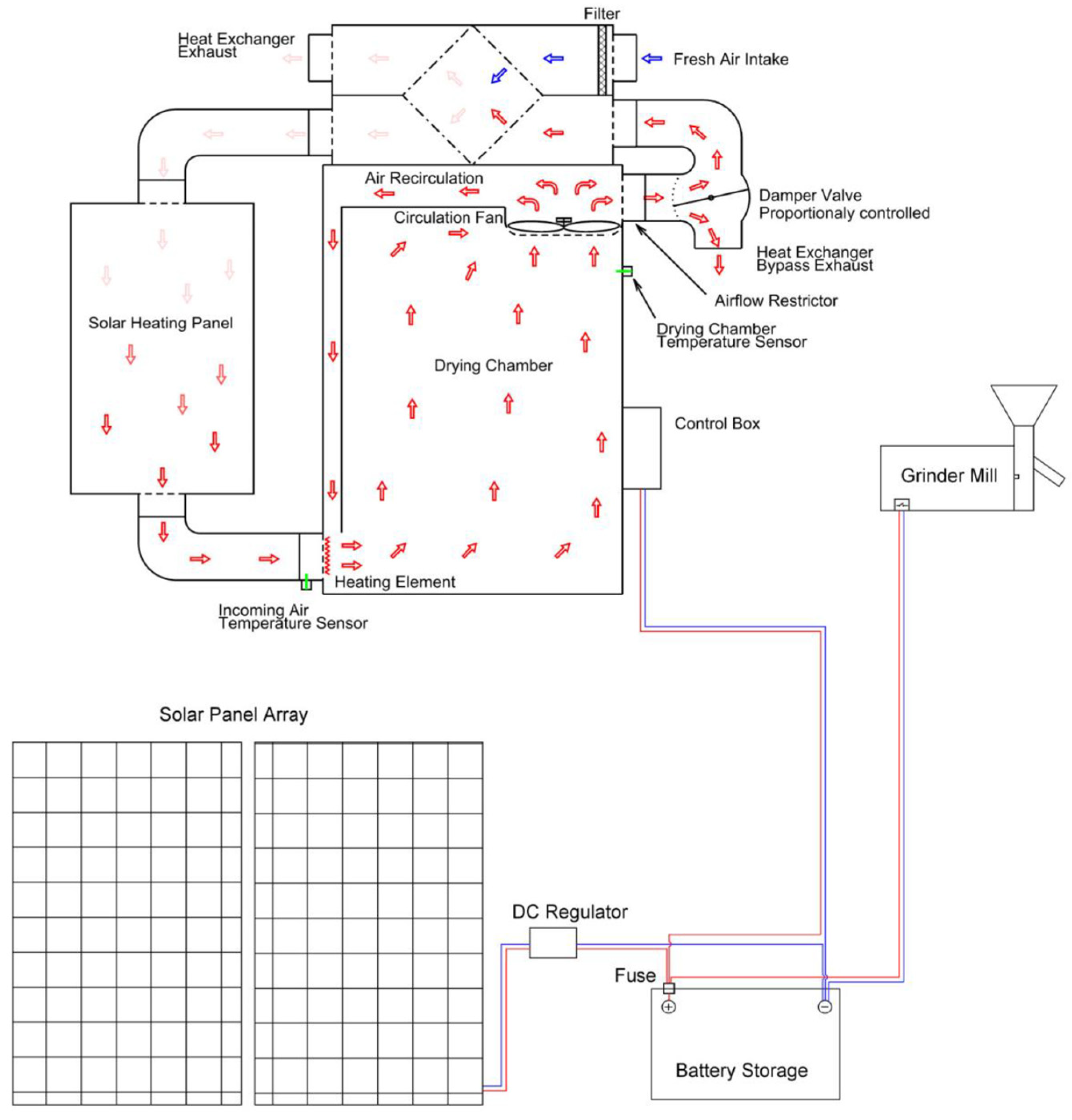
Based on the objective, constraints and assumptions outlined we have designed our system to capture energy from the sun via a solar thermal panel used to directly heat air and a solar PE panel array to charge a battery storage system. This energy will be used to heat and circulate air through our drying chamber. The system will be able to recapture the heat from the exhausted air via a heat exchanger but could bypass the heat exchange using a proportionally controlled damper actuator to prevent the system overheating as seen in Figure 5 below. The airflow exhausted out of the system will be manually adjustable by changing he air flow restrictor and calibrated using an airflow sensor, once set this should not need to be changed, unless altering system airflow characteristics.
The design will use off the shelf components where practical to allow for reduced manufacturing costs and future replacement or upgrades. Our design will allow for a batch of 10kg of fresh bananas to be dried and milled into 1.6kg a day even during partially cloudy weather or short-day time rain events (dependent on desired temperature), the system may not be able to continue during prolonged consecutive days of low sunlight.
Figure 5.
System Design Concept.
3.2. Design Calculations
A series of design calculations have been developed for our chosen design option, these calculations are based on information gathered during the literature review, assumptions objectives and constraints outlined. Some values used in the calculations have been estimated based on available data or the expectation that they will not greatly impact the final required values.
- (1)
- Solar collector irradiation calculation results
Suva latitude = 18.1405o
Suva longitude = 178.423o
Calculations are based on May 20 at 0900 hrs, then Φ = -18o
Irradiance measured on a horizontal plane = Gh = 1.0 MJ/hm2
Declination δ = 19.93o
Hour angle = - 45o
Angle between the beam radiation and the vertical, θz = 58.2o
Assuming the diffusion component is insignificant compared to the beam component,
Beam component of irradiance G* = 1.90 MJ/hm2
Slope of the solar collector = 30o
Azimuth facing due North = - γ = 180o
Angle between the beam and the collector = θ = 43.9o
Irradiance on the collector (neglecting diffuse radiation) = Gc = 1.36 MJ/hm2
Value of diffuse radiation (same in all directions) so Gdh = Gd* = Gdc = 0.5 MJ/hm2
Beam component = Gb* = 0.9490 MJ/hm2
Total irradiation in the beam direction = Gt* = 1.445 MJ/hm2
Total irradiation on the collector = Gc* = 1.18 MJ/hm2
- (2)
- Dryer Design Calculations
Initial moisture content 75%
Final moisture content 8%
Batch size (initial weight of banana slices) = 50kg
Batch size (dried chips) ~ 50/6 = 8.3kg
Slice thickness (before drying) = 0.4cm
Tray size = 80cm x 80cm
Bananas per tray = 4
Banana weight (pulp) = 114.54 grams
Number of bananas per batch = 50,000 grams/ 114.54 grams / banana = 437 bananas
Number of trays required = 437/4 = 110 trays.
- (3)
- Moisture calculations
Design Calculations (from Murali et al.):
The amount of moisture to be removed from the banana slices is:
Mw= (Mi−Mf)/(100−Mf) ∗m
Mw= (75−8)/ (100−8) ∗50=36.41kg
Where:
Mw = Total amount of moisture to be removed (kg)
Mi = Initial moisture content = 75%
Mf = Final moisture content = 8%
m = Weight of banana slices for one batch = 50kg
- (4)
- Energy Requirements
The heat energy required is:
Qt=Mw∗Lℎ
Qt=36.41∗2,260=82,286.6kJ
Where:
Qt = Total amount of heat required (kJ)
Mw = Total amount of moisture to be removed (kg) = 36.41
Lh = Latent heat of vaporisation of water (kJ/kg) = 2,260
- (5)
- Drying air requirements
Drying air flow rate is:
ma=Qt/(Cp∗(Tdi−Tdo))
ma=82,286.6/(1.005∗ (343.15−298.15) =1,819.49kg
Where:
ma = Mass of air required (kg)
Qt = Total amount of heat required (kJ) = 82,286.6kJ
Cp = Specific heat of air (kJ/kg-K) = 1.005
Tdi = Inlet air temperature (K) = 298.15 (25°C)
Tdo = Outlet air temperature (K) = 343.15 (70°C)
Total volume of air required for the process is:
Va=(ma∗R∗T)/P
Va=(1,819.49∗0.287∗343.15)/1.016=176,368.84m^3
Where:
Va = Total volume of air required (m3)
ma = Mass of air required (kg) = 1,819.49
R = Gas constant (kPa.m3/kg/K) = 0.287
T = Temperature (K) = 343.15
P = Pressure (kPa) = 1.016
Volumetric air flow rate required is:
Vra=Va/Dt =176,368.84/10= 17,636.88m3/ℎ
Where:
Vra = Volumetric air flow rate (m3/h)
Va = Volume of air required (m3) = 176,368.84
Dt = Drying time (h) = 10
Mass flow rate of air required is:
mra=Vra∗ρ=17,636.88∗1.2=21,164.26kg/ℎ
Where:
mra = Mass flow rate of air (kg/h)
Vra = Volumetric air flow rate (m3/h) = 17,636.88
ρ = Density of air (kg/m3) = 1.2
- (6)
- Solar collector surface area required:
Ac=Qt/ (I∗ Dt) =82,286.6/ (1,361∗10) =6.05m2
Where:
Ac = Area of solar water collector (m2)
Qt = Total amount of heat required (kJ) = 82,286.6kJ
I = Average incident solar radiation (W/m2) = 1,361W/m2
Dt = Drying time (h) = 10
- (7)
- Heat exchanger area required:
LMTD=F∗((Tℎi−Tdo )−(Tℎo−Tdi))/(ln (((Tℎi−Tdo))/((Tℎo−Tdi)))) LMTD=0.92∗((363.15−343.15)−(353.15−298.15))/(ln (((363.15−343.15))/((353.15−298.15))))
LMTD=31.83
Qℎ=U∗Aℎ∗LMTD
Where:
Qh = Heat transfer per hour (kJ/h)
U = Overall heat transfer coefficient (kJ/h.m2.K)
Ah = Area of heat exchanger (m2)
LMTD = Log mean temperature difference
F = Correction factor for heat exchanger = 0.92
Tdi = Inlet air temperature (K) = 298.15 (25°C)
Tdo = Outlet air temperature (K) = 343.15 (70°C)
Thi = Heat exchanger water inlet temperature (K) = 363.15 (90°C)
Tho = Heat exchanger water outlet temperature (K) = 353.15 (80°C)
Heat exchanger water flow rate required is:
mrw=Qℎ/(Cpw∗(Tℎi−Tℎo ) )
Where:
mrw = Mass flow rate of water (kg/h)
Qh = Heat transfer per hour (kJ/h)
Cpw = Specific heat of water (kJ/kg/K) = 4.187
Thi = Heat exchanger water inlet temperature (K) = 363.15 (90°C)
Tho = Heat exchanger water outlet temperature (K) = 353.15 (80°C)
Drying chamber size:
To accommodate 112 stainless steel perforated trays (80cm x 80cm) the drying chamber consists of four columns of 28 trays. Overall dimensions are 2m wide, 2m deep, and 1.8m high.
LPG hot water system:
A 15L hot water system (commonly used in caravans) with a 13kg LPG bottle (common size that is available in Fiji) was chosen for this project.
- (8)
- Design Calculations for Banana requirements
Banana pulp size:
Diameter (D)= 4cm Lengtℎ of Banana (LB) =20cm⬚⬚ Slice Tℎickness (ℎ) =0.4cm
Banana slice surface area:
A=2πrh+2πr2=2π∗(4cm2)∗0.4cm+2π∗(4cm2)2=25.64cm2
Slices per banana pulp
Slicesperbanana (Ns)=LBT=20cm0.4cm=50 slices
Banana drying tray area:
Length (L) = 80cm Width (W) = 80cm
ATray =L∗W=80cm ∗80cm=6400cm2
Number of slices per tray:
n =AtrayA=(80cm4cm)2=202=400 slices
Bananas per tray:
NBanana= NNs=40050=8bananas
How many bananas to make 1kg of Powder:
Based on research it is assumed it takes 6 kg of bananas to produce 1kg of banana powder.
WeigℎtofBanana (WB)= 111.54g
6000gWB=6000g115.54g=51 bananas per 1kg of powder 51 bananas 8 bananas=7 trays per 1kg of powder
Therefore, it takes 51 bananas placed on 7 trays to produce 1kg of banana powder.
- (9)
- Air flow and Power calculations
The system is expected to exhaust around 1 cubic metre of air every minute (60 m3/hr), as the system will be heating the air it will not need to draw the same amount of fresh air in. The volume of air that needs to be brought into the system every hour (FAv) can be calculated by using the exhaust temperature (Et) the ambient temperature (At) and the exhaust volume (Ev). We have excluded the volume change caused by the change in humidity of the air in these calculations.
𝐸𝑣∗𝐴𝑡𝐸𝑡=𝐹𝐴𝑣 𝑚3/ℎ𝑟
The temperature of the incoming air after it passes through the Heat exchanger (It) can be calculated by using the exhaust temperature (Et) the ambient temperature (At) and the Heat exchanger Efficiency
(HEe). 𝐴𝑡+(𝐸𝑡−𝐴𝑡) 𝐻𝐸𝑒=𝐼𝑡 °C
Form the literature review conducted it has been determined that cross flow Heat exchangers can have an efficiency of up to 80%, we will be aiming for a heat exchange that allows up to achieve around the maximum efficiency, so calculations will be based on a HEe of 75%
If the system temperature is set at 65 °C and the ambient temperature in 20 °C with a heat exchanger efficiency of 75% then from the formula above the incoming air temperature will be 54 °C and need to be heated a further 11 °C.
Using a rough guide, it takes 1kW to raise 1kg (Calculated as 1kg= 1m3 of air at 20°C) of air difference of 1 °C in one second. Fresh air Volume: 60∗2065=18.5 m3/ℎr
Given that we need to heat 18.5m3 of air every hour we can determine the energy required to raise the air to the required temperature both with the heat exchanger and without. Using the formula below we can work out the instantaneous power required.
With HE raise 11°C: W/ℎr∗temp3600 Sec=W=18500∗113600 = 57W
Without HE raise 45°C: W/ℎr∗temp3600 Sec=W=18500∗453600 = 231W
For the electric heating element, we convert this to amps.
𝑊𝑎𝑡𝑡𝑠/𝑉𝑜𝑙𝑡𝑠 =𝐴𝑚𝑝𝑠 = 57/12 = 4.75A
- (10)
- Solar thermal panel
For the Solar thermal panel, we need to look at the solar radiance and efficiency to work out the minimum required surface area of the panel as well as the maximum size that the system can handle without causing the system to overheat.
Min Power 57W+losses
Max power 231W+losses
The Panel could be design with a power greater than the maximum stated above to allow the system to be more effective on low sunlight days, but the system operator would need to cover part of the panel on full sunlight days when the system is set to lower temperatures to prevent overheating
- (11)
- Electrical component power allowances
We have calculated the Battery Storage that is required to run the system outside of sunlight hour by using the electrical component power requirements (Wattage) and the time it will be used for outside of sunlight hours per batch with the formula below. We have aimed for a batch time of 10 hours and allowed for 6 hours of sun on an average day leaving a 4-hour period to be powered off the battery. Aℎ=Watts/Volts∗Minutes used60(or Time used in Hours)
Grinder Mill:
From the literature review conducted it has been found that off the shelf grinder mill options that are around 300W can grind around 100 – 150 g per minute, given that the batch size will be around 1.6kg it will take around 15 mins to process the batch. From the calculations below we can determine that we will need to reserve 7Ah of the battery for this purpose. Aℎ=Watts/Volts∗Minutes used60=300/12∗15/60=6.25Aℎ
Fan:
The design will use a 70w fan to circular and exhaust air, which will run constantly while ever the system is on. Aℎ=Watts/Volts∗ℎours=50/12∗4=17Aℎ
Heating element:
From calculations above the heating element will need to be 57W but will allow for a 75W element to allow for heat loss out of the system. Aℎ=Watts/Volts∗ℎours=75/12∗4=25Aℎ
Electronic control system:
We will allow 0.5 Amps for the electronic control system including the damper actuator 0.5A∗4ℎ=2Aℎ
Total storage required on an average day is 51Ah
- (12)
- Low sunlight days
For days with less sunlight, we would like the system to still be able operate and complete a batch using the limited sun it gets and the leftover storage for the previous day.
Redoing the above calculations based on a batch being completed soly off the battery storage gives a need for 116Ah, this does not consider the energy requirement to initially get the system up to temperature.
Grinder: 300/12∗15/60=6.25𝐴ℎ
Fan: 50/12∗10=42𝐴ℎ 𝐻𝑒𝑎𝑡𝑖𝑛𝑔 𝑒𝑙𝑒𝑚𝑒𝑛𝑡: 75/12∗10=62.5𝐴ℎ
Electronic control system:0.5𝐴∗10ℎ=5𝐴ℎ
- (13)
- Battery and Solar PE panel Sizing
Allowing for 10% efficiency loss and a battery degradation or around 25% over its lifespan we have calculated 172Ah of battery storage is required.
Solar PE panel sizing will be based on replenishing the required battery storage in one day whilst the fan and control system are running. Required power in kW/h will be 2.4kWh given a solar radiance of 5.4 kWh/m²/day a panel efficiency of 20% degraded to 18% over the life of the panel (degraded 1%/year for 10 years), the solar panel area will need to be 2.4 m2.
BatteryStorage =116/0.75/0.9=172Aℎ
Fan 50/12∗6=25Aℎ Electronic control system:0.5A∗6ℎ=3Aℎ
Requiredpower (172+25+3) ∗12 = 2.4kW/ℎ
Panel area = 2.4∗5.4∗.18 = 2.4m2
or Panel rating for 6 hours full sun 2400W/ℎ*6ℎ ∗ 85%=470W
- (14)
- Tray size and Production Capacity
The calculations of the tray size enable us to determine how many trays are required to perform a 1kg and 10kg batch. By understanding tray requirements, we can determine how many bananas are required based on the given data below.
Banana Pulp:
Diameter (D)= 4cm
Length of Banana (LB) =20cm
Area occupied by one slice (As) = 80 cm2
Slice Thickness (ℎ) =0.4cm
Surface Area A=2πrh+2πr2=2π(4cm) *0.4 cm+2π*(4cm)2=25.64cm2
Slices per banana pulp: slices per banana (Ns) = LBT = 20cm/0.4cm ~ 50 slices
Banana drying tray area:
Length (L) = 80 cm
Width (W) = 80 cm
Area Tray =L*W = 80 cm∗80 cm=6400cm2
Number of slices per tray: n =Area tray/As = (6400cm2/16 cm2) = 400 slices
Bananas per tray: N Banana= N/Ns =400/50= 8 bananas
- (15)
- How many bananas to make 1kg of Powder
Based on research it is assumed it takes 6 kg of bananas to produce 1kg of banana powder.
Weight of banana (WB)= 111.54g
6000gWB=6000g/115.54g=51 bananas per 1kg of powder
51 bananas * 8 bananas~ 7 trays per 1kg of powder
Therefore, it takes 51 bananas placed on 7 trays to produce 1kg of banana powder. As the drying chamber houses 8 trays, 1kg of banana powder can be achieved in one batch. To determine how many bananas and trays to produce 10kgs,
51 bananas per 1kg of powder ∗ 10=510 bananas per 10 kg of powder
510 bananas/ 8 bananas=64 trays per 10 kg of powder
64 trays/ 8 trays=8 batcℎes per 10 kg of powder
As seen above it takes 510 bananas placed on 64 trays to achieve 10 kg of banana powder. This corresponds to 8 full batches.
- (16)
- Typical Drying curve of dehydrating process
Figure 6.
Drying Curve (Chijioke, O, Chukwunonye, C, Nnaemeka, N, & Obiora, C 2016).
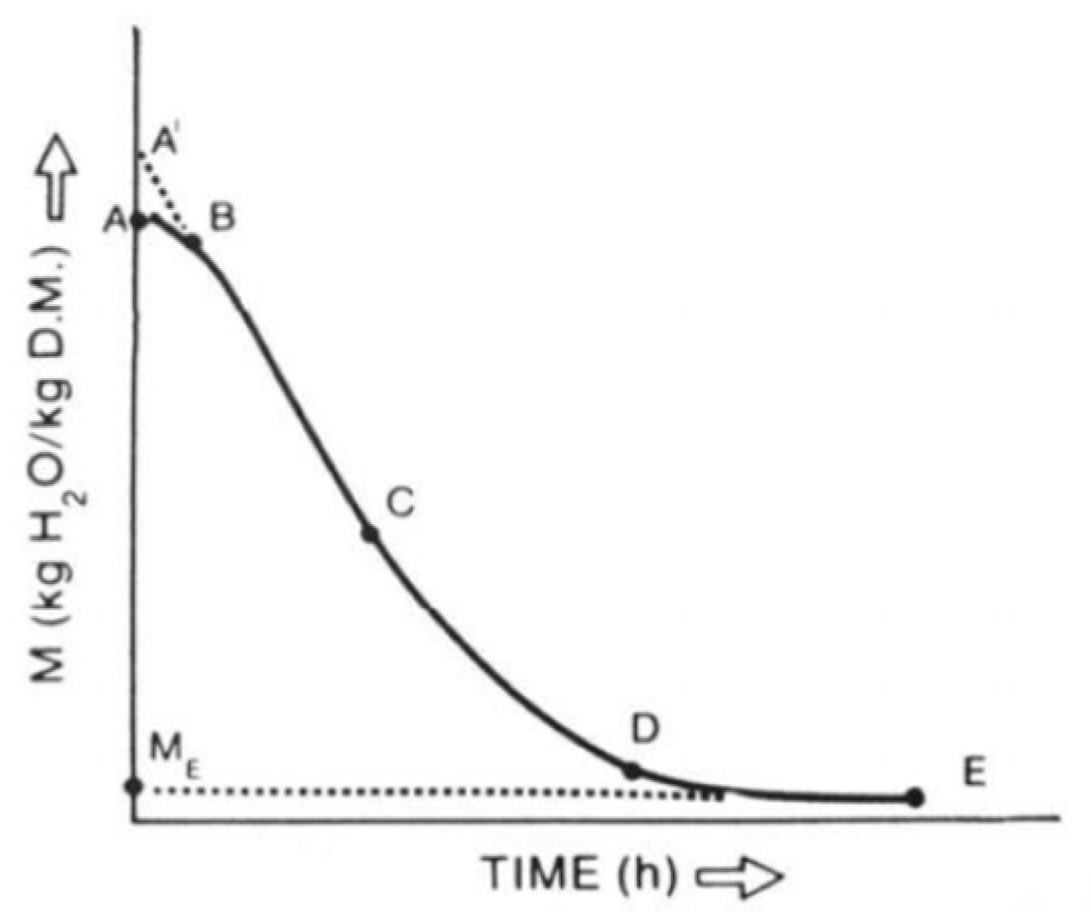
The figure above displays the drying curve of a typical dehydrating system. The curve begins with the initial moisture reading of 75% present in the raw banana slices and concludes as a finished product with a moisture reading of 8%. From A-B is the initial adjustment period. This segment expresses the change the banana undergoes from its ambient temperature and moisture content to the start of the drying process. Normally this period increases the moisture present within the product though increases its internal temperature. As the heat will draw surrounding moisture present in the dehydrating chamber into the fruit. B-C expresses the major change that the fruit slices would undergo and removes a large majority of the banana's water content in a short period of time at a constant rate. C-D extends this period especially for foods with a very high moisture content. Though this section removes the moisture at a slower rate than B-C. Period D-E is utilized to take the banana chips from a pliable structure to its final moisture content of optimally 8% compared to its original moisture content of 75%.
3.3. Design Modelling & Drawings
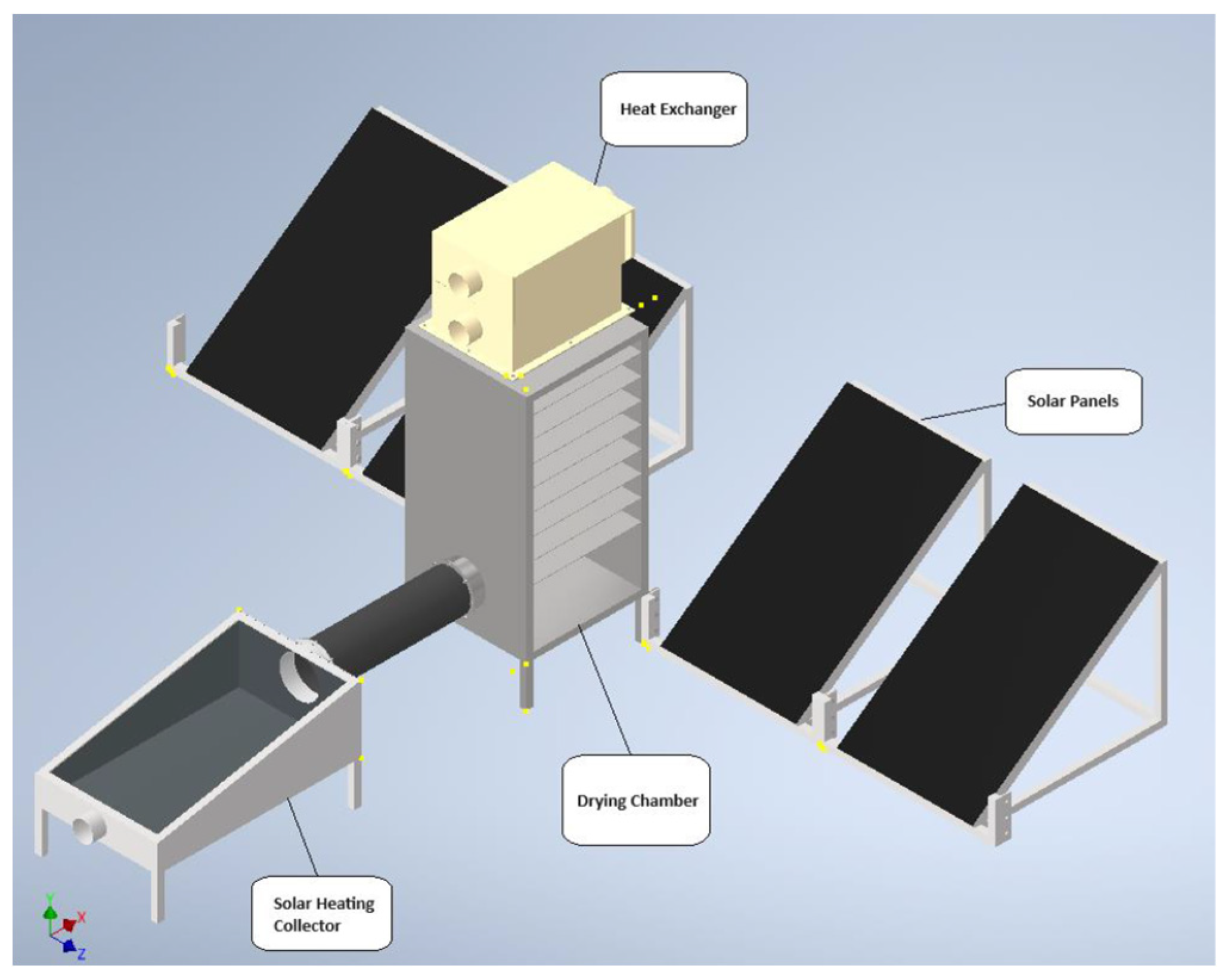
The modelling and detailed drawings in this section of the report have been constructed using a computer-aided drawing software. The design adopts similarities from proven technologies; however, several enhancements have been included to better align with the design objectives. These enhancements ensure that the solar hybrid banana dryer not only meets but exceeds current industry standards.
The integration of solar and electrical heating has resulted in a more robust and sustainable design, capable of optimizing the drying process and maintaining consistent quality. This approach not only optimizes performance but also extends the lifespan of the dryer, providing a more cost-effective and reliable solution for banana drying in the long run. It’s important to note that the modelling and drawings for the design are purely conceptual with the intent to give the project sponsor a visual of the design. To issue drawings for construction, further detailed modelling and drawings will have to be generated by a professional drafter. The modelling and drawings for the design can be seen below.
Figure 7.
Heating Chamber with Removable Heat Exchanger.
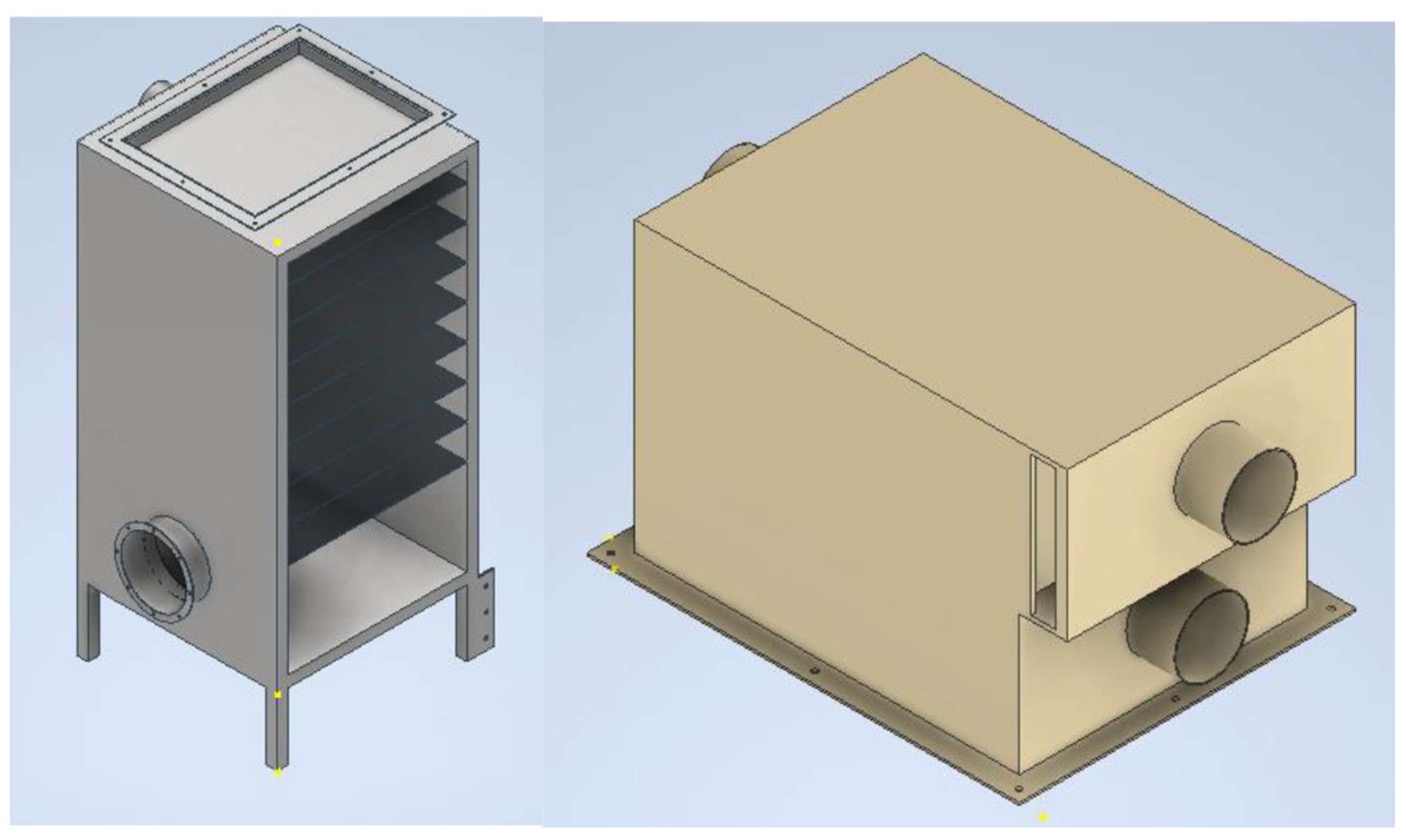
Figure 8.
Solar Heating Collector.
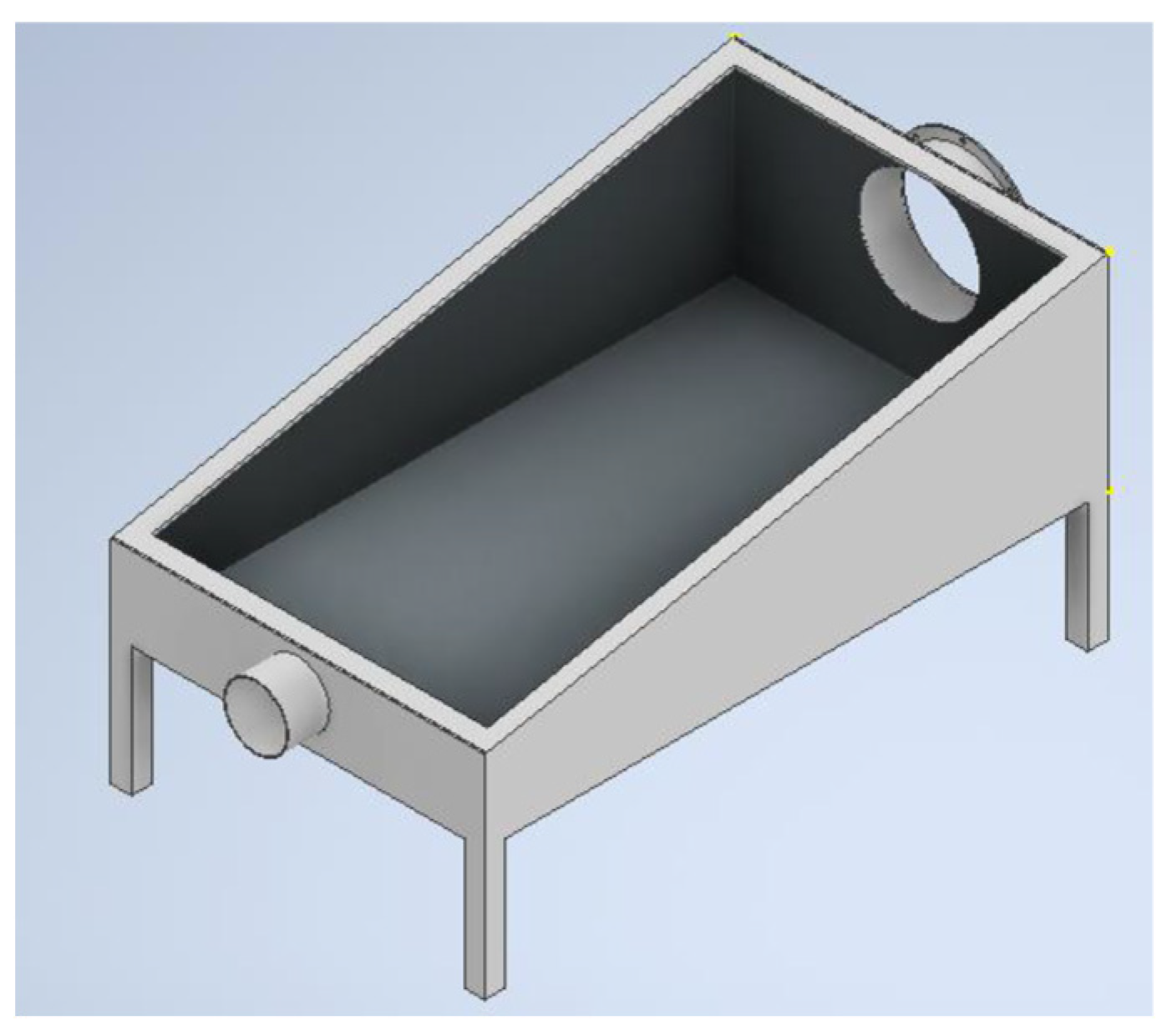
Figure 9.
Solar-hybrid Dryer General Overview.
3.4. Electrical Design
The electrical system has been designed to have a simple use interface with simple electronic components that are easy to source and replace. The system has been designed to limit the number of sensors required and avoid complex logic-controlled systems that would require specialist equipment and knowledge to maintain.
The system will have a Damper to control the drying chamber air temperature by directing air either through the heat exchanger for heat to be recovered or expelled to prevent heat being recovered as per Figure 5. The damper will be controlled by a proportionally controlled actuator where 0v control is directing all air through the heat exchanger and 12v control is expelling all air to the atmosphere. The damper control will be based on the temperature of the incoming air prior to the heating element. The heating element will be controlled by the set temperature, it will turn on when the intake air temperature falls below the set temperature and will also have a bypass switch to disable the heating element all together, a LED indicator will indicate when the heat element is in use. The heating element, air movement system and the control system will be fused separately, the fan and actuator and heating element will be powered via separate relays.
4. Risk Assessment
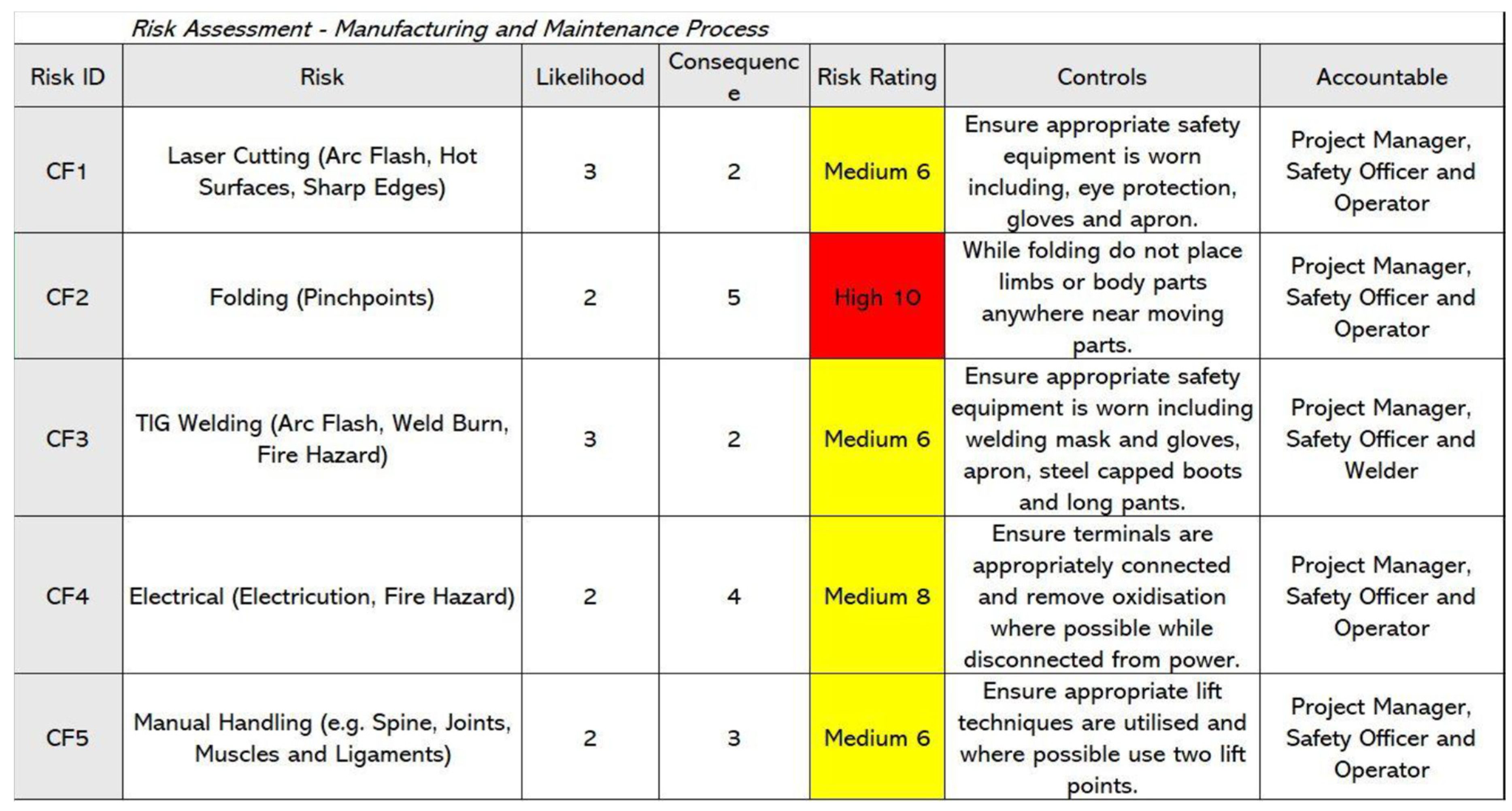
Risk management was a critical project component, addressing potential personal safety, financial, and environmental concerns. To mitigate potential issues effectively, a formal risk assessment was conducted, alongside the creation of a risk register and regular risk reviews.
Once the final design was selected, detailed design calculations were completed, and a bill of quantities will be prepared to outline the materials and costs involved. The design emphasises a sustainable approach, integrating renewable energy sources and materials suitable for local availability and conditions.
The following risk assessment is an addition to the project risk assessment and focuses primarily on the manufacturing and maintenance process. Initially the project risk assessment had not specifically covered any risk associated with manufacturing and maintenance due to the lack of finer details. With now a detailed bill of materials, and drawings to support construction it is necessary to cover the risk associated with the manufacturing process (Safetydocs, 2024).
5. Discussion
After the concept for the solar hybrid banana dryer is completed, it is recommended that initial prototype unit be manufactured. This prototype will undergo thorough testing and commissioning to ensure functionality and reliability. A strategic advertising and training campaign will be launched to promote the product across Fiji first and through the south pacific countries. Feedback and data gathered from this initial deployment with different crop and food types will be critical in refining the design, addressing any issues, and optimising the dryer for a broader market launch. This phased approach enhances the product's success and ensures alignment with the community's needs and expectations in the south pacific.
References
- Atojunere, E. E.; Senadeera, W.; Iji, P.; Jimaima, L. Development of an indirect active solar heating dryer(iashd) for dwarf cavendish banana. Indian Journal of Engineering 2026, 23(59), 1–10. [Google Scholar] [CrossRef]
- Aaclo, Stainless Steel in Coastal Environments, Aaclo2019, Wednesbury, West Midlands, viewed 26 July 2024.
- Amankwah, E. A.; Dzisi, K. A.; Fofie, E. Agyabeng; Marmah, P.; van Boxtel, A. J. B. Drying Characteristics of Dried Banana (Musa sapientum). GSTF Journal on Agricultural Engineering (JAE) 2014, Vol.1(No.1). [Google Scholar] [CrossRef] [PubMed]
- Alfiya, P; Amulya, P; Aniesrani Delfiya, D; Murali, S; Samuel, M. Design and performance evaluation of solar - LPG hybrid dryer for drying of shrimps. Renewable Energy 2020, 147(Part1), 2417–2428. [Google Scholar] [CrossRef]
- Alimardani, R; Firouz, M; Omid, M. Some physical properties of full-ripe banana fruit (Cavendish variety). International Journal of Agricultural Science, Research and Technology 2011, 1, 1–5. [Google Scholar]
- (DAFF) Australian Government Department of Agriculture, Fisheries and Forestry, 2023, Codex - International Food Standards, viewed 23 July 2024.
- Beach Weather 2024, Annual average weather for Fiji, Beach Weather, viewed 19 June 2024, <Annual average weather for Fiji (beach-weather.com)>.
- Chavan, A; Mujumdar, A; Thorat, B; Vitankar, V. Natural convection and direct type (NCDT) solar dryers: a review. Drying Technology 2020, Vol 39(13), 1–22. [Google Scholar] [CrossRef]
- Chijioke, O; Chukwunonye, C; Nnaemeka, N; Obiora, C. Thin Layer Drying Modelling for Some Selected Nigerian Produce: A Review. American Journal of Food Science and Nutrition Research 2016, Vol 3(1), 1–15. [Google Scholar]
- Energypedia (2018) Fiji Energy Situation, Energypedia, Wiesbaden, Germany, viewed 12 June 2024, <Fiji Energy Situation - energypedia>.
- Fernandes, L; Tavares, P. A Review on Solar Drying Devices: Heat Transfer, Air Movement, and Type of Chambers. Solar 2024, Vol 4(1), 15–41. [Google Scholar] [CrossRef]
- Foster, S & Macdonald, B 2024, Economy of Fiji, Britannica, viewed 19 June 2024, <https://www.britannica.com/place/Fiji-republic-Pacific-Ocean/Economy>.
- Kunwisawa, J; Prachayawarakorn, S; Soponronnarit, S; Thuwapanichayanan, R. Determination of effective moisture diffusivity and assessment of quality attributes of banana slices during drying. LWT- Food science and Technology 2011, Vol 44(6), 1502–1510. [Google Scholar]
- Mawire, A; Mothupi, M; Ramokali, M; Vanierschot, M. An experimental evaluation of drying banana slices using a novel indirect solar dryer under variable conditions. Heliyon 2024, Vol 10(7), 28268. [Google Scholar] [CrossRef] [PubMed]
- PayLab, n.d., (2024) Salaries in the category: Agriculture, Food Industry, viewed 23 July 2024, <Agriculture, Food Industry, Fiji salaries - Paylab.com>.
- Jones, Peter. Pros and Cons of Exterior Plywood Cladding, FA Mitchell & Co Pty Ltd, viewed 06 August 2024, <https://famitchell.com.au/pros-cons-exterior-plywoodcladding/#:~:text=Or%2C%20you%20can%20go%20with,compared%20to%20other%20plywood%20grades>.
- Piedmont Plastics. Is Polycarbonate Better Than Glass?, viewed 02 August 2024, <https://www.piedmontplastics.com/blog/polycarbonate-vsglass#:~:text=Polycarbonate%20is%20practically%20unbreakable%2C%20especially,shelters%2C%20schools%2C%20and%20hospitals>.
- Prasad, R; Raturi, A. Role of Solar Photovoltaics in Future Electricity Generation in Fiji. Asia Pacific Solar Research Conference, Suva, Fiji; 2018. [Google Scholar]
- SafetyDocs. Hazard Identification and Risk Assessment: Ways of Keeping a Safety Culture; Townsville, Queensland, 2024; Available online: https://safetydocs.safetyculture.com/blog/hazard-identification-and-risk-assessment-ways-of-keeping-a-safety-culture/.
Disclaimer/Publisher’s Note: The statements, opinions and data contained in all publications are solely those of the individual author(s) and contributor(s) and not of MDPI and/or the editor(s). MDPI and/or the editor(s) disclaim responsibility for any injury to people or property resulting from any ideas, methods, instructions or products referred to in the content. |
© 2026 by the authors. Licensee MDPI, Basel, Switzerland. This article is an open access article distributed under the terms and conditions of the Creative Commons Attribution (CC BY) license (http://creativecommons.org/licenses/by/4.0/).
Copyright: This open access article is published under a Creative Commons CC BY 4.0 license, which permit the free download, distribution, and reuse, provided that the author and preprint are cited in any reuse.


