

Submitted:
10 February 2026
Posted:
11 February 2026
You are already at the latest version
Abstract
Quantum Sensing (QS) is a sub-category of Quantum Technologies (QT). Within defence and military domains, QT is considered an Emerging Disrupting Technology (EDT). QS leverages the properties of Quantum mechanics (QM) to develop and introduce a new family of sensors that are unmatched in performance compared with classical sensors. As such, QS might have the ability to break current stealth technologies and detect avionics, underground facilities, or undersea objects such as submarines and man-made structures, which are key capabilities of a Nuclear Deterrence (NT) strategy. This paper examines the current development in QS and the potential impact of this EDT on military operations with a focus on nuclear deterrence.
Keywords:
nuclear deterrence
; quantum sensing
; defence
; emerging disruptive technologies
; stealth technologies
; doctrines
1. Introduction
Quantum Mechanics is the science of the microscopic world involving atoms and sub-atomic particles. The fundamentals of quantum physics, or QM, were laid between 1880-1935 when classical physics was added a new, groundbreaking theory, the theory of QM. QM describes the universe at its most fundamental level by describing the behavior of elementary particles and atoms.
QT is an overarching term that covers various categories of technological and scientific branches that use QM to develop new capabilities. Quantum technologies represent an emerging discipline that investigates the foundational laws of quantum mechanics. [1].
QS describes the use of QM principles or quantum phenomena to perform measurements of a physical quantity. In other words, QS employs quantum mechanical systems as sensors for various physical quantities ([2] p.2). Historical examples of quantum sensors include magnetometers based on superconducting quantum interference devices, atomic clocks and even the magnetic resonance imaging used in modern healthcare. QS provides improvements in the fields of gravitational wave detection, astronomical observations, microscopy, target detection, data readout, biological probing ([3] p.2). Another approach is to use Rydberg atoms, with their dense and widely tunable transition spectrum spanning from MHz to THz, which provides a self-calibrated platform for broadband electromagnetic spectrum monitoring. Their extreme sensitivity to electric fields enables high-resolution detection and characterization of microwave and terahertz signals using techniques such as electromagnetically induced transparency and Rydberg-EIT spectroscopy[4].
Nuclear deterrence (ND) refers to a principle in international relations in which the retaliatory potential and destructive force of nuclear weapons prevent nations from launching a nuclear attack [5]. Accordingly, nuclear capability is regarded as an essential instrument for maintaining peace, resisting coercion, and deterring acts of aggression. [6]. ND is a complex strategy that includes offensive capabilities such as submarines, airplanes and long-range missiles as well as defensive capabilities such as missile detection and (ballistic) missile defence capacity [7]. ND is thus spread over three out of five known military operational domains including air, land and sea, and is called the Nuclear Triad [8]. The other domains are space and cyber which are not (yet) considered as part of ND.
As ND depends on the survivability of nuclear arsenals, the concealment of these arsenals is set as a high priority. In a 2017 report by [9], it was already pointed towards the fact that: "Emerging technologies are challenging the stability that nuclear deterrence once relied upon." Moreover, the authors emphasized that traditional approaches such as “hardening and concealment” have become less effective due to major advances in weapon precision and the transformation of remote sensing technologies. A range of methodologies, data, and models indicate the growing feasibility of counter-force disarming strikes. Protecting nuclear arsenals from attack has become significantly more challenging than in the past. This technological development continues with the emergence of EDT such as QS. Even though detecting underground facilities, submarine movements or airplanes built using the latest low-observable, or "stealth," technologies is still a major challenge to modern surveillance systems, advances in QS may provide the final edge to break even the most sophisticated concealment efforts. It should be noted that QS will not be holy grail because the large amounts of data that are likely to be produced by those sensors must still be stored, cleaned, analyzed and interpreted. More likely QS will be embedded within modern (military) IT or Hybrid-Quantum ecosystems, enabling the detection of concealed objects and man-made structures.
2. Research Method
This study will review existing public literature from academia, government and institutions to analyze the role of concealment of ND capabilities and to understand the techniques and technologies currently used. These areas were divided into the following three categories:
- 1.
- Low observable objects
- 2.
- Underground structures
- 3.
- Undersea objects
In the second step, a literature review is used to analzse of the current technological progress in the field of QS and how these could impact ND strategies.
The review does not include in-depth details of various QS technologies and concepts, but rather focuses on providing a general overview of current developments and concepts, including an estimation of the actual Technology Readiness Level (TRL) as defined by the EU HORIZON 2020 – Work Programme 2014-2015. TRLs are used to quantify the technological maturity status of an element intended for use in an operational environment. The TRL concept can be applied to any typ of technological asset. An overview of the TRLs is provided in Table A1 and Annex.
Special focus lies on the publication within the fields of QT with a focus on defence applications from [10].
The study may introduce approaches towards applications and concepts that are not present but can be derived from the included literature.
3. Review of Literature
3.1. Low Observable Object Detection
Stealth Technologies (STO), or "low observable" technology, is based on high-tech materials and design concepts to build vehicles in a way to minimize their electromagnetic footprint to avoid targeting and detection by "RAdio Detection And Ranging" (RADAR) systems [11]. So-called Radar-Absorbent Materials (RAMs) are used in combination with specific design principles that minimize RADAR exposure. Thus, an ongoing race between RADAR and RAMs development can be observed.
There are two main characteristics of STO. The first is the loss or reduction of the electromagnetic radiation power, which is based on the phenomena of reflection, absorption, and multiple reflections of electromagnetic waves or microwaves. Themain purpose of RAMs is thus to reduce mainly reflection, which is measured in decibels (dB). Beyond these characteristics, specific design features can further minimize the electromagnetic footprint, such as by controlling the shape of objects or vehicles, particularly by avoiding right angles, sharp curves, and large surfaces.
The second characteristic is related to infrared (IR), also known as heat signatures or thermal radiation, which can be reduced through design-specific choices. According to [12], infrared (IR) signatures are gaining prominence, whereas low-radio frequency (RF) signature is becoming less significant.
Intelligent Reflecting Surfaces (IRS) offer a reconfigurable and low-complexity alternative to conventional stealth materials by enabling real-time manipulation of incident radar signals. This paradigm enables adaptive electromagnetic stealth against dynamic radar threats, thereby significantly enhancing target concealment in complex environments[13]. Of special interest are long-wavelength IR signals with a wavelength between 2–18 µm, while surfaces radiate from 8–18 µm and the engine exhaust from 2–6 µm [12,14]. One possible technology is Aerosol Infrared Stealth Technology (AIRST) [15]. Two vectors of IR detection are the thermal radiation1 from the aero-engine exhaust system, including the high-temperature cavity of the exhaust nozzle and the thermal exhaust plume; and the is from the aircraft skin, including the thermal radiation of the skin itself and the input radiation of the skin reflecting the environment. This becomes more prominent as the speed of the aircraft increased [15].
Other more traditional counter-measures, also known as electronic countermeasure (ECM), which are not specific to STO, are to counteract a traditional RADAR signal by transmitting counter-signals towards the RADAR receiver, either to create false targets or to hide the true target. This is also known as RADAR jamming, either by creating a noise signal to cover the aircraft, or retransmitting a modulated signal to fool or disturb adversary RADAR systems [14]. In addition, Directed Infrared Countermeasure (DIRCM) systems neutralize missile seekers by projecting laser beams that generate disruptive noise, causing the missile to deviate from its intended trajectory.
Classical developments within the domain of IR detection, electromagnetic fluctuations and ECM unaffected systems pose an imminent risk to any kind of stealth object that emits an IR signature or reflects electromagnetic waves.
Novel developments in the field of quantum sensing are challenging for STO. One possible technology is the so called quantum RADAR (QRa) and Quantum LiDAR (QLi) [17]. RADAR stands for Radio Detection and Ranging, and LiDAR for Light Detection and Ranging. The difference between QRa and QLI is that QRa uses microwaves and QLI uses laser beams for detection of objects. Both QRa and QLi are radar systems that leverage phenomena described by quantum mechanics, and not solely by classical physics [14]. For simplification, we refer to both as Quantum Radar (QR). The concept of using quantum phenomena to improve the classical RADAR systems is not new. In 1991, the US Navy proposed a quantum detector patent to increase the sensitivity of classical systems [18]. Entanglement is the central phenomenon used in quantum radar and is not limited to any specific frequency range, making it, in theory, a universal radar system covering the entire electromagnetic spectrum. In quantum radar systems, entangled photons are directed at a target, and detection is achieved by evaluating the quantum correlations between the reflected photons and their entangled counterparts. [17]. Various types of QR have been described in the literature [19]:
- Interferometric Quantum Radar
- Quantum Illumination
QR is likely more efficient in a noisy environment than its classical counterparts; however, more research and prototypes are required to prove this statement [20]. Since QR uses a low number of photons, including other parameters such as the transmission direction and frequency, it would become impossible for ECM systems to detect and counteract the incoming photons, as any changes or measurement on the photon would change its state as defined by the Heisenberg Uncertainty Principle and the strong global association between entangled states. However, the usage of a low number of photons makes it difficult to capture the reflected photons from the QR source. A simplified version of a QR based on Quantum Illumination derived from [20] is shown in Figure 1.
As stated in [19], quantum measurement–based radar systems not only support traditional target detection and recognition, but also enable the identification of RF-stealth platforms and weapons systems. As a result, the exceptional sensitivity provided by quantum measurements allows for long-range tracking of stealth aircraft, with detection distances for platforms such as the F-22 and B-2 potentially extending from several hundred to several thousand kilometers. QR systems can potentially not only enable the detection of STO at large distances but also increase the image quality. The ultimate goal for QR is to enhance the accuracy in target range determination and the estimation of other target-related parameters [17]. The challenges and limitations of QR technology have been highlighted by [21] and [3], including the low energy in a single photon at microwave frequencies, limited range, and challenges of interference by atmospheric phenomena. Contrary to previous literature, claims regarding STO detection and long-distance detection remain unmotivated, according to the researchers. QR and QL can potentially be integrated into infrared search and track (IRST), electro-optical targeting system(EOTS), and missile warning systems(MWS), benefiting from high detection, recognition, and identification(DRI) performance. Because DRI is crucial for these systems in avionics, QR has significant potential to enhance the system performance.
According to Gallego and Barzanjeh [17] and moving back to split QR into QRa and QLi, the former offers higher sensitivity but is subject to limited range while the latter offers higher range detection but at reduced sensitivity. Conversely, Höijer et al. [22] expressed skepticism regarding the practical advantages of quantum illumination, emphasizing that current quantum receiver technologies struggle to surpass the capabilities of well-established classical detection methods. As a result, they argue that quantum illumination is unlikely to offer a general performance advantage over conventional radar systems.
A potential combination of both approaches may result in a powerful QR by using the results of both QRa and QLi which must be correlated, combined and processed in a manner that leverages the strength of both concept while mitigating known negative effects. However, such a concept was not found during our review.
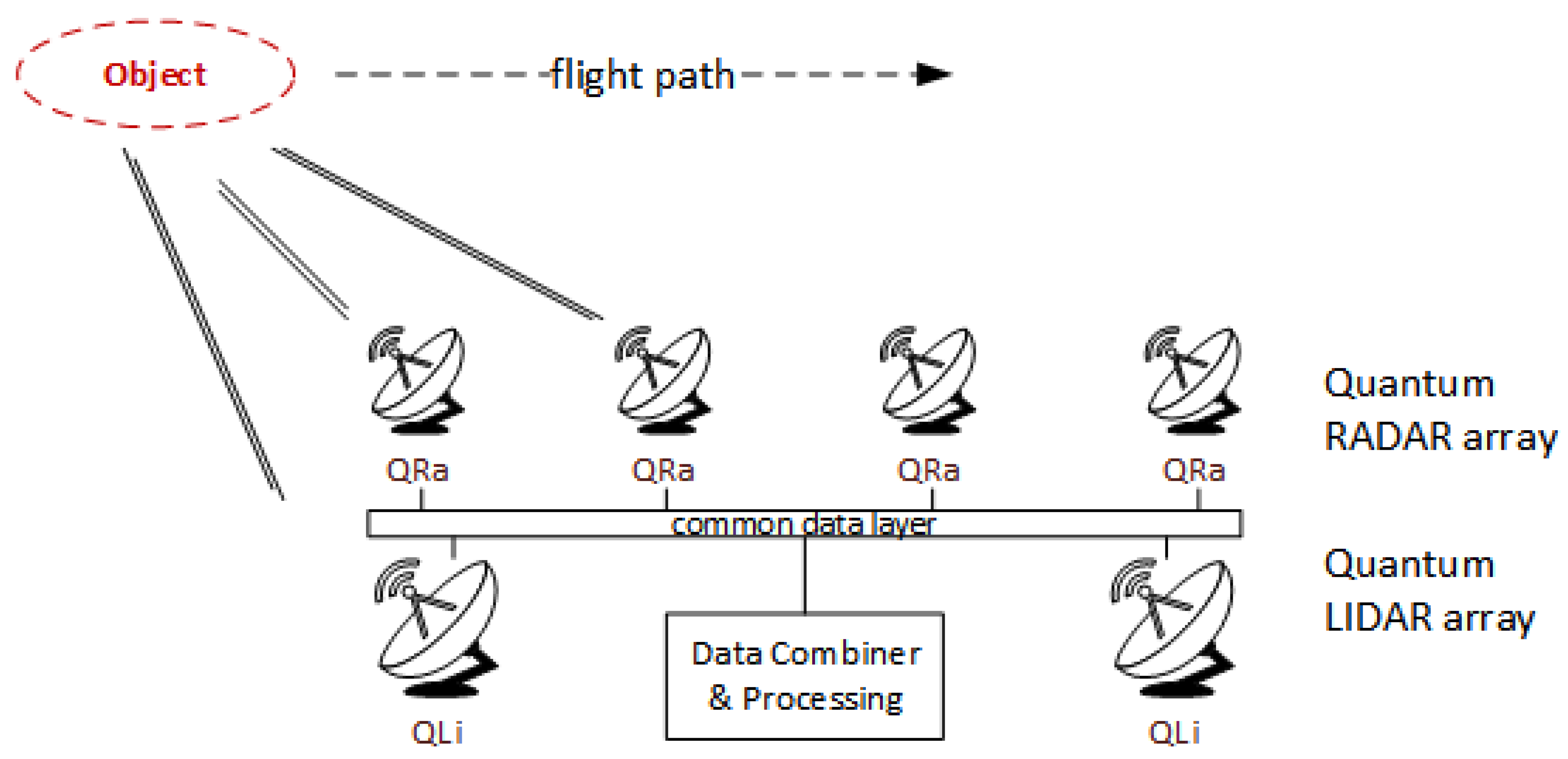
Based on the previous findings, we introduce the concept of implementing an array of QRa and QLi as shown in Figure 2, placing QRa and QLi installations at various distances depending on their individual performance. The data collected from all installations are transferred via a shared data layer to a central combiner and processing unit providing improved performance and efficiency. Other types of Quantum sensors exist like Trapped ions, Atomic Vapors, SQUID (Superconducting Quantum Interference Device), Rydberg atoms[23] and Solid State Spins, however, they are either only used to measure magnetic fields or are generally unsuitable for long-range object detection. In addition, these type of sensors cannot be used in the microwave range [2]. As such, not all types of Quantum sensor technologies can be used for QR.
If future QR systems will replace the classical counterparts was not discussed in literature however it seems more likely that there will be a coexistence of quantum and classical RADAR systems. This hybrid approach can be derived from other Quantum Technology areas such as Quantum Computing, which is called hybrid quantum-classical computing [24]. As such, the QR array as shown in Figure 2 could be enhanced using existing classical RADAR systems to further improve performance and efficiency. This approach would result in more complexity in combining and processing the data collected by such Quantum-Classical-Hybrid-RADAR arrays. Based on the literature included in this study, the TRL of QR can be estimated to be the TRL-3 level. Another method of detecting moving objects is Magnetometry (see also Section C). Although magnetometers can be used for navigation and positioning, the detection of objects is called Magnetic Anomaly Detection (MAD). Magnetometry is commonly used to detect and locate stationary and also moving objects composed of magnetic materials [25]. While Quantum magnetometers (QM) are already available today, they require more technical advancements before being used to detect STO. They are referred to as the next generation of magnetometers, ones which employ other types of sensors, offering much more precise measurements becasue of their an elevated sensitivity [26]. As listed by the NATO Science and Technology Office [26] and by Trahms [27], the current concepts for Quantum magnetometers include:
- Superconducting quantum interference devices (SQUID)
- Atomic vapor cells or optically pumped magnetometers (OPMs)
- Atomic Defect (AD) Magnetometers
- Spin Exchange Relaxation-Free (SERF) Magnetometers
Classical Magnetometers as well as QMA used for MAD can be mounted on board airplanes, helicopters or ships, installed on the mainland, or submerged at sea; they find a wide range of applications and seem to be commonly used today.
The concept of detecting aerial objects concealed using STO by measuring their magnetic interference patterns via QS was found in literature during this review.
3.2. Underground Infrastructure Detection
Missile silos capable of launching long-range missiles were the first assets used in ND. The implementation of the first Nuclear Missile Silos (NMS) went back to 1961 to the area of the cold war.
NMS have been the backbone of ND since the early 1960’s, even today they form the backbone of ND. China is currently constructing hundreds of new nuclear missile silos [28].
The location of the NMS is in general well documented and many locations are mapped today. Data from 2006 regarding the US stockpile of Nuclear weapons states that approximately 62 percent belongs to the air force and is stored at seven bases in the United States and eight bases in six European countries; the navy stores its weapons at two submarine bases, one on each coast while the ballistic missile submarine base in Bangor, Washington, contains nearly 24 percent of the entire stockpile [29].
The focus has thus shifted more towards mobile air and sea deployment, as modern conventional (non-quantum) technologies, such as satellite images, enable good detection of NMS, especially during their construction. As such, nuclear powers tend to hide long-range missiles in tunnel systems throughout its mountain regions [30]. The advantage of underground tunnels is that they allow for the fast movement of missiles and warheads and can span hundreds of kilometers.
The importance of QS for civil engineering and infrastructure projects with a focus on future smart cities is clearly documented in the literature. The effective monitoring of underground utilities is essential for enhancing construction planning, infrastructure management, and safety. It also supports environmental protection, regulatory compliance, and disaster preparedness and response as highlighted in [31]. QS provides enhanced measurement precision and resilience to environmental disturbances by leveraging quantum coherence and atom interferometry. Quantum gravimeters (QGs) can be used capable to identify underground anomalies or heterogeneities in subsurface geology. Quantum gravity gradient sensors, which are a class of instruments under active research, are being applied to gravity cartography. These sensors, which operate via atom interferometry, are presently used in controlled laboratory settings for high-sensitivity gravitational field measurements [32]. The researchers demonstrated a clear advantage of the experimental setup compared to commercial sensors as they surpassed the reported performance of commercial gravimeters for survey applications (underground tunnel detection) by a factor of 1.5–4. Quantum magnetometers (QMA) enable Magnetic Anomaly Detection (MAD), a quantum sensing approach designed to identify magnetic field distortions induced by both stationary and moving magnetic sources against the geomagnetic background [25]. QMA have proven effective for mapping mineral deposits, pipelines and other buried infrastructure, engineering and environmental projects. MAD use quantum phenomena, like the spin of subatomic particles, and are used in several applications in marine traffic monitoring. They may use different sensor types like Optically pumped magnetometers, Fluxgate directional sensors, gradiometers, magnetoelectric sensors, Cesium, Overhauser or Proton magnetometers [33].
Based on the literature, the TRL of QG and QMA varies widely and depends on the type of sensor used. While QG can be estimated at TRL-4 for static measurements. The use of such gravimeters in mobile objects such as planes or satellites is still beyond current technological capabilities. On the other hand, QMA for the detection of underground structures are already used today but the TRL depends on the used sensory type which varies from TRL-3 to TRL-9.
3.3. Underwater Object Detection
Underwater detection has gained significant importance in recent years, owing to its critical applications in maritime border surveillance, strategic defense, and naval mine detection. The increasing use of autonomous systems such as buoys, unmanned underwater vehicles (UUVs), and submarines, has further amplified the demand for advanced sensing technologies capable of operating in harsh and signal-degraded underwater environments. Quantum sensing offers a transformative approach to underwater detection by exploiting quantum phenomena such as entanglement, superposition, and quantum interference to achieve sensitivities beyond classical limits. In particular, quantum-enhanced magnetometers, gravimeters, and quantum LIDAR systems can provide superior detection performance in low-SNR and clutter underwater environments. These technologies promise to improve the localization and identification of submerged objects such as mines or intruding vessels, particularly where traditional sensing modalities suffer from attenuation, noise, or limited resolution. Consequently, quantum sensing can significantly enhance situational awareness and operational reliability in underwater security and exploration missions. Submarines are likely the most critical assets within the Nuclear Triad. In a nuclear conflict where adversaries launch a first strike, ground-based and air-launched systems might be rendered unusable [34] Assuring survivability of such systems is thus paramount. Survivability is assured by assuring that underwater objects, such as submarines, remain undetected by keeping exact positions and routes hidden from enemy eyes.
A classical way to detect undersea objects is via MAD. MAD are particularly important and one of the most popular and intensively used methods in mineral exploration. Underwater magnetic surveys are typically conducted by moving a magnetometer through the water in a specific pattern within an area of interest. The detection of human made objects is referred to as the anthropogenic targets. Anthropogenic targets are strongly suspected if an object is detected using sonar/visual-based methods and has a strong magnetic signal such as shipwrecks, aircraft wrecks and mine-Like Objects (MLOs). However, according to the authors, a comprehensive approach combining magnetometry, sonar imaging, and visual confirmation is often necessary to detect and accurately identify such objects [35].
An additional challenge lies within the size of the MADs that are widely used, as they need to be mounted on ships, planes or larger unmanned vehicles. Besides the mentioned complexity, the classical magnetometers used today are also limited in their range of action, which is limited to a few hundreds of meters ([10] [38] ) while the detectable distance, is the most important figure of merit for a given MAD system [36]. The benefits of using MAD are their passive, rapid, and noninvasive nature, avoiding potential adversary detection [36]. Among all MAD sensor technologies, the Fluxgate and SQUID seem to be best fitted to underground object detection. However, Fluxgate is limited in performance and SQUID by its size and technical complexity. To give an estimation, a Fluxgate sensor with a resolution of 3 nT is able to detect 0.2 m metallic object within a distance of 7 m while Magneto-electric sensor with a resolution of 50 nT is able to detect a 10 m object within 29 m distance compared to SQUID sensor, which is able to detect a 2.1 m object within a distance a 33 m ([36] [2-3] ). To overcome these performance challenges, the implementation of MAD sensor array is mentioned a potential future setup, creating a so called Denial-of-Action area [10].
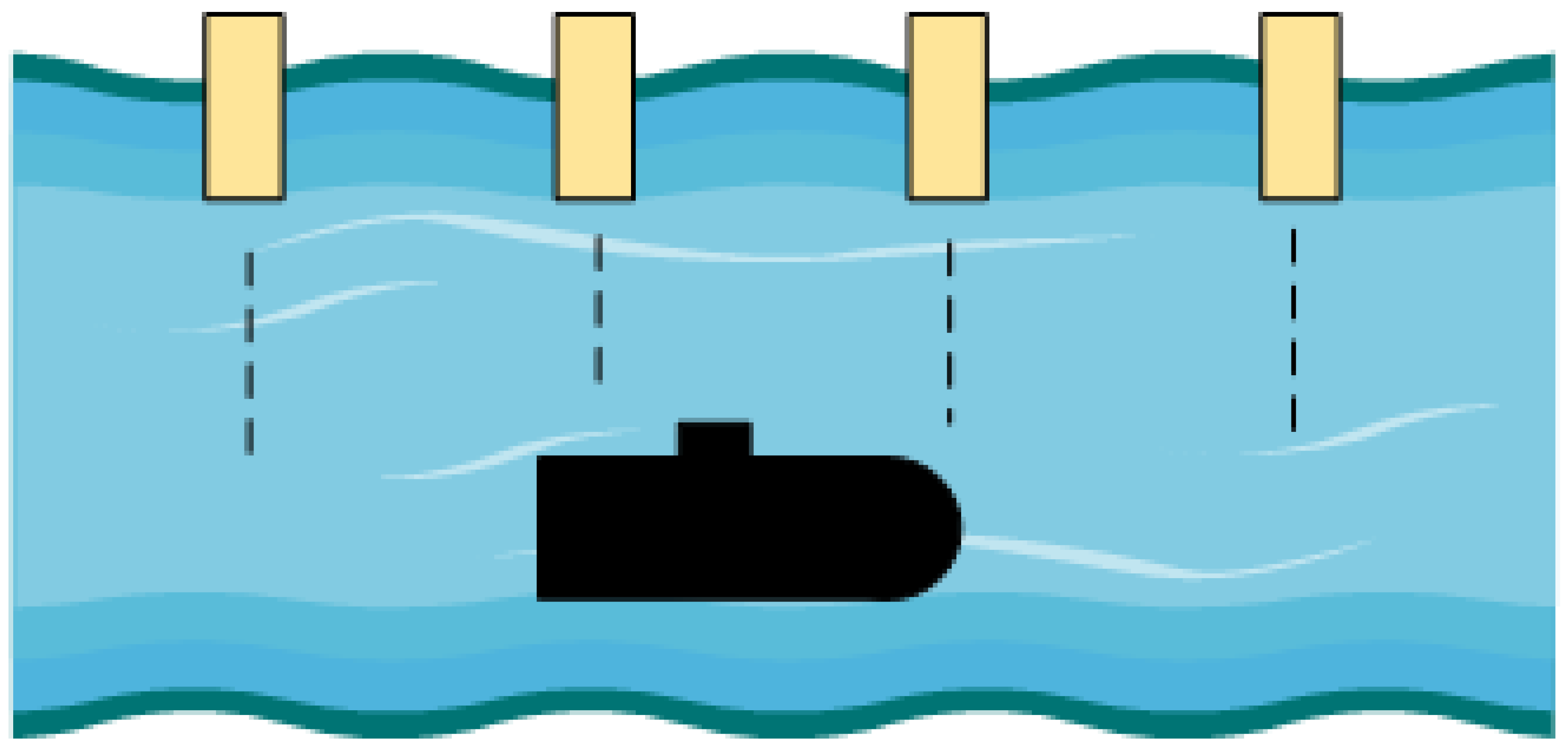
Figure 3.
MAD sensor array
QMA for the detection of undersea objects are already used today but the TRL depends on the sensory technology used. For the detection of submarines, SQUID has been identified as the most promising technology but current systems are still limited by their technical complexity. Considering the current limitations, the estimated TRL for this specific application could be estimated at TRL-4.
A future goal could be to detect submarines at several hundred meters or even kilometers and enable a classification of submarine type using their unique electromagnetic footprint which depends on the composition and structure of the material of the submarine outer layer.
4. Conclusions
Quantum Sensing (QS) is a potentially disrupting technology in the field of strategic military detection capabilities, particularly in the context of Nuclear Deterrence (ND). By leveraging quantum phenomena such as entanglement, superposition, and atomic coherence, Quantum RADAR, gravimeters, and magnetometers may overcome traditional limitations in detecting low-observable aerial platforms, underground infrastructure, and submerged undersea assets.
Although theoretical and experimental research shows promising first results - especially in the areaas of improved sensitivity and passive detection - the current Technology Readiness Level (TRL) of many QS systems remains at a lower TRL. This implies that practical and widespread military applications are s still years away and highly dependent on overcoming engineering challenges, such as sensor miniaturization, mobility, cryogenic cooling requirements (for SQUIDs), and noise-reduction techniques related to environmental interference.
As such, QS does not render stealth and concealment obsolete, but it may significantly weakens their strategic advantage. Due to the high engineering challenges, initial access to this technology will likely be limited to a few nations. As ND relies heavily on asset survivability and concealment, QS may shift the balance toward greater detectability, increasing the risk of preemptive strikes and reducing the credibility of second-strike capabilities. Therefore, the rise of QS must be carefully considered in future deterrence doctrines.
It is worth highlighting that quantum-classical hybrid systems are particularly promising, leveraging and combining the capabilities of both technologies. The enhanced sensitivity of quantum sensors can effectively narrow the initial search space to specific regions, thereby enabling classical techniques to concentrate their resources on verifying and identifying potential targets within these refined area,s and vice-versa.
5. Recommendations
- Invest in Counter-QS Measures: Military R&D should prioritize stealth technologies that incorporate magnetic shielding and potential quantum noise injection to counter potential detection using QMA and QG.
- Develop QS Integration Frameworks: Future sensing architectures should include robust data transmission and processing layers leverage artificial intelligence and secure quantum communication channels to process and protect quantum sensor outputs.
- Advance Miniaturization of QS Devices: Focused investment is required to miniaturize quantum sensors (especially SQUIDs) for mobile and satellite deployment, making them viable for real-world military MAD.
- Strategic Policy Review: Defense planners should assess the implications of reduced asset conceivability, survivability and adjust ND postures accordingly, possibly by shifting toward even more mobility and redundancy over static deterrent assets.
- Expand Research into QS in Space and Cyber Domains: While excluded in the current ND doctrine, space and cyber integration with QS may offer both vulnerabilities and opportunities in surveillance and counter-detection.
- Continue Multinational Collaboration: Encourage the international community to jointly assess the strategic implications of QS to avoid unilateral destabilization of deterrence balances.
6. Direction for Future Research
The emergence of hypersonic missiles (HM) and their impact on ND are potential future research directions. The potential of HM to transport nuclear payloads over large distances and the difficulty in deploying adequate countermeasures [37], can be proposed for future research. Furthermore, QS may play a role in early detection and response to HM threats.
7. Conflicts of Interest
The author declare no conflict of interest.
8. Other Declarations
The research did not rely on any external funding. All relevant data are within the paper.
Appendix A. ANNEX 1

Table A1.
Technology Readiness Levels and their Descriptions based EU HORIZON 2020 – Work Programme 2014-2015: General Annexes
Table A1.
Technology Readiness Levels and their Descriptions based EU HORIZON 2020 – Work Programme 2014-2015: General Annexes
| Level | Description |
|---|---|
| TRL1 | Basic principles observed and reported |
| TRL2 | technology concept formulated |
| TRL3 | experimental proof of concept |
| TRL4 | technology validated in lab |
| TRL5 | technology validated in relevant environment (industrially relevant environment in the case of key enabling technologies) |
| TRL6 | technology demonstrated in relevant environment (industrially relevant environment in the case of key enabling technologies) |
| TRL7 | system prototype demonstration in operational environment |
| TRL8 | system complete and qualified |
| TRL9 | actual system proven in operational environment (competitive manufacturing in the case of key enabling technologies; or in space) |
| 1 | Thermal radiation from the exhaust system belongs to the category of Fluid Dynamics (FD), which are highly complex processes. As such Quantum Computers can be used once available to design new ways to further reduce the IR footprint of objects. As stated by [16], quantum computing surpasses conventional digital methods by offering faster computation, reduced memory load, and lower energy demands. Although primarily designed for quantum system analysis, it can effectively simulate classical systems as well, in this case fluid dynamics. |
References
- ILNAS. Quantum technologies and technical standardization. Technical report, Institut luxembourgeois de la normalisation, de l’accréditation, de la sécurité et qualité des produits et services, 2023.
- Degen, C. L.; F. Reinhard, P.C. Quantum Sensing. arXiv 2017. [Google Scholar] [CrossRef]
- Pirandola, S.; Bardhan, B.R.; Gehring, T.; Weedbrook, C.; Lloyd, S. Advances in Photonic Quantum Sensing. Nature Photonics 2018. [CrossRef]
- Adams, C.S.; Pritchard, J.D.; Shaffer, J.P. Rydberg atom quantum technologies. Journal of Physics B: Atomic, Molecular and Optical Physics 2019, 53, 012002. [Google Scholar] [CrossRef]
- Carnegiecouncil.org. Nuclear deterrence.
- NATO. NATO 2022 Strategic Concept, 2022.
- of Defence, U.D. 21st CENTURY NUCLEAR DETERRENCE & MISSILE DEFENSE.
- of Defence, U.D. America’s Nuclear Triad.
- Lieber.; Press. The Theoretical Foundations of Strategic Nuclear Deterrence. International Security (2017) 41 (4): 9–49. 2017.
- Krelina, M. Quantum technology for military applications. EPJ Quantum Technology 2021 2021. [CrossRef]
- Kolanowska, A.; Janas, D.; Herman, A.P.; Jędrysiak, R.G.; Giżewski, T.; Boncel, S. From blackness to invisibility – Carbon nanotubes role in the attenuation of and shielding from radio waves for stealth technology. Technical report, Carbon Volume 126, January 2018, Pages 31-52, 2018. [CrossRef]
- Carina Marcus, Kent Andersson, Christina Åkerlind. Balancing the radar and long wavelength infrared signature properties in concept analysis of combat aircraft – A proof of concept. Aerospace Science and Technology 2017. [CrossRef]
- Zheng, B.; Xiong, X.; Tang, J.; Zhang, R. Intelligent Reflecting Surface-Aided Electromagnetic Stealth Against Radar Detection. IEEE Transactions on Signal Processing 2024, 72, 3438–3452. [Google Scholar] [CrossRef]
- Shripad P. Mahulikar, Hemant R. Sonawane, G.A.R. Progress in Aerospace Sciences. Aerospace Science and Technology, Volume 43, Issues 7–8, October–November 2007, Pages 218-245 2007.
- jing Sun, W.; hong Gao, Q.; zhou Zhang, J.; Hu, F.; Sha, Y. Aerosol infrared stealth technology: Theory and development of infrared suppression and particle dispersion in aircraft plume. Thermal Science and Engineering Progress, Volume 39 2023. [CrossRef]
- Meng, Z.; Yang, Y. Quantum computing of fluid dynamics using the hydrodynamic using Schroedinger Equation. arXiv 2023. [Google Scholar] [CrossRef]
- Torrom, R.G.; Barzanjeh, S. Advances in Quantum Radar and Quantum LiDAR. arXiv 2023. [Google Scholar] [CrossRef]
- Robert E. Jehle, D.F.H. Impulse transmitter and quantum detection radar system, 1991.
- Mathews, M. A Study on Quantum Radar Technology Developments and Design Consideration for its integration 2024. [CrossRef]
- Richard, J.; Murchie, J.D.P.; Jeffers, J. Object detection and rangefinding with quantum states using simple detection. arXiv 2023. [Google Scholar] [CrossRef]
- Gabriele Pavan, G.G. Range Limitations in Microwave Quantum Radar. MDPI journals 2024. [CrossRef]
- Magnus Höijer, Tommy Hult, P.J. Quantum Radar. ISSN 1650-1942 2019.
- Aymar, M.; Greene, C.H.; Luc-Koenig, E. Multichannel Rydberg spectroscopy of complex atoms. Rev. Mod. Phys. 1996, 68, 1015–1123. [Google Scholar] [CrossRef]
- Frank Phillipson, Niels Neumann, R.W. Classification of Hybrid Quantum-Classical Computing. arXiv 2022, arXiv:2210.15314v1. [CrossRef]
- Tzannetou, L.; Bakoglou, E.; Priftis, P.; Angelopoulos, S.; Ktena, A.; Hristoforou, E. Magnetic anomaly detection of moving objects. Physica B: Condensed Matter Volume 2024, 676, 415659. [Google Scholar] [CrossRef]
- Mark P. J-L. Chang, Simon Jordan, T.H. Quantum Magnetometers as Sensors in Small Satellite Missions. NATO Science and Technology Office.
- Trahms, L. Ultrasensitive magnetometry using quantum-based sensor technology. Quantentechnologie mit Atomen und Photonen Teil II, PTB-Mitteilungen 130 (2020), Heft 3 2020. [CrossRef]
- Bunn, M. Reducing nuclear dangers. Science 2024. [CrossRef]
- Bunn, M. Nuclear Notebook. Bulletin of the Atomic Scientists 2006.
- Paul, M. Maritime Nuclear Deterrence. German Institute for International and Security Affairs 2018.
- Kantsepolsky, B.; Aviv, I. Sensors in Civil Engineering: From Existing Gaps to Quantum Opportunities. www.mdpi.com 2024. [CrossRef]
- Stray, B.; Lamb, A.; Kaushik, A.; Vovrosh, J.; Rodgers, A.; Winch, J.; Hayati, F.; Boddice, D.; Stabrawa, A.; Niggebaum, A.; et al. Quantum sensing for gravity cartography. nature.com 2022. [CrossRef]
- Dr. Ivan Hrvoic, G.M.H. Brief Review of Quantum Magnetometers, n/a.
- of Defence, U.D. U.S. Needs Sea-Based Nuclear Capability to Ensure Second-Strike Capability, 2024.
- Page, B.R.; Lambert, R.; Mahmoudian, N.; Newby, D.H.; Foley, E.L.; Kornack, T.W. Compact Quantum Magnetometer System on an Agile Underwater Glider. MDPI 2021. [CrossRef]
- Li, H.; Luo, J.; Zhang, J.; Li, J.; Zhang, Y.; Zhang, W.; Zhang, M. Determinants of Maximum Magnetic Anomaly Detection Distance. Sensors 2024, 24. [Google Scholar] [CrossRef] [PubMed]
- Coetzee, E. Hypersonic weapons and the future of nuclear deterrence. Scientia Militaria: South African Journal of Military Studies 2021, 49. [Google Scholar] [CrossRef]
Figure 1.
Simplified QR schematics using entangled photons
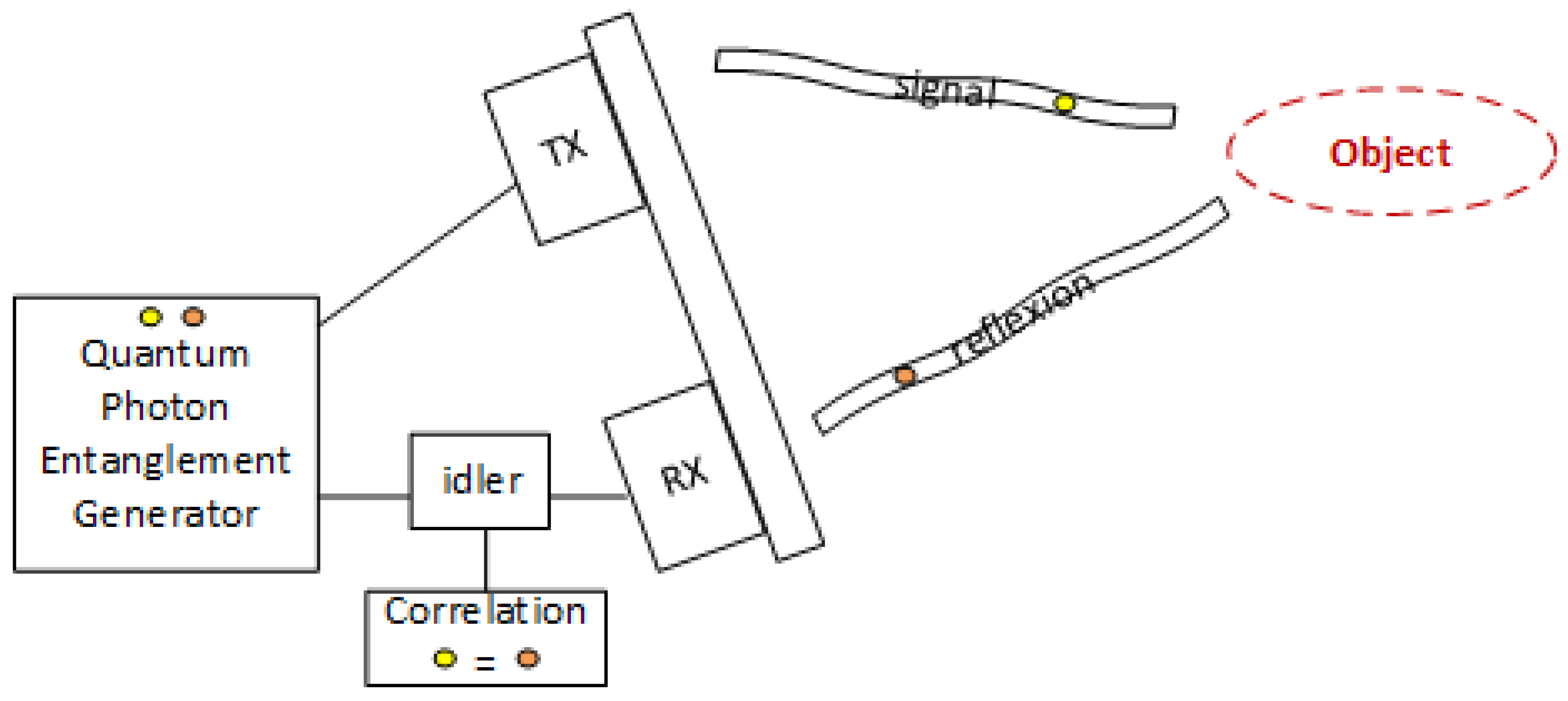
Figure 2.
QRa and QLi array schematics
Disclaimer/Publisher’s Note: The statements, opinions and data contained in all publications are solely those of the individual author(s) and contributor(s) and not of MDPI and/or the editor(s). MDPI and/or the editor(s) disclaim responsibility for any injury to people or property resulting from any ideas, methods, instructions or products referred to in the content. |
© 2026 by the authors. Licensee MDPI, Basel, Switzerland. This article is an open access article distributed under the terms and conditions of the Creative Commons Attribution (CC BY) license (http://creativecommons.org/licenses/by/4.0/).
Copyright: This open access article is published under a Creative Commons CC BY 4.0 license, which permit the free download, distribution, and reuse, provided that the author and preprint are cited in any reuse.


