

Submitted:
10 February 2026
Posted:
10 February 2026
You are already at the latest version
Abstract
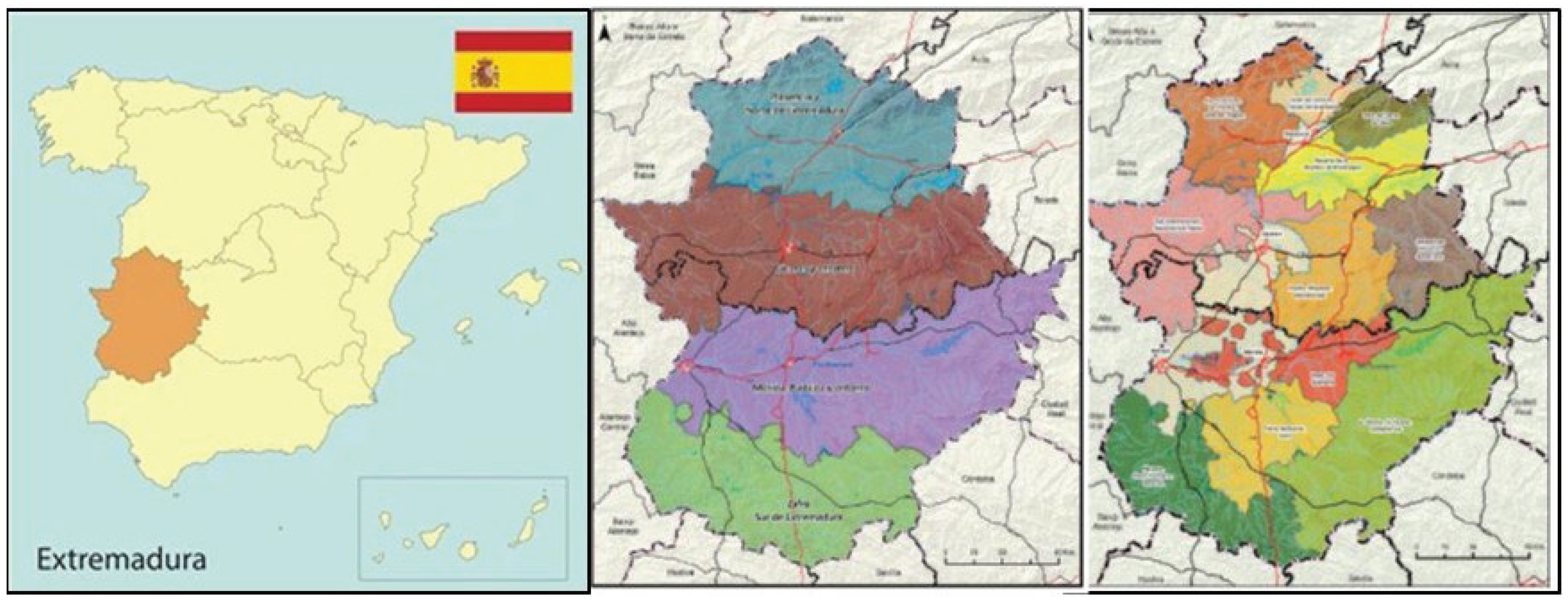
In the 20th century, the legacy of two devastating world wars generated an enormous historical heritage linked to conflict, giving rise to the global phenomenon of war tourism. This prominence stems from the presence of countless vestiges such as streets razed by gunfire, landing beaches, trench lines, and bunkers. Battlefield Tourism (BT) has experienced remarkable growth in Europe, establishing itself as a specialized segment with increasing levels of institutionalization, professionalization, and academic interest. Traditionally, some literature has associated these visits with dark tourism (DT) due to the presence of death, suffering, or historical violence at the sites (Stone, 2006). However, more recent and comprehensive analyses demonstrate that this classification is often insufficient or incorrect. This study argues that BT is closer to cultural tourism (CT) than to dark tourism, aligning with heritage and educational studies that emphasize memory, identity, and the cultural landscape rather than the commercialization of morbid fascination (Foley & Lennon, 2000). The research evaluates the viability of BT as a catalyst for rural development in Extremadura (Spain), a region characterized by its pursuit of socioeconomic sustainability through tourism innovation (Cánoves, 2017). The methodology utilizes a prospective exploratory analysis with an integrated qualitative and quantitative paradigm. Primary data were gathered using a structured instrument deployed via Google Forms to municipal leadership across 388 municipalities in 15 tourist areas. A representative sample of 149 valid responses was secured, yielding a statistical margin of error of ±5% at a 95% confidence interval. Advanced statistical techniques, including Pearson’s Chi-square tests and Cronbach’s Alpha, were applied to test research hypotheses concerning the conceptual differentiation between war tourism and dark tourism. The findings indicate that 61.7% of local stakeholders were unfamiliar with the term DT , whereas 70.9% were familiar with WT, largely due to awareness of regional initiatives like battle reenactments. Statistical contrast reveals a significant relationship between prior knowledge of DT and the willingness to exploit sensitive heritage, such as "Slavery Museums" (p<0.001) or "Disaster Museums" (p<0.001). Regarding terminology, 42.6% of respondents prefer "military cultural tourism" and 48.3% favor "historical-cultural tourism," reflecting a clear rejection of the word "war" in Spanish society. The main conclusion is that local councils support the exploitation of war heritage within a cultural framework, viewing it as a strategic opportunity for socioeconomic development in inland rural areas. This approach generates a multiplier effect, diversifying local economies and offering new jobs (Cánoves et al., 2014). By revaluing historical memory (Smith, 2015) and integrating military heritage into sustainable territorial planning, rural regions like Extremadura can enhance their competitive advantages and mitigate depopulation. Ultimately, Military Cultural Tourism (MCT) provides a path to transform historical trauma into a tool for regional advancement and educational enrichment.
Keywords:
1. Introduction
- ▪ High-quality standards and rigorous historical content.
- ▪ The involvement of specialized expertise in its management and promotion.
- ▪ The capacity to transform former battlefields into cultural destinations that serve as significant sources of income for rural territories, as seen in various European locations.
- ▪ Identity and Cohesion: Symbols, rituals, and behaviors that define the Armed Forces.
- ▪ Heritage Assets: Tangible and intangible elements such as historical uniforms, specialized weaponry, and defensive architecture.

| Motivations for Dark Tourism | Motivations for War Tourism | |||||
|---|---|---|---|---|---|---|
| Dunkley et al 2011 |
Winter 2009 y 2011 |
Hyde & Harman 2011 |
Smith 2015 |
Fathi 2021 |
Peloche & Blanco 2019 |
|
| Culture | History of wars | |||||
| Education | Education | Professionals | Education | |||
| Recreation | Recreation | Recreation | Recreation | Recreation | ||
| Introspective Experience | Pilgrimage Personal interest Memory |
Memory | Friendship Spirituality | Family reasons | Curiosity | |
| Disruptive Experience | Validation | Iconic sites | ||||
| Necrophilia | Death | |||||
| Nationalism | Political | |||||
2. Materials and Methods
3. Results
3.1. Methodology and Information Analysis
3.1.1. Technical Specifications of the Questionnaire Used
| Complutense University of Madrid: | Faculty of Commerce and Tourism |
|---|---|
| Principal Investigator: | Rodolfo Arroyo de la Rosa |
| Type of Research: | Quantitative, descriptive, cross-sectional |
| Instrument Applied: | Structured questionnaire with closed-ended multiple-choice questions |
| Data Collection Technique: | Self-administered survey in digital format (Google Forms) |
| Survey Distribution Method: | Email to official municipal addresses |
| Target Population: | Mayor, town clerk, or tourism professional at the corresponding municipality |
| Sample: | 149 |
| Unit Size: | 388 municipalities |
| Margin of Error: | ± 5%, with a 95% confidence level |
| Date of Application: | January 13-31, 2025 |
| Person Responsible for Application: | Rodolfo Arroyo de la Rosa, PhD Student |
| Unit of Analysis: | Municipality |
| Average Survey Duration: | 3 minutes |
| Data Processing and Analysis: | Excel 365 and CHATGPT |
| Objectives: | ∙ Understanding the level of awareness of Dark Tourism (WT) and War Historical and Cultural Tourism in their municipalities. ∙ Dark Tourism: o Determine if they would be willing to promote tourism based on Dark Tourism, should the opportunity arise. o Explore the relationship between interest in businesses focused on Dark Tourism and the existence of crimes in their respective localities. ∙ War Tourism from a cultural perspective o Determine if they would be willing to promote tourism based on War Tourism, should the opportunity arise. o Explore the relationship between interest in businesses focused on War Torism and the existence of war-related events in the localities. ∙ Observe the preferred terminology related to War Tourism. ∙ Observe the preference of local councils to associate the existence of a war-related product with War Tourism (Dark Tourism approximation) or Historical and Cultural Tourism. |
3.1.2. Results and Analysis of the Questions Raised
- 1.
-
Had you heard of dark tourism before?
- Regarding Dark Tourism, 61.7% say they had not heard of it before.
- 2.
-
Let's talk about dark tourism… Have you ever been, or are you aware of, any crimes in your town that were unfortunately the scene of in the press and received media attention?
- 67.8% of the towns interviewed said they were unaware of any tragic events in their town. Only 18.8% stated the opposite.
- 3.
-
Continuing with dark tourism… If your town were unfortunately the scene of a crime that was widely reported in the press and received media attention, would the town council be willing to promote some kind of tourism development, such as a "Crime Museum," knowing that it would attract visitors and generate wealth for the town?
- Regarding the establishment of tourist attractions related to dark tourism, the result is uncertain. 51.4% say maybe, and 28.5% say yes to a "Museum of Crime."
- 4.
-
Continuing with Dark Tourism… If your town had been a center of the slave trade in the Middle Ages, would the town council be willing to promote some kind of tourism development, such as a “Slavery Museum,” knowing that it would attract visitors and generate wealth for the town?
- Regarding the "Slavery Museum," 49% said maybe and 40% said yes.
- 5.
-
Last question on Dark Tourism… If your town had suffered a major natural disaster, such as a flash flood, inundation, earthquake, or dam break, resulting in deaths and disappearances, would the town council be willing to promote some kind of tourism development, such as a “Disaster Museum,” knowing that it would attract visitors and generate wealth for the town?
- Regarding the "Disaster Museum," 44.2% said maybe and 41.5% said yes. In short, it appears that public servants, albeit with reservations, would be willing to accept these tourist attractions, understanding that there is a greater good for the community. It is also true that the more sinister the attraction, the less interest it generates.
-
Chi-Square Test:
-
o Variables analyzed: Question 1, prior knowledge of Dark Tourism, and Question 4 (Slavery Museum).
-
▪ Results:
- ▪ Chi-square value (χ²): 2.14
- ▪ Degrees of freedom (df): 4
- ▪ p-value: 0.000057
- ▪ Interpretation: Since the p-value < 0.001, there is a statistically significant relationship between having heard of Dark Tourism (Question 1) and the willingness to create a “Slavery Museum” (Question 4). Those familiar with the concept show greater openness to the tourist exploitation of sensitive historical events, such as slavery.
-
-
o Variables analyzed: Question 1, prior knowledge of Dark Tourism, and Question 5 (Disaster Museum).
- ▪ Results:
- ▪ Chi-square value (χ²): 21.29
- ▪ Degrees of freedom (df): 4
- ▪ p-value: 0.00028
- ▪ Interpretation: Since the p-value < 0.001, there is a statistically significant relationship between knowledge of Dark Tourism (Question 1) and the willingness to open a “Disaster Museum” (Question 5). This suggests that prior knowledge of the concept of Dark Tourism could influence the acceptance of its exploitation as a tourist attraction in tragic contexts.
-
o Variables analyzed: Questions 3, 4, and 5. Willingness to create Dark Tourism attractions.
- ▪ Results:
- ▪ Chi-square value (χ²): 21.88
- ▪ Degrees of freedom (df): 4
- ▪ p-value: 0.00021
- ▪ Interpretation: Since p < 0.001, there is a statistically significant association between the willingness to create a Crime Museum (Question 2), a “Slavery Museum” (Question 4), and a “Disaster Museum” (Question 5) within the group familiar with Dark Tourism. This suggests that those who favor one form of tourism exploiting tragic events tend to also favor the other.
-
-
Cronbach's Alpha.
-
o Variables analyzed: questions about the possibility of opening tourist establishments linked to or from a dark tourism perspective (questions 3, 4, and 5).
- ▪ Results:
- α value = 0.37.
- ▪ Interpretation: This value indicates low internal consistency. It suggests that the three questions may be measuring related aspects, but not consistently or uniformly across participants. This result may be due to differences in the sensitivity of the topics addressed (crime, slavery, and disasters) or to different moral values depending on the type of event, as is indeed the case with the increasing acceptance as the tourism offering becomes less “dark.”
-
- 6.
-
Had you heard of War Tourism before?
- Regarding War Tourism, 70.9% stated they were familiar with this type of tourism, likely due to their public positions and awareness of tourism initiatives gaining traction in Extremadura, such as battle reenactments.
-
Chi-Square Test:
-
o Analyzed variables: Question 1, prior knowledge of Dark Tourism (TO), and Question 6, prior knowledge of War Tourism (TG).
- ▪ Results:
- ▪ Chi-square value (χ²): 3.84
- ▪ Degrees of freedom (df): 4
- ▪ p-value: 0.428
- ▪ Interpretation: Since p > 0.05, no statistically significant relationship was found between having heard of Dark Tourism (Question 1) and War Tourism (Question 6). In other words, knowledge of one type of tourism does not necessarily imply knowledge of the other in this sample. In fact, this data supports the hypothesis put forward in this article, since War Tourism is much more associated with the attraction to Cultural Tourism than with the passion for the macabre or death typical of dark tourism.
-
- 7.
-
Let's talk about War Tourism … Has your town (municipality) ever been the site of a military event throughout history?
- 38.9% say that war events have occurred in their locality and 30.2% say perhaps, which is normal and hopeful because history is not completely forgotten in the town halls.
- 8.
-
Continuing with War Tourism… If your town had unfortunately been the site of a war, would the town council be willing to promote some kind of tourism initiative, such as a “battle reenactment” or an “interpretation center” about the event, knowing that it would attract visitors and generate wealth for the town? Consider the reenactments of the Battle of La Albuera or the Sieges of Badajoz.
- 56.6% said they would be willing to participate in a battle reenactment. Only 13.1% refused. This positive response was likely influenced by the example of the Battle of Albuera, most famous war historic even performed in Extremadura.
-
Cronbach's Alpha.
-
o Variables analyzed: for questions 6 to 9 regarding the possibility of opening tourist establishments related to War Tourism.
- ▪ Results:
- ▪ α value = 0.41
- ▪ Interpretation: this value still indicates low internal consistency, although it is slightly higher than that of the questions on Dark Tourism. This may be because these questions address different aspects: from prior knowledge to the acceptance of a promotional term, which are not necessarily cohesive as a scale.
-
- 9.
-
Continuing with War Tourism… Let's suppose your council decides to support a local entrepreneur who plans to open a museum, for example, about an event related to the Spanish Civil War of 1936 in your town. What name would you prefer for this initiative to be promoted?
- Regarding the terminology, the result is clear. 42.6% opt for military cultural tourism, 25.9% prefer military tourism, 17.2% battle tourism, and lastly, war tourism with 14.3%. Once again, the rejection of the word "war" that exists in Spanish society is evident.
- 10.
-
Last question on War Tourism… Let's suppose another resident decides to stage a “reenactment of a Carlist uprising,” and your town council supports them. Under what name would you prefer this initiative to be publicized?
- Finally, when presented with the option to associate a War Tourism activity with Historical-Cultural Tourism, 48.3% preferred it, followed by Military Tourism at 20.4%, rather than War Tourism, Battle Tourism, or Warfare Tourism.
-
Chi-Square Test:
-
o Variables analyzed: Question 6 (Were you familiar with War Tourism?), the distribution of responses in Question 10 (preferred term) is as follows.
- ▪ Results:
- ▪ 55 people (≈51.9%) chose “Historical-Cultural Tourism”
- ▪ 51 people (≈48.1%) chose from the other terms (War Tourism, Military Tourism, Battle Tourism, or Warfare Tourism)
-
4. Discussion
5. Conclusions
Author Contributions
Funding
Institutional Review Board Statement
Informed Consent Statement
Data Availability Statement
Acknowledgments
Conflicts of Interest
Abbreviations
| BT | Battlefield Tourism |
| CT | Cultural Tourism |
| DT | Dark Tourism |
| IT | Inland Tourism |
| MCT | Military Cultural Tourism |
| MT | Military Tourism |
| WT | War Tourism |
References
- Baldwin, F.; Sharpley, R. Battlefield Tourism: Bringing organised violence back to life. In The darker side of travel: The theory and practice of dark tourism; Sharpley, R., Stone, P., Eds.; Channel View Publications, 2009; pp. 186–206. [Google Scholar] [CrossRef]
- Beltrán, M. A.; Parra, M. C. Perfiles turísticos en función de las motivaciones para viajar. Cuadernos de Turismo 2017, 39, 41–65. [Google Scholar] [CrossRef]
- Blom, T. Morbid tourism. A postmodern market niche with an example from Althorp. Norsk Geografisk Tidsskrift–Norwegian Journal of Geography 2000, 54(1), 29–36. [Google Scholar] [CrossRef]
- Bornarel, F.; Delacour, H.; Liarte, S.; Virgili, S. Exploring travellers’ experiences when visiting Verdun battlefield: a TripAdvisor case study. Current Issues in Tourism 2021, 24(6), 824–841. [Google Scholar] [CrossRef]
- Cànoves, G.; Blanco Romero, A.; Prat, J. M.; Villarino, M. Turismo de Interior en España: Productos y dinámicas territoriales, ed. digital; Publicacions de la Universitat de València, 2017. [Google Scholar] [CrossRef]
- Cànoves, G.; Villarino, M.; Blanco, A.; De Uña, E.; Espejo, C. Turismo de Interior: renovarse o morir . In Publicacions de la Universitat de València; 2014. [Google Scholar] [CrossRef]
- Coelho, J. F.; Mota, L.; Costa, C. O turismo militar e a ativação turística do património: Conceitos, perspetivas e tendências. Revista Turismo & Desenvolvimento 2014, 21–22, 113–120. Available online: https://dialnet.unirioja.es/servlet/ejemplar?codigo=413808.
- Cohen, E. Educational dark tourism in popular sites: The Holocaust Museum in Jerusalem. Annals of Tourism Research 2011, 38(1), 193–209. [Google Scholar] [CrossRef]
- Council of Europe. European Landscape ConventionFlorence. 2000. Available online: https://www.coe.int/es/web/landscape/home.
- Dann, G. M. S. The language of tourism: A sociolinguistic perspective; CABI, 2001. [Google Scholar]
- Deutsch, B. Tourists’ motivations for engaging in dark tourism: Case study of Apartheid memorials in South Africa . Undergraduate thesis, Modul Vienna University, 2014. Available online: https://www.studocu.com/en-gb/document/university-of-east-london/theoretical-criminology/thesis-final-barbara-deutsch/15441552.
- Dunkley, R.; Morgan, N.; Westwood, S. Visiting the trenches: Exploring meanings and motivations in battlefield tourism. Tourism Management 2011, 32(4), 860–868. [Google Scholar] [CrossRef]
- Fathi, R. Centenary (Battlefield tourism). In 1914-1918-online: International Encyclopedia of the First World War; Daniel, U., Winter, J., Eds.; Freie Universität Berlin, 2021. [Google Scholar] [CrossRef]
- Feliú Bernárdez, L. La cultura militar en el siglo XXI . Asociación de Militares Españoles. 2022. Available online: https://www.acami.es/wp-content/uploads/2022/05/Cultura-militar-sXXI-web.pdf.
- Foley, M.; Lennon, J. Dark tourism: The attraction of death and disaster; Continuum, 2000. [Google Scholar]
- Fonseca, A. P.; Seabra, C.; Silva, C. Dark tourism: Concepts, typologies and sites. Journal of Tourism Research and Hospitality 2016, S2(002), 1–6. [Google Scholar] [CrossRef]
- Fontenla Ballesta, S. La cultura militar en España: Situación y perspectivas [Artículo de la Asociación de Militares Españoles] . Asociación de Militares Españoles. 2019. Available online: https://ame1.org.es/la-cultura-militar-en-espana-situacion-y-perspectivas-salvador-fontenla-ballesta-general-de-brigada-r/.
- Foulk, D. The impact of the economy of history: The example of battlefield tourism in France. Mondes du Tourisme 2016, 12, 1–21. [Google Scholar] [CrossRef]
- Gazapo, M.; Lapayese, C. La dimensión de la memoria en la construcción del territorio europeo: Los paisajes de guerra de Somme, Arromanches, Birkenau y Schurenbachald. En Paisajes de guerra: Huellas, reconstrucción, patrimonio (1939–Años 2000); Casa de Velázquez & Ediciones Complutense, 2019; pp. 127–135. Available online: https://orcid.org/0000-0001-7500-2180.
- General Assembly & International Symposium . Available online: https://openarchive.icomos.org/id/eprint/139/1/77-wrVW-272.pdf.
- Guerrero Rodríguez, R.; Alvarado Sizzo, I.; Vidaurrí Aréchiga, J. E. En busca de la motivación detrás del Turismo Oscuro: El caso de las momias de Guanajuato. Teoría y Praxis 2018, 24(1), 121–149. Available online: http://www.teoriaypraxis.uqroo.mx/doctos/numero24/Guerrero,Alvarado,Vidaurri.pdf.
- Hernández Mogollón, J. M.; Folgado Fernández, J. A.; Campón Cerro, A. M. Eventos basados en recreaciones históricas militares como estrategia dinamizadora del turismo local: El caso de la batalla de La Albuera (España). Revista Turismo & Desenvolvimento 2017, 27/28, 1071–1082. Available online: https://dialnet.unirioja.es/servlet/ejemplar?codigo=517695.
- Herrero Prieto, L. C. El turismo cultural en España: Un sector estratégico. Papeles de Economía Española 128 2011, 172–187. Available online: https://www.funcas.es/wp-content/uploads/Migracion/Articulos/FUNCAS_PEE/128art12.pdf.
- Hrusovsky, M.; Noeres, K. Military tourism . In The long tail of tourism: Holiday niches and their impact on mainstream tourism; Papathanassis, A., Ed.; Gabler, 2011; pp. 87–94. [Google Scholar] [CrossRef]
- Hyde, K. F.; Harman, S. Motives for a secular pilgrimage to the Gallipoli battlefields. Tourism Management 2011, 32(6), 1343–1351. [Google Scholar] [CrossRef]
- Juaneda, B. G.; Arbona, G. M.; Busquets, S. S. Turisme cultural: Anàlisi, diagnòstic i perspectives de futur . In Agència d’Estratègia Turística Illes Balears; 2020; Available online: https://dialnet.unirioja.es/servlet/libro?codigo=765610.
- Krippendorf, J. Tourism in the system of industrial society. Annals of Tourism Research 1986, 13(4), 517–532. [Google Scholar] [CrossRef]
- Liebermann, F.; Alejandro-Medina, A. Turismo cultural y Dark Tourism: La inclusión de la arqueología del conflicto como nueva oferta al visitante en destinos maduros. In Coloquios de Historia Canario Americana; 2012; Available online: https://revistas.grancanaria.com/index.php/CHCA/article/view/9156/8608.
- MacCannell, D. The tourist: A new theory of the leisure class; Schocken Books, 1976. [Google Scholar]
- Ministerio de Cultura y Deporte. Plan Nacional de Arquitectura Defensiva . 2015. Available online: https://www.cultura.gob.es/planes-nacionales/dam/jcr:1c6991a0-aa01-4357-a98a-e788b245a877/03-maquetado-defensiva.pdf.
- Ministerio de Cultura y Deporte. Plan Nacional de Paisaje Cultural . 2012. Available online: https://oibc.oei.es/uploads/attachments/179/PAISAJES_CULTURALES.pdf.
- Molinero, C.; Ysàs, P. Cultura política y vía pacífica a la democracia: El miedo y el olvido en la transición española. Iberoamericana 2018, 18(2), 107–127. Available online: https://publications.iai.spk-berlin.de/servlets/MCRFileNodeServlet/Document_derivate_00000925/BIA_131_107_127.pdf.
- Moral Moral, M. El turismo de batallas: Un turismo experiencial y sostenible. In Revista Turydes: Turismo y Desarrollo; 2017; Volume 22. Available online: http://www.eumed.net/rev/turydes/22/turismo-experiencial.html.
- Moreno Lobato, A.; Hernández Mogollón, J. M.; Di Clemente, E. Análisis de la intermediación en la integración de la cadena de valor en la comercialización de itinerarios culturales basados en patrimonio militar e histórico. Revista Espacios 2020, 41(31), Art. 16. Available online: https://www.revistaespacios.com/a20v41n31/a20v41n31p16.pdf.
- Nogué, J. El paisaje en la ordenación del territorio. Estudios Geográficos 2010, 71(269), 415–448. [Google Scholar] [CrossRef]
- Peloche Fernández, E. V.; Blanco Gregory, R. Aproximación al turismo bélico y de batallas: Un estudio empírico sobre Extremadura. Revista Extremeña de Ciencias Sociales 12 2020, 71–99. [Google Scholar] [CrossRef]
- Rojek, C. Ways of escape: Modern transformations in leisure and travel . Tesis doctoral;Universidad de Glasgow, Universidad de Glasgow, 1996. Available online: http://theses.gla.ac.uk/2507/1/1991rojekphd.pdf.
- Sauer, C. The morphology of landscape. University of California Publications in Geography 1925, 2(2), 19–54. Available online: http://www.geografiaenespanol.net.
- Seaton, A. V. Guided by the dark: From thanatopsis to thanatourism. International Journal of Heritage Studies 1996, 2(4), 234–244. [Google Scholar] [CrossRef]
- Sharpley, R. Tourism and the environment. In The management of tourism; Pender, L., Sharpley, R., Eds.; SAGE, 2005; pp. 259–274. [Google Scholar] [CrossRef]
- Sharpley, R. Shedding light on dark tourism: An introduction. In The darker side of travel: The theory and practice of dark tourism; Sharpley, R., Stone, P., Eds.; Channel View Publications, 2009; pp. 3–22. [Google Scholar] [CrossRef]
- Smith, M. Issues in cultural tourism studies, 3rd ed.; Routledge, 2015. [Google Scholar] [CrossRef]
- Soro, E. Turismo oscuro: Perfiles, nichos, motivaciones y experiencias a nivel mundial; The Ostelea School of Tourism & Hospitality. Grupo de Investigación Interdisciplinar GRIT-OSTELEA, 2020; Available online: http://aept.org/archivos/documentos/informe_turismo_oscuro.pdf.
- Stone, P. A dark tourism spectrum: Towards a typology of death and macabre related tourist sites, attractions and exhibitions. Tourism: An Interdisciplinary International Journal 2006, 54(2), 145–160. Available online: https://clok.uclan.ac.uk/27720/.
- Tarlow, P. Dark tourism: The appealing "dark" side of tourism and more. In Niche tourism: Contemporary issues, trends and cases; Douglas, N., Douglas, N., Derrett, R., Eds.; Elsevier, 2005; pp. 47–58. [Google Scholar]
- Taylor, K. Landscape and memory: Cultural landscapes, intangible values and some thoughts on Asia. 16th ICOMOS, 2008. [Google Scholar]
- UNWTO. Tourism and culture . 2017. Available online: https://www.unwto.org/tourism-and-culture.
- Winter, C. Battlefield visitor motivations: Explorations in the Great War town of Ieper, Belgium. International Journal of Tourism Research 2011, 13(2), 164–176. [Google Scholar] [CrossRef]
| Traditional products | Imported products from coastal or urban areas | Emerging or developing products |
|---|---|---|
| Rural tourism | Business tourism | Health tourism |
| Ecotourism | Conference tourism | Sustainable tourism |
| Adventure tourism | Cultural tourism | Dark tourism |
| Gastronomic tourism | Sports tourism: golf, kayaking | War tourism |
| Nature Tourism | Historical tourism | Drifter (backpacking) |
| Wine tourism | Trade fair and exhibition tourism | Language tourism |
| Sports tourism: caving, climbing | Couples’ tourism | LGBTQ+ tourism |
| Wellness tourism | Family tourism | Meetings tourism |
| Ethnic/anthropological tourism | Residential tourism | Solidarity tourism |
| Responsible tourism | Responsible tourism | |
| Weekend tourism | ||
| Astronomical tourism |
| Author | Characterization | |||||||||
|---|---|---|---|---|---|---|---|---|---|---|
| Rojek (1996) | tragic | sadness | ||||||||
| Foley & Lennon (2000) | death | disaster | ||||||||
| Blom (2000) | sadistic | |||||||||
| Tarlow (2005) | death | tragic | shocking | |||||||
| Stone (2006) | death | macabre | suffering | |||||||
| Sharpley (2009) | death | macabre | atrocities | |||||||
| Cohen (2011) | death | disaster | atrocities | |||||||
| Moral (2017) | death | historic | ||||||||
| Institute for Dark Tourism Research (2017) | death | disaster | macabre | |||||||
Disclaimer/Publisher’s Note: The statements, opinions and data contained in all publications are solely those of the individual author(s) and contributor(s) and not of MDPI and/or the editor(s). MDPI and/or the editor(s) disclaim responsibility for any injury to people or property resulting from any ideas, methods, instructions or products referred to in the content. |
© 2026 by the authors. Licensee MDPI, Basel, Switzerland. This article is an open access article distributed under the terms and conditions of the Creative Commons Attribution (CC BY) license (http://creativecommons.org/licenses/by/4.0/).


