

Submitted:
06 February 2026
Posted:
09 February 2026
You are already at the latest version
Abstract
Background: Healthy lifestyle habits, such as adherence to the Mediterranean diet (MD) and regular engagement in physical activity (PA), have been associated with physical and psychological well-being during adolescence. However, there is limited evidence regarding their combined association with motivation towards physical education (PE), particularly among adolescent girls from different residential environments. Objective: The objective of this study was to analyse the association between adherence to the MD, levels of PA, and motivation towards PE in adolescents from urban and rural environ-ments. Methods: A cross-sectional study was conducted with adolescents aged 12 to 14 years. Adherence to the MD, PA levels, and motivational dimensions towards PE were assessed using validated questionnaires. Differences between groups were analysed using analysis of variance (ANOVA), and an analysis of covariance (ANCOVA) was performed controlling for PA levels. Effect sizes were calculated using partial eta squared (η²p). Results: Significant differences were observed in intrinsic motivation, identified regulation, introjected regulation, and motivation according to adherence to the Mediterranean diet (MD) (p < 0.05), with small to moderate effect sizes. Post hoc analyses showed that girls with optimal adherence to the MD exhibited higher intrinsic motivation towards PE compared with those with low adherence. The ANCOVA re-vealed that higher levels of PA were significantly associated with greater intrinsic mo-tivation, particularly among girls from urban environments. No significant differences were found between urban and rural environments in overall PA levels or dietary ad-herence. Conclusions: Greater adherence to the MD and higher levels of PA are associ-ated with more self-determined motivational profiles towards PE in adolescent girls. These findings highlight the importance of integrated school-based interventions that promote healthy eating and active lifestyles to enhance motivation and engagement in PE, particularly among adolescent girls.
Keywords:
healthy lifestyle behaviours
; health promotion
; self-determination theory
; school health
1. Introduction
Adolescence is a key transitional period marked by rapid biological maturation and psychosocial development, during which health-related behaviors that may influence well-being across the life course are established [1,2,3]. Among these behaviors, regular participation in physical activity (PA) and adherence to healthy dietary patterns have been consistently linked to a reduced risk of chronic conditions and to the promotion of health across the life span [4,5,6].
In recent years, several studies have shown an increase in unhealthy behaviours among the adolescent population, mainly associated with increased sedentary behaviour, excessive use of technological devices, and the adoption of unhealthy dietary habits, factors that have contributed to the rise in overweight and obesity [7,8,9].
In this context, physical fitness has emerged as a key health indicator, showing in numerous studies a greater predictive capacity for morbidity, mortality, and health-related quality of life than PA alone [4,10,11].
Moreover, despite the well-documented benefits of MD, a progressive decline in adherence to this dietary pattern has been observed during adolescence, which may have negative consequences both at this stage and in adulthood [12,13]. Scientific evidence indicates that the combination of a balanced diet and regular PA is essential for maintaining an adequate health status and a healthy weight status [14,15].
The analysis of these habits in adolescent girls is of particular relevance, as social, cultural, and environmental factors may specifically influence their PA levels, adherence to healthy dietary patterns, and motivation towards engagement in physical activity and sport [16,17]. In this context, the residential environment (rural or urban) may influence access to sports facilities, opportunities for PA, active commuting, and daily routines, potentially leading to differences in lifestyle patterns in this population [7,12,18].
Likewise, motivation towards PE classes has been identified as a key determinant in fostering active and sustained participation in PA, as higher motivation is associated with greater adherence to active and healthy lifestyles [19,20,21]. Understanding the factors that influence this motivation is essential for the design of educational and health promotion interventions tailored to the context.
Accordingly, this study aimed to examine physical activity levels, dietary patterns consistent with the Mediterranean diet, and motivational orientations toward physical education among adolescent girls, considering differences between rural and urban contexts, with the aim of providing evidence to support the design of context-sensitive strategies for the promotion of healthy habits from an educational and health promotion perspective.
2. Materials and Methods
2.1. Participants
This research employed a quantitative approach using a cross-sectional descriptive–correlational design [22], with the objective of analyzing the relationship between adherence to MD and motivation towards PA among Spanish adolescent girls, considering the residential environment (urban or rural).
The data were collected during the 2024-2025 academic year in public and publicly funded educational centers located in both rural and urban areas of Salamanca (Spain). The study sample consisted of adolescents who met the following inclusion criteria: being enrolled in one of the participating schools, being between 12 and 14 years old, providing written informed consent from their legal guardians, and regularly attending physical education classes with a willingness to complete the questionnaires.
Participants who reported having chronic diseases, musculoskeletal disorders, or medical restrictions that prevented regular participation in physical activities were not included, nor were those whose questionnaires were incomplete or contained clearly inconsistent responses.
An initial sample of 232 adolescents was recruited. After applying the inclusion and exclusion criteria, the final sample consisted of 217 participants, of whom 108 were from urban environments and 109 from rural environments, all aged between 12 and 14 years.
A non-probabilistic convenience sampling strategy was employed, based on the accessibility of the educational centres and the feasibility of conducting data collection within the available timeframe.
Although this strategy facilitates participation and optimizes available resources, it limits the generalizability of the results to broader populations. To minimize potential selection bias, schools with diverse sociodemographic characteristics were included, and efforts were made to maintain a balanced representation according to rural and urban environments, as well as participants’ PA levels.
2.2. Instruments
Data were collected using the following validated questionnaires:
First, an ad hoc sociodemographic questionnaire was implemented to collect information on age, residential environment, and PA habits.
Participants’ PA levels were assessed using the International Physical Activity Questionnaire for Adolescents (IPAQ-A) [23], an instrument specifically designed for the adolescent population and with adequate validity and reliability. The questionnaire consists of 11 items, organized into four sections: PA at school, household and gardening activities, active transportation, and PA during leisure time. The items collect information on the frequency and duration of PA performed over the previous seven days, differentiated by activity intensity, and include one item assessing sedentary behaviours. The IPAQ-A considers three intensity levels (light, moderate, and vigorous), distributed across three items on light PA, four on moderate PA, and three on vigorous PA, allowing for a detailed characterization of PA patterns in both school and extracurricular contexts. Based on the results, participants were classified into low, medium, or high PA levels according to compliance with PA recommendations for adolescents, thereby facilitating data presentation and analysis.
Adherence to the Mediterranean diet was evaluated using the KIDMED index [24,25], a validated questionnaire frequently employed in studies involving Spanish adolescent populations [12,20,26,27]. The instrument consists of 16 dichotomous items (yes/no) that assess dietary habits related to the Mediterranean dietary pattern. Positive dietary behaviors are assigned one point, whereas negative behaviors are penalized with one point. Based on the overall score, participants were categorized into three levels of adherence: high adherence (≥ 8 points), intermediate adherence (4–7 points), and low adherence (≤ 3 points).
Motivation toward physical education was assessed using the Physical Education Motivation Questionnaire (CMEF) [28]. This instrument comprises 20 items introduced by the statement “I participate in Physical Education classes…”, and evaluates five motivational dimensions. Internal consistency analyses indicated acceptable reliability across all factors, with Cronbach’s alpha values ranging from 0.77 to 0.83. The dimensions assessed were intrinsic motivation, identified regulation, introjected regulation, external regulation, and amotivation.
2.3. Procedure
Prior to data collection, ethical approval was obtained in compliance with the Declaration of Helsinki and its later amendments [29]. The study protocol was reviewed and approved by the Ethics Committee at the University of Burgos (approval code: 2024/REGSED-2113/ Nº IO 18/24) in accordance with the ethical principles established in the Declaration of Helsinki (1964) and its subsequent amendments [29]. Likewise, the recommendations of the American Psychological Association [30] regarding research with underage populations were followed.
To ensure consistency in data collection, a standardized protocol was implemented to promote uniform participation across the sample. Before data collection began, the schools involved were approached by the research team to provide detailed information about the study aims and the procedures to be followed.
After obtaining authorization from the participating secondary education centres, teachers were provided with a detailed explanation of the objectives and characteristics of the study. Subsequently, an informed consent document was provided to parents or legal guardians, which was a mandatory requirement for the participation of underage students. The document described the aims of the research, the conditions of confidentiality in data handling, and the participants’ right to withdraw from the study at any time without any consequences.
After informed consent was obtained, participants received a brief explanation of the study objectives, and the confidentiality and anonymity of all collected data were ensured. Data collection was conducted in the classroom setting, with a member of the research team present throughout the process to resolve any questions that could arise.
The administration of the questionnaires required approximately 10–15 minutes and was carried out under standardized conditions to ensure a consistent and controlled environment for all participants.
2.4. Statistical Analysis
Prior to conducting the main statistical analyses, the distribution of the variables was examined to verify the assumptions of normality and homogeneity of variance required for parametric testing. Normality of the distributions was assessed using the Kolmogorov–Smirnov test, which is appropriate for samples larger than 50 participants (n = 217). The results indicated that the data did not significantly deviate from a normal distribution. The results indicated that the data did not significantly deviate from a normal distribution.
Likewise, homoscedasticity—that is, equality of variances among the comparison groups—was assessed using Levene’s test, the results of which indicated that this assumption was adequately met.
To examine the existence of differences between groups, an analysis of variance (ANOVA) was used to compare the means across the different categories and determine the presence of statistically significant differences. In this analysis, the dimensions of the Physical Education Motivation Questionnaire (CMEF) were considered dependent variables, while the residential environment and adherence to MD were established as independent variables. When significant effects were detected, Bonferroni post hoc tests were applied to identify the groups between which differences occurred.
Finally, an analysis of covariance (ANCOVA) was conducted to evaluate differences in the dimensions of the Physical Education Motivation Questionnaire (CMEF) while controlling for the effect of additional variables. In this analysis, adherence to MD and PA level were included as covariates.
All analyses were performed using the Statistical Package for the Social Sciences (SPSS), version 28.0 for Windows (IBM, Chicago, IL, USA). A significance level of p < .05 was adopted, with a 95% confidence interval.
3. Results
Before the main analyses, we considered whether the data were appropriate for parametric testing. According to the Kolmogorov-Smirnov test, the variables did not deviate significantly from a normal distribution (p > 0.05). In addition, Levene's test was used to verify the homogeneity of variances, and this showed no relevant differences between the groups (p > 0.05), which supports the use of parametric statistical procedures.
The distribution of PA levels and MD adherence according to residential environment is presented in Table 1. No statistically significant differences were observed between adolescent girls from urban and rural environments in either PA levels (χ² = 0.35; p = 0.705) or MD adherence (p = .940). In both groups, most participants were classified at moderate PA levels (25.8% in urban environments and 27.2% in rural environments), with a slightly higher trend among rural adolescent girls, although this did not reach statistical significance, followed by the low level (16.6% and 17.5%, respectively). These results indicate that the residential environment is not associated with significant differences in PA habits or dietary patterns in the analyzed sample.
3.1. Motivation Towards Physical Education According to Mediterranean Diet Adherence
Analysis of variance between groups showed significant differences in several motivational dimensions toward PE according to adherence to the MD (Table 2).
Specifically, significant differences were observed in intrinsic motivation (F = 4.031; p = 0.013; η²p = 0.023), with adolescents showing optimal MD adherence scoring higher compared with those with low adherence (p = 0.009).
Likewise, significant differences were observed in identified regulation (F = 3.586; p = 0.045; η²p = 0.019) and introjected regulation (F = 4.864; p = 0.0042; η²p = 0.006), with higher values in adolescents with optimal and intermediate MD adherence compared with those with low adherence (p < .01), and small effect sizes.
Significant differences were also found in amotivation levels (F = 3.186; p = 0.023; η²p = 0.033), with higher scores observed among adolescents with low MD adherence compared with those with intermediate (p = 0.048) and optimal adherence (p = 0.03), showing a small-to-moderate effect size. No statistically significant differences were observed in external regulation (F = 0.426; p = 0.653; η²p = 0.002).
Post hoc analyses indicated that adolescents with optimal MD adherence presented significantly higher levels of intrinsic motivation compared with those with low adherence. Overall, these results indicate that greater MD adherence is associated with more self-determined motivational profiles towards PE, whereas lower adherence is related to higher levels of amotivation.
The analysis of covariance (ANCOVA) showed statistically significant differences in intrinsic motivation towards PE according to the level of MD adherence, particularly among adolescents from urban environments (p < 0.05). Specifically, adolescents with optimal MD adherence showed significantly higher intrinsic motivation scores compared with those with low adherence (p < 0.05), in both urban and rural environments. Likewise, PA level was significantly associated with higher levels of intrinsic motivation (p < 0.05), regardless of the residential environment (Figure 1).
4. Discussion
The main objective of the present study was to analyze the relationship between MD adherence, PA level, and motivation towards PE among Spanish adolescent girls, also considering residential environment. This approach is supported by previous evidence highlighting the interrelationship between healthy dietary habits, PA, and motivational variables in adolescent populations [31,32]. The findings indicate that higher MD adherence is associated with more self-determined motivational profiles towards PE.
One of the main findings of the study is that adolescents with optimal MD adherence exhibit significantly higher levels of intrinsic motivation, identified regulation, and introjected regulation towards PE classes compared with those with low adherence. These results are consistent with recent research that has reported positive associations between MD adherence and more self-determined motivational profiles in the context of PE [33], as well as with reviews highlighting the role of autonomous motivation in the adoption of active lifestyles among children and adolescents [34]. These results are consistent with the framework of Self-Determination Theory, which posits that healthy lifestyles are associated with greater autonomous regulation of behaviour.
MD, characterized by a high consumption of fruits, vegetables, legumes, and healthy fats, has previously been associated with better psychological and emotional well-being in adolescent populations, including higher levels of self-esteem and life satisfaction [25,35]. In this sense, our results suggest that a healthier diet may promote a more positive and autonomous disposition towards PA in the school context. These benefits can be explained not only from a psychological perspective, but also through physiological mechanisms related to diet quality.
The findings of this research are consistent with previous results indicating that healthier eating patterns are associated with better psychological outcomes and more active participation in physical exercise [31,36]. According to previous research, certain nutritional elements of the Mediterranean diet may help optimize energy levels and mood, which could be a possible reason why a relationship has been noted between diet quality and more self-determined motivational profiles [37].
Similarly, the literature has pointed out that this eating pattern has an impact not only on metabolic health, but also on other elements such as sleep, muscle recovery, and emotional well-being; the latter may have an indirect influence on motivation toward PA [38,39].
In addition, the analysis of covariance revealed that PA level was significantly associated with intrinsic motivation towards PE, independently of MD adherence level. This finding is consistent with previous studies showing that more physically active adolescents exhibit higher levels of self-determined motivation and greater engagement in PE classes [40,41]. This finding reinforces the idea that regular PA not only provides physical benefits, but also motivational ones, fostering more self-determined forms of engagement in the subject.
The fact that the relationship between MD and motivation remains after controlling for PA suggests that both healthy behaviours may act in a complementary manner, jointly contributing to a more adaptive motivational profile.
Consistent with the previous findings, adolescents with low MD adherence exhibited significantly higher levels of amotivation towards PE. Similar results have been described in studies associating unhealthy dietary habits with reduced engagement in physical activity and a less favorable perception of the educational and sport context [42,43]. This finding is particularly relevant from an educational perspective, as amotivation has been linked to lower participation, reduced effort, and an increased risk of disengagement from physical activity.
These findings highlight the importance of promoting healthy dietary habits from early ages, not only because of their physical benefits but also due to their potential influence on key psychological variables associated with PA adherence.
On the other hand, no significant differences were observed in the dimensions of motivation towards PE according to residential environment in the present study. This finding is consistent with previous research conducted in Spanish adolescent populations, in which urban or rural environment did not show a determining effect on motivation towards PE when healthy lifestyle habits were considered as the main variables [44]. Similar patterns were identified in both urban and rural environments regarding the relationship between MD, PA, and motivation.
Notably, the lack of significant differences between rural and urban adolescents aligns with recent studies suggesting a progressive homogenization of lifestyles across both populations [45,46]. Traditionally, rural environments have been considered to promote higher levels of PA due to more frequent contact with the natural environment; however, social changes and increasing digitalization among young populations may be reducing these contextual differences [47].
This result suggests that, at least in the sample analyzed, residential environment does not constitute a determining factor in motivation towards PE, and it reinforces the relevance of healthy lifestyle habits over contextual variables.
5. Practical Implications
From an applied perspective, the study results highlight the need to address the promotion of PA and healthy eating in an integrated manner within the school context. Educational programmes that promote MD adherence could indirectly contribute to enhancing motivation towards PE, fostering greater student engagement in physical activity.
Likewise, PE teachers could play a key role in promoting healthy lifestyles by integrating content related to nutrition and well-being into their pedagogical interventions.
In this context, the results of the present study highlight the relevance of interdisciplinary approaches within educational and health settings for the promotion of healthy lifestyles during adolescence. Collaboration among different members of the educational team, including teachers, psychology professionals, and nursing staff, could contribute to more comprehensive student care, supporting not only academic development but also the maintenance of adequate physical and mental health. This joint approach would allow for a more effective response to students’ needs, promoting their well-being from a holistic perspective that integrates education in healthy dietary habits, regular PA, and the care of emotional well-being.
6. Study Limitations and Future Directions
This study presents several limitations that should be considered. First, its cross-sectional design prevents the establishment of causal relationships between the variables analyzed. Second, the use of self-reported questionnaires may entail social desirability bias. Future longitudinal studies would allow examination of the evolution of these behaviours and their impact on motivation over time.
Additionally, future research could include variables such as the perceived motivational climate in PE classes or teacher-provided autonomy support to gain deeper insight into the mechanisms explaining the relationship between healthy habits and motivation.
In conclusion, the results of the present study indicate that greater MD adherence and higher PA levels are associated with more self-determined motivational profiles towards PE in Spanish adolescent girls. These findings reinforce the importance of jointly promoting healthy lifestyles, highlighting the potential of the school context as a key setting for intervention.
7. Conclusion
The findings of this study indicate that greater adherence to the MD and higher levels of PA are associated with more self-determined motivational profiles toward physical education among adolescent girls. Specifically, girls with optimal adherence to the MD exhibited higher intrinsic motivation and more adaptive forms of regulation, particularly in urban environments, highlighting the relevance of lifestyle behaviors in shaping motivational processes during early adolescence.
These results underscore the importance of promoting healthy dietary habits and regular PA through integrated, school-based strategies that consider both nutritional education and active lifestyle promotion. Given the influential role of motivation in sustained engagement in PA, interventions aimed at improving adherence to the MD may indirectly contribute to enhancing motivation toward physical education classes.
From an educational and health perspective, the findings support the need for interdisciplinary approaches involving educators and health professionals, including school nurses, to foster environments that encourage healthy behaviors and psychological well-being among adolescent girls. Future research should employ longitudinal designs to explore causal relationships and examine the long-term impact of combined lifestyle interventions on motivation and PA behaviors.
Author Contributions
Conceptualization, P.S.M.G. and R.A.d.B; methodology, R.A.d.B and R.M.D; software, P.S.M.G., N.H.C, R.M.D. and R.A.d.B ; validation, P.S.M.G., N.H.C, R.M.D. and R.A.d.B; formal analysis, P.S.M.G., N.H.C, R.M.D. and R.A.d.B; investigation, P.S.M.G., N.H.C, R.M.D. and R.A.d.B; resources, P.S.M.G., N.H.C, R.M.D. and R.A.d.B; data curation, P.S.M.G. and R.A.d.B; writing—original draft preparation, P.S.M.G. and R.A.d.B; writing—review and editing, N.H.C and R.M.D; supervision P.S.M.G., N.H.C, R.M.D. and R.A.d.B. All authors have read and agreed to the published version of the manuscript.
Funding
This research received no external funding.
Institutional Review Board Statement
The study was conducted in accordance with the Declaration of Helsinki and approved by the Ethics Committee of the University of Burgos (protocol code 2024/REGSED-2113/ Nº IO 18/24 and date of approval 15 March 2023).
Informed Consent Statement
Informed consent was obtained from all subjects involved in the study.
Data Availability Statement
The original contributions presented in this study are included in the article. Further inquiries can be directed to the corresponding author.
Conflicts of Interest
The authors declare no conflicts of interest.
Abbreviations
The following abbreviations are used in this manuscript:
| MDPI | Multidisciplinary Digital Publishing Institute |
| DOAJ | Directory of open access journals |
| TLA | Three letter acronym |
| LD | Linear dichroism |
References
- González Moreno, A.; Molero Jurado, M. del M. Las habilidades sociales y su relación con otras variables en la etapa de la adolescencia: una revisión sistemática. Rev. Iberoam. Psicol. 2021, 15, 113–123. [Google Scholar] [CrossRef]
- Robledo de Dios, T.; Rollán Gordo, A.; Peña Rey, I. Estudio cualitativo sobre las percepciones en alimentación, prácticas alimentarias y hábitos de vida saludables en población adolescente. Rev. Esp. Salud Publica 2023, 97, e202305037. Available online: https://ojs.sanidad.gob.es/index.php/resp/article/view/116.
- Ruiz, J.R.; Castro-Piñero, J.; Artero, E.G.; Ortega, F.B.; Sjöström, M.; Suni, J.; Castillo, M.J. Predictive Validity of Health-Related Fitness in Youth: A Systematic Review. Br. J. Sports Med. 2009, 43, 909–923. [Google Scholar] [CrossRef]
- Gálvez, A.; Rosa, A.; García-Cantó, E.; Rodríguez, P.L.; Pérez-Soto, J.J.; Tárraga, L.; Tárraga, P. Estado nutricional y calidad de vida relacionada con la salud en escolares del sureste español. Nutr. Hosp. 2015, 31, 737–743. [Google Scholar] [CrossRef]
- Ortega, F.B.; Ruiz, J.R.; Castillo, M.J. Physical Activity, Physical Fitness and Overweight in Children and Adolescents: Evidence from Epidemiological Studies. Endocrinol. Nutr. 2013, 60, 458–469. [Google Scholar] [CrossRef] [PubMed]
- Rosa Guillamón, A.; García-Cantó, E.; Rodríguez García, P.L.; Pérez Soto, J.J.; Tárraga Marcos, M.L.; Tárraga López, P.J. Actividad física, condición física y calidad de la dieta en escolares de 8 a 12 años. Nutr. Hosp. 2017, 34, 1292–1298. [Google Scholar] [CrossRef] [PubMed]
- Altavilla, C.; Caballero-Pérez, P. An Update of the KIDMED Questionnaire, a Mediterranean Diet Quality Index in Children and Adolescents. Public Health Nutr. 2019, 22, 2543–2547. [Google Scholar] [CrossRef]
- Carmona-Rodríguez, M.; Anguita-Acero, J.M. The Impact of Advertising on the Eating Habits of Spaniards: A Question of Food Education. Rev. Comun. Salud 2021, 11, 29–53. [Google Scholar] [CrossRef]
- Cuenca-García, M.; Jiménez-Pavón, D.; España-Romero, V.; Artero, E.; Castro-Piñero, J.; Ortega, F.B.; et al. Condición física relacionada con la salud y hábitos de alimentación en niños y adolescentes: Propuesta de addendum al informe de salud escolar. Rev. Investig. Educ. 2011, 9, 35–50. [Google Scholar]
- Gómez-Cabello, A.; Ara, I.; Vicente-Rodríguez, G. Physical Fitness and Mortality: A Review of Epidemiological Evidence. Sports Med. 2018, 48, 97–104. [Google Scholar]
- Moral-García, J.E.; Arroyo-Del Bosque, R.; Jiménez-Eguizábal, A. Level of Physical Condition and Practice of Physical Activity in Adolescent Schoolchildren. Apunts Educ. Fís. Deportes 2020, 143, 1–8. [Google Scholar] [CrossRef]
- Grao-Cruces, A.; Nuviala, A.; Fernández-Martínez, A.; Porcel-Gálvez, A.M.; Moral-García, J.E.; Martínez-López, E.J. Adherence to the Mediterranean Diet in Rural and Urban Adolescents in Southern Spain, Life Satisfaction, Anthropometry, and Physical and Sedentary Activities. Nutr. Hosp. 2013, 28, 1129–1135. [Google Scholar] [CrossRef] [PubMed]
- Navarro-González, I.; López-Nicolás, R.; Rodríguez-Tadeo, A.; Ros-Berruezo, G.; Martínez-Marín, M.; Doménech-Asensi, G. Adherence to the Mediterranean Diet by Nursing Students of Murcia (Spain). Nutr. Hosp. 2016, 30, 165–172. [Google Scholar] [CrossRef]
- Álvarez Pitti, J.; Casajús Mallén, J.A.; Leis Trabazo, M.R.; Lucía Mulas, A.; López de Lara, D.; Moreno Aznar, L.A.; Rodríguez Martínez, G. Ejercicio Físico como «Medicina» en Enfermedades Crónicas durante la Infancia y la Adolescencia. An. Pediatr. 2020, 92, 173. [Google Scholar] [CrossRef] [PubMed]
- Tárrega-Canós, J.; Alguacil, M.; Parra-Camacho, D. Análisis de la Motivación hacia la Práctica de Actividad Física Extraescolar en Educación Secundaria. Multidiscip. J. Educ. Res. 2018, 8, 259–280. [Google Scholar] [CrossRef]
- Moreno-Vitoria, L.; Cabeza-Ruiz, R.; Pellicer-Chenoll, M. Factors That Influence the Physical and Sports Participation of Adolescent Girls: A Systematic Review. Apunts Educ. Fís. Deportes 2024, 157, 19–30. [Google Scholar] [CrossRef]
- Tapia López, A. Diferencias en los Niveles de Actividad Física, Grado de Adherencia a la Dieta Mediterránea y Autoconcepto Físico en Adolescentes en Función del Sexo. Retos 2019, 36, 185–192. [Google Scholar] [CrossRef]
- Jiménez Boraita, R.; Arriscado Alsina, D.; Gargallo Ibort, E.; Dalmau Torres, J.M. Hábitos y Calidad de Vida Relacionada con la Salud: Diferencias entre Adolescentes de Entornos Rurales y Urbanos. An. Pediatr. 2021, 95, 1–9. [Google Scholar] [CrossRef]
- De Vargas Viñado, J.F.; Herrera Mor, E.M. Motivación hacia la Educación Física y Actividad Física Habitual en Adolescentes. Ágora Educ. Fís. Deporte 2020, 22, 187–208. [Google Scholar] [CrossRef]
- Galan-López, P.; Gisladóttir, T.; Ries, F. Adherencia a la Dieta Mediterránea, Motivos para la Práctica de Ejercicio Físico y Composición Corporal en Adolescentes Islandeses. Retos 2020, 38, 552–559. [Google Scholar] [CrossRef]
- San Román Mata, S.; Zurita Ortega, F.; Martínez Martínez, A.; Padial Ruz, R.; Chacón Cuberos, R.; Linares Manrique, M. Adherencia a la Dieta Mediterránea en Estudiantes Universitarios del Sur de España según Factores Sociales, Académicos y Religiosos. Rev. Esp. Nutr. Hum. Diet. 2018, 22, 141–148. [Google Scholar] [CrossRef]
- Ato, M.; Lopez, J.J.; Benavente, A. A Classification System for Research Designs in Psychology. An. Psicol. 2013, 29, 1038–1059. [Google Scholar] [CrossRef]
- Hagströmer, M.; Bergman, P.; De Bourdeaudhuij, I.; Ortega, F.; Ruiz, J.; Manios, Y.; Sjöström, M.; et al. Concurrent Validity of a Modified Version of the International Physical Activity Questionnaire (IPAQ-A) in European Adolescents: The HELENA Study. Int. J. Obes. 2008, 32, 42–48. [Google Scholar] [CrossRef] [PubMed]
- López-Gajardo, M.A.; Leo, F.M.; Sánchez-Miguel, P.A.; López-Gajardo, D.; Soulas, C.; Tapia-Serrano, M.A. KIDMED 2.0, an Update of the KIDMED Questionnaire: Evaluation of the Psychometric Properties in Youth. Front. Nutr. 2022, 9, 945721. [Google Scholar] [CrossRef] [PubMed]
- Serra-Majem, L.; Ortiz-Andrellucchi, A.; Sánchez-Villegas, A. Mediterranean diet and health in children and adolescents. Eur. J. Pediatr. 2017, 176, 1101–1109. [Google Scholar]
- Hernández, P.; Guevara, R.M.; Urchaga, J.D.; Moral, J.E. Self-Perception of Motivation in Physical Education Classes according to Sex, Age and Type of Physical-Sports Practice. Pap. Salmantinos Educ. 2020, 24, 149–162. [Google Scholar]
- Herrera-Ramos, E.; Tomaino, L.; Sánchez-Villegas, A.; Ribas-Barba, L.; Gómez, S.F.; Wärnberg, J.; Osés, M.; González-Gross, M.; Gusi, N.; Aznar, S.; Marín-Cascales, E.; González-Valeiro, M.Á.; Terrados, N.; Tur, J.A.; Segú, M.; Fitó, M.; Homs, C.; Benavente-Marín, J.C.; Labayen, I.; et al. Trends in Adherence to the Mediterranean Diet in Spanish Children and Adolescents across Two Decades. Nutrients 2023, 15, 2348. [Google Scholar] [CrossRef] [PubMed]
- Sánchez-Oliva, D.; Leo, F.M.; Amado, D.; González-Ponce, I.; García-Calvo, T. Desarrollo de un Cuestionario para Valorar la Motivación en Educación Física. Rev. Iberoam. Psicol. Ejerc. Deporte 2012, 1, 20–32. [Google Scholar]
- World Medical Association (WMA). Declaration of Helsinki—Ethical Principles for Medical Research Involving Human Subjects (Last Updated 2013). 1964. Available online: https://www.wma.net (accessed on 4 March 2025).
- American Psychological Association. Publication Manual of the American Psychological Association, 7th ed.; American Psychological Association: Washington, DC, USA, 2020. [Google Scholar]
- Grosso, G.; Galvano, F.; Marventano, S.; Malaguarnera, M.; Bucolo, C.; Drago, F.; Caraci, F. Mediterranean diet adherence and physical activity in youth: A systematic review and meta-analysis. Br. J. Nutr. 2020, 123, 129–143. [Google Scholar]
- Mate-Orcajada, J.; González-Gálvez, N.; Abenza-Cano, L.; Vaquero-Cristóbal, R. The influence of physical activity and adherence to the Mediterranean diet on psychological well-being in adolescents. BMC Psychol. 2024, 12, 190. [Google Scholar] [CrossRef]
- San Martín González, P.; Moral García, J.E.; Amatria Jiménez, M.; Arroyo del Bosque, R. Promotion of healthy habits in adolescents: Motivation towards physical education, Mediterranean diet and physical activity. Behav. Sci. 2025, 15, 778. [Google Scholar] [CrossRef] [PubMed]
- Vasconcellos, D.; Parker, P.D.; Hilland, T.; Cinelli, R.; Owen, K.B.; Kapsal, N.; Antczak, D.; Ntoumanis, N.; Ryan, R.M.; Lonsdale, C. Self-determination theory applied to physical education: A systematic review and meta-analysis. J. Educ. Psychol. 2020, 112, 1444–1469. [Google Scholar] [CrossRef]
- Martínez-Gómez, D.; Veiga, O.L.; Gómez-Martínez, S.; Zapatera, B.; Calle, M.E.; Marcos, A. Self-esteem, physical activity and Mediterranean diet in Spanish adolescents: The AFINOS study. Eur. J. Pediatr. 2019, 178, 245–254. [Google Scholar]
- Ruggiero, E.; Esposito, S.; Costanzo, S.; Di Castelnuovo, A.; Cerletti, C.; Donati, M.B.; de Gaetano, G.; Iacoviello, L.; Bonaccio, M. INHES Study Investigators. Ultra-Processed Food Consumption and Its Correlates among Italian Children, Adolescents and Adults from the Italian Nutrition & Health Survey (INHES) Cohort Study. Public Health Nutr. 2021, 24, 6258–6271. [Google Scholar] [CrossRef] [PubMed]
- Davis, J.N.; Pérez, A.; Asigbee, F.M.; Landry, M.J.; Vandyousefi, S.; Ghaddar, R.; Hoover, A.; Jeans, M.; Nikah, K.; Fischer, B.; Pont, S.J.; Richards, D.; Hoelscher, D.M.; van den Berg, A.E. School-Based Gardening, Cooking and Nutrition Intervention Increased Vegetable Intake but Did Not Reduce BMI: Texas Sprouts—A Cluster Randomized Controlled Trial. Int. J. Behav. Nutr. Phys. Act. 2021, 18, 1–14. [Google Scholar] [CrossRef]
- Estrada, E.; Delgado-Floody, P.; Carter-Thuillier, B.; Cofré-Bolados, C. Healthy dietary patterns, sleep quality and emotional well-being in adolescents. Nutrients. 2023, 15, 2145. [Google Scholar]
- Jiménez, A.; Castro-Piñero, J.; Delgado-Alfonso, Á.; Ruiz, J.R. Diet quality, sleep and recovery in adolescent populations. Nutrients. 2022, 14, 3921. [Google Scholar]
- Balaguer, I.; Castillo, I.; Duda, J.L.; García-Merita, M.L. Associations between Motivational Climate, Satisfaction of Basic Psychological Needs and Physical Activity in Adolescents. J. Sports Sci. 2017, 35, 1418–1425. [Google Scholar] [CrossRef]
- Owen, K.B.; Smith, J.; Lubans, D.R.; Ng, J.Y.Y.; Lonsdale, C. Self-determined motivation and physical activity in children and adolescents: A systematic review and meta-analysis. Prev. Med. 2014, 67, 270–279. [Google Scholar] [CrossRef]
- García-Hermoso, A.; Hormazábal-Aguayo, I.; Fernández-Vergara, O.; Olivares, P.R.; Oriol-Granado, X. Physical activity, screen time and subjective well-being among children and adolescents: A systematic review. Int. J. Environ. Res. Public Health. 2020, 17, 3835. [Google Scholar]
- Baladia, E.; Moñino, M.; Martínez-Rodríguez, R.; Miserachs, M.; Russolillo, G. Adherencia a un Patrón de Dieta Mediterránea, Hábitos de Consumo y Práctica de Actividad Física Recreativa en Población Española: Estudio Transversal RECREA-DIET. Rev. Esp. Nutr. Hum. Dietética 2022, 26, 30–40. [Google Scholar] [CrossRef]
- García-Cantó, E.; Rosa-Guillamón, A.; Carrillo-López, P.J. Motivational climate, physical activity and physical fitness in adolescents: Differences according to the place of residence. Int. J. Environ. Res. Public Health. 2020, 17, 3188. [Google Scholar]
- Cano-Cañada, E.; Tapia-Serrano, M.Á.; Llanos-Muñoz, R.; Rubio-Morales, A.; Lobo-Triviño, D.; Sánchez-Oliva, D. Influence of Healthy Lifestyle Behaviours on Study Engagement and Academic Performance in Adolescents: A Cross-Sectional Study. Rev. Esp. Educ. Fís. Deportes 2024, 438, 1–12. [Google Scholar] [CrossRef]
- Vaquero-Solís, M.; Iglesias-Gallego, D.; Tapia-Serrano, M.Á.; Pulido, J.J.; Sánchez-Miguel, P.A. School-Based Physical Activity Interventions in Children and Adolescents: A Systematic Review. Int. J. Environ. Res. Public Health 2020, 17, 999. [Google Scholar] [CrossRef] [PubMed]
- Melguizo-Ibáñez, E. Study of the Effects of Physical-Activity Practice and Adherence to the Mediterranean Diet on Emotional Intelligence in Elementary School Education Students. Int. J. Environ. Res. Public Health 2023, 20, 12345. [Google Scholar] [CrossRef]
Figure 1.
(a and b) Association between intrinsic and identified motivation toward physical education according to adherence to the Mediterranean diet (low, intermediate and optimal) and (c and d) physical activity level (inactive vs. active) in adolescent girls.
Figure 1.
(a and b) Association between intrinsic and identified motivation toward physical education according to adherence to the Mediterranean diet (low, intermediate and optimal) and (c and d) physical activity level (inactive vs. active) in adolescent girls.
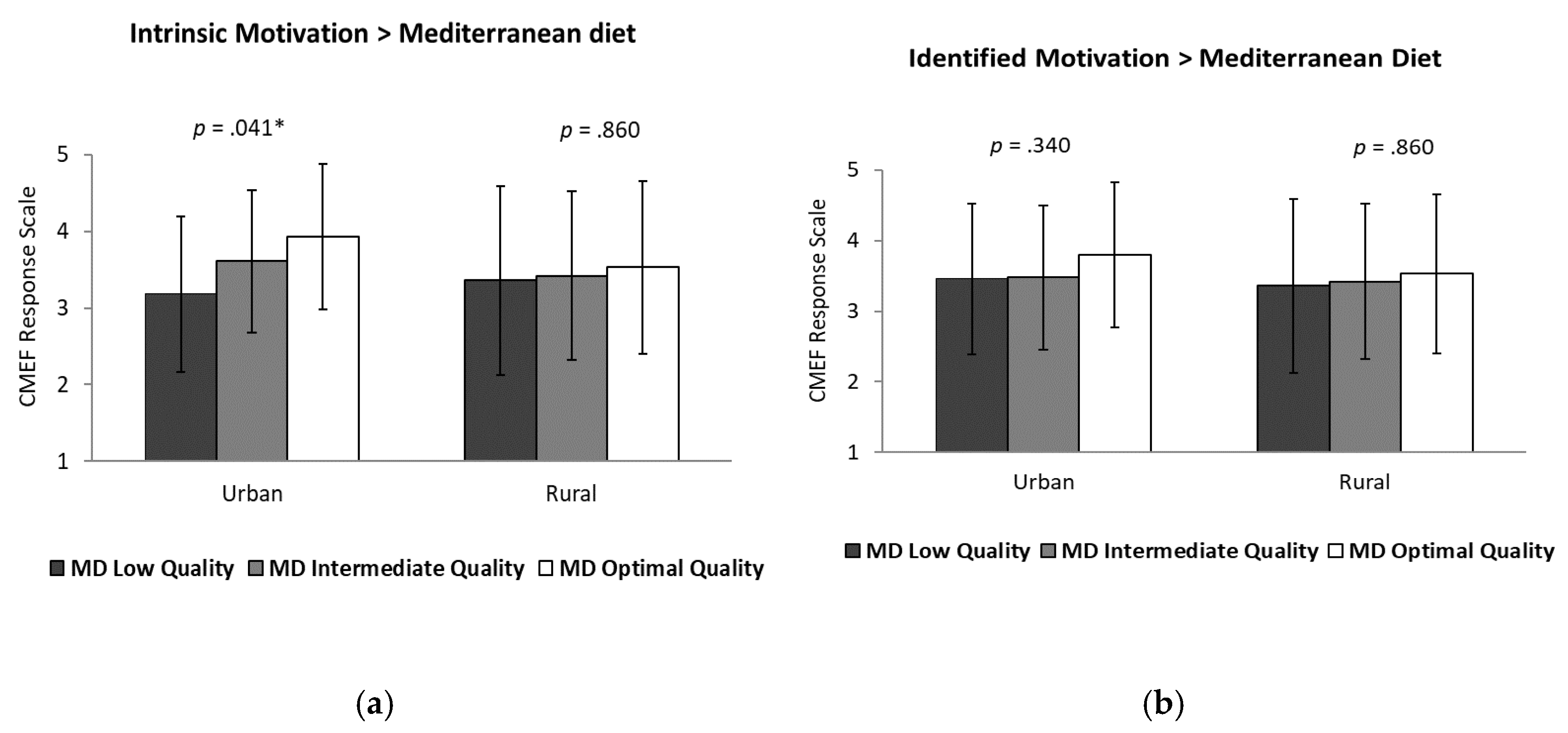
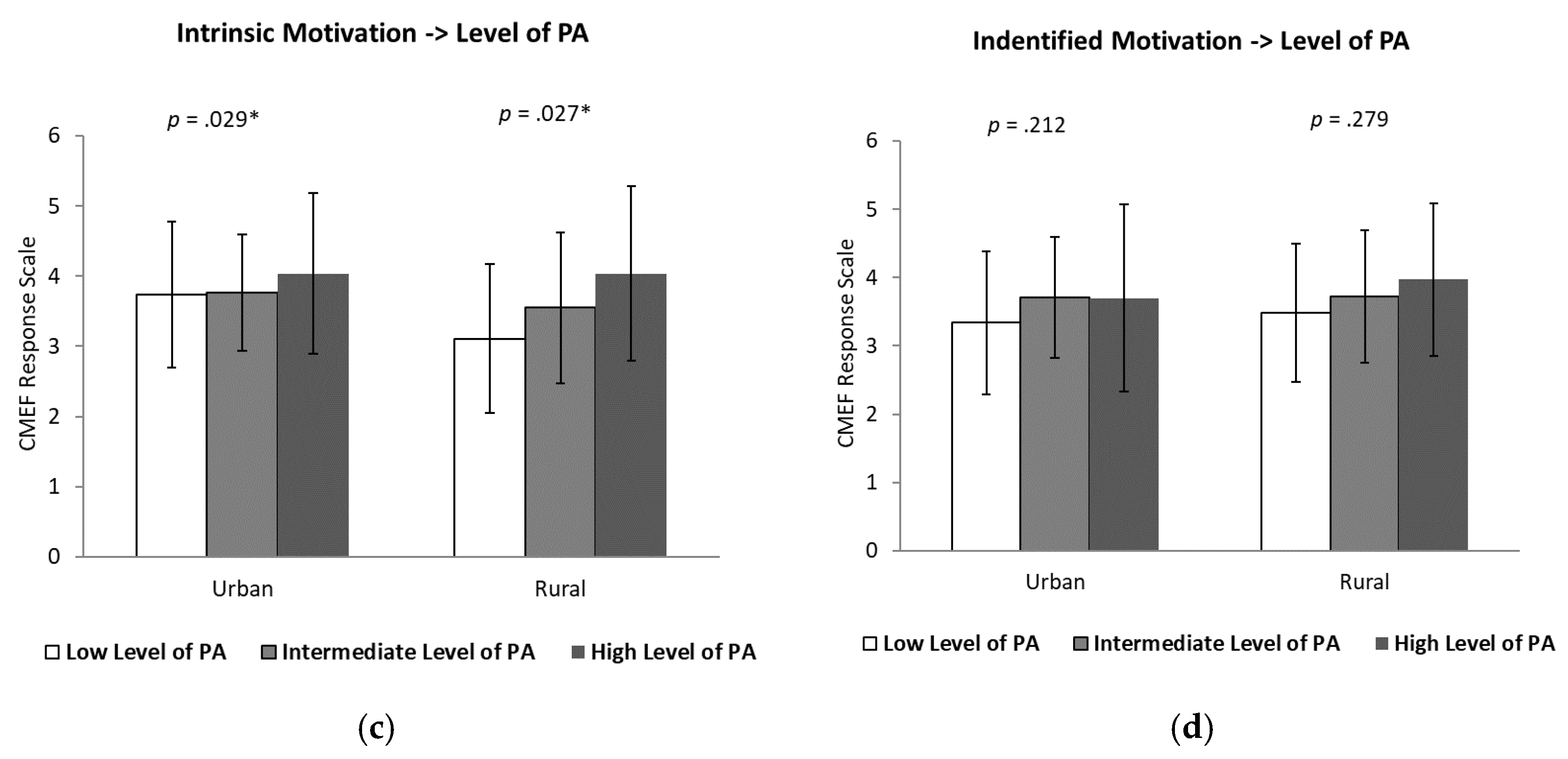
Figure 2.
Introjected and external regulation toward physical education according to adherence to the Mediterranean diet (a and b) and physical activity level (c and d) in adolescent girls from urban and rural environments.
Figure 2.
Introjected and external regulation toward physical education according to adherence to the Mediterranean diet (a and b) and physical activity level (c and d) in adolescent girls from urban and rural environments.
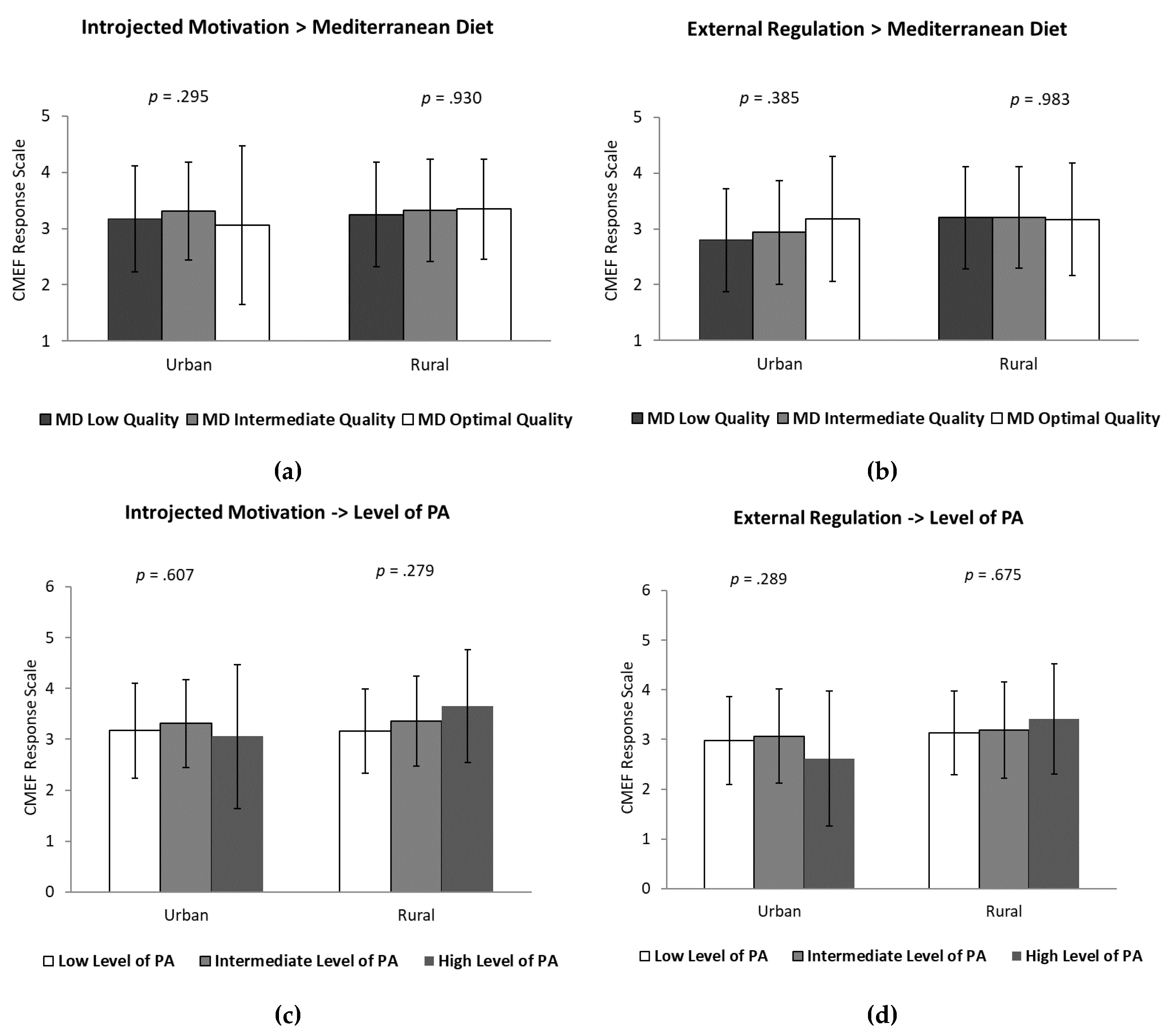
Figure 3.
Amotivation toward physical education according to adherence to the Mediterranean diet (a) and physical activity level (b) in adolescent girls from urban and rural environments.
Figure 3.
Amotivation toward physical education according to adherence to the Mediterranean diet (a) and physical activity level (b) in adolescent girls from urban and rural environments.
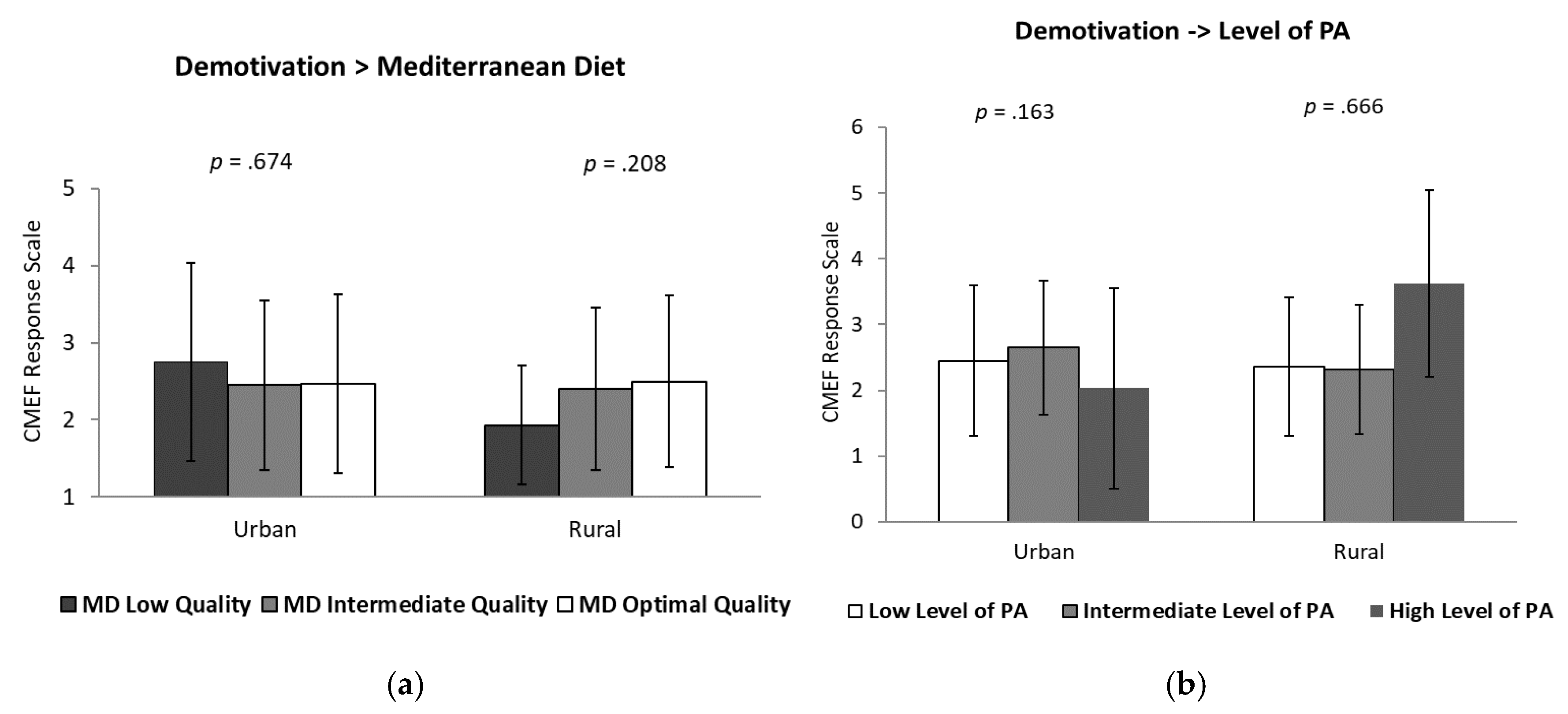

Table 1.
Distribution of physical activity levels and adherence to the Mediterranean diet according to the place of residence in adolescent girls.
Table 1.
Distribution of physical activity levels and adherence to the Mediterranean diet according to the place of residence in adolescent girls.
| Urban | Rural | p | |||
|---|---|---|---|---|---|
| n = 108 | n = 109 | ||||
| Categorical variables (test ÷ 2) | % | % | |||
| PA | Low | 16.6 | 17.5 | 0.705 | — |
| Intermediate | 25.8 | 27.2 | |||
| High | 7,4 | 5.5 | |||
| MD (high quality) | Low | 6.9 | 6.9 | 0.94 | — |
| Intermediate | 27.8 | 27.3 | |||
| Optimal | 14.2 | 16.2 | |||
| Continuous variables (t Student) | M (SD) | M (SD) | p | F | |
| Motivation | Intrinsic | 3.66± .97 | 3.45 ± 1.12 | 0.143 | 2.162 |
| Identified | 3.58 ± 1.03 | 3.67 ± 1.01 | 0.545 | 0.368 | |
| Introjected | 3.23 ± .98 | 3.32 ± 0.90 | 0.464 | 0.539 | |
| External | 2.97 ± 1.01 | 3.20 ± 0.94 | 0.094 | 2.83 | |
| Amotivation | 2.48 ± 1.16 | 2.36 ± 1.05 | 0.431 | 0.623 | |
Data are expressed as n (%). Differences between urban and rural environments were analysed using the chi-square test for categorical variables and Student’s t-test for continuous variables. p < 0.05 was considered statistically significant. PA: physical activity; MD: Mediterranean diet.
Table 2.
Differences in motivation toward physical education according to the level of adherence to the Mediterranean diet in adolescent girls.
Table 2.
Differences in motivation toward physical education according to the level of adherence to the Mediterranean diet in adolescent girls.
| CMEF | Descriptive statistics | ANOVA | ||||||||
|---|---|---|---|---|---|---|---|---|---|---|
| Mean | SD | Sum of squares | Mean square | F | p | η²p | (post hoc) | |||
| Intrinsic | MD Low | 3.27 | 1.11 | Between Groups | 4.467 | 2.234 | 4.031 | 0.013 | 0.023 | 0.009 (O vs. L) |
| MD Intermediate (I) | 3.52 | 1.02 | Within groups | 234.259 | 1.1 | |||||
| MD Optimal (O) | 3.72 | 1.06 | ||||||||
| Identified | MD Low | 3.64 | 0.98 | Between Groups | 1.223 | 0.611 | 3.586 | 0.045 | 0.019 | 0 (O vs. L) |
| MD Intermediate (I) | 3.56 | 1 | Within groups | 222.402 | 1.044 | 0.007 (I vs. L) |
||||
| MD Optimal (O) | 3.73 | 1.06 | ||||||||
| Introjected | MD Low | 3.22 | 1.01 | Between Groups | 1.536 | 0.768 | 4.864 | 0.042 | 0.006 | 0.047 (O vs. L) |
| MD Intermediate (I) | 3.22 | 0.93 | Within groups | 189.329 | 0.889 | |||||
| MD Optimal (O) | 3.41 | 0.91 | ||||||||
| External | MD Low | 3 | 0.93 | Between Groups | 0.808 | 0.404 | 0.426 | 0.653 | 0.002 | — |
| MD Intermediate (I) | 3.07 | 0.93 | Within groups | 201.814 | 0.947 | |||||
| MD Optimal (O) | 3.18 | 1.06 | ||||||||
| Amotivation | MD Low | 2.34 | 1.12 | Between Groups | 0.46 | 0.23 | 3.186 | 0.023 | 0.033 | 0.003 (L vs. O) |
| MD Intermediate (I) | 2.42 | 1.08 | Within groups | 263.882 | 1.239 | |||||
| MD Optimal (O) | 2.48 | 1.15 | 0.048 (L vs. I) |
|||||||
Results are expressed as mean ± standard deviation. Differences between groups were analyzed using one-way analysis of variance (ANOVA) with post hoc comparisons. Effect size was calculated using partial eta squared (η²p). p < 0.05 was considered statistically significant.
Disclaimer/Publisher’s Note: The statements, opinions and data contained in all publications are solely those of the individual author(s) and contributor(s) and not of MDPI and/or the editor(s). MDPI and/or the editor(s) disclaim responsibility for any injury to people or property resulting from any ideas, methods, instructions or products referred to in the content. |
© 2026 by the authors. Licensee MDPI, Basel, Switzerland. This article is an open access article distributed under the terms and conditions of the Creative Commons Attribution (CC BY) license (http://creativecommons.org/licenses/by/4.0/).
Copyright: This open access article is published under a Creative Commons CC BY 4.0 license, which permit the free download, distribution, and reuse, provided that the author and preprint are cited in any reuse.


