

Submitted:
06 February 2026
Posted:
06 February 2026
You are already at the latest version
Abstract
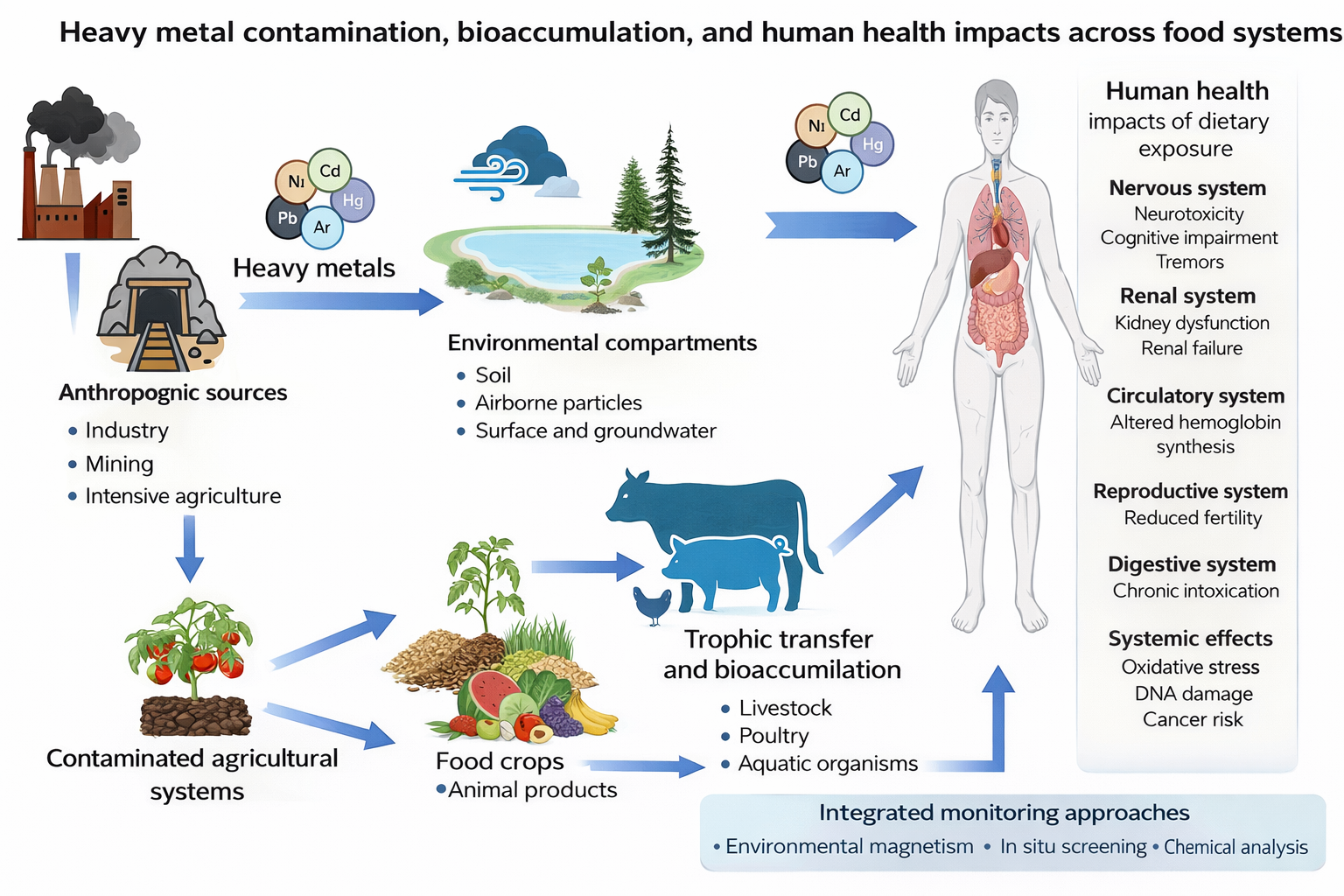
Heavy metal contamination of foods remains a persistent global challenge for food safety and public health, driven by industrialization, mining activities, intensive agriculture, and ongoing environmental degradation. This Scopus-based descriptive review synthesizes peer-reviewed literature on the occurrence of priority toxic metals—arsenic, cadmium, lead, mercury, and nickel—in food matrices, with emphasis on contamination pathways, analytical detection strategies, and documented human health effects. The reviewed studies reveal widespread accumulation of heavy metals in staple foods, including cereals, vegetables, seafood, and processed products, with concentrations frequently approaching or exceeding international regulatory limits, particularly in regions exposed to strong anthropogenic pressure. Conventional laboratory-based techniques, such as atomic absorption spectrometry and inductively coupled plasma methods, remain the reference standards for quantitative determination and regulatory compliance; however, their application to large-scale or continuous monitoring is often constrained by cost, infrastructure, and operational complexity. Consequently, increasing attention has been directed toward emerging detection approaches, including portable X-ray fluorescence, Raman/SERS spectroscopy, electrochemical biosensors, electronic tongues, and in situ magnetic measurements, as complementary tools for rapid screening and field-based surveillance. Among these, environmental magnetism and in situ magnetic techniques stand out as non-destructive, low-cost proxies capable of identifying metal-associated particulate contamination linked to food production systems. Chronic dietary exposure to heavy metals is consistently associated with neurotoxicity, nephrotoxicity, carcinogenicity, and oxidative stress, underscoring the need for integrated, multi-tiered monitoring frameworks to support early detection, risk assessment, and prevention.
Keywords:
heavy metals
; food contamination
; analytical detection techniques
; emerging sensors
; human health risk
; food safety
1. Introduction
Heavy metal contamination constitutes a major global threat to environmental integrity, food safety, and public health, as many of these elements exert toxic effects even at low concentrations. Metals such as cadmium (Cd), lead (Pb), mercury (Hg), arsenic (As), and nickel (Ni) have been consistently associated with adverse health outcomes, including carcinogenesis, renal dysfunction, immune system impairment, malnutrition, and increased mortality. Once incorporated into the food chain, these contaminants exhibit high environmental persistence and a pronounced tendency to bioaccumulate in human tissues, thereby amplifying long-term exposure risks and chronic health effects [1,2]. The environmental presence of heavy metals has intensified markedly in recent decades as a consequence of urban expansion and diverse anthropogenic activities, particularly mining operations, industrial processes, and the intensive use of chemical inputs in agriculture. These activities promote the contamination of soils, water bodies, and atmospheric compartments, facilitating the transfer of heavy metals into crops and food products destined for human consumption [2,3]. Recent global assessments indicate that approximately 14–17% of agricultural soils contain toxic metal concentrations exceeding permissible limits, with cadmium exhibiting the highest exceedance rates, followed by nickel and chromium. Furthermore, a “metal-enriched corridor” extending across southern Europe, the Middle East, South Asia, and China has been identified, shaped by geological conditions, climatic and topographic factors, and long-term mining activities, and is estimated to expose between 0.9 and 1.4 billion people to significant ecological and health risks [4].
Within this context, contamination of soils and water resources represents a critical challenge for food production systems, requiring effective strategies to limit heavy metal bioavailability and reduce their transfer into edible crops. Nevertheless, in many developing regions, agricultural soils are cultivated without prior diagnostic assessments of metal contamination, and insufficient attention is given to interacting environmental compartments such as irrigation water and ambient air, which may be influenced by industrial and mining emissions. This lack of integrated environmental evaluation increases the likelihood of dietary exposure to heavy metals and hinders the timely implementation of mitigation, monitoring, and prevention measures [5,6]. Given the complexity of contamination pathways and the expanding range of analytical approaches, a comprehensive synthesis of current evidence is essential to support risk assessment and decision-making in food safety management. In this context, the present Scopus-based review critically examines the occurrence of heavy metals in food matrices, evaluates conventional and emerging analytical techniques for their detection, and integrates current knowledge on associated human health effects. By consolidating methodological trends, contamination patterns, and reported health implications, this review seeks to contribute to the development of integrated monitoring frameworks and preventive strategies aimed at reducing heavy metal exposure through food systems.
2. Materials and Methods
2. Methodology
This study adopts a narrative, descriptive review approach aimed at synthesising current scientific evidence on heavy metal contamination in food systems, with particular emphasis on contamination pathways, analytical detection techniques, and reported human health effects. Given the broad scope of the topic and the substantial heterogeneity in study designs, food matrices, analytical methodologies, and exposure assessments, a qualitative synthesis framework was selected to allow integrative interpretation rather than quantitative aggregation of results.
2.1. Literature Sources and Search Strategy
The literature survey was conducted using major international scientific databases, including Scopus, Web of Science, ScienceDirect, SpringerLink, and Wiley Online Library. To ensure comprehensive coverage of relevant studies, complementary searches were performed using Google Scholar, particularly to capture region-specific investigations and methodological studies not consistently indexed across all databases. The search strategy was based on structured keyword combinations related to heavy metal contamination in foods, analytical detection approaches, and health-related outcomes. Core search terms included “heavy metals”, “food contamination”, “detection techniques”, and “human health effects”, which were combined using Boolean operators and adapted to the syntax of each database. Only articles published in English-language peer-reviewed journals were considered.
2.2. Study Selection Criteria
Studies were considered eligible if they reported original research on the occurrence of heavy metals in food matrices, with specific focus on cadmium (Cd), lead (Pb), mercury (Hg), arsenic (As), and nickel (Ni). In addition, studies addressing conventional or emerging analytical techniques for heavy metal detection, as well as investigations reporting potential human health effects associated with dietary exposure, were included. Studies were excluded if they focused on metallic elements outside the defined scope (e.g., chromium or tin), addressed non-food matrices, consisted of theses or non-peer-reviewed materials, or lacked sufficient methodological or analytical detail to support qualitative assessment.
2.3. Study Screening and Selection Process
Study selection was conducted through a two-stage screening process. Initially, titles and abstracts were examined to identify publications potentially relevant to the scope of the review. Subsequently, full-text articles were assessed to confirm eligibility based on the predefined inclusion and exclusion criteria. The screening and selection procedures were conducted following predefined criteria to ensure consistency, relevance, and methodological coherence throughout the review.
2.4. Data Extraction and Organisation
Relevant information was extracted manually from the full texts of the selected studies and organised using predefined data extraction tables. For each study, the following information was collected: publication year, type of food or food matrix, heavy metal(s) analysed, analytical detection technique employed (classified as conventional or emerging), and reported human health effects associated with exposure. No assumptions or imputations were applied to missing data; only explicitly reported information was considered in the synthesis.
2.5. Evidence Synthesis
The evidence was synthesised using a narrative and descriptive approach, with studies grouped according to thematic axes encompassing heavy metal type, analytical methodology, and health-related outcomes. The results are presented through structured narrative descriptions, supported by comparative tables and graphical summaries to facilitate the identification of methodological trends, contamination patterns, and knowledge gaps. Quantitative synthesis was not pursued due to the methodological diversity of the included studies.
2.6. Considerations on Methodological Limitations
A formal, standardised risk-of-bias assessment was not applied, as the primary objective of this review was to provide a descriptive and integrative overview of the literature rather than to evaluate intervention effectiveness. The diversity of study designs, analytical techniques, and exposure contexts further limited the applicability of uniform bias assessment tools. Consequently, the findings should be interpreted with appropriate caution, acknowledging potential methodological limitations inherent to individual studies.
3. Results and Discussion
A review of studies conducted across the five continents provides consistent evidence of the widespread occurrence of heavy metal contamination in food matrices and along the food production chain. However, despite the growing volume of published research, the existing literature reveals several limitations that restrict a comprehensive, comparable, and integrative understanding of contamination patterns and associated health risks. To assess the current contribution of scientific research in this field, it is necessary to identify the main constraints reported across previous studies. Based on the critical evaluation of the literature, four broad categories of limitations can be distinguished: methodological limitations, arising from heterogeneity in sampling strategies, food matrices, and analytical protocols; geographical limitations, related to the uneven global distribution of studies and the underrepresentation of developing regions; technological limitations, associated with differences in analytical sensitivity, accessibility to advanced instrumentation, and validation of emerging techniques; and conceptual limitations, reflecting inconsistencies in exposure assessment, contamination pathways, and interpretation of health risk indicators.
3.1. Heavy Metals
In the scientific literature addressing food contamination, the term heavy metals (HMs) is commonly used to describe non-biodegradable elements characterized by a strong tendency to bioaccumulate and exert toxic effects on living organisms [7,8]. Among these elements, lead (Pb), cadmium (Cd), mercury (Hg), and arsenic (As) are consistently identified as the most relevant from a toxicological and public health perspective, due to their persistence in environmental and biological systems and their well-documented adverse health effects [9]. From a physicochemical standpoint, several authors define heavy metals based on intrinsic properties such as high density (>4.5 g/cm3), elevated atomic weight (>63.5), and specific gravity values close to 5.0. Under these criteria, Pb, Hg, and Cd are repeatedly highlighted as contaminants of particular concern, given their widespread occurrence in food systems and their capacity to induce toxicity even at relatively low exposure levels [1,10]. Beyond purely physicochemical definitions, contemporary food safety research increasingly emphasizes biological relevance, focusing on elements that lack essential physiological functions and exhibit cumulative toxicity through chronic dietary intake.
Within this framework, heavy metals are frequently classified into two broad categories. The first includes toxic heavy metals, such as Pb, Cd, As, Hg, and nickel (Ni), which have no known beneficial role in human metabolism and are associated with multiple adverse health outcomes. The second group comprises essential trace metals, including copper (Cu), zinc (Zn), manganese (Mn), iron (Fe), and chromium (Cr), which are required for normal biological functions but may become harmful when intake exceeds physiological thresholds [10]. This distinction is particularly relevant in food-related studies, as it underscores the dual role of certain metals as both nutrients and toxicants, depending on exposure levels, chemical form, and bioavailability.
3.1.1. Sources of Heavy Metal Contamination in Foods
Heavy metal contamination in food systems arises from a complex interplay of natural processes and anthropogenic activities. Naturally occurring heavy metals are inherent components of the Earth’s crust, and their background concentrations in soils and waters vary according to geological and geochemical conditions. However, the pronounced increase in heavy metal levels observed in food-producing environments over recent decades has been largely attributed to intensified human activities, particularly industrial operations and mining, which are consistently identified as dominant sources of environmental enrichment [7,11,12,13,14]. Natural release mechanisms include rock weathering, soil erosion, surface runoff, and atmospheric deposition via precipitation. These processes contribute to the mobilization of heavy metals and facilitate their redistribution across environmental compartments. The dispersion of heavy metals as particulate matter or vapor is strongly influenced by their physicochemical state, enabling their transfer from the atmosphere to soils and aquatic systems and, ultimately, their incorporation into agricultural environments and food chains [5,12].
In food systems, heavy metals may enter unintentionally through environmental contamination or, in some cases, deliberately as adulterants. Additional contamination pathways include food processing, storage, and packaging, particularly when contact materials or hermetic containers promote metal migration. Due to their non-biodegradable nature, several heavy metals are inefficiently eliminated from the human body, leading to cumulative exposure and increased long-term health risks. This persistence highlights the need for effective detection, monitoring, and control strategies throughout the food supply chain [15,16]. Agricultural production represents a critical interface between environmental contamination and human exposure. The primary routes through which heavy metals reach crops include contaminated soils, irrigation water, and atmospheric deposition. These pathways are exacerbated when agricultural areas are located near industrial or mining activities or when waste management and effluent treatment practices are inadequate. Under such conditions, heavy metals may be incorporated into crops during growth or through agricultural inputs such as fertilizers, often without systematic control of contamination levels in harvested products [2].
Elevated concentrations of As, Cd, and Pb have been reported in both groundwater and surface waters, frequently linked to untreated or poorly treated industrial effluents. The use of contaminated water for irrigation substantially enhances the transfer of heavy metals to crops, particularly in contexts where water quality is not routinely assessed or where wastewater is reused for agricultural purposes [5,17]. Plant uptake of heavy metals is governed by multiple interacting factors, including plant species, metal availability, soil physicochemical properties, contamination intensity, and irrigation practices [18]. According to the United States Environmental Protection Agency, heavy metals enter food systems through a range of anthropogenic pathways, including soil erosion, natural weathering, mining, municipal wastewater residues, pesticide application, irrigation systems, phosphate fertilizers, and manure use. Collectively, these processes contribute to the accumulation of heavy metals in edible crops such as vegetables, tubers, and fruits, posing a global challenge to food safety and security [12,19].
3.1.2. Dietary Exposure to Heavy Metals Through Food Consumption
Food constitutes the primary source of nutrients for human populations; however, it also represents a major pathway for exposure to potentially harmful substances. Among these, heavy metals such as Cd, Pb, Hg, Ni, and As are of particular concern, as they lack known biological functions and may induce toxic effects even at low concentrations. Owing to their toxicity and the risks associated with chronic exposure, the presence of these metals in foods is subject to regulatory limits, necessitating continuous surveillance of dietary intake. Nevertheless, effective monitoring is challenged by rapidly evolving dietary patterns, consumption habits, and food market dynamics. Foods marketed as “natural” or “healthy” may undergo fortification with bioactive compounds or compositional modifications aimed at enhancing nutritional value, potentially altering their elemental profiles, including heavy metal content, relative to their original state [20,21,22,23,24,25]. As a result, dietary exposure assessments must account for both traditional food products and increasingly complex processed and fortified foods.
Heavy metals enter the human diet through multiple environmental and anthropogenic pathways that converge within agricultural systems. Growing concern has emerged regarding the infiltration of these elements into food production environments, with Cd, Pb, Hg, and As consistently identified as priority contaminants due to their persistence, bioaccumulative behavior, and toxicological relevance. Elevated concentrations of heavy metals have been documented in agricultural soils influenced by mining activities, raising concerns about long-term food safety and public health implications. In addition to primary production, deficiencies in food storage conditions and inadequate sanitary management further increase the likelihood of contamination [26]. The accumulation of heavy metals in soils adversely affects crop productivity, food quality, and ecosystem health. Bioaccumulation in edible plant tissues constitutes a direct exposure pathway for humans, primarily through ingestion and, to a lesser extent, inhalation of contaminated particulates. The extent of dietary contamination depends largely on metal mobility and bioavailability within soils. Uptake by plants occurs mainly through root–soil interactions or direct atmospheric deposition onto aerial plant surfaces, potentially resulting in reduced biomass, impaired germination, and disruption of photosynthetic processes. Indirect effects include increased production of reactive oxygen species, DNA damage, and protein alterations, which compromise both plant health and nutritional quality [12].
Quantitative assessments of heavy metals in food crops have been widely reported using analytical protocols aligned with guidelines from the American Public Health Association and the World Health Organization. For example, concentrations of heavy metals have been evaluated in raw and cooked foods such as rice, beans, oils, poultry, fish, leafy vegetables, and tomatoes [26]. Although many reported values fall below established FAO and WHO limits, rice has been repeatedly identified as a crop with a high capacity to accumulate Pb and Cd. In some cases, concentrations have exceeded regulatory thresholds by several fold, a phenomenon attributed to factors including crop variety, irrigation practices, soil properties, pH, and fertilizer use. Furthermore, contaminated crops are often used as animal feed, facilitating secondary bioaccumulation in livestock tissues that subsequently enter the human food chain.Studies on widely consumed fruits and vegetables, including spinach, lettuce, apples, bananas, grapes, and berries, have reported heavy metal concentrations exceeding Codex Alimentarius values in certain contexts. Elevated levels of As and Zn have been observed in leafy vegetables, Ni in fruits, and Cu in staple cereals such as rice and maize [3]. In response to these risks, international organizations such as the World Health Organization, the Food and Agriculture Organization, and the International Organisation of Vine and Wine have established maximum permissible limits for heavy metals across diverse food matrices. For arsenic, these limits range from 0.01 mg/kg in mineral water to 0.35 mg/kg in husked rice and 0.5 mg/kg in food-grade salt [3]. Table 1 summarizes the maximum permissible limits for heavy metals most frequently identified as toxicological priorities, namely As, Cd, Pb, and Hg.
3.2. Methods and Analytical Techniques for Quantifying Heavy Metals in Foods
Heavy metal contamination has expanded globally, disrupting environmental systems and posing substantial risks to human health. This context has intensified the demand for robust analytical approaches capable of identifying and quantifying metals in environmental and food matrices, while supporting risk communication and decision-making related to prolonged dietary exposure [27,28,29,30,31,32]. In practice, analytical strategies in food safety are typically shaped by three competing requirements: (i) detection limits compatible with regulatory thresholds, (ii) reliable performance in complex matrices (high fat, high salt, high organic load), and (iii) feasibility in routine monitoring (cost, throughput, infrastructure). The following sections summarise conventional reference techniques and emerging approaches currently used for heavy metal determination in foods.
3.2.1. Atomic Absorption Spectrometry (AAS)
Several spectrometric techniques are currently employed to identify heavy metals in environmental and biological samples. Atomic absorption spectrometry (AAS) remains one of the most established and widely used approaches, particularly for measuring metals in biological materials such as blood, tissues, and urine [33]. AAS typically requires liquid samples; therefore, solid or semi-solid matrices are digested or dissolved to obtain a clear solution, followed by dilution in an appropriate solvent. For food, environmental, and biological matrices, acid digestion is commonly used to release metals into solution. The resulting extract is atomised—either in a flame or in a graphite furnace—where compounds dissociate and metals are converted into free atoms for measurement. Two main AAS configurations are used: flame AAS (FAAS) and graphite furnace AAS (GF-AAS), the latter offering higher sensitivity. Quantification relies on element-specific monochromatic radiation emitted by hollow cathode lamps (HCL) or electrodeless discharge lamps (EDL), reflecting each metal’s characteristic wavelength [34,35,36,37]. In food contamination studies, AAS is widely adopted because it is comparatively cost-effective and capable of detecting metals at low concentrations, making it accessible for a broad range of monitoring and research settings [38].
Applications across cereals, dairy products, and vegetables have been extensively documented, typically involving wet digestion followed by FAAS or GF-AAS depending on the sensitivity required for Pb, Cd, Hg, and As [39]. In work focused on emerging technologies—particularly electrochemical sensors based on carbon nanotubes—AAS is frequently used as a benchmark method to validate performance, functioning as a confirmatory tool in real matrices [15]. Similarly, an experimental study developed a doped porous material for ultrasensitive detection of heavy metals in foods, and AAS verification in rice, bottled water, and vegetables confirmed that sensor-derived concentrations reflected measurable values in real samples [40]. More recently, interest has expanded to novel food categories such as edible insects, where metal content may vary with the production substrate and processing conditions. Using FAAS, Pb, Cd, and Ni were quantified in multiple commercial insect-based products; although consumption rates did not indicate immediate risk under the evaluated scenarios, the findings underscored the need for supply-chain surveillance and periodic controls given product heterogeneity [35]. Monitoring efforts have also targeted widely consumed foods: in one study evaluating Pb in a broad range of frequently consumed items, 103 foods and beverages were analysed using GF-AAS, and 18% showed Pb concentrations between 0.021 and 1.005 mg/kg, with higher values observed in products such as infant rice cereal, whole-wheat bread, and precooked rice [41].
Operational advantages of AAS include relatively low instrument cost, straightforward sample preparation, modest laboratory installation requirements, good accuracy and precision, adequate throughput, and limited interference in many routine applications. However, limitations include single-element measurement per run, a comparatively narrow analytical range, the need for larger sample volumes in certain configurations, and the use of flammable gases in flame-based systems [36]. Although AAS is often described as low-cost and relatively portable, sensitivity may be insufficient for certain analytes or regulatory thresholds unless enhanced configurations (e.g., graphite furnace) or complementary techniques are used to strengthen detection capability in complex matrices [33].
3.2.2. Inductively Coupled Plasma Mass Spectrometry (ICP–MS)
Inductively coupled plasma mass spectrometry (ICP–MS) is a high-performance analytical technique for determining trace metals and non-metals in liquid and solid materials. It relies on inductive heating of a gas to form a plasma that generates ions, which are then separated and quantified by mass spectrometry. While most ICP–MS workflows analyse liquid digests, solid and gaseous samples can also be measured using appropriate introduction systems [42]. ICP–MS is routinely used for ultra-trace detection, reaching concentrations below parts per million (ppm) and down to parts per billion (ppb) or parts per trillion (ppt), depending on the element and instrumental configuration. Its multi-element capability, low detection limits, high analytical resolution, and short analysis time have supported broad adoption across clinical, biological, environmental, and food applications [33,36,43]. In food safety contexts, ICP–MS is widely used to quantify metals such as Pb, Cd, and As, and isotopic measurements can help infer potential contamination sources in food products [44]. For example, studies assessing industrial–agricultural interfaces have applied ICP–MS to soils and vegetables, identifying metals such as Cd, Pb, and Cr in leafy and root crops, thereby supporting dietary risk evaluations for foods produced under impacted conditions [45]. In 2025, an ICP–MS-based analytical protocol was developed for trace metals in functional foods, which are often fortified with bioactive compounds; performance metrics (precision, accuracy, and limits of detection/quantification) were reported as suitable for routine monitoring in real matrices [46].
Key advantages of ICP–MS include multi-element analysis, a wide dynamic range, very low detection limits, high sample throughput, small sample volume requirements, and relatively streamlined preparation once digestion protocols are optimised. Constraints are largely practical: high capital and operating costs (including argon consumption), the need for high-purity gases, management of spectral and non-spectral interferences, laboratory installation requirements, and reliance on specialised staff [33]. Comparative assessments across analytical methods (including AAS, ICP-AES, ICP–MS, and AFS) frequently identify ICP–MS as providing the lowest detection limits (ng/L range), strong multi-element performance, and high reproducibility; nonetheless, implementation can be limited in resource-constrained settings due to equipment and maintenance costs [47].
3.2.3. Inductively Coupled Plasma Optical Emission Spectrometry (ICP–OES)
Inductively coupled plasma optical emission spectrometry (ICP–OES) has been used since the 1970s to quantify metals in diverse matrices and remains widely applied due to its broad analytical range, high throughput, and relatively straightforward sample preparation. ICP–OES is typically used for elements at moderate concentrations and is valued for stability and reproducibility in routine analysis [48]. In food-related applications, ICP–OES supports simultaneous quantification of multiple elements and has been used to assess metals in crops, supplements, beverages, and dairy systems. Studies have reported the determination of up to eight elements (B, Co, Cr, Cu, Li, Na, Ni, and Zn) in maca roots and maize grains, as well as metal profiling in dietary supplements. In these evaluations, concentrations of certain metals were reported up to 5 μg/L, with recovery rates between 92.12% and 102.08%, supporting the technique’s suitability for market-product assessments across both toxic metals and trace nutrients [39]. In a study analysing energy drinks, ICP–OES was used for macro-minerals while ICP–MS targeted trace elements; the analysis covered a wide elemental panel (including As, Ni, and Cr), and some metals exceeded acceptable limits in specific samples, enabling risk-relevant interpretation [49]. Similarly, ICP–OES has been applied to quantify Al, As, Cd, Co, Cu, Fe, Pb, Ni, and Zn in milk and associated packaging, supporting the evaluation of potential metal transfer from contact materials into foods; relatively elevated Al and Fe and a significant association with packaging materials highlighted the relevance of this approach for food–packaging systems [50].
ICP–OES has also been used to quantify metals in widely consumed foods such as almonds, peanuts, nuts, wheat, barley, maize, and rice. Some studies simulate domestic preparation (washing, soaking, cooking) to estimate realistic concentrations of metals such as As, Cd, Pb, and Cr and to interpret exposure under habitual consumption. Although reported concentrations were below European regulatory limits, the findings suggest that preparation practices can influence metal content while reinforcing the need for continued surveillance [51,52]. Additionally, vegetables irrigated with river water have been analysed for multiple metals (Al, As, Pb, Cd, Cu, Fe, Mn, Zn, Cr, Ni), mostly using ICP–OES with As quantified by ICP–MS; concentrations varied by irrigation zone, yet most metals fell below levels considered high risk for chronic intake. Such studies are often constrained by geographic specificity, limited sample sizes, and incomplete consideration of elemental speciation (notably for As and Cr), which can be critical for toxicity interpretation [9]. Strengths of ICP–OES include robust multi-element capability, analytical stability, and applicability to a broad range of food matrices. However, detection limits are typically higher than ICP–MS, and implementation may be restricted by equipment cost, infrastructure requirements, personnel training, and laboratory installation expenses—constraints that can be particularly relevant in settings where food contamination remains a major public health concern [53,54].
3.2.4. Liquid Chromatography–ICP–MS (LC–ICP–MS)
Liquid chromatography coupled to ICP–MS (LC–ICP–MS) has become a pivotal methodology for elemental analysis in complex biological and environmental samples, particularly where conventional approaches are insufficient to resolve chemically distinct forms of an element. By combining chromatographic separation with sensitive elemental detection, LC–ICP–MS enables the characterisation of trace elements bound to biomolecules (e.g., selenium-, sulfur-, or phosphorus-containing compounds) and supports quantitative workflows in contexts where molecular form determines biological behaviour. In food safety, the relevance of LC–ICP–MS lies in elemental speciation, recognising that total elemental concentration alone may be insufficient to infer toxicity or risk. Metals and metalloids can occur in multiple oxidation states, associate with diverse ligands, and present as complex chemical species with markedly different bioavailability and toxicity. This has driven the need to determine whether a specific chemical species is present—a process frequently requiring LC–ICP–MS. The combination is increasingly regarded as one of the preferred approaches for elemental speciation research, owing to adaptability, robustness, high sensitivity, and multi-element capability, with broad applications across environmental, biological, and clinical analyses [55,56,57,58,59,60].
3.3. Emerging Techniques for Measuring Heavy Metals in Foods
As regulatory limits tighten and monitoring expands beyond laboratory-centred workflows, emerging approaches have gained relevance as rapid, portable, or screening-oriented alternatives. These technologies can strengthen surveillance by enabling higher sampling density and faster decision pathways; however, in most food safety applications they remain complementary to conventional confirmatory methods, particularly when traceability, very low detection limits, and robust validation in complex matrices are required.
3.3.1. X-Ray Fluorescence Spectrometry (XRF)
X-ray fluorescence (XRF) is widely used for identifying and quantifying heavy metals in the context of food safety. This non-destructive technique excites a sample with X-rays and measures the characteristic secondary (fluorescent) X-ray emissions, allowing qualitative and quantitative determination of elemental composition [44]. XRF has been used in forensic contexts for analysing biological tissues, bones, and blood; because bone can accumulate metals over long periods, XRF can support the assessment of chronic intoxication or prolonged environmental exposure to metals such as Cd, Pb, Hg, and As [61]. Practical limitations include instrument cost, accessibility, and detection limits that are generally higher than those of plasma-based methods. Nonetheless, XRF offers rapid analysis with minimal sample preparation—often enabling direct measurement of solids—which is advantageous for field deployment and real-time screening when sample preservation is important. Advances in portable instrumentation have further expanded its applications, including environmental evaluations and food safety inspections outside specialised laboratories [44].
3.3.2. Raman Spectroscopy and SERS
Raman spectroscopy identifies analytes through the inelastic scattering of light, providing a spectral fingerprint based on molecular bond vibrations. When a sample is irradiated with laser light, most photons undergo elastic (Rayleigh) scattering and retain the same frequency as the incident light. A much smaller fraction undergoes inelastic (Raman) scattering, producing frequency shifts (Raman shifts) that reflect molecular vibrational modes. These shifts yield spectra in which peaks correspond to specific molecular vibrations, enabling analyte identification.
Modalities such as micro-Raman, Raman imaging, and surface-enhanced Raman spectroscopy (SERS) are frequently used in food safety contexts. SERS amplifies Raman signals by promoting interactions between target molecules and roughened or nanostructured metallic surfaces (commonly silver, gold, or copper), improving detectability for certain contaminants. SERS is often highlighted as non-invasive, relatively simple, sensitive, and rapid, with growing potential for food contamination screening. More broadly, Raman-based methods offer speed, specificity, non-destructive analysis, and competitive operating costs, and can be combined with microscopy to obtain spatially resolved chemical information. However, the intrinsically low intensity of Raman scattering can constrain sensitivity and limit quantitative reliability in complex matrices, motivating instrument optimisation and SERS-based strategies for enhanced performance [55].
3.3.3. Electronic Tongues
Electronic tongues are multisensor arrays that combine electroanalytical procedures with multivariate statistical approaches to interpret complex signal patterns, supporting both qualitative discrimination and quantitative estimation. Conceptually, an electronic tongue comprises a set of sensors operating under “global selectivity,” where variations in electrical responses across materials generate a pattern—or “fingerprint”—capable of distinguishing analytes or mixtures. Applications are common in beverages such as wine, juice, coffee, and milk to detect quality alterations and potential contaminants. In environmental and food monitoring, electronic tongues are attractive for priority contaminants, including heavy metals, because of relatively simple operation, rapid response, potentially low cost, and integration potential with other measurement systems. Notably, sensor arrays using electrodes with low or non-specific selectivity can outperform systems relying only on highly selective electrodes by capturing broader response patterns, enabling multi-component analysis without complex laboratory infrastructure.
Some platforms report detection at nmol/L levels, including approximately 0.2 nmol/L for copper, 0.4 nmol/L for lead, 0.6 nmol/L for cadmium, and 30 nmol/L for zinc, with simultaneous detection in sodium chloride solutions under seawater-analogous conditions and short response times on the order of one minute. Chip-based electronic tongues can measure both organic and inorganic compounds. In sensor development, ternary nanocomposites—including electrospun nylon nanofibres, cellulose nanowhiskers, and silver nanoparticles—have been explored as detection layers, and synergistic behaviour has supported separation and discrimination of heavy metals in mixed solutions containing Fe3+, Cr6+, Mn5+, and As3+. More recent investigations report lead and copper detection down to ppt levels, suggesting meaningful potential for food safety and environmental monitoring applications [55,56,57].
3.3.4. Electrochemical Nanomaterial-Based Biosensors
Electrochemical biosensors incorporating nanomaterials and enzyme-based detection strategies are increasingly positioned as promising tools for portable, real-time monitoring of heavy metal contamination in water and foods. These technologies can enhance analytical performance and broaden monitoring coverage by enabling more frequent measurements and potentially decentralised testing [57,58]. Electrochemical sensors based on nanomaterials with high electrical conductivity—particularly carbon nanotubes (CNTs)—have been widely described, with detection relying on electrochemical responses generated by metal ions at modified electrode surfaces, often improving sensitivity and selectivity [15]. Among metallic nanomaterials used to modify electrodes, gold (Au), silver (Ag), bismuth (Bi), and platinum (Pt) are frequently reported, with gold nanoparticles (AuNPs) standing out due to strong biocompatibility and compatibility with organic and biological carriers such as graphene, polymers, DNA, and enzymes. These combinations enable platforms for detecting ions including Cd2+, Pb2+, Hg2+, Cu2+, Zn2+, As3+, Ag+, and Cr(VI), among others [39]. In parallel, the integration of nucleic-acid aptamers with nanomaterials has accelerated the development of rapid, highly sensitive sensors, where nanomaterials contribute to recognition and transduction. Some prototypes also exhibit catalytic activity that strengthens electrochemical responses and improves performance across ions with differing affinities and physicochemical characteristics [35].
Collectively, the emerging techniques outlined in this section (XRF, Raman/SERS, electronic tongues, and nanomaterial-based electrochemical biosensors) offer operational advantages for food surveillance, particularly portability, rapid response, reduced sample preparation, and potential for in situ or real-time analysis [16,59,60]. However, in most practical food safety workflows, they serve a complementary role to conventional confirmatory methods (e.g., ICP–MS, ICP–OES, or AAS), especially when metrological traceability, ultra-low detection limits, and robust confirmation in complex matrices are required. A pragmatic monitoring architecture therefore combines approaches: emerging methods can support screening and continuous surveillance, followed by confirmatory spectrometric analysis when signals indicate potential risk or concentrations near regulatory limits.
3.3.5. In Situ Magnetism
In situ magnetism has emerged in recent years as a complementary, non-destructive approach for environmental assessment, with potential applications in the indirect detection of heavy metal contamination in soils, sediments, and environmental matrices linked to food systems. The approach relies on measuring magnetic properties directly at the sampling site, reducing the need for extensive sample preparation and laboratory transport [61,62,63,64,65,66,67]. Magnetic susceptibility, defined as a material’s ability to become magnetised in an external magnetic field, has shown correlations with total heavy metal concentrations in soils, enabling identification of areas where contamination exceeds geochemical background levels [58]. Environmental studies have reported that elevated magnetic susceptibility can coincide with increased presence of metals such as Pb, Cd, Zn, Ni, and Cu, often associated with anthropogenic activity.
Operational advantages include rapid results, reduced chemical preparation, and lower costs compared with conventional metal analysis. However, the relationship is not universal across metals and depends on geochemical affinity with magnetic phases. For example, direct susceptibility measurements in urban soils have been used for preliminary contamination mapping to prioritise areas requiring detailed chemical analysis [66]. Applied case studies have also demonstrated value in monitoring contamination and soil restoration processes near metallurgical activity, where magnetic parameters differentiated affected and unaffected soils adjacent to copper-processing facilities [67,68,69,70,71,72,73,74,75,76,77]. Additional work has documented positive correlations between magnetic susceptibility and heavy metal concentrations in river sediments and agricultural soils, supporting its role as a complementary monitoring tool; nevertheless, methodological limitations require integration with chemical techniques for reliable interpretation [78,79]. Despite these advantages, in situ magnetism cannot directly identify specific metals, and natural geological factors can influence magnetic signals, complicating attribution. Consequently, it should be treated as part of a complementary methodological framework, integrated with chemical and toxicological analyses for comprehensive risk assessment related to heavy metal contamination [80,81,82]. Overall, in situ magnetic approaches remain promising for rapid screening, preliminary assessments, and continuous surveillance programmes when deployed alongside confirmatory analytical methods.
Consistent with this integrated perspective, emerging techniques (including portable XRF, Raman/SERS, electronic tongues, and nanomaterial-based electrochemical biosensors) provide operational benefits for monitoring heavy metals in foods, primarily through portability, rapid measurements, reduced sample preparation, and in situ potential [58]. However, they are commonly used alongside confirmatory methods (ICP–MS, ICP–OES, or AAS), particularly when robust confirmation is required in complex matrices (Table 2) [83]. Despite their promise, widespread adoption faces shared challenges: matrix effects can distort analytical responses and increase interference and variability. For SERS specifically, signal reproducibility and quantitative validation remain major concerns, and strategies to reduce variability and validate performance against established methods are frequently recommended [84,85]. For portable XRF, calibration, detection limits, and benchmarking against reference methods are central considerations for strengthening confidence in food applications [86]. In electrochemical sensors applied to foods, performance may be constrained by ionic interferents, electrode fouling, and the need for rigorous calibration and validation protocols in real matrices [87].
3.4. Heavy Metals and Human Health Impacts
Heavy metals represent a major class of environmental contaminants, and their toxicity has become an increasingly relevant concern from ecological, nutritional, and public health perspectives. Among the heavy metals most frequently detected in contaminated water sources and wastewater systems are arsenic, cadmium, chromium, copper, lead, nickel, and zinc, all of which have been consistently associated with adverse effects on both human health and environmental integrity [87,88]. Their persistence, non-biodegradable nature, and capacity to bioaccumulate in biological systems underpin their relevance as long-term health stressors. Dietary exposure constitutes one of the primary routes through which heavy metals enter the human body. The presence of these contaminants has been widely documented in commonly consumed foods, including fruits, vegetables, rice, fish, and other staple crops. Such contamination reflects the cumulative transfer of metals across environmental compartments—soil, water, air, and biota—ultimately converging within the food chain. In this context, the World Health Organization has emphasized that trace metal content in drinking water has been detected across multiple industrialized regions, thereby increasing the risk of chronic exposure at the population level, particularly when combined with dietary intake [2].
From a toxicological standpoint, heavy metals exert their deleterious effects through multiple, often overlapping, mechanisms. These include the generation of oxidative stress, disruption of enzymatic activity, interference with essential metal homeostasis, and binding to sulfhydryl groups in proteins, which alters their structure and function. At the cellular level, prolonged exposure has been associated with mitochondrial dysfunction, induction of inflammatory pathways, and genomic instability, while at the organ level, metals preferentially accumulate in specific target tissues depending on their chemical properties and routes of exposure. Chronic ingestion, even at low concentrations, may therefore result in cumulative damage affecting the nervous system, kidneys, liver, cardiovascular system, and endocrine regulation. The health implications of heavy metal exposure are further modulated by factors such as age, nutritional status, co-exposure to multiple contaminants, and the chemical speciation of the metals involved. Vulnerable populations, including children and pregnant individuals, are particularly susceptible due to higher absorption rates and the potential for developmental toxicity. Importantly, the combined exposure to metals from food and drinking water represents a realistic and often underestimated scenario, reinforcing the need for integrated assessments that consider multiple exposure pathways rather than isolated sources.
The Table 3 provides a structured synthesis of the most relevant heavy metals detected in foods, their predominant sources, primary target organs, and associated mechanisms of toxicity. Together, these elements underscore the complexity of heavy metal exposure and the importance of addressing food contamination within a broader environmental and public health framework. Within this group, the most toxic elements include nickel, cadmium, arsenic, mercury, and lead [89]. Heavy metals become particularly harmful when they are inefficiently metabolized and accumulate in soft tissues, causing adverse effects when exposure or intake exceeds recommended daily limits. Although each metal exhibits specific clinical manifestations, general symptoms associated with intoxication by cadmium, lead, arsenic, mercury, zinc, copper, and aluminum include gastrointestinal disturbances, diarrhea, stomatitis, tremors, hemoglobinuria, ataxia, paralysis, vomiting, and seizures. Inhalation of metal vapors and fumes may additionally induce respiratory depression and pneumonia [90]. While these effects are well documented, most available studies focus on acute or high-dose exposures, whereas chronic low-dose exposure scenarios—more representative of dietary intake—remain insufficiently investigated.
Lead is primarily released into the environment through mining and industrial activities and is subsequently deposited into soils and surface waters via atmospheric precipitation [91,92,93]. From these reservoirs, lead enters fruit and vegetable crops through contaminated soil, water, and air, increasing the risk of bioaccumulation in exposed ecosystems. Dietary intake of lead-contaminated foods induces cellular toxicity mainly through ionic interference and oxidative stress mechanisms. This oxidative stress arises from an imbalance between reactive oxygen species generation and the antioxidant capacity required to detoxify reactive intermediates or repair cellular damage. Lead is rapidly absorbed in humans due to its ability to mimic calcium, with children being considerably more susceptible than adults [94,95]. A study analyzing 103 food and beverage samples reported the highest lead concentrations in baby rice cereals (1.005 mg/kg), whole wheat bread (0.447 mg/kg), precooked rice (0.276 mg/kg), black pepper (0.239 mg/kg), and turmeric (0.176 mg/kg) [96]. In Nigeria, estimated daily lead intake through soft drink consumption ranges from 0.48–0.88 mg/dL in adults and 0.06–2.98 mg/dL in children. The World Health Organization recommends a blood lead concentration of 5 µg/dL as a threshold for comprehensive exposure assessment. Chronic lead bioaccumulation is associated with headache, irritability, abdominal pain, impaired hemoglobin synthesis, encephalopathy, and neurological dysfunctions, including behavioral disorders and reduced attention in children [97,98]. Despite extensive documentation of lead toxicity, limited integration exists between environmental monitoring, food contamination data, and human biomonitoring, restricting accurate source–pathway–receptor assessments.
Mercury is another heavy metal with a high bioaccumulation potential in the human body. Although its toxic effects are not always immediate, mercury exposure leads to progressive health deterioration over time. Major sources of mercury in the food chain are associated with urban industrialization and mining activities in rural areas. Mercury exists in elemental, organic, and inorganic forms, each with distinct toxicological properties. Despite generally low environmental concentrations, mercury is highly toxic, persistent, and bioaccumulative [99]. While mercury present in food is poorly absorbed via the gastrointestinal tract, it can be transformed into highly toxic ionic forms. Once absorbed, mercury accumulates primarily in the cerebrospinal fluid, kidneys, and central nervous system, causing irreversible damage such as tremors, deafness, sensory impairment, coordination loss, and memory deficits. Mercury exposure also enhances reactive oxygen species production, increasing carcinogenic risk through inhibition of antioxidant defense systems and disruption of redox homeostasis [99,100]. The World Health Organization establishes a maximum mercury concentration of 1 µg/L in drinking water; however, studies conducted between 1971 and 2021 reported concentrations of up to 25 µg/L, with approximately 25% of measurements exceeding permissible limits. Furthermore, mercury-contaminated agricultural soils pose a direct threat to food security [101,102]. Nevertheless, most studies emphasize drinking water exposure, whereas dietary exposure from composite diets and processed foods remains poorly characterized.
Cadmium is classified among the four most hazardous heavy metals due to its toxicological profile, high solubility, and environmental persistence. It readily enters the food chain and is therefore considered a potentially toxic element. The International Agency for Research on Cancer classifies cadmium as a human carcinogen [103]. Although environmental concentrations often remain below regulatory thresholds, cadmium exhibits an extended biological half-life ranging from 5 to 30 years. In 2012, the European Food Safety Authority established a tolerable weekly intake of 2.5 µg/kg body weight [104,105]. Cadmium absorption depends on physiological factors such as age, sex, nutritional status, and iron levels, with women of reproductive age showing increased susceptibility due to enhanced intestinal uptake under iron-deficient conditions. Approximately 10–50% of inhaled cadmium is absorbed depending on particle size, whereas oral absorption averages ~6% and dermal uptake remains below 1%. Cadmium is only partially excreted via urine due to its high biological persistence. Metallothionein synthesis provides partial protection by regulating essential metal homeostasis and mitigating oxidative stress through reactive oxygen species scavenging. Cadmium–metallothionein complexes initially accumulate in the liver and subsequently redistribute to the kidneys, which represent the primary target organ of cadmium toxicity. Experimental evidence indicates that cadmium exposure disrupts redox-regulating enzymes, enhances lipid peroxidation, damages cerebral microvasculature, induces DNA mutations, alters gene expression, and activates apoptotic and carcinogenic pathways [90,106]. However, mechanistic studies under environmentally relevant chronic exposure levels remain limited.
Heavy metals dissolved in aqueous environments represent a major environmental concern due to their increased bioavailability and toxicity compared with elemental forms. Arsenic belongs to this group and is widely used in glass, textile, paper, and wood industries, as well as in alloy production and pigments. Although commonly referred to as a heavy metal, arsenic is a metalloid with both metallic and non-metallic properties and exists in α (yellow), β (black), and γ (gray) allotropes, as well as in organic and inorganic forms. In the atmosphere, arsenic is predominantly present as inorganic arsenic trioxide (As2O3), whereas soils and water mainly contain arsenates (AsV) and arsenites (AsIII). Foods with elevated organic arsenic levels include seafood, mushrooms, rice, and poultry (Pinedo-Torres et al., 2023). The primary route of human exposure is the consumption of drinking water contaminated by industrial effluents or agrochemicals; however, atmospheric deposition and dietary intake also contribute significantly. Arsenic exposure may further occur via inhalation, dermal contact, contaminated foods, adulterated milk, and the use of raw acids and metals. Inorganic arsenic exhibits both acute and chronic toxicity, and it is estimated that over 140 million people worldwide consume drinking water exceeding the World Health Organization guideline of 10 ppb, constituting a major global public health concern [107].
Overall, although substantial evidence exists regarding the sources, toxicokinetics, and health effects of heavy metals, significant gaps persist. Current research remains largely fragmented, focusing on individual metals rather than realistic multi-metal exposure scenarios, with limited consideration of chronic low-dose exposure, vulnerable populations, and combined dietary pathways. Future studies should prioritize integrated approaches that combine environmental monitoring, food safety assessment, mechanistic toxicology, and human biomonitoring to improve risk characterization and support evidence-based regulatory policies.
4. Conclusions
Extensive scientific literature demonstrates that heavy metal contamination in foods and in environmental matrices connected to the food chain remains a persistent and globally relevant public health concern, particularly in regions affected by industrial, mining, and intensive agricultural activities. The recurrent detection of priority toxic elements such as lead, cadmium, arsenic, and mercury in widely consumed foods reflects the strong coupling between environmental contamination and food systems, emphasizing the need for surveillance strategies capable of capturing spatial variability and early-stage contamination processes beyond isolated, laboratory-based assessments. Conventional analytical techniques, notably atomic absorption spectrometry and inductively coupled plasma–based methods, continue to constitute the analytical backbone for regulatory compliance, quantitative determination, and toxicological evaluation of heavy metals in foods. Their robustness, accuracy, and regulatory acceptance make them indispensable for confirmatory analysis. However, exclusive reliance on these approaches is constrained by high operational costs, infrastructure demands, and limited suitability for large-scale, spatially resolved, or continuous monitoring, particularly in resource-limited settings.
In this context, emerging detection approaches play an increasingly relevant role, especially those enabling rapid, low-cost, and in situ measurements. Among these, environmental magnetism and in situ magnetic measurements offer a distinctive advantage by providing indirect, non-destructive proxies for metal-associated particulate contamination in soils, sediments, and dusts that directly influence agricultural systems. Magnetic susceptibility and related parameters allow efficient screening of large areas, identification of contamination hotspots, and prioritization of sites requiring detailed chemical analysis, thereby enhancing the efficiency of monitoring programs. The applicability of in situ magnetic techniques is inherently context-dependent and governed by the geochemical affinity between heavy metals and magnetic carrier phases. While these methods do not provide element-specific concentrations, their strength lies in their capacity to capture spatial patterns, temporal trends, and anthropogenic influences that are often missed by point-based chemical analyses alone. Consequently, their greatest value emerges when magnetic proxies are integrated with targeted chemical and toxicological measurements within combined methodological frameworks.
Despite notable advances, critical gaps remain. These include limited integration of in situ magnetic screening into food safety and agricultural monitoring schemes, insufficient harmonization between proxy-based indicators and regulatory thresholds, uneven geographic coverage of monitoring efforts, and a lack of comprehensive exposure assessments that jointly consider environmental reservoirs and dietary pathways. Addressing these gaps requires coordinated strategies that explicitly incorporate environmental magnetism as a first-tier screening tool, followed by confirmatory laboratory-based techniques, supported by standardized protocols and risk-oriented monitoring designs. Overall, the findings of this review support a transition toward integrated, multi-tiered monitoring strategies in which in situ magnetic methods complement conventional analytical techniques. Such approaches balance analytical rigor with operational feasibility, improve early detection of contamination sources affecting the food chain, and strengthen public health protection against chronic dietary exposure to heavy metals.
Data Availability Statement
Data available on demand.
Acknowledgments
The authors acknowledge the support of the Mexican National Council for Humanities, Science, and Technology (CONAHCYT) for the scholarship awarded to MSc Diego A. Hernandez Montoya, which enabled his doctoral studies and the development of this research. The authors also thank the anonymous reviewers for their constructive and insightful comments, which significantly improved the quality and clarity of this manuscript.
Conflicts of Interest
The authors declare no conflict of interest.
References
- Afonne, O.J.; Ifediba, E.C. Heavy metals risks in plant foods – need to step up precautionary measures. Curr. Opin. Toxicol. 2020, 22, 1–6. [Google Scholar] [CrossRef]
- Sarker, A.; Kim, J.-E.; Islam, A.R.M.T.; Bilal, M.; Rakib, R.J.; Nandi, R.; Rahman, M.M.; Islam, T. Heavy metals contamination and associated health risks in food webs—a review focuses on food safety and environmental sustainability in Bangladesh. Environ. Sci. Pollut. Res. 2021, 29, 3230–3245. [Google Scholar] [CrossRef]
- Scutarașu, E.C.; Trincă, L.C. Heavy Metals in Foods and Beverages: Global Situation, Health Risks and Reduction Methods. Foods 2023, 12, 3340. [Google Scholar] [CrossRef]
- Hou, D.; Jia, X.; Wang, L.; McGrath, S.P.; Zhu, Y.-G.; Hu, Q.; Zhao, F.-J.; Bank, M.S.; O’cOnnor, D.; Nriagu, J. Global soil pollution by toxic metals threatens agriculture and human health. Science 2025, 388, 316–321. [Google Scholar] [CrossRef]
- Abdel-Rahman, G.N.-E. Heavy metals, definition, sources of food contamination, incidence, impacts and remediation: A literature review with recent updates. Egypt. J. Chem. 2021, 65, 419–437. [Google Scholar] [CrossRef]
- Abdelmonem, B.H.; Kamal, L.T.; Elbaz, R.M.; Khalifa, M.R.; Abdelnaser, A. From contamination to detection: The growing threat of heavy metals. Heliyon 2025, 11, e41713. [Google Scholar] [CrossRef]
- Castañeda-Miranda, A.G.; Böhnel, H.N.; Molina-Garza, R.S.; Chaparro, M.A. Magnetic evaluation of TSP-filters for air quality monitoring. Atmospheric Environ. 2014, 96, 163–174. [Google Scholar] [CrossRef]
- Miranda, A.G.C.; Chaparro, M.A.; Böhnel, H.N. Magnetic properties of Tillandsia recurvata L. and its use for biomonitoring a Mexican metropolitan area. Ecol. Indic. 2016, 60, 125–136. [Google Scholar] [CrossRef]
- Zaynab, M.; Al-Yahyai, R.; Ameen, A.; Sharif, Y.; Ali, L.; Fatima, M.; Khan, K.A.; Li, S. Health and environmental effects of heavy metals. J. King Saud Univ. - Sci. 2022, 34. [Google Scholar] [CrossRef]
- Mandal, R.R.; Bashir, Z.; Raj, D. Microbe-assisted phytoremediation for sustainable management of heavy metal in wastewater - A green approach to escalate the remediation of heavy metals. J. Environ. Manag. 2025, 375, 124199. [Google Scholar] [CrossRef]
- Buledi, J.A.; Amin, S.; Haider, S.I.; Bhanger, M.I.; Solangi, A.R. A review on detection of heavy metals from aqueous media using nanomaterial-based sensors. Environ. Sci. Pollut. Res. 2020, 28, 58994–59002. [Google Scholar] [CrossRef] [PubMed]
- Munir, N.; Jahangeer, M.; Bouyahya, A.; El Omari, N.; Ghchime, R.; Balahbib, A.; Aboulaghras, S.; Mahmood, Z.; Akram, M.; Shah, S.M.A.; et al. Heavy Metal Contamination of Natural Foods Is a Serious Health Issue: A Review. Sustainability 2021, 14, 161. [Google Scholar] [CrossRef]
- Castañeda-Miranda, A.G.; Chaparro, M.A.E.; Pacheco-Castro, A.; Böhnel, H.N. Magnetic biomonitoring of atmospheric dust using tree leaves of Ficus benjamina in Querétaro (México). Environ. Monit. Assess. 2020, 192, 1–10. [Google Scholar] [CrossRef] [PubMed]
- Dávila-Cisneros, S.; Castañeda-Miranda, A.G.; Bautista-Capetillo, C.F.; Mattos-Villarroel, E.D.; Rodríguez-Abdalá, V.I.; Rovelo, C.O.R.; Pinedo-Torres, L.A.; Rodríguez-Trejo, A.; Ibarra-Delgado, S. Monitoring Landform Changes in a Mining Area in Mexico Using Geomatic Techniques. Geomatics 2025, 5, 63. [Google Scholar] [CrossRef]
- Lu, Y.; Chen, X.; Lan, H.; Nag, A.; Chen, Y.; Gao, J.; Deng, S. A review of multi-walled carbon nanotubes-based electrochemical sensors to detect heavy metals for food packaging applications. J. Alloy. Compd. 2025, 1017. [Google Scholar] [CrossRef]
- Mititelu, M.; Neacșu, S.M.; Busnatu, Ș.S.; Scafa-Udriște, A.; Andronic, O.; Lăcraru, A.-E.; Ioniță-Mîndrican, C.-B.; Lupuliasa, D.; Negrei, C.; Olteanu, G. Assessing Heavy Metal Contamination in Food: Implications for Human Health and Environmental Safety. Toxics 2025, 13, 333. [Google Scholar] [CrossRef]
- Madjar, R.M.; Scăețeanu, G.V. An Overview of Heavy Metal Contamination in Water from Agriculture: Origins, Monitoring, Risks, and Control Measures. Sustainability 2025, 17, 7368. [Google Scholar] [CrossRef]
- Shetty, B.R.; Jagadeesha, P.B.; Salmataj, S.A. Heavy metal contamination and its impact on the food chain: exposure, bioaccumulation, and risk assessment. CyTA - J. Food 2025, 23. [Google Scholar] [CrossRef]
- Angon, P.B.; Islam, S.; Kc, S.; Das, A.; Anjum, N.; Poudel, A.; Suchi, S.A. RETRACTED: Sources, effects and present perspectives of heavy metals contamination: Soil, plants and human food chain. Heliyon 2024, 10. [Google Scholar] [CrossRef]
- Koch, W.; Czop, M.; Iłowiecka, K.; Nawrocka, A.; Wiącek, D. Dietary Intake of Toxic Heavy Metals with Major Groups of Food Products—Results of Analytical Determinations. Nutrients 2022, 14, 1626. [Google Scholar] [CrossRef]
- Haidar, Z.; Fatema, K.; Shoily, S.S.; Sajib, A.A. Disease-associated metabolic pathways affected by heavy metals and metalloid. Toxicol. Rep. 2023, 10, 554–570. [Google Scholar] [CrossRef] [PubMed]
- Sun, J.; He, X.; LE, Y.; Al-Tohamy, R.; Ali, S.S. Potential applications of extremophilic bacteria in the bioremediation of extreme environments contaminated with heavy metals. J. Environ. Manag. 2024, 352, 120081. [Google Scholar] [CrossRef]
- Alawadhi, N.; Abass, K.; Khaled, R.; Osaili, T.M.; Semerjian, L. Heavy metals in spices and herbs from worldwide markets: A systematic review and health risk assessment. Environ. Pollut. 2024, 362, 124999. [Google Scholar] [CrossRef] [PubMed]
- Broek, S.v.D.; Nybom, I.; Hartmann, M.; Doetterl, S.; Garland, G. Opportunities and challenges of using human excreta-derived fertilizers in agriculture: A review of suitability, environmental impact and societal acceptance. Sci. Total. Environ. 2024, 957, 177306. [Google Scholar] [CrossRef] [PubMed]
- Ungureanu, E.L.; Mocanu, A.L.; Stroe, C.A.; Duță, D.E.; Mustățea, G. Assessing Health Risks Associated with Heavy Metals in Food: A Bibliometric Analysis. Foods 2023, 12, 3974. [Google Scholar] [CrossRef]
- Rostamzadeh, M.; Sadrabad, E.K.; Mohajeri, F.A.; Dehghani-Tafti, A.; Askari, E. Heavy Metals in Foods Consumed by Copper Miners: A Health Risk Assessment. Food Sci. Nutr. 2025, 13, e70267. [Google Scholar] [CrossRef]
- Rai, P.K.; Lee, S.S.; Zhang, M.; Tsang, Y.F.; Kim, K.-H. Heavy metals in food crops: Health risks, fate, mechanisms, and management. Environ. Int. 2019, 125, 365–385. [Google Scholar] [CrossRef]
- Rashid, A.; Schutte, B.J.; Ulery, A.; Deyholos, M.K.; Sanogo, S.; Lehnhoff, E.A.; Beck, L. Heavy Metal Contamination in Agricultural Soil: Environmental Pollutants Affecting Crop Health. Agronomy 2023, 13, 1521. [Google Scholar] [CrossRef]
- Xu, W.; Jin, Y.; Zeng, G. Introduction of heavy metals contamination in the water and soil: a review on source, toxicity and remediation methods. Green Chem. Lett. Rev. 2024, 17. [Google Scholar] [CrossRef]
- Fei, Y.; Hu, Y.H. Recent progress in removal of heavy metals from wastewater: A comprehensive review. Chemosphere 2023, 335, 139077. [Google Scholar] [CrossRef]
- Witkowska, D.; Słowik, J.; Chilicka, K. Heavy Metals and Human Health: Possible Exposure Pathways and the Competition for Protein Binding Sites. Molecules 2021, 26, 6060. [Google Scholar] [CrossRef]
- Shrestha, R.; Ban, S.; Devkota, S.; Sharma, S.; Joshi, R.; Tiwari, A.P.; Kim, H.Y.; Joshi, M.K. Technological trends in heavy metals removal from industrial wastewater: A review. J. Environ. Chem. Eng. 2021, 9. [Google Scholar] [CrossRef]
- Ye, M.; Huang, H. Transition metal oxide electrode materials in electrochemical sensors for heavy metal ions: cutting-edge developments and challenges. Talanta 2025, 298, 128994. [Google Scholar] [CrossRef] [PubMed]
- Akinyele, I.; Shokunbi, O. Comparative analysis of dry ashing and wet digestion methods for the determination of trace and heavy metals in food samples. Food Chem. 2015, 173, 682–684. [Google Scholar] [CrossRef]
- Wang, L.; Peng, X.; Fu, H.; Huang, C.; Li, Y.; Liu, Z. Recent advances in the development of electrochemical aptasensors for detection of heavy metals in food. Biosens. Bioelectron. 2020, 147, 111777. [Google Scholar] [CrossRef] [PubMed]
- Das, A.K.; Chakraborty, R.; Cervera, M.L.; de la Guardia, M. Metal speciation in biological fluids — a review. Microchim. Acta 1996, 122, 209–246. [Google Scholar] [CrossRef]
- Bunu, S.J.; Ebeshi, B.U.; Kpun, H.F.; Kashimawo, A.J.; Vaikosen, E.N.; Itodo, C.B. Atomic Absorption Spectroscopic (AAS) Analysis of Heavy Metals and Health Risks Assessment of some Common Energy Drinks. Pharmacol. Toxicol. Nat. Med. 2023, 1, 1–10. [Google Scholar] [CrossRef]
- Dong, Y.; Hao, J.; Wang, Y.; Cao, X.; Dong, Z.; Zhang, Z.; Liu, Y. Recent advances in polyoxometalate-based functional materials for sustainable remediation of radionuclide and heavy metal pollution. Chin. Chem. Lett. 2025. [Google Scholar] [CrossRef]
- Meng, R.; Zhu, Q.; Long, T.; He, X.; Luo, Z.; Gu, R.; Wang, W.; Xiang, P. The innovative and accurate detection of heavy metals in foods: A critical review on electrochemical sensors. Food Control 2023, 150. [Google Scholar] [CrossRef]
- Gori, A.; Armani, A.; Pedonese, F.; Benini, O.; Mancini, S.; Nuvoloni, R. Heavy metals (Pb, Cd, Ni) in insect-based products for human consumption sold by e-commerce in the EU market: Occurrence and potential health risk associated with dietary exposure. Food Control 2024, 167. [Google Scholar] [CrossRef]
- Cantoral, A.; Betanzos-Robledo, L.; Collado-López, S.; García-Martínez, B.A.; Lamadrid-Figueroa, H.; Mariscal-Moreno, R.M.; Díaz-Ruiz, A.; Ríos, C.; Téllez-Rojo, M.M. Lead Levels in the Most Consumed Mexican Foods: First Monitoring Effort. Toxics 2024, 12, 318. [Google Scholar] [CrossRef]
- Ávila, F.G.; Cabrera-Sumba, J.; Valdez-Pilataxi, S.; Villalta-Chungata, J.; Valdiviezo-Gonzales, L.; Alegria-Arnedo, C. Removal of heavy metals in industrial wastewater using adsorption technology: Efficiency and influencing factors. Clean. Eng. Technol. 2025, 24. [Google Scholar] [CrossRef]
- Barlow, N.L.; Bradberry, S.M. Investigation and monitoring of heavy metal poisoning. J. Clin. Pathol. 2022, 76, 82–97. [Google Scholar] [CrossRef] [PubMed]
- Guagliardi, I.; Ricca, N.; Cicchella, D. Comparative evaluation of ICP-MS and XRF techniques for screening potentially toxic elements in soil. Toxics 2025, 13. [Google Scholar] [CrossRef]
- Mao, Y.; Wang, M.; Wei, H.; Gong, N.; Wang, F.; Zhu, C. Heavy Metal Pollution and Risk Assessment of Vegetables and Soil in Jinhua City of China. Sustainability 2023, 15, 4241. [Google Scholar] [CrossRef]
- Azevedo, R.; Oliveira, A.R.; Almeida, A.; Gomes, L.R. Determination by ICP-MS of Essential and Toxic Trace Elements in Gums and Carrageenans Used as Food Additives Commercially Available in the Portuguese Market. Foods 2023, 12, 1408. [Google Scholar] [CrossRef] [PubMed]
- Alabi, O.O.; Akande, T.O.; Gbadeyan, O.J.; Deenadayalu, N. Advanced technologies for plastic waste recycling: examine recent developments in plastic waste recycling technologies. RSC Adv. 2025, 15, 40541–40557. [Google Scholar] [CrossRef] [PubMed]
- Kojo, K.; Oguri, T.; Tanaka, T.; Ikeda, A.; Shimizu, T.; Fujimoto, S.; et al. ICP-MS performance for measurement of key serum minerals. Journal of Clinical Laboratory Analysis 2025, 39. [Google Scholar]
- Czarnek, K.; Tatarczak-Michalewska, M.; Wójcik, G.; Szopa, A.; Majerek, D.; Fila, K.; Hamitoglu, M.; Gogacz, M.; Blicharska, E. Nutritional Risks of Heavy Metals in the Human Diet—Multi-Elemental Analysis of Energy Drinks. Nutrients 2024, 16, 4306. [Google Scholar] [CrossRef] [PubMed]
- Kaya, T.N.; Zurnacı, M.; Şener, İ. Determination of heavy metal accumulation in milk and packaging materials. Journal of Engineering Technology and Applied Sciences 2024, 9, 113–130. [Google Scholar] [CrossRef]
- Zahir, A.; Ge, Z.; Khan, I.A. Public Health Risks Associated with Food Process Contaminants – A Review. J. Food Prot. 2024, 88, 100426. [Google Scholar] [CrossRef]
- Sable, H.; Singh, V.; Kumar, V.; Roy, A.; Pandit, S.; Kaur, K.; Rustagi, S.; Malik, S. Toxicological and bioremediation profiling of nonessential heavy metals (mercury, chromium, cadmium, aluminium) and their impact on human health: A review. Toxicol. Anal. et Clin. 2024, 36, 205–234. [Google Scholar] [CrossRef]
- Hu, Y.; Wang, J.; Yang, Y.; Li, S.; Wu, Q.; Nepovimova, E.; Zhang, X.; Kuca, K. Revolutionizing soil heavy metal remediation: Cutting-edge innovations in plant disposal technology. Sci. Total. Environ. 2024, 918, 170577. [Google Scholar] [CrossRef] [PubMed]
- Bonthula, S.; Bonthula, S.R.; Pothu, R.; Srivastava, R.K.; Boddula, R.; Radwan, A.B.; Al-Qahtani, N. Recent Advances in Copper-Based Materials for Sustainable Environmental Applications. Sustain. Chem. 2023, 4, 246–271. [Google Scholar] [CrossRef]
- Gogoi, B.; Acharjee, S.A.; Bharali, P.; Sorhie, V.; Walling, B. A critical review on the ecotoxicity of heavy metal on multispecies in global context: A bibliometric analysis. Environ. Res. 2024, 248, 118280. [Google Scholar] [CrossRef]
- Hadian, Z.; Shariatifar, N.; Arabameri, M.; Moazzen, M.; Mousavi Khaneghah, A. Risk assessment of metal exposure from nuts consumption in Iran using ICP-OES. Journal of Agriculture and Food Research 2025, 21, 101865. [Google Scholar] [CrossRef]
- Hammani, O.; El-Otmani, N.; Ben Lenda, O.; El Azhari, H.; Rfaki, A.; Lahlouhi, N.; Mourad, Y.; Abdallaoui, A. Exploratory analysis of potential toxic elements in Moroccan couscous and health risk evaluation utilizing ICP-OES. J. Trace Elements Miner. 2024, 11. [Google Scholar] [CrossRef]
- López-Alonso, M.; Rivas, I.; Miranda, M. Trace Mineral Imbalances in Global Health: Challenges, Biomarkers, and the Role of Serum Analysis. Nutrients 2025, 17, 2241. [Google Scholar] [CrossRef]
- Ivanišević, I. The Role of Silver Nanoparticles in Electrochemical Sensors for Aquatic Environmental Analysis. Sensors 2023, 23, 3692. [Google Scholar] [CrossRef] [PubMed]
- Mukherjee, A.G.; Renu, K.; Gopalakrishnan, A.V.; Veeraraghavan, V.P.; Vinayagam, S.; Paz-Montelongo, S.; Dey, A.; Vellingiri, B.; George, A.; Madhyastha, H.; et al. Heavy Metal and Metalloid Contamination in Food and Emerging Technologies for Its Detection. Sustainability 2023, 15, 1195. [Google Scholar] [CrossRef]
- Tejada-Purizaca, T.R.; Garcia-Chevesich, P.A.; Ticona-Quea, J.; Martínez, G.; Martínez, K.; Morales-Paredes, L.; Romero-Mariscal, G.; Arenazas-Rodríguez, A.; Vanzin, G.; Sharp, J.O.; et al. Heavy Metal Bioaccumulation in Peruvian Food and Medicinal Products. Foods 2024, 13, 762. [Google Scholar] [CrossRef] [PubMed]
- Shimizu, F.M.; Braunger, M.L.; Riul, A. Heavy Metal/Toxins Detection Using Electronic Tongues. Chemosensors 2019, 7, 36. [Google Scholar] [CrossRef]
- Xu, H.; Newton, R.; Love, D.C.; Zhao, Y.; Toppe, J.; Zhang, W. Heavy metal risks in aquatic foods. Environ. Int. 2025, 205, 109831. [Google Scholar] [CrossRef]
- Gu, M.; Huang, H.; Jiao, Q.; Ma, D.; Xu, Y.; Liu, C.; Tan, X. In situ multi-element soil analysis using LIBS. Journal of Analytical Atomic Spectrometry 2026. [Google Scholar] [CrossRef]
- Singh, R.; Gupta, R.; Bansal, D.; Bhateria, R.; Sharma, M. A Review on Recent Trends and Future Developments in Electrochemical Sensing. ACS Omega 2024, 9, 7336–7356. [Google Scholar] [CrossRef]
- Liu, Y.; Wang, X.; Yang, M.; Li, N. Magnetic monitoring and source traceability of heavy metal pollution in urban topsoil. Sustainability 2025, 17. [Google Scholar] [CrossRef]
- Jordanova, N.; Petrovský, E.; Kapicka, A.; Jordanova, D.; Petrov, P. Magnetic methods for assessment of soil restoration near a metallurgical plant. Environmental Monitoring and Assessment 2017, 189. [Google Scholar] [CrossRef] [PubMed]
- Ye, J.; Wu, J.; Shi, T.; Chen, C.; Li, J.; Wang, P.; Song, Y.; Yu, Q.; Zhu, Z. New magnetic proxies to reveal source and bioavailability of heavy metals in contaminated soils. J. Hazard. Mater. 2024, 479, 135665. [Google Scholar] [CrossRef]
- Jordanova, N.; Jordanova, D.; Tcherkezova, E.; Georgieva, B.; Ishlyamski, D. Advanced mineral magnetic and geochemical investigations of road dusts for assessment of pollution in urban areas near the largest copper smelter in SE Europe. Sci. Total. Environ. 2021, 792, 148402. [Google Scholar] [CrossRef]
- Ibrahim, A.Y.; Markandan, K.; Peter, A.P.; Tiong, Y.W.; Sankaran, R. Magneto-priming for Rice: Mechanisms, Agronomic Benefits, and Sustainability Potential. J. Crop. Heal. 2026, 78, 19. [Google Scholar] [CrossRef]
- Menshov, O.; Kruglov, O.; Vyzhva, S.; Horoshkova, L.; Pereira, P.; Pastushenko, T.; Dindaroglu, T. Landscape Position Effects on Magnetic Properties of Soils in the Agricultural Land Pechenigy, Ukraine. Earth Syst. Environ. 2021, 5, 739–750. [Google Scholar] [CrossRef]
- Ayoubi, S.; Abazari, P.; Zeraatpisheh, M. Soil great groups discrimination using magnetic susceptibility technique in a semi-arid region, central Iran. Arab. J. Geosci. 2018, 11, 616. [Google Scholar] [CrossRef]
- Hasani, S.; Asghari, O.; Ardejani, F.D.; Yousefi, S. Spatial modelling of hazardous elements at waste dumps using geostatistical approach: a case study Sarcheshmeh copper mine, Iran. Environ. Earth Sci. 2017, 76. [Google Scholar] [CrossRef]
- Zou, X.; Zhang, Z.; Wu, M.; Wan, Y. Slope-scale spatial variability of fractal dimension of soil particle size distribution at multiple depths. Soil Sci. Soc. Am. J. 2020, 85, 117–131. [Google Scholar] [CrossRef]
- Sharafi, A.; Beigi, H.; Rezaei, B.; Sargheini, J. The spatial modeling of hazardous elements in one of the Angouran mine waste dumps using a geostatistical approach. Journal of Mining Engineering 2020, 15, 41–49. [Google Scholar]
- Liu, X.; Wang, C.; Wang, W.; Qiu, Y.; Tang, Y.; Wang, C.; Li, H.; Li, G.; An, T. Combined pollution of heavy metals and polycyclic aromatic hydrocarbons in non-ferrous metal smelting wastewater treatment plant: Distribution profiles, removal efficiency, and ecological risks to receiving river. J. Hazard. Mater. 2025, 486, 137118. [Google Scholar] [CrossRef]
- Hou, R.; Liu, L.; Dong, Z.; Ma, F.; Liu, X.; Wang, Y.; Lai, J. Construction and verification of soil heavy metal establishment identification method based on dual-threshold of magnetic susceptibility. J. Hazard. Mater. 2025, 497, 139741. [Google Scholar] [CrossRef] [PubMed]
- Vodyanitskii, Y.N.; Shoba, S.A. Magnetic susceptibility as an indicator of heavy metal contamination of urban soils. Moscow University Soil Science Bulletin 2015, 70, 10–16. [Google Scholar] [CrossRef]
- Sudarningsih, S.; Pratama, A.; Bijaksana, S.; Fahruddin, F.; Zanuddin, A.; Salim, A.; et al. Magnetic susceptibility and heavy metal contents in river sediments, Indonesia. Heliyon 2023, 9. [Google Scholar] [CrossRef] [PubMed]
- Zhao, X.; Zhang, J.; Ma, R.; Luo, H.; Wan, T.; Yu, D.; Hong, Y. Worldwide Examination of Magnetic Responses to Heavy Metal Pollution in Agricultural Soils. Agriculture 2024, 14, 702. [Google Scholar] [CrossRef]
- Kapper, K.L.; Bautista, F.; Goguitchaishvili, A.; Bógalo, M.F.; Cejudo-Ruíz, R.; Solano, M.C. The use and misuse of magnetic methods to monitor urban pollution. Boletín de la Sociedad Geológica Mexicana 2020, 72, 1–44. [Google Scholar] [CrossRef]
- Frydrych, A.; Jurowski, K. Portable X-ray fluorescence as a tool for in situ food analysis. TrAC Trends in Analytical Chemistry 2023, 166. [Google Scholar] [CrossRef]
- Roberts, A.A.; Guimarães, D.; Tehrani, M.W.; Lin, S.; Parsons, P.J. Field-based evaluation of portable XRF for screening toxic metals in seafood. X-Ray Spectrometry 2024, 53, 506–519. [Google Scholar] [CrossRef] [PubMed]
- Sloan-Dennison, S.; Wallace, G.Q.; Hassanain, W.A.; Laing, S.; Faulds, K.; Graham, D. Advancing SERS as a quantitative technique: challenges, considerations, and correlative approaches to aid validation. Nano Converg. 2024, 11, 1–30. [Google Scholar] [CrossRef]
- Zhou, H.; Li, X.; Wang, L.; Liang, Y.; Jialading, A.; Wang, Z.; et al. Application of quantitative SERS methods in food safety detection. Reviews in Analytical Chemistry 2021, 40, 173–186. [Google Scholar] [CrossRef]
- Mousavizadegan, M.; Firoozbakhtian, A.; Hosseini, M.; Ju, H. Machine learning in analytical chemistry. TrAC Trends in Analytical Chemistry 2023, 167, 117216. [Google Scholar] [CrossRef]
- Wu, X.; Yuan, Z.; Gao, S.; Zhang, X.; El-Mesery, H.S.; Lu, W.; Dai, X.; Xu, R. Electrochemical Biosensors Driving Model Transformation for Food Testing. Foods 2025, 14, 2669. [Google Scholar] [CrossRef]
- Oladimeji, T.E.; Oyedemi, M.; Emetere, M.E.; Agboola, O.; Adeoye, J.B.; Odunlami, O.A. Impact of heavy metals from industrial wastewater and removal technologies. Heliyon 2024, 10. [Google Scholar] [CrossRef] [PubMed]
- Teschke, R.; Xuan, T.D. Heavy metals polluting drinking water and their individual health hazards. International Journal of Molecular Sciences 2025, 26. [Google Scholar] [CrossRef]
- Jomova, K.; Alomar, S.Y.; Nepovimova, E.; Kuca, K.; Valko, M. Heavy metals: toxicity and human health effects. Arch. Toxicol. 2024, 99, 153–209. [Google Scholar] [CrossRef] [PubMed]
- Onakpa, M.M.; Njan, A.A.; Kalu, O.C. A Review of Heavy Metal Contamination of Food Crops in Nigeria. Ann. Glob. Heal. 2018, 84, 488–494. [Google Scholar] [CrossRef] [PubMed]
- Castañeda-Miranda, A.G.; Chaparro, M.A.; Böhnel, H.N.; Castañeda-Miranda, R.; Pacheco-Castro, A.; Martinez-Fierro, M.L.; Solis-Sánchez, L.O.; Ornelas-Vargas, G. Bursera fagaroides bark as a bioindicator for air particle pollution using magnetic properties. J. South Am. Earth Sci. 2021, 108. [Google Scholar] [CrossRef]
- Castañeda-Miranda, A.G.; Böhnel, H.N.; Chaparro, M.A.E.; Pinedo-Torres, L.A.; Rodríguez-Trejo, A.; Castañeda-Miranda, R.; Sandoval-Aréchiga, R.; Rodríguez-Abdalá, V.I.; Gomez-Rodriguez, J.R.; Dávila-Cisneros, S.; et al. Magnetic Biomonitoring of PM in a Semi-Arid Urban Park of North-Central Mexico Using Tillandsia recurvata as a Particulate Matter Biocollector. Atmosphere 2025, 17, 55. [Google Scholar] [CrossRef]
- Hama Aziz, K.H.; Mustafa, F.S.; Omer, K.M.; Hama, S.; Hamarawf, R.F.; Rahman, K.O. Heavy metal pollution in aquatic environments and removal approaches. RSC Advances 2023, 13, 17595–17610. [Google Scholar] [CrossRef]
- vila Vázquez, V.; Aguilera Flores, M.M.; Veyna Robles, A.N.; Solís Lerma, L.E.; Sánchez Mata, O.; Durón Torres, S.M. Lead in fruit grown near mine tailings in Zacatecas, Mexico. Toxics 2025, 13. [Google Scholar] [CrossRef] [PubMed]
- Eddie-Amadi, B.F.; Vangone, R.; Guerretti, V.; Ozoani, H.A.; Okolo, K.O.; Awolayeofori, D.; Odinga-Israel, T.-B.; Nkpaa, K.W.; Sivieri, E.M.; Orisakwe, O.E.; et al. Ovary Metal Toxicity Remediation by Agro-Food Waste: Evidence for a Regulatory Mechanism of Oxidative Stress by Banana (Musa cavendish) Peel Extract. Antioxidants 2025, 14, 1129. [Google Scholar] [CrossRef]
- Bunu, S.J.; George, D.; Alfred-Ugbenbo, D.; Ebeshi, B.U. Heavy metals quantification and correlative carcinogenic-risks evaluation in selected energy drinks sold in Bayelsa state using atomic absorption spectroscopic technique. Int. J. Chem. Res. 2023, 1–4. [Google Scholar] [CrossRef]
- Salgado-Souto, S.A.; Escorcia-Reynoso, M.U.; Del Rio-Salas, R.; Talavera-Mendoza, O.; Bottini-Luzardo, M.B.; Núñez-Martínez, G.; Aguirre-Noyola, J.L.; Hernández-Flores, G. Assessing bioaccumulation of Pb, Cd, and As in goats: Impacts of exposure to mine tailings in a polymetallic mining region. J. South Am. Earth Sci. 2025, 153. [Google Scholar] [CrossRef]
- Fu, Z.; Xi, S. The effects of heavy metals on human metabolism. Toxicol. Mech. Methods 2019, 30, 167–176. [Google Scholar] [CrossRef] [PubMed]
- Guo, Z.; Chen, P.; Yosri, N.; Chen, Q.; Elseedi, H.R.; Zou, X.; et al. Detection of heavy metals in food using SERS. Food Reviews International 2023, 39, 1440–1461. [Google Scholar] [CrossRef]
- Luo, Y.; Wang, Z.; He, X.; Hafeez, A.; Murtaza, G.; Deng, G.; Zaman, Q.U.; Xia, X.; Zhang, X.; Fahad, S.; et al. Soil application of vermicompost modulates physiological and biochemical responses enhancing lead tolerance in hemp cultivated in lead-contaminated soils. J. Hazard. Mater. Adv. 2025, 20. [Google Scholar] [CrossRef]
- Ramírez-Cota, M.; Escobar-Sánchez, O.; Betancourt-Lozano, M.; Frías-Espericueta, M.G.; Zamora-Arellano, N.Y.; Osuna-Martínez, C.C. Heavy metals in drinking water in northern Mexico. Journal of Water and Health 2025, 23, 684–700. [Google Scholar] [CrossRef]
- Pinedo-Torres, L.A.; Bonilla-Petriciolet, A.; García-Arreola, M.E.; Villagrana-Pacheco, Y.; Castañeda-Miranda, A.G.; Berber-Mendoza, M.S. Adsorption of arsenic, lead, cadmium and chromium using protonated chabazite. Adsorption Science and Technology 2023. [Google Scholar] [CrossRef]
- Yang, Y.; Hassan, M.F.; Ali, W.; Zou, H.; Liu, Z.; Ma, Y. Effects of Cadmium Pollution on Human Health: A Narrative Review. Atmosphere 2025, 16, 225. [Google Scholar] [CrossRef]
- Charkiewicz, A.E.; Omeljaniuk, W.J.; Nowak, K.; Garley, M.; Nikliński, J. Cadmium Toxicity and Health Effects—A Brief Summary. Molecules 2023, 28, 6620. [Google Scholar] [CrossRef]
- Sable, H.; Kumar, V.; Singh, V.; Rustagi, S.; Chahal, S.; Chaudhary, V. Advanced nanomaterials for heavy metal remediation from wastewater. Coordination Chemistry Reviews 2024, 518, 216079. [Google Scholar] [CrossRef]
- Zeng, S.; Liu, X.; Kafuti, Y.S.; Kim, H.; Wang, J.; Peng, X.; Li, H.; Yoon, J. Fluorescent dyes based on rhodamine derivatives for bioimaging and therapeutics: recent progress, challenges, and prospects. Chem. Soc. Rev. 2023, 52, 5607–5651. [Google Scholar] [CrossRef] [PubMed]

Table 1.
Maximum permissible concentrations of As, Cd, Pb, and Hg in foods and beverages based on Codex Alimentarius, EU regulations, and OIV standards.
Table 1.
Maximum permissible concentrations of As, Cd, Pb, and Hg in foods and beverages based on Codex Alimentarius, EU regulations, and OIV standards.
| Metal | Food or matrix | Maximum limit | Source | Remarks |
|---|---|---|---|---|
| Arsenic (As) | Edible fats and oils | 0.10 mg/kg | Codex 193-1995 Rev. 2024 | General limit for fats and oils |
| Salt and food-grade salt | 0.50 mg/kg | Codex 193-1995 Rev. 2024 | ||
| Husked rice | 0.35 mg/kg | EU 1881/2006 | ||
| Polished rice | 0.20 mg/kg | EU 1881/2006 | ||
| Natural mineral water | 0.01 mg/L | Codex 193-1995 Rev. 2024 | Most restrictive value | |
| Grains (wheat, maize, legumes) | 0.20 mg/kg | Codex / EU 2023/915 | ||
| Cadmio (Cd) | Natural mineral water | 0.003 mg/L | Codex 193-1995 | |
| Rice | 0.40 mg/kg | EU 1881/2006 | ||
| Leafy vegetables | 0.20 mg/kg | EU 1881/2006 | Higher bioaccumulation | |
| Legumes and tubers | 0.10 mg/kg | EU 1881/2006 | ||
| Chocolate (>50% cocoa) | 0.80 mg/kg | EU 1881/2006 | ||
| Chocolate (>70% cocoa) | 0.90 mg/kg | EU 1881/2006 | ||
| Seafood (mollusks, bivalves, cephalopods) | 2.00 mg/kg | Codex 193-1995 Rev. 2024 | ||
| Food-grade salt | 0.50 mg/kg | Codex 193-1995 Rev. 2024 | ||
| Wine | 0.01 mg/L | OIV 2021 | ||
| Plomo (Pb) | Infant foods | 0.01 mg/kg | Codex / EU 1881/2006 | Foods intended for infants and children up to 36 months |
| Milk and dairy products | 0.02 mg/kg | Codex / EU 1881/2006 | ||
| Fruits and vegetables | 0.10 mg/kg | Codex 193-1995 Rev. 2024 | ||
| Cereals and grains | 0.20 mg/kg | Codex 193-1995 Rev. 2024 | ||
| Meat (beef, pork, poultry) | 0.10 mg/kg | Codex 193-1995 Rev. 2024 | ||
| Fish | 0.30 mg/kg | Codex 193-1995 Rev. 2024 | ||
| Wine (year ≥ 2019) | 0.10 mg/L | OIV 2021 | Updated limit | |
| Wine-based spirits | 0.15 mg/L | OIV 2021 | ||
| Food-grade salt | 1.00 mg/kg | Codex 193-1995 Rev. 2024 | ||
| Mercurio (Hg) | Natural mineral water | 0.001 mg/L | Codex 193-1995 Rev. 2024 | |
| Food-grade salt | 0.10 mg/kg | Codex 193-1995 Rev. 2024 | ||
| Fish (general) | 0.50 mg/kg | Codex 193-1995 Rev. 2024 | Total Hg | |
| Methylmercury in large predatory fish (shark, marlin, tuna, etc.) | 1.0–1.7 mg/kg | Codex 193-1995 Rev. 2024 |
Table 2.
Analytical techniques for heavy metal determination in foods.
| Technique | Principle | Metals | LOD | Strengths | Limitations |
|---|---|---|---|---|---|
| AAS (FAAS / GF-AAS) | Atomic absorption by free atoms | Pb, Cd, Hg, As, Ni | µg/L–ng/L | Low cost; good precision; reference method | Single-element analysis; acid digestion required |
| ICP–MS | Plasma ionization with mass spectrometric detection | Pb, Cd, As, Hg, Ni | ng/L–pg/L | Ultra-high sensitivity; multi-element capability | High capital and operating costs; skilled personnel |
| ICP–OES | Optical emission of excited atoms in plasma | Pb, Cd, Ni, Cu, Zn | µg/L | Robust; multi-element; high throughput | Lower sensitivity than ICP–MS |
| LC–ICP–MS | Chromatographic separation coupled to ICP–MS | As species, Hg, Se | ng/L | Elemental speciation; high selectivity | High analytical complexity and cost |
| XRF | X-ray–induced fluorescence emission | Pb, Cd, Hg, As | mg/kg | Non-destructive; rapid; portable | Higher detection limits; limited trace sensitivity |
| Raman / SERS | Inelastic light scattering (surface-enhanced for SERS) | Pb, Cd, As (indirect) | ng/L (SERS) | Rapid; non-destructive; high chemical specificity | Limited quantitative reproducibility |
| Electronic tongues | Multisensor electrochemical pattern recognition | Pb2+, Cd2+, Cu2+ | nmol/L | Low cost; simultaneous multi-ion detection | Limited standardisation and regulatory validation |
| Electrochemical biosensors | Nanomaterial-enhanced electrochemical detection | Pb2+, Cd2+, Hg2+, As3+ | pg/L–ng/L | Portable; real-time; high sensitivity | Matrix effects; limited regulatory acceptance |
| In situ magnetic methods | Magnetic susceptibility as indirect proxy | Fe-linked metals; Pb, Cd (indirect) | Qualitative–semiquantitative | Rapid; non-destructive; low cost | Indirect signal; requires chemical correlation |
Table 3.
Heavy metals in foods and associated health impacts.
| Metal | Main food sources | Target organs | Health effects | Toxic mechanism |
|---|---|---|---|---|
| Pb | Rice, cereals, spices, vegetables | Nervous system, blood, kidney | Neurotoxicity, anemia, cognitive deficits | Oxidative stress, Ca2+ interference |
| Cd | Rice, legumes, vegetables, seafood | Kidney, liver, bone | Nephrotoxicity, bone loss, cancer | Bioaccumulation, mitochondrial damage |
| Hg | Fish, seafood, rice | CNS, kidney | Tremors, memory impairment | ROS generation, antioxidant inhibition |
| As | Rice, drinking water, seafood | Skin, lung, liver | Cancer, skin lesions, systemic toxicity | DNA damage, oxidative stress |
| Ni | Vegetables, cereals, water | Lung, skin | Allergy, carcinogenic potential | Protein binding, inflammation |
Disclaimer/Publisher’s Note: The statements, opinions and data contained in all publications are solely those of the individual author(s) and contributor(s) and not of MDPI and/or the editor(s). MDPI and/or the editor(s) disclaim responsibility for any injury to people or property resulting from any ideas, methods, instructions or products referred to in the content. |
© 2026 by the authors. Licensee MDPI, Basel, Switzerland. This article is an open access article distributed under the terms and conditions of the Creative Commons Attribution (CC BY) license (http://creativecommons.org/licenses/by/4.0/).
Copyright: This open access article is published under a Creative Commons CC BY 4.0 license, which permit the free download, distribution, and reuse, provided that the author and preprint are cited in any reuse.


