

Submitted:
06 February 2026
Posted:
06 February 2026
Read the latest preprint version here
Abstract
This study developed a novel antimicrobial air filter by functionalizing polypropylene nonwoven fabrics with bovine lactoferrin peptide to control indoor bioaerosols. The filtration performance was evaluated against E. coli and l virus under various environmental conditions. Results demonstrated broad-spectrum inactivation efficacy, with the 2.0 mg coating achieving the highest performance in a dose-dependent manner. A critical breakthrough was the environmental stability of the lactoferrin coating; unlike traditional biopolymers, its antimicrobial efficiency remained consistent across 30–70% relative humidity (p > 0.05). Furthermore, a field test conducted in a dental clinic validated its practical feasibility, achieving an 83.3% reduction in bacterial bioaerosols over a 210-min operation. These findings suggest that lactoferrin-functionalized filters offer a robust, moisture-resistant, and safe solution for improving indoor air quality in high-risk environments.
Keywords:
lactoferrin
; bioaerosol
; antimicrobial filter
; antiviral activity
1. Introduction
Bioaerosols, defined as airborne particles of biological origin, including bacteria, fungi, viruses, and their byproducts, have emerged as a critical concern for indoor air quality (IAQ) and public health [1,2,3]. Since modern populations spend approximately 90% of their time in indoor environments, the accumulation of pathogenic bioaerosols can lead to severe health risks, ranging from allergic reactions and respiratory infections to large-scale disease outbreaks [4,5]. The recent global impact of the COVID-19 pandemic has particularly underscored the significant role of airborne transmission in the spread of viral pathogens, highlighting an urgent need for effective bioaerosol control strategies in ventilation systems [6,7,8].
To mitigate these biological risks, various air-cleaning technologies have been developed. Active disinfection methods, which release biocidal agents into the air, have shown promising results. For instance, in our recent study, we demonstrated that membrane-less electrolyzed water (MLEW) spraying could effectively inactivate H6N1 avian influenza virus aerosols in simulated indoor environments [9] (Cite your 2023 Aerobiology paper here). Similarly, we evaluated the efficacy of a carbon-nanotube (CNT) coated plasma system, which achieved significant inactivation of bioaerosols through reactive species generation [10] (Cite your 2022 Coatings paper here). While such active systems are highly effective against airborne pathogens, they often require complex equipment, energy consumption, and precise control to prevent potential respiratory irritation from chemical residuals (e.g., chlorine or ozone) [9,11]. Consequently, passive control strategies, particularly antimicrobial filtration, remain the most practical and widely adopted solution for continuous air purification in heating, ventilation, and air conditioning (HVAC) systems.
Traditional high-efficiency particulate air (HEPA) filters are proficient at physically capturing fine particles but lack intrinsic antimicrobial properties. Captured microorganisms can remain viable on the filter surface, proliferate under favorable temperature and humidity conditions, and potentially become secondary pollution sources [12,13]. To address this, coating fibrous media with antimicrobial agents has become a major research focus. Inorganic agents like silver nanoparticles and photocatalytic titanium dioxide have been extensively studied [14,15]; however, concerns regarding their environmental toxicity and cost have shifted attention toward natural, biocompatible biopolymers [16].
In our previous work, we successfully developed a chitosan-coated air filter that demonstrated significant inactivation efficiency against bacterial bioaerosols [17] (Cite your 2021 IJERPH paper here). Chitosan, a cationic polysaccharide, disrupts microbial cell walls via electrostatic interactions. However, a critical limitation observed in our previous study and others is that the antimicrobial performance of chitosan and similar cationic polymers is often sensitive to environmental relative humidity (RH) [17,18]. High humidity can alter the polymer's charge density or structure, potentially compromising its efficacy. Therefore, identifying a natural antimicrobial agent that maintains broad-spectrum efficacy and stability under varying environmental conditions remains a key challenge for practical applications.
Lactoferrin (Lf), an 80-kDa iron-binding glycoprotein belonging to the transferrin family, presents a superior alternative. Naturally present in mammalian exocrine secretions (e.g., milk, saliva, tears), lactoferrin is a key component of the innate immune system [19]. It exhibits potent broad-spectrum antimicrobial properties, capable of inhibiting bacteria through iron sequestration and membrane disruption [20,21], as well as neutralizing viruses by blocking viral entry or interacting with capsid proteins [22,23]. Despite its proven efficacy in food and clinical applications, its potential as an air filter coating for bioaerosol control has been scarcely explored.
The objective of this study was to develop a novel antimicrobial air filter functionalized with bovine lactoferrin and to evaluate its inactivation efficacy against both bacterial (Escherichia coli) and viral (Lambda virus) bioaerosols. Unlike previous studies that often overlooked environmental interferences, this research specifically investigates the impact of face velocity and relative humidity on the survival of captured microorganisms. By comparing the results with existing antimicrobial filtration technologies reported in the literature, this study aims to demonstrate that lactoferrin-coated filters offer a robust, humidity-independent solution for broad-spectrum bioaerosol control, making them highly suitable for improving indoor air quality in diverse environmental settings.
2. Materials and Methods
2.1. Preparation of Lactoferrin-Functionalized Filters
A commercial single-layer polypropylene (PP) nonwoven air filter was used as the substrate material (KNH Enterprise Co., Ltd., Tainan, Taiwan). Bovine lactoferrin peptide (Lactoferricin B) was selected as the antimicrobial agent due to its potent broad-spectrum activity. The specific peptide sequence used was KCRRWQWRMKKLGAPSITCV, which corresponds to the antimicrobial active center of bovine lactoferrin.
The coating solutions were prepared by dissolving the synthesized peptides into a binding buffer (50 mM Tris-Cl, pH 7.4, 5 mM KCl, 100 mM NaCl, and 1 mM MgCl2). To investigate the dose-dependent efficacy, two distinct coating concentrations were prepared: 1.0 mg and 2.0 mg of lactoferrin peptide per 100 mL of buffer solution, respectively. To ensure the stability of the antimicrobial coating on the hydrophobic PP fibers, Poly(allylamine) (average Mw ~65,000, 20 wt%), diluted 10-fold with the binding buffer, was added as a cross-linking agent. The coating process involved immersing the PP filters in the prepared solutions and agitating at 50 rpm for 24 h at room temperature to ensure uniform binding. Subsequently, the lactoferrin-coated filters (LfCFs) were dried at room temperature in a sterilized laminar flow hood. An untreated PP filter subjected to the same wetting and drying process (without lactoferrin) served as the control group.
2.2. Test Microorganisms
To evaluate the broad-spectrum antimicrobial efficiency of the functionalized filters, two representative bioaerosol surrogates were selected:
Bacterial Surrogate: Escherichia coli (E. coli, strain K12), a Gram-negative bacterium, was selected as the model organism for environmental bacterial pathogens. It was cultured in Tryptic Soy Broth (TSB) at 37℃ for 18–24 h prior to aerosolization.
Viral Surrogate: Lambda virus (λ virus, NCCB 3467) was chosen as a surrogate for pathogenic viruses. The λ virus is a non-enveloped bacterial virus consisting of an isometric head (approximately 0.05 μm in diameter) and a long flexible tail (approximately 0.15 μm in length). It infects E. coli K12 host cells and is widely utilized as a model for water-borne and airborne viruses due to its structural stability and safety for laboratory handling.
2.3. Bioaerosol Generation and Experimental Setup
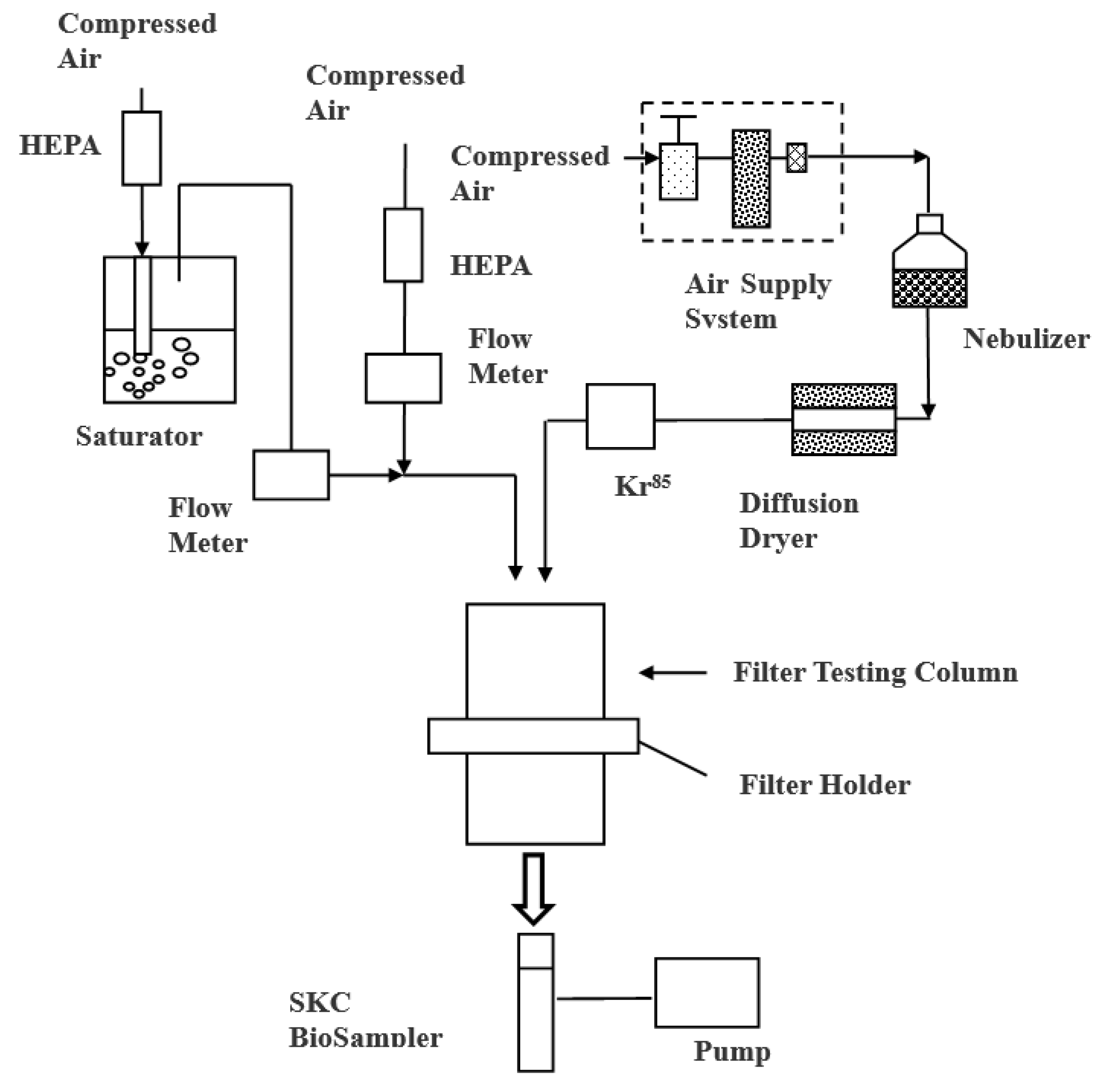
The experimental system for evaluating the filtration and inactivation efficiency is illustrated in Figure 1. The microbial suspension (either E. coli or λ virus) was aerosolized using a Collison three-jet nebulizer (BGI Inc., Waltham, MA, USA) operated at a pressure of 20 psig. The generated bioaerosol stream passed through a diffusion dryer to remove excess moisture and was subsequently neutralized to the Boltzmann equilibrium charge distribution using a Krypton-85 (Kr-85) radioactive neutralizer (Model 3077, TSI Inc., Shoreview, MN, USA). This step was crucial to minimize electrostatic losses during transport and to ensure that particle capture was primarily due to the filter mechanisms rather than incidental charge.
The neutralized bioaerosols were then introduced into a mixing chamber, where they were mixed with HEPA-filtered dilution air. The relative humidity (RH) of the airflow was precisely controlled at three levels (30%, 50%, and 70%) by adjusting the ratio of dry air to humidified air generated by a water vapor saturator. The RH and temperature were continuously monitored using a hygrometer (Q-Trak Plus, Model 8552, TSI Inc., Shoreview, MN, USA). The test filter was mounted in a custom-made filter holder, and the face velocity was controlled at 10, 20, and 30 cm/s, respectively, to simulate different HVAC operating conditions
2.4. Bioaerosol Sampling and Survival Analysis
To differentiate between physical removal and biological inactivation, bioaerosols passing through the filters were collected using a BioSampler (SKC Inc., Eighty Four, PA, USA), a liquid impinger designed to preserve microbial viability during high-efficiency collection. The sampling flow rate was maintained at 12.5 L/min for 10 minutes, with microorganisms collected into 20 mL of phosphate-buffered saline (PBS).
Bacterial Analysis: The collection liquid containing E. coli was serially diluted and plated on Tryptic Soy Agar (TSA). The plates were incubated at 37℃ for 24 h, and colonies were counted to determine the colony-forming units (CFU).
Viral Analysis: The concentration of infectious λ virus was determined using the double-layer agar plaque assay method. The collected viral samples were mixed with E. coli host cells and soft agar, then poured onto solid agar plates. After incubation at 37℃for 16–24 h, the plaques were enumerated as Plaque Forming Units (PFU).
Figure 1.
Schematic diagram of the experimental setup.
2.5. Data Analysis
The bioaerosol survival rate (S) was calculated to quantify the antimicrobial efficacy of the lactoferrin coating. It is defined as the ratio of viable counts downstream of the Lf-coated filter (CLf) to those downstream of the control filter (Ccontrol), under identical experimental conditions:
S (%) = (CLf/Ccontrol) × 100%
Statistical analysis was performed to determine the significance of the effects of lactoferrin concentration, face velocity, and relative humidity on bioaerosol survival. A p-value of less than 0.05 was considered statistically significant.
3. Results
3.1. Inactivation Efficiency Against Bacterial Bioaerosols (E. coli)
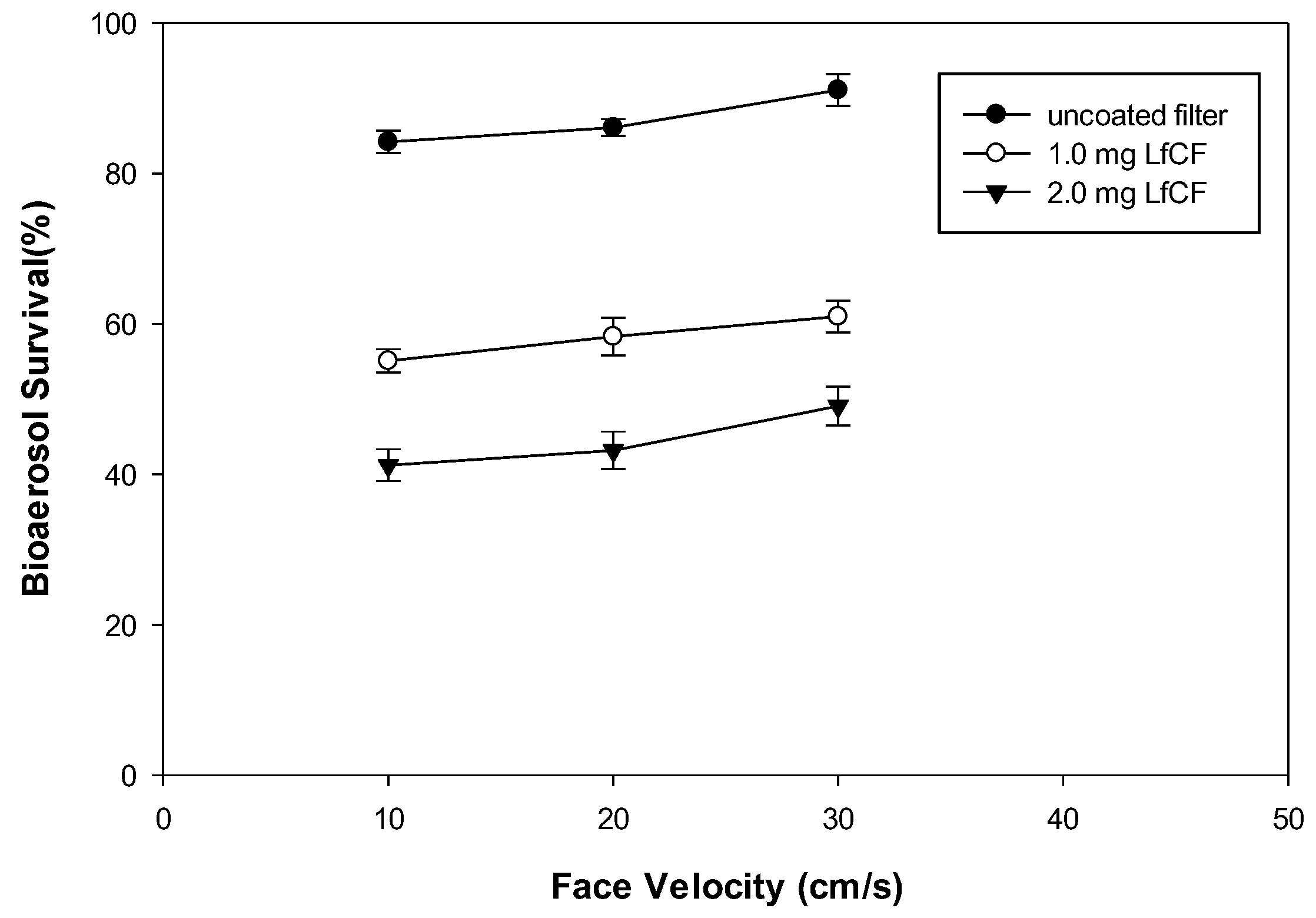
The inactivation performance of the lactoferrin-functionalized filters against bacterial bioaerosols was evaluated by measuring the survival rates of E. coli under different coating concentrations and face velocities. Figure 2 illustrates the survival rates of E. coli passing through the control filter (uncoated) and filters coated with 1.0 mg and 2.0 mg of lactoferrin peptide per 100 mL, respectively.
The results clearly demonstrated that the lactoferrin coating possesses significant antibacterial activity, which acts in a dose-dependent manner. As shown in Figure 2, the survival rates of E. coli on the lactoferrin-coated filters were consistently lower than those on the control filter across all tested face velocities. At the lowest face velocity of 10 cm/s, the filter with the highest lactoferrin loading (2.0 mg) achieved the best performance, reducing the bacterial survival rate to approximately 41% (p < 0.05). Comparing this data with the control group, it implies that while physical filtration captured a portion of the bioaerosols, approximately 59% of the reduction in bacterial viability was specifically attributed to the biochemical inactivation effect of the lactoferrin coating. This calculation differentiates the net antimicrobial efficacy from the physical interception mechanisms inherent to the polypropylene fibers.
However, the inactivation efficiency was found to be negatively correlated with the face velocity. As the face velocity increased from 10 cm/s to 30 cm/s, the survival rate of E. coli on the 2.0 mg lactoferrin-coated filter increased from 41% to approximately 65%. This trend is consistent with our previous findings on chitosan-coated filters [17]. The reduced inactivation efficiency at higher filtration velocities can be attributed to the shorter residence time of the bioaerosols within the filter media. A shorter contact duration limits the interaction time between the bacterial cell walls and the immobilized lactoferrin peptides, thereby reducing the proportion of inactivated bacteria.
Figure 2.
Survival rates of E. coli bioaerosols passing through the control and lactoferrin-coated filters (1.0 mg and 2.0 mg) under different face velocities (10, 20, and 30 cm/s).
Figure 2.
Survival rates of E. coli bioaerosols passing through the control and lactoferrin-coated filters (1.0 mg and 2.0 mg) under different face velocities (10, 20, and 30 cm/s).
3.2. Inactivation Efficiency Against Viral Bioaerosols (λ Virus)
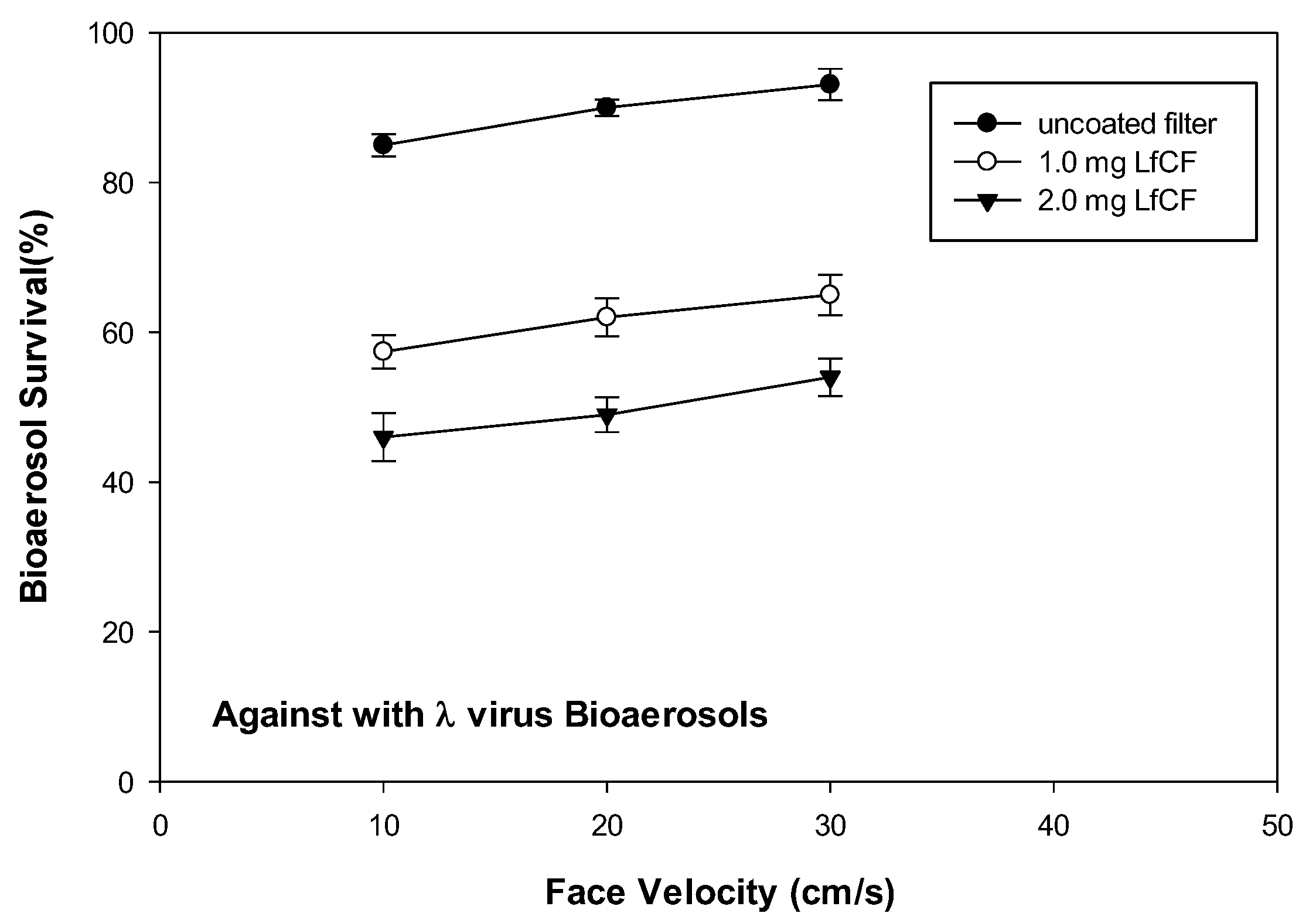
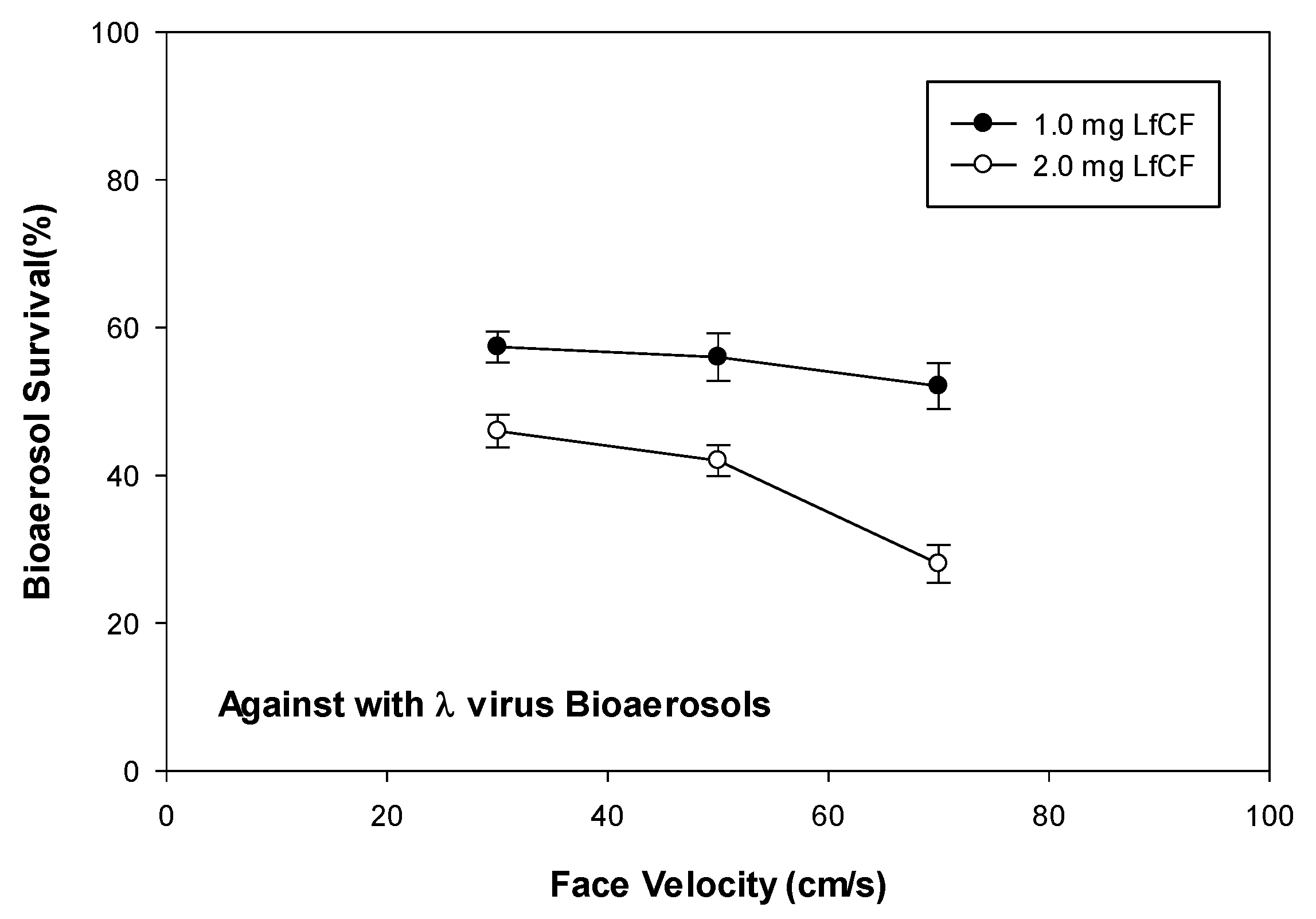
In addition to bacterial testing, the broad-spectrum efficacy of the lactoferrin-functionalized filters was further evaluated using λ virus aerosols. Figure 3 presents the survival rates of λ virus passing through the control and treated filters under identical experimental conditions.
The results exhibited a trend highly similar to that observed in the bacterial experiments, confirming that the antimicrobial activity of lactoferrin is not limited to bacteria but also extends to viral agents. At a face velocity of 10 cm/s, the filter coated with 2.0 mg of lactoferrin achieved a survival rate of approximately 46% (p < 0.05). Applying the same attribution analysis as in the bacterial trials, this result indicates that approximately 54% of the reduction in viral infectivity was specifically attributed to the biochemical inactivation mechanism of the lactoferrin coating, rather than physical filtration alone. This antiviral capability is likely due to the interaction between the cationic lactoferrin peptides and the viral capsid proteins, which can disrupt the structural integrity of the virus or block its ability to infect the host cells.
Consistent with the bacterial results, the antiviral efficiency decreased as the face velocity increased. When the face velocity was raised to 30 cm/s, the survival rate of λ virus on the 2.0 mg coated filter increased to approximately 70%. This phenomenon further supports the "residence time" hypothesis, suggesting that sufficient contact time is a critical factor for the effective inactivation of viral bioaerosols by immobilized antimicrobial agents.
Figure 3.
Survival rates of λ virus bioaerosols passing through the control and lactoferrin-coated filters (1.0 mg and 2.0 mg) under different face velocities (10, 20, and 30 cm/s).
Figure 3.
Survival rates of λ virus bioaerosols passing through the control and lactoferrin-coated filters (1.0 mg and 2.0 mg) under different face velocities (10, 20, and 30 cm/s).
3.3. Environmental Stability: The Effect of Relative Humidity
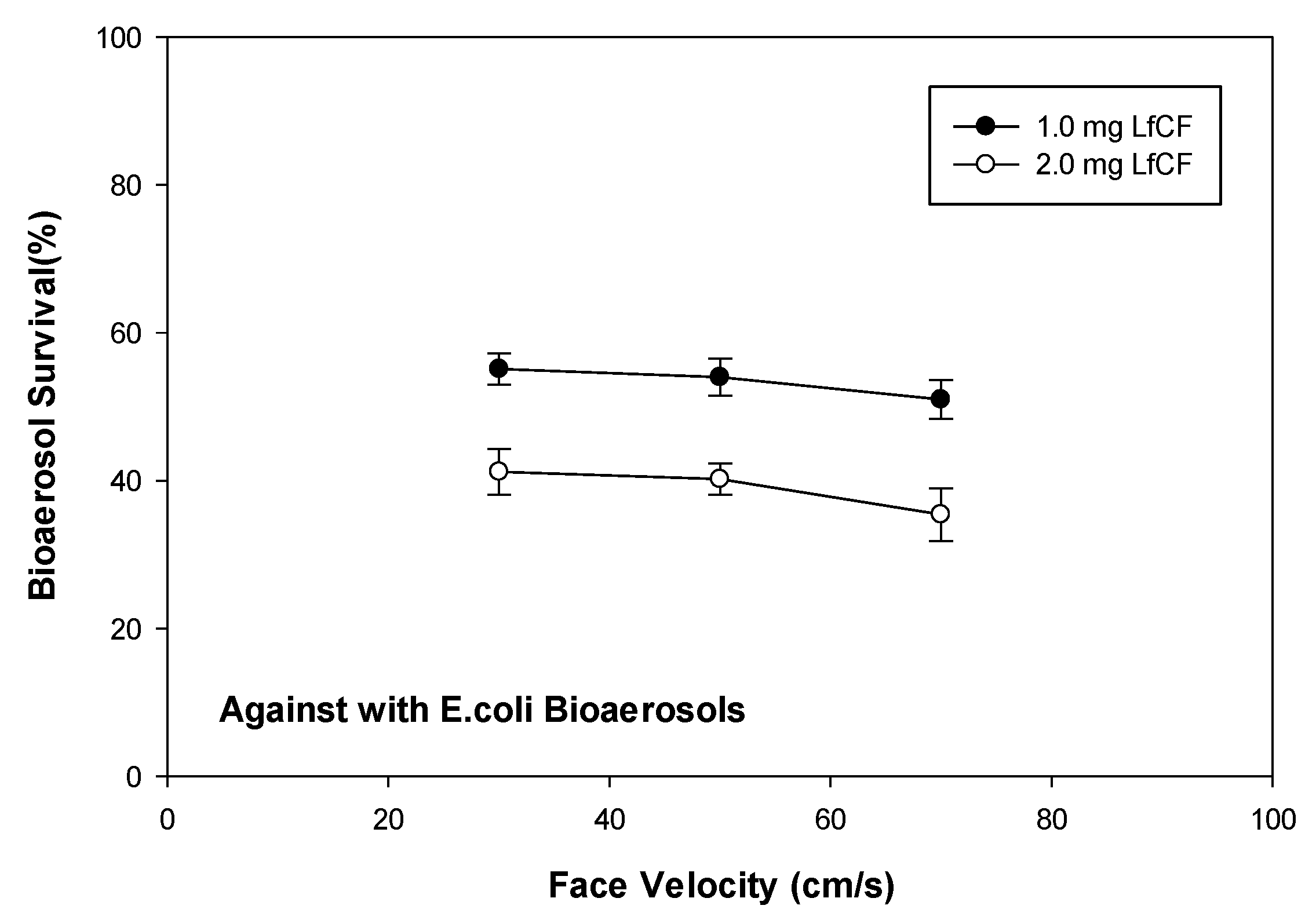
One of the most critical challenges in applying natural biopolymers for air filtration is their sensitivity to environmental moisture. To evaluate the stability of the lactoferrin coating, we investigated the inactivation efficiency against both E. coli and $\lambda$ virus under varying relative humidity (RH) levels (30%, 50%, and 70%) at a fixed face velocity of 10 cm/s. Figure 4 and Figure 5 summarize the survival rates of the tested bioaerosols on the 2.0 mg lactoferrin-coated filters under these conditions.
Remarkably, the results indicated that the antimicrobial performance of the lactoferrin-functionalized filters was independent of the environmental humidity. As shown in Figure 4, the survival rates for both E. coli and λ virus remained relatively constant across the tested RH range. Statistical analysis (ANOVA) confirmed that there was no significant difference (p > 0.05) in the inactivation efficiency among the 30%, 50%, and 70% RH groups.
Figure 4.
Effect of relative humidity (30%, 50%, and 70%) on the survival rates of E. coli bioaerosols collected from the lactoferrin-coated filters (2.0 mg) at a face velocity of 10 cm/s.
Figure 4.
Effect of relative humidity (30%, 50%, and 70%) on the survival rates of E. coli bioaerosols collected from the lactoferrin-coated filters (2.0 mg) at a face velocity of 10 cm/s.
This finding stands in sharp contrast to our previous study on chitosan-coated filters, where a significant decline in antibacterial efficacy was observed as the relative humidity increased [17]. The moisture stability of lactoferrin can likely be attributed to its unique structural properties. Unlike linear polysaccharides like chitosan, which may undergo swelling or charge neutralization in high-humidity environments, lactoferrin is a globular glycoprotein with a more stable tertiary structure. This stability ensures that its active antimicrobial sites remain accessible and functional even in humid conditions, highlighting the superior potential of lactoferrin-coated filters for practical applications in subtropical climates or damp indoor environments.
Figure 5.
Effect of relative humidity (30%, 50%, and 70%) on the survival rates of λ virus bioaerosols collected from the lactoferrin-coated filters (2.0 mg) at a face velocity of 10 cm/s.
Figure 5.
Effect of relative humidity (30%, 50%, and 70%) on the survival rates of λ virus bioaerosols collected from the lactoferrin-coated filters (2.0 mg) at a face velocity of 10 cm/s.
3.4. Application of LfCFs in Field Indoor Environments
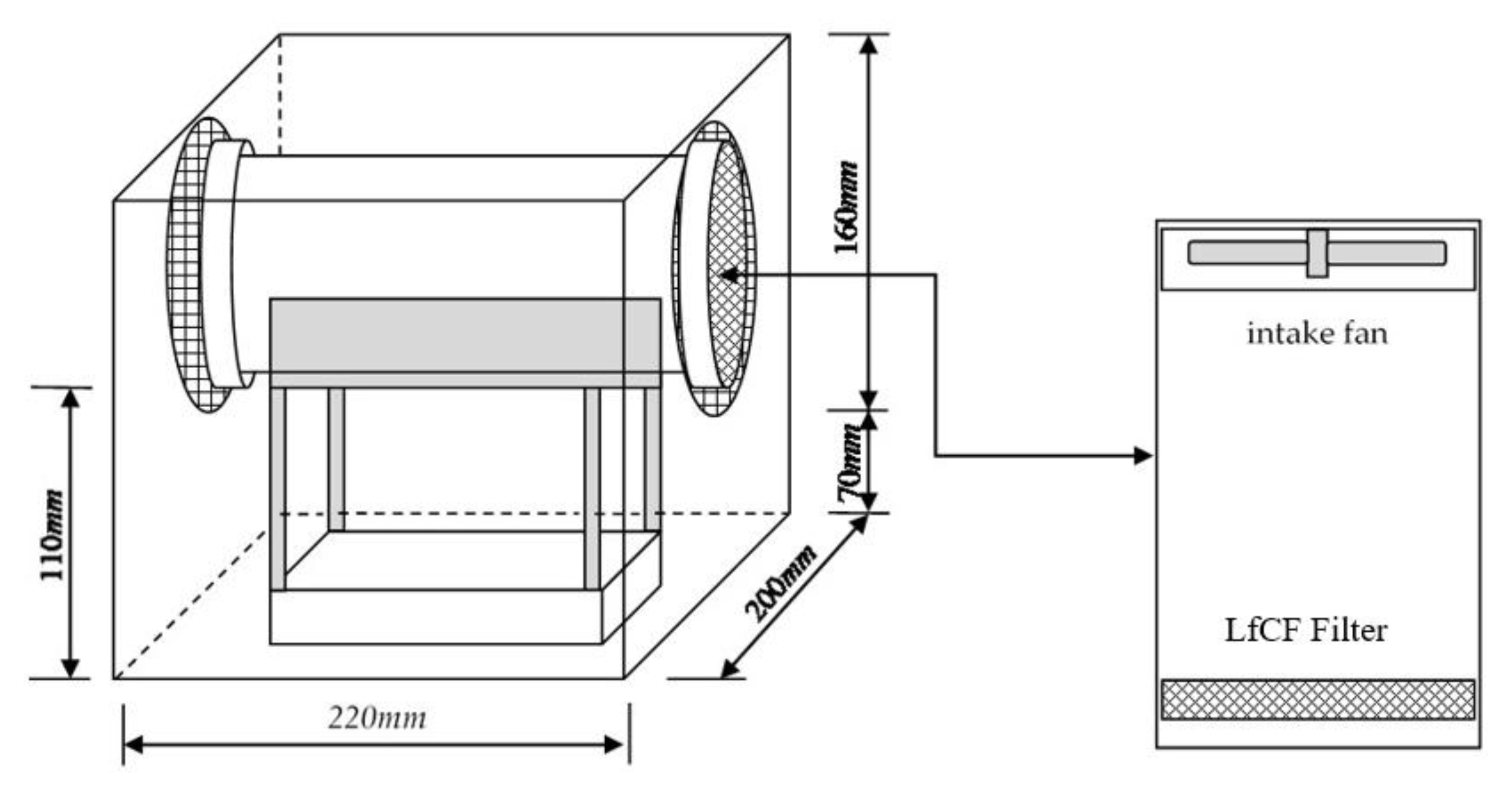
This work applied LfCFs in a real indoor environment to understand their bioaerosol field removal capacity, following the methodology established in our previous study [17]. A dental clinic was chosen as the testing room. The size of the testing room was 3 × 3 × 1.8 m3. A self-made air-cleaning device was fabricated with a 220 × 200 × 160 mm³ stainless-steel body-box and DC-powered fan (12 V, diameter 40 mm, mounted in air intake side). A diameter 100 mm filter holder was installed on the opposite side of the body-box as an exhaust (shown as Figure 5). An untreated air filter or 2.0 mg lactoferrin-coated filter could be placed into the holder to clean the indoor air intake using a fan with 10 cm/s velocity.
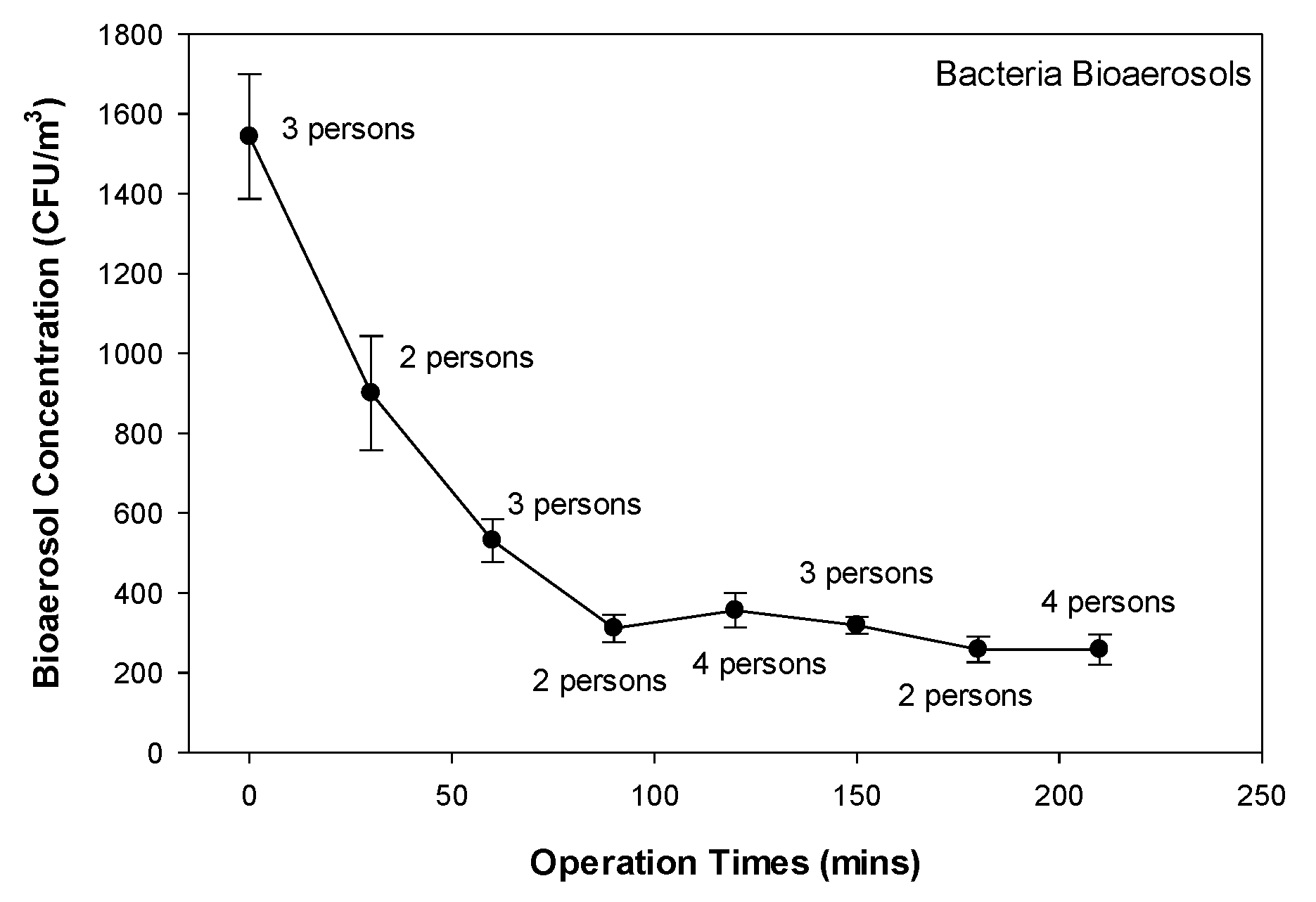
This self-made air-cleaning device was applied approximately 3 h after the end of a day-long dental operation. The bacterial bioaerosols were sampled in triplicate by a BioSampler (SKC Inc., USA) at intervals of 30 min, followed by the collection and cultivation process described in Section 2.4.
The variations in bacterial bioaerosol concentrations over the operation period are illustrated in Figure 6. The initial indoor bacterial concentration was recorded at 1543 ± 156 CFU/m3. Upon activating the filtration system, the concentration rapidly decreased to 311 ± 34 CFU/m3 within the first 90 minutes. Subsequently, the concentration stabilized, reaching a final level of 257.9 ± 38 CFU/m3 at 210 min. This corresponds to an overall removal efficiency of approximately 83.3%, demonstrating the practical applicability of the lactoferrin-coated filter for indoor air quality improvement.
Figure 7.
Survival of bacterial bioaerosols by using the 2.0 mg LfCF filter in the testing room.
4. Discussion
4.1. Broad-Spectrum Antimicrobial Mechanisms: From Bactericidal to Antiviral Activity
The most significant finding of this study is the ability of lactoferrin-functionalized filters to effectively inactivate both bacterial (E. coli) and viral (λ virus) bioaerosols. This broad-spectrum efficacy can be attributed to the unique biochemical properties of the bovine lactoferrin peptide (Lactoferricin B) utilized in the coating.
For Gram-negative bacteria like E. coli, the primary mode of action is driven by the cationic nature of the lactoferrin peptide. The peptide carries a net positive charge, facilitating a strong electrostatic attraction to the negatively charged lipopolysaccharides (LPS) on the bacterial outer membrane [20,24]. Upon binding, the peptide penetrates and disrupts the membrane integrity, leading to the leakage of intracellular contents and subsequent cell death. Additionally, although less dominant in peptide-based forms compared to the whole protein, the iron-sequestering capability of lactoferrin may also contribute by depriving bacteria of iron, an essential nutrient for their growth and metabolic maintenance [21,25].
Regarding the antiviral activity against λ virus, the mechanism differs but is equally effective. λ virus is a non-enveloped DNA virus protected by a protein capsid. Previous studies suggest that lactoferrin inhibits viral infection primarily by blocking the adsorption phase [26,27]. The immobilized lactoferrin peptides on the filter fibers can interact with the viral capsid proteins through charge-based interactions. This binding can either structurally destabilize the virus or sterically hinder the viral tail fibers from recognizing and attaching to the specific receptors on the host E. coli cells. This dual capability—membrane disruption in bacteria and adsorption blocking in viruses—highlights the superiority of lactoferrin as a versatile antimicrobial agent for air filtration applications, offering a distinct advantage over agents that target specific metabolic pathways often limited to a single class of microorganisms.
4.2. Comparative Advantage over Existing Antimicrobial Filtration Technologies
To assess the practical potential of the developed LfCFs, it is essential to benchmark their performance against existing antimicrobial filtration technologies reported in the literature. Currently, inorganic metal nanoparticles, such as silver (AgNPs) and copper oxide (CuO), are among the most extensively studied coating materials due to their potent oligodynamic effects [11,13]. While these metallic agents demonstrate high inactivation efficiencies (>90%), their application in indoor HVAC systems raises safety concerns. Studies have indicated that the detachment of metal nanoparticles from filter media can lead to secondary pollution, posing potential inhalation toxicity and cytotoxicity risks to building occupants [14]. In contrast, bovine lactoferrin is a natural, GRAS (Generally Recognized As Safe) protein widely used in food and pharmaceutical industries. Its inherent biocompatibility ensures that even if trace amounts are released from the filter, they pose negligible health risks to humans, making LfCFs a significantly safer alternative for residential and medical environments.
Another dominant category of antimicrobial filters relies on photocatalytic materials, such as titanium dioxide (TiO2) [12]. While effective, these systems suffer from a major operational limitation: the requirement for continuous ultraviolet (UV) irradiation to generate reactive oxygen species (ROS) for microbial inactivation. This dependency not only increases the complexity and installation cost of the ventilation system but also leads to additional energy consumption. The lactoferrin-coated filters developed in this study, however, operate as a passive control strategy. They do not require external energy sources or activation stimuli. The antimicrobial peptides function autonomously upon contact with the bioaerosols, offering a sustainable, "green," and energy-efficient solution for continuous indoor air purification.
4.3. Environmental Stability: Overcoming the Humidity Limitation of Biopolymers
A critical challenge in the development of bio-based air filters is their susceptibility to environmental moisture. Hydrophilic biopolymers, such as chitosan and alginate, are prone to water absorption in high-humidity environments. Our previous study demonstrated that the antimicrobial efficiency of chitosan-coated filters decreased significantly as the relative humidity (RH) increased from 30% to 70% [17]. This phenomenon is largely attributed to the swelling of the polysaccharide matrix, which can increase the distance between the cationic charge centers and the microbial surface, or lead to the shielding of active amine groups by water molecules, thereby weakening the electrostatic interaction required for cell capture and lysis [18,28].
In contrast, the results of this study (Figure 4) reveal that the lactoferrin-functionalized filters exhibit remarkable stability against humidity variations. The inactivation efficiencies against both bacterial and viral bioaerosols showed no significant difference (p > 0.05) across the tested RH range of 30–70%. This superior stability can be explained by the structural differences between the two biopolymers. Unlike the linear, flexible chains of chitosan, lactoferrin is a globular glycoprotein with a compact, well-defined tertiary structure stabilized by disulfide bonds [20]. This rigid conformation protects its active antimicrobial peptide motifs (e.g., Lactoferricin B) from conformational changes or excessive hydration effects even under humid conditions. Furthermore, the amphipathic nature of the lactoferrin peptides ensures that they remain active at the air-liquid interface formed on the fiber surface, maintaining their ability to insert into microbial membranes effectively.
The ability to maintain consistent performance under high-humidity conditions is of significant practical value, particularly for applications in subtropical climates or within HVAC systems where cooling coils often generate damp environments. The lactoferrin-coated filter therefore represents a robust solution that overcomes the major "moisture-sensitivity" bottleneck inherent to traditional biopolymer-based filtration technologies.
4.4. Field Implications and Practical Feasibility in High-Risk
Environments While laboratory chamber studies provide controlled conditions to determine intrinsic kinetic parameters, the complexity of real-world indoor environments often presents additional challenges, such as fluctuating airflow patterns, varying background concentrations, and continuous emission sources. The field test conducted in a dental clinic (Section 3.4) served as a critical validation of the practical feasibility of LfCFs.
Dental clinics are characterized by the generation of high-concentration bioaerosols containing pathogens from patient saliva and blood during aerosol-generating procedures (AGPs) [5]. Despite these harsh conditions, the air cleaner equipped with the 2.0 mg lactoferrin-coated filter successfully maintained a low bacterial background concentration, achieving an overall removal efficiency of ~83% over a 3.5-hour operation period. This "Lab-to-Field" consistency suggests that the lactoferrin coating is robust enough to function effectively in dynamic environments.
Furthermore, the potential of lactoferrin to inhibit biofilm formation, as noted by Siqueira et al. [29], offers an additional advantage for long-term filter operation. In traditional filters, captured microorganisms can form biofilms on fiber surfaces, leading to clogging or secondary release. The broad-spectrum antimicrobial and anti-biofilm properties of lactoferrin could mitigate this risk, extending the filter's service life and safety. Consequently, LfCFs hold great promise not only for clinical settings but also for other high-occupancy spaces such as schools, public transportation, and long-term care facilities, where bioaerosol transmission risks are elevated.
5. Conclusions
In this study, we successfully developed a novel antimicrobial air filter by functionalizing polypropylene nonwoven fabrics with bovine lactoferrin peptide. The experimental results and field validation provide compelling evidence for its potential as a next-generation air cleaning technology.
The lactoferrin-coated filters demonstrated significant inactivation capabilities against both bacterial (E. coli) and viral (λvirus) bioaerosols. The mechanism is dose-dependent, with the 2.0 mg coating achieving the highest performance. This dual-action capability, driven by membrane disruption and viral adsorption blocking, offers a distinct advantage over single-target antimicrobial agents.
Unlike traditional hydrophilic biopolymers that lose efficacy in damp environments, the lactoferrin coating maintained consistent antimicrobial performance across a wide range of relative humidities (30%–70%). This humidity-independent characteristic addresses a critical bottleneck in bio-based filtration, making it highly suitable for applications in subtropical climates or high-humidity HVAC systems.
The laboratory findings were successfully translated to a real-world setting. In a dental clinic field test using BioSamplers, the developed filter achieved an overall bacterial removal efficiency of approximately 83.3% over a 3.5-hour operation period. This confirms that the lactoferrin-functionalized filter is a robust, safe, and energy-efficient solution for improving indoor air quality in high-risk environments.
Author Contributions
Conceptualization, S.Y.; methodology, S.Y. and Y.-F.H.; software, S.Y. and C.-Y.C.; validation, S.Y. and Y.-F.H.; formal analysis, H.-C.H.; investigation, S.Y.; resources, S.Y.; data curation, S.Y. and C.-Y.C.; writing—original draft preparation, S.Y..; writing—review and editing, S.Y. and C.-Y.C.; visualization, S.Y. and C.-Y.C. All authors have read and agreed to the published version of the manuscript.
Funding
This study was supported by the National Science Council of Republic of China project.
Institutional Review Board Statement
Not applicable.
Informed Consent Statement
Not applicable.
Data Availability Statement
The data supporting the results in the current study are available from the corresponding author on reasonable request.
Conflicts of Interest
The authors declare no conflict of interest.
References
- Mandal, J.; Overmans, S. Potential of air filters and masks in the fight against airborne transmission of SARS-CoV-2. Appl. Microbiol. Biotechnol. 2020, 104, 9959–9969. [Google Scholar]
- Morawska, L.; Milton, D.K. It is time to address airborne transmission of COVID-19. Science 2020, 369, 90–103. [Google Scholar]
- Prussin, A.J.; Marr, L.C. Sources of airborne microorganisms in the built environment. Microbiome 2015, 3, 78. [Google Scholar] [CrossRef]
- Douwes, J.; Thorne, P.; Pearce, N.; Heederik, D. Bioaerosol health effects and exposure assessment: Progress and prospects. Ann. Occup. Hyg. 2003, 47, 187–200. [Google Scholar] [CrossRef]
- Zhang, X.; Xu, W.; Liao, L.; Qin, A.; Mo, S.; Fan, Y. Harmful Risk of Bioaerosol Pollution at Major Indoor Sites of a Summer Campus in Guilin City. Atmosphere 2024, 15, 696. [Google Scholar] [CrossRef]
- Agarwal, N.; Meena, C.S.; Raj, B.P.; Saini, L.; Kumar, A.; Gopalakrishnan, N. Indoor air quality improvement in COVID-19 pandemic: Review. Sustain. Cities Soc. 2021, 70, 102942. [Google Scholar] [CrossRef]
- Lu, J.; Gu, J.; Li, K.; Xu, C.; Su, W.; Lai, Z.; Zhou, D.; Yu, C.; Xu, B.; Yang, Z. COVID-19 outbreak associated with air conditioning in restaurant, Guangzhou, China, 2020. Emerg. Infect. Dis. 2020, 26, 1628–1631. [Google Scholar] [CrossRef]
- Correia, G.; Rodrigues, L.; Gameiro da Silva, M.; Gonçalves, T. Airborne route and bad use of ventilation systems as non-negligible factors in SARS-CoV-2 transmission. Med. Hypotheses 2020, 141, 109781. [Google Scholar] [CrossRef]
- Yang, S.; Chuang, C.-Y.; Huang, H.-C.; Fang, W. Inactivation of Avian Influenza Virus Aerosol Using Membrane-Less Electrolyzed Water Spraying. Aerobiology 2023, 1, 6–18. [Google Scholar] [CrossRef]
- Chuang, C.-Y.; Hsu, Y.-F.; Yang, S. Inactivating Ability Evaluation on Bioaerosols by Carbon-Nanotube Coated Plasma Treatment for Indoor Air Cleaning. Coatings 2022, 12, 1497. [Google Scholar] [CrossRef]
- Zhang, Y.; Duan, X. Disinfection of airborne bacteria by ozone in indoor environments: Efficacy and mechanisms. J. Hazard. Mater. 2022, 424, 127602. [Google Scholar]
- Zhang, Z.; Ji, H.; He, D. Recent advances in antimicrobial air filters for controlling bioaerosols: A review. Sep. Purif. Technol. 2022, 297, 121516. [Google Scholar]
- Balagna, C.; Perero, S.; Percivalle, E.; Nepita, I.; Ferraris, M. Virucidal effect of silver nanoparticles coated on polymeric fibers against SARS-CoV-2. Mater. Lett. 2021, 291, 129551. [Google Scholar]
- Joe, Y.H.; Park, D.H.; Hwang, J. Evaluation of Ag-coated air filters for the removal of airborne bacteria and viruses. J. Aerosol Sci. 2016, 97, 17–26. [Google Scholar]
- Li, Y.; Liu, C.; Yang, Z. Photocatalytic inactivation of bioaerosols by TiO2-coated filters under visible light irradiation. Chem. Eng. J. 2023, 451, 138541. [Google Scholar]
- Shan, H.; Zhou, J. Graphene oxide-functionalized fibrous filters for high-efficiency capture and inactivation of bacteria and viruses. ACS Appl. Mater. Interfaces 2021, 13, 4392–4403. [Google Scholar]
- Hsu, Y.-F.; Chuang, C.-Y.; Yang, S. Evaluation of the Bioaerosol Inactivation Ability of Chitosan-Coated Antimicrobial Filters. Int. J. Environ. Res. Public Health 2021, 18, 7183. [Google Scholar] [CrossRef]
- Mi, X.; Su, Z. Moisture sensitivity of biopolymer-based air filters: Challenges and solutions. Sustain. Mater. Technol. 2023, 36, e00621. [Google Scholar]
- González-Chávez, S.A.; Arévalo-Gallegos, S.; Rascón-Cruz, Q. Lactoferrin: Structure, function and applications. Int. J. Antimicrob. Agents 2009, 33, 301.e1–301.e8. [Google Scholar] [CrossRef] [PubMed]
- Hao, L.; Shan, Q.; Wei, J. Lactoferrin: A natural antimicrobial protein with broad-spectrum activity against bacteria and viruses. Biomolecules 2023, 13, 452. [Google Scholar]
- Kell, D.B.; Heyden, E.L.; Pretorius, E. The biology of lactoferrin, an iron-binding protein that can help defend against viruses and bacteria. Front. Immunol. 2020, 11, 1221. [Google Scholar] [CrossRef] [PubMed]
- Berlutti, F.; Pantanella, F. Antiviral properties of lactoferrin—A natural immunity molecule. Molecules 2011, 16, 6992–7018. [Google Scholar] [CrossRef] [PubMed]
- Superti, F. Lactoferrin from Bovine Milk: A Protective Companion for Life. Nutrients 2020, 12, 2562. [Google Scholar] [CrossRef]
- Jenssen, H.; Hancock, R.E. Antimicrobial properties of lactoferrin. Biochimie 2009, 91, 19–29. [Google Scholar] [CrossRef]
- Embleton, N.D.; Berrington, J.E. Lactoferrin: Antimicrobial mechanisms and clinical applications. Semin. Fetal Neonatal Med. 2013, 18, 143–149. [Google Scholar] [CrossRef]
- Wakabayashi, H.; Oda, H. Lactoferrin as a potential natural antiviral agent. J. Infect. Chemother. 2022, 28, 140–147. [Google Scholar]
- Drago-Serrano, M.E.; Campos-Rodríguez, R. Lactoferrin: A bioactive protein to control viral infections. Nutrients 2021, 13, 4661. [Google Scholar]
- Wang, B.; Timilsena, Y.P. Lactoferrin-fortified encapsulation systems: A review. Trends Food Sci. Technol. 2022, 119, 234–246. [Google Scholar]
- Siqueira, C.P.; Bueno, J. Lactoferrin-coated surfaces for preventing biofilm formation: A promising strategy. Colloids Surf. B Biointerfaces 2023, 222, 113045. [Google Scholar]
Figure 6.
Schematic diagram of self-made air-cleaning device.
Disclaimer/Publisher’s Note: The statements, opinions and data contained in all publications are solely those of the individual author(s) and contributor(s) and not of MDPI and/or the editor(s). MDPI and/or the editor(s) disclaim responsibility for any injury to people or property resulting from any ideas, methods, instructions or products referred to in the content. |
© 2026 by the authors. Licensee MDPI, Basel, Switzerland. This article is an open access article distributed under the terms and conditions of the Creative Commons Attribution (CC BY) license (http://creativecommons.org/licenses/by/4.0/).
Copyright: This open access article is published under a Creative Commons CC BY 4.0 license, which permit the free download, distribution, and reuse, provided that the author and preprint are cited in any reuse.