

Submitted:
02 February 2026
Posted:
03 February 2026
You are already at the latest version
Abstract
Water temperature is a key ecological and metabolic factor in rivers and other continental systems, and thermal pollution caused by human activities (dams, discharges, urban stormwater, industrial cooling) alters the natural thermal regime of rivers, modifying the structure and functioning of communities (primary producers, macroinvertebrates and fish) and favouring thermophilic and often invasive species. Wastewater treatment plants (WWTPs) generate and discharge excess heat: their effluents are often several degrees above the temperature of the receiving river, which increases the metabolism of communities, favours eutrophication and can intensify the effects of nutrients and toxic pollutants. This excess heat from wastewater is a major renewable energy resource that can be recovered using heat pumps, both in buildings and in the treatment plants themselves, as well as in district heating networks, reducing the demand for fossil fuels and CO₂ emissions. Heat recovery in WWTPs, especially from treated effluent connected to district networks, offers very high technical potential (tens of TWh per year on a national scale in some countries) and can contribute significantly to more sustainable urban energy systems. Heat recovery in WWTPs can minimise the thermal impact of effluents on receiving rivers, reducing the negative effects of discharges on the natural environment.
Keywords:
freshwater ecology
; heat recovery
; renewable thermal energy
; thermal pollution
; wastewater treatment plants
; water temperature
1. Introduction
In December 2018, wastewater was officially recognized by the European Union as a renewable energy source, and the heat recovery from it can be included in the efforts to reduce the greenhouse gas emissions [1]. Given Wastewater Treatment Plants (WWTP) are able generate huge heat excess, exists margin to couple wastewater infrastructure to increase the energy efficiency at system level, to allow energy solutions to heat, to integer volatile renewable electricity and, thus, to promote a sustainable energetic transition and a cleaner production [2].
The use of heat from wastewater is a relatively new concept in the field of renewable energy [3,4]. It could be said that the difference in temperature between a wastewater effluent -however highly treated it may be- and the receiving river is telling us about wasted heat energy that has also become a pollutant.
The objective of this review is to analyze the potential effect that the cooling of the effluents from the WWTP can have to mitigate the undesirable effect of heating that the discharge of the uncooled effluent itself can have, and its possible collateral effect as a mitigator of the negative effects of climate change.
2. The Importance of Temperature as an Ecological and Metabolic Factor
2.1. Temperature and Ecological Niche
Temperature is one of the most significant environmental factors in relation to the physical, chemical, and biological processes that occur in inland waters [5,6] and, consequently, has a major influence on the biological success of fish and other aquatic organisms [7,8,9]. A general overview of the warming effects on rivers analyzing their ecological response and loose of resilience are presented by Johnson et al. [10]. The relative importance of thermal emissions impacts was found relevant for aquatic ecosystems of the rivers Aare and Rhine compared to other stressors, such as chemicals and nutrients [11]
Under natural conditions, temperature of continental waters ranges from -2°C to almost 100°C, and no organism can live across the entire range. In the Earth's temperate zone, the temperature of continental waters normally varies between 0°C and 25°C, reaching 30°C in tropical rivers [12] and 40°C in rivers in hot desert areas [13]. Temperatures above only occur naturally in volcanic waters and hot springs [14]. Most aquatic organisms have little physiological control over their body temperature (they are poikilothermic organisms), so their metabolism is conditioned by the temperature of the waters they inhabit. Some aquatic species can only live within a narrow range of temperature fluctuations (stenotherms), while others have a greater tolerance to thermal fluctuations (eurytherms). Most of aquatic organisms live between -2°C and 37°C, although others can thrive in warmer waters, such as some fish (e.g., Cyprinodon julimes, which can withstand temperatures of 44°C and, eventually, up to 46°C [15], among others [16]), and invertebrates (e.g., Thermosphaeroma subequalum, which can withstand temperatures of 45°C [17]). Above 60°C, only prokaryotic organisms are present, and only cyanobacteria can carry out aerobic photosynthesis under these conditions, being 73°C the maximum limit for any type of photosynthesis [18]. Above that temperature, only chemosynthetic organisms can thrive. Numerous thermophilic bacteria that inhabit hot springs such as those in Yellowstone have their optimum in the range of 65 to 75°C. In marine environments, where pressure allows for a higher boiling point, some hyperthermophilic bacteria have been isolated above 110°C [18,19].
2.2. Temperature in Water Treatment
Heat favors increased activity rates of most chemical and physical processes, and organismal respiration increases with temperature within the organisms' temperature tolerance range [20]. Temperature can influence biological reactions in two ways: by influencing the rates of enzyme-catalyzed reactions and by affecting the rate of substrate diffusion into cells [21]. Within the thermal range of microorganism function, most reaction rate coefficients increase as temperature increases, but eventually decrease as heat begins to inactivate cellular enzymes and denature other critical proteins and cellular structures within cells [19].
Cellular retention time, hydraulic residence time, redox conditions, temperature, concentration and acclimatization of the sludge used, as well as the technology employed, are common operating parameters in a WWTP, which can significantly influence the treatment process [22].
Wastewater from homes arrives at a higher temperature than would be expected without the influence of domestic use, and this favors its biological treatment. In fact, reducing the temperature of the water in wastewater collectors could negatively affect its treatment or, at the very least, slow down the work of the WWTPs [23]. However, the work of wastewater treatment plants can release heat (e.g., nitrification and denitrification processes are exothermic). Figure 1 shows an example of the contribution to the heat balance of different elements in a wastewater treatment plant in Rotterdam, Netherlands [24].
3. Thermal Pollution
The causes of anthropogenic temperature alteration in natural water bodies can be grouped into: i) deforestation and afforestation, ii) damming of running waters, and iii) effluent discharge [25,26]. Strictly speaking, the last reason is the one associated with the concept of thermal pollution. Caissie [6] defines thermal pollution as a reduction in water quality caused by temperature changes in natural water bodies as a result of human activities. It can have a great influence on aquatic ecosystems, since most aquatic organisms tolerate only a relatively small temperature range (e.g., [27,28,29,30]). However, aquatic plants are more resistant to high temperatures [25]. Not only the value of the recorded temperature is important, but also the moment of the phenological cycle in which it occurs, since fundamental phases of it can be altered (such as spawning [31], or hatching [32]).
Thermal pollution can occur when the water mass is used to cool a system (factories or power plants [25,33]) or when water is accumulated and then discharged at different temperatures into the receiving body (reservoirs [34]). Reservoirs reduce night-day oscillations because of the strong thermal inertia of the large, accumulated water mass (Figure 2). Another effect of reservoirs is to alter the discharge temperature of the drainage water, which can undergo very significant cooling and heating with respect to the natural thermal regime, causing disturbances in the biological communities located downstream of the discharge [35,36,37,38,39].
This section may be divided by subheadings. It should provide a concise and precise description of the experimental results, their interpretation, as well as the experimental conclusions that can be drawn.
Urban stormwater is another factor of thermal pollution, as it is typically warmer than expected due to its circulation through the city [40,41]. With a lower density than the receiving water body, the contribution of heated water discharged into another water body causes density currents, particularly noticeable at the free surface and in the upper layers of the water, where it gives rise to a thermal plume [42]. After the heated water from the effluent and the river water has completely mixed, the change in water temperature depends solely on the heat exchange with the environment. Heat exchange with the riverbed and banks can also be considered [42], which is negligible in most cases, as it is very small compared to the value of the heat exchange between the water surface and the atmosphere. However, when the heated water effluent is discharged near or on the riverbank, it can have significant value [43].
4. Water Temperature and Climate Change
Many studies predict the impact of climate change on the temperature of inland waters [47,48] and, by extension, on the organisms that inhabit them [32,49,50,51,52].
Air temperature has shown an upward trend worldwide over the past century, becoming more pronounced since the early 1970s [53,54]. The IPCC's Sixth Assessment Report (AR6) [54] predicts that widespread air temperature increases will continue throughout the 21st century. Van Vliet et al. [48], using the IPCC Fourth Assessment Report (AR) SRES A2 scenario [55,56], predict that this increase will affect river temperatures by between 0.8°C and 1.6°C for the period 2071–2100 relative to the period 1971–2000. These changes are expected to be larger under the most pessimistic scenarios of the Sixth Assessment Report. They predict that the largest increases will occur in the United States of America, Europe, eastern China, and parts of southern Africa and Australia.
Groundwater temperature will also be affected by the temperature increases predicted by the IPCC models. Under a medium-severity scenario, groundwater at the depth of the water table (excluding permafrost) is estimated to warm by an average of 2.1°C between 2000 and 2100, with the lowest warming rates in mountainous regions such as the Andes and the Rocky Mountains [57].
Because of temperature increases, aquatic ecosystems have already experienced global water temperature changes (e.g., Australia [58], North America [59], Europe [60], Asia [61]). This warming will be exacerbated by reduced flow in many rivers, as has been shown by several authors [62,63]. Rivers with low base flows are more sensitive to warming [64]. Consequently, climate change will increase the impacts on aquatic ecosystems [65,66,67,68,69] and on habitat availability for many fish species due to increased temperatures and reduced flow rates [70,71,72]. Van Vliet et al. [48] predict mean flow reductions in the range of 25–50% at southern and central latitudes in Europe (at the top of the range in the south, and at the bottom of the range at central latitudes, including the British Isles), and increases between 0% and 25% in the Scandinavian Peninsula, which could increase up to 50% inland. However, it should not be forgotten that the climate scenarios used by these authors are more benign than the most recent ones from the IPCC Sixth Assessment Report [54].
5. Wastewater Temperature Recovery
Thermal energy can be recovered with high efficiency from the source in the buildings where it is generated [73] or in wastewater treatment plants [74]. The potential for recoverable thermal energy from wastewater is much greater than the chemical energy contained in it [75]. In general, wastewater treatment involves raising the water temperature to enhance biodegradation. Ideally, the energy from treated wastewater can be used in the WWTP itself, e.g., for heating the digester tank or for low-temperature sludge drying. Both applications allow the energy of wastewater to be harnessed at a temperature level that is attractive for heat pumps [76].
Wastewater effluents are typically warmer than the rivers to which they are discharged. Excess thermal energy could be recovered, minimizing the thermal impact on the receiving river. Wilson and Worral’s [77] analysis using data from England for the period 2000–2019 shows that effluent temperatures were on average 2.2°C higher than receiving river temperatures, with a corresponding annual heat recovery potential of ∼18.3 TW h that could meet ∼3.6% of UK heat demand. Temperature of raw wastewater (wastewater that has completed treatment, before leaving the facility) was on average 1.5°C higher than effluent temperatures, implying that an additional ∼12.5 TW h is lost annually during treatment before discharge. In the same study, the largest temperature differences between effluent and rivers, and raw wastewater and effluent, occurred during the autumn and winter months, meaning that the highest seasonal heat recovery potential coincides with the highest heat demand. The temperature difference between effluents and rivers increased at an average rate of ~0.03°C per year between 2000 and 2019. Wastewater treatment plants (WWTPs) discharge continuously and are located near human settlements, which account for most of the heat demand. Therefore, heat could potentially be recovered and, in addition, the environmental impact on rivers could be reduced. Furthermore, Neugebauer et al. [78] calculated that in Austria alone, wastewater treatment plants can provide 40% of the installed thermal capacity in district heating networks without resorting to combined energy sources.
There are already numerous examples of heat recovery from wastewater in Switzerland, Finland, Norway, Sweden, Canada, Japan, and so on [77]. The first WWTP with a heat recovery system was the one in Obermeilen (Switzerland) and was built in 1975 [79].
The first heat recovery plant in a Japanese WWTP was built in Tokyo in 1987 to serve its administrative buildings [80]. Authors report that the heat energy lost in the sewage system of the Tokyo metropolitan district is equivalent to the energy consumed by 400,000 homes for heating and cooling, which gives an idea of the potential for energy recovery. Another major project was carried out in Sapporo, where recovered heat energy was reused to melt snow on the streets [80]. Mikkonen et al. [81] estimate the recoverable heat energy from wastewater in Sweden at 720 GW h per year for each degree Celsius of temperature recovered. The use of heat pump technology could also increase the overall efficiency of the heat recovery system by providing cooling energy during the summer season [73]. Lingsten and Lundkvist [82] quantify the consumption of water and sewage services in Sweden at 1.3 TW h of electricity and around 0.5 TW h of other energy sources, excluding the energy content of chemicals used in water treatment. WWTPs are the largest electricity consumer at 630 GW h, with aeration consuming 24 % of the electricity. In turn, WWTPs produce around 0.6 TW h of biogas and around 2.5 TW h of thermal energy. Đurđević et al. [83] modelled wastewater utilization in the city of Rijeka, Croatia. The case study site had an operating WWTP with a capacity of 540,000 population equivalents and 3000 L/s of effluent water at full load. Based on the considered water flow rate and a temperature drop of 6.5 ⁰C, a heat recovery potential of 75 MW was obtained, which was 72% of the capacity of the existing natural gas plant.
The energy potential of treated wastewater is much greater than that of raw wastewater. This is because, downstream of the wastewater treatment plant, the wastewater can be cooled much more than upstream—up to 8°C. For aquatic fauna, such cooling of the wastewater is even desirable. Unfortunately, the high energy potential of treated wastewater cannot be utilized in many locations because wastewater treatment plants are located outside residential areas, where heating is unavailable [76].
Ideally, the energy from treated wastewater can be used within the WWTP itself, either for heating the digester tank or for low-temperature sludge drying. Both applications allow the energy of wastewater to be harnessed at a temperature level that is attractive to heat pumps. However, there are few examples of the internal use of wastewater heat in WWTPs. This is because many wastewater treatment plants have large amounts of waste heat available from the use of waste gases in combined heat and power units. In the future, this idea could attract increasing interest if larger wastewater treatment plants increasingly condition their waste gas to meet natural gas quality standards and thus be able to feed it into the public gas grid [76].
In Switzerland, in 2008, there were 20 WWTPs that externally utilized the heat from treated wastewater [76]. A distinction can be made between two heat supply systems: cold and hot district heating. In the former, treated wastewater is extracted from the wastewater treatment plant outlet and pumped through a "cold" main pipeline to the consumer. Heat generation using heat pumps occurs decentrally. After heat extraction, the cooled wastewater is returned to the wastewater treatment plant or discharged directly into a receiving stream or river. In the case of the "hot" district heating system, usable heat is generated centrally at the wastewater treatment plant or in a neighbouring building. In the case of the Swiss capital's wastewater treatment plant is designed for approximately 350,000 residents. It has a heat recovery potential of over 30 MW from treated wastewater. Part of this potential (1,400 kW) is used in the heating system of the neighbouring Bremgarten district. The Bremgarten Cooperative sells a total of 5 GWh of heat per year. Around 60% of this heat comes from wastewater. Due to the significant height difference between the wastewater treatment plant and the heat users, the network is divided into three sections with intermediate heat exchangers. The measured annual coefficient of performance of the wastewater heat pump system (including network pumps) is 3.0 [76].
Experience has shown that wastewater heat pumps operate efficiently. Primary energy consumption relative to the useful energy produced is much lower than with traditional heating and cooling systems. Compared to a condensing gas heater, a wastewater heat pump (with a peak-load boiler) uses 10% less primary energy, and even 23% less than an oil heater. Furthermore, compared to other heat pump systems (groundwater, geothermal probes), wastewater systems perform well. This is because the heat source has favorable temperatures year-round. When properly planned and optimally operated, wastewater systems achieve high annual coefficients of performance. The highest value measured in Switzerland at a facility in Basel is over 7 [76], and the CO2 footprint is reduced by 78% compared to an oil heating system.
Recovering heat energy from WWTP effluent has advantages over recovering wastewater closer to its source, before it enters the WWTP [4,84]: i) flow rate and temperature variations are typically small and predictable, which improves system management [85]; ii) the use of treated wastewater reduces equipment fouling and clogging; and iii) it has no negative effects on biological wastewater treatment [86]. At the same time, although heat energy is lost on its way through the sewer network [87], the exothermic biological processes taking place in wastewater treatment plants also raise its temperature. Recovered heat can be used internally at WWTPs, but the amount often exceeds internal heat requirements, and it is feasible to deliver the excess heat to a local district heating system, if one exists.
In 2005, thermal energy utilization through heat pumps was estimated to produce 22% of the CO2 emissions produced by an oil-fired plant and 35% of those produced by a gas-fired plant [88]. The efficiency of heat recovery technology is constantly evolving, so it is expected that these figures will improve. Furthermore, although further development is needed, thermal energy can be stored in thermal accumulators, using materials with suitable thermodynamic properties to capture the heat produced [89].
One issue of concern is the heat loss between the recovery station and the end user. The importance of the spatial proximity of the heat recovery location for potential users was highlighted by Neugebauer et al. [78]. Factors to consider include the number of operating hours and thermal losses due to heat transport [90]. These contributions have provided useful insights into the impact of temporal and spatial variations on the performance of heat recovery systems.
Spriet et al. [2] propose a three-step methodology to ensure the optimal use of the thermal energy at hand, which includes an energy analysis at the wastewater treatment plant, a spatiotemporal analysis of supply and demand in areas of potential supply, and an integrated analysis, superimposing the supply and demand profiles. These authors conclude that wastewater constitutes a suitable energy source to supply baseloads, but the spatiotemporal patterns reveal that both periods of excess wastewater heating potential and periods requiring additional heating will occur in bivalent systems. Therefore, the urban and regional spatial grid, the mix of land uses and their density, largely determine the design and usable quantity of this renewable energy source. Finally, it can be concluded that the use of wastewater energy provides viable and valuable contributions to sustainable urban energy supply systems and cleaner production if the electricity sources for the respective heat pump systems are renewable and guarantee a low to zero emission operation.
6. Observed and Potential Thermal Impact of WWTP Effluents on Receiving Rivers
Discharges from wastewater treatment plants (WWTPs) can have a significant thermal impact on receiving rivers, and this impact can vary seasonally [91]. These authors observed that, on average, the wastewater effluent was 2.2°C warmer than the receiving river water, which can raise the temperature of the river. Such a thermal difference was also related to secondary and tertiary treatments in WWTPs: secondary activated sludge treatment (SAS) has a negative effect on stream temperature compared to secondary biological treatment (SB). On the other hand, tertiary activated sludge treatment (TAS) has a positive effect on stream temperature compared to tertiary biological treatment. The thermal influence of a discharge can range from a few hundred metres to several kilometres downstream, depending on factors such as the temperature difference, the ratio between the discharged flow and the receptor, flow velocity, the turbulence of the mixture, the morphology of the channel, and the environmental conditions (ambient temperature, solar radiation, wind).
Sewage effluent from WWTP resulted in elevated metabolic rates on receiving fluvial system. Zhang & Chadwick [92] found that the Eutrophication caused by WWPT is promoted jointly by nutrient supply and water temperature. When assessing the effects of alterations in the thermal regime, it is more useful to know the temperatures that organisms prefer and those they avoid than the temperatures that are lethal to them. However, both critical and lethal temperatures are only indicative of thermal impacts on aquatic ecosystems, since these impacts generally take place in streams with fluctuating temperature regimes, in contrast to the constant temperatures at which the tests for their assessment are conducted. Furthermore, in this case, the indirect effects can be far more significant than those directly caused by changes in temperature regimes that alter the aquatic environment and modify both the physical and biological habitat. Thus, in the first case, the alteration of water viscosity must be highlighted, which causes changes in river substrate (an essential element of the benthic and interstitial habitats that are required by most aquatic species), as it modifies the transport-sedimentation balance of solids. Temperature also controls the evaporation rate, and the saturation point of dissolved gases and solids, thereby influencing the concentration of vital elements and substances (such as oxygen and nutrients) and/or toxins in the water. High water temperature may alter the toxicity of nutrients such as ammonia [93] and of pesticides [94,95]. It has been shown that when there is an oxygen deficit in the water, the maximum lethal temperatures of several fish species are reduced [96]. The dissolved oxygen concentration of a vegetated river is strongly related to its thermal regime and flow conditions [97]. In general, in polluted waters, an increase in temperature reduces the survival period of fish exposed to lethal doses.
Regarding the indirect effects on the biological component, these can also be significant, as they affect all trophic levels of the ecosystem. Within each level, the metabolism, growth, and reproduction of populations are altered, which in turn affect all their interactions (competition, predation, and parasitism), which are frequently the regulatory mechanisms of the entire ecosystem.
6.1. Effects on Primary Producers
Primary producers in rivers are represented by periphyton, phytoplankton, and macrophytes. Increased water temperature generally corresponds to an increase in the biomass of these organisms and in primary production. Maximum algal growth occurs at different temperatures, depending on the species. In general, these maximum growth rates can be summarized as follows [98] (Table 1):
Therefore, a temperature increase generally leads to the disappearance of the most demanding cold-water species and their replacement in the community, or increase in abundance, by more thermophilic species. Above 30-32°C, any further temperature increases lead to a decrease in algal diversity, resulting in a tendency for the community to be dominated by cyanobacteria.
6.2. Effects on Macroinvertebrates
The growth of macroinvertebrate species (especially the more thermophilic ones) increases with rising temperatures, provided there is sufficient food in the aquatic environment. There is clear evidence that macroinvertebrates develop higher feeding rates at higher temperatures. However, if the temperature increase is significant, feeding activity may cease long before lethal temperatures are reached, thus halting growth.
On the other hand, when temperatures rise, the size reached by adults at the time of reproduction is smaller. In summary, while increased temperatures increase the growth of macrobenthos, their reproductive potential is reduced.
Worthington et al. [99] found in River Severn reductions on abundance and richness of macroinvertebrate community more than 0.5 km downstream bellow a discharge 4.5°C above ambient. Abundances of Musculium lacustre, Simulium reptans, and Orthocladiinae were greater at the unheated control site, whereas more pollution-tolerant species such Asellus aquaticus and Erpobdella octoculata were more abundant in the thermally impacted reaches.
6.3. Effects on Fish
Few fish species inhabit water with temperature fluctuations exceeding 30°C. Stenothermic species do not tolerate oscillations greater than 8-10°C. In temperate waters, most species are eurythermal, although their optimal temperature range varies with the season and their stage of development [100]. There are also lethal temperatures, which as an example are set out below, such as the maximum temperatures of some species (Table 2):
Temperature affects all physiological functions of fish: growth, metabolism, locomotion, behaviour, timing of reproduction, gonadal development, hatching, and larval development. Lukšienė et al. [101] found that high temperature thermal effluent areas influenced gametogenesis of female perch Perca fluviatilis, roach Rutilus rutilus and pike Esox lucius negatively, causing reduced reproductive capacity.
Furthermore, temperature also influences the survival of species affected by toxins, diseases, or parasites. Additionally, the presence of thermal water discharges into cold waters (or the release of cold water into warm bodies of water) attracts certain fish species, especially during autumn and winter, leading to concentrations and migrations that differ from natural patterns.
As with macroinvertebrates, fish growth, under conditions of sufficient food, increases with temperature up to an optimum. This maximum growth rate is specific to each species. Feeding and digestion also depend on water temperature, with a minimum threshold at which the fish begins to feed. Food selection decreases as temperature increases, since the higher metabolic rate allows fish to utilize foods with lower nutritional value.
6.4. Effects of Warming on River Communities
The response of a river's biological community to rising water temperatures will depend largely on its composition. If species highly sensitive to thermal changes predominate, and if these species have a stenotic thermal spectrum, the impact on them will be much greater. Species adapted to cold waters (cryophilic) are replaced by thermophilic species as rivers warm up, becoming confined to colder headwater sections until they may eventually disappear. However, some species may benefit from warming including invasive species (e.g., [102,103,104])
In general, well-structured communities with high diversity will be more affected than those with low diversity. In mountain rivers, water temperature and flow regimes are strongly linked to climatic seasonality, and therefore naturally fluctuate considerably. Conversely, in the lower reaches of rivers, the water originates from a larger area where the heterogeneous characteristics of the headwaters and tributaries mix, resulting in much smoother temperature and flow regimes downstream. River communities, throughout their evolution, have adapted their life strategy to these types of fluctuations, and therefore are distributed along the river following a continuous altitudinal gradient, or zonation [105], whose different composition, structure and function indicate different responses to the different environmental conditions [106].
7. Conclusions
As a corollary, we highlight the following ideas:
- Water temperature is a key ecological and metabolic factor in rivers and other continental systems, influencing from species distribution to growth, reproduction, and survival rates.
- Thermal pollution caused by human activities (dams, discharges, urban stormwater, industrial cooling) alters the natural thermal regime of rivers, modifying the structure and functioning of communities (primary producers, macroinvertebrates, and fish) and favouring thermophilic species.
- Wastewater treatment plants (WWTPs) generate and discharge excess heat: their effluents are often several degrees above the temperature of the receiving river, which increases the metabolism of communities, favours eutrophication, and can intensify the effects of nutrients and toxic pollutants.
- Heat excess from wastewater is a major renewable energy resource that can be recovered using heat pumps, both in buildings and in the treatment plants themselves, as well as in district heating networks, reducing demand for fossil fuels and CO₂ emissions.
- Heat recovery in WWTPs, especially from treated effluent connected to district networks, offers very high technical potential and can contribute significantly to more sustainable urban energy systems.
- Heat recovery in WWTPs can minimize the thermal impact of effluents on receiving streams, reducing the negative effects of discharges on the natural river environment.
To assess the suitability of a heat recovery strategy in WWTPs and its correct implementation, the following procedure is proposed:
- Perform an energy analysis in treatment plants,
- Perform a spatiotemporal analysis of supply and demand, and
- Carry out an integrated analysis for the optimal use of thermal energy.
However, to do so, three work lines should continue to be developed:
- Thermal energy storage,
- Improving the efficiency of recovery technologies, and
- Strategic planning considering spatial proximity.
Conflicts of Interest
The authors declare no conflicts of interest.
References
- European Parliament Official Journal of the European Union 2018, 328(82), 1–128.
- Spriet, J.; McNabola, A.; Neugebauer, G.; Stoeglehner, G.; Ertl, T.; Kretschmer, F. Spatial and Temporal Considerations in the Performance of Wastewater Heat Recovery Systems. J. Clean. Prod. 2020, 247, 119583. [Google Scholar] [CrossRef]
- Chen, W.-A.; Lim, J.; Miyata, S.; Akashi, Y. Methodology of Evaluating the Sewage Heat Utilization Potential by Modelling the Urban Sewage State Prediction Model. Sustain. Cities Soc. 2022, 80, 103751. [Google Scholar] [CrossRef]
- Frijns, J.; Hofman, J.; Nederlof, M. The Potential of (Waste)Water as Energy Carrier. Energy Convers. Manag. 2013, 65, 357–363. [Google Scholar] [CrossRef]
- Webb, B.W.; Hannah, D.M.; Moore, R.D.; Brown, L.E.; Nobilis, F. Recent Advances in Stream and River Temperature Research. Hydrol. Process. 2008, 22, 902–918. [Google Scholar] [CrossRef]
- Caissie, D. The Thermal Regime of Rivers: A Review. Freshw. Biol. 2006, 51, 1389–1406. [Google Scholar] [CrossRef]
- Nukazawa, K.; Shiraiwa, J.; Kazama, S. Evaluations of Seasonal Habitat Variations of Freshwater Fishes, Fireflies, and Frogs Using a Habitat Suitability Index Model That Includes River Water Temperature. Ecol. Model. 2011, 222, 3718–3726. [Google Scholar] [CrossRef]
- Wootton, R. Ecology of Teleost Fishes; Chapman & Hall: London, 1990; ISBN 978-94-009-0829-1. [Google Scholar]
- Jobling, M. Environmental Biology of Fishes; Chapman & Hall: London, 1995. [Google Scholar]
- Johnson, M.F.; Albertson, L.K.; Algar, A.C.; Dugdale, S.J.; Edwards, P.; England, J.; Gibbins, C.; Kazama, S.; Komori, D.; MacColl, A.D.C.; et al. Rising Water Temperature in Rivers: Ecological Impacts and Future Resilience. WIREs Water 2024, 11, e1724. [Google Scholar] [CrossRef]
- Verones, F.; Hanafiah, M.M.; Pfister, S.; Huijbregts, M.A.J.; Pelletier, G.J.; Koehler, A. Characterization Factors for Thermal Pollution in Freshwater Aquatic Environments. Environ. Sci. Technol. 2010, 44, 9364–9369. [Google Scholar] [CrossRef] [PubMed]
- Lewis, W. Physical and Chemical Features of Tropical Flowing Waters. In Tropical Stream Ecology; Dudgeon, D., Ed.; Academic Press: London, 2008; pp. 1–21. [Google Scholar]
- Matthews, W.J.; Zimmerman, E.G. Potential Effects of Global Warming on Native Fishes of the Southern Great Plains and the Southwest. Fisheries 1990, 15, 26–32. [Google Scholar] [CrossRef]
- Meybeck, M.; Friedrich, G.; Thomas, R.H.; Chapman, D. Rivers. Water quality assessments: A guide to the use of biota, sediments, and water in environmental monitoring; Chapman, D.V., Ed.; UNESCO/WHO/UNEP, Chapman & Hall: London, 1996; pp. 243–318. [Google Scholar]
- Montejano, G.; Becerra, I. Caracterización Del Hábitat Acuático Asociado al Pez Cyprinodon (Nsp.) Julimes; World Wide Fund: México, 2009. [Google Scholar]
- Hillyard, S.D.; Podrabsky, J.E.; van Breukelen, F. Desert Environments. In Extremophile Fishes: Ecology, Evolution, and Physiology of Teleosts in Extreme Environments; Riesch, R., Tobler, M., Plath, M., Eds.; Springer International Publishing: Cham, 2015; pp. 59–83. ISBN 978-3-319-13362-1. [Google Scholar]
- Schotte, M. Thermosphaeroma Mendozai, a New Species from Hot Springs in Northern Chihuahua, Mexico (Crustacea: Isopoda: Sphaeromatidae). Proc. Biol. Soc. Wash. 2000, 113, 989–995. [Google Scholar]
- The Biology of the Prokaryotes; Lengeler, J., Drews, G., Schleger, Eds.; Gerg Thieme Verlag: Stuttgart, 1999. [Google Scholar]
- Madigan, M.T.; Martinko, J.M.; Parker, J. Brock Biology of Microorganisms, 8th ed.; Prentice Hall: Upper Saddle River (NJ), 1997. [Google Scholar]
- Boyd, C.E. Solar Radiation and Water Temperature. In Water Quality: An Introduction; Boyd, C.E., Ed.; Springer International Publishing: Cham, 2020; pp. 21–39. ISBN 978-3-030-23335-8. [Google Scholar]
- Grady, C.L., Jr.; Daigger, G.T.; Love, N.G.; Filipe, C.D. Biological Wastewater Treatment, 3rd ed.; IWA-CRC Press: Boca Ratón, 2011; ISBN 978-0-429-12471-6. [Google Scholar]
- Suárez, S.; Omil, F.; Lema, J.M. Presencia de Compuestos Farmacéuticos En Aguas Residuales y Posibilidades de Eliminación En Estaciones Depuradoras. In Aguas continentales: Gestión de recursos hídricos, tratamiento y calidad del agua; Barceló, D., Ed.; Consejo Superior de Investigaciones Científicas: Madrid, 2008; pp. 225–240. [Google Scholar]
- Chun, Y.; Kim, D.; Hattori, S.; Toyoda, S.; Yoshida, N.; Huh, J.; Lim, J.-H.; Park, J.-H. Temperature Control on Wastewater and Downstream Nitrous Oxide Emissions in an Urbanized River System. Water Res. 2020, 187, 116417. [Google Scholar] [CrossRef] [PubMed]
- Loosdrecht, M.C.M. van Innovative Nitrogen Removal. In Biological Wastewater Treatment; IWA Publishing: London, 2008; pp. 139–153. ISBN 978-1-84339-188-3. [Google Scholar]
- Langford, T.E.L. Ecological Effects of Thermal Discharges; Elsevier Applied Science Publishers Ltd.: London and New York, 1990; ISBN 978-1-85166-451-1. [Google Scholar]
- Kinouchi, T.; Yagi, H.; Miyamoto, M. Increase in Stream Temperature Related to Anthropogenic Heat Input from Urban Wastewater. J. Hydrol. 2007, 335, 78–88. [Google Scholar] [CrossRef]
- Nelson, J.A.; Rieger, K.J.; Gruber, D.; Cutler, M.; Buckner, B.; Oufiero, C.E. Thermal Tolerance of Cyprinids along an Urban-Rural Gradient: Plasticity, Repeatability and Effects of Swimming and Temperature Shock. J. Therm. Biol. 2021, 100, 103047. [Google Scholar] [CrossRef] [PubMed]
- Santiago, J.M. Thermal Ecology of Brown Trout and the Climate Change Challenge. In Tilapia and Trout: Harvesting, Prevalence and Benefits; Fish, Fishing and Fisheries; Richardson, B., Ed.; Nova Science Publishers: New York, 2017; pp. 79–119. ISBN 978-1-5361-0588-9. [Google Scholar]
- Sunar, M.C.; Kır, M. Thermal Tolerance of Acartia Tonsa: In Relation to Acclimation Temperature and Life Stage. J. Therm. Biol. 2021, 102, 103116. [Google Scholar] [CrossRef]
- Walters, A.W.; Mandeville, C.P.; Rahel, F.J. The Interaction of Exposure and Warming Tolerance Determines Fish Species Vulnerability to Warming Stream Temperatures. Biol. Lett. 2018, 14, 20180342. [Google Scholar] [CrossRef]
- Coutant, C.C. Perspectives on Temperature in the Pacific Northwest’s Fresh Waters p. ORNL/TM-1999/44, 9042; Environmental Sciences Division Publication; Oak Ridge National Laboratory: Oak Ridge, 1999. [Google Scholar]
- Santiago, J.M.; Alonso, C.; García de Jalón, D.; Solana-Gutiérrez, J.; Muñoz-Mas, R. Effects of Climate Change on the Life Stages of Stream-Dwelling Brown Trout (Salmo Trutta Linnaeus, 1758) at the Rear Edge of Their Native Distribution Range. Ecohydrology 2020, 13, e2241. [Google Scholar] [CrossRef]
- Raptis, C.E.; van Vliet, M.T.H.; Pfister, S. Global Thermal Pollution of Rivers from Thermoelectric Power Plants. Environ. Res. Lett. 2016, 11, 104011. [Google Scholar] [CrossRef]
- García de Jalón, D. Impactos de Las Modificaciones Del Régimen Térmico En Las Comunidades Fluviales. In Efectos Térmicos en Presas y Embalses; Dolz, J., Puertas, J., Aguado, A., Agulló, L., Eds.; Colegio de Ingenieros de Caminos, Canales y Puertos: Madrid, 1997; pp. 95–108. [Google Scholar]
- Casado, C.; García de Jalón, D.; del Olmo, C.M.; Barceló, E.; Menes, F. The Effect of an Irrigation and Hydroelectric Reservoir on Its Downstream Communities. Regul. Rivers Res. Manag. 1989, 4, 275–284. [Google Scholar] [CrossRef]
- Maheu, A.; St-Hilaire, A.; Caissie, D.; El-Jabi, N.; Bourque, G.; Boisclair, D. A Regional Analysis of the Impact of Dams on Water Temperature in Medium-Size Rivers in Eastern Canada. Can. J. Fish. Aquat. Sci. 2016, 73, 1885–1897. [Google Scholar] [CrossRef]
- Prats, J.; Armengol, J.; Marcé, R.; Sánchez-Juny, M.; Dolz, J. Dams and Reservoirs in the Lower Ebro River and Its Effects on the River Thermal Cycle. In The Ebro River Basin; The Handbook of Environmental Chemistry; Barceló, D., Petrovic, M., Eds.; Springer Berlin Heidelberg: Berlin, Heidelberg, 2011; pp. 77–95. ISBN 978-3-642-18031-6. [Google Scholar]
- Santiago, J.M.; García de Jalón, D.; Alonso, C.; Solana, J. Comportamiento Térmico de Dos Tramos Fluviales de Cabecera Del Sistema Central: Impacto Del Embalse de Torrecaballeros (Segovia); Marcombo: Valencia, 2013; Vol. 1, pp. 153–160. [Google Scholar]
- Zaidel, P.A.; Roy, A.H.; Houle, K.M.; Lambert, B.; Letcher, B.H.; Nislow, K.H.; Smith, C. Impacts of Small Dams on Stream Temperature. Ecol. Indic. 2021, 120, 106878. [Google Scholar] [CrossRef]
- Hester, E.T.; Bauman, K.S. Stream and Retention Pond Thermal Response to Heated Summer Runoff From Urban Impervious Surfaces. JAWRA J. Am. Water Resour. Assoc. 2013, 49, 328–342. [Google Scholar] [CrossRef]
- Jones, M.P.; Hunt, W.F.; Winston, R.J. Effect of Urban Catchment Composition on Runoff Temperature. J. Environ. Eng. 2012, 138, 1231–1236. [Google Scholar] [CrossRef]
- Benedini, M.; Tsakiris, G. Thermal Pollution. In Water Quality Modelling for Rivers and Streams; Water Science and Technology Library; Springer Netherlands: Dordrecht, 2013; Vol. 70, pp. 199–212. ISBN 978-94-007-5508-6. [Google Scholar]
- Kalinowska, M.B. Effect of Water–Air Heat Transfer on the Spread of Thermal Pollution in Rivers. Acta Geophys. 2019, 67, 597–619. [Google Scholar] [CrossRef]
- de Vries, P.; Tamis, J.E.; Murk, A.J.; Smit, M.G.D. Development and Application of a Species Sensitivity Distribution for Temperature-induced Mortality in the Aquatic Environment. Environ. Toxicol. Chem. 2008, 27, 2591–2598. [Google Scholar] [CrossRef]
- Logue, J.; Tiku, P.; Cossins, A.R. Heat Injury and Resistance Adaptation in Fish. J. Therm. Biol. 1995, 20, 191–197. [Google Scholar] [CrossRef]
- Alfonso, S.; Gesto, M.; Sadoul, B. Temperature Increase and Its Effects on Fish Stress Physiology in the Context of Global Warming. J. Fish Biol. 2021, 98, 1496–1508. [Google Scholar] [CrossRef] [PubMed]
- van Vliet, M.T.H.; Ludwig, F.; Zwolsman, J.J.G.; Weedon, G.P.; Kabat, P. Global River Temperatures and Sensitivity to Atmospheric Warming and Changes in River Flow. Water Resour. Res. 2011, 47, W02544. [Google Scholar] [CrossRef]
- van Vliet, M.T.H.; Franssen, W.H.P.; Yearsley, J.R.; Ludwig, F.; Haddeland, I.; Lettenmaier, D.P.; Kabat, P. Global River Discharge and Water Temperature under Climate Change. Glob. Environ. Change 2013, 23, 450–464. [Google Scholar] [CrossRef]
- Rahel, F.J.; Keleher, C.J.; Anderson, J.L. Potential Habitat Loss and Population Fragmentation for Cold Water Fish in the North Platte River Drainage of the Rocky Mountains: Response to Climate Warming. Limnol. Oceanogr. 1996, 41, 1116–1123. [Google Scholar] [CrossRef]
- Santiago, J.M.; Muñoz-Mas, R.; Solana-Gutiérrez, J.; García de Jalón, D.; Alonso, C.; Martínez-Capel, F.; Pórtoles, J.; Monjo, R.; Ribalaygua, J. Waning Habitats Due to Climate Change: The Effects of Changes in Streamflow and Temperature at the Rear Edge of the Distribution of a Cold-Water Fish. Hydrol. Earth Syst. Sci. 2017, 21, 4073–4101. [Google Scholar] [CrossRef]
- Santiago, J.M.; García de Jalón, D.; Alonso, C.; Solana, J.; Ribalaygua, J.; Pórtoles, J.; Monjo, R. Brown Trout Thermal Niche and Climate Change: Expected Changes in the Distribution of Cold-Water Fish in Central Spain. Ecohydrology 2016, 9, 514–528. [Google Scholar] [CrossRef]
- Webb, B.W.; Walsh, A.J. Changing UK River Temperatures and Their Impact on Fish Populations. In Proceedings of the Proceeding of the British Hydrological Society International Conference; Webb, B.W., Acreman, M., Maksimovic, C., Smithers, H., Kirby, C., Eds.; British Hydrological Society: London, 2004; Vol. 2, pp. 177–191. [Google Scholar]
- Brunet, M.; Jones, P.D.; Sigró, J.; Saladié, O.; Aguilar, E.; Moberg, A.; Della-Marta, P.M.; Lister, D.; Walther, A.; López, D. Temporal and Spatial Temperature Variability and Change over Spain during 1850–2005. J. Geophys. Res. 2007, 112, D12117. [Google Scholar] [CrossRef]
- Intergovernmental Panel on Climate Change (IPCC) Climate Change 2021 – The Physical Science Basis: Working Group I Contribution to the Sixth Assessment Report of the Intergovernmental Panel on Climate Change; Cambridge University Press: Cambridge, 2023.
- Nakicenovic, N.; Alcamo, J.; Davis, G.; de Vries, H.J.M.; Fenhann, J.; Gaffin, S.; Gregory, K.; Grubler, A.; Jung, T.Y.; Kram, T.; et al. Emissions Scenarios: A Special Report of Working Group III of the Intergovernmental Panel on Climate Change; Cambridge University Press: Cambridge, 2000. [Google Scholar]
- Intergovernmental Panel on Climate Change (IPCC) Climate Change 2013 – The Physical Science Basis: Working Group I Contribution to the Fifth Assessment Report of the Intergovernmental Panel on Climate Change; Cambridge University Press: Cambridge, 2014; ISBN 978-1-107-05799-9.
- Benz, S.A.; Irvine, D.J.; Rau, G.C.; Bayer, P.; Menberg, K.; Blum, P.; Jamieson, R.C.; Griebler, C.; Kurylyk, B.L. Global Groundwater Warming Due to Climate Change. Nat. Geosci. 2024, 17, 545–551. [Google Scholar] [CrossRef]
- Chessman, B.C. Climatic Changes and 13-Year Trends in Stream Macroinvertebrate Assemblages in New South Wales, Australia. Glob. Change Biol. 2009, 15, 2791–2802. [Google Scholar] [CrossRef]
- Kaushal, S.S.; Likens, G.E.; Jaworski, N.A.; Pace, M.L.; Sides, A.M.; Seekell, D.; Belt, K.T.; Secor, D.H.; Wingate, R.L. Rising Stream and River Temperatures in the United States. Front. Ecol. Environ. 2010, 8, 461–466. [Google Scholar] [CrossRef]
- Orr, H.G.; Simpson, G.L.; des Clers, S.; Watts, G.; Hughes, M.; Hannaford, J.; Dunbar, M.J.; Laizé, C.L.R.; Wilby, R.L.; Battarbee, R.W.; et al. Detecting Changing River Temperatures in England and Wales. Hydrol. Process. 2015, 29, 752–766. [Google Scholar] [CrossRef]
- Chen, G.; Fang, X.; Fan, H. Estimating Hourly Water Temperatures in Rivers Using Modified Sine and Sinusoidal Wave Functions. J. Hydrol. Eng. 2016, 05016023. [Google Scholar] [CrossRef]
- Pekarova, P.; Halmova, D.; Miklanek, P.; Onderka, M.; Pekar, J.; Skoda, P. Is the Water Temperature of the Danube River at Bratislava, Slovakia, Rising? J. Hydrometeorol. 2008, 9, 1115–1122. [Google Scholar] [CrossRef]
- Moatar, F.; Gailhard, J. Water Temperature Behaviour in the River Loire since 1976 and 1981. Comptes Rendus Geosci. 2006, 338, 319–328. [Google Scholar] [CrossRef]
- Carlson, A.K.; Taylor, W.W.; Schlee, K.M.; Zorn, T.G.; Infante, D.M. Projected Impacts of Climate Change on Stream Salmonids with Implications for Resilience-Based Management. Ecol. Freshw. Fish 2017, 26, 190–204. [Google Scholar] [CrossRef]
- Webb, B.W. Trends in Stream and River Temperature. Hydrol. Process. 1996, 10, 205–226. [Google Scholar] [CrossRef]
- Wade, A.J. Monitoring and Modelling the Impacts of Global Change on European Freshwater Ecosystems. Sci. Total Environ. 2006, 365, 3–14. [Google Scholar] [CrossRef]
- Webb, B.W.; Nobilis, F. Long-Term Changes in River Temperature and the Influence of Climatic and Hydrological Factors. Hydrol. Sci. J. 2007, 52, 74–85. [Google Scholar] [CrossRef]
- Woodward, G.; Perkins, D.M.; Brown, L.E. Climate Change and Freshwater Ecosystems: Impacts across Multiple Levels of Organization. Philos. Trans. R. Soc. B Biol. Sci. 2010, 365, 2093–2106. [Google Scholar] [CrossRef] [PubMed]
- Arismendi, I.; Safeeq, M.; Johnson, S.L.; Dunham, J.B.; Haggerty, R. Increasing Synchrony of High Temperature and Low Flow in Western North American Streams: Double Trouble for Coldwater Biota? Hydrobiologia 2012, 712, 61–70. [Google Scholar] [CrossRef]
- Hughes, L. Biological Consequences of Global Warming: Is the Signal Already. Trends Ecol. Evol. 2000, 15, 56–61. [Google Scholar] [CrossRef]
- Parmesan, C. Ecological and Evolutionary Responses to Recent Climate Change. Annu. Rev. Ecol. Evol. Syst. 2006, 37, 637–669. [Google Scholar] [CrossRef]
- Barbarossa, V.; Bosmans, J.; Wanders, N.; King, H.; Bierkens, M.F.P.; Huijbregts, M.A.J.; Schipper, A.M. Threats of Global Warming to the World’s Freshwater Fishes. Nat. Commun. 2021, 12, 1701. [Google Scholar] [CrossRef]
- Meggers, F.; Leibundgut, H. The Potential of Wastewater Heat and Exergy: Decentralized High-Temperature Recovery with a Heat Pump. Energy Build. 2011, 43, 879–886. [Google Scholar] [CrossRef]
- Saagi, R.; Arnell, M.; Wärff, C.; Ahlström, M.; Jeppsson, U. City-Wide Model-Based Analysis of Heat Recovery from Wastewater Using an Uncertainty-Based Approach. Sci. Total Environ. 2022, 820, 153273. [Google Scholar] [CrossRef]
- Hao, X.; Li, J.; van Loosdrecht, M.C.M.; Jiang, H.; Liu, R. Energy Recovery from Wastewater: Heat over Organics. Water Res. 2019, 161, 74–77. [Google Scholar] [CrossRef]
- Schmid, F. Sewage Water: Interesting Heat Source for Heat Pumps and Chillers; Swiss Energy Agency for Infrastructure Plants: Zurich, 2008. [Google Scholar]
- Wilson, M.P.; Worrall, F. The Heat Recovery Potential of ‘Wastewater’: A National Analysis of Sewage Effluent Discharge Temperatures. Environ. Sci. Water Res. Technol. 2021, 7, 1760–1777. [Google Scholar] [CrossRef]
- Neugebauer, G.; Kretschmer, F.; Kollmann, R.; Narodoslawsky, M.; Ertl, T.; Stoeglehner, G. Mapping Thermal Energy Resource Potentials from Wastewater Treatment Plants. Sustainability 2015, 7, 12988–13010. [Google Scholar] [CrossRef]
- Zogg, M. History of Heat Pumps. Swiss Contributions and International Milestones; Process and Energy Engineering; Department of Environment, Transport, Energy and Communications DETEC: Oberburg, 2008; p. 114. [Google Scholar]
- Funamizu, N.; Iida, M.; Sakakura, Y.; Takakuwa, T. Reuse of Heat Energy in Wastewater: Implementation Examples in Japan. Water Sci. Technol. 2001, 43, 277–285. [Google Scholar] [CrossRef]
- Mikkonen, L.; Rämö, J.; Keiski, R.L.; Pongrácz, E. Heat Recovery from Wastewater: Assessing the Potential in Northern Areas. In Proceedings of the Water Research Conference, Thule Institute, University of Oulu, Finland, 2013; pp. 161–164. [Google Scholar]
- Lingsten, A.; Lundkvist, M. Nulägesbeskrivning Av VA-Verkens Energianvändning; The Swedish Water and Wastewater Association: Stockholm, 2008; p. 36. [Google Scholar]
- Đurđević, D.; Balić, D.; Franković, B. Wastewater Heat Utilization through Heat Pumps: The Case Study of City of Rijeka. J. Clean. Prod. 2019, 231, 207–213. [Google Scholar] [CrossRef]
- Elías-Maxil, J.A.; van der Hoek, J.P.; Hofman, J.; Rietveld, L. Energy in the Urban Water Cycle: Actions to Reduce the Total Expenditure of Fossil Fuels with Emphasis on Heat Reclamation from Urban Water. Renew. Sustain. Energy Rev. 2014, 30, 808–820. [Google Scholar] [CrossRef]
- Tuncay, E. The Effect of Wastewater Treatment Plant Effluent on Water Temperature, Macroinvertebrate Community, and Functional Feeding Groups Structure in the Lower Rouge River, Michigan. PhD Thesis, University of Michigan, Dearborn, 2016. [Google Scholar]
- Nagpal, H.; Spriet, J.; Murali, M.; McNabola, A. Heat Recovery from Wastewater—A Review of Available Resource. Water 2021, 13, 1274. [Google Scholar] [CrossRef]
- Arnell, M.; Lundin, E.; Jeppson, U. Sustainability Analysis for Wastewater Heat Recovery - Literature Review; Lund University: Lund, 2017. [Google Scholar]
- EnergieSchweiz Heizen Und Kühlen Mit Abwasser - Ratgeber Für Bauherrschaften Und Gemeinden; EnergieSchweiz: Berna, 2005.
- Sørensen, BB. Renewable Energy. Physics, Engineering, Environmental Impacts, Economics & Planning, 5th ed.; Academic Press: Burlington, 2017. [Google Scholar]
- Lichtenwoehrer, P.; Erker, S.; Zach, F.; Stoeglehner, G. Future Compatibility of District Heating in Urban Areas — a Case Study Analysis in the Context of Integrated Spatial and Energy Planning. Energy Sustain. Soc. 2019, 9, 12. [Google Scholar] [CrossRef]
- Yang, Z.; Worrall, F.; Knapp, J.L.A. The Impact of Sewage Treatment Plant Discharges on the Water Quality of Receiving Rivers. Ecohydrology 2025, 18, e70087. [Google Scholar] [CrossRef]
- Zhang, M.; Chadwick, M.A. Influences of Elevated Nutrients and Water Temperature from Wastewater Effluent on River Ecosystem Metabolism. Environ. Process. 2022, 9, 43. [Google Scholar] [CrossRef]
- Erickson, R.J. An Evaluation of Mathematical Models for the Effects of pH and Temperature on Ammonia Toxicity to Aquatic Organisms. Water Res. 1985, 19, 1047–1058. [Google Scholar] [CrossRef]
- Berger, E.; Haase, P.; Kuemmerlen, M.; Leps, M.; Schäfer, R.B.; Sundermann, A. Water Quality Variables and Pollution Sources Shaping Stream Macroinvertebrate Communities. Sci. Total Environ. 2017, 587–588, 1–10. [Google Scholar] [CrossRef]
- Verheyen, J.; Delnat, V.; Theys, C. Daily Temperature Fluctuations Can Magnify the Toxicity of Pesticides. Curr. Opin. Insect Sci. 2022, 51, 100919. [Google Scholar] [CrossRef] [PubMed]
- Alabaster, J.S.; Lloyd, R. Water Quality Criteria for Freshwater Fish; Butterworths: London, 1980. [Google Scholar]
- Rajwa-Kuligiewicz, A.; Bialik, R.J.; Rowiński, P.M. Dissolved Oxygen and Water Temperature Dynamics in Lowland Rivers over Various Timescales. J. Hydrol. Hydromech. 2015, 63. [Google Scholar] [CrossRef]
- Krenkel, P.A.; Parker, F.L. Biological Aspects of Thermal Pollution; Vanderbilt University: Portland, Oregon, 1969. [Google Scholar]
- Worthington, T.A.; Shaw, P.J.; Daffern, J.R.; Langford, T.E.L. The Effects of a Thermal Discharge on the Macroinvertebrate Community of a Large British River: Implications for Climate Change. Hydrobiologia 2015, 753, 81–95. [Google Scholar] [CrossRef]
- Currie, R.J.; Bennett, W.A.; Beitinger, T.L. Critical Thermal Minima and Maxima of Three Freshwater Game-Fish Species Acclimated to Constant Temperatures. Environ. Biol. Fishes 1998, 51, 187–200. [Google Scholar] [CrossRef]
- Lukšienė, D.; Sandström, O.; Lounasheimo, L.; Andersson, J. The Effects of Thermal Effluent Exposure on the Gametogenesis of Female Fish. J. Fish Biol. 2000, 56, 37–50. [Google Scholar] [CrossRef]
- Rahel, F.J.; Olden, J.D. Assessing the Effects of Climate Change on Aquatic Invasive Species. Conserv. Biol. 2008, 22, 521–533. [Google Scholar] [CrossRef]
- Coulter, D.P.; Sepúlveda, M.S.; Troy, C.D.; Höök, T.O. Thermal Habitat Quality of Aquatic Organisms near Power Plant Discharges: Potential Exacerbating Effects of Climate Warming. Fish. Manag. Ecol. 2014, 21, 196–210. [Google Scholar] [CrossRef]
- Penk, M.R.; Williams, M.A. Thermal Effluents from Power Plants Boost Performance of the Invasive Clam Corbicula Fluminea in Ireland’s Largest River. Sci. Total Environ. 2019, 693, 133546. [Google Scholar] [CrossRef] [PubMed]
- Hawkes, H.A. River Zonation and Classification. In River Ecology; Whitton, B.A., Ed.; Blackwell Scientific Publications: Oxford, 1975; pp. 312–374. [Google Scholar]
- Vannote, R.L.; Minshall, G.W.; Cummins, K.W.; Sedell, J.R.; Cushing, C.E. The River Continuum Concept. Can. J. Fish. Aquat. Sci. 1980, 37, 130–137. [Google Scholar] [CrossRef]
Figure 1.
Contribution to the energy balance of a SHARON® reactor at the Dokhaven WWTP in Rotterdam [24].
Figure 1.
Contribution to the energy balance of a SHARON® reactor at the Dokhaven WWTP in Rotterdam [24].
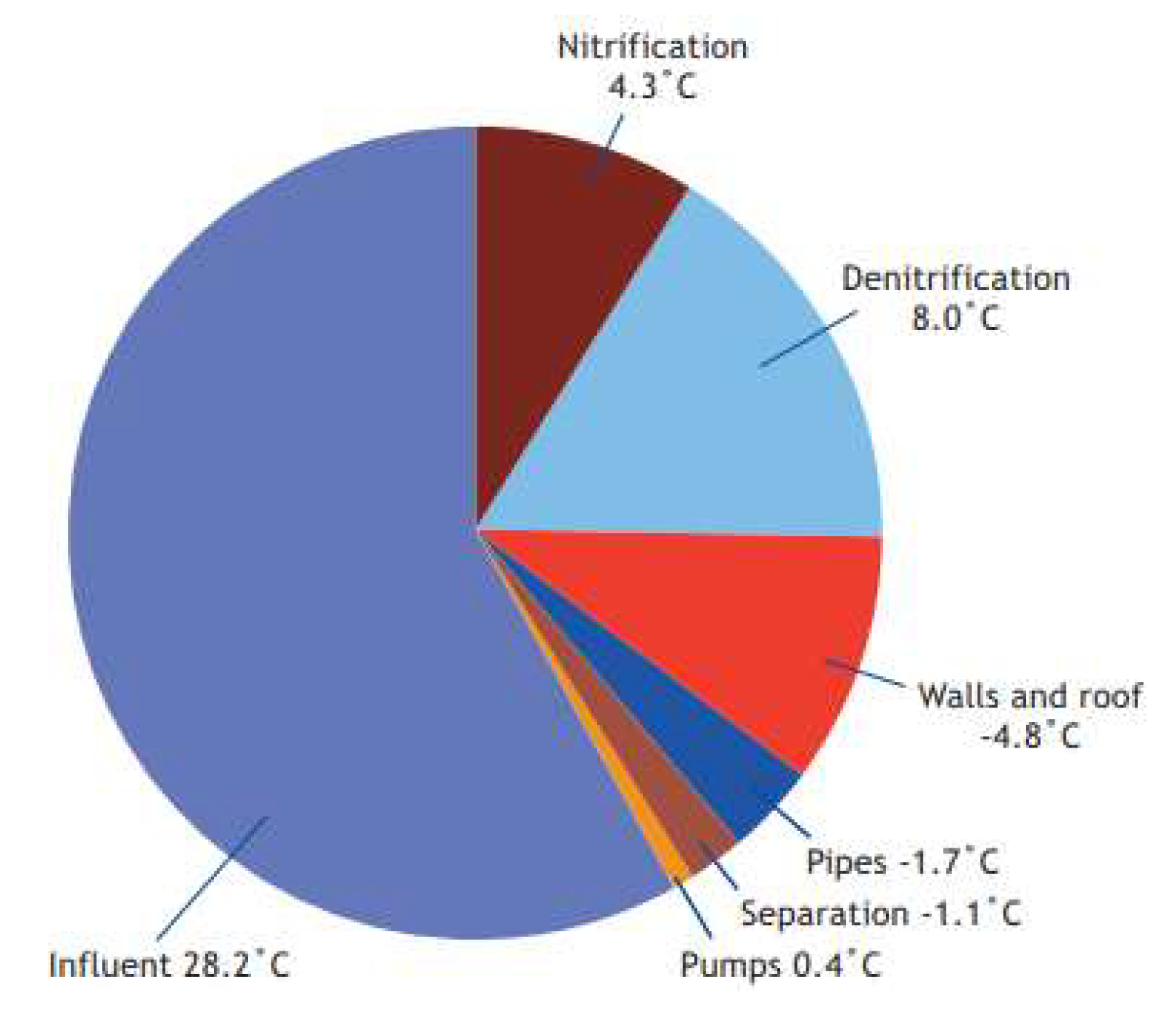
Figure 2.
Daily fluctuation of water temperature in the Manzanares River, 800 m from the El Pardo Dam (Madrid). Temperature recorded every 2 hours. Daily temperature variations are very constant due to the strong thermal inertia of the water mass that makes up the El Pardo reservoir. (Own data).
Figure 2.
Daily fluctuation of water temperature in the Manzanares River, 800 m from the El Pardo Dam (Madrid). Temperature recorded every 2 hours. Daily temperature variations are very constant due to the strong thermal inertia of the water mass that makes up the El Pardo reservoir. (Own data).
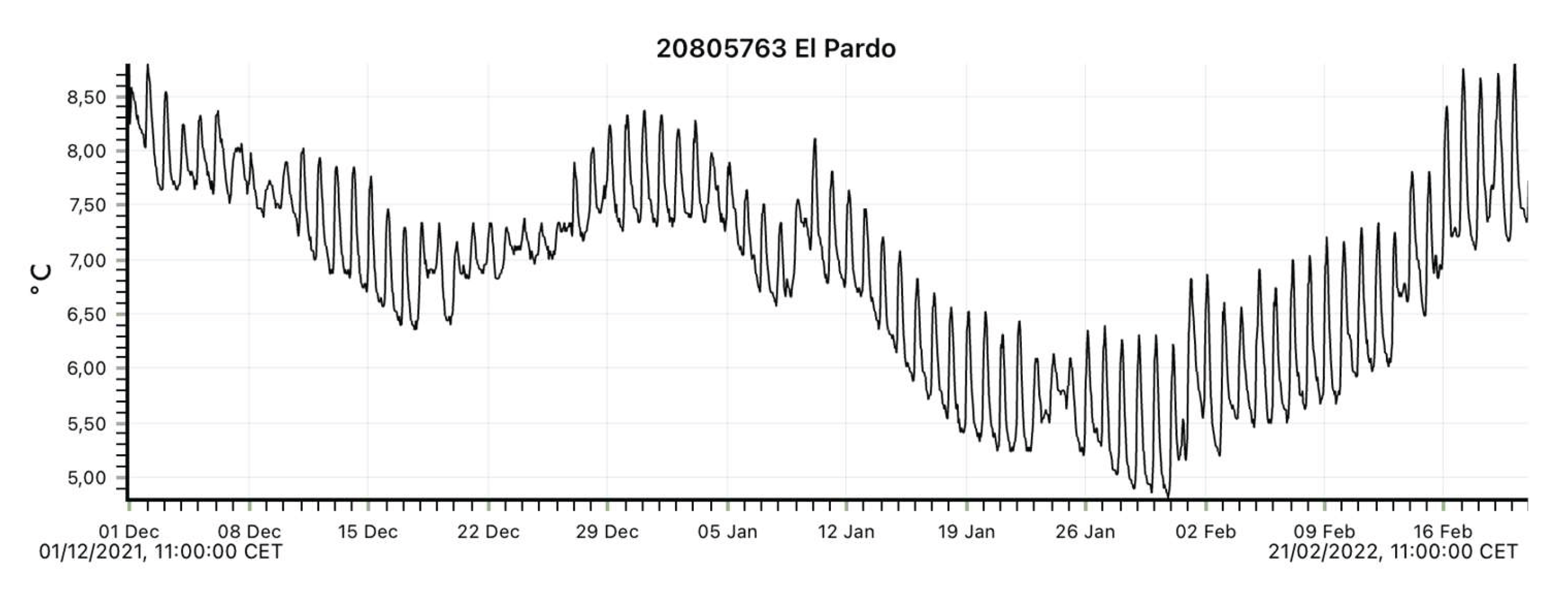

Table 1.
Temperature range of maximum growth.
| Group | Temperature |
| Diatoms | 15-25°C |
| Green algae | 25-35°C |
| Cyanobacteria | 30-40°C |
Table 2.
Lethal temperature of several fish species.
| Group | Temperature |
| Rainbow trout | 25-28°C |
| Brown trout | 23-30°C |
| Atlantic salmon | 28-30°C |
| Pike | 28-34°C |
| Sea lamprey | 34°C |
| Sunfish | 34°C |
| Black-bass | 32-36°C |
| Gudgeon | 36°C |
| Tench | 29-39°C |
| Goldfish | 31-38°C |
| Carp | 31-40°C |
Disclaimer/Publisher’s Note: The statements, opinions and data contained in all publications are solely those of the individual author(s) and contributor(s) and not of MDPI and/or the editor(s). MDPI and/or the editor(s) disclaim responsibility for any injury to people or property resulting from any ideas, methods, instructions or products referred to in the content. |
© 2026 by the authors. Licensee MDPI, Basel, Switzerland. This article is an open access article distributed under the terms and conditions of the Creative Commons Attribution (CC BY) license (http://creativecommons.org/licenses/by/4.0/).
Copyright: This open access article is published under a Creative Commons CC BY 4.0 license, which permit the free download, distribution, and reuse, provided that the author and preprint are cited in any reuse.


