Preprint
Article

This version is not peer-reviewed.

Bactericidal Mechanism of Chlorous Acid Water in the Inactivation of Non-Tuberculous Mycobacteria

Submitted:

02 February 2026

Posted:

02 February 2026

You are already at the latest version

Abstract

The global prevalence of pulmonary infections caused by non-tuberculous Mycobacteria (NTM), particularly the Mycobacterium avium complex (MAC), is increasing. Since NTM are ubiquitous in moist environments and resistant to standard disinfectants, this study evaluated the efficacy of chlorous acid water (CAW) against them. CAW demonstrated superior sanitizing effects compared to sodium hypochlorite (NaClO). It efficiently inactivated NTM at free available chlorine concentrations of 25 mg/L without organic matter and 100 mg/L with organic matter. In contrast, NaClO at 1000 mg/L failed to inactivate NTM in the presence of organic matter. MAC showed higher resistance to both agents compared to other NTM species. Mechanistically, the bactericidal effect of CAW did not correlate with DNA degradation. While prolonged exposure induced DNA damage, the primary mode of action was identified as a reduction in membrane potential, ATP production, and reactive oxygen species levels without altering cell morphology. These results indicate that CAW inactivates NTM effectively by damaging membrane components and the respiratory chain, rather than targeting DNA.

Keywords: 
;  ;  ;  ;  ;  

1. Introduction

In recent years, while the incidence of tuberculosis has been decreasing [1], the incidence of non-tuberculous mycobacteria (NTM) infections has been increasing [2]. Among the NTM, pulmonary infections by Mycobacterium avium complex (MAC) bacteria show the highest incidence and are becoming a serious concern for public health [3,4,5,6]. The main causative agents of pulmonary NTM infection are M. avium and M. intracellulare [7]. The prevalence of MAC isolated from pulmonary NTM infections shows a unique geographical distribution in Japan. M. avium is primarily isolated from pulmonary NTM infections in eastern Japan, whereas M. intracellulare is found in western Japan [7,8]. Pulmonary infections caused by M. intracellulare have a higher clinical morbidity than those caused by M. avium [9,10]. Pulmonary MAC infection is difficult to treat with antibiotics, and it requires long-term therapy (at least 1 year to achieve sputum culture negativity) with combinations of antibiotics, which include antituberculosis agents and macrolides [11]. Microbiological recurrence due to MAC reinfection is often observed even after successful clinical treatment [12,13].
NTM including MAC are widely distributed in the natural environment [14], and they are particularly abundant in moist or wet environments such as tap water and bathrooms [15]. Therefore, hygienic management of moist or wet environments is required to reduce exposure to NTM. Microbiological surveillance in the households of 49 pulmonary MAC disease outpatients and 43 healthy volunteers in Japan reported that MAC was isolated mainly from bathrooms and not from kitchen tap water, wash basins, and other sites [16]. In addition, the incidence of MAC in the bathrooms of patients was significantly higher than that of healthy volunteers [14].
The rapid detection and eradication of pathogenic microorganisms from infection sources is essential to prevent infectious diseases. However, effective methods for eradicating NTM remain to be established. NTM shows relatively high resistance to chlorine-based disinfectants [17], and of the NTM species, MAC is the most tolerant to disinfectant [18]. Effective sanitizing methods for bathrooms, which are rich in biological substances of human origin and biofilm materials, are needed.
Recently, a chlorite (ClO2-)-based disinfectant, chlorous acid water (CAW), has been approved as a Category II disinfectant in Japan. CAW has greater bactericidal effects under organic-matter-rich conditions when compared to sodium hypochlorite (NaClO), which is a representative chlorine-based disinfectant [19,20,21]. Therefore, CAW is a suitable disinfectant for environments contaminated by biological substances, which includes food processing equipment and hospital environments that are contaminated by human excretions.
The aims of this study were to examine whether CAW has a sufficient bactericidal effect against M. intracellulare and to elucidate the bactericidal mechanism of this disinfectant against mycobacteria.

2. Results

2.1. Bactericidal Effects of CAW and NaClO on NTM

We examined the bactericidal effects of chlorous acid water (CAW), CAW preparations, and sodium hypochlorite (NaClO) on Mycobacterium intracellulare NBRC 112750. CAW preparations (pH 7-8) are produced by adjusting the pH of CAW (pH 5-6) with phosphate buffer (pH 7.4). As shown in Figure 1A, CAW and a CAW preparation containing >5 mg/L free available chlorine (FAC) efficiently inactivated M. intracellulare within 1 min of treatment (>4.0 log10 reduction in CFU/ml) in the absence of organic-matter load. The log10 reduction in viable M. intracellulare by NaClO was <1.0 even with 200 mg/L FAC. When bovine serum albumin (BSA) was added to the reaction (0.5% final concentration), the sanitizing effect of all the test reagents was reduced (Figure 1B). To achieve effective killing (defined as a >4.0 log10 reduction in CFU/ml) within 1 min, >100 mg/L FAC was required for both CAW and CAW preparations. On the other hand, NaClO reduced the concentration of viable cells only by around 1.0 log10 CFU/ml even at 1,000 mg/L FAC in the presence of 0.5% BSA.
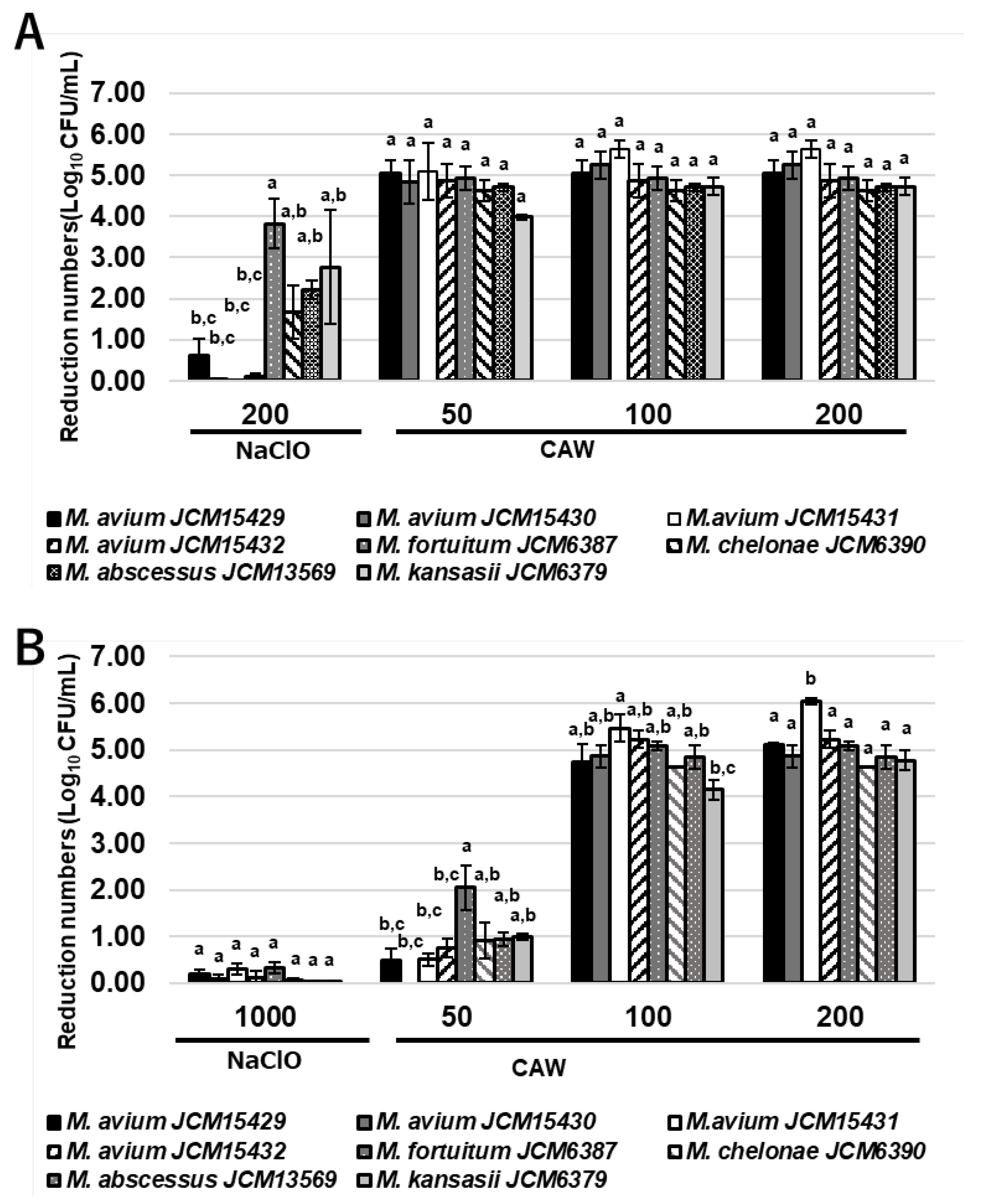
Bactericidal tests for other mycobacterial species (Table S1) were conducted under the same conditions employed for M. intracellulare. Although species-dependent differences in the sensitivity to test sanitizers were observed, CAW and CAW preparations showed bactericidal effects on all the tested mycobacteria similar to the effect on M. intracellulare. A 1-min treatment with CAW or CAW preparations containing >50 mg/L and >100 mg/L FAC achieved efficient killing under organic-matter-free and 0.5% BSA-loading conditions, respectively (Figure 2A,B). M. intracellulare and M. avium were more resistant to NaClO than the other mycobacteria tested (Figure 1A and Figure 2A).

2.2. Effects of CAW and NaClO on the Morphology of Mycobacteria

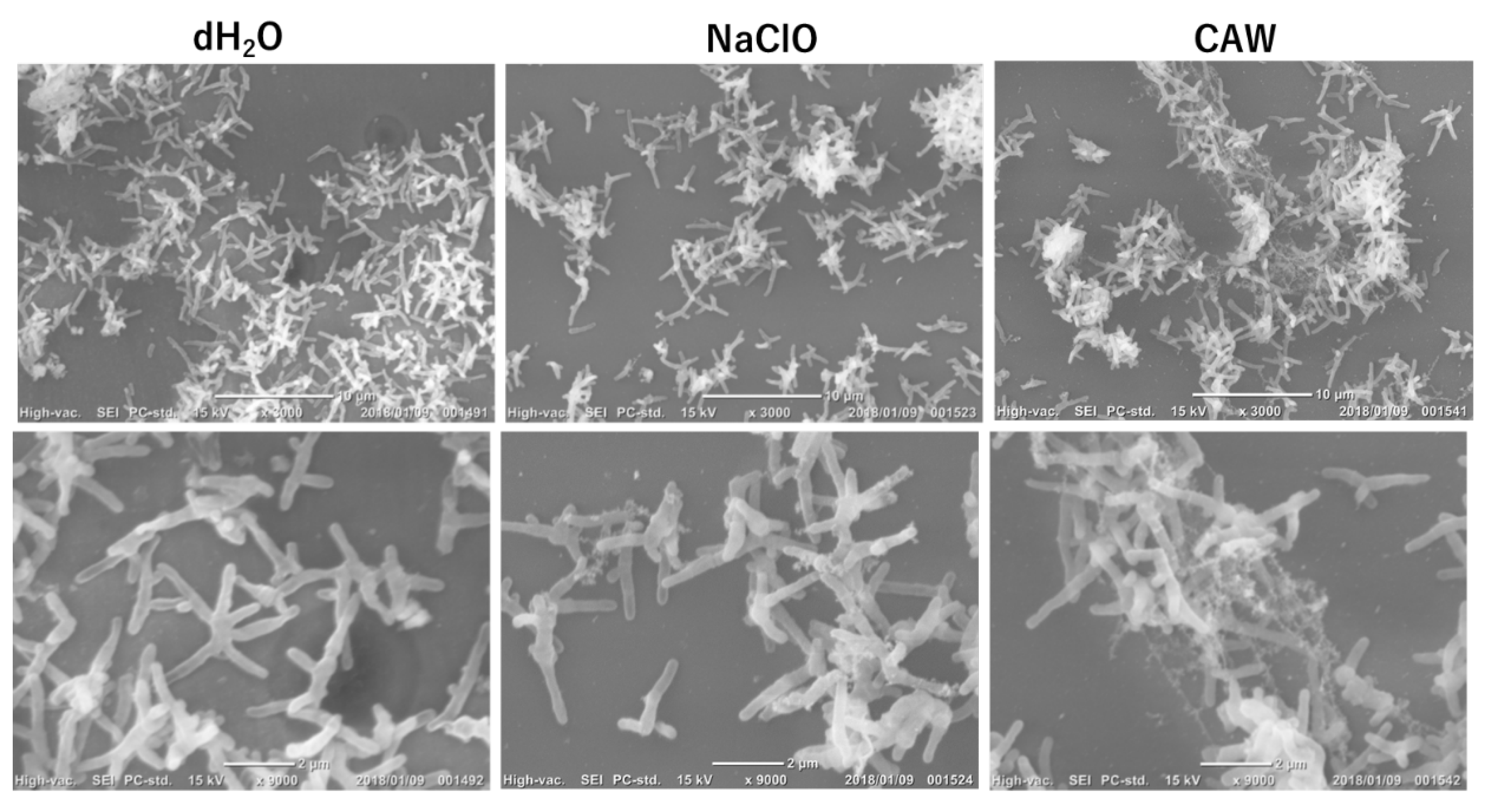
To elucidate the bactericidal mechanisms of CAW and NaClO, M. intracellulare NBRC112750 was treated with each agent at a FAC concentration of 200 mg/L for 30 min, and the subsequent bacterial surface structure was observed by scanning electron microscopy (SEM). After this treatment, the bacterial count of M. intracellulare was below the detection limit(1.08), indicating that it was completely inactivated by CAW, whereas no significant decrease in viability was observed in the sterile water and NaClO-treated groups. As shown in Figure 3, an extracellular matrix, which is a structure contributing to biofilm formation, was clearly observed around the M. intracellulare cells in the sterile water group. Although NaClO treatment eliminated the extracellular matrix, no change in cell morphology was observed in this group. Likewise, CAW treatment did not alter the M. intracellulare cell morphology, but the extracellular matrix shrank and agglutinated around the cells. These results suggest that the bactericidal effect of CAW may not be due to direct damage to the bacterial surface.

2.3. Effects of CAW, CAW Preparations and NaClO on Mycobacterial Genomic DNA

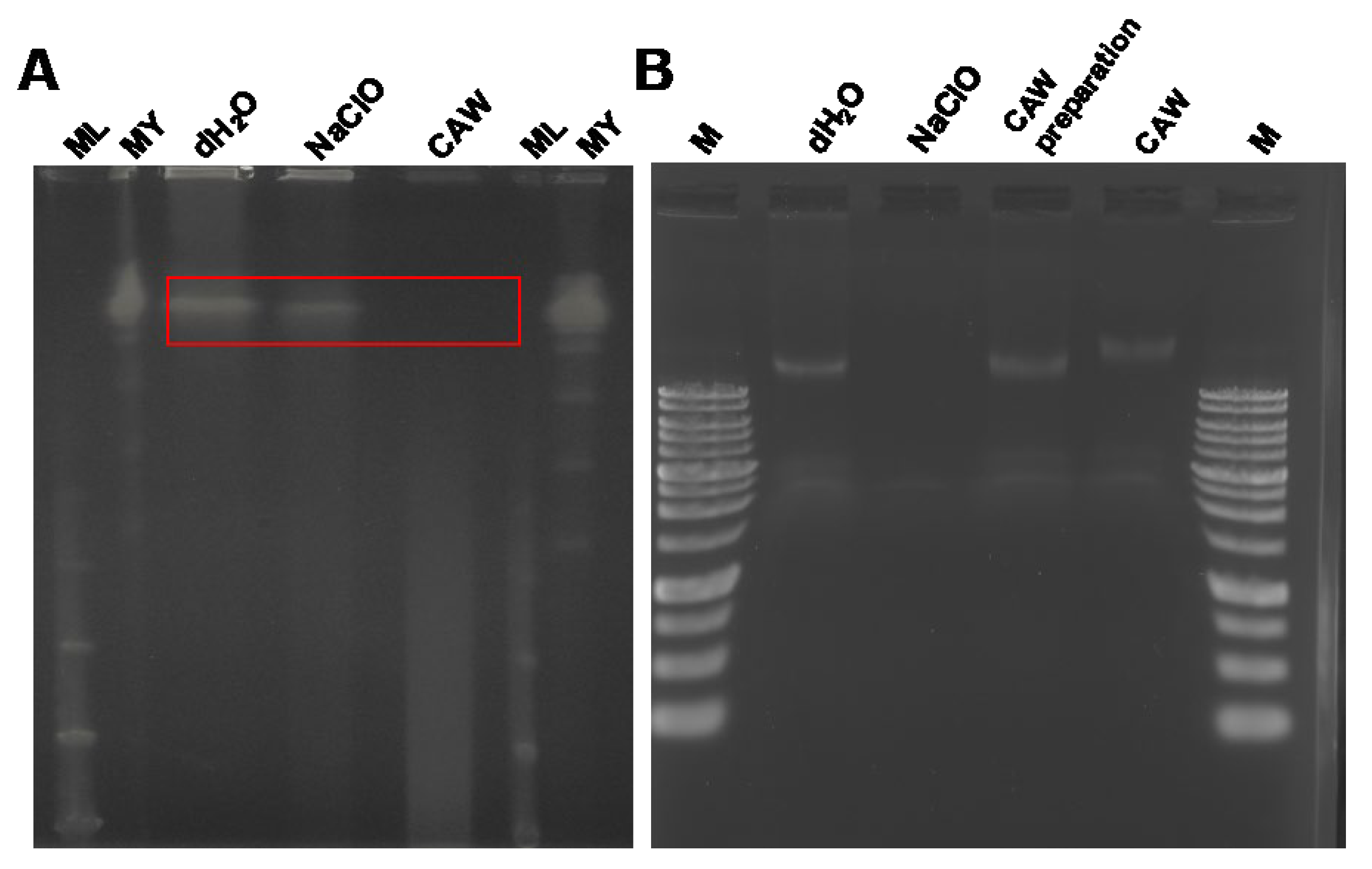
We evaluated the degradation of mycobacterial DNA after treatment with CAW or NaClO. M. intracellulare NBRC112750 was exposed to each reagent at a FAC concentration of 200 mg/L for 30 min, followed by neutralization with 1 M sodium thiosulfate. As shown in Figure 4A, pulsed-field gel electrophoresis (PFGE) revealed that CAW treatment induced genomic DNA degradation in mycobacterial DNA, whereas NaClO treatment did not. To examine the direct action of CAW on DNA, we treated the purified genomic DNA from M. intracellulare NBRC112750 with CAW, a CAW preparation or NaClO under the same conditions. The results were contradictory to the PFGE analysis, in which CAW and CAW preparations did not break down the DNA, whereas NaClO did cause DNA degradation (Figure 4B). These results indicated that M. intracellulare DNA degradation did not result from the direct action of CAW, but from stress responses induced by the reagent.
Notably, the migration of the genomic DNA in the agarose gel was delayed by CAW treatment (200 mg/L, 30 min), while the CAW preparation (buffered around neutral pH with phosphate buffer) showed no effect (Figure 4B). S1 nuclease, which digests single-stranded DNA, largely degraded the genomic DNA after exposure to CAW (pH 5-6, unbuffered), which was not the case with the CAW preparation (Figure S1), indicating that CAW affects the hydrogen bonding pattern within double-strand DNA.
To determine whether DNA degradation is responsible for the bacterial killing by CAW, we extracted DNA from M. intracellulare NBRC112750 and treated the DNA with each disinfectant at the FAC levels used in the bactericidal tests (5, 10, 25, 50, 100, and 200 mg/L) for 1 min. None of the disinfectants affected the genomic DNA (Figure S2). These results indicate that DNA degradation is not the direct bactericidal mechanism for CAW and CAW preparations.

2.4. Effect of CAW, CAW Preparations and NaClO on Membrane Potential

We measured the membrane potential of M. intracellulare NBRC112750 treated with each disinfectant by using the BacLight™ Bacterial Membrane Potential kit. The kit employs the fluorescent dye DiOC₂(3), which permeates cells and normally exhibits green fluorescence. In cells with intact membrane potential, the dye polymerizes within the membrane and exhibits red fluorescence. By calculating the ratio of these fluorescence intensities (red/green ratio), it is possible to evaluate changes in membrane potential. A decoupling reagent, carbonylcyanide m-chlorophenyl-hydrazone (CCCP) and sterilized distilled water were used as positive and negative controls, respectively.
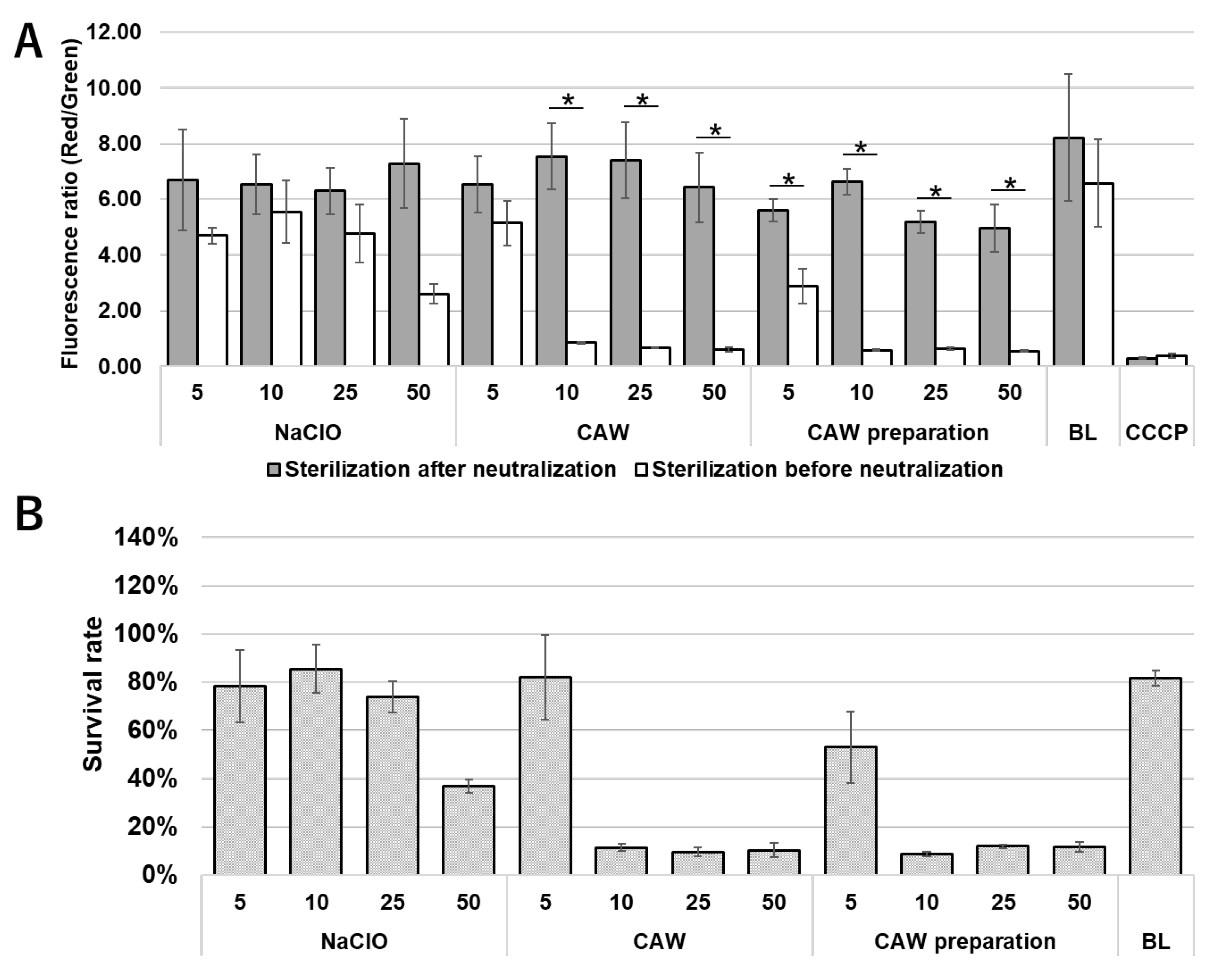
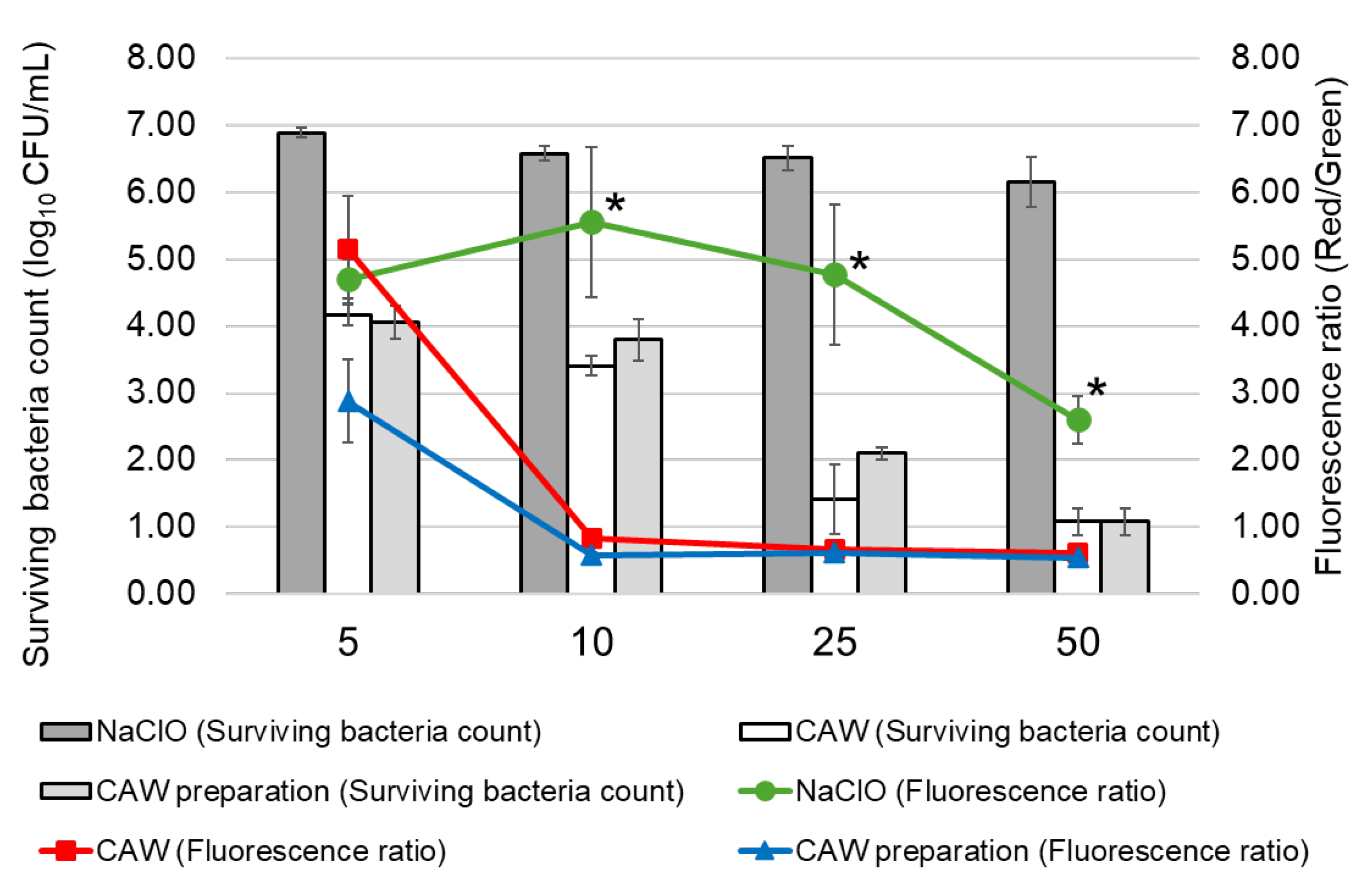
Treatment with CAW and a CAW preparation at >10 mg/L FAC significantly reduced the membrane potential (Figure 5A) and the survival rate (Figure 5B) of M. intracellulare cells, while significant reductions in the membrane potential and survival rate were only observed at >50 mg/L FAC after NaClO treatment. No significant reduction relative to the negative control was observed when M. intracellulare cells were inoculated with pre-neutralized reagents. These results indicate that CAW and CAW preparations disrupt the membrane potential in a similar manner, but at lower FAC, as NaClO (Figure 6).

2.5. Alterations in Intracellular ATP Levels After Treatment with CAW, CAW Preparation and NaClO

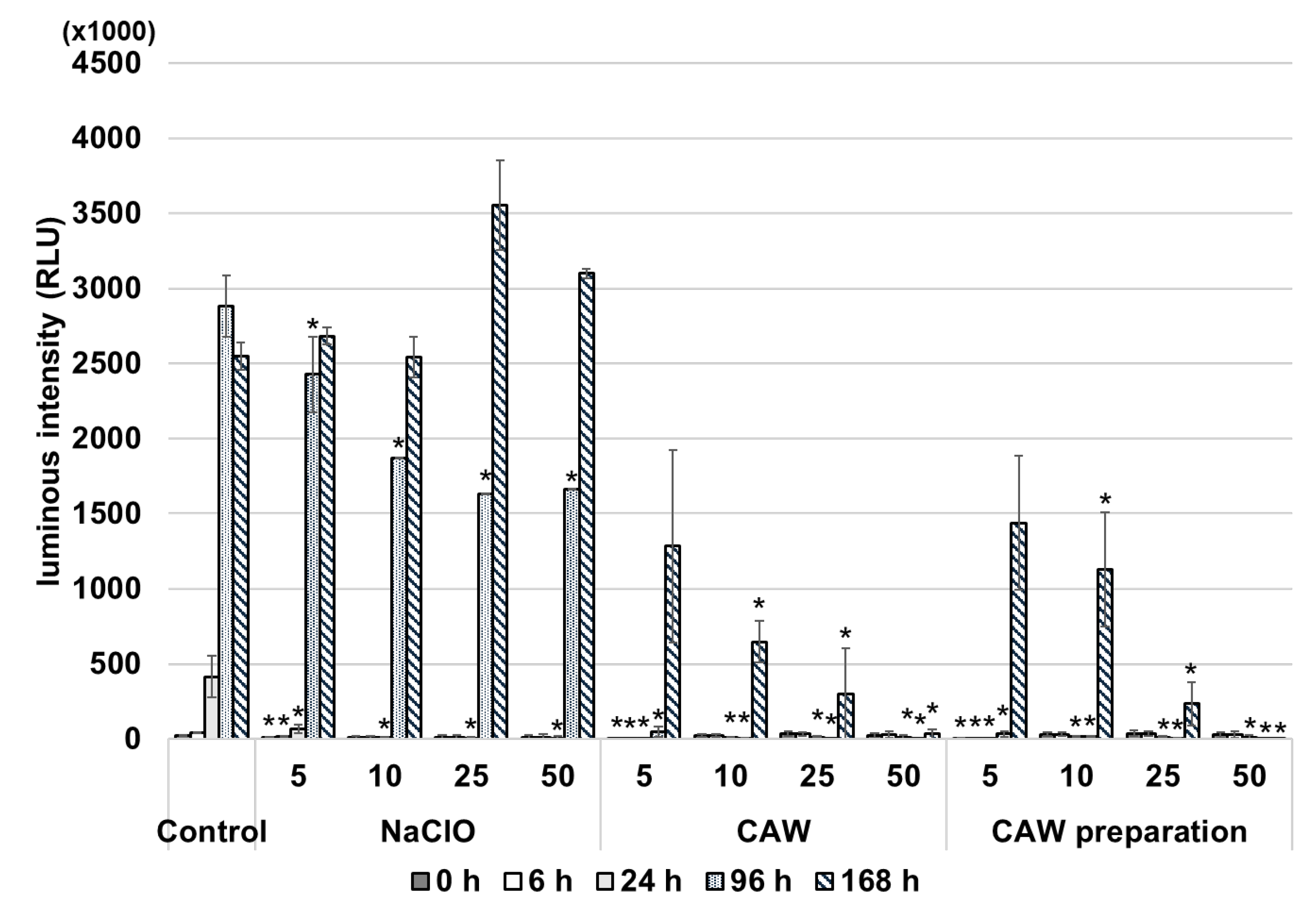
To verify the membrane potential disruption by CAW or CAW preparation, we periodically measured ATP production using the BacTiter-Glo reagent and the GloMax Navigator system for a period of seven days after the treatment (Figure 7). After 24 h of treatment, ATP synthesis did not recover in any of the treated M. intracellulare cultures. However, after 7 days, ATP levels in the culture that was treated with NaClO at 5 to 50 mg/L FAC recovered ATP production at levels equivalent to, or higher than, those of the control (25 and 50 mg/L). On the other hand, in the M. intracellulare cultures treated with CAW or a CAW preparation, ATP production did not recover until 4 days after treatment. Recovery of ATP production was observed in the cells treated with CAW or a CAW preparation at low FAC (5, 10, or 25 mg/L), but the level was lower than that of the control. The cells treated with CAW and the CAW preparation at 50 mg/L did not recover ATP production at all. These results indicate that CAW and the CAW preparation cause irreversible damage to the respiratory chain.

2.6. Reactive Oxygen Species (ROS) Generation After Treatment with Each Sanitizer

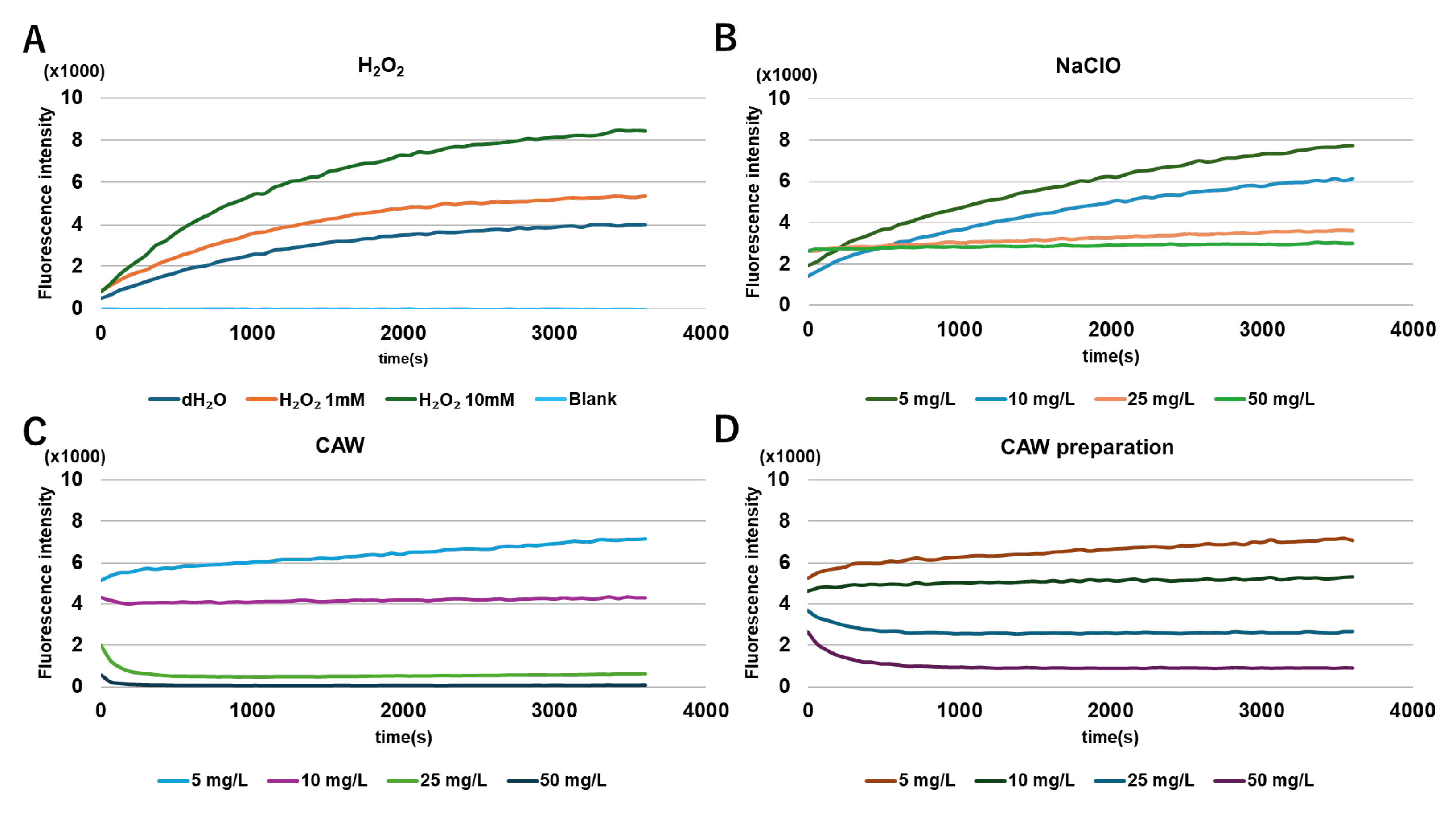
Based on the results described above, we speculated that CAW and the CAW preparation caused severe damage to M. intracellulare membrane proteins, leading to dysfunction of the respiratory chain, loss of membrane potential and impairment of ATP synthesis. NADH dehydrogenase, which is a well-known constituent of the respiratory chain, is a major contributor to intracellular ROS production during redox reactions. Therefore, we measured intracellular ROS production in M. intracellulare after contact with the test reagents. We used hydrogen peroxide (H₂O₂) as a positive control to induce intracellular ROS production. H₂O₂ induced intracellular ROS production in a concentration-dependent manner (Figure 8A). In contrast, 25 mg/L and 50 mg/L CAW or CAW preparation decreased the intracellular ROS level (Figure 8B,C). On the other hand, 25 mg/L and 50 mg/L NaClO did not alter the intracellular ROS level (Figure 8D). At low FAC (5 mg/L and 10 mg/L), all reagents increased the intracellular ROS level, but a steeper curve was observed for NaClO than for CAW or the CAW preparation: the ratios of the last/initial fluorescence values were 6.4, 4.0, 1.4, and 1.4 for H2O2 (1 mM), NaClO (5 mg/L), CAW (5 mg/L) and CAW preparation (5 mg/L), respectively.

3. Discussion

Chlorite (ClO2-)-based sanitizers, which include acidified sodium chlorite (ASC) and CAW preparations, are used for the sanitation of food and food processing facilities [22,23]. CAW has recently been approved as a category 2 drug in Japan. The microbicidal activity of CAW preparations against a wide spectrum of microorganisms, including Campylobacter jejuni [24,25], Clostridioides difficile [19], M. tuberculosis [26], human norovirus [21] and SARS-CoV-2 [20], has been reported. These studies commonly reported that CAW showed superior microbicidal effects to NaClO under organic matter-rich conditions. The incidence of pulmonary disease caused by MAC has been increasing in several countries where the incidence of tuberculosis is decreasing [1,2]. Moist and wet environments in households such as bathroom and kitchen sinks and water supply systems are reservoirs for NTM [15]. These environments are rich in organic matter derived from humans and from food ingredients, leading to biofilm and/or slime formation. Under these conditions, it is likely to be difficult to sanitize NTM using simple sanitation approaches. Therefore, we aimed to examine the microbicidal effect of CAW on NTM.
As in the previous study, we observed that CAW showed superior killing of NTM compared with NaClO at the same FAC level. Notably, MAC including M. avium and M. intracellulare showed higher resistance to NaClO than other NTM such as M. fortuitum and M. abscessus (Figure 2A). This indicates that chlorine levels in tap water are insufficient to inactivate NTM in water supply systems.
Even under organic matter loading conditions, CAW at >100 mg/L achieved a >4 log10 reduction in viable cells of all the tested NTM strains within 1 min of treatment, in contrast to NaClO, which did not achieve this level of reduction even at 1000 mg/L. The chloroperoxyl radical (ClOO●) is a main active component of CAW [27]. This novel radical species can be detected by electron spin resonance without spin trap reagents, indicating that it is a long-lived radical. In addition, Goda et al. reported that CAW showed selective reactivity toward amino acids, reacting only with cysteine and histidine among the 15 amino acids tested [21]. These findings indicate that the tolerance of CAW to organic matter can be attributed to the long-lived chloroperoxyl radical and its selective reactivity. However, the microbicidal mechanisms of CAW have not been fully elucidated.
We first investigated whether the bactericidal mechanism of CAW was due to oxidative DNA damage. DNA purified from M. intracellulare was exposed to each of the FAC reagents at a concentration of 200 mg/L for 30 minutes. Contrary to the PFGE results, NaClO degraded the DNA band, whereas CAW and the CAW formulation did not reduce its intensity. However, CAW treatment resulted in an upward shift of the band. The shift in the DNA band observed after CAW treatment may suggest dissociation of double-stranded DNA (Figure 4B).
This is likely due to disruption of electrostatic interactions between double-stranded DNA, as predicted by experiments using S1 nuclease, which degrades single-stranded DNA (Figure S2).
Furthermore, DNA was extracted after a 1-minute contact time, during which CAW and the CAW formulation exerted efficient bactericidal activity. Although 200 mg/L NaClO reduced the intensity of the DNA band, DNA extracted from M. intracellulare remained unchanged after treatment with either reagent at 200 mg/L for 1 min (Figure S1).
Since there was no correlation between the DNA degradation and bactericidal effect of CAW, we concluded that DNA damage is not a primary bactericidal mechanism of CAW. Gupta et al. reported that exonucleases are induced in Escherichia coli cells by oxidative stress [28]. In the case of M. intracellulare, the DNA degradation shown in the PFGE analysis seemed to be a secondary phenomenon due to lethal oxidative stress induced by CAW. Transcriptome analysis will be needed to fully explain how physiological changes in NTM are induced by CAW. On the other hand, NaClO degraded purified DNA, but not DNA inside M. intracellulare cells, indicating that it is difficult for NaClO to penetrate the lipid-rich cell walls of mycobacteria. It was noteworthy that CAW preparations, which consist of CAW in phosphate buffer around neutral pH, did not degrade the DNA, but rather seemed to stabilize the DNA. This idea is based on the agarose gel image in which the smearing of DNA decreased after treatment with the CAW preparation (Figure S1). The reason for this effect is unknown, but the negative charges of the phosphate ion electrostatically interact with divalent cations such as Mg2+, which is a cofactor enhancing DNase activity. The pH adjustment of CAW with phosphate buffer may decrease the genotoxic effects of CAW or other oxidative sanitizers.
Hatanaka et al. reported that CAW agglutinated membrane proteins without affecting the genomic DNA, indicating that protein degeneration is a major bactericidal mechanism [25]. Accordingly, we measured the membrane potential, and the results showed that the membrane potential declines in a manner that correlates well with the bactericidal effects of CAW and CAW preparations on NTM. The reduction of membrane potential by CAW was attributed to the deterioration of respiratory chain function. CAW and CAW preparations were considered to cause irreversible degeneration of membrane proteins since ATP synthesis did not recover after treatment with CAW or CAW preparations at 50 mg/L, even seven days after treatment. On the other hand, M. intracellulare treated with NaClO recovered ATP synthesis, including higher ATP production than the control when the cells were treated with NaClO at 25 mg/L and 50 mg/L, indicating a compensatory response to increased energy demand for recovery from cellular damage.
NADH dehydrogenase, which is a large, multi-subunit enzyme forming part of the respiratory chain, is a major contributor to intracellular ROS [29]. We confirmed the reduction of ROS generation after treatment with CAW or CAW preparations, correlating with the reduction in membrane potential after treatment with these sanitizers (Figure 5). As mentioned above, CAW preferentially reacts with cysteine and histidine. These amino acid residues are essential for the structures of protein complexes responsible for electron transfer in the respiratory chain, which contain cofactors such as heme and iron-sulfur clusters [30,31,32], supporting our conclusion that the bactericidal mechanism of CAW and CAW preparations on NTM involves membrane protein degeneration, especially the components of the respiratory chain.
A limitation of this study is that the results are obtained from in vitro analysis. NTM form biofilms even in laboratory cultures. Therefore, bactericidal assays in practical settings will be essential to confirm the sanitizing effect of CAW and CAW preparations on NTM colonizing wet environments. It may be necessary to consider the combined use of CAW.

4. Materials and Methods

4.1. Bacterial Strains and Culture Conditions

The NTM strains used in this study are listed in Table S1. For all the strains, glycerol stocks stored at -80℃ were streaked onto Middlebrook 7H10 agar (Becton, Dickinson and Company, BD) and incubated at 37 ℃ for one week. The resulting colonies were picked and suspended in Middlebrook 7H9 liquid medium (Sigma-Aldrich), then cultured at 37 ℃ with shaking (130 rpm) for two weeks until sufficient growth was obtained.

4.2. Disinfectants

Chlorous acid water (CAW) and CAW preparations were obtained from Sankei Co., Ltd. Sodium hypochlorite (NaClO) was pur4.3.chased from Oyalox Co. Ltd. Free available chlorine (FAC) levels were measured by the method employing N,N-diethyl-p-phenylenediamine (DPD) according to a previous study [33]. FACs levels are expressed in mg/L in this study. DPD was obtained from FUJIFILM Wako Pure Chemical Co.

4.3. Bactericidal Assays

Mycobacterial cultures (5.0 mL) were centrifuged (14,000 g, 4 ℃, 5 min) and resuspended in 1.0 mL saline solution with 0.05% Tween 20. Optical densities at 600 nm (OD600) of the individual cell suspensions were adjusted to 1.0 with saline/0.05% Tween 20. For the assays with organic-matter-free conditions, 0.9 mL of each of the disinfectants was mixed with 0.1 mL of bacterial suspension. In the case of organic-matter-load conditions, 0.1 mL of the bacterial inoculum, which was prepared by equally mixing 7.5% bovine serum albumin (BSA, Sigma-Aldrich) and the bacterial suspension (OD600=1.0), was added to 0.9 ml of each of the disinfectants. The treatment time at 25 ℃ was 1 min for both conditions. After treatment, 0.2 mL of 1 M sodium thiosulfate solution (FUJIFILM Wako Pure Chemical Co.) was immediately added to neutralize residual chlorine. After neutralization, 10-fold serial dilutions were prepared with saline/0.05% Tween 20. Appropriate dilutions (0.1 ml) were spread on Middlebrook 7H10 agar medium, and the plates were incubated at 37 ℃ for 4 weeks for M. intracellulare and 1 week for other mycobacteria tested The number of surviving bacteria was measured by counting the colonies formed on the plates. As a control, the viability of the bacteria in pre-neutralized disinfectants was monitored using standard plating methods.

4.4. Scanning Electron Microscopy

M. intracellulare NBRC 112750 cells, which were treated with distilled water and 200 mg/L each of CAW or NaClO, were fixed overnight with 2% glutaraldehyde in cacodylate buffer (pH 7.4) at 4°C. For scanning electron microscopy (SEM), each cell sample was dehydrated with a series of acetone solutions ranging in 10% increments from 50% (vol/vol) ethanol in distilled water to absolute acetone. All samples were dried to the critical point using a critical point dryer, coated with gold, and examined by SEM (Hitachi S-800; Hitachi, Tokyo, Japan).

4.5. Pulsed-Field Gel Electrophoresis (PFGE)

PFGE of M. intracellulare NBRC 112750 was conducted to assess the chromosomal degradation after treatment with CAW or NaClO according to the method described by Samir et al. [34]. In brief, M. intracellulare NBRC 112750 cells were collected by centrifugation (14,000 g, 5 min, 4 ℃) from the reaction mixture after 30 min of treatment with saline, CAW or NaClO following neutralization. The pellet was washed with 500 μL of TE buffer (10 mM Tris-HCl, 1 mM EDTA, pH 8.0) and then resuspended in 200 μL of TE buffer. The sample plug molds, which were prepared with 200 μL of the cell suspension, were immersed in 4 mg/L lysozyme solution (Sigma Aldrich) and treated at 37 ℃ for 48 h (lysozyme solution was exchanged every 24 h). Subsequently, they were immersed in 0.5 M EDTA (DOJINDO) solution containing 2 mg/L proteinase K (FUJIFILM Wako Pure Chemical Corporation) and 1% lauroyl sarcosine sodium (Nacalai Tesque), and the samples were statically incubated at 55 ℃ for 7 days (the solution was exchanged on the 5th day). The plugs were washed four times with TE buffer (each wash lasting 1 h). The obtained sample plugs containing DNA fragments were analyzed by pulsed-field gel electrophoresis (PFGE) using a CHEF-DR2 (Bio-Rad Laboratories) under the following conditions: running buffer, 1X Tris-borate EDTA; running temperature, 14℃; running time, 48 h; voltage gradient, 6 V/cm; switching time: 5 s to 35 s for 48 h.

4.6. DNA Extraction

After M. intracellulare NBRC 112750 cells were collected from the cultures by centrifugation (14,000 g, 5 min, 4 ℃), pellets were suspended in 0.9 mL of TE buffer (pH 8.0) containing 4 μg/mL lysozyme and incubated at 37 ℃ for 1 h. Subsequently, 50 μL of 5.8 mg/mL achromopeptidase (FUJIFILM Wako Pure Chemical Co) was added, and the reaction mixture was incubated at 37 ℃ for 1 h. Then, 110 μL of 20 μg/mL proteinase K was added, and the mixture was further incubated at 55 ℃ for 1 to 1.5 h. Next, 120 μL of 10% sodium dodecyl sulfate (FUJIFILM Wako Pure Chemical Co) was added and incubated at 55 ℃ for 1 h. The DNA was extracted using phenol/chloroform/isoamyl alcohol (25:24:1, Nippon Gene) followed by ethanol precipitation at -80 ℃ overnight. The extracted DNA was dissolved in TE buffer (pH 8.0) and stored at -20 ℃ until use.

4.7. Digestion of Single Stranded DNA

To evaluate the amount of single-stranded DNA produced by treatment with CAW or NaClO, extracted bacterial DNAs were digested with S1 nuclease (Takara Bio). The digested DNAs were electrophoresed in 0.8% Agarose S (Nippon Gene) and DNA fragmentation was evaluated using ethidium bromide (Thermo Fisher) staining of the gels.

4.8. Measurement of Membrane Potential

After bactericidal assays were performed (treatment time 1 min) as described above, M. intracellulare NBRC 112750 cells were collected by centrifugation (14,000 g, 4 ℃, 5 min), suspended in 1 mL of Middlebrook 7H9 medium supplemented with ADC (0.2% (w/v) dextrose, 0.2% (v/v) glycerol and 0.5% bovine serum albumin) and incubated at 37 ℃ for 30 min. As a control, we heated a M. intracellulare NBRC 112750 cell suspension at 100 ℃ for 10 min and filtered the suspension through a 40 μm cell strainer (FALCON). We also prepared carbonyl cyanide m-chlorophenyl hydrazone (CCCP)-treated M. intracellulare NBRC 112750 cells as a control. Membrane potentials of the M. intracellulare NBRC 112750 cells after each treatment were measured using BacLight™ Bacterial Membrane Potential Kit (Thermo Fisher) according to a previous report [35]. Green and red fluorescence were measured using a flow cytometer (Merck Millipore), and the changes in membrane potential were evaluated based on the ratio of red fluorescence to green fluorescence of the stained cells.

4.9. Measurement of ATP

ATP levels in M. intracellulare NBRC 112750 cultures were measured according to the method reported by Yuroff et al. [36]. Cell suspensions of M. intracellulare NBRC 112750 were adjusted to an OD600 of 1.0 with saline/0.5% Tween 20. Next, 0.1 mL of the cell suspension was mixed with 0.9 mL of the test reagent (H2O, CAW, CAW preparation or NaClO) and incubated at room temperature for 1 min. Subsequently, residual chlorine was neutralized with 0.2 mL of 1 M sodium thiosulfate. The treated cells were collected by centrifugation (14,000 g, 4 ℃, 5 min) and resuspended in 1 mL of Middlebrook 7H9 medium supplemented with ADC. The cell suspension was diluted 10-fold with the same medium and cultured at 37 ℃ for pre-scheduled intervals. The culture (0.5 ml) was periodically sampled and frozen at -80℃ for 30 min. The samples were then thawed at room temperature to lyse the cells and 50 μL of each cell lysate was dispensed into a 96-well plate. Sterilized distilled water (dH₂O) and 50 μL of BacTiter-Glo™ reagent (Promega) were added and statically reacted at room temperature for 5 min. The luminescence intensity was measured using a GloMax® Navigator System (Promega). The obtained luminescence values were evaluated as an indicator of surviving bacterial cells based on the amount of ATP.

4.10. ROS Measurement

The reactive oxygen species (ROS) which were generated in M. intracellulare NBRC 112750 after treatment with CAW or NaClO were measured using the OxiSelect™ Intracellular ROS Assay Kit (Cell Biolabs Inc.) according to the manufacturer’s instructions. In brief, M. intracellulare NBRC 112750 cell suspensions were adjusted to an OD600 of 2.0 with Middlebrook 7H9 medium supplemented with ADC, then centrifuged (14,000 g at 4 ℃, 5 min) and resuspended in 200 μL of a 1X solution of dichlorofluorescein-diacetate (DCFH-DA) (Thermo Fisher). After the reaction mixture was incubated at 37 ℃ for 1 h in the dark, the cells were collected by centrifugation (14,000 g, 4 ℃, 5 min) and resuspended in 2 mL of 1X PBS (pH 7.4). Then, 100 μL of each test reagent (CAW or NaClO) was dispensed into a 96-well plate and mixed with the same volume of the bacterial suspension. Hydrogen peroxide (1 mM and 10 mM) was used as a positive control. Immediately after mixing, changes in fluorescence intensity due to oxidative stress were recorded at 1-min intervals for 1 h. Fluorescence was monitored at an excitation wavelength of 480 nm and an emission wavelength of 530 nm using a fluorometer (CORONA ELECTRIC Co., Ltd).

4.11. Statistical Analysis

All statistical analyses were performed using R software (version 4.4.2). A p-value of <0.05 was considered to be statistically significant unless otherwise noted. Primary statistical analyses were conducted using a one-way analysis of variance (ANOVA) followed by Tukey’s test or Dunnett’s test. For the membrane potential assays, comparisons of the fluorescence ratios were performed using two-sample t-tests.

5. Conclusions

We showed in this study that CAW and CAW preparations effectively inactivate NTM even under conditions that are rich in organic matter, possibly by disrupting NTM membrane integrity. CAW and CAW preparations lead to lower levels of direct DNA damage than NaClO, predicting the lower genotoxicity of CAW. CAW and CAW preparations are considered to be effective sanitizers that decrease the NTM load in wet environments, possibly reducing the risk of NTM exposure to susceptible individuals.

Supplementary Materials

The following supporting information can be downloaded at: Preprints.org, Figure S1: Agarose gel electrophoresis of the DNA extracted from M. intracellulare after 1-min treatment with indicated reagents; Figure S2: Agarose gel electrophoresis of M. intracellulare DNA after treatment with/without S1 nuclease.; Table S1: NTM strains used in this study.

Author Contributions

Conceptualization, H.Yamaoka, H.N.I., H.G. and T.K.; methodology, H.Yamaoka, N.T., H.N.I., I.H. and T.N.; data collection and analysis, H. Yamaoka, N.T., H.N.I., A.T., E.M., I.H.; electron microscopy, H.Y.; writing (original draft), H.Yamaoka, H.Y., H.G. and T.K.; writing (review and editing), H.N.I., H.G. and T.K.; funding acquisition, H.G. and T.K. All authors have read and agreed to the final submitted version of the manuscript.

Funding

This study was supported by the collaboration fund of Kagawa University and Sankei Co. Ltd.

Data Availability Statement

All data associated with this work is reported within the article and supplementary materials.

Acknowledgments

We express our deep gratitude to Dr. Tetsuya Harada (Osaka Institute of Public Health) for generously providing the EHEC strains used in this study. We are also thankful to Mrs. Mina Aiba and Mrs. Kyoko Horiuchi for their technical assistance.

Conflicts of Interest

The corresponding author TK received the collaboration fund from Sankei Co. Ltd. to conduct this study as a collaboration between Kagawa University and this company. We declared that other authors do not have any conflict of interest.

Abbreviations

The following abbreviations are used in this manuscript:
CAW Chlorous acid water
NaClO Sodium hypochlorite
NTM Non-tuberculous mycobacteria
ROS Reactive oxygen species

References

  1. Ministry of Health; Labour and Welfare. Annual Report on Tuberculosis Registrant Information Survey 2023; Ministry of Health, Labour and Welfare: Tokyo, Japan, 2024; Available online: https://www.mhlw.go.jp/stf/seisakunitsuite/bunya/0000175095_00011.html (accessed on 2 September 2025).
  2. Namkoong, H.; Kurashima, A.; Morimoto, K.; Hoshino, Y.; Hasegawa, N.; Ato, M.; Mitarai, S. Epidemiology of Pulmonary Nontuberculous Mycobacterial Disease, Japan. Emerg. Infect. Dis. 2016, 22, 1116–1117. [Google Scholar] [CrossRef]
  3. Winthrop, K.L.; McNelley, E.; Kendall, B.; Marshall-Olson, A.; Morris, C.; Cassidy, M.; Saulson, A.; Hedberg, K. Pulmonary Nontuberculous Mycobacterial Disease Prevalence and Clinical Features: An Emerging Public Health Disease. Am. J. Respir. Crit. Care Med. 2010, 182, 977–982. [Google Scholar] [CrossRef]
  4. Matsuyama, M.; Matsumura, S.; Nonaka, M.; Nakajima, M.; Sakai, C.; Arai, N.; Ueda, K.; Hizawa, N. Pathophysiology of Pulmonary Nontuberculous Mycobacterial (NTM) Disease. Respir. Investig. 2023, 61, 135–148. [Google Scholar] [CrossRef] [PubMed]
  5. Shah, N.M.; Davidson, J.A.; Anderson, L.F.; Lalor, M.K.; Kim, J.; Thomas, H.L.; Lipman, M.; Abubakar, I. Pulmonary Mycobacterium avium-intracellulare Is the Main Driver of the Rise in Non-Tuberculous Mycobacteria Incidence in England, Wales and Northern Ireland, 2007-2012. BMC Infect. Dis. 2016, 16, 195. [Google Scholar] [CrossRef] [PubMed]
  6. Daley, C.L. Mycobacterium avium Complex Disease. Microbiol. Spectr. 2017, 5. [Google Scholar] [CrossRef] [PubMed]
  7. Morimoto, K.; Hasegawa, N.; Izumi, K.; Namkoong, H.; Uchimura, K.; Yoshiyama, T.; Hoshino, Y.; Kurashima, A.; Sokunaga, J.; Shibuya, S.; et al. A Laboratory-Based Analysis of Nontuberculous Mycobacterial Lung Disease in Japan from 2012 to 2013. Ann. Am. Thorac. Soc. 2017, 14, 49–56. [Google Scholar] [CrossRef]
  8. Morimoto, K.; Ato, M.; Hasegawa, N.; Mitarai, S. Population-Based Distribution of Mycobacterium avium and Mycobacterium intracellulare in Japan. Microbiol. Res. 2021, 12, 739–743. [Google Scholar] [CrossRef]
  9. van Ingen, J.; Obradovic, M.; Hassan, M.; Lesher, B.; Hart, E.; Chatterjee, A.; Daley, C.L. Nontuberculous Mycobacterial Lung Disease Caused by Mycobacterium avium Complex—Disease Burden, Unmet Needs, and Advances in Treatment Developments. Expert Rev. Respir. Med. 2021, 15, 1387–1401. [Google Scholar] [CrossRef]
  10. Koh, W.-J.; Jeong, B.-H.; Jeon, K.; Lee, N.Y.; Lee, K.S.; Woo, S.Y.; Shin, S.J.; Kwon, O.J. Clinical Significance of the Differentiation between Mycobacterium avium and Mycobacterium intracellulare in M. avium Complex Lung Disease. Chest 2012, 142, 1482–1488. [Google Scholar] [CrossRef]
  11. Griffith, D.E.; Aksamit, T.; Brown-Elliott, B.A.: Catanzaro, A; Daley, C; Gordin, F.; Holland, S.M.; Horsburgh, R.; Huitt, G.; Iademarco, M.F.; Iseman, M.; Olivier, K.; Ruoss, S.; von Reyn, C.F.; Wallace Jr, R.J.; Winthrop, K.; ATS Mycobacterial Diseases Subcommittee; American Thoracic Society; Infectious Disease Society of America. An official ATS/IDSA statement: diagnosis, treatment, and prevention of nontuberculous mycobacterial diseases. Am. J. Respir. Crit. Care Med. 2007, 175, 367–416. [CrossRef]
  12. Wallace, R.J., Jr.; Brown-Elliott, B.A.; McNulty, S.; Philley, J.V.; Killingley, J.; Wilson, R.W.; York, D.S.; Shepherd, S.; Griffith, D.E. Macrolide/Azalide therapy for nodular/bronchiectatic Mycobacterium avium complex lung disease. Chest 2014, 146, 276–282. [Google Scholar] [CrossRef]
  13. Lee, B.Y.; Kim, S.; Hong, Y.; Lee, S.-D.; Kim, W.S.; Kim, D.S.; Shim, T.S.; Jo, K.-W. Risk factors for recurrence after successful treatment of Mycobacterium avium complex lung disease. Antimicrob. Agents Chemother. 2015, 59, 2972–2977. [Google Scholar] [CrossRef]
  14. Nishiuchi, Y.; Iwamoto, T.; Maruyama, F. Infection Sources of a Common Non-Tuberculous Mycobacterial Pathogen, Mycobacterium avium Complex. Front. Med. 2017, 4, 27. [Google Scholar] [CrossRef]
  15. Whiley, H.; Keegan, A.; Giglio, S.; Bentham, R. Mycobacterium avium Complex—the Role of Potable Water in Disease Transmission. J. Appl. Microbiol. 2012, 113, 223–232. [Google Scholar] [CrossRef]
  16. Nishiuchi, Y.; Maekura, R.; Kitada, S.; Tamaru, K.; Taguri, T.; Kira, Y.; Hiraga, T.; Hirotani, A.; Yoshimura, K.; Miki, M.; Ito, M. The recovery of Mycobacterium avium-intracellulare complex (MAC) from the residential bathrooms of patients with pulmonary MAC. Clin. Infect Dis. 2007, 45, 347–351. [Google Scholar] [CrossRef] [PubMed]
  17. Dantec, C.L.; Duguet, J.-P.; Montiel, A.; Dumoutier, N.; Dubrou, S.; Vincent, V. Chlorine disinfection of atypical mycobacteria isolated from a water distribution system. Appl. Environ. Microbiol. 2002, 68, 1025–1032. [Google Scholar] [CrossRef]
  18. Taylor, R.H.; Falkinham, J.O., 3rd; Norton, C.D.; LeChevallier, M.W. Chlorine, chloramine, chlorine dioxide, and ozone susceptibility of Mycobacterium avium. Appl. Environ. Microbiol. 2000, 66, 1702–1705. [Google Scholar] [CrossRef]
  19. Goda, H.; Yamaoka, H.; Nakayama-Imaohji, H.; Kawata, H.; Horiuchi, I.; Fujita, Y.; Nagao, T.; Tada, A.; Terada, A.; Kuwahara, T. Microbicidal Effects of Weakly Acidified Chlorous Acid Water against Feline Calicivirus and Clostridium difficile Spores under Protein-Rich Conditions. PLoS ONE 2017, 12, e0176718. [Google Scholar] [CrossRef]
  20. Hatanaka, N.; Awasthi, S.P.; Xu, B.; Goda, H.; Kawata, H.; Horiuchi, I.; Yasugi, M.; Yamasaki, S. Comparative Evaluation of Chlorous Acid and Sodium Hypochlorite Activity against SARS-CoV-2. Access Microbiol. 2022, 4, acmi000354. [Google Scholar] [CrossRef] [PubMed]
  21. Goda, H.; Nakayama-Imaohji, H.; Yamaoka, H.; Tada, A.; Nagao, T.; Fujisawa, T.; Koyama, A.H.; Kuwahara, T. Inactivation of Human Norovirus by Chlorous Acid Water, a Novel Chlorine-Based Disinfectant. J. Infect. Chemother. 2022, 28, 67–72. [Google Scholar] [CrossRef] [PubMed]
  22. Ministry of Health; Labour and Welfare. The 9th Edition of the Japanese Standards for Food Additives; Ministry of Health, Labour and Welfare: Tokyo, Japan, 2018; Available online: https://www.ecfr.gov/current/title-21/chapter-I/subchapter-B/part-173/subpart-D/section-173.325 (accessed on 2 September 2025).
  23. eCFR. 21 CFR 173.325 --Acidified Sodium Chlorite Solutions. Available online: https://www.ecfr.gov/current/title-21/chapter-I/subchapter-B/part-173/subpart-D/section-173.325 (accessed on 2 September 2025).
  24. Horiuchi, I.; Kawata, H.; Nagao, T.; Imaohji, H.; Murakami, K.; Kino, Y.; Yamasaki, H.; Koyama, A.H.; Fujita, Y.; Goda, H.; et al. Antimicrobial Activity and Stability of Weakly Acidified Chlorous Acid Water. Biocontrol Sci. 2015, 20, 43–51. [Google Scholar] [CrossRef]
  25. Hatanaka, N.; Awasthi, S.P.; Goda, H.; Kawata, H.; Uchino, Y.; Kubo, T.; Aoki, S.; Hinenoya, A.; Yamasaki, S. Chlorous Acid Is a More Potent Antibacterial Agent than Sodium Hypochlorite against Campylobacter. Food Control 2020, 111, 107046. [Google Scholar] [CrossRef]
  26. Hatanaka, N.; Awasthi, S.P.; Goda, H.; Kawata, H.; Hinenoya, A.; Yamasaki, S. Chlorous Acid Inactivates Mycobacterium tuberculosis with Much Lower Available Chlorine Concentration than Sodium Hypochlorite. Jpn. J. Infect. Dis. 2025; ahead of print. [Google Scholar] [CrossRef]
  27. Kawata, H.; Kohno, M.; Nukina, K.; Horiuchi, I.; Goda, H.; Kuwahara, T.; Yoshimori, K.; Miyaji, A.; Kamachi, T.; Yoshikawa, T. Identifying the Chloroperoxyl Radical in Acidified Sodium Chlorite Solution. PLoS ONE 2021, 16, e0252079. [Google Scholar] [CrossRef]
  28. Gupta, A.; Imlay, J.A. Escherichia coli Induces DNA Repair Enzymes to Protect Itself from Low-Grade Hydrogen Peroxide Stress. Mol. Microbiol. 2022, 117, 754–769. [Google Scholar] [CrossRef] [PubMed]
  29. Zhao, R.-Z.; Jiang, S.; Zhang, L.; Yu, Z.-B. Mitochondrial Electron Transport Chain, ROS Generation and Uncoupling (Review). Int. J. Mol. Med. 2019, 44, 3–15. [Google Scholar] [CrossRef] [PubMed]
  30. Xia, D.; Yu, C.A.; Kim, H.; Xia, J.Z.; Kachurin, A.M.; Zhang, L.; Yu, L.; Deisenhofer, J. Crystal Structure of the Cytochrome bc1 Complex from Bovine Heart Mitochondria. Science 1997, 277, 60–66. [Google Scholar] [CrossRef] [PubMed]
  31. Devlin, T.; Hofman, C.R.; Acevedo, Z.P.V.; Kohler, K.R.; Tao, L.; Britt, R.D.; Hoke, K.R.; Hunsicker-Wang, L.M. DEPC Modification of the CuA Protein from Thermus thermophilus. J. Biol. Inorg. Chem. 2019, 24, 117–135. [Google Scholar] [CrossRef]
  32. Snyder, C.H.; Merbitz-Zahradnik, T.; Link, T.A.; Trumpower, B.L. Role of the Rieske Iron-Sulfur Protein Midpoint Potential in the Protonmotive Q-Cycle Mechanism of the Cytochrome bc1 Complex. J. Bioenerg. Biomembr. 1999, 31, 235–242. [Google Scholar] [CrossRef]
  33. Yamaoka, H.; Nakayama-Imaohji, H.; Horiuchi, I.; Yamasaki, H.; Nagao, T.; Fujita, Y.; Maeda, H.; Goda, H.; Kuwahara, T. Tetramethylbenzidine Method for Monitoring the Free Available Chlorine and Microbicidal Activity of Chlorite-Based Sanitizers under Organic-Matter-Rich Environments. Lett. Appl. Microbiol. 2016, 62, 47–54. [Google Scholar] [CrossRef]
  34. Singh, S.P.; Salamon, H.; Lahti, C.J.; Farid-Moyer, M.; Small, P.M. Use of Pulsed-Field Gel Electrophoresis for Molecular Epidemiologic and Population Genetic Studies of Mycobacterium tuberculosis. J. Clin. Microbiol. 1999, 37, 1927–1931. [Google Scholar] [CrossRef]
  35. Chawla, M.; Singh, A. Detection of Membrane Potential in Mycobacterium tuberculosis. Bio-protocol 2013, 3, e785. [Google Scholar] [CrossRef]
  36. Yuroff, A.; Fan, F.; Butler, B.; Collins, M. Application of the BacTiter-Glo™ Assay for Rapid Enumeration and Screening of Antimicrobial Compounds for Mycobacterium avium Complex Bacteria. Promega Notes 2008, 98, 8–10. [Google Scholar]
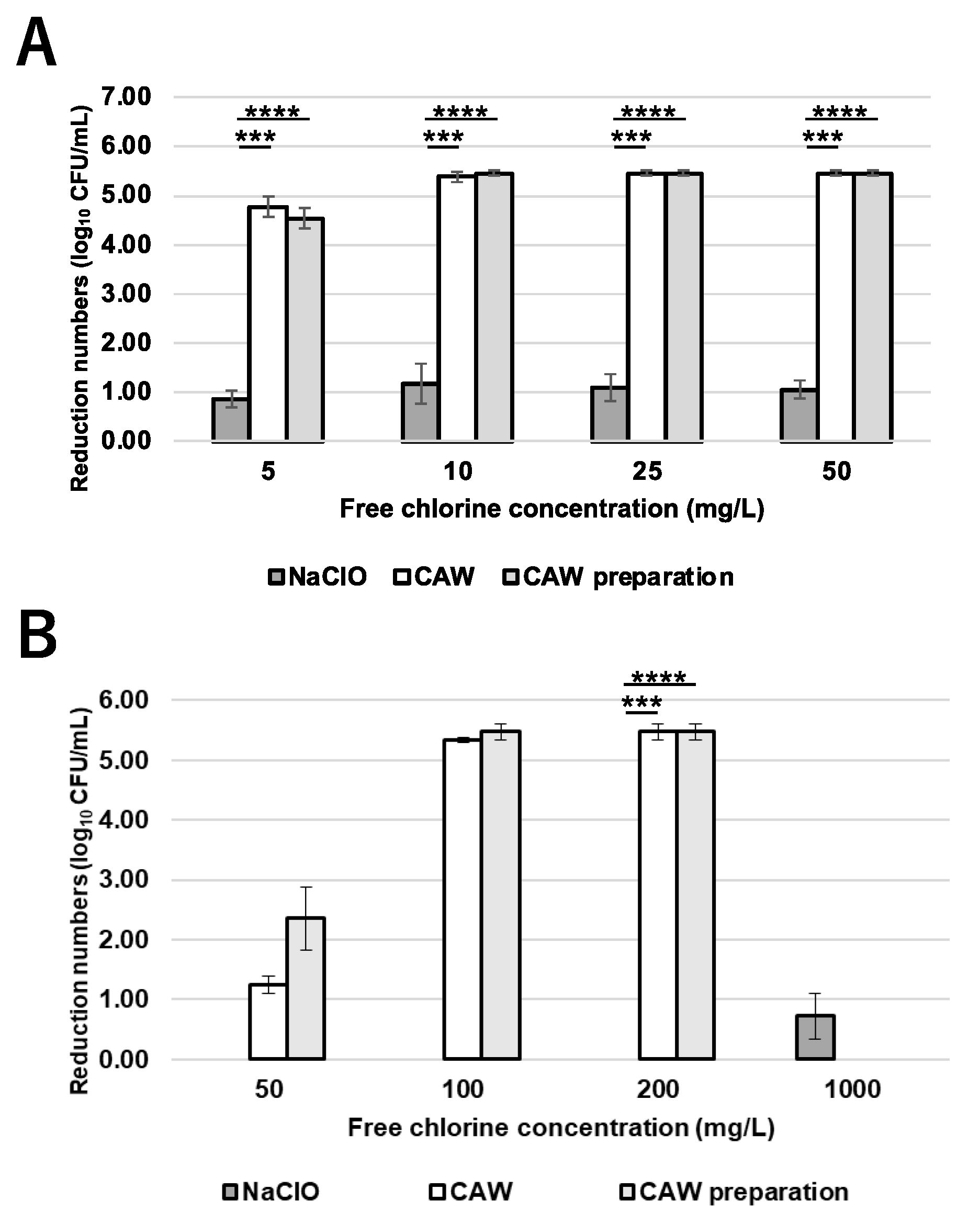
Figure 1. Reduction in viable M. intracellulare cells after 1 min of treatment with CAW, a CAW preparation or NaClO. The bactericidal effect of each reagent was evaluated under organic matter-free conditions (A) or in the presence of 0.5% BSA (B). The reduction of viable cell numbers/mL is shown on a logarithmic scale on the y axis. The data are expressed as means ± standard errors from three independent repeats. The differences in the log10 reduction of M. intracellulare by the test disinfectants were statistically examined at each FAC by one-way ANOVA followed by Tukey's test. Asterisks indicate statistically significant differences (p <0.05).
Preprints 197119 g001
Figure 2. The reduction in viable mycobacterial strains other than M. intracellulare after a 1-min treatment with CAW or NaClO. The bactericidal effect of each reagent was evaluated in the absence of organic matter (A) or in the presence of 0.5% BSA (B). The numbers below the x axis indicate the free available chlorine concentration in the reaction mixture. The reduction of viable cell numbers/mL is shown on a logarithmic scale on the y axis. The data are expressed as means ± standard errors from three independent repeats. The differences among the strains were statistically examined at each treatment condition by one-way ANOVA followed by Tukey's test. Columns containing the different letters indicate significant differences (p < 0.05).
Preprints 197119 g002
Figure 3. Scanning electron microscope images of M. intracellulare cells after 30 min of treatment with each agent. The upper and lower panels are images observed at 3,000x and 9,000x magnifications, respectively. The white scale bars in the upper and lower panels correspond to 10 μm and 2 μm, respectively.
Preprints 197119 g003
Figure 4. Degradation of genomic DNA from M. intracellulare after 30 min of treatment with the test reagents. (A) PFGE images of the genomic DNA from M. intracellulare after treatment with 200 mg/L FAC each of NaClO or CAW for 30 min. The position of intact chromosomal DNA is shown by a red square. ML, lambda ladder marker; MY, yeast chromosome marker. (B) Agarose gel electrophoresis of the purified M. intracellulare genomic DNA with CAW, a CAW preparation or NaClO for 1 min. M, 1-kb DNA ladder marker.
Preprints 197119 g004
Figure 5. Effect of CAW, a CAW preparation and NaClO on the membrane potential in M. intracellulare. (A) Ratio of red to green fluorescence after treatment with each reagent at varying FAC (mg/L) indicated below the x-axis (gray bars). Fluorescence from M. intracellulare cells that were inoculated into the pre-neutralized reagent with 1 M sodium thiosulfate was also measured to calculate the survival ratio (white bars). The difference in fluorescence ratios between treatments with pre-neutralized and non-neutralized disinfectants was statistically examined within the respective conditions using two-sample t-tests. Asterisks indicate statistically significant differences (p <0.05). (B) Survival rates after treatment with each reagent, which were calculated from the fluorescence ratios shown in panel A. The numbers below the x-axis indicate the FAC (mg/L) in the test solution. The data are expressed as means ± standard errors from three independent repeats. CCCP, carbonyl cyanide m-chlorophenyl hydrazone.
Preprints 197119 g005
Figure 6. Correlation between the number of surviving M. intracellulare cells and the membrane potential after treatment with CAW, a CAW preparation or NaClO. The FAC (mg/L) used is indicated below the x-axis. Bars and lines indicate the surviving cell number/mL on a logarithmic scale (log10) and the membrane potential inferred from the red/green fluorescence ratio. For each treatment time, a one-way ANOVA followed by Dunnett's test was employed to examine the differences in the fluorescence ratios after treatment with NaClO or a CAW preparation versus CAW treatment. Asterisks indicate statistically significant differences (p <0.05).
Preprints 197119 g006
Figure 7. Recovery of ATP production in M. intracellulare after bactericidal treatment. The FAC concentration (mg/L) used is indicated below the x-axis. The data are expressed as means ± standard errors from three independent repeats. The control indicates the group that was not treated with any of the disinfectants. The time-dependent differences in the luminescence intensities were examined within each treatment condition (type of disinfectant and FAC) by a one-way ANOVA followed by Dunnett's test (vs 0 h). Asterisks indicate statistically significant differences (p <0.05).
Preprints 197119 g007
Figure 8. ROS production in M. intracellulare after treatment with bactericidal reagents. Fluorescence intensity was monitored every 1 min after M. intracellulare labeled with DCFA was exposed to each reagent.
Preprints 197119 g008
Disclaimer/Publisher’s Note: The statements, opinions and data contained in all publications are solely those of the individual author(s) and contributor(s) and not of MDPI and/or the editor(s). MDPI and/or the editor(s) disclaim responsibility for any injury to people or property resulting from any ideas, methods, instructions or products referred to in the content.
Copyright: This open access article is published under a Creative Commons CC BY 4.0 license, which permit the free download, distribution, and reuse, provided that the author and preprint are cited in any reuse.
Prerpints.org logo

Preprints.org is a free preprint server supported by MDPI in Basel, Switzerland.

Subscribe

Disclaimer

Terms of Use

Privacy Policy

Privacy Settings

© 2026 MDPI (Basel, Switzerland) unless otherwise stated