

Submitted:
31 January 2026
Posted:
02 February 2026
You are already at the latest version
Abstract
Because of their special optical and electrochemical characteristics, superior biocompatibility, adjustable surface chemistry, and inexpensive, scalable synthesis, carbon dots (CDs), including carbon quantum dots and graphene quantum dots, have become powerful and adaptable nanomaterials for advanced pharmaceutical analysis and other toxicants. The sensitive and selective detection of active pharmaceutical substances, degradation products, contaminants, biomarkers, and therapeutic medication levels in complex matrices has shown great promise in recent years with carbon dot-based nanobiosensors. The development of various sensing platforms, such as electrochemical, optical, and dual-mode biosensors, as well as integration into microfluidic, paper-based, and wearable point-of-care devices, are made possible by their intrinsic fluorescence, effective electron transfer capacity, and ease of functionalization. With an emphasis on sensing mechanisms, biorecognition techniques, and analytical performance, this study critically reviews current developments in carbon dot-based nanobiosensors for pharmaceutical analysis. It includes a thorough discussion of important applications in drug development, stability research, therapeutic drug monitoring, and drug quality control. Along with new developments like green synthesis, AI-assisted signal processing, and smart sensing platforms, current issues with reproducibility, standardization, biocompatibility, and regulatory validation are highlighted. Lastly, prospects for the industrial application and clinical translation of carbon dot-based nanobiosensors are discussed.
Keywords:
nanobiosensors
; carbon dots
; carbon quantum dots
; pharmaceutical analysis
; electrochemical sensing
; optical sensing
; point-of-care testing
1. Introduction
A biosensor contains an electronic component with a biological counterpart, like an enzyme, aptamer, DNA or antibody, to generate a signal that can be measured and identify the particular analyte. Different chemical, biological, and environmental samples can be analyzed, detected, and recorded, and transmitted through electronic components. These sensors can identify very small portions of various toxic, biological, and pharmaceutical compounds. However, the conventional biosensors may suffer from poor sensitivity and a limit of detection, which can be overcome by the nanobiosensors [1,2].
Nanobiosensors have emerged as a novel instrument with exceptionally great features by the integration of nanotechnology and biological sensing for the detection and analysis of various biological and chemical entities, exhibiting high sensitivity and specificity. Because of their small size (10-9 m), nanobiosensors contain an unparalleled advantage over their conventional analogues. The increased reactivity, quantum effects, and high surface-to-volume ratio of nanomaterials are great advantages in modern sensors. The potential of nanobiosensors has been adopted in a wide range of applications, including environmental monitoring, medical diagnosis, and health or disease monitoring [1,3].
Among the plethora of nanomaterials, such as metals, metal oxides, and different carbon-based nanomaterials, CDs displayed a prominent role in analytical science. The CDs are simple, facile, and economical to fabricate, with unique optical properties and tunable emissions. Moreover, they are easy to functionalize and show greater biocompatibility. As emerging nanomaterials, the CDs are demonstrated as a potential scaffold for biosensing applications, especially in biosensing applications. The unique features of these allotropes of carbon nanomaterial have been of interest to biosensor research, as they have shown good sensitivity, provide rapid results, and enable real-time research [4,5,6,7].
The current statistics on biosensors have shown a rapid growth trend over the past 20 years. About 362,129 results have been observed in Scopus by giving the keywords nanomaterials and biosensors (see Figure 1A). For carbon nanomaterials and biosensors keywords, we have received 139,982 results (see Figure 1B), for exclusively on CDs and biosensors key words, we have received 15,234 articles (Figure 1C) emphasizing the importance of the field.
There are different types of nano biosensors discussed in the literature. Namely, Electrochemical sensors, optical sensors, fluorescent sensors, and point-of-care sensors (see Scheme 1) [1,8,9]. Here in this review, we have discussed the CD-based nanobiosensors to identify various organic pollutants. Synthesis, characterization of CDs, the types of sensors, their mechanism, biorecognition elements, and functionalization strategies, recent developments, challenges, limitations, and future perspectives are well discussed.
2. Biosensors
Biosensors are emerging devices that are gaining popularity in analytical research globally. In biosensors, biological response material with transducers is used to specifically measure biological or chemical analytes by transforming a biological signal into a quantifiable electrical signal. The three basic parts of a typical biosensor are shown in Figure 2: CDs or nanomaterial-coated electrode. A signal transducer that perceives changes in one or many different types of signals. Which includes impedance, electrical current, light, and optical density. A signal processing unit and amplifier that produces clear outputs for analyzing the phenomenon and interpretation, and a sensiable bioelement that identifies the target analyte [10].
Traditionally, the most frequently used electrode materials are gold and carbon. These materials are favored by researchers because of their stability, biocompatibility, and favorable electron transfer kinetics. Due to their lower sensitivity and selectivity, electrochemical detection of trace analytes is frequently unachievable on unaltered surfaces. To get around this problem, nanomaterials have been added to the electrode surfaces. The redesigned electrodes provide great selectivity in the presence of interferences. Nanocarbons, nanoparticles (NPs), conductive polymers, and nanocomposites are among the nanostructured materials that have been identified to be able to refine and sensitize electrode surfaces [11,12].
3. Carbon Dots: Structure, Properties, and Synthesis
3.1. Structure and Classification of Carbon Dots
Numerous scientific disciplines are showing a great deal of interest in CDs, a kind of 0D carbon-based nanomaterial. CDs often feature nanocrystalline cores with a graphitic structure. It is composed mainly of sp2 hybridized carbon. There have also been sporadic reports of diamond-like sp3-hybridized carbon cores. Since being identified as a new member of the “carbon family” in the early 2000s, CDs have gained widespread recognition due to their unique characteristics. The development of CDs occurred in three phases: (1). the discovery period from 2004 to 2006, (2) the initial development phase from 2007 to 2011, and (3) the rapid expansion phase from year 2011 to the present. In the year 2004, while purifying the single-walled carbon nanotubes (SWCNTs) by Xu and the researchers, the CDs were discovered by observing bright luminescence. However, the official usage of the term “carbon quantum dots” by Sun and associates in 2006 started a period of intense CD research and development as well as global interest in this field.
CDs are classified according to their properties, core of the carbon structure, and functional groups on the surface. Figure 3 illustrates the various forms of CDs, including carbon quantum dots (CQDs), graphene quantum dots (GQDs), carbon nanodots (CNDs), and carbonized polymer dots (CPDs). The CQDs are crystalline nanospheres with intrinsic state luminescence and quantum confinement effect (QCE). These properties stem from plethora of chemical functional groups on CDs surface. GQDs are essentially anisotropic graphene fragments that are stacked in one or more layers of graphene sheets. The GQDs show quantum confinement and edge effects due to the presence of various chemical functionalities within their interlayer defect and on their edges. Without revealing their crystalline or polymeric structures, the CNDs possess a high degree of carbonization along with edge effects. Additionally, CNDs do not exhibit the QC effect. Carbon crosslinked nanohybrids and polymer aggregates are the CPDs. The CPDs contain a carbonized core at the center covered by either the polymeric chains or functional groups [13].
3.2. Physicochemical Properties Relevant to Biosensing
3.2.1. Photoluminescence and Fluorescence Mechanisms
The physical and chemical properties of CDs must be taken into account when using them for sensing applications in order to meet the requirements of the sensing application. Because of their small size and ability to emit fluorescence as a sensing signal, CDs have been demonstrated to be useful as sensing receptors in nanoprobes. The environment has a direct impact on CD fluorescence. CDs’ fluorescence is either enhanced or quenched as a result of their interaction with analytes. CDs must be modified using chemical and physical methods in order to improve the fluorescence performance in accordance with the particular analytes [14].
The fluorescence properties of the CDs can be improved by doping N, S, P, and B, like heteroatoms which can change the electronic states. In CDs the fluorescence will originate through quantum confinement, surface defects, and molecular fluorophores. By proper functionalization and doping multicolor stable fluorescent CDs can be fabricated. In general, the fluorescence quenching and enhancement paths are key in biosensing. The fluorescence on/off will work by adopting the following mechanisms. Such as photoinduced electron transfer (PET), Förster resonance energy transfer (FRET), inner filter effect (IFE), and static or dynamic quenching (SQ & DQ), aggregation caused quenching (ACQ), and aggregation-induced emission (AIE) [15,16]. Figure 4 shows various types of optical biosensing mechanisms.
3.2.2. Electrochemical and Electron-Transfer Properties
To be an efficient electrochemical biosensor, the electrode materials should possess good electron transfer capability. Besides the metal-based nanomaterials, carbon nanomaterials have remarkable electrical conducting properties, high charge transfer kinetics, high surface area to accommodate many analytes and recognizing molecules on their surface. The structural arrangement and sp2 hybridized carbon and CDs can accelerate the electrical conductivity. The CDs can act as transducers in biosensing technology to minimize the overpotentials and enhance the response to the analytes in lower concentrations of pharmaceutical, environmental and other small molecules and heavy toxic pollutants. Conjugation of the CDs with other functional groups and doping can also accelerate the electron transfer, and target recognition by functionalizing with aptamers, enzymes, and antibodies [17,18,19,20]
3.2.3. Surface Chemistry and Functional Groups
The functional groups on the CDs’ surface play a pivotal role in biosensor fabrication and analyte recognition by the biomolecules anchored at the end of the CDs. A plethora of functional groups are present on top of CDs, such as carboxyl, hydroxyl, amine, and thiol. These chemical groups impart hydrophilicity, water stability, and chemical reactivity to the nanomaterials and facilitate the bioconjugation. The chemical structure of CDs allows the bioconjugation of additional functionalization through covalent and non-covalent interactions. They may combine through amide bonding, electrostatic interactions, pi-pi interactions, and hydrogen bonding. The versatility of carbon nanomaterials and CDs is the ease of surface functionalization and tunable surface chemistry, which can directly impact the sensitivity, operational stability, and response time of the CDs-based biosensors. The additional functionalization also has a remarkable impact on the luminescent and electrical properties of the CDs [21,22,23,24,25].
3.2.4. Biocompatibility and Chemical Stability
Numerous cytotoxicity experiments have shown that CDs can be readily internalized into cells for imaging and have very minimal toxicity, whether they are surface passivated. Tests of CDs’ cytotoxicity effects (viability, mortality, and proliferation) have been conducted using a variety of cell line types, concentrations, and surface coverages. At concentrations adequate for cell labeling (about 10–100 μg mL−1), CDs have been shown to produce a minor reduction in cell viability in nearly every cytotoxicity study conducted to date [26,27,28].
UV light irradiation, temperature, salts (NaCl, KCl, etc.), pH, and other factors have been found to impact the properties of CQDs; therefore, the performance of CQDs should only be assessed in light of these aspects. A material’s capacity to remain stable when exposed to radiation (UV, visible, etc.) is known as photostability. When exposed to light, fluorescent materials typically bleach over time. High photostability is therefore necessary in applications where materials are exposed to light for extended periods of time. A material’s capacity to remain stable in a given heat environment is known as thermal stability. At high temperatures, the chemical structure of fluorescent materials typically changes, which causes the emission to decrease. For carbon dots to endure high temperature applications, they must have good thermal photostability. For CQDs to be used in real-world applications, ion, pH, or time stability is crucial. The ion stability was examined using the interference of specific common cations (at different concentrations) with the synthesized fluorescent CQDs. Similarly, the quenching of PL under various pH values was used to evaluate the pH stability. Time stability is a measure of how long the characteristics of CQDs are maintained. From an application standpoint, this is an extremely important characteristic because the time stability of CQDs will directly affect the lifespan of CQD-integrated systems [29,30,31].
Overall, CDs have excellent properties (see Figure 5) to stand as good candidates to serve as economic biocompatible biosensors to detect various contaminants.
4. Synthesis Strategies, Characterization, Scalability and Reproducibility Considerations
There are many ways to prepare CDs, but they can be divided into two major groups according to how they are prepared. (1) top-down and (2) bottom-up methods. To create CDs with nanoscale dimensions, the top-down method entails cutting or exfoliating bigger carbon-based materials. The raw materials are carbon powder, graphite rods, carbon nanotubes, and graphene, among others. To create carbon nanoparticles, the bottom-up approach assembles a huge number of small organic carbon atoms. The main sources of carbon are either organic molecules or small molecule oligomers [12]. Arc-discharge, laser ablation, acidic oxidation, microwave pyrolysis, different combustion techniques, electrochemical synthesis, and hydrothermal or solvothermal processes are examples of top-down and bottom-up methodologies (See Figure 6A). The prepared CDs can be characterized using different spectroscopic and electron microscopy methods, as represented in Figure 6B [32].
CDs are gradually moving into industrial manufacturing due to the advent of scalable synthesis techniques, with many efforts concentrated on lowering equipment needs and improving process efficiency. Hydrothermal, solvothermal, microwave, pyrolysis, and solid-state carbonization are only a few of the synthesis techniques that have been greatly improved to increase yield, lower energy usage, and achieve ecologically benign manufacturing. For example, the large-scale production of CDs for industrial use can be highly feasible by adopting the microwave, pyrolysis, and solid-state carbonization methods due to their easy operation and effectiveness in production. Recently, great efforts have been made by various researchers in fine-tuning the optical properties and stability by incorporating various dopants and choosing the appropriate starting precursor [33,34].
Apart from these advancements in CDs fabrication, many hurdles exist in the real time use and bulk production. Currently, at first, simple, stable, effective, economic, and eco-friendly industrial-scale production methods have to be urgently developed. Though hydrothermal and solvothermal methods are widely in use, they need costly equipment, prolonged reaction times, and high energy consumption. Due to these reasons, the methods may not be suitable for continuous industrial production. New approaches like solid-state carbonization and CDs made from biomass have shown promise for lowering expenses and lessening their negative effects on the environment. Second, in order to meet certain performance requirements, CDs must be precisely customized in a variety of application scenarios, from biomedicine and optoelectronics to smart packaging. For example, optoelectronics emphasizes optical tunability and quantum yield, whereas biomedical applications prioritize biocompatibility and stability.
However, a major problem continues to be striking a balance between the scalability and cost-effectiveness of synthesis and the growing complexity of multifunctional customization [2,7,35]. Third, there are several difficulties in converting laboratory-scale optimizations into industrial-scale procedures, especially when it comes to modifying synthesis methods for large-scale manufacturing. To guarantee consistency and scalability, this shift calls for advancements in process control, equipment design, and quality management. High-temperature and high- pressure circumstances are necessary for many traditional synthesis approaches, including hydrothermal and solvothermal processes. These temperatures not only make operations more complex, but they also place strict demands on industrial equipment. For CDs to be practically implemented in large-scale manufacturing, these technical requirements must be met [33].
5. Carbon Dot–Based Point-of-Care and Miniaturized Biosensors
At present, many diseases are monitored in hospitals and laboratories using traditional diagnostic analysis, which is seen as intrusive, tedious, and costly. Point-of-care (POC) technology based on biomarker testing and monitoring the disease or contaminants is a viable strategy for lowering costs, saving time, and simplifying analysis; enabling go-home patient testing in medical facilities; and enabling the provision of home healthcare services. In spite of that, many of the clinical methodologies and techniques used today, based on biomarker analysis, have certain limits in terms of cost, size, and integration into portable POC medical devices, even when they are quite exact. In this regard, electrochemical and optical detection systems can provide strong downsizing potential, low cost, high sensitivity, and simple integration in small analytical equipment [36,37,38,39].
5.1. Microfluidic and Lab-on-Chip Platforms
Microfluidic chips, sometimes called Micro Total Analysis System (μTAS), provide accurate control of tiny fluid volumes (10−6 –10−15 mL) in tens of microliters. The concurrent identification of several parallel samples, high capacity, high sensitivity, quick analysis durations, and the use of minimal amounts of samples and reagents are only a few of the many benefits of microfluidic systems. Numerous fields, including the studies on genomic and proteomic disciplines, medical diagnostics, biohazard identification, analytical chemistry, and environmental monitoring, have made extensive use of microfluidics. It’s been an emerging field involving interdisciplinary research areas (such as micromechanics, nanotechnology, microelectronics, and bioengineering) [34,40,41].
Hu et al. created a new microfluidic paper analytical devices (μPAD) that effectively combined automatic serum extraction with dependable dual mode iron health tests: colorimetric ELISA for ferritin and fluorescence analysis for Fe3+. In situ CDs and AuNPs sequential patterning techniques provide all these functions. A patterned through-hole polydimethylsiloxane (PDMS) mask was put to paper after a hydrothermal reaction was used to immobilize CDs. On exposed areas, no fluorescence CDs (nF-CDs) were produced, while on covered areas, fluorescent CDs (F-CDs) were produced concurrently. On the F-CDs modified areas, where Fe3+ ions can selectively quench the fluorescence of F-CDs, sensitive serum iron detection was achieved. Electroless plating was used on areas modified by nF-CDs to immobilize AuNPs. On the one hand, the resulting AuNPs on the nF-CDs layer caused blood cells to coagulate, resulting in the longest wicking distance for serum separation; on the other hand, they made it easier to detect serum ferritin using the colorimetric enzyme linked immunosorbent test (ELISA). The μPAD can reliably quantify serum ferritin and iron in whole blood by combining the two values. Additionally, because CDs and AuNPs modified μPAD is lightweight, disposable, inexpensive, and easy to handle, it is a potential prototype for whole blood POC analysis [42]. Wang et al. also fabricated Eu-doped CDs-MOF-based sensors for spore biomarker detection [43] which is also has a prominent feature of the above POC discussed.
5.2. Paper-Based Analytical Devices
Recently, paper-based gadgets have been at the forefront of analytical division [44]. Li et al. creatively suggested a fluorescent paper-based sensor (FPS) built on a hybrid polydimethylsiloxane (PDMS)/paper platform. Folic acid (FA) was used as the target analyte in an investigation of FPS performance as a proof of concept. Under ideal circumstances, FPS allowed for a quick fluorescence quenching effect to FA through the inner filter effect in a broad range of 1–300 μmol L−1 with a 0.28 μmol L−1 detection limit. The successful identification of FA in urine and orange juice samples further confirmed the viability of FPS. The covalent alteration of CDs on paper gave the FPS good assay stability and repeatability. Compared to the traditional method, which used the same CDs directly to identify FA in a solution-based system, FPS produced a more sensitive assay of FA. The FPS revealed a new approach to generating sensitive and dependable assays using paper-based instruments. Its practical application in biosensing and clinical diagnostics makes it crucial [45]. FA is used as a precursor in the one-pot solvothermal process used to create the blue-emission carbon dots (FA-CDs). When irradiated at 360 nm with a QY of 31.2%, the FA-CDs produced strong emission at 445 nm. FA-CDs can be used as fluorescent probes due to their sensitive quenching response to Hg2+ with varying concentrations and a detection limit of 1.29 nM. Interestingly, it can be reused about three times, which helps save resources and protect the environment [46]. Rossini and researchers investigated the use of a cotton-paper-syringe filtration system as a quick, easy, and inexpensive pretreatment for saliva samples, enabling the analysis of saliva samples utilizing multilayer paper devices. The suggested process uses certain oxidase enzymes to catalyze the oxidation of glucose and lactate, resulting in the production of hydrogen peroxide. The detection relies on the dampening of CDs’ fluorescence when hydrogen peroxidase is present. With limit of detection of 2.60 × 10⁻⁶ and 8.14 × 10⁻⁷ mol L−1 for glucose and lactate, respectively. The analyte concentrations demonstrated strong linear correlations with the fluorescence quenching [47]. Such how paper based fluorescent analytical devices has a great advantage of sensitivity and reusability to prompt the detection time with less concentration in real time applications.
5.3. Smartphone-Assisted and Portable Sensing Systems
Artificial intelligence (AI) benefits a number of societal businesses as society moves toward intelligence. Due to their capabilities in communication, photography, analysis, and other areas, smartphones—an excellent example of AI products—play a vital role in both daily life and the workplace [48,49]. Smartphones can record the fluorescence color and translate it into red-green-blue (RGB) values for POCT and quantitative analysis of analytes. As a result, cellphones have enormous potential for useful applications in the field of detection. Li et al. fabricated a ratiometric fluorescence sensor. The sensor is based on the mixing of CDs with blue and yellow fluorescence (B-CDs and Y-CDs) CDs to detect Cu2+. The smart and intelligent device is made of an optical detector and a smartphone, which is designed for visual POC detection of Cu2+ in water and food samples. This approach may create a new tool for food safety and pollution monitoring to detect heavy metals in the industry. Very recently, hybrid CDs made by surface modification of carbazole (Car@CD) and anthracene (Ant@CD) are used to detect benfluralin, aclonifen, and pendimethalin herbicides fluorometrically in food samples. GC-MS analyses and spike/recovery tests were used to confirm the new procedures. It was observed that the limit of detection was 6.00–9.40 nM. At the end, both the CDs were used as paper-based testing kits by following the RGB analysis by integrating with a smartphone (see Figure 6 for a detailed understanding). The great selectivity of the Car@CD and Ant@CD towards herbicides disclosed accurate detection and fluorometric response. The herbicide recognition was enhanced with the functionalization of CDs with carbazole and anthracene, which can add the π-π interactions and hydrogen bonding. The current strategy provides high sensitivity and real-sample validation. This portable smartphone-assisted strategy gives a paper kit for practical food safety monitoring, given that studies on pendimethalin are still rare and fluorescence-based detection of benfluralin and aclonifen is still nearly nonexistent.
In this section, we have discussed various types of POC detection for various chemicals, as there are no direct publications based on POCs for CDs for pharmaceutical pollutant detection. Hence, there is a lot to explore POCs to detect the advanced pharmaceuticals in water, air, soil, and food.
5.4. Clinical and Field-Deployable Pharmaceutical Testing
The CDs could be a good nanoprobe in clinical and field deployable pharmaceutical testing due to their remarkable properties discussed in the earlier section. Antibiotics like tetracycline, ciprofloxacin, amoxicillin, and chloramphenicol in biological fluids and pharmaceutical formulations have been detected using CDs-based fluorescence quenching or ratiometric mechanisms. Which facilitating fast therapeutic monitoring and residue analysis [42,45,46]. CDs also been efficiently adopted in anticancer drug analysis to identify doxorubicin, methotrexate, and cisplatin. In complex matrices like serum and urine, selective detection is made possible by π–π stacking interactions and electron-transfer processes [50,51]. Using CD-based paper sensors and microfluidic platforms, vitamin analysis has been demonstrated, importantly for vitamin B9, vitamin C, and vitamin B2, giving prompt visual or smartphone-assisted readouts appropriate for POC testing [2,41,43,47]. Besides, CDs incorporated into lab-on-a-chip systems and paper-based analytical devices have shown a strong potential for detecting subpar and counterfeit drugs, where fluorescence intensity variations allow for quick screening of active pharmaceutical ingredients outside of centralized laboratories [41,49]. These devices are importantly appealing for clinical diagnostics and field inspections in resource-constrained environments since CD integration with microfluidics and smartphone-based imaging systems further improves mobility, quantitative capabilities, and real-time data collection [33].
6. Electrochemical Carbon Dot (CD)–Based Nano-biosensors for Pharmaceutical Analysis
Electrochemical sensing has emerged as one of the most powerful transduction strategies for carbon dot (CD) based nano-biosensors. This is because of its high sensitivity, operational simplicity, low cost and compatibility with various platforms. In CD-modified systems, biochemical interactions that occurs at the electrode interface, are converted into measurable electrical signals such as current, potential, or impedance. Compared to optical approaches, electrochemical sensors provide faster response and can be more easily integrated into portable and wearable devices. This makes them suitable for pharmaceutical analysis and point-of-care applications [43].
Conventional electrodes, such as gold and bare carbon, possess good conductivity but have a limitation in sensitivity while detecting trace drug molecules. To overcome this limitation, carbon dots and CD-based nanocomposites are introduced onto electrode surfaces, where they act as conductive nanostructures and functional scaffolds for the recognition of analytes. The nanoscale size of CDs along with their sp²-rich carbon frameworks enables rapid electron transfer and substantially elevates electrochemical response signals [52].
Moreover, CDs do contain a lot of surface functional groups (such as–COOH, –OH, and –NH₂), which facilitate strong adsorption of pharmaceutical compounds hence allowing covalent or non-covalent immobilization of biorecognition elements such as enzymes, antibodies, and aptamers. This dual functionality, signal amplification and molecular recognition, forms the basis of CD-based electrochemical biosensing platforms [43,53].
6.1. Carbon Dot–Modified Electrodes
6.1.1. CDs in Electrode Surface Engineering
Carbon dots enhance electrochemical sensing through several complementary mechanisms. Firstly, their large specific surface area increases the number of electroactive sites available for analyte interaction, which leads to higher current responses. Secondly, CDs reduce charge-transfer resistance and overpotential thus improving its sensitivity towards drugs which are redox-active, such as paracetamol and diclofenac. Thirdly, surface functionalization allows selective binding of pharmaceutical molecules and biological receptors, which enables targeted sensing in complex matrices such as serum or sweat [54].
6.1.2. Hybrid Nanocomposite-Based Carbon Dot Sensors for Pharmaceutical Analysis
Hybrid nanocomposites, formed by integrating carbon dots (CDs) with metal nanoparticles or conducting polymers, have emerged as highly effective electrochemical sensing platform for pharmaceutical analysis. Since approximately 2020, these hybrid architectures have been increasingly explored to overcome the limitations of single-component systems by combining the high conductivity, surface functionality, and biocompatibility of CDs with the catalytic or mechanical advantages of metals and polymers [55]. Such synergistic interactions of these hybrid nanocomposites results in improved electron-transfer kinetics, enhanced sensitivity, and greater operational stability, particularly in complex pharmaceutical and biological matrices. [56]
Metal–Carbon Dot Hybrid Nanocomposites
Metal–CD hybrid nanocomposites exploit the strong electrocatalytic activity of metal nanoparticles together with the excellent electron mediation and adsorption capability of CDs. Among these systems, gold, silver, platinum, and copper have been most extensively investigated.
Figure 7.
Metal–carbon dot hybrid electrochemical sensing platforms. a) Khalizadeh et al- AuNPS@N-doped CD modified electrode, b) Khasim et al-AgNPs@QCD, c) Zhang et al.GQDS-PtNPS., d) Aslam et al-CDs-Ag@Cu2O-GA/GCE.
Figure 7.
Metal–carbon dot hybrid electrochemical sensing platforms. a) Khalizadeh et al- AuNPS@N-doped CD modified electrode, b) Khasim et al-AgNPs@QCD, c) Zhang et al.GQDS-PtNPS., d) Aslam et al-CDs-Ag@Cu2O-GA/GCE.
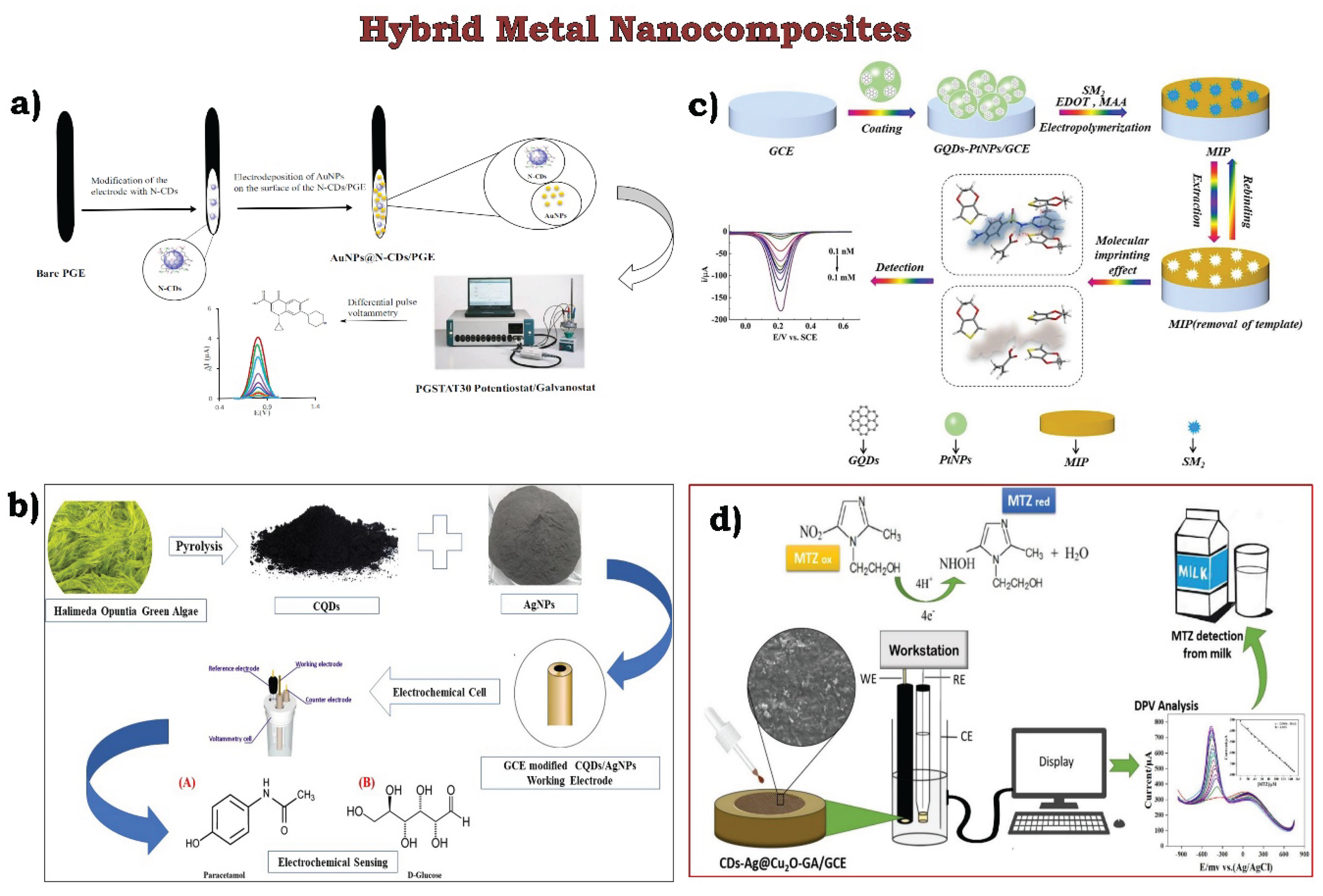
- Gold–carbon dot (Au–CD) nanocomposites:
These were among the earliest metal–CD systems reported for pharmaceutical sensing. Initial studies had focused on enhancing electrode conductivity and stability, establishing Au–CD interfaces. Recently Khalilzadeh et al. has demonstrated Au–CD modified electrodes for sensitive detection of ciprofloxacin & Lupu et al. has demonstrates paracetamol, and dopamine in pharmaceutical formulations and biological fluids. This typically do have higher sensitivity and stability. [57,58]
- Silver–carbon dot (Ag–CD) nanocomposites:
They have garnered attention shortly after 2020, due to the strong redox activity and signal amplification characteristics of silver nanoparticles. Early studies had revealed their applicability for electrochemical antibiotic sensing. Khasim et al. have explored their usage for the detection of sulfonamide antibiotics, tetracycline, and related drugs. Ag–CD hybrids provide rapid response and enhanced analytical sensitivity. [59]
- Platinum–carbon dot (Pt–CD) hybrid nanomaterials:
These have emerged mostly after 2021 as high-performance catalytic sensing interfaces as Platinum nanoparticles offer exceptional electrocatalytic efficiency, while CDs improve nanoparticle dispersion and charge transport. The work of Zhang et al. have shown that Pt–CD based electrochemical sensors for anticancer drugs such as doxorubicin, cisplatin, and paclitaxel, highlighting their suitability for therapeutic drug monitoring applications [51,60].
- Copper–carbon dot (Cu–CD) nanocomposites:
Cu-CD are been explored since around 2021 as cost-effective alternatives to noble-metal systems. Earlier work focused on stabilizing copper nanoparticles using CDs to prevent oxidation and enhance conductivity. More recent works include electrochemical detection of amoxicillin, ciprofloxacin, and metronidazole by Aslam et al. These show some good analytical performance along with material cost. [61,62,63]
Polymer–Carbon Dot Hybrid Nanocomposites
Since 2020, Polymer–CD hybrid nanocomposites have also been gaining significant attention because of their mechanical flexibility, ability to form films and stable chemistry. In these systems, polymers provide a continuous conductive network and CDs enhance the surface reactivity and electron-transfer efficiency [54,58,64].
- Polyaniline–carbon dot (PANI–CD) composites:
These were the earliest polymer–CD hybrids that were reported for their application in sensing of pharmaceutical analytes. Previous studies had focused on improving conductivity and signal stability, as the incorporation of carbon dots (for e.g.,- nitrogen-doped CQDs or CNQDs) into the PANI matrix efficiently reduces the charge transfer resistance and that also enhances the electron mobility. Lin et al. recently had worked on a sensitive electrochemical detection method which simultaneously detection of dopamine and uric acid in the biological samples [56,65,66].
- Polypyrrole–carbon dot (PPy–CD) composites:
After 2021 due to their excellent redox activity and strong electrode adhesion, these have become a prominent option for polymer-CD Nanocomposites. CDs improve the porosity and conductivity of PPy films that facilitates faster electron transfer. These composites have been applied for detection of tetracycline, ciprofloxacin, and sulfamethoxazole in complex matrices. There are systems which have integrated polypyrrole with quantum dots have demonstrated high sensitivity for antibiotics like ampicillin through synergistic fluorescence and electrochemical signal amplification. Pal et al. had developed a nano-composite (CD-PPy films) which is able to detect picric acid of trace amount in aquous solution as well as soil [56,58,67,68,69].
- PEDOT–carbon dot (PEDOT–CD) composites:
They have attracted growing interest since 2022, particularly for flexible and wearable sensing platforms. PEDOT provides mechanical durability and high conductivity, while CDs enhance interfacial charge transfer. Recent studies demonstrate PEDOT–CD sensors for monitoring paracetamol, caffeine, and antibiotics in sweat and saliva, enabling real-time pharmaceutical monitoring. For instance, PEDOT: PSS combined with quantum dots has achieved nanomolar detection limits for amoxicillin and hybrid PEDOT films have been optimized for the simultaneous detection of paracetamol and other analgesics in biological fluids. Zhang et al. have constructed Au/PEDOT that can detect the moxifloxacin with a lower LOD of 1.109 nM [34,56,65,70].
6.2. Electrochemical Sensing Modes
Amperometric Sensing-These sensors operate by measuring current at a fixed potential during analyte oxidation or reduction. CD-modified electrodes typically exhibit faster electron transfer kinetics, which in higher sensitivity compared to unmodified electrodes. This approach has been widely used for drugs such as paracetamol, where CD composites enable nanomolar-to-micromolar detection with minimal sample preparation [59,65].
Voltammetric Techniques-Cyclic voltammetry (CV) and differential pulse voltammetry (DPV) are extensively used for pharmaceutical analysis due to their ability to resolve multiple redox peaks simultaneously. DPV, in particular, provides superior sensitivity and peak resolution, allowing multiplexed detection of drugs such as ibuprofen, diclofenac, and ciprofloxacin. For instance, hierarchical electrospun carbon nanofibers modified with NiCo nanoparticles have utilized these techniques to achieve limits of detection as low as 6.0 µmol L⁻¹ for ciprofloxacin in complex matrices like plasma [54,65,71].
Stevensite-modified carbon paste electrodes and carbon nanocomposite platforms have shown improved voltammetric responses for paracetamol, with detection limits upto 0.2 µM. Likewise, graphene carbon dot hybrids and carbon nanotube composites have been used for the simultaneous detection of multiple pharmaceutical compounds, such as paracetamol and ciprofloxacin, by exploiting their distinct oxidation potentials [55].
Electrochemical Impedance Spectroscopy
It is a detection method that does not require special labels or tags. Instead, it works by measuring how electrical resistance changes at the sensor’s surface when a target substance attaches to it. Carbon dots (CDs) are excellent materials for building these sensors because they conduct electricity well and their surfaces are easily modified to hold biological “catchers” like aptamers (DNA strands) or antibodies. By lowering the resistance and helping electrons move faster, CDs make the sensors sensitive enough to detect very tiny amounts of specific substances. These CD-based impedance sensors have been successfully used to find trace levels of hormones (like estradiol), antibiotics (like kanamycin), and drugs (like methamphetamine) [55,65,72].
Electrochemical CD biosensors can function either through direct redox reactions of the analyte or via biological recognition.
- (a)
- Enzyme-based systems
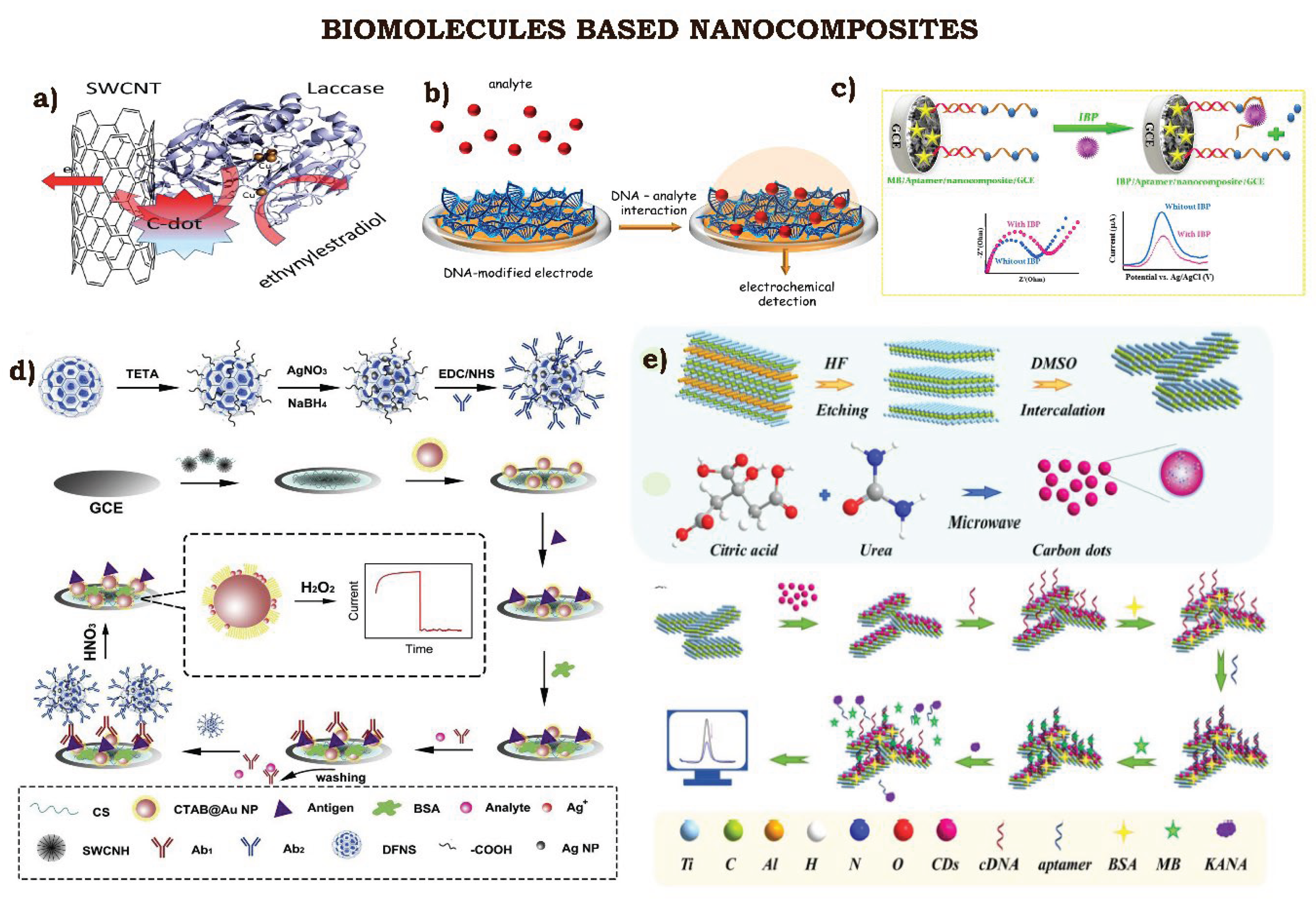
Enzyme–CD hybrids utilize enzymatic catalysis for pharmaceutical sensing, with CDs facilitating direct electron transfer and improving enzyme stability. Canevari et al. fabricated a biosensor for the synthetic hormone 17α-ethynyl-estradiol using laccase immobilized on a hybrid of single-walled carbon nanotubes (SWCNTs) and carbon dots. The CDs significantly improved the electron transfer between the copper ion active sites of the laccase enzyme and the electrode surface, achieving a detection limit of 4.0 nmol. Baj-Rossi et al. utilized a cytochrome P450 (isoform CYP1A2) modified electrode for the detection of naproxen. The enzyme was immobilized on multi-walled carbon nanotubes (MWCNTs), which, similar to CDs, enhanced the bio-electrocatalytic activity, allowing for the continuous monitoring of the drug’s metabolism [12,56,73,74].
- (b) Antibody-Based Sensors
Carbon dots are widely employed in electrochemical immunosensors as nanocarriers and signal amplifiers. In sandwich-type configurations, CD-labelled antibodies provide enhanced electron transfer and high antibody loading, enabling sensitive pharmaceutical residue analysis. Yang et al. developed an electrochemical immunosensor for sulfamethazine (an antibiotic) using silver nanoparticles and functionalized carbon structures. The CDs/nanocomposites acted as labels in a competitive immunoassay, providing a sensitive readout for the detection of sulfonamide residues in environmental waters. Anbalagan et al. demonstrated the utility of bio-functionalized CDs in immune-sensing by conjugating cow urine-derived CDs (CUCDs) with HRP-linked antibodies. While applied to the biomarker CEA, this “sandwich” principle—where CDs amplify the redox signal of the HRP reaction—is directly applicable to and used for pharmaceutical residue analysis in complex matrices [12,75,76,77].
- (c) Aptamer-based CD sensors
These uses up the exploit the high specificity of nucleic acid aptamers toward pharmaceutical targets. CDs typically serve as conductive scaffolds or signal enhancers, while target binding induces conformational changes or probe displacement, resulting in measurable electrochemical responses. Li et al. [2025] developed a self-assembly aptasensor for kanamycin detection using CD-decorated MXene. In this work, the carbon dots intercalated between the MXene layers, effectively preventing restacking and facilitating electron transfer. The CDs provided abundant active sites for the immobilization of a double-stranded DNA (dsDNA) probe (aptamer hybridized with cDNA). Upon kanamycin binding, the aptamer released the cDNA and the methylene blue signal tag, leading to signal attenuation (a “signal-off” mechanism). Roushani et al. designed ultrasensitive aptasensors for ibuprofen. One configuration utilized AuNPs@N-GQDs (nitrogen-doped graphene quantum dots) as a nanocomposite platform. The high surface area and conductivity of the AuNP-GQD hybrid allowed for high aptamer loading and synergistic signal amplification, achieving detection limits in the low picomolar to attomolar range. Liu et al. and Mat Zaid et al. reported on 17β-estradiol detection. Mat Zaid et al. constructed an impedimetric aptasensor by electrodepositing conductive CDs onto a screen-printed electrode. The binding of estradiol to the 76-mer aptamer hindered the redox probe’s access to the surface or altered the charge transfer resistance (Rct), allowing for picomolar detection limits (0.5×10 −12M) [37,52,78].
Figure 8.
Biomolecule-assisted carbon dot electrochemical nanobiosensors. a) DNA based nano-biosensors- Zheng et al., b) antibody/protein-based nano-biosensors- Anbalagan et al.,c) enzyme-based nano-biosensors-, d) Aptamer based nano-biosensors- li et al.).
Figure 8.
Biomolecule-assisted carbon dot electrochemical nanobiosensors. a) DNA based nano-biosensors- Zheng et al., b) antibody/protein-based nano-biosensors- Anbalagan et al.,c) enzyme-based nano-biosensors-, d) Aptamer based nano-biosensors- li et al.).
- (a) DNA based CD biosensors:
DNA-modified CD electrodes have been applied to pharmaceuticals that interact with nucleic acids. Zheng et al. developed a signal-amplification biosensor for metronidazole using a glassy carbon electrode modified with poly (diallyl dimethylammonium chloride)-functionalized graphene and DNA. The drug metronidazole interacts with the immobilized DNA (accumulation at the interface), which enhances the reduction peak current of the drug, providing a sensitive detection method with a limit of 24nM [79].
- (b) Protein-Based Sensors:
Non-enzymatic protein-assisted CD platforms mainly employ affinity interactions or blocking proteins to improve selectivity. Kim et al. pioneered the use of avidin–biotin systems on electrode chips for estradiol sensing. This affinity strategy has been adapted in CD-based sensors where CDs are functionalized with streptavidin/avidin to strongly bind biotinylated probes (aptamers or antibodies), ensuring stable immobilization and high selectivity. Ensafi et al. and Li et al. explored molecularly imprinted polymer (MIP) composites for pharmaceutical targets. Ensafi et al. synthesized CD-MIP nanocomposites for metronidazole detection using sol-gel transitions, while Li et al. used hollow MIPs on CDs for tetracycline. These “protein-templated” or protein-analogous cavities within the polymer-CD matrix allow for the highly selective recognition of specific drug molecules [45,80,81]
6.3. Applications in Pharmaceutical Analysis
6.3.1. Detection of Active Pharmaceutical Ingredients (APIs)
Electrochemical CD-based sensors have been used to detect a wide range of APIs. Their success stems from two routes: (i) direct electrocatalytic oxidation/reduction of the drug at a CD-enhanced electrode, and (ii) indirect detection using CDs as signal amplifiers in conjunction with selective recognition elements (aptamers/antibodies) or catalytic additives.
Paracetamol (acetaminophen): Paracetamol is a classic target for CD-electrochemical sensors because it shows a clear, well-defined oxidation peak in the graph. N-doped CDs combined with MnOx/Ag-decorated CQDs produce noticably increased peak currents and lower oxidation potentials, improving sensitivity and lowering the limit of detection (LOD) into the low µM–high nM region in many reports [59]. Strategies that combine CDs with conducting polymers such as polyaniline or PEDOT: PSS also improve film stability on flexible electrodes for repeated measurements [56].
Ciprofloxacin and other antibiotics: Ciprofloxacin has been detected using hierarchical carbon/NiCo composites and ZnO–CD hybrids, which provide both electrocatalytic activity (metal oxide) and conductive pathways (CDs) [71]. These hybrids give better selectivity in complex matrices (urine, river water, formulation samples) and often achieve LODs in the low µM range; fluorescence-based CD probes have demonstrated nM sensitivity and validate the high intrinsic sensitivity of CD cores when appropriately engineered. Metal–CD hybrids such as ZnO@CD and AgNP@CD are particularly useful when the antibiotic interacts with metal-mediated redox chemistry [59,63,71].
Non-steroidal anti-inflammatory drugs (NSAIDs) and analgesics: Ibuprofen, diclofenac and related NSAIDs are typically less electroactive than paracetamol, so hybrid strategies have been effective: CDs combined with graphene or MWCNTs increase the electroactive area and improve peak separation for simultaneous determinations in multi-component formulations. For example, fullerene–carbon nanofiber and graphene–carbon nanotube pastes electrodes have been successfully employed to distinguish the oxidation potentials of these co-existing drugs in water samples [56,65].
Anticancer and antiviral drugs: For challenging molecules such as fluorinated anticancer drugs, CD hybrids with noble metal nanoparticles (Au, Pt) and MOFs have been used to obtain catalytic amplification that resolves overlapping peaks and lowers LODs. Aptamer-functionalized CD layers further increase specificity in biologically relevant media, as seen in chemiluminescent and electrochemical platforms designed for high-precision drug monitoring [54,55,63,65].
6.3.2. Drug Stability & Degradation Products — Monitoring and Hybrid Examples
Electrochemical sensors based on CDs are highly suitable for monitoring oxidative degradation and stress-induced breakdown products because many degradation pathways create redox-active species with distinct voltametric signatures. Compared with chromatographic methods, electrochemical sensing offers faster sampling, lower solvent use, and potential for continuous monitoring during accelerated stability studies [29,82]. Approaches:
- Direct electrochemical fingerprinting: CD-modified electrodes record the appearance/disappearance of oxidation peaks corresponding to parent drug and its degradation products; This capability is vital for monitoring drugs like paracetamol, where the electrochemical oxidation mechanism involves the transfer of two electrons and two protons to produce (NAPQI), a relatively stable intermediate [19].Furthermore, modified electrodes have successfully achieved the simultaneous determination of N-acetyl-p-aminophenol and its primary degradation product, by resolving their distinct oxidation potentials [70,82]. This approach allows for the direct quality control of formulations without extensive separation steps.
- Electrocatalytic accelerated detection: Metal oxide components (ZnO, MnOx) in hybrids can catalyse specific oxidation steps, amplifying signals from labile degradation intermediates (helpful in forced degradation studies).
- Metal Oxide Hybrids: Composites such as nanorods combined with graphene or CDs have been used to enhance electron transfer rates, which subsequently improves the detection of antibiotics such as sulfamethoxazole and tetracycline by stabilizing radical intermediates during the redox process [55].
- MnOx and Ferrites: Nanohybrids composed of and carbon dots have been reported for colorimetric and electrochemical sensing, leveraging the redox cycling of manganese to detect specific pharmaceutical targets. Additionally, decorated reduced graphene oxide has shown synergistic effects, speeding up electron transfer rates and increasing sensitivity for drugs like furazolidone [55,83].
- Impedimetric monitoring — Electrochemical Impedance Spectroscopy (EIS) with aptamer/antibody immobilized on CD layers detects subtle changes in interfacial properties as degradation products bind or alter surface chemistry. This label-free approach is particularly useful for complex formulations. For instance, an impedimetric aptasensor based on conductive carbon nanodots (CDs) immobilized on a screen-printed electrode was developed for detection. The sensor monitored the change in charge transfer resistance upon analyte binding, achieving a detection limit of 0.5 pM, demonstrating the ability to discriminate structurally similar interfering compounds [72].
Representative hybrid materials for stability work include CD+ MnOx (sensitive phenolic oxidation monitoring), CD+ZnO (broad redox catalysis), and CD+ graphene (improved peak resolution in mixtures).

Table 1.
Carbon dot–based electrochemical, fluorescence, and optical sensing platforms for pharmaceutical analyte detection.
Table 1.
Carbon dot–based electrochemical, fluorescence, and optical sensing platforms for pharmaceutical analyte detection.
| Pharmaceutical analyte | Detection technique | Detection limit | Type of electrochemical biosensor | References(DOI) |
| 17β-Estradiol | Electrochemical impedance spectroscopy | Picomolar range | Aptamer-functionalized carbon dot modified electrode | https://doi.org/10.3390/nano10071346 |
| Amoxicillin | Amperometric detection | ~0.03 µM | Conducting polymer (poly(3,4-ethylenedioxythiophene): polystyrene sulfonate) combined with carbon dots | https://doi.org/10.3390/chemosensors12110234 |
| Caffeine | Differential pulse voltammetry | Low µM range | Carbon dot–chitosan composite modified electrode | https://doi.org/10.3390/s23187731 |
| Ciprofloxacin | Cyclic voltammetry (electrochemical mode of dual-mode platform) | ~0.082 µM | Label-free bio-derived carbon dot modified electrode | https://doi.org/10.1007/s00604-023-05830-y |
| Doxorubicin | Cyclic voltammetry | ~0.09 µM | Screen-printed carbon electrode modified with carbon dot–magnesium oxide nanocomposite | https://doi.org/10.1016/j.inoche.2023.110527 |
| Doxorubicin | Voltammetry | Low µM / sub-µM | Carbon dot–cerium oxide modified screen-printed electrode | https://doi.org/10.1016/j.diamond.2022.109037 |
| Ibuprofen | Square wave voltammetry | ~0.06 µM | Gold nanoparticle–carbon dot hybrid modified electrode | https://doi.org/10.1016/j.aej.2024.08.027 |
| Metronidazole | Differential pulse voltammetry | ~0.18 µM | Carbon dot–metal oxide composite non-enzymatic electrochemical sensor | https://doi.org/10.1016/j.foodchem.2024.140297 |
| Ofloxacin | Differential pulse voltammetry (dual mode) | ~0.127 µM | Biomass-derived carbon quantum dot electrochemical/fluorescence sensor | https://doi.org/10.1021/acsbiomaterials.2c00798 |
| p-Aminophenol (paracetamol impurity) | Differential pulse voltammetry | 0.0456 µM | Same nitrogen-doped carbon dot/manganese oxide hybrid electrode | https://doi.org/10.1039/D1AN00966D |
| Paracetamol | Differential pulse voltammetry | 0.0303 µM | Glassy carbon electrode modified with nitrogen-doped carbon dots decorated with manganese oxide nanospheres | https://doi.org/10.1039/D1AN00966D |
| Tetracycline | Differential pulse voltammetry | ~0.15 µM | Polypyrrole–carbon dot composite electrochemical biosensor | https://doi.org/10.3390/chemosensors12110234 |
| Theophylline | Differential pulse voltammetry | Low micromolar range | Carbon dot–polymer composite electrochemical sensor | https://doi.org/10.3390/s23187731 |
| Pharmaceutical analyte | Fluorescence detection mode | Detection limit | Sensor platform | References |
| Chloramphenicol | Fluorescence quenching | 0.12 µM | Red-emissive carbon dots | https://doi.org/10.1016/j.snb.2021.130231 |
| Ciprofloxacin | Turn-off fluorescence (dual-mode platform) | ~0.293 µM | Bio-derived carbon dot fluorescence/electrochemical dual sensor | https://doi.org/10.1007/s00604-023-05830-y |
| Kanamycin | Fluorescence recovery aptasensor | 0.09 µM | Carbon dot–aptamer fluorescence probe | https://doi.org/10.1021/ac502616n |
| Ofloxacin | Fluorescence quenching (dual-mode) | ~0.127 µM | Rice-husk derived carbon quantum dot dual-mode sensor | https://doi.org/10.1021/acsbiomaterials.2c00798 |
| Oxytetracycline | Fluorescence turn-off | 0.374 µM | Carbon quantum dot fluorescent probe | https://doi.org/10.1016/j.carbon.2019.04.025 |
| Sulfamethazine | Fluorescence quenching | 0.18 µM | Carbon quantum dot optical probe | https://doi.org/10.1016/j.talanta.2020.121301 |
| Tetracycline | Fluorescence quenching | 0.236 µM | Nitrogen-doped carbon quantum dots | https://doi.org/10.1016/j.carbon.2019.04.025 |
| Pharmaceutical analyte | Optical technique | Detection limit | Sensor platform | References |
| Chloramphenicol | Colorimetric / fluorescence | 0.095 µM | Carbon dot colorimetric probe | https://doi.org/10.1016/j.foodchem.2021.129620 |
| Ciprofloxacin | Electrochemiluminescence + electrochemical dual readout | 0.082 µM (electrochemical); 0.293 µM (optical) | Bio-derived carbon dot dual-mode platform | https://doi.org/10.1007/s00604-023-05830-y |
| Ofloxacin | Fluorescence + electrochemical dual mode | ~0.127 µM | Biomass carbon quantum dot optical/electrochemical sensor | https://doi.org/10.1021/acsbiomaterials.2c00798 |
| Sulfamethazine | Electrochemiluminescence | 0.21 µM | Molecularly imprinted graphene quantum dot composite | https://doi.org/10.1039/D0TB02132E |
| Tetracycline | Fluorescence–colorimetric dual sensing | 0.14 µM | Carbon dot–metal ion optical probe | https://doi.org/10.1016/j.snb.2020.128609 |
6.3.3. Impurities, Adulterants, and Counterfeit Detection: Field Screening with Hybrid Sensors
Rapid on-site screening for impurities and falsified medicines is an increasingly critical application of electrochemical CD sensors. Portable SPEs coated with CD hybrids permit quick classification of products based on characteristic voltammetric fingerprints [54,65].
Strategies and case studies:
- ●
- Pattern recognition and CD hybrid electrodes Combining CD-based hybrid electrodes with chemometric analysis enables the discrimination between genuine formulations and counterfeits.
- o
- Electronic Tongues: A “voltammetric electronic tongue” utilizing chitosan-coated gold nanoparticles (biocompatible scaffolds similar to CD functions) on SPEs was coupled with Partial Least Squares (PLS) regression to analyse aspirin levels in urine, saliva, and medication tablets. This system successfully predicted drug concentration with a correlation coefficient of 0.99, proving its utility for checking pharmaceutical compliance and identifying adulterated samples [54].
- o
- Multicomponent Discrimination: Advanced carbon nanocomposites, such as fullerene–carbon nanofiber pastes, have been used to simultaneously resolve peaks for multiple non-steroidal anti-inflammatory drugs (NSAIDs) like diclofenac, naproxen, and ibuprofen in water samples, a strategy adaptable for screening multi-component counterfeit formulations [65].
- ●
- Molecular imprinting and CD scaffolds (MIP-CD) — Molecularly imprinted polymers (MIPs) formed over CD surfaces create selective cavities for target drugs, improving discriminative power in complex matrices.
- o
- Paracetamol Detection: A recent MIP-based sensor using a glassy carbon electrode modified with reduced graphene oxide (rGO) and an electropolymerized o-aminophenol film achieved a detection limit of 10nM for paracetamol. This sensor demonstrated excellent reproducibility (RSD < 4%) and selectivity against common excipients, making it a reliable tool for distinguishing pure drugs from adulterated mixtures [84].
- o
- Antibiotic Screening: A fluorescent sensor based on single-hole hollow MIPs combined with carbon quantum dots (HMIP@CQDs) was fabricated for the rapid detection of tetracycline in honey, effectively filtering out complex matrix interference to identify trace antibiotic residues. Similarly, MIP-AuNPs/N,S-doped GQDs were developed for the specific determination of the antiviral drug sofosbuvir [68,85].
- ●
- On-site portable kits — Paper and SPE kits impregnated with CD-metal hybrids facilitate quick field screening.
- o
- Smartphone-Assisted Sensing: A smartphone-assisted sensing platform using red-emissive carbon dots was developed for the on-site quantitation of pesticides (2,4-D), a concept directly translatable to drug screening. The system used a paper-based strip where fluorescence quenching was captured by a phone camera and analysed via an app, offering a low-cost, portable solution [12].
- o
- Conductive Ink Sensors: Innovative sensors using conductive ink based on graphite and shellac on impermeable paper substrates have been demonstrated for sulfamethoxazole detection. These disposable sensors exhibited competitive detection limits and high recovery rates, proving their viability for resource-limited field settings [56].
Representative OA references illustrate these methods and report field-ready prototypes with good selectivity and speed.
6.3.4. Therapeutic Drug Monitoring (TDM) & Biological Matrices
TDM in blood, saliva, and sweat-Therapeutic Drug Monitoring (TDM) demands accurate, interference-resistant quantification in complex biological fluids. CD-based sensors help in three ways: (i) surface functionalization (e.g., with specific peptides or functional groups) reduces non-specific adsorption and improves binding affinity (ii) hybrid composites, such as those combining conducting polymers and metallic nanoparticles, increase the signal-to-noise ratio by enhancing electron transfer pathways and (iii) aptamer/antibody immobilization provides the necessary selectivity for clinical diagnostics [76,86,87].
Blood/plasma: For high-precision TDM, CD+ AuNP and CD+ graphene hybrids with antibody or aptamer capture have given promising results for anticancer drugs and narrow-window therapeutics. For example, a green-synthesized CD-modified electrode was successfully used to detect paclitaxel in human serum and urine with acceptable reproducibility (RSD = 2.6%) and recovery rates (97.7–103.0%), showing good resistance to common interfering species like dopamine and glucose. Additionally, bio-functionalized CDs conjugated with antibodies have been designed for the ultrasensitive detection of biomarkers in blood serum, achieving significantly higher sensitivity compared to conventional immunoassay methods [60,76].
Saliva/sweat: Non-invasive media are ideal for wearables. CDs integrated into flexible polymer matrices (e.g., polyaniline (PANI), PEDOT: PSS) on screen-printed electrodes (SPEs) have been used to measure metabolites in sweat and saliva with reasonable sensitivity due to intimate skin contact and continuous sampling. A notable example includes a flexible carbon nitride quantum dot (CNQD)/PANI nanocomposite sensor capable of monitoring glucose in sweat; the pyridinic nitrogen in the CDs improved charge mobility in neutral pH environments (typical of sweat), preventing the cracking often seen in rigid electrocatalytic layers during movement [87].
6.3.5. Wearable Platforms & Data Integration
Wearable CD sensors combine thin-film CD composites (CD+ conducting polymer or CD+ graphene) with flexible electronics and wireless telemetry. Key examples in open access literature include patches and wristbands integrating CD-polymer films for continuous monitoring and on-board amperometric readout. The integration of these sensors with cloud analytics and Artificial Intelligence (AI) is an emerging trend, where AI-assisted data processing helps interpret complex signals, reduce noise, and potentially provide personalized dosing recommendations by analysing real-time data trends [54,56,58,76,87].
Challenges include biofouling, calibration drift, and skin-matrix variability. To mitigate these issues, composite strategies such as using polymeric coatings (e.g., hyper-branched polymers or specific anti-fouling layers) and bio-compatible surface modifications have been explored to prevent protein adsorption and ensure signal stability over time.
Wearable, Point-of-Care & Future Directions
Design considerations for POC and wearable CD sensors: Device reliability depends on material selection (stable CDs, adhesion layers), power management (low-power amperometry or self-powered biofuel cells) [54], and reproducibility (standardized CD synthesis). Hybrid choices vary by use case:
- High-stability POC readers: composites on glassy carbon electrodes (GCE) are preferred for clinic-grade sensitivity and have been applied to the detection of cancer biomarkers and drugs with picomolar detection limits [12,29]. Smartphone-based readouts coupled with these materials are also being developed to lower instrumental costs [12,76].
- Disposable wearables: CD+ polymer ((e.g., PANI, PEDOT:PSS) stacks on flexible substrates like polyethylene terephthalate (PET) or paper are ideal for low-cost and flexible applications, retaining high sensitivity even after mechanical bending tests.
6.4. Regulatory, Scale-Up and Reproducibility Hurdles
For clinical translation, reproducible large-scale CD synthesis and quality control of the products are crucial. Green and microwave/solid-state carbonization methods had shown promises for scalability & low-cost production . Standardization across batches produced in large scale remains a good challenge. Impurities and aggregates from synthesis can alter physicochemical properties, affecting sensor performance [60,86]. Furthermore, clinical deployment faces strict regulatory hurdles regarding biocompatibility and manufacturing consistency; sensors must demonstrate non-toxicity and uniform performance to meet safety and efficacy standards required by bodies like the FDA . Consequently, the literature calls for rigorous interlaboratory validation, the use of standard reference materials, and consensus on reporting protocols for Limit of Detection (LOD), linear range, and long-term stability testing [54,75]
6.5. Future Opportunities: Multiplexing, AI, and Hybrid Materials
Multiplexed arrays of CD-modified microelectrodes (each with a specific aptamer or MIP) enable simultaneous detection of parent drugs and metabolites; integrated with AI, these arrays can provide real-time pharmacokinetic profiles. Emerging material combinations that deserve attention include CD+ MXene for ultra-fast electron transfer, CD+MOF for molecular sieving and preconcentration, and CD+ biomimetic polymers for anti-fouling TDM interfaces.
7. Optical Carbon Dot–Based Nanobiosensors
7.1. Fluorescence-Based CD Sensors
7.1.1. Mechanisms: Turn-on / Turn-off and Ratiometric Sensing
Fluorescence-based sensors represent the most extensively studied class of carbon dot sensors. These sensors operate based on changes in the fluorescence emission of carbon dots in response to the presence of specific analytes [88]. Fluorescence-based carbon dot (CD) sensors are among the most widely explored optical nanobiosensors due to their high sensitivity, low cost, simple operation, and excellent photophysical properties, including tunable emission, strong photostability, and biocompatibility [89]. Cryptically, fluorescence sensors operate by monitoring changes in the emission intensity or wavelength of the carbon dots when they interact with target analytes — e.g., drugs, ions, biomolecules — making them powerful tools for pharmaceutical analysis.
7.2. Fundamental Principles of Fluorescence-Based Sensing
Carbon dots are typically 2–10 nm carbonaceous nanoparticles with abundant surface functional groups (such as -OH, -COOH, -NH2) (Figure 1) that enable strong aqueous solubility and modifiable surface chemistry. These features are central to their sensing functions. When excited by UV or visible light, CDs emit fluorescence whose intensity and wavelength distribution depend sensitively on their environment. Sensor designs exploit this sensitivity to report the presence and concentration of analytes by changes in fluorescence [90].
There are two well-known primary types of fluorescence mechanisms are as follows
Turn-on fluorescence: The fluorescence emission of carbon dots is activated when an analyte is introduced. For example, the fluorescence intensity of carbon dots increases upon binding to a target molecule like metal ions or biomolecules. A turn-on fluorescence reagent is an excellent phosphor that has a structural “defect,” such as an open cycle, a break in a conjugated bond system, or an attached quencher, that reduces the quantum yield. An extremely luminous product is produced when the analyte reacts with the error, deleting it. The proposed classification for substances with turn-on fluorescence depends on the types of defects and the reactions for their “correction.”
In contrast, some sensors show enhanced fluorescence when binding analytes disrupts quenching interactions or induces structural changes that favour radiative emission. These turn-on behaviours provide high contrast and lower background noise.
The “off–on–off” sensing strategies, which combine quenching and recovery steps, allow sophisticated control and detection in complex samples.
Turn-off fluorescence: In this mechanism, the fluorescence of carbon dots is quenched upon interaction with a target analyte. This quenching effect is often used to indicate the presence of specific drugs, metal ions, or other molecular species.
Many CD sensors rely on fluorescence quenching when analytes interact with the carbon dots. Quenching can occur through mechanisms like electron transfer or the inner filter effect (IFE), where the presence of an analyte absorbs excitation/emission light, diminishing fluorescence.
For example, many small molecules (like nitroaromatic compounds or antibiotics) can reduce CD emission via IFE-mediated quenching [91]. As generally shown in Figure 1, the “turn-off/on” mechanism depends on alterations in the overall fluorescence intensity based on emission quenching (“turn off”) or enhancement (“turn on”) [92].
When an analyte is present in fluorescence “turn-off” sensors, the emission of the fluorophore or phosphor is partially or completely quenched. Most Upconversion nanoparticle-based “turn-off” sensors are built using a method that quenches the emissions of Upconversion nanoparticles when an analyte is present, causing energy transfer processes to occur. Upconversion nanoparticles have been utilized in conjunction with AuNPs, dyes, magnetic nanoparticles, and graphene quantum dots, among other materials, to create “turn-off” platforms for a variety of uses, including virus detection and pesticides [92].
Ratiometric sensing: This method measures changes in the intensity ratio between two different emission wavelengths. This allows for more reliable detection, as the ratio is less sensitive to environmental conditions like pH or temperature fluctuations.
Unlike single-signal sensors, ratio metric methods measure the ratio of two emission intensities (often from dual emission peaks or combined fluorophores). Because the ratio is internally self-referencing, this method reduces errors due to instrument drift, environmental conditions, and sample variability — a major advantage in real-world pharmaceutical samples [93].
For instance, CDs can be designed with two emissive centers or combined with other fluorophores to provide dual intensity signals whose ratio changes upon analyte binding. Ratio metric detection is particularly useful for quantitative analysis and visual perception of concentration changes.
The reference signal and the analyte-sensitive signal come from two separate probes, as seen in Figure 2A. The latter makes it possible to normalize the former. Basically, physically combining the two probes is a simple method of achieving this ratio metric biosensing or cell imaging. Nevertheless, the need for two separate probes may complicate the procedures. False imaging results, for instance, can be caused by unequal distributions of these two probes in cells. One benefit of single nanoprobes with dual-emission signals is that mistakes caused by changes in probe concentration are eliminated [93]. Using a single nanoprobe to produce dual-emission signals requires preconjugation or preassembly. There are two ways to accomplish this: chemical and physical. This design approach increases the single nanoprobes’ dependability and encourages their use in cell imaging and biosensing.
Figure 2B shows another method for creating ratio metric dual-emission sensors. There are reversible changes in two related analyte-sensitive signals. Generally speaking, when analytes are present, one signal may rise while another falls. The two fluorescence signals’ ratio has clearly changed. Building nanoprobes with two signal outputs that can cause analyte-binding-driven emission events, such as proton transfer, charge transfer, energy transfer, chemical reaction, or physical interactions, is a popular strategy for this ratiometry. Ratio metric fluorescence detection is made possible by the system’s ability to produce reversible variations of two signals through the particular interaction of probes with analytes.
On the other hand, a single step synthesis method was used to produce Zn-doped CdTe quantum dots (ZnCdTe QDs), which were combined with Blue-CDs to develop a ratiometric fluorescent probe for detecting 6-mercaptopurine. The probe exhibited different fluorescence responses from the yellow emission of ZnCdTe QDs and the blue emission of CDs when exposed to 6-MP. After adding 6-mercaptopurine, the fluorescence intensity ratio remained stable for up to 20 min, with the probe showing the strongest response at pH 8.7. Using Forster resonance energy transfer (FRET), the fluorescence of ZnCdTe QDs was selectively quenched, while the fluorescence of CDs remained unaffected. The probe successfully detected 6-mercaptopurine in human serum, offering a rapid method for 6-mercaptopurine analysis in biological samples. Figure 3 presents a schematic illustration of ratiometric fluorescence sensing for 6-mercaptopurine [94].
7.3. FRET-Based Sensing Strategies
FRET (Förster resonance energy transfer) is used in conjunction with carbon dots to detect molecular interactions. The energy from an excited donor (carbon dot) is transferred to an acceptor molecule when in close proximity, resulting in a measurable change in fluorescence [8]. This technique enhances the sensitivity and selectivity of the sensor. FRET-based sensing strategies exploit nanoscale energy transfer between fluorophores to detect molecular events. By translating binding, cleavage, or conformational changes into fluorescence signals, these sensors provide powerful tools for studying biological and chemical processes with exceptional sensitivity and spatial precision.
FRET-based sensing strategies use the proximity-dependent energy transfer between a donor and acceptor fluorophore to detect analytes or monitor biological processes, relying on changes in distance (typically <10 nm) or environment to alter the signal, with common approaches including molecular beacons for DNA, logic gates for complex analysis, and using nanoparticles / quantum dots for enhanced signal, enabling sensitive, specific detection of ions, proteins, DNA, and conformational changes in real-time, without needing direct biomolecule labeling [95].
In FRET-based sensors, energy transfer occurs non-radiatively from a fluorescent donor (e.g., CD) to an acceptor when they are in close proximity (< 10 nm) and the donor emission overlaps the acceptor absorption spectrum [93,96]. This coupling results in:
Quenching of donor emission and Enhancement (or altered emission) of acceptor signal
This mechanism enables high selectivity and sensitivity for analytes that disrupt or enable the FRET pathway, such as drugs or biomolecules.
- (a)
- Distance-Based (Conformational Change) FRET Sensors
Distance-based FRET sensors, also called conformational change FRET sensors, are among the most widely used FRET-based sensing strategies. They rely on the principle that small structural rearrangements within a biomolecule can produce large changes in FRET efficiency, due to the strong distance dependence of Förster energy transfer [39,97,98].
FRET efficiency depends on the donor–acceptor distance (1/r⁶ relationship). Binding of a target molecule causes a structural rearrangement of the sensor. This rearrangement changes the donor–acceptor spacing, producing a measurable fluorescence signal change. A typical distance-based FRET sensor consists of Donor fluorophore (e.g., CFP), Acceptor fluorophore (e.g., YFP), Sensing domain (binds analyte) and Flexible linker (allows conformational movement). These components are commonly engineered into a single fusion protein. Examples are i) Calcium sensors (Cameleon) – calmodulin-based, used for Ca²⁺ imaging ii) Kinase activity sensors – phosphorylation-induced conformational change iii) Metabolite sensors – ATP, glucose, and cAMP sensors. These sensors are having high sensitivity, specificity, and suitability for live-cell imaging and make them as powerful tools in biological and biomedical research [98].
- (b) Binding-Induced FRET Sensors
Binding-induced FRET sensors are FRET-based sensing systems in which the donor and acceptor fluorophores are attached to separate molecules, and FRET occurs only when specific binding or association brings the fluorophores into close proximity (1–10 nm). FRET efficiency depends on the distance and orientation between donor and acceptor fluorophores.
In the unbound state, fluorophores are far apart i.e No or low FRET [39]. Upon specific molecular binding, donor and acceptor come close and finally FRET signal appears or increases. The change in fluorescence intensity or ratio indicates the binding event in this particular binding strategy of the FRET sensors. Binding-induced FRET sensors consist of Donor-labeled molecule (protein, DNA, ligand), Acceptor-labeled molecule (binding partner), Target analyte that promotes molecular interaction. The donor and acceptor are on different molecules, unlike conformational change sensors.
In this strategy, Donor fluorophore is excited by light. In the absence of binding, donor emits fluorescence, no FRET happened and Binding event brings acceptor close to donor while energy transfer occurs and donor emission decreases, acceptor emission increases. Thus, their ability to directly report binding interactions makes them valuable tools in biochemical analysis, diagnostics, and molecular biology [99].
- (c) Enzyme activity-based (cleavage) sensors
Enzyme activity-based (cleavage) sensors are biosensors that detect the presence or activity of an enzyme by monitoring the cleavage of a specific substrate. The sensor that does not just detect the enzyme — it detects what the enzyme does. A specific substrate is attached to a reporter system (e.g., fluorophore, chromophore, electrode surface). The target enzyme recognizes and cleaves the substrate. This cleavage causes a measurable signal change such as Increase/decrease in fluorescence, change in color, change in electrical signal, the signal intensity is proportional to enzyme activity.
These sensor contains the substrate peptide / molecule (enzyme-specific), signal reporter, Fluorophore, Quencher, Chromophore, Electrochemical tag, Transducer i.e Optical, Electrochemical, Colorimetric factors. Based on these factors, enzyme activity-based (cleavage) sensors detect enzymes by measuring the signal produced when a specific substrate is cleaved by the target enzyme.
A ratiometric fluorescent probe based on dual carbon dots was reported to detect PTK 7, and its efficacy was tested on actual samples. Figure 4 describes this ratiometric fluorescent probe’s manufacturing procedure and PTK7 detection method. First, APT (the PTK7 aptamer) was conjugated with y-CDs to generate y-CDs-APT, then cDNA (complementary to a portion of the PTK7 aptamer) was joined with Fe3O4 to form Fe3O4-cDNA. The unique bond between Fe3O4-cDNA and y-CDs-APT (y-CDs-APT cDNA- Fe3O4) suppressed the fluorescence of y-CDs. After PTK7 was added, y-CDs’ fluorescence was recovered as y-CDs-APT coupled with PTK7 (y-CDs-APT-PTK7) to separate it from Fe3O4-cDNA. After that, DNase I was added to cleave the APT of y-CDs-APT-PTK7, releasing PTK7. The free PTK7 then broke the y-CDs-APT-cDNA-Fe3O4 once more, more y-CDs were extracted from the Fe3O4 surface, and a loop amplifier was created. In summary, the detection signal of this ratiometric fluorescence probe was provided by y-CDs and b-CDs, and was amplified by DNase Ι.
Several study articles have been examined to identify a potential detection mechanism for this probe. The fluorescence of y-CDs was clearly muted by the inner-filter effect based on the considerable UV absorption (Figure 4) of Fe3O4 MNPs [14]. However, y-CDs with higher concentrations quenched the fluorescence of b-CDs at a specific concentration, and the degree of quenching increased. Furthermore, the UV-vis absorption spectrum of y-CDs and the fluorescence spectrum of b-CDs were shown to significantly overlap. It suggests that an inner filter effect or fluorescence resonance energy transfer between b-CDs and y-CDs could be the source of the quenching.
Nevertheless, using the probe to identify PTK 7 did not extinguish the fluorescence of b-CDs. This research group examined the fluorescence lifespan spectra of b-CDs, b-CDs + y-CDs, and b-CDs + y-CDs-APT to determine the internal cause of whether the fluorescence of b-CDs was quenched, but they found no change after mixing with y-CDs-APT. The fluorescence lifetime of b-CDs meanwhile, was lowered if there was an energy transfer [100]. The APT-modified y-CDs increased the molecular gap between y-CDs and b-CDs, hence destroying their electron or energy transfer mechanism. All the above findings show that the probe’s detecting mechanism does not include any energy or photoelectron transfer processes, which implies that the sensor operates in a more regulated manner.
7.4. Carbon Dot-Assisted Raman and SERS Platforms
Carbon Dot–Assisted Raman Platform is a Raman sensing system in which carbon dots (CDs) are used to enhance, modify, or improve Raman signals by increasing analyte adsorption, signal stability, or chemical enhancement, thereby improving sensitivity and detection efficiency of Raman spectroscopy [101]. Raman spectroscopy is a powerful analytical technique used in pharmaceutical analysis for Drug identification, Polymorphism studies, Impurity detection, Quality control and many other applications. However, normal Raman signals are weak. To overcome this, various carbon Dots (CDs) with different functions are used as signal-enhancing and signal-modifying nanomaterials, leading to the Carbon Dot–Assisted Raman Platform [102]. The Carbon Dot–Assisted Raman Platform is a promising, cost-effective, and biocompatible approach for enhancing Raman signals in advanced pharmaceutical analysis, especially for low-concentration drugs, impurities, and quality control applications. The comparative table [103] of the normal Raman and the CD-assisted Raman sensing properties were displayed in the Table 1.
Carbon dots are mixed with a low-concentration drug sample. The drug molecules adsorb onto the surface of carbon dots, and due to charge transfer and molecular enrichment effects, the Raman signal intensity increases, allowing sensitive detection.
SERS Platform (Surface-Enhanced Raman Scattering Platform) in sensors is a highly sensitive sensing system that uses specially designed metal nanostructures (usually silver, gold, or copper) to enormously amplify Raman signals of molecules, enabling ultra-trace and even single-molecule detection. In other words, A SERS platform is a sensor that uses metal nanoparticles to make very weak Raman signals extremely strong for detecting tiny amounts of substances [103].
7.5. Singal Enhancement Mechanisms
Raman platforms mainly use chemical and resonance enhancement mechanisms, whereas SERS platforms achieve ultra-high sensitivity mainly through electromagnetic plasmonic enhancement along with chemical enhancement [104].
Table 2.
Differences between Raman and SERS Enhancement Mechanisms.
| S.S.no | Feature | Raman platform | SERS-Platform |
|---|---|---|---|
| 1 | Main mechanism | Chemical / Resonance | Electromagnetic + Chemical |
| 2 | Enhancement factor | 10–10⁶ | 10⁶–10¹⁴ |
| 3 | Metal required | No | Yes (Ag, Au, Cu) |
| 4 | Hot spots | No | Yes |
| 5 | Sensitivity | Low–Medium | Ultra-high |
7.6. Pharmaceutical Sensing Applications
Recently, Yanqiu Yang et al. reported [105], the novel Ag-CDs (carbon dots)-PBA (phenyl boric acid) nanocomposites to detect toxic malachite green (MG) molecule with high SERS sensitivity and good uniformity with rich binding surface sites.
Colorimetric sensors based on carbon dots rely on changes in the optical properties, particularly the color of the solution, upon exposure to a target analyte. These changes arise due to aggregation, surface functionalization, or specific binding interactions between the carbon dots and the analytes [106]. Colorimetric and visual detection systems based on quantum dots (QDs) are simple and rapid analytical methods used for on-site and real-time detection of drugs, biomolecules, and chemical substances. Quantum dots possess unique optical properties, such as strong and tunable fluorescence and high sensitivity to their chemical environment.
In these systems, the interaction between quantum dots and the target analyte causes a visible color change or a change in fluorescence color/intensity, which can often be observed with the naked eye or under UV-light without using complex instruments. This change may occur due to aggregation, surface reactions, or energy/charge transfer mechanisms. Because of their simplicity, low cost, fast response, and ease of operation, colorimetric and visual detection systems of quantum dots are widely used in rapid screening, quality control, and point-of-care testing.
- Aggregation-Induced Quenching (AIQ): In some systems, carbon dots aggregate in the presence of specific analytes, leading to a decrease in fluorescence or a visible color change. This phenomenon is used for the detection of ions, drugs, and biomolecules [107]. Catia Correia et al. [23] synthesized Eu (III)-doped CDs from citric acid and urea via the hydrothermal method, while they used Eu (NO3)3 as a europium source. Due to the difference in CD structure and the presence of active sites for cation binding, the detection performance of europium-doped CDs is higher than that of undoped CDs. The quenching impact of Eu3+-doped CDs for various metal ions is displayed in Figure 5.
7.7. Applications in Pharmaceutical Analysis
Carbon dots can be used to selectively quantify small-molecule drugs in complex biological samples. Their high surface area allows for effective drug adsorption, enabling sensitive detection even at low concentrations [108]. Quantum dot–based fluorescent sensing is a powerful, sensitive, and simple technique for the quantification of small-molecule drugs in pharmaceutical formulations and biological samples. For example. CQDs show strong blue fluorescence. When paracetamol is added, the fluorescence is quenched due to inner filter effect. The decrease in fluorescence intensity is proportional to paracetamol concentration, allowing its quantitative determination in tablets and plasma samples. Other drugs that are commonly quantified are as follows Aspirin, Ciprofloxacin, Doxorubicin, Tetracycline, Ibuprofen, Vitamin B complex, Anticancer and anti-inflammatory drugs [108].
By computing the median and geometric mean limit of detection value, the biosensors’ performance was assessed using popular fluorescence and colorimetric techniques. For example, the biomarkers utilized in CDs for drug detection include HIV-1 p24 antigen, CEA, PSA, CYFRA 19-1, ATP, NoV-L, 4,4-dibrominated tetracycline, AFP, PCT, VEGF, NMP22, biphenyl, anthrax protective antigen, and fenitrothion [109]. Since fluorescence offers great sensitivity, excellent selectivity, a high signal to noise ratio, and quick reaction, it is a popular approach for detecting miRNAs. Although bare carbon dots’ weak ECL emissions and broad excitation potentials restrict their usage in ECL assays, they can be doped with heteroatoms or combined with co-reactants like DNA, hydrogen peroxide, peroxodisulfate [110]
CDs have gained much popularity in antigen-antibody immuno sensors due to their several benefits, including minimal toxicity, high biocompatibility, highly sensitive detection, and strong electrochemical responsiveness [111]. CDs were used in a variety of analytical techniques, including fluorescence, electrochemical approaches, and electrochemiluminescence. It was shown that most non-catalytic protein biomarkers are based on fluorescence techniques [112]. The conductivity of immune complexes formed by CDs enables the biosensor’s electrochemical fluorescence-based functioning mechanism. The analytical performance of articles based on antigen-antibody interactions was reported [29]. Their limit of detection, linear or dynamic range, and RSD values, including their average and range, are summarized in Table 3. Sulfur-doped agar-derived carbon dots (S-agCDs) are used in surface-enhanced Raman scattering (SERS) techniques to detect norovirus-like particles [112]
The human body uses enzymes, which are biological molecules, to speed up biological reactions and increase their efficiency [119]. Because of their catalytic activity, enzymatic biosensors are more sensitive and may identify analytes with lower detection limit [120]. Due to the specificity of the enzymes, a variety of enzymatic biosensors employ CDs to detect analytes; nevertheless, enzymes attached to CDs also increase the biosensors’ sensitivity and adaptability.
8. Future Perspectives and Challenges:
Fluorescence-based carbon dot sensors combine versatile mechanisms with excellent optical properties to achieve sensitive, selective detection — especially valuable in pharmaceutical analysis for small molecules, ions, and biologically relevant compounds. Future work should continue to emphasize ratiometric strategies, in situ real sample validation, and integration with portable devices to bridge lab research and practical deployment.
High-throughput drug discovery and screening (HTS) aim to rapidly evaluate a large number of compounds to identify potential drug candidates. Carbon quantum dots (CQDs) have emerged as promising tools in this field due to their strong fluorescence, high photostability, good water solubility, low toxicity, and low cost. In HTS, carbon quantum dots are used as fluorescent probes or sensor platforms, where the interaction between CQDs and test compounds produces a change in fluorescence intensity (quenching or enhancement). Using microplate readers and automated systems, hundreds or thousands of samples can be analyzed simultaneously and rapidly. Thus, carbon quantum dot–based screening systems provide a fast, sensitive, and cost-effective approach for high-throughput drug discovery and screening in modern pharmaceutical research.
9. Conclusions
CDs–based nanobiosensors have emerged as highly versatile and powerful tools for advanced pharmaceutical analysis due to their distinctive optical and electrochemical properties, good biocompatibility, playable surface chemistry, and easy and economic synthesis. This review discussed adn highlioted that CDs enable sensitive and selective detection of active pharmaceutical ingredients, degradation products, impurities, and biomarkers through electrochemical, optical, and dual-mode platforms. The feasibility of facile functionalization with enzymes, antibodies, and aptamers remarkable improve the target specificity and analytical performance in complex biological and environmental matrices.
Moreover, the CDs-based miniaturized systems, such as microfluidic devices, paper-based sensors, and smartphone-assisted platforms shows strong potential for POC technology and field-deployable applications. In spite of considerable progress, challenges related to large-scale reproducibility, standardization, long-term stability, and regulatory validation remain the main hurdles to clinical and industrial translation. Overall, CDs–based nanobiosensors represent a promising next-generation sensing technology for pharmaceutical quality control, therapeutic drug monitoring, and real-time health diagnostics, with future developments expected to focus on scalable green synthesis, smart sensing systems, and real-time commercialization.
Author Contributions: All authors conceptualized the outline and agreed on the content of the manuscript. G.G. (Ganesh Gollavelli), C.P. (Chiranjib Patra), C.K. (Chiranjeevi orupalli), B.M. (Brahmayya Manuri) prepared the manuscript, Y.-C.L. (Yong - Chen Ling) revised the manuscript. All authors have read and agreed to the published version of the manuscript.
Funding
This research received no external funding.
Data Availability Statement
Not applicable.
Conflicts of Interest
The authors declare that they have no conflict of interest.
References
- Naresh, V.; Lee, N. A Review on Biosensors and Recent Development of Nanostructured Materials-Enabled Biosensors. Sensors 2021, 21, 1109. [Google Scholar] [CrossRef] [PubMed]
- Varadharajan, S.; Gadre, M.; Mathur, V.; Vasanthan, K.S. Sustainable Integration of Nanobiosensors in Biomedical and Civil Engineering: A Comprehensive Review. ACS Omega 2025, 10, 25120–25157. [Google Scholar] [CrossRef]
- Chadha, U.; Bhardwaj, P.; Agarwal, R.; Rawat, P.; Agarwal, R.; Gupta, I.; Panjwani, M.; Singh, S.; Ahuja, C.; Selvaraj, S.K.; et al. Recent progress and growth in biosensors technology: A critical review. J. Ind. Eng. Chem. 2022, 109, 21–51. [Google Scholar] [CrossRef]
- Baig, N.; Kammakakam, I.; Falath, W. Nanomaterials: a review of synthesis methods, properties, recent progress, and challenges. Mater. Adv. 2021, 2, 1821–1871. [Google Scholar] [CrossRef]
- Kolahalam, LA; Viswanath, IVK; Diwakar, BS; Govindh, B; Reddy, V; Murthy, YLN. Review on Nanomaterials: Synthesis and Applications. Materials Today: Proceedings, 2020. [Google Scholar]
- Ligler, FS; White, HS. Nanomaterials in Analytical Chemistry. Analytical Chemistry 2013, 85, 1–2. [Google Scholar] [CrossRef]
- Zulfajri, M.; Gedda, G.; Ulla, H.; Habibati; Gollavelli, G.; Huang, G.G. A review on the chemical and biological sensing applications of silver/carbon dots nanocomposites with their interaction mechanisms. Adv. Colloid Interface Sci. 2024, 325, 103115. [Google Scholar] [CrossRef]
- A Lemke, E.; Schultz, C. Principles for designing fluorescent sensors and reporters. Nat. Chem. Biol. 2011, 7, 480–483. [Google Scholar] [CrossRef] [PubMed]
- Machín, A.; Márquez, F. Next-Generation Chemical Sensors: The Convergence of Nanomaterials, Advanced Characterization, and Real-World Applications. Chemosensors 2025, 13, 345. [Google Scholar] [CrossRef]
- López, J.G.; Muñoz, M.; Arias, V.; García, V.; Calvo, P.C.; Ondo-Méndez, A.O.; Rodríguez-Burbano, D.C.; Fonthal, F. Electrochemical and Optical Carbon Dots and Glassy Carbon Biosensors: A Review on Their Development and Applications in Early Cancer Detection. Micromachines 2025, 16, 139. [Google Scholar] [CrossRef]
- Singh, R.; Gupta, R.; Bansal, D.; Bhateria, R.; Sharma, M. A Review on Recent Trends and Future Developments in Electrochemical Sensing. ACS Omega 2024, 9, 7336–7356. [Google Scholar] [CrossRef]
- Terzapulo, X.; Kassenova, A.; Loskutova, A.; Bukasov, R. Carbon dots: Review of recent applications and perspectives in bio-sensing and biomarker detection. Sens. Bio-Sensing Res. 2025, 47. [Google Scholar] [CrossRef]
- Mansuriya, B.D.; Altintas, Z. Carbon Dots: Classification, Properties, Synthesis, Characterization, and Applications in Health Care—An Updated Review (2018–2021). Nanomaterials 2021, 11, 2525. [Google Scholar] [CrossRef]
- Nazri, N.A.A.; Azeman, N.H.; Luo, Y.; A Bakar, A.A. Carbon quantum dots for optical sensor applications: A review. Opt. Laser Technol. 2021, 139. [Google Scholar] [CrossRef]
- Lodha, SR; Merchant, JG; Pillai, AJ; Shah, SA; Shah, DR; Patole, SP. Carbon dot-based fluorescent sensors for pharmaceutical detection: Current innovations, challenges, and future prospects. Heliyon 2024, 10, e41020. [Google Scholar] [CrossRef] [PubMed]
- Caroleo, F.; Magna, G.; Naitana, M.L.; Di Zazzo, L.; Martini, R.; Pizzoli, F.; Muduganti, M.; Lvova, L.; Mandoj, F.; Nardis, S.; et al. Advances in Optical Sensors for Persistent Organic Pollutant Environmental Monitoring. Sensors 2022, 22, 2649. [Google Scholar] [CrossRef] [PubMed]
- Paul, R.; Zhai, Q.; Roy, A.K.; Dai, L. Charge transfer of carbon nanomaterials for efficient metal-free electrocatalysis. Interdiscip. Mater. 2022, 1, 28–50. [Google Scholar] [CrossRef]
- Sharma, A.; Tapadia, K.; Sahin, R.; Verma, D.K.; Otero, P.; Agrawal.
- Zoric, M.R.; Singh, V.; Warren, S.; Plunkett, S.; Khatmullin, R.R.; Chaplin, B.P.; Glusac, K.D. Electron Transfer Kinetics at Graphene Quantum Dot Assembly Electrodes. ACS Appl. Mater. Interfaces 2019, 11, 46303–46310. [Google Scholar] [CrossRef]
- Scientific insights into the quantum dots (QDs)-based electrochemical sensors for state-of-the-art applications. ACS Biomaterials Science & Engineering 2024, 10, 7268–313.
- Park, Y.; Yoo, J.; Lim, B.; Kwon, W.; Rhee, S.-W. Improving the functionality of carbon nanodots: doping and surface functionalization. J. Mater. Chem. A 2016, 4, 11582–11603. [Google Scholar] [CrossRef]
- Rajendran, S.; UshaVipinachandran, V.; Haroon, K.H.B.; Ashokan, I.; Bhunia, S.K. A comprehensive review on multi-colored emissive carbon dots as fluorescent probes for the detection of pharmaceutical drugs in water. Anal. Methods 2022, 14, 4263–4291. [Google Scholar] [CrossRef]
- Sato, K.; Katakami, R.; Iso, Y.; Isobe, T. Surface-Modified Carbon Dots with Improved Photoluminescence Quantum Yield for Color Conversion in White-Light-Emitting Diodes. ACS Appl. Nano Mater. 2022, 5, 7664–7669. [Google Scholar] [CrossRef]
- Shabbir, H.; Csapó, E.; Wojnicki, M. Carbon Quantum Dots: The Role of Surface Functional Groups and Proposed Mechanisms for Metal Ion Sensing. Inorganics 2023, 11, 262. [Google Scholar] [CrossRef]
- Wang, S.; Zhang, Y.; Sun, F.; Xi, K.; Sun, Z.; Zheng, X.; Guo, F.; Zhong, H.; Yang, M.; Shao, Y.; et al. Catalase-like nanozymes combined with hydrogel to facilitate wound healing by improving the microenvironment of diabetic ulcers. Mater. Des. 2023, 225. [Google Scholar] [CrossRef]
- Emam, A.N.; Loutfy, S.A.; Mostafa, A.A.; Awad, H.; Mohamed, M.B. Cyto-toxicity, biocompatibility and cellular response of carbon dots–plasmonic based nano-hybrids for bioimaging. RSC Adv. 2017, 7, 23502–23514. [Google Scholar] [CrossRef]
- Fu, C.; Qin, X.; Zhang, J.; Zhang, T.; Song, Y.; Yang, J.; Wu, G.; Luo, D.; Jiang, N.; Bikker, F.J. In vitro and in vivo toxicological evaluation of carbon quantum dots originating from Spinacia oleracea. Heliyon 2023, 9, e13422. [Google Scholar] [CrossRef] [PubMed]
- Havrdova, M.; Hola, K.; Skopalik, J.; Tománková, K.; Petr, M.; Cepe, K.; Polakova, K.; Tucek, J.; Bourlinos, A.B.; Zboril, R. Toxicity of carbon dots – Effect of surface functionalization on the cell viability, reactive oxygen species generation and cell cycle. Carbon 2016, 99, 238–248. [Google Scholar] [CrossRef]
- Gonzalez, M.F.A.; Ramirez-Reyes, A.; Mendoza-Duarte, M.E.; Vega-Rios, A.; Martinez-Ozuna, D.; Rodriguez-Gonzalez, C.A.; Martel-Estrada, S.-A.; Olivas-Armendariz, I. Stability of Carbon Quantum Dots for Potential Photothermal and Diagnostic Applications. C 2025, 11, 56. [Google Scholar] [CrossRef]
- Dua, S.; Kumar, P.; Pani, B.; Kaur, A.; Khanna, M.; Bhatt, G. Stability of carbon quantum dots: a critical review. RSC Adv. 2023, 13, 13845–13861. [Google Scholar] [CrossRef]
- Perikala, M.; Bhardwaj, A. Highly Stable White-Light-Emitting Carbon Dot Synthesis Using a Non-coordinating Solvent. ACS Omega 2019, 4, 21223–21229. [Google Scholar] [CrossRef]
- Alam Qureshi, Z.; Dabash, H.; Ponnamma, D.; Abbas, M. Carbon dots as versatile nanomaterials in sensing and imaging: Efficiency and beyond. Heliyon 2024, 10, e31634. [Google Scholar] [CrossRef]
- Huang, Z.; Ren, L. Large Scale Synthesis of Carbon Dots and Their Applications: A Review. Molecules 2025, 30, 774. [Google Scholar] [CrossRef] [PubMed]
- Zhang, Q.; Wang, R.; Feng, B.; Zhong, X.; Ostrikov, K. (. Photoluminescence mechanism of carbon dots: triggering high-color-purity red fluorescence emission through edge amino protonation. Nat. Commun. 2021, 12, 1–13. [Google Scholar] [CrossRef] [PubMed]
- Etefa, H.F.; Tessema, A.A.; Dejene, F.B. Carbon Dots for Future Prospects: Synthesis, Characterizations and Recent Applications: A Review (2019–2023). C 2024, 10, 60. [Google Scholar] [CrossRef]
- Kulkarni, M.B.; Ayachit, N.H.; Aminabhavi, T.M. A Short Review on Miniaturized Biosensors for the Detection of Nucleic Acid Biomarkers. Biosensors 2023, 13, 412. [Google Scholar] [CrossRef]
- Liu, Y.; Zhao, X.; Liao, M.; Ke, G.; Zhang, X.-B. Point-of-care biosensors and devices for diagnostics of chronic kidney disease. Sensors Diagn. 2024, 3, 1789–1806. [Google Scholar] [CrossRef]
- Tricoli, A.; Neri, G. Miniaturized Bio-and Chemical-Sensors for Point-of-Care Monitoring of Chronic Kidney Diseases. Sensors 2018, 18, 942. [Google Scholar] [CrossRef]
- Wang, L. Förster resonance energy transfer (FRET)-based small-molecule sensors. Chemical Society Reviews 2020, 49, 5110–39. [Google Scholar]
- Alhalaili, B.; Popescu, I.N.; Rusanescu, C.O.; Vidu, R. Microfluidic Devices and Microfluidics-Integrated Electrochemical and Optical (Bio)Sensors for Pollution Analysis: A Review. Sustainability 2022, 14, 12844. [Google Scholar] [CrossRef]
- Noviana, E.; McCord, C.P.; Clark, K.M.; Jang, I.; Henry, C.S. Electrochemical paper-based devices: sensing approaches and progress toward practical applications. Lab a Chip 2019, 20, 9–34. [Google Scholar] [CrossRef]
- Hu, S.-W.; Qiao, S.; Xu, B.-Y.; Peng, X.; Xu, J.-J.; Chen, H.-Y. Dual-Functional Carbon Dots Pattern on Paper Chips for Fe3+ and Ferritin Analysis in Whole Blood. Anal. Chem. 2017, 89, 2131–2137. [Google Scholar] [CrossRef]
- Wang, F.; Mei, L.; Qi, J.; Zhu, L. Paper-Based Microfluidic Sensors Utilizing Metal–Organic Framework Materials Modified with Europium and Carbon Quantum Dots for Anthrax Spore Biomarker Detection. ACS Appl. Nano Mater. 2024, 7, 7043–7051. [Google Scholar] [CrossRef]
- Kumar, P.; Sarkar, N.; Singh, A.; Kaushik, M. Nanopaper Biosensors at Point of Care. Bioconjugate Chem. 2022, 33, 1114–1130. [Google Scholar] [CrossRef]
- Li, W.; Zhang, X.; Miao, C.; Li, R.; Ji, Y. Fluorescent paper–based sensor based on carbon dots for detection of folic acid. Anal. Bioanal. Chem. 2020, 412, 2805–2813. [Google Scholar] [CrossRef] [PubMed]
- Hao, Y.; Yu, L.; Li, T.; Chen, L.; Han, X.; Chai, F. The synthesis of carbon dots by folic acid and utilized as sustainable probe and paper sensor for Hg2+ sensing and cellular imaging. Spectrochim. Acta Part A: Mol. Biomol. Spectrosc. 2022, 285, 121865. [Google Scholar] [CrossRef] [PubMed]
- Rossini, E.L.; Milani, M.I.; Lima, L.S.; Pezza, H.R. Paper microfluidic device using carbon dots to detect glucose and lactate in saliva samples. Spectrochim. Acta Part A: Mol. Biomol. Spectrosc. 2021, 248, 119285. [Google Scholar] [CrossRef] [PubMed]
- Azodo, A.P.; Mezue, T.C.; Omokaro, I. Smartphone-Based Biosensors: Current Trends, Challenges, and Future Prospects; LOCATION OF CONFERENCE, COUNTRYDATE OF CONFERENCE, 2025; p. 10. [Google Scholar]
- Zong, H.; Zhang, Y.; Liu, X.; Xu, Z.; Ye, J.; Lu, S.; Guo, X.; Yang, Z.; Zhang, X.; Chai, M.; et al. Recent trends in smartphone-based optical imaging biosensors for genetic testing: A review. View 2023, 4. [Google Scholar] [CrossRef]
- Ding, H; Wei, JS; Zhong, N. A smartphone-based ratiometric fluorescence platform using carbon dots for on-site detection of heavy metals. Langmuir 2017, 33, 12635–42. [Google Scholar] [CrossRef]
- Zhang, Y; Wang, Y; Liu, X. Paper-based microfluidic device using carbon dots to detect glucose and lactate in saliva samples. Biosensors and Bioelectronics 2019, 126, 232–9. [Google Scholar]
- Li, H.; Kang, Z.; Liu, Y.; Lee, S.-T. Carbon nanodots: synthesis, properties and applications. J. Mater. Chem. 2012, 22, 24230–24253. [Google Scholar] [CrossRef]
- Bogdan, J.; Zarzyńska, J.; Pławińska-Czarnak, J. Comparison of Infectious Agents Susceptibility to Photocatalytic Effects of Nanosized Titanium and Zinc Oxides: A Practical Approach. Nanoscale Res. Lett. 2015, 10, 1–15. [Google Scholar] [CrossRef]
- Malode, S.J.; Alshehri, M.A.; Shetti, N.P. Nanomaterial-Based Electrochemical Sensors for the Detection of Pharmaceutical Drugs. Chemosensors 2024, 12, 234. [Google Scholar] [CrossRef]
- Aihaiti, A.; Li, Z.; Qin, Y.; Meng, F.; Li, X.; Huangfu, Z.; Chen, K.; Zhang, M. Construction of Electrochemical Sensors for Antibiotic Detection Based on Carbon Nanocomposites. Nanomaterials 2022, 12, 2789. [Google Scholar] [CrossRef]
- Bounegru, A.V.; Iacob, A.D.; Iticescu, C.; Georgescu, P.L. Electrochemical Sensors and Biosensors for the Detection of Pharmaceutical Contaminants in Natural Waters—A Comprehensive Review. Chemosensors 2025, 13, 65. [Google Scholar] [CrossRef]
- Khalilzadeh, A.; Soleymanpour, A.; Zarei, K. Gold nanoparticles @ nitrogen-doped carbon dots modified pencil graphite electrode as an extremely sensitive sensor for trace analysis of ciprofloxacin. J. Nanoparticle Res. 2025, 27, 1–15. [Google Scholar] [CrossRef]
- Lupu, S. Polymeric Composite-Based Electrochemical Sensing Devices Applied in the Analysis of Monoamine Neurotransmitters. Biosensors 2025, 15, 440. [Google Scholar] [CrossRef]
- Khasim, S.; Al-Ghamdi, S.A.; Darwish, A.A.A.; Hamdalla, T.A.; Pasha, A. Biosynthesis of carbon quantum dot nanocomposite as an advanced material for simultaneous electrochemical sensing of D-glucose and paracetamol. Appl. Phys. A 2023, 129, 1–11. [Google Scholar] [CrossRef]
- Sun, W.; Song, B.; Li, S. Fabrication of carbon dots modified electrode for electrochemical sensing of paclitaxel as an important anticancer drug. Alex. Eng. J. 2024, 105, 682–691. [Google Scholar] [CrossRef]
- Miao, H.; Wang, P.; Cong, Y.; Dong, W.; Li, L. Preparation of Ciprofloxacin-Based Carbon Dots with High Antibacterial Activity. Int. J. Mol. Sci. 2023, 24, 6814. [Google Scholar] [CrossRef] [PubMed]
- Aslam, H.K.; Bilal, S.; Mir, S.; Tabassum, S.; Gilani, M.A.; Yaqub, M.; Asim, M. A robust and simple non-enzymatic electrochemical sensor based on carbon dots-metal oxide composite for the detection of metronidazole traces in food products. Food Chem. 2024, 460, 140297. [Google Scholar] [CrossRef] [PubMed]
- Murugesan, A.; Li, H.; Shoaib, M. Recent Advances in Functionalized Carbon Quantum Dots Integrated with Metal–Organic Frameworks: Emerging Platforms for Sensing and Food Safety Applications. Foods 2025, 14, 2060. [Google Scholar] [CrossRef]
- Arora, G.; Sabran, N.S.; Ng, C.Y.; Low, F.W.; Jun, H. Applications of carbon quantum dots in electrochemical energy storage devices. Heliyon 2024, 10, e35543. [Google Scholar] [CrossRef]
- Mello, G.A.B.; Benjamin, S.R.; de Lima, F.; Dutra, R.F. Recent Advances in Electrochemical Sensors for the Detection of Anti-Inflammatory and Antibiotic Drugs: A Comprehensive Review. Biosensors 2025, 15, 676. [Google Scholar] [CrossRef]
- Lin, L.; Li, M.; Li, P.; Ye, C.; Zhuang, H.; Weng, S.; Chen, F. Simultaneous determination of dopamine and uric acid based on electrocatalytic oxidation of Cu2O-Au and polyaniline nanocomposites. Microchem. J. 2023, 196. [Google Scholar] [CrossRef]
- Adane, W.D.; Chandravanshi, B.S.; Tessema, M. A simple, ultrasensitive and cost-effective electrochemical sensor for the determination of ciprofloxacin in various types of samples. Sens. Bio-Sensing Res. 2022, 39. [Google Scholar] [CrossRef]
- Pan, M.; Xie, X.; Liu, K.; Yang, J.; Hong, L.; Wang, S. Fluorescent Carbon Quantum Dots—Synthesis, Functionalization and Sensing Application in Food Analysis. Nanomaterials 2020, 10, 930. [Google Scholar] [CrossRef]
- Pal, A.; Sk, P.; Chattopadhyay, A. Conducting Carbon Dot–Polypyrrole Nanocomposite for Sensitive Detection of Picric acid. ACS Appl. Mater. Interfaces 2016, 8, 5758–5762. [Google Scholar] [CrossRef] [PubMed]
- Monteiro, MKS; Monteiro, MMS; Henrique, JMM; Martínez-Huitle, CA; Ferro, S; dos Santos, EV. Voltammetric Investigation of Paracetamol Detection in Acidic Conditions by Using Cork-Modified Carbon Paste Electrodes. Chemosensors [Internet]. 10 Sep 2024, 12. Available online: https://www.mdpi.com/2227-9040/12/9/183.
- Smajdor, J.; Paczosa-Bator, B.; Piech, R. Electrochemical Sensor Based on the Hierarchical Carbon Nanocomposite for Highly Sensitive Ciprofloxacin Determination. Membranes 2023, 13, 682. [Google Scholar] [CrossRef] [PubMed]
- Zaid, M.H.M.; Abdullah, J.; Rozi, N.; Rozlan, A.A.M.; Abu Hanifah, S. A Sensitive Impedimetric Aptasensor Based on Carbon Nanodots Modified Electrode for Detection of 17ß-Estradiol. Nanomaterials 2020, 10, 1346. [Google Scholar] [CrossRef]
- Baj-Rossi, C.; Jost, T.R.; Cavallini, A.; Grassi, F.; De Micheli, G.; Carrara, S. Continuous monitoring of Naproxen by a cytochrome P450-based electrochemical sensor. Biosens. Bioelectron. 2014, 53, 283–287. [Google Scholar] [CrossRef]
- Canevari, T.C.; Cincotto, F.H.; Nakamura, M.; Machado, S.A.S.; Toma, H.E. Efficient electrochemical biosensors for ethynylestradiol based on the laccase enzyme supported on single walled carbon nanotubes decorated with nanocrystalline carbon quantum dots. Anal. Methods 2016, 8, 7254–7259. [Google Scholar] [CrossRef]
- Sánchez-López, E.; Gomes, D.; Esteruelas, G.; Bonilla, L.; Lopez-Machado, A.L.; Galindo, R.; Cano, A.; Espina, M.; Ettcheto, M.; Camins, A.; et al. Metal-Based Nanoparticles as Antimicrobial Agents: An Overview. Nanomaterials 2020, 10, 292. [Google Scholar] [CrossRef] [PubMed]
- Anbalagan, A.C.; Korram, J.; Doble, M.; Sawant, S.N. Bio-functionalized carbon dots for signaling immuno-reaction of carcinoembryonic antigen in an electrochemical biosensor for cancer biomarker detection. Nanoscale Res. Lett. 2024, 19, 1–15. [Google Scholar] [CrossRef]
- Yang, M.; Wu, X.; Hu, X.; Wang, K.; Zhang, C.; Gyimah, E.; Yakubu, S.; Zhang, Z. Electrochemical immunosensor based on Ag+-dependent CTAB-AuNPs for ultrasensitive detection of sulfamethazine. Biosens. Bioelectron. 2019, 144, 111643. [Google Scholar] [CrossRef]
- Zaid, M. Sensitive impedimetric aptasensor for 17β-estradiol. Nanomaterials 2020, 10(7), 1346. [Google Scholar]
- Zheng, B.; Li, C.; Wang, L.; Li, Y.; Gu, Y.; Yan, X.; Zhang, T.; Zhang, Z.; Zhai, S. Signal amplification biosensor based on DNA for ultrasensitive electrochemical determination of metronidazole. RSC Adv. 2016, 6, 61207–61213. [Google Scholar] [CrossRef]
- Kim, Y.S.; Jung, H.S.; Matsuura, T.; Lee, H.Y.; Kawai, T.; Gu, M.B. Electrochemical detection of 17β-estradiol using DNA aptamer immobilized gold electrode chip. Biosens. Bioelectron. 2007, 22, 2525–2531. [Google Scholar] [CrossRef]
- Ensafi, A.A.; Nasr-Esfahani, P.; Rezaei, B. Metronidazole determination with an extremely sensitive and selective electrochemical sensor based on graphene nanoplatelets and molecularly imprinted polymers on graphene quantum dots. Sensors Actuators B: Chem. 2018, 270, 192–199. [Google Scholar] [CrossRef]
- Gharous, M.; Bounab, L.; Pereira, F.J.; Choukairi, M.; López, R.; Aller, A.J. Electrochemical Kinetics and Detection of Paracetamol by Stevensite-Modified Carbon Paste Electrode in Biological Fluids and Pharmaceutical Formulations. Int. J. Mol. Sci. 2023, 24, 11269. [Google Scholar] [CrossRef] [PubMed]
- Hatimuria, M.; Phukan, P.; Bag, S.; Ghosh, J.; Gavvala, K.; Pabbathi, A.; Das, J. Green Carbon Dots: Applications in Development of Electrochemical Sensors, Assessment of Toxicity as Well as Anticancer Properties. Catalysts 2023, 13, 537. [Google Scholar] [CrossRef]
- Rodríguez, J.A.C.; Arévalo, F.J.; Granero, A.M. Design of an MIP-Based Electrochemical Sensor for the Determination of Paracetamol in Pharmaceutical Samples. Biosensors 2025, 15, 544. [Google Scholar] [CrossRef]
- Ng'ANdu, C.; Nsibande, S.A. Analytical application of carbon dot-based molecularly imprinted polymers in the fabrication of selective fluorescence and electrochemical sensors – a review. Talanta 2025, 297, 128706. [Google Scholar] [CrossRef]
- Nguyen, D.H.H.; Muthu, A.; Elsakhawy, T.; Sheta, M.H.; Abdalla, N.; El-Ramady, H.; Prokisch, J. Carbon Nanodots-Based Sensors: A Promising Tool for Detecting and Monitoring Toxic Compounds. Nanomaterials 2025, 15, 725. [Google Scholar] [CrossRef]
- Chiu, Y.-H.; Rinawati, M.; Chang, L.-Y.; Guo, Y.-T.; Chen, K.-J.; Chiu, H.-C.; Lin, Z.-H.; Huang, W.-H.; Haw, S.-C.; Yeh, M.-H. Carbon Nitride Quantum Dots/Polyaniline Nanocomposites for Non-Invasive Glucose Monitoring Using Wearable Sweat Biosensor. ACS Appl. Nano Mater. 2025, 8, 2340–2351. [Google Scholar] [CrossRef]
- Lou, X.-T.; Zhan, L.; Chen, B.-B. Recent Progress of Carbon Dots in Fluorescence Sensing. Inorganics 2025, 13, 256. [Google Scholar] [CrossRef]
- Keerthana, S; Bincy, S; Louis, G; Sudhakar, YN; Anitha, V. Fluorescein Based Fluorescence Sensors for the Selective Sensing of Various Analytes. Journal of Fluorescence 2021, 31, 1251–76. [Google Scholar] [CrossRef]
- Ping, L; Jun, A. Fluorescence probes and their sensing applications in nanomaterials system. Talanta Open. 2023, 8, 100248. [Google Scholar]
- Sun, H.; Zhang, W.; Xie, J.; Sun, M.; Hu, P.; Zhang, Z.; Zhu, J.; Zhao, Y.; Liu, L. IFE and Dynamic Quenching mediated fluorescent sensing of Cr(Ⅵ) based on nitrogen-doped biomass carbon dots. Environ. Res. 2025, 286, 123024. [Google Scholar] [CrossRef] [PubMed]
- Arai, MS; de Camargo, ASS. Exploring the use of upconversion nanoparticles in chemical and biological sensors: from surface modifications to point-of-care devices. Nanoscale Adv [Internet] 2021, 3(18), 5135–65. Available online: https://pubs.rsc.org/en/content/articlelanding/2021/na/d1na00327e. [CrossRef] [PubMed]
- Zhang, Y.; Hou, D.; Wang, Z.; Cai, N.; Au, C. Nanomaterial-Based Dual-Emission Ratiometric Fluorescent Sensors for Biosensing and Cell Imaging. Polymers 2021, 13, 2540. [Google Scholar] [CrossRef]
- Zhang, T.; Gan, Z.; Zhen, S.; Hu, Y.; Hu, X. Ratiometric fluorescent probe based on carbon dots and Zn-doped CdTe QDs for detection of 6-Mercaptopurine. Opt. Mater. 2022, 134. [Google Scholar] [CrossRef]
- Yang, W.; Li, S.; Ni, S.; Liu, G. Advances in FRET-based biosensors from donor-acceptor design to applications. Aggregate 2023, 5. [Google Scholar] [CrossRef]
- Soleja, N; Mohd, Mohsin. Exploring the landscape of FRET-based molecular sensors: Design strategies and recent advances in emerging applications. Biotechnology Advances [Internet] 2024, 77, 108466. Available online: https://www.sciencedirect.com/science/article/pii/S0734975024001605. [CrossRef] [PubMed]
- Hossain, N; Rimon, MIH; Mimona, MA; Mobarak, MH; Ghosh, J; Islam, MdA; et al. Prospects and challenges of sensor materials: A comprehensive review. e-Prime - Advances in Electrical Engineering, Electronics and Energy [Internet] 2024, 7, 100496. Available online: https://www.sciencedirect.com/science/article/pii/S2772671124000780. [CrossRef]
- Ren, T.; Bramlitt, S.E.; LaFreniere, J.M.; Seitz, W.; Halpern, J.M. Conformation-based stimuli-response sensors: Strategies for optimizing electrochemical and FRET transduction. Sensors Actuators Rep. 2021, 3. [Google Scholar] [CrossRef]
- Review of FRET biosensing and its application in biomolecular detection - PubMed [Internet]. 31 Jan 2026. Available online: https://pubmed.ncbi.nlm.nih.gov/36915763/.
- Ma, Y. Multi-carbon dots and aptamer based ratiometric fluorescence probe. Journal of Nanobiotechnology 2021, 19, 47. [Google Scholar] [CrossRef]
- Ma, H.; Pan, S.-Q.; Wang, W.-L.; Yue, X.; Xi, X.-H.; Yan, S.; Wu, D.-Y.; Wang, X.; Liu, G.; Ren, B. Surface-Enhanced Raman Spectroscopy: Current Understanding, Challenges, and Opportunities. ACS Nano 2024, 18, 14000–14019. [Google Scholar] [CrossRef]
- Geng, P.; Wang, Y.; Peng, Z.; Hu, C.; Zhang, S.; Rao, X.; Chen, G.; Mi, F.; Guan, M. Dual-driven by synergistic enhancement and an intrinsic Raman internal standard: A multifunctional nanocomposite substrate for ratiometric SERS detection and photocatalytic degradation of fluoroquinolone antibiotics. Chem. Eng. J. 2026, 530. [Google Scholar] [CrossRef]
- Jones, R.R.; Hooper, D.C.; Zhang, L.; Wolverson, D.; Valev, V.K. Raman Techniques: Fundamentals and Frontiers. Nanoscale Res. Lett. 2019, 14, 231. [Google Scholar] [CrossRef]
- Dana, C. Raman Spectroscopy and Imaging in Bioanalytics. Analytical Chemistry 2022, 94, 86–119. [Google Scholar]
- Yang, Y.; Kong, L.; Ding, Y.; Xia, L.; Cao, S.; Song, P. High SERS performance of functionalized carbon dots in the detection of dye contaminants. J. Adv. Res. 2024, 68, 89–98. [Google Scholar] [CrossRef] [PubMed]
- Guo, S. Colorimetric identification chips for detecting pollutants. Journal of Cleaner Production 2025, 501, 145322. [Google Scholar] [CrossRef]
- Correia, C.; Martinho, J.; Maçôas, E. A Fluorescent Nanosensor for Silver (Ag+) and Mercury (Hg2+) Ions Using Eu (III)-Doped Carbon Dots. Nanomaterials 2022, 12, 385. [Google Scholar] [CrossRef] [PubMed]
- Zhao, J. Carbon Dot-Based Nanomaterials for Drug Screening and Development. Pharmaceutics 2019, 11(9), 462. [Google Scholar]
- Gu, YZ; Li, JL; Chen, YF; Chai, YQ; Li, ZH; Ruo, Y. Boron and Nitrogen-Codoped Carbon Dots as Highly Efficient Electrochemiluminescence Emitters for Ultrasensitive Detection of Hepatitis B Virus DNA. Analytical Chemistry 2022, 94(21), 7601–8. [Google Scholar] [CrossRef] [PubMed]
- Li, T.; Wu, T.; Lu, M.; Li, N.; Ma, Y.; Song, L.; Huang, X.; Zhao, J.; Wang, T. An intelligent device with double fluorescent carbon dots based on smartphone for visual and point-of-care testing of Copper(II) in water and food samples. Food Chem. X 2024, 24, 101834. [Google Scholar] [CrossRef]
- Sarkar, T.; Bohidar, H.; Solanki, P.R. Carbon dots-modified chitosan based electrochemical biosensing platform for detection of vitamin D. Int. J. Biol. Macromol. 2018, 109, 687–697. [Google Scholar] [CrossRef]
- Barrientos, K.; Arango, J.P.; Moncada, M.S.; Placido, J.; Patiño, J.; Macías, S.L.; Maldonado, C.; Torijano, S.; Bustamante, S.; Londoño, M.E.; et al. Carbon dot-based biosensors for the detection of communicable and non -communicable diseases. Talanta 2022, 251, 123791. [Google Scholar] [CrossRef]
- Alarfaj, NA. Immunosensing-fluorescence detection of CYFRA 21-1 via carbon quantum dots/zinc oxide nanocomposite. Nanoscale Research Letters 2020, 15, 12. [Google Scholar] [CrossRef]
- Chunduri, LA. Carbon dot based microplate and microfluidic chip immunoassay for HIV-1 p24 antigen. Microfluidics and Nanofluidics 2016, 20, 167. [Google Scholar] [CrossRef]
- Li, S.; Luo, J.; Yang, X.; Wan, Y.; Liu, C. A novel immunosensor for squamous cell carcinoma antigen determination based on CdTe@Carbon dots nanocomposite electrochemiluminescence resonance energy transfer. Sensors Actuators B: Chem. 2014, 197, 43–49. [Google Scholar] [CrossRef]
- Wu, L. Electrochemiluminescence immunosensor for prostate specific antigen. Sensors and Actuators B 2013, 186, 761–7. [Google Scholar] [CrossRef]
- Filik, H. Electrochemical immunosensor for cytokeratin and neuron-specific enolase. Microchemical Journal. 2022, 183, 107990. [Google Scholar] [CrossRef]
- Pourmadadi, M.; Nouralishahi, A.; Shalbaf, M.; Shayeh, J.S.; Nouralishahi, A. An electrochemical aptasensor for detection of prostate-specific antigen-based on carbon quantum dots-gold nanoparticles. Biotechnol. Appl. Biochem. 2022, 70, 175–183. [Google Scholar] [CrossRef] [PubMed]
- Kailasa, SK; Hussain, CM. Carbon Dots in Analytical Chemistry; Elsevier, 2023. [Google Scholar]
- Morrison, D.W.G.; Dokmeci, M.; Demirci, U.; Khademhosseini, A. Clinical Applications of Micro- and Nanoscale Biosensors. In Biomedical Nanostructures; Gonsalves, K.E., Laurencin, C.L., Halberstadt, C.R., Nair, L.S., Eds.; John Wiley & Sons, Inc.: Toronto, ON, Canada, 2008. [Google Scholar]
Figure 1.
Publication statistics related to the topic. A. Nanomaterials for biosensors, B. Carbon based nanomaterials for biosensors. C. CDs for biosensors. The statistics have been taken from Scopus from 2005 to 2025.
Figure 1.
Publication statistics related to the topic. A. Nanomaterials for biosensors, B. Carbon based nanomaterials for biosensors. C. CDs for biosensors. The statistics have been taken from Scopus from 2005 to 2025.
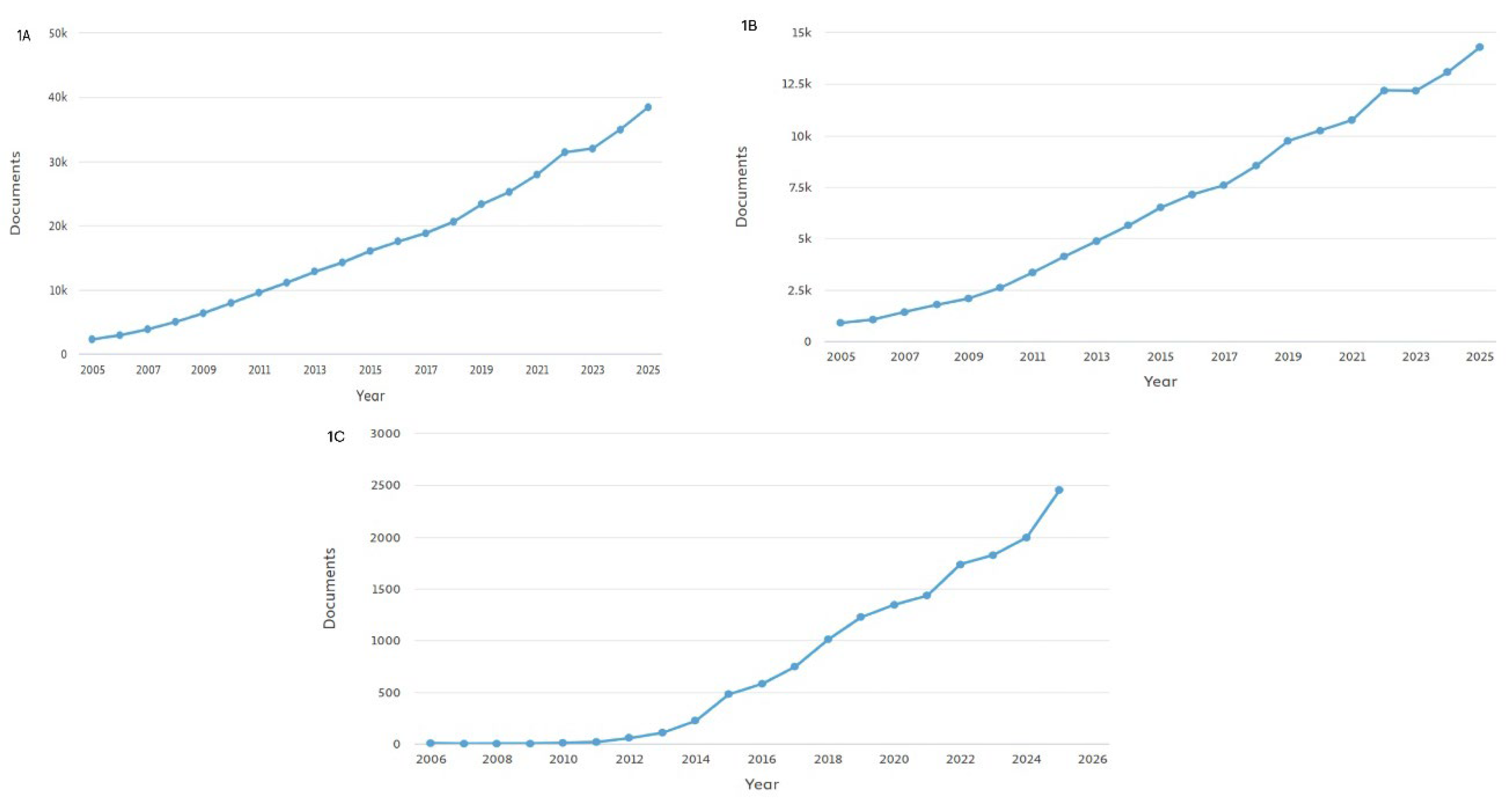
Scheme 1.
CD-based biosensors based on electrochemical, optical, and point-of-care detection of various pharmaceutical pollutants.
Scheme 1.
CD-based biosensors based on electrochemical, optical, and point-of-care detection of various pharmaceutical pollutants.
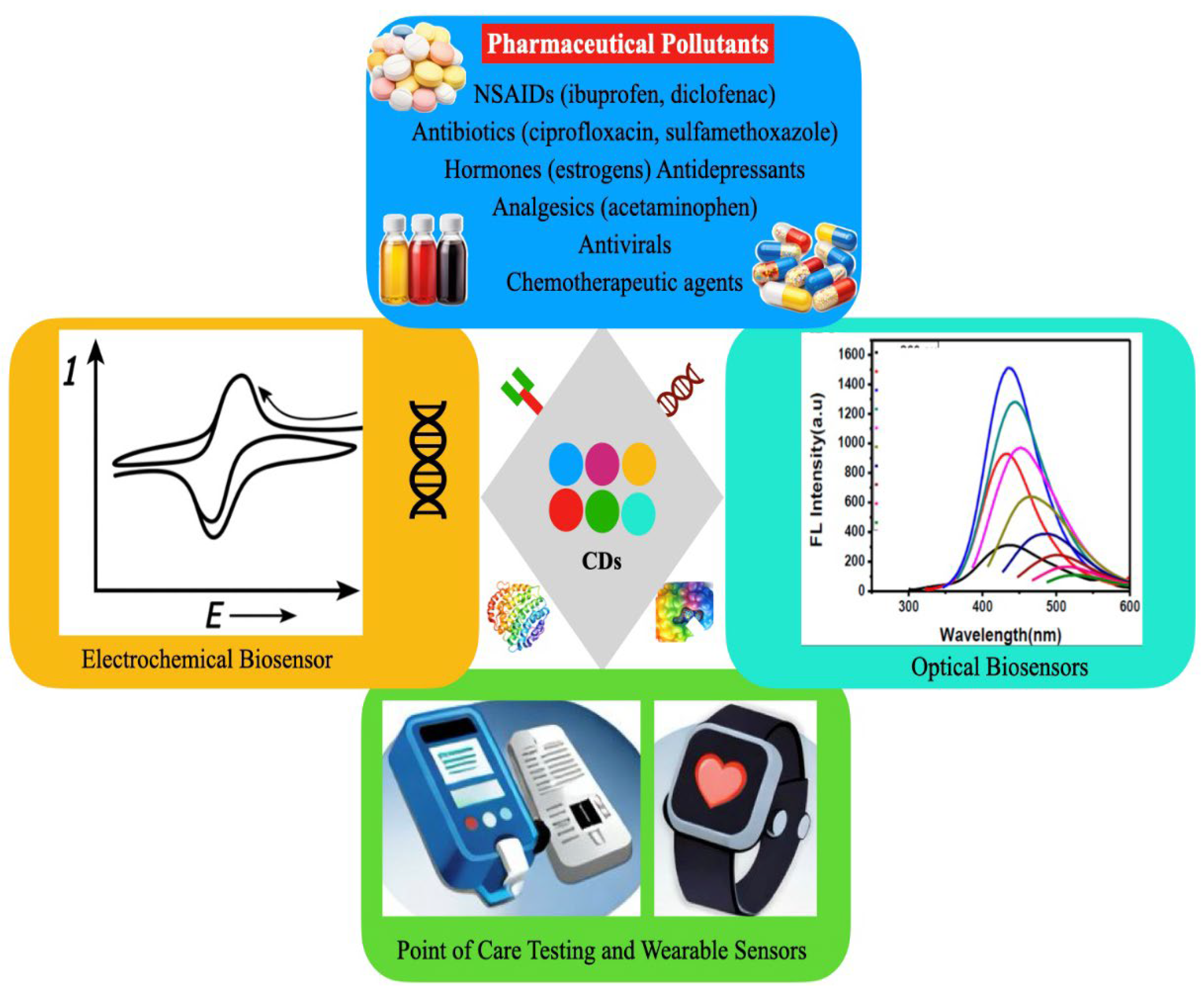
Figure 2.
Schematic representation of CDs coated electrode for biosensing applications and the signal processing system.
Figure 2.
Schematic representation of CDs coated electrode for biosensing applications and the signal processing system.
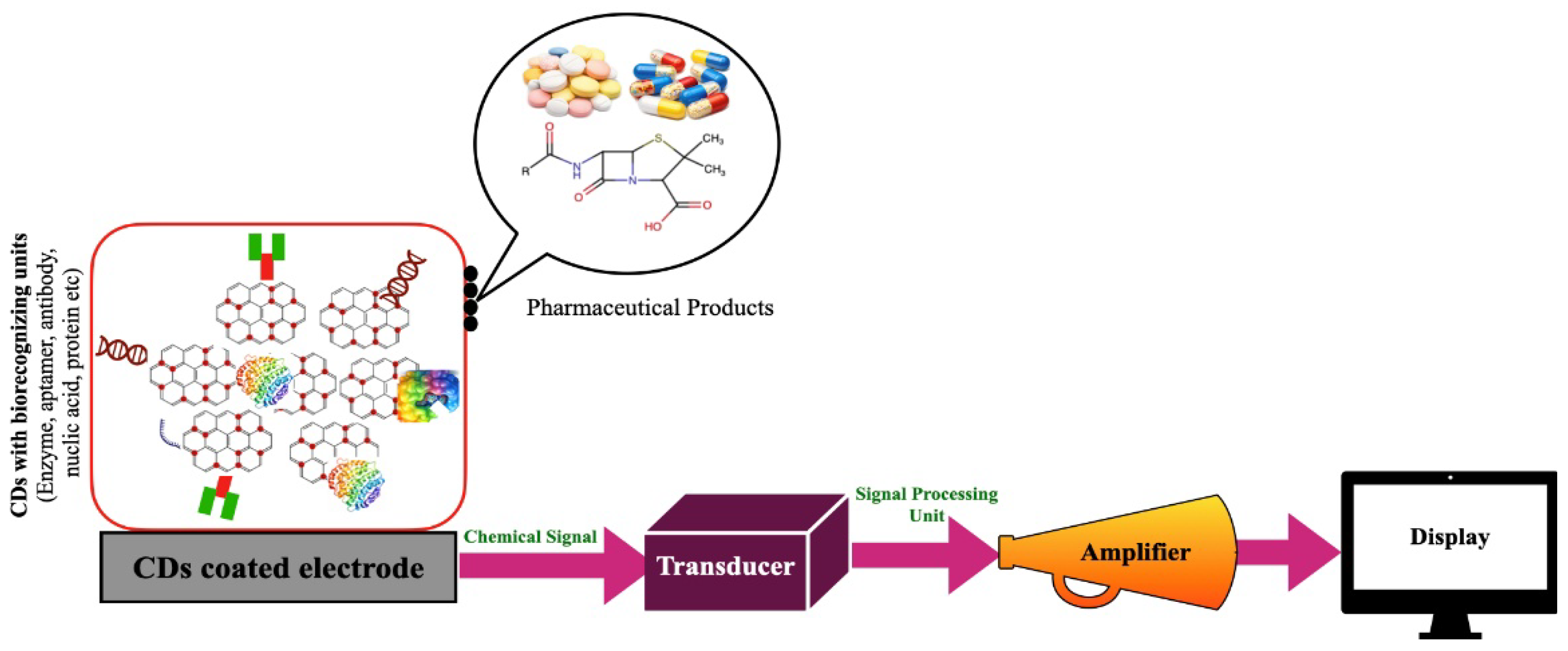
Figure 3.
Structure and classification of carbon dots.
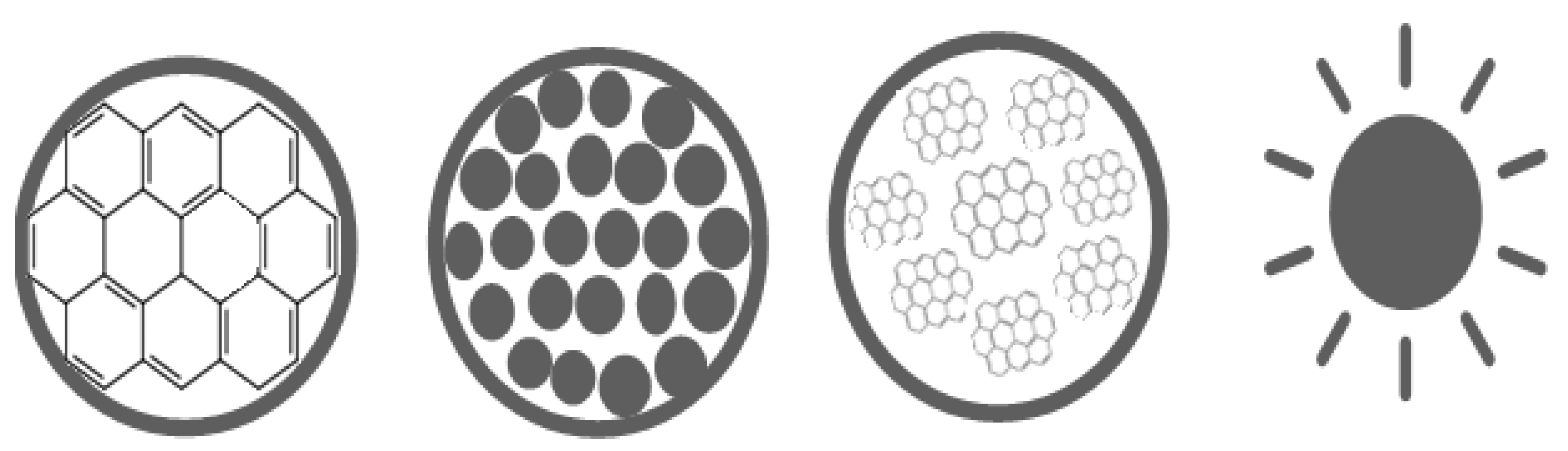
Figure 4.
Carbon dots induced possible photo-sensing mechanisms [15].
Figure 4.
Carbon dots induced possible photo-sensing mechanisms [15].
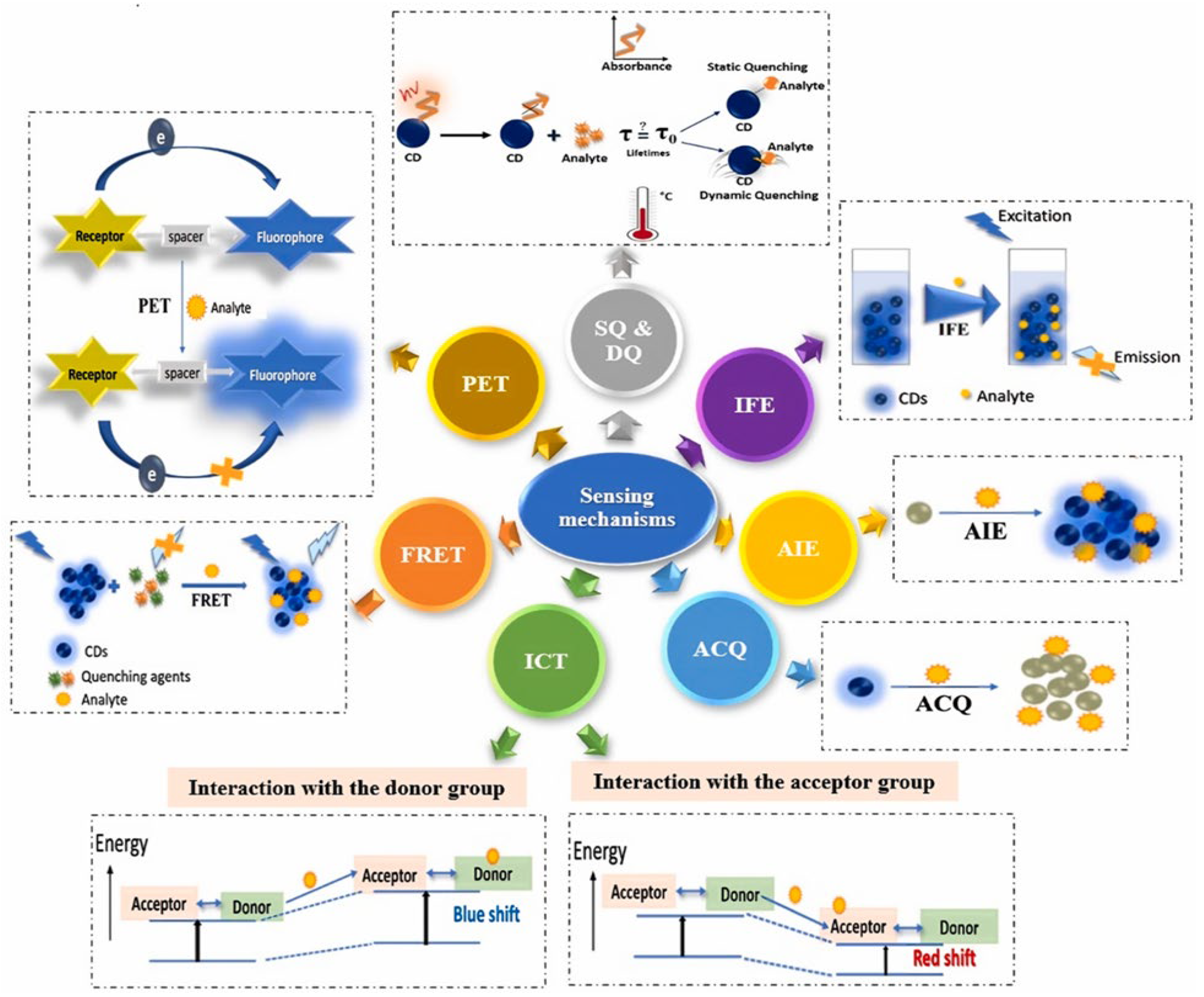
Figure 5.
Various properties of CDs [15].
Figure 5.
Various properties of CDs [15].
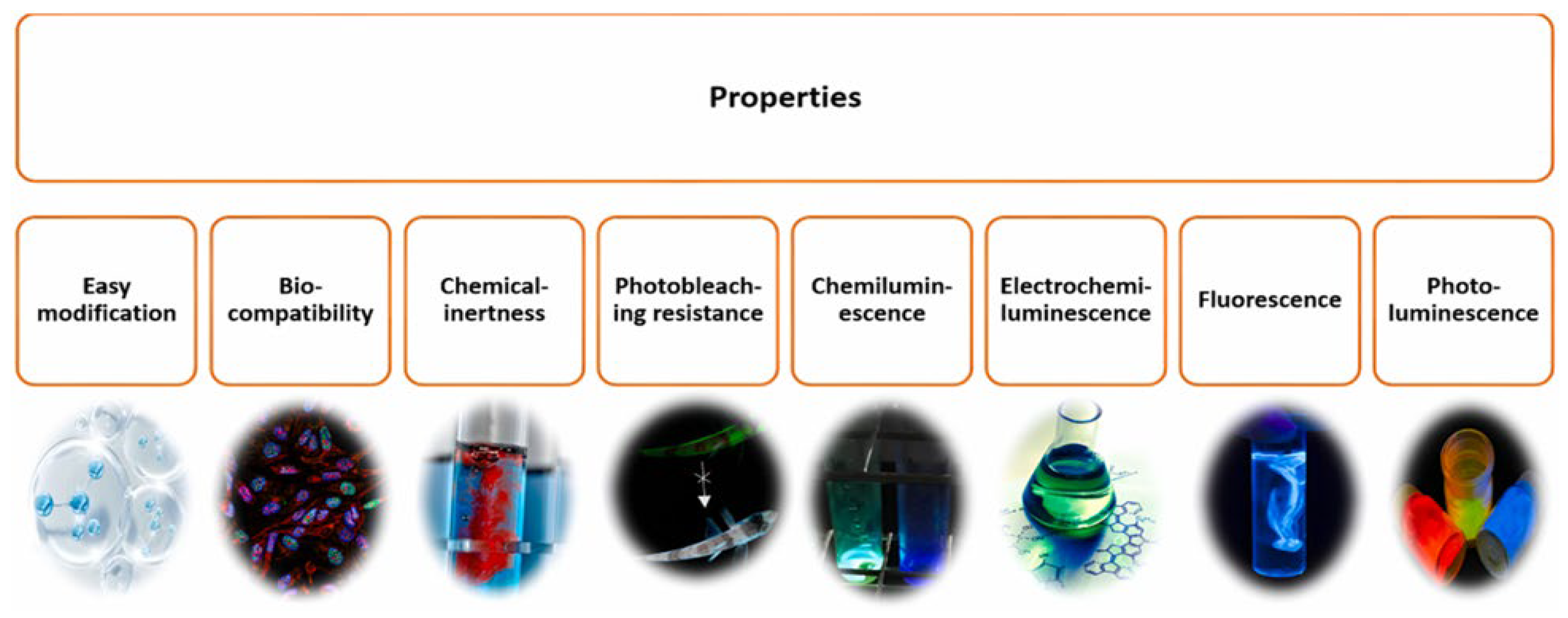
Figure 6.
A. Synthesis of CDs by Top-down and Bottom-up methods [32]. B. a. Transmission Electron Microscope (TEM) image of CDs with particle size distribution; b. CDs high-resolution TEM with 5 nm size scale bar; c–f: CDs full scan, C 1s, N 1s, and O 1s high-resolution XPS spectra; g and h: one-photon and two-photon fluorescence (FL) spectra of protonated CDs in deionized water; i: correlation between two-photon FL intensity and femtosecond (fs) laser power [34].
Figure 6.
A. Synthesis of CDs by Top-down and Bottom-up methods [32]. B. a. Transmission Electron Microscope (TEM) image of CDs with particle size distribution; b. CDs high-resolution TEM with 5 nm size scale bar; c–f: CDs full scan, C 1s, N 1s, and O 1s high-resolution XPS spectra; g and h: one-photon and two-photon fluorescence (FL) spectra of protonated CDs in deionized water; i: correlation between two-photon FL intensity and femtosecond (fs) laser power [34].
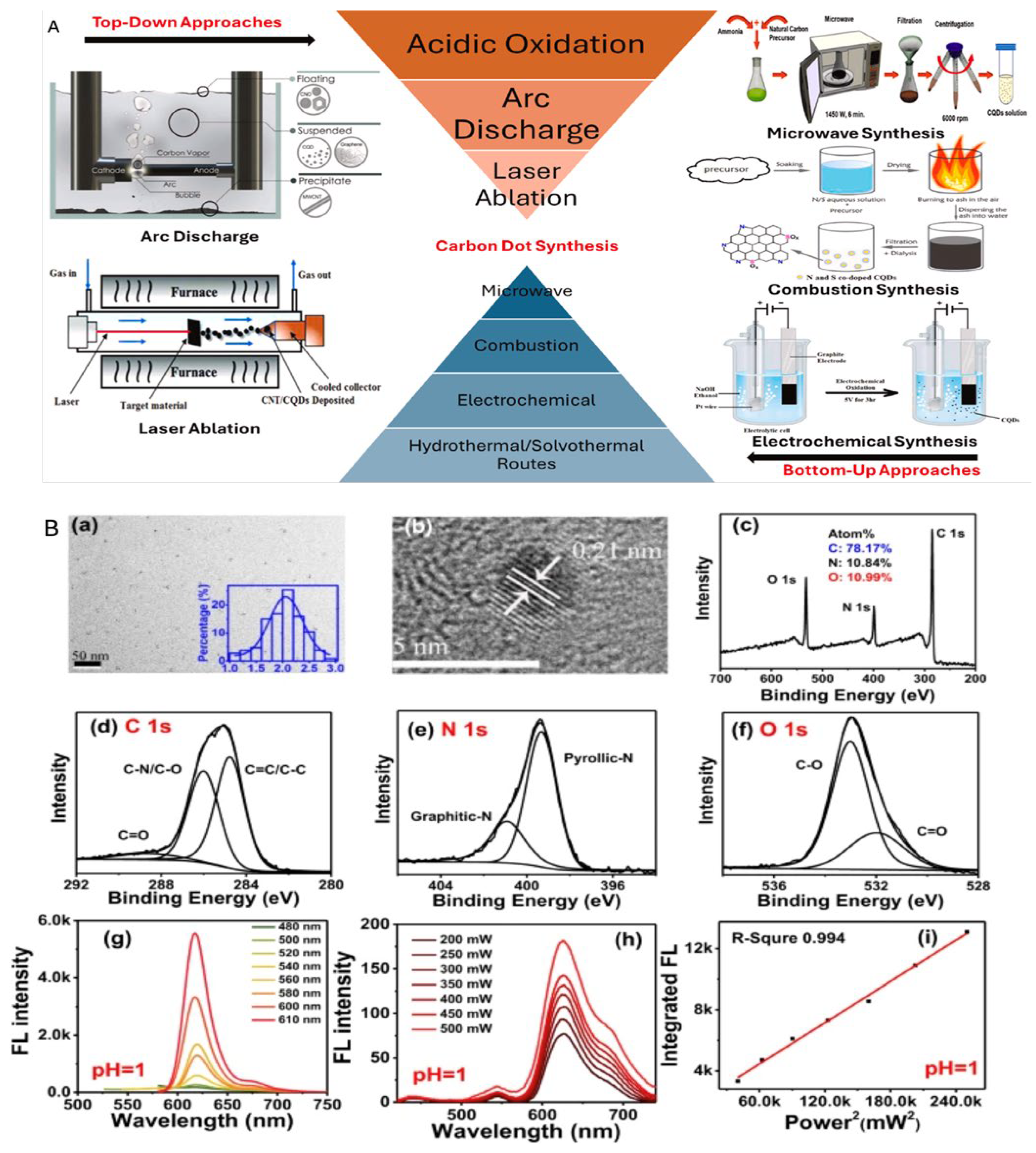
Figure 1.
An Illustration of fluorescence quenching (“turn-off”) and enhancement (“turn on”) [92].
Figure 1.
An Illustration of fluorescence quenching (“turn-off”) and enhancement (“turn on”) [92].
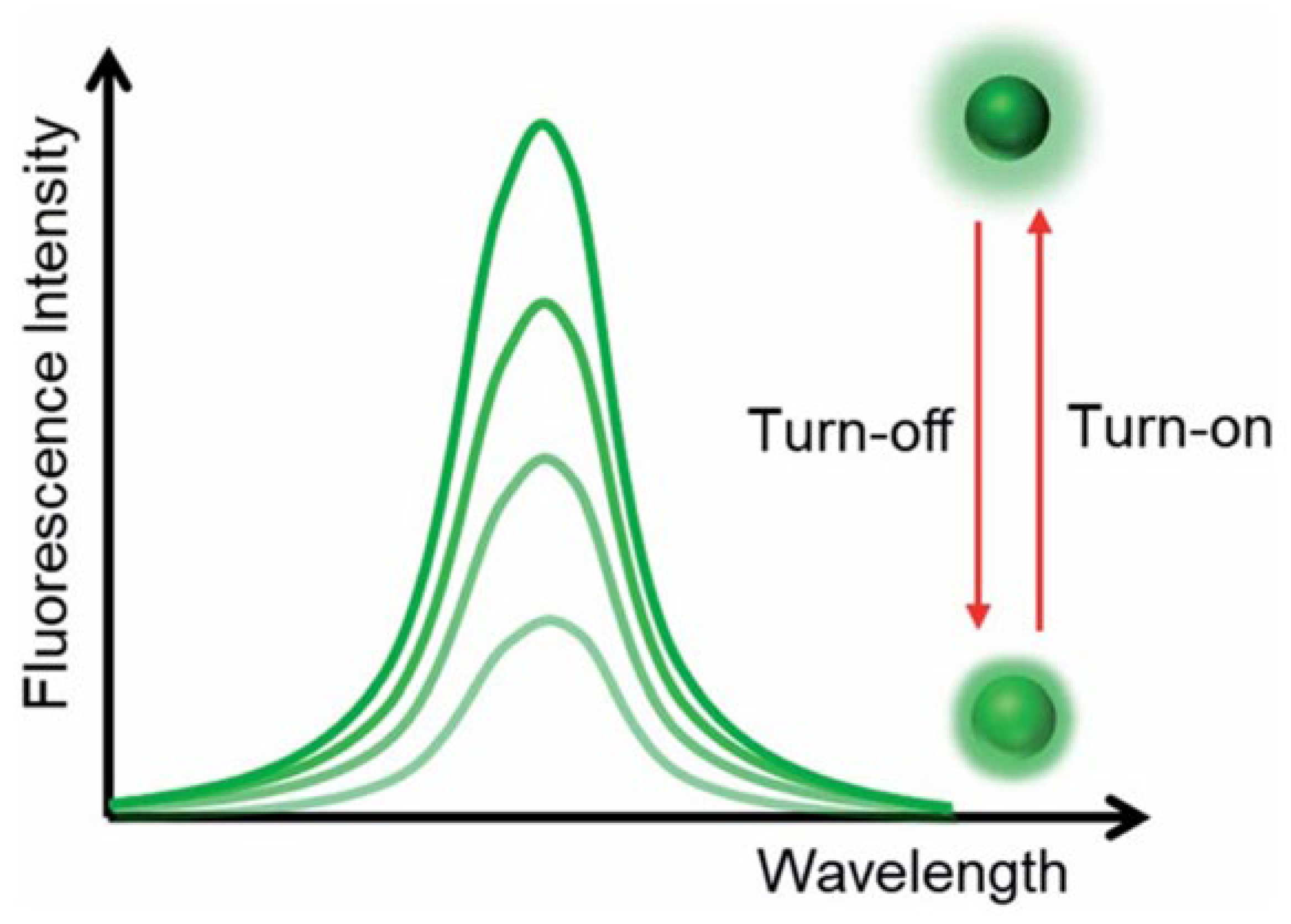
Figure 2.
The broad classifications to produce dual-emission ratio metric fluorescent sensors. Ratio metric fluorescence using either two reversible signal changes or a single reference signal (A).
Figure 2.
The broad classifications to produce dual-emission ratio metric fluorescent sensors. Ratio metric fluorescence using either two reversible signal changes or a single reference signal (A).
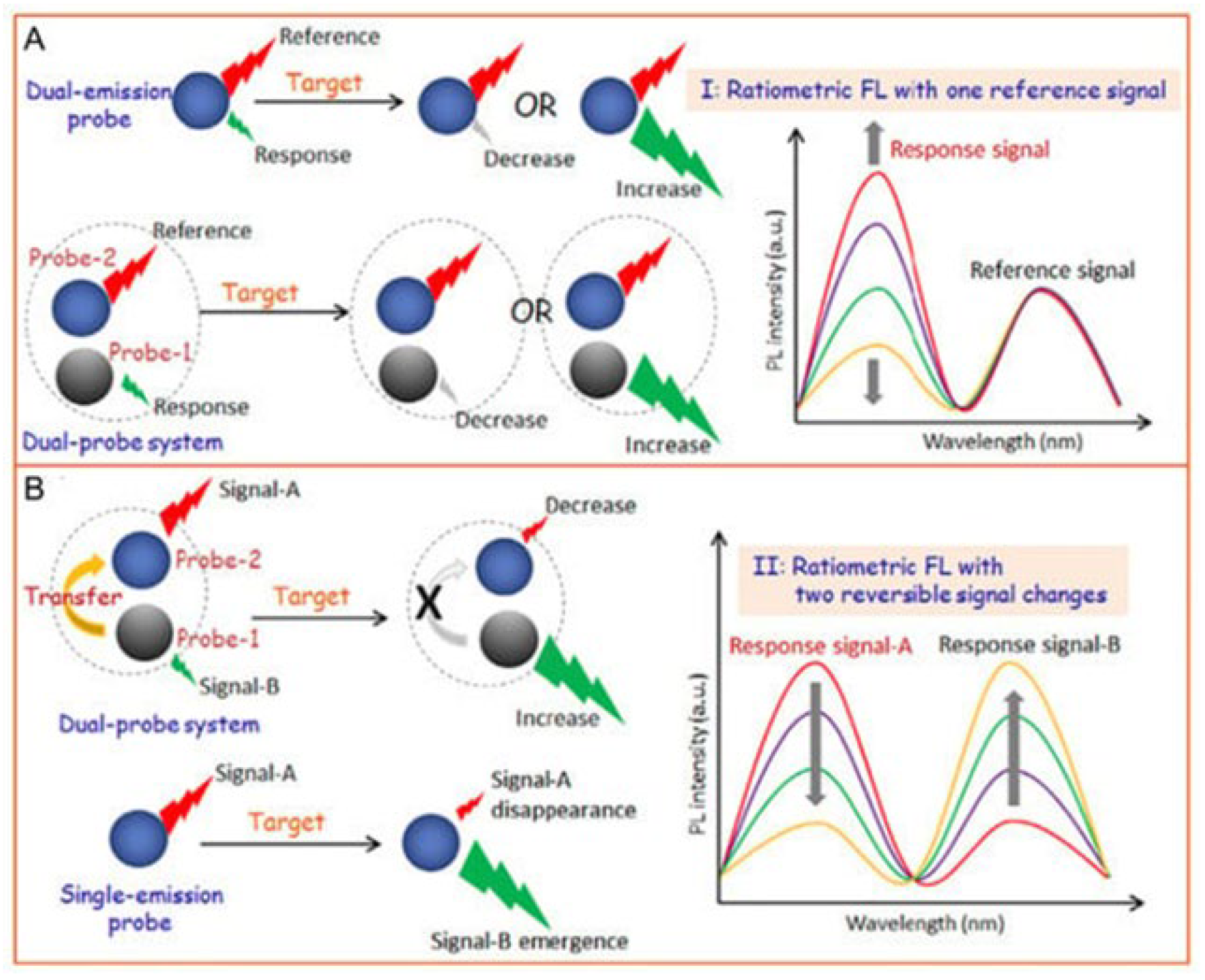
Figure 3.
The schematic illustration of 6-mercaptopurine ratiometric fluorescence detection.
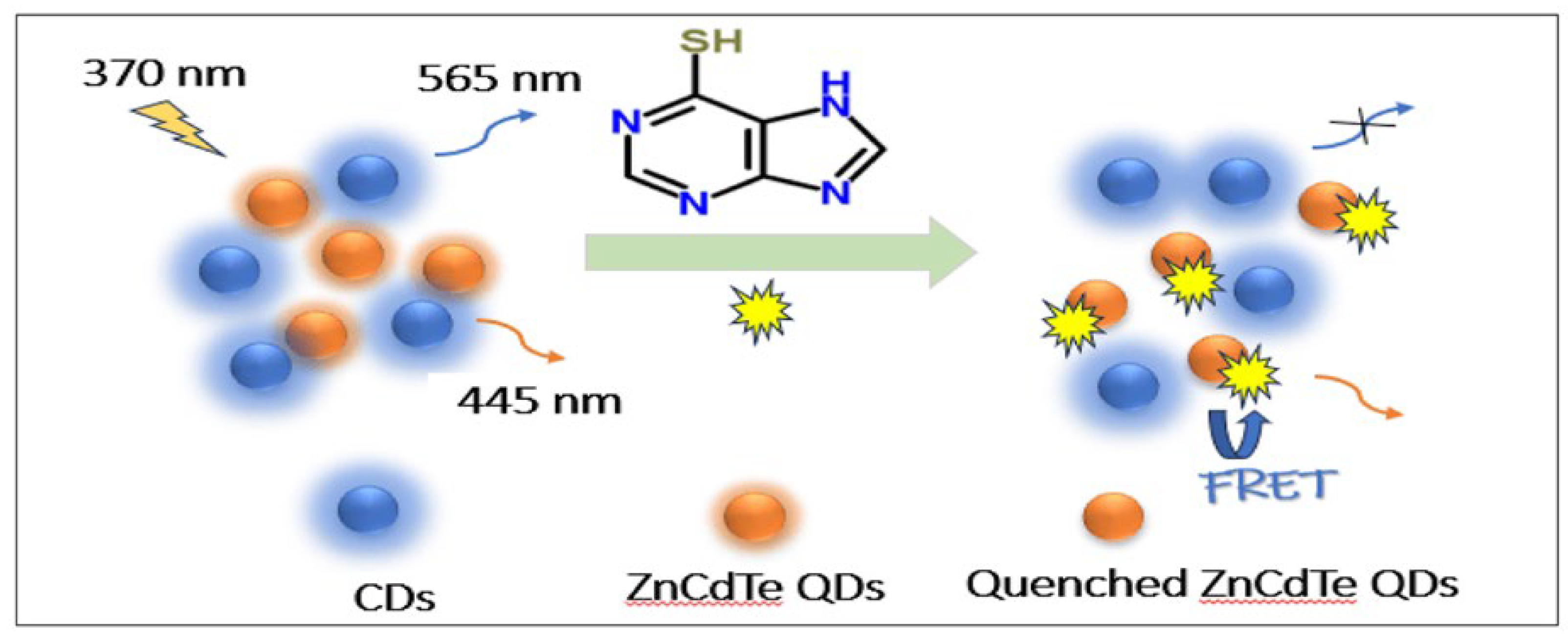
Figure 4.
Schematic diagram related to detection mechanism of the PTK 7 in ratiometric fluorescence probe.
Figure 4.
Schematic diagram related to detection mechanism of the PTK 7 in ratiometric fluorescence probe.
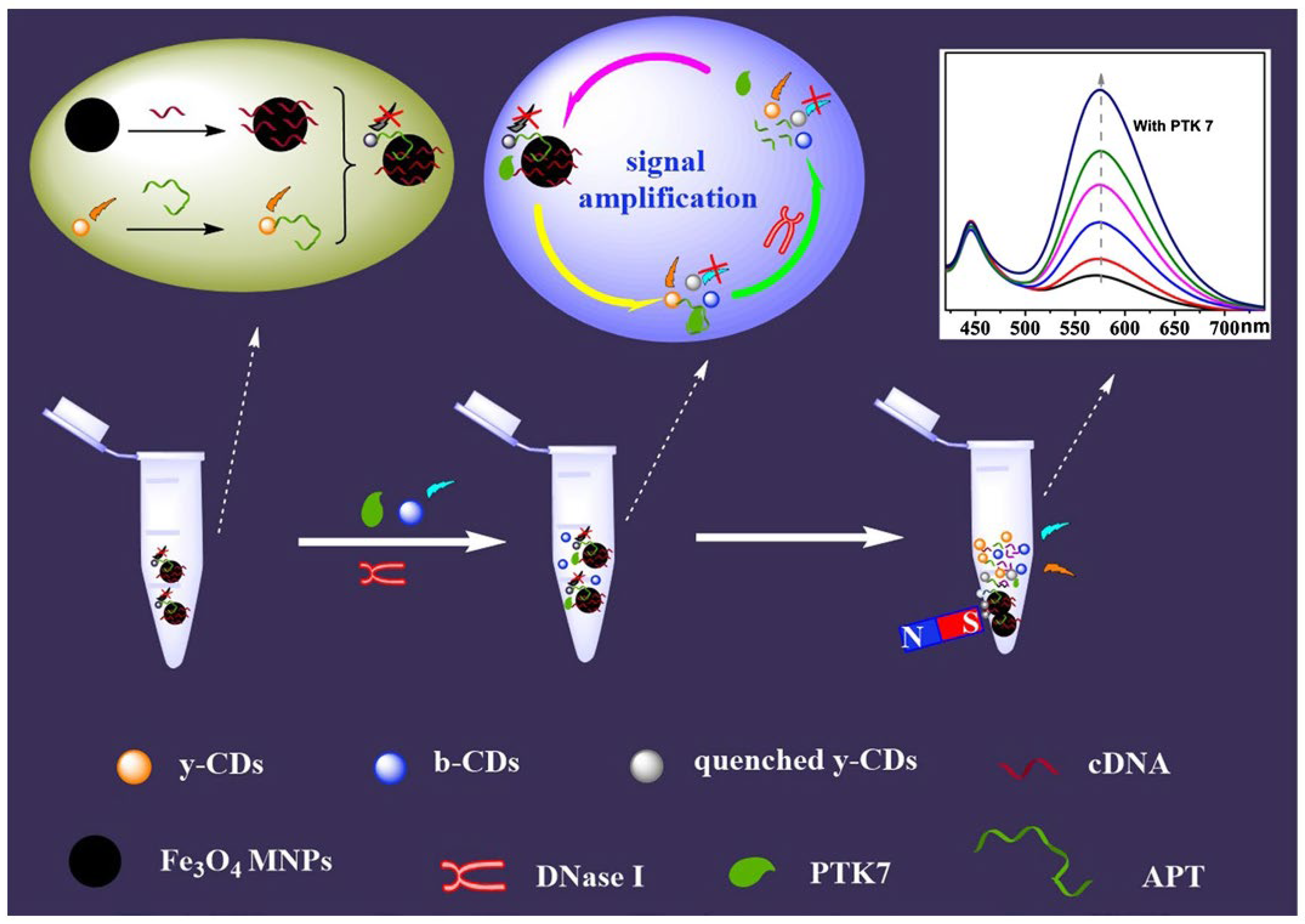
Figure 5.
Quenching ratio of various ions with Eu3+. Quenching by a factor of 2 is detected for Ag+, whereas quenching by a factor of 25 was found for Hg2+.
Figure 5.
Quenching ratio of various ions with Eu3+. Quenching by a factor of 2 is detected for Ag+, whereas quenching by a factor of 25 was found for Hg2+.
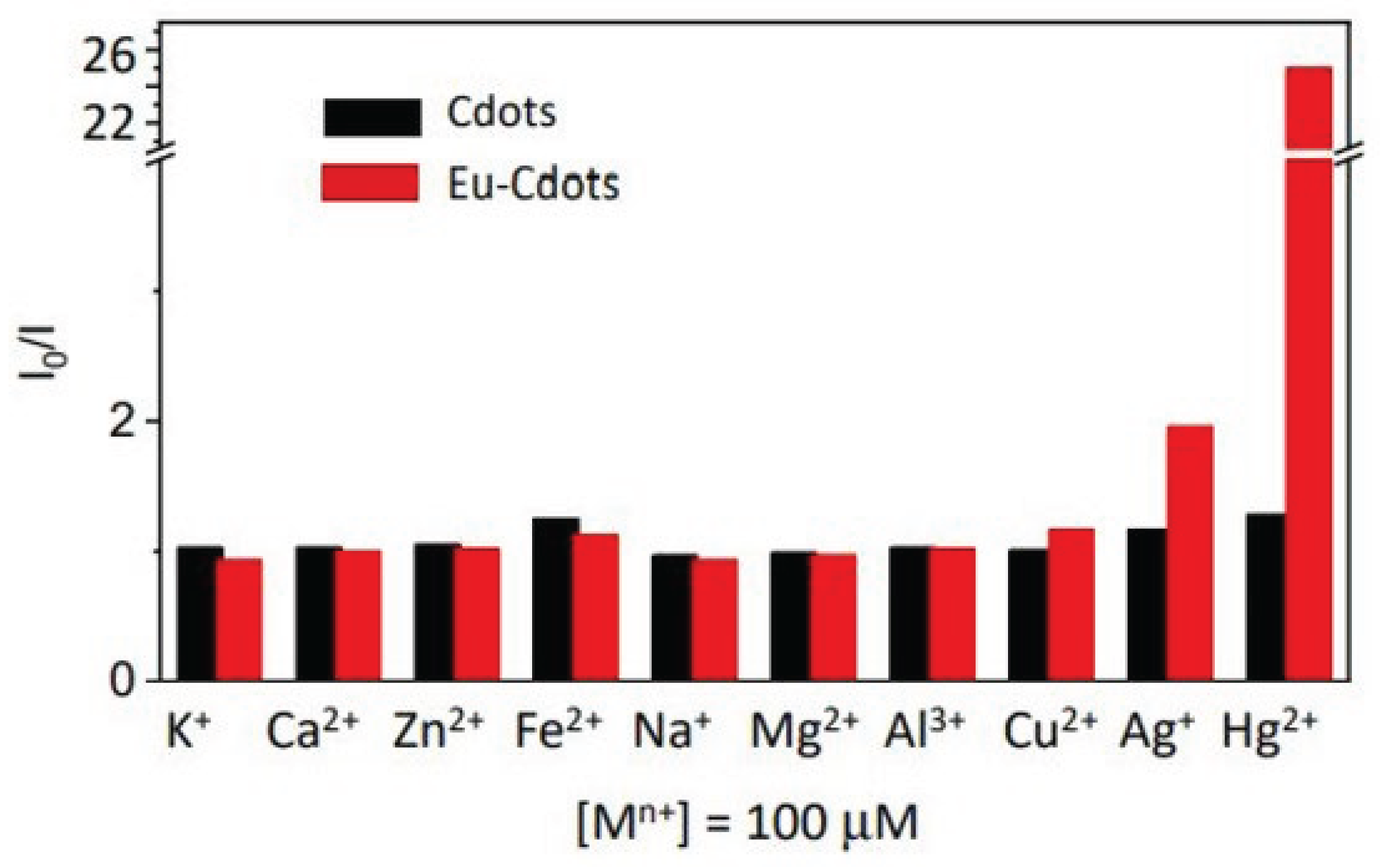
Table 1.
Comparison of Normal Raman signals and CD-Assisted Raman signals.
| S.no | Feature | Normal Raman | CD-Assisted Raman |
|---|---|---|---|
| 1 | Sensitivity | Low | Medium High |
| 2 | Sample adsorption | Poor | Good |
| 3 | Signal strength | Weak | Enhanced |
| 4 | Cost | Low | Still Low |
| 5 | Biocompatibility | High |
Table 3.
The general methods of CD-based antigen – antibody sensors.
| Analytical Technique | Median LOD, M |
Geometric Mean LOD, M |
Biomarkers | References |
| Fluorescence | 8.33E-13 | 8.49E-13 | HIV-1 p24 antigen, CEA, PSA, ATP, GLY, 4,4-dibrominated biphenyl, tetracycline, CYFRA 19-1, AFP, PCT, VEGF, NoV-L, NMP22, anthrax protective antigen, fenitrothion | [113,114] |
| Electrochemiluminescence | 9.28E-15 | 2.10E-16 | CEA, PSA, SCCA | [115,116] |
| Electrochemical | 5.50E-15 | 2.97E-14 | CA125, TNF-a, CEA, Ag-VD2, CYFRA 21-1, NSE | [117] |
| Colorimetric | 7.65E-12 | 1.48E-13 | CEA, Diethyl phthalate, | [118] |
Disclaimer/Publisher’s Note: The statements, opinions and data contained in all publications are solely those of the individual author(s) and contributor(s) and not of MDPI and/or the editor(s). MDPI and/or the editor(s) disclaim responsibility for any injury to people or property resulting from any ideas, methods, instructions or products referred to in the content. |
© 2026 by the authors. Licensee MDPI, Basel, Switzerland. This article is an open access article distributed under the terms and conditions of the Creative Commons Attribution (CC BY) license.
Copyright: This open access article is published under a Creative Commons CC BY 4.0 license, which permit the free download, distribution, and reuse, provided that the author and preprint are cited in any reuse.


