

Submitted:
31 January 2026
Posted:
02 February 2026
You are already at the latest version
Abstract
The classic conceptualization of resilience refers to a system attribute that helps us understand the extent to which systems can withstand pressures and impacts without altering their constitutive or intrinsic characteristics. In recent years, resilience has become the subject of profound debate in international academic literature. Nevertheless, the concept—particularly socio-ecological resilience—remains a research topic with limited academic consensus. What do we mean when we speak of socio-ecological resilience? How can it be measured and interpreted adequately or efficiently? What tools are available to assess it? Based on a critical review of 146 papers published between 2011 and 2025, this study defines the current state of concepts, methods, tools, and approaches to socio-ecological resilience. Beyond identifying research trends, the analysis critically evaluates existing methods to formulate recommendations for future research and to highlight promising lines of inquiry that better capture the multidimensional complexity of socio-ecological systems.
Keywords:
resilience
; socioecological systems
; socioecological resilience
; review
; methods
; trends
; recommendations
1. Introduction
Since its initial conceptualization in 1973, resilience has acquired heuristic, symbolic, and normative dimensions [1,2,3,4], in addition to its original role as a descriptor of complex ecological processes [5]. In general terms, Allenby and Fink [6] defined resilience as “the ability of a system to remain in a practical state and to degrade gracefully in the face of internal and external changes.” According to [7], the diverse literature on resilience identifies two contrasting concepts.
The first, described by [8] as engineering resilience, refers to the capacity of a system to persist through a disaster with minimal damage. As noted by [9], engineering resilience emphasizes a system’s ability to return to its previous state after a disturbance, considering both the recovery time and the recovery trajectory.
The second, more widely adopted concept is ecological resilience, defined as the degree of perturbation a system can withstand without altering its structure and function [1,5,10]. Ecological resilience incorporates the notion of regime shifts—non-linear, abrupt transitions between alternative system states that differ in configuration and properties [11,12]. Overall, resilience can be understood as a system’s capacity to adapt to perturbations, thereby supporting sustainable development [10].
The concepts, applications, and methodological developments of resilience have diversified to encompass multiple research dimensions [7]. For example, incorporating social analysis, Bruneau et al. [13], and later Cimellaro et al. [14], defined resilience as “the ability of social units to mitigate hazards, contain the effects of disasters when they occur, and carry out recovery activities to minimize social disruption and mitigate the effects of future earthquakes.” Similarly, Cimellaro et al. [15] introduced the PEOPLES framework, a top-down theoretical model that addresses all aspects of a community. These aspects are categorized into seven dimensions: Population, Environment, Organized government services, Physical infrastructure, Lifestyle, Economy, and Social capital. Subsequently, the PEOPLES framework was upgraded into a quantitative model for measuring community resilience [16,17]. Collectively, these studies emphasize social resilience, particularly in the context of natural disasters [18].
In contrast, more recent works have examined social resilience from a regional perspective, focusing on the systems that sustain local livelihoods [19]. These approaches have drawn the attention of economists and have emerged as a research hotspot in regional economics and economic geography.
As a result of this conceptual and methodological multiplicity, Socio-ecological resilience assessment has developed from diverse conceptual and methodological approaches [7], expanding on traditional resilience theory, which evaluates how socio-ecological systems (SES) endure shocks through their interconnections [20,21]. Franco-Gaviria et al. [22] emphasize that SES resilience is central to resource management and to resolving socio-environmental conflicts. Research has examined ecosystem resilience across disciplines, including ecology, resource management, food security, community planning, and disaster response [23,24,25]. Applications and measurements vary and often lack a strong theoretical grounding [7,22]. One of the few points of consensus in this field is that resilience must encompass three capacities—absorption, adaptation, and transformation [26,27]—all of which are vital for SES assessments.
Since the 1990s, resilience studies have increasingly focused on socioeconomic systems [19]. However, most remain discipline-specific, overlook multiple levels of resilience, and neglect the interdisciplinary complexity of the concept [28]. According to the Stockholm Resilience Center and related literature [29], resilience thinking is guided by seven core principles that enable social-ecological systems to adapt, recover, and transform in the face of change. These principles emphasize diversity, connectivity, adaptive learning, and inclusive governance as foundations for long-term sustainability. This comprehensive vision of SES resilience necessarily incorporates a transdisciplinary perspective. Overall, the literature calls for adaptive, quantitative, and cross-disciplinary assessments that integrate network perspectives to better capture the dynamic nature of SES under environmental and social change [6,7,19,20,21,22].
The central questions of the review were: (1) What are the publication trends in the research on Socioecological Resilience?; (2) To what extent are the seven principles of resilient thinking considered in the SES resilience research? (3) What are the methods and modeling techniques most applied for understanding and assessing the SES resilience? (4) What are the most commonly applied resilience approaches in the studies reviewed? (5) What is studied in socioecological resilience, resilience of what, and against what? and (6) What are the current challenges, recommendations, and future directions for improving our understanding and assessment of the SES resilience?
The review is structured as follows. Section 2 presents the materials and methods (literature search, database, and classification) used for the review, while Section 3 provides the review’s results, including publication trends and findings from the database analysis. We also explore the common methods, modeling techniques, and tools used to understand and assess SES resilience. In Section 4, we discuss the research challenges and ways to proceed to improve our understanding of SES resilience. Section 5 concludes with the main findings.
2. Material and Methods
2.1. Literature Search
To examine the rise and trends in research on socioecological systems resilience (SES resilience) in international peer-reviewed journals, a systematic literature search was conducted. Journal articles published between 2011 and 2025, as well as those forthcoming in 2026, were included if they contained the following search terms: resilience, ecological resilience, social resilience, socioecological resilience, resilience modeling tools, qualitative/descriptive resilience assessment techniques, matrices, mapping resilience, resilience statistical modeling methods, resilience and machine learning, and resilience and Bayesian networks. Spelling variants were considered, and each search term was combined individually with the terms ecosystem services, multiple ecosystem services, ecology, social, socioecological systems, and case studies to capture literature at the core of the review aim (i.e., case studies on the assessment of socioecological systems resilience).
Articles were sourced from five major scientific databases—ScienceDirect, SCOPUS, SCIELO, ISI Web of Knowledge, and Google Scholar—between January and December 2025.
In total, 622 scientific papers were identified. After excluding those that did not explicitly measure resilience or socioecological systems resilience, a final set of 146 documents was reviewed and systematized in a database (Supplementary Material S1).
2.2. Database and Classification
- Key information was recorded for each study, including descriptors of the publication (e.g., citation, year, and journal), the scale of analysis (local, regional, national, continental, or global), and geographic details (location, country, and continent). This dataset provided valuable insights into publication trends related to socioecological systems resilience (SES resilience).
-
To assess whether the case studies engaged with the seven principles of resilience thinking, we documented both the number and type of principles addressed. The principles are conceptualized as follows [29,30]:
- Principle 1 – Diversity and redundancy: Systems that include many components, such as species, actors, or knowledge sources, tend to be more resilient than those with fewer elements. Diversity provides options for adaptation, while redundancy ensures that if one component fails, others can compensate. Resilience is strengthened when components respond differently to disturbances [29,31].
- Principle 2 – Connectivity management: Connectivity can influence ecosystem functioning in both positive and negative ways. Well-connected systems often recover more quickly from shocks, but excessive connectivity can accelerate the spread of disturbances. Landscape connectivity is particularly important for sustaining biodiversity [32,33].
- Principle 3 – Slow variables and feedback: Interactions among system components shape configurations that deliver ecosystem services. Managing slow variables and feedback helps maintain systems in desired states. Once a system shifts to an alternative configuration, reversing the change can be extremely difficult [29,30].
- Principle 4 – Complex adaptive systems perspective: Viewing social-ecological systems as complex adaptive systems (CAS) highlights the multiple, simultaneous connections across scales. This perspective embraces unpredictability, uncertainty, and diverse viewpoints, recognizing that coupled human–natural systems are nonlinear, evolutionary, and characterized by feedback [34,35].
- Principle 6 – Broad participation: Inclusive participation in planning and governance enhances trust, shared understanding, accountability, and legitimacy. Active stakeholder involvement integrates diverse perspectives and supports collective action. A key challenge is establishing durable communication structures that reflect the diversity of complex socioecological contexts [30].
- Principle 7 – Polycentric governance: Polycentric governance involves multiple organizations and stakeholders working together to create and enforce rules. This approach strengthens collective action, enhances connectivity, and supports learning across scales and cultures. Well-connected governance systems can respond quickly to disturbances when the right actors are engaged. Effective coordination requires clear and widely accessible information [36].
It should be noted that case studies addressing two or more principles are not inherently superior or more desirable. The essential point is that socioecological systems encompass multiple dimensions; therefore, including more principles increases the likelihood of achieving a more comprehensive understanding of socioecological system resilience.
- 3.
-
To analyze trends in methods for assessing socioecological systems (SES) resilience, the methods used in the case studies were classified into the following categories:
- Qualitative / descriptive tools: These include participatory mapping, sociocultural approaches, and surveys with open-ended questions designed to capture individuals’ perceptions of system resilience [37].
- Dynamic ecological models: This category includes studies that use system dynamics approaches, either through data-driven modeling (DDM) based on machine learning with empirical data [54], or integration techniques such as semantic meta-modeling, which employs Unified Modeling Language to address the complexity of SES resilience evaluation [55,56,57].
- Emerging methods: This group refers to specialized case studies employing novel approaches, such as the stochastic cusp model (CUSPRA), to measure and interpret SES resilience [60].
- 4.
-
To determine which domains of resilience approaches are applied in the case studies reviewed, we draw on the conceptual framework outlined in [66], as follows:
- Engineering resilience approach: Focuses on the speed with which a system returns to equilibrium after a shock. Key elements include recovery time, efficiency, and equilibrium [67].
- Ecological resilience approach: Emphasizes a system’s ability to withstand shocks while maintaining critical relationships and functions. Central aspects are buffer capacity, persistence, robustness, and the ability to absorb disturbances [68].
- Community resilience approach: Defined as a process that links adaptive capacities to a positive trajectory of functioning and adaptation following a disturbance. The emphasis is on adaptive capacity, responses to disturbances, and social dimensions [69].
- Social-ecological resilience approach: Encompasses (i) the extent of disturbance a system can absorb while remaining within its domain of attraction, (ii) its capacity for learning and adaptation, and (iii) its ability to self-organize. This approach highlights adaptive capacity, learning, and innovation [26].
- Socioeconomic/livelihood resilience approach: Refers to the policy-driven ability of an economy to recover from or adjust to adverse external shocks, while also benefiting from positive ones. It focuses on economic response capacity [70]. At the household or individual level, it includes the capacity to avoid poverty despite stressors and repeated shocks over time [71].
- Ecosystem services resilience approach: Proposed in this review as a new domain, this approach is based on the characterization and modeling of specific ecosystem services using established methodological frameworks. It examines how these services are affected by shocks and pressures, such as land-use change, climate change, and socioeconomic drivers. This perspective introduces a novel way to evaluate resilience by explicitly integrating ecosystem service methodologies.
- 5.
-
To define, in a concrete way, the trends in resilience assessment (resilience of what?), each of the 146 case studies was analyzed, and the objects of resilience assessment were classified into the following general categories:
- Terrestrial ecosystems
- Human communities
- Socio-ecological systems
- Ecosystem services
- Agroecosystems
- Marine ecosystems
- Water ecosystems
- Coastal ecosystems
- Urban areas
- Urban and natural areas
- General systems
- Groundwater systems
- Island ecosystems
- Seafood businesses
- 6.
-
To define trends in response to the question “resilience against what?”, 146 documents were reviewed and classified into the following general categories:
- Climate change and climate variability.
- Habitat fragmentation and human changes.
- Natural disasters (Droughts, floods, tornadoes, cyclones, storms).
- Fire frequency increased.
- Climate change, population growth and infrastructure.
- Sea-level rise.
- Urban Growth.
- Economic shocks.
- Invasive species and changing wildfire regimes.
- Nanoplastics Pollution.
- Sea warming.
- 7.
- Finally, to identify the challenges and potential avenues for improving our understanding of the resilience of socioecological systems, the conclusions, recommendations, and limitations of each case study were critically analyzed. This step highlighted methodological gaps, conceptual constraints, and practical insights that can guide future research directions and strengthen the assessment of socioecological systems resilience.
3. Results and Discussion
3.1. Publication Trends: An Overview
The number of scientific papers on socioecological systems resilience, including measurement and conceptual frameworks, has increased since 2010. The 146 papers we evaluated were published across 69 journals, with eight journals accounting for 42% of the total: Ecological Indicators, Journal of Environmental Management, International Journal of Disaster Risk Reduction, Science of the Total Environment, Climate Risk Management, Biological Conservation, Global Ecology and Conservation, and Journal of Cleaner Production.
The countries with the most resilience studies were China (29), the USA (15), the UK (6), and India (5). Together, these countries contributed 38% of current knowledge on resilience and socio-ecological resilience (Figure 1). It is important to note that, in this review, 36 studies (25%) correspond to global assessments of resilience, either through the use of global databases or the proposal of ecological and sociological frameworks (e.g., [42,72,73,74,75,76]). This tendency clearly demonstrates the dominance of global publications that test methods, apply models, or seek to homogenize concepts when evaluating the resilience of socio-ecological systems.
3.2. Findings from the Database Analysis
3.2.1. Resilience of What and Against What
An analysis of resilience assessments, encompassing both the types of resilience examined and the contexts in which they are applied, was conducted to identify the dominant themes in the reviewed literature.
The evidence highlights a strong focus on terrestrial ecosystems (26%) and their resilience to climate change (53%). Studies that address, at least in part, the resilience of socio-ecological systems under climate change scenarios are also relatively frequent (Figure 2).
The resilience of human communities, across both urban and rural settings, to natural disasters and extreme weather events remains a central area of investigation (Figure 2).
Moreover, the growing emphasis on evaluating the resilience of ecosystem services to climate change and extreme weather events underscores this as an increasingly prominent research trend (Figure 2).
Finally, several columns reveal consistently low or negligible values for certain stressors, including nanoplastic pollution, ocean warming, and sea-level rise, in specific systems, thereby delineating priority areas for future resilience research (Figure 2).
3.2.2. Inclusion of the Seven Principles of Resilience Thinking
Decades of research on resilience in social–ecological systems have identified a set of strategies that strengthen and sustain resilience. These strategies highlight the unique characteristics of resilient social–ecological systems, rather than those of complex systems more broadly, and have significant implications for the measurement and assessment of resilience. Seven core strategies are consistently recognized as enhancing resilience: 1. Maintaining diversity and redundancy. 2. Managing connectivity. 3. Addressing slow variables and feedbacks. 4. Fostering an understanding of social–ecological systems as complex adaptive systems. 5. Encouraging learning and experimentation. 6. Broadening participation. 7. Promoting polycentric governance structures [29,30].
According to the present review (Figure 3), 22% of the studies (133 cases) incorporate the principle of managing slow variables and feedbacks, defining sub-criteria that consider system components (e.g., flow regulation, slow variables, feedbacks). Eighteen percent (110 studies) address connectivity management and the definition of relationships between environmental elements (e.g., the connectivity of ecosystem functions). Seventeen percent of the reviewed studies evaluate maintaining diversity and redundancy, establishing appropriate sub-criteria and metrics that account for these aspects. 15% of the studies focus on fostering complex adaptive systems thinking and on defining sub-criteria and metrics for robustness, redundancy, rapidity, and durability. Twelve percent of the studies emphasize encouraging learning, defining sub-criteria using multiple tools and methods for social analysis.
Finally, it is important to note that the principles of broadening participation and promoting polycentric governance systems (9% and 7%, respectively) remain the least addressed in socio-ecological resilience studies (Figure 2). Studies that incorporate these principles typically apply indices and metrics for social analysis.
The reviewed literature reveals differing levels of engagement with the seven core resilience principles in social-ecological systems. Only 12% of the case studies systematically and comprehensively address all seven principles (Figure 4). In contrast, 77% of the studies incorporate three to five principles, most commonly focusing on managing slow variables and feedbacks, managing connectivity, maintaining diversity and redundancy, and fostering complex adaptive systems thinking.
A range of social, political, cultural, economic, and environmental factors influences the resilience of socio-ecological systems. Previous reviews [77] indicate that many studies fail to fully integrate these dimensions into a comprehensive socio-ecological framework. Although research on the seven resilience principles has expanded during the period analyzed, our findings align with earlier reviews [65,66,77,78] and indicate that these principles are rarely quantified to assess or enhance socio-ecological resilience.
Among these principles, encouraging learning and experimentation, broadening participation, and promoting polycentric governance [79,80,81] are particularly vital for strengthening social resilience. These principles build the human and institutional capacities required to navigate uncertainty and change. Learning enhances adaptability by integrating lessons from past disruptions and fostering innovation in crisis response. Participation ensures inclusive decision-making, enabling diverse stakeholders to contribute perspectives and resources. Polycentric governance, characterized by nested and interconnected structures, facilitates flexible, multi-level coordination, improving responsiveness to both local and systemic challenges. Collectively, these principles reinforce a system’s ability to self-organize, recover, and transform in the face of shocks, thereby ensuring long-term social resilience [80,81].
The primary objective of most resilience research is to design adaptive management strategies that enable ecological and social-ecological systems to address increasingly complex environmental challenges. This requires a strong emphasis on understanding and enhancing their capacity to persist and transform in response to dynamic global changes [82,83]. As previously noted, case studies that incorporate more principles are not necessarily superior or more desirable. The critical point is that socio-ecological systems are multidimensional; therefore, integrating more principles increases the likelihood of achieving a comprehensive understanding of resilience.
This review identifies a significant gap in literature: few studies operationalize resilience theory by systematically applying its principles to inform practical solutions. According to [79], the limited real-world implementation of these principles constrains progress in strengthening ecological, socio-economic, and infrastructural resilience.
3.2.3. About the Resilience Approaches’ Findings
As noted in [79], contemporary ecosystem management is marked by rapid transformations and considerable uncertainty. Since its emergence, the concept of resilience has been examined, debated, and defined through diverse lenses, reflecting a wide range of scholarly perspectives. This review concentrates on approaches used to assess the resilience of socio-ecological systems, with the aim of determining the extent to which system complexity is effectively integrated and of identifying potential actions or recommendations.
Consistent with the methodological framework of this review and the guidelines outlined in [66], our analysis revealed that 47% of the studies examined (67 cases) employed an ecological resilience assessment (Figure 5). This approach focuses on evaluating a system’s capacity to absorb disturbances and, if necessary, shift to alternative stable states [68]. In such studies, the emphasis is placed primarily on ecological and biophysical variables (Figure 6), while cultural, socioeconomic, and participatory dimensions receive limited attention (e.g., [40,84,85,86,87,88,89,90,91,92]). Nonetheless, certain studies adopting an ecological resilience perspective have, at least qualitatively, incorporated aspects of socioeconomic and cultural contexts (e.g., [72,93,94,95,96,97,98,99]). The predominance of this approach (47%) underscores its continued prevalence, while also highlighting a tendency to address socioeconomic and cultural dimensions only sporadically or superficially, without systematic measurement or analysis.
According to this review, 26 studies (18%) adopted a community resilience approach, focusing on processes linking adaptive capacities to positive trajectories of functioning and adaptation following disturbances (Figure 5). These studies emphasize adaptive capacity, responses to disturbances, and social dimensions [69]. They range from qualitative analyses of community resilience [100] to research proposing specific models that incorporate socioeconomic variables related to community progress under multiple stressors [101] (Figure 6). A defining characteristic of this body of work is the effort to identify and measure the adaptive capacity of communities or livelihoods in response to changes in socioeconomic, natural, and environmental contexts (e.g., [18,41,43,75,102,103,104,105,106,107,108]). Consistent with recent reviews such as [78], ecological studies remain fundamental for understanding the biophysical foundations of socio-ecological systems; however, integrating social perspectives broadens these insights, and it is encouraging to observe their increasing presence in international literature. Nevertheless, most community resilience studies reviewed do not substantially incorporate ecological dimensions, suggesting a shift in research priorities toward social aspects, which may come at the expense of fully capturing the inherent complexity of socio-ecological systems.
This review identified 16 studies (11%) using a hybrid Ecosystem Services Resilience framework (Figure 5). These studies advance resilience evaluation by explicitly integrating ecosystem service methodologies and modeling responses to shocks, such as land-use change, climate change, and socioeconomic drivers (Figure 6).
Studies were classified in this category because they go beyond ecological resilience by operationalizing ecosystem services and incorporating relevant socioeconomic and cultural factors, while maintaining a primary focus on established ecosystem services models (primarily InVEST). This approach spans from general indicator assessments under stressors (e.g., [45,47]) to targeted modeling of ecosystem service resilience to environmental and socioeconomic pressures (e.g., [109,110,111]) (Figure 6).
The conceptual and operational boundaries between ecosystem services and socio-ecological systems are, in practice, blurred [112]. Ecosystem services are commonly defined as the multiple benefits that human societies derive from ecosystem functioning, establishing a critical link between natural ecosystems and social systems by integrating both tangible goods and intangible services produced by nature [112,113]. In contrast, socio-ecological systems (SES) are understood as complex, integrated systems in which humans are embedded within nature [114], and where nature itself encompasses both human and non-human components [115]. SES thus refers to the dynamics and evolution of coupled human–ecological systems [23].
From this perspective, studies of ecosystem service resilience acknowledge the interconnections between environmental and social systems, with particular emphasis on changes in the availability of services to society. However, their approach tends to be static or time-bound, and the methods reviewed do not adequately capture the dynamic evolution of resilience within these coupled systems. While examining the resilience of ecosystem services represents a significant conceptual and methodological advance, bringing us closer to understanding the resilience of socio-ecological systems, it nonetheless falls short of encompassing the full dynamic complexity of these systems and their multifaceted responses to diverse stressors.
On the other hand, this review identified 11 studies (8%) that adopt a socioeconomic or livelihood resilience perspective (Figure 5). This approach seeks to understand economic response capacity at the household or individual level, including the ability to avoid poverty despite stressors and repeated shocks over time [70,71]. Studies in this category emphasize the responses of agroecosystems to multiple stressors. The reviewed works range from the application of indices and indicators (e.g., [44,61,116,117,118]) to dynamic modeling [119,120] (Figure 6).
Overall, the socioeconomic approach, as reflected in the literature, focuses on the specific responses of agroecosystems to stressors. Nevertheless, studies employing dynamic modeling remain scarce, reinforcing the tendency toward partial evaluations of socio-ecological resilience, particularly in relation to production systems (Figure 6).
Finally, this review identified 24 studies (17%) that focus on measuring and understanding resilience in socio-ecological systems (Figure 5). This category encompasses studies that examine (i) the extent of disturbance a system can absorb while remaining within its domain of attraction, (ii) its capacity for learning and adaptation, and (iii) its ability to self-organize. This approach emphasizes adaptive capacity, learning, and innovation [26].
The methodological spectrum for assessing socio-ecological resilience, as documented in the literature, is highly diverse. It ranges from studies that employ indicator systems to capture environmental, social, economic, and cultural dimensions (e.g., [7,20,42,82,121,122]), to those that integrate complex networks [123], system dynamics [124], Bayesian networks [59], and complex stochastic models [60] (Figure 6).
One of the findings of this review is that studies seeking to measure the resilience of socio-ecological systems using indicators and indices are far more common, whereas those employing system dynamics, Bayesian networks, or other complex modeling approaches remain relatively rare (Figure 5). These results are consistent with the arguments presented by [59,60], which suggest that the absence of robust methodologies for empirically estimating socio-ecological resilience has contributed to its limited integration into ecosystem-based management frameworks.
Socio-ecological systems are highly complex. Their ability to absorb, adapt, and transform can be viewed as a function that underlies resilience assessment [125]. However, using these measures is challenging in practice because of the nonlinear dynamics arising from the interactions between disturbances and environmental, ecological, economic, and socio-cultural processes over time [1]. While functionality suggests socio-ecological resilience, its evaluation must still address uncertainties in biology, society, and system knowledge. This review supports recent studies [7,30,59,60,122,123,124] that call for heuristic frameworks and integrative approaches. These could help address system uncertainties and the dynamic processes behind socio-ecological resilience.
3.2.4. Socio-Ecological System Resilience Assessments: Methods, Tools, Current Status, and Future Challenges
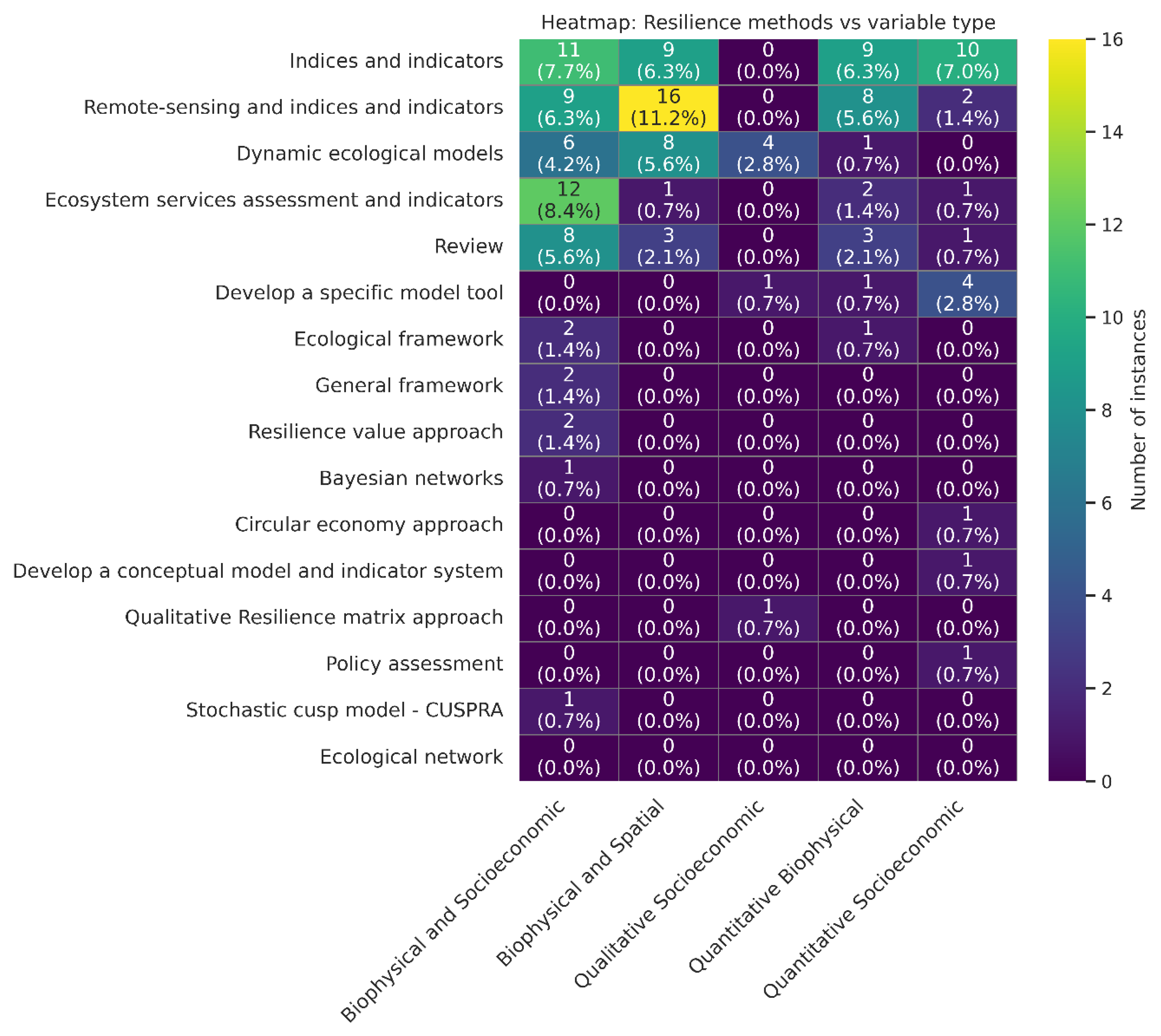
In this review, we analyzed the tools employed to assess socio-ecological system resilience and the types of information on which they rely. A substantial proportion of studies (25%) utilize satellite imagery in combination with indices and indicators to evaluate resilience, drawing primarily data related to the physical environment and geographic locations. Within this group, however, only 6% integrate both physical and socio-economic information (Figure 7).
Beyond remote sensing approaches, 23% of the reviewed studies depend on environmental, socio-economic, or social indices and indicators that are widely applied across disciplines. Although these studies incorporate coupled socio-economic and biophysical data, their objective is to produce static and well-defined measures of resilience situated within specific conceptual frameworks [38,39,40,41,42,43,44] (Figure 7).
Taken together, these findings corroborate earlier research [7,60,66], which highlights that much of the scholarship on socio-ecological resilience remains oriented toward the development of metrics that combine social and environmental indicators. Contemporary methodologies continue to emphasize statistical signals, such as critical slowing down, that emerge when ecosystems approach thresholds and transition into alternative stability states [93,94,95,96,97,98,99,126].
This review also identified a growing number of assessments of socio-ecological system resilience that are grounded in the evaluation of ecosystem services (9%). These studies typically integrate both biophysical and socio-economic information, with an emphasis on analyzing how ecosystem services respond to diverse stressors (Figure 7).
Finally, the review identified a limited number of assessments of socio-ecological system resilience that employ dynamic modeling (6%), ecological networks, Bayesian networks, and other systems dynamics approaches (1–2%). These methodologies integrate coupled biophysical and socio-economic information (Figure 7). Nevertheless, such approaches remain scarce in the reviewed literature.
Recent studies suggest that resilience cannot be reduced to a single value or outcome. Rather, it constitutes an emergent property that manifests in diverse ways across the multiple domains comprising a system. Resilience is inherently contextual, depending on the subsystem under analysis and the specific questions being addressed [7,59,65,66,77,127].
This review acknowledges the value of all approaches to assessing socio-ecological resilience, ranging from qualitative methods to those based on individual or coupled indices, as well as dynamic and stochastic models. In many contexts, decision-makers are required to monitor and measure the systems they manage, underscoring the importance of research on metrics and indicators. Such approaches facilitate the identification of changes across different dimensions of socio-ecological resilience. Nevertheless, it is essential to recognize that, when applied to complex systems, measurement—though useful—carries inherent limitations. By privileging easily quantifiable, manipulable performance indicators, these approaches risk overlooking deeper, more nuanced objectives that are difficult to capture with conventional metrics.
This review recommends a broader, more complex academic perspective on resilience. Such a perspective accounts for multiple nonlinear interactions, which enable a deeper understanding of system dynamics. From this point of view, several key studies illustrate the relevance of complexity-oriented approaches:
- Case study [120] (2021) provides a notable example of applying systems dynamics to assess socio-ecological resilience. The research developed a dynamically coupled modeling framework designed to be replicable and stakeholder-friendly, enabling the quantification of resilience metrics in a dynamic agroecosystem subject to diverse socio-environmental shocks. The model incorporates (i) comparative analyses of variable resilience and (ii) the identification of potential regime shifts, transformations, and previously unrecognized system vulnerabilities. By employing a group-built physical systems model, the study generated feedback loops and complex variable linkages that other models have struggled to capture reliably.
- Study [59] (2022) presents a dynamic Bayesian network approach for constructing temporally robust models of socio-environmental resilience in the Colombian Andes. This methodology adopts a long-term perspective, integrating diverse data sources and interdisciplinary approaches spanning paleoecology, archaeology, anthropology, and history.
- A novel empirical approach to resilience estimation is introduced in [60] (2024) using the stochastic cusp model from catastrophe theory. This model identifies inflection points linked to cusp bifurcations and distinguishes between stable and unstable states in complex systems. The assessment includes three features: (i) estimating the probability a system will cross a hysteresis-marked tipping point; (ii) evaluating resilience relative to multiple external drivers; and (iii) providing management-oriented results for ecosystem governance.
A central insight from these cases is that resilience evaluations employing Bayesian systems dynamics or network approaches can identify strategic opportunities and strengthen arguments for transformation and polycentric governance of socio-ecological systems (SES). These methods are adaptive, quantitative, interdisciplinary, and participatory, and can be refined as new system knowledge emerges. By highlighting the relationships among actions, knowledge, uncertainty, and causality, they incorporate management variables that shape both social and ecological components. Overall, dynamic, stochastic, and Bayesian models better reflect the complexity of SES and support resilience assessments under multiple shocks.
This review highlights additional challenges for research aimed at comprehensively and consistently assessing the resilience of socio-ecological systems. One major challenge concerns the limited funding available for interdisciplinary work, a constraint that is particularly critical in developing countries, regions that are simultaneously the most biodiverse and the most vulnerable to climate change as well as political and socio-economic shocks [7]. Another challenge involves the application of Bayesian network models. As noted in [59], integrating the Bayesian Network approach with the Hidden Markov Model (HMM) can capture transitions among network structures, thereby offering deeper insights into resilience dynamics in complex, evolving contexts.
4. Conclusions
This review of 146 papers (2011–2025) outlines the current state of socio-ecological resilience concepts, methods, and tools. Most studies were conducted in China (29), the USA (15), the UK (6), and India (5). Notably, 36 studies (25%) addressed global assessments, reflecting the dominance of publications that test methods, apply models, or seek to standardize concepts.
Research shows a strong focus on terrestrial ecosystems (26%) and resilience to climate change (53%). Engagement with the seven core resilience principles is uneven: only 12% of case studies address all principles, while 77% apply three to five, typically emphasizing slow variables, connectivity, diversity, redundancy, and adaptive systems thinking. Few studies operate resilience theory to guide practical solutions.
Methodologies are diverse, but indicator-based approaches dominate. Complex modeling methods(system dynamics, Bayesian networks) remain rare, limiting empirical integration into ecosystem-based management. Bayesian system dynamics and network approaches, however, can identify strategic opportunities and support polycentric governance. These adaptive, quantitative, and participatory methods highlight relationships among actions, knowledge, uncertainty, and causality, better capturing SES complexity and resilience under multiple shocks.
Supplementary Materials
The following supporting information can be downloaded at the website of this paper posted on Preprints.org.
References
- Holling, C. Understanding the complexity of economic, ecological, and social systems. Ecosystems 2001, 4, 390–405. [Google Scholar] [CrossRef]
- Ott, K.; D¨oring, R. Theorie und Praxis starker Nachhaltigkeit; Metropolis: Marburg, Germany, 2004; Available online: https://oceanrep.geomar.de/id/eprint/37180/.
- Pickett, S.T.A.; Cadenasso, M.L.; Grove, J.M. Resilient cities: meaning, models, and metaphor for integrating the ecological, socioeconomic, and planning realms. Landsc. Urban Plan. 2004, 69, 369–384. [Google Scholar] [CrossRef]
- Hughes, T.P.; Bellwood, D.R.; Folke, C.; Steneck, R.S.; Wilson, J. New paradigms for supporting the resilience of marine ecosystems. Trends Ecol. Evol. 2005, 20(7), 380–386. [Google Scholar] [CrossRef] [PubMed]
- Holling, C.S. Resilience and stability of ecological systems. Annu. Rev. Ecol. Syst. 1973, 4(1), 1–23. [Google Scholar] [CrossRef]
- Allenby, B.; Fink, J. Toward inherently secure and resilient societies. Science 2005, 309(5737), 1034–1036. [Google Scholar] [CrossRef]
- Ruiz-Agudelo, C.A. Proposal of a Socio-Ecological Resilience Integrated Index (SERII) for Colombia, South America (1985–2022). Sustainability 2025, 17, 6461. [Google Scholar] [CrossRef]
- Gunderson, L.H.; Holling, C.S.; Light, S.S. (Eds.) Barriers and Bridges to the Renewal of Ecosystems and Institutions; Columbia University Press: New York, NY, USA, 1995. [Google Scholar]
- Rose, A. Economic Resilience to Disasters. CARRI Research Report 8. Community & Regional Resilience Institute. 2009. Available online: https://merid.org/case-studies/community-and-regional-resilience-institute/ (accessed on 3 August 2024).
- Folke, C. Resilience: The emergence of a perspective for social–ecological systems analyzes. Glob. Environ. Change 2006, 16, 253–267. [Google Scholar] [CrossRef]
- Scheffer, M.; Carpenter, S.; Foley, J.A.; Folke, C.; Walker, B. Catastrophic shifts in ecosystems. Nature 2001, 413, 591–596. [Google Scholar] [CrossRef]
- Scheffer, M.; Carpenter, S.R.; Dakos, V.; Nes, E. Generic indicators of ecological resilience: Inferring the change of a critical transition. Annu. Rev. Ecol. Evol. Syst. 2015, 46, 145–167. [Google Scholar] [CrossRef]
- Bruneau, M.; Chang, S.E.; Eguchi, R.T.; Lee, G.C.; O’Rourke, T.D.; Reinhorn, A.M.; Shinozuka, M.; Tierney, K.; Wallace, W.A.; Von Winterfeldt, D. A framework to quantitatively assess and enhance the seismic resilience of communities. Earthq. Spectra 2003, 19(4), 733–752. [Google Scholar] [CrossRef]
- Cimellaro, G.P.; Reinhorn, A.M.; Bruneau, M. Framework for analytical quantification of disaster resilience. Eng. Struct. 2010, 32(11), 3639–3649. [Google Scholar] [CrossRef]
- Cimellaro, G.P.; Renschler, C.; Reinhorn, A.M.; Arendt, L. PEOPLES: a framework for evaluating resilience. J. Struct. Eng. 2016, 142(10), 04016063. [Google Scholar] [CrossRef]
- Kammouh, O.; Noori, A.Z.; Taurino, V.; Mahin, S.A.; Cimellaro, G.P. Deterministic and fuzzy-based methods to evaluate community resilience. Earthq. Eng. Eng. Vib. 2018, 17(2), 261–275. [Google Scholar] [CrossRef]
- Kammouh, O., Marasco, S., Noori, A.Z., Mahin, G.C.S. 2018. PEOPLES: indicator-based tool to compute community resilience, in: Eleventh US National Conference on Earthquake Engineering Integrating Science, Engineering & Policy June, 2018.
- De Iuliis, M.; Kammouh, O.; Cimellaro, G.P. Measuring and improving community resilience: A fuzzy logic approach. International Journal of Disaster Risk Reduction 2022, 78, 103118. [Google Scholar] [CrossRef]
- Zhong, F.; Chen, R.; Luo, X.; Song, X.; Ullah, A. Assessing regional resilience in China using a sustainable livelihoods approach: Indicators, influencing factors, and the relationship with economic performance. Ecological Indicators 2024, 158, 111588. [Google Scholar] [CrossRef]
- Wu, W.; Gao, Y.; Chen, C. CLSER: A new indicator for the social-ecological resilience of coastal systems and sustainable management. J. Clean. Prod. 2024, 435, 140564. [Google Scholar] [CrossRef]
- Holling, C.S.; Gunderson, L.H. Resilience and adaptive cycles. In Panarchy: Understanding Transformation in Human and Natural Systems; Island Press: Washington, DC, USA, 2002; pp. 25–62. [Google Scholar]
- Franco-Gaviria, F.; Amador-Jiménez, M.; Millner, N.; Durden, Ch.; Urrego, D.H. Quantifying resilience of socio-ecological systems through dynamic Bayesian networks. Front. For. Glob. Change 2022, 5, 889274. [Google Scholar] [CrossRef]
- Folke, C.; Carpenter, S. R.; Walker, B.; Scheffer, M.; Chapin, T.; Rockstrom, J. Resilience thinking: Integrating resilience, adaptability and transformability. Ecol. Soc. 2010, 15, 20. [Google Scholar] [CrossRef]
- Allen, C. R.; Angeler, D. G.; Cumming, G. S.; Folke, C.; Twidwell, D.; Uden, D. R. Quantifying spatial resilience. J. Appl. Ecol. 2016, 53, 625–635. [Google Scholar] [CrossRef]
- Eason, T.; Garmestani, A. S.; Stow, C. A.; Rojo, C.; Alvarez-Cobelas, M.; Cabezas, H. Managing for resilience: An information theory-based approach to assessing ecosystems. J. Appl. Ecol. 2016, 53, 656–665. [Google Scholar] [CrossRef]
- Carpenter, S.; Walker, B.; Anderies, J. M.; Abel, N. From metaphor to measurement: Resilience of what to what? Ecosystems 2001, 4, 765–781. [Google Scholar] [CrossRef]
- Elmqvist, T.; Andersson, E.; Frantzeskaki, N.; McPhearson, T.; Olsson, P.; Gaffney, O.; et al. Sustainability and resilience for transformation in the urban century. Nat. Sustain. 2019, 2, 267–273. [Google Scholar] [CrossRef]
- Jabareen, Y. Planning the resilient city: Concepts and strategies for coping with climate change and environmental risk. Cities 2013, 31, 220–229. [Google Scholar] [CrossRef]
- Biggs, R.; Schlüter, M.; Schoon, M. L. Principles for building resilience: sustaining ecosystem services in socialecological systems; Cambridge University Press: Cambridge, UK, 2015. [Google Scholar] [CrossRef]
- Ruiz-Agudelo, C.A.; Mazzeo, N.; Díaz, I.; Barral, M.P.; Piñeiro, G.; Gadino, I.; Roche, I.; Acuña-Posada, R.J. Land use planning in the Amazon basin: challenges from resilience thinking. Ecology and Society 2020, 25(1), 8. [Google Scholar] [CrossRef]
- Simmons, C.; Walker, R.; Perz, S.; Arima, E.; Aldrich, S.; Caldas, M. Spatial patterns of frontier settlement: balancing conservation and development. Journal of Latin American Geography 2016, 15, 33–58. [Google Scholar] [CrossRef]
- Brudvig, L. A.; Damschen, E. I.; Tewksbury, J. J.; Haddad, N. M.; Levey, D.J. Landscape connectivity promotes plant biodiversity spillover into non-target habitats. Proceedings of the National Academy of Sciences of the USA 2009, 106(23), 9328–9332. [Google Scholar] [CrossRef]
- Tambosi, L. R.; Martensen, A. C.; Ribeiro, M. C.; Metzger, J.P. A framework to optimize biodiversity restoration efforts based on habitat amount and landscape connectivity. Restoration Ecology 2014, 22(2), 169–177. [Google Scholar] [CrossRef]
- Holling, C. S.; Berkes, F.; Folke, C. Science, sustainability, and resource management. In Linking social and ecological systems: management practices and social mechanisms for building resilience; Berkes, F., Folke, C., Eds.; Cambridge University Press: Cambridge, UK, 2000; pp. Pages 342–362. [Google Scholar]
- Chapin, III F. S.; Folke, C.; Kofinas, G.P. A framework for understanding change. Pages 3-28. In Principles of ecosystem stewardship: resilience-based natural resource management in a changing world; Chapin III, F. S., Kofinas, G. P., Folke, C., Eds.; Springer Science+Business Media: New York, New York, USA, 2009. [Google Scholar] [CrossRef]
- Mann, M. L.; Kaufmann, R. K.; Bauer, D. M.; Gopal, S.; Baldwin, J. G.; Vera-Diaz, M. C. Ecosystem service value and agricultural conversion in the Amazon: implications for policy intervention. Environmental and Resource Economics 2012, 53, 279–295. [Google Scholar] [CrossRef]
- Mustajoki, J.; Marttunen, M. Improving resilience of reservoir operation in the context of watercourse regulation in Finland. EURO J Decis Process 2019, 7, 359–386. [Google Scholar] [CrossRef]
- Wei, W.; Li, H.; Wang, B.; Zhang, K. Rain- and water-use efficiencies of a shrub ecosystem and its resilience to drought in the Central Asia region during 2000 - 2014. Global Ecology and Conservation 2019, 17, e00595. [Google Scholar] [CrossRef]
- Murgatroyd, A.; Hall, J.W. Regulation of freshwater use to restore ecosystem’s resilience. Climate Risk Management 2021, 32, 100303. [Google Scholar] [CrossRef]
- Jakobsson, S.; Evju, M.; Framstad, E.; Imbert, A.; Lyngstad, A.; Sickel, H.; Sverdrup-Thygeson, A.; Topper, J.P.; Vandvik, V.; Velle, L.G.; Aarrestad, P.A.; Nybø, S. Introducing the index-based ecological condition assessment framework (IBECA). Ecological Indicators 2021, 124, 107252. [Google Scholar] [CrossRef]
- Hu, X.; Su, Y.; Ren, K.; Song, F.; Xue, R. Measurement and influencing factors of urban traffic ecological resilience in developing countries: A case study of 31 Chinese cities. Regional Sustainability 2021, 2, 211–223. [Google Scholar] [CrossRef]
- Smith, L.M.; Reschke, E.M.; Bousquin, J.J.; Harvey, J.E.; Summers, J.K. A conceptual approach to characterizing ecological suitability: Informing socio-ecological measures for restoration effectiveness. Ecological Indicators 2022, 143, 109385. [Google Scholar] [CrossRef]
- Chavez-Molina, V.; Nocito, E.S.; Carr, E.; Cavanagh, R.D.; Sylvester, Z.; Becker, S.L.; Dorman, D.D.; Wallace, B.; White, C.; Brooks, C.M. Managing for climate resilient fisheries: Applications to the Southern Ocean. Ocean and Coastal Management 2023, 239, 106580. [Google Scholar] [CrossRef]
- Zampieri, M.; Weissteiner, C.J.; Grizzetti, B.; Toreti, A.; van den Berg, M.; Dentener, F. Estimating resilience of crop production systems: From theory to practice. Science of the Total Environment 2020, 735, 139378. [Google Scholar] [CrossRef] [PubMed]
- Schirpke, U.; Kohler, M.; Leitinger, G.; Fontana, V.; Tasser, E.; Tappeiner, U. Future impacts of changing land-use and climate on ecosystem services of mountain grassland and their resilience. Ecosystem Services 2017, 26, 79–94. [Google Scholar] [CrossRef]
- Kohler, M.; Devaux, C.; Grigulis, K.; Leitinger, G.; Lavorel, S.; Tappeiner, U. Plant functional assemblages as indicators of the resilience of grassland ecosystem service provision. Ecological Indicators 2017, 73, 118–127. [Google Scholar] [CrossRef] [PubMed]
- Andrade, E.M.; Simas Guerreiro, M.J.; Queiroz Palácio, E.A.; Campos, D.A. Ecohydrology in a Brazilian tropical dry forest: thinned vegetation impact on hydrological functions and ecosystem services. Journal of Hydrology: Regional Studies 2020, 27, 100649. [Google Scholar] [CrossRef]
- Peng, Y.; Chen, L.; Tian, J.; Sun, B.; Jiang, C.; Lu, Y.; Shang, J. Ecosystem services help alleviate the intensity of dryness/wetness. Global Ecology and Conservation 2021, 27, e01581. [Google Scholar] [CrossRef]
- Zaucha, J.; Conides, A.; Klaoudatos, D.; Noren, K. Can the ecosystem services concept help in enhancing the resilience of land-sea social-ecological systems? Ocean & Coastal Management 2016, 124, 33e41. [Google Scholar] [CrossRef]
- Shi, Z.; Zhou, S. A study on the dynamic evaluation of ecosystem health in the Yangtze river Basin of China. Ecological Indicators 2023, 153, 110445. [Google Scholar] [CrossRef]
- Saenz de Miera, L.E.; Pinto, R.; Calvo, L.; Ansola, G. A new index of resilience applicable to external pulse-disturbances that considers the recovery of communities in the short term. Ecological Indicators 2021, 130, 108051. [Google Scholar] [CrossRef]
- Roberts, C.P.; Uden, D.R.; Allen, C.R.; Angeler, D.G.; Powell, L.A.; Allred, B.W.; Jones, M.O.; Maestas, J.D.; Twidwell, D. Tracking spatial regimes in animal communities: Implications for resilience-based management. Ecological Indicators 2022, 136, 108567. [Google Scholar] [CrossRef]
- Amer, L.; Erkoc, M.; Celik, N.; Andiroglu, E. Operationalizing resilience: A deductive fault-driven resilience index for enabling adaptation. Process Safety and Environmental Protection 2023, 177, 1085–1102. [Google Scholar] [CrossRef]
- Willcock, S.; Martínez-López, J.; Hooftman, D. A. P.; Bagstad, K. J.; Balbi, S.; Marzo, A.; Prato, C.; Sciandrello, S.; Signorello, G.; Voigt, B.; Villa, F.; Bullock, J. M.; Athanasiadis, I. N. Machine learning for ecosystem services. Ecosystem Services 2018. [Google Scholar] [CrossRef]
- Villa, F.; Voigt, B.; Erickson, J. D. New perspectives in ecosystem services science as instruments to understand environmental securities. Philosophical Transactions of the Royal Society B: Biological Sciences 2014, 369(1649), 1–15. [Google Scholar] [CrossRef]
- Xu, C.; Li, B.; Kong, F.; He, T. Spatial-temporal variation, driving mechanism and management zoning of ecological resilience based on RSEI in a coastal metropolitan area. Ecological Indicators 2024, 158, 111447. [Google Scholar] [CrossRef]
- Liao, Z.; Zhang, L. Spatio-temporal pattern evolution and dynamic simulation of urban ecological resilience in Guangdong Province, China. Heliyon 2024, 10, e25127. [Google Scholar] [CrossRef] [PubMed]
- Barton, D. N.; Benjamin, T.; Cerdán, C. R.; DeClerck, F.; Madsen, A. L.; Rusch, G. M.; Salazar, Á. G.; Sanchez, D.; Villanueva, C. Assessing ecosystem services from multifunctional trees in pastures using Bayesian belief networks. Ecosystem Services 2016, 18, 165–174. [Google Scholar] [CrossRef]
- Franco-Gaviria, F.; Amador-Jiménez, M.; Millner, N.; Durden, C.; Urrego, D.H. Quantifying resilience of socio-ecological systems through dynamic Bayesian networks. Front. For. Glob. Change 2022, 5, 889274. [Google Scholar] [CrossRef]
- Sguotti, C; Vasilakopoulos, P; Tzanatos, E; Frelat, R. Resilience assessment in complex natural systems. Proc. R. Soc. B 2024, 291, 20240089. [Google Scholar] [CrossRef]
- Yang, S.; Song, S.; Li, F.; Yu, G.; He, G.; Cui, H.; Wang, R.; Sun, B.; Du, D.; Chen, G.; Hirwa, H. Evaluating farmland ecosystem resilience and its obstacle factors in Ethiopia. Ecological Indicators 2023, 146, 109900. [Google Scholar] [CrossRef]
- Poch, M.; Aldao, C.; Godo-Pla, L.; Monclús, H.; Popartan, L.A.; Comas, J.; Cermeron-Romero, M.; Puig, S.; Molinos-Senante, M. Increasing resilience through nudges in the urban water cycle: An integrative conceptual framework to support policy decision-making. Chemosphere 2023, 317, 137850. [Google Scholar] [CrossRef]
- Rozer, V.; Surminski, S.; Laurien, F.; McQuistan, C.; Mechler, R. Multiple resilience dividends at the community level: A comparative study of disaster risk reduction interventions in different countries. Climate Risk Management 2023, 40, 100518. [Google Scholar] [CrossRef]
- Tregarot, E.; D’Olivo, J.P.; Zita-Botelho, A.; Cabrito, A.; Cardoso, G.O.; Casal, G.; Cornet, C.C.; Cragg, S.M.; Degia, A.K.; Fredriksen, S.; Furlan, E.; Heiss, G.; Kersting, D.K.; Marechal, J.P.; Meesters, E.; O’Leary, B.C.; Perez, G.; Seijo-Núnez, C.; Simide, R.; van der Geest, M.; de Juan, S. Effects of climate change on marine coastal ecosystems – A review to guide research and management. Biological Conservation 2024, 289, 110394. [Google Scholar] [CrossRef]
- Anamaghi, S.; Behboudian, M.; Mahjouri, N.; Kerachian, R. A resilience-based framework for evaluating the carrying capacity of water and environmental resources under the climate change. Science of the Total Environment 2023, 902, 165986. [Google Scholar] [CrossRef] [PubMed]
- Quinlan, A.E.; Berbes-Blazquez, M.; Haider, E.J.; Peterson, G.D. Measuring and assessing resilience: broadening understanding through multiple disciplinary perspectives. Journal of Applied Ecology 2016, 53, 677–687. [Google Scholar] [CrossRef]
- Pimm, S.L. The complexity and stability of ecosystems. Nature 1984, 307, 321–326. [Google Scholar] [CrossRef]
- Holling, C.S. Engineering resilience versus ecological resilience. In Engineering within Ecological Constraints; Schulze, P., Ed.; National Academies Press: Washington, DC, USA, 1996; pp. 31–44. [Google Scholar]
- Norris, F.H.; Stevens, S.P.; Pfefferbaum, B.; Wyche, K.F.; Pfefferbaum, R.L. Community resilience as a metaphor, theory, set of capacities, and strategy for disaster readiness. American Journal of Community Psychology 2008, 41, 127–150. [Google Scholar] [CrossRef] [PubMed]
- Mancini, A.; Salvati, L.; Sateriano, A.; Mancino, G.; Ferrara, A. Conceptualizing and measuring the ‘economy’ dimension in the evaluation of socio-ecological resilience: a brief commentary. International Journal of Latest Trends in Finance and Economic Sciences 2012, 2, 190–196. [Google Scholar]
- Barrett, C.; Constas, M. Toward a theory of resilience for international development applications. Proceedings of the National Academy of Sciences, USA 2014, 111, 14625–14630. [Google Scholar] [CrossRef]
- Yana, H., Zhan, J., Zhang, T. 2011. Resilience of Forest Ecosystems and its Influencing Factors. Procedia Environmental Sciences 10: 2201 – 2206. 2011 3rd International Conference on Environmental Science and Information Application Technology (ESIAT 2011).
- Thakur, S.; Negi, V.S.; Dhyani, R.; Satish, K.V.; Bhatt, I.D. Vulnerability assessments of mountain forest ecosystems: A global synthesis. Trees, Forests and People 2021, 6, 100156. [Google Scholar] [CrossRef]
- Talubo, J.P.; Morse, S.; Saroj, D. Whose resilience matters? A socio-ecological systems approach to defining and assessing disaster resilience for small islands. Environmental Challenges 2022, 7, 100511. [Google Scholar] [CrossRef]
- Camacho, C.; Bower, P.; Webb, R.T.; Munford, L. Measurement of community resilience using the Baseline Resilience Indicator for Communities (BRIC) framework: A systematic review. International Journal of Disaster Risk Reduction 2023, 95, 103870. [Google Scholar] [CrossRef]
- Selwyn, M.; Lazaro-Gonzalez, A.; Lloret, F.; Rey-Benayas, J.M.; Hampe, A.; Brotons, Ll.; Pino, J.; Espelta, J.M. Quantifying the impacts of rewilding on ecosystem resilience to disturbances: A global meta-analysis. Journal of Environmental Management 2025, 375, 124360. [Google Scholar] [CrossRef]
- Behboudian, M.; Anamaghi, S.; Mahjouri, N.; Kerachian, R. Enhancing the resilience of ecosystem services under extreme events in socio-hydrological systems: A spatio-temporal analysis. Journal of Cleaner Production 2023, 397, 136437. [Google Scholar] [CrossRef]
- Behboudian, M.; Emami-Skardi, M.j.; Santos-Ferreira, C.S.; Wang-Erlandsson, L.; Anamaghi, S.; Halbac-Cotoara-Zamfir, R.; Kalantari, Z. Social resilience of tropical forest ecosystems: A systematic review of core principles and their application. Journal of Environmental Management 2025, 394, 127319. [Google Scholar] [CrossRef]
- Jacob, L.M.; Irvine, K.N.; Beza, B.B.; Chua, L.H.C. Adaptive resilience in wetlands: An integrative review of principles, research gaps, and ways forward for better adaptive management. Ecological Engineering 2025, 220, 107720. [Google Scholar] [CrossRef]
- Biggs, R.; Schlüter, M.; Biggs, D.; Bohensky, E.L.; BurnSilver, S.; Cundill, G. Toward principles for enhancing the resilience of ecosystem services. Ann u. Rev. Environ. Resour. 2012, 37(1), 421–448. [Google Scholar] [CrossRef]
- Behboudian, M.; Anamaghi, S.; Kerachian, R.; Kalantari, Z. Comparison of three group decision-making frameworks for evaluating resilience time series of water resources systems under uncertainty. Ecol. Indic. 2024, 158, 111269. [Google Scholar] [CrossRef]
- Nikinmaa, L.; Lindner, M.; Cantarello, E.; Gardiner, B.; Jacobsen, J.B.; Jump, A.S.; Parra, C.; Plieninger, T.; Schuck, A.; Seidl, R.; Timberlake, T. A balancing Act: principles, criteria and indicator framework to operationalize social-ecological resilience of forests. J. Environ. Manag. 2023, 331, 117039. [Google Scholar] [CrossRef]
- Sakellariou, S.; Sfougaris, A.; Christopoulou, O.; Tampekis, S. Spatial resilience to wildfires through the optimal deployment of firefighting resources: impact of topography on initial attack effectiveness. Int. J. Disaster Risk Sci. 2023, 14(1), 98–112. [Google Scholar] [CrossRef]
- Montefalcone, M.; Parravicini, V.; Bianchi, C.N. Quantification of coastal ecosystems’ resilience; Genova University: Genova Italy, 2011. [Google Scholar]
- Maestas, J.D.; Campbell, S.B.; Chambers, J.C.; Pellant, M.; Miller, R.F. Tapping Soil Survey Information for Rapid Assessment of Sagebrush Ecosystem Resilience and Resistance. Rangelands 2016, 38(3), 120–128. [Google Scholar] [CrossRef]
- Wei, W.; Li, H.; Wang, B.; Zhang, K. Rain- and water-use efficiencies of a shrub ecosystem and its resilience to drought in the Central Asia region during 2000 - 2014. Global Ecology and Conservation 2019, 17, e00595. [Google Scholar] [CrossRef]
- Murgatroyd, A.; Hall, J.W. Regulation of freshwater use to restore ecosystem’s resilience. Climate Risk Management 2021, 32, 100303. [Google Scholar] [CrossRef]
- Bellanthudawa, B.K.A.; Chang, N.B. Hurricane Irma impact on biophysical and biochemical features of canopy vegetation in the Santa Fe River Basin, Florida. International Journal of Applied Earth Observations and Geoinformation 2021, 102, 102427. [Google Scholar] [CrossRef]
- Thakur, S.; Negi, V.S.; Dhyani, R.; Satish, K.V.; Bhatt, I.D. Vulnerability assessments of mountain forest ecosystems: A global synthesis. Trees, Forests and People 2021, 6, 100156. [Google Scholar] [CrossRef]
- Gottesman, B.L.; Olson, J.C.; Yang, S.; Acevedo-Charry, O.; Francomano, D.; Martinez, F.A.; Appeldoorn, R.S.; Mason, D.M.; Weil, E.; Pijanowski, B.C. What does resilience sound like? Coral reef and dry forest acoustic communities respond differently to Hurricane Maria. Ecological Indicators 2021, 126, 107635. [Google Scholar] [CrossRef]
- Borchert, S.M.; Osland, M.J.; Enwright, N.M.; Griffith, K.T. Coastal wetland adaptation to sea level rise: Quantifying potential for landward migration and coastal squeeze. J Appl Ecol. 2018, 55, 2876–2887. [Google Scholar] [CrossRef]
- Marcos, B.; Gonçalves, J.; Alcaraz-Segura, D.; Cunha, M.; Honrado, J.P. Assessing the resilience of ecosystem functioning to wildfires using satellite-derived metrics of post-fire trajectories. Remote Sensing of Environment 2023, 286, 113441. [Google Scholar] [CrossRef]
- McClanahan, TR; Donner, SD; Maynard, JA; MacNeil, MA; Graham, NAJ; et al. Prioritizing Key Resilience Indicators to Support Coral Reef Management in a Changing Climate. PLoS ONE 2012, 7(8), e42884. [Google Scholar] [CrossRef]
- Wollstein, K.; Creutzburg, M.K.; Dunn, C.; Johnson, D.D.; O’Connor, C.; Boyd, C.S. Toward integrated fire management to promote ecosystem resilience. Rangelands 2022, 44(3), 227–234. [Google Scholar] [CrossRef]
- Bai, H.; Weng, L. Ecological security pattern construction and zoning along the China-Laos Railway based on the potential-connectedness-resilience framework. Ecological Indicators 2023, 146, 109773. [Google Scholar] [CrossRef]
- Ma, X.; Zhang, J.; Wang, P.; Zhou, L.; Sun, Y. Estimating the nonlinear response of landscape patterns to ecological resilience using a random forest algorithm: Evidence from the Yangtze River Delta. Ecological Indicators 2023, 153, 110409. [Google Scholar] [CrossRef]
- Townend, B.I.H.; French, J.R.; Nicholls, R.J.; Brownd, S.; Carpenter, S.; Haigha, I.D.; Hill, C.T.; Lazarus, E.; Penning-Rowsell, E.C.; Thompson, C.E.L.; Tompkins, E.L. Operationalising coastal resilience to flood and erosion hazard: A demonstration for England. Science of the Total Environment 2021, 783, 146880. [Google Scholar] [CrossRef]
- Liu, L.; Xue, J.; Mao, D.; Chang, J.; Wang, S.; Li, X. An integrative socio-hydrological resilience assessment and management implications for oasis sustainability in arid regions, Northwest China. Journal of Hydrology: Regional Studies 2023, 47, 101389. [Google Scholar] [CrossRef]
- Chen, T.; Wang, Y.; Peng, L. Exploring Social-Ecological System Resilience in South China Karst: quantification, interaction and policy implication. 2024. [Google Scholar] [CrossRef]
- Mustajoki, J.; Marttunen, M. Improving resilience of reservoir operation in the context of watercourse regulation in Finland. EURO J Decis Process 2019, 7, 359–386. [Google Scholar] [CrossRef]
- Williams, T. G.; Guikema, S. D.; Brown, D. G.; Agrawal, A. Resilience and equity: Quantifying the distributional effects of resilienceenhancing strategies in a smallholder agricultural system. Agricultural Systems 2020. [Google Scholar] [CrossRef]
- Qasim, S.; Qasim, M.; Shrestha, R.P. A survey on households’ resilience to landslide hazard in Murree hills of Pakistan. Environmental Challenges 2021, 4, 100202. [Google Scholar] [CrossRef]
- Rozer, V.; Surminski, S.; Laurien, F.; McQuistan, C.; Mechler, R. Multiple resilience dividends at the community level: A comparative study of disaster risk reduction interventions in different countries. Climate Risk Management 2023, 40, 100518. [Google Scholar] [CrossRef]
- Gerges, F.; Assaad, R.H.; Nassif, H.; Bou-Zeidd, E.; Boufadel, M.C. A perspective on quantifying resilience: Combining community and infrastructure capitals. Science of the Total Environment 2023, 859, 160187. [Google Scholar] [CrossRef] [PubMed]
- van de Lindt, J.W.; Kruse, J.; Cox, D.T.; Gardoni, P.; Lee, J.S.; Padgett, J.; McAllister, T.P.; Barbosa, A.; Cutler, H.; Van Zandt, S.; Rosenheim, N.; Navarro, C.M.; Sutley, E.; Hamideh, S. The interdependent networked community resilience modeling environment (IN-CORE). Resilient Cities and Structures 2023, 2, 57–66. [Google Scholar] [CrossRef]
- Kapruwan, R.; Kumar-Saksham, A.; Bhadoriya, V.; Kumar, C.; Goyal, Y.; Pandey, R. Household livelihood resilience of pastoralists and smallholders to climate change in Western Himalaya, India. Heliyon 2024, 10, e24133. [Google Scholar] [CrossRef] [PubMed]
- Paszkowski, A.; Laurien, F.; Mechler, R.; Hall, J. Quantifying community resilience to riverine hazards in Bangladesh. Global Environmental Change 2024, 84, 102778. [Google Scholar] [CrossRef]
- Visave, J.; Aldrich, D.P. The role of social capital in strengthening community resilience against floods: A case study of Mumbai, India. Climate Risk Management 2025, 47, 100685. [Google Scholar] [CrossRef]
- Islam, Md.A.; Paull, D.J.; Griffin, A.L.; Murshed, S. Assessing ecosystem resilience to a tropical cyclone based on ecosystem service supply proficiency using geospatial techniques and social responses in coastal Bangladesh. International Journal of Disaster Risk Reduction 2020, 49, 101667. [Google Scholar] [CrossRef]
- Dodd, R. J.; Chadwick, D. R.; Hill, P. W.; Hayes, F.; Sánchez-Rodríguez, A. R.; Gwynn-Jones, D.; Smart, S. M.; Jones, D. L. Resilience of ecosystem service delivery in grasslands in response to single and compound extreme weather events. Science of Total Environment 2023. [Google Scholar] [CrossRef]
- Sunkur, R.; Kantamaneni, K.; Bokhoree, Ch.; Rathnayake, U.; Fernando, M. Modelling mangrove dynamics in Mauritius: Implications for conservation and climate resilience. Journal for Nature Conservation 2025, 85, 126864. [Google Scholar] [CrossRef]
- Ruiz-Agudelo, C.A.; Hurtado-Bustos, S.L.; Parrado-Moreno, C.A. Modeling interactions among multiple ecosystem services. A critical review. Ecological Modelling. Volume 2020, Volume 429, 109103. [Google Scholar] [CrossRef]
- Costanza, R.; d’Arge, R.; de Groot, R.; Farber, S.; Grasso, M.; Hannon, B.; Limburg, K.; Naeem, S.; O’Neill, R.V.; Paruelo, J.; Raskin, R.G.; Sutton, P.; van den Belt, M. The value of the world’s ecosystem services and natural capital. Nature 1997, 387, 253–260. [Google Scholar] [CrossRef]
- Berkes, F.; Colding, J.; Folke, C. Navigating Social-Ecological Systems: Building Resilience for Complexity and Change; Cambridge University Press: Cambridge, 2008. [Google Scholar]
- Latour, B. Reassembling the Social: An Introduction to Actor-network theory; Oxford University Press: Oxford, 2005. [Google Scholar]
- Dardonville, M.; Bockstaller, C.; Therond, O. Review of quantitative evaluations of the resilience, vulnerability, robustness and adaptive capacity of temperate agricultural systems. Journal of Cleaner Production 2021, 286, 125456. [Google Scholar] [CrossRef]
- Wassie, S.B.; Mengistu, D.A.; Birlie, A.B. Agricultural livelihood resilience in the face of recurring droughts: Empirical evidence from northeast Ethiopia. Heliyon 2023, 9, e16422. [Google Scholar] [CrossRef] [PubMed]
- Bravo-Peña, F.; Yoder, L. Agrobiodiversity and smallholder resilience: A scoping review. Journal of Environmental Management 2024, 351, 119882. [Google Scholar] [CrossRef]
- Carper, J.M.; Alizadeh, M.R.; Adamowski, J.F.; Inam, A. Climate variability in agroecosystems: A quantitative assessment of stakeholder-defined policies for enhanced socio-ecological resilience. Agricultural Systems 2022, 201, 103416. [Google Scholar] [CrossRef]
- Carper, J. M.; Alizadeh, M. R.; Adamowski, J. F.; Inam, A.; Malard, J. J. Quantifying the transient shock response of dynamic agroecosystem variables for improved socio-environmental resilience. Ecology and Society 2021, 26(2), 17. [Google Scholar] [CrossRef]
- Zhang, Y.; Yang, Y.; Chen, Z.; Zhang, S. Multi-criteria assessment of the resilience of ecological function areas in China with a focus on ecological restoration. Ecological Indicators 2020. [Google Scholar] [CrossRef]
- Zhang, H.; Liang, X.; Chen, H.; Shi, Q. Spatio-temporal evolution of the social-ecological landscape resilience and management zoning in the loess hill and gully region of China. Environmental Development 2021. [Google Scholar] [CrossRef]
- Zhou, J.; Hou, Q.; Li, W. Spatial resilience assessment and optimization of small watershed based on complex network theory. Ecological Indicators 2022, 145, 109730. [Google Scholar] [CrossRef]
- Zamora-Maldonado, H.C.; Avila-Foucat, V.S.; Sánchez-Sotomayor, V.G.; Lee, R. Social-ecological Resilience Modeling: Water Stress Effects in the Bighorn Sheep Management System in Baja California Sur, Mexico. Ecological Complexity 2021, 45, 100884. [Google Scholar] [CrossRef]
- Renschler, C. S.; Frazier, A. E.; Arendt, L. A.; Cimellaro, G. P.; Reinhorn, A. M.; Bruneau, M. A Framework for Defining and Measuring Resilience at the Community Scale: the Peoples Resilience Framework; MCEER Buffalo: Buffalo, NY, 2010. [Google Scholar]
- Dakos, V.; Bascompte, J. Critical slowing down as early warning for the onset of collapse in mutualistic communities. Proceedings of the National Academy of Sciences, USA 2014, 111, 17546–17551. [Google Scholar] [CrossRef] [PubMed]
- Sanchez-Pinillos, M.; Dakos, V.; Kefi, S. Ecological dynamic regimes: A key concept for assessing ecological resilience. Biological Conservation 2024, 289, 110409. [Google Scholar] [CrossRef]
Figure 1.
Global distribution of study locations by country, where tools were applied to assess resilience and socioecological systems resilience. The categorization of the number of studies was based on natural breaks.
Figure 1.
Global distribution of study locations by country, where tools were applied to assess resilience and socioecological systems resilience. The categorization of the number of studies was based on natural breaks.
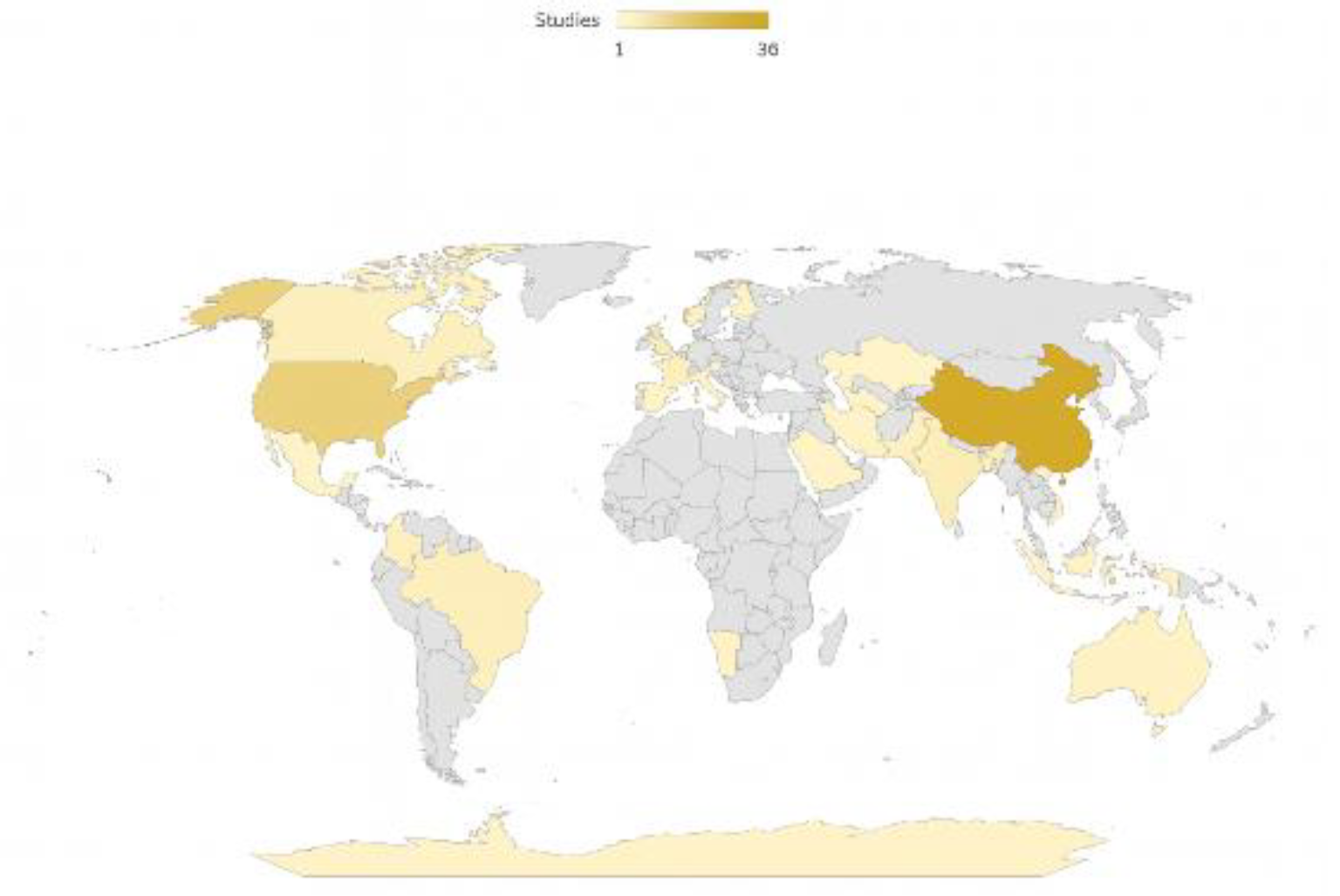
Figure 2.
Resilience of what and against what.
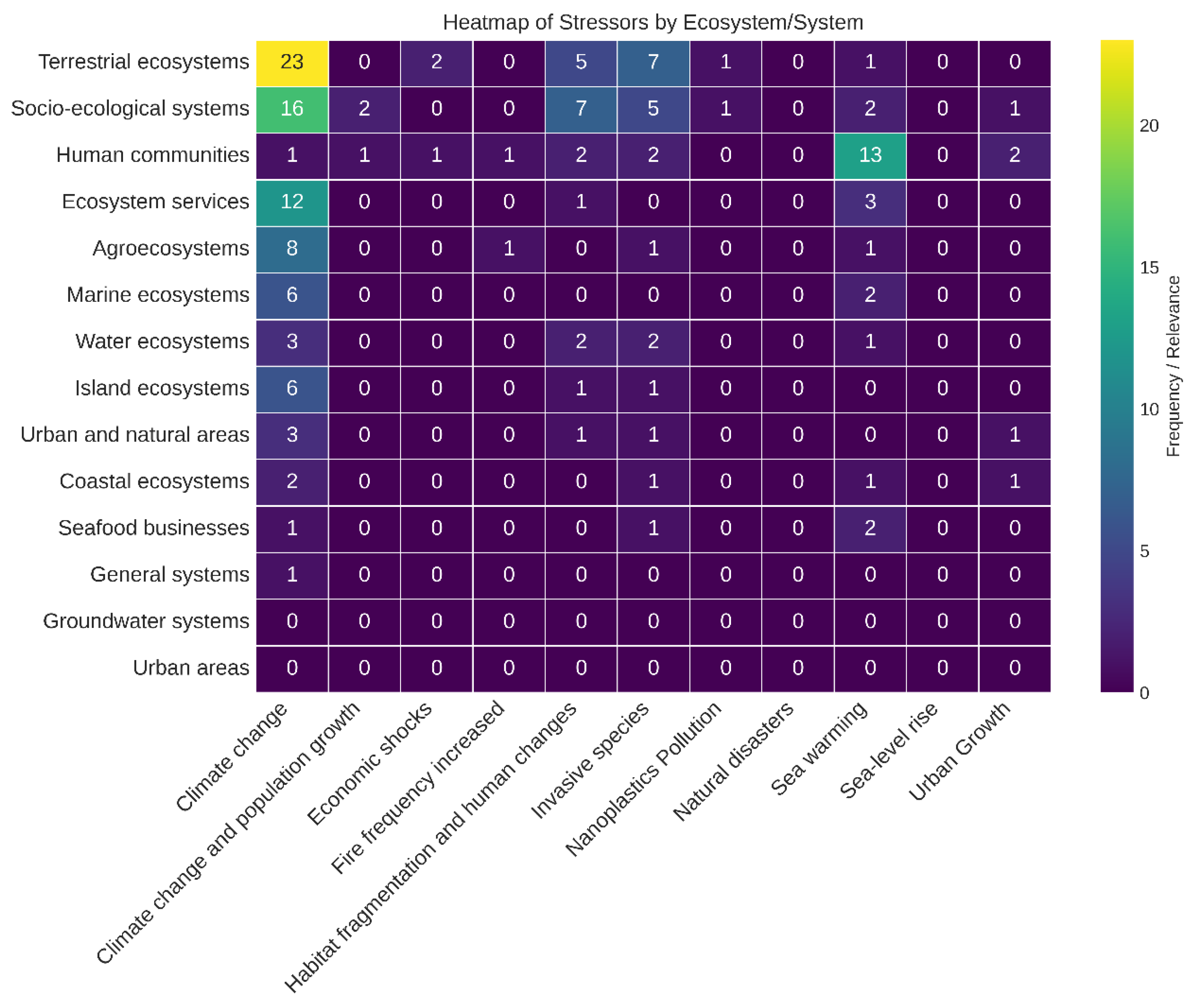
Figure 3.
Principles of resilience thinking addressed in the case studies included in this review.
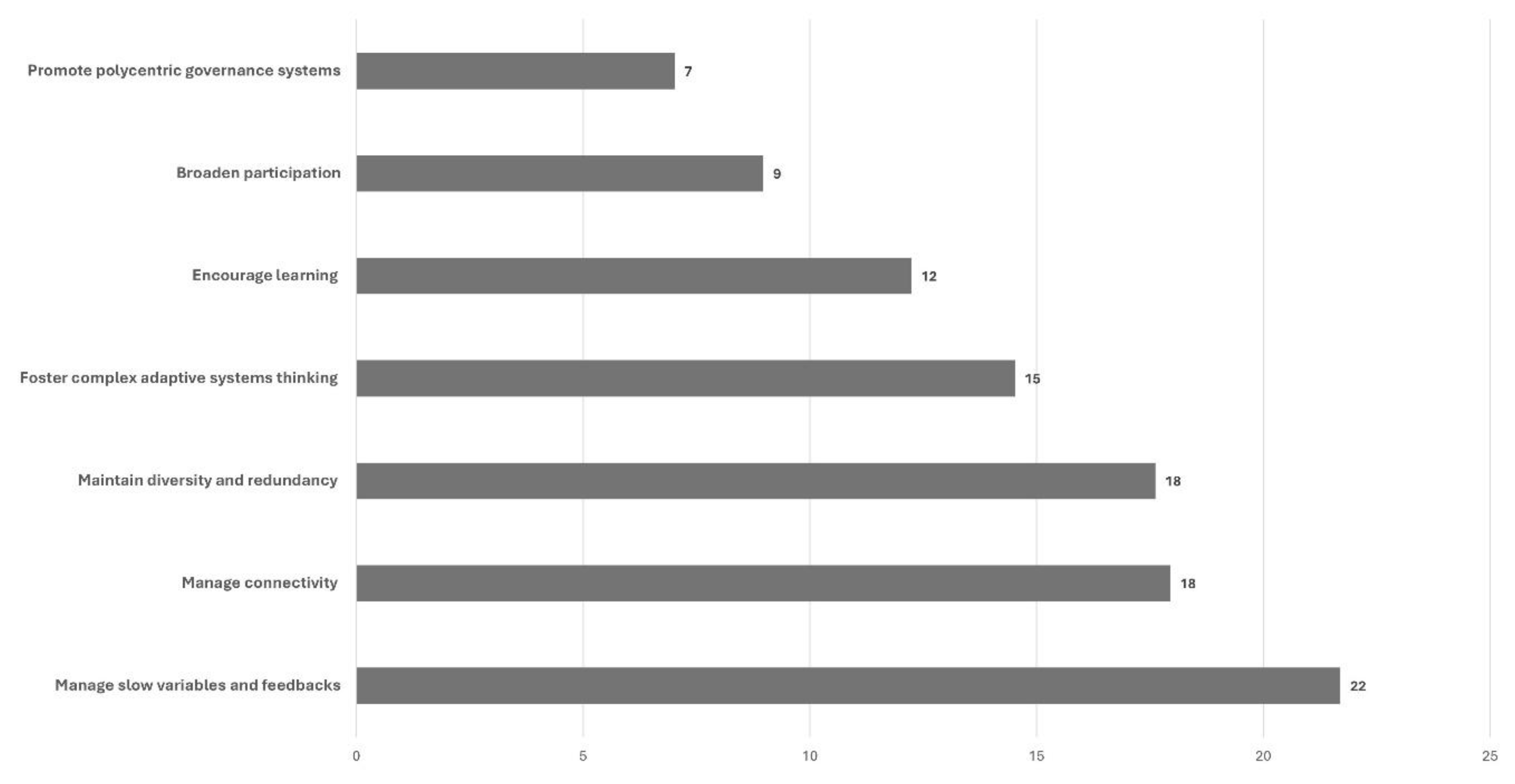
Figure 4.
Distribution of studies addressing multiple principles of resilience thinking.
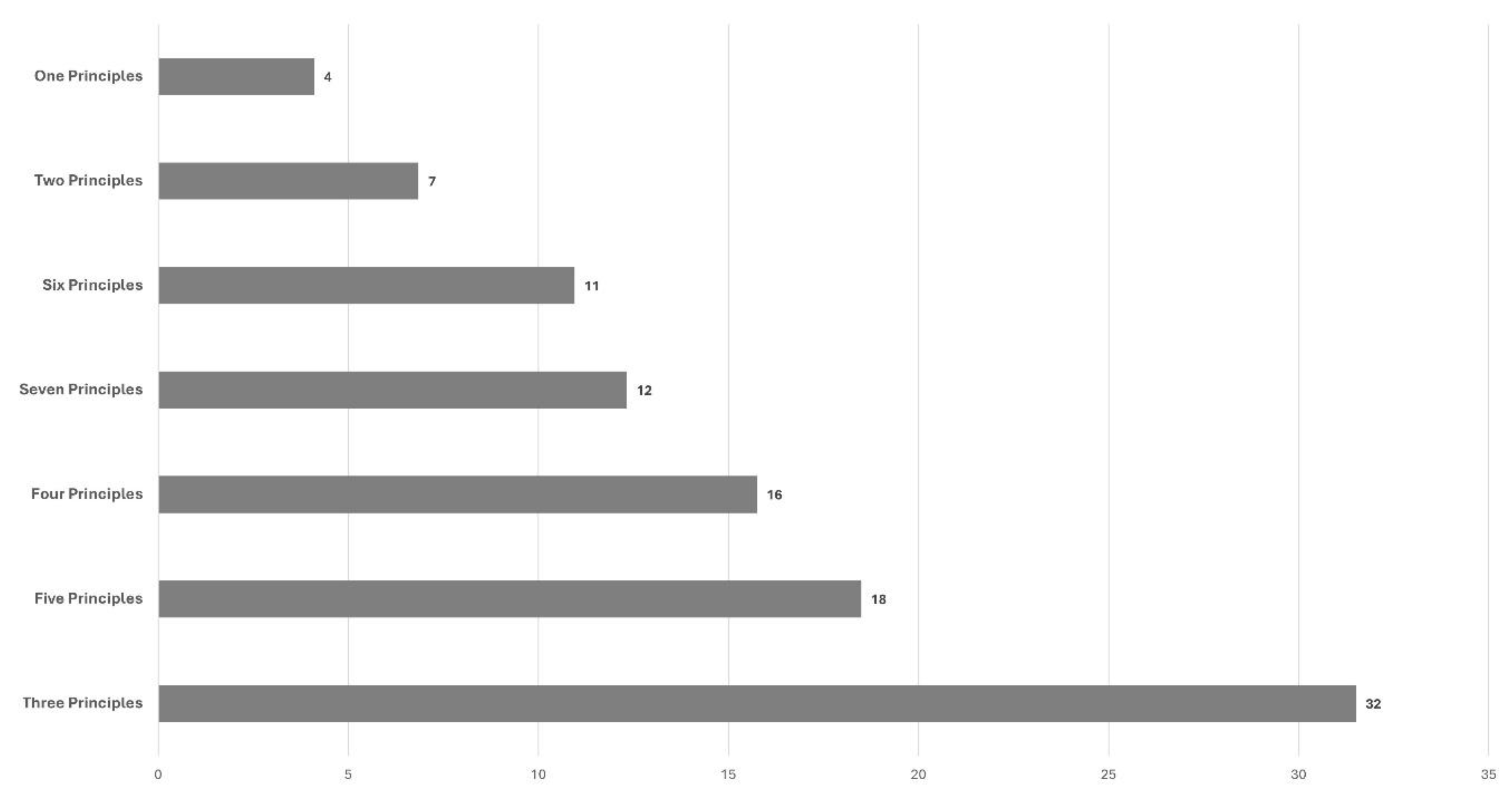
Figure 5.
Distribution of studies according to different resilience research approaches.
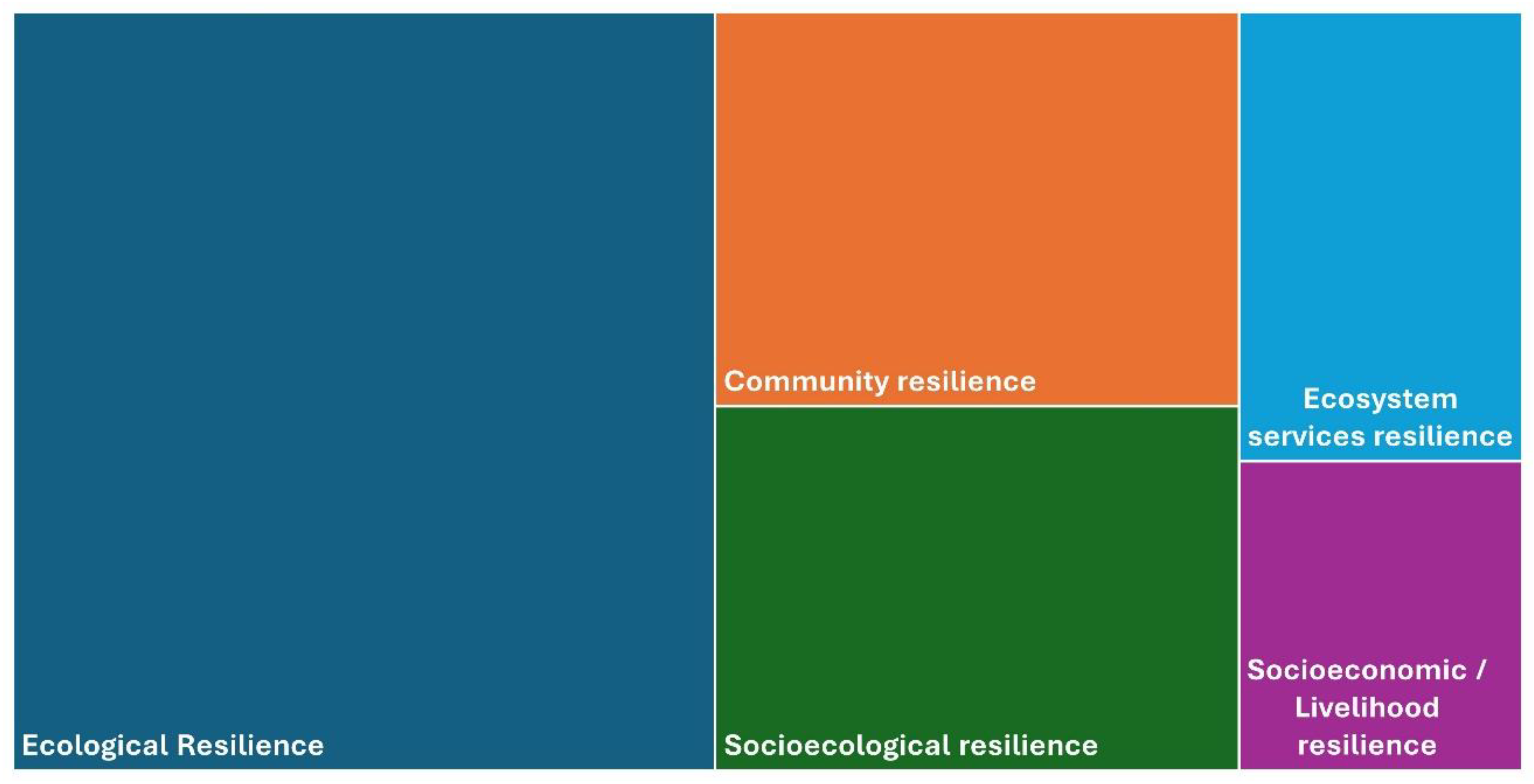
Figure 6.
Frequency of modeling and methodological types across resilience approaches.
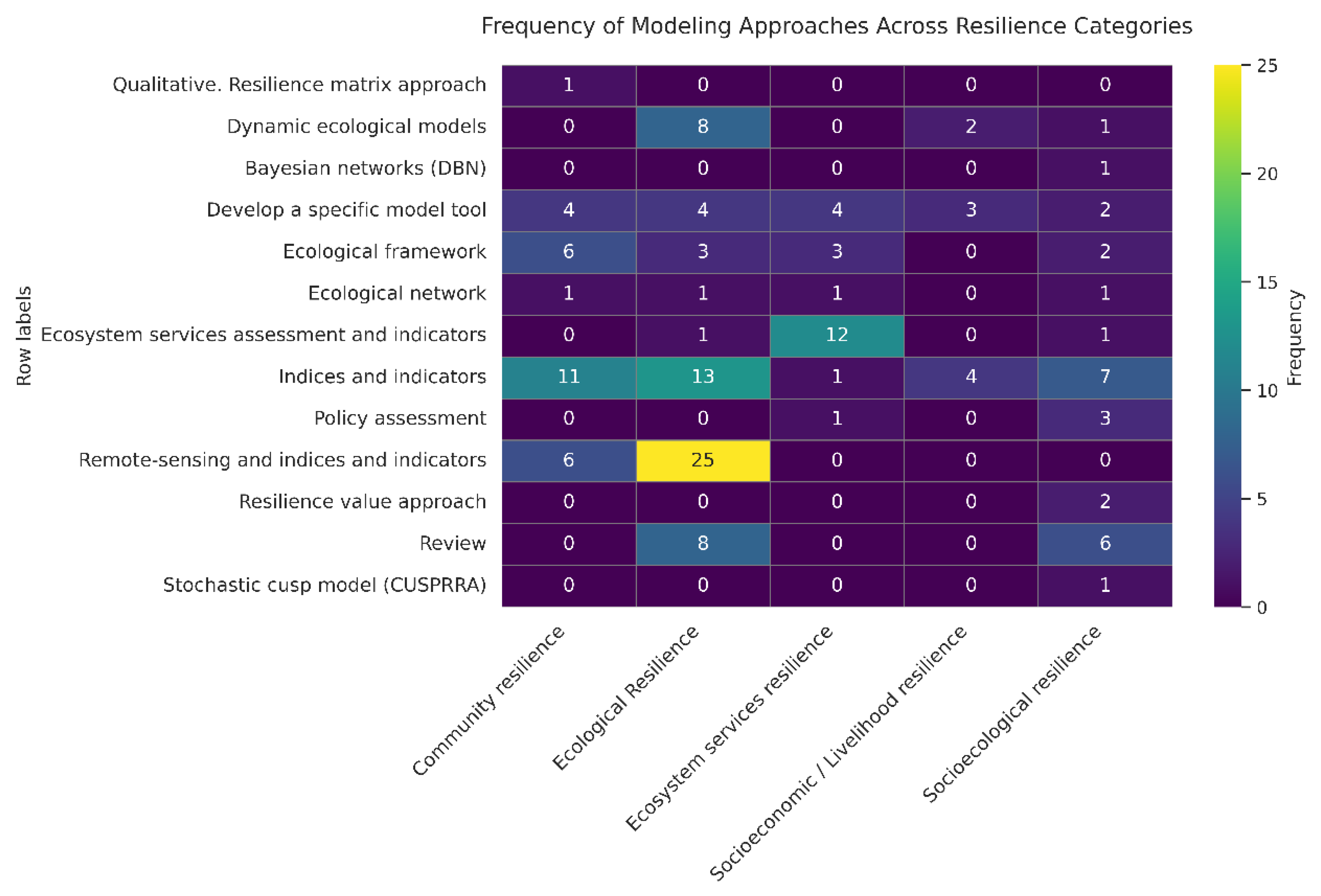
Figure 7.
Resilience methods and Type of variables and information.
Disclaimer/Publisher’s Note: The statements, opinions and data contained in all publications are solely those of the individual author(s) and contributor(s) and not of MDPI and/or the editor(s). MDPI and/or the editor(s) disclaim responsibility for any injury to people or property resulting from any ideas, methods, instructions or products referred to in the content. |
© 2026 by the authors. Licensee MDPI, Basel, Switzerland. This article is an open access article distributed under the terms and conditions of the Creative Commons Attribution (CC BY) license (http://creativecommons.org/licenses/by/4.0/).
Copyright: This open access article is published under a Creative Commons CC BY 4.0 license, which permit the free download, distribution, and reuse, provided that the author and preprint are cited in any reuse.


