
Submitted:
28 January 2026
Posted:
29 January 2026
You are already at the latest version
Abstract
Artisanal fishing along the Amazonian coast is a core activity for traditional fishing communities, including in border areas where different interests and ways of using natural resources overlap. On the oceanic coast of Amapá, located on Brazil’s northern border, artisanal fishing takes place in a setting shaped by conflicts with medium and large-scale vessels, the subordinate integration of small-scale fishers into production chains, and the expansion of capitalist strategies aimed at exploiting marine resources. This article seeks to characterize artisanal fishing in the region and to examine the challenges faced by traditional fishers amid declining autonomy and growing threats to the sustainability of marine fauna. The study adopts a participatory ethnographic approach, based on long-term fieldwork that included participant observation, systematic field notes, and direct engagement with fishers both at sea and in their daily activities in the municipalities of Oiapoque and Calçoene, in northern Amapá. The findings reveal an increasing dependence of artisanal fishers on private financing arrangements, linked to the control of key inputs and fish marketing, which reinforces unequal power relations within the fishing chain. In addition, rising pressure on marine species was identified, particularly on the yellow croaker (Cynoscion acoupa), driven by the high value of its swim bladder on the international market, posing significant risks to environmental sustainability and to the continuity of traditional artisanal fishing in the region.
Keywords:
1. Introduction
2. Materials and Methods
2.1. Methodological Procedures and Study Area
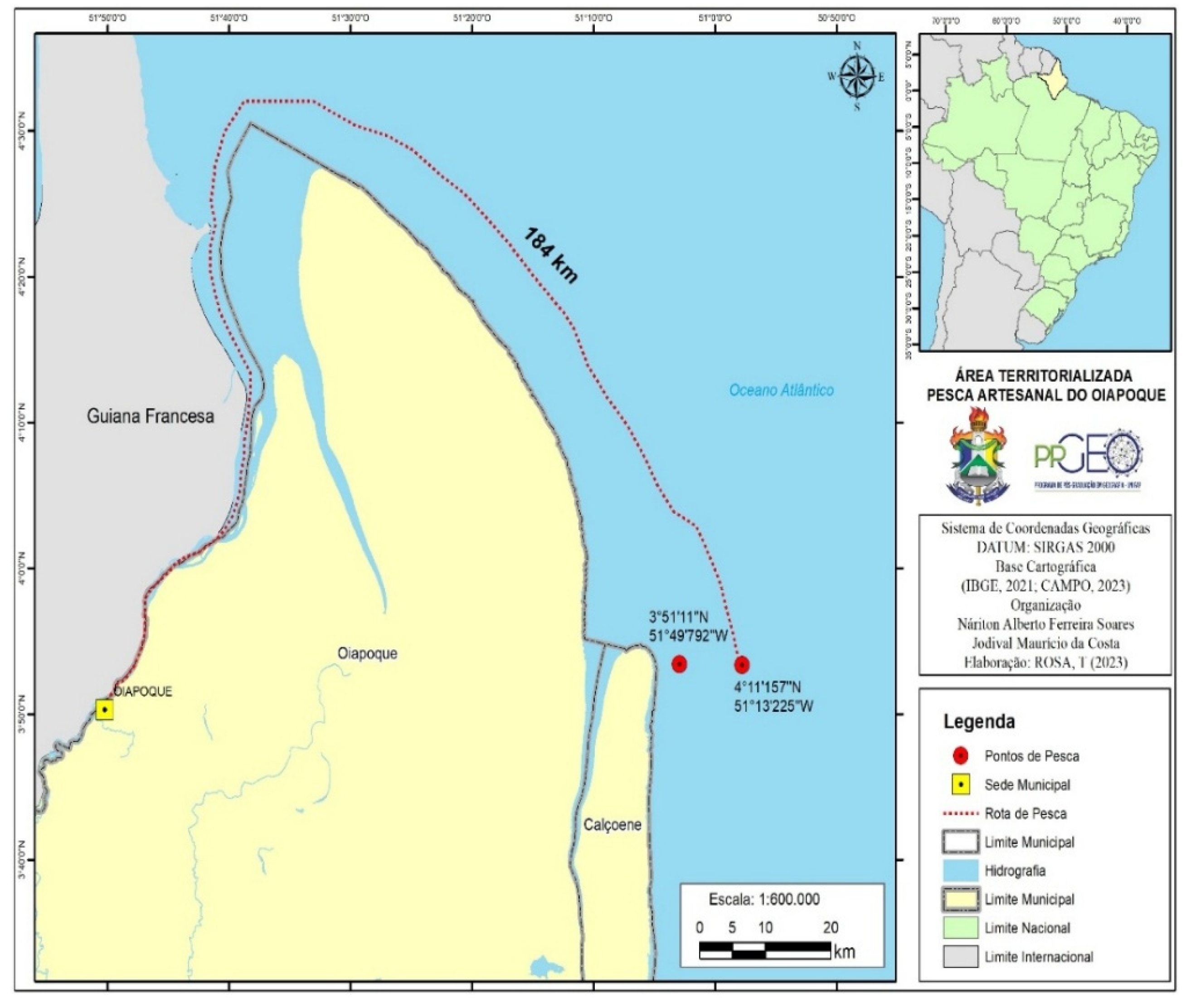
3. Results and Discussion
3.1. Characterization of Artisanal Fishing on the Amapá Coast: Vulnerabilities and Tensions
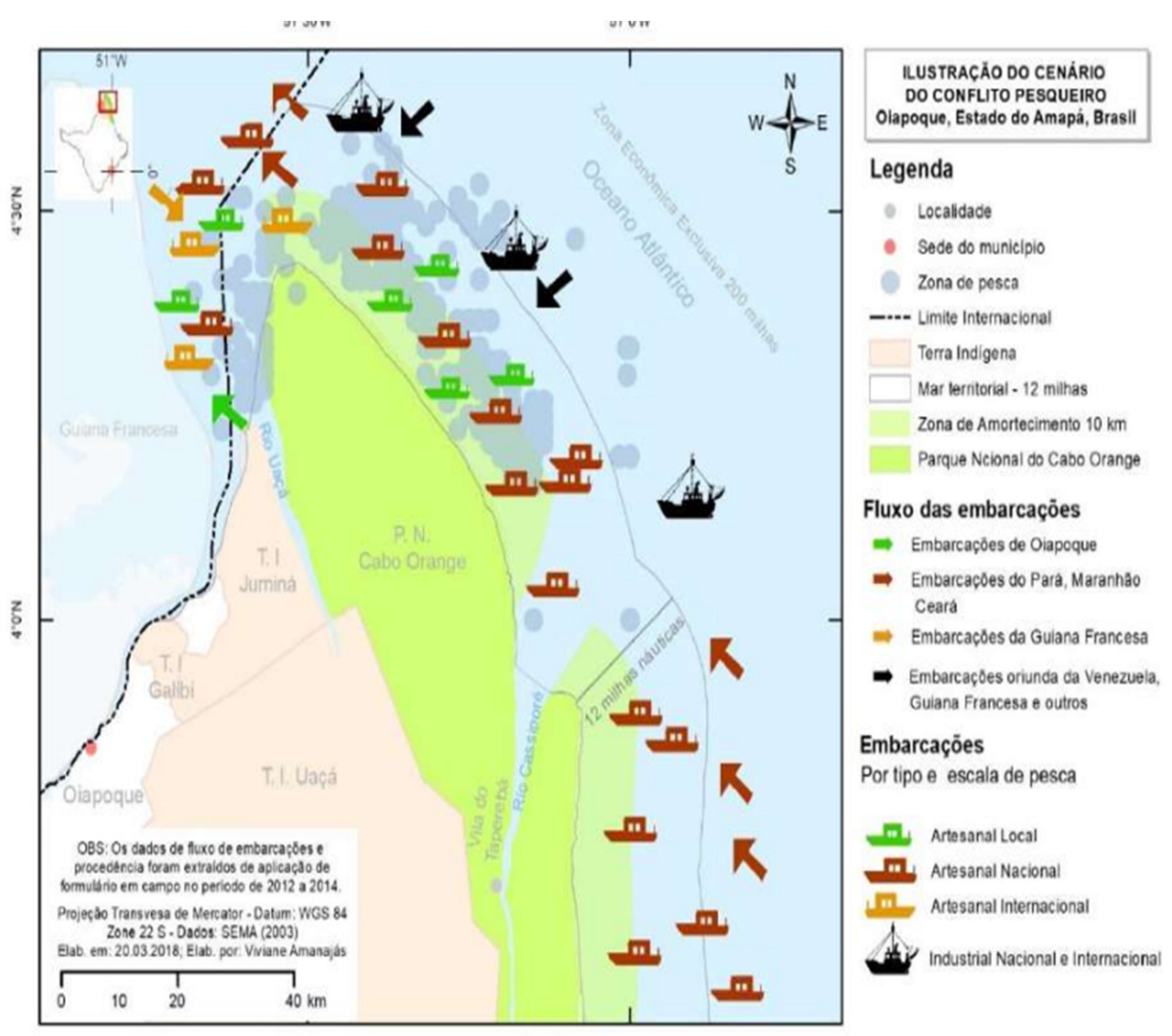
“The number of vessels from other states here in Calçoene has increased significantly. Large boats, some with storage capacities of up to 30 tons, begin arriving in May and remain until November. Some come with their families, rent houses in Calçoene, and stay for several months. What makes this period especially difficult for us is access to ice, because these vessels buy large quantities, leaving little or none available for small-scale fishers.”(Interlocutor 2. Fieldwork conducted with fishers from Calçoene, January 2025)

| Actors | Main Actions |
| Small-scale artisanal fisher | Hold extensive knowledge of fishing practices and local environmental dynamics; Play a central role in fishing as a food system; Experience socio-economic vulnerability that places them in a subordinate position within the fishing chain. |
| Commercial artisanal fisher/Industrial fishing | Vessels with storage capacities ranging from 18 to 30 tons; Large ice and fish storage capacity, allowing fishing trips lasting several weeks; Operate as “mother boats” for smaller vessels that are unable to fish independently due to lack of inputs, especially ice; Use drag fishing methods, which cause greater environmental damage by capturing species unsuitable for fishing; Control the most productive fishing areas and prioritize species with higher commercial value. |
| Entrepreneur/Middleman | Plays a central role in the artisanal fishing chain, often representing the only avenue for market access; Occupies an ambiguous position, as it both benefits from fishers’ vulnerable conditions and, according to the fishers themselves, enables the commercialization of their catch; Builds and maintains relationships of trust with fishers. |
| Private Ice Companies | Based on fieldwork conducted in Jubim, Amapá, and on the relevant literature, ice supply can be identified as the main constraint facing artisanal fishing in the Amazon; Limited supply combined with high demand drives up ice prices, which are largely regulated by entrepreneurs within the fishing sector. |
| Governments: Federal, State, Municipal | Three levels of government action were identified, some involving direct intervention and others consisting of action plans that may evolve into effective public policies; At the state level, the government of Amapá, through Pescap, provides support and operates an ice factory in the municipality of Calçoene; At the federal level, the main policy identified is unemployment insurance, which, although relevant for income support, is not considered a development-oriented policy. |
3.2. The Valorization of the Swim Bladder (Grude) and Pressure on the Yellow Croaker
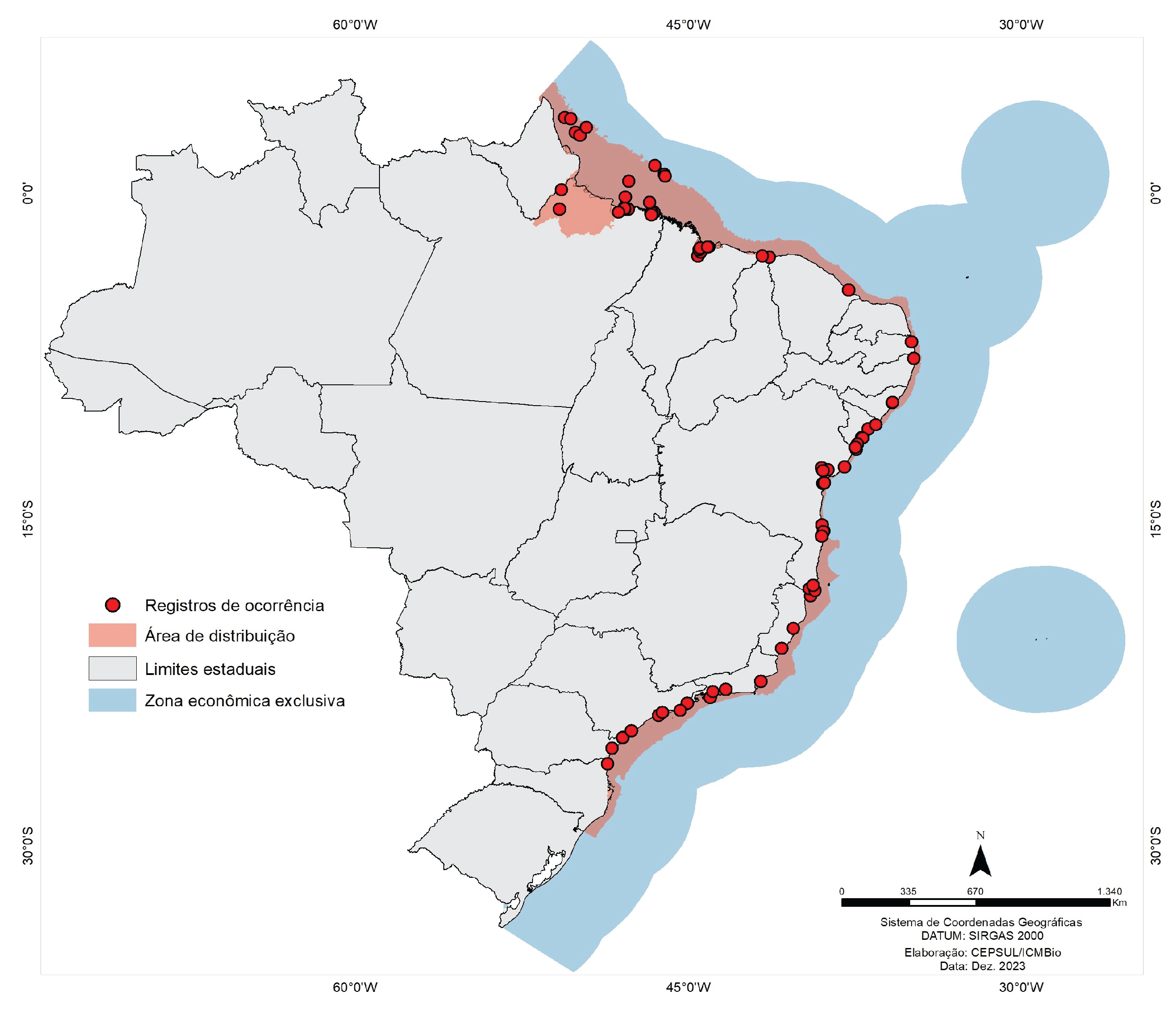
3.3. Threats to the Sustainability of Natural Resources and Traditional Fishing
4. Conclusions
Author Contributions
Funding
Institutional Review Board Statement
Informed Consent Statement
Data Availability Statement
Acknowledgments
Conflicts of Interest
| 1 | Interviews shared in January, 2025. |
| 2 | “Patrão” (“boss”) is the term used by the fisher interlocutor to refer to the entrepreneur who finances the fishing activity. |
| 3 | “Viagem” (“trip”) is the term used to refer to a fishing expedition lasting several days; in the case of this interlocutor, one week. |
| 4 | In the text, we chose to use both expressions: swim bladder and grude.
|
References
- Almeida, F.R.; Santos, J.P. Propriedades físico-químicas da bexiga natatória de peixes e seu uso na produção de colas naturais. Revista Brasileira de Tecnologia de Alimentos 2022. [Google Scholar]
- Amanajás, V.V.V. Dinâmica territorial da pesca na região transfronteiriça do norte do Brasil: a pesca artesanal e conflitos de uso dos recursos pesqueiros, desafios para a gestão sustentável. Tese (Doutorado em Geografia), Universidade Federal do Ceará, Fortaleza, 2019. [Google Scholar]
- Antunes, R. O privilégio da servidão: o novo proletariado de serviços na era digital; Boitempo: São Paulo, 2018. [Google Scholar]
- Azzaro, C. French Guiana grapples with Asian craving for fish bladder. Available online: https://phys.org/news/2019 08-french-guiana-grapples-asian-craving.html (accessed on 7 January 2026).
- Bhabha, H.K. O local da cultura; Editora UFMG: Belo Horizonte, 2013. [Google Scholar]
- Boulet, G; Lévy, J. Blue Economy and coastal conflicts. Marine Policy 2018, v. 87, 1–7. [Google Scholar]
- Diegues, A.C. Pescadores, camponeses e trabalhadores do mar; Ática: São Paulo, 1983. [Google Scholar]
- Douglas, M. Pureza e perigo; Perspectiva: São Paulo, 1991. [Google Scholar]
- Food and Agriculture Organization of the United Nations. The State of World Fisheries and Aquaculture 2022; FAO: Rome, 2022. [Google Scholar]
- Food and Agriculture Organization of the United Nations. The State of World Fisheries and Aquaculture 2023; FAO: Rome, 2023. [Google Scholar]
- Food and Agriculture Organization of the United Nations. The State of World Fisheries and Aquaculture 2024; FAO: Rome, 2024. [Google Scholar]
- Frédou, F; Hostim-Silva, M; Mincarone, M.M.; Fernandes, C.A.F.; Schneider, F.; Scalco, A.C.S.; Barreto, R.; Dolphine, P.; Santos, R.A. Cynoscion acoupa. Sistema de Avaliação do Risco de Extinção da Biodiversidade - SALVE - Instituto Chico Mendes de Conservação da Biodiversidade. ICMBio, 2025. Available online: https://salve.icmbio.gov.br (accessed on 5 January 2026). [CrossRef]
- Freire, J.X. Aspectos da pesca e análise da abundância relativa da Cynoscion acoupa, Lacépède, 1801 e suas relações com a temperatura da superfície do mar na plataforma continental norte do Brasil. Dissertação (Mestrado em Produção Pesqueira), Universidade Federal Rural da Amazônia, Belém, 2019. [Google Scholar]
- Geertz, C. A interpretação das culturas; LTC: Rio de Janeiro, 1989. [Google Scholar]
- Geertz, C. O saber local: novos ensaios em antropologia interpretativa; Vozes: Petrópolis, 1997. [Google Scholar]
- Jentoft, S. Life above water: Essays on human experiences of small-scale fisheries; ISER Books: St. John’s, 2017. [Google Scholar]
- Instituto Chico Mendes de Conservação da Biodiversidade. Avaliação do estado de conservação da fauna marinha brasileira; ICMBio: Brasília, 2023. [Google Scholar]
- Jimenez, É.A.; Barboza, R.S.L.; Aamaral, M.T.; Lucena, F.F. Understanding changes to fish stock abundance and associated conflicts: perceptions of small-scale fishers from the Amazon coast of Brazil. Ocean & Coastal Management 2019, v. 182(art. 104954), 1–12. [Google Scholar] [CrossRef]
- Jimenez, É.A. Avaliação integrada da sustentabilidade de pescarias artesanais costeiras no estado do Amapá, litoral amazônico, Brasil. 2019. 139 f. Tese (Programa de Pós-Graduação em Recursos Pesqueiros e Aquicultura) – Universidade Federal Rural de Pernambuco, Recife. 2019. Available online: http://www.tede2.ufrpe.br:8080/tede2/handle/tede2/8574.
- Malinowski, B. Argonautas do Pacífico Ocidental: um relato do empreendimento e da aventura dos nativos nos arquipélagos da Nova Guiné Melanésia; Abril Cultural: São Paulo, 1976. [Google Scholar]
- Marinho, G.S.; et al. Aplicações tradicionais da “grude” de bexiga natatória na Amazônia. Revista de Ciências do Mar 2021. [Google Scholar]
- Marot, L. Pêche illégale: la Guyane victime du commerce international des vessies natatoires d’acoupa rouge. La 1ère Franceinfo, Guyane. 22 jan 2024. Available online: https://la1ere.franceinfo.fr/guyane/peche-illegale-la-guyane-victime-du-commerce-international-des-vessies-natatoires-d-acoupa-rouge-1528392.html (accessed on 15 January 2026).
- Mourão, K.R.M.; Frédou, F. L.; Espírito-Santo, R.V.; Almeida, M.C.; Silva, B.B.; Frédou, T.; Isaac, V. Sistema de produção pesqueira pescada amarela – Cynoscion acoupa Lacèpede (1802): um estudo de caso no litoral nordeste do Pará – Brasil. Boletim do Instituto de Pesca, São Paulo 2018, v. 35(n. 3), 497–511. [Google Scholar]
- Nogueira, R.A.; Soares, C.E. Clarificação de bebidas utilizando grude de bexiga de peixe. Journal of Food Processing and Preservation 2021. [Google Scholar]
- Turner, V. O processo ritual: estrutura e antiestrutura; Vozes: Petrópolis, 2008. [Google Scholar]
Disclaimer/Publisher’s Note: The statements, opinions and data contained in all publications are solely those of the individual author(s) and contributor(s) and not of MDPI and/or the editor(s). MDPI and/or the editor(s) disclaim responsibility for any injury to people or property resulting from any ideas, methods, instructions or products referred to in the content. |
© 2026 by the authors. Licensee MDPI, Basel, Switzerland. This article is an open access article distributed under the terms and conditions of the Creative Commons Attribution (CC BY) license (http://creativecommons.org/licenses/by/4.0/).


