

Submitted:
26 January 2026
Posted:
27 January 2026
You are already at the latest version
Abstract
Global biodiversity is declining at an alarming rate; however, evidence suggests that this decline occurs far more slowly on Indigenous-owned land. This can be attributed to cultural worldviews in which protecting nature and living in harmony with the environment are fundamental principles, an ethos central to African societies and many other Indigenous communities worldwide. This study examines the role of Vhavenda traditional belief systems, Indigenous knowledge, and cultural practices in the management and conservation of natural resources and the environment. In contemporary Limpopo Province, the Vhavenda clans of northern South Africa remain among the country’s most traditional communities, continuing rituals and practices that have been transmitted across generations. According to the 2022 national census, the area inhabited by the Vhavenda tribe, records the country’s highest concentration of centenarians, a demographic pattern which they attribute to the region’s cultural continuity and relative geographical isolation, which have enabled the preservation of its spiritual and ecological heritage. The research employed an insider ethnographic methodology, collecting data through personal interviews and a focus group discussion. Findings reveal that Indigenous beliefs, knowledge systems, and taboos play a substantial role in promoting sustainable land use. They restrict development on ecologically sensitive landscapes and discourage harmful practices, such as deforestation and cultivation along water bodies. These practices are enforced through complex customary laws, often articulated through prohibitive norms (“thou shalt not”), that safeguard plants, animals, water sources, and other natural resources. The study further illustrates that these prohibitions reflect a nuanced understanding of the biophysical environment, with the most sensitive and vulnerable ecosystems and ecologically important species, including keystone, foundation, and indicator species, receiving protection. Overall, the research shows the importance of recognising, protecting, and integrating Indigenous cultural systems as a critical component of effective biodiversity conservation.
Keywords:
indigenous knowledge systems
; traditional belief system
; Vhavenda traditional beliefs
; biodiversity conservation
; sustainable land use
; cultural heritage
; ecological protection
; Limpopo province
; South Africa
; sustainable development goals
1. Introduction
The world is currently confronted with a multitude of environmental challenges, among which the destruction of biodiversity is one of the most severe. Biodiversity loss not only threatens the stability of ecosystems but also intensifies other global challenges, including climate change, poverty, and hunger. In this paper, biodiversity encompasses the variety of species, ecosystems, and genetic diversity, all of which are essential for sustaining ecological balance and maintaining the health of the Earth’s life-support systems.
Human activities remain the primary drivers of biodiversity loss, particularly habitat destruction, pollution, climate change, the overexploitation of natural resources, and the introduction of invasive species (Tyler Miller & Spoolman; Chamasula & Rabumbulu, 2024). The decline of biodiversity is especially concerning because it reduces the resilience of ecosystems, making them more vulnerable to environmental disturbances and less capable of providing vital ecosystem services such as water and air purification, pollination, and climate regulation (Cardinale et al., 2012).
Biodiversity loss is not only an environmental crisis but also an economic one. Biodiversity underpins key economic sectors, including agriculture, pharmaceuticals, and tourism. Its degradation, therefore, carries significant economic consequences, threatening food security, the availability of medicinal resources, and the livelihoods of communities globally. These impacts are even more pronounced in developing countries such as South Africa, where rural economies remain disproportionately dependent on natural resources for survival and development (Rabumbulu & Masithela, 2022). It is essential to recognise that the loss of biodiversity is not a recent phenomenon. Global concern over environmental degradation can be traced back to the United Nations Conference on the Human Environment, held in Stockholm, Sweden, from June 5 to 16, 1972, the first major international summit dedicated to environmental protection. Since then, numerous global, regional, and national initiatives have been implemented to conserve biodiversity. Countries worldwide, including South Africa, have established protected areas such as national parks and transboundary wildlife reserves to safeguard critical habitats and vulnerable species (Juffe-Bignoli et al., 2014; Bullock et al., 2011). Considerable efforts have also been directed toward ecological restoration, sustainable resource management, and the enforcement of international and national environmental policies (Juffe-Bignoli et al., 2014; Bullock et al., 2011).
The adoption of the Sustainable Development Goals (SDGs) in 2015 marked a significant milestone in these global conservation efforts. Framed within the UN’s “Transforming our World: The 2030 Agenda for Sustainable Development,” the SDGs constitute a universal framework aimed at eradicating poverty, protecting the environment, and promoting prosperity for all (United Nations, 2015). Comprising 17 goals and 169 targets, the SDGs apply to all countries, developed and developing, reflecting the recognition that coordinated global action is essential to achieving sustainable development without surpassing planetary boundaries (Steffen et al., 2015).
Despite these efforts, the world is not on track to achieve the 2030 targets. Environmental goals show the least progress, as reported by the 2019 Global Sustainable Development Report (Sachs et al., 2025) and the Independent Group of Scientists (2019). African countries remain disproportionately affected due to their heightened vulnerability to climate change and natural disasters (von Soest, 2020), combined with limited adaptive capacity often associated with economic constraints (Liwenga, 2017). This imbalance continues to hinder progress toward achieving the SDGs across much of the continent. South Africa, for instance, is currently ranked 111th, with an SDG index score of 64.1. African countries overall show the slowest progress among all global regions.
Despite global conservation efforts spanning five decades, the rate of biodiversity loss continues to accelerate at an alarming pace. The scale and urgency of this crisis necessitate the need for more diverse, comprehensive, and integrated conservation strategies. Such strategies must meaningfully incorporate indigenous belief systems, whose knowledge and practices have long contributed to the sustainable use and protection of natural resources. This study, therefore, examines how indigenous beliefs can contribute to addressing the escalating biodiversity crisis. Our findings demonstrate that a deeper engagement with Indigenous knowledge systems and practices offers valuable insights into sustainable resource management and conservation.
Although numerous discussions and recommendations (Abate & Kronk, 2013; Ebhuoma & Leonard, 2022) have encouraged the incorporation of Indigenous knowledge and the involvement of local communities in conservation initiatives, such knowledge has historically been treated as supplementary, used only when it aligns with Western scientific paradigms. The persistent perception of Western knowledge as inherently superior has resulted in the dismissal of Indigenous knowledge that does not conform to Western scientific frameworks, often labelling it as superstition or insufficiently scientific (Ebhuoma & Leonard, 2022; Chamasula & Rabumbulu, 2024).
Yet, even as global biodiversity declines, research shows that biodiversity loss occurs at a significantly slower rate on land managed or owned by Indigenous groups (Swiderska, 2020). This is largely because nature stewardship and coexistence with the environment are deeply embedded in many Indigenous belief systems (Abate & Kronk, 2013; Ebhuoma & Leonard, 2022). Unfortunately, these belief systems, along with associated traditions and practices that promote ecological sustainability, have been steadily eroded in Africa due to colonisation, Western cultural influence, and religious conversion (Adu-Gyamti, 2011; UNPD, 2023).
By analysing the role of Vhavenda traditional beliefs, Indigenous knowledge, and cultural practices in managing and conserving natural resources, this study argues that the protection and revitalisation of Indigenous cultures are vital for biodiversity conservation. The Vhavenda, an Indigenous group residing in the northern regions of South Africa, particularly in the present-day Limpopo Province (Figure 1), offer a compelling case for understanding how cultural systems can underpin ecological resilience.
Among the various Indigenous groups in South Africa, the Vhavenda are regarded as one of the most traditional communities, maintaining rituals and cultural practices that have been passed down through generations (Sinthumule & Mashau, 2020). They were also the last group in South Africa to be colonised and influenced by Western cultural and religious systems (Sinthumule et al., 2021). The geographical isolation of the Vhavenda region has further contributed to the preservation of its cultural and spiritual heritage. This isolation and cultural practices are contributing factors to the community’s longevity, earning the area recognition as the country’s “centenarian village” due to its unusually high concentration of people aged 100 years and older (Statistics South Africa, 2023).
Like many Indigenous groups worldwide (Agrawal, 1995; Swiderska, 2020), the Vhavenda have played a critical role in conserving biodiversity in their region for centuries (Abate & Kronk, 2013; Ebhuoma & Leonard, 2022). This study emphasises the importance of understanding Indigenous belief systems within the broader global sustainability agenda, particularly in relation to Sustainable Development Goal (SDG) 15, which focuses on protecting terrestrial ecosystems and biodiversity (UNPD, 2023). Our findings demonstrate that Indigenous beliefs and practices are integral to effective biodiversity conservation, environmental management, and ecological stewardship.
The Vhavenda possess deep knowledge of climate patterns, local weather variations, and ecological processes, which they draw upon to identify and manage risks associated with climate change. This knowledge underpins their adaptive strategies in land-use planning, biodiversity conservation, and water resource management, reinforcing the value of Indigenous knowledge systems in advancing sustainable development and ecological resilience.
2. Understanding Indigenous Knowledge, Traditional Beliefs and Cultural Practices
Although no single, universally accepted definition of Indigenous Knowledge (IK) exists, most scholars (Warren, 1991; Abate & Kronk, 2013; Torrents-Ticó et al., 2020; Obi et al., 2021) agree that it encompasses the cumulative knowledge, beliefs, practices, and ways of living developed and transmitted across generations. This knowledge is primarily conveyed through oral and cultural traditions, including proverbs, riddles, folktales, songs, legends, myths, stories, rituals, informal education, and apprenticeship. Rooted in long-term interactions with specific environments, often spanning millennia, IK is shaped by informal experimentation, adaptation, and the continuous incorporation of new insights derived from interactions with modern technologies and an intimate familiarity with local ecosystems or cultural contexts. This makes IK inherently dynamic, diverse, and holistic (Abate & Kronk, 2013; Nakashima et al., 2018; Ezeanya-Esiobu, 2019). It spans multiple domains, including agriculture, medicine, security, botany, zoology, food technology, craftsmanship, linguistics, education, natural resource management, and hazard mitigation, guiding communities as they navigate complex socio-ecological systems (Cullen-Unsworth, 2012; Chamasula & Rabumbulu, 2024).
A range of related terms is often used interchangeably with IK, including indigenous technical knowledge, traditional knowledge, traditional ecological knowledge, local knowledge, ethnoscience, farmers’ knowledge, folk knowledge, and indigenous science (Nakashima & Roué, 2002; Obi et al., 2021). Collectively, these concepts describe knowledge systems that preserve, transmit, and contextualise the relationships between Indigenous peoples, their cultures, and the landscapes they inhabit over time (Mazzocchi, 2006). Although “knowledge” typically refers to empirical understandings, “belief” encompasses cosmological and spiritual worldviews, and “tradition” refers to customary practices, these distinctions often blur within Indigenous epistemologies. Transmission occurs through both formal and informal means via social interactions, oral histories, rituals, and everyday practices, ensuring continuity across generations (Mazzocchi, 2006).
Although IK has gained increasing recognition, particularly within sustainable development discourses, it has simultaneously been subjected to persistent devaluation. A prevailing contrast is often drawn between scientific and Indigenous knowledge systems, with the former widely perceived as superior and therefore receiving greater attention, while the latter is frequently marginalised or dismissed (Hermann et al., 2020; Gómez-Baggethun, 2022). One common strategy used to undermine IK is the tendency to characterise it as “old-fashioned,” “backwards,” “static,” or “unchanging” (Rabumbulu & Masithela, 2022). However, this depiction is inaccurate. As highlighted earlier, IK is dynamic, adaptive, and context-specific, continually evolving in response to the needs and lived experiences of the communities that develop and apply it.
Tensions between scientific and Indigenous knowledge systems often arise because their observations may sometimes align and at other times diverge (Nakashima, 2018; Obi, 2021). These divergences frequently trigger comparisons that privilege scientific knowledge while casting Indigenous knowledge as inferior. The partial irreconcilability between the two systems is rooted in their epistemological foundations: scientific knowledge tends to separate practice from belief (science versus technology) and rationality from spirituality (science versus religion), whereas Indigenous worldviews integrate these dimensions. IK offers a holistic understanding of human-environment interactions that encompasses empirical observation, deductive reasoning, community knowledge, technological practices, social organisation, institutions, spirituality, rituals, rites, and cosmologies (Nakashima & Roué, 2002). This integrative nature is precisely what lends IK its strength in navigating complex socio-ecological systems.
Another frequently cited critique of Indigenous knowledge concerns its oral mode of transmission, which some perceive as unreliable due to alleged issues such as temporal ambiguity, dynastic bias, or a supposedly mythical character. However, research on African oral traditions, particularly the work of Loubser (1991), demonstrates that such criticisms often reflect insufficient engagement with the interpretive frameworks that govern oral narratives. Rather than analysing the contextual, symbolic, and embedded meanings within these narratives, many researchers have tended to interpret myths and stories literally, overlooking their deeper epistemological functions.
Loubser (1991) argues that, while oral traditions may not always offer literal historical chronologies, they serve as symbolic representations of past events shaped by cultural memory and social context. Myths function as sophisticated conveyors of political, economic, and environmental knowledge. When interpreted symbolically rather than literally, they reveal complex insights into natural resource management, ecological sustainability, and biodiversity conservation. This interpretive orientation informs the present study, which aims to demonstrate how Indigenous knowledge systems underpin sustainable practices and make a fundamental contribution to the protection of terrestrial ecosystems and biodiversity.
3. Regional Setting and Study Area
The geographic location of a region significantly influences its climate, as it affects the characteristics and movement of air masses as well as the global distribution of atmospheric moisture (Liu et al., 2020; De Leeuw et al., 2017). South Africa, situated at the southernmost tip of the African continent, boasts a diverse landscape comprising extensive plateaus, mountain ranges, and coastal plains. The country spans latitudes 22° to 35° South and longitudes 17° to 33° East, covering an area of approximately 1 221 090 km². It shares borders with six countries: Namibia, Botswana, Zimbabwe, Mozambique, Eswatini (formerly known as Swaziland), and Lesotho. The country is administratively divided into nine provinces, which are further subdivided into districts and local municipalities (Mkhize & Khanyile, 2020).
This study was conducted in two local municipalities, Thulamela and Collins Chabane, within Limpopo Province (Figure 1). Combined, these municipalities cover an area of 7 645 km² and host a population of 1 019 727, according to the 2022 national census (Statistics South Africa, 2023). The eastern boundary of the study area is defined by the Kruger National Park. The region is predominantly rural, with agriculture as the main economic activity. Basic service delivery remains limited, with fewer than 30% of households having access to piped water, flush toilets connected to sewerage systems, or weekly refuse collection.
Topographically, the study area varies from high mountain zones, including the Soutpansberg and Drakensberg ranges, to low-lying plains (Figure 2). These mountainous formations strongly influence local weather patterns and climate variability (Kabanda & Munyati, 2010). Thulamela, in particular, experiences high rainfall (orographic rainfall) and is prone to flooding due to its rugged terrain (Figure 3). The varied topography shapes local microclimates, influences vegetation distribution, affects river networks, and impacts biodiversity. Areas receiving the highest precipitation support dense river systems, rich vegetation, and high biodiversity.
The study area also hosts two of South Africa’s most significant natural heritage sites: Lake Fundudzi, the country’s only natural inland freshwater lake, and Thathe Forest, one of the few remaining patches of undisturbed rainforest in southern Africa. Both are situated in the Soutpansberg Mountains within the Thulamela local municipality (Netshiungani et al., 1981; Sinthumule & Mashau, 2020).
South Africa’s geology is highly diverse, comprising cratons, greenstone belts, orogenic belts, and impact craters (Guenther et al., 2006). Limpopo Province features three major rock supergroups: the Barberton, Transvaal, and Olifantshoek Supergroups. A supergroup refers to a collection of distinct rock formations that were deposited during the same geological period (Luskin et al., 2019), typically consisting of layered rock types formed under similar temporal and environmental conditions.
The geology of the study area is heterogeneous, characterised by a mixture of sandstone, shale, grit, conglomerates, quartzite, and basalt (LEO, 2016). Geology is particularly relevant to this research for three key reasons: (1) it significantly influences local microclimates, (2) it interacts with atmospheric and biophysical processes to shape soil formation (Allison & Bennett, 2022), and (3) it determines land-use potential. Geological features such as mountains and valleys affect wind patterns, temperature, and precipitation, thereby creating microclimatic variations (Antonelli et al., 2018). Additionally, different rock types absorb and release heat at varying rates, further contributing to microclimate heterogeneity.
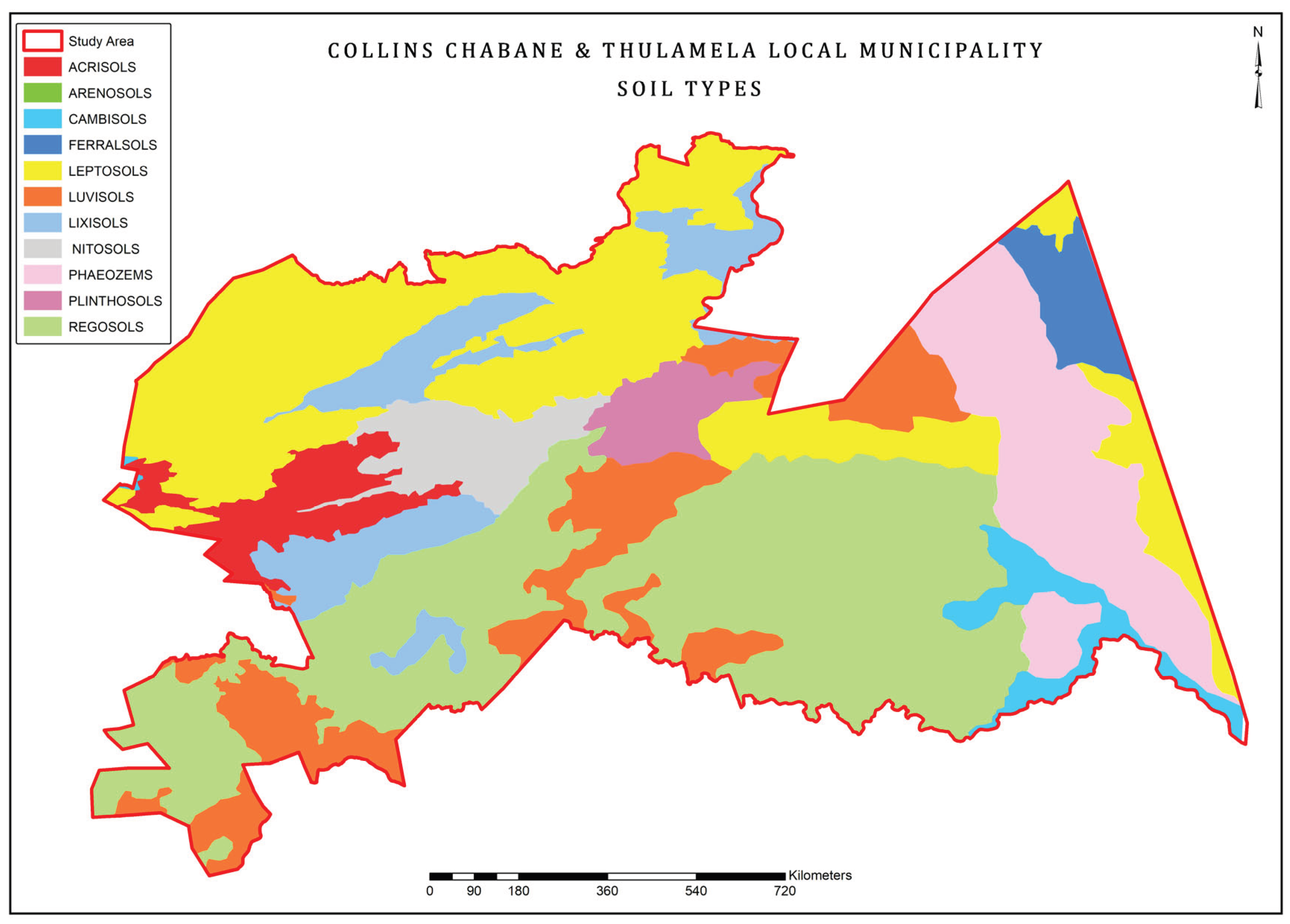
Figure 4 illustrates the spatial distribution of soil types within the study area. Leptosols dominate Thulamela Local Municipality, while erosion-prone Regosols are prevalent in Collins Chabane Local Municipality. Both soil types exhibit weak structure, shallow depth, high stone content, and susceptibility to erosion (Botha & Hattingh, 2013; Stürmer et al., 2009). Rainfed agriculture is the predominant land-use system, particularly in high-precipitation mountainous areas (Figure 2a and Figure 2b). These zones are generally vulnerable to land degradation, including soil erosion, due to steep slopes and geological composition (Rabumbulu & Badernhost, 2016). The presence of sandstone and other erodible rocks further increases the susceptibility of high-lying areas to mass wasting and related geomorphological processes.
4. Materials and Methods
This study employed an insider ethnographic approach within a qualitative research design. Qualitative research provides a structured framework for capturing participants’ experiences, perceptions, and meanings (Chandra & Shang, 2017), making it particularly suited for exploring Indigenous knowledge, beliefs, and cultural practices. A purposive sampling strategy was employed to select participants, allowing for the identification of “information-rich” individuals who could provide in-depth insights into specific phenomena and contribute to conceptual development. Participants were deliberately chosen for their extensive knowledge of Venda culture and traditional practices, including elders, indigenous farmers, and other knowledgeable community members.
Data were collected through unstructured interviews, observations, focus group discussions, and document reviews. These methods allowed the researcher to guide the discussions while giving participants the freedom to narrate their experiences, beliefs, and perspectives in their own words. Such an approach is especially important in Indigenous communities, where oral traditions and storytelling constitute primary modes of knowledge transmission (Ebhuoma & Leonard, 2022).
Ethical clearance was obtained from the university’s ethics committee prior to data collection. The study adhered to institutional ethical guidelines, emphasising voluntary participation, informed consent, and participant anonymity. All participants were informed about the purpose of the study, the expected duration of their involvement, and their right to withdraw at any point without penalty. Verbal consent was obtained prior to participation. The two focus group discussions, which consisted of nine participants per group, lasted approximately two hours, while the individual interviews ranged from 40 to 90 minutes. Data saturation was reached after two focus group discussions and 42 interviews.
Data analysis was conducted using thematic analysis, which facilitated the systematic identification, organisation, and interpretation of patterns within the data. This method enabled a comprehensive examination of data collected across different times and contexts, allowing for the identification of relationships among concepts and the assessment of their significance based on recurrence and contextual relevance.
5. Results and Discussions
Although multiple factors contribute to land and biodiversity degradation (Rabumbulu & Bradenhorst, 2016), population growth is widely recognised as a key driver (Chamasula & Rabumbulu, 2024). Understanding the role of the Vhavenda cultural belief system in biodiversity conservation and sustainable resource management requires contextualising it within South Africa’s political history. Like other rural areas inhabited by Indigenous Black communities, the study area has experienced sustained pressure since 1913, due to successive administrations from colonial authorities to the National Party under apartheid in 1948, which entrenched unequal land tenure (Simon & Ramutsindela, 2000). The 1913 Natives’ Land Act legally confined Black South Africans to 7% of the land, with a marginally increased allocation of 13% by the 1936 Act. Enforcement displaced most of the Black population to designated “homelands,” many of which were situated on steep, erosion-prone terrain. Consequently, the Vhavenda have contended with population pressures and the challenges of managing degradation-prone land for over a century.
Findings indicate that Vhavenda culture is deeply rooted in a complex system of myths and religious beliefs, which significantly shape interactions with the natural environment and inform sustainable resource use. Consistent with studies across Africa (Abate & Kronk, 2013; Ebhuoma & Leonard, 2022; Sinthumule & Mashau, 2020; Sinthumule et al., 2021), the Vhavenda employ myths, taboos, and spiritual prohibitions as mechanisms for environmental management. These cultural frameworks enforce restrictions on activities that could harm natural resources or disrupt ecological balance.
Totems and Sacred Animals and Plants
The Vhavenda use totems and sacred designations to protect specific animals and plants. The practice of recognising certain species as sacred is widespread globally and reflects community values, spiritual beliefs, and collective identity (Biswas et al., 2002; Flood, 1996). Sacred species are revered for their perceived divine significance and often play a prominent role in rituals, traditional medicine, and ceremonies.
Among the Vhavenda, white lions and white pythons are considered sacred, believed to embody ancestral deities. Their divine status ensures that these animals remain undisturbed, promoting survival despite their genetic rarity (leucism) and vulnerability. Oral traditions recount that approximately 400 years ago, one of their queens received a white lion from a falling star, showing the spiritual significance attributed to these animals. Such beliefs have facilitated the conservation of these rare species, aligning with studies showing that spiritual reverence can support species protection and sustainable practices (Brown, 1989; Flood, 1996; Malek, 1997).
Sacred plants are similarly protected due to their spiritual, medicinal, and symbolic importance. They play central roles in rituals, healing, purification, and spiritual communication, paralleling practices in other cultural contexts, such as Ayahuasca in Amazonian traditions (Hofmann & Schultes, 1992), Tulsi in Hinduism, cedar and sage in Native American rituals (Stewart, 2004; Adams, 2004), and oak in Celtic Druid ceremonies (Carr-Gomm, 2010). Designating plants as sacred preserves ecological integrity, encourages ethical harvesting, promotes sustainable use, and maintains traditional knowledge (Abate & Kronk, 2013).
Totems, locally referred to as mitupo, provide an additional layer of ecological protection. Each clan is responsible for stewarding its totem species, which may include lions, elephants, or crocodiles. Hunting, harvesting, or consuming these species is taboo, with transgressions believed to provoke ancestral displeasure and misfortune for both individuals and the clan. Medicinal plants are harvested according to strict traditional protocols, often guided by ceremonies, ancestral spirits, or oversight from traditional healers, ensuring sustainable use and communal protection.
Ecologically, many totemic and sacred species function as foundation or keystone species. Foundation species, such as elephants, create or maintain habitats that support other organisms. Keystone species, such as crocodiles, have an ecological impact that is disproportionately large relative to their abundance, playing a critical role in maintaining habitat structure. These species regulate the populations of other organisms, helping to preserve ecological balance and prevent ecosystem collapse (Tyler Miller & Spoolman, 2009). The Vhavenda reverence for these species demonstrates a sophisticated understanding of ecological interdependence and highlights the role of spiritual and cultural practices in biodiversity conservation. Totem animals, in particular, act as ancestral guides or protectors, symbolising the broader interconnection between humans, other species, and the cosmos, a pattern observed among Indigenous cultures worldwide, including North America and Australia (Stewart, 2004).
Taboos and Discouraged Practices
Taboos are unwritten rules that prohibit certain actions, behaviours, words, individuals, or topics, often enforced through strong social or cultural sanctions. Violations can result in shame, ostracism, or other forms of punishment. Taboos function to maintain social order, safeguard cultural values, and define behavioural boundaries, typically grounded in tradition, religion, or deeply held fears. Across Africa, traditional taboos have historically restricted the hunting of species such as great apes, contributing to the survival of gorilla and chimpanzee populations. However, the erosion of these beliefs through colonisation and globalisation has led to population declines (Abhijeetkumar, 2019). In some areas, such as the Burhinyi Community Forest in the Republic of the Congo, integrating traditional beliefs with modern conservation strategies, including reforestation initiatives led by traditional chiefs, has successfully enhanced biodiversity protection (Abhijeetkumar, 2019).
Among the Vhavenda, taboos complement the protection of animals afforded through totems and the designation of sacred species. Fear is strategically employed to safeguard certain animals, including:
- Snakes, often perceived as evil and dangerous, even venomous snakes.
- Indicator species, such as rain frogs and crabs;
- Animals with critical ecological roles or high economic value, such as pythons and pangolins.
The study area hosts some of South Africa’s most venomous snakes, including black mambas, cobras, puff adders, and vine snakes. Non-venomous snakes, such as the brown house snake, are frequently associated with ancestral spirits or witchcraft. Killing these snakes is believed to bring misfortune to the individual or their family. For instance, one participant recounted a case in which a person who killed an ancestral snake subsequently lost both a child and a spouse within two years. From a young age, children are taught to avoid snakes in the wild, while awareness of highly territorial species, such as the black mamba, ensures that dangerous snakes are only killed when they enter human dwellings.
Certain mammals, such as the pangolin, the most trafficked mammal globally, are also protected by taboos. The belief is that if the blood of a pangolin falls onto the soil, it can anger the ancestors to the extent that rain will stop falling, leading to intense, prolonged seasons of successive droughts. Killing keystone species, including pythons, is strongly discouraged. According to Vhavenda belief, killing a python is considered extremely difficult, and failure to do so is thought to result in the person “shedding” each time the snake sheds its skin. In the study area, pythons are occasionally sold to traditional healers, who use them in spiritual and medicinal practices, with the snake’s oil believed to possess healing properties. One of the participants also stated that, one day after drinking with his friend on their way home, they found a python in open fields (natural land), he said, because they were drunk, then they started to attack it. He said after an hour they decided it was too difficult to kill it, and they should just go home, and after leaving the python one the friends reminded them of the “shedding”. He said that because of fear, they went back, and they were able to kill it after several hours. After killing it, they went and sold it to a local traditional healer.
Taboos extend to indicator species that reflect ecosystem health (Tyler Miller & Spoolman, 2009). Rain frogs are not to be killed or disturbed, while children are discouraged from coming into contact with crabs, also regarded as indicator species. Local beliefs hold that if a crab bites a child, it may result in a biological change in the sex of the child. Indicator species are organisms whose presence or abundance reflects the health or condition of their ecosystem. Changes in their populations signal environmental stress, pollution, or other ecological disturbances, thereby serving as early warning systems (Tyler Miller & Spoolman, 2009).
The Vhavenda also observe the presence of certain animals and plants to assess environmental conditions, including the suitability of water for drinking. Through these taboos and discouraged practices, the Vhavenda not only conserve biodiversity but also maintain informal ecological monitoring systems that facilitate sustainable interaction with their natural environment.
Sacred Sites, Land Use, and Seasonal Resource Management
Sacred sites are natural areas imbued with spiritual or divine significance, playing vital roles in the cultural, ecological, and religious life of traditional societies (Hughes & Chandran, 1998). Among the Vhavenda, sacred sites locally referred to as Zwifhoni include forests, waterfalls, caves, mountains, pools, and springs, which are believed to be inhabited by ancestors (Odhiambo & Manuga, 2017). These sites are managed under strict cultural rules, taboos, and prohibitions, with specific clans serving as custodians who perform traditional ceremonies to maintain ecological balance and the well-being of all living beings. Examples of sacred sites in the study area include Tshatshingo Potholes along the Tshirovha River, Phiphidi Waterfall, Thathe Forest, which is guarded by a white lion, and Lake Fundudzi (Odhiambo & Manuga, 2017; Sinthumule & Mashau, 2020).
The selection of sacred sites is not random. They are often ecologically important or highly sensitive areas that could be easily degraded without restrictions on human activity. For instance, access to Thathe Forest is limited to custodians, while public access to other sites is regulated with strict rules, such as prohibiting shoes to prevent the introduction of pollutants or alien species. Forest areas act as significant carbon sinks, absorbing CO₂ and mitigating climate change, while water bodies require protection from contamination to maintain ecosystem health (Werner, 2021). Sacred sites face ongoing threats from tourism, plantations, and mining activities (Netshiungani et al., 1981; Odhiambo & Manuga, 2017; Sinthumule & Mashau, 2020; Sinthumule et al., 2021).
Water bodies, such as lakes, ponds, and pools, are particularly sensitive to pollution because their relatively stagnant waters allow contaminants to accumulate and persist for extended periods, making remediation challenging. To prevent this, Vhavenda communities strictly regulate activities around sacred water bodies, permitting only minimal human presence. These sites are kept free from all forms of pollution, including noise, to preserve both their ecological function and their spiritual significance. Traditional leaders play a central role in land-use zoning, determining which areas are suitable for agriculture, settlement, or ritual use. Their decisions take into account climatic history, biophysical characteristics, and ecological sensitivity. For instance, even where soils are fertile, highly erodible areas are identified, and farming is discouraged in these areas. Wetlands, whether seasonally dry or containing standing water, are deliberately left undisturbed, as the Vhavenda recognise their vital ecological functions. These areas are understood to act as natural buffers against flooding and to play an essential role in water purification, filtering sediments and pollutants before they enter rivers and streams. This traditional avoidance of wetland disturbance demonstrates a sophisticated understanding of ecological processes and significantly contributes to sustaining the region's hydrological and ecosystem health. They also recognise that they play a crucial role in water purification. Those who occasionally need to collect water for drinking draw it from river sections strategically located downstream of wetlands, where natural filtration enhances water quality. In these designated sections, all other activities such as washing clothes, bathing, or watering livestock are strictly prohibited to prevent contamination. This practice reflects a refined understanding of hydrological processes, ensuring the long-term safety and sustainability of local drinking water sources.
The Vhavenda also retain extensive historical knowledge of climate variability and extreme events, with a collective memory spanning over a century. Elders can describe the timing and intensity of rainfall and drought cycles, such as the exceptionally wet year of 1977, which triggered flooding, rockfalls, and mudflows around Luvhola Mountain. This knowledge is rooted in lived experience, as past extreme events have significantly impacted food security, mobility between villages, and overall survival, thereby reinforcing a detailed understanding of local climatic patterns and environmental hazards. Marshy and flood-prone areas are well recognised and traditionally avoided for cultivation or settlement, based on generational observations and oral histories. This deep ecological memory supports sustainable land-use decision-making and strengthens the protection of biodiversity, ecosystems, and community livelihoods.
Closely linked to sacred sites, the Vhavenda observe seasonal restrictions on hunting, fishing, and farming to ensure the conservation of species and the sustainability of their ecosystem. These practices align with Traditional Ecological Knowledge, reflecting a holistic understanding of environmental management and resource use (Abate & Kronk, 2013; Colding & Folke, 2000). Selective hunting, for example, protects breeding and pregnant animals, as observed among the Cagayan in the Philippines and indigenous communities in Canada (Abate & Kronk, 2013). Injured or young animals are sometimes cared for rather than killed, and hunting is restricted to specific periods of the year. Fires are actively managed to prevent habitat destruction and to maintain ecological balance.
Similarly, sustainable fishing practices are enforced, including seasonal closures to protect spawning populations, the use of natural fishing techniques, and the selective release of female or pregnant fish (Pinkerton & Weinstein, 1995). Rivers are maintained free of waste and debris, reflecting a deep understanding of ecosystem health and water quality.
Together, sacred sites, land-use zoning, and seasonal management illustrate the integration of cultural, spiritual, and ecological knowledge in Vhavenda society. These practices extend beyond subsistence, integrating conservation principles into daily life while preserving biodiversity, maintaining ecosystem services, and promoting sustainable interactions with the natural environment.
Conclusions
Our research concludes that the Vhavenda people’s traditional belief systems, indigenous knowledge, and cultural practices play a critical role in conserving biodiversity and sustaining ecosystems. Sacred plants often contribute directly to ecosystem conservation, as their revered status ensures the protection of the areas where they grow, preserving not only the plants themselves but the surrounding habitats and associated species (Hamilton, 2004). Similarly, the totemic system reinforces social cohesion and expresses the group’s identity, linking the community to the land and its resources. Reverence for totem animals strengthens the community’s responsibility to care for these species and their ecosystems, which are central to local mythologies, spiritual practices, and ecological balance (Smith, 2012; Wilson, 2004).
Importantly, the protection of sacred sites, animals, and plants is not random; these areas and species are deliberately selected based on a deep understanding of ecological principles, identifying habitats, species, and areas that are vulnerable or critical for maintaining biodiversity. This targeted protection ensures the survival of keystone species, foundation species, indicator species, and ecologically sensitive habitats, highlighting the sophistication and effectiveness of Vhavenda environmental stewardship. The use of myths and legendary stories is important because it helps people retain important information. When lessons are woven into memorable narratives, communities are less likely to forget them, whereas rules stated plainly may be easily ignored or forgotten.
Despite these robust conservation practices, the Vhavenda face significant threats from tourism, plantations, and large-scale development projects, including coal mining, which endanger sacred sites, forests, and culturally important species. Preserving these practices and sites is therefore crucial not only for cultural continuity but also for maintaining biodiversity and ecosystem health in the region. Like much of the research on Indigenous knowledge and cultural practices, our paper largely focuses on the perspectives of the elderly. Future studies should also prioritize the voices and experiences of younger generations to ensure a more comprehensive understanding of how this knowledge is evolving.
Author Contributions
“Conceptualization, data collection, analysis and original draft preparation, MR. Project supervision, review and editing, PM. All authors have read and agreed to the published version of the manuscript.
Funding
This work was partially supported by the Centre for Global Change at the University of the Free State—QwaQwa Campus, South Africa [National Research Foundation grant number 128386].
Declaration
The research for this study was done in partial fulfilment of the requirements for MR - PhD (Geography) degree at the University of the Free State, and it follows a 'thesis by publications' approach.
Ethical Clearance
Ethical clearance was obtained from the University ‘s Ethics Committee .
Informed Consent Statement
Informed consent was obtained from all subjects involved in the study.
Acknowledgments
We thank all participants for their time, cooperation and for sharing their expertise and experiences. Thank you to the reviewers for their comments, which significantly enhanced this paper.
Conflicts of Interest
The authors declare that the research was conducted in the absence of any commercial or financial relationships that could be construed as a potential conflict of interest.
Abbreviations
The following abbreviations are used in this manuscript:
| SDGs UN |
Sustainable Development Goals United Nations |
| UNDP | United Nations Development Programme |
| IK | Indigenous Knowledge |
| LEO | Limpopo Environmental Outlook |
References
- Abate, R.S.; Kronk, E.A. (Eds.) Climate change and indigenous peoples: The search for legal remedies.; Edward Elgar publisher, 2013. [Google Scholar]
- Adams, J.D. Healing with medicinal plants of the west - cultural and scientific basis for their use. In Abedus Press.; 2004. [Google Scholar]
- Adu-Gyamfi, Y. Indigenous Beliefs and Practices in Ecosystem Conservation Response of the Church. Scriptura 2011, 107, 145. [Google Scholar] [CrossRef]
- Allison, I.; Bennett, J. Climate and microclimate. In The equatorial glaciers of New Guinea; Routledge, 2022; pp. 61–80. [Google Scholar]
- Antonelli, A.; Kissling, W. D.; Flantua, S. G.; Bermúdez, M. A.; Mulch, A.; Muellner-Riehl, A. N.; Hoorn, C. Geological and climatic influences on mountain biodiversity. Nature geoscience 2018, 11(10), 718–725. [Google Scholar] [CrossRef]
- Biswas, K.; Chattopadhyay, I.; Banerjee, R.K.; Bandyopadhyay, U. Biological activities and medicinal properties of neem (Azadirachta indica). Current Science 2002, 82(11), 1336–1345. [Google Scholar]
- Botha, F.; Hattingh, M. A. Specialist study: Soil classification and land capability: Environmental study for the greater Soutpansberg project. Report No. 131051-003-R-001-A; Golder Associates. 2013. [Google Scholar]
- Brown, J.A. The Spirit of the Eagle: Symbol and Ceremony in Ancient North America; Oxford University Press, 1989. [Google Scholar]
- Bullock, J. M.; Aronson, J.; Newton, A. C.; Pywell, R. F.; Rey-Benayas, J. M. Restoration of ecosystem services and biodiversity: conflicts and opportunities. Trends in Ecology & Evolution 2011, 26(10), 541–549. [Google Scholar] [CrossRef]
- Cardinale, B. J.; Duffy, J. E.; Gonzalez, A.; Hooper, D. U.; Perrings, C.; Venail, P.; Narwani, A.; Mace, G. M.; Tilman, D.; Wardle, D. A.; Young, T. P. Biodiversity loss and its impact on humanity. Nature 2012, 486(7401), 59–67. [Google Scholar] [CrossRef]
- Carr-Gomm, P. A Brief History of Druidry; The Order of Bards Ovates and Druids, 2010. [Google Scholar]
- Chamasula, V.; Rabumbulu, M. An investigation of how to address climate change-induced land degradation in Balaka, Malawi, by reconciling indigenous and scientific knowledge. Frontiers in Human Dynamics 2024, 6. [Google Scholar] [CrossRef]
- Chandra, Y.; Shang, L. An RQDA-based constructivist methodology for qualitative research. Qualitative Market Research: An International Journal 2017, 20(1), 90–112. [Google Scholar] [CrossRef]
- Cullen-Unsworth, L.C.; Hill, R.; Butler, J.A.; Wallace, M. A research process for integrating Indigenous and scientific knowledge in cultural landscapes: principles and determinants of success in the Wet Tropics World Heritage Area, Australia. The Geographical Journal 2012, 178(4), 351–365. [Google Scholar] [CrossRef]
- De Leeuw, J.; Methven, J.; Blackburn, M. Physical factors influencing regional precipitation variability attributed using an airmass trajectory method. Journal of Climate 2017, 30(18), 7359–7378. [Google Scholar] [CrossRef]
- Indigenous Knowledge and Climate Governance. In Sustainable Development Goals Series; Ebhuoma, E.E., Leonard, L., Eds.; Springer: Cham, 2022. [Google Scholar] [CrossRef]
- Ezeanya-Esiobu, C. Indigenous knowledge and education in Africa; Springer Nature: Singapore, 2019. [Google Scholar]
- Flood, G. An Introduction to Hinduism; Cambridge University Press, 1996. [Google Scholar]
- Gadgil, M.; Berkes, F.; Folke, C. Indigenous Knowledge for Biodiversity Conservation. Ambio 1993, 22(2/3), 151–156. [Google Scholar]
- Gómez-Baggethun, E. Is there a future for indigenous and local knowledge? The Journal of Peasant Studies 2022, 49(6), 1139–1157. [Google Scholar] [CrossRef]
- Hamilton, A.C. Medicinal plants, conservation and livelihoods. Biodiversity and Conservation 2004, 13(8), 1477–1517. [Google Scholar] [CrossRef]
- Hermann, S.; Dioul, A.A.; Sall, I. Beyond bioproductivity: Engaging local perspectives in land degradation monitoring and assessment. Journal of Arid Environments 2020, 173, 1–5. [Google Scholar] [CrossRef]
- Hofmann, A.; Rätsch, C.; Schultes, R. E. Plants of the gods: Their sacred, healing, and hallucinogenic powers; Healing Arts Press, 1992. [Google Scholar]
- Hughes, J.D.; Chandran, M.D.S. Sacred groves around the earth: An overview. Conservation and Society 1998, 6(3), 201–232. [Google Scholar]
- Independent Group of Scientists appointed by the Secretary-General. Global Sustainable Development Report 2019: The Future Is Now – Science for Achieving Sustainable Development; United Nations: New York, 2019; Available online: https://sustainabledevelopment.un.org/content/documents/24797GSDR_report_2019.pdf.
- Juffe-Bignoli, D.; Burgess, N.D.; Bingham, H.; Belle, E.M.S.; de Lima, M.G.; Deguignet, M.; Bertzky, B.; Milam, A.N.; Martinez-Lopez, J.; Lewis, E.; Eassom, A. Protected Planet Report 2014; UNEP-WCMC: Cambridge, UK, 2014. [Google Scholar]
- Liu, B.; Tan, X.; Gan, T. Y.; Chen, X.; Lin, K.; Lu, M.; Liu, Z. Global atmospheric moisture transport associated with precipitation extremes: Mechanisms and climate change impacts. Wiley Interdisciplinary Reviews: Water 2020, 7(2), e1412. [Google Scholar] [CrossRef]
- Liwenga, E. T. Indigenous knowledge practices for climate change adaptation among agro-pastoral communities in the semi-arid areas of East Africa. In Indigenous knowledge systems and climate change management in Africa; Mafongoya, P. L., Ajayi, O. C., Eds.; Routledge, 2017; pp. 277–294. [Google Scholar]
- Limpopo Environmental Outlook Report (LEO). Chapter 1: Climate change for Limpopo province, South Africa. 2016. Available online: http://www.ecoafrica.co.za/sites/default/files/project_resources/13%20LEO%201st%20DRAFT%20Chapter%2011.
- Loubser, J. H. N. The ethnoarchaeology of Venda-speakers in southern Africa. Navorsinge van die Nasionale Museum, Bloemfontein 1991, 7, 146–464. [Google Scholar]
- Luskin, C.; Wilson, A.; Gold, D.; Hofmann, A. The Pongola Supergroup: Mesoarchaean Deposition Following Kaapvaal Craton Stabilization. In Tectonic controls on the formation of the Kaapvaal and Pilbara Cratons; Hamburger, M. W., Currie, B. S., Peate, D. C. F., Eds.; Springer: Cham, 2019; pp. 225–254. [Google Scholar]
- Mazzocchi, F. Western science and traditional knowledge. EMBO Reports 2006, 7(5), 463–466. [Google Scholar] [CrossRef]
- Mkhize, T.; Khanyile, S. The changing municipal and provincial boundaries of Gauteng. In Gauteng City-Region Observatory; 2020. [Google Scholar]
- Nakashima, D.; Roué, M. Indigenous knowledge, peoples, and sustainable practice. Encyclopedia of Global Environmental Change, Chichester 2002, 5, 314–324. [Google Scholar]
- Netshiungani, E.N.; van Wyk, A.E.; Linger, M.T. Thathe, Holy forest of the Vhavenda. Veld and Flora 1981, 35 67, 51–52. [Google Scholar]
- Obi, R.; Nwachukwu, M.U.; Okeke, D.C.; Jiburum, U. Indigenous flood control and management knowledge and flood disaster risk reduction in Nigeria's coastal communities: An empirical analysis. International Journal of Disaster Risk Reduction 2021, 55. [Google Scholar] [CrossRef]
- Odhiambo, B; Manuga, M. Tshatshingo Pothole: A Sacred Vha-Venda Place with Cultural Barriers to Tourism Development in South Africa. African Journal of Hospitality, Tourism and Leisure 2017, 6, 1–12. [Google Scholar]
- Pinkerton, E.; Weinstein, M. Fisheries that work: Sustainability through community-based management; The David Suzuki Foundation: Vancouver, British Columbia, Canada, 1995. [Google Scholar]
- Rabumbulu, M.; Badenhorst, M. Land degradation in the west-central Free State: human induced or climate variability, the perceptions of Abrahamskraal-Boshof district farmers. South African Geographical Journal 2016, 99, 217–234. [Google Scholar] [CrossRef]
- Rabumbulu, M.; Masithela, I. Highlighting Avenues to Reconcile Indigenous and Scientific Knowledge to Address Climate Change and Land Degradation in Lesotho: A Case Study of the Maseru District. In Indigenous Knowledge and Climate Governance. Sustainable Development Goals Series; Ebhuoma, E.E., Leonard, L., Eds.; Springer: Cham, 2022. [Google Scholar] [CrossRef]
- Sachs, J.D.; Lafortune, G.; Fuller, G.; Iablonovski, G. Financing Sustainable Development to 2030 and Mid-Century. In Sustainable Development Report 2025; SDSN: Paris; Dublin University Press: Dublin, 2025. [Google Scholar]
- Simon, D.; Ramutsindela, M. Political geographies of change in southern Africa. In Geography of South Africa in a Changing World; Fox, R., Rowntree, K., Eds.; Oxford University Press, 2000; pp. 89–113. [Google Scholar]
- Sinthumule, N.I.; Mugwena, T.; Rabumbulu, M. The Conflict between Preserving a ‘Sacred Natural Site’ and Exploiting Nature for Commercial Gain: Evidence from Phiphidi Waterfall in South Africa. Sustainability 2021, 13, 10476. [Google Scholar] [CrossRef]
- Sinthumule, N. I.; Mashau, M. L. Traditional ecological knowledge and practices for forest conservation in Thathe Vondo in Limpopo Province, South Africa. Global Ecology and Conservation 2020, 21, e00910. [Google Scholar] [CrossRef]
- Smit, B.; Wandel, J. Adaptation, adaptive capacity and vulnerability. Global environmental change 2006, 16(3), 282–292. [Google Scholar] [CrossRef]
- Statistics South Africa. Census 2022 statistical release. Report P0301.4. Statistics South Africa: Pretoria, 2023; Available online: https://census.statssa.gov.za/assets/documents/2022/P03014_Census_2022_Statistical_Release.pdf.
- Steffen, W.; Richardson, K.; Rockström, J.; Cornell, S. E.; Fetzer, I.; Bennett, E. M.; Biggs, R.; Carpenter, S. R.; de Vries, W.; de Wit, C. A.; Folke, C.; Gerten, D.; Heinke, J.; Mace, G. M.; Persson, L. M.; Ramanathan, V.; Reyers, B.; Sörlin, S. Planetary boundaries: Guiding human development on a changing planet. Science 2015, 347(6223), 1259855. [Google Scholar] [CrossRef]
- Stewart, H. Cedar: Tree of Life to the Northwest Coast Indians.; University of Washington Press, 2004. [Google Scholar]
- Stürmer, S. L. K.; Dalmolin, R. S.; de Azevedo, A. C.; Pedron, F. de A.; Menezes, F. P. Relação da granulometria do solo e morfologia do saprolito com a infiltração de água em Neossolos Regolíticos do rebordo do Planalto do Rio Grande do Sul. Ciencia Rural 2009, 39(7), 2057–2064. [Google Scholar] [CrossRef]
- Swiderska, K. Protecting indigenous cultures is crucial for saving the world’s biodiversity. The Conversation. 14 February 2020. Available online: https://theconversation.com/protecting-indigenous-cultures-is-crucial-for-saving-the-worlds-biodiversity-123716.
- Torrents-Tico´, M.; Ferna´ndez-Llamazares, A.I.; Burgas, D.; Cabeza, M. Convergences and divergences between scientific and Indigenous and Local Knowledge contribute to inform carnivore conservation. In Ambio; 2020. [Google Scholar] [CrossRef]
- Tyler Miller, G.; Spoolman, S. E. Living in the environment, 17th edition; Brooks / Cole: Belmont, 2009; p. 671p. [Google Scholar]
- United Nations Development Programme (UNDP). ‘What are the sustainable development goals? 2023. Available online: https://www.undp.org/sites/g/files/zskgke326/files/2023-06/undp-rbap-key_risks_report-2023.pdf.
- United Nations. Transforming our world: the 2030 Agenda for Sustainable Development; United Nations: New York, 2015; Available online: https://sustainabledevelopment.un.org/post2015/transformingourworld.
- von Soest, C. A heated debate: Climate change and conflict in Africa (GIGA Focus Afrika, 2). In GIGA German Institute of Global and Area Studies; 2020. [Google Scholar]
- Warren, D. M. Using indigenous knowledge in agricultural development. In World Bank Discussion Paper No. 127; World Bank, 1992. [Google Scholar]
- Werner, C.; Wallrabe, U.; Christen, A.; Comella, L.; Dormann, C.; Göritz, A.; Grote, R.; Haberstroh, S.; Jouda, M.; Kiese, R.; Koch, B.; Korvink, J.; Kreuzwieser, J.; Lang, F.; Müller, J.; Prucker, O.; Reiterer, A.; Rühe, J.; Rupitsch, S.; Schack-Kirchner, H.; Schmitt, K.; Stobbe, N.; Weiler, M.; Woias, P.; Wöllenstein, J. Ecosystem fluxes during drought and recovery in an experimental forest. Science 2024, 374, 1514–1518. [Google Scholar] [CrossRef]
Figure 1.
The study area in Limpopo Province, South Africa.
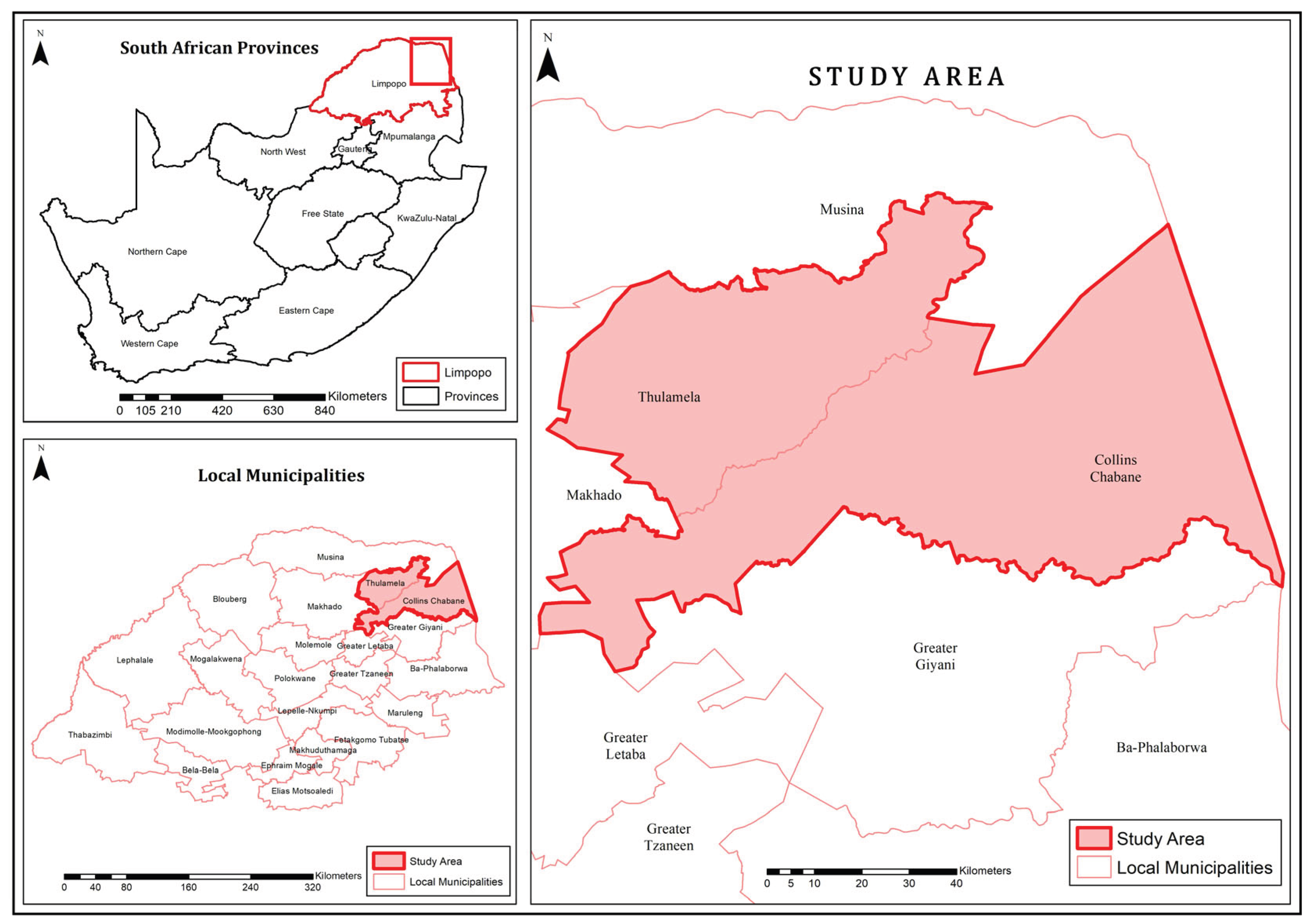
Figure 2.
Topography of the study area.
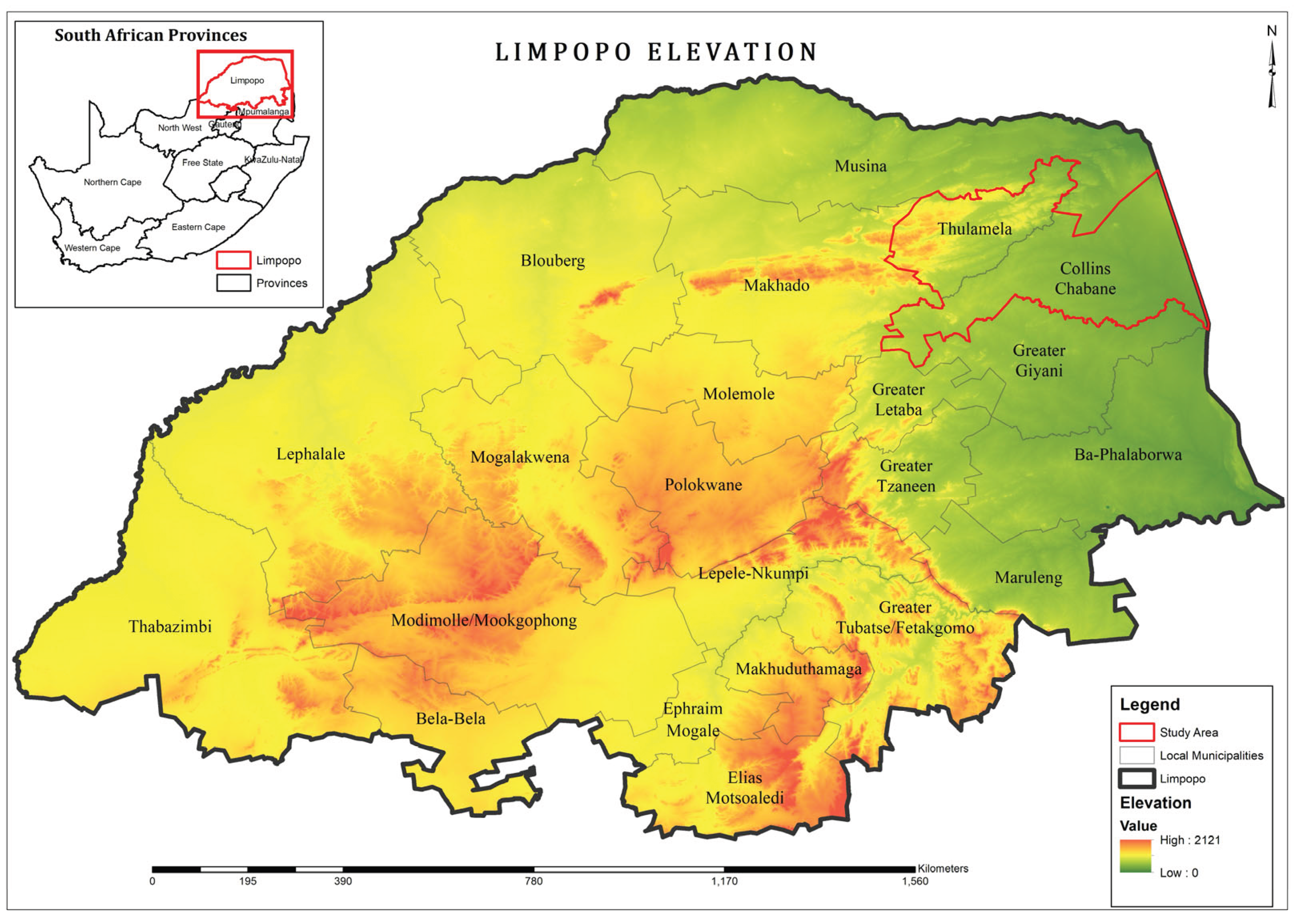
Figure 3.
Precipitation in the study area, with the highest precipitation in mountainous regions (see Figure 2).
Figure 3.
Precipitation in the study area, with the highest precipitation in mountainous regions (see Figure 2).
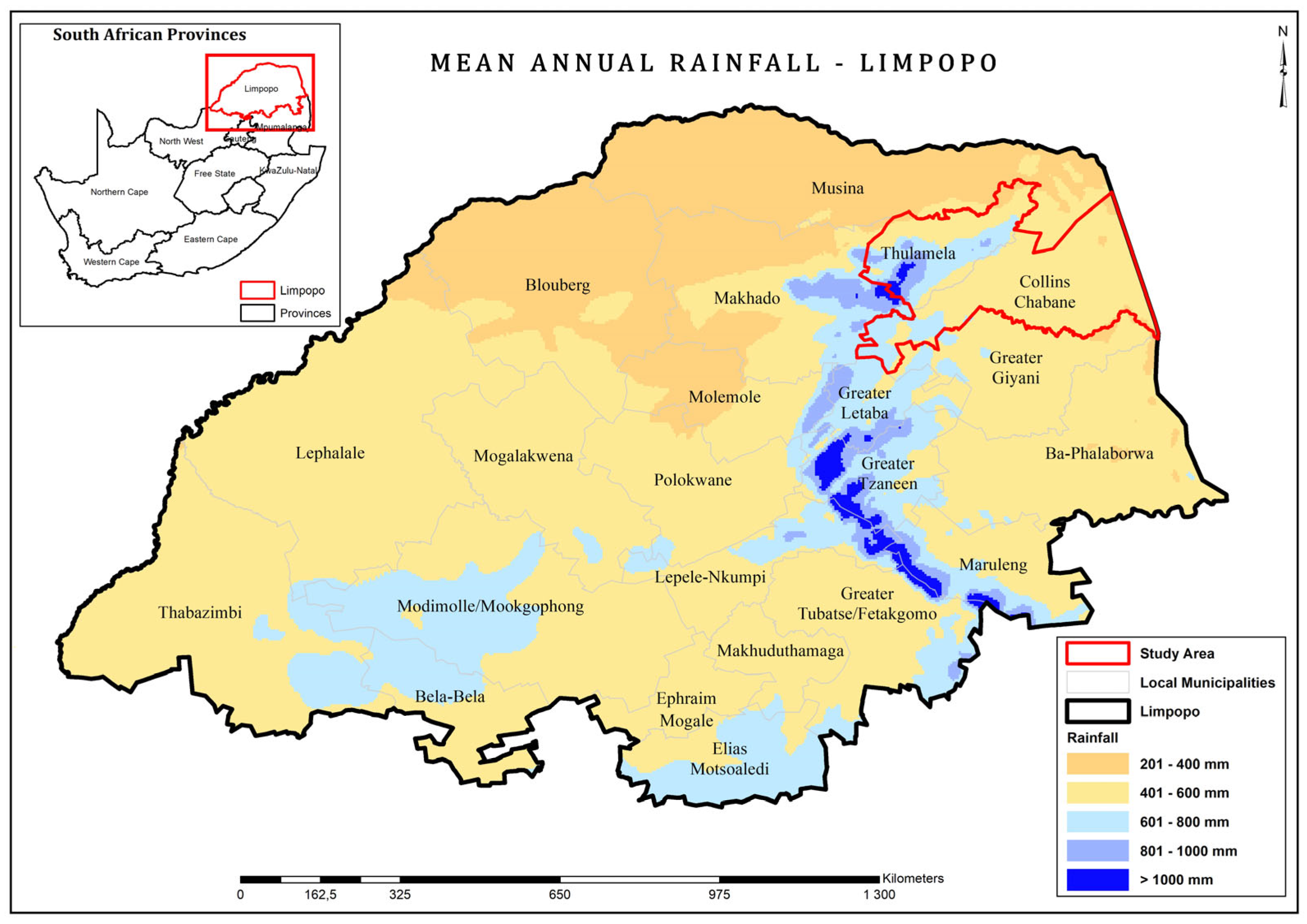
Figure 4.
Spatial distribution of soil types, with leptosols (shallow and gravelly) dominant in the Thulamela Local Municipality and erosion-prone Regosols in Collins Chabane Local Municipality.
Figure 4.
Spatial distribution of soil types, with leptosols (shallow and gravelly) dominant in the Thulamela Local Municipality and erosion-prone Regosols in Collins Chabane Local Municipality.
Disclaimer/Publisher’s Note: The statements, opinions and data contained in all publications are solely those of the individual author(s) and contributor(s) and not of MDPI and/or the editor(s). MDPI and/or the editor(s) disclaim responsibility for any injury to people or property resulting from any ideas, methods, instructions or products referred to in the content. |
© 2026 by the authors. Licensee MDPI, Basel, Switzerland. This article is an open access article distributed under the terms and conditions of the Creative Commons Attribution (CC BY) license (http://creativecommons.org/licenses/by/4.0/).
Copyright: This open access article is published under a Creative Commons CC BY 4.0 license, which permit the free download, distribution, and reuse, provided that the author and preprint are cited in any reuse.