

Submitted:
19 January 2026
Posted:
28 January 2026
You are already at the latest version
Abstract
This study experimentally investigates a novel hybrid system integrating thermoelectric generators (TEGs) with direct contact membrane distillation (DCMD) for simultaneous low-grade heat recovery, electricity generation, and water desalination. Commercial TEG modules were sandwiched between heat spreaders to transfer thermal energy from a source (approx. 140°C) to a cooling sink, driving saline water evaporation through a hydrophobic membrane. A validated mathematical model showed strong agreement with experimental results. The system achieved freshwater mass fluxes of 8–9.5 kg/m²/h and electrical power outputs density of 25–35 W/m². Increasing heat input (450–700 W) significantly enhanced freshwater production and electrical output, improving the gain output ratio (GOR) and reducing specific energy consumption (SEC). While higher feed salinity (up to 35,000 ppm) measurably declined mass flux and thermal efficiency, thermoelectric generation and thermal resistance remained largely unaffected. Energy and exergy efficiencies showed moderate sensitivity to operating conditions, while the Water–Electrical Energy Cogeneration Index (WEeCI) increased at high salinity, highlighting the robust contribution of electricity generation. These results demonstrate the potential of the TEG–DCMD system for sustainable co-generation of water and power from industrial waste heat or renewable thermal sources.
Keywords:
Thermoelectric Generator (TEG)
; Direct Contact Membrane Distillation (DCMD)
; low temperature heat sources
1. Introduction
Electrical energy and freshwater are two critical resources essential for global economic development, public health, and environmental sustainability. Rapid population growth, urbanization, and industrial expansion are placing unprecedented pressure on these finite resources. With the global population projected to reach approximately 9.7 billion by 2050 and 10.4 billion by the end of the century [1,2], demand for both electricity and clean water is expected to grow significantly. Meanwhile, only about 3% of the Earth's water is freshwater [3], and it is estimated that by 2050, nearly 1.7 billion people in 39 countries will fall below the critical threshold of 1000 m³ per capita annually [4,5]. In parallel, the continued reliance on fossil fuels for electricity production poses environmental challenges and risks energy security. For example, approximately 200 million tons of oil are consumed annually to produce 22 million m³/day of desalinated water [6]. These statistics underline the urgent need for integrated technologies that can address both the global energy crisis and growing freshwater scarcity [7,8].
One promising and underutilised resource for addressing this challenge is low-temperature thermal energy. A significant portion of thermal energy in industrial, transport, and residential sectors is wasted, especially in the form of low-grade heat. According to the International Energy Agency (IEA) 2021 data, approximately 246 petajoules (PJ) of global waste heat were identified, with about 63% of this below 100°C. Additionally, 64% of residential waste heat ranged between 100°C and 299°C, mostly originating from fossil fuel combustion [9]. Despite its abundance, the utilization of this energy remains limited due to the lack of cost-effective and efficient recovery technologies, especially for heat below 150°C. Conventional heat recovery systems are either too expensive or technically impractical for low-grade heat applications, leaving vast quantities of recoverable energy untapped. While, utilizing this wasted thermal energy can reduce dependence on fossil fuels, mitigate greenhouse gas emissions, and play a critical role in climate change mitigation efforts by enhancing overall energy system efficiency [10].
To meet these dual challenges of clean energy and water provision, renewable energy-driven desalination systems are gaining traction, particularly in regions where infrastructure is limited or fossil fuel dependency is economically or environmentally unsustainable [11]. Traditional desalination methods such as multi-stage flash (MSF), multi-effect distillation (MED), reverse osmosis (RO), electrodialysis (ED), and vapor compression (VC) are energy-intensive and often not practical for small-scale or off-grid applications [12]. In response, research has increasingly focused on hybrid systems that integrate renewable or waste thermal energy sources—such as solar collectors or industrial process heat—with water treatment technologies to enhance sustainability and efficiency. Several studies have emphasized the promise of coupling photovoltaic (PV) or wind energy systems with desalination modules or using thermal energy from industrial processes to drive membrane-based water treatment [13,14].
Among emerging technologies, thermoelectric generators (TEGs) offer a compelling method to convert low-grade thermal energy into electricity through the Seebeck effect [15]. TEGs operate via charge carrier diffusion across a temperature gradient, providing solid-state, maintenance-free power generation. Although TEGs have relatively low energy conversion efficiencies—typically in the range of 4% to 6% depending on material and temperature conditions—they are ideal for capturing waste heat from industrial equipment, exhaust systems, or solar thermal collectors [16]. Their compactness and lack of moving parts also make them well-suited for decentralized and integrated applications. To overcome their efficiency limitations, recent studies have investigated hybrid configurations combining TEGs with heat exchangers, phase-change cooling, or desalination systems. This study builds on that body of work by integrating TEGs with a direct contact membrane distillation (DCMD) system, enhanced with porous media for increased evaporation surface area and an active direct contact condensation system. The proposed system aims to simultaneously generate clean water and electricity using thermal energy below 150C, representing sources such as industrial waste heat and non-concentrating solar thermal collectors, presenting a cost-effective pathway to recover underutilized thermal resources and support sustainability goals. Despite numerous advancements in thermoelectric and desalination technologies, there remains a significant research gap in the effective integration and utilization of low-temperature waste heat for simultaneous electricity generation and freshwater production.
This paper aims to investigate the feasibility and performance of a novel design that integrates TEG–DCMD system in a compact configuration to simultaneously produce electricity and clean water. A mathematical model has been developed using MATLAB to simulate the system's behaviour under various operating conditions. The model predicts both electrical power output and freshwater flux. The influence of key parameters such as feedwater flow rate, feed salinity, and temperature on system performance is analysed in detail to gain insight into the thermodynamic coupling between the TEG and DCMD units. To validate the theoretical predictions, a laboratory-scale experimental setup was constructed and tested. The experiments serve to evaluate the real-world performance of the system and assess the accuracy of the mathematical model. By bridging computational and experimental approaches, this study provides a comprehensive assessment of integrated energy-water systems and contributes toward the development of sustainable solutions for industrial waste heat utilization and renewable thermal energy applications.
2. Methodology
The integrated system composes of power generation and water desalination by using two subsystem, thermoelectric generator (TEG) and DCMD configuration. The system utilized low temperature waste heat to be a heat source that will be transferring to both subsystems. In this research creates mathematical model and do experiment to validate the model which can predict electrical power and freshwater production.
2.1. Experimental Set-Up
The below figure presents schematic of experiment system for power generation and water desalination modules. As shown in Figure 1 there are two containers, one for hot saline water and another for cold freshwater that circulates into the TEG-DCMD module. Flow sensors and thermocouples are installed to measure flowrate and temperature of both inlet and outlet feed and permeate liquid, respectively. Electrical heater is used to simulate waste heat from industrial processes which vary heat source temperature between 80 to 130 °C. Also, chiller and helical coil heat exchanger are used for maintaining permeate water temperature which is 20 °C.
Additionally, as shown in Figure 2. weight scale is placed under feed water tank to estimate the amount of mass loss which is assumed to be equal to the mass of freshwater production. Finally, an adjustable resistance and multi-meters are electrical connected to TEG to forecast electrical output.
At the start of each experiment, the saline feed and permeate tanks were filled with the required solutions, and the circulation pumps were activated to establish the desired feed and permeate flow rates. The electrical heater embedded in Plate No. 1 (as shown in Figure 3 and Figure 4a) was then switched on to supply the prescribed heat input, simulating low-grade industrial waste heat. The permeate-side temperature was controlled using a chiller and helical coil heat exchanger to maintain a nearly constant cold-side temperature.
The system was allowed to operate until steady-state conditions were achieved, as indicated by stable temperatures at all thermocouple locations, constant electrical output from the TEG modules, and a linear change in permeate mass with time. Steady state was typically reached after approximately 90 min. Once steady state was confirmed, experimental data including temperatures, flow rates, voltage, current, and permeate mass were recorded continuously for an additional 90 min. Freshwater production was determined from the mass change of the permeate tank using a digital balance, while electrical power output was calculated from the measured voltage and current across an adjustable external load. Each test condition was repeated at least three times to ensure repeatability, and averaged values are reported.
Dividing TEG-MD module into two sections, electrical generation system and freshwater production system. Firstly, to obtain power output, the electrical generation system in this research consists of Plate No.1, right side of Plate No.2 as shown in Figure 3. Also, cartridge heaters which placed in plate No1 as shown in Figure 4 (a). and TEGs which are arranged in series electrically are placed between plate No.1 and plate No.2 as shown in Figure 4(b). Secondly, next to TEG system is DCMD configuration that is received the rest of waste heat from TEG to increase temperature of saline water. Saline water and permeate water flow through plate No2. and plate No.3, respectively as shown in Figure 3.
Finally, there are mesh, gaskets and hydrophobic membrane are placed between plate No.2 and plate No.3 as shown in Figure 5. Mesh is used for creating turbulence flow which increase heat transfer rate. Gasket also used for improving water leakage.
First of steps, bottom mesh is placed on plate no.2. Secondly, bottom gasket is placed on bottom gasket and plate no. 2. Then, hydrophobic membrane is placed on top of bottom gasket which the hydrophobic side must be down. Step 4 and step 5, Top gasket and top mesh are placed on the top, respectively. In addition, between all 5 steps, bolts can be placed throughout plate no.2 and gaskets. Lastly step, placing plate no.3 and tightening nuts.

Table 1.
TEG and membrane properties used in experimental.
|
TEG |
Number of thermoelectric generators | 6 |
| Length x width x height | 62 x 62 x 4 mm | |
| Open circuit voltage | 6.9 V | |
| Matched load output voltage | 3.45 V | |
| Matched load output current | 8.2 A | |
| Matched load output power | 23 W | |
| Matched load output resistance | 0.42 Ω ± 15% | |
| Maximum operation temperature (Th) | 250 °C | |
|
Membrane |
Membrane material | Polytetrafluoroethylene (PTFE) |
| Membrane thickness | 0.20+/-0.10 mm | |
| Membrane pore size | 0.22 µm | |
| Maximum Temperature | 123 °C |
The uncertainty of measured parameters, including temperature, flow rate, voltage, and current, was estimated based on manufacturer specifications of the measuring instruments. The combined uncertainty of derived quantities such as heat transfer rate, freshwater mass flux, and electrical power output was evaluated using standard error propagation methods and was found to be within ±8%. Detailed uncertainty calculations are not presented here for simplicity, as the applied procedures are well established in thermofluid and thermoelectric experimental studies.
2.1. Experimental Set-Up
This research creates the model using MATLAB to predict power generation and freshwater in terms of mass flux. The design model consists of 62 fins, 4 heat pipes, 6 TEGs and DCMD configuration which the potential application design system as shown in Figure 6 as well as thermal resistance as shown in Figure 7 which can help to understand the system and use for predicting electrical generation, distilled water and system performance.
2.2.1. Waste Heat Recovery to Generate Power by Using Thermoelectric Generation
According to thermal resistance diagram, start with thermal resistance of exhaust gas until saline water, is thermoelectric generation calculation. Therefore, the resistance can be determined as following equations.
Convective resistance of hot air [17]
(1)
Where is convective heat transfer coefficient of air () which can be calculated by following equation.
(2)
Where is hydraulic diameter of fin () and the Nusselt number can be computed as follows [18]
(3)
Where is the Prandtl number of air and overall surface efficiency may be calculated as [18]:
(4)
Where is total surface area ()
is number of fins
is fin area ()
is un-finned area ()
And fin efficiency is computed by following equation
(5)
Where and is fin width ()
Heat pipe resistance consists of four thermal resistances which are shown as follows
(6)
(7)
Where is outside diameter of heat pipe, is inside diameter, is length of both evaporator and condenser and is thermal conductivity of heat pipe.
(8)
Where is vapour spacing and effective thermal conductivity , is water conductivity and is wick conductivity. Wick porosity may be calculated as following equation.
(9)
Where is the number of mesh and is wire diameter.
Resistance of fin and TEG can be calculated as equation (10)
(10)
Where is thickness of material (), is thermal conductivity () and is number of fin or TEG.
Conduction resistance of copper block and heat spreader may be calculated by equation (11)
(11)
Convective resistance of saline water can be computed as follows
(12)
(13)
(14)
Temperature of each component is estimated by using the implicit Finite-Difference method as a transient state until temperature reach a steady state. Node equation can be derived from energy balance method [18].
(15)
Surface node and interior node are shown in Figure 8 Equation (16) is equation of surface node (node 1 and node 3).
( 16)
Where subscript is node number and superscript and are current step and next step, respectively.
For interior node (node 2) can be calculated as following equation
(17)
Heat transfer rate can be determined by using equation (18)
(18)
2.2.2. Heating Saline Water for Membrane Desalination Process
Distillation process has both heat transfer and mass transfer occur in membrane as shown in Figure 9 Heat transfer through feed side () is depended on bulk feed temperature () and membrane feed temperature () which can be determined by Eq. (19). On the other hand, convective heat transfer through the permeate side () is depended on bulk permeate temperature () and membrane permeate temperature () which can be determined by Equation (20). In addition, temperature profile appears that temperature of feed water and permeate water drop near surface area.
(19)
(20)
Where is convective heat transfer coefficient of feed solution.
is convective heat transfer coefficient of permeate solution.
A is area of heat transfer.
The rate of heat transfer of membrane () is based on conduction heat loss () and heat transfer of vapor through membrane (). Membrane heat transfer rate can be calculated by Equation (21):
(21)
Where is thermal conductivity of membrane, is thickness of membrane. and are mass flux and vapor enthalpy of water which can be calculated by Eq. (22) and Eq. (23), respectively.
(22)
(23)
Where and are vapor pressure of water and seawater, which can be estimated by Eq. (24) and Eq. (25) [19], respectively.
(24)
(25)
Where is salinity .
is mass transfer coefficient of Knudsen-molecular diffusion as following equation (29) [20]. Knudsen number () is dimensionless number that used to indicate the membrane distillation coefficient equation. The Knudsen number relies on mean free path () and pore diameter of membrane ().
(29)
(30)
Where , and are porosity of membrane, membrane thickness, gas constant, molecular weight of water, membrane tortuosity, mean pore size radius, entrapped air pressure, respectively.
This model is assumed that heat transfer rate must be equal at steady state condition.
(31)
Total convective heat transfer coefficient can be derived as equation (32).
(32)
Temperature of membrane feed and membrane permeate can be described as Equation. (33) and Eq. (34).
(33)
; (34)
Gain Output Ratio (GOR) predict the efficiency of energy input which utilizes to produce mass flux.
(35)
Specific Energy Consumption (SEC) is overall energy requirement for producing 1 m2 of freshwater.
(36)
Energy Utilisation Efficiency can be determined by equation (37)
(37)
Exergy efficiency can be computed by equation (38)
(38)
Where exergy of water and exergy of heat input can be calculated by equation (39) and (40), respectively
(39)
(40)
Water electrical Energy Cogeneration Index (WeECI) can be calculated by following equation and the unit of WeECI is kJe/kg.
(41)
2.2.3. Calculation of Mathematical Modelling
The modelling starts with initial variables such as exhaust gas temperature, cold side temperature of TEG as shown in Figure 10. to predict electrical output of the integrated system and then temperatures from the first calculation will be initial parameters for water desalination system. Temperature profile, heat transfer rate, freshwater production, power output and system performance will be shown as a final result of the system.
3. Results and Discussion
The performance of commercially available thermoelectric generators and a hydrophobic membrane integrated within the proposed system was experimentally investigated for simultaneous electricity generation and freshwater production. The effects of key operating parameters, including feed salinity and flow rates, on overall system performance were systematically examined. All experimental data were recorded after the system reached steady-state conditions, which typically required approximately 1.5 hours, followed by an additional 1.5 hours of continuous data acquisition. To ensure accuracy and repeatability, each experiment conducted at different salinity and flow rate conditions was repeated at least three times, and the reported results represent averaged values.
3.1. Influence of Salinity
This section examines the effect of feed salinity on the performance of the integrated TEG–DCMD system, focusing on freshwater production, power generation, and energy efficiency indicators. To isolate the influence of salinity, experiments were conducted at a constant heat input of 650-660 W. The feed and permeate flow rates were maintained within narrow ranges of 1.4–1.6 L/min and 3.2–3.4 L/min, respectively. The hot-side temperature of the system was maintained between 102 and 106 °C, while the feed-side bulk temperature and permeate temperature were controlled within ranges of 40–43 °C and 24–26 °C, respectively. Under these fixed operating conditions, the salinity was varied systematically to evaluate its impact on thermal, electrical, and desalination performance metrics.
Figure 11 illustrates the coupled effect of feed salinity on freshwater mass flux and maximum electrical power density in the integrated TEG–DCMD system. As salinity increases from 0 to 35,000 ppm, a consistent decline in mass flux is observed. This reduction is primarily attributed to the lowering of water vapour pressure at the membrane interface caused by dissolved salts, which diminishes the effective driving force for membrane distillation. Additionally, increased salinity enhances concentration polarization near the membrane surface, further suppressing evaporation rates. In contrast, the maximum power output generated by the TEG remains relatively insensitive to salinity variations, with fluctuations within experimental uncertainty. This behaviour indicates that electrical performance is governed predominantly by the imposed temperature gradient across the TEG rather than by feed solution properties. The decoupling of electrical generation from salinity effects highlights a key advantage of the hybrid configuration, whereby stable power production can be maintained even under high-salinity operating conditions.
Figure 12 focuses exclusively on the relationship between feed salinity and the maximum electrical power output density of the TEG module. The results demonstrate that increasing salinity does not introduce a systematic trend in power generation. This confirms that the thermoelectric performance is largely independent of feed water composition and instead controlled by the temperature difference across the TEG and its internal electrical resistance. Minor variations in power output can be attributed to experimental uncertainties in temperature measurement, contact resistance between the TEG and heat spreaders, and transient thermal fluctuations during steady-state operation. Importantly, the absence of performance degradation under high-salinity conditions confirms the robustness of the TEG subsystem when integrated with DCMD. This finding is particularly relevant for desalination of hypersaline streams, where conventional thermal systems often suffer efficiency losses. The results validate that the proposed hybrid system can sustain reliable electricity generation while treating saline waters without electrical performance penalties.
Figure 13 presents the impact of salinity on the thermal efficiency metrics of the DCMD subsystem, namely Gain Output Ratio (GOR) and Specific thermal Energy Consumption (SEC). As salinity increases, SEC exhibits a gradual rise, indicating that more thermal energy is required to produce a unit mass of freshwater. This behaviour is directly linked to the reduction in vapour pressure and mass transfer coefficient at higher salt concentrations, which lowers freshwater productivity for a given heat input. Consequently, GOR shows a slight decreasing trend, reflecting reduced efficiency in latent heat recovery. Despite this decline, the changes in GOR remain moderate, demonstrating that the system maintains acceptable thermal performance even at elevated salinities. The results suggest that while salinity negatively affects desalination efficiency, the integrated heat recovery through TEGs partially mitigates overall energy losses. This highlights the importance of hybridization in enhancing system-level efficiency under challenging feed conditions.
Figure 14 shows that the overall thermal resistance of the TEG–DCMD module remains nearly constant across the investigated salinity range. This observation indicates that salinity does not significantly affect conductive heat transfer through the system components, including heat spreaders, TEG modules, membrane layers, and supporting structures. Since thermal resistance is primarily governed by material properties and physical contact conditions rather than fluid composition, the observed stability is expected. This result is important because it confirms that variations in desalination performance with salinity are not caused by changes in heat transfer pathways but rather by mass transfer limitations within the membrane. The constant thermal resistance also implies predictable thermal behaviour, which simplifies system modelling and scale-up. From a design perspective, this finding validates that the hybrid system can operate over a wide salinity range without requiring modifications to thermal management strategies.
Figure 15 illustrates the variation of energy utilisation efficiency with increasing feed salinity. A slight downward trend is observed as salinity rises, reflecting the reduced effectiveness of converting supplied thermal energy into useful outputs, namely freshwater and electricity. This reduction is mainly driven by the decline in freshwater flux at higher salinity, while electrical output remains comparatively stable. As a result, a larger fraction of input heat is dissipated without contributing to productive outputs. Nevertheless, the decrease in energy utilisation efficiency is relatively modest, indicating that the system retains strong performance even under saline conditions representative of seawater and brine streams. The results demonstrate that integrating thermoelectric power generation with DCMD enhances overall energy utilisation by extracting electrical work from thermal gradients that would otherwise be lost. This reinforces the system’s suitability for industrial waste heat recovery applications involving saline effluents.
Figure 16 presents the effect of salinity on the exergy efficiency of the integrated system. A gradual reduction in exergy efficiency is observed with increasing salinity, indicating higher irreversibilities associated with mass transfer limitations in the DCMD process. Elevated salinity reduces vapour pressure and increases entropy generation during phase change, thereby lowering the fraction of available energy converted into useful work and freshwater production. Despite this decline, the exergy efficiency remains within a narrow range, suggesting that the dominant sources of irreversibility are inherent to membrane desalination process. The relatively stable electrical contribution from the TEG subsystem helps offset exergy losses associated with desalination. These findings highlight the thermodynamic advantage of hybrid systems, where multiple outputs are generated from a single heat source, improving overall exergy utilisation even when individual subsystems face performance constraints.
Figure 17 shows the variation of the Water electrical Energy Cogeneration Index (WeECI) with salinity. An increasing trend in WeECI is observed as salinity rises, indicating a higher electrical energy contribution per unit mass of freshwater produced. This behaviour arises because freshwater production decreases more rapidly than electrical output at higher salinity levels. Since TEG performance remains largely unaffected by feed salinity, the relative weighting of electrical generation increases under saline conditions. This result underscores a key advantage of the hybrid system: when desalination performance is thermodynamically constrained, the system compensates by maintaining electricity generation, thereby preserving overall output value. The WeECI metric effectively captures this trade-off and demonstrates that the proposed configuration is particularly attractive for high-salinity or zero-liquid-discharge applications, where electricity recovery becomes increasingly valuable.
3.2. Influence of Heat Input
This section investigates the effect of heat input on the thermal, electrical, and desalination performance of the integrated TEG–DCMD system. To isolate the influence of heat input, all experiments were conducted at a fixed feed salinity of 20,000 ppm, representative of high-salinity brackish water. The feed and permeate flow rates were maintained within narrow ranges of 1.4–1.6 L/min and 3.2–3.4 L/min, respectively, to minimize hydrodynamic variability. Heat input was varied by adjusting the hot-side temperature of the system between 78-106 °C, while the feed-side bulk temperature (35–41 °C) and permeate temperature (21–25 °C) were controlled using a cooling loop. Under these conditions, the impact of thermal input on freshwater production, power generation, and system efficiency metrics was systematically evaluated.
Figure 18 illustrates the effect of heat input on freshwater mass flux in the DCMD subsystem. A clear increase in mass flux is observed with rising heat input, which is primarily due to the enhanced temperature difference between the feed and permeate sides of the membrane. Higher feed temperatures increase vapour pressure exponentially, strengthening the driving force for evaporation and transmembrane vapour transport. Since the permeate temperature is maintained nearly constant by the cooling system, the temperature gradient across the membrane increases proportionally with heat input. This result confirms that the system effectively converts additional thermal energy into increased water production without encountering early saturation effects. The findings highlight the strong dependence of DCMD performance on thermal driving force and demonstrate that the integrated system can exploit higher waste heat availability to enhance desalination productivity.
Figure 19 shows that electrical power generation increases steadily with rising heat input. This trend is directly linked to the increase in temperature difference across the TEG modules as more thermal energy is supplied. Higher heat input elevates the hot-side temperature while the cold side remains effectively cooled, resulting in an enhanced Seebeck voltage and increased electrical output. The linear-to-slightly-nonlinear increase in power density suggests efficient thermal coupling between the heat source, heat spreaders, and TEGs. Importantly, this result confirms that the hybrid system can simultaneously benefit both desalination and power generation when operating under higher thermal loads. The ability to co-produce electricity while driving membrane distillation strengthens the case for deploying the system in environments where excess low-grade heat is available.
Figure 20 presents the relationship between heat input and Specific Energy Consumption (SEC). The results show that higher heat input leads to a reduction in SEC, indicating improved thermal efficiency in freshwater production. Although more total energy is supplied, the proportional increase in freshwater flux is greater, resulting in lower energy consumption per unit volume of produced water. This behaviour reflects more effective utilisation of thermal energy at higher operating temperatures, where latent heat transfer dominates over sensible losses. The observed trend demonstrates that operating the system at elevated heat input levels can be energetically advantageous, particularly when waste heat is freely available. These findings support the feasibility of scaling the system for industrial applications where higher heat fluxes are accessible.
Figure 21 shows a positive correlation between heat input and Gain Output Ratio (GOR). As heat input increases, GOR rises, indicating improved recovery of latent heat for freshwater production. Higher operating temperatures enhance evaporation rates while maintaining similar heat losses, thereby increasing the fraction of useful energy utilised for desalination. This trend confirms that the DCMD process becomes more thermally efficient at higher driving temperatures. Additionally, the presence of the TEG subsystem does not hinder GOR improvement, demonstrating successful thermal integration. The results suggest that optimal system performance can be achieved by operating at the upper range of allowable membrane temperatures, provided material stability is maintained.
Figure 22 indicates that the overall thermal resistance of the system remains largely constant across varying heat input levels. This stability confirms that increasing heat input does not alter the intrinsic heat transfer characteristics of the system components. The result implies that the observed improvements in mass flux and power output are driven by higher temperature gradients rather than changes in conductive resistance. This predictable thermal behaviour is advantageous for system design and modelling, as performance can be reliably extrapolated across different operating conditions.
Figure 23 shows that energy utilisation efficiency increases with heat input. This improvement reflects the system’s enhanced ability to convert supplied thermal energy into useful outputs at higher operating temperatures. Both freshwater production and electrical generation increase with heat input, reducing the proportion of wasted heat. The result highlights the synergistic effect of integrating TEGs with DCMD, where additional heat contributes simultaneously to multiple outputs, improving overall system efficiency.
Figure 24 presents a slight increase in exergy efficiency with rising heat input. Although the improvement is modest, it indicates reduced relative irreversibilities at higher operating temperatures. Enhanced temperature gradients improve the quality of energy conversion in both thermoelectric and membrane distillation processes. The limited sensitivity suggests that exergy losses are dominated by inherent process constraints rather than operating conditions.
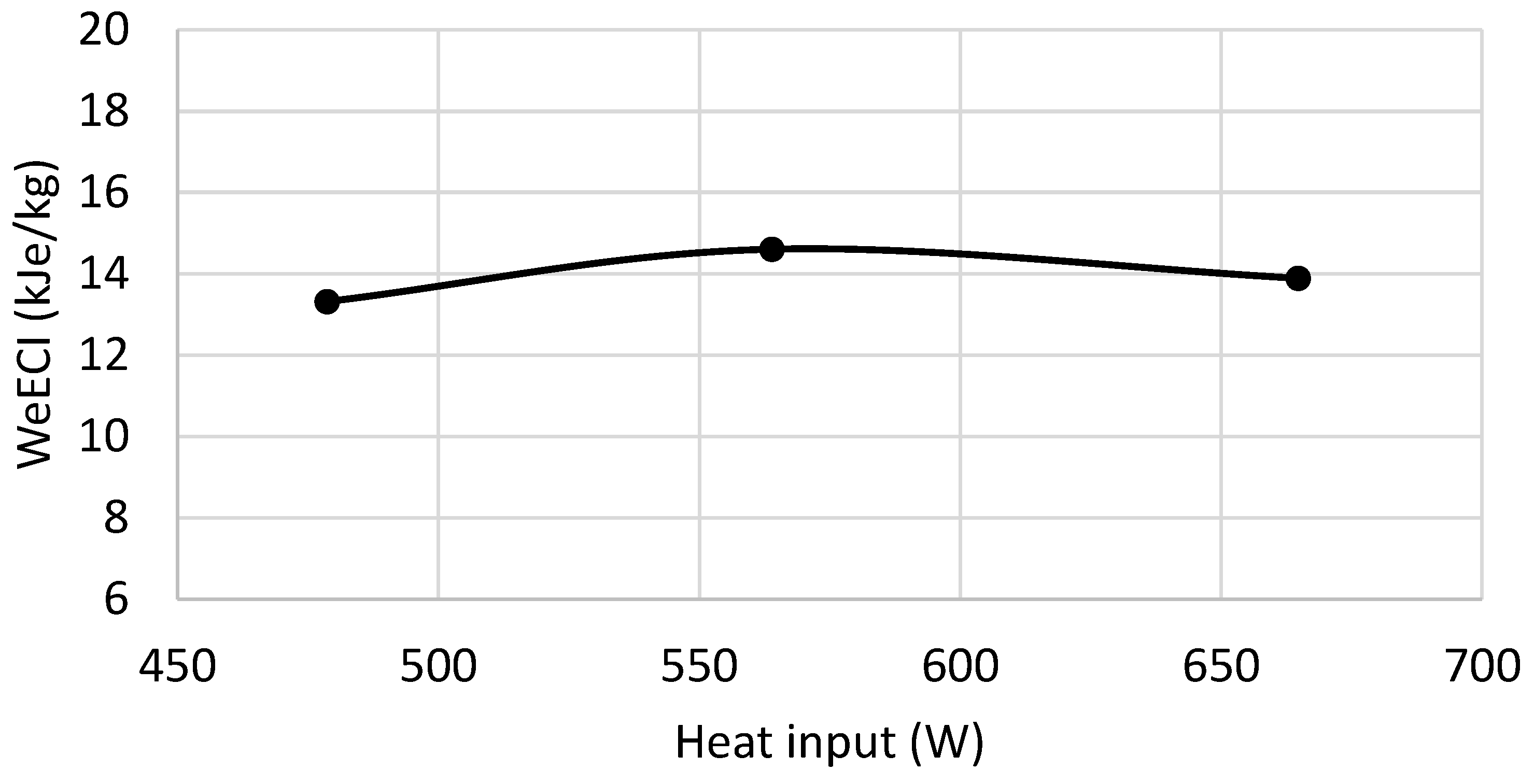
Figure 25 shows that the Water electrical Energy Cogeneration Index remains approximately constant with increasing heat input. This indicates proportional scaling of freshwater and electricity production as thermal energy increases. The balanced response demonstrates that the hybrid system maintains consistent co-generation performance across a wide range of heat inputs, reinforcing its suitability for variable waste heat sources.
Overall, the experimental results demonstrate that the integrated TEG–DCMD system can effectively convert low-grade thermal energy into simultaneous freshwater and electrical power outputs under a wide range of operating conditions. Heat input was identified as the dominant parameter governing both mass flux and power generation, while salinity primarily influenced desalination performance through vapour pressure depression without significantly affecting thermoelectric behaviour. Flow rate adjustments enhanced heat and mass transfer but did not alter the fundamental thermal resistance of the system. Energy and exergy analyses confirmed that system efficiency improves with increasing thermal input and remains relatively stable under elevated salinity. These findings collectively highlight the robustness of the proposed hybrid configuration and provide a comprehensive understanding of the coupled thermal–electrical–membrane interactions, forming a strong basis for system optimisation and scale-up, as discussed in the following section.
4. Conclusions
This study experimentally demonstrated the feasibility and performance of a novel hybrid system integrating thermoelectric generators (TEGs) with a direct contact membrane distillation (DCMD) unit for simultaneous low-grade heat recovery, electricity generation, and water desalination. The system successfully utilized thermal energy from a heat source up to approximately 140 °C, producing freshwater and electrical power concurrently while maintaining stable thermal operation.
Experimental results showed that freshwater mass flux increased significantly with increasing heat input and feed temperature, confirming that the DCMD performance is strongly governed by the transmembrane temperature gradient. Higher heat input also enhanced thermoelectric power generation due to the increased temperature difference across the TEG modules. Importantly, the integration of TEGs did not adversely affect the desalination process, indicating effective thermal coupling and minimal additional thermal resistance.
Salinity was found to reduce freshwater flux and thermal efficiency metrics such as GOR and SEC, primarily due to vapour pressure depression and concentration polarization effects. However, electrical power output and overall thermal resistance remained largely insensitive to salinity variations, demonstrating the robustness of the TEG subsystem under high-salinity conditions. Energy utilisation and exergy efficiencies showed only moderate sensitivity to salinity, highlighting the advantage of co-generation in mitigating performance degradation in membrane desalination.
The Water electrical Energy Cogeneration Index (WeECI) analysis revealed that electrical output becomes increasingly valuable at higher salinity levels, where freshwater productivity is constrained. This result emphasizes the suitability of the proposed system for treating hypersaline brines and industrial effluents. Overall, the integrated TEG–DCMD system presents a promising pathway for efficient utilization of industrial waste heat and renewable thermal energy sources, offering a compact, scalable solution for combined water and power production. Future work should focus on long-term membrane performance, system optimization, and techno-economic assessment under real industrial conditions.
Abbreviations
| Area (m2) | |
| Un-finned area (m2) | |
| Area of copper block (m2) | |
| Fin area (m2) | |
| Total surface area (m2) | |
| Mass transfer coefficient of Knudsen-molecular diffusion (kg/ m2·s·Pa) | |
| Specific heat capacity at constant pressure (J/kg·K) | |
| DCMD | Direct Contact Membrane Distillation (m) |
| Hydraulic diameter of fin (m) | |
| Hydraulic diameter of spacer (m) | |
| Inside diameter of heat pipe (m) | |
| Outside diameter of heat pipe (m) | |
| Pore diameter of membrane (m) | |
| Vapour spacing (m) | |
| Wire diameter (m) | |
| The rate of energy transfer in (W) | |
| The rate of energy transfer out (W) | |
| The rate of energy transfer storage (W) | |
| GOR | Gain Output Ratio |
| Total convective heat transfer coefficient (W/m2·K) | |
| Convective heat transfer coefficient of air (W/m2·K) | |
| Convective heat transfer coefficient of feed solution (W/m2·K) | |
| Convective heat transfer coefficient of permeate solution (W/m2·K) | |
| Convective heat transfer coefficient of saline water (W/m2·K) | |
| Mass flux (kg/m2·h) | |
| Thermal conductivity (W/m·K) | |
| Thermal conductivity of air (W/m·K) | |
| thermal conductivity of saline water (W/m·K) | |
| Effective thermal conductivity (W/m·K) | |
| Thermal conductivity of fin (W/m·K) | |
| Thermal conductivity of heat pipe (W/m·K) | |
| Water conductivity (W/m·K) | |
| Thermal conductivity of membrane (W/m·K) | |
| Wick/spacer thermal conductivity (W/m·K) | |
| Length of both evaporator and condenser (m) | |
| Fin width (m) | |
| Molecular weight of water (kg/kmol) | |
| Number of fin or TEG | |
| Number of fins | |
| Number of heat pipes | |
| The Nusselt number of air | |
| The Nusselt number of saline water | |
| Number of mesh | |
| Entrapped air pressure (Pa) | |
| The Prandtl number of air (m2/s) | |
| The Prandtl number of saline water (m2/s) | |
| Vapor pressure of seawater (Pa) | |
| Vapor pressure of water (Pa) | |
| Heat transfer rate (W) | |
| Conduction heat loss (W) | |
| Heat transfer rate at feed side of DCMD (W) | |
| The rate of heat transfer of membrane (W) | |
| Heat transfer rate at permeate side of DCMD (W) | |
| Heat transfer of vapor through membrane (W) | |
| mean pore size radius (m) | |
| Thermal resistance (°C/W) | |
| Thermal resistance of material A1 (°C/W) | |
| Thermal resistance of ambient (°C/W) | |
| Thermal resistance of material B1 (°C/W) | |
| Convective resistance of saline water (°C/W) | |
| The Reynolds number of air | |
| The Reynolds number of saline water | |
| Gas constant (J/kg·K) | |
| Convective resistance of hot air (°C/W) | |
| Thermal resistance of heat pipe (°C/W) | |
| Radial resistances of heat pipe wall at condenser (°C/W) | |
| Radial resistances of the heat pipe wall at evaporator (°C/W) | |
| Thermal resistance of liquid wick combination at condenser (°C/W) | |
| Thermal resistance of liquid wick combination at evaporator (°C/W) | |
| Salinity (g/kg) | |
| SEC | Specific Energy Consumption (thermal) (kWh/kg) |
| Dead state temperature of system (°C) | |
| Thickness of material (m) | |
| Fin thickness (m) | |
| TEG | Thermoelectric Generator |
| Average temperature of feed inlet and feed outlet (°C) | |
| Temperature of hot side of TEG (°C) | |
| Mean membrane surface temperature (°C) | |
| Temperature at current node from current calculation step (°C) | |
| Temperature at current node from next calculation step (°C) | |
| Temperature at the previous node from next calculation step (°C) | |
| Temperature at the next node from next calculation step (°C) | |
| Surface temperature of membrane at feed side of DCMD (°C) | |
| Surface temperature of membrane at permeate side of DCMD (°C) | |
| Average temperature of permeate inlet and permeate outlet (°C) | |
| Temperature of the fluid moving at free-stream velocity (°C) | |
| Overall surface efficiency | |
| Fin efficiency | |
| WeECI | Water electrical Energy Cogeneration Index (kJe/kg) |
| Thickness of membrane (m) | |
| Vapor enthalpy of water (kJ/kg) | |
| Time difference (s) | |
| Temperature difference (°C) | |
| Distance (m) | |
| Wick/spacer porosity | |
| Porosity of membrane | |
| Mean free path (m) | |
| Density (kg/m3) | |
| Membrane tortuosity |
References
- Gu, D.; Andreev, K.; Dupre, M.E. Major Trends in Population Growth Around the World. China CDC Wkly. 2021, 3, 604–613. [Google Scholar] [CrossRef] [PubMed]
- Dorling, D. World population prospects at the UN: our numbers are not our problem?, in The struggle for social sustainability. In Policy Press; 2021; pp. 129–154. [Google Scholar]
- Das, R.K.; Date, A. Sustainable water desalination using eductor and waste heat: A review and suggestion for future research. Desalination 2025, 603. [Google Scholar] [CrossRef]
- Hoffman, A.R.; Hafemeister, D.; Levi, B.; Levine, M.; Schwartz, P. Water Security: A Growing Crisis and the Link to Energy. PHYSICS OF SUSTAINABLE ENERGY: Using Energy Efficiently and Producing It Renewably; LOCATION OF CONFERENCE, United StatesDATE OF CONFERENCE; pp. 55–63.
- Maroo, S.C.; Goswami, D.Y. Theoretical analysis of a single-stage and two-stage solar driven flash desalination system based on passive vacuum generation. Desalination 2009, 249, 635–646. [Google Scholar] [CrossRef]
- Kalogirou, S. Seawater desalination using renewable energy sources. Prog. Energy Combust. Sci. 2005, 31, 242–281. [Google Scholar] [CrossRef]
- Date, A. Performance review of a novel combined thermoelectric power generation and water desalination system. Renewable Energy 2015, 83, 256–269. [Google Scholar] [CrossRef]
- Aberuee, M.J.; Baniasadi, E.; Ziaei-Rad, M. Performance analysis of an integrated solar based thermo-electric and desalination system. Appl. Therm. Eng. 2017, 110, 399–411. [Google Scholar] [CrossRef]
- Newell, R. Global energy outlook 2021: Pathways from Paris. In Resources for the Future; 2021; Volume 8, p. pp. 39. [Google Scholar]
- Ononogbo, C.; Nwosu, E.; Nwakuba, N.; Nwaji, G.; Nwufo, O.; Chukwuezie, O.; Chukwu, M.; Anyanwu, E. Opportunities of waste heat recovery from various sources: Review of technologies and implementation. Heliyon 2023, 9, e13590. [Google Scholar] [CrossRef] [PubMed]
- Ghazi, Z.M.; Rizvi, S.W.F.; Shahid, W.M.; Abdulhameed, A.M.; Saleem, H.; Zaidi, S.J. An overview of water desalination systems integrated with renewable energy sources. Desalination 2022, 542. [Google Scholar] [CrossRef]
- Elewa, M.M. Emerging and Conventional Water Desalination Technologies Powered by Renewable Energy and Energy Storage Systems toward Zero Liquid Discharge. Separations 2024, 11, 291. [Google Scholar] [CrossRef]
- Karaca, A.E.; Dincer, I.; Nitefor, M. Development of an integrated solar and wind driven energy system for desalination and power generation. Sustain. Energy Technol. Assessments 2022, 52. [Google Scholar] [CrossRef]
- Greco, F.; Heijman, S.G.J.; Jarquin-Laguna, A. Integration of Wind Energy and Desalination Systems: A Review Study. Processes 2021, 9, 2181. [Google Scholar] [CrossRef]
- Chen, W.-H.; Chiou, Y.-B.; Chein, R.-Y.; Uan, J.-Y.; Wang, X.-D. Power generation of thermoelectric generator with plate fins for recovering low-temperature waste heat. Appl. Energy 2022, 306. [Google Scholar] [CrossRef]
- Ge, M.; Li, Z.; Zhao, Y.; Xuan, Z.; Li, Y.; Zhao, Y. Experimental study of thermoelectric generator with different numbers of modules for waste heat recovery. Appl. Energy 2022, 322. [Google Scholar] [CrossRef]
- Remeli, M.F.B. Simultaneous Industrial Waste Heat Recovery and Power Generation Using Heat Pipe Assisted Thermoelectric Generator; School of Aerospace Mechanical and Manufacturing Engineering, RMIT University: Australia, 2015. [Google Scholar]
- Incropera, F.P.; Dewitt, D.B. Introduction to heat transfer, 5th ed.; Wiley: Hoboken, N.J., 2007. [Google Scholar]
- Nayar, K.G.; Sharqawy, M.H.; Banchik, L.D.; Lienhard, V.J.H. Thermophysical properties of seawater: A review and new correlations that include pressure dependence. Desalination 2016, 390, 1–24. [Google Scholar] [CrossRef]
- Ve, Q.L. Effect of configuration and spacer materials on yield of direct contact membrane distillation; RMIT University: Australia, 2021. [Google Scholar]
Figure 1.
Schematic of integrated system.
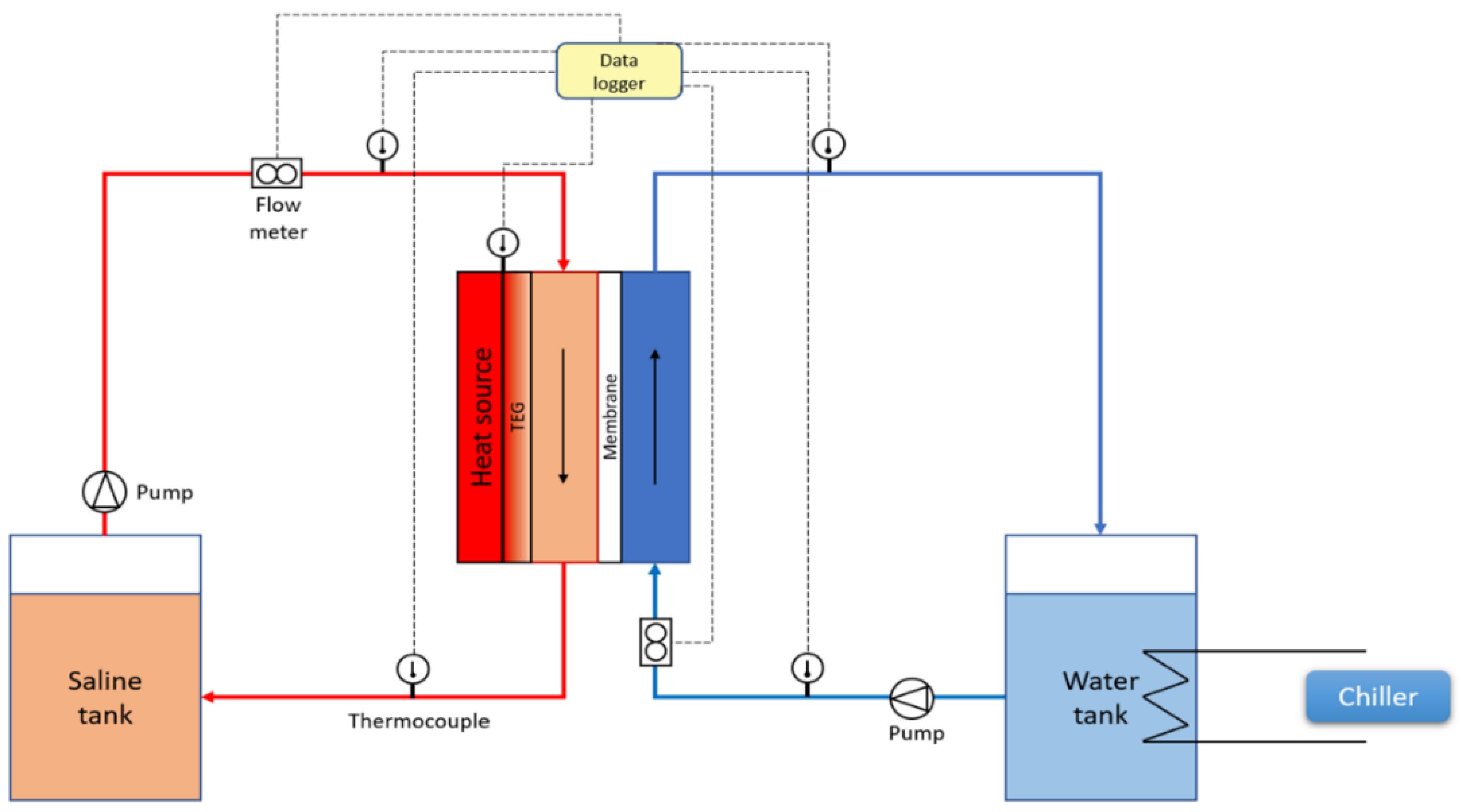
Figure 2.
Experimental set-up.
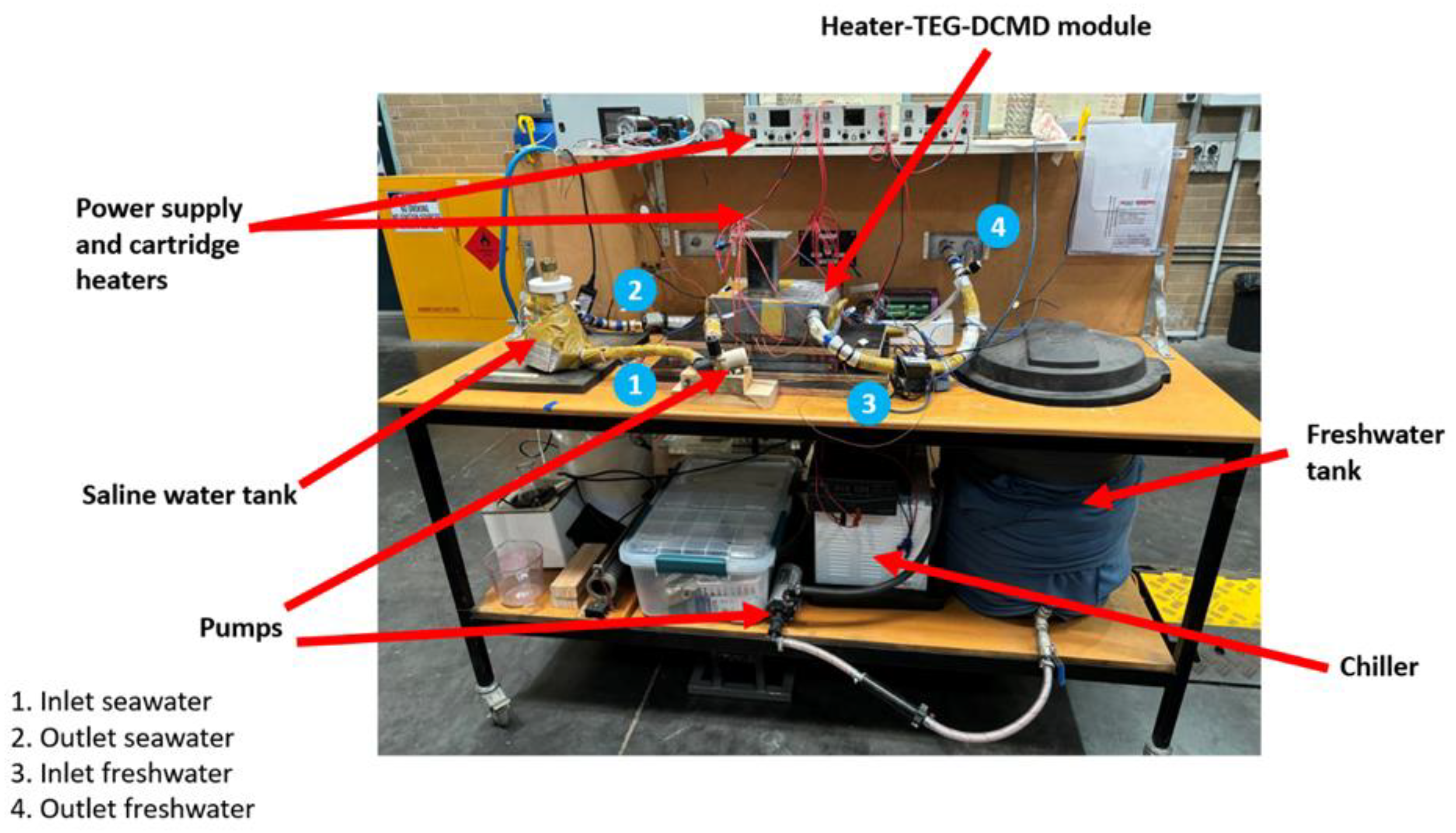
Figure 3.
Components of TEG-MD rig.
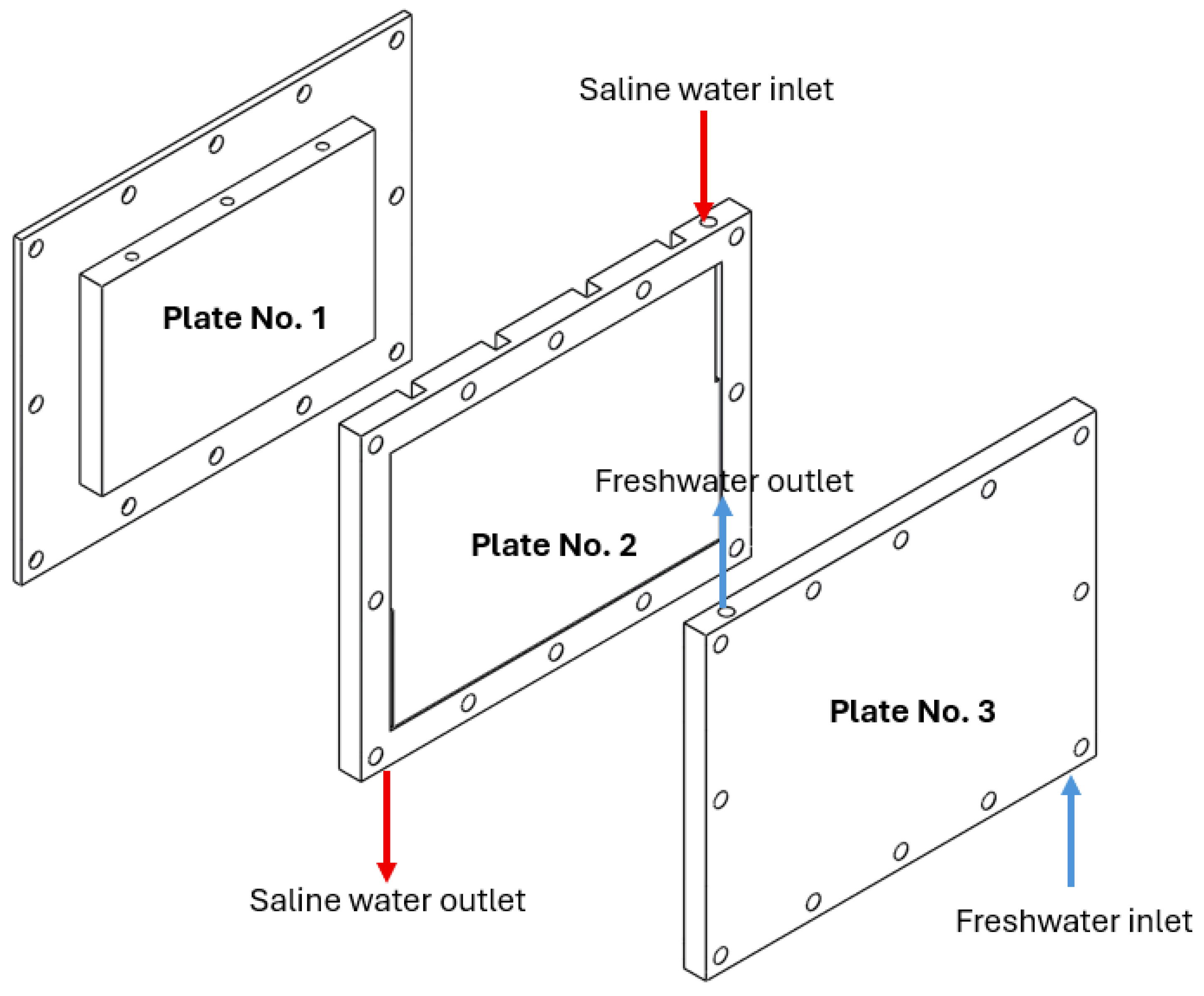
Figure 4.
(a) Cartridge heaters are placed into holes of plate No.1; (b) 6 TEGs are placed in Aluminium plate No.2.
Figure 4.
(a) Cartridge heaters are placed into holes of plate No.1; (b) 6 TEGs are placed in Aluminium plate No.2.
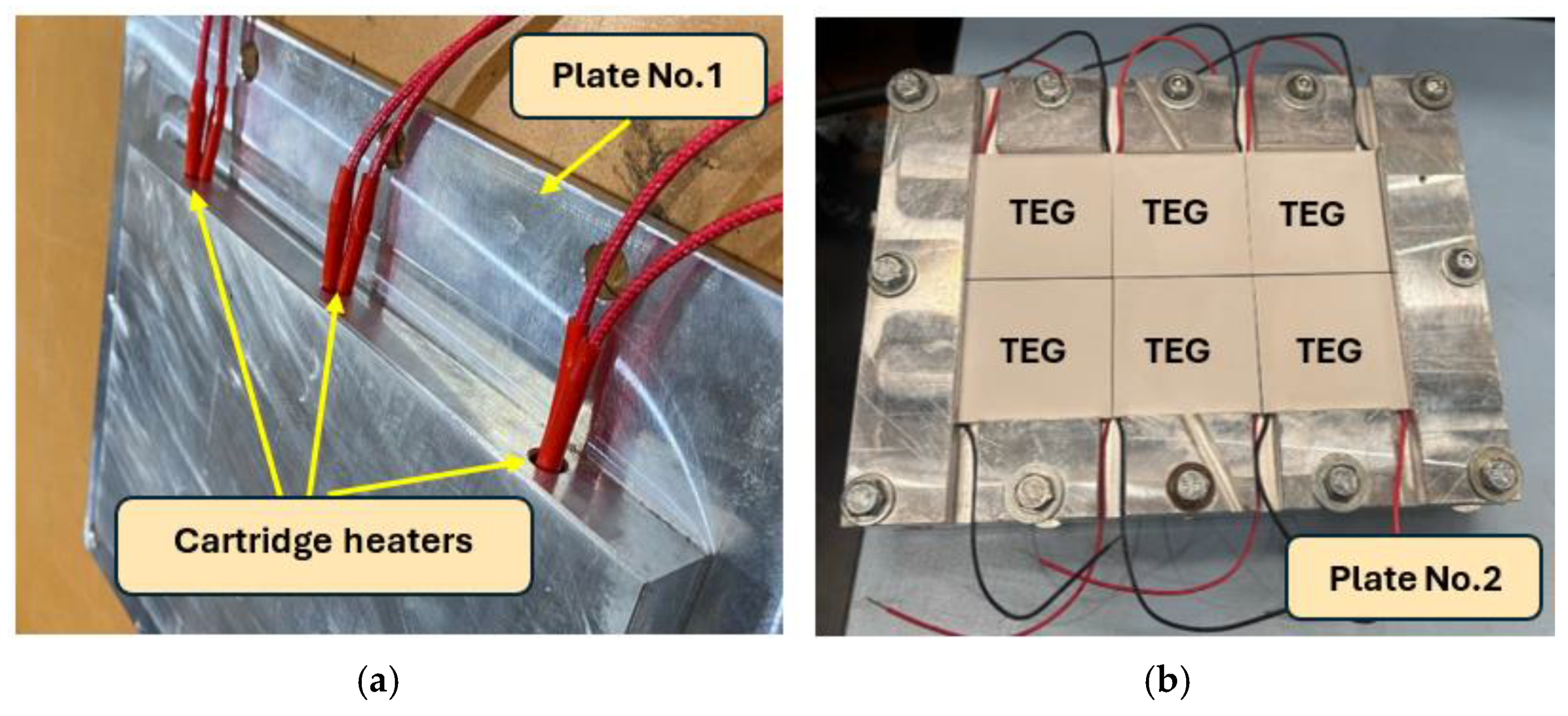
Figure 5.
The sequence of components assembly between plate No.2 and plate No. 3.
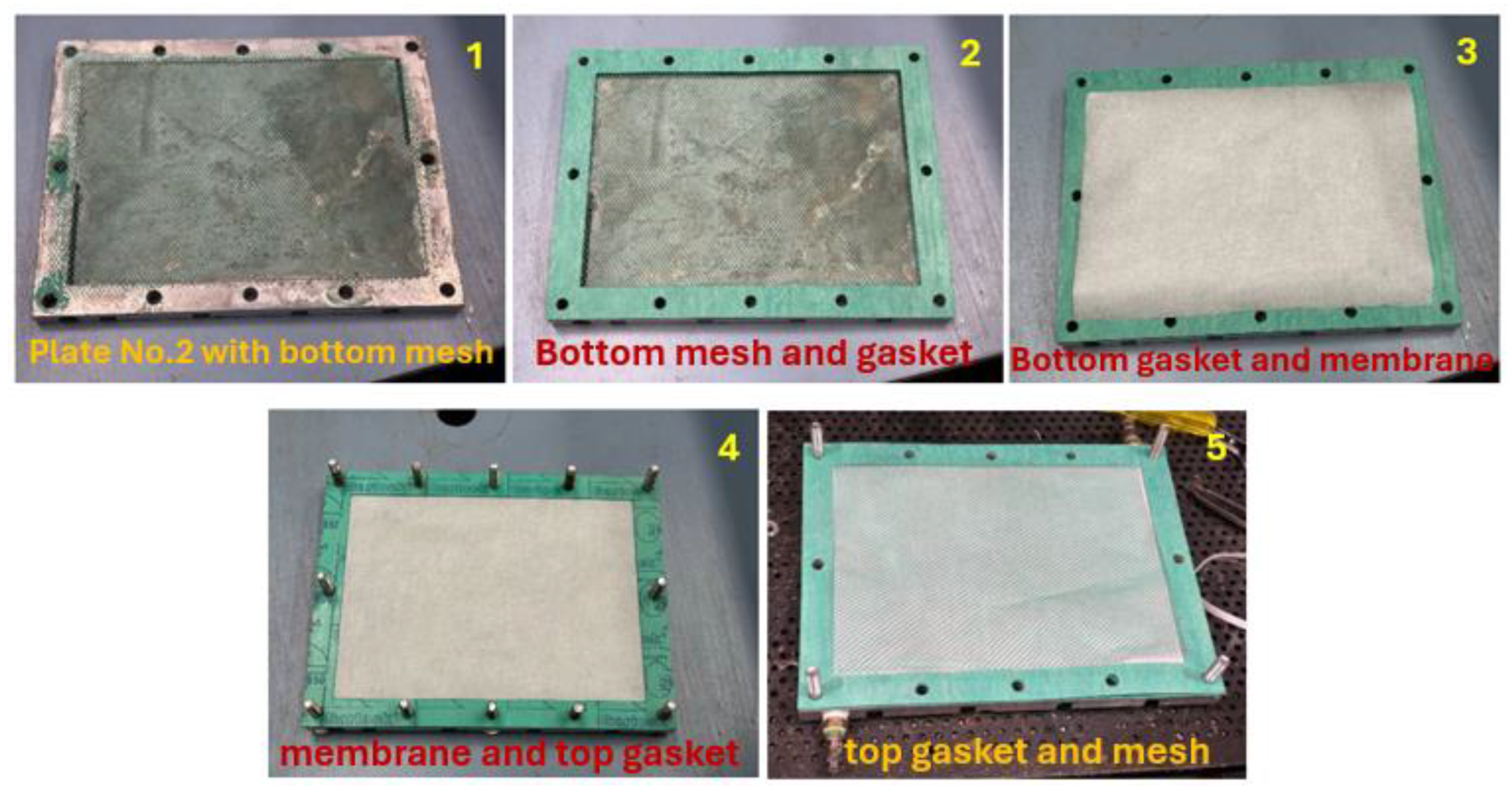
Figure 6.
Schematic of fins-TEG-MD system.
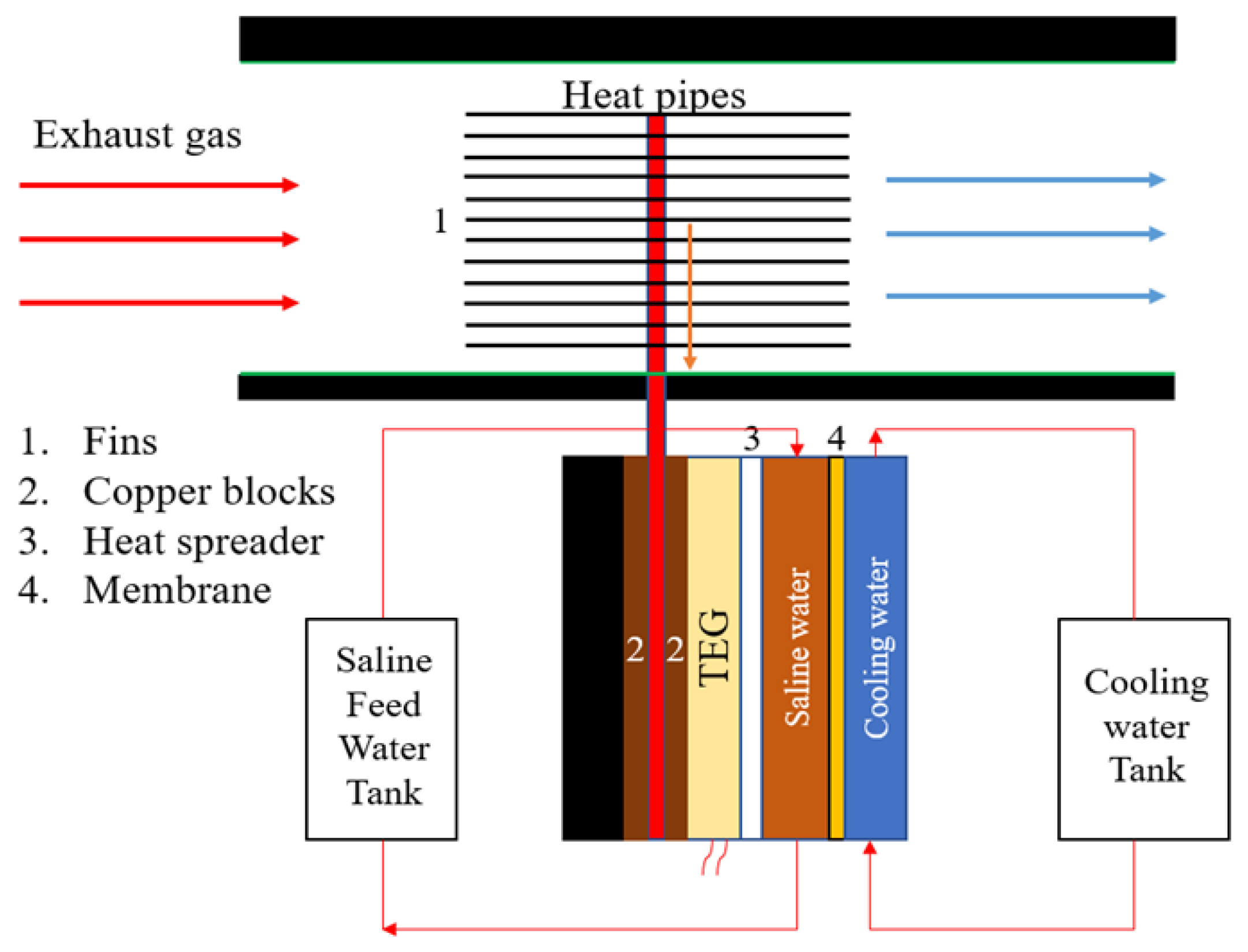
Figure 7.
Thermal resistance network of the combined system.
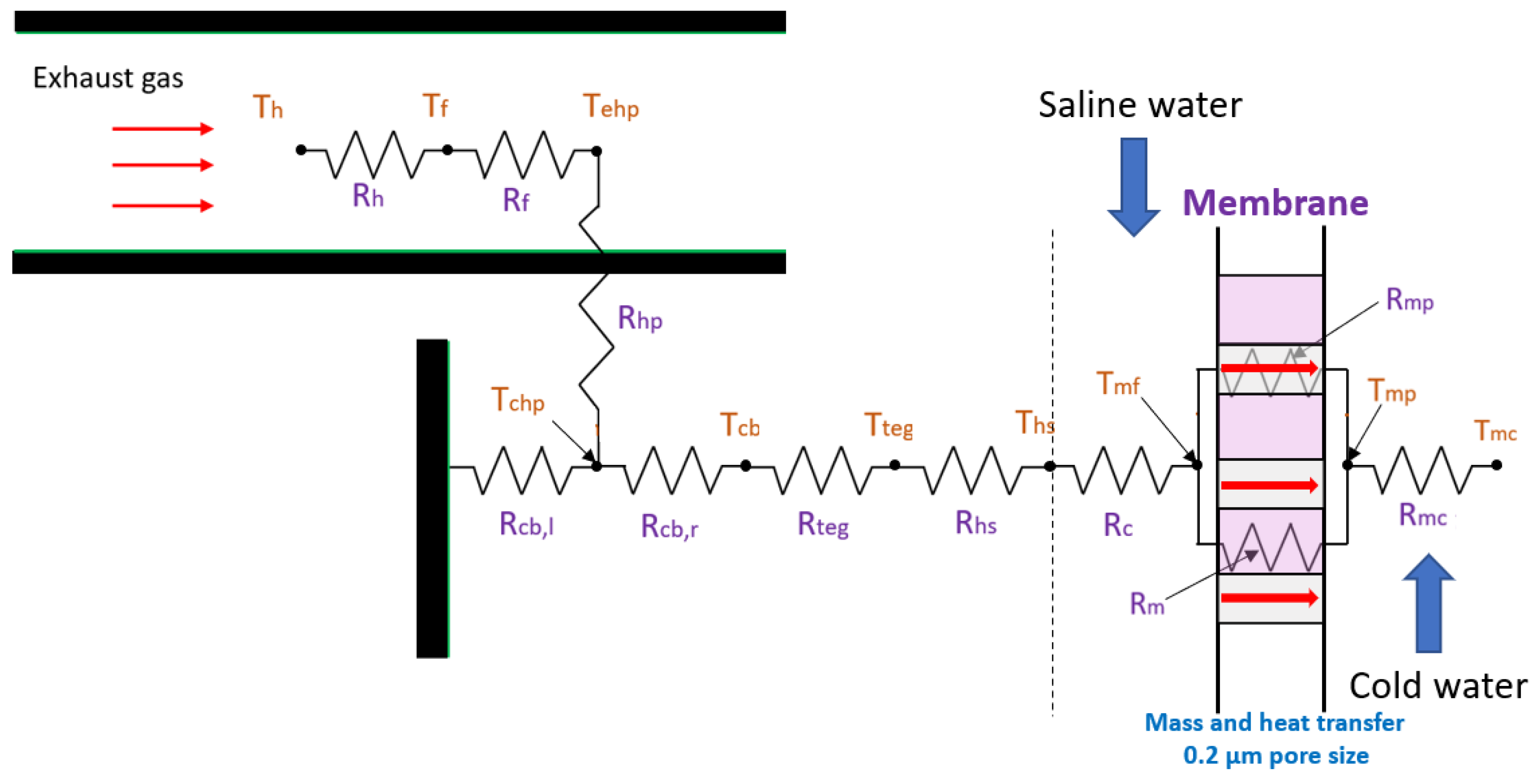
Figure 8.
Surface node and interior node.
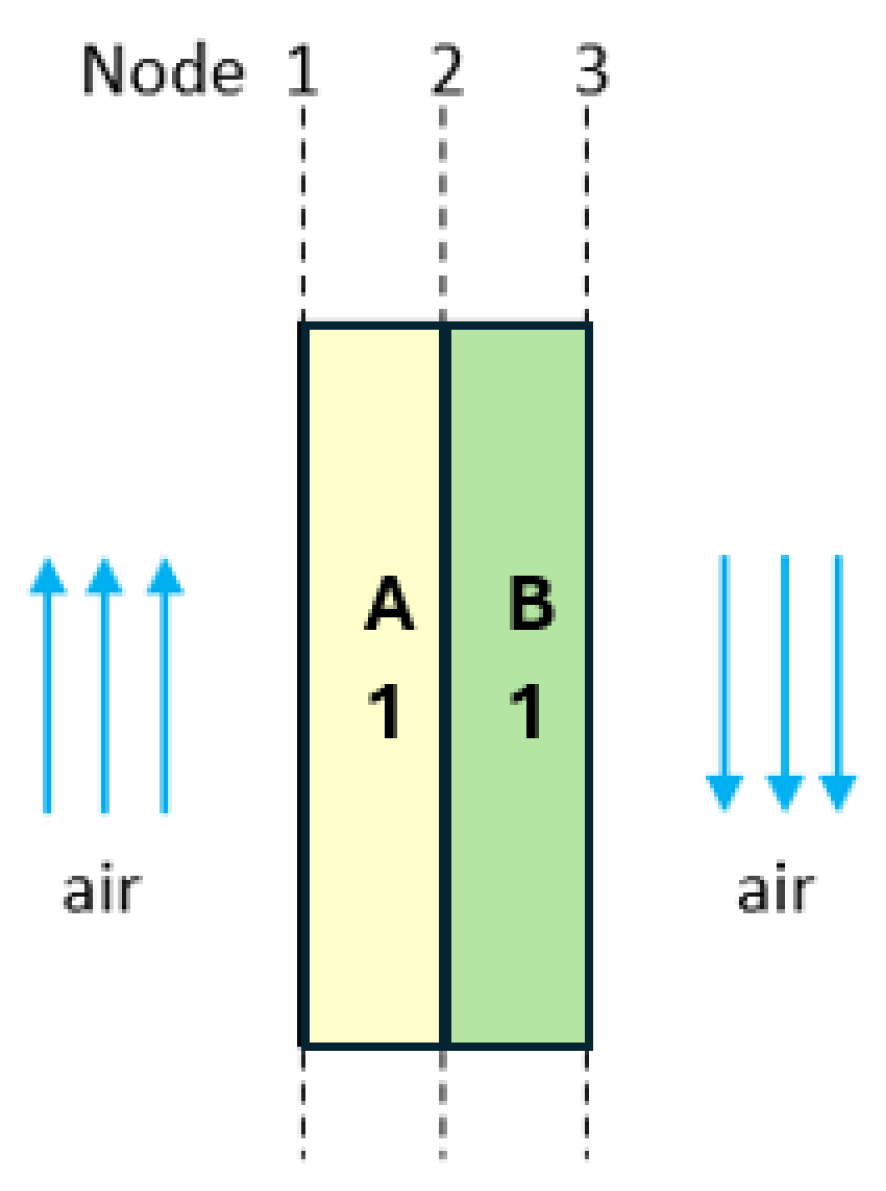
Figure 9.
Temperature gradient, heat and mass transfer.
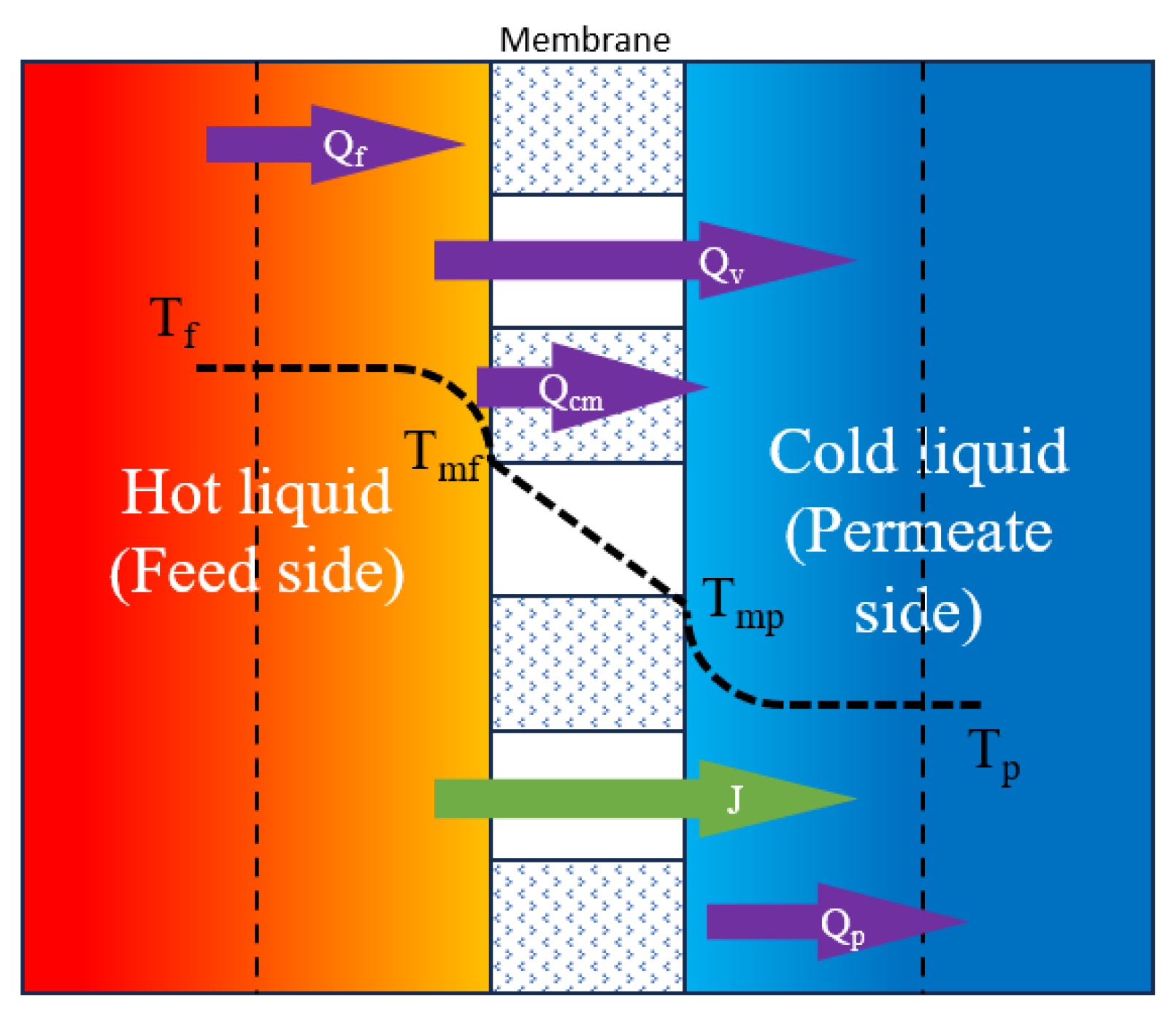
Figure 10.
Calculation steps of integrated system.
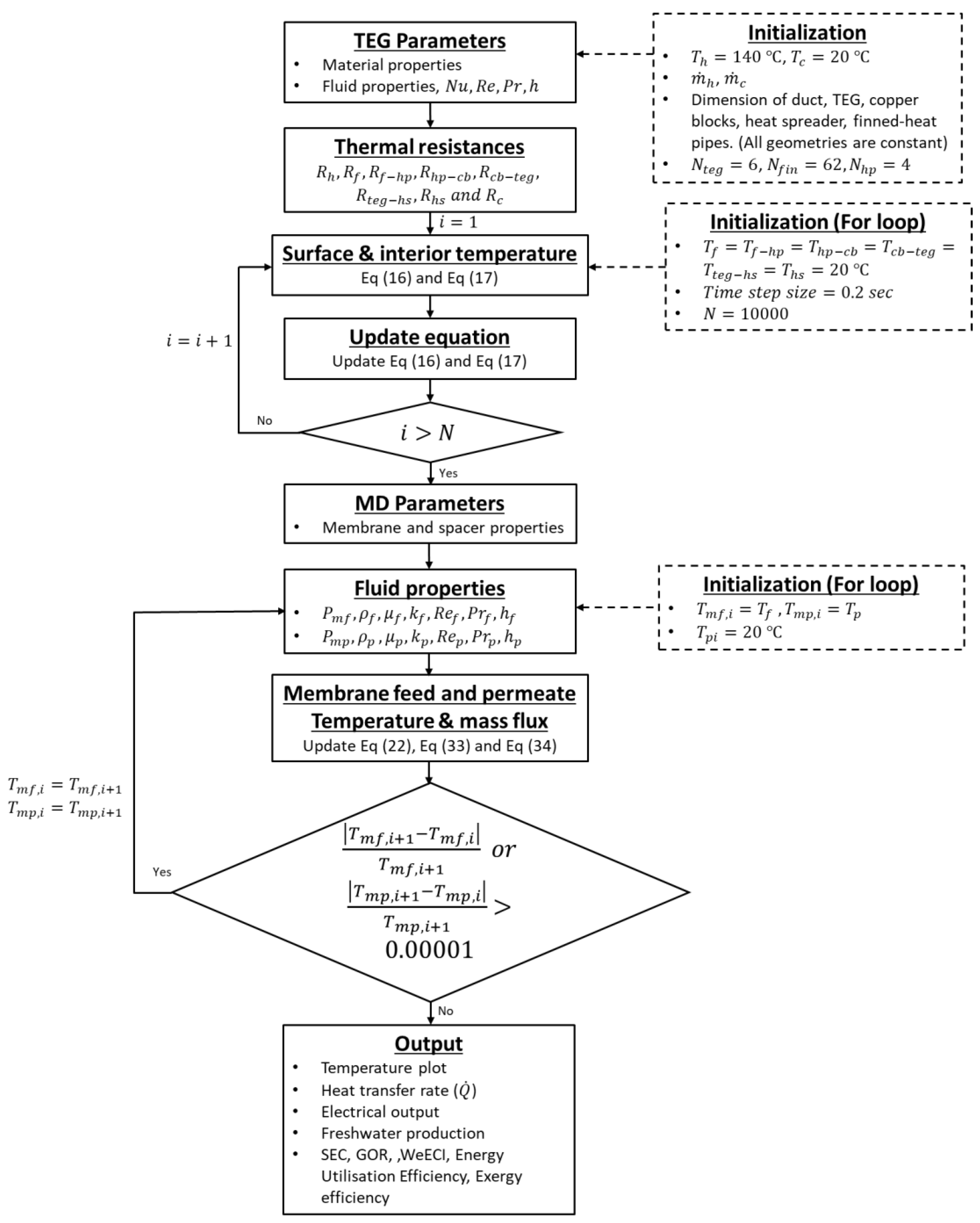
Figure 11.
Influence of salinity on mass flux and max power.
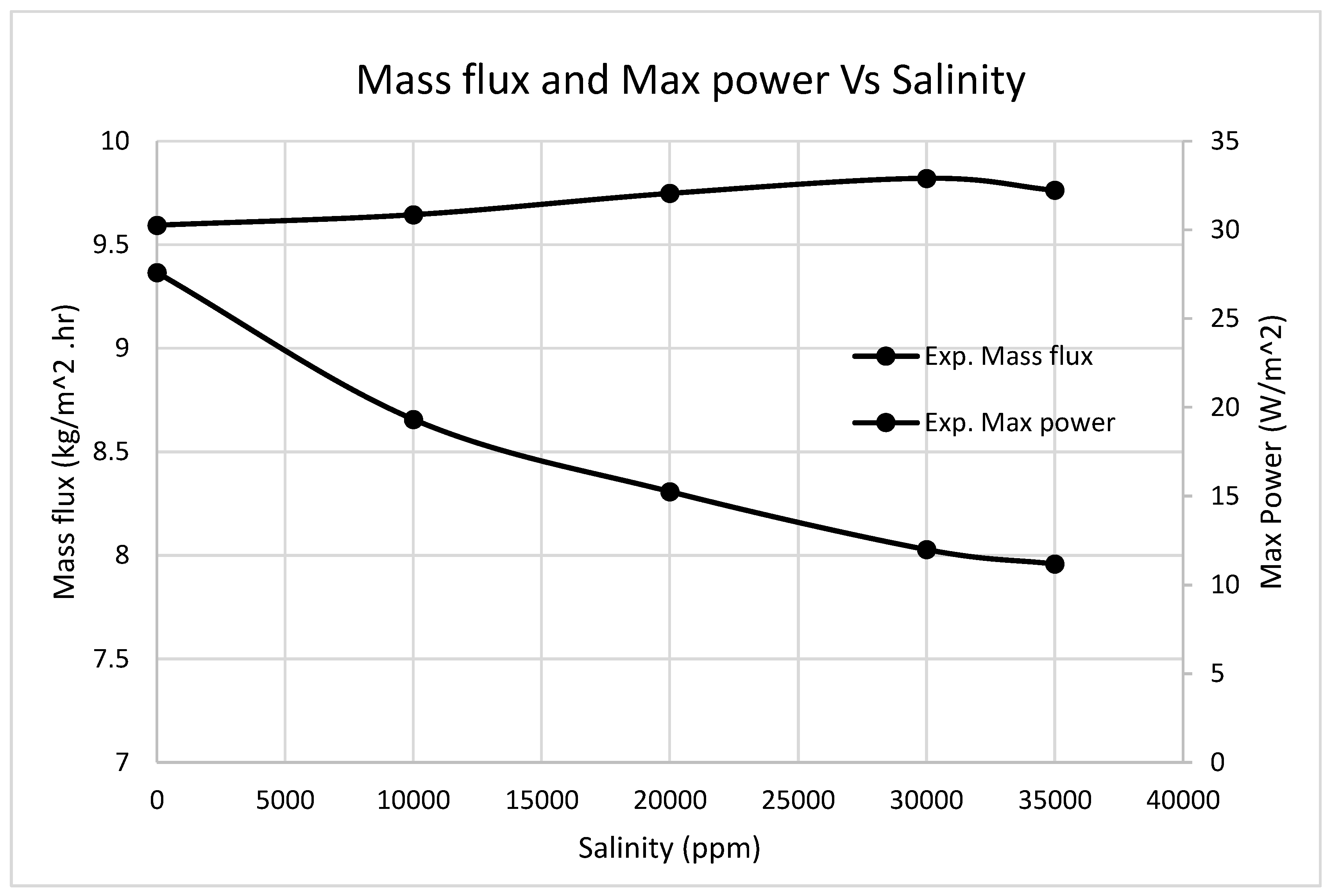
Figure 12.
Influence of salinity on max power output density.
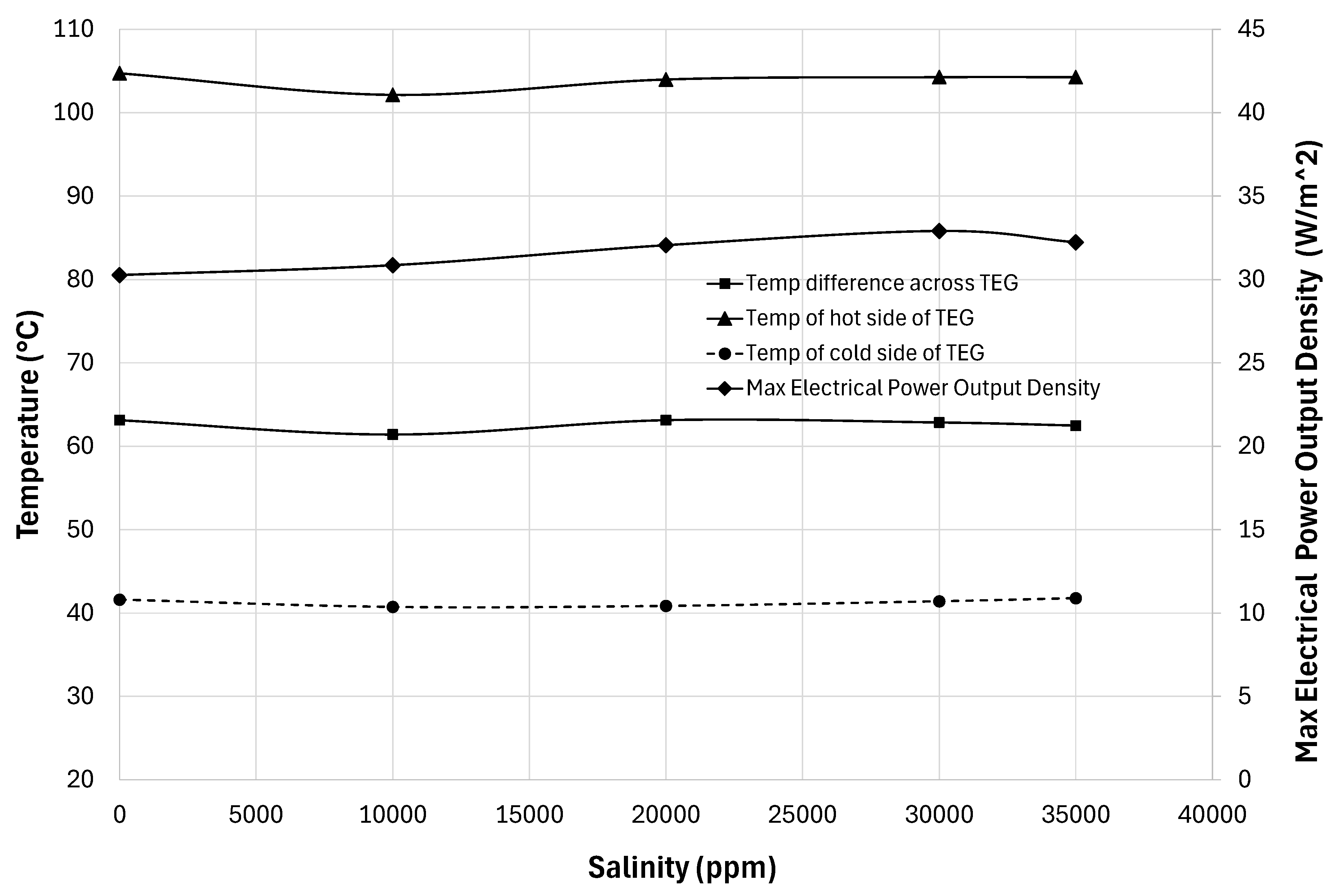
Figure 13.
Influence of salinity on GOR and SEC.
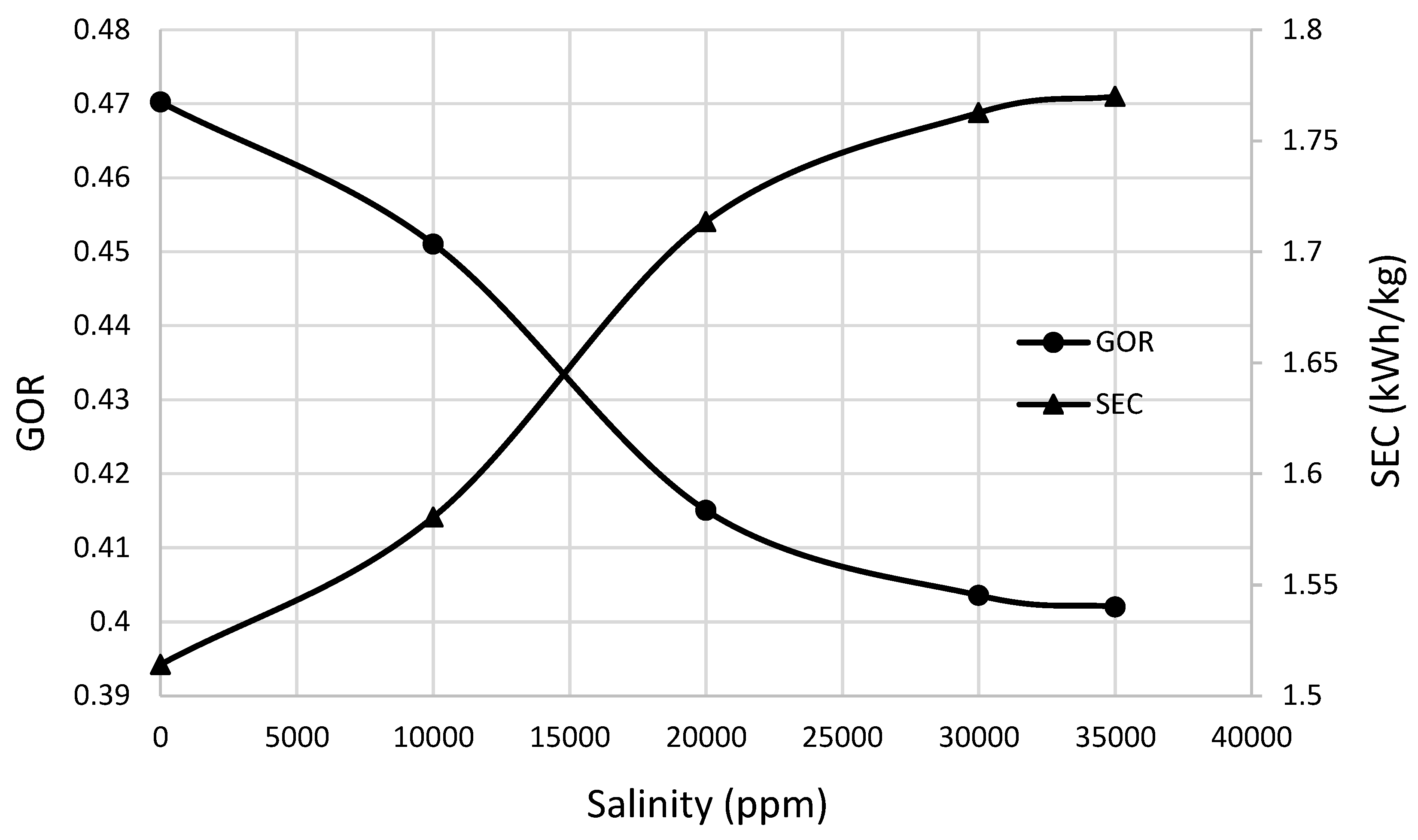
Figure 14.
Influence of Salinity on Thermal Resistance.
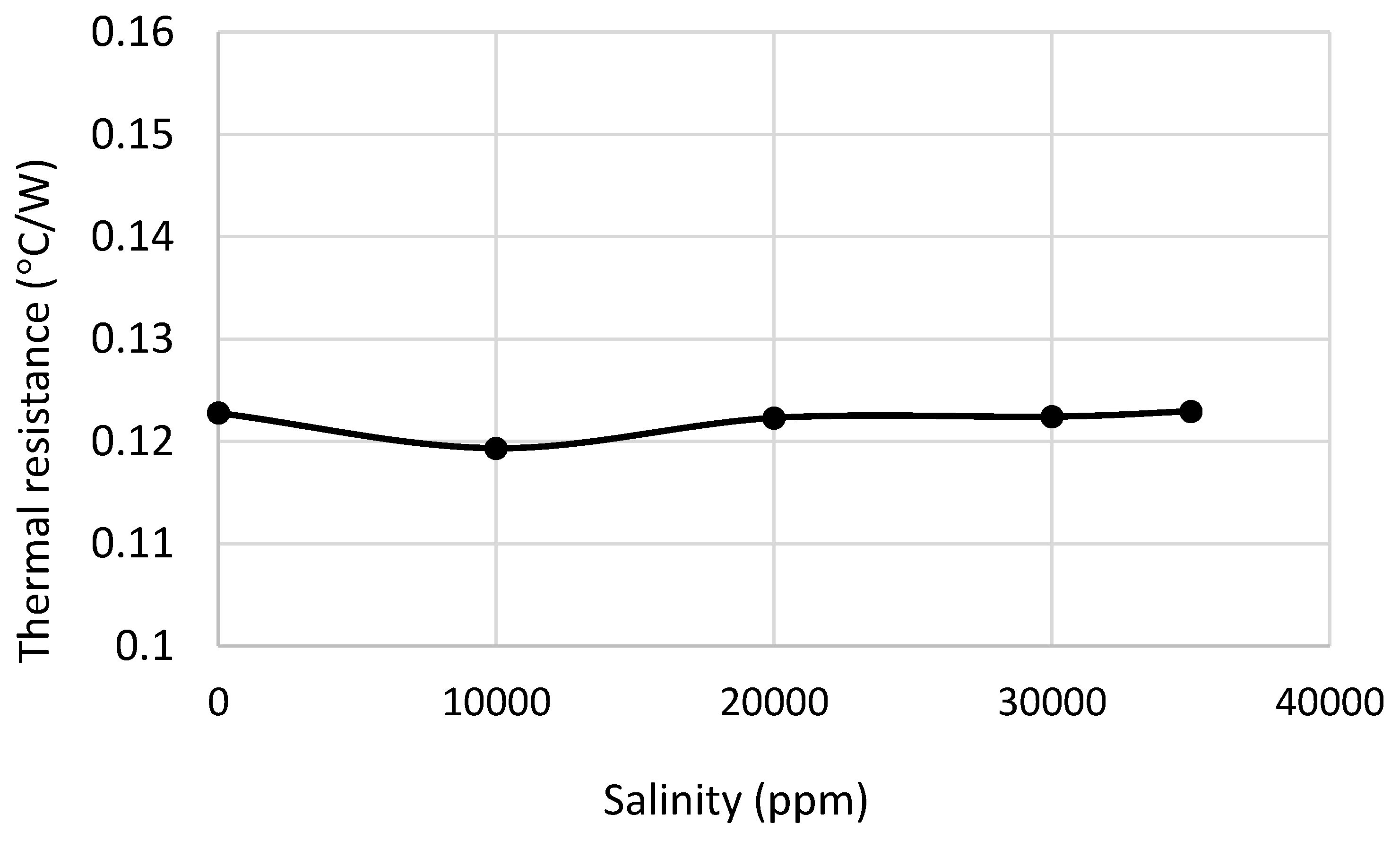
Figure 15.
Energy Utilisation Efficiency versus Salinity.
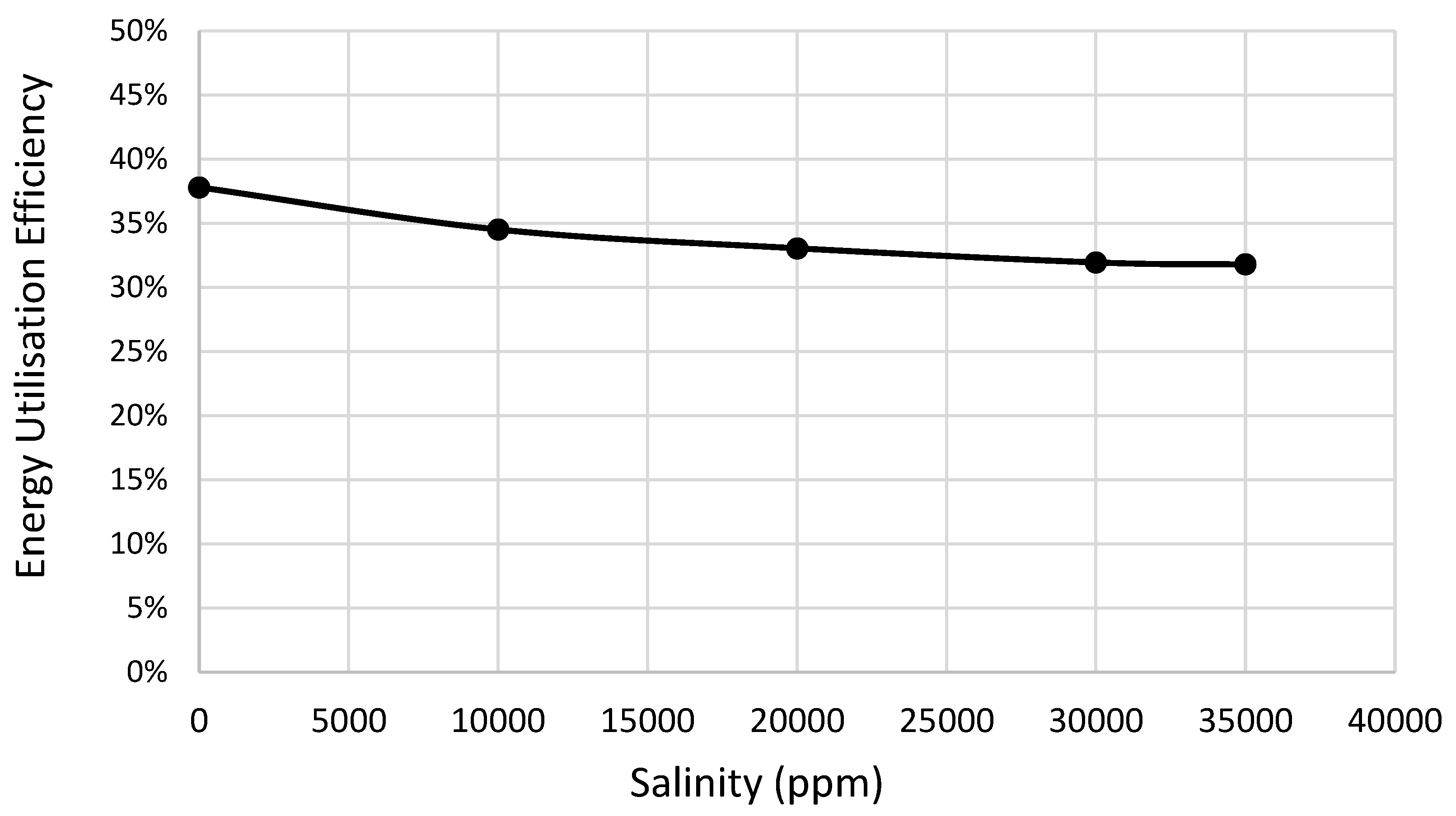
Figure 16.
Exergy Efficiency versus Salinity.
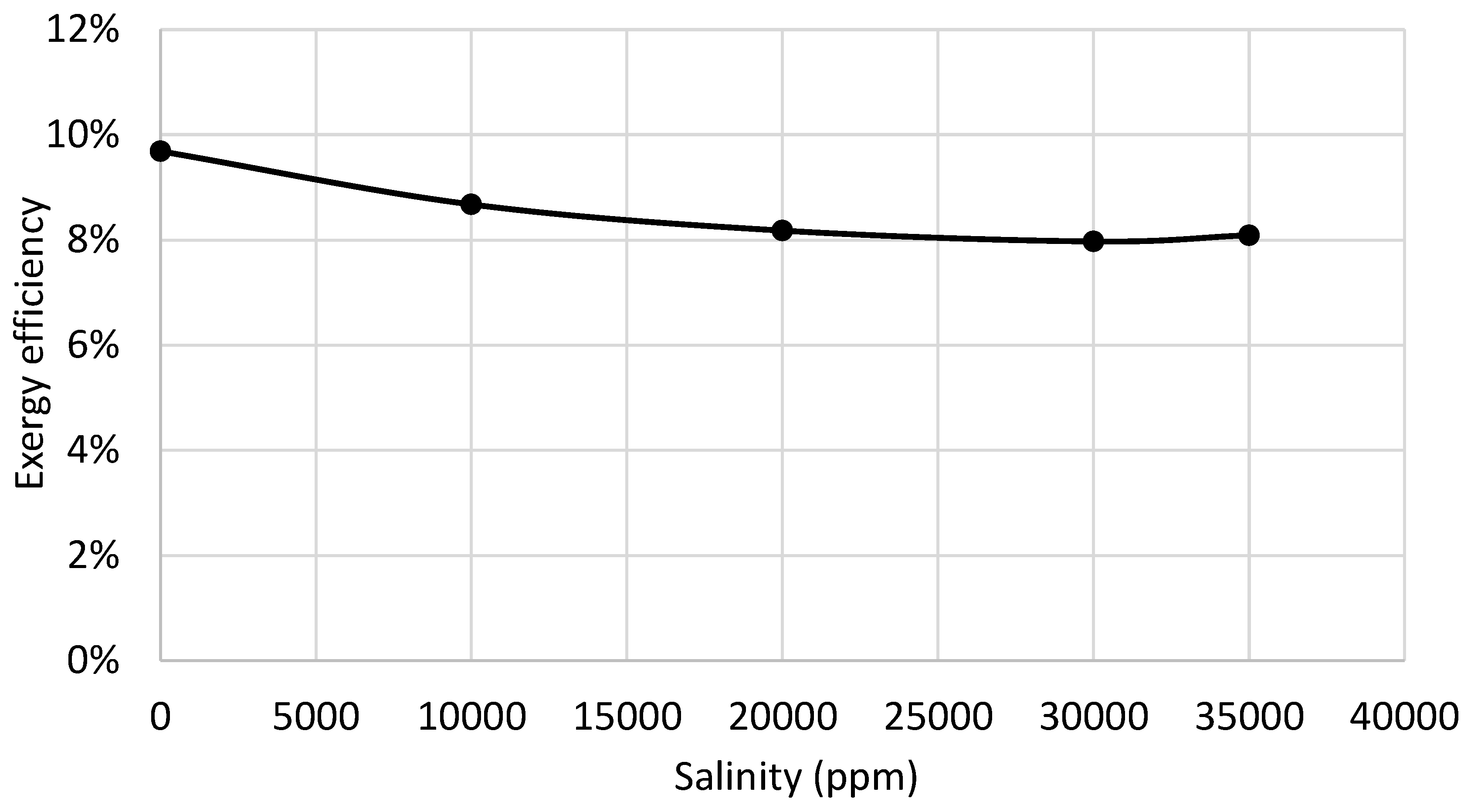
Figure 17.
Water electrical Energy Cogeneration Index.
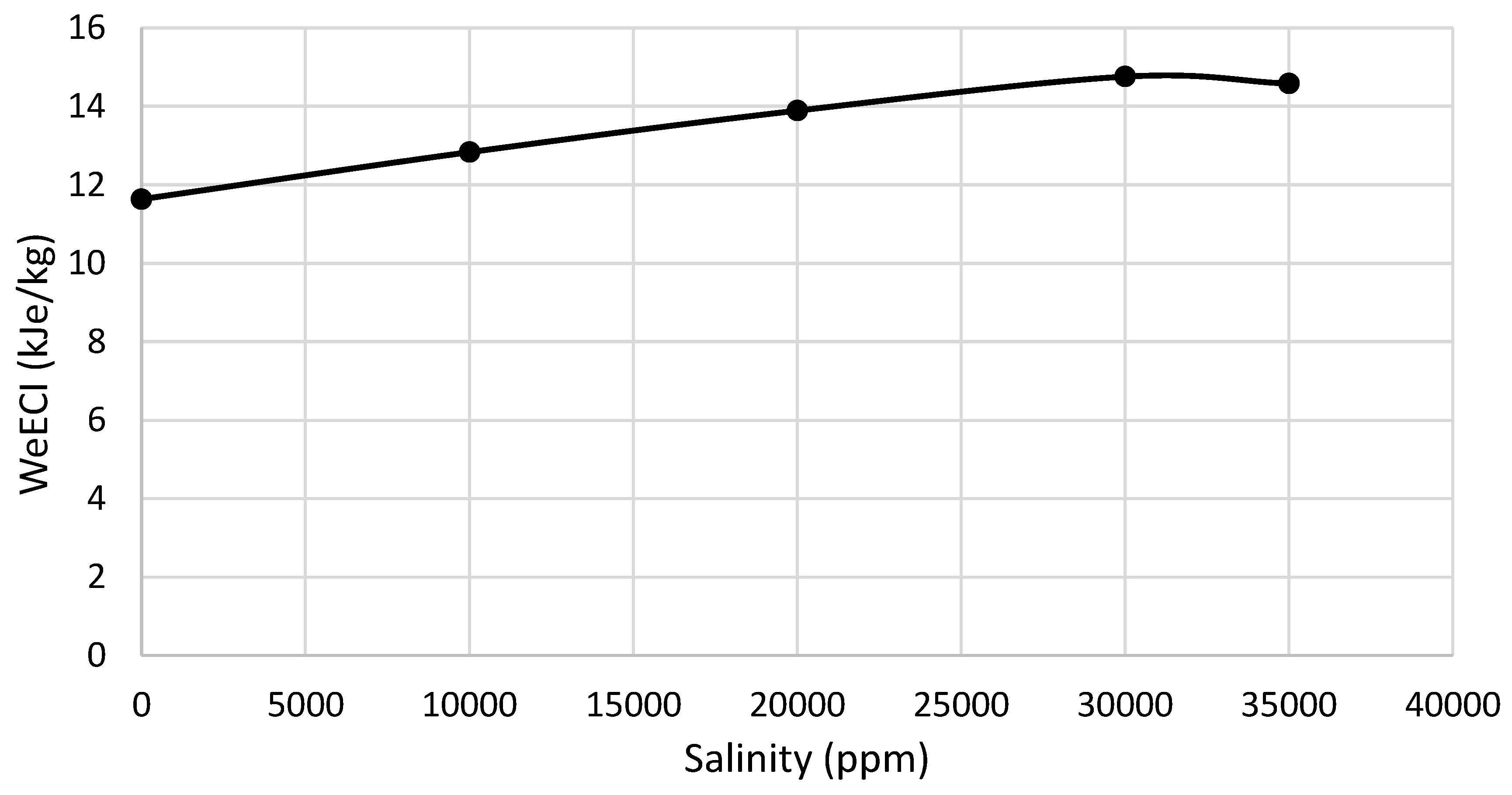
Figure 18.
Influence of Heat Input on Mass Flux.
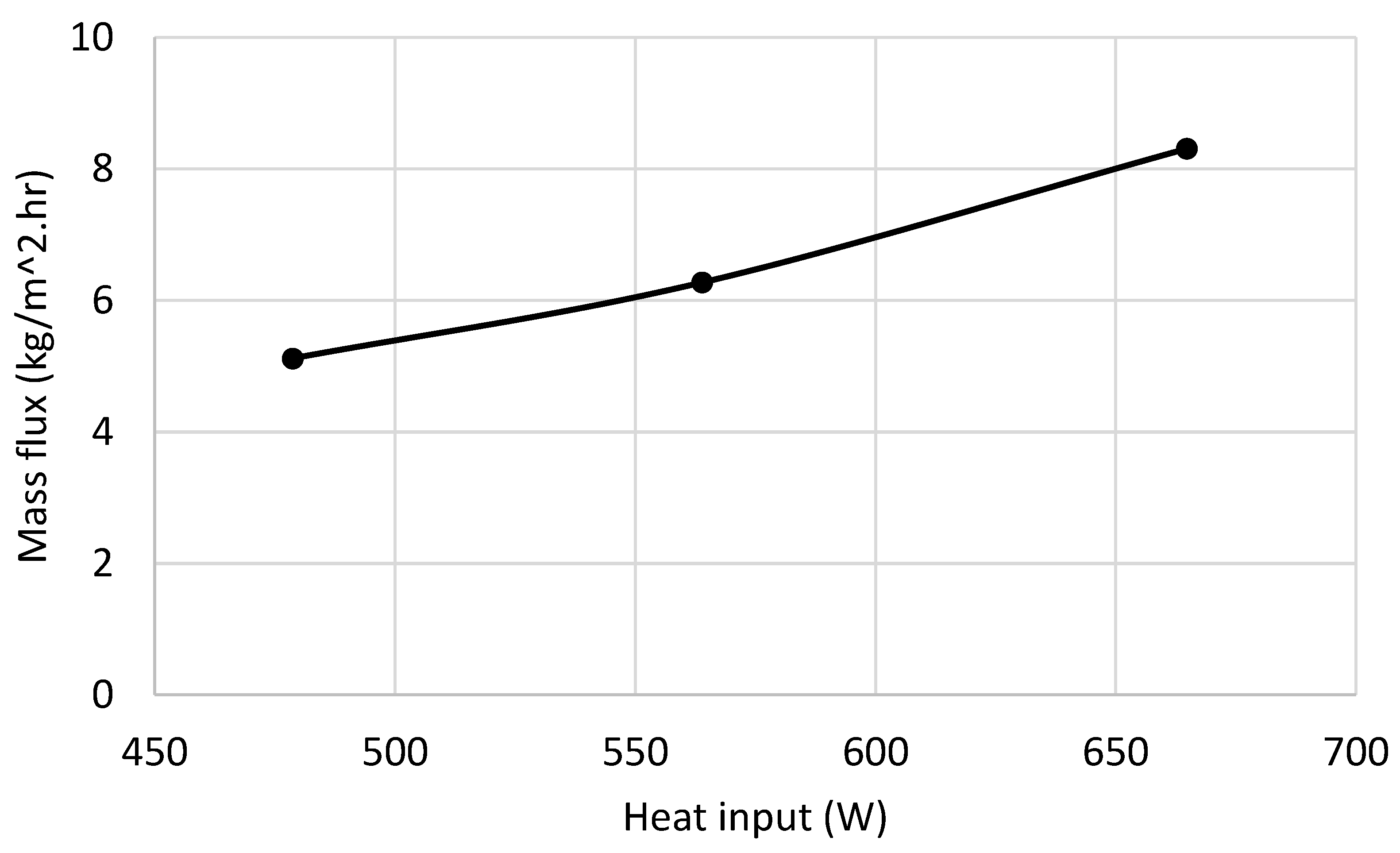
Figure 19.
Influence of Heat Input on Power Generation.
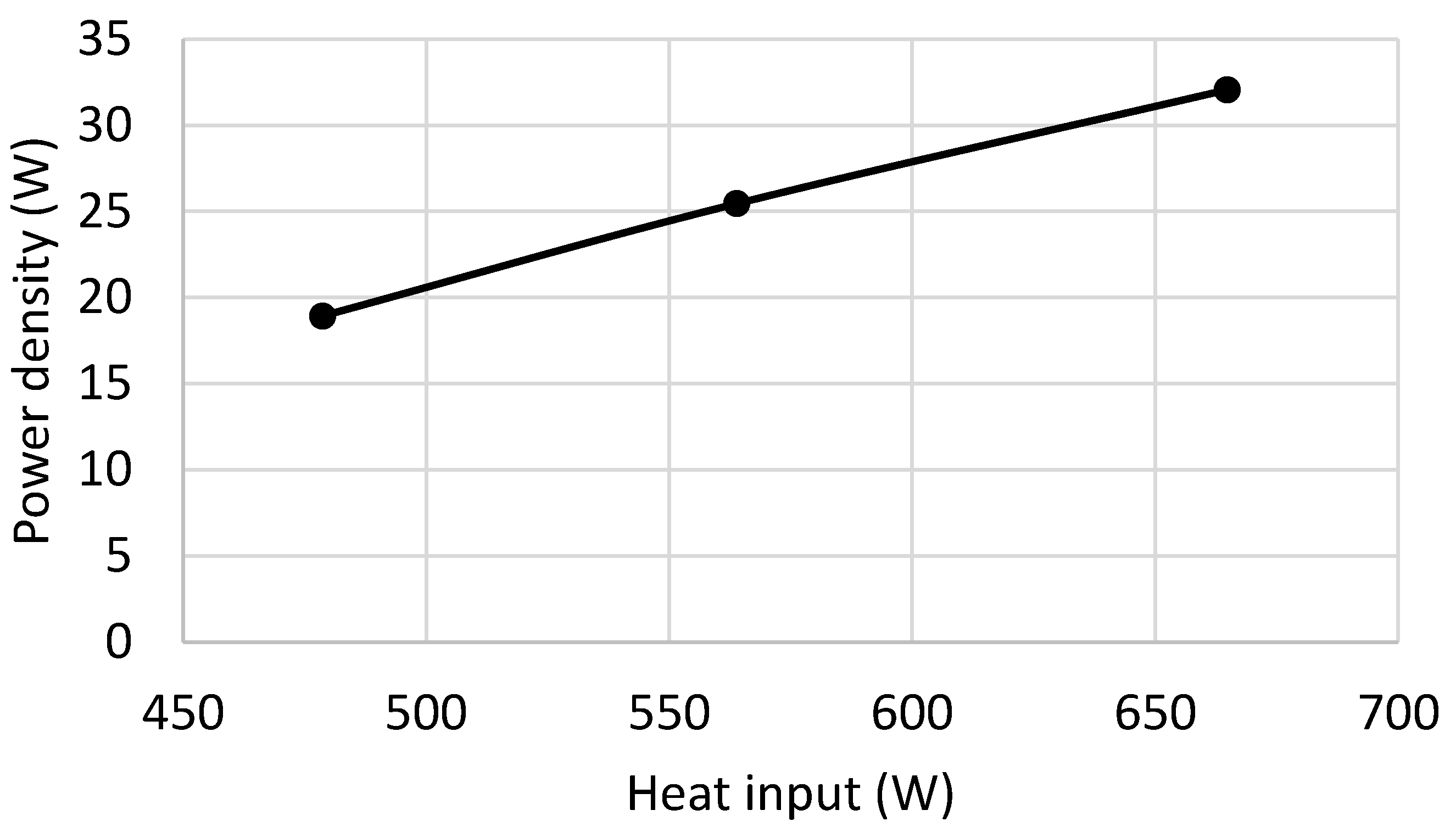
Figure 20.
Influence of heat input on specific thermal energy consumption.
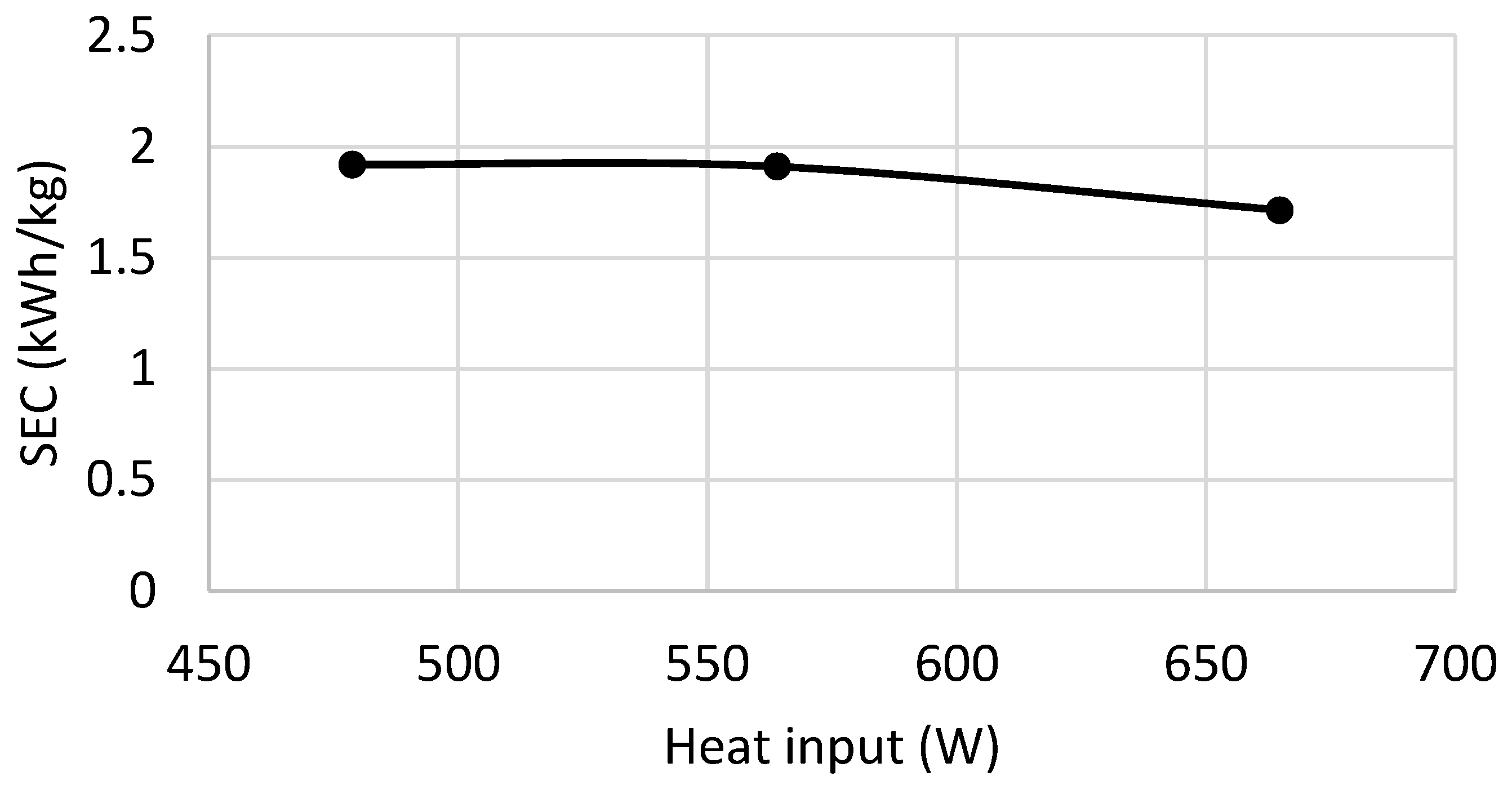
Figure 21.
Influence of heat input on gain output ratio (GOR).
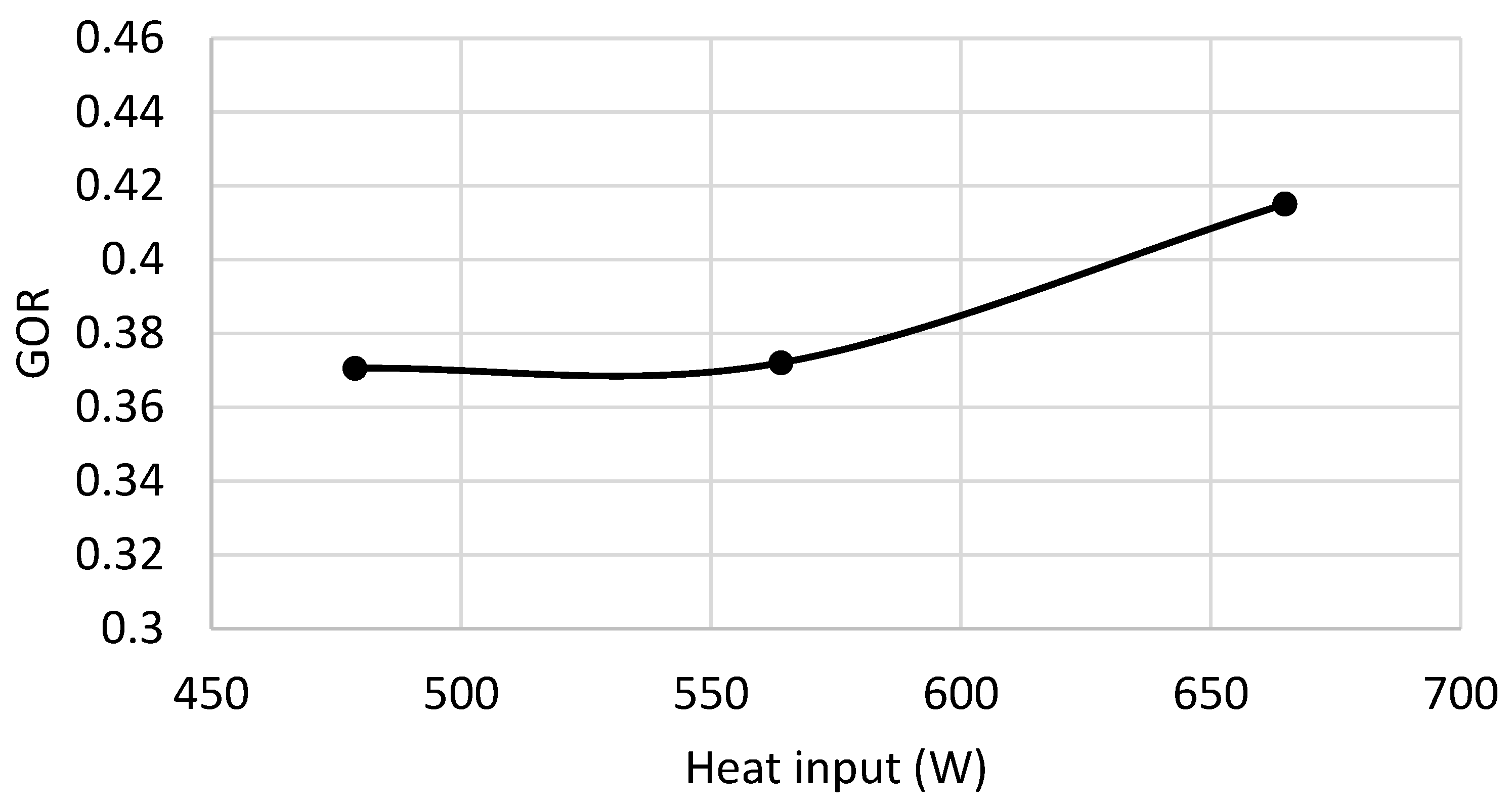
Figure 22.
Influence of heat input on thermal resistance of the system.
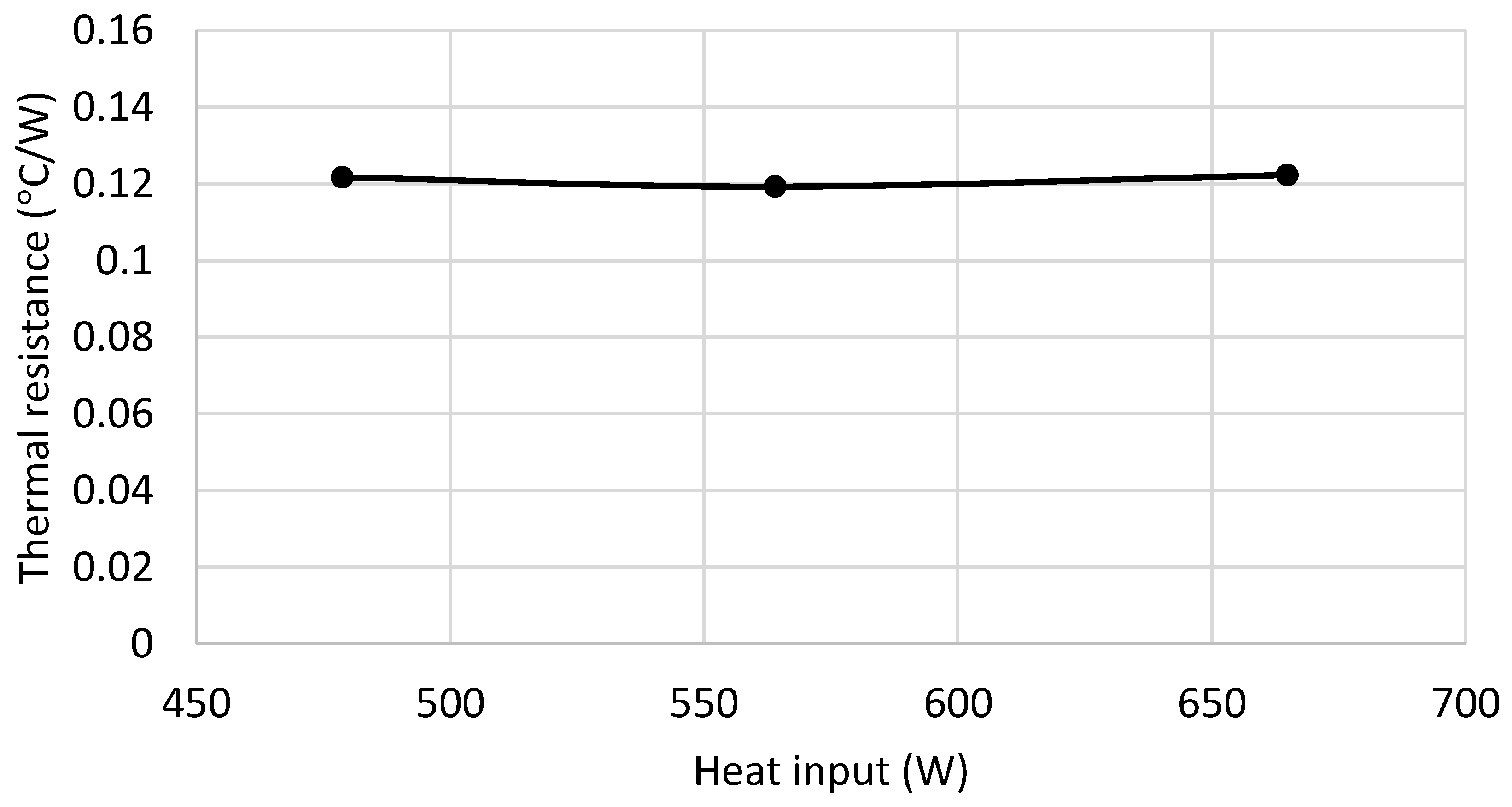
Figure 23.
Influence of heat input on energy utilization efficiency.
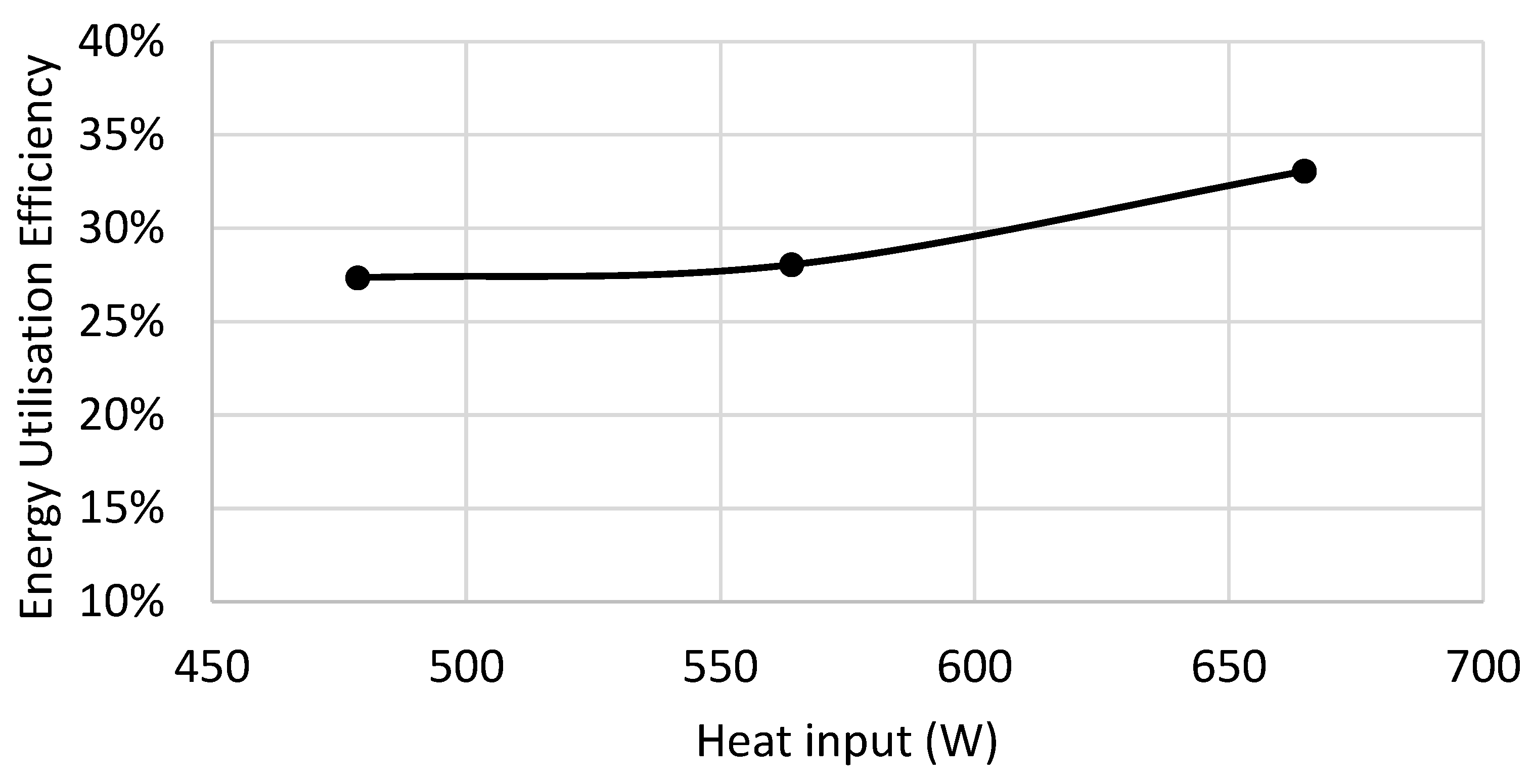
Figure 24.
Influence of heat input on exergy efficiency.
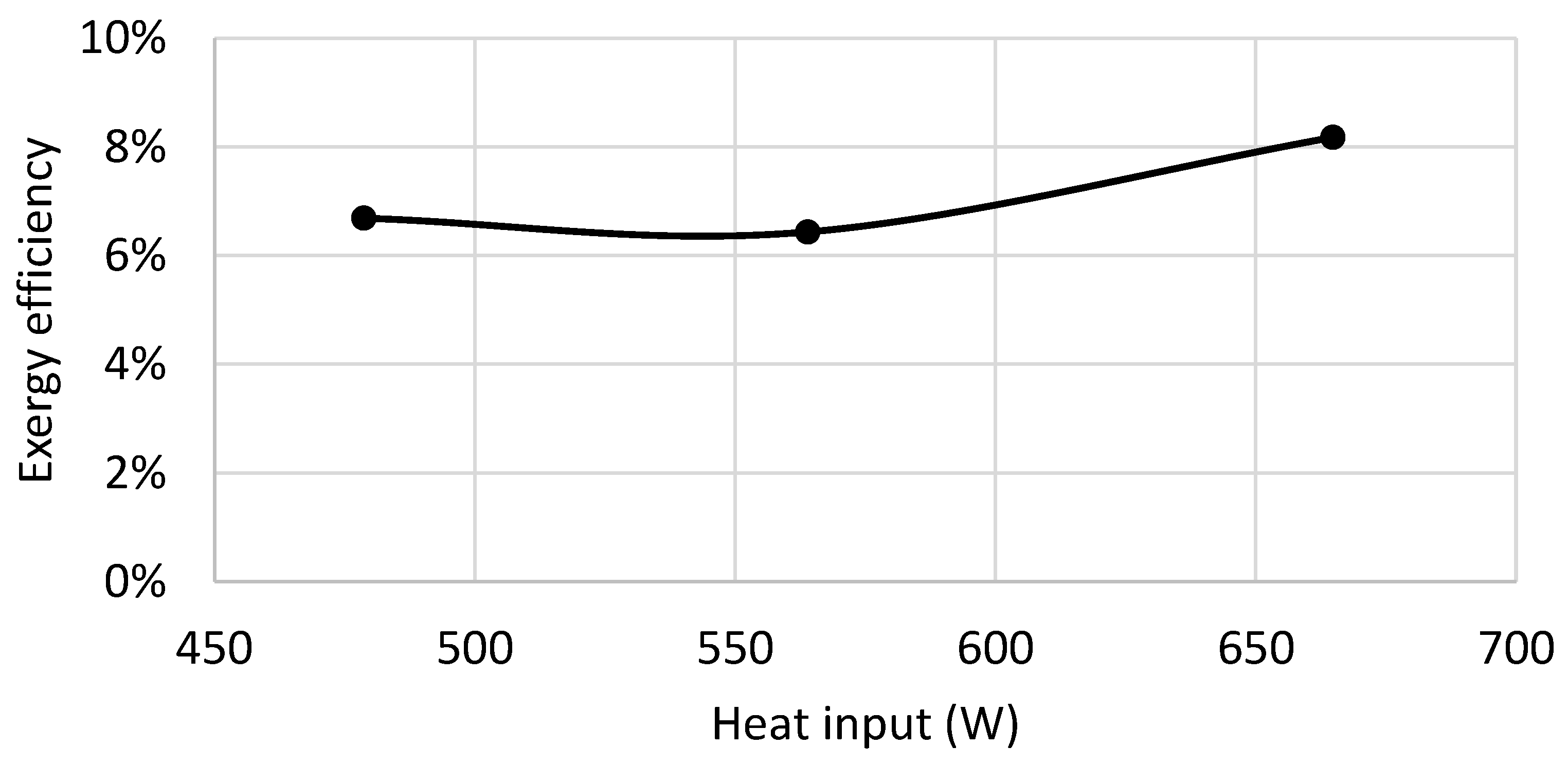
Figure 25.
Influence of heat input on Water electrical Energy Cogeneration Index.
Disclaimer/Publisher’s Note: The statements, opinions and data contained in all publications are solely those of the individual author(s) and contributor(s) and not of MDPI and/or the editor(s). MDPI and/or the editor(s) disclaim responsibility for any injury to people or property resulting from any ideas, methods, instructions or products referred to in the content. |
© 2026 by the authors. Licensee MDPI, Basel, Switzerland. This article is an open access article distributed under the terms and conditions of the Creative Commons Attribution (CC BY) license.
Copyright: This open access article is published under a Creative Commons CC BY 4.0 license, which permit the free download, distribution, and reuse, provided that the author and preprint are cited in any reuse.


