
Submitted:
26 January 2026
Posted:
27 January 2026
You are already at the latest version
Abstract
As the primary active component of Zanthoxylum bungeanum, its volatile oil (ZEO) exhibits diverse pharmacological activities, including insecticidal, antibacterial, anti-inflammatory, and anti-tumor effects. These properties provide a scientific foundation for its traditional functions, such as "expelling worms" and "warming the Middle Jiao to alleviate pain and relieve itching."However, contemporary research predominantly focuses on validating individual active constituents or specific pharmacological effects, highlighting substantial gaps in elucidating this complex chemical system. This review systematically synthesizes existing research on ZEO and delineates the chemical composition, influencing factors, and mechanisms of action of ZEO. Thus, by integrating the "composition-activity-mechanism-application" continuum, this review provides an in-depth analysis of the modern scientific essence of the holistic therapeutic model of traditional Chinese medicine (TCM) — multi-component and multi-target actions. This precisely expounds the theoretical core of TCM concepts of pharmacological symbiosis and synergistic effects via formula compatibility. Together, these insights establish a robust theoretical foundation for the further development and broader application of ZEO in fields such as medicine, food, and daily chemical products.
Keywords:
Zanthoxylum bungeanum
; volatile oil
; chemical composition
; influencing factors
; pharmacological activity
; action mechanisms
; application
1. Introduction
Zanthoxylum is a deciduous shrub or small tree belonging to the genus Zanthoxylum within the Rutaceae family. Zanthoxylum is a deciduous shrub or small tree of the genus zanthoxylum in the family Rutaceae. In China, zanthoxylum has a long history of application as a traditional spice, especially known for its unique numbing flavor and aromatic properties. China's zanthoxylum is rich in germplasm resources, and its medicinal base is mainly the dried mature pericarp of zanthoxylum (Zanthoxylum bungeanum Maxim.) or green zanthoxylum (Z. schinifolium Sieb. et Zucc.) of the Brassicaceae family [1]. Historically, “Qin zanthoxylum” (Shanxi and other places) and "Shu zanthoxylum" (Sichuan and other places) have long been famous. The use of Zanthoxylum in food and medicine dates back more than two thousand years. Shennong's Classic of Materia Medica records that “Zanthoxylum tastes pungent and is warm in nature. It mainly treats wind - evil qi and can cure cough, reverse qi, cold - damp arthralgia and other symptoms” [2]. In the Eastern Han Dynasty, Zhang Zhongjing's Synopsis of Prescriptions of the Golden Chamber includes the Dajianzhong Decoction, which uses Sichuan zanthoxylum bungeanum as the principal drug to warm the middle - energizer and dispel cold, primarily treating cold pain in the epigastrium and abdomen [1]. Beyond historical materia medica, the modern Pharmacopoeia of the People's Republic of China (2025 Edition) states that Zanthoxylum “warms the middle - energizer to relieve pain, kills parasites and relieves itching” and can be used for cold pain in the epigastrium and abdomen, vomiting and diarrhea, and abdominal pain due to parasitic infestation
ZEO (ZEO), the primary material basis of Zanthoxylum, concentrates the plant’s characteristic aroma and exhibits diverse pharmacological activities. Modern studies indicate that ZEO is a complex mixture dominated by monoterpenes and sesquiterpenoids (for example, limonene and β-myrcene) and by alcohols (for example, linalool), with trace amounts of esters, ketones, aldehydes, and other constituents that together form a multifaceted chemical system [3].These constituents confer multiple bioactivities on ZEO, including anti-inflammatory, antibacterial, and antioxidant effects, which likely represent the core material basis for Zanthoxylum’s traditional uses of “warming the middle and relieving pain, killing insects and relieving itching.” With regard to the effect described as “warming the middle and relieving pain,” the oil’s anti-inflammatory and analgesic properties can mitigate inflammatory responses and associated pain arising from factors such as invasion of cold pathogens or qi stagnation and blood stasis in the body [4].Inflammation typically produces local redness, swelling, heat, pain, and other pathological features, ZEO suppresses the inflammatory cascade and, through actions on nociceptive pathways, reduces nociceptor sensitivity to relieve epigastric and abdominal cold pain [5].Antimicrobial activity underlies its “insecticidal and antipruritic” effects. Because skin and gastrointestinal parasites and microbial infections frequently cause itching and discomfort, ZEO’s inhibition of various pathogens limits their proliferation and thereby reduces infection-associated pruritus and intestinal parasitic abdominal pain. Concurrently, its antioxidant activity moderates oxidative stress, preserves normal cellular function, and promotes tissue repair, which together support the combined actions of “warming the middle and relieving pain, and killing worms to relieve itching.”
Although the pharmacological activities of ZEO in anti-inflammation, anti-bacteria, anti-oxidation, etc. are closely related to the efficacy of “warming the middle and relieving pain, killing insects and relieving itching”, there are still limitations in the existing research. Currently, most of the research focuses on the extraction of volatile oils and the analysis of numbing components, with insufficient research on the material basis for its traditional efficacy and the multi - component synergistic mechanism. Therefore, it is of great significance to write a research progress report on ZEO. It can not only systematically sort out the current research status and identify the gaps, but also provide ideas for revealing its medicinal value and developing related products, thus promoting deeper application of ZEO in medicine, food, and related fields.
In this report, we provide a comprehensive synthesis of the chemical composition of ZEO, the factors that influence it, its pharmacological properties and underlying mechanisms, and prospects for future applications. Our objective is to construct a systematic knowledge framework, clarify the scientific value of ZEO, and offer practical guidance for its industrial development and clinical use. The word cloud describing the main pharmacological effects of ZEO is presented in Figure 1.
Literature retrieval and synthesis proceeded as follows: (1) Preliminary searches used the main keywords, specifically, “medicinal plants”, “essential oils”, “Zanthoxylum bungeanum”, “essential oil components”, “pharmacological effects”, and “applications” in databases such as PubMed, Web of Science, and Science Direct; (2) Preliminary screening of the literature based on the title, keywords and guidelines; (3) Adding the latest research progress and new references from the original literature; (4) Summarizing and organizing the existing literature.
2. Main Component Types and Activities of ZEO
2.1. Terpenoids and Activities
Terpenes are a class of compounds with the isoprene unit (C₅H₈) as the basic structural unit[6], and their structural diversity mainly stems from the involvement of two precursors, isopentenyl diphosphate (IPP) and dimethylallyl diphosphate (DMAPP)[7]. In the volatile oil of zanthoxylum bungeanum, terpene constituents are abundant, and the common ones are limonene, β-laurene (10.009%), 3-bornene (6.512%), α-pinene, β-pinene, α-hydantoin, α-pinene, α-pinene, β-stigmasterol, sabinene, and anisole, etc.
The composition and content of zanthoxylum bungeanum volatile oils are affected by a variety of internal and external factors. Devi et al. found that the composition and relative content of volatile oils from various parts of zanthoxylum bungeanum varied with the seasons. For example, decane in flowers and fruits was detectable only in spring and summer, while pinene content in leaves was 4.36% in spring, 1.96% in summer, 6.09% in fall, and 2.25% in winter, and such variations were thought to be related to gene expression and regulation[8]. Tang et al. compared the volatile oil compositions of zanthoxylum bungeanumcorns and non-zanthoxylum bungeanumcorns and found that the main components of the two were the same, but the contents differed. The main components of ZEO included limonene (18.267%), 4 -terpineol (10.625%), laurin (10.009%), α-pinene (8.199%), pinene acetate (6.499%), 3 - camphene (6.512%), and pinene (6.499%), which was also the main constituent of ZEO . (6.512%), etc., of which the contents of d -d-limonene and sabinene were 5.39% and 2.14% higher than those of non-zanthoxylum bungeanumcorns, respectively[9]. Trung et al., on the other hand, reported that the main constituents of volatile oils from different parts of Vietnamese zanthoxylum bungeanumcorns varied, with (E, E)-α-farnesene (19.6%) predominating in the leaves, β-elemene (23.7%) in the flowers, and limonene in the fruits ( 41.2%)[10].
In terms of function, some of the lower content terpenes (e.g., γ-pinene, α-pinene) showed strong scavenging ability for DPPH and ABTS⁺ radicals, and their antioxidant properties may be related to the methylene groups in the structure (Khamtache-Abderrahim et al., 2016). The higher content of limonene (18.267%), on the other hand, possesses various functions such as antibacterial, insecticidal, anti-inflammatory, expectorant, dissolving gallstones, and inhibiting the growth of cancer cells. In addition, stilbene oxide, as an important component of the volatile oil of many Chinese herbs, has traditional medicinal effects such as soothing the liver and relieving pain, lowering blood pressure and regulating menstruation, clearing heat and removing dampness, as well as inducing diuresis and reducing swelling. The content of terpenoids in ZEO are presented in Table 1.
2.2. Alcohol Compounds and Activity
Alcohols are the most important components in the volatile oil of zanthoxylum bungeanum after terpenes, mainly including linalool, 4-terpineol, and eucalyptol (Figure 1). Several studies have analyzed their specific composition and content. For example, one study identified 28 alcohol components, with linalool (17.62 ± 0.40% ~ 23.89 ± 1.02%), eucalyptol (5.91 ± 0.02% ~ 7.46 ± 1.09%), α-pinitol (1.22 ± 0.09% ~ 1.94 ± 0.25%) and geraniol (1.11 ± 0.06% ~ 1.81 ± 0.03%) as the main components[23]. In another study, 11 alcohols were identified in six zanthoxylum bungeanum volatile oils, mainly including β-linalool (1.55±0.02% ~ 21.17±0.02%), pinene-4-ol (1.08±0.01% ~ 13.36±0.03%), and eucalyptol (4.86±0.01% ~ 9.17±0.01%), among others[24]. The composition and content of alcohols in the essential oils of zanthoxylum bungeanumcorns are influenced by factors such as pretreatment process and variety.
In terms of flavor contribution, alcohols play an important role in the formation of the overall aroma of ZEO. Niu et al. found that eleven constituents, including linalool and 4-terpineol, in the essential oils of zanthoxylum bungeanumcorns from seven different origins collectively determined the flavor differences of the samples and influenced the overall flavor of the zanthoxylum bungeanum oils. Liu et al. further noted that the pungent, woody, and greenish aroma scents in the volatile oils of zanthoxylum bungeanumcorns were related to linalool and other compounds, while the sweet aroma was related to geraniol and others[25]. Yang et al. also confirmed that linalool was the major aroma contributor in green and red zanthoxylum bungeanum, while 1,8-eudesmol (19%), γ-pinitol (16%), and geraniol (11%) also played important roles in the aroma of red zanthoxylum bungeanum[26]. The above studies consistently showed that linalool and other alcohols have a central role in the flavor composition of ZEO . In terms of bitter flavor characteristics, the bitterness of ZEO is mainly derived from ketone and alcohol components. Although the bitter intensity of alcohols was weaker than that of ketones, high concentrations of alcohols still had a certain influence on the bitter flavor and showed a synergistic enhancement effect with ketones. Among the many volatile alcohols, linalool is the most abundant. Linalool is a monoterpene alcohol that exists in two enantiomeric forms[27] and is widely used in the flavor and cosmetic industries for its unique aroma[28].
In terms of pharmacological activities, alcohols often act synergistically with other volatile components such as terpenes. For example, Liang et al. reported that linalool and limonene have synergistic insecticidal effects[19], while Wang et al. found that linalool, limonene, and sabinene jointly attenuated the oxidative damage of myofibrillar proteins (MP) by malondialdehyde (MDA)[29]. In addition, linalool itself has a wide range of pharmacological activities, including antimicrobial, insecticidal, antidepressant, lipid regulation and reduction of fat accumulation, analgesic, anti-inflammatory, inhibition of angiogenesis, anticancer, and amelioration of Alzheimer's disease, and it also possesses antiviral and sedative effects, and inhibits bacterial growth such as E. coli and Staphylococcus and other bacterial growth. Other alcohols such as α-pinoresinol and 4-pinoresinol have mite-removing activity; eucalyptol, as the main component of the volatile oil of a variety of Chinese herbal medicines, has the functions of liver cleansing, cough suppressant, anti-ulcer, and anti-coagulant; nerolidol shows anti-tumor, anti-bacterial, and anti-parasitic activities; α-salicylenol has a cooling and fever-reducing effect; cedarwood alcohol combines the insecticidal and inhibits platelet-activating-factor-binding activities; and chondrocalcitric acid inhibits Cedrol has both insecticidal and platelet-activating factor binding activities; chondroitin can inhibit the proliferation of breast cancer cells and induce their apoptosis. The content of alcoholic compounds in ZEO are presented in Table 2.
2.3. Other Compounds (Aldehydes, Ketones, Esters, etc.) and Activities
In addition to terpenoids and alcohols, the essential oil of Capsicum annuum also contains trace components of esters, ketones, aldehydes, and alkanes.Wu et al. analyzed the volatile oils of Capsicum annuum skin and leaves from Sichuan and Shanxi by HS-SPME-GC-MS, and identified a total of 31 olefins, 14 alcohols, 9 esters, 3 ketones, 2 aldehydes, 1 acid, 1 phenol, and 1 alkane[33]. Zhang et al. analyzed two fresh and dried Capsicum annuum samples by GC-MS, and identified 114 major components, including 50 olefins (41.35±7.68% ~ 61.50±2.68%), 50 alcohols (41.35±7.68% ~ 61.50±2.68%), and 114 major constituents. MS analysis of two fresh and dried zanthoxylum bungeanum samples, 114 major components were detected, including 50 olefins (41.35±7.68% ~ 61.50±2.68%), 28 alcohols (32.51±2.06%), 16 esters (0.26±0.02% ~ 0.35±0.08%), 9 aldehydes (0.16±0.05% ~ 0.24%), 8 alkanes (0.07% ~ 0.12±0.02%) and 5 ketones (0.86±0.17% ~ 5.93±3.79%)[34]. Factors such as analytical techniques, sample pretreatment methods and geographical origin may influence the composition of these trace components.
Despite their low content, these trace components play a key role in the formation of the overall flavor of zanthoxylum bungeanumcorns.Wu et al. pointed out that pinosyl acetate has a lemon and lavender-like aroma, while linalyl acetate presents a light and sweet odor[35].Zheng et al. further found that nerolidol acetate and geranyl acetate contribute to the floral-toned fragrance of zanthoxylum bungeanumcorns, and that the content of geranyl acetic acid increases with temperature, indicating that it is more sensitive to the environment, whereas nerolidol is less affected by climate[21]. Gu et al. confirmed that citronellal is a characteristic component in the essential oil of Murraya zanthoxylum bungeanumcorns and plays an important role in the formation of citrus aroma[18].
In terms of pharmacological activities, esters, aldehydes and ketones also have important functions. For example, as the main ester component in ZEO , pinosyl acetate shows potential anti-aging effects[36]; camphor has a variety of activities such as analgesic, anti-inflammatory, mosquito repellent and mold inhibition. ZEO has a high content of ketones (e.g., piperone), while fatty acid components account for the largest proportion (up to 53.303%), mainly including arachidonic pentaenoic acid, docosahexaenoic acid, and arachidonic tetraenoic acid. Supercritical CO₂ extraction helps to retain these high molecular weight fatty acid components due to the low operating temperature and the specific physical properties of CO₂. Notably, arachidonic acid and docosahexaenoic acid, as long-chain polyunsaturated fatty acids, can regulate the inflammatory response in the body, thus playing an important role in disease prevention. The content of other types of compounds in ZEO are presented in Table 3.
3. Factors Affecting the Composition and Content of ZEO
The composition and content of the volatile oils of Capsicum annuum are not only closely related to the place of origin, but also affected by different parts, extraction methods and other factors,as depicted in Figure 2.
3.1. Different Parts of the Plant
Essential oils of zanthoxylum bungeanumcorns, such as ZBEO from zanthoxylum bungeanumcorns (Z. bungeanum) and ZSEO from mountain zanthoxylum bungeanumcorns (Z. schinifolium), can be extracted from a wide variety of plant parts, including the pericarp, stems, leaves, and flowers. There is growing evidence that the composition and content of these volatile oils vary significantly depending on the plant organ used. Existing studies consistently emphasize that fruit peels are particularly rich sources. One study reported that the essential oil content in the pericarp of the zanthoxylum bungeanumcorn plant was higher than that of the leaves, bark, and roots[40]. Another study further confirmed that the zanthoxylum bungeanumcorn's pericarp contains a more diverse range of volatile components and emits a stronger, more pungent odor than the leaves[33]. Together, these findings suggest that the pericarp may be the primary organ for ZBEO extraction. However, the distribution of specific compound classes appears to be organ-specific. yu et al. noted that terpenes were synthesized primarily in the oil cells of zanthoxylum bungeanum leaves, suggesting that leaves may be considered the primary organ for terpene extraction[13]. In contrast, studies on mountain zanthoxylum bungeanumcorns emphasize the importance of the fruit and pericarp for other key constituents. A report identified linalool, D-limonene, and carvacrol as the main components of the oil of the fruit skin of the mountain zanthoxylum bungeanum[41], a finding confirmed by Yuan et al., who demonstrated that linalool (74.16%) was the most abundant compound in the essential oil of the fruit of the mountain zanthoxylum bungeanum[32]. In conclusion, different parts of the zanthoxylum bungeanum plant exhibit different chemical characteristics. This compartmentalization of volatile components implies that the selection of plant organs is crucial for the targeted extraction of specific essential oil compounds.
3.2. Different Varieties
The variety or species of zanthoxylum bungeanum is the basic determinant of its essential oil composition and content. Significant differences exist between species. For example, a study showed that the proportion of terpenes in Z. schinifolium (79.53%) was significantly higher than that of Z. piperitum A.P. DC. In line with this, the content of β-pinene in Z. piperitum A.P. DC (2.87%) was lower than that of Z. schinifolium (7.73%)[44]. Shao et al. on Z. bungeanum further supported the conclusion that variety has a significant effect on terpene composition[35]. Comparative analyses revealed different chemical phenotypic profiles. Yang et al. reported that linalyl acetate (15%) was the most abundant compound in Z. bungeanum, whereas linalool (29%) was the major constituent in Z. schinifolium. In addition, linalool and limonene contents in Z. bungeanum were 16% and 2% higher than in Z. schinifolium, respectively[40]. Ma et al. also demonstrated the effect of species on the composition of volatile oils of zanthoxylum bungeanum pericarp[45]. In addition, Sriwichai et al. found that Z. armatum has a unique aroma profile that exhibits a citrus-floral aroma type of specialization student type compared to other zanthoxylum bungeanum species[46]. In conclusion, the chemical composition and aromatic properties of different species of zanthoxylum bungeanumcorns vary significantly. Therefore, specific species can be targeted for different applications based on desired aroma and functional composition.
3.3. Geographical Origin
Geographic origin is an important determinant of the chemical composition and aromatic properties of zanthoxylum bungeanum (Zanthoxylum) plants, which is mainly attributed to regional differences in climate, precipitation and soil conditions. For example, Shao et al. reported that the content of hydrocarbons and alcohols in Z. bungeanum from northern China was lower than in samples from central China. Similarly, Emei zanthoxylum bungeanumcorns (Zanthoxylum armatum DC.) from Sichuan and Yunnan had significantly comparable aroma profiles, which may be attributed to their similar longitude and thus similar patterns of temperature, precipitation, and sunshine duration[35]. The effect of geography on specific compounds has been further demonstrated in studies of different cultivars. Yu et al. (Yu et al.) found that oil zanthoxylum bungeanum (Youhuajiao, YHJ) had the highest content of (+)-limonene, and YHJ also had the highest content of α-pinene among the 11 zanthoxylum bungeanum leaf cultivars[13]. In complementary studies, Zheng et al. (Zheng et al.) noted that zanthoxylum bungeanum peels from southwest and northwest China contain higher concentrations of limonene and linalool, which contribute to a more intense aroma[18]. Comparative analysis of essential oils extracted by hydrodistillation further highlighted these regional differences. A study from Hebei, China, identified terpinen-4-ol (18.42%), 1,8-eudesmol (15.49%), and limonene (7.47%) as the major components[47]. In contrast, a study from Sichuan, China, reported a very different compositional profile, with D-limonene (15.17%), linalool (19.25%), and linalyl acetate (13.85%) as the major constituents[14]. Taken together, these findings indicate a consistent trend: the differences in chemical profiles observed in different production areas can be largely attributed to geographic differences in environmental factors such as soil composition, precipitation, and sunshine duration.
3.4. Drying Methods
The drying method used is a key factor affecting the composition and content of essential oils from zanthoxylum bungeanumcorns. Traditional techniques include sun drying (SD), hot air drying (HAD), far infrared drying (FID) and freeze drying (FD)[12,48]. In addition, emerging technologies such as radiofrequency-assisted hot air drying have been reported as an efficient and promising alternative to the drying process[48]. The chosen drying method has a significant effect on the final volatile component profile. Zhao et al. demonstrated that Hanyuan zanthoxylum bungeanumcorns dried with hot air at 50°C contained the highest levels of terpenes, esters, alcohols and aldehydes, while sun-dried treated samples showed the opposite result[49]. This finding is in agreement with the findings of other species. Suhata et al. reported that sun-dried (SD) and shade-dried (SSD) treated Garcinia cambogia had the lowest content of volatile constituents; on the contrary, samples treated by oven-drying (FA), steam-heat-drying (SHD), oven-drying (OD), and freeze-drying (FD) retained a higher level of volatile constituents[50]. Further supporting the superiority of advanced methods, it was shown that the highest essential oil content was obtained from freeze-dried zanthoxylum bungeanumcorns (Zanthoxylum bungeanum Maxim.) treated with sun drying, hot air drying and far infrared drying[12]. In summary, empirical evidence strongly suggests that freeze-drying is an efficient drying method for pretreating zanthoxylum bungeanumcorns and optimally preserves the yield and integrity of their essential oils.
3.5. Extraction Methods
Extraction methods play a vital role in determining the chemical composition and content of Z. bungeanum and Z. schinifolium essential oils. The commonly used techniques include hydrodistillation (HD) and supercritical CO₂ extraction (SC-CO₂)[51]. Systematic comparisons have demonstrated significant differences in the resulting volatile component profiles, depending on the extraction process. For example, correlative studies have shown that the linalool content extracted from Z. schinifolium by the HD method (32.54%) was significantly different from that obtained by the SC-CO₂ method[32,41], suggesting that the choice of extraction method significantly affects the abundance of key constituents. Further supporting this, Lei et al. reported that the main components of ZBEO (ZEO ) extracted by the SC-CO₂ method were olefins (41.372%), esters (35.870%), and alcohols (18.923%). This compositional pattern highlights how extraction techniques selectively influence the representation of different chemical classes in the final essential oil. In conclusion, the extraction method is the main influencing factor for the differences in the volatile composition of ZEO.
4. Pharmacological Studies on the Therapeutic Properties of ZEO
4.1. Antimicrobial Activity
The antimicrobial effect of zanthoxylumcorns has been used throughout the ages. Traditional Chinese medicine will be widely used in sores, scabies and other diseases, such as "medical grade" contained in the zanthoxylum and Zhu soup, with zanthoxylum with Cornus officinalis, snakebeds decoction fumigation, specializing in the treatment of vaginal wet itching[52]; "red water Xuanzhu" of the incense mustard medicine used in scabies, yellow water sores; "National Chinese medicine prescription set" in the compound scabies ointment, but also will be zanthoxylumcorns with andrographis paniculata, sulphur and so on, treatment of various types of stubborn scabies, skin ulcers[53].
Numerous studies have shown that plant volatile oils have broad-spectrum, low-toxicity antibacterial activity, and the volatile oil of zanthoxylum has also demonstrated good antibacterial effects. Linalool, as a key antibacterial component in the essential oil of zanthoxylum[54], can play an antibacterial role by acting on the bacterial cell membrane. Its mechanism mainly includes changing the structure and function of the cell membrane, increasing membrane permeability, leading to the leakage of cell contents and depletion of adenosine triphosphate (ATP), which in turn causes cell dysfunction and death[55].
Several experiments have confirmed the broad-spectrum antibacterial ability of ZEO. Studies have shown that it has a significant inhibitory effect on 10 types of Gram-positive bacteria and 7 types of Gram-negative bacteria, including common Gram-positive bacteria such as Staphylococcus aureus, Bacillus anthracis, Bacillus subtilis and other potentially pathogenic Gram-negative bacteria such as Streptococcus pyogenes, Vibrio cholerae and other bacteria[56]. In terms of mechanism of action, ZEO mainly blocks bacterial growth by disrupting the integrity of microbial cell membranes and inhibiting spore germination, and its overall antibacterial activity is usually superior to that of a single ingredient (e.g., α-pinene)[57].
Khruengsai et al. reported that ZEO exhibited strong antibacterial activity against Staphylococcus aureus, Staphylococcus epidermidis, Escherichia coli and Pseudomonas aeruginosa[58]. Another study showed that compounding ZEO with other essential oils produced synergistic antibacterial effects and enhanced the inhibition of all tested strains, suggesting its potential as a natural alternative to clinical antibiotics in the treatment of bacterial infections. In addition, the essential oil of Capsicum annuum has shown promise in food preservation, as Wang et al. found that it could delay the induction period of lipid oxidation and extend the delay period of microbial growth, suggesting that it could be used as a natural additive to maintain the quality of rabbit meat patties[59].
Another study used 16S rRNA gene sequencing to investigate the modulatory effects of ZEO on the intestinal microbiota of ruminants, and the results showed that it could improve the structure and flora distribution of the small intestine, which provided a theoretical basis for the development of probiotics and microecological agents for ruminants [60].
4.2. Antifungal
In traditional Chinese medicine, because of its "dry dampness, insecticide, itching" effect, is widely used in the treatment of dampness and heat or "insect venom" attack caused by fungal infectious diseases of the skin and mucous membranes. Its clinical application is based on external treatment, typical representatives such as "Medical Zong Jinjian" contained in the ginseng and zanthoxylum soup, that is, zanthoxylum with bitter ginseng, cypress and other drugs, decoction and external wash to treat ringworm, eczema and other itchy skin diseases, reflecting the effectiveness of its dry dampness and astringent sores[61]. In addition, the folk prescription is also common single zanthoxylum or with alum, vinegar and other decoction external washing, used for the treatment of athlete's foot (tinea pedis), ringworm and other diseases, which is highly consistent with the modern pharmacological research revealed the antifungal effect of zanthoxylum.
Modern pharmacological studies show that ZEO not only possesses broad-spectrum antimicrobial activity but also exhibits significant inhibitory effects on a wide range of fungi, making it a promising natural plant-derived antifungal agent[62]. Studies have shown that ZEO has significant antifungal effects against Penicillium, Aspergillus flavus, and Botrytis cinerea.Liao et al. reported that the lowest inhibitory concentration (MIC) of ZEO against Mycobacterium sp. with a minimum inhibitory concentration (MIC) of 2.5 mg/mL and a minimum fungicidal concentration (MFC) of 10.0 mg/mL, suggesting that it can be used as a potential antifungal agent for the control of this bacterium[22].Li et al. compared the antifungal activity and mechanism of ZEO and its main component α-pinene, finding that the inhibitory effect of ZEO was more potent (MICs of 6.25% and 12.50%, respectively)[57], and both were effective by Gong et al. used the mycelial growth inhibition method to evaluate the activity of ZEO against 15 plant pathogenic fungi, and confirmed that ZEO had a broad-spectrum inhibitory effect, especially on Rhizoctonia solani and R. cerealis, suggesting that ZEO can be used as an antifungal agent after harvesting fruits and vegetables, and that ZEO can be used as an antifungal agent in the treatment of fruits and vegetables. This suggests that ZEO has the potential to be used in the postharvest preservation of fruits and vegetables[22]. ZEO exerts antibacterial effects mainly through two pathways. Its key component linalool can not only damage the integrity of bacterial cell membranes and trigger a series of reactions to induce cell apoptosis[55], but also act directly on the outer coat of bacterial spores to inhibit germ tube elongation and block germination [57], as detailed in Figure 3.
In conclusion, ZEO possesses broad-spectrum and effective antifungal properties and shows inhibitory ability to a variety of plant and human pathogenic fungi, which is valuable for the development of agricultural preservation and fungal disease prevention and control.
4.3. Anti-Inflammatory
In traditional Chinese medicine, due to its pungent and warm nature, zanthoxylum is widely used to treat inflammatory pain caused by cold and dampness, or stagnation of qi and blood stasis[63]. In classic formulas, zanthoxylum is often used as a subject or adjunct to relieve paralyzing pain, cold pain in the stomach and abdomen, and toothache[16].
Although direct studies on the anti-inflammatory capacity of ZEO are lacking, it has been shown to have the potential to modulate the inflammatory response in models of inflammation-related diseases. Zhang et al. found in a DSS-induced mouse model of experimental colitis that ZEO significantly reduced the production of pro-inflammatory mediators, and the mechanism was related to the modulation of the NF-κB and PPARγ signaling pathways as well as the inhibition of NLRP3 inflammatory vesicle activation, suggesting that ZEO may be a dietary strategy to prevent ulcerative colitis[64]. Further studies showed that ZEO could reverse the LPS-induced imbalance between pro-inflammatory (TNF-α, IL-6, IL-1β) and anti-inflammatory (IL-10) factors in colonic epithelial cells, and reduce the mRNA levels of inflammation-related genes, such as VCAM-1, TLR8, IL-1β, and IL-11, in the colonic tissues[16].
In addition, Li et al. reported that zanthoxylumcorn seed oil reduced serum TNF-α, IL-1β, and IL-6 levels and exerted anti-inflammatory effects by regulating the phosphorylation of IκBα and NF-κB p65 in a rat model of burn injury. Xu Tangling et al., using a copper comb burn model, also confirmed that both high and low doses of zanthoxylumcorn seed oil can inhibit the rise in the level of inflammatory factors in rats and delay the necrosis of traumatic tissue[65].
In summary, ZEO and its derivatives exert anti-inflammatory effects through a variety of mechanisms such as inhibiting the release of inflammatory factors, blocking signaling pathways such as NF-κB, and scavenging free radicals[66], and have the potential to become therapeutic agents for inflammatory diseases.
4.4. Anti-Tumor
In the traditional theory of Chinese medicine, although there is no direct correspondence to the modern "tumor" of the clear name of the disease records, but its modern compound research is often used as a complementary medicine, used for dispersal of knots and pain relief, modern cutting-edge research for the anti-tumor potential of ZEO to provide solid scientific evidence[67].
In recent years, it has been found that the active ingredients in the ZEO have inhibitory effects on a variety of tumor cells[68]. Yuan Taining et al. found that low concentrations of ZEO induced the death of cervical cancer cells, while high concentrations directly killed cancer cells[69]. Han Shengnan et al. reported that ZEO had growth inhibitory effects on cervical cancer HeLa cells, lung cancer A549 cells, and leukemia K562 cells, indicating that it has a broad-spectrum antitumor potential in vitro[70]. Pang et al. showed that pressed zanthoxylumcorn seed oil induced G1-phase blockade, prevented mitosis, and triggered apoptosis in human melanoma A375 cells[71].Bai et al. further found that zanthoxylumcorn seed oil can exert antiproliferative effects by causing S-phase blockade, reducing phosphorylation levels, and inducing autophagy in human laryngeal epidermoid carcinoma Hep-2 cells[72]. In animal models, Wen Tingru et al. found that nebulized inhalation of supercritical CO₂-extracted zanthoxylumcorn essential oil improved colonic mucosal lesions and reduced tumorigenesis using an AOM/DSS-induced mouse colorectal cancer model. The mechanism is related to the activation of α-7nAChR receptor, regulation of cholinergic anti-inflammatory pathway, and down-regulation of IL-6 expression[73]. The mechanism as depicted in Figure 4.
In conclusion, the essential oil of Piper nigrum can inhibit tumor cell growth through cell cycle blockade, induction of autophagy and apoptosis, and play an anti-tumor role in vivo by regulating the immune and inflammatory microenvironment, which is of research value to be further developed as a natural anti-tumor agent.
4.5. Insecticidal and Antipruritic Effects
In the classic prescription, zanthoxylum is the key medicine of Chinese medicine to expel worms, especially good at killing roundworms. The most representative formula of its efficacy in killing worms is the Wu Mei Pill contained in the Treatise on Typhoid Fever, which can effectively tranquilize the roundworms and stabilize the pain, and has been honored by the later generations as the 〈grandfather formula〉 of the traditional Chinese medicine for roundworm expulsion. In addition, zanthoxylumcorns are also used for worm accumulation and cold (with dry ginger, such as An Ascaris Lizhong Tang) or both need to kill worms and strengthen the spleen (with Shenqu, such as fat children to kill worms Pill) of the evidence, and can be used externally (with alum, such as tattoo wash) treatment of trichomonas vaginalis[74], skin parasites and dental caries[75]
Modern research shows that the insecticidal mechanism of zanthoxylum is mainly attributed to its volatile oil can produce a paralyzing effect on the parasite nervous system, thus achieving the purpose of killing.ZEO is rich in a variety of components with repellent, egg-laying inhibition, fumigation and touch activity, showing significant insecticidal and antipruritic efficacy[76].
In terms of insecticidal effects, studies have shown that green zanthoxylumcorn extracts have significant avoidance and poisoning effects on peach aphid and radish aphid, as well as inhibiting their growth and development[77]. Zhao Xue-na et al. investigated the optimal insecticidal conditions of the essential oil of green zanthoxylum in Northeast China, and set the fumigation duration of 24 hours, 48 hours, and 72 hours as the three key time points, and set a series of different concentration gradients under each time point, respectively. The results showed that the lethality of ZEO on the eggs of A. australis could reach 95% after fumigating for 72 hours at a concentration of 36 μL/L, indicating that the fumigation effect of ZEO was concentration- and time-dependen[78]. In terms of relieving itching, zanthoxylum is traditionally used for warming the middle and dispersing cold, dispelling dampness and relieving itching. Yuan Fangshu et al. demonstrated that ZEO had a significant inhibitory effect on two kinds of human helminth mites and relieved the itching caused by mites[79]. In conclusion, ZEO can be used as a green pesticide to reduce chemical pesticide residues and ensure the safety of agricultural products in the agricultural field, and has the potential to be developed into a natural anti-mite and anti-itching topical preparation in the pharmaceutical field.
5. Preparation Technology and Application Areas of ZEO
ZEO has broad-spectrum antimicrobial and antioxidant activities as well as a unique flavor, but its direct application is limited by its inherent characteristics such as volatility, poor water solubility, and chemical instability. In recent years, breakthroughs in new formulation technologies such as microencapsulation, nanoemulsions, liposomes, and composite films have significantly expanded the scope and depth of application of ZEO in pharmaceuticals, cosmetics, and foodstuffs by improving its stability, controlling its release behavior, and enhancing its targeting. Schematic diagram of ZEO applications in pharmaceutical, daily chemical and food industries are shown in Figure 5.
5.1. Pharmaceutical Applications
ZEO has shown promising applications in the pharmaceutical field, mainly based on its proven antibacterial, anti-inflammatory, and local analgesic bioactivities. Formulation studies have focused on overcoming its physicochemical limitations to achieve controlled release and targeted delivery of active ingredients.
In the development of topical antimicrobial and anti-inflammatory preparations, the ZEO has a significant inhibitory effect on common dermatopathogenic bacteria such as Propionibacterium acnes (Cutibacterium acnes) and Staphylococcus aureus (Staphylococcus aureus)[80,81]. Traditional tinctures and ointments often suffer from poor skin permeability and easy inactivation of active ingredients. For this reason, technologies such as nanoemulsions and liposomes have been widely used[82]. For example, a study encapsulated ZEO in phospholipid-based liposomes, which not only significantly improved its transdermal permeability (especially for the stratum corneum), but also realized follicle-targeted delivery, thus enhancing the therapeutic effect on acne and reducing skin irritation. In addition, a drug-carrying hydrogel system based on chitosan-gelatin has been developed for wound dressing, which can continuously release the antimicrobial components of essential oils and achieve synergistic therapeutic effects with the hemostatic and healing properties of chitosan[83].
In oral drug delivery systems, ZEO is often used as a natural odorant to improve drug palatability. Microencapsulation using the spray drying method with maltodextrin/gum arabic as the wall material can effectively mask its pungent and irritating odor, thus improving patients' medication adherence[84]. In addition, cutting-edge studies have explored its preparation as a β-cyclodextrin inclusion complex and its use in colon-targeted drug delivery systems to interpret the release of essential oils through colonic flora-specific enzymes to realize its potential role in anti-intestinal inflammation.
5.2. Applications in the Field of Daily Chemicals
In daily chemical products, ZEO is of interest due to its natural origin, antimicrobial and antioxidant properties. The focus of formulations in this area is to address the challenges posed to the formulation system by its high volatility, poor stability and strong odor irritation.
In efficacious personal care products, ZEO has been used in the development of anti-dandruff and anti-itch shampoos and body washes. Its active ingredients (e.g., linalool, limonene) are effective in inhibiting the bacterium Malassezia[85], thereby alleviating dandruff symptoms. However, direct addition of the active ingredients can lead to rapid loss of the active ingredients during the bathing process. Using microencapsulation technology to encapsulate essential oils in wall materials such as sodium octenylsuccinate can achieve the dual effect of friction-induced wall-breaking release during shampooing and long-lasting fragrance retention after washing, which significantly improves the product experience and the continuity of efficacy[86].
In the application of slow-release flavors and natural preservatives, the unique "citrus-woody" aroma of ZEO makes it suitable for high-end perfumes and air fresheners. The nano-fiber film prepared by electrostatic spinning technology loaded with ZEO can be used as a slow-release solid aromatherapy material, whose release cycle can be up to several times that of traditional products. Meanwhile, using its broad-spectrum antimicrobial properties, ZEO nanoemulsions are also being used as a natural preservative system in cosmetics to partially replace the controversial paraben preservatives and to meet the market demand for "additive-free" products.
5.3. Applications in the Food Sector
In the food industry, ZEO is mainly used as a natural preservative and flavor enhancer. Relevant formulation technologies aim to improve its dispersion, thermal stability and oral bioavailability in complex food matrices.
In the field of fruit and vegetable preservation, the traditional spraying method has the technical limitations of a short duration of action and uneven distribution of active ingredients. Current research focuses on the development of freshness preservation materials based on novel formulation technologies, such as edible coated films and controlled-release freshness pads. Zhang et al. successfully prepared polyvinyl alcohol/β-cyclodextrin nanofiber activated packaging films loaded with ZEO using electrostatic spinning technology. It was confirmed that strawberries and cherries treated with this active packaging film maintained good freshness during the 10-day storage period, compared to the untreated control group, which showed severe mold. This result indicates that the controlled release system based on a nanofiber membrane can realize the continuous and uniform release of the active ingredients in ZEO , which can effectively prolong the freshness period of fruits and vegetables, and open up a new way to solve the technological limitations of the traditional freshness preservation methods.
In addition, ZEO was prepared into plant-derived compound preservation microcapsules by compound coagulation method by compounding ZEO with the essential oil of cumin and garlic, and fixed on non-woven fabrics to make preservation pads, which can slowly release antimicrobial molecules in the cold-chain logistics to realize long-term protection of perishable foods such as blueberries and freshly cut vegetables[75,76].
Flavor customization and stabilization are key directions in meat processing and preservation. The flavor profile of ZEO obtained using supercritical CO₂ extraction technology is closer to the raw material characteristics. Through microencapsulation (with β-cyclodextrin and maltodextrin compounded as the wall material) treatment, heat-resistant flavor microcapsules dedicated to meat products can be prepared and applied to sausage, dried meat and other products, effectively solving the technical problem of flavor loss during processing. At the same time, alternative chemical preservatives is also one of the research hotspots: ZEO and lactic acid streptococci made of antimicrobial emulsion, used to cool the meat surface spray treatment, can significantly inhibit the growth of Listeria monocytogenes (*Listeria monocytogenes *) and other pathogens, and the effect of its effect with the chemical preservatives are comparable to, and more in line with the "Clean Label The effects are comparable to chemical preservatives and are more in line with the "clean label" consumer trend[87].
The innovation of formulation technology is the core driving force to promote the transformation of ZEO from basic research to industrialized application. Cutting-edge technologies such as microencapsulation, nano carrier systems and edible composite membranes have significantly expanded the application of ZEO in high-value-added fields such as pharmaceuticals, daily chemicals, and food by effectively solving the bottlenecks in terms of stability, solubility, release control, and sensory acceptance. Future research could focus on the following directions: developing intelligent responsive formulations that can respond to specific environmental stimuli such as pH, enzyme or temperature to realize the on-demand precise release of ZEO ; conducting in-depth studies on the synergistic effects of ZEO and other natural active ingredients or technologies to construct synergistic compound functional formulations; systematically evaluating the metabolic kinetics and long-term biosafety of the new ZEO formulations in the body, and preparing for their We will also systematically evaluate the metabolic kinetics and long-term biosafety of the new ZEO formulations in the human body, to provide solid data support for its compliant application in the fields of medicine and food.
6. Conclusion and Future Perspectives
6.1. Conclusion
Research on ZEO fully embodies the profound integration of traditional medicinal wisdom and modern scientific investigation. This review systematically clarifies that as the primary active component of Sichuan prickly ash (Sichuan zanthoxylum bungeanum), ZEO is not a single substance with a fixed composition, but a complex and tunable active system precisely regulated by multiple factors including cultivar, geographic origin, and processing techniques..
ZEO primarily composed of terpenes and alcoholic compounds, which collectively contribute to its multidimensional pharmacological activities, including broad-spectrum antibacterial, anti-inflammatory, anti-tumor, and neuromodulatory effects. Modern research has scientifically elucidated its traditional functions of “warming the Middle Jiao to alleviate pain and relieve itching” through multiple molecular mechanisms, such as disrupting microbial membrane structures and inducing apoptosis. Furthermore, by revealing the synergistic regulatory effects of its active component group on multiple targets(including immune microenvironment homeostasis and ion channel function), this review provides an in-depth analysis of the modern scientific essence of the holistic therapeutic model of traditional Chinese medicine (TCM) — multi-component and multi-target actions. .This precisely expounds the theoretical core of TCM concepts of pharmacological symbiosis and synergistic effects via formula compatibility These findings systematically elevate the understanding of ZEO from apparent efficacy to the level of analyzable, predictable molecular network regulation, laying a solid theoretical and technical foundation for its precise application in modern medicine and health products.
6.2. Future Perspectives
Moving forward, it is urgent to establish a cross-disciplinary collaborative innovation system that deeply integrates the core tenets of traditional Chinese medicine theory, modern technological methods, and rigorous translational science. This system aims to bridge the “translation gap” between laboratory findings and industrial applications. Future, the ZEO research will focus on three interrelated, logically progressive directions.
6.2.1. Deepening Traditional Chinese Medicine Combination Theory
Rather than limiting investigations to the individual activity of ZEO, future research should prioritize unpacking the core essence of TCM compatibility theory — drawing on classical TCM formulas and following the sovereign, minister, assistant, and messenger (Jun-Chen-Zuo-Shi) formulation principle. By scientifically pairing ZEO with other plant essential oils with verified synergistic effects, a range of compound essential oil products can be developed for health maintenance, disease prevention, and adjunctive therapy, to optimize inter-oil synergies and improve overall efficacy. Additionally, advanced technologies like computational systems pharmacology, multi-omics analysis, and organoid co-culture models should be integrated to quantitatively characterize the dynamic interaction networks between ZEO and key active components of classical TCM drug pairs (e.g., Sichuan zanthoxylum bungeanum-dried ginger combinations).. This approach will translate tacit, experience-based formulation knowledge into visualized, computable design frameworks.. Ultimately, utilizing this research framework, the focus should shift towards next-generation compound essential oils that target specific pathological pathways (e.g., excessive inflammatory responses, immunosuppressive microenvironments), shifting formulation design from empirical combination to rational, evidence-based design, and providing theoretical support for the scientific development and utilization of TCM compound essential oils.
6.2.2. Application of Modern Novel Formulation Technologies
To address the inherent application bottlenecks of ZEO — high volatility, poor stability, and low in vivo delivery efficiency, modern formulation technologies should be leveraged to enhance its stability, bioavailability, and targeting capability.. For example, nanotechnology can be utilized to create ZEO-based nanocrystals or nanoemulsions, thereby improving its water solubility and bioavailability. Additionally, stimulus-responsive smart microcapsules, such as pH-responsive systems, can be engineered to enable precise, site-specific drug release in the gastrointestinal tract or at tumor loci. Furthermore, transdermal delivery systems based on liposomes or oleosomes can be developed to enhance skin penetration for the treatment of deep fungal infections or inflammatory pain. The integration of these novel formulation technologies will open up new, targeted avenues for ZEO applications in pharmaceutical care, the food industry, and daily chemical products.
6.2.3. Application Transformation and Industrial Standardization
The translation of ZEO research into tangible market value relies on clear application scenarios and reliable product quality standards.ntly, simultaneous advancement of application transformation research and the establishment of a comprehensive industry chain standard system is imperative. Transformation research should focus on targeted product development validated by pharmacological activities. For instance, exploiting its anti-inflammatory and analgesic properties for medical device-type topical patches or harnessing its broad-spectrum antibacterial activity for natural preservatives or pet repellents. Simultaneously, a comprehensive quality standards system spanning the entire ZEO industrial chain needs implementation. Beginning from cultivation origins, standardizing processes such as variety selection, growing conditions, and cultivation management is crucial to ensure consistency and stability of raw materials. For harvesting and processing, standardized operational protocols for timing, drying methods, extraction techniques, and other procedures are essential to uphold the content and quality of ZEO's active components. Establishing comprehensive quality testing standards employing modern analytical techniques like HPLC and GC-MS as core quality control methods is vital. Developing characteristic fingerprint spectra and quantitative standards for key components, while strictly conduct safety assessments for heavy metals, pesticide residues, and microbial limits, ensures product quality compliance with both domestic and international regulations. This will lay a solid foundation for the industrialization of ZEO products..
In summary, current academic research on ZEO is undergoing a pivotal transition from traditional empirical paradigms to evidence-based, innovative research models.. We must adhere to the principle of “preserving TCM essence while driving innovation” thoroughly exploring the traditional Chinese medical wisdom it encompasses. By integrating modern scientific and technological advancements, we can undertake systematic innovative research and promote its translational application. This will not only advance the modernization of TCM, but also foster the development of innovative, safe, and effective products across multiple fields, making meaningful contributions to human health and the growth of related industries.
Author Contributions
writing original draft preparation,Yuwan Diao, Yu Meng, Zihan Wang,Tingting Wu and Qiaoyi Huang; writing-review and editing, Qing Du, Jing Zhang and Ming Yang; project administration, Qing Du and Xiaoying Huang; funding acquisition, Ming Yang. All authors have read and agreed to the published version of the manuscript.
Funding
We greatly acknowledge the financial support of the National Natural Science Foundation of China(82260695); the Jiangxi Provincial Department of Science and Technology (20232ACB206062);the construction Service Project of State Key Laboratory for the Modernization of Classical and Famous Prescriptions of Chinese Medicine (53525815);provincial-level project of college students’ innovation and entrepreneurship training program (2152502504) ;Horizontal Research Project (53525661) and University-level Teaching Reform Project(2152501676).
Institutional Review Board Statement
Not applicable.
Informed Consent Statement
Not applicable.
Conflicts of Interest
The authors declare no conflict of interest.
References
- Mengrui, Qu; Yuchen, Liu; Haohao, Wu; et al. Research Progress on Extraction Method,Component Analysis,Bioactivity and Practical Application of Zanthoxylum bungeanum Maxim.Essential Oil[J]. China Condiment 2024, 49(4), 201–205. [Google Scholar]
- Fei, Liu; Huanhuan, Pan; Guorong, Me; et al. Investigation and Research on the Evolution of Sichuan Pepper Varieties and Commercial Medicinal Materials[J]. Journal of Chinese Medicinal Materials 2016, 39(7), 1673–1677. [Google Scholar]
- Xiong, Ding; Na, Liu; Yi, Zhao; et al. Analysis of GC-MS Components of Volatile Oils from Zanthoxylum bungeanum from Different Producing Areas and Antibacterial Tests[J]. Journal of Li-shizhen Traditional Chinese Medicine 2020, 31(12), 2993–2996. [Google Scholar]
- Lin, Wei; Wei, Zong; Qinghong, Zeng; et al. Network pharmacological analysis and experimental verification of anti-inflammatory and analgesic effect of Zanthoxyli Pericarpium[J]. China Journal of Chinese Materia Medica 2021, 46(12), 3034–3042. [Google Scholar]
- Mengmeng, Zhang; Dan, Wang; Daneng, Wei; et al. Study on quality markers of Zanthoxyli Pericarpium on warming middleenergizer to alleviate pain based on serum medicinal chemistry[J]. Chinese Traditional and Herbal Drugs 2022, 53(9), 2731–2739. [Google Scholar]
- Mewalal, R; Rai, D K; Kainer, D; et al. Plant-derived terpenes: a feedstock for specialty biofuels[J]. Trends in Biotechnology 2017, 35(3), 227–240. [Google Scholar] [CrossRef] [PubMed]
- Couillaud, J; Duquesne, K; Iacazio, G. Extension of the terpene chemical space: the very first biosynthetic steps[J]. ChemBioChem 2022, 23(9), e202100642. [Google Scholar] [CrossRef]
- Devi, M L; Singh, N B; Sharma, K C; et al. Volatile compound profile analysis of seasonal flower, fruit, leaf, and stem of zanthoxylum armatum DC. from manipur using HS-SPME-GC-MS[J]. Chemosensors 2023, 11(5), 273. [Google Scholar] [CrossRef]
- Tang, J; Liao, Q; Zhang, W; et al. Comparative study of volatile components in fruits of thorny and non-thorny types of zanthoxylum schinifolium[J]. Food Science and Technology Research 2020, 26(6), 883–890. [Google Scholar] [CrossRef]
- Trung, H D; Thang, T D; Khôi, N K; et al. Chemical constituents of essential oils from the leaf, flower and fruit of zanthoxylum avicenna (lam.) DC . (rutaceae) from Vietnam[J]. Journal of Essential Oil Bearing Plants 2016, 19(4), 1019–1024. [Google Scholar] [CrossRef]
- Wei, D; Zhao, Y; Zhang, M; et al. The volatile oil of zanthoxylum bungeanum pericarp improved the hypothalamic-pituitary-adrenal axis and gut microbiota to attenuate chronic unpredictable stress-induced anxiety behavior in rats[J]. Drug Design, Development and Therapy 2021, Volume 15, 769–786. [Google Scholar] [CrossRef] [PubMed]
- Jing, N; Wang, M; Gao, M; et al. Color sensory characteristics, nutritional components and antioxidant capacity of zanthoxylum bungeanum maxim. as affected by different drying methods[J]. Industrial Crops and Products 2021, 160, 113167. [Google Scholar] [CrossRef]
- Xu, S; Yu, L; Hou, Y; et al. Chemical composition, chemotypic characterization, and histochemical localization of volatile components in different cultivars of zanthoxylum bungeanum maxim. leaves[J]. Journal of Food Science 2023, 88(4), 1336–1348. [Google Scholar] [CrossRef]
- Tang, D; Liang, Q; Zhang, M; et al. Anti-depression effectiveness of essential oil from the fruits of zanthoxylum bungeanum maxim. on chronic unpredictable mild stress-induced depression behavior in mice[J]. Frontiers in Pharmacology 2022, 13, 999962. [Google Scholar] [CrossRef]
- Zhang, W J; Guo, S S; You, C X; et al. Chemical composition of essential oils from zanthoxylum bungeanum maxim. and their bioactivities against lasioderma serricorne[J]. Journal of Oleo Science 2016, 65(10), 871–879. [Google Scholar] [CrossRef]
- Zhang, H; Guo, Z; Wang, X; et al. Protective mechanisms of zanthoxylum bungeanum essential oil on DSS-induced ulcerative colitis in mice based on a colonic mucosal transcriptomic approach[J]. Food & Function 2022, 13(18), 9324–9339. [Google Scholar]
- Zhou, X L; Chen, L L; Wang, J F. Study on the antipruritic mechanism of zanthoxylum bungeanum and zanthoxylum schinifolium volatile oil on chronic eczema based on H1R and PAR-2 mediated GRPR pathway[J]. Allergologia et Immunopathologia 2022, 50(4), 83–96. [Google Scholar] [CrossRef]
- Zheng, T; xing, Su K; sheng, Gao M; et al. Chemotaxonomic variation in volatile component contents and their correlation between climate factors in chinese prickly ash peels (zanthoxylum bungeanum maxim.)[J]. Food Chemistry: X 2021, 12, 100176. [Google Scholar] [CrossRef] [PubMed]
- yu, Liang J; An, Y; bo, Hou Z; et al. Acute toxicity of zanthoxylum bungeanum against two stored product insects and synergistic interactions between two major compounds limonene and linalool[J]. Journal of Environmental Science and Health, Part B 2022, 57(9), 739–744. [Google Scholar]
- Zhang, M; Wei, D; He, L; et al. Application of response surface methodology (RSM) for optimization of the supercritical CO2 extract of oil from zanthoxylum bungeanum pericarp: yield, composition and gastric protective effect[J]. Food Chemistry: X 2022, 15, 100391. [Google Scholar] [CrossRef]
- Zhu, L; Wang, L; Chen, X; et al. Comparative studies on flavor substances of leaves and pericarps of zanthoxylum bungeanum maxim. at different harvest periods[J]. Tropical Journal of Pharmaceutical Research 2019, 18(2), 279. [Google Scholar] [CrossRef]
- Liao, S; Yang, G; Huang, S; et al. Chemical composition of zanthoxylum schinifolium siebold & zucc. essential oil and evaluation of its antifungal activity and potential modes of action on malassezia restricta[J]. Industrial Crops and Products 2022, 180, 114698. [Google Scholar]
- Zhang, W; Tan, S; Xi, W; et al. Comparison of volatile components in fresh and dried zanthoxylum bungeanum maxim[J]. Food Science and Biotechnology 2019, 28(4), 1083–1092. [Google Scholar] [CrossRef]
- ming, Liu S; jun, Wang S; yao, Song S; et al. Characteristic differences in essential oil composition of six zanthoxylum bungeanum maxim. (rutaceae) cultivars and their biological significance[J]. Journal of Zhejiang University-science B 2017, 18(10), 917–920. [Google Scholar]
- Niu, W; Tian, H; Zhan, P. The effects of pepper (zanthoxylum bungeanum) from different production areas on the volatile flavor compounds of fried pepper oils based on HS-SPME–GC–MS and multivariate statistical method[J]. Molecules 2022, 27(22), 7760. [Google Scholar] [CrossRef]
- Liu, Y; Li, Q; Yang, W; et al. Characterization of the potent odorants in zanthoxylum armatum DC prodr. pericarp oil by application of gas chromatography–mass spectrometry–olfactometry and odor activity value[J]. Food Chemistry 2020, 319, 126564. [Google Scholar] [CrossRef] [PubMed]
- Raguso, R A. More lessons from linalool: insights gained from a ubiquitous floral volatile[J]. Current Opinion in Plant Biology 2016, 32, 31–36. [Google Scholar] [CrossRef]
- Nagegowda, D A; Gupta, P. Advances in biosynthesis, regulation, and metabolic engineering of plant specialized terpenoids[J]. Plant Science 2020, 294, 110457. [Google Scholar] [CrossRef]
- Wang, Z; He, Z; Zhang, D; et al. The effect of linalool, limonene and sabinene on the thermal stability and structure of rabbit meat myofibrillar protein under malondialdehyde-induced oxidative stress[J]. LWT 2021, 148, 111707. [Google Scholar] [CrossRef]
- Liang, S; Hu, W; Cheng, W; et al. Zanthoxylum bungeanum essential oil: extraction and component analysis for α-glucosidase inhibitory activity and the underlying mechanism based on molecular docking[J]. Applied Sciences 2023, 13(4), 2627. [Google Scholar] [CrossRef]
- Zeng, L; Liu, Y; Yuan, Z; et al. Formation and physical stability of zanthoxylum bungeanum essential oil based nanoemulsions Co-stabilized with tea saponin and synthetic surfactant[J]. Molecules 2021, 26(24), 7464. [Google Scholar] [CrossRef]
- Yuan, R; Shi, Y; Zhang, J; et al. Study on the chemical constituents and anti-migraine activity of supercritical CO2 extracts of zanthoxylum schinifolium[J]. Frontiers in Pharmacology 2021, 12, 744035. [Google Scholar] [CrossRef] [PubMed]
- Wu, X; Yin, J; Ding, H; et al. The discrimination and characterization of volatile organic compounds in different areas of zanthoxylum bungeanum pericarps and leaves by HS-GC-IMS and HS-SPME-GC-MS[J]. Foods 2022, 11(22), 3745. [Google Scholar] [CrossRef]
- Zhang, W; Tan, S; Xi, W; et al. Comparison of volatile components in fresh and dried zanthoxylum bungeanum maxim[J]. Food Science and Biotechnology 2019, 28(4), 1083–1092. [Google Scholar] [CrossRef]
- Wu, X; Yin, J; Ding, H; et al. The discrimination and characterization of volatile organic compounds in different areas of zanthoxylum bungeanum pericarps and leaves by HS-GC-IMS and HS-SPME-GC-MS[J]. Foods 2022, 11(22), 3745. [Google Scholar] [CrossRef]
- Kintamani, E; Batubara, I; Kusmana, C; et al. Essential oil compounds of andaliman (zanthoxylum acanthopodium DC.) fruit varieties and their utilization as skin anti-aging using molecular docking[J]. Life 2023, 13(3), 754. [Google Scholar] [CrossRef]
- EXTRACTION AND ANALYSIS OF ZANTHOXYLUM BUNGEANUM ESSENTIAL OIL BY SUPERCRITICAL CO2 METHOD OPTIMIZED BY RESPONSE SURFACE METHODOLOGY AND GC-MS-web of science core collection[EB/OL]. 2025-11-20)[2025-11-20.
- Oh, M; Chung, M S. Effects of oils and essential oils from seeds of zanthoxylum schinifolium against foodborne viral surrogates[J]. Evidence-Based Complementary and Alternative Medicine 2014, 2014(1), 135797. [Google Scholar] [CrossRef]
- Zhu, L; Wang, L; Chen, X; et al. Comparative studies on flavor substances of leaves and pericarps of zanthoxylum bungeanum maxim. at different harvest periods[J]. Tropical Journal of Pharmaceutical Research 2019, 18(2), 279. [Google Scholar] [CrossRef]
- Yang, X. Aroma constituents and alkylamides of red and green huajiao (zanthoxylum bungeanum and zanthoxylum schinifolium)[J]. Journal of Agricultural and Food Chemistry 2008, 56(5), 1689–1696. [Google Scholar] [CrossRef]
- Wu, G; Wu, H. Analgesia synergism of essential oil from pericarp of zanthoxylum schinifolium and verapamil[J]. Evidence-Based Complementary and Alternative Medicine 2014, 2014(1), 505876. [Google Scholar] [CrossRef] [PubMed]
- Wang, L; Wang, Z; Li, X; et al. Analysis of volatile compounds in the pericarp of zanthoxylum bungeanum maxim. by ultrasonic nebulization extraction coupled with headspace single-drop microextraction and GC–MS[J]. Chromatographia 2010, 71(5-6), 455–459. [Google Scholar] [CrossRef]
- Zhang, Z; Shen, P; Liu, J; et al. In vivo study of the efficacy of the essential oil of zanthoxylum bungeanum pericarp in dextran sulfate sodium-induced murine experimental colitis[J]. Journal of Agricultural and Food Chemistry 2017, 65(16), 3311–3319. [Google Scholar] [CrossRef]
- Gu, W; Wei, Y; Fu, X; et al. HS-SPME/GC×GC-TOFMS-based flavoromics and antimicrobial properties of the aroma components of zanthoxylum motuoense[J]. Foods 2023, 12(11), 2225. [Google Scholar] [CrossRef]
- Ma, Y; Tian, J; Chen, Y; et al. Volatile oil profile of prickly ash (zanthoxylum) pericarps from different locations in China[J]. Foods 2021, 10(10), 2386. [Google Scholar] [CrossRef] [PubMed]
- Sriwichai, T; Wisetkomolmat, J; Pusadee, T; et al. Aromatic Profile Variation of Essential Oil from Dried Makwhaen Fruit and Related Species[J]. Plants 2021, 10(4), 803. [Google Scholar] [CrossRef] [PubMed]
- Lan, Y; Wu, Q; qiu, Mao Y; et al. Cytotoxicity and enhancement activity of essential oil from zanthoxylum bungeanum maxim. as a natural transdermal penetration enhancer[J]. Journal of Zhejiang University SCIENCE B 2014, 15(2), 153–164. [Google Scholar] [CrossRef]
- Liu, Y; Zhang, Y; Wei, X; et al. Effect of radio frequency-assisted hot-air drying on drying kinetics and quality of sichuan pepper (zanthoxylum bungeanum maxim.)[J]. LWT 2021, 147, 111572. [Google Scholar] [CrossRef]
- Zhao, C; Zhang, F; Chen, S; et al. Effects of drying methods on the quality of hanyuan zanthoxylum bungeanum based on physicochemical and functional metabolite analysis[J]. LWT 2023, 180, 114674. [Google Scholar] [CrossRef]
- Suharta, S; Hunaefi, D; Wijaya, C H. Changes in volatiles and aroma profile of andaliman (zanthoxylum acanthopodium DC.) upon various drying techniques[J]. Food Chemistry 2021, 365, 130483. [Google Scholar] [CrossRef]
- Lan, Y; Li, H; yan, Chen Y; et al. Essential oil from zanthoxylum bungeanum maxim. and its main components used as transdermal penetration enhancers: a comparative study[J]. Journal of Zhejiang University SCIENCE B 2014, 15(11), 940–952. [Google Scholar] [CrossRef]
- Yimei, Sun; Heng, Li; Rui, Wang; Wei, Wang. Thin-layer identification and pharmacological tests of the main drug in “Jiao Zhu Tang”[J]. Journal of Kaifeng Medical College 1999, 2, 57–58. [Google Scholar]
- Ziqun, Ling; Jugu, Wei; Baohong, Cheng; et al. Preliminary Authentication of the Efficacy of Zanthoxylum Bungeanum[J]. Journal of Shaanxi University of Chinese Medicine 2008, 4, 73–76. [Google Scholar]
- Juan, Shu; Xueyan, Zhang; Shuang, Song; et al. Antibacterial Activity and Mechanism of Ludian Green Pepper (Z. schinifolium) Essential Oils against Staphylococcus aureus[J]. Science and Technology of Food Industry 2025, 46(23), 178–189. [Google Scholar]
- Kegang, Wu; Xinxin, Zhao; Xuejuan, Duan; et al. Antibacterial Activity and Mechanism of Action of Vapor-Phase Linalool[J]. Food Science 2020, 41(1), 61–67. [Google Scholar]
- Qiuya, Wang; Xiaohui, Jing. Research Progress of the Chemical Compositions, Extraction Methodsand Antibacterial Activities of Essential Oil from Zanthoxylum bungeanum[J]. China Condiment 2018, 43(12), 187–190, 195. [Google Scholar]
- Xing-dong, L; Hua-li, X. Antifungal activity of the essential oil of zanthoxylum bungeanum and its major constituent on fusarium sulphureum and dry rot of potato tubers[J]. Phytoparasitica 2014, 42(4), 509–517. [Google Scholar] [CrossRef]
- Khruengsai, S; Sripahco, T; Pripdeevech, P. Antibacterial activity and synergic effects of the essential oils of amomum verum blackw and zanthoxylum limonella (dennst.) alston[J]. Archives of Microbiology 2023, 205(3), 102. [Google Scholar] [CrossRef] [PubMed]
- Wang, Z; He, Z; Zhang, D; et al. Effect of pepper (zanthoxylum bungeanum maxim.) essential oil on quality changes in rabbit meat patty during chilled storage[J]. Journal of Food Science and Technology 2022, 59(1), 179–191. [Google Scholar] [CrossRef] [PubMed]
- Zhang, H; Lang, X; Zhang, Y; et al. Distribution of bacteria in different regions of the small intestine with zanthoxylum bungeanum essential oil supplement in small-tailed han sheep[J]. Frontiers in Microbiology 2022, 13. [Google Scholar] [CrossRef]
- Xuan, Xia. Efficacy Observation of External Application of Sichuan Pepper Oil in the Treatment of Chronic Localized Eczema[D]; Hubei University of Chinese Medicine: Wuhan, 2018. [Google Scholar]
- Jingrong, Liu; Feng, Zheng; Ying, Li; et al. Progress on anti-infectious activities of plants from genus Zanthoxylum[J]. Chinese Traditional and Herbal Drugs 2018, 49(22), 5477–5484. [Google Scholar]
- Juanli, Yuan. The anti-inflammatory and analgesic effects of Zanthoxylum volatile oil[J]. Journal of Chinese Medicinal Materials 2010, 33(5), 794–797. [Google Scholar]
- Zhang, M; Wang, J; Zhu, L; et al. Zanthoxylum bungeanum maxim. (rutaceae): a systematic review of its traditional uses, botany, phytochemistry, pharmacology, pharmacokinetics, and toxicology[J]. International journal of molecular sciences 2017, 18(10), 2172. [Google Scholar] [CrossRef]
- Tangling, Xu; Moujun, Lin; Yong, He; et al. Regulatory effect of Zanthoxylum bungeanum seed oil on wound healing and serum inflammatory factors in rats with burn injury[J]. The Chinese Journal of Clinical Pharmacology 2020, 36(13), 1821–1824. [Google Scholar]
- Qingwen, Hu; Yu, Peng; Mo, Li; et al. Research Progress on Bioactivities and Mechanisms of Zanthoxylum bungeanum Oils[J]. Journal of the Chinese Cereals and Oils Association 2024, 39(4), 223–234. [Google Scholar]
- Taoning, Yuan; Yanlin, Wang; Yunzhi, Wang. Primary Study of the Anti-tumor Effect and its Mechanism of Zanthoxylum in vivo and in vitro[J]. Journal of Li-shizhen Traditional Chinese Medicine 2008, 19(12), 2915–2916. [Google Scholar]
- Yi, Wu; Ziwei, Li; Juan, Bai; et al. Analysis of chemical constituents and activity of essential oil from Sichuan pepper from different origins[J]. China Food Additives 2023, 34(7), 257–264. [Google Scholar]
- Taoning, Yuan; Yanlin, Wang; Yunzhi, Wang. Study on the Effect of Zanthoxylum Volatile Oil against Cervical Cancer HeLa Cells[J]. Journal of Hubei Minzu University(Medical Edition) 2008, 3, 26–27. [Google Scholar]
- Shengnan, Han; Yan, Li; Xiaohang, Zhang; et al. Extraction and Antitumor Activity of Essential Oil from Zanthoxylum bungeanum Seeds[J]. Food Science 2014, 35(18), 13–16. [Google Scholar]
- Pang, W; Liu, S; He, F; et al. Anticancer activities of zanthoxylum bungeanum seed oil on malignant melanoma[J]. Journal of Ethnopharmacology 2019, 229, 180–189. [Google Scholar] [CrossRef]
- Da Silva, S L; Figueiredo, P M S; Yano, T. Chemotherapeutic potential of the volatile oils from zanthoxylum rhoifolium lam leaves[J]. European Journal of Pharmacology 2007, 576(1-3), 180–188. [Google Scholar] [CrossRef]
- Tingru, Wen; Hao, Wu; Jie, Zhu; et al. Effect of Atomization Inhalation of Huajiao(Zanthoxylum bungeanum) Essential Oil on Inflammatory and Cancer Transformation in CAC Mice and Its Mechanism[J]. Chinese Archives of Traditional Chinese Medicine 2022, 40(10), 77-81, 264-265. [Google Scholar]
- Zhengyi, Gu; Diwei, Liu; Jianguo, Xing; et al. Quality Standard of Anaerfujie Vagina Effervescent Tablets[J]. Chinese Journal of Experimental Traditional Medical Formulae 2011, 17(9), 74–77. [Google Scholar]
- Zhimin, Cheng; Yanrong, Chen; Jianhui, Wang; et al. Antibacterial Activity of Essential Oils from Zanthoxylum schinifolium Siebold& Zucc. against Cariogenic Bacteria[J]. Food Science 2022, 43(21), 70–77. [Google Scholar]
- Qiong, Zhou; Guangwen, Liang; Ling, Zeng; Shuping, Shen. The Control Efficiency of Some Plant Alcohol Extracts on the Laboratory Populations of Myzus persicae(Sulzer)and Lipaphis erysimi (Kaltenbach)[J]. Scientia Agricultura Sinica 2002, 11, 1356–1360. [Google Scholar]
- Shun, Liu; Minhao, Pang; Lihui, Zhang; et al. Studies on the bioactivity of Zanthoxylum schinifolium Sieb.et Zucc extractionsto Myzus persicae (Sulzer)[J]. Journal of Hebei Agricultural University 2007, 5, 84–88. [Google Scholar]
- Xuen, Zhao; Jianqing, Wang. Study on the Incubation Inhibition of Pepper Essential Oils on Tribolium Eggs[J]. Journal of the Chinese Cereals and Oils Association 2013, 28(1), 82–87. [Google Scholar]
- Fangshu, Yuan; Shuling, Guo; Yumin, Han; Shuhai, Deng; Guihua, Huang. THE CURATIVE EFFECT OF THE CREAM MADE FROM THE VOLATILE OIL OF CHINESE PRICKLY ASH ON DEMODICIDOSIS[J]. Journal of Pathogen Biology 2003, 1. [Google Scholar]
- Chun, Yan; Yao, Wang; Fangting, He; et al. Inhibitory effect of Zanthoxylum bungeanum essential oil on cell inflammation caused by P. acnes[J]. Modern Preventive Medicine 2019, 46(14), 2617–2621. [Google Scholar]
- Yao, Wang; Yuhang, Chen; Wenwen, Pang; et al. Antimicrobial effect and the related mechanism of the extracts from zanthoxylum bungeanum against acne-inducing bacteria[J]. Modern Preventive Medicine 2017, 44(9), 1692–1697. [Google Scholar]
- Yamon, Shi. Preparation, Characterization and Application Research of Zanthoxylum Oil Nanoemulsion[D]; Jiangnan University: Wuxi, 2023. [Google Scholar]
- Heng, Tu. Preparation and Performance Study of Zanthoxylum armatum Essential Oil Inclusion Compounds Based on Target Enzyme Inhibition[D]; Chongqing Technology and Business University: Chongqing, 2025. [Google Scholar]
- Jiaming, Zhang. Preparation and Performance Study of Zanthoxylum Oil Essential Oil Microcapsules[D]; Northwest Normal University: Lanzhou, 2024. [Google Scholar]
- Min, Zhu; Qiangqiang, Zhang; Li, Li; et al. vitro Antimicrobial Susceptibility Test of 23 Chinese Herbal Medicines and Their 14 Monomeric Compounds Against Malassezia[C]//2005 National First Deep Fungal Infection Academic Conference; Xiamen, China, 2005; pp. 241–243. [Google Scholar]
- Xin, Shihai; Quandao, Deng; Lingzhi, Liu; et al. Microencapsulation of Star Anise Oil with Octenyl Succinic Cross-Linked Starch Ester[J]. Cereals and Oils Processing(Electronic Version) 2010, 7, 27–30. [Google Scholar]
- Xuyin, Gong; Xuejun, Ma; lighting, Landscape; et al. Research Progress on Extraction and Application of Bioactive Components in Zanthoxylum Essential Oil[J]. Journal of Cold-Arid Agricultural Sciences 2023, 2(6), 501–505. [Google Scholar]
Figure 1.
Figure 1. Word cloud of core research keywords for ZEO.This visualization intuitively presents its botanical source (Zanthoxylum), major active component (linalool), key biological activities (antitumor, antibacterial, antifungal, anti-inflammatory), and research hotspots such as application prospects.
Figure 1.
Figure 1. Word cloud of core research keywords for ZEO.This visualization intuitively presents its botanical source (Zanthoxylum), major active component (linalool), key biological activities (antitumor, antibacterial, antifungal, anti-inflammatory), and research hotspots such as application prospects.
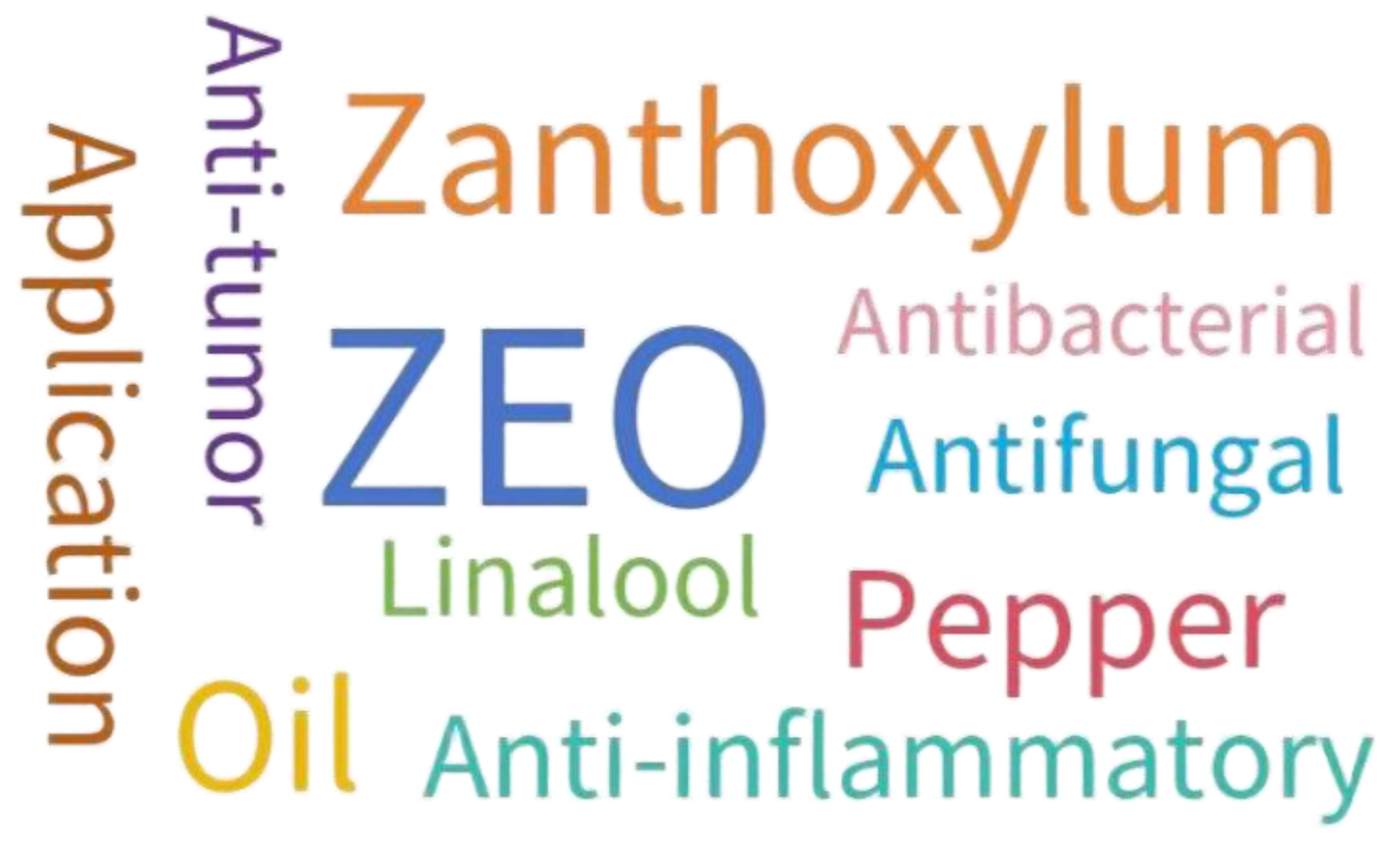
Figure 2.
Factors influencing the composition and content of ZEO.
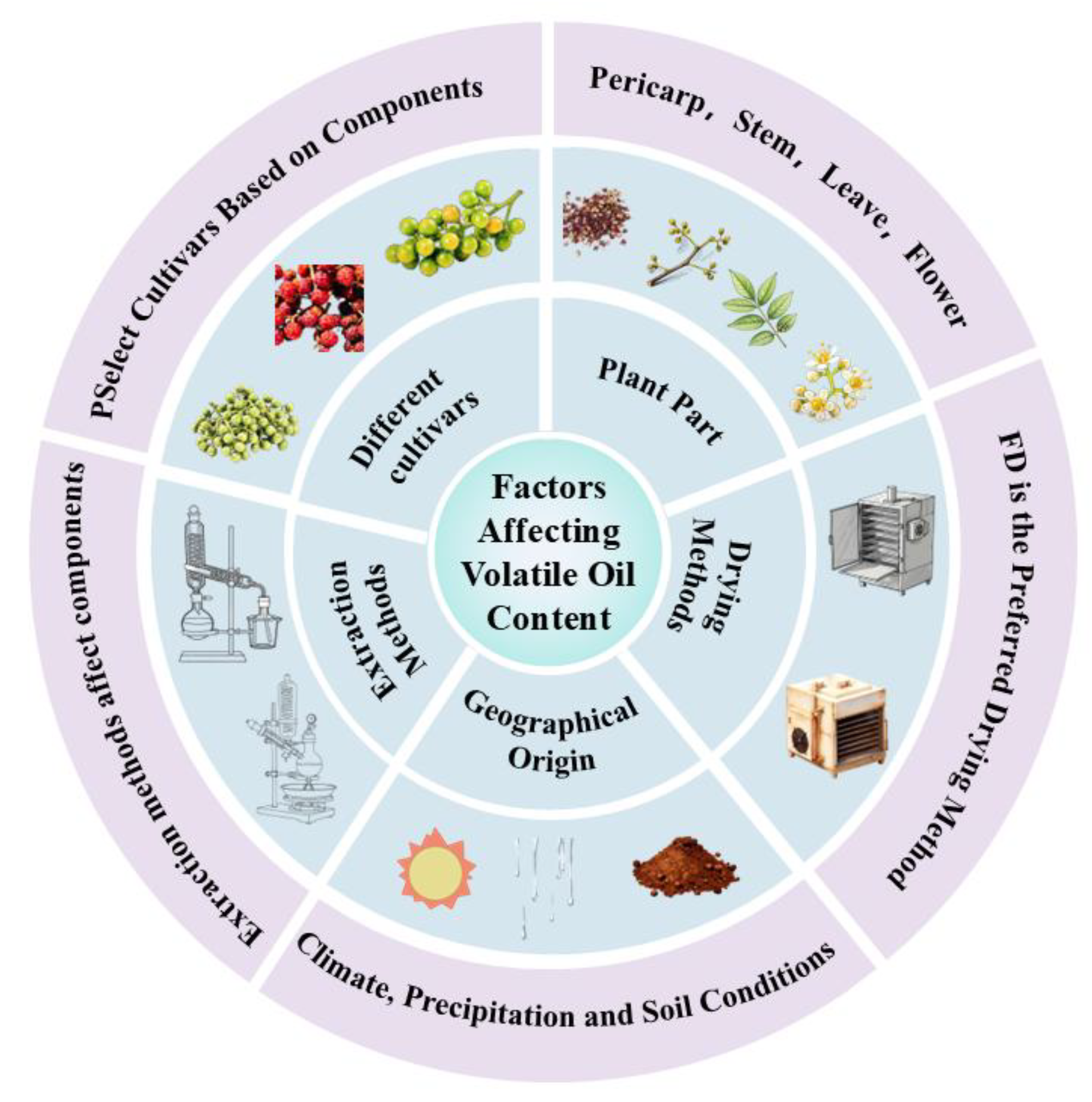
Figure 3.
a.ZEO induces cellular dysfunction and death: Linalool, a key component of ZEO, compromises the integrity of bacterial cell membranes, triggering the leakage of intracellular contents, elevated extracellular conductivity, and rapid ATP depletion, which collectively culminate in cell death. b.ZEO inhibits spore germination: Linalool in ZEO exerts a direct effect on the outer coat of bacterial spores, blocking germination by suppressing germ tube elongation and ultimately leading to spore death.
Figure 3.
a.ZEO induces cellular dysfunction and death: Linalool, a key component of ZEO, compromises the integrity of bacterial cell membranes, triggering the leakage of intracellular contents, elevated extracellular conductivity, and rapid ATP depletion, which collectively culminate in cell death. b.ZEO inhibits spore germination: Linalool in ZEO exerts a direct effect on the outer coat of bacterial spores, blocking germination by suppressing germ tube elongation and ultimately leading to spore death.
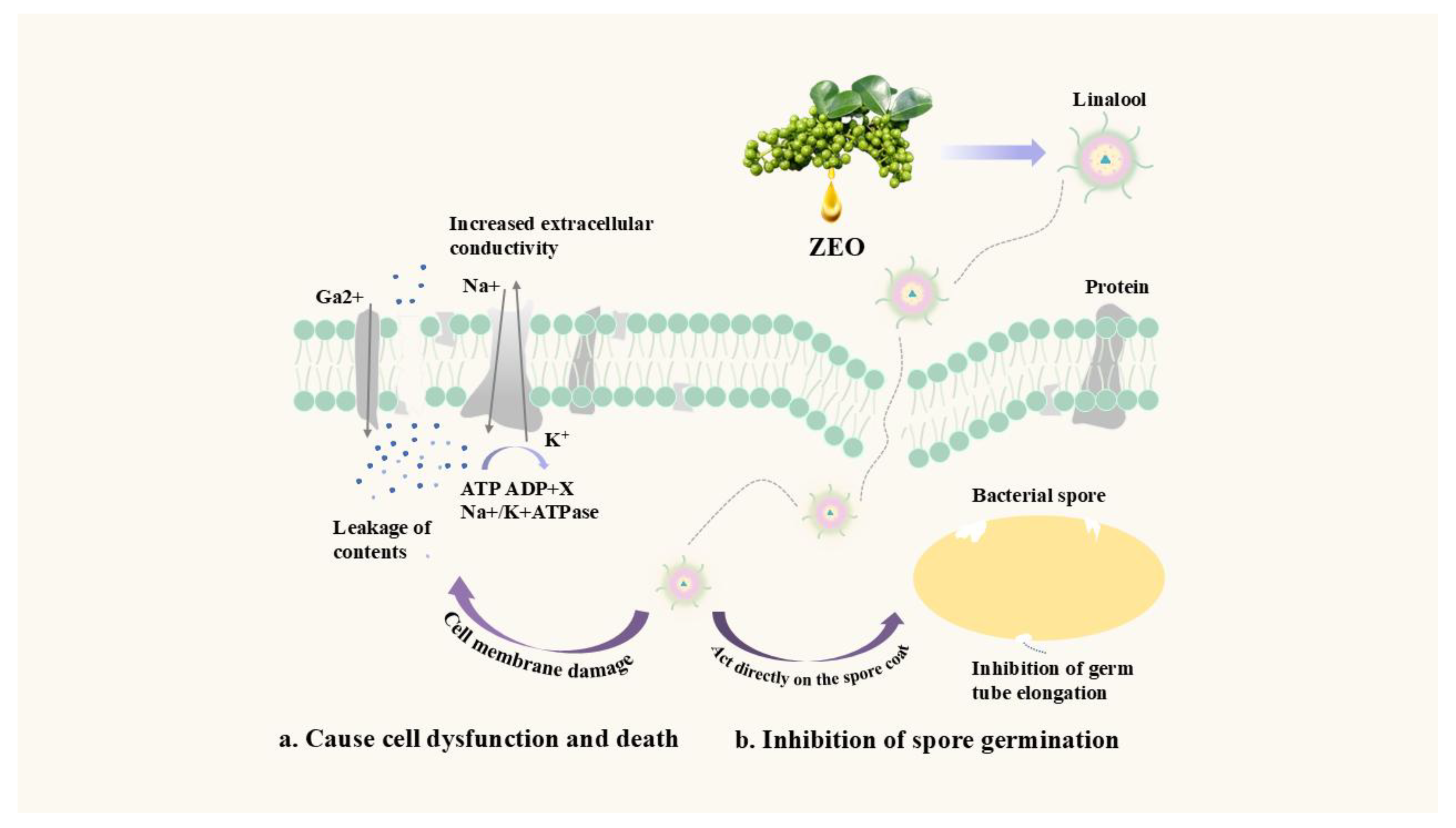
Figure 4.
a. Inhibition of tumor cell proliferation: Downregulates the expression of proliferation markers such as PCNA (Proliferating Cell Nuclear Antigen) and Ki-67, activates the JNK (c-Jun N-terminal Kinase) signaling pathway, inhibits the Wnt/β-catenin pathway, and induces cell cycle arrest. b. Induction of tumor cell autophagy: Regulates the PI3K (Phosphatidylinositol 3-Kinase)/Akt (Protein Kinase B)/mTOR (Mammalian Target of Rapamycin) pathway, upregulates autophagy-related proteins including Beclin-1 and LC3 Ⅱ (Microtubule-Associated Protein 1 Light Chain 3 Ⅱ), and promotes autophagosome formation. c. Immunomodulatory antitumor effect: Promotes the activation of NK (Natural Killer) cells and polarization of dendritic cells, enhances the ability of T cells to secrete IFN-γ (Interferon-γ) and IL-2 (Interleukin-2), and inhibits the PD-1 (Programmed Cell Death Protein 1)/PD-L1 (Programmed Cell Death Ligand 1) immune checkpoint pathway, thereby activating the antitumor immune response.
Figure 4.
a. Inhibition of tumor cell proliferation: Downregulates the expression of proliferation markers such as PCNA (Proliferating Cell Nuclear Antigen) and Ki-67, activates the JNK (c-Jun N-terminal Kinase) signaling pathway, inhibits the Wnt/β-catenin pathway, and induces cell cycle arrest. b. Induction of tumor cell autophagy: Regulates the PI3K (Phosphatidylinositol 3-Kinase)/Akt (Protein Kinase B)/mTOR (Mammalian Target of Rapamycin) pathway, upregulates autophagy-related proteins including Beclin-1 and LC3 Ⅱ (Microtubule-Associated Protein 1 Light Chain 3 Ⅱ), and promotes autophagosome formation. c. Immunomodulatory antitumor effect: Promotes the activation of NK (Natural Killer) cells and polarization of dendritic cells, enhances the ability of T cells to secrete IFN-γ (Interferon-γ) and IL-2 (Interleukin-2), and inhibits the PD-1 (Programmed Cell Death Protein 1)/PD-L1 (Programmed Cell Death Ligand 1) immune checkpoint pathway, thereby activating the antitumor immune response.
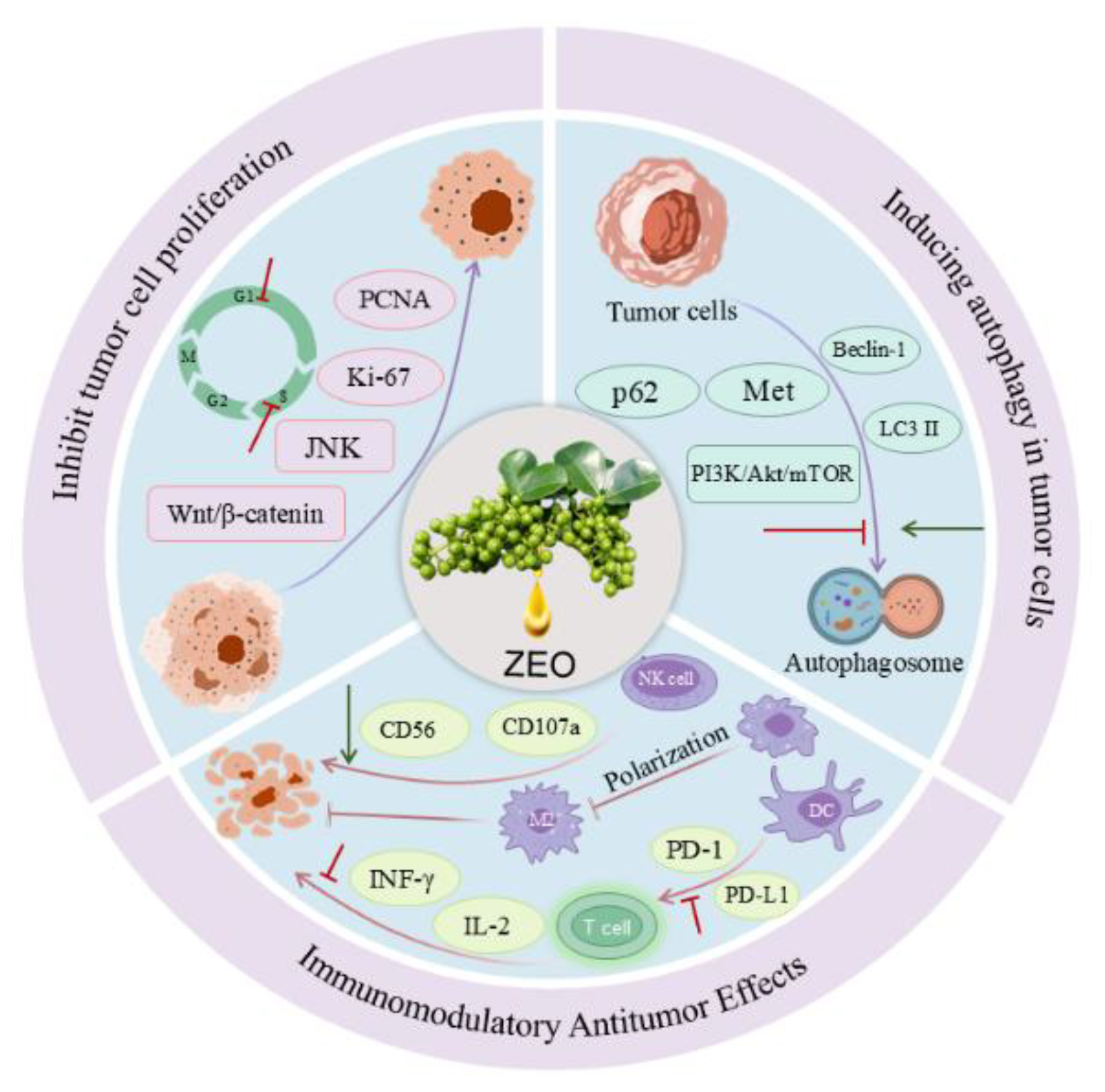
Figure 5.
Figure 5. Schematic diagram of ZEO applications in pharmaceutical, daily chemical and food industries.
Figure 5.
Figure 5. Schematic diagram of ZEO applications in pharmaceutical, daily chemical and food industries.
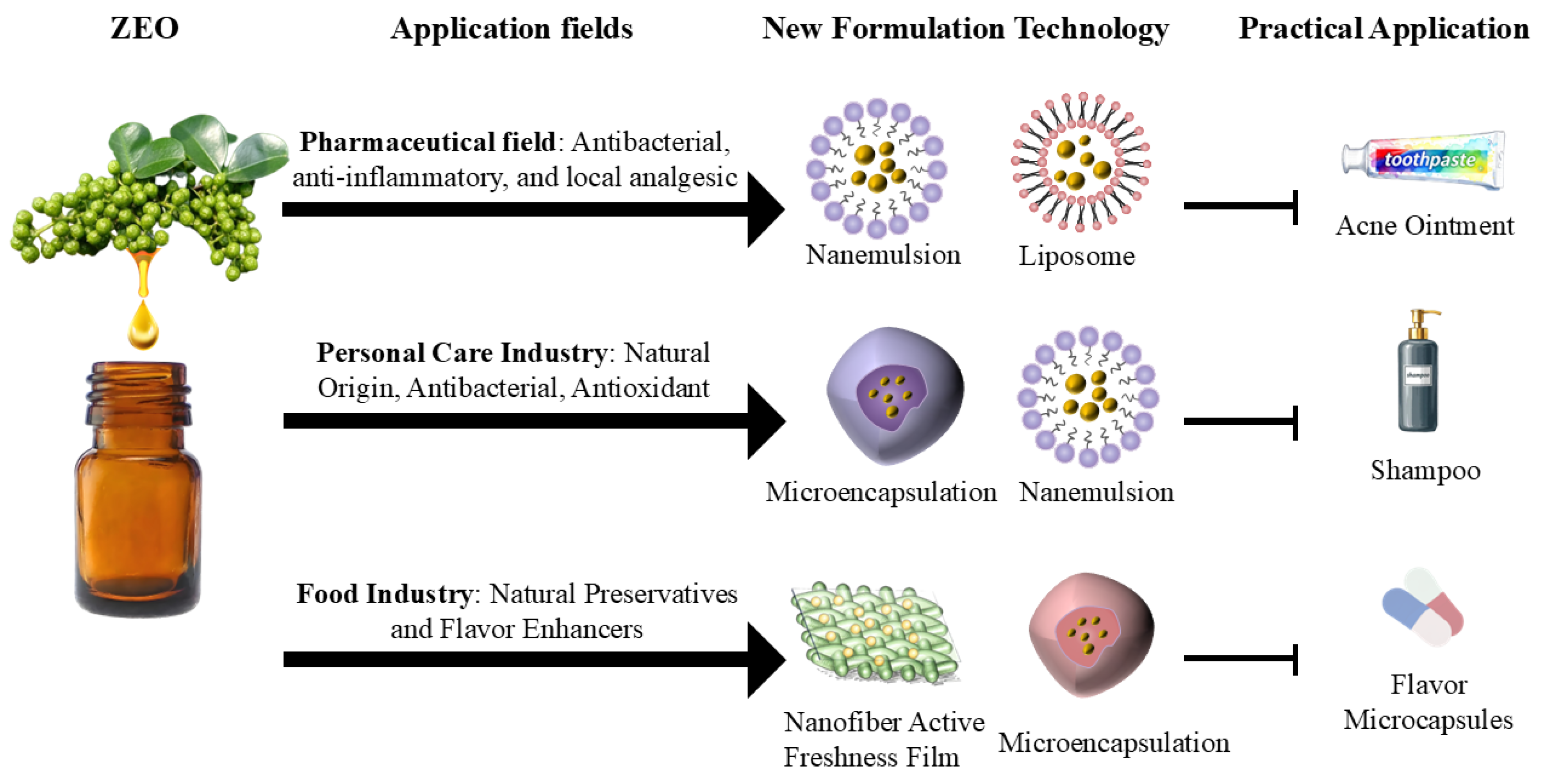

Table 1.
The content of terpenoids in ZEO and their extraction parts.
| Compound | Molecular formula | Structural formula | Content | Extract parts | References |
| α-Thujene | C10H16 |  |
0.38-1.92 | pericarp; fruit | [11,12] |
| Sabinene | C10H16 |  |
1.31-10.27 | leave; pericarp | [11,13] |
| β-Myrcene | C10H16 |  |
3.35-10.56 | fruit; pericarp | [11,14] |
| 4-Carene | C10H16 |  |
0.14-5.51 | pericarp; fruit | [12,15] |
| 3-Carene | C10H16 |  |
1.330-1.52 | fruit; Fruit | [16,17] |
| α-Phellandrene | C10H16 |  |
0.12-2.34 | pericarp; pericarp | [11,15] |
| D-Limonene | C10H16 |  |
14.81-38.27 | fruit; fruit | [12,16] |
| (E)-β-ocimene | C10H16 |  |
0.33-5.60 | peel; fruit | [12,18] |
| γ-Terpinene | C10H16 |  |
0.1-6.73 | leave; fruit | [12,13] |
| β-terpinene | C10H16 |  |
0.16-1.13 | aerial part; aerial part | [17,19] |
| α-Caryophyllene | C15H24 |  |
0.15-1.98 | pericarp; pericarp | [11] |
| β-Cadinene | C15H24 |  |
0.27-2.62 | aerial part; pericarp | [19,20] |
| γ-cadinene | C15H24 |  |
0.26-1.19 | pericarp; pericarp | [11,21] |
| α-Muurolene | C15H24 |  |
0.12-0.99 | fruit; fruit | [14,16] |
| β-Copaene | C15H24 |  |
0.35-2.47 | pericarp; fruit | [16,20] |
| o-Cymene | C10H14 |  |
0.22-2.82 | fruit; leave | [12,13] |
| Cyclohexene | C6H10 |  |
1.48-1.87 | fruit; fruit | [14] |
| Pseudolimonene | C10H16 |  |
0.11-12.16 | /; / | [17,22] |
| β-Guaiene | C15H24 |  |
0.25-1.43 | fruit; / | [16,17] |
| Naphthalene | C10H8 |  |
0.17-0.90 | fruit; fruit | [14,16] |
Table 2.
Content and Extraction Methods of Alcoholic Compounds in ZEO.
| Compound | Molecular formula | Structural formula | Content | Extraction method | References |
| L-alpha-Terpineol | C10H18O |  |
3.88-5.88 | HD; HD | [14,17] |
| (-)-4-Terpineol | C10H18O |  |
0.18-13.13 | HS-SPME; HD | [18,30] |
| β-Eudesmol | C15H26O |  |
0.48-4.43 | HD; SFE | [13,31] |
| 2-Cyclohexen-1-ol | C6H10O |  |
0.17-0.28 | HD; HD | [14] |
| Carveol | C10H16O |  |
0.1-0.29 | HD; SD | [16] |
| Nerolidol | C15H26O |  |
0.13-1.9 | HD; HD | [14,22] |
| 2-Naphthalenemethanol | C11H10O |  |
0.1-0.29 | HD; SD | [14,16] |
| (+)-citronellal | C10H18O |  |
0.11-0.25 | SC-CO2; / | [22,32] |
| Neral | C10H16O |  |
1.08-1.64 | HD; HD | [15,19] |
Table 3.
The content of other types of compounds in ZEO, extraction methods, and extraction parts.
| Compound | Molecular formula | Structural formula | Content | Extraction method | Extract parts | References |
| Esters | ||||||
| Linalyl anthranilate | C17H23NO2 |  |
10.87-12.22 | HD; HD | aerial part; pericarp | [15,19] |
| α-Terpinyl acetate | C12H20O2 |  |
0.71-3.74 | SC-CO2; SFE | pericarp; pericarp | [15,20] |
| Terpinyl acetate | C12H20O2 |  |
1.6-9.42 | HD; HD | pericarp; leaf | [11,13] |
| 9,12-Octadecadienoic acid, ethyl ester | C20H36O2 |  |
0.604-0.862 | SC-CO2; SC-CO2 | /; / | [37] |
| Nerol acetate | C12H20O2 |  |
0.17-2.18 | HS-SPME; HD | peel; aerial part | [18,19] |
| Sabinene hydrate | C10H18O |  |
0.22-2.06 | HD; / | pericarp; / | [11,22] |
| Acids | ||||||
| Palmitic acid | C16H32O2 |  |
6.89-19.86 | SFE; HD | /; seed | [31,38] |
| Myristicacid | C14H28O2 |  |
0.18-1.95 | HD; HD | leaves; leaves | [13] |
| α-Linolenic acid | C18H30O2 |  |
2.58-7.96 | HD; HD | leaves; leaves | [13] |
| Oxide | ||||||
| Caryophyllene oxide | C15H24O |  |
0.1-3.14 | HS-SPME; HD | leaf; leaf | [13,39] |
| trans-linalool oxide | C10H18O2 |  |
0.314-0.207 | HD; HD | fruit peel | [40] |
| Ethers | ||||||
| 1,8-Cineole | C10H18O |  |
1.05-15.18 | HD; HS-SPME | pericarp; pericarp | [39,41] |
| p-Allylanisole | C10H12O |  |
0.62-0.31 | HD; UNE-HS-SDME | pericar; pericarp | [42] |
| Estragole | C10H12O |  |
42.01-84.88 | HD; HD | seed; / | [17,38] |
| Ketones | ||||||
| D-Carvone | C10H14O |  |
0.17-0.55 | HD; SD | fruit; fruit | [14,16] |
| Xanthoxylin | C10H12O4 |  |
14.77-16.25 | HD; HD | pericarp; / | [17,43] |
Disclaimer/Publisher’s Note: The statements, opinions and data contained in all publications are solely those of the individual author(s) and contributor(s) and not of MDPI and/or the editor(s). MDPI and/or the editor(s) disclaim responsibility for any injury to people or property resulting from any ideas, methods, instructions or products referred to in the content. |
© 2026 by the authors. Licensee MDPI, Basel, Switzerland. This article is an open access article distributed under the terms and conditions of the Creative Commons Attribution (CC BY) license (http://creativecommons.org/licenses/by/4.0/).
Copyright: This open access article is published under a Creative Commons CC BY 4.0 license, which permit the free download, distribution, and reuse, provided that the author and preprint are cited in any reuse.


