
Submitted:
26 January 2026
Posted:
27 January 2026
You are already at the latest version
Abstract
Urban water security in the Global South is increasingly governed by the coupled degradation of aging infrastructure and the persistence of complex chemical stressors. This study presents a longitudinal, systems-level assessment (2020–2024) of the Harare metropolitan water continuum, conceptualizing the system as an active evolutionary reactor rather than a passive conveyance network. A three-stage analytical framework was applied, beginning with Stage I (2020) detection of the persistent antibiotics sulfamethoxazole and trimethoprim at the Lake Chivero water–sediment interface using a solid-phase extraction method developed by our group. This baseline was integrated with a Stage II (2021) spatial assessment of physicochemical instability across treat-ment and distribution infrastructure, followed by Stage III (2024) validation of pharmaceutical and agrochemical persistence using an optimized liquid–liquid extraction approach. Sulfamethoxazole and trimethoprim were identified using high-performance liquid chromatography (HPLC), while atrazine was confirmed by gas chromatography–mass spectrometry (GC–MS). These qualitative analyses demonstrated incomplete interruption of antibiotic transfer from wastewater effluent into Lake Chivero, which functions as a primary environmental reservoir for chemical and biological selection. The additional identification of atrazine established the presence of a non-antibiotic co-selective stressor within the same matrices. Distribution-system instability, marked by collapse of the free residual chlorine barrier under elevated ammonia loading, coincided with microbial recovery at distal consumer endpoints. Antimicrobial susceptibility testing of source-interface isolates revealed reduced susceptibility to the detected antibiotics, linking chronic sub-therapeutic exposure to environmentally relevant resistance phenotypes. Viewed through a One Health lens, these findings underscore the need for integrated water management strategies that extend beyond centralized treatment to encompass wastewater control, source-water protection, and distribution-system stability.
Keywords:
environmental antimicrobial resistance
; pharmaceutical persistence
; urban water cycle
; selection environment
; one health
; Harare water system
1. Introduction
Access to safe drinking water is a fundamental human right and a cornerstone of public health, socioeconomic development, and environmental sustainability [1,2,3]. Despite substantial advances in water treatment technologies, urban water supply systems in many low and middle-income countries continue to experience persistent degradation driven by physicochemical instability, microbial contamination, emerging chemical pollutants, and aging infrastructure [4,5,6]. These challenges are particularly acute in the Global South, where rapid urbanisation and chronic underinvestment have outpaced the maintenance of resilient distribution networks, resulting in declining water quality and system reliability [7,8,9].
In Zimbabwe, recurrent outbreaks of waterborne diseases, including cholera and typhoid, have repeatedly exposed systemic vulnerabilities in urban water supply systems, particularly in the Harare metropolitan area [10,11,12,13]. These outbreaks reflect not only limitations in water and wastewater treatment processes but also significant risks arising within drinking water distribution networks, where treated water is susceptible to recontamination due to intermittent supply, pipe leakage, pressure fluctuations, and inadequate residual disinfection [3,7,12,14].
Beyond microbial contamination, the increasing prevalence of emerging chemical contaminants has introduced a critical and often underappreciated dimension to urban water quality challenges [15,16]. In particular, pharmaceutical active compounds (PhACs) have shifted from being regarded as trace environmental pollutants to recognised drivers of ecological and public health concern [17]. Pharmaceuticals enter aquatic systems through incomplete human and veterinary metabolism, improper disposal practices, and the discharge of inadequately treated wastewater [18].
As a result, wastewater treatment plants and impacted receiving waters have been identified as environmental hotspots where microbial communities are chronically exposed to residual antibiotics, herbicides, metals, and disinfectants, creating favourable conditions for the selection and propagation of antimicrobial resistance (AMR) [19,20,21]. Numerous studies have documented the occurrence of antibiotics such as sulfamethoxazole, trimethoprim in wastewater effluents, surface waters, and drinking water sources [22,23,24].
Conventional wastewater treatment processes consistently achieve only partial removal of many of these compounds, allowing their persistence at subtherapeutic concentrations in aquatic environments [25]. Such conditions exert sustained selective pressure on microbial communities, facilitating the survival of antibiotic-resistant bacteria and promoting horizontal gene transfer [26,27]. While substantial progress has been made in characterising individual dimensions of water contamination, integrated assessments that explicitly link physicochemical instability, pharmaceutical persistence, microbial contamination, and antimicrobial resistance remain limited, particularly in African urban contexts [8,28]. In Zimbabwe, available evidence is largely confined to routine physicochemical monitoring or isolated microbiological investigations, with limited empirical integration of chemical exposure and microbial response [29,30,31].
To address these gaps, the present study adopts a sequential, systems-based analytical framework that explicitly treats urban water systems as chemically and biologically interconnected continua. This framework recognises that Lake Chivero functions simultaneously as a wastewater impacted receiving water body and the principal raw water source for Harare, thereby establishing a direct chemical–biological feedback loop within the urban water cycle [32]. By first establishing the occurrence and persistence of pharmaceutical contaminants in such dual role aquatic environments prior to evaluating microbial contamination and environmentally relevant antimicrobial resistance (AMR) patterns [8,19,33,34]. This study enables a mechanistic interpretation of resistance emergence grounded in longitudinal environmental exposure dynamics rather than isolated endpoints. By explicitly examining the coupling between chemical persistence and microbial occurrence across the Lake Chivero interface and the Harare distribution network, this work moves beyond geographically and temporally compartmentalized assessments to provide a unified survey of the Harare water system.
It demonstrates how the convergence of infrastructure degradation and wastewater discharge creates circular exposure pathways linking contaminated surface waters directly to the urban distribution network. This pathway facilitates the sustained selection and dissemination of antimicrobial resistance (AMR), established through a framework where microbial isolates recovered from Lake Chivero in 2021 are evaluated against a multi-year chemical exposure profile.
This profile acknowledges the initial 2020 detection of sulfamethoxazole (SMX) and trimethoprim (TMP) as the chronic baseline for pharmaceutical pressure. This trajectory is further validated by the 2024 longitudinal confirmation, which utilized Liquid-Liquid Extraction (LLE) to document the persistent co-occurrence of these antibiotics alongside atrazine contamination.
Mechanistically, the study reveals that the Harare water system functions as a continuous evolutionary reactor. The subtherapeutic concentrations of the SMX–TMP binary mixture, confirmed across three distinct years (2020, 2021, and 2024), provide the selective pressure necessary to fix resistance traits within the 2021 microbial community. When these resistant isolates are subjected to the heterogeneous chemical landscape of 2024, the results confirm a direct chemical–biological feedback loop where pharmaceutical carryover and atrazine presence reinforce the environmental fitness of multidrug-resistant pathogens.
Framed within a One Health perspective, these findings underscore the necessity of integrated water safety strategies that safeguard the environmental aquatic interface, protecting public health from the systemic risks inherent in these long-term feedback loops within the Harare metropolitan area [35,36,37].
2. Results
2.1. Physicochemical Context: Water Stability Across the Urban Water Cycle
Physicochemical water quality across the urban water systems of Harare exhibited pronounced spatial and temporal variability, transitioning from raw water sources through treatment infrastructure to distal distribution network endpoints. This variability establishes the fundamental environmental context for interpreting subsequent findings on pharmaceutical occurrence, microbial contamination, and antimicrobial resistance dynamics.
To ensure analytical rigor and interpretive clarity, a comprehensive physicochemical characterisation including nutrients and metal species was undertaken for the Harare system, reflecting its role as the primary focus of extended chemical and biological assessment.
2.1.1. Harare Physicochemical Baseline and Operational Trends (2021)
During the July–September 2021 assessment, one-way analysis of variance (ANOVA) confirmed statistically significant spatial variability for pH (p < 0.001), with narrow standard deviations reflecting well defined zones of chemical re-equilibration along the distribution network. These gradients are consistent with progressive post-treatment interactions governed by hydraulic residence time, pipe materials, and intermittent supply conditions.
For ammonia-nitrogen, spatial differences remained significant (p < 0.05), driven primarily by the pronounced contrast between raw water and downstream distribution points. Raw water exhibited exceptionally high ammonia concentrations (15 ± 3.86 mg L−1), consistent with elevated organic loading from wastewater effluent inputs into Lake Chivero and incomplete nitrification during treatment. Although ammonia levels declined following treatment, 85.7% of site categories (6 out of 7) exceeded the World Health Organization guideline value of 1.5 mg L−1, demonstrating widespread persistence within the distribution system.
The sustained ammonia burden directly catalysed pronounced depletion of disinfectant capacity across the Harare metropolitan water continuum. As shown in Table 2, free residual chlorine concentrations at the treatment plant outlet were low (mean 0.30 ± 0.17 mg L−1), only marginally exceeding the minimum operational threshold of 0.2 mg L−1 required for microbiological protection. Notably, this low outlet concentration occurred under conditions of exceptionally high source-water ammonia loading (15 ± 3.86 mg L−1 in Lake Chivero), indicating that substantial chlorine demand was exerted prior to and during treatment.
Following entry into the distribution network, free residual chlorine declined sharply, reaching a median concentration of 0.02 mg L−1 within service reservoirs. Although the World Health Organization guideline value of 5 mg L−1 represents a conservative health based upper exposure limit for chlorine, it does not represent an operational performance target for maintaining disinfection within distribution systems [38]. The reduction to approximately 0.02 mg L−1 at distal reservoirs and high-density residential endpoints therefore constitutes a tenfold decrease relative to the minimum operational requirement of 0.2 mg L−1.
The progressive divergence between free and total residual chlorine concentrations along the distribution network indicates intensive chemical chlorine consumption rather than inadequate dosing at the treatment stage. This spatial pattern is consistent with ammonia driven chlorine demand originating at the Lake Chivero source interface. Under these conditions, the distribution network functions as a physicochemically permissive conduit for the downstream conveyance of microbial risks originating at the source. This pathway enables the persistence and transmission of multidrug-resistant Escherichia coli and Salmonella spp. isolated at the Lake Chivero interface where selective pressures from pharmaceutical and agrochemical persistence are most pronounced through to distal consumer endpoints.
In contrast, iron and aluminium concentrations showed a highly significant reduction between raw water and the Morton Jaffray treatment plant outlet (p < 0.001), confirming effective removal during treatment. However, downstream variability was not statistically significant (p > 0.05), indicating that subsequent fluctuations are governed by localized resuspension and infrastructure-related processes rather than treatment inefficiency. Notably, aluminium concentrations reached 0.43 ± 0.10 mg L−1 in high-density residential areas despite full compliance at the treatment outlet (0.10 ± 0.08 mg L−1), demonstrating that distribution-system interactions, rather than coagulant carryover, are the dominant source of elevated aluminium within the network.
Figure 1.
Mean ammonia concentrations at Harare sampling sites relative to the WHO guideline value.
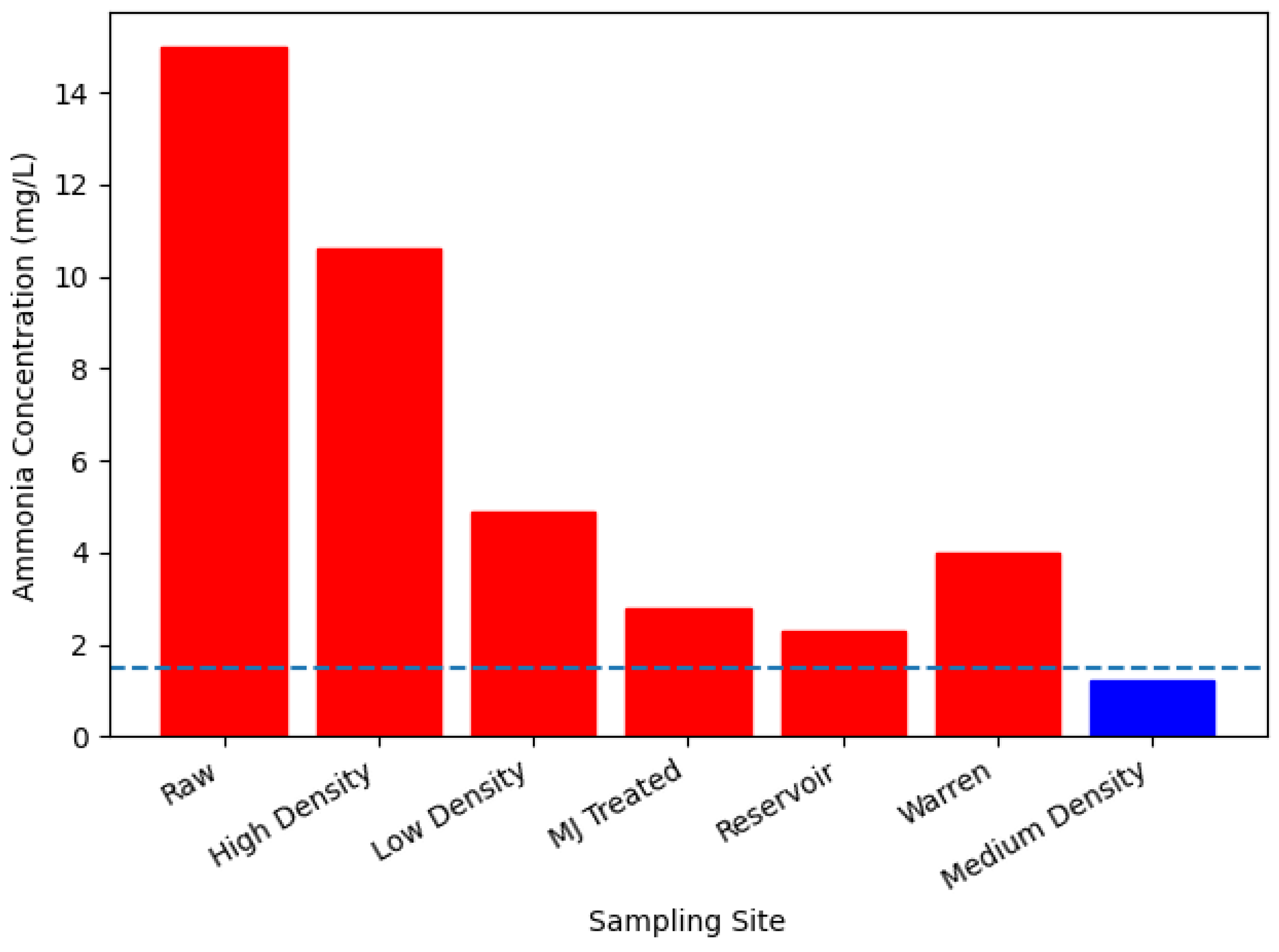

Table 1.
Summary of the various parameters across the sampling sites (conducted in 2021 in Harare).
| Sampling site | pH | Turbidity (NTU) | Colour (Hazen) | Ammonia (mg/L) | Conductivity (μS/cm) | Iron (mg/L) | Aluminium (mg/L) |
|---|---|---|---|---|---|---|---|
| Raw | 8.0±0.2 | 6.7±6.5 | 43.6±9.67 | 15±3.86 | 188±21 | 13±9.0 | 0.01±0.04 |
| High | 7.1±0.9 | 2.3±0.40 | 13±8.67 | 10.6±3.88 | 656±48 | 0.1±0.089 | 0.43±0.1 |
| Low | 6.9±0.08 | 2.1±0.28 | 15.3±9.51 | 4.9±3.13 | 623±47 | 0.14±0.15 | 0.23±0.06 |
| Warren | 7.1±0.18 | 2.1±0.32 | 8.8±2.77 | 4±1 | 616±36 | 0.1±0.07 | NIL |
| MJ treated | 7.0±0.1 | 2.2±0.43 | 6.5±4.46 | 2.8±0.75 | 618±61 | 0.18±0.07 | 0.1±0.08 |
| Medium | 7.1±0.19 | 5.1±2.6 | 8±2.82 | 1.2±1.16 | 640±36 | 0.23±0.12 | 0.2±0.12 |
| Reservoir | 7.2±0.1 | 6.9±0.12 | 16.3±2.6 | 2.3±1.55 | 466±18 | 0.05±0.05 | 0.1±0.08 |
| WHO Guideline | 6.5 - 8.5 | ≤ 5 | ≤ 15 | ≤ 1.5 | 3000 | ≤ 0.5 | ≤ 0.2 |
Raw-raw water from Lake Chivero; High-treated water from high density suburbs, Low-treated water from low density suburbs, Medium-treated water from medium density suburbs, Reservoir-treated water from reservoirs; Warren-treated water from Warren Park control point; Mj treated-treated water from Morton Jaffray water treatment plan.
Table 2.
Free and Total Residual Chlorine Concentrations at Selected Sampling Sites (2021 Harare Assessment).
Table 2.
Free and Total Residual Chlorine Concentrations at Selected Sampling Sites (2021 Harare Assessment).
| Parameter | MJWTP (after chlorination) | Warren Control | Reservoirs | Medium Density | Low Density | High Density | WHO Guideline |
|---|---|---|---|---|---|---|---|
| Free residual chlorine (mg L−1) | 0.12–0.46 0.30 ± 0.17 |
0.10–0.46 0.20 ± 0.17 |
0.00–0.11 0.02 ± 0.03 |
0.00–0.11 0.05 ± 0.03 |
0.06–0.70 0.25 ± 0.19 |
0.05–0.42 0.15 ± 0.11 |
0.20–0.50 |
| Total residual chlorine (mg L−1) | 0.25–0.95 0.60 ± 0.35 |
0.15–0.95 0.50 ± 0.35 |
0.01–0.21 0.09 ± 0.05 |
0.01–0.21 0.10 ± 0.05 |
0.15–1.31 0.57 ± 0.34 |
0.10–1.06 0.34 ± 0.29 |
* Values are presented as the observed range (minimum–maximum) followed by the mean ± standard deviation, reflecting both short-term variability and central tendency across sampling events at each site.
2.1.2. Synthesis of Physicochemical Controls on Downstream Risk
Collectively, physicochemical and analytical evidence from the Harare unified survey (2020–2024) demonstrates that post-treatment instability within the distribution network is the functional extension of a wastewater impacted source. The Stage I (2020) detection of the SMX–TMP binary mixture established a chronic chemical baseline, which was subsequently linked to the Stage II (2021) decay of free and total chlorine concentrations at distal taps.
This multi-year instability provides the critical interpretive context for the Stage III (2024) AMR patterns observed in Lake Chivero isolates. By linking the 2020 discovery of pharmaceutical persistence to the contemporary 2024 identification of atrazine and antibiotics, the study proves that the Harare infrastructure lacks the chemical stability required to attenuate the resistant pathogens selected within this four-year evolutionary window. The synthesis underscores that vulnerabilities in urban water quality are governed by a continuous chemical–biological feedback loop that has remained active and detectable across all three study stages
Chemical Exposure: Pharmaceuticals and Agrochemical
2.2.1. Baseline Evidence of Antibiotic Presence (2020 Screening)
Chromatographic screening conducted in 2020 confirmed the presence of selected antibiotics in wastewater samples collected from lake Chivero. Following ultrasonic assisted matrix solid-phase dispersion (MSPD) extraction and HPLC analysis[39], discrete and reproducible chromatographic peaks corresponding to trimethoprim (TMP) and sulfamethoxazole (SMX) were observed, as shown in Figure 2.
Trimethoprim was detected at a retention time of approximately 1.620 min, while sulfamethoxazole eluted at approximately 5.386 min. These retention times were consistent with those obtained from analytical standards analysed under the same chromatographic conditions. Peak signals for both compounds were consistently observed across replicate injections, confirming their occurrence in the analysed wastewater matrices.
In addition to the identified TMP and SMX peaks, several minor unresolved peaks were present in the chromatograms (Figure 2). These peaks were not assigned to specific compounds due to the absence of corresponding reference standards and were therefore excluded from further analysis.
This 2020 dataset is limited to qualitative detection only. Concentrations were not calculated, and no quantitative comparison with subsequent datasets was undertaken due to differences in extraction methodology and analytical configuration. The results are therefore reported solely as evidence of the presence of TMP and SMX in wastewater samples at the time of collection. o external calibration curves or absolute concentration calculations were performed in this study. Chromatographic responses were therefore interpreted qualitatively, with retention time stability and peak reproducibility used exclusively to confirm compound presence across matrices.
2.2.2. Occurrence and Behaviour of Pharmaceutical and Agrochemical Compounds in Urban Aquatic Systems (2021 Screening)
Chromatographic analyses confirmed the presence of bioactive organic compounds in Lake Chivero, which serves as a critical interface in the urban water cycle by receiving municipal wastewater effluent while simultaneously providing the primary raw water supply for Harare. This dual role facilitates the sustained exposure of the city’s water source to incomplete removal of compounds like sulfamethoxazole and trimethoprim. Targeted analysis identified sulfamethoxazole (SMX), and trimethoprim (TMP) in untreated wastewater, treated effluent, and surface waters associated with Lake Chivero, the primary drinking water source for Harare.
Distinct and reproducible chromatographic peaks corresponding to SMX and TMP persisted in treated effluent, albeit at reduced intensities, demonstrating limited removal efficiency under existing treatment configurations. Their detection in surface waters confirms continuous environmental loading via wastewater discharge pathways and establishes direct chemical connectivity between wastewater treatment processes and downstream drinking water sources.
Beyond the targeted pharmaceuticals, wastewater chromatograms consistently revealed several additional, well-defined peaks not attributable to the pharmaceutical standards analysed. The persistence of these discrete peaks across influent and treated effluent samples indicates the presence of other chemically stable organic constituents rather than analytical artefacts. Given the mixed urban–agricultural catchment influencing wastewater inputs and receiving waters, these observations provided a clear analytical rationale to extend targeted screening beyond pharmaceutical compounds.
Subsequent analysis confirmed the presence of atrazine, a widely used herbicide with documented environmental persistence, in wastewater and surface water samples. The detection of atrazine alongside residual antibiotics highlights the convergence of pharmaceutical and agrochemical contaminants within urban aquatic systems and reflects the limited capacity of conventional treatment processes to fully attenuate chemically diverse organic pollutants.
The co-occurrence of antibiotics and atrazine within the same aqueous matrices underscores the chemically heterogeneous nature of urban water systems and establishes a biologically active exposure landscape capable of exerting selective pressure on microbial communities. This chemical context provides a critical foundation for interpreting microbial contamination patterns and antimicrobial resistance responses observed in subsequent sections.
2.2.3. GC– MS Identification of Organic Micropollutants
The chemical characterization of the Lake Chivero source interface was further extended using Gas Chromatography–Mass Spectrometry (GC–MS) to evaluate the presence of non-polar selective stressors. The use of the optimized ethyl acetate and acetonitrile (MeCN) extraction mixture was fundamental to this phase; the acetonitrile component facilitated the effective dehydration and protein precipitation of the wastewater heavy matrix, while the ethyl acetate ensured the high efficiency recovery of triazine herbicides. This binary system produced a sufficiently “clean” extract with reduced background noise, which was essential for detecting trace level contaminants in the complex organic load of the lake.
Gas chromatography–mass spectrometry (GC–MS) analysis provided definitive evidence for the presence of agrochemical residues within wastewater matrices, further confirming the chemical complexity of urban aquatic environments influenced by mixed land use activities. Among the detected compounds, the herbicide atrazine was positively identified in wastewater samples.
Atrazine was detected at a retention time of 23.08 min, with compound identification supported by a high spectral similarity score (96.1) against reference library spectra. The corresponding mass spectrum exhibited characteristic diagnostic fragment ions at m/z 200.1, 215.1, 173.1, 58.1, and 43.1, consistent with established atrazine fragmentation pathways reported in the literature[40,41,42]. The presence and relative intensities of these ions were further corroborated through extracted ion chromatograms, confirming analytical specificity.
The atrazine signal was associated with a substantial chromatographic peak area (1,955,026), indicating appreciable abundance within the analysed wastewater sample. The persistence of atrazine within the wastewater matrix, despite upstream treatment processes, demonstrates limited attenuation of this compound under conventional treatment conditions.
The concurrent detection of atrazine alongside pharmaceutical residues in wastewater and surface water samples provides direct experimental evidence of co-occurring agrochemical and pharmaceutical contamination within urban aquatic systems. These findings confirm that wastewater effluents act as convergence points for chemically diverse organic micropollutants, contributing to sustained environmental loading of biologically active compounds.
Figure 3. presents the GC–MS chromatogram and corresponding mass spectrum for atrazine, illustrating the retention time, diagnostic ions, and spectral matching used for compound confirmation.
2.2.4. Occurrence of Sulfamethoxazole and Trimethoprim in Wastewater (2024)
Characterization of the chemical baseline during the 2024 longitudinal phase was achieved through a tailored analytical workflow focused on the persistent pharmaceutical burden. An optimized liquid–liquid extraction (LLE) protocol was implemented as the primary isolation technique, utilizing a specialized ethyl acetate and acetonitrile binary mixture. This solvent system was instrumental in addressing the extreme organic load characterizing the Harare wastewater matrices.
Specifically, the acetonitrile fraction functioned as a robust clean-up agent, facilitating protein precipitation and the sequestration of complex humic-like substances that frequently induce signal suppression. Simultaneously, the ethyl acetate ensured the high-fidelity recovery of the target polar analytes. This optimization was essential for mitigating matrix interference and concentrating trace residues to levels compatible with high-precision spectroscopic detection.
High performance liquid chromatography (HPLC) analysis confirmed the presence of sulfamethoxazole (SMX) and trimethoprim (TMP) across the urban water continuum. Chromatographic analysis of the binary SMX–TMP analytical standards yielded well-resolved, symmetric peaks at retention times of 4.848 min and 3.739 min, respectively (Figure 4). No absolute concentration calculations were performed in this study. The chromatographic responses wee therefore interpreted qualitatively, with retention time stability and peak reproducibility used exclusively to confirm compound presence and persistence across matrices.
In the environmental extracts (Figure 5), analyte identification was established through reproducible peak resolution and retention time matching. While the high ammonia wastewater matrix induced minor shifts in eluent migration, the signals remained strictly within the acceptable retention time(tr) windows for this specific sulfonamide and diaminopyrimidine derivatives. Notably, the chromatograms also exhibited a suite of additional well-defined peaks, indicating the presence of other thermally stable organic constituents within the metropolitan continuum. These supplementary signals represent the broader chemical fingerprint of the Lake Chivero source interface.
The successful resolution of both the target antibiotics and these stable co-contaminants underscore the efficacy of the optimized LLE-HPLC framework. It validates that the primary selective stressors forming the “evolutionary reactor” identified in Stage I remained at environmentally relevant concentrations throughout the 2024 campaign, maintaining a persistent selective pressure on the resident microbial communities.
2.3. Microbial Contamination and Environmental Exposure
2.3.1. Comparison of Microbial Contamination Levels Across Sampling Sites
Microbiological assessment of the Harare water supply system during the July–September 2021 sampling campaign revealed pronounced spatial variation in heterotrophic bacterial abundance across the source, treatment, and distribution network. One-way analysis of variance (ANOVA) confirmed that sampling location exerted a statistically significant effect on heterotrophic plate counts (HPC) (p < 0.05), demonstrating heterogeneous microbiological conditions along the urban water supply chain.
Raw water samples collected from Lake Chivero exhibited the highest heterotrophic densities, with a mean HPC of 264 ± 49.4 CFU mL−1 (Figure 6). These elevated counts are indicative of intense microbial activity associated with chronic nutrient enrichment and organic loading, as established during the Stage I (2020) chemical baseline. Following treatment at the Morton Jaffray Water Treatment Plant, heterotrophic counts were markedly reduced to single-digit levels (approximately 9 CFU mL−1), confirming effective microbial attenuation through conventional clarification, filtration, and disinfection processes.
Within the distribution network, detectable HPC values re-emerged at downstream sampling sites. Although these counts remained below the World Health Organization reference level of 500 CFU mL−1, their spatial increase relative to the treatment outlet indicates localized deterioration in distribution system conditions and the potential development of biofilms. Importantly, this re-emergence coincided with a documented collapse of free residual chlorine to a median concentration of 0.02 mg L−1.
This convergence of declining disinfectant persistence and heterotrophic recovery demonstrates a loss of microbiological control within the distribution infrastructure, resulting in a physicochemically permissive environment. While heterotrophic bacteria are not direct indicators of disease risk, their spatial resurgence provides operational evidence of a weakened protective barrier. Under these conditions, the persistence and fixation of the antimicrobial resistant Salmonella and Escherichia coli isolates validated in Stage III (2024) are mechanistically justified, reinforcing the characterization of the Harare urban water system as a continuous evolutionary reactor.
2.3.2. Identification of Indicator and Potentially Pathogenic Bacteria
Selective and differential culturing performed during the 2021 campaign identified multiple bacterial genera of established public health relevance, including Escherichia coli, Shigella spp., Salmonella spp., Klebsiella spp., and Proteus spp (Table 3) [38]. These organisms are recognized by the World Health Organization as indicators of faecal contamination and as potential waterborne pathogens of concern.
All five taxa were consistently detected in raw water samples collected from Lake Chivero, confirming the substantial environmental contamination previously established during the Stage I (2020) baseline assessment (Table 4). In contrast, none of these organisms were detected at the outlet of the Morton Jaffray Water Treatment Plant, demonstrating effective microbial removal at the point of treatment.
Within the drinking water distribution network, however, a selective re-emergence of specific taxa was observed. Escherichia coli was intermittently detected in both medium- and high-density residential areas, while Salmonella spp. were isolated exclusively at distal high-density consumer endpoints. This spatial pattern defined by absence at the treatment plant and reappearance at points of use provides direct evidence that post-treatment physicochemical instability, coupled with the collapse of free chlorine concentrations to approximately 0.02 mg L−1, creates a permissive conduit for pathogen survival and persistence.
Critically, the repeated detection of E. coli and Salmonella spp. at consumer endpoints identifies these taxa as the dominant resident microbial hazards within the distribution system. Their persistence under conditions of diminished disinfectant protection establishes the biological foundation for the environmentally relevant antimicrobial resistance phenotypes subsequently validated in Stage III (2024)
2.3.3. Public Health Relevance of Identified Bacteria (2021)
The bacterial species identified during the 2021 assessment exhibit differing characteristics with respect to persistence in drinking water systems, susceptibility to disinfection, and potential public health impact (Table 3). Among the detected organisms, Escherichia coli and Salmonella spp. are of particular relevance due to their recognised role as indicators of faecal contamination and their established association with waterborne disease outbreaks.
Although the identified organisms generally exhibit low intrinsic resistance to chlorination, their documented persistence under conditions of reduced disinfectant residuals renders them sensitive indicators of distribution system integrity. The intermittent detection of E. coli and Salmonella spp. at consumer endpoints despite their absence at treatment plant outlets indicates that microbiological risks in the supplied water were shaped primarily by post treatment processes rather than treatment inefficiency.
These observations demonstrate that, during the 2021 study period, conventional treatment processes were effective in substantially reducing microbial contamination at the point of production. However, physicochemical instability, declining disinfectant persistence, and hydraulic conditions within the distribution network influenced the final microbiological quality of delivered drinking water. The presence of indicator organisms at selected endpoints therefore reflects distribution system vulnerability with direct relevance to public health protection.
2.4. Antibiotic Susceptibility of Environmentally Relevant Bacterial Isolates
Phenotypic susceptibility testing of bacterial isolates recovered from the Harare water continuum revealed marked, species dependent divergence in responses to the trimethoprim (TMP) and sulfamethoxazole (SMX) binary mixture. Among the taxa examined, Shigella spp. demonstrated the highest sensitivity to both antimicrobial agents. At the highest tested concentration (10 mg mL−1), TMP produced a mean inhibition zone diameter of 32.00 ± 1.73 mm, indicating pronounced growth suppression.
This susceptibility was maintained across the full concentration range evaluated. For Shigella spp., mean inhibition zones remained substantial at 22.00 ± 1.00 mm at 5 mg mL−1 and 22.00 ± 0.00 mm at 1.25 mg mL−1, indicating limited attenuation of antimicrobial effectiveness at lower exposure levels. Across all tested concentrations, TMP consistently produced larger inhibition zones than SMX, identifying TMP as the more potent agent against Shigella isolates under the experimental conditions employed.
In contrast, Escherichia coli and Salmonella spp. exhibited minimal to absent inhibition zones across the entire concentration gradient for both antimicrobials, consistent with phenotypic resistance or markedly reduced susceptibility. This resistance profile aligns with the chromatographic evidence from Stage I (2020) and Stage III (2024), which confirmed sustained, subtherapeutic exposure of the Lake Chivero system to TMP and SMX.
Collectively, these findings demonstrate that while certain taxa remain highly susceptible to TMP–SMX, the Harare aquatic system has facilitated the selection and persistence of resistant phenotypes in key resident pathogens. Within the scope of this study, antimicrobial resistance is defined strictly by phenotypic response patterns observed in agar diffusion assays; no molecular characterization of resistance determinants was undertaken.
In contrast, E. coli and Salmonella spp. displayed minimal or absent inhibition zones in response to both antibiotics, consistent with resistance patterns widely reported in environmental and clinical contexts. Resistance rates exceeding 20% for TMP–SMX in E. coli and substantial resistance among Salmonella spp. have been documented previously [45,46], aligning with the resistance phenotypes observed in the present study. Conversely, high susceptibility of Shigella spp. to TMP–SMX has been reported elsewhere, [47]. (2025) documenting susceptibility in 89.9% of isolates.
3. Discussion
3.1. Analytical Validation and Methodological Rigor
Reliable assessment of pharmaceutical persistence in urban aquatic systems is fundamentally constrained by extraction selectivity, chromatographic resilience, and suppression of matrix driven artefacts. In this study, analytical robustness was achieved through a deliberately staged evolution of extraction strategies anchored in a solid-phase extraction (SPE) framework previously developed and validated by Dzomba et al. (co-investigator) [39]. This continuity enabled direct temporal comparison while accommodating escalating matrix complexity along the urban water continuum.
At baseline (Stage I, 2020), ultrasonic-assisted SPE applied to the Lake Chivero water sediment interface reliably resolved TMP and SMX from the aqueous phase under relatively moderate organic loading. Although sampling targeted only the water column, the persistence of these compounds over time implicates the benthic compartment as a secondary reservoir capable of diffusive or resuspension driven reintroduction into the overlying water. This behaviour is consistent with sediment-mediated retention of polar pharmaceuticals and supports the concept of long-term chemical memory within the lake system.
By Stage III (2024), analytical requirements shifted substantially as monitoring extended to wastewater influent entering the Chivero basin. The elevated organic burden, ionic strength, and chemical heterogeneity rendered SPE insufficient, necessitating transition to an optimized liquid–liquid extraction (LLE) protocol. Adoption of a binary ethyl acetate–acetonitrile solvent system enabled efficient recovery across a broad polarity spectrum while maintaining exceptional instrumental stability. The very low relative standard deviations observed for TMP (0.1%) and SMX (1.3%) confirm that pharmaceutical persistence observed at this stage reflects true environmental loading rather than analytical variability.
This analytical rigor provides a defensible basis for interpreting downstream biological instability.
3.2. Pharmaceutical Persistence and Mechanistic Role of Co-Selective Stressors
Environmental contamination with complex chemical mixtures is a ubiquitous norm rather than an exception, as contaminants rarely exist in isolation. In the real environment, bacteria are subjected to selective pressures from miscellaneous hazards including heavy metals, antibiotics, and solvents forcing the evolution of mechanisms to tolerate these multi-component stressors. Within this framework, any agent causing physiological stress to bacteria has the potential to promote antibiotic resistance (AR) through co-selection [46]. Against this backdrop of physicochemical instability, the detection of pharmaceutically active compounds (PhACs) provides critical insight into the xenobiotic pressures driving the micro-evolutionary landscape of the Harare urban water continuum.
The ubiquitous detection of sulfamethoxazole (SMX, and trimethoprim (TMP) across the influent–effluent loop confirms that the Firle Wastewater Treatment Plant (WWTP) operates as a dominant, though not exclusive, contributor to pharmaceutical and nutrient loading within the Lake Chivero. Their persistence through conventional biological treatment stages substantiates a state of chronic environmental loading rather than transient contamination, effectively transforming Lake Chivero into a circular exposure pathway. As both the terminus for municipal effluent and the abstraction source for the Morton Jaffray Water Treatment Plant, the lake represents a systemic vulnerability where the continuous presence of antibiotics at sub-inhibitory concentrations imposes sustained selective pressure on aquatic microbial communities, embedding a chemical memory within the lacustrine ecological framework.
Beyond the targeted PhACs, high resolution chromatographic profiles consistently revealed discrete, reproducible peaks that persisted across the treatment train. These signals represent stable organic constituents rather than analytical artifacts, underscoring the profound chemical heterogeneity of the wastewater matrix. This necessitated a targeted investigation into the agrochemical burden, which yielded the identification of atrazine, validated via GC–MS with a 96.1% spectral match score.
While categorized as a herbicide, atrazine functions as a potent environmental co-selective stressor that modulates bacterial susceptibility through non-antibiotic pathways. Sublethal exposure to this s-triazine compound has been linked to changes in antimicrobial susceptibility profiles in environmental isolates like Pseudomonas aeruginosa, particularly regarding beta-lactams such as aztreonam. While specific pumps like MexAB-OprM are known to eject diverse beta-lactams, research indicates that herbicide-induced decreases in susceptibility can involve complex mechanisms including oxidative stress responses, altered membrane permeability, or the activation of multidrug efflux systems. In aquatic systems where pharmaceutical residues and agrochemical inputs converge, this co-occurrence establishes a synergistically active exposure landscape. This environment amplifies the selection and horizontal gene transfer of resistance determinants beyond the thresholds of antibiotic pressure alone, potentially facilitating the emergence of multidrug-resistant (MDR) populations within the urban water cycle [47,48,49,50].
3.3. Longitudinal Synthesis: The Evolutionary Reactor and Systemic Vulnerability
Beyond establishing analytical robustness, the longitudinal design of this study provides mechanistic insight into how persistent chemical stressors, treatment-stage instability, and infrastructure-mediated processes converge to shape antimicrobial resistance within the Harare urban water continuum. The confirmed persistence of sulfamethoxazole and trimethoprim from the Stage I baseline through the Stage III validation, supported by stable analytical behavior across campaigns, demonstrates that pharmaceutical loading in the Lake Chivero system represents a chronic, steady-state exposure rather than an episodic contamination event. This temporal continuity substantiates the characterization of Lake Chivero as an enduring evolutionary reservoir, in which microbial communities are subjected to sustained sub-therapeutic selective pressure over multi-year timescales.
The Stage III chromatographic profiles reinforce this interpretation. Although systematic retention-time compression was observed for both trimethoprim and sulfamethoxazole in wastewater matrices relative to pure standards, these matrix-dependent shifts are consistent with the elevated ionic strength and organic complexity of municipal effluent rather than analytical instability. The exceptionally low relative standard deviations across replicate injections confirm that the optimized liquid–liquid extraction protocol retained analytical specificity under chemically aggressive conditions. What might otherwise be interpreted as a matrix limitation therefore provides direct evidence that the analytical system successfully tracked pharmaceutical persistence within a highly heterogeneous and environmentally realistic matrix.
Importantly, antibiotic selection pressure in this system does not occur in isolation. The co-occurrence of antimicrobials with non-antibiotic chemical stressors—most notably atrazine, discussed here as a representative co-selective stressor rather than a comprehensive assessment of agrochemical contamination—introduces an additional dimension to resistance selection. Herbicides such as atrazine are increasingly recognized as inducing oxidative stress responses and activating multidrug efflux systems, thereby priming bacterial populations to tolerate subsequent antibiotic exposure. Within the Lake Chivero interface, the persistence of atrazine alongside sulfamethoxazole and trimethoprim plausibly amplifies resistance trajectories through co-selection mechanisms, providing a biologically coherent explanation for the heterogeneous susceptibility profiles observed among environmental isolates.
Physicochemical instability further reinforces this selection landscape. The exceptionally high ammonia burden entering Lake Chivero imposes intense chlorine demand during drinking water treatment, promoting conditions under which free residual chlorine is rapidly depleted within the distribution system. While contemporary treatment processes effectively suppress microbial loads at the plant outlet, the documented collapse of disinfectant persistence creates a physicochemically permissive environment downstream. Under these conditions, weak disinfectant species and extended hydraulic residence times facilitate microbial survival within pipe-wall biofilms, providing ecological refuge for resident taxa initially selected at the source.
To maintain analytical rigor, antimicrobial susceptibility testing in this study was deliberately restricted to isolates recovered from the Lake Chivero interface, where microbial densities were sufficient for standardized phenotypic characterization. Although viable bacteria were detected at distal endpoints, their low planktonic abundance precluded direct susceptibility testing without enrichment, which was intentionally avoided to prevent bias. Accordingly, antimicrobial resistance in this study is defined strictly by phenotypic reduced susceptibility at the source interface rather than inferred resistance within the distribution network
3.3.1. The Instability-Driven Emergence Hypothesis
To ensure the highest level of methodological rigor, antimicrobial susceptibility testing was restricted to isolates recovered from the Lake Chivero interface, where microbial densities were sufficient for direct, standardized phenotypic characterization. The significantly suppressed heterotrophic plate counts (HPC) at distal tap endpoints frequently falling below 8 CFU/mL precluded the isolation of sufficient microbial density for standardized phenotypic AMR assays.
However, the non-zero nature of these counts identifies a critical threshold of distribution system instability. Rather than representing a static health risk, these surviving populations indicate that the metropolitan infrastructure is operating in a physicochemically permissive state due to the systematic collapse of the free residual chlorine barrier to 0.02 ± 0.03 mg/L. Under this framework, the urban distribution system functions as a latent conduit rather than a definitive barrier to resistance. While contemporary treatment processes appeared effective in attenuating planktonic AMR-positive taxa, the loss of disinfectant stability ensures that any hydraulic disturbance, treatment fluctuation, or localized regrowth could trigger the emergence of AMR strains at the tap.
This suggests that the multidrug-resistant traits confirmed at the Lake Chivero evolutionary reactor are not effectively attenuated by the distribution barrier, but are instead sequestered within pipe-wall biofilms, preserving the acquired resistome and remaining poised for re-emergence if system stability is further compromised.
3.3.2. One Health Conclusion
Viewed through a One Health lens, these findings delineate a tightly coupled human–environment feedback loop. Municipal wastewater effluent introduces pharmaceuticals, agrochemicals, nutrients, and resistant bacteria into Lake Chivero, where the lake functions simultaneously as a sink and an evolutionary reservoir. Compromised disinfectant persistence within the distribution infrastructure does not actively select for resistance but fails to provide a durable chemical barrier against risks already established at the source. The urban water system therefore functions not as a passive conveyance network, but as a permissive conduit through which chemical and biological pressures generated by human activity are re-encountered downstream. Addressing antimicrobial resistance in this context requires interventions focused on wastewater control, source-water protection, and distribution-system resilience, rather than reliance on centralized treatment performance alone.
3.4. Microbial Proliferation, Regrowth, and Environmental Exposure Pathways
The convergence of chronic xenobiotic loading and physicochemical instability within the Harare metropolitan water infrastructure creates a sustained risk of downstream biological exposure. Stage II (2021) monitoring established a substantial microbial baseline at the source, with Lake Chivero raw water exhibiting heterotrophic plate counts (HPC) of . Although treatment processes initially attenuated this burden at the plant outlet, with post-treatment counts averaging, longitudinal profiling revealed a marked failure to maintain microbiological integrity across the distribution continuum.
Bacterial densities exceeding were consistently recorded at distal consumer endpoints, particularly within high-density residential suburbs, providing clear evidence of microbial recrudescence within the distribution network. One-way analysis of variance (ANOVA) confirmed that spatial location exerted a statistically significant effect on microbial abundance (), indicating that post-treatment distribution system dynamics, rather than centralized treatment performance alone, are the dominant determinants of microbiological water quality.
This systemic vulnerability is further supported by the recovery of opportunistic pathogens and fecal indicator organisms including Escherichia coli, Salmonella spp., and Klebsiella spp. at residential endpoints. Notably, the absence of these taxa in primary treated effluents from Morton Jaffray Water Treatment Plant implicates post-treatment proliferation within the distribution network rather than failure of the primary disinfection stage.
Mechanistically, this instability is sustained by the interaction of three reinforcing factors: (i) disinfectant exhaustion, evidenced by the collapse of free residual chlorine to ; (ii) elevated ammonia concentrations () acting as a nutrient feedstock for heterotrophic and nitrifying microorganisms; and (iii) aging distribution infrastructure, which provides extensive surface area for biofilm establishment. The antimicrobial resistance patterns observed in this study indicate a plausible linkage between chronic chemical exposure and microbial adaptive response. Antimicrobial susceptibility testing was deliberately guided by the confirmed environmental occurrence of sulfamethoxazole and trimethoprim, ensuring that resistance phenotypes were interpreted within an ecologically relevant exposure context. The recovery of Escherichia coli and Salmonella species exhibiting reduced susceptibility to these agents reflects heterogeneous adaptive responses consistent with sustained, sub-therapeutic antibiotic exposure documented in Lake Chivero. Within the scope of this investigation, antimicrobial resistance is defined strictly by phenotypic reduced susceptibility, as no genotypic resistance determinants were characterized.
3.5. Chemical–Biological Interplay, Adaptive Resistance and Future Research Directions Across the Urban Water Cycle
The antimicrobial resistance patterns observed in this study indicate a plausible linkage between chronic chemical exposure and microbial adaptive response. Antimicrobial susceptibility testing was deliberately guided by the confirmed environmental occurrence of sulfamethoxazole and trimethoprim, ensuring that resistance phenotypes were interpreted within an ecologically relevant exposure context. The recovery of Escherichia coli and Salmonella species exhibiting reduced susceptibility to these agents reflects heterogeneous adaptive responses consistent with sustained, sub-therapeutic antibiotic exposure documented in Lake Chivero. Within the scope of this investigation, antimicrobial resistance is defined strictly by phenotypic reduced susceptibility, as no genotypic resistance determinants were characterized.
Importantly, antibiotic selection pressure in this system does not occur in isolation. The co-occurrence of antimicrobials with non-antibiotic chemical stressors most notably atrazine, identified with a high spectral match likely amplifies resistance trajectories through co-selection mechanisms. Atrazine is discussed here as a representative non-antibiotic co-selective stressor rather than as a comprehensive assessment of agrochemical contamination within the catchment. Experimental and environmental evidence indicates that s-triazine herbicides such as atrazine can activate bacterial stress response pathways and multidrug efflux systems, including the AcrAB–TolC complex, resulting in transient or sustained reductions in antibiotic susceptibility.
While specific efflux systems, such as MexAB–OprM, are well characterized in relation to β-lactam resistance, herbicide-induced stress responses are not confined to single transporter families. Instead, they may involve broader alterations in membrane permeability, global regulatory networks, and yet-uncharacterized transport proteins. This complexity underscores the likelihood that resistance selection in contaminated aquatic systems reflects cumulative, multi-stressor pressure rather than direct antibiotic exposure alone.
Future Directions
Collectively, these findings demonstrate that antimicrobial resistance within urban water systems is an emergent environmental property shaped by the interaction of infrastructure integrity, chemical contamination, and microbial ecology. Addressing this challenge therefore requires an integrated perspective that extends beyond treatment plant performance to encompass distribution system stability, wastewater management, and environmental chemical regulation within a One Health framework.
To further resolve the mechanisms underpinning resistance emergence and persistence, several research priorities are identified. First, metagenomic characterization of distribution system biofilms is needed to identify resistance genes and mobile genetic elements, enabling direct linkage between phenotypic resistance and underlying genetic drivers. Second, advanced non-target screening using high resolution mass spectrometry techniques should be employed to identify additional transformation products and industrial contaminants within the chemically complex wastewater matrix. Third, infrastructure focused mitigation strategies, including point-of-use and point-of-entry treatment technologies, should be evaluated to reduce consumer exposure risks in settings where large-scale infrastructure renewal is not immediately feasible [27,49].
4. Materials and Methods
4.1. Study Design and Temporal Framework
This study employed a sequential, three stage longitudinal design to resolve the mechanistic coupling between chronic xenobiotic exposure and the evolution of antimicrobial resistance within the Harare urban water continuum. By conceptualizing the metropolitan water cycle as a single, interconnected evolutionary reactor, the investigation traced the Lake Chivero distribution system feedback loop to elucidate how progressive infrastructure degradation facilitates the emergence, persistence, and dissemination of multidrug-resistant pathogens.
4.2. Longitudinal Integration and Taxonomic Continuity
The research was structured around three temporally distinct but analytically integrated stages to ensure consistent mapping of the chemical–biological interface while maintaining taxonomic continuity.
Stage I: Preliminary Chemical Baseline (2020).
Initial screening established the foundational chemical pressure within the Lake Chivero water–sediment interface. Using a solid-phase extraction approach, this stage confirmed the chronic presence of a binary antibiotic mixture comprising sulfamethoxazole and trimethoprim, providing the baseline against which subsequent biological responses were evaluated.
Stage II: Chronic Exposure and Taxonomic Resolution (2021).
A high resolution spatial assessment was conducted across raw water sources and multiple points within the distribution network. This stage resolved the taxonomic composition of the resident microbial community, with targeted isolation and characterization of Escherichia coli and Salmonella species. These biological findings were contemporaneous with documented physicochemical instability, including the collapse of free residual chlorine to near operational minimum levels.
Stage III: Ecological Stress and AMR Validation (2024).
Sampling in 2024 coincided with a period of heightened ecological stress and focused on validating resistance outcomes under sustained chemical exposure. An optimized liquid–liquid extraction protocol employing a binary ethyl acetate–acetonitrile solvent system was applied to quantify the persistent co-occurrence of sulfamethoxazole, trimethoprim, and atrazine.
To preserve longitudinal rigor, antimicrobial resistance profiling in 2024 was deliberately restricted to the taxa identified in 2021. This taxon specific framework enabled mechanistic evaluation of resistance evolution within resident microbial populations exposed to continuous, sub-therapeutic chemical loading established since the 2020 baseline, thereby strengthening causal inference across the study period
4.3. Sampling Campaigns and Temporal Framework
To capture spatial variability and distribution system integrity, the sampling was structured into two coordinated longitudinal phases:
Synchronized Primary Assessment (July–September 2021)
A high-resolution spatial assessment was conducted across the Harare urban water continuum (n = 42), encompassing raw water sources, treated water outlets, service reservoirs, and consumer taps. At each sampling location, duplicate samples were collected during monthly visits over the three-month period. Reported physicochemical and microbiological values represent site-specific means with associated standard deviations derived from repeated measurements. This design enabled a synchronized assessment of distribution-system behavior under representative operational conditions, establishing the baseline for physicochemical instability and microbial recrudescence.
Acute Ecological and AMR Validation (January–July 2024)
The 2024 monitoring phase served as a critical validation of the chemical-biological interface during a period of acute ecological perturbation. This campaign focused on quantifying the persistent loading of pharmaceutical and agrochemical contaminants entering the Lake Chivero basin from the wastewater treatment plant (WWTP) interface. In parallel, contemporary microbial isolates were recovered to perform antimicrobial susceptibility testing, ensuring that phenotypic resistance patterns were evaluated against the confirmed 2024 xenobiotic profile. This phase directly linked the presence of SMX, TMP, and atrazine to the sustained selective pressure exerted on the resident microbial populations identified in previous stages.
4.4. Sample Collection, Containers, and Preservation
Standardised sampling and preservation procedures were applied across all study sites to ensure methodological consistency and data comparability.
Container preparation:
Single use 100 mL sampling containers (Pro-Plastics, Harare, Zimbabwe) were pre-cleaned with hot water and chemically disinfected by immersion in 1% sodium hypochlorite for 30 min, followed by thorough rinsing with sterile distilled water and air drying at room temperature.
Drinking water sampling:
At taps and reservoirs, samples were collected following a standardised flushing protocol. Taps were flushed at maximum flow for 2 min to remove stagnant water, then sampled at normal flow. Sterile glass bottles pre-dosed with sodium thiosulfate were used at chlorinated locations to neutralise residual disinfectant and preserve microbial integrity.
Lake Chivero: Benthic–Aqueous Interface Water Sampling
Within Lake Chivero, water sampling was deliberately focused on the sediment–water interface to capture the hyporheic exchange zone, where pharmaceuticals historically associated with sediments may be reintroduced into the overlying water column through diffusion, desorption, or resuspension processes. Importantly, only the aqueous phase was sampled, and no sediment material was collected or analysed.
Sampling was conducted at three fixed lacustrine nodes Upper, Middle, and Lower Lake Chivero selected to represent longitudinal gradients in hydraulic residence time, sedimentation dynamics, and proximity to treated effluent discharge points. At each node, samples were collected immediately above the sediment surface, targeting the surficial, organic-enriched boundary layer of the water column without disturbing underlying sediments.
A weighted, sterile horizontal Van Dorn sampler or, where site conditions constrained deployment, a modified suction device was used to withdraw water from the zero to ten-centimetre zone above the sediment bed. Five discrete one-litre subsamples were collected per site within a defined one-metre radius and pooled in situ to generate a five-litre composite sample. This composite approach minimized microscale heterogeneity while enhancing representativeness for downstream chemical and microbiological analyses.
All lake-water samples were collected in pre-cleaned amber glass containers, stored on ice, and transported under dark conditions to minimize photodegradation and microbial transformation prior to extraction.
Treated Wastewater Effluent: Final Discharge to Lake Chivero
Water samples were collected exclusively from the treated wastewater effluent stream immediately prior to discharge into Lake Chivero to characterize residual chemical loading entering the receiving environment. Sampling was restricted to post-treatment locations, specifically the final effluent cascade, ensuring that all wastewater samples reflected treated effluent only.
Grab samples were collected under steady-flow conditions into five-litre pre-cleaned containers, immediately chilled, and transported for laboratory analysis. Effluent samples were processed using a matrix-adapted extraction protocol distinct from that applied to lake-water samples, selected to accommodate the higher organic complexity and ionic strength of treated wastewater while ensuring analytical robustness and chromatographic stability.
Quality Assurance and Reproducibility
All sampling equipment was field-rinsed with site water prior to collection and solvent-rinsed between sites to prevent cross-contamination. Field blanks, transport blanks, and duplicate samples were included at predefined intervals. Sampling locations were georeferenced, and replicate sampling at selected nodes was conducted to verify procedural consistency
All samples were transported on ice (≈4 °C) and analysed within recommended holding times.
4.5. Physicochemical Water Quality Analysis
In situ measurements of pH, temperature, and electrical conductivity (EC) were conducted at the point of collection using calibrated portable instruments (pH: Hanna HI98107; EC: Hach CDC401). Free and total residual chlorine were determined immediately after sampling using the DPD colorimetric method (Standard Methods 4500-Cl G).
Laboratory analyses followed Standard Methods for the Examination of Water and Wastewater. Turbidity was measured using a Hach 2100Q turbidimeter. Ammonia-nitrogen was determined using the Nessler method. Iron and aluminium concentrations were analysed by flame atomic absorption spectrophotometry (Shimadzu AA-7000) following EPA Method 2007
4.6. Microbiological Procedures
Heterotrophic plate counts (HPC) were determined using the pour plate technique on nutrient agar. Plates were incubated aerobically at 22 °C and 37 °C for 24–120 h to capture both environmental and slow growing heterotrophic bacteria. Colony counts were converted to CFU 100 mL−1 for reporting consistency.
Faecal indicator and opportunistic pathogenic bacteria (Escherichia coli, Salmonella spp., Shigella spp., Klebsiella spp., and Proteus spp.) were isolated using selective and differential media, followed by Gram staining and biochemical confirmation using Triple Sugar Iron (TSI) tests.
4.7. Antibiotic Susceptibility Testing and Environmental AMR Assessment
Environmental bacterial isolates were standardized to a 0.5 McFarland turbidity standard solely for inoculum normalization prior to antimicrobial susceptibility testing. Reduced susceptibility to trimethoprim and sulfamethoxazole was evaluated using an agar well diffusion assay performed on Mueller–Hinton agar.
Antibiotic concentrations in the milligram-per-millilitre range were deliberately applied to assess the stability and robustness of resistance phenotypes following environmental selection. Although these concentrations exceed those typically encountered in aquatic environments, they were selected to evaluate the capacity of environmentally derived isolates to withstand therapeutic-level antimicrobial pressure following potential transfer to human hosts. This design aligns with a One Health risk-assessment framework by linking environmental selection pressure to downstream clinical relevance rather than attempting to replicate in situ environmental concentrations.
The assay enabled discrimination between transient tolerance associated with low-level environmental exposure and stable resistance phenotypes persisting under high antibiotic stress. Accordingly, concentration-dependent inhibition responses were recorded and interpreted as indicators of resistance resilience rather than as measures of environmental exposure equivalence.
Quality control procedures were conducted in accordance with Clinical and Laboratory Standards Institute guidelines with respect to media preparation, inoculum density, incubation conditions, and assay reproducibility. Zone responses were interpreted in an environmental and One Health context, using relative attenuation compared with reference strains and solvent controls, and no clinical susceptibility breakpoints were applied[51].
4.8. Organic Extraction of Organic from Lake Water and Treatedwaster Effluent
To account for marked differences in matrix composition between lake water and treated wastewater effluent, two extraction procedures were applied, each selected on the basis of matrix complexity and analytical performance. An ultrasonic-assisted dispersive solid-phase extraction method was used for lake water samples, while treated wastewater effluent was processed using an optimized liquid–liquid extraction protocol.
4.8.1. Lake Water Samples
Organic residues in lake water samples were extracted using an ultrasonic-assisted dispersive solid-phase extraction procedure adapted from previously validated methods developed by our co-investigator [39]. One litre of water sample was transferred into a separating funnel and vigorously shaken with ten millilitres of acetonitrile. Five millilitres of zero-point one molar disodium ethylenediaminetetraacetate and ten millilitres of McIlvaine buffer adjusted to pH four were added to chelate metal ions and promote release of complexed antibiotics.
Magnesium sulphate and sodium chloride, zero point five grams each, were added to facilitate salting-out and phase separation. The mixture was centrifuged at three thousand revolutions per minute for ten minutes, after which the organic supernatant was transferred to a conical flask. Forty milligrams of hydrophilic–lipophilic balance sorbent were added to retain the target analytes while allowing matrix interferences to remain in solution.
The suspension was ultrasonicated for fifteen minutes and centrifuged again under the same conditions. The sorbent phase was collected and packed into a six-millilitre polypropylene syringe barrel, washed with ultrapure water, and vacuum-dried for two hours. Elution was carried out using twelve millilitres of methanol. The eluate was evaporated to near dryness under reduced pressure and reconstituted in five hundred microlitres of methanol. Extracts were filtered through zero point two two micrometre glass fibre filters, transferred to amber vials, and stored under refrigeration prior to chromatographic analysis.
This procedure was selected for lake water due to its effectiveness in reducing humic and metal-associated interferences while maintaining consistent recoveries under relatively low organic load conditions.
4.8.2. Treated Wastewater Effluent
Treated wastewater effluent samples were extracted using an optimized liquid–liquid extraction protocol adapted from Zafar, with modifications to address the higher organic content and ionic strength of effluent matrices[52]. Five hundred millilitres of effluent were acidified to approximately pH two point five to suppress ionization of weakly acidic compounds and enhance solvent partitioning.
Extraction was performed using a mixed organic solvent system comprising ethyl acetate and acetonitrile. Preliminary optimization experiments evaluated different solvent ratios, and a one-to-one volume ratio of ethyl acetate to acetonitrile was selected based on improved chromatographic response, enhanced peak resolution, and superior recovery across the target analytes. The solvent mixture was applied directly to the aqueous sample by vigorous shaking, followed by phase separation and recovery of the organic layer. The extract was subsequently concentrated under controlled conditions and reconstituted in the appropriate solvent prior to analysis.
This liquid–liquid extraction approach was required for treated effluent samples, where elevated dissolved organic matter and residual treatment by-products reduce the effectiveness of solid-phase extraction through sorbent saturation and chromatographic interference.
Instrumental Analysis and Compound Confirmation
Qualitative chromatographic analysis was conducted using a Shimadzu LC-20AD high-performance liquid chromatography system fitted with a reversed-phase Luna C18 column and ultraviolet detection at 254 nm. The chromatographic conditions were optimized to ensure stable retention behavior, adequate peak resolution, and baseline stability, allowing reliable identification of sulfamethoxazole and trimethoprim based on retention time matching with analytical standards. In line with the scope of this study, HPLC analysis was employed for compound identification rather than absolute quantification.
Complementary compound confirmation was achieved using gas chromatography–mass spectrometry (GC–MS) for selected extracts. Atrazine was identified exclusively by GC–MS through comparison with reference mass spectral libraries, yielding a high-confidence spectral match of 96.1%. Due to the absence of certified atrazine reference standards, quantitative determination was not performed, and GC–MS data were used strictly for qualitative confirmation of presence.
Together, the combined use of HPLC for antibiotic identification and GC–MS for atrazine confirmation provided orthogonal analytical verification while maintaining methodological rigor and avoiding over-interpretation of concentration data beyond the analytical constraints of the study.
4.8. Statistical Analysis
Data were summarised using Microsoft Excel. Exploratory spatial analyses were conducted using PAST, while inferential statistics (one-way ANOVA and Pearson correlation analysis) were performed in STATA version 17. Statistical significance was defined as p < 0.05.
4.9. Data Availability and Ethics
Data availability: Physicochemical, microbiological, chromatographic, and antimicrobial susceptibility data generated during this study are available from the corresponding author upon reasonable request.
Ethical approval: This study did not involve human or animal subjects. Environmental sampling was conducted in accordance with regulations issued by the Environmental Management Agency (EMA) of Zimbabwe.
5. Conclusions
This study provides a comprehensive, sequential assessment of the urban water continuum in Harare, demonstrating that drinking water distribution networks in resource-constrained settings function not as passive conveyance systems, but as chemically and biologically active selection environments. By integrating physicochemical, pharmaceutical, and microbiological datasets across a three-stage longitudinal framework, the investigation shows that although treatment processes achieve nominal compliance at plant outlets, systemic instabilities within distribution networks drive secondary water-quality degradation and downstream exposure risks.
The synchronized primary assessment revealed that physicochemical instability most notably the rapid decay of free residual chlorine to 0.02 ± 0.03 mg L−1 in conjunction with elevated ammonia-nitrogen concentrations (reaching 15 mg L−1) effectively removes the primary barrier to microbial control. The collapse of disinfectant persistence, compounded by aging infrastructure and extended hydraulic residence times, facilitates microbial recrudescence and episodic release within distribution systems. This was evidenced by heterotrophic bacterial loads exceeding 300 CFU 100 mL−1 at distal household taps and the recovery of faecal indicator and opportunistic pathogenic bacteria, including Escherichia coli, Salmonella spp., and Klebsiella spp., from distributed water. Collectively, these findings confirm that post-treatment distribution processes, rather than treatment failure alone, constitute the dominant drivers of microbiological exposure risk.
In parallel, the persistent detection of pharmaceutical residues (sulfamethoxazole and trimethoprim) and the agrochemical atrazine establish a chronic, sub-therapeutic chemical exposure landscape within the urban water cycle. The high-precision identification of atrazine (96.1% spectral match) identifies a critical non-antibiotic co-selective stressor capable of modulating bacterial susceptibility through stress-mediated pathways. The reduced susceptibility observed among environmental isolates provides a mechanistic link between sustained chemical pressure and antimicrobial resistance (AMR) development. In this context, the urban distribution system emerges as a critical One Health interface, where infrastructure integrity, environmental chemical contamination, microbial ecology, and public health outcomes converge.
Taken together, the findings demonstrate that conventional water and wastewater treatment alone is insufficient to interrupt environmental pathways of AMR emergence and dissemination. Effective mitigation requires integrated water management strategies that extend beyond treatment plant performance to prioritize distribution system stability, nutrient load control, and comprehensive regulation of persistent micropollutants. Future research employing metagenomic characterization of distribution-system biofilms and high-resolution non-target chemical screening will be essential to resolve the genetic and chemical mechanisms underpinning these risks.
Author Contributions
Conceptualization, Prof. Mark Fungai Zaranyika and Amos Misi.; methodology, Amos Misi.; software, Thelma Mari; validation, Dr P. Mushonga, Prof. P. Dzomba and Rudo Zhowu.; formal analysis, Thelma Mari, Mary Chipo Mhungu and Greathyl Tanatswa Zinyengere; investigation, Amos Misi; resources, University of Zimbabwe and Upsalla University ISP; data curation, Amos Misi; writing—original draft preparation, Amos Misi; writing—review and editing, Amos Misi; visualization, Prof P Dzomba; supervision, Prof P Dzomba, Prof M F Zaranyika and Dr P Mushonga; project administration, Amos Misi; funding acquisition, Prof M F Zaranyika. All authors have read and agreed to the published version of the manuscript.
Funding
This research was funded by International Science Program, grant number ZIM03 and The APC was funded by ZIM03. Role of the Funding Source The funders (International Programme in the Chemical Sciences [ISP], Uppsala University, Sweden) had no role in the design of the study; in the collection, analyses, or interpretation of data; in the writing of the manuscript; or in the decision to publish the results.
Informed Consent Statement
Not applicable. This study did not involve human subjects or the collection of any personal identifiable information.
Data Availability Statement
The data presented in this study are available on request from the corresponding author.
Acknowledgments
The authors express their sincere gratitude to the Bindura University of Science Education and the University of Zimbabwe, Department of Chemistry, for providing the essential laboratory facilities and technical expertise required for the physicochemical and analytical components of this study. Special thanks are extended to the Medicines Control Authority of Zimbabwe (MCAZ) for their specialized support in pharmaceutical analysis and validation. We acknowledge the City of Harare for facilitating access to the Morton Jaffray Water Treatment Plant and the Firle Wastewater Treatment Plant, and for providing technical data regarding the municipal distribution network. Furthermore, the authors are grateful to Pharmanova (Pvt) Ltd. for their technical cooperation and support regarding pharmaceutical standards and industrial insights. This research was supported by a grant from the International Programme in the Chemical Sciences (ISP), Uppsala University, Sweden, which enabled the procurement of critical analytical reagents and consumables. During the preparation of this manuscript, the authors used an artificial intelligence-based language model to assist with language polishing, structural refinement, and clarity of presentation. The AI tool was not used to generate original data, results, or scientific interpretations. All analyses, interpretations, and conclusions are the sole responsibility of the authors. The authors have reviewed and edited the output and take full responsibility for the content of this publication.
Conflicts of Interest
The authors declare no conflicts of interest. The institutional and industrial partners acknowledged in this study including the City of Harare, the Medicines Control Authority of Zimbabwe (MCAZ), and Pharmanova (Pvt) Ltd. provided technical data and access to infrastructure but had no personal or financial involvement in the interpretation of results or the formulation of the study’s conclusions.
Abbreviations
The following abbreviations are used in this manuscript:
| Category | Abbreviation | Full Term | |||||
| Institutional & Regulatory | BUSE | Bindura University of Science Education | |||||
| CLSI | Clinical and Laboratory Standards Institute | ||||||
| EMA | Environmental Management Agency (Zimbabwe) | ||||||
| EPA | United States Environmental Protection Agency | ||||||
| ISP | International Programme in the Chemical Sciences | ||||||
| MCAZ | Medicines Control Authority of Zimbabwe | ||||||
| WHO | World Health Organization | ||||||
| Systems & Infrastructure | FWTP | Firle Wastewater Treatment Plant | |||||
| WWTP | Wastewater Treatment Plant | ||||||
| MJWTP | Morton Jaffray Water Treatment Plant | ||||||
| POE / POU | Point-of-Entry / Point-of-Use | ||||||
| STW | Sewage Treatment Works | ||||||
| Analytical & Physicochemical | BDL | Below Detection Limit | |||||
| BOD5 / COD | Biochemical Oxygen Demand (5-day) / Chemical Oxygen Demand | ||||||
| DO / TDS | Dissolved Oxygen / Total Dissolved Solids | ||||||
| DPD | N,N-Diethyl-p-phenylenediamine (chlorine method) | ||||||
| EC | Electrical Conductivity | ||||||
| GC–MS | Gas Chromatography–Mass Spectrometry | ||||||
| HPLC | High-Performance Liquid Chromatography | ||||||
| MSPD | Matrix Solid-Phase Dispersion | ||||||
| SPE | Solid Phase Extraction | ||||||
| tr | Retention time | ||||||
| IC | Ion Chromatography | ||||||
| LLE | Liquid–Liquid Extraction | ||||||
| LOD / LOQ | Limit of Detection / Limit of Quantitation | ||||||
| MQL | Method Quantitation Limit | ||||||
| ND | Non-Detect (or Not Detected) | ||||||
| NTU | Nephelometric Turbidity Units | ||||||
| TA / TH | Total Alkalinity / Total Hardness | ||||||
| UV | Ultraviolet | ||||||
| Microbiological & AMR | AMR | Antimicrobial Resistance | |||||
| CFU | Colony Forming Units | ||||||
| EMB | Eosin Methylene Blue (Agar) | ||||||
| H2S | Hydrogen Sulphide (Test) | ||||||
| HPC | Heterotrophic Plate Count | ||||||
| MDR | Multidrug Resistance | ||||||
| AR | Antibiotic Resistance | ||||||
| MAC | MacConkey (Agar) | ||||||
| NA | Nutrient Agar | ||||||
| TSI | Triple Sugar Iron (Test) | ||||||
| Chemical Targets | TMP | Trimethoprim | |||||
| SMX | Sulfamethoxazole | ||||||
| PhACs | Pharmaceutical Active Compounds | ||||||
| Statistics | ANOVA | Analysis of Variance | |||||
| PAST | Paleontological Statistics (Software) | ||||||
| STATA | Data Analysis and Statistical Software | ||||||
| RSD | Relative Standard Deviation | ||||||
References
- Yohannes, L; Begna, BB; Yirdaw, AA; Sergindo, MT; Bezie, AE; Weldegebriel, F; et al. Bacteriological quality of drinking water and associated factors in Alemwach refugee camp in Dabat District, Northwest Ethiopia. Sci Rep. Nature Research 2025, 15. [Google Scholar] [CrossRef] [PubMed]
- Water for prosperity and peace; United Nations Educational, Scientific and Cultural Organization, 2024.
- Water Overview_ Development news, research, data _ World Bank.
- Shemer, H; Wald, S; Semiat, R. Challenges and Solutions for Global Water Scarcity. In Membranes (Basel). MDPI; 2023. [Google Scholar] [CrossRef]
- Matengo, T; Mwedzi, T; Mbetu, J. Spatial and temporal patterns in water quality analysis near effluent dump-sites in Harare, Zimbabwe. Journal of Water Sanitation and Hygiene for Development. IWA Publishing 2025, 15, 206–14. [Google Scholar] [CrossRef]
- Ward, FA. Addressing Global Water Challenges in 2025: an Integrated Framework for Research, Policy, and Resource Management. Water Resources Management [Internet] 2025, 39, 7885–918. [Google Scholar] [CrossRef]
- Brooke, A; Fenner, RA. Improving urban water management and building water supply resilience in the city of Harare, Zimbabwe–a systems view. In Civil Engineering and Environmental Systems; Taylor and Francis Ltd., 2023; Volume 40, pp. 195–228. [Google Scholar] [CrossRef]
- Nduli, S; Tekere, M; Masindi, V; Foteinis, S. Assessment of the water quality and microbial regrowth in drinking water treatment plants and the distribution network. Water Resour Ind. Elsevier B.V 2025, 33. [Google Scholar] [CrossRef]
- Water Security Financing Report 2024.
- Nhongo, K; Dinka, MO. Assessing the vulnerability of districts to waterborne diseases in Harare, Zimbabwe. Journal of Water Sanitation and Hygiene for Development. IWA Publishing 2025, 15, 443–53. [Google Scholar] [CrossRef]
- Olatunji, G; Kokori, E; Moradeyo, A; Olatunji, D; Ajibola, F; Otolorin, O; et al. A Perspective on the 2023 Cholera Outbreaks in Zimbabwe: Implications, Response Strategies, and Policy Recommendations. In J Epidemiol Glob Health; Springer Science and Business Media B.V., 2024; Volume 14, pp. 243–8. [Google Scholar] [CrossRef]
- Global development [Internet]. Available online: https://www.theguardian.com/global-development/2023/oct/12/zimbabwe-bans-large-gatherings-as-threat-of-cholera-outbreak-grows.
- Funding Overview and Partnerships.
- Nduli, S; Tekere, M; Masindi, V; Foteinis, S. Assessment of the water quality and microbial regrowth in drinking water treatment plants and the distribution network. Water Resour Ind. Elsevier B.V 2025, 33. [Google Scholar] [CrossRef]
- Bangia, S; Bangia, R; Daverey, A. Pharmaceutically active compounds in aqueous environment: recent developments in their fate, occurrence and elimination for efficient water purification. In Environ. Monit. Assess.; Springer Science and Business Media Deutschland GmbH, 2023. [Google Scholar] [CrossRef]
- Bruno, A; Agostinetto, G; Fumagalli, S; Ghisleni, G; Sandionigi, A. It’s a Long Way to the Tap: Microbiome and DNA-Based Omics at the Core of Drinking Water Quality. Int. J. Environ. Res. Public Health. MDPI 2022. [Google Scholar] [CrossRef] [PubMed]
- Lunghi, C; Valetto, MR; Caracciolo, AB; Bramke, I; Caroli, S; Bottoni, P; et al. Call to action: Pharmaceutical residues in the environment: threats to ecosystems and human health. In Drug Saf. Adis; 2025; pp. 315–20. [Google Scholar] [CrossRef]
- Ashiwaju, BI; Uzougbo, CG; Orikpete, OF. Environmental Impact of Pharmaceuticals: A Comprehensive Review. Matrix Science Pharma. Medknow 2023, 7, 85–94. [Google Scholar] [CrossRef]
- Pärnänen, KMM; Narciso-Da-Rocha, C; Kneis, D; Berendonk, TU; Cacace, D; Do, TT; et al. Antibiotic resistance in European wastewater treatment plants mirrors the pattern of clinical antibiotic resistance prevalence. In Sci Adv; American Association for the Advancement of Science, 2019; p. 5. [Google Scholar] [CrossRef]
- Alem, K; Dagnew, M; Gizachew, M; Gelaw, B; Moges, F. Environmental Antimicrobial Resistance: Key Drivers, Hotspots, Innovative Strategies, and Challenges in the Fight Against Superbugs. In Microbiologyopen; John Wiley and Sons Inc, 2025. [Google Scholar] [CrossRef]
- Takawira, H; Mbanga, J. Occurrence of multidrug-resistant Escherichia coli and antibiotic resistance genes in a wastewater treatment plant and its associated river water in Harare, Zimbabwe. Water SA. South African Water Research Commission 2023, 49, 396–403. [Google Scholar] [CrossRef]
- Akhter, S; Bhat, MA; Ahmed, S; Siddiqui, WA. Antibiotic residue contamination in the aquatic environment, sources and associated potential health risks. In Environ. Geochem. Health; Springer, 2024. [Google Scholar] [CrossRef]
- Marti, E; Jofre, J; Balcazar, JL. Prevalence of Antibiotic Resistance Genes and Bacterial Community Composition in a River Influenced by a Wastewater Treatment Plant. PLoS One 2013, 8. [Google Scholar] [CrossRef] [PubMed]
- Occurrence of pharmaceuticals in aquatic environments_ A review and potential impacts in South Africa.
- Malíková, P; Chromíková, J; Biskup, D. Removal Efficiency of Pharmaceuticals from Municipal Wastewater by Advanced Treatment Methods. In AEE 2025 [Internet]; MDPI: Basel Switzerland, 2025. [Google Scholar] [CrossRef]
- Thakur, R; Dhar, H; Wozniak, TM; Mathew, S. Addressing the overlooked frontier in AMR research and surveillance. In Front. Public Health; Frontiers Media SA, 2025. [Google Scholar] [CrossRef]
- Zhang, H; Liu, J; Wang, L; Zhai, Z. Glyphosate escalates horizontal transfer of conjugative plasmid harboring antibiotic resistance genes. In Bioengineered; Bellwether Publishing, Ltd., 2021; Volume 12, pp. 63–9. [Google Scholar] [CrossRef]
- Cocker, D; Mwapasa, T; Grabic, R; Grabicová, K; Staňová, AV; Chidziwisano, K; et al. Environmental hazards from pollution of antibiotics and resistance-driving chemicals in an urban river network from Malawi. npj Antimicrobials and Resistance [Internet] 2025, 3, 85. [Google Scholar] [CrossRef] [PubMed]
- Matengo, T; Mwedzi, T; Mbetu, J. Spatial and temporal patterns in water quality analysis near effluent dump-sites in Harare, Zimbabwe. Journal of Water Sanitation and Hygiene for Development. IWA Publishing 2025, 15, 206–14. [Google Scholar] [CrossRef]
- Chirenda, TG; Srinivas, SC; Tandlich, R. Microbial water quality of treated water and raw water sources in the Harare area, Zimbabwe. Water SA. South African Water Research Commission 2015, 41, 691–7. [Google Scholar] [CrossRef]
- Kativhu, CC. POTABILITY OF BOREHOLE, BOTTLED, AND MUNICIPAL WATER IN HARARE; 2013. [Google Scholar]
- Antimicrobial Resistance and the Water Sector Current Landscape and Recommendations.
- Ngqwala, NP; Muchesa, P. Occurrence of pharmaceuticals in aquatic environments: A review and potential impacts in South Africa. S. Afr. J. Sci. Academy of Science of South Africa 2020. [Google Scholar] [CrossRef] [PubMed]
- Ajayi, AO; Odeyemi, AT; Akinjogunla, OJ; Adeyeye, AB; Ayo-ajayi, I. Review of antibiotic-resistant bacteria and antibiotic resistance genes within the one health framework. In Infect. Ecol. Epidemiol.; Taylor and Francis Ltd., 2024. [Google Scholar] [CrossRef]
- Garland, J; Franklin, A; Bagley, M; Keely, S; Brinkman, N; Jahne, M; et al. EPA Office of Research & Development Initiatives to Monitor Environmental AMR and Model Risk.
- Antimicrobial resistance in surface waters — developing environmental monitoring for better risk management _ Publications _ European Environment Agency (EEA).
- Mudenda, S; Chabalenge, B; Daka, V; Mfune, RL; Salachi, KI; Mohamed, S; et al. Global Strategies to Combat Antimicrobial Resistance: A One Health Perspective. In Pharmacology & Pharmacy; Scientific Research Publishing, Inc., 2023; Volume 14, pp. 271–328. [Google Scholar] [CrossRef]
- Guidelines for Drinking-water Quality FOURTH EDITION INCORPORATING THE FIRST ADDENDUM.
- Dzomba, P; Kugara, J; Zaranyika, MF. African Journal of Pharmacy and Pharmacology Extraction of tetracycline antimicrobials from river water and sediment: a comparative study of three solid phase extraction methods. 2015, 9, 523–31. [Google Scholar] [CrossRef]
- Religia, A. Title Ecotoxicogenomics study combined with Cytochrome P450 mutagenesis on sublethal effects of the model herbicide atrazine in Daphnia magna. In Citation 大阪大学 [Internet]; 2021. [Google Scholar] [CrossRef]
- Atrazine Formula: C H ClN [Internet]. 2018. Available online: https://webbook.nist.gov/cgi/cbook.cgi?ID=C1912249&Units=SI&Mask=FFF#Mass-Spec.
- Epa U, of Pesticide Program O. DER – Atrazine & Other Analytes in Soil – MRID 49537101.
- M100 Performance Standards for Antimicrobial Susceptibility Testing A CLSI supplement for global application. Available online: www.clsi.org.
- Abbasi, Z; Ghasemi, SM; Ahmadi, Y; Shokri, D. Isolation and Identification of Effective Probiotics on Drug-Resistant Acinetobacter baumannii Strains and Their Biofilms. In Canadian Journal of Infectious Diseases and Medical Microbiology; Hindawi Limited, 2024. [Google Scholar] [CrossRef]
- Tadesse, A; Sharew, B; Tilahun, M; Million, Y. Isolation and antimicrobial susceptibility profile of Salmonella species from slaughtered cattle carcasses and abattoir personnel at Dessie, municipality Abattoir, Northeast Ethiopia. In BMC Microbiol; BioMed Central Ltd., 2024. [Google Scholar] [CrossRef]
- Sung, K; Nawaz, M; Park, M; Chon, J; Khan, SA; Alotaibi, K; et al. Comprehensive Genomic Analysis of Uropathogenic E. coli: Virulence Factors, Antimicrobial Resistance, and Mobile Genetic Elements. In Pathogens; Multidisciplinary Digital Publishing Institute (MDPI), 2024. [Google Scholar] [CrossRef]
- Stedman, E; Molin, A; Oglesby, V; Torpey, E; Spivack, S; Sullivan, K V.; et al. High Rates of Bacteremia and Fluoroquinolone Resistance During an Outbreak of Shigellosis Among People Experiencing Homelessness and Opioid Use Disorder in Philadelphia, Pennsylvania. In Open Forum Infect Dis; Oxford University Press, 2025; p. 12. [Google Scholar] [CrossRef]
- Kurenbach, B; Marjoshi, D; Amábile-Cuevas, CF; Ferguson, GC; Godsoe, W; Gibson, P; et al. Sublethal exposure to commercial formulations of the herbicides dicamba, 2,4-dichlorophenoxyacetic acid, and Glyphosate cause changes in antibiotic susceptibility in Escherichia coli and Salmonella enterica serovar Typhimurium. In mBio; American Society for Microbiology, 2015; p. 6. [Google Scholar] [CrossRef]
- Glyphosate escalates horizontal transfer of conjugative plasmid harboring antibiotic resistance genes.
Figure 2.
Chromatogram obtained from the analysis of lake Chivero’s water.
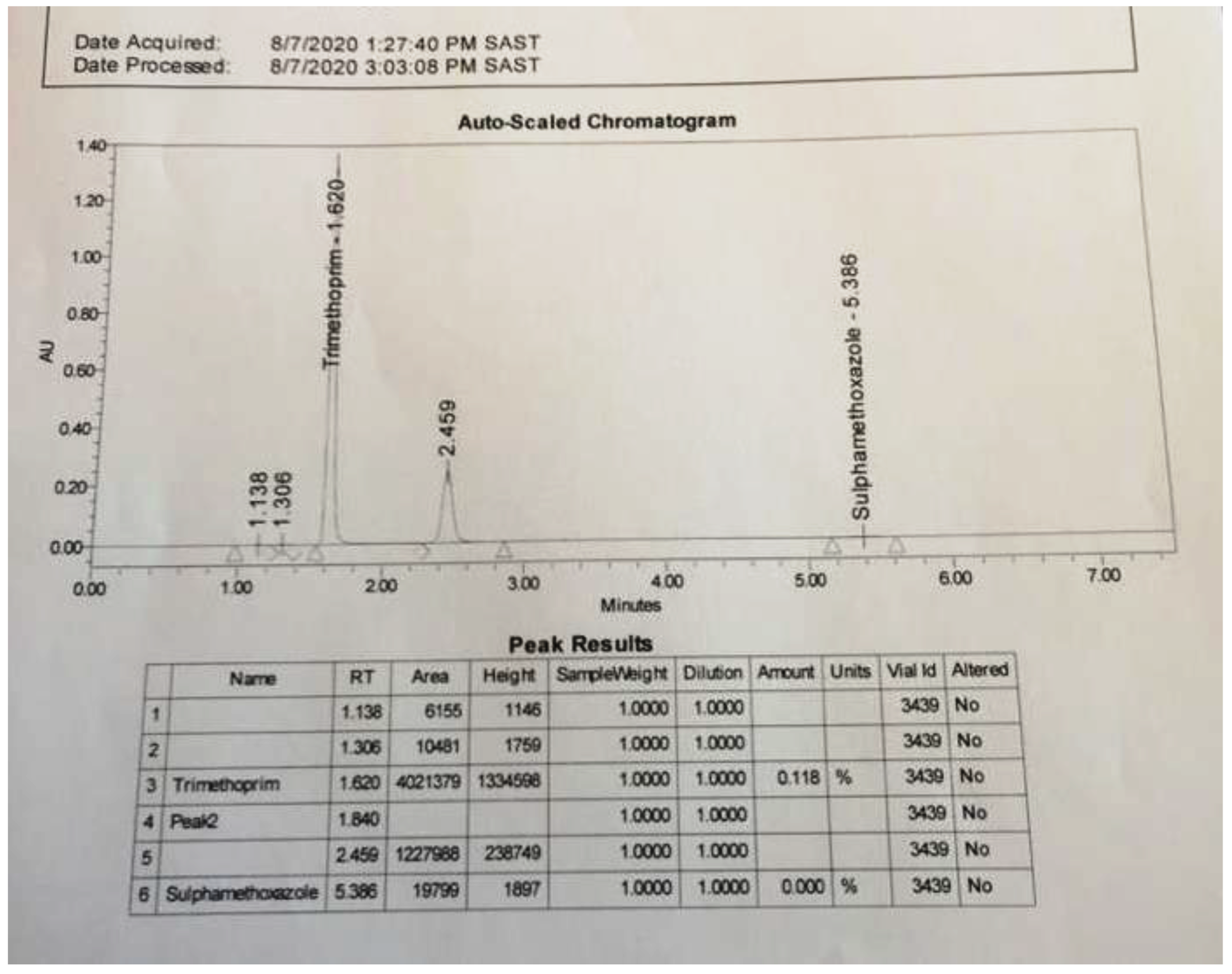
Figure 3.
Mass spectra and retention times for atrazine.
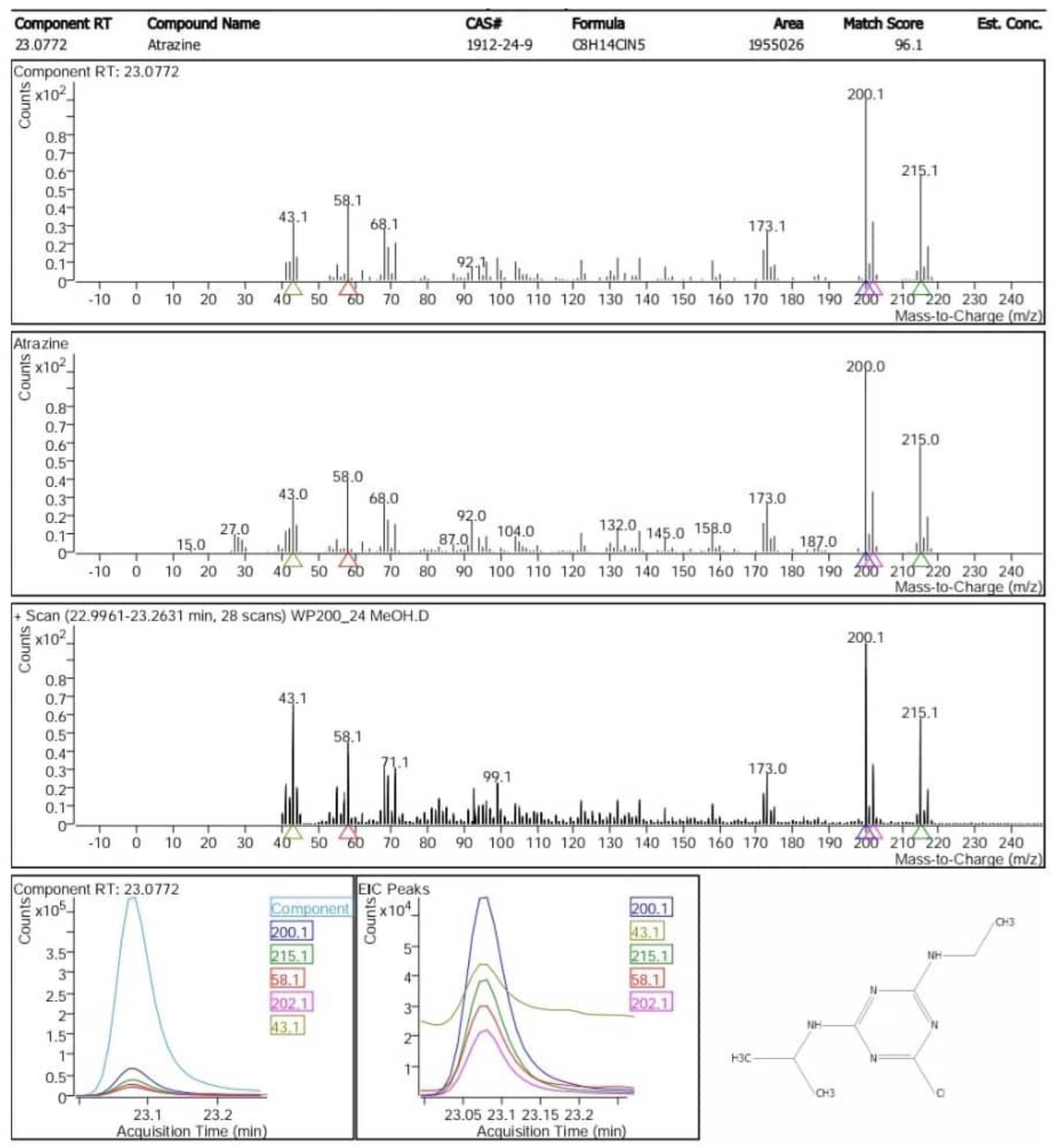
Figure 4.
Chromatogram sulfamethoxazole and trimethoprim standards.
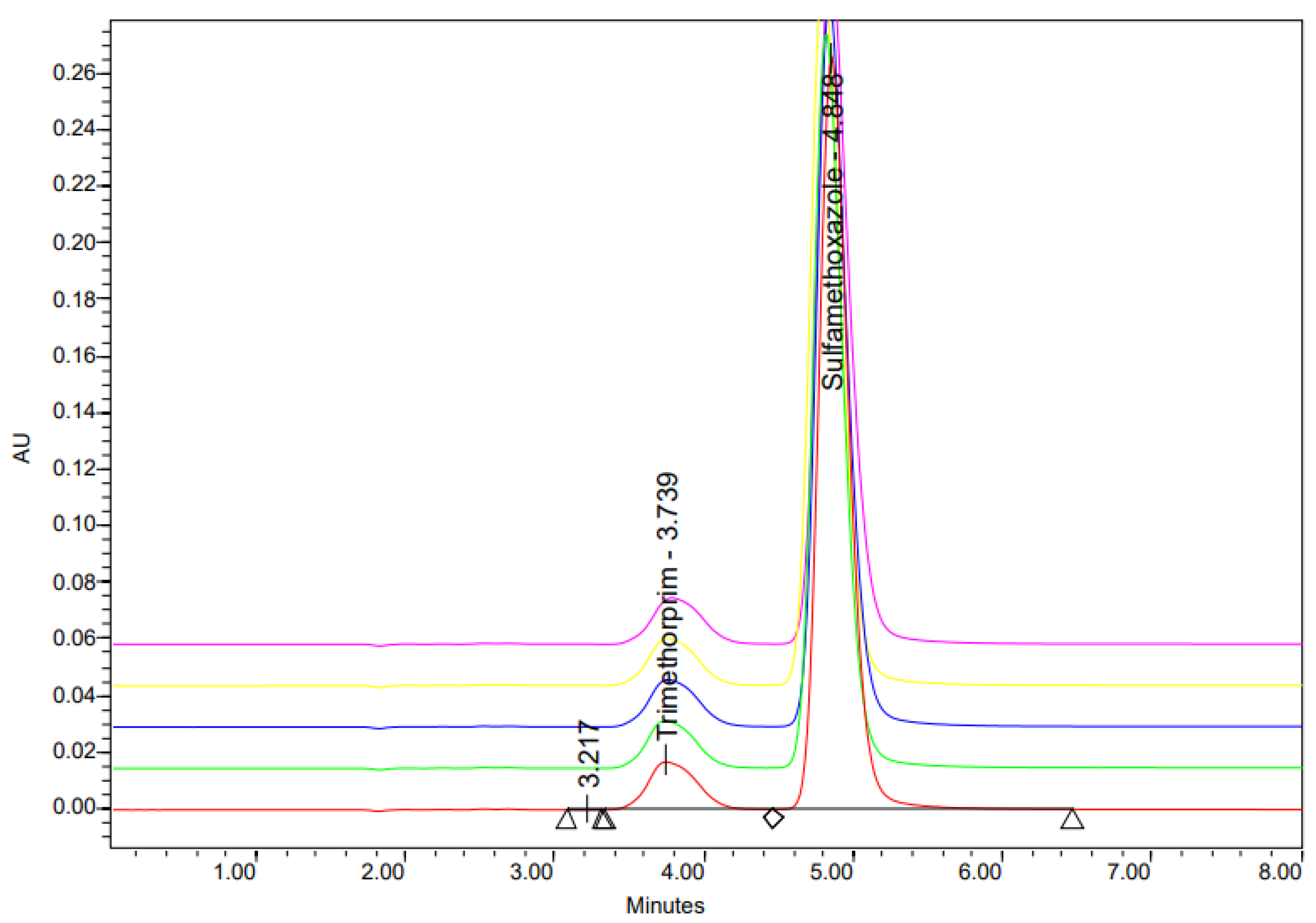
Figure 5.
Chromatogram sulfamethoxazole and trimethoprim lake water extracted using ethyl acetate.
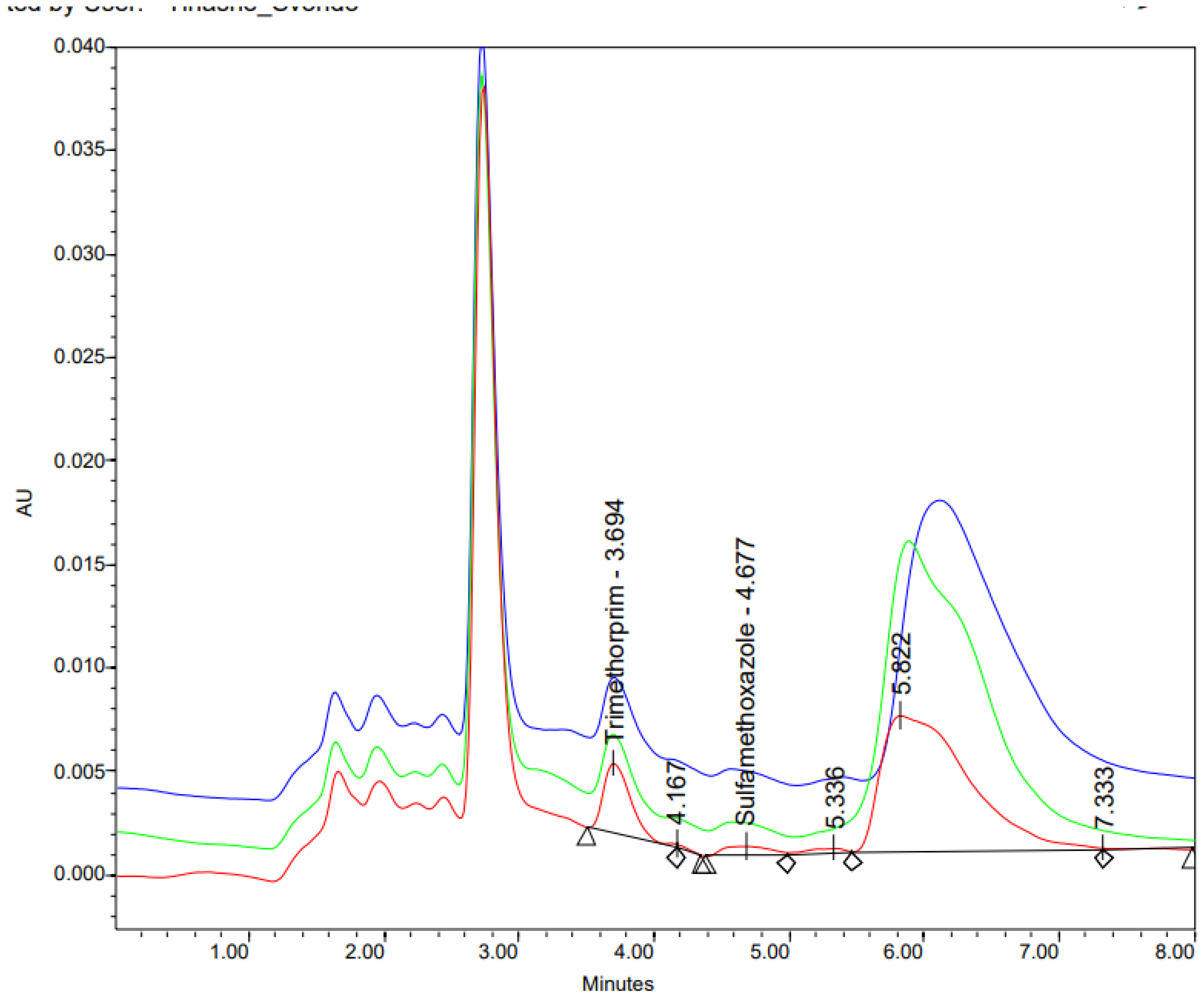
Figure 6.
Mean heterotrophic plate counts (CFU mL−1) across raw water, treated water, and distribution system sampling sites during the 2021 monitoring campaign.
Figure 6.
Mean heterotrophic plate counts (CFU mL−1) across raw water, treated water, and distribution system sampling sites during the 2021 monitoring campaign.
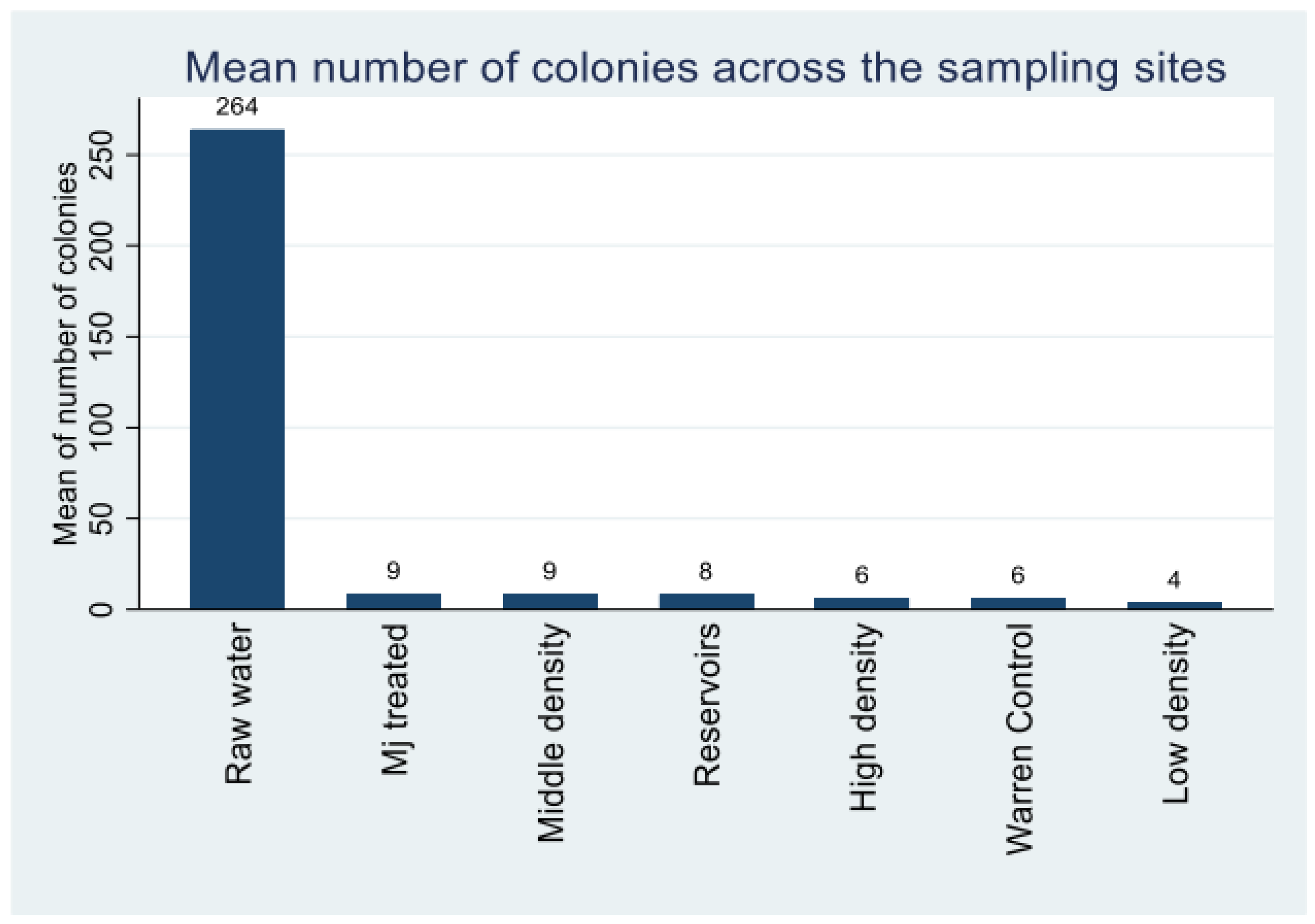
Table 3.
Bacterial species with evidence of health significance related to their occurrence in treated drinking water supplies, based on WHO guidance.
Table 3.
Bacterial species with evidence of health significance related to their occurrence in treated drinking water supplies, based on WHO guidance.
| Bacteria | Health significance | Persistence in water supply | Resistance to chlorine | Relative infectivity |
|---|---|---|---|---|
| E.coli Enterohaemorrhagic | High | Moderate | Low | High |
| Shigella spp | High | Short | Low | Low |
| Proteus spp | Moderate | Short | Low | High |
| Klebsiella spp | High | Moderate | Low | Moderate |
| Other | High | May multiply | low | Low |
| Salmonella | Health significance | Persistence in water supply | Resistance to chlorine | Relative infectivity |
| Bacteria | High | Moderate | Low | High |
| E.coli Enterohaemorrhagic | High | Short | Low | Low |
Table 4.
Presence (+) or absence (–) of selected bacterial species at sampling sites along the Harare distribution network during the 2021 campaign.
Table 4.
Presence (+) or absence (–) of selected bacterial species at sampling sites along the Harare distribution network during the 2021 campaign.
| Sampling Site | E. coli | Shigella spp | Salmonella | Klebsiella spp | Proteus spp |
|---|---|---|---|---|---|
| Lake Chivero | + | + | + | + | + |
| MJ (Treated) | - | - | - | - | - |
| Warren Control | - | - | - | - | - |
| Reservoirs | - | - | - | - | - |
| Medium Density (Avg) | + | - | - | - | - |
| High Density (Avg) | + | - | + | - | - |
Disclaimer/Publisher’s Note: The statements, opinions and data contained in all publications are solely those of the individual author(s) and contributor(s) and not of MDPI and/or the editor(s). MDPI and/or the editor(s) disclaim responsibility for any injury to people or property resulting from any ideas, methods, instructions or products referred to in the content. |
© 2026 by the authors. Licensee MDPI, Basel, Switzerland. This article is an open access article distributed under the terms and conditions of the Creative Commons Attribution (CC BY) license (http://creativecommons.org/licenses/by/4.0/).
Copyright: This open access article is published under a Creative Commons CC BY 4.0 license, which permit the free download, distribution, and reuse, provided that the author and preprint are cited in any reuse.


