

Submitted:
20 January 2026
Posted:
23 January 2026
You are already at the latest version
Abstract
Total Quality Management (TQM) is increasingly adopted by higher education institutions (HEIs) to enhance institutional effectiveness under growing performance and accountability pressures. However, empirical evidence remains limited regarding the mechanisms through which TQM practices influence non-financial and financial performance outcomes. This study examines the mediating roles of Hard Quality Management practices and Non-Financial Performance in the relationship between Soft Quality Management practices and Financial Performance in higher education institutions. A quantitative research design was employed using survey data collected from academic and administrative staff across public and private HEIs. The hypothesised direct and indirect relationships were tested using mediation analysis implemented through Hayes’ PROCESS macro, enabling a robust examination of multiple mediation pathways. The results indicate that Soft Quality Management practices significantly enhance both Hard Quality Management practices and Non-Financial Performance. Hard Quality Management practices partially mediate the relationships between Soft Quality Management practices and both Non-Financial and Financial Performance, while Non-Financial Performance also serves as a significant mediator linking Soft Quality Management practices to Financial Performance. The persistence of significant direct effects suggests partial mediation, indicating that Soft Quality Management practices operate through both formalised systems and complementary behavioural and cultural mechanisms. Overall, the findings position TQM as a governance-oriented framework that strengthens institutional performance through interconnected quality pathways in higher education institutions.
Keywords:
total quality management
; soft quality management
; hard quality management
; non-financial performance
; financial performance
; higher education institutions
; mediation analysis
1. Introduction
The Higher education institutions (HEIs) worldwide operate under increasing pressure to enhance quality, accountability, and performance sustainability while responding to rapid technological change, labour-market transformation, and evolving stakeholder expectations. As higher education systems expand and diversify, universities are no longer evaluated solely on access and scale but also on their ability to convert resources into sustained non-financial and financial performance outcomes. In this context, Total Quality Management (TQM) has emerged as a governance-oriented management philosophy aimed at improving organisational effectiveness through continuous improvement, stakeholder orientation, and systematic process control [1,2].
A substantial body of literature conceptualises TQM as a multidimensional framework composed of soft quality management (QM) practices, such as leadership commitment, people management, and stakeholder focus, and hard QM practices, including formalised procedures, performance measurement systems, and information-based decision-making mechanisms [3]. Soft QM practices are widely regarded as shaping organisational culture and behavioural norms, whereas hard QM practices translate strategic quality intentions into operational routines and measurable outputs. Although this distinction is well established in manufacturing and service sectors, its application and performance implications in higher education remain less clearly understood.
These issues are particularly salient in higher education systems undergoing rapid reform. Over the past decade, Uzbekistan’s higher education sector has experienced unprecedented quantitative growth in institutional numbers, student enrolment, and academic programmes, accompanied by investments in infrastructure and staff remuneration. Despite this expansion, persistent challenges remain, including skills mismatches between graduates and labour-market needs, uneven curriculum modernisation, and governance inefficiencies. In response, the Concept for the Development of the Higher Education System of the Republic of Uzbekistan until 2030 explicitly promotes institutional autonomy, financial independence, and self-financing mechanisms while maintaining public oversight. Under these reforms, universities are increasingly responsible for managing revenues and expenditures, strengthening internal governance, and demonstrating measurable performance outcomes [8,9,10,11,12].
The shift toward greater institutional autonomy intensifies the strategic relevance of quality management systems that can integrate leadership, people-centred practices, and formal operational controls. Non-financial performance outcomes—such as organisational effectiveness, stakeholder satisfaction, and internal process improvement—are increasingly recognised as critical precursors to sustainable financial performance in service-oriented organisations, including universities. However, empirical evidence explaining how soft and hard QM practices interact to produce such outcomes in higher education remains fragmented.
The COVID-19 pandemic further exposed structural vulnerabilities in higher education by accelerating digitalisation and testing institutional readiness for rapid organisational change. Universities were required to adopt technology-enhanced learning, digital administration, and new performance monitoring practices under conditions of uncertainty. These developments have reinforced the importance of data-driven decision-making, systematic performance monitoring, and adaptive governance, all of which align closely with TQM principles. At the same time, they highlighted the growing role of digital and AI-enabled tools in operationalising quality management frameworks within higher education institutions.
Despite these developments, several critical research gaps persist in the existing literature. First, most empirical studies in higher education examine soft and hard QM practices in isolation, offering limited insight into their sequential and mediating relationships in explaining non-financial and financial performance outcomes. Second, although mediation and moderation mechanisms are widely discussed conceptually, advanced conditional process approaches capable of modelling complex causal pathways remain underutilised in higher education quality management research. Third, empirical evidence from emerging and transitional contexts, such as Uzbekistan and Central Asia, remains scarce, despite profound structural reforms and increasing institutional financial responsibility.
Fourth, and most critically, while digitalisation and artificial intelligence are increasingly acknowledged as enablers of institutional sustainability, there is a notable lack of studies that operationalise TQM-based performance frameworks through functional, AI-driven digital platforms in higher education. Existing research largely treats TQM as a conceptual or managerial construct, with limited attention to how its principles can be embedded into digital systems that support continuous quality monitoring, service evaluation, and evidence-based decision-making. In the Uzbek context, the absence of empirically grounded, AI-enabled quality management platforms represents a significant gap between theoretical models and practical implementation.
Against this background, the present study aims to examine the mediating roles of Hard Quality Management practices and Non-Financial Performance in the relationship between Soft Quality Management practices and Financial Performance in higher education institutions, while accounting for institutional context. Using mediation and conditional process analysis, the study provides empirical evidence from a higher education system undergoing rapid expansion, financial decentralisation, and digital transformation. By complementing empirical modelling with an applied, AI-driven quality management framework embodied in the BrightBridge.uz platform, the study demonstrates not only the explanatory relevance but also the practical scalability of TQM-based performance models in contemporary higher education systems. Collectively, the findings contribute to the TQM and higher education management literature and offer actionable insights for institutional leaders and policymakers seeking to enhance governance effectiveness, performance sustainability, and data-driven quality improvement.
2. Literature Review and Hypotheses Development
2.1. Total Quality Management in Higher Education
Total Quality Management (TQM) has been widely applied as a comprehensive management philosophy aimed at improving organisational performance through continuous improvement, stakeholder orientation, and systematic control of processes [1,2]. In the higher education context, TQM has been adopted to address growing demands for accountability, efficiency, and performance sustainability under conditions of institutional expansion and increasing autonomy [24]. Prior studies suggest that effective quality management in universities requires both cultural commitment and formalised systems capable of translating strategic intent into operational outcomes [25].
The TQM literature commonly distinguishes between Soft Quality Management (Soft QM) and Hard Quality Management (Hard QM) practices [3]. Soft QM focuses on human-centred and strategic dimensions, such as leadership commitment, people management, student focus, and strategic planning, which shape organisational culture and behavioural norms [26]. Hard QM, in contrast, emphasises system-based and technical dimensions, including process management, performance measurement, information and analysis, and continuous improvement mechanisms [27]. This distinction is particularly relevant in higher education institutions, where governance complexity and stakeholder diversity require both relational alignment and procedural discipline.
2.2. Soft Quality Management and Performance Outcomes
Soft Quality Management practices are generally regarded as the foundation of effective quality systems, as they foster leadership commitment, employee engagement, and a shared quality culture across the organisation [28]. In higher education, leadership support and people-oriented management have been associated with improved communication, staff engagement, and reduced institutional resistance to change [29]. These outcomes contribute directly to Non-Financial Performance, including stakeholder satisfaction, organisational effectiveness, and internal system improvements [30].
The literature further suggests that improvements in non-financial outcomes often precede and enable financial performance gains, particularly in service-oriented organisations such as universities [22,31]. Enhanced staff engagement, improved service processes, and stronger stakeholder relationships may reduce inefficiencies, improve retention and graduation rates, and stabilise revenue flows over time [32]. Accordingly, Non-Financial Performance is frequently conceptualised as a key mediating mechanism linking management practices to financial outcomes in higher education.
Hypothesis 1 (H1)
Non-Financial Performance mediates the relationship between Soft Quality Management practices and Financial Performance.
2.3. Mediating Role of Hard Quality Management Practices
While Soft QM establishes the cultural and strategic orientation toward quality, numerous studies argue that performance outcomes are realised primarily through Hard Quality Management practices, which operationalise quality objectives via formalised systems and controls [33]. Process management, information systems, and continuous improvement routines enable organisations to standardise activities, monitor performance, and correct deviations systematically [27,34].
In higher education institutions, Hard QM practices play a crucial role in transforming leadership intentions and stakeholder orientation into measurable improvements in academic and administrative processes [35]. Empirical evidence from service and public-sector organisations suggests that Soft QM practices positively influence the implementation of Hard QM practices, which in turn drive performance outcomes [36]. This sequential relationship indicates that Hard QM may act as a critical intermediary between Soft QM and institutional performance.
Hypothesis 2 (H2)
Hard Quality Management practices mediate the relationship between Soft Quality Management practices and Non-Financial Performance.
Beyond non-financial outcomes, Hard QM practices may also influence Financial Performance directly by improving cost control, operational efficiency, and resource utilisation [37]. In higher education systems characterised by increasing financial autonomy and self-financing mechanisms, the role of structured quality systems becomes particularly salient [12,13]. Universities that effectively institutionalise Hard QM practices may be better positioned to manage financial risks and enhance long-term financial sustainability.
Hypothesis 3 (H3)
Hard Quality Management practices mediate the relationship between Soft Quality Management practices and Financial Performance.
2.4. Moderating Role of Institution Type
Institutional context has been recognised as an important contingent factor shaping the effectiveness of quality management systems [38]. In higher education, institution type (e.g., public vs. private) may influence governance structures, resource dependence, performance incentives, and managerial flexibility [39]. These differences can affect how Non-Financial Performance outcomes translate into the adoption and effectiveness of Hard Quality Management practices.
Private institutions, often operating under stronger market pressures and financial constraints, may exhibit a stronger alignment between non-financial outcomes and system-based quality controls. Public institutions, in contrast, may experience weaker or more regulated linkages due to bureaucratic structures and reliance on state funding [40]. This suggests that institution type may moderate the relationship between Non-Financial Performance and Hard Quality Management practices.
Hypothesis 4 (H4)
Institution type moderates the relationship between Non-Financial Performance and Hard Quality Management practices.
2.5. Conceptual Model
Based on the reviewed literature, the study proposes a conceptual model in which Soft Quality Management practices influence Non-Financial and Financial Performance through the mediating roles of Hard Quality Management practices and Non-Financial Performance, with institution type acting as a contextual moderator. The proposed model integrates human-centred and system-based perspectives of quality management and reflects the governance challenges faced by higher education institutions operating under increasing autonomy and accountability (Figure 1).
3. Materials and Methods
3.1. Research Design
This study employed a quantitative, cross-sectional research design to examine the relationships between Soft Quality Management (Soft QM) practices, Hard Quality Management (Hard QM) practices, Non-Financial Performance (NFP), and Financial Performance (FP) in higher education institutions. A survey-based approach was adopted as it is suitable for analysing organisational practices and institutional performance perceptions and enables the testing of complex mediation and moderation relationships within higher education settings.
3.2. Sample and Data Collection
The target population comprised academic and administrative staff working in public and private higher education institutions. These respondent groups were selected due to their direct involvement in academic delivery, administrative operations, and quality-related processes, ensuring informed evaluation of institutional management practices.
Data were collected using a structured questionnaire administered through both online and paper-based formats. Participation was voluntary. After screening for incomplete and invalid responses, the final sample consisted of 211 respondents, including academic and administrative staff. All participants were informed about the purpose of the study prior to data collection.
3.3. Measurement of Constructs
All study constructs were measured using validated multi-item scales adapted from established quality management and higher education performance literature. Responses were recorded using a Likert-type scale indicating the degree of agreement with each statement.
- Soft Quality Management (Soft QM) was operationalised through leadership commitment, people management, strategic planning, and stakeholder (student) focus.
- Hard Quality Management (Hard QM) captured system- and process-oriented practices, including formalised procedures, process management, information and analysis, and continuous improvement mechanisms.
- Non-Financial Performance (NFP) reflected institutional outcomes such as improved communication, reduced complaints, staff engagement, service effectiveness, and internal operational improvements.
- Financial Performance (FP) was measured using perceptual indicators reflecting enrolment growth, graduation rate improvement, dropout reduction, financial stability, and perceived financial sustainability.
The use of perceptual performance indicators is consistent with prior organisational and higher education research, particularly in contexts where objective financial data are not publicly accessible.
3.4. Reliability and Validity
Internal consistency reliability was assessed using Cronbach’s alpha, with all constructs exceeding recommended threshold values, indicating satisfactory reliability. Construct validity was evaluated through factor analysis procedures to confirm the dimensional structure of the measurement scales prior to hypothesis testing. These procedures ensured that the constructs adequately represented the underlying theoretical concepts and were appropriate for mediation and moderation analysis.
3.5. Data Analysis Procedure
Hypotheses were tested using mediation and moderation analysis implemented through Hayes’ PROCESS macro for IBM SPSS. This approach enables the estimation of direct, indirect, and conditional effects and provides bias-corrected bootstrap confidence intervals for mediation effects, which do not rely on normality assumptions.
Separate PROCESS models were specified to test:
- the mediating role of Non-Financial Performance in the relationship between Soft QM practices and Financial Performance;
- the mediating role of Hard QM practices in the relationship between Soft QM practices and Non-Financial Performance;
- the mediating role of Hard QM practices in the relationship between Soft QM practices and Financial Performance; and
- the moderating effect of institution type on the relationship between Non-Financial Performance and Hard QM practices.
Bootstrapping with a large number of resamples was applied to assess the statistical significance of indirect and conditional effects.
3.6. Ethical Considerations
Ethical approval for this study was granted by the Research Ethics Committee of Westminster International University in Tashkent (WIUT). Participation was voluntary, and informed consent was obtained from all respondents prior to data collection. Confidentiality and anonymity were strictly maintained, and no personally identifiable information was collected. All procedures adhered to established ethical standards for social research.
3.7. Data Availability
The data supporting the findings of this study are available from the corresponding author upon reasonable request. Due to confidentiality agreements with participating institutions, the dataset is not publicly deposited. Aggregated or anonymised data may be shared for replication purposes subject to ethical and institutional restrictions.
3.8. Generative Artificial Intelligence Disclosure
Generative artificial intelligence tools were used solely for language refinement and clarity improvement during manuscript preparation. No generative AI tools were used for study design, data collection, data analysis, statistical modelling, or interpretation of results.
4. Results
This section presents the empirical findings of the study. It begins with descriptive statistics and reliability analysis of the study constructs, followed by a summary interpretation providing the foundation for subsequent mediation and moderation analyses.
4.1. Descriptive Statistics and Reliability Analysis
The analysis is based on survey data collected from 211 academic and administrative staff members, including senior management, employed at higher education institutions. The inclusion of multiple staff categories enhances the representativeness of the dataset by capturing institutional quality management practices and performance outcomes from diverse organisational perspectives. All constructs were measured using a seven-point Likert scale (1 = strongly disagree; 7 = strongly agree).
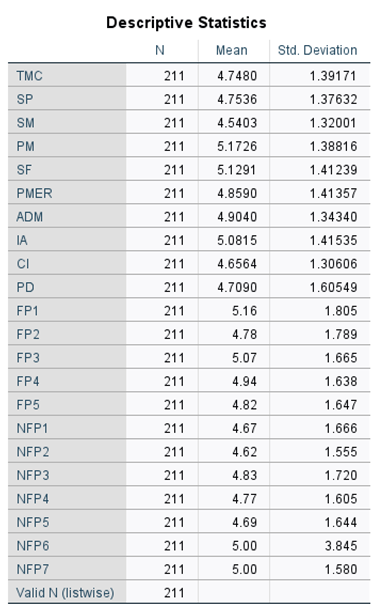
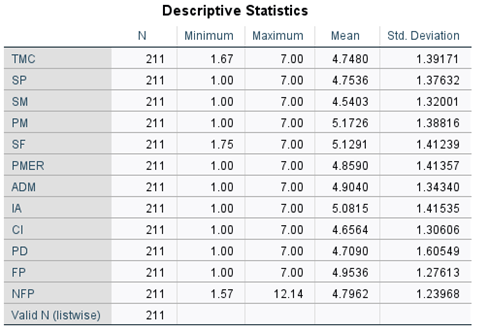
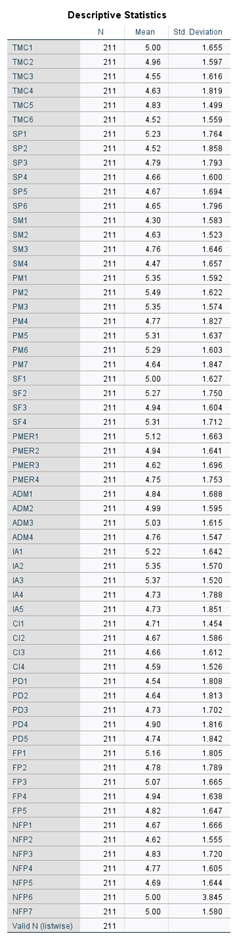
Table 1 reports the descriptive statistics (means and standard deviations) and Cronbach’s alpha coefficients for all quality management and performance constructs. Mean values above the scale midpoint indicate neutral-to-positive perceptions, while values approaching or exceeding 5.0 reflect moderate agreement regarding the extent of quality management implementation and perceived performance improvements.
4.1.1. Soft Quality Management Practices
Soft Quality Management (Soft QM) demonstrates acceptable internal consistency reliability (Cronbach’s α = 0.765), confirming that the indicators collectively measure a coherent latent construct. Mean scores for the Soft QM dimensions range from 4.54 to 5.17, indicating moderate to moderately high implementation levels across the sampled higher education institutions.
Among the Soft QM dimensions, People Management records the highest mean score (Mean = 5.17, SD = 1.39), followed by Student Focus (Mean = 5.13, SD = 1.41), suggesting comparatively stronger practices related to staff engagement, training, teamwork, and student-oriented quality mechanisms. In contrast, Supplier Management reports the lowest mean (Mean = 4.54, SD = 1.32), indicating limited integration of external partners into institutional quality improvement processes.
Top Management Support (Mean = 4.75, SD = 1.36) and Strategic Planning (Mean = 4.75, SD = 1.38) exhibit moderate scores, implying that formal leadership commitment and strategic frameworks are present but not yet consistently embedded into routine academic and administrative practices. The relatively similar standard deviations (SD ≈ 1.32–1.41) indicate moderate variability in behavioural and leadership-driven quality practices across institutions.
4.1.2. Hard Quality Management Practices
Hard Quality Management (Hard QM) exhibits strong internal consistency reliability (Cronbach’s α = 0.818), exceeding recommended threshold values and supporting the robustness of the construct. Mean values range from 4.66 to 5.08, reflecting generally positive evaluations of system-based and procedural quality practices.
The Information and Analysis dimension records the highest mean score (Mean = 5.08, SD = 1.42), indicating relatively consistent use of data, performance indicators, and analytical tools for quality monitoring and decision-making. Administrative Quality (Mean = 4.90, SD = 1.34) and Process Management in Education and Research (Mean = 4.86, SD = 1.41) also demonstrate favourable perceptions, suggesting that formalised administrative and academic processes are reasonably well established.
In contrast, Continuous Improvement (Mean = 4.66, SD = 1.30) and Programme Design (Mean = 4.71, SD = 1.61) show comparatively lower mean scores, indicating that systematic and iterative improvement mechanisms are not yet fully institutionalised. Overall, the relatively consistent standard deviations across Hard QM dimensions suggest lower variability compared to Soft QM, implying more uniform implementation of technical and system-oriented practices across institutions.
4.1.3. Financial and Non-Financial Performance
Financial Performance is operationalised as a unidimensional reflective construct and demonstrates good internal reliability (Cronbach’s α = 0.801). The mean score (Mean = 4.95, SD = 1.28) indicates moderately positive perceptions of financial outcomes, including enrolment growth, improved graduation rates, and enhanced institutional financial sustainability associated with quality management initiatives. The observed dispersion suggests variability in perceived financial effects across institutions.
Non-Financial Performance also represents a unidimensional reflective construct with acceptable reliability (Cronbach’s α = 0.691). The mean value (Mean = 4.80, SD = 1.24) reflects generally positive perceptions of improvements in internal communication, operational efficiency, service quality, and staff engagement. The slightly lower reliability coefficient is consistent with the broader and more heterogeneous nature of non-financial performance outcomes in higher education settings.
4.1.4. Summary of Descriptive Findings
Overall, the descriptive statistics and reliability analysis confirm that all constructs meet minimum reliability thresholds and exhibit sufficient variance, providing a robust empirical basis for subsequent mediation and moderation analyses. The findings indicate that Soft QM practices show greater variability, reflecting differences in leadership, behavioural, and cultural implementation across institutions, whereas Hard QM practices are applied more consistently. Additionally, non-financial performance improvements appear more immediate and stable, while financial performance outcomes exhibit greater dispersion, consistent with their longer-term and context-dependent nature.
4.2. Construct Validity and Dimensionality Assessment
4.2.1. KMO and Bartlett’s Test Results for Staff Constructs
Table 2 presents the results of the Kaiser–Meyer–Olkin (KMO) measure of sampling adequacy and Bartlett’s Test of Sphericity for the staff-related constructs included in the study. These tests were conducted to assess the suitability of the data for exploratory factor analysis.
For Soft Quality Management (Soft QM), the KMO value of 0.878 indicates very good sampling adequacy, suggesting that the inter-item correlations are sufficient to identify reliable underlying factors. Bartlett’s Test of Sphericity is statistically significant (χ² = 4223.450, df = 351, p < .001), confirming that the correlation matrix is appropriate for factor extraction.
Similarly, Hard Quality Management (Hard QM) demonstrates excellent sampling adequacy with a KMO value of 0.899. The significant Bartlett’s test result (χ² = 3577.568, df = 231, p < .001) further supports the factorability of the Hard QM items.
For Financial Performance (FP), the KMO value (0.745) exceeds the recommended minimum threshold, indicating acceptable sampling adequacy. Bartlett’s Test of Sphericity is significant (χ² = 338.768, df = 10, p < .001), confirming that the items share sufficient common variance to justify factor analysis.
Likewise, Non-Financial Performance (NFP) records a satisfactory KMO value (0.719), and Bartlett’s test is significant (χ² = 566.634, df = 21, p < .001), indicating that the data structure is suitable for factor extraction.
Overall, the consistently high KMO values and statistically significant Bartlett’s Test results across all constructs demonstrate that the datasets possess adequate inter-item correlations and sampling adequacy. These findings provide strong empirical justification for proceeding with exploratory factor analysis of the Soft Quality Management, Hard Quality Management, Financial Performance, and Non-Financial Performance constructs.
4.2.2. PCA Results for Composite Variables:
Table 3 presents the results of principal component analysis conducted on the composite quality management and performance variables. Based on the Kaiser retention criterion (eigenvalues > 1.00), two components were retained. Component 1 exhibited an eigenvalue of 1.688 and explained 42.21% of the total variance, indicating a dominant shared variance across the constructs. Component 2 recorded an eigenvalue of 1.087 and accounted for an additional 27.19% of the variance. Collectively, these two components explained 69.40% of the cumulative variance, exceeding recommended thresholds for construct validation in social science research.
Components 3 and 4, with eigenvalues below unity, explained residual variance and were therefore not retained for interpretation. Overall, the PCA results confirm sufficient shared variance among the composite variables and support the appropriateness of using aggregated measures in subsequent mediation and moderation analyses.
4.2.3. Correlation Analysis of Quality Management Practices and Performance Outcomes
Table 4 presents the Pearson correlation coefficients among Soft Quality Management (Soft QM), Hard Quality Management (Hard QM), Financial Performance (FP), and Non-Financial Performance (NFP). All correlations are positive and statistically significant at the 0.01 level (two-tailed), based on a sample of 211 observations.
A strong positive correlation is observed between Soft QM and Hard QM (r = 0.738, p < 0.001), indicating that institutions demonstrating higher levels of people-centred and leadership-oriented quality practices also tend to exhibit stronger process-based and system-driven quality practices. While the magnitude of this relationship is substantial, it remains below the commonly cited multicollinearity concern threshold (r < 0.80), supporting the theoretical view that Soft and Hard QM represent related but conceptually distinct dimensions of Total Quality Management.
Both Soft QM (r = 0.393, p < 0.001) and Hard QM (r = 0.419, p < 0.001) show moderate positive associations with Non-Financial Performance, suggesting that quality management practices are meaningfully linked to improvements in outcomes such as communication effectiveness, reduced complaints, staff engagement, and system improvements. The slightly stronger correlation of Hard QM with NFP reflects the critical role of structured processes, information systems, and continuous improvement mechanisms in enhancing operational and stakeholder-related outcomes.
Similarly, Financial Performance is positively correlated with Soft QM (r = 0.307, p < 0.001) and Hard QM (r = 0.332, p < 0.001). These findings indicate that quality management practices contribute not only to operational and relational outcomes but also to tangible financial gains, such as increased enrolments, improved graduation rates, and profitability. Although these relationships are moderate in strength, they are theoretically meaningful given the indirect and often delayed nature of financial returns from quality initiatives in higher education.
The strongest correlation in the matrix is observed between Non-Financial Performance and Financial Performance (r = 0.677, p < 0.001). This result provides robust preliminary support for the proposed mediating role of Non-Financial Performance, suggesting that improvements in non-financial outcomes serve as a key mechanism through which quality management practices translate into enhanced financial performance.
Overall, the correlation results are consistent with the hypothesised model and provide a sound empirical basis for subsequent regression, mediation, and moderation analyses using Hayes’ PROCESS macro. The pattern and magnitude of correlations indicate meaningful relationships without evidence of problematic multicollinearity, thereby justifying advancement to causal modelling.
Collectively, the correlation findings align with the theoretical framework and justify further investigation of direct, mediated, and moderated relationships among quality management practices and performance outcomes.
4.3. Mediation Analysis of Non-Financial Performance in the Relationship between Soft Quality Management and Financial Performance (H12)
The mediation analysis conducted using PROCESS macro (Model 4) provides strong empirical support for H1, which posits that Non-Financial Performance mediates the relationship between Soft Quality Management practices and Financial Performance in higher education institutions (Table 5). The mediation analysis reported in Table 5 was conducted using the PROCESS macro (Model 4) with bias-corrected bootstrapping procedures, following established methodological recommendations for mediation testing [4,5]. The results indicate that Soft Quality Management (SQM) practices exert a statistically significant and positive effect on Non-Financial Performance (NFP) (path a: B = 0.552, SE = 0.089, t = 6.185, p < 0.001; β = 0.393). This finding suggests that leadership commitment, people management, strategic planning, and student-focused quality practices contribute meaningfully to improvements in non-financial institutional outcomes, including internal process effectiveness, staff engagement, service quality, and stakeholder satisfaction.
In turn, Non-Financial Performance demonstrates a strong and statistically significant positive effect on Financial Performance (FP) (path b: B = 0.605, SE = 0.051, t = 11.875, p < 0.001; β = 0.658). This relationship indicates that improvements in non-financial performance dimensions translate into tangible financial benefits for higher education institutions, such as enhanced enrolment stability, revenue growth, and improved financial sustainability. The mediation model explains a substantial proportion of variance in Financial Performance (R² = 0.460), underscoring the practical relevance and explanatory power of the proposed model.
Importantly, once Non-Financial Performance is introduced into the model, the direct effect of Soft Quality Management on Financial Performance becomes statistically non-significant (path c′: B = 0.063, SE = 0.072, p = 0.383). At the same time, the bootstrapped indirect effect of Soft Quality Management on Financial Performance via Non-Financial Performance remains statistically significant (a × b = 0.334; 95% bootstrap CI [0.202, 0.463]), with a meaningful completely standardized indirect effect (β = 0.259). Consistent with contemporary mediation analysis standards, mediation is confirmed because the bootstrap confidence interval for the indirect effect does not include zero [39].
According to the mediation typology proposed by Zhao et al. [40], the presence of a statistically significant indirect effect combined with a non-significant direct effect indicates indirect-only (full) mediation. These findings demonstrate that Soft Quality Management practices do not directly enhance financial outcomes; rather, their influence is fully transmitted through improvements in Non-Financial Performance. Accordingly, H1 (Non-financial performance mediates the relationship between Soft Quality Management practices and financial performance) is fully supported.
H1 examines whether Non-Financial Performance mediates the relationship between Soft Quality Management and Financial Performance. The mediation structure is specified as follows:
Mediator equation:
NFP = α₀ + α₁·SQM + ε₁
Outcome equation:
FP = β₀ + β₁·NFP + β₂·SQM + ε₂
The indirect effect of Soft Quality Management on Financial Performance is calculated as α₁ × β₁ (Appendix D). The indirect effect of Soft Quality Management on Financial Performance remains statistically significant (a × b = 0.334; 95% bootstrap CI [0.202, 0.463]) … mediation is confirmed because the bootstrap confidence interval for the indirect effect does not include zero [39].
4.4. Mediation Analysis of Hard Quality Management in the Relationship between Soft Quality Management and Non-Financial Performance (H2)
The mediation analysis presented in Table 6 was conducted using the PROCESS macro (Model 4) with bootstrap resampling procedures, following established mediation analysis guidelines [4,5].
The results indicate that Soft Quality Management (SQM) practices exert a strong and statistically significant positive effect on Hard Quality Management (HQM) (path a: B = 0.812, SE = 0.051, t = 15.83, p < 0.001; β = 0.738). This finding demonstrates that people-centred, leadership-driven, and strategic quality practices strongly facilitate the development and institutionalisation of system-based, procedural, and process-oriented quality mechanisms within higher education institutions (table 6).
Further, Hard Quality Management has a statistically significant positive effect on Non-Financial Performance (NFP) (path b: B = 0.361, SE = 0.118, t = 3.06, p = 0.003; β = 0.283), indicating that formalised quality systems, administrative processes, information management, and continuous improvement practices contribute meaningfully to improvements in internal efficiency, service consistency, and stakeholder-related performance outcomes. The mediation model explains a substantial proportion of variance in Hard Quality Management (R² = 0.545) and a meaningful proportion of variance in Non-Financial Performance (R² = 0.191), supporting the explanatory relevance of the proposed pathway.
Importantly, when Hard Quality Management is introduced into the model, the direct effect of Soft Quality Management on Non-Financial Performance remains statistically significant (path c′: B = 0.259, SE = 0.130, p = 0.047; β = 0.185). At the same time, the bootstrapped indirect effect of Soft Quality Management on Non-Financial Performance via Hard Quality Management is also statistically significant (a × b = 0.293; 95% bootstrap CI [0.076, 0.533]), with a meaningful completely standardized indirect effect (β = 0.209). Mediation is supported as the confidence interval of the indirect effect does not include zero, consistent with accepted mediation testing standards [39].
H2 examines whether Hard Quality Management mediates the relationship between Soft Quality Management and Non-Financial Performance.
Mediator equation:
HQM = γ₀ + γ₁·SQM + ε₃
Outcome equation:
NFP = δ₀ + δ₁·HQM + δ₂·SQM + ε₄
The indirect effect is computed as γ₁ × δ₁ and evaluated using bootstrap confidence intervals (Appendix D).
According to the mediation typology proposed by Zhao et al. [40], the simultaneous presence of a statistically significant indirect effect and a statistically significant direct effect indicates complementary (partial) mediation. This finding suggests that Soft Quality Management practices influence Non-Financial Performance both directly—through behavioural, cultural, and leadership mechanisms—and indirectly by enabling the development of structured and system-based quality management practices. Accordingly, H2 (Hard Quality Management mediates the relationship between Soft Quality Management practices and Non-Financial Performance) is supported.
4.5. Mediation Analysis of Hard Quality Management in the Relationship between Soft Quality Management and Financial Performance (H3)
The mediation analysis presented in Table 7 was conducted using PROCESS macro v4.2 (Model 4) with bootstrapped confidence intervals, in accordance with established mediation analysis procedures [4,5]. The results indicate that Soft Quality Management (SQM) practices have a strong and statistically significant positive effect on Hard Quality Management (HQM) (path a: B = 0.812, SE = 0.051, t = 15.83, p < 0.001; β = 0.738), confirming that leadership commitment, people-oriented practices, and quality culture are critical enablers of structured quality systems and process-based controls in higher education institutions.
Further, Hard Quality Management exerts a statistically significant positive effect on Financial Performance (path b: B = 0.272, SE = 0.113, t = 2.40, p = 0.017; β = 0.232), indicating that formalised quality procedures, administrative controls, and system-based process management contribute directly to improved financial outcomes. The mediation model explains a substantial proportion of variance in Hard Quality Management (R² = 0.545) and a meaningful proportion of variance in Financial Performance (R² = 0.119).
Importantly, when Hard Quality Management is included in the model, the direct effect of Soft Quality Management on Financial Performance becomes statistically non-significant (path c′: B = 0.176, SE = 0.125, p = 0.159). At the same time, the bootstrapped indirect effect of Soft Quality Management on Financial Performance through Hard Quality Management remains statistically significant (a × b = 0.221; 95% bootstrap CI [0.011, 0.459]; β = 0.171), as the confidence interval does not include zero. This pattern satisfies the criteria for mediation under contemporary bootstrapping-based mediation frameworks [39].
H3 tests whether Hard Quality Management mediates the relationship between Soft Quality Management and Financial Performance.
Outcome equations:
HQM = λ₀ + λ₁·SQM + ε₅
FP = μ₀ + μ₁·HQM + μ₂·SQM + ε₆
The mediation effect is represented by the product λ₁ × μ₁ (Appendix D).
According to the mediation typology proposed by Zhao et al. [40], the presence of a statistically significant indirect effect combined with a non-significant direct effect indicates indirect-only (full) mediation. These findings demonstrate that Soft Quality Management practices influence Financial Performance entirely through the institutionalisation of Hard Quality Management practices, rather than through a direct pathway. Accordingly, H3 (Hard Quality Management mediates the relationship between Soft Quality Management practices and Financial Performance) is fully supported.
4.6. Moderation Analysis of Institution Type (H4)
The moderation analysis conducted using the PROCESS macro v4.2 (Model 1) provides robust empirical support for H4, demonstrating that institution type significantly moderates the relationship between Non-Financial Performance (NFP) and Hard Quality Management (HQM) practices (Table 8). The overall model explains a meaningful proportion of variance in HQM practices (R² = 0.213, p < 0.001), indicating adequate explanatory power for the proposed moderation framework [4,5].
Non-Financial Performance exhibits a strong and statistically significant positive effect on Hard Quality Management practices (B = 0.399, SE = 0.059, t = 6.793, p < 0.001), suggesting that institutions achieving higher levels of service effectiveness, stakeholder satisfaction, and operational performance are more likely to formalise these outcomes through structured systems, procedures, and process-based quality controls. This finding aligns with the Total Quality Management logic that performance outcomes are subsequently institutionalised via technical and procedural mechanisms [39,40].
Critically, the interaction term between Non-Financial Performance and institution type is statistically significant (B = −0.211, SE = 0.103, t = −2.043, p = 0.042), with a modest but meaningful increase in explained variance attributable to the interaction effect (ΔR² = 0.016). This confirms the presence of a moderating effect and indicates that the strength of the NFP → HQM relationship varies across institutional contexts [4].
Conditional effects analysis further reveals that the positive relationship between Non-Financial Performance and Hard Quality Management practices is stronger in public higher education institutions (B = 0.399, p < 0.001) than in private institutions (B = 0.188, p = 0.029). This pattern suggests that public institutions are more inclined to convert non-financial performance improvements into formalised quality management systems, likely due to stronger regulatory oversight, accountability requirements, and governance frameworks. In contrast, although private institutions also translate non-financial gains into HQM practices, the weaker magnitude of this relationship reflects greater managerial autonomy and more flexible, market-driven operational priorities.
H4 examines whether institution type moderates the relationship between Non-Financial Performance and Hard Quality Management.
Interaction equation:
HQM = θ₀ + θ₁·NFP + θ₂·IT + θ₃·(NFP × IT) + ε₇
Moderation is supported when the interaction term θ₃ is statistically significant (Appendix D).
Overall, these results provide clear empirical support for H4, highlighting the importance of institutional context in shaping how performance improvements are embedded within formal quality management systems. The findings reinforce contemporary quality management theory by demonstrating that the effectiveness of performance–quality linkages is contingent upon organisational and governance environments [39,40].
5. Discussion
5.1. Applied Novelty and Practical Implications of the AI-Enabled TQM Roadmaps
Figure 2 presents an Operational AI-Enabled Total Quality Management (TQM) Roadmap implemented through the BrightBridge.uz platform, illustrating the structured progression from data and resource integration to AI-enabled quality processes, service-level outputs, and strategic performance impacts. Unlike traditional TQM applications that remain conceptual or survey-based, the proposed roadmap represents an applied digital implementation of TQM, operationalised through an AI-driven platform and supported by officially registered software and database artefacts.
The applied novelty of this study lies in translating TQM from a managerial philosophy into an executable digital system, addressing a long-recognised gap in the TQM literature regarding implementation mechanisms [1,2,3,25]. Classical TQM frameworks emphasise leadership commitment, customer focus, and process control, yet often lack guidance on how such principles can be embedded within technology-enabled decision systems, particularly in higher education contexts [1,2]. The BrightBridge.uz roadmap directly responds to this limitation by embedding Soft and Hard Quality Management practices into AI-supported workflows that generate measurable performance outcomes.
At Stage 1 (Data & Resource Integration), the roadmap operationalises Hard QM principles of information and analysis through structured survey instruments and Excel-based quantitative datasets, alongside process management via standardised data formats (e.g. CV templates and job vacancy structures). Concurrently, Soft QM practices—including student focus, top management support, strategic planning, and people management—ensure stakeholder engagement, data legitimacy, and alignment with employability and labour-market priorities [1,3,19]. The outcome of this stage is readiness for AI processing, forming a quality-assured digital foundation, which is consistent with TQM’s emphasis on prevention, standardisation, and evidence-based control [1,27].
At Stage 2 (AI & Platform Enablement), TQM principles are fully operationalised through AI mechanisms, representing a core applied contribution. AI-based CV generation, job–candidate matching and ranking, skill-gap analysis, startup pitch evaluation, and quantitative analytics dashboards translate quality management logic into repeatable and scalable workflows. Here, Hard QM practices are embedded through automated evaluation pipelines, algorithmic scoring, and statistical analysis, while Soft QM practices—such as continuous improvement culture, student focus, and people management—are enacted via feedback-driven algorithm refinement and personalised recommendations [20,26,28]. This stage demonstrates how continuous improvement is executed algorithmically, aligning with contemporary views that quality management increasingly relies on data-driven systems rather than solely managerial supervision [3,28].
At Stage 3 (Service & Decision Outputs), the roadmap intentionally transitions from TQM constructs to Non-Financial Performance (NFP) outcomes, ensuring conceptual clarity. Outputs such as employer-ready CVs, ranked job shortlists, targeted training recommendations, investor-readiness reports, and visual dashboards reflect improvements in service quality, transparency, staff engagement, and system efficiency. These outcomes correspond to widely accepted non-financial performance indicators in quality and higher education research [19,21,23,24]. By positioning NFP as a performance result—rather than a TQM construct—the roadmap adheres to established quality–performance causal logic [20,28]. The focus on usability and service quality further ensures tangible, measurable value creation for key stakeholders.
At Stage 4 (Performance & System Impacts), the roadmap captures strategic and financial-level outcomes, completing the TQM–performance chain. Improvements in graduate employability, recruitment efficiency, institutional decision-making, and university–labour market alignment reflect strategic Non-Financial Performance, while enhanced admissions attractiveness, cost efficiency, financial sustainability, and reduced dropout-related losses indicate Financial Performance gains. This alignment supports prior empirical findings that non-financial performance improvements function as a critical transmission mechanism through which TQM practices influence financial and institutional outcomes [20,28]. Moreover, the integration of analytics strengthens evidence-based continuous improvement, consistent with balanced performance management approaches [22].
Crucially, the applied novelty of the roadmap is reinforced by the formal registration of BrightBridge.uz software and database components with the Ministry of Justice of the Republic of Uzbekistan. The registered software program “Strategic Approach to Improving Higher Education and Service Quality on the BrightBridge.uz Platform Based on the TQM Model” (Certificate No. DGU 48871) provides a structured digital mechanism for embedding Soft and Hard QM practices into institutional strategies [42]. The complementary registered database (Certificate No. BGU 1915) enables longitudinal measurement, benchmarking, and analytical feedback, operationalising Hard QM principles such as documentation, control, and performance monitoring [43]. In addition, the AI-based employability and recruitment subsystem (Certificate No. DGU 56174) extends TQM beyond internal quality processes to external stakeholder outcomes, reinforcing customer orientation and human capital development through systematic, algorithm-driven evaluation [41]. Recent higher education reforms in Uzbekistan have explicitly elevated graduate employability to a core quality and accountability criterion. The Minister of Higher Education, Science and Innovation, Kongratbay Avezimbetovich Sharipov, publicly stated that universities whose graduates consistently fail to secure employment—reported in some cases as only 5–10%—may be restructured or closed, signalling a decisive shift toward performance-based institutional oversight [44]. At the institutional level, this policy orientation is reinforced at the Management Development Institute of Singapore in Tashkent (MDIST), where the Rector, Dr Ilkhom Mamatkulov, has prioritised strategic planning, stakeholder engagement, research oversight through the Scientific Council, and alignment with international standards—core elements of Soft Quality Management that legitimise data-driven quality systems [45]. Complementing this leadership layer, Komiljon Karimov, in his roles as former First Deputy Minister of Higher Education, Science and Innovation and current Rector of Westminster International University in Tashkent (WIUT), has consistently emphasised quality assurance, international benchmarking, and employability-oriented governance through national and international education forums [46,47]. At the operational level, academic and professional leadership at MDIST—including Nodira Rakhimkhodjaeva (School of Banking and Finance) and Ms. Shakhnoza Karimova (Career Centre)—supports curriculum relevance, employer engagement, and graduate outcome monitoring, reinforcing continuous improvement loops central to effective TQM implementation. These quality-driven efforts are further evidenced by structured employability interventions such as the Business Communication Workshop for Intern Fair Day Preparation, which strengthened students’ CV writing, professional communication, and job-readiness skills through labour-market-aligned training [48]. Collectively, these policy, leadership, and operational signals provide a strong contextual foundation for the applied novelty of this study: the AI-enabled TQM roadmap implemented via the BrightBridge.uz platform, which operationalises employability as a continuously monitored Non-Financial Performance outcome, enabling proactive alignment with labour-market relevance, regulatory expectations, and long-term financial sustainability [42].
Overall, Figure 2 represents a rare form of applied methodological innovation in TQM research, combining theoretical rigour, empirical validation, and legally verifiable digital implementation. By embedding Soft QM practices within Hard QM infrastructures and enabling their execution through AI, the BrightBridge.uz platform demonstrates how Non-Financial Performance acts as a central mediating mechanism between quality management practices and sustainable financial and institutional performance. This integration not only supports the study’s mediation and moderation findings [4,39,40], but also provides a replicable model for AI-enabled quality management in higher education systems undergoing rapid expansion and reform [6,7,8,9,10,11,12,13,14,15].
5.2. Discussion of Hypothesis Testing Results
This subsection interprets the empirical findings reported in Section 4 by situating them within established quality management and higher education literature. Particular emphasis is placed on the mediation and moderation mechanisms, which represent the core theoretical and applied contributions of this study.
5.2.1. Relationship between Soft and Hard Quality Management Practices
The strong and statistically significant relationship observed between Soft Quality Management (Soft QM) and Hard Quality Management (Hard QM) provides empirical confirmation of the foundational TQM proposition that people-centred and leadership-driven practices act as enablers of system-based quality mechanisms [1,3,19]. The magnitude of this relationship indicates that institutions demonstrating higher levels of leadership commitment, strategic planning, people management, and student focus are substantially more likely to institutionalise formal processes, information systems, and continuous improvement mechanisms.
This finding is consistent with prior studies emphasising that Soft QM practices create the organisational climate necessary for the effective deployment of Hard QM tools [20,26,28]. In higher education contexts, where quality improvement often depends on professional autonomy and cultural acceptance, leadership and people-oriented practices are particularly critical for legitimising formal quality systems [2,25]. The result reinforces the view that Soft and Hard QM are complementary rather than competing dimensions of Total Quality Management.
5.2.2. Mediating Role of Non-Financial Performance (H1)
The mediation analysis supporting H1 demonstrates that Non-Financial Performance (NFP) fully mediates the relationship between Soft Quality Management and Financial Performance. This result provides strong empirical evidence that Soft QM practices do not directly translate into financial gains; instead, their influence is realised through intermediate improvements in service quality, staff engagement, communication effectiveness, and operational efficiency.
This finding aligns closely with quality management theory, which posits that financial outcomes are lagging indicators of quality initiatives, while non-financial outcomes function as leading indicators [21,22]. The result also supports empirical research indicating that customer satisfaction, service reliability, and organisational efficiency act as key mechanisms linking quality management to financial performance [20,28].
Importantly, the presence of indirect-only (full) mediation, as classified under Zhao et al.’s mediation typology [40], strengthens the theoretical contribution of this study. It confirms that in higher education systems—characterised by delayed revenue effects, regulatory constraints, and public accountability—financial performance improvements arise primarily from accumulated non-financial gains rather than immediate cost or revenue effects [6,7,14]. This insight contributes to the literature by empirically validating NFP as a central transmission mechanism in the TQM–performance relationship.
5.2.3. Mediating Role of Hard Quality Management between Soft QM and Non-Financial Performance (H2)
The results for H2 reveal complementary (partial) mediation, indicating that Soft Quality Management influences Non-Financial Performance both directly and indirectly through Hard Quality Management. This pattern suggests that behavioural and cultural quality practices improve service outcomes in two ways: by shaping staff behaviour and engagement, and by enabling the development of structured systems that stabilise and standardise service delivery.
This finding is theoretically consistent with prior research highlighting that Soft QM initiatives such as leadership involvement and people management can produce immediate behavioural improvements, while Hard QM mechanisms ensure durability and consistency of outcomes [19,26]. In higher education settings, this dual pathway is particularly salient, as service quality depends not only on individual academic practices but also on administrative systems, programme design, and information infrastructure [2,23,24].
By demonstrating partial mediation, the study advances existing TQM literature by showing that system formalisation enhances—but does not replace—the direct influence of quality culture. This reinforces the argument that sustainable service quality requires the simultaneous development of people-oriented and system-oriented quality mechanisms [20,28].
5.2.4. Mediating Role of Hard Quality Management between Soft QM and Financial Performance (H3)
The findings for H3 provide evidence of indirect-only (full) mediation, indicating that Soft Quality Management affects Financial Performance exclusively through the institutionalisation of Hard Quality Management practices. This result underscores the importance of formal quality systems, process management, and information controls as the primary conduits through which leadership and cultural initiatives ultimately influence financial outcomes.
This pattern is consistent with the argument that while Soft QM creates readiness for change, financial returns materialise only once quality initiatives are embedded into stable processes and monitoring systems [1,27]. Prior studies have similarly observed that financial performance gains are more strongly associated with technical and system-based quality practices than with behavioural initiatives alone [20,28].
In the higher education context, where revenue generation and cost efficiency are closely tied to administrative effectiveness and programme delivery, the full mediation effect highlights the necessity of translating quality values into operational infrastructures. This finding extends TQM research by clarifying the sequential pathway through which Soft QM contributes to financial sustainability in service-intensive, knowledge-based organisations.
5.2.5. Moderating Role of Institution Type (H4)
The moderation analysis confirms that institution type significantly conditions the relationship between Non-Financial Performance and Hard Quality Management, providing empirical support for H4. Specifically, the stronger NFP → HQM relationship observed in public institutions suggests that performance improvements in these contexts are more likely to be formalised into structured quality management systems.
This result can be explained by differences in governance, accountability, and regulatory pressure between public and private higher education institutions [6,7,16]. Public institutions typically operate under stricter reporting requirements, performance audits, and policy frameworks, which encourage the institutionalisation of quality gains through formal procedures and documentation [12,15,17]. In contrast, private institutions, while responsive to non-financial performance improvements, may prioritise flexibility and market responsiveness over procedural formalisation [13].
The moderating effect supports contemporary quality management theory, which emphasises that contextual and institutional factors shape the effectiveness of quality–performance linkages [39,40]. By empirically demonstrating this contingency, the study contributes to the limited but growing body of research examining how governance environments influence the outcomes of TQM implementation in higher education.
5.2.6. Theoretical and Practical Implications of the Integrated Findings
Collectively, the mediation and moderation results provide strong theoretical support for a sequential and context-sensitive TQM–performance model. The findings demonstrate that Soft QM practices initiate quality improvement, Hard QM practices stabilise and institutionalise these improvements, and Non-Financial Performance serves as the key mechanism translating quality management into financial and strategic outcomes. The moderating role of institution type further highlights that quality management effectiveness is not universal but context-dependent.
From a practical perspective, the results suggest that higher education leaders should prioritise non-financial performance indicators as strategic levers, invest in formal quality systems to secure financial sustainability, and adapt quality strategies to institutional governance structures. These insights directly inform the applied roadmap presented in Figure 2 and reinforce the value of AI-enabled platforms, such as BrightBridge.uz, for executing TQM principles in complex educational environments.
6. Conclusions
This study examined the relationships between Soft Quality Management (Soft QM), Hard Quality Management (Hard QM), Non-Financial Performance (NFP), and Financial Performance (FP) within higher education institutions, with particular attention to mediation and moderation mechanisms. Drawing on survey data from academic and administrative staff, the findings provide robust empirical evidence supporting a sequential and context-dependent quality–performance framework in higher education.
The results confirm that Soft QM practices alone do not directly generate financial outcomes; rather, their impact is fully transmitted through improvements in Non-Financial Performance. These findings reinforce the view that service quality, stakeholder satisfaction, staff engagement, and operational efficiency function as critical leading indicators of financial sustainability in higher education. Moreover, the study demonstrates that Hard QM practices partially and fully mediate key relationships, highlighting their central role in stabilising and institutionalising quality improvements initiated by leadership, culture, and people-oriented practices.
Importantly, the moderation analysis reveals that institutional context matters. Public and private higher education institutions differ in how non-financial performance improvements are embedded into formal quality management systems, underscoring the need for context-sensitive quality strategies rather than uniform TQM prescriptions. This finding advances quality management theory by empirically validating the contingent nature of quality–performance linkages in higher education.
Beyond theoretical contributions, this study offers a significant applied contribution through the development and implementation of the BrightBridge.uz platform, operationalised via an AI-enabled TQM roadmap. The platform demonstrates how Soft and Hard QM practices can be embedded within a digital infrastructure to generate measurable non-financial and financial outcomes, bridging the long-standing gap between quality management theory and operational execution. By integrating analytics, feedback loops, and decision-support mechanisms, the platform provides a scalable model for evidence-based continuous improvement in higher education.
While the study provides strong empirical and practical insights, it is subject to limitations. The cross-sectional design restricts causal inference over time, and future research could benefit from longitudinal data to examine dynamic quality–performance trajectories. Additionally, extending the model to other national contexts and incorporating student-level performance data may further enhance generalisability.
Overall, the study contributes to the quality management and higher education literature by theoretically clarifying mediation and moderation mechanisms, empirically validating a staged quality–performance model, and demonstrating an applied AI-enabled TQM implementation suitable for contemporary higher education systems undergoing rapid expansion and reform.
7. Patents
This study resulted in the development and official registration of several intellectual property artefacts related to the implementation of an AI-enabled Total Quality Management (TQM) framework on the BrightBridge.uz platform. Although these registrations are not patents in the classical engineering sense, they represent legally protected software programs and databases, formally recognised by the Ministry of Justice of the Republic of Uzbekistan.
Specifically, the software program entitled “Strategic Approach to Improving Higher Education and Service Quality on the BrightBridge.uz Platform Based on the Total Quality Management (TQM) Model” was officially registered under Certificate No. DGU 48871 [42]. In addition, the associated database “Database for Improving Education and Service Quality on the BrightBridge.uz Platform Based on the Total Quality Management (TQM) Model” was registered under Certificate No. BGU 1915 [43].
Furthermore, the AI-based dual-sided system for analysing CVs, startup projects, and interview preparation and providing personalised recommendations for job seekers and employers was registered under Certificate No. DGU 56174 [41]. These registrations substantiate the applied and implementational novelty of the research by demonstrating that the proposed AI-enabled TQM roadmap has been transformed into legally recognised and operational digital solutions.
Funding
This research received no external funding
Institutional Review Board Statement
The study was conducted in accordance with the Declaration of Helsinki and approved by the Research Ethics Panel of Westminster International University in Tashkent (protocol code RO/06-01-0066, approval date: 30 May 2023). The official ethics approval document is provided in Appendix E.
Informed Consent Statement
The respondents were informed of the purpose of the research study and advised that their responses would remain anonymous.
Data Availability Statement
The data supporting the findings of this study are available at https://drive.google.com/drive/folders/1paZfZzRjOUH_38JMfeL2UD6k8C9nt6Y7. The dataset is anonymised and provided in read-only mode for verification purposes. Due to ethical considerations related to human participants, the data are shared for academic review and validation.
Acknowledgments
The author gratefully acknowledges the administrative and academic support provided by Westminster International University in Tashkent (WIUT), MDIS Tashkent, Bucheon University in Tashkent, the National University of Uzbekistan named after Mirzo Ulugbek, Tashkent State University of Economics, and other participating higher education institutions. Their cooperation facilitated data collection and institutional coordination for this research. The author would like to thank Dr. Farhod Karimov for his academic supervision, guidance, and constructive feedback throughout the course of this research. During the preparation of this manuscript, the author employed ChatGPT (OpenAI) solely to assist with language refinement and improvement of readability. The author has reviewed and edited the output and take full responsibility for the content of this publication.
Conflicts of Interest
The authors declare no conflicts of interest
Abbreviations
The following abbreviations are used in this manuscript:
| AI | Artificial Intelligence |
| BGU | Database Registration Certificate issued by the Ministry of Justice of the Republic of Uzbekistan |
| CV | Curriculum Vitae |
| DGU | Software Registration Certificate issued by the Ministry of Justice of the Republic of Uzbekistan |
| FP | Financial Performance |
| HEI | Higher Education Institution |
| IT | Institution Type |
| MDPI | Multidisciplinary Digital Publishing Institute |
| NFP | Non-Financial Performance |
| PDCA | Plan–Do–Check–Act |
| QM | Quality Management |
| SERVQUAL | Service Quality Model |
| SQM | Soft Quality Management |
| HQM | Hard Quality Management |
| TQM | Total Quality Management |
Appendix A
Appendix A.1
|
 |
Appendix B

Table B1.
Rotated Component Matrix for Hard Quality Management (Varimax).
| Item | Process Design (PD) | Information & Analysis (IA) | Process Mgmt – Edu & Research (PMER) | Continuous Improvement (CI) | Administrative Management (ADM) |
| PD2 | 0.922 | ||||
| PD3 | 0.884 | ||||
| PD5 | 0.878 | ||||
| PD4 | 0.874 | ||||
| PD1 | 0.822 | ||||
| IA5 | 0.838 | ||||
| IA4 | 0.795 | ||||
| IA3 | 0.711 | ||||
| IA1 | 0.698 | ||||
| IA2 | 0.695 | ||||
| PMER1 | 0.755 | ||||
| PMER4 | 0.709 | ||||
| PMER3 | 0.673 | ||||
| PMER2 | 0.609 | ||||
| CI1 | 0.781 | ||||
| CI2 | 0.766 | ||||
| CI3 | 0.743 | ||||
| CI4 | 0.711 | ||||
| ADM1 | 0.834 | ||||
| ADM2 | 0.768 |
Only loadings ≥ 0.50 are reported.
Table B2.
Total Variance Explained for Financial Performance.
| Component | Eigenvalue | % of Variance | Cumulative % |
| 1 | 2.808 | 56.161 | 56.161 |
Table B3.
Total Variance Explained for Non-Financial Performance.
| Component | Eigenvalue | % of Variance | Cumulative % |
| 1 | 2.878 | 71.96 | 71.96 |
Extraction Method: Principal Component Analysis (PCA).
Appendix C
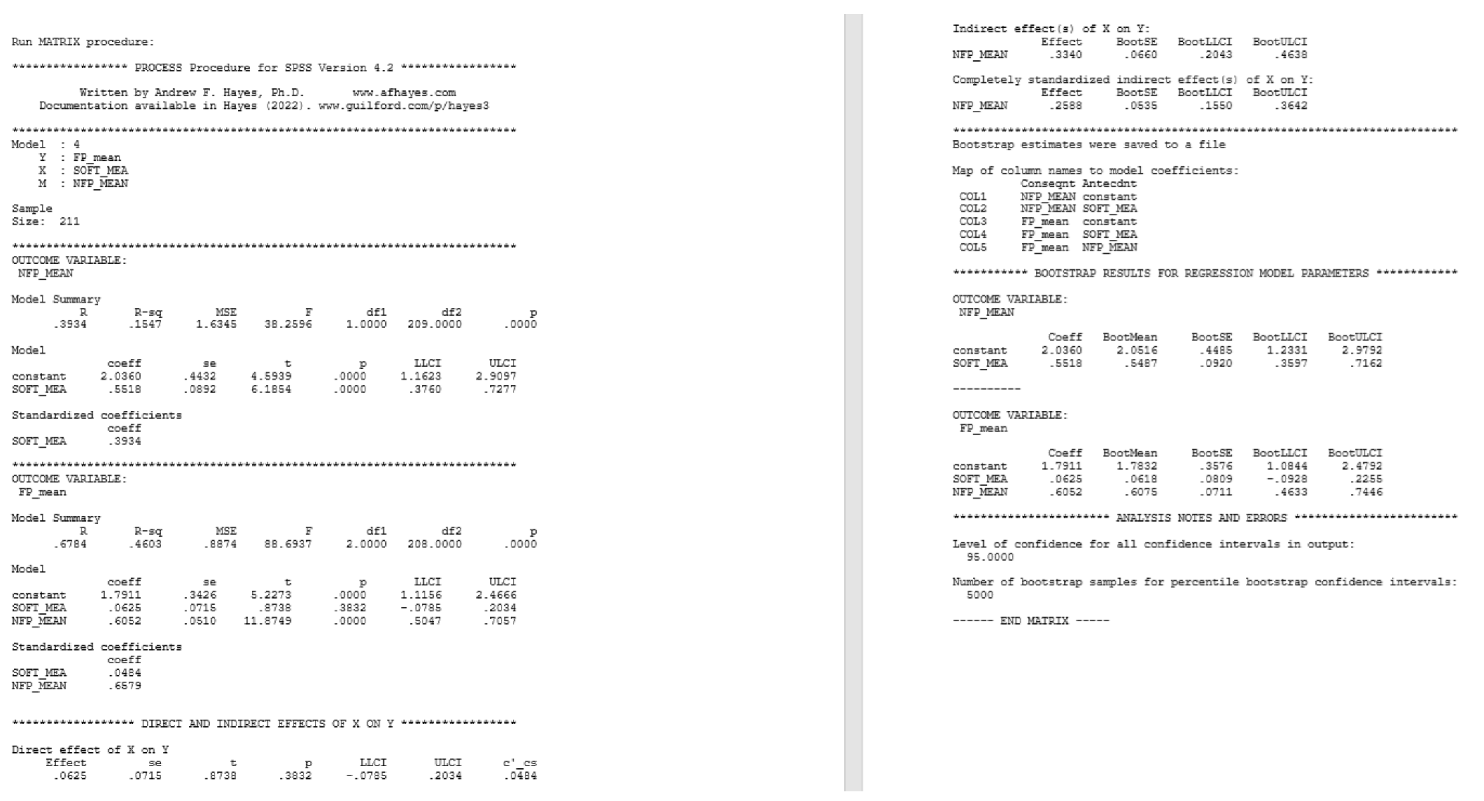
Table C1.
Rotated Component Matrix for Soft Quality Management. (Varimax Rotation; loadings ≥ 0.50)
| Item | People Management (PM) | Top Management Commitment (TMC) | Strategic Planning (SP) | Student Focus (SF) | Supplier Management (SM) |
| PM3 | 0.851 | ||||
| PM2 | 0.818 | ||||
| PM6 | 0.811 | ||||
| PM1 | 0.805 | ||||
| PM5 | 0.799 | ||||
| PM4 | 0.716 | ||||
| PM7 | 0.672 | ||||
| TMC2 | 0.855 | ||||
| TMC1 | 0.848 | ||||
| TMC3 | 0.801 | ||||
| TMC5 | 0.796 | ||||
| TMC4 | 0.779 | ||||
| TMC6 | 0.753 | ||||
| SP4 | 0.772 | ||||
| SP3 | 0.769 | ||||
| SP5 | 0.756 | ||||
| SP2 | 0.743 | ||||
| SP6 | 0.71 | ||||
| SP1 | 0.687 | ||||
| SF2 | 0.836 | ||||
| SF4 | 0.797 | ||||
| SF1 | 0.665 | ||||
| SF3 | 0.643 | ||||
| SM2 | 0.818 | ||||
| SM1 | 0.792 | ||||
| SM4 | 0.688 | ||||
| SM3 | 0.674 |
The rotated solution reveals a clear and theoretically consistent five-factor structure of Soft Quality Management (table c1):
Table C2.
Rotated Component Matrix for Hard Quality Management (Varimax).
| Item | Process Design (PD) | Information & Analysis (IA) | Process Mgmt – Edu & Research (PMER) | Continuous Improvement (CI) | Administrative Management (ADM) |
| PD2 | 0.922 | ||||
| PD3 | 0.884 | ||||
| PD5 | 0.878 | ||||
| PD4 | 0.874 | ||||
| PD1 | 0.822 | ||||
| IA5 | 0.838 | ||||
| IA4 | 0.795 | ||||
| IA3 | 0.711 | ||||
| IA1 | 0.698 | ||||
| IA2 | 0.695 | ||||
| PMER1 | 0.755 | ||||
| PMER4 | 0.709 | ||||
| PMER3 | 0.673 | ||||
| PMER2 | 0.609 | ||||
| CI1 | 0.781 | ||||
| CI2 | 0.766 | ||||
| CI3 | 0.743 | ||||
| CI4 | 0.711 | ||||
| ADM1 | 0.834 | ||||
| ADM2 | 0.768 |
Only loadings ≥ 0.50 are reported.
Appendix D
Table D1.
Mediation and Moderation Logic with Model Equations.
| Hypothesis | Mediation / Moderation Logic | Model Equations | Plain-Language Explanation |
| H1: Non-financial performance mediates the relationship between Soft QM practices and financial performance. | Soft QM → Non-Financial Performance → Financial Performance (Mediation) | NFP = α₀ + α₁·SQM + ε₁ (1) FP = β₀ + β₁·NFP + β₂·SQM + ε₂ (2) Indirect = α₁ × β₁ |
Soft quality practices improve non-financial outcomes first; those improvements then drive financial performance. |
| H2: Hard QM practices mediate the relationship between Soft QM practices and non-financial performance. | Soft QM → Hard QM → Non-Financial Performance (Mediation) | HQM = γ₀ + γ₁·SQM + ε₃ (3) NFP = δ₀ + δ₁·HQM + δ₂·SQM + ε₄ (4) Indirect = γ₁ × δ₁ |
Leadership and people-oriented practices are translated into formal systems, which then improve non-financial performance. |
| H3: Hard QM practices mediate the relationship between Soft QM practices and financial performance. | Soft QM → Hard QM → Financial Performance (Mediation) | HQM = λ₀ + λ₁·SQM + ε₅ (5) FP = μ₀ + μ₁·HQM + μ₂·SQM + ε₆ (6) Indirect = λ₁ × μ₁ |
Soft quality culture strengthens formal systems and procedures, which subsequently generate financial benefits. |
| H4: Institution type significantly moderates the relationship between non-financial performance and Hard QM practices | Institution Type moderates Non-Financial Performance → Hard QM | HQM = θ₀ + θ₁·NFP + θ₂·IT + θ₃·(NFP × IT) + ε₇ (7) |
The strength of the relationship between non-financial performance and hard quality practices differs between public and private universities. |
Notes: SQM = Soft Quality Management; HQM = Hard Quality Management; NFP = Non-Financial Performance; FP = Financial Performance; IT = Institution Type (0 = public, 1 = private); ε = error term. Mediation is confirmed when the indirect effect is statistically significant based on bootstrap confidence intervals.
References
- Oakland, JS. Total Quality Management in Education. Total Qual Manag. 1995, 6, 37–50. [Google Scholar]
- Sallis, E. Total Quality Management in Education, 3rd ed.; Routledge: London, UK, 2014. [Google Scholar]
- Sousa, R; Voss, CA. Quality Management Re-Visited: A Reflective Review and Agenda for Future Research. J Oper Manag. 2002, 20, 91–109. [Google Scholar] [CrossRef]
- Hayes, AF. Introduction to Mediation, Moderation, and Conditional Process Analysis: A Regression-Based Approach, 2nd ed.; Guilford Press: New York, NY, USA, 2018. [Google Scholar]
- Hayes, AF. The PROCESS Macro for SPSS, SAS, and R (Version 4.x). Available online: https://www.processmacro.org (accessed on 4 January 2026).
- Marginson, S. The Worldwide Trend to High Participation Higher Education: Dynamics of Social Stratification in Inclusive Systems. High Educ. 2016, 72, 413–434. [Google Scholar] [CrossRef]
- Salmi, J. The Challenge of Establishing World-Class Universities; World Bank: Washington, DC, USA, 2009. [Google Scholar]
- UzDaily. Number of Higher Education Institutions in Uzbekistan Increases Threefold. 2024. Available online: https://uzdaily.uz (accessed on 4 January 2026).
- Kun, uz. Student Enrollment in Uzbekistan Reaches Record Levels. 2025. Available online: https://kun.uz (accessed on 4 January 2026).
- The Diplomat. Uzbekistan Expands University Admissions amid Education Reforms. 2023. Available online: https://thediplomat.com (accessed on 4 January 2026).
- UzLiDeP. President Shavkat Mirziyoyev Chairs a Meeting to Improve the Higher Education System. 2021. Available online: https://uzlidep.uz/en/news-of-uzbekistan/9360 (accessed on 4 January 2026).
- President of the Republic of Uzbekistan. Decree: On Approval of the Concept for the Development of the Higher Education System of the Republic of Uzbekistan until 2030; Tashkent, Uzbekistan, 2019. Available online: https://invest.miit.uz/document/services/portal/SECTORS/Education/Documents/Decree.pdf (accessed on 4 January 2026).
- Kun.uz. Uzbekistan’s Higher Education Institutions Move toward Financial Independence and Self-Financing Mechanisms. 2023. Available online: https://kun.uz/en/50130265 (accessed on 4 January 2026).
- Asian Development Bank. Uzbekistan: Skills Development and Labor Market Diagnostics; ADB: Manila, Philippines, 2022. [Google Scholar]
- UNICEF. Education Sector Analysis in Uzbekistan; UNICEF: New York, NY, USA, 2022. [Google Scholar]
- UNESCO International Institute for Educational Planning (IIEP). Governance and Corruption Risks in Higher Education; UNESCO IIEP: Paris, France, 2021. [Google Scholar]
- Sharopova, D. University Governance Reforms and Anti-Corruption Measures in Uzbekistan. Cent Asian Aff. 2025, 12, 45–62. [Google Scholar]
- Crawford, J; Butler-Henderson, K; Rudolph, J; et al. COVID-19: 20 Countries’ Higher Education Intra-Period Digital Pedagogy Responses. J Appl Learn Teach 2020, 3, 1–20. [Google Scholar]
- Flynn, BB; Schroeder, RG; Sakakibara, S. A Framework for Quality Management Research and an Associated Measurement Instrument. J Oper Manag. 1994, 11, 339–366. [Google Scholar] [CrossRef]
- Kaynak, H. The Relationship between Total Quality Management Practices and Their Effects on Firm Performance. J Oper Manag. 2003, 21, 405–435. [Google Scholar] [CrossRef]
- Harvey, L; Green, D. Defining Quality. Assess Eval High Educ. 1993, 18, 9–34. [Google Scholar] [CrossRef]
- Kaplan, RS; Norton, DP. The Balanced Scorecard: Translating Strategy into Action; Harvard Business School Press: Boston, MA, USA, 1996. [Google Scholar]
- Teeroovengadum, V; Kamalanabhan, TJ; Seebaluck, AK. Measuring Service Quality in Higher Education: Development of a Hierarchical Model. Qual Assur Educ. 2016, 24, 244–258. [Google Scholar] [CrossRef]
- Owlia, MS; Aspinwall, EM. A Framework for the Dimensions of Quality in Higher Education. Qual Assur Educ. 1996, 4, 12–20. [Google Scholar] [CrossRef]
- Cruickshank, M. Total Quality Management in the Higher Education Sector: A Literature Review from an International and Australian Perspective. TQM J. 2003, 15, 20–36. [Google Scholar] [CrossRef]
- Zu, X; Robbins, TL; Fredendall, LD. Mapping the Critical Links between Organisational Culture and TQM/Six Sigma Practices. Int J Prod Econ. 2010, 123, 86–106. [Google Scholar] [CrossRef]
- Zairi, M. Managing Quality: Strategic and Competitive Issues. Total Qual Manag. 1994, 5, 121–129. [Google Scholar]
- Sadikoglu, E; Olcay, H. The Effects of Total Quality Management Practices on Performance. Adv Decis Sci. 2014, 2014, 537605. [Google Scholar]
- Antony, J; Palsuk, P; Gupta, S; Mishra, D; Barach, P. Six Sigma in Healthcare: A Systematic Review. Int J Qual Reliab Manag. 2018, 35, 1075–1092. [Google Scholar] [CrossRef]
- Babbie, E. The Practice of Social Research, 13th ed.; Wadsworth: Belmont, CA, USA, 2012. [Google Scholar]
- Bryman, A. Social Research Methods, 4th ed.; Oxford University Press: Oxford, UK, 2012. [Google Scholar]
- Hair, JF; Black, WC; Babin, BJ; Anderson, RE. Multivariate Data Analysis, 7th ed.; Prentice Hall: Upper Saddle River, NJ, USA, 2010. [Google Scholar]
- Dillman, DA; Smyth, JD; Christian, LM. Internet, Phone, Mail, and Mixed-Mode Surveys: The Tailored Design Method, 4th ed.; Wiley: Hoboken, NJ, USA, 2014. [Google Scholar]
- Creswell, JW; Creswell, JD. Research Design: Qualitative, Quantitative, and Mixed Methods Approaches, 5th ed.; Sage: Thousand Oaks, CA, USA, 2018. [Google Scholar]
- Demming, CL; Jahn, S; Boztug, Y. Conducting Mediation Analysis in Marketing Research. Marketing ZFP [Internet] 2017 [cited 2026 Jan 5], 39(3), 76–98. Available online: https://rsw.beck.de/docs/librariesprovider54/default-document-library/demming-et-al-marketing-3-2017.pdf. [CrossRef]
- Zhao, X; Lynch, JG; Chen, Q. Reconsidering Baron and Kenny: Myths and Truths about Mediation Analysis. Journal of Consumer Research [Internet] 2010 Aug [cited 2026 Jan 5], 37(2), 197–206. Available online: https://psycnet.apa.org/record/2010-22938-001. [CrossRef]
- Ministry of Justice of the Republic of Uzbekistan. Sun’iy intellekt asosida BrightBridge.uz platformasida rezyumelar, startap loyihalari va intervyu tayyorgarligini tahlil qilish hamda shaxsiy tavsiyalar berish tizimi; Certificate No.: DGU 56174; Protection of Industrial Property, Ministry of Justice of the Republic of Uzbekistan: Tashkent, 2025; Available online: https://im.adliya.uz/document/check/4eec0dce-410a-479e-baf8-01b23a912d28.
- Ministry of Justice of the Republic of Uzbekistan. Umumiy sifat menejmenti (TQM) modeli asosida BrightBridge.uz platformasida oliy ta’lim va xizmat ko‘rsatish sifatini oshirish bo‘yicha strategik yondashuv. Protection of Industrial Property, Ministry of Justice of the Republic of Uzbekistan: Tashkent, 2025. Available online: https://im.adliya.uz/document/check/97aad15c-56a7-43bd-a3c3-ceaf24426c60.
- Ministry of Justice of the Republic of Uzbekistan. Umumiy sifat menejmenti (TQM) asosida BrightBridge.uz platformasida ta’lim va xizmat sifatini oshirish ma’lumotlar bazasi; Protection of Industrial Property, Ministry of Justice of the Republic of Uzbekistan: Tashkent, 2025; Available online: https://im.adliya.uz/document/check/a49f777c-60b0-4d86-88d1-b638b7e068d0.
- Zamin.uz. Qong‘irotboy Sharipov: talabga javob bermaydigan va bitiruvchilarining bandligi past bo‘lgan oliy ta’lim muassasalari yopilishi mumkin [Internet]. Zamin: Tashkent, 2024; Available online: https://zamin.uz/uz/jamiyat/133746-qongirotboy-sharipov-talabga-javob-bermaydigan-20-ta-davlat-oliygohi-yopiladi.html.
- Management Development Institute of Singapore in Tashkent (MDIST). Rector’s message and Scientific Council activities [Internet]; MDIST: Tashkent, 2023–2024; Available online: https://www.mdis.uz/en/menu/rectors-message.
- Westminster International University in Tashkent (WIUT). Executive team: Komiljon Karimov [Internet]; WIUT: Tashkent, 2024; Available online: https://www.wiut.uz/executive-team.
- WIUT–UK Education Forum. Summaries of sessions and presentations on higher education quality and governance [Internet]; WIUT: Tashkent, 2024; Available online: https://conference.wiut.uz.
- Management Development Institute of Singapore in Tashkent (MDIST). Business Communication Workshop for Intern Fair Day Preparation [Internet]; MDIST: Tashkent, 2024; Available online: https://mdis.uz/en/news/business-communication-workshop-for-intern-fair-day-preparation.
Figure 1.
Research Model (TQM–Performance Model).
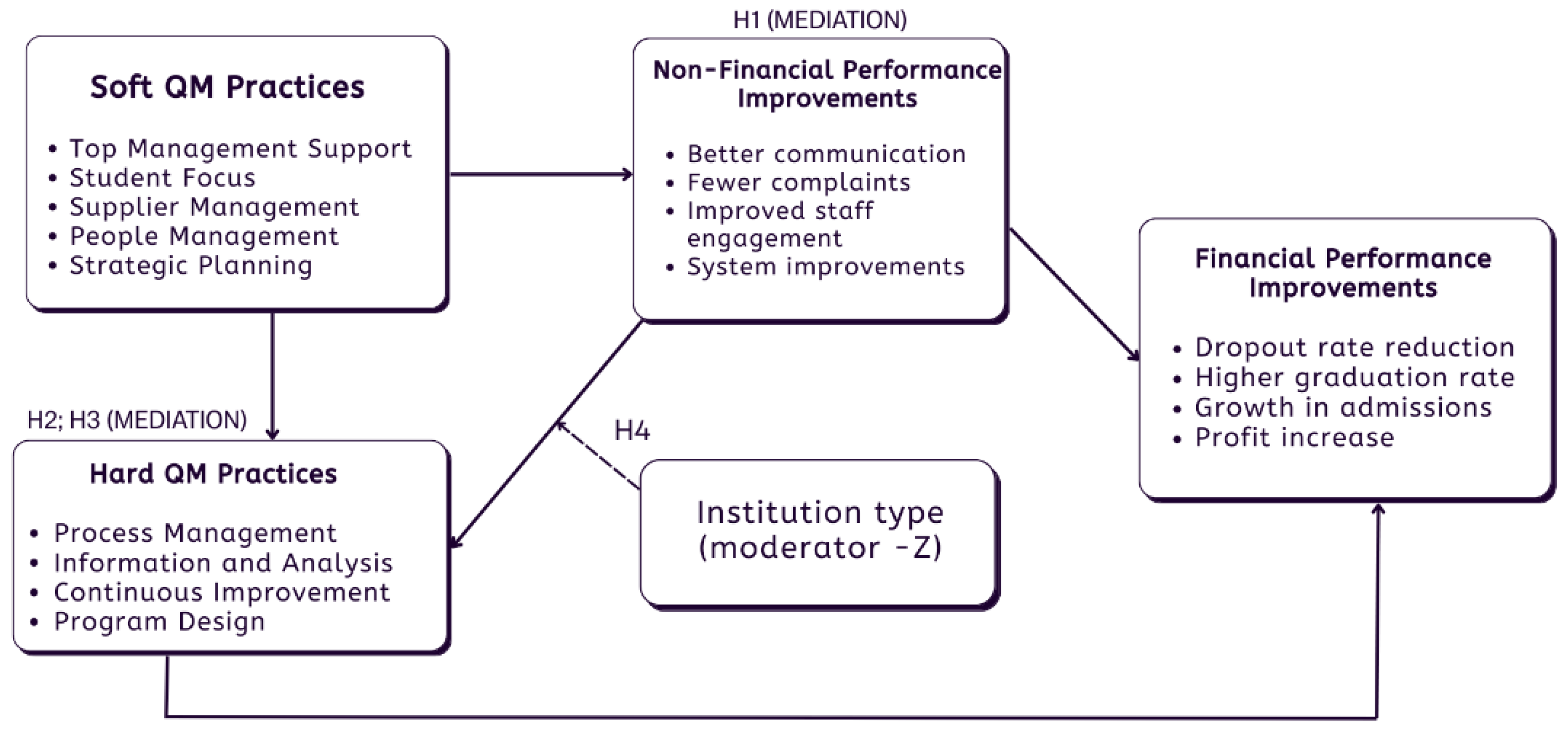
Figure 2.
Operational AI-Enabled Total Quality Management (TQM) roadmap for the BrightBridge.uz platform, illustrating the progression from data inputs to performance impacts.
Figure 2.
Operational AI-Enabled Total Quality Management (TQM) roadmap for the BrightBridge.uz platform, illustrating the progression from data inputs to performance impacts.
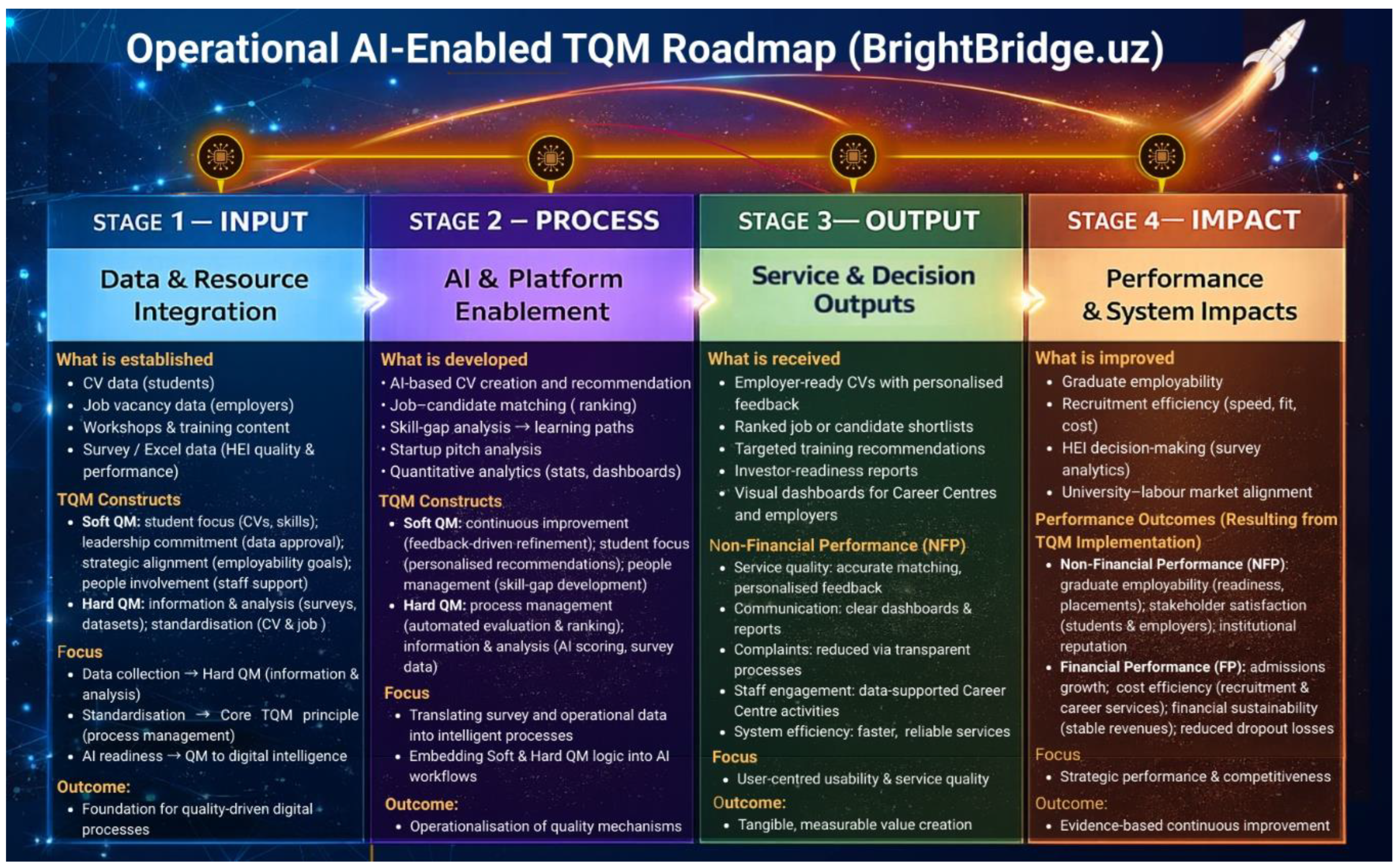
Table 1.
Descriptive Statistics and Reliability Results for Study Constructs.
| Main Construct | Sub-Construct / Dimension | Measurement Type | No. of Items | N | Mean | Std. Deviation | Cronbach's alpha |
| Soft Quality Management (Soft QM) | Top Management Support (SQ1) | Reflective | 6 | 211 | 4.7480 | 1.39171 | 0.765 |
| Strategic Planning (SQ2) | Reflective | 6 | 211 | 4.7536 | 1.37632 | ||
| Supplier Management (SQ3) | Reflective | 4 | 211 | 4.5403 | 1.32001 | ||
| People Management (SQ4) | Reflective | 7 | 211 | 5.1726 | 1.38816 | ||
| Student Focus (SQ5) | Reflective | 4 | 211 | 5.1291 | 1.41239 | ||
| Hard Quality Management (Hard QM) | Process Management: Educational & Research (HQ1) | Reflective | 4 | 211 | 4.8590 | 1.41357 | 0.818 |
| Administrative Quality (HQ2) | Reflective | 4 | 211 | 4.9040 | 1.34340 | ||
| Information and Analysis (HQ3) | Reflective | 5 | 211 | 5.0815 | 1.41535 | ||
| Continuous Improvement (HQ4) | Reflective | 4 | 211 | 4.6564 | 1.30606 | ||
| Program Design (HQ5) | Reflective | 5 | 211 | 4.7090 | 1.60549 | ||
| Financial Performance (FP) | - | Reflective | 5 | 211 | 4.9536 | 1.27613 | 0.801 |
| Non-Financial Performance (NFP) | - | Reflective | 7 | 211 | 4.7962 | 1.23968 | 0.691 |
Note: Financial and Non-Financial Performance are unidimensional reflective constructs; thus, no sub-dimensions are reported (α > 0.70). Further details are provided in Appendix A.
Table 2.
KMO and Bartlett’s Test of Sphericity Results for Staff Constructs.
| Construct | KMO |
Bartlett’s χ² (Approx. Chi-Square) |
df | Sig. (p-value) |
| Soft Quality Management (Soft QM) | 0.878 | 4223.450 | 351 | < 0.001 |
| Hard Quality Management (Hard QM) | 0.899 | 3577.568 | 231 | < 0.001 |
| Financial Performance (FP) | 0.745 | 338.768 | 10 | < 0.001 |
| Non-Financial Performance (NFP) | 0.719 | 566.634 | 21 | < 0.001 |
Table 3.
PCA Results for Composite Variables: Eigenvalues and Explained Variance.
| Component (interpretation label) | Eigenvalue | % of Variance | Cumulative % |
| Component 1 (dominant shared variance) | 1.688 | 42.21 | 42.21 |
| Component 2 (secondary shared variance) | 1.087 | 27.19 | 69.40 |
| Component 3 (residual variance) | 0.912 | 22.79 | 92.19 |
| Component 4 (minor residual variance) | 0.312 | 7.81 | 100.00 |
Extraction method: Principal Component Analysis (PCA). Retention criterion: Eigenvalues > 1.00.
Table 4.
Pearson Correlation Matrix for Quality Management Practices and Performance Outcomes.
| Construct | Soft Quality Management | Hard Quality Management | Financial Performance | Non-Financial Performance |
| Soft Quality Management | 1 | |||
| Hard Quality Management | 0.738*** | 1 | ||
| Financial Performance | 0.307*** | 0.332*** | 1 | |
| Non-Financial Performance | 0.393*** | 0.419*** | 0.677*** | 1 |
Notes: Pearson correlations (two-tailed); *** p < 0.01; N = 211: Composite mean scores derived from validated EFA solutions (Appendix B).
Table 5.
Mediation Analysis of Non-Financial Performance in the Relationship between Soft Quality Management and Financial Performance (H1).
Table 5.
Mediation Analysis of Non-Financial Performance in the Relationship between Soft Quality Management and Financial Performance (H1).
| Path | Relationship | B | SE | t | p | 95% Bootstrap CI | Standardized Effect (β) | Result |
|---|---|---|---|---|---|---|---|---|
| a | Soft Quality Management → Non-Financial Performance | 0.552 | 0.089 | 6.185 | < .001 | [0.376, 0.728] | 0.393 | Supported |
| b | Non-Financial Performance → Financial Performance | 0.605 | 0.051 | 11.875 | < .001 | [0.505, 0.706] | 0.658 | Supported |
| c′ | Soft Quality Management → Financial Performance (direct) | 0.063 | 0.072 | 0.874 | 0.383 | [−0.079, 0.203] | 0.048 | Not supported |
| a × b | Indirect effect via Non-Financial Performance | 0.334 | 0.066 | — | — | [0.202, 0.463] | 0.259 | Supported |
Note. N = 211. Analysis conducted using PROCESS macro v4.2 (Hayes, 2022), Model 4. Bootstrap confidence intervals are percentile-based with 5,000 resamples and a 95% confidence level. R² = 0.155 for the mediator model (Non-Financial Performance) and R² = 0.460 for the outcome model (Financial Performance). Mediation is supported when the bootstrap confidence interval of the indirect effect does not include zero. The statistically significant indirect effect combined with a non-significant direct effect (c′) indicates indirect-only (full) mediation (Zhao et al., 2010) (Appendix 14).
Table 6.
Mediation Analysis of Hard Quality Management in the Relationship between Soft Quality Management and Non-Financial Performance (H2).
Table 6.
Mediation Analysis of Hard Quality Management in the Relationship between Soft Quality Management and Non-Financial Performance (H2).
| Path | Relationship | B | SE | t | p | 95% Bootstrap CI | Standardized Effect (β) | Result |
| a | Soft Quality Management → Hard Quality Management | 0.812 | 0.051 | 15.83 | < .001 | [0.711, 0.913] | 0.738 | Supported |
| b | Hard Quality Management → Non-Financial Performance | 0.361 | 0.118 | 3.06 | .003 | [0.128, 0.594] | 0.283 | Supported |
| c′ | Soft Quality Management → Non-Financial Performance (direct) | 0.259 | 0.130 | 1.99 | .047 | [0.003, 0.515] | 0.185 | Supported |
| a × b | Indirect effect via Hard Quality Management | 0.293 | 0.116 | — | — | [0.076, 0.533] | 0.209 | Supported |
Note. N = 211. PROCESS macro v4.2 (Hayes, 2022), Model 4. Bootstrap confidence intervals are percentile-based with 5,000 resamples and a 95% confidence level. R² = 0.545 for the mediator model (Hard Quality Management) and R² = 0.191 for the outcome model (Non-Financial Performance). Mediation is supported when the bootstrap confidence interval of the indirect effect does not include zero.
Table 7.
Mediation Analysis of Hard Quality Management (PROCESS Model 4): Relationship between Soft Quality Management and Financial Performance (H3).
Table 7.
Mediation Analysis of Hard Quality Management (PROCESS Model 4): Relationship between Soft Quality Management and Financial Performance (H3).
| Path | Relationship | B | SE | t | p | 95% Bootstrap CI | Standardized Effect (β) | Result |
|---|---|---|---|---|---|---|---|---|
| a | Soft QM → Hard QM | 0.812 | 0.051 | 15.83 | < .001 | [0.711, 0.913] | 0.738 | Supported |
| b | Hard QM → Financial Performance | 0.272 | 0.113 | 2.40 | .017 | [0.048, 0.495] | 0.232 | Supported |
| c′ | Soft QM → Financial Performance | 0.176 | 0.125 | 1.41 | .159 | [-0.070, 0.421] | 0.136 | Not supported |
| a × b | Soft QM → Hard QM → Financial Performance | 0.221 | 0.113 | — | — | [0.011, 0.459] | 0.171 | Supported (Full mediation) |
Note. N = 211. Mediation analysis was conducted using PROCESS macro v4.2 (Hayes, 2022), Model 4. Bootstrap confidence intervals are percentile-based with 5,000 resamples and a 95% confidence level. The coefficient of determination for the mediator model (Hard Quality Management) was R² = 0.545, while the outcome model (Financial Performance) explained R² = 0.119 of the variance. Mediation is supported when the bootstrap confidence interval of the indirect effect does not include zero.
Table 8.
Moderating Effect of Institution Type on the Relationship between Non-Financial Performance and Hard Quality Management Practices (H4).
Table 8.
Moderating Effect of Institution Type on the Relationship between Non-Financial Performance and Hard Quality Management Practices (H4).
| Path | Relationship | B | SE | t | p | 95% Bootstrap CI | Result |
| a | Non-Financial Performance → Hard QM | 0.399 | 0.059 | 6.793 | < .001 | [0.283, 0.515] | Supported |
| b | Institution Type → Hard QM | 1.335 | 0.507 | 2.633 | .009 | [0.335, 2.334] | Supported |
| c | NFP × Institution Type → Hard QM | −0.211 | 0.103 | −2.043 | .042 | [−0.415, −0.007] | Supported |
| — | ΔR² due to interaction | — | — | — | — | 0.016 | — |
| — | Conditional effect (Public institutions) | 0.399 | 0.059 | 6.793 | < .001 | [0.283, 0.515] | Significant |
| — | Conditional effect (Private institutions) | 0.188 | 0.085 | 2.205 | .029 | [0.020, 0.355] | Significant |
Note. N = 211. PROCESS macro v4.2 (Hayes, 2022), Model 1. Institution type coded as 0 = public, 1 = private. Bootstrap confidence intervals are percentile-based with 5,000 resamples at the 95% confidence level. Standardized coefficients are not reported, as PROCESS does not provide standardized estimates for moderated models. Moderation is supported when the interaction term is statistically significant and the bootstrap confidence interval does not include zero.
Disclaimer/Publisher’s Note: The statements, opinions and data contained in all publications are solely those of the individual author(s) and contributor(s) and not of MDPI and/or the editor(s). MDPI and/or the editor(s) disclaim responsibility for any injury to people or property resulting from any ideas, methods, instructions or products referred to in the content. |
© 2026 by the author. Licensee MDPI, Basel, Switzerland. This article is an open access article distributed under the terms and conditions of the Creative Commons Attribution (CC BY) license.
Copyright: This open access article is published under a Creative Commons CC BY 4.0 license, which permit the free download, distribution, and reuse, provided that the author and preprint are cited in any reuse.


