

Submitted:
20 January 2026
Posted:
21 January 2026
You are already at the latest version
Abstract
Terpenolol is a newly developed hydrophilic derivative of cannabidiol (CBD) designed to overcome the solubility, stability, and pharmacokinetic limitations of conventional lipophilic CBD formulations. This study presents its physicochemical profile, 30‑day stability, and preliminary pharmacokinetic behavior in humans. Terpenolol forms a stable aqueous micellar‑like dispersion with neutral pH (7.0 ± 0.1), consistent viscosity, and minimal variation in tintometric and colloidal parameters over the observation period.In a single‑dose, two‑period crossover study involving five healthy volunteers, sublingual administration of Terpenolol resulted in markedly higher plasma CBD concentrations at 30 minutes compared with an oil‑based reference formulation. Observational data from more than 200 individuals using Terpenolol‑based preparations across oral, nasal, cutaneous, and transdermal routes indicate good tolerability and reported improvements in anxiety, panic symptoms, insomnia, psychotic‑spectrum disturbances, and musculoskeletal or joint pain.The compound’s complete solubility in aqueous media, combined with its neutral taste and odorless profile, also supports its incorporation into functional beverages, as demonstrated by a prototype mineral water formulation containing 50 mg of CBD in 500 ml.Overall, Terpenolol demonstrates physicochemical stability, improved early systemic exposure to CBD, and broad formulation compatibility. Controlled studies are planned to further define its pharmacological relevance and potential application domains.
Keywords:
hydrophilic CBD derivative
; micellar CBD formulation
; CBD pharmacokinetics
; observational clinical data
; CBD based functional beverages
1. Introduction
Cannabidiol (CBD) is one of the most extensively studied psychoactive yet non-psychodysleptic and non-intoxicating phytocannabinoids derived from Cannabis sativa L. It exhibits antioxidant, anti-inflammatory, anxiolytic, neuroprotective, and anticonvulsant properties, with psychoactive effects mediated through serotonergic (5-HT1A), endocannabinoid, TRPV1, and adenosinergic pathways (Pisanti, et al.,2017).
Despite its promising biological profile, CBD presents significant physicochemical limitations. It is highly lipophilic (logP ≈ 6–7), exhibits negligible aqueous solubility, and is prone to oxidative and thermal degradation, compromising stability and shelf life in finished formulations (Alhadid et al., 2023; Schwarzenberg et al., 2022). These constraints hinder its incorporation into hydrophilic systems and necessitate complex formulation strategies such as encapsulation, solubilizers, or stabilizing excipients (Su & Zhang, 2024).
Several CBD derivatives-including esters, glycosylated forms, and surfactant-like analogue-have been explored to address these challenges. However, many of these compounds face limitations related to synthesis complexity, regulatory ambiguity, or restricted applicability across industrial sectors (Wang et al., 2023).
A persistent technological challenge remains: achieving true, instantaneous aqueous dissolution of a CBD-derived compound while maintaining neutral organoleptic properties, crystal clarity, and long-term physicochemical stability. Existing formulations often present compromises such as incomplete dispersion, undesirable sensory attributes, or limited shelf-life stability.
Terpenolol was specifically engineered to address this gap. It is a novel amphiphilic CBD-derived compound designed to combine the functional properties of CBD with enhanced solubility, stability, and formulation versatility. Its dual affinity for aqueous and lipid phases enables improved dispersibility in emulsions, gels, transdermal systems, and oral delivery matrices. Preliminary analyses indicate high chemical stability, minimal sensory impact, and broad compatibility with excipients commonly used in pharmaceutical, nutraceutical, and cosmeceutical formulations (Scrimali, 2020).
Derived from highly purified, THC-free industrial hemp biomass, Terpenolol aligns with current EU and US regulatory frameworks governing cannabinoid-based ingredients. Its formulation has been filed with the Italian Patent Office as a proprietary hydrophilic micellar CBD composition, supporting its originality and industrial relevance. Its clean regulatory profile and scalable production process position it as a promising platform molecule for next-generation health and wellness products.
2. Characterization of Terpenolol
2.1. Physicochemical Characterization
Terpenolol forms a stable micellar-like aqueous dispersion characterized by:
- pH: 7.0 ± 0.1
- Viscosity: Zahn Cup #1, 25 s at room temperature
- Appearance: slightly opalescent, homogeneous dispersion
- Mean micellar diameter: 22.26 µm
- Organoleptic profile: neutral taste, no bitterness, no oily residue
- Tintometric analysis (Day 0): L* = 96.12, a* = –0.18, b* = +1.94
Although classical micelles formed by small amphiphilic molecules typically fall within the nanometric range, contemporary supramolecular chemistry recognizes that self-assembled amphiphilic aggregates may also reach micrometric dimensions. These larger structures—often described as micellar or micelle-like—arise in systems involving complex amphiphiles or multi-component assemblies and are well documented within the broader family of colloidal self-assembled aggregates (Mejuto & Poša, 2024). Within this framework, the term “micellar” as applied to Terpenolol refers to its amphiphilic organization and self-assembled morphology rather than to a strict size-based definition.
Figure 1.
Schematic representation of Terpenolol formation from cannabidiol (CBD) and medium-chain triglycerides
(MCT). The figure illustrates the amphiphilic architecture of Terpenolol, in which the CBD moiety is functionally integrated
within a micellar-like macromolecular structure. This organization confers hydrophilicity, improved aqueous dispersibility,
and enhanced formulation versatility compared to conventional lipophilic CBD preparations.
Figure 1.
Schematic representation of Terpenolol formation from cannabidiol (CBD) and medium-chain triglycerides
(MCT). The figure illustrates the amphiphilic architecture of Terpenolol, in which the CBD moiety is functionally integrated
within a micellar-like macromolecular structure. This organization confers hydrophilicity, improved aqueous dispersibility,
and enhanced formulation versatility compared to conventional lipophilic CBD preparations.
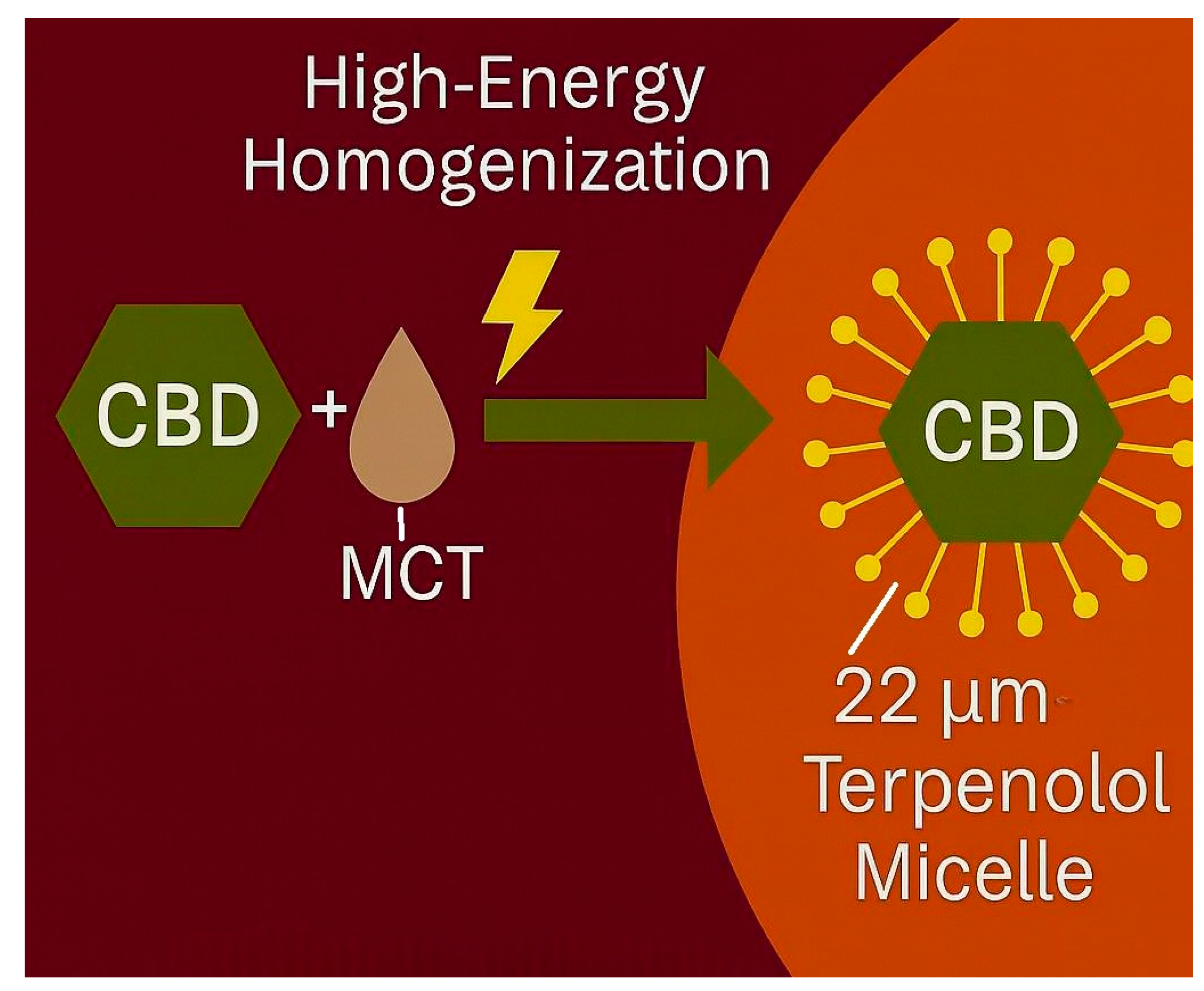
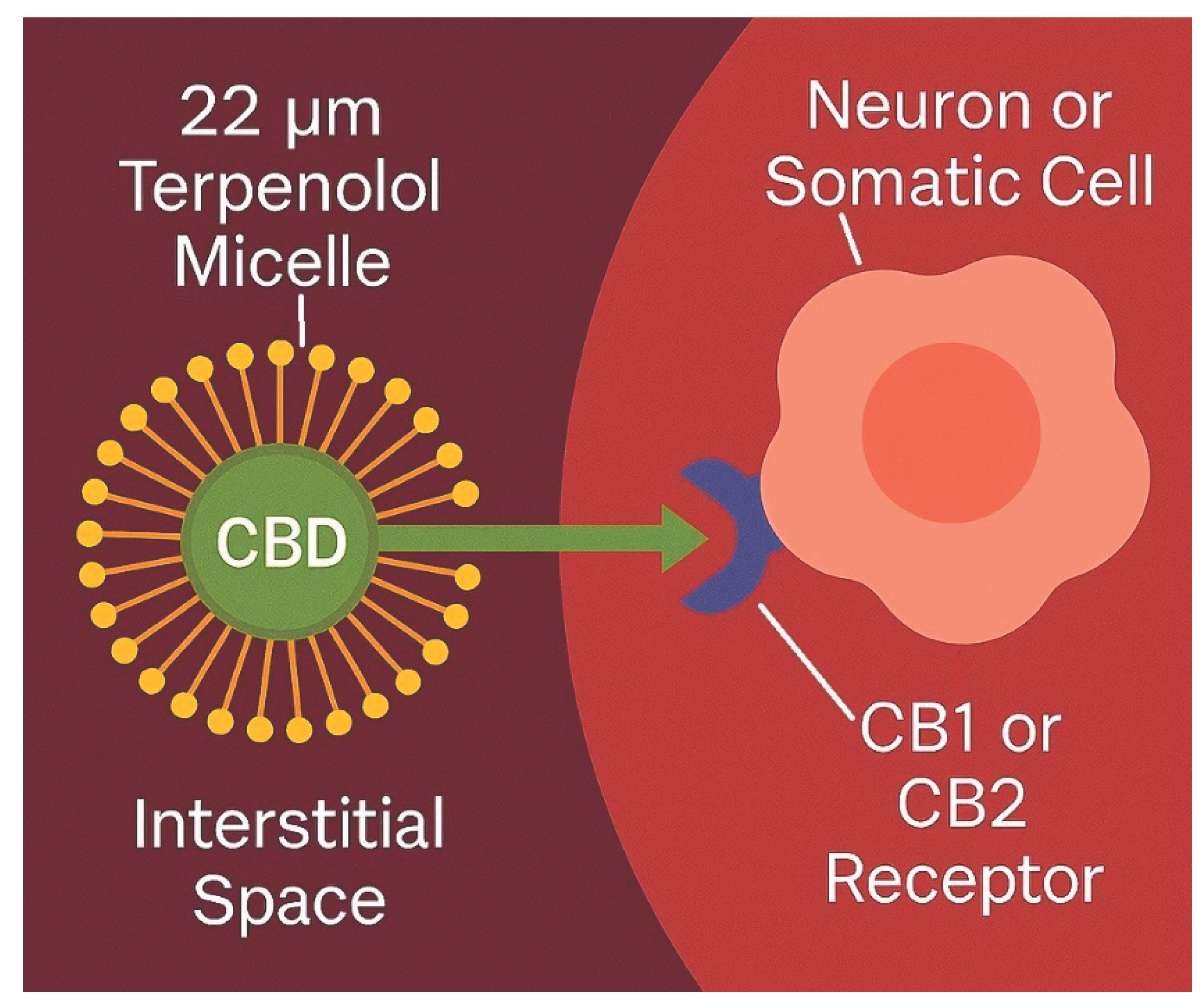
Figure 2.
Conceptual model of CBD release from the Terpenolol macromolecular complex at the receptor level. Following
administration, Terpenolol disperses in aqueous biological fluids and gradually releases CBD in proximity to its molecular
targets (e.g., 5-HT1A, TRPV1, endocannabinoid-related sites). This controlled release is hypothesized to support more
efficient receptor engagement, reduced pharmacokinetic variability, and sustained functional effects compared to standard
oil-based CBD formulations.
Figure 2.
Conceptual model of CBD release from the Terpenolol macromolecular complex at the receptor level. Following
administration, Terpenolol disperses in aqueous biological fluids and gradually releases CBD in proximity to its molecular
targets (e.g., 5-HT1A, TRPV1, endocannabinoid-related sites). This controlled release is hypothesized to support more
efficient receptor engagement, reduced pharmacokinetic variability, and sustained functional effects compared to standard
oil-based CBD formulations.
2.2. Stability Study
A 30-day stability assessment was conducted at controlled room temperature (20-22 C°). Over the observation period:
- pH remained constant at 7.0 ± 0.1
- viscosity showed no significant variation
- micellar size distribution remained stable
- tintometric parameters exhibited minimal fluctuations
Tintometric analysis (Day 30): L* = 95.87, a* = –0.21, b* = +1.89
The ΔE value remained below perceptible thresholds, confirming excellent chromatic stability and absence of oxidative or structural degradation. These findings support the robustness of Terpenolol as a micellar aqueous formulation suitable for long-term storage and diverse applications.
2.3. Pharmacokinetic Study
2.3.1. Study Design
A single-dose, open-label, two-period crossover pharmacokinetic study was conducted in five healthy adult volunteers (3 males, 2 females; age 28–54 years). The study compared:
- Terpenolol (hydrophilic CBD-derived compound)
- Standard oil-based CBD formulation (MCT-based reference)
Each participant received both formulations in randomized order, with a 7-day washout between periods. All participants provided informed consent.
2.3.2. Dosing and Administration
Each formulation delivered 25 mg of CBD:
- Terpenolol: 0.025 ml of the hydrophilic micellar compound
- Oil-based CBD: 0.5 ml of a standard MCT-based CBD preparation
Both were administered sublingually, with subjects instructed to hold the liquid under the tongue for 60 seconds before swallowing.
2.3.3. Blood Sampling and Analysis
Venous blood samples were collected 30 minutes post-dose. Plasma CBD concentrations were quantified using HPLC-UV (220 nm). The method showed:
- Linearity: 1–500 ng/ml
- Intra-assay CV < 5%
- Inter-assay CV < 7%
- LLOQ: 1 ng/ml
2.3.4. Pharmacokinetic Results
| Time (min) | Terpenolol (ng/ml ± SD) | Oil-based CBD (ng/ml ± SD) |
| 30 | 32.6 ± 5.8 | 11.2 ± 3.4 |
At 30 minutes, Terpenolol achieved approximately 2.9-fold higher plasma CBD levels than the oil-based formulation, supporting a more efficient and predictable absorption profile.
3. Pharmacological Rationale and Intended Applications
The pharmacological profile of cannabidiol (CBD) supports its potential use across a wide range of neuropsychiatric and somatic conditions. Evidence from preclinical and clinical studies highlights CBD’s anxiolytic, antipsychotic, anti-inflammatory, analgesic, and sleep-modulating properties, mediated through interactions with serotonergic (5-HT1A), endocannabinoid, TRPV1, and adenosinergic pathways (Coelho et al., 2024; Bhuller et al., 2024; Lavender et al., 2024; Fabris et al., 2024; Cásedas et al., 2024).
However, the clinical utility of conventional CBD formulations is limited by poor aqueous solubility, variable absorption, and inconsistent bioavailability. Terpenolol, as a hydrophilic CBD-derived compound with enhanced early systemic exposure, may stabilize or amplify CBD’s functional effects. Its micellar-like architecture facilitates rapid mucosal absorption, potentially reducing interindividual variability and enabling effective outcomes at lower doses.
These characteristics make Terpenolol particularly suitable for formulations intended for:
- rapid onset of action (e.g., sublingual or nasal delivery)
- prolonged or daily use
- applications requiring sensory neutrality
- integration into aqueous or semi-aqueous matrices
- multimodal therapeutic strategies, including those aligned with complex-systems-based approaches to mental health
Based on current evidence, Terpenolol may be relevant for:
- Anxiety disorders, including generalized anxiety and emotional dysregulation (Coelho et al., 2024)
- Panic disorder, particularly acute symptom management (Bhuller et al., 2024)
- Insomnia, especially when associated with hyperarousal or anxiety (Lavender et al., 2024)
- Psychotic-spectrum conditions, as an adjunctive or exploratory intervention (Fabris et al., 2024)
- Musculoskeletal and joint pain, including inflammatory components (Cásedas et al., 2024)
- Dermatological and mucosal inflammation, via topical or transdermal formulations
These potential applications are consistent with both CBD’s known pharmacological actions and the enhanced bioavailability profile observed with Terpenolol.
4. Clinical Aspects (Scrimali, 2024)
Over a two-year period, Terpenolol was used in more than 200 patients through the NegEnt product line, which includes edible drops, nasal spray, cutaneous emulsions, and transdermal formulations. This real-world clinical experience was embedded within a broader therapeutic framework developed by Scrimali, who recently proposed a novel complex-systems-based approach to the treatment of mental disorders. This model, termed Complex Therapy, integrates cognitive-behavioral principles with systemic, neurobiological, and ecological dimensions of psychological functioning (Scrimali, 2024).
Treatment durations ranged from several weeks to multiple years. Data are on file and will be published soon. Across indications, patient-reported outcomes consistently highlighted improvements in emotional regulation, somatic tension, sleep quality, and pain.
4.1. Anxiety
Clinical experience indicates consistent reductions in generalized anxiety, improved emotional regulation, and decreased somatic tension. Sublingual and nasal formulations often produced rapid subjective relief.
4.2. Panic Attacks
In individuals with panic disorder, Terpenolol-based formulations—especially nasal spray and fast-acting drops—were associated with rapid attenuation of acute panic symptoms and improved autonomic control.
4.3. Insomnia
Patients with insomnia, particularly when comorbid with anxiety, reported improvements in sleep onset, reduced nocturnal awakenings, and enhanced subjective sleep quality.
4.4. Psychotic-Spectrum Disorders
Preliminary exploratory use in schizophrenia and schizoaffective disorders yielded encouraging observations, including reductions in agitation and improved emotional stability. These findings warrant structured clinical investigation.
4.5. Musculoskeletal and Joint Pain
Topical and transdermal Terpenolol formulations demonstrated analgesic and anti-inflammatory effects, with patients reporting reduced pain intensity, improved mobility, and decreased local discomfort.
4.6. Dermatological and Mucosal Inflammation
Early clinical experience in dermatitis, oral aphthae, and vulvovaginal irritation indicated favorable responses, including reduced inflammation and symptomatic relief.
Summary of Clinical Experience
Across all indications, Terpenolol was well tolerated, with no significant adverse events reported. Its hydrophilic nature, sensory neutrality, and compatibility with multiple delivery routes facilitated prolonged use, including in sensitive populations such as children with anxiety, insomnia, or neurodevelopmental disturbances.
These real-world findings provide valuable preliminary insights into Terpenolol’s potential therapeutic applications and support the rationale for future controlled clinical trials.
5. Tolerability and Safety (Scrimali, 2023)
Across all formulations and routes of administration, Terpenolol demonstrated a favorable safety and tolerability profile in real-world clinical use. More than 200 individuals were exposed to Terpenolol-based products over a two-year period, including sublingual drops, nasal spray, cutaneous emulsions, and transdermal preparations. No significant adverse events were reported.
Sublingual, nasal, cutaneous, and transdermal routes were consistently well tolerated. Patients did not report relevant irritation, excessive sedation, paradoxical reactions, or gastrointestinal discomfort. The hydrophilic micellar-like architecture of Terpenolol, combined with its neutral taste and odorless profile, facilitated adherence and prolonged use.
Particularly noteworthy is the tolerability observed in sensitive populations, including children with anxiety, insomnia, or neurodevelopmental disturbances, who used Terpenolol-based formulations for extended periods without clinically relevant adverse effects. Although these observations are encouraging, they derive from uncontrolled real-world experience and should be interpreted cautiously.
The enhanced bioavailability associated with Terpenolol may allow effective outcomes at lower doses compared with conventional oil-based CBD formulations, potentially improving safety margins and reducing the risk of dose-related adverse effects.
Overall, the available evidence suggests that Terpenolol is a well-tolerated hydrophilic CBD-derived compound suitable for diverse delivery systems and prolonged use. Controlled studies are warranted to confirm these findings and to further characterize its safety profile.
6. Functional Foods, Wellness Beverages, and Hydra
The hydrophilic nature and micellar organization of Terpenolol, combined with its neutral taste and excellent organoleptic profile, make it particularly suitable for incorporation into functional foods, wellness beverages, and nutritional formulations. Unlike conventional CBD, which requires oily carriers and often alters taste, aroma, or clarity, Terpenolol dissolves instantly and uniformly in aqueous media, preserving transparency and sensory neutrality.
Terpenolol dissolves completely and uniformly in:
- water and mineral water
- tea and herbal infusions
- coffee and hot beverages
- fruit juices and smoothies
- wine, beer, and alcoholic beverages
This versatility enables the development of:
- wellness soft drinks
- mineral waters enriched with low-dose Terpenolol
- calming teas and functional coffees
- low-alcohol or alcohol-free beverages with added wellness attributes
Hydra – Proof of Concept
A prototype wellness beverage, provisionally named Hydra, was developed using:
- 0.5 L of still or sparkling mineral water
- 50 mg of CBD, corresponding to 0.05 ml of Terpenolol
Terpenolol dissolved instantly and completely, without altering taste, clarity, or effervescence. Informal sensory evaluation indicated that Hydra was refreshing, pleasant, and suitable for daily consumption. These findings suggest promising applications in wellness hydration and emotional and physical well-being.
7. Discussion
This study provides the first comprehensive characterization of Terpenolol, a novel hydrophilic CBD-derived compound designed to overcome the intrinsic limitations of conventional lipophilic cannabidiol preparations. Physicochemical analyses demonstrated that Terpenolol forms a stable micromicellar dispersion with neutral pH (7.0 ± 0.1), consistent viscosity, stable tintometric parameters, and a reproducible organoleptic profile over at least 30 days. These features indicate that the compound possesses a robust formulation profile suitable for diverse pharmaceutical, nutraceutical, cosmeceutical, and food-grade applications.
The pharmacokinetic findings further support the translational relevance of Terpenolol. In a controlled crossover study, the compound achieved markedly higher plasma CBD concentrations 30 minutes after sublingual administration compared to a standard oil-based formulation, with a faster time to peak and reduced interindividual variability. This enhanced systemic exposure is consistent with the hydrophilic micellar architecture of Terpenolol, which likely facilitates more efficient mucosal absorption and reduces the variability typically associated with lipophilic CBD products. Improved bioavailability may allow for lower effective doses, potentially enhancing safety and tolerability.
Beyond laboratory and pharmacokinetic data, Terpenolol has undergone extensive real-world clinical use through the NegEnt product line. Over a two-year period, more than 200 patients were treated for anxiety, panic attacks, insomnia, musculoskeletal pain, dermatological inflammation, and mucosal irritation. Clinical observations indicate consistent improvements in anxiety symptoms, rapid attenuation of acute panic episodes, enhanced sleep quality, and meaningful reductions in musculoskeletal discomfort. Preliminary results in psychotic-spectrum disorders and inflammatory dermatological conditions are encouraging and warrant further investigation.
A distinctive element emerging from this experience is the exceptional manageability of Terpenolol across its various formulations. The compound’s hydrophilic nature, pleasant organoleptic profile, and absence of significant adverse effects have facilitated prolonged use, including in sensitive populations such as children with anxiety, insomnia, or neurodevelopmental disturbances. The favorable tolerability profile observed in both the pharmacokinetic study and clinical practice aligns with the known safety characteristics of CBD, while the improved bioavailability of Terpenolol may allow for effective outcomes at reduced dosages.
An additional and highly promising domain is the food and wellness beverage industry, where Terpenolol’s complete solubility in aqueous media represents a major technological advantage. Unlike conventional CBD, which requires oily carriers and often alters taste or appearance, Terpenolol dissolves instantly and uniformly in water, mineral water, tea, coffee, juices, wine, beer, and alcoholic beverages. The development of Hydra, a mineral water enriched with 50 mg of CBD derived from 0.05 ml of Terpenolol, provides a compelling proof of concept. The beverage preserved clarity, taste, and effervescence, and was perceived as refreshing and suitable for daily wellness hydration.
Taken together, these findings position Terpenolol as a next-generation hydrophilic CBD-derived compound with broad translational potential. Its physicochemical stability, enhanced pharmacokinetic performance, excellent tolerability, and versatility across pharmaceutical, nutraceutical, cosmeceutical, and food-grade formulations suggest that Terpenolol may represent a meaningful advancement in cannabinoid science. While the real-world clinical observations reported here provide valuable preliminary insights, controlled clinical trials and further formulation studies will be essential to fully validate the therapeutic and industrial potential of Terpenolol and to delineate its role within the evolving landscape of cannabinoid-based compounds.
It is important to acknowledge the preliminary nature and inherent limitations of the current research on Terpenolol, particularly concerning the scale of pharmacokinetic and observational studies. As a small non-profit organization dedicated to phytopharmaceutical research (ALETEIA Lab for Phytopharmaceutical Research), these initial findings serve as a crucial foundational step. We are committed to a comprehensive and robust research program, with extensive studies on Terpenolol’s pharmacokinetics, pharmacodynamics, toxicology, and controlled clinical efficacy.
8. Conclusions
Terpenolol emerges from this study as a novel hydrophilic CBD-derived compound with a unique combination of physicochemical stability, enhanced pharmacokinetic performance, excellent tolerability, and remarkable versatility across multiple formulation environments. Its micelle-like architecture enables complete solubility in aqueous media, overcoming the intrinsic limitations of conventional lipophilic CBD preparations and opening new possibilities for pharmaceutical, nutraceutical, cosmeceutical, and food-grade applications.
The compound demonstrated robust stability over time, maintaining consistent pH, viscosity, tintometric parameters, and micellar structure. Pharmacokinetic evaluation revealed significantly improved systemic exposure following sublingual administration, supporting the hypothesis that Terpenolol’s hydrophilic nature facilitates more efficient mucosal absorption. These findings align with the extensive real-world clinical experience accumulated through the NegEnt product line, where more than 200 patients were treated across a range of conditions with excellent tolerability and meaningful clinical improvements.
A particularly innovative aspect of Terpenolol is its suitability for functional foods and wellness beverages, as demonstrated by the successful development of Hydra, a mineral water enriched with 50 mg of CBD. The compound dissolved instantly and completely, preserving taste and clarity, and illustrating its potential as a next-generation ingredient for wellness hydration and nutritional applications.
Future research should include controlled clinical trials, expanded stability studies in complex matrices, and systematic evaluation of its role in functional nutrition. Terpenolol represents a meaningful step forward in the evolution of CBD-based compounds and offers a versatile platform for future therapeutic and industrial development.
Author Contributions
Tullio Scrimali: study design, scientific supervision, data interpretation, manuscript drafting. Advanced artificial intelligence tools: statistical data processing, support in text structuring, translation into English, linguistic optimization, and formal revision. Scientific responsibility for all content remains entirely with the human author.
Funding
This research, including manuscript preparation and open-access publication, was funded by the Istituto Superiore per le Scienze Cognitive, a non-profit organization (www.issco.org), in accordance with its mission to advance scientific knowledge and promote evidence-based approaches to human well-being.
Acknowledgments
The author wishes to emphasize, for the purpose of developing new scientific methodologies, that advanced artificial intelligence tools were employed in conducting the research presented, in drafting the present article, and in translating it from Italian into English. Scientific, methodological, and interpretative responsibility for all content remains entirely with the human author.
Conflicts of Interest
The author declares no conflicts of interest other than the institutional relationship with the funding organization, which is a non-profit entity.
References
- Alhadid, A.; Luca, S. V.; Nasrallah, S.; Minceva, M. Experimental investigation and thermodynamic modelling of cannabidiol solubility in plant oils and hydrophobic eutectic systems. Journal of Molecular Liquids 2023, 372, 121172. [Google Scholar] [CrossRef]
- Bhuller, R.; Schlage, W. K.; Hoeng, J. Review of the current ongoing clinical trials exploring the possible anti-anxiety effects of cannabidiol. Journal of Cannabis Research 2024, 6, 40. [Google Scholar] [CrossRef] [PubMed]
- Cásedas, G.; de Yarza Sancho, M.; López, V. Cannabidiol (CBD): A systematic review of clinical and preclinical evidence in the treatment of pain. Pharmaceuticals 2024, 17(11), 1438. [Google Scholar] [CrossRef] [PubMed]
- Coelho, C. F.; Vieira, R. P.; Araújo Junior, O. S.; Lopes Martins, P. S.; dos Santos, L. G.; Dias, L. D.; Lopes Martins, R. A. B. The impact of cannabidiol treatment on anxiety disorders: A systematic review of randomized controlled clinical trials. Life 2024, 14(11), 1373. [Google Scholar] [CrossRef] [PubMed]
- Fabris, D.; Lisboa, J. R.; Guimarães, F. S.; Gomes, F. V. Cannabidiol as an antipsychotic drug. International Review of Neurobiology 2024, 177, 295–317. [Google Scholar] [CrossRef] [PubMed]
- Lavender, I.; Garden, G.; Grunstein, R. R.; Yee, B. J.; Hoyos, C. M. Using cannabis and CBD to sleep: An updated review. Current Psychiatry Reports 2024, 26, 712–727. [Google Scholar] [CrossRef] [PubMed]
- Mejuto, J. C.; Poša, M. Design and Applications of Self-Assembly Aggregates: From Micelles to Nanoemulsions; IntechOpen, 2024. [Google Scholar] [CrossRef]
- Pisanti, S.; Malfitano, A. M.; Ciaglia, E.; Lamberti, A.; Ranieri, R.; Cuomo, G.; Bifulco, M. Cannabidiol: State of the art and new challenges for therapeutic applications. Pharmacology & Therapeutics 2017, 175, 133–150. [Google Scholar] [CrossRef] [PubMed]
- Scrimali, T. NegEnt: A cannabidiol-based, herbal medicine. International Journal of Herbal Medicine 2020, 8(5), 143–151. [Google Scholar]
- Scrimali, T. NegEnt: Cannabidiolo Liposomiale in Medicina Umana e Veterinaria; ALETEIA Publisher: Enna, 2022. [Google Scholar]
- Scrimali, T. Safety and Tolerability of NegEnt, a New Botanical Product Based on Liposomal Cannabidiol: A Case Series Report. Journal of Nutraceuticals and Food Science 2023, 8(1), 08. [Google Scholar]
- Scrimali, T. From CBT to Complex Therapy: A Novel Approach to the Treatment of Mental Disorders. Preprints.org 2024. [Google Scholar] [CrossRef]
- Scrimali, T. NegEnt: Cura Naturale Complessa per la Salute Umana e dei Pet; ALETEIA Publisher: Enna, 2025. [Google Scholar]
- Schwarzenberg, A.; Carpenter, H.; Wright, C.; Bayazeid, O.; Brokl, M. Characterizing the degradation of cannabidiol in an e-liquid formulation. Scientific Reports 2022, 12, 19645. [Google Scholar] [CrossRef] [PubMed]
- Su, Y. T.; Zhang, J. Solubility enhancement and antioxidation maintenance of cannabidiol encapsulated in the P407-RUB nano-micelle system. Current Drug Delivery 2024, 21(2), 271–282. [Google Scholar] [CrossRef] [PubMed]
- Wang, X.; Zhang, H.; Liu, Y.; Xu, Y.; Yang, B.; Li, H.; Chen, L. An overview on synthetic and biological activities of cannabidiol (CBD) and its derivatives. Bio-organic Chemistry 2023, 140, 106810. [Google Scholar] [CrossRef] [PubMed]
Disclaimer/Publisher’s Note: The statements, opinions and data contained in all publications are solely those of the individual author(s) and contributor(s) and not of MDPI and/or the editor(s). MDPI and/or the editor(s) disclaim responsibility for any injury to people or property resulting from any ideas, methods, instructions or products referred to in the content. |
© 2026 by the authors. Licensee MDPI, Basel, Switzerland. This article is an open access article distributed under the terms and conditions of the Creative Commons Attribution (CC BY) license (http://creativecommons.org/licenses/by/4.0/).
Copyright: This open access article is published under a Creative Commons CC BY 4.0 license, which permit the free download, distribution, and reuse, provided that the author and preprint are cited in any reuse.


