

Submitted:
20 January 2026
Posted:
21 January 2026
You are already at the latest version
Abstract
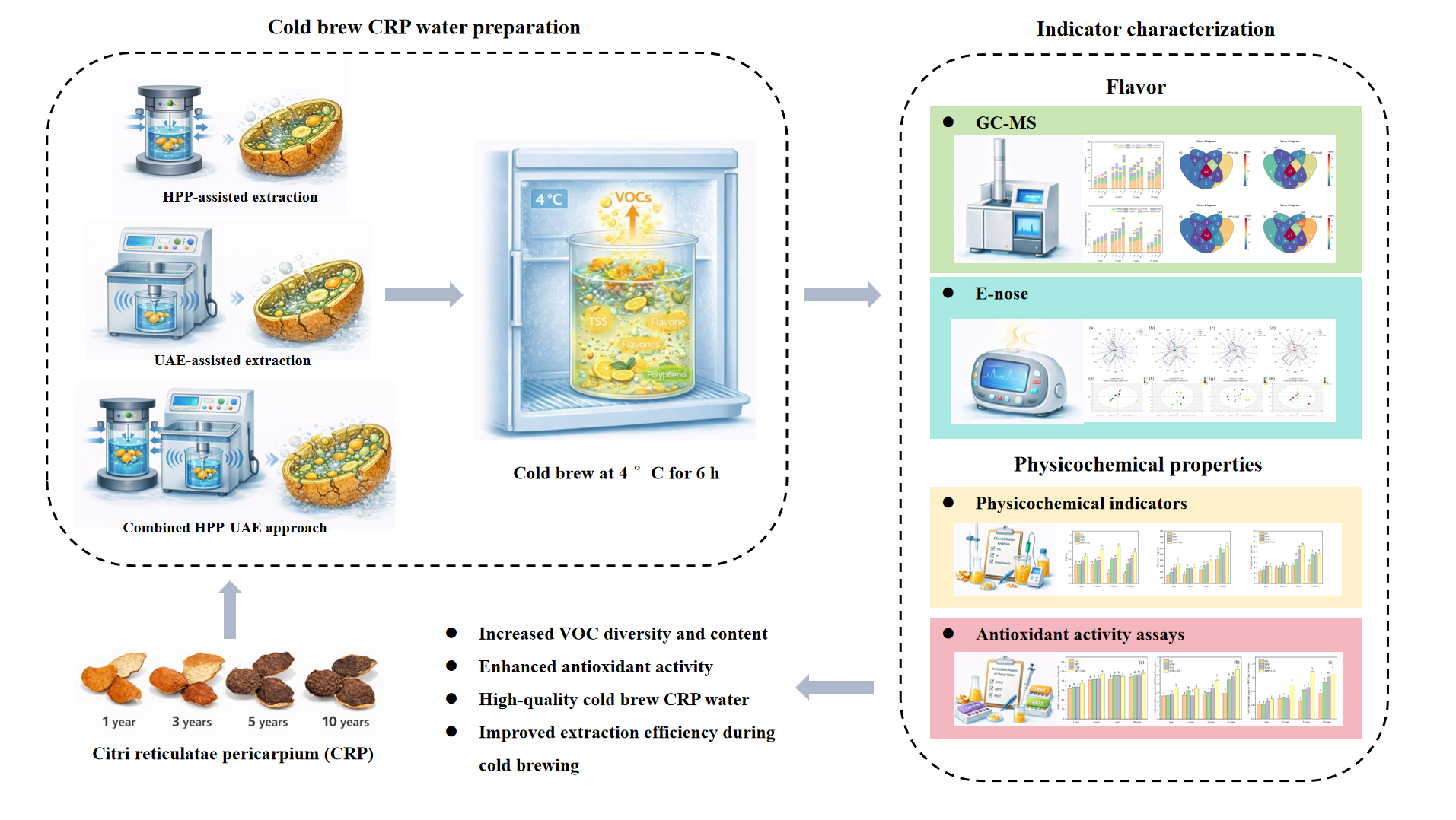
High pressure processing (HPP) and ultrasound assisted extraction (UAE) can effectively shorten extraction time and increase extraction efficiency of cold brew (CB). however, their application in CB citri reticulatae pericarpium (CRP) and the underlying mechanisms of flavor modulation remain poorly understood. In this study, CB-CRP beverage was prepared with HPP-assisted, UAE-assisted and HPP-UAE-assisted extraction from 1, 3, 5, and 10 years CRP. Results revealed that the total soluble solids (TSS), total sugars, flavonoids, polyphenols, and volatile organic compounds (VOCs) and antioxidant activity of CB-CRP increased after assisted extraction. The combined application of HPP and HPP-UAE assisted extraction exhibited the most pronounced effects. The kinds and total content of VOCs of CB beverage prepared from 10-year-aged CRP increased from 45 to 81, and from 2.44 to 5.98 μg/mL resectively. Moreover, the combined HPP-UAE extraction promoted the enrichment of fatty and woody aroma-related compounds, which drove a shift in the flavor profile from fresh to a richer woody type. And this endowed the CB-CRP water with a more complex and multidimensional aroma profile.
Keywords:
citri reticulatae pericarpium
; cold brew
; high pressure processing
; ultrasound assisted extraction
; flavor
1. Introduction
In recent years, cold brew (CB) beverages have gradually gained popularity due to their pure taste and flavor, such as CB coffee, CB tea, and other variants, and CB beverages with functional and health-oriented effect are becoming a research hotspot [1,2]. CB is a slow, static, and full-immersion extraction process, and it is typically extracted with water at room or even lower temperatures [3]. The volatile aromatic compounds of traditional hot brewing are easily vaporized at high temperatures. Additionally, new compounds may generated during high-temperature reactions, altering the original aroma profile of plant-based raw materials [4]. CB tea is typically brewed at low temperatures (4-25 °C) for extended periods, which help reduce bitterness and caffeine content, resulting in a smoother taste. It also better preserves the original aroma and bioactive compounds of the tea leaves [2,5]. Previous studies have shown that, compared with traditional hot extraction methods, CB coffee has exhibited higher smoothness, enhanced sweetness, and reduced acidity. Its flavor profile has been reported to be predominantly sweet, with an overall lower intensity of bitterness[6]. However, a longer extraction time and lower extraction efficiency are typically required by the CB process, which increases production costs and limits the further development of CB beverages[7]. To date, research on CB has primarily focused on raw materials such as tea and coffee, whereas its application in beverages prepared from citri reticulatae pericarpium (CRP) remains relatively limited, warranting further investigation.
CRP is a traditional medicinal and edible material made from the dried peel of citrus fruits and their cultivated varieties in the Rutaceae family. CRP has been regarded as an important ingredient in traditional medicine in China, Japan, and Korea[8]. In China, CRP has been used for centuries, and the principle that “the longer it is aged, the better it becomes” has been documented in classical texts such as the Compendium of Materia Medica. Its processing technology is well-developed, and it is rich in bioactive compounds such as flavonoids, volatile oils, and alkaloids, which exhibit strong antioxidant effects. Lipid-lowering, antihypertensive, and anti-inflammatory effects of CRP have been reported[9,10,11]. With changing dietary practices, CRP has increasingly been incorporated into the daily diet as a spice, beverage ingredient, or functional food component. CRP has gradually been recognized as a representative “medicinal and edible” material[12]. Currently, heating is frequently applied during the preparation of CRP-based beverages; heat-sensitive components and volatile organic compounds (VOCs) may therefore be partially degraded or lost. Under a CB framework, high pressure processing (HPP) and ultrasound assisted extraction (UAE) can be introduced as non-thermal assisted extraction techniques to improve extraction efficiency at low temperatures.
HPP is a non-thermal technology in which high pressure (typically 100-600 MPa) is applied via a liquid medium (usually water) [13]. As a green, non-thermal technology, HPP has been widely used in food processing[14]. Because cell walls can be disrupted and cell permeability can be increased by HPP, the release of intracellular constituents is promoted; accordingly, it has been widely applied to extract bioactive compounds from animals, plants, and fungi[13,15,16,17]. Compared with traditional extraction techniques, the bioactivity of compounds can be better preserved and the extraction efficiency of target components can be enhanced under HPP because of its low processing temperature[18]. UAE has also been widely used as a non-thermal technique, by which heat-sensitive compounds can be protected and extraction efficiency can be improved to some extent [19,20]. During UAE, plant cell membranes and cell walls can be disrupted through ultrasound-induced cavitation and mechanical effects, thereby increasing the contact area between the tissue and solvent and accelerating the release of bioactive compounds[21,22]. In addition, ultrasound can also promote chemical reactions such as esterification and protein hydrolysis, thereby enhancing the aromatic properties of food[23]. In summary, HPP and UAE, as typical non-thermal assisted extraction technologies, can enhance cell permeability through physical actions under low-temperature conditions, promote the release of bioactive compounds, and effectively reduce the damage to their structure and function caused by heat treatment. The application of HPP- and UAE-assisted extraction for the preparation of CRP water may hold promise for retaining bioactive components and optimizing flavor quality, while providing a theoretical basis and technical support for the CB processing of medicinal and edible beverages.
CRP samples aged for 1, 3, 5, and 10 years were used as raw materials, and CB-CRP water was prepared by subjecting CRP to HPP-assisted extraction, UAE-assisted extraction, or the combined HPP-UAE approach. The effects of different assisted extraction approaches on the functional properties and flavor quality of CB-CRP water were systematically evaluated using physicochemical indices (color, total sugar, soluble solids, and flavonoid and polyphenol contents), antioxidant capacity assays (DPPH, ABTS, and FRAP), and flavoromics analyses (GC-MS and E-nose). The results are expected to provide a theoretical basis for process optimization and the functional development of CRP-based beverages.
2. Materials and Methods
2.1. Materials
CRP was obtained from Guangdong Yixiang Chenpi Co., Ltd. (Xinhui, Guangdong, China). The total sugar assay kit (G0503W), DPPH free radical scavenging assay kit (DPPHFRS.S-W96-N, 2621), ABTS cation radical scavenging assay kit (TAOCA-W96-N, 1720), and ferric reducing antioxidant power (FRAP) assay kit (TAOCF-W96-N, 1720) were purchased from Suzhou Grace Biotechnology Co., Ltd. (Suzhou, China). All other reagents were of analytical grade and purchased from Sinopharm Chemical Reagent Co., Ltd. (Shanghai, China).
2.2. Methods
2.2.1. Sample Preparation
CRP samples aged for 1, 3, 5, and 10 years were used as raw materials. The CRP samples were all cut into pieces, immersed in liquid nitrogen, and ground to powder in a pre-cooled mortar. Then CRP powders were screened through 60 mesh. 8 g of CRP powder and 200 mL deionized water were added in a 250 mL bottle. The mixture was placed at room temperature for 30 min for sufficient hydration. Subsequently, the mixture was subjected to different assisted extraction approaches as follows: HPP-assisted extraction (500 MPa) for 10 min, UAE-assisted (500 W, 20 kHz) extraction for 10 min, or sequential HPP-assisted (500 MPa) extraction for 10 min followed by UAE-assisted (500 W, 20 kHz) extraction for 10 min. The directly soaked mixture for 10 min without any assisted processing was used as control group (CG). All extraction processes were performed at 25 °C. After extraction, all mixtures were stored at 4 °C for 6 h. Subsequently, the extraction solution was centrifuged at 10,000 rpm for 10 min. The supernatant was collected and sterilized by filtration before analyses. The processing parameters and assisted extraction durations were optimized based on preliminary experiments, and the selected optimal conditions were used in this study.
2.2.2. Color
The color of CRP water was determined with a colorimeter (JMCM-828N, CANY, China). 10 mL of CRP water was transferred into a quartz cuvette for measurement. After background calibration was performed with a white standard plate, the cuvette containing the sample was placed under the same background conditions for measurement, and the L* value was recorded[24].
2.2.3. TSS
The total soluble solids (TSS) content was determined with an automatic refractometer (DFT-F10V55H23, DiFluid, China). Before measurement, the instrument was calibrated with distilled water, and each sample was measured in triplicate.
2.2.4. Total Sugar
The total sugar content was determined with a commercial total sugar assay kit according to the manufacturer’s instructions.
2.2.5. Total Flavonoid Content
The total flavonoid content was determined according to the method described by Liu et al.[25], with minor modifications. Briefly, 1.0 mL of the supernatant was accurately transferred into a 10 mL centrifuge tube, followed by the addition of 0.30 mL of 5% sodium nitrite solution. The mixture was shaken thoroughly and allowed to stand for 6 min. Subsequently, 0.30 mL of 10% aluminum nitrate solution was added, mixed well, and allowed to react for 6 min. Then, 4.00 mL of 4% sodium hydroxide solution was added, and the mixture was diluted to volume with 70% ethanol, mixed thoroughly, and allowed to stand for 10-15 min. The absorbance was measured at 510 nm. Rutin was used as the standard to construct the calibration curve (y = 7.602x + 0.0003, R2 = 0.9997).
2.2.6. Total Polyphenol Content
The polyphenol content of CRP water was determined using high-performance liquid chromatography (LC-20ADXR, Kyoto, Japan). Briefly, 1.0 mL of CRP water was filtered through a 0.22 μm aqueous membrane filter and transferred into a 1.5 mL autosampler vial. The injection volume was 10 μL. The mobile phase consisted of solvent A (water-methanol-acetic acid, 88:10:2, v/v/v) and solvent B (water-methanol-acetic acid, 10:88:2, v/v/v). Gradient elution was applied as follows: 0.01-16.5 min, 20% B; 16.5-30.0 min, 80% B; and 30.0-40.0 min, 0% B.
2.2.7. Antioxidant Activity
Antioxidant activity was evaluated with assay kits for DPPH free radical scavenging activity, ABTS cation radical scavenging activity, and ferric reducing antioxidant power (FRAP), according to the manufacturer’s instructions.
2.2.8. Amino Acid Composition
The amino acid content of CRP water was analyzed using an automatic amino acid analyzer (V388, MembraPure GmbH, Germany). Briefly, 1.0 mL of CRP water was filtered through a 0.22 μm aqueous membrane filter and transferred into a 1.5 mL autosampler vial prior to analysis. The analytical conditions were set as follows: detector temperature, 125 °C; sampler temperature, 40 °C; and flow rate, 240 μL/min. Ninhydrin reagent and sodium buffer reagents (A, B, C, D, and F) were used for amino acid derivatization and detection.
2.2.9. E-Nose
E-nose (C-Nose, Bosin, China) analysis was performed to evaluate the volatile profiles of CRP water. 10 mL of CRP water was transferred into a 20 mL headspace vial, which was then sealed and allowed to equilibrate at room temperature for 30 min prior to analysis. The measurement conditions were set as follows: detection time, 60 s; cleaning time, 300 s; and carrier gas flow rate, 0.6 L/min[26].
2.2.10. HS- SPME-GC-MS
VOCs in CRP water were identified with a Triple Quadrupole GC-MS/MS (TSQ Quantum XLS, Thermofisher, USA) equipped with a capillary column (DB-5MS 60 m × 0.25 mm × 1.0 μm, Agilent, USA). 5 mL of CRP water was filtered through a 0.22 μm aqueous membrane filter and transferred into a 20 mL sample vial. Ethyl phenylacetate (15 μL, 1 mg/mL) was added as an internal standard, and the vial was immediately sealed prior to analysis. Gas chromatography conditions were set as follows: injector temperature, 290 °C; split ratio, 10:1; carrier gas flow rate, 1.5 mL/min; and injection volume, 1 μL. The oven temperature program was as follows: the initial temperature was held at 60 °C, then increased to 250 °C at a rate of 2 °C/min, and further increased to 290 °C at a rate of 5 °C/min and held for 20 min. Mass spectrometry conditions were as follows: ion source temperature, 230 °C; interface temperature, 290 °C; solvent delay time, 1.5 min; and data acquisition mode, full-scan and selected ion monitoring (SIM).
2.2.11. Sensory Evaluation
The sensory evaluation form was designed according to GB/T 23776-2018 (Table S1). The sensory panel consisted of ten members (five males and five females), aged 20-40 years, all of whom received systematic sensory training for three months. Sensory evaluation was conducted in a standardized sensory evaluation room that was clean, well lit, and equipped with individual booths, with each panelist performing the evaluation independently.
2.4. Statistical Analysis
Data were processed with Microsoft Excel to calculate means, sums, and standard deviations. Graphs were generated with Origin 2021, and statistical significance was analyzed with SPSS Statistics 25, with a significance level set at p<0.05. All experiments were performed in triplicate, and the results are expressed as mean ± standard deviation (SD).
3. Results
3.1. Effects of Extraction Methods on Physicochemical Properties
The effects of different assisted extraction approaches, including HPP-assisted extraction, UAE-assisted extraction, and the combined HPP-UAE approach, on the physicochemical properties (color, L* value, TSS, total sugars, flavonoids, and polyphenols) of CRP water from different aging years were evaluated. The changes in physicochemical properties of CRP water prepared from CRP aged for 1, 3, 5, and 10 years under different assisted extraction approaches (CG, HPP, UAE, and HPP-UAE) were illustrated (Figure 1a-f). The results showed that, in the untreated CRP water, the color gradually darkened and the L* value decreased with increasing aging years, while the contents of TSS, total sugars, flavonoids, and polyphenols exhibited an increasing trend. After different assisted extraction approaches, the L* values of CRP water from all aging years decreased, whereas the contents of TSS, total sugars, flavonoids, and polyphenols were significantly increased (p<0.05). This may be attributed to the fact that HPP weakens the integrity and binding properties of cell walls by applying uniform high pressure, leading to the disruption of pressure-sensitive noncovalent interactions within cell walls or membranes. As a result, cell wall structures are damaged and cell permeability is increased, which in turn accelerates the release of intracellular constituents[18]. Under UAE, the cellular structure of CRP is disrupted by shear forces generated through ultrasonic cavitation, thereby facilitating solvent penetration into the cells and promoting the rapid release of soluble compounds[21]. In addition, the degradation of macromolecules such as starch and pectin within CRP cells may be induced by HPP and UAE extraction, thereby further accelerating their dissolution[13,27]. After the combined HPP-UAE approach, the physicochemical properties of CRP water from different aging years exhibited the most pronounced changes. Specifically, the TSS contents increased from 0.47%, 0.47%, 0.27%, and 0.25% to 0.68%, 0.85%, 0.92%, and 0.78%, corresponding to increases of 44.68%, 80.85%, 240.74%, and 212.00%, respectively. Similarly, the polyphenol contents increased from 4.86, 5.88, 6.81, and 7.02 ng/mL to 6.63, 6.89, 14.21, and 11.41 ng/mL, representing increases of 36.42%, 17.18%, 108.66%, and 62.51%, respectively. HPP and UAE exhibited a synergistic effect when applied as assisted extraction techniques during the preparation of CB-CRP water. This synergy may be attributed to the initial disruption of CRP cell wall structures by HPP, thereby rendering the cells more susceptible to subsequent physical damage during UAE and promoting the release of a greater amount of soluble constituents[28]. Overall, the quality of CRP water was significantly improved by HPP-assisted extraction, UAE-assisted extraction, and the combined HPP-UAE approach, among which the combined HPP-UAE approach exhibited a distinct advantage in improving color attributes, increasing the content of soluble substances, and promoting the release of antioxidant-related bioactive compounds.
3.2. Effects of Extraction Methods on Amino Acid Composition
The variation trends in amino acid contents of CRP water prepared from different CRP samples were illustrated (Figure 2a-f). In the untreated CRP water, the total amino acid content exhibited a decreasing trend with increasing aging years, which may be associated with the gradual utilization or degradation of amino acids by microorganisms during the aging process of CRP[29]. Among the detected amino acids, sweet- and umami-related amino acids accounted for a relatively high proportion, whereas the contents of acidic-, bitter-, and aromatic-related amino acids were comparatively lower. After different assisted extraction approaches, the amino acid contents of CRP water increased across all samples, with the combined HPP-UAE approach resulting in the most pronounced enhancement. Specifically, the total amino acid contents in samples from different aging years increased from 66.29, 56.13, 21.41, and 1.86 μg/mL to 88.91, 95.15, 40.30, and 5.55 μg/mL, corresponding to increases of 34.13%, 69.52%, 88.27%, and 198.39%, respectively.
Hierarchical clustering analysis (HCA) was performed on the amino acid profiles of CRP water from different aging years (Figure 5g-j). In CRP water prepared from 1-year-aged CRP, the untreated and singly assisted extraction samples were dominated by bitter-related amino acids (Phe, Leu, and Arg), whereas enrichment of sweet-related amino acids (Gly, Ala, and Pro) and the umami-related amino acid Glu was observed after the combined HPP-UAE approach. In CRP water prepared from 3-year-aged CRP, the UAE-assisted extraction samples were still dominated by bitter- or aromatic-related amino acids, whereas the combined HPP-UAE approach markedly increased the contents of sweet-related amino acids (Gly, Thr, Ser, Ala, and Pro) and umami-related amino acids (Glu and Asp). In CRP water prepared from 5- and 10-year-aged CRP, bitter-related amino acids still contributed to a certain extent in the singly assisted extraction samples, whereas sweet- and umami-related amino acids became the dominant components again after the combined HPP-UAE approach. Overall, the enrichment of sweet- and umami-related amino acids in CRP water across all aging years was consistently promoted by the combined HPP-UAE approach, which is beneficial for improving flavor harmony and palatability.
3.3. Effects of Extraction Methods on Antioxidant Activity
The changes in DPPH free radical scavenging activity (a), ABTS cation radical scavenging activity (b), and ferric reducing antioxidant power (FRAP) (c) of CRP water from different aging years were illustrated (Figure 3). Chemical antioxidant assays are widely used to evaluate the antioxidant activity of citrus samples, and their mechanisms are mainly based on hydrogen atom transfer and electron transfer reactions[30]. In the untreated CRP water, the antioxidant activity gradually increased with increasing aging years, which was consistent with the trends observed for flavonoid and polyphenol contents. This enhancement may be attributed to the formation of flavonoids and polyphenols through secondary metabolism during the aging process, thereby improving the antioxidant capacity. After different assisted extraction approaches, the DPPH free radical scavenging activity, ABTS cation radical scavenging activity, and ferric reducing antioxidant power of CRP water were all significantly enhanced, with particularly pronounced increases observed in ABTS cation radical scavenging activity and ferric reducing antioxidant power (p< 0.05).These results indicate that both HPP- and UAE-assisted extraction effectively enhanced the antioxidant activity of CRP water and exhibited a synergistic effect, which was consistent with the variation trends observed for flavonoid and polyphenol contents. Flavonoids and polyphenols are the major contributors to the antioxidant activity of CRP[31], and the enhanced antioxidant activity indicates that HPP and UAE can effectively promote the release of these bioactive compounds from CRP.
3.4. Effects of Extraction Methods on VOCs
3.4.1. Flavor Compounds
CRP contains abundant VOCs, mainly including alcohols, olefins, esters, ketones, aldehydes, phenols, and acids, which collectively determine the characteristic citrus aroma and flavor[32]. The numbers and total contents of VOCs in CRP water prepared from CRP of different aging years were illustrated (Figure 4a-b). In the untreated CRP water, the numbers of VOCs at different aging years were 30, 57, 55, and 45, respectively, with alcohols and olefins being the predominant compound classes, a result that is consistent with previous findings[33]. After different assisted extraction approaches, the numbers of VOCs in CRP water were significantly increased (p< 0.05), with the greatest increase observed after the combined HPP-UAE approach. Specifically, the numbers of VOCs in CRP water at different aging years increased to 45, 88, 80, and 81, respectively. Moreover, 11, 23, 16, and 16 flavor compounds were uniquely detected after the combined HPP-UAE approach in the corresponding samples (Figure 4c-f). In the untreated CRP water, the total VOC contents at different aging years were 3.10, 5.45, 4.96, and 2.44 µg/mL, respectively, showing an initial increase followed by a decrease with increasing aging years. Among the detected VOCs, methyl methylanthranilate, which is responsible for the characteristic citrus aroma, exhibited the highest content. Previous studies have reported that methyl methylanthranilate is widely distributed in citrus peels and represents a key contributor to the characteristic aroma of CRP [32]. After HPP-assisted extraction, UAE-assisted extraction, and the combined HPP-UAE approach, the total VOC contents in CRP water were all increased. Among them, the combined HPP-UAE approach resulted in the highest VOC contents, reaching 5.06, 9.15, 7.84, and 5.98 µg/mL at different aging years, corresponding to increases of 63.23%, 67.89%, 58.06%, and 145.08%, respectively.
To further investigate the differences in VOC profiles among CRP water prepared under different assisted extraction approaches, principal component analysis (PCA) was performed on the VOC data. The results showed that the cumulative contribution rates of the first two principal components for CRP water at different aging years were 63.0%, 71.9%, 66.4%, and 78.2%, respectively, indicating that the first two principal components adequately captured the major information in the response signals and clearly distinguished the differences among the samples. Overall, HPP- and UAE-assisted extraction were shown to effectively promote the release of VOCs from CRP. HPP can disrupt the cellular structure of CRP, leading to the formation of microcracks and hollow openings, thereby increasing cell permeability and facilitating the release of VOCs[34,35]. In contrast, UAE enhances solvent penetration by disrupting cell walls through cavitation effects, thereby accelerating the release of intracellular constituents[36,37,38]. In addition, ultrasound may further increase the release rate of VOCs by weakening intermolecular interactions within the cells[36]. After the combined HPP-UAE approach, the numbers and total contents of VOCs increased to the greatest extent, indicating a synergistic effect between HPP and UAE during the assisted extraction process for the preparation of CRP water. Similar phenomena have been reported in previous studies[39].
3.4.2. Differential Flavor Compound Analysis
Partial least squares discriminant analysis (PLS-DA) was performed on the flavor compounds of CRP water prepared under different assisted extraction approaches, as shown in Figure 5a-d. For CRP water prepared from 1-year-aged CRP, the explained variance of the independent variables (R2X) was 0.816, the explained variance of the dependent variables (R2Y) was 0.975, and the predictive ability of the model (Q2) was 0.919. For samples from 3-year-aged CRP, the R2X, R2Y, and Q2 values were 0.817, 0.983, and 0.860, respectively. Similarly, the R2X, R2Y, and Q2 values were 0.809, 0.982, and 0.860 for 5-year-aged CRP water, and 0.806, 0.988, and 0.868 for 10-year-aged CRP water. In all cases, R2 and Q2 values greater than 0.5 were obtained, suggesting acceptable goodness of fit and predictive performance of the PLS-DA models. Model stability was further validated by a 200-time permutation test. It was shown that the intercepts of the Q2 regression lines with the y-axis were all less than zero, indicating that no overfitting occurred and that the models were valid and reliable for the analysis of flavor compounds in CRP water from different aging years.
Based on the PLS-DA results, key differential VOCs among CRP water from different aging years were screened using a VIP>1 and p<0.05 as the selection criteria. The results are summarized in supplementary Table S2. The numbers of differential flavor compounds in CRP water at different aging years were 24, 29, 30, and 29, respectively. HCA of the differential flavor compounds at different aging years was shown in Figure 5i-l. For CRP water at 1 aging year, the differential flavor compounds were mainly concentrated in alcohols, esters, olefins, and some ketones, exhibiting floral, fresh, and citrus-like aroma characteristics, such as 2,6-octadien-1-ol, 3,7-dimethyl-, acetate, (Z)-dihydrocarvone, and decanal. For CRP water at 3 aging years, the contents of olefins and aldehydes were significantly increased (p<0.05), accompanied by enhanced citrus-like and fatty aroma characteristics, as exemplified by compounds such as limonene and caryophyllene oxide. For CRP water at 5 aging years, alcohols, phenols, and fatty aroma-related compounds were predominant. Woody and aged aroma characteristics, such as those associated with spathulenol, 2-ethyl-1-hexanol, and 1,2-benzenedicarboxylic acid, bis(2-methylpropyl) ester, were markedly enhanced, indicating a gradual shift in the aroma profile from a fresh type toward a more aged, woody, and mellow type. For CRP water at 10 aging years, phenols, alcohols, and fatty aroma-related compounds (such as 2-ethyl-1-hexanol, tetradecanoic acid, and 1,2-benzenedicarboxylic acid, bis(2-methylpropyl) ester) were present at higher proportions, resulting in a more stable and heavy aroma profile, while the citrus-like aroma became relatively less pronounced. Overall, with increasing aging years, a gradual shift in the flavor profile of CRP water was observed, from a fresh type toward a more intense and complex type, accompanied by enhanced aroma complexity and richness. In samples subjected to HPP-assisted extraction, fatty aroma-related compounds, alcohols, and phenols were relatively enriched in most aging years, suggesting that the extraction efficiency of hydrophobic and high-boiling-point compounds may be enhanced by HPP through alterations in the tissue structure of CRP. Such structural modification was likely associated with increased body and aroma stability of CRP water, thereby contributing to a more rounded and well-balanced flavor profile. In samples subjected to UAE-assisted extraction, highly volatile VOCs, including alcohols, esters, olefins, and some ketones, were more prominent, particularly those associated with herbal, fresh, and citrus-like aromas. It was indicated that ultrasound was advantageous in promoting the release of VOCs and accelerating mass transfer processes. In samples prepared using the combined HPP-UAE approach, a greater diversity of flavor compounds was observed, accompanied by a more complete and well-structured aroma profile.
By integrating the effects of CRP aging years and assisted extraction approaches on key flavor compounds, the flavor profiles of CRP water were modulated in a directional manner. After HPP- and UAE-assisted extraction, enhanced floral, refreshing, and citrus aroma characteristics were observed in CRP water prepared from 1-year-aged CRP, suggesting its suitability for the development of light and refreshing CRP water products.For CRP aged for 3 years, a better balance between citrus and fatty aroma notes was achieved following the same assisted extraction approaches, indicating its potential for the development of refreshing citrus-flavored CRP water for daily consumption or functional beverage applications. After assisted extraction, typical aged and woody aroma characteristics were observed in CRP water prepared from 5-year-aged CRP, with a more rounded and harmonious aroma profile, indicating its suitability for the development of CRP water products emphasizing aged flavor attributes. For 10-year-aged CRP subjected to HPP-assisted extraction, increased levels of polyphenols, alcohols, and fatty aroma-related components were observed, resulting in a more stable and persistent aroma and suggesting its suitability for the development of high-end or tonic CRP water products. In contrast, the combined HPP-UAE approach could further enhance fruity or citrus aroma notes on the basis of a rich background. In summary, important theoretical support and practical guidance are provided for the flavor design and differentiated development of CRP water products through the investigation of the synergistic effects of CRP aging years and assisted extraction approaches.
3.5. E-Nose
The E-nose, as a biomimetic sensing technology, can effectively discriminate and analyze flavor compounds in samples [33]. The response characteristics of the electronic nose to CRP water samples of different aging years were illustrated (Figure 6a-d), among which sensors S5 (biological compounds), S7 (aliphatic hydrocarbons), S11 (VOCs), S12 (sulfides), S13 (ethylene), and S18 (sulfides) exhibited relatively strong responses. In untreated CRP water, no pronounced changes were observed in the signal intensities of major flavor-related compounds with increasing aging years. After different assisted extraction approaches, the signal intensities of major flavor compounds in CRP water were enhanced, with the most pronounced increases observed after the combined HPP-UAE approach (p<0.05). The PCA plots of CRP water from different aging years based on E-nose data were presented (Figure 8). Based on the E-nose response signals, CRP water prepared using different assisted extraction approaches was effectively discriminated, indicating that significant effects on the flavor of CRP water were exerted by HPP, UAE, and the combined HPP-UAE approach. For CRP water from different aging years, the variance contributions of the first two principal components were 97.22%, 95.30%, 96.70%, and 94.00%, respectively, indicating that the first two principal components sufficiently captured the major information in the response signals and clearly distinguished the differences among samples.
3.6. Correlation Analysis Between Antioxidant Indices and Physicochemical Parameters
Correlation analysis was performed between the antioxidant capacities and physicochemical parameters of CRP water samples from different aging years, and the results were shown (Figure 7a-d). In CRP water from 1-year-aged CRP, the DPPH radical scavenging activity was significantly positively correlated with the L* value and total sugar content (p<0.05). In CRP water from 3-year-aged CRP, the DPPH radical scavenging activity was significantly positively correlated with amino acid content, the L* value, and total sugar content (p<0.05); meanwhile, the ferric reducing antioxidant power was significantly positively correlated with total sugar content (p<0.05). In CRP water from 5-year-aged CRP, the ABTS radical cation scavenging activity was significantly positively correlated with the L* value (p<0.05); meanwhile, the ferric reducing antioxidant power was significantly positively correlated with TSS (p<0.05). In CRP water from 10-year-aged CRP, the DPPH radical scavenging activity, ABTS radical cation scavenging activity, and ferric reducing antioxidant power were all significantly positively correlated with the L* value, TSS, and total sugar content (p<0.05). In summary, the antioxidant properties of CRP water are not only influenced by antioxidant components but are also closely associated with physicochemical parameters, such as sugars, amino acids, and TSS.
3.7. Correlation Analysis Between E-Nose and GC-MS
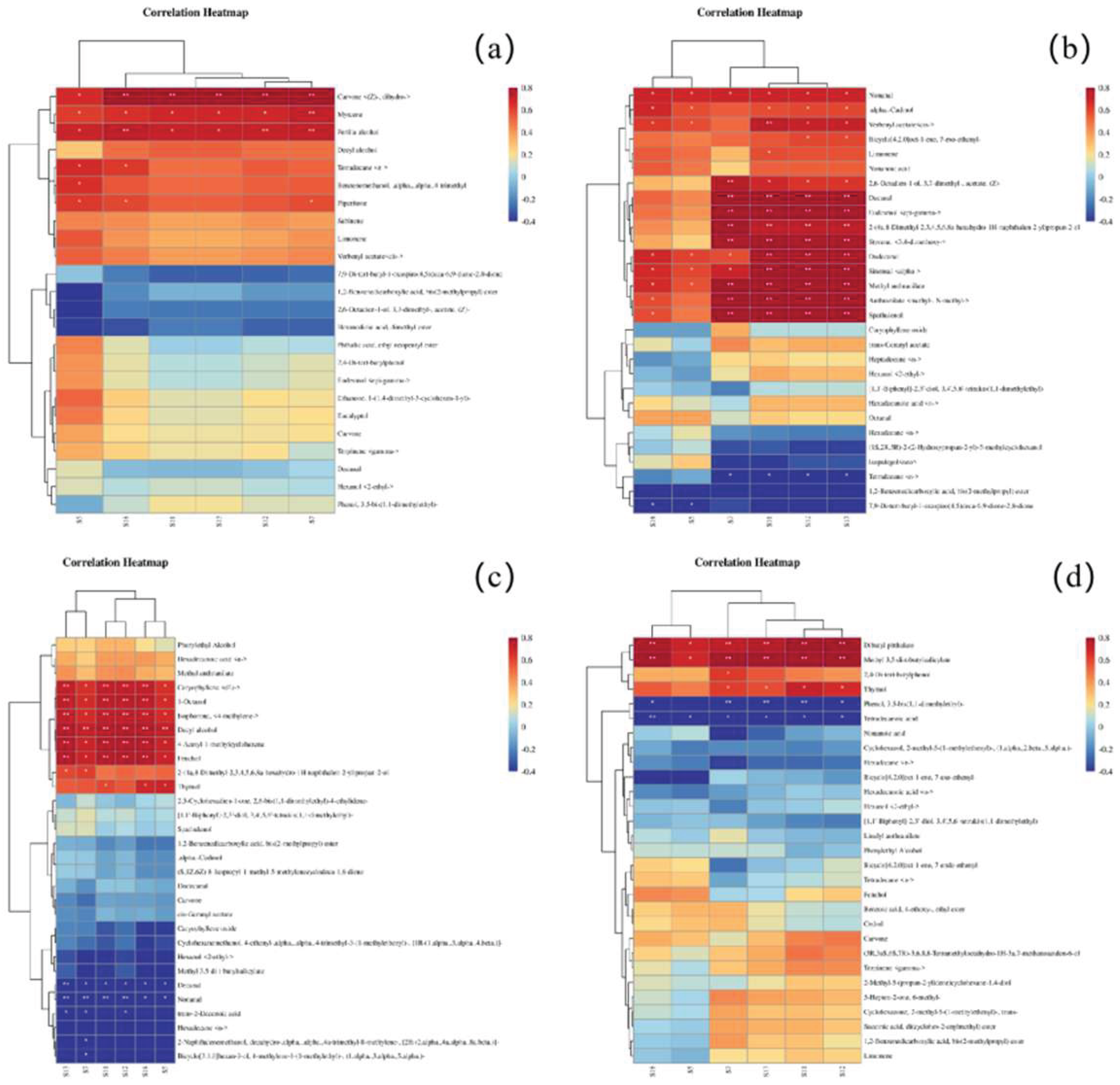
Based on the previous analyses, the E-nose response characteristics of CRP from different aging years were obtained, and six sensors with relatively high response intensities (S5, S7, S11, S12, S13, and S18) were selected for correlation analysis with the screened differential flavor compounds (VIP>1, p<0.05). Correlation network heatmaps illustrating the relationships between differential flavor compounds identified by GC-MS and the responses of E-nose sensors are shown in Figure 8a-d. In CRP water from 1-year-aged CRP, sensors S11, S12, and S13 were significantly positively correlated with key flavor compounds associated with fresh and herbal aromas, such as (Z)-dihydrocarvone, myrcene, perilla alcohol, and piperitone (p<0.05), indicating that low-aged CRP water was dominated by highly volatile, low-molecular-weight flavor compounds and that the E-nose signals mainly reflected fresh aroma characteristics. In CRP water from 3-year-aged CRP, all six sensors were significantly positively correlated with multiple classes of flavor compounds associated with fatty, citrus, floral, and woody aromas, such as nonanal, decanal, α-sinensal, methyl anthranilate, epi-γ-eudesmol, and spathulenol (p<0.05). These results indicate that, with progressive aging, the composition of VOCs in CRP water gradually shifted from a single fresh type toward a multi-aroma synergistic profile, and that the E-nose responses transitioned from being dominated by a limited number of channels to coordinated responses across multiple sensors.
In CRP water from 5-year-aged CRP, all six sensors were significantly positively correlated with flavor compounds associated with woody, fatty, and phenolic aromas, such as (E)-caryophyllene, 1-octanol, decyl alcohol, fenchol, and thymol (p<0.05). These results indicate that aroma characteristics gradually became dominated by structurally stable and less volatile VOCs, and that the overall flavor profile of CRP water tended to be more mellow and full-bodied. In CRP water from 10-year-aged CRP, all six sensors were significantly positively correlated with flavor compounds associated with phenolic and fatty aromas, such as dibutyl phthalate, methyl 3,5-di-tert-butylsalicylate, 2,4-di-tert-butylphenol, and thymol (p<0.05), indicating the presence of pronounced aging characteristics. Overall, different functional E-nose sensors exhibited good response selectivity toward different types of VOCs in CRP water, and the variations in their signals effectively reflected the evolution of flavor compounds in CRP water from highly volatile and fresh types to less volatile and more mellow types with increasing aging years.
3.8. Sensory Evaluation
The sensory evaluation results of CRP water prepared from CRP of different aging years under various assisted extraction approaches are shown in Figure S1. In untreated CRP water, the overall sensory scores of samples with lower aging years were generally higher than those of samples with higher aging years. This may be related to the increased content of brown-colored substances in CRP water from higher aging years, which led to a decrease in color scores. In addition, higher contents of bitter compounds, such as flavonoids and polyphenols, in highly aged CRP resulted in reduced taste scores of CRP water. After HPP- or UAE-assisted extraction alone, no pronounced changes were observed in the overall sensory scores of CRP water from different aging years. However, after the combined HPP-UAE approach, the overall sensory scores were slightly increased. This increase was mainly attributed to the enhanced release of VOCs promoted by the combined HPP-UAE approach, thereby improving the aroma scores of the samples.
4. Conclusion
In this study, the effects of HPP, UAE, and the combined HPP-UAE approach on flavor compounds and bioactive compounds in CRP water prepared from CRP of different aging years (1, 3, 5, and 10 years) were investigated. The results demonstrated that the diversity of flavor compounds gradually increased with increasing aging years of CRP, with more abundant and complex flavor profiles particularly observed in samples with longer aging years. CRP waters from lower aging years (1 and 3 years) were mainly characterized by citrus and herbal notes, whereas those from higher aging years (5 and 10 years) exhibited more pronounced fatty and woody flavor attributes.The combined HPP-UAE approach significantly enhanced the release of flavor compounds, particularly in CRP water prepared from higher aging years, with both their diversity and concentration being markedly increased. These results indicate that the combined HPP-UAE approach effectively promoted flavor enhancement in CRP water. In addition, the combined HPP-UAE approach not only enhanced the release of flavor compounds but also significantly increased the contents of TSS, total sugars, flavonoids, and polyphenols in CRP water, thereby further improving its body and antioxidant capacity. Overall, HPP, UAE, and the combined HPP-UAE approach improved both the flavor quality and antioxidant capacity of CRP water, with these effects being particularly pronounced in samples prepared from higher aging years. This study provides a novel technological approach for optimizing the quality of CRP water and offers a theoretical basis for enhancing its nutritional value and health-related functions.
Supplementary Materials
The following supporting information can be downloaded at the website of this paper posted on Preprints.org.
Funding
This study was funded by the Science and Technology Program of Sichuan Province (2024YFTX0066), and Jiangsu Provincial Key R&D Program (BE2023306).
Data Availability Statement
The data that support the findings of this study are available from the corresponding author upon reasonable request.
References
- Liu, H.; Liu, D.; Wang, W.; Zhang, X.; Tuly, J.; Li, H.; Ma, H. Dual-frequency countercurrent ultrasonic-assisted extraction of the cold brew coffee and in situ real-time monitoring of extraction process. Ultrasonics Sonochemistry 2024, 111, 107118. [Google Scholar] [CrossRef]
- He, H.; Lv, W.; Wu, B.; Dou, W.; Wang, H. Β-Glucosidase combined with stir-ultrasound enhances the flavour of cold-extracted green tea: characterisation and evaluation by GC–MS and GC-IMS. Food Research International 2025, 221, 117290. [Google Scholar] [CrossRef]
- Zwicker, M.; Phillips, J.; Lim, L.-T. Novel continuous cold brewing method for coffee using a combined screw extraction and mechanical expression approach. Journal of Food Engineering 2024, 383, 112242. [Google Scholar] [CrossRef]
- Oussou, K.F.; Guclu, G.; Sevindik, O.; Kelebek, H.; Starowicz, M.; Selli, S. GC-MS-Olfactometric Characterization of Volatile and Key Odorants in Moringa (Moringa oleifera) and Kinkeliba (Combretum micranthum G. Don) Herbal Tea Infusions Prepared from Cold and Hot Brewing. Separations 2023, 10, 10. [Google Scholar] [CrossRef]
- Donlao, N.; Sim, C.; Singh, J.; Kaur, L.; Tian, J.; Phongthai, S.; Tanongkankit, Y.; Issara, U.; Phungamngoen, C.; Tongdeesoontorn, W.; et al. Comparative evaluation of high-pressure processing and conventional pasteurization in cold brew green tea: In vitro digestibility, bioavailability, and nutrient stability. Food Chemistry: X 2026, 33, 103473. [Google Scholar] [CrossRef]
- Yang, A.; Zhang, Z.; Jiang, K.; Xu, K.; Meng, F.; Wu, W.; Li, Z.; Wang, B. Study on ultrasound-assisted extraction of cold brew coffee using physicochemical, flavor, and sensory evaluation. Food Bioscience 2024, 61, 104455. [Google Scholar] [CrossRef]
- Jeon, H.; Park, H.; Lee, K.-G. Analysis of physicochemical properties of cold brew Robusta and decaffeinated coffee prepared via ultrasound-assisted soaking and extraction. Food Chemistry 2026, 500, 147509. [Google Scholar] [CrossRef] [PubMed]
- Shi, M.; Guo, Q.; Xiao, Z.; Sarengaowa; Xiao, Y.; Feng, K. Recent Advances in the Health Benefits and Application of Tangerine Peel (Citri Reticulatae Pericarpium): A Review. Foods 2024, 13, 1978. [Google Scholar] [CrossRef] [PubMed]
- Fu, M.; Wang, Y.; Zhu, X.; Li, M.; Yu, Y.; Wu, J.; Wen, J.; San Cheang, W.; Xu, Y. Metabolomics reveal changes of flavonoids during processing of “nine-processed” tangerine peel (Jiuzhi Chenpi). LWT 2024, 214, 117132. [Google Scholar] [CrossRef]
- Guo, J.; Cao, Y.; Ho, C.-T.; Jin, S.; Huang, Q. Aged citrus peel (chenpi) extract reduces lipogenesis in differentiating 3T3-L1 adipocytes. Journal of Functional Foods 2017, 34, 297–303. [Google Scholar] [CrossRef]
- Liu, Y.; Huang, Y.; Hu, H.; Yang, H.; Xiong, L.; Zheng, J.; Zhu, T.; Zhang, Z.; Liu, H. Structural characterization and probiotic activity of Chenpi polysaccharides prepared by fermentation with Bacillus licheniformis. Food Bioscience 2025, 74, 107789. [Google Scholar] [CrossRef]
- Liu, W.; Wei, W.; Chen, Y.; Zhao, J.; Fu, M.; Wang, X. Research Progress on Geographical Origin Traceability and Authentication of Citri Reticulatae Pericarpium. Food Science 2024, 45, 19–28. [Google Scholar] [CrossRef]
- Tepsongkroh, B.; Thaihuttakij, C.; Supawong, S.; Jangchud, K. Impact of high pressure pre-treatment and hot water extraction on chemical properties of crude polysaccharide extract obtained from mushroom (Volvariella volvacea). Food Chemistry: X 2023, 19, 100864. [Google Scholar] [CrossRef]
- Pallarés, N.; Berrada, H.; Tolosa, J.; Ferrer, E. Effect of high hydrostatic pressure (HPP) and pulsed electric field (PEF) technologies on reduction of aflatoxins in fruit juices. LWT 2021, 142, 111000. [Google Scholar] [CrossRef]
- Moon, S.; Lee, C.; Cha, E.; Hwang, K.; Park, S.-K.; Baik, O.-D.; Yu, D. Enhancement of antioxidant properties of Eisenia bicyclis extracts through combination of green extractions: Parameter optimization and comparison. LWT 2024, 213, 117005. [Google Scholar] [CrossRef]
- Ahmadi, S.; Yu, C.; Zaeim, D.; Wu, D.; Hu, X.; Ye, X.; Chen, S. Increasing RG-I content and lipase inhibitory activity of pectic polysaccharides extracted from goji berry and raspberry by high-pressure processing. Food Hydrocolloids 2022, 126, 107477. [Google Scholar] [CrossRef]
- Zhao, W.; Xu, Y.; Dorado, C.; Chau, H.K.; Hotchkiss, A.T.; Cameron, R.G. Modification of pectin with high-pressure processing treatment of fresh orange peel before pectin extraction: Part I. The effects on pectin extraction and structural properties. Food Hydrocolloids 2024, 149, 109516. [Google Scholar] [CrossRef]
- Ijod, G.; Nawawi, N.I.M.; Sulaiman, R.; Ismail-Fitry, M.R.; Adzahan, N.M.; Anwar, F.; Azman, E.M. Elevating anthocyanin extraction from mangosteen pericarp: A comparative exploration of conventional and emerging non-thermal technology. Food Chemistry: X 2024, 24, 101882. [Google Scholar] [CrossRef] [PubMed]
- Hao, J.; Pei, Y.; Dong, N.; Sun, Y.; Zhou, Y.; Li, Q.; Zhou, X.; Liu, H. Separation of the active components from the residue of Schisandra chinensis via an ultrasound-assisted method. Ultrasonics Sonochemistry 2025, 114, 107241. [Google Scholar] [CrossRef]
- Hallouch, O.; Bounasser, B.; Asbbane, A.; Giuffrè, A.M.; Abdulmonem, W.A.; Bouyahya, A.; Majourhat, K.; Gharby, S. Enrichment of refined sunflower oil with phenolic extracts from argan (Argania spinosa L. (Skeels)) co-products using ultrasound-assisted extraction. Ultrasonics Sonochemistry 2025, 122, 107624. [Google Scholar] [CrossRef] [PubMed]
- Fikry, M.; Jafari, S.; Shiekh, K.A.; Kijpatanasilp, I.; Khongtongsang, S.; Khojah, E.; Aljumayi, H.; Assatarakul, K. Ultrasound-assisted extraction of bioactive compounds from longan seeds powder: Kinetic modelling and process optimization. Ultrasonics Sonochemistry 2024, 108, 106949. [Google Scholar] [CrossRef]
- Li, R.; Zhu, H.; Du, W.; Li, G.; Zhao, Y.; Song, K.; Qiu, J.; Liu, J.; Fang, S. Effect of ultrasound-assisted extraction combined with enzymatic pretreatment on bioactive compounds, antioxidant capacity and flavor characteristics of grape pulp extracts. Ultrasonics Sonochemistry 2025, 121, 107572. [Google Scholar] [CrossRef]
- Duppeti, H.; Nakkarike Manjabhatta, S.; Bheemanakere Kempaiah, B. Optimization of ultrasonic-assisted extraction of flavor compounds from shrimp by-products and characterization of flavor profile of the extract. Ultrasonics Sonochemistry 2023, 101, 106651. [Google Scholar] [CrossRef]
- Zhu, J.; Wang, J.; Yuan, H.; Ouyang, W.; Li, J.; Hua, J.; Jiang, Y. Effects of Fermentation Temperature and Time on the Color Attributes and Tea Pigments of Yunnan Congou Black Tea. Foods 2022, 11, 1845. [Google Scholar] [CrossRef] [PubMed]
- Liu, R.; Tao, Y.; Xu, T.; Wu, T.; Yu, Q.; Pan, S.; Xu, X. Antioxidant activity increased due to dynamic changes of flavonoids in orange peel during Aspergillus niger fermentation. International Journal of Food Science and Technology 2023, 58, 3329–3336. [Google Scholar] [CrossRef]
- Andaleeb, R.; Zhang, D.; Jiang, S.; Zhang, Y.; Liu, Y. Volatile profile and multivariant analysis of Sanhuang chicken breast in combination with Chinese 5-spice blend and garam masala. Food Science and Human Wellness 2023, 12, 57–68. [Google Scholar] [CrossRef]
- Zhang, L.; Ye, X.; Ding, T.; Sun, X.; Xu, Y.; Liu, D. Ultrasound effects on the degradation kinetics, structure and rheological properties of apple pectin. Ultrasonics Sonochemistry 2013, 20, 222–231. [Google Scholar] [CrossRef]
- Duan, H.; Yan, X.; Azarakhsh, N.; Huang, X.; Wang, C. Effects of high-pressure pretreatment on acid extraction of pectin from pomelo peel. International Journal of Food Science and Technology 2022, 57, 5239–5249. [Google Scholar] [CrossRef]
- Wang, G.-n.; Xie, S.-m.; Dai, Y.-t. Study on the change of compositions and Maillard Browning reaction in Guang Citri reticulatae Pericarpium during ageing. Journal of Guangdong Pharmaceutical University 2023, 39, 73–81. [Google Scholar] [CrossRef]
- Zou, Z.; Xi, W.; Hu, Y.; Nie, C.; Zhou, Z. Antioxidant activity of Citrus fruits. Food Chemistry 2016, 196, 885–896. [Google Scholar] [CrossRef]
- Guo, H.; Zheng, Y.-J.; Wu, D.-T.; Du, X.; Gao, H.; Ayyash, M.; Zeng, D.-G.; Li, H.-B.; Liu, H.-Y.; Gan, R.-Y. Quality evaluation of citrus varieties based on phytochemical profiles and nutritional properties. Frontiers in Nutrition 2023, 10, 1165841. [Google Scholar] [CrossRef] [PubMed]
- Zou, J.; Wang, P.; Xu, H.; Gan, X.; Zhang, H.; Chen, L.; Chen, H.; Wang, F.; Hu, Y.; Liu, Y. Metabolic profile and bioactivity of the peel of Zhoupigan (Citrus reticulata cv. Manau Gan), a special citrus variety in China, based on GC–MS, UPLC-ESI-MS/MS analysis, and in vitro assay. Food Chemistry: X 2024, 23, 101719. [Google Scholar] [CrossRef]
- Liu, H.; Fu, M.; Wu, J.; Yu, Y.; Si, W.; Xu, Y.; Yang, J. Flavor characterization of aged Citri Reticulatae Pericarpium from core regions: An integrative approach utilizing GC-IMS, GC–MS, E-nose, E-tongue, and chemometrics. Food Chemistry 2025, 490, 144995. [Google Scholar] [CrossRef] [PubMed]
- Wu, W.; Xiang, F.; He, F. Polyphenols from Artemisia argyi leaves: environmentally friendly extraction under high hydrostatic pressure and biological activities. Industrial Crops and Products 2021, 171, 113951. [Google Scholar] [CrossRef]
- Xi, J.; Luo, S. The mechanism for enhancing extraction of ferulic acid from Radix Angelica sinensis by high hydrostatic pressure. Separation and Purification Technology 2016, 165, 208–213. [Google Scholar] [CrossRef]
- Shehzadi, F.; Shoaib, M.; Munir, S.; Abdi, G. Ultrasound-assisted extraction of bioactive compounds from pomegranate peel and seed: A comprehensive review of key parameters and optimization strategies. Ultrasonics Sonochemistry 2026, 124, 107722. [Google Scholar] [CrossRef]
- Nayak, A.; Shah, A.; Bhatt, S.; Bhushan, B.; Kumar, A.; Gaur, R.; Tyagi, I. Ultrasound and microwave assisted extraction of bioactives from food wastes: An overview on their comparative analysis towards commercialization. Ultrasonics Sonochemistry 2026, 124, 107712. [Google Scholar] [CrossRef]
- He, S.; Xue, T.; Hou, Q.; Wen, L.; Wang, B.; Li, M.; Hu, J.; Yang, J. Ultrasound-assisted extraction and functional characterization of bioactive polysaccharides from Apocynum pictum. Microchemical Journal 2025, 219, 115924. [Google Scholar] [CrossRef]
- Mok, I.-K.; Jung, H.-y.; Kim, H.; Kim, D. Biotransformation of ginsenosides from Korean wild-simulated ginseng (Panax ginseng C. A. Mey.) using the combination of high hydrostatic pressure, enzymatic hydrolysis, and sonication. Food Bioscience 2023, 53, 102687. [Google Scholar] [CrossRef]
Figure 1.
Changes in color (a), L* value (b), total soluble solids (TSS) (c), total sugars (d), flavonoids (e), and polyphenols (f) of CRP water prepared from CRP of different aging years (1, 3, 5, and 10 years) under different assisted extraction approaches.
Figure 1.
Changes in color (a), L* value (b), total soluble solids (TSS) (c), total sugars (d), flavonoids (e), and polyphenols (f) of CRP water prepared from CRP of different aging years (1, 3, 5, and 10 years) under different assisted extraction approaches.
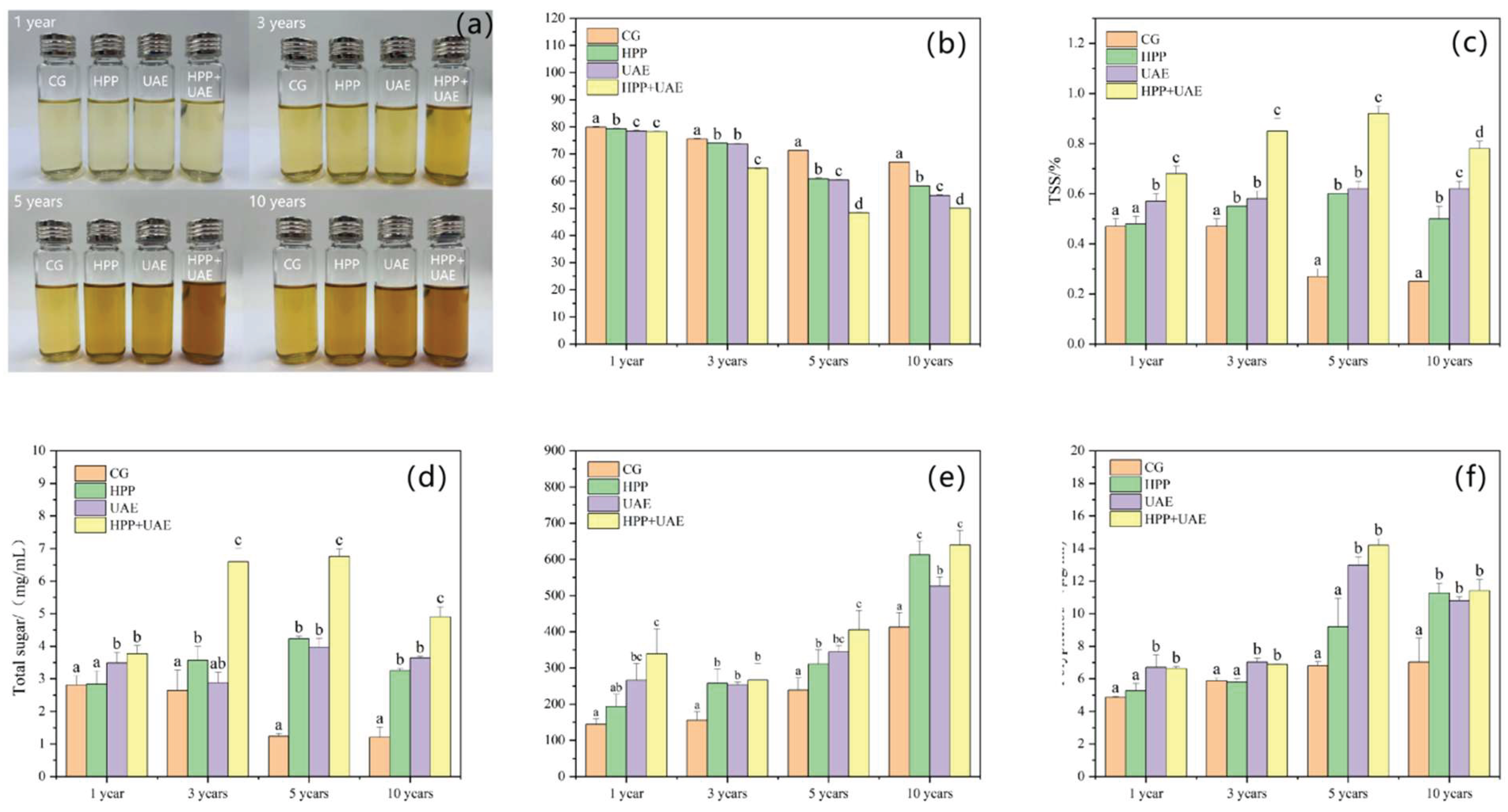
Figure 2.
Contents of amino acids (a), sweet-related amino acids (b), umami-related amino acids (c), acidic-related amino acids (d), bitter-related amino acids (e), and aromatic-related amino acids (f) in CRP water prepared from CRP with different aging years, and the HCA heatmap (g-j).
Figure 2.
Contents of amino acids (a), sweet-related amino acids (b), umami-related amino acids (c), acidic-related amino acids (d), bitter-related amino acids (e), and aromatic-related amino acids (f) in CRP water prepared from CRP with different aging years, and the HCA heatmap (g-j).
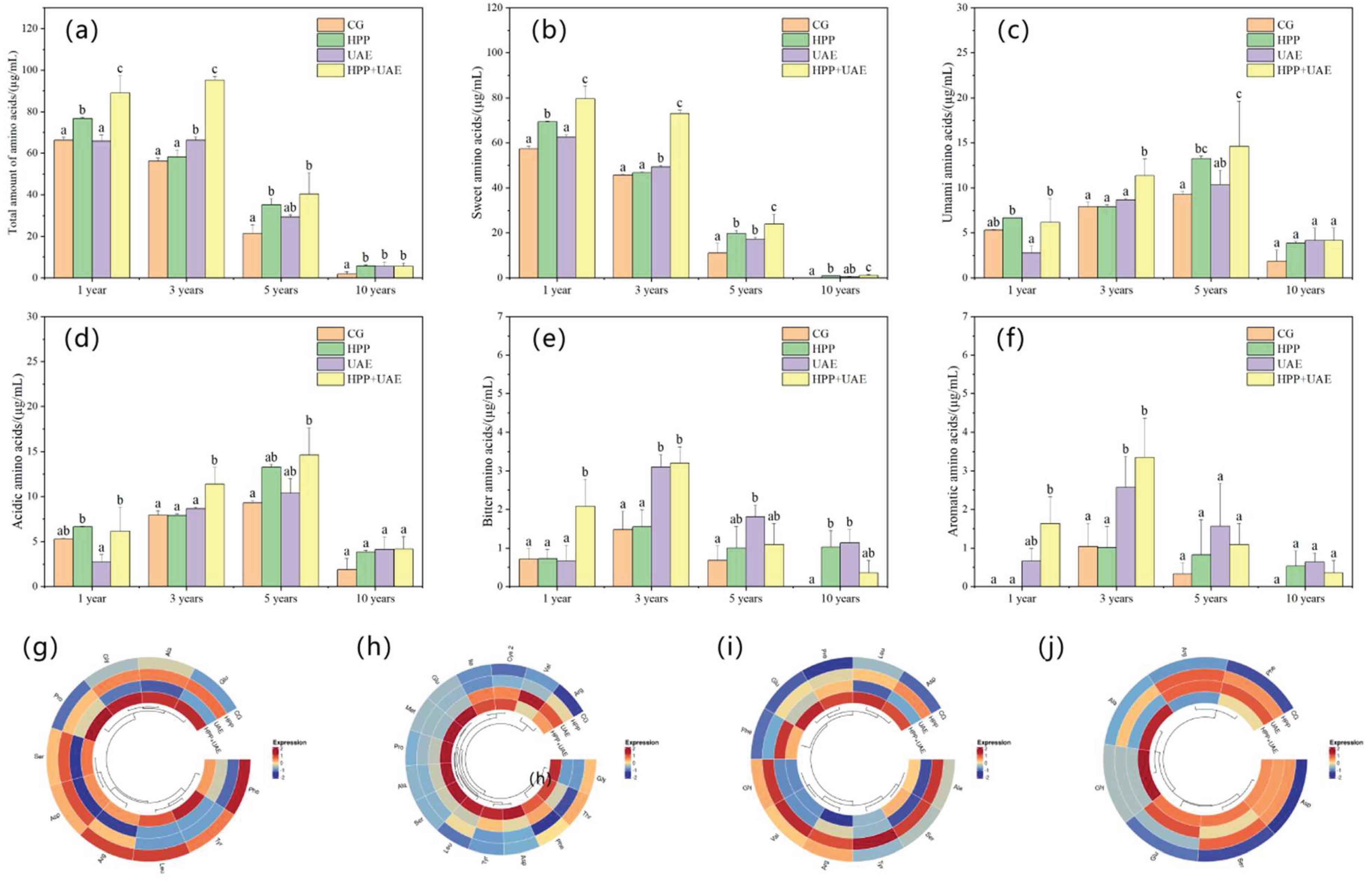
Figure 3.
DPPH free radical scavenging activity (a), ABTS cation radical scavenging activity (b), and ferric reducing antioxidant power (FRAP) (c) of CRP water prepared from CRP with different aging years.
Figure 3.
DPPH free radical scavenging activity (a), ABTS cation radical scavenging activity (b), and ferric reducing antioxidant power (FRAP) (c) of CRP water prepared from CRP with different aging years.
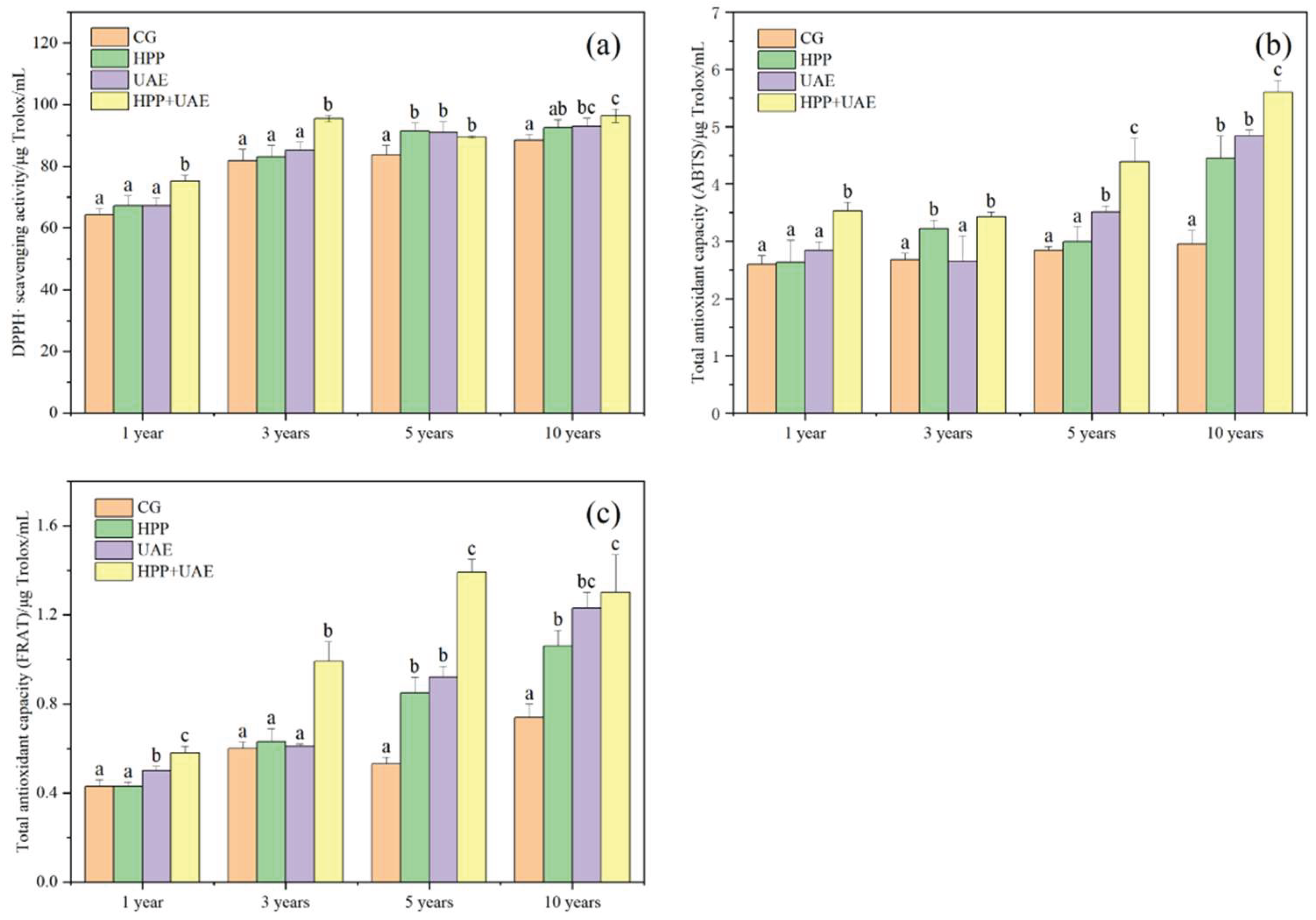
Figure 4.
Number (a) and total content (b) of VOCs, Venn diagrams of VOC species (c-f), and PCA plots (g-j) of CRP water prepared from CRP with different aging years.
Figure 4.
Number (a) and total content (b) of VOCs, Venn diagrams of VOC species (c-f), and PCA plots (g-j) of CRP water prepared from CRP with different aging years.
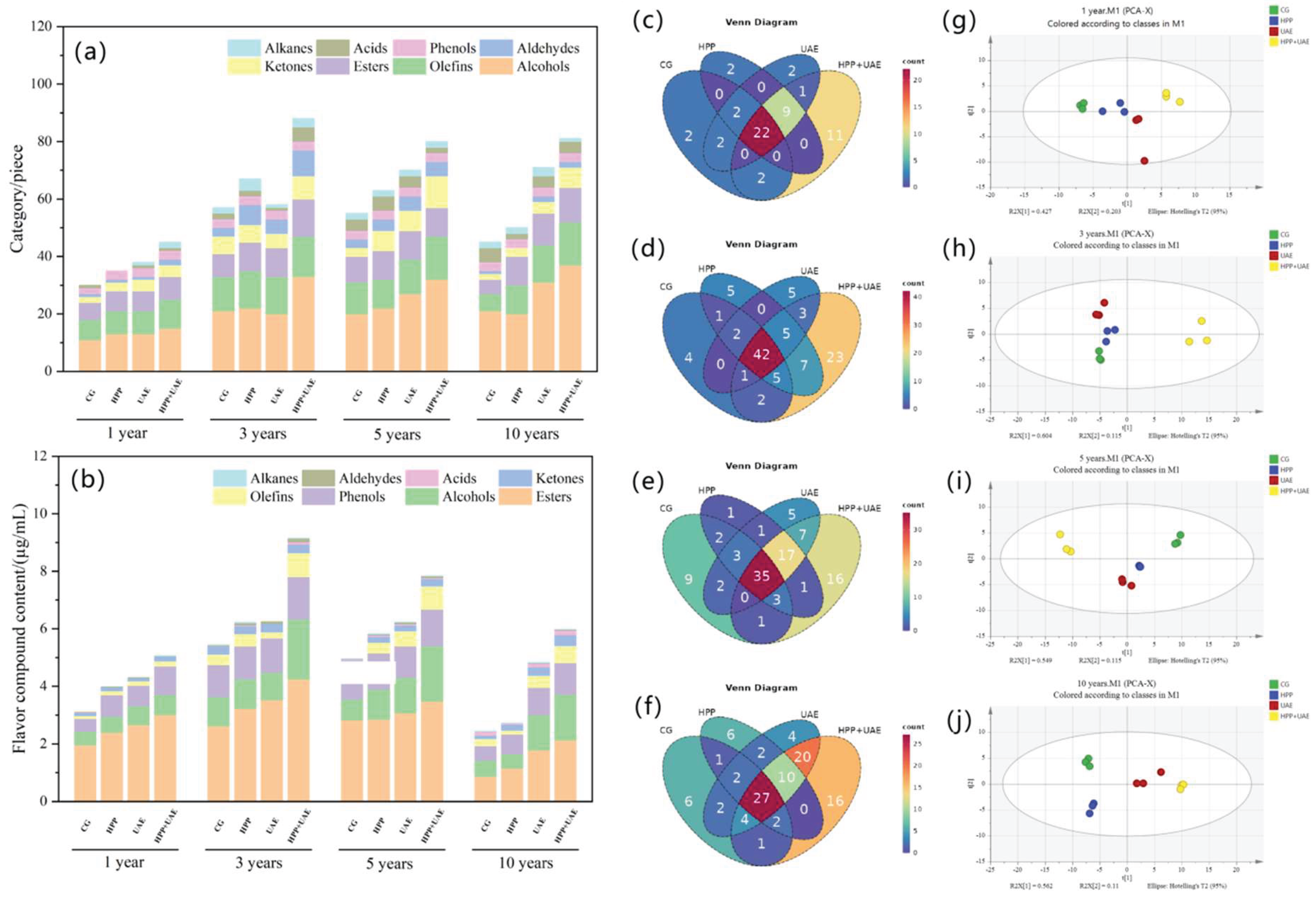
Figure 5.
Permutation validation plots of the PLS-DA models (a-d) and HCA heatmaps of VOCs (e-h) of CRP water prepared from CRP with different aging years.
Figure 5.
Permutation validation plots of the PLS-DA models (a-d) and HCA heatmaps of VOCs (e-h) of CRP water prepared from CRP with different aging years.
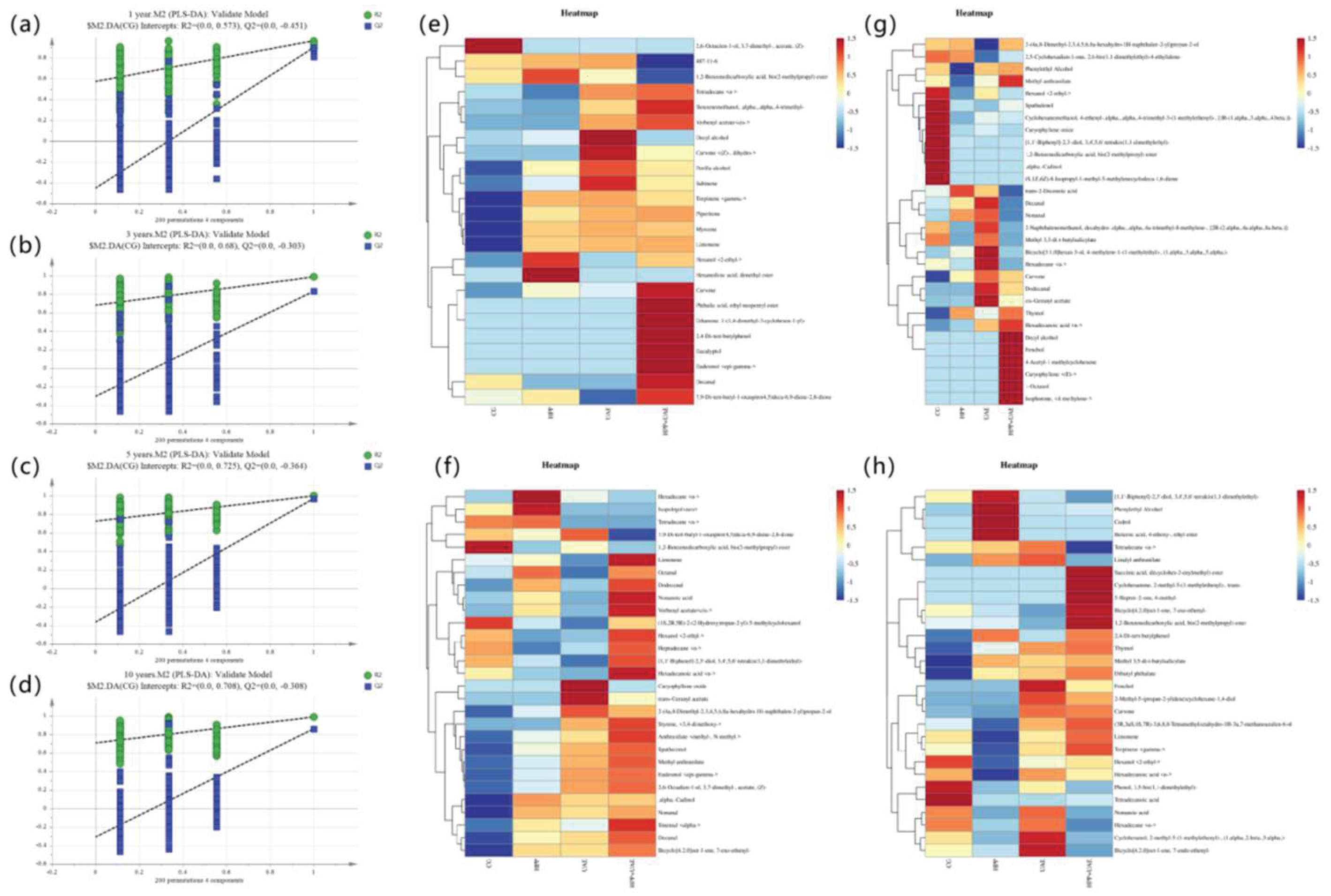
Figure 6.
E-nose radar plots (a-d) and PCA plots (e-h) of CRP water prepared from CRP with different aging years.
Figure 6.
E-nose radar plots (a-d) and PCA plots (e-h) of CRP water prepared from CRP with different aging years.
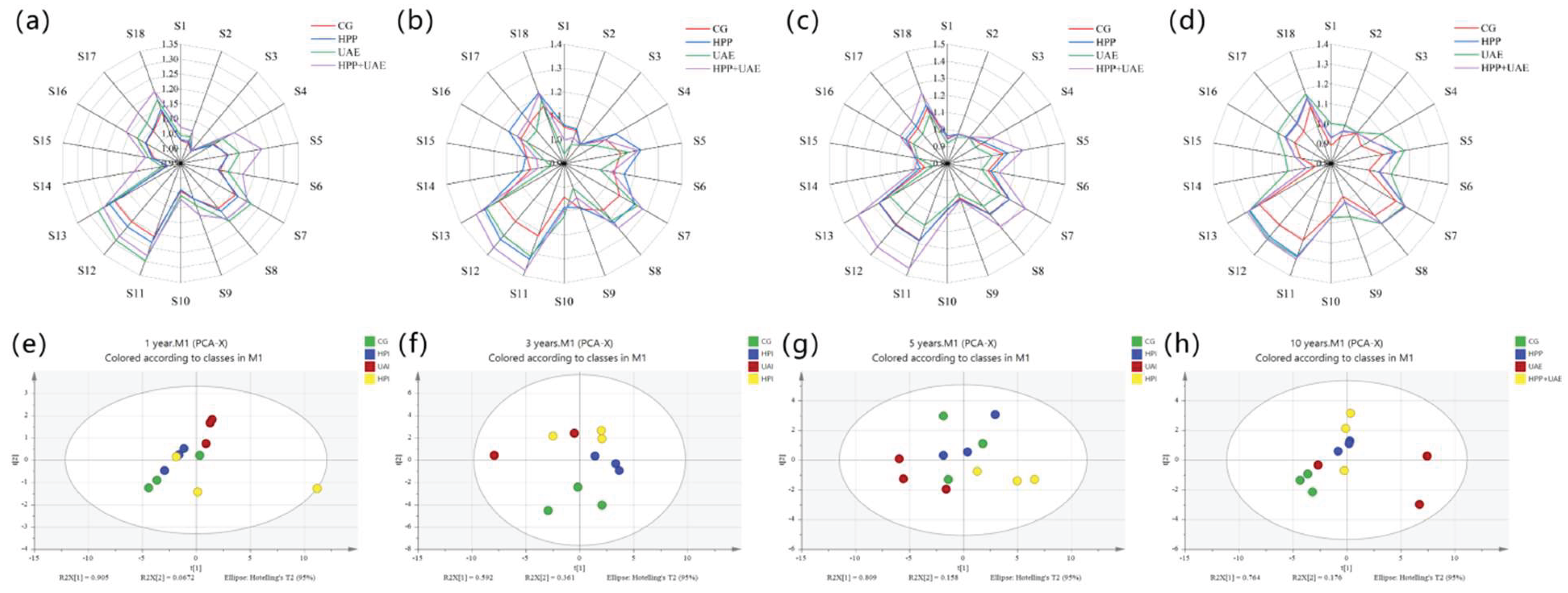
Figure 7.
Correlation analysis between antioxidant capacity indices and physicochemical parameters of CRP water samples prepared from CRP with different aging years.
Figure 7.
Correlation analysis between antioxidant capacity indices and physicochemical parameters of CRP water samples prepared from CRP with different aging years.
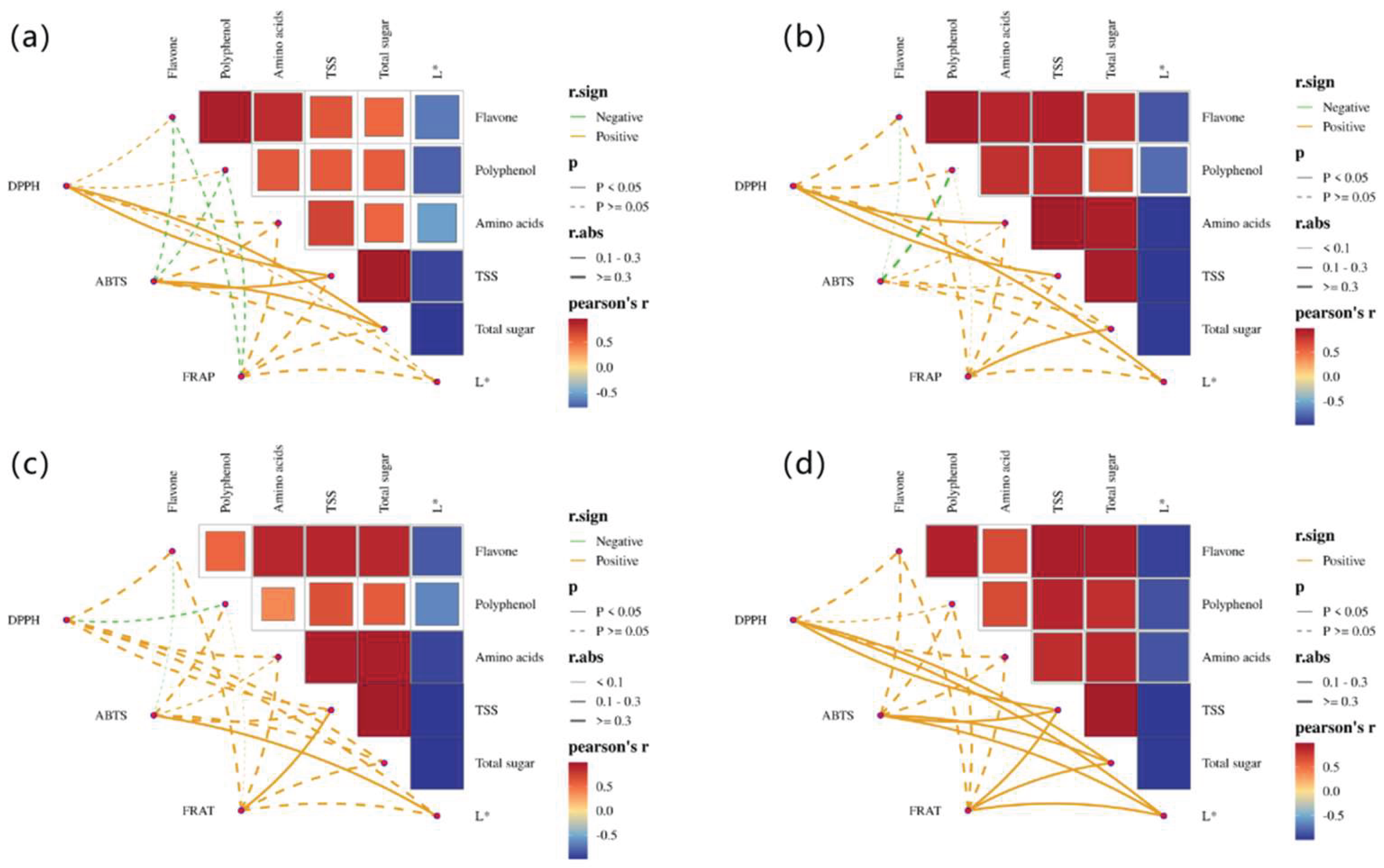
Figure 8.
Correlation heatmaps between key differential flavor compounds and E-nose sensor responses of CRP water prepared from CRP with different aging years.
Figure 8.
Correlation heatmaps between key differential flavor compounds and E-nose sensor responses of CRP water prepared from CRP with different aging years.
Disclaimer/Publisher’s Note: The statements, opinions and data contained in all publications are solely those of the individual author(s) and contributor(s) and not of MDPI and/or the editor(s). MDPI and/or the editor(s) disclaim responsibility for any injury to people or property resulting from any ideas, methods, instructions or products referred to in the content. |
© 2026 by the authors. Licensee MDPI, Basel, Switzerland. This article is an open access article distributed under the terms and conditions of the Creative Commons Attribution (CC BY) license (http://creativecommons.org/licenses/by/4.0/).
Copyright: This open access article is published under a Creative Commons CC BY 4.0 license, which permit the free download, distribution, and reuse, provided that the author and preprint are cited in any reuse.


