

Submitted:
18 January 2026
Posted:
19 January 2026
You are already at the latest version
Abstract
Background: Neonatal phototherapy is the standard treatment for hyperbilirubinemia and is critical in preventing kernicterus. While its clinical effectiveness for neonates is well established, the occupational health risks to caregivers exposed to phototherapy light remain poorly explored, particularly in low- and middle-income countries. This study assessed the ocular effects of neonatal phototherapy on caregivers working in clinical settings in Tanzania. Methods: A mixed-methods study was conducted in selected urban and rural hospitals in Tanzania. Quantitative data were collected through a cross-sectional survey of 200 caregivers involved in neonatal phototherapy, assessing exposure duration, ocular symptoms, use of protective measures, and safety training. Qualitative data were obtained through semi-structured interviews with 25 caregivers and were analyzed thematically. Quantitative data were analyzed using descriptive statistics, chi-square tests, and odds ratios. Results: Overall, 75% of caregivers reported at least one ocular symptom associated with phototherapy exposure. The most frequently reported symptoms were eye strain (58%), dryness or irritation (45%), blurred vision (28%), and photophobia (21%). Caregivers exposed to phototherapy for more than four hours per day were significantly more likely to report ocular symptoms (χ2, p = 0.012). Those who did not use protective eyewear were 2.7 times more likely to experience photophobia and irritation (OR: 2.7; 95% CI: 1.8–3.9). Only 29% of caregivers reported using eye protection, and 35% had received formal safety training. Caregivers who received training were 60% less likely to report ocular symptoms (p < 0.01). Qualitative analysis identified five themes: lack of awareness and protective measures, psychological stress and burnout, institutional gaps in occupational safety, low trust in the healthcare system, and strong professional dedication despite personal health risks. Conclusions: Caregivers exposed to neonatal phototherapy in Tanzanian hospitals experience a high burden of ocular symptoms, driven by prolonged exposure, limited protective practices, and inadequate safety training. Integrating caregiver-focused occupational safety policies, mandatory use of protective eyewear, and structured training into neonatal care programs is essential to safeguard caregiver health and strengthen neonatal service delivery in resource-limited settings.
Keywords:
neonatal phototherapy
; caregivers
; ocular health
; occupational exposure
; hyperbilirubinemia
; Tanzania
; low- and middle-income countries
Introduction
Neonatal hyperbilirubinemia is one of the most prevalent conditions requiring medical intervention in newborns. The incidence of jaundice, characterized by elevated serum bilirubin levels, varies across populations and is influenced by multiple factors, including genetic predispositions, feeding practices, and environmental conditions. According to the World Health Organization (WHO), an estimated 60% of term and 80% of preterm infants experience clinically significant jaundice during the neonatal period. If left untreated, this condition can lead to kernicterus, a serious neurological impairment resulting from profound hyperbilirubinemia, thereby underscoring the critical importance of timely and effective management strategies (Chu, Xue, et al., 2020; Yu et al., 2019).
Neonatal jaundice is a prevalent condition, affecting a substantial proportion of newborns worldwide, and timely intervention is crucial to mitigate risks associated with high bilirubin levels. Recent studies have emphasized the importance of effective management strategies, such as standardized treatment pathways and caregiver education, which have proven beneficial not only in clinical outcomes but also in reducing healthcare costs and length of hospital stays in various settings, including the United States (Yu et al., 2019).
Phototherapy is the cornerstone treatment for neonatal jaundice, where blue light wavelengths are used to convert bilirubin into water-soluble forms that are easier to excrete. Since its introduction in the 1950s, the technique has evolved significantly, improving not only in efficacy but also in accessibility (Abohussein et al., 2022). The emergence of various phototherapy devices, including fluorescent lamps, halogen lights, and more recently, light-emitting diodes (LEDs), has transformed approaches to treating hyperbilirubinemia, offering options suitable for diverse healthcare settings (Xiong et al., 2011). This is particularly pertinent in low- and middle-income countries (LMICs) where healthcare resources are often limited, and innovative treatment modalities are necessary to adapt to local conditions and improve patient outcomes (Chu, Qiao, et al., 2020; Chu, Xue, et al., 2020).
The efficacy of different phototherapy methods can significantly impact caregiver experiences and health outcomes. For instance, while continuous phototherapy is generally recognized for its effectiveness in reducing total serum bilirubin levels, intermittent phototherapy has also emerged as a valid alternative, suggesting that treatment customization according to specific clinical scenarios is key (Abohussein et al., 2022; Chu, Xue, et al., 2020; Xiong et al., 2011). Moreover, the advent of home-based phototherapy units marks a significant shift towards more accessible treatment options, especially in LMICs where health systems may be strained (Chu, Qiao, et al., 2020; Pettersson et al., 2021; Yılmaz et al., 2015). Home phototherapy has demonstrated not only clinical effectiveness comparable to hospital-based methods but also enhanced parental bonding and reduced caregiver stress, factors that are critical for optimal maternal and child health outcomes (Pettersson et al., 2021).
Urbanization and migration patterns have further complicated the landscape of neonatal jaundice management, introducing new socio-economic dynamics that influence both healthcare delivery and caregiver engagement. In LMICs, the healthcare infrastructure may struggle to accommodate the overwhelming demand for neonatal care, leading to gaps in service delivery that can compromise treatment efficacy (Pettersson et al., 2021). Additionally, cultural practices and perceptions around healthcare can shape caregivers’ responses to neonatal jaundice, including their willingness to seek or accept phototherapy (Yılmaz et al., 2015). Given these complexities, it is crucial to consider not just the clinical aspects of phototherapy, but also the broader context in which caregivers operate, acknowledging the emotional, psychological, and social dimensions of their experiences.
While the clinical outcomes of phototherapy are generally well-documented, there is an emerging recognition regarding the invisible risks associated with this treatment, particularly concerning the ocular health of caregivers providing care during phototherapy sessions. Caregivers often spend extended periods in proximity to phototherapy devices, which emit potentially harmful light wavelengths. Research has begun to unveil the ocular effects of this exposure, suggesting increased risks for conditions such as photokeratitis and retinal damage (Usatin et al., 2010). Addressing these ocular hazards is essential, not only for the physical well-being of caregivers but also for the psychological implications related to their caregiving roles, particularly in resource-constrained environments where caregivers often experience heightened stress and emotional fatigue.
The treatment of neonatal hyperbilirubinemia through phototherapy is a standard practice; however, it presents a dual challenge of ensuring optimal therapeutic efficacy while safeguarding caregivers from potential ocular hazards. Despite its widespread application and clinical necessity, existing literature predominantly focuses on the physiological impact of phototherapy on neonates, often neglecting its implications for the caregivers who administer this treatment. This oversight is especially critical given that caregivers frequently stationed in close proximity to phototherapy equipment may be subjected to harmful light exposure, leading to potential ocular complications. This situation raises essential questions regarding safety protocols, caregiver education, and the psychological burdens associated with these responsibilities.
Moreover, the variability in the implementation and effectiveness of phototherapy techniques such as high-intensity LED versus traditional fluorescent light sources points to a gap in understanding the optimal environments for both infant treatment and caregiver protection (Bautista et al., 2020; Chu, Qiao, et al., 2020; Saleem et al., 2023). Simultaneously, ongoing discussions regarding the merits of home-based phototherapy versus hospital-based interventions emphasize the need to reassess not only the clinical effectiveness but also the environmental conditions under which caregiving takes place, including exposure to therapeutic lighting and its associated risks (Kavosi et al., 2022; Pettersson et al., 2023).
This raises a critical research problem: What is the impact of neonatal phototherapy on the ocular health of caregivers in clinical settings, and how can practices be optimized to mitigate any associated hazards while ensuring effective treatment outcomes for neonates? Addressing this question requires a multidisciplinary approach, combining insights from clinical medicine, caregiver psychology, and environmental health. It also necessitates the development of guidelines that not only enhance neonatal outcomes but also ensure the safety and well-being of the caregivers responsible for administering treatment.
The comprehensive assessment of the ocular effects on caregivers is significant to fill the gap and contribute to the development of safer, more effective caregiving protocols in neonatal units. The intricate interplay of caregiver exposure to therapeutic light, the psychological stressors linked to caregiving, and the imperative of effective neonatal treatment underscores the relevance of this research. Seeks to illuminate these critical issues, offering insights into how caregiver safety can be compromised in the context of neonatal care (Honar et al., 2016; Mreihil et al., 2017; Zhou et al., 2019). By foregrounding the ocular effects linked to sustained exposure to phototherapy light, this study aims to inform practice guidelines that prioritize both neonatal outcomes and caregiver well-being. In doing so, it intends to broaden the understanding of phototherapy’s implications, paving the way for improved safeguarding measures, educational programs, and policy initiatives that can enhance the caregiving experience in LMICs.
Research Methodology
Study Design
The study employed a mixed-methods design that combined quantitative and qualitative methodologies to collect comprehensive data on the ocular effects experienced by caregivers exposed to phototherapy light in hospital settings. This dual approach was purposeful in establishing data triangulation, thus boosting the reliability of findings. The quantitative aspect consisted of a cross-sectional survey focused on assessing the prevalence and severity of ocular symptoms among caregivers, while qualitative interviews were undertaken to derive rich, contextual insights into caregivers’ experiences, safety perceptions, and the challenges they face during phototherapy.
Population and Sample Size
The research targeted caregivers of neonates undergoing phototherapy for hyperbilirubinemia, with data collection conducted across various hospitals in Tanzania. A stratified sampling technique was employed to guarantee representation from differing healthcare settings, specifically urban and rural facilities. The quantitative survey aimed for a sample size of at least 200 respondents, as determined by a power analysis, to ensure adequate statistical strength for generalization of results. Simultaneously, the qualitative aspect involved purposive sampling of approximately 20 to 30 caregivers, with interviews continuing until thematic saturation was reached to ensure a comprehensive representation of diverse experiences.
Data Collection Tools
Quantitative Survey: A structured questionnaire was developed, including sections on demographic information, duration and frequency of phototherapy exposure, and symptoms related to ocular health (e.g., eye strain, discomfort, etc.). Standardized scales for measuring ocular symptoms was adapted for local context to enhance relevance.
Qualitative Interviews: Semi-structured interview guides were formulated to allow flexibility in exploring specific themes while maintaining focus on key research questions related to caregiver experiences. Interviews was conducted in Kiswahili or English, depending on the caregiver’s language preference.
Data Analysis
The quantitative data survey was analyzed using a statistical software package SPSS V25. Descriptive statistics were employed to summarize caregiver demographics and ocular health findings, while inferential statistics were utilized to determine relationships between exposure variables and ocular symptoms. Also thematic analysis was applied to the qualitative interview transcripts. An iterative coding process was utilized, allowing for the identification of themes that reflected the subjective experiences of caregivers in relation to managing the ocular risks linked to phototherapy.
Conceptual Framework
The conceptual framework for the research titled “Assessing the Invisible Hazards: Ocular Effects of Neonatal Phototherapy on Caregivers in Clinical Settings” integrates multiple elements vital to understanding both caregiver experiences and the associated ocular health effects stemming from neonatal phototherapy. Recognizing the importance of a multidisciplinary approach, the framework builds on existing theories of healthcare acceptability, trust, and system resilience to illuminate the complex dynamics at play in clinical settings, particularly within the context of Tanzania.
1. Core Constructs
Caregiver Exposure: This pertains to the physical and emotional environment created by prolonged exposure to phototherapy light, which encompasses factors such as duration of exposure, light intensity, and the quality of caregivers’ protective measures (e.g., wearing goggles). Understanding these variables is essential for assessing the ocular hazards caregivers may face Sekhon et al. (2017).
Ocular Health Effects: This includes the spectrum of eye-related issues that may arise from continuous exposure to phototherapy light, such as photokeratitis, retinal damage, and long-term vision complications. Assessing the prevalence and severity of these conditions within the caregiver population will provide critical data necessary for addressing safety concerns (Cu et al., 2021).
Psychosocial Context: The emotional and psychological implications of caregiving during phototherapy are equally significant. Caregivers often experience stress, anxiety, and feelings of inadequacy, particularly in resource-limited settings. Recognizing the interplay between psychological factors and physical well-being is crucial for developing supportive interventions (Engelseth et al., 2020).
2. Interlinking Variables
Acceptance of Healthcare Practices: Building on Bucyibaruta et al.’s framework of healthcare acceptability, this framework integrates caregiver perceptions of the safety and efficacy of phototherapy practices within neonatal care settings (Bucyibaruta et al., 2022). These perceptions significantly influence how caregivers engage with the treatment process and their willingness to comply with safety recommendations.
Knowledge and training: This element emphasizes the importance of training and awareness regarding the ocular risks associated with phototherapy. Effective educational programs can enhance caregivers’ understanding of preventive measures and proper equipment use, thereby reducing potential ocular risks (Bucyibaruta et al., 2022).
Trust in the Healthcare System: Influenced by Gille et al.’s insights on public trust in healthcare systems, the proposed framework posits that caregivers’ trust in clinical practices and practitioners can impact their health-seeking behaviors and adherence to protective measures (Gille et al., 2020).
3. Outcome Measures
The effectiveness of the proposed framework was assessed through key outcome measures:
- Prevalence of ocular symptoms was identified by using validated scales and surveys, the research will quantify the incidence and severity of ocular symptoms reported by caregivers during and after exposure to phototherapy.
- Quality of caregiver training was done through evaluating the effectiveness and comprehensiveness of training programs related to ocular safety during phototherapy will provide insight into the preparedness of caregivers to minimize risks.
- Caregiver Satisfaction and Trust Levels by conducting surveys that captured data regarding caregivers’ satisfaction with the care they provide and the systems in place, which can correlate with their adherence to safety protocols (Ali et al., 2023).
This conceptual framework aims to facilitate a holistic understanding of the ocular effects of neonatal phototherapy on caregivers, enabling the identification of actionable strategies for improving clinical safety and caregiver support in Tanzanian hospitals. By integrating various elements of healthcare acceptability, trust, and resiliency, the framework serves not only to elucidate the current gaps in knowledge but also to inform future interventions tailored to mitigate risks and enhance caregiver welfare within healthcare systems (Figure 1).
Results
A. Quantitative Findings (Cross-Sectional Survey)
Out of 200 caregivers surveyed, 75% reported experiencing at least one ocular symptom associated with exposure to neonatal phototherapy. The most frequently reported symptoms were eye strain (58%), dryness/irritation (45%), blurred vision (28%), and photophobia (21%). A large proportion (62%) indicated that they were exposed to phototherapy lights for more than four hours per day. Alarmingly, only 29% used any form of eye protection, and just 35% had received formal safety training related to phototherapy. (Table 1)
Further statistical analysis revealed a significant association between extended exposure (greater than 4 hours per day) and more likely to report ocular symptoms such as eye strain and dryness (χ2, p = 0.012). Additionally, caregivers who did not use protective gear were 2.7 times more likely to experience photophobia and irritation (OR: 2.7, 95% CI: 1.8–3.9). Regarding awareness, only 35% of caregivers had received formal training on phototherapy safety, and those trained were 60% less likely to report ocular issues (p < 0.01), Suggesting the importance of targeted education and policy reinforcement (Table 2).
B. Qualitative Findings (Thematic Analysis)
A total of 25 semi-structured interviews were conducted with caregivers who had experience administering or monitoring neonatal phototherapy. The data were analyzed using Braun and Clarke’s thematic analysis framework, and five major themes were identified. Saturation was achieved by the 21st interview, with no new themes emerging thereafter. The themes and subthemes are supported by representative quotes and frequency counts.
Theme 1: Lack of Awareness and Protective Measures (22 out of 25 Participants)
Most caregivers were unaware of the risks of phototherapy exposure to their own health. Many did not use protective goggles due to the absence of institutional guidelines or provisions.
“I never thought this light could harm me. We only care about protecting the baby, not ourselves.” Caregiver 7, Urban Hospital.
“We are not given goggles or anything. We just go in and out of the phototherapy room.” Caregiver 14, Rural Facility.
Theme 2: Psychological Stress and Burnout (18 out of 25 Participants)
Several caregivers described experiencing emotional exhaustion, headaches, and fear of long-term eye damage, contributing to job related stress.
“Sometimes I feel dizzy and my eyes hurt for hours, but I keep going because the babies need help.” Caregiver 2, Urban Hospital.
“There’s this fear at the back of my mind, what if my eyes get worse with time?” Caregiver 21, District Hospital
Theme 3: Institutional Gaps in Occupational Safety (19 out of 25 Participants)
Participants highlighted a lack of policy, education, and supervision concerning caregiver safety during phototherapy.
“There are protocols for everything except us. We are not told how to protect our eyes.” Caregiver 9, Regional Referral Hospital
“We report symptoms, but no one takes action. There’s no system in place to track our exposure.” Caregiver 17, Urban Hospital
Theme 4: Trust and Systemic Constraints (15 out of 25 Participants)
Caregivers expressed low trust in the healthcare system, citing inadequate equipment, lack of follow-up, and systemic neglect.
“Even the machines we use are outdated. The hospital doesn’t prioritize caregiver safety.” Caregiver 5, Tertiary Facility
“We complain but nothing is done. So now we just keep quiet and bear with it.” Caregiver 22, Rural Facility
Theme 5: Professional Dedication Despite Risk (20 out of 25 Participants)
Despite challenges, caregivers demonstrated commitment and resilience, motivated by patient outcomes and professional duty.
“Even when I’m uncomfortable, I stay close to the baby because I know they need light urgently.” Caregiver 10, Urban Neonatal Unit
“We are tired, but we do it for the children. If we don’t, who will?” Caregiver 20, Rural Setting

Table 3.
Thematic Analysis – Qualitative Themes.
| Theme No. | Theme Title | Frequency (n = 25) |
Key Insights |
| 1 | Lack of Awareness & Protection | 22 | Absence of training; no use of goggles; no safety policy |
| 2 | Psychological Stress & Burnout | 18 | Eye discomfort, emotional fatigue, fear of vision loss |
| 3 | Institutional Gaps in Safety | 19 | No guidelines or reporting mechanisms; ignored complaints |
| 4 | Trust and Systemic Constraints | 15 | Outdated equipment; lack of response from hospital management |
| 5 | Professional Dedication Despite Risk | 20 | Strong commitment to neonatal care despite physical discomfort |
Discussion
The findings of this study reveal significant insights into the ocular health of caregivers involved in neonatal phototherapy, emphasizing the urgent need for health systems to address both caregiver safety and well-being in clinical settings in Tanzania. The finding shows that 75% of caregivers reported experiencing at least one ocular symptom illuminates a public health issue often overlooked. The predominance of symptoms such as eye strain (58%) and dryness/irritation (45%) underscores the physical toll that prolonged exposure to phototherapy lights can exert on caregivers, necessitating systematic changes to improve occupational health standards (McCulloch, 2012). These findings reflect existing literature that discusses ocular risks associated with phototherapy, underscoring the urgent need for protective measures(Oga-Omenka et al., 2024).
The data indicates a correlation between exposure duration and the severity of ocular symptoms. Caregivers who reported exposure to phototherapy lights for more than four hours a day were more likely to experience adverse ocular effects such as eye strain and dryness, consistent with prior studies suggesting that sustained exposure to bright lights can negatively impact eye health (Jalilifar, 2012). This correlation (χ2, p = 0.012) indicates a possible dose-response relationship where increased exposure results in greater ocular discomfort. Findings related to prolonged exposure are consistent with prior research that highlights the physical toll of long working hours in healthcare settings, underscoring the need for policies aimed at limiting exposure times and implementing protective measures (Ridde et al., 2020). Additionally, the statistic shows that only 29% of caregivers utilized some form of eye protection exacerbates their risks, highlighting the need for protective gear usage also caregivers without protective gear were found to be at a higher risk of experiencing photophobia and irritation, reinforcing the importance of implementing simple protective measures for caregiver health (Alramadan, 2023; Ridde et al., 2024).
A particularly compelling finding is that caregivers who received formal training were less likely to report ocular issues. This findings indicating the critical role that education plays in occupational safety, with implications for developing comprehensive training programs tailored to caregiver needs. Inadequate knowledge regarding the potential risks associated with phototherapy reveals a gap in health education, where caregivers may prioritize the treatment of neonates over their own health. Future research should explore the effectiveness of tailored training interventions aimed at improving caregiver awareness and adherence to safety measures (Fazilatfar et al., 2018).
The low rate of formal safety training received by caregivers (only 35%) is troubling and indicative of systemic inadequacies. Caregivers who received training reported lower rates of ocular symptoms, demonstrating the effectiveness of adequately designed educational interventions. This lack of institutional focus on caregiver safety, as reflected in participant responses, highlights a significant gap in occupational health policies within healthcare facilities (Kerasidou & Kingori, 2019). Future training programs must incorporate comprehensive safety education that emphasizes the use of protective equipment and the potential health implications of prolonged exposure to phototherapy.
Qualitative data from caregiver interviews provided rich contextual insights, revealing a pervasive lack of awareness regarding phototherapy exposure risks. Many caregivers expressed feelings of neglect in terms of their safety and highlighted institutional gaps, including insufficient policies and resources to mitigate these risks. This ignorance is compounded by the absence of institutional guidelines or provisions for protective measures, as the majority of caregivers expressed concerns about the lack of attention given to their safety compared to that of the neonates. This lack of institutional support can foster an environment where caregiver health is undervalued, potentially leading to high turnover rates and compromised patient care, aligning with current findings on institutional oversight in healthcare settings (Nguyen & Pramoolsook, 2016). The expressed sentiments of caregivers about their experiences reflect a concern regarding the health system’s priorities and the need for comprehensive strategies to foster a supportive atmosphere that balances caregiver safety with optimal patient outcomes. These insights underscore the necessity of creating a culture of safety within healthcare institutions, where caregiver health is acknowledged as a priority alongside patient care (Javed & Ilyas, 2018).
Reported psychological stress and burnout among caregivers (18 out of 25 participants) complicate the narrative surrounding occupational health in neonatal care. Caregivers reported emotional exhaustion and anxiety concerning potential long-term effects on their vision, which aligns with existing literature emphasizing the psychological burdens associated with caregiving roles (Zhu et al., 2014). Prevalent among caregivers suggests that health interventions must also address psychological well-being. The stress experienced by caregivers may not only impact their personal health but also influence the quality of care they provide, which ultimately affects overall patient outcomes (Menear et al., 2023). Creating frameworks that prioritize mental health support alongside physical safety measures is essential. Incorporating strategies such as counseling services and stress management workshops could enhance caregiver resilience, ultimately benefiting neonatal patient care (Doğan et al., 2018).
The theme of trust and systemic constraints highlights the need for transparency and effective communication within healthcare institutions. Caregivers expressed low trust in the healthcare system, citing inadequate equipment and a perceived lack of responsiveness to their concerns. Developing mechanisms for honest feedback and addressing caregiver complaints can foster a more supportive workplace culture. Establishing formal channels for caregivers to report issues and receive timely interventions could enhance satisfaction and commitment to their roles, as identified in previous literature (Bornmann & Daniel, 2008).
Another pertinent theme that emerged was the low trust in the healthcare system, stemming from outdated equipment and failure to adequately address reported health issues. The lack of sufficient mechanisms to support caregivers who report symptoms exacerbates feelings of neglect and frustration, highlighting the need for transparent communication between healthcare administrators and staff. Improvements in healthcare systems require fostering trust through responsiveness and infrastructure investments that prioritize caregiver safety alongside patient care (Sion et al., 2020).
Despite these challenges and systemic inadequacies, the strong commitment to newborn care even in the face of personal discomfort among caregivers, stood out as a vital theme. Caregivers are motivated by a sense of duty to their neonatal patients, often sacrificing their comfort. While this dedication should be celebrated, it must also serve as a call for healthcare systems to provide adequate protections and support to ensure that caregivers do not bear an undue burden. This dedication reflects a profound sense of responsibility; however, institutions must not exploit such commitment without providing adequate safety measures and support systems (Zlotnick et al., 2023). Fostering a culture that values both caregiver welfare and patient care will create a more sustainable healthcare model, particularly in resource-limited settings (Toledo, 2020).
The findings of this study provide robust evidence indicating that addressing the ocular health of caregivers in neonatal phototherapy settings should be an urgent clinical priority and it is a call for an urgent reevaluation of health policies regarding caregiver safety in neonatal units. Institutional changes are necessary to safeguard caregiver health through comprehensive education, implementing protective measures, psychological support and fostering a supportive culture that prioritizes caregivers’ health. As we advocate for enhanced caregiver protections, it is critical to recognize that caregiver health is linked to patient outcomes. Future studies should explore the longitudinal impact of implemented changes on both caregiver well-being and neonatal care quality, paving the way for improved practices in hospital settings (Mansourizadeh & Ahmad, 2021). By addressing the systemic gaps highlighted in this research, healthcare facilities can improve not only the well-being of caregivers but also enhance the quality of neonatal care provided, ultimately leading to better outcomes for both caregivers and their patients.
Limitations
The study acknowledges potential limitations, including reliance on self-reported data, which may be influenced by recall bias. There may also be challenges in ensuring a sufficiently diverse sample within urban and rural settings. Nevertheless, the mixed-methods approach aims to mitigate these risks by providing a comprehensive view of caregiver experiences and health outcomes related to neonatal phototherapy in Tanzania.
Conclusion
This study underscores the pressing need to address the ocular health risks encountered by caregivers involved in neonatal phototherapy within the clinical settings of Tanzania. The substantial proportion of caregivers reporting ocular symptoms associated with prolonged exposure to phototherapy lights indicates a critical gap in the occupational health policies that govern caregiver welfare. Only a minority of respondents utilized protective measures, and fewer still received adequate training, highlighting the urgent necessity for systemic improvements.
Recommendations
To enhance the ocular health and overall safety of caregivers involved in neonatal phototherapy, we recommend that healthcare facilities implement mandatory protective measures, including the use of appropriate eyewear, and establish comprehensive training programs focusing on the risks associated with phototherapy exposure. Institutions should develop robust occupational safety policies that prioritize caregiver health, incorporating feedback mechanisms for caregivers to report health concerns without fear of repercussions. Additionally, providing access to psychological support services can address the stress and burnout experienced by caregivers, thereby improving their well-being and job satisfaction. Ongoing research is essential to evaluate the long-term effectiveness of these implemented measures and adapt practices accordingly, ensuring a sustainable and supportive environment for caregivers while enhancing the quality of care provided to neonates.
Funding
This study was conducted without any funding from external sources. The authors’ undertook this research as part of academic responsibilities and were not compensated for involvement in the study.
Ethical Considerations
Ethical approval for this research was granted by the Tanzania National Health Research Ethics Review Committee MH/TZ/02119 and permission were granted by hospitals from local. All participants provided informed consent prior to their involvement in the study, ensuring they understood the purpose of the research, the voluntary nature of their involvement, their right to withdraw at any time, at any time without repercussions. Confidentiality and data protection measures were meticulously implemented throughout the research process, in line with ethical research practices for human subjects. Data were securely stored and analyzed to maintain participant anonymity and ensure compliance with ethical research standards.
Acknowledgments
I express my heartfelt gratitude to the hospitals across Tanzania that participated in this study, as well as to the caregivers who generously shared their experiences and insights with us. Your contributions were invaluable to the completion of this research. I also wish to acknowledge the dedication of our research team and the institutional support that facilitated this work.
Conflicts of Interest
The author declares that there are no conflicts of interest regarding the publication of this research. The results and interpretations reported herein are independent of any personal or financial interests.
Abbreviations
LMIC: Low and Middle-Income Countries; NHB: Neonatal Hyperbilirubinemia; TSB: Total Serum Bilirubin; OR: Odds Ratio.
References
- Abohussein, H. A., Fahmy, B., Khalil, A., & Fahmy, Y. A. (2022). Effect of Phototherapy on Electrolytes, Liver and Kidney Functions During Treatment of Neonatal Hyperbilirubinemia. A Prospective-Analytical Study. Annals of Neonatology Journal, 0(0), 0–0. [CrossRef]
- Alramadan, M. M. (2023). Citation Behavior, Audience Awareness, and Identity Construction in Arabic and EFL Research. Heliyon, 9(2), e13125. [CrossRef]
- Bautista, M., Griffin, A., Hay, K., & Frakking, T. (2020). Association Between Type of Phototherapy Management and Hospital and Patient-related Outcomes in Neonates With Non-haemolytic Jaundice at an Australian Community Hospital. Journal of Paediatrics and Child Health, 57(5), 702–709. [CrossRef]
- Bornmann, L., & Daniel, H. (2008). What Do Citation Counts Measure? A Review of Studies on Citing Behavior. Journal of Documentation, 64(1), 45–80. [CrossRef]
- Chu, L., Qiao, J., & Xu, C. (2020). Home-Based Phototherapy Versus Hospital-Based Phototherapy for Treatment of Neonatal Hyperbilirubinemia: A Systematic Review and Meta-Analysis. Clinical Pediatrics, 59(6), 588–595. [CrossRef]
- Chu, L., Xue, X., & Qiao, J. (2020). Efficacy of Intermittent Phototherapy Versus Continuous Phototherapy for Treatment of Neonatal Hyperbilirubinaemia: A Systematic Review and Meta-analysis. Journal of Advanced Nursing, 77(1), 12–22. [CrossRef]
- Doğan, F. Ş., YAĞIZ, O., & Kaçar, I. G. (2018). A Comparison of Turkish and English L1 Writers’ Citation Practices in Doctoral and Master’s Theses. Erzincan Üniversitesi Eğitim Fakültesi Dergisi, 20(3), 842–855. [CrossRef]
- Fazilatfar, A. M., Elhambakhsh, S. E., & Allami, H. (2018). An Investigation of the Effects of Citation Instruction to Avoid Plagiarism in EFL Academic Writing Assignments. Sage Open, 8(2). [CrossRef]
- Honar, N., Saadi, E. G., Saki, F., Pishva, N., Shakibazad, N., & Teshnizi, S. H. (2016). Effect of Ursodeoxycholic Acid on Indirect Hyperbilirubinemia in Neonates Treated With Phototherapy. Journal of Pediatric Gastroenterology and Nutrition, 62(1), 97–100. [CrossRef]
- Jalilifar, A. (2012). Academic Attribution: Citation Analysis in Master’s Theses and Research Articles in Applied Linguistics. International Journal of Applied Linguistics, 22(1), 23–41. [CrossRef]
- Javed, S. A., & Ilyas, F. (2018). Service Quality and Satisfaction in Healthcare Sector of Pakistan—The Patients’ Expectations. International Journal of Health Care Quality Assurance, 31(6), 489–501. [CrossRef]
- Kavosi, Z., Mozafari, M., Rezaee, M., & Keshavarz, K. (2022). Cost Effectiveness Analysis of Home-Based Phototherapy Versus Hospital-Based Phototherapy for Treatment of Neonatal Hyperbilirubinemia in Shiraz, Iran. [CrossRef]
- Kerasidou, A., & Kingori, P. (2019). Austerity Measures and the Transforming Role of A&E Professionals in a Weakening Welfare System. Plos One, 14(2), e0212314. [CrossRef]
- McCulloch, S. (2012). Citations in Search of a Purpose: Source Use and Authorial Voice in L2 Student Writing. International Journal for Educational Integrity, 8(1). [CrossRef]
- Menear, R. A., Hernandez, K. N., Handley, L., Lora, A. A., & Nisly, S. A. (2023). Healthcare Disparities: Encouraging Change Through Continuing Professional Development. Journal of Cme, 12(1). [CrossRef]
- Mreihil, K., Nakstad, B., Stensvold, H. J., Benth, J. Š., & Hansen, T. W. R. (2017). Uniform National Guidelines Do Not Prevent Wide Variations in the Clinical Application of Phototherapy for Neonatal Jaundice. Acta Paediatrica, 107(4), 620–627. [CrossRef]
- Nguyen, T. T. L., & Pramoolsook, I. (2016). Citations in Literature Review Chapters of TESOL Master’s Theses by Vietnamese Postgraduates. Gema Online Journal of Language Studies, 16(2), 17–32. [CrossRef]
- Oga-Omenka, C., Sassi, A., Vasquez, N. A., Rana, N., Essar, M. Y., Ku, D., Diploma, H., Huria, L., Saqib, K., Das, R., Stallworthy, G., & Pai, M. (2024). A Methodological Review of Patient Healthcare-Seeking Journeys From Symptom Onset to Receipt of Care. [CrossRef]
- Pettersson, M., Eriksson, M., Odlind, A., & Ohlin, A. (2021). Home Phototherapy of Term Neonates Improves Parental Bonding and Stress: Findings From a Randomised Controlled Trial. Acta Paediatrica, 111(4), 760–766. [CrossRef]
- Pettersson, M., Ryen, L., Eriksson, M., & Ohlin, A. (2023). The Cost-Effectiveness of Home Phototherapy for Hyperbilirubinemia in Neonates: Results From a Randomized Controlled Trial. Scientific Reports, 13(1). [CrossRef]
- Ridde, V., Barua, M., Bonnet, E., Casseus, A., Clech, L., Allegri, M. D., Kabir, M., Goudet, J.-M., Henrys, D., Islam, M. N., L’Heureux, Y., Masselot, C., Mathon, D., Meistre, S., & Sarker, M. (2024). Improving an Integrative Framework of Health System Resilience and Climate Change: Lessons From Bangladesh and Haiti. [CrossRef]
- Ridde, V., Pérez, D., & Robert, É. (2020). Using Implementation Science Theories and Frameworks in Global Health. BMJ Global Health, 5(4), e002269. [CrossRef]
- Saleem, A., Ahmed, B., Shah, S. A., Subhani, F. A., Ayub, A., & Shiekh, S. A. (2023). Comparison of Effects of LED Phototherapy With Compact Fluorescent Phototherapy in Neonates With Hyperbilirubinemia. Pakistan Armed Forces Medical Journal, 73(2), 337–340. [CrossRef]
- Sion, K., Verbeek, H., Boer, B. d., Zwakhalen, S., Odekerken-Schröder, G., Jos M. G. A. Schols, & Hamers, J. P. (2020). How to Assess Experienced Quality of Care in Nursing Homes From the Client’s Perspective: Results of a Qualitative Study. BMC Geriatrics, 20(1). [CrossRef]
- Toledo, E. Q. (2020). Data-Driven Learning in the Academic Writing Classroom: Citation and Stance. Revista De Lenguas Para Fines Específicos, 26(1), 196–213. [CrossRef]
- Usatin, D., Liljestrand, P., Kuzniewicz, M. W., Escobar, G. J., & Newman, T. B. (2010). Effect of Neonatal Jaundice and Phototherapy on the Frequency of First-Year Outpatient Visits. Pediatrics, 125(4), 729–734. [CrossRef]
- Xiong, T., Qu, Y., Cambier, S., & Mu, D. (2011). The Side Effects of Phototherapy for Neonatal Jaundice: What Do We Know? What Should We Do? European Journal of Pediatrics, 170(10), 1247–1255. [CrossRef]
- Yılmaz, A., Özkiraz, S., Akcan, A. B., & Canpolat, M. (2015). Low-Cost Home-Use Light-Emitting-Diode Phototherapy as an Alternative to Conventional Methods. Journal of Tropical Pediatrics, 61(2), 113–118. [CrossRef]
- Yu, T., Nguyen, C., Ruiz, N., Zhou, S., Zhang, X., Boing, E., & Tan, H. (2019). Prevalence and Burden of Illness of Treated Hemolytic Neonatal Hyperbilirubinemia in a Privately Insured Population in the United States. BMC Pediatrics, 19(1). [CrossRef]
- Zhou, S., Wu, X., Ma, A., Zhang, M., & Liu, Y. (2019). Analysis of Therapeutic Effect of Intermittent and Continuous Phototherapy on Neonatal Hemolytic Jaundice. Experimental and Therapeutic Medicine. [CrossRef]
- Zhu, X., Turney, P. D., Lemire, D., & Vellino, A. (2014). Measuring Academic Influence: Not All Citations Are Equal. Journal of the Association for Information Science and Technology, 66(2), 408–427. [CrossRef]
- Zlotnick, C., Patel, H., Ali, P., Odewusi, T., & Luiking, M. (2023). Globalization: Migrant Nurses’ acculturation and Their Healthcare Encounters as Consumers of Healthcare. Nursing Inquiry, 31(2). [CrossRef]
Figure 1.
Conceptual framework of caregivers ocular effects on neonatal phototherapy.
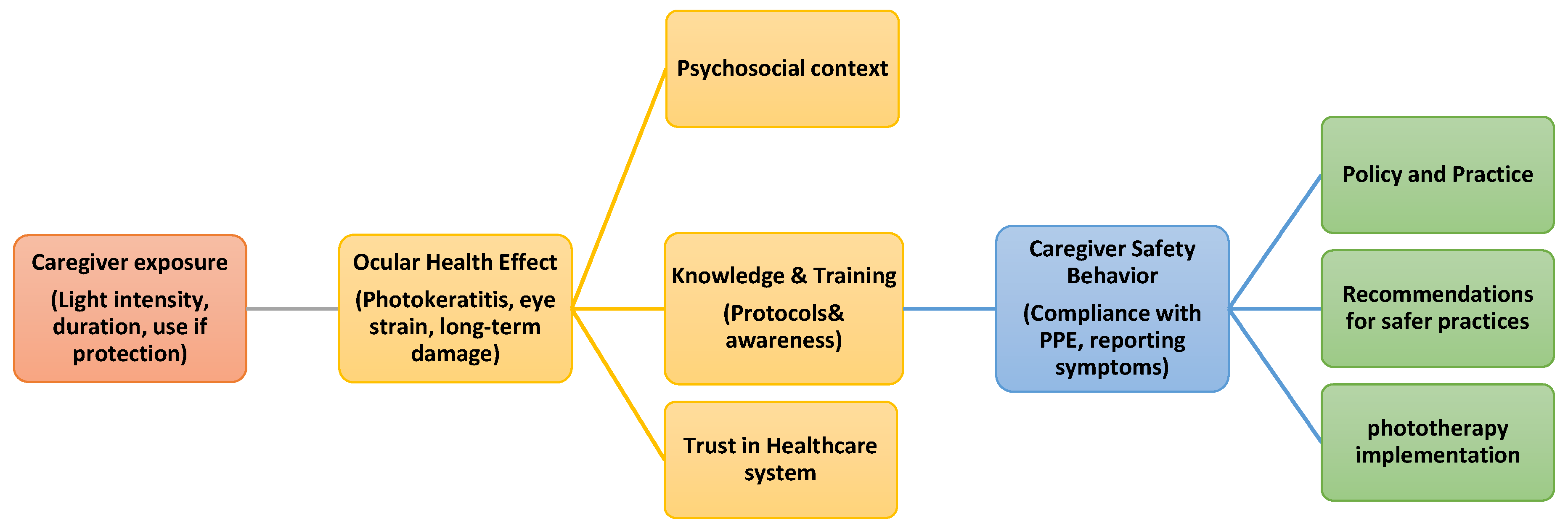
Table 1.
Ocular Symptoms and Exposure.
| Variable | Frequency (n = 200) | Percentage (%) |
|---|---|---|
| Reported at least one ocular symptom | 150 | 75% |
| Eye strain | 116 | 58% |
| Dryness/Irritation | 90 | 45% |
| Blurred vision | 56 | 28% |
| Photophobia | 42 | 21% |
| Exposure > 4 hours/day | 124 | 62% |
| Used protective gear (e.g., goggles) | 58 | 29% |
| Received formal safety training | 70 | 35% |
Table 2.
Statistical Associations between exposure factors and ocular symptom outcome.
| Exposure Factor | Outcome | Association |
| >4 hrs/day exposure | Eye strain & dryness | Significant (χ2, p = 0.012) |
| No protective gear | Increased photophobia & irritation | OR = 2.7 (95% CI: 1.8–3.9) |
| Received training | Lower risk of symptoms | 60% lower odds (p < 0.01) |
Disclaimer/Publisher’s Note: The statements, opinions and data contained in all publications are solely those of the individual author(s) and contributor(s) and not of MDPI and/or the editor(s). MDPI and/or the editor(s) disclaim responsibility for any injury to people or property resulting from any ideas, methods, instructions or products referred to in the content. |
© 2026 by the authors. Licensee MDPI, Basel, Switzerland. This article is an open access article distributed under the terms and conditions of the Creative Commons Attribution (CC BY) license (http://creativecommons.org/licenses/by/4.0/).
Copyright: This open access article is published under a Creative Commons CC BY 4.0 license, which permit the free download, distribution, and reuse, provided that the author and preprint are cited in any reuse.


