

Submitted:
19 January 2026
Posted:
19 January 2026
You are already at the latest version
Abstract
Androgenetic alopecia (AGA) is the most prevalent form of hair loss on a global scale. However, the current FDA-approved therapies, including minoxidil (MXD) and finasteride, are often limited by suboptimal follicular targeting, variable patient compliance, and systemic adverse effects. Recent advancements in nanotechnology have yielded promising strategies for the management of AGA. These strategies involve the delivery of drugs to specific follicles, the controlled release of drugs, and the modulation of the follicular microenvironment. Herein, we summarize recent progress in nanotechnology-based approaches for AGA treatment, with emphasis on the following: disease pathophysiology; nanocarrier design principles; nano-enabled microneedle systems; and multifunctional nanomaterials capable of regulating oxidative stress, angiogenesis, inflammation, as well as hair follicle stem cell activity. A discourse is also initiated on the subjects of safety considerations, manufacturing challenges, and regulatory perspectives that are pertinent to clinical translation. Overall, nanotechnology provides a versatile framework for addressing the key limitations of conventional AGA therapies and exhibits considerable potential for future clinical application.
Keywords:
nanotechnology
; hair regeneration
; androgenetic alopecia
1. Introduction
Hair follicles are highly dynamic and complex mini-organs embedded within the skin, characterized by a tightly orchestrated cyclical process consisting of growth (anagen), regression (catagen), and rest (telogen) phases [1,2,3,4,5]. This cyclic regeneration is governed by intricate interactions among epithelial cells, dermal papilla cells, surrounding mesenchymal tissues, immune components, and vascular networks. Precise temporal and spatial regulation of signaling pathways-including Wnt/β-catenin, Sonic hedgehog (Shh), transforming growth factor-β (TGF-β), and bone morphogenetic protein (BMP) signaling-is essential for maintaining normal hair follicle homeostasis and sustaining hair shaft production [6,7,8,9,10,11,12].
Disruption of this finely tuned hair cycle leads to a spectrum of alopecia disorders, among which androgenetic alopecia (AGA) represents the most prevalent and clinically significant form [13,14,15,16]. AGA is a chronic, progressive condition characterized by the gradual miniaturization of hair follicles, shortening of the anagen phase, and prolongation of telogen, ultimately resulting in thinner, shorter, and less pigmented hairs [14,17,18,19,20,21,22]. Epidemiological studies indicate that AGA affects more than 50% of men and a substantial proportion of women over the course of their lifetime, with incidence increasing with age and genetic predisposition [23,24,25]. Beyond its physical manifestations, AGA imposes considerable psychosocial burdens, including diminished self-esteem, increased anxiety, and reduced quality of life, underscoring the need for effective and well-tolerated therapeutic interventions.
Currently, conventional pharmacological management of AGA predominantly relies on topical minoxidil (MXD) and oral finasteride, both of which have received regulatory approval and are widely used in clinical practice [26,27,28,29]. MXD is thought to promote hair growth primarily through vasodilation, potassium channel activation, and indirect stimulation of dermal papilla cell function, whereas finasteride exerts its effects by inhibiting type II 5α-reductase, thereby reducing dihydrotestosterone (DHT) levels in the scalp [30,31,32]. Despite their established efficacy, clinical outcomes remain highly variable, and long-term treatment is often required to maintain therapeutic benefits [33,34].
Importantly, these conventional therapies suffer from several intrinsic limitations, including insufficient follicular bioavailability, rapid clearance from the scalp, and poor patient adherence due to frequent application or systemic exposure [29,35]. Topically applied drugs face formidable barriers such as the stratum corneum and uneven follicular penetration, while systemic administration of antiandrogens may lead to undesirable side effects that limit widespread acceptance [26,36]. Consequently, there exists a substantial unmet clinical need for innovative therapeutic strategies capable of achieving efficient, localized follicular targeting, sustained drug retention, and minimal off-target effects. Addressing these ch[26–29allenges has catalyzed growing interest in advanced drug delivery platforms-particularly nanotechnology-based approaches-as next-generation solutions for AGA treatment.
Nanotechnology offers unprecedented opportunities to overcome the formidable anatomical and physiological barriers presented by the skin and hair follicle, which have long limited the efficacy of conventional topical and systemic therapies [26,37,38,39,40,41]. The stratum corneum, complex extracellular matrix, and dynamic immune surveillance collectively restrict drug penetration and retention, resulting in suboptimal exposure of therapeutics at critical follicular compartments [42]. By contrast, nanoscale delivery systems can be rationally engineered with tunable size, surface charge, and chemical functionality to enhance penetration, prolong residence time, and achieve controlled release within the pilosebaceous unit [43,44,45,46].
Notably, the unique architecture of the hair follicle provides a privileged and biologically relevant gateway for nanomaterials. The follicular infundibulum and sebaceous duct function as a natural reservoir capable of selectively accumulating nanoparticles, thereby enabling localized drug storage and sustained delivery directly to the vicinity of dermal papilla cells and hair follicle stem cell niches [26,37,47]. This follicular targeting effect allows nanotechnology-based systems to bypass the stratum corneum barrier while minimizing systemic exposure, a critical advantage for long-term management of androgenetic alopecia [48,49,50,51,52]. Furthermore, the physicochemical properties of nanomaterials can be tailored to exploit follicle-specific features such as sebum affinity, cyclic hair movement, and size-dependent penetration, collectively enhancing therapeutic precision.
Beyond serving as passive carriers, emerging nanotechnology-enabled platforms increasingly function as active modulators of the follicular microenvironment [37,53,54,55,56]. Advanced nanomaterials have been designed to regulate oxidative stress, promote angiogenesis, modulate inflammatory responses, and activate hair follicle stem cells, thereby addressing multiple pathogenic drivers of AGA simultaneously [17,53,56,57,58,59,60]. Such multifunctional capabilities distinguish nanotechnology-based approaches from traditional formulations and align with the growing recognition that effective hair regeneration requires coordinated modulation of both cellular and microenvironmental cues.
Herein, we present current knowledge and emerging trends in nanotechnology-based strategies for hair regeneration, with a particular emphasis on AGA. We critically examine nanocarrier design principles, follicular targeting mechanisms, and nano-enabled therapeutic modalities, while highlighting mechanistic insights and translational challenges. By integrating recent experimental advances with clinical perspectives, this review aims to provide a comprehensive framework for the rational development of next-generation nanotechnology-enabled therapies for AGA.
2. Pathophysiology of AGA
The pathogenesis of AGA is multifactorial, involving genetic susceptibility, androgen signaling, chronic inflammation, oxidative stress, and microvascular impairment [19,61,62,63,64]. Central to AGA progression is DHT, which binds androgen receptors in dermal papilla cells and induces transcriptional programs that suppress Wnt/β-catenin signaling and anagen maintenance [14,15,65].
Figure 1.
Schematic illustration of hair follicle anatomy and pathological alterations in AGA.
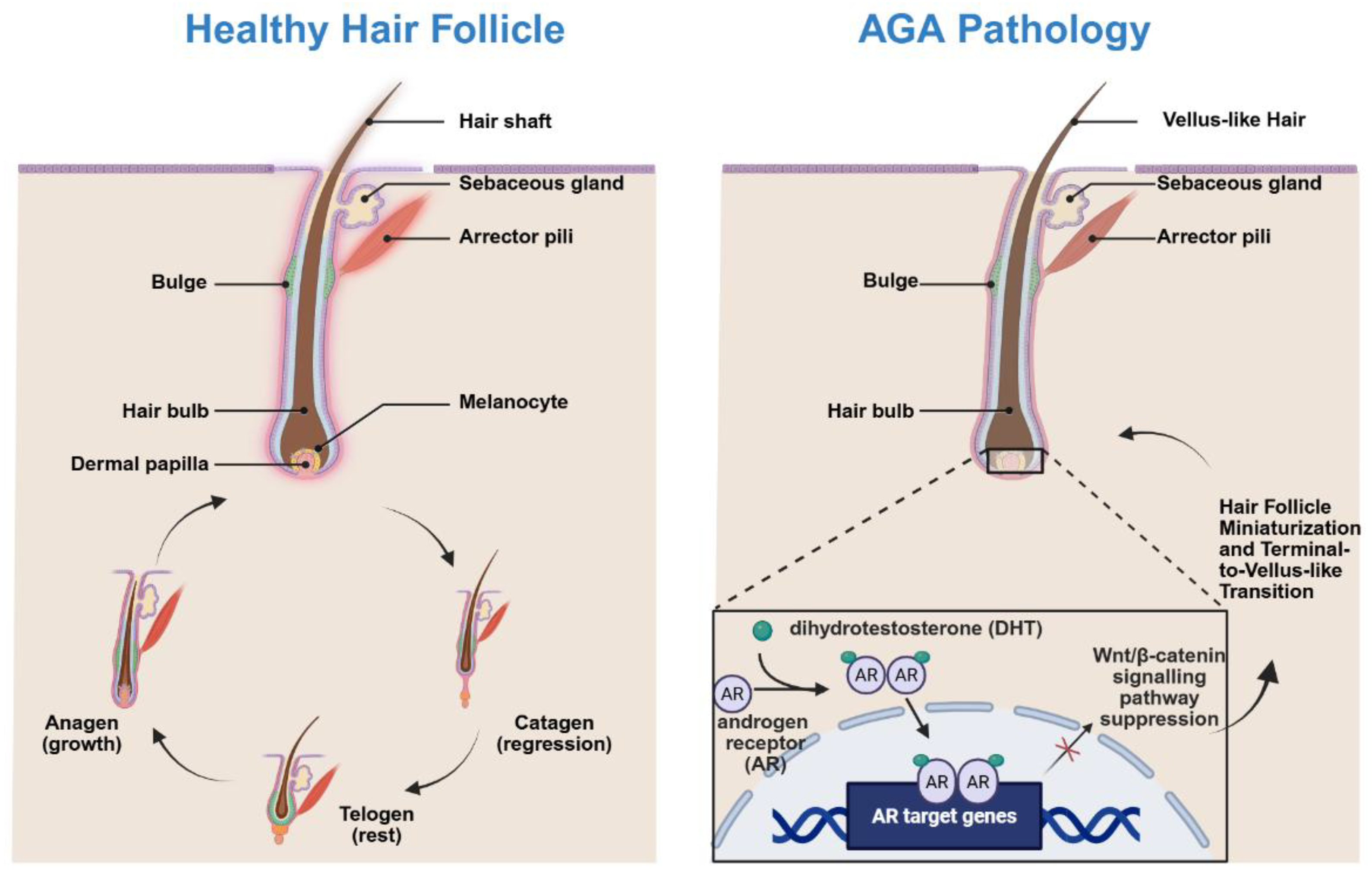
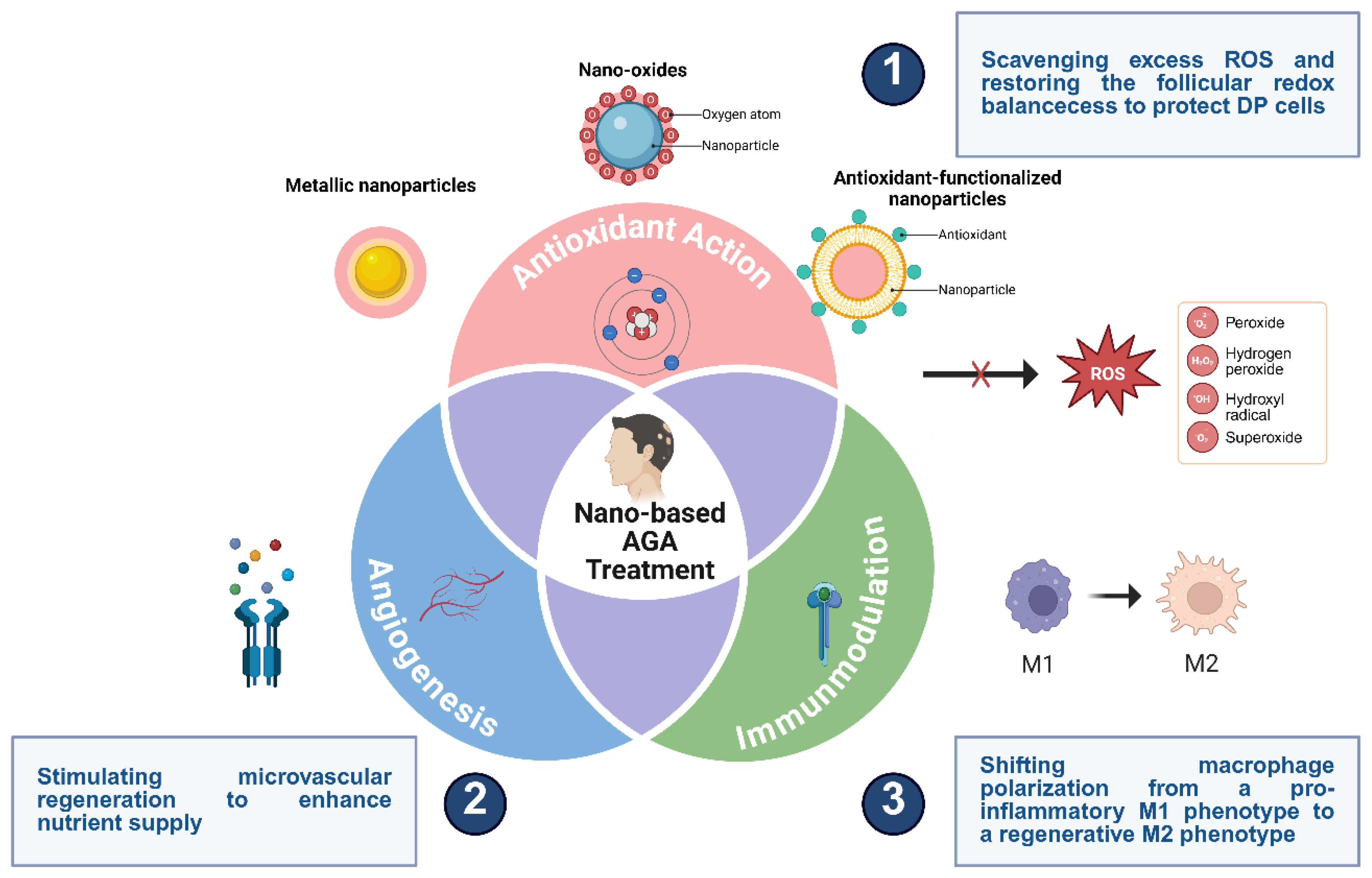
Beyond androgen signaling, increasing evidence highlights the contribution of perifollicular inflammation, elevated reactive oxygen species (ROS), and impaired angiogenesis to follicular miniaturization [19,59,66,67,68]. Oxidative stress accelerates cellular senescence within dermal papilla cells and disrupts hair follicle stem cell niches. These insights underscore the necessity for multifunctional therapeutic approaches capable of simultaneously modulating multiple pathological pathways [69,70].
3. Nanocarrier-Based Drug Delivery Systems for AGA
Nanocarrier systems have been extensively explored to enhance the follicular delivery and therapeutic efficacy of AGA drugs [26,36,48,49,55,71,72]. Polymeric nanoparticles, lipid-based carriers, nanocrystals, and inorganic nanomaterials represent the major classes investigated to date [37,45,50,53,73,74,75,76].
Polymeric nanoparticles fabricated from PLGA, chitosan, or hyaluronic acid improve drug stability and enable sustained release within hair follicles [77]. Lipid nanoparticles and nanoemulsions enhance skin penetration and follicular retention through sebum affinity [39,78]. Drug nanocrystals maximize loading capacity and dissolution rates, allowing dose reduction and improved patient compliance [79,80]. Collectively, these nanocarriers significantly outperform conventional formulations in follicular targeting efficiency [36,78,79,81,82,83,84].
Figure 2.
Classification of nanocarrier systems for AGA treatment and follicular targeting mechanisms.
Figure 2.
Classification of nanocarrier systems for AGA treatment and follicular targeting mechanisms.
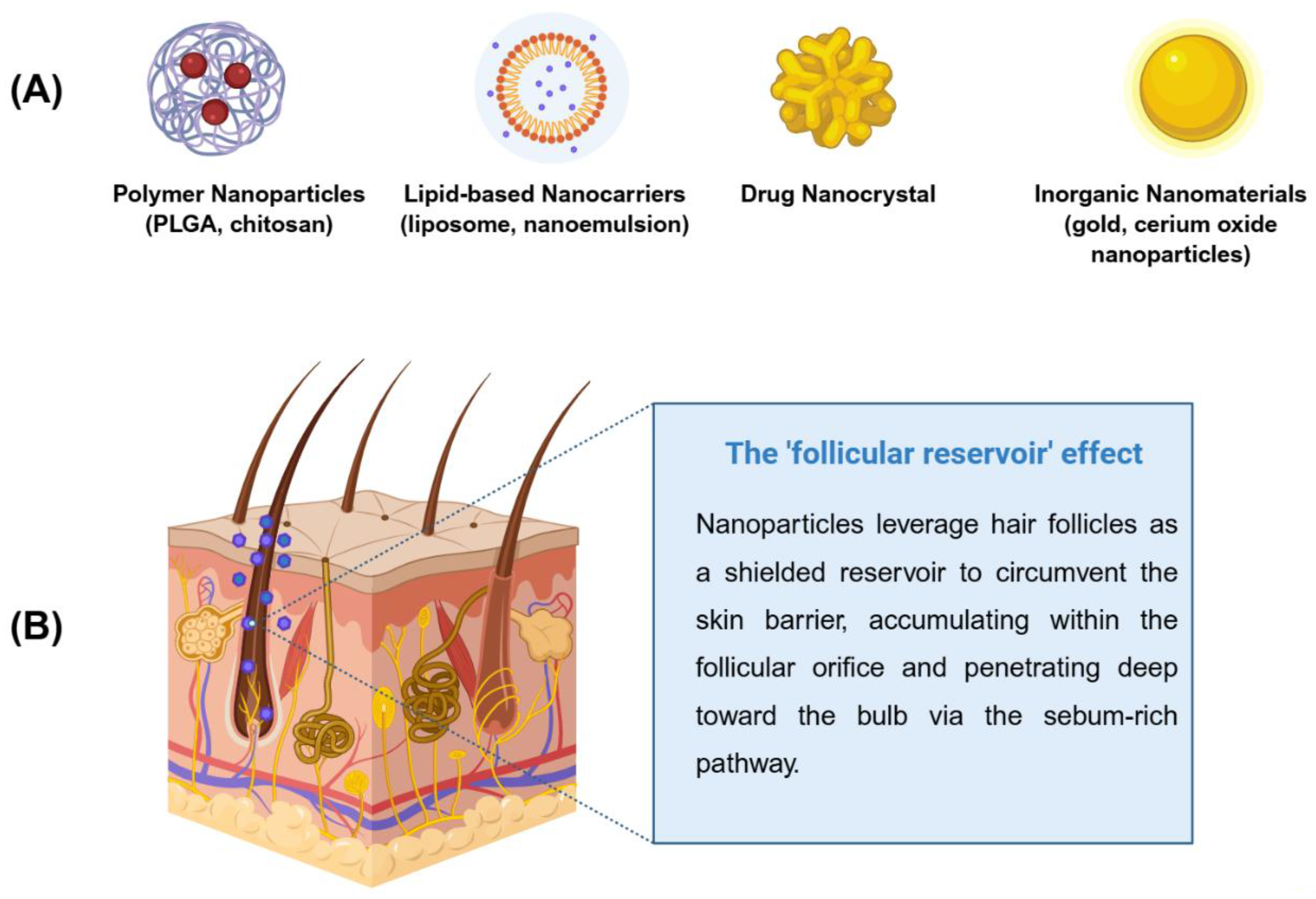

Table 1.
Representative nanocarrier systems for AGA treatment.
| Nanocarrier Class | Example Materials | Therapeutic Mechanism / Drug Delivered | Key Advantages for AGA |
|---|---|---|---|
| Polymeric Nanoparticles | PLGA, Chitosan, PCL | Encapsulation of Finasteride, Minoxidil, or growth factors. | Provides sustained drug release; protects unstable biomolecules; reduces dosing frequency. |
| Lipid-based Carriers | Liposomes, Ethosomes, Nanoemulsions | Delivery of hydrophobic drugs; targeted to the sebaceous gland. | High affinity for follicular sebum; enhances skin penetration; biocompatible and low toxicity. |
| Drug Nanocrystals | Pure drug crystals with stabilizers (PVP, SDS) | High-dose delivery of poorly soluble compounds. | Maximizes drug loading capacity; improves dissolution rates; allows for dose reduction. |
| Inorganic Nanomaterials | Gold (Au) NPs, Ceria (CeO2) NPs, Mesoporous Silica | Ceria nanozymes for ROS scavenging; Gold NPs for photothermal or delivery. | Intrinsic antioxidant and pro-angiogenic activities; high surface-to-volume ratio for functionalization. |
| Exosomes / EVs | Mesenchymal stem cell-derived exosomes | Delivery of regenerative mi-RNAs and proteins to Dermal Papilla cells. | Highly biomimetic; low immunogenicity; promotes Wnt/β-catenin signaling directly. |
Figure 3.
Nano-enabled modulation of oxidative stress, angiogenesis, and inflammation in the follicular microenvironment.
Figure 3.
Nano-enabled modulation of oxidative stress, angiogenesis, and inflammation in the follicular microenvironment.
4. Nano-Enabled Microneedle Systems for Transdermal Follicular Delivery
Microneedle (MN) technology provides a minimally invasive approach to bypass the stratum corneum and directly access follicular and dermal compartments [85,86,87,88,89]. The integration of nanotechnology into MN systems has further expanded their functional capabilities.
Figure 4.
Design and working principles of nano-enabled microneedle systems.
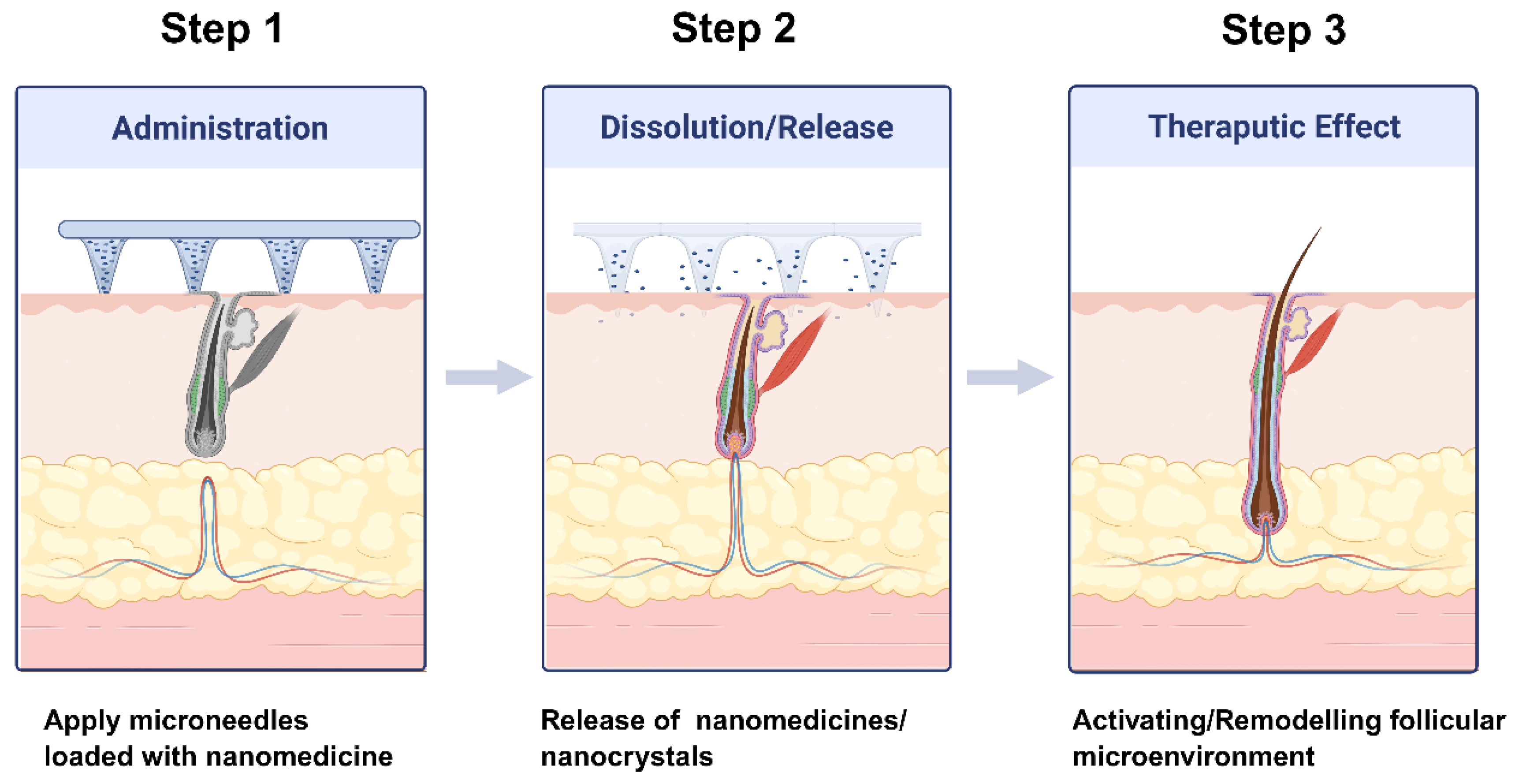
Dissolving MNs loaded with drug nanocrystals or nanoparticles enable precise dosing and sustained release. Advanced designs incorporating nanozymes or growth factor-loaded nanoparticles actively regulate oxidative stress, angiogenesis, and inflammation [90,91,92]. Such multifunctional MN systems have demonstrated superior hair regrowth efficacy in preclinical AGA models compared with conventional topical therapies. For instance, Zhang et al. reported a machine learning-guided identification of a highly efficient MnPS₃-based SOD mimic and its microneedle patch for the treatment of androgenetic alopecia, which alleviates oxidative stress in hair follicles and promotes superior hair regeneration compared with minoxidil at a reduced application frequency [90]. More recently, Xing et al. developed a near-infrared light-triggered nitric oxide (NO)-releasing hyaluronic acid hydrogel (Gel@L-Arg) that enables on-demand NO generation to promote angiogenesis, repair dermal papilla cells, regulate inflammation and androgens, and effectively treat AGA [92].
5. Nano-Enabled Remodeling of the Hair Follicle Microenvironment
Hair regeneration is critically dependent on the follicular microenvironment, including redox balance, vascular support, immune status, as well as stem cell activity [93,94,95,96]. Beyond acting as passive carriers, some nanomaterials also possess the capability to actively remodel the local microenvironment [60].
Previous studies have demonstrated that antioxidant nanomaterials, such as polydopamine nanoparticles and ceria nanozymes, effectively scavenge excess ROS and restore redox homeostasis [56]. Pro-angiogenic nanocarriers delivering VEGF or exhibiting intrinsic angiogenic activity enhance perifollicular blood supply. Additionally, nanomaterials modulating macrophage polarization and inflammatory signaling contribute to a regenerative follicular niche conducive to sustained hair growth. Yang et al reported that a quercetin-encapsulated and polydopamine-integrated nanosystem (PDA@QLipo) was developed to remodel the perifollicular microenvironment and initiate hair follicle regeneration for AGA treatment. PDA@QLipo exhibits dual functions of ROS scavenging and angiogenesis promotion. In vivo, roller-microneedle-assisted delivery effectively rejuvenated the compromised perifollicular niche, enhancing cell proliferation, accelerating follicle renewal, and restoring hair growth. Notably, PDA@QLipo achieved a higher hair regeneration coverage (92.5%) than MXD (87.8%) with reduced dosing frequency, highlighting its potential for clinical AGA therapy [56]. More recently, a dissolvable microneedle system co-loaded with nickel-copper nanozymes with demonstrated remarkable SOD-like and CAT-like activities and MXD synergistically remodels the hair follicle microenvironment via ROS scavenging and mechanostimulation-enhanced angiogenesis, achieving superior hair regeneration and vascularization compared with MXD alone [60]. In AGA mouse models, this system enhanced hair regeneration coverage to 93.7% (vs 85.1% for MXD alone), increased Ki67+ cell proliferation by 1.9-fold, and significantly thickened regenerated hair diameter. Additionally, this system reduced ROS levels by 2.3-fold and increased CD31+ vascular density by 40%, markedly improving the microenvironment.
6. Safety, Toxicity, and Regulatory Considerations
The clinical translation of nanotechnology-based AGA therapies necessitates rigorous safety and toxicity evaluation [97,98]. Key considerations include nanoparticle size, surface chemistry, biodegradability, and long-term skin exposure [99].
Notwithstanding the encouraging therapeutic potential of nanotechnology-based approaches for hair regeneration, it is imperative to meticulously evaluate the associated risks and uncertainties prior to the extensive clinical implementation of such methods. Although most extant studies report favorable short-term biocompatibility, the long-term safety of repeated or chronic exposure to nanomaterials in the scalp environment remains incompletely understood, particularly with respect to nanoparticle accumulation, immunogenicity, and potential off-target interactions. Furthermore, the presence of variability in nanomaterial composition, manufacturing processes, and formulation parameters has the potential to introduce challenges in terms of reproducibility and quality control, thereby complicating regulatory evaluation. These factors underscore the imperative for standardized characterization protocols, rigorous long-term toxicological studies, and well-defined regulatory pathways. It is imperative that these risks are addressed through systematic preclinical validation and interdisciplinary collaboration in order to ensure the safe, reliable and sustainable clinical translation of nanotechnology-enabled therapies for AGA.
7. Clinical Translation and Future Perspectives
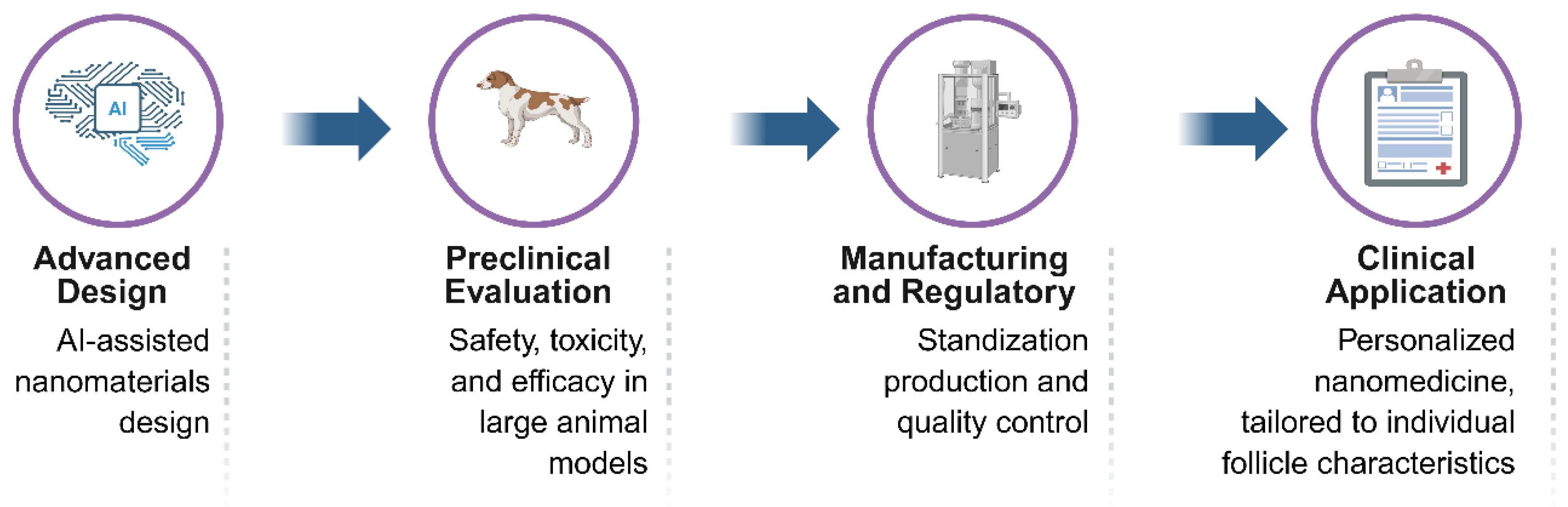
Despite encouraging preclinical outcomes, relatively few nano-enabled hair regeneration therapies have advanced to clinical trials. Challenges include scalable manufacturing, cost-effectiveness, and regulatory complexity. Future research is expected to focus on stimuli-responsive nanomaterials, integration with wearable or light-activated devices, and AI-assisted nanomaterial design. Personalized nanomedicine approaches tailored to individual follicular characteristics may further enhance therapeutic outcomes and patient satisfaction.
Table 2.
Translational status and challenges of nano-enabled AGA therapies.
| Translational Aspect | Current Status & Challenges | Proposed Future Directions |
|---|---|---|
| Safety & Toxicology | Potential for long-term accumulation of non-biodegradable NPs in the skin; limited systemic toxicity data. | Extensive chronic toxicity studies and use of biodegradable, “green” nanomaterials. |
| Manufacturing Scale-up | Batch-to-batch variability; high cost of specialized equipment for complex nanostructures. | Development of microfluidic-based synthesis and standardized manufacturing protocols (GMP). |
| Regulatory Hurdles | Lack of specific FDA/EMA guidelines for “nano-cosmeceuticals” and complex delivery systems. | Harmonization of international testing standards; close collaboration with regulatory agencies. |
| Clinical Validation | Most data derived from rodent models; human scalp skin thickness and follicle density differ. | Use of 3D-printed human skin models and humanized mice for more accurate preclinical screening. |
| Patient Compliance | High frequency of application for topical nanosystems; cost of microneedle-based therapies. | Designing long-acting (e.g., monthly) delivery platforms and low-cost MN manufacturing techniques. |
Figure 5.
Translational roadmap for nanotechnology-enabled hair regeneration therapies.
8. Conclusions
Nanotechnology has emerged as a promising strategy for AGA by enabling follicle-targeted delivery, controlled drug release, and modulation of the follicular microenvironment. By overcoming the anatomical and physiological barriers of the skin and pilosebaceous unit, nano-enabled systems enhance the local bioavailability of therapeutics while reducing systemic exposure and off-target effects. Importantly, these platforms not only improve the performance of established agents such as MXD and finasteride but also provide opportunities to address key pathogenic processes in AGA, including oxidative stress, inflammation, impaired angiogenesis, and hair follicle stem cell dysfunction.
Despite substantial experimental progress, the clinical translation of nanotechnology-based AGA therapies remains contingent upon addressing several critical challenges. Long-term safety, scalable and standardized manufacturing, regulatory harmonization, and patient compliance require systematic evaluation. Continued interdisciplinary collaboration and rational nanomaterial design guided by mechanistic insight will be essential to advance these technologies toward clinical adoption, positioning nanomedicine as a viable next-generation approach for AGA management.
References
- Geyfman, M.; et al. Resting no more: re-defining telogen, the maintenance stage of the hair growth cycle. 2015, 90(4), 1179–1196. [Google Scholar] [CrossRef]
- Al-Nuaimi, Y.; et al. The cycling hair follicle as an ideal systems biology research model. 2010, 19(8), 707–713. [Google Scholar] [CrossRef]
- Oh, J.W.; et al. A guide to studying human hair follicle cycling in vivo. 2016, 136(1), 34–44. [Google Scholar] [CrossRef]
- Houschyar, K.S.; et al. Molecular mechanisms of hair growth and regeneration: current understanding and novel paradigms. 2020, 236(4), 271–280. [Google Scholar] [CrossRef]
- O’Sullivan, J.D.; et al. The biology of human hair greying. 2021, 96(1), 107–128.
- Xue, C.; et al. Wnt signaling pathways in biology and disease: mechanisms and therapeutic advances. 2025, 10(1), 106. [Google Scholar] [CrossRef]
- Zhu, S.; et al. Cell signaling and transcriptional regulation of osteoblast lineage commitment, differentiation, bone formation, and homeostasis. 2024, 10(1), 71. [Google Scholar] [CrossRef]
- Wu, M.; Chen, G.; Li, Y.-P.J.B.r. TGF-β and BMP signaling in osteoblast, skeletal development, and bone formation, homeostasis and disease. 2016, 4(1), 1–21. [Google Scholar] [PubMed]
- Abe, Y.; Tanaka, N.J.J.o.d.b. Roles of the hedgehog signaling pathway in epidermal and hair follicle development, homeostasis, and cancer. 2017, 5(4), 12. [Google Scholar]
- Wang, X.; et al. Regulation of signaling pathways in hair follicle stem cells. 2022, 10. [Google Scholar] [CrossRef] [PubMed]
- Hwang, S.B.; Park, H.J.; Lee, B.-H.J.I.j.o.m.s. Hair-growth-promoting effects of the fish collagen peptide in human dermal papilla cells and C57BL/6 mice modulating Wnt/β-catenin and BMP signaling pathways. 2022, 23(19), 11904. [Google Scholar]
- Park, S.; Lee, J.J.P. Modulation of hair growth promoting effect by natural products. 2021, 13(12), 2163. [Google Scholar] [CrossRef]
- Liu, Y.; et al. Androgenetic alopecia. 2025, 11(1), 73.
- Oiwoh, S.O.; et al. Androgenetic alopecia: A review. 2024, 31(2), 85–92.
- Ntshingila, S.; et al. Androgenetic alopecia: An update. 2023, 13, 150–158.
- Altendorf, S.; et al. Frontiers in the physiology of male pattern androgenetic alopecia: Beyond the androgen horizon. 2026, 106(1), 121–195. [Google Scholar] [CrossRef]
- Pozo-Pérez, L.; et al. Clinical and preclinical approach in AGA treatment: a review of current and new therapies in the regenerative field. 2024, 15(1), 260. [Google Scholar] [CrossRef] [PubMed]
- Abdelkader, A.; et al. Androgenetic alopecia: an overview. 2024, 9(2), 37–50.
- Katzer, T.; et al. Physiopathology and current treatments of androgenetic alopecia: going beyond androgens and anti-androgens. 2019, 32(5), e13059. [Google Scholar] [CrossRef]
- Kidangazhiathmana, A.; Santhosh, P.J.C.D.R. Pathogenesis of androgenetic alopecia. 2022, 6(2), 69–74.
- Ovcharenko, Y.; Khobzei, K.; Lortkipanidze, N. Androgenetic alopecia, in Psychotrichology: Psychiatric and Psychosocial Aspects of Hair Diseases; Springer, 2025; pp. 137–170. [Google Scholar]
- McElwee, K.J.; Sundberg, J.P.J.E.O.o.D.D. Innovative strategies for the discovery of new drugs against androgenetic alopecia. 2025, 20(4), 517–536. [Google Scholar]
- Gupta, S.; Goyal, I.; Mahendra, A.J.I.j.o.t. Quality of life assessment in patients with androgenetic alopecia. 2019, 11(4), 147–152. [Google Scholar]
- Han, S.-H.; et al. Quality of life assessment in male patients with androgenetic alopecia: result of a prospective, multicenter study. 2012, 24(3), 311. [Google Scholar] [CrossRef]
- Huang, C.-H.; Fu, Y.; Chi, C.-C.J.J.d. Health-related quality of life, depression, and self-esteem in patients with androgenetic alopecia: a systematic review and meta-analysis. 2021, 157(8), 963–970. [Google Scholar]
- Tampucci, S.; et al. Nanostructured drug delivery systems for targeting 5-α-reductase inhibitors to the hair follicle. 2022, 14(2), 286. [Google Scholar] [CrossRef]
- Nobari, N.N.; et al. A systematic review of clinical trials using single or combination therapy of oral or topical finasteride for women in reproductive age and postmenopausal women with hormonal and nonhormonal androgenetic alopecia. 2023, 32(7), 813–823. [Google Scholar] [CrossRef]
- Gentile, P.; Garcovich, S.J.I.j.o.m.s. Systematic review of platelet-rich plasma use in androgenetic alopecia compared with Minoxidil®, Finasteride®, and adult stem cell-based therapy. 2020, 21(8), 2702. [Google Scholar] [CrossRef]
- Nestor, M.S.; et al. Treatment options for androgenetic alopecia: Efficacy, side effects, compliance, financial considerations, and ethics. 2021, 20(12), 3759–3781. [Google Scholar] [CrossRef] [PubMed]
- Messenger, A.; Rundegren, J.J.B.j.o.d. Minoxidil: mechanisms of action on hair growth. 2004, 150(2), 186–194. [Google Scholar]
- York, K.; et al. A review of the treatment of male pattern hair loss. 2020, 21(5), 603–612. [Google Scholar] [CrossRef]
- Gupta, A.K.; Talukder, M.; Williams, G.J.J.o.D.T. Comparison of oral minoxidil, finasteride, and dutasteride for treating androgenetic alopecia. 2022, 33(7), 2946–2962. [Google Scholar] [CrossRef]
- Kuca, M.; et al. Risk associated with the use of 5-alpha reductase inhibitors with minoxidil in treatment of male androgenetic alopecia-literature review. 2025, 19(1). [Google Scholar] [CrossRef]
- Chen, S.; et al. Androgenetic Alopecia: An Update on Pathogenesis and Pharmacological Treatment 2025, 7349–7363.
- Lee, S.W.; et al. A systematic review of topical finasteride in the treatment of androgenetic alopecia in men and women. 2018, 17(4), 457. [Google Scholar]
- Rane, B.R.; et al. Follicular Delivery of Nanocarriers to Improve Skin Disease Treatment, in Novel Nanocarriers for Skin Diseases; Apple Academic Press, 2025; pp. 209–237. [Google Scholar]
- Fang, C.-L.; et al. Delivery and targeting of nanoparticles into hair follicles. 2014, 5(9), 991–1006. [Google Scholar] [CrossRef] [PubMed]
- Cevc, G.; Vierl, U.J.J.o.c.r. Nanotechnology and the transdermal route: A state of the art review and critical appraisal. 2010, 141(3), 277–299. [Google Scholar] [PubMed]
- Rancan, F.; et al. Hair follicle targeting with nanoparticles, in Nanotechnology in dermatology; Springer, 2012; pp. 95–107. [Google Scholar]
- Hamblin, M.R.; Avci, P.; Prow, T. Nanoscience in dermatology; Academic Press, 2016. [Google Scholar]
- Pereira-Silva, M.; et al. Nanomaterials in Hair Care and Treatment: Current Advances and Future Perspectives.
- Brito, S.; Baek, M.; Bin, B.-H.J.P. Skin structure, physiology, and pathology in topical and transdermal drug delivery. 2024, 16(11), 1403. [Google Scholar]
- Giradkar, V.; et al. Nanocrystals: a multifaceted regimen for dermatological ailments. 2024, 41(6), 2300147. [Google Scholar] [CrossRef]
- Liu, L.; et al. Functional nano-systems for transdermal drug delivery and skin therapy. 2023, 5(6), 1527–1558. [Google Scholar] [CrossRef]
- Ramkar, S.; et al. Nano-lipidic carriers as a tool for drug targeting to the pilosebaceous units. 2020, 26(27), 3251–3268. [Google Scholar] [CrossRef]
- Parga, A.; Ray, B.J.I.J.N.N. Advances in Nanocarrier Systems for Dermatologic Transdermal Drug Delivery: A Chemical and Molecular Review. 2025, 10(1), 01–12. [Google Scholar]
- Mathes, C. Drug delivery to the hair follicle: role of follicular tight junctions as a biological barrier and the potential for targeting clobetasol nanocarriers. 2015. [Google Scholar]
- Shaikh, Z.S.A.; et al. Nanotechnology-based strategies for hair follicle regeneration in androgenetic alopecia. 2023, 14(1), 57. [Google Scholar]
- KAYAL, P.; et al. NANOCARRIER-BASED APPROACHES FOR ENHANCED MANAGEMENT OF ANDROGENETIC ALOPECIA: ADVANCEMENTS AND FUTURE PROSPECTS. 2025, 17(3), 13–27. [Google Scholar] [CrossRef]
- Wu, X.; Du, Y.-z.J.M.P. Nanodrug delivery strategies to signaling pathways in alopecia. 2023, 20(11), 5396–5415. [Google Scholar]
- Bambale, P.G.; Lewade, V.; Daundkar, S. Exploring Novel Treatments for Alopecia: Nanoparticles, Iontophoresis, and Cell Therapy. 2025. [Google Scholar]
- Ribeiro, M.D. Nanotechnology-Based Therapeutics Strategies Towards the Topical Treatment of Hair Loss; Universidade de Coimbra (Portugal), 2020. [Google Scholar]
- Diao, R.; et al. Novel Strategies for Androgenetic Alopecia Therapy: Integrating Multifunctional Plant Extracts with Nanotechnology for Advanced Cutaneous Drug Delivery. 2025, 17(9), 1220. [Google Scholar] [CrossRef]
- Xu, S.; et al. Advances in Transdermal Delivery Systems for Treating Androgenetic Alopecia. 2025, 17(8), 984. [Google Scholar] [CrossRef]
- Andrade, J.F.; et al. An update on nanocarriers for follicular-targeted drug delivery for androgenetic alopecia topical treatment. 2025, 22(3), 367–381. [Google Scholar] [CrossRef]
- Yang, W.; et al. Polydopamine synergizes with quercetin nanosystem to reshape the perifollicular microenvironment for accelerating hair regrowth in androgenetic alopecia. 2024, 24(20), 6174–6182. [Google Scholar] [CrossRef]
- Khalilzad, M.A.; et al. Elevating Dermatology Beyond Aesthetics: Perinatal-Derived Advancements for Rejuvenation, Alopecia Strategies, Scar Therapies, and Progressive Wound Healing. 2025, 21(3), 709–729. [Google Scholar] [CrossRef]
- Çelik, H.; Bal-Öztürk, A.J.B. Tissue Engineering and Nanoparticle-Based Approaches for Hair Follicle Regeneration. 2025, 15(2), 1–19. [Google Scholar] [CrossRef]
- Dong, T.-r.; et al. Progress on mitochondria and hair follicle development in androgenetic alopecia: relationships and therapeutic perspectives. 2025, 16(1), 44. [Google Scholar] [CrossRef] [PubMed]
- Wang, B.; et al. Ni–Cu Bimetallic Nanozyme and Minoxidil Co-Loaded Dissolving Microneedles Reshape Hair Follicle Microenvironment for Androgenic Alopecia Treatment. 2025, 8(18), 9502–9514. [Google Scholar] [CrossRef]
- Stough, D.; et al. Psychological effect, pathophysiology, and management of androgenetic alopecia in men. in Mayo Clinic Proceedings. Elsevier, 2005. [Google Scholar]
- Lolli, F.; et al. Androgenetic alopecia: a review. 2017, 57(1), 9–17.
- Kaliyadan, F.; et al. Androgenetic alopecia: an update. 2013, 79, 613.
- Kabir, Y.; Goh, C.J.J.o.t.E.W.s.D.S. Androgenetic alopecia: update on epidemiology, pathophysiology, and treatment. 2013, 10(3), 107–116. [Google Scholar]
- Trüeb, R.M.J.E.g. Molecular mechanisms of androgenetic alopecia. 2002, 37(8-9), 981–990. [Google Scholar]
- Xiao, Y.; et al. Immune and Non-immune Interactions in the Pathogenesis of Androgenetic Alopecia. 2025, 68(1), 22. [Google Scholar] [CrossRef]
- Eunmiri, R.J.C. Advancements in Bioactive Compounds and Therapeutic Agents for Alopecia: Trends and Future Perspectives. 2025, 12(6), 287. [Google Scholar]
- Shi, H.; et al. Pathogenic Mechanisms and Mechanism-Directed Therapies for Androgenetic Alopecia: Current Understanding and Future Directions. 2025, 2025(1), 9950475. [Google Scholar] [CrossRef]
- Bi, D.; et al. The regulatory mechanisms of mitophagy and oxidative stress in androgenetic alopecia; 2025; p. 111862. [Google Scholar]
- Zhou, D.; et al. Advances in research on concentrated growth factor applications for androgenetic alopecia treatment: A review. 2025, 31, e948054. [Google Scholar] [CrossRef]
- Khairnar, T.D.; et al. Recent trends in nanocarrier formulations of actives beyond minoxidil and 5-α reductase inhibitors in androgenetic alopecia management: A systematic review. 2024, 98, 105890. [Google Scholar] [CrossRef]
- Patzelt, A.; Lademann, J.J.E.o.o.d.d. Recent advances in follicular drug delivery of nanoparticles . 2020, 17(1), 49–60. [Google Scholar]
- Raut, S.Y.; et al. Engineered Nano-carrier systems for the oral targeted delivery of follicle stimulating Hormone: Development, characterization, and, assessment of in vitro and in vivo performance and targetability. 2023; 637, p. 122868.
- Qi, F.; et al. Plant Nanovesicles Integrate Bioactivity and Transdermal Finasteride Delivery for Androgenetic Alopecia. 2025. [Google Scholar] [CrossRef] [PubMed]
- Santos, A.C.; et al. Topical minoxidil-loaded nanotechnology strategies for alopecia. 2020, 7(2), 21. [Google Scholar] [CrossRef]
- Qu, F.; et al. Advanced nanocarrier-and microneedle-based transdermal drug delivery strategies for skin diseases treatment. 2022, 12(7), 3372. [Google Scholar] [CrossRef]
- Saleem, K.; et al. Minoxidil Nano-hydrogel Based on Chitosan and Hyaluronic Acid for Potential Treatment of Androgenic Alopecia. 2025, 15(2), 1–13. [Google Scholar] [CrossRef]
- Abd, E.; et al. Follicular penetration of caffeine from topically applied nanoemulsion formulations containing penetration enhancers: in vitro human skin studies. 2018, 31(5), 252–260. [Google Scholar] [CrossRef]
- Madawi, E.A.; et al. Polymeric nanoparticles as tunable nanocarriers for targeted delivery of drugs to skin tissues for treatment of topical skin diseases. 2023, 15(2), 657. [Google Scholar] [CrossRef]
- Jeong, W.Y.; et al. Transdermal delivery of Minoxidil using HA-PLGA nanoparticles for the treatment in alopecia. 2019, 23(1), 16. [Google Scholar] [CrossRef]
- Zhang, Z.; et al. Polymeric nanoparticles-based topical delivery systems for the treatment of dermatological diseases. 2013, 5(3), 205–218. [Google Scholar] [CrossRef]
- Matos, B.N.; et al. Chitosan nanoparticles for targeting and sustaining minoxidil sulphate delivery to hair follicles. 2015, 75, 225–229. [Google Scholar] [CrossRef]
- Kim, H.S.; et al. Poly (γ-glutamic acid)/chitosan hydrogel nanoparticles for effective preservation and delivery of fermented herbal extract for enlarging hair bulb and enhancing hair growth 2019, 8409–8419.
- Lok, K.-H.; et al. Topical and transdermal lipid-polymer hybrid nanoparticles (LPN): an integration in advancing dermatological treatments. 2025, 15(11), 4277–4313. [Google Scholar] [CrossRef] [PubMed]
- Qu, F.; et al. Advanced nanocarrier-and microneedle-based transdermal drug delivery strategies for skin diseases treatment. 2022, 12(7), 3372. [Google Scholar] [CrossRef] [PubMed]
- Kulkarni, D.; et al. Recent advancements in microneedle technology for multifaceted biomedical applications. 2022, 14(5), 1097. [Google Scholar] [CrossRef]
- Guillot, A.J.; et al. Microneedle-assisted transdermal delivery of nanoparticles: Recent insights and prospects. 2023, 15(4), e1884. [Google Scholar] [CrossRef]
- McCrudden, M.T.; et al. Microneedle applications in improving skin appearance. 2015, 24(8), 561–566. [Google Scholar] [CrossRef] [PubMed]
- Pitzanti, G. Lipid nanocarriers and 3D printed hollow microneedles as strategies to promote drug delivery via the skin. 2021. [Google Scholar]
- Zhang, C.; et al. Machine learning guided discovery of superoxide dismutase nanozymes for androgenetic alopecia. 2022, 22(21), 8592–8600. [Google Scholar] [CrossRef]
- Pokale, R.; et al. Focused Review on Metal Nanoparticles in Hair Regeneration and Alopecia: Insights into Mechanisms, Assessment Techniques, Toxicity, Regulatory and Intellectual Property Perspectives: R. Pokale et al. 2025, 36(4), 129. [Google Scholar] [CrossRef]
- Xing, H.; et al. Near-infrared light-triggered nitric oxide-releasing hyaluronic acid hydrogel for precision transdermal therapy of androgenic alopecia. 2025, 304, 140751. [Google Scholar] [CrossRef] [PubMed]
- Chen, C.-L.; et al. Functional complexity of hair follicle stem cell niche and therapeutic targeting of niche dysfunction for hair regeneration. 2020, 27(1), 43. [Google Scholar] [CrossRef] [PubMed]
- Wu, W.; et al. Environmental regulation of skin pigmentation and hair regeneration; Mary Ann Liebert, Inc.: publishers 140 Huguenot Street, 3rd Floor New …, 2022; pp. 91–96. [Google Scholar]
- Ji, S.; et al. Functional hair follicle regeneration: an updated review. 2021, 6(1), 66. [Google Scholar] [CrossRef] [PubMed]
- Chueh, S.-C.; et al. Therapeutic strategy for hair regeneration: hair cycle activation, niche environment modulation, wound-induced follicle neogenesis, and stem cell engineering. 2013, 13(3), 377–391. [Google Scholar] [CrossRef]
- Nasir, A.J.C.i.D. Nanotechnology and dermatology: Part II—risks of nanotechnology. 2010, 28(5), 581–588. [Google Scholar]
- Andrade, S.S.; et al. Hurdles in translating science from lab to market in delivery systems for Cosmetics: An industrial perspective. 2024; 205, p. 115156.
- De, R.; Mahata, M.K.; Kim, K.T.J.A.S. Structure-based varieties of polymeric nanocarriers and influences of their physicochemical properties on drug delivery profiles. 2022, 9(10), 2105373. [Google Scholar] [CrossRef] [PubMed]
Disclaimer/Publisher’s Note: The statements, opinions and data contained in all publications are solely those of the individual author(s) and contributor(s) and not of MDPI and/or the editor(s). MDPI and/or the editor(s) disclaim responsibility for any injury to people or property resulting from any ideas, methods, instructions or products referred to in the content. |
© 2026 by the authors. Licensee MDPI, Basel, Switzerland. This article is an open access article distributed under the terms and conditions of the Creative Commons Attribution (CC BY) license (http://creativecommons.org/licenses/by/4.0/).
Copyright: This open access article is published under a Creative Commons CC BY 4.0 license, which permit the free download, distribution, and reuse, provided that the author and preprint are cited in any reuse.


