

Submitted:
16 January 2026
Posted:
19 January 2026
Read the latest preprint version here
Abstract
Plastic pollution represents a systemic governance failure with disproportionate social, environmental, and health impacts on grassroots communities, particularly in low- and middle-income contexts. Conventional top-down regulatory and technological responses have proven insufficient to address the complexity of plastic pollution, often excluding those most affected from decision-making and solution design. This paper examines how democratizing plastic governance through effective engagement of grassroots communities can generate equitable, effective, and scalable responses to plastic pollution. Drawing on empirical evidence from the #RestorationX10000 initiative led by Community Action Against Plastic Waste (CAPws), the paper documents implementation processes and outcomes achieved between 2021 and 2025 across 71 impacted communities in 21 countries spanning Africa, Asia-Pacific, and Latin America. The initiative was designed to empower 10,000 youths and women as community leaders, practitioners, and advocates by equipping them with leadership, technical, and policy engagement skills to drive systemic change in plastic governance and circular economy practice. Using a transdisciplinary, community-based action research approach, the initiative integrates capacity building, citizen science, circular economy interventions (collection, sorting, repair, reuse, repurposing, and recycling), and policy advocacy. Quantitative and qualitative evidence demonstrates that grassroots-led interventions can simultaneously reduce plastic leakage, create decent green livelihoods, and strengthen environmental governance. Overall, this paper contributes to emerging scholarship on inclusive environmental governance by providing evidence that democratized plastic governance, rooted in grassroots participation and circular economy principles, can deliver durable environmental restoration, socio-economic resilience, and policy-relevant outcomes. The results have direct implications for national plastic action plans, extended producer responsibility frameworks, and ongoing global negotiations toward a legally binding instrument on plastic pollution.
Keywords:
plastic pollution
; grassroots communities
; democratized governance
; circular economy
; community leadership
; environmental justice
; environmental health
1. Introduction
1.1. Global Plastic Pollution Crisis and Governance Gaps
Plastic pollution has emerged as one of the most pressing global environmental challenges of the 21st century. Annual plastic production has exceeded 400 million tonnes, with a significant proportion designed for short-term use and disposed of within months of production [1]. An estimated 11 million tonnes of plastic enter aquatic ecosystems each year, with projections indicating a near tripling by 2040 under business-as-usual scenarios [2]. Despite the proliferation of international agreements, national regulations, and voluntary corporate commitments, plastic leakage continues to rise, revealing profound gaps in global, regional, and local governance frameworks. Fragmented policy regimes, weak enforcement, limited financial mechanisms, and insufficient attention to the full life cycle of plastics, particularly upstream production and toxic additives, have constrained effective responses.
1.2. Disproportionate Impacts on Grassroots and Vulnerable Communities
The environmental and health burdens of plastic pollution are unevenly distributed. Grassroots communities, especially in coastal, riverine, and informal urban settlements across low- and middle-income countries, bear the brunt of plastic waste mismanagement [3]. These communities experience heightened exposure to plastic-associated chemicals through open dumping, burning, contaminated food systems, and degraded water sources, with documented implications for respiratory health, endocrine disruption, and ecosystem integrity [4,5]. Informal waste workers, women, and youth are simultaneously exposed to occupational risks while remaining marginalized from decision-making processes that shape plastic policy and waste management systems.
1.3. Limitations of Top-Down Plastic Governance Approaches
Prevailing plastic governance models are predominantly top-down, technocratic, and market-oriented, emphasizing recycling targets, waste infrastructure, and extended producer responsibility schemes with limited local participation. While necessary, these approaches often overlook social equity, informal systems, and contextual realities, leading to policy misalignment and implementation failures [6]. Furthermore, global policy processes have historically underrepresented grassroots knowledge and lived experience, reinforcing power asymmetries and limiting the legitimacy and effectiveness of interventions [7].
1.4. Rationale for Community-Led, Inclusive Governance Models
Community-led and inclusive governance models offer a critical pathway to address these shortcomings. Democratic environmental governance emphasizes participation, transparency, and justice, recognizing communities not merely as beneficiaries but as co-creators of solutions [8]. Grassroots engagement enables locally appropriate circular economy practices such as reuse, repair, and material recovery while generating data, accountability, and social ownership essential for sustained impact. Integrating community knowledge with scientific research and policy advocacy strengthens both environmental outcomes and institutional resilience.
This paper aims to advance the empirical and conceptual understanding of democratized plastic governance by examining the #RestorationX10000 initiative implemented by Community Action Against Plastic Waste (CAPws) 1,2,3 between 2021 and 2025. Specifically, it (i) demonstrates how grassroots-led interventions contribute to plastic pollution reduction, livelihood creation, and policy influence; (ii) discusses the role of transdisciplinary, community-based approaches in strengthening governance outcomes; and (iii) contributes to the evidence on ongoing debates on equitable and effective pathways for addressing plastic pollution within national contexts and global policy processes, including the emerging international legally binding instrument on plastics.
2. Conceptual Framework: Democratizing Plastic Governance
2.1. Democratic Environmental Governance
Democratic environmental governance refers to decision-making systems that are participatory, transparent, inclusive, and accountable, ensuring that those affected by environmental harms have meaningful influence over policies and practices that shape their lives. This idea of inclusion was explored in [9] which identified lobbying and litigation by interest groups as the primary tools for environmental action. In contrast to centralized or technocratic governance models, democratic governance emphasizes plural knowledge systems, shared authority, and deliberative processes across scales. Within the context of plastic pollution, this framework challenges linear, top-down regulatory approaches by foregrounding community agency, social legitimacy, and contextual adaptation. Scholars argue that environmental governance is most effective when it reflects local realities and incorporates diverse actors, including marginalized groups and informal sectors [8]. Democratic environmental governance thus functions not only as a normative ideal but as a practical mechanism for improving policy effectiveness, compliance, and long-term sustainability.
2.2. Participation, Equity, and Justice in Plastic Policy
Plastic pollution governance intersects with broader questions of environmental justice, as the burdens of production, consumption, and disposal are unevenly distributed along socio-economic, geographic, and gender lines [7]. Equity in plastic policy requires recognition of differentiated exposure, vulnerability, and capacity, particularly among low-income communities, informal waste workers, women, and youth. Meaningful participation enables these groups to articulate priorities, co-design interventions, and influence regulatory outcomes, moving beyond superficial consultation toward shared decision-making. Justice-oriented plastic governance also addresses intergenerational and trans-boundary impacts, acknowledging that plastics and associated chemicals undermine human health, ecosystems, and climate stability across borders and over time [5]. Embedding justice in plastic policy, therefore, demands participatory processes that connect local experience with national and global regulatory frameworks.
2.3. Grassroots Engagement as a Governance Innovation
Grassroots engagement represents a critical governance innovation in addressing plastic pollution. Community-led initiatives generate localized solutions such as reuse systems, informal collection networks, and repair economies that complement formal infrastructure while reducing plastic leakage at source. Importantly, grassroots actors also produce experiential data through citizen science, community monitoring, and lived testimony that can inform evidence-based policymaking [10]. By mobilizing social capital and trust, grassroots engagement enhances policy legitimacy and accountability, enabling adaptive governance that responds to evolving environmental and social conditions. Such approaches have been shown to improve environmental outcomes while strengthening community resilience and institutional learning [11].
2.4. Alignment with Circular Economy, Human Rights, and Public Health Frameworks
Democratized plastic governance aligns closely with circular economy principles that prioritize waste prevention, reuse, repair, and material recirculation over end-of-pipe solutions [12]. When implemented through inclusive governance models, circular economy strategies can deliver both environmental benefits and social value, particularly through decent work and livelihood creation. Additionally, plastic governance increasingly intersects with human rights and public health frameworks. Exposure to plastic-associated chemicals has been linked to endocrine disruption, respiratory disease, and broader health risks, raising concerns under the right to health and a healthy environment [13]. Integrating grassroots participation ensures that governance responses address real exposure pathways and health priorities, reinforcing precautionary and preventive approaches. Together, these frameworks position democratized plastic governance as a holistic, justice-centered approach capable of addressing plastic pollution as both an environmental and socio-political challenge.
3. Program Overview: The #RestorationX10000 Initiative
3.1. Origin and Vision of the Initiative
The #RestorationX10000 initiative was launched in 2021 by CAPws in response to persistent gaps in plastic governance that marginalize frontline and impacted communities while failing to curb plastic pollution. The initiative is grounded in the recognition that effective plastic solutions must address both environmental degradation and socio-economic exclusion. Its long-term vision is to empower at least 10,000 youths, women, informal waste workers, and people living with disabilities (PLWD) with skills, assets, and leadership opportunities to access decent green jobs and drive circular economy solutions by 2030. The initiative positions community members not as passive beneficiaries but as environmental stewards, innovators, and policy actors capable of influencing plastic governance across local, national, and global scales. This vision aligns with calls in the literature for socially inclusive environmental transitions that integrate justice, livelihoods, and sustainability [14].
3.2. Target Groups and Social Inclusion
#RestorationX10000 deliberately prioritizes youth, women, informal waste workers, PLWD, and frontline communities that experience disproportionate exposure to plastic pollution and limited access to formal economic opportunities. Youth and women are engaged as change agents and entrepreneurs in reuse, repair, and recycling systems, while informal waste workers are supported to transition into safer, better-recognized roles within circular value chains. The inclusion of PLWD reflects an explicit commitment to equity and universal access, challenging structural barriers to participation in green economies. This inclusive targeting responds to evidence that environmental interventions are more effective and sustainable when they address social vulnerability and build local capacity [15,16].
3.3. Geographic Scope and Transregional Learning
The initiative operates across 71 communities in 21 countries in Africa, Asia-Pacific, and Latin America, regions that account for a significant share of global plastic leakage due to rapid urbanization, inadequate waste infrastructure, and high dependence on informal systems [17]. Operating across diverse socio-ecological contexts enables comparative learning and the exchange of locally adapted solutions. Cross-regional peer learning strengthens scalability while respecting contextual differences in governance, culture, and resource availability.
3.4. Theory of Change and Intended Impacts
The #RestorationX10000 theory of change is premised on the assumption that empowered communities with access to skills, data, and policy channels can drive systemic change in plastic governance. The initiative integrates four mutually reinforcing pathways:
- Capacity building in leadership, technical skills, and occupational safety for circular economy activities;
- Community-led circular interventions including collection, sorting, reuse, repair, repurposing, and recycling;
- Evidence generation through citizen science and participatory monitoring to inform policy and planning; and
- Policy engagement and advocacy linking grassroots data to decision-making processes.
The intended impacts include reduced plastic leakage and exposure, improved ecosystem health, creation of inclusive green livelihoods, enhanced recognition of informal actors, and strengthened democratic governance. This approach reflects broader scholarship emphasizing transformative, people-centered sustainability transitions that integrate environmental, social, and economic objectives [18,19].
4. Methodology
Understanding the impacts and effectiveness of grassroots-led plastic governance requires a research approach that is both rigorous and participatory. This section details the methodological framework adopted to operationalize the #RestorationX10000 initiative, emphasizing its transdisciplinary and action-oriented design.
4.1. Transdisciplinary and Participatory Approach
This study adopts a transdisciplinary and participatory action research (PAR) approach to examine the implementation and outcomes of the #RestorationX10000 initiative. Transdisciplinarity integrates knowledge from environmental science, public health, social sciences, policy studies, and community practice to address complex sustainability challenges such as plastic pollution [20]. Participatory action research emphasizes co-production of knowledge with community actors, ensuring that research processes are responsive to local priorities and capable of generating actionable outcomes [21]. This combined approach allows for iterative learning, adaptive implementation, and reflexive analysis across diverse socio-ecological contexts.
4.2. Community-Based Data Collection and Documentation
Data collection was grounded in community-based and citizen science methodologies, enabling grassroots actors to document plastic pollution sources, exposure pathways, and intervention outcomes. Trained community members collected quantitative data on waste volumes, material types, and recovery rates, alongside qualitative documentation of lived experiences, occupational risks, and environmental change. Methods included waste audits, shoreline and community clean-up records, participatory mapping, focus group discussions, and narrative reporting. Such approaches are increasingly recognized for their ability to democratize data production while enhancing policy relevance and social legitimacy [10,22].
4.3. Capacity-Building and Action-Research Methods
Capacity building was embedded as both an intervention and a research method. Participants received training in circular economy practices (collection, sorting, reuse, repair, and recycling), occupational health and safety, leadership, and policy engagement. Action-research cycles, comprising planning, action, observation, and reflection, enabled communities to test solutions, assess outcomes, and refine strategies in real time [23]. This iterative process strengthened local ownership, adaptive capacity, and the generation of context-specific evidence.
4.4. Monitoring Indicators
The initiative employed a mixed set of social, environmental, and economic indicators to track outcomes and impacts. Social indicators included number of participants trained, gender and disability inclusion, leadership roles assumed, and changes in awareness and participation. Environmental indicators captured volumes of plastic collected, reused, or recycled; reduction in visible pollution; and restoration of local ecosystems. Economic indicators assessed job creation, income changes, enterprise formation, and integration of informal workers into circular value chains. Triangulation of data sources enhanced validity and enabled cross-site comparison [24].
4.5. Ethical Considerations and Community Consent
Ethical integrity was central to the research design. The study adhered to principles of free, prior, and informed consent (FPIC), transparency, and data ownership. Communities were informed of research objectives, methods, and potential risks, with consent obtained through collective and individual processes. Safeguards were implemented to protect vulnerable groups, including women, informal workers, and people living with disabilities. Findings were shared with communities to support accountability and mutual learning, consistent with ethical standards for participatory research [25].
5. Implementation
5.1. Leadership and Technical Training Models
The #RestorationX10000 initiative employs a blended leadership and technical training model designed to strengthen grassroots capacity for environmental governance and circular economy practice as shown in Figure 1. Training modules combine environmental leadership, systems thinking, occupational health and safety, and entrepreneurship with hands-on technical skills in plastic collection, sorting, reuse, repair, and recycling. Youth, women, informal waste workers, and people living with disabilities are trained as community facilitators and peer educators, enabling knowledge diffusion and local institutionalization. This approach aligns with evidence that leadership development and skills training are critical enablers of sustainable community-led environmental interventions [16,19].
5.2. Plastic Collection, Sorting, Reuse, Repair, and Recycling Systems
Implementation emphasizes waste prevention and value retention, prioritizing reuse and repair before recycling in line with circular economy hierarchies [12]. Community-led collection systems are established through organized clean-ups, door-to-door recovery, and integration of informal waste pickers. Sorting hubs enable material separation and quality control, while reuse and repair initiatives such as upcycling fishing nets and household plastics extend product lifecycles and reduce leakage. Recycling partnerships ensure that residual materials enter environmentally sound processing streams. These localized systems complement formal infrastructure and enhance material recovery efficiency, particularly in contexts with limited municipal services [26,27]. We have led several innovative community-based interventions to improve plastic waste collection, sorting, reuse, repair and recycling through establishment of Material Recovery Facility (MRF), and reuse and refill cooperatives for local women and youth groups.
5.3. Policy Advocacy and Stakeholder Engagement
Policy engagement is a core strategy, translating community action and evidence into governance influence. CAPws facilitates structured dialogues between grassroots actors, local authorities, national agencies, and regional bodies to co-develop policy recommendations on plastic management, extended producer responsibility, and just transition pathways. Community-generated data and lived experience are leveraged to strengthen accountability and align policies with on-the-ground realities as described in Section 5.4. This participatory advocacy model reflects scholarship emphasizing the importance of multi-level governance and stakeholder engagement in environmental policy effectiveness [28]. As an accredited observer to United Nations Environment Programme (UNEP), Minamata Convention, Basel, Rotterdam and Stockholm (BRS) Conventions, Global Frameworks on Chemicals (GFC), Global Plastics Treaty Intergovernmental Negotiating Committee (INC), and United Nations Convention to Combat Desertification (UNCCD), and special accreditations to United Nations Ocean Conference, United Nations Water Conference, United Nations World Summit for Social Development, United Nations Finance for Development (FfD), and World Bank/IMF Civil Society Policy Forum, we have contributed significantly to key Multilateral Environmental Agreements (MEAs) and other multilateral processes through oral presentations and written submissions, and we have also supported members states with capacity building for effective engagement that reflect the realities of the grassroots communities that we are working with. From 2023 to 2024, we hosted the Nigeria Plastic Treaty Preparatory Sessions in collaboration with the Nigeria Federal Ministry of Environment, through which we brought together stakeholders across the entire plastic value-chain in Nigeria to ensure that Nigeria submissions and negotiation at the Intergovernmental Negotiating Committee (INC) to develop a legally binding instrument on plastic pollution including in the marine environment are well informed by all stakeholders particularly those voices that are often left out.
5.4. Integration of Citizen Science and Digital Tools
The use of digital citizen science has been shown to improve environmental decision-making while empowering participants and increasing policy salience [10,22]. Citizen participation and science and digital platforms are integrated to support data collection, coordination, and transparency. Community members use standardized tools to document waste flows, pollution hotspots, and intervention outcomes, contributing to locally relevant evidence bases. Digital applications enhance communication, market linkages, and monitoring, enabling adaptive management and cross-community learning.
In September 2022, we launched Africa-Asia Youth Ocean Drive across 17 countries to advance ocean governance and literacy among young people and coastal communities through citizen science and participatory engagement. This drive reached about 1,300 participants and diverted over 50 tonnes of plastic waste from the Indian Ocean, Atlantic Ocean, and Pacific Ocean combined. Through the defunct Empower.eco platform, we were able to document our collection activities and gather data for assessing plastic waste streams and characterization across our various collection points.
Furthermore, in 2023, CAPws took off a project inspired by Break Free From Plastic (BFFP) - #BreakFreeFromPlastic to understudy the exposure of the local population in Obajana, Kogi State, Nigeria, an area which hosts Africa’s largest cement factory, to cement-Kiln co-processing with plastic waste. The campaign culminated in the development of a Grassroots-Informed Risk Assessment Framework (GIRAF) designed for low-resources settings often lacking formal bio-monitoring and epidemiological data. The outcome of this campaign are planned for a separate publication and is out of the scope of this paper.
5.5. Partnerships with Governments, Civil Society, and the Private Sector
Consistent with the literature on collaborative governance for complex sustainability challenges [29,30], the initiative is implemented through multi-stakeholder partnerships that leverage complementary strengths. Governments provide policy alignment and institutional support; civil society organizations contribute to mobilization, advocacy, and technical assistance; and private sector partners offer market access, logistics, and innovation. Such partnerships enhance scalability, financial sustainability, and policy coherence. Through work with Ondo State Government, Ondo State Environmental Protection Agency (OSEPA), Olusegun Agagu University of Science and Technology (OAUSTECH), Bank of Industry (BOI), and Break Free From Plastic (BFFP), we established the Ondo State Reuse Economy Working Group, a multi-stakeholder platform advancing reuse and refill economy to address plastic pollution and local economic development in Ondo State. The Working Group connects local businesses such as restaurants, hotels and supermarkets with trained youths and women who provide them with reuse and refill solutions to replace single-use plastic products.
In 2025, CAPws partnered with PETpro Tanzania (PET Recycle Company (T) Limited)4, which is constituted by the industry as a Producer Responsibility Organisation (PRO) that voluntarily pursues Extended Producer Responsibility (EPR) in Tanzania, and Emerging Generation Initiative (EGI) Tanzania5 to develop “Taka Biashara Youth Innovation Academy (TBYIA)” a training program aimed at empowering youth, women, and PLWD to create sustainable businesses from circular economy. This call welcomed more than 200 entries, from which a first cohort of 25 participants have been selected to begin the academy in 2026.
6. Results and Outcomes (2021–2025)
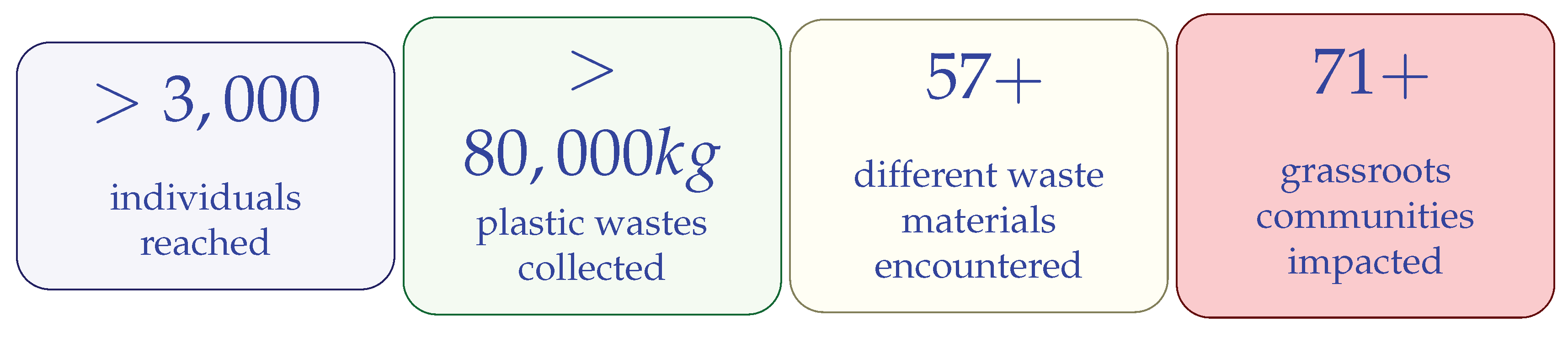
The #RestorationX10000 initiative has demonstrated substantial and measurable impact, underscoring its role as a catalyst for systemic change in plastic governance. As illustrated in Figure 2, the programme achieved rapid traction within a few months, gaining acceptance across multiple countries and attracting interests from like-minded leaders who voluntarily drove the initiative at country-level as “Country Directors”. This early adoption reflects the initiative’s alignment with global sustainability priorities and its capacity to mobilise diverse stakeholders.
Beyond its swift diffusion, #RestorationX10000 delivered quantifiable outcomes, including significant collection metrics that validate its operational effectiveness. Furthermore, the initiative has stimulated interest among key ecosystem actors such as recyclers and innovators in waste management systems, signaling its potential to foster collaborative models for circular economy practices. Collectively, these developments position #RestorationX10000 as a net-positive intervention in the broader fight against climate change, while advancing a bottom-up governance framework that empowers local communities and decentralizes decision-making in plastic waste management.
6.1. Quantitative Reach and Participation
Between 2021 and 2025, the #RestorationX10000 initiative directly reached over 3,000 beneficiaries across 71 impacted communities in 21 countries spanning Africa, Asia-Pacific, and Latin America. Participants included youth, women, informal waste workers, community leaders, educators, and people living with disabilities. Beyond individual beneficiaries, the program engaged community-based organizations, market associations, schools, and local authorities, creating multi-actor participation platforms. This scale demonstrates the feasibility of grassroots-led interventions operating across diverse socio-economic and governance contexts, consistent with evidence that community-based environmental programs can achieve wide geographic diffusion when supported by networks and partnerships [8,31].
6.2. Environmental Outcomes: Plastic Diversion and Ecosystem Restoration
Environmentally, the initiative contributed to measurable reductions in plastic leakage through organized collection, sorting, reuse, repair, and recycling activities. Community-led clean-ups and recovery systems diverted significant quantities of post-consumer plastics from waterways, informal dumpsites, and sensitive ecosystems, including rivers, creeks, and coastal zones. In several locations, restoration activities such as mangrove clean-ups and lagoon remediation improved local environmental quality and reduced exposure pathways for wildlife and human populations. These outcomes align with studies showing that community-based waste management and ecosystem restoration can deliver tangible environmental benefits, particularly in data-poor and infrastructure-limited settings [32,33].
6.3. Social Outcomes: Skills Development, Inclusion, and Leadership
Socially, #RestorationX10000 strengthened environmental leadership, technical skills, and health awareness among participants. Beneficiaries reported increased knowledge of plastic risks, chemicals exposure, and waste management practices, contributing to improved community-level environmental health literacy. The deliberate inclusion of women, youth, informal waste workers, and people living with disabilities enhanced social equity and representation in local decision-making processes. Graduates of the program assumed roles as community facilitators, advocates, and peer educators, reinforcing local ownership and leadership. These findings are consistent with literature linking participatory environmental programs to empowerment, social inclusion, and improved governance outcomes [34,35].
6.4. Economic Outcomes: Green Jobs, Enterprises, and Income Generation
Economically, the initiative supported the creation of decent green livelihood opportunities through reuse, repair, recycling, and circular micro-enterprises. Participants accessed income-generating activities within community recovery systems, while some groups established cooperatives and small enterprises linked to local and regional value chains. By integrating informal waste workers into organized systems, the program improved income stability and occupational recognition, addressing long-standing precarity within the sector. These outcomes reflect broader evidence that inclusive circular economy interventions can generate employment, enhance livelihoods, and support poverty reduction when social safeguards are embedded [36,37]. While also receiving several interests from various waste management innovation ideas, CAPws embarked on its own digital technology solution, Seikula6, in collaboration with two technology partners, Ainnov8 Technologies Ltd7 and JustWeb8 to create a plastic circular economy bringing together households & businesses, informal waste collectors and recyclers.
6.5. Policy and Institutional Influence
At the governance level, #RestorationX10000 contributed to policy dialogue and institutional learning by translating community-generated evidence into advocacy and engagement processes. Community data, testimonies, and pilot interventions informed discussions on plastic management, extended producer responsibility, and just transition frameworks at local, national and international levels. Partnerships with government agencies and civil society organizations strengthened institutional capacity and fostered alignment between grassroots realities and formal policy instruments. This outcome supports scholarship emphasizing that participatory, evidence-informed engagement enhances policy legitimacy, responsiveness, and implementation effectiveness in environmental governance [38,39].
7. Discussion
7.1. Effectiveness of Grassroots-Led Plastic Governance
Findings from the #RestorationX10000 initiative demonstrate that grassroots-led plastic governance can be both effective and scalable when supported by enabling institutional and knowledge frameworks. Community-driven interventions proved capable of addressing plastic pollution at its sources by combining waste recovery, circular livelihoods, and behavior change with policy engagement. Unlike conventional top-down approaches that often suffer from weak local ownership and implementation gaps, the CAPws model anchored governance in lived experience, local knowledge, and trust. This aligns with extensive evidence that polycentric and participatory governance systems enhance environmental performance by improving compliance, innovation, and contextual relevance [8,40].
7.2. Comparative Insights Across Regions
Across Africa, Asia-Pacific, and Latin America, the initiative revealed context-specific pathways but convergent outcomes. While governance capacities, infrastructure, and policy maturity varied significantly, common challenges such as plastic leakage into waterways, reliance on informal waste systems, and limited regulatory enforcement were observed across regions. Grassroots engagement provided a unifying mechanism to adapt solutions to local socio-economic realities, whether in coastal fishing communities, urban informal settlements, or peri-urban markets. These comparative insights reinforce scholarship suggesting that community-based environmental governance is particularly effective in Global South contexts characterized by institutional fragmentation and resource constraints [41,42].
7.3. Equity, Gender, and Informal Sector Inclusion
Equity and inclusion emerged as central strengths of the #RestorationX10000 approach. Women, youth, informal waste workers, and people living with disabilities were not treated merely as beneficiaries but as co-producers of governance outcomes. Gender-responsive training and leadership pathways enhanced women’s participation in decision-making and enterprise development, addressing structural exclusions common in environmental governance systems. Formal recognition and integration of informal waste workers contributed to improved livelihoods, dignity, and occupational safety. These outcomes resonate with feminist political ecology and just transition literature, which emphasize that environmental sustainability and social justice are mutually reinforcing when power asymmetries are addressed [34,36,43].
7.4. Challenges, Trade-Offs, and Adaptive Strategies
Despite its successes, the initiative faced notable challenges. These included limited access to sustained financing, policy inertia at higher governance levels, digital access constraints, and the precarity of informal livelihoods. Trade-offs arose between rapid scaling and the depth of community engagement, as well as between market-driven recycling solutions and higher-value reuse and repair systems. CAPws addressed these challenges through adaptive strategies such as phased implementation, blended financing approaches, cooperative models, and iterative learning informed by community feedback. Adaptive governance literature underscores the importance of flexibility, learning, and reflexivity in managing complex socio-environmental systems such as plastic pollution [44,45].
7.5. Implications for National and Global Plastic Policy
The results have significant implications for national and global plastic governance, including ongoing negotiations on a global plastics treaty. First, they highlight the necessity of embedding community participation, equity safeguards, and informal sector integration into policy design and implementation. Second, they demonstrate the value of community-generated data and citizen science in informing evidence-based decision-making, particularly in contexts where official data are limited. Finally, the initiative underscores that achieving a just and effective transition to a circular plastic economy requires aligning environmental objectives with livelihoods, public health, and human rights considerations. These insights support growing calls for inclusive, bottom-up approaches in global environmental governance frameworks [39,46].
8. Policy and Practice Implications
8.1. Lessons for Governments and Multilateral Processes
The #RestorationX10000 initiative offers important lessons for governments and multilateral institutions seeking effective responses to plastic pollution. First, it demonstrates that policy effectiveness is strengthened when grassroots actors are treated as governance partners rather than implementation targets. Community-led systems improved compliance, legitimacy, and contextual fit, addressing persistent implementation gaps associated with centralized waste management policies. Governments can enhance policy outcomes by institutionalizing participatory mechanisms, supporting community enterprises, and aligning environmental regulation with social protection measures. These insights are consistent with evidence that inclusive, multi-level governance arrangements improve environmental performance and policy durability [8,47].
8.2. Relevance to Global Plastics Treaty Negotiations
The initiative’s findings are highly relevant to ongoing negotiations toward a legally binding Global Plastics Treaty. Current debates emphasize lifecycle approaches, extended producer responsibility, and waste management, yet often under-address social equity and informal sector integration. Evidence from #RestorationX10000 underscores the necessity of embedding just transition principles, community participation, and safeguards for vulnerable groups within treaty provisions. Incorporating community-based implementation pathways can enhance treaty feasibility and legitimacy, particularly in low- and middle-income countries where informal systems dominate plastic recovery. This aligns with increasing scholastic advocacy for socially inclusive global environmental agreements [46,48].
8.3. Scaling Community-Driven Circular Economy Models
Scaling community-driven circular economy models requires moving beyond pilot projects toward systemic support structures, including access to finance, markets, and policy recognition. The CAPws experience suggests that cooperative enterprises, blended finance mechanisms, and public–private partnerships can facilitate scale while preserving social inclusion. Importantly, scaling should prioritize reuse, repair, and reduction alongside recycling to avoid reinforcing extractive or low-value recovery pathways. These lessons support critiques of narrow recycling-focused circular economy models and reinforce calls for socially embedded circular transitions [37,49].
8.4. Integrating Grassroots Data into Formal Governance Systems
A critical implication is the value of grassroots-generated data for strengthening formal governance systems. Community documentation, citizen science, and participatory monitoring provided timely, context-rich evidence on plastic leakage, health risks, and intervention effectiveness. When integrated into official reporting, planning, and evaluation processes, such data can complement national statistics and improve policy responsiveness. Institutionalizing data-sharing frameworks and recognizing community knowledge as legitimate evidence are essential steps toward more democratic and adaptive plastic governance. This approach aligns with literature on knowledge co-production and the democratization of environmental decision-making [50,51].
9. Conclusions
This paper set out to examine how democratizing plastic governance through effective grassroots engagement can deliver equitable, scalable, and impactful responses to plastic pollution. Drawing on empirical evidence from the #RestorationX10000 initiative implemented between 2021 and 2025, the study demonstrates that community-led governance models can simultaneously reduce plastic leakage, generate decent green livelihoods, and strengthen policy relevance across diverse socio-economic and geographic contexts. By reaching over 3,000 beneficiaries across 71 communities in 21 countries, the initiative provides concrete evidence that locally anchored interventions can operate at meaningful scale while maintaining social inclusion and environmental integrity. From a scholarly perspective, the paper contributes to plastic governance literature by advancing an empirically grounded model of democratic and polycentric governance that integrates participation, equity, and justice into circular economy practice. It responds to critiques of technocratic and top-down approaches by showing how grassroots knowledge, citizen science, and lived experience can enhance policy design, implementation, and legitimacy. In doing so, it bridges gaps between environmental governance theory, circular economy debates, and human rights-based approaches to waste and pollution management [8,39,46].
Looking forward, the findings underscore the importance of embedding inclusive governance principles into national policies and global frameworks, including the emerging Global Plastics Treaty. Achieving a toxic-free and socially just circular economy will require sustained investment in community leadership, recognition of informal systems, and institutionalization of participatory data and decision-making processes. As plastic pollution continues to threaten ecosystems, public health, and livelihoods, especially in frontline communities, grassroots-led governance offers a viable pathway toward long-term environmental restoration, social equity, and sustainable development.
10. Limitations and Future Directions
Despite the demonstrated impacts of the #RestorationX10000 initiative, several limitations should be acknowledged. First, data gaps and contextual variability constrained the comparability of outcomes across regions. Operating in 21 countries with diverse governance systems, infrastructure levels, and socio-cultural dynamics meant that data collection relied heavily on community-based documentation and self-reported indicators. While this approach enhances relevance and inclusivity, it may introduce variability in data quality and limit standardization. Similar challenges are widely noted in participatory and community-based environmental research, particularly in Global South contexts where official data systems are weak or fragmented [47,50].
Second, the study is limited by the absence of longitudinal impact assessments extending beyond the 2021–2025 implementation period. Many environmental, health, and socio-economic outcomes associated with plastic pollution such as ecosystem recovery, chronic exposure to hazardous chemicals, and intergenerational livelihood effects manifest over longer time horizons. Future research should employ longitudinal and mixed-methods designs to assess the durability of behavior change, enterprise viability, policy influence, and ecological restoration outcomes over time. Long-term evaluation is critical for understanding whether grassroots-led governance can sustain impacts at scale [44,45].
Finally, there are significant opportunities for deeper investigation into chemical exposure and public health impacts associated with plastic pollution. Although the initiative incorporated environmental health awareness and precautionary approaches, systematic bio-monitoring and exposure assessment were beyond its scope. Future studies could integrate toxicological analysis, epidemiological methods, and citizen science to examine exposure pathways to plastic-associated chemicals such as endocrine disruptors, particularly among vulnerable populations and informal waste workers. Strengthening this evidence base would enhance the integration of public health considerations into plastic governance and circular economy policy [1,52].
Author Contributions
Conceptualization, A.T. and J.G.A.; methodology, A.T. and J.G.A.; resources, A.T. and J.G.A.; writing—original draft preparation, A.T.; writing—review and editing, A.T. and J.G.A.; visualization, J.G.A.; project administration and supervision, A.T. and J.G.A.. All authors have read and agreed to the published version of the manuscript.
Funding
This research received no external funding.
Acknowledgments
The authors acknowledge all members and volunteers of CAPws whose dedication, expertise, and sustained grassroots engagement has made the #RestorationX10000 initiative a success so far. The authors especially acknowledge the contributions of Kudirat Oyiza Abdulkareem to the development of GIRAF, and Samuel Maduekwe, AbdulHakeem Oluwafunminiyi Dere, Khadijat Ajao, Rabihat Rabiu, Rahmat Sanni, Cedrick Nkundwanabake, Magreth Shoni, Nairobi Dlangalala, and Lueth Reng Lueth, for their contributions to #RestorationX10000 and by extension, CAPws at different phases of the project lifecycle. Their leadership, community trust-building, data generation, and commitment to environmental justice continue to drive meaningful action toward inclusive, toxic-free, and circular plastic governance across impacted communities globally. This initiative has benefited from key collaborations such as the Federal Ministry of Environment, Nigeria, Ondo State and Osun State governments, BFFP, Deutsche Gesellschaft für Internationale Zusammenarbeit (GIZ), International Sustainable Chemistry Collaborative Centre (ISC3), UN Environment Programme (UNEP), United Nations Development Programme (UNDP) Nigeria. Special thanks to Prof. Cressida Bowyer, Deputy Director of the Revolution Plastics Institute at the University of Portsmouth and Prof. Tesleem Asafa (Ladoke Akintola University of Science and Technology (LAUTECH)) and Prof. Ilemobayo Oguntimehin (Olusegun Agagu University of Science and Technology (OAUSTECH)). Finally, we would like to thank our colleague, Oghenetejiri Edewor for their time to proofread this submission.
Conflicts of Interest
The authors declare no conflicts of interest.
References
- United Nations Environment Programme. Turning Off the Tap: How the World Can End Plastic Pollution and Create a Circular Economy; United Nations: Erscheinungsort nicht ermittelbar, 2023. [Google Scholar]
- Lau, W.W.Y.; Shiran, Y.; Bailey, R.M.; Cook, E.; Stuchtey, M.R.; Koskella, J.; Velis, C.A.; Godfrey, L.; Boucher, J.; Murphy, M.B.; et al. Evaluating scenarios toward zero plastic pollution. Science 2020, 369, 1455–1461. [Google Scholar] [CrossRef]
- Williams, A.; Rangel-Buitrago, N. Marine Litter: Solutions for a Major Environmental Problem. Journal of Coastal Research 2019, 35, 648–663. [Google Scholar] [CrossRef]
- Rochman, C.M.; Browne, M.A.; Underwood, A.J.; van Franeker, J.A.; Thompson, R.C.; Amaral-Zettler, L.A. The ecological impacts of marine debris: unraveling the demonstrated evidence from what is perceived. Ecology 2016, 97, 302–312. [Google Scholar] [CrossRef]
- Landrigan, P.J.; Raps, H.; Cropper, M.; Bald, C.; Brunner, M.; Canonizado, E.M.; Charles, D.; Chiles, T.C.; Donohue, M.J.; Enck, J.; et al. The Minderoo-Monaco Commission on Plastics and Human Health. Annals of Global Health 2023, 89, 23. [Google Scholar] [CrossRef]
- Pahl, S.; Wyles, K.J.; Thompson, R.C. Channelling passion for the ocean towards plastic pollution. Nature Human Behaviour 2017, 1, 697–699. [Google Scholar] [CrossRef]
- Schlosberg, D. Theorising environmental justice: the expanding sphere of a discourse. Environmental Politics 2013, 22, 37–55. [Google Scholar] [CrossRef]
- Ostrom, E. Polycentric systems for coping with collective action and global environmental change. Global Environmental Change;20th Anniversary Special Issue 2010, 20, 550–557. [Google Scholar] [CrossRef]
- Schlosberg, D.; Dryzek, J.S. Political Strategies of American Environmentalism: Inclusion and Beyond. Society & Natural Resources 2002, 15, 787–804. [Google Scholar] [CrossRef]
- Ottinger, G. Making sense of citizen science: Stories as a hermeneutic resource. Energy Research & Social Science;Narratives and Storytelling in Energy and Climate Change Research 2017, 31, 41–49. [Google Scholar] [CrossRef]
- Bulkeley, H.; Andonova, L.; Betsill, M.M.; Compagnon, D.; Hale, T.; Hoffmann, M.J.; Newell, P.; Paterson, M.; Roger, C.; VanDeveer, S.D. Transnational Climate Change Governance, 1 ed.; Cambridge University Press, 2014. [Google Scholar] [CrossRef]
- Geissdoerfer, M.; Savaget, P.; Bocken, N.M.; Hultink, E.J. The Circular Economy – A new sustainability paradigm? Journal of Cleaner Production 2017, 143, 757–768. [Google Scholar] [CrossRef]
- United Nations Human Rights Council. The human right to a clean, healthy and sustainable environment : resolution / adopted by the Human Rights Council on 8 October 2021. United Nations document A/HRC/RES/48/13, 2021.
- Scoones, I.; Stirling, A.; Abrol, D.; Atela, J.; Charli-Joseph, L.; Eakin, H.; Ely, A.; Olsson, P.; Pereira, L.; Priya, R.; et al. Transformations to sustainability: combining structural, systemic and enabling approaches. Current Opinion in Environmental Sustainability;Advancing the science of actionable knowledge for sustainability 2020, 42, 65–75. [Google Scholar] [CrossRef]
- Agyeman, J.; Schlosberg, D.; Craven, L.; Matthews, C. Trends and Directions in Environmental Justice: From Inequity to Everyday Life, Community, and Just Sustainabilities. Annual Review of Environment and Resources 2016, 41, 321–340. [Google Scholar] [CrossRef]
- UNDP (United Nations Development Programme). Human Development Report 2020. In UNDP (United Nations Development Programme); 2020. [Google Scholar]
- Jambeck, J.R.; Geyer, R.; Wilcox, C.; Siegler, T.R.; Perryman, M.; Andrady, A.; Narayan, R.; Law, K.L. Plastic waste inputs from land into the ocean. Science 2015, 347, 768–771. [Google Scholar] [CrossRef]
- Geels, F.W. Socio-technical transitions to sustainability: a review of criticisms and elaborations of the Multi-Level Perspective. Current Opinion in Environmental Sustainability 2019, 39, 187–201. [Google Scholar] [CrossRef]
- Westley, F.R.; Tjornbo, O.; Schultz, L.; Olsson, P.; Folke, C.; Crona, B.; Bodin, Ö. A Theory of Transformative Agency in Linked Social-Ecological Systems. Ecology and Society 2013, 18, 27. [Google Scholar] [CrossRef]
- Lang, D.; Wiek, A.; Bergmann, M.; Stauffacher, M.; Martens, P.; Moll, P.; Swilling, M.; Thomas, C. Transdisciplinary research in sustainability science: Practice, principles, and challenges. Sustainability Science 2012, 7, 25–43. [Google Scholar] [CrossRef]
- Reason, P.; Bradbury, H. The SAGE Handbook of Action Research; 2008. [Google Scholar] [CrossRef]
- Haklay, M. Citizen Science and Volunteered Geographic Information: Overview and Typology of Participation. In Crowdsourcing Geographic Knowledge: Volunteered Geographic Information (VGI) in Theory and Practice; Springer Netherlands: Dordrecht, 2013; pp. 105–122. [Google Scholar] [CrossRef]
- Kemmis, S.; McTaggart, R.; Nixon, R. The Action Research Planner: Doing Critical Participatory Action Research; Springer Singapore: Singapore, 2014. [Google Scholar] [CrossRef]
- Yin, R.K. Case study research and applications; Sage Thousand Oaks, CA, 2018; Vol. 6. [Google Scholar]
- Israel, B.A.; Schulz, A.J.; Parker, E.A.; Becker, A.B. Review of Community-Based Research: Assessing Partnership Approaches to Improve Public Health. Annual Review of Public Health 1998, 19, 173–202. [Google Scholar] [CrossRef]
- Wilson, D.C.; Velis, C.A.; Rodic, L. Integrated sustainable waste management in developing countries. Proceedings of the Institution of Civil Engineers - Waste and Resource Management 2013, 166, 52–68. [Google Scholar] [CrossRef]
- Velis, C. Waste pickers in Global South: Informal recycling sector in a circular economy era. Waste Management & Research 2017, 35, 329–331. [Google Scholar] [CrossRef] [PubMed]
- Bulkeley, H.; Betsill, M.M. Revisiting the urban politics of climate change. Environmental Politics 2013, 22, 136–154. [Google Scholar] [CrossRef]
- Ansell, C.; Gash, A. Collaborative Governance in Theory and Practice. Journal of Public Administration Research and Theory 2007, 18, 543–571. [Google Scholar] [CrossRef]
- Emerson, K.; Nabatchi, T.; Balogh, S. An Integrative Framework for Collaborative Governance. Journal of Public Administration Research and Theory 2011, 22, 1–29. [Google Scholar] [CrossRef]
- Pretty, J. Social Capital and the Collective Management of Resources. Science 2003, 302, 1912–1914. [Google Scholar] [CrossRef]
- Wilson, D.C. (Ed.) Global waste management outlook; United Nations Environment Programme: Nairobi, Kenya, 2015; OCLC: 979567936. [Google Scholar]
- Jambeck, J.; Hardesty, B.D.; Brooks, A.L.; Friend, T.; Teleki, K.; Fabres, J.; Beaudoin, Y.; Bamba, A.; Francis, J.; Ribbink, A.J.; et al. Challenges and emerging solutions to the land-based plastic waste issue in Africa. Marine Policy 2018, 96, 256–263. [Google Scholar] [CrossRef]
- Agarwal, B. Participatory Exclusions, Community Forestry, and Gender: An Analysis for South Asia and a Conceptual Framework. World Development 2001, 29, 1623–1648. [Google Scholar] [CrossRef]
- Cornwall, A. Unpacking ‘Participation’: models, meanings and practices. Community Development Journal 2008, 43, 269–283. Available online: https://academic.oup.com/cdj/article-pdf/43/3/269/850142/bsn010.pdf. [CrossRef]
- International Labour Office. Skills for a Greener Future: A Global View, Based on 32 Country Studies; International Labour Organisation (ILO): Genève 22, 2019. [Google Scholar]
- Kirchherr, J.; Reike, D.; Hekkert, M. Conceptualizing the circular economy: An analysis of 114 definitions. Resources, Conservation and Recycling 2017, 127, 221–232. [Google Scholar] [CrossRef]
- Fung, A. Putting the Public Back into Governance: The Challenges of Citizen Participation and Its Future. Public Administration Review 2015, 75, 513–522. Available online: https://onlinelibrary.wiley.com/doi/pdf/10.1111/puar.12361. [CrossRef]
- Bulkeley, H.; Marvin, S.; Palgan, Y.V.; McCormick, K.; Breitfuss-Loidl, M.; Mai, L.; von Wirth, T.; Frantzeskaki, N. Urban living laboratories: Conducting the experimental city? European Urban and Regional Studies 2019, 26, 317–335. [Google Scholar] [CrossRef]
- Newig, J.; Fritsch, O. Environmental governance: participatory, multi-level – and effective? Environmental Policy and Governance 2009, 19, 197–214. Available online: https://onlinelibrary.wiley.com/doi/pdf/10.1002/eet.509. [CrossRef]
- Agrawal, A.; Gibson, C.C. Enchantment and Disenchantment: The Role of Community in Natural Resource Conservation. World Development 1999, 27, 629–649. [Google Scholar] [CrossRef]
- Satterthwaite, D.; Archer, D.; Colenbrander, S.; Dodman, D.; Hardoy, J.; Mitlin, D.; Patel, S. Building Resilience to Climate Change in Informal Settlements. One Earth 2020, 2, 143–156. [Google Scholar] [CrossRef]
- Schlosberg, D. Defining Environmental Justice: Theories, Movements, and Nature; Oxford University Press, 2007. [Google Scholar]
- Folke, C.; Hahn, T.; Olsson, P.; Norberg, J. Adaptive Governance of Social-Ecological Systems. Annual Review of Environment and Resources 2005, 30, 441–473. [Google Scholar] [CrossRef]
- Pahl-Wostl, C. A conceptual framework for analysing adaptive capacity and multi-level learning processes in resource governance regimes. Global Environmental Change 2009, 19, 354–365. [Google Scholar] [CrossRef]
- Dauvergne, P. Why is the global governance of plastic failing the oceans? Global Environmental Change 2018, 51, 22–31. [Google Scholar] [CrossRef]
- Newig, J.; Challies, E.; Jager, N.W.; Kochskaemper, E.; Adzersen, A. The Environmental Performance of Participatory and Collaborative Governance: A Framework of Causal Mechanisms. Policy studies journal: the journal of the Policy Studies Organization 2018, 46, 269–297. [Google Scholar] [CrossRef] [PubMed]
- Cowan, E.; Tiller, R.; Oftebro, T.L.; Throne-Holst, M.; Normann, A.K. Orchestration within plastics governance – From global to Arctic. Marine Pollution Bulletin 2023, 197, 115635. [Google Scholar] [CrossRef]
- Corvellec, H.; Stowell, A.F.; Johansson, N. Critiques of the circular economy. Journal of Industrial Ecology 2022, 26, 421–432. [Google Scholar] [CrossRef]
- Cash, D.W.; Clark, W.C.; Alcock, F.; Dickson, N.M.; Eckley, N.; Guston, D.H.; Jäger, J.; Mitchell, R.B. Knowledge systems for sustainable development. Proceedings of the National Academy of Sciences 2003, 100, 8086–8091. [Google Scholar] [CrossRef]
- Wyborn, C.; Datta, A.; Montana, J.; Ryan, M.; Leith, P.; Chaffin, B.; Miller, C.; van Kerkhoff, L. Co-Producing Sustainability: Reordering the Governance of Science, Policy, and Practice. Annual Review of Environment and Resources 2019, 44, 319–346. [Google Scholar] [CrossRef]
- Landrigan, P.J.; Fuller, R.; Acosta, N.J.R.; Adeyi, O.; Arnold, R.; Basu, N.N.; Baldé, A.B.; Bertollini, R.; Bose-O’Reilly, S.; Boufford, J.I.; et al. The Lancet Commission on pollution and health. The Lancet 2018, 391, 462–512. [Google Scholar] [CrossRef] [PubMed]
| 1 | |
| 2 | |
| 3 | |
| 4 | |
| 5 | |
| 6 | |
| 7 | |
| 8 |
Figure 1.
Hierarchy of Stakeholder Engagement Approach
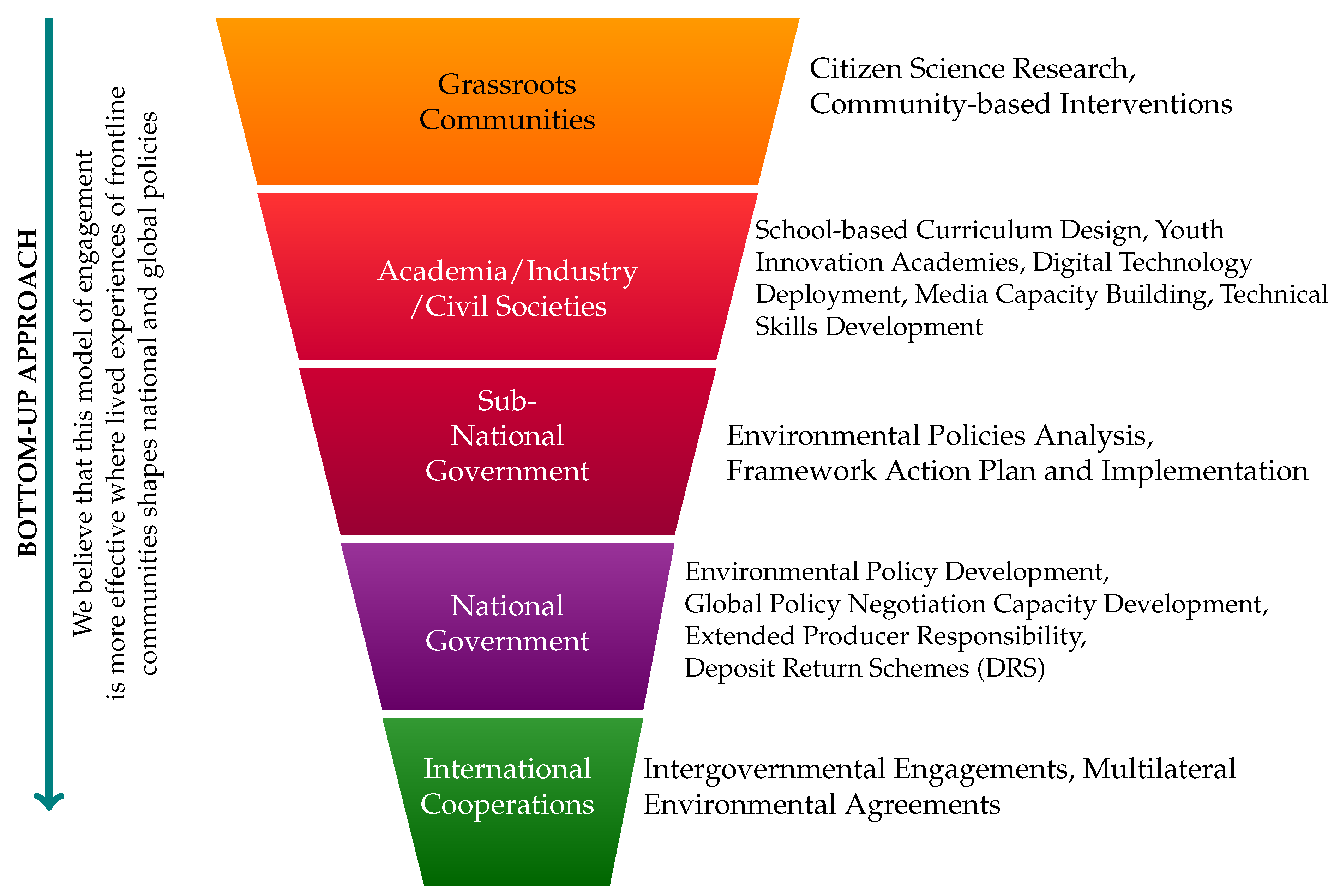
Figure 2.
#RestorationX10000 Key Outputs: 2021-2025
Disclaimer/Publisher’s Note: The statements, opinions and data contained in all publications are solely those of the individual author(s) and contributor(s) and not of MDPI and/or the editor(s). MDPI and/or the editor(s) disclaim responsibility for any injury to people or property resulting from any ideas, methods, instructions or products referred to in the content. |
© 2026 by the authors. Licensee MDPI, Basel, Switzerland. This article is an open access article distributed under the terms and conditions of the Creative Commons Attribution (CC BY) license (http://creativecommons.org/licenses/by/4.0/).
Copyright: This open access article is published under a Creative Commons CC BY 4.0 license, which permit the free download, distribution, and reuse, provided that the author and preprint are cited in any reuse.