

Submitted:
13 January 2026
Posted:
14 January 2026
You are already at the latest version
Abstract
This research aims to compare the use of AI-powered technologies in the energy sector and discuss their role in enhancing the efficiency and sustainability of urban energy systems. The energy sector is both broad and specialized, with many technologies already developed. However, it continues to face challenges such as the simultaneous integration of various systems, cybersecurity concerns, and the further adaptation of renewable energy sources. AI has the potential to help address these issues. Additionally, the study will explore the risks associated with the transition to green energy and the widespread implementation of AI. The methods employed in this research include the analysis of statistical data and insights from various scientists. Therefore, this study seeks to provide a comprehensive approach to optimizing energy usage in cities through the utilization of AI.
Keywords:
AI
; renewable energy
; city optimization
; indoor energy efficiency
1. Introduction
Nowadays mankind face a problem of limited amount of fossils like oil, gas and coal, and impact of industrialization on nature and environment. As cities grow and energy demands intensify, the urgency of transitioning to sustainable energy systems has never been greater. Urban environments, which account for a significant portion of global energy consumption and carbon emissions, are central to any meaningful climate strategy. Cities are responsible for the majority of global energy use and greenhouse gas emissions, making them critical arenas for climate action. In this context, artificial intelligence (AI) has emerged as a powerful enabler of change, offering innovative solutions to enhance energy efficiency and accelerate the transition to renewable sources. Producing renewable energy to substitute traditional sources is a solution in the majority of cases, but it also requires certain conditions and is dependent on climate and weather. For example, wind energy requires wind mills availability, water energy – access to lakes, rivers, seas, oceans, biofuel – resources to make this type of energy from, etc. And this requires investments and the budget also has limitations, even though it is more economically reasonable, and the amount of renewable energy sources produced is also limited. Also energy efficient homes can help to save money as the city will be able to decrease of amount meant for home usages. Thus, optimization is needed and AI can play a crucial role in this case, starting from educating citizens how to use AI to optimize energy consumption.
Despite advancements in renewable energy technologies and smart home systems, a significant gap remains between the optimization of residential energy consumption and the management of city-wide grids and public energy usage. Current approaches often treat these sectors separately, leading to inefficiencies and missed opportunities for overall energy system optimization. This imbalance hinders the full potential of energy savings and renewable integration across urban environments. If this gap remains unaddressed, it could result in continued energy waste, increased costs, and slower progress toward sustainable urban energy systems. This research addresses the challenge of how AI can be harnessed to create a cohesive framework that optimizes energy use simultaneously across homes, city grids, and public infrastructure.
This paper explores the broad potential of AI to support greener urban living by reducing energy consumption in residential settings and optimizing the generation, distribution, and use of renewable energy in cities. From smart home technologies and intelligent energy management systems to AI-driven forecasting for renewable energy, the integration of AI into urban energy infrastructures holds the promise of more resilient, efficient, and sustainable cities.
The objective of this paper is to investigate how artificial intelligence can be utilized to optimize energy consumption across multiple urban sectors—specifically residential homes, city-wide grids, and public infrastructure — in a balanced and integrated manner. By reviewing existing AI-driven technologies and frameworks, the study aims to identify effective strategies for enhancing energy efficiency, facilitating the integration of diverse renewable energy sources, and supporting the transition to sustainable urban energy systems.
This paper contributes to the field of urban energy management and sustainable development by providing a comprehensive analysis of the role artificial intelligence can play in bridging the gap between residential energy optimization and city-wide energy management. It synthesizes current technologies and approaches, identifies challenges in integrating AI across multiple urban energy sectors, and proposes a framework for balanced, simultaneous optimization of homes, public infrastructure, and city grids. By highlighting the potential of AI-driven solutions to enhance energy efficiency and accelerate the adoption of diversified renewable energy sources, this study offers valuable insights for researchers, policymakers, and practitioners aiming to design smarter, more sustainable cities.
2. Materials and Methods
This study uses a multidisciplinary approach that combines artificial intelligence techniques with energy system modeling to tackle three important aspects of urban energy sustainability: the transition to green energy in city environments, optimization of renewable energy, and improving residential energy efficiency. The research draws on existing studies and real-world case examples.
To begin with the broader transition to green energy, which is essential for urban optimization, it is important to reference the OECD report highlighting the issue of climate-neutral cities in light of worsening environmental conditions. There is an urgent need for actions and policies at the city, regional, and rural levels, all aimed at reducing negative environmental impacts and shifting towards green energy. Optimizing energy systems and usage is crucial in this transition. Furthermore, these efforts should involve both public and private sectors. [12]
When discussing renewable energy optimization, it’s clear that there is a growing demand not only in urban infrastructures and logistics but also in the private sector. In urban areas, a significant focus is placed on the development of smart grids. Studies indicate that traditional grids face challenges in integrating renewable energy sources, primarily due to their instability and dependence on weather conditions, as well as the centralized design of these grids. AI optimization can help address these challenges effectively.
Figure 1.
Estimated Smart grid (Source: Circuit Digest).
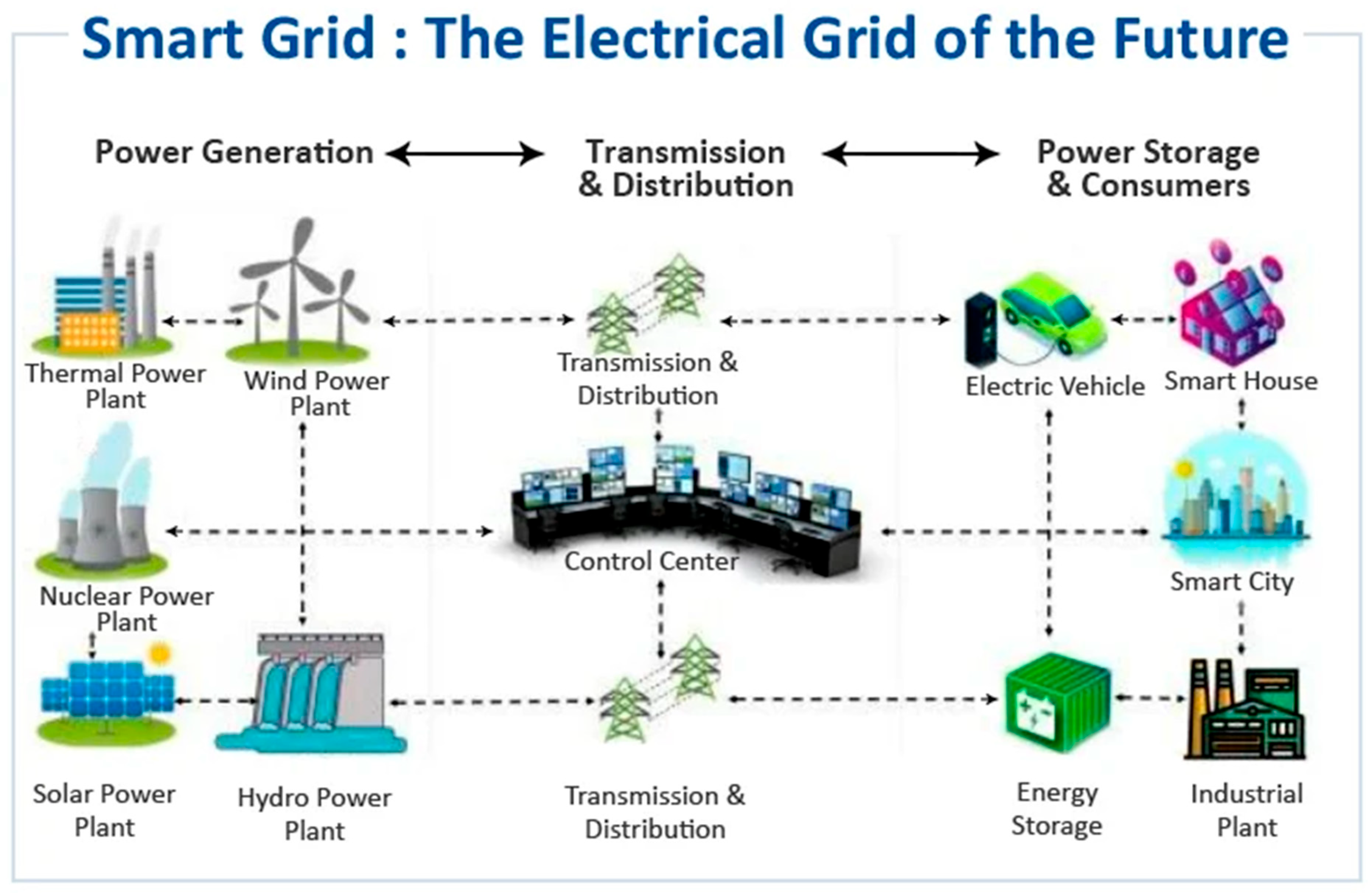
One of the challenges that power grids face with renewable energy sources is the instability of demand and supply. The availability of renewable energy is largely dependent on weather and geographical factors, such as wind, sunlight, land access, and water resources. This variability makes the supply of renewable energy inconsistent in both time and quantity. To address this issue, artificial intelligence can play a vital role in balancing demand and supply in real-time and optimizing the distribution of electricity across the grid. Deep Learning techniques are proposed for real-time optimization, forecasting, and balancing energy demand and supply, thereby facilitating smarter energy usage planning. [14] The study titled “AI in Renewable Energy: A Review of Predictive Maintenance and Energy Optimization” emphasizes the necessity for standardized data formats and communication protocols across various renewable energy systems. Implementing these standards can significantly contribute to effective solutions. The authors also point out the challenge posed by the lack of AI algorithms that can facilitate communication between different data exchange platforms. [8]
There is another crucial aspect of the grid that requires AI implementation: equipment management. One proposed AI technology to enhance equipment performance is the predictive maintenance approach. This method utilizes sensor data, historical records, and weather patterns to anticipate equipment failures before they occur. As a result, it enables targeted interventions, reduces downtime, extends the lifespan of equipment, and optimizes costs. Other suggested applications of machine learning techniques include deep learning and Digital Twins. Deep learning can be employed for image analysis using cameras and drones to detect visual anomalies. Digital Twins are recommended for more effective predictive maintenance by creating virtual replicas of existing assets and simulating their behavior. This simulation allows for real-time evaluation of equipment status. By combining these technologies, we can achieve a comprehensive insight into equipment health and minimize risks associated with failures, ultimately making renewable energy infrastructure more efficient, optimized, and cost-effective. [8]
A recent study suggests the integration of Regression, Deep Learning, and Clustering algorithms within smart grids. It proposes using Regression algorithms to predict energy consumption by taking into account factors such as energy usage and weather conditions. This information can help in adjusting thermostats and scheduling appliance operation. Deep Learning is employed to facilitate automated learning and process large datasets effectively. Meanwhile, Clustering techniques are used to identify patterns in energy usage, which can lead to recommendations for improving energy efficiency. [5]
Other algorithms recommended for energy sustainability include Reinforcement Learning, Evolutionary Algorithms, and Multi-Agent Systems. Reinforcement Learning focuses on training agents to identify the best strategies for energy generation and storage while interacting with their environment. In contrast, Evolutionary Algorithms are used to optimize management strategies and solutions. [8] Also, Reinforcement Learning enhances the performance of energy storage devices by predicting the optimal times to charge or discharge, taking into account power costs, grid demand, and the availability of renewable energy. [2] All AI techniques are most effective when combined, as they address different aspects of the energy sector and should be utilized together for optimal performance and cost savings.
When discussing the transition to green energy, it’s important to mention a widely used technology: AI-powered drones for real-time aerial surveillance of equipment. These drones are utilized in various energy sectors, including solar parks, wind farms, power grids, and more. [17]
Next, AI-powered tools demonstrated improved performance by reducing errors in system design with an accuracy increase of up to 30%. These tools also cut installation time, decreased equipment downtime by up to 50%, and extended machinery lifespan by up to 40%. Additionally, implementing AI solutions in the energy industry significantly reduces costs for forecasting, system and equipment optimization, and maintenance, as well as for logistics and supply chain management. [17]
A broader transition to green energy relies on efficient energy consumption in cities and buildings, making the role of smart cities crucial in this process. Akram et al. propose an innovative Intelligent Energy Management System designed for smart cities, which utilizes Machine Learning to predict overall energy efficiency. This system takes into account factors such as power generation, energy consumption, carbon dioxide emissions, stability, and energy costs. It also supports the Internet of Energy (IoE) network, which is essential in the energy sector for effective data collection and smart resource management. The proposed system significantly reduces energy consumption, achieving an impressive accuracy rate of 92.11%. [1]
Electric vehicles are becoming increasingly popular today. They do not emit CO2 or any other harmful emissions, and charging them is cheaper than fueling traditional vehicles. However, a significant concern arises regarding the disposal of dead batteries when they need to be replaced. Despite this issue, electric vehicles are integral to the development of smart cities, and advanced neural systems are widely employed to ensure their ecosystem operates efficiently. [14]
Another point to consider is the increasing popularity of solar panels for installation in homes and outdoor spaces. These panels utilize AI technology to determine the optimal position for maximizing solar energy capture and to monitor weather conditions. This approach enhances solar energy efficiency. [17]
Smart buildings are a crucial component of smart cities, as they enhance energy optimization, reduce consumption, and contribute to the overall cost-efficiency and sustainability of urban environments. However, the integration of AI technologies in these buildings is still in progress. According to a study by [13] 70% of energy consumption in buildings is attributed to heating, ventilation, and air-conditioning (HVAC) systems. AI-operated elements in smart homes include lighting, energy storage, heating, air conditioning, smart devices, security locks, cameras, and emergency systems. The Internet of Things (IoT), when combined with AI, enables connectivity among these components through the use of sensors and databases, fostering autonomous operations within smart buildings. [5] The IoT technology is utilized in smart energy-efficient buildings to analyze and predict the effects of temperature, humidity, lighting, occupancy, and occupant behavior on optimizing building systems. [14]
Deep learning enhances personalized energy management and lighting systems by considering occupancy and outdoor conditions. [14] Another proposed technology for optimizing energy usage in buildings is the Genetic Algorithm. This approach utilizes a wide range of operators, which allows for the consideration of various input parameters such as illumination, temperature, air quality, and external environmental factors. The goal is to minimize power consumption while maximizing occupant satisfaction. The authors suggest that integrating the Genetic Algorithm with the conventional Firefly Algorithm could improve efficiency. [2] Some studies recommend utilizing machine learning algorithms for enhancing energy efficiency in smart buildings. This includes approaches like Supervised Learning, Unsupervised Learning, and Reinforcement Learning. Supervised Learning, particularly using techniques such as linear regression and decision trees, is effective for making energy-saving adjustments because it leverages historical energy usage data from buildings. Unsupervised Learning algorithms, like K-Means, focus on uncovering hidden patterns in individual energy consumption, which allows for the development of tailored energy optimization recommendations. Reinforcement Learning, primarily through methods such as Deep Q-Networks and Markov Decision Processes, employs agents to make real-time adjustments to energy settings based on user feedback. [5]
Another study explores the adaptation of machine learning algorithms in the field. The proposed technology aims to create a database using satellite data on solar irradiance for a specific location. This database would then be utilized to predict energy consumption based on on-site measurements. The authors suggest applying various machine learning models to identify the most optimal one based on specific criteria. [9]
It is estimated that approximately 40% of the world’s total energy consumption comes from buildings. Additionally, buildings and construction are responsible for about 39% of global CO2 emissions. Experts believe that essential advancements toward creating sustainable cities involve the integration of renewable energy sources, energy management techniques, and enhanced energy efficiency in buildings. [13]
When discussing AI-powered energy efficiency and sustainability, it’s important to consider the challenges that come along with its advantages. These challenges include issues related to cybersecurity and data privacy, particularly in the realm of Deep Learning, which is used for anomaly detection. Other concerns involve data inaccuracies, scalability and adaptability in smart homes, and the potential for real-time decision-making errors due to imprecision and the large volumes of data that need to be analyzed. Additionally, there are costs associated with the implementation and maintenance of these AI systems. [5]
A recent study highlights that AI technologies are primarily utilized for diagnostics and predictive purposes. The authors note that the main focus of investment in renewable energy sources is on solar energy, particularly in photovoltaic systems. These systems are designed to process data, offer real-time online diagnostics, and maintain Machine Learning models for performance optimization. Meanwhile, other sources of green energy have not received the same level of attention. [2]
There are challenges in policy-making regarding the complex implementation of AI in various energy-related fields. Additionally, AI research would benefit from improved collaboration among the scientific, public, and private sectors to facilitate more effective data sharing and solution development. Financial initiatives should also support research in different areas of green energy and promote collaboration among stakeholders across various sectors. [17] Thus, there is space for technologies to move to modernize this sector.
3. Results
Improving energy efficiency and sustainability is crucial for the future of both the environment and the economy. Traditional energy sources are not only more expensive but also much less environmentally friendly. They contribute to increased pollution and CO2 emissions, which have harmful effects on the climate. While traditional energy sources are limited but stable, renewable sources are dependent on weather and climate conditions. However, renewable energy is environmentally friendly, relatively abundant as it is continually generated, and cost-effective. According to statistics from the International Renewable Energy Agency (IRENA), by the end of 2024, renewable energy sources are expected to account for 46% of global installed power capacity. [6] Furthermore, the International Energy Agency forecasts ongoing growth in electricity generation from renewables, as illustrated in Figure 2. [4]
Artificial intelligence can significantly enhance green energy optimization. AI-powered tools are essential for promoting sustainability at both the city and national levels, and they are utilized in various energy applications and appliances to improve forecasting and management efficiency. The best results can be achieved when AI is integrated across all layers of energy usage, including homes, public and private buildings, infrastructure, and the entire city.
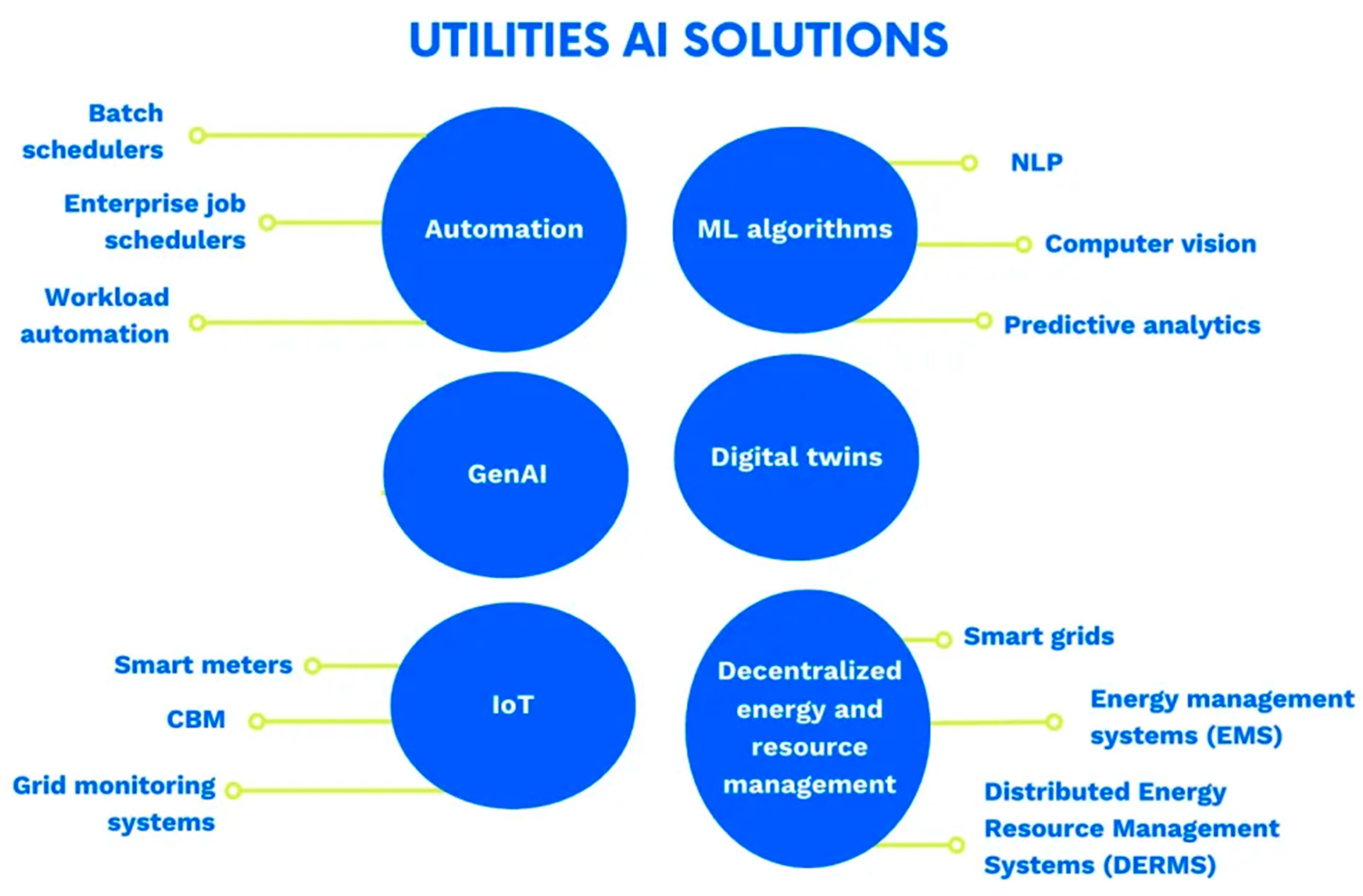
AI plays a crucial role in supporting the transition to green energy in cities by enhancing the planning, coordination, and management of energy systems. As illustrated in Figure 3, the implementation of AI in the energy industry can be categorized into four main areas: Machine Learning, Robotics, Computer Vision, and Planning. As discussed in the second section, algorithms are employed to forecast, predict, optimize, and manage various aspects of the energy sector. Key Machine Learning algorithms used for these purposes include Reinforcement Learning, Digital Twins, Deep Learning, Regression, Clustering, Evolutionary algorithms, and multi-agent approaches. Figure 4 showcases the most commonly utilized AI techniques in energy utilities.
When discussing home efficiency through AI solutions, studies indicate a significant improvement in energy optimization for both private and public buildings, along with the potential for further cost and resource savings. According to Smart Energy International, smart homes can save between 30% and 40% of their energy consumption. [7] AI is particularly valuable for detecting anomalies and identifying heat leakages in buildings. By analyzing smart meter data, a model was able to identify peak-load appliances with 91% accuracy, which led to targeted user feedback and an average reduction of 11% in daily energy use. [3] Additionally, AI can contribute to a substantial decrease in household energy consumption, averaging around 10.75%. [10]
Using AI and IoT can reduce global energy consumption by approximately 3-5%, according to Climate Action studies. Cities can save energy through various initiatives, such as adopting LED lamps, switching public transport to green gas, and implementing smart building systems. This transition can also enhance energy security. [15] AI can support the policy-making process by providing analytical data and forecasts about energy trends, as well as suggesting pathways for adopting renewable energy sources. Key metrics to consider include CO2 reduction, grid resilience, and cost savings.
It is important to highlight the interdependence between city energy policy and building energy consumption and optimization, where each stakeholder influences the other. The city manages smart grids based on the consumption needs of its public and private entities. In turn, these entities are limited by the energy capacity of the city. If the city cannot meet the demand, entities will seek alternative sources, or the city will need to import energy. If artificial intelligence can help reduce energy consumption — especially during peak hours — this will lower the overall demand and save resources and costs, ultimately contributing to energy sustainability. The management center plays a crucial role in this process.
The simultaneous implementation of various AI technologies can lead to significant savings in energy resources and costs for the city. All energy consumers interact and influence each other both technologically and by using shared resources. To achieve this, a centralized energy management system is essential for balancing a variety of energy-related solutions. Additionally, mobile applications powered by AI can offer end-users recommendations on how to reduce and optimize their home energy consumption. However, several challenges have been identified. Despite improvements in performance, concerns about data privacy, cybersecurity, and scalability remain unresolved. Deploying AI models requires high-quality data, and some urban areas lack the infrastructure necessary for real-time analytics. Moreover, certain AI methods have shown limited effectiveness in integrating non-solar renewable energy sources, as noted by Biswas, highlighting the need for diversified investment and research in this area.
4. Discussion
This section focuses on the benefits of implementing AI in the city energy sector. These benefits include reduced loads on the smart grid, more efficient use of renewable resources, improved sustainability, and a decreased carbon footprint. However, there are also risks associated with the technological transition to green energy, such as issues related to battery utilization, delays in policy-making, and concerns about cybersecurity. To achieve the best results, it is essential to consider the simultaneous application of the aforementioned AI tools.
To begin with the benefits, there is a wide range of AI algorithms and tools used across different energy sectors. The best results can be achieved through simultaneous applications in both private and public sectors, starting from optimizing home systems and developing mobile applications that provide users with recommendations on energy efficiency, extending to transport, power plants, and smart grids. A comprehensive shift to green energy sources will lead to cities that are more energy-efficient and environmentally friendly. AI will facilitate energy savings, increase cost-efficiency, and reduce dependence on limited traditional energy sources. There is no singular answer to which AI technology is the best, as various technologies are utilized in the energy field, and their effectiveness largely depends on the specific context in which they are applied.
When discussing major risks and threats, it is important to highlight issues related to battery utilization, delays in the policy-making process, and cybersecurity concerns. Battery usage is becoming a global problem due to the toxic elements they contain, which can contaminate the soil. On average, it takes over 100 years for a battery to fully decompose if it is biodegradable. [16] Currently, batteries are primarily used for energy storage and in electric vehicles. In this context, artificial intelligence is mainly employed to promote energy efficiency, such as optimizing charging times for batteries. However, there is no comprehensive global solution for disposing of the large number of expired batteries, which are still gaining in popularity. This poses significant risks to the climate. One potential solution is to reuse components from depleted lithium-based batteries for other purposes, such as energy storage. [11] Nonetheless, this approach requires a responsible commitment from society.
The next issue concerns policy-making, which is a lengthy and complex process. The development of policies for transitioning to green energy is crucial for increasing the use of renewable sources, as the energy industry is primarily directed by government decisions. Delays in adapting policies aimed at reducing environmental impact can exacerbate existing environmental problems, as climate change does not pause for decision-making. To address this, it is essential to accelerate policy-making regarding climate change and to implement more comprehensive AI solutions for improved sustainability.
Another concern is related to cybersecurity and the risks of private data leakage, especially since this data is used to train AI-powered tools and generate recommendations for energy efficiency. Fortunately, there are AI technologies designed to address this issue. These technologies aim to monitor threats and take action when they detect dangerous activities in cyberspace.
Today, the energy sector faces unresolved threats, but the AI transformation of urban energy systems shows great potential.
5. Conclusion
Research indicates that artificial intelligence is extensively utilized across various urban energy subsystems, starting with smart grids and extending to smart plants and buildings. Management systems are employed to monitor and control energy flows within cities. Different AI technologies and machine learning models are applied in specific cases since there is no universally superior option; the requirements vary depending on the functionality of each system. Generally, AI tools are primarily used for predicting energy demand and supply, providing recommendations for energy usage, and monitoring energy-related systems and their components. Utilizing AI is crucial for advancing the transition to green energy in urban environments, as it enhances energy efficiency and promotes sustainability.
References
- Akram, A.S., Abbas, S., Khan, M.A., Athar, A., Ghazal, T.M. et al. (2024). Smart Energy Management System Using Machine Learning. Computers, Materials & Continua, 78(1), 959–973. [CrossRef]
- Biswas, P., Rashid, A., Biswas, A. et al. AI-driven approaches for optimizing power consumption: a comprehensive survey. Discov Artif Intell 4, 116 (2024). [CrossRef]
- Chinedu, J., Matthew, B. (2022). Smart Meter Data Analysis for Consumption Pattern Recognition. Available at: https://www.researchgate.net/publication/391489470_Smart_ Meter_Data_Analysis_for_Consumption_Pattern_Recognition.
- IEA (2024), Share of renewable electricity generation by technology, 2000-2030, IEA, Paris. https://www.iea.org/data-and-statistics/charts/share-of-renewable-electricity-generation-by-technology-2000-2030, Licence: CC BY 4.0.
- Ikegwu, A., Onah, J., Nwokoro, I., Kama, M., Ebem, D.U. (2025). Investigating the Impact of AI/ML for Monitoring and Optimizing Energy Usage in Smart Home. Artificial Intelligence Evolution. 30-43. [CrossRef]
- IRENA (2025), Renewable capacity statistics 2025, International Renewable Energy Agency, Abu Dhabi. https://www.irena.org/-/media/Files/IRENA/Agency/Publication/2025/Mar/IRENA_DAT_RE_Capacity_Statistics_2025.pdf.
- [SEI] Guest Contributor (2019) How smart homes save energy, Smart Energy International. Available at: https://www.smart-energy.com/features-analysis/how-smart-homes-save-energy (Accessed: 05 June 2025).
- Hamdan, A., Ibekwe, K., Ilojianya, V., Sonko, S., Etukudoh, E. (2024). AI in renewable energy: A review of predictive maintenance and energy optimization. International Journal of Science and Research Archive. 11. 718-729. [CrossRef]
- Morales, G. N. Artificial Intelligence for Renewable Energy Systems. Electric power. Université de Toulouse; Universidad de los Andes (Bogotá, Colombia; 1948-..), 2024. English. NNT: 2024TLSES057.
- Li, C., Zhang, Y., Li, X., & Hao, Y. (2023). Artificial intelligence, household financial fragility and energy resources consumption: Impacts of digital disruption from a demand-based perspective. Resources Policy, 88, 104469. [CrossRef]
- Ludwiniak, A. (2024). Used EV batteries. How to make recycling easier. Knauf Industries Automotive. https://knaufautomotive.com/what-happens-to-used-electric-car-batteries (Accessed: 05 June 2025).
- OECD (2020), Managing Environmental and Energy Transitions for Regions and Cities, OECD Publishing, Paris. [CrossRef]
- Ogundiran, J., Asadi, E., Gameiro da Silva, M. (2024). A Systematic Review on the Use of AI for Energy Efficiency and Indoor Environmental Quality in Buildings. Sustainability, 16(9), 3627. [CrossRef]
- Rojek, I., Mikołajewski, D., Galas, K., Piszcz, A. (2025). Advanced Deep Learning Algorithms for Energy Optimization of Smart Cities. Energies, 18(2), 407. [CrossRef]
- The smart City cornerstone – urban efficiency: Schneider. (n.d.). Climate Action. https://www.climateaction.org/white-papers/the_smart_city_cornerstone_urban_efficiency_schnieder.
- Tomaszewski, K. (2022). Foundation of battery recycling. Cirba Solutions. https://www.cirbasolutions.com/foundation-of-battery-recycling/#:~:text=If%20able%20to%20decompose%2C%20they,event%20%E2%80%93%20if%20not%20handled%20properly (Accessed: 05 June 2025).
- Ukoba, K., Olatunji, K. O., Adeoye, E., Jen, T.-C., Madyira, D. M. (2024). Optimizing renewable energy systems through artificial intelligence: Review and future prospects. Energy & Environment, 35(7), 3833-3879. (Original work published 2024). [CrossRef]
Figure 2.
Share of renewable electricity generation in percentage by technology, 2000-2030 (Source: IEA).
Figure 2.
Share of renewable electricity generation in percentage by technology, 2000-2030 (Source: IEA).
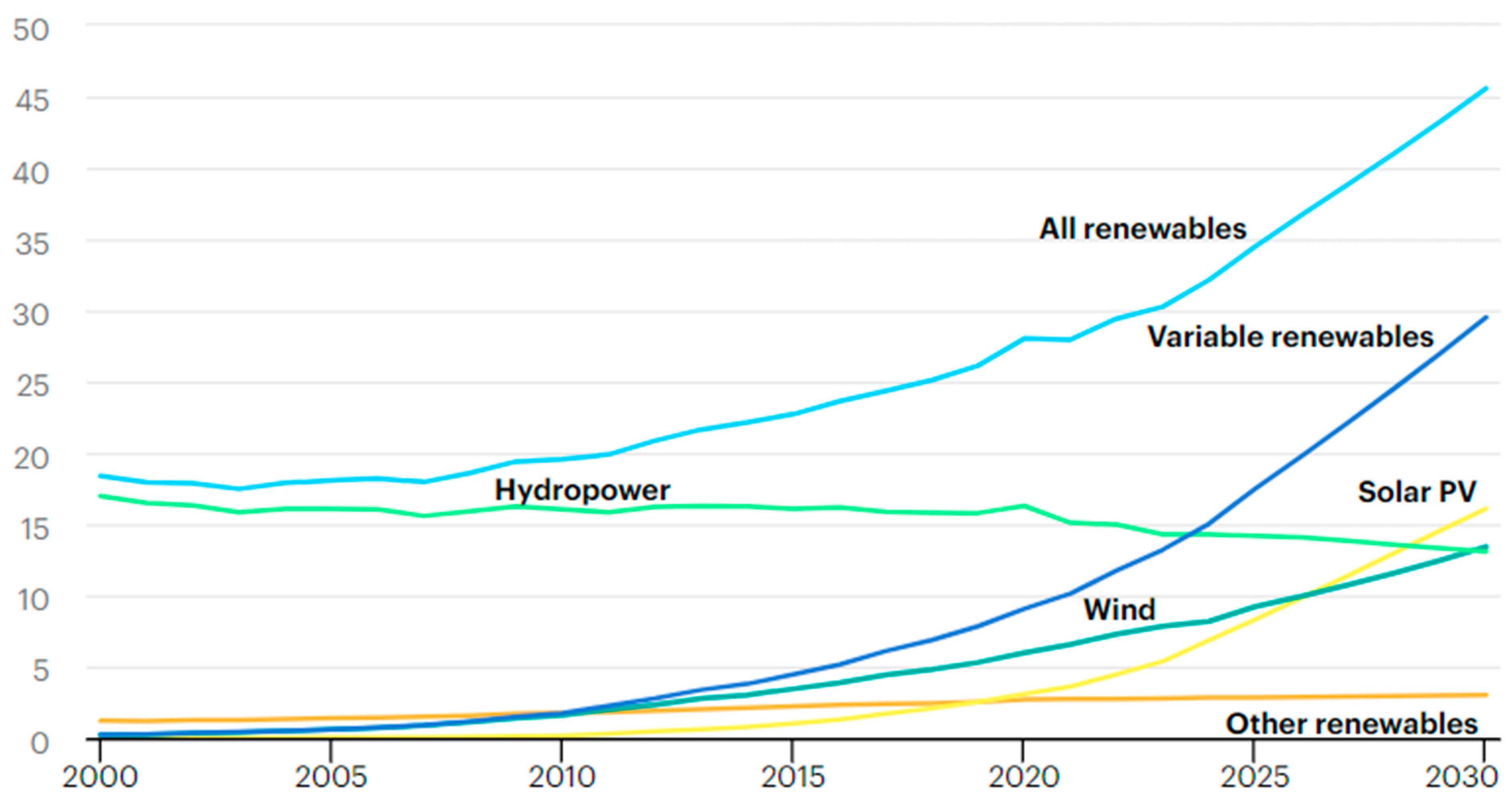
Figure 3.
AI in the energy sector (Source: ResearchGate).
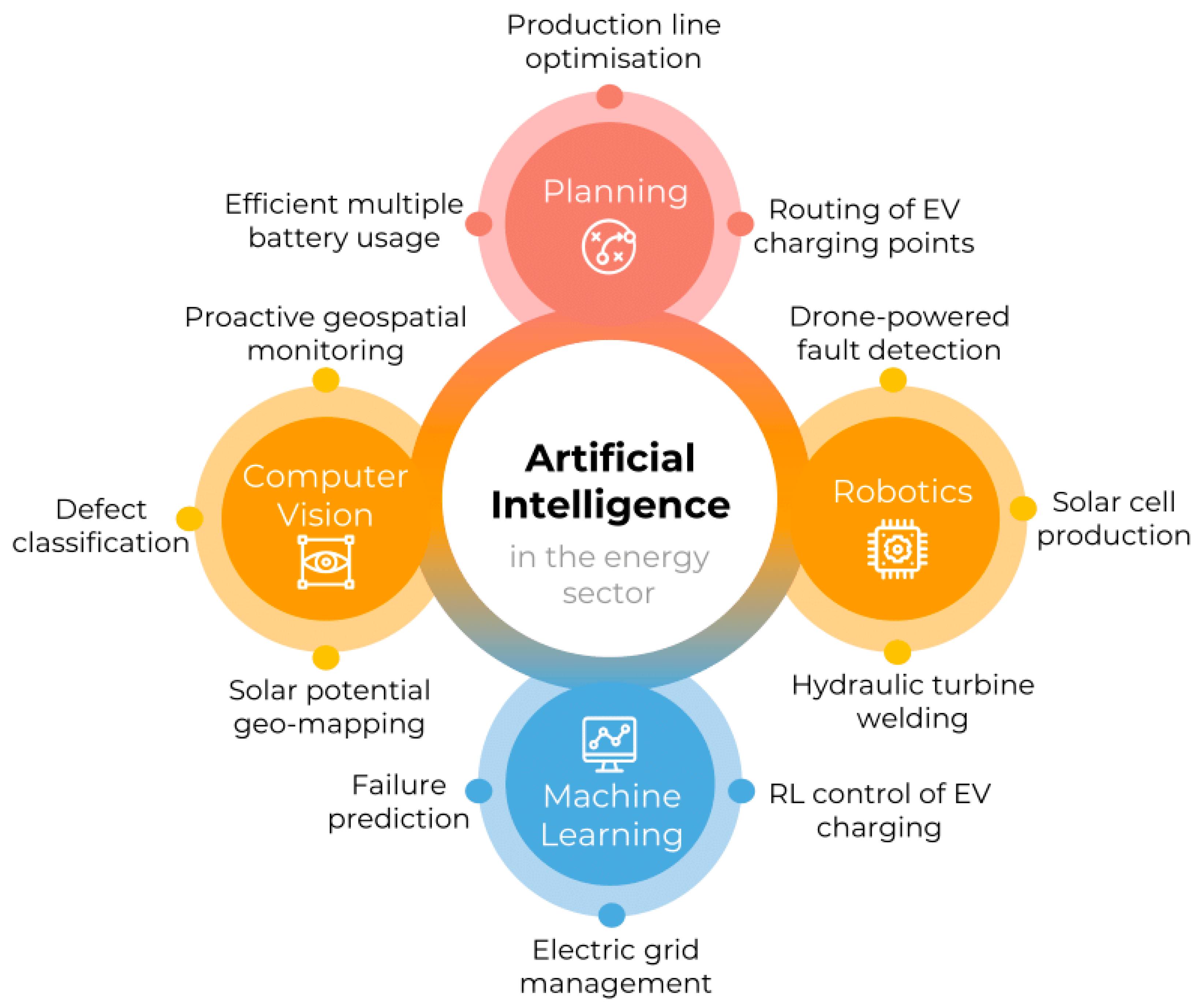
Figure 4.
AI utilities solutions (Source: AIMultiple Research).
Disclaimer/Publisher’s Note: The statements, opinions and data contained in all publications are solely those of the individual author(s) and contributor(s) and not of MDPI and/or the editor(s). MDPI and/or the editor(s) disclaim responsibility for any injury to people or property resulting from any ideas, methods, instructions or products referred to in the content. |
© 2026 by the authors. Licensee MDPI, Basel, Switzerland. This article is an open access article distributed under the terms and conditions of the Creative Commons Attribution (CC BY) license (http://creativecommons.org/licenses/by/4.0/).
Copyright: This open access article is published under a Creative Commons CC BY 4.0 license, which permit the free download, distribution, and reuse, provided that the author and preprint are cited in any reuse.


