

Submitted:
12 January 2026
Posted:
14 January 2026
You are already at the latest version
Abstract
The Daily Move (TDMo) is a modified version of The Daily Mile, developed in previous research [1], that provides children greater choice in activities during participation. This study evaluated a teachers-led implementation of TDMo, aiming to assess its sustainability within primary schools. Teachers (N = 60) implemented TDMo with their classes for two 5-week blocks across two school semesters. Data were collected via questionnaires administered at the start and end of each block (Time 1 to Time 4), aligned with the RE-AIM framework’s effectiveness, adoption, implementation, and maintenance elements. Two teacher focus groups (n = 6) and one child focus group (aged 8-9 years; n = 6) were conducted at Time 4. TDMo was perceived to positively impact multiple health metrics across timepoints, including physical fitness (agreement decreased from 92-84%), movement proficiency (agreement increased from 84.6-96.2%), and attention and concentration (agreement decreased from 96.2-92.3%). Teachers reported all children responded positively to its adoption (100%). Children’s involvement in game selection increased significantly from Block One to Block Two (p = 0.01). The main implementation barriers were curriculum demands (agreement de-creased from 80-72%) and inclement weather (agreement increased from 50% to 53.8%). Most teachers intended to sustain their implementation of TDMo (96.2%). The diverse and novel design of TDMo offers potential holistic health benefits and supports long-term sustainability. The variety of physical activity appears to enhance children’s enjoyment and encourage teachers’ sustained implementation. Aligning government policies to formally incorporate movement breaks within the curriculum may further support sustainability by reducing curriculum-related pressures.
Keywords:
the daily move
; the daily mile
; physical activity
; health
; primary school
; children
; teacher
; implementation
; sustainability
1. Introduction
Extensive research has demonstrated the wide-ranging health benefits of physical activity (PA) for children, with higher-intensity PA linked to greater health outcomes [2]. Conversely, prolonged sedentary behaviour is associated with adverse health effects in children [3]. Children aged 5-17 years old are recommended to engage in an average of 60 minutes of moderate-to-vigorous-intensity physical activity (MVPA) daily throughout the week, while minimising sedentary behaviours [3,4]. However, despite these recommendations, 77% of Irish primary school children fail to meet the daily MVPA target [5]. Additionally, recent findings by Carlin et al. suggest that more than half of children in the Republic and North of Ireland exhibit excessive sedentary behaviour, which poses a risk to their health [6]. Irish children are required to attend primary school for nearly six hours each day for roughly half of the calendar year [7], making school a suitable setting to target improving children’s PA behaviour. Furthermore, the WHO recommends that schools should provide children with opportunities for inclusive movement breaks to interrupt sitting periods during curriculum-based lessons [8].
The Daily Mile (TDM) is a PA initiative delivered during class time where primary school children (aged 4-12 years old) run at a self-regulated pace on a firm, mud-free surface for 15-minutes. The implementation of TDM does not require equipment to set-up and children do not need to change out of their school uniform or clothes to participate [9]. Since its inception, TDM has been adopted and implemented by over 21,900 primary schools across 98 countries [10]. Numerous research studies have analysed the health-related impact of participating in TDM, attributing positive effects to markers such as cardiorespiratory fitness (CRF) and PA behaviour [1,11,12,13,14,15]. Moreover, TDM has been shown to enhance children’s social health, fostering positive interactions and developing strong rapport with teachers [16,17]. In addition, evidence indicates that TDM participation may positively influence various aspects of children’s mental health and wellbeing [1,18,19]. However, implementation barriers including inclement weather and the repetitive nature of TDM have been reported as obstacles to its long-term sustainability [16,19,20,21]. In response, previous research developed a modified version of TDM, known as The Daily Move (TDMo), which includes a greater variety of PA options and can be implemented both outdoors and indoors [1]. Participation in TDMo was shown to positively impact children’s CRF, school-based PA and sedentary behaviour levels, fundamental movement skill (FMS) competence, and wellbeing [1]. Furthermore, participating children reported that TDMo was significantly more enjoyable than participating in the traditional version of The Daily Mile (TDM) [1]. Comparably, adding variety and novel activities to the delivery of TDM, designed to stimulate children’s competence, relatedness, and autonomy, has been reported to enhance engagement and enjoyment levels [22]. Nevertheless, time constraints due to an overloaded curriculum, and the pressure on teachers to deliver novel and diverse activities each week, represent potential barriers to the long-term adoption and implementation of TDMo [1].
Herlitz et al. highlight how evidence of an intervention’s effectiveness does not guarantee its sustainability in school settings [23]. Supporting this, Project Spraoi is a multi-component school-based PA and nutrition intervention that has been shown to positively affect children’s health markers including FMS, blood pressure, and waist-to-height ratio (WHtR) [24,25]. Furthermore, teachers generally perceived that participation in Project Spraoi enhanced their pupils’ fitness levels and eating habits [26]. However, notwithstanding these reported benefits, the intervention struggled with sustainability, as teachers were unable to consistently deliver the daily prescription of 20 minutes of MVPA [26]. Common barriers cited by teachers to sustaining implementation of the initiative were inclement weather, curriculum pressures, time restrictions, and accessibility to resources [26]. Similarly, barriers such as staff confidence and competence, time constraints linked to an overloaded curriculum, and misalignment with existing school policies, hinder the sustained implementation of school-based initiatives [23]. Furthermore, research indicates that children’s intrinsic motivation for sustained engagement with an activity is strongly influenced by the provision of autonomy and choice in their behaviour [27]. These results suggest that for successful long-term adoption by teachers, children, and schools, the implementation of a school-based initiative must be simple, easy to administer, minimise disruptions to learning time, and offer sufficient variety to maintain engagement and health benefits.
This study used the RE-AIM framework (Reach, Effectiveness, Adoption, Implementation, Maintenance) to evaluate the sustainability of TDMo by monitoring and exploring Irish primary school teachers’ delivery, experiences, and perceptions of the initiative [28]. RE-AIM is a tool used to evaluate the effectiveness and generalisability of interventions across various public health and behavioural science domains [29]. The function of each element in the RE-AIM framework during the evaluation process is as follows: reach refers to the number, proportion, and representativeness of the target population that participates in an intervention. Effectiveness assesses the impact of the intervention on specific outcomes. Adoption concerns the number, proportion, and representativeness of settings and individuals within those settings who choose to implement the intervention. Implementation assesses the consistency with which the intervention’s core components are delivered and evaluates the associated costs. Maintenance examines whether the intervention becomes a sustained part of an organisation’s policy or routine [29]. Supporting this, the RE-AIM framework has been widely used to evaluate the process of school-based initiatives [16,30,31,32].
The purpose of this research study was to evaluate teachers’ implementation of TDMo, with minimal external support, to assess its sustainability in Irish primary school settings. Guided by the RE-AIM framework, the objectives were to: (1) evaluate the implementation and maintenance of TDMo by teachers across two school semesters, and (2) explore factors related to the effectiveness and adoption of TDMo in the context of teacher-led delivery.
2. Materials and Methods
2.1. Study Design
A mixed-methods approach was conducted over two primary school semesters during the 2023-2024 academic year to achieve the research objectives. Convenience sampling methods were used to recruit Irish primary school teachers for participation [33]. Athletics Ireland, the coordinators of The Daily Mile (TDM) in Ireland, emailed each TDM-registered school to invite their teaching staff to participate. The email was addressed to the school secretary or staff member who registered the school for TDM, requesting that they circulate the invitation among all teachers in the school. Additionally, information about the study was shared across the primary researcher’s social media channels. Teachers were invited to sign up by contacting the primary researcher via email or social media if they were interested in participating. The requirements for teachers to participate in the study were to: (i) implement TDMo with their class group for two 5-week blocks during different semesters of the school year, (ii) complete an online questionnaire at the start and end of each 5-week block, designed to assess their perceptions and experiences related to leading the implementation of TDMo, and (iii) monitor and record implementation levels by completing a brief online questionnaire at the end of each week in both blocks. Data collection occurred at four distinct time points, labelled Time 1 (T1), Time 2 (T2), Time 3 (T3), and Time 4 (T4). These time points corresponded to pre- and post-assessments for each 5-week block of TDMo implementation, enabling a comprehensive evaluation of participating teachers’ delivery of the initiative.
2.2. Participants
All current Irish primary school teachers were eligible to participate, regardless of whether they had previous experience of delivering TDM. Inclusion criteria required that participants: (i) were currently teaching a primary school class, (ii) had not taken or planned to take a leave of absence during the 2023-2024 school year, (iii) consistently taught their assigned class throughout the full school week, and (iv) taught in an Irish primary school.
Additionally, six children (three boys and three girls) from a third-class DEIS school (aged 8-9 years) participated in a supervised focus group. DEIS (Delivering Equality of Opportunity in Schools) schools in Ireland receive additional government support compared to non-DEIS schools, to safeguard the educational needs of children from disadvantaged areas [34]. This child sample participated in TDMo, which was led and implemented by their teacher, who was also a study participant.
2.3. TDMo Implementation
The first 5-week block of teachers’ implementation of TDMo (Block One) occurred between T1 and T2, and the second 5-week block (Block Two) ran between T3 and T4. During the interim period in December and January, between Blocks One and Two, participants were encouraged to continue implementing TDMo with their class. However, implementation during this period was optional and not a mandatory requirement to participate in the study. Prior to the commencement of Block One, three separate one-hour training webinars were conducted via the online Zoom platform (San Jose, California, USA). All participants were required to attend one of these webinars, which outlined the participatory requirements and provided guidance on the core implementation principles of TDMo [1]. Each participant also received access to six digital resources, developed as part of the broader PhD research project in collaboration with the Department of Technology-Enhanced Learning at the host institution. The first resource provided participants with an overview of the core principles of TDMo and offered suggestions on how to incorporate variety into the delivery of TDM. The next three resources demonstrated activities suitable for outdoor delivery: The Daily Dodge, The Daily Relay, and The Daily Coordinate. The Daily Dodge provided examples of movement breaks featuring multi-directional activities, such as tag and chase games, to enhance children’s evasion and change-of-direction skills. The Daily Relay showcased activities, including races, designed to develop children’s motor, social, communication, and teamwork skills. The Daily Coordinate offered ideas for enhancing coordination and object-control skills. The fifth and sixth video resources, titled Indoor Activities and Classroom Activities, demonstrated fun games that could be delivered in small indoor spaces or classrooms, particularly when common barriers (e.g., inclement weather) prevented safe engagement with outdoor PA.
2.4. Data Collection
Weekly Implementation Monitoring Questionnaire. Participants were encouraged to complete these questionnaires at the end of each week during both 5-week blocks. However, completion was not mandatory for inclusion in the study or for their data to be included in the analysis. The questionnaires were designed using Qualtrics (Salt Lake City, Utah, USA). The primary researcher emailed a unique Qualtrics link to each participant, enabling them to record their weekly implementation level. The questionnaire included a multiple-choice question where participants selected the number of days that they delivered TDMo with their class. Additionally, it contained multiple-choice and open-ended questions designed to explore potential facilitators and barriers to implementation. The questions followed a similar format to those presented in the questionnaires administered between T1-T4. Adherence to completing these questionnaires ranged from 82-100% during Block One, and from 61-89.3% during Block Two.
Implementation Outcome Questionnaires. Unique links to each questionnaire were generated through Qualtrics and sent to participants via email from the primary researcher, allowing them to access and complete the questionnaires. The first question in each questionnaire required participants to enter their full name before continuing. This supported the tracking of each participant’s progress across the questionnaires and accurate organisation of the data for analysis. Qualtrics prevented participants from completing a questionnaire more than once. The design of four separate questionnaires, administered at T1, T2, T3, and T4, were guided and supported by the RE-AIM framework [28]. Figure 1 presents a visual flowchart illustrating the timeline and key developments of the data collection process. As participants were recruited prior to the implementation of the study, assessing the Reach element of RE-AIM was not applicable and therefore excluded from the analysis. Effectiveness was assessed by examining the perceived impact of TDMo on specific outcomes. Adoption was measured by examining the representativeness of participating teachers regarding their value and knowledge of PA, their attitudes toward delivering TDMo, and their perceptions of how the initiative was received by their class. Implementation was evaluated by investigating how teachers delivered TDMo, identifying common facilitators and barriers associated with the process. Maintenance was assessed by examining participants’ commitment to continuing delivery of TDMo and the factors that may influence this.
The lack of a validated tool that measures the sustainability of school-based PA initiatives informed the development of the T1-T4 questionnaires. Questions were tailored to the overarching focus of each questionnaire and its specific sections. To explore time-related effects and assess the sustainability of TDMo, some items were repeated across T2, T3, and T4. The T1 questionnaire collected baseline data on participating teachers, their schools, and class groups. T2 focused on teachers’ experiences and perceptions of TDMo after delivery during Block One. T3 explored the facilitators and barriers that influenced the implementation, or lack thereof, of TDMo during the optional, unsupported delivery period in December and January. T4 assessed teachers’ experiences after Block Two, with a primary focus on evaluating the sustainability of TDMo. Only participants who completed all four questionnaires were included in the final analysis. The questionnaires were piloted by the primary researcher’s supervisors and postgraduate students within the department of the host institution to assess completion time and ensure usability. As no issues were identified, no meaningful changes were required before the questionnaires were distributed to participating teachers. Table S1 provides an overview of each questionnaire’s structure and the thematic focus of its sections.
Focus Groups. The focus groups aimed to further explore questionnaire findings and evaluate the sustainability of TDMo. A deductive approach, informed by the preliminary analysis of questionnaire data, guided the design of the teacher-centred focus group questions. This ensured targeted discussions on key findings such as impactful components, implementation barriers, perceived benefits, and factors supporting long-term sustainability. Two separate focus groups were held with a sample of four female and two male teachers (n = 6) on Zoom (San Jose, CA, USA) in May 2024. A semi-structured topic guide was used, with prompts provided by the primary researcher if the initial question did not elicit a clear and detailed response during the focus groups (Table S2). The questions and prompts were piloted with postgraduate students (n = 3) from the department of the researcher’s host institution beforehand to ensure clarity and effectiveness.
Three girls and three boys from third class (aged 8-9 years) in a DEIS school were randomly selected to participate in a focus group that was held in their school setting under the supervision of their class teacher. The aim was to explore children’s experiences of TDMo using an interactive approach that combined inductive and deductive methods [35], encouraging engagement and gathering meaningful insights (Table S3). The focus group included a mix of open-ended and structured tasks. Inductive methods involved children writing responses on Post-it notes and placing them under open-ended questions that were displayed on a whiteboard. These responses guided follow-up questions, allowing themes to emerge naturally from the children’s perspectives. Conversely, deductive methods involved children responding to questions by placing stickers beside pre-defined answer options displayed under a whiteboard question. Depending on the task, children were either asked to select one option only or allowed to place multiple stickers to indicate more than one relevant response. This was followed by an inductive phase, where the researcher asked open-ended follow-up questions to explore the reasoning behind their selections. The development of the response options for the deductive-related tasks was informed by feedback from child participants in previous research on their likes and dislikes when participating in TDM and TDMo [1,16]. An interactive approach was chosen in line with prior findings suggesting that incorporating structured activities into focus groups may sustain children’s engagement and elicit more substantive responses [1,16,36].
2.5. Data Analysis
Questionnaire data were imported from Qualtrics into SPSS version 29.0 (Chicago, IL, USA) for analysis. To enhance interpretation and enable meaningful comparisons across timepoints, specific variables were recoded into narrower categories in SPSS, often reducing five response options to three. Questionnaire data were analysed descriptively, with response distributions for each item summarised using frequencies and percentages. Any data that was missing due to skip logic embedded in the questionnaire design was excluded from this analysis. The Likert-scale format of the questionnaire responses indicated that the data were likely to follow a non-normal distribution. This assumption was tested using Shapiro-Wilk goodness-of-fit tests, which confirmed the non-normal distribution of data. As a result, medians were calculated and Wilcoxon Signed Rank tests were used to assess differences to questionnaire items across two timepoints. For questions repeated across three timepoints, Friedman tests were conducted to evaluate variations in responses over time.
The transcription of the verbatim focus group recordings was facilitated using Otter.ai software (Mountain View, CA, USA). During the transcript familiarisation process, the researcher added relevant syntax for clarity. Thematic analysis of the transcripts, following the six-step process outlined by Braun and Clarke [35], was conducted using NVivo software version 12 (Greenwood Village, CO, USA). The transcripts were reviewed multiple times during this process, which facilitated the development of a coding framework based on common topics discussed across the focus groups. Interesting nodes (i.e., codes) were then identified by the researcher and subsequently organised into overarching patterns (i.e., themes) for additional analysis. These themes were categorised according to the RE-AIM component considered most relevant.
3. Results
At T1, 60 questionnaires were completed; at T2, 45; at T3, 35; and at T4, 28. However, the results presented in this paper are based solely on complete data sets from participants who completed all four questionnaires (n = 28). Results for participants who completed the questionnaire at T1 and at least one additional questionnaire at T2, T3, or T4 are included in Tables S4-S8. Baseline demographic data of participating teachers, their schools and class groups are presented in Table S9.
3.1. Effectiveness
Most teachers (n = 23) ‘strongly agreed’ or ‘agreed’ that TDMo positively impacted teaching and learning in the classroom, with unanimous agreement at T2 (100%) and T4 (100%), and slightly lower agreement at T3 (95.7%). The percentage of participants who ‘strongly agreed’ or ‘agreed that TDMo had a positive impact on various health-related outcomes at T2 and T4 is presented in Figure 2, with a complete summary and relevant statistics provided in Table S10.
Key outcome themes from the teacher and child focus groups include perceived improvements in concentration, PA behaviour, positive habits, leadership, and social skills. Supporting quotes are presented in Table 1.
3.2. Adoption
At T1, most participants (82.1%) reported feeling ‘confident’ or ‘very confident’ delivering a school-based movement break, while 10.7% were ‘neutral’, and 7.1% were ‘not confident’ or ‘not at all confident’. Additionally, 60.7% of participants had previously implemented TDM, while 25% reported implementing TDM with their current class. All participants believed PA was either ‘important’ (10.7%) or ‘very important’ (89.3%) to children’s health and wellbeing. Furthermore, 75% of teachers reported ‘always’ or ‘often’ engaging in PA and sport, 21.7% reported doing so ‘sometimes’, and 3.6% ‘never’ or ‘rarely’ engaged in these activities.
Most or all teachers were ‘very positive’ or ‘positive’ about adopting TDMo into their teaching schedule at T2 (n = 27, 96.4%), T3 (n = 28, 100%), and T4 (n = 26, 92.9%). All teachers (n = 28, 100%) perceived that children in their class felt ‘very positive’ or ‘positive’ about adopting TDMo into the school day at T2, T3, and T4. Key themes from the teacher focus groups on TDMo adoption, such as including a holistic approach to school-based PA and the influential role of an internal staff leader, are presented with supporting quotes in Table 2.
3.3. Implementation
Teachers were asked did they engage with the TDMo and most reported implementing it at T2 (n = 27, 96.4%), T3 (n = 24, 85.7%), and T4 (n = 26, 92.9%). The difference in the proportion who reported implementing TDMo across these three timepoints was not statistically significant (Md. = 1.0, range = 1-2; x2 = 3.5; p = 0.17; df = 2). An illustration of the level of TDMo implementation reported in the weekly questionnaires is provided in Figure S1.
At T4, teachers were asked to rank five types of TDMo activities on a 5-point Likert Scale, from most enjoyable to least enjoyable for participating children (n = 25). An illustration of the activities perceived to be the most and second most enjoyable are presented in Figure 3.
Teachers (n = 26) reported how frequently children were involved in selecting games for TDMo sessions using a 5-point Likert scale (Figure 4). At T2, 3.8% of teachers reported ‘never’ or ‘rarely’, 53.8% indicated ‘sometimes’, and 42.3% noted their class was ‘always’ or ‘often’ involved (Md. = 2.0, range = 1-3). By T4, children’s involvement increased, with 38.5% reporting ‘sometimes’ and 59.3% noting their class was ‘always’ or ‘often’ involved (Md. = 3.0, range = 2-3). This change from T2 to T4 was statistically significant (z = -2.45; p = 0.01).
Figure 5 illustrates the percentage of teachers who ‘strongly agreed’ or ‘agreed’ that potential barriers impacted delivery of TDMo at T2 and T4. ‘Curriculum demands’ (80-72%) and ‘inclement weather’ (50-54%) were the most commonly reported barriers at both timepoints. A full statistical breakdown is provided in Table S11.
Themes with supporting quotes from the teacher and child focus groups related to the implementation of TDMo, highlighting key facilitators and strategies to mitigate barriers such as curriculum demands, are presented in Table 3. Additionally, the rate of agreement with pre-defined implementation facilitators among teachers who reported implementing TDMo at T3 (n = 24), are shown in Table S12.
3.4. Maintenance
At T4, the majority of participants who reported implementing TDMo during Block Two (96.2%, n = 25), expressed their intention to continue delivering it for the remainder of the school year. All participating teachers (n = 26, 100%) stated they would recommend TDMo to other teachers. Furthermore, most teachers (n = 25, 89.3%) reported that TDMo was ‘somewhat’ or ‘very’ likely to become part of their daily school routine, while the remaining participants were ‘neutral’ (n = 3, 10.7%).
Over two-thirds of participating teachers at T4 (n = 19, 67.9%), ‘strongly agreed’ or ‘agreed’ that there is enough time during a typical school day to facilitate the long-term implementation of TDMo. Conversely, 14.3% (n = 3) ‘strongly disagreed’ or ‘disagreed’, while the remaining participants were ‘neutral’ (n = 5, 17.9%). Additionally, all teachers (n = 26, 100%) who reported implementing TDMo during Block Two, ‘strongly agreed’ or ‘agreed’ that children would enjoy participating in TDMo across a full calendar year. At T4, teachers reported varying confidence levels regarding their ability to implement TDMo in the future without the support of an external coordinator (Figure 6). Despite some respondents expressing lower levels of confidence delivering TDMo without external support, all teachers (n = 26, 100%) indicated they would not require any additional support to continue implementing TDMo independently (n = 26). Table 4 presents themes and supporting quotes related to the sustainability of TDMo, highlighting key facilitators, the role of the Irish Department of Education, and the potential impact of ceasing participation for children.
4. Discussion
The primary purpose of this study was to evaluate teachers’ implementation of a modified version of The Daily Mile (TDM) with minimal external support, to inform an assessment of its sustainability in Irish primary schools. This study is also the first to examine teachers’ implementation of this modified version, The Daily Move (TDMo), over two school semesters, and to explore both teachers’ and children’s perceptions of sustaining its future delivery. The results suggest that TDMo positively influences various aspects of children’s physical, social, and cognitive health. Moreover, the associated health benefits are perceived to be sustained over time. In particular, the perceived impact of TDMo on children’s PA behaviour may support its promotion as a sustainable solution to addressing the low proportion of Irish children currently meeting recommended PA guidelines [5]. Herlitz et al. found that witnessing improvements in children’s engagement, wellbeing, and behaviour strongly motivates schools, staff, and teachers to continue implementing an initiative [23]. These visible benefits are likely to encourage the long-term adoption and sustainability of TDMo. Furthermore, previous research has attributed TDMo with a beneficial impact on CRF, PA and sedentary behaviour, FMS, and wellbeing [1]. Similarly, participation in TDM has been associated with several health benefits for children, particularly with improvements in CRF and PA behaviour [1,11,12,13,14,15]. Nevertheless, the variety of activities in TDMo may have a more holistic impact on children’s health compared to solely implementing TDM, potentially supporting its long-term implementation. Moreover, both teachers and children recognised how integrating the implementation of TDMo into the schedule, particularly when delivered outdoors, enhances concentration and classroom engagement. Supporting this, school-based movement breaks have the potential to positively impact children’s attention, concentration, and academic performance [37]. However, previous research has found minimal or no effect on children’s executive functions from participating in TDM [14,20,38,39]. Future research is needed to investigate the impact of TDMo on children’s cognition and learning. Furthermore, studies should evaluate and compare the effects of outdoor and indoor delivery on classroom behaviour and engagement.
During the child focus groups, the variety of activities within TDMo was identified as a key facilitator in maintaining engagement with the initiative. This aligns with previous research, where children expressed a preference for greater variety and choice when participating in TDM [16,20]. Novelty and variety are reported to positively impact children’s intrinsic motivation, engagement, and enjoyment in PA [40,41]. Similarly, Yli-Piipari et al. highlight the considerable role that enjoyment plays in motivating children to sustain participation in PA [42]. All participating teachers who continued implementing TDMo during T3 indicated that their class’s enjoyment of the initiative supported its sustained delivery. Although the Daily Dodge and Daily Coordinate were perceived as the activities most enjoyed by children, the results also indicated that some children found The Daily Mile and The Daily Relay enjoyable. This further demonstrates the importance of offering a variety of activities to satisfy children’s desire for enjoyment. Furthermore, incorporating novel and varied activities into the TDM has been shown to boost children’s engagement and enjoyment [22], while TDMo has been reported as significantly more enjoyable than TDM [1]. The diverse structure of TDMo, in contrast to the repetitive nature of TDM, may enhance its potential for sustained implementation across school settings. Furthermore, focus group data suggests children enjoy the autonomy provided by TDMo, while questionnaire data indicates that children’s control and input in selecting activities increase over time. Satisfying children’s need for autonomy has been shown to significantly influence their intrinsic motivation and commitment to PA [40]. Gradually increasing children’s autonomy in selecting activities delivered during TDMo may enhance their engagement and sustain their interest in the initiative over time.
The findings suggest that participants who adopted TDMo into their teaching schedules had a strong interest in PA and recognised its value for children’s health and development. Additionally, the results indicate most participants felt confident leading movement breaks and PA sessions with their class. Turner et al. emphasise how teachers’ knowledge, interest, and perceived competence are key factors influencing the successful implementation of classroom-based movement breaks [43]. Furthermore, teachers’ belief in the importance of an initiative is closely associated with their increased motivation to sustain its implementation [23]. Participating teachers expressed positive feelings about incorporating TDMo into their teaching schedule and perceived its integration into the school routine to be well-received by children. Enhancing teachers’ knowledge and awareness of the benefits of PA for children may further support the successful adoption of TDMo. The positive reports from participating teachers regarding its adoption suggest a promising outlook for sustained implementation within school routines. Moreover, focus group discussions highlighted the importance of a holistic approach, involving school staff and key external stakeholders, to enhance the uptake of TDMo among teachers. Herlitz et al. underscore how support from the school principal for a health initiative, such as integrating it into policy and routine and valuing the efforts of staff, strengthens their long-term adoption [23]. Additionally, external support, including political decisions, government funding, and policies play a crucial role in the adoption, implementation, and long-term sustainability of school-based initiatives [44,45]. These results highlight the crucial role of staff and a supportive school culture in adopting and maintaining TDMo implementation by prioritising structured PA for children. Furthermore, they emphasise the pressing need for policy alignment between primary schools and education departments to facilitate the provision of regular movement break opportunities during school.
Consistent with previous research on TDM, curriculum demands and inclement weather were identified as sizable barriers to the implementation of TDMo [16,21,46]. Nevertheless, focus group data indicates a teacher who values the importance of PA for children and prioritises incorporating movement breaks into the school day can mitigate the impact of curriculum-related pressures on the implementation of TDMo. Furthermore, inadequate facilities emerged as a potential barrier, with results unexpectedly suggesting that their negative impact on implementation was greater during Block Two than Block One. Focus group discussions highlighted a preference for implementing TDMo outdoors rather than indoors. The research of Harris et al. reported how space shortages can affect the implementation of TDM [17]. It is possible that better weather conditions during the spring months of Block Two led to an increase in teachers’ provision of PA opportunities within schools. Consequently, this potential rise in school-based activity may have exacerbated the negative impact of inadequate facilities and resulting space shortages on delivery of TDMo. A teacher’s innovativeness and confidence in utilising available classroom resources emerged as key facilitators in the focus groups, providing solutions to barriers such as space constraints and inclement weather. In support, the skill competence of a teacher delivering a school-based PA intervention has been identified as an implementation facilitator but can also act as a barrier to sustainability if lacking [44]. Nevertheless, children’s PA behaviour is positively associated with time spent outdoors [47]. This aligns with the views of children participating in the focus group, who expressed how they enjoyed being physically active outdoors during a TDMo session. This supports a core principle of TDMo implementation, prioritising outdoor activity to sustain children’s long-term engagement and enjoyment.
A high proportion of participating teachers perceived that there is sufficient time in the school day to support the maintenance of TDMo implementation. However, time constraints have been previously identified as both a TDM and TDMo implementation barrier [1]. Despite this, results suggested that most teachers were intent on and likely to continue delivering TDMo with their class. According to Herlitz et al. [23], teachers are more likely to sustain implementation of a health-related initiative if they value and recognise their effectiveness. The characteristics of teachers that participated in this study, coupled with their positive perception of the effectiveness of TDMo, may have influenced their commitment to maintaining its delivery. Furthermore, previous research indicates that teachers may struggle to consistently implement a school-based PA intervention without the support of an external PA specialist [26]. However, the findings of this study suggest that most participating teachers would feel confident continuing the implementation of TDMo without the support of an external coordinator. Adaptable interventions are associated with greater sustainability success, as they are better equipped to meet the unique needs of class groups [23]. The varied nature of TDMo suggests that it is adaptable across different contexts, which may explain why teachers would feel confident committing to its implementation. Additionally, the questionnaire data indicates that teachers’ commitment and confidence in sustaining delivery of TDMo are not dependent on the provision of additional resources. Nevertheless, focus group discussions highlighted the supportive role that new and diverse resources may have in enhancing and maintaining children’s engagement with the initiative. In support, PA resources provided to schools and staff committed to Active School Flag (ASF) facilitate implementation and adherence to the programme’s principles [48]. Additionally, focus group feedback from teachers indicated that greater government support is required to enhance children’s PA behaviour in schools and to ensure the successful sustainability of TDMo. The ASF is a multi-faceted PA programme designed by the Irish Department of Education to recognise the committed efforts of primary and secondary schools in promoting children’s PA behaviour. Schools earn a tangible Active Flag by demonstrating efforts across four pillars including physical activity, physical education, community partnerships, and delivery of an Active School week [48]. According to Belton et al. [48], nearly half of all Irish primary schools (46%), 1,419 in total, have earned at least one ASF, which remains valid for three years. However, only 314 schools were reported to have renewed their commitment by obtaining a second flag [48]. Furthermore, recent data indicates that many do not maintain their ASF status, as only 617 out of 3,227 primary schools (19.12%) currently hold an active ASF [49,50]. These findings suggest how relying on extrinsic rewards (i.e., tangible active school flag) may not effectively encourage long-term commitment. Ryan and Deci report how intrinsic motivation is generally more effective for sustaining engagement than extrinsic motivation [27]. Moreover, tangible rewards tied to performance may weaken intrinsic motivation, potentially reducing interest and long-term commitment to an activity [27]. Given the potential impact of TDMo on children’s intrinsic motivation for PA, as evidenced by the reported autonomy, engagement, and enjoyment participants associated with the initiative, there may be an opportunity for the Irish government to align TDMo with the PA pillar of the ASF programme. This potential alignment could, in turn, enhance the health and wellbeing of Irish primary school children.
Strengths and Limitations
The mixed-methods study, combining quantitative and qualitative methods, enabled a thorough analysis of the implementation and sustainability of TDMo. The validated RE-AIM framework provided a structured and comprehensive evaluation of the initiative’s effectiveness, adoption, implementation, and maintenance. Conducting data collection over two 5-week blocks across different school semesters allowed for the assessment of both immediate and long-term effects of TDMo, including the impact of seasonal differences on implementation. Furthermore, insights from teachers during an interim period without external support strengthened the evaluation of the sustainability potential of TDMo. Additionally, the pre- and post-questionnaires captured changes, or lack thereof, over time. Monitoring weekly implementation fidelity ensured an accurate evaluation of teachers’ adherence and consistency of delivery over time. Focus groups with teachers and children added depth to the data collected, supporting the exploration of key findings from the questionnaires. Furthermore, the interactive nature of the child focus group yielded meaningful responses about their TDMo experiences, enhancing insights into the initiative’s perceived effectiveness and long-term engagement potential.
Limitations of the current research included the convenience sampling methods which likely attracted teachers who were already interested in providing their classes with structured PA opportunities. Most participating teachers generally engaged in PA and perceived that their school’s children had a positive attitude towards PA. The results, therefore, may reflect a favourable perspective on the impact of TDMo. Future research should strive to assess the implementation and sustainability of TDMo in schools where PA may not be prioritised. Approximately half of the teachers who initially signed up to participate were excluded from the analysis phase for failing to complete the required questionnaire at each timepoint. Subsequently, the generalisability of findings may have been impacted, necessitating a cautious interpretation of results. Allocating more curriculum time for Physical Education (PE) or health-focused initiatives could enable future research to replicate this methodology with a larger sample size over multiple years, thereby enhancing the robustness of the findings. Most teachers taught in Munster and co-educational schools, with no representative from the province of Ulster. Consequently, the results may not reflect the impact of TDMo across various Irish school classifications and geographical locations. Conducting a follow-up study with participating teachers after 12 months or longer to evaluate the retained level of implementation would provide a deeper understanding of the long-term impact and sustainability of TDMo.
5. Conclusions
The findings of this study suggest that TDMo participation can yield meaningful benefits for primary schools, teachers, and children. Innovative features of the initiative, such as the novel and varied nature of the activities delivered, appear to support its long-term implementation. Teachers who recognise the importance of PA for children and value the benefits of integrating movement breaks into the school day are likely to adopt and maintain implementation. Collectively, these findings highlight the strong potential for the successful adoption and implementation of TDMo in Irish primary schools. Nevertheless, its uptake and sustainability could be further enhanced by increased curriculum time for health and wellbeing initiatives, as allocated by the Irish Department of Education.
Supplementary Materials
The following supporting information can be downloaded at: Preprints.org, Figure S1: Mean weekly level of TDMo implementation reported by teachers; Table S1: Structure and thematic focus of T1-T4 questionnaires title; Table S2: Teacher focus group questions; Table S3: Description of questions and response methods from the child-centred focus group; Table S4: Frequency results for teachers’ agreement with the positive impact of TDMo on health markers; Table S5: Teachers’ reported feelings towards adopting TDMo into their teaching schedule; Table S6: Teachers’ perceptions of how their class felt about adopting TDMo into a typical school day; Table S7: Frequency that teachers’ class groups were involved in the selection of games for a TDMo session; Table S8: Teachers rate their agreement with the impact of the displayed barriers on implementation of TDMo; Table S9: Demographic data of participating teachers, their schools, and class groups; Table S10: Teachers’ ratings regarding their agreement with the positive impact of TDMo on markers of children’s health; Table S11: Teachers rate their agreement with the impact of the displayed barriers on implementation of TDMo; Table S12: Teachers’ agreement percentage on the influence of common facilitators on their continued implementation of TDMo during T3.
Author Contributions
Conceptualization, L.H., C.B., C.O., and E.C.; methodology, L.H.; validation, L.H., C.B., C.O., and E.C.; formal analysis, L.H.; investigation, L.H..; resources, Department of Sport, Leisure and Childhood Studies, Munster Technological University; data curation, L.H..; writing—original draft preparation, L.H.,.; writing—review and editing, L.H., C.B., C.O., and E.C.; visualization, L.H.; supervision, C.B., C.O., and E.C.; project administration, L.H..; funding acquisition, Athletics Ireland. All authors have read and agreed to the published version of the manuscript.
Funding
This research was funded by Athletics Ireland, National Governing Body of athletics and coordinators of participation in The Daily Mile in Ireland.
Institutional Review Board Statement
The study was conducted in accordance with the Declaration of Helsinki and approved by the Human Research Ethics Committee at Munster Technological University (protocol code: MTU-HREC-FER-22-011-A; date of approval: 31/01/2023).
Informed Consent Statement
Informed consent was obtained from all subjects involved in the study, including parental consent for children who participated in a focus group.
Data Availability Statement
The data presented in this study are available upon request from the corresponding author. The data are not publicly available due to their sensitive nature and data protection regulations.
Acknowledgments
The valuable contributions of the teachers and children who participated in this research are gratefully acknowledged.
Conflicts of Interest
The authors declare no conflicts of interest.
Abbreviations
The following abbreviations are used in this manuscript:
| TDM | The Daily Mile |
| TDMo | The Daily Move |
| PA | Physical activity |
| MVPA | Moderate-to-vigorous physical activity |
| CRF | Cardiorespiratory fitness |
| FMS | Fundamental movement skills |
| WHO | World Health Organisation |
| T | Time |
References
- Hanna, L.; Burns, C.; O'Neill.; Bolger, L.E.; Coughlan, E. Comparing the impact of “The Daily Mile™” vs. a modified version on Irish primary school children's engagement and enjoyment in structured physical activity. Front. Sports Act. Living. 2025, 7, 1550028. [CrossRef]
- Poitras, V.J.; Gray, C.E.; Borghese, M.M.; Carson, V.; Chaput, J.P.; Janssen, I.; Katzmarzyk, P.T.; Pate, R.R.; Gorber, S.C.; Kho, M.E.; Sampson, M.; Tremblay, M.S. Systematic review of the relationships between objectively measured physical activity and health indicators in school-aged children and youth. Appl. Physiol. Nutr. Metab. 2016, 41(6), S197-S239. [CrossRef]
- World Health Organisation. WHO Guidelines on Physical Activity and Sedentary Behaviour; World Health Organisation: Geneva, Switzerland, 2020.
- Department of Health (Ireland). Every Move Counts. National Physical Activity and Sedentary Behaviour Guidelines for Ireland; Health Service Executive: Dublin, Ireland, 2024.
- Woods, C.B.; NG, K.W.; Britton, U.; McCelland, J.; O’Keefe, B.; Sheikhi, A.; McFlynn, P.; Murphy, M.H.; Goss, H.; Behan, S.; Philpott, C.; Lester, D.; Adamakis, M.; Costa, J.; Coppinger, T.; Connolly, S.; Belton, S.; O’Brien, W. The Children’s Sport Participation and Physical Activity Study 2022 (CSPPA 2022). Physical Activity for Health Research Centre, Department of Physical Education and Sport Sciences, University of Limerick: Limerick, Ireland; Sport Ireland and Healthy Ireland: Dublin, Ireland; Sport Northern Ireland: Belfast, Northern Ireland, 2023.
- Carlin, A.; Connolly, S.; Redpath, T.; Belton, S.; Coppinger, T.; Cunningham, C.; Donnelly, A.; Dowd, K.; Harrington, D.; Murtagh, E.; Ng, K.; O’Brien, W.; Rodriguez, L.; Woods, C.; McAvoy, H.; Murphy, M. Results from Ireland North and South’s 2022 report card on physical activity for children and adolescents. JESF 2024, 22, 66-72. [CrossRef]
- Starting School. Available online: https://www.citizensinformation.ie/en/education/primary-and-post-primary-education/going-to-primary-school/starting-primary-school/#:~:text=Schools%20hours%20and%20days&text=Primary%20schools%20may%20reduce%20the,(commonly%20called%20first%20class) (accessed on 08th of January 2026).
- World Health Organisation. Promoting Physical Activity in the Education Sector; World Health Organisation Regional Office for Europe, Copenhagen, Denmark, 2018.
- What is The Daily Mile? Available online: https://www.thedailymile.ie/the-daily-mile/about-the-daily-mile/ (accessed on 08th of January 2026).
- Global Community. Available online: https://www.thedailymile.ie/our-community/global-community/ (accessed on 08th of January 2026).
- Brustio, P.R.; Mulasso, A.; Lupo, C.; Massasso, A.; Rainoldi, A.; Boccia, G. The Daily Mile is able to improve cardiorespiratory fitness when practiced three times a week. Int. J. Environ. Res. Public Health 2020, 17(6), 2095. [CrossRef]
- Chesham, R.A.; Booth, J.N.; Sweeney, E.L.; Ryde, G.C.; Gorely, T.; Brooks, N.E.; Moran, C.N. The Daily Mile makes primary school children more active, less sedentary and improves their fitness and body composition: a quasi-experimental pilot study. BMC Med. 2018, 16, 64. [CrossRef]
- de Jonge, M.; Slot-Heijs, J.J.; Prins, R.G.; Singh, A.S. The effect of The Daily Mile on primary school children’s aerobic fitness levels after 12 weeks: A controlled trial. Int. J. Environ. Res. Public Health 2020, 17(7), 2198. http://dx.doi.org/10.3390/ijerph17072198.
- Dring, K.J.; Hatch, L.M.; Williams, R.A.; Morris, J.G.; Sunderland, C.; Nevill, M.E.; Cooper, S.B. Effect of 5-weeks participation in The Daily Mile on cognitive function, physical fitness, and body composition in children. Sci. Rep. 2022, 12(1), 14309. [CrossRef]
- Hatch, L.M.; Williams, R.A.; Dring, K.J.; Sunderland, C.; Nevill, M.E.; Cooper, S.B. Activity patterns of primary school children during participation in The Daily Mile. Sci. Rep. 2021, 11(1), 7462. [CrossRef]
- Hanna, L.; Burns, C.; O’Neill, C.; Coughlan, E. Evaluating the perceived health-related effectiveness of ‘The Daily Mile’ initiative in Irish primary schools. Healthcare 2024, 12(13), 1284. [CrossRef]
- Harris, J.; Milnes, L.J.; Mountain, G. How ‘The Daily Mile™ works in practice: A process evaluation in a UK primary school. J. Child Health Care 2019, 24(4), 544-559. [CrossRef]
- Arkesteyn, A.; Vancampfort, D.; Firth, J.; Van Damme, T. Mental health outcomes of the Daily Mile in elementary school children: a single-arm pilot study. CAMH 2022, 27(4), 361-368. [CrossRef]
- Marchant, E.; Todd, C.; Stratton, G.; Brophy, S. The Daily Mile: Whole-school recommendations for implementation and sustainability. A mixed-methods study. PLOS ONE 2020, 15(2), e0228149. [CrossRef]
- Hatch, L.M.; Williams, R.A.; Dring, K.J.; Sunderland, C.; Nevill, M.E.; Sarkar, M.; Morris, J.G.; Cooper, S.B. The Daily Mile™: Acute effects on children’s cognitive function and factors affecting their enjoyment. Psychol. Sport Exerc. 2021, 57, 102047. [CrossRef]
- Malden, S.; Doi, L. The Daily Mile: teachers’ perspectives of the barriers and facilitators to the delivery of a school-based physical activity intervention. BMJ Open 2019, 9(3), e027169. [CrossRef]
- Scannell, J.; Murphy, F. ‘Maybe add something to it?’: building on The Daily Mile to enhance enjoyment and engagement. Education 2024, 52(8), 1527-1541. [CrossRef]
- Herlitz, L.; MacIntyre, H.; Osborn, T.; Bonell, C. The sustainability of public health interventions in schools: a systematic review. Implement. Sci. 2020, 15, 1-28. [CrossRef]
- Bolger, L.E.; Bolger, L.A.; O’Neill, C.; Coughlan, E.; O’Brien, W.; Lacey, S.; Burns, C. The effectiveness of two interventions on fundamental movement skill proficiency among a cohort of Irish primary school children. J. Mot. Learn. Dev. 2019, 7(2), 153-179. [CrossRef]
- Merrotsy, A.; McCarthy, A.L.; Flack, J.; Lacey, S.; Coppinger, T. Project Spraoi: a two-year longitudinal study on the effectiveness of a school-based nutrition and physical activity intervention on dietary intake, nutritional knowledge and markers of health of Irish schoolchildren. Public Health Nutr. 2019, 22(13), 2489-2499. [CrossRef]
- O'Byrne, Y.; Dinneen, J.; Coppinger, T. Translating interventions from research to reality: insights from Project Spraoi, an Irish multicomponent school-based health-promotion Intervention. Ir. J. Educ. 2023, 46(1), 1-28. http://www.erc.ie/ije.
- Ryan, R.M.; Deci, E.L. Self-determination theory and the facilitation of intrinsic motivation, social development, and well-being. Am. Psychol. 2000, 55(1), 68. https://psycnet.apa.org/doi/10.1037/0003-066X.55.1.68.
- Glasgow, R.E.; Vogt, T.M.; Boles, S.M. Evaluating the public health impact of health promotion interventions: the RE-AIM framework. Am. J. Public Health 1999, 89(9), 1322-1327. [CrossRef]
- Glasgow, R.E.; Harden, S.M.; Gaglio, B.; Rabin, B.; Smith, M.L.; Porter, G.C.; Ory, M.G.; Estabrooks, P.A. RE-AIM planning and evaluation framework: adapting to new science and practice with a 20-year review. Front. Public Health 2019, 7, 64. [CrossRef]
- Janssen, M.; Toussaint, H.M.; Van Mechelen, W.; Verhagen, E.A. Translating the PLAYgrounds program into practice: a process evaluation using the RE-AIM framework. J. Sci. Med. Sport 2013, 16(3), 211-216. [CrossRef]
- O’Leary, M.; Rush, E.; Lacey, S.; Burns, C.; Coppinger, T. Project Spraoi: two year outcomes of a whole school physical activity and nutrition intervention using the RE-AIM framework. Ir. Educ. Stud. 2019, 38(2), 219-243. [CrossRef]
- Smedegaard, S.; Brondeel, R.; Christiansen, L.B.; Skovgaard, T. What happened in the ‘Move for Well-being in School’: a process evaluation of a cluster randomized physical activity intervention using the RE-AIM framework. Int. J. Behav. Nutr. Phys. Act. 2017, 14, 159. [CrossRef]
- Golzar, J.; Noor, S.; Tajik, O. Convenience sampling. Int. J. Engl. Lang. Educ. 2022, 1(2), 72-77. [CrossRef]
- Measures to address educational disadvantage. Available online: https://www.citizensinformation.ie/en/education/the-irish-education-system/measures-to-address-educational-disadvantage/ (accessed on 20th December 2025).
- Braun, V.; Clarke, V. Using thematic analysis in psychology. Qual. Res. Psychol. 2006, 3(2), 77-101. [CrossRef]
- Irwin, L.G.; Johnson, J. Interviewing young children: Explicating our practices and dilemmas. Qual. Health Res. 2005, 15(6), 821-831. [CrossRef]
- Pastor-Vicedo, J.C.; Prieto-Ayuso, A.; Pérez, S. L.; Martínez-Martínez, J. Active breaks and cognitive performance in pupils: A systematic review. Apunts Educ. Fis. Esports 2021, 146, 11-23. [CrossRef]
- Martins, R.M.; Duncan, M.J.; Clark, C.C.; Eyre, E.L. Exploring the Acute Effects of the Daily Mile™ vs. Shuttle Runs on Children’s Cognitive and Affective Responses. Sports 2022, 10, 142. [CrossRef]
- Morris, J.L.; Daly-Smith, A.; Archbold, V.S.; Wilkins, E.L.; McKenna, J. The Daily Mile™ initiative: Exploring physical activity and the acute effects on executive function and academic performance in primary school children. Psychol. Sport Exerc. 2019, 45, 101583. [CrossRef]
- Fernández-Espínola, C.; Almagro, B.J.; Tamayo-Fajardo, J.A.; Sáenz-López, P. Complementing the self-determination theory with the need for novelty: motivation and intention to be physically active in physical education students. Front. Psychol. 2020, 11, 1535. [CrossRef]
- Sylvester, B.D.; Jackson, B.; Beauchamp, M.R. The Effects of Variety and Novelty on Physical Activity and Healthy Nutritional Behaviors. In Advances in Motivation Science, 5th ed.; Elsevier: Amsterdam, Netherlands, 2018; pp 169–202.
- Yli-Piipari, S.; Watt, A.; Jaakkola, T.; Liukkonen, J.; Nurmi, J.E. Relationships between physical education students’ motivational profiles, enjoyment, state anxiety, and self-reported physical activity. J. Sport. Sci. Med. 2009, 8(3), 327-336. https://pmc.ncbi.nlm.nih.gov/articles/PMC3763276/.
- Turner, L.; Calvert, H.G.; Carlson, J.A. Supporting teachers’ implementation of classroom-based physical activity. Transl. J. Am. Coll. Sport. Med. 2019, 4(17), 165-172. [CrossRef]
- Cassar, S.; Salmon, J.; Timperio, A.; Naylor, P.J.; Van Nassau, F.; Contardo Ayala, A.M.; Koorts, H. Adoption, implementation and sustainability of school-based physical activity and sedentary behaviour interventions in real-world settings: a systematic review. Int. J. Behav. Nutr. Phys. Act. 2019, 16, 267-285. [CrossRef]
- Durlak, J.A.; DuPre, E.P. Implementation matters: A review of research on the influence of implementation on program outcomes and the factors affecting implementation. Am. J. Community Psychol. 2008, 41, 327-350. [CrossRef]
- Hanckel, B.; Ruta, D.; Scott, G.; Peacock, J.L.; Green, J. The Daily Mile as a public health intervention: a rapid ethnographic assessment of uptake and implementation in South London, UK. BMC Public Health 2019, 19, 1-14. [CrossRef]
- Ferreira, I.; Van Der Horst, K.; Wendel-Vos, W.; Kremers, S.; Van Lenthe, F.J.; Brug, J. Environmental correlates of physical activity in youth–a review and update. Obes. Rev. 2007, 8(2), 129-154. [CrossRef]
- Belton, S.; Britton, Ú.; Murtagh, E.; Meegan, S.; Duff, C.; McGann, J. Ten years of ‘Flying the flag’: an overview and retrospective consideration of the active school flag physical activity initiative for Children—design, development & evaluation. Children 2020, 7(12), 300. [CrossRef]
- Active School: More Schools, More Active, More Often. Available online: https://activeschoolflag.ie/ (accessed on 22nd December 2025).
- Primary school enrollment figures. Available online: https://www.citizensinformation.ie/en/education/the-irish-education-system/measures-to-address-educational-disadvantage/ (accessed on 22nd December 2025).
Figure 1.
Flowchart of data collection timeline.
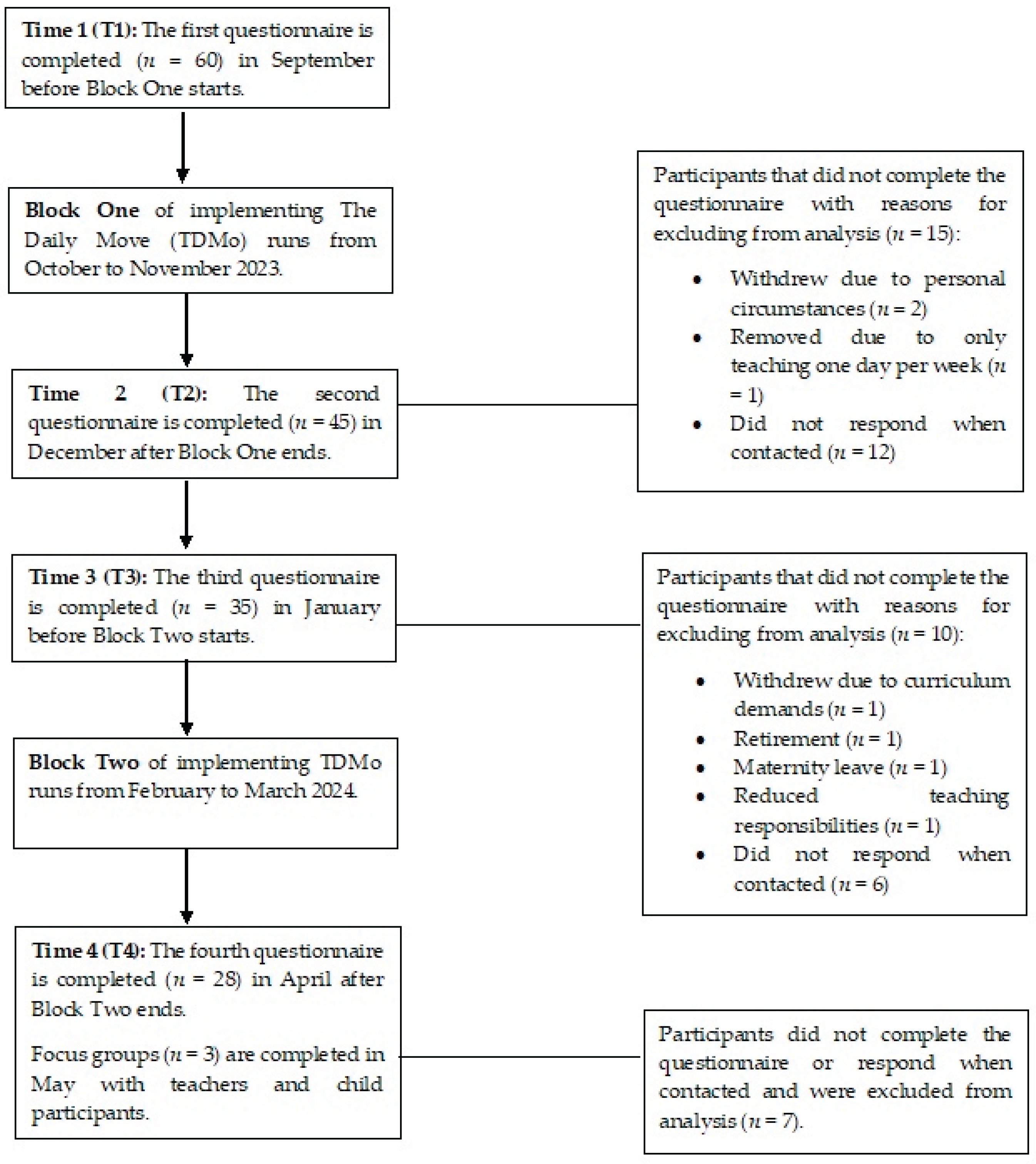
Figure 2.
Percentage of teachers who ‘strongly agreed’ or ‘agreed’ that TDMo positively impacted markers of health. Note: Percentage figures are rounded to the nearest whole number for presentation purposes.
Figure 2.
Percentage of teachers who ‘strongly agreed’ or ‘agreed’ that TDMo positively impacted markers of health. Note: Percentage figures are rounded to the nearest whole number for presentation purposes.
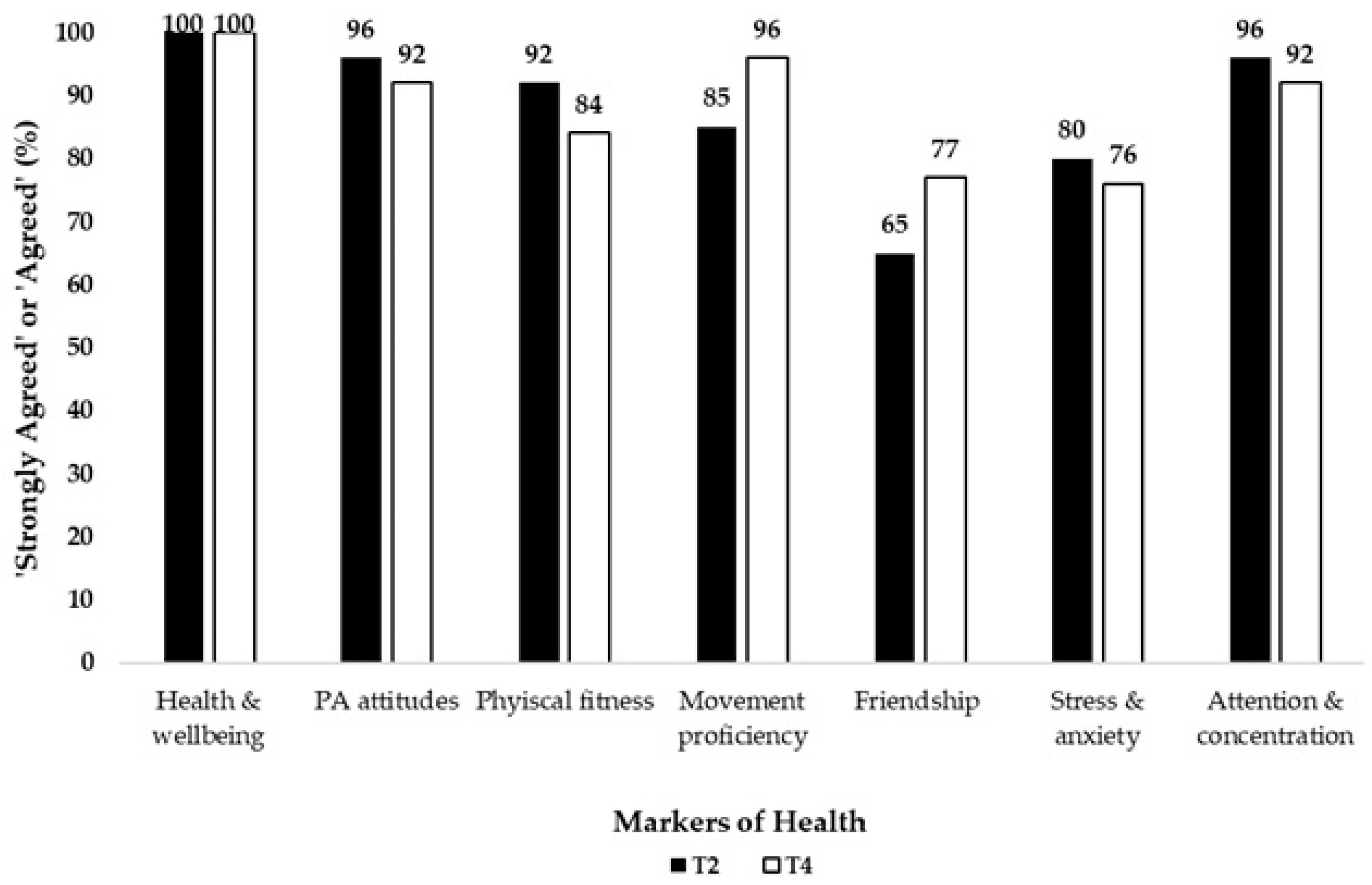
Figure 3.
TDMo activities ranked by teachers as most and second most enjoyable for children.
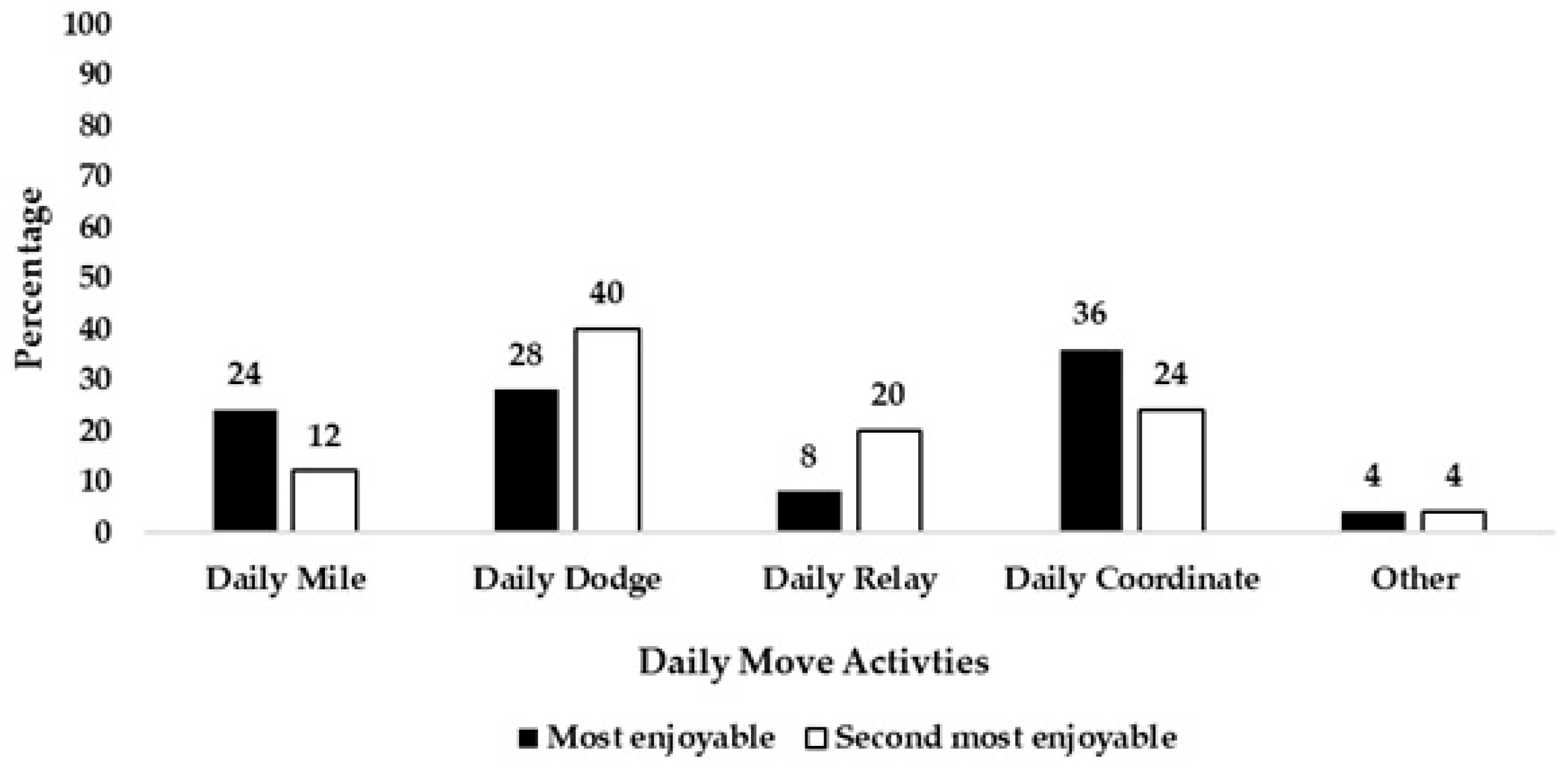
Figure 4.
Level of frequency that participating teachers’ class were involved in the selection of games.
Figure 4.
Level of frequency that participating teachers’ class were involved in the selection of games.
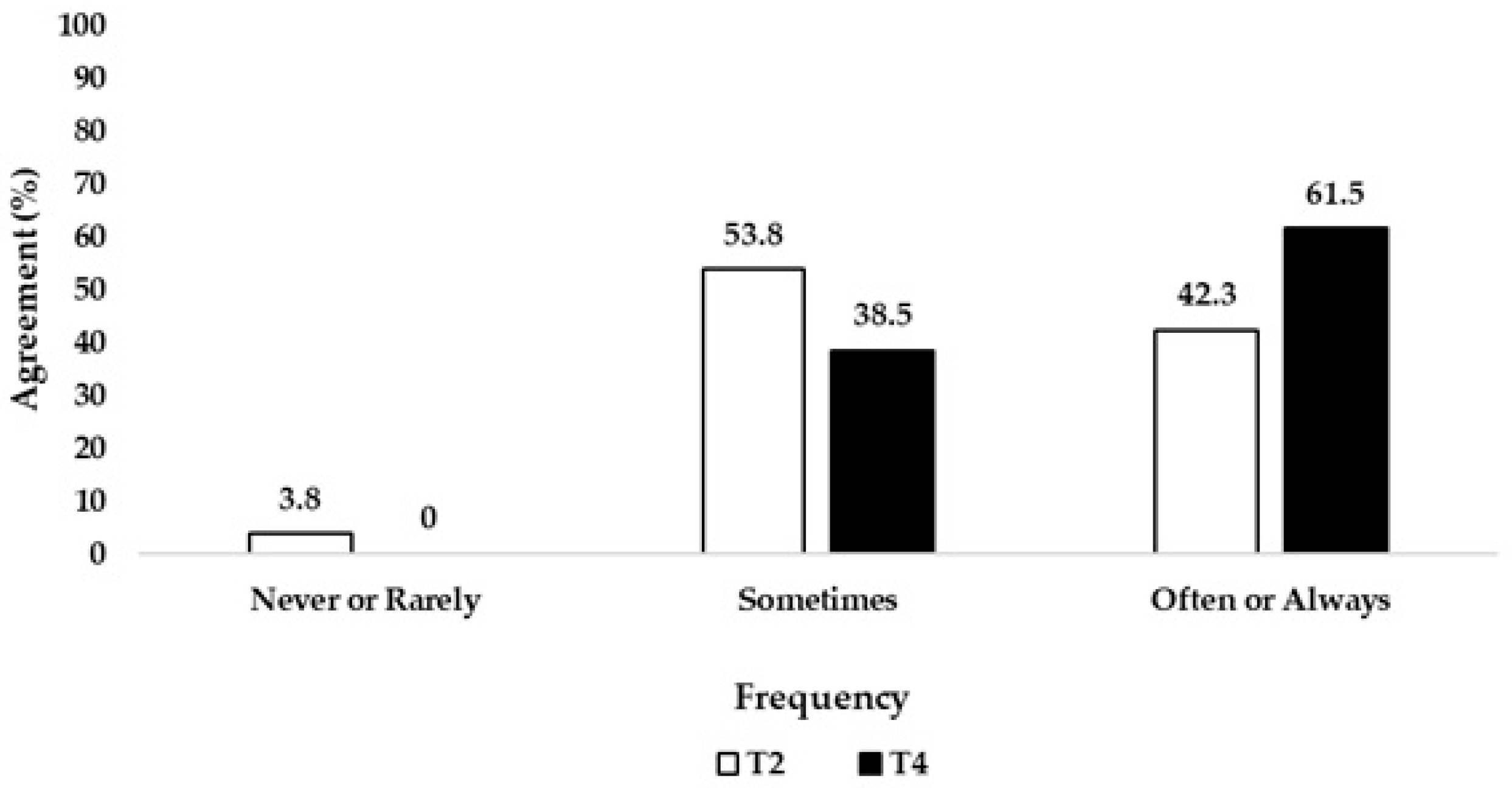
Figure 5.
Percentage of teachers who ‘strongly agreed’ or ‘agreed’ that the barriers presented impacted implementation of TDMo. Note: Percentage figures are rounded to the nearest whole number for presentation purposes.
Figure 5.
Percentage of teachers who ‘strongly agreed’ or ‘agreed’ that the barriers presented impacted implementation of TDMo. Note: Percentage figures are rounded to the nearest whole number for presentation purposes.
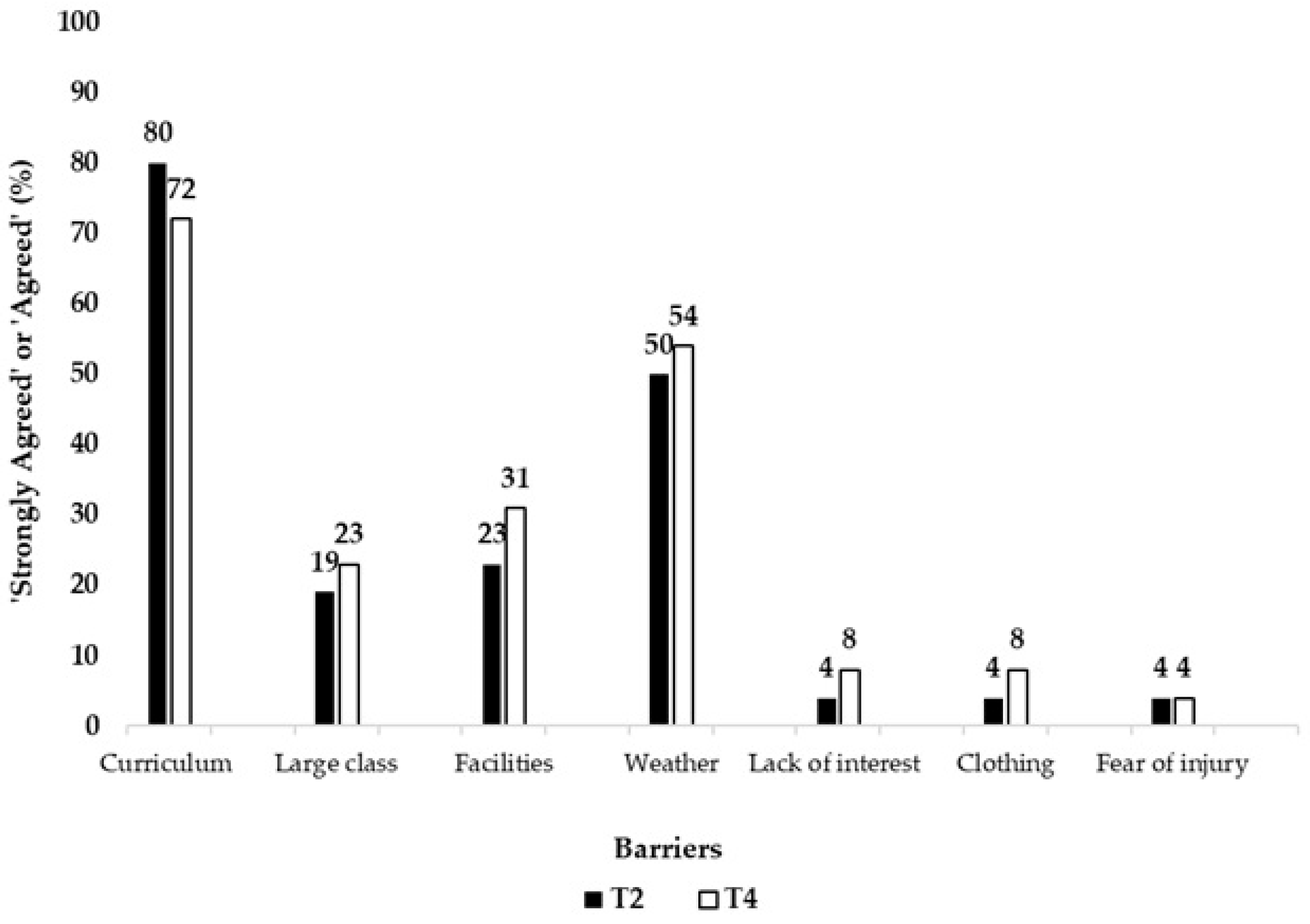
Figure 6.
Teachers’ reported confidence levels implementing TDMo without the support of an external coordinator.
Figure 6.
Teachers’ reported confidence levels implementing TDMo without the support of an external coordinator.
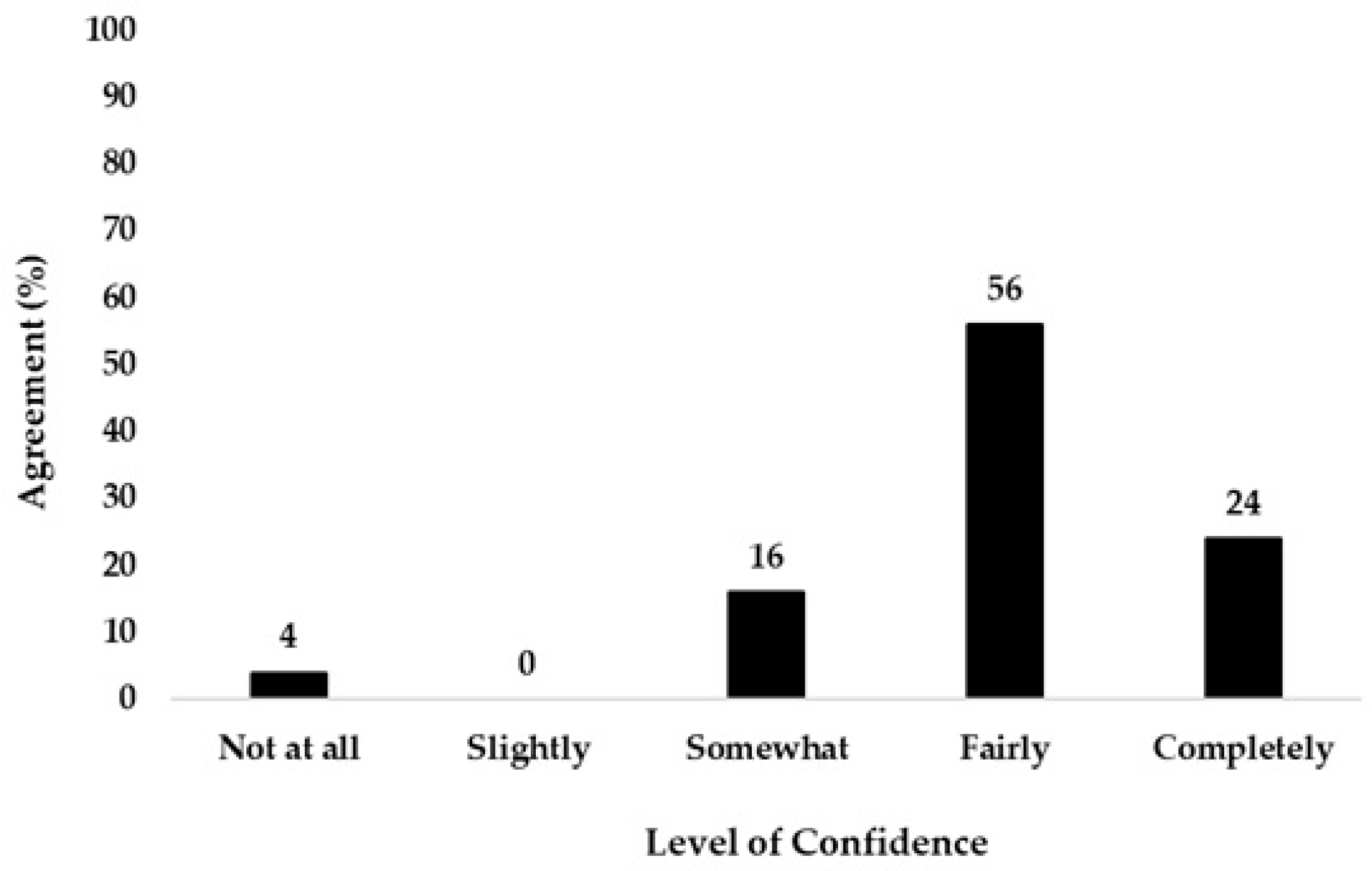

Table 1.
Summary of the child and teacher focus group findings related to the effectiveness of TDMo.
Table 1.
Summary of the child and teacher focus group findings related to the effectiveness of TDMo.
| Theme | Quote |
|---|---|
| Classroom behaviour | ‘It just works out better for everyone in the classroom if they have a movement break, and if they don't, you know about it. Their concentration is gone, they just need to get up and move' (Teacher). |
| Engaging inactive children | ‘It is the only exercise that some children get all day. Some children go home and they're inside for the rest of the day. It was great to see children that don't get much exercise, getting some exercise every day' (Teacher). |
| ‘It is very helpful for children that don't really get to move around a lot' (Child). | |
| Leadership skills | ‘My class really enjoyed being the teacher. For example, one boy led a taekwondo lesson, and since they're only seven years old, it was brilliant to see. Others taught Irish dancing, or anything that they were a master of themselves. It really got everybody involved and they felt great about it’ (Teacher). |
| Developing positive habits | ‘It's lifelong learning that you're getting them in the habit of this, that you need to do this every day. And you know without realising it they're learning that' (Teacher). |
| Social skills | You’re socialising with people, and you're running around and you're playing and you're talking' (Child). |
Table 2.
Summary of findings from teacher focus groups related to the adoption of TDMo.
| Theme | Quote |
|---|---|
| Prioritising physical activity | ‘A higher emphasis needs to be placed on academics, on The Department of Education, on those people who have the authority, or even school staff, to realise that you will get a bigger input from the children and get more benefits if we reverse the current focus or priorities, and realise that the provision of physical activity should be as much of a priority as other subjects in schools’. |
| TDMo leader | ‘I try to sell it to other teachers. When we were doing the run around Europe and we were going running around the school for 15 minutes, some teachers thought that it took too much time and did not want to do it that day. I recommended giving children something to do when they're on their walk or run, that involves practicing something in geography or practicing something in English’. |
Table 3.
Findings from the child and teacher focus groups representing the implementation of TDMo.
| Theme | Quote | |
|---|---|---|
| Enjoyable | ‘You get to move and run around before you go back inside. It's very fun because I like moving around’ (Child). | |
| Variety and novelty | ‘I prefer doing different things instead of doing something over and over. Doing the same thing gets boring because you already know what it feels like' (Child). | |
| Innovative teachers | ‘There's so much you can do within a square meter. I have these low windowsills in school, and if it's raining, I think of different things we can do on the windowsills. We step up and down off the windowsill, and we do tricep dips on the windowsill' (Teacher). | |
| Overcoming curriculum demands | ‘With regards to the curriculum, there is always time to go out to play and run, and the kids will always get a bigger benefit out of that than any lesson in the curriculum' (Teacher). | |
| Autonomy and choice | ‘I enjoy it because you can play your favourite sport. It is more enjoyable than someone else picking it for you’ (Child). | |
| Outdoor vs indoor delivery | ‘I like it outside because I can get more air when I’m out of breath. I think it is more enjoyable than doing it in the classroom’ (Child). | |
| ‘Delivering it inside is absolutely possible, and they love it. But in terms of clearing the air in the room, certainly, my class prefer to go outside’ (Teacher). |
Table 4.
Findings from the teacher and child focus groups related to the maintenance of TDMo.
| Themes | Quote |
|---|---|
| Multiple resources | ‘I love having so many resources and the opportunity for each child to have a ball. That's a dream - every child having a ball to use for whatever activity you're doing' (Teacher). |
| ‘Videos are really helpful when you're trying to teach the kids, because sometimes, when you're reading the instructions for a game off a document it can be difficult to understand’ (Teacher). | |
| Government support | 'I think the people making the decisions on funding lack an understanding of what schools really need on the ground. There's no thought for how to integrate physical activity into the daily routine as a basic necessity. It's health and safety first, with physical activity treated as a bonus' (Teacher). |
| Enduring impact | ‘I think we're in a pattern now of doing it. I think they love it. There are huge benefits from it, and I enjoy doing it with them. So, I think I'll just keep doing it. I’d like to continue doing with them’ (Teacher). |
| Result of ceasing participation | ‘I would feel disappointed and sad because I like doing it and its fun’ (Child). |
Disclaimer/Publisher’s Note: The statements, opinions and data contained in all publications are solely those of the individual author(s) and contributor(s) and not of MDPI and/or the editor(s). MDPI and/or the editor(s) disclaim responsibility for any injury to people or property resulting from any ideas, methods, instructions or products referred to in the content. |
© 2026 by the authors. Licensee MDPI, Basel, Switzerland. This article is an open access article distributed under the terms and conditions of the Creative Commons Attribution (CC BY) license (http://creativecommons.org/licenses/by/4.0/).
Copyright: This open access article is published under a Creative Commons CC BY 4.0 license, which permit the free download, distribution, and reuse, provided that the author and preprint are cited in any reuse.


