Preprint
Article

This version is not peer-reviewed.

Above- and Below-Biomass Accumulation and Carbon Stock Dynamics of Pinus kesiya and Pinus oocarpa across Viphya Plantation Stands in Malawi

Submitted:

05 January 2026

Posted:

06 January 2026

You are already at the latest version

Abstract

Forest ecosystems are vital to global carbon cycling as sinks or sources, while fast-growing, adaptable pines such as P. kesiya and P. oocarpa are central to national carbon sequestration efforts. This study was aimed at determining biomass accumulation variations and carbon stock dynamics between these two species at the age of 16 years in the Viphya Plantations, a prominent timber producing area in northern Malawi. Following the systematic sampling, forest inventory data was collected from 20 circular plots of 0.05 ha each. Above and below ground biomass was estimated using generic allometric models for pine species. Findings indicate that there were significant (P<0.001) differences in biomass accumulation and carbon sequestration between P. oocarpa and P. kesiya plantations. P. oocarpa accumulated more biomass (298.86±12.09 Mgha-1) than P. kesiya (160.13±23.79 Mgha-1). Furthermore, P. oocarpa plantation had a higher annual carbon sequestration (32.22±1.30 tCO2e/ha/yr) as compared to P. kesiya plantation (17.26±2.56 tCO2e/ha/yr). In addition, the uncertainty was less than 1% and fit within the IPCC’s recommended range (<15%). Therefore, the study has demonstrated that species selection should match management objectives: P. oocarpa maximizes short-to-medium term carbon sequestration and productivity, while P. kesiya supports long-term soil carbon stability. Hence, integrating both optimizes carbon benefits.

Keywords: 
;  ;  ;  ;  

1. Introduction

Forest ecosystems play a critical role in global carbon cycling by storing carbon, thereby contributing to climate change mitigation and sustainable forest management [1]. Within this broad context, plantation forestry research increasingly examines how species-specific growth patterns and stand development influence biomass accumulation and carbon stock dynamics [2]. Pine plantations are of great importance in biomass accumulation and carbon sequestration commitments because they are fast-growing, highly productive, and capable of storing large amounts of carbon in relatively short rotation periods [3].
Pine species, including P. oocarpa and P. kesiya are of great importance to Malawi’s carbon sequestration commitments as they dominate the timber plantations in Malawi [4]. The species are preferred for their relatively fast growing, ability to adapt to diverse conditions locally, in addition to their quality of timber suitable for a wide range of uses; construction furniture and fuel wood [5]. Pine plantations in Malawi were predominantly established for commercial purposes to satisfy the demand for construction timber, furniture and fuel wood. Pine species are mainly preferred for their faster growing characteristics and provision of higher returns in a shorter period compared to native species [4]. Pine plantations, just like many others, support reduction of the pressures on native vegetation. The plantations help in meeting demand for harvested wood products efficiently [6]. Even though the Pine plantations were originally founded on commercial objectives, the plantations play a critical role in atmospheric carbon emissions offsetting. Pine species are currently preferred across the cross section of smallholder farmers, entrepreneurs and widespread stakeholders promoting land restoration as one of the most suitable to quicker achievement of carbon offsetting [7]. In a similar way as it was pointed out in Spain that pine plantations play unimaginable roles in the biomes regarding regulation of the carbon sinks in the shortest rotation periods, the observations cut across the globe [8].
P. kesiya is a native of Southeast Aisia and naturally grows in India, Myanmar, China, Thailand, Laos, Cambodia, Vietnam and Philippines. It is widespread and occurs in between 12° and 30°N latitude [6]. The species occurs in elevations ranges 350 to 2900 meters above sea level; however, it’s flourished in altitudes of around 1000 meters above sea level. Additionally, the species does well under moist conditions, with moderate to high rainfall [3]. P. Kesiya is the dominant Pine species in the country’s plantations alongside P. oocarpa. While P. kesiya’s thrives in a greater range of altitudes, its optimal range is recorded at altitudes below 1000 meters above sea level in Thailand [6]. P. kesiya has a potential of accumulating between 22 to 607 Mgha-1 of biomass [9]. P. kesiya is a fast-growing species and produces good quality timber. Morphologically the species develops abundance of branches and corns. Its other advantage falls on promoting continuous shoots all year round [6]. Additionally, P. kesiya adapts to a various range of soil types and tolerates nutrient poor soils and can grow up to 37 meters in height under favorable conditions [9]. The species is drought tolerant and moderately fire resistance [3]. On the other hand, regarding timber production, the species falls short in areas of Stem breakage by wind, low wood density, presence of compression wood and coarse branching. The unique properties of P. kesiya make it an important species for carbon sequestration purposes [6].
P. oocarpa a closed cone Pine species is a native of Mexico and Central America [10]. The species is one of the early exotic timber species introduced in Malawi in the early 1950s by the Government of Malawi following its aspiration for timber production [9]. P. oocarpa is found in the semi-arid to moist tropics and subtropics, where it occurs at an altitude range of 350-2500 meters above sea level. However, the species grows best between 1200 and 1800 meters above sea level. The favorable mean annual rainfall for P. oocarpa is between 600 and 800 millimeters. Furthermore, P. oocarpa flourishes well in deep, well drained, and moderately acidic soils [10]. P. oocarpa has the potential of growing to 45 to 80 cm in diameter at breast height [11]. The average density of P. oocarpa falls between 561 and 1212 Mgha-1. P. oocarpa generates very large tree trunks which are long-lived as such offering it the capacity to store more carbon. Additionally, the species is also well known in the conifer family for its fast growth rate and strong resistance to forest fire damage, which apparently helps its successful establishment [11]. In the tropics, the species is common in Kenya, Malawi, South Africa, Tanzania, Zambia, and Zimbabwe. P. oocarpa is one of the most important and valuable commercial timber species currently growing in timber plantations in Malawi and across the Africa and Asia. Since the introduction of the species in the early 1950s to date, the species is one of the most widely cultivated pine species both in government and private plantations in Malawi [9]. P. oocarpa fast growth characteristics and its fire resistance capabilities elevate its importance on carbon sequestration motivated interventions [11].
Despite the critical role of forest plantations in global carbon sequestration and climate change mitigation, empirical evidence on biomass accumulation and carbon stock dynamics in tropical pine plantations remains limited [4]. This knowledge gap is particularly evident for Pinus kesiya and Pinus oocarpa plantations in Malawi’s Viphya Plantation, one of the largest plantation complexes in southern Africa [12]. Although plantation forestry is increasingly recognized in national greenhouse gas inventories and climate commitments, available data are often generalized, relying on default emission factors that do not adequately reflect species-specific growth patterns, stand development stages, or local environmental conditions [13]. As a result, the true contribution of these pine plantations to long-term carbon sequestration and sustainable forest management remains insufficiently quantified.
In contrast, natural forest systems such as Miombo woodlands in Malawi have been relatively well studied with respect to biomass and carbon stocks [1,14,15,16,17,18,19,20,21], creating an imbalance in the evidence base used for forest policy and planning. Pine plantations, despite their extensive coverage and high productivity, have received comparatively little attention, particularly regarding integrated assessments of aboveground biomass, belowground biomass, and soil carbon pools across different stand ages. Recent studies focusing mainly on soil organic carbon under P. kesiya and P. oocarpa at Viphya have highlighted species-related differences and temporal variability, but these remain fragmented and incomplete. Consequently, there is a need for comprehensive, stand-age-based and species-specific analyses that capture both above- and below-biomass carbon dynamics. Such evidence is essential for improving carbon accounting accuracy, strengthening Malawi’s contributions to REDD+ and net-zero targets, and guiding adaptive plantation management strategies that balance timber production with climate mitigation objectives [12].
Therefore, this study was conducted to determine the above and below biomass accumulation and carbon dynamics of P. kesiya and P. oocarpa at Viphya plantations in Malawi at the age of 16 years. The study contributes to the understanding of carbon accumulation dynamics in Pine tree plantations supporting precise variations in carbon accumulation across various age classes and enhanced management of carbon credit incentives.

2. Materials and Methods

2.1. Study Area

The study area is well described by [12]. Briefly, the study was conducted at Viphya Plantations located in Mzimba and Nkhata Bay districts in the northern part of Malawi (Figure 1). The plantation lies at Latitude 11° 50' 0" South, 33° 48' 0" East and a general elevation of 1500 – 1800 meters [22]. The plantation is located at about 71.6 Kms South of Mzuzu City and 284 Kms north of Lilongwe. Chikangawa plantation was established in the 1950s to address timber needs and objectives were later altered to focus on pulp and paper production after 1964 [23]. Viphya Plantation receives an average of 1200 mm and between 750- and 1560-mm precipitation annually. The rainfall season runs from October to April with the warmer months of January through March serving as the season's peak. During the dry season which runs from June to October, showers and mist persist. The area has an average temperature of about 19°C with the lowest average temperature of 10°C in winter and 28°C as highest in November [24]. Viphya plantation occupies a total area of 53500 hectares of which the total area of 15,001 hectares of the forest is managed by the government, while 38500 hectares is managed under concession as follows: RAIPLY Malawi Limited 20,000, AKL Timbers 6,000, Total Landcare 2,500 and Timber Millers Union managing 10,000 hectares each [12]. The study focused on the RAIPLY Malawi Limited concession area, and the area has a variety of age classes of P. kesiya and P. oocarpa species to satisfy the data requirements of the study. Additionally, silviculture principles guide the management of the plantation, therefore, the area offers favorable room for the study observations.

2.2. Field Sampling and Data Collection

The minimum required number of sample plots was determined using the following formula [4]:
n = a p s
where n is the required number of sample plots, a is the area of the plantation in ha, p is the sampling intensity, and s is the plot size in ha. In this study a sampling intensity of 10% and sample plot size of 0.05 ha were used. A total of 20 sample plots were established. Out of these, 10 sample plots were determined in P. oocarpa plantation and another 10 sample plots in P. kesiya plantation. After determining the number of sample plots, circular plots of 12 m radius (0.05 ha) were systematically laid down at every 100 m throughout each plantation. In each sample plot, all standing trees were assessed for diameter at breast height (DBH) (1.3 m from the ground) and their corresponding heights using a diameter tape and a Suunto clinometer, respectively.

2.3. Estimation of Biomass, Carbon dynamics, and Uncertainty

Above-ground biomass (AGB) and below-ground biomass (BGB) were estimated using allometric Equations 2 and 3, respectively. In these equations, AGB and BGB represent the above- and below-ground biomass (kg dry matter per tree), DBH is the diameter at breast height measured at 1.3 m above ground (cm), and ht is the total tree height (m). Total living biomass (TLB) was calculated as the sum of AGB and BGB. Carbon stock (C) was then estimated using Equation 4, applying a carbon fraction (CF) ranging from 0.45 to 0.50 [25]. In this study, a CF value of 0.47 was adopted, consistent with recommendations from previous studies [14].
A G B = 0.1229 × D B H 2.396
B G B = 0.0202 × D B H 2.648
C = T L B × C F
The emission factor (tCO₂e ha⁻¹ yr⁻¹) was calculated by converting carbon stock to CO₂ equivalents using a factor of 3.67 and dividing the result by plantation age. Estimates of biomass and carbon stocks are subject to uncertainty arising from sampling, measurement, and model estimation errors [26]. To assess the reliability and accuracy of the carbon stock estimates, uncertainty was quantified using the Monte Carlo simulation approach, following established procedures in the literature, and results were reported at a 95% confidence interval [27].

2.4. Data Analysis

Data were collected in October 2023 from Pinus kesiya and Pinus oocarpa plantations when the trees were 16 years old. The data were tested for normality using the Kolmogorov–Smirnov D test and normal probability plots in GenStat 18. Upon meeting the normality assumption, a Student’s t-test was applied in GenStat 18 to compare biomass and carbon sequestration between the two Pinus species. Differences were considered statistically significant at a p-value of ≤ 0.05.

3. Results and Discussion

3.1. Above and Below Biomass Accumulation of P. kesiya and P. oocarpa Plantations at the age of 16 Years

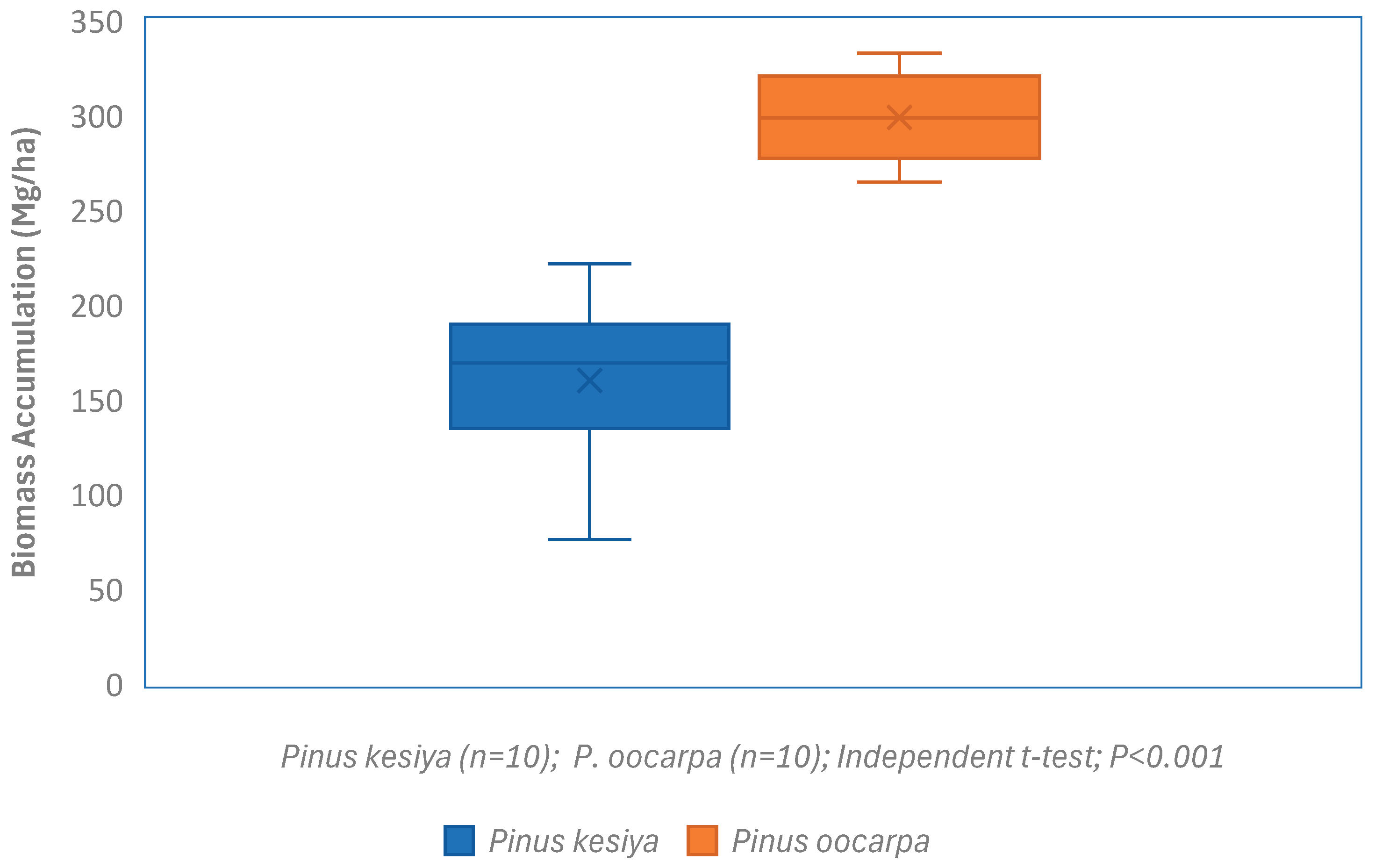
A summary of the results on the above and below biomass accumulation of P. kesiya and P. oocarpa plantations at the age of 16 years are presented in Figure 2. The results indicate that there were significant (P<0.001) differences in the biomass accumulation between P. kesiya and P. oocarpa plantations. P. oocarpa plantation accumulated more biomass (298.86±12.09 Mgha-1) than P. kesiya plantation (160.13±23.79 Mgha-1).
The results suggest that tree biomass accumulation of Pine varies with species as it was observed that P. oocarpa accumulates more biomass than P. kesiya. Correspondingly, Nayak et al [28] observed P. oocarpa as having the ability to accumulate higher volumes than P. kesiya and other Pine species. Aggreging with the claims, species-dependent variations in the mean fine root biomass have been presented by earlier studies [29]. The differences follow species to species variations in morphological, anatomical and chemical traits which affect specific species net primary productivity, key to biomass accumulation [30]. Another study conducted indicated an estimated total forest biomass and carbon pool of the P. kesiya being greater than the other Pine species [31]. Differences in genetic materials affect species adaptation to prevailing conditions, resistance to fire regimes, pests, and diseases. Additionally, tree genetic materials also influence height, diameter and other relevant developmental characters [32].
Pinus oocarpa plantations typically exhibit higher biomass accumulation than Pinus kesiya due to inherent species-specific growth characteristics and ecological adaptability [32]. P. oocarpa generally has a higher growth rate, greater wood density, and a more robust crown architecture, which together enhance photosynthetic capacity and carbon assimilation [9]. In addition, the species often shows better adaptation to a wider range of site conditions, including variable soils and moisture regimes, allowing for more efficient nutrient uptake and sustained growth over time [29]. Its deeper and more extensive root system further supports biomass production by improving water acquisition and resilience to periodic drought stress, conditions under which P. kesiya may exhibit comparatively reduced growth performance [9].
The practical implications of these findings are significant for plantation planning and climate-smart forestry. Where the objective is to maximize biomass production and carbon sequestration, P. oocarpa may be a more suitable species choice, particularly on sites with heterogeneous soils or seasonal water limitations [11]. These results can inform species selection, site–species matching, and long-term investment decisions in plantation forestry, especially in regions such as Malawi where plantations contribute to both economic development and national climate commitments. Moreover, prioritizing P. oocarpa in appropriate areas could enhance productivity per unit area, improve returns from timber and carbon-related initiatives, and support more efficient land-use strategies [10].

3.2. Annual Carbon Sequestration for P. kesiya and P. oocarpa Plantations at the age of 16 Years

The results on the annual above and below carbon sequestration for P. kesiya and P. oocarpa plantations for a period of 16 years are given in Table 1. The results indicate that there was a significant (P<0.05) difference in annual carbon sequestration for P. kesiya and P. oocarpa plantations. P. oocarpa plantation had a higher annual carbon sequestration (32.22±1.30 tCO2e/ha/yr) as compared to P. kesiya plantation (17.26±2.56 tCO2e/ha/yr).
Recent comparisons of carbon sequestration between Pinus species indicate that intrinsic growth dynamics and biomass allocation patterns strongly influence annual CO₂ uptake [33]. In the present study, P. oocarpa’s higher carbon sequestration likely reflects its relatively rapid aboveground biomass accumulation and efficient wood formation under humid tropical plantation conditions. Across diverse regions, fast-growing pine species often exhibit higher net primary productivity, resulting in greater carbon capture rates when compared with slower-growing congeners e.g., fast early biomass accumulation in Pinus species has been highlighted as a key driver of carbon sequestration potential [34]. Although specific comparative studies on P. oocarpa versus P. kesiya are limited outside Malawi, global evidence supports the pattern that species with vigorous height and diameter growth rates tend to sequester more carbon annually under similar site conditions [35].
Species-specific architectural and physiological characteristics further explain the differences in carbon sequestration rates observed. P. oocarpa typically develops a canopy and stem biomass profile that maximizes light interception and carbon fixation over a given rotation period, whereas P. kesiya may allocate proportionally more resources to slower structural development or belowground components depending on site and management conditions [33]. Studies of other Pinus plantations show that stand structure, crown development, and wood density interact with environmental factors such as precipitation and soil fertility to influence carbon sequestration efficiency, with broader crowns and faster diameter growth enhancing aboveground carbon accrual e.g., comparative plantation studies highlighting species and management effects on biomass and carbon stocks [34].
Interestingly, in our previous study [12], P. kesiya plantation showed slightly higher soil organic carbon accrual trends than P. oocarpa plantation in similar ages. In the previous study, the slightly higher soil organic carbon (SOC) accrual observed under Pinus kesiya plantations of similar ages can be attributed to differences in litter quality, decomposition dynamics, and below-canopy microclimate [33]. P. kesiya typically produces finer needles with higher turnover rates and relatively lower lignin content, which decompose more readily and contribute faster to soil organic matter formation. In addition, its litter layer often promotes greater soil faunal activity and microbial processing, enhancing carbon incorporation into stable soil pools. A comparatively denser forest floor and reduced soil disturbance under P. kesiya stands may also have favoured SOC stabilization, leading to slightly higher soil carbon accrual despite moderate aboveground growth [35].
By contrast, the present study shows that P. oocarpa plantations exhibit substantially higher annual above- and below-ground carbon sequestration, reflecting superior biomass production rather than soil-driven carbon storage [36]. P. oocarpa is characterized by faster diameter and height growth, greater stem biomass accumulation, and a more extensive woody root system, all of which directly increase living biomass carbon stocks [37]. Although its litter may decompose more slowly and contribute less immediately to SOC pools, a larger proportion of assimilated carbon is retained in long-lived woody tissues above and below ground. This explains why P. oocarpa outperforms P. kesiya in annual carbon sequestration rates, even when soil carbon gains are comparatively lower [38].
The disparity between higher SOC accrual in P. kesiya and higher biomass carbon sequestration in P. oocarpa has important implications for forest management and climate mitigation strategies. It highlights that total ecosystem carbon storage is governed by different processes operating on different time scales: soil carbon accumulation is slower but potentially more stable, while biomass carbon sequestration is faster but more vulnerable to disturbance and harvesting [39]. Consequently, species selection should be aligned with management objectives. P. oocarpa is better suited for maximizing short- to medium-term carbon sequestration and productivity, whereas P. kesiya may play a complementary role in enhancing long-term soil carbon stability [40]. Integrating both species within landscape-level planning could therefore optimize overall carbon benefits by balancing rapid biomass accumulation with sustained soil carbon enhancement [41,42].

3.3. Uncertainty Analysis

Summary of the uncertainty are presented in Table 1. The results indicate that the uncertainties were low (<3%). Low uncertainty estimates in forest carbon assessments generally indicate robust measurement and modeling approaches, strong field data, and consistent allometric relationships between tree dimensions and carbon content. In the present study, careful plot design, repeated field measurements, and well-developed biomass equations for both P. oocarpa and P. kesiya likely reduced variability in estimating above- and below-ground carbon pools, yielding tighter confidence intervals around sequestration rates [43]. In carbon accounting research more broadly, uncertainty in forest carbon estimates can arise from inadequate sampling, poorly calibrated emission factors, or inconsistent baseline definitions; rigorous methodologies such as error propagation and Monte Carlo simulations are often recommended to quantify and reduce these uncertainties [44]. Lower uncertainties increase confidence that observed differences in carbon sequestration between species reflect real ecological processes rather than measurement error [45].
The implications of low carbon uncertainty extend directly into carbon markets and climate policy frameworks, where uncertainty thresholds influence whether carbon sequestration projects are eligible for credits. Many voluntary and compliance carbon standards require uncertainty below defined thresholds (often around 15 % or less) to qualify carbon removals for trade, and higher uncertainty can reduce the number of credits issued or necessitate discounts [46]. With relatively precise estimates for both pine species, potential carbon projects in Malawi could meet the stringent verification standards of major registries, enhancing their credibility and marketability. This aligns with broader efforts to strengthen carbon markets in Africa, where mechanisms such as the Africa Carbon Support Facility aim to build regulatory and measurement capacity to attract climate finance [45].
Finally, robust and low-uncertainty carbon estimates have important implications for Malawi’s engagement in global carbon trading and national climate commitments. High confidence in sequestration potential can support stronger national greenhouse gas inventories, making Malawi more competitive in both voluntary and compliance carbon markets that value transparent, verifiable emissions reductions [47]. However, Africa’s carbon assets have historically been undervalued in global markets, with credits often sold at significantly lower prices compared to global benchmarks, a situation described as “carbon grabs” that undermines local benefit streams [35]. finance and low uncertainty in carbon accounting, Malawi could pursue more equitable pricing, attract sustainable finance, and ensure that carbon revenue contributes meaningfully to rural livelihoods and forest management rather than being absorbed by intermediaries [48].
Despite providing valuable insights into biomass and carbon sequestration dynamics of P. oocarpa and P. kesiya plantations, this study has some limitations. First, the analysis was based on species-specific allometric equations and a limited number of age classes, which may not fully capture variability across different site conditions, stand densities, and management regimes within the broader plantation landscape. Second, carbon estimates focused primarily on living biomass, while other important ecosystem carbon pools such as dead wood, litter, and deeper soil layers were not comprehensively assessed, potentially leading to underestimation of total ecosystem carbon stocks. In addition, the study relied on a snapshot approach to infer annual sequestration rates rather than long-term continuous measurements, which may overlook interannual climatic variability and disturbance effects. Future research should therefore include long-term permanent sample plots, incorporate a full ecosystem carbon accounting framework (including necromass pools), and develop locally calibrated allometric models that integrate site quality, stand structure, and management history. Such studies would improve the accuracy of carbon estimates and strengthen the applicability of plantation forests in Malawi for climate mitigation planning and carbon market participation.

4. Conclusions

This study provides clear evidence of species-specific differences in biomass accumulation and carbon sequestration between Pinus oocarpa and Pinus kesiya plantations in Malawi. The findings show that P. oocarpa consistently achieves higher annual above- and below-ground carbon sequestration than P. kesiya, mainly due to its faster growth and greater allocation of carbon to long-lived woody biomass. In contrast, previous studies indicate that P. kesiya contributes slightly more to soil organic carbon, demonstrating that the two species enhance ecosystem carbon storage through different mechanisms. The relatively low uncertainty in carbon estimates for both species enhances confidence in the results and supports their applicability to forest carbon accounting, national greenhouse gas inventories, and emerging carbon markets. The contrasting patterns between biomass-driven carbon sequestration and soil carbon accumulation highlight the importance of considering multiple carbon pools and temporal scales when assessing the climate mitigation potential of plantation forests. Overall, the study underscores the significance of appropriate species selection and site–species matching for optimizing carbon outcomes, with P. oocarpa being more suitable for short- to medium-term carbon sequestration and productivity, while P. kesiya can play a complementary role in supporting longer-term soil carbon stability and sustainable plantation management.

Author Contributions

M.E.: conceptualization, data curation, resources, writing-original draft preparation; F.M.: supervision, writing-review and editing; E.K.: supervision, writing-review and editing; F.K.: methodology, writing-review and editing; E.M.: validation, data analysis, writing-review and editing; H.K.: writing-review and editing; K.L.: validation, writing-review and editing; H.M.: supervision, writing-review and editing. All authors have read and agreed to the published version of the manuscript.

Funding

No funding was received for this research.

Data Availability Statement

The data that support the finding of this study can be obtained from the corresponding author upon reasonable request.

Acknowledgments

Authors are grateful to the staff of RAIPLY for the assistance rendered during data collection.

Conflicts of Interest

The authors declare no conflicts of interest.

References

  1. Missanjo, E.; Kadzuwa, H. Greenhouse Gas Emissions and Mitigation Measures within the Forestry and Other Land Use Subsector in Malawi. International Journal of Forestry Research 2021, 2021, 5561162. [Google Scholar] [CrossRef]
  2. Bukoski, J. J.; Cook-Patton, S. C.; Melikov, C.; Ban, H.; Chen, J. L.; Goldman, E. D.; Harris, N. L.; Potts, M.D. Rates and drivers of aboveground carbon accumulation in global monoculture plantation forests. Nature Communications 2022, 13, 4206. [Google Scholar] [CrossRef] [PubMed]
  3. Thomte, L.; Shah, S. K.; Mehrotra, N.; Saikia, A.; Bhagabati, A.K. Dendrochronology in the tropics using tree-rings of Pinus kesiya. Dendrochronologia 2023, 78, 126070. [Google Scholar] [CrossRef]
  4. Malata, H.; Ngulube, E. S.; Missanjo, E. Site Specific Stem Volume Models for Pinus patula and Pinus oocarpa. International Journal of Forestry Research 2017, 1–6. [Google Scholar] [CrossRef]
  5. Kamala, F.D.; Sakagami, H.; Oda, K.; Matsumura, J. Wood Density and Growth Ring Structure of Pinus Patula Planted in Malawi. IAWA Journal 2013, 34, 61–70. [Google Scholar] [CrossRef]
  6. Missanjo, E.; Matsumura, J. Multiple-Trait Selection Index for Simultaneous Improvement of Wood Properties and Growth Traits in Pinus kesiya Royle ex Gordon in Malawi. Forests 2017, 8, 96. Available online: https://www.mdpi.com/1999-4907/8/4/96. [CrossRef]
  7. Choi, J.; Lee, B.; Lee, D.; Choi, I. Growth Monitoring of Korean White Pine (Pinus koraiensis) Plantation by Thinning Intensity. Journal of Korean Society of Forest Science 2014, 103, 422–430. [Google Scholar] [CrossRef]
  8. Balboa-Murias, M. Á.; Rodríguez-Soalleiro, R.; Merino, A.; Álvarez-González, J. G. Temporal variations and distribution of carbon stocks in aboveground biomass of radiata pine and maritime pine pure stands under different silvicultural alternatives. Forest Ecology and Management 2006, 237, 29–38. [Google Scholar] [CrossRef]
  9. Ndema, A.; Missanjo, E. Tree Growth Response of Pinus oocarpa Along Different Altitude in Dedza Mountain Forest Plantation. Agriculture, Forestry and Fisheries 2015, 4, 24–28. [Google Scholar] [CrossRef]
  10. Braga, E.; Zenni, R.; Hay, J. A new invasive species in South America: Pinus oocarpa Schiede ex Schltdl. BioInvasions Records 2014, 3, 207–211. [Google Scholar] [CrossRef]
  11. Hara, E.; Missanjo, E.; Kadzuwa, H. Variation of Wood Density and Shrinkage Characters of Pinus oocarpa in Malawi. Journal of Global Ecology and Environment 2023, 18, 19–31. [Google Scholar] [CrossRef]
  12. Munthali, E; Mwale, F; Katengeza, E; Kamangadazi, F; Missanjo, E; Kadzuwa, H. Variations in Soil Organic Carbon Accumulation Between Pinus kesiya and Pinus oocarpa at Viphya Plantations in Malawi. Wiley International Journal of Forestry Research 2025, 2025, 6694454. [Google Scholar] [CrossRef]
  13. Missanjo, E.; Kamanga-Thole, G. Effect of first thinning and pruning on the individual growth of Pinus patula tree species. Journal of Forestry Research 2015, 26, 827–831. [Google Scholar] [CrossRef]
  14. Missanjo, E.; Kadzuwa, H. Activity Data and Emission Factor for Forestry and Other Land Use Change Subsector to Enhance Carbon Market Policy and Action in Malawi. Journal of Environmental Protection 2024, 15, 401–414. [Google Scholar] [CrossRef]
  15. Kadzuwa, H.; Missanjo, E. Modelling Above-ground Biomass Using Machine Learning Algorithm: Case Study Miombo Woodlands of Malawi. Journal of Global Ecology and Environment 2023, 1–15. [Google Scholar] [CrossRef]
  16. Kadzuwa, H.; Missanjo, E. Effect of Leaf Phenology, Topography and Wind Speed on Forest Canopy Height and Above Ground Biomass Estimation using Optical UAV Data in Malawi’s Miombo Woodlands. Journal of Global Ecology and Environment 2022, 16, 28–42. [Google Scholar] [CrossRef]
  17. Kadzuwa, H.; Missanjo, E. Comparison of Varied Forest Inventory Methods and Operating Procedures for Estimating Above-Ground Biomass in Malawi’s Miombo Woodlands. Journal of Global Ecology and Environment 2022, 16, 7–22. [Google Scholar] [CrossRef]
  18. Missanjo, E.; Utila, H.; Munthali, M.; Mitembe, W. Modelling of climate conditions in forestry vegetation zones in Malawi. World Journal of Advanced Research and Review 2019, 1, 36–44. [Google Scholar] [CrossRef]
  19. Kamangadazi, F.; Mwabumba, L.; Missanjo, E. The Potential of Selective Harvesting in Mitigating Biomass and Carbon Loss in Forest Co-management Block in Liwonde Forest Reserve, Malawi. Scholars Academic Journal of Biosciences 2016, 4, 716–721. [Google Scholar] [CrossRef]
  20. Missanjo, E.; Kamanga-Thole, G.; Ndema, A. Biomass and Carbon Stock Estimation for Miombo Woodland in Selected Part of Chongoni Forest Reserve, Dedza, Malawi. International Journal of Forestry and Horticulture 2015, 1, 12–17. Available online: https://www.arcjournals.org/pdfs/ijfh/v1-i1/3.pdf.
  21. Missanjo, E.; Kamanga-Thole, G. Estimation of Biomass and Carbon stock for Miombo Woodland in Dzalanyama Forest Reserve, Malawi. Research Journal of Agriculture and Forestry Sciences 2015, 3, 7–12. Available online: https://www.isca.me/AGRI_FORESTRY/Archive/v3/i3/2.ISCA-RJAFS-2014-074.php.
  22. Chitawo, M.L. Systems approach in developing a model for sustainable production of bioenergy in Malawi . PhD Thesis, Stellenbosch University, Stellenbosch, 2018. Available online: https://scholar.sun.ac.za:443/handle/10019.1/103540.
  23. Kafakoma, R.; Mataya, B. Timber value chain analysis for the Viphya Plantations; Training Support for Partners (TSP): Lilongwe, Malawi, 2009; Available online: https://www.iied.org/sites/default/files/pdfs/migrate/G03138.pdf.
  24. Ngulube, E.; Brink, M.; Chirwa, P. Productivity and cost analysis of semi-mechanised and mechanised systems on the Viphya forest plantations in Malawi. Southern Forests: A Journal of Forest Science 2014, 76, 195–200. [Google Scholar] [CrossRef]
  25. Hirata, Y.; Takao, G.; Sato, T.; Toriyama, J. REDD-Plus Cookbook.; REDD Research and Development Center, Forestry and Forest Products Research Institute: Tsukuba, 2012; Available online: https://redd.ffpri.go.jp/pub_db/publications/cookbook/_img/cookbook_en.pdf.
  26. FAO. Global Forest Resource Assessment: Progress towards Sustainable Forest Management; Food and Agriculture Organization Forestry Paper; FAO: Rome, 2005; Available online: https://www.fao.org/4/a0400e/a0400e00.htm.
  27. Sierra, C.A.; Del Valle, J.I.; Orrego, S.A.; Moreno, F.H.; Harmon, M.E.; Zapata, M.; Colorado, G.J.; Herrera, M.A.; Blara, W.; Restrepo, D.E.; Berrouet, L.M.; Loaiza, L.M.; Benjumea, J.F. Total Carbon Stocks in a Tropical Forest Landscape of the Porce Region, Colombia. Forest Ecology and Management 2007, 243, 299–309. [Google Scholar] [CrossRef]
  28. Nayak, N.; Mehrotra, R.; Mehrotra, S. Carbon biosequestration strategies: a review. Carbon Capture Science & Technology 2022, 4, 100065. [Google Scholar] [CrossRef]
  29. Jagodzinski, A. M.; Ziółkowski, J.; Warnkowska, A.; Prais, H. Tree Age Effects on Fine Root Biomass and Morphology over Chronosequences of Fagus sylvatica, Quercus robur and Alnus glutinosa Stands. PLoS ONE 2016, 11, e0148668. [Google Scholar] [CrossRef]
  30. Kuusk, V.; Niinemets, Ü.; Valladares, F. A major trade-off between structural and photosynthetic investments operative across plant and needle ages in three Mediterranean pines. Tree Physiology 2018, 38, 543–557. [Google Scholar] [CrossRef]
  31. Baishya, R.; Barik, S.K. Estimation of tree biomass, carbon pool and net primary production of an old-growth Pinus kesiya Royle ex. Gordon forest in north-eastern India. Annals of Forest Science 2011, 68, 727–736. [Google Scholar] [CrossRef]
  32. Reichert, J.M.; Morales, B.; Lima, E.M.; de Bastos, F.; Morales, C. A. S.; de Araújo, E. F. Soil morphological, physical and chemical properties affecting Eucalyptus spp. Productivity on Entisols and Ultisols. Soil and Tillage Research 2023, 226, 105563. [Google Scholar] [CrossRef]
  33. Tudor, C; Constandache, C; Dinca, L; Murariu, G; Badea, NO; Tudose, NC; Marin, M. Pine afforestation on degraded lands: a global review of carbon sequestration potential. Front. For. Glob. Change 2025, 8, 1648094. [Google Scholar] [CrossRef]
  34. Salekin, S.; Dickinson, Y.L.; Bloomberg, M.; Meason, D.F. Carbon sequestration potential of plantation forests in New Zealand no single tree species is universally best. Carbon Balance and Management 2024, 19, 11. [Google Scholar] [CrossRef]
  35. Bai, Y.; Ding, G. Estimation of changes in carbon sequestration and its economic value with various stand density and rotation age of Pinus massoniana plantations in China. Scientific Reports 2024, 14, 16852. [Google Scholar] [CrossRef]
  36. Zhao, R.; Li, J.; Liu, S.; Zhang, J.; Duan, Y. Predicting carbon storage jointly by foliage and soil parameters in Pinus pumila stands along an elevation gradient in great Khingan. Sustainability 2023, 15, 11226. [Google Scholar] [CrossRef]
  37. Zhao, X.; Chen, F.; Seim, A.; Hu, M.; Akkemik, Ü.; Kopabayeva, A. Global warming leads to growth increase in Pinus sylvestris in the Kazakh steppe. For. Ecol. Manag. 2024, 553, 121635. [Google Scholar] [CrossRef]
  38. Zhang, Y.; Zeng, D. H.; Lei, Z.; Li, X.; Lin, G. Microbial properties determine dynamics of topsoil organic carbon stocks and fractions along an age sequence of Mongolian pine plantations. Plant Soil 2023, 483, 441–457. [Google Scholar] [CrossRef]
  39. Zhou, W.; Gao, L. The impact of carbon trade on the management of short-rotation forest plantations. For. Policy Econ. 2016, 62, 30–35. [Google Scholar] [CrossRef]
  40. Rollinson, C.R.; Kaye, M.W.; Canham, C. D. Interspecific variation in growth responses to climate and competition of five eastern tree species. Ecology 2016, 97, 1003–1011. [Google Scholar] [CrossRef] [PubMed]
  41. Węgiel, A.; Polowy, K. Aboveground carbon content and storage in mature scots pine stands of different densities. Forests 2020, 11, 240. [Google Scholar] [CrossRef]
  42. Li, Q.; Liu, Z.; Jin, G. Impacts of stand density on tree crown structure and biomass: A global meta-analysis. Agricultural and Forest Meteorology 2022, 326, 109181. [Google Scholar] [CrossRef]
  43. Bonner, M.T.L.; Schmidt, S.; Shoo, L.P. A meta-analytical global comparison of aboveground biomass accumulation between tropical secondary forests and monoculture plantations. Forest Ecology and Management 2013, 291, 73–86. [Google Scholar] [CrossRef]
  44. Butler, B.J.; Sass, E.M.; Gamarra, J.G.P.; Campbell, J.L.; Wayson, C.; Olguín, M.; Carrillo, O.; Yanai, R.D. Uncertainty in REDD+ carbon accounting: a survey of experts involved in REDD+ reporting. Carbon Balance and Management 2024, 19, 22. [Google Scholar] [CrossRef]
  45. Teo, H.C.; Tan, N.H.L.; Zheng, Q.; Lim, A.J.Y.; Sreekar, R.; Chen, X.; Zhou, Y.; Sarira, T.V; De Alban, J.D.T.; Tang, H.; Friess, D.A.; Koh, L.P. Uncertainties in deforestation emission baseline methodologies and implications for carbon markets. Nature communications 2023, 14, 8277. [Google Scholar] [CrossRef] [PubMed]
  46. Navarrete-Poyatos, M.A.; Navarro-Cerrillo, R.M.; Lara-G´omez, M.A.; Duque-Lazo, J.; Varo, M.A.; Rodriguez, G.P. Assessment of the Carbon Stock in Pine Plantations in Southern Spain Trough ALS Data and K Nearest Neighbour Algorithm Based Models. Geosciences 2019, 9, 442. [Google Scholar] [CrossRef]
  47. Forest Carbon Partnership Facility (FCPF). Carbon Fund Methodological Framework. Forest Carbon Partnership Facility, Washington DC: The World Bank. 2016. Available online: https://www.forestcarbonpartnership.org/carbon-fund-methodological-framework.
  48. Gizachew, B; Duguma, LA. Forest carbon monitoring and reporting for REDD +: What future for Africa? Environ Manage 2016, 58, 922–30. [Google Scholar] [CrossRef] [PubMed]
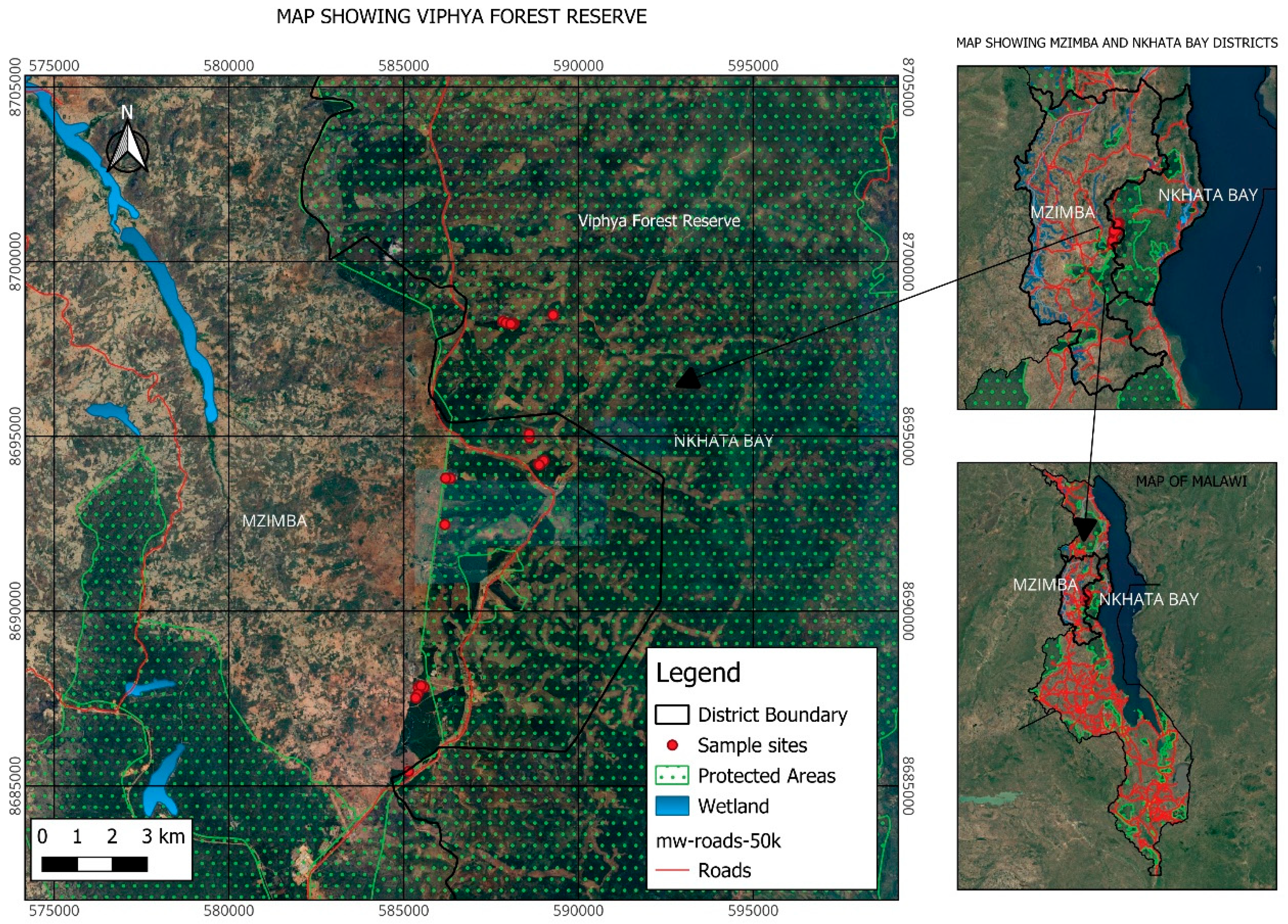
Figure 1. Location of the study area: Source [12].
Preprints 193043 g001
Figure 2. Boxplot for Biomass accumulation for Pinus kesiya and Pinus oocarpa at Viphya Plantations at the age of 16 years.
Preprints 193043 g002
Table 1. Annual above and below ground carbon sequestration for Pinus kesiya and Pinus oocarpa at Viphya plantations at the age of 16 years.
Type of Pinus species
plantation
Annual Carbon
Sequestration (tCO2e/ha/yr)
Uncertainty (%)
P. oocarpa 32.22±1.30a 0.56
P. kesiya 17.26±2.56b 2.06
Mean 24.74±2.84 2.25
Note: Means with different superscript within a column significantly differ (P<0.05).
Disclaimer/Publisher’s Note: The statements, opinions and data contained in all publications are solely those of the individual author(s) and contributor(s) and not of MDPI and/or the editor(s). MDPI and/or the editor(s) disclaim responsibility for any injury to people or property resulting from any ideas, methods, instructions or products referred to in the content.
Copyright: This open access article is published under a Creative Commons CC BY 4.0 license, which permit the free download, distribution, and reuse, provided that the author and preprint are cited in any reuse.
Prerpints.org logo

Preprints.org is a free preprint server supported by MDPI in Basel, Switzerland.

Subscribe

Disclaimer

Terms of Use

Privacy Policy

Privacy Settings

© 2026 MDPI (Basel, Switzerland) unless otherwise stated