

Submitted:
30 December 2025
Posted:
31 December 2025
You are already at the latest version
Abstract
Background/Objectives: Tai Chi (TC) practice has been shown to have positive effects on the physical, psychological, and cognitive health of older adults. However, dis-crepancies persist regarding its effectiveness compared to strength training (ST). The aim of this study was to determine the impact of TC training compared to ST on phys-ical performance, body composition, cognitive function, and psychological well-being in older adults. Methods: A quasi-experimental study was conducted with a conven-ience sample of 68 women ≥60 years, divided into three groups: (i) Tai Chi Group (TCG) n=26; (ii) Strength Training Group (STG) n=21; and (iii) Control Group (CG) n=21. The TC and STG groups performed physical training four days a week, 60min/day, for six months. All participants were assessed for physical performance (FP), body composition, cognition, and psychological well-being before and after the intervention. Results: TCG showed statistically significant positive changes compared to CG after the intervention in the following physical fitness tests: 4-meter walk (base-line, 4.7 ± 2.2; post, 3.7 ± 0.9, p = 0.01); chair stand-up and sit-down (baseline, 13.2 ± 4; post, 9.5 ± 3.2, p = 0.021). Similarly, the TCG group showed a significant increase in handgrip strength (baseline, 19.8 kg; post, 20.9 kg, p = 0.02), along with a reduction in body fat percentage (baseline, 49.2%; post, 45.8%, p = 0.045); an increase in skeletal muscle mass (baseline, 16.3 kg; post, 18.0 kg, p = 0.0001); and skeletal muscle mass in-dex (p = 0.001). Furthermore, in the TCG showed an increase in psychological well-being (+15%) and a decrease in depressive symptoms (-12.5%; p< 0.05). Conclu-sion: Our findings suggest that Tai Chi has a better effect than strength training on physical performance, body composition, and hand strength in older adults living in the community. It also helps maintain cognitive function and improve depression and well-being.
Keywords:
Tai Chi
; strength training
; older adults
; physical performance
; body composition
; cognitive functions
; well-being
1. Introduction
The World Health Organization (WHO, 2015) defines healthy aging as “the process of developing and maintaining functional ability that enables well-being in older age.” This concept differs from that of health status, as its central focus is functional ability, understood as the interaction of physical, psychological, and social attributes, together with a supportive environment that allows individuals to be and do what they value in life. The WHO specifies that functional ability consists of a person’s intrinsic capacity and the characteristics of their environment. Intrinsic capacity, in turn, integrates three elements: (i) genetic inheritance; (ii) health related to aging and lifestyle; and (iii) personal characteristics. Together, these aspects reflect the sum of physical and mental capacities available to an individual in older age, which determine their ability to maintain well-being over time [1].
During the aging process, intrinsic capacity undergoes a gradual, progressive, and adaptive decline. However, when these changes reach a significant magnitude, they may become a risk factor for frailty in older age. In this context, the promotion of healthy lifestyles—particularly the regular practice of strength training (ST)—gains relevance, as it has proven effective in preventing or delaying the deterioration of functional ability, as well as reducing physical dependency and social isolation commonly associated with this condition [2]. In line with this approach, the WHO (2020) recommends engaging in 150 to 300 minutes of moderate-intensity aerobic physical activity per week, or 75 to 150 minutes of vigorous aerobic activity, as part of a comprehensive strategy to promote healthy aging [3].
Evidence indicates that ST has positive effects on skeletal muscle mass, muscle strength, physical performance, and psychological well-being in older adults [4]. Furthermore, a systematic review and meta-analysis suggest that the benefits of physical exercise can be enhanced when combined with cognitive stimulation, as occurs in mind–body exercise programs, where cognitive training is integrated simultaneously with the execution of bodily movements [5]. In this regard, Tai Chi (TC) stands out as a traditional Chinese exercise of moderate intensity, derived from martial arts. TC training has demonstrated benefits for physical, psychological, and cognitive health by simultaneously combining postures, breathing, and deep relaxation.
In particular, regular TC practice is associated with a slower rate of cognitive decline, as it requires cognitive effort to perform and master complex bodily movements, as well as improvements in physical performance, body composition, and vitality [6,7,8]. Its practice does not exceed 55% of maximal oxygen consumption or 60% of individual maximal heart rate, which translates into an average energy expenditure of 4 METs, that is, approximately four times the resting consumption and twice that required for slow walking. Additionally, TC contributes to improved single-leg postural control, body rotation, knee extension, and ankle plantar flexion, even with eyes closed, which is associated with up to a 47.5% reduction in fall risk. Due its movements are slow and low-intensity, TC is an ideal alternative for older adults or individuals with limitations that prevent vigorous exercise [7,8,9].
In this framework, the positive effect of TC on physical and cognitive functions in older adults has been demonstrated [10]. Nevertheless, sociocultural context may influence outcomes, highlighting the importance of conducting the study in a Mexican population. Within this framework, the purpose of the present study is to determine the effect of TC training compared to ST on physical performance, body composition, and well-being in older women from the Mexican community.
2. Materials and Methods
2.1. Trial Design
After obtaining informed consent, a quasi-experimental study was conducted using a convenience sample, following the CONSORT (Consolidated Standards of Reporting Trials) guidelines [11]. The study was approved by the Ethics Committee of the Faculty of Higher Studies Zaragoza, UNAM (Approval: FESZ/CEl/1/1/8/21/23). It was also registered on the ISRCTN platform (Registration: ISRCTN55261971) [12].
2.2. Setting and Population
The sample consisted of 81 older women aged 60 to 74 years, enrolled in the University Center for Healthy Aging (CUENSA, Centro Universitario para el Envejecimiento Saludable) at the Faculty of Higher Studies Zaragoza, UNAM, without disabling or terminal chronic diseases, without severe cognitive impairment (Montreal Cognitive Assessment, MoCA score ≥ 23), physically independent to perform basic and instrumental activities of daily living, and sedentary in the previous 6 months. Individuals who did not complete the evaluations or attended less than 80% of the physical exercise training sessions were excluded.
2.3. Randomization and Allocation
Exercise groups were formed randomly, while the control group consisted of individuals who, for personal reasons, could not attend the training program: (i) Tai Chi Group (TCG), n = 27; (ii) Strength Training Group (STG), n = 27; (iii) Control Group (CG), n = 27. The TCG and STG participated in a formal physical exercise training program for six months (4 days/week, 60 minutes per session), supervised by qualified instructors. During the intervention, one participant from TCG and six from STG were excluded from the analysis for not meeting the 80% attendance requirement, and 6 from CG were excluded for not attending the post-intervention evaluation (Figure 1).
2.4. Measurements
All groups were assessed before and 6 months after the intervention: blood chemistry test, physical performance, body composition, muscle strength, psychological well-being, depression, and cognitive function.
2.4.1. Blood Chemistry Test
Blood samples were obtained by venipuncture after an 8-hour fasting and placed in siliconized Vacutainer tubes without anticoagulant to obtain serum for blood chemistry analysis. These parameters were measured using spectrophotometric techniques on an automated clinical chemistry analyzer Selectra Junior (Vital Scientific, Dieren, Netherlands). For all determinations, intra-assay and inter-assay coefficients of variation were below 5%. In this study, mean scores obtained in each group before and after the intervention are reported.
2.4.2. Physical Performance
Physical performance was assessed using the Short Physical Performance Battery (SPPB), which evaluates balance, gait, strength, and endurance. This test consists of three subtests: (i) Balance in three positions: feet together, semi-tandem, and tandem, each one maintained for 10 seconds; (ii) Lower limb strength: time required to stand up and sit down from a chair five consecutive times as quickly as possible (STST, Sit-to-Stand Test); (iii) Walking speed: time in seconds to walk 4 meters at a usual pace (4MWT, 4-Meter Walk Test). It has a score of 0-12, where each domain contributes 0-4 points. Higher scores indicate higher levels of functioning [13]. This study presents the average scores and the percentage change after the program, compared to the baseline value.
2.4.3. Body Composition
To determine Body Fat Percentage (BFP), Skeletal Muscle Mass (SMM), and Skeletal Muscle Mass Index (SMMI), bioelectrical impedance analysis (BIA) was performed using a single-frequency, four-pole device (50 kHz, Quantum X, RJL System). Prior to assessment, participants were required to meet the following conditions: (i) fasting for at least 4 hours; (ii) no alcohol consumption within 48 hours prior to the test; (iii) no strenuous exercise within 24 hours prior to the test. During the analysis, participants lay in a supine position while four electrodes were placed—two on the dorsum of the right hand and two on the right foot—recording resistance (R) and reactance (Xc) values [14,15]. In this study, mean scores and percentage change after the program compared to baseline are reported.
2.4.4. Muscle Strength
Muscle strength (kg) (MS) was measured using handgrip strength. A Jamar hydraulic dynamometer with a measurement range of 0–100 kg was used, with reliability and validity (r = 0.96). The instrument was adjusted to each participant’s hand width. Three measurements were taken on each arm, with a one-minute rest interval between trials, and the maximum value obtained was recorded [16]. In this study, mean scores and percentage change after the program compared to baseline are reported.
2.4.5. Psychological Well-Being
Psychological well-being was assessed using the Ryff Psychological Well-Being Scale (PWBS), consisting of 39 items that evaluate six dimensions: (i) autonomy; (ii) personal growth; (iii) self-acceptance; (iv) purpose in life; (v) environmental mastery; and (vi) positive relations. The scale has been validated in the Mexican population with adequate overall reliability (Cronbach’s alpha = 0.918). The global score ranges from 39 to 234, with higher scores indicating greater well-being [17,18]. In this study, mean scores and percentage change after the program compared to baseline are reported.
2.4.6. Depression
Depression was assessed using the Geriatric Depression Scale (GDS), which consists of 30 items and has a Cronbach’s alpha of 0.94. Scores range from 0 to 30, with higher scores indicating more symptoms related to depression [19]. In this study, mean scores and percentage change after the program compared to baseline are reported.
2.4.7. Cognitive Function
Cognitive function was evaluated using the Montreal Cognitive Assessment (MoCA), a screening tool developed to detect mild cognitive impairment. It assesses visuospatial and executive abilities, naming, memory, attention, language, abstraction, and orientation, with a score range of 0–30, where higher scores indicate better cognitive performance. The scale has a Cronbach’s alpha of 0.89 for the Mexican population [20,21]. In this study, mean scores and percentage change after the program compared to baseline are reported.
2.5. Description of the Intervention
2.5.1. Physical Exercise Program
The physical activity program was conducted in groups for 6 months, with sessions lasting one hour, four times per week. It included Yang-style Tai Chi (8-form) training and muscle-strengthening exercises. The intervention was implemented at the University Center for Healthy Aging, Faculty of Higher Studies Zaragoza, UNAM. Before each session, participants’ vital signs were recorded. If any values were outside normal ranges, the participant was not allowed to engage in physical activity. Participants were also instructed to report any discomfort during or after the practice [22].
2.5.2. Tai Chi Training
2.5.3. Strength Training
The program was designed according to the World Health Organization (WHO) guidelines on physical activity and sedentary behavior in older adults and the International Exercise Recommendations in Older Adults—ICFSR (International Consensus) [3,23]. Instruction was provided by personnel trained by a Physical Education specialist from FES Zaragoza, UNAM, who supervised the correct execution of the training (Table 2 & 3. Suppl. S2 & S3).
2.6. Statistical Analysis
Data are expressed as mean ± standard deviation. A repeated-measures analysis of variance (ANOVA) was performed to compare changes over time between groups. Additionally, paired-sample t-tests were conducted to determine within-group changes, and the percentage change from baseline was calculated. Differences were considered statistically significant at a 95% confidence level (p < 0.05).
3. Results
3.1. Sociodemographic Characteristics
Table 1 shows the sociodemographic and health characteristics of the study population. Overall, the groups were similar in terms of age and sex, with only a significant difference in the percentage of participants with hypertension in the control group. However, it is important to note that all cases were under medical control.
3.2. Biochemical Parameters
After 6 months of intervention, most metabolic variables remained without statistically significant changes between groups. However, serum creatinine concentration showed a statistically significant decrease in TCG and STG compared to the control group (p < 0.02) (Table 2).
3.3. Physical Performance and Muscle Strength
TCG showed a statistically significant improvement in the 4MWT (baseline: 4.7 ± 2 s; post: 3.7 ± 0.9 s; p = 0.01) compared to CG. Similarly, STST time decreased (baseline: 13.2 ± 4 s; post: 9.5 ± 3 s; p < 0.02). An increase in the overall SPPB score was also observed in TCG, with borderline statistical significance (baseline: 10; post: 11; p = 0.06). Additionally, TCG showed a significant gain in MS (kg) (baseline: 19.8 ± 4; post: 20.9 ± 4.5; p = 0.02) (Table 3).
3.4. Body Composition
Significant changes in body composition were observed in TCG compared to CG. Specifically, a reduction in BFP (baseline: 49.2 ± 6; post: 45.8 ± 6; p = 0.04), an increase in SMM (baseline: 16.3 ± 2.6; post: 18 ± 3.0; p = 0.0001), and an increase in SMMI (baseline: 7.0 ± 0.8; post: 7.8 ± 0.8; p = 0.001) were noted (Table 4).
3.5. Psychological and Cognitive Status
TCG showed a positive change in psychological well-being, with an increase in PWBS score reaching borderline statistical significance (baseline: 162 ± 27; post: 187 ± 20; p = 0.05). Regarding depressive symptoms, GDS scores decreased significantly in both intervention groups compared to CG: TCG (baseline: 8 ± 5; post: 7 ± 5; p = 0.01); STG (baseline: 10 ± 6; post: 9 ± 5; p = 0.001). Cognitive status, assessed by MoCA, remained unchanged in both groups (p > 0.5) (Table 5).
3.6. Percentage Change after Intervention
3.6.1. Physical Performance, Muscle Strength, and Body Composition
TCG showed statistically significant percentage changes in physical performance and muscle strength tests. Specifically, a reduction in time for 4MWT (-21.3%) and STST (-28%) was observed compared to STG and CG (p < 0.05). Likewise, this group showed an increase in OPP (+10%) and MS (+6%) (p < 0.05). Modest increases in SMM (+10%) and SMMI (+11.4%) were also found, along with a reduction in BFP (-7%), although these differences were not statistically significant compared to STG and CG (p > 0.05) (Figure 2).
3.6.2. Psychological and Cognitive Status
Both TCG and STG showed a significant positive percentage change in psychological well-being, as reflected in PWBS scores (TCG: +15%; STG: +9.9%) compared to CG (+2.3%) (p < 0.05). Regarding depressive symptoms, both groups also showed a statistically significant reduction in GDS scores (TCG: -12.5%; STG: -10%) compared to CG (p < 0.05). Additionally, a statistically significant increase in cognitive function was observed, as indicated by the percentage change in MoCA scores (+4.5%) compared to the control group (-8.7%) (p < 0.05) (Figure 3).
4. Discussion
Physical inactivity and muscle disuse (sedentary lifestyle) are recognized as major risk factors for the development of severe sarcopenia [24]. Likewise, the lack of cognitive stimulation in older age is associated with a higher prevalence of cognitive decline and dementia. Social interaction related to physical exercise and the perception of goal achievement, such as self-care, also has a positive effect on psychological well-being [25]. In this context, TC has demonstrated positive effects on body composition, physical performance, cognition, psychological function, and overall well-being.
4.1. Physical Performance and Muscle Strength
In the present clinical trial, 6 months of TC practice produced significant improvements in physical function. TC practitioners achieved notable improvements in multiple indicators of physical performance: (i) a significant reduction in 4MWT time; (ii) a reduction in STST time; and increases in (iii) SPPB score and (iv) MS. In this regard, our results are consistent with previous trials reporting benefits of TC on mobility and physical function in sedentary older adults. For example, in a 12-week intervention, TC practitioners showed an 11.9% increase in lower limb strength, reduced time in the 8-foot walk test (baseline: 7.4 s; post: 6.2 s), and improved grip strength (baseline: 25.9 kg; post: 27.9 kg) [26]. In contrast, another intervention found no significant changes in overall SPPB score, walking speed, chair rise test, grip strength, or body fat reduction after 12 weeks of TC training [27]. Similarly, a study in older adults with several comorbidities showed only trends toward improvement in SPPB after six months of TC [28]. A systematic review reported that exercise programs are effective in maintaining or improving physical performance in older adults, even in those with frailty, where the effect is more evident likely due to a greater margin for recovery [29]. On the other hand, a meta-analysis indicated that TC improves physical performance in tests such as chair rise and timed walking, although no significant differences were observed in overall SPPB score, grip strength, or muscle mass [25]. These discrepancies may be due to heterogeneity in interventions, as effects vary depending on type, dose, and intensity of exercise, and benefits may require longer practice periods.
The positive results found in our study support that TC training can have an effect on physical performance and, consequently, on body composition. Differences from negative results reported in other studies may be due to constitutional characteristics or intrinsic capacity of our population, as well as confounding variables in the studies.
4.2. Body Composition
In our study, TC practitioners showed a reduction in body fat percentage and an increase in skeletal muscle mass—findings that are uncommon in interventions not based on strength training. Available studies report modest changes in body composition indicators (weight, body fat percentage, and lean mass) [22,30,31], which makes it difficult to generalize results and maintains uncertainty regarding the impact of TC compared to ST on body composition [11,12,13]. For instance, in a 12-week TC intervention, no significant reductions in body fat percentage were found [32]. These discrepancies may be attributed to variations in TC modality (8-form or 24-form), duration, frequency, and intensity of interventions. However, more recent research suggests that TC may induce increases in lean mass and skeletal muscle compared to ST [33]. This aligns with our study, where after 6 months of TC practice, statistically significant changes in SMM and SMMI were observed, along with a slight reduction in body fat percentage. These results contrast with other interventions reporting that aerobic, strength, and ST have greater effects than TC on muscle mass gain, lean mass, and bone mineral density, as well as more pronounced reductions in body fat percentage [34]. Therefore, further studies in different contexts, including populations of both sexes, are needed.
4.3. Psychological Status
In the psychological domain, our study found that TCG had a positive effect on psychological well-being, with a 15% increase accompanied by a 12.5% reduction in depressive symptoms. Evidence shows that psychological well-being in older adults improves with moderate physical exercise at least twice per week, as demonstrated by changes in Ryff scale scores (baseline: 47.8 ± 6.3; post: 69.8 ± 10.8; p < 0.001) [35]. In this regard, a review of systematic reviews including 97 reviews (1,039 trials and 128,119 participants) reported significant effects of physical exercise on depression, anxiety, and psychological distress [36]. Participation in group activities also enhances the stability of social relationships and the ability to set life goals compared to solitary practice [37,38]. A positive correlation has also been observed between ST and psychological well-being, particularly in older adults [39,40]. In our study, ST also had a positive effect, although less pronounced than TC. These findings support the hypothesis that TC training—by integrating movement, mindfulness, relaxation, and a social component—more broadly promotes well-being and reduces depressive symptoms [41].
4.4. Cognitive Status
In our study, cognitive scores remained stable. This suggests that to observe significant changes in cognition, longer interventions may be required. However, improvements in global cognition have been reported with TC practice during 36 weeks of training, showing a significant increase in MoCA scores compared to the walking group (baseline: 24.67 ± 2.72; post: 23.84 ± 3.17; mean difference: 0.84 [95% CI: 0.02–1.66]; p = 0.046) [10]. Furthermore, a systematic review reported that TC can significantly improve global cognitive function; on average, those who practiced TC increased their MoCA score (mean difference: 1.43) compared to control groups. Improvements were also observed in delayed memory (mean difference: 0.90) and verbal fluency (mean difference: 0.40). When comparing different styles, some variants were found to be more effective for specific cognitive functions. For example, the 24-form showed better results in MoCA (mean difference: 1.89) than the 8-form, while the 10-form outperformed the 24-form in delayed recall (mean difference: 1.53). These differences also reflect variability in applied programs (type, frequency, and duration) [42], suggesting that TC may maintain or improve cognitive function in older adults. Based on this, we consider that our marginal results regarding the effect of TC practice may be due to the limited time, so it is advisable to carry out a study over a longer period.
5. Limitations and Strengths
This was a clinical trial with strict supervision, suggesting TC as a safe physical exercise option for older adults, with effects on physical performance, body composition, well-being, and cognition. However, the results cannot be generalized, as the sample is not representative in terms of size or characteristics. One of the major limitations is that the study included only women, as most participants in community programs in Mexico are women, so the low participation of men in gerontology programs represents a challenge for our country and others where participatory aging has become feminized, for cultural reasons.
6. Conclusions
TC, in addition to being a safe practice adaptable to community settings and feasible in the long term, demonstrates consistent benefits in physical function, muscle strength, and psychological well-being in this study. However, further research is needed to clarify its effects on body composition, establish the optimal intervention dose, and include extended follow-up periods to determine the sustainability of benefits over time. This will contribute to generating solid evidence for its incorporation into community programs promoting healthy aging.
Supplementary Materials
Author Contributions
Conceptualization, V.M.M-N and C.F-B.; methodology, J.R-P.; N.V-B.; E.C-M. and M.A.S.-R; formal analysis, V.M.M-N; C.F.-B; E.C-M; J.R-P.; N.V.B; X.X.; investigation, C-F.B and N.V-B; ; writing—original draft preparation, C.F-B; writing—review and editing, V.M.M-N; supervision, M.A. S-R; E.C-M. and V:M:M-N. X.X.; project administration, V.M.M-N. All authors have read and agreed to the published version of the manuscript.
Funding
We appreciate the support from the General Directorate of Academic Personnel Affairs, National Autonomous University of Mexico (DGAPA-UNAM) PAPIIT Project: IN307424.
Institutional Review Board Statement
The study was conducted in accordance with the Declaration of Helsinki, and approved by Ethics Committee of the Faculty of Higher Studies Zaragoza, UNAM (Approval: FESZ/CEl/1/1/8/21/23).
Informed Consent Statement
Informed consent was obtained from all subjects involved in the study.
Data Availability Statement
The data sets generated during and/or analyzed during the current study are available from the corresponding author on reasonable request.
Acknowledgments
The authors have reviewed and edited the output and take full responsibility for the content of this publication. We thank researchers Otilia Aurora Ramírez-Arellano and José Miguel Sánchez-Nieto for their supervision of the psychological and cognitive measurements.
Conflicts of Interest
The authors declare no conflicts of interest.
Abbreviations
The following abbreviations are used in this manuscript:
| TC | Tai Chi |
| ST | Strength training |
| TCG | Tai Chi group |
| STG | Strength training group |
| FP | Physical performance |
| CG | Control group |
| 4MWT | 4-Meter Walk Test |
| STST | Sit-to-Stand test |
| OPP | Overall physical performance |
| MS | Muscle strength |
| W | Weight |
| BFP | Body Fat Percentage |
| SMM | Skeletal Muscle Mass |
| SMMI | Skeletal Muscle Mass Index |
| PWBS | Psychological Well-Being Scale |
| GDS | Geriatric Depression Scale |
| MoCA | Montreal Cognitive Assessment |
| WHO | World Health Organization |
| Mets | Metabolic equivalents |
References
- World Health Organization. World Report on Ageing and Health. World Health Organization; Geneva, Switzerland, 2015. Available online: https://www.who.int/publications/i/item/9789241565042 (accessed on 3 August 2025).
- World Health Organization. Integrated Care for Older People (ICOPE): Guidance for Person-centred Assessment and Pathways in Primary Care, Second Edition; World Health Organization: Geneva, Switzerland, 2024; Available online: https://www.who.int/publications/i/item/9789240103726 (accessed on 3 August 2025).
- World Health Organization. WHO Guidelines on Physical Activity and Sedentary Behaviour; World Health Organization: Geneva, Switzerland, 2020; Available online: https://www.who.int/publications/i/item/9789240015128 (accessed on 3 August 2025).
- Rieker, J.A.; Reales, J.M.; Muiños, M.; Ballesteros, S. The Effects of Combined Cognitive-Physical Interventions on Cognitive Functioning in Healthy Older Adults: A Systematic Review and Multilevel Meta-Analysis. Front. Hum. Neurosci. 2022, 16, 838968. [Google Scholar] [CrossRef]
- Ara, I.; Gómez-Cabrera, M.C.; Garatachea, N. Exercise as a Therapy for Successful Aging. Scand. J. Med. Sci. Sports 2025, 35(9), e70133. [Google Scholar] [CrossRef]
- Lee, L.Y.; Chu, E.C. Tai Chi as a Body-Mind Exercise for Promotion of Healthy Aging in Nursing Home Residents: Appropriateness, Feasibility, and Effectiveness. Clin. Interv. Aging 2023, 18, 1949–1959. [Google Scholar] [CrossRef]
- Xu, Z.; Sun, W.; Zhang, D.; Chung, V. C.; Sit, R.W.; Wong, S.Y. Comparative Effectiveness of Interventions for Global Cognition in Patients With Mild Cognitive Impairment: A Systematic Review and Network Meta-Analysis of Randomized Controlled Trials. Front. Aging Neurosci. 2021, 13, 653340. [Google Scholar] [CrossRef]
- Seok, J.W.; Kim, G.; Kim, J.U. Comparative efficacy of seven nonpharmacological interventions on global cognition in older adults with and without mild cognitive impairment: a network meta-analysis of randomized controlled trials. Sci. Rep. 2024, 14(1), 8402. [Google Scholar] [CrossRef] [PubMed]
- Li, J.X.; Hong, Y.; Chan, K.M. Tai chi: physiological characteristics and beneficial effects on health. Br. J. Sports Med. 2021, 35(3), 148–156. [Google Scholar] [CrossRef]
- Chen, Y.; Qin, J.; Tao, L.; Liu, Z.; Huang, J.; Liu, W.; Xu, Y. Effects of Tai Chi Chuan on Cognitive Function in Adults 60 Years or Older With Type 2 Diabetes and Mild Cognitive Impairment in China: A Randomized Clinical Trial. JAMA Netw. Open 2023, 6(4), e237004. [Google Scholar] [CrossRef] [PubMed]
- Hopewell, S.; Chan, A.W.; Collins, G.S.; Hróbjartsson, A.; Moher, D.; Schulz, K.F.; et al. CONSORT 2025 statement: Updated guideline for reporting randomised trials. PLoS Med. 2025, 22(4), e1004587. [Google Scholar] [CrossRef] [PubMed]
- International Standard Randomised Controlled Trial Number. Benefits of tai chi training vs strength training combined with the mentalstimulation of an ICOPE program on physical and mental functional capacityin older adults; Available from; ISRCTN: United Kingdom. [CrossRef]
- Macias, N.; Alemán-Mateo, H.; Esparza-Romero, J.; Valencia, M.E. Body fat measurement by bioelectrical impedance and air displacement plethysmography: a cross-validation study to design bioelectrical impedance equations in Mexican adults. Nutr. J. 2007, 6, 18. [Google Scholar] [CrossRef]
- Bohannon, R.W. Hand-grip dynamometry predicts future out- comes in aging adults. J. Phys. Ther. 2001, 31(1), 3–10. [Google Scholar] [CrossRef]
- Kyle, U.G.; Bosaeus, I.; De Lorenzo, A.D.; Deurenberg, P.; Elia, M.; Manuel Gómez, J.; et al. Bioelectrical impedance analysis - Part II: Utilization in clinical practice. Clin. Nutr. 2004, 23(6), 1430–1453. [Google Scholar] [CrossRef]
- Cruz-Jentoft, A.J.; Bahat, G.; Bauer, J.; Boirie, Y.; Bruyère, O.; Cederholm, T.; et al. Sarcopenia: revised European consensus on definition and diagnosis. Age Ageing Erratum in: Age Ageing 2019, 48(4), 601. https://doi.org/10.1093/ageing/afz046.. 2019, 48(1), 16–31. [Google Scholar] [CrossRef] [PubMed]
- Ryff, C.D. Happiness is everything, or is it? Explorations on the meaning of psychological well-being. J. Pers. Soc. Psychol. 1989, 57(6), 1069–1081. [Google Scholar] [CrossRef]
- Medina-Calvillo, M.A.; Gutiérrez-Hernández, C.Y.; Padrós-Blázquez, F.E. Propiedades psicométricas de la escala de bienestar psicológico de Ryff en población mexicana. Revista de Educación y Desarrollo 2013, 27, 25–30. Available online: https://www.cucs.udg.mx/revistas/edu_desarrollo/anteriores/27/027_Padros.pdf.
- Yesavage, J.A.; Brink, T.L.; Rose, T.L.; Lum, O.; Huang, V.; Adey, M.; Leirer, V.O. Development and validation of a geriatric depression screening scale: a preliminary report. J. Psychiatr. Res. 1982, 17(1), 37–49. [Google Scholar] [CrossRef]
- Nasreddine, Z.S.; Phillips, N.A.; Bédirian, V.; Charbonneau, S.; Whitehead, V.; Collin, I.; et al. The Montreal Cognitive Assessment, MoCA: a brief screening tool for mild cognitive impairment. J. Am. Geriatr. Soc. 2005, 53(4), 695–699. [Google Scholar] [CrossRef]
- Aguilar-Navarro, S.G.; Mimenza-Alvarado, A.J.; Palacios-García, A.A.; Samudio-Cruz, A.; Gutiérrez-Gutiérrez, L.A.; Ávila-Funes, J.A. Validity and Reliability of the Spanish Version of the Montreal Cognitive Assessment (MoCA) for the Detection of Cognitive Impairment in Mexico. Rev. Colomb. Psiquiatr. 2018, 47(4), 237–243. [Google Scholar] [CrossRef] [PubMed]
- Hernández-Álvarez, D.; Rosado-Pérez, J.; Gavia-García, G.; Arista-Ugalde, L.T.; Aguiñiga-Sánchez, I.; Santiago-Osorio, E.; et al. Effects of 6-month tele-training tai chi versus resistance training on cardiometabolic health-related indices and oxidative stress markers in older Mexican women with overweight or obesity during the COVID-19 pandemic. Sport Sci. Health 2025, 21, 595–608. [Google Scholar] [CrossRef]
- Rodriguez-Mañas, L.; Rolland, Y.; Ruiz, J.G.; Theou, O.; Villareal, D.T.; Waters, D.L.; et al. International Exercise Recommendations in Older Adults (ICFSR): Expert Consensus Guidelines. J. Nutr. Health Aging 2021, 25(7), 824–853. [Google Scholar] [CrossRef]
- Rojas Bermúdez, C.; Buckcanan Vargas, A.; Benavides Jiménez, G. Sarcopenia: abordaje integral del adulto mayor. Rev. Méd. Sinerg. 2019, 4(5), 24–34. [Google Scholar] [CrossRef]
- Huang, C.Y.; Mayer, P.K.; Wu, M.Y.; Liu, D.H.; Wu, P.C.; Yen, H.R. The effect of Tai Chi in elderly individuals with sarcopenia and frailty: A systematic review and meta-analysis of randomized controlled trials. Ageing Res. Rev. 2022, 82, 101747. [Google Scholar] [CrossRef]
- Frye, B.; Scheinthal, S.; Kemarskaya, T.; Pruchno, R. Tai Chi and Low Impact Exercise: Effects on the Physical Functioning and Psychological Well-Being of Older People. J. Appl. Gerontol. 2007, 26(5), 433–453. [Google Scholar] [CrossRef]
- Maris, S. A.; Quintanilla, D.; Taetzsch, A.; Picard, A.; Letendre, J.; Mahler, L.; Lofgren, I.; Xu, F.; Delmonico, M. J. The combined effects of tai chi, resistance training, and diet on physical function and body composition in obese older women. J. Aging Res. 2014, 657851. [Google Scholar] [CrossRef]
- Lipsitz, L.A.; Macklin, E.A.; Travison, T.G.; Manor, B.; Gagnon, P.; Tsai, T.; et al. A Cluster Randomized Trial of Tai Chi vs Health Education in Subsidized Housing: The MI-WiSH Study. J. Am. Geriatr. Soc. 2019, 67(9), 1812–1819. [Google Scholar] [CrossRef]
- Flores-Bello, C.; Correa-Muñoz, E.; Sánchez-Rodríguez, M.A; Mendoza-Núñez, V.M. Effect of Exercise Programs on Physical Performance in Community-Dwelling Older Adults with and without Frailty: Systematic Review and Meta-Analysis. Geriatrics 2024, 9(1), 8. [Google Scholar] [CrossRef] [PubMed]
- Rosado-Pérez, J.; Ortiz, R.; Santiago-Osorio, E.; Mendoza-Núñez, V.M. Effect of Tai Chi versus walking on oxidative stress in Mexican older adults. Oxid. Med. Cell Longev. 2013, 298590. [Google Scholar] [CrossRef]
- Cruz-Cartas, O.; García-Campos, M.L.; Beltrán-Campos, V.; Ramírez-Gómez, X.S.; Patiño-López, M.E.; Jiménez-García, S.N. Uso de Tai Chi para la salud del adulto mayor: revisión bibliográfica. Enfermería Universitaria 2021, 18(2), 101–111. [Google Scholar] [CrossRef]
- Hui, S.S.; Xie, Y.J.; Woo, J.; Kwok, T.C. Practicing Tai Chi had lower energy metabolism than walking but similar health benefits in terms of aerobic fitness, resting energy expenditure, body composition and self-perceived physical health. Complement. Ther. Med. 2016, 27, 43–50. [Google Scholar] [CrossRef] [PubMed]
- Hernández-Álvarez, D.; Muñoz, M.; García-Molina, V.; Rodríguez-Mañas, L.; Marín, P.J. Effects of 6-month tele-training Tai Chi versus resistance training on skeletal muscle and adiposity in older adults. Sports Med. Open 2024, 10(1), 45. [Google Scholar] [CrossRef]
- Hsu, W.H.; Hsu, R.W.; Lin, Z.R.; Fan, C.H. Effects of circuit exercise and Tai Chi on body composition in middle-aged and older women. Geriatr. Gerontol. Int. 2015, 15(3), 282–288. [Google Scholar] [CrossRef]
- Shams, A.; Nobari, H.; Afonso, J.; Abbasi, H.; Mainer-Pardos, E.; Pérez-Gómez, J. Effect of Aerobic-Based Exercise on Psychological Well-Being and Quality of Life Among Older People: A Middle East Study. Front. Public Health 2021, 9, 764044. [Google Scholar] [CrossRef]
- Singh, B.; Olds, T.; Curtis, R.; Dumuid, D.; Virgara, R.; Watson, A.; et al. Effectiveness of physical activity interventions for improving depression, anxiety and distress: an overview of systematic reviews. Br. J. Sports Med. 2023, 57(18), 1203–1209. [Google Scholar] [CrossRef]
- Toledano-González, A.; Labajos-Manzanares, T.; Romero-Ayuso, D. Well-Being, Self-Efficacy and Independence in older adults: A Randomized Trial of Occupational Therapy. Arch. Gerontol. Geriatr. 2019, 83, 277–284. [Google Scholar] [CrossRef] [PubMed]
- Martin Ginis, K.A.; Gee, C.M.; Sinden, A.R.; Tomasone, J.R.; Latimer-Cheung, A.E. Relationships between sport and exercise participation and subjective well-being among adults with physical disabilities: Is participation quality more important than participation quantity? Psychol. Sport Exerc. 2024, 70, 102535. [Google Scholar] [CrossRef] [PubMed]
- Wicker, P.; Frick, B. The relationship between intensity and duration of physical activity and subjective well-being. Eur. J. Public Health 2015, 25(5), 868–872. [Google Scholar] [CrossRef] [PubMed]
- Vaez Mousavi, M.; Carneiro, L.; Shams, A.; Abbasi, H.; Dehkordi, P.S.; Bayati, M.; Nobari, H. Age-related variations in physical activity, happiness, and psychological well-being: Evidence from Iran. PLoS One 2025, 20(1), e0314202. [Google Scholar] [CrossRef]
- Lam, L.C.; Chau, R.C.; Wong, B.M.; Fung, A. W.; Tam, C.W.; Leung, G.T.; et al. A 1-year randomized controlled trial comparing mind body exercise (Tai Chi) with stretching and toning exercise on cognitive function in older Chinese adults at risk of cognitive decline. J. Am. Med. Dir. Assoc. 2012, 13(6), 568.e15–20. [Google Scholar] [CrossRef]
- Shao, X.; Xi, Y.; Pan, L.; Li, X.; Lin, Q.; Tian, K.; et al. The effectiveness of Tai Chi for patients with mild cognitive impairment: a systematic review and meta-analysis. Front. Neurosci. 2024, 18, 1467595. [Google Scholar] [CrossRef]
Figure 1.
Flowchart of the participant monitoring process.
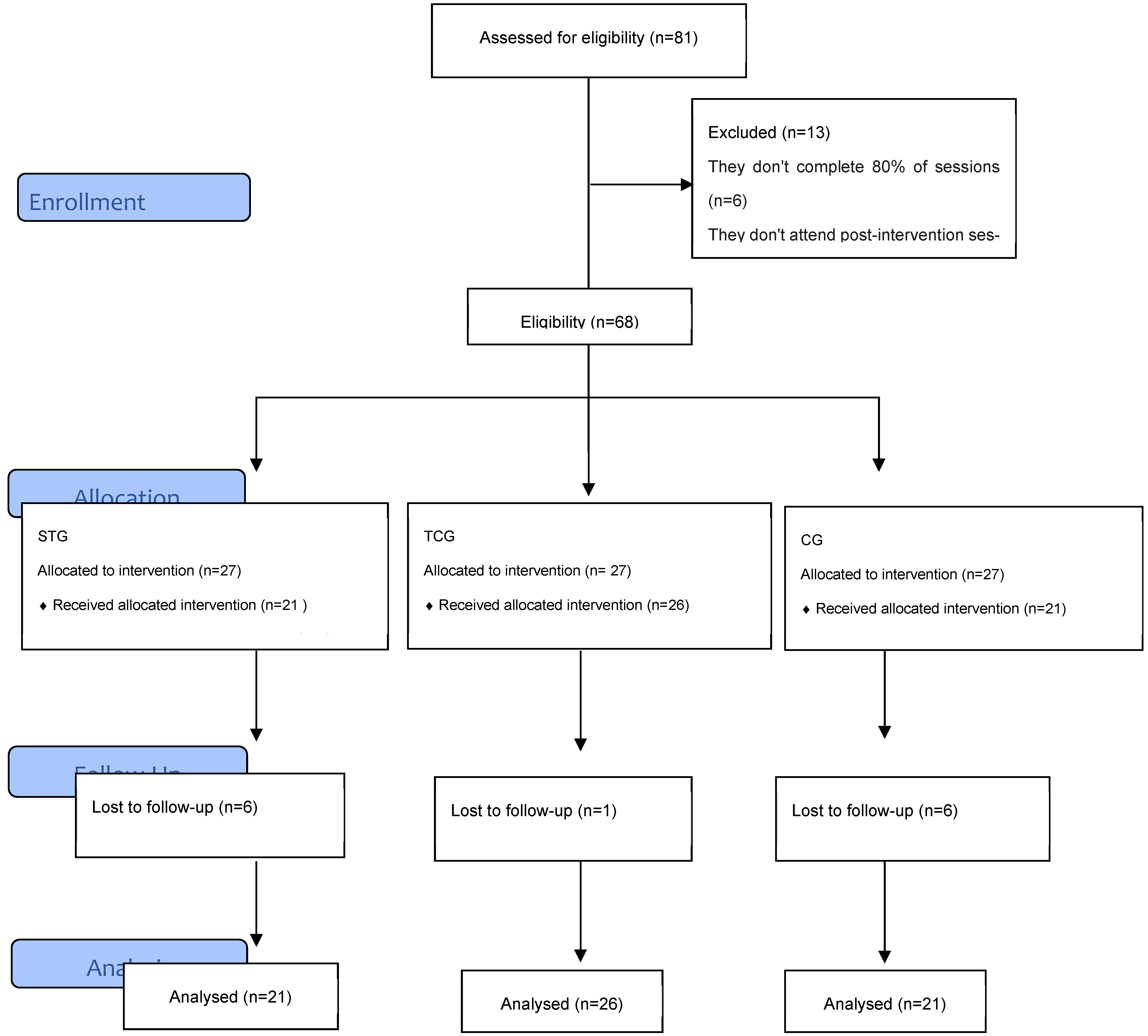
Figure 2.
A: TCG, Tai Chi Group; B: STG, Strength Training Group; C: CG, Control Group. Percentage changes [%= ((Post-pre)/pre))*100] in parameters following a six month intervention. Related samples t test, *p<0.05. 4WMT: 4 meter walk test; STST: Sit to stand test; OPP: Overall physical performance; MS: muscle strength; BFP: body fta percentage; SMM: skeletal muscle mass; SMMI: skeletal muscle mass index.
Figure 2.
A: TCG, Tai Chi Group; B: STG, Strength Training Group; C: CG, Control Group. Percentage changes [%= ((Post-pre)/pre))*100] in parameters following a six month intervention. Related samples t test, *p<0.05. 4WMT: 4 meter walk test; STST: Sit to stand test; OPP: Overall physical performance; MS: muscle strength; BFP: body fta percentage; SMM: skeletal muscle mass; SMMI: skeletal muscle mass index.
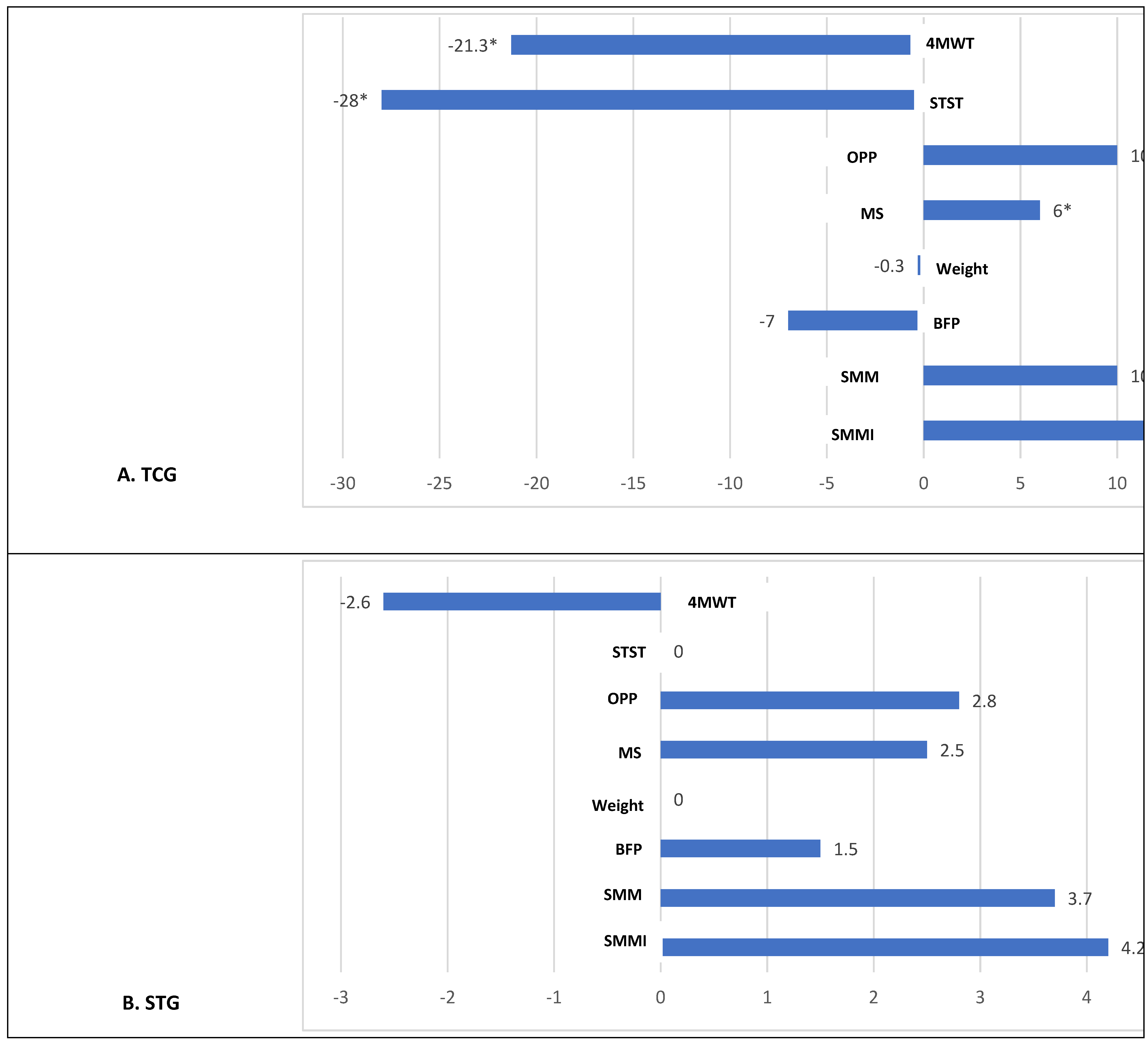
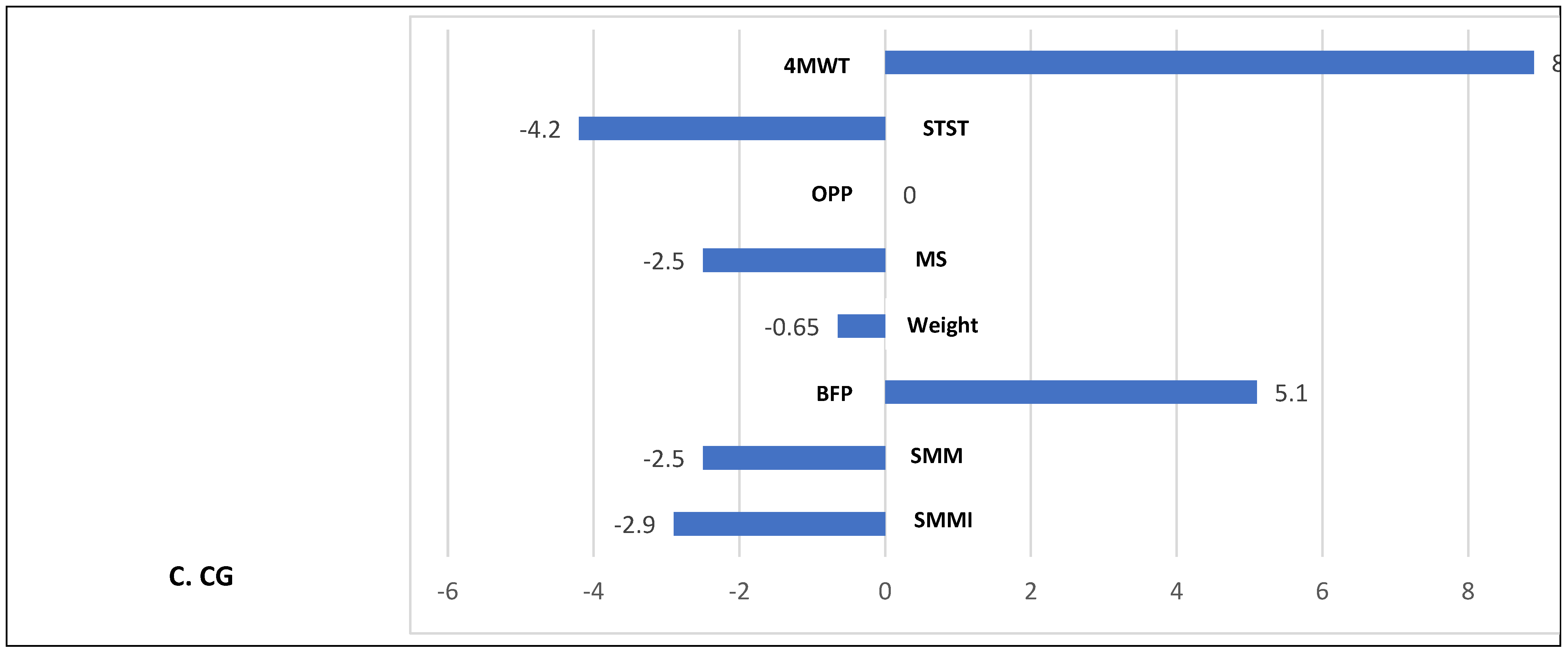
Figure 3.
A: TCG, Tai Chi Group; B: STG, Strength Training Group; C: CG, Control Group. Percentage changes [%= ((Post-pre)/pre))*100] in parameters following a six month intervention. Related samples t test, *p<0.05. Wellbeing, PWB score: Psychological Well-Being Scales; Depression (GDS score, Geriatric Depression Scale); Cognitive (MoCA score, Montreal Cognitive Assessment).
Figure 3.
A: TCG, Tai Chi Group; B: STG, Strength Training Group; C: CG, Control Group. Percentage changes [%= ((Post-pre)/pre))*100] in parameters following a six month intervention. Related samples t test, *p<0.05. Wellbeing, PWB score: Psychological Well-Being Scales; Depression (GDS score, Geriatric Depression Scale); Cognitive (MoCA score, Montreal Cognitive Assessment).
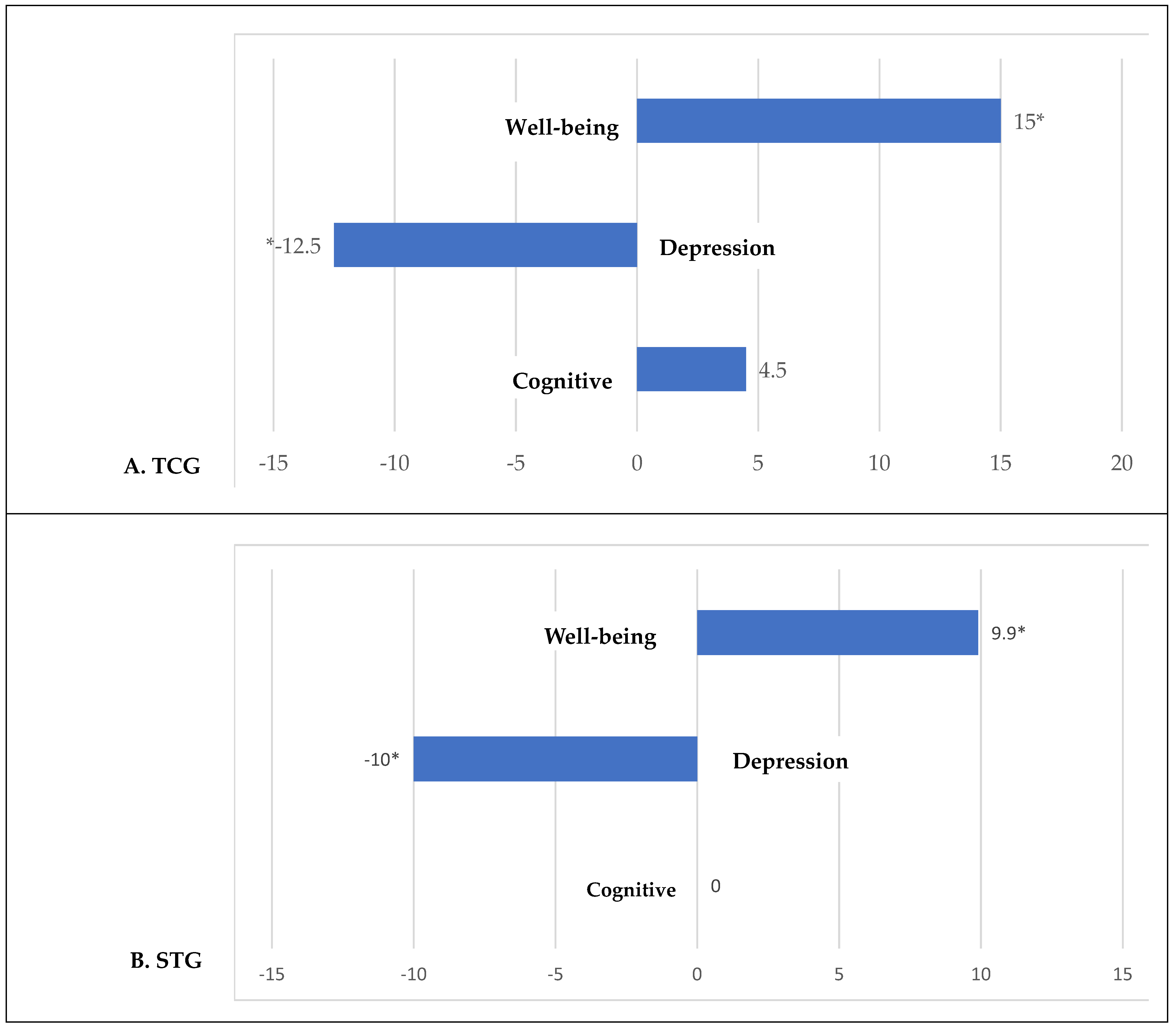
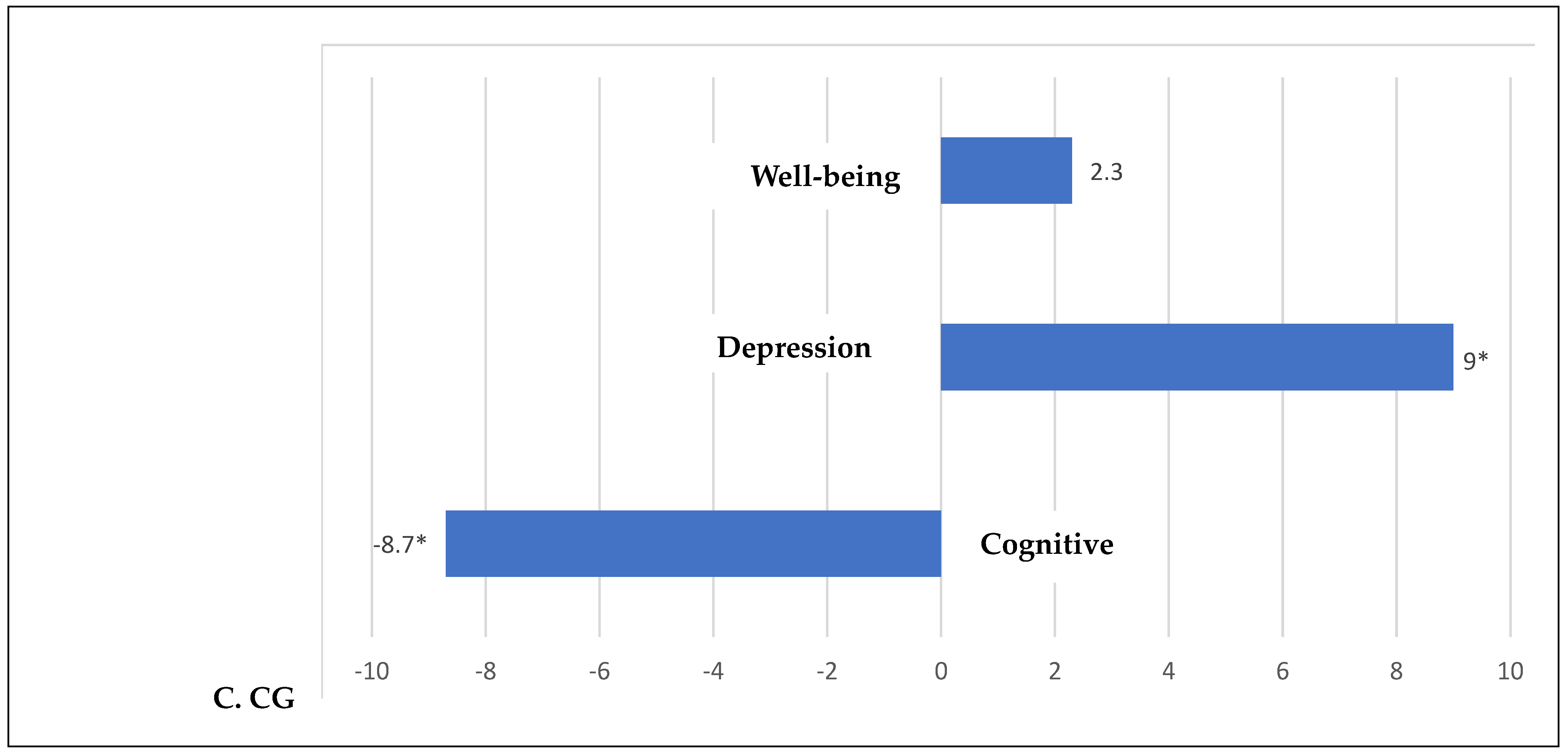

Table 1.
Sociodemographic and health characteristics of the study population.
| Variable | TCG n= 26 |
STG n= 21 |
CG n=21 |
|---|---|---|---|
| Age | 66±6 | 64±4 | 68±5 |
| Schooling (years) | 8±4 | 8±4 | 9±4 |
|
Marital Status In a relationship Single |
11(42.3%) 15(57.6%) |
14(66.7%) 7(33.3%) |
8(38%) 13(62%) |
|
Occupation Household activities Grandchild care Community programs |
16(61.5%) 3(11.5%) 7(27%) |
13(62%) 8(38%)0 |
14(66.7%) 4(19%) 3(14.3%) |
|
Health status Healthy DM HBP DM + HBP |
16(61.5%)09(34.6%) 1(3.9%) |
16(76%)05(24%)0 |
9(43%) 2(9.5%) 8(38%) 2(9.5%) |
TCG, Tai Chi Group; (ii) STG, Strength Training Group; (iii) CG, Control Group (CG).
Table 2.
Biochemical parameters by study group.
| Parameters | TCG n=26 |
STG n=21 |
CG n=21 |
|---|---|---|---|
|
Glucose Baseline Six-months Effect p-value |
91.8±9.4 96.3±8.8 7.3±9.7 0.85 |
99.5±25 102.6±28 2.7±14 0.93 |
99.8±21.3 103±21 -4.5±15 |
|
Urea Baseline Six-months Effect p-value |
29.6±7.6 35.4±9.5 6.1±6 0.48 |
28.6±5.8 37.5±12 8.3±10 0.21 |
32.8±12 34.2±12 1.8±11 |
|
Creatinine Baseline Six-months Effect p-value |
0.95±0.17 0.96±0.18 0.03±0.19 0.002 |
0.96±0.11 0.97±0.15 0.01±0.18 0.005 |
0.85±0.20 1.04±0.27 0.20±12 |
|
Uric Acid Baseline Six-months Effect p-value |
3.7±1.0 3.9±1.0 0.12±0.5 0.23 |
3.4±0.8 3.4±0.7 -0.22±0.4 0.02 |
3.2±1.2 3.7±1.1 0.58±1.0 |
|
Cholesterol Baseline Six-months Effect p-value |
176±40 177±37 0.28±16 0.12 |
183.8±27 179.5±37 -2.3±21 0.18 |
199.5±31 181.1±42 -19.2±24 |
|
HDL Baseline Six-months Effect p-value |
61±13 62±12 -1.0±13 0.99 |
61±11 65±18 3.2±7.9 0.86 |
59±17 63±13 0.85±15 |
|
LDL Baseline Six-months Effect p-value |
67±16 85±27 2.0±15.8 0.26 |
63±18 91±26 2.7±18 0.28 |
60±18 96±38 15.9±31 |
|
Triglycerides Baseline Six-months Effect p-value |
129±41 113±39 -7.0±29 0.41 |
142±44 129±49 -12±29 0.71 |
134±45 110±44 -20.8±28 |
|
Albumin Baseline Six-months Effect p-value |
4.0±0.20 4.0±0.24 0.08±0.27 0.94 |
4.2±0.77 3.9±0.33 -0.21±0.93 0.21 |
3.9±0.22 4.1±0.26 0.15±0.27 |
TCG, Tai Chi Group; (ii) STG, Strength Training Group; (iii) CG, Control Group (CG)Data are expressed as means ± standard deviation. ANOVA of repeated measures test (Tai Chi, Strength vs. Control).
Table 3.
Physical performance and muscle strength by study group.
| Parameters | TCG n= 26 |
STG n= 21 |
CG n=21 |
|---|---|---|---|
|
4MWT Baseline Six-months Effect p-value |
4.7±2.2 3.7±0.9 -1.0±1.8 0.01 |
3.9±1.0 3.8±1.0 0.005±0.7 0.63 |
4.46±1.5 4.92±2.5 0.46±1.86 |
|
STST Baseline Six-months Effect p-value |
13.2±4 9.5±3.2 -3.7±4.8 0.021 |
11±3 11±3 0.45±3 0.9 |
12±6 11.5±6 -0.3±2.8 |
|
OPP Baseline Six-months Effect p-value |
10±2.0 11±1.2 1.00±1.6 0.06 |
10.7±1.5 11.0±1.2 0.33±1.3 0.7 |
9±2.3 9±2.5 -0.05±1.5 |
|
MS Baseline Six-months Effect p-value |
19.8±4 20.9±4.5 1.1±1.9 0.02 |
19.8±4.5 20.3±4.5 0.07±3.1 0.12 |
20±5.2 19.5±5.5 -0.85±2.2 |
TCG, Tai Chi Group; (ii) STG, Strength Training Group; (iii) CG, Control Group (CG)Data are expressed as means±standard deviation. ANOVA of repeated measures test (Tai Chi, Strength vs. Control), significance level 95%. 4MWT(s) (4-Meter Walk Test); STST(s) (Sit-to-Stand test); OPP (global) (Overall physical performance); MS (Kg) (Muscle Strength).
Table 4.
Body composition by study group.
| Parameters | TCG n= 26 |
STG n= 21 |
CG n=21 |
|---|---|---|---|
|
W (kg) Baseline Six-months Effect p-value |
66.5±13 66.7±14 -0.07±2.4 0.97 |
61.2±9.0 61.2±9.4 0.68±2.0 0.64 |
61.5±10.3 61.1±10.1 -0.06±1.76 |
|
BFP Baseline Six-months Effect p-value |
49.2±6.1 45.8±6.4 -3.4±8.2 0.045 |
46.2±6.0 46.9±6.3 0.74±5.3 0.76 |
49.0±4.7 51.5±7.0 2.5±9.3 |
|
SMM Baseline Six-months Effect p-value |
16.3±2.6 18±3.0 1.6±1.4 0.0001 |
15.9±2.1 16.5±1.7 0.6±1.8 0.14 |
16.0±3.1 15.6±3.0 -0.40±1.6 |
|
SMMI Baseline Six-months Effect p-value |
7.0±0.8 7.8±0.8 0.72±0.61 0.001 |
7.1±0.9 7.4±0.6 0.29±0.87 0.13 |
6.9±1.0 6.7±0.9 0.17±0.73 |
TCG, Tai Chi Group; (ii) STG, Strength Training Group; (iii) CG, Control Group (CG)Data are expressed as means ± standard deviation. ANOVA of repeated measures test (Tai Chi, Strength vs. Control), significance level 95%. W (kg) (Weight); BFP (Body Fat Percentage); SMM (Skeletal Muscle Mass); SMMI (Skeletal Muscle Mass Index).
Table 5.
Psychological well-being, depression, and cognitive Function by study group.
| Variable | TCG n= 26 |
STG n= 21 |
CG n=21 |
|---|---|---|---|
|
Wellbeing (PWBS score) Baseline Six-months Effect p-value |
162±27 187±20 16.7±23 0.05 |
171±23 188±10 7.0±10 0.83 |
173±33 177±30 3.2±13 |
|
Depression (GDS score) Baseline Six-months Effect p-value |
8±5 7±5 -0.6±1.2 0.01 |
10±6 9±5 -1.2±2.1 0.001 |
11±9 12±9 1.0±2.0 |
|
Cognitive (MoCA score) Baseline Six-months Effect p-value |
22±3.9 23±4.9 0.15±4.2 0.37 |
22±5.4 22±5.9 -0.25±1.8 0.63 |
23±4.4 21±4.7 -1.21±2.5 |
TCG, Tai Chi Group; (ii) STG, Strength Training Group; (iii) CG, Control Group (CG). Data are expressed as means±standard deviation. ANOVA of repeated measures test (Tai Chi, Strength vs. Control), significance level 95%. PWBS, Psychological Well-Being Scale¸ Depression (GDS, Geriatric Depression Scale), Cognitive Assessment (MoCA, Montreal Cognitive Assessment).
Disclaimer/Publisher’s Note: The statements, opinions and data contained in all publications are solely those of the individual author(s) and contributor(s) and not of MDPI and/or the editor(s). MDPI and/or the editor(s) disclaim responsibility for any injury to people or property resulting from any ideas, methods, instructions or products referred to in the content. |
© 2025 by the authors. Licensee MDPI, Basel, Switzerland. This article is an open access article distributed under the terms and conditions of the Creative Commons Attribution (CC BY) license (http://creativecommons.org/licenses/by/4.0/).
Copyright: This open access article is published under a Creative Commons CC BY 4.0 license, which permit the free download, distribution, and reuse, provided that the author and preprint are cited in any reuse.


