

Submitted:
29 December 2025
Posted:
29 December 2025
You are already at the latest version
Abstract
Introduction: Chronic kidney disease and kidney failure are associated with a decline in physical abilities resulting in severe health-related complications. Physical activities and exercise improve the quality of life of paediatric patients undergoing dialysis. This scoping review aims to evaluate existing literature on the impact of exercise programs on paediatric patients undergoing dialysis in Africa. Methods: A systematic search of electronic databases, including CINAHL, EBSCO, Medline, PubMed, and Scopus, was conducted to identify peer-reviewed articles focusing on the effects, impact and benefits of exercises and physical activity programs in paediatric patients undergoing dialysis. The selection process was done by two authors and included importing search results, removing duplicates, screening titles and abstracts based on a criterion, and analysed the reference lists of selected studies to ensure comprehensive coverage. Two peer-reviewed studies were eligible for final review. Results: Two exercise-based intervention studies focused on children receiving dialysis in Egypt, highlighting a narrow regional scope within Africa. The initial study demonstrated significant improvements in health-related quality of life after muscle stretching and isometric exercises. These improvements were particularly evident across multiple dimensions of the Pediatric Quality of Life Inventory. A subsequent study found reductions in psychological distress and positive biochemical changes after four and eight weeks. While there were no significant baseline differences in depression, anxiety, or stress, the exercise regimen showed emerging psychosocial benefits over time. A notable omission was the lack of detail regarding contraindications and precautionary measures. These are essential for informing clinical decision-making and ensuring exercises are both safe. Discussion: The findings underscore the importance of incorporating exercise into the standard care of paediatric patients undergoing dialysis to facilitate better health outcomes. Further research is needed to develop and implement effective exercise interventions tailored to other countries in Africa.
Keywords:
dialysis
; paediatric
; physical activity
; exercise
; quality of life
; scoping review
; Africa
1. Introduction
Kidney Failure is a significant public health challenge in Africa, accounting for more than 50% in paediatric populations [1]. The incidence of KF in African countries is elevated, primarily attributed to the prognosis remaining unfavourable due to the unavailability of resources for acute and chronic renal replacement therapy (RRT) [2,3]. Chronic kidney disease (CKD) is characterised by the presence of kidney damage or an estimated glomerular filtration rate (eGFR) persisting for 3 months or more [4]. CKD involves a progressive loss of kidney function, often resulting in Kidney Failure (KF) requiring the need for RRT, such as dialysis or transplantation [5].
Dialysis provides essential support by maintaining physiological stability through the removal of metabolic waste products, regulating fluid and electrolyte balance, and maintaining acid–base homeostasis [5]. Although the causes of KF vary by age and race, the most common causes are congenital anomalies in children under 12 years, contributing 34% to 43% prevalence of KF [6].
Globally, two types of dialysis are used in practice, namely peritoneal dialysis (PD) and haemodialysis (HD) [5,6,7]. PD accounts for 9% of all RRTs and 11% of all dialysis. PD is often preferred in younger children due to its technical simplicity, the lesser need for trained staff, and its convenience for home treatment [7,8,9]. However, HD is more commonly utilised in the adolescent group, usually in a hospital setting [9]. Although the use of PD is attractive in low-income countries, it is accompanied by high costs of the necessary peritoneal fluids, which affects its accessibility and optimal usage [9].
Children undergoing dialysis often report a lower health-related quality of life (QoL) compared to their peers in the earlier stages of chronic kidney disease or those who have received a kidney transplant [10,11,12]. This decline is particularly evident across multiple domains, including physical functioning, emotional well-being, social interactions, and academic performance [10,11,12]. HD is associated with more fatigue and disruption of physical condition compared to PD [13]. Emotional suffering is evident regardless of the type of RRT, with both children and caregivers reporting psychological challenges of anxiety, social isolation, poor self-esteem and lack of self-control [14]. Furthermore, school attendance and academic achievement are often negatively affected due to frequent absences for treatment and hospitalisations [11].
Physical activities and exercises are widely acknowledged as therapeutic interventions to improve physical functioning. Exercise is associated with several benefits, including improved physical function, muscle mass, and strength [15,16]. However, the exercise capacity of children diagnosed with KF undergoing dialysis is poorer than that of their healthy peers. Exercise intolerance is correlated with protein-energy wasting and chronic inflammation that exist [17,11].
While incorporating exercise during dialysis has been shown to enhance clinical outcomes, its implementation in paediatric and adolescent populations remains relatively underutilised [18]. Maintaining PA and exercises is essential for patients undergoing dialysis; however, clinical guidelines concerning the appropriate type, timing, intensity, and safety of exercise interventions are reported to be inconsistent globally [19]. The limited availability and variability of guideline recommendations often restrict clinicians' ability to promote PAs and exercises among paediatric nephrology patients [20]. Thus, this scoping review aims to map the available evidence on methods, types, benefits, outcomes, effects of PA and exercise programmes on the paediatric population undergoing haemodialysis.
Despite recent reviews in multiple countries [16,18,19,20,21] this review aims to synthesise and map the current literature on paediatric patients undergoing dialysis, addressing the significant challenges they face in terms of physical, emotional, and social well-being, specifically in African countries, which are not well represented in the above reviews. Given the vital role of exercise in improving the quality of life for both adults and children with kidney disease, there is a need to systematically examine the existing literature on exercise programs specifically designed for children undergoing dialysis. The review aims to map evidence regarding the types, benefits, and barriers of such interventions, providing clinicians and healthcare providers with insights to inform practice. By identifying gaps in the current literature and consolidating evidence, the review will help determine the gaps for targeted exercise programs that enhance health-related quality of life for paediatric patients undergoing renal replacement therapies, aligning clinical practice with the latest research findings. In addition, the review answers the question: What is the scope of the literature regarding the types, impact, outcomes, and barriers of exercise interventions for children on haemodialysis in Africa?
2. Methods
This scoping review, which consisted of peer-reviewed published articles, was conducted in line with the framework outlined by Arksey and O’Malley [22]. Two researchers initiated the review, assisted by the university librarian, and developed the inclusion and exclusion criteria. The literature was systematically searched and reported following the PRISMA extension for scoping reviews (PRISMA-ScR) reporting tool [23]. The review question was formulated considering Population, Concept, and Context. This scoping review was limited to articles covering the effects of physical activities and exercise in paediatric patients undergoing HD in Africa. The review was limited to studies conducted only in Africa.
2.1. Search Strategy
The literature search was conducted between August 2024 and April 2025 after several pilot searches. The piloted searches allowed for refinement to suit the scoping review. The following databases were searched for peer-reviewed articles related to the subject: CINAHL, MedLine, EBSCO, PubMed, Scopus, and Science Direct for peer-reviewed articles related to the subject. The librarian contributed to identifying the appropriate databases, keywords, and search strings to ensure a comprehensive search. Constant communication was maintained with the librarian to ensure a smooth search process.
(Pediatric* OR Paediatric* OR Child* OR Adolescent* OR Youth OR "Young people" OR Teen* OR Juvenile*) AND (Dialysis OR Haemodialysis OR Haemodialysis OR "Peritoneal dialysis" OR "Renal replacement therapy" OR "End-stage renal disease" OR ESRD OR "Chronic kidney disease" OR CKD OR "Kidney failure") AND ("Physical exercise" OR "Exercise program*" OR "Physical activity" OR "Physical training" OR "Resistance training" OR "Aerobic exercise" OR "Strength training" OR "Therapeutic exercise" OR "Exercise intervention*" OR "Exercise therapy") AND ("Quality of life" OR QOL OR "Health-related quality of life" OR HRQOL OR "Exercise tolerance" OR "Muscle strength" OR "Physical function*" OR "Emotional well-being" OR "Psychological well-being" OR "Cognitive function*" OR Fatigue OR "Physical fitness" OR "Cardiorespiratory fitness" OR "Functional capacity")
2.2. Study Selection Criteria
This scoping review included original research articles published in peer-reviewed journals between 2015 and 2025 and written in the English language. Studies were required to involve paediatric and adolescent participants aged 0-18 years who were undergoing dialysis treatment. The research focus needed to examine physical exercise or physical activity interventions designed explicitly for dialysis patients within the paediatric population. Additionally, included studies were required to report outcomes related to quality of life, physical functioning, or other health-related measures in paediatric dialysis populations following physical activity interventions.
Studies were excluded from this review if they were review papers, meta-analyses, commentaries, dissertations, conference proceedings, abstracts, editorials, or book chapters, as only primary research data were considered appropriate for inclusion. Articles published in languages other than English were excluded due to resource limitations for translation and to maintain consistency in data extraction processes. Studies that did not focus specifically on paediatric or adolescent populations aged 0-18 years, or those that included mixed populations without separate analysis of paediatric data, were also excluded. Furthermore, studies examining aspects other than physical activities and exercises among paediatric dialysis patients did not meet the inclusion criteria. Finally, studies that failed to report on quality of life, physical functioning, or related physical health outcomes following exercise interventions were excluded from the analysis.
2.3. Screening and Selection Process
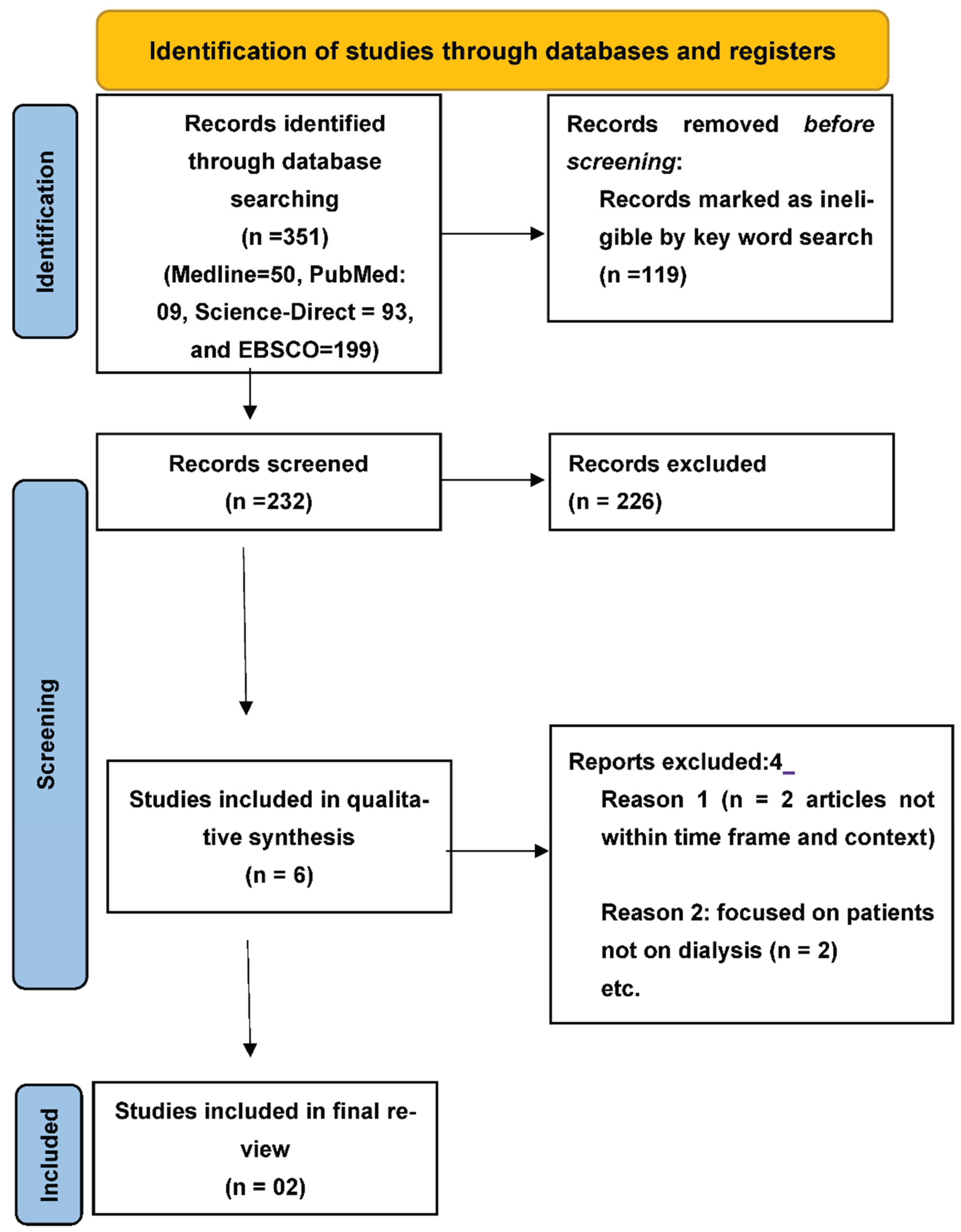
Two reviewers independently screened the titles and abstracts of the identified articles to ensure rigour and reduce potential bias. Each reviewer assessed the articles using the predefined inclusion and exclusion criteria to ensure consistency and minimise bias. Any disagreements during this process were resolved through discussion and consensus among the reviewers. To ensure the rigour and completeness of our search methodology, a librarian was consulted to form part of the final decision-making process and to verify the relevance, comprehensiveness, and accessibility of the selected databases and search strategies. The screening and selection process was conducted, and duplicates were removed using EndNote software. Secondly, carefully screening all imported studies’ titles and abstracts based on the inclusion criteria. Thirdly, the reference list of the identified articles was screened to ensure comprehensive coverage of the evidence. Full-text screening was conducted for all the identified articles (See Fig. 1 for the review screening process flow chart). The research team scrutinised this process.
2.4. Data Extraction, Analysis, and Report
A standardised data extraction sheet in Microsoft Excel was used to collate, chart, and summarise the data from studies and reports. The following basic information regarding the eligible studies was systematically extracted and tabulated to ensure consistency: authors and publication year, title of each study, country, study design, method of intervention, impact, benefits and barriers, data analysis, and key findings (See Table 1 for the basic information of the studies included in the final review).
The data extraction process was carried out systematically by two researchers who collaborated to ensure consistency and accuracy. Prior to the review, the reviewers jointly developed and finalised the data extraction table, agreeing on its contents to standardise the process (See Table 1 below for basic information on the eligible studies). Both reviewers critically assessed and validated the data extraction table. Authors extracted only the data items that align with the scoping review questions [24]. A narrative synthesis typically provides a broad overview of the existing literature, identifies vital concepts, and highlights research gaps; hence, it is best suited for this scoping review. The data analysis process was validated through multiple rounds of review by both researchers and the librarian to ensure consistency and alignment with the research objectives. Furthermore, a narrative synthesis was employed to categorise the findings [24]
3. Results
This scoping review included two original research articles, following the process of excluding articles that did not answer the research question and those that were duplicates (Figure 1). The distribution of retrieved articles’ publication years, publication region, and adopted research design or methods is presented below in Table 1.
3.1. Geographical Location of Studies and Duration of Intervention
In this review, both studies we examined were conducted in Egypt, highlighting a limited geographical context for our analysis. The duration of the intervention varied from three months, July to September 2022 [25] to six months, November 2020 to April 2021 [26]. One study employed a randomised control trial [25] and the other study used a quasi-experimental design [26].
3.2. Types of Interventions, Impact and Outcomes
The first study investigated the effects of muscle stretching and isometric exercises on the quality of life (QoL) of children undergoing HD [25]. The Paediatric Quality of Life scale version 4.0 (PedsQL™), translated into Arabic, was the outcome measure used to assess health-related QoL before and after the exercises. The PedsQL™ consists of 23 items divided into four domains: physical, emotional, social functioning, and school performance. Initially, there were no significant differences between the study and control groups across these domains. However, post-intervention results showed that the study group experienced significant improvements in the total PedsQL™ score compared to the control group (p = 0.001), with an effect size of 0.531 indicating a moderate-to-large difference. Notable increases were observed in physical function (from 132.50 to 483.33), emotional functioning (from 141.67 to 356.67), social functioning (from 195.83 to 419.17), and school performance (from 165.0 to 389.17). After two months of intervention, 66.7% of participants reported improved QoL, compared to just 3.3% in the control group. No significant correlation was found between child age and total QoL (p = 0.47) [25].
The second study assessed the impact of intradialytic exercise on fatigue, psychological distress, and biochemical markers [26]. Fatigue symptoms were measured using the Paediatric Quality of Life Inventory Multidimensional Fatigue Scale (PedsQL-MFS), consisting of three subscales: sleep/rest fatigue, cognitive fatigue, and general fatigue. Psychological distress was evaluated with the Depression Anxiety and Stress Scale (DASS-21). Researchers also measured biochemical markers through blood samples for creatinine, blood urea nitrogen (BUN), sodium, calcium, potassium, and phosphorus, comparing the results monthly after dialysis.
Key findings included no significant differences in total mean scores of depression, anxiety, and stress between study and control groups before the exercise program (p=0.856) [26]. However, significant differences were observed after 4 and 8 weeks of intervention (p=0.000). The study group showed improvements in BUN, calcium, and phosphorus levels after 4 and 8 weeks, compared to the pre-intervention levels. There was a significant difference in total chemical values between groups after 4 and 8 weeks (p=0.001). Additionally, a positive correlation existed between fatigue scores and anxiety, depression, and stress in the study group, with a highly significant difference compared to the control group (p < .001) [26].
3.3. Barriers to Exercise Interventions
4. Discussion
This scoping review provided insight into the extent of evidence regarding the types, benefits, impact, and barriers of exercise interventions for children on haemodialysis in Africa. Two studies met the inclusion criteria and were conducted between 2022 and 2024 [25,26], demonstrating a scarcity of studies conducted among paediatric populations. This finding was unexpected considering the well-established value of physical activity and exercise. Exercise benefits patients receiving maintenance HD, improving their QoL and physical abilities [27]. A systematic review and meta-analysis demonstrated that home-based exercise interventions, lasting 3-6 months, significantly improved physical performance in patients undergoing maintenance dialysis [28].
Patients with kidney failure, whether adults or paediatric, are commonly known to be physically inactive. A study conducted in the United States of America revealed that children and young adults with CKD have very low levels of physical activity [29]. These patients were measured by a pedometer; a device tied around the waistline above each patient's hip every morning and worn throughout the day while doing usual activities [29]. An imperative benefit of pedometers is that they are user-friendly and easy to understand [30]. Furthermore, a recent narrative review emphasised the critical need for integrated and collaborative approaches to evaluating physical activity and exercise requirements in this population. The review highlighted the feasibility of incorporating physical activity monitoring into electronic patient records and stressed the importance of ongoing dialogue between healthcare providers and patients to ensure effective implementation. [30].
While no PA and exercise can be deemed more beneficial than others, it is crucial to monitor patients' physical activity daily [31]. A study conducted in Egypt among children with CKD, although not on dialysis, suggests that adopting and implementing progressive resistance exercises twice weekly and medical care regimens can significantly improve quality of life and functional capacity in paediatric patients with CKD [32]. The Global Physical Activity Questionnaire (GPAQ), an internationally validated instrument for measuring PA, has been made available and translated into various languages worldwide. It has been validated among adults in more than 20 countries, mainly in Asia and Europe. The GPAQ verified significant reliability with time intervals of three days to two weeks [33].
Recent technological advances have emerged as methods for promoting intradialytic PA and exercise. These include using social networks for information sharing and social communication, the production of virtual reality gaming, intradialytic yoga, or electrical stimulation of muscles, and the recommendation to promote PA and exercise programs [34]. Virtual Reality gaming consists of a digital game that utilises a computer-based system. Players are engaged in a simulated portal with a 360-degree view using either a helmet-mounted display or a flat-screen televisions. They engage in real interactions within the environment while completing various crucial tasks. This format enables players to participate in physical activities while gaming [35]. Typically, virtual reality gaming is incorporated into intradialytic exercise and has been shown to be effective in enhancing physical performance and improving quality of life, thereby potentially playing a vital role in promoting adherence [36,37,38]. The use of technology may be beneficial even for paediatric patients on dialysis. A recent systematic review and meta-analysis demonstrated that home-based exercise interventions were associated with significant improvement compared to usual care intradialytic exercise interventions in patients undergoing maintenance dialysis [28].
Recommendations
To enhance the quality of life for paediatric patients undergoing HD, it is essential to develop standardised guidelines for physical exercise that cater specifically to their needs. Personalised exercise plans, created in collaboration with healthcare professionals, should be integrated into routine dialysis treatments. Educating healthcare providers and engaging families will foster a supportive environment, while the use of technology, such as mobile apps, can help monitor activity levels and motivate children to be more active. Additionally, addressing barriers to exercise, implementing multi-disciplinary approaches, and encouraging peer support groups will create a holistic framework that promotes physical activity. This comprehensive strategy aims to improve not only the physical well-being but also the emotional and social aspects of children on dialysis, particularly in underrepresented regions like Africa.
Future studies should incorporate clearly defined safety parameters, including patient selection criteria, monitoring guidelines, and response plans for exercise-related complications. Doing so will enhance clinical utility and support the development of standardised, evidence-based rehabilitation frameworks across diverse care settings.

Table 2.
Articles for the final review.
| Authors and Year of Publication | Title of the Study | Objective | Country | Population Sample and Size | Study Design | Exercise Intervention Method | Key Findings and Gaps Identified |
|---|---|---|---|---|---|---|---|
| Khalf-Allah et al. 2024 |
Effect of muscle stretching and isometric exercises on quality of life in children undergoing regular hemodialysis |
The study aimed to investigate the effect of muscle stretching and isometric exercises on QoL of children undergoing hemodialysis. |
Egypt | 68 children from a total population of 87 children undergoing hemodialysis at the Pediatric Nephrology Unit in Assiut University Children’s Hospital aged from 6 to 18 years old. The sample included 60 children with half split to either study group or control group by a web-based randomizer. |
Randomised control trial. | A 40-minute program conducted 3 times weekly for 2 months during hemodialysis sessions. Stretching exercises (20 minutes, 2nd hour): targeted calf, hamstring, and quadriceps muscles with 10-15 repetitions to improve flexibility. Isometric exercises (20 minutes, 3rd hour): static contractions of chest, biceps, stomach, and hip muscles held for 3-5 seconds, 10-15 repetitions each. Safety protocols avoided body parts connected to dialysis machines. Children received initial supervision from a trained researcher, progressing to independent performance under supervision with gradual repetition increases based on individual tolerance. | Children performed stretching and isometric exercises for 40 minutes, three times weekly during dialysis sessions over two months. Results showed 66.7% of exercising children achieved good quality of life compared to only 3.3% in the control group. All domains improved significantly: physical functioning increased nearly four-fold, while emotional, social, and school performance also enhanced substantially. The program benefited all age groups equally, demonstrating that structured exercise during dialysis can transform the overall well-being of pediatric patients with kidney disease After 3 months of exercise, it was shown that most children in the study group (66.7%) had good QoL, in contrast to only 3.3% in the control group, with a highly statistically significant variation between the two examined groups pertaining to the health-related QoL scale (P value=0.001) after exercise. |
| Salama et al. 2022 |
Effect of Intradialytic Exercise on Fatigue, Psychological Distress, and Biochemical Findings among Hemodialysis Chi |
To evaluate the effectiveness of intradialytic exercise on fatigue, psychological distress, and biochemical findings among hemodialysis children. | Egypt | 50 children aged 6-18 years with chronic renal disease on hemodialysis. Using a simple random sample, half were split into either control or study group. |
Quasi-experimental design | A quasi-experimental design was used to conduct the study two groups (study and control group pre/ posttest) were used to achieve the study purpose. Study group: They practiced exercises for two months, three times a week, during the first two hours of haemodialysis sessions. Control group: They only received scheduled | Highly statistically significant differences were observed in children’s fatigue before intervention, after four and eight weeks of intervention, compared with the control group. Highly significant difference in the total mean score of anxiety, depression, and stress after four and eight weeks of intervention between the study and control groups. Improvement in the mean score of blood urea nitrogen (BUN), calcium and phosphorus in the study group after 4 and 8 weeks of intervention compared to before intervention. The study concluded that intradialytic exercise had a positive effect on fatigue, psychological distress, and biochemical findings among hemodialysis children |
5. Limitations
Despite the generally positive outcomes reported across studies, several limitations were apparent. First, the heterogeneity in intervention designs, outcome measures, and evaluation timeframes makes direct comparisons challenging. Second, both studies employed unique designs over different intervals, potentially limiting the strength of evidence. Third, the long-term sustainability of improvements was not measured, with most studies focusing on short-term outcomes. No mention was made of barriers linked to exercise interventions. This observation highlights a potential gap in addressing contraindications and precautions that should be considered when implementing these exercise programs. It's crucial to recognise that while exercise can offer numerous benefits, there may be specific circumstances or health conditions that warrant caution, emphasising the importance of individualised approaches to exercise. Lastly, both studies in this review were conducted in a single country (Egypt), for which the situation in other regions and or countries may differ.
6. Conclusions
The synthesis of findings provides a comparative analysis, revealing common trends across the studies, namely, the positive impact of various exercise interventions on reducing fatigue and psychological distress while enhancing functional capacity and QOL. In conclusion, the review summarises the key outcomes, asserting that exercise interventions can significantly benefit paediatric patients undergoing HD and those with CKD. The absence of adverse events or reported barriers could suggest that interventions were well tolerated; however, without formal documentation of screening criteria, individual risk stratification, or exclusion thresholds, it remains unclear how universally applicable these findings may be. This limits the translation of such protocols to other African contexts where comorbidities, resource constraints, and clinical supervision may differ.
7. Contribution of the Review
This scoping review contributes to physiotherapy and paediatric nephrology by examining the benefits of exercise and physical activities in HD, comprehensively analysing the existing literature on the outcomes of exercise and physical activities among paediatric patients in dialysis settings. It highlights the need for more studies on this phenomenon in various countries within the African region. Furthermore, the review paves the way for future studies that include the roles of physiotherapy, families or caregivers, and support of other multidisciplinary team members in promoting exercises and physical activities in paediatric patients undergoing HD.
Author Contributions
MMS, the first author, was responsible for the conceptualisation and design of this review. SAN and MMS searched and gathered the data together. SAN initiated the first draft, and MMS also gathered data for the study, conducted data analysis, and reviewed and provided constructive feedback. Both authors have read and agreed to the published version of the manuscript.
Institutional Review Board Statement
Not applicable.
Informed Consent Statement
Not applicable.
Data Availability Statement
No new data were created or analyzed in this study.
Acknowledgments
We thank Ms Malebana Joanne, the Information Librarian. The Physiotherapy Department of the School of Healthcare Sciences at the Sefako Makgatho Health Sciences University, the Adelaide Tambo School of Nursing Science, Faculty of Science, and the Tshwane University of Technology for their support.
Conflicts of Interest
The authors have no conflicts of interest to declare for this paper.
Abbreviations
The following abbreviations are used in this manuscript:
| CKD | Chronic Kidney Disease |
| KF | Kidney Failure |
| RRT | Renal Replacement Therapy |
| eGFR | Estimated Glomerular Filtration Rate |
| PD | Peritoneal Dialysis |
| HD | Haemodialysis |
| QoL | Quality of Life |
| PA | Physical Activity |
References
- Fiseha, T.; Osborne, N.J. Burden of end-stage renal disease of undetermined etiology in Africa. Renal Replacement Therapy 2023, 9(1), 44. [Google Scholar] [CrossRef]
- Asinobi, A.O.; Ademola, A.D.; Ogunkunle, O.O.; Mott, S.A. Paediatric end-stage renal disease in a tertiary hospital in South West Nigeria. BMC nephrology 2014, 15(1), 25. [Google Scholar] [CrossRef]
- Esezobor, C.I.; Alakaloko, A.E.; Admani, B.; Ellidir, R.; Nourse, P.; McCulloch, M.I. Paediatric nephrology in Africa. Current Pediatrics Reports 2021, 9(4), 134–141. [Google Scholar] [CrossRef]
- Vaidya, S.R.; Aeddula, N.R. Chronic kidney disease. In StatPearls [Internet]; StatPearls Publishing, 2024. [Google Scholar]
- Chua, A.N.; Warady, B.A. Care of the pediatric patient on chronic dialysis. Advances in chronic kidney disease 2017, 24(6), 388–397. [Google Scholar] [CrossRef] [PubMed]
- Ng, D.K.; Robertson, C.C.; Woroniecki, R.P.; Limou, S.; Gillies, C.E.; Reidy, K.J.; Winkler, C.A.; Hingorani, S.; Gibson, K.L.; Hjorten, R.; Sethna, C.B. APOL1-associated glomerular disease among African-American children: a collaboration of the Chronic Kidney Disease in Children (CKiD) and Nephrotic Syndrome Study Network (NEPTUNE) cohorts. Nephrology Dialysis Transplantation 2017, 32(6), 983–990. [Google Scholar] [CrossRef]
- Bello, AK; et al. Status of care for end stage kidney disease in countries and regions worldwide: international cross sectional survey. BMJ 2019, 367, l5873. [Google Scholar] [CrossRef] [PubMed]
- Bello, AK; et al. Assessment of global kidney health care status. JAMA 2017, 317, 1864–1881. [Google Scholar] [CrossRef]
- Bello, A.K.; Okpechi, I.G.; Osman, M.A.; Cho, Y.; Cullis, B.; Htay, H.; Jha, V.; Makusidi, M.A.; McCulloch, M.; Shah, N.; Wainstein, M. Epidemiology of peritoneal dialysis outcomes. Nature Reviews Nephrology 2022, 18(12), 779–793. [Google Scholar] [CrossRef] [PubMed]
- Francis, A; Didsbury, MS; van Zwieten, A; et al. Quality of life of children and adolescents with chronic kidney disease: a cross-sectional study. Archives of Disease in Childhood 2019, 104, 134–140. [Google Scholar] [CrossRef]
- Tjaden, L.A.; Grootenhuis, M.A.; Noordzij, M.; Groothoff, J.W. Health-related quality of life in patients with pediatric onset of end-stage renal disease: state of the art and recommendations for clinical practice. Pediatric Nephrology 2016, 31, 1579–1591. [Google Scholar] [CrossRef]
- Obiagwu, P.N.; Sangweni, B.; Moonsamy, G.; Khumalo, T.; Levy, C. Health-related quality of life in children and adolescents with end-stage renal disease receiving dialysis in Johannesburg. South African Journal of Child Health 2018, 12(2), 58–62. [Google Scholar] [CrossRef]
- Widiasta, A.; Labiba, A.N.; Tarigan, R. Differences in Quality of Life Among Children with End-Stage Kidney Disease Undergoing Hemodialysis and Peritoneal Dialysis. Nephro-Urology Monthly 2025, 17(1). [Google Scholar] [CrossRef]
- Rotella, A.A.F.; Nascimento, R.A.D.; Camargo, M.F.C.D.; Nogueira, P.C.K. Emotional repercussions and quality of life in children and adolescents undergoing hemodialysis or after kidney transplantation. Revista Paulista de Pediatria 2019, 38, e2018221. [Google Scholar] [CrossRef]
- Huang, M.; Lv, A.; Wang, J.; Xu, N.; Ma, G.; Zhai, Z.; Zhang, B.; Gao, J.; Ni, C. Exercise training and outcomes in hemodialysis patients: systematic review and meta-analysis. American journal of nephrology 2019, 50(4), 240–254. [Google Scholar] [CrossRef] [PubMed]
- Lu, Y.; Wang, Y.; Lu, Q. Effects of exercise on muscle fitness in dialysis patients: a systematic review and meta-analysis. American journal of nephrology 2019, 50(4), 291–302. [Google Scholar] [CrossRef]
- Paglialonga, F; Lopopolo, A; Scarfia, RV; Galli, MA; Consolo, S; Brivio, A; et al. Correlates of exercise capacity in pediatric patients on chronic hemodialysis. J Ren Nutr. 2013, 23(5), 380–6. [Google Scholar] [CrossRef]
- Zhang, F.; Bai, Y.; Zhao, X.; Huang, L.; Wang, W.; Zhou, W.; Zhang, H. Therapeutic effects of exercise interventions for patients with chronic kidney disease: an umbrella review of systematic reviews and meta-analyses. BMJ open 2022, 12(9), e054887. [Google Scholar] [CrossRef]
- Lambert, K.; Lightfoot, C.J.; Jegatheesan, D.K.; Gabrys, I.; Bennett, P.N. Physical activity and exercise recommendations for people receiving dialysis: a scoping review. PLoS One 2022, 17(4), e0267290. [Google Scholar] [CrossRef] [PubMed]
- Salhab, N.; Karavetian, M.; Kooman, J.; Fiaccadori, E.; El Khoury, C.F. Effects of intradialytic aerobic exercise on hemodialysis patients: a systematic review and meta-analysis. Journal of nephrology 2019, 32, 549–566. [Google Scholar] [CrossRef]
- Jegatheesan, D.K.; Modderman, R.; Krishnasamy, R.; Tong, A.; Coombes, J.S.; Viecelli, A.K.; Johnson, D.W.; Isbel, N. A systematic review of scope and consistency of outcome measures for physical fitness in chronic kidney disease trials. Kidney International Reports 2021, 6(5), 1280–1288. [Google Scholar] [CrossRef]
- Levac, D; Colquhoun, H; O’Brien, KK. Scoping studies: advancing the methodology. Implementation Sci. 2010, 5, 1–9. [Google Scholar] [CrossRef]
- Peters, MD; Marnie, C; Tricco, AC; Pollock, D; Munn, Z; Alexander, L; et al. Updated methodological guidance for the conduct of scoping reviews. JBI Evid. 2020, 18, 2119–26. [Google Scholar] [CrossRef]
- Ryan, R. Cochrane Consumers and Communication Review Group: data synthesis and analysis. Cochrane Consumers and Communication Review Group 2013, 2013, 216–220. [Google Scholar]
- Khalf-Allah, S.H.; Ebrahim, H.; Badawy, A.; Sayed, H. Effect of muscle stretching and isometric exercises on quality of life in children undergoing regular hemodialysis. Pediatric Nephrology 2024, 39(11), 3289–3299. [Google Scholar] [CrossRef]
- H Salama, A.; A Radwan, H.; Ramzy Elfiky, E.; A Zayed, D. Effect of Intradialytic Exercise on Fatigue, Psychological Distress, and Biochemical Findings among Hemodialysis Children. Egyptian Journal of Health Care 2022, 13(4), 1443–1457. [Google Scholar] [CrossRef]
- Painter, P. Physical functioning in end-stage renal disease patients: update 2005. Hemodial Int. 2005, 9, 218–235. [Google Scholar] [CrossRef] [PubMed]
- Battaglia, Y; Amicone, M; Mantovani, A; Combe, C; Mitra, S; Basile, C. Home-based exercise in patients on maintenance dialysis: a systematic review and meta-analysis of randomised clinical trials. Nephrol Dial Trans 2023, 38, 2550–61. [Google Scholar] [CrossRef] [PubMed]
- Akber, A.; Portale, A.A.; Johansen, K.L. Pedometer-assessed physical activity in children and young adults with CKD. Clinical Journal of the American Society of Nephrology 2012, 7(5), 720–726. [Google Scholar] [CrossRef] [PubMed]
- Bakker, E.A.; Zoccali, C.; Dekker, F.W.; Eijsvogels, T.M.; Jager, K.J. Assessing physical activity and function in patients with chronic kidney disease: a narrative review. Clinical kidney journal 2021, 14(3), 768–779. [Google Scholar] [CrossRef]
- Battaglia, Y.; Baciga, F.; Bulighin, F.; Amicone, M.; Mosconi, G.; Storari, A.; Brugnano, R.; Pozzato, M.; Motta, D.; D’alessandro, C.; Torino, C. Physical activity and exercise in chronic kidney disease: consensus statements from the Physical Exercise Working Group of the Italian Society of Nephrology. Journal of Nephrology 2024, 37(7), 1735–1765. [Google Scholar] [CrossRef]
- Abd-Elmonem, A.M.; Al-Tohamy, A.M.; Galal, R.E.; Abd-Elhalim, F.A. Effects of progressive resistance exercises on quality of life and functional capacity in pediatric patients with chronic kidney disease: a randomized trail. Journal of musculoskeletal & neuronal interactions 2019, 19(2), 187. [Google Scholar]
- Keating, X.D.; Zhou, K.; Liu, X.; Hodges, M.; Liu, J.; Guan, J.; Phelps, A.; Castro-Piñero, J. Reliability and concurrent validity of global physical activity questionnaire (GPAQ): a systematic review. International journal of environmental research and public health 2019, 16(21), 4128. [Google Scholar] [CrossRef]
- Wilkinson, TJ; McAdams-DeMarco, M; Bennett, PN; Wilund, K. Advances in exercise therapy in predialysis chronic kidney disease, hemodialysis, peritoneal dialysis, and kidney transplantation. Curr Opin Nephrol Hypertens 2020, 29(5), 471–479. [Google Scholar] [CrossRef]
- Greenwood, SA; Young, HML; Briggs, J; Castle, EM; Walklin, C; Haggis, L; Balkin, C; Asgari, E; Bhandari, S; Burton, JO; Billany, RE; Bishop, NC; Bramham, K; Campbell, J; Chilcot, J; Cooper, NJ; Deelchand, V; Graham-Brown, MPM; Hamilton, A; Jesky, M; Kalra, PA; Koufaki, P; McCaferty, K; Nixon, AC; Noble, H; Saynor, Z; Taal, MW; Tollit, J; Wheeler, DC; Wilkinson, TJ; Worboys, H; Macdonald, JH. Evaluating the efect of a digital health intervention to enhance physical activity in people with chronic kidney disease (Kidney BEAM): a multicentre, randomised controlled trial in the UK. Lancet Digit Health 2024, 6(1), e23–e32. [Google Scholar] [CrossRef]
- Gurz, D; Coimbatore Dada, K; Naga Nyshita, V; Aderibigbe, FD; Singh, M; Yadav, KP; Shah, SK; Pumbhadia, B; Abbas, K; Khan, W; Kumaran, V. The impact of virtual reality (VR) gaming and casual/social gaming on the quality of life, depression, and dialysis tolerance in patients with chronic kidney disease: a narrative review. Cureus 2023, 15(9), e44904. [Google Scholar] [CrossRef]
- Segura-Ortí, E; Pérez-Domínguez, B; Ortega-Pérez de Villar, L; Meléndez-Oliva, E; Martínez-Gramage, J; García-Maset, R; GilGómez, JA. Virtual reality exercise intradialysis to improve physical function: a feasibility randomised trial. Scand J Med Sci Sports 2019, 29(1), 89–94. [Google Scholar] [CrossRef] [PubMed]
- Maynard, LG; de Menezes, DL; Lião, NS; de Jesus, EM; Andrade, NLS; Santos, JCD; da Silva Júnior, WM; Bastos, KA; Barreto Filho, JAS. Effects of exercise training combined with virtual reality on functionality and health-related quality of life of patients on hemodialysis. Games Health J 2019, 8(5), 339–348. [Google Scholar] [CrossRef] [PubMed]
Figure 1.
PRISMA ScR Flow Diagram.
Disclaimer/Publisher’s Note: The statements, opinions and data contained in all publications are solely those of the individual author(s) and contributor(s) and not of MDPI and/or the editor(s). MDPI and/or the editor(s) disclaim responsibility for any injury to people or property resulting from any ideas, methods, instructions or products referred to in the content. |
© 2025 by the authors. Licensee MDPI, Basel, Switzerland. This article is an open access article distributed under the terms and conditions of the Creative Commons Attribution (CC BY) license (http://creativecommons.org/licenses/by/4.0/).
Copyright: This open access article is published under a Creative Commons CC BY 4.0 license, which permit the free download, distribution, and reuse, provided that the author and preprint are cited in any reuse.


