
Submitted:
24 December 2025
Posted:
25 December 2025
You are already at the latest version
Abstract
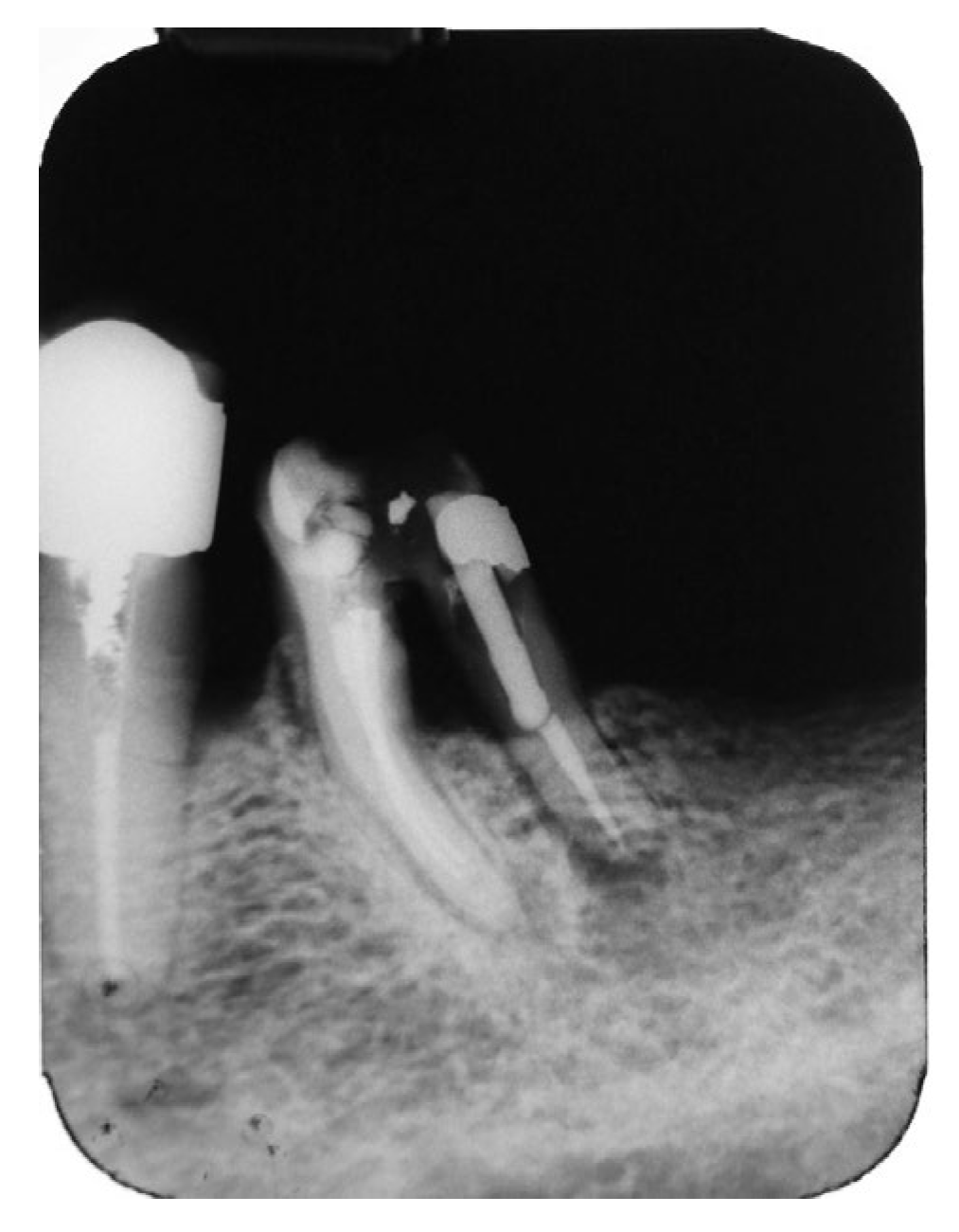
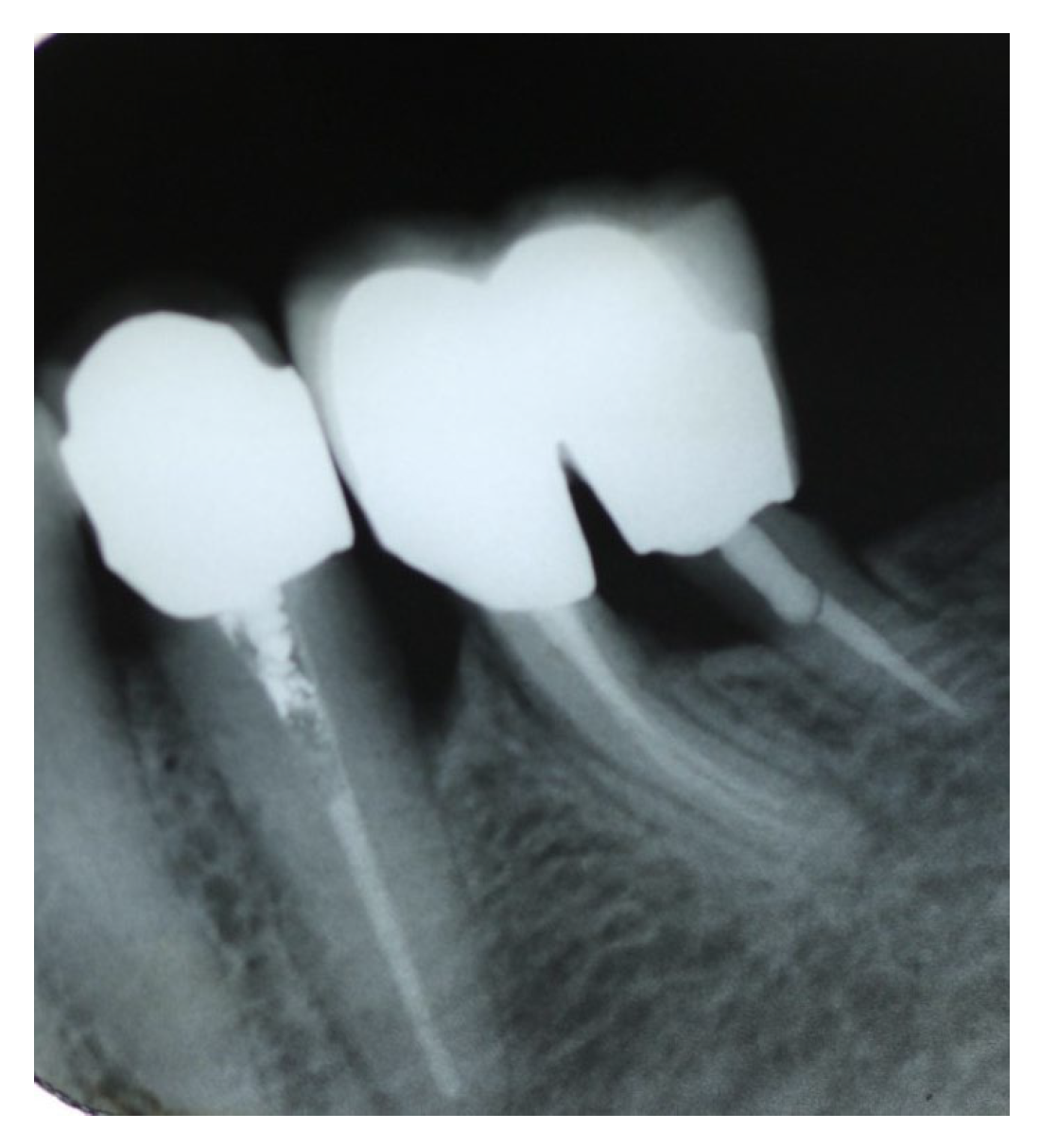
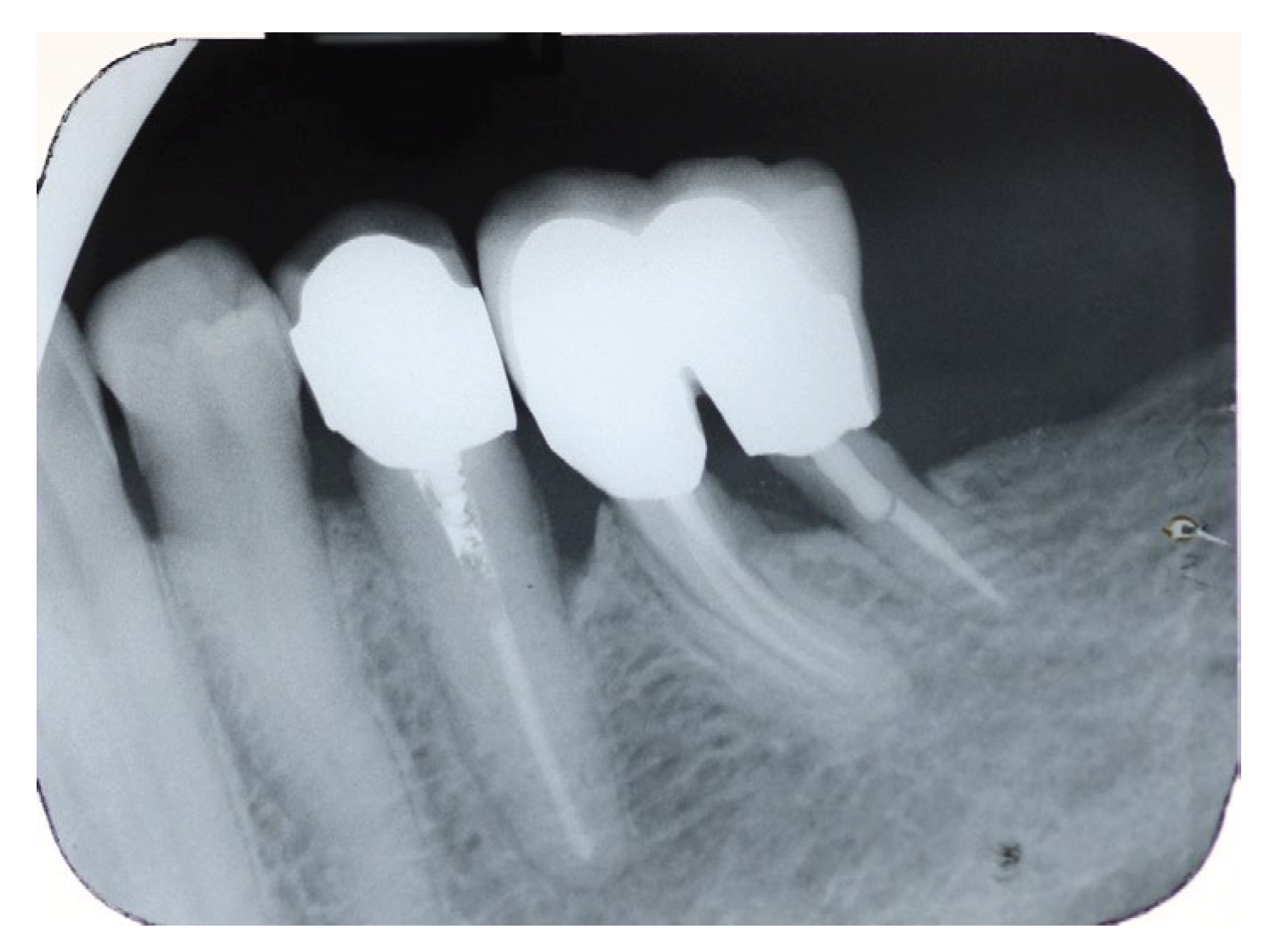
Background/Objective: Root resective procedures are well established tooth-preserving techniques indicated when pathology is located to one root of a multirooted tooth or in the furcation area. Although for the last years implant therapy has become a standard approach in many cases, the rising incidence of peri-implantitis has renewed interest in classical conservative treatment alternatives such as hemisection, root resection and bicuspidization. The aim of this study is to present clinical cases in which hemisection and bicuspidization was performed to maintain compromised molars in function and achieve long term outcomes. Treatment: Three patients with localized periodontal destruction, vertical root fracture, subgingival caries were treated with hemisection and bicuspidization respectively. An interdisciplinary approach was followed in each case which involved clinical and radiological assessment, endodontic treatment or retreatment when required, extraction of the affected root and prosthetic rehabilitation designed to adjust occlusal force distribution. Follow-up examinations included radiographic and clinical examination. Results: The patients were fully satisfied with the outcome of the treatment and stable function were noticed on the follow-up appointments. Recall radiographic examination confirmed favourable bone healing, absence of recurrent pathology and periodontal stability, the prosthetic restorations remained functional with no signs of fracture, caries or more bone loss among the years. Conclusions: Resective techniques require an interdisciplinary approach, namely careful case selection, endodontic treatment, precise surgical technique and appropriate prosthetic rehabilitation are essential to provide a predictable and long-term outcome. Within the limitations of this case series, resective techniques proved to be a reliable and predictable alternative to extraction and implant placement in proper clinical cases.
Keywords:
1. Introduction
2.1. Clinical Case No 1
2.2. Clinical Case No 2
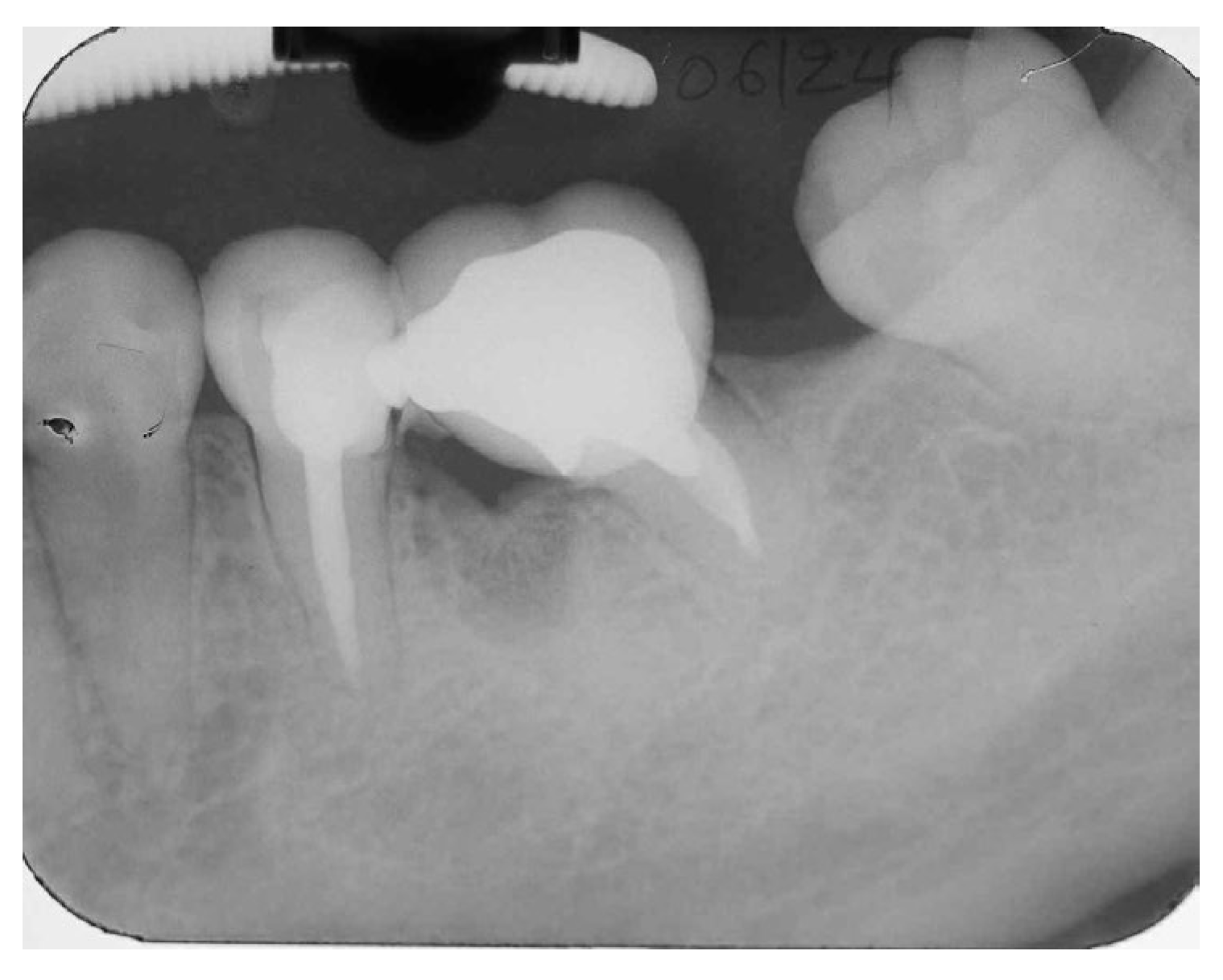
2.3. Clinical Case No 3
3. Discussion
5. Conclusions
Author Contributions
Funding
Institutional Review Board Statement
Informed Consent Statement
Data Availability Statement
Acknowledgments
Conflicts of Interest
Abbreviations
| CBCT | Cone Beam Computed Tomography |
| OPT | Orthopantomogram |
| GP | General Practitioner |
Appendix A

| Periodontal | Endodontic | Restorative | Endo-Perio lesions |
|---|---|---|---|
| Furcation involvement grade II and III | Root resorption (only in one root) | Subgingival caries (affecting a single root) | Combined endo-Perio lesions, (primarily periodontic, affecting a single root) |
| Significant bone loss (affecting one root) | Vertical root fracture (of one root) | Extensive decay extending into the furcation area | |
| Extensive gum recession in a root | Iatrogenic damage only one root or the pulp chamber (cannot be managed with periapical surgery due to anatomical limitations) | Severe root exposure (complicates proper prosthetic restoration) |
|
| Extensive tooth structure loss (e.g., attempt to remove a broken file) |
References
- Farrar, J.N. Radical and heroic treatment of alveolar abscess by amputation of roots of teeth. Dent. Cosmos 1884, 26, 135–139. [Google Scholar]
- Carnevale, G.; Pontoriero, R.; Lindhe, J.; 2. Treatment of furcation-involved teeth. In Clinical Periodontology and Implant Dentistry, 5th ed.; Lindhe, J., Lang, N.P., Karring, T., Eds.; Wiley-Blackwell: Oxford, UK, 2012; Vol. 1, pp. 823–847. [Google Scholar]
- Saraf, A.A. Hemisection. World J. Dent. 2013, 4, 180–187. [Google Scholar] [CrossRef]
- Green, E.N. Hemisection and Root Amputation. J. Am. Dent. Assoc. 1986, 112, 511–518. [Google Scholar] [CrossRef]
- Langer, B.; Stein, S.D.; Wagenberg, B. An Evaluation of Root Resections: A Ten-Year Study. J. Periodontol. 1981, 52, 719–722. [Google Scholar] [CrossRef]
- Megarbane, J.-M. Root Resection and Hemisection Revisited. Part II: A Retrospective Analysis of 195 Treated Patients with Up to 40 Years of Follow-Up. Int. J. Periodontics Restorative Dent. 2019, 38, 783–789. [Google Scholar] [CrossRef]
- Carnevale, G.; Pontoriero, R.; Di Febo, G. Long-term Effects of Root-resective Therapy in Furcation-involved Molars: A 10-year Longitudinal Study. J. Clin.Periodontol. 1998, 25, 209–214. [Google Scholar] [CrossRef]
- Park, S.; Shin, S.; Yang, S.; Kye, S. Factors Influencing the Outcome of Root-Resection Therapy in Molars: A 10-Year Retrospective Study. J. Periodontol 2009, 80, 32–40. [Google Scholar] [CrossRef] [PubMed]
- Messinger, T.F.; Orban, B. Elimination of Periodontal Pockets by Root Amputation. J. Periodontol. 1954, 25, 213–215. [Google Scholar] [CrossRef]
- Falabella, M.E.V.; de-Souza, R.J.S.; Dornelas, A.H.C.; Vieira, A.D.D.; Soares, L.G. Root Resection in Molars: Clinical Evaluation for 10 Years. Int. J. Odontostomat. 2021, 15, 492–498. [Google Scholar] [CrossRef]
- Basaraba, N. Root Amputation and Tooth Hemisection. Dent. Clin. North Am. 1969, 13, 121–132. [Google Scholar] [CrossRef] [PubMed]
- Weine, F. S. Endodontic Therapy, 6th ed.; Mosby: St. Louis, MO, USA, 2004; pp. 423–451. ISBN 978-0-323-01943-9. [Google Scholar]
- Kye, W. Root Amputation. In Practical Techniques in Periodontics and Implant Dentistry; El Chaar, E., Ed.; Wiley: Hoboken, NJ, USA, 2022; pp. 83–89. ISBN 978-1-119-79355-7. [Google Scholar]
- Lee, K.L.; Corbet, E.F.; Leung, W.K. Survival of Molar Teeth after Resective Periodontal Therapy – A Retrospective Study. J. Clin. Periodontol. 2012, 39, 850–860. [Google Scholar] [CrossRef]
- Kryshtalskyj, E. Root amputation and hemisection. Indications, technique and restoration. J. Can. Dent. Assoc. 1986, 52, 307–308. [Google Scholar]
- Bergenholtz, A. Radectomy of Multirooted Teeth. J. Am. Dent. Assoc. 1972, 85, 870–875. [Google Scholar] [CrossRef]
- Hamp, S.; Nyman, S.; Lindhe, J. Periodontal Treatment of Multi Rooted Teeth.: Results after 5 Years. J Clin. Periodontol. 1975, 2, 126–135. [Google Scholar] [CrossRef]
- Klavan, B. Clinical Observations Following Root Amputation in Maxillary Molar Teeth. J. Periodontol. 1975, 46, 1–5. [Google Scholar] [CrossRef] [PubMed]
- Fugazzotto, P.A. A Comparison of the Success of Root Resected Molars and Molar Position Implants in Function in a Private Practice: Results of up to 15-Plus Years. J. Periodontol. 2001, 72, 1113–1123. [Google Scholar] [CrossRef]
- Schmitz, J.H.; Granata, S.; Magheri, P.; Noè, G. Single Crowns on Tooth Root–Resected Molars: A Retrospective Multicentric Study. J. Prosthet. Dent. 2020, 124, 547–553. [Google Scholar] [CrossRef] [PubMed]
- Hou, G. L.; Chen, S. K.; Liu, T. S.; Tsai, C. C.; Ho, Y. P. Treatment of molar furcation involvement using root separation and a crown and sleeve-coping telescopic denture. A longitudinal study. J. Periodontol. 1999, 70, 1098–1109. [Google Scholar] [CrossRef] [PubMed]
- Bühler, H. Evaluation of Root-Resected Teeth: Results after 10 Years. J. Periodontol. 1988, 59, 805–810. [Google Scholar] [CrossRef]
- Derks, H.; Westheide, D.; Pfefferle, T.; Eickholz, P.; Dannewitz, B. Retention of Molars after Root-Resective Therapy: A Retrospective Evaluation of up to 30 Years. Clin Oral Investig. 2018, 22, 1327–1335. [Google Scholar] [CrossRef]
- Oh, S.-L.; Kim, J.R.; Engermann, E.; Shiau, H.J. Survival Analysis of Root-Resected Molars from 1 to 13.4 Years: A Retrospective Cohort Study. J. Prosthet. Dent. 2025, 133, 1008–1016. [Google Scholar] [CrossRef]
- Newell, D. H. The role of the prosthodontist in restoring root-resected molars: a study of 70 molar root resections. J. Prosthet. Dent. 1991, 65, 7–15. [Google Scholar] [CrossRef]
- Elani, H.W.; Starr, J.R.; Da Silva, J.D.; Gallucci, G.O. Trends in Dental Implant Use in the U.S., 1999–2016, and Projections to 2026. J Dent Res 2018, 97, 1424–1430. [Google Scholar] [CrossRef] [PubMed]
- Minsk, L.; Polson, A. M. The role of root resection in the age of dental implants. Compend. Contin. Educ. Dent. 2006, 27, 384–388. [Google Scholar] [PubMed]
- Levin, L. Tooth Preservation or Implant Placement: A Systematic Review of Long-Term Tooth and Implant Survival Rates. J. Am. Dent. Assoc. 2013, 144, 1119–1133. [Google Scholar] [CrossRef] [PubMed]
- Derks, J.; Tomasi, C. Peri-implant health and disease. A systematic review of current epidemiology. J. Clin. Periodontol. 2015, 42 Suppl. 16, S158–S171. [Google Scholar] [CrossRef]
- Lang, N.P.; Wilson, T.G.; Corbet, E.F. Biological Complications with Dental Implants: Their Prevention, Diagnosis and Treatment. Clin. Oral Implants Res. 2000, 11, 146–155. [Google Scholar] [CrossRef]
- Setzer, F.C.; Shou, H.; Kulwattanaporn, P.; Kohli, M.R.; Karabucak, B. Outcome of Crown and Root Resection: A Systematic Review and Meta-Analysis of the Literature. J. Endod. 2019, 45, 6–19. [Google Scholar] [CrossRef]
- Zembic, A.; Kim, H. Y.; Zwahlen, M.; Kelly, J. R. Systematic review of the survival rate and incidence of biologic, technical, and esthetic complications of single implant abutments supporting fixed prostheses. Int. J. Oral Maxillofac. Implants 2014, 29 Suppl., 99–116. [Google Scholar] [CrossRef]
- Karoussis, I. K.; Kyriakidou, O.; Psarros, I. N.; Chambrone, L.; Lang, N. P.; Kavoura, V.; Fourmousis, I. Long-term implant prognosis in patients with and without a history of chronic periodontitis: a 10-year prospective cohort study of the ITI Dental Implant System. Clin. Oral Implants Res. 2003, 14, 329–339. [Google Scholar] [CrossRef]
- Patel, S.; Bhuva, B.; Bose, R. Present Status and Future Directions: Vertical Root Fractures in Root Filled Teeth. Int Endod. J 2022, 55, 804–826. [Google Scholar] [CrossRef] [PubMed]
- Lin, T.S.; Allosias, J.A.; Halim, M.S.; Ahmed, N.; Heboyan, A. Restorative Option for Hemisected Root Canal Treated Mandibular Molar: Two Case Reports. J. Surg. Case Rep. 2025, 2025, rjaf051. [Google Scholar] [CrossRef]
- Appleton, I. E. Restoration of root-resected teeth. J. Prosthet. Dent. 1980, 44, 150–153. [Google Scholar] [CrossRef]
- Addy, L.D. An Introduction to Dental Implants. Br. Dent. J. 2024, 236, 753–757. [Google Scholar] [CrossRef] [PubMed]
- Diaz, P.; Gonzalo, E.; Villagra, L.J.G.; Miegimolle, B.; Suarez, M.J. What Is the Prevalence of Peri-Implantitis? A Systematic Review and Meta-Analysis. BMC Oral Health 2022, 22, 449. [Google Scholar] [CrossRef]
- Oh, S.-L. Mesiobuccal Root Resection in Endodontic–Periodontal Combined Lesions. Int Endod. J 2012, 45, 660–669. [Google Scholar] [CrossRef]
- Alkahtany, M. Saving a Natural Tooth in the Implant Era: A Case Report on Noninvasive Surgical Root Amputation. J. Contemp. Dent. Pract. 2021, 22, 947–950. [Google Scholar] [CrossRef]
- Gerstein, K.A. The Role of Vital Root Resection in Periodontics. J. Periodontol. 1977, 48, 478–483. [Google Scholar] [CrossRef]
- Filipowicz, F.; Umstott, P.; England, M. Vital Root Resection in Maxillary Molar Teeth: A Longitudinal Study. J. Endod. 1984, 10, 264–268. [Google Scholar] [CrossRef]
- Smukler, H.; Tagger, M. Vital Root Amputation: A Clinical and Histological Study. J. Periodontol. 1976, 47, 324–330. [Google Scholar] [CrossRef] [PubMed]
- Haskell, E. W. Vital root resection. Oral Surg. Oral Med. Oral Pathol. 1969, 27, 266–274. [Google Scholar] [CrossRef] [PubMed]
- Abrams, L.; Tractenberg, D. I. Hemisection—technique and restoration. Dent. Clin. North Am. 1974, 18, 415–444. [Google Scholar] [CrossRef] [PubMed]
- Schmitt, S.M.; Brown, F.H. Management of Root-Amputated Maxillary Molar Teeth: Periodontal and Prosthetic Considerations. J. Prosthet.Dent 1989, 61, 648–652. [Google Scholar] [CrossRef] [PubMed]
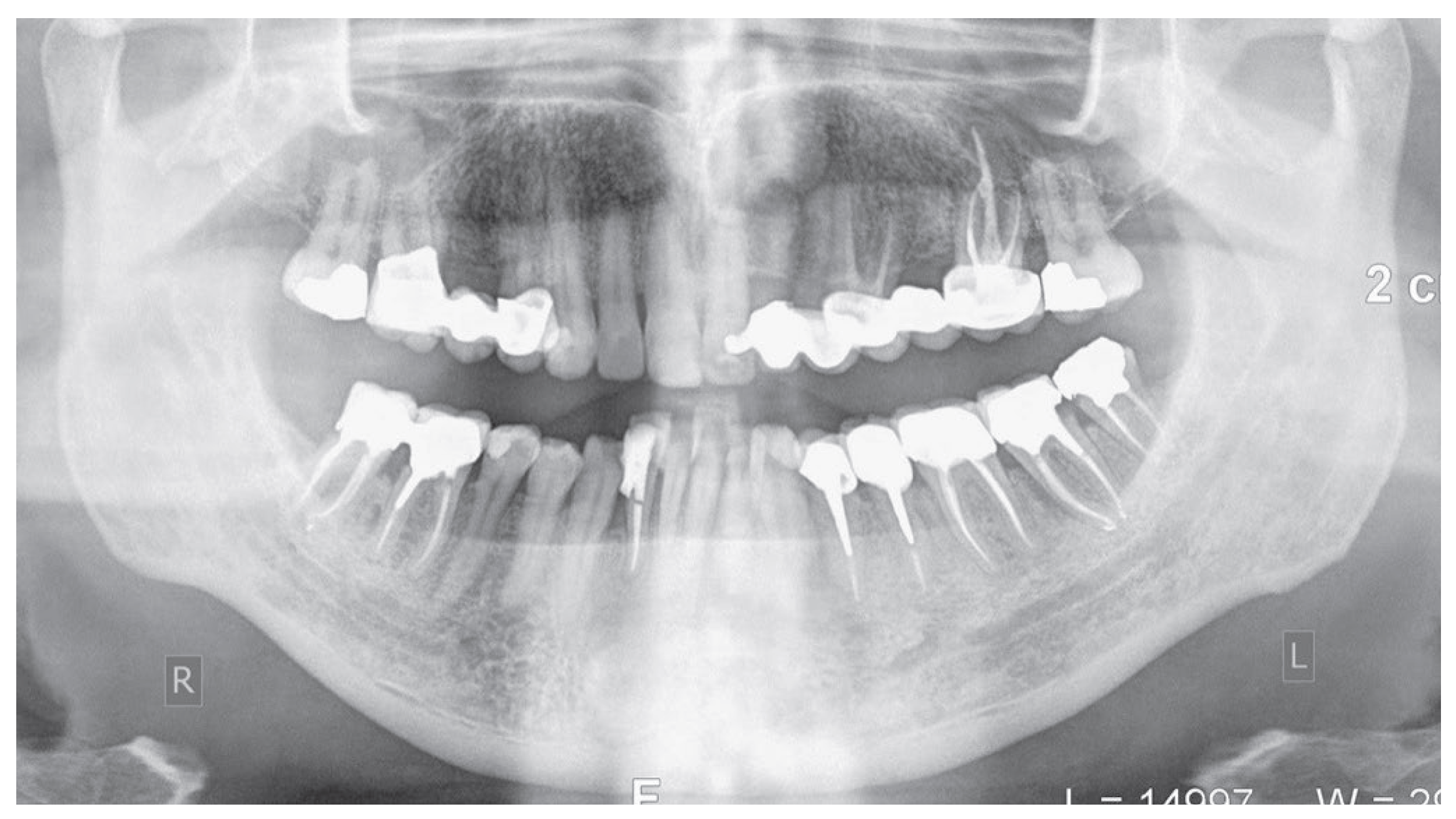
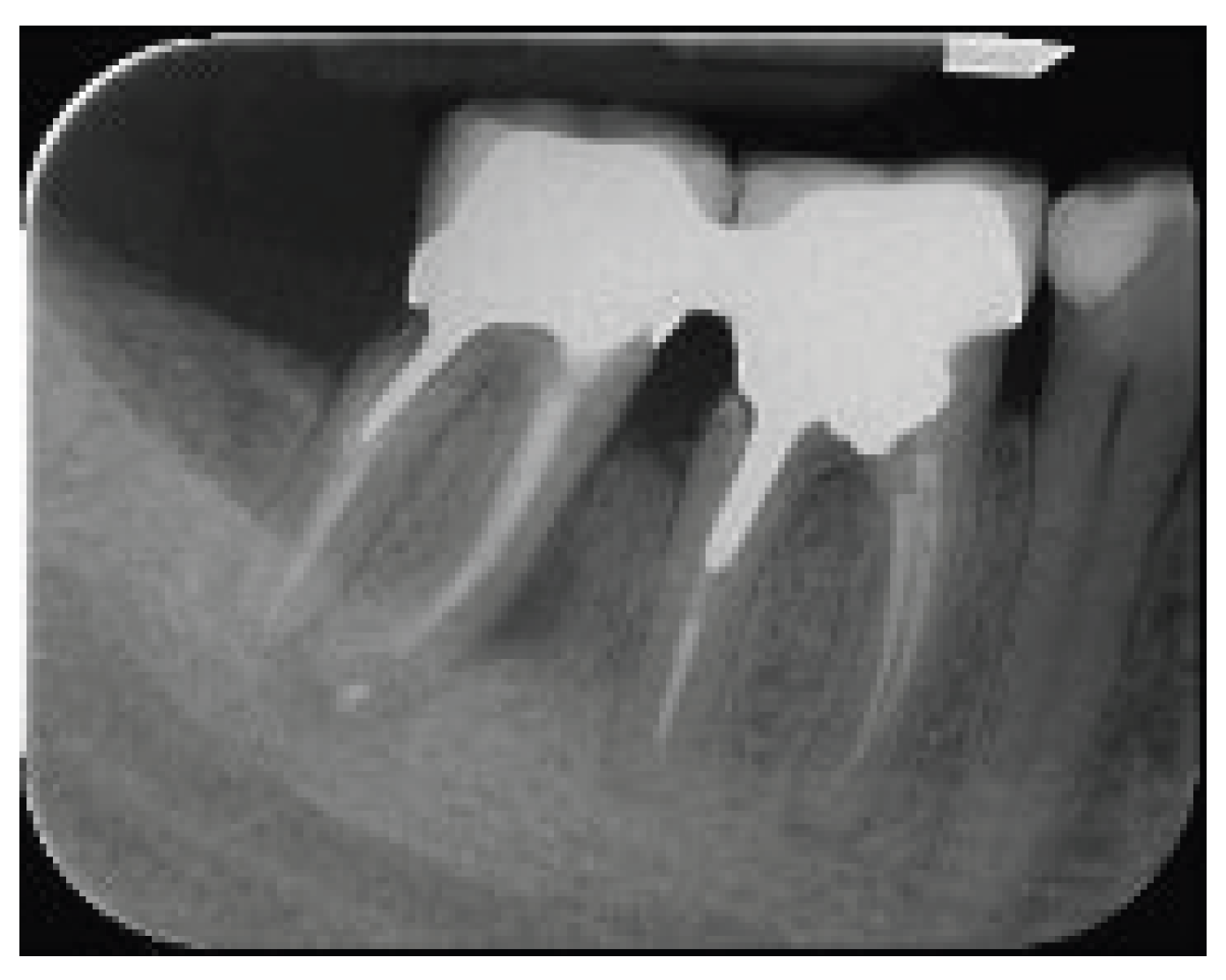
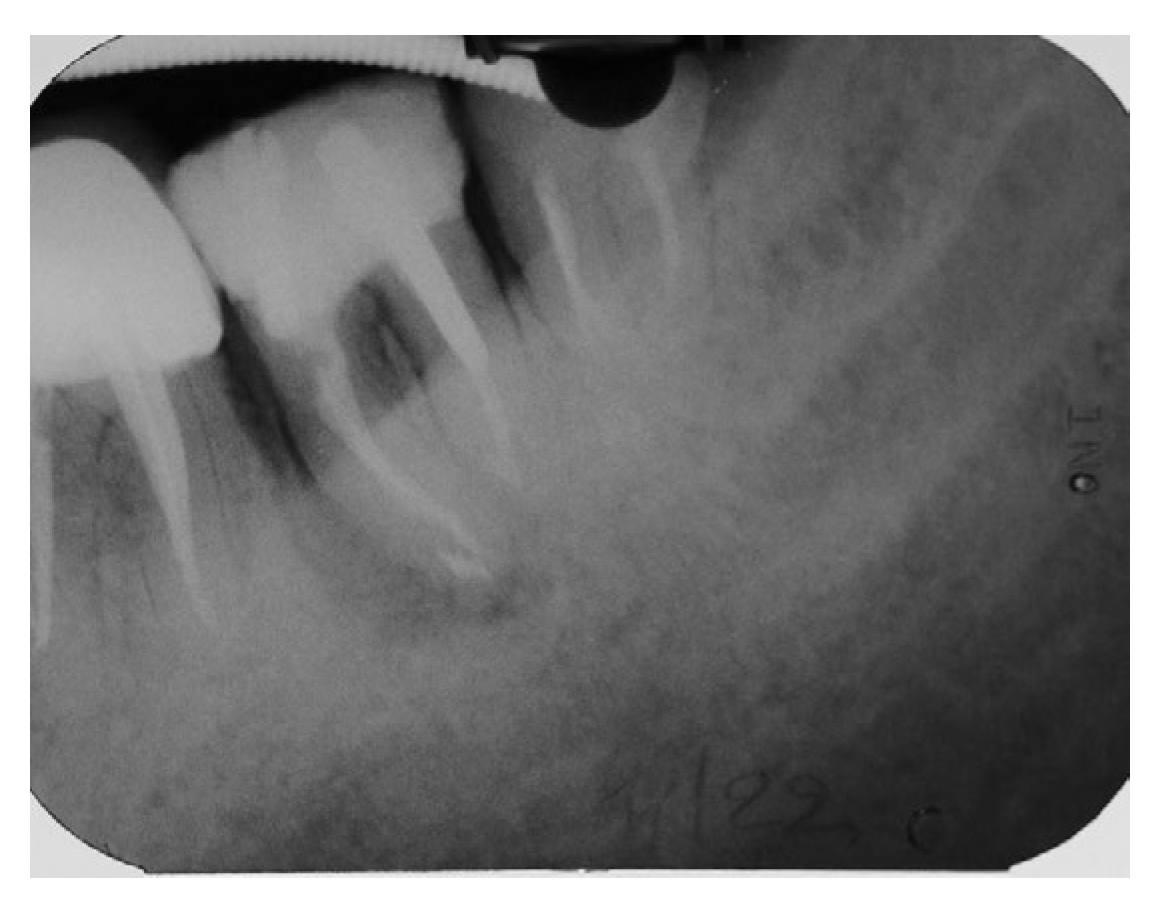
Disclaimer/Publisher’s Note: The statements, opinions and data contained in all publications are solely those of the individual author(s) and contributor(s) and not of MDPI and/or the editor(s). MDPI and/or the editor(s) disclaim responsibility for any injury to people or property resulting from any ideas, methods, instructions or products referred to in the content. |
© 2025 by the authors. Licensee MDPI, Basel, Switzerland. This article is an open access article distributed under the terms and conditions of the Creative Commons Attribution (CC BY) license (http://creativecommons.org/licenses/by/4.0/).