

Submitted:
20 December 2025
Posted:
22 December 2025
You are already at the latest version
Abstract
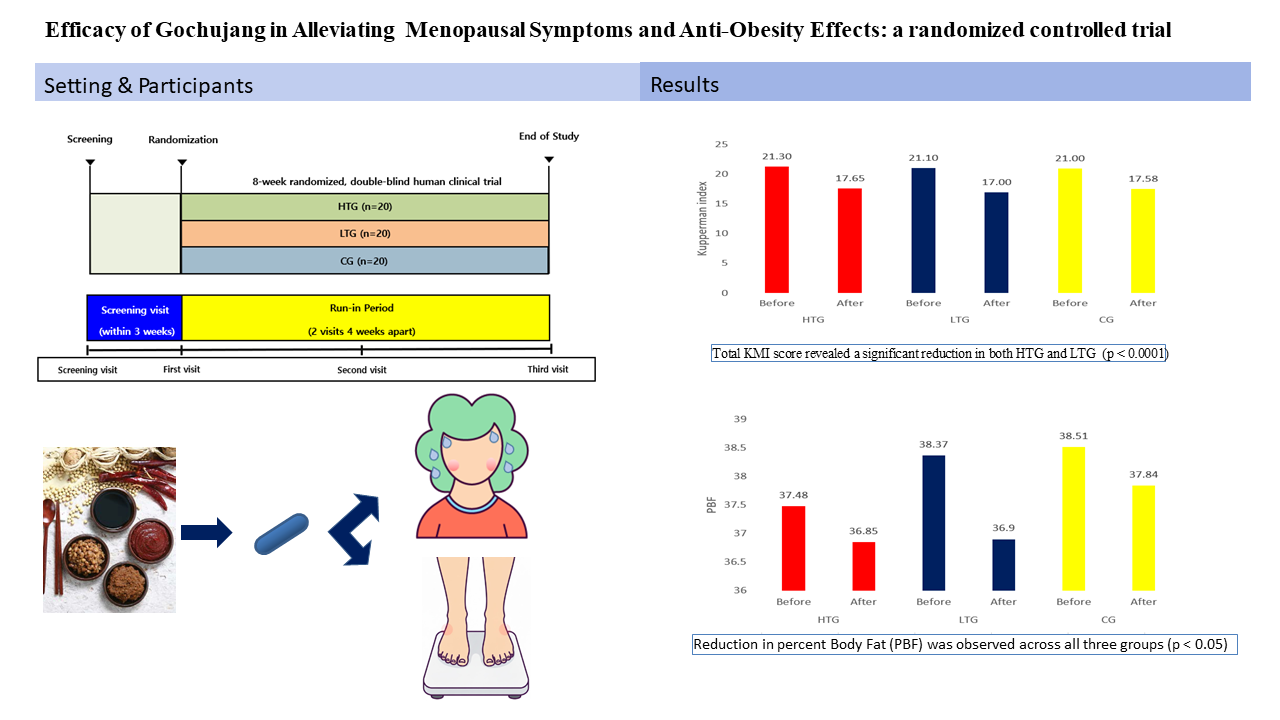
Background: Menopause results in complex climacteric symptoms that significantly compromise quality of life in postmenopausal women. Here, we specifically evaluated the dual synergistic effects of Gochujang, a traditional Korean fermented food containing fermentation-enhanced isoflavone aglycones and red pepper-derived capsaicinoids, in alleviating menopause-associated symptoms and metabolic dysregulation. Methods: This was a pioneering 8-week, randomized, double-blind, controlled clinical trial designed to assess the therapeutic effects of different Gochujang preparations (high-Gochujang [HGC] and low-Gochujang [LGC]) in postmenopausal women, against a control group (CG). The primary efficacy endpoint was a change in the total Kupperman Menopausal Index (KMI) score. Secondary outcomes included body composition, metabolic marker levels, and safety evaluations. Results: We observed a comprehensive, statistically significant decrease in the total KMI score in both the HGC and LGC groups, with the CG group exhibiting no significant overall improvement, indicating that Gochujang supplementation significantly alleviated climacteric symptoms. Furthermore, we confirmed the anti-obesity effects of Gochujang: a statistically significant decrease in percent body fat was observed in all three groups. The LGC group exhibited beneficial body composition modulation, exhibiting a significant increase in fat-free mass and a corresponding increase in basal metabolic rate without significant changes in overall weight. Moreover, the intervention was well-tolerated, with no adverse changes observed in blood pressure or vital signs. Conclusion: Gochujang supplementation is a safe and effective non-hormonal nutritional strategy. This study provides clinical evidence that Gochujang is suitable for the concurrent management of climacteric symptoms and favorable modulation of metabolic health in postmenopausal women.
Keywords:
menopausal symptoms
; gochujang
; randomized controlled trial
; Kupperman index
; nonhormonal therapy
; body composition
; fermented food
Copyright: This open access article is published under a Creative Commons CC BY 4.0 license, which permit the free download, distribution, and reuse, provided that the author and preprint are cited in any reuse.


