1. Introduction
The poultry industry is increasing rapidly worldwide, with significant contributions from countries like the United States, China, and Brazil [
1,
2]. Globally, chickens account for 91% of the world’s total poultry population and contribute to around 89% and 92% of poultry meat and egg production, respectively [
3]. The increase in chicken meat production worldwide has a potential to improve human nutrition and health [
2,
4]. In Africa, South Africa stands out as the largest producer of poultry, generating 1.9 million metric tons of chicken per year [
5]. Other significant poultry producers in this region include Nigeria, Egypt, Uganda, Tanzania, Morocco, Kenya, and Algeria.
Despite a surge in poultry production in Africa, Africans consume 3.3 kg of poultry meat per year, which is below the global average consumption of 14 kg [
6]. However, there is still hope due to an increase in poultry consumption in Sub-Saharan Africa (SSA) with an annual average of 5.4%. Malawi, a SSA country, has made tremendous progress in poultry industry, with a lot of exports primarily to Mozambique and Tanzania [
7]. Poultry production in Malawi is a major source of animal protein, and its demand has risen steadily since the mid-2000s due to economic growth and urbanization. Consumption is projected to reach about 110 thousand tons of chicken meat by 2030 [
8,
9].
Considering this rising demand, meat production improvement demands through increased feed conversion, growth rate promotion, and increased antimicrobial use to fight bacterial infections are widely employed. However, when the antibiotics are used in the absence of proper prescription and regulations, a selective pressure causes the bacteria to develop resistance to the antibiotics [
10]. This poses a serious threat to both human and animal health, given the interconnected ‘One Health’ nature of antimicrobial resistance across these interfaces [
11].
Several studies have shown that in Low- and Middle-Income Countries (LMIC) like Malawi, most farmers have limited awareness, knowledge, attitude and practices (KAP) on antimicrobials and use antibiotics without prescriptions from trained veterinary staff. In most cases, they rely on information from veterinary shop staff who are usually unqualified or inadequately trained to sell antimicrobials [
12,
13]. This training gap coupled with provision of wrong prescriptions to farmers by such individuals contributes to AMR in Malawi.
The majority of chicken farmers in Malawi lack proper training in poultry husbandry, including biosecurity and antimicrobial use, and there are currently no recommendations regarding the wise use of antibiotics in poultry and food animals. The presence of limited awareness and KAP levels regarding antimicrobial use among the majority of poultry farmers leads to inappropriate use on antimicrobials. Mzimba being a rural district, majority of chicken farmers produce chickens are at small scale and the veterinary drug market is not well established with presence of limited veterinary service provision among chicken and other livestock farmers.
Besides using synthetic drugs in poultry farming, anecdotal evidence has shown that some farmers use herbal remedies to treat infections in chickens although little is known about their efficacy and effectiveness. These factors, complexed with a surge in chicken meat consumption, low literacy and poverty levels could be contributing factors to high levels of AMR in Malawi to antibiotics commonly used in human infections such as tetracycline and co-trimoxazole which presents a critical public health and food safety challenge [
14,
15].
Recently, in Malawi, high prevalence of antimicrobial-resistant bacteria in food animals have been reported due to the misuse or overuse of antimicrobials [
14]. Consumption of chicken meat contaminated with resistant bacteria such as
Escherichia coli (
E. coli),
Salmonella spp., and
Enterobacter spp. can lead to infections that are difficult to treat and manage. This results in increased morbidity, mortality, and healthcare costs [
16]. Additionally, high levels of antibiotic use led to the accumulation of antibiotics in animal tissues to toxic levels, such as in chicken, that can be passed on to consumers. These antibiotic residues in chicken tissues pose significant risks to vulnerable consumers such as toxic allergic reactions and disruption of gut microbiota [
18]. In regions with strict food safety standards, the presence of AMR bacteria in chicken can hinder market access for meat products which can potentially contribute to malnutrition among the populations. Despite these challenges the burden of AMR in Malawi is still ill-defined.
Therefore, the burden of AMR in Malawi can be decreased by establishing surveillance programs, appropriate guidelines for the prudent use of antibiotics in food animals,in and biosecurity training programs for livestock farmers, technicians, veterinarians, and the general public on the rational use of antimicrobial drugs [
17,
18]. Training programs that emphasize the rationale use of antibiotics and effective management practices can benefit greatly from KAP about antibiotic use and resistance. This research aimed at assessing knowledge, attitudes and practices among farmer on antimicrobial use and resistance which are important for responsible use of antimicrobials while preventing antibiotic resistance. Consequently, this research findings have the potential to guide policy development and targeted interventions to curb the unregulated use of antimicrobials and spread of AMR in chicken farming.
2. Methodology
2.1. Study Area
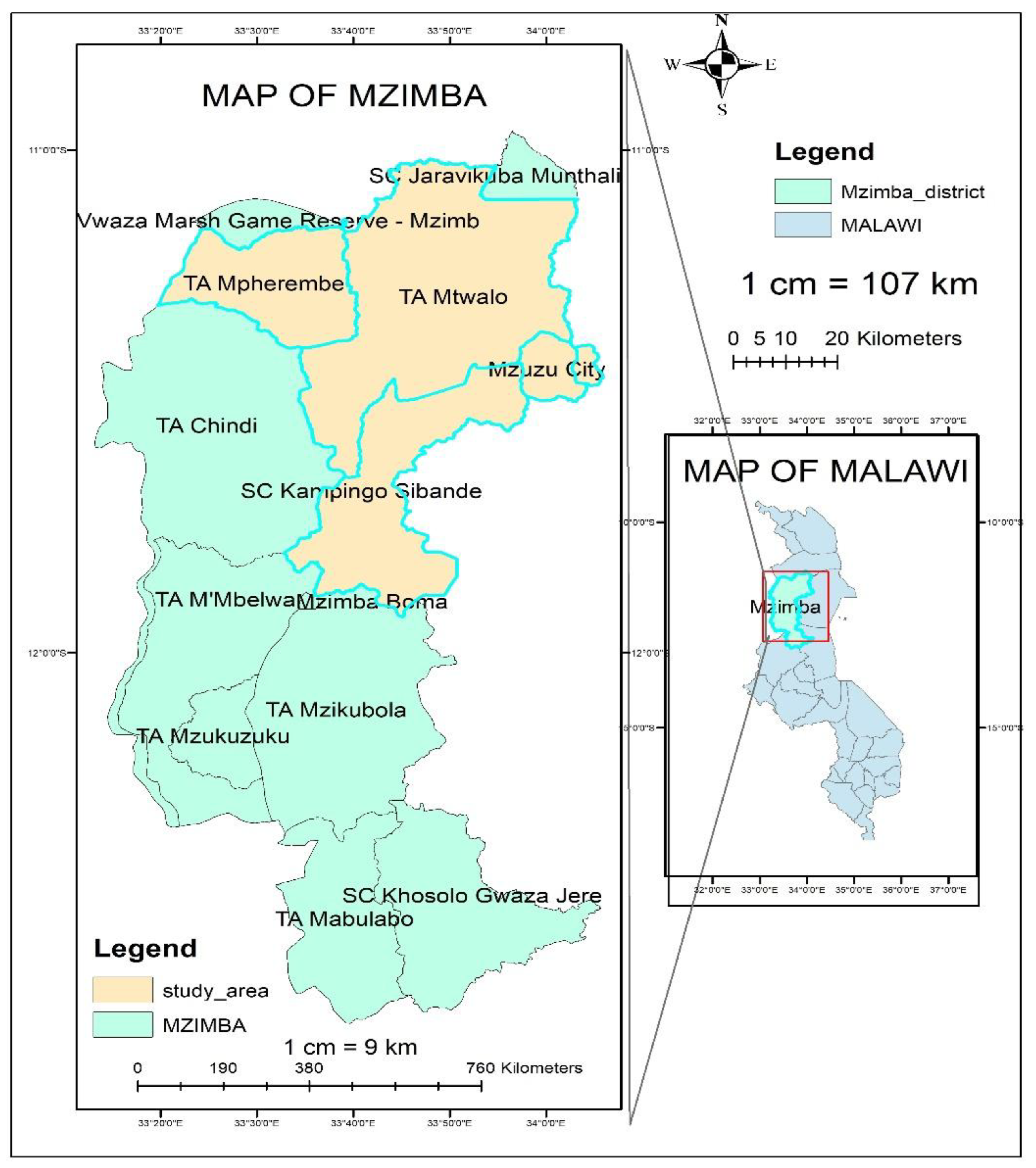
The study was conducted in Mzimba North, targeting households of farmers keeping chickens and informal markets from February to May 2025. Located at Latitude: 11° 54’ 0" S and Longitude: 33° 36’ 0" E. Mzimba North is found in the northern region of Malawi, within the Mzimba district. This district covers an area of 10,430 km² and has a human population of approximately 610,944. Mzimba North includes areas such as Mzuzu, Ezondweni, Vwaza Wildlife Reserve, Ekwendeni, Mpherembe, and Mtwalo and Kampingo Sibande, which are notable for having a large population of people keeping chickens for both food and income (
Figure 1).
2.2. Sample Size Determination and Sampling Techniques
The sample size was calculated using OpenEpi software, version 3 (
www.openEPI.com), a tool designed for epidemiology statistics. Sample size was calculated using the formula:
n = [DEFF*Np (1-p)]/ [(d
2/Z
21-α/2*(N-1) +p*(1-p)], where
DEFF is Design effect: 1.0, N: is population size: (the total number of household farmers keeping broilers in Mzimba North), d: confidence limits as % of 100 (absolute +/-%: 5%), p: hypothesized % frequency outcome in apopulation:50%+/-5, and α=0.05, Z= 1.96.
The total sample size for the study was 89, while the study population (total number of broiler farmers in the area) was 114 according to the 2024 livestock data from Mzimba North. Potential participants were identified with the help of veterinary assistants, and a purposive and stratified sampling method was used to enroll chicken farmers in the study.
2.3. Inclusion and Exclusion Criteria
2.3.1. Inclusion Criteria
The study enrolled farmers residing in the aforementioned area, who were actively rearing chickens for meat during the time of the study and had provided consent. Those farmers with multiple animal types were also considered in this study, as long as they reared broiler chickens for commercial purposes.
2.3.2. Exclusion Criteria
The study excluded all farmers who were only keeping other animals other than chickens. Individuals who were less than 18 years, declined to participate and did not provide consent were excluded from the study.
2.4. Study Research Design
This study used a cross-sectional design to assess farmers' KAP regarding antimicrobial use. Broiler farmers were surveyed using a structured questionnaire to gather data on their KAP and understanding of antibiotic use.
2.5. Knowledge, Attitudes, and Practices Survey Development
The questionnaires were designed to cover a range of topics, including demographic information, an assessment of AMU conditions, and an evaluation of KAP connected with AMU and AMR among farmers. Most questions in the questionnaire were multiple-choice. Demographic information included age, gender, educational level, training in AMR, training AMU and years of experience in chicken farming. AMU-related questions addressed various aspects of poultry management, such as the types of antimicrobials used, their sources, storage practices, and overall farm management, including flock size, bird health, the specific antimicrobial used by farmers, and the recurrence of illness. Knowledge-related questions centered on AMU, antibiotic withdrawal periods, AMR transmission, and government regulations concerning AMU. Regarding perceptions of AMU and AMR, the attitude section investigated factors such as the use of prescribed antimicrobials and instances of overdosing. Finally, the practice-related questions aimed to gather information on sensitivity testing, adherence to full courses of antimicrobials, and whether farmers consult veterinarians.
2.6. Sample Collection
2.6.1. Semi-Structured Interviews (SSI)
Data collection was done using a self-administered structured questionnaire facilitated by the Kobo Collect tool. A pilot study involving 9 farmers was carried out to pretest the questionnaire for face and content validity, but the findings from the pilot study were not included in the analysis of the main study. The farmer was interviewed voluntary after being fully informed about the survey's objectives, and their verbal consent was obtained before they could participate. Each consenting poultry farmer received a structured questionnaire designed to assess their KAP regarding AMU and AMR. The questionnaire was developed in English and then translated into Tumbuka, ensuring that all respondents were comfortable with the language used. Each interview lasted 20 to 30 minutes for each respondent.
2.7. Data Management and Analysis
The questionnaire was stored online on KoboToolbox (
https://www.kobotoolbox.org). The data were then exported into Microsoft Excel worksheet-2016 for cleaning and management, and thereafter posted into STATA version 15 software, where all statistical analyses were done. Descriptive statistical analysis of the responses captured using questionnaires was performed using Microsoft Excel worksheet-2016. STATA was used to compute correlation coefficients of the independent variables such as age, sex, marital status, education level, years in practice, formal training in AMU, and formal training in AMR against their dependent variables such as knowledge, attitude, and practices scores. Data coding was done for the variables, for instance, variables like knowledge, attitudes, and practice, each correct response was given a score of 1, while a wrong or doubtful response was scored as 0.
The study used the mean values as a cut-off point because there was no cut-off point to assess poor and better /good knowledge, attitudes, and practices. Scores above and equal to the mean were regarded as better knowledge, practice, and a positive attitude, while scores below the mean were considered as low knowledge, practice, and a positive attitude. Pearson’s correlation test, T-test and linear regression analysis were used to compare the means of the knowledge, attitudes, and practices levels. In all the analyses, alpha was set at P ≤ 0.05. Sensitivity analysis was used in the data management to deal with confounding variables.
2.8. Ethical Approval
Ethical approval was obtained from the Department of Animal Health and Livestock (DAHLD) in Malawi (Ref: NO DAHLD/AHS/01/2025/02). Informed oral consent was obtained from every chicken farmer before the interview. Before the interviews, the study objectives, interview process, and the usage of the data were fully understood by the participants.
3. Results
3.1. KAP Survey Results
3.1.1. Demographic Information
The study conducted a total of 89 farmer interviews. The interview results showed that the majority of smallholders were males (51%) with ages ranging from 31 to 40 years (30.3%). In addition, 70% (n = 62) of the chicken farmers had completed high school, at least 74% had never received formal training specifically in AMR or antibiotic use, and 32% (n = 32) of the breeders had less than 5 years of experience raising broilers
Table 1.
3.1.2. AMU Situation Analysis Among Chicken Farmers
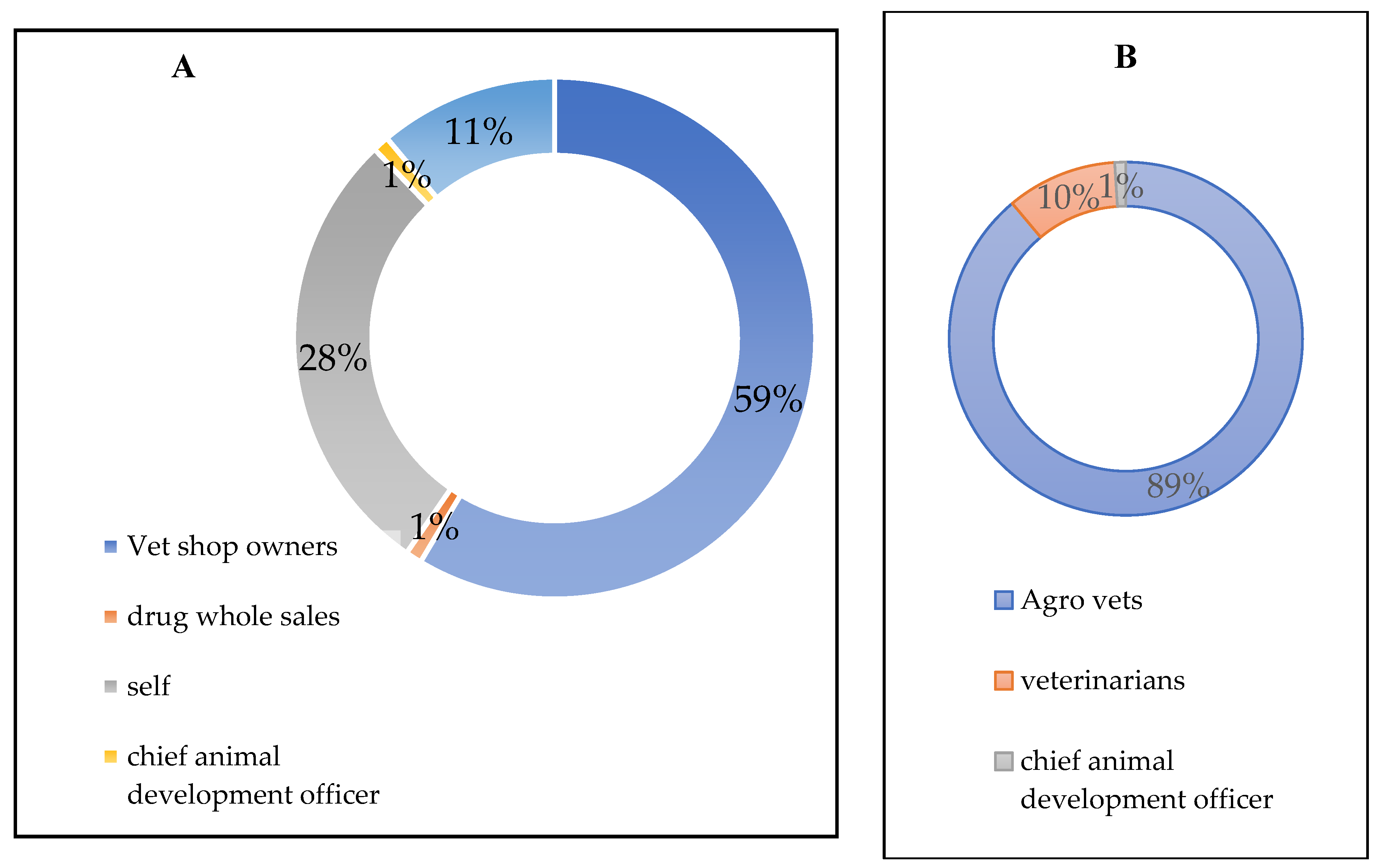
Most farmers relied on veterinary shop owners for advice on antimicrobial use, accounting for 58% of respondents. In contrast, 28% were relying on their own knowledge, only 11% were seeking advice from veterinarians. When it comes to sourcing antimicrobials, 89% were purchasing from agrovets unlike from veterinarians and the chief animal development officer
Figure 1.
Figure 1.
Source of antimicrobials(A), and advice among chicken farmers(B).
Figure 1.
Source of antimicrobials(A), and advice among chicken farmers(B).
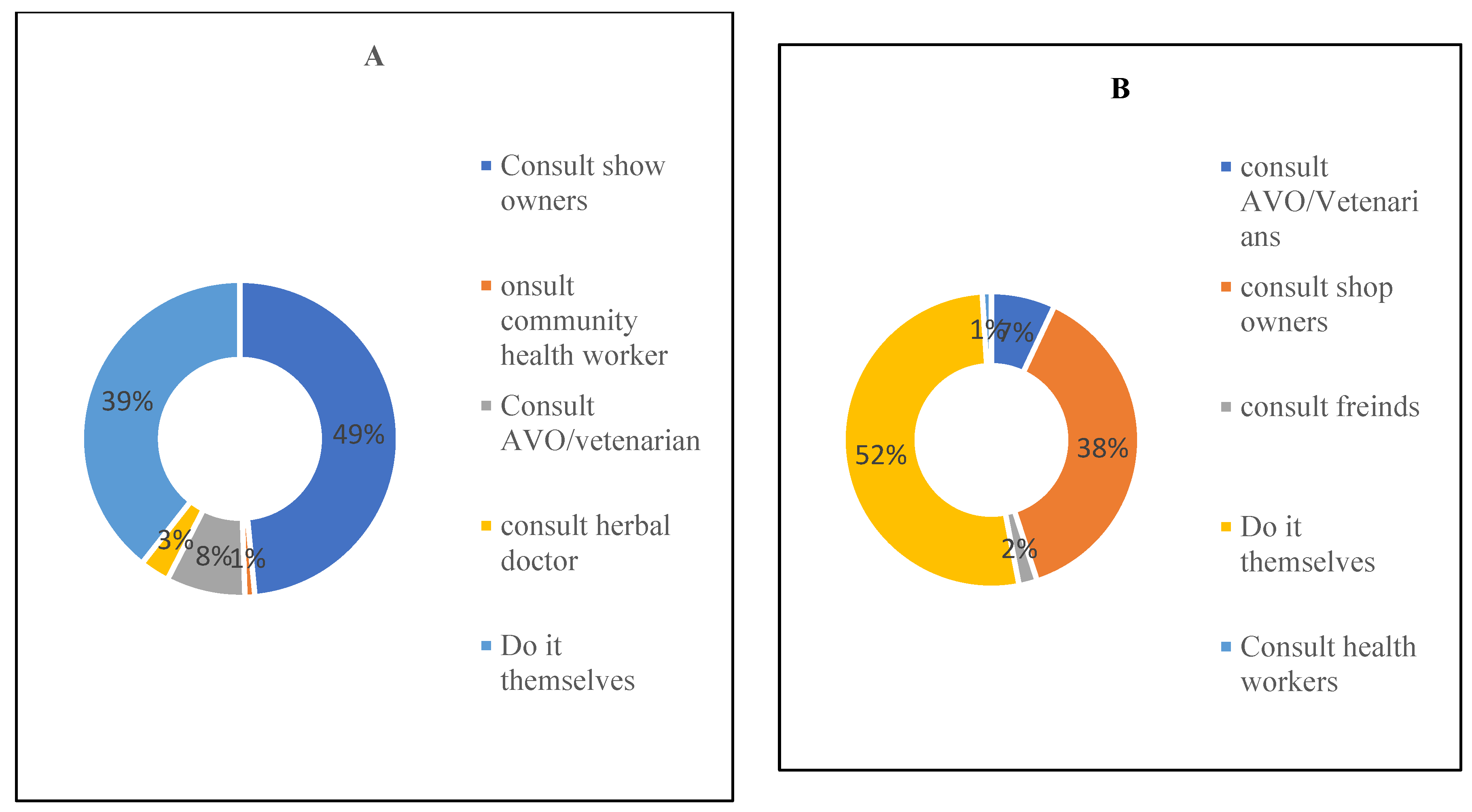
When it comes to selecting antimicrobials, the majority of the farmers (49%) indicated that they consulted shop owners, while a small proportion sought guidance from veterinarians and community health workers. For determining dosages, 52% (n=46) relied on their own judgment, 38% (n=34) consulted shop owners, and 7%(n=6) sought advice from Animal Vaccinators (AVOs)
Figure 2. Selection(A) and dosage(B) determination of antimicrobials by farmers..
3.1.3. Information of Antimicrobial Prescription and Use
Seventy-six percent of farmers were aware that veterinarians have the authority to write prescriptions. However, 90% of respondents reported that veterinarians do not actually write prescriptions. Additionally, 97% of respondents indicated that veterinary shops do not require prescriptions
Table 2. In terms of accessing antibiotics, 92% (n=82) purchased them from shops without prescriptions while 6% (n=5) from shops with prescriptions, 2% (n=2) sourced antibiotics from other shops, and 5% from shops that required prescriptions.
To evaluate how AMU is monitored in chicken production, farmers were asked to identify the responsible individuals overseeing AMU on their farms. According to the responses, 93.3% of the farmers indicated that the Department of Animal Health and Livestock Development (DAHLD) is responsible for monitoring AMU. Additionally, 31% reported that agrovets shops play a role in checking AMU on farms, while 20% indicated that the Malawi Pharmacy and Medicines Regulatory Authority is responsible. Furthermore, 11% mentioned the Malawi Bureau of Standards, and 6.7% reported that the Poison and Medicine Board is mandated for this oversight.
3.1.4. Challenges Faced by Farmers to Continue the Use of Antimicrobials in Chicken Farming
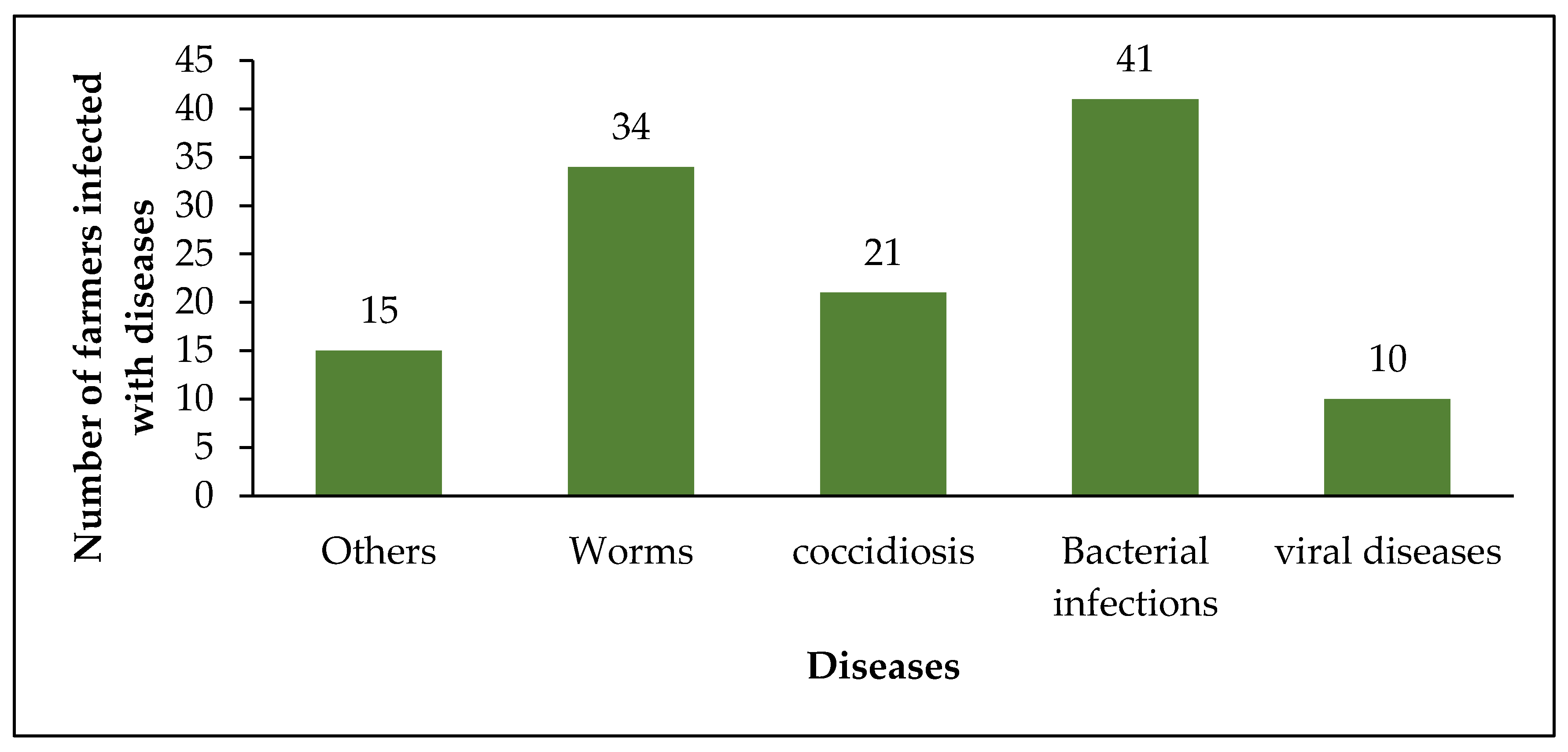
A high prevalence of chicken diseases was reported by 84.2% (n=75) of respondents as the primary challenge forcing them to use antimicrobials. Additionally, 2.3% cited the limited availability of vaccines as a reason for antimicrobial use. Furthermore, 12.4% (n=11) indicated that they use antimicrobials to maintain productivity and profitability, while 1% reported using antibiotics due to difficulties in accessing veterinary professionals. Some of the diseases reported infecting chickens include Gumboro disease, bacterial infections, worm infestations, viral diseases, and other unidentified illnesses
Figure 3.
In terms of antibiotics commonly used by farmers, most farmers reported tetracycline (63%), sulfonamides (22.5%), and quinolone (16.8%)
Table 3. Apart from conventional or modern antibiotics, 11.2% of the farmers (n=10) were using natural herbal medicine to treat chicken infections. The following were some of the herbal antibiotics used by farmers that were reported: Guava extracts (
Psidium guajava), Moringa, majick powder, Alouvela (
Aloe barbadensis miller), avocado (
Persea americana), eucalyptus, duhat (Java plum,
Syzygium cumini), tamarind (
Tamarind indica), and natural antibiotics (plant-derived compounds). Apart from herbal medicine, 6.7% farmers (n=6) were using diaglow (a pesticide) as an antibiotic.
3.1.5. Knowledge About National Policies Related to the Use of Antimicrobials and AMR
To assess knowledge of farmers about national policies related to antimicrobial use in chicken farming, 93.2% (n= 83) of the farmers were not aware of national polices, while 6.8% (n=6) farmers were aware of national policies. These farmers, who were aware of national policies, had attended secondary schools and tertiary institutions. The farmers who reported that they knew national policies mentioned that they do not follow such policies. While the farmers who reported that they don’t know national policies stated that most of them don’t know such regulations, others reported that people don’t follow laws, and others said the government is not implementing such laws related to AMU. Farmers who reported that they know National policies related to the use of drugs and AMR provided the following recommendations: providing increased access to antimicrobials, and increasing farmers' training and awareness.
3.1.6. Knowledge of Chicken Farmers About AMU and AMR
Mean total score of respondents of total of 11 questions designed to assess the knowledge of respondents toward AMU and AMR
Table 4 was 9.4
+0.49. Using the mean score as a cut-off point, only 46.1% of respondents demonstrated proficiency by providing correct answers above the mean of the questions, while the remaining 53.9% yielded responses falling below the mean.
Of the 89 farmers, 25% (n=22 respondents) recognized AMR as a serious public health problem, while 75% (n=67 respondents) did not. About 95% had heard about AMU and 98% had never heard anything about AMR. In regards to the knowledge of antimicrobial transfer via chicken products, 96% (n=85 respondents) knew that antimicrobials can be transferred to the humans via chicken products, and 91% of them knew that inappropriate use of antimicrobials can lead to the development of AMR. Among 89 farmers, 97% reported that it is wrong to sell chicken meat before the withdrawal period, and 94% reported that antimicrobial residues could be serious to public health; however, 27% were aware that use of antimicrobials in feed formulation is inappropriate. Notably, 63% were aware of the institutions that control sales of the antimicrobials, and 70% were aware that the lack of control over the sales of antimicrobials can lead to AMR
Table 4.
The coefficient analysis revealed significant relationships between gender, education level, training in AMR and AMU with farmers’ knowledge scores
Table 5. In contrast, age, marital status, and years of poultry farming experience showed no significant associations.
3.1.7. Attitudes of Chicken Farmers on AMU and AMR
Mean total scores of respondents for total of 14 questions designed to assess the attitudes of respondents toward AMU and AMR was 30.47+49. Using this as a cut-off point, only 43.8% of respondents demonstrated proficiency by providing correct answers to over 30%% of the questions, while the remaining 56.2% yielded responses falling below the mean. On safety, 98% (n=87) of the respondents strongly agree that antimicrobials are safe for humans and animals, and 91% (n=81 respondents) strongly agree that antimicrobials are needed for any animal illness. About 93.26% (n=83) of the respondents strongly agree that broad-spectrum antimicrobials are capable of curing any infection.
Out of 89 farmers, 82% (n=73) strongly agreed that antimicrobials are needed to prevent serious illnesses, but only 35% (n=34) strongly disagreed with adding antimicrobials in feed. 94% of respondents strongly agree that non-prescribed antimicrobial sales should be prohibited, 57% of the respondents strongly agree that antimicrobials are needed during weather/season changes, and 63% strongly agreed that they are needed for fever/cold.
In regards to disease symptoms, 79% (n=70) strongly agreed that stopping antimicrobials after symptoms disappear is safe to preserve them for the future, and 96% (n=85) strongly agreed that missing doses contribute to AMR. In terms of overdosing of antimicrobials, only 33% (n=29) strongly agreed that overdosing could lead to AMR, with 39.3% (n=35) strongly disagreeing, 62% (n=55) strongly agreed that vaccination can reduce antimicrobial use. Seventy-nine percent (n=70) of the respondents strongly disagreed that it is not good to use expired drugs in treating chicken diseases, and 78% (n=69) of the respondents strongly disagreed that it is safe to eat animals that die during the course of treatment
Table 6.
Coefficients analysis revealed that all the independent variables were not significantly correlated with the farmers’ attitudes on AMU and AMR
Table 7.
3.1.8. Practices of Chicken Farmers About the Use of Antimicrobials
The mean score of a total of 9 practices questions administered to poultry farmers regarding their practices on AMU was 4.4+0.18. Using total mean score as cut off point, 47.5% demonstrated proficiency by correctly answering the questions above the mean score of 4.4, while 59.3% exhibited responses that fell below this mean score.
Notably, 94% (n=84) of the respondents reported that they treated animals without conducting antimicrobial sensitivity tests, while 6% provided treatment after laboratory tests. It was also found that 51% mentioned that they do not consult anyone when chickens are sick. Apart from the consultation, 63% (n=56) of the respondents selected antibiotics themselves, and 68% (n=61) decided dosage themselves.
Despite the farmers administering drugs themselves, 91% (n=81) reported that they allow their chickens to complete the full course of antimicrobial treatment when treated by veterinarians. Again, 84 % (n=75) reported that they check expiry dates. It was also discovered that 92% (n=82) stop administering antibiotics when symptoms disappear. In terms of disposing off drugs, 92% (n=82) mentioned that they burn or bury expired drugs, 64% (n=57) reported that they throw them away, 6% (n=5) put them in animal feed, 2% reported that they return them to the veterinary laboratory. Most farmers dispose of expired drugs appropriately, but a small proportion misuse them. It was also found that 80% of farmers increase dose/frequency when clinical symptoms persist
Table 8.
Coefficients analysis between the independent variables (age, gender, marital status, years in practice, and education levels) were tested against the dependent variable (practices) using STATA. The findings revealed that only AMR training was significantly correlated with the practices (p = 0.024)
Table 9.
A correlation test between knowledge against attitude, and practices was further conducted by using Pearson’s correlation test. As per the criteria by Said et al.
(2020), the correlations were ranked as 0 - 0.25 = weak correlation, 0.25 - 0.5 = fair correlation, above 0.5 = Good correlation. Therefore, the correlation analysis between knowledge and attitude score indicated there was a weak positive relationship between knowledge and attitude among participants in the study (0.22). This means that the attitude of the poultry farmers towards AMU and AMR were influenced by their knowledge. At the same time, knowledge about AMU and AMR influenced respondents’ attitudes
Table 10.
The correlation analysis between knowledge and practice score indicated that there was no linear relationship between knowledge and practice among participants in the study (0.07), suggesting that the practices of the poultry farmers towards AMU and AMR do not influence their knowledge. In contrast, the correlation analysis between practices and attitude score indicated there is a negative relationship between practice and attitude among participants (-0.0539). This means that their knowledge influenced the attitude of the poultry farmers towards AMU and AMR. At the same time, attitudes about AMU and AMR influenced their practices
Table 10.
4. Discussion
4.1. AMU Situation Analysis
According to the authors, this is the first study to assess KAP in relation to AMU and AMR in Malawi's Mzimba district. The study revealed that the majority of the poultry farmers in Malawi obtain antimicrobials from agrovets and rely on veterinary shop owners for advice related to antimicrobial sources and selection of antimicrobials that are used in broiler chicken production. This is a similar scenario in other settings, such as in Bangladesh, Nigeria, and Fiji, where the majority of the poultry farmers obtain antimicrobials from feed sellers, and they also do not consult veterinarians for proper prescriptions [
20,
21,
22,
23] . This is largely due to economic reasons and dissatisfaction with the previous services offered by the government’s veterinary officers, which exacerbates AMR [
20,
21].
The most commonly used antimicrobials from this study were comparable with the studies conducted in Malawi and other global settings [
19,
26,
27,
31]). For instance, tetracycline, sulphonamides, oxytetracycline, and quinolones have been reported previously in Malawi, Bangladesh, Ethiopia, and Nigeria. However, quinolone use was not rampant in the present study compared to other settings. These differences suggests variation in geographical location, disease burden, management systems, economic related matters and distribution of the antibiotics. Interestingly, most of these antibiotics are mostly dispersed by veterinary shop owner as reported by the present study and others [
19,
26,
27,
31] . This implies that distribution of these antibiotics is not satisfactory and the regulatory bodies must tighten access to such antibiotics because these are similar antibiotics used in treatment of human infections. The overuse of tetracyclines and other antibiotics in the poultry and other animal production increases the risk of AMR [
30,
32,
33,
34,
37].
According to the World Organization for Animal Health, all of these antibiotics apart from polypeptides are considered to be very important antibiotics in veterinary use [
24]. Tetracyclines are classified as highly important antibiotics used in humans, while aminoglycoside, macrolides, polypeptides, and sulfonamides have been listed as important antibiotics [
25]. It is inappropriate to utilize critically important antimicrobials for controlling the spread of clinically diagnosed infectious diseases within livestock or treating livestock with clinically confirmed transmissible diseases.
WHO recommends that medically important antibiotics should not be used in animals which is not the case in Malawi where most of the farmers use Bactrim and amoxicillin to treat infections in chickens [
26]. These antibiotics are supposed to be reserved for the treatment of infections in humans. However, poverty drives the famers to be using such antibiotics in chicken production with the aim to increase productivity of their enterprises. For instance, farmers reported that they are unable to buy recommended antibiotics to treat chickens because of financial problems. Others reported that they use bactrim and amoxicillin because they get them for free from government hospitals. After failing to complete the dosage they use the remaining antibiotics to treat infections in chickens rather than letting them to get being expired. AMR is fueled by this type of antibiotic misuse and overuse. When antibiotics are used in broiler chicken treatment and not follow the antibiotic withdrawal period, their residues are consumed together with the meat by humans. This promotes the development of bacterial antibiotic resistance (AMR) due to the inadequate concentration of antibiotics [
27].
Although World Animal Protection bans routine antibiotic feeding to farm animals, limits antibiotic usage to sick individual animals, and outlaws reimbursement for low-welfare practices [
28]. In this study, most farmers reported using Egocine as growth promoter as well as antibiotic. Egocine contains oxy-tetracycline hydrochloride as a main antibiotic and water- and fat-soluble vitamins which is used as routine growth promoters in chickens. This practice is not only unacceptable but also is against action plan implemented by FAO which prohibits the use of antibiotics as feed additives for livestock and poultry growth aimed at combating AMR [
29]. Some nations have outlawed the use of antibiotics as growth promoters in livestock production, but Malawi is an exception.
The reliance on farmer’s judgment based on selection and determination of dosage for antibiotic use as evidenced in this study can lead to unintended misapplication, including incorrect dosages, inappropriate treatment durations, and unnecessary use, ultimately contributing to antibiotic resistance, and posing risks to public health [
30]. The popularity of certain types of antibiotics, like tetracycline’s and aminoglycosides, reflects global trends and highlights the importance of using antibiotics carefully [
31]. Farmer’s must follow internationally recognized guidelines, such as those set by the World Organization for Animal Health, to ensure responsible use of antibiotics and prevent potential public health and food safety implications.
It was discovered in this investigation that some farmers were using herbal remedies. The majority of farmers who acknowledged using these remedies said they don't use synthetic antibiotics. Although they are not sure of their dosage and withdrawal period because the pharmacokinetics and pharmacodynamics of the majority of these herbal medications are still unknown. Even so, results revealed that most farmers using herbal remedies to their chickens do not face bacterial infections. Although this is a promising solution, further research should be done to assess the efficacy and safety of the herbal medicines used by poultry farmers so that they can be a substitute for synthetic antibiotics. Most bacteria are susceptible to natural remedies such as aloe vera and moringa, but more should be done to standardize the dosage and assess the residues in meat [
32,
33].
Understanding the use of antibiotics was one of the main problems portrayed in this study and elsewhere [
34,
35]. Farmers struggled to identify chicken diseases, although they were able to identify associated systems. This limits the possibility of providing appropriate antibiotics to their chickens. But they indicated that they provide treatment based on the symptoms presented by chickens. Furthermore, symptom-based treatment alone is highly likely to result in misuse and overuse of antibiotics, which contributes to the development of AMR. The lack of knowledge regarding the specific indications and improper administration of antibiotics due to a lack of training in AMU increases the risk of antibiotic misuse and contributes to the development of MR in broiler chickens.
4.2. Knowledge, Attitudes, and Practices of Farmers Related to AMU and AMR
This study found a low knowledge of AMU and AMR, a negative attitude and poor practices towards AMU and AMR. The low level of knowledge could be associated with a lack of training in AMU and AMR. In this study, only a small proportion of the farmers were trained in AMU and AMR. This lack of appropriate training among poultry farmers is similar to the studies done by [
23,
27,
36]. The majority of poultry producers lack sufficient expertise, as evidenced by the poor knowledge scores in this study. These farmers are unaware of the potential negative effects of improper use of antimicrobials which can lead to the irrational use of these medications. Poultry producers who are ignorant about AMU and AMR run the risk of using antibiotics improperly, which exacerbates AMR [
37]. Hence, there is a need for these poultry farmers to be sensitized regarding correct AMU and AMR.
The farmers low level of knowledge in AMR is concerning. Especially when the majority indicated that they were not aware that AMR which is a public health concern and that antibiotics could be used to treat any disease. To these farmers, antibiotics can be used for any illness, including anti-parasitic, anti-protozoa, and viral infections. The low awareness of AMR among poultry farmers calls for improved educational interventions and the strengthening of antimicrobial stewardship programs [
38].
Although most farmers reported that they have heard about AMR and AMU in chicken. A significant relationship was found between the knowledge level and the level of education. Most poultry farmers who attained a tertiary education generally had high knowledge scores. This could be attributed to the fact that participants of the tertiary level and some from the secondary level may have learned about AMU and AMR or may have read about the same. Previous studies done in Sudan and Ethiopia had similar findings that attributed the lack of knowledge to the low level of education of the participants [
39,
40].
In this study a serious gap was revealed in agricultural systems in Mzimba, Malawi, where there is shortage of veterinarians, leading to the administration of antibiotics by farmers without prescriptions and consultation. In some places, government veterinarians stopped visiting the farmers to assess the health status of their chickens. In areas where veterinarians are available, farmer’s lack of money to call veterinarians and loss of trust prevent them from accessing required services. Others reported that they have been doing chicken farming for years and claimed to have good experience in chicken farming that does not require the services of experts. Another fact that may be related to the failure to consult veterinarians is the ease of purchasing medications without a prescription. Farmers easily access antibiotics in Malawi in veterinary shops [
12,
17].
A study in Kenya by Laxminarayan
et al. (2013), also reported that the majority of antimicrobials were buying over the counter or from animal health assistants, without consulting a veterinarian, as they were easily accessible, the same situation in Tanzania, Serbia, Ghana and other LMICs [51–54]. Normally, the procedure was supposed to be that the farmers should report disease cases to veterinarians, who would then diagnose the animals, purchase the drugs, and administer the recommended drugs to the animals [
45]. Normally, veterinary shops are supposed to sell drugs on the basis of a prescription to registered veterinarians, rather than directly to farmers.
Farmers who lack expertise in chicken production and the usage of antibiotics may not be aware of the appropriate use of antibiotics, including the correct dosage, duration, and withdrawal periods. Notably, Phares et al. (2020), found similar results in Ghana. The lack of understanding among farmers, as evidenced by the use of antibiotics for various animal diseases without proper knowledge, raises immediate concerns for animal health and public health. Using antibiotics without understanding how to use them properly, and not considering other ways to treat illnesses can be risky and could lead to AMR. The indiscriminate use of antibiotics without adequate knowledge can lead to ineffective treatments, prolonged illnesses, and economic losses. It is crucial to improve farmer’s understanding of antibiotic use and resistance to ensure responsible antibiotic usage and effective disease management practices in animals.
Interestingly, the majority of the farmers believed that the sale of non-prescription antibiotics should be outlawed because they frequently purchase expired medications, and some claim that antibiotics couldn’t cure their chicken’s illnesses. Due to high cost of the antibiotics some farmers stop the dosage after the animal is cured and the antibiotics are reserved to be used in the future. The tendency to purchase non potent and expired antibiotics could negatively affect the attitudes of farmers towards the use of drugs. The sale of non-potent and expired antibiotics is attributed to a lack of proper regulation of antibiotic use in Malawi. This increases the likelihood of substandard or counterfeit antibiotics entering the market, posing further risks to public health. Although farmers in the study reported obtaining antibiotics from registered shops, the absence of regulatory oversight in antibiotic acquisition contributes to unmonitored and possibly inappropriate use.
Poor practices regarding AMU and AMR reported in this study is another stumbling block to the efforts put in place by Ministry of Agriculture in Malawi, WHO and other international organizations aimed at controlling AMR[
47]. This is similar to the practices of farmers in Cambodia regarding AMU and AMR [
48]. Treating chickens without antimicrobial sensitivity testing and consultations with veterinarians is one of the common practices that influences AMR. This is commonly due to the lack of diagnostic tools, shortage of veterinarians, and high cost of sensitivity testing in Malawi, which hinders evidence-based treatment of bacterial infections in chickens. This might also be because most farmers are not trained on antibiotic usage and AMR. There was a weak relationship between attitudes, practices, and knowledge. This shows that a lack of training in AMU and AMR might be a contributing factor to low KAP.
This study had a number of limitations. Firstly, only broiler farmers and one district were included in the study. The current study's conclusions might not be representative of the whole Malawi and all livestock animals. Nonetheless, the results of this study may offer a baseline comparison with the other districts of Malawi. The study didn’t find any differences interms of AMU and AMR between rural and urban. Therefore other studies must be conducted to assess KAP among other livestock farmer on AMU and AMR, accessibility of antimicrobials, and consultation of vetenerians on use of antimicrobials.
5. Conclusions and Recommendations
It is concluded that chicken farmers had low KAP about AMU and AMR in chicken production. There was an unregulated antibiotic supply chain among farmers and veterinary shop owners in Mzimba district, Malawi.
Factors such as easy access to medications, poor guidance from veterinary professionals on proper administration and antibiotic selection, lack of knowledge about AMU and AMR from a health perspective and national policies, and poor government oversight of medication acquisition and use constitute the main risk factors for the emergence of AMR in chicken production.
Therefore, it is crucial to support the development of policies that encourage the responsible use of antibiotics through regular farmer training programs to improve their KAP on AMU and AMR, strengthen regulatory frameworks, and enable appropriate veterinary medicine distribution and retailing. Additionally, farmers need to consult veterinary professionals about the use of antimicrobials in any event in their production. Promote farm management practices through the use of alternative treatments such as vaccines, probiotics, and prebiotics to reduce the reliance on antibiotics in chicken production and farmers need to follow regulations in related to antimicrobial use and antimicrobial resistance.
Authorship Contribution
All authors provided meaningful contributions to the overall framework, and overall final version of the manuscript. Conceptualization, A.C.C, J.M, N.M.B and B.M; Methodology, G.E.Z, P.M., S.M, J.M, A.C.C, M.K, N.M.B and B.M; software, A.C.C; validation, N.M.B, J.M and BM; formal analysis, W.A.F., A.C.C, A.P, P.M and N.M.B; field work and investigation, A.C.C, S.M , and J.M; resources, S.M, A.C and P.M; data curation, A.C.C, J.M, N.M.B, and A.P; writing original draft preparation, T.M.,P.M, M.K, A.C.C, B.M, J.M, G.E.Z; writing review and editing, J.M, N.M.B and B.M; visualization, T.M., A.C.C, J.M,M.K, N.M.B, G.E.Z and B.M; supervision, J.M, N.M.B and B.M; project administration, A.C.C, N.M.B,B.M; funding acquisition, A.C. All authors have read and agreed to the published version of the manuscript.
Funding
Supported by the Centre of Excellence in Agri-Food Systems and Nutrition (CE-AFSN) in Mozambique.
Institutional Review Board Statement
Authority to conduct research in Malawi was granted by the Department of Animal health and Livestock Development (DAHLD) (Reference No. DAHLD/AHC/01/2025/02), dated 28 January, 2025.
Informed Consent Statement
Before the interviews, verbal informed consent statement was obtained from the chicken farmers after thoroughly explaining the objectives of the study.
Data Availability Statement
The majority of the data generated in this study are presented in the results section through tables and figures. Additional data can be obtained from the corresponding authors upon reasonable request.
Acknowledgments
Sincere gratitude is expressed by the authors to the Centre of Excellence in Agri-Food Systems and Nutrition (CE-AFSN) in Mozambique, also gratitude to department of animal health and livestock development. Gratitude also goes to all of the farmers for the interviews participation.
Conflicts of Interest
Authors declare no conflicts of interest in this study.
References
- Shamsuddoha, M.; Quaddus, M.; Klass, D. Poultry Supply Chain: A System Approach. 31 st Int. Conf. Syst. Dyn. Soc. 2013, 1–16.
- Uzundumlu, A. Estimating Chicken Meat Productions of Leader Countries for 2019-2025 Years Estimating Chicken Meat Productions of Leader Countries for 2019-2025 Years. 2025. [Google Scholar] [CrossRef]
- Erdaw, M.M.; Beyene, W.T. Trends, Prospects and the Socio-Economic Contribution of Poultry Production in Sub-Saharan Africa: A Review. Worlds. Poult. Sci. J. 2022, 00, 1–18. [Google Scholar] [CrossRef]
- Alparslan, O.; Demirba, N. Red Meat and Processed Red Meat Consumption Behaviour of Healthcare Professionals: Do They Participate in the World Health Organization ’ s View of Red Meat Carcasses and Red Meat Carcinogens ? 2019, 23, 214–220. [Google Scholar] [CrossRef]
- Rich, K.M.; Schaefer, K.A.; Thapa, B.; Hagerman, A.D.; Shear, H.E. An Overview of Meat Processing in Africa 2022, 33–43.
- OECD-FAO OECD - FAO Agricultural Outlook 2018 - 2027; 2018; ISBN 9789264297210.
- DAHLD National Livestock Development Policy: Department of Animal Health and Livestock Development. Natl. Policy 2021, 2, 1–28.
- Gondwe, T.; Nsomba, G.; Roberts, S. Competition and the Challenges of Inclusive Economic Development: An Apparent Margin Squeeze in Poultry Farming in Malawi. 2023. [Google Scholar]
- Nyondo, C.; Davids, T.; Gouse, M.; Chiwaula, L. Malawi’s Poultry Value Chain Can Unlock Widespread Economic Benefits with Appropriate Policies and Investments. World’s Larg. Open Access Agric. Appl. Econ. Digit. Libr. This 2024. [Google Scholar]
- WHO Who Guidelines on Use of Medically Important Antimicrobials in Food-Producing Animals; 2017; ISBN 9789241550130.
- Ramirez, A.A. Use of Antibiotics in Broiler Production: Global Impacts and Alternatives. 2018, 4, 170–178. [Google Scholar] [CrossRef]
- Kainga, H.; Phonera, M.; Kallu, S.A.; Chatanga, E.; Mwenifumbo, M. Knowledge, Attitudes and Practices of Veterinarians and Para-Veterinarians towards Antimicrobial Stewardship in Malawi: Underutilized Strength in the Fight against Antimicrobial Resistance. 2025. [Google Scholar] [CrossRef]
- MacPherson, E.E.; Reynolds, J.; Sanudi, E.; Nkaombe, A.; Mankhomwa, J.; Dixon, J.; Chandler, C.I.R. Understanding Antimicrobial Use in Subsistence Farmers in Chikwawa District Malawi, Implications for Public Awareness Campaigns. PLOS Glob. Public Heal. 2022, 2, 1–17. [Google Scholar] [CrossRef]
- Kalumbi, M.H.; Moyo, D.; Kamwendo, C.; Chagwa, P.; Mlozen, M.; Bonya, E.; Nyanda, A.M.; Majamanda, J.; Taika, W.; Linje, L. The Burden of Antibiotic Resistance Bacterial Isolates from Chickens, Goats, Cattle and Pigs in Bvumbwe, Malawi. 2022, 1–7. [Google Scholar] [CrossRef]
- Chisembe, P.; Suzuki, M.; Dao, D.T.; Njunga, G.; Nkhoma, J.; Mthilakuwili, L.; Kinoshita-Daitoku, R.; Kuroda, E.; Kimura, K.; Shibayama, K. A Nationwide Survey of Antimicrobial Resistance of Escherichia Coli Isolated from Broiler Chickens in Malawi. JAC-Antimicrobial Resist. 2024, 6, 1–11. [Google Scholar] [CrossRef]
- Almansour, A.M.; Alhadlaq, M.A.; Alzahrani, K.O.; Mukhtar, L.E. The Silent Threat: Antimicrobial-Resistant Pathogens in Food-Producing Animals and Their Impact on Public Health 2023, 1–25.
- Mankhomwa, J.; Tolhurst, R.; M’biya, E.; Chikowe, I.; Banda, P.; Mussa, J.; Mwasikakata, H.; Simpson, V.; Feasey, N.; MacPherson, E.E. A Qualitative Study of Antibiotic Use Practices in Intensive Small-Scale Farming in Urban and Peri-Urban Blantyre, Malawi: Implications for Antimicrobial Resistance. Front. Vet. Sci. 2022, 9, 1–16. [Google Scholar] [CrossRef]
- Mtila, S.; Moodley, A.; Msefula, C.; Mkakosya, R. Patterns and Drivers of Antibiotic Use in Small-Scale Broiler Production Systems in Lilongwe District, Malawi. Prev. Vet. Med. 2024, 230, 106263. [Google Scholar] [CrossRef]
- Said, I.; Alwahaibi, H.; Abdul, D.; Yahya, M.; Lumpur, K.; Ali, H.; Alkharusi, T.; Planning, H.E.; Board, C. Cypriot Journal of Educational Cohen ’ s Criteria for Interpreting Practical Significance Indicators. 2020, 15, 246–258. [Google Scholar]
- Al-Mustapha, A.I.; Adetunji, V.O.; Heikinheimo, A. Risk Perceptions of Antibiotic Usage and Resistance: A Cross-Sectional Survey of Poultry Farmers in Kwara State, Nigeria. Antibiotics 2020, 9. [Google Scholar] [CrossRef]
- Khan, X.; Lim, R.H.M.; Rymer, C.; Ray, P. Fijian Farmers’ Attitude and Knowledge Towards Antimicrobial Use and Antimicrobial Resistance in Livestock Production Systems–A Qualitative Study. Front. Vet. Sci. 2022, 9. [Google Scholar] [CrossRef]
- Hassan, M.M.; Kalam, M.A.; Alim, M.A.; Shano, S.; Nayem, M.R.K.; Badsha, M.R.; Al Mamun, M.A.; Hoque, A.; Tanzin, A.Z.; Nath, C.; et al. Knowledge, Attitude, and Practices on Antimicrobial Use and Antimicrobial Resistance among Commercial Poultry Farmers in Bangladesh. Antibiotics 2021, 10. [Google Scholar] [CrossRef]
- Tasmim, S.T.; Hasan, M.M.; Talukder, S.; Mandal, A.K.; Parvin, M.S.; Ali, M.Y.; Ehsan, M.A.; Islam, M.T. Sociodemographic Determinants of Use and Misuse of Antibiotics in Commercial Poultry Farms in Bangladesh. IJID Reg. 2023, 7, 146–158. [Google Scholar] [CrossRef]
- OIE List of Antimicrobials. 2007, 1–9.
- WHO World Health Organization Model List of Essential Medicines. 2019.
- Aidara-kane, A.; Angulo, F.J.; Conly, J.M.; Minato, Y.; Silbergeld, E.K.; Mcewen, S.A. World Health Organization ( WHO ) Guidelines on Use of Medically Important Antimicrobials in Food-Producing Animals. 2018, 1–8. [Google Scholar] [CrossRef]
- Moffo, F.; Moctar, M.; Mouiche, M.; Landjekpo, F.; Bouna, J.; Kapnang, H.; Tombe, P.; Kahtita, C.; Pemi, N.; Mingoas, J.K.; et al. Knowledge, Attitudes, Practices and Risk Perception of Rural Poultry Farmers in Cameroon to Antimicrobial Use and Resistance. Prev. Vet. Med. 2020, 182, 105087. [Google Scholar] [CrossRef]
- Protection, Wo.A. Reducing Antibiotic Use in Farming through Improvements to Animal Welfare. Scientist 2023, 25, 14. [Google Scholar]
- FAO THE FAO ACTION PLAN ON ANTIMICROBIAL RESISTANCE; 2021; ISBN 9789251346730.
- Dyar, O.J.; Zhang, T.; Peng, Y.; Sun, M.; Sun, C.; Yin, J.; Ding, L.; Sun, C.; Wang, Y.; Sun, Q.; et al. Knowledge, Attitudes and Practices Relating to Antibiotic Use and Antibiotic Resistance among Backyard Pig Farmers in Rural Shandong Province, China. Prev. Vet. Med. 2020, 175, 104858. [Google Scholar] [CrossRef]
- OIE OIE Standards, Guidelines and Resolution on Antimicrobial Resistance and the Use of Antimicrobial Agents; 2020; ISBN 9789295115064.
- Bengharbi, Z.; Dahmoun, S.; Benabdelmoumene, D.; Benamar, N.; Fodil, N.; SOLTANI, F. AIn Vitro Assessment Of Aloe Vera Leaf Extracts As Natural Alternatives To Antibiotics Against Pathogenic Bacteria E. Coli, S 2024, 22, 5535–5546. [Google Scholar]
- Akintayo, I.; Odeyemi, J.S.; Alabi, O.S.; Mohammed, H.O.; Ikhimiukor, O.O.; Afolayan, A.O.; Thomson, N.R.; Okeke, I.N. Genetic Basis for Antimicrobial Resistance in Escherichia Coli Isolated from Household Water in Municipal Ibadan, Nigeria. biorxiv.org 2024. [Google Scholar] [CrossRef]
- Osaili, T.M.; Al-Nabulsi, A.A.; Al-Jaberi, T.M. Food Safety Knowledge, Attitudes, and Practices among Female Food Handlers Engaged in Home-Based Online Food Businesses in Jordan during the COVID-19 Pandemic. Heliyon 2022, 8, e10427. [Google Scholar] [CrossRef]
- Sekyere, J.O. Antibiotic Types and Handling Practices in Disease Management among Pig Farms in Ashanti Region, Ghana. 2014, 2014. [CrossRef]
- Chilawa, S.; Mudenda, S.; Daka, V.; Chileshe, M. Knowledge, Attitudes, and Practices of Poultry Farmers on Antimicrobial Use and Resistance in Kitwe, Zambia: Implications on Antimicrobial Stewardship. 2023. [Google Scholar] [CrossRef]
- Sadiq, M.B.; Ramanoon, S.Z.; Saharee, A.A.; Ahmad, N.I.; Noraziah, M.Z.; Khalid, S.F.; Naseeha, D.S.; Syahirah, A.A.; Mansor, R. School of Diagnostic and Applied Health Sciences, Faculty of Health Sciences, Universiti Kebangsaan SC Department of Farm and Exotic Animal Medicine and Surgery. Prev. Vet. Med. 2018. [Google Scholar] [CrossRef]
- Mpundu, P.; Muma, J.B.; Mukubesa, A.N.; Kainga, H.; Mudenda, S.; Bumbangi, F.N.; Muleya, W.; Katemangwe, P.; Munyeme, M. Antibiotic Resistance Patterns of Listeria Species Isolated from Broiler Abattoirs in Lusaka, Zambia. 2022, 1–13. [Google Scholar] [CrossRef]
- Eltayb, A.; Barakat, S.; Marrone, G.; Shaddad, S.; Lundborg, G. Antibiotic Use and Resistance in Animal Farming: A Quantitative and Qualitative Study on Knowledge and Practices among Farmers in Khartoum, Sudan. Zoonoses Public Health 2012, 59. [Google Scholar] [CrossRef]
- Geta, K.; Kibret, M. Knowledge, Attitudes and Practices of Animal Farm Owners / Workers on Antibiotic Use and Resistance in Amhara Region, North Western. Sci. Rep. 2021, 1–13. [Google Scholar] [CrossRef]
- Laxminarayan, R.; Duse, A.; Wattal, C.; Zaidi, A.K.M.; Wertheim, H.F.L.; Sumpradit, N.; Vlieghe, E.; Hara, G.L.; Gould, I.M.; Goossens, H.; et al. Antibiotic Resistance-the Need for Global Solutions. Lancet Infect. Dis. 2013, 13, 1057–1098. [Google Scholar] [CrossRef]
- Aworh, M.K.; Adewusi, O.A.; Mba, N.; Helwigh, B.; Hendriksen, R.S. Prevalence and Risk Factors for Faecal Carriage of Multidrug Resistant Escherichia Coli among Slaughterhouse Workers. Sci. Rep. 2021, 1–10. [Google Scholar] [CrossRef]
- Chauhan, A.S.; George, M.S.; Chatterjee, P.; Lindahl, J.; Grace, D. The Social Biography of Antibiotic Use in Smallholder Dairy Farms in India. 2018, 1–14. [Google Scholar]
- Baah, D.A.; Kotey, F.C.N.; Dayie, N.T.K.D.; Codjoe, F.S.; Tetteh-quarcoo, P.B.; Donkor, E.S. Multidrug-Resistant Gram-Negative Bacteria Contaminating Raw Meat Sold in Accra, Ghana. 2022, 1–11. [Google Scholar] [CrossRef]
- Schmerold, I.; Van Geijlswijk, I.; Gehring, R. European Journal of Pharmaceutical Sciences European Regulations on the Use of Antibiotics in Veterinary Medicine. Eur. J. Pharm. Sci. 2023, 189, 106473. [Google Scholar] [CrossRef]
- Phares, C.; Danquah, A.; Atiah, K.; Agyei, F.; Michael, O. Antibiotics Utilization and Farmers ’ Knowledge of Its Effects on Soil Ecosystem in the Coastal Drylands of Ghana. 2020, 1–16. [Google Scholar]
- WHO Malawi National Action Plan on Antimicrobial Resistance; 2022; ISBN 9789240056848.
- Chea, B.; Kong, S.; Thim, S.; Ban, N.; Seng, S.; Fernandez-Colorado, C.; Kang, K. Knowledge, Attitudes, and Practices of Antimicrobial Use and Resistance among Livestock Producers in Cambodia. Open J. Anim. Sci. 2022, 12. [Google Scholar] [CrossRef]
|
Disclaimer/Publisher’s Note: The statements, opinions and data contained in all publications are solely those of the individual author(s) and contributor(s) and not of MDPI and/or the editor(s). MDPI and/or the editor(s) disclaim responsibility for any injury to people or property resulting from any ideas, methods, instructions or products referred to in the content. |