
Submitted:
19 December 2025
Posted:
22 December 2025
You are already at the latest version
Abstract
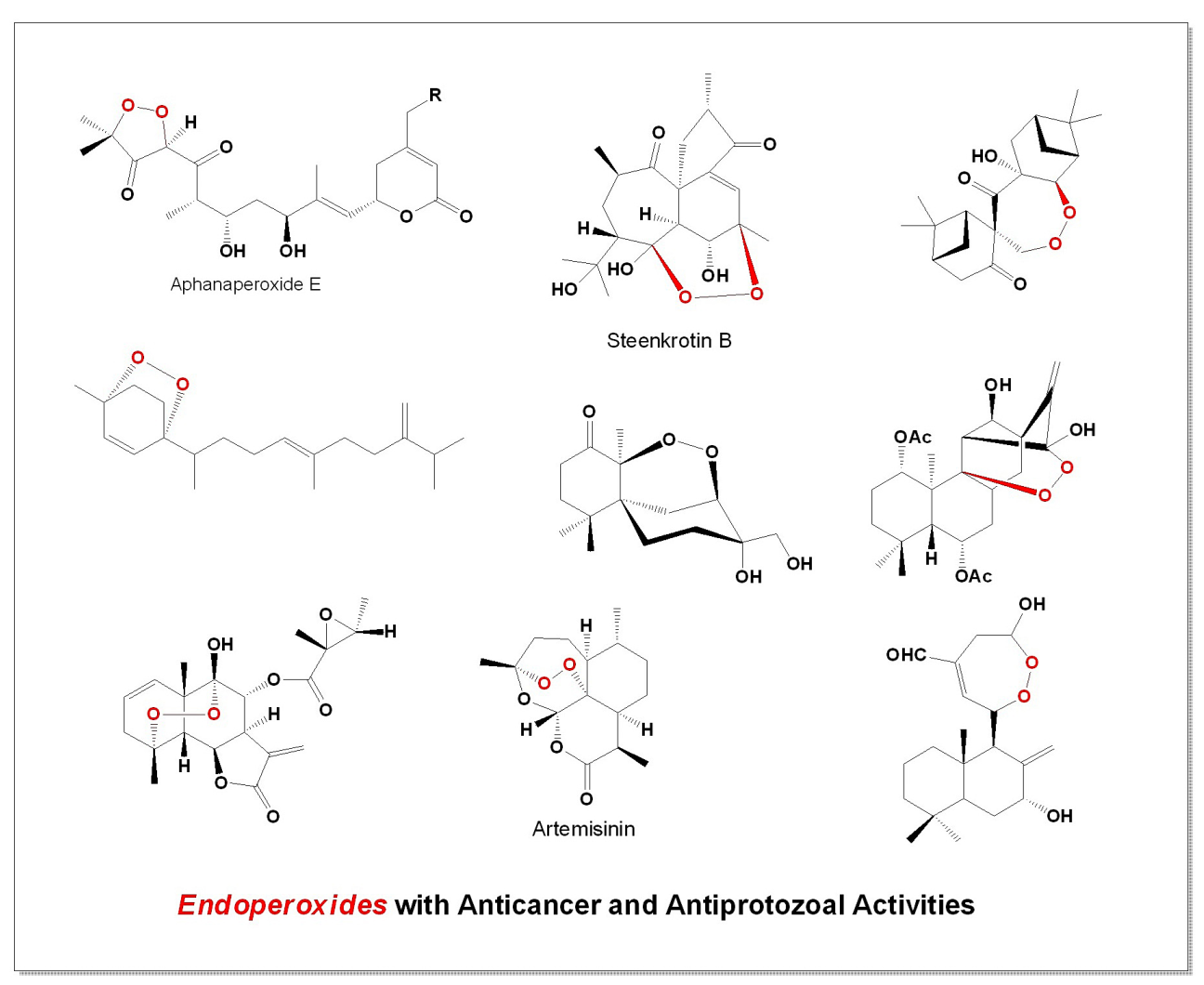
Endoperoxides represent a distinctive class of highly oxygenated terpenoids characterized by the presence of a cyclic peroxide (–O–O–) bond, a structural feature that underlies their remarkable chemical reactivity and broad spectrum of biological activities. Naturally occurring endoperoxides are widely distributed in terrestrial and marine organisms, including plants, algae, fungi, and bryophytes, and play important roles in chemical defense and ecological interactions. This review provides a comprehensive overview of naturally occurring endoperoxide-containing terpenoids, with particular emphasis on their distribution in nature, structural diversity, and biological activity profiles. Special attention is given to their antiprotozoal and anticancer properties, exemplified by artemisinin and related compounds, which remain among the most effective antimalarial agents and show promising antineoplastic potential. Using structure–activity relationship (SAR) concepts and modern computational approaches, including the PASS (Prediction of Activity Spectra for Substances) system, we analyze trends linking peroxide-containing motifs to biological function. Comparative evaluation of experimental and predicted activities highlights key structural features associated with antiprotozoal, antineoplastic, and anti-inflammatory effects. The review underscores the significance of endoperoxides as a rich source of bioactive scaffolds and discusses their potential for further development as therapeutic agents, despite challenges related to stability and reactivity.
Keywords:
endoperoxides
; terpenoids
; antiprotozoal
; antineoplastic
; algae
; plants
1. Introduction
Highly oxygenated terpenoids are a diverse class of terpene-derived natural products characterized by the presence of multiple oxygen-containing functional groups, including hydroxyl, carbonyl, epoxide, and peroxide moieties. Depending on their carbon framework, these compounds are commonly classified as mono-, di-, or triterpenoids and are widely distributed in plants, fungi, algae, and other organisms. Their elevated oxygen-to-carbon ratio contributes to pronounced chemical reactivity and underlies a broad spectrum of biological activities, such as anti-inflammatory, antibacterial, antioxidant, antiallergic, and antiparasitic effects [1,2,3,4,5].
Among highly oxygenated terpenoids, endoperoxides represent a particularly important subgroup. These compounds contain a peroxide bond (–O–O–) embedded within a cyclic structure, typically forming five- or six-membered rings. The peroxide linkage is intrinsically weak and highly reactive, rendering endoperoxides prone to redox transformations and homolytic cleavage. As a result, endoperoxide-containing molecules play a central role in oxidative stress–mediated biological processes and exhibit remarkable pharmacological properties [6,7,8,9]. Natural endoperoxides are predominantly found in terrestrial plants, fungi, algae, and marine organisms [5,6,7,8,9,10].
The most prominent example of a biologically active endoperoxide is artemisinin, a sesquiterpene lactone isolated from Artemisia annua. Artemisinin and its semi-synthetic derivatives, including artesunate and artemether, constitute the cornerstone of modern antimalarial therapy. Their mechanism of action involves activation of the endoperoxide bond by ferrous iron (Fe²⁺) within the malaria parasite, leading to the formation of reactive oxygen species and carbon-centered radicals that damage essential parasite biomolecules [11,12,13,14,15].
Another biologically significant class of endoperoxides includes prostaglandin endoperoxides, such as PGG₂ and PGH₂, which are key intermediates in prostaglandin biosynthesis from arachidonic acid in animals. These molecules are produced through cyclooxygenase (COX)-mediated oxidation and are central regulators of inflammation, pain, fever, and vascular homeostasis. The pivotal role of prostaglandin endoperoxides explains why COX enzymes are major pharmacological targets of nonsteroidal anti-inflammatory drugs, including aspirin and ibuprofen [16,17,18].
Beyond antiparasitic and inflammatory pathways, both natural and synthetic endoperoxides have attracted increasing attention as potential anticancer, antibacterial, and antiviral agents. Their biological effects are largely attributed to their ability to generate reactive oxygen species and induce oxidative damage in target cells [5,9,19]. However, the high reactivity of endoperoxides also poses challenges, as these compounds may exhibit limited stability under thermal or photochemical conditions, leading to uncontrolled radical formation and potential toxicity [1,9,10,20,21,22].
This review focuses on the biological activities of naturally occurring endoperoxides derived from algae, mosses, and higher plants, with particular emphasis on their anticancer and antiprotozoal potential, chemical diversity, and mechanistic aspects of action.
2. Distribution in Nature
Natural products containing rare five-membered endoperoxide rings have been identified in a limited but chemically diverse range of organisms, primarily higher plants, mosses, and medicinal herbs [14,23,24]. These compounds are of particular interest due to the structural strain and high reactivity associated with cyclic peroxide motifs.
Aphanaperoxides E (1), F (2), G (3), and H (4) were isolated from the stem bark of Aphanamixis polystachya [25]. Their chemical structures and biological activities are summarized in Figure 1 and Table 1. In addition, a peroxide-containing compound (5) was obtained from Artemisia absinthium, while nemoralisin G (6) was isolated from Aphanamixis grandifolia [26].
A clerodane-type peroxide (7) was discovered in the liverwort Schistochila acuminata [27], an example of which is shown in Figure 2. Furthermore, two labdane-type peroxides (8 and 10) were identified in Croton stipuliformis [28]. From Callicarpa longissima, callilongisin A (9) was isolated and demonstrated pronounced anti-inflammatory activity [29].
Additional labdane-derived endoperoxides have been reported from various plant species. A labdane diterpene peroxide (11) was isolated from Alpinia chinensis (Sy and Brown, 1997). Amphiachyris amoena yielded amoenolide K (12), while Premna oligotricha produced an ent-labdane peroxide (13). Another related compound, 7β-hydroxycoronarin B (14), was found in both Hedychium coronarium and Actinidia chinensis.
The flowering plant Jatropha integerrima afforded 2-epi-caniojane (15), whereas the roots of Jatropha curcas yielded caniojane (16) and steenkrotin B (17), the latter exhibiting mild antiplasmodial activity [30]. In addition, a highly potent antimalarial endoperoxide (18) was isolated from Amomum krervanh [31], underscoring the therapeutic relevance of naturally occurring peroxide-containing terpenoids.
Jungermatrobrunin A (19), isolated from the liverwort Jungermannia atrobrunnea, possesses a distinctive peroxide-containing molecular architecture [32]. Triptotins A (20) and B (21) were obtained from Tripterygium wilfordii [33], a representative specimen of which is shown in Figure 4. Neovibsanin C (22), isolated from Viburnum awabuki, represents a rare structural class of diterpene endoperoxides [34]. In addition, Zuelania guidonia yielded zuelaguidins E (23) and G (24) [35], while crotusin C (25) was isolated from Croton caudatus [36].
Analysis of the biological activities summarized in Table 1 reveals that, among the 25 naturally occurring endoperoxides discussed, only compound 14 (7β-hydroxycoronarin B) exhibited strong antineoplastic activity. In addition, this compound demonstrated moderate antiprotozoal activity against Plasmodium species. In contrast, strong antiprotozoal activity was observed for six compounds (11, 15, 16, 18, 19, and 22). Among these, only three compounds—11, 19, and 22—displayed moderate antineoplastic activity as a secondary effect, whereas compounds 15, 16, and 18 showed only weak antineoplastic activity.
From a pharmacological perspective, compound 14 (7β-hydroxycoronarin B) emerges as the most promising candidate for further investigation due to its pronounced antineoplastic potency. Among the endoperoxides with strong antiprotozoal activity, compound 15 is noteworthy, although its antineoplastic activity remains limited. These findings highlight the potential of specific peroxide-containing terpenoids as selective leads for either anticancer or antiprotozoal drug development.
Compound 26 (Figure 3), with its biological activity summarized in Table 2, was isolated from the aerial parts of Croton insularis [37]. Another peroxide-containing metabolite, chandonanthin (27), a cembrane-type terpenoid, was identified in the ethyl acetate extract of the liverwort Chandonanthus hirtellus [38]. In addition, a cembrane endoperoxide (28) was isolated from the flowers of Greek tobacco (Nicotiana tabacum), a representative specimen of which is shown in Figure 4 [39].
The methyl ester of a diterpenic acid (29) was obtained from the leaves of Juniperus thurifera and J. phoenicea [40], while several structurally related diterpenic acids (29–31) were subsequently identified in extracts from other plant species. Notably, compound 27 was also isolated from Salvia oxyodon [41], indicating a broader taxonomic distribution.
Among these compounds, endoperoxide 27 is particularly noteworthy, as it exhibited strong antineoplastic and antiprotozoal activities, a rare and highly desirable combination for peroxide-containing natural products. Its three-dimensional molecular structure is presented in Figure 5, providing structural insight into its pronounced dual bioactivity.
Abietic acid–derived endoperoxides (28–31) have been reported from several plant species, including Abies marocana, Elodea canadensis, Lepechinia caulescens, and Caryopteris nepetaefolia (a representative specimen is shown in Figure 6) [41,42,43,44,45,46]. Two closely related abietane-type endoperoxides, compounds 32 and 33, were isolated as acetate derivatives from the cones of Cedrus atlantica [47]. Croton laevigatus yielded crotolaevigatone G (34), while Croton insularis was the source of two additional endoperoxide-containing metabolites, EBC-325 (35) and EBC-233 (42) [48,49]. Furthermore, two diterpenoid acids, mulinic acid (36) and isomulinic acid (37), were isolated from Mulinum crassifolium [50].
A structurally unique peroxide-containing compound, hedychin B (41), was isolated from the rhizomes of Hedychium forrestii [51]. This compound exhibited pronounced cytotoxic activity against HepG2 and XWLC-05 cancer cell lines, with IC₅₀ values of 8.0 and 19.7 μM, respectively.
Analysis of the biological activities of the endoperoxides summarized in Table 3 revealed several notable trends. Compounds 27, 28, 35, and 37 demonstrated strong antineoplastic activity, whereas compounds 27, 41, and 42 showed strong antiprotozoal activity. Unexpectedly, three compounds—33, 39, and 40—exhibited strong anti-inflammatory activity in combination with moderate antiprotozoal and antineoplastic effects.
Anti-inflammatory (or antiphlogistic) activity refers to the ability of a substance to reduce inflammation or swelling. Notably, anti-inflammatory agents constitute approximately half of all analgesic drugs, underscoring the pharmacological significance of endoperoxides displaying this activity profile.
Artemisinin (43; structure shown in Figure 7, biological activity summarized in Table 3, and 3D representation presented in Figure 8) is a natural metabolite and represents the fastest-acting drug currently available for the treatment of tropical malaria caused by Plasmodium falciparum. In 1971, Chinese researchers isolated the compound responsible for the antimalarial activity of Artemisia annua leaves. This substance, originally termed qinghaosu (QHS) and later named artemisinin, is a sesquiterpene lactone containing a unique endoperoxide moiety. Notably, unlike most conventional antimalarial agents, artemisinin lacks a nitrogen-containing heterocyclic ring system [11,52,53].
Beyond its well-established antimalarial efficacy, artemisinin (photographs of Artemisia annua are shown in Figure 9) has demonstrated potent anticancer activity across a wide range of human cancer cell models. Its pleiotropic anticancer effects include inhibition of cell proliferation through cell-cycle arrest, induction of apoptosis, suppression of angiogenesis, disruption of tumor cell migration, and modulation of nuclear receptor signaling. These effects arise from the ability of artemisinin to interfere with multiple intracellular signaling pathways simultaneously. Importantly, artemisinin exhibits high selectivity toward malignant cells and shows efficacy against a remarkably broad spectrum of cancers in both in vitro and in vivo models. By targeting several hallmarks of cancer concurrently, artemisinin is well suited for combination therapy and is less prone to the development of drug resistance [54,55,56].
Xanthane-type terpenoid 44 was isolated from Xanthium strumarium [57], while compound 45 was obtained from Artemisia diffusa [58]. Nardoperoxide (46) and its related analogue (47), both exhibiting pronounced antimalarial activity, were isolated from Nardostachys chinensis [59,60]. Compound 48 was identified in Croton arboreous [61], whereas compound 49, isolated from Curcuma wenyujin, demonstrated notable antiviral activity [62].
Endoperoxide 50 was isolated from Achillea setacea [63], and compound 51 from Pulicaria undulata [64]. Artemisia annua yielded the rare endoperoxide arteannuin H (52), while compound 53 was again isolated from Illicium tsangii [65,66,67,68,69]. Two diastereomers, 54 and 55, identified as 3,6-epidioxy-1,10-bisaboladiene, were isolated from Senecio ventanensis [70]. Finally, tehranolide (56), a potent antimalarial endoperoxide, has been reported from several Artemisia species growing in Iran [71].
A broad array of endoperoxide-type sesquiterpenoids has been identified from diverse natural sources [72]. Compounds 57–59 were isolated from the Japanese liverwort Jungermannia infusca [73,74], while chamigranes merulin B (60) and merulin C (61) were obtained from a Thai fungal species [75,76]. Okundoperoxide (62), exhibiting significant antiplasmodial activity, was discovered in Scleria striatinux (Cyperaceae) [77].
Two muurolane-type endoperoxides—1,4-peroxymuurol-5-ene (63) and 1,4-peroxy-5-hydroxy-muurol-6-ene (64)—were isolated from Illicium tsangii [69]. Schisansphene A (65), a hydroperoxide-containing sesquiterpenoid, was obtained from Schisandra sphenanthera (magnolia berry) [78]. Additionally, (+)-muurolan-4,7-peroxide (66) was identified in the essential oil of Plagiochila asplenioides [79].
From the invasive plant Eupatorium adenophorum, compounds 67, 68, and 69 were isolated [80,81,82]. Other structurally unique endoperoxides include compound 70 from Ligularia veitchiana [83], compound 71 from Xylopia emarginata [84], and compound 72 from Montanoa hibiscifolia [85].
The biological activity data summarized in Table 3 are of particular importance, as they include artemisinin (43), a unique natural endoperoxide with an exceptional pharmacological profile. Artemisinin demonstrates strong antineoplastic and antilanoma activities, along with moderate antimetastatic and anti-apoptotic effects. However, its most distinctive feature is its potent activity against protozoal parasites, including Plasmodium falciparum, Leishmania tropica, and Trypanosoma brucei, as well as pronounced antibacterial activity. Computational prediction of biological activities corroborated the extensive experimental data reported in the literature, confirming the multifunctional pharmacological profile of artemisinin [11,52,53,54,55,56].
Figure 8 presents a three-dimensional activity profile of artemisinin (43), while Figure 9 illustrates Artemisia annua, the plant source responsible for biosynthesis of this bioactive endoperoxide. Among the thirty endoperoxides (43–72) evaluated, nine compounds (43–45, 50, 53, 54, 57–59) exhibited strong antineoplastic activity, and fourteen compounds demonstrated strong antiprotozoal effects. Notably, four endoperoxides—53, 57, 64, and 65—combined strong antiprotozoal activity with pronounced anti-inflammatory properties, highlighting their potential as multifunctional therapeutic agents.
3. Comparison of the Biological Activity of Endoperoxides
The biological activity of a molecule is fundamentally determined by its chemical structure. This principle, known as the structure–activity relationship (SAR), was first articulated in the 19th century by Brown and Fraser [86] and later formalized and expanded during the mid-20th century through the pioneering work of Hansch and Fujita [87]. Initially applied in toxicology and pharmaceutical research, SAR analysis subsequently evolved into the more quantitative and statistically driven concept of quantitative structure–activity relationships (QSAR), which is now extensively employed in organic, medicinal, and bioorganic chemistry [88].
QSAR is based on the premise that molecular geometry, electronic distribution, lipophilicity, and chemical reactivity collectively govern how a compound interacts with biological targets. Advances in computational power and algorithm development have enabled the reliable prediction of biological activity for both natural and synthetic molecules, significantly accelerating drug discovery and lead optimization processes [89].
Among the most robust computational tools in this field is PASS (Prediction of Activity Spectra for Substances), a software platform developed through collaborative efforts by German and Russian research groups. Over the past three decades, PASS has undergone continuous refinement and expansion. The current version is trained on a database exceeding one million compounds and is capable of predicting more than 10,000 types of biological activities, mechanisms of action, and toxicological effects [90,91,92,93].
PASS has proven particularly valuable for analyzing structurally complex and highly reactive molecular classes, including endoperoxides. Due to the presence of labile O–O bonds and their involvement in redox-driven biological mechanisms, endoperoxides pose challenges for conventional SAR approaches. Computational prediction using PASS provides an efficient strategy to evaluate their pharmacological potential, identify dominant activity profiles, and prioritize compounds for further experimental validation.
4. Conclusions
Highly oxygenated terpenoids containing endoperoxide motifs constitute a chemically and biologically exceptional class of natural products. The defining cyclic peroxide (–O–O–) bond, typically embedded within five- or six-membered rings, imparts pronounced reactivity and underlies the unique pharmacological properties of these compounds. As demonstrated throughout this review, endoperoxides are widely distributed across diverse biological kingdoms, including higher plants, algae, fungi, liverworts, and mosses, suggesting that peroxide-containing scaffolds play an important role in natural chemical defense and ecological adaptation.
The survey of more than seventy naturally occurring endoperoxides highlights substantial structural diversity, ranging from diterpenoid, sesquiterpenoid, and triterpenoid frameworks to highly specialized and rare skeletal types. Despite this diversity, clear biological trends emerge. A significant proportion of endoperoxides exhibit strong antiprotozoal activity, particularly against Plasmodium species, reaffirming the central role of peroxide chemistry in antimalarial mechanisms. Artemisinin remains the most prominent example, combining exceptional antiprotozoal potency with a broad spectrum of additional activities, including anticancer, anti-inflammatory, antibacterial, and antiviral effects. Its unique mechanism, involving iron-mediated cleavage of the endoperoxide bond and subsequent radical formation, exemplifies how controlled oxidative stress can be harnessed for therapeutic benefit.
Beyond artemisinin, several endoperoxides reviewed herein demonstrate notable antineoplastic activity, with some compounds displaying dual antiprotozoal and anticancer effects—an uncommon and particularly valuable pharmacological profile. Interestingly, a subset of endoperoxides also showed strong anti-inflammatory activity, occasionally accompanied by moderate antineoplastic or antiprotozoal properties. These findings suggest that peroxide-containing terpenoids can modulate multiple biological pathways, likely through redox-sensitive mechanisms affecting cellular signaling, mitochondrial function, and oxidative homeostasis.
The comparative analysis using structure–activity relationship (SAR) principles and computer-assisted prediction methods, particularly the PASS system, further supports the experimental observations. Computational predictions closely matched reported biological activities in many cases, reinforcing the reliability of in silico approaches for prioritizing promising endoperoxide scaffolds. PASS analysis proved especially useful in identifying compounds with multifunctional biological profiles and in highlighting structural features—such as ring size, substitution patterns, and peroxide positioning—that correlate with enhanced biological activity.
Nevertheless, the therapeutic development of endoperoxides remains challenging. Their intrinsic chemical instability, sensitivity to heat and light, and propensity to generate reactive intermediates can complicate isolation, storage, and formulation. At the same time, these very properties are often essential for biological efficacy. Future research must therefore balance stability and reactivity through rational structural modification, semi-synthesis, or total synthesis. Advances in synthetic chemistry, coupled with improved understanding of peroxide biosynthesis and degradation pathways, will be crucial for overcoming these limitations.
In conclusion, endoperoxides represent a rich and still underexplored reservoir of bioactive natural products with considerable therapeutic potential. Their proven success in antimalarial therapy, emerging relevance in oncology and inflammation, and strong support from computational activity predictions underscore their importance in medicinal chemistry. Continued interdisciplinary efforts integrating natural product chemistry, biological evaluation, and predictive modeling are likely to yield new peroxide-based leads and deepen our understanding of how highly oxygenated terpenoids can be harnessed for the treatment of human disease.
Author Contributions
Conceptualization, V.M.D.; methodology, V.M.D.; software, A.O.T.; investigation, V.M.D.; resources, V.M.D.; writing—original draft preparation, A.O.T. and V.M.D.; writing—review and editing, A.O.T. and V.M.D. All authors have read and agreed to the published version of the manuscript.
Data Availability Statement
No new data were created or analyzed in this study. Data sharing is not applicable to this article.
Conflicts of Interest
The authors declare no conflicts of interest.
References
- Dembitsky, V.M. Highly oxygenated cyclobutane ring in biomolecules: Insights into structure and activity. Oxygen 2024, 4, 181–235. [CrossRef]
- Frey, M.; Gohr, S.T.; Köllner, T.G.; Bathe, U.; Lackus, N.D.; Padilla-Gonzalez, F.; Tissier, A. Biosynthesis of biologically active terpenoids in the mint family (Lamiaceae). Nat. Prod. Rep. 2025, 42, 1887–1908. [CrossRef]
- Câmara, J.S.; Perestrelo, R.; Ferreira, R.; Berenguer, C.V.; Pereira, J.A.; Castilho, P.C. Plant-derived terpenoids: A plethora of bioactive compounds with several health functions and industrial applications—A comprehensive overview. Molecules 2024, 29, 3861. [CrossRef]
- Saber, F.R.; Salehi, H.; Khallaf, M.A.; Rizwan, K.; Gouda, M.; Ahmed, S.; Simal-Gandara, J. Limonoids: Advances in extraction, characterization, and applications. Food Rev. Int. 2025, 41, 1–62. [CrossRef]
- Dembitsky, V.M.; Ermolenko, E.; Savidov, N.; Gloriozova, T.A.; Poroikov, V.V. Antiprotozoal and antitumor activity of natural polycyclic endoperoxides: Origin, structures and biological activity. Molecules 2021, 26, 686. [CrossRef]
- Dembitsky, V.M. Bioactive peroxides as potential therapeutic agents. Eur. J. Med. Chem. 2008, 43, 223–251. [CrossRef]
- Dembitsky, V.M. Bioactive fungal endoperoxides. Med. Mycol. 2015, 53, 1–21. [CrossRef]
- Vil, V.A.; Gloriozova, T.A.; Poroikov, V.V.; Terent’ev, A.O.; Savidov, N.; Dembitsky, V.M. Peroxy steroids derived from plants and fungi and their biological activities. Appl. Microbiol. Biotechnol. 2018, 102, 7657–7667. [CrossRef]
- Vil, V.A.; Yaremenko, I.A.; Ilovaisky, A.I.; Terent’ev, A.O.; Dembitsky, V.M. Peroxides with anthelmintic, antiprotozoal, fungicidal and antiviral bioactivity: Properties, synthesis and reactions. Molecules 2017, 22, 1881. [CrossRef]
- Terent’ev, A.O.; Borisov, D.A.; Vil, V.A. Synthesis of five- and six-membered cyclic organic peroxides: Key transformations into peroxide ring-retaining products. Beilstein J. Org. Chem. 2014, 10, 34–114. [CrossRef]
- Klayman, D.L.; Lin, A.J.; Acton, N.; Scovill, J.P.; Hoch, J.M.; Milhous, W.K.; Theoharides, A.D. Isolation of artemisinin (qinghaosu) from Artemisia annua growing in the United States. J. Nat. Prod. 1984, 47, 715–717. [CrossRef]
- Ferreira, J.F.S.; Janick, J. Distribution of artemisinin in Artemisia annua. Prog. New Crops 1996, 1, 579–584.
- Duke, S.O.; Vaughn, K.C.; Croom, E.M. Jr. Artemisinin, a constituent of annual wormwood (Artemisia annua), is a selective phytotoxin. Weed Sci. 1987, 35, 499–505. [CrossRef]
- Zhang, S.; He, B.; Qu-Bie, A.; Li, M.; Luo, M.; Feng, M.; Liu, Y. Endoperoxidases in biosynthesis of endoperoxide bonds. Int. J. Biol. Macromol. 2024, 136, 136806. [CrossRef]
- Mannan, A.; Liu, C.; Arsenault, P.R. DMSO triggers the generation of ROS leading to an increase in artemisinin and dihydroartemisinic acid in Artemisia annua shoot cultures. Plant Cell Rep. 2010, 29, 143–152. [CrossRef]
- Kuehl, F.A., Jr.; Humes, J.L.; Egan, R.W. Role of prostaglandin endoperoxide PGG₂ in inflammatory processes. Nature 1977, 265, 170–173. [CrossRef]
- Smith, W.L.; Urade, Y.; Jakobsson, P.-J. Enzymes of the cyclooxygenase pathways of prostanoid biosynthesis. Chem. Rev. 2011, 111, 5821–5865. [CrossRef]
- Caruana, A.; Savona-Ventura, C.; Calleja-Agius, J. COX isozymes and non-uniform neoangiogenesis: What is their role in endometriosis? Prostaglandins Other Lipid Mediat. 2023, 167, 106734. [CrossRef]
- Barsegyan, Y.A.; Vil, V.A.; Terent’ev, A.O. Macrocyclic organic peroxides: Constructing medium and large cycles with O–O bonds. Chemistry 2024, 6, 1246–1270. [CrossRef]
- Dembitsky, V.M.; Vil, V.A. Medicinal chemistry of stable and unstable 1,2-dioxetanes: Origin, formation, and biological activities. Sci. Synth. Knowl. Updates 2019, 38, 333–381.
- Clennan, E.L. Aromatic endoperoxides. Photochem. Photobiol. 2023, 99, 204–220. [CrossRef]
- Dembitsky, V.M.; Yaremenko, I.A. Stable and unstable 1,2-dioxolanes: Origin, synthesis, and biological activities. Sci. Synth. Knowl. Updates 2020, 38, 277–321.
- Yaremenko, I.A.; Vil, V.A.; Demchuk, D.V.; et al. Rearrangements of organic peroxides and related processes. Beilstein J. Org. Chem. 2016, 12, 1647–1748. [CrossRef]
- Tamez-Fernández, J.F.; Melchor-Martínez, E.M.; Ibarra-Rivera, T.R.; et al. Plant-derived endoperoxides: Structure, occurrence, and bioactivity. Phytochem. Rev. 2020, 19, 827–864. [CrossRef]
- Wu, H.F.; Zhang, X.P.; Wang, Y.; et al. Four new diterpenes from Aphanamixis polystachya. Fitoterapia 2013, 90, 126–131. [CrossRef]
- Zhang, R.; He, H.P.; Di, Y.T.; et al. Chemical constituents from Aphanamixis grandifolia. Fitoterapia 2014, 92, 100–104. [CrossRef]
- Wu, C.L.; Jong, J.R. A cyclic peroxide of clerodenoic acid from the Taiwanese liverwort Schistochila acuminata. J. Asian Nat. Prod. Res. 2001, 3, 241–246. [CrossRef]
- Ramos, F.; Takaishi, Y.; Kashiwada, Y.; et al. ent-3,4-seco-Labdane and ent-labdane diterpenoids from Croton stipuliformis (Euphorbiaceae). Phytochemistry 2008, 69, 2406–2410. [CrossRef]
- Liu, Y.W.; Cheng, Y.B.; Liaw, C.C.; et al. Bioactive diterpenes from Callicarpa longissima. J. Nat. Prod. 2012, 75, 689–693. [CrossRef]
- Adelekan, A.M.; Prozesky, E.A.; Hussein, A.A.; et al. Bioactive diterpenes and other constituents of Croton steenkampianus. J. Nat. Prod. 2008, 71, 1919–1922. [CrossRef]
- Kamchonwongpaisan, S.; Nilanonta, C.; Tarmchampoo, B.; et al. An antimalarial peroxide from Amomum krervanh Pierre. Tetrahedron Lett. 1995, 36, 1821–1824. [CrossRef]
- Qu, J.B.; Zhu, R.L.; Zhang, Y.L.; et al. ent-Kaurane diterpenoids from the liverwort Jungermannia atrobrunnea. J. Nat. Prod. 2008, 71, 1418–1422. [CrossRef]
- Guo, F.; Xi, M.; Li, Y. Triptotin A and B, two novel diterpenoids from Tripterygium wilfordii. Tetrahedron Lett. 1999, 40, 947–950. [CrossRef]
- Kubo, M.; Minami, H.; Hayashi, E.; et al. Neovibsanin C, a macrocyclic peroxide-containing neovibsane-type diterpene from Viburnum awabuki. Tetrahedron Lett. 1999, 40, 6261–6265. [CrossRef]
- Calderón, C.; De Ford, C.; Castro, V.; et al. Cytotoxic clerodane diterpenes from Zuelania guidonia. J. Nat. Prod. 2014, 77, 455–463. [CrossRef]
- Chen, Y.Y.; Yang, K.X.; Yang, X.W.; et al. New cytotoxic tigliane diterpenoids from Croton caudatus. Planta Med. 2016, 82, 729–733. [CrossRef]
- Graikou, K.; Aligiannis, N.; Skaltsounis, A.-L.; et al. New diterpenes from Croton insularis. J. Nat. Prod. 2004, 67, 685–688. [CrossRef]
- Wang, Y.; Harrison, L.J.; Tan, B.C. Terpenoids from the liverwort Chandonanthus hirtellus. Tetrahedron 2009, 65, 4035–4043. [CrossRef]
- Arndt, R.; Wahlberg, I.; Enzell, C.R.; et al. Tobacco chemistry: Structure determination and biomimetic syntheses of two new tobacco cembranoids. Acta Chem. Scand. 1988, 42, 294–302. [CrossRef]
- Barrero, A.F.; del Moral, J.F.Q.; Aitigri, M. Oxygenated diterpenes and other constituents from Moroccan Juniperus phoenicea and Juniperus thurifera var. africana. Phytochemistry 2004, 65, 2507–2515. [CrossRef]
- Escudero, J.; Pérez, L.; Rabanal, R.M.; et al. Diterpenoids from Salvia oxyodon and Salvia lavandulifolia. Phytochemistry 1983, 22, 585–588. [CrossRef]
- Monaco, P.; Parrilli, M.; Previtera, L. Two endoperoxide diterpenes from Elodea canadensis. Tetrahedron Lett. 1987, 28, 4609–4612. [CrossRef]
- Barrero, A.F.; Sánchez, J.F.; Álvarez-Mansaneda, E.J.; et al. Endoperoxide diterpenoids and other constituents from Abies marocana. Phytochemistry 1991, 30, 593–597. [CrossRef]
- Delgado, G.; Sánchez, E.; Hernández, J.; et al. Abietanoid acids from Lepechinia caulescens. Phytochemistry 1992, 31, 3159–3161. [CrossRef]
- San Feliciano, A.; del Corral, J.M.M.; Gordaliza, M.; et al. Two diterpenoids from the leaves of Juniperus sabina. Phytochemistry 1991, 30, 695–697. [CrossRef]
- Zhang, C.G.; Chou, G.X.; Mao, X.D.; et al. Nepetaefolins A–J, cytotoxic chinane and abietane diterpenoids from Caryopteris nepetaefolia. J. Nat. Prod. 2017, 80, 1742–1749. [CrossRef]
- Barrero, A.F.; Quílez del Moral, J.F.; Herrador, M.M.; et al. Abietane diterpenes from the cones of Cedrus atlantica. Phytochemistry 2005, 66, 105–111.
- Maslovskaya, L.A.; Savchenko, A.I.; Gordon, V.A.; et al. Isolation and confirmation of the proposed cleistanthol biogenetic link from Croton insularis. Org. Lett. 2011, 13, 1032–1035. [CrossRef]
- Maslovskaya, L.A.; Savchenko, A.I.; Pierce, C.J.; et al. Unprecedented 1,14-seco-crotofolanes from Croton insularis: Oxidative cleavage of crotofolin C via a putative homo-Baeyer–Villiger rearrangement. Chem. Eur. J. 2014, 20, 14226–14230.
- Loyola, L.A.; Morales, C.; Rodríguez, B.; et al. Mulinic and isomulinic acids: Rearranged diterpenes with a new carbon skeleton from Mulinum crassifolium. Tetrahedron 1990, 46, 5413–5420. [CrossRef]
- Zhao, Q.; Gao, J.J.; Qin, X.J.; et al. Hedychins A and B, 6,7-dinorlabdane diterpenoids with a peroxide bridge from Hedychium forrestii. Org. Lett. 2018, 20, 704–707. [CrossRef]
- Liao, F. Discovery of artemisinin (qinghaosu). Molecules 2009, 14, 5362–5366. [CrossRef]
- Dahnum, D.; Abimanyu, H.; Senjaya, A. Isolation of artemisinin as an antimalarial drug from Artemisia annua L. cultivated in Indonesia. Int. J. Basic Appl. Sci. 2012, 12, 90–95.
- Firestone, G.L.; Sundar, S.N. Anticancer activities of artemisinin and its bioactive derivatives. Expert Rev. Mol. Med. 2009, 11, e32. [CrossRef]
- Gao, F.; Sun, Z.; Kong, F.; et al. Artemisinin-derived hybrids and their anticancer activity. Eur. J. Med. Chem. 2020, 188, 112044. [CrossRef]
- Zhang, S.; Yi, C.; Li, W.W.; et al. Current advances in the anticancer activity of artemisinin metal complexes, hybrids, and dimers. Arch. Pharm. 2022, 355, 2200086.
- Mahmoud, A.A. Xanthanolides and xanthane epoxide derivatives from Xanthium strumarium. Planta Med. 1998, 64, 724–727. [CrossRef]
- Rustaiyan, A.; Nahrevanian, H.; Kazemi, M.; Larijani, K. Antimalarial effects of extracts of Artemisia diffusa against Plasmodium berghei. Planta Med. 2007, 73, 892–902. [CrossRef]
- Takaya, Y.; Kurumada, K.; Takeuji, Y.; et al. Nardoperoxide and related guaiane-type sesquiterpenoids from Nardostachys chinensis roots. Tetrahedron Lett. 1998, 39, 1361–1364.
- Takaya, Y.; Takeuji, Y.; Akasaka, M.; et al. Nardoguaianones A–D, novel guaiane endoperoxides from Nardostachys chinensis and their biological activities. Tetrahedron 2000, 56, 7673–7681.
- Aguilar-Guadarrama, A.B.; Ríos, M.Y. Three new sesquiterpenes from Croton arboreus. J. Nat. Prod. 2004, 67, 914–917.
- Dong, J.Y.; Ma, X.Y.; Cai, X.Q.; et al. Sesquiterpenoids from Curcuma wenyujin with anti-influenza viral activity. Phytochemistry 2013, 85, 122–128. [CrossRef]
- Todorova, M.; Vogler, B.; Tsankova, E. Terpenoids from Achillea setacea. Z. Naturforsch. C 2000, 55, 840–842. [CrossRef]
- Hegazy, M.E.F.; Nakamura, S.; Tawfik, W.A.; et al. Rare hydroperoxyl guaianolide sesquiterpenes from Pulicaria undulata. Phytochem. Lett. 2015, 12, 177–181. [CrossRef]
- Sy, L.K.; Brown, G.D. Abietane diterpenes from Illicium angustisepalum. J. Nat. Prod. 1998, 61, 907–912. [CrossRef]
- Sy, L.K.; Brown, G.D.; Haynes, R. A novel endoperoxide and related sesquiterpenes from Artemisia annua possibly derived from allylic hydroperoxides. Tetrahedron 1998, 54, 4345–4356. [CrossRef]
- Sy, L.K.; Ngo, K.S.; Brown, G.D. Biomimetic synthesis of arteannuin H and the 3,2-rearrangement of allylic hydroperoxides. Tetrahedron 1999, 55, 15127–15140. [CrossRef]
- Ngo, K.S.; Brown, G.D. Allohimachalane, seco-allohimachalane, and himachalane sesquiterpenes from Illicium tsangii. Tetrahedron 1999, 55, 759–766. [CrossRef]
- Ngo, K.S.; Brown, G.D. Santalane and isocampherenane sesquiterpenoids from Illicium tsangii. Phytochemistry 1999, 50, 1213–1219. [CrossRef]
- Alza, N.P.; Murray, A.P. Chemical constituents and acetylcholinesterase inhibition of Senecio ventanensis Cabrera (Asteraceae). Rec. Nat. Prod. 2016, 10, 513–518.
- Rustaiyan, A.; Faridchehr, A.; Bakhtiyar, M. Sesquiterpene lactones of the Iranian Asteraceae family: Chemical constituents and antiplasmodial properties of tehranolide (Review). Orient. J. Chem. 2017, 33, 2506–2521. [CrossRef]
- Amen, Y.; Abdelwahab, G.; Heraiz, A.A.; et al. Exploring sesquiterpene lactones: Structural diversity and antiviral therapeutic insights. RSC Adv. 2025, 15, 1970–1988. [CrossRef]
- Nagashima, F.; Suzuki, M.; Takaoka, S.; Asakawa, Y. New sesqui- and diterpenoids from the Japanese liverwort Jungermannia infusca (Mitt.) Steph. Chem. Pharm. Bull. 1998, 46, 1184–1187. [CrossRef]
- Nagashima, F.; Suzuki, M.; Takaoka, S.; Asakawa, Y. New acorane- and cuparane-type sesquiterpenoids and labdane- and seco-labdane-type diterpenoids from Jungermannia infusca. Tetrahedron 1999, 55, 9117–9128.
- Chokpaiboon, S.; Sommit, D.; Bunyapaiboonsri, T.; et al. Antiangiogenic effects of chamigrane endoperoxides from a Thai mangrove-derived fungus. J. Nat. Prod. 2011, 74, 2290–2299. [CrossRef]
- Chokpaiboon, S.; Sommit, D.; Teerawatananond, T.; et al. Cytotoxic nor-chamigrane and chamigrane endoperoxides from a basidiomycetous fungus. J. Nat. Prod. 2010, 73, 1005–1012. [CrossRef]
- Efange, S.M.N.; Brun, R.; Wittlin, S.; et al. Okundoperoxide, a bicyclic cyclofarnesyl sesquiterpene endoperoxide from Scleria striatinux with antiplasmodial activity. J. Nat. Prod. 2009, 72, 280–283.
- Ma, W.H.; Tan, C.M.; He, J.C.; et al. A novel eudesmene sesquiterpenoid from the stems of Schisandra sphenanthera. Chem. Nat. Compd. 2011, 47, 713–717.
- Adio, A.M.; König, W.A. Sesquiterpene constituents from the essential oil of the liverwort Plagiochila asplenioides. Phytochemistry 2005, 66, 599–609. [CrossRef]
- Nagashima, F.; Matsumura, N.; Ashigaki, Y.; Asakawa, Y. Biologically active compounds from bryophytes. J. Hattori Bot. Lab. 2003, 94, 197–205.
- He, L.; Hou, J.; Gan, M.; et al. Cadinane sesquiterpenes from the leaves of Eupatorium adenophorum. J. Nat. Prod. 2008, 71, 1485–1488. [CrossRef]
- Zhao, X.; Zheng, G.W.; Niu, X.M.; et al. Terpenes from Eupatorium adenophorum and their allelopathic effects on Arabidopsis seed germination. J. Agric. Food Chem. 2009, 57, 478–482. [CrossRef]
- Wang, C.F.; Zhao, Y.; Liu, Y.Z.; Zhang, Z.Z. Two eremophilane-type sesquiterpenoids from the rhizomes of Ligularia veitchiana. Chem. Res. Chin. Univ. 2009, 25, 480–483.
- Moreira, I.C.; Roque, N.F.; Contini, K.; Lago, J.H.G. Sesquiterpenes and hydrocarbons from the fruits of Xylopia emarginata (Annonaceae). Rev. Bras. Farmacogn. 2007, 17, 55–62.
- Müller, S.; Murillo, R.; Castro, V.; et al. Sesquiterpene lactones from Montanoa hibiscifolia that inhibit the transcription factor NF-κB. J. Nat. Prod. 2004, 67, 622–630. [CrossRef]
- Brown, A.C.; Fraser, T.R. The connection of chemical constitution and physiological action. Trans. R. Soc. Edinb. 1868, 25, 224–242.
- Hansch, C.; Fujita, T. p-σ-π analysis: A method for the correlation of biological activity and chemical structure. J. Am. Chem. Soc. 1964, 86, 1616–1626.
- Hansch, C.; Leo, A. Exploring QSAR: Fundamentals and Applications in Chemistry and Biology; ACS: Washington, DC, USA, 1995; Vols. 1–2.
- Dembitsky, V.M. Microbiological aspects of unique, rare, and unusual fatty acids derived from natural amides and their pharmacological profiles. Microbiol. Res. 2022, 13, 377–417. [CrossRef]
- Muratov, E.N.; Bajorath, J.; Sheridan, R.P.; et al. QSAR without borders. Chem. Soc. Rev. 2020, 49, 3525–3564. [CrossRef]
- Dembitsky, V.M. Bioactive steroids bearing an oxirane ring. Biomedicines 2023, 11, 2237. [CrossRef]
- Dembitsky, V.M. Highly oxygenated cyclobutane rings in biomolecules: Insights into structure and activity. Oxygen 2024, 4, 181–235. [CrossRef]
- Dembitsky, V.M. Naturally occurring norsteroids: Design and pharmaceutical applications. Biomedicines 2024, 12, 1021. [CrossRef]
Figure 1.
Bioactive endoperoxides derived from mosses and plants.
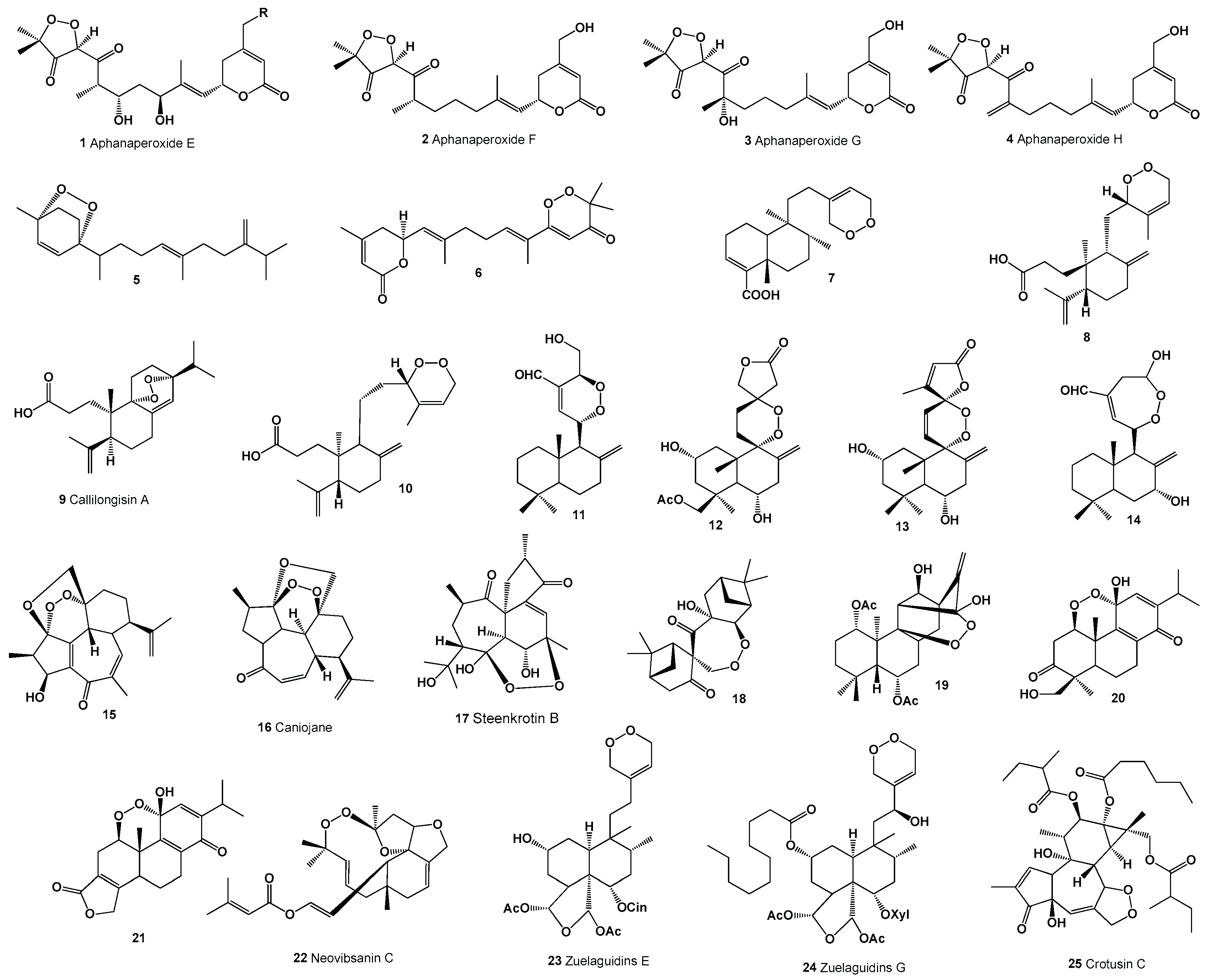
Figure 2.
Representative plant sources of naturally occurring endoperoxides. (a) Aphanamixis polystachya (pitraj tree), a member of the Meliaceae family, native to South and Southeast Asia, including India, Pakistan, Nepal, Bhutan, Bangladesh, Myanmar, and Sri Lanka. The plant is widely used in Ayurvedic medicine and exhibits a broad range of pharmacological activities, including anticancer, antioxidant, antimicrobial, anti-inflammatory, hepatoprotective, anthelmintic, analgesic, thrombolytic, antimalarial, and central nervous system–depressant effects. (b) Schistochila acuminata (family Schistochilaceae), a liverwort characterized by deeply dissected, often undulating leaves that enhance water retention, an essential adaptation for survival in shaded and moist habitats such as forest floors and rock crevices. (c) Amphiachyris amoena (showy amphiachyris or showy false aster), an annual wildflower endemic to central and north-central Texas (USA). The plant reaches up to ~1 m in height and bears small yellow flowers; it is used ornamentally and in traditional medicine for the treatment of digestive disorders, skin conditions, and fevers. (d) Premna oligotricha, a small aromatic shrub with gray bark, distributed in East and Southeast Asia and parts of tropical East Africa. It is traditionally used to treat malaria, gastrointestinal disorders, headaches, coughs, neuralgia, tuberculosis, and conditions affecting the liver and cardiovascular system. All images were obtained from sources permitting non-commercial use.
Figure 2.
Representative plant sources of naturally occurring endoperoxides. (a) Aphanamixis polystachya (pitraj tree), a member of the Meliaceae family, native to South and Southeast Asia, including India, Pakistan, Nepal, Bhutan, Bangladesh, Myanmar, and Sri Lanka. The plant is widely used in Ayurvedic medicine and exhibits a broad range of pharmacological activities, including anticancer, antioxidant, antimicrobial, anti-inflammatory, hepatoprotective, anthelmintic, analgesic, thrombolytic, antimalarial, and central nervous system–depressant effects. (b) Schistochila acuminata (family Schistochilaceae), a liverwort characterized by deeply dissected, often undulating leaves that enhance water retention, an essential adaptation for survival in shaded and moist habitats such as forest floors and rock crevices. (c) Amphiachyris amoena (showy amphiachyris or showy false aster), an annual wildflower endemic to central and north-central Texas (USA). The plant reaches up to ~1 m in height and bears small yellow flowers; it is used ornamentally and in traditional medicine for the treatment of digestive disorders, skin conditions, and fevers. (d) Premna oligotricha, a small aromatic shrub with gray bark, distributed in East and Southeast Asia and parts of tropical East Africa. It is traditionally used to treat malaria, gastrointestinal disorders, headaches, coughs, neuralgia, tuberculosis, and conditions affecting the liver and cardiovascular system. All images were obtained from sources permitting non-commercial use.

Figure 3.
Bioactive endoperoxides derived from algae, liverwort and plants.
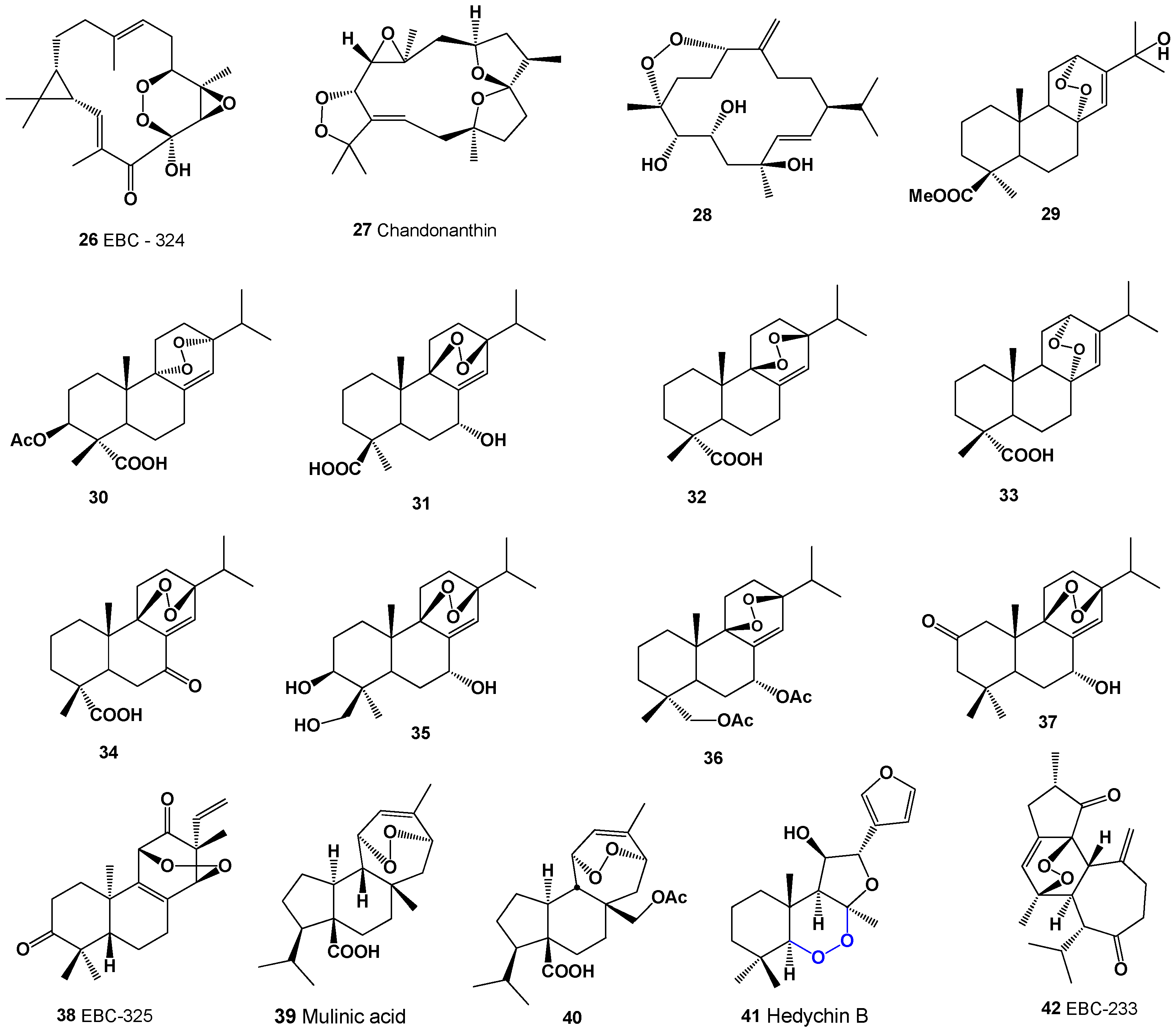
Figure 4.
a) Tripterygium wilfordii (léi gōng téng, commonly known as thunder god vine) is a perennial vine widely used in traditional Chinese medicine. Extracts of T. wilfordii are rich in bioactive diterpenoids and triterpenoids and have been extensively studied for their immunosuppressive, anti-inflammatory, antiproliferative, and antitumor properties. These compounds have attracted significant interest for their potential therapeutic applications, although their toxicity requires careful clinical control. b) Zuelania guidonia (syn. Casearia laetioides) is a shrub or small tree native to the West Indies, Central America, and northern South America and represents the sole species of the genus Zuelania. The plant has been traditionally used for medicinal purposes, and its fruits and leaves are consumed as food by indigenous populations from Mexico to Venezuela. Several secondary metabolites, including peroxide-containing terpenoids, have been isolated from this species. c) Croton caudatus is a medicinal plant traditionally used in Southeast Asian ethnomedicine for the treatment of liver disorders, fever, convulsions, malaria, rheumatoid arthritis, and gastrointestinal diseases. Extracts from the leaves, bark, and stems have demonstrated cytotoxic activity against cancer cell lines, including HeLa cells, with ethanol extracts showing particularly strong effects. These extracts are also used in traditional formulations for managing diabetes, hypercholesterolemia, and metabolic disorders. d) Nicotiana tabacum (cultivated or Virginia tobacco) is an herbaceous plant of the Solanaceae family cultivated worldwide on an industrial scale. Beyond its well-known use in tobacco products, N. tabacum has a history of medicinal applications. Its leaves contain alkaloids and terpenoids and have been used externally in traditional medicine for treating rheumatic edema, skin conditions, and insect or scorpion bites, as well as for their antispasmodic, sedative, and expectorant properties.
Figure 4.
a) Tripterygium wilfordii (léi gōng téng, commonly known as thunder god vine) is a perennial vine widely used in traditional Chinese medicine. Extracts of T. wilfordii are rich in bioactive diterpenoids and triterpenoids and have been extensively studied for their immunosuppressive, anti-inflammatory, antiproliferative, and antitumor properties. These compounds have attracted significant interest for their potential therapeutic applications, although their toxicity requires careful clinical control. b) Zuelania guidonia (syn. Casearia laetioides) is a shrub or small tree native to the West Indies, Central America, and northern South America and represents the sole species of the genus Zuelania. The plant has been traditionally used for medicinal purposes, and its fruits and leaves are consumed as food by indigenous populations from Mexico to Venezuela. Several secondary metabolites, including peroxide-containing terpenoids, have been isolated from this species. c) Croton caudatus is a medicinal plant traditionally used in Southeast Asian ethnomedicine for the treatment of liver disorders, fever, convulsions, malaria, rheumatoid arthritis, and gastrointestinal diseases. Extracts from the leaves, bark, and stems have demonstrated cytotoxic activity against cancer cell lines, including HeLa cells, with ethanol extracts showing particularly strong effects. These extracts are also used in traditional formulations for managing diabetes, hypercholesterolemia, and metabolic disorders. d) Nicotiana tabacum (cultivated or Virginia tobacco) is an herbaceous plant of the Solanaceae family cultivated worldwide on an industrial scale. Beyond its well-known use in tobacco products, N. tabacum has a history of medicinal applications. Its leaves contain alkaloids and terpenoids and have been used externally in traditional medicine for treating rheumatic edema, skin conditions, and insect or scorpion bites, as well as for their antispasmodic, sedative, and expectorant properties.
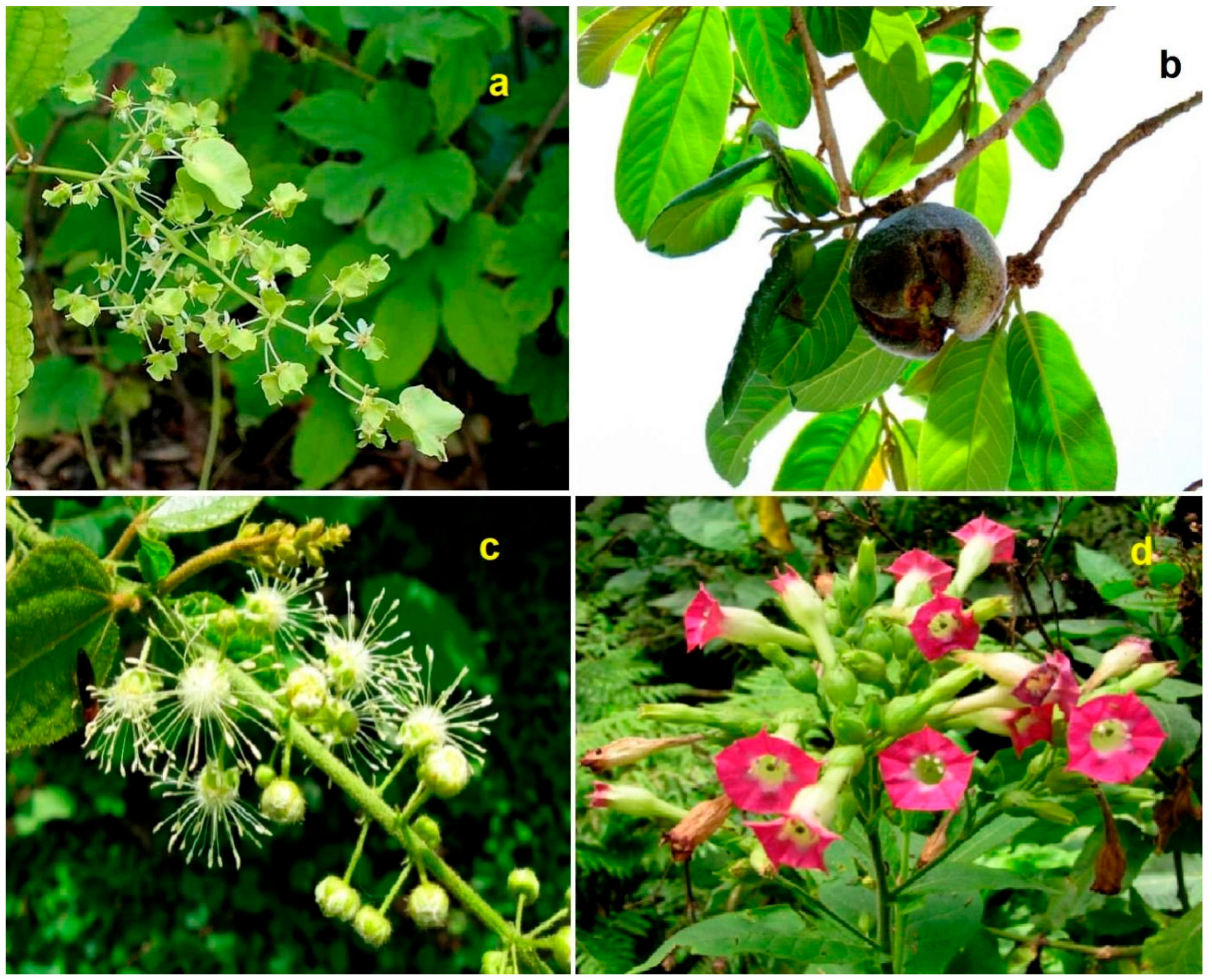
Figure 5.
3D Graph of chandonanthin (27) produced by the liverwort Chandonanthus hirtellus. This endoperoxide demonstrates strong antineoplastic and antiprotozoal (Plasmodium) activity, and can be recommended for more detailed medical study and application. In the foreground is a five-membered ring with an endoperoxide group (highlighted in red).
Figure 5.
3D Graph of chandonanthin (27) produced by the liverwort Chandonanthus hirtellus. This endoperoxide demonstrates strong antineoplastic and antiprotozoal (Plasmodium) activity, and can be recommended for more detailed medical study and application. In the foreground is a five-membered ring with an endoperoxide group (highlighted in red).
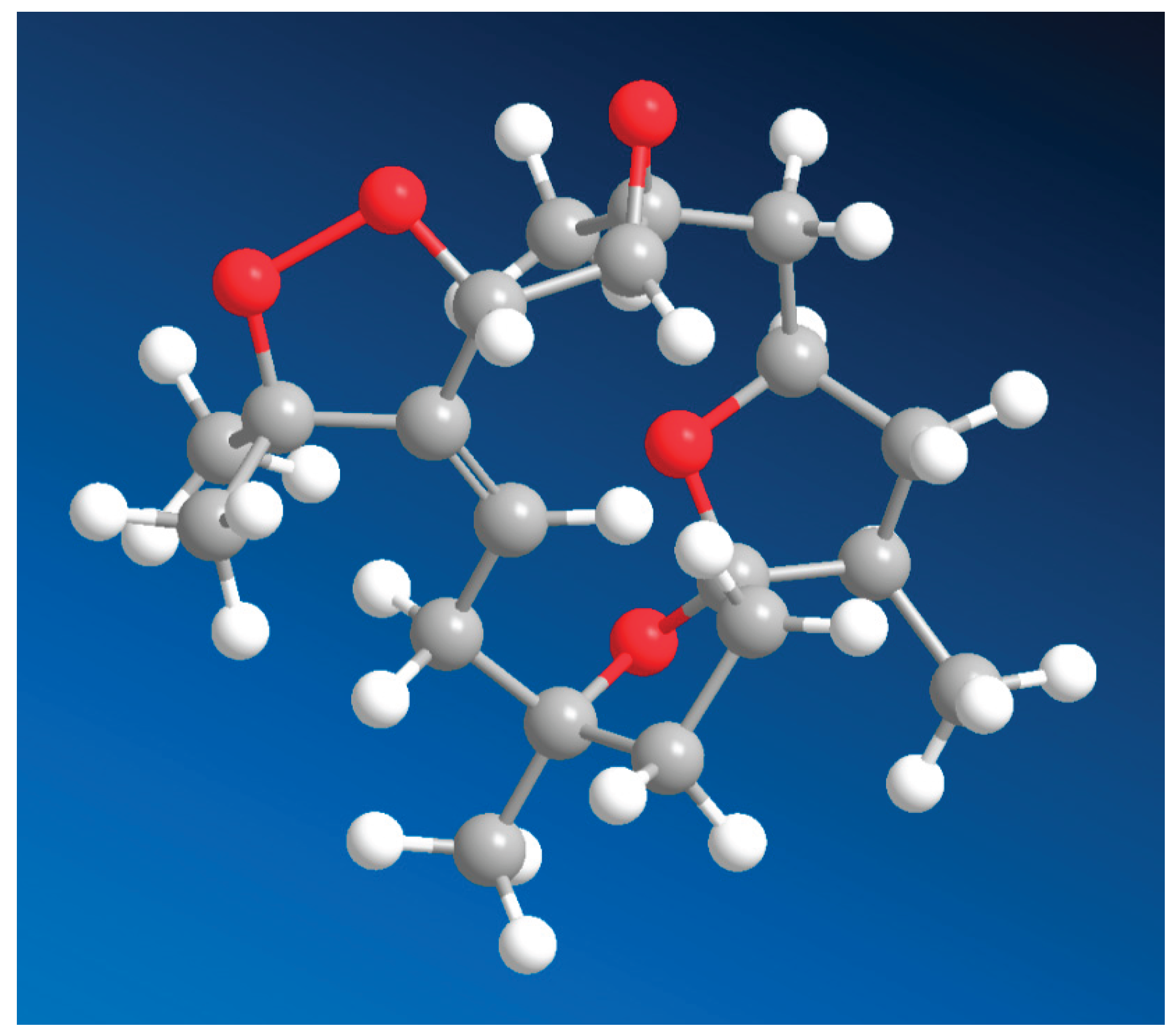
Figure 6.
a) Elodea canadensis (also known as anacharis or waterweed) is a submerged aquatic plant native to North America. It thrives in stagnant and slow-moving freshwater environments, including ponds, canals, river backwaters, and oxbow lakes. E. canadensis is known to exhibit strong allelopathic activity, releasing bioactive secondary metabolites that inhibit the growth of competing aquatic organisms. b) Lepechinia caulescens is a perennial aromatic plant native to Central and South America, Mexico, California, Hispaniola, and Hawaii, where its presence is likely due to human introduction. The species is characterized by distinctive pitcher-shaped flowers, often purple in color. Essential oils obtained from L. caulescens have demonstrated pronounced antibacterial activity, including bactericidal effects against Vibrio cholerae. c) Abies marocana (Moroccan fir) is a rare and critically endangered conifer endemic to the Atlas Mountains of Morocco and listed on the IUCN Red List. It is considered a relict species from a formerly wider distribution. Extracts and essential oils derived from its seeds and needles have been used in traditional medicine and perfumery, particularly for the treatment of respiratory conditions. d) Caryopteris nepetaefolia (bluebeard; known as “you shu” in Chinese) is a flowering plant of the Lamiaceae family native to East Asia, including China, Japan, and Korea. The species is valued ornamentally for its blue to lavender flowers that bloom in late summer and early autumn. The leaves and herbaceous stems emit a terpene-rich aroma reminiscent of eucalyptus when crushed, reflecting their high content of volatile secondary metabolites.
Figure 6.
a) Elodea canadensis (also known as anacharis or waterweed) is a submerged aquatic plant native to North America. It thrives in stagnant and slow-moving freshwater environments, including ponds, canals, river backwaters, and oxbow lakes. E. canadensis is known to exhibit strong allelopathic activity, releasing bioactive secondary metabolites that inhibit the growth of competing aquatic organisms. b) Lepechinia caulescens is a perennial aromatic plant native to Central and South America, Mexico, California, Hispaniola, and Hawaii, where its presence is likely due to human introduction. The species is characterized by distinctive pitcher-shaped flowers, often purple in color. Essential oils obtained from L. caulescens have demonstrated pronounced antibacterial activity, including bactericidal effects against Vibrio cholerae. c) Abies marocana (Moroccan fir) is a rare and critically endangered conifer endemic to the Atlas Mountains of Morocco and listed on the IUCN Red List. It is considered a relict species from a formerly wider distribution. Extracts and essential oils derived from its seeds and needles have been used in traditional medicine and perfumery, particularly for the treatment of respiratory conditions. d) Caryopteris nepetaefolia (bluebeard; known as “you shu” in Chinese) is a flowering plant of the Lamiaceae family native to East Asia, including China, Japan, and Korea. The species is valued ornamentally for its blue to lavender flowers that bloom in late summer and early autumn. The leaves and herbaceous stems emit a terpene-rich aroma reminiscent of eucalyptus when crushed, reflecting their high content of volatile secondary metabolites.
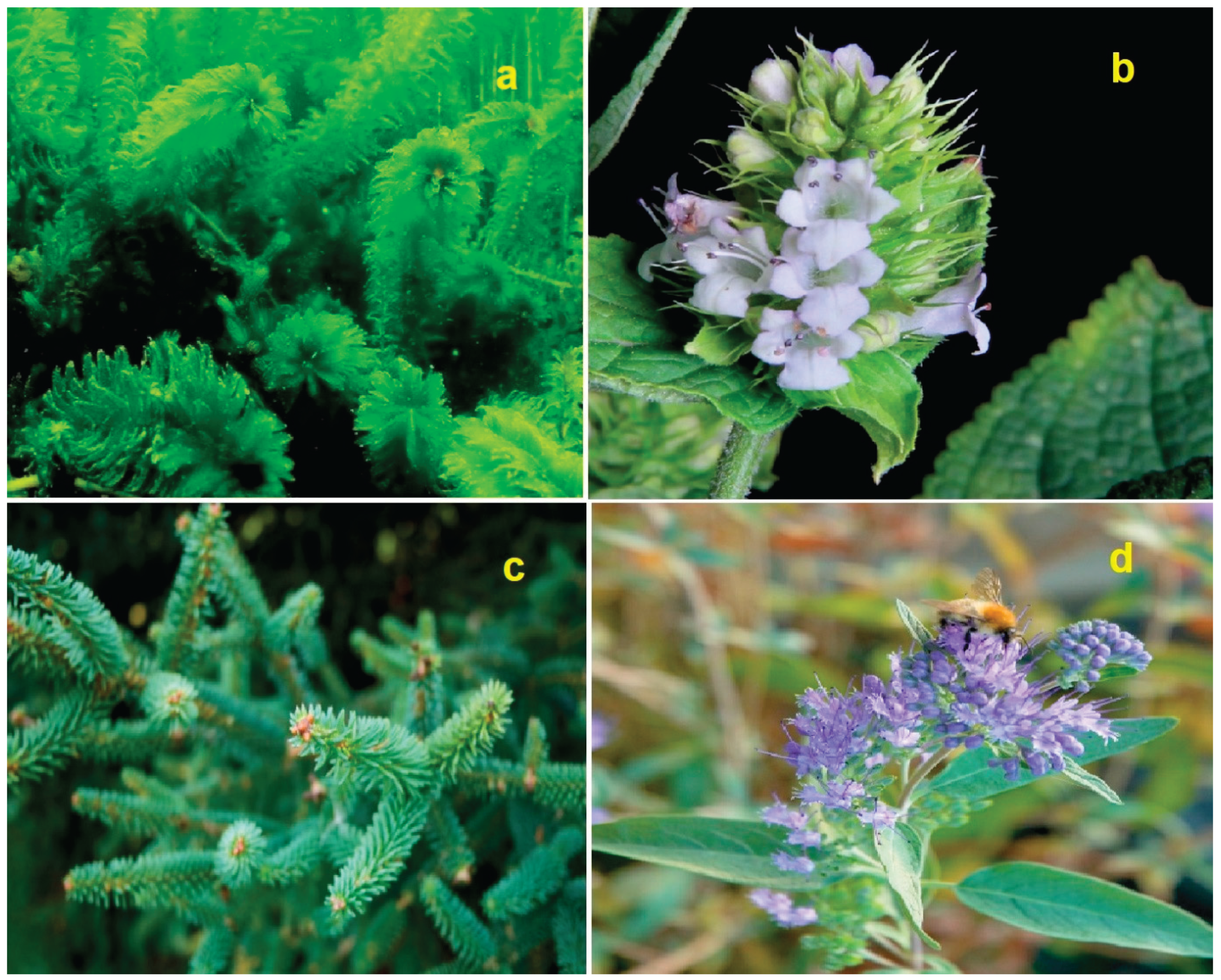
Figure 7.
Bioactive endoperoxides derived from plants.
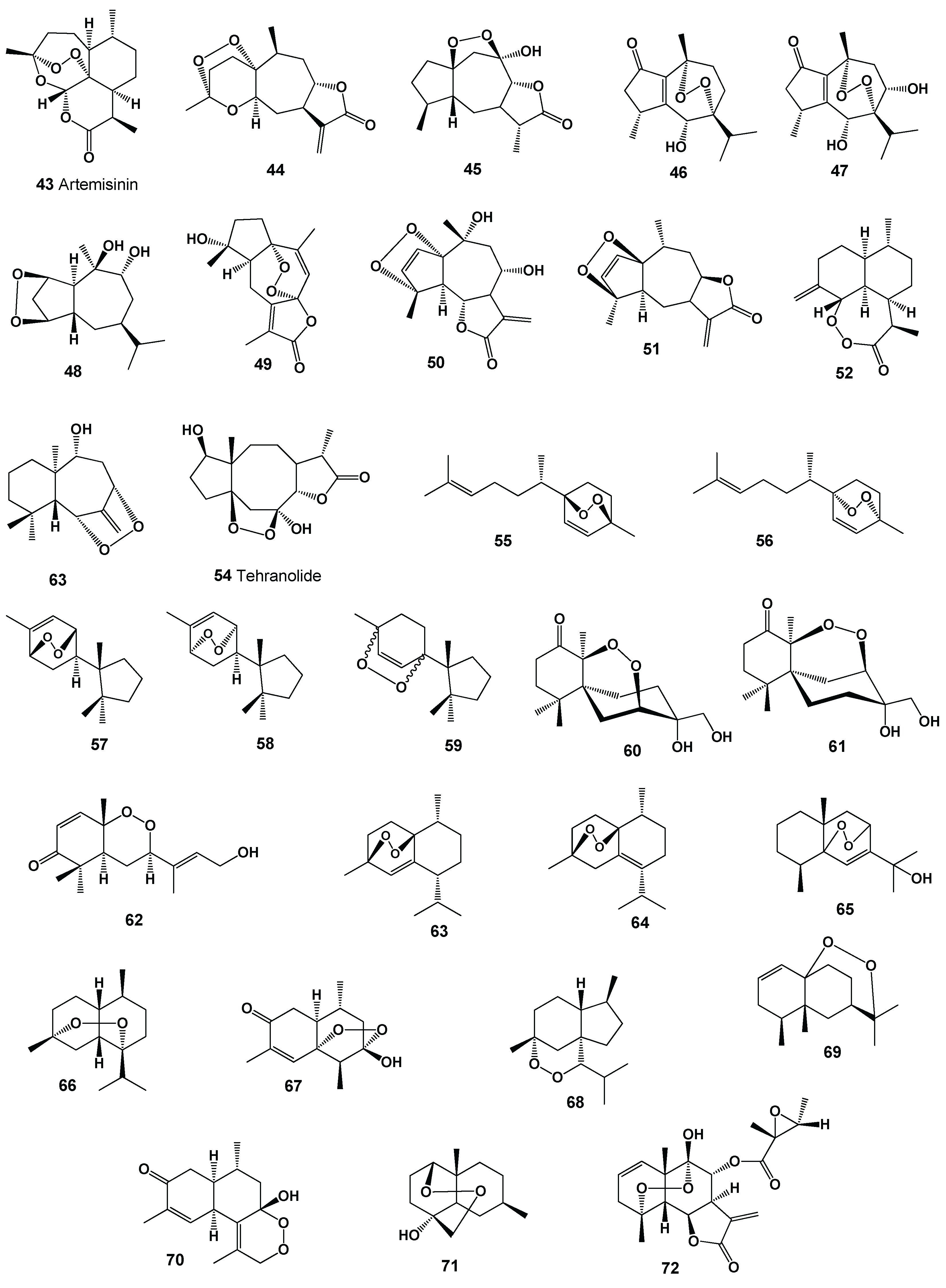
Figure 8.
3D Graph of artemisinin (43) isolated from the leaves of Artemisia annua. Artemisinin is best known as an antiprotozoal agent against Plasmodium and Leishmania protozoan parasites. In addition, artemisinin has demonstrated strong antineoplastic activity.
Figure 8.
3D Graph of artemisinin (43) isolated from the leaves of Artemisia annua. Artemisinin is best known as an antiprotozoal agent against Plasmodium and Leishmania protozoan parasites. In addition, artemisinin has demonstrated strong antineoplastic activity.
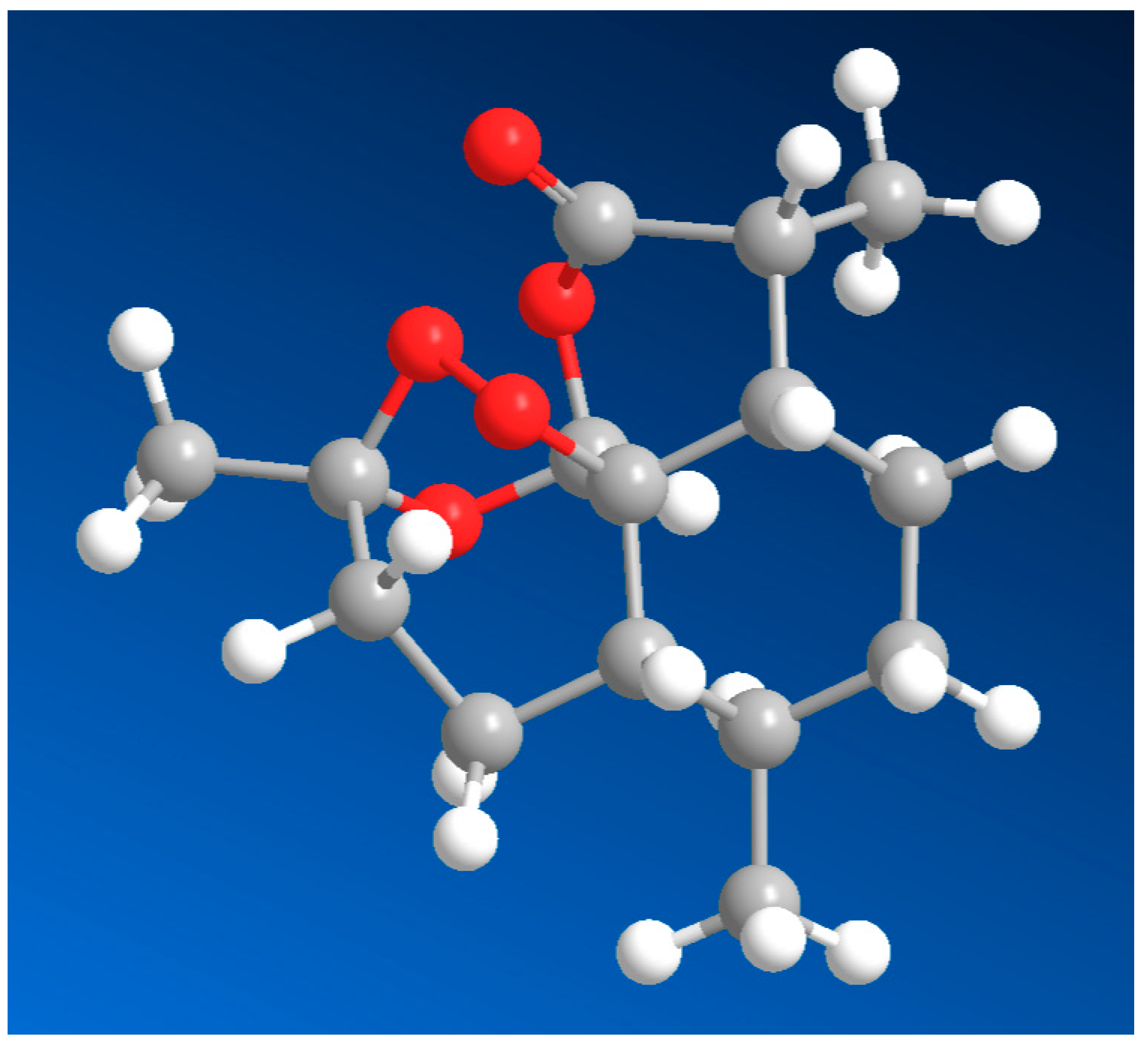
Figure 9.
Artemisia annua (annual wormwood, sweet wormwood, annual mugwort, or one-year sagebrush) is a widespread species native to temperate regions of Asia and now naturalized in many parts of the world, including North America. Despite its common occurrence along roadsides and in disturbed habitats, A. annua is the natural source of artemisinin, a sesquiterpene endoperoxide of exceptional biomedical importance. a, d) Leaves of A. annua; b, c) inflorescences of A. annua.
Figure 9.
Artemisia annua (annual wormwood, sweet wormwood, annual mugwort, or one-year sagebrush) is a widespread species native to temperate regions of Asia and now naturalized in many parts of the world, including North America. Despite its common occurrence along roadsides and in disturbed habitats, A. annua is the natural source of artemisinin, a sesquiterpene endoperoxide of exceptional biomedical importance. a, d) Leaves of A. annua; b, c) inflorescences of A. annua.
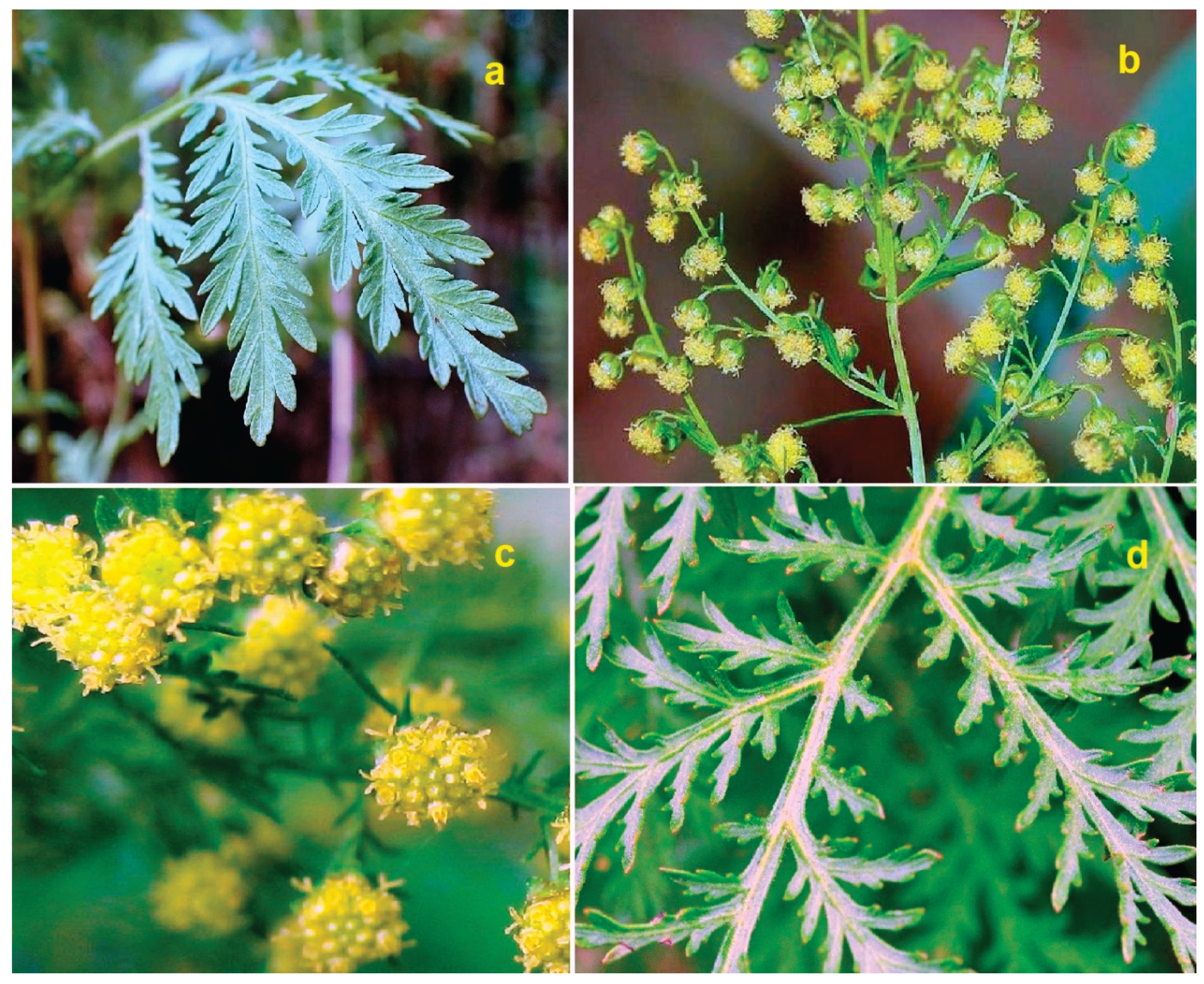

Table 1.
Biological activities of endoperoxides derived from plants.
| No | Discovered Activity, Pa* | Rank | Additional Activity, Pa* | Rank |
| 1 | Antineoplastic (0,692) | Weak |
Antiprotozoal (0,677) Antiprotozoal (Plasmodium) (0,655) |
Weak Weak |
| 2 | Antineoplastic (0,766) | Weak | Antiprotozoal (Plasmodium) (0,702) | Weak |
| 3 | Antineoplastic (0,782) | Weak | Antiprotozoal (Plasmodium) (0,698) | Weak |
| 4 | Antineoplastic (0,791) Lymphocytic leukemia (0,756) | Weak Weak |
Antiprotozoal (Plasmodium) (0,724) | Weak |
| 5 | Antineoplastic (0,621) Antimetastatic (0,575) | Weak Weak |
Antihelmintic (0,755) Antiprotozoal (Plasmodium) (0,735) |
Weak Weak |
| 6 | Antineoplastic (0,859) | Moderate | Antiprotozoal (Plasmodium) (0,583) | Weak |
| 7 | Antineoplastic (0,647) | Weak | Antiprotozoal (Plasmodium) (0,861) | Moderate |
| 8 | Antineoplastic (0,876) | Moderate | Antiprotozoal (Plasmodium) (0,779) | Weak |
| 9 | Antineoplastic (0,728) Antimetastatic (0,528) | Weak Weak |
Antiprotozoal (Plasmodium) (0,770) Antiparasitic (0,711) | Weak Weak |
| 10 | Antineoplastic (0,832) Antimetastatic (0,631) | Moderate Weak |
Antiprotozoal (Plasmodium) (0,762) Antifungal (0,693) | Weak Weak |
| 11 | Antineoplastic (0,873) Apoptosis agonist (0,850) |
Moderate Moderate |
Antiprotozoal (Plasmodium) (0,900) | Strong |
| 12 | Antineoplastic (0,876) | Moderate | Antiprotozoal (Plasmodium) (0,752) | Weak |
| 13 | Antineoplastic (0,857) | Moderate | Antiprotozoal (Plasmodium) (0,846) | Moderate |
| 14 | Antineoplastic (0,939) | Strong | Antiprotozoal (Plasmodium) (0,871) | Moderate |
| 15 | Antineoplastic (0,774) Antimetastatic (0,512) |
Weak Weak |
Antiprotozoal (Plasmodium) (0,926) Antiparasitic (0,786) | Strong Weak |
| 16 | Antineoplastic (0,805) | Weak | Antiprotozoal (Plasmodium) (0,905) | Strong |
| 17 | Antineoplastic (0,804) | Weak | Antiprotozoal (Plasmodium) (0,854) | Moderate |
| 18 | Antineoplastic (0,599) | Weak | Antiprotozoal (Plasmodium) (0,908) | Strong |
| 19 | Antineoplastic (0,848) | Moderate | Antiprotozoal (Plasmodium) (0,915) | Strong |
| 20 | Antineoplastic (0,685) | Weak | Antiprotozoal (Plasmodium) (0,829) | Moderate |
| 21 | Antineoplastic (0,726) | Weak | Antiprotozoal (Plasmodium) (0,772) | Weak |
| 22 | Anti-renal cancer (0,824) Antineoplastic (0,799) |
Moderate Weak |
Antiprotozoal (Plasmodium) (0,917) Antifungal (0,656) | Strong Weak |
| 23 | Antineoplastic (0,804) | Weak | Antiprotozoal (Plasmodium) (0,731) | Weak |
| 24 | Antineoplastic (0,796) | Weak | Antiprotozoal (Plasmodium) (0,731) | Weak |
| 25 | Antineoplastic (0,756) Anti-renal cancer (0,592) |
Weak Weak |
Antiprotozoal (Plasmodium) (0,835) Antiparasitic (0,783) | Moderate Weak |
*Only activities with Pa > 0.5 are shown. Quantitative activity is presented in numbers, for example, Antineoplastic (0.939).
Table 2.
Biological activities of endoperoxides derived from algae and plants.
| No | Discovered Activity, Pa* | Rank | Additional Activity, Pa* | Rank |
| 26 | Antineoplastic (0,798) Antimetastatic (0,567) |
Weak Weak |
Antiprotozoal (Plasmodium) (0,851) Antifungal (0,620) | Moderate Weak |
| 27 | Antineoplastic (0,917) Antimetastatic (0,625) | Strong Weak |
Antiprotozoal (Plasmodium) (0,944) Antiparasitic (0,756) | Strong Weak |
| 28 | Antineoplastic (0,980) | Strong | Antiprotozoal (Plasmodium) (0,798) | Weak |
| 29 | Antineoplastic (0,824) Chemopreventive (0,675) | Moderate Weak |
Antiprotozoal (Plasmodium) (0,888) | Moderate |
| 30 | Antineoplastic (0,798) | Weak | Antiprotozoal (Plasmodium) (0,734) | Weak |
| 31 | Antineoplastic (0,882) Antimetastatic (0,550) | Moderate Weak |
Antiprotozoal (Plasmodium) (0,769) | Weak |
| 32 | Antineoplastic (0,736) Chemopreventive (0,550) | Weak Weak |
Antiprotozoal (Plasmodium) (0,788) | Weak |
| 33 | Antineoplastic (0,818) Chemopreventive (0,687) |
Moderate Weak |
Antiinflammatory (0,924) Antiprotozoal (Plasmodium) (0,894) | Strong Moderate |
| 34 | Antineoplastic (0,800) Chemopreventive (0,549) |
Weak Weak |
Antiprotozoal (Plasmodium) (0,851) Antiinflammatory (0,661) | Moderate Weak |
| 35 | Antineoplastic (0,911) | Strong | Antiprotozoal (Plasmodium) (0,744) | Weak |
| 36 | Antineoplastic (0,890) | Moderate | Antiprotozoal (Plasmodium) (0,746) | Weak |
| 37 | Antineoplastic (0,904) Chemopreventive (0,653) | Strong Weak |
Antiprotozoal (Plasmodium) (0,832) | Moderate |
| 38 | Antineoplastic (0,871) | Moderate | Antiprotozoal (Plasmodium) (0,801) | Weak |
| 39 | Antineoplastic (0,887) | Moderate | Antiinflammatory (0,946) Antiprotozoal (Plasmodium) (0,868) | Strong Moderate |
| 40 | Antineoplastic (0,856) Antimetastatic (0,567) |
Weak Weak |
Antiinflammatory (0,934) Antiprotozoal (Plasmodium) (0,834) | Strong Moderate |
| 41 | Antineoplastic (0,681) | Weak | Antiprotozoal (Plasmodium) (0,908) | Strong |
| 42 | Antineoplastic (0,809) | Moderate | Antiprotozoal (Plasmodium) (0,918) | Strong |
*Only activities with Pa > 0.5 are shown.
Table 3.
Biological activities of endoperoxides derived from plants.
| No | Discovered Activity, Pa* | Rank | Additional Activity, Pa* | Rank |
| 43 | Antineoplastic (0,928) Antimetastatic (0,892) Antimelanoma (0,901) Apoptosis agonist (0,896) |
Strong Moderate Strong Moderate |
Antiprotozoal (Plasmodium) (0,998) Antibacterial (0,910) Antiprotozoal (Trypanosoma) (0,914) Antiprotozoal (Leishmania) (0.954) |
Strong Strong Strong Strong |
| 44 | Antineoplastic (0,911) Apoptosis agonist (0,883) |
Strong Moderate |
Antiprotozoal (Plasmodium) (0,967) Antiprotozoal (Leishmania) (0,731) |
Strong Weak |
| 45 | Antineoplastic (0,914) | Strong | Antiprotozoal (Plasmodium) (0,925) | Strong |
| 46 | Antineoplastic (0,787) | Weak | Antiprotozoal (Plasmodium) (0,739) | Weak |
| 47 | Antineoplastic (0,855) Prostate cancer treatment (0,641) |
Moderate Weak |
Antiprotozoal (Plasmodium) (0,745) |
Weak |
| 48 | Antineoplastic (0,797) | Weak | Antiprotozoal (Plasmodium) (0,917) | Strong |
| 49 | Antineoplastic (0,769) | Weak | Antiprotozoal (Plasmodium) (0,889) | Moderate |
| 50 | Antineoplastic (0,912) Apoptosis agonist (0,890) Cytostatic (0,870) |
Strong Moderate Moderate |
Antiprotozoal (Plasmodium) (0,936) Antiparasitic (0,774) Antifungal (0,687) |
Strong Weak Weak |
| 51 | Antineoplastic (0,898) Apoptosis agonist (0,741) |
Moderate Weak |
Antiprotozoal (Plasmodium) (0,939) Antiparasitic (0,716) |
Strong Weak |
| 52 | Antineoplastic (0,885) Prostate disorders treatment (0,588) |
Moderate Weak |
Antiprotozoal (Plasmodium) (0,933) Antiinflammatory (0,713) |
Strong Weak |
| 53 | Antineoplastic (0,946) Apoptosis agonist (0,782) |
Strong Weak |
Antiinflammatory (0,949) Antiprotozoal (Plasmodium) (0,752) |
Strong Weak |
| 54 | Antineoplastic (0,917) | Strong | Antiprotozoal (Plasmodium) (0,922) | Strong |
| 55 | Antimetastatic (0,628) | Weak | Antiprotozoal (Plasmodium) (0,842) | Moderate |
| 56 | Antimetastatic (0,628) | Weak | Antiprotozoal (Plasmodium) (0,842) | Moderate |
| 57 | Antineoplastic (0,932) Apoptosis agonist (0,617) |
Strong Weak |
Antiinflammatory (0,958) Antiprotozoal (Plasmodium) (0,936) |
Strong Strong |
| 58 | Antineoplastic (0,932) Apoptosis agonist (0,617) |
Strong Weak |
Antiinflammatory (0,958) Antiprotozoal (Plasmodium) (0,936) |
Strong Strong |
| 59 | Apoptosis agonist (0,910) Antineoplastic (0,768) | Strong Weak |
Antiprotozoal (Plasmodium) (0,954) | Strong |
| 60 | Antineoplastic (0,681) | Weak | Antiprotozoal (Plasmodium) (0,928) | Strong |
| 61 | Antineoplastic (0,681) | Weak | Antiprotozoal (Plasmodium) (0,928) | Strong |
| 62 | Antineoplastic (0,730) | Weak | Antiprotozoal (Plasmodium) (0,951) | Strong |
| 63 | Antineoplastic (0,714) | Weak | Antiprotozoal (Plasmodium) (0,908) | Strong |
| 64 | Antineoplastic (0,866) |
Moderate | Antiinflammatory (0,934) Antiprotozoal (Plasmodium) (0,879) |
Strong Moderate |
| 65 | Antineoplastic (0,854) | Moderate | Antiinflammatory (0,945) Antiprotozoal (Plasmodium) (0,916) |
Strong Strong |
| 66 | Antineoplastic (0,792) | Weak | Antiprotozoal (Plasmodium) (0,965) | Strong |
| 67 | Apoptosis agonist (0,565) | Weak | Antiprotozoal (Plasmodium) (0,954) | Strong |
| 68 | Antineoplastic (0,670) | Weak | Antiprotozoal (Plasmodium) (0,956) | Strong |
| 69 | Apoptosis agonist (0,862) | Moderate | Antiprotozoal (Plasmodium) (0,964) | Strong |
| 70 | Antineoplastic (sarcoma) (0,529) | Weak | Antiprotozoal (Plasmodium) (0,945) | Strong |
| 71 | Antineoplastic (0,599) | Weak | Antiprotozoal (Plasmodium) (0,881) | Moderate |
| 72 | Antineoplastic (0,862) | Moderate | Antiprotozoal (Plasmodium) (0,884) | Moderate |
*Only activities with Pa > 0.5 are shown.
Disclaimer/Publisher’s Note: The statements, opinions and data contained in all publications are solely those of the individual author(s) and contributor(s) and not of MDPI and/or the editor(s). MDPI and/or the editor(s) disclaim responsibility for any injury to people or property resulting from any ideas, methods, instructions or products referred to in the content. |
© 2025 by the authors. Licensee MDPI, Basel, Switzerland. This article is an open access article distributed under the terms and conditions of the Creative Commons Attribution (CC BY) license (http://creativecommons.org/licenses/by/4.0/).
Copyright: This open access article is published under a Creative Commons CC BY 4.0 license, which permit the free download, distribution, and reuse, provided that the author and preprint are cited in any reuse.


