

Submitted:
15 December 2025
Posted:
17 December 2025
You are already at the latest version
Abstract
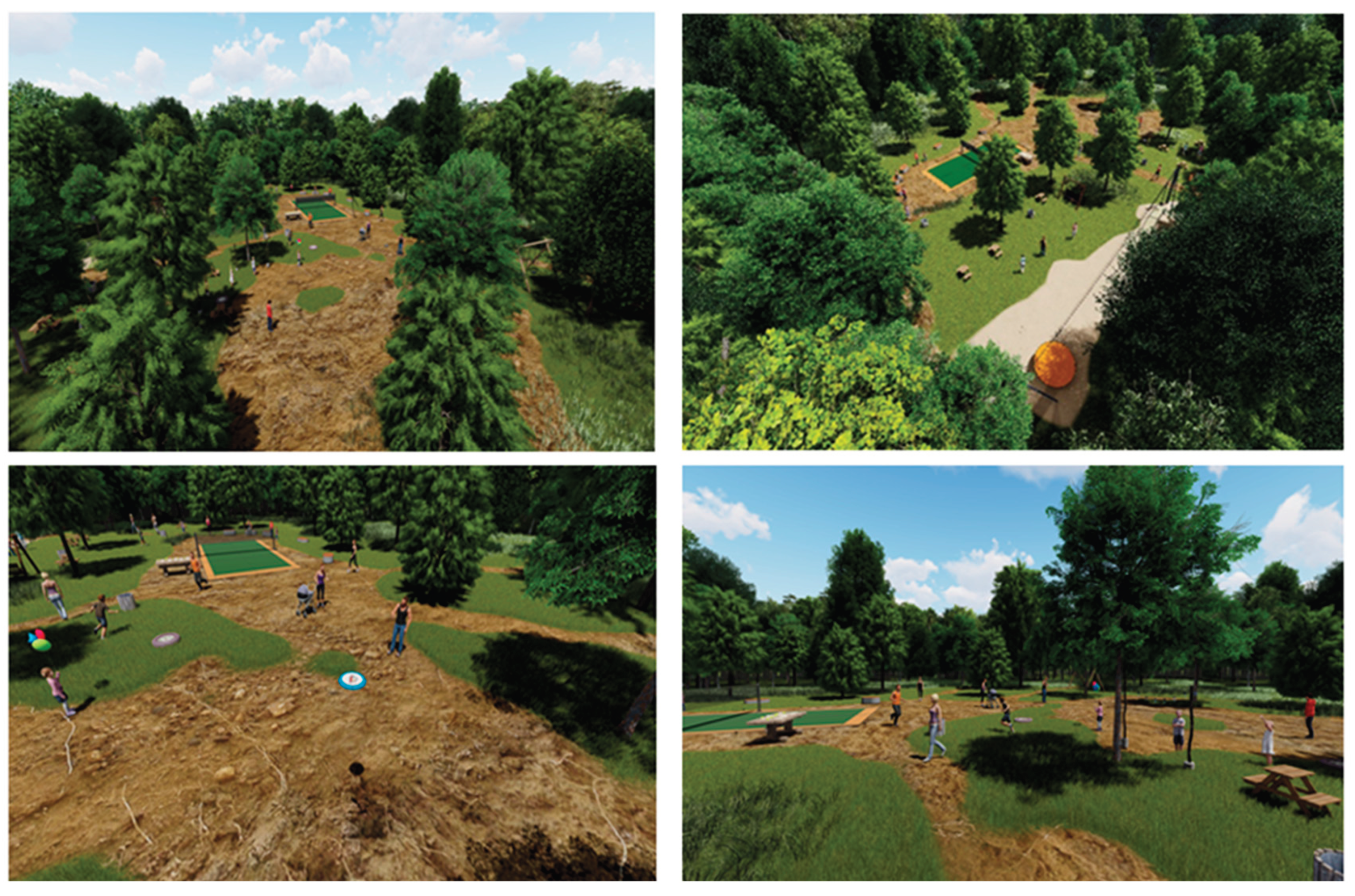
Urban forests serve as representations of nature within city landscapes. Green Forest, spanning 5,198,412 square meters, has been incorporated into the Municipality of Timișoara’s public domain and designated as a forest park. This fact increased green space per capita and enriched biodiversity within Timișoara’s landscape architecture. This study explores the diversity of Green Forest trees and highlights their contribution to urban landscapes. Statistical methods, including comparative and linear relationships analyses, were employed to assess significant variations in the dendrometric parameters of the analyzed tree species: mean tree height, mean diameter at breast height (DBH), tree age, and stand density. Principal Component Analysis (PCA) and cluster analysis were applied to uncover underlying patterns in the data. Using ArchiCAD and Lumion, high-quality 3D visual representations were developed for an ecological education area, an active recreation region, and a passive recreation area within Green Forest. Due to their morphological characteristics and phenotypic traits, the predominant tree species include Quercus robur, Quercus cerris, Quercus rubra, Fraxinus excelsior, Acer platanoides, Acer pseudoplatanus, Ulmus campestris and Robinia pseudoacacia, contribute to Timișoara’s urban aesthetic. Moreover, the results of the dendrometric analysis provide a foundation for further research in urban ecology. A key practical application of this study is landscape design renderings, which provide detailed and realistic visualizations to effectively communicate the design and functionality of Green Forest’s spaces. If implemented, these developments will encourage public engagement with nature, promoting mental and physical well-being within the community.
Keywords:
1. Introduction
2. Results
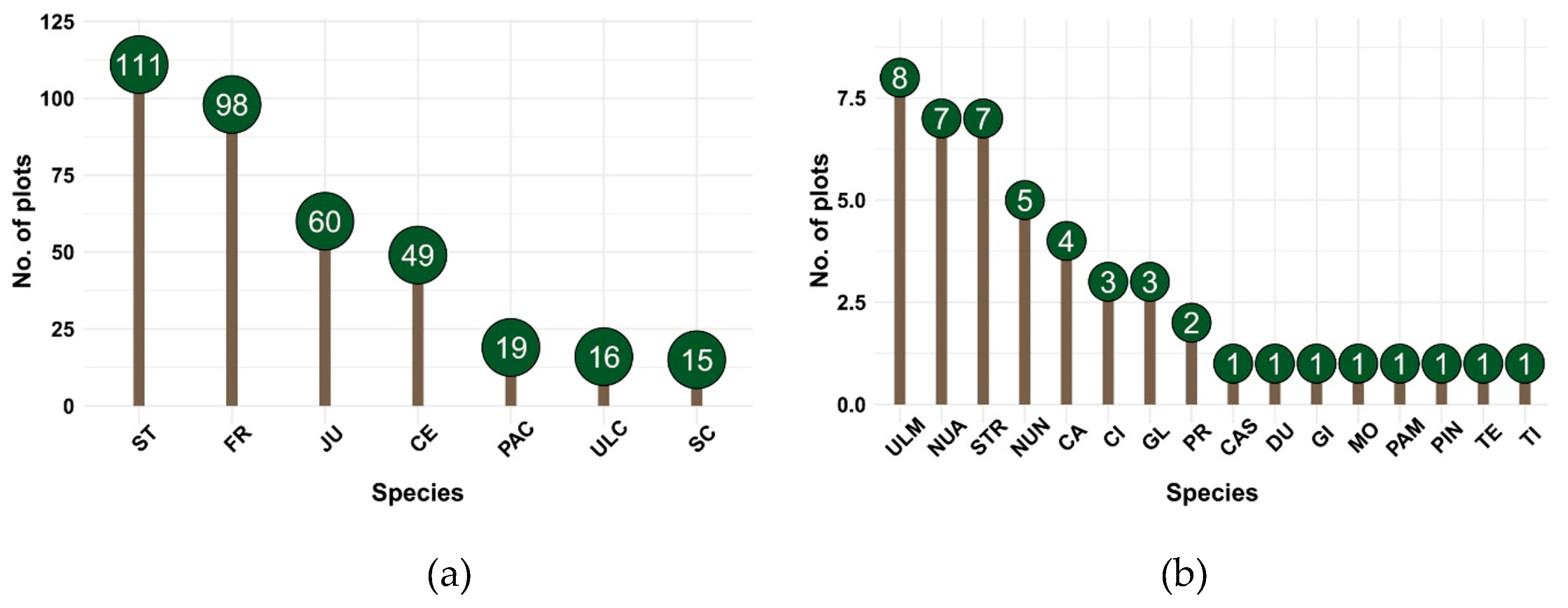
2.1. Tree Species Identified in Different Plots of Green Forest
2.2. Descriptive Statistics of Each Tree Species Identified—Green Forest Tree Diversity
2.2.1. Quercus Genus Tree Population Descriptive Statistics
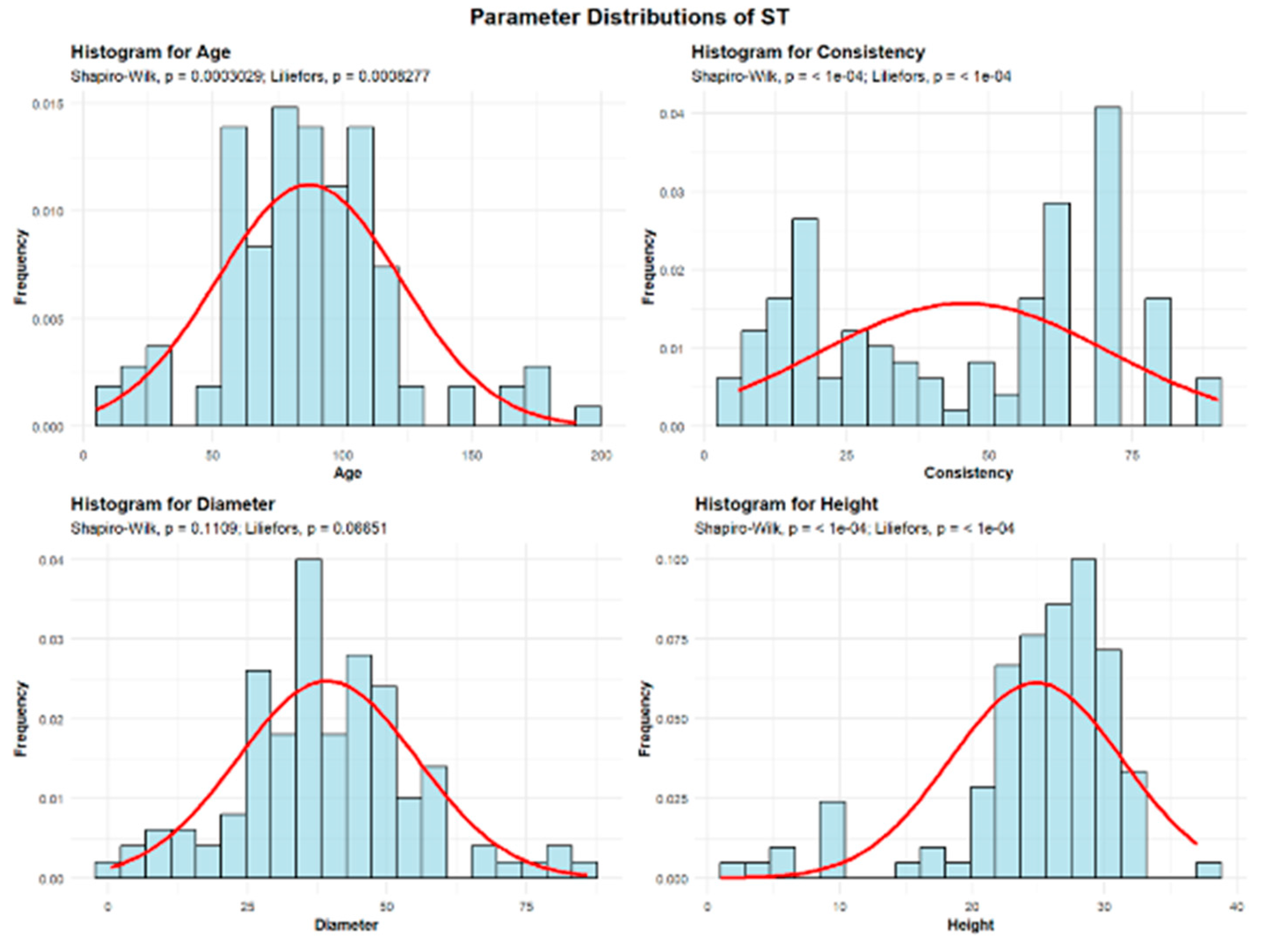
2.2.1.1. Pedunculate Oak (Quercus robur L.)—ST
2.2.1.2. Red Oak (Quercus rubra)—STR
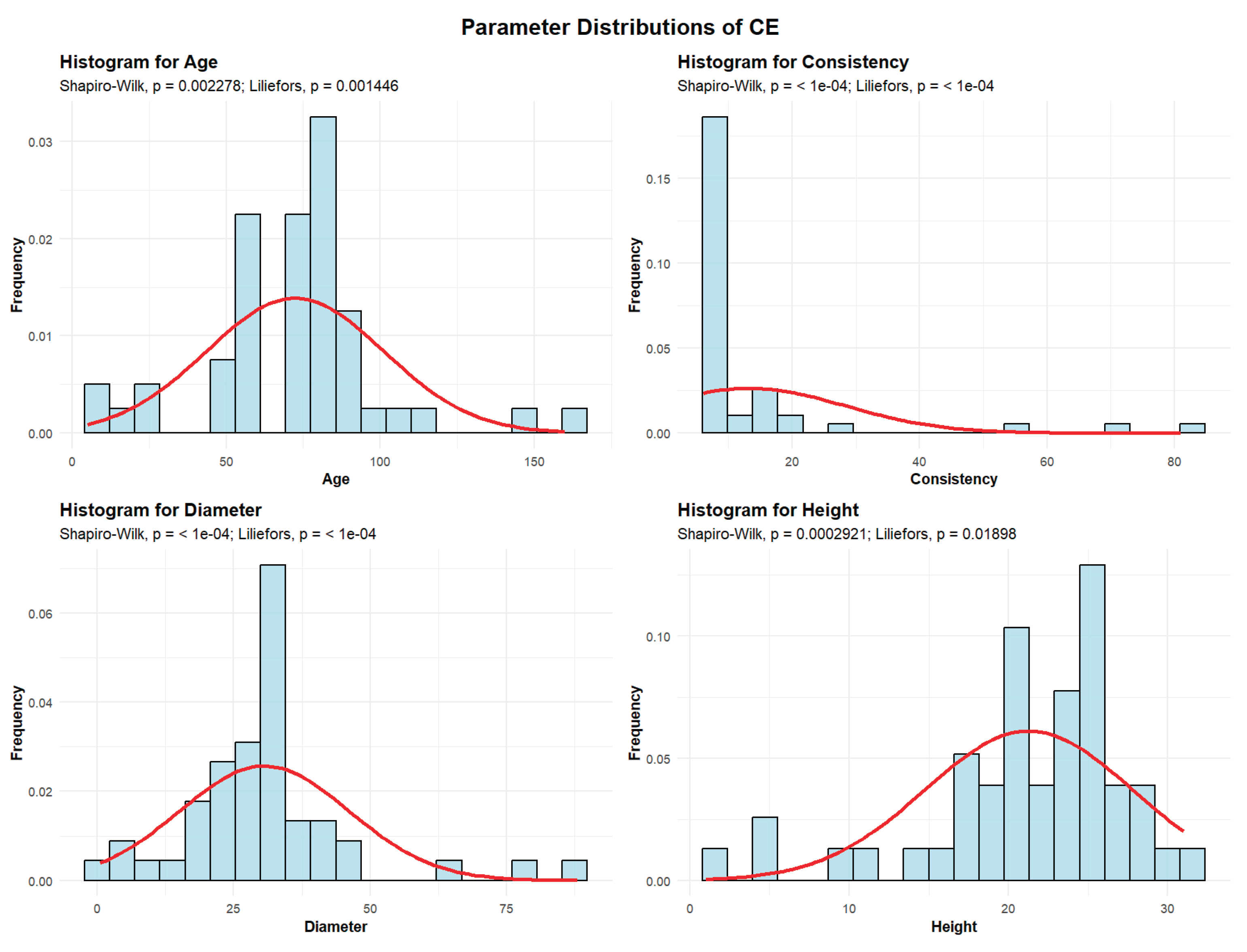
2.2.1.3. Turkey Oak (Quercus cerris)—CE
2.2.1.4. Hungarian Oak (Quercus frainetto)—GI
2.2.2. Fraxinus Genus Tree Population Descriptive Statistics
2.2.3. Acer Genus Tree Population Descriptive Statistics
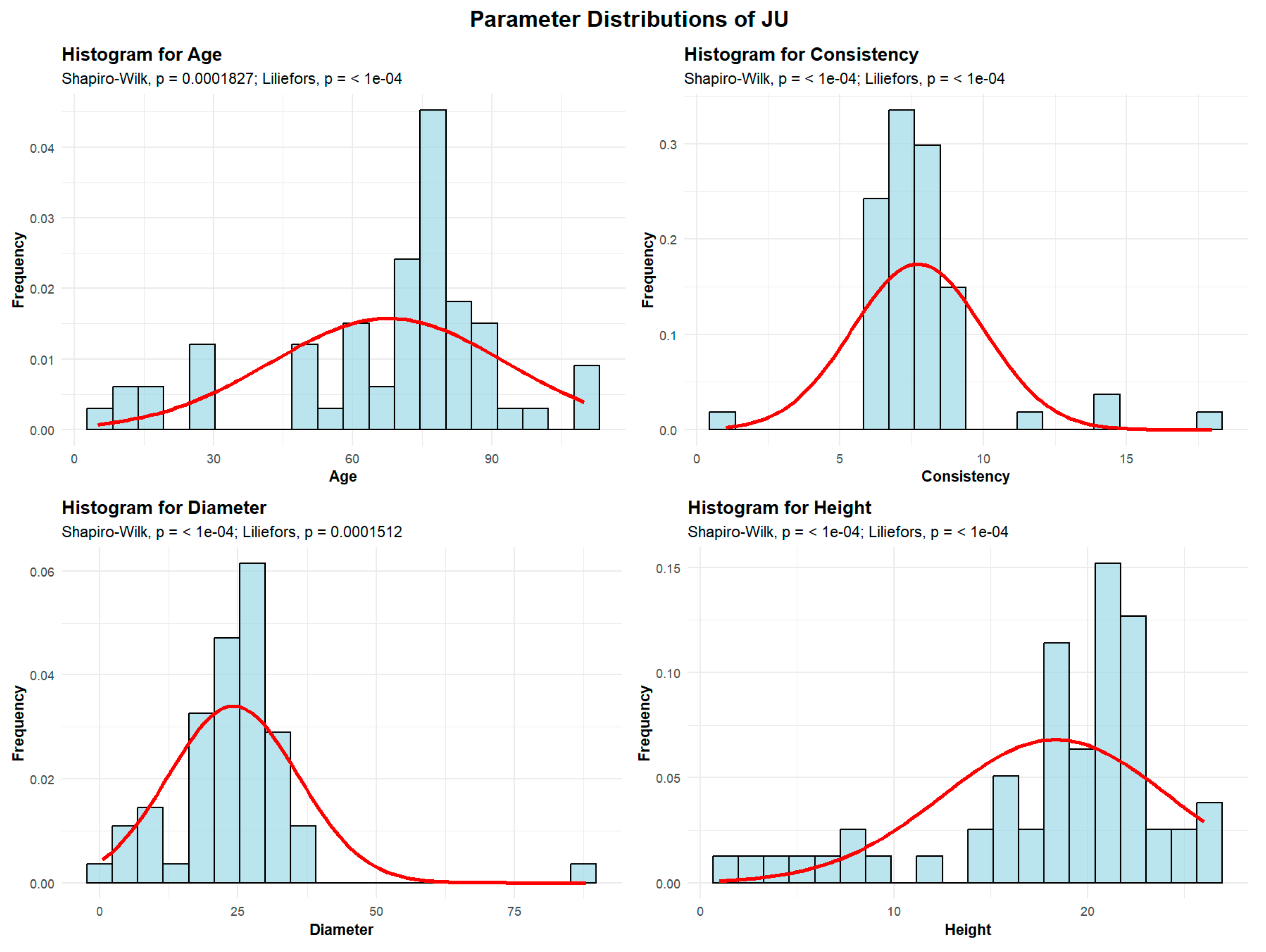
2.2.3.1. Field Maple (Acer campestre)—JU
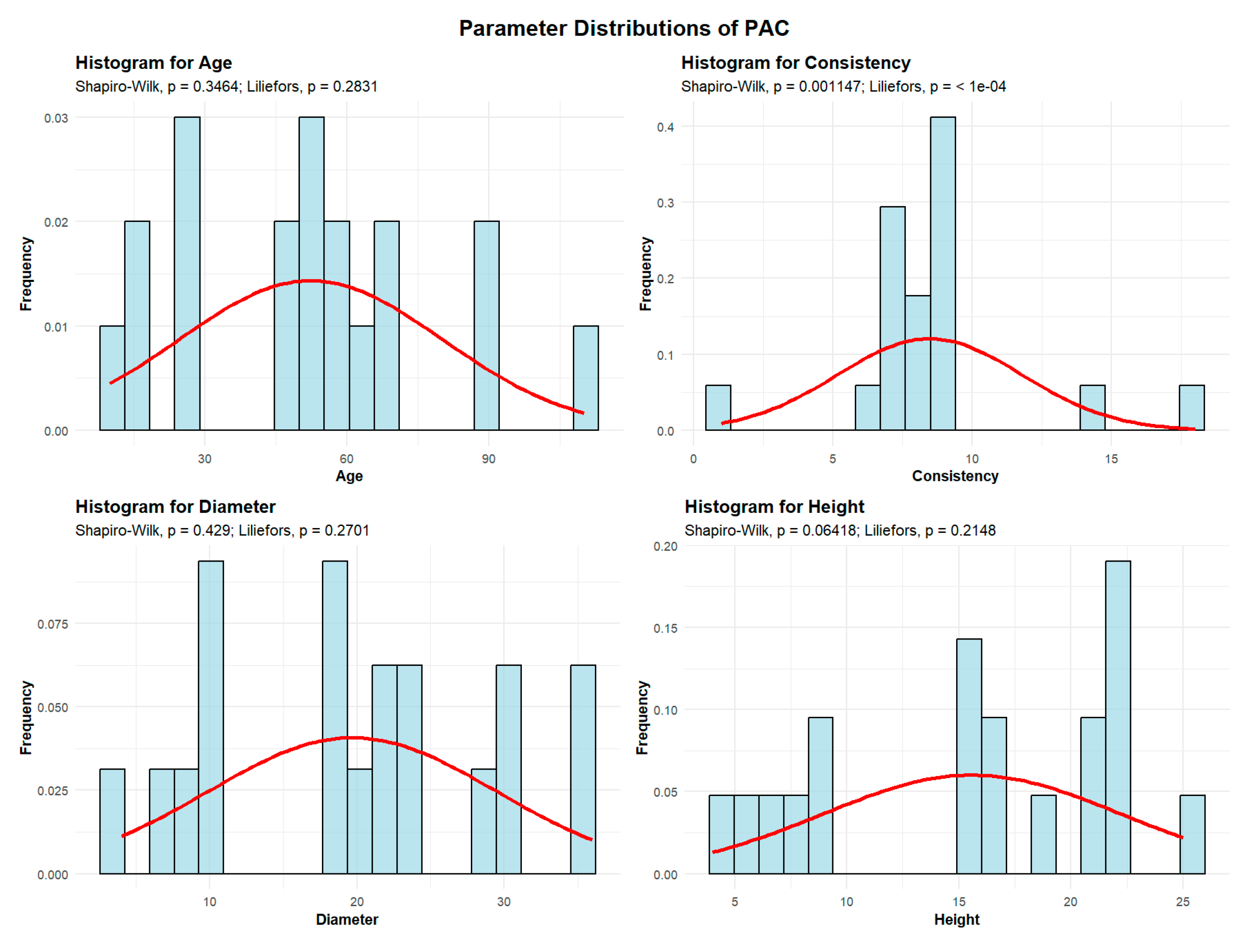
2.2.3.2. Norway Maple (Acer platanoides)—PAC
2.2.3.3. Sycamore Maple (Acer pseudoplatanus)—PAM
2.2.4. Ulmus Genus Tree Population Descriptive Statistics
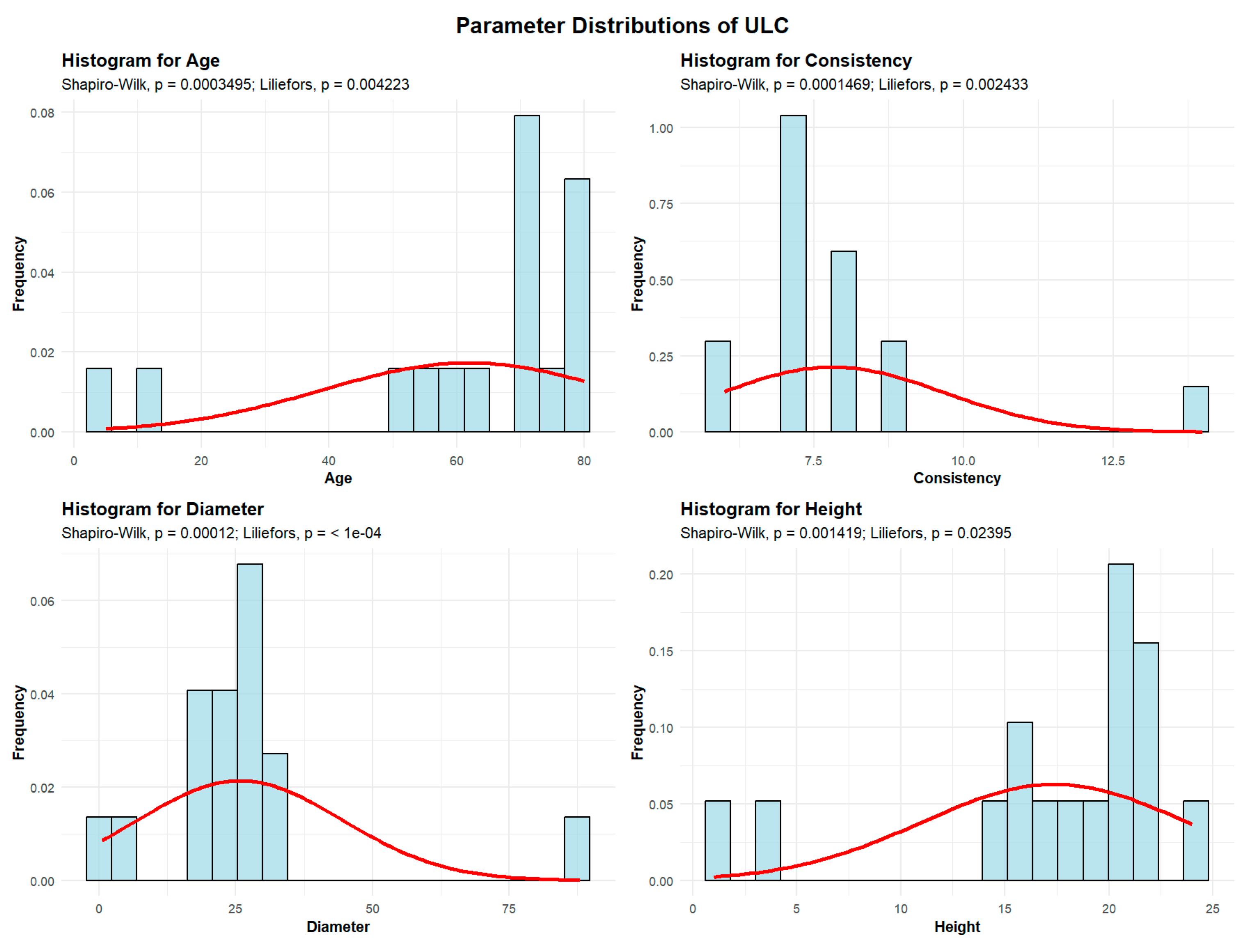
2.2.4.1. European Field Elm (Ulmus campestris)—ULC
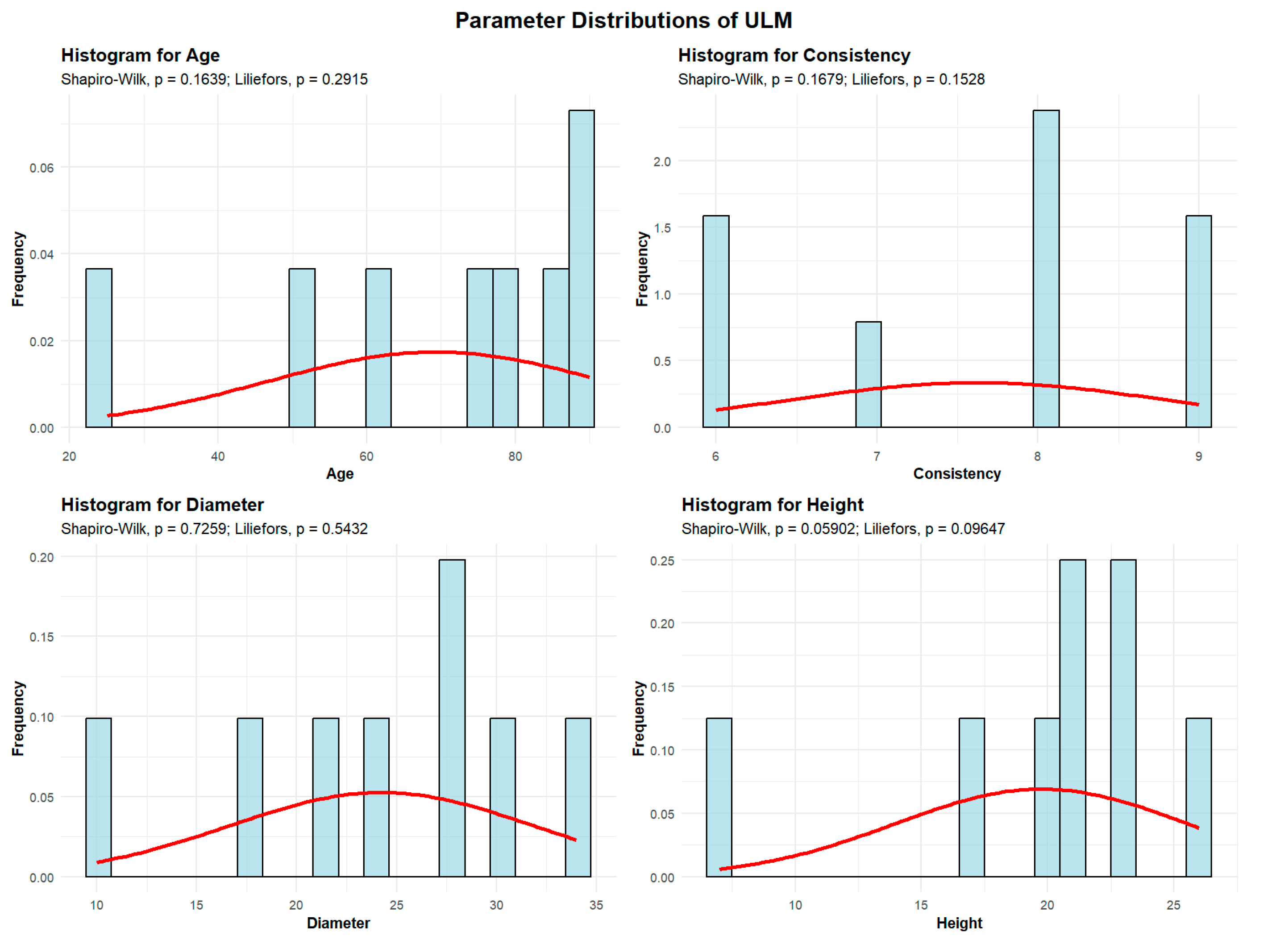
2.2.4.2. Wych Elm (Ulmus glabra)—ULM
2.2.5. Robinia Genus Tree Population Descriptive Statistics
2.2.6. Juglans Genus Tree Population Descriptive Statistics
2.2.6.1. White Walnut (Juglans cinerea)—NUA
2.2.6.2. Black Walnut (Juglans nigra)—NUN
2.2.7. Prunus Genus Tree Population Descriptive Statistics
2.2.8. Carpinus Genus Tree Population Descriptive Statistics
2.2.9. Gleditsia Genus Tree Population Descriptive Statistics
2.2.10. Pyrus Genus Tree Population Descriptive Statistics
2.2.11. Tilia Genus Tree Population Descriptive Statistics
2.2.12. Castanea Genus Tree Population Descriptive Statistics
2.2.13. Picea Genus Tree Population Descriptive Statistics
2.2.14. Taxus Genus Tree Population Descriptive Statistics
2.2.15. Pinus Genus Tree Population Descriptive Statistics
2.2.15.1. Black Pine (Pinus nigra)
2.2.15.2. Scots Pine (Pinus sylvestris)
2.2.16. Pseudotsuga Genus Tree Population Descriptive Statistics
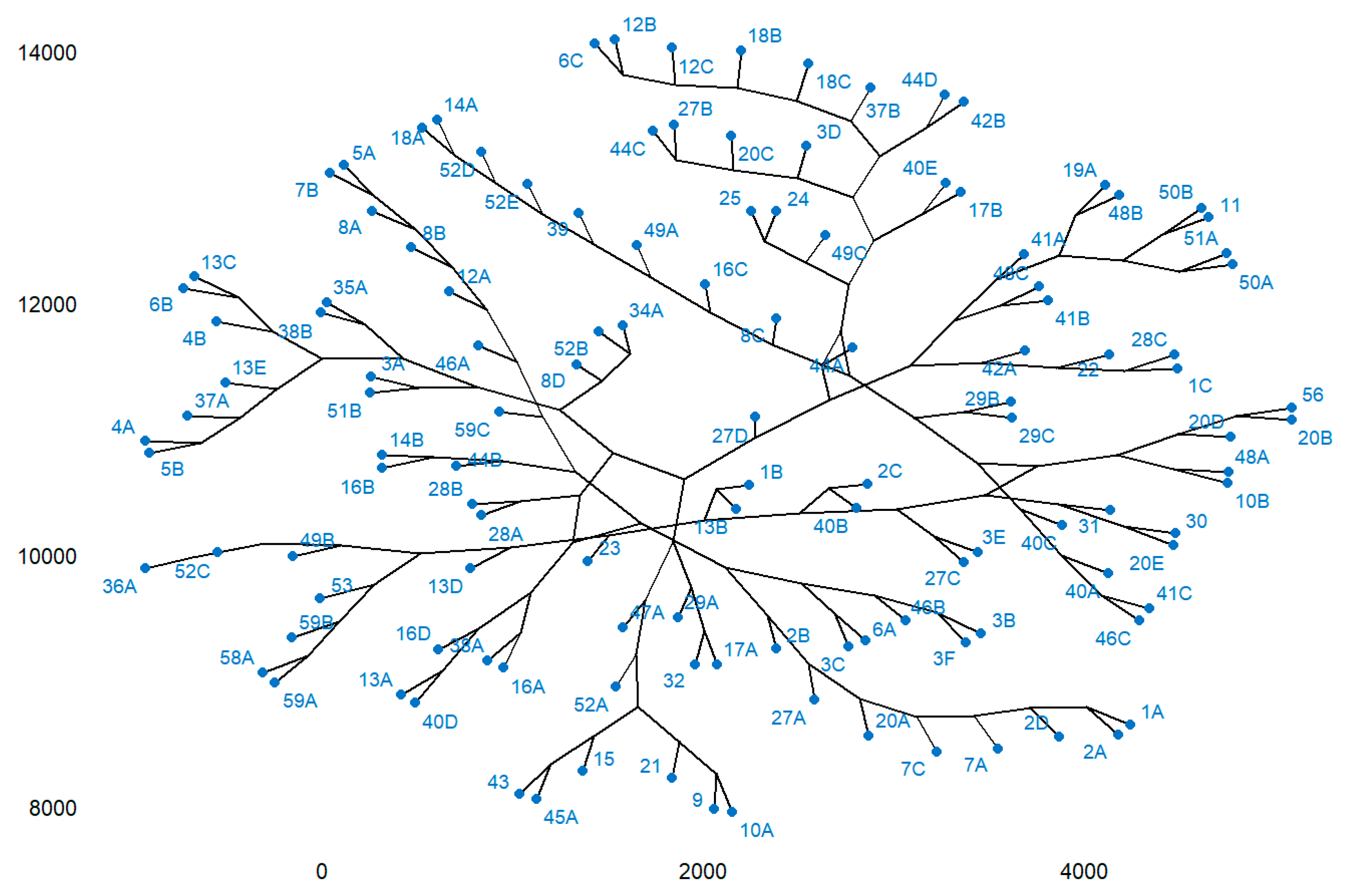
2.3. Principal Component Analysis and Cluster Analysis
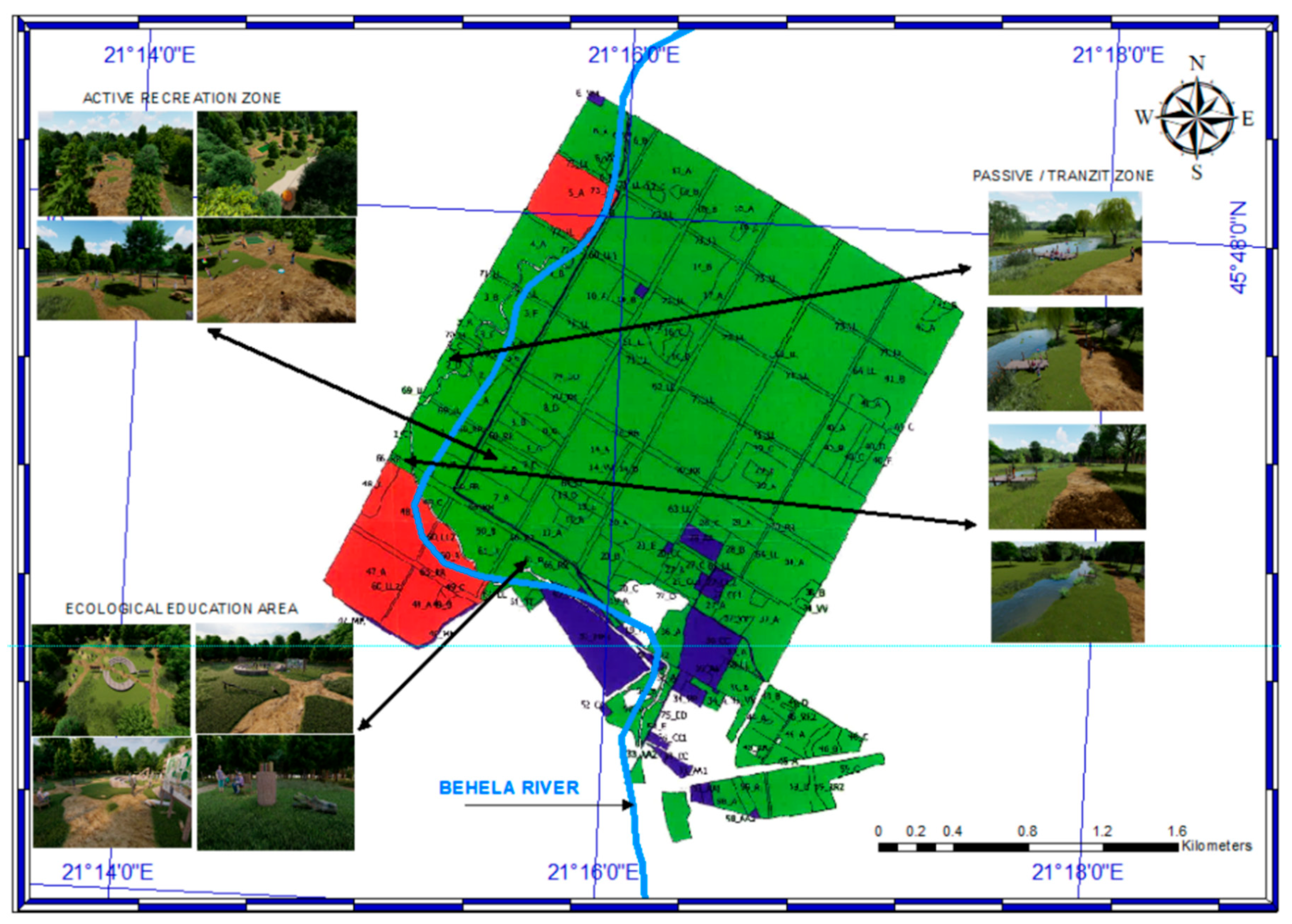
2.4. Landscape Architecture Design Proposals
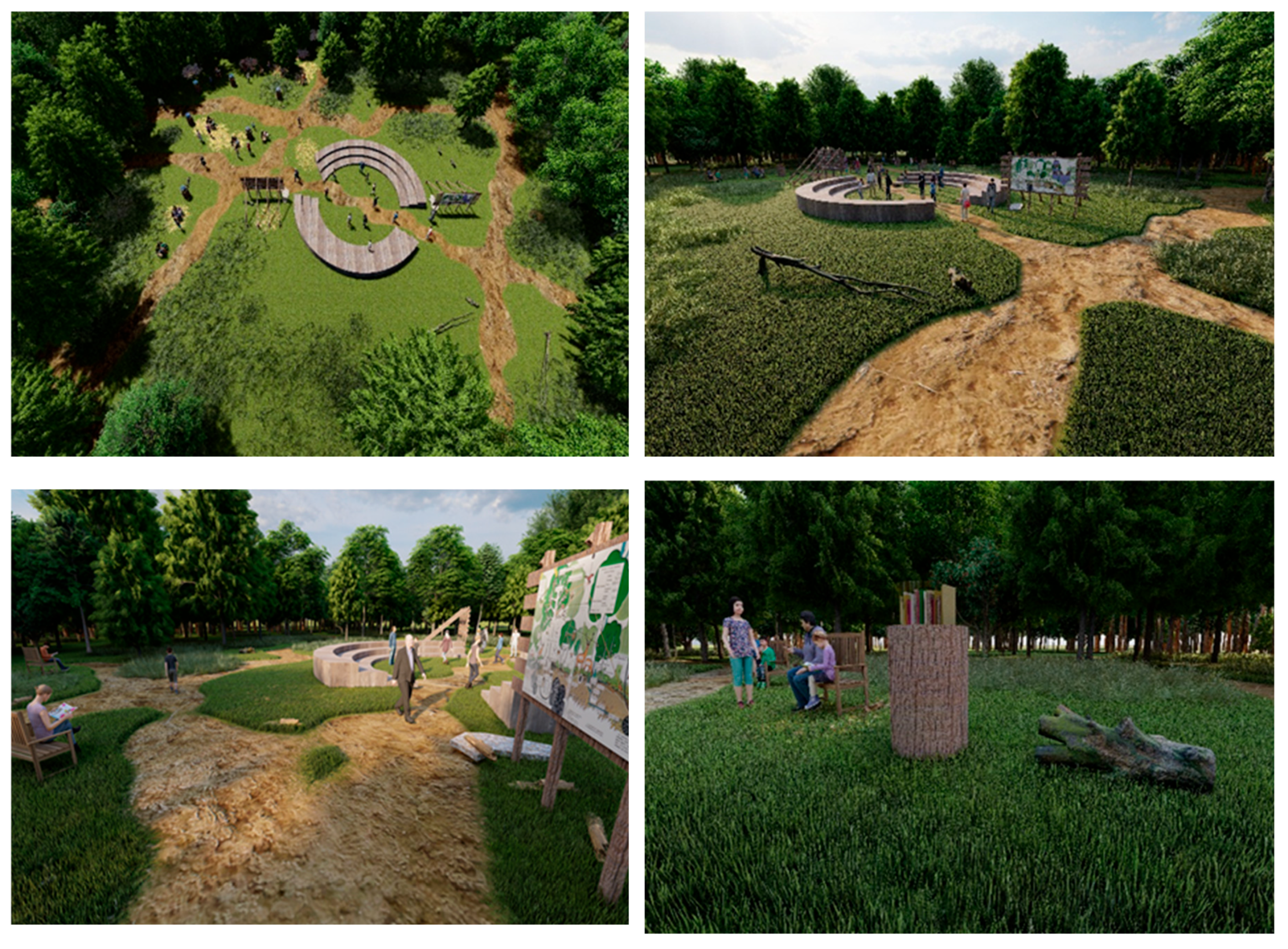
2.4.1. The Ecological Education Area
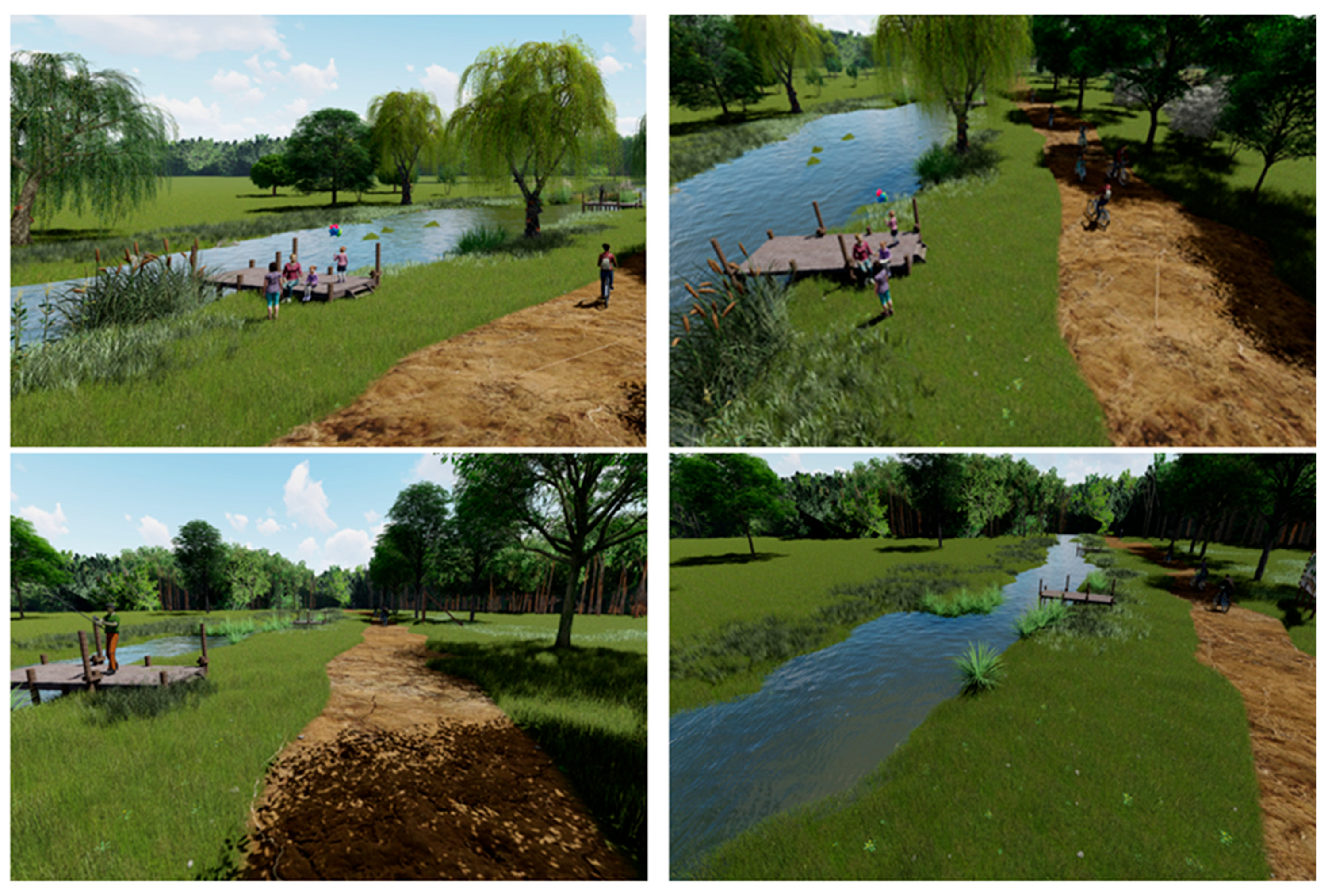
2.4.2. The Passive/Transit Zone
2.4.3. The Active Recreation Zone
3. Discussion
4. Materials and Methods
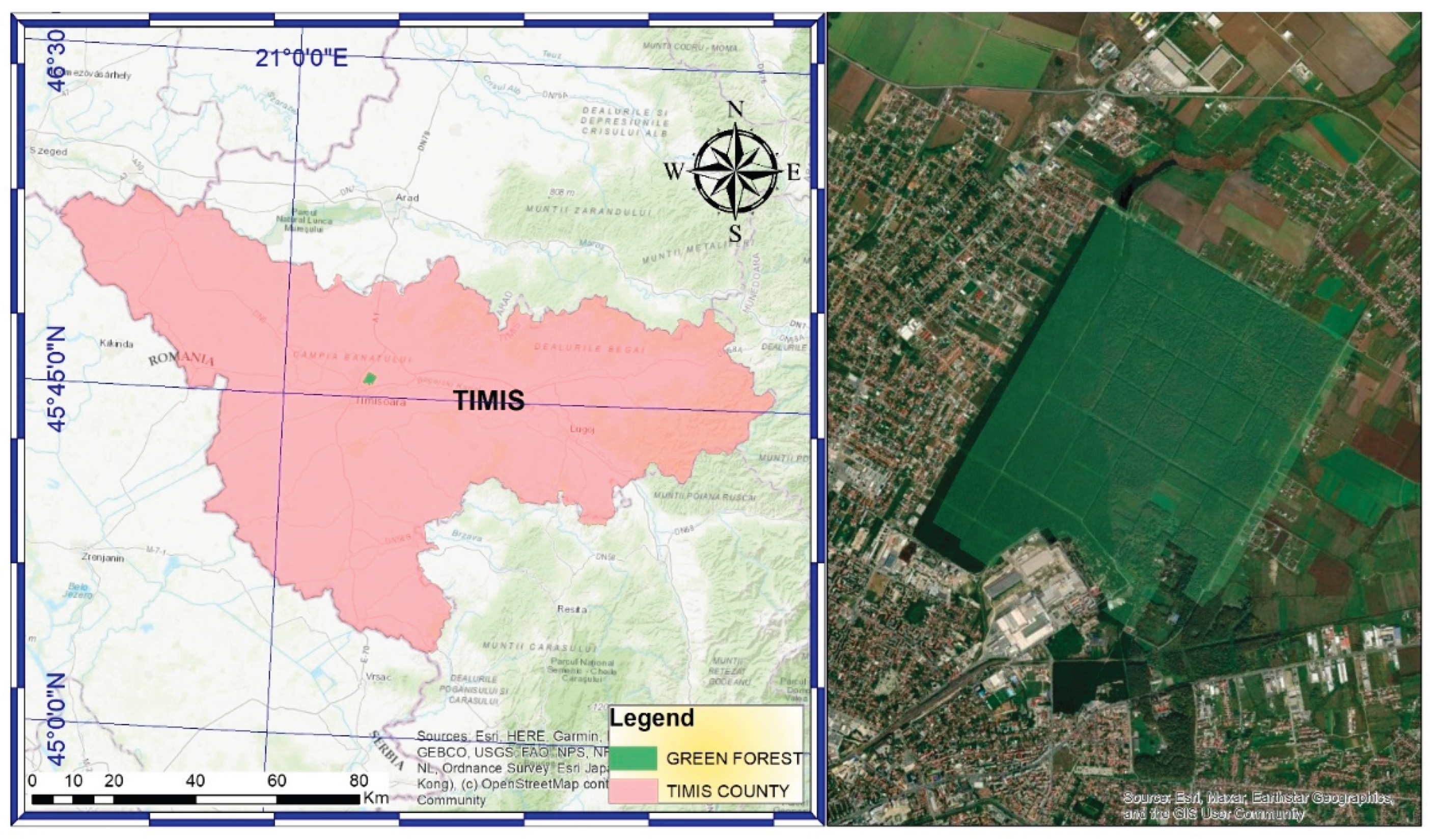
4.1. Site Description and Data Collection
4.2. Geographical Information System (G.I.S.) and Global Navigation Satellite System (GNSS) Technologies
4.3. Methodology for Data Collection for Forest Management Planning
4.4. Statistical Analysis
4.5. Landscape Architecture Design Proposals
5. Conclusions
Author Contributions
Funding
Data Availability Statement
Acknowledgments
Conflicts of Interest
References
- Linser, S.; Lier, M.; Bastrup-Birk, A. Key Information for Forest Policy Decision-Making-Does Current Reporting on Forests and Forestry Reflect Forest Discourses? 2023.
- FAO (2023). Co-Chairs Summary. Global Workshop on Reporting on Progress Towards Global Forest Goals and Targets of the UN Strategic Plan on Forests 2030. Rome (Italy) 22-24 March 2023. FAO, Rome, Italy, Pp. 11. .
- Global Deforestation Slows, but Forests Remain under Pressure, FAO Report Shows. Available online: https://www.fao.org/newsroom/detail/global-deforestation-slows--but-forests-remain-under-pressure--fao-report-shows/en (accessed on 3 December 2025).
- Sawitri, R.; Heriyanto, N.M.; Dharmawan, I.W.S.; Kwatrina, R.T.; Gunawan, H.; Garsetiasih, R.; Takandjandji, M.; Rianti, A.; Sihombing, V.S.; Mindawati, N. Ecological Dynamics of Forest Stands with Castanopsis Argentea (Blume) A. DC. in a Mountain Ecosystem: Vegetation Structure, Diversity, and Carbon Stock Under Tourism Pressure. Land 2025, 14, 1187. [Google Scholar] [CrossRef]
- Dharmawan, I.W.S.; Heriyanto, N.M.; Garsetiasih, R.; Kwatrina, R.T.; Sawitri, R.; Denny; Setyawati, T.; Pratiwi; Narendra, B.H.; Siregar, C.A. The Dynamics of Vegetation Structure, Composition and Carbon Stock in Peatland Ecosystem of Old Secondary Forest in Riau and South Sumatra Provinces. Land 2024, 13, 663. [Google Scholar] [CrossRef]
- Giles, A.L.; Schietti, J.; Rosenfield, M.F.; Mesquita, R.C.; Vieira, D.L.M.; Vieira, I.C.; Poorter, L.; Brancalion, P.H.; Peña-Claros, M.; Siqueira, J. Simple Ecological Indicators Benchmark Regeneration Success of Amazonian Forests. Commun. Earth Environ. 2024, 5, 780. [Google Scholar] [CrossRef]
- Arese Lucini, F.; Morone, F.; Tomassone, M.S.; Makse, H.A. Diversity Increases the Stability of Ecosystems. PloS One 2020, 15, e0228692. [Google Scholar] [CrossRef]
- Liu, F.; Tan, C.; Yang, Z.; Li, J.; Xiao, H.; Tong, Y. Regeneration and Growth of Tree Seedlings and Saplings in Created Gaps of Different Sizes in a Subtropical Secondary Forest in Southern China. For. Ecol. Manag. 2022, 511, 120143. [Google Scholar] [CrossRef]
- Wang, Y.; Chen, S.; He, W.; Ren, J.; Wen, X.; Wang, Y.; Li, X.; Chen, G.; Feng, M.; Fan, C. Shrub Diversity and Niche Characteristics in the Initial Stage of Reconstruction of Low-Efficiency Cupressus Funebris Stands. Forests 2021, 12, 1492. [Google Scholar] [CrossRef]
- Pretzsch, H.; Poschenrieder, W.; Uhl, E.; Brazaitis, G.; Makrickiene, E.; Calama, R. Silvicultural Prescriptions for Mixed-Species Forest Stands. A European Review and Perspective. Eur. J. For. Res. 2021, 140, 1267–1294. [Google Scholar] [CrossRef]
- Angelstam, P.; Manton, M. Effects of Forestry Intensification and Conservation on Green Infrastructures: A Spatio-Temporal Evaluation in Sweden. Land 2021, 10, 531. [Google Scholar] [CrossRef]
- Imbrenda, V.; Coluzzi, R.; Mariani, F.; Nosova, B.; Cudlinova, E.; Salvia, R.; Quaranta, G.; Salvati, L.; Lanfredi, M. Working in (Slow) Progress: Socio-Environmental and Economic Dynamics in the Forestry Sector and the Contribution to Sustainable Development in Europe. Sustainability 2023, 15, 10271. [Google Scholar] [CrossRef]
- Wang, D.; Xu, P.-Y.; An, B.-W.; Guo, Q.-P. Urban Green Infrastructure: Bridging Biodiversity Conservation and Sustainable Urban Development through Adaptive Management Approach. Front. Ecol. Evol. 2024, 12, 1440477. [Google Scholar] [CrossRef]
- Stevenson, P.C.; Bidartondo, M.I.; Blackhall-Miles, R.; Cavagnaro, T.R.; Cooper, A.; Geslin, B.; Koch, H.; Lee, M.A.; Moat, J.; O’Hanlon, R.; et al. The State of the World’s Urban Ecosystems: What Can We Learn from Trees, Fungi, and Bees? PLANTS PEOPLE PLANET 2020, 2, 482–498. [Google Scholar] [CrossRef]
- Wu, Q.; Zaw, Z.; Yang, J.; Yang, R.; Li, Z.; Hauer, R.J.; Li, H.; Fan, Z.; Lu, H.; Sterck, F. Urbanization Associated with Greater Tree Growth Declines in Urban than in Rural Forests. Urban For. Urban Green. 2025, 104, 128599. [Google Scholar] [CrossRef]
- Nyssen, B.; Ouden, J.D.; Bindewald, A.; Brancalion, P.; Kremer, K.; Lapin, K.; Raats, L.; Schatzdorfer, E.; Stanturf, J.; Verheyen, K.; et al. Established Invasive Tree Species Offer Opportunities for Forest Resilience to Climate Change. Curr. For. Rep. 2024, 10, 456–486. [Google Scholar] [CrossRef]
- Stamin, F.D.; Cosmulescu, S. Comparative Assessment of Biodiversity and Ecological Indicators in Three Forest Ecosystems of Southern Romania. Diversity 2025, 17, 277. [Google Scholar] [CrossRef]
- Chivulescu, S.; Pitar, D.; Dobre, A.C.; Mărmureanu, L.; Leca, Ștefan; Badea, O. Quantifying Climate Change Impacts on Romanian Forests: Indicators of Resilience and Vulnerability. Forests 2025, 16, 941. [Google Scholar] [CrossRef]
- Tóthmérész, B.; Máthé, I.; Balázs, E.; Magura, T. Responses of Carabid Beetles to Urbanization in Transylvania (Romania). Landsc. Urban Plan. 2011, 101, 330–337. [Google Scholar] [CrossRef]
- Geacu, S.; Dumitraşcu, M.; Grigorescu, I. On the Biogeographical Significance of Protected Forest Areas in Southern Romania. Sustainability 2018, 10, 2282. [Google Scholar] [CrossRef]
- Grigorescu, I.; Geacu, S. The Dynamics and Conservation of Forest Ecosystems in Bucharest Metropolitan Area. Urban For. Urban Green. 2017, 27, 90–99. [Google Scholar] [CrossRef]
- Badiu, D.L.; Iojă, C.I.; Pătroescu, M.; Breuste, J.; Artmann, M.; Niță, M.R.; Grădinaru, S.R.; Hossu, C.A.; Onose, D.A. Is Urban Green Space per Capita a Valuable Target to Achieve Cities’ Sustainability Goals? Romania as a Case Study. Ecol. Indic. 2016, 70, 53–66. [Google Scholar] [CrossRef]
- Niță, M.-R.; Năstase, I.-I.; Badiu, D.-L.; Onose, D.-A.; Gavrilidis, A.-A. Evaluating Urban Forests Connectivity in Relation to Urban Functions in Romanian Cities. Carpathian J. Earth Environ. Sci. 2018, 13, 291–299. [Google Scholar] [CrossRef]
- Tudoran, G.-M.; Cicșa, A.; Cicșa, M.; Dobre, A.-C. Management of Recreational Forests in the Romanian Carpathians. Forests 2022, 13, 1369. [Google Scholar] [CrossRef]
- Giergiczny, M.; Czajkowski, M.; Żylicz, T.; Angelstam, P. Choice Experiment Assessment of Public Preferences for Forest Structural Attributes. Ecol. Econ. 2015, 119, 8–23. [Google Scholar] [CrossRef]
- Leca, Ștefan; Popa, I.; Chivulescu, Șerban; Popa, A.; Pitar, D.; Dobre, A.-C.; Pascu, I.-S.; Apostol, B.; Badea, O. Structure and Diversity in a Periurban Forest of Bucharest, Romania. Ann. For. Res. 2023, 66, 139–153. [Google Scholar] [CrossRef]
- Hernández-Morcillo, M.; Torralba, M.; Baiges, T.; Bernasconi, A.; Bottaro, G.; Brogaard, S.; Bussola, F.; Díaz-Varela, E.; Geneletti, D.; Grossmann, C.M.; et al. Scanning the Solutions for the Sustainable Supply of Forest Ecosystem Services in Europe. Sustain. Sci. 2022, 17, 2013–2029. [Google Scholar] [CrossRef]
- Alonzo, M.; Ibsen, P.C.; Locke, D.H. Urban Trees and Cooling: A Review of the Recent Literature (2018 to 2024). Arboric. Urban For. 2025, 51. [Google Scholar] [CrossRef]
- Geacu, S.; Grigorescu, I. Historical Changes in Urban and Peri-Urban Forests: Evidence from the Galați Area, Romania. Land 2022, 11, 2043. [Google Scholar] [CrossRef]
- Dumitrașcu, M.; Grigorescu, I.; Cuculici, R.; Dumitrașcu, C.; Năstase, M.; Geacu, S. Assessing Long-Term Changes in Forest Cover in the South West Development Region. Romania. Proceedings of the Forum geografic 2014, Vol. 13, 76–85. [Google Scholar] [CrossRef]
- Oprea, A.; Vișoiu, D. Green Space Development Project of Dumbrăvița Lake and Green Forest Timișoara; 2010. [Google Scholar]
- Koller, A.; Kunz, M.; Perles-Garcia, M.D.; von Oheimb, G. 3D Structural Complexity of Forest Stands Is Determined by the Magnitude of Inner and Outer Crown Structural Attributes of Individual Trees. Agric. For. Meteorol. 2025, 363, 110424. [Google Scholar] [CrossRef]
- Paletto, A.; Tosi, V. Forest Canopy Cover and Canopy Closure: Comparison of Assessment Techniques. Eur. J. For. Res. 2009, 128, 265–272. [Google Scholar] [CrossRef]
- Forrester, D.I.; Ammer, C.; Annighöfer, P.J.; Barbeito, I.; Bielak, K.; Bravo-Oviedo, A.; Coll, L.; Del Río, M.; Drössler, L.; Heym, M.; et al. Effects of Crown Architecture and Stand Structure on Light Absorption in Mixed and Monospecific Fagus Sylvatica and Pinus Sylvestris Forests along a Productivity and Climate Gradient through Europe. J. Ecol. 2018, 106, 746–760. [Google Scholar] [CrossRef]
- Andra, P.; Elena, T.C.; Berar, C. A Study of Behela River as a Blue Green Corridor in Timișoara. J. Hortic. For. Biotechnol. 2023, 27, 100–109. [Google Scholar]
- Yao, L.; Jiang, B.; Jiao, J.; Wu, C. Environmental Filtering and Dispersal Limitations Driving the Beta Diversity Patterns at Different Scales of Secondary Evergreen Broadleaved Forests in the Suburbs of Hangzhou. Plants 2023, 12, 3057. [Google Scholar] [CrossRef]
- Fauziah, F.; Fajrushobah, M.F.; Ramadhani, D.; Yulistyarini, T.; Fiqa, A. Structure and Carbon Stock of Vegetation in the Arboretum Area of the Purwodadi Botanic Garden 2024.
- Bose, A.K.; Redmond, M.D.; Levesque, M. Forest Management Options in Modulating Trees’ Survival, Growth, and Reproduction Strategies under Environmental Stress. For. Ecol. Manag. 2024, 555, 121708. [Google Scholar] [CrossRef]
- Novick, K.; Jo, I.; D’Orangeville, L.; Benson, M.; Au, T.F.; Barnes, M.; Denham, S.; Fei, S.; Heilman, K.; Hwang, T. The Drought Response of Eastern US Oaks in the Context of Their Declining Abundance. BioScience 2022, 72, 333–346. [Google Scholar] [CrossRef]
- Sánchez-Salguero, R.; Colangelo, M.; Matías, L.; Ripullone, F.; Camarero, J.J. Shifts in Growth Responses to Climate and Exceeded Drought-Vulnerability Thresholds Characterize Dieback in Two Mediterranean Deciduous Oaks. Forests 2020, 11, 714. [Google Scholar] [CrossRef]
- Xiong, H.; Pang, Y.; Jia, W.; Bai, Y. Forest Stand Delineation Using Airborne LiDAR and Hyperspectral Data. Silva Fenn. 2024, 58. [Google Scholar] [CrossRef]
- Şmuleac, A.; Popescu, C.; Şmuleac, L.; Peptan, C.A. Processing Lidar Information to increase precision in field numerical models. Research Journal of Agricultural Science 2015, 47(no. 2). [Google Scholar]
- Dragomir, L.O.; Popescu, C.A.; Herbei, M.V.; Popescu, G.; Herbei, R.C.; Salagean, T.; Bruma, S.; Sabou, C.; Sestras, P. Enhancing Conventional Land Surveying for Cadastral Documentation in Romania with UAV Photogrammetry and SLAM. Remote Sens. 2025, 17, 2113. [Google Scholar] [CrossRef]
- Chiriches, T. Aspects Regarding the Management of Forest from Timiş County That Are Hosting Threatened, Endangered or Endemic Species, and Are Not Included in Protected Areas. J. Hortic. For. Biotechnol. 2013, 17, 307–320. [Google Scholar]
- Szabó, B.; Korányi, D.; Gallé, R.; Lövei, G.L.; Bakonyi, G.; Batáry, P. Urbanization Decreases Species Richness, and Increases Abundance in Dry Climates Whereas Decreases in Wet Climates: A Global Meta-Analysis. Sci. Total Environ. 2023, 859, 160145. [Google Scholar] [CrossRef]
- Bogdanffy, L.; Lorinț, C.R.; Nicola, A. Development of a Low-Cost Traffic and Air Quality Monitoring Internet of Things (IoT) System for Sustainable Urban and Environmental Management. Sustainability 2025, 17, 5003. [Google Scholar] [CrossRef]
- Meteo Romania | Site-ul Administratiei Nationale de Meteorologie 2025.
- Timișoara Climate: Weather Timișoara & Temperature by Month, Https://En.Climate-Data.Org/Europe/Romania/Timis/Timisoara-997/#google_vignette. Available online: https://en.climate-data.org/europe/romania/timis/timisoara-997/#google_vignette?utm_content=cmp-true (accessed on 11 April 2024).
- Micu, D.M.; Cheval, S.; Dumitrescu, A.; Smău, R.; Amihăesei, V. Extreme Heat Hazard in the Urban Areas of Romania in a Changing Climate; Copernicus Meetings, 2024.
- Croci, S.; Butet, A.; Georges, A.; Aguejdad, R.; Clergeau, P. Small Urban Woodlands as Biodiversity Conservation Hot-Spot: A Multi-Taxon Approach. Landsc. Ecol. 2008, 23, 1171–1186. [Google Scholar] [CrossRef]
- Abrego, J.; Medianero, E. The Diversity and Composition of Insect Communities in Urban Forest Fragments near Panama City. Biology 2025, 14, 721. [Google Scholar] [CrossRef] [PubMed]
- König, F., 1975, Catalog of the Lepidoptera Collection of the Banat Museum, Timișoara, 284 Pp .
- Manci, O. Preliminary Study on the Distribution of Dragonflies (Insecta: Odonata) in the Green Forest (Timisoara) and the Immediate Vicinity. Bul. Inf. Entomol (in Romanian).. 2005, 16, 83–88. [Google Scholar]
- Balaci, A., 2000, Catalog of the Family Ceramycidae (Coleoptera) from the Collection of the Banat Museum, Timișoara, Annals of Banat, Natural Sciences, 153-185 (in Romanian). .
- Teicu, A. 1959, Attack of Cionus Fraxini De Geer in the Green Forest - Timisoara, Revista Pădurilor, Nr. 11 (in Romanian). .
- Székely, G.; Țenche-Constantinescu, A.M. The Potential Ecologic and Visual Value of the Bega Canal in Timișoara. J. Hortic. For. Biotechnol. 2019, 23, 29–33. [Google Scholar]
- Lorinț, C.; Traistă, E.; Florea, A.; Marchiș, D.; Radu, S.M.; Nicola, A.; Rezmerița, E. Spatiotemporal Distribution and Evolution of Air Pollutants Based on Comparative Analysis of Long-Term Monitoring Data and Snow Samples in Petroșani Mountain Depression, Romania. Sustainability 2025, 17, 3141. [Google Scholar] [CrossRef]
- Team, R.C. R: A Language and Environment for Statistical Computing. R Foundation for Statistical Computing, Vienna, Austria. Httpwww R-Proj. Org 2016.
- Bârliba, L.L.; Eleş, G.; Bârliba, C.; Bârliba, F.C. SUSTAINABLE DEVELOPMENT AND MANAGEMENT OF GREEN SPACES FOR THE TIMISOARA MUNICIPALITY. Sci. Bull. Politeh. Univ. Timisoara Trans. Hydrotech. Stiintific Al Univ. Politeh. Din Timisoara Ser. Hidroteh. 2023, 68.
- Crețan, R.; Chasciar, D.; Dragan, A. Forests and Their Related Ecosystem Services: Visitors’ Perceptions in the Urban and Peri-Urban Spaces of Timișoara, Romania. Forests 2024, 15, 2177. [Google Scholar] [CrossRef]


Disclaimer/Publisher’s Note: The statements, opinions and data contained in all publications are solely those of the individual author(s) and contributor(s) and not of MDPI and/or the editor(s). MDPI and/or the editor(s) disclaim responsibility for any injury to people or property resulting from any ideas, methods, instructions or products referred to in the content. |
© 2025 by the authors. Licensee MDPI, Basel, Switzerland. This article is an open access article distributed under the terms and conditions of the Creative Commons Attribution (CC BY) license (https://creativecommons.org/licenses/by/4.0/).