
Submitted:
12 December 2025
Posted:
15 December 2025
You are already at the latest version
Abstract
Sargassum has become an increasing problem in the Caribbean, especially in Antigua, where it frequently washes up on beaches. While sargassum can support marine life offshore, large quantities onshore cause serious problems for the environment, tourism, and local communities. This study examined water temperature and phosphate concentration in relation to sargassum biomass on Antigua’s beaches. Water samples were collected and analyzed for phosphate concentration at six beaches in Antigua, including three sites known to be affected by sargassum and three unaffected sites. Water temperature and pH were also recorded at each site. Sargassum biomass was collected using a standardized method, dried to constant weight, and weighed to determine dry biomass. Biomass was observed at each of the affected areas, yet there was no significant difference across sites. Phosphate concentrations were significantly higher at the affected sites compared to the unaffected sites. Temperature and pH were similar across sites. These results suggest that nutrient levels, especially phosphate, play a significant role in sargassum buildup on beaches, which aligns with other studies indicating high nutrient concentrations influence sargassum growth. Managing local runoff and monitoring water quality could help reduce problems related to sargassum blooms in the future.
Keywords:
sargassum
; phosphate
; water quality
; Caribbean
; biomass
Introduction
Sargassum is a genus of brown macroalgae that creates vast pelagic surface mats or remains attached to the seafloor, depending on the species. [1] Pelagic sargassum mats are a common part of surface ecosystems in the Atlantic and Caribbean, offering fish, crabs, turtles, and many other small organisms refuge in the open ocean. [1] Sargassum mats provide shelter and food, transport nutrients and species across ocean basins, and have been known to represent key ecological locations for pelagic life. [1] Controlled and healthy mats are useful because they boost local productivity and provide important habitat for the early life stages of economically important species. [1]
Unusually massive and persistent sargassum blooms have been observed in the tropical Atlantic and Caribbean since 2011, with dramatic blooms in 2015 and later years. [2,3] There are multiple causes: increased fertilizer supply (nitrogen and phosphorus), changes in ocean circulation that carry nutrients up to the sunlit surface layer, rising sea surface temperatures, and global climate change. [4] Recent studies explain that nutrient availability from river runoff, coastal pollution, and upwelling/mixing explain these widespread blooms. [5] Large beach accumulations of sargassum have significant socio-ecological and economic consequences for Caribbean islands. [6] When large mats wash onto beaches, their decomposition reduces oxygen levels in nearby waters and releases hydrogen sulfide and other foul-smelling gases, contributing to hypoxic zones in shallow water ecosystems. [7,8] Surface blooms can block sunlight and deplete oxygen levels in near-shore waters, leading to widespread loss of seagrass and coral and long-term ecosystem damage. [9] These blooms also harm fisheries and tourism by fouling beaches, reducing water quality, and damaging coastal infrastructure. [4]
Seasonal sargassum blooms affect the Caribbean islands frequently, yet vary across islands, shoreline placement, and local currents. [10] Antigua has experienced localized events where certain beaches are severely damaged in some years, while others remain unaffected. For example, in this study, beaches such as Jabberwock and Lord Nelson’s experienced significant sargassum accumulation, whereas Runaway Bay and Dickinson Bay remained largely clear. Half Moon, located on the opposite side of the island, also showed sargassum, highlighting how accumulation can vary by location. Additionally, local management and cleanup capability influence the onshore impact of sargassum. [11] Nutrient-focused studies in Japan demonstrate that nitrate, ammonium, and phosphate availability influence Sargassum composition and growth rates. [12] Since dissolved inorganic nitrogen and phosphorus strongly affect Sargassum growth, tracking these nutrients can help explain the intensity of blooms and the amount that accumulates along shorelines. This study will examine how water quality (PO₄³⁻) and temperature influence sargassum biomass on Antigua's beaches by comparing sites that are affected and unaffected by sargassum blooms.
Methods
Six coastal locations around Antigua were sampled, representing both sargassum-affected and unaffected sites (Figure 1). The affected sites—Half Moon, Lord Nelson’s, and Jabberwock—had sargassum present during sampling. The unaffected sites—Runaway Bay, Dickinson Bay (East), and Dickinson Bay (West)—were observed as sargassum-free. Substrate conditions varied between sites. Half Moon and Lord Nelson’s were mostly sandy, and Half Moon was located near a reef. Jabberwock had a mix of sand and stone, with a nearby reef. Runaway Bay and Dickinson Bay (East) were sandy, while Dickinson Bay (West) had a rockier substrate. These sites were chosen to observe variation in water conditions, seafloor characteristics, and environmental impacts.
At each site, temperature (°C) was measured using a waterproof thermometer held approximately 10 cm below the water’s surface for 30 seconds. pH was measured on-site using test strips dipped directly into the seawater samples, with color corresponding to a standardized scale.
Phosphate concentrations were analyzed using colorimetric methods. At each site, 4 seawater samples per variable were collected in test tubes. Phosphate was measured by placing 20 mL of seawater into a test tube, adding 10 drops of phosphate reagent and a small scoop of 0.05 M solid phosphate, then gently swirling to mix. The tubes were left for 10 minutes until a blue color developed, indicating phosphate concentration (NYOS Phosphate Test Kit, 2015, Nyos Aquatics). Nitrate was measured using nitrate test strips (9 in 1 Aquarium Test Strips, 2025, DONGKER), but it is not reported here due to errors with the test kit.
Lastly, biomass was determined by collecting 4–5 sargassum samples using the bucket method for standardization. In this method, an 8-inch diameter bucket was placed over an area of sargassum, the material outside the rim was removed, and the sargassum within the rim was collected for processing. The same size bucket was used across all reps and sites. Biomass samples were brought back to my house, placed into pre-weighed foil packets, dried in direct sunlight, and then measured in grams until a consistent dry weight was reached. All data, including temperature, salinity, pH, phosphate, and biomass, were entered into Microsoft Excel. Bar graphs were used to visually compare measurements across sites. To compare the means of phosphate concentrations at the affected and unaffected sites, a two-sample t-test assuming equal variance was used. Additionally, to compare mean sargassum biomass across affected sites, a single-factor ANOVA was used.
Results
Water Quality Parameters
Temperature across sites ranged from 30.0°C at Jabberwock to 31.2°C at Dickinson Bay (East and West). pH values ranged from 7.3 at Jabberwock to 8.0 at Dickinson Bay (West). Jabberwock, Half Moon (31.1°C, pH 7.6), and Lord Nelson’s (30.5°C, pH 7.7) were recorded as affected by sargassum, while Runaway Bay (31.0°C, pH 7.8), Dickinson Bay (East) (31.2°C, pH 7.9), and Dickinson Bay (West) (31.2°C, pH 8.0) were recorded as clean (Figure 2; Figure 3).
Water Chemistry
Phosphate concentrations varied across sites. Half Moon recorded the highest average phosphate concentration at 0.725 mg/L (±0.043 SE), followed by Lord Nelson’s at 0.575 mg/L (±0.288 SE). Jabberwock averaged 0.400 mg/L (±0.200 SE). Runaway Bay, Dickinson Bay (East), and Dickinson Bay (West) showed considerably lower averages at 0.0438 mg/L (±0.0219 SE), 0.0375 mg/L (±0.0188 SE), and 0.0125 mg/L (±0.00625 SE), respectively (Figure 4). Phosphate concentrations were significantly higher at the affected sites compared to the unaffected sites (t=12.258, p<0.001).
Biomass (Dry Weight)
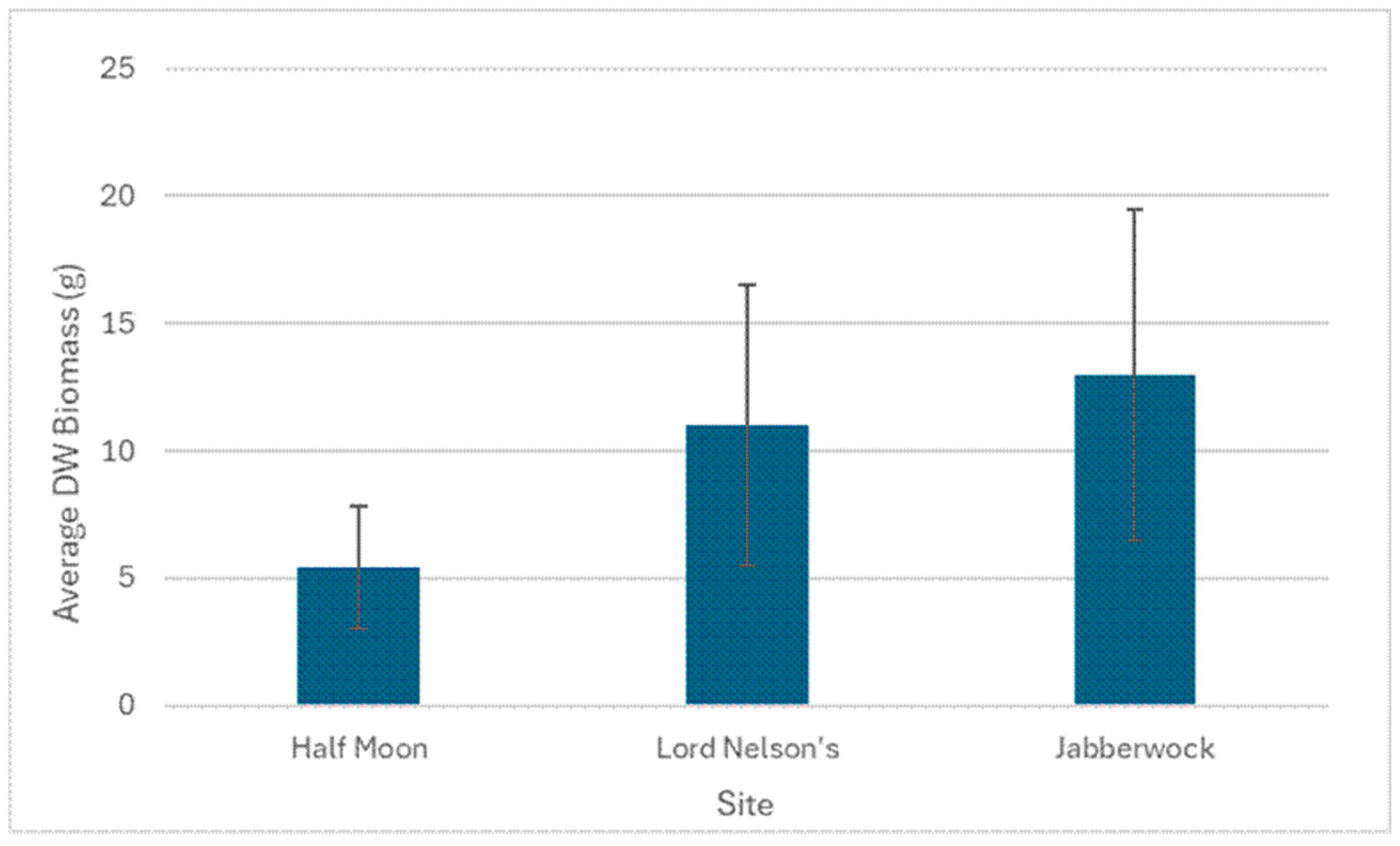
Sargassum biomass was variable across the affected sites and was not observed at the unaffected sites (Figure 5). The average dry weight at Half Moon was 5.0 g (±1.44 SE), while Lord Nelson’s averaged 11.0 g (±2.83 SE), and Jabberwock averaged 13.0 g (±2.58 SE). There was no significant difference in biomass at the affected sites (p=0.106, DF=2, F=2.916).
Discussion
This study examined how temperature and nutrient levels (PO₄³⁻) influence the amount of sargassum on both affected and unaffected beaches in Antigua. The goal was to see whether local conditions like water quality or surface temperatures were linked to higher amounts of sargassum biomass. Sargassum was found at all three of the affected sites, as expected, but no sargassum was observed at the unaffected sites. There was no difference in sargassum biomass across the affected sites. However, phosphate concentrations were significantly greater at the affected sites compared to the unaffected sites.
These results indicate that nutrient levels were more closely connected with sargassum biomass than temperature. This aligns with previous research showing that while temperature can influence growth rates, it is often a secondary factor compared to nutrient concentration in driving bloom intensity. [2,3] Beaches with greater phosphate concentrations had more sargassum wash ashore, which may have been caused by differences in local conditions, such as proximity to human development. [13] Geographic features, such as semi-enclosed bays, can trap floating sargassum and increase nutrient accumulation relative to more exposed coastlines. [9] Notably, the enclosed bay site (Half Moon) had higher levels of phosphate compared to the open-ocean beaches (Lord Nelson’s and Jabberwock), which could explain why sargassum was more abundant there. This pattern aligns with findings from earlier studies: when nutrient concentrations are higher, sargassum tends to grow more rapidly¹. However, this study had several limitations. The sample size and number of samples were relatively small, which may have affected the precision of the results. Additionally, only phosphate was measured as a nutrient indicator; measuring nitrogen or other water quality parameters such as salinity and dissolved oxygen could have provided a more complete understanding of the environmental conditions influencing sargassum growth. These measurements could not be taken due to limited equipment but would be valuable to include in future research.
Nutrient reductions have been shown to limit macroalgal proliferation in coastal systems. Previous studies in southeast Florida have suggested that improved wastewater treatment could help mitigate algal blooms. [14] These findings indicate that local nutrient control may help reduce sargassum effects, even if blooms are also influenced by global ocean and climate conditions. [5] As a more local example, Barbados has implemented nutrient management strategies in coastal zones as part of its sargassum reduction efforts, with some evidence of reduced shoreline accumulation. [15] Improved wastewater treatment and stormwater controls could help Antigua reduce nutrient flow and better manage sargassum blooms in the future.
Conclusion
Overall, phosphate concentrations were significantly higher at sargassum-affected beaches, while biomass did not differ significantly among those sites, and temperature showed slight variation. The areas with more phosphate in the water had more sargassum washing ashore, suggesting a clear connection between nutrients and bloom size. Future research should explore the effects of ocean circulation, rising temperatures, and local nutrient sources (e.g., nitrate, phosphate, and ammonium) on sargassum growth. Identifying the drivers of sargassum blooms may lead to better protection of the Caribbean's economy and coastal ecosystems.
Acknowledgments
I would like to sincerely thank my mentor at Polygence for their guidance, support, and valuable feedback throughout this research project. I am also grateful to the Environmental Awareness Group (EAG) in Antigua for inspiring this study and providing crucial information about local sargassum occurrences. I would like to acknowledge Polygence for facilitating this research opportunity and for providing resources and structure that made this project possible. Finally, I am deeply thankful to my family for their support and funding, without which this study could not have been completed.
References
- Lapointe, B.E.; Brewton, R.A.; Herren, L.W.; Wang, M.; Hu, C.; McGillicuddy, D.J., Jr.; Morton, P.L. Nutrient content and stoichiometry of pelagic Sargassum reflects increasing nitrogen availability in the Atlantic Basin. Nature Communications 2021, 12, 3060. [Google Scholar] [CrossRef] [PubMed]
- Putman, N.F.; Goni, G.J.; Gramer, L.J.; Hu, C.; Johns, E.M.; Trinanes, J.; Wang, M. Simulating transport pathways of pelagic Sargassum from the Equatorial Atlantic into the Caribbean Sea. Progress in oceanography 2018, 165, 205–214. [Google Scholar] [CrossRef]
- Johns, E.M.; Lumpkin, R.; Putman, N.F.; Smith, R.H.; Muller-Karger, F.E.; Rueda-Roa, D.T.; Werner, F.E. The establishment of a pelagic Sargassum population in the tropical Atlantic: biological consequences of a basin-scale long distance dispersal event. Progress in Oceanography 2020, 182, 102269. [Google Scholar] [CrossRef]
- Wang, M.; Hu, C.; Barnes, B.B.; Mitchum, G.; Lapointe, B.; Montoya, J.P. The great Atlantic sargassum belt. Science 2019, 365, 83–87. [Google Scholar] [CrossRef] [PubMed]
- Oviatt, C.A.; Huizenga, K.; Rogers, C.S.; Miller, W.J. What nutrient sources support anomalous growth and the recent sargassum mass stranding on Caribbean beaches? A review. Marine Pollution Bulletin 2019, 145, 517–525. [Google Scholar] [CrossRef] [PubMed]
- Western Central Atlantic Fishery Commission (WECAFC). (2023, September). Impacts of Sargassum on marine resources in the region and utilization of initiatives (WECAFC/XIX/2023/16). 19th Session, Bridgetown, Barbados. Food and Agriculture Organization of the United Nations.
- Martinez Ortiz, J.; Perez Perez, J.; Armstrong, R.A.; Cruz Motta, J.J.; Courtney, T.A. Hypoxia driven by Caribbean Sargassum accumulation events. Royal Society open science 2025, 12, 250322. [Google Scholar] [CrossRef] [PubMed]
- Rosellón-Druker, J.; Calixto-Pérez, E.; Escobar-Briones, E.; González-Cano, J.; Masiá-Nebot, L.; Córdova-Tapia, F. A review of a decade of local projects, studies and initiatives of atypical influxes of pelagic Sargassum on Mexican Caribbean coasts. Phycology 2022, 2, 254–279. [Google Scholar] [CrossRef]
- Van Tussenbroek, B.I.; Arana, H.A.H.; Rodríguez-Martínez, R.E.; Espinoza-Avalos, J.; Canizales-Flores, H.M.; González-Godoy, C.E.; Collado-Vides, L. Severe impacts of brown tides caused by Sargassum spp. on near-shore Caribbean seagrass communities. Marine pollution bulletin 2017, 122(1-2), 272–281. [Google Scholar] [CrossRef] [PubMed]
- Uribe-Martínez, A.; Berriel-Bueno, D.; Chávez, V.; Cuevas, E.; Almeida, K.L.; Fontes, J.V.; Silva, R. Multiscale distribution patterns of pelagic rafts of sargasso (Sargassum spp.) in the Mexican Caribbean (2014–2020). Frontiers in Marine Science 2022, 9, 920339. [Google Scholar] [CrossRef]
- Schuhmann, P.W.; Irvine, J.; Oxenford, H.A.; Degia, A.K.; Valderrama, J.P. The potential economic impacts of Sargassum inundations in the Caribbean, Part 1: Insights from the literature. SargAdapt Project Report, Final Draft; 57pp; Centre for Resource Management and Environmental Studies (CERMES), University of the West Indies: Cave Hill, Barbados, 2022. [Google Scholar]
- Ohtake, M.; Natori, N.; Sugai, Y.; Tsuchiya, K.; Aketo, T.; Nishihara, G.N.; Toda, T. Growth and nutrient uptake characteristics of Sargassum macrocarpum cultivated with phosphorus-replete wastewater. Aquatic Botany 2020, 163, 103208. [Google Scholar] [CrossRef]
- Hatt, D.C.; Bally, N.K.; Iporac, L.A.R.; Olszak, S.; Campbell, J.E.; Collado-Vides, L. Comprehensive Analysis of Biomass, Nutrient, and Heavy Metal Contributions of Pelagic Sargassum Species (Phaeophyceae) Inundations in South Florida. Phycology 2024, 4, 235–255. [Google Scholar] [CrossRef]
- Lapointe, B.E.; Bedford, B.J. Ecology and nutrition of invasive Caulerpa brachypus f. parvifolia blooms on coral reefs off southeast Florida, USA. Harmful Algae 2010, 9, 1–12. [Google Scholar] [CrossRef]
- Thompson, T.M.; Young, B.R.; Baroutian, S. Pelagic Sargassum for energy and fertiliser production in the Caribbean: A case study on Barbados. Renewable and Sustainable Energy Reviews 2020, 118, 109564. [Google Scholar] [CrossRef]
Figure 1.
Map of Antigua showing the six sampling locations, including three sargassum-affected sites (Half Moon, Lord Nelson’s, Jabberwock) and three unaffected sites (Runaway Bay, Dickinson Bay East, Dickinson Bay West).
Figure 1.
Map of Antigua showing the six sampling locations, including three sargassum-affected sites (Half Moon, Lord Nelson’s, Jabberwock) and three unaffected sites (Runaway Bay, Dickinson Bay East, Dickinson Bay West).
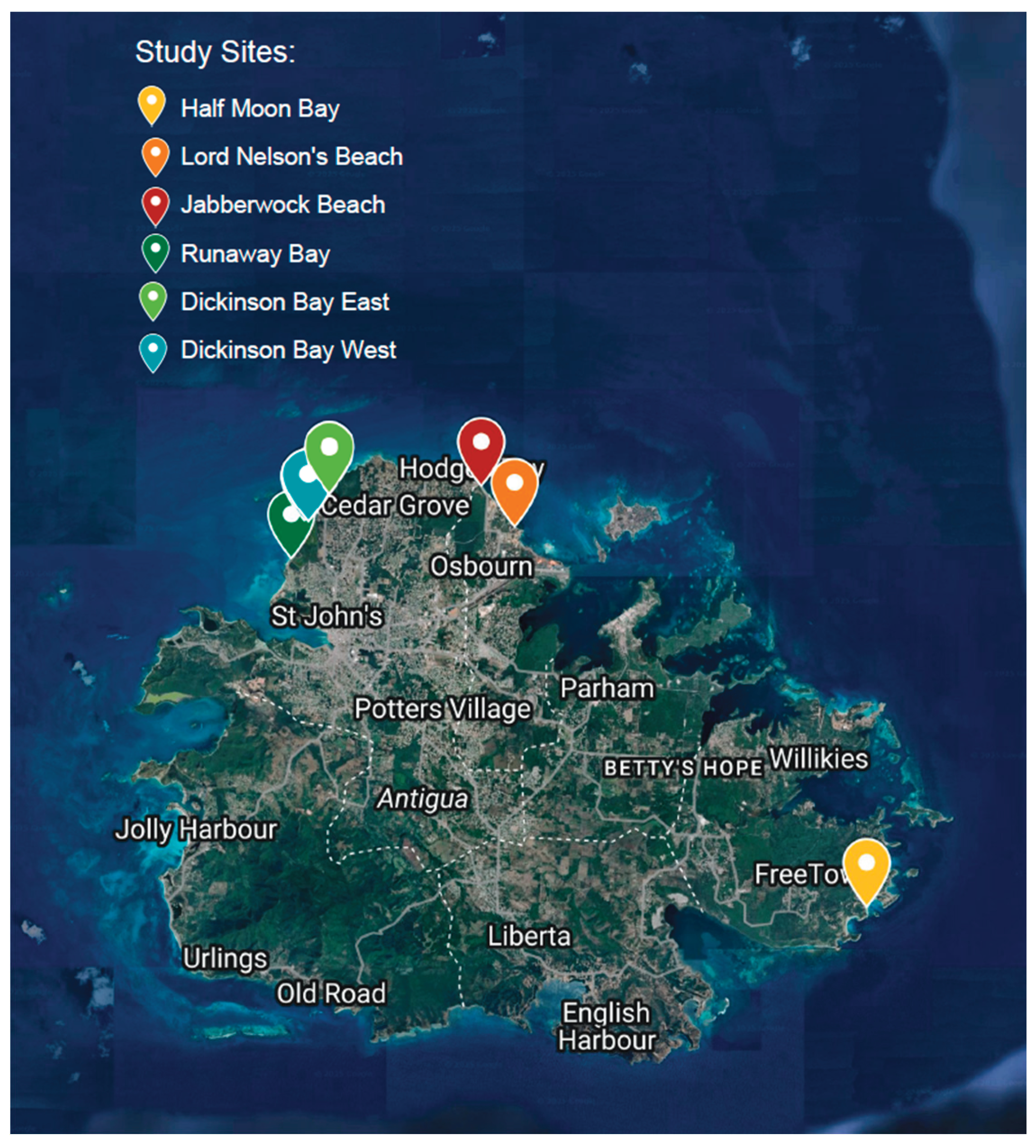
Figure 2.
Water temperature (°C) across six sampling locations in Antigua, including three sargassum-affected sites (Half Moon, Lord Nelson’s, Jabberwock) and three unaffected sites (Runaway Bay, Dickinson Bay East, Dickinson Bay West).
Figure 2.
Water temperature (°C) across six sampling locations in Antigua, including three sargassum-affected sites (Half Moon, Lord Nelson’s, Jabberwock) and three unaffected sites (Runaway Bay, Dickinson Bay East, Dickinson Bay West).
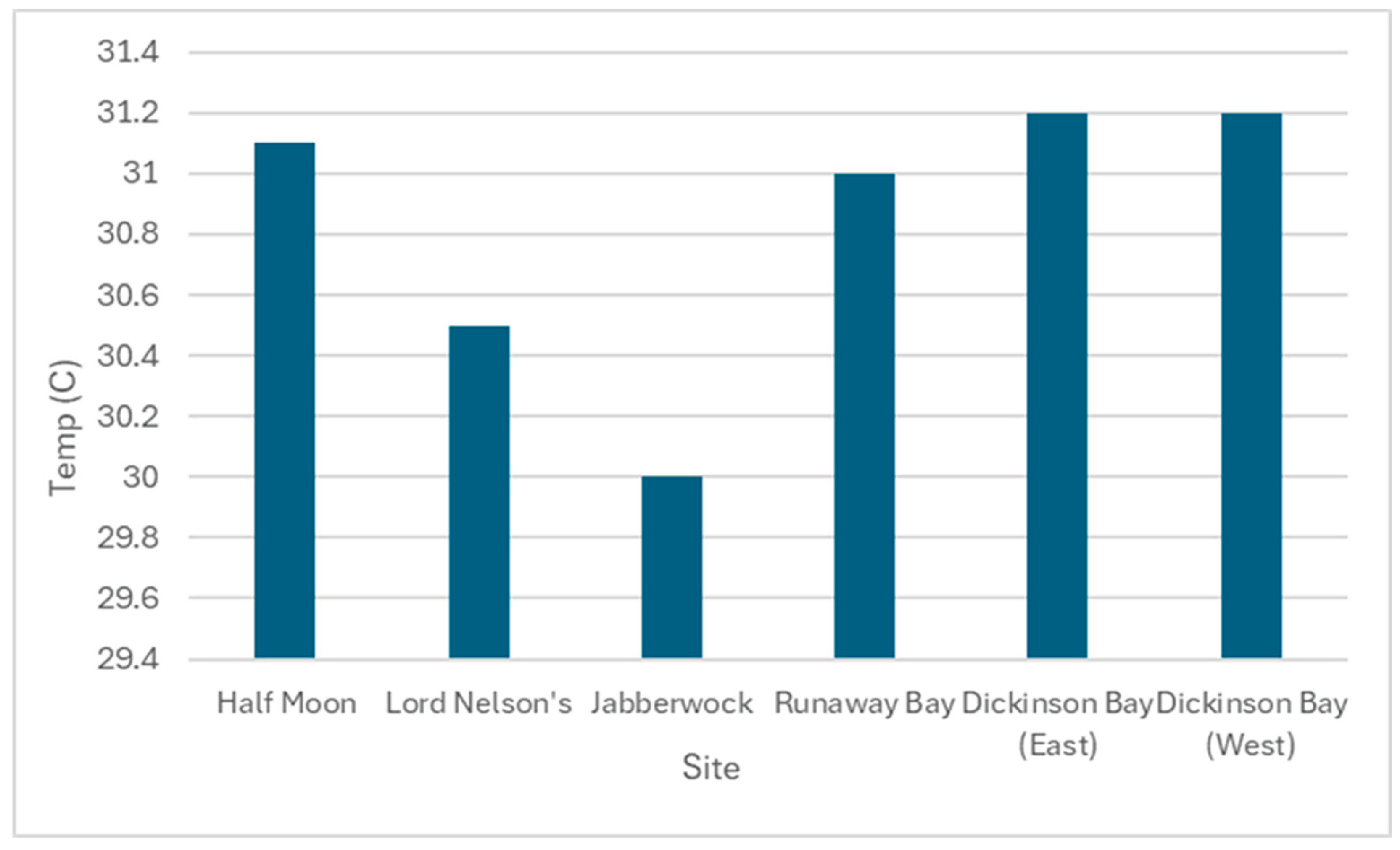
Figure 3.
pH across six sampling locations in Antigua, including three sargassum-affected sites (Half Moon, Lord Nelson’s, Jabberwock) and three unaffected sites (Runaway Bay, Dickinson Bay East, Dickinson Bay West).
Figure 3.
pH across six sampling locations in Antigua, including three sargassum-affected sites (Half Moon, Lord Nelson’s, Jabberwock) and three unaffected sites (Runaway Bay, Dickinson Bay East, Dickinson Bay West).
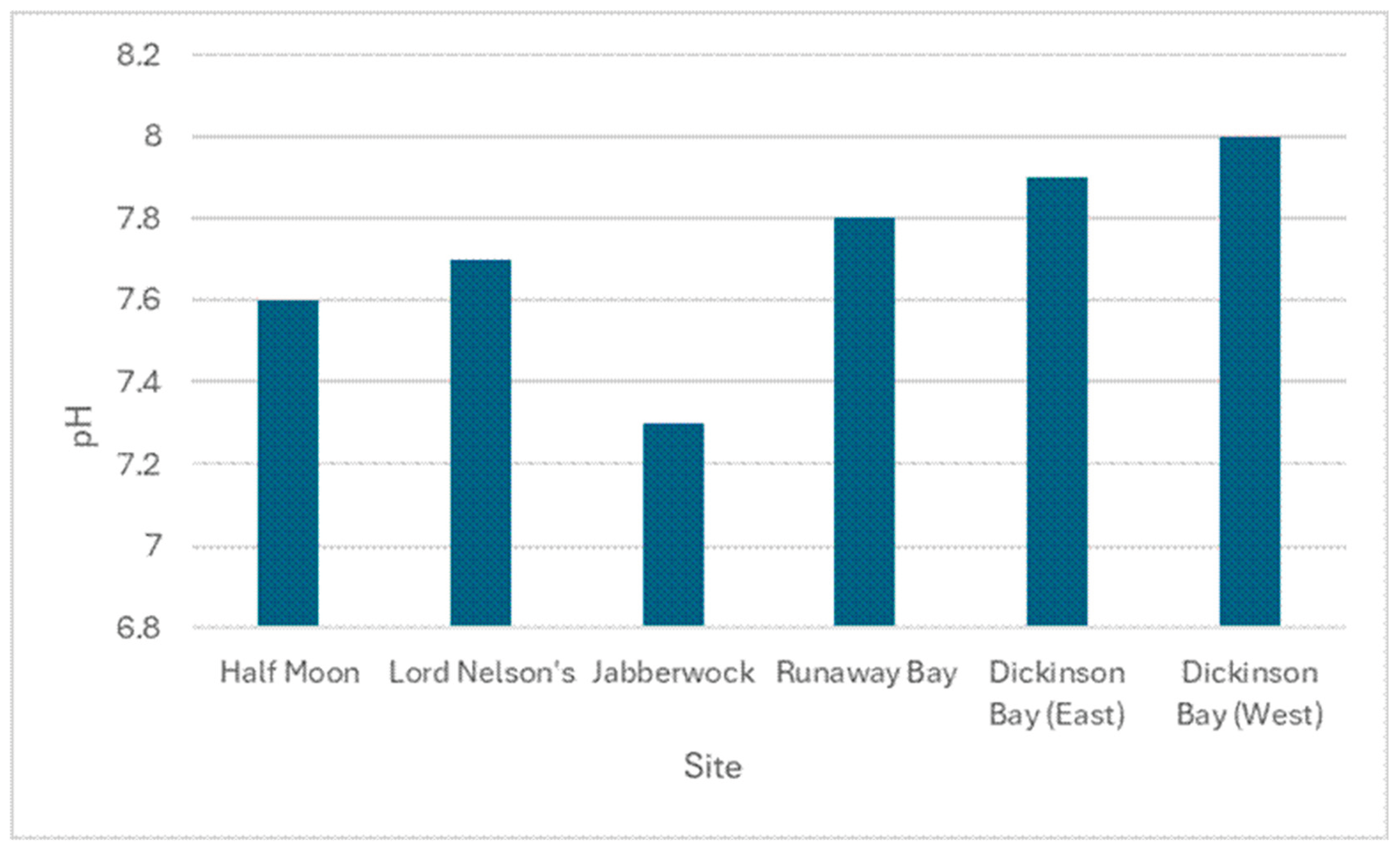
Figure 4.
Average (±SE) phosphate (mg/L) across the six sampling locations in Antigua, including three sargassum-affected sites (Half Moon, Lord Nelson’s, Jabberwock) and three unaffected sites (Runaway Bay, Dickinson Bay East, Dickinson Bay West).
Figure 4.
Average (±SE) phosphate (mg/L) across the six sampling locations in Antigua, including three sargassum-affected sites (Half Moon, Lord Nelson’s, Jabberwock) and three unaffected sites (Runaway Bay, Dickinson Bay East, Dickinson Bay West).
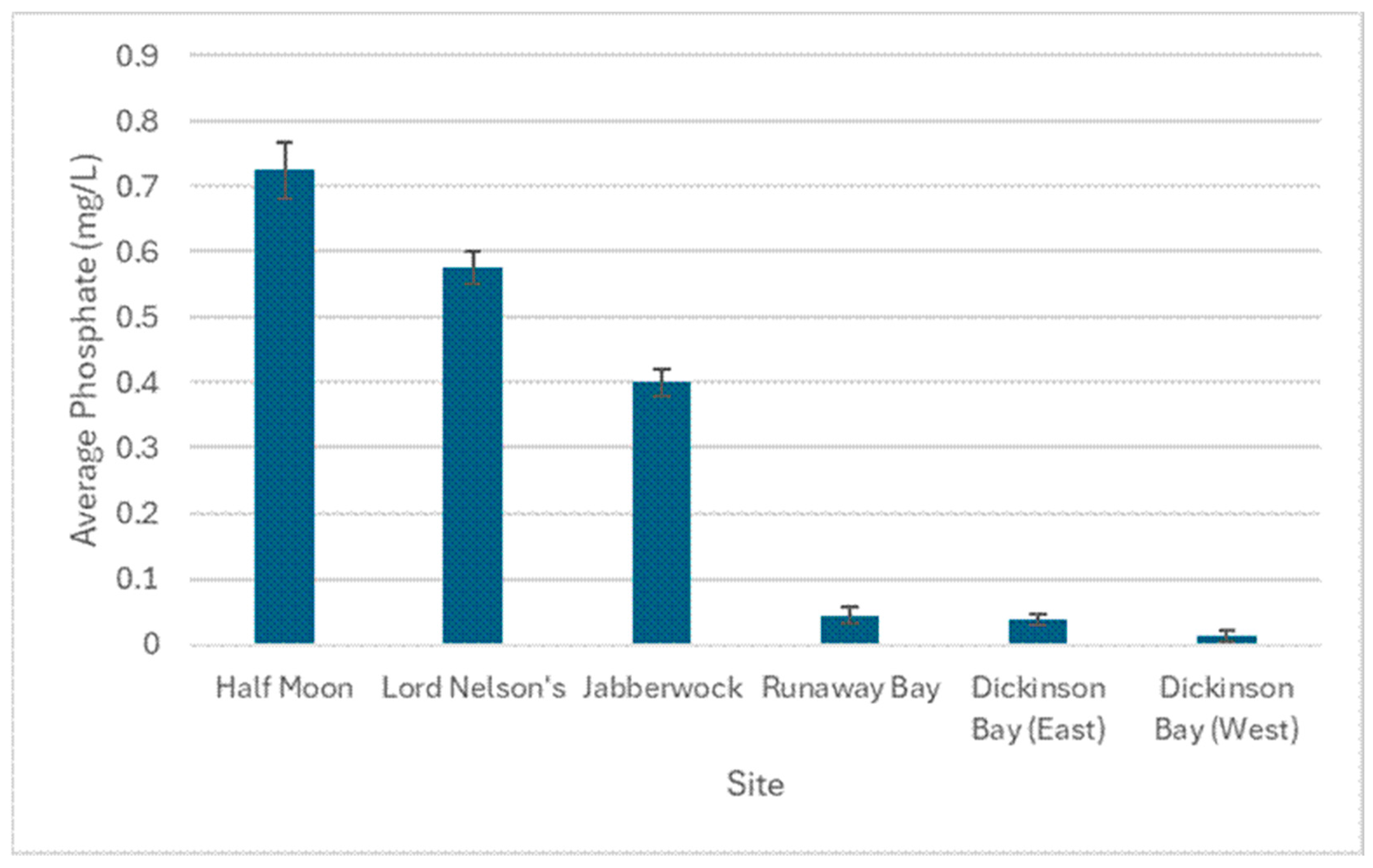
Figure 5.
Average (±SE) dry weight (DW) biomass (g) of sargassum across affected sites in Antigua (Half Moon, Lord Nelson’s, and Jabberwock).
Figure 5.
Average (±SE) dry weight (DW) biomass (g) of sargassum across affected sites in Antigua (Half Moon, Lord Nelson’s, and Jabberwock).
Disclaimer/Publisher’s Note: The statements, opinions and data contained in all publications are solely those of the individual author(s) and contributor(s) and not of MDPI and/or the editor(s). MDPI and/or the editor(s) disclaim responsibility for any injury to people or property resulting from any ideas, methods, instructions or products referred to in the content. |
© 2025 by the authors. Licensee MDPI, Basel, Switzerland. This article is an open access article distributed under the terms and conditions of the Creative Commons Attribution (CC BY) license (http://creativecommons.org/licenses/by/4.0/).
Copyright: This open access article is published under a Creative Commons CC BY 4.0 license, which permit the free download, distribution, and reuse, provided that the author and preprint are cited in any reuse.


