
Submitted:
12 December 2025
Posted:
15 December 2025
You are already at the latest version
Abstract
Forensic veterinary pathology is becoming increasingly important in investigation sit-uations of suspected animal abuse. A search for owner (private) or law-enforcement suspected animal abuse necropsy cases submitted at either the University of West In-dies Veterinary Hospital (UWI-SVM) or the Ministry of Agriculture and Fisheries, Vet-erinary Diagnostic Laboratory (MAF-VDL) for the period of 2008-2025 was performed. Based on pathology records and submission information, cases were categorized by signalment and cause of death (COD) or manner of injury (MOI) if the animal was eu-thanized. A total of 113 cases of suspected animal abuse were submitted in the years 2008-2025. The submission of these cases reached a peak in 2015 (n = 23) and has re-mained around 5 cases per year since then. The most commonly submitted animal species were dogs (77%) and birds (7%). Of the 113 cases, only 23 (20%) had a con-firmed COD/MOI. The most common confirmed COD/MOI was trauma. The majority of the unconfirmed COD/MOI involve suspected poisoning. The few confirmed cases of poisoning (n = 6) include carbamate, warfarin, malathion, and ethylene glycol. Owners are aware of the importance of pathology to help diagnose suspected animal abuse cases and are becoming more interested in trying to prosecute those suspected of harming their pets. One major limitation in advancing forensic veterinary pathology in the island, and prosecution of suspected animal abuse cases is the lack of a toxico-logical laboratory capable of handling animal samples.
Keywords:
trinidad
; Tobago
; veterinary forensics
; animal abuse
; necropsy
1. Introduction
Animal abuse can reflect societal and individual well-being and should be investigated and prosecuted as it can also be related to other interpersonal violence crimes[1,2,3,4,5]. Animal abuse promotes a culture of violence and abuse, and is done by people who do not expect authorities to intervene and want to intimidate the owners or companions to the animals being abused[2,4]. Across the world, the basis for investigation of animal cruelty are what is considered the five freedoms, as stated below[6]:
- Freedom from hunger and thirst
- Freedom from discomfort
- Freedom from pain, injury, and disease
- Freedom to express normal behavior
- Freedom from fear and distress
Based on these concepts, countries around the world have enacted laws that protect animals and cover the concepts, to a greater or lesser extent[2,4,5]. In the Caribbean region, in the Republic of Trinidad and Tobago, according to the Summary Offences Act of 1921, Chapter11:02, Sections 79-90 inclusive[7], it is illegal to kill, maim, and wound any dog, bird, or other animal that is being kept for any domestic purpose. It is also illegal to starve, ill-treat, abuse, and torture any domestic animal. The Animal (Diseases, Importation, Health, and Welfare) Act also speaks to animal welfare and defines maltreatment as well as the consequences for violating such an offence [8]. Similarly, the Environmental Management Act of 2000 [9], and updated over the years, establishes environmentally sensitive species that are protected and whose mistreatment, hunting, or killing is also prohibited.
Forensic veterinary pathology is becoming increasingly important in recognizing animal abuse cases[5,10,11,12]. Sometimes these cases are done after police reports because of suspicious criminal behavior, but many times they can also be requested by the owner, as a way to get closure after a pet’s demise, particularly if the circumstances surrounding their death are suspicious[13]. Forensic necropsies are similar to regular diagnostic necropsies, but they may require ancillary testing that may be unusual, such as diagnostic imaging, toxicological studies, or even DNA sequencing, and they can be costly, as typically the owner would be the one to pay for them[5,10,11,13]. This can potentially be a limitation in the submission of suspected cases.
To the author’s knowledge, this is the first published article regarding forensic veterinary pathology in the Republic of Trinidad and Tobago. This article is a revised and expanded version of a poster entitled “A Review Of The Cause Of Death And Mode Of Injury Of Suspected Animal Abuse Cases In Trinidad And Tobago, 2008-2015” which was presented at the 67th ACVP Annual Meeting; New Orleans, LA, United States, on December 2016[14]. Suspected animal abuse cases submitted to UWI-SVM and MAF-VDL during 2008-2025 were identified and categorized according to various criteria. This would provide awareness of the suspected cases of animal abuse observed in the islands, as well as the limitations present and perhaps to eventual discussion on how to improve the diagnosis and eventual prosecution of those who violate the laws [7,8].
2. Materials and Methods
This is a retrospective study that searched the necropsy databases of UWI-SVM and MAF-VDL for potential suspected animal abuse cases during the years 2008-2025. Cases included were submitted by owners or law enforcement agents who suspected animal abuse as defined by the laws of Trinidad and Tobago[7,8]. The inclusion criteria were the following:
- Cases submitted between 2008-2025
- Cases involved the following domestic animal species: dogs, cats, horses, cows, sheep, goat, pigs, and pet birds.
-
Cases had to be at least one of the following:
- ○
- Police cases, where there was a police report made, and police was involved in the process, or
- ○
- The submitted case history indicated some type of animal abuse as a possible differential for COD or MOI, or
- ○
- The veterinary pathologist, after doing the necropsy, suspected the COD or MOI was related to animal abuse.
- The cases included completed necropsy reports.
The exclusion criteria included:
- Suspected cases with partial reports or without reports accompanying the case number
- Biopsy or cytology cases of live animals
- Cases that were suspected initially to be related to animal abuse, but that after necropsy, another COD unrelated to animal abuse was found.
- Cases involving exotic animal species or environmentally sensitive species, as these are covered under other laws[9].
These cases were then categorized by:
- Cases per year
- Species
-
Cause of death (COD) or mode of injury (MOI) if euthanized
- ○
- If toxicology was done and if results were obtained
-
Police case vs private cases
- ○
- Police cases are those that were referred by the police because a report was made or the death involved some criminal activity (robbery for example) where the police was called.
- ○
- Private cases are those submitted by regular citizens, usually the owners of these animals, but sometimes rescue organizations that worked in the area the animal was found, if the animals were strays.
3. Results
3.1. Total Number of Cases Between 2008-2025 and Species
In total, 113 cases between 2008 and 2025 were included in this survey, as they fit the inclusion criteria previously established. The breakdown of the cases per year and per species can be seen in Figure 1. The year with the most cases submitted was 2015 (n = 23), and the most common species, by the largest amount, was dogs (n = 87).
3.2. Confirmed vs Unconfirmed Cases
Out of the 113 suspected animal abuse necropsy cases, only 23 cases had a confirmed COD/MOI that indicated it was very likely an animal abuse case (Figure 2). Out of the 113 cases, 29 cases in total were submitted as police cases, where there was a report of some sort stating that they suspected animal abuse to be involved as the COD/MOI. As shown in Figure 2, when the cases were confirmed, the difference between police cases or private cases was small, as was the difference between police cases that were confirmed or not. However, unconfirmed cases were primarily private cases, usually submitted by the owners (n = 74).
3.3. Cause of Death/Mode of Injury
The two main broad categories of COD/MOI found were poisoning and trauma. Of the 113 cases, one case had signs at necropsy of both trauma and potential poisoning. Of the 88 unconfirmed cases, they were all suspected of poisoning. The majority of the 24 confirmed cases were associated with trauma (n = 18). The types of traumas observed involved blunt, gunshot, and strangulation, with the most common being gunshot wounds (n=11, Figure 3).
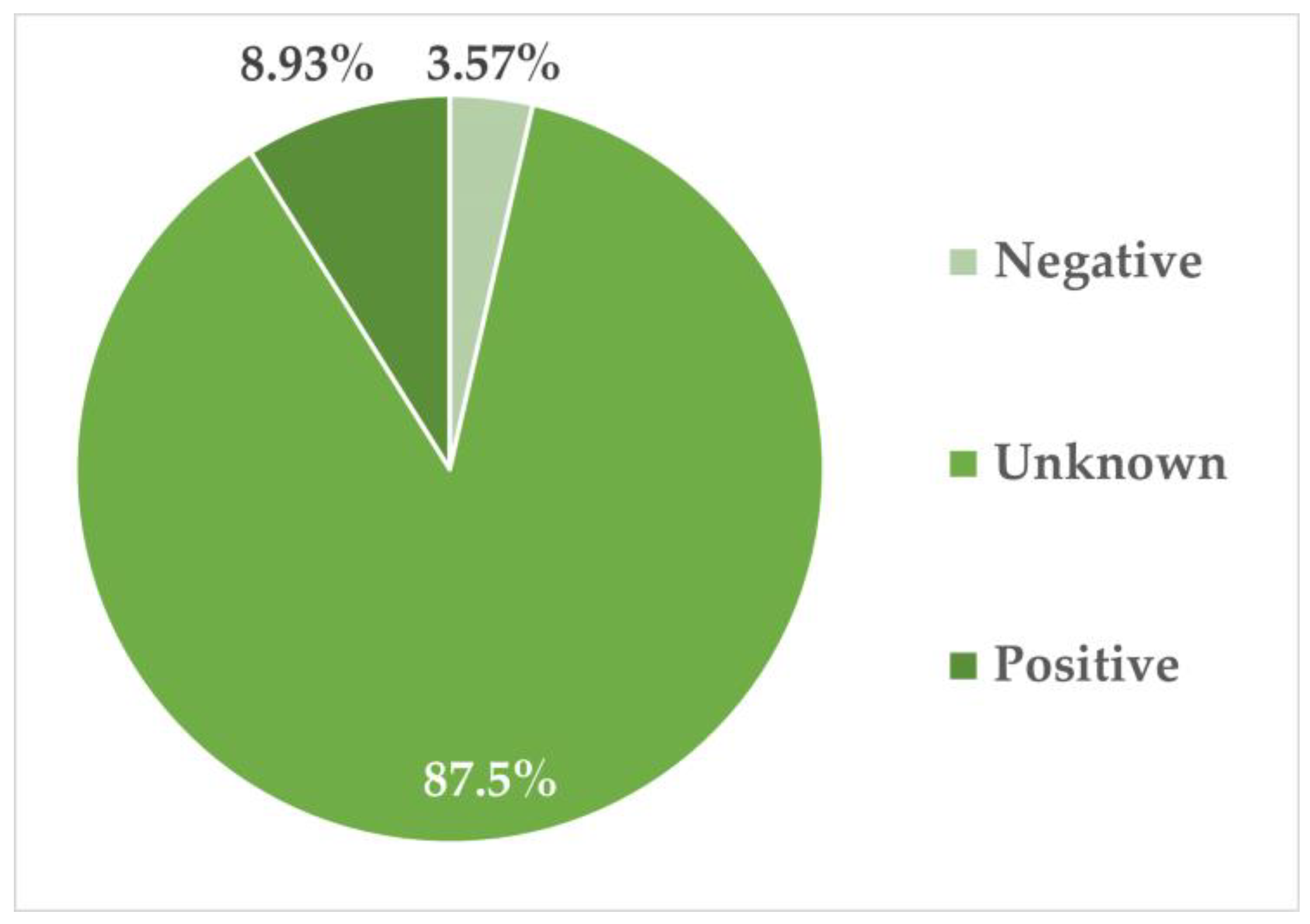
There were 95 cases of suspected poisoning presented between 2008-2025. Only 56, or 58.95% had samples submitted for toxicology. Of those, only seven cases had results, five of them positive to some type of toxin. The rest of the samples (n = 49), even if they were submitted, there is no record of a toxicological result, as shown in Figure 4. The toxins identified in the toxicological sample were carbamate (n=3), malathion (n=1), and warfarin (n=1). One of the poisoning cases was confirmed to be ethylene glycol toxicity based on histopathology, giving the six total confirmed poisoned cases mentioned in Figure 3.
4. Discussion
The number of suspected animal abuse cases submitted to the combined veterinary diagnostic laboratories in Trinidad and Tobago has fluctuated over the seventeen years included in this study (Figure 1). This could be due to a combination of factors, some of which cannot be validated, or that could be identified in another study. For example, there could have been an increase in media awareness during those years that could have led to more police reports being made and more owner-submitted cases. In terms of facilities and personnel, MAF-VDL and UWI-SVM are the only two veterinary pathology laboratories in the country. Around 2015 there were three veterinary anatomical pathologists practicing on the island (two of them board-certified, one board-eligible) and there was a toxicology laboratory that processed veterinary toxicological samples.
The reasons for years of decreased submissions can also be varied. During the period 2011-2012, there was one pathologist working in the country at the UWI-SVM. At the same time, there was no pathologist at the MAF-VDL, so it is likely that cases were turned away. The available veterinary toxicology laboratory closed in 2016. Since then, there have been no known toxicological results, even if samples were collected. This could have caused a decline in submissions, since owners of pets with suspected poisonings realized that without toxicology, it would be harder to prove in court or prosecute the people responsible for possibly poisoning their pets. It is possible the owners would have decided to submit the sample on their own to some other toxicological laboratory, but it is unknown if any other laboratory on the island would be willing to process, and if they did, what were the results of that.
Only 29 of the total cases were part of a currently active police investigation and submitted by police officers. Most cases (n = 84) were submitted by private citizens, usually the owners, but occasionally also rescue organizations active in the area where the animals died (in the case of stray animals). A necropsy at the owner’s request is not uncommon, and may be part of an effort from the owner to find closure after their pet’s death [13]. This is why, particularly in private-submitted cases, they were not included in the study if another COD was found, even if initially the owner expected it to be related to animal abuse. The owners may also had previously suspected animal abuse as part of their pet’s demise[13], and wanted to confirm it in order to submit a police report.
Despite lacking toxicological confirmation, by far the most common cause of suspected animal abuse death during the time period studied was poisoning. This type of animal abuse has not been as clearly linked to interpersonal violence as other types of death, but the motivations may be similar, such as revenge against the animal or owner or nonspecific sadism [1]. The toxins that were identified are all pesticides or rodenticides, with carbamate being the most identified (n= 3), which is consistent to what has been found in other studies [15,16]. In the context of Trinidad and Tobago, these chemicals are easier to obtain than in other countries and would not be difficult for civilians to obtain them and use to commit crimes. For example, carbamates are currently banned in numerous countries, and although still present in intentional poisonings (due to stockpiles), their percentage as a total has decreased[16].
Although this could not be confirmed because of lack of toxicological testing, another chemical that was widely suspected to cause death because of the gross lesions involved was paraquat dichloride (gramoxone). Following publication of articles association ingestion of gramoxone with a high number of suicides in Trinidad [17], the chemical is now de-registered and there is no permit to import the chemical to the island[18]. However, during most of the timeline studied, gramoxone was available and not as regulated as in other countries, making it accessible to people who wanted to commit crimes.
Most of the confirmed cases of suspected animal abuse involved some type of trauma (Figure 3a). The most common form of trauma was gunshot wounds, with 11 cases (Figure 3b). Out of the total 113 cases included in the study, gunshot wounds account for 9.7% of the total cases. Considering only the confirmed cases (n = 23), the gunshot cases represent almost half of the confirmed animal abuse necropsy cases. The type of ammunition used is not recorded and the veterinary pathologist doing the necropsy would not have known it or be able to easily identify it. The bullet fragments, if found, would have been collected and given to the police officer(s) that are present during police-submitted investigations. If police were not present, it would have been stored until a police officer collected the evidence. Although the use of post mortem radiographs is recommended for gunshot wounds[1,19], this was not always possible, although in the cases in which it was used, it greatly aided the identification and collection of all the fragments. Use of firearms involves premeditation and is highly unlikely that its use is accidental[1], increasing the odds that that behavior can also be done in humans. Of note, police-submitted cases were likely animals involved in a police case such as robbery or home invasion.
Blunt force trauma (BFT) was confirmed as the COD in six cases. There are different types of BFT, with the three main patterns being abrasions, contusions, and lacerations[20]. Unfortunately, the information gathered from the database does not give information to distinguish which of the types of BFT was most common. BFT is commonly associated with domestic abuse and child abuse, and it is an indicator of high risk for future violence against others[1]. Four out of the six cases with this type of lesions were police-submitted cases, again indicating that the animal died in a situation that led to police intervening, such as domestic violence, robbery, or home invasion.
Of the confirmed cases of trauma, two were the result of strangulation (Figure 3b). This is a type of asphyxiation that is caused by applying pressure to the neck through various ways [21]. The information in the database is not distinguishing between the three types of strangulation (ligature, hanging, or manual), but a search on local newspapers reveals a news story about a public dog hanging that went viral and according to the date it corresponds to one of the strangulation cases [22]. All forms of asphyxia, including strangulation, require a high degree of premeditation and close contact, and also are considered to be high risk for future violence against humans and animals [1].
Unlike other reports [23], no cases were found of suspected animal abuse by burning, either by thermal injuries or by smoke inhalation. This could be because in the context where many of these suspected cases occur, poisoning or trauma are methods more easily available. Another possibility would be that in the cases of arson, people or property were likely to be directly affected, and the authorities may have opted to pursue criminal charges related to the damage caused to them and ignore the animals affected. Suspected animal abuse cases involving drowning were also absent in this study, again in contrast with other articles [15,23].
The low number of confirmed animal abuse necropsy cases compared to the number of suspected animal abuse necropsy cases, just 20%, is not unique to Trinidad. For example, in the study done in Portugal [15], less than a quarter of the cases were confirmed. The reasons given for the low number of confirmed cases are similar to those found in Trinidad, mainly the lack of appropriate toxicological analysis to confirm the large number of suspected poisoning cases. This lack of toxicological ancillary testing keeps coming back as a main reason to explain the decrease in suspected animal abuse cases submitted from its high in 2015, as well as the large number of unconfirmed cases. Only 56 out of 95 cases of suspected poisoning had samples collected for toxicology, and of those 56 cases, only in 7 cases are there any results. This suggests that even when the toxicological laboratory was present, it was very inefficient in processing the samples, at least in a timely manner enough to be included in the final report. Of note, no toxicological samples have been collected from suspected poisoning cases since 2021, due to the inability to get those samples processed.
5. Conclusions
According to the data, despite the lack of toxicological studies, poisoning remains the unconfirmed cause of death in the majority of suspected animal abuse cases submitted to the veterinary diagnostic laboratories in Trinidad and Tobago. This highlights the need for such a service, accompanied by increased awareness and action from the police and legal system to prosecute the accused.
Author Contributions
All authors- K.F.A., L.G., A.B., X.L., E.P., and R.S. contributed to investigation and review and editing of the paper. Conceptualization, methodology, writing the original draft, and visualizations were done by K.F.A. and L.G. All authors have read and agreed to the published version of the manuscript.
Funding
This research received no external funding.
Data Availability Statement
The data presented in this study are available on request from the corresponding author due to privacy and legal reasons, as they can be part of police investigations.
Conflicts of Interest
The authors declare no conflicts of interest.
Abbreviations
The following abbreviations are used in this manuscript:
| MDPI | Multidisciplinary Digital Publishing Institute |
| DOAJ | Directory of open access journals |
| TLA | Three letter acronym |
| LD | Linear dichroism |
References
- Lockwood, R.; Arkow, P. Animal Abuse and Interpersonal Violence: The Cruelty Connection and Its Implications for Veterinary Pathology. Vet Pathol 2016, 53, 910–918. [Google Scholar] [CrossRef] [PubMed]
- Arkow, P. Recognizing and responding to cases of suspected animal cruelty, abuse, and neglect: what the veterinarian needs to know. Vet Med (Auckl) 2015, 6, 349–359. [Google Scholar] [CrossRef] [PubMed]
- Cleary, M.; Thapa, D.K.; West, S.; Westman, M.; Kornhaber, R. Animal abuse in the context of adult intimate partner violence: A systematic review. Aggression and Violent Behavior 2021, 61, 17. [Google Scholar] [CrossRef]
- Mota-Rojas, D.; Monsalve, S.; Lezama-Garcia, K.; Mora-Medina, P.; Dominguez-Oliva, A.; Ramirez-Necoechea, R.; Garcia, R.C.M. Animal Abuse as an Indicator of Domestic Violence: One Health, One Welfare Approach. Animals (Basel) 2022, 12. [Google Scholar] [CrossRef] [PubMed]
- Gerdin, J.A.; McDonough, S.P. Forensic pathology of companion animal abuse and neglect. Vet Pathol 2013, 50, 994–1006. [Google Scholar] [CrossRef] [PubMed]
- Otteman, K.; Hedge, Z.; Fielder, L. Animal Basics. In Animal Cruelty Investigations: Approach from Victim to Verdict, 1st ed.; Otteman, K., Fielder, L., Lewis, E., Eds.; Wiley: Newark, NJ, 2022; pp. 14–24. [Google Scholar]
- Summary Offences Act of 1921, Chapter11:02, Sections 79-90 1920.
- Animal (Diseases, Importation, Health and Welfare) Act, No. 21 of 2020. 2020.
- Environmental Management Act. 2000; 269.
- McDonough, S.P.; McEwen, B.J. Veterinary Forensic Pathology: The Search for Truth. Vet Pathol 2016, 53, 875–877. [Google Scholar] [CrossRef] [PubMed]
- Brownlie, H.W.; Munro, R. The Veterinary Forensic Necropsy: A Review of Procedures and Protocols. Vet Pathol 2016, 53, 919–928. [Google Scholar] [CrossRef] [PubMed]
- Cooper, J.E.; Cooper, M.E. Forensic veterinary medicine: a rapidly evolving discipline. Forensic Sci Med Pathol 2008, 4, 75–82. [Google Scholar] [CrossRef] [PubMed]
- Otteman, K.; Hedge, Z. Veterinary Forensic Necropsy. In Animal Cruelty Investigations: Approach from Victim to Verdict, 1st ed.; Otteman, K., Fielder, L., Lewis, E., Eds.; Wiley: Newark, NJ, 2022; pp. 158–179. [Google Scholar]
- Frontera-Acevedo, K; Gyan, L; Suepaul, R. A Review Of The Cause Of Death And Mode Of Injury Of Suspected Animal Abuse Cases In Trinidad And Tobago. Poster presented at 67th ACVP Annual Meeting, New Orleans, LA, United States, 2016 Dec 3-9. [Google Scholar]
- Araujo, D.; Lima, C.; Mesquita, J.R.; Amorim, I.; Ochoa, C. Characterization of Suspected Crimes against Companion Animals in Portugal. Animals (Basel) 2021, 11. [Google Scholar] [CrossRef] [PubMed]
- Rial-Berriel, C.; Acosta-Dacal, A.; Zumbado, M.; Henriquez-Hernandez, L.A.; Rodriguez-Hernandez, A.; Macias-Montes, A.; Boada, L.D.; Travieso-Aja, M.D.M.; Martin-Cruz, B.; Suarez-Perez, A.; et al. Epidemiology of Animal Poisonings in the Canary Islands (Spain) during the Period 2014-2021. Toxics 2021, 9. [Google Scholar] [CrossRef] [PubMed]
- Hutchinson, G.; Daisley, H.; Simeon, D.; Simmonds, V.; Shetty, M.; Lynn, D. High rates of paraquat-induced suicide in southern Trinidad. Suicide Life Threat Behav 1999, 29, 186–191. [Google Scholar] [CrossRef] [PubMed]
- Pesticide - Gramoxone. Available online: https://health.gov.tt/cfdd/pesticides/search/7188 (accessed on November 27).
- Bradley-Siemens, N.; Brower, A.I. Veterinary Forensics: Firearms and Investigation of Projectile Injury. Vet Pathol 2016, 53, 988–1000. [Google Scholar] [CrossRef] [PubMed]
- Ressel, L.; Hetzel, U.; Ricci, E. Blunt Force Trauma in Veterinary Forensic Pathology. Vet Pathol 2016, 53, 941–961. [Google Scholar] [CrossRef] [PubMed]
- McEwen, B.J. Nondrowning Asphyxia in Veterinary Forensic Pathology: Suffocation, Strangulation, and Mechanical Asphyxia. Vet Pathol 2016, 53, 1037–1048. [Google Scholar] [CrossRef] [PubMed]
- Kissoon, C. Animal atrocity. Trinidad Daily Express. 11/4/2020 2020.
- Almeida, D.C.; Torres, S.M.F.; Wuenschmann, A. Retrospective analysis of necropsy reports suggestive of abuse in dogs and cats. J Am Vet Med Assoc 2018, 252, 433–439. [Google Scholar] [CrossRef] [PubMed]
Figure 1.
Numbers of necropsy cases of suspected animal abuse cases in Trinidad, broken down by years (a) and by species (b).
Figure 1.
Numbers of necropsy cases of suspected animal abuse cases in Trinidad, broken down by years (a) and by species (b).
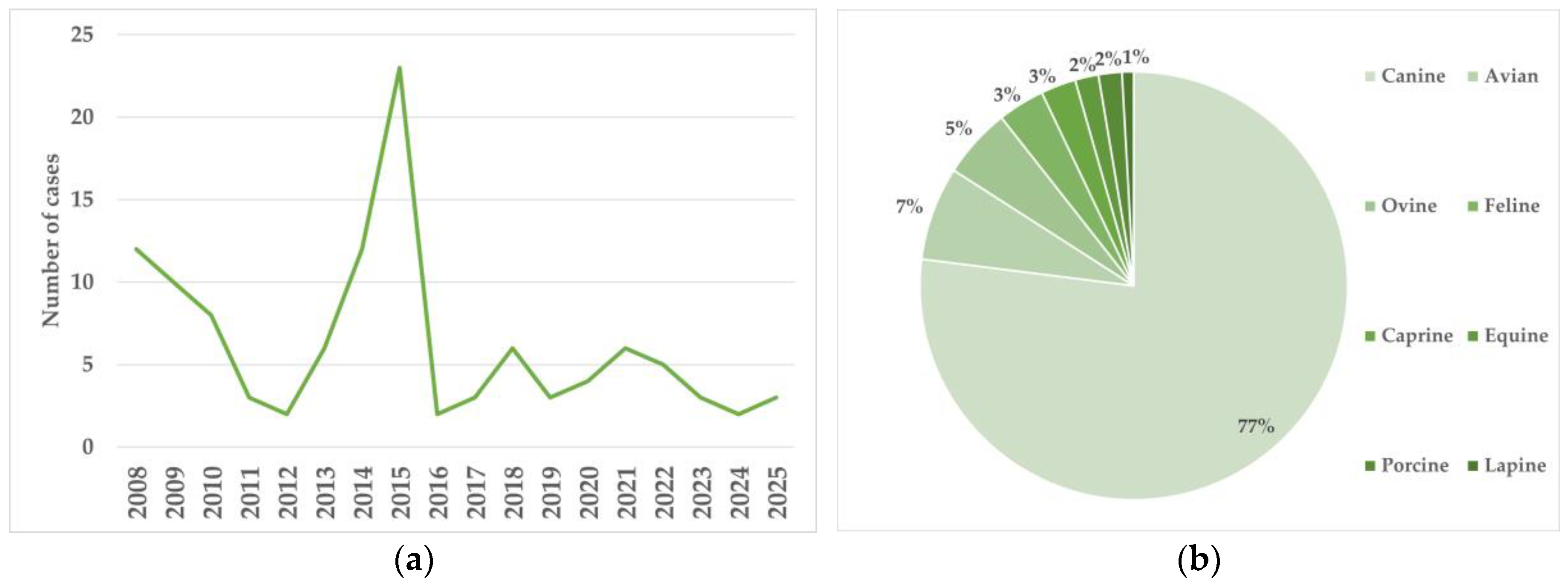
Figure 2.
(a) The proportion of confirmed versus unconfirmed necropsy cases of suspected animal abuse in Trinidad and Tobago. (b) The breakdown of suspected animal abuse cases if they were submitted by the police or privately, and whether they were confirmed or not.
Figure 2.
(a) The proportion of confirmed versus unconfirmed necropsy cases of suspected animal abuse in Trinidad and Tobago. (b) The breakdown of suspected animal abuse cases if they were submitted by the police or privately, and whether they were confirmed or not.
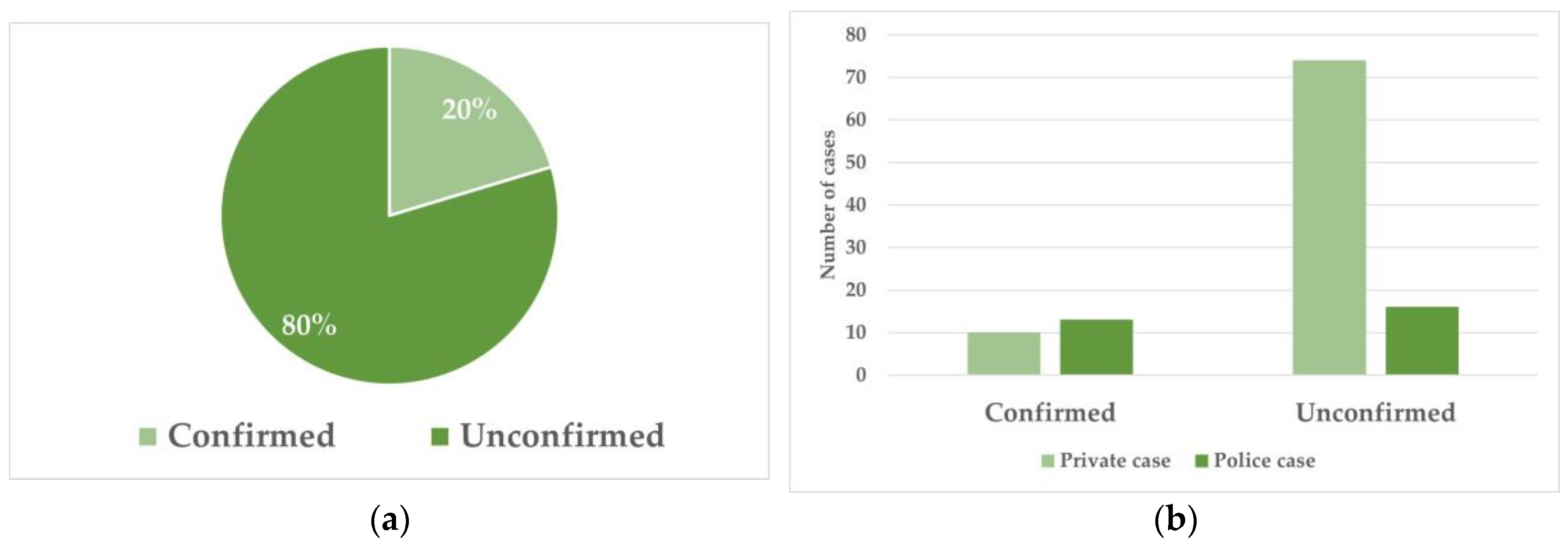
Figure 3.
(a) Breakdown of the confirmed cases of animal abuse necropsies in Trinidad during 2008-2025 (b) The different types of trauma identified in the confirmed animal abuse cases.
Figure 3.
(a) Breakdown of the confirmed cases of animal abuse necropsies in Trinidad during 2008-2025 (b) The different types of trauma identified in the confirmed animal abuse cases.
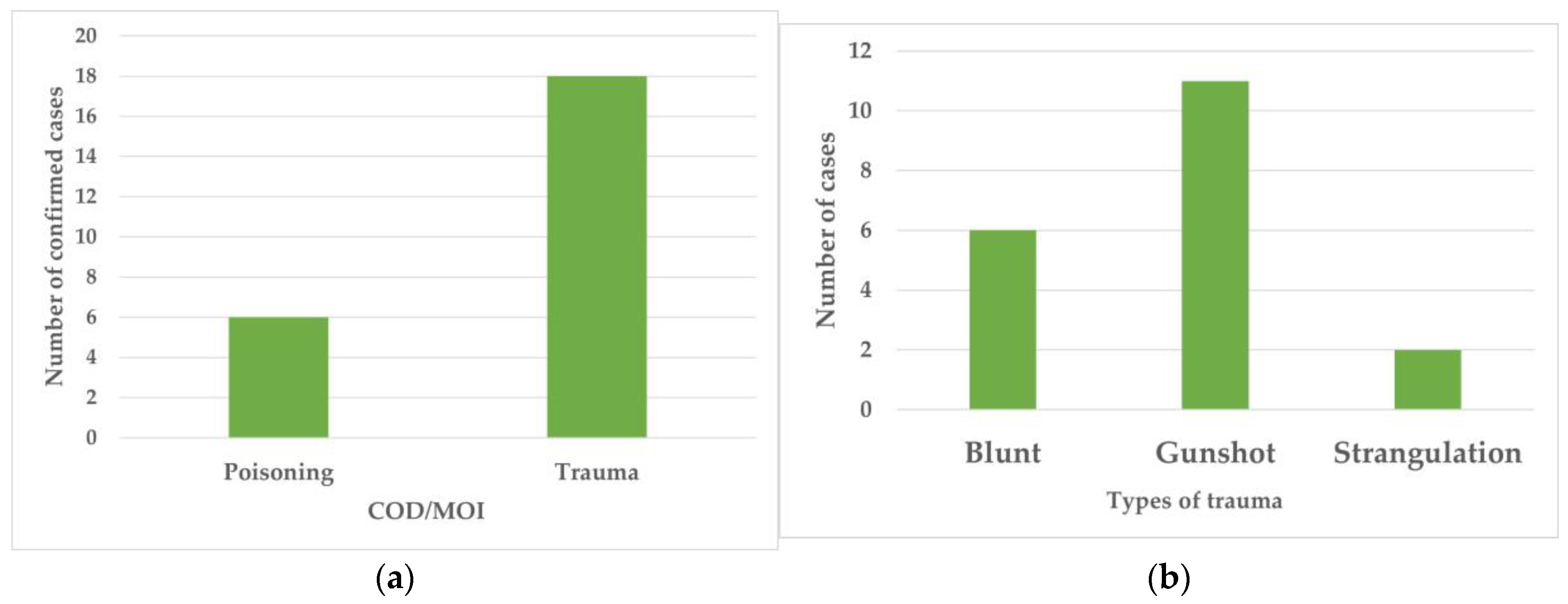
Figure 4.
Graph showing the breakdown of toxicological results for suspected cases of poisoning that had samples collected for toxicology.
Figure 4.
Graph showing the breakdown of toxicological results for suspected cases of poisoning that had samples collected for toxicology.
Disclaimer/Publisher’s Note: The statements, opinions and data contained in all publications are solely those of the individual author(s) and contributor(s) and not of MDPI and/or the editor(s). MDPI and/or the editor(s) disclaim responsibility for any injury to people or property resulting from any ideas, methods, instructions or products referred to in the content. |
© 2025 by the authors. Licensee MDPI, Basel, Switzerland. This article is an open access article distributed under the terms and conditions of the Creative Commons Attribution (CC BY) license (http://creativecommons.org/licenses/by/4.0/).
Copyright: This open access article is published under a Creative Commons CC BY 4.0 license, which permit the free download, distribution, and reuse, provided that the author and preprint are cited in any reuse.


