

Submitted:
14 December 2025
Posted:
15 December 2025
You are already at the latest version
Abstract
Artificial intelligence has become fundamental to the advancement of digital gastronomy, a domain that integrates computer vision, natural language processing, graph-based modelling, recommender systems, multimodal learning, IoT and robotics to support culinary, nutritional and behavioural processes. Despite this progress, the field remains conceptually fragmented and lacks comprehensive syntheses that combine methodological insights with bibliometric evidence. To the best of our knowledge, this study presents the first systematic review to date dedicated to artificial intelligence in digital gastronomy, complemented by a bibliometric analysis covering publications from 2018 to 2025. A structured search was conducted across five major databases (ACM Digital Library, IEEE Xplore, Scopus, Web of Science and SpringerLink), identifying 233 records. Following deduplication, screening and full-text assessment, 53 studies met the predefined quality criteria and were included in the final analysis. The methodology followed established review protocols in engineering and computer science, incorporating independent screening, systematic quality appraisal and a multidimensional classification framework. The results show that research activity is concentrated in food recognition, recipe generation, personalised recommendation, nutritional assessment, cooking assistance, domestic robotics and smart-kitchen ecosystems. Persistent challenges include limited cultural diversity in datasets, annotation inconsistencies, difficulties in multimodal integration, weak cross-cultural generalisation and restricted real-world validation. The findings indicate that future progress will require more inclusive datasets, culturally robust models, harmonised evaluation protocols and systematic integration of ethical, privacy and sustainability principles to ensure reliable and scalable AI-driven solutions.
Keywords:
artificial intelligence
; digital gastronomy
; machine learning
; computer vision
; natural language processing
; food technology
; culinary innovation
; bibliometric analysis
; systematic review
; future research directions
1. Introduction
Artificial intelligence (AI) has played a decisive role in transforming sectors such as healthcare, education, the food industry and human–computer interaction, supported by the increasing maturity of methods including deep learning (DP), computer vision (CV) and natural language processing (NLP) [1,2]. In recent years, these technologies have also become central within the food domain, enabling systems capable of recognising foods, estimating nutritional intake, automating culinary tasks and generating creative gastronomic content [3,4]. This evolution has contributed to the consolidation of digital gastronomy (DG) as an interdisciplinary field that integrates culinary practice, food science (FS), computer engineering and human–computer interaction, with the aim of enriching, personalising and analysing food processes through intelligent digital ecosystems [1,2].
In parallel, computational gastronomy (CG) has emerged as a field dedicated to the mathematical and statistical modelling of ingredients, recipes and flavour patterns, supported by structured datasets and machine learning (ML) models [4,5]. Although the two areas are complementary, they differ in focus. DG centres on interactive systems, culinary experiences and connected interfaces, whereas CG prioritises algorithmic models for culinary prediction and generation. The convergence between these areas has driven important advances in food recognition and segmentation [6,7], automatic nutritional estimation [8,9], AI-assisted sensory analysis [10], automatic recipe generation through generative models [3,11] and the automation of culinary processes supported by collaborative robotics [12,13]. Recent developments also highlight the importance of thermal, environmental and tactile sensors for characterising culinary phenomena in real time, thereby reinforcing the relevance of multimodal approaches that integrate visual, textual and sensory signals [14,15].
Despite this progress, the field remains conceptually and methodologically fragmented across research in CV, FD, digital health (DH), human–computer interaction and culinary robotics. This dispersion has resulted in heterogeneous methodological approaches, which hinder rigorous comparison of techniques and limit an integrated understanding of how AI is reshaping culinary and food-related experiences. Existing reviews tend to concentrate on specific subdomains, such as food recommender systems [10,16], 3D food printing [17,18,19,20] or data-driven culinary analysis [4,5], but they do not integrate methodologies, data flows, applications and bibliometric trends into a coherent conceptual structure. Furthermore, emerging areas including large-scale multimodal models, hybrid sensing systems, preference-conditioned generative models and intelligent food-service ecosystems remain insufficiently systematised [21].
Recent literature also identifies cross-cutting limitations related to data diversity and quality, annotation inconsistencies, cultural bias, difficulties in generalising across regions and culinary styles and weaknesses in multimodal integration across images, text, sensory signals and environmental data. The most frequently discussed controversies concern the impact of cultural variability on the robustness of recognition and recipe-generation models, the sensitivity of algorithms to sensory noise in real culinary environments and the difficulty of establishing comparable metrics across studies. In addition, persistent gaps remain in experimental validation, which is often conducted in controlled laboratory environments, with small sample sizes or without demonstration of sustained real-world performance [12,22]. Ethical and privacy concerns linked to the continuous collection of food-related data, kitchen images, videos and behavioural patterns constitute further challenges, particularly in the context of IoT devices and intelligent domestic environments [23,24].
Given this scenario, it is necessary to consolidate existing knowledge and clarify the scientific evolution of the domain. The present study addresses this need by conducting the first systematic review combined with bibliometric analysis dedicated exclusively to AI applied to DG. The work identifies the main application domains, the predominant methodologies, the data resources used, the cross-cutting challenges and the emerging trends. Together, these elements establish a comprehensive conceptual framework that clarifies the scientific maturity of the field, highlights structural gaps and offers strategic guidance for future research.
The results show that the AI ecosystem in DG is in a consolidation phase but faces important challenges, including limited dataset diversity, difficulties in multimodal integration, insufficient validation in real environments, cultural generalisation issues and ethical and sustainability concerns.
The structure of the article is organised to ensure a clear and coherent presentation of the study’s contributions. Section 2 introduces the conceptual background, followed by Section 3, which details the materials and methods adopted, including the systematic review protocol and the bibliometric procedures. Section 4 presents the results of both analyses and incorporates the discussion of implications, limitations, and future research directions. Finally, Section 5 provides the conclusions of the study.
2. Background
DG has emerged as an interdisciplinary field that brings together culinary practice, FD, computer engineering and human–computer interaction, drawing on digital technologies to enrich, automate and analyse food-related processes [25,26]. This domain has expanded considerably with the advancement of AI, since DP, CV and NLP now play a decisive role in culinary image interpretation, taste-preference modelling and the automation of gastronomic tasks [27]. The integration of sensory data, intelligent interfaces and sophisticated computational models has contributed to the consolidation of a digital ecosystem oriented towards personalised nutrition, culinary innovation and enhanced gastronomic experiences.
The conceptual distinction between DG and CG has gained increasing relevance in recent literature. DG focuses on the incorporation of interactive technologies and intelligent systems into culinary contexts, including connected kitchen interfaces, digital restaurant services and food recommendation platforms [28]. Computational gastronomy, in contrast, prioritises the mathematical and statistical modelling of ingredients, flavours and recipes, with emphasis on predicting and generating culinary combinations [29,30]. The convergence of these areas has driven substantial advances in specific subdomains, including food recognition and segmentation [31], automatic nutritional estimation [32], AI-assisted sensory analysis [33], automatic recipe creation using generative models [34] and the optimisation of culinary processes through collaborative robotics and advanced manipulation [35]. Recent studies further highlight the role of thermal, environmental and tactile sensors in characterising culinary phenomena in real time, which reinforces the importance of multimodal fusion in supporting precise culinary decision-making [36].
Despite this progress, the literature remains dispersed across multiple scientific areas, resulting in a field that is conceptually and methodologically heterogeneous. Research in CV focuses mainly on food identification and portion analysis [37], while DH studies emphasise nutritional intake estimation, behaviour prediction and personalised dietary support [38]. In parallel, work in human–computer interaction explores adaptive culinary interfaces and cook-assistance systems [39], whereas culinary robotics addresses the manipulation of deformable ingredients, precision control and the automation of complex preparation tasks [35,40]. The lack of a unified conceptual structure across these contributions limits the synthesis of existing approaches, constrains methodological comparison and hampers the identification of robust strategies for advancing the DG ecosystem.
In line with reviews on adjacent topics, there remains a shortage of comprehensive syntheses that integrate bibliometric trends, AI methodologies, emerging applications and structural limitations [27,41]. Although several reviews describe CG through flavour models, recipe datasets and cultural culinary analysis [29,42], these accounts do not capture the full spectrum of digital and interactive applications that define contemporary DG. Emerging areas also remain insufficiently systematised, including large-scale multimodal models, hybrid sensing, preference-conditioned generative systems and intelligent food-service ecosystems based on ubiquitous computing [43]. This gap is particularly significant given the substantial increase in scientific output since 2018, accompanied by a proliferation of platforms, models, datasets and methodologies that still lack conceptual standardisation and technical interoperability.
Consequently, there is a clear need for a systematic review that combines bibliometric analysis with qualitative synthesis to structure the field, clarify trends and identify cross-cutting challenges. An integrated approach would allow rigorous mapping of research development, characterisation of diverse computational approaches and identification of persistent limitations associated with data quality, bias, contextual variability and the technological maturity of prototypes [44]. Such mapping is essential to consolidate research, support methodological standardisation and guide the next generation of AI-assisted DG solutions.
Within this context, the present study constitutes the first systematic review complemented by bibliometric analysis dedicated exclusively to AI applied to DG. It synthesises methodological advances, publication trends, dominant applications and recurrent limitations, and proposes future directions grounded in both quantitative and qualitative evidence. The overarching aim is to provide a comprehensive conceptual framework that supports scientific and technological development, contributing to DG ecosystems that are more robust, inclusive and scalable, and aligned with challenges related to health, sustainability and culinary innovation.
3. Materials and Methods
The present review incorporated the critical principles advanced by Watson [45], which emphasise the need to complement systematic procedures with a rigorous conceptual orientation. The methodological conduct followed the formal stages recommended in the frameworks of Kitchenham et al. [46] and Ali et al. [47], organised into three sequential phases, namely preparation, implementation, and reporting. Figure 1 illustrates the overall process adopted in the study.
The Preparatory Stage forms the conceptual basis of the systematic review, encompassing the identification of its necessity, the establishment of a suitable classification framework, the formulation of precise research questions, and the development of a structured research protocol. Following this, the Implementation Stage translates the planned procedures into practice through the definition of the search strategy, the screening of titles and abstracts, the detailed evaluation of full-text studies, and the assessment of their methodological quality and finally the data extraction. The Reporting Stage then integrates the outcomes by categorising the selected studies and synthesising and interpreting the findings, thereby ensuring a comprehensive and coherent representation of the collected evidence.
3.1. Preparatory Stage
The following section outlines the preparatory stage of the systematic review and bibliometric analysis.
3.1.1. Determine Whether a Systematic Review Is Required
To date, and as far as current evidence indicates, no systematic review has synthesised the use of AI in DG in a comprehensive manner while simultaneously integrating a bibliometric assessment of publication trends, methodological patterns and application domains. Existing literature has contributed mainly to the conceptual consolidation of the field, for example by defining DG as the convergence of culinary practice, digital fabrication and human–computer interaction [1], as well as by tracing its historical evolution as a technological ecosystem over the past fifteen years [2].
In parallel, the field of CG has been characterised in broader reviews centred on data, flavour modelling, nutrition and ML techniques for recipe analysis and [4,5]. These studies clarify the potential of AI to uncover patterns in ingredients, flavour profiles, health indicators and food culture. However, they do not systematically structure the application space in fully digital contexts, such as interactive kitchen interfaces, connected restaurant services or personalised gastronomic experiences.
Additionally, existing reviews tend to focus on specific subdomains, which fragments the overall landscape. Several systematic reviews examine food recommendation systems, often framed within personalised nutrition, DH or condition-specific management such as diabetes, and organise the state of the art around recommendation algorithms, user profiling and performance indicators [10,16]. Other works, typically narrative or state-of-the-art reviews, address 3D food printing and additive manufacturing, emphasising materials, rheological requirements, and integration challenges in gastronomic environments, as well as the role of digitalisation in the personalisation of shape, texture and nutritional composition [17,18,19,20].
These contributions offer valuable insights into isolated technological components of DG. Nevertheless, they do not examine in an integrated manner the intersection between AI techniques, application contexts, data resources and methodological practices across the available literature. Consequently, there remains a clear gap regarding a systematic and quantitative synthesis that maps the field of AI in DG as a coherent domain, identifies dominant topics and models, characterises data sources and collaboration networks, and reveals emerging trends and transversal challenges.
The present study aims to address this gap by conducting a systematic review and a bibliometric analysis focused on this intersection, fully aligned with research questions.
3.1.2. Develop an Appropriate Classification Scheme
The evidence base supporting this review is predominantly drawn from high-impact journals, as confirmed by the quartile analysis of the selected studies for the period 2023 to 2025. Of the 53 articles examined, 39 were published in Q1 journals (73.60 percent), 9 in Q2 (16.90 percent), 2 in Q3 (3.80 percent), and 3 in Q4 (5.70 percent). This distribution demonstrates a clear predominance of top-tier sources.
The classification structure draws on the seminal model proposed by Ngai and Wat, who demonstrated that multidimensional frameworks are effective for organising research on advanced technologies by combining domains of application, technological approaches, methodological features and contextual factors. Their study in electronic commerce remains a reference point for structured technological reviews [20]. Subsequent adaptations by Ali et al. extended this logic to AI in healthcare, showing that multidimensional frameworks are suitable for synthesising heterogeneous evidence on applications, methods and challenges in emerging AI fields [23,47,48,49].
Following this lineage, the present work adapts and refines the framework to address the specific scope of AI in DG. The structure operationalises four analytical dimensions aligned with the research questions: (i) AI applications reported in DG; (ii) AI methodologies and techniques; (iii) data resources, standards and development frameworks; and (iv) These dimensions guided the construction of the data extraction form and ensured methodological coherence across the systematic review and bibliometric analysis. Table 1 provides a detailed description of the classification framework used in the study.
The introduction of subcategories within each dimension of the taxonomy is justified by established methodological guidance for systematic reviews in engineering and computer science. Hierarchical decomposition enhances analytical granularity and supports consistent and reproducible coding, which is essential for synthesising heterogeneous research domains. Foundational guidelines in software engineering and evidence-based research encourage structured, stratified classification schemes to manage complex corpora [46,50,51]. Subcategories reduce subjectivity during data extraction and improve inter-reviewer agreement, as highlighted in criteria for mapping studies and paper classification [24].
The use of internal categories also reflects the methodological diversity of AI applied to food and gastronomy, spanning CV, NLP, graph-based modelling, RL and robotic systems. Taxonomies in multimodal ML and intelligent systems demonstrate that distinguishing between conceptually different methods facilitates interpretation and comparison across studies [52,53]. In parallel, frameworks for structured literature reviews emphasise the need to articulate objectives, methods, data resources and challenges through logically coherent subdimensions that enable cross-analysis and support transparent reporting [45,54].
Finally, hierarchical categorisation enables the identification of technological trends, maturity levels and emerging research gaps, which is consistent with recent analyses of multimodal learning and foundation models [21,55]. Consequently, the introduction of subcategories is methodologically necessary to ensure conceptual clarity, analytical precision and reproducibility in the synthesis of research on DG.
3.1.3. Formulate the Research Question
The clear formulation of research questions is crucial for a high-quality systematic review, as it aligns the protocol, eligibility criteria, data extraction and result synthesis [56]. Given these premises, four central research questions are proposed:
RQ1. What are the dominant AI applications in DG and how have they evolved over time in the period under consideration?
RQ2. Which AI methodologies and models (for example, ML, DP, CV, NLP) are most frequently used, for which tasks and with which evaluation metrics?
RQ3. What data and resources underpin the studies (data types, multimodality, public dataset availability) and what is the geographical and institutional distribution of scientific production?
RQ4. What emerging trends can be observed at the intersection of techniques, applications and data, based on term co-occurrence and the temporal evolution of thematic clusters?
The responses to RQ1–RQ4 will provide the basis for a structured discussion of transversal challenges related to cultural bias, ethics, sustainability and methodological quality in the field of AI applied to DG.
3.1.4. Establish the Research Protocol
A comprehensive and reproducible search strategy was established to minimise bias in the identification of primary studies. The selection of ACM Digital Library, IEEE Xplore, Web of Science, Scopus and SpringerLink ensured adequate coverage of publications in AI and DG, in line with methodological recommendations for systematic reviews in engineering and computational sciences [50,54]. Search strings were tailored to each database and incorporated terms related to AI and computational gastronomy, following guidance for sensitive and well-structured electronic searches [57].
All records were deduplicated and subjected to a two-stage screening process. In the first stage, two reviewers independently assessed titles and abstracts. In the second stage, potentially eligible articles were examined in full text using procedures recommended to enhance reliability and reduce selection bias, with disagreements resolved by consensus. The predefined inclusion and exclusion criteria reflected the focus on the application of AI techniques within DG and the need for sufficient information to support bibliometric analysis. These criteria are summarised in Table 2, which lists the eligibility criteria used in this study. The search was further complemented by snowballing, a common strategy in CG research, to ensure the identification of additional relevant literature that may not have been retrieved through database queries alone.
3.2. Implementation Stage
The implementation stage comprised the operationalisation of the activities specified during the planning phase.
3.2.1. Formulation of the Search Strategy
To ensure the completeness and methodological consistency of the search process, the key terms were derived from relevant publications and from the research questions defined during the planning phase. These terms were then organised into three categories, namely concepts associated with AI, technology-specific terminology, and expressions related to gastronomy in digital contexts. Based on this classification, the final search string used in the study was the following: ((“artificial intelligence” OR “machine learning” OR “deep learning” OR “computer vision” OR “natural language processing”) AND (“smart kitchen” OR “digital gastronomy” OR “culinary robotics” OR “recipe generation”)).
Filtering tools were subsequently applied to refine the results obtained during the online database search. Several filters were employed, including publication year (2018 to 2025), document type (journal articles and conference papers), and language (English). Since filters were required to impose the exclusion criteria, additional fields such as title, abstract, and keywords, as well as open access availability, were used to increase the precision of the retrieval process. The data collection was conducted between 3 October and 8 October 2025.
3.2.2. Initial Screening of Titles and Abstracts
The initial screening involved assessing titles and abstracts to confirm their alignment with the research questions and inclusion criteria. Records without thematic relevance or required keywords were excluded, and only eligible studies advanced to full-text screening. The reliability of this selection was validated through Cohen’s Kappa coefficient, which yielded a value of approximately 0.93, indicating near-perfect agreement between reviewers.
3.2.3. Full-Text Screening
After the initial screening of titles and abstracts, the selected articles were subjected to full-text assessment. This step enabled verification of compliance with the eligibility criteria and the exclusion of studies that, although initially relevant, did not meet the defined requirements. Only the 53 articles whose full-text analysis demonstrated a substantive contribution to the research questions were retained for the subsequent stages.
3.2.4. Quality Appraisal
To maintain methodological consistency across the selected studies, a structured quality assessment was conducted following the recommendations of [50]. This procedure enabled a systematic and transparent evaluation of the scientific rigour and relevance of each publication by analysing several key indicators, including the clarity of the study objectives, the adequacy of the methodological description, the extent to which the research questions were addressed, the explicit identification of the AI techniques employed, the contribution to existing knowledge, the discussion of limitations, and the overall clarity and coherence of reporting. Each criterion was rated on a three-level scale, with 1 point assigned when fully met, 0.5 points when partially met, and 0 points when not met. The final quality score for each study resulted from the sum of these ratings. These principles are grounded in well-established references in scientific writing, including [58,59] and the IMRaD (Introduction, Methods, Results and Discussion) structure, which is predominant in engineering and computer science. The adoption of these models supports the methodological choices of the study and ensures alignment with internationally recognised practices.
A minimum threshold of four points was established for inclusion, ensuring that only studies demonstrating adequate methodological robustness and relevance progressed to the next stages, while those below this threshold were excluded.
3.3. Reporting Stage
In this stage, which corresponds to the reporting process, the systematic extraction of data is detailed in this section, whereas the structured categorisation of the included studies and the interpretation of the resulting evidence are addressed in the subsequent Results section.
3.3.1. Data Extraction
Figure 2 presents the final number of articles included in this review. The initial search across the five selected databases returned 233 records. After removing duplicates, 224 articles remained. Subsequently, retracted studies were excluded, resulting in 223 articles progressing to title and abstract screening. This step reduced the set to 213 articles, which were then subjected to full-text assessment. The full-text review led to the exclusion of 127 studies and the identification of 86 eligible articles for quality appraisal. Following the application of the predefined assessment criteria, 53 articles met the minimum requirements and were included in the final analysis. These 53 articles are systematically referenced in Table A1, Table A2, Table A3 and Table A4, provided in the Appendix A.
4. Results
This section presents the results of the systematic review and bibliometric analysis, providing a structured synthesis of the selected studies and addressing the research questions through quantitative and qualitative evidence.
4.1. Database-Wise Distribution of the Selected Studies
Figure 3 illustrates the distribution of the selected articles by database source. Scopus and SpringerLink were the primary contributors, providing the highest numbers of identified and included studies. ACM Digital Library offered a moderate contribution, whereas IEEE Xplore and Web of Science yielded only a small number of relevant publications. This distribution indicates that research on AI in DG is predominantly indexed in broad, multidisciplinary databases with strong coverage of computer science and applied technologies.
4.2. Publication Year Distribution of the Selected Studies
Figure 4 illustrates the dissemination of articles by the year of publication. The annual distribution reveals a steady growth in research output over time, with an initial low volume between 2018 and 2021, followed by a marked increase from 2022 onwards. The number of included studies rose from 4 in 2022 to 8 in 2023, reaching 12 in 2024 and peaking at 17 publications in 2025. This upward trajectory demonstrates the expanding scientific interest in AI applied to DG and reflects the progressive consolidation of this research domain.
4.3. Distribution of Studies by Country of Publication
Figure 5 illustrates the distribution of studies by country of publication. The results indicate a strong concentration of outputs in Switzerland and the United States, which together account for most of the included articles. The Netherlands and the United Kingdom follow with moderate representation, each contributing seven studies. All other countries, including India, China, Croatia, Indonesia and Poland, appear only once or twice, reflecting a markedly uneven geographical distribution. Overall, the pattern highlights that research on AI applied to DG is predominantly disseminated through publishers headquartered in a small cluster of countries with established influence in scientific and technological publishing.
4.4. Summary of Institutional Affiliations by Continent
Table 3 shows that Asia contains the largest share of institutional affiliations, mainly due to the strong representation of China and India. Europe follows with contributions from eight countries, led by Spain and Poland. North America appears with fewer countries but maintains a substantial presence through major universities in the United States. South America is represented only by Brazil, while Africa and Oceania are absent. Overall, the distribution shows that research activity is concentrated in a limited set of regions although the field remains internationally diverse, with a total of 20 countries and 87 institutions identified.
4.5. Publications by Authors
The authorship analysis indicates a highly dispersed research landscape. Among the 53 studies included, only nine authors contributed to two publications, while all remaining authors appear only once. This pattern reflects a decentralised field with limited recurrence of contributor teams. The recurrent authors form small clusters working on specific themes, such as food computing, CG and AI-based food analysis, whereas the predominance of single-publication authors highlights the diversity and interdisciplinarity characteristic of emerging research domains.
4.6. Research Classification Framework
The findings of the review were the result of a comprehensive analysis of articles related to AI and digital accessibility that were presented and evaluated. The classification framework was applied by considering four fundamental dimensions, namely the AI applications reported in DG, the AI methodologies and techniques employed, the data resources, standards and development frameworks involved, and the challenges and emerging trends identified in the literature. Additional information is provided in Appendix A (Table A1, Table A2, Table A3 and Table A4)
4.6.1. (RQ1) Dimension: AI Applications
Applications of AI in DG can be organised into eight fundamental domains. These comprise food recognition and classification supported by CV methods (a1), recipe generation and transformation enabled by linguistic and multimodal models (a2) and recommender systems centred on preferences, ingredients and nutrition (a3). They also include approaches for nutrition assessment and dietary monitoring (a4), solutions for cooking assistance and domestic robotics (a5) and methods for analysing food culture and culinary knowledge discovery (a6). In addition, they encompass applications in smart kitchens, IoT environments, retail and food service settings (a7), as well as cross-domain or hybrid scenarios that integrate multiple modalities and objectives (a8). Collectively, these subtopics provide the central framework for characterising AI applications reported in DG.
- 1.
- Food Recognition, Classification and CV
The reviewed studies highlight advances in food recognition and classification in DG systems. Study [60] shows that detecting visual attributes enhances content personalisation and supports dietary preferences. Study [61] reports that recognising food and beverages in digital menus improves user-adapted recommendations. Research [7] presents a multilabel model for Chinese dishes and ingredients, enabling more detailed analysis. Study [62] adds user-relevant metadata, such as allergenicity and expiration information.
- 2.
- Recipe Generation, Transformation and Creativity Support
Research on recipe generation, transformation, and creativity support centres on three strands. The first involves summarising cooking videos and extracting key procedural steps to improve accessibility and learning [3,6,63]. The second covers generative culinary models, including surveys of systems such as Ratatouille, Cook-Gen, and FIRE that integrate flavour modelling, taste prediction, personalisation, and sustainability [4], as well as methods that foster creativity through unusual ingredients [68] or full-recipe generation evaluated with graph-based originality metrics [11]. Nutritional adaptation for diverse dietary needs further illustrates personalised food preparation [64]. The third strand comprises broader scientific and creative uses of generative models [70] and multimodal methods for image-to-recipe generation and cross-modal retrieval, which support large-scale extraction and indexing of cooking instructions [71].
- 3.
- Recommender Systems for Food, Ingredients and Nutrition
Research on food, ingredient, and nutrition recommender systems increasingly focuses on personalised support for cooking and dietary management. Systems based on ingredient availability and user preferences guide feasible dish selection [8], while flavour-compound models foster creative ingredient pairing [65]. Personalised nutrition is reinforced by a systematic review of food recommender systems [10], and by approaches for low-fat meal planning and tailored calorie estimation [66], as well as community platforms integrating preferred ingredients and calorie levels [67]. Further advances include video-based recommendation balancing accuracy and creativity [68], models incorporating dietary restrictions across meals and restaurants [69], and methods recommending recipes from images or ingredient lists with question-answering on preparation details [70].
- 4.
- Nutrition Assessment, Dietary Monitoring and Health
Research on nutrition assessment, dietary monitoring, and health focuses on automated evaluation, personalised planning, and behaviour-change support. Intelligent systems provide structured nutritional analysis and improve monitoring of consumption patterns [71], while multimodal food diaries enhance calorie estimation and behavioural awareness through combined image, text, and mobile inputs [9]. Personalised clinical interventions include nutritional plans tailored to metabolic profiles in peritoneal dialysis patients [72] and meal-planning systems for pregnant women to reduce stunting risk [73]. DH tools for adolescents employ gamified feedback to encourage healthier choices [74]. Studies on user acceptance stress the need to align personalised counselling with dietary constraints and expectations [75], and behavioural nudges have shown measurable improvements in adherence to healthy-eating practices [76].
- 5.
- Cooking Assistance, Automation and Domestic Robotics
Advances in cooking assistance, automation, and domestic robotics point toward safer and more autonomous kitchen environments. Automated systems for preparing staple foods reduce physical effort and support older adults and users with disabilities through local or remote control [12]. Interactive assistance provides stepwise guidance, real-time hazard detection, and cognitive support for users with impairments [22]. Robotic manipulation continues to progress, with systems capable of preparing and frying food, including handling chicken and shrimp with increasing precision [13]. Vision-based interfaces identify ingredients and deliver augmented recipe guidance to reduce errors [35]. Continuous monitoring of cooking habits further enhances contextual support and encourages healthier practices [77].
- 6.
- Food Culture, Heritage and Culinary Knowledge Discovery
Investigations in food culture, heritage and culinary knowledge discovery show that computational approaches can effectively characterise regional traditions and uncover underlying gastronomic structures. Research on Catalan culinary heritage identifies core recipes, distinctive ingredients and interconnected culinary communities, supporting culturally informed recommendation and fostering gastronomic innovation [78]. Additional studies classify culinary styles and regional traditions using heterogeneous recipe datasets, enabling broad cross-cultural comparisons and deepening understanding of intercultural variation for applications in recommendation and culinary exploration [79].
- 7.
- Smart Kitchens, IoT, Retail and Food Service
Developments in smart kitchens, IoT, retail, and food service point toward safer, more adaptive, and operationally efficient culinary environments. Battery-free sensing systems enable low-power monitoring of objects, temperature, and access events in domestic settings [14], while gas- and volatile-detection solutions strengthen household safety [80]. Activity-monitoring frameworks for older adults infer kitchen sub-activities to support autonomy assessment and assistive interventions [81]. Vision-based systems that recognise utensils, boiling water, steam, and smoke and that adjust heat accordingly demonstrate real-time integration of perception and adaptive control [15]. In professional contexts, order-management systems predicting preparation and delivery times improve workflow efficiency [82]. Emerging applications further incorporate behavioural analytics, including simulators that infer depression indicators from ingredient selections [83].
- 8.
- Cross-domain Applications and Miscellaneous
Research on cross-domain and miscellaneous food-related AI applications shows a broad expansion of methods across health, agriculture, sensory science, and food-quality management. Cross-domain mappings demonstrate how AI contributes to ingredient pairing, cuisine evolution, health associations, and recipe generation [84], alongside frameworks addressing ingredient substitution, flavour prediction, and healthier replacements [5]. Broader surveys position these advances within challenges related to health, agriculture, and sensory analysis [27]. Automated dietary assessment and food logging remain central themes, with intelligent cooking environments improving evaluation accuracy [85] and digital journaling, smart retail, and food-waste monitoring extending these tools toward behavioural and sustainability goals [86]. Additional work confirms the adaptability of automated logging across platforms [87]. Recognition- and retrieval-based systems further enhance support, combining visual food recognition with recipe retrieval, nutritional estimation, and smart-appliance integration [88], as well as personalised recipe search [89]. A substantive strand focuses on food-quality assessment, with studies demonstrating effective classification and real-time control for meat products [90], transferable methods for teas, beverages, and bakery items [91], and sector-specific models predicting physicochemical and sensory parameters [92]. Applications targeting tea-related products extend this to specialised commodity chains [93].
4.6.2. (RQ2) Dimension: AI Methodologies and Techniques
AI methodologies and techniques in DG can be summarised across nine core domains. These comprise CV for visual food analysis (b1), NLP for modelling recipes and culinary text (b2) and graph-based modelling for representing relational culinary knowledge (b3). They also include recommender system algorithms for food and nutrition (b4), multimodal DP for combining heterogeneous data sources (b5) and RL for decision-making in cooking and autonomous tasks (b6). Traditional ML remains widely used in classification and prediction tasks (b7). Finally, IoT and sensor-based systems (b8) and robotics and manipulation techniques (b9) support connected, automated and assistive culinary environments. Collectively, these categories outline the technical foundations of AI in DG.
- 1.
- Computer Vision
Work in CV for DG consistently applies DP to food-image analysis, ingredient recognition, quality assessment and video-based procedural understanding. Image-oriented systems using convolutional models support food recognition, dietary logging and multimodal retrieval across domestic and professional contexts [6,9,27,69,79,85,87,88,94]. Video-focused approaches extend these capabilities by extracting cooking steps, recognising actions and identifying utensils or ingredient states during meal preparation [3,13,15,35,63,64,81]. Quality assessment frameworks utilise visual cues to classify meat cuts, detect defects and estimate physicochemical or sensory properties, thereby strengthening industrial control processes [7,60,61,90,92].
- 2.
- Natural Language Processing
Progress in NLP for DG reflects the growing use of Transformer-based models for textual modelling, semantic inference and generative tasks. Automatic recipe summarisation and the generation of stepwise cooking instructions from videos illustrate the integration of procedural understanding with advanced language models [3,6,63]. Broader recipe-generation systems adopt Transformer architectures to produce complete recipes, promote creative ingredient combinations and assess originality through structured metrics [4,11,95]. Personalised dietary transformations, including adaptations for vegetarian and vegan needs, show how NLP supports nutrition-aware recipe modelling [64]. Semantic analysis of large culinary corpora enables the classification of culinary styles, extraction of ingredient relations and identification of gastronomic patterns, enhancing retrieval and recommendation systems through context-sensitive representations [5,69,73,79,89]. NLP also contributes to nutrition assessment and dietary monitoring by processing textual food descriptions, intake logs and contextual metadata, generating more accurate evaluations and personalised guidance [71]. Cross-modal applications integrate textual and visual information for image-to-recipe retrieval and multimodal understanding [94].
- 3.
- Graph-based Modelling
Graph-based methods have become central in CG because they provide structured representations of culinary knowledge, ingredient relationships, and personalised recommendation. Recipe-similarity graphs reveal core dishes and culinary communities, supporting culturally informed recommendation and innovation [78]. Ingredient–user and ingredient–recipe graphs enable preference- and availability-aware suggestions in domestic and shared platforms [8]. Flavour networks and chemical co-occurrence graphs underpin compatible ingredient pairing and the discovery of novel combinations [65]. Broader graph structures integrate food-related knowledge across substitution, flavour prediction, and health associations [5], while chemical, genomic, and dietary networks model food–health interactions for precision nutrition [71]. Structural graph representations and embeddings support knowledge discovery and property prediction in large recipe corpora [91], and graph neural models classify culinary styles through relational ingredient patterns [79]. Graph-based dissimilarity metrics assist creativity assessment in recipe generation [11], and multimodal graph alignment enables large-scale visual–textual retrieval [94]. Multi-entity graphs combining users, dishes, ingredients, and context further enable adaptive recommendation under dietary constraints [70].
- 4.
- Recommender Systems
Studies on food-related recommender systems indicate a shift toward hybrid, context-aware, and health-oriented models that integrate user preferences, ingredient structures, and nutritional constraints. Home-cooking support is enabled through systems that combine user–item interactions with ingredient availability to deliver feasible and tailored recipe suggestions [8], while flavour-compatibility recommenders identify novel ingredient pairings through aroma-compound prediction [65]. Nutrition-aware approaches incorporate intake information and behavioural or medical constraints, supporting personalised dietary management [71], recipe and meal-plan recommendation [10], low-fat calorie-aware planning [66], and community-based suggestions informed by preferred ingredients and calorie profiles [67]. Applications in maternal nutrition further demonstrate relevance in specialised dietary contexts [73]. Context-sensitive and multimodal methods extend applicability across DG, from video discovery using tag- and user-item-based models [68] to robotic cooking systems integrating recommender components [13]. Gamified interventions encourage healthier eating among adolescents [74], and behavioural studies show improved adherence through personalised recommendations [76]. Graph-enhanced techniques strengthen robustness by modelling relationships among users, dishes, ingredients, contextual variables, and dietary restrictions [5,69,70,94], while personalised search and retrieval refine recommendation relevance [89].
- 5.
- Multimodal Deep Learning
Research on multimodal DP in CG demonstrates the increasing effectiveness of unified embedding spaces and cross-modal alignment for integrating images, videos and textual recipe representations. Video–text models that extract procedural steps and generate structured instructions illustrate the value of temporally aligned multimodal embeddings for learning support and accessibility [3,6]. Complementary approaches for image–recipe retrieval show that shared visual–textual spaces enhance dish recognition, ingredient inference and cross-modal search, enabling more accurate and flexible retrieval in large culinary datasets [88,94]. Multimodal fusion also contributes to personalised dietary modelling, where visual information is combined with textual descriptions to support the adaptation of recipes to specific nutritional or dietary constraints, including vegetarian and vegan transformations [64]. Furthermore, multimodal representations facilitate the classification of culinary styles and the exploration of regional gastronomic patterns by integrating textual and visual cues [79].
- 6.
- Reinforcement Learning
Exploration of RL in DG is still emerging, yet it provides clear evidence of its value for optimising sequential decision processes in restaurant operations. The identified study applies RL to delivery-oriented food service workflows, where the model learns to optimise preparation times, coordinate delivery scheduling and allocate logistical resources efficiently [82]. By modelling the restaurant workflow as a sequential decision problem, the approach adapts dynamically to fluctuations in order volume, kitchen workload and travel times, outperforming static heuristic strategies. The reward structure guides the system towards globally optimal operational performance, balancing timely delivery, resource efficiency and customer satisfaction.
- 7.
- Traditional ML
Traditional machine-learning methods remain important in DG, especially in settings that require interpretability, low computational cost and reliable performance with limited data. Classical classifiers support sensor-based kitchen monitoring by detecting objects, temperature changes and access events in battery-free environments [14], and similar techniques are applied to infer sub-activities and behavioural patterns among older adults for autonomy assessment and contextual assistance [81]. These models also contribute to health- and behaviour-oriented applications, including gamified dietary interventions for adolescents [74], ingredient-trend and culinary-structure analysis in large recipe corpora [5] and continuous monitoring of cooking habits in smart kitchens [77]. Creativity-focused systems use traditional metrics to evaluate dissimilarity and originality in generated recipes [11], and predictive models enhance personalised search and recommendation [89]. In food-quality assessment, classical classifiers and regressors predict physicochemical and sensory properties, particularly in the meat sector [92], and broader flavour-modelling applications also rely on these techniques [86]. Additional studies show their use in inferring mental-health indicators from ingredient-selection behaviour [83] and assessing adherence to healthy-eating interventions [76].
- 8.
- IoT, Sensors and Embedded Systems
Research on IoT, sensor-rich architectures, and embedded systems in DG underscores their role in real-time monitoring, environmental safety, and adaptive kitchen assistance. Sensor-integrated cooking systems automate staple-food preparation with remote and local control, supporting older adults and users with physical limitations [12]. Embedded sensing enables interactive assistance through real-time hazard detection and cognitive support [22], while low-power IoT infrastructures facilitate continuous monitoring of objects, temperature changes, and access events with minimal maintenance [14]. Environmental safety is further strengthened by intelligent systems detecting toxic gases and hazardous volatiles [80]. Vision-based and embedded sensing technologies also support food-quality assessment by identifying spoilage indicators and surface anomalies [60]. Behavioural-monitoring frameworks infer cooking habits and health-related behaviours, enabling adaptive guidance and healthier decision-making [77]. Beyond domestic settings, IoT solutions in smart retail and food-waste monitoring track products and consumption dynamics using microcontroller-based sensing, contributing to waste reduction and inventory optimisation [86].
- 9.
- Robotics and Manipulation
Investigation on robotic cooking and automated food manipulation has advanced considerably, establishing robotics as a central component of next-generation intelligent kitchens. Recent work demonstrates that robotic platforms can increasingly execute structured and semi-structured culinary tasks with improved stability, precision, and autonomy [12]. These developments derive from the integration of perception, control, and manipulation modules capable of interpreting the cooking environment and acting upon it with reliable consistency [22]. Subsequent studies further expand these capabilities by introducing vision-guided grasping and coordinated ingredient placement, which enhance the repeatability and safety of food preparation workflows [35].
4.6.3. (RQ3) Dimension: Data Resources, Standards and Development Frameworks
Data resources, standards and development frameworks in DG can be organised into nine key categories. These include user-generated data and surveys that capture behavioural and preference information (c1), public food image datasets for visual analysis (c2) and public recipe or multimodal collections combining text, images and instructions (c3). Large-scale multimodal web data expand coverage and model generality (c4), while chemical, nutritional and biomedical databases supply validated compositional information (c5). Ontologies, knowledge graphs and linked data provide structured semantic representations (c6), and standards or annotation protocols ensure consistency across datasets (c7). Software frameworks and supporting infrastructure enable data processing and system implementation (c8), whereas development frameworks and experimental pipelines organise training, validation and benchmarking workflows (c9). Collectively, these categories define the resource and methodological ecosystem that underpins AI research in DG.
- 1.
- User-generated Data and Surveys
DG research that relies on user-generated and experimentally collected data draws on diverse declarative, observational, and laboratory-controlled sources. Surveys and preference reports inform the development of cooking-assistance systems, automated meal-preparation tools, and content-recommendation models [68], while sensory evaluation forms and manual annotations provide perceptual data for modelling ingredient–recipe relationships [27,67]. Participant-generated datasets underpin studies on assistive interfaces and safety monitoring [22,80], and curated recipe collections support cultural analysis, preference-aware recommendation, and personalised menu planning [8,10,78]. Laboratory experiments validate sensing technologies, food-analysis methods, and procedural-understanding models [22,60,85], and custom multimodal datasets enable flavour modelling, culinary-style classification, and AR-based cooking support [35,65,79]. Embedded sensor datasets from smart-kitchen environments contribute to dietary assessment, health-oriented planning, and creative recipe generation [71,80,95]. Video datasets capture procedural steps for summarisation, step extraction, and nutritional or temporal estimation [3,66]. Additional specialised resources include behavioural datasets [77], calibrated image corpora [75], MRI-derived meat-quality datasets [92], controlled participant experiments [62], narrative reviews [86], simulated intake data [83], text-derived recipe–symptom associations [93], and user–item interaction datasets for recommender-system development [70].
- 2.
- Public Food Image Datasets
A wide range of food-image datasets underpins computer-vision research in DG, supporting benchmarking, model training, and evaluation across recognition and retrieval tasks. Food-101 is the most extensively used resource, applied to dish recognition, dietary logging, IoT-based monitoring, nutrition-aware recipe transformation, and smart-appliance integration [6,9,14,64,88]. UEC-Food100, UEC-Food256, and UNIMIB2016 enable evaluation in multi-dish, partially occluded, and canteen-style scenarios [6,14]. Fine-grained fruit and vegetable datasets such as Fruits36, Fruits360, VegFru, and ISIA-Food facilitate portion estimation, nutrient-dense food identification, and ingredient-level modelling [6,72,88]. ETHZ Food-256 supports assessment of cross-category generalisation in embedded-vision pipelines [14]. Large real-world annotated sets enable detection of utensils, cooking states, and safety cues in smart-kitchen environments [15]. CAFSD provides 21 306 images for meat-quality prediction across processing stages [90], while region-specific datasets like ChineseFood-200 capture culturally distinctive presentation patterns [7]. MAFood-121 offers detailed dish-level annotations for nutrition-oriented and multimodal applications [87].
- 3.
- Public Recipe and Multimodal Datasets
Publicly available recipe collections and multimodal datasets provide the core infrastructure for large-scale computational gastronomy, supporting cross-modal retrieval, semantic modelling, nutritional personalisation, and procedural video understanding. Recipe1M and Recipe1M+ are the principal resources for training and benchmarking multimodal and generative models, enabling recipe generation, ingredient reasoning, dietary assessment, and image–recipe alignment [4,9,72,94]. Structured knowledge bases such as RecipeDB, SpiceRx, FlavorDB, DietRx, and FooDB supply chemical and nutritional information for substitution, flavour prediction, and health-focused modelling [4,5]. Vireo Food and Vireo Recipes contribute paired image–recipe sets for visual–textual correspondence [4]. YouCook and YouCookII support procedural learning, step extraction, and video-to-recipe alignment [3,61]. Personalised-preference datasets like MealRec enable nutrition-aware transformation [64], while web-scraped portals and collaborative platforms underpin context-aware recommendation, creativity analysis, and preference learning [69,76]. Finally, multimodal instruction corpora that combine text, images and ingredient lists offer training material for tasks requiring cross-modal alignment and detailed procedural representation [9,64,72].
- 4.
- Large-Scale Multimodal Web Data
Extensive multimodal web datasets provide a fundamental basis for cultural analysis, dietary modelling, and large-scale retrieval in computational gastronomy. Scraped culinary websites and blogs generate broad recipe corpora that support the study of regional gastronomic structures and culinary communities, as shown in analyses of Catalan food heritage [78]. These heterogeneous collections also enable ingredient-aware recommendation by modelling user preferences and contextual constraints [8]. In dietary assessment, web-scraped recipes act as structured resources linking user-captured images to ingredient lists and preparation procedures [9]. Crawled multimodal datasets combining images, text, and nutritional metadata further support nutritional planning and personalised dietary modelling across diverse culinary cultures [9,72]. Operational datasets from food-service environments offer complementary large-scale information, with process logs informing reinforcement-learning models for scheduling, delivery timing, and resource allocation [82].
- 5.
- Chemical, Nutritional and Biomedical Databases
A broad set of chemicals, nutritional, and biomedical databases underpins flavour modelling, nutritional estimation, and health-oriented culinary applications. USDA FoodData Central is widely used to provide reliable nutrient compositions for generative recipe models and calorie-aware meal-planning systems that promote healthier choices [4,66]. Complementary resources such as CI-QUAL, Phenol-Explorer, and FooDB supply detailed information on bioactive compounds and food chemistry, supporting studies on ingredient compatibility, flavour–compound prediction, and healthier substitutions [4]. Laboratory-derived measurements of nutrients and texture introduce empirical precision into systems requiring accurate validation of portion weight, density, nutritive content, or physical attributes, particularly in automated dietary assessment, intelligent cooking environments, and food-quality detection [22,85]. Biomedical references such as the Handbook of Medicinal Herbs provide curated phytochemical and health-related data that support applications linking culinary practices with functional nutrition and medicinal-food insights [91].
- 6.
- Ontologies, Knowledge Graphs and Linked Data
Structured semantic frameworks, including ontologies and knowledge-graph representations, provide a foundation for interoperable and semantically consistent modelling of ingredients, recipes, and culinary processes. FoodOn standardises food entities and taxonomic relations, supporting label harmonisation and improving multimodal dietary-assessment pipelines by aligning user-captured images with structured recipe information [9]. Ingredient and recipe knowledge graphs strengthen relational modelling for context-aware and ingredient-sensitive recommendation by capturing co-occurrence patterns, substitution relations, and procedural links, thereby enabling more coherent personalised suggestions in domestic cooking-support systems [8] and enhancing retrieval and inference in multimodal dietary-analysis frameworks [9]. Semantic food taxonomies and Linked Data resources further integrate culinary knowledge with chemical, sensory, and cultural information, supporting flavour modelling, creative ingredient exploration, and structured semantic representations for advanced AI applications [86].
- 7.
- Standards, Guidelines and Annotation Protocols
Consistency, reproducibility, and semantic reliability in multimodal food-related datasets rely on well-defined standards and annotation protocols. Image and video annotation schemes specify action labels, temporal boundaries, and visual categories, enabling procedural understanding, video summarisation, and step extraction in cooking-video analysis while ensuring annotator agreement and robust model training [3,6]. Ingredient and nutritional tagging guidelines provide further standardisation by recording ingredient lists, quantities, and nutrient attributes uniformly across recipe corpora and dietary-assessment datasets [6,9], thereby improving interoperability with nutritional databases and enhancing ingestion estimation, recipe retrieval, and multimodal fusion. Sensory and experimental protocols support controlled evaluation of food properties, consumer preferences, and behavioural patterns; laboratory assessments of texture, composition, and utensil interaction ensure replicable measurements [85], and sensory annotation frameworks guide systematic collection of hedonic feedback and ingredient-combination preferences in applied culinary and recommender-system research [67].
- 8.
- Software Frameworks and Infrastructure
Computational infrastructures and software frameworks underpin large-scale data acquisition, organisation, and multimodal processing in DG. API and scraping tools are essential for building extensive recipe collections used in ingredient-aware and preference-based recommendation, enabling extraction of structured recipes, ingredient lists, and metadata from online platforms [8]. They also support multimodal dietary-assessment pipelines by providing textual and nutritional information required to link user-captured images with structured recipe representations [9]. Database infrastructures store and query large recipe corpora, culinary taxonomies, and multimodal annotations, supporting cultural analyses such as studies of Catalan culinary heritage [78]. Internal databases integrate recipes, user preferences, and nutritional constraints for efficient personalised retrieval [8]. Preprocessing pipelines standardise heterogeneous text, image, and video data, align recipes with nutritional references, and enhance multimodal diet-analysis systems [9] while supporting personalised nutrition modelling across web-derived corpora [72].
- 9.
- Development Frameworks and Experimental Pipelines
Methodological infrastructures in CG rely on development frameworks and experimental pipelines that support scalable, reproducible, and multimodally aligned investigations. Pipelines for food recognition and prediction integrate visual feature extraction, ingredient identification, and nutritional normalisation, enabling tasks from video-based procedural understanding to automated dietary assessment [6,9,72]. These pipelines standardise heterogeneous inputs and enhance the robustness of downstream models. Multimodal fusion workflows align textual recipes, ingredient lists, and images within unified embedding spaces, improving cross-modal retrieval, nutrient estimation, and personalised dietary modelling through coherent semantic representations [9,72]. Evaluation frameworks for cooking-related systems provide criteria for nutritional accuracy, caloric estimation, diversity, and user relevance in meal planning [66]. In creativity-oriented recipe generation, evaluation approaches incorporate structural similarity, graph-based dissimilarity metrics, and sensory relevance measures to assess feasibility and originality [95].
4.6.4. (RQ4) Dimension: Challenges and Emerging Trends
Challenges and emerging trends in DG reflect the growing complexity and practical demands of AI-driven food systems. Key issues include limited data, annotation inconsistencies and the absence of robust benchmarks (d1), as well as persistent difficulties in integrating multimodal, sensorial and cross-modal information (d2). Ensuring model generalisation across cultures, cuisines and heterogeneous domains remains a central challenge (d3), alongside the need for rigorous evaluation and validation in real-world environments (d4). Interaction, interface design and usability barriers continue to affect user adoption and sustained engagement (d5), while concerns related to standards, ethics, privacy and sustainability emphasise the importance of responsible and secure system development (d6). Taken together, these aspects define the main constraints and priority areas guiding future research in DG.
- 1.
- Limitations in Data, Annotation and Benchmarking
Research consistently identifies data scarcity, limited annotation quality, and the absence of standardised benchmarks as major constraints in DG. Existing datasets often lack the cultural breadth and variability needed for robust generalisation across cooking contexts [6,9,10], and incomplete or inconsistent annotations undermine training and evaluation in fine-grained tasks such as ingredient segmentation, utensil identification, and state recognition [3,14,73,79,80,84]. The limited availability of open multimodal datasets restricts reproducibility and slows progress in CV, multimodal fusion, and robotic manipulation [5,13,15,35,75,77,80,82,95]. A further limitation is the absence of harmonised benchmarks and unified evaluation protocols, which leads to inconsistent reporting and limits comparability across studies [61,63,64,69,88,90]. Recent work highlights the need for comprehensive, regularly updated datasets and more rigorous context-aware evaluation frameworks to improve robustness, calibration, and external validity [70,76,83,87,89,92,93,94].
- 2.
- Multimodal, Sensorial and Cross-modal Integration Challenges
Persistent challenges in multimodal, sensorial, and cross-modal integration continue to limit progress in DG, as heterogeneous data sources hinder reliable fusion and consistent semantic alignment [4,8,65]. Visual–textual integration is affected by ambiguity in ingredient appearance, culinary styles, and linguistic descriptions, reducing robustness in cross-modal matching and recipe generation [9,68,71]. Incorporation of audio, thermal, or environmental sensor data is constrained by noise, temporal desynchronisation, and inconsistent acquisition conditions [66,72]. Robotic manipulation faces similar difficulties when integrating visual, tactile, and force-based modalities with differing sampling characteristics, affecting grasp precision and the handling of deformable ingredients [81]. Further analyses show that current models struggle to establish stable latent spaces for heterogeneous modalities [11], while emerging sources such as chemical sensing, fine-grained thermal data, and haptics exacerbate limitations due to insufficient preprocessing standards and scarce annotated datasets [7,86].
- 3.
- Model Generalisation, Cultural Transfer and Cross-domain Robustness
Studies on model generalisation and cultural transfer in CG show that systems often fail when applied outside their original training domains. Cultural specificity in ingredient use, preparation styles, and culinary structures hampers transferability, with analyses of Catalan culinary heritage demonstrating poor cross-cuisine performance in models trained on homogeneous datasets [78]. Generative and flavour-modelling systems face similar issues, particularly with rare or underrepresented ingredients [4]. Multimodal dietary-assessment pipelines degrade when exposed to diverse presentations and preparation contexts, reflecting strong visual and textual dataset bias [9], and sensory or semantic datasets transfer poorly across cuisines with distinct terminologies [27]. Nutrient and texture measurements lack ecological generalisability [85], while health- and nutrition-oriented recommenders show reduced accuracy across populations with differing practices [66,67]. Comparable limitations affect assistive cooking systems [81], food-quality prediction [60], behavioural and gamified nutrition tools [74], creativity-oriented generation models [11], cross-cuisine food recognition [7], and sensory or flavour-modelling systems with limited chemical coverage [96].
- 4.
- Evaluation, Validation and Real-world Deployment
Across DG research, evaluation and real-world deployment remain major limitations. Automated cooking systems, interactive assistance tools, and sensor-based monitoring frameworks are typically validated in short, controlled studies with limited participant diversity, providing weak evidence of long-term robustness, safety, and user acceptance [12,13,22,35,77]. Recommender systems and nutrition-aware models are often assessed through offline metrics or small usability tests, with limited demonstration of behavioural impact in health-oriented contexts [4,10,64,65,66,68,69,71,73,84,89]. CV and IoT systems struggle with calibration and environmental variability, as models trained on controlled datasets degrade under real kitchen conditions [14,61,90]. Quality-assessment pipelines show restricted generalisability due to narrow product ranges [27,90,92], and human–system interaction studies lack repeated trials and heterogeneous cohorts [35,62,77]. Deployment challenges persist in restaurant-service contexts, where reinforcement-learning systems remain largely simulation-based [82]. Reviews emphasise the need for longitudinal trials, standardised metrics, open datasets, and reproducible protocols [86].
- 5.
- Interaction, Interfaces and Usability Issues
Persistent challenges in personalisation, adaptive interaction, and user-centred design continue to limit DG systems. Automated cooking tools for older adults or users with physical limitations often fail to adjust instruction detail or pacing to individual needs [12], and ingredient-driven recommenders struggle to represent preferences, availability, and dietary constraints consistently [8]. Creative flavour-pairing tools provide suggestions without intuitive explanations [65], while graph-based culinary representations remain difficult for users to interpret [79]. Nutritional-analysis systems based on laboratory protocols are not easily accessible to non-experts [85], and community food-sharing platforms face difficulties operationalising ingredient and calorie preferences [67]. Generative recipe tools offer limited control over creativity and feasibility [95], and complex knowledge-mining outputs lack interpretable interfaces [5]. Studies in personalised dietary counselling highlight how interaction design affects trust and adherence [75], while sensory and chemical taxonomies introduce usability barriers [91]. Multimodal alignment tools suffer from timing mismatches [63], and CV-supported appliances show interpretability and control-sharing issues [88]. Behaviour-focused kitchen simulators display limited adaptivity to user differences [83].
- 6.
- Standards, Ethical, Privacy and Sustainability Constraints
Food-related AI systems present persistent challenges concerning ethics, privacy, standardisation, and sustainability. Large-scale recipe corpora and chemical–nutritional knowledge bases rarely address data governance, informed consent, or transparency in handling user-derived information [4]. Video-based procedural analysis raises issues of image rights, anonymisation, and secondary use of recorded kitchen activities [3]. Sensor-rich IoT infrastructures collect continuous behavioural data without clear frameworks for minimisation, secure storage, or access control [14,80], and vision-based smart-kitchen systems pose similar risks due to ongoing visual surveillance [15,60]. Sustainability considerations in food-quality assessment remain limited [90]. Recommender systems handling sensitive nutritional and behavioural information often lack explicit strategies for fairness, bias mitigation, or explainability [69,70]. Multimodal image-to-recipe systems introduce concerns regarding provenance, copyright, and cultural imbalance in web-scraped datasets [94], while pregnancy-focused nutritional applications expose gaps in standards for managing sensitive biomedical data [73].
Thus, the analysis of the literature indicates that several transversal challenges continue to constrain the generalisation and technological maturity of DG systems. Limited cultural diversity in available datasets reduces robustness when models are exposed to culinary, sensorial, and contextual variation across regions, while inconsistencies in annotation protocols undermine comparability and reproducibility. Multimodal integration remains technically demanding because of temporal misalignment between modalities, sensory noise, and the absence of mature fusion architectures capable of explicitly aligning visual, textual, sensorial, chemical, and temporal information. These limitations are compounded by the scarcity of longitudinal validation and the predominance of short, laboratory-based studies, which restrict the assessment of sustained effectiveness, resilience to real-world variability, and user acceptance. Collectively, these constraints hinder the capacity of current systems to capture complex cross-modal relationships and to operate reliably in heterogeneous, real-world environments, thereby delaying progression towards scalable and technologically mature DG solutions.
4.7. Research Implications, Limitations, and Future Directions
The synthesis indicates that research in AI-enabled DG is progressing along four major scientific trajectories. First, there is a growing convergence towards an integrated conceptual framework that combines computer vision, natural language processing, graph-based modelling, recommender systems, multimodal learning, IoT infrastructures, and robotics. Second, the combined use of multimodal deep learning and structured knowledge resources is reshaping core tasks such as food recognition, nutritional assessment, culinary modelling, and domestic automation. Third, the increasing incorporation of sensors, connected devices, and robotic platforms highlights the potential for safer, more accessible, and more interoperable culinary environments. Fourth, the breadth of applications, spanning public health, personalised nutrition, gastronomic heritage, and food-service management, demonstrates that DG is emerging as a strategically relevant interdisciplinary domain.
Despite this progress, several limitations continue to constrain the scientific and technological maturity of the field. Limited cultural diversity in available datasets reduces the robustness of AI models when applied across regions with distinct culinary practices, sensory profiles, and contextual conditions. Annotation practices remain inconsistent and often insufficiently standardised, which weakens comparability and reproducibility across studies. Multimodal integration remains technically demanding due to temporal misalignment, sensory noise, and the absence of mature architectures capable of explicitly aligning visual, textual, sensorial, chemical, and temporal information. These transversal challenges collectively restrict the ability of current systems to capture complex cross-modal relationships and to operate reliably in heterogeneous real-world environments. Validation practices represent an additional barrier, since most systems are assessed through laboratory-based or short-term studies involving narrow user samples. Such practices limit the demonstration of sustained effectiveness, operational safety, ecological validity, and user acceptance, and consequently hinder the transition from proof-of-concept prototypes to technologically mature and scalable solutions. Ethical, privacy, and sustainability issues also remain insufficiently addressed, particularly in contexts involving continuous acquisition of domestic behavioural data, sensitive nutritional information, or resource-intensive model training. As these limitations highlight, responsible innovation must become a core component of future DG research.
Progress in AI-enabled DG will require coordinated advances across data, models, validation methodologies, and system design. Future research should prioritise the development of large-scale, culturally diverse, and genuinely multimodal datasets supported by consistent annotation schemes and specialist validation. Model development should incorporate domain adaptation, self-supervised learning, and context-aware representational mechanisms that capture cultural, sensorial, and contextual variability. A further priority concerns the design of robust multimodal fusion architectures capable of explicitly aligning heterogeneous signals while accounting for uncertainty, temporality, and environmental noise.
Real-world validation must become a central component of DG research. Longitudinal studies conducted in domestic, clinical, and professional environments, involving heterogeneous user populations, are necessary to evaluate sustained performance, operational safety, behavioural impact, resilience to environmental variation, and long-term user acceptance. The establishment of shared benchmarks, standardised validation protocols, and transparent reporting criteria will be essential for ensuring methodological comparability, reproducibility, and objective assessment of technological maturity. Complementary efforts should promote the development of explainable, adaptive, and user-centred interfaces that strengthen trust and facilitate everyday integration. Ethical, privacy, and sustainability considerations must also be systematically embedded throughout the development lifecycle.
Future progress in DG will also depend on the systematic integration of ethical, privacy, and sustainability principles throughout the technological development lifecycle. Data governance frameworks must ensure transparent handling of behavioural, nutritional, and visual information, supported by privacy safeguards, access control mechanisms, and data minimisation strategies. These requirements are particularly critical in IoT-based infrastructures and vision-driven systems that capture continuous streams of domestic behavioural data. From a human–computer interaction perspective, the development of explainable, adaptive, and user-centred interfaces is fundamental for establishing trust and promoting informed engagement with AI-assisted culinary systems. Sustainability considerations should likewise be embedded in design processes, including the assessment of environmental impact associated with large-scale model training, resource-intensive data infrastructures, and sensor-rich deployment environments.
Collectively, these directions outline a pathway towards AI-enabled DG ecosystems that are more robust, sensitive to cultural diversity, ethically responsible, and environmentally sustainable. By integrating rigorous real-world validation, transparent data governance, privacy safeguards, and adaptive user-centred interaction principles, future systems will be better equipped to operate reliably across diverse real-world contexts. Such developments will support culinary, nutritional, and behavioural decision-making through scientifically grounded, scalable, and societally accountable technological solutions.
5. Conclusions
This systematic review, complemented by an extensive bibliometric analysis, provides the first consolidated synthesis of AI applied to DG. The findings indicate a rapidly expanding domain characterised by methodological diversity, increasing multimodal integration, and the convergence of computer vision, natural language processing, graph-based modelling, recommender systems, IoT devices, and robotic platforms. These developments have enabled significant progress in core tasks such as food recognition, nutritional estimation, recipe generation, culinary assistance, and the optimisation of domestic and professional environments.
The evidence also shows that the field is undergoing a process of consolidation, although several structural limitations continue to restrict its scientific and technological maturity. Key constraints include the scarcity of culturally diverse datasets, inconsistencies in annotation quality, the absence of harmonised evaluation protocols, and persistent difficulties in aligning heterogeneous modalities. Limited model generalisation and performance degradation across culinary cultures and real-world scenarios remain substantive challenges. Furthermore, validation practices are predominantly restricted to laboratory settings or short-term simulations involving narrow user samples. These conditions hinder the demonstration of sustained effectiveness, operational safety, ecological validity, and long-term user acceptance, and thereby delay progression beyond proof-of-concept prototypes. Ethical, privacy, and sustainability concerns associated with continuous behavioural monitoring, the processing of sensitive visual and nutritional information, and resource-intensive model development also remain only partially addressed.
Future advances in DG will require broader, more inclusive, and multimodally rich datasets supported by consistent annotation protocols and publicly available benchmarks that allow rigorous methodological comparison. Model development should integrate domain adaptation, self-supervised learning, robust multimodal fusion, and semantically grounded representations that accommodate cultural, contextual, and sensorial variability. Longitudinal studies conducted in real-world environments with diverse user populations will be essential for assessing technological readiness, long-term robustness, behavioural impact, and user-centred acceptance. In parallel, the design of explainable, adaptive, and accessible interfaces should reinforce trust and promote effective integration into everyday culinary practices. Ethical safeguards, privacy protection, data minimisation strategies, and sustainability principles must be systematically embedded throughout the development lifecycle.
In summary, AI-enabled DG is likely to evolve towards more integrated, responsive to cultural variability, and ethically responsible ecosystems capable of supporting culinary, nutritional, and behavioural decision-making through scientifically robust and scalable solutions. The consolidation of this field will depend on coordinated efforts that combine methodological rigour, real-world validation, and responsible innovation to ensure that emerging technologies mature into reliable and contextually relevant tools for both domestic and professional environments.
Author Contributions
For research articles with multiple authors, a brief paragraph outlining their individual contributions must be included. The following statements should be used “Conceptualization, Â.O., F.F. and P.S.; methodology, Â.O., F.F. and P.S.; validation, Â.O., F.F. and P.S.; formal analysis, Â.O., F.F. and P.S.; investigation, Â.O., F.F. and P.S.; resources, Â.O., F.F. and P.S.; writing—original draft preparation, Â.O., F.F. and P.S.; writing—review and editing, Â.O., F.F. and P.S.; supervision, Â.O., F.F. and P.S. All authors have read and agreed to the published version of the manuscript.
Funding
This research received no external funding.
Institutional Review Board Statement
Not applicable.
Informed Consent Statement
Not applicable.
Data Availability Statement
The original contributions presented in the study are included in the article. Further inquiries can be directed to the corresponding author.
Acknowledgments
This work was funded by National Funds through the Foundation for Science and Technology (FCT), I.P., within the scope of the project UIDB/05583/2020 and DOI identifier https://doi.org/10.54499/UIDB/05583/2020. Furthermore, we would like to thank the Research Centre in Digital Services (CISeD) and the Instituto Politécnico de Viseu for their support.
Conflicts of Interest
The authors declare no conflicts of interest.
Abbreviations
The following abbreviations are used in this manuscript:
| AI | Artificial Intelligence |
| CG | Computational Gastronomy |
| CV | Computer Vision |
| DG | Digital Gastronomy |
| DH | Digital Health |
| DL | Deep Learning |
| FS | Food Science |
| IMRaD | Introduction, Methods, Results and Discussion |
| ML | Machine Learning |
| NLP | Natural Language Processing |
| Q | Question |
| RL | Reinforcement Learning |
| RQ | Research Question |
| USDA | United States Department of Agriculture |
Appendix A
Appendix A.1

Table A1.
AI applications that have been developed to enhance DG.
| Category | AI applications reported | Study/Ref. |
| Food Recognition, Classification and Computer Vision | Detection and analysis of food attributes in digital interfaces, supporting personalised dining experiences. | [60] |
| Food and beverage recognition in digital menus and personalised gastronomic interfaces. | [61] | |
| Multi-label recognition of Chinese dishes and ingredients for nutritional and culinary analysis. | [7] | |
| Recognition of food items and user-tailored metadata such as allergenicity and expiration. | [62] | |
| Recipe Generation, Transformation and Creativity Support | Automatic summarisation of cooking videos and generation of stepwise recipe instructions to support learning and accessibility. | [6] |
| Survey of AI-based recipe generation models (Ratatouille, Cook-Gen, FIRE); flavour modelling, taste prediction, health-oriented personalisation and sustainability. | [4] | |
| Summarisation of cooking videos and extraction of essential procedural steps for learning support. | [3] | |
| Recipe generation using unusual ingredients for creative menu development and culinary ideation. | [95] | |
| Full recipe generation including seasoning and oil usage; creativity assessment through graph dissimilarity. | [11] | |
| Adaptation of recipes for general, vegetarian and vegan diets through nutritional modelling. | [64] | |
| Generation of recipe sentences from cooking videos (YouCookII) to support understanding and searchability. | [63] | |
| Scientific and creative applications of generative models, including recipe generation. | [96] | |
| Image-to-recipe generation and cross-modal retrieval in large-scale food datasets. | [94] | |
| Recommender Systems for Food, Ingredients and Nutrition | Recommender systems for recipes based on ingredient availability and user preferences, supporting home cooks. | [8] |
| AI-based food pairing and flavour compound prediction, enabling discovery of novel ingredient combinations. | [65] | |
| Recommendation of recipes, menus and meal plans for personalised nutrition and health. | [10] | |
| Tag- and user-item-based recommendation of cooking videos, balancing accuracy and creativity. | [68] | |
| Low-fat meal planning with calorie estimation and personalised recommendations. | [66] | |
| Recipe recommendation in food-sharing platforms integrating ingredient-combination preferences and calorie levels. | [67] | |
| Food recommendations for dishes, meal plans and restaurants integrating dietary restrictions. | [63] | |
| Recipe recommendation from images or ingredient lists with QA on equipment, timing and substitutions. | [70] | |
| Nutrition Assessment, Dietary Monitoring and Health | Dietary assessment, nutritional analysis and intelligent food service management systems. | [71] |
| Multimodal food diaries for calorie monitoring, health management and behavioural awareness. | [9] | |
| Personalised dietary management for peritoneal dialysis patients with weekly nutritional planning. | [72] | |
| Meal-planning system for pregnant women using five nutritional groups to prevent stunting. | [73] | |
| Mobile app FRANI for healthy-eating nudges in adolescents using gamified feedback and consumption tracking. | [74] | |
| Acceptance analysis of personalised dietary counselling among users with different dietary constraints. | [75] | |
| Impact of behavioural nudges and personalised recommendations on healthy-eating adherence. | [76] | |
| Cooking Assistance, Automation and Domestic Robotics | Automated cooking of rice and beans, remote and local control of meal preparation, support for older adults and people with disabilities. | [12] |
| Interactive cooking assistance, step-by-step recipe guidance, real-time hazard detection (fire), support for older adults and users with cognitive impairment. | [22] | |
| Robot-assisted preparation and frying of food, including manipulation of chicken and shrimp pieces. | [13] | |
| Recognition of ingredients on the counter and real-time recipe guidance using augmented video overlays. | [35] | |
| Monitoring of cooking habits, health-related food behaviour and real-time culinary support. | [77] | |
| Food Culture, Heritage and Culinary Knowledge Discovery | Analysis of Catalan culinary heritage, identification of core recipes and culinary communities, support for personalised recommendation and gastronomic innovation. | [78] |
| Classification of culinary styles and regions using heterogeneous recipe data. | [79] | |
| Smart Kitchens, IoT, Retail and Food Service | Kitchen monitoring system for objects, temperature and access events using battery-free sensing. | [14] |
| Smart kitchen safety system detecting toxic gases and hazardous volatiles. | [80] | |
| Activity-of-daily-living monitoring for older adults in smart kitchens, with inference of sub-activities. | [81] | |
| Smart kitchen recognition of utensils, boiling water, steam and smoke, adjusting heat and suggesting cookware. | [15] | |
| Order-management system for restaurant delivery, predicting preparation and delivery times. | [82] | |
| Smart kitchen simulator identifying depression based on ingredients selected for meals. | [83] | |
| Cross-domain Applications and Miscellaneous | Cross-domain applications including health, agriculture, sensory science and food quality management. | [27] |
| Automated dietary assessment and food logging in intelligent cooking environments. | [85] | |
| Mapping of AI applications in ingredient pairing, cuisine evolution, health associations and recipe generation. | [84] | |
| Mapping of food-related AI applications: ingredient substitution, flavour prediction, and healthy replacements. | [5] | |
| Food-quality assessment systems applied to pork and beef cuts in various processing states. | [90] | |
| Food-quality analysis of tea leaves, commercial teas, beverages and bakery products. | [91] | |
| Visual food recognition, recipe retrieval, nutritional estimation and smart-appliance support. | [88] | |
| Improvement of search and recommendation in recipe databases through personalisation. | [89] | |
| Quality assurance in the meat sector using AI to predict physicochemical and sensory parameters. | [92] | |
| Digital food journaling, smart retail and food-waste monitoring. | [86] | |
| Automated food logging, dietary assessment and nutrition-oriented applications. | [87] | |
| AI applications for tea-related products such as classification, safety and quality control. | [93] |
Appendix A.2
Table A2.
AI Methodologies and Techniques in DG Studies.
| Category | AI methodologies and techniques | Study/Ref. |
| Computer Vision | Deep learning–based food image analysis (CNNs, object detection, segmentation), visual quality assessment, dish and ingredient recognition, and video-based procedural understanding. | [3,6,7,9,13,15,27,35,60,61,62,63,64,69,75,79,81,85,87,88,90,92,94] |
| Natural Language Processing | Transformer-based recipe modelling, textual representation and semantic extraction, automated recipe generation and summarisation, conversational and retrieval-based culinary NLP. | [4,5,6,11,63,64,66,69,71,73,79,89,94,95] |
| Graph-based Modelling | Construction and analysis of food-related networks (recipe similarity graphs, flavour networks, ingredient co-occurrence graphs), graph embeddings and structural modelling for culinary knowledge discovery. | [5,8,11,65,67,70,71,78,79,91,94] |
| Recommender Systems | Hybrid, collaborative and content-based recommendation; context- and ingredient-aware matching; graph-enhanced recommenders; multi-criteria and health-oriented recommendation models. | [5,8,10,13,65,66,67,68,69,70,71,73,74,76,89,94] |
| Multimodal Deep Learning | Joint modelling of images, videos and text through unified embedding spaces, multimodal fusion, cross-modal retrieval and video-to-recipe or recipe-to-image alignment. | [3,6,63,64,79,88,94] |
| Reinforcement Learning | RL for optimising sequential decisions in restaurant workflows, including delivery timing, kitchen scheduling and resource allocation. | [82] |
| Traditional ML | Classical classification and regression (SVM, Random Forest, KNN, logistic regression), statistical clustering and pattern mining, food quality prediction and user modelling. | [5,11,14,74,76,77,81,83,89,92,96] |
| IoT, Sensors and Embedded Systems | Sensor-rich IoT architectures for real-time kitchen monitoring, environmental safety systems, smart appliances, and embedded microcontroller-based food sensing. | [12,14,22,60,77,80,86] |
| Robotics and Manipulation | Robotic cooking and automated manipulation, including vision-guided handling, ingredient placement, and task automation in food preparation. | [12,22,35] |
Appendix A.3
Table A3.
Data resources, standards and development frameworks.
| Category | Data resources, standards and development frameworks | Study/Ref |
| User-generated Data and Surveys | User surveys, questionnaires and preference reports | [12,68,74] |
| Sensory evaluation forms and manual annotation sheets | [27,67] | |
| Participant-contributed experimental data | [22,80] | |
| Internal curated recipe collections | [8,10,78] | |
| In-house laboratory experiments | [22,60,85] | |
| Custom multimodal datasets | [65,79] | |
| Proprietary sensor-based datasets | [71,73,95] | |
| Custom video recordings of cooking tasks | [3,66] | |
| In-house dataset of 84 dishes | [77] | |
| Calibrated food image dataset | [75] | |
| MRI-based food image dataset | [92] | |
| Controlled participant experiments | [62] | |
| Narrative review (no datasets) | [86] | |
| Simulated food intake dataset | [83] | |
| Extracted recipes and symptoms | [93] | |
| User–item interaction dataset | [70] | |
| Public Food Image Datasets | Food-101 | [6,9,64,88] |
| UEC-Food100 and UEC-Food256 | [6,14] | |
| UNIMIB2016 | [6] | |
| Fruits36, Fruits360, VegFru, ISIA-Food | [6,72,88] | |
| ETHZ Food-256 | [14] | |
| Large real-world annotated image datasets | [15] | |
| CAFSD (21,306 images) | [90] | |
| ChineseFood-200 | [7] | |
| MAFood-121 | [87] | |
| Public Recipe and Multimodal Datasets | Recipe1M and Recipe1M+ | [4,9,72,94] |
| RecipeDB, SpiceRx, FlavorDB, DietRx, FooDB | [4,5] | |
| Vireo Food and Vireo Recipes | [4] | |
| YouCook and YouCook2 | [3,61,63] | |
| MealRec | [64] | |
| Wikitable and Wikia | [11] | |
| Large-scale web recipe portals | [69,76] | |
| 3A2M+ | [89] | |
| Multimodal instruction corpora | [9,64] | |
| Large-scale Multimodal Web Data | Scraped culinary websites and blogs | [8,9,78] |
| Crawled multimodal collections | [9,72] | |
| Process logs and preparation steps | [82] | |
| Chemical, Nutritional and Biomedical Databases | USDA FoodData Central | [4,66] |
| CIQUAL, Phenol-Explorer, FooDB | [4] | |
| Laboratory nutrient and texture analyses | [22,60,85] | |
| Handbook of Medicinal Herbs | [91] | |
| Ontologies, Knowledge Graphs and Linked Data | FoodOn | [9] |
| Ingredient and recipe knowledge graphs | [8,9] | |
| Semantic food taxonomies and Linked Data | [96] | |
| Standards, Guidelines and Annotation Protocols | Image and video annotation protocols | [3,6] |
| Ingredient and nutritional tagging guidelines | [6,9] | |
| Sensory and experimental protocols | [67,85] | |
| Software Frameworks and Infrastructure | APIs and scraping tools | [8,9] |
| Database infrastructures | [8,78] | |
| Pre-processing pipelines | [9,72] | |
| Development Frameworks and Experimental Pipelines | Pipelines for food recognition and prediction | [6,9,72] |
| Multimodal fusion workflows | [9,72] | |
| Evaluation frameworks for cooking tasks | [66,95] |
Appendix A.4
Table A4.
Challenges and emerging trends.
| Category | Challenges and emerging trends (summary) | Study/Ref |
| Limitations in Data, Annotation and Benchmarking | Need for broader and more diverse datasets, improved annotation quality, insufficient availability of open data, and lack of standardised benchmarks that enable consistent performance comparisons across studies. | [3,5,6,9,10,13,14,15,35,61,63,64,69,70,73,75,76,77,79,80,82,83,84,87,88,89,90,92,93,94,95] |
| Multimodal, Sensorial and Cross-modal Integration Challenges | Difficulties in integrating heterogeneous modalities (image, text, audio, sensor signals), limited capacity to capture sensorial nuances, and challenges in aligning representations across modalities. | [4,7,8,9,11,65,66,68,71,72,74,81,86,91,96] |
| Model Generalisation, Cultural Transfer and Cross-domain Robustness | Limited robustness when transferring models across culinary cultures, ingredient rarities, and cooking styles; difficulties in adapting to new domains and ensuring generalisability. | [4,7,9,11,27,60,62,66,67,74,78,81,85,96] |
| Evaluation, Validation and Real-world Deployment | Lack of in vivo validation, limited objective evaluation, calibration issues, and constraints in deploying AI systems in real culinary environments. | [4,10,12,13,14,22,27,35,61,62,64,65,66,68,69,71,73,77,82,84,86,89,90,92] |
| Interaction, Interfaces and Usability Issues | Limited personalisation, constraints in assistive interfaces, challenges in human–machine interaction, and need for user-adaptive systems that support practical cooking scenarios. | [5,8,12,63,65,67,75,79,83,85,88,91,95] |
| Standards, Ethical, Privacy and Sustainability Constraints | Ethical and privacy concerns related to food and behavioural data, absence of harmonised standards, insufficient sustainability principles, and lack of secure data governance frameworks. | [3,4,14,15,60,69,70,73,80,94] |
References
- Zoran, A. Cooking With Computers: The Vision of Digital Gastronomy [Point of View]. Proceedings of the IEEE 2019, 107, 1467–1473. [CrossRef]
- Zoran, A.R. Digital Gastronomy 2.0: A 15-Year Transformative Journey in Culinary-Tech Evolution and Interaction. Int J Gastron Food Sci 2025, 39, 101135. [CrossRef]
- Nishimura, T.; Hashimoto, A.; Ushiku, Y.; Kameko, H.; Mori, S. Recipe Generation from Unsegmented Cooking Videos. ACM Transactions on Multimedia Computing, Communications, and Applications 2024. [CrossRef]
- Goel, G.B. Computational Gastronomy: Capturing Culinary Creativity by Making Food Computable. NPJ Syst Biol Appl 2024. [CrossRef]
- Goel, M.; Bagler, G. Computational Gastronomy: A Data Science Approach to Food. J Biosci 2022, 47, 12. [CrossRef]
- Sadique, P.M.A.; Aswiga, R. V. Automatic Summarization of Cooking Videos Using Transfer Learning and Transformer-Based Models. Discover Artificial Intelligence 2025, 5, 7. [CrossRef]
- He, R.Z.O.L.B.Z. Learning Multi-Scale Features Automatically from Food and Ingredients. Multimed Syst 2025. [CrossRef]
- Arora, U.N.R.G.A. Characterize Ingredient Network for Recipe Suggestion. International Journal of Information Technology 2019. [CrossRef]
- Sun, H.D.W.F.S. Deep Learning-Enhanced Food Ingredient Segmentation with Co-Occurrence Relationship Constraints. Journal of Food Measurement and Characterization 2025. [CrossRef]
- Mahajan, P.; Kaur, P.D. A Systematic Literature Review of Food Recommender Systems. SN Comput Sci 2024, 5. [CrossRef]
- Santos, W.A. Dos; Bezerra, J.R.; Wanderley Goes, L.F.; Ferreira, F.M.F. Creative Culinary Recipe Generation Based on Statistical Language Models. IEEE Access 2020, 8, 146263–146283. [CrossRef]
- Reddy, K.SharmaS.R.N. Design of Smart Automated Cooker: A Survey and Feasibility Study. Multimed Tools Appl 2024. [CrossRef]
- Majil, I.; Yang, M.T.; Yang, S. Augmented Reality Based Interactive Cooking Guide. Sensors 2022, 22. [CrossRef]
- Scott, D.; Bringle, M.; Fahad, I.; Morales, G.; Zahid, A.; Swaminathan, S. NeuroCamTags: Long-Range, Battery-Free, Wireless Sensing with Neuromorphic Cameras. Proc ACM Interact Mob Wearable Ubiquitous Technol 2024, 8. [CrossRef]
- Azurmendi, I.; Zulueta, E.; Lopez-Guede, J.M.; Azkarate, J.; González, M. Cooktop Sensing Based on a YOLO Object Detection Algorithm. Sensors 2023, 23. [CrossRef]
- Bondevik, J.N.; Bennin, K.E.; Babur, Ö.; Ersch, C. A Systematic Review on Food Recommender Systems. Expert Syst Appl 2024, 238, 122166. [CrossRef]
- Babu, P.; Mounika, E.; Vani, G.; Madhu, B.O.; Sai Mohan, S.; Srinivas, J. Application of 3D Printing in Food Processing Industry. Futuristic Trends in Agriculture Engineering & Food Sciences Volume 3 Book 5 2024, 123–135. [CrossRef]
- Shah, P.; Shah, V.; Shrestha, S.; Mitra, P. A Review on 3D Food Printing Technology in Food Processing. Journal of Food Industry 2024, 8, 17. [CrossRef]
- Manivelkumar, K.N.; Kalpana, C.A. A Systematic Review on 3D Food Printing: Progressing from Concept to Reality. Amerta Nutrition 2025, 9, 176–185. [CrossRef]
- Simon, J.; Gogolák, L. From Digital Design to Edible Art: The Role of Additive Manufacturing in Shaping the Future of Food. Journal of Manufacturing and Materials Processing 2025, 9, 217. [CrossRef]
- Xu, Z.; Zhou, H.; Peng, S.; Lin, H.; Guo, H.; Shao, J.; Yang, P.; Yang, Q.; Miao, S.; He, X.; et al. Towards Depth Foundation Model: Recent Trends in Vision-Based Depth Estimation. 2025. [CrossRef]
- Bouchard, B.; Bouchard, K.; Bouzouane, A. A Smart Cooking Device for Assisting Cognitively Impaired Users. J Reliab Intell Environ 2020, 6, 107–125. [CrossRef]
- Ali, O.; Shrestha, A.; Soar, J.; Wamba, S.F. Cloud Computing-Enabled Healthcare Opportunities, Issues, and Applications: A Systematic Review. Int J Inf Manage 2018, 43, 146–158. [CrossRef]
- Wieringa, R.; Maiden, N.; Mead, N.; Rolland, C. Requirements Engineering Paper Classification and Evaluation Criteria: A Proposal and a Discussion. Requir Eng 2006, 11, 102–107. [CrossRef]
- Spence, C.; Velasco, C. Digital Dining. Digital Dining 2025. [CrossRef]
- Mizrahi, M.; Golan, A.; Mizrahi, A.B.; Gruber, R.; Lachnish, A.Z.; Zoran, A. Digital Gastronomy: Methods & Recipes for Hybrid Cooking. UIST 2016 - Proceedings of the 29th Annual Symposium on User Interface Software and Technology 2016, 541–552. [CrossRef]
- Min, W.; Jiang, S.; Liu, L.; Rui, Y.; Jain, R. A Survey on Food Computing. ACM Comput Surv 2020, 52. [CrossRef]
- Anumudu, C.K.; Augustine, J.A.; Uhegwu, C.C.; Uche, J.N.; Ugwoegbu, M.O.; Shodeko, O.R.; Onyeaka, H. Smart Kitchens of the Future: Technology’s Role in Food Safety, Hygiene, and Culinary Innovation. Standards 2025, 5, 21. [CrossRef]
- Shukla, D.P.; Ailawadi, P. Computational Gastronomy - Use of Computing Methods in Culinary Creativity. TRJ Tourism Research Journal 2019, 3, 203. [CrossRef]
- Razzaq, M.S.; Maqbool, F.; Ilyas, M.; Jabeen, H. EvoRecipes: A Generative Approach for Evolving Context-Aware Recipes. IEEE Access 2023, 11, 74148–74164. [CrossRef]
- Bossard, L.; Guillaumin, M.; Van Gool, L. Food-101 - Mining Discriminative Components with Random Forests. Lecture Notes in Computer Science (including subseries Lecture Notes in Artificial Intelligence and Lecture Notes in Bioinformatics) 2014, 8694 LNCS, 446–461. [CrossRef]
- Myers, A.; Johnston, N.; Rathod, V.; Korattikara, A.; Gorban, A.; Silberman, N.; Guadarrama, S.; Papandreou, G.; Huang, J.; Murphy, K. Im2Calories: Towards an Automated Mobile Vision Food Diary. Proceedings of the IEEE International Conference on Computer Vision 2015, 2015 Inter, 1233–1241. [CrossRef]
- de Araújo Gomes, A.; Azcarate, S.M.; Špánik, I.; Khvalbota, L.; Goicoechea, H.C. Pattern Recognition Techniques in Food Quality and Authenticity: A Guide on How to Process Multivariate Data in Food Analysis. TrAC - Trends in Analytical Chemistry 2023, 164. [CrossRef]
- Salvador, A.; Drozdzal, M.; Giro-I-Nieto, X.; Romero, A. Inverse Cooking: Recipe Generation from Food Images. In Proceedings of the Proceedings of the IEEE Computer Society Conference on Computer Vision and Pattern Recognition; IEEE Computer Society: Universitat Politècnica de Catalunya, Barcelona, Spain, 2019; Vol. 2019-June, pp. 10445–10454.
- Jang, K.; Park, J.; Min, H.J. Developing a Cooking Robot System for Raw Food Processing Based on Instance Segmentation. IEEE Access 2024, 12, 106857–106866. [CrossRef]
- Qais, M.H.; Kewat, S.; Loo, K.H.; Lai, C.M. Early Outlier Detection in Three-Phase Induction Heating Systems Using Clustering Algorithms. Ain Shams Engineering Journal 2024, 15, 102467. [CrossRef]
- Ciocca, G.; Napoletano, P.; Schettini, R. CNN-Based Features for Retrieval and Classification of Food Images. Computer Vision and Image Understanding 2018, 176–177, 70–77. [CrossRef]
- Chotwanvirat, P.; Prachansuwan, A.; Sridonpai, P.; Kriengsinyos, W. Advancements in Using AI for Dietary Assessment Based on Food Images: Scoping Review. J Med Internet Res 2024, 26, 1–23. [CrossRef]
- Manochandar, S. AI-Enhanced Smart Cooking Pot: A Culinary Companion with Intelligent Sensing. IETI Transactions on Data Analysis and Forecasting (iTDAF) 2024, 2, 41–55. [CrossRef]
- Bollini, M.; Tellex, S.; Thompson, T.; Roy, N.; Rus, D. Interpreting and Executing Recipes with a Cooking Robot. 2013, 481–495. [CrossRef]
- Lugo-Morin, D.R. Artificial Intelligence on Food Vulnerability: Future Implications within a Framework of Opportunities and Challenges. Societies 2024, 14. [CrossRef]
- Chang, M.; Kim, J.; Hare, V.M.; Agrawala, M. RecipeScape: Mining and Analyzing Diverse Processes in Cooking Recipes. Conference on Human Factors in Computing Systems - Proceedings 2017, Part F1276, 1524–1531. [CrossRef]
- Min, W.; Hong, X.; Liu, Y.; Huang, M.; Jin, Y.; Zhou, P.; Xu, L.; Wang, Y.; Jiang, S.; Rui, Y. Multimodal Food Learning. ACM Transactions on Multimedia Computing, Communications and Applications 2025, 21. [CrossRef]
- Ciocca, G.; Napoletano, P.; Schettini, R. Food Recognition: A New Dataset, Experiments, and Results. IEEE J Biomed Health Inform 2017, 21, 588–598. [CrossRef]
- Watson, R.T. Beyond Being Systematic in Literature Reviews in IS. Journal of Information Technology 2015, 30, 185–187. [CrossRef]
- Kitchenham, B.A.; Budgen, D.; Pearl Brereton, O. Using Mapping Studies as the Basis for Further Research - A Participant-Observer Case Study. Inf Softw Technol 2011, 53, 638–651. [CrossRef]
- Ali, O.; Abdelbaki, W.; Shrestha, A.; Elbasi, E.; Alryalat, M.A.A.; Dwivedi, Y.K. A Systematic Literature Review of Artificial Intelligence in the Healthcare Sector: Benefits, Challenges, Methodologies, and Functionalities. Journal of Innovation and Knowledge 2023, 8, 100333. [CrossRef]
- Ali, O.; Ally, M.; Clutterbuck; Dwivedi, Y. The State of Play of Blockchain Technology in the Financial Services Sector: A Systematic Literature Review. Int J Inf Manage 2020, 54, 102199. [CrossRef]
- Ali, O.; Jaradat, A.; Kulakli, A.; Abuhalimeh, A. A Comparative Study: Blockchain Technology Utilization Benefits, Challenges and Functionalities. IEEE Access 2021, 9, 12730–12749. [CrossRef]
- Keele, S. Guidelines for Performing Systematic Literature Reviews in Software Engineering. Technical report, Ver. 2.3 EBSE Technical Report. EBSE 2007.
- Systematic_Mapping_Studies_in_Software_Engineering Español Julio 2024 Available online: https://www.researchgate.net/publication/228350426_Systematic_Mapping_Studies_in_Software_Engineering (accessed on 21 November 2025).
- Learning Structured Output Representation Using Deep Conditional Generative Models | Proceedings of the 29th International Conference on Neural Information Processing Systems - Volume 2 Available online: https://dl.acm.org/doi/10.5555/2969442.2969628 (accessed on 21 November 2025).
- Yuan, Y.; Li, Z.; Zhao, B. A Survey of Multimodal Learning: Methods, Applications, and Future. ACM Comput Surv 2025, 57. [CrossRef]
- Page, M.J.; McKenzie, J.E.; Bossuyt, P.M.; Boutron, I.; Hoffmann, T.C.; Mulrow, C.D.; Shamseer, L.; Tetzlaff, J.M.; Akl, E.A.; Brennan, S.E.; et al. The PRISMA 2020 Statement: An Updated Guideline for Reporting Systematic Reviews. BMJ 2021, 372. [CrossRef]
- Ouhaichi, H.; Spikol, D.; Vogel, B. Research Trends in Multimodal Learning Analytics: A Systematic Mapping Study. Computers and Education: Artificial Intelligence 2023, 4, 100136. [CrossRef]
- Paul, J.; Lim, W.M.; O’Cass, A.; Hao, A.W.; Bresciani, S. Scientific Procedures and Rationales for Systematic Literature Reviews (SPAR-4-SLR). Int J Consum Stud 2021, 45, O1–O16. [CrossRef]
- Golder, S.; Loke, Y.K.; Zorzela, L. Comparison of Search Strategies in Systematic Reviews of Adverse Effects to Other Systematic Reviews. Health Info Libr J 2014, 31, 92–105. [CrossRef]
- How to Write and Publish a Scientific Paper Seventh Edition.
- Jernudd, B.H. Genre Analysis: English in Academic and Research Settings. John M. Swales. Cambridge: Cambridge University Press, 1990. Pp. 288. 15.95 Paper. Stud Second Lang Acquis 1993, 15, 125–126. [CrossRef]
- Amarasinghe, C.; Ranasinghe, N. Digital Food Sensing and Ingredient Analysis Techniques to Facilitate Human-Food Interface Designs. ACM Comput Surv 2024, 57. [CrossRef]
- Shaikh, S.A.H. A Transformer-Based Convolutional Local Attention (ConvLoA) Method for Temporal Action Localization. International Journal of Machine Learning and Cybernetics 2024. [CrossRef]
- Miyatake, Y.; Punpongsanon, P. EateryTag: Investigating Unobtrusive Edible Tags Using Digital Food Fabrication. Front Nutr 2025, 12. [CrossRef]
- Fujii, T.; Sei, Y.; Tahara, Y.; Orihara, R.; Ohsuga, A. “Never Fry Carrots without Chopping” Generating Cooking Recipes from Cooking Videos Using Deep Learning Considering Previous Process. International Journal of Networked and Distributed Computing 2019, 7, 107. [CrossRef]
- Martin-Bautista, A.M.-G.G.-B.J. Adaptafood: An Intelligent System to Adapt Recipes to Specialised Diets and Healthy Lifestyles. Multimed Syst 2025. [CrossRef]
- Kang, D.P.K.K.S. FlavorGraph: A Large-Scale Food-Chemical Graph for Generating Food Representations and Recommending Food Pairings. Sci Rep 2021. [CrossRef]
- Ataguba, G.; Orji, R. Exploring Large Language Models for Personalized Recipe Generation and Weight-Loss Management. ACM Trans Comput Healthc 2025, 6. [CrossRef]
- Song, Y.; Yang, X.; Xu, C. Self-Supervised Calorie-Aware Heterogeneous Graph Networks for Food Recommendation. ACM Transactions on Multimedia Computing, Communications and Applications 2023, 19. [CrossRef]
- Lu, W.; Chung, F.L.; Jiang, W.; Ester, M.; Liu, W. A Deep Bayesian Tensor-Based System for Video Recommendation. ACM Trans Inf Syst 2019, 37. [CrossRef]
- Pakray, A.F.U.R.K.S.S.A.D.M. Multimodal Recipe Recommendation System Using Deep Learning and Rule-Based Approach. SN Comput Sci 2023. [CrossRef]
- Patel, Z.; Chokshi, H.J. Food Recommender System: Methods, Challenges, and Future Research Directions. International Journal of Engineering Trends and Technology 2025, 73, 267–276. [CrossRef]
- Veselkov, J.S.G.B.P.L.Z.M.V.B. Genomic-Driven Nutritional Interventions for Radiotherapy-Resistant Rectal Cancer Patient. Sci Rep 2023. [CrossRef]
- Silva, L.M.; Ankrah, E.A.; Huai, Y.; Epstein, D.A. Exploring Opportunities for Multimodality and Multiple Devices in Food Journaling. Proc ACM Hum Comput Interact 2023, 7, 1–27. [CrossRef]
- Jin, H.; Huang, L.; Ye, J.; Wang, J.; Lin, X.; Wu, S.; Hu, W.; Lin, Q.; Li, X. Enhancing Nutritional Management in Peritoneal Dialysis Patients through a Generative Pre-Trained Transformers-Based Recipe Generation Tool: A Pilot Study. Front Med (Lausanne) 2024, 11. [CrossRef]
- Kurnianingtyas, D.; Daud, N.; Arai, K.; Indriati; Marji Automated Menu Planning for Pregnancy Based on Nutrition and Budget Using Population-Based Optimization Method. IAES International Journal of Artificial Intelligence 2025, 14, 3483–3492. [CrossRef]
- Braga, B.C.; Arrieta, A.; Bannerman, B.; Doyle, F.; Folson, G.; Gangupantulu, R.; Hoang, N.T.; Huynh, P.N.; Koch, B.; McCloskey, P.; et al. Measuring Adherence, Acceptability and Likability of an Artificial-Intelligence-Based, Gamified Phone Application to Improve the Quality of Dietary Choices of Adolescents in Ghana and Vietnam: Protocol of a Randomized Controlled Pilot Test. Front Digit Health 2022, 4. [CrossRef]
- Starke, A.D.; Dierkes, J.; Lied, G.A.; Kasangu, G.A.B.; Trattner, C. Supporting Healthier Food Choices through AI-Tailored Advice: A Research Agenda. PEC Innovation 2025, 6, 100372. [CrossRef]
- Gao, Y.; Hu, Y.; Lu, Q. Cooking Method Detection Based on Electronic Nose in Smart Kitchen. Jisuanji Fuzhu Sheji Yu Tuxingxue Xuebao/Journal of Computer-Aided Design and Computer Graphics 2023, 35, 185–194. [CrossRef]
- Cassi, M.B.B.-C.B.V.R.A.T. The Recipe Similarity Network: A New Algorithm to Extract Relevant Information from Cookbooks. Sci Rep 2025. [CrossRef]
- Chen, L.; Li, W.; Cui, X.; Wang, Z.; Berretti, S.; Wan, S. MS-GDA: Improving Heterogeneous Recipe Representation via Multinomial Sampling Graph Data Augmentation. ACM Transactions on Multimedia Computing, Communications and Applications 2024, 20. [CrossRef]
- Kumar, K.; Verma, A.; Verma, P. IoT-HGDS: Internet of Things Integrated Machine Learning Based Hazardous Gases Detection System for Smart Kitchen. Internet of Things (The Netherlands) 2024, 28. [CrossRef]
- Burns, M.; Cruciani, F.; Morrow, P.; Nugent, C.; McClean, S. Using Convolutional Neural Networks with Multiple Thermal Sensors for Unobtrusive Pose Recognition. Sensors 2020, 20, 6932. [CrossRef]
- Kabala, K.; Dziurzanski, P.; Konrad, A. Development of a Reinforcement Learning-Based Adaptive Scheduling Algorithm for Commercial Smart Kitchens. Informatyka, Automatyka, Pomiary w Gospodarce i Ochronie Środowiska 2025, 15, 117–122. [CrossRef]
- Garcia-Magarino, I.; Muttukrishnan, R.; Lloret, J. Human-Centric AI for Trustworthy IoT Systems With Explainable Multilayer Perceptrons. IEEE Access 2019, 7, 125562–125574. [CrossRef]
- XIA, B.; Abidin, M.R.Z.; Ab Karim, S. From Tradition to Technology: A Comprehensive Review of Contemporary Food Design. Int J Gastron Food Sci 2024, 37. [CrossRef]
- Jiang, S.; Min, W.; Lyu, Y.; Liu, L. Few-Shot Food Recognition via Multi-View Representation Learning. ACM Transactions on Multimedia Computing, Communications and Applications 2020, 16. [CrossRef]
- Yu, X.; Sun, D.; He, Y. Emerging Techniques for Determining the Quality and Safety of Tea Products: A Review. Compr Rev Food Sci Food Saf 2020, 19, 2613–2638. [CrossRef]
- Ponte, D.; Aguilar, E.; Ribera, M.; Radeva, P. Multi-Task Visual Food Recognition by Integrating an Ontology Supported with LLM. J Vis Commun Image Represent 2025, 110, 104484. [CrossRef]
- Du, J.D.H.L.L. The Multi-Learning for Food Analyses in Computer Vision: A Survey. Multimed Tools Appl 2023. [CrossRef]
- Sakib, N.; Shahariar, G.M.; Kabir, M.M.; Hasan, M.K.; Mahmud, H. Towards Automated Recipe Genre Classification Using Semi-Supervised Learning. PLoS One 2025, 20. [CrossRef]
- Karabay, A.; Varol, H.A.; Chan, M.Y. Improved Food Image Recognition by Leveraging Deep Learning and Data-Driven Methods with an Application to Central Asian Food Scene. Sci Rep 2025, 15. [CrossRef]
- Varshney, R.K.Z.B.R.K.R. From Phytochemicals to Recipes: Health Indications and Culinary Uses of Herbs and Spices. NPJ Sci Food 2025. [CrossRef]
- Torres, J.P.; Caro, A.; Avila, M.D.M.; Perez-Palacios, T.; Antequera, T.; Rodriguez, P.G. A Computer-Aided Inspection System to Predict Quality Characteristics in Food Technology. IEEE Access 2022, 10, 71496–71507. [CrossRef]
- Piyasawetkul, T.; Tiyaworanant, S.; Srisongkram, T. AppHerb: Language Model for Recommending Traditional Thai Medicine. AI (Switzerland) 2025, 6, 170. [CrossRef]
- Wang, H.; Lin, G.; Hoi, S.C.H.; Miao, C. Learning Structural Representations for Recipe Generation and Food Retrieval. IEEE Trans Pattern Anal Mach Intell 2022, 45, 1–15. [CrossRef]
- Şener, E.; Ulu, E.K. Culinary Innovation: Will the Future of Chefs’ Creativity Be Shaped by AI Technologies? Tourism 2024, 72, 340–352. [CrossRef]
- Ławrynowicz, A. Creative AI: A New Avenue for the Semantic Web? Semant Web 2020, 11, 69–78. [CrossRef]
Figure 1.
Stages and procedures of the systematic review.
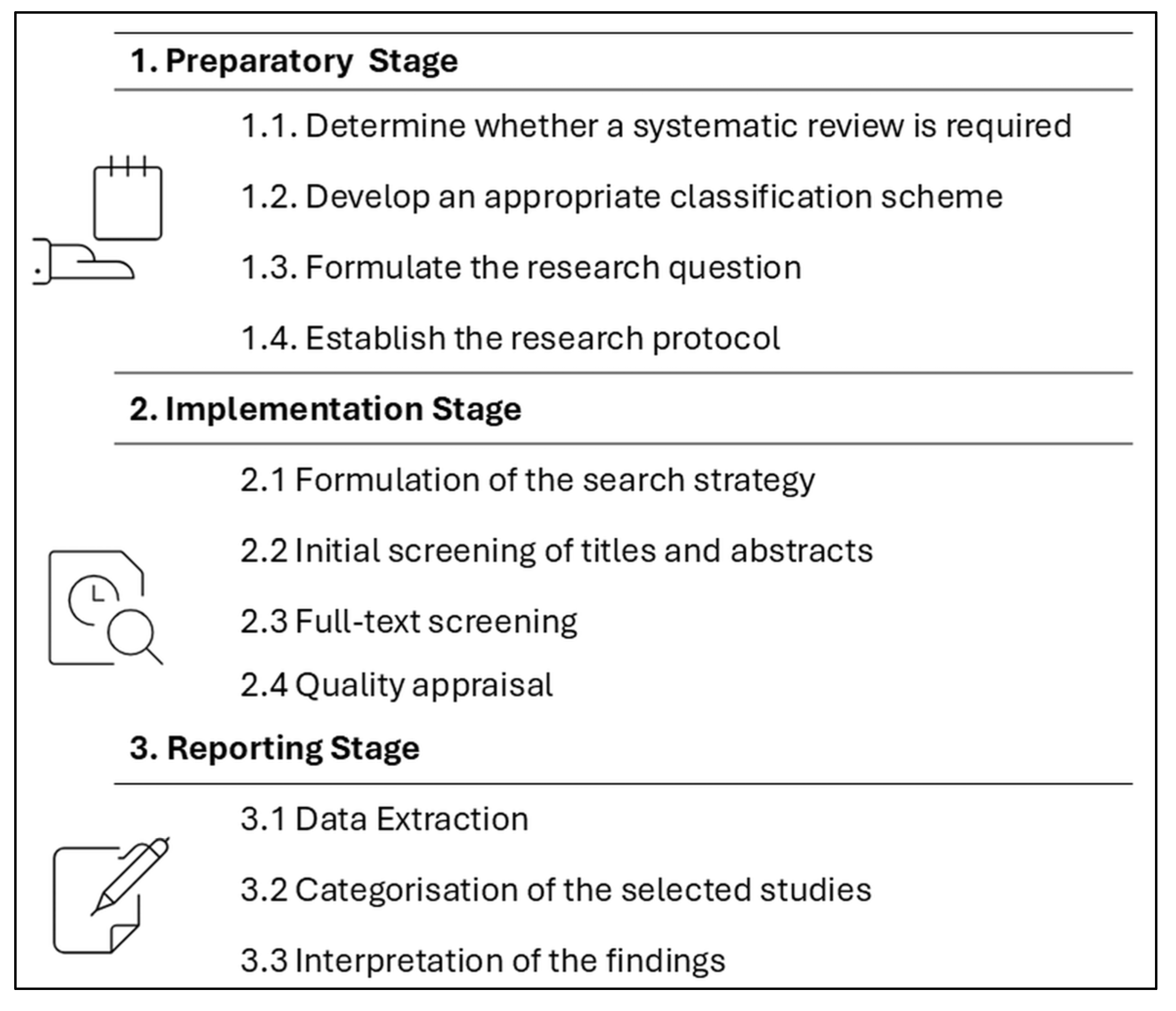
Figure 2.
Article Selection Process.
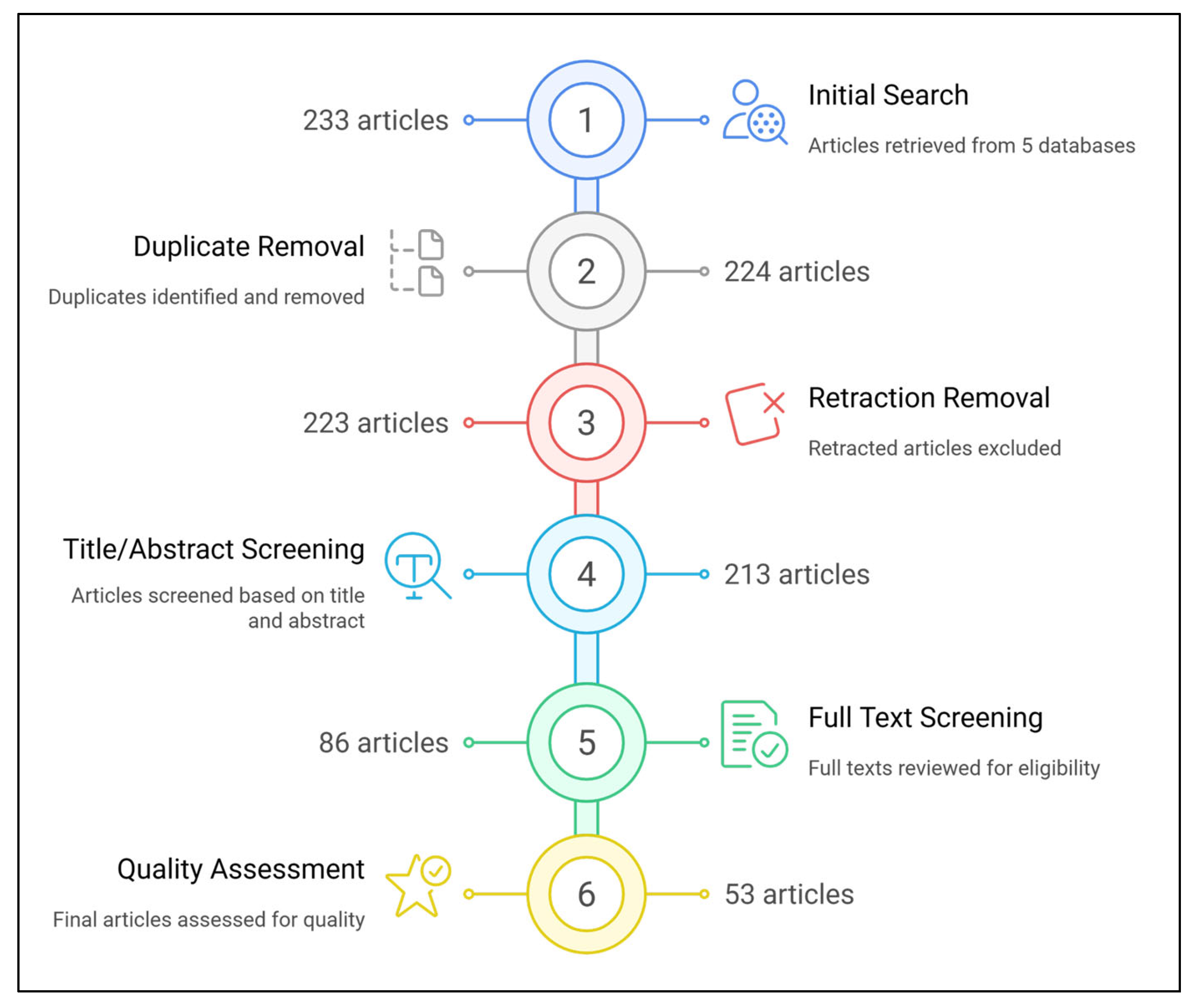
Figure 3.
Study allocation across databases.
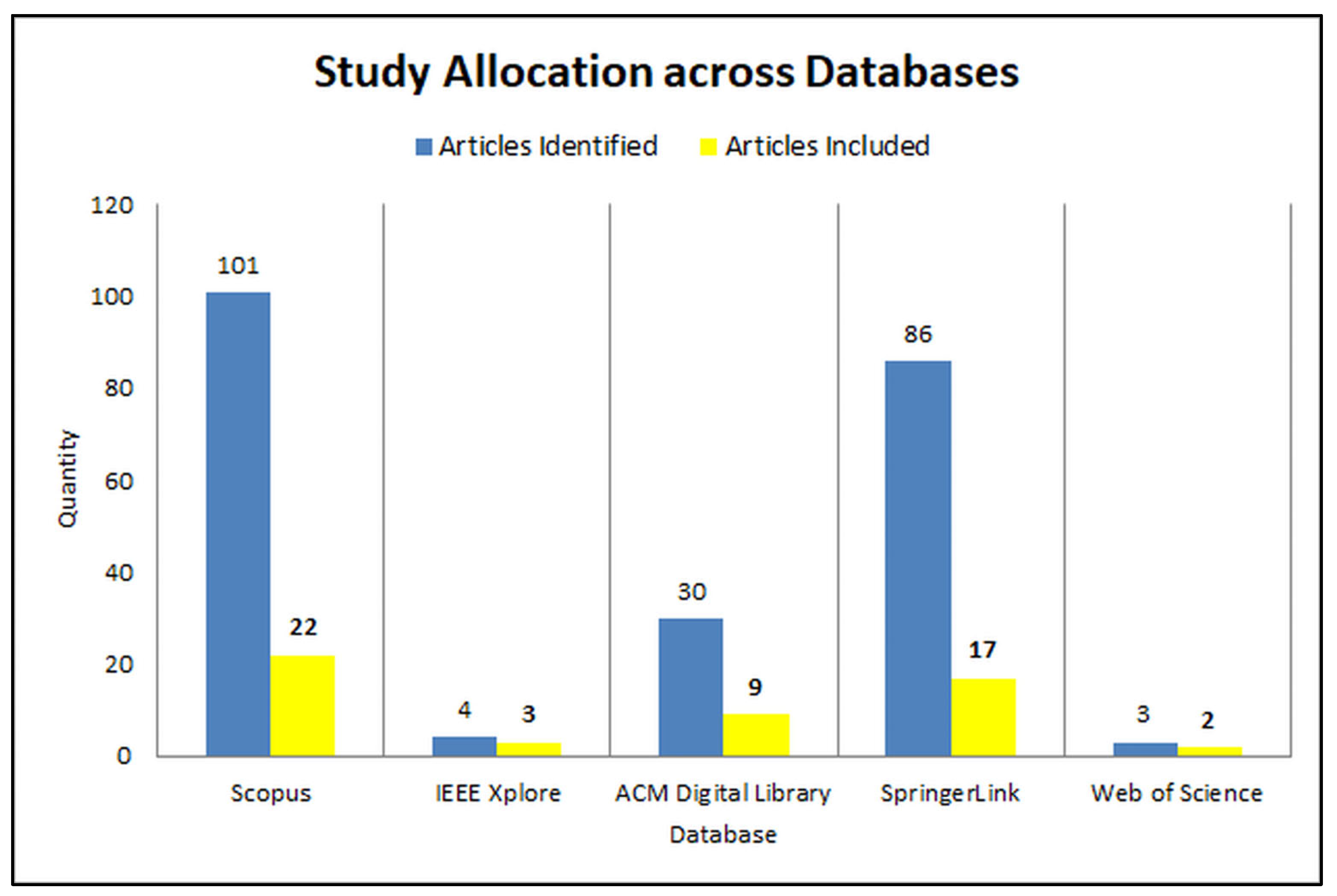
Figure 4.
Annual distribution of the included studies.
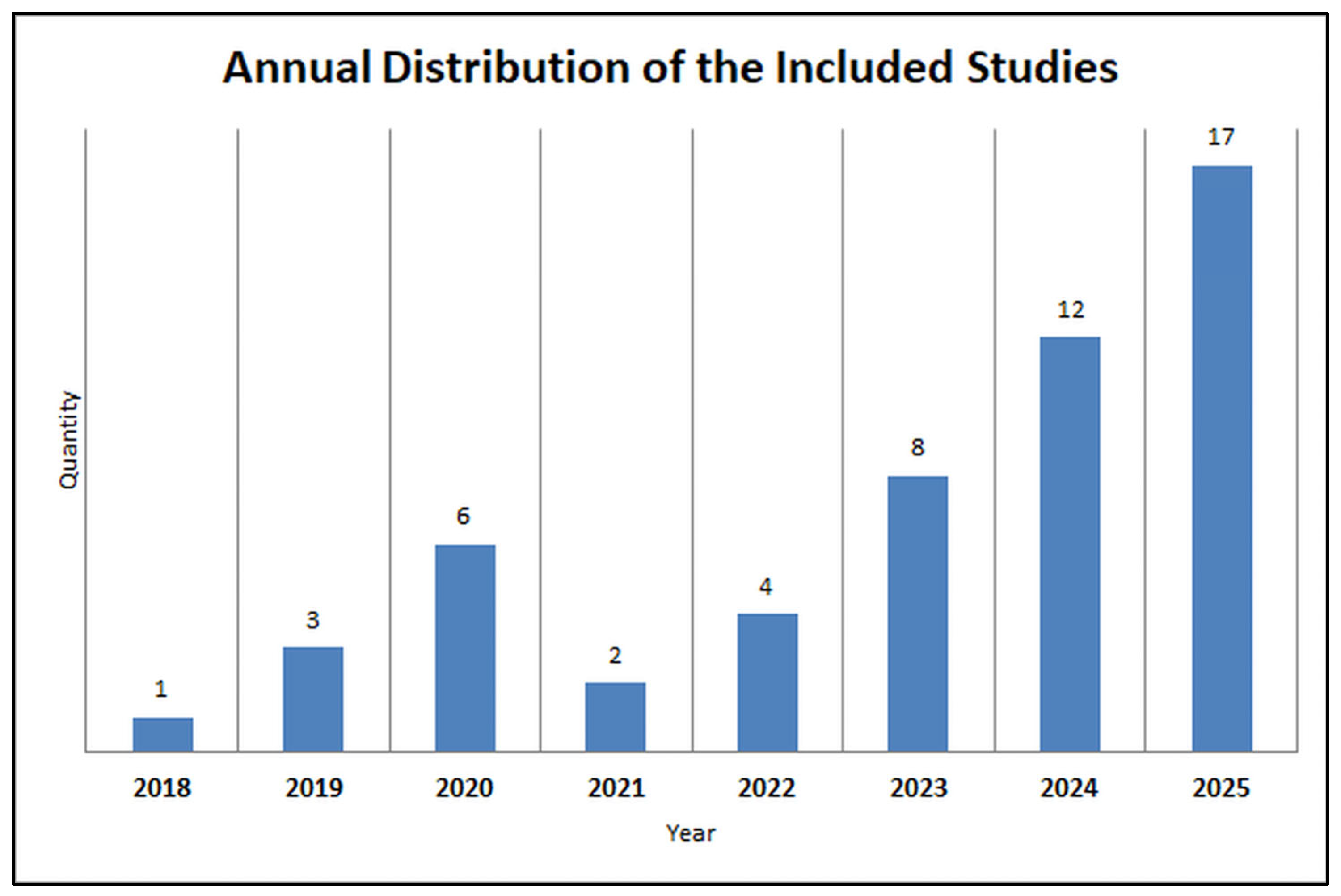
Figure 5.
Article Selection Process.
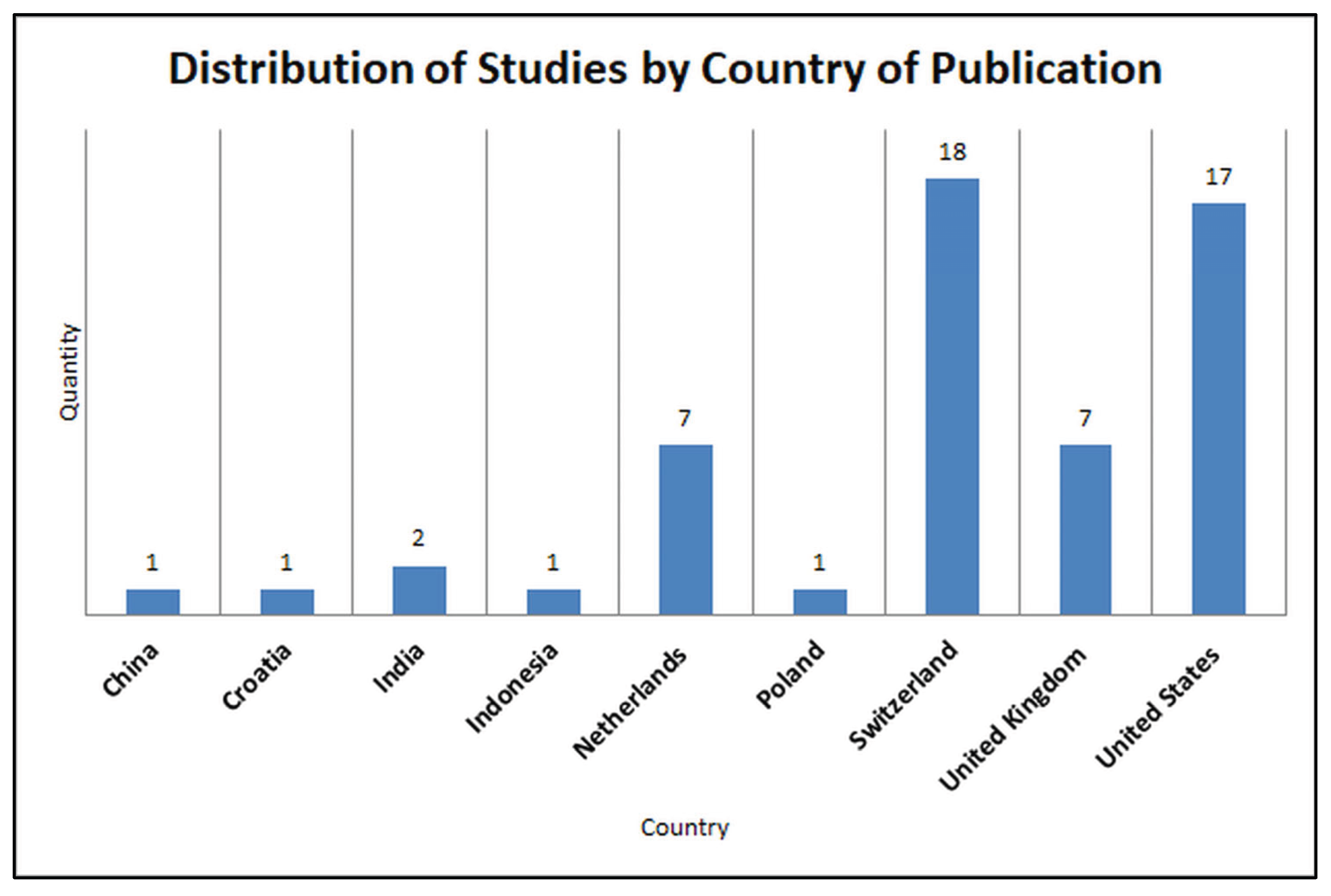
Table 1.
Classification framework used in the study.
| AI applications reported in DG (a) |
AI methodologies and techniques (b) |
Data resources, standards and development frameworks (c) |
Challenges and emerging trends (d) |
|---|---|---|---|
| a1 - Food Recognition, Classification and CV a2 - Recipe Generation, Transformation and Creativity Support a3 - Recommender Systems for Food, Ingredients and Nutrition a4 - Nutrition Assessment, Dietary Monitoring and Health a5 - Cooking Assistance, Automation and Domestic Robotics a6 - Food Culture, Heritage and Culinary Knowledge Discovery a7 - Smart Kitchens, IoT, Retail and Food Service a8 - Cross-domain Applications and Miscellaneous |
b1 - CV b2 - NLP b3 - Graph-based Modelling b4 - Recommender Systems b5 - Multimodal DP b6 - Reinforcement Learning (RL) b7 - Traditional ML b8 - IoT, Sensors and Embedded Systems b9 - Robotics and Manipulation |
c1 - User-generated Data and Surveys c2 - Public Food Image Datasets c3 - Public Recipe and Multimodal Datasets c4 - Large-Scale Multimodal Web Data c5 - Chemical, Nutritional and Biomedical Databases c6 - Ontologies, Knowledge Graphs and Linked Data c7 - Standards, Guidelines and Annotation Protocols c8 - Software Frameworks and Infrastructure c9 - Development Frameworks and Experimental Pipelines |
d1 - Limitations in Data, Annotation and Benchmarking d2 - Multimodal, Sensorial and Cross-modal Integration Challenges d3 - Model Generalisation, Cultural Transfer and Cross-domain Robustness d4 - Evaluation, Validation and Real-world Deployment d5 - Interaction, Interfaces and Usability Issues d6 - Standards, Ethical, Privacy and Sustainability Constraints |
Table 2.
Eligibility criteria for the inclusion and exclusion of articles in the review.
| Inclusion criteria | Exclusion criteria |
|---|---|
| Papers published between 2018 and 2025 Papers written in English Papers that address at least one of the research questions Publications that have undergone peer review and are either journal articles or conference papers |
Papers not written in English Duplicate studies Publications that have not been peer reviewed |
Table 3.
Summary of Institutional Affiliations by Continent.
| Continent | Number of Countries | Number of Institutions | Countries Included * |
|---|---|---|---|
| Asia | 9 | 47 | China (19), India (14), Japan (4), South Korea (3), Indonesia (1), Malaysia (1), Singapore (2), Thailand (1), Kazakhstan (1) |
| Europe | 8 | 29 | Spain (9), United Kingdom (4), Poland (5), Italy (2), Netherlands (1), Norway (3), Turkey (1), Ireland (1) |
| North America | 2 | 10 | United States (7), Canada (3) |
| South America | 1 | 1 | Brazil (1) |
| Africa | 0 | 0 | — |
| Oceania | 0 | 0 | — |
* Some institutions operate as multinational branches or consortia, but they were counted as listed.
Disclaimer/Publisher’s Note: The statements, opinions and data contained in all publications are solely those of the individual author(s) and contributor(s) and not of MDPI and/or the editor(s). MDPI and/or the editor(s) disclaim responsibility for any injury to people or property resulting from any ideas, methods, instructions or products referred to in the content. |
© 2025 by the authors. Licensee MDPI, Basel, Switzerland. This article is an open access article distributed under the terms and conditions of the Creative Commons Attribution (CC BY) license (http://creativecommons.org/licenses/by/4.0/).
Copyright: This open access article is published under a Creative Commons CC BY 4.0 license, which permit the free download, distribution, and reuse, provided that the author and preprint are cited in any reuse.


