

Submitted:
18 February 2025
Posted:
19 February 2025
You are already at the latest version
Abstract
This article examines the progress of research in the field of "Artificial Intelligence and Food Security" from the beginning to February 11, 2025. The main research method used in this article is bibliometric analysis using VosViewer software, which examines the characteristics of published articles, such as authors, countries, etc. In the study, 497 articles were indexed in the Scopus database from 2009 to February 11, 2025. The findings show that by 2025, the publication of articles is ascending, and the highest number of articles is related to 2024. India has been the largest producer of scientific articles. The findings show that research in the field of artificial intelligence and food security is expanding in various fields. Using artificial intelligence technology, stakeholders will be able to create more efficient and durable food systems that will not only support food security for all but also help protect natural resources for future generations.
Keywords:
Food Security
; Artificial Intelligence
; Bibliometrics
1. Introduction
Food security refers to people’s physical and economic access to adequate, safe, nutritious, and high-quality food for a healthy life. The term has been around in the international literature since the 1960s. Today, the concept has evolved to encompass a wide range of food-related issues (Malaysia et al., 2010). Food security and its role in health and human security have always been important for societies. In recent decades, overcrowding and economic development have created concerns about food production. Food security and access to adequate and healthy food have become two of the main issues in public policy (Stefani, 2014). Nowadays, due to the increasing pressures on the supply and demand sides, increasing food production is necessary for human development and reducing food insecurity. In the meantime, climate change, urbanisation, globalisation, population growth, health challenges, socio-economic issues, and a number of other factors have changed food consumption patterns and made it difficult to have equitable access to food. To achieve sustainable food security, intersectoral cooperation and capital are needed. There is a transition in future food systems (Meselson et al., 2012).
The use of artificial intelligence (AI) plays a key role in optimizing the food security chain by providing tools such as machine learning algorithms and computer systems (Christo and Mailera, 2024). Emerging technologies based on artificial intelligence (AI) have led to the development of global food security postures in various ways, such as increasing agricultural productivity, optimizing supply chains, and better managing natural resources (Sarku et al., 2023). Current advancements in the fields of artificial intelligence, machine learning, blockchain, and big data analytics have provided new opportunities for efficient forecasting and management in the field of food security (Tamasiga et al., 2023).The application of artificial intelligence in the food industry has the ability to respond quickly and effectively to unpredictable and complex situations, but this flexibility may also lead to undesirable and unexpected consequences (Manning et al., 2022), so the implementation of artificial intelligence technology in agriculture is faced with technical challenges and barriers such as the ability to collaborate with data, weak algorithms, and infrastructural constraints, serious obstacles to the development and widespread adoption of this technology. (Christo and Mailera, 2024). Research on the impact of artificial intelligence technology on agricultural productivity is an important step in addressing the uncertain challenges of global food security (Christo and Mailera, 2024). Artificial intelligence plays a significant role in various parts of the food value chain, such as the processing and development of food security. It allows farmers to effectively manage climate conditions, share their data in real time, and improve economic conditions, creating more opportunities for profitable activities (von Braun et al., 2021). Artificial intelligence, by using data, algorithms, and computational power, can play a critical role in developing production, increasing food quality, and reducing waste (Liu et al., 2023). Artificial intelligence (AI), as an advanced technology capable of analyzing complex data and predicting trends, can help improve production efficiency and address challenges in various fields, including agriculture (Karmaoui, 2022). In other words, the combination of agricultural and food systems with various artificial intelligence methods, such as the Internet of Things, is done to optimize management and reduce food waste (Food, Discover, 2025).
The term “bibliometric” was first coined in 1969 by Alan Richard. Richard defined bibliometrics as the application of mathematical principles and statistical techniques to illuminate the processes of written communication and the evolution of a scientific field (Lawan, 1981). Bibliometric research has advanced significantly over the years and has achieved many scientific achievements. The field of bibliometric research mainly focuses on bibliometrics, methods, research measurement, techniques, tools, and their application. The results of these studies are useful to researchers for a comprehensive understanding of the current status of bibliometrics and future development (Lyu et al., 2023). In other words, bibliometric analysis helps in presenting the trends and structures of a research field, managing, and organizing a huge amount of information (Passas, 2024).
The use of bibliometric analysis is used to advance a framework that can serve as a decision-making tool to optimize agriculture and food security using artificial intelligence and address better resource management (Karmaoui, 2022). Bibliometric analyses in the field of food security and artificial intelligence have received attention today. Abdollahi et al. (2021), Rajab et al. (2022) These studies show increasing attention to new technologies in the development of agricultural processes and food security (Yousaf, 2023). The final framework in bibliometric studies will help future researchers identify key areas of research in the field of food security and artificial intelligence and explore opportunities for co-authorship and scientific collaboration in these countries (Bhagat et al., 2022).Through bibliometric studies, it is possible to map the future of research in the field of food security and artificial intelligence (Liu et al., 2023). In this study, we reviewed articles related to food security and artificial intelligence using VOS viewer software in the Scopus database from 2009 to 2025 using the bibliometric method.
We predict that the future focus in food security is on developing and improving the food security assessment system based on artificial intelligence, improving agricultural production, increasing management efficiency in this field, and emerging research in the field of food and environmental security is being formed with artificial intelligence.
2. Literature Review
Christo and Mailera (2024) discuss the effectiveness of artificial intelligence on agricultural productivity and attempt to solve food security challenges in the world. Among his most important findings is the development of agricultural efficiency, providing immediate data to farmers, increasing the productivity of the automation method, optimising resource management, improving environmental sustainability and economic benefits for farmers, and cooperation between stakeholders.
(Malaysia et al., 2010) has systematically reviewed various studies and research on food security and food insecurity, hunger, as well as related concepts in developed and developing countries. Initially, food security focused on the availability of global food resources, and then more complex definitions expanded to include access to food for all people at all times. In the last definition, it deals with the social aspects of food. In this paper, the four main concepts of food security include availability, accessibility, acceptability, and sufficiency, which are related to all micro, middle, and macro levels of society.
(Misselhorn et al., 2012) examine food systems and their effects on environmental and socio-economic factors and closely monitor successful food systems in various fields, emphasising the participation of stakeholders such as government, non-governmental organisations, and local communities. They state that food security requires a sustainable approach, such as a green economy, to address the challenges. Sustainable agricultural development proposes a solution to reduce poverty and inequality, as well as to meet the growing demand for food, without further destroying the environment.
(Stefanis, 2014) has investigated the definitions of food security and the role of agriculture in providing food and ecosystem sustainability. He selected 35 articles out of 1945 articles from three scientific databases and referred to the issue of food supply for the global population and the need for change in global food security policies. He states that changes in the process of life and diet in developing countries have increased the demand and competition for resources and have made food security a fundamental issue.
3. Materials and Methods (Bibliometric Analysis)
Bibliometrics is a quantitative analysis method in the field of library and information sciences that was formed during World War II, which is now used in most disciplines and has become one of the important tools of analysis in scientific research. In this study, a tool called VOS Viewer (version 1.6.20) has been used for bibliometric analysis of the data. This software can collect key information from a series of journals that are often used to establish collaboration networks, co-citations, and simultaneous citations. In our study, the software analyzes countries and institutions, journals and co-citations, author-author analysis, and simultaneous analysis of keywords. The node represents an item such as a country, institute, magazine, and author. The size of the node and its color represent the number and classification, respectively. The thickness between the nodes indicates the amount of companionship and partnership or common citation between them.
To collect bibliographic data, the Scopus database was used as a data source. We used the core parts of this database for extraction. The search was performed on February 11, 2025, in the Scopus database using the terms “food security” and “artificial intelligence.”The search formula for “food security” and “artificial intelligence” in both Persian and English is:
(TITLE-ABS-KEY (“Food Security”) AND TITLE-ABS-KEY (“Artificial intelligence”)) AND (LIMIT-TO (DOCTYPE, “ar”) OR LIMIT-TO (DOCTYPE, “re”) OR LIMIT-TO (DOCTYPE, “ed”) OR LIMIT-TO (DOCTYPE, “le”) OR LIMIT-TO (DOCTYPE, “sh”)) AND (LIMIT-TO (LANGUAGE, “English”) OR LIMIT-TO (LANGUAGE, “Persian”))
Collecting, screening, analysing, and visualising data yielded the following results: Top of Form497 documents related to food security and artificial intelligence were identified between 2009 and 2025, which included 306 research papers, 172 review articles, 13 editorials, 4 short reviews, and 2 letters.
India with 113 studies, the United States with 101 studies, and China with 80 studies are the three leading countries in food security and artificial intelligence studies. Also, the top three sponsors in this field include:
- National Natural Science Foundation of China
- European Commission
- Ministry of Science and Technology of the People’s Republic of China
The number of scientific productions related to the fields of “food security” and “artificial intelligence” in the Scopus database between 2009 and February 11, 2025, is equal to 497 articles. The highest number of articles was observed with 180 works in 2024 and the lowest number of works in 2011. The first articles in this field were published in 2003 with the following titles:
1. Agricultural risk decision support system for resource-poor farmers in Burkina Faso, West Africa
2. Evaluation of agricultural land resources by implementing a computer-based spatial decision support system for national deciders in Benin, West Africa
3. Seed systems for African food security: Linking molecular genetic analysis and cultivator knowledge in West Africa
The trend of publication of scientific productions in the period from 2009 to February 11, 2025, can be seen in the chart and table below. The highest growth was in 2024.
Figure 1.
Number of Articles Published per Year.
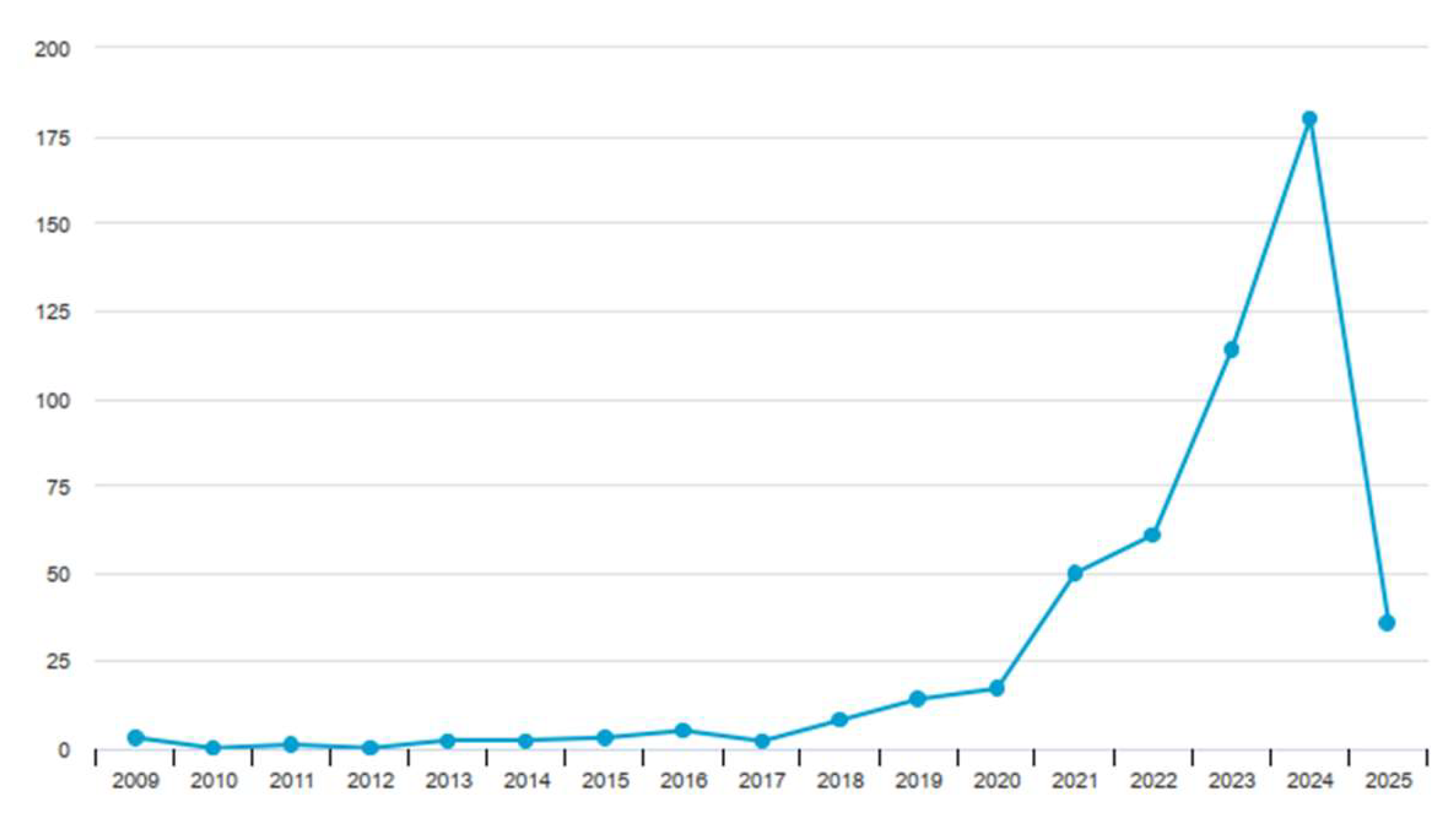

Table 1.
Number of Articles Published per Year.
| Years | 2025 | 2024 | 2023 | 2022 | 2021 | 2020 | 2019 | 2018 | 2017 | 2016 | 2015 | 2014 | 2013 | 2011 | 2009 |
|---|---|---|---|---|---|---|---|---|---|---|---|---|---|---|---|
| Number | 36 | 180 | 114 | 61 | 50 | 17 | 14 | 8 | 2 | 5 | 3 | 2 | 2 | 1 | 3 |
a. Frequently Asked Words and Annual Transformation Trend
Keywords are very important for writers, as these words help the audience to better identify and analyse the content of an article. In this paper, keyword analysis is done to identify the research trends of “Food Security and Artificial Intelligence.” In this study, the authors of scientific productions used 4204 keywords, of which 88 words were repeated at least 10 times. 310 replications and 1649 links, food security and food supply with 201 and 151 repetitions, and 1189 and 1138 links, respectively, are in the top three ranks. The result of the co-event analysis is shown in the figure below. Different colours have been used to differentiate different clusters.
Table 2.
Results with keywords.
| Keyword | Occurrence | Total link strength | |
|---|---|---|---|
| 1 | Artificial Intelligence | 310 | 1649 |
| 2 | Food Security | 201 | 1189 |
| 3 | Food Supply | 151 | 1138 |
| 4 | Machine Learning | 118 | 627 |
| 5 | Agriculture | 78 | 553 |
| 6 | Climate Change | 74 | 537 |
| 7 | Crops | 54 | 471 |
| 8 | Human | 48 | 383 |
| 9 | Deep Learning | 63 | 360 |
| 10 | Review | 36 | 335 |
Figure 2.
Co-occurrence of authors’ most frequent keywords.
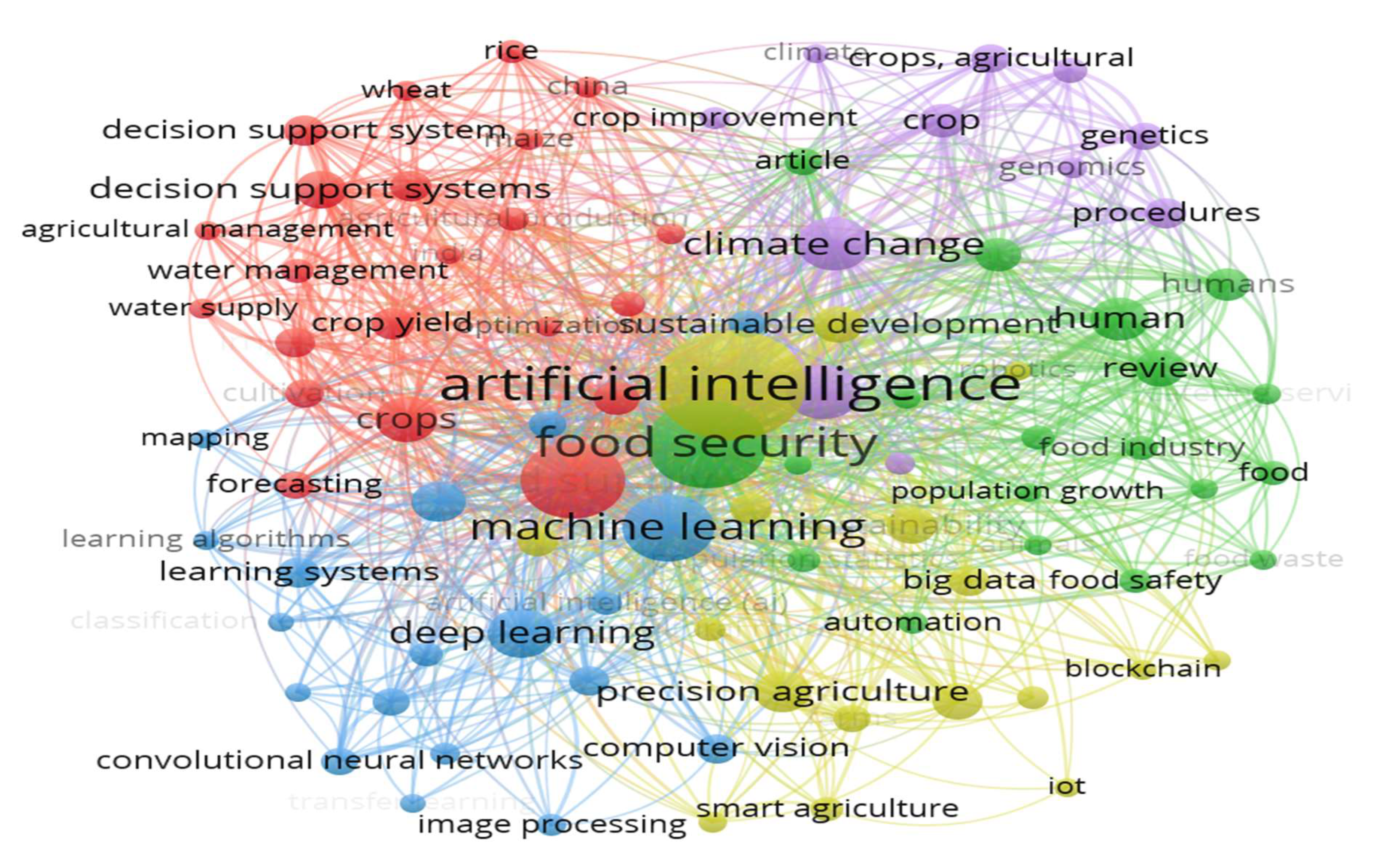
Figure 2.
The time trend of the most cited vocabulary.
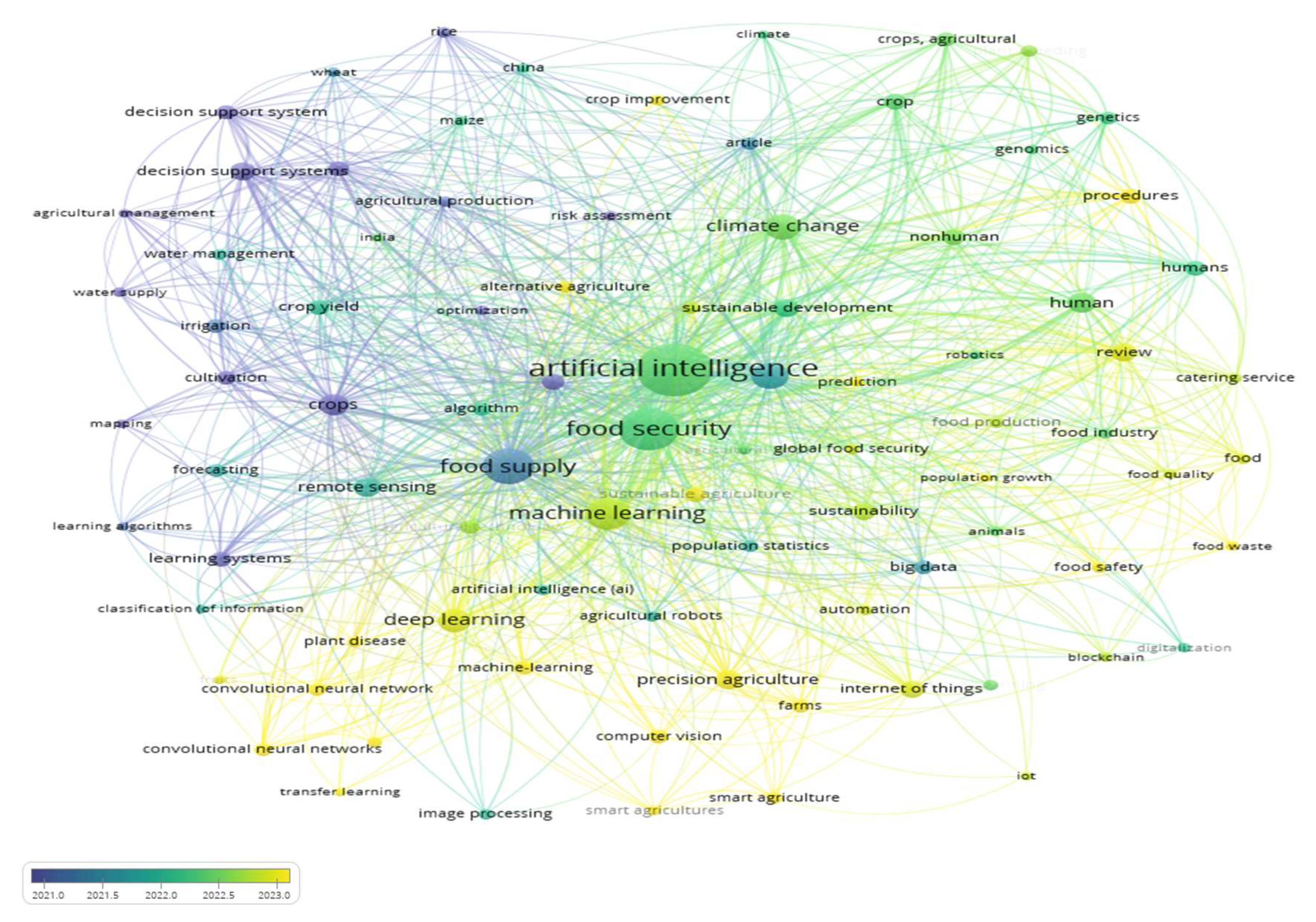
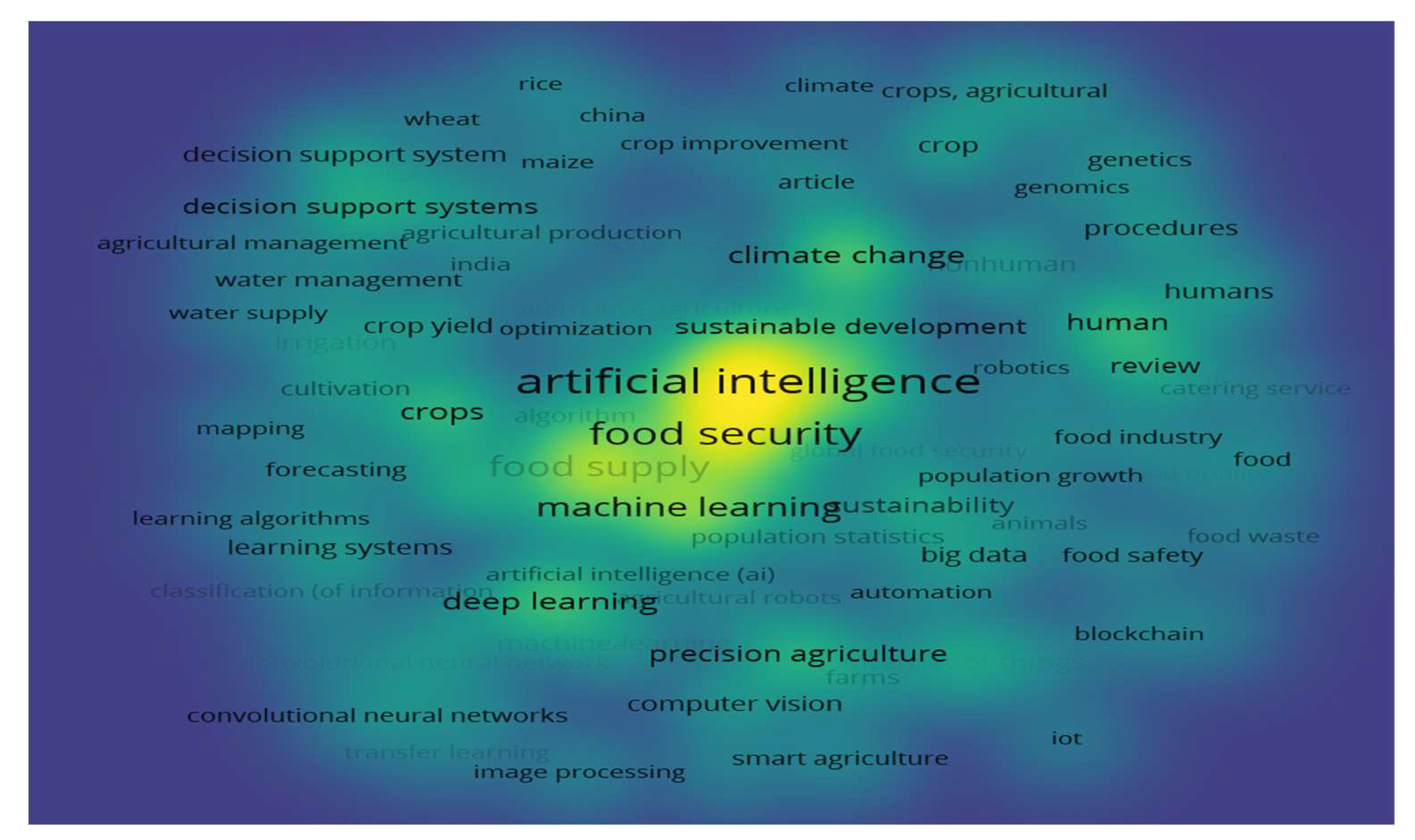
The above figure shows the analysis of “food security and artificial intelligence in terms of time trends. Newer terms are yellowish, and older terms are bluish. Also, in the figure below, the keyword density map is shown.
Figure 3.
keyword density map.
b. Top Countries
A total of 108 countries contributed to the publication of articles. The number of top 10 countries in the table below is considerable; the highest number of articles in this field, with 113 works, has been published in India. As can be seen, India, the United States, China, the United Kingdom, Italy, Saudi Arabia, Germany, Australia, Pakistan, and Canada are the 10 most cited countries in this scientific field, respectively. Iran has 15 works and 308 citations in this study.
Table 3.
Leading Countries.
| Number of citations | Number of works | Country Name |
|---|---|---|
| 2430 | 113 | India |
| 2616 | 101 | United states |
| 1506 | 80 | China |
| 1029 | 40 | United Kingdom |
| 1407 | 32 | Italy |
| 487 | 32 | Saudi Arabia |
| 752 | 28 | Germany |
| 809 | 28 | Australia |
| 290 | 27 | Pakistan |
| 466 | 24 | Canada |
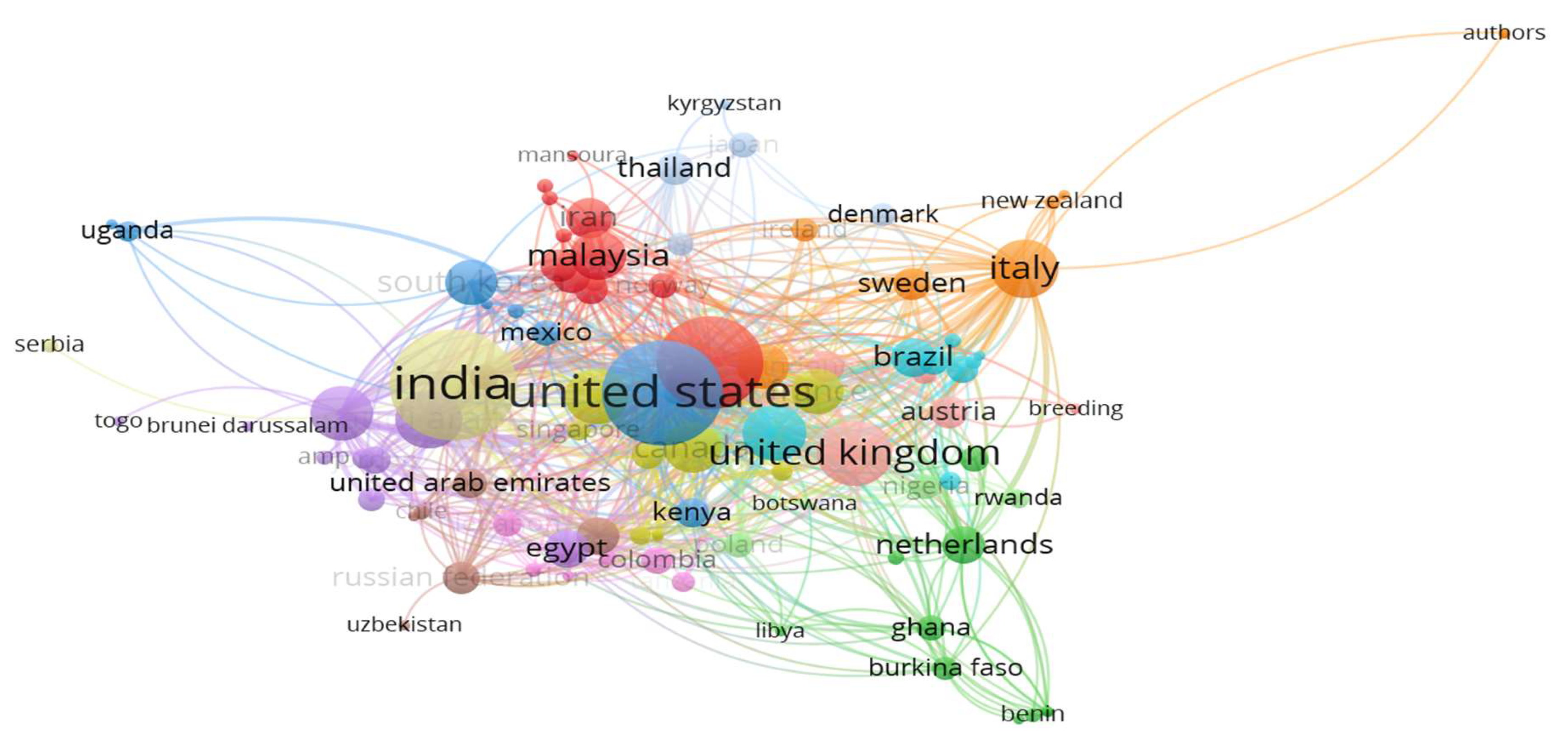
Figure below represents countries, and lines (drawn links) represent the relationship between countries, i.e., a map of overlapping countries based on collaborative relationships. Authoring works related to “Food Security and Artificial Intelligence” from 2009 to February 11, 2025. In this form, the greater the number of country compilations, the larger the size of the circle corresponding to it. In this figure, the most connections with other countries belong to the United States, India, and China, with 166, 136, and 115 links, respectively.
Figure 4.
International Collaboration of Article Authors.
4. Discussion and Results
The results indicate that research in the field of artificial intelligence and food security is expanding in various fields. Therefore, understanding the definitions and concepts of food security can help researchers and policymakers conduct research that addresses food security problems at different levels (Malaysia et al., 2010). AI-based approaches provide significant opportunities for the development of resilience and adaptation in the agricultural sector (Christo and Mailera, 2024). By using AI technology, stakeholders will be able to create more efficient and durable food systems that will not only support food security for all but also help protect natural resources for future generations.
5. Conclusions
By using bibliometric analysis that shows which countries, institutions, or authors are leading in food security and artificial intelligence research surveys, an effective step can be taken to improve food policies, smart agriculture, and climate impact studies. Of course, it should be noted that climate change is one of the reasons that can lead to a decline in food production; it increases food prices and thus increases inequality in food benefits. This analysis will help to identify emerging areas such as machine learning and neural networks in food security and to identify innovation and international cooperation.
References
- Azizi, Jafar, A Review of Food Supply Chain and Food Security’s Indicators (February 24, 2024). Available at SSRN: https://ssrn.com/abstract=4737374 o. [CrossRef]
- Azizi, J. and at al. (2010). Effect of the Quality Costing System on Implementation and Execution of Optimum Total Quality Management. International Journal of Business and Management. Vol. 5, No. 8. [CrossRef]
- Azizi, J., Zarei, N. & Ali, S. The short- and long-term impacts of climate change on the irrigated barley yield in Iran: An application of dynamic ordinary least squares approach. Environ Sci Pollut Res 29, 40169–40177 (2022). [CrossRef]
- Azizi, J. and ArefEshghi, T. (2011). The Role of Information and Communication Technology (ICT) in Iranian Olive Industrial Cluster. Journal of Agricultural Science. Vol. 3. No. 1. [CrossRef]
- Azizi, J. and Torkamani, J. (2001). Estimate of demand functions of different meat in Iran. Eghtesad Keshavarzi va Toseah.9(34)، 217-237. SID. https://sid.ir/paper/425545/fa.
- Azizi, J. and Yazdani, S. (2007). Investigation stability income of export date of Iran.Iranian J. Agric. Sci., 13 (2007), pp. 2-19. https://sid.ir/paper/7704/en.
- Azizi, J., & Yazdani, S. (2006). Investigating Export market of Iran apple emphasized on the principle of comparative advantage export. Journal of Construction and Research in Agriculture and Horticulture, 73, 145-155.
- Azizi,J., 20073230572, Persian, Journal article, Iran, 1562-5559, 12, (4), Tehran, Journal of Agricultural Sciences - Islamic Azad University, (715–728), Islamic Azad University, Scientific Publication Center, Economic evaluation of rice marketing strategies in Gilan Province., (2007).
- Azizi, J. (2015). Evaluation of The Efficiency of The Agricultural Bank Branches by Using Data Envelopment Analysis and The Determination of a Consolidated Index: The Case Study in Mazandaran Province. Agricultural Economics, 9(1), 63-76.
- Azizi, Jafar, A Review of Food Supply Chain and Food Security’s Indicators (February 24, 2024). Available at SSRN: https://ssrn.com/abstract=4737374 or. [CrossRef]
- Azizi, J. (2001). Agriculture Water Sustainability. Journal of Agricultural Economic and Development, 36(3), 113-136.
- Azizi, J., & Torkamani, J.. (2001). Estimation of demand fonction for different types of meat in Iran: Aplication of cointegration. EQTESAD-E KESHAVARZI VA TOWSE’E, 9(2 (34)), 217-238. SID. https://sid.ir/paper/530951/en.
- Azizi, J. (2014). Determining of Potential Demand for Drought Insurance and Effective Factors in IRAN. Agricultural Economics, 8(Special Issue), 191-204.
- Azizi, J. (2007). Analysis Of Supply Function For Different Types Of Meat In Iran By Using Of Multi-Market Model.
- Azizi, J., & Masoumi, H. (2015). Factors affecting agricultural cooperative culture in Guilan provience.
- Azizi, J., Yazdani, S., Aref, E. T., & Taleghani, M. (2011). The Effect of Macroeconomic Policies on Poverty in Iran. International Journal of Economics and Finance, 3(1), 229-233.
- Azizi,J. and Yazdani,S., 20073215627, Persian, Journal article, Iran, 1680-242X, 17, (1), Tabriz, Agricultural Science (Tabriz), (1–12), College of Agriculture, Tabriz University, Analysis of competition power for export of Iranian almond., (2007). http://www.sid.ir/en/JournalList.asp?ID=273&Name=AGRICULTURAL+SCIENCE.
- Bhagat PR, Naz F, Magda R. Artificial intelligence solutions enabling sustainable agriculture: A bibliometric analysis. PLoS ONE. 2022 Jun 9; 17(6): e0268989. [CrossRef]
- Christo A, Mailera H. Artificial Intelligence Revolutionizing Agriculture: Enhancing Productivity and Sustainability for Global Food Security. Cebong Journal. 2024 Jul 31; 3(3):107-14.
- Davari Farid, R., Azizi, J., Allahyari, M. S., Damalas, C. A., & Sadeghpour, H. (2018). Marketing mix for the promotion of biological control among small-scale paddy farmers. International Journal of Pest Management, 65(1), 59–65. [CrossRef]
- Eskandari, S., ZeraatKish, Y., Moghaddasi, R. et al. Determinant factors energy efficiency and emission of pollutants Co2 & So2 in Iran’s agricultural sector. Int. J. Environ. Sci. Technol. 19, 1717–1728 (2022). [CrossRef]
- Food, Discover. “Emboldening food security for global sustainability yoking artificial intelligence.” (2025). [CrossRef]
- Ghiasi, R. and Azizi, J. and at al. (2017). Crop protection services by Plant Clinics in Iran: An evaluation through rice farmers’ satisfaction. Crop Protection. Vol. 98, 191-197. [CrossRef]
- Karmaoui A. Network analysis on artificial intelligence in agriculture, a bibliometric review. Digital Transformation for Sustainability: ICT-supported Environmental Socio-economic Development. 2022 Dec 2:409-28.
- Keshavarz, S. F., Azizi, J., & Niknejad, M. (2019). The Role of Rural Production Cooperatives in Sustainable Social and Economic Development of Rural Communities of Guilan Province. Journal of Co - Operation and Agriculture. https://www.magiran.com/p2039279.
- Lawani SM. Bibliometrics: Its theoretical foundations, methods and applications. Libri. 1981; 31(Jahresband):294-315. [CrossRef]
- Liu Z, Wang S, Zhang Y, Feng Y, Liu J, Zhu H. Artificial intelligence in food safety: A decade review and bibliometric analysis. Foods. 2023 Mar 14; 12(6):1242. [CrossRef]
- Lyu P, Liu X, Yao T. A bibliometric analysis of literature on bibliometrics in recent half-century. Journal of Information Science. 2023:01655515231191233. [CrossRef]
- Malaysia P. Food security: Concepts and definitions. Journal of Community Health. 2010; 16(2):2.
- Manning L, Brewer S, Craigon PJ, Frey J, Gutierrez A, Jacobs N, Kanza S, Munday S, Sacks J, Pearson S. Artificial intelligence and ethics within the food sector: Developing a common language for technology adoption across the supply chain. Trends in Food Science & Technology. 2022 Jul 1;125:33-42. [CrossRef]
- Nikzadi panah, M., Azizi, J., & Zeraatkish, Y. (2021). Investigating the Effecting Factors on the Adoption of Agricultural Supplemental Insurance (case study on Alborz Province Farms). Agricultural Economics Research, 12(48), 1-22.
- Monteiro J, Barata J. Artificial intelligence in extended agri-food supply chain: A short review based on bibliometric analysis. Procedia Computer Science. 2021 Jan 1;192:3020-9. [CrossRef]
- Misselhorn A, Aggarwal P, Ericksen P, Gregory P, Horn-Phathanothai L, Ingram J, Wiebe K. A vision for attaining food security. Current opinion in environmental sustainability. 2012 Feb 1; 4(1):7-17. [CrossRef]
- Passas I. Bibliometric Analysis: The Main Steps. Encyclopedia. 2024 Jun 20; 4(2). [CrossRef]
- Sarku R, Clemen UA, Clemen T. The application of artificial intelligence models for food security: A review. Agriculture. 2023 Oct 23; 13(10):2037.
- Stefanis C. Global food security: An agricultural perspective. Journal of Agriculture and sustainability. 2014 Sep 8; 6(1).
- Tamasiga P, Onyeaka H, Bakwena M, Happonen A, Molala M. Forecasting disruptions in global food value chains to tackle food insecurity: The role of AI and big data analytics–A bibliometric and scientometric analysis. Journal of Agriculture and Food Research. 2023 Dec 1;14:100819. [CrossRef]
- Von Braun J, S Archer M, Reichberg GM, Sánchez Sorondo M. Robotics, AI, and humanity: Science, ethics, and policy. Springer Nature; 2021. https://library.oapen.org/handle/20.500.12657/47279. [CrossRef]
- Yousaf A, Kayvanfar V, Mazzoni A, Elomri A. Artificial intelligence-based decision support systems in smart agriculture: Bibliometric analysis for operational insights and future directions. Frontiers in Sustainable Food Systems. 2023 Jan 9;6:1053921. [CrossRef]
- Zarei, N., Azizi, J. Environmental impact assessment in Iran after its accession to the Shanghai cooperation organization: Panel FMOLS analysis in two different income groups. Int. J. Environ. Sci. Technol. 22, 247–258 (2025). [CrossRef]
Disclaimer/Publisher’s Note: The statements, opinions and data contained in all publications are solely those of the individual author(s) and contributor(s) and not of MDPI and/or the editor(s). MDPI and/or the editor(s) disclaim responsibility for any injury to people or property resulting from any ideas, methods, instructions or products referred to in the content. |
© 2025 by the authors. Licensee MDPI, Basel, Switzerland. This article is an open access article distributed under the terms and conditions of the Creative Commons Attribution (CC BY) license (http://creativecommons.org/licenses/by/4.0/).
Copyright: This open access article is published under a Creative Commons CC BY 4.0 license, which permit the free download, distribution, and reuse, provided that the author and preprint are cited in any reuse.


